
Robust Human-to-Robot Handover System Under Adverse Lighting


Abstract
1. Introduction
- Fragility of RGB-based perception, which degrades system robustness under adverse lighting conditions
- Insufficient fusion of human–robot spatial relational features in existing 3D semantic segmentation methods
- Inadequate posture and scenario adaptation in grasp generation approaches for H2R handover tasks
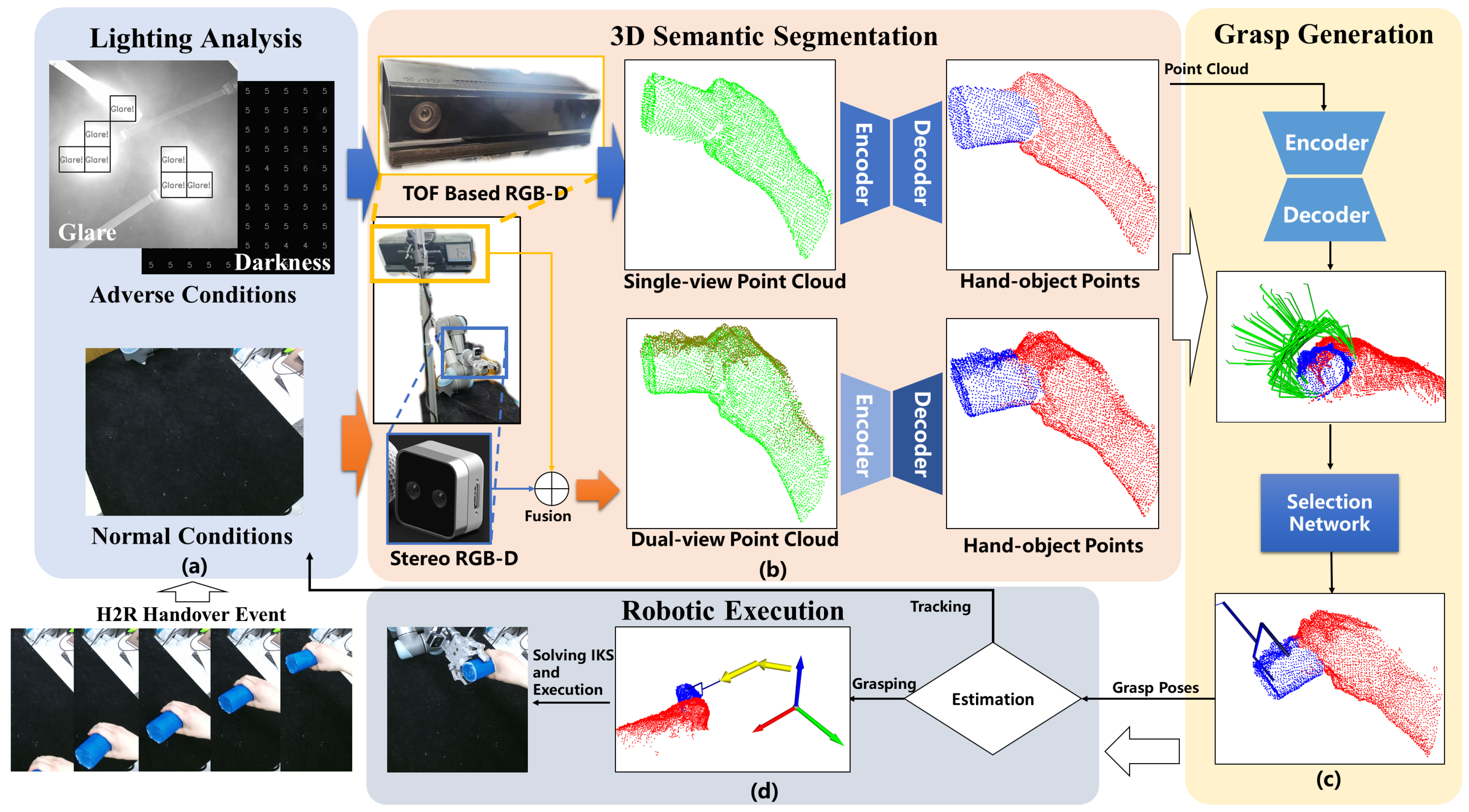
- A lighting-adaptive dual-path perception pipeline that dynamically switches between a stereo RGB-D camera and a time-of-flight (ToF) camera, ensuring reliable perception under both normal and adverse lighting conditions (glare and darkness).
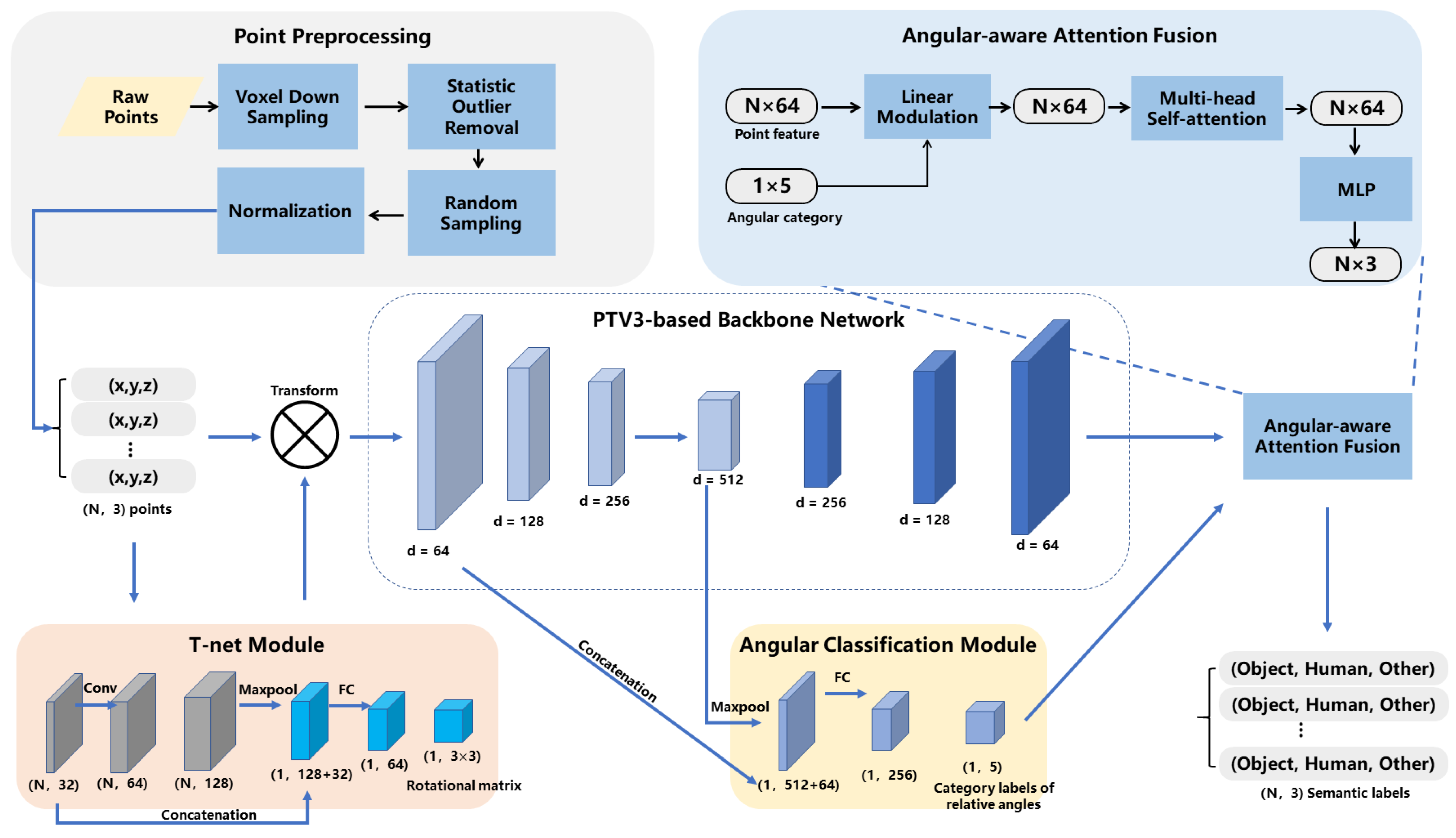
- A geometry-aware 3D semantic segmentation model that extends Point Transformer v3 (PTv3) with a T-Net module and a self-attention mechanism to encode relative positional angles between human and robot, enabling accurate real-time segmentation of hand–object interactions from multiple viewpoints.
- A grasp generation framework adapted from GraspNet with a dedicated optimal grasp selection module that accounts for human hand postures and robot motion constraints, significantly improving grasp success in dynamic H2R scenarios compared with conventional object-centric grasp methods.
2. Related Work
2.1. Lighting-Robust Multimodal Perception
2.2. Grasp Generation Methods in H2R Handover
2.3. 3D Semantic Segmentation for H2R Scenarios
3. Framework of the Proposed Handover System
3.1. Lighting Analysis
3.2. 3D Semantic Segmentation
3.2.1. Algorithm Architecture
3.2.2. Objective Function
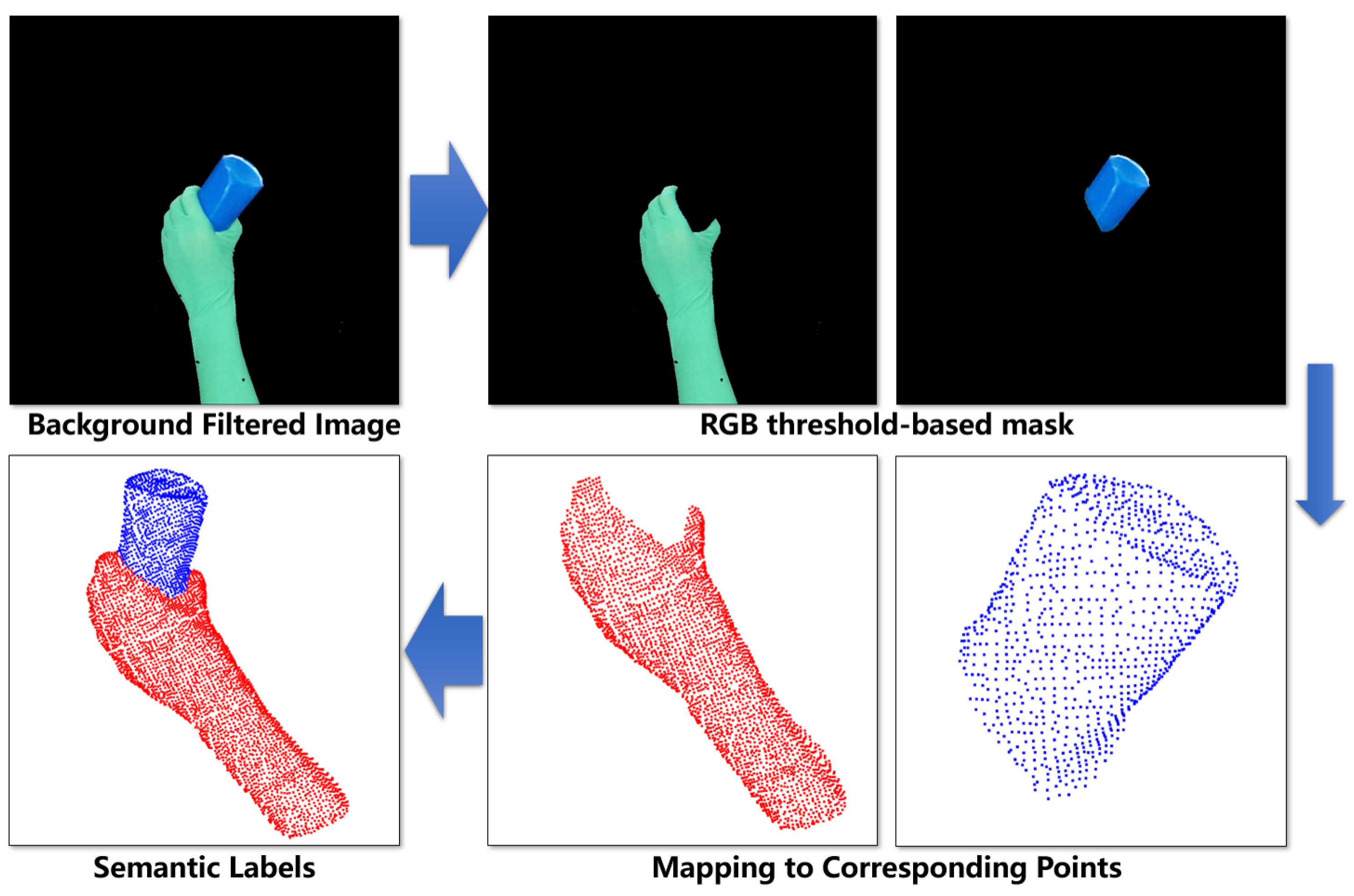
3.2.3. Semantic Dataset Construction
3.3. Grasp Generation
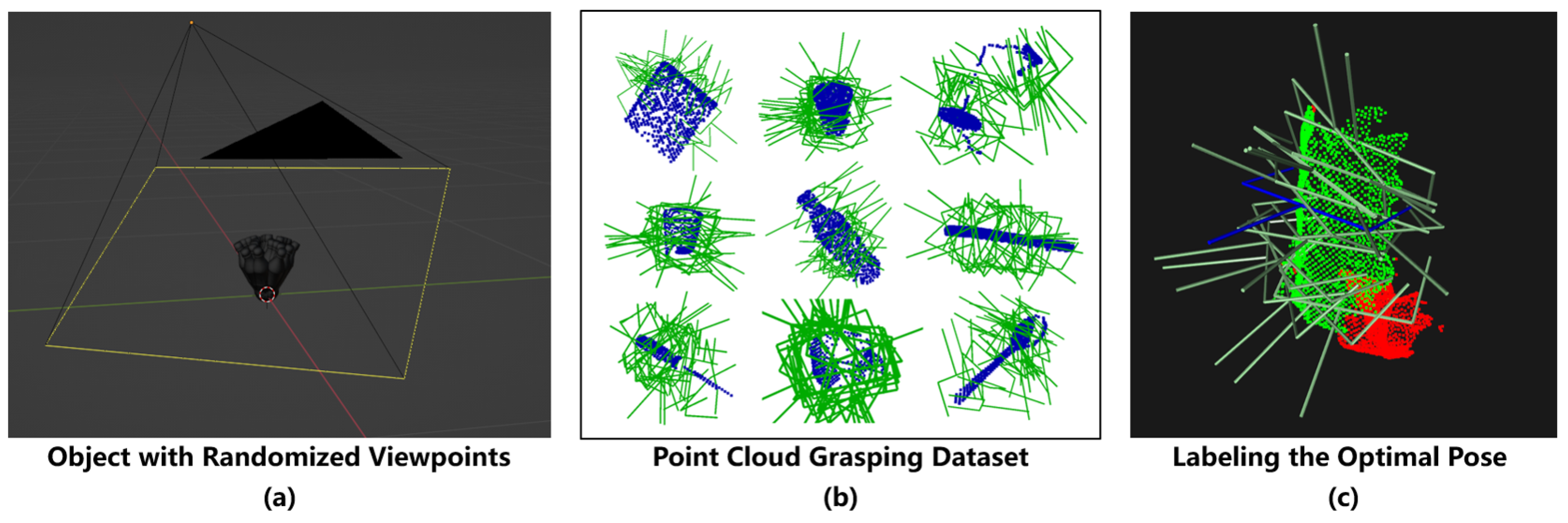
3.3.1. Grasping Dataset Construction
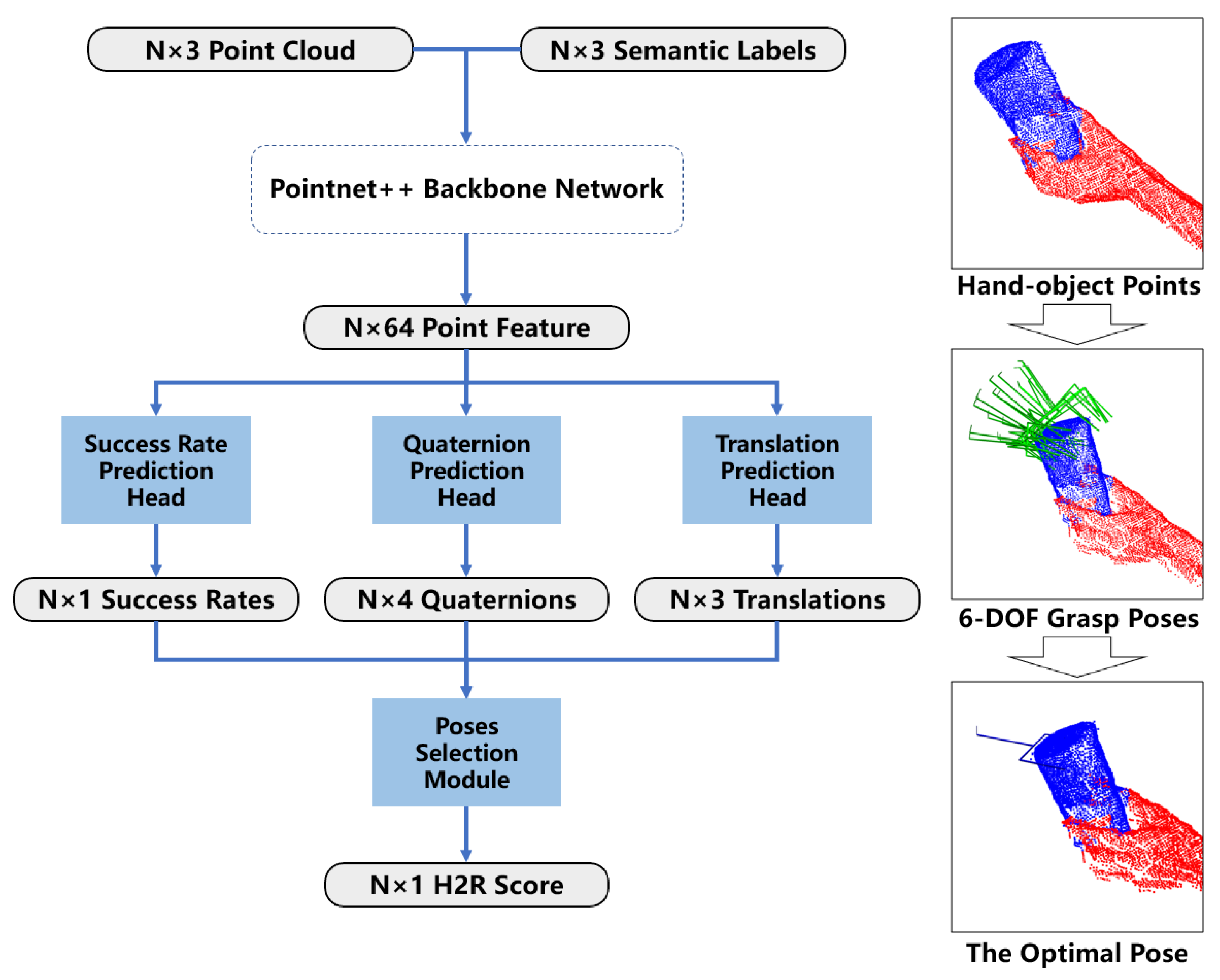
3.3.2. Algorithm Architecture
3.3.3. Grasp Representation and Objective Function
- (1)
- Learning from Point-Wise Poses
- Confidence Loss (Binary cross-entropy):
- Pose Loss (Mean Squared Error):
- (2)
- Learning from the Optimal Pose
- (3)
- Training Strategy Implementation
- Stage 1: This stage uses only the simulation dataset with complete 6-DoF grasp pose annotations, aiming to learn the general ability of feasible grasp pose generation. In this stage, we set the weight of the selection loss to disable the contribution of to the total loss, and freeze the weights of the pose selection module to stop its gradient update. Only the PointNet++ backbone and the three grasp prediction heads are optimized, with the loss weight set to , . This setting balances the learning of grasp success, confidence, and pose regression accuracy.
- Stage 2: This stage uses only the real-world dataset with manually annotated optimal grasp poses, aiming to align the model with the real deployment scenario and the custom optimal grasp criterion. In this stage, we set the weights of the confidence loss and pose loss , to disable the contribution of , and to the total loss, and freeze the weights of the pre-trained PointNet++ backbone and grasp prediction heads. Only the pose selection module is optimized, with the loss weight set to , to learn the scoring of optimal grasps without damaging the pre-trained pose generation ability.
3.4. Robot Execution and Control
4. Experimental Setup and Evaluation Protocol
4.1. System Setup
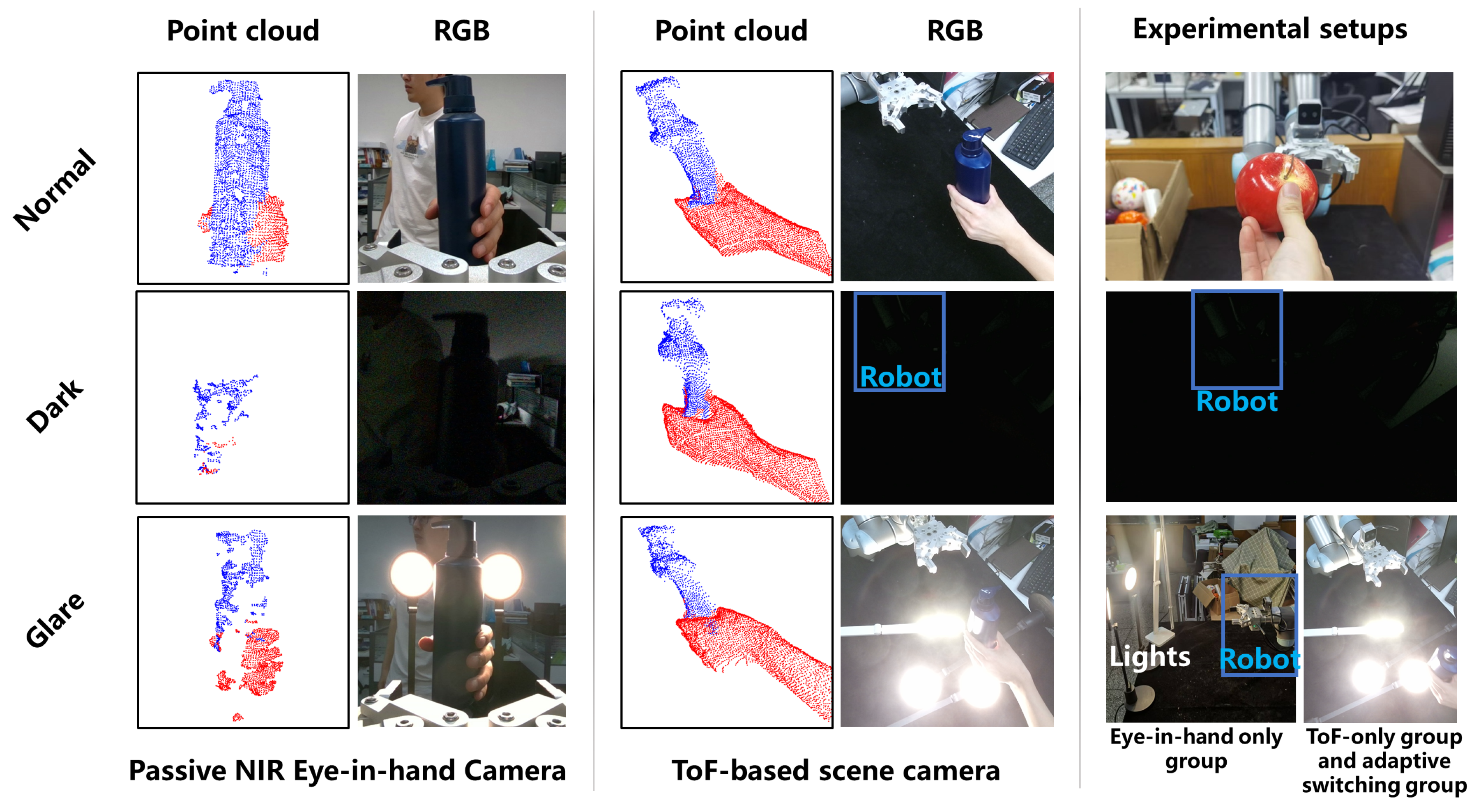
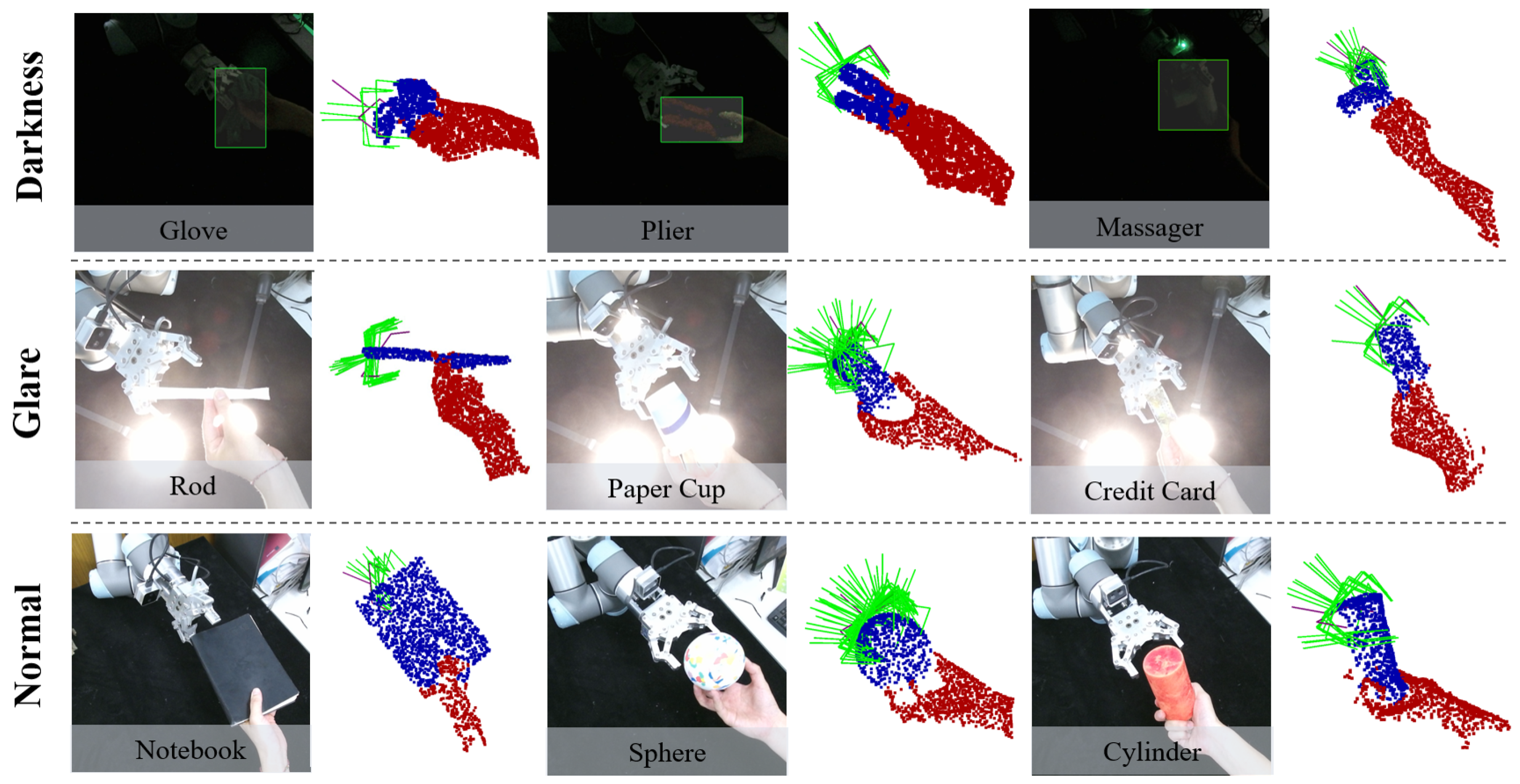
4.2. Environmental Lighting Setup
- Normal lighting: Standard ambient laboratory lighting, with a measured illuminance of lux at the camera lens, where both cameras maintained full effective point cloud acquisition performance.
- Dark environment: Established using full blackout curtains and all ambient lights turned off, with a measured illuminance of <3 lux at the camera lens. Under this condition, the effective point cloud acquisition rate of the passive NIR stereo camera dropped below 10%, while the active ToF camera maintained stable depth imaging.
- Glare interference: Generated by directional 32 W LED arrays (220 V, 12 W + 12 W + 8 W configuration) directed at the core perception camera, with a measured illuminance of >930 lux at the camera lens. Under this condition, the effective point cloud acquisition rate of the passive NIR stereo camera dropped below 40% due to overexposure, while the ToF camera retained stable imaging performance.
4.3. Dataset Train/Test Split
4.3.1. Semantic Segmentation Dataset
4.3.2. Grasp Generation Dataset
4.4. Evaluation Metrics
4.4.1. Semantic Segmentation Metrics
- mean Intersection over Union (mIoU): The primary metric for 3D semantic segmentation performance, calculated as the average Intersection over Union (IoU) across all semantic categories (hand, object, background). The IoU for a single category is defined as:where (True Positive) is the number of correctly classified points, (False Positive) is the number of incorrectly classified positive points, and (False Negative) is the number of missed positive points.
- mean Accuracy (mAcc): The average classification accuracy across all semantic categories, calculated as the ratio of correctly classified points to the total number of points in each category, averaged over all categories.
- Test Loss: The cross-entropy loss of the semantic segmentation model on the test set, reflecting the convergence and generalization performance of the model.
- Angle Classification Accuracy: The ratio of correctly predicted relative human–robot angle categories to the total number of samples, reflecting the effectiveness of the angular feature fusion module.
- Inference Latency: The average time taken for a single point cloud frame to complete preprocessing, model inference, and postprocessing, in milliseconds (ms), reflecting the real-time performance of the algorithm.
4.4.2. Grasp and Handover Performance Metrics
- No collision occurs between the robot (including the end-effector and arm body) and the human hand/body during the entire handover process;
- The subject holds the object within the effective field of view (FoV) of the perception system and maintains a relatively static state. The start point of this static state is determined by the chamfer distance between the point clouds of two consecutive frames being less than 0.01 m, and this static state must persist for more than 3 s. During this 3-s static window, the system must output a valid 6-DoF grasp pose and initiate the execution;
- The robot completes the planned grasp motion, and the gripper maintains a stable hold on the object for more than 3 s after grasping the object, with no slipping, dropping, or significant displacement of the object relative to the gripper.
- Collision between the robot and the human hand/body or the surrounding environment during the handover process;
- Motion planning failure of the robotic arm for the predicted target grasp pose (no collision-free executable trajectory can be generated within the joint constraints);
- No valid grasp pose is output by the system within the 3-s static window defined in condition (2) of the success criteria;
- The object slips, drops, or is detached from the gripper within 3 s after the grasping action is completed.
4.5. Statistical Analysis
4.5.1. Continuous Numerical Variables
- Normality Test: The Shapiro–Wilk test was used to verify whether the experimental data follows a Gaussian (normal) distribution.
- Statistical Description: For data conforming to the normal distribution, results are reported as mean ± standard deviation (SD); for data that does not conform to the normal distribution, results are reported as median (interquartile range, IQR).
- Significance Test: For comparisons between two independent groups, the independent samples t-test (for normally distributed data) or Mann–Whitney U test (for non-normally distributed data) was used. For comparisons among multiple groups, one-way ANOVA with Tukey’s post hoc test was applied to normally distributed data, and the Kruskal–Wallis H test was used for non-normally distributed data.
4.5.2. Categorical Count Data
- Statistical Description: Results are reported as count (percentage, %), with the number of valid trials as the denominator.
- Significance Test: The chi-square () test was used for inter-group comparison of success rates; Fisher’s exact test was used instead when the expected frequency of any cell in the contingency table was less than 5, to ensure the robustness of the test results.
5. Experimental Results and Discussion
5.1. Comparative Analysis in Semantic Segmentation Models
5.1.1. Baselines
5.1.2. Algorithmic Setup
5.1.3. Results
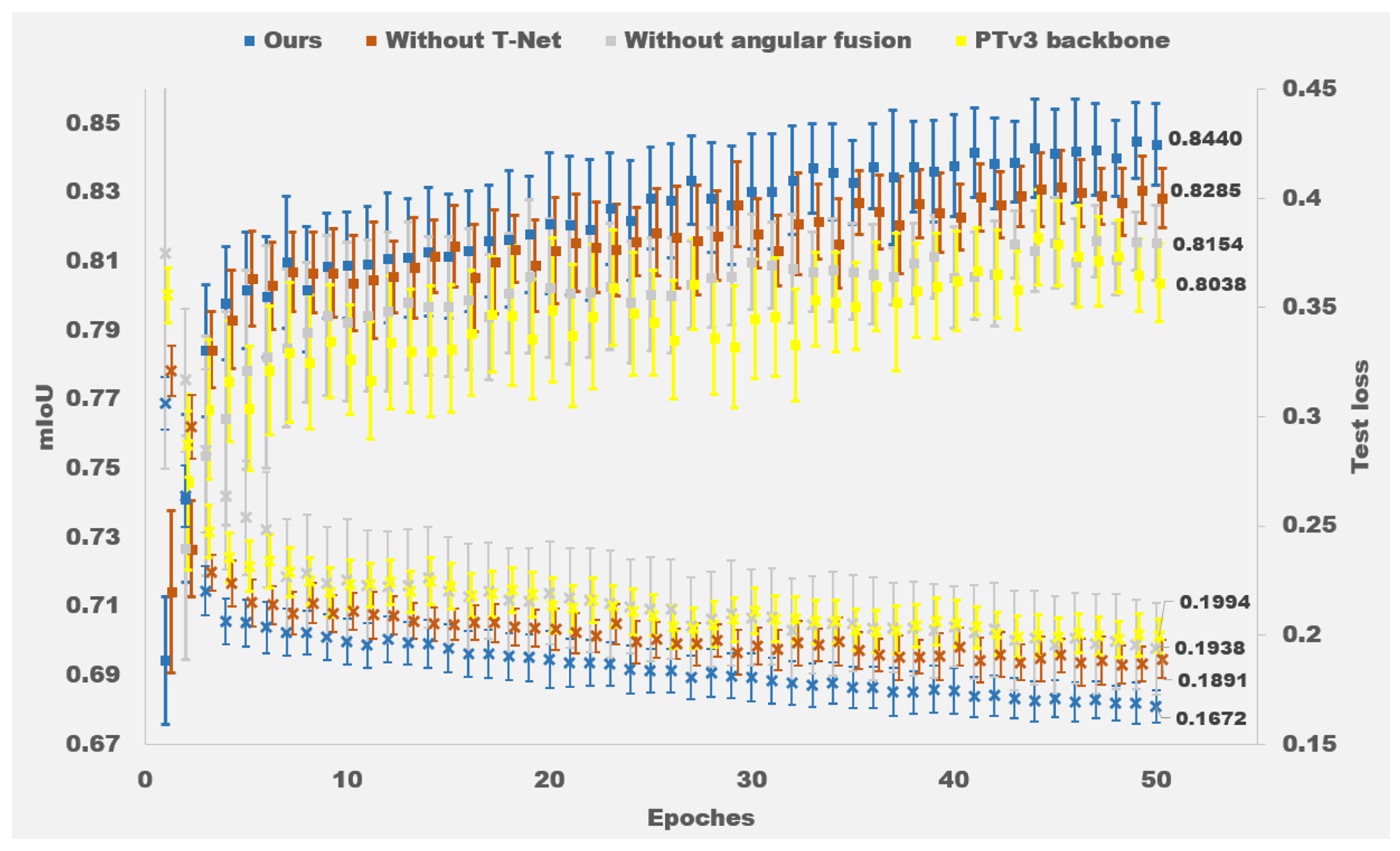
5.1.4. Ablation Study
- (1)
- Angular Fusion Contribution
- (2)
- T-Net Contribution
- (3)
- Synergistic Effect
5.1.5. Discussion
5.2. Comparing Grasp Generation with GraspNet
5.2.1. Experimental Setups
- Baseline method: GraspNet is a conventional object-based grasp synthesis approach that generates grasp poses based on objects placed on planar surfaces. In contrast, our method optimizes grasp predictions specifically for human-to-robot (H2R) handovers by leveraging real-world data that account for relative human–robot angular positions and motion planning complexity.
- Algorithmic setup: Both methods share the same backbone network, a PointNet++ architecture with three encoder and three decoder layers, where the feature dimensions are set to 64, 128, 256 for the encoder and 256, 128, 64 for the decoder. Training is performed on the synthetic dataset described in Section 3.3.1, which comprises 10,800 simulated samples. We use the Adam optimizer with an initial learning rate of 0.0001, a batch size of 15, and train for 50 epochs.For our method, the pre-training process follows exactly the same protocol. The key difference lies in the fine-tuning of the optimal grasp selection module: we additionally utilize 2700 real-world samples from the dataset (Section 4.3.2), where only the optimal grasp label is manually annotated, while the grasp poses themselves are predicted by the network (Section 3.3.3 (3)). This design ensures a fair comparison by keeping the underlying grasp generation identical between the two methods.
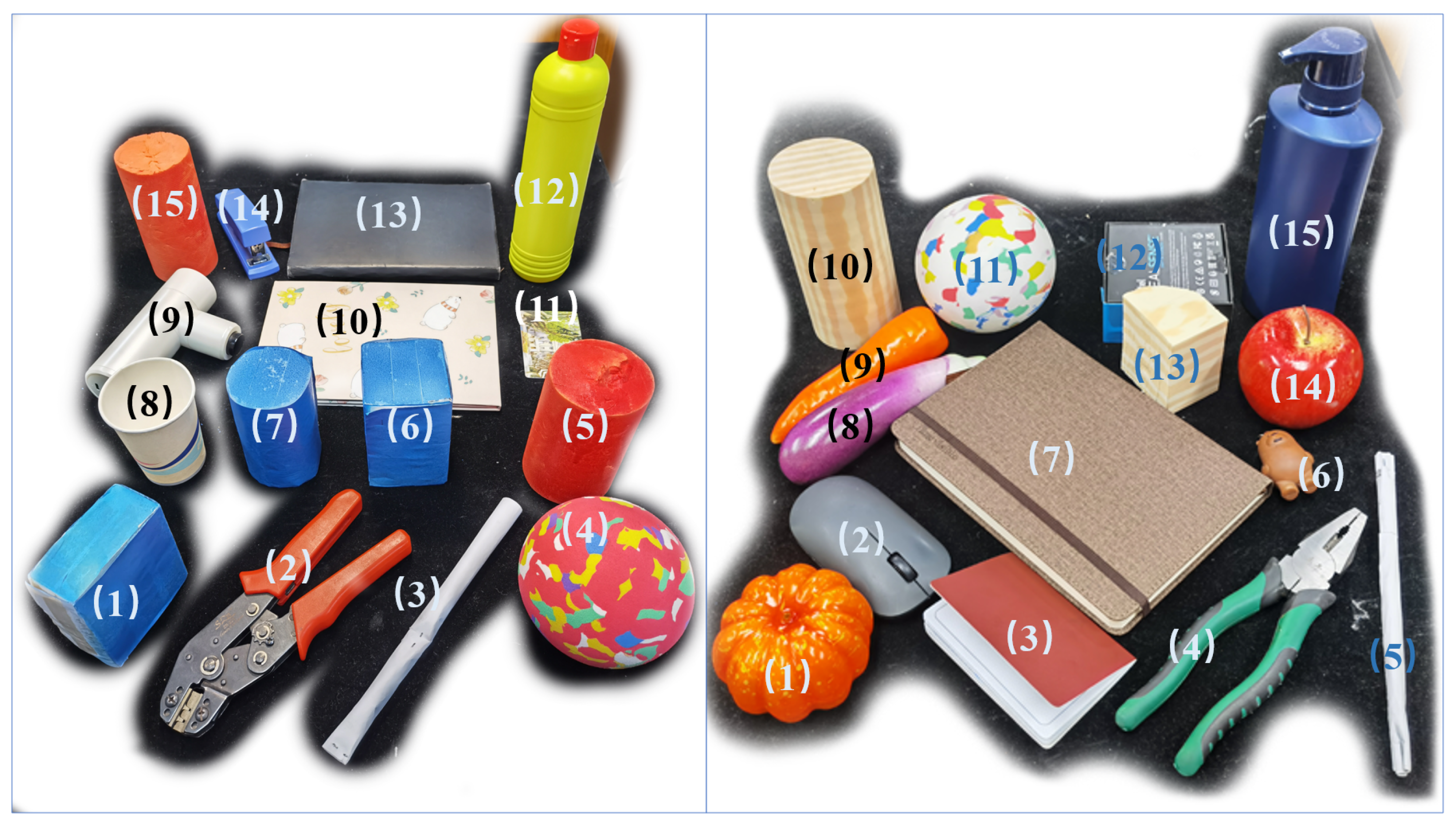
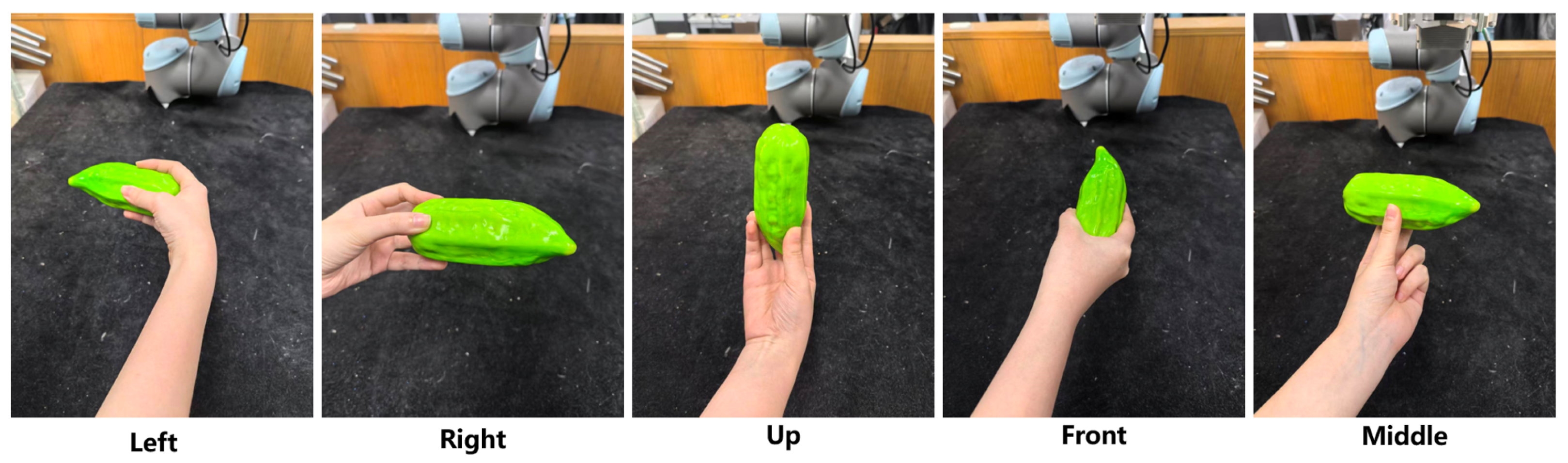
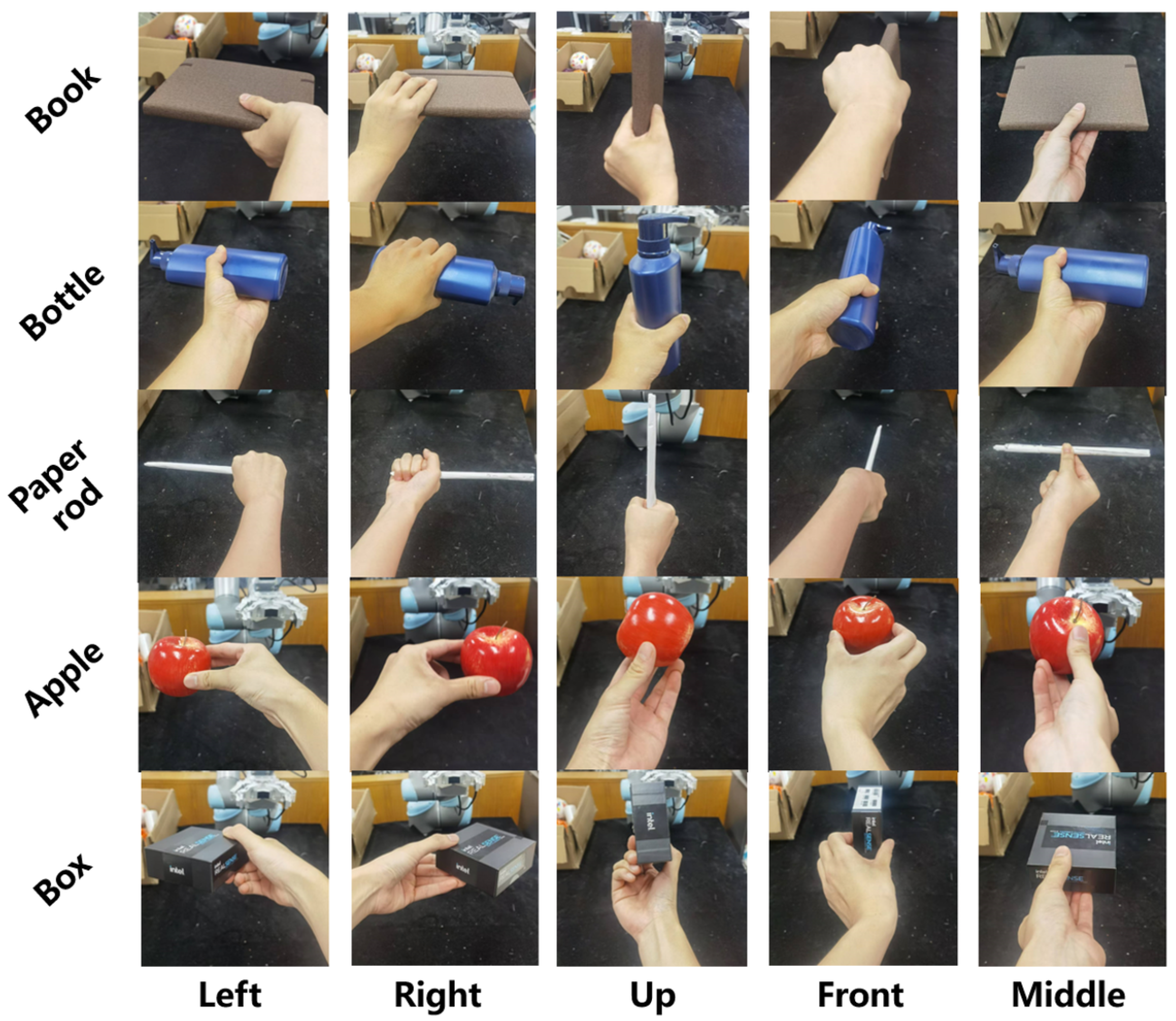
- Handover protocol: A human participant holds each test object using one of the five representative hand postures illustrated in Figure 11 (left, right, up, front, middle). To simulate natural variations in real handovers, the participant is allowed to introduce a slight random rotation of approximately while maintaining the intended posture.
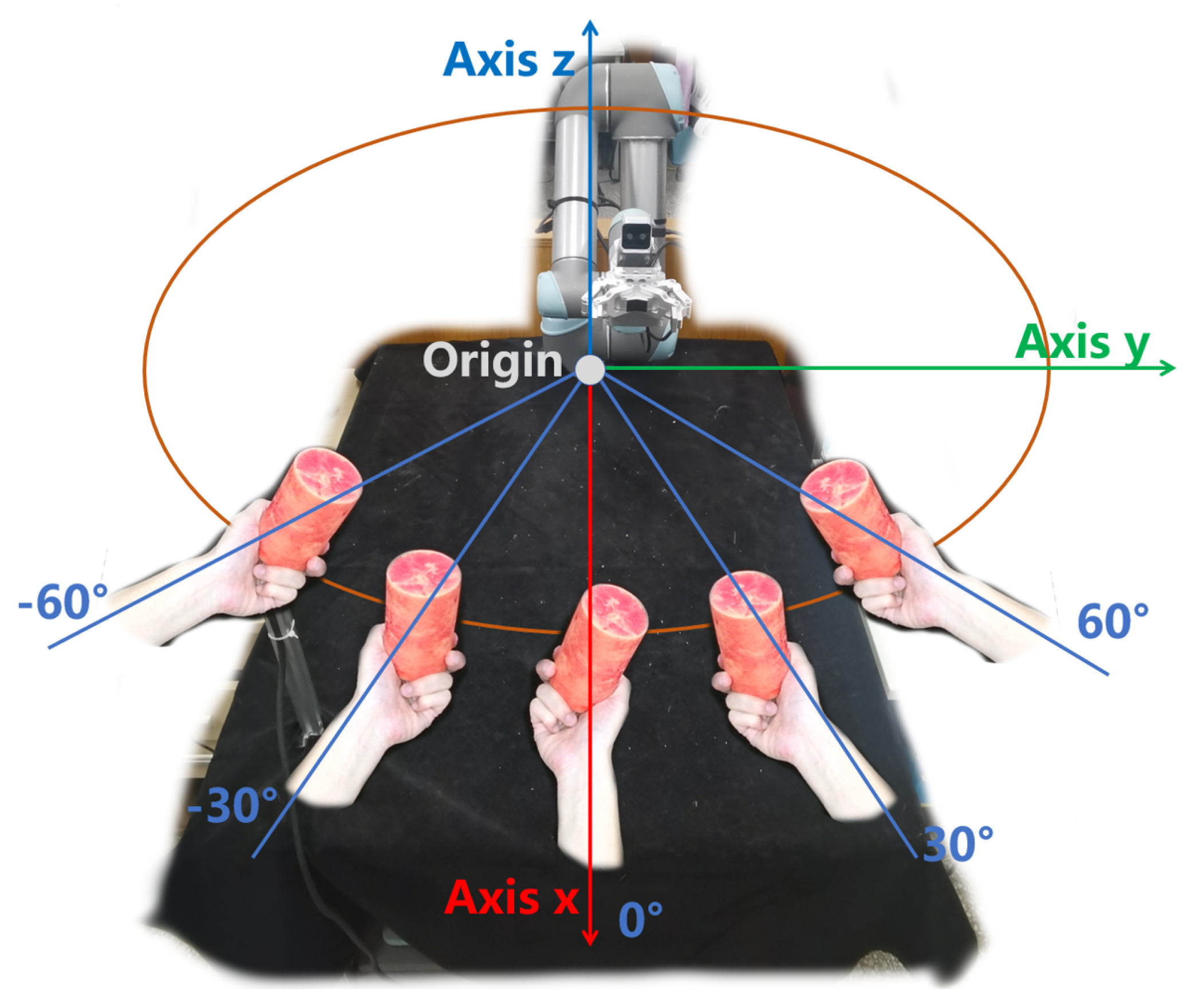
- Participants and trial design: The experiment was conducted under normal indoor lighting conditions (Section 4.2) with one healthy participant who signed informed consent. Handovers were performed with the participant standing at five distinct orientations relative to the robot: , , , , and , as illustrated in Figure 3. In total, 250 handover trials were carried out (5 objects × 5 human grasp postures × 2 methods × 5 angles).
- Test objects: Five everyday objects are used in the evaluation: a bottle, an apple, a box, a rod, and a book, as shown in Figure 11.
- Evaluation metric: The primary metric is the handover success rate, defined as the ratio of successful trials to the total number of valid trials. The precise definition of a successful handover, along with the conditions that constitute failure, follows the protocol established in Section 4.4.2.
5.2.2. Results and Discussion
- (1)
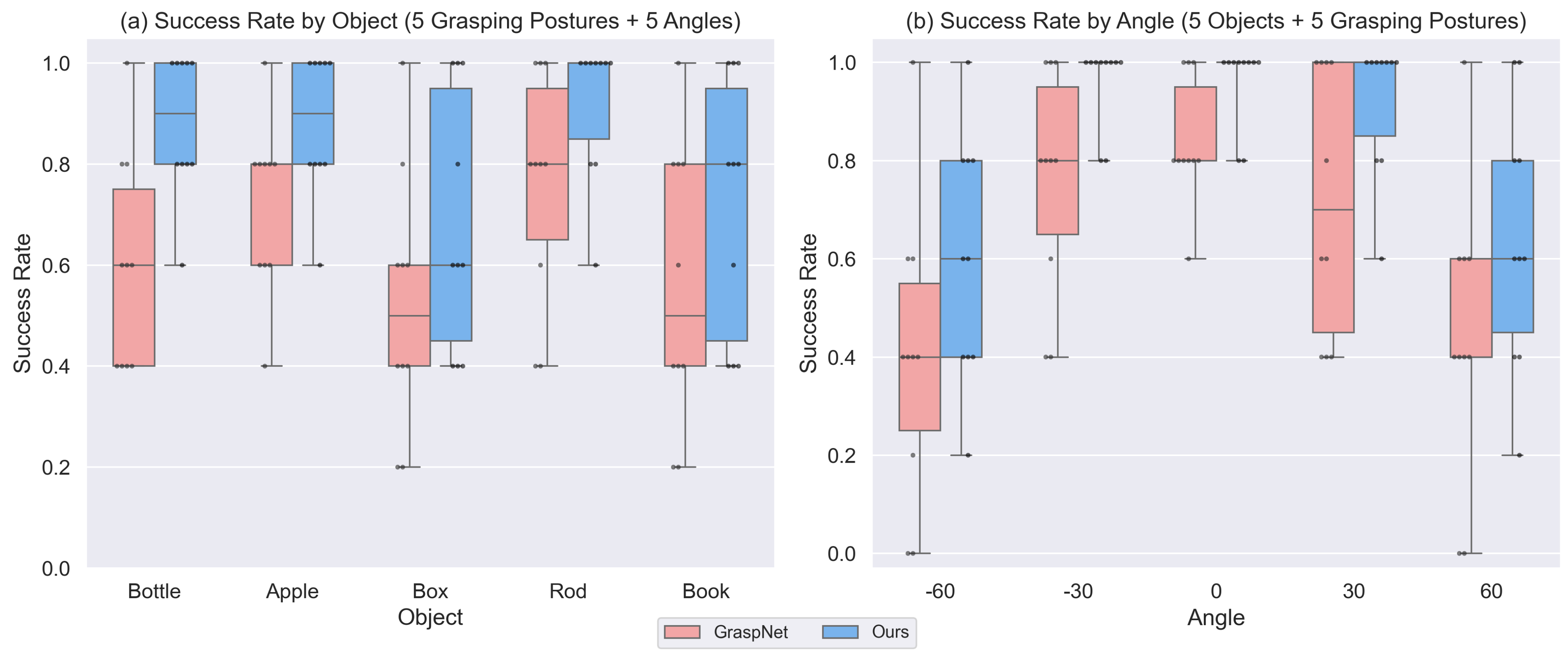
- Per-Object Analysis
- (2)
- Posture-Wise Analysis
- (3)
- Failure Analysis
5.3. Evaluation Perception Pipeline in Adverse Lighting Conditions
5.3.1. Experimental Setup
- (1)
- Control Groups
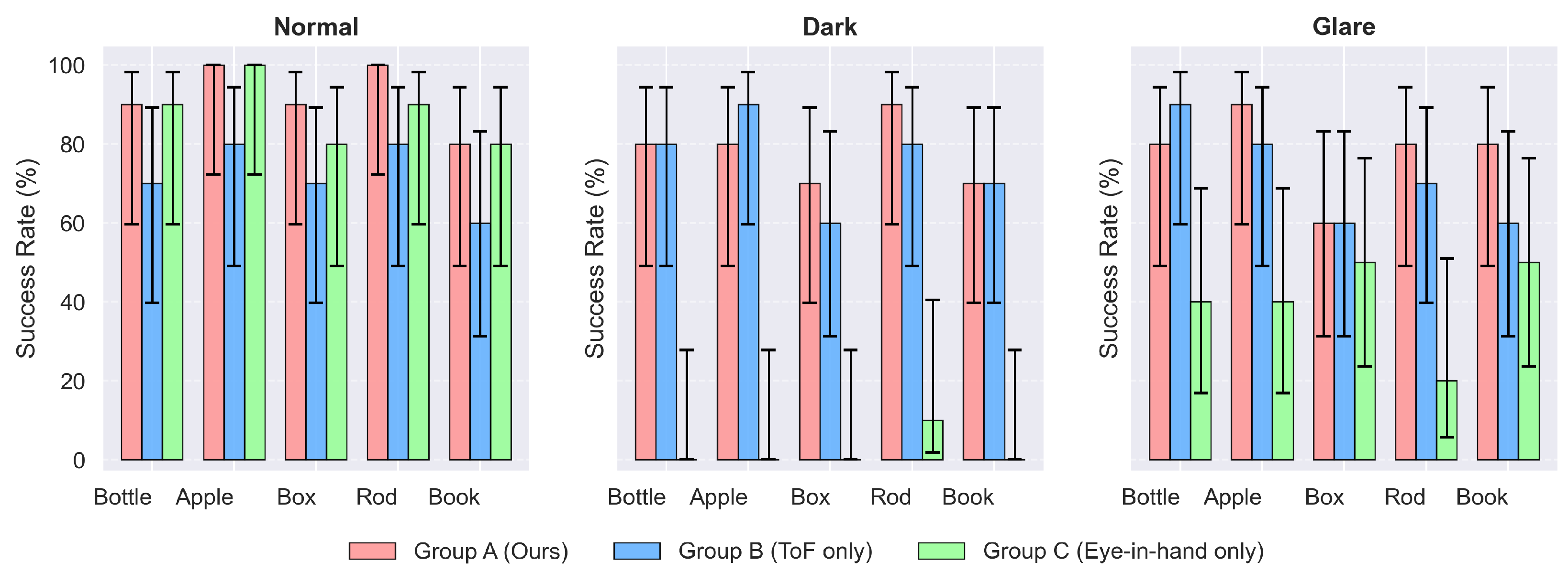
- Group A (Adaptive switching—Ours): Under normal lighting, the system fuses point clouds from both cameras. When darkness or glare is detected, it autonomously switches to ToF-only perception, deactivating the passive NIR camera.
- Group B (Scene camera only baseline): Relies exclusively on the fixed ToF camera for semantic segmentation and grasp generation under all lighting conditions. This baseline isolates the performance of the active ToF modality.
- Group C (Eye-in-hand only baseline): Uses solely the eye-in-hand passive NIR stereo camera throughout all trials, regardless of lighting. This baseline reflects the degradation of passive stereo under adverse conditions as characterized in Section 4.2.
- (2)
- Lighting Conditions
- For Group C, the array directly faces the eye-in-hand passive NIR camera, causing overexposure and performance degradation as described in Section 4.2.
- For Groups A and B, the array directly faces the scene ToF camera; the eye-in-hand camera of Group A is fully deactivated during glare trials and provides no data. This imposes identical optical interference on the active imaging link across groups.
- (3)
- Participants and Trial Design
5.3.2. Results and Discussion
5.4. Comparing with Multimodal SOTA Handover Method in Adverse Lighting
5.4.1. Baseline Method
- Perception Source: Consistent with the original paper, only the RGB-D data from the fixed scene camera (Kinect V2, identical to our system’s scene camera) is used as the perception input.
- Background Filtering: Based on the depth threshold, we filter out RGB pixels corresponding to depth values outside the range of 0.1–0.75 m, to eliminate background clutter and maximize the performance of subsequent semantic segmentation.
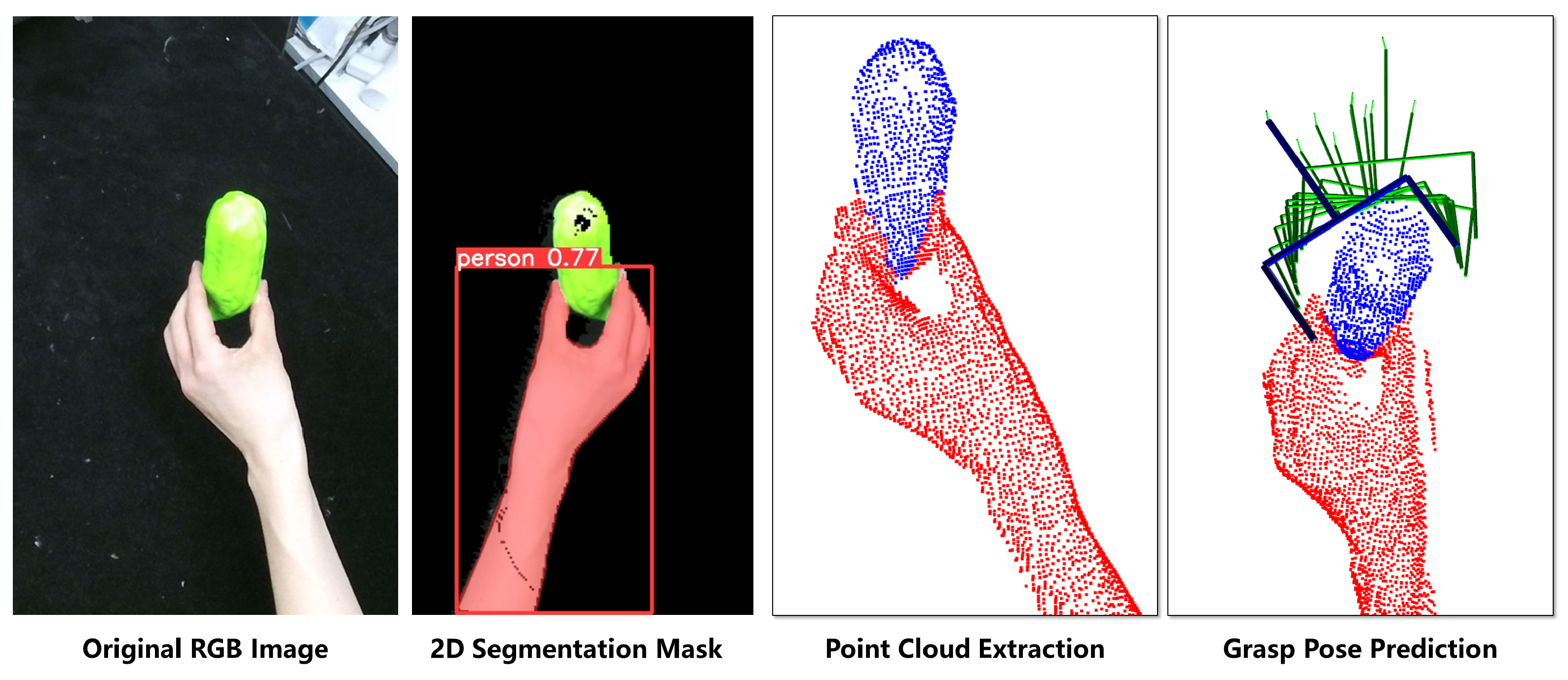
- 2D Semantic Segmentation: We use the YOLOv8-seg model (a more advanced instance segmentation architecture than the YOLOv3+ResNet used in the original paper) to generate 2D pixel masks of the target object and human hand, which achieves stable segmentation performance under normal lighting.
- Object Point Cloud Extraction: The 2D masks generated by YOLOv8-seg are mapped to the aligned depth image of Kinect V2 to extract the object point cloud, which is fully consistent with the core logic of the original paper.
- Grasp Generation: The GraspNet model is used for 6-DoF grasp pose prediction, which follows the same principle of the GGCNN-based grasp prediction in the original paper, and uses the exact same training and deployment settings as the GraspNet baseline in Section 5.2 of this paper.
5.4.2. Experimental Setup
- Handover Protocol: Consistent with Section 5.3, participants stand directly opposite the robotic arm (relative positional angle fixed at 0°), hold the object with 5 representative hand postures (left, right, up, front, middle, as shown in Figure 16) and perform handover trials. Participants are allowed to introduce natural orientation variations of the object to simulate the natural changes in real handover scenarios.
- Participants and Trial Design: 2 healthy participants who signed informed consent forms completed all trials. For the two adverse lighting conditions (dark and glare), each participant completed 1 valid handover trial per hand posture for each method. In total, we conducted 40 independent handover trials: 2 participants × 2 lighting conditions × 2 methods × 5 hand postures.
- Lighting Conditions: Fully consistent with Section 4.2: the dark condition has a measured illuminance of <3 lux at the camera lens, and the glare condition has a measured illuminance of >930 lux, using the same lighting equipment as Section 5.3.
- Test Object: We selected a solid-color plastic fruit as the test object, which has a regular shape and uniform texture. This design provides the most favorable conditions for the pixel-level semantic segmentation of the baseline method, eliminating the interference of object texture and irregular geometry, so that the comparison results can focus on the impact of lighting conditions on the performance of the two methods.
- Software and Hardware Platform: Fully consistent with Section 4.1. The YOLOv8-seg model of the baseline method is implemented via the Ultralytics library in Python, with the target category set to “Person” and the confidence threshold set to 0.1, to ensure maximum detection capability in the controlled background.
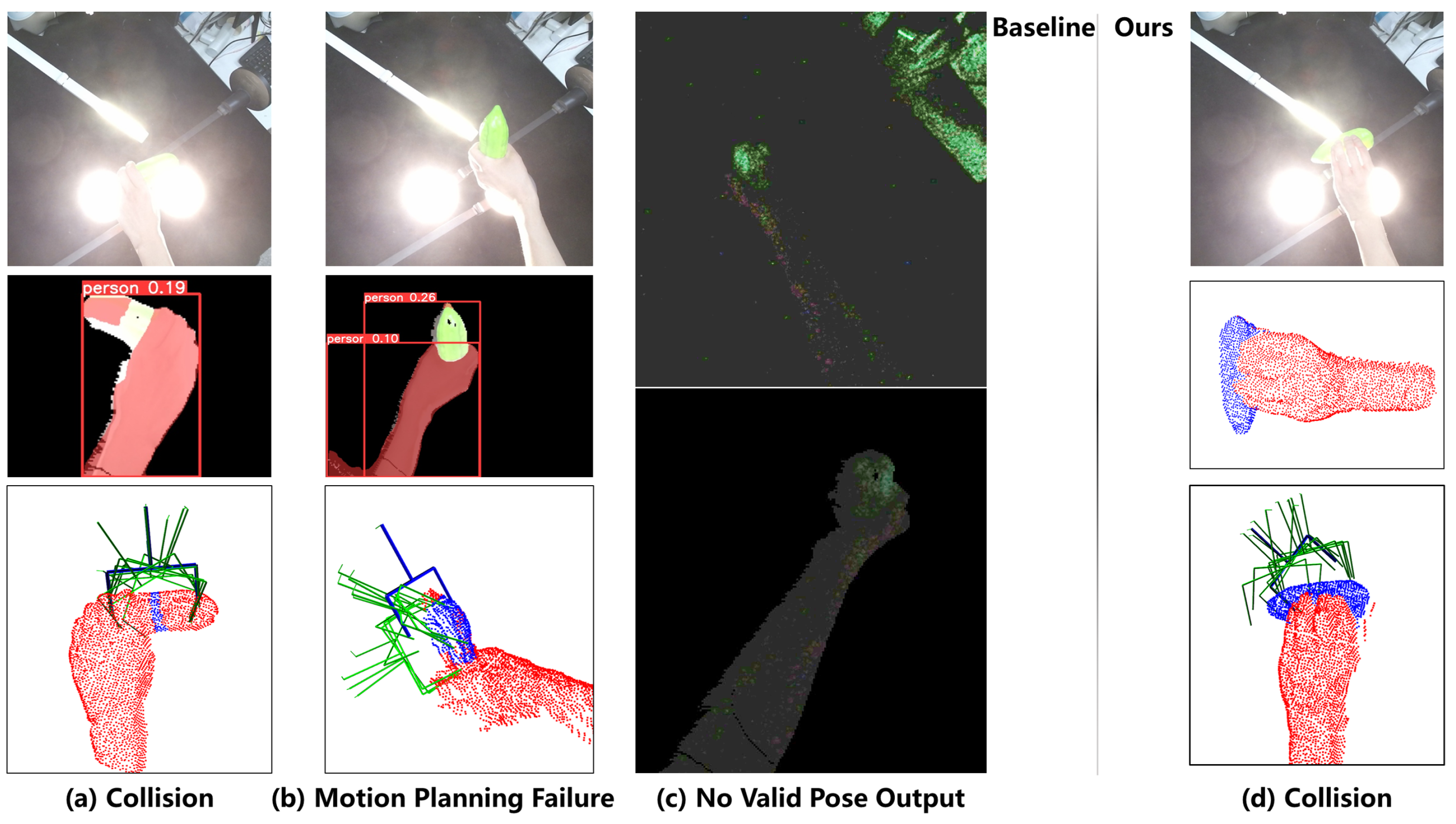
- Evaluation and Failure Recording: The handover success/failure criteria are fully consistent with the definition in Section 4.4.2. For each failed trial, we synchronously record the failure type, which is divided into three categories: (1) Collision between the robot and the human hand/body; (2) Motion planning failure for the predicted target grasp pose; (3) No valid grasp pose output by the system within the valid time window.
5.4.3. Results
- For our method: all failures are concentrated in collisions between the robot and the human hand/object (5 cases in total), which occurred in both glare (3 cases) and darkness (2 cases).
- For the SOTA baseline: the main failure type is “no valid grasp pose output” (11 cases in total; 1 case in glare and 10 cases in darkness), which leads to zero successful handovers in the dark environment. In addition, 4 failures are caused by collision, and 2 failures are caused by motion planning failure, all of which occurred under glare interference.
5.4.4. Discussion
- (1)
- Failure Cause Analysis
- Under glare interference, the baseline method is difficult to achieve effective segmentation. The low-quality object point cloud leads to wrong prediction of the grasp prediction model of the baseline, which results in collision failure (Figure 17a).
- For our method, the grasp prediction algorithm is more likely to have deviation when the target object is largely occluded by the human hand (e.g., the “middle” hand posture), which leads to the deviation of the grasp pose and collision failure (Figure 17d). Notably, this failure is evenly distributed in glare and dark environments, and has no significant correlation with lighting conditions, which further verifies the lighting robustness of our dual-path perception framework.
- (2)
- Scene Adaptability Analysis
6. Conclusions
Author Contributions
Funding
Institutional Review Board Statement
Informed Consent Statement
Data Availability Statement
Conflicts of Interest
References
- Semeraro, F.; Griffiths, A.; Cangelosi, A. Human–robot collaboration and machine learning: A systematic review of recent research. Robot. Comput.-Integr. Manuf. 2023, 79, 102432. [Google Scholar] [CrossRef] [Scilit]
- Yang, W.; Paxton, C.; Cakmak, M.; Fox, D. Human Grasp Classification for Reactive Human-to-Robot Handovers. In Proceedings of the 2020 IEEE/RSJ International Conference on Intelligent Robots and Systems (IROS), Las Vegas, NV, USA, 24 October 2020–24 January 2021; pp. 11123–11130. [Google Scholar] [CrossRef] [Scilit]
- Yang, W.; Paxton, C.; Mousavian, A.; Chao, Y.W.; Cakmak, M.; Fox, D. Reactive Human-to-Robot Handovers of Arbitrary Objects. In Proceedings of the 2021 IEEE International Conference on Robotics and Automation (ICRA), Xi’an, China, 30 May–5 June 2021; pp. 3118–3124. [Google Scholar] [CrossRef] [Scilit]
- Christen, S.; Yang, W.; Pérez-D’Arpino, C.; Hilliges, O.; Fox, D.; Chao, Y.W. Learning Human-to-Robot Handovers from Point Clouds. In Proceedings of the IEEE/CVF Conference on Computer Vision and Pattern Recognition (CVPR), Vancouver, BC, Canada, 18–22 June 2023; pp. 9654–9664. [Google Scholar]
- Rosenberger, P.; Cosgun, A.; Newbury, R.; Kwan, J.; Ortenzi, V.; Corke, P.; Grafinger, M. Object-Independent Human-to-Robot Handovers Using Real Time Robotic Vision. IEEE Robot. Autom. Lett. 2021, 6, 17–23. [Google Scholar] [CrossRef] [Scilit]
- Duan, H.; Wang, P.; Li, Y.; Li, D.; Wei, W. Learning Human-to-Robot Dexterous Handovers for Anthropomorphic Hand. IEEE Trans. Cogn. Dev. Syst. 2023, 15, 1224–1238. [Google Scholar] [CrossRef] [Scilit]
- Mavsar, M.; Ridge, B.; Pahič, R.; Morimoto, J.; Ude, A. Simulation-Aided Handover Prediction from Video Using Recurrent Image-to-Motion Networks. IEEE Trans. Neural Netw. Learn. Syst. 2024, 35, 494–506. [Google Scholar] [CrossRef] [Scilit] [PubMed]
- Mavsar, M.; Ude, A. RoverNet: Vision-Based Adaptive Human-to-Robot Object Handovers. In Proceedings of the 2022 IEEE-RAS 21st International Conference on Humanoid Robots (Humanoids), Ginowan, Japan, 28–30 November 2022; pp. 858–864. [Google Scholar] [CrossRef] [Scilit]
- Liu, D.; Wang, X.; Cong, M.; Du, Y.; Zou, Q.; Zhang, X. Object transfer point predicting based on human comfort model for human-robot handover. IEEE Trans. Instrum. Meas. 2021, 70, 2510311. [Google Scholar] [CrossRef] [Scilit]
- Kshirsagar, A.; Hoffman, G.; Biess, A. Evaluating Guided Policy Search for Human-Robot Handovers. IEEE Robot. Autom. Lett. 2021, 6, 3933–3940. [Google Scholar] [CrossRef] [Scilit]
- Huang, C.I.; Huang, Y.Y.; Liu, J.X.; Ko, Y.T.; Wang, H.C.; Chiang, K.H.; Yu, L.F. Fed-HANet: Federated Visual Grasping Learning for Human Robot Handovers. IEEE Robot. Autom. Lett. 2023, 8, 3772–3779. [Google Scholar] [CrossRef] [Scilit]
- Wang, Z.; Chen, J.; Chen, Z.; Xie, P.; Chen, R.; Yi, L. GenH2R: Learning generalizable human-to-robot handover via scalable simulation demonstration and imitation. In Proceedings of the IEEE/CVF Conference on Computer Vision and Pattern Recognition, Seattle, WA, USA, 16–22 June 2024; pp. 16362–16372. [Google Scholar]
- Orsula, A.; Bøgh, S.; Olivares-Mendez, M.; Martinez, C. Learning to Grasp on the Moon from 3D Octree Observations with Deep Reinforcement Learning. In Proceedings of the 2022 IEEE/RSJ International Conference on Intelligent Robots and Systems (IROS), Kyoto, Japan, 23–27 October 2022; pp. 4112–4119. [Google Scholar] [CrossRef] [Scilit]
- Li, Z.; Stamos, I. Depth-Based 6DoF Object Pose Estimation Using Swin Transformer. In Proceedings of the 2023 IEEE/RSJ International Conference on Intelligent Robots and Systems (IROS), Detroit, MI, USA, 1–5 October 2023; pp. 1185–1191. [Google Scholar] [CrossRef] [Scilit]
- Ma, H.; Huang, D. Towards Scale Balanced 6-DoF Grasp Detection in Cluttered Scenes. In Proceedings of Machine Learning Research, Proceedings of the 6th Conference on Robot Learning, Auckland, New Zealand, 14–18 December 2022; pp. 2004–2013. [Google Scholar]
- Zhang, Y.; Müller, S.; Stephan, B.; Gross, H.M.; Notni, G. Point Cloud Hand–Object Segmentation Using Multimodal Imaging with Thermal and Color Data for Safe Robotic Object Handover. Sensors 2021, 21, 5676. [Google Scholar] [CrossRef] [Scilit] [PubMed]
- Zhong, R.; Hu, B.; Liu, Z.; Qin, Q.; Feng, Y.; Wang, X.V.; Wang, L.; Tan, J. A two-stage framework for learning human-to-robot object handover policy from 4D spatiotemporal flow. Robot. Comput.-Integr. Manuf. 2026, 98, 103171. [Google Scholar] [CrossRef] [Scilit]
- van Zoelen, E.M.; Veldman-Loopik, H.; van den Bosch, K.; Neerincx, M.; Abbink, D.A.; Peternel, L. Enabling Embodied Human-Robot Co-Learning: Requirements, Method, and Test with Handover Task. IEEE Robot. Autom. Lett. 2025, 10, 1425–1432. [Google Scholar] [CrossRef] [Scilit]
- Tulbure, A.; Zurbrügg, R.; Grigat, T.; Hutter, M. LLM-Handover: Exploiting LLMs for Task-Oriented Robot-Human Handovers. IEEE Robot. Autom. Lett. 2025, 10, 12008–12015. [Google Scholar] [CrossRef] [Scilit]
- Wu, X.; Jiang, L.; Wang, P.S.; Liu, Z.; Liu, X.; Qiao, Y.; Ouyang, W.; He, T.; Zhao, H. Point Transformer V3: Simpler, Faster, Stronger. In Proceedings of the 2024 IEEE/CVF Conference on Computer Vision and Pattern Recognition (CVPR), Seattle, WA, USA, 16–22 June 2024; pp. 4840–4851. [Google Scholar] [CrossRef] [Scilit]
- Lin, S.; Zheng, G.; Wang, Z.; Han, R.; Xing, W.; Zhang, Z.; Peng, Y.; Pan, J. Embodied neuromorphic synergy for lighting-robust machine vision to see in extreme bright. Nat. Commun. 2024, 15, 10781. [Google Scholar] [CrossRef] [Scilit] [PubMed]
- Ye, Q.; Liu, Q.; Wang, S.; Chen, J.; Cui, Y.; Jin, K.; Chen, H.; Cai, X.; Li, G.; Chen, J. Visual-tactile pretraining and online multitask learning for humanlike manipulation dexterity. Sci. Robot. 2026, 11, eady2869. [Google Scholar] [CrossRef] [Scilit] [PubMed]
- Huang, X.; Zhang, Y.; Li, H.; An, Q.; Zhao, G. SLiG-Net: A joint pose optimization network for space robot grasping under low-light conditions in on-orbit operations. Acta Astronaut. 2025, 238, 150–167. [Google Scholar] [CrossRef] [Scilit]
- Liu, X.; Song, K.; Liu, Z.; Xu, Z.; Yan, Y. Efficient Six-Degrees of Freedom (6-DoF) Grasp Pose Detection in Cluttered Scenes via Multimodal Fusion and Object-Centric Receptive Fields. IEEE Trans. Ind. Inform. 2026, 22, 1574–1585. [Google Scholar] [CrossRef] [Scilit]
- Eppner, C.; Mousavian, A.; Fox, D. ACRONYM: A Large-Scale Grasp Dataset Based on Simulation. In Proceedings of the 2021 IEEE International Conference on Robotics and Automation (ICRA), Xi’an, China, 30 May–5 June 2021; pp. 6222–6227. [Google Scholar] [CrossRef] [Scilit]
- Mousavian, A.; Eppner, C.; Fox, D. 6-DOF GraspNet: Variational Grasp Generation for Object Manipulation. In Proceedings of the IEEE/CVF International Conference on Computer Vision (ICCV), Seoul, Republic of Korea, 27 October–2 November 2019; pp. 2901–2910. [Google Scholar]
- Chao, Y.W.; Yang, W.; Xiang, Y.; Molchanov, P.; Handa, A.; Tremblay, J.; Narang, Y.S.; Van Wyk, K.; Iqbal, U.; Birchfield, S.; et al. DexYCB: A Benchmark for Capturing Hand Grasping of Objects. In Proceedings of the IEEE/CVF Conference on Computer Vision and Pattern Recognition (CVPR), Nashville, TN, USA, 20–25 June 2021; pp. 9044–9053. [Google Scholar]
- Qi, C.R.; Yi, L.; Su, H.; Guibas, L.J. PointNet++: Deep Hierarchical Feature Learning on Point Sets in a Metric Space. In Proceedings of the Advances in Neural Information Processing Systems; Curran Associates, Inc.: Red Hook, NY, USA, 2017; Volume 30, pp. 5099–5108. [Google Scholar]
- Yang, Y.Q.; Guo, Y.X.; Xiong, J.Y.; Liu, Y.; Pan, H.; Wang, P.S.; Tong, X.; Guo, B. Swin3D: A Pretrained Transformer Backbone for 3D Indoor Scene Understanding. Comput. Vis. Media 2025, 11, 83–101. [Google Scholar] [CrossRef] [Scilit]
- Lai, X.; Chen, Y.; Lu, F.; Liu, J.; Jia, J. Spherical transformer for lidar-based 3d recognition. In Proceedings of the IEEE/CVF Conference on Computer Vision and Pattern Recognition, Vancouver, BC, Canada, 18–22 June 2023; pp. 17545–17555. [Google Scholar]
- Xing, X.; Burdet, E.; Si, W.; Yang, C.; Li, Y. Impedance Learning for Human-Guided Robots in Contact with Unknown Environments. IEEE Trans. Robot. 2023, 39, 3705–3721. [Google Scholar] [CrossRef] [Scilit]



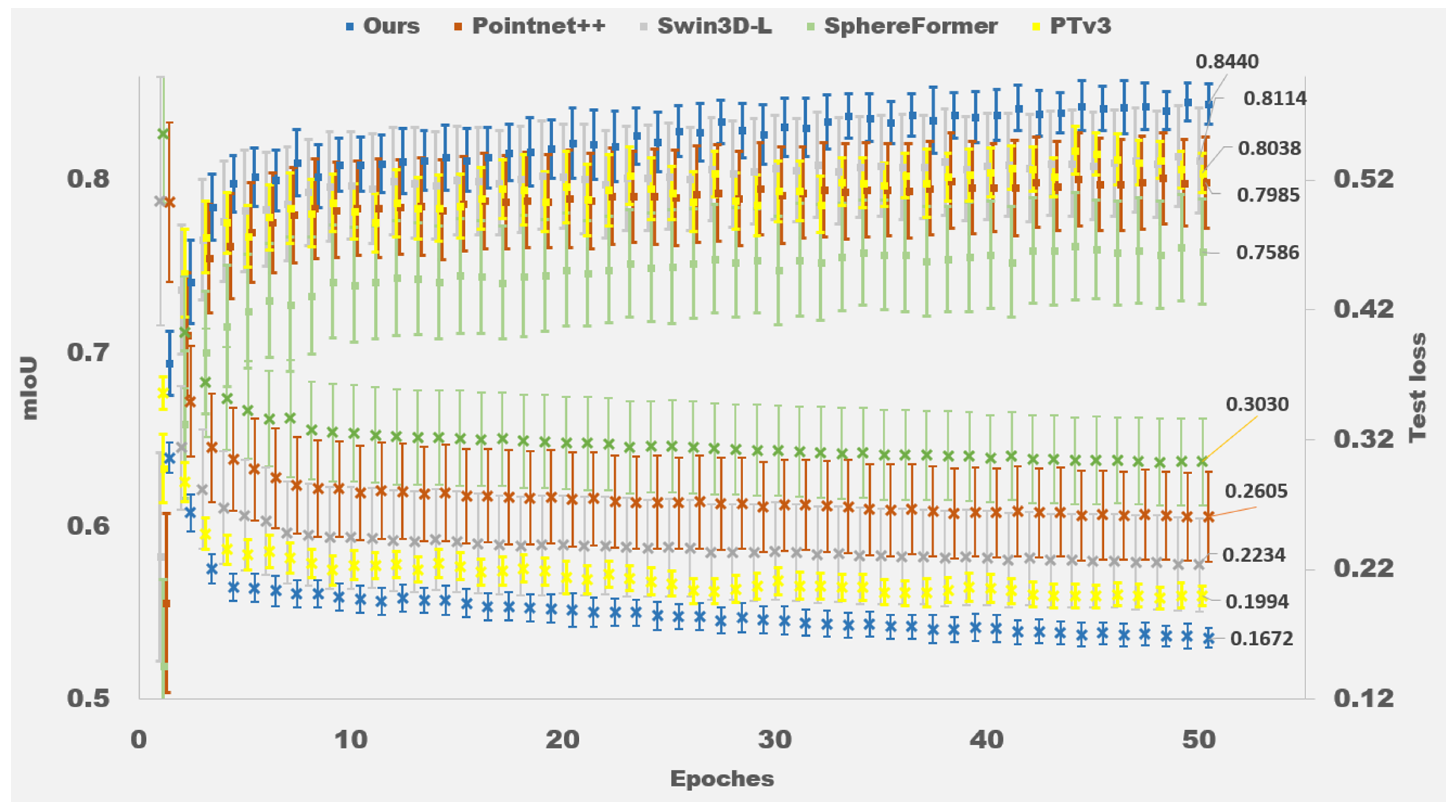





| Methods | mIoU (%) | mAcc (%) | Test Loss | Inference Latency (ms) |
|---|---|---|---|---|
| Ours | ||||
| Pointnet++ [28] | ||||
| Swin3D-L [29] | ||||
| SphereFormer [30] | ||||
| PTv3 [20] |
| Category | Backboned | w/o Angular | w/o T-Net | Ours |
|---|---|---|---|---|
| Others | ||||
| Human | ||||
| Objects | ||||
| Relative angle (0°) | ||||
| Relative angle (±30°) | ||||
| Relative angle (±60°) | ||||
| Mean mIoU |
| Angle Category | Accuracy |
|---|---|
| 0° | |
| ±30° | |
| ±60° | |
| Overall Accuracy |
| Category | GraspNet | Ours | ||
|---|---|---|---|---|
| Success | Rate (%) | Success | Rate (%) | |
| By object | ||||
| Bottle | 15/25 | 60.0 | 22/25 | 88.0 |
| Apple | 18/25 | 72.0 | 22/25 | 88.0 |
| Box | 13/25 | 52.0 | 17/25 | 68.0 |
| Rod | 19/25 | 76.0 | 23/25 | 92.0 |
| Book | 14/25 | 56.0 | 18/25 | 72.0 |
| By angle | ||||
| 10/25 | 40.0 | 15/25 | 60.0 | |
| 19/25 | 76.0 | 24/25 | 96.0 | |
| 21/25 | 84.0 | 24/25 | 96.0 | |
| 18/25 | 72.0 | 23/25 | 92.0 | |
| 11/25 | 44.0 | 16/25 | 64.0 | |
| By posture | ||||
| Left | 17/25 | 68.0 | 20/25 | 80.0 |
| Right | 17/25 | 68.0 | 21/25 | 84.0 |
| Up | 16/25 | 64.0 | 20/25 | 80.0 |
| Front | 10/25 | 40.0 | 18/25 | 72.0 |
| Middle | 19/25 | 76.0 | 23/25 | 92.0 |
| Overall | 79/125 | 63.2 | 102/125 | 81.6 |
| System Group | Normal | Dark | Glare | Overall |
|---|---|---|---|---|
| Group A (Ours) | 46/50 | 39/50 | 39/50 | 124/150 |
| Group B (ToF only) | 36/50 | 38/50 | 36/50 | 110/150 |
| Group C (Eye-in-hand) | 44/50 | 1/50 | 20/50 | 65/150 |
| Method | Glare Interference | Darkness | Overall Success Rate |
|---|---|---|---|
| SOTA Baseline [5] | 3/10 | 0/10 | 3/20 (15.0%) |
| Ours | 7/10 | 8/10 | 15/20 (75.0%) |
| Method | Collision | Motion Planning Failure | No Valid Pose Output | Total Failures |
|---|---|---|---|---|
| SOTA Baseline [5] | 4 | 2 | 11 | 17/20 |
| Ours | 5 | 0 | 0 | 5/20 |
Disclaimer/Publisher’s Note: The statements, opinions and data contained in all publications are solely those of the individual author(s) and contributor(s) and not of MDPI and/or the editor(s). MDPI and/or the editor(s) disclaim responsibility for any injury to people or property resulting from any ideas, methods, instructions or products referred to in the content. |
© 2026 by the authors. Licensee MDPI, Basel, Switzerland. This article is an open access article distributed under the terms and conditions of the Creative Commons Attribution (CC BY) license.
Share and Cite
Wang, Y.; Xu, B.; Li, H.; Song, A. Robust Human-to-Robot Handover System Under Adverse Lighting. Biomimetics 2026, 11, 231. https://doi.org/10.3390/biomimetics11040231
Wang Y, Xu B, Li H, Song A. Robust Human-to-Robot Handover System Under Adverse Lighting. Biomimetics. 2026; 11(4):231. https://doi.org/10.3390/biomimetics11040231
Chicago/Turabian StyleWang, Yifei, Baoguo Xu, Huijun Li, and Aiguo Song. 2026. "Robust Human-to-Robot Handover System Under Adverse Lighting" Biomimetics 11, no. 4: 231. https://doi.org/10.3390/biomimetics11040231
APA StyleWang, Y., Xu, B., Li, H., & Song, A. (2026). Robust Human-to-Robot Handover System Under Adverse Lighting. Biomimetics, 11(4), 231. https://doi.org/10.3390/biomimetics11040231