1. Introduction
Drag reduction technologies for marine vessels and other fluid transport systems are of great importance because they can significantly decrease fuel consumption, enhance flow rates, and increase operational efficiency, thereby generating substantial economic and environmental benefits [
1,
2,
3,
4]. Over the past decades, a variety of active and passive drag reduction techniques have been proposed, including polymer additives, microbubble injection, compliant coatings, superhydrophobic surfaces, and bioinspired microstructures [
5]. Although these approaches have achieved remarkable reductions in frictional drag, many of them still suffer from inherent drawbacks such as high energy consumption, environmental concerns, or limited durability, which restrict their large-scale application.
Natural organisms, through long-term evolution, have developed a rich repertoire of morphological and interfacial strategies to minimize hydrodynamic resistance under harsh environments [
6]. Five representative bioinspired concepts have attracted extensive attention in the field of drag reduction: shark skin-inspired microstructure drag reduction, dolphin-skin-inspired compliant walls, penguin-feather-inspired microbubble drag reduction, lotus-leaf-inspired superhydrophobic drag reduction, and pitcher-plant-inspired slippery liquid-infused surfaces [
7]. These natural examples demonstrate that appropriately designed surface topography and interfacial properties can passively manipulate the near-wall flow, providing energy-efficient solutions for flow control in marine and fluid engineering.
Among the various bioinspired strategies, interfacial-slip-based approaches such as superhydrophobic surfaces (SHSs), liquid-infused surfaces (LISs), and mucus-inspired slippery coatings have emerged as particularly promising. SHSs combine hydrophobic chemistry with micro/nano-scale roughness to entrap a stable air layer, or plastron, between the roughness elements when submerged [
8,
9]. The presence of this air–water interface effectively changes the boundary condition from no-slip to partial slip, thereby weakening the near-wall shear and reducing turbulent frictional drag. Extensive reviews and experiments have demonstrated that well-designed SHSs can achieve substantial drag reduction in laminar and turbulent flows, with the drag reduction level strongly depending on texture geometry, gas fraction, and Reynolds number [
10]. However, maintaining a stable air layer under high pressure and over long operational periods remains challenging, as plastron depletion and gas dissolution can severely degrade performance.
Inspired by the Nepenthes pitcher plant, slippery liquid-infused porous surfaces (SLIPS) or liquid-infused surfaces (LISs) have been proposed as an alternative to air-based SHSs. In these surfaces, a viscous immiscible lubricant is locked within a textured or porous solid due to capillarity, forming a stable liquid–liquid interface with extremely low contact-angle hysteresis [
11,
12]. The lubricant layer provides a robust slip boundary, enabling high mobility of aqueous or oily liquids and achieving drag reduction levels on the order of 10–30% for various fluids [
13,
14]. Compared with SHSs, LISs exhibit better pressure tolerance and self-healing capability; nevertheless, lubricant depletion under continuous shear and mechanical damage is still a critical issue.
Another important class of bioinspired drag-reducing surfaces is based on mucus or mucus-like compliant coatings. Many fish and aquatic organisms secrete a viscoelastic mucus layer on their body surface, which forms a lubricating interface and modifies near-wall turbulence [
15]. Experiments have reported drag reduction rates of several tens of percent for fish mucus or mucus-mimicking polymer solutions at appropriate concentrations [
16]. Mucus-inspired bionic membranes and slime–groove hybrid surfaces can effectively suppress turbulent fluctuations and attenuate wall-shear stress [
17,
18]. These mucus or lubricant-based coatings are often combined with underlying microgrooved textures that store and redistribute the liquid phase, again indicating that the geometry of the groove plays a crucial role in determining the overall drag reduction performance. Therefore, a clear understanding of how canonical groove shapes influence the formation of near-wall vortices and local shear stress is essential for the rational design of both hydrophobic and mucus-based drag-reducing coatings.
Despite the rapid development of interfacial-slip technologies, shark-skin-inspired microstructured surfaces remain one of the most attractive strategies for turbulent drag reduction in marine applications, because they are purely passive, require no external energy input, and are compatible with large-scale manufacturing [
19,
20]. Biological observations reveal that the skin of fast-swimming sharks, such as the shortfin mako shark, is covered with specialized placoid scales whose surfaces exhibit longitudinal riblet-like grooves with characteristic widths below 100 μm [
21,
22,
23,
24]. These grooves are aligned with the main flow direction and have been hypothesized to lift and pin streamwise vortices within the viscous sublayer, thereby suppressing lateral momentum transfer and reducing skin-friction drag [
19,
25,
26]. Experimental studies on engineered shark-skin replicas and riblet surfaces—such as triangular, blade-shaped, and semicircular grooves—have demonstrated drag reduction rates of several percent to more than 10% in turbulent flows, confirming the effectiveness of groove-type microstructures [
27,
28,
29,
30,
31]. “Recent advances in biomimetic riblet design have demonstrated significant potential for practical applications. Mawignon et al. [
32] achieved 13.5% drag reduction through optimized cuboidal riblet geometries, while Zani et al. [
33] explored multi-scale hierarchical designs for enhanced turbulent boundary layer control. These studies, along with comprehensive reviews by Pakatchian et al. [
34], highlight the continued relevance of riblet-based drag reduction research.
Building on these findings, considerable efforts have been devoted to fabricating shark-skin-inspired surfaces using polymers, metals, and composite materials, as well as to exploring their performance in realistic flow conditions. However, most experimental investigations provide limited insight into the internal flow structures inside and above the grooves, because direct measurements of microscale vortices in turbulent boundary layers are extremely challenging. Computational fluid dynamics (CFD) simulations offer a powerful tool to complement experiments by resolving the detailed flow field and elucidating the underlying drag-= reduction mechanisms. Previous numerical studies on riblet and shark-skin-inspired surfaces have revealed that microgrooves can modify the near-wall turbulence structures and reduce wall shear stress [
35,
36,
37]. Nevertheless, many of these works rely on traditional vortex-identification methods such as the
Q and λ
2 criteria, which are threshold-dependent and may miss weak vortices close to the wall. Moreover, systematic quantitative relationships between groove geometry, near-wall vortex characteristics, and drag reduction performance have not yet been fully established.
A critical review of the literature reveals three key gaps that currently limit the practical application of riblet-based drag reduction. First, most studies examine single groove geometries without systematic comparison under identical conditions, preventing clear design preferences. Second, while the relationship between groove dimensions and drag reduction has been explored, the effect of aspect ratio (h+/s+) on vortex formation and drag reduction remains poorly understood, lacking quantitative design criteria. Third, previous investigations predominantly rely on traditional vortex identification methods (Q criterion, λ2 method) that require subjective threshold selection, leading to inconsistent vortex identification and hindering quantitative mechanism analysis. The present work addresses these gaps through systematic CFD simulations. Specifically, three representative groove geometries (V-groove, blade-groove, and arc-groove) are systematically compared under identical flow conditions to establish a quantitative ranking of drag reduction performance correlated with vortex metrics. The effect of aspect ratio (h+/s+ ranging from 0.35 to 1.0) on drag reduction performance is parametrically investigated using blade-groove microstructures as a representative case to establish optimal design criteria. Furthermore, the third-generation Ω vortex-identification criterion is employed for threshold-independent vortex analysis, enabling quantitative correlation between vortex characteristics and drag reduction performance. Together, these investigations provide a comprehensive design framework that bridges the gap between fundamental understanding and practical application of biomimetic drag-reducing surfaces. This work extends the current understanding of biomimetic drag-reducing surfaces beyond traditional Q or λ2 methods.
3. Results and Discussion
3.1. Drag Reduction Effect of Microstructures
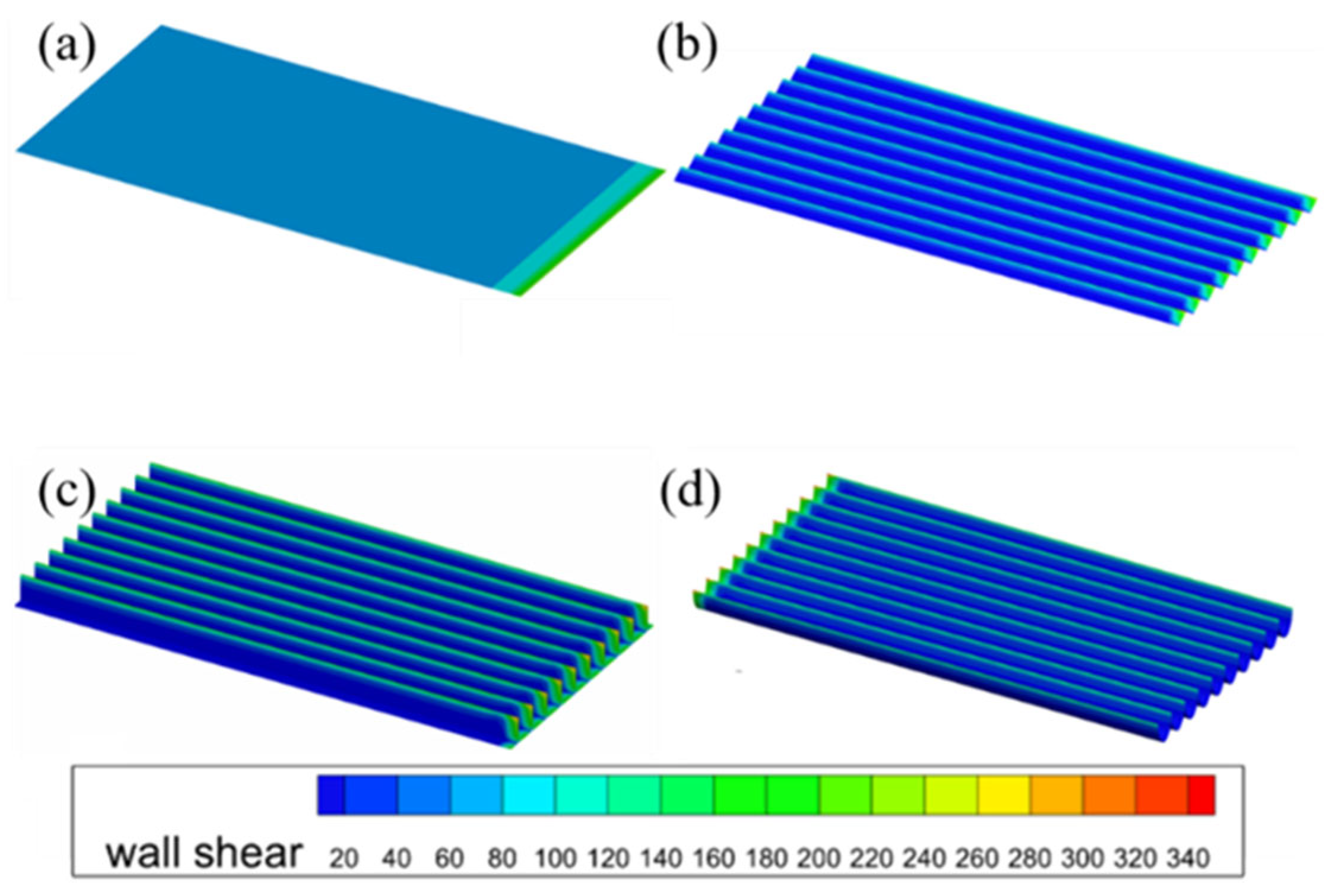
Figure 5 illustrates the wall-shear-stress distributions for the smooth wall and the three microstructured surfaces. The microstructured surfaces significantly affect the distribution and magnitude of the wall shear stress. Excluding the fluid inlet area, the shear stress is uniformly distributed across the smooth surface, with overall high shear stress levels. For V-groove, blade-groove, and arc-groove microstructures, the distribution of shear stress is noticeably uneven, with periodic fluctuations appearing that correspond to the groove geometry. Compared with the smooth wall, the mean wall-shear-stress values on the microstructured surfaces are markedly reduced, confirming the effectiveness of groove-induced drag reduction. The shear stress reaches its peak at the crests of the microstructures and reaches a minimum at the troughs.
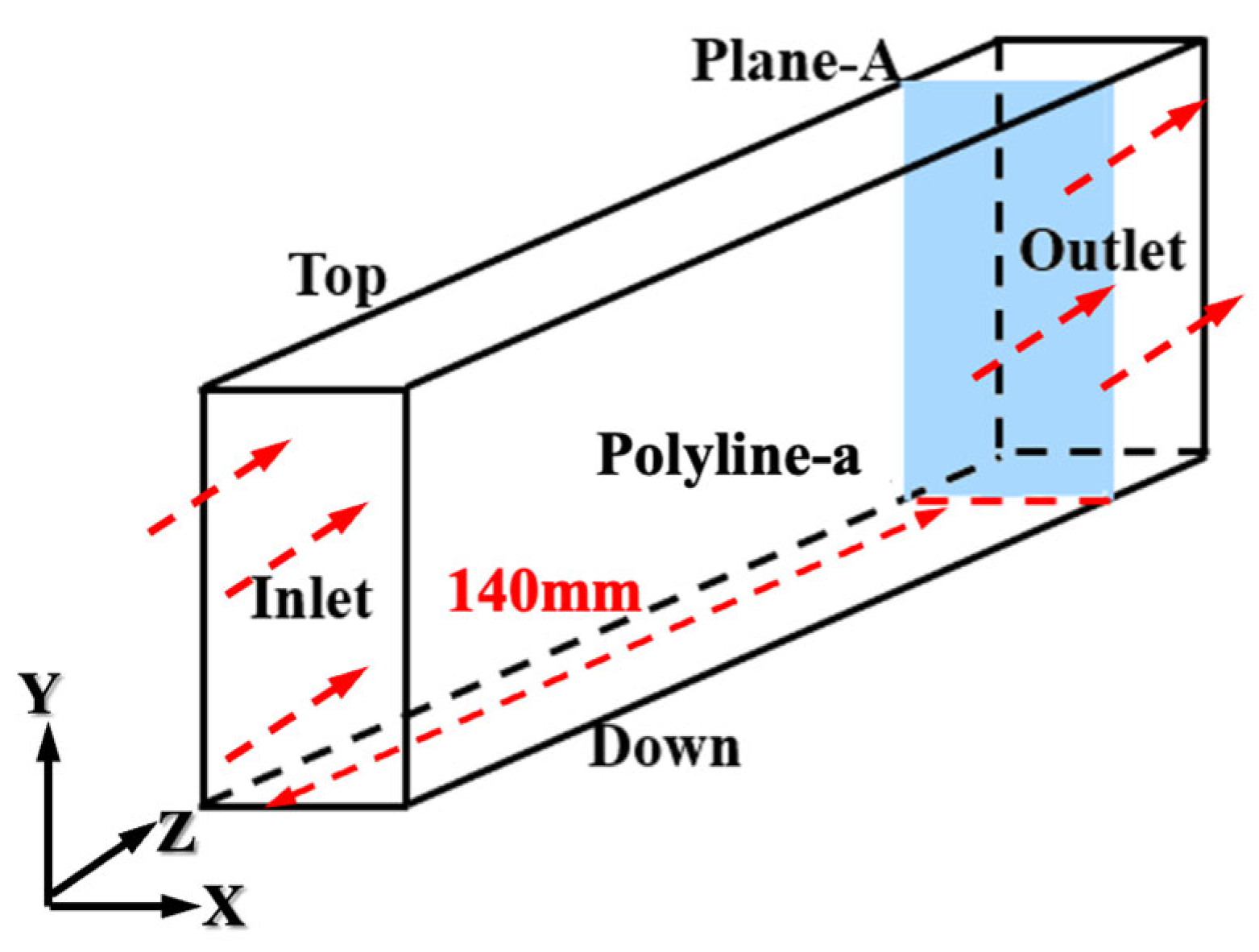
To further investigate the influence of different microstructured surfaces on near-wall flow, a cross-sectional slice, Plane-A, is made at 140 mm from the fluid inlet (where the fluid reaches a full turbulent state). This cross-section intersects with the bottom surface to form a spanwise polyline, Polyline-a, as shown in
Figure 6. This approach enables detailed analysis of flow variations across the microstructured region, providing insight into how surface geometry influences near-wall turbulence.
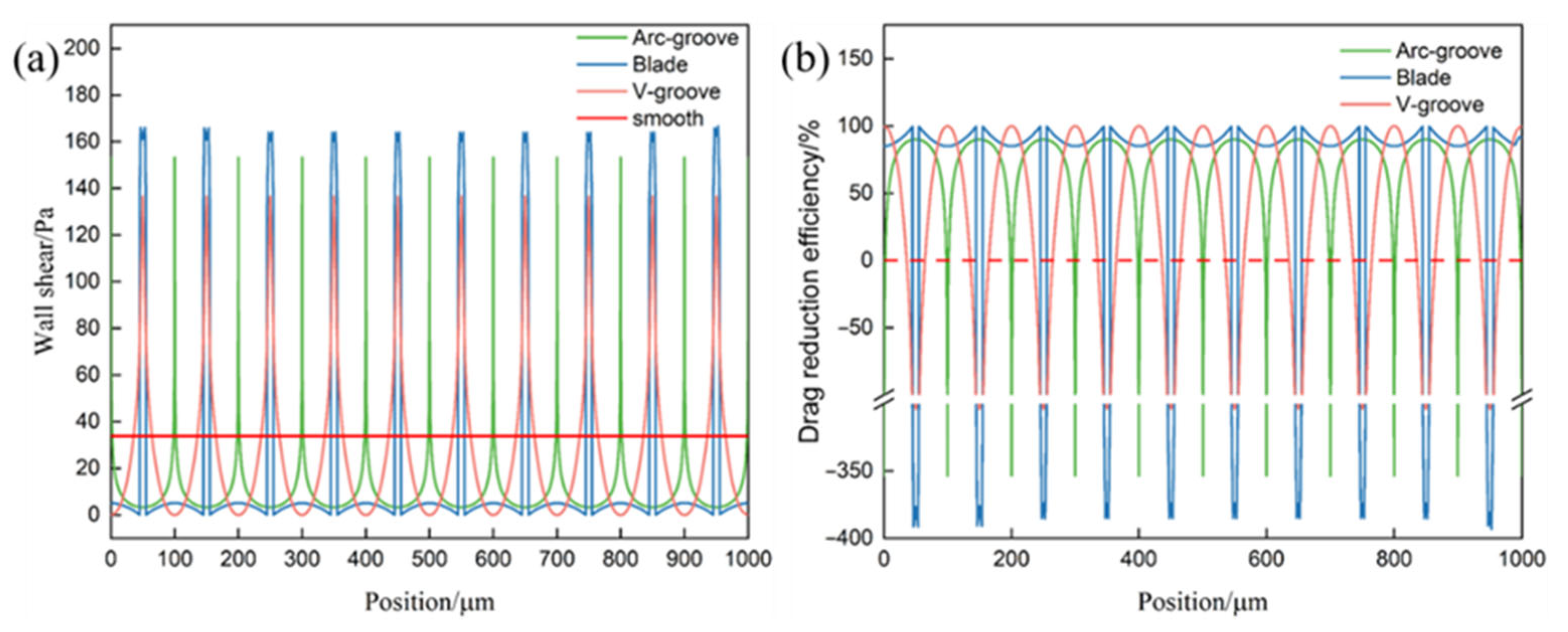
To explore the distribution of wall shear stress affected by different microstructure surfaces further, the shear stress distribution along Polyline-a is extracted using Tecplot. The wall shear stress on microstructured surfaces exhibits periodic variations. The maximum wall shear stress on microstructure surfaces significantly increases compared to that on the smooth surfaces, sometimes by several multiples. However, these stress peaks occur over a very narrow spanwise extent. Consequently, all three microstructure types achieve net reductions in wall shear stress.
The wall shear stress distributions on different microstructured surfaces were analyzed to understand the drag reduction mechanisms.
Figure 7a presents the computational domain with the measurement plane indicated, showing the location where wall shear stress data were extracted. The measurement plane is positioned at the mid-span of the microstructured region to capture representative flow characteristics while avoiding edge effects.
To further quantify the drag reduction effects of different microstructure surfaces, a method is proposed that involves comparing the wall shear stress on smooth and microstructure surfaces to characterize the rate of drag reduction [
46]. The formula for calculating the drag reduction rate is as follows:
The drag reduction rate η is calculated based on the difference between the wall shear stress of a smooth surface (τsmooth) and the microstructure surface (τgroove). When η is greater than 0, it exhibits drag reduction; conversely, when η is less than 0, it exhibits drag increase.
To quantify the effect of these variations,
Figure 7b shows the local drag reduction rate
η along Polyline-a, calculated from the corresponding wall shear stresses according to Equation (9). Here
η represents the local reduction of wall shear stress relative to the smooth wall at the same streamwise position. It can be seen that grooved surfaces achieve positive drag reduction over a large portion of the groove period, with pronounced peaks above the groove valleys where the shear stress is strongly suppressed. The blade-groove surface exhibits the highest local drag reduction rate, followed by the V-groove and then the arc-groove, which is consistent with the ranking inferred from the wall shear stress profiles in
Figure 7a. In addition, the average drag reduction rate
η is obtained by calculating along the Polyline-a, where the blade microstructure achieves the highest drag reduction rate, reaching up to 18.2%. The V-groove microstructure follows with a drag reduction rate of 16.5%, and the arc-groove microstructure has a drag reduction rate of 14.7%.
This line-averaged quantity represents the overall reduction of wall shear stress along the evaluation line relative to the smooth wall and follows the same ranking (blade-groove > V-groove > arc-groove) as the local distributions in
Figure 7b.
3.2. Flow Field and Velocity Distribution
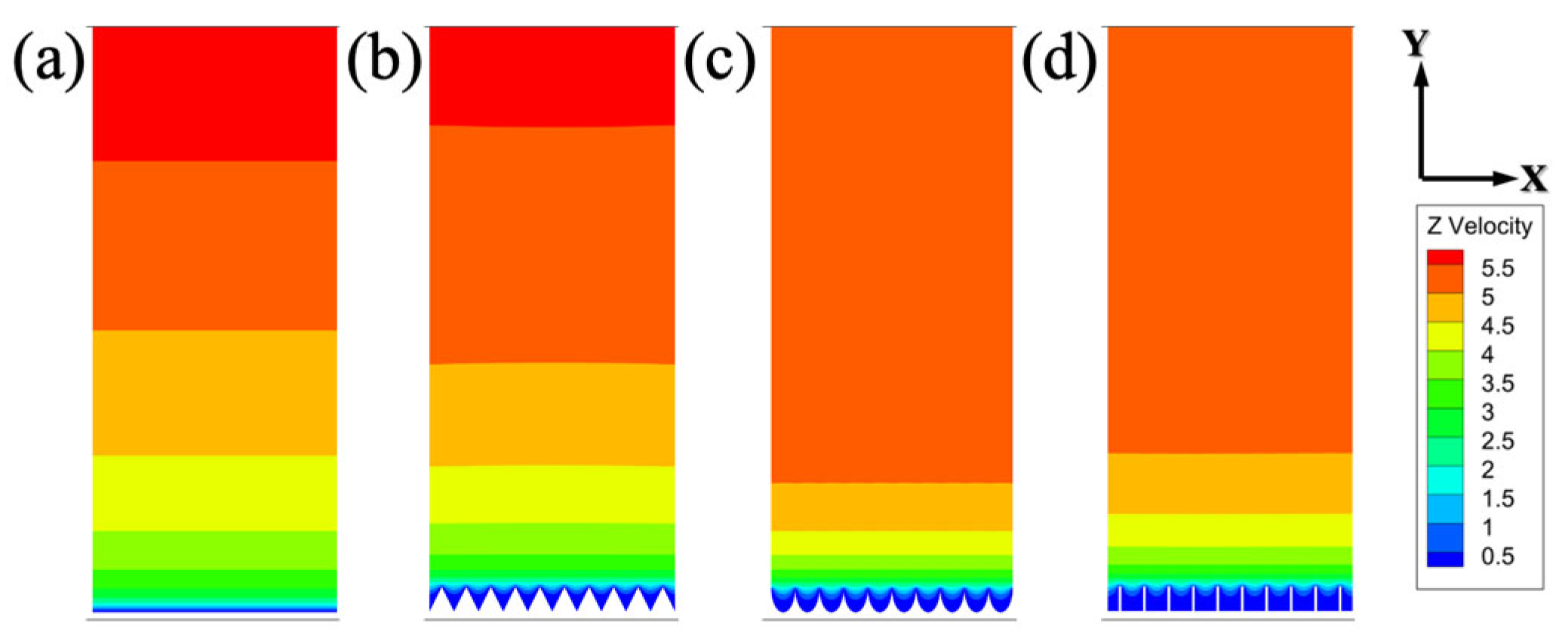
The influence of different microstructures on the distribution of various physical fields near those surfaces is investigated, as can be seen in
Figure 8. The velocity contours over different microstructured surfaces at the cross-section of Plane-A indicate that the velocity gradient is relatively small near the smooth surface, and the area of low velocity near the bottom is much smaller than that near the microstructure surfaces. In addition to having relatively larger low-velocity areas near the microstructure surface, there are also significant velocity gradients apparent near these microstructure surfaces. The phenomenon demonstrates that microstructures on surfaces can significantly affect fluid dynamics, creating regions with varied velocities that can influence the overall behavior of the fluid flow.
To investigate the intrinsic mechanisms of drag reduction by microstructured surfaces further, this paper analyzes the vortex structures near the wall. In previous studies on fluid drag reduction through vortex structure analysis, second-generation criteria such as Q, λ1, Δ, and λci are commonly used to identify vortex structures. However, the accuracy of these second-generation criteria depends on threshold values related to specific cases and can be affected by shear, which often influences the determination of vortex structures.
In the present study, the third-generation
Ω vortex identification method proposed by Liu et al. [
47] was adopted for near-wall vortex structure analysis. The
Ω criterion is defined as the ratio of the vorticity squared to the summation of the vorticity squared and the deformation squared, representing the relative strength of rotation in the flow field. Mathematically, the
Ω parameter is expressed as follows:
where ||
A|| represents the magnitude of the strain rate tensor (symmetric part of the velocity gradient tensor), ||
B|| denotes the magnitude of the vorticity tensor (antisymmetric part), and ε is a small positive number to avoid division by zero [
48]. When
Ω > 0.5, the rotation dominates over deformation, indicating the presence of a vortex. In practice,
Ω = 0.52 has been demonstrated to effectively capture vortex structures across various flow conditions without requiring case-specific threshold adjustment.
Compared with traditional vortex identification methods such as the
Q criterion and the
λ2 method, the
Ω criterion exhibits several important advantages [
48,
49,
50]. First, it is effectively threshold independent: while
Q and
λ2 require case-dependent and often subjective selection of iso-values, which can lead to inconsistent vortex identification among different flows, the
Ω criterion admits a nearly universal threshold (
Ω = 0.52) that can be applied in a wide range of configurations. Second,
Ω has a clearer physical interpretation, as it directly quantifies the relative dominance of rotation over strain and is bounded between 0 (pure strain) and 1 (pure rotation), in contrast to the less intuitive magnitudes of
Q and
λ2 iso-surfaces. Third, the
Ω method can capture both strong and weak vortices within a single threshold, whereas inappropriate choices of
Q or
λ2 thresholds may highlight only intense vortices while suppressing weaker but dynamically relevant structures. Finally,
Ω is a normalized quantity confined to the interval, which facilitates direct and quantitative comparison of vortex structures across different geometries and flow conditions, unlike
Q, whose magnitude may vary substantially between cases.
To provide quantitative evidence for the vortex-induced drag reduction mechanism, the area-averaged
Ω values and vortex coverage ratios were calculated for each groove type as shown in
Table 5. The blade-groove surface exhibits the highest average
Ω value of 0.68 in the near-wall region (
y+ < 10), compared to 0.61 for V-groove and 0.54 for arc-groove surfaces. Furthermore, the vortex coverage ratio, defined as the percentage of groove area occupied by regions with
Ω > 0.52, reaches 78% for blade-grooves, 65% for V-grooves, and 52% for arc-grooves. These quantitative metrics directly correlate with the observed drag reduction rates (18.2%, 16.5%, and 14.7%, respectively), providing strong evidence that higher vorticity concentration and greater vortex coverage lead to more effective drag reduction.
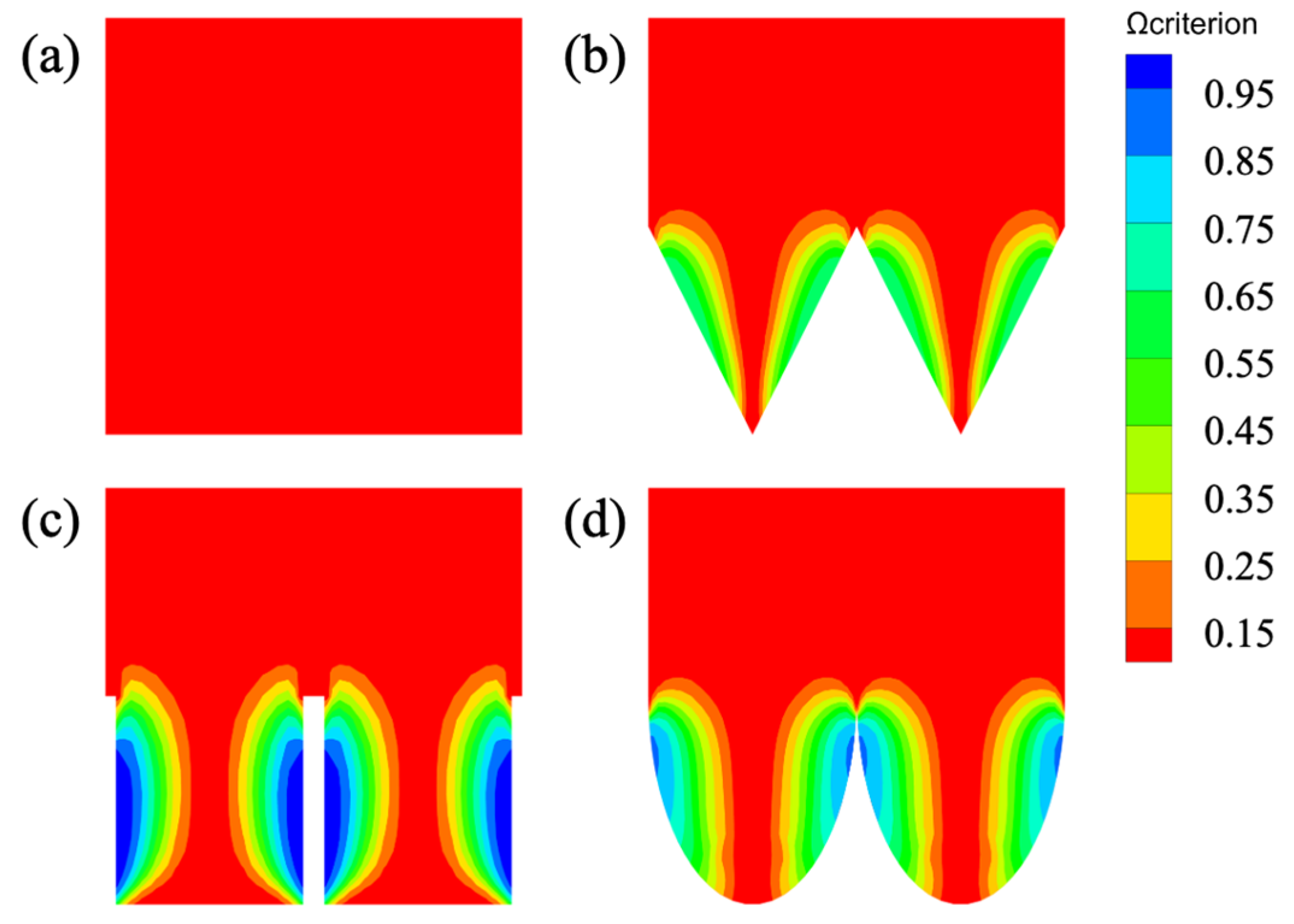
Figure 9 illustrates the near-wall vortex structures identified using the
Ω criterion across different surface configurations. As expected, the smooth surface (
Figure 9a) shows no coherent vortical structures. In contrast, the V-groove surface (
Figure 9b) develops symmetric double-vortex patterns within each cavity, with elongated structures extending from the groove tips along both sidewalls; however, the vortex cores do not penetrate to the groove bottom. The blade-groove surface (
Figure 9c) displays the most fully developed vortex structures, which occupy the entire cavity depth and form distinct secondary vortex clusters at the groove valleys, thereby creating effective vortex-isolation layers. The arc-groove surface (
Figure 9d) exhibits rounded vortex shapes that conform to its curved profile, with penetration depths intermediate between those of V-groove and blade-groove configurations. Notably, the degree of vortex development follows the same ranking as the drag reduction performance: blade-groove > V-groove > arc-groove, confirming the direct link between vortex characteristics and drag reduction effectiveness.
Additionally, combining this with the analysis from the wall shear stress contour maps, it can be observed that for all three types of microstructure surfaces, the areas on either side of the microstructures are regions of low wall shear stress where various sizes of vortex structures are present. These vortex structures effectively separate the microstructure surfaces from the high-velocity fluid regions, preventing direct contact between them and thereby significantly reducing the wall shear stress between the fluid and wall. This mechanism contributes directly to drag reduction. Notably, the blade-groove microstructures exhibit significantly larger vortex structures near the wall compared to the other two types, which aligns with their stronger drag reduction performance as calculated earlier. This correlation confirms the earlier computed drag reduction rate comparisons.
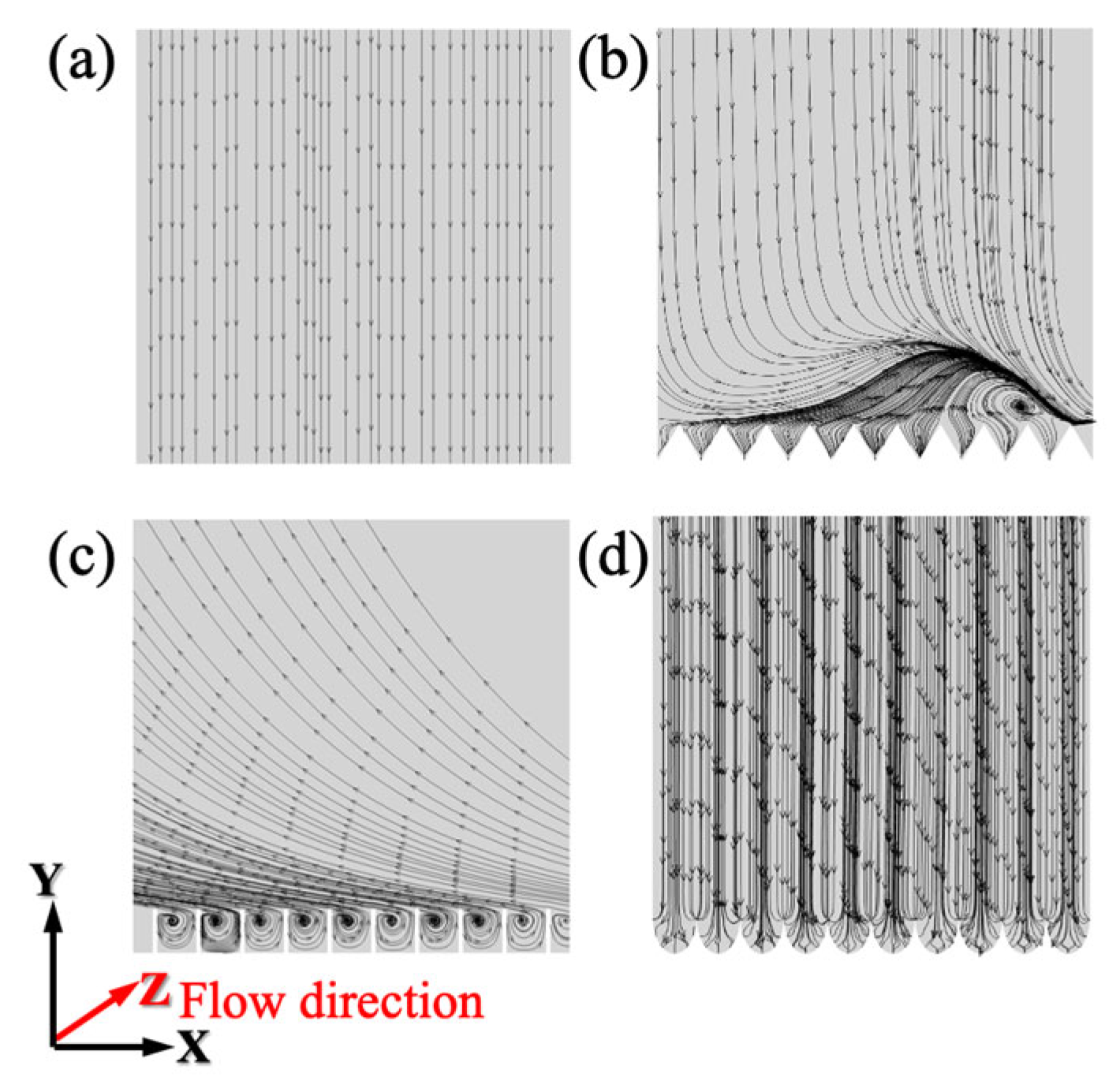
Based on the streamline distribution diagrams of the smooth and microstructure surface, as shown in
Figure 10, small, uniformly distributed vortex clusters form at the bottom of the blade-groove microstructures. The presence of these vortex clusters acts as vortex-isolation layers, effectively reducing fluid drag. Within the V-groove microstructures, complete vortex clusters do not form inside the microstructures. Instead, a larger vortex cluster forms at some distance from the top of the microstructures. Although this also contributes to drag reduction, its effect is weaker than that of the blade-groove microstructures. For the arc-groove microstructures, no significant vortex clusters are observed either inside the microstructures or near the microstructure walls.
3.3. Effect of Aspect Ratio on Drag Reduction Performance
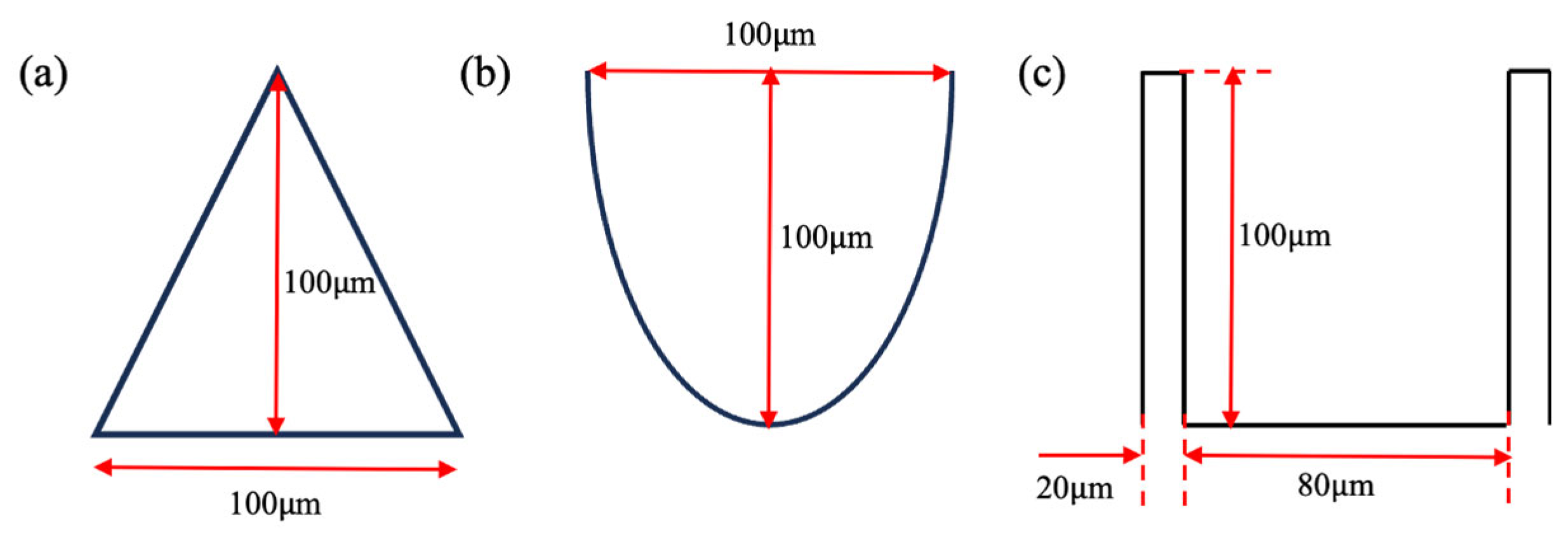
To establish practical design guidelines, the influence of groove aspect ratio (h+/s+) on drag reduction performance was systematically investigated using blade-groove microstructures. Five aspect ratios (h+/s+ = 1.0, 0.75, 0.6, 0.45, and 0.35) were examined while maintaining a constant groove width of 100 μm. The analysis focused on wall shear stress distribution, velocity gradient, and vortex structure evolution to elucidate the underlying mechanisms.
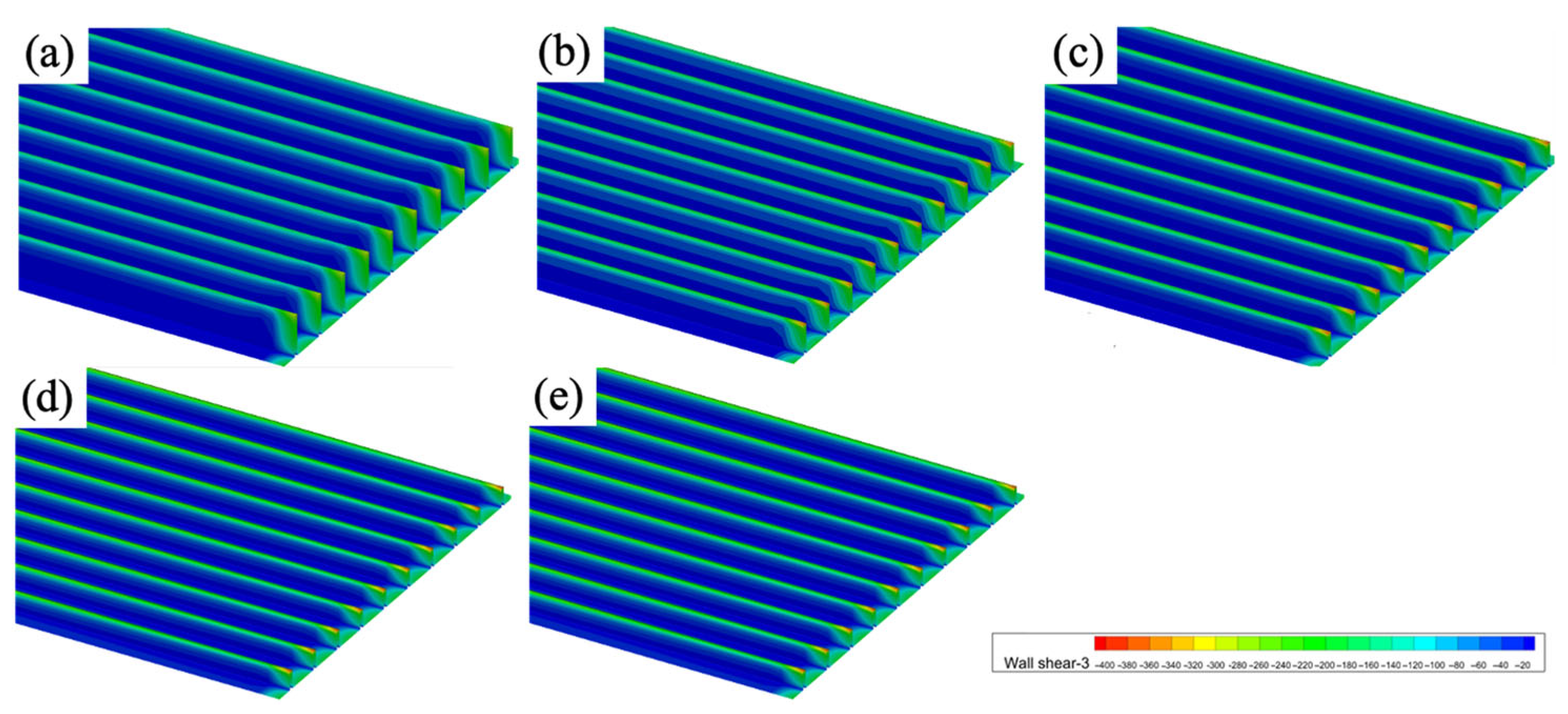
Figure 11 presents the wall shear stress distribution for blade-groove surfaces at different aspect ratios. The overall distribution pattern shows high shear stress at the groove tips and low shear stress along the groove sidewalls, which remains consistent across all aspect ratios. However, the aspect ratio significantly affects both the maximum shear stress and the extent of low-stress regions.
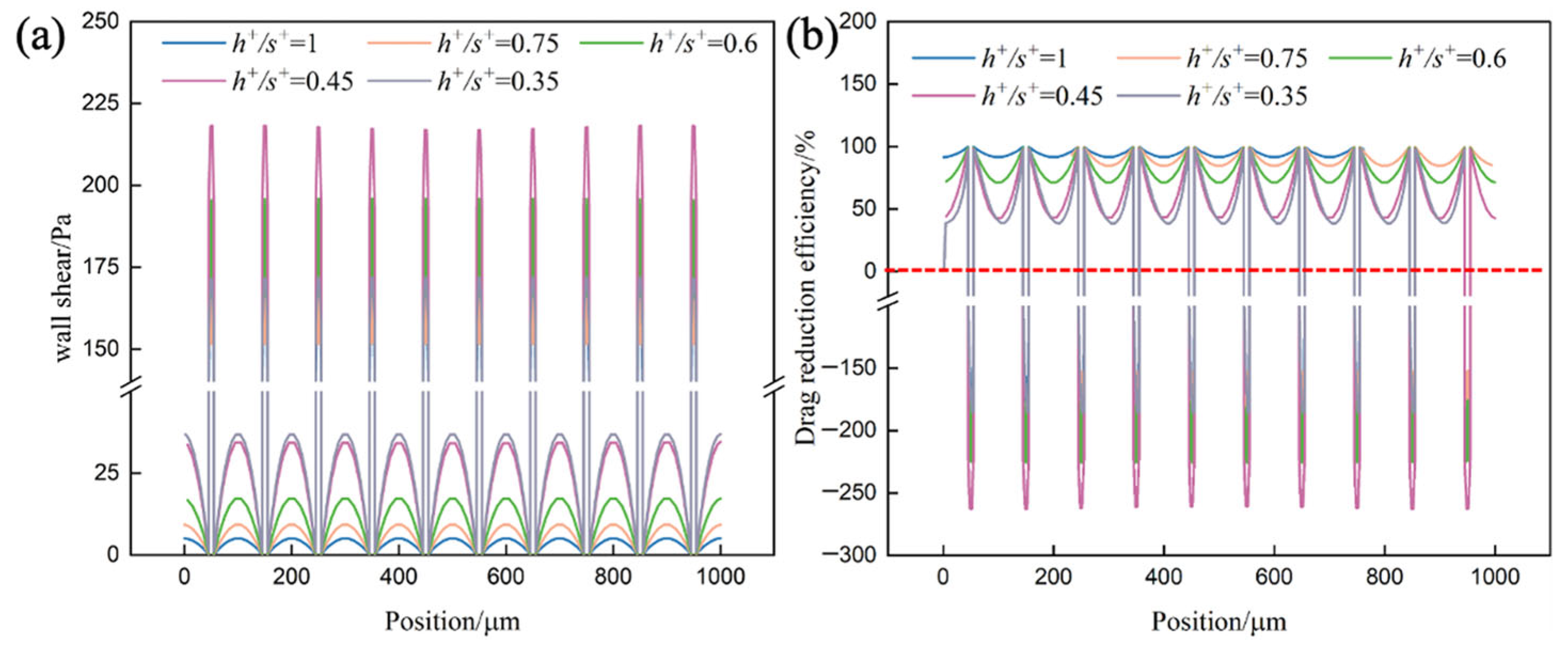
Figure 12 presents the spanwise distributions of wall shear stress (
Figure 12a) and local drag reduction rate (
Figure 12b) along Polyline-a for different aspect ratios. The wall shear stress profiles reveal a non-monotonic dependence on aspect ratio: peak stress at groove tips increases progressively as
h+/s+ decreases from 1.0 to 0.45. But then drops at
h+/s+ = 0.35; meanwhile, stress in the groove valleys rises sharply once
h+/s+ falls below 0.6. The drag reduction rate profiles directly reflect these stress variations in terms of practical performance. When
h+/s+ ≥ 0.75, the drag reduction rate remains consistently high across most of the groove period, confirming that effective vortex-isolation layers are maintained. As
h+/s+ decreases to 0.6 and below, the drag reduction rate in groove valley regions deteriorates markedly, and at
h+/s+ = 0.35, certain spanwise locations even exhibit negative values, indicating local drag increase rather than reduction. The highest drag reduction rates are achieved at
h+/s+ = 1.0 and
h+/s+ = 0.75, demonstrating that higher aspect ratios favor drag reduction. These results collectively establish
h+/s+ = 0.6 as a critical design threshold, below which drag reduction performance deteriorates rapidly.
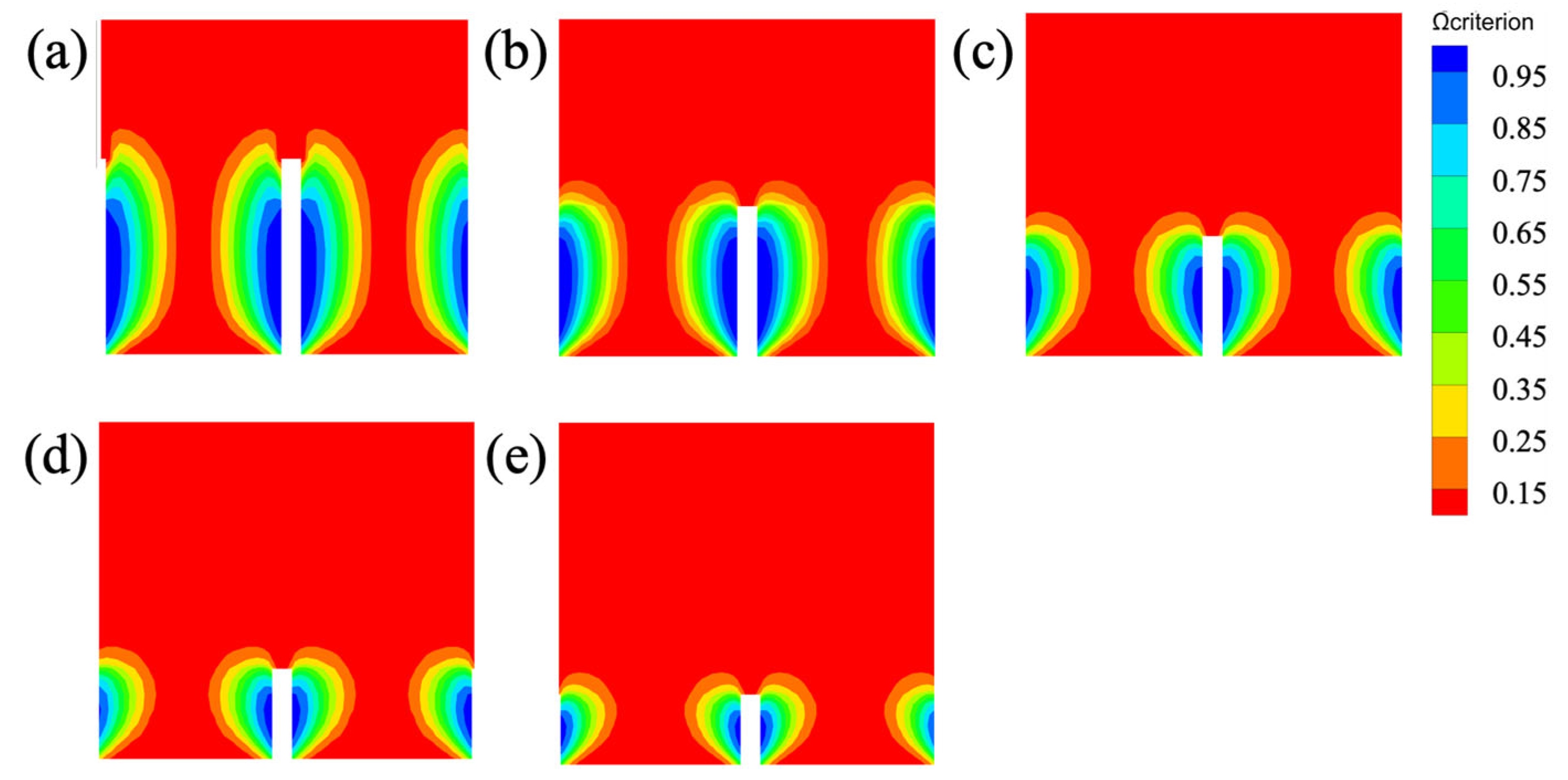
Figure 13 presents the vortex structures identified by the
Ω criterion for blade-groove surfaces at different aspect ratios. At
h+/s+ = 1.0~0.75, well-defined elongated vortex structures form along the groove sidewalls, with distinct secondary vortex clusters occupying the groove valleys. These valley vortices serve as effective vortex-isolation layers that separate the high-speed main flow from the groove bottom. As the aspect ratio decreases to 0.6 and below, the vortex structures undergo significant morphological changes: the elongated sidewall vortices become shorter and wider, and more critically, the secondary vortex clusters in the groove valleys progressively weaken at
h+/s+ = 0.35. This disappearance of valley vortices directly explains the sharp increase in wall shear stress observed at low aspect ratios, as the protective isolation layer is lost and high-speed flow penetrates deeper into the grooves. Despite these morphological changes, the maximum vorticity magnitude remains relatively constant across all aspect ratios, indicating that the drag reduction degradation at low
h+/s+ stems primarily from changes in vortex spatial distribution rather than vortex intensity. These observations establish
h+/s+ = 0.6 as the critical threshold for maintaining effective vortex-isolation layers in blade-groove microstructures.
3.4. Engineering Implications
The present study provides quantitative design guidelines for biomimetic drag-reducing surfaces by systematically investigating both groove geometry and dimensional parameters. For the Reynolds number and groove size considered here (groove height and width both 100 μm, aspect ratio h+/s+ = 1.0), the blade-groove surface achieves the highest drag reduction rate of 18.2%, followed by the V-groove (16.5%) and arc-groove (14.7%). This clear performance hierarchy demonstrates that groove cross-section geometry significantly influences drag reduction effectiveness, even when overall groove dimensions are constrained by manufacturing considerations.
By combining the distributions of local drag reduction rate along Polyline-a with the near-wall vortex structures identified by the Ω-criterion, the analysis reveals that blade-grooves promote a stable and fully developed cavity vortex that effectively isolates the main flow from the groove valleys. For the V-groove surface, the cavity vortex is weaker and high-speed fluid partially penetrates into the grooves, whereas for the arc-groove surface, the flow more easily impinges onto the groove bottom. These differences in vortex topology explain the observed ranking of drag reduction rates among the three geometries.
From an engineering perspective, these findings can be synthesized into practical design guidelines that address both geometry selection and dimensional optimization.
For applications where drag reduction is the primary objective, blade-groove microstructures represent the optimal choice. Their sharp edges generate strong and stable cavity vortices that form effective buffer layers, isolating the high-speed main flow from the wall and substantially reducing wall shear stress. When manufacturing constraints preclude sharp blade edges, V-grooves provide a practical alternative that balances drag reduction performance with geometric robustness and ease of fabrication. Arc-shaped grooves, though less effective for drag reduction, may be preferred in applications where fouling resistance or structural integrity outweighs hydrodynamic performance.
Beyond geometry selection, dimensional optimization is equally critical. The parametric study on blade-groove microstructures demonstrates that maintaining an aspect ratio of h+/s+ ≥ 0.75 ensures well-developed vortex-isolation layers and optimal drag reduction, whereas reducing h+/s+ below 0.6 triggers vortex collapse and significant performance degradation. These findings establish a comprehensive design framework: the ranking of blade-groove > V-groove > arc-groove guides geometry selection, while the aspect ratio criterion of h+/s+ ≥ 0.75 ensures optimal dimensional design for practical biomimetic drag-reducing surfaces.
4. Conclusions
This study presents a systematic CFD investigation of biomimetic drag-reducing microstructures, examining groove geometry effects, aspect ratio optimization, and vortex-based drag reduction mechanisms. The principal findings are as follows. A comparative analysis of three representative groove geometries under identical flow conditions (Re = 7.5 × 10⁵, groove dimensions 100 μm) reveals a clear performance hierarchy: blade-groove achieves the highest drag reduction rate of 18.2%, followed by V-groove (16.5%) and arc-groove (14.7%). The blade-groove owes its superior performance to sharp edges that induce strong, stable cavity vortices forming effective vortex-isolation layers, which separate the high-speed main flow from the groove valleys and markedly reduce wall shear stress.
A parametric study of blade-groove aspect ratios (h+/s+ = 0.35–1.0) demonstrates that dimensional optimization is as important as geometry selection. At h+/s+ ≥ 0.75, well-developed vortex-isolation layers persist, and drag reduction remains effective. When h+/s+ falls below 0.6, secondary vortex clusters in the groove valleys weaken progressively and eventually vanish, allowing high-speed flow to penetrate deeper into the grooves and causing rapid performance degradation. These results identify h+/s+ = 0.6 as a critical design threshold for blade-groove microstructures.
Methodologically, the third-generation Ω vortex-identification criterion adopted here provides threshold-independent, quantitative vortex recognition that surpasses traditional Q and λ2 methods. By correlating vortex metrics (average Ω values and coverage ratios) directly with drag reduction rates, the Ω criterion offers clear mechanistic insight into how groove geometry governs near-wall flow structures.
Collectively, these findings yield a comprehensive design framework for biomimetic drag-reducing surfaces: the geometry ranking (blade-groove > V-groove > arc-groove) guides cross-section selection, while the aspect ratio guideline (h+/s+ ≥ 0.75 recommended; h+/s+ > 0.6 as the minimum) ensures favorable dimensional design. This framework links fundamental vortex dynamics with practical engineering requirements, offering quantitative guidance for groove-type drag-reducing surfaces in marine and aerospace applications. Future work will pursue experimental validation of optimized blade-groove structures and scalable fabrication methods, such as hot-rolling, to facilitate industrial implementation.