
Research on the Anti-Erosion Mechanism of the Shell Surface Structure Based on Numerical Simulation

 and
and
Abstract
1. Introduction
2. The Establishment of Biological Models
2.1. Sample Preparation
2.2. Acquisition and Processing of Shell Surface Data
3. Numerical Methodologies
3.1. Flow Model
3.2. Discrete Particle Motion Modeling
3.3. Erosion Modeling
4. Details of the Simulations
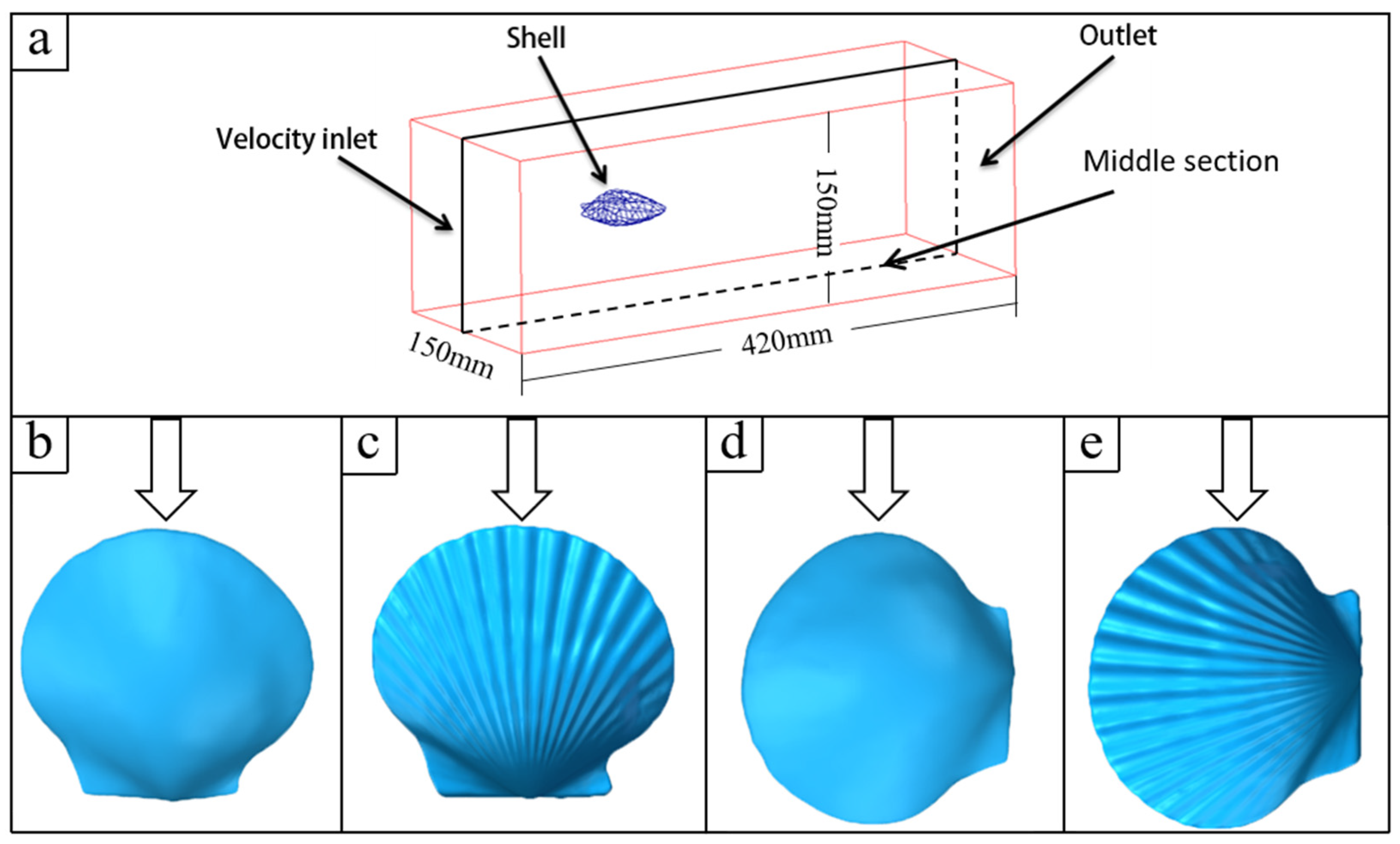
4.1. Description of the Geometry
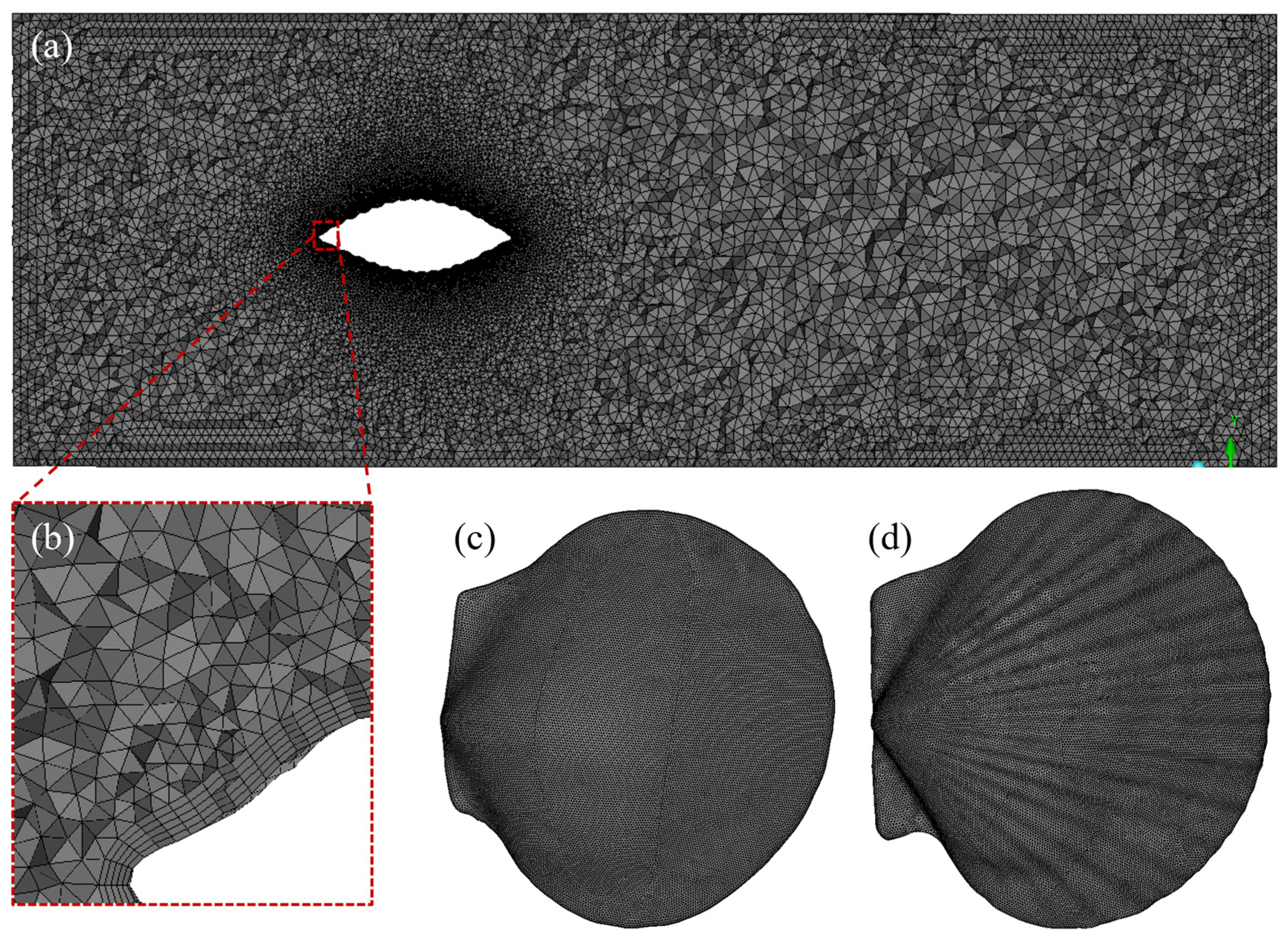
4.2. Computational Mesh
4.3. Simulation Modeling
4.4. Mesh Independence
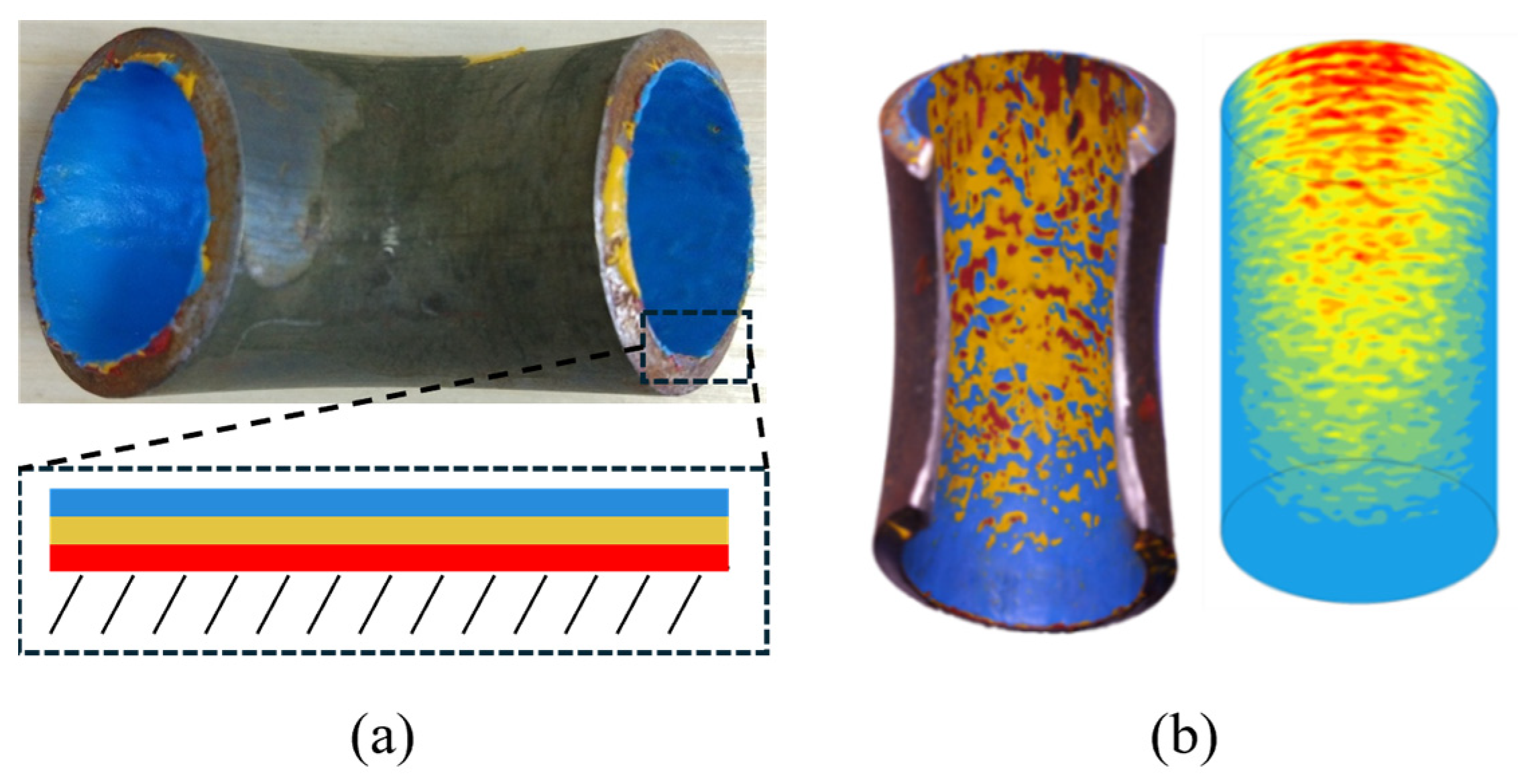
4.5. Experimental Validation
5. Results and Discussion
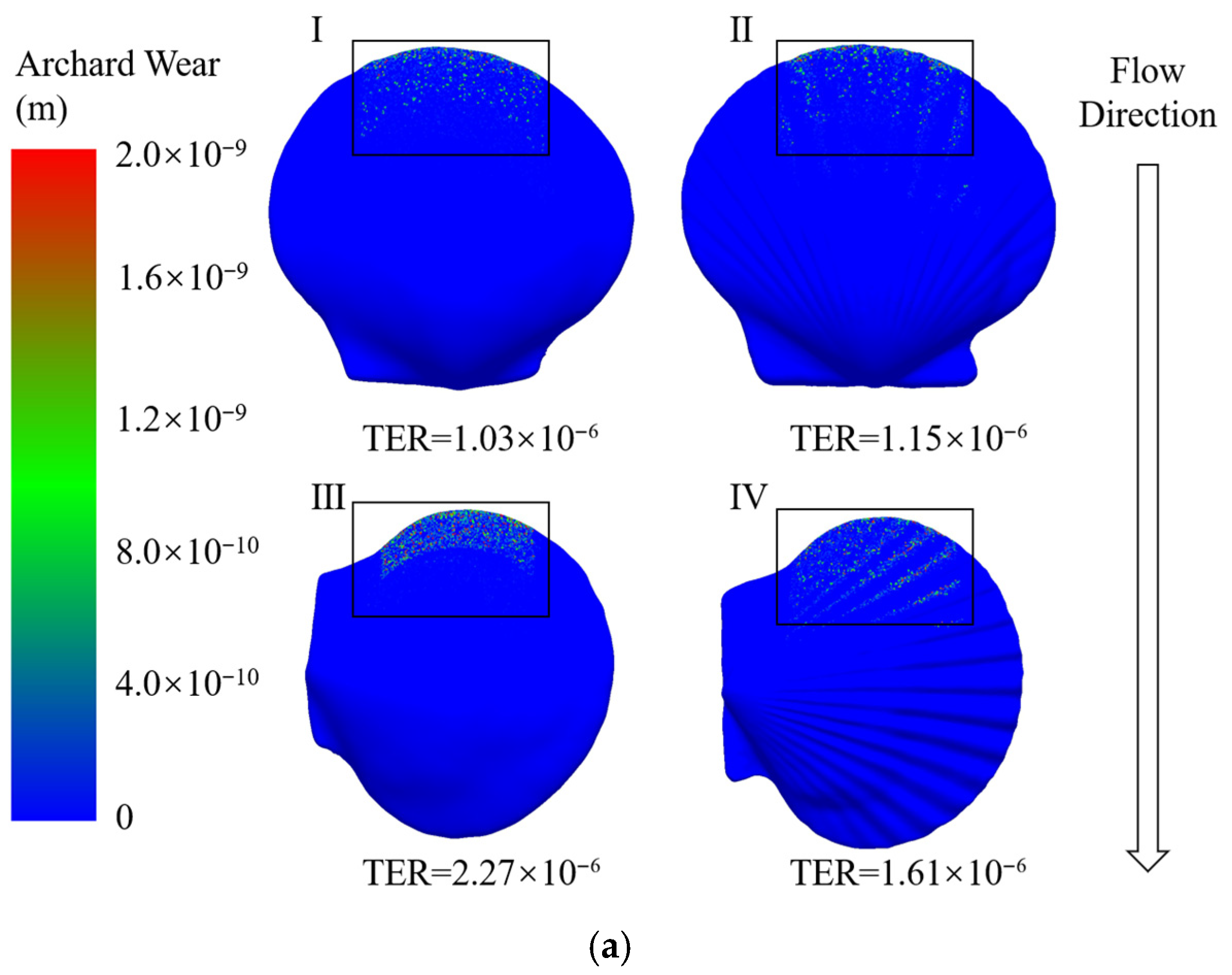
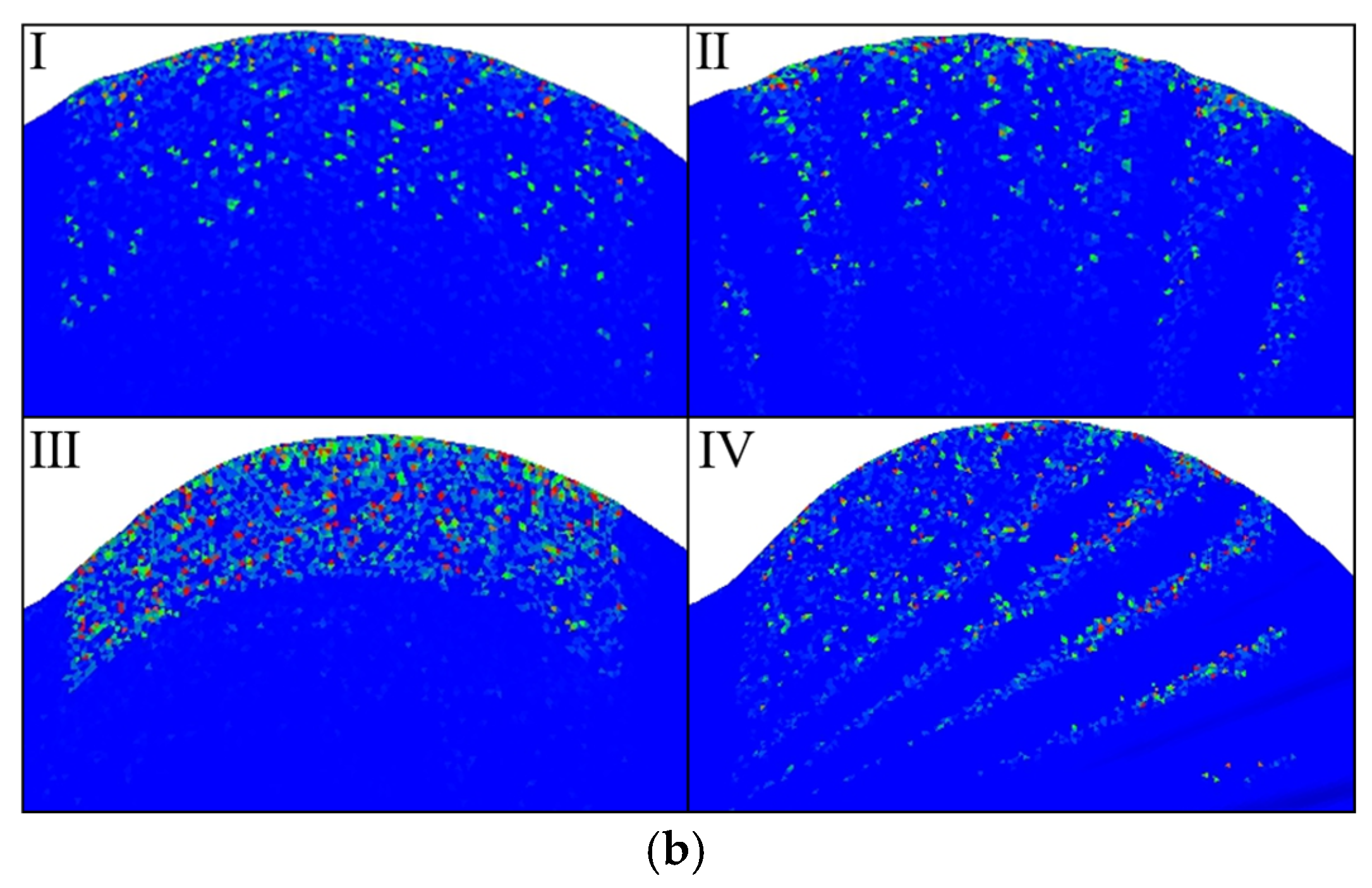
5.1. Erosion Analysis
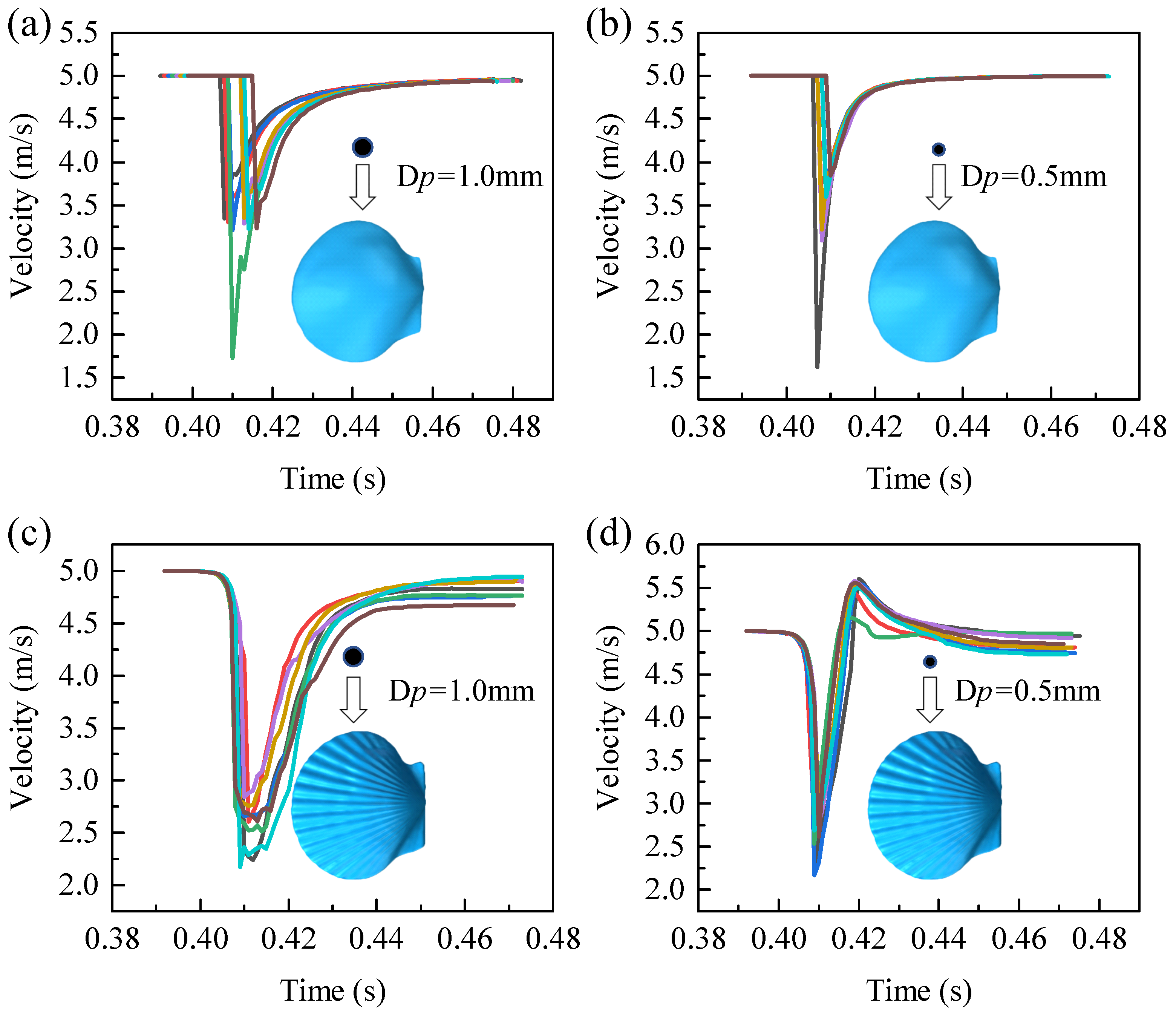
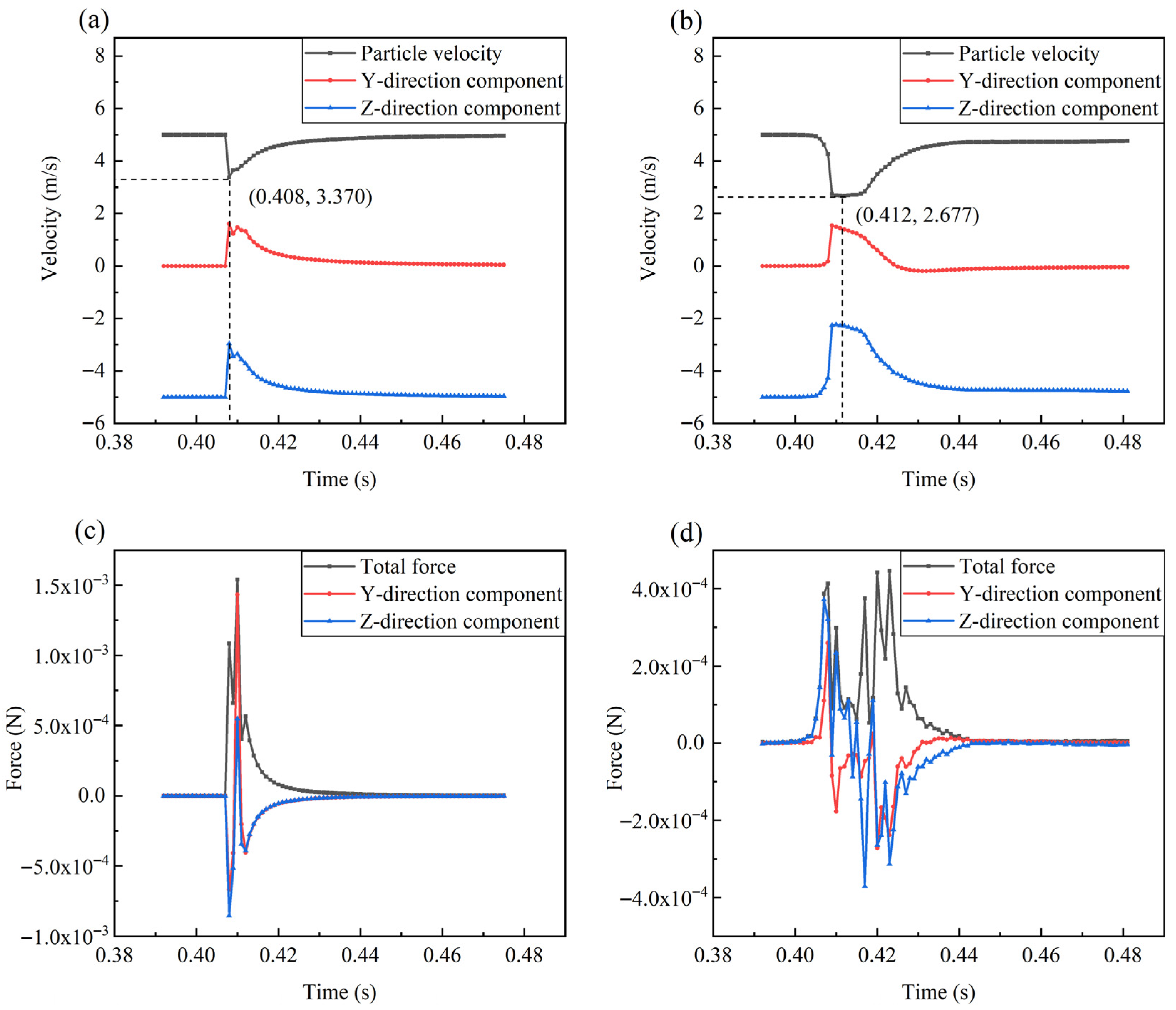
5.2. Velocity Analysis
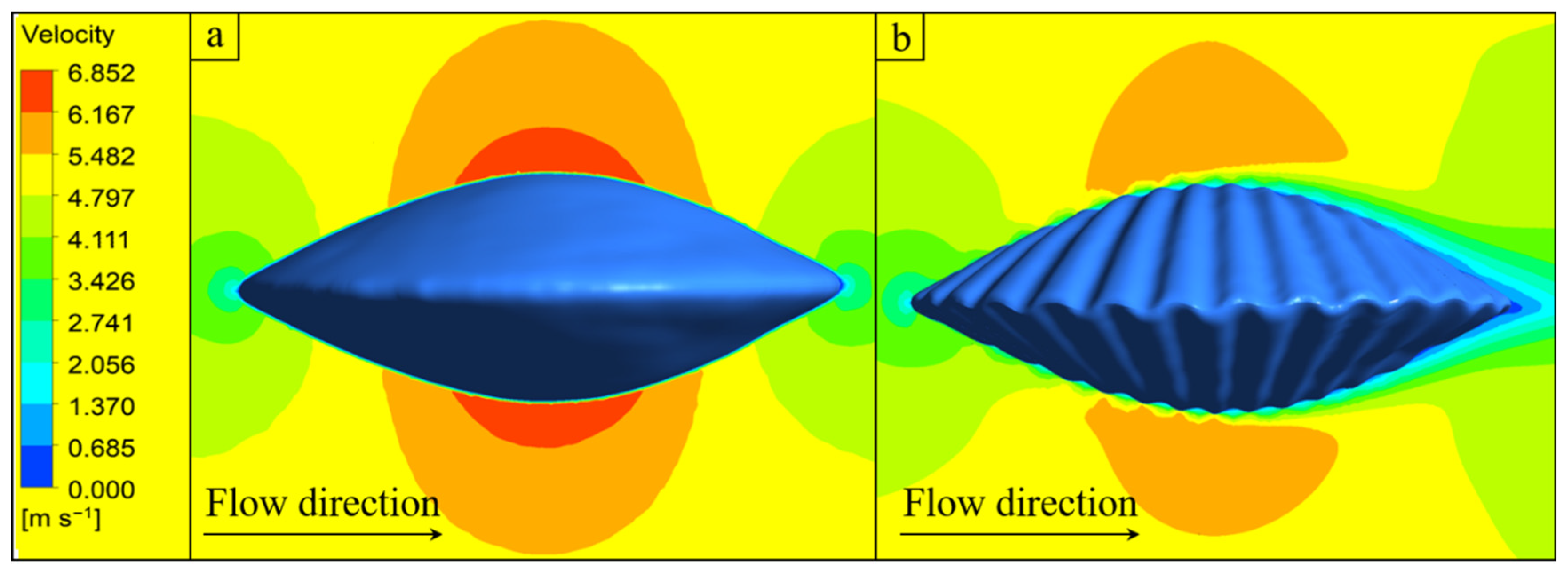
5.3. Flow-Field Analysis
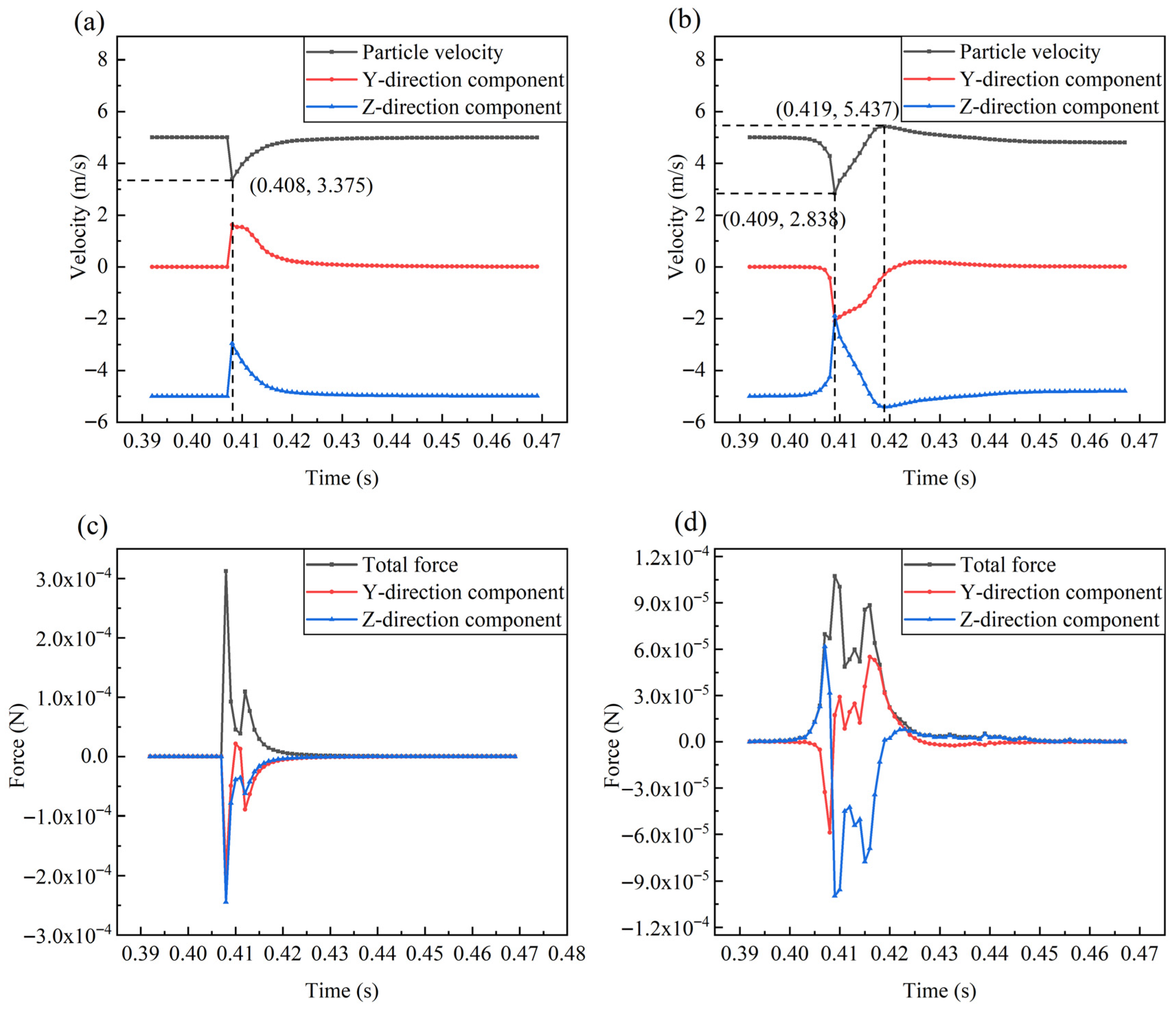
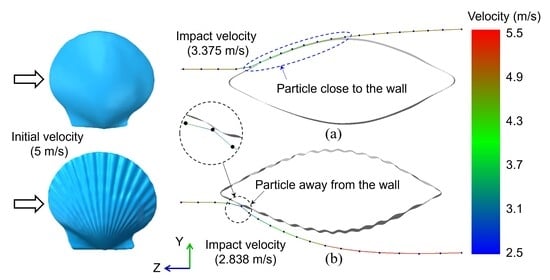
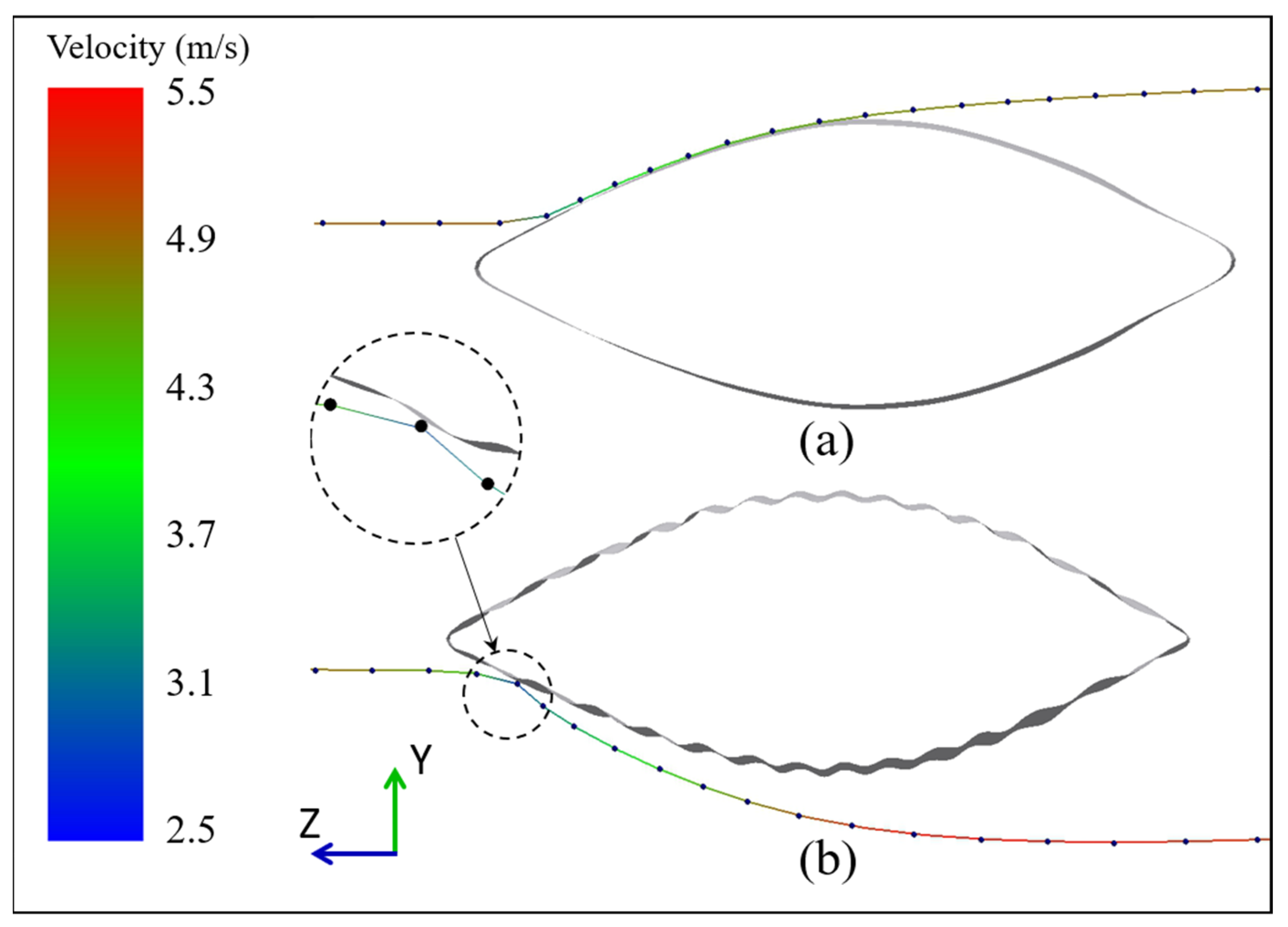
5.4. Particle Trajectory Analysis
6. Conclusions
- When the direction of the incoming flow was perpendicular to the direction of the shell rib, the total erosion rate of the ribbed shell was 29.08% lower than that of the smooth shell, thereby exhibiting good erosion resistance.
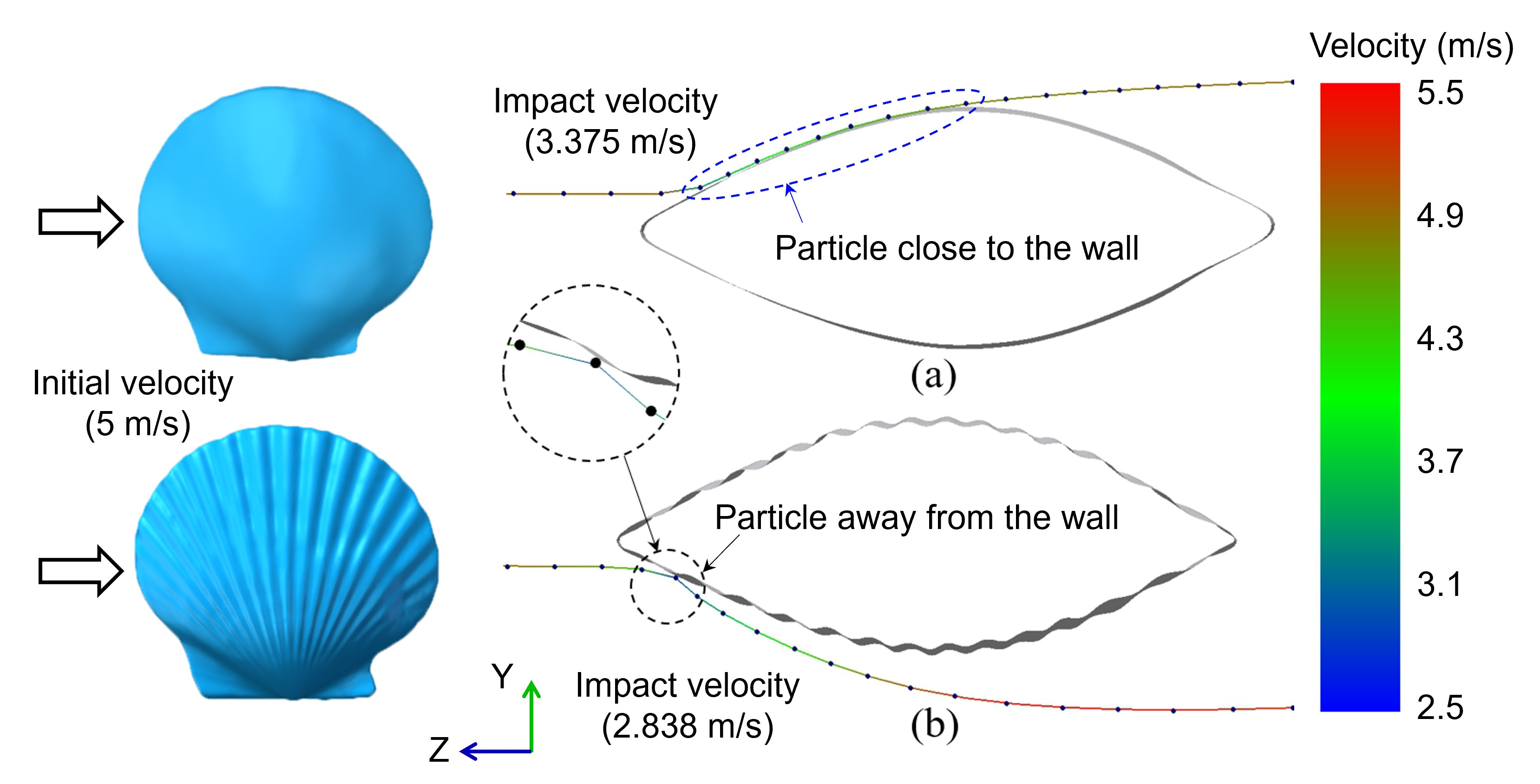
- The low-velocity flow field that can be formed in the grooved area of the ribbed shell can buffer the particles about to hit the shell wall. The velocity of particles hitting the ribbed shell was 15.91% lower than that of particles hitting the smooth shell, thereby reducing the erosion of the ribbed shell.
- After hitting the smooth shell wall, particles were found to move downstream along the wall. In contrast, after hitting the ribbed shell, particles were found to move at a certain distance from the wall, and under the action of the high-velocity flow field, the particles could escape the wall at a higher velocity.
Author Contributions
Funding
Data Availability Statement
Conflicts of Interest
References
- Kumar, R.; Rezapourian, M.; Rahmani, R.; Maurya, H.S.; Kamboj, N.; Hussainova, I. Bioinspired and Multifunctional Tribological Materials for Sliding, Erosive, Machining, and Energy-Absorbing Conditions: A Review. Biomimetics 2024, 9, 209. [Google Scholar] [CrossRef]
- Cui, B.; Zhao, L.; Jin, C.; Li, J.; Chen, P.; Zhao, Y. Experimental and numerical investigation on particle erosion and structural optimization of two elbows in series under solid-liquid flow. Chem. Eng. Res. Des. 2025, 213, 137–145. [Google Scholar] [CrossRef]
- Perera, P.; Hayward, K.; Guzzomi, F.; Vafadar, A. Erosion wear characterisation of an open Ductile Iron butterfly valve subjected to Aluminium Oxide particle slurry flow. Tribol. Int. 2024, 191, 109199. [Google Scholar] [CrossRef]
- Wang, H.; Xu, H.; Zhang, Y.; Chen, S.; Zhao, Z.; Chen, J. Design of a Bio-Inspired Anti-Erosion Structure for a Water Hydraulic Valve Core: An Experimental Study. Biomimetics 2019, 4, 63. [Google Scholar] [CrossRef] [PubMed]
- Yang, S.-Q.; Fan, J.-C.; Liu, M.-T.; Li, D.-N.; Li, J.-L.; Han, L.-H.; Wang, J.-J.; Yang, S.-Y.; Dai, S.-W.; Zhang, L.-B. Research on the solid particle erosion wear of pipe steel for hydraulic fracturing based on experiments and numerical simulations. Petrol. Sci. 2024, 21, 2779–2792. [Google Scholar] [CrossRef]
- Alajmi, A.F.; Ramulu, M. The effectiveness of graphene and polyurethane multilayer coating on minimizing the leading-edge erosion of wind turbine blades. Results Eng. 2025, 26, 104804. [Google Scholar] [CrossRef]
- Zhang, X.; Huang, Z.; Zammit, A.; Buhagiar, J.; Cassar, G.; Li, Z.; Tao, X.; Tian, W.; Chen, J. Selective laser melted 316L stainless steels duplex-treated by shot peening and TiAlCuN coating: Elucidating the enhanced cavitation erosion resistance. Surf. Coat. Technol. 2025, 511, 132253. [Google Scholar] [CrossRef]
- Cao, P.; Wang, H.; Zhu, M.; Fu, Y.; Yuan, C. Integration of Antifouling and Underwater Sound Absorption Properties into PDMS/MWCNT/SiO2 Coatings. Biomimetics 2022, 7, 248. [Google Scholar] [CrossRef] [PubMed]
- Bahramnia, H.; Mohammadian Semnani, H.; Habibolahzadeh, A.; Abdoos, H. Epoxy/polyurethane nanocomposite coatings for anti-erosion/wear applications: A review. J. Compos. Mater. 2020, 54, 3189–3203. [Google Scholar] [CrossRef]
- Nisa, Z.U.; Chuan, L.K.; Guan, B.H.; Ayub, S.; Ahmad, F. Anti-wear and anti-erosive properties of polymers and their hybrid composites: A critical review of findings and needs. Nanomaterials 2022, 12, 2194. [Google Scholar] [CrossRef] [PubMed]
- Parra, H.G.; Guacaneme, J.A.; Gaona, E.E. Experimental and Spectral Analysis of the Wake Velocity Effect in a 3D Falcon Prototype with Oscillating Feathers and Its Application in HAWT with Biomimetic Vortex Generators Using CFD. Biomimetics 2025, 10, 622. [Google Scholar] [CrossRef]
- Dai, M.; Wu, R.; Ye, M.; Gao, K.; Chen, B.; Tao, X.; Fan, Z. The Structural Design and Optimization of a Novel Independently Driven Bionic Ornithopter. Biomimetics 2025, 10, 401. [Google Scholar] [CrossRef]
- Wei, Z.; Zhang, C.; Shen, C.; Wang, L.; Xin, Z. Manipulation of bubble collapse patterns near the wall of an adherent gas layer. Ultrason. Sonochem. 2023, 101, 106722. [Google Scholar] [CrossRef] [PubMed]
- Zhang, J.; Yang, H.; Cai, J.; Shi, J.; Zheng, Y.; Rajabi, H.; Zhao, J.; Wu, J. Water-proofing mechanism of coupling structures observed in ladybird elytra and its bionic application. Droplet 2025, 4, e162. [Google Scholar] [CrossRef]
- Li, X.; Liu, Y.; Zhang, Z.; Liu, Y.; Leng, J. Icephobic materials and strategies: From bio-inspirations to smart systems. Droplet 2024, 3, e131. [Google Scholar] [CrossRef]
- Huang, H.; Zhang, Y.; Ren, L. Particle erosion resistance of bionic samples inspired from skin structure of desert lizard, Laudakin stoliczkana. J. Bionic Eng. 2012, 9, 465–469. [Google Scholar] [CrossRef]
- Liang, P.; Sun, Y.; Liu, S.; Liang, T.; Zhang, Y.; Wang, Y.; Ren, L. A bionic study on the anti-erosion mechanism of laudakia stoliczkana: Experimental and numerical aspects. J. Bionic Eng. 2019, 16, 882–893. [Google Scholar] [CrossRef]
- Zhang, Y.; Huang, H.; Ren, L. Erosion wear experiments and simulation analysis on bionic anti-erosion sample. Sci. China Technol. Sci. 2014, 57, 646–650. [Google Scholar] [CrossRef]
- Han, Z.; Zhu, B.; Yang, M.; Niu, S.; Song, H.; Zhang, J. The effect of the micro-structures on the scorpion surface for improving the anti-erosion performance. Surf. Coat. Technol. 2017, 313, 143–150. [Google Scholar] [CrossRef]
- Zhang, J.; Chen, W.; Yang, M.; Chen, S.; Zhu, B.; Niu, S.; Han, Z.; Wang, H. The ingenious structure of scorpion armor inspires sand-resistant surfaces. Tribol. Lett. 2017, 65, 110. [Google Scholar] [CrossRef]
- Zhang, S.; Chen, W.; Li, B.; Niu, S.; Yu, H.; Liu, Y.; Yang, X.; Zhang, J.; Han, Z.; Ren, L. Optimum anti-erosion structures and anti-erosion mechanism for rotatory samples inspired by scorpion armor of parabuthus transvaalicus. J. Bionic Eng. 2021, 18, 92–102. [Google Scholar] [CrossRef]
- Zhiwu, H.; Junqiu, Z.; Chao, G.; Li, W.; Ren, L. Erosion resistance of bionic functional surfaces inspired from desert scorpions. Langmuir 2012, 28, 2914–2921. [Google Scholar] [CrossRef]
- Vihar, B.; Hanisch, F.G.; Baumgartner, W. Neutral glycans from sandfish skin can reduce friction of polymers. J. R. Soc. Interface 2016, 13, 20160103. [Google Scholar] [CrossRef]
- Finnie, I. Erosion of surfaces by solid particles. Wear 1960, 3, 87–103. [Google Scholar] [CrossRef]
- Meng, H.; Ludema, K. Wear models and predictive equations: Their form and content. Wear 1995, 181, 443–457. [Google Scholar] [CrossRef]
- Njobuenwu, D.O.; Fairweather, M. Modelling of pipe bend erosion by dilute particle suspensions. Comput. Chem. Eng. 2012, 42, 235–247. [Google Scholar] [CrossRef]
- de Lima, G.H.; de Souza, A.Z.; Biglari, F.; Parsi, M.; Reddy, R.; Bharadwaj, R. Solid particle erosion modeling: Point particle tracking or shape representation? Wear 2025, 570, 205908. [Google Scholar] [CrossRef]
- Dou, X.; Xiang, W.; Li, B.; Ju, M.; Li, A.; Zhang, D.; Li, Y. CFD-DPM modelling of solid particle erosion on weld reinforcement height in liquid-solid high shear flows. Powder Technol. 2023, 427, 118773. [Google Scholar] [CrossRef]
- Mahmoudi, O.; Shiri, Y. Impact of solid particle geometry, size, and intensity, coupled with fluid velocity, on erosion dynamics in elbow conduits. Sci. Rep. 2025, 15, 30880. [Google Scholar] [CrossRef]
- Zhao, Z.; Wu, Z.; Wang, W.; Wang, X.; Du, S.; Chen, X.; Li, P.; Wang, Y. CFD-DPM Model of Gas–Solid Two-Phase Flow Erosion of Needle Throttle Valve. Coatings 2025, 15, 248. [Google Scholar] [CrossRef]
- Bo, H.; Fu, Y.; Shao, Y.; Zhong, W. Effects of particle size reduction due to wear on heat transfer in a fluidized bed: A CFD-DEM study. Particuology 2025, 103, 176–192. [Google Scholar] [CrossRef]
- Sun, H.; Huang, L.; Gao, J. CFD-DEM coupled study of erosion resistance characteristics of ribbed walls. Powder Technol. 2024, 448, 120316. [Google Scholar] [CrossRef]
- Yasser, E.; Zhou, L.; El-Emam, M.A. CFD–DEM analysis of erosion in 90° elbow pipe induced by different particle shapes. Powder Technol. 2025, 466, 121453. [Google Scholar] [CrossRef]
- Zhu, Y.; Hu, L.; Xu, S.; Hu, Z.; Sun, H.; Weng, Z.; Wang, Y. Investigation on the mechanism of size effect on suffusion via CFD-DEM simulations. Acta Geotech. 2025, 20, 347–364. [Google Scholar] [CrossRef]
- Bhutta, M.M.A.; Hayat, N.; Bashir, M.H.; Khan, A.R.; Ahmad, K.N.; Khan, S. CFD applications in various heat exchangers design: A review. Appl. Therm. Eng. 2012, 32, 1–12. [Google Scholar] [CrossRef]
- Launder, B.E.; Spalding, D.B. The numerical computation of turbulent flows. In Numerical Prediction of Flow, Heat Transfer, Turbulence and Combustion; Elsevier: Amsterdam, The Netherlands, 1983; pp. 96–116. [Google Scholar]
- Zeng, D.; Zhang, E.; Ding, Y.; Yi, Y.; Xian, Q.; Yao, G.; Zhu, H.; Shi, T. Investigation of erosion behaviors of sulfur-particle-laden gas flow in an elbow via a CFD-DEM coupling method. Powder Technol. 2018, 329, 115–128. [Google Scholar] [CrossRef]
- Mofakham, A.A.; Ahmadi, G. Improved discrete random walk stochastic model for simulating particle dispersion and deposition in inhomogeneous turbulent flows. J. Fluids Eng. 2020, 142, 101401. [Google Scholar] [CrossRef]
- Ai, J.; Chen, J.-F.; Rotter, J.M.; Ooi, J.Y. Assessment of rolling resistance models in discrete element simulations. Powder Technol. 2011, 206, 269–282. [Google Scholar] [CrossRef]
- Wilson, R.V.; Stern, F.; Coleman, H.W.; Paterson, E.G. Comprehensive approach to verification and validation of CFD simulations—Part 2: Application for RANS simulation of a cargo/container ship. J. Fluids Eng. 2001, 123, 803–810. [Google Scholar] [CrossRef]
- Duarte, C.A.R.; de Souza, F.J.; dos Santos, V.F. Numerical investigation of mass loading effects on elbow erosion. Powder Technol. 2015, 283, 593–606. [Google Scholar] [CrossRef]
- Xu, W.; Wang, H.; Yu, Y.; Sun, Z.; Li, H.; Zhao, Y.; Fu, Y. Study on applicability of microgroove erosion mitigation method based on stress–erosion coupling simulation. Tribol. Int. 2022, 174, 107746. [Google Scholar] [CrossRef]
- Chen, Z.X.; Hu, H.X.; Guo, X.M.; Zheng, Y.G. Effect of groove depth on the slurry erosion of V-shaped grooved surfaces. Wear 2022, 488–489, 204133. [Google Scholar] [CrossRef]





| Item | Fluid | Particles | Shell Surface |
|---|---|---|---|
| Density (kg/m3) | 998.2 | 2650 | 7800 |
| Viscosity (kg/m∙s) | 1.003 × 10⁻³ | / | / |
| Hardness | / | 7 (Mons’) | HB 538 |
| Particle diameter (mm) | / | 1, 0.5 | / |
| Shape factor | / | 1.0 | / |
| Velocity (m/s) | 5 | 5 | / |
| Poisson’s ratio | / | 0.5 | 0.3 |
| Shear modulus (Pa) | / | 1 × 10⁶ | 7 × 10¹⁰ |
| Mass flow rate (kg/s) | / | 2.78 × 10⁻³ | / |
| Solid volume fraction | / | 1.07 × 10⁻³% | / |
| Coefficient of restitution | / | 0.5 | 0.5 |
| Coefficient of static friction | / | 0.5 | 0.5 |
| Coefficient of rolling friction | / | 0.01 | 0.01 |
| Smooth Shell | Erosion Process Time (s) | Erosion Rate (m) | Error Rate |
|---|---|---|---|
| 1,869,528 | 0.5 | 1.11 × 10⁻⁶ | 5.60% |
| 5,234,677 | 0.5 | 1.03 × 10⁻⁶ | 1.90% |
| 14,657,095 | 0.5 | 1.05 × 10⁻⁶ | / |
| Ribbed Shell | Erosion Process Time (s) | Erosion Rate (m) | Error Rate |
|---|---|---|---|
| 1,942,230 | 0.5 | 1.30 × 10⁻⁶ | 12.3% |
| 5,438,245 | 0.5 | 1.18 × 10⁻⁶ | 2.97% |
| 15,227,086 | 0.5 | 1.15 × 10⁻⁶ | / |
Disclaimer/Publisher’s Note: The statements, opinions and data contained in all publications are solely those of the individual author(s) and contributor(s) and not of MDPI and/or the editor(s). MDPI and/or the editor(s) disclaim responsibility for any injury to people or property resulting from any ideas, methods, instructions or products referred to in the content. |
© 2026 by the authors. Licensee MDPI, Basel, Switzerland. This article is an open access article distributed under the terms and conditions of the Creative Commons Attribution (CC BY) license.
Share and Cite
Wei, Z.; Zhang, C.; Liu, X.; Shen, C.; Gao, M.; Li, J.; Wu, Z.; Zhu, M. Research on the Anti-Erosion Mechanism of the Shell Surface Structure Based on Numerical Simulation. Biomimetics 2026, 11, 62. https://doi.org/10.3390/biomimetics11010062
Wei Z, Zhang C, Liu X, Shen C, Gao M, Li J, Wu Z, Zhu M. Research on the Anti-Erosion Mechanism of the Shell Surface Structure Based on Numerical Simulation. Biomimetics. 2026; 11(1):62. https://doi.org/10.3390/biomimetics11010062
Chicago/Turabian StyleWei, Zhenjiang, Chengchun Zhang, Xiaomin Liu, Chun Shen, Meihong Gao, Jie Li, Zhengyang Wu, and Meihui Zhu. 2026. "Research on the Anti-Erosion Mechanism of the Shell Surface Structure Based on Numerical Simulation" Biomimetics 11, no. 1: 62. https://doi.org/10.3390/biomimetics11010062
APA StyleWei, Z., Zhang, C., Liu, X., Shen, C., Gao, M., Li, J., Wu, Z., & Zhu, M. (2026). Research on the Anti-Erosion Mechanism of the Shell Surface Structure Based on Numerical Simulation. Biomimetics, 11(1), 62. https://doi.org/10.3390/biomimetics11010062