


Abstract
Social connections and social support have shown strong associations with mental health within immigrant populations. This study examines the nuances in the associations between social network measures and perceived interpersonal support on depression among immigrants from Central America residing in the United States. Data for this project came from the 2012–2013 wave of the National Epidemiological Survey on Alcohol and Related Conditions (NESARC-III). In determining the association between lifetime depression and perceived interpersonal support, three social network measures (diversity, domain participation, and count) were assessed through a series of logistic regressions that controlled for demographic characteristics. Linear regressions were used to assess the relationship between perceived interpersonal support and network characteristics. Immigrants who had higher levels of perceived support had lower odds of meeting the criteria for depression. Social network measures were not significant in their association with depression; however, supplemental analyses indicated a strong relationship between network characteristics and perceived interpersonal support. Future research is needed to further elucidate the mechanisms of the social resources that contribute to immigrant health across peoples’ lifespans.
1. Introduction
Central Americans, especially those from the Northern triangle that includes El Salvador, Honduras, and Guatemala, account for the second-largest group of immigrants from Latin America, following Mexican immigrants (Dasema and Jeanne 2025). Emigration from the region has continued to increase since the 1980s due to the ongoing destabilization of their home nations resulting from U.S. foreign intervention, foreign agricultural interests, and ongoing internal political violence (Dasema and Jeanne 2025). As a result, approximately 47.8 immigrants reside in the United States with 4.3 million of them being from Central America, accounting for a significant portion of the growing U.S. immigrant population (Dasema and Jeanne 2025). Immigrants from these regions, especially those coming from countries in the Northern Triangle are an especially important subset of Latin American immigrants to understand due to their increasing numbers and continued use for anti-immigrant political narratives. Research within these and other Central American groups highlight the lasting interconnectedness and enduring legacies of US interventions, community violence, and the destabilization of these countries as a major driving force for immigration, starting as far back as the 1980s (Booth et al. 2020). Of special importance to this group are several factors that further impact integration outcomes and their health once in the United States. In 2025 alone, we have seen how the increased targeting of racialized immigrants has exposed immigrants and their communities to collective and targeted violence and fear.
Throughout their immigration trajectories, immigrants are at an increased risk of developing mental health conditions due to increased acculturative stress and ongoing legislative persecution and its impact on immigrant health (McQuaid et al. 2024; Narea 2019). Due to complex histories of trauma, including poverty, community violence, systemic violence, war, family and journey-related traumatic experiences for immigrants leaving their homelands and risking their futures by entering the United States, especially during periods of extreme anti-immigrant hostility, immigrants are vulnerable to risk factors that adversely contribute to depression (McQuaid et al. 2024; Okonji et al. 2021). Recent literature on immigrant mental health further highlights the complexity of personal, interpersonal, and structural factors on integration processes, stress, and the mental health of racialized immigrants to the United States (McQuaid et al. 2024; Portillo et al. 2023). This includes interpersonal factors, such as social connections, as protective but also highlights the potential for exploitation that may come from some relationships (Song et al. 2025). Specific to the Central American immigrant experience, recent immigration legislation and negative media rhetoric has specifically targeted immigrants traveling to the United States through Mexico, most of which come from Central American nations, which can negatively impact immigrant physical and mental health (Chomsky 2021; Revens 2019).
Heightened exposure to these stressors may impact immigrants’ ability to stabilize and integrate into their new homes, especially in the presence of structural and social stressors (Stronks et al. 2020). Generally, the presence of stressors is often a contributing factor in increased risk for mental health needs; however, explorations into immigrant health often highlight the opposite. They often find a lower prevalence of risk for mental health disorders among newly immigrated populations (Alegría et al. 2017). What is often called the “immigrant health paradox”, “healthy immigrant paradox”, and variations in the “acculturation” hypothesis generally stipulate that first-generation immigrants are less susceptible to mental health disorders than those from the 1.5 generation or second generations and even their U.S.-born counterparts (Alegría et al. 2017; Bacong and Menjívar 2021; Salas-Wright et al. 2018). Over time, this advantage can fade and is also further exacerbated by intersectional challenges driven by different social positionalities (race, class, gender, sexual orientation, status, age of immigration, etc.) (Alegría et al. 2017; Bacong and Menjívar 2021; Salas-Wright et al. 2018). Due to the variation in findings and positionalities, more research is needed to understand the protective factors that contribute specifically to resilience within first-generation immigrants and how they may be leveraged for later generations as they set roots in the United States.
Interpersonal and community relational resources have continuously been proven to be a protective factor against adverse physical and mental health outcomes among immigrants due to its role in increasing access to community support, healthcare information and increased feelings of integration and belonging (Portillo et al. 2023; UNESDA 2021). When immigrants enter a new country, they not only carry their home country and immigration experiences with them, but they also have to locate resources that contribute to their physical and emotional health including access to housing, food, and healthcare. For immigrants, interpersonal resources provide them access to essential information crucial to their integration into their new communities (UNESDA 2021; Fitts and McClure 2015). These interpersonal resources are complex and may impact immigrants in different ways; they may also be further impacted by the intersectional identities of immigrants.
Immigrant health literature that focuses on immigrants from Latin American regions highlights that the social and cultural capital immigrants are able to access upon entering the United States has important implications for integration trajectories with differing access and outcomes depending on additional factors like documentation, language, money and other inequitably distributed resources (Kisa and Kisa 2024; Hagos and Hamilton 2024). However, having access to information and resources, especially while navigating excluding policies and liminal spaces, can open up possibilities for employment and access to community resources (Alegría et al. 2017; Ayón and Naddy 2013; Fitts and McClure 2015; Hurtado-de-Mendoza et al. 2014). These resources, much like the identity of Central American immigrants, vary and likely so will their effects on their health. Currently, there is limited information about what key factors and differences are most helpful for immigrants who have access to supportive networks.
This project investigates associations between social resources and mental health among Central American immigrants in the United States, specifically focusing on depression. Depression is of special importance in the study of immigrant health from Latin American countries due to extensive documentation as a risk factor for additional physical health conditions such as diabetes (Branch and Conway 2022; Papelbaum et al. 2011). Additionally, this project centers the Central American experience in order to incorporate nuance to the study of the Latinx/e/@ immigrant experience in response to the need for disaggregation within these broader pan-ethnic categorizations that limit identity to homogenous understandings of complex racially diverse pan-ethnic groups (Zabala Ortiz 2025; Delgado and Stefancic 2017).
Theoretical Framework
Social support and access to emotionally supportive relationships have been extensively researched and linked to positive social, emotional, and physical outcomes (Feeney and Collins 2014) often linked to immigrant social networks. Theories of interpersonal social support underscore the critical role interpersonal and community relationships have in shaping the health of immigrants (Heaney and Israel 2008; Dunn and O’Brien 2009; Singh et al. 2015) and provide a framework for understanding the protective characteristics of relationships among immigrants from Latin America during periods of stress like immigrating to a new country (Estrada-Moreno et al. 2025; Ryan et al. 2021; Feeney and Collins 2014). Similarly, an expansive body of research evidence continues to highlight the protective role social support can have on a variety of clinical outcomes including overall health (Kong et al. 2021), acculturative stress (Rivera Baeza et al. 2022; Panchang et al. 2016), feelings of isolation (Stewart et al. 2008), improved education outcomes (Gill et al. 2025; Heath and Kilpi-Jakonen 2012), self-esteem (Preston and Rew 2022; Oppedal et al. 2004), and navigating migration-related stress (Rivera Baeza et al. 2022; Young 2001; Oppedal et al. 2004). Within immigrant contexts facing the complexities of having relocate to a new country, accessing both social resources directly (support, emotional validation, companionship, etc.) or concrete resources (food, housing, information, and healthcare resources, etc.) can have deep implications for their overall well-being.
Despite evidence documenting the protective effects of social and interpersonal resources, there is lack of consensus in the literature about how to best measure these incredibly nuanced resources. For example, social networks are the set of relationships, connections, and ties associated with an individual (Crossley et al. 2015). Social networks can be measured as counts of connections or participation in social spaces such as community groups, sports, and religious organizations and can have direct implication for access to both concrete, social and emotional supports. In contrast, social support is a measure of the perceived quality of an individual’s relationships which relies on an individual’s assessment of the value of their network independent of its size and composition (Cohen 2004). One might argue that immigrants who have extensive social networks may have access to greater integration resources, such as access to jobs or other crucial information that helps decrease stressors associated with getting established in a new country (Alegría et al. 2017; Ayón and Naddy 2013; Fitts and McClure 2015; Hurtado-de-Mendoza et al. 2014). Conversely, one can also argue that it may be less the size of the networks but rather the diversity in social roles and availability of support that can help mitigate stressors that negatively impact mental health among immigrants over time (Garip 2008; Granovetter 1973).
Variation in the make-up of interpersonal resources and their use directly impact the lives of immigrants. For example, a study examining social network variations on depressive symptoms among older Chinese immigrants (Li et al. 2021) found differing risk for depressive symptoms moderated by the size, quality, and composition of reported networks. In their study, the quantity and quality of their networks had a greater protective effect than the actual composition (Li et al. 2021). On the other hand, other studies have found that knowing people in key positions that help them access resources (such as jobs) have a significant impact on the well-being of immigrants (Alegría et al. 2017; Fitts and McClure 2015). Further compounding the complexity, intersectional identities also shape how immigrants experience support. Different demographic identities like race or sexual orientation among network members listed by participants may lead to experiences of decreased support or exposure to increased adversity within their own enclaves (Bekteshi and Kang 2020; Fox et al. 2020). Other studies have found variation in the size of networks, perceived support, and their relationships with other demographic variables such as age (Bruine de Bruin et al. 2020). Similarly, conflict within social relationships can increase stress and negatively affect physical and psychological well-being (Bekteshi and Kang 2020). For immigrants, social networks and connections can also put them at risk of being exploited in the labor force (Cranford 2005) or increased pressure to provide resources to others within the same network or in their home countries (Bekteshi and Kang 2020). There are many complexities to social relationships that require further investigation. Despite extensive literature supporting the role of social support and network integration in positive health outcomes, there is a need for a deeper understanding of what exactly it is about these supportive resources and variation therein that may be protective for immigrants.
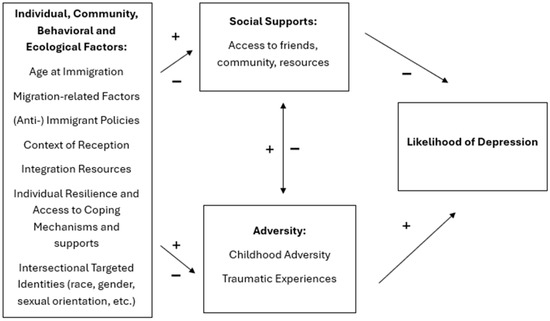
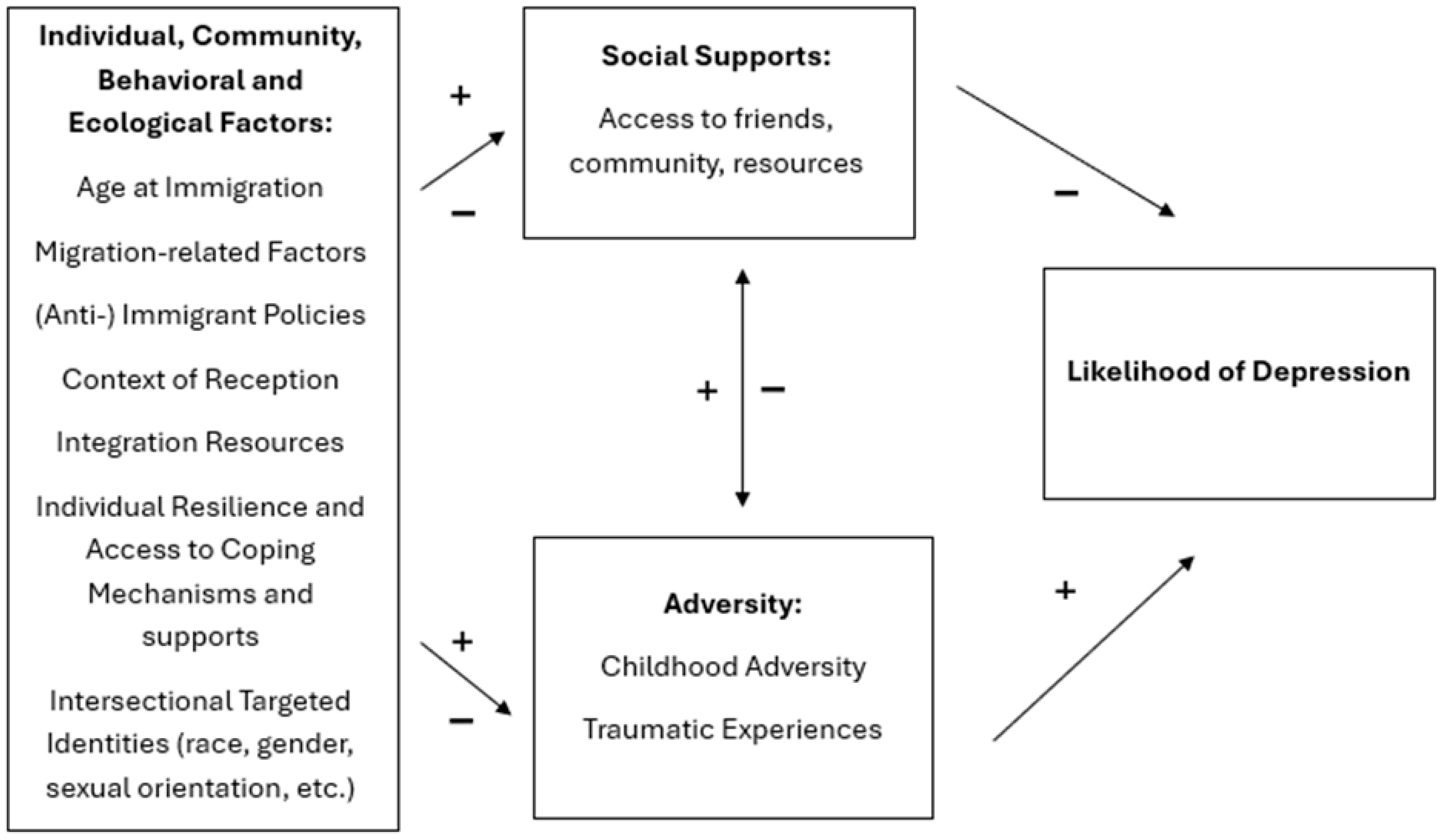
Informed by social support theory and network analysis approaches, we conceptualize perceived interpersonal support as a dimension of the quality of existing relationships distinct from sociometric measures that assess the composition of a person’s network. This framework guides our hypotheses about the protective effects of the quality of social support and the potential for differentiation in the effects across sociometric measures on depression outcomes. To better assess the varying roles of networks and perceived support on the mental health outcomes of Central American immigrants, this project will examine the quality of relationships (i.e., perceived support) and their effect on depression outcomes. We will also test the interaction between social network measures and perceived interpersonal support to determine whether different attributes of a person’s social network, including size, variation in roles, and domain diversity, have a greater impact on depression outcomes and perceived interpersonal support (Figure 1). To assess these relationships the research questions guiding this study are as follows:
Figure 1.
Conceptual framework illustrating some of the hypothesized relationships among social network structure, perceived interpersonal support, and depressive symptoms among Central American immigrants in the United States.
- What is the nature of the relationship between social support and depression outcomes within Central American Immigrants, if any?
- Do differing sociometric measures have independent relationships with depression? If so, what is the nature of those relationships?
- Do different attributes of a person’s social network, including size, variation in roles, and domain diversity, have differing impacts on depression outcomes and perceived interpersonal support.
2. Methods
2.1. Participants and Data Collection
Data for this project came from the third wave of the National Epidemiologic Survey on Alcohol and Related Conditions (NESARC-III) sponsored by the National Institute on Alcohol Abuse and Alcoholism (NIAAA). Data was collected between 2012 and 2013 via a multistage probability sampling with intentional oversampling in areas with moderate or high representation of ethnic minorities (Grant et al. 2014). Interviews were conducted in-person with computer-assisted interviewing technology and were available to participants in Spanish and in English. Access to NESARC-III data is restricted and controlled by the National Institute on Alcohol Abuse and Alcoholism (NIAAA). Approval was obtained after completion of NIAAA’s data use agreement and a human subject’s research exemption issued by the University of Washington’s Institutional Review Board. The Central American immigrant sample analyzed in this project consisted of all non-U.S.-born respondents who reported being born in Belize, Costa Rica, El Salvador, Guatemala, Honduras, Nicaragua, and Panama (N = 558).
2.2. Measures
2.2.1. Demographic Variables
Participants demographic variables included: immigration status (born in the U.S. or not), gender (male or female, per survey), race and ethnicity (non-Hispanic White, non-Hispanic Black, non-Hispanic American Indian/Alaska Native, non-Hispanic Asian/Native Hawaiian/Pacific Islander, Hispanic), age, education (less than high school, high school graduate, or some college or higher), annual personal income (0–14,999, 15,000–34,999, 35,000–69,999, 70,000 or more), marital status (married, never married, divorced/widowed/separated) and childhood immigration status (immigrated before they were 18 years old).
2.2.2. Depression
Depression was measured via the hierarchical variable for Lifetime DSM-5 Major Depressive Disorder measure (LMDD) resulting from meeting DSM-5 criteria as measured through interviews via the NIAAA’s Alcohol Use Disorder and Associated Disabilities Interview Schedule (AUDADIS-5) (Grant et al. 2015). The hierarchical variable for LMDD is independent of other conditions and excludes episodes resulting from substance use or other medical conditions (Grant et al. 2015).
2.2.3. Interpersonal Support
Interpersonal support measured through the Interpersonal Support Evaluation List (ISEL-12). The ISEL-12 is a 12-item questionnaire designed to measure a participant’s perceived access to support from social contacts and utilizes questions such as: “When I need suggestions on how to deal with a personal problem, I know someone I can turn to” (Cohen et al. 1985). Items are rated on a scale from 1 (definitely false) to 4 (definitely true) with some reverse-coded items and had a minimum score of 12 and a maximum score of 48 (Cohen et al. 1985; Portillo et al. 2023). Higher scores indicate a higher level of perceived access to supportive resources within their relationships. The ISEL-12 has been extensively validated for validity and internal reliability. The ISEL-12 is not a social network measure but rather a measure of people’s perceived support that they receive from others and has good reliability across samples (Cronbach’s α = 0.82) (Ruan et al. 2008; Sacco et al. 2014).
2.2.4. Sociometric Measures: Social Roles, Domain Participation, and Social Network Size
The Social Network Index (SNI) is a 12-item questionnaire measuring an individual’s quantity and type of social relationships two weeks before being surveyed (Cohen et al. 1997, 2001; Platt et al. 2014). The SNI measures three specific components of one’s in-person social participation (Cohen et al. 2001). The first measures the number of regular social roles respondents are connected to. The second measure quantifies the number of people in a respondent’s network, and the last measure captures the number of “active network domains” in which a person participates, such as school, work, and volunteering activities (Cohen et al. 2001). Each domain was scored according to the delineated coding for each of the three domains (Cohen et al. 2001). Based on previous studies, we used the number of regular social roles to measure network diversity with scores ranging from 0 to 12 (Berkman and Syme 1979; Grant et al. 2015; Platt et al. 2014; Rhee et al. 2021). Social network diversity was treated as a continuous variable, with scores closer to twelve indicating a high diversity of social connections. The number of people in the network was measured by summing the reported number of regular social contacts (at least once every two weeks) across twelve social roles (Cohen et al. 2001). Lastly, we used the third measure to quantify participant’s participation across eight different social network domains. The eight domains included participation and engagement with: friends, church/religious activities, school, work, neighbors, volunteering, other groups, and family. Scores within the domain category had a minimum score of 0 (not active in any domain) and a maximum score of 8 (active in all domains). A point was awarded for participants who reported at least four high-contact people in each category. In line with scoring guidelines, only those with at least three high-contact family roles (i.e., parent, spouse, child, etc.) and four high-contact family members received a point in the family domain (Cohen et al. 1997; Cohen 2004). The SNI has fair reliability and a Cronbach’s alpha between 0.64 and 0.70 (Cohen 2004).
2.2.5. Stress Measure
The NESARC-III survey measured recent stressful life events through the presence of 16 different events in the last 12 months before the survey. Questions asked about stress related to moving, employment loss, relational conflict, exposure to crime, and financial or legal stress (e.g., During the last 12 months, were you fired or laid off from a job? During the last 12 months, have you been homeless?) (Udo and Grilo 2016; Verplaetse et al. 2018; Zuvekas et al. 2000). All stressful events were added to generate a stressful life event exposure ranging from 0–16.
2.3. Analyses
Data were analyzed utilizing indicated weights to account for complex sampling structure in Stata version 16.1. We implemented multivariate logistic regression models to test the relationship between network composition, social support, and depression outcomes. First, we ran independent analyses examining effects with social network diversity, network domain, network count, and interpersonal support. Second, we incorporated each of the network measures (diversity, count, domains, and perceived support) into our logistic regression models for depression. We tested interactions between social network density measures and perceived interpersonal support. All models adjusted for demographic covariates and were conducted using accurate weights to adjust for the Central American immigrant population.
We chose logistic regressions over alternative approaches for our initial analyses for depression due to the binary nature of the depression variable and assumption that each observation is independent. Although we could have theoretically applied multilevel modeling by country for example, we felt this would have limited our sample and ability to make comparisons due to the oversampling of Northern Triangle countries versus other less sampled Central American communities. In order to assess the effects of social network domains, we ran multiple progressive linear regressions due to the continuous nature of the social network variables. Across models, we conducted comprehensive and multidirectional model-building approach that incorporated forward and backward selection steps for covariates and assessed for stability of our model coefficients to ensure model fit and selection.
3. Results
3.1. Interpersonal Support and Depression
Weighted sample characteristics are presented in Table 1. In this sample, 42.39% of respondents were between the ages of 30 and 44. Due to language and data collection constraints in the original survey, 96.94% identified as ‘Hispanic,’ and 49.20% identified as female. Among immigrants in this sample, 14% met full criteria for depression and reported an average social network diversity score of 6.72 (SD = 0.09) out of a maximum of 12, a domain participation average of 1.40 (SD = 0.5) out of a maximum of 8 and an average network size of 16.42 (SD = 0.5). They also reported an average social support score of 40.70 (SD = 0.35) out of 48 and 30% reported coming to the United States as children under 18. These distributions provide demographic context for subsequent analyses.
Table 1.
Weighted demographics of Central American immigrant respondents, NESARC 2012–2013.
Table 2 presents results for the multivariate logistic regression models for depression. In all models presented in Table 2, stressful events and perceived interpersonal support were associated with depression outcomes. All models controlled for childhood adversity and childhood immigration status in order to control for additional components that have been directly linked with increased odds of depression. In Model 1 (refer to Table 2), the regression analysis examines the relationship between perceived interpersonal support and depression outcomes. In this model and in all models, the presence of a stressful event was positively associated with a 36% higher likelihood of meeting criteria for major depressive disorder (AOR 1.36; CI 1.14–1.63). Perceived interpersonal support was negatively associated with meeting criteria for depression with one unit increase in interpersonal support, reducing the likelihood of meeting criteria for depression by approximately 3% (AOR 0.97; CI 0.94–1.00). These findings were constant throughout our model, adversity in childhood was constantly associated with meeting criteria for major depressive disorder.
Table 2.
Association between major depressive disorder and support and relational characteristics for Central American immigrants, NESARC 2012–2013.
3.2. Sociometric Measures and Depression
Models 2–4 in Table 2 test the relationships between social network diversity measures and depression outcomes. Neither social network diversity (AOR1.06; CI 0.88–1.27), domain diversity (AOR1.01; CI 0.79–1.29) or increased network count (AOR 1.01; CI 0.98–1.04) were positively associated with either a decreased or increased likelihood of depression. Meaning our models found no relationship between individual social network measures and the odd of meeting criteria for depression. Models 5–7 (Table 2) include the measure for social support and tests the inclusion of each of the three network measures, across all models none of the network measures were statistically significant however perceived interpersonal support remained relatively constant in its negative association with depression outcomes in model 5 (AOR 0.96; CI 0.94–1.00), model 6 (AOR 0.96; CI 0.94–1.00), and model 7 (AOR 0.97; CI 0.94–1.00). Within these models, each one-point increase in perceived support was associated with a 3–6% reduction in the likelihood of meeting depression criteria. Model 8 incorporates all measures and only perceived interpersonal support remains statistically significant in its association with depression (AOR 0.96; CI 0.93–0.99). In this model, a one unit increase in interpersonal support decreased the odds of depression by 4%. Across all models, reporting higher levels of perceived interpersonal support was associated with lower odds of meeting criteria for depression.
Table 3 presents the results from the interactions between social network index measures and perceived social support, thus testing the hypothesis that perceived social support, and social engagement may interact in these models. These interactions were not statistically significant in any model and across all three models. In model 3 (Table 3) that incorporated a measure for social domain participation, wherein perceived interpersonal support was negatively associated with depression with a one unit increase in interpersonal support decreasing the odds of meeting criteria for depression by 6% (AOR 0.94; CI 0.90–0.99), however the interactions themselves were not statistically significant. Additional models (not reported) were run to assess additional interactions among the different network measurements, and none were statistically significant.
Table 3.
Models assessing the interaction between network characteristics and depression outcomes among Central American immigrants, NESARC 2012–2013.
3.3. Social Network Domains and Perceived Interpersonal Support
In order to explore whether network domains are associated with perceived interpersonal support we ran additional multiple linear regression models. We regressed all demographic variables and social network diversity on perceived interpersonal support, network diversity, count, and domain participation. Independently, each measure was positively associated with increased personal support (diversity, β = 1.09, p > 0.001, size β = 0.16, p > 0.001 and domain β = 1.00, p > 0.001) in models 1–3 (Table 4). In this case a one unit increase in diversity, count and domain increased the measure of interpersonal support by 1.09, 0.16 and 1.00 units, respectively. However, when we incorporated all network measures into the model (Model 4), domain participation was not statistically significant in its association with perceived support, however network diversity (β = 0.72, p > 0.001) and network size were positively associated with perceived interpersonal support (β = 0.13, p > 0.001) increasing social support by 0.72 (diversity) and 0.13 (size).
Table 4.
Multivariable linear regressions assessing the association between perceived interpersonal support and network among Central American immigrants, NESARC 2012–2013 (N = 558).
4. Discussion
This study found that perceived interpersonal support was significantly associated with lower odds of depression among Central American immigrants, whereas social network size and diversity were not. This pattern suggests that the quality of social relationships—how supported individuals feel—may be more consequential for mental health than the structural scope of one’s social network, underscoring the significant role of perceived support as a mechanism of resilience within immigrant communities. Collectively, the tensions in our findings highlight different mechanisms by which social metrics can vary in their effect on immigrant mental health. Despite the low prevalence of depression in the sample, findings allude to the need for broader explorations of mental health within this population with attention to mechanisms of resilience and resistance to stressful events. Results from this study indicate a relationship between interpersonal perceived support and lower odds of depression that merit further exploration (Ai et al. 2015).
The negative association between perceived interpersonal support and depression suggests that perceived feelings of relational connection may have protective effects on meeting criteria for depression (Ai et al. 2015; Lusk et al. 2021). Failing to find a significant association between social network density and depression may be partially explained by the low prevalence of depression within the sample, which limited ability for evaluation. This may also highlight a tension in social network research regarding issues of size versus quality. Although causal inference is limited, these results highlight an important area for further study.
The lack of a relationship between network measures and depression may also allude to the importance of the quality of relationships in having protective effects on mental health in a way that may be more meaningfully interpreted with overall depression. We also recognize the limits of our study in making causal claims about these relationships in the absence of confounding factors that we were unable to include in the model. For example, an immigrant’s ability to access a supportive social network may be influenced by variation in their access to a pre-existing network before migrating (Cases 2025), acculturation related factors like employment and lack of time, and more generally our understanding of how immigrants from non-Western countries conceptualize depression and depressive symptoms. However, it might be worth further exploration to see if these measures were associated with some of the criteria related to the questions, such as diminished interest in activities, network participation, disparities in being able to access employment and resource related social connections and network domains, fear of deportation and additional structural barriers to social participation and/or working towards more complex ways to measure social participation within the context of immigrant communities.
Additionally, given the relationships between network measures and perceived support itself it is possible that the support reported is an extension of the measures with a more direct and lasting impact on depression criteria among immigrants. While it was surprising that each of these network characteristics were not consistently associated with depression outcomes, the relationship between network characteristics and interpersonal support elucidates areas for further study as a potential mediator or mechanism for identifying avenues of increasing support and their effect on depression. This suggests that perceived interpersonal support may act as a mediating mechanism through which structural aspects of social networks influence mental health. This can inform future models looking to better understand what social factors can bolster feelings of support among immigrants who may be at risk for mental health stressors.
Collectively, these findings highlight the need for additional explorations of mechanisms related to both depression and those that contribute to protective factors against depression and other adverse mental health needs in immigrant communities. In this case, while individual network measures were not directly protective of depression, some of the network characteristics showed a potential relationship with support and understanding how to increase access to network resources may lead to increased avenues for social support. This pattern extends social support theory by suggesting that perceived connectedness, rather than structural contact, is the most salient mechanism of psychological resilience in immigrant populations. The protective effects of perceived interpersonal support may be particularly meaningful for individuals navigating multiple systems of oppression, such as racism, xenophobia, misogyny, homophobia, and transphobia, which heighten vulnerability to isolation and distress (Tummala-Narra 2020). Building on these intersectional considerations, the next question concerns the mechanisms through which different aspects of social networks—structure versus perception—shape mental health outcomes. Additionally, more nuance can be introduced with additional access to relevant contextual factors such as documentation status, different types of trauma severity and exposure, experiences with racism and discrimination and access to social and cultural capital to strengthen claims about the multifaceted factors that shape immigrant social landscapes and their effect on their health.
5. Limitations
Limitations in this study include our limited sub-sample from the broader NESARC-III dataset; as a result of this, each country is not proportionally represented and is heavily skewed towards immigrants from El Salvador, Guatemala, and Honduras. In line with previously reported limitations framed by intersectional lenses, there were some limitations in demographic measurements that may have impacted the results and subsequent interpretations, such as the use of “Hispanic,” the lack of documentation status information, and the limitation of measures of sex in such a way that people were forced to confine their identity to a gender binary or at the discretion of the interviewer. Similarly, the concentration of mid-adulthood respondents and limited gender and ethnic representation may restrict the generalizability of findings and obscure variation across intersectional identities. Limited racial, gender, and additional intersectional identities may be masking additional levels of disproportionality or resilience demonstrated by targeted groups. Differential representation across racialized and gendered identities may mask variation in both vulnerability and resilience as people navigate targeting by structural oppressive forces which, in turn, directly impact their mental health (Esie and Bates 2023). Additionally, limited inferences can be made due to the low prevalence of depression within this sample, and questions can be raised about measuring lifetime prevalence of clinical depression rather than current or on-going mental health needs. We are also limited in our ability to make concrete claims regarding the magnitude of these relationships due to the intrinsic relationship between many of our variables, including demographic variables and our social domain measures that were important to control for and include but may add to the potential for impacting the magnitude of our coefficients. However, given our efforts to control collinearity and alignment with past literature and our guiding theoretical framework, we feel confident in the nature of the relationships and their impact on our reported outcomes.
Lastly, all data in this project came from the 2012–2013 NESARC-III wave; considering recent developments during and after the Trump presidency, future research should utilize more recent data that may better capture changes in legislation, increased policing at the border and the effects of COVID-19 on Central American immigration patterns and mental health experiences. Notwithstanding limitations in this project, collectively, these findings support the need for additional studies to better understand and highlight the importance of social and relational factors associated with Central American immigrants’ health. Despite these limitations, the robustness of the observed association between perceived support and depression provides confidence in the reliability of the main findings between social resources and depression.
6. Conclusions, Future Directions and Contribution to Literature
This study contributes to immigrant health literature by showing that perceived interpersonal support is a significant protective factor against depression among Central American immigrants in the United States. Policies and practices that strengthen relational connections—rather than exacerbate isolation—are essential for promoting immigrant well-being.
Findings highlight the heterogeneity that exists within the broader categorization of Latinx/Latine/Hispanic populations and address the need for more specified investigations of this fast-growing immigrant population (Delgado and Stefancic 2017; Dasema and Jeanne 2025). Social engagement and perceived interpersonal support may have an impact on help seeking behaviors through both formal and informal channels. Recent research on immigrants, further validates findings from this study whose data precedes the Trump administration and may highlight opportunities for supportive community interventions in the face of racialized persecution. Cariello et al. (2022) found that the effects of depression mediated the effects of discrimination on the physical health of 204 Latinx/e immigrants but that this effect was weakened in the presence of social supports. Lusk et al. (2021), also found that social support and connection to religion and religious groups had protective effects on measures of PTSD for trauma-exposed Central American immigrants.
This project aimed to complete a disaggregated analysis of Central American immigrants. Due to data collection limitations and a relatively small sample size, we were unable to dive deeper into the intersectional variations that may exist within our sample at the intersection of race, sexual orientation, documentation status and receiving context (which region, state, county for example). This is important to incorporate whenever possible because of the variation in social and economic privileges that exist within heterogenous groups that get lost in pan-ethnic groups. For example, like many immigrant groups, Central American immigrants entering the United States encounter lasting legacies of intra-group conflict and discrimination, and carry with them the scars of trauma experienced not only by them but by their ancestors. Collectively, these experiences can negatively impact their health and that of future generations as historical trauma coincides with structural oppression and social determinants of health (Handal et al. 2023; Mohatt et al. 2014). Salvadoran immigrants and their descendants for example, often have to navigate integration into US cultures and barriers to care concurrently with broader transnational policies in Mexico that often reduce their identity to stereotypes of violence (Frías-Vázquez and Arcila 2019; García 2006; Osuna 2015). Systems of oppression, especially those rooted in xenophobia and racism, benefit from intra-group conflict by pitting immigrants against each other and potentially causing immigrant groups to feel like they are in competition for resources (Osuna 2015). These mechanisms generally create narratives of resource scarcity that create conflicts within immigrant groups struggling with the same oppressive structures (Chiricos et al. 2014; Osuna 2015; Rodriguez and Menjívar 2015).
This research has practical implications for those working directly with Central American immigrants in identifying a strengths-based understanding of factors contributing to immigrant health. For example, Held et al. (2022) found that social support was negatively impacted by feelings of policy stress which subsequently was associated with greater anxiety and depression symptoms. This highlights why policies and practices that connect and build connections rather focusing on individualistic-only interventions or supporting policies that further isolate or generate fear and anxiety in immigrant communities is so important for the health and well-being of immigrants. Those working in clinical settings with immigrants should take into consideration the importance of supportive social supports as part of treatment considerations. Having an understanding of both the implications of policies and practices that isolate and separate people from their communities and the detrimental effects these losses in relationships have, we have the responsibility to advocate for the change we know is needed in our communities. Findings underscore the importance of policies and clinical practices that prioritize community-based connection and trauma-informed care to counter the isolating effects of current immigration systems.
Author Contributions
Conceptualization, data cleaning, analysis and writing original draft preparation, A.G.P.P., Consultation, conceptualization and writing,—review and editing, N.H., X.A. All authors have read and agreed to the published version of the manuscript.
Funding
This research received no external funding.
Institutional Review Board Statement
Ethical review and approval were waived for this study due to approval was obtained after completion of NIAAA’s data use agreement and a human subject’s research exemption issued by the University of Washington’s Institutional Review Board.
Informed Consent Statement
Not applicable as a secondary data set was used.
Data Availability Statement
The data presented in this study are available on request from the corresponding author, as the data for this project came from the third wave of the National Epidemiologic Survey on Alcohol and Related Conditions (NESARC-III) sponsored by the National Institute on Alcohol Abuse and Alcoholism (NIAAA). Access to NESARC-III data is restricted and controlled by the National Institute on Alcohol Abuse and Alcoholism (NIAAA).
Acknowledgments
This project was prepared using a limited access dataset obtained from the National Institute on Alcohol Abuse and Alcoholism. This project has not been reviewed or endorsed by NIAAA and does not necessarily represent the opinions of NIAAA, who is not responsible for the contents. The authors would also like to acknowledge with gratitude David Takeuchi, Jane Lee, Bonnie Duran and Jerald Herting for their support and guidance throughout this project.
Conflicts of Interest
The authors declare no conflict of interest.
References
- Ai, Amy L., Cara Pappas, and Elena Simonsen. 2015. Risk and protective factors for three major mental health problems among Latino American men nationwide. America Journal of Mens Health 9: 64–75. [Google Scholar] [CrossRef] [Scilit]
- Alegría, Margarita, Kiara Álvarez, and Karissa DiMarzio. 2017. Immigration and mental health. Current Epidemiology Reports 4: 145–55. [Google Scholar] [CrossRef] [Scilit]
- Ayón, Cecilia, and Michela Bou Ghosn Naddy. 2013. Latino Immigrant Families’ Social Support Networks: Strengths and Limitations During A Time of Stringent Immigration Legislation and Economic Insecurity. Journal of Community Psychology 41: 359–77. [Google Scholar] [CrossRef] [Scilit]
- Bacong, Adrian Matias, and Cecilia Menjívar. 2021. Recasting the immigrant health paradox through intersections of legal status and race. Journal of Immigrant and Minority Health 23: 1092–104. [Google Scholar] [CrossRef] [Scilit]
- Bekteshi, Venera, and Sung-wan Kang. 2020. Contextualizing acculturative stress among Latino immigrants in the United States: A systematic review. Ethnicity & Health 25: 897–914. [Google Scholar] [CrossRef] [Scilit]
- Berkman, Lisa F., and S. Leonard Syme. 1979. Social networks, host resistance, and mortality: A nine-year follow-up study of Alameda County residents. American Journal of Epidemiology 109: 186–204. [Google Scholar] [CrossRef] [Scilit] [PubMed]
- Booth, John A., Christine J. Wade, and Thomas W. Walker. 2020. Understanding Central America: Global Forces and Political Change. London: Routledge. [Google Scholar]
- Branch, Breauna, and Douglas Conway. 2022. Health Insurance Coverage by Race and Hispanic Origin: 2021. Suitland: US Department of Commerce, US Census Bureau. [Google Scholar]
- Bruine de Bruin, Wändi, Andrew M. Parker, and JoNell Strough. 2020. Age differences in reported social networks and well-being. Psychology and Aging 35: 159. [Google Scholar] [CrossRef] [Scilit]
- Cariello, Annahir N., Paul B. Perrin, Chelsea Derlan Williams, G. Antonio Espinoza, Alejandra Morlett Paredes, and Oswaldo A. Moreno. 2022. Moderating influence of social support on the relations between discrimination and health via depression in Latinx immigrants. Journal of Latinx Psychology 10: 98. [Google Scholar] [CrossRef] [Scilit]
- Cases, Rizza Kaye C. 2025. Persistent ties, evolving networks: Accounting for changes and stability in migrant support networks. International Migration 63: e13286. [Google Scholar] [CrossRef] [Scilit]
- Chiricos, Ted, Elizabeth K. Stupi, Brian J. Stults, and Marc Gertz. 2014. Undocumented immigrant threat and support for social controls. Social Problems 61: 673–92. [Google Scholar] [CrossRef] [Scilit]
- Chomsky, Aviva. 2021. Perspective | the Root cause of Central American Migration? The United States. The Washington Post. Available online: https://www.washingtonpost.com/outlook/2021/07/08/root-cause-central-american-migration-united-states/ (accessed on 30 January 2023).
- Cohen, Sheldon. 2004. Social relationships and health. American Psychologist 59: 676. [Google Scholar] [CrossRef] [Scilit]
- Cohen, Sheldon, Benjuamin H. Gottlieb, and Lynn G. Underwood. 2001. Social relationships and health: Challenges for measurement and intervention. Advances in Mind-Body Medicine 17: 129–41. [Google Scholar] [PubMed]
- Cohen, Sheldon, Robin Mermelstein, Tom Kamarck, and Harry M. Hoberman. 1985. Measuring the functional components of social support. In Social Support: Theory, Research, and Applications. Dordrecht: Springer, pp. 73–94. [Google Scholar]
- Cohen, Sheldon, William J. Doyle, David P. Skoner, Bruce S. Rabin, and Jack M. Gwaltney. 1997. Social ties and susceptibility to the common cold. JAMA 277: 1940–44. [Google Scholar] [CrossRef] [Scilit]
- Cranford, Cynthia J. 2005. Networks of exploitation: Immigrant labor and the restructuring of the Los Angeles janitorial industry. Social Problems 52: 379–97. [Google Scholar] [CrossRef] [Scilit]
- Crossley, Nick, Elisa Bellotti, Gemma Edwards, Martin G. Everett, Johan Koskinen, and Mark Tranmer. 2015. Social Network Analysis for Ego-Nets. Sauzende Oaks: SAGE Publications Ltd. [Google Scholar] [CrossRef] [Scilit]
- Dasema, Rebecca, and Batalova Jeanne. 2025. Article: Central American Immigrants in the United States | migrationpolicy.org. Migration Policy Institute. Available online: https://www.migrationpolicy.org/article/central-american-immigrants-united-states (accessed on 14 August 2025).
- Delgado, Richard, and Jean Stefancic. 2017. Critical Race Theory: An Introduction. New York: New York University Press. [Google Scholar]
- Dunn, Marianne G., and Karen M. O’Brien. 2009. Psychological Health and Meaning in Life: Stress, Social Support, and Religious Coping in Latina/Latino Immigrants. Hispanic Journal of Behavioral Sciences 31: 204–27. [Google Scholar] [CrossRef] [Scilit]
- Esie, Precious, and Lisa M. Bates. 2023. At the intersection of race and immigration: A comprehensive review of depression and related symptoms within the US Black population. Epidemiologic Reviews 45: 105–26. [Google Scholar] [CrossRef] [Scilit] [PubMed]
- Estrada-Moreno, Irene Soledad, Maria de las Olas Palma-Garcia, Luis Gomez Jacinto, and Maria Isabel Hombrados-Mendieta. 2025. Resilience in immigrants: A facilitating resource for their social integration. Journal of Ethnic & Cultural Diversity in Social Work, 1–16. [Google Scholar] [CrossRef] [Scilit]
- Feeney, Brooke C., and Nancy L. Collins. 2014. A new look at social support: A theoretical perspective on thriving through relationships. Personality and Social Psychology Review 19: 113–47. [Google Scholar] [CrossRef] [Scilit]
- Fitts, Shanan, and Greg McClure. 2015. Building Social Capital in Hightown: The Role of Confianza in L atina Immigrants’ Social Networks in the New South. Anthropology & Education Quarterly 46: 295–311. [Google Scholar]
- Fox, Samara D., Randi H. Griffin, and John E. Pachankis. 2020. Minority stress, social integration, and the mental health needs of LGBTQ asylum seekers in North America. Social Science & Medicine 246: 112727. [Google Scholar] [CrossRef] [Scilit]
- Frías-Vázquez, Maximiliano, and Carlos Arcila. 2019. Hate speech against Central American immigrants in Mexico: Analysis of xenophobia and racism in politicians, media, and citizens. Paper presented at Seventh International Conference on Technological Ecosystems for Enhancing Multiculturality, León, Spain, October 16–18; pp. 956–60. [Google Scholar]
- García, María Cristina. 2006. Seeking Refuge: Central American Migration to Mexico, the United States, and Canada. Oakland: University of California Press. [Google Scholar]
- Garip, Filiz. 2008. Social capital and migration: How do similar resources lead to divergent outcomes? Demography 45: 591–617. [Google Scholar] [CrossRef] [Scilit]
- Gill, Randip, Mohammad Ehsanul Karim, Joseph H. Puyat, Martin Guhn, Monique Gagné Petteni, Eva Oberle, Magdalena Janus, Katholiki Georgiades, and Anne M. Gadermann. 2025. Childhood poverty, social support, immigration background and adolescent health and life satisfaction: A population-based longitudinal study. Journal of Adolescence 97: 165–79. [Google Scholar] [CrossRef] [Scilit]
- Granovetter, Mark S. 1973. The strength of weak ties. American Journal of Sociology 78: 1360–80. [Google Scholar] [CrossRef] [Scilit]
- Grant, Bridget, Chu Andrea, Sigman Richard, Amsbary Matthew, Kali Jane, Sugawara Yoko, Jiao Ruo, Ren Wen-hua, and Goldstein Richard. 2014. Source and accuracy statement. Evaluation 2: 6. [Google Scholar]
- Grant, Bridget F., Rise B. Goldstein, Sharon M. Smith, Jeesun Jung, Haitao Zhang, Sanchen P. Chou, Roger P. Pickering, Wenjun J. Ruan, Boji Huang, Tulshi D. Saha, and et al. 2015. The Alcohol Use Disorder and Associated Disabilities Interview Schedule-5 (AUDADIS-5): Reliability of substance use and psychiatric disorder modules in a general population sample. Drug and Alcohol Dependence 148: 27–33. [Google Scholar] [CrossRef] [Scilit] [PubMed]
- Hagos, Rama M., and Tod G. Hamilton. 2024. Beyond acculturation: Health and immigrants’ social integration in the United States. Journal of Health and Social Behavior 65: 356–80. [Google Scholar] [CrossRef] [Scilit]
- Handal, Alexis J., Cirila Estela Vasquez Guzman, Alexandra Hernandez-Vallant, Alejandra Lemus, Julia Meredith Hess, Norma Casas, Margarita Galvis, Dulce Medina, Kimberly Huyser, and Jessica R. Goodkind. 2023. Measuring Latinx/@ immigrant experiences and mental health: Adaptation of discrimination and historical loss scales. American Journal of Orthopsychiatry 93: 27. [Google Scholar] [CrossRef] [Scilit]
- Heaney, Catherine A., and Barbara A. Israel. 2008. Social networks and social support. Health Behavior and Health Education: Theory, Research, and Practice 4: 189–210. [Google Scholar]
- Heath, Anthony, and Elina Kilpi-Jakonen. 2012. Immigrant Children’s Age at Arrival and Assessment Results. Paris: OECD Publishing. [Google Scholar]
- Held, Mary Lehman, Jennifer M. First, Melody Huslage, and Marie Holzer. 2022. Policy stress and social support: Mental health impacts for Latinx Adults in the Southeast United States. Social Science & Medicine 307: 115172. [Google Scholar] [CrossRef] [Scilit]
- Hurtado-de-Mendoza, Alejandra, Felisa A. Gonzales, Adriana Serrano, and Stacey Kaltman. 2014. Social isolation and perceived barriers to establishing social networks among Latina immigrants. American Journal of Community Psychology 53: 73–82. [Google Scholar] [CrossRef] [Scilit]
- Kisa, Sezer, and Adnan Kisa. 2024. “No Papers, No Treatment”: A scoping review of challenges faced by undocumented immigrants in accessing emergency healthcare. International Journal for Equity in Health 23: 184. [Google Scholar] [CrossRef] [Scilit]
- Kong, Ling-Na, Nan Zhang, Yuan Chi, Zong-Yu Yu, Yuan Wang, and Guang-Li Zhang. 2021. Relationship of social support and health-related quality of life among migrant older adults: The mediating role of psychological resilience. Geriatric Nursing 42: 1–7. [Google Scholar] [CrossRef] [Scilit]
- Li, Mengting, XinQi Dong, and Dexia Kong. 2021. Social networks and depressive symptoms among Chinese older immigrants: Does quantity, quality, and composition of social networks matter? Clinical Gerontologist 44: 181–91. [Google Scholar] [CrossRef] [Scilit]
- Lusk, Mark, Sam Terrazas, Janette Caro, Perla Chaparro, and Delia Puga Antúnez. 2021. Resilience, faith, and social supports among migrants and refugees from Central America and Mexico. Journal of Spirituality in Mental Health 23: 1–22. [Google Scholar] [CrossRef] [Scilit]
- McQuaid, Jennifer H., Amar Mandavia, Galen Cassidy, Michelle Alejandra Silva, Kaiz Esmail, Shreya Aragula, Gigi Gamez, and Katherine McKenzie. 2024. Persecution as stigma-driven trauma: Social determinants, stigma, and violence in asylum seekers in the United States. Social Science & Medicine 350: 116761. [Google Scholar] [CrossRef] [Scilit] [PubMed]
- Mohatt, Nathaniel Vincent, Azure B. Thompson, Nghi D. Thai, and Jacob Kraemer Tebes. 2014. Historical trauma as public narrative: A conceptual review of how history impacts present-day health. Social Science & Medicine 106: 128–36. [Google Scholar] [CrossRef] [Scilit]
- Narea, Nicole. 2019. Trump’s Agreements in Central America are Dismantling the Asylum System as We Know It. Vox. Available online: https://www.vox.com/2019/9/26/20870768/trump-agreement-honduras-guatemala-el-salvador-explained (accessed on 22 August 2022).
- Okonji, Angela I., Joseph N. Inungu, Tunde Muyiwa Akinmoladun, Mary L. Kushion, and Livingstone Aduse-Poku. 2021. Factors associated with depression among immigrants in the US. Journal of Immigrant and Minority Health 23: 415–24. [Google Scholar] [CrossRef] [Scilit]
- Oppedal, Brit, Espen Røysamb, and David Lackland Sam. 2004. The effect of acculturation and social support on change in mental health among young immigrants. International Journal of Behavioral Development 28: 481–94. [Google Scholar] [CrossRef] [Scilit]
- Osuna, Steven. 2015. Intra-Latina/Latino encounters: Salvadoran and Mexican struggles and Salvadoran–Mexican subjectivities in Los Angeles. Ethnicities 15: 234–54. [Google Scholar] [CrossRef] [Scilit]
- Panchang, Sarita, Hilary Dowdy, Rachel Kimbro, and Bridget Gorman. 2016. Self-rated health, gender, and acculturative stress among immigrants in the U.S.: New roles for social support. International Journal of Intercultural Relations 55: 120–32. [Google Scholar] [CrossRef] [Scilit]
- Papelbaum, Marcelo, Rodrigo O. Moreira, Walmir Coutinho, Rosane Kupfer, Leão Zagury, Silvia Freitas, and José C. Appolinário. 2011. Depression, glycemic control, and type 2 diabetes. Diabetology & Metabolic Syndrome 3: 1–4. [Google Scholar] [CrossRef] [Scilit]
- Platt, Jonathan, Katherine M. Keyes, and Karestan C. Koenen. 2014. Size of the social network versus quality of social support: Which is more protective against PTSD? Social Psychiatry and Psychiatric Epidemiology 49: 1279–86. [Google Scholar] [CrossRef] [Scilit] [PubMed]
- Portillo, Andrea G. Perez, Jerald R. Herting, Jane J. Lee, and Bonnie Duran. 2023. Supportive relationships in childhood: Does it have a long Reach into health and depression outcomes for immigrants from Latin America? SSM-Population Health 23: 101436. [Google Scholar] [CrossRef] [Scilit] [PubMed]
- Preston, Angela J., and Lynn Rew. 2022. Connectedness, self-esteem, and prosocial behaviors protect adolescent mental health following social isolation: A systematic review. Issues in Mental Health Nursing 43: 32–41. [Google Scholar] [CrossRef] [Scilit]
- Revens, Keri Elliott. 2019. Understanding the Factors Associated with Resilience in Latino Immigrants. Charlotte: The University of North Carolina at Charlotte. [Google Scholar]
- Rhee, Taeho Greg, Richard A. Marottoli, and Joan K. Monin. 2021. Diversity of social networks versus quality of social support: Which is more protective for health-related quality of life among older adults? Preventive Medicine 145: 106440. [Google Scholar] [CrossRef] [Scilit]
- Rivera Baeza, María José, Camila Salazar-Fernández, Diego Manríquez-Robles, Natalia Salinas-Oñate, and Vanessa Smith-Castro. 2022. Acculturative stress, perceived social support, and mental health: The mediating effect of negative emotions associated with discrimination. International Journal of Environmental Research and Public Health 19: 16522. [Google Scholar] [CrossRef] [Scilit] [PubMed]
- Rodriguez, Nestor P., and Cecilia Menjívar. 2015. Central American immigrants and Racialization in a Post–civil Rights era. In How the United States Racializes Latinos. London: Routledge, pp. 183–99. [Google Scholar]
- Ruan, W. June, Risë B. Goldstein, S. Patricia Chou, Sharon M. Smith, Tulshi D. Saha, Roger P. Pickering, Deborah A. Dawson, Boji Huang, Frederick S. Stinson, and Bridget F. Grant. 2008. The alcohol use disorder and associated disabilities interview schedule-IV (AUDADIS-IV): Reliability of new psychiatric diagnostic modules and risk factors in a general population sample. Drug and Alcohol Dependence 92: 27–36. [Google Scholar] [CrossRef] [Scilit]
- Ryan, Daron, Stephanie N. Tornberg-Belanger, Georgina Perez, Serena Maurer, Cynthia Price, Deepa Rao, Kwun C. G. Chan, and India J. Ornelas. 2021. Stress, social support and their relationship to depression and anxiety among Latina immigrant women. Journal of Psychosomatic Research 149: 110588. [Google Scholar] [CrossRef] [Scilit]
- Sacco, Paul, Kathleen K. Bucholz, and Donna Harrington. 2014. Gender differences in stressful life events, social support, perceived stress, and alcohol use among older adults: Results from a national survey. Substance Use & Misuse 49: 456–65. [Google Scholar]
- Salas-Wright, Christopher P., Michael G. Vaughn, Trenette C. Goings, Daniel P. Miller, and Seth J. Schwartz. 2018. Immigrants and mental disorders in the United States: New evidence on the healthy migrant hypothesis. Psychiatry Research 267: 438–45. [Google Scholar] [CrossRef] [Scilit]
- Singh, Shipra, Kimberly McBride, and Vivek Kak. 2015. Role of social support in examining acculturative stress and psychological distress among Asian American immigrants and three sub-groups: Results from NLAAS. Journal of Immigrant and Minority Health 17: 1597–606. [Google Scholar] [CrossRef] [Scilit] [PubMed]
- Song, Jingyeong, Jonathan Corcoran, and Renee Zahnow. 2025. The resettlement journey: Understanding the role of social connectedness on well-being and life satisfaction among (Im) migrants and refugees: A systematic review. Journal of Racial and Ethnic Health Disparities 12: 2128–44. [Google Scholar] [CrossRef] [Scilit] [PubMed]
- Stewart, Miriam, Joan Anderson, Morton Beiser, Edward Mwakarimba, Anne Neufeld, Laura Simich, and Denise Spitzer. 2008. Multicultural Meanings of Social Support among Immigrants and Refugees. International Migration 46: 123–59. [Google Scholar] [CrossRef] [Scilit]
- Stronks, Karien, Aydın Şekercan, Marieke Snijder, Anja Lok, Arnoud P. Verhoeff, Anton E. Kunst, and Henrike Galenkamp. 2020. Higher prevalence of depressed mood in immigrants’ offspring reflects their social conditions in the host country: The HELIUS study. PLoS ONE 15: e0234006. [Google Scholar] [CrossRef] [Scilit]
- Tummala-Narra, Pratyusha. 2020. Intersectionality in the immigrant context. In Intersectionality and Relational Psychoanalysis. London: Routledge, pp. 119–43. [Google Scholar]
- Udo, Tomoko, and Carlos M. Grilo. 2016. Perceived weight discrimination, childhood maltreatment, and weight gain in US adults with overweight/obesity. Obesity 24: 1366–72. [Google Scholar] [CrossRef] [Scilit] [PubMed]
- UNESDA. 2021. International Migrant Stock Population Division. United Nations. Available online: https://www.un.org/development/desa/pd/content/international-migrant-stock (accessed on 4 November 2021).
- Verplaetse, Terril L., Kelly E. Moore, Brian P. Pittman, Walter Roberts, Lindsay M. Oberleitner, Philip H. Smith, Kelly P. Cosgrove, and Sherry A. McKee. 2018. Intersection of Stress and Gender in Association with Transitions in Past Year DSM-5 Substance Use Disorder Diagnoses in the United States. Chronic Stress 2: 2470547017752637. [Google Scholar] [CrossRef] [Scilit]
- Young, Marta Y. 2001. Moderators of Stress in Salvadoran Refugees: The Role of Social and Personal Resources. The International Migration Review 35: 840–69. [Google Scholar] [CrossRef] [Scilit]
- Zabala Ortiz, Pamela. 2025. “We’re expected to be homogenous”: Contesting Latinidad and the myth of panethnic inclusion. Sociology of Race and Ethnicity 11: 437–51. [Google Scholar] [CrossRef] [Scilit]
- Zuvekas, Ann, Barbara L. Wells, and Bonnie Lefkowitz. 2000. Mexican American infant mortality rate: Implications for public policy. Journal of Health Care for the Poor and Underserved 11: 231–42. [Google Scholar] [CrossRef] [Scilit]

Disclaimer/Publisher’s Note: The statements, opinions and data contained in all publications are solely those of the individual author(s) and contributor(s) and not of MDPI and/or the editor(s). MDPI and/or the editor(s) disclaim responsibility for any injury to people or property resulting from any ideas, methods, instructions or products referred to in the content. |
© 2025 by the authors. Licensee MDPI, Basel, Switzerland. This article is an open access article distributed under the terms and conditions of the Creative Commons Attribution (CC BY) license (https://creativecommons.org/licenses/by/4.0/).