1. Introduction
The Quechua language, as an essential means of communication among Andean communities, fosters the preservation of an unwritten collective memory through songs such as the
harawi, defined by the Real Academia Española as a “melancholic love song sung by the inhabitants of the highlands.” This oral practice is carried out predominantly by women, much like lullabies, which are “transmitted orally and intoned since time immemorial within the domestic sphere in the voices of women—mothers, caregivers, wet nurses, or, as we prefer to call them, lullaby singers—constituting the living account of a memory” (
Vesely Avaria 2023, p. 16). This concept may reinforce the association of women’s roles with the domestic sphere, romanticize orality, and overlook potential power tensions in processes of cultural transmission. As it is an eminently female practice, it could be interpreted as excluding men; however, this can also be explained by the fact that the male vocal timbre is not suitable for the expressive and sonic characteristics typical of this type of singing, considering that “the persistence of ancestral customs that once constituted the way of life of Peruvians in the Andes continues to generate interest and controversy due to their sexist and hierarchical expression in a society that seeks gender equity” (
Gutiérrez-Gómez et al. 2024, p. 6). To date, there are no historical records documenting a male practice of the Andean
harawi.
The oral expression of the sad song in the Quechua-speaking Peruvian Andes is practiced mainly by older women, who preserve and transmit this tradition as part of the cultural memory of their communities, where “verbal aesthetic expressions (
harawis: poetry/
wi-llaluy: narratives/
takis: songs) continued to be transmitted through word and gesture, which the alphabet failed to capture or convey” (
Huamán 2021, p. 50). Through
willacuy (oral narratives), the
harawi is transmitted. Its expression may seem subtle or even meaningless to those outside the community; however, for its members it holds a deep emotional significance, especially during the celebration of important events. Since ancient times among Andean populations, “music and dance were part of different agricultural activities, festivals, rites, and significant occasions in the community’s life cycle. Music accompanied the annual cycle of activities: carnivals, harvest, branding of livestock, sowing, religious festivities” (
Alcántara Silva 2019, p. 15). This demonstrates the ritual, agricultural, and social function of music, articulating the annual temporal cycle with the symbolic cohesion of the community.
The central research problem lies in the progressive—potentially irreversible—displacement of Quechua language use, despite its recognition as Peru’s second official language. This process is intertwined with the persistent devaluation of ancestral female knowledge that has not been codified in writing and whose transmission relies exclusively on orality. Sociocultural transformations resulting from formal schooling and modernization processes place at risk the continuity of cultural practices linked to the Quechua language, in which “the proportion of Quechua speakers exceeds 50% of the departmental population (Apurímac, Huancavelica, Ayacucho, and Cusco). Once again, Central Quechua is underrepresented in terms of density, with 30% in the department of Ancash and 27.94% in Huánuco” (
Andrade Ciudad 2019, p. 57). Although these figures demonstrate a significant demographic presence, this percentage of Quechua-speaking population remains in a situation of linguistic and cultural vulnerability. Concern intensifies in the case of
harawi, a practice of sad singing sustained mainly by older women, many of whom lack descendants who might adopt and continue this cultural expression. The
harawi is sung entirely in Quechua, has no written record, and is generally performed in pairs, accompanying various communal activities such as weddings, funerals, house-roofing ceremonies, and the water festival.
Older women are primarily the ones who transmit and perform the harawi. It is a unison practice that arises spontaneously, the result of learning and experiences acquired throughout their lives, as many of them indicate that they practiced it at some point and that the singing flows naturally. The lyrics are usually brief and conclude with a prolonged echo that conveys a deep sense of melancholy to the listener. In general, they avoid singing alone, as they believe the song does not achieve the same quality or harmony when performed individually. Moreover, singing alone may lead to mockery from listeners, especially younger people, who often do not understand the true meaning and the cultural importance of the female voice within the Andean tradition.
The intergenerational continuity of female
harawi orality faces a concrete risk of weakening and eventual disappearance. It is therefore essential to establish as a primary objective the identification of the symbolic, social, and cultural contents embedded in this female oral expression. Its systematization and corresponding academic contribution are likewise indispensable with regard to the sorrowful Quechua song known as
harawi, practiced to this day exclusively by women, insofar as it configures “an independent subjectivity and enables the articulation of their experience of motherhood, especially in the exercise of mothering across the linguistic barrier” (
Kačkutė 2023, p. 84). Throughout the research process, no evidence has been found of
harawi practice among men or younger women, which underscores its condition as generationally restricted knowledge. It must also be considered that “orality in the construction of a memory that forms part of the history of this community. A history that, moreover, repeats itself, that preserves memories from before; it is like a history that drags itself along in concepts” (
Ramírez 2005, p. 5). Consequently, significant gaps are evident in the research on female oral singing. The revindication and written systematization of the
harawi are therefore proposed as an academic contribution aimed at its preservation and cultural recognition.
2. Materials and Methods
The study was conducted under a qualitative approach, employing an ethnographic and phenomenological design. It is grounded in the proposal to “study the constitutive elements of Michael Jackson’s vocal identity, through technical criteria, but also in light of work on timbre, which has evolved this notion of identity toward a more coloristic one, that of personality”(
Stegner-Petitjean 2011, p. 223). From this analytical perspective, the research seeks to understand female
harawi oral tradition as an expression of collective memory and cultural resistance. The population consisted of women who practice
harawi in Quechua-speaking communities located in the Ayacucho region. The sample was defined through purposive sampling, considering criteria such as experience, age, and community recognition as bearers of oral knowledge, expressed predominantly in the Quechua language.
Data collection was conducted over a period of one hundred and twenty days. The researchers’ proficiency in the Quechua language, specifically the Ayacucho-Chanca variant, constituted a significant methodological advantage, as it facilitated access to the field, interaction with participants, and a deeper understanding of the sociocultural context reflected in their discourses. Semi-structured interviews were conducted to explore the meanings attributed to harawi, its intergenerational transmission, and its role in shaping cultural identity and resistance from women’s perspectives. Participant and non-participant observation were also employed, attending events and singing practices in specific settings to document gestures, vocal intonations, and ceremonial contexts characteristic of each activity. Audiovisual recordings were made to document songs and oral expressions, with the proper authorization of key participants. Finally, a documentary review was conducted, including previous studies and cultural archives available through open-access media related to oral tradition and collective memory.
Research ethics principles were rigorously observed, including informed consent, confidentiality, respect for cultural knowledge, and the return of findings to the community as part of an academic and social commitment. In certain communities, access was contingent upon formal authorization from the community president and was conducted under strict supervision due to distrust toward outsiders who seek to identify older women in particular. Additionally, resistance was observed among some key participants to singing in the presence of the researchers. Their participation generally occurs in pairs and within strictly official community settings or family events requested for specific activities framed within ancestral custom.
3. Results
3.1. Orality and Knowledge Transmission
Andean Quechua-speaking culture transmits its knowledge primarily through orality; it lacks a consolidated written tradition and a significant portion of the adult population is illiterate. Orality functions as a unique expressive system, insofar as “they are all instruments that manifest and make explicit a language. But a language that does not resemble or align with the prevailing patriarchal codes; rather, it criticizes them harshly, making oppression visible and reflecting new possible ways of feeling” (
Suárez Ortega 2005, p. 83). However, this perspective may idealize alternative language as inherently emancipatory, without problematizing its limits, internal contradictions, or potential discursive essentialisms. The practice of harawi is generally performed by pairs of elderly women, positioned at one end of the communal event. When singing, they often cover their mouths with their hands or a scarf, modulating a soft voice, almost imperceptible to unaccustomed listeners. One interviewee notes: “I learned from my mother; she knew the harawi. I used to listen to it when I was little and memorize it. When I went to pasture my animals with my friend, we would try to sing and practice the harawi; thus, by practicing, we learned.” This testimony highlights a strictly oral transmission in Quechua, beginning in childhood—often as a form of play—and over time shaping the carrier into an active harawi singer today. The instruments and working materials are detailed in the attached
Supplementary Material.
The expression of orality appears across various populations and cultures internationally; each manifestation has its own particularities, although they share structural features linked to their native language. For instance, in Chile, it is noted that “it establishes a dialogue between its poetry and the Mapuche oral tradition; in the musicalizations created by Kalfu, we find the highest expression of polyphonic voices and a dialogue between oralities and musicalities” (
Meza Alegría 2025, p. 39). In the Peruvian Andean context, the harawi has no instrumental accompaniment: it is an entirely oral practice performed exclusively in Quechua. One interviewee states: “There must be two for it to be heard more clearly; generally, only older people perform it. Perhaps young people could also do it if they knew; but now they no longer want to learn, maybe because it is sung only in Quechua.” This observation can be contrasted with the idea that “language behaves like a spindle: it shapes the word and rolls it, unrolling it to make it come out of that small workshop that is the mouth” (
Mougin 2000, p. 6), an image that emphasizes the performative and material dimension of the act of speech. Additionally, an elderly harawi singer remarked: “No one ever asks me to teach them.” These women are the only elderly carriers who preserve and practice the harawi, usually at the request of specific communal events and without receiving any financial compensation.
The only means of transmitting and preserving the lyrics of the harawi is through memorization and improvisation, learned from parents, with the intention of passing them on to future generations. However, these younger generations show little interest in continuing the practice, as one interviewee points out: “Because now the young people are no longer here, and those who remain show no interest in the harawi.” A persistent problem is the process of migration to urban cities and regional capitals, which interrupts cultural continuity. Since the transmission is strictly oral and memorized, and there is no accompaniment of musical instruments, its preservation is at a disadvantage compared to other recorded or institutionalized expressions. In this regard, it can be understood that “there are several misunderstandings about ancient oral transmission that negatively affect the way musicians conceive the history of music, as well as the process through which music was and is currently conceived, recorded, and disseminated” (
Patterson 2015, p. 36). This statement reveals the biases present in musical historiography and shows how prejudices toward oral tradition have distorted its historical understanding. Consequently, the production and circulation of Andean music in Quechua have been scarcely valued within the official musical history of Peru. The harawi is thus a practice learned by memorization from mothers to children, as another interviewee recounts: “I learned because my mother would perform this song, and I practiced every day listening to her sing and practiced it with my friend.” This learning occurs in pairs, a modality that is also reflected in the performance of the song during various communal social activities.
Cultural preservation is sustained through orality, whose essential medium is the Quechua language. There are no established lyrics in Spanish nor a consolidated writing system, partly because most harawi singers are illiterate. It is therefore necessary to promote writing in Quechua and incorporate it into the educational curriculum, considering that “oral tradition cultural practices constitute acts of solidarity that foster relationships among people of different ages, generating feelings of recognition and appreciation toward their ancestors” (
Moreno-López et al. 2020, p. 9). The harawi also constitutes a form of communal and family coexistence. As one interviewee describes: “There are no young people interested in learning the qarawi; here, only a few of us know it. There are various tones: safacasa, weddings, yantakuy, and birthdays. For example, the safacasa goes: ‘kuntur wasillay, waman wasillay, comadrillaywan compadrillaywan tiyaykunallay wasi,’ just like that.” Each song carries a specific meaning according to the event it accompanies; in the case of the safacasa (house roofing), it refers to the gathering and sharing of godparents, who sit together as an essential part of the communal ritual.
Harawi—also written jarawi in some transcriptions—comes from Quechua and refers to a traditional lyrical song of the Andes. Its approximate pronunciation in Spanish is ja-ra-wi, and in the International Phonetic Alphabet it is represented as/haˈɾawi/. In this pronunciation, ha is articulated like a soft j in Andean Spanish; ra has a single, brief trill r; and wi is pronounced briefly, similar to the initial sound of wifi. In specialized literature, different orthographic variants can be found, such as harawi, jarawi, or haravi. Within Andean cultural tradition, harawi constitutes a poetic song in Quechua associated with deep emotions, particularly those related to sadness, love, farewell, and collective memory.
3.2. Identity and Gender
Andean women assert their identity through songs transmitted orally, memorized entirely in Quechua. One interviewee attempts to recite the content of the harawi and admits she is forgetting: “Waman wasimantam harawinku wamanwasiy kunturwasiy nispa riki kumadriywan tupaykuni nispa, aya chay qispiy piñataqmi chay hiruwanña hinaptinkum tana alambrimanta chaqllachayuq azucarmanta pirqachayuq nispa eso es bonito, pero es chiquito, chayqa kaynama alambrichamanta chaqllachayuq azucarchamanta pirqachayuq manachayñataq chankakachamnta pirqachayuq chaynallam, mayqinnimpas igualyam.” She performs an anonymized harawi for house roofing, in which the beams are made of iron and wire, and the walls are mixed with sugar or chancaca (unrefined sugar), symbolizing the construction of the best possible house. The song repeatedly uses the expression nispa, meaning “it is so.” There is a clear apprehension among the singers when demonstrating their skills during the research, even after informed consent was explained. According to Andean studies, “singing and dancing together were generically called taki in Quechua and kirki in Aymara, terms that mean the act of singing and dancing, combining rhythms, texts, and the bodily expressiveness of the performers” (
Mamani 2010, p. 93). During the interview, the researchers attempt to elicit the takichaykuy (“please sing”), although this is rarely done, as the singers almost always respond with nispa (“that is how it goes”).
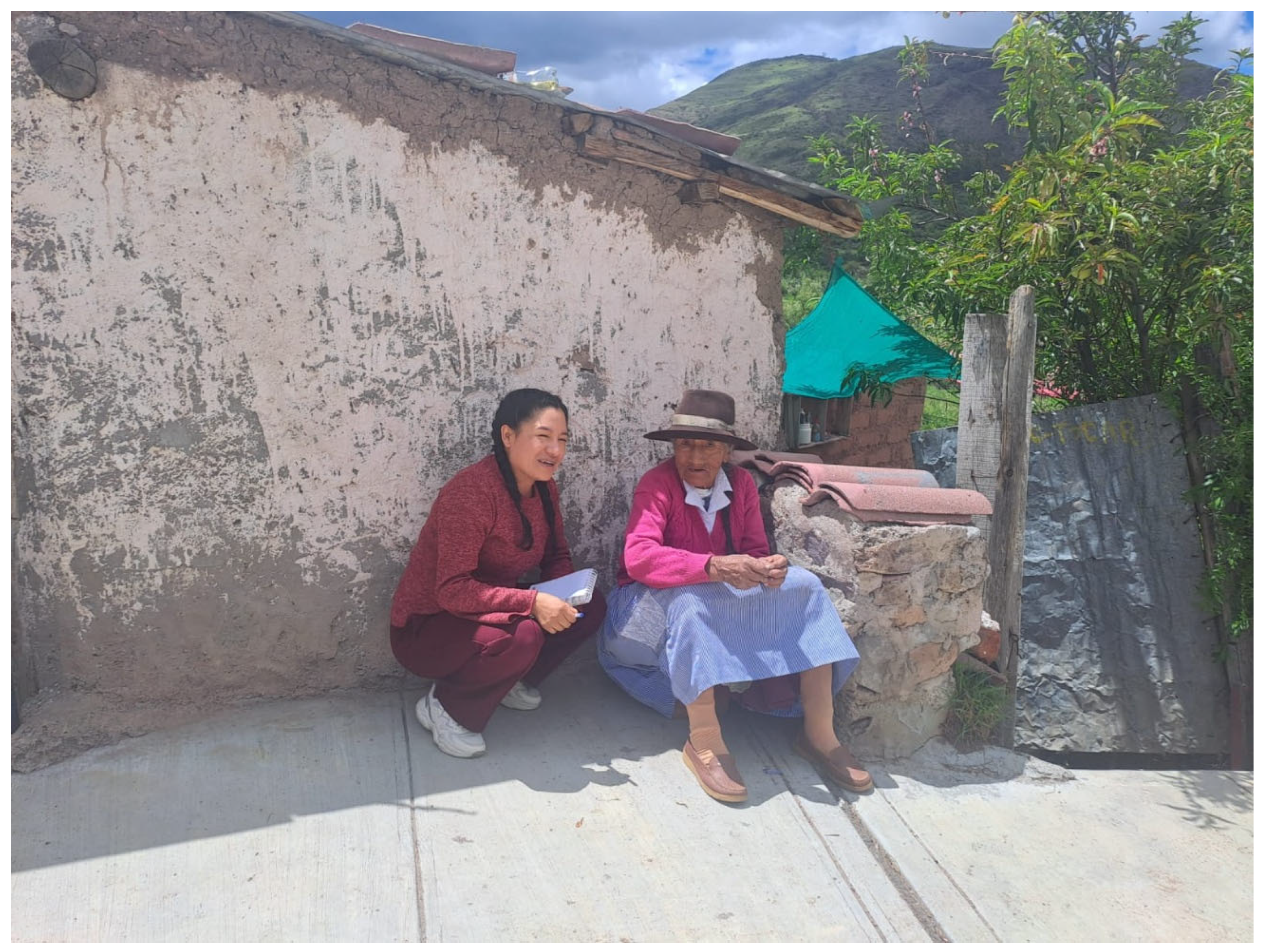
In the Peruvian Andes, communal activities are conducted largely according to ancestral traditions, respecting cultural identity, with the harawi prominently present. Given the devaluation of the practice and the lack of interest among young people, elders ensure that there is always a pair of women to bless the event with the harawi. The interviewee in
Figure 1 comments on the cost of the activity: “manam qarawiqaykumantaqa pagawankuchu, gratisllam mikuyta invitawanku, aqakunata tomachiwanku hinam chayna kustumbriyku kay llaqtanchikpi kustumbrim chay, chay qarawi wasi siminta harawi lliwmi kustumbri hinam chayna wasi hataypi harawiniku.” There is no payment; it is free, accompanied by food and fermented corn beer (chicha), following local custom, and it is always performed during house roofings built with rustic materials such as adobe, clay tiles, and wooden beams. It is important to note the cultural change affecting future generations, who migrate to cities. In this regard, “considering the song as a cultural script in which indigenous populations migrate or assimilate into a new metropolitan culture in a modern globalized world allows us to analyze the function of this oral narrative from a different perspective” (
Anderson 2015, p. 16). This perspective invites a reevaluation of indigenous songs as cultural scripts, showing how migration and globalization transform their function and meaning within oral narrative.
The practice of harawi, performed exclusively by women, has a historical character and does not have a precise date of origin. As far as is known, men have never performed it, and there are no clear records indicating that this practice has ever been carried out by them in any community; this is what the interviewees state. The female melody is unique, with few lyrics and an extended ending. Regarding male participation, one interviewee explains: “imaynacha hina kustumbrin warmilla harawina imancha hari atinman aswanmi warmi harawiniku hinaspa harita chakinmanta chutaniku qaparinampaq, harawiyta tukuruspam harikunata chakinmanta chutaniku hinaspam qaparinku ujujuy nispam haparinku. Kunankunaqa wakinkunaqa manañam wasiqatayta ruwankuchu harawiwan sapallankuñam ruwanku.” This statement demonstrates that men do not participate; it is an ancestral custom performed solely by women. Currently, the harawi performed during house roofings is rare and executed quietly. There is no evidence of sexism in Andean songs, where men fulfill physical support roles, and the singing itself “the evidence of such identity is not relegated to the colonial centuries: it continues to the present day” (
Martínez 2001, p. 140). The practice persists in parts of the Peruvian highlands, although there is a risk of losing the Quechua-speaking female identity and the expression of the sorrowful harawi song.
Female empowerment through the singing of harawi and other artistic expressions should contribute to strengthening women’s social position, as “the history of indigenous women is marked by poverty, since the precariousness index affects them more than any other demographic group” (
Morocho and Tubay Zambrano 2023, p. 65). Interviews reveal that women have historically been relegated to household tasks, making it difficult to teach harawi to future generations, and its loss is perceived as inevitable. One interviewee notes: “kay harawita mimuriallaykumantam manam imapipas kanchu único mimuriallaykupi chaymi quechuallapi harawiniku.” There is no way to teach it in Spanish, since the practice exists solely in oral memory: they simply harawin (sing). Another factor threatening the empowerment of Quechua-speaking women is migration from rural areas to cities: “specifically in the Peruvian geographical reality, from the highlands to the coast, this represents a key factor in the reworking of cultural identities and the emergence of Andean popular music at the national level” (
Pineau and Mora R. 2011, p. 69). The harawi has no written form: “qillqasqachu takiyllam takiniku chaynallam.” It is purely oral; as another interviewee affirms, it is only sung and not recorded in writing.
3.3. Collective Memory and Cultural Resistance
One of the essential aspects of humanity that keeps its culture alive is oral tradition, since “oral tradition is a global phenomenon. The human species has relied on the multidimensional aspect of oral tradition for centuries for the transmission of culture and history, among other disciplines” (
Juma 2022, p. 1). The people interviewed during communal gatherings affirm that knowledge has always been transmitted orally; however, they maintain that constant societal changes are condemning it to disappearance. They indicate that singing activities are performed free of charge, as one interviewee confirms: “We don’t charge; that’s the custom: going to the house roofing with the harawi, and there we share food and dance.” The voluntary and collaborative nature of this practice could contribute to its eventual disappearance, along with the collective memory it carries. Adding to this situation, another interviewee states: “My children never wanted to learn; they say they don’t like it. Besides, they don’t speak Quechua well, and I don’t think they could.” Since its essence is entirely oral and requires memorization of the harawi lyrics in Quechua, this cultural expression is gradually being lost.
Preserving the collective memory of an ancestral tradition practiced exclusively by Quechua-speaking Andean women and transmitted orally remains an outstanding task for both the State and society as a whole. The lyrics of the harawi are primarily safeguarded by elderly women, since “collective memories cannot distinguish between different forms of memory loss or inattention, such as interference, suppression, or inhibition” (
Candia 2022, p. 11). This cultural legacy is also affected by various factors that contribute to its gradual disappearance, including migration from rural areas to urban centers. One interviewee confirms: “It is disappearing because we no longer teach it; moreover, young people no longer want to learn it. They also do not stay in the villages: they migrate to the cities and return only during festivals.” Integration into urban sociocultural dynamics transforms their identity references; when they return to their communities for patronal festivals, the tradition loses its centrality. This process is also linked to the progressive depopulation of the Andes by young people.
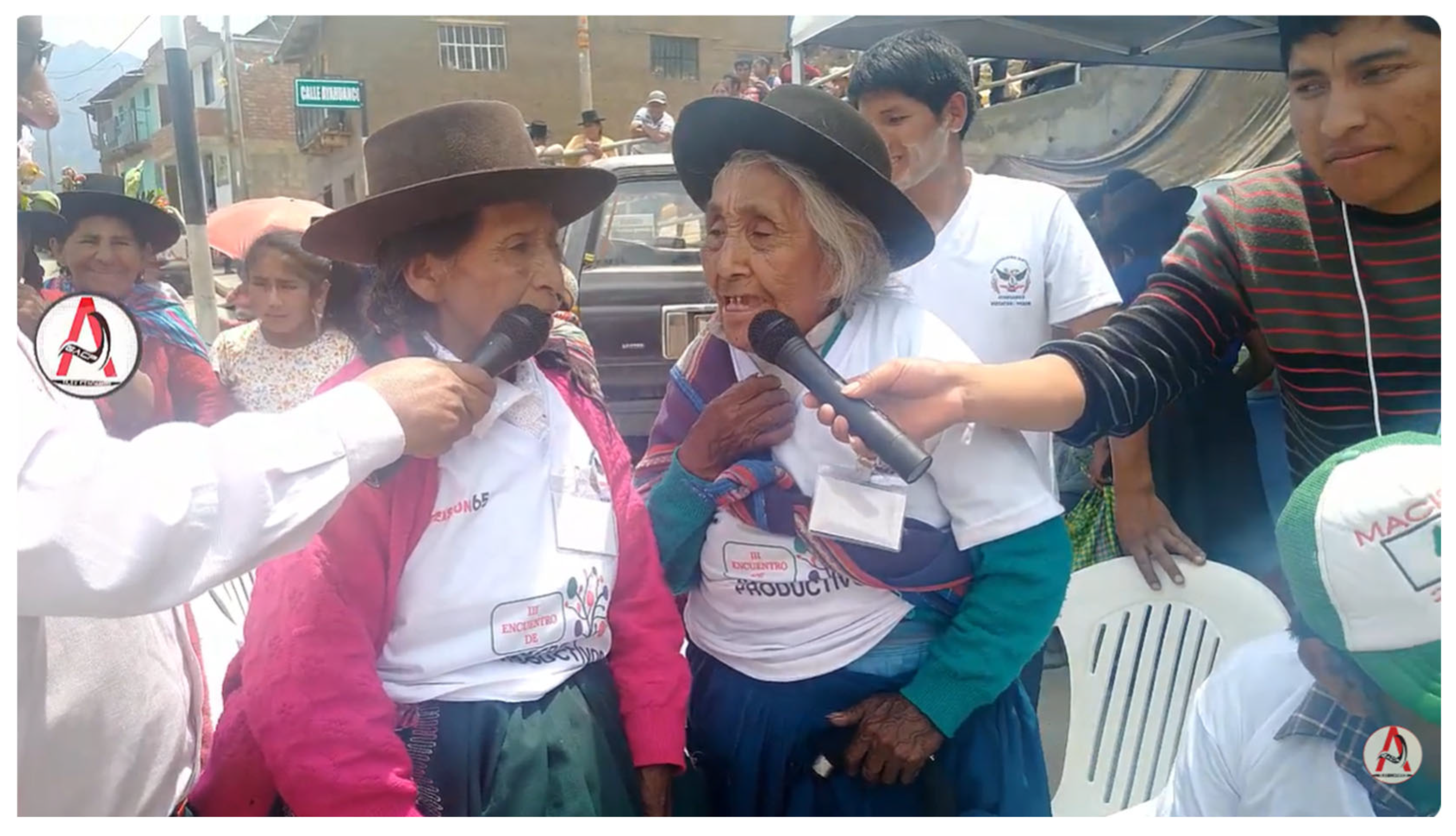
The harawi symbolizes a female identity present in significant communal life activities, such as weddings, house roofings, funerals, marriage proposals, birthdays, canal cleaning, and patronal festivals. It is performed in pairs by elderly women, who preserve this expression as a living practice. It is necessary to promote its cultural continuity through the collection and transcription of its lyrics in both Spanish and Quechua, since “regarding collective memory, the material and symbolic records of a community constitute the ties that strengthen its history and shared memory” (
Ruggiero 2022, p. 27). This suggests that collective memory is sustained through material and symbolic supports that consolidate identity, history, and community belonging, as shown in
Figure 2. A relevant element is the testimony of a harawi singer: “Ñuqapa warmaykunaqa yachanmi paykunapas uchuychanmantam qipaypi muyuriqku qinaptinpas yachachiqkani, chaykunawanchiki yachanku kunanqa warawipakunkum.” In this case, she did teach her children; however, the learning occurred spontaneously, as they accompanied her in all her activities from an early age, even during the performance of the harawi. It was likely in this context that they internalized the song, and today they practice it, thus contributing to keeping this ancestral memory alive.
Quechua, as an essential element of communication in these Andean communities, endures through its music and singing, particularly the harawi—a practice performed by women in the native language. For the community, this expression represents a marker of identity and a deeply rooted custom. However, from the governmental perspective, “the view of cultural, social, and political change in a territory characterized by marginality and poverty. The border began to be seen as a political resource and indigenous communities as agents of change” (
González Miranda 2019, p. 120). This highlights a territorial re-signification: from marginal periphery to strategic space, where indigenous peoples emerge as transformative political actors. Nevertheless, at the local level, concerns about continuity persist. One interviewee explains: “Chinkachkan manaña warmakuna yachapakuptinya ñuqaykuqa manaña atinikuchu.” It is disappearing because school-age children no longer want to learn it; moreover, elderly women no longer sing with the same strength as before, so its fate seems to be heading toward decline.
3.4. Aesthetic and Symbolic Dimensión
The song, called harawi—a term that for Andean inhabitants inherently signifies the act of singing—immediately evokes the ancestral song when mentioned. The performers, organized in pairs, do not require special attire for their performance; they dress according to their everyday customs and actively participate in the communal day’s tasks. The presence of two singers is indispensable, as they explain: “Manam chullallaqa lluqsinchu iskaycham lluqsin chullallaqa manam atinkichu.” This indicates that a single voice cannot achieve the proper melodic aesthetic; performed solo, the song does not fully materialize and is inappropriate within the tradition. Various studies highlight that Andean songs constitute complex cultural expressions: “according to these studies, Andean music presented a very wide variety of cultural conditions, whether in bucolic and pristine environments or in urban settings along the mountain range” (
Mendívil and Romero 2018, p. 6). Complementing this observation, another interviewee states: “Iskaymi allinta lluqsichiniku, hukllaqa hukmanmi.” She emphasizes that singing individually is not only unfeasible but also causes embarrassment, as the stylized melody is achieved only through the complementarity of two voices.
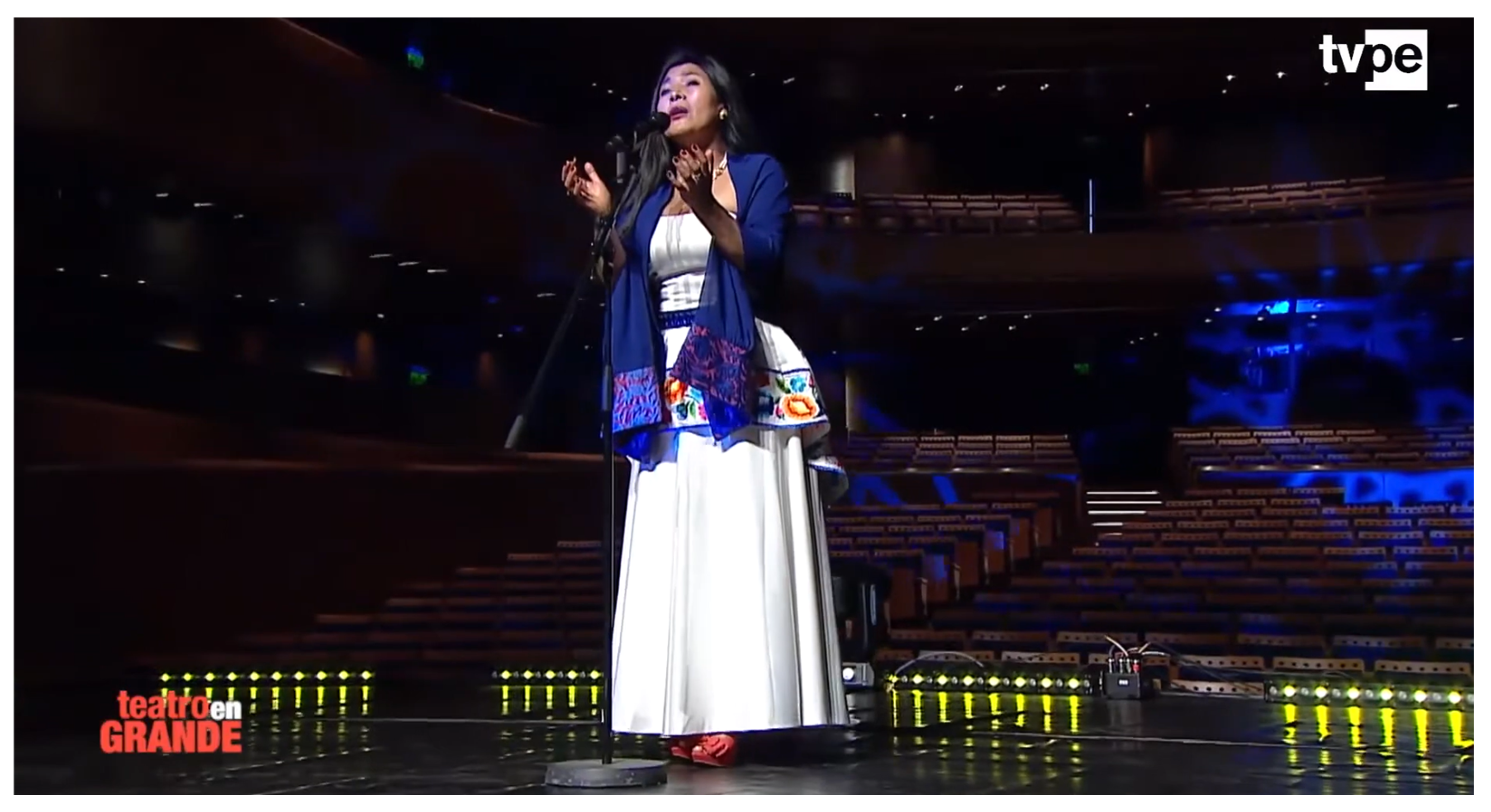
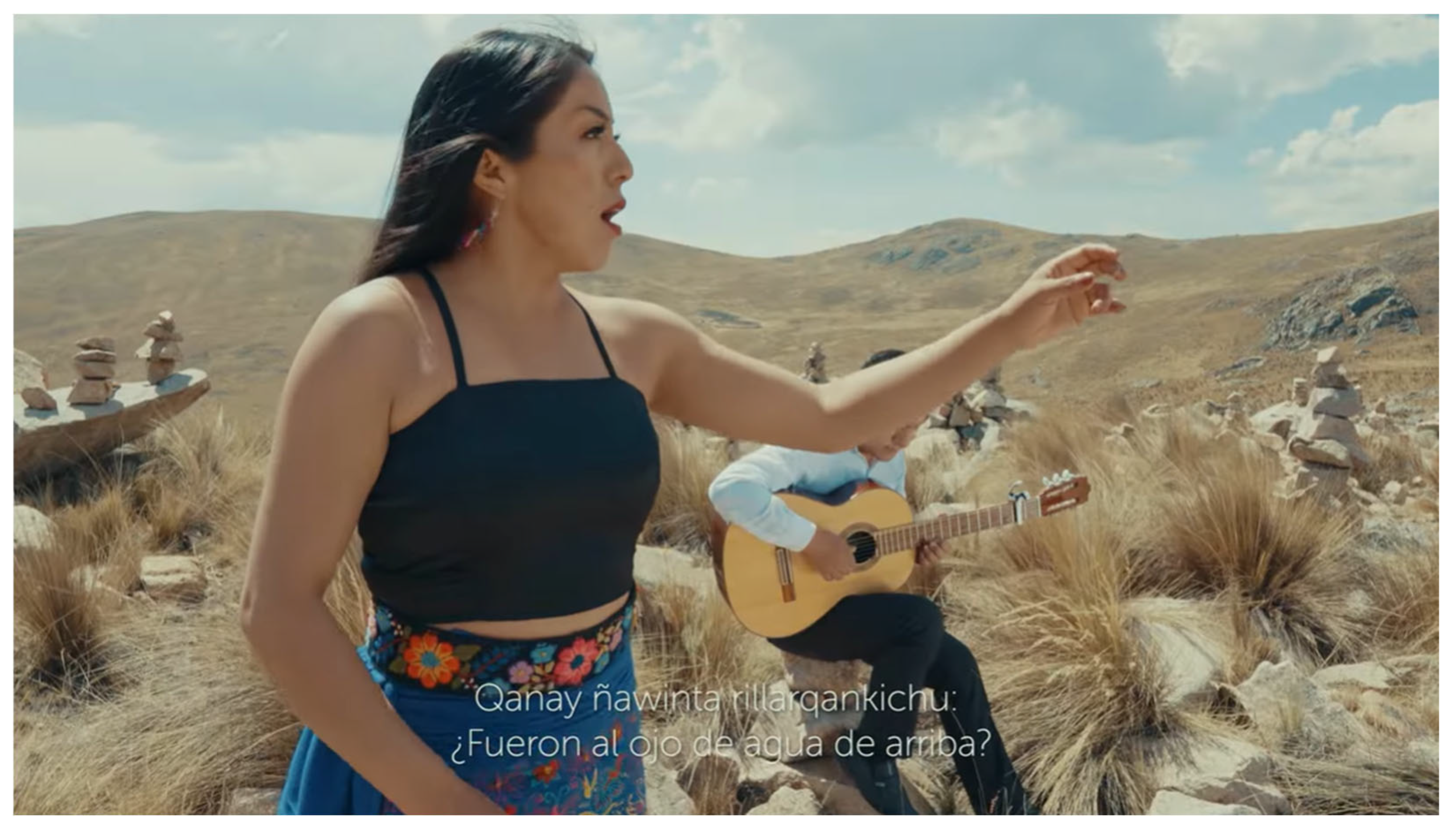
With the advent of modernity in populations far from regional capitals, substantial transformations in the stylization of the song are evident. It is now accompanied by musical instruments and performed by professional artists who broadcast it through nationally accessible media.
Figure 3—which is one of many visible cases on open-access social platforms—shows a program on TV Perú, where the song was presented in an instrumentalized and stylized version, also incorporating a mixture of Quechua and Spanish. It is relevant to analyze this phenomenon from the perspectives of musicology, aesthetics, and instrumental fusion studies, considering that “the yaraví owes its existence to pre-Hispanic Andean songs called harawi, which have endured through the centuries thanks to the perseverance of the people. It is, therefore, a verbal art of ancient origin” (
Mendívil and Romero 2018, p. 105). This highlights the historical continuity of the harawi within the yaraví, emphasizing cultural resistance, collective transmission, and the enduring aesthetic of the Andean tradition. However, as one interviewee notes: “Manamiki tapuyllapas tapukunkuchu imaynatama chaynaqa yachachisaqku.” She points out that young people do not even inquire, out of curiosity, about the way of singing or the content of the lyrics, which hinders intergenerational transmission and puts the continuity of this cultural heritage at risk. Older female singers do not value the instrumental fusion of harawi, as they consider that this type of adaptation distorts its essence and primarily responds to commercial or economic interests.
In Andean communities, there is an urgent need to preserve the spontaneous and original aesthetic dimension of their cultural expressions, without undermining their traditionally considered “rudimentary” character or allowing interference from elements foreign to local customs. Andean inhabitants, especially older adults, question the transformations introduced in instrumentalized performances and in clothing, as they consider that these do not reflect their lived reality but rather constitute a kind of costume intended only for presentations. In this regard, “it is necessary to delve into the value of oral tradition practices of the peoples as a fundamental axis of culture for the sustainability and development of cultures and, therefore, of the regions” (
Moreno-López et al. 2020, p. 5). This statement underscores the centrality of oral tradition as a strategic cultural pillar for identity sustainability, social cohesion, and comprehensive regional development. This cultural perspective is further illustrated by the testimony of an interviewee: “Manam maytapasrinichu huk punchawllam rirani pero huk punchawkunaqa manam kunanqa vozniymi bajaron no se imanasqach ujollañam qapiwan.” She explains that she has not traveled to other places to perform her song, that it has always remained within her community, and that she does not receive any economic compensation for her practice. Currently, her voice has also weakened due to a persistent respiratory condition.
The word harawi carries within it a symbolism of integral communication that the population understands without the need for further explanation; likewise, Andean inhabitants can identify, even from a distance, the type of event associated with its intonation. One interviewee explains: “kay qarawiqa qillqayninmi kaynata nin, waman wasillay kunturwasillay comadrillaywan compadrillaywan tiyaykunay wasi chaynallatam nin.” She clarifies that it is a message addressed to godparents (compadres and comadres); it is an original composition, generally brief in textual structure but melodically extended during performance. During communal activities, an interlude is usually established for listening to the harawi, after which the instrumental music begins. In this context, “these songs transmit ritual themes, while the waynu is more recreational, as it offers ‘snapshots’ of personal experiences that may or may not relate to the event in which it is performed” (
Pigott 2013, p. 341). This distinction highlights the collective ritual function of the harawi compared to the more playful and testimonial character of the waynu, whose contextualization is flexible and variable.
3.5. Sociocultural Context and Contemporary Changes
The original practice of the harawi has been described as a spontaneous expression performed exclusively in Quechua. The content of its lyrics is generally brief and characterized by improvisation, usually carried out in pairs of elderly women. Cultural transmission to future generations constitutes a central concern due to the absence of young practitioners and the ongoing process of internal migration to urban areas, which is transforming communal dynamics in an environment where “in the Peruvian Andes, a male-dominated political system has persisted for generations. The incipient acceptance of women in the position of Varayoc represents a radical change” (
Gutiérrez-Gómez et al. 2023, p. 10). The traditional patriarchal political structure faces significant transformation through the progressive inclusion of women in historical Andean communal authority. Regardless of the Christian beliefs that may influence a communal activity such as the yarqa aspiy (water festival), the land is continuously revalued through the harawi. In this regard, it constitutes “a dialogue between the different and contradictory Christian confessions, resulting in an agreement to return to the practices of some of the lost collective rites, which express gratitude and respect for Pachamama” (
Rist et al. 2003, p. 268). The Christian pluralism mediates ritual reconciliation, reactivating ancestral communal practices of symbolic reciprocity with the Andean Mother Earth.
The incursion of modernity, mediated by mass media, is transforming the foundations of female cultural identity, traditionally expressed through the harawi. On instantly circulating social networks such as Facebook and YouTube, images and fragments of the harawi are shared as anecdotal content; followers interpret them as symbols of an identity gradually being lost. Although this dissemination helps make ancestral culture visible on a global scale, it does not always reflect the authentic experience of Andean communities. In various events, theatricalized representations are presented that do not have the approval of local inhabitants, who question their authenticity and consider them more of a staged performance or a form of cultural makeup, since “the use of Facebook reflects in many ways both the possibilities and the reality of developing and portraying emerging identities. As sons and daughters of subsistence farmers who remain mired in extreme poverty” (
Waters et al. 2022, p. 70). Facebook enables emerging identity performativity, constrained by persistent structural poverty inherited from family subsistence farming economies. One of the expressions most influenced by this modernization is the harawi performed by professional singers, as shown in
Figure 4.
In the research process, through participant observation and field interviews, it was found that most adults feel embarrassed to sing without a specific reason; they consider that the harawi should only be performed within the context of a designated communal activity. They also stated: “Manaña yachachiptiykuya sipaskunapas huklawkunamanña pasakunku qinaspa manaña kutimunkuchu chaynapi.” Faced with the gradual loss of this custom, young women migrate to other areas, and in many cases, their return is unlikely, directly impacting the practice’s relevance and continuity. The melancholic evocation of a cultural tradition that is slowly disappearing is met with a certain tolerance due to the absence of new practitioners. In contrast, “nevertheless, Igorot migrants have shown that they maintain strong ties to their cultural heritage; their self-knowledge, identity, and community practices are even intensified outside their home village” (
Botangen et al. 2017, p. 2305). Migration thus strengthens Igorot identity awareness, reinforcing community practices and heritage connections through cultural reaffirmation in translocal contexts. Authentic harawi practitioners criticize performances by professional singers who wear traditional attire only for the show, rather than in everyday life, as the villagers do. They also emphasize that in the community, the harawi is performed freely, in a reciprocal process, in exchange for sharing food and fermented corn drink (chicha) during communal activities.
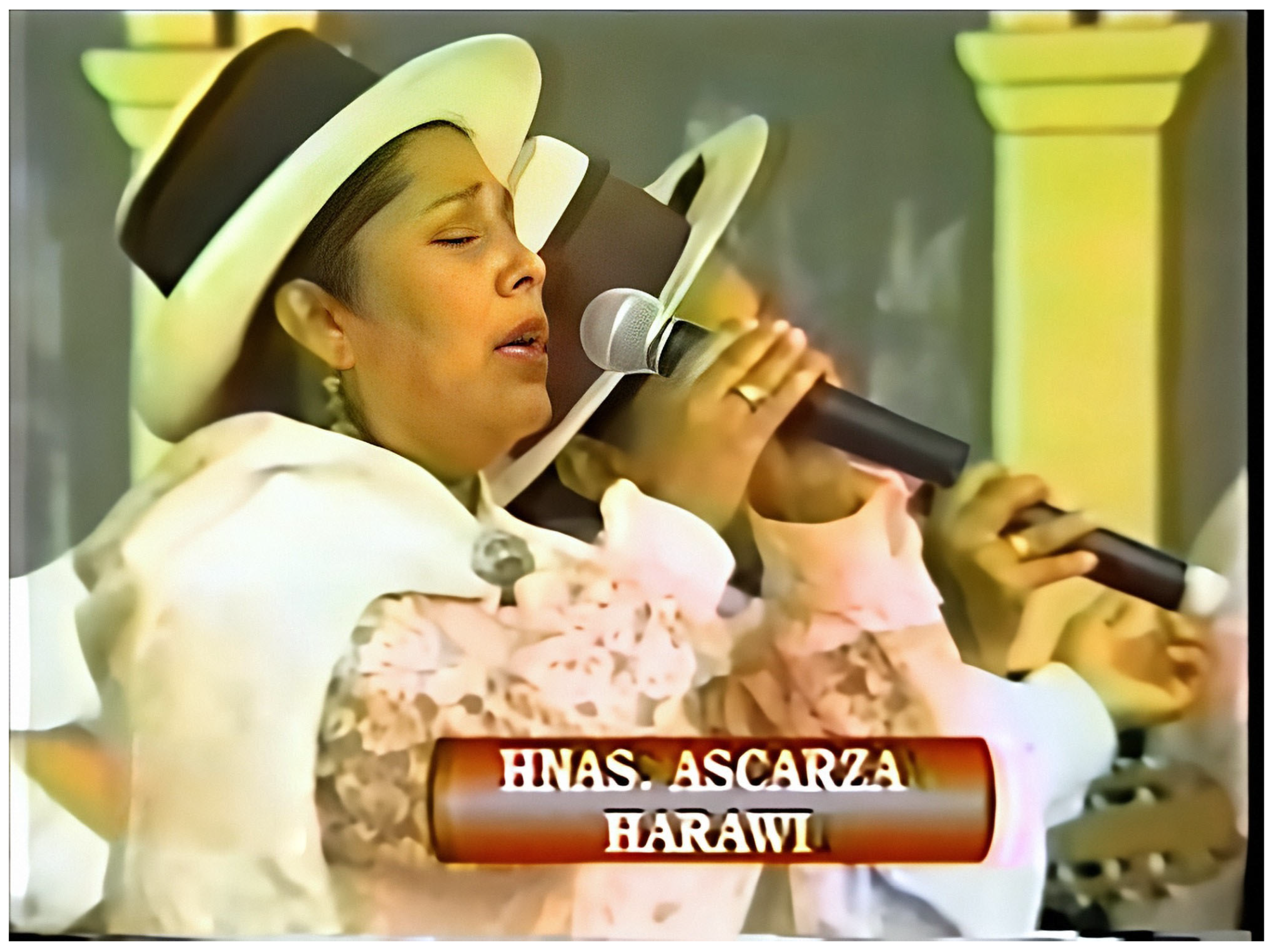
The content of the lyrics and the tonal quality with which it is performed by singers in rural societies, during specific activities, shape a distinctive interpretative style that captivates listeners. Its melody has a markedly sad character, regardless of the type of event, and this quality becomes particularly intense in funeral ceremonies, where the prolonged ending of the song acquires a deeply melancholic tone. The message it conveys evokes a sense of sorrow; however, as it is a brief intervention within the course of the ceremonial activity, the listeners’ interest tends to fade quickly and the singers often go almost unnoticed. The appropriation and dissemination by professional singers, presented as an ancestral collection, creates expectations for continuity, as illustrated in
Figure 5, where a more systematic form of dissemination is promoted.
The preservation of collective memory in communities—particularly the harawi, whose meaning is understood without explanation within its social context—requires actions aimed at its safeguarding. In this regard, “it is essential to highlight that these organizations not only limit themselves to protest but also propose solutions and participate in the implementation of preventive and corrective measures” (
Mendoza Vargas 2024, p. 172). These organizations go beyond protest, assuming a proactive and executive role in participatory governance through sustainable preventive and corrective measures. The women community members who practice the harawi express limited expectations regarding its preservation. One interviewee states: “Manañam allintaqa yuyaniñachu haber nimusayki litranta. Kundur wasi waman wasi kumadriywan kunpadriywan tiyakunay wasi nispam chaynallam.” He states that he does not remember it clearly and attempts to reproduce a brief fragment that alludes to the Andean condor and to the godparent couple, evoking a harmonious coexistence. This highlights the need to collect, document, and systematize harawi lyrics in Quechua, as well as to translate them into Spanish, especially considering that they are generally brief compositions.
4. Conclusions
Ancestral knowledge in Andean communities is practiced by the local inhabitants themselves, and the expression of their melancholic song, the harawi, is performed entirely in Quechua. This practice should not be interpreted as excluding men. According to the interviewees, it is mainly associated with women because their voices have a higher pitch, which is considered more suitable for this type of singing. They also indicate that it would be unusual and even embarrassing to hear men perform it, which is why, in practice, they do not dare to do so; the interviewees were unable to explain why men do not participate in the harawi. Its performance, considered both custom and tradition, is generally carried out in pairs of older women. They indicate that younger women are unwilling to sing due to the influence of external cultural phenomena, internal migration, and the impact of socially circulating digital media. Most interviewees agree that the transmission is strictly oral, as no written records exist; moreover, the majority of harawi practitioners are illiterate, making it impossible to read or systematize the compositions inherited from their predecessors.
Regarding the teaching of future generations, they indicate that it is practically impossible to transmit the tradition, as young people do not speak Quechua due to migration and schooling conducted exclusively in Spanish. They also highlight the progressive loss of customs in communities where the harawi is practiced, such as house roofings with rustic materials, weddings, funerals, patronal festivals, and birthdays. Today, these activities are carried out with musical ensembles without the participation of harawi singers. The songs are performed free of charge, in exchange for food and drink, and the performers actively participate in the tasks of the event. Their intervention usually occurs during a break in the hired music; they position themselves at one end, covering their mouths with a shawl or hand, and begin the singing according to the event, since each song has a specific text known solely through oral transmission. Furthermore, they assert that the harawi represents the identity of Andean communities, always evoking the past passed down orally by their grandparents, and it should be preserved as an expression of female empowerment.
Currently, there are amateur and professional singers who seek to revitalize Quechua and the harawi through performances at national and international events; however, they wear more elaborate costumes for the occasion. The authentic harawi singers do not require special attire, as they perform spontaneously in their everyday clothing. This does not diminish the work of those who promote the harawi on modern stages with musical instruments and prepared productions, but it highlights the importance of fostering its existence and dissemination at both national and international levels. Men play a passive role during the performance, serving as melancholic listeners who evoke a past before the presence of today’s mass media. The primary performers, who preserve the living memory of the harawi lyrics, acknowledge that they are forgetting part of the repertoire due to limited practice; they typically sing only during events and rarely outside them, such as while tending their animals.
The limitations of this research lie in the fact that key performers feel embarrassed to sing in Quechua (harawi), as they believe it does not sound correct without their paired singer. Gathering the performers is challenging due to the dispersion of their homes and the inherent constraints of fieldwork. They also report that they are forgetting parts of the lyrics, which exist only in memorized form; in each line, they use the expression ninmiqui, meaning “so it was” or “so it is,” indicating the musical note. There are no written records of their compositions, as most performers are illiterate and affirm that everything is preserved solely in memory. Future research is recommended to focus on the study of the Quechua oral language system, the musical genre to which harawi belongs, and the meaning of its compositions, which consistently reference the land and the Andean condor.
Author Contributions
Conceptualization, E.G.-G. and R.L.-H.; methodology, R.D.A.-C.; software, A.B.-R.; validation, D.I.D.O.-R., W.B.-R. and E.G.-G.; formal analysis, R.L.-H.; investigation, R.D.A.-C.; resources, A.B.-R.; data curation, D.I.D.O.-R.; writing—original draft preparation, E.G.-G.; writing—review and editing, W.B.-R.; visualization, D.I.D.O.-R.; supervision, A.B.-R.; project administration, W.B.-R.; funding acquisition, R.L.-H. All authors have read and agreed to the published version of the manuscript.
Funding
This research was funded by PROCIENCIA-CONCYTEC: “Social Science Research Projects” CONTRACT No. PE501096666-2025-PROCIENCIA.
Institutional Review Board Statement
The study was conducted according to the guidelines of the Declaration of Helsinki, and approved by the Ethics Committee of the National Autonomous University of Huanta (protocol code No. 007-2026/CEI-VPI-UNAH–HUANTA and date of approval 5 February 2026).
Informed Consent Statement
Informed consent was obtained from all subjects involved in the study.
Data Availability Statement
The original contributions presented in this study are included in the article/
Supplementary Materials. Further inquiries can be directed to the corresponding author.
Conflicts of Interest
The authors declare no conflict of interest.
References
- Alcántara Silva, Ynés Victoria. 2019. Una Aproximación a la Música Andina: El huaino, el Harawi y el Yaraví. Tesis (Lima) 11: 13–30. [Google Scholar] [CrossRef]
- Anderson, Sarah. 2015. Quechuan Voices: The Art of Storytelling through Song. IK: Other Ways of Knowing 1: 15–20. [Google Scholar] [CrossRef]
- Andrade Ciudad, Luis. 2019. Diez noticias sobre el quechua en el último censo peruano. Letras 90: 41–70. [Google Scholar] [CrossRef]
- Botangen, Khavee Agustus, Shahper Vodanovich, and Jian Yu. 2017. Preservation of Indigenous Culture among Indigenous Migrants through Social Media: The Igorot Peoples. Paper presented at Hawaii International Conference on System Sciences, Hilton Waikoloa Village, HI, USA, January 4–7. [Google Scholar] [CrossRef]
- Candia, Cristian. 2022. Quantifying Collective Memories. Versión 2. arXiv arXiv:2203.05627. [Google Scholar] [CrossRef]
- González Miranda, Sergio. 2019. La Frontera Como Margen Heterológico. El Tripartito Andino (Bolivia, Perú y Chile) y El Espejismo Académico Sobre Los “Aymaras Sin Fronteras”. Diálogo Andino 60: 115–25. [Google Scholar] [CrossRef]
- Gutiérrez-Gómez, Edgar, Jesús Wiliam Huanca-Arohuanca, Adolfo Quispe-Arroyo, Rosa Cecilia González-Ríos, and Yodel Cheldo Huari-Salazar. 2023. Woman Varayoc of Peruvian Andes. Frontiers in Sociology 8: 1232615. [Google Scholar] [CrossRef] [PubMed]
- Gutiérrez-Gómez, Edgar, Ketty Marilú Moscoso-Paucarchuco, Diana Luján-Pérez, Jaime Carmelo Aspur-Barrientos, and Eugenia Rocío Quispe-Medina. 2024. The native potato, a symbol of macho expression in the Quechua culture of Peru. Frontiers in Sociology 8: 1268445. [Google Scholar] [CrossRef]
- Huamán, Carlos. 2021. Aproximaciones a la poesía quechua peruana. Kipus: Revista Andina De Letras Y Estudios Culturales 50: 56–80. [Google Scholar] [CrossRef]
- Juma, Florence Akumu. 2022. Recapturing the Oral Tradition of Storytelling in Spiritual Conversations with Older Adults: An Afro-Indigenous Approach. Religions 13: 563. [Google Scholar] [CrossRef]
- Kačkutė, Eglė. 2023. Orality/Aurality and Voice of the Voiceless Mother in Abla Farhoud’s Happiness Has a Slippery Tail. In Narratives of Motherhood and Mothering in Fiction and Life Writing. Edited by Helena Wahlström Henriksson, Anna Williams and Margaretha Fahlgren. Palgrave Macmillan Studies in Family and Intimate Life. Berlin/Heidelberg: Springer International Publishing. [Google Scholar] [CrossRef]
- Mamani, Manuel. 2010. Kirkir Warmi: Identidad y Rol de La Mujer Aymara En El Desarrollo Musical Del Norte Chileno. Revista Musical Chilena 64: 90–102. [Google Scholar] [CrossRef]
- Martínez, Gabriel. 2001. Saxra (diablo)/Pachamama; Música, tejido, calendario e identidad entre los jalq’a. Estudios Atacameños 21: 133–51. [Google Scholar] [CrossRef]
- Mendívil, Julio, and Raúl R. Romero. 2018. Prácticas musicales andinas a comienzos del siglo XXI. Anthropologica 36: 5–10. [Google Scholar] [CrossRef]
- Mendoza Vargas, Johana Estefany. 2024. Facebook como plataforma principal de la estrategia comunicacional de las organizaciones ambientalistas. El caso del Acuerdo de Escazú. Comunica360 2: 167–90. [Google Scholar] [CrossRef]
- Meza Alegría, Gabriel. 2025. Oralidades y musicalidades en diálogo: Kalfu y la musicalización de la poesía mapuche de Elicura Chihuailaf. Contrapulso—Revista Latinoamericana de Estudios en Música Popular 7: 30–46. [Google Scholar] [CrossRef]
- Moreno-López, Nidia Milena, Antonio Isidro Sánchez-Torres, Andrea Del Pilar Pérez-Raigoso, and Jorge Neftaly Alfonso-Solano. 2020. Tradición oral y transmisión de saberes ancestrales desde las infancias. Panorama 14: 184–94. [Google Scholar] [CrossRef]
- Morocho, Javier, and Fanny Tubay Zambrano. 2023. Mujeres indígenas: Voces e imaginarios femeninos en la zona andina ecuatoriana. Perseitas 11: 57–88. [Google Scholar] [CrossRef]
- Mougin, Sylvie. 2000. La langue, le rouet et le rabot. Les représentations de la parole féminine et masculine dans la société paysanne. Clio 11: 141–58. [Google Scholar] [CrossRef]
- Patterson, Emma. 2015. Oral Transmission: A Marriage of Music, Language, Tradition, and Culture. Musical Offerings 6: 35–47. [Google Scholar] [CrossRef]
- Pigott, Charles M. 2013. The Lyrical Creation of Community: Song as a Catalyst of Social Cohesion in Andean Peru. AlterNative: An International Journal of Indigenous Peoples 9: 335–50. [Google Scholar] [CrossRef]
- Pineau, Fanny, and Andrés Mora R. 2011. La (re)construcción de las identidades en la música popular andina en Perú: Un campo de disputa y negociación cultural. Revista Ensayos Pedagógicos 6: 67–81. [Google Scholar] [CrossRef]
- Ramírez, Viviana. 2005. La oralidad como recurso de persistencia: El caso de las historias de las mujeres mapuches-huilliches de Maihue, X región de los lagos. Aibr-Revista De Antropologia Iberoamericana. Available online: https://dialnet.unirioja.es/servlet/articulo?codigo=1211049 (accessed on 15 December 2025).
- Rist, Stephan, Freddy Delgado Burgoa, and Urs Wiesmann. 2003. The Role of Social Learning Processes in the Emergence and Development of Aymara Land Use Systems. Mountain Research and Development 23: 263–70. [Google Scholar] [CrossRef]
- Ruggiero, Amanda Saba. 2022. (Des)controle entre a memória coletiva e a cultura digital. Revista ARA 12: 17–28. [Google Scholar] [CrossRef]
- Stegner-Petitjean, Isabelle. 2011. “The Voice in the Mirror”. Michael Jackson: D’une identité vocale à sa mise en image sonore. Volume! La Revue des Musiques Populaires 8: 221–53. [Google Scholar] [CrossRef]
- Suárez Ortega, Magdalena. 2005. La importancia de la transmisión oral para la creación del sujeto femenino. Revista Internacional de Culturas y Literaturas 2: 73–99. [Google Scholar] [CrossRef]
- Vesely Avaria, Carola. 2023. Antojo de palabras para la infancia: La canción de cuna latinoamericana como caudal poético de denuncia y ternura. Textes et Contexts 18: 1–22. [Google Scholar] [CrossRef]
- Waters, William F., Martin Baca, Shirley Tipanquiza, and Emily McGrath. 2022. Cambio de identidad y uso de Facebook en adolescentes y jóvenes indígenas de la Sierra central ecuatoriana. Mundos Plurales—Revista Latinoamericana de Políticas y Acción Pública 9: 67–88. [Google Scholar] [CrossRef]
| Disclaimer/Publisher’s Note: The statements, opinions and data contained in all publications are solely those of the individual author(s) and contributor(s) and not of MDPI and/or the editor(s). MDPI and/or the editor(s) disclaim responsibility for any injury to people or property resulting from any ideas, methods, instructions or products referred to in the content. |



 ,
,