Article

Towards a Worker-Centered Framework for Categorizing Procedural Adaptations

by
Atif Mohammed Ashraf
1,
S. Camille Peres
2 and
Farzan Sasangohar
1,*
1
Wm Michael Barnes ’64 Department of Industrial and Systems Engineering, Texas A&M University, College Station, TX 77843, USA
2
Nuclear Regulatory Commission, Rockville Pike, MD 11555, USA
*
Author to whom correspondence should be addressed.
Safety 2026, 12(1), 28; https://doi.org/10.3390/safety12010028
Submission received: 24 November 2025 / Revised: 28 January 2026 / Accepted: 5 February 2026 / Published: 11 February 2026

Abstract

Safety science has developed extensive taxonomies for categorizing human performance failures but lacks equivalent vocabulary for describing successful work performance, leaving practitioners without adequate language to discuss adaptive practices that enable successful work under varying conditions. This study developed a worker-centered framework for categorizing procedural adaptations through empirical research at a petrochemical facility. The research employed three-phase convergent validation: Phase 1 captured behavioral data through video observation of 1422 procedural steps; Phase 2 documented differences between Work-As-Imagined and Work-As-Done using the Skip-Order-Action Framework with subject matter expert interpretation; Phase 3 evaluated emerging patterns through worker interviews. Analysis revealed that 32.9% of procedural steps showed adaptations, yet all tasks were completed successfully. Three distinct categories emerged from convergent evidence: routine adaptations represent normalized workplace practices; efficiency adaptations optimize workflow while maintaining safety standards; and safety adaptations exceed prescribed requirements through additional verification. The resulting Routine-Efficiency-Safety (RES) framework provides practical vocabulary for Safety-II implementation, enabling organizations to distinguish between different types of procedural adaptations and their functions, moving beyond binary compliance assessments toward learning-focused conversations about successful work practices.

1. Introduction

The safety science literature includes various documented taxonomies that categorize human performance failures during procedural work. For example, Reason’s influential generic-error modeling system (GEMS) framework [1] distinguishes between slips, lapses, mistakes, and violations, providing a framework for analyzing what goes wrong in complex systems [2]. Similarly, the Skills–Rules–Knowledge (SRK) framework provides requisite categories for understanding different types of cognitive failures [3,4,5]. These frameworks allow for detailed incident investigations and targeted interventions when systems fail [6,7]. However, these terminologies and concepts for explaining human error contrast sharply with the limited vocabulary available for describing successful work performance. While safety professionals can articulate dozens of ways procedural work can fail, they struggle to explain the adaptive practices that enable work to succeed under varying conditions [8]. This vocabulary gap reflects the overemphasis on understanding failure rather than successful adaptations [9,10], leaving practitioners without adequate language to discuss, recognize, or learn from effective everyday work practices.
Understanding this gap is important in high-risk environments where procedural factors contribute to system safety. Procedural factors are frequently cited as contributors to major industrial incidents. Analysis of U.S. Chemical Safety Board (CSB) reports suggests they played a role in about 44% of serious chemical processing incidents [11], while an offshore study found they accounted for 23% of equipment-related failures [12]. The 2005 BP Texas City refinery explosion was similarly linked to procedural failures [13].
Beyond analyzing failures, recent research has examined the gap between prescribed procedures and actual work practices, reflecting the gap between Work-As-Imagined (WAI) and Work-As-Done (WAD) across healthcare [14,15], organizational dynamics [16], emergency response [17], and petrochemical operations [18]. These studies recognize that differences between prescribed and actual work are inevitable features of complex operations [4]. However, the broader literature on procedural compliance continue to frame these differences between WAI and WAD using language borrowed from human error taxonomies. Terms like “procedural violation,” “non-compliance,” and “deviation” carry negative connotations that obscure the potential benefits of many improvisations and adaptations [19,20,21].
Recent research has advanced understanding of adaptive work practices in high-risk environments. Studies have developed frameworks for analyzing everyday adaptations across multiple domains, emphasizing the importance of understanding contextual conditions and enabling factors that support successful performance [22]. Other research has provided integrative reviews of rule breaking in organizations, recognizing that workers often deviate from formal rules with prosocial intentions aimed at benefiting organizational or stakeholder welfare [23]. However, these frameworks focus primarily on intentional rule violations or adaptations outside normal procedures, whereas the present research addresses the broader spectrum of procedural variations that characterize routine operational work in high-risk industries.
Current approaches have several methodological limitations as well. Most studies rely on retrospective analyses of incidents rather than examining normal operations where variations between WAI and WAD occur routinely without adverse outcomes [24,25,26]. Existing error-based taxonomies typically reflect researcher or management perspectives rather than workers’ understanding [27,28], and studies often lack validation through direct worker accounts, with management (blunt end of systems) and workers (sharp end of systems) perspectives on procedural deviations often differing substantially [18]. These perceptual gaps reflect not just different awareness levels but fundamentally different conceptualizations of procedural deviations, with administrators often viewing deviations as errors while workers report intentional adaptations [29].
The emergence of Safety-II thinking has highlighted the need for frameworks that can describe and analyze successful performance [8]. However, translating these theoretical insights into an inclusive vocabulary and practical frameworks to guide practice remains a major gap [30,31], with critics arguing Safety-II lacks empirical evidence and tangible methodological tools [32]. Without such frameworks, organizations may struggle to differentiate among procedural adaptations that reflect practitioner-accepted workarounds, workflow optimizations, or safety enhancement measures, thereby limiting their ability to learn from successful practices [33,34,35] and exacerbating the integration of Safety-II principles into safety management systems.
This research is grounded in resilience engineering and Safety-II perspectives, which conceptualize safety as an emergent property of system adaptability rather than the absence of errors or adverse events [36,37,38]. Within this framing, WAI represents procedures as formally documented, reflecting designers’ expectations of work performed under assumed conditions, while WAD captures how work actually unfolds in practice under real operational constraints [8]. The divergence between WAI and WAD is theoretically inevitable in complex sociotechnical systems, where procedures cannot anticipate all combinations of contextual conditions, competing demands, and resource limitations [39].
Yet, existing theoretical frameworks within safety science have largely emphasized the analysis of failures and breakdowns, offering limited support for systematically characterizing successful adaptations [36,38]. To address this gap, this paper documents a novel framework to categorize procedural work adaptations that operationalizes Safety-II principles through empirically grounded, worker-centered categories.

2. Methods

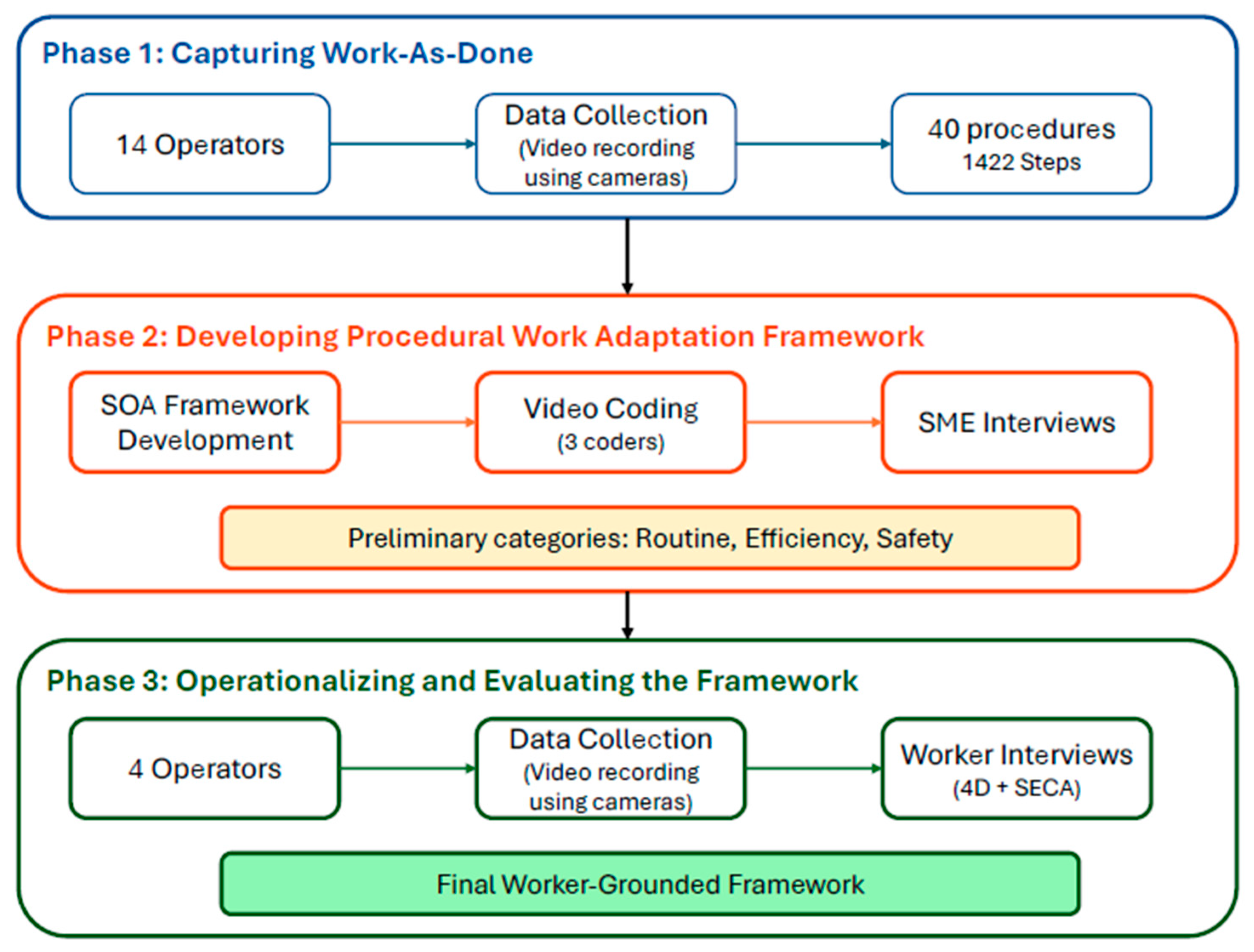
The study consisted of a three-phase research design conducted over five years (2019–2024) at a major petrochemical company in the southern United States (Figure 1). Phase 1 captured behavioral data on procedural adaptations via video observation. Phase 2 documented the variations between WAI and WAD and the different phases of tasks on which adaptations occurred, with expert interpretation revealing why these variations occurred, thereby developing a framework to categorize such adaptations. Phase 3 involved an observational study to evaluate the operationalizability of the framework and to gather worker perspectives. This convergent evidence ensured the framework reflected both observable work practices and worker reasoning.

2.1. Research Setting

The facility produces specialty chemicals at a petrochemical facility which is characterized by complex processing operations requiring strict adherence to safety protocols due to hazardous materials handling, high-pressure systems, and potential for catastrophic incidents [40,41].
Filling operations were selected as the focus because they represent several key characteristics of procedure-intensive work in high-risk industries [42]. These operations require workers to: (1) navigate between physical locations while referencing procedures, (2) manage multiple simultaneous tasks including equipment operations, process monitoring, and coordination with other operators, (3) adapt to variable conditions such as different chemical products, vessel configurations, and concurrent operational demands, and (4) maintain safe performance under time pressure and production demands.
Each filling operation involves transferring chemicals between storage tanks and transportation vessels (rail cars or trucks). A complete filling procedure encompasses approximately 30–40 individual steps organized into three phases: pre-loading activities (safety verification, equipment inspection, vessel preparation), loading activities (hose connection, transfer initiation, flow monitoring, level verification), and post-loading activities (equipment disconnection, vessel securing, final safety checks, documentation completion).

2.2. Participants

Eighteen operators participated in Phases 1 and 3 of this research (16 males and 2 females). All participants were initially recruited through facility management coordination and provided informed consent by research staff. Study protocols received approval from Texas A&M University’s Institutional Review Board (IRB).

2.3. Three-Phase Research Design

2.3.1. Phase 1: Capturing Work-As-Done

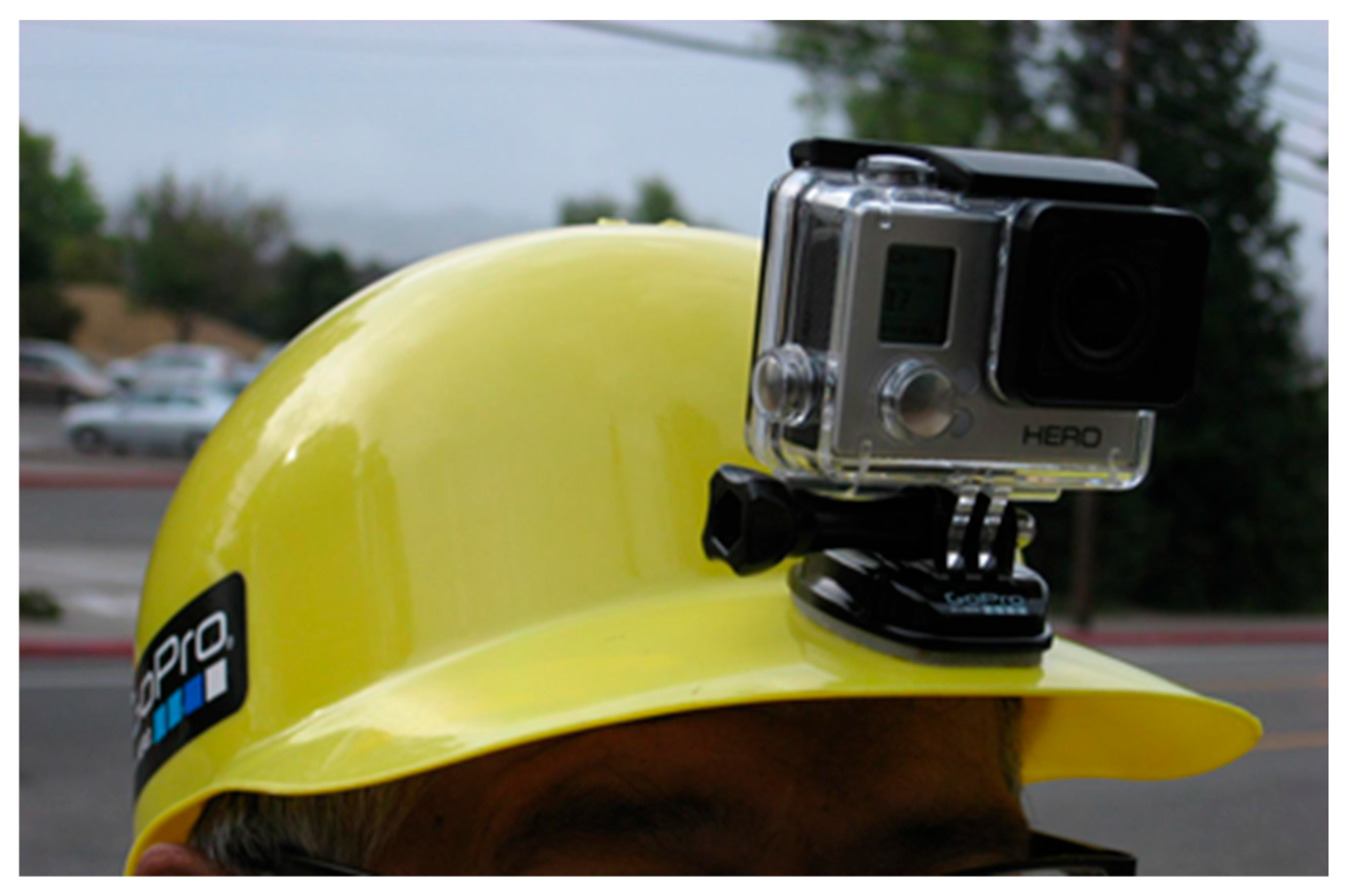
Portable cameras attached to hard hats captured workers’ behavior during normal operations in Fall 2019 (Figure 2). The procedures documented represent the complete filling operation workflow: pre-loading (safety checks, equipment verification, vessel preparation), loading (hose attachment, chemical transfer initiation, monitoring), and post-loading (railcar securing, final safety checks, equipment disconnection, delivery preparation). A total of 1422 procedural steps across 40 procedures were documented, capturing the full range of activities workers perform during chemical transfer operations.
Fourteen operators (13 males, 1 female) participated in video-recorded observations across two sites: 6 at Site 1 (paper-based procedures) and 8 at Site 2 (digital procedures). All participants were experienced operators with an average of 7.3 years (SD = 3.8) in the petrochemical industry.

2.3.2. Phase 2: Developing a Procedural Work Adaptation Framework

The video recordings from Phase 1 were coded using the Skip-Order-Action (SOA) Framework [43], which analyzes the differences between WAI and WAD across three dimensions:
  • Skip: Whether procedural steps were omitted entirely or added beyond prescribed requirements;
  • Order: Whether steps were performed in a different sequence than prescribed;
  • Action: Whether steps were executed using different methods, tools, or techniques than specified.
Coder Training and Reliability
Three independent coders participated in the analysis. Prior to coding the full dataset, all coders completed training using pilot video recordings and corresponding procedures to establish shared understanding of the SOA Framework dimensions and coding criteria. Training continued until coders demonstrated consistent application of the framework across practice cases.
Coding Procedures
Video recordings were uploaded to ELAN 6.0 software [44] for systematic review with timestamping capabilities. Each of the 1422 procedural steps was independently coded by all three coders, who compared observed worker actions in the video against the corresponding written procedural step. Coders worked independently to document: (1) whether the step was performed or skipped, (2) whether it was performed in the prescribed sequence, and (3) whether the action matched the prescribed method. Steps showing variation in any dimension were coded as WAI ≠ WAD; steps matching all criteria were coded as WAI = WAD.
Consensus and Validation
Following independent coding of each procedure, the three coders conducted structured consensus meetings to compare results. Initial inter-coder agreement averaged 75% across all procedural steps, calculated as the percentage of steps where all three coders assigned identical codes. For the 25% of steps with coding discrepancies, coders reviewed video evidence together and reached consensus through discussion. No steps remained unresolved after consensus meetings. Detailed statistical analysis of variation patterns across procedure types, task phases, and worker experience levels is reported in [43].
The findings from this analysis of procedural adaptations were presented to facility-nominated subject matter experts (SMEs) (operations supervisors, experienced operators, and procedure writers) across multiple review sessions. Each session presented cases with deviated steps, procedure content, and video evidence (screenshots were used to protect identities). Due to confidentiality, sessions were not recorded; however, the research team documented SME interpretations through detailed notes. Thematic analysis of these notes identified recurring patterns in how SMEs interpreted different variation types, forming preliminary categories of the framework for procedural adaptation.

2.3.3. Phase 3: Operationalizing and Evaluating the Framework

To evaluate the practical utility of, and worker alignment with the preliminary framework, a validation study was conducted in Fall 2024. Four different operators (3 males, 1 female) from the same facility as Phase 1 participated. Video observations of the filling operations were performed at the same facility as in Phase 1 over two consecutive morning shifts. At the end of the second shift, all participants were interviewed about the practices captured in their recordings. The interview approach was informed by principles from the Structured Exploration of Complex Adaptations (SECA) framework [45] and the 4D methodology [46]. SECA, grounded in resilience engineering principles, is designed to capture adaptations in normal work practices by exploring deviations from standard procedures and the systemic pressures driving those adaptations. Interviews began with open-ended task walkthroughs, allowing the participants to describe their work in their own words. Grounded in the 4D methodology, workers were then asked four targeted questions exploring aspects of their work they found ‘dumb’, dangerous, different, or ‘difficult’. Throughout the interviews, probes explored why workers deviated from prescribed procedures, examining the pressures, trade-offs, and reasoning behind their adaptations. These interview approaches align with ethnographic and cognitive work analysis traditions that emphasize capturing practitioner perspectives in context [39,47].
Worker interview transcripts were analyzed to identify how practitioners described and justified their adaptations. The framework developed in Phase 2 was then used to categorize the identified adaptations. Categories were refined through comparison between Phase 1 observations, Phase 2 expert interpretations, and Phase 3 observations and worker accounts. This triangulation ensured that the framework reflected both behavioral patterns and the workers’ understanding.

2.3.4. Analytic Process: From Observations to Framework Categories

The development of the RES framework involved iterative analysis across multiple data sources, with categories emerging through convergent evidence rather than predetermined theoretical constructs.
Phase 1 Analysis: Capturing Work-As-Done
This phase involved the coding of the behavioral observation of 14 workers to inform the development of the SOA framework detailed in [43]. The analysis revealed the type of procedural variation: skip, order, or action.
Phase 2 Analysis: Preliminary Category Development
Thematic analysis of the SME interpretation (described in Section 2.3.2) identified three recurring patterns in how experts described different types of variations:
  • Some variations were described as “the way things are actually done” or “how everyone does it”—reflecting normalized practices that had become standard despite differing from written procedures
  • Other variations were characterized as “working more efficiently” or “smarter ways to do it”—indicating deliberate optimizations aimed at improving workflow
  • A third pattern involved variations described as “extra safety checks” or “making sure”—representing worker-initiated enhancements beyond prescribed requirements
These three interpretive themes formed the preliminary categories for the framework: routine adaptations, efficiency adaptations, and safety adaptations. At this stage, categories were conceptual, based on expert interpretation of observed behavioral patterns.
Phase 3 Analysis: Worker Validation and Category Refinement
Phase 3 worker interviews generated transcript data documenting how practitioners explained their own adaptive practices. The analysis proceeded in two stages:
Stage 1: Identification of adaptation explanations; Interview transcripts were reviewed to identify segments where workers explained why they deviated from prescribed procedures. The analysis focused on workers’ reasoning processes and the language they used to describe their adaptations. Researchers documented specific phrases workers used to justify or explain their modifications.
Stage 2: Comparison with preliminary categories; Worker explanations were compared against the preliminary categories derived from SME interpretations. The research team examined whether worker accounts aligned with, contradicted, or elaborated upon the expert interpretations. Key analytical questions included: Did workers describe adaptations using similar functional rationales as SMEs? Did workers’ own language naturally correspond to the preliminary categories? Were there adaptation types that workers described differently than SMEs had interpreted?
Convergent Evaluation and Category Refinement
The final framework categories emerged through triangulation across three data sources:
  • Behavioral patterns (Phase 1): Systematic documentation of what workers actually did differently than prescribed
  • Expert interpretation (Phase 2): SME explanations of why variations occurred and what functions they served
  • Worker accounts (Phase 3): Practitioners’ own reasoning about their adaptive practices
Notably, workers independently used language that closely aligned with the preliminary categories without being prompted. When describing their adaptations, workers naturally employed phrases like “that’s just how we do it,” “work smarter not harder,” and “trust but verify”—language that corresponded directly to the three preliminary categories. This spontaneous convergence between expert interpretation and worker sense-making provided ecological validity for the category structure.
The three categories remained stable; however, worker accounts enabled refinement of category boundaries by clarifying what language and reasoning patterns differentiated routine adaptations (normalization-focused) from efficiency adaptations (optimization-focused). Worker interviews also revealed that categories were not mutually exclusive in practice, though workers consistently emphasized one primary function when explaining their reasoning. The final framework represents convergence between observed behaviors, expert operational context, and worker reasoning, ensuring it captures meaningful functional distinctions that both experts and practitioners recognize.

3. Results

Analysis of 1422 procedural steps revealed that 32.9% showed some form of deviation from prescribed procedures. However, workers successfully completed all observed tasks, suggesting positive adaptations [43]. The SOA Framework analysis revealed distinct patterns in how variations manifested. Order variations were most prevalent (approximately 15% of steps), followed by Action variations (approximately 10%), and skip variations (approximately 8%). When SMEs examined these patterns, they noted that order variations often reflected routine workflow adaptations, action variations frequently represented established alternative methods, and skip variations showed mixed patterns, where some reflected normalized shortcuts, whereas others involved adding steps beyond requirements. These patterns, combined with SMEs’ interpretation of their operational context, formed the basis for three categories of procedural adaptations: routine, efficiency, and safety adaptations. The three categories are distinguished by the adaptation’s primary function as interpreted through convergent evidence from SME explanations and worker accounts. Adaptations were categorized as routine when described using normalization language (e.g., “that’s how we do it,” “how I was trained”), as efficiency when workers articulated explicit optimization rationale (e.g., “saves time,” “more efficient”), and as safety when characterized as exceeding requirements (e.g., “double-checking,” “extra verification”). The characteristics of each category are detailed below.

3.1. Category 1: Routine Adaptations “The Way Things Are Done”

Routine adaptations redevelop effective methods for accomplishing tasks. These adaptations often reflect practical knowledge about equipment behavior, process constraints, or workflow optimization that is not captured in formal procedures (Table 1).
Worker Accounts: One participant described how certain practices become normalized across the work group: “I do it… like, three other people do this… it’s just like a common kind of a practice”. These collective norms are transmitted through workplace socialization, as another participant explained: “[My trainer] was like, ‘Obviously everyone kind of finds their own way to work that’ll work for them.’ But she also made sure that she showed us the correct way to do it.

3.2. Category 2: Efficiency Adaptations “Work Smarter Not Harder”

Definition: Optimization strategies that maintain safety while improving workflow and resource utilization.
Efficiency adaptations represent strategic modifications that workers make to improve task performance without compromising safety or quality outcomes. These adaptations often involve resequencing activities, combining steps, or utilizing available resources more effectively (Table 2).
Worker Accounts: One participant articulated the rationale for doing steps out of order: “I’m not going to wait until it’s time to start the car to inspect the car. The car is going to be inspected and taken care of before I even have to start loading it because, again, it takes more time… I feel like it’s more efficient and it just makes more sense. It’s like I said, work smarter not harder…
Another participant explained optimizing available time: “In a way, it’s more efficient for me because waiting for a bag to fill up gives me enough time to do something else. Like I can inspect the next car in line. While I’m waiting for that to fill up, I could do two things at once.” Another participant described managing workload distribution: “If you wait to do all that, like seal the cars, you’re sealing 30 hatches at one time because those three cars finish at the same time. So I go from sealing 30 to just sealing 12.

3.3. Category 3: Safety Adaptations “Trust but Verify”

Definition: Risk-conscious adaptations that exceed prescribed safety requirements or add verification steps.
Safety adaptations refer to worker initiatives to enhance safety beyond what formal procedures require. These adaptations often involve additional verification steps, redundant checks, or proactive risk mitigation measures based on worker experience and risk assessment (Table 3).
Worker Accounts: One participant explained the verification approach: “Like I said, there’s always like a trust and verify…. that simple thing, just double checking is going to make sure that you don’t end up in trouble for something that could have been easily prevented.” Another participant described proactive safety measures: “I feel that my bottom [of the railcar] should be inspected first. Because if I’m up top and I inspect my top first, and then I start my car, some of the bottom hatches sometimes are broken… So, if there was old [product] at the bottom, but any debris, dirt, mud or water, and I already started my car then I’m going down after my car has started. That kind of prevents the whole reason on not wanting cross contaminated.
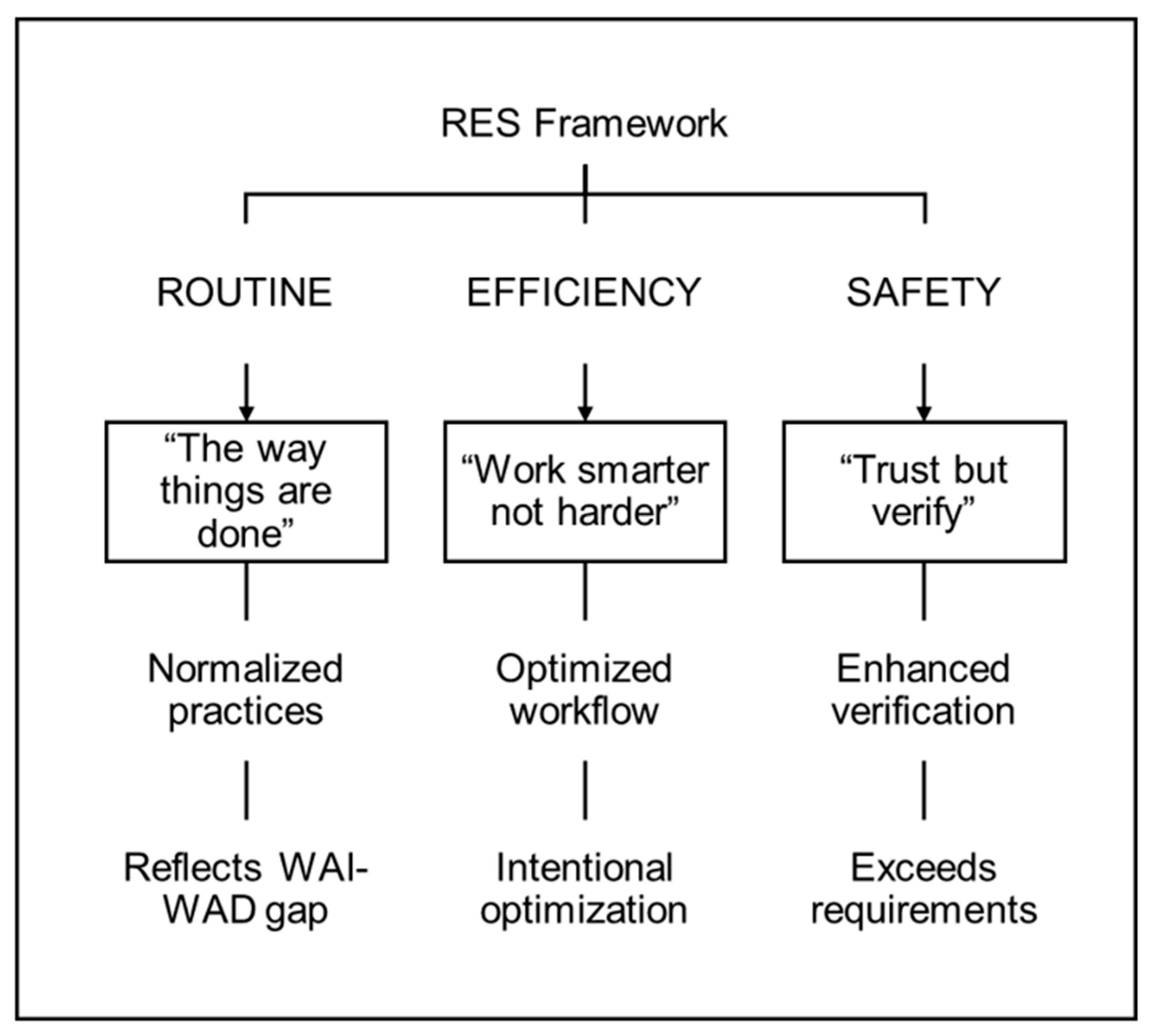
Having established the three categories of procedural adaptations through convergent evidence, the following discussion examines their theoretical and practical implications for safety science and organizational practice. Figure 3 below summarizes the three categories of the RES framework, showing their defining characteristics and the worker-generated phrases that emerged during validation interviews.

4. Discussion

This paper introduced a novel framework to address a fundamental gap in the safety science literature by providing positive vocabulary for describing successful adaptations during procedural work. Rather than framing departure from prescribed procedures as deviations or violations, the Routine–Efficiency–Safety (RES) framework recognizes adaptations as responses to practical work demands. Workers themselves use terms like “the way things are done,” “work smarter not harder,” and “trust but verify” to describe their adaptations, demonstrating that the framework resonates with their actual sense-making processes. This vocabulary provides language and categories for discussing how work succeeds rather than just how it fails, a need identified as critical for Safety-II thinking [8,24].

4.1. Development and Justification of the Three-Category Framework

The three categories of the RES framework emerged through convergent validation rather than a priori theoretical selection. During Phase 2 SME interpretation sessions, experts consistently described procedural variations using three distinct functional rationales: (1) variations reflecting normalized workplace practices that had become standard operating methods despite differing from written procedures, (2) variations aimed at optimizing workflow efficiency while maintaining safety standards, and (3) variations specifically intended to enhance safety beyond prescribed requirements. These patterns were subsequently validated in Phase 3 through worker interviews, where participants independently used similar conceptual frameworks when explaining their adaptations. Workers described routine adaptations as “the way things are done,” efficiency adaptations as “work smarter not harder,” and safety adaptations as “trust but verify”—language that emerged naturally from their accounts rather than being imposed by researchers. This convergence between expert interpretation (Phase 2) and worker sense-making (Phase 3) provides empirical grounding for the three-category structure. Alternative categorization schemes were considered during analysis. A two-category framework distinguishing only between “optimization” and “safety enhancement” collapsed important distinctions between routine normalized practices and deliberate efficiency improvements. A four-category framework that separated “routine adaptations” into “trained workarounds” and “informal practices” created artificial boundaries that neither experts nor workers recognized as meaningful. The three-category structure best captured the functional distinctions that both experts and workers identified as salient in their operational context. The categories are not mutually exclusive in practice, and a single adaptation may serve multiple functions. For example, resequencing steps to inspect equipment earlier (efficiency) may also add verification beyond requirements (safety). However, workers’ accounts consistently emphasized one primary function when explaining their reasoning, enabling reliable categorization based on the adaptation’s predominant purpose.

4.2. Theoretical Insights

This research demonstrates that effective safety management requires moving beyond binary compliance assessments toward understanding the reasoning and functions behind procedural adaptations. The International Association of Oil & Gas Producers (IOGP) has similarly articulated the need to move from viewing noncompliance as willful deviation requiring punishment toward recognizing that operational safety requires workers to make judgment calls based on situational constraints [48]. The RES framework operationalizes this shift by providing specific categories that distinguish between adaptations addressing routine system constraints, optimizing workflow, and enhancing safety, enabling learning-focused conversations while providing practical tools for implementation [27,49].
This framework also addresses a gap identified across safety science and broader social change research: the lack of systematic vocabulary for describing positive departures from norms [8,50]. Research on positive deviance has successfully identified “champions” for change, or individuals whose uncommon behaviors enable better solutions than their peers achieve with similar resources [50,51]. However, identifying that positive outliers exist differs from understanding why different adaptations occur and what functions they serve. The RES framework advances beyond identifying positive deviants to providing a vocabulary for characterizing different types of beneficial adaptations. This enables organizations to identify “champions” of successful practices within each category: workers whose routine adaptations reflect deep task knowledge, whose efficiency optimizations maintain safety while improving workflow, or whose safety enhancements reveal procedural gaps. By recognizing these champions and understanding the distinct functions their adaptations serve, organizations can facilitate peer learning and knowledge transfer, supporting organizational learning from successful performance [52].

4.3. Workers as Sources of Situated Knowledge

This research highlights the knowledge that workers bring to operational challenges. The findings support Safety-II principles by demonstrating that workers often possess sophisticated knowledge about effective task performance under varying conditions. In this study, rather than taking shortcuts or minimizing effort, workers often used their experience and expertise to appraise the instructions given to them and understood when and why certain adaptations were appropriate. Workers frequently exceeded procedural requirements through additional verification steps, proactive risk assessments, and redundant safety checks, demonstrating more stringent safety standards than formal procedures specified. These instances illustrate the importance of capturing, understanding, and respecting workers’ ground-level knowledge of operational realities [24,53]. While not all worker adaptations enhance safety, framing deviation from prescribed procedures as errors prevents organizations from learning valuable situated expertise demonstrated in workers’ adaptations [25].
This recognition of worker expertise aligns with resilience engineering research on adaptive work practices [22]. While previous research has categorized rule breaking by motivation or variety space extension [22,23], the RES framework distinguishes adaptations by their functional purposes (routine normalization, efficiency optimization, safety enhancement) as understood by workers themselves.

4.4. Flexibility as a Safety Feature

Recognizing worker expertise has important implications for how organizations approach procedural adherence. The findings of this study reveal that procedural flexibility can be a safety feature rather than a problem. The ability to adapt procedures based on situational assessment and risk evaluation represents critical safety capability [36,39] that rigid adherence may limit. Strict policies on eliminating or penalizing all deviations may serve as a barrier for continuous procedural improvement by limiting the understanding of which adaptations enhance or compromise safety [31].

4.5. Methodological Approach

The development approach employed in this research follows established methodological precedents in safety science. Influential frameworks such as Reason’s human error taxonomy [1] and Rasmussen’s Skills–Rules–Knowledge framework [3] were not developed through single validation studies but rather emerged through the iterative analysis of empirical data, expert interpretation, and the demonstration of practical utility over time.
The approach informing the development of RES framework follows a comparable trajectory. The integration of behavioral observation with worker validation addresses a documented gap between researcher and practitioner perspectives on procedural adaptations, including substantial divergence between how administrators and workers interpret the same adaptive behaviors [11,14]. By systematically documenting how workers are using procedures and then evaluating those interpretations through worker accounts of their reasoning, this approach ensures the framework reflects both observable work practices and workers’ own sense-making processes. This triangulation demonstrates how Safety-II principles can be operationalized through research approaches that are worker-centered while maintaining empirical rigor.
This methodological approach also aligns with pattern-centered inquiry as applied to cognitive work systems. Following insights from architecture and design, this approach recognizes that patterns describe generalizable problems occurring repeatedly in some environments, then describe core solutions that allow reuse across countless situations without identical repetition [54]. The general pattern of workers adapting when prescribed procedures prove insufficient manifests differently across contexts while retaining common characteristics: gaps between requirements and prescribed methods, potential for bottlenecks, and the need for skilled adaptation to bridge these gaps. While conducted in petrochemical operations, the patterns identified likely recur in other proceduralized high-risk work contexts, with specific manifestations varying by operational constraints. The three adaptation types represent patterns that recur across workers and situations while manifesting in context-specific ways. For example, the safety pattern of “trust but verify” appeared as double-checking bottom inspections in one context and taking early seal photographs in another, yet both reflected the same underlying pattern of adding verification beyond prescribed requirements.

4.6. Practical Implications

These theoretical insights and methodological innovations translate into concrete practical applications. The RES framework provides structured categories for understanding the adaptations workers describe when discussing how they actually carry out their jobs. Rather than simply recognizing that adaptation occurs, the framework enables an analysis of adaptation characteristics, moving beyond asking workers to describe ‘what adaptations enabled successful task completion’ to making sense of those descriptions through theoretically grounded categories. This understanding could also help shift conversations from blame-oriented to learning-oriented, encouraging workers to share adaptive expertise rather than concealing deviations. The shared vocabulary enables conversations between frontline workers, supervisors, safety professionals, and procedure designers using common categories.
Organizations can record and examine adaptation patterns as potential leading indicators of the need for change management. High frequencies of efficiency adaptations, such as steps being performed out of sequence or combined, might indicate workflow design issues; frequent safety adaptations, such as workers adding protective measures not specified in the procedures, might reveal inadequate risk controls; and variations in routine adaptations, where steps are performed differently than written procedures, might highlight outdated procedures. All three reveal gaps between WAI and WAD. When incidents occur, investigators can examine whether problematic outcomes resulted from absence of typical safety adaptations, inappropriate efficiency adaptations under pressure, or outdated routine adaptations, providing more nuanced understanding than simply identifying procedural deviations. Additionally, reporting systems can capture successful practices alongside incidents, creating databases of effective adaptations. This positive reporting shifts culture from ‘zero deviations’ to ‘successful adaptations’ while complementing traditional incident reporting to provide a balanced understanding of both success and failure. Documenting and sharing effective adaptations across shifts builds collective resilience rather than keeping adaptive expertise as isolated knowledge.
The RES framework could integrate into established safety management system elements [55] rather than requiring entirely new infrastructure. For instance, the incident investigation applications described above align with Root Cause Analysis processes, while management of change processes might benefit from systematically documenting known routine adaptations during procedure reviews to inform whether formal procedures should be updated to reflect actual practice. Similarly, safety adaptations identified through observation programs could reveal hazards that workers have recognized but formal risk assessments may have missed. Training program applications, as described below, could facilitate explicit discussion of appropriate adaptation types rather than emphasizing only strict compliance. These potential applications suggest the framework could provide vocabulary for learning-focused conversations within existing safety management activities, though empirical research would be needed to evaluate effectiveness in organizational practice.
Procedure designers can periodically examine documented adaptations to identify where prescribed sequences conflict with operational realities. Some examples of this might be:
  • If multiple workers independently develop the same routine adaptation, this signals practical problems in the prescribed sequence.
  • If workers consistently resequence steps for efficiency without compromising safety, procedures could explicitly allow that flexibility.
  • If workers routinely add safety adaptations like verification checks, procedures may have gaps needing attention.
This approach enables procedures that specify critical dependencies while allowing worker judgment about optimal sequencing.
Training programs can use the RES framework to help workers recognize different adaptation types and assess their appropriateness. Rather than emphasizing compliance, training can develop judgment skills for assessing when adaptations maintain safety-critical steps, when adaptations still make sense given system changes, and when adaptations address identified risks. Training can also establish means for sharing these adaptations. Specifically, experienced workers can teach novice workers about appropriate adaptations rather than leaving discovery to trial and error. However, while the RES framework offers practical utility, several limitations inform future research directions.

4.7. Limitations and Future Research

This study had some noteworthy limitations regarding generalizability. The research was conducted within a single company focusing specifically on filling operations. This focused approach enabled in-depth empirical investigation but raises questions about applicability across contexts.
However, the framework’s theoretical grounding suggests broader relevance. The three adaptation types reflect fundamental tensions in proceduralized work across high-risk domains: the gap between formal procedures and practical task demands (routine adaptations), the need to optimize performance within constraints (efficiency adaptations), and worker responsibility for safety outcomes (safety adaptations). These tensions are not unique to petrochemical operations but characterize procedure-intensive work in aviation, healthcare, nuclear power, and other domains where prescribed methods must accommodate variable conditions. The pattern-centered methodology employed here [27] supports analytical rather than statistical generalization. Just as Reason’s error taxonomy [1] and Rasmussen’s SRK framework [2] were developed through focused empirical investigation yet proved applicable across domains, the RES framework identifies patterns likely to recur in similar operational contexts. The specific manifestations will vary. For example, “trust but verify” appears as bottom inspections in petrochemical work, as redundant vital sign checks in healthcare, or as cross-checks in aviation, but the underlying pattern of workers adding verification beyond prescribed requirements reflects common adaptive practices.
Nevertheless, empirical validation across multiple organizations, industries, and task types is essential for establishing the framework’s scope of applicability. Future research should investigate:
  • Whether the three categories adequately capture adaptation patterns in other high-risk domains (healthcare, aviation, nuclear operations)
  • Whether additional adaptation types emerge in different operational contexts
  • How organizational culture and safety climate influence the prevalence and acceptance of different adaptation types
  • Whether the framework applies to non-proceduralized or less-structured work environments
Until such validation studies are conducted, the framework should be considered a theoretically grounded hypothesis requiring empirical testing across contexts rather than a universally validated taxonomy.
Second, the observational methods used in this research to inform the development of the RES framework have inherent limitations. While head-mounted cameras provided unobtrusive documentation of work practices, the awareness of being recorded might have influenced participant behavior, known as the Hawthorne effect [56]. This could result in underreporting of certain adaptations, particularly those workers might perceive as non-compliant. Future research could explore whether extended observation periods or longitudinal study designs further reduce participant reactivity and capture more naturalistic adaptive behaviors.
A critical research question is whether the framework categories developed through worker evaluation can be reliably predicted from observable behavioral patterns. Future research should investigate correlations between specific Skip–Order–Action combinations and adaptation types. This research could address questions such as: Do safety adaptations consistently manifest as added verification steps, while efficiency adaptations show specific resequencing patterns? Establishing these relationships would inform the design of real-time adaptive procedural systems that identify different types of adaptation. Such research would require large-scale data collection across multiple contexts, coding of both behavioral patterns and adaptation reasoning, and possibly the use of machine learning approaches to identify predictive relationships (similar to [57]).
Future research could also explore the relationship between adaptation types and cognitive processing modes, connecting this framework to models of human information processing such as the Skills–Rules–Knowledge framework [3]. Understanding whether routine adaptations reflect skill-based automaticity, efficiency adaptations involve rule-based pattern recognition, or safety adaptations require knowledge-based reasoning could provide insight into how people think and act while executing procedural work.
Beyond understanding adaptation patterns, research should also investigate how organizations can adopt and implement the RES framework in practice. Several questions remain unanswered: for example, what barriers and enablers affect the adoption of positive vocabularies in organizations with established compliance-focused cultures? What training and support do workers and managers need to use such frameworks effectively? What management approaches support beneficial adaptations while maintaining appropriate procedural discipline, and how do production pressures affect the balance between efficiency and safety adaptations? Understanding these organizational dynamics could inform management approaches that better leverage worker expertise as a system resource. Longitudinal studies could also track whether using such frameworks changes safety culture and organizational learning processes as intended.

5. Conclusions

This research addresses a fundamental gap in safety science by developing the Routine-Efficiency-Safety (RES) framework, which provides positive vocabulary for describing successful procedural work performance. The framework emerged from three-phase convergent validation combining behavioral observation of 1422 procedural steps, expert interpretation, and worker evaluation at a petrochemical facility.
The study makes three primary contributions to safety science theory and practice:
First, it operationalizes Safety-II principles by providing specific, empirically grounded categories for discussing how work succeeds rather than only how it fails. The three categories—routine adaptations (“the way things are done”), efficiency adaptations (“work smarter not harder”), and safety adaptations (“trust but verify”)—reflect functional distinctions that both experts and workers recognize as meaningful, addressing the criticism that Safety-II lacks tangible methodological tools [32].
Second, it demonstrates methodologically how worker-centered frameworks can be developed through convergent validation that integrates observable behavioral patterns with worker sense-making processes. This approach addresses documented gaps between researcher and practitioner perspectives on procedural adaptations [18,27] by ensuring the framework reflects both Work-As-Done and workers’ own reasoning about their adaptive practices.
Third, it provides practical vocabulary enabling organizations to move beyond binary compliance assessments toward learning-focused conversations about adaptive work practices. Rather than framing all deviations as violations requiring correction, the framework enables nuanced discussions distinguishing between adaptations addressing routine system constraints, optimizing workflow, and enhancing safety. This vocabulary supports identification of “adaptation champions” whose practices demonstrate deep task knowledge, effective workflow optimization, or proactive safety enhancement—enabling peer learning and knowledge transfer.
The research also reveals important empirical findings about procedural work in high-risk environments. Analysis showed that 32.9% of procedural steps involved some form of adaptation, yet all tasks were completed successfully [43]. Workers frequently exceeded procedural requirements through additional verification steps and proactive risk assessments, demonstrating that procedural flexibility can be a safety feature rather than exclusively a problem. These findings challenge assumptions that strict procedural adherence is necessary for safe operations, suggesting instead that worker expertise in appropriate adaptation represents critical safety capability.
However, important limitations constrain the framework’s current applicability. As a single-company case study focused on petrochemical filling operations, the research provides analytical rather than statistical generalization. While the framework’s theoretical grounding suggests broader relevance (the identified patterns reflect fundamental gaps in proceduralized work across high-risk domains), empirical validation across multiple organizations, industries, and task types remains essential. Future research must investigate whether the three categories adequately capture adaptation patterns in healthcare, aviation, nuclear operations, and other contexts, whether additional adaptation types emerge in different operational environments, and how organizational factors influence adaptation patterns.
Despite these limitations, the RES framework represents a significant step toward building positive vocabularies for Safety-II implementation. By providing language that resonates with workers’ own understanding while maintaining empirical rigor, the framework enables organizations to begin learning systematically from successful performance, capability essential for adaptive safety management in complex, dynamic operational environments.

Author Contributions

Conceptualization, A.M.A., S.C.P. and F.S.; methodology, A.M.A., S.C.P. and F.S.; formal analysis, A.M.A.; investigation, A.M.A.; resources, S.C.P. and F.S.; data curation, A.M.A.; writing—original draft preparation, A.M.A.; writing—review and editing, S.C.P. and F.S.; visualization, A.M.A.; supervision, S.C.P. and F.S.; project administration, S.C.P. and F.S.; funding acquisition, F.S. All authors have read and agreed to the published version of the manuscript.

Funding

This research was funded by the Next Generation Advanced Procedures Consortium (NGAP).

Institutional Review Board Statement

The study was conducted in accordance with the Declaration of Helsinki and approved by the Institutional Review Board of Texas A&M University (protocol code IRB2018-1128D and date of approval 27 October 2023).

Informed Consent Statement

Informed consent was obtained from all subjects involved in the study.

Data Availability Statement

The data that support the findings of this study are not publicly available due to their containing information that could compromise the privacy of research participants and proprietary operational information from the participating facility. Anonymized data may be available from the corresponding author upon reasonable request and with permission from the participating organization.

Conflicts of Interest

The authors declare no conflicts of interest.

Abbreviations

The following abbreviations are used in this manuscript:
WAIWork-As-Imagined
WADWork-As-Done
RESRoutine–Efficiency–Safety
SOASkip–Order–Action
SMESubject Matter Expert
SECAStructured Exploration of Complex Adaptations
CSBU.S. Chemical Safety and Hazard Investigation Board
IOGPInternational Association of Oil & Gas Producers

References

  1. Reason, J. Human Error; Cambridge University Press: Cambridge, UK, 1990. [Google Scholar]
  2. Dekker, S. The Field Guide to Understanding ‘Human Error’, 3rd ed.; CRC Press: Boca Raton, FL, USA, 2014. [Google Scholar] [CrossRef]
  3. Rasmussen, J. Skills, rules, and knowledge; signals, signs, and symbols, and other distinctions in human performance models. IEEE Trans. Syst. Man Cybern. 1983, 13, 257–266. [Google Scholar] [CrossRef]
  4. Woods, D.D.; Hollnagel, E. Joint Cognitive Systems: Patterns in Cognitive Systems Engineering, 1st ed.; CRC Press: Boca Raton, FL, USA, 2006. [Google Scholar] [CrossRef]
  5. Leveson, N.G. Engineering a Safer World: Systems Thinking Applied to Safety; MIT Press: Cambridge, MA, USA, 2012. [Google Scholar] [CrossRef]
  6. Lundberg, J.; Rollenhagen, C.; Hollnagel, E. What-You-Look-For-Is-What-You-Find—The consequences of underlying accident models in eight accident investigation manuals. Saf. Sci. 2009, 47, 1297–1311. [Google Scholar] [CrossRef]
  7. Patriarca, R.; Di Gravio, G.; Woltjer, R.; Costantino, F.; Praetorius, G.; Ferreira, P.; Hollnagel, E. Framing the FRAM: A literature review on the functional resonance analysis method. Saf. Sci. 2020, 129, 104827. [Google Scholar] [CrossRef]
  8. Hollnagel, E. Safety-I and Safety-II: The Past and Future of Safety Management; CRC Press: Boca Raton, FL, USA, 2014. [Google Scholar] [CrossRef]
  9. Wears, R.; Sutcliffe, K. Still Not Safe: Patient Safety and the Middle-Managing of American Medicine; Oxford University Press: Oxford, UK, 2019. [Google Scholar] [CrossRef]
  10. Le Coze, J.-C. What have we learned about learning from accidents? Post-disasters reflections. Saf. Sci. 2013, 51, 441–453. [Google Scholar] [CrossRef]
  11. Baybutt, P. Insights into process safety incidents from an analysis of CSB investigations. J. Loss Prev. Process Ind. 2016, 43, 537–548. [Google Scholar] [CrossRef]
  12. Halim, S.Z.; Janardanan, S.; Flechas, T.; Mannan, M.S. In search of causes behind offshore incidents: Fire in offshore oil and gas facilities. J. Loss Prev. Process Ind. 2018, 54, 254–265. [Google Scholar] [CrossRef]
  13. U.S. Chemical Safety and Hazard Investigation Board. Investigation Report: Refinery Explosion and Fire; Report No. 2005-04-I-TX; CSB: Washington, DC, USA, 2007. Available online: https://www.csb.gov/file.aspx?DocumentId=5596 (accessed on 18 November 2024).
  14. Iflaifel, M.; Lim, R.H.; Crowley, C.; Greco, F.; Ryan, K.; Iedema, R. Modelling the use of variable rate intravenous insulin infusions in hospitals by comparing Work as Done with Work as Imagined. Res. Soc. Adm. Pharm. 2022, 18, 2786–2795. [Google Scholar] [CrossRef]
  15. Sanford, N.; Lavelle, M.; Markiewicz, O.; Reedy, G.; Rafferty, A.M.; Darzi, A.; Anderson, J.E. Understanding complex work using an extension of the resilience CARE model: An ethnographic study. BMC Health Serv. Res. 2022, 22, 1126. [Google Scholar] [CrossRef]
  16. Jefferies, C.M.; Asher Balkin, E.; Groom, L.; Rayo, M.F. Developing Systemic Contributors and Adaptations Diagramming (SCAD): Systemic insights, multiple pragmatic implementations. Proc. Hum. Factors Ergon. Soc. Annu. Meet. 2022, 66, 75–79. [Google Scholar] [CrossRef]
  17. Carvalho, P.V.R.D.; Righi, A.W.; Huber, G.J.; Lemos, C.D.F.; Jatoba, A.; Gomes, J.O. Reflections on work as done (WAD) and work as imagined (WAI) in an emergency response organization: A study on firefighters training exercises. Appl. Ergon. 2018, 68, 28–41. [Google Scholar] [CrossRef]
  18. Mendoza, A.; Liu, S.-N.C.; Smith, A.; Hendricks, J.W.; Peres, S.C.; Sasangohar, F. The realities of procedure deviance: A qualitative examination of divergent work-as-done and work-as-imagined perspectives. Int. J. Ind. Ergon. 2024, 100, 103564. [Google Scholar] [CrossRef]
  19. Dekker, S. Failure to adapt or adaptations that fail: Contrasting models on procedures and safety. Appl. Ergon. 2003, 34, 233–238. [Google Scholar] [CrossRef]
  20. Bourrier, M. Trapping Safety into Rules: How Desirable or Avoidable is Proceduralization? 1st ed.; Bieder, C., Ed.; CRC Press: Boca Raton, FL, USA, 2013. [Google Scholar] [CrossRef]
  21. Leplat, J. About implementation of safety rules. Saf. Sci. 1998, 29, 189–204. [Google Scholar] [CrossRef]
  22. Rankin, A.; Lundberg, J.; Woltjer, R.; Rollenhagen, C.; Hollnagel, E. Resilience in Everyday Operations: A Framework for Analyzing Adaptations in High-Risk Work. J. Cogn. Eng. Decis. Mak. 2014, 8, 78–97. [Google Scholar] [CrossRef]
  23. Gil, M. Rule breaking in organizations: An integrative review. Acad. Manag. Ann. 2025; in press. [Google Scholar] [CrossRef]
  24. Havinga, J.; Dekker, S.; Rae, A. Everyday work investigations for safety. Theor. Issues Ergon. Sci. 2017, 19, 213–228. [Google Scholar] [CrossRef]
  25. Tucker, A.L.; Edmondson, A.C. Why Hospitals Don’t Learn from Failures: Organizational and Psychological Dynamics that Inhibit System Change. Calif. Manage. Rev. 2003, 45, 55–72. [Google Scholar] [CrossRef]
  26. Ramanujam, R.; Rousseau, D.M. The challenges are organizational not just clinical. J. Organ. Behav. 2006, 27, 811–827. [Google Scholar] [CrossRef]
  27. Hollnagel, E. Safety-II in Practice: Developing the Resilience Potentials; Routledge: London, UK, 2017. [Google Scholar] [CrossRef]
  28. Carthey, J.; de Leval, M.R.; Reason, J.T. The human factor in cardiac surgery: Errors and near misses in a high technology medical domain. Ann. Thorac. Surg. 2001, 72, 300–305. [Google Scholar] [CrossRef] [PubMed]
  29. Vogus, T.J.; Sutcliffe, K.M. Organizational mindfulness and mindful organizing: A reconciliation and path forward. Acad. Manag. Learn. Educ. 2012, 11, 722–735. [Google Scholar] [CrossRef]
  30. Rae, A.; Provan, D.; Aboelssaad, H.; Alexander, R. A manifesto for reality-based safety science. Saf. Sci. 2020, 126, 104654. [Google Scholar] [CrossRef]
  31. Provan, D.J.; Woods, D.D.; Dekker, S.W.A.; Rae, A.J. Safety II professionals: How resilience engineering can transform safety practice. Reliab. Eng. Syst. Saf. 2020, 195, 106740. [Google Scholar] [CrossRef]
  32. Cooper, M.D. The emperor has no clothes: A critique of Safety-II. Saf. Sci. 2022, 152, 105047. [Google Scholar] [CrossRef]
  33. Lawton, R.; Taylor, N.; Clay-Williams, R.; Braithwaite, J. Positive deviance: A different approach to achieving patient safety. BMJ Qual. Saf. 2014, 23, 880–883. [Google Scholar] [CrossRef] [PubMed]
  34. Bradley, E.H.; Curry, L.A.; Ramanadhan, S.; Rowe, L.; Nembhard, I.M.; Krumholz, H.M. Research in action: Using positive deviance to improve quality of health care. Implement. Sci. 2009, 4, 25. [Google Scholar] [CrossRef] [PubMed]
  35. Pascale, R.; Sternin, J.; Sternin, M. The Power of Positive Deviance: How Unlikely Innovators Solve the World’s Toughest Problems; Harvard Business Press: Boston, MA, USA, 2010. [Google Scholar]
  36. Woods, D.D. Four concepts for resilience and the implications for the future of resilience engineering. Reliab. Eng. Syst. Saf. 2015, 141, 5–9. [Google Scholar] [CrossRef]
  37. Hollnagel, E.; Woods, D.D.; Leveson, N. (Eds.) Resilience Engineering: Concepts and Precepts, 1st ed.; CRC Press: Boca Raton, FL, USA, 2006. [Google Scholar] [CrossRef]
  38. Dekker, S.A.; Hollnagel, E.; Woods, D.D.; Cook, R. Resilience Engineering: New Directions for Measuring and Maintaining Safety in Complex Systems; Final Report; Lund University, School of Aviation: Lund, Sweden, 2008. [Google Scholar]
  39. Hoffman, R.R.; Woods, D.D. Beyond Simon’s Slice: Five Fundamental Trade-Offs that Bound the Performance of Macrocognitive Work Systems. IEEE Intell. Syst. 2011, 26, 67–71. [Google Scholar] [CrossRef]
  40. Peres, S.C.; Quddus, N.A.; Kannan, P.; Ahmed, L.; Ritchey, P.; Johnson, W.B.; Rahmani, S.; Mannan, M.S. A summary and synthesis of procedural regulations and standards—Informing a procedures writer’s guide. J. Loss Prev. Process Ind. 2016, 44, 726–734. [Google Scholar] [CrossRef]
  41. Bullemer, P.; Laberge, J.; Tolsma, K.; Reising, D. Effective operator display design. Chem. Eng. Prog. 2008, 104, 52–59. [Google Scholar]
  42. Furniss, D.; Sujan, M.; Henderson, J.; Embrey, D. A Human Factors Review of Road Tanker Offloading across Multiple Organizations: Simple, Complicated and Complex Problems. In Proceedings of the 29th European Safety and Reliability Conference (ESREL 2019), Hannover, Germany, 22–26 September 2019. [Google Scholar] [CrossRef]
  43. Ashraf, A.M.; Sasangohar, F.; Peres, S.C. Beyond Compliance: Investigating Work-as-Done in Procedural Work with the Systematic Skip-Order-Action (SOA) Framework. Preprint, 2025; submitted. [Google Scholar] [CrossRef]
  44. ELAN, Version 6.0; Max Planck Institute for Psycholinguistics: Nijmegen, The Netherlands, 2020. Available online: https://archive.mpi.nl/tla/elan (accessed on 26 January 2026).
  45. Patriarca, R.; Leonhardt, J.; Licu, A. Introducing the Structured Exploration of Complex Adaptations to Learn from Operations in an Air Navigation Service Provider. In Proceedings of the 32nd European Safety and Reliability Conference (ESREL 2022), Dublin, Ireland, 28 August–1 September 2022; Leva, M.C., Patelli, E., Podofillini, L., Wilson, S., Eds.; Research Publishing: Singapore, 2022; pp. 33–40. [Google Scholar] [CrossRef]
  46. Lyth, J. An Introduction to 4D’s; Learning Teams Inc.: Seattle, WA, USA, 2022. [Google Scholar]
  47. Klein, G.; Moon, B.; Hoffman, R.R. Making Sense of Sensemaking 2: A Macrocognitive Model. IEEE Intell. Syst. 2006, 21, 88–92. [Google Scholar] [CrossRef]
  48. International Association of Oil & Gas Producers. Bridging the Gap Between Work-as-Imagined and Work-as-Done; Report No. 620; IOGP: London, UK, 2018; Available online: https://www.iogp.org/ (accessed on 18 November 2024).
  49. Wahl, A.; Kongsvik, T.; Antonsen, S. Balancing Safety I and Safety II: Learning to manage performance variability at sea using simulator-based training. Reliab. Eng. Syst. Saf. 2020, 195, 106698. [Google Scholar] [CrossRef]
  50. Herington, M.J.; van de Fliert, E. Positive deviance in theory and practice: A conceptual review. Deviant Behav. 2017, 39, 664–678. [Google Scholar] [CrossRef]
  51. Sternin, J. Positive deviance: A new paradigm for addressing today’s problems today. In Globalization and Corporate Citizenship: The Alternative Gaze, 1st ed.; McIntosh, M., Ed.; Routledge: London, UK, 2016; p. 6. [Google Scholar] [CrossRef]
  52. Sujan, M. An organisation without a memory: A qualitative study of hospital staff perceptions on reporting and organisational learning for patient safety. Reliab. Eng. Syst. Saf. 2015, 144, 45–52. [Google Scholar] [CrossRef]
  53. Weick, K.E.; Sutcliffe, K.M. Sustaining sustained performance. In Managing the Unexpected: Sustained Performance in a Complex World, 3rd ed.; Wiley: Hoboken, NJ, USA, 2015; pp. 148–162. [Google Scholar] [CrossRef]
  54. Alexander, C.; Ishikawa, S.; Silverstein, M. A Pattern Language: Towns, Buildings, Construction; Oxford University Press: Oxford, UK, 1977. [Google Scholar]
  55. OSHA. Recommended Practices for Safety and Health Programs; U.S. Department of Labor, Occupational Safety and Health Administration: Washington, DC, USA, 2016. Available online: https://www.osha.gov/safety-management (accessed on 26 January 2026).
  56. McCambridge, J.; Witton, J.; Elbourne, D.R. Systematic review of the Hawthorne effect: New concepts are needed to study research participation effects. J. Clin. Epidemiol. 2014, 67, 267–277. [Google Scholar] [CrossRef]
  57. Ashraf, A.M.; Perali, P.; Jei, H.-G.; Hendricks, J.W.; Manzini, T.; Nasr, V.; Peres, S.C.; Sasangohar, F.; Zahabi, M.; Murphy, R. Investigating a Real-Time Adaptive Procedure System. Preprint 2025. [Google Scholar] [CrossRef]
Figure 1. Overview of Research Design.
Safety 12 00028 g001
Figure 2. Example of a camcorder attached to workers’ hard hats.
Safety 12 00028 g002
Figure 3. The RES Framework: Three Categories of Procedural Adaptations with Worker-Generated Descriptive Phrases.
Safety 12 00028 g003
Table 1. Summary of Key Characteristics and Examples of Routine Adaptations.
DimensionDescription
DefinitionsProcedural variations that have become normalized standard practice within work groups through collective experience and informal training
Behavioral ManifestationSteps performed differently than written, steps omitted, or informal practices added; variations are consistent across workers and stable over time
Underlying MechanismReflect collective knowledge about practical task demands, equipment behavior, and operational constraints not captured in formal procedures; transmitted through workplace socialization and normalized through repeated practice across work group members
Organizational FunctionRepresent work-as-actually-done that enables task completion under real operational conditions; reveal gaps between idealized procedures and practical requirements
Representative Examples
  • Pre-inspecting equipment before formal inspection steps
  • Using alternative tools or techniques workers have found more reliable than specified methods
  • Establishing informal communication protocols between team members
Worker Description“The way things are done”, practices workers learn from colleagues and trainers as the accepted method despite differences from written procedures
Table 2. Summary of Key Characteristics and Examples of Efficiency Adaptations.
DimensionDescription
DefinitionsOptimization strategies that maintain safety while improving workflow and resource utilization
Behavioral ManifestationSteps completed as prescribed but in different sequence, or steps combined and performed in parallel; timing and coordination adjusted to optimize performance
Underlying MechanismReflect worker knowledge of task dependencies, resource constraints, and workflow optimization opportunities; demonstrate understanding of which procedural requirements are order-dependent versus order-independent
Organizational FunctionEnable workers to manage multiple concurrent demands and time pressures while maintaining safety and quality standards; optimize use of waiting periods and available resources
Representative Examples
  • Preparing materials or inspecting equipment for subsequent tasks during waiting periods
  • Reordering procedural steps to minimize travel time or equipment setup
  • Coordinating activities to optimize team workflow
Worker Description“Work smarter not harder”, strategic modifications that improve efficiency without compromising safety or quality outcomes
Table 3. Summary of Key Characteristics and Examples of Safety Adaptations.
DimensionDescription
DefinitionsRisk-conscious adaptations that exceed prescribed safety requirements through additional verification, redundant checks, or proactive risk mitigation
Behavioral ManifestationSteps added beyond procedural requirements; additional verification or inspection steps; redundant safety checks; proactive hazard identification measures
Underlying MechanismReflect worker risk assessment based on experience, situational factors, and consequences of potential failures; demonstrate worker ownership of safety outcomes beyond compliance
Organizational FunctionProvide additional safety margins through worker-initiated verification; compensate for perceived procedural gaps or equipment reliability concerns; serve as informal defense-in-depth
Representative Examples
  • Additional equipment inspections beyond prescribed requirements
  • Independent verification of safety systems
  • Proactive hazard identification and mitigation measures
Worker Description“Trust but verify”, adding verification steps to ensure safety even when formal procedures may be adequate; exceeding minimum requirements through additional precautions
Disclaimer/Publisher’s Note: The statements, opinions and data contained in all publications are solely those of the individual author(s) and contributor(s) and not of MDPI and/or the editor(s). MDPI and/or the editor(s) disclaim responsibility for any injury to people or property resulting from any ideas, methods, instructions or products referred to in the content.