1. Introduction
The origins of Indian yoga reach back several millennia and recede into the obscurity of early history. What is certain, however, is that the Buddha (c. 500 BCE) was already trained in yogic practices and, in turn, played a formative role in shaping the early development of yoga [
1]. Globally, yoga has become a widely practiced wellness activity, with more than 300 million practitioners worldwide. Participation rates vary across countries and remain higher among women, who account for approximately 70–80% of practitioners, although male participation has increased in recent years. In Switzerland, yoga is among the most commonly practiced physical activities, with participation continuing to rise, underscoring its growing relevance as a regular form of exercise [
2,
3]. Yoga is associated with multiple physical and mental health benefits, including improved flexibility, muscular strength, posture, and cardiovascular function, as well as stress reduction and enhanced psychological well-being [
4,
5,
6,
7,
8,
9,
10,
11,
12,
13]. Regular practice may alleviate back pain, improve circulation, and support emotional balance through controlled breathing, mindful movement, and meditation. These effects contribute to improved sleep quality, concentration, and overall mental resilience [
8,
9,
10,
14,
15]. Despite its many health advantages, experts agree that excessive or improper practice can lead to injury. In the years 2001–2014, for example, nearly 30,000 individuals in the United States alone sought emergency department care for yoga-related injuries. This corresponds to approximately 2000 cases per year [
16]. Swiss national data show that activities including yoga and Pilates account for fewer than 100 injuries per one million hours of practice, underscoring yoga’s overall safety while acknowledging that injuries may still occur and occasionally require medical care [
17]. Reports and observational studies have described a wide range of yoga-related adverse events, from mild musculoskeletal pain to more severe conditions [
18,
19]. The most commonly affected areas include the cervical spine, shoulders, lower back, and knees [
19,
20,
21]. Although serious complications—such as stroke resulting from carotid artery dissection—are extremely rare, they highlight the potential risks associated with practicing yoga beyond one’s physical limits [
22,
23]. Understanding both the benefits and possible risks of yoga is therefore essential for promoting safe participation and evidence-based instruction. Several risk factors contributing to yoga-related injuries have been identified and broadly categorized into external and internal factors [
19,
24,
25,
26]. External factors are primarily related to practice conditions and execution. Injuries often occur when practitioners attempt advanced postures without sufficient preparation, exceed their physical limits, or practice under inadequate supervision. Poor technique, failure to adapt poses to individual capabilities, and neglect of pre-existing musculoskeletal conditions further increase the likelihood of injury. In addition, practicing without adequate warm-up, forcing overstretching, holding extreme positions for prolonged periods, or ignoring early warning signs of pain have all been associated with adverse outcomes, including ligament sprains, muscle tears, and nerve compression [
24,
27]. These observations emphasize the importance of proper instruction, gradual progression, and individualized modifications to minimize injury risk. Internal factors include individual characteristics that may influence susceptibility to yoga-related injuries, particularly age, sex, and body mass index (BMI) [
24,
25,
28]. Understanding how these characteristics interact with the physical demands of yoga is crucial for developing safer and more personalized practice recommendations. Age has been recognized as an important factor influencing yoga-related injuries. Epidemiological data from the United States demonstrated that the incidence of yoga-associated injuries increased eightfold among individuals aged 65 years and older compared with younger groups [
2]. Moreover, clinical observations suggest that the distribution of injuries differs with age: practitioners aged 45 years and older more frequently experience injuries involving the hips and trunk, while younger participants are more prone to upper-extremity injuries [
3]. High body mass index (BMI) has also been identified as a potential intrinsic factor increasing susceptibility to musculoskeletal injuries during physical activity. A European study by Bi et al. demonstrated that elevated BMI was associated with a higher overall risk of injury among physically active adults, suggesting that excess body weight can increase mechanical load on joints and reduce movement control [
29]. Although yoga is generally considered a low-impact activity, similar biomechanical mechanisms may apply, particularly in poses that place sustained or asymmetric stress on the knees, shoulders, and spine. Consistent with this, a systematic review by Cramer et al. reported that yoga-related injuries most frequently involve the cervical spine, shoulders, lower back, and knees [
19]. Although yoga-related injuries are often perceived as minor, they may be associated with relevant clinical consequences. A substantial proportion of patients presenting to emergency care require advanced diagnostics, inpatient treatment, or specialist referral, resulting in measurable healthcare utilization. Hospital admissions, prolonged length of stay, and associated medical costs highlight that even low-incidence injuries can place a non-negligible burden on emergency services and hospital resources. From a clinical perspective, this underscores the importance of understanding injury patterns, risk factors, and outcomes of yoga-related trauma in order to inform prevention strategies and optimize patient management. The aim of this study was to analyze the incidence, characteristics, and trends of yoga-related injuries among patients treated in the emergency department over an eleven-year period (2013–2023). We specifically hypothesized that injury patterns differ according to demographic characteristics, with older yoga practitioners (≥40 years) being more prone to head injuries, while younger individuals are more likely to sustain extremity injuries. Furthermore, we hypothesized that sex and body mass index (BMI) are associated with differences in injury distribution and severity. In addition, the study aimed to describe the most common injury mechanisms and anatomical locations, as well as clinical management and outcomes. By providing detailed epidemiological data from a hospital setting, this study aims to improve understanding of yoga-related trauma and to support the development of preventive strategies for safer yoga practice.
2. Materials and Methods
This descriptive retrospective study comprised adult patients (≥16 years) admitted to our emergency department (ED) in Berne, who presented between 2013 and 2023 with health problems or injuries clearly related to yoga practice and were eligible for inclusion in the study. “Clearly related to yoga practice” was defined as an acute injury or health problem that occurred during yoga practice or within seven days thereafter, for which yoga was explicitly documented in the medical record as the direct precipitating activity or mechanism of injury. Cases were included only when a clear temporal relationship and causal attribution to yoga could be verified from the clinical documentation. Presentations in which yoga was mentioned only as a background physical activity or where the causal relationship could not be clearly established were excluded. The data for this work were generated from the database of the management system of Berne University Hospital, Switzerland (Ecare, Turnhout, Belgium). Cases were excluded if there was no clear causal relationship to yoga practice, if the presentation occurred more than seven days after the inciting event, if the patient was younger than 16 years, or if general research consent was not provided. The seven-day threshold was applied to capture first emergency department presentations of acute yoga-related injuries and to avoid confounding by prior medical evaluation or treatment, which may influence injury assessment and outcomes. After applying these criteria, a total of 67 cases remained eligible for analysis. Yoga-related injuries were diagnostically classified based on the primary clinical diagnosis documented by the treating emergency physician at the time of presentation. Diagnoses were established according to standard clinical assessment, supported by imaging studies (e.g., X-ray, CT, MRI, or ultrasound) when indicated. Injuries were categorized into predefined diagnostic groups, including soft tissue injuries (e.g., muscle or tendon strains, sprains), contusions, fractures, joint dislocations, concussions, and other clinically relevant conditions. Only diagnoses directly attributable to the yoga-related incident were considered for classification. This approach was chosen to ensure consistency, transparency, and reproducibility of case classification in future studies.
The following clinical data were extracted from the medical database: diagnosis, aetiology of the accident, sustained type and site of injury, treatment performed, length of hospital stay and total costs pertaining to the case (ED visit, hospital stay and outpatient controls). The BMI was calculated using the height and body weight recorded in the patient’s medical chart. Demographic data such as age and gender were also included, as well as chronological data, such as month, day and time of arrival in the emergency department. Demographic variables such as age and gender were included, along with chronological parameters such as the month, day, and time of presentation to the emergency department. In addition, clinical and administrative data were collected, including the type of ED discipline, triage category, mode of presentation, whether shock room treatment was required, and mode of discharge.
Statistical analyses were performed using STATA version 18.1 (StataCorp, College Station, TX, USA). Continuous variables were reported either as means with standard deviations (SD) or as medians with interquartile ranges (IQR). Comparisons between two independent groups: sex: males vs. females; age groups 16–39 years old vs. 40 or older and BMI groups: underweight (BMI < 18.5 kg/m2) vs. normal weight (18.5–25 kg/m2) vs. overweight (>25 kg/m2) were assessed using the unpaired t-test for normally distributed data and the Wilcoxon rank-sum test for non-normally distributed data. Categorical variables were summarized as frequencies and percentages, and group differences were evaluated using the chi-square test. For comparisons involving more than two BMI categories, global group differences were initially assessed using chi-square tests or non-parametric tests, as appropriate. Given the exploratory nature of the study and the limited sample size, no formal post hoc pairwise comparisons with multiplicity adjustment were performed. For categorical variables, p-values were obtained using chi-square tests. In instances where expected frequencies were <5 (e.g., in some yearly or time-of-day subgroup analyses), Fisher’s exact test was additionally applied to confirm the results, with no discrepancies observed. Missing data were minimal and occurred only for selected variables. Analyses were performed using complete-case analysis, and no imputation methods were applied. The number of missing observations is reported where applicable.
The performance of this descriptive retrospective study was approved by the cantonal (district) ethics committee in Berne (No. Req-2023-00843). No individual informed consent was obtained. The analysis was carried out with anonymized data. The study follows the Strengthening the Reporting of Observational Studies in Epidemiology (STROBE) reporting guidelines.
4. Discussion
Yoga arrived in Switzerland in the first half of the 20th century, introduced by travelers and spiritually interested individuals who had encountered the practice in India. In the 1940s and 1950s, the first yoga teachers began offering classes in big cities. A major milestone was the founding of the Swiss Yoga Association (Schweizer Yoga Verband) in 1965, which aimed to promote high-quality teacher training and to establish yoga as a holistic discipline [
1]. In Switzerland, yoga has become increasingly popular not only as a lifestyle activity but also as a recognized method of health promotion and rehabilitation [
30]. Many people practice yoga to improve physical fitness, reduce stress, and support mental well-being. Its therapeutic benefits—such as better posture, pain relief, and relaxation—are now widely acknowledged in the healthcare system. Several Swiss health insurance companies, particularly those offering complementary insurance plans, reimburse part of the costs of yoga classes, provided they are taught by certified instructors recognized by professional associations like the Swiss Yoga Association. Moreover, rehabilitation centers, hospitals, and wellness clinics across the country increasingly include yoga as part of integrated treatment programs for conditions such as back pain, burnout, or anxiety.
Published data on yoga-related injuries are scarce [
16,
31,
32], particularly in Switzerland. Despite their rarity, such cases merit attention to improve awareness and prevention among yoga practitioners and healthcare providers. 2018 systematic review synthesized evidence from nine observational studies involving physically active individuals from the United States, Europe, Asia, and Australia, including more than 9000 yoga practitioners and a comparable cohort of over 9000 individuals participating in other sports [
18,
19]. The proportion of yoga practitioners reporting injuries or other adverse events was non-negligible; however, these events were predominantly mild and self-limiting. Moreover, the overall risk associated with yoga practice was found to be comparable to that of other forms of physical activity. The injury incidence for yoga was estimated at 1.45 cases per 1000 h of practice [
19]. For comparison, 1000 h of running is associated with an estimated injury probability of approximately 2.5, soccer with 3.7, tennis with 5, and skiing with 8 [
33]. With respect to mortality, the medical literature documents only a single fatal case to date [
24].
In addition to variations in the anatomical distribution of injuries, meaningful international comparisons may be drawn with regard to injury incidence, population characteristics, and clinical management strategies. Large-scale database analyses from the United States and Canada report markedly higher absolute numbers of yoga-related injuries presenting to emergency departments, a finding that likely reflects differences in population size as well as broader inclusion criteria encompassing low-severity cases [
16,
32]. By contrast, data from European sources, including national injury surveillance in Switzerland, indicate a comparatively lower overall injury incidence, which is consistent with the relatively low rates observed in the present cohort [
17].
Notable regional differences are also evident in the demographic profiles of injured practitioners. Studies from North America describe a higher proportion of older individuals and a wider body mass index spectrum, whereas the population examined in the current study consisted predominantly of young, female participants with normal body weight [
16,
33]. Such demographic disparities may contribute to differences in both injury mechanisms and injury severity.
With respect to clinical management, treatment approaches appear largely comparable across regions, with conservative therapy constituting the primary modality in most reports. This pattern is mirrored in our cohort, in which more than 90% of patients were managed non-operatively [
16,
19]. Nevertheless, the relatively elevated rate of hospital admission observed in the present study (20.9%) may reflect regional healthcare practices, including lower thresholds for inpatient monitoring and the utilization of advanced imaging modalities within Swiss emergency care settings.
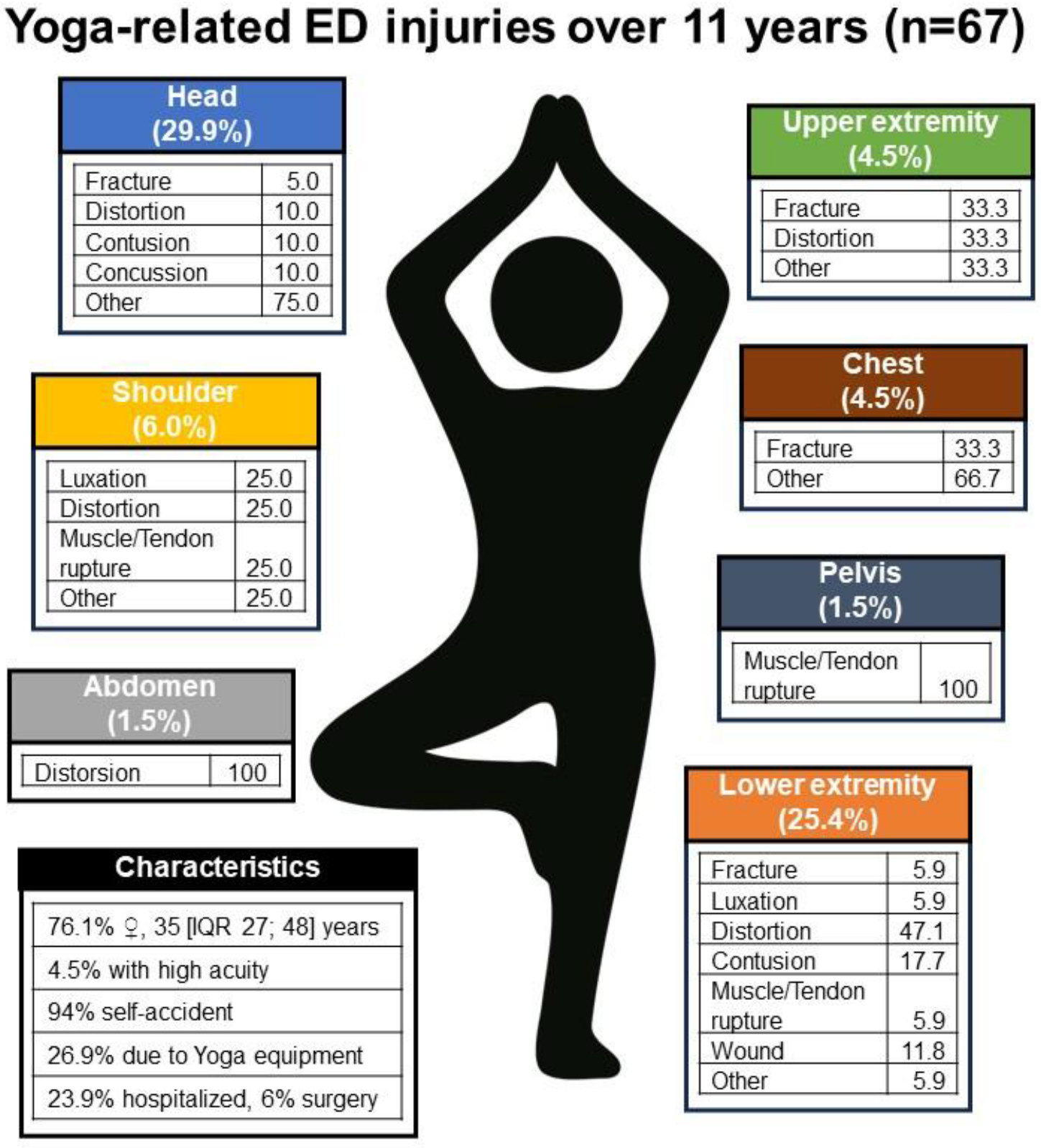
Consistent with yoga’s generally low-impact nature, the vast majority of injuries observed in our study were musculoskeletal and considered relatively minor. The most common injury location was the head (around 30% of cases), followed by the lower extremities (25%) and the spine (including the cervical and lumbar segments, 20%). This contrasts with other studies, which report the trunk as the most commonly injured region [
16]. Soft tissue injuries were predominant—particularly muscle or tendon strains (nearly 40% of all diagnoses)—as well as contusions (approximately 34%). In over 95% of cases these were isolated injuries, each affecting a single body region. Moreover, the clinical course was mild in the majority of incidents. Specifically, 94% of those injured were treated conservatively. Nevertheless, about one in five patients required hospitalization (20.9%), indicating that even seemingly trivial injuries may occasionally require observation or more intensive medical management. The trends observed in our study are consistent with reports in the literature. For example, a systematic review by Cramer et al. found that yoga-related injuries are predominantly minor musculoskeletal injuries [
19]. These are most often sprains and strains of soft tissues, and the body regions most at risk include the cervical spine, shoulder girdle, lower back, and knee joints. Similarly, more recent research—such as an analysis by Bekhradi et al.—indicates that the lower extremities are a frequent site of yoga injuries: in one review, nearly two-thirds of all documented injuries involved the lower extremities [
31]. These findings indicate that, although yoga-related injuries can occur, they are typically mild and self-limited, consistent with previous reports suggesting that such injuries are generally infrequent and predominantly involve soft-tissue damage [
18,
26,
31]. In line with these observations, the most frequently reported yoga-related injuries involve the musculoskeletal system, typically manifesting as muscle strains and joint sprains, which account for approximately 30–45% of all yoga-related cases [
16,
18,
28]. Such injuries usually occur when the normal range of motion is exceeded or when muscles and ligaments are overloaded. Other commonly described injuries include tendon damage and structural joint injuries, such as partial rotator cuff tears or Achilles tendon lesions, as well as cartilage injuries like meniscal tears or acetabular labrum tears [
34]. Severe cases (e.g., dislocations or fractures) are rare but have been reported (such as kneecap dislocations or toe fractures). Severe injuries associated with yoga practice, although rare, have nonetheless been documented. For example, a 2016 case report described a young woman who sustained a quadriceps tendon rupture during practice [
35]. Even more alarming is a 2015 case report detailing a femoral fracture-an injury involving the longest, strongest, and heaviest bone in the human body, typically occurring as a consequence of high-energy trauma such as motor vehicle accidents [
36].
Paroxysmal episodes of vertigo occurred in 10 patients (age range 31–80 years), with two patients in the younger group and eight in the older group. Stroke and/or cerebral artery dissection were excluded in all cases. In four patients, the etiology was benign paroxysmal positional vertigo (BPPV); in one patient, vestibular migraine; in one, vestibular neuritis; and in one, a low-CSF (hypoliquor) syndrome. In the remaining three patients, the cause of vertigo remained unclear. In the cases of BPPV, the pathogenesis involves the migration of otoliths into the semicircular canals during head movements, which can occur in the context of yoga practice [
37]. Extremely uncommon complications, such as vascular injuries (e.g., carotid artery dissection) or pneumomediastinum, have been reported only in exceptional cases involving improper or extreme postures [
22,
23]. In our study, a previously healthy 37-year-old woman developed acute vertigo, neck pain, and syncope immediately after a yoga class involving head and neck impact. Brain MRI demonstrated an acute right cerebellar infarction in the posterior circulation with initial imaging features suspicious for a right vertebral artery dissection. However, this differential diagnosis was not confirmed on follow-up imaging, including dedicated dissection sequences and ultrasonography. Nevertheless, cases of mechanical impingement of a vertebral artery without dissection during cervical extension and/or rotation, the so-called “beauty parlor stroke syndrome”, have been described. This phenomenon can lead to vertebrobasilar insufficiency, reduced perfusion of the posterior circulation, and subsequent stroke, and could therefore also explain our patient’s symptomatology [
38,
39,
40]. Moreover, in a 39-year-old woman who presented to the ED with left-sided cervical pain and sensory disturbances in the left arm, a dissection of the left vertebral artery was diagnosed.
Yoga represents a multidimensional, evidence-based practice that can enhance both physical and psychological health in older adults. Studies consistently show improvements in balance, mobility, muscular strength, and flexibility, which translate into a reduced risk of falls and better functional independence [
41]. Additionally, yoga-based interventions—including postural exercises, breathing techniques, and mindfulness components—have been associated with enhanced sleep quality, reduced symptoms of anxiety and depression, and improved overall well-being [
42,
43]. Emerging data further suggest modest positive effects on cognitive function, particularly in domains related to attention and executive control [
43].
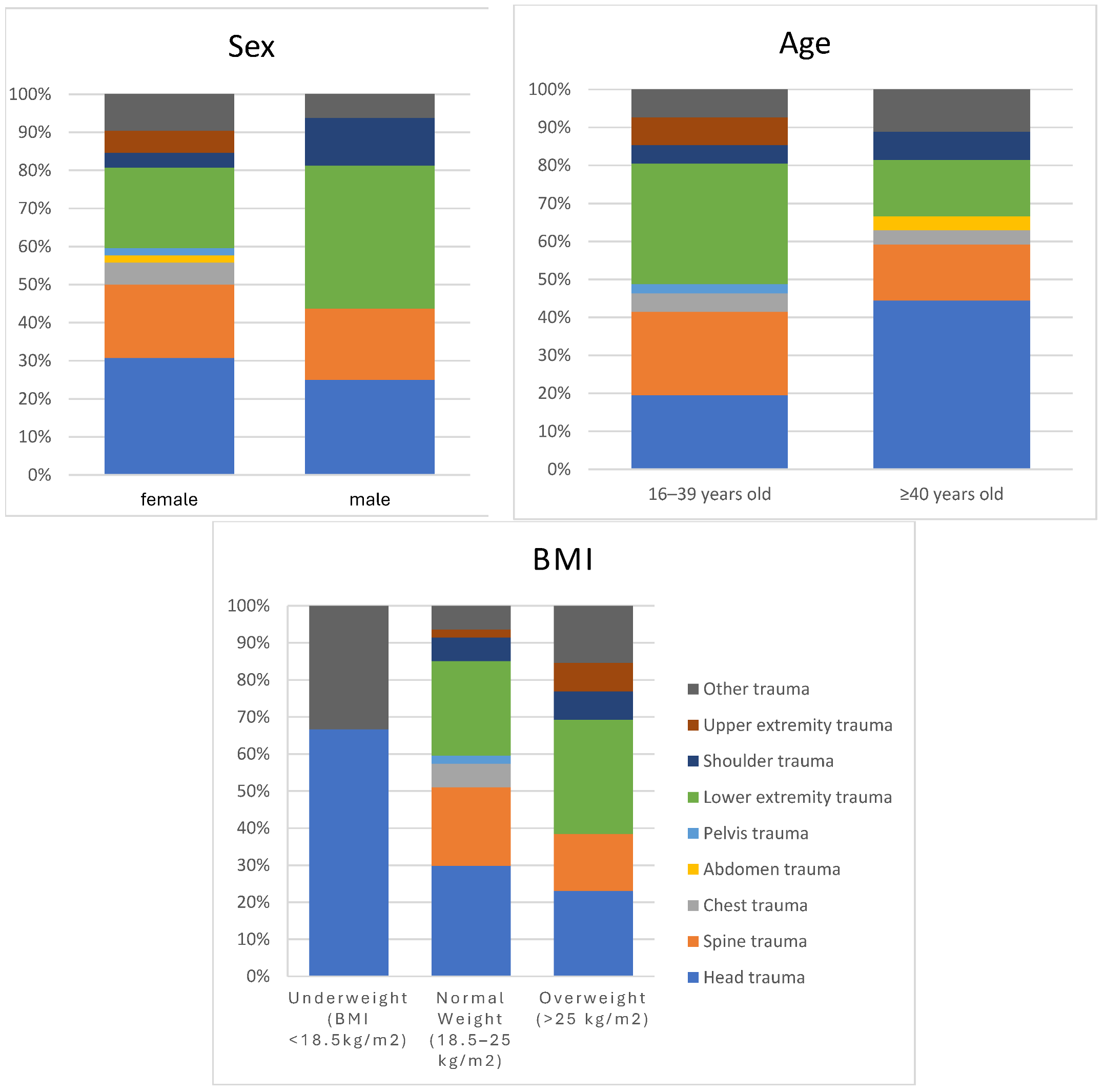
Although yoga contributes to reductions in chronic musculoskeletal pain and promotes more efficient movement patterns in daily activities, age remains an important factor influencing injury patterns, as advancing age is associated with a higher susceptibility to various types of injuries across multiple forms of physical activity. In our study patients aged ≥40 years experienced a disproportionately high rate of head injuries—more than double that of younger practitioners (44.4% vs. 20.0%, p = 0.032). This trend may reflect age-related declines in balance and vestibular function, which make older adults more susceptible to falls or positional vertigo during certain postures. Such a mechanism illustrates how age-related vestibular fragility can transform a routine inversion into a destabilizing event. In contrast, younger practitioners (<40 years) were more prone to injuries involving the extremities. All four fractures observed in our study, as well as both documented joint dislocations, occurred in individuals younger than 40, whereas none of the patients aged ≥40 sustained such injuries. This discrepancy may indicate that younger practitioners are more likely to engage in acrobatic, intense, or advanced yoga maneuvers that carry a higher risk of trauma, while older participants may favor gentler modifications. It is also possible that older practitioners exercise greater caution or have a lower threshold to discontinue a pose when discomfort arises, thereby avoiding certain high-impact injuries. Conversely, the absence of fractures among older individuals may simply reflect the limited number of severe cases in our series. Overall, these findings suggest that the rare occurrences of acute structural injuries—such as fractures or joint dislocations—tend to be confined to younger practitioners.
In the context of age as a risk factor for adverse events, hot yoga—also known as Bikram yoga—warrants separate consideration. This style is characterized by high-intensity practice performed in environments with extremely elevated ambient temperatures. Consequently, it is particularly unsuitable for older adults and individuals with comorbidities, for whom heat stress and cardiovascular strain may pose substantial health risks [
24].
In addition to age, our findings suggest notable sex- and BMI-related differences in yoga injury patterns. Female practitioners constituted the majority of our cases (76%), which is expected given that women make up roughly 70–80% of yoga participants overall. However, given the small sample size and the predominance of female participants in our cohort, these sex-based patterns should be interpreted with caution, as our study population may not fully represent the broader yoga-practicing community. The observation that all serious injuries in the present cohort—including fractures and joint dislocations—occurred exclusively in women cannot be attributed solely to the higher prevalence of female yoga practitioners. Rather, this finding likely reflects an interaction between sex-specific physiological characteristics and practice-related behaviors inherent to yoga [
44,
45,
46]. Indeed, prior epidemiological studies have similarly found that most yoga-related injuries involve women [
47]. Notably, however, men and women in our cohort showed a comparable distribution of injured body regions (for example, similar rates of head and spinal injuries), yet all of the most severe injuries—every fracture, dislocation, and concussion—occurred in female patients. This discrepancy hints at intrinsic sex-based vulnerabilities in injury severity. Women generally exhibit greater baseline ligamentous laxity than men [
48], which can predispose to joint instability (e.g., luxations) when extreme yoga postures push the limits of joint motion. They also tend to have lower bone mineral density than men and are more prone to osteoporosis as a group, especially if highly active or underweight. In athletic women, hormonal and nutritional factors associated with low body weight can compound this issue, leading to significantly elevated fracture risk—female athletes, for instance, suffer stress fractures at two to three times the rate of their male [
44,
45,
46]. Additionally, women typically exhibit lower bone mineral density across the lifespan, which may increase susceptibility to fractures even in the context of low-energy mechanisms, such as falls or axial loading encountered during yoga posture [
49,
50,
51]. Moreover, women are more likely to engage in flexibility-focused fitness activities like yoga, and this emphasis on extreme range of motion may itself contribute to injury patterns. All underweight individuals in our study (BMI < 18.5 kg/m
2, all of them female) sustained head injuries—a disproportionately high rate (66.7%). This may be because very low BMI is associated with reduced muscle and fat mass, providing less cushioning during falls or inverted postures; in other words, an underweight person has “inadequate padding to cushion a fall,” which can make head trauma more likely [
52]. By contrast, none of the overweight practitioners in our cohort sustained fractures or required surgical treatment, and their overall injury profile was similar to that of normal-weight individuals.
In a large exercise trial of overweight/obese adults, higher BMI emerged as a significant independent predictor of earlier and more frequent musculoskeletal injuries, whereas exercise exposure itself was not [
52]. Importantly, the majority of injuries in that cohort involved weight-bearing lower-extremity joints (with knee injuries accounting for roughly one-third of the exercise-related cases) [
52]. Similarly, a cross-sectional study of Alangari et al. found that individuals with obesity constituted the majority of patients with activity-related musculoskeletal injuries and that having a BMI > 35 kg/m
2 was associated with nearly a threefold higher injury risk compared to normal-weight peers [
53]. Biomechanically, excess body mass may increase mechanical loads on joints and challenge balance [
54], which can amplify strain on the lower body during yoga postures and potentially accelerate overuse of weight-bearing structures. Nonetheless, yoga may also offer protective benefits for individuals with higher BMI by improving balance and postural control. In a randomized controlled trial, Jorrakate et al. demonstrated that a 4-week yoga program significantly enhanced static and dynamic balance in obese participants, reducing sway and improving single-leg stance stability [
55]. Improved balance may, in turn, mitigate fall-related injury risk during physical activity. Thus, while excess body weight increases mechanical strain on joints, appropriately adapted yoga practice can simultaneously strengthen proprioceptive control and stability, contributing to safer movement patterns in this population.
4.1. Prevention
Given the observed heterogeneity in injury patterns across demographic subgroups, preventive strategies for yoga-related injuries should be tailored to specific populations and practice contexts rather than formulated as uniform recommendations. Practitioners aged 40 years and older appear particularly susceptible to balance-related incidents, head injuries, and vertigo. Preventive approaches in this group should emphasize postural stability, controlled transitions between postures, and avoidance of abrupt cervical movements. Inverted postures, rapid dynamic sequences, and prolonged cervical extension should be introduced cautiously, especially in individuals with vestibular symptoms or cardiovascular comorbidities. Balance training, chair-supported modifications, and slower-paced yoga styles may help reduce fall-related risks. Younger practitioners (<40 years), particularly those engaging in physically demanding or advanced styles, demonstrated a higher incidence of acute extremity injuries, including fractures and joint dislocations. Preventive strategies should focus on avoiding forced end-range positions, discouraging performance-oriented practice, and reinforcing active muscular engagement to enhance joint stability. Education on early signs of overuse or instability is especially relevant for individuals with high baseline flexibility. Female practitioners—who constituted the majority of injured individuals and accounted for all severe injuries in this cohort—may benefit from instruction prioritizing joint stability and strength over maximal flexibility. Given the higher prevalence of ligamentous laxity and lower bone mineral density in women, controlled movement patterns, adequate recovery, and avoidance of prolonged passive loading at extreme ranges of motion are recommended. Particular caution is warranted in individuals with low body weight, who may be more susceptible to head injuries following falls. Body mass index (BMI) should also be considered. While overweight practitioners may experience increased joint loading, no fractures or operative treatments occurred in this subgroup. Preventive efforts should therefore focus on balance training, gradual progression, and protection of weight-bearing joints, whereas underweight individuals may require additional caution during balance-challenging or inverted postures.
Individuals with specific medical conditions should seek guidance from both their physician and a qualified yoga teacher to adapt practice to their personal limitations—for example, patients with glaucoma should refrain from inverted poses, whereas those with low bone density should exercise caution with more dynamic forms of yoga.
Initially, in-person instruction is preferable; only after acquiring sufficient competence and body awareness should practitioners transition to independent training with video-based guidance. Ultimately, learning to recognize and respect one’s own physical limits remains the core principle of safe yoga practice. Certain practices—such as induced vomiting, historically mentioned in some traditional contexts—should be categorically avoided by all participants, as they pose clear health risks without conferring therapeutic benefit.
4.2. Limitations
This study has several important limitations. Its retrospective, single-center design limits both the completeness and the generalizability of the data. Mild injuries that did not require emergency department care and were likely managed by general practitioners or in outpatient settings are probably underrepresented, introducing a selection bias toward more severe cases. Moreover, contextual information such as yoga style, level of experience, and instructor qualification was often unavailable. Moreover, detailed information on specific practice conditions (e.g., supervision, environment, or exact posture at the time of injury) was inconsistently documented in the retrospective records, limiting a more granular analysis of contextual injury risk factors. Despite these limitations, the study provides valuable insights into the epidemiology of yoga-related injuries within a European clinical context.
Furthermore, our sample size was relatively small (n = 67) and predominantly female. This demographic skew and limited cohort size constrain the representativeness of our findings; as such, any observed associations should be interpreted with caution. Additionally, we lacked detailed data on participants’ yoga practice characteristics—including their experience level, as well as the intensity and frequency of their practice—which precluded analysis of how these factors might have influenced injury risk.