Article

The Robust Vessel Segmentation and Centerline Extraction: One-Stage Deep Learning Approach

by
Rostislav Epifanov
1,*,†,
Yana Fedotova
1,†,
Savely Dyachuk
1,
Alexandr Gostev
2,
Andrei Karpenko
3 and
Rustam Mullyadzhanov
1,4
1
Department of Mathematics and Mechanics, Novosibirsk State University, Novosibirsk 630090, Russia
2
Meshalkin National Medical Research Center, Novosibirsk 630055, Russia
3
Scientific Research Institute of Physical-Chemical Medicine, Moscow 119435, Russia
4
Institute of Thermophysics, Novosibirsk 630090, Russia
*
Author to whom correspondence should be addressed.
These authors contributed equally to this work.
J. Imaging 2025, 11(7), 209; https://doi.org/10.3390/jimaging11070209

Submission received: 7 May 2025 / Revised: 18 June 2025 / Accepted: 19 June 2025 / Published: 26 June 2025
(This article belongs to the Section Medical Imaging)

Abstract

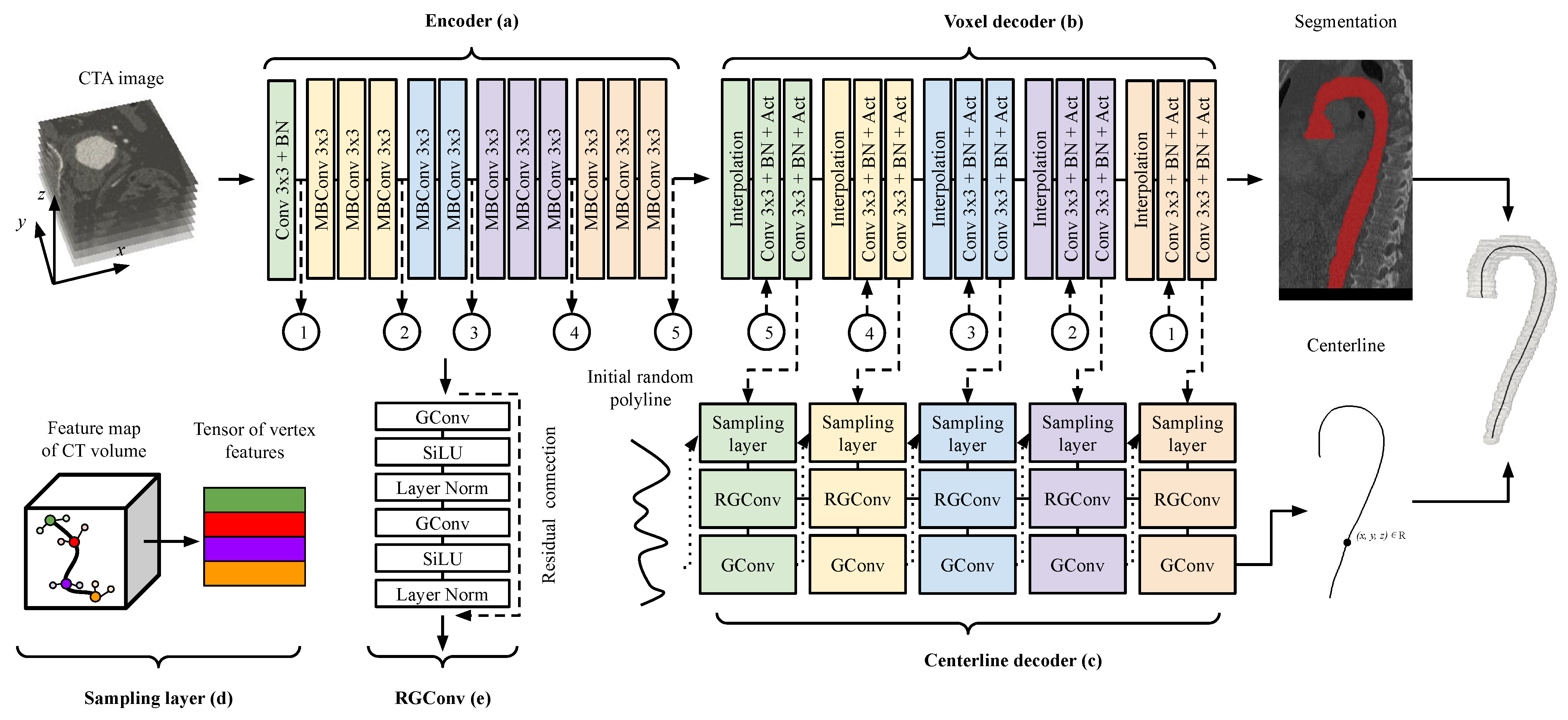
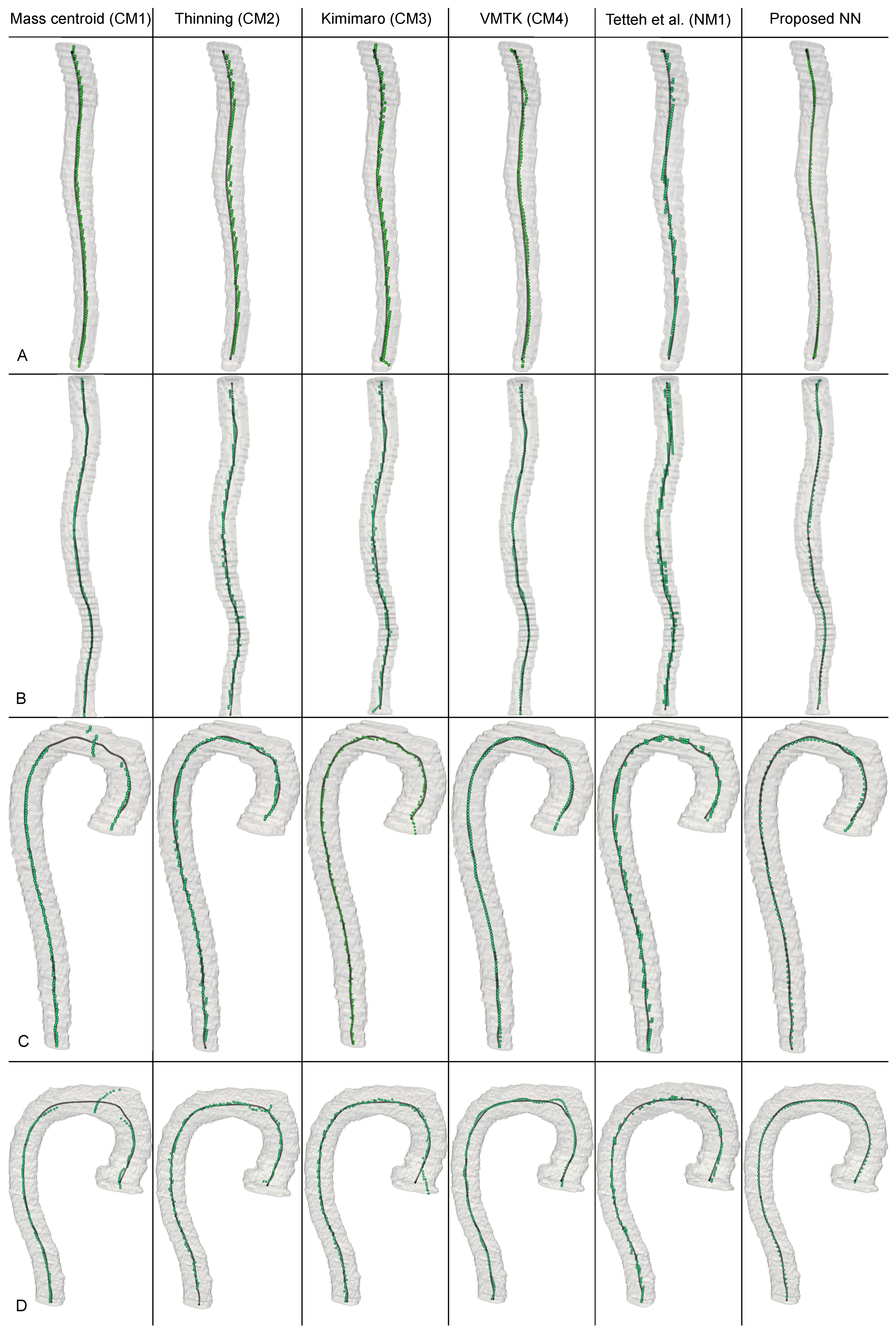
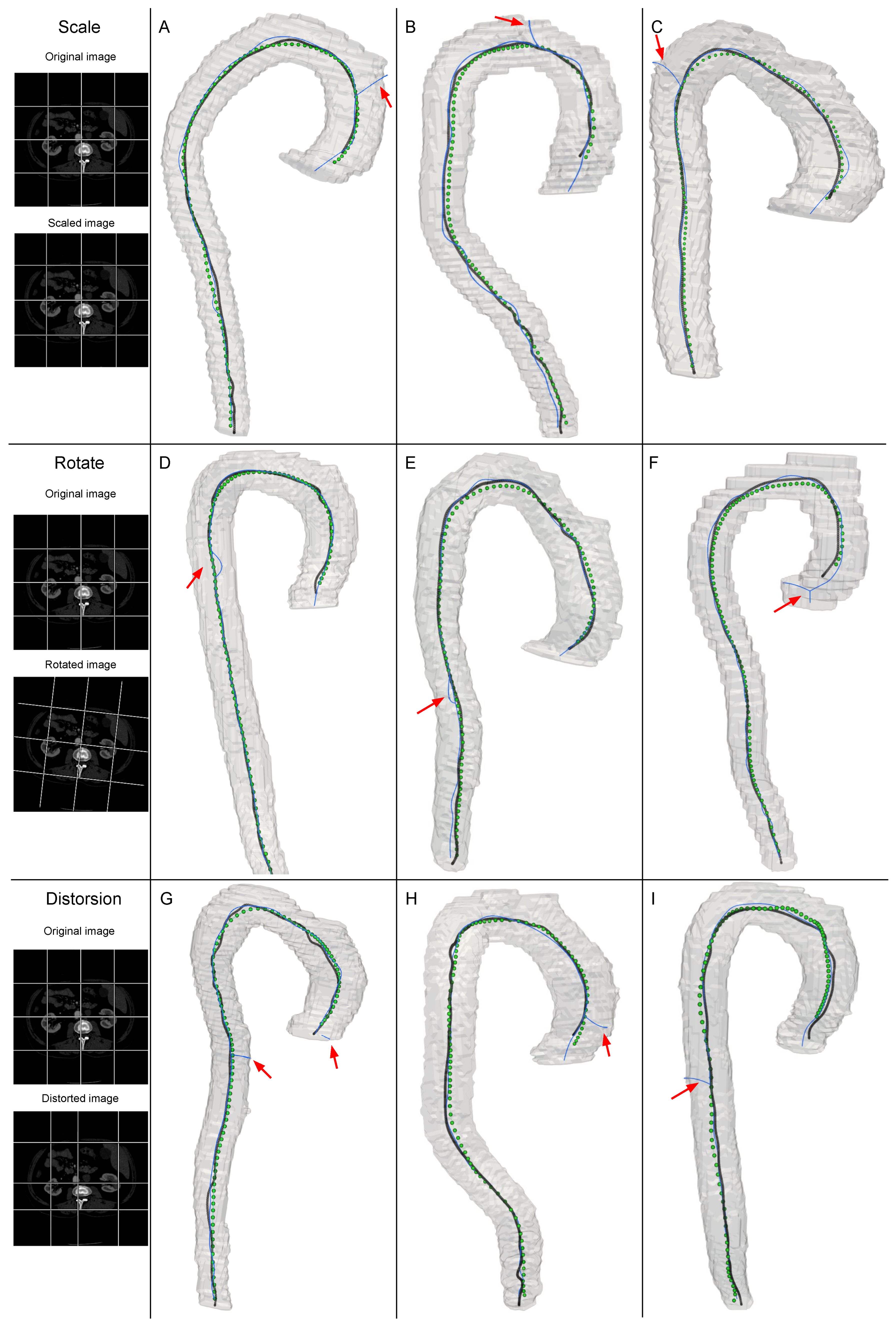
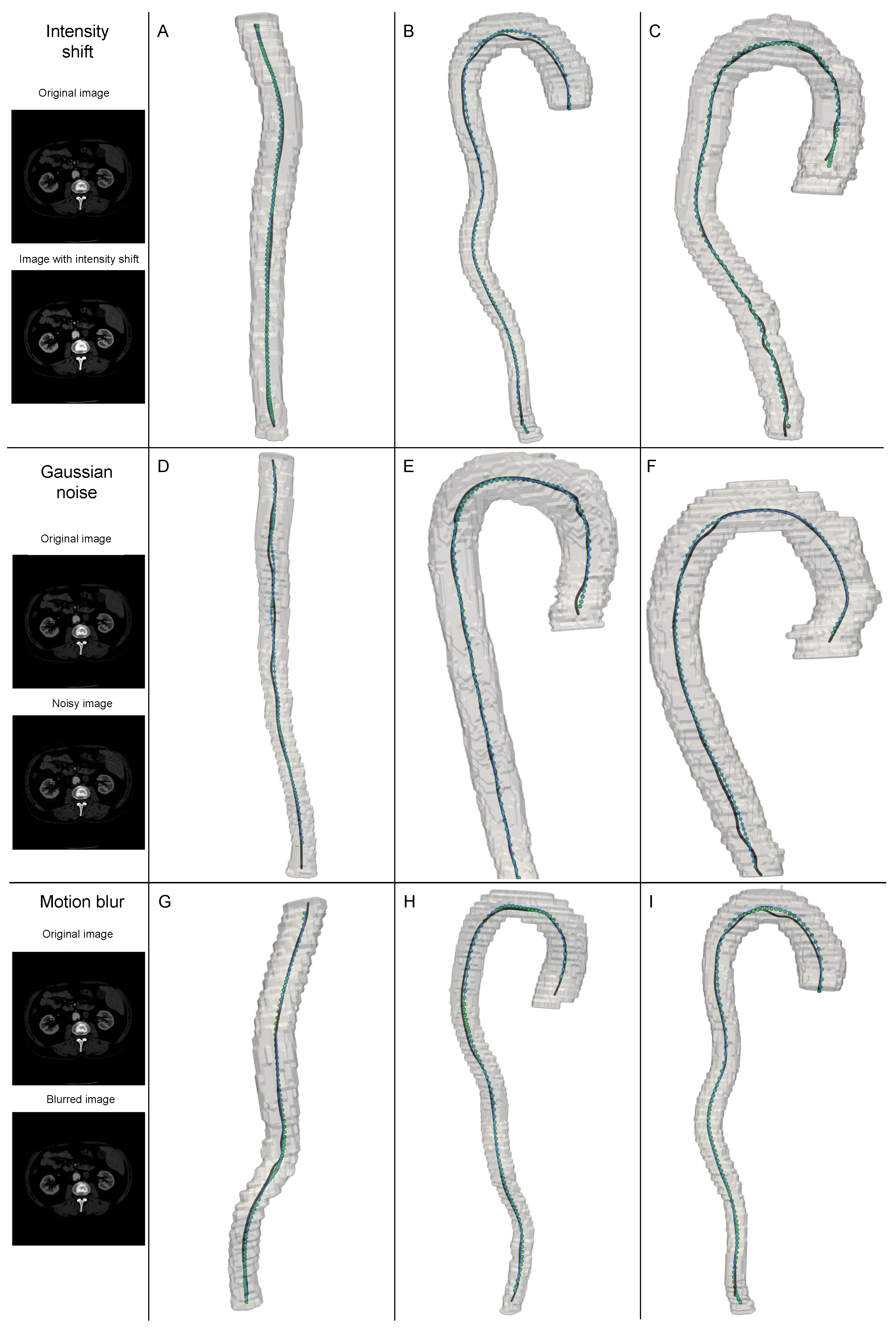
The accurate segmentation of blood vessels and centerline extraction are critical in vascular imaging applications, ranging from preoperative planning to hemodynamic modeling. This study introduces a novel one-stage method for simultaneous vessel segmentation and centerline extraction using a multitask neural network. We designed a hybrid architecture that integrates convolutional and graph layers, along with a task-specific loss function, to effectively capture the topological relationships between segmentation and centerline extraction, leveraging their complementary features. The proposed end-to-end framework directly predicts the centerline as a polyline with real-valued coordinates, thereby eliminating the need for post-processing steps commonly required by previous methods that infer centerlines either implicitly or without ensuring point connectivity. We evaluated our approach on a combined dataset of 142 computed tomography angiography images of the thoracic and abdominal regions from LIDC-IDRI and AMOS datasets. The results demonstrate that our method achieves superior centerline extraction performance (Surface Dice with threshold of 3 mm: 97.65%±2.07%) compared to state-of-the-art techniques, and attains the highest subvoxel resolution (Surface Dice with threshold of 1 mm: 72.52%±8.96%). In addition, we conducted a robustness analysis to evaluate the model stability under small rigid and deformable transformations of the input data, and benchmarked its robustness against the widely used VMTK toolkit.
Keywords: vessel centerline extraction; one-stage centerline reconstruction; vessel segmentation; multitask neural network; computed tomography angiography images; vascular modeling toolkit vessel centerline extraction; one-stage centerline reconstruction; vessel segmentation; multitask neural network; computed tomography angiography images; vascular modeling toolkit