Article

Point-Cloud Instance Segmentation for Spinning Laser Sensors

by
Alvaro Casado-Coscolla
1,2,
Carlos Sanchez-Belenguer
1,*,
Erik Wolfart
1 and
Vitor Sequeira
1
1
European Commission, Joint Research Centre (JRC), Via Enrico Fermi 2749, 21027 Ispra, Italy
2
Instituto Universitario de Automática e Informática Industrial, Universitat Politècnica de València, Camí de Vera, 46022 València, Spain
*
Author to whom correspondence should be addressed.
J. Imaging 2024, 10(12), 325; https://doi.org/10.3390/jimaging10120325

Submission received: 20 November 2024 / Revised: 10 December 2024 / Accepted: 13 December 2024 / Published: 17 December 2024

Abstract

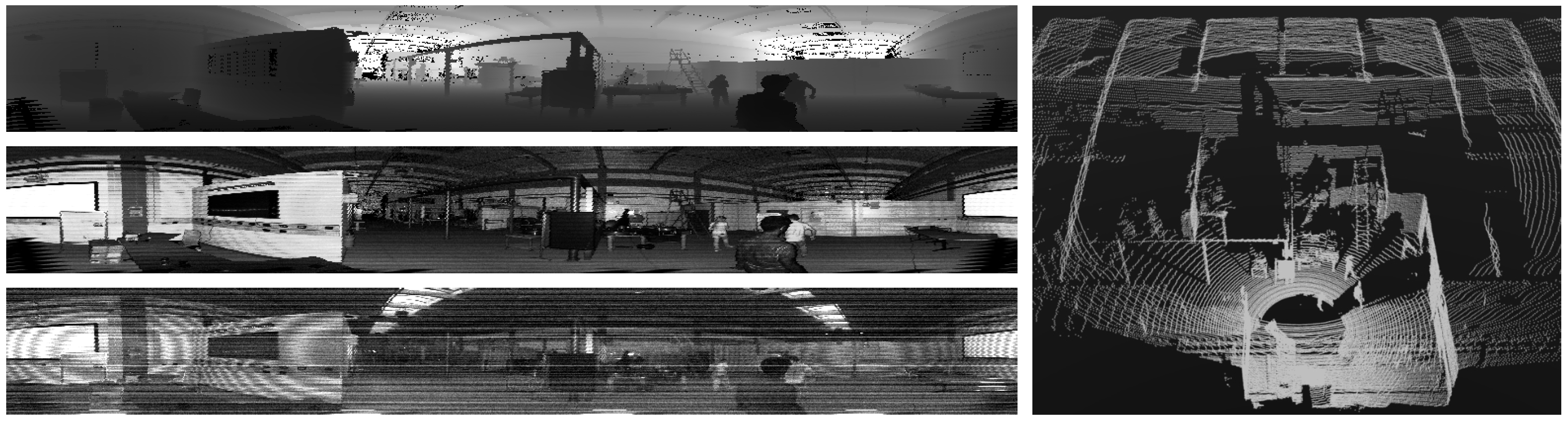
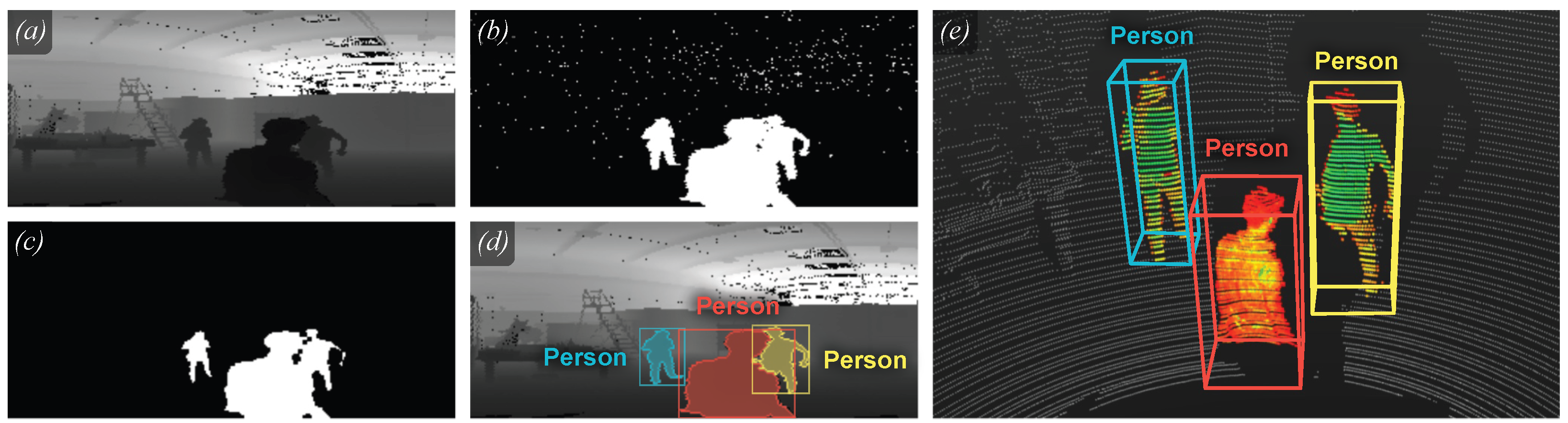
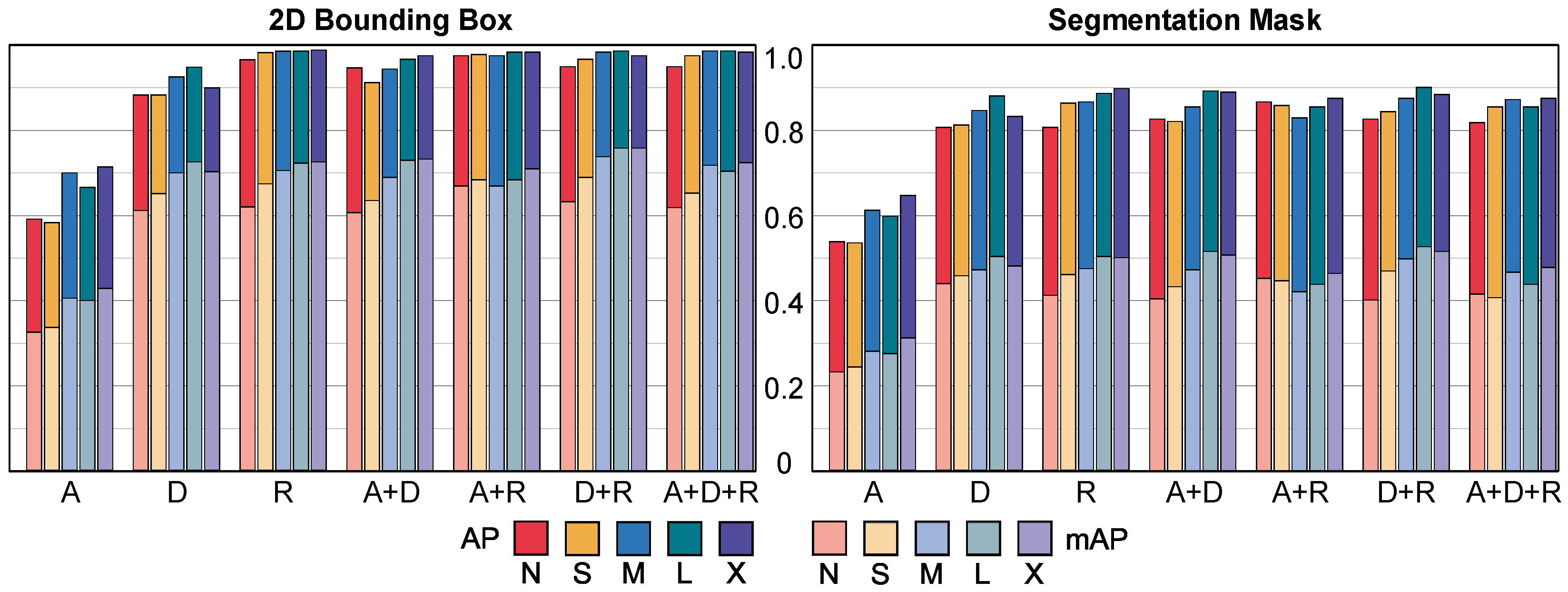
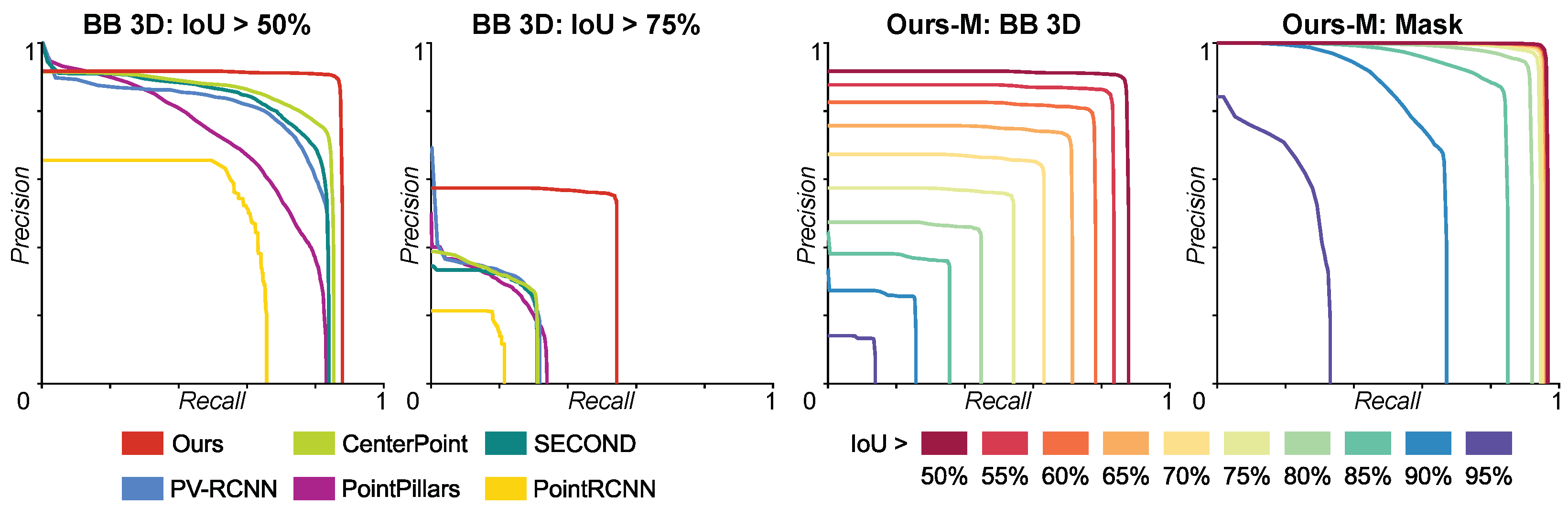
In this paper, we face the point-cloud segmentation problem for spinning laser sensors from a deep-learning (DL) perspective. Since the sensors natively provide their measurements in a 2D grid, we directly use state-of-the-art models designed for visual information for the segmentation task and then exploit the range information to ensure 3D accuracy. This allows us to effectively address the main challenges of applying DL techniques to point clouds, i.e., lack of structure and increased dimensionality. To the best of our knowledge, this is the first work that faces the 3D segmentation problem from a 2D perspective without explicitly re-projecting 3D point clouds. Moreover, our approach exploits multiple channels available in modern sensors, i.e., range, reflectivity, and ambient illumination. We also introduce a novel data-mining pipeline that enables the annotation of 3D scans without human intervention. Together with this paper, we present a new public dataset with all the data collected for training and evaluating our approach, where point clouds preserve their native sensor structure and where every single measurement contains range, reflectivity, and ambient information, together with its associated 3D point. As experimental results show, our approach achieves state-of-the-art results both in terms of performance and inference time. Additionally, we provide a novel ablation test that analyses the individual and combined contributions of the different channels provided by modern laser sensors.
Keywords: 3D data mining; 3D instance segmentation; LiDAR; deep learning 3D data mining; 3D instance segmentation; LiDAR; deep learning