
Article

Microstructural Evolution and Mechanical Performance of Concrete Incorporating Palm Oil Fuel Ash as a Partial Cement Replacement

by
Ramon Torres-Ortega
*,
Manuel Saba
and
Jair Arrieta-Baldovino
Civil Engineering Program, University of Cartagena, Calle 30 # 48-152, Cartagena de Indias 130001, Colombia
*
Author to whom correspondence should be addressed.
Recycling 2026, 11(8), 139; https://doi.org/10.3390/recycling11080139
Submission received: 23 June 2026 / Revised: 27 July 2026 / Accepted: 31 July 2026 / Published: 6 August 2026

Abstract

The incorporation of supplementary cementitious materials derived from agro-industrial residues has emerged as a promising strategy to reduce the environmental impact associated with Portland cement production while promoting circular economy principles. This study investigates the influence of palm oil fuel ash (POFA) as a partial cement replacement on the mechanical and microstructural properties of concrete. Concrete mixtures containing 0%, 10%, 15%, and 20% POFA by mass of cement were produced using a constant water-to-binder ratio of 0.47. Compressive strength was evaluated at 7, 14, 28, and 56 days, while microstructural characterization was performed using scanning electron microscopy coupled with energy-dispersive spectroscopy (SEM–EDS) to assess hydration products and the interfacial transition zone (ITZ). The incorporation of POFA resulted in lower compressive strength at early curing ages, with reductions of approximately 16–21% compared with the control mixture, reflecting the slower kinetics of pozzolanic reactions. However, prolonged curing promoted significant strength development. At 56 days, concretes containing 10% and 15% POFA exhibited compressive strengths 3.7% and 9.2% higher, respectively, than the control concrete, whereas the 20% replacement level resulted in a 14.6% reduction. SEM observations revealed a denser cementitious matrix, improved aggregate–paste bonding, and a more refined ITZ in mixtures containing 10–15% POFA. EDS analysis showed Ca/Si ratios of 1.22 and 1.08 for the 10% and 15% POFA mixtures, respectively, indicating the formation of silica-rich C–S–H gel associated with effective pozzolanic activity. The results demonstrate that POFA can be successfully utilized as a supplementary cementitious material in concrete. While the 15% replacement level produced the highest 56-day compressive strength, both the 10% and 15% mixtures exhibited favorable microstructural characteristics and effective pozzolanic activity, indicating that both replacement levels are suitable for sustainable concrete production.

1. Introduction

Concrete remains the most widely used construction material worldwide, with an annual consumption exceeding ten billion tonnes [1]. Despite its indispensable role in infrastructure development, the environmental burden associated with concrete production is substantial, primarily due to the manufacture of Portland cement. Cement production is recognized as one of the largest industrial sources of anthropogenic carbon dioxide emissions, contributing significantly to global greenhouse gas emissions and resource depletion [2]. Consequently, reducing cement consumption through the incorporation of alternative cementitious materials has become a major research priority within the construction sector.
In parallel, the generation of agro-industrial residues has increased considerably in recent decades, creating environmental challenges related to disposal and management. The valorization of these by-products as supplementary cementitious materials (SCMs) offers a sustainable pathway to simultaneously reduce waste generation and decrease the clinker content of concrete mixtures [3,4,5,6,7].
Various agricultural ashes, including rice husk ash [1,8,9,10], sugarcane bagasse ash [11], and sunflower and pumpkin husk ashes [12], have demonstrated pozzolanic properties capable of enhancing the performance of cementitious materials. These materials react with calcium hydroxide released during cement hydration, producing additional calcium silicate hydrate (C–S–H), the primary phase responsible for strength development and durability in concrete [13,14]. Among agro-industrial SCMs, palm oil fuel ash (POFA), generated during the combustion of biomass residues in the palm oil industry, has attracted increasing attention due to its high silica content and widespread availability in tropical regions [15,16]. The pozzolanic performance of POFA is strongly influenced by its physical and chemical characteristics, including particle size distribution, specific surface area, amorphous silica content, and loss on ignition [17,18]. Previous studies have shown that properly processed POFA can improve mechanical performance and durability when incorporated as a partial cement replacement [19,20]. Furthermore, replacement levels between 10% and 20% have frequently been identified as the most promising range for achieving favorable engineering properties while maintaining adequate workability and strength [1,8,21,22,23].
The beneficial effects of POFA are generally attributed to its filler effect and pozzolanic reactivity, both of which are enhanced by reducing particle size and increasing specific surface area [17,24,25,26,27,28]. Finer POFA particles promote silica dissolution and accelerate the consumption of calcium hydroxide, resulting in the formation of additional C–S–H gel and a denser microstructure [25,26]. Several studies have reported improvements in compressive strength, permeability resistance, and durability when highly refined POFA is used [20,28]. Nevertheless, despite the growing body of research on POFA-modified concrete, most studies have focused primarily on mechanical performance, while comparatively fewer investigations have established direct relationships between long-term strength development and microstructural evolution, particularly at the aggregate–paste interfacial transition zone (ITZ). Furthermore, limited information is available regarding the combined influence of optimized POFA processing, compressive strength evolution, and SEM–EDS characterization in concrete produced under tropical conditions.
Therefore, this study investigates the influence of palm oil fuel ash as a partial replacement for Portland cement on the physical, mechanical, and microstructural properties of concrete. POFA obtained from agro-industrial residues was processed under controlled conditions and incorporated at replacement levels of 10%, 15%, and 20% by mass of cement. The experimental program included compressive strength testing at different curing ages, evaluation of fresh concrete properties, and microstructural characterization using scanning electron microscopy coupled with energy-dispersive spectroscopy (SEM–EDS). Particular emphasis was placed on analyzing hydration products and the interfacial transition zone to establish the mechanisms governing the long-term performance of POFA-modified concrete and to identify the optimum replacement level for sustainable structural applications.
The practical application of industrial binders could present the following drawbacks: the variability in the chemical composition of agro-industrial residues and the requirement for adequate processing (grinding and calcination) [29]; likewise, replacement levels higher than 50% can lead to increased permeability and capillary water absorption due to the dilution effect [30]; furthermore, early-age strength drops occur, which hinder their use in rapid practical solutions [31].

2. Results and Discussion

2.1. Fresh Concrete Workability

The slump test results indicated that all concrete mixtures exhibited a slump of approximately 55 mm, regardless of the POFA replacement level. The incorporation of 10%, 15%, and 20% POFA as a partial cement replacement therefore had no measurable effect on the workability of the fresh concrete under the conditions investigated. This behavior can be attributed to the relatively low replacement levels employed and the constant water-to-binder ratio maintained for all mixtures.
The results suggest that the processed POFA used in this study did not significantly alter the rheological characteristics of the fresh concrete. Similar observations have been reported in previous studies, where finely processed POFA was incorporated at moderate replacement levels without substantial changes in slump values or fresh concrete consistency [14]. Consequently, POFA replacement levels up to 20% can be implemented without requiring modifications to the mixture water content or the use of chemical admixtures to maintain the target workability.

2.2. Compressive Strength Development

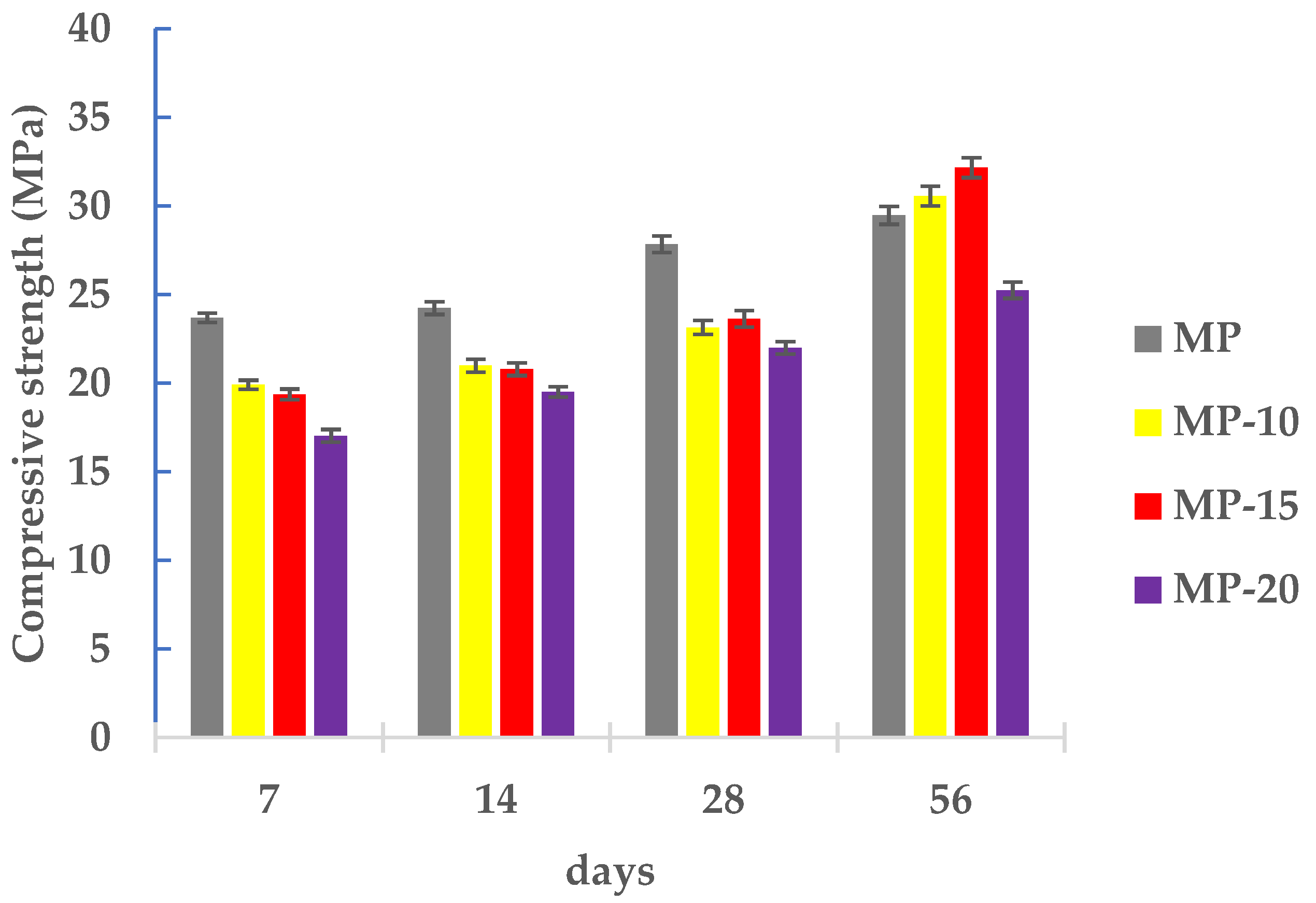
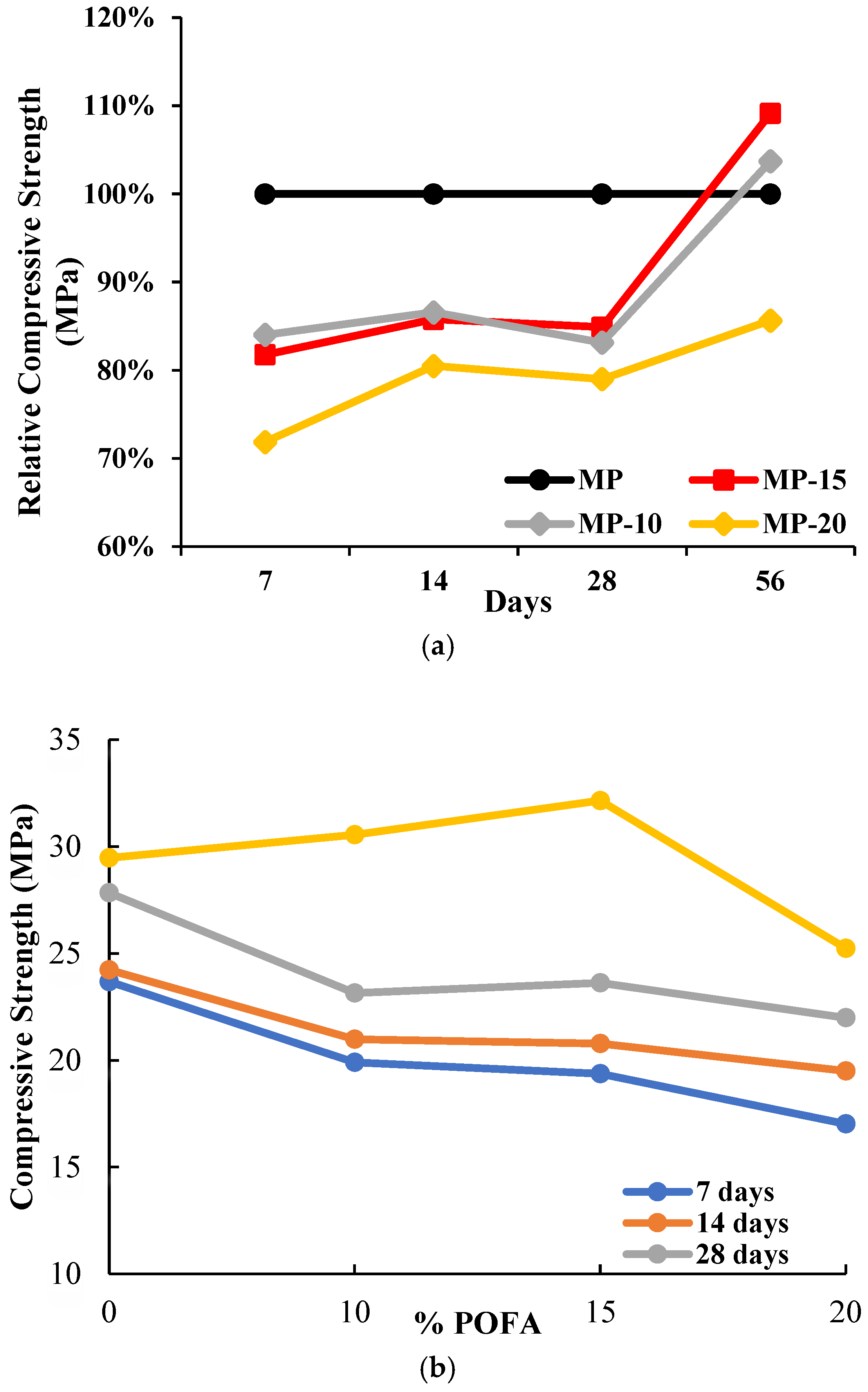
The evolution of compressive strength for the control and POFA-modified concretes is presented in Table 1, Figure 1 and Figure 2. The results demonstrate that the incorporation of POFA significantly influenced strength development, particularly as a function of curing age. While all POFA-containing mixtures exhibited lower compressive strength than the control concrete during the early curing period, prolonged curing promoted substantial strength gains, especially for replacement levels of 10% and 15%.

2.2.1. Early-Age Strength Behavior

At 7 and 14 days of curing, all mixtures containing POFA exhibited lower compressive strengths than the control concrete (MP). At 7 days, the control mixture reached 23.7 MPa, whereas the mixtures containing 10%, 15%, and 20% POFA achieved compressive strengths of 19.9, 19.4, and 17.0 MPa, respectively. Similar trends were observed at 14 days, where the strength of the POFA-modified concrete remained below that of the control mixture.
The reduction in early-age strength can be attributed to the slower kinetics of pozzolanic reactions compared with the hydration of Portland cement. Replacing cement with POFA reduces the amount of readily available clinker phases responsible for the rapid formation of hydration products during the initial curing period. Consequently, the dilution effect associated with cement replacement predominates at early ages, resulting in lower compressive strength values. Similar behavior has been reported in previous studies on POFA-based concretes and other silica-rich supplementary cementitious materials, where delayed strength development is commonly observed due to the gradual nature of pozzolanic reactions [15,32,33,34].
At 28 days, the control mixture achieved the target compressive strength of 27.8 MPa, while the MP-10, MP-15, and MP-20 mixtures reached 23.1, 23.6, and 22.0 MPa, respectively. Although the POFA mixtures remained below the control concrete at this age, the progressive increase in strength indicates the continued contribution of secondary hydration reactions.

2.2.2. Long-Term Strength Gain and Optimum POFA Content

A markedly different behavior was observed after 56 days of curing. The compressive strength of the control mixture increased to 29.5 MPa, whereas the MP-10 and MP-15 mixtures achieved strengths of 30.6 and 32.2 MPa, respectively. These values correspond to increases of approximately 3.7% and 9.2% relative to the control concrete. In contrast, the MP-20 mixture reached only 25.2 MPa, remaining 14.6% below the control mixture despite the extended curing period.
The enhanced long-term performance of the MP-10 and MP-15 mixtures can be attributed to the progressive pozzolanic reaction between the reactive silica present in POFA and the calcium hydroxide generated during cement hydration. This reaction promotes the formation of additional calcium silicate hydrate (C–S–H) gel, leading to a denser cementitious matrix and improved aggregate–paste interaction. As a result, the beneficial effects of microstructural refinement become increasingly evident at later curing ages.
The superior performance of the MP-15 mixture suggests that this replacement level provides the most favorable balance between cement dilution and pozzolanic contribution. At lower replacement levels, the amount of reactive POFA may be insufficient to maximize the formation of secondary hydration products, whereas excessive replacement levels reduce the availability of calcium-bearing phases required for sustained strength development. This behavior explains the lower performance observed for the MP-20 mixture.
The present findings are consistent with previous investigations reporting optimum POFA replacement levels between 10% and 20%, depending on ash fineness, chemical composition, and curing conditions. Among the mixtures evaluated, the incorporation of 15% POFA produced the highest 56-day compressive strength and therefore represents the optimum replacement level under the conditions investigated in this study.
The optimum replacement level identified in the present study (15%) is consistent with several previous investigations that reported optimum POFA contents between 10% and 20%, depending on ash fineness and processing conditions. For example, X et al. reported a 7% strength increase at 10% replacement, while Y et al. observed maximum performance at 20% replacement. The slightly higher optimum level observed in the present investigation may be associated with the high silica content (71%) and fine particle size of the POFA employed, which enhanced both filler effects and pozzolanic reactivity.

2.3. Microstructural Evolution of POFA-Modified Concrete

2.3.1. Matrix Morphology and Interfacial Transition Zone Development

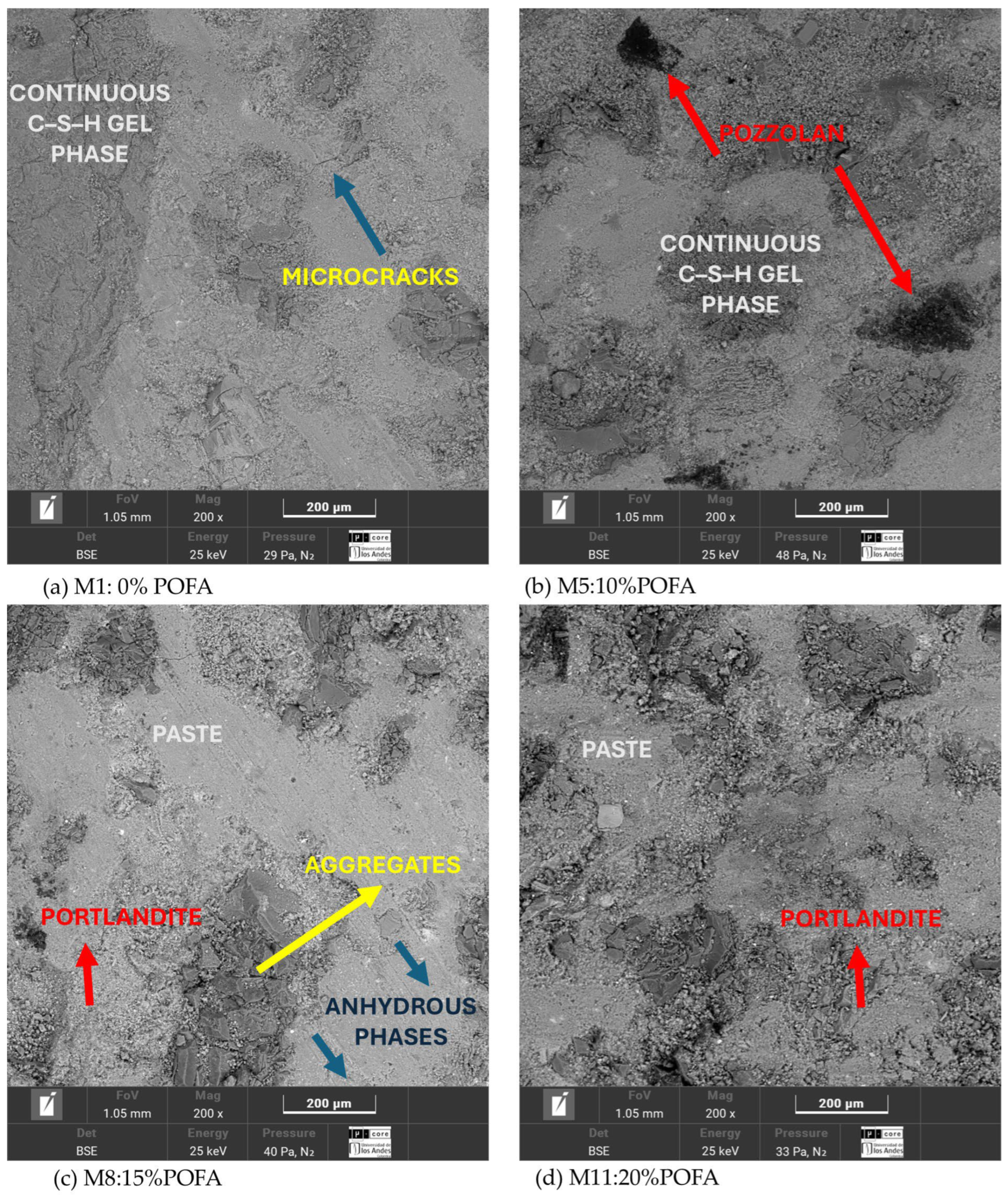
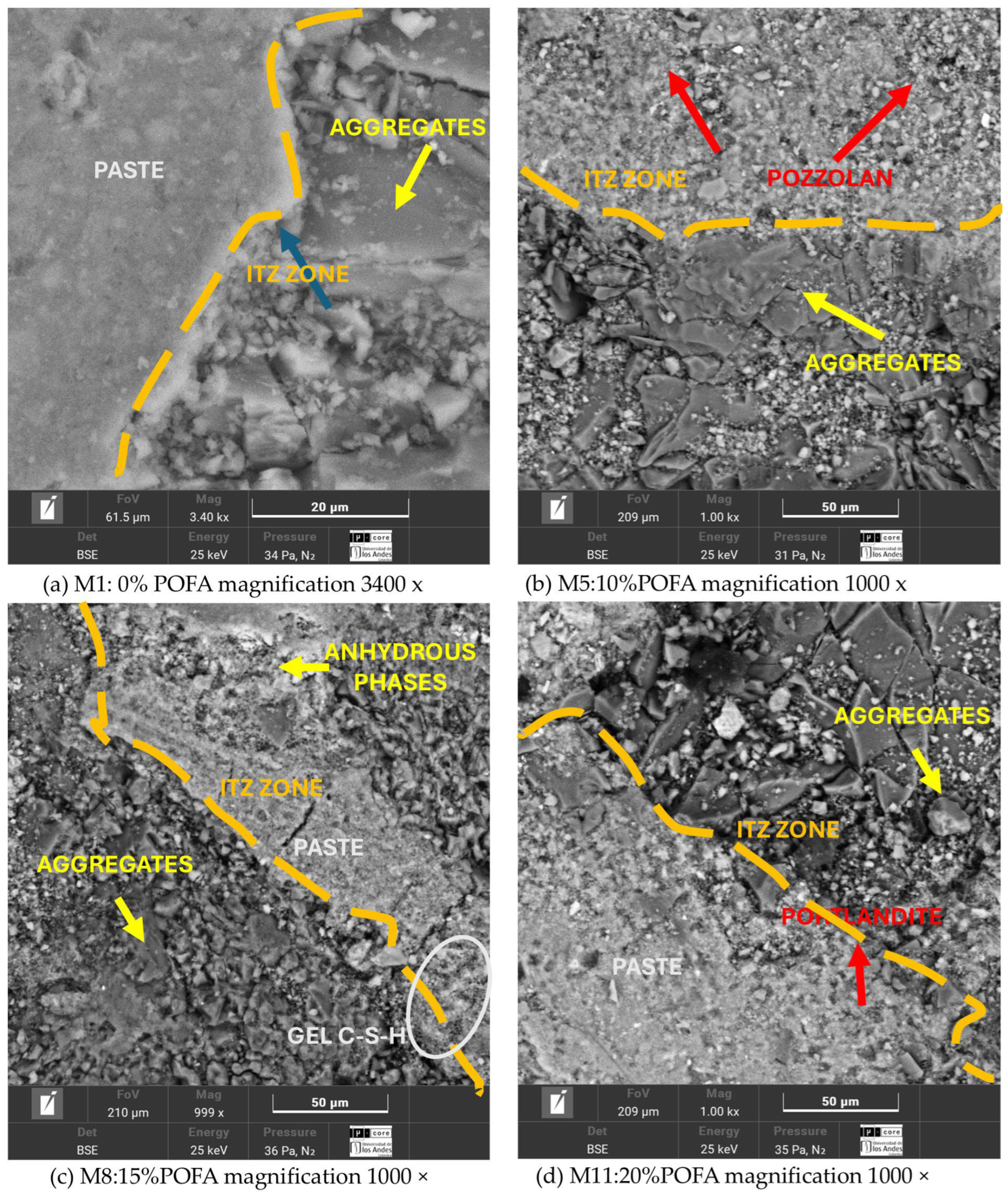
Representative SEM micrographs of the control and POFA-modified concretes after 56 days of curing are presented in Figure 3 and Figure 4. The microstructural observations revealed noticeable differences in matrix morphology, crack distribution, and aggregate–paste interaction as a function of POFA content.
The control concrete exhibited a heterogeneous microstructure characterized by the presence of microcracks and isolated pores distributed throughout the cementitious matrix. In contrast, the concretes incorporating 10% and 15% POFA showed a more compact microstructure, with reduced crack propagation and a denser cement paste surrounding the aggregates. These features suggest that the incorporation of POFA promoted progressive microstructural refinement during curing.
Particular differences were observed within the interfacial transition zone (ITZ), which is generally considered the weakest region in conventional concrete. The mixtures containing 10% and 15% POFA exhibited a more continuous transition between the aggregate surface and the surrounding cementitious matrix, indicating improved aggregate–paste bonding. The refinement of the ITZ can be attributed to the combined filler effect of the fine POFA particles and the gradual formation of secondary hydration products resulting from pozzolanic reactions.
The mixture containing 20% POFA also presented a well-defined ITZ; however, the matrix appeared less homogeneous and contained a greater number of unreacted particles and localized discontinuities than the 10% and 15% POFA mixtures. This observation suggests that excessive cement replacement may reduce the availability of calcium-bearing phases required to sustain the formation of hydration products during prolonged curing.
Overall, the SEM observations indicate that moderate POFA replacement levels contributed to matrix densification and ITZ refinement, particularly for the 10% and 15% replacement levels.
The reduction in crack density observed in MP-15 suggests a more continuous hydration structure and improved stress transfer capacity within the cementitious matrix. Similar microstructural refinement has been reported in POFA-modified concretes where secondary C–S–H formation contributes to pore filling and crack arrest mechanisms.

2.3.2. SEM–EDS Analysis and Ca/Si Ratio

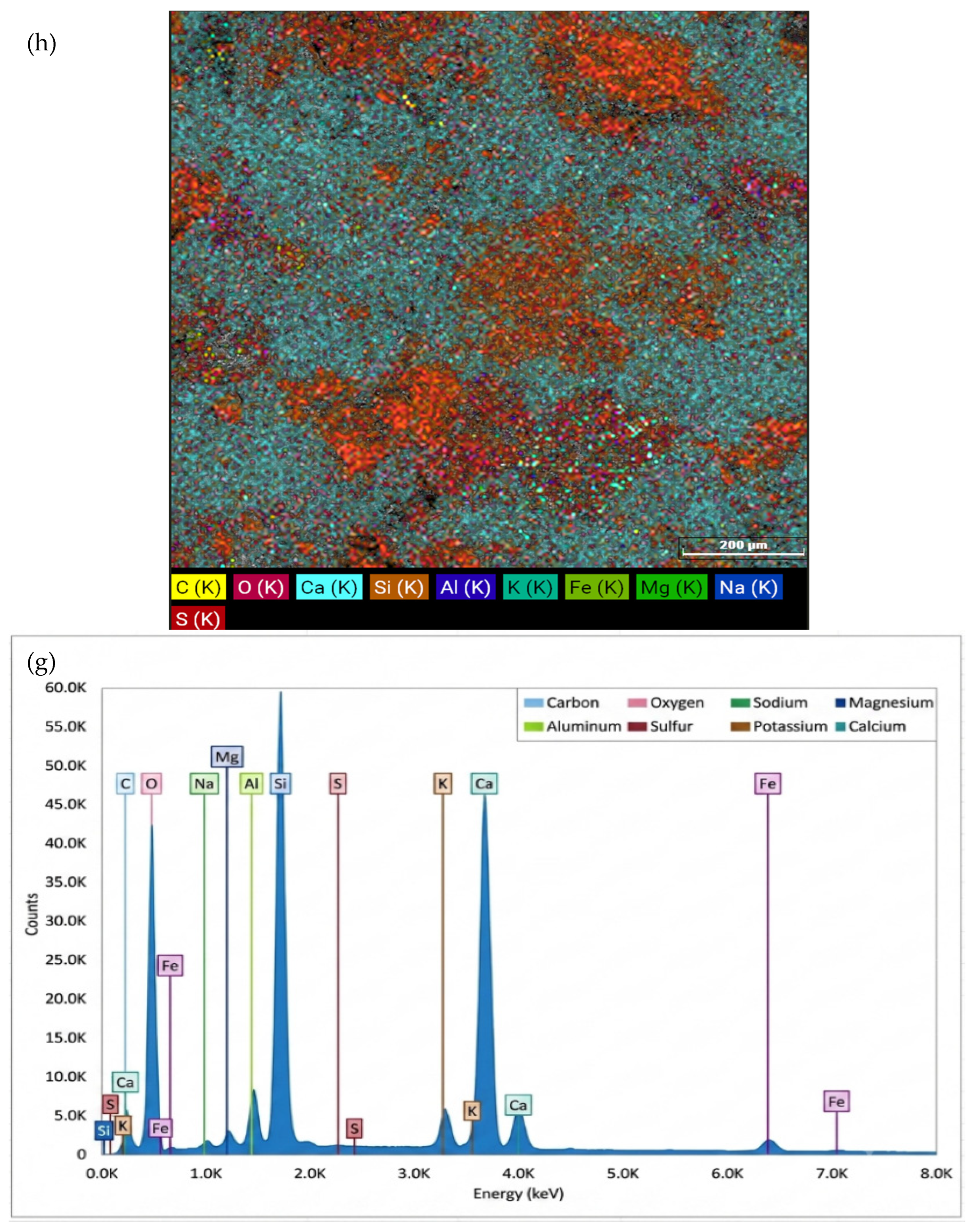
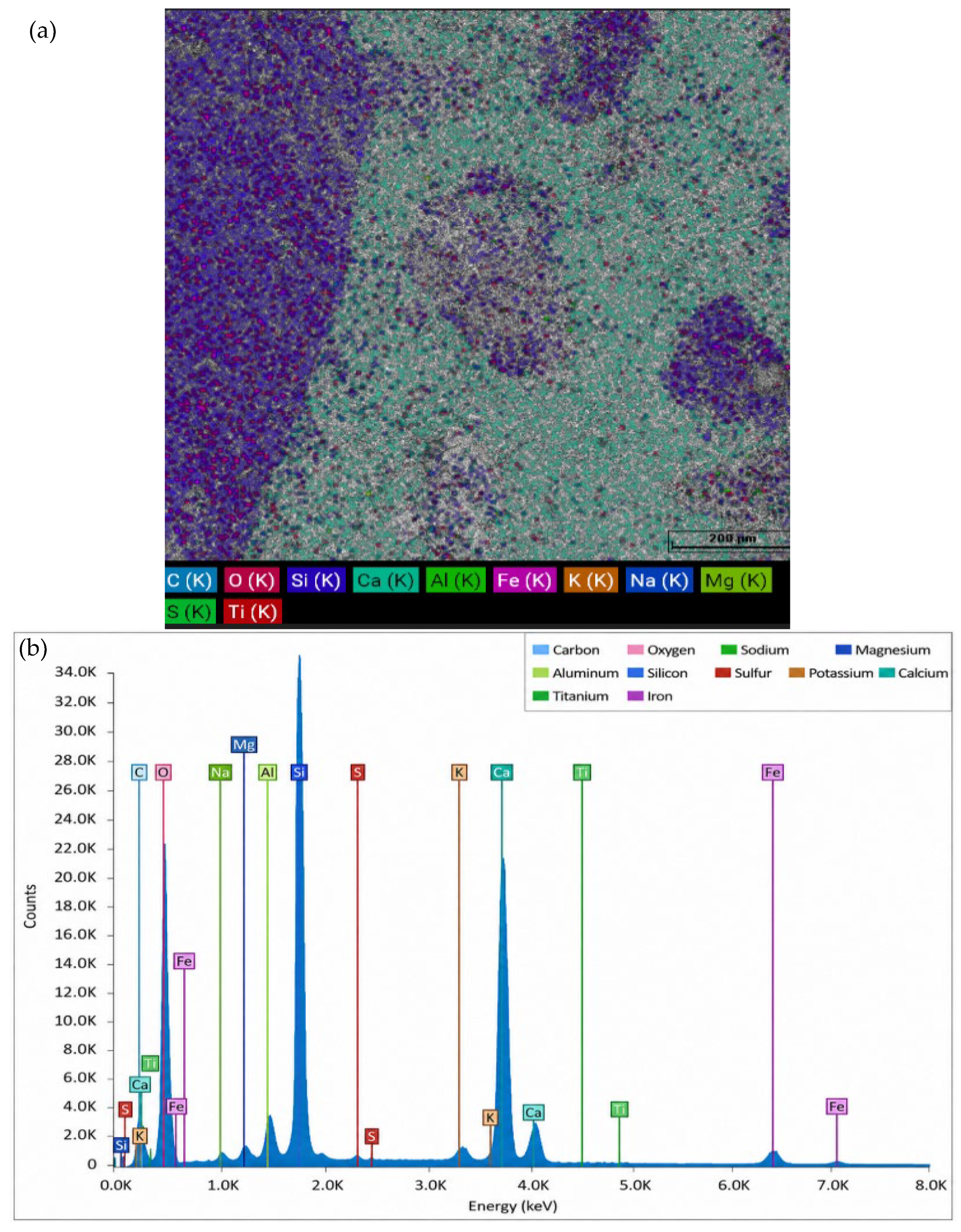
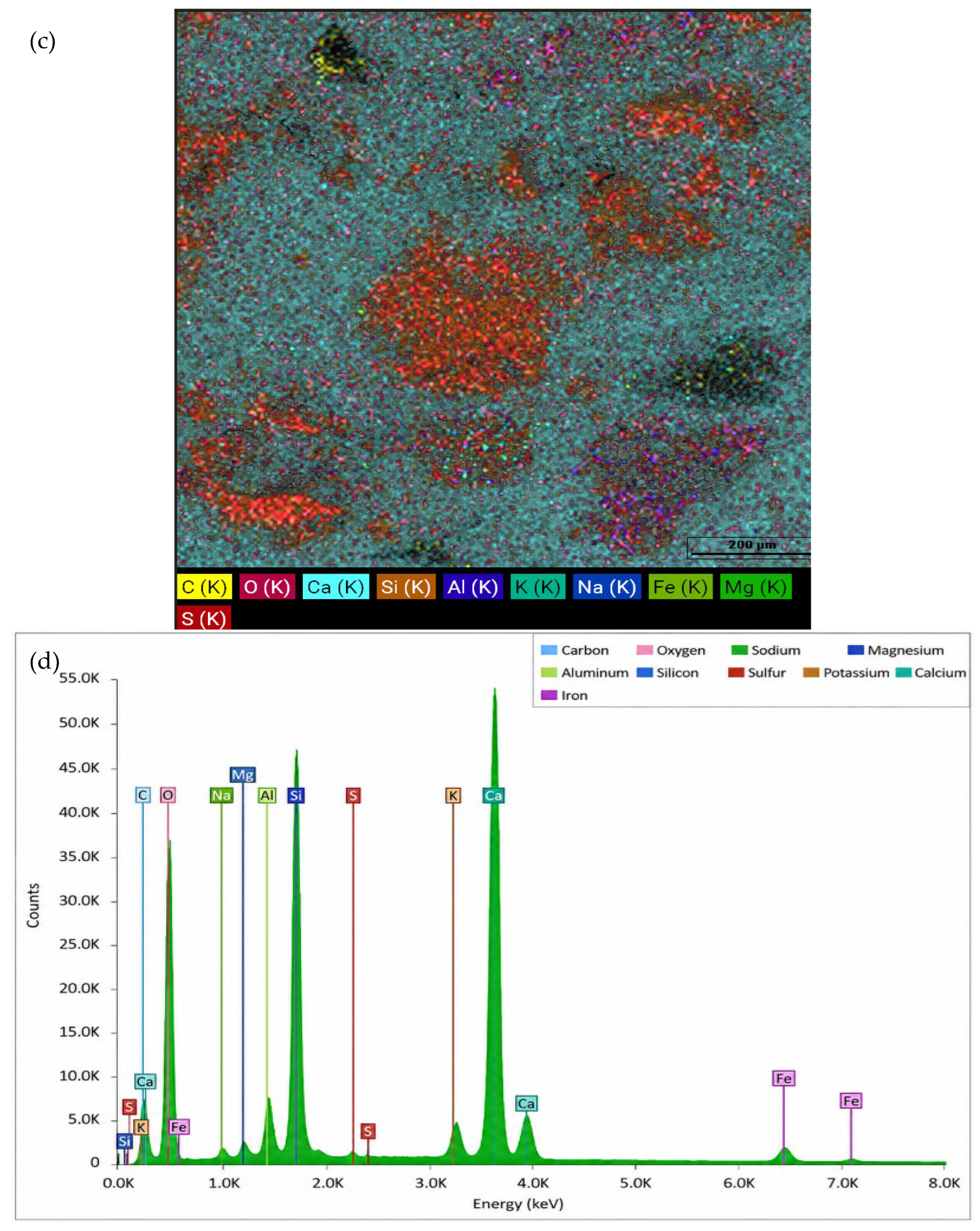
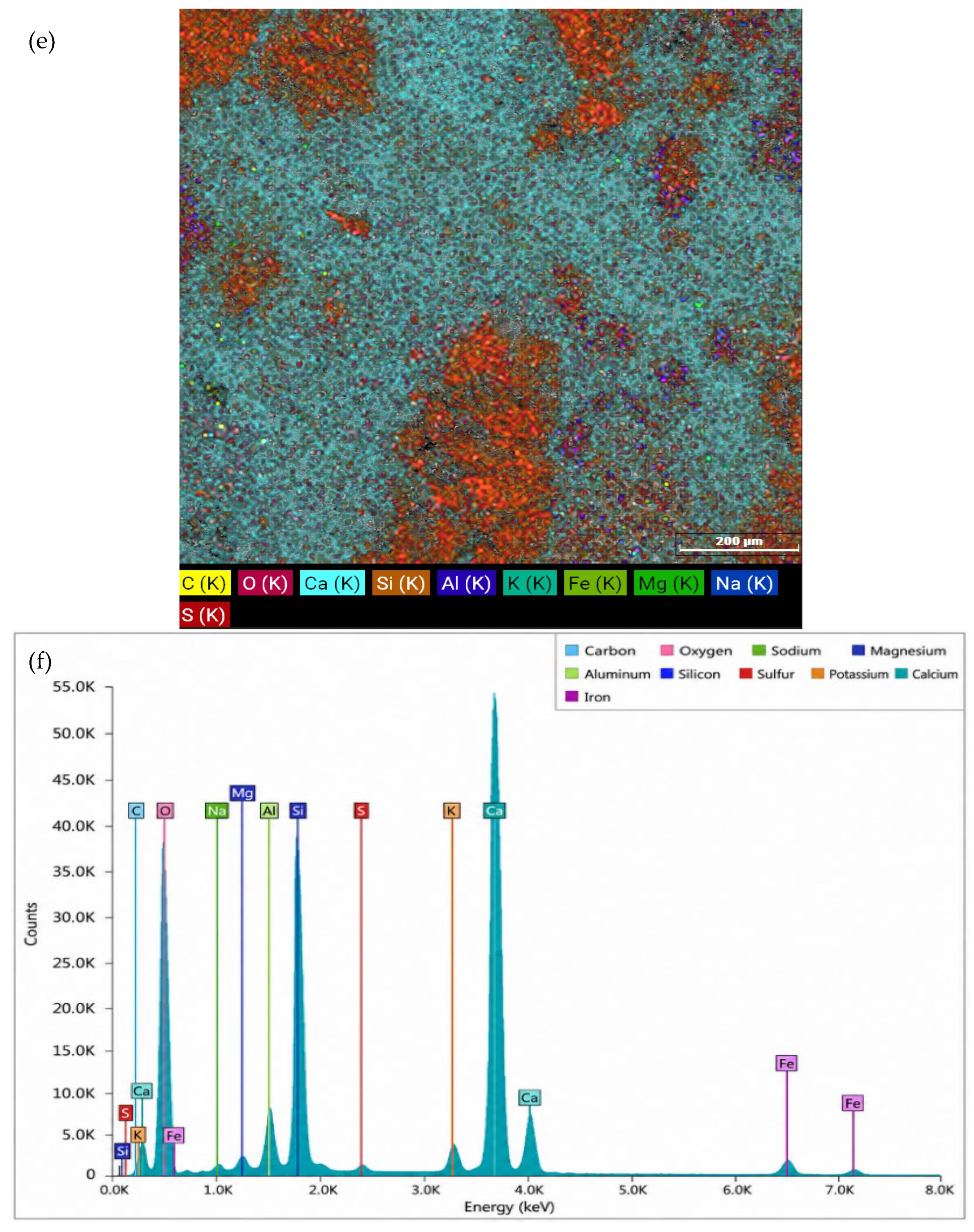
The SEM–EDS analyses presented in Figure 5 provide complementary information regarding the elemental composition of the hydrated cementitious matrix. In all mixtures, calcium and silicon were identified as the dominant elements associated with the formation of calcium silicate hydrate (C–S–H), the primary phase responsible for strength development in cement-based materials.
The control concrete exhibited a relatively low Ca/Si ratio (0.624), which may be influenced by the presence of quartz-rich aggregate particles within the analyzed region. In contrast, the mixtures containing 10% and 15% POFA exhibited Ca/Si ratios of 1.22 and 1.08, respectively (Table 2). These values are consistent with the formation of silica-rich C–S–H gels and indicate effective interaction between the reactive silica supplied by POFA and the calcium hydroxide generated during cement hydration.
The elemental maps obtained for the POFA-modified concretes revealed a more homogeneous distribution of calcium and silicon throughout the cementitious matrix compared with the control mixture. The coexistence of these elements suggests that the pozzolanic reaction contributed to the formation of additional hydration products during prolonged curing, which is consistent with the enhanced compressive strength observed at 56 days.
For the mixture containing 20% POFA, the measured Ca/Si ratio decreased to 0.79. This reduction may be associated with the higher silica content introduced through POFA and the lower availability of calcium-bearing phases resulting from the greater cement replacement level. Although pozzolanic activity remained evident, the lower Ca/Si ratio and the presence of unreacted particles observed in the SEM images suggest that the amount of POFA exceeded the optimum level required to maximize mechanical performance under the conditions investigated.
These results indicate that replacement levels of 10–15% POFA produced the most favorable chemical environment for the development of hydration products, which is consistent with the superior long-term compressive strength achieved by these mixtures.
Although the MP-15 mixture exhibited the highest compressive strength after 56 days of curing, the MP-10 mixture presented a slightly higher Ca/Si ratio (1.22 versus 1.08). This observation may indicate a different stage of C-S-H development rather than superior or inferior hydration. Because SEM-EDS provides localized chemical information, these Ca/Si values should be interpreted together with the mechanical results. The lower Ca/Si ratio measured for MP-15 is consistent with the formation of silica-rich C-S-H, whereas the slightly higher ratio observed for MP-10 suggests a balanced hydration state that may continue to evolve during longer curing periods. Consequently, both replacement levels exhibited effective pozzolanic activity, although additional long-term durability investigations extending beyond 56 days would be required to determine whether one mixture provides superior long-term performance.
The decrease in Ca/Si ratio from the control concrete toward the 10% and 15% POFA mixtures suggests progressive incorporation of reactive silica into the hydration products. Lower Ca/Si ratios are commonly associated with silica-rich C–S–H phases exhibiting greater polymerization and matrix densification. Although EDS measurements represent localized observations, the trend is consistent with the compressive strength development observed at 56 days. The Ca/Si ratio result for sample MP is not consistent with the values considered typical. Similarly, sample MP20 represents a case like MP, falling out of range. The corresponding analyses for each of the cases studied throughout this article are detailed in Table 2.

2.4. Implications of POFA Incorporation for Concrete Performance

The combined mechanical and microstructural results demonstrate that the performance of POFA-modified concrete is governed by the balance between cement dilution and pozzolanic activity. Although the incorporation of POFA reduced compressive strength during the first 28 days of curing, the progressive strength gain observed at later ages indicates that the reactive silica contained in the ash contributed to the formation of additional hydration products. This behavior is characteristic of supplementary cementitious materials, whose beneficial effects become increasingly evident as curing progresses.
The superior performance of the mixtures containing 10% and 15% POFA can be directly related to the microstructural features identified through SEM and SEM–EDS analyses. These mixtures exhibited a denser cementitious matrix, reduced crack propagation, improved aggregate–paste interaction within the interfacial transition zone, and Ca/Si ratios consistent with the formation of silica-rich C–S–H phases. Collectively, these characteristics contributed to enhanced load transfer within the hardened concrete and explain the higher compressive strengths achieved after 56 days of curing.
In contrast, although the 20% POFA mixture exhibited evidence of ongoing pozzolanic activity, its lower compressive strength suggests that the beneficial effects of the additional reactive silica were insufficient to compensate for the reduction in cement content. Excessive replacement levels may decrease the availability of calcium-bearing phases required for the sustained formation of hydration products, thereby limiting long-term strength development.
The optimum replacement level identified in the present study (15% POFA) is consistent with the range reported in previous investigations (Table 3), where optimum replacement levels generally vary between 10% and 20%, depending on the physical characteristics of the ash, its processing conditions, and the curing regime employed. The comparatively high silica content (71%) and fine particle size of the POFA used in this study likely contributed to the favorable performance observed at this replacement level.
From a practical perspective, the results demonstrate that POFA can be incorporated into concrete mixtures at replacement levels up to 15% without compromising workability while simultaneously improving long-term mechanical performance. These findings support the valorization of palm oil industry residues as supplementary cementitious materials and highlight their potential contribution to reducing Portland cement consumption and the associated environmental impacts of concrete production.

3. Materials and Methods

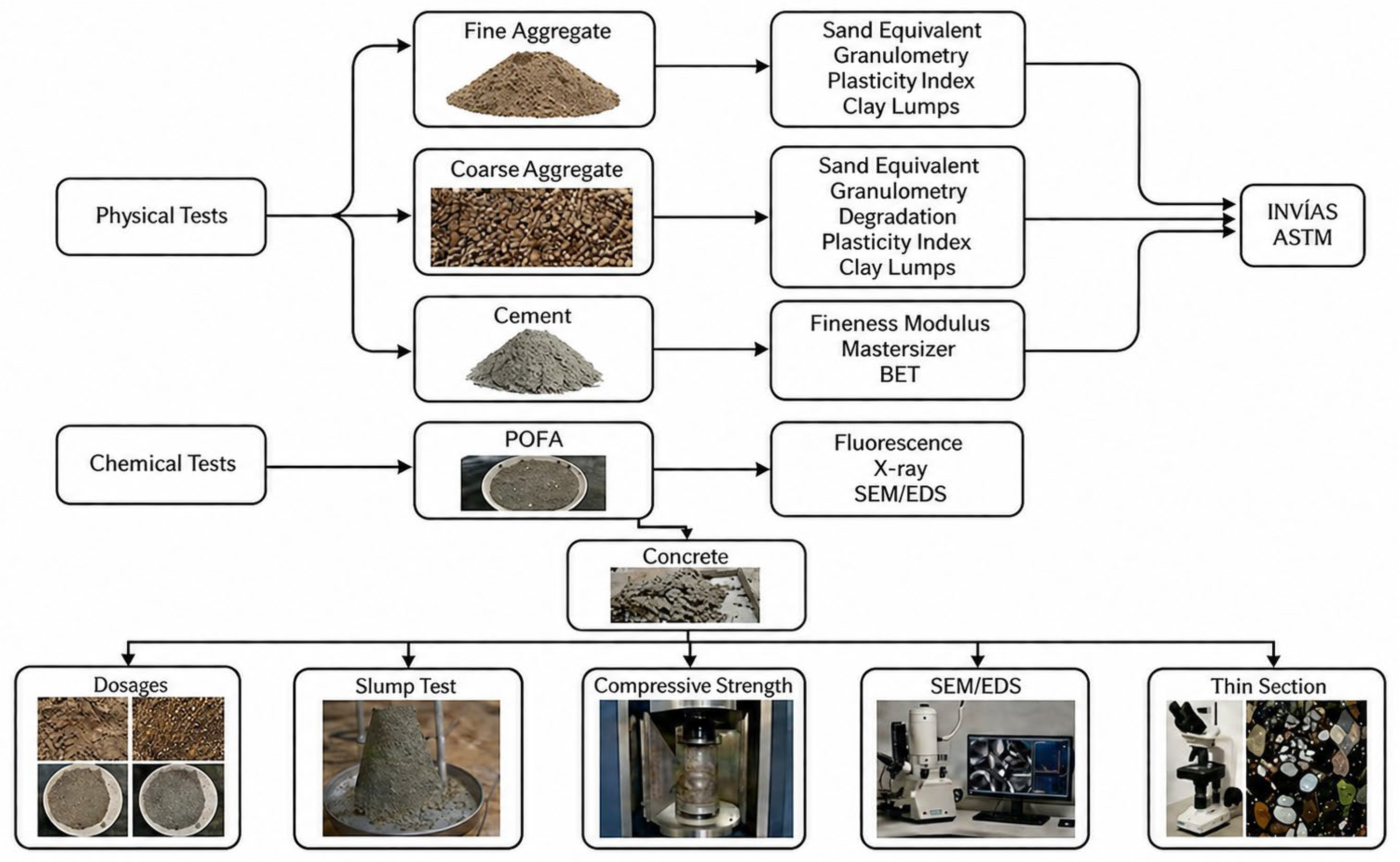
Figure 6 illustrates the conceptual framework of the methodology adopted for the experimental phase of this study.

3.1. Materials

3.1.1. Cement

Hydraulic Cement Type HE (High Early Strength) conforming to ASTM C1157 HE [43] requirements was used as the primary binder. The cement exhibited a median particle size (D50) between 10 and 15 μm and a Blaine fineness ranging from 4800 to 5400 cm2/g. Potable tap water (pH ≈ 7) was used for concrete production and curing.

3.1.2. Aggregate

Natural fine and coarse aggregates were obtained from a commercial quarry located in the Department of Bolívar, Colombia. The aggregates were selected in accordance with ASTM C33 [44] requirements for concrete production. Prior to mixture design, the aggregates were characterized to determine their physical and mechanical properties, including particle size distribution, clay lump content, moisture content, density, water absorption, and Los Angeles abrasion resistance.
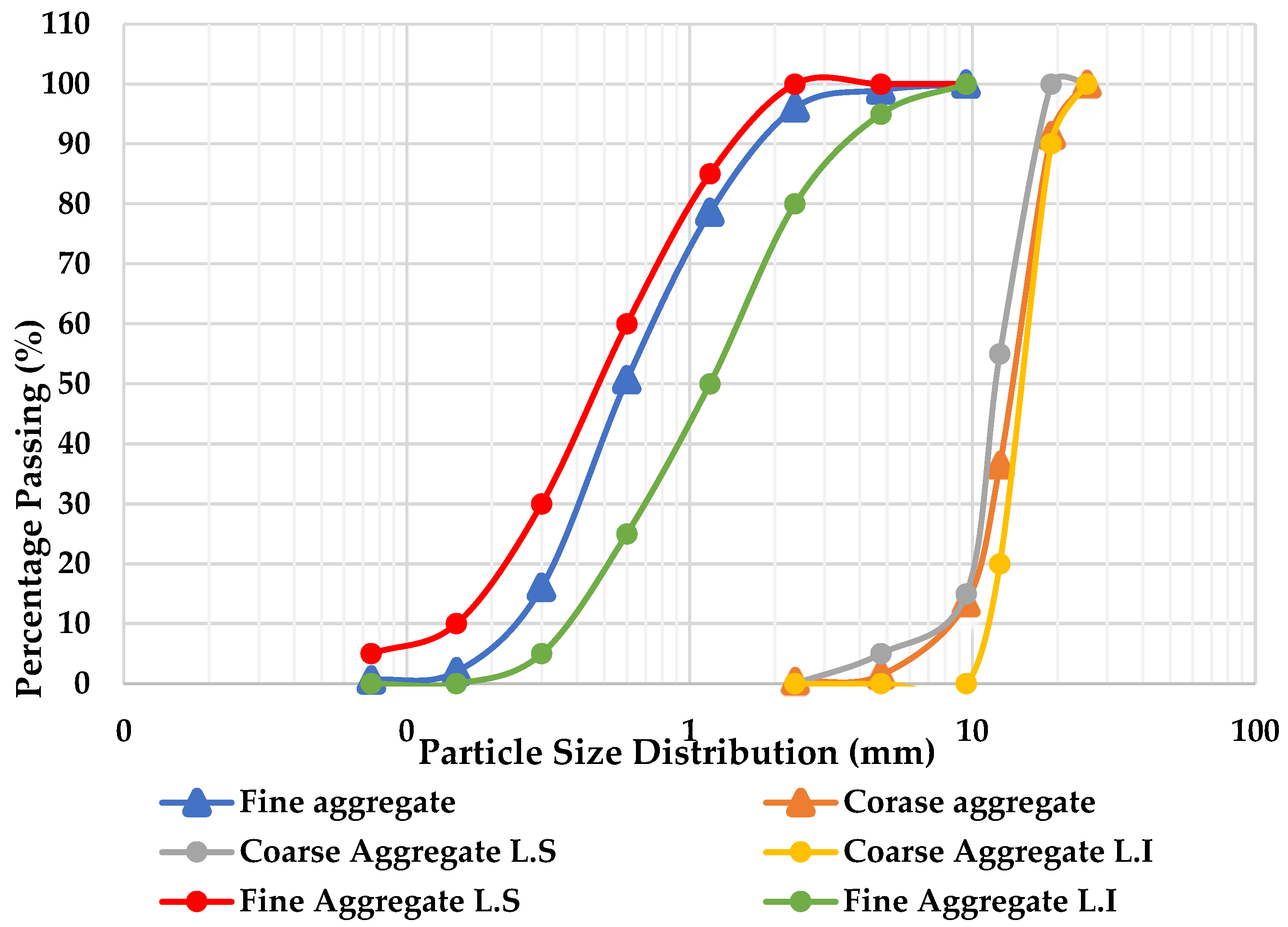
The particle size distributions of the fine and coarse aggregates are presented in Figure 7, while the main physical and mechanical properties are summarized in Table 4. The results confirmed that both aggregates satisfied the applicable specification limits and were suitable for use in structural concrete.

3.1.3. Palm Oil Fuel Ash (POFA)

POFA was obtained from a palm oil processing plant in northern Bolívar, Colombia. Detailed processing and characterization procedures have been previously reported by Torres et al. [45,46]. The ash exhibited a median particle size of 5.2 μm and a silica content of approximately 71%, indicating significant pozzolanic potential (Table 5 and Table 6).
In addition to the above, the LOI obtained for POFA was 3.33%, whereas reference studies for ashes of other residues, such as sugarcane bagasse ash (SBA), reported LOI values of 10% [47].

3.2. Mix Design and Specimen Preparation

Concrete mixtures were designed following the ACI 211 methodology to achieve a target compressive strength of approximately 27.5 MPa (4000 psi) at 28 days. A constant water-to-binder (w/b) ratio of 0.47 was adopted for all mixtures. Palm oil cement fuel ash (POFA) was incorporated as a partial replacement for Portland at replacement levels of 10%, 15%, and 20% by mass of cement, while a control mixture containing 100% Portland cement was also prepared. The selected replacement levels were based on previous studies reporting favorable performance of POFA within this range [48,49]. The proportions of the binder components used in each mixture are presented in Table 7, whereas the complete concrete mixture compositions are summarized in Table 8. To isolate the effect of POFA incorporation, the water-to-binder ratio and aggregate contents were maintained constant for all mixtures.
Concrete specimens were prepared in accordance with ASTM C192 [50]. Prior to mixing, the moisture content of the aggregates was determined and the mixing water was adjusted accordingly to maintain the target water-to-binder ratio. Dry materials, including cement and POFA, were homogenized before mixing with the aggregates and water. Fresh concrete was subsequently cast into cylindrical molds measuring 100 mm × 200 mm (4 in × 8 in). After casting, the specimens were stored under laboratory conditions for 24 h and then demolded and transferred to a curing tank maintained at approximately 25 °C until the designated testing ages. Cylinders were cured for 7, 14, 28 and 56 days before mechanical testing and microstructural characterization.

3.3. Experimental Program

3.3.1. Fresh Concrete Characterization

The workability of the fresh concrete mixtures was evaluated using the slump test in accordance with ASTM C143 [51]. The test was performed immediately after mixing to assess the effect of POFA incorporation on the consistency of the concrete. All measurements were conducted under laboratory conditions using the same testing procedure for the control and POFA-modified mixtures.

3.3.2. Compressive Strength Testing

The compressive strength of the concrete was determined using cylindrical specimens measuring 100 mm × 200 mm (4 in × 8 in). Testing was conducted in accordance with ASTM C39 [52]. Specimens were tested after curing periods of 7, 14, 28, and 56 days. For each mixture and curing age, three replicate specimens were tested, and the average value was reported. The experimental matrix adopted for the compressive strength evaluation is presented in Table 9.

3.4. Microstructural Characterization

Microstructural characterization was performed to investigate the influence of POFA on the morphology and chemical composition of the hardened cementitious matrix. Representative specimens from the control mixture and the mixtures containing 10%, 15%, and 20% POFA were selected after 56 days of curing.
Small sections approximately 20 mm × 20 mm × 10 mm were extracted from the concrete cylinders and prepared for microscopic analysis. Scanning electron microscopy (SEM) coupled with energy-dispersive spectroscopy (EDS) was employed to evaluate the morphology of hydration products, the distribution of chemical elements, and the characteristics of the interfacial transition zone (ITZ). SEM observations were carried out using a TESCAN scanning electron microscope with a nominal resolution of approximately 1.2 nm. Images were acquired at different magnifications ranging from 54× to 4000× to assess both the general microstructure and localized features of the cementitious matrix. In previous studies conducted by the author, it was determined that the pozzolan laboratory-processed at a temperature of 600 °C is amorphous, allowing the silica to chemically react with Ca ( OH ) 2 , produced from cement hydration, to form hydration products, primarily calcium silicate hydrate (C-S-H) [46].

4. Conclusions

This study evaluated the influence of palm oil fuel ash (POFA) as a partial replacement for Portland cement on the mechanical performance and microstructural evolution of concrete. Based on the experimental results, the following conclusions can be drawn:
  • POFA replacement levels of 10–15% provided the most favorable overall performance. Although compressive strength was lower than that of the control concrete during the first 28 days due to the slower kinetics of pozzolanic reactions, prolonged curing promoted significant strength development. After 56 days, the mixtures containing 10% and 15% POFA exhibited compressive strengths 3.7% and 9.2% higher, respectively, than the control mixture, whereas 20% POFA resulted in a 14.6% reduction.
  • The incorporation of POFA did not affect fresh concrete workability under the investigated conditions. All mixtures maintained a slump of approximately 55 mm, indicating that replacement levels up to 20% can be adopted without modifying the water-to-binder ratio or using chemical admixtures.
  • SEM observations revealed that concretes containing 10% and 15% POFA developed a denser cementitious matrix, reduced microcracking, and a more refined interfacial transition zone (ITZ) than the control concrete. SEM–EDS analyses yielded Ca/Si ratios of 1.22 and 1.08, respectively, indicating effective pozzolanic activity and the formation of silica-rich C–S–H gels in both mixtures. Although the 15% POFA mixture achieved the highest compressive strength, the favorable Ca/Si ratio obtained for the 10% mixture also suggests a well-developed hydration process that may contribute to long-term performance. In contrast, the 20% POFA mixture exhibited a lower Ca/Si ratio (0.79), together with a less homogeneous microstructure and unreacted particles, consistent with its lower mechanical performance.
Finally, the results demonstrate that both 10% and 15% POFA are effective replacement levels for producing sustainable concrete with improved long-term performance. Among the mixtures investigated, the 15% POFA mixture achieved the highest compressive strength after 56 days, whereas the 10% mixture exhibited a slightly higher Ca/Si ratio, indicative of favorable pozzolanic activity and C–S–H development. Since the SEM–EDS analyses represent localized measurements, additional long-term durability studies are required to establish whether either replacement level offers superior performance under extended service conditions. Nevertheless, the findings confirm that processed POFA is a viable supplementary cementitious material capable of reducing Portland cement consumption while promoting the valorization of agro-industrial waste.

Author Contributions

Conceptualization, R.T.-O. and M.S.; methodology, R.T.-O., J.A.-B. and M.S.; validation, R.T.-O., J.A.-B. and M.S.; formal analysis, R.T.-O. and M.S.; investigation, R.T.-O. and J.A.-B.; resources, M.S.; data curation, R.T.-O. and J.A.-B.; writing—original draft preparation, R.T.-O.; writing—review and editing, R.T.-O., J.A.-B. and M.S.; visualization, R.T.-O.; supervision, M.S.; project administration, M.S.; funding acquisition, M.S. All authors have read and agreed to the published version of the manuscript.

Funding

This research was funded by INGUETO S.A.S, grant number: 001.

Data Availability Statement

The original contributions presented in this study are included in the article. Further inquiries can be directed to the corresponding author.

Acknowledgments

This paper is a part of the first author’s PhD dissertation. The authors would like to acknowledge University of Cartagena for providing the laboratories for the physicochemical treatments of oil palm kernel shell. During the preparation of this manuscript, the authors used ChatGPT 5.5 for the purposes of grammar checking. The authors have reviewed and edited the output and take full responsibility for the content of this publication.

Conflicts of Interest

The authors declare no conflicts of interest.

Abbreviations

The following abbreviations are used in this manuscript:
C-S-HCalcium Silicate Hydrate
HEHigh Early Strength
ITZInterfacial Transition Zone
LCALife Cycle Assessment
LOILoss on Ignition
OPCOrdinary Portland Cement
POFAPalm Oil Fuel Ash
RHARice Husk Ash
SCBASugarcane Bagasse Ash
SCMSupplementary Cementitious Material

References

  1. Zeyad, A.M.; Bayraktar, O.Y.; Tayeh, B.A.; Öz, A.; Özkan, I.G.M.; Kaplan, G. Impact of rice husk ash on physico-mechanical, durability and microstructural features of rubberized lightweight geopolymer composite. Constr. Build. Mater. 2024, 427, 136265. [Google Scholar] [CrossRef]
  2. Habert, G.; Miller, S.A.; John, V.M.; Provis, J.L.; Favier, A.; Horvath, A.; Scrivener, K.L. Environmental impacts and decarbonization strategies in the cement and concrete industries. Nat. Rev. Earth Environ. 2020, 1, 559–573. [Google Scholar] [CrossRef]
  3. Chopra, D.; Siddique, R.; Kunal. Strength, permeability and microstructure of self-compacting concrete containing rice husk ash. Biosyst. Eng. 2015, 130, 72–80. [Google Scholar] [CrossRef]
  4. Chen, Z.; Li, J.S.; Poon, C.S. Combined use of sewage sludge ash and recycled glass cullet for the production of concrete blocks. J. Clean. Prod. 2018, 171, 1447–1459. [Google Scholar] [CrossRef]
  5. Memon, S.A.; Khan, M.K. Ash blended cement composites: Eco-friendly and sustainable option for utilization of corncob ash. J. Clean. Prod. 2018, 175, 442–455. [Google Scholar] [CrossRef]
  6. He, Z.; Shen, A.; Lyu, Z.; Li, Y.; Wu, H.; Wang, W. Effect of Wollastonite Microfibers as Cement Replacement on the Properties of Cementitious Composites: A Review. Constr. Build. Mater. 2020, 261, 119920. [Google Scholar] [CrossRef]
  7. Hlaváček, P.; Šulc, R.; Šmilauer, V.; Rößler, C.; Snop, R. Ternary binder made of CFBC fly ash, conventional fly ash, and calcium hydroxide: Phase and strength evolution. Cem. Concr. Compos. 2018, 90, 100–107. [Google Scholar] [CrossRef]
  8. Jung, S.-H.; Saraswathy, V.; Karthick, S.; Kathirvel, P.; Kwon, S.-J. Microstructure Characteristics of Fly Ash Concrete with Rice Husk Ash and Lime Stone Powder. Int. J. Concr. Struct. Mater. 2018, 12, 17. [Google Scholar] [CrossRef]
  9. Ullah, M.F.; Tang, H.; Ullah, A.; Khan, K. Synergistic effects of rice husk ash and extracted microsilica on the performance of high-strength concrete. Sci. Rep. 2025, 15, 41274. [Google Scholar] [CrossRef] [PubMed]
  10. Nduka, D.O.; Olawuyi, B.J.; Fagbenle, E.O.; Fonteboa, B.G. Mechanical and microstructural properties of high-performance concrete made with rice husk ash internally cured with superabsorbent polymers. Heliyon 2022, 8, e10502. [Google Scholar] [CrossRef] [PubMed]
  11. Amin, M.; Attia, M.M.; Agwa, I.S.; Elsakhawy, Y.; Abu El-Hassan, K.; Abdelsalam, B.A. Effects of sugarcane bagasse ash and nano eggshell powder on high-strength concrete properties. Case Stud. Constr. Mater. 2022, 17, e01528. [Google Scholar] [CrossRef]
  12. Shahbazpanahi, S.; Faraj, R.H. Feasibility study on the use of shell sunflower ash and shell pumpkin ash as supplementary cementitious materials in concrete. J. Build. Eng. 2020, 30, 101271. [Google Scholar] [CrossRef]
  13. Omrane, M.; Kenai, S.; Kadri, E.-H.; Aït-Mokhtar, A. Performance and durability of self compacting concrete using recycled concrete aggregates and natural pozzolan. J. Clean. Prod. 2017, 165, 415–430. [Google Scholar] [CrossRef]
  14. Alsubari, B.; Shafigh, P.; Jumaat, M.Z. Development of Self-Consolidating High Strength Concrete Incorporating Treated Palm Oil Fuel Ash. Materials 2015, 8, 2154–2173. [Google Scholar] [CrossRef]
  15. Boateng, K.M.; Owusu, A.S.; Yazid, S.F.M.; Puspitasari, S.D.; Wijayanti, Y. Valorization of Palm Oil Fuel Ash for Sustainable Partial Cement Replacement in Concrete: A Mini Review. Civ. Sustain. Urban Eng. 2025, 5, 130–140. [Google Scholar] [CrossRef]
  16. Oyejobi, D.O.; Abdulkadir, T.S.; Ahmed, A.T. A Study of Partial Replacement of Cement with Palm Oil Fuel Ash in Concrete Production. Int. J. Agric. Technol. 2015, 12, 619–631. [Google Scholar]
  17. ASTM C618-22; Standard Specification for Coal Fly Ash and Raw or Calcined Natural Pozzolan for Use in Concrete. ASTM International: West Conshohocken, PA, USA, 2023. [CrossRef]
  18. Suraneni, P.; Burris, L.; Shearer, C.R.; Hooton, R.D. ASTM C618 fly ash specification: Comparison with other specifications, shortcomings, and solutions. ACI Mater. J. 2021, 118, 157–167. [Google Scholar] [CrossRef]
  19. Ayub, M.; Othman, M.H.D.; Khan, I.U.; Hubadillah, S.K.; Kurniawan, T.A.; Ismail, A.F.; Rahman, M.A.; Jaafar, J. Promoting Sustainable Cleaner Production Paradigms in Palm Oil Fuel Ash as an Eco-Friendly Cementitious Material: A Critical Analysis. J. Clean. Prod. 2021, 295, 126296. [Google Scholar] [CrossRef]
  20. Hamada, H.M.; Jokhio, G.A.; Yahaya, F.M.; Humada, A.M. Applications of Nano palm oil fuel ash and Nano fly ash in concrete. In IOP Conference Series: Materials Science and Engineering; Institute of Physics Publishing: Bristol, UK, 2018. [Google Scholar] [CrossRef]
  21. Balapour, M.; Ramezanianpour, A.; Hajibandeh, E. An investigation on mechanical and durability properties of mortars containing nano and micro RHA. Constr. Build. Mater. 2017, 132, 470–477. [Google Scholar] [CrossRef]
  22. Jamil, M.; Khan, M.; Karim, M.; Kaish, A.; Zain, M. Physical and chemical contributions of Rice Husk Ash on the properties of mortar. Constr. Build. Mater. 2016, 128, 185–198. [Google Scholar] [CrossRef]
  23. Zareei, S.A.; Ameri, F.; Dorostkar, F.; Ahmadi, M. Rice husk ash as a partial replacement of cement in high strength concrete containing micro silica: Evaluating durability and mechanical properties. Case Stud. Constr. Mater. 2017, 7, 73–81. [Google Scholar] [CrossRef]
  24. Khalil, M.J.; Aslam, M.; Ahmad, S. Utilization of Sugarcane Bagasse Ash as Cement Replacement for the Production of Sustainable Concrete—A Review. Constr. Build. Mater. 2021, 270, 121371. [Google Scholar] [CrossRef]
  25. Bahurudeen, A.; Santhanam, M. Influence of different processing methods on the pozzolanic performance of sugarcane bagasse ash. Cem. Concr. Compos. 2015, 56, 32–45. [Google Scholar] [CrossRef]
  26. Trajcev, M.; Bashevska, C.J.; Tomovska, H.; Bogovska, T.; Babunovska, H. Transfer and optimization of methods for particle size distribution from Mastersizer 2000 to Mastersizer 3000. Maced. Pharm. Bull. 2022, 68, 181–182. [Google Scholar] [CrossRef]
  27. Hassan, W.N.F.W.; Ismail, M.; Ismail, M.A.; Lee, H.S.; Hussin, M.W. Fresh and hardenen properties of high performance concrete utilising micro and nano palm oil fuel ash. MCRJ 2019, 6, 36. Available online: https://www.researchgate.net/publication/339139736 (accessed on 22 June 2026).
  28. Hewlett, P.; Liska, M. Lea’s Chemistry of Cement and Concrete, 1st ed.; Elsevier: Amsterdam, The Netherlands, 2019. [Google Scholar]
  29. Khanna, M.; Kasilingam, S. Performance of agro-waste cementitious material in the high-strength reinforced concrete applications: A review. Acta Sci. Pol. Archit. 2025, 24, 102–113. [Google Scholar] [CrossRef]
  30. Pantić, V.; Šupić, S.; Vučinić-Vasić, M.; Nemeš, T.; Malešev, M.; Lukić, I.; Radonjanin, V. Effects of Grinding Methods and Water-to-Binder Ratio on the Properties of Cement Mortars Blended with Biomass Ash and Ceramic Powder. Materials 2023, 16, 2443. [Google Scholar] [CrossRef] [PubMed]
  31. Lyra, G.P.; Duran, A.J.F.P.; Borrachero, M.V.; Soriano, L.; Payá, J.; Rossignolo, J.A. Reactivity pozzolans from agro-industrial waste: A circular economy approach using cane biomass ashes. J. Build. Eng. 2025, 113, 114234. [Google Scholar] [CrossRef]
  32. Tangchirapat, W.; Jaturapitakkul, C. Strength, drying shrinkage, and water permeability of concrete incorporating ground palm oil fuel ash. Cem. Concr. Compos. 2010, 32, 767–774. [Google Scholar] [CrossRef]
  33. Jonbi, J.; Fulazzaky, M.A.; Simatupang, P.H.; Tjahjani, A.R.I.; Suraedi, D. Palm oil boiler ash as a viable substitute for cement. Results Eng. 2025, 28, 107616. [Google Scholar] [CrossRef]
  34. Kanthe, V.N.; Deo, S.V.; Murmu, M. Effect of fly ash and rice husk ash on strength and durability of binary and ternary blend cement mortar. Asian J. Civ. Eng. 2018, 19, 963–970. [Google Scholar] [CrossRef]
  35. Khankhaje, E.; Rafieizonooz, M.; Salim, M.R.; Khan, R.; Mirza, J.; Siong, H.C.; Salmiati. Sustainable clean pervious concrete pavement production incorporating palm oil fuel ash as cement replacement. J. Clean. Prod. 2018, 172, 1476–1485. [Google Scholar] [CrossRef]
  36. Sata, V.; Jaturapitakkul, C.; Kiattikomol, K. Influence of pozzolan from various by-product materials on mechanical properties of high-strength concrete. Constr. Build. Mater. 2007, 21, 1589–1598. [Google Scholar] [CrossRef]
  37. Aiswarya, V.S.; Beyoola Wilson Harsha, V.N. Assistant Professor, Palm Oil Fuel Ash as Partial Replacement of Cement in Concrete. 2017. Available online: www.ijert.org/ (accessed on 22 June 2026).
  38. Muthusamy, K.; Azzimah, Z.N. Exploratory Study of Palm Oil Fuel Ash as Partial Cement Replacement in Oil Palm Shell Lightweight Aggregate Concrete. Res. J. Appl. Sci. Eng. Technol. 2014, 8, 150–152. [Google Scholar] [CrossRef]
  39. Oyejobi, D. A Study of Partial Replacement of Cement with Palm Oil Fuel Ash in Concrete Production Hydraulic Modelling of Flow Resistance in Bio-Engineered Channels View Project Agricultural Production View Project. 2016. Available online: http://www.ijat-aatsea.com (accessed on 22 June 2026).
  40. Manap, N.; Muhamad, N.I.; Sandirasegaran, K. Strength and water absorption rate of concrete made from palm oil fuel ash. In Materials Science Forum; Trans Tech Publications Ltd.: Bäch, Switzerland, 2017; pp. 261–264. [Google Scholar] [CrossRef]
  41. Ranjbar, N.; Behnia, A.; Alsubari, B.; Birgani, P.M.; Jumaat, M.Z. Durability and mechanical properties of self-compacting concrete incorporating palm oil fuel ash. J. Clean. Prod. 2016, 112, 723–730. [Google Scholar] [CrossRef]
  42. Hasan, N.M.S.; Sobuz, H.R.; Shaurdho, N.M.N.; Meraz, M.; Datta, S.D.; Aditto, F.S.; Kabbo, K.I.; Miah, J. Eco-friendly concrete incorporating palm oil fuel ash: Fresh and mechanical properties with machine learning prediction, and sustainability assessment. Heliyon 2023, 9, e22296. [Google Scholar] [CrossRef] [PubMed]
  43. ASTM C1157-08a; Standard Performance Specification for Hydraulic Cement. ASTM International: West Conshohocken, PA, USA, 2009.
  44. ASTM C33/C33M-18; Standard Specification for Concrete Aggregates. ASTM International: West Conshohocken, PA, USA, 2018.
  45. Ortega, R.T.; Velasco, M.L.; Baldovino, J.A. Arrieta Baldovino, Characterization of the Pozzolanic Potential of Oil Palm Kernel Shell Ash Obtained Through Optimization of Physicochemical Processes. Materials 2025, 18, 1248. [Google Scholar] [CrossRef] [PubMed]
  46. Torres-Ortega, R.; Torres-Sánchez, D.; Saba, M. Impact of Physical Processes and Temperatures on the Composition, Microstructure, and Pozzolanic Properties of Oil Palm Kernel Ash. ChemEngineering 2024, 8, 122. [Google Scholar] [CrossRef]
  47. Imoh, U.U.; Adeboje, A.O.; Adekola, E.R.; Hassan, R.; Rad, M.M. Effect of Sugarcane Bagasse Ash on the sustainable performance of hot-mix asphalt: A case study of experimental and numerical analysis. Case Stud. Constr. Mater. 2026, 24, e05759. [Google Scholar] [CrossRef]
  48. Kim, G.; Cho, S.; Moon, J.; Suh, H.; Her, S.; Sim, S.; Bae, S. Investigation of the hydrate formation and mechanical performance of limestone calcined clay cement paste incorporating nano-CaCO3 and nano-SiO2 as partial limestone substitutes. Constr. Build. Mater. 2024, 418, 135335. [Google Scholar] [CrossRef]
  49. Torres-Ortega, R.; Torres-Sanchez, D.; Lopez-Lara, T. Mechanical Properties of Hydraulic Concretes with Partial Replacement of Portland Cement by Pozzolans Obtained from Agro-Industrial Residues: A Review. Heliyon 2024, 11, e41004. [Google Scholar] [CrossRef] [PubMed]
  50. ASTM C192/C192M-19; Standard Practice for Making and Curing Concrete Test Specimens in the Laboratory. ASTM International: West Conshohocken, PA, USA, 2019.
  51. ASTM C143/C143M-20; Standard Test Method for Slump of Hydraulic-Cement Concrete. ASTM International: West Conshohocken, PA, USA, 2020.
  52. ASTM C39/C39M-21; Standard Test Method for Compressive Strength of Cylindrical Concrete Specimens. ASTM International: West Conshohocken, PA, USA, 2021.
Figure 1. Effect of POFA incorporation on the compressive strength of concrete: compressive strength as a function of curing age for different replacement levels.
Recycling 11 00139 g001
Figure 2. Long-term compressive strength performance of POFA-modified concretes: (a) relative compressive strength with respect to the control mixture and (b) effect of POFA replacement level on 56-day compressive strength.
Recycling 11 00139 g002
Figure 3. SEM micrographs showing matrix morphology of concretes containing different POFA replacement levels (200× magnification). (a) M1: Standard sample with 0% POFA, (b) M5: Sample with 10% POFA, (c) Sample with 15% POFA and (d) Sample with 20% POFA.
Recycling 11 00139 g003
Figure 4. SEM micrographs of the interfacial transition zone (ITZ) for control and POFA-modified concretes (1000× magnification). (a) M1: Standard sample with 0% POFA, (b) M5: Sample with 10% POFA, (c) Sample with 15% POFA and (d) Sample with 20% POFA.
Recycling 11 00139 g004
Figure 5. Representative SEM micrographs and corresponding EDS spectra of concretes incorporating different POFA replacement levels after 56 days of curing: (a,b) control mixture (MP); (c,d) MP-10; (e,f) MP-15; and (g,h) MP-20.
Recycling 11 00139 g005aRecycling 11 00139 g005bRecycling 11 00139 g005cRecycling 11 00139 g005d
Figure 6. Overview of the materials and experimental program adopted in this study. INVIAS: National Roads Institute of Colombia, for is initials in Spanish.
Recycling 11 00139 g006
Figure 7. Distribution of fine and coarse aggregate particle size.
Recycling 11 00139 g007
Table 1. Compressive strength and relative compressive strength of mixtures normalized to the 28-day control sample (MP).
Sample7 Days14 Days28 Days56 Days
MPaR7/28MPaR14/28MPaR28/28MPaR56/28
(%)(%)(%)(%)
MP23.7 ± 0.260.8524.2 ± 0.360.8727.8 ± 0.46129.5 ± 0.51.06
MP-1019.9 ± 0.260.7121 ± 0.360.7523.1 ± 0.40.8330.6 ± 0.561.1
MP-1519.4 ± 0.30.720.8 ± 0.360.7523.6 ± 0.460.8532.2 ± 0.561.16
MP-2017 ± 0.360.6119.5 ± 0.30.722 ± 0.360.7925.2 ± 0.460.91
Table 2. Ca/Si ratios obtained from SEM–EDS analyses of control and POFA-modified concretes.
MixturePOFA (%)Ca/Si RatioAnalysis Based on the Ca/Si Ratio (Total Number of Counted Atoms)
MP00.624If the Ca/Si ratio is less than 0.7, it indicates that the electron beam hit a sand grain from the mix or an unreacted particle. The typical normal range is between 1.5 and 2.0; therefore, this ratio is discarded from the analysis.
MP-10101.22If the Ca/Si ratio is between 1.1 and 1.5, it is considered a successful case of pozzolanic activity; there is a coexistence of calcium and silica, which denotes the presence of a silica-enriched C-S-H gel phase. Additionally, it indicates that the biomass interacted effectively with the paste phases.
MP-15151.08If the Ca/Si ratio is between 0.8 and 1.1, it is considered a successful case of ultra-high pozzolanic reactivity. There is a high availability of silica, and the result can be a highly compact matrix.
MP-20200.79For Ca/Si ratios below 0.8, the value is out of range. It is possible that the electron beam hit an unreacted POFA particle or an inert sand core within the mix.
Table 3. Comparison of optimum POFA replacement levels and compressive strength performance reported in previous studies.
Pozzolanic MaterialReplacement Levels Evaluated (%)Main Effects on Compressive StrengthRef.
Treated POFA (Present Study)10, 15, and 20; optimum replacement: 15%Concretes containing 10% and 15% POFA achieved compressive strengths 4% and 10% higher than the control mixture after 56 days of curing.P study
Thermally treated POFA10, 20, 30, and 50; optimum replacement: 20%Improved early-age strength. At 28 days, 20% POFA achieved 73 MPa compared with 67.1 MPa for the control mixture. Higher replacement levels (30–50%) reduced strength due to cement dilution.[14]
Thermally treated POFA10, 20, and 30; optimum replacement: 10%Strength decreased with increasing replacement level. The 10%, 20%, and 30% mixtures achieved 92.2%, 80.2%, and 59.6% of the control strength, respectively.[16]
Refined and coarse POFA10, 20, and 30; optimum replacement: 10–20%Finer POFA improved compressive strength through enhanced pozzolanic activity and filler effects. Replacement levels up to 20% showed no significant strength loss.[32]
Palm Kernel Ash (untreated)10, 20, 30, and 40; optimum replacement: 10%Strength decreased progressively with increasing ash content. A 10% replacement level provided performance closest to the control concrete.[35]
Treated POFA10, 20, and 30; optimum replacement: 20%Relative strengths of approximately 89%, 94%, and 87% of the control concrete were reported for 10%, 20%, and 30% replacement levels, respectively.[36]
Treated POFA5, 10, 15, and 20; optimum replacement: 10%Compressive strength increased by up to 7% relative to the control mixture at a 10% replacement level.[37]
Treated POFA10, 20, 30, 40, and 50; optimum replacement: 20%Strength increases of approximately 12.9%, 16.1%, and 9.7% were reported for 10%, 20%, and 30% replacement levels, respectively.[38]
Processed Palm Kernel Ash10, 20, and 30; optimum replacement: 10%Compressive strengths of 24, 21, and 15 MPa were reported for 10%, 20%, and 30% replacement levels, compared with 26 MPa for the control mixture.[39]
Treated POFA20, 30, and 40; optimum replacement: 20%Relative strengths of 96.8% and 96.6% of the control concrete were reported for 20% and 30% replacement levels, respectively.[40]
Unprocessed Palm Kernel Ash10, 15, and 20; optimum replacement: 10%Lower early-age strength was observed; however, long-term strength exceeded that of the control concrete. Improved durability and reduced water absorption were also reported.[41]
Unprocessed POFA5, 15, 25, 35, and 45; optimum replacement 15%The greatest improvements in compressive strength (4.5%), splitting tensile strength (36%), and flexural strength (31%) for the mix containing 15% POFA.[42]
Table 4. Characterization of aggregates.
Property/TestCoarse AggregateSpecification LimitFine AggregateSpecification Limit
Los Angeles Abrasion Loss28.24%Max. 40%
Clay Lumps and Friable Particles0.84%Max. 3%2.96%Max. 3%
Fractured Faces86.77%Min. 60%
Water Absorption3.60%2.35%Max. 4%
Oven-Dry Density2266.79 kg/m32512.26 kg/m3
Saturated Surface-Dry Density2368.80 kg/m32571.39 kg/m3
Apparent Density2425.00 kg/m32670.57 kg/m3
Moisture Content1.60%3.08%
Table 5. Physical characteristics of Portland cement and palm oil fuel ash (POFA).
MaterialMedian Particle Size, d50 (µm)Surface Area (cm2/g)
Cement6.945004
POFA5.2039,929
Table 6. Chemical oxide composition of POFA [45].
Oxides (%)Na2OMgOAl2O3SiO2P2O5SO3K2OCaOTiO2MnOFe2O3
POFA-3.4.19.3971.243.650.694.534.040.290.112.65
Table 7. Binder composition and POFA replacement levels adopted in the study. MP is the control sample.
SampleOPCPOFAw/b
MP(Control)10000.47
MP-1090100.47
MP-1585150.47
MP-2080200.47
Table 8. Mix design material quantities per m3 of concrete.
SampleOPC (kg)POFA (kg) *Water (kg)Fine
Aggregate (kg)
Coarse Aggregate (kg)w/b (%)
MP (Control)448.250210657.89932.110.47
MP-10403.4344.83210657.89932.110.47
MP-15381.0167.24210657.89932.110.47
MP-20358.6089.65210657.89932.110.47
* Partial replacement of cement with POFA.
Table 9. Experimental program for compressive strength evaluation.
Mixture7 Days14 Days28 Days56 DaysReplicatesTotal Specimens
MP (Control)3333315
MP-103333315
MP-153333315
MP-203333315
Total121212121260
Disclaimer/Publisher’s Note: The statements, opinions and data contained in all publications are solely those of the individual author(s) and contributor(s) and not of MDPI and/or the editor(s). MDPI and/or the editor(s) disclaim responsibility for any injury to people or property resulting from any ideas, methods, instructions or products referred to in the content.