
Article

Investigations on the Effects of Granite Sawdust on the Pore Structure of Dry-Mixed Mortar and Its Mechanical Properties

1
College of Civil Engineering and Architecture, Zhejiang University of Technology, Hangzhou 310023, China
2
Hangzhou Huayao Zhikun Technology Co., Ltd., Hangzhou 310051, China
3
Jiangsu Key Laboratory for Construction Materials, Southeast University, Nanjing 211189, China
4
Zhejiang Tianzao Environmental Protection Technology Co., Ltd., Lishui 323000, China
5
Hangzhou Baochu Pagoda Experimental School, Hangzhou 310007, China
*
Authors to whom correspondence should be addressed.
Recycling 2026, 11(3), 58; https://doi.org/10.3390/recycling11030058
Submission received: 30 January 2026 / Revised: 23 February 2026 / Accepted: 3 March 2026 / Published: 6 March 2026
(This article belongs to the Topic Converting and Recycling of Waste Materials)

Abstract

Granite sawdust is a by-product in the process of stone processing, which is usually piled up, thus easily causing environmental pollution. To achieve resource utilization, granite sawdust was used as a partial substitution of cement in this work. The effects of different sawdust contents (10–50%) were systematically studied on the pore structure and the mechanical properties of its dry powder mortar. Combined with the grey correlation theory, the correlation between pore size distribution and compressive strength was analyzed. The results showed that the consistency and mechanical properties of the mortar gradually decreased along with the increasing sawdust content, while its critical pore-diameter decreased. The mortar performance was the best when its sawdust content is 10%, which meets the M25 technical requirements. When content reaches up to 30%, the mortar still met the strength standard of M20. Compared to fly ash, the mortar with 30% sawdust as the substitution has a higher water retention rate but lower mechanical strength. The grey correlation analysis indicated that the pores with diameters less than 10 nm and greater than 1000 nm had the most significant impact on the compressive strength.

1. Introduction

Granite sawdust is a typical solid waste generated during the cutting, grinding, and polishing processes of granite stone materials. Large amounts of cooling water and abrasives are continuously required during processing to reduce cutting friction and heat generation due to the high hardness, strong wear resistance, and dense structure of granite. As a result, a slurry-like waste inevitably forms, consisting of fine granite stone powder particles, water, and cooling and lubricating agents [1]. Granite sawdust is generally characterized by high moisture content, high viscosity, and high fineness, with particle sizes mostly in the micrometre or even submicrometre range. These particles exhibit a large specific surface area and strong water absorption capacity. Actually, approximately 1 t of sawdust waste is generated for every 2.5 t of granite slabs produced. With the continuous expansion of China’s stone processing industry, the annual production of granite sawdust has reached about 10 million tons, making its resource-oriented disposal an increasingly prominent issue [2].
It can easily cause a series of environmental problems if granite sawdust is disposed of through long-term open-air stockpiling or simple landfilling. On the one hand, the sawdust tends to form fine dust that can disperse into surrounding areas under wind action after natural drying, which results in atmospheric particulate pollution. On the other hand, fine particles in the sawdust may migrate with surface runoff into soil and water systems under rainfall or scouring conditions, which leads to deterioration of soil physicochemical properties and water environment pollution [3,4]. In addition, certain processing additives and soluble components contained in the sawdust may pose potential adverse effects on ecosystems. Therefore, exploring resource utilization pathways of granite sawdust in building materials is of great practical significance for alleviating environmental pressure and promoting the green transformation of the stone processing industry [5].
At present, domestic and international studies on granite sawdust mainly focus on its use as a raw material for sintered building products, such as architectural ceramics, glass-ceramics, foamed ceramics, etc. [1,3,6]. Existing studies indicate that granite sawdust is rich in mineral components such as quartz and feldspar, which exhibit certain sintering activity under high-temperature conditions, enabling partial replacement of traditional mineral raw materials in the preparation of various ceramic and lightweight materials. Although these studies have made progress in expanding utilization routes for sawdust, they usually rely on high-temperature sintering processes, which involve high energy consumption and relatively complex processing conditions, thereby limiting their application scope and economic feasibility. Hamcumpai et al. [7] reported that recycled granite waste can be effectively utilized in geopolymer concrete, and demonstrated that the incorporation of granite waste, in combination with rice husk ash, contributes to improved mechanical performance. Nevertheless, the material system investigated was geopolymer-based concrete, and the influence of granite waste on pore structure characteristics and their relationship with strength was not the main focus of that study. In contrast, incorporating granite sawdust into cement-based material systems under ambient conditions, which shows more prominent potential in terms of energy saving and large-scale application, particularly into dry-mixed mortars that are widely used in engineering applications. Dry-mixed mortar is a cement-based material that is factory-prepared and ready for use upon the addition of water on construction sites. It offers advantages such as stable quality, high construction efficiency, and strong formulation controllability, and has been widely applied in building construction and decoration in recent years [8,9,10]. The macroscopic properties of dry-mixed mortar are largely governed by its internal pore structure characteristics, including porosity, pore size distribution, and pore connectivity. These microstructural features are closely related to the composition of raw materials and the characteristics of powder particles [11].
Previous studies have shown that the introduction of different types of industrial solid waste powders can improve particle gradation and enhance the filling effect of mortars, thereby regulating pore structure and influencing the development of mechanical properties [12,13,14]. However, different waste powders vary significantly in chemical composition, mineral structure, and particle morphology, resulting in distinct mechanisms of action within mortar systems. Research on stone processing wastes has gradually demonstrated that the rational utilization of stone waste powders as mineral admixtures in cement-based materials not only helps reduce the consumption of natural resources but also influences pore structure and strength development [5,15,16]. In addition, Gehlot and Shrivastava [17] investigated the application of granite cutting waste in cement mortar and conducted a comprehensive evaluation of its environmental impact, economic feasibility, and mechanical performance using the Analytic Hierarchy Process (AHP). Their results indicated that an appropriate incorporation level of granite waste can enhance the overall sustainability of mortar systems; however, the effects of granite waste on pore structure evolution and its relationship with mechanical properties were only briefly addressed. Some international studies have systematically analyzed the intrinsic relationships between pore size distribution characteristics and the compressive and flexural strengths of mortars, highlighting pore structure parameters as an important bridge linking microstructure and macroscopic performance [13,18]. Nevertheless, studies specifically addressing granite sawdust as a particular type of stone waste remain limited with respect to its effects on pore structure evolution and mechanical properties in dry-mixed mortar systems, and the underlying mechanisms have yet to be systematically elucidated [12,19]. From a practical engineering perspective, the high fineness and irregular particle morphology of granite sawdust may exert complex influences on slurry fluidity, hydration processes, and pore structure formation after its incorporation into dry-mixed mortars, which ultimately manifest as changes in mechanical performance.
Furthermore, the activation of granite sawdust is the key to transforming it from an inert filler to an auxiliary cementitious material with cementing activity. Currently, there are some methods including mechanical activation, chemical activation, thermal activation and composite activation. The core principle of all these methods is to enhance its ability to participate in the hydration reaction by disrupting the stable crystal structure, refining the particles, or introducing active components. Physically, the treatment refines the particles to the 1–10 μm range and increases its specific surface area, thereby providing a large number of nucleation sites to accelerate early hydration. Chemically, the activation promotes the overall hydration process. These highly active particle surfaces act as effective chemical nucleation sites thus accelerating the formation of C-S-H gel [20,21]. Therefore, it is necessary to conduct systematic experimental investigations to quantitatively analyze the pore structure parameters and mechanical properties of dry-mixed mortars containing different dosages of granite sawdust and to further reveal the intrinsic correlations between them.
Based on the above research background, this study selects granite sawdust from Suichang, Zhejiang Province, as the research object. Dry-mixed mortar specimens with varying contents of granite sawdust were prepared, and their pore structure characteristics and mechanical property evolution were systematically investigated. On this basis, grey relational analysis was introduced to evaluate the correlations between pore size distribution parameters and strength indices. Furthermore, since fly ash is a commonly used mineral admixture in our laboratory and engineering, the influence of granite sawdust on the performance of dry-mixed mortar are compared to that of fly ash in this work. The results aim to clarify the influence mechanisms of granite sawdust on the pore structure and mechanical properties of dry-mixed mortars, thereby providing theoretical support and experimental references for the resource utilization of granite sawdust and its engineering application in dry-mixed mortars and other cement-based materials.

2. Results and Analysis

2.1. Effects on the Pore Structure of Mortar

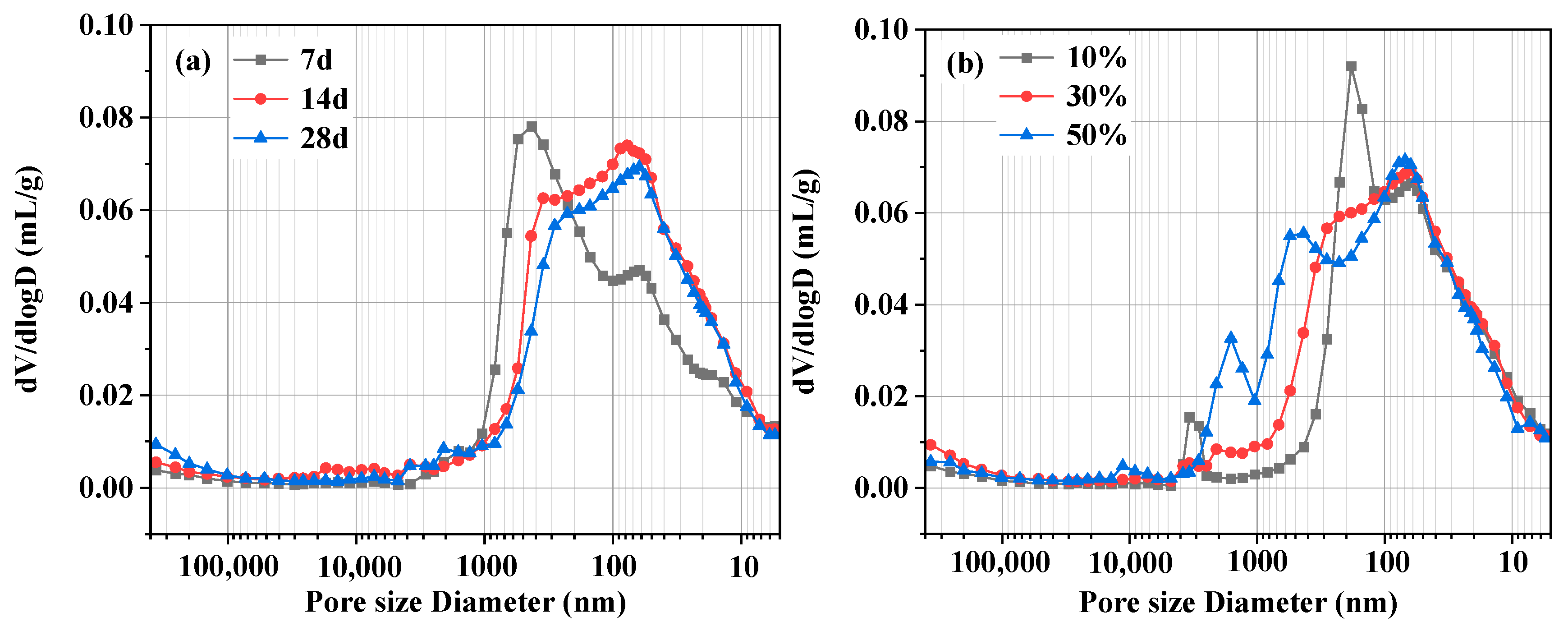
Figure 1a shows the pore size distribution of mortar with 30% granite sawdust. The peak value of different age curves corresponds to the critical pore-diameter, representing the pore size range with the most distribution in the tested material. The critical pore-diameter of mortar cured for 7 days is about 432.40 nm. With the increase in curing time, the critical pore-diameter of mortar cured for 14 days is 77.29 nm, and the critical pore-diameter of mortar cured for 28d is reduced to 62.45 nm. This indicates that along with the hydration reaction, the critical pore-diameter of mortar cured for 28d is reduced from 432.40 nm in 7 days to 62.45 nm, indicating that the hydration products fill the macro pores and make the pore size distribution migrate to small size [22]. The 28d mortar samples with different granite sawdust content is shown in Figure 1b, where the critical pore-diameter of mortar sample in 28d gradually decreases with the increase in granite sawdust content. The critical pore-diameter values of mortar with 10%, 30% and 50% were 183.12 nm, 62.49 nm and 69.05 nm respectively. The higher dosages (≥30%) can decrease the critical pore-diameter by 65.87% when compared to the lower dosage (10%). Indeed, the 30% proportion of granite sawdust is a suitable amount for dry-mixed mortar. This may be due to the small granite sawdust particles thus making the pore size distribution of mortar concentrate to small size.
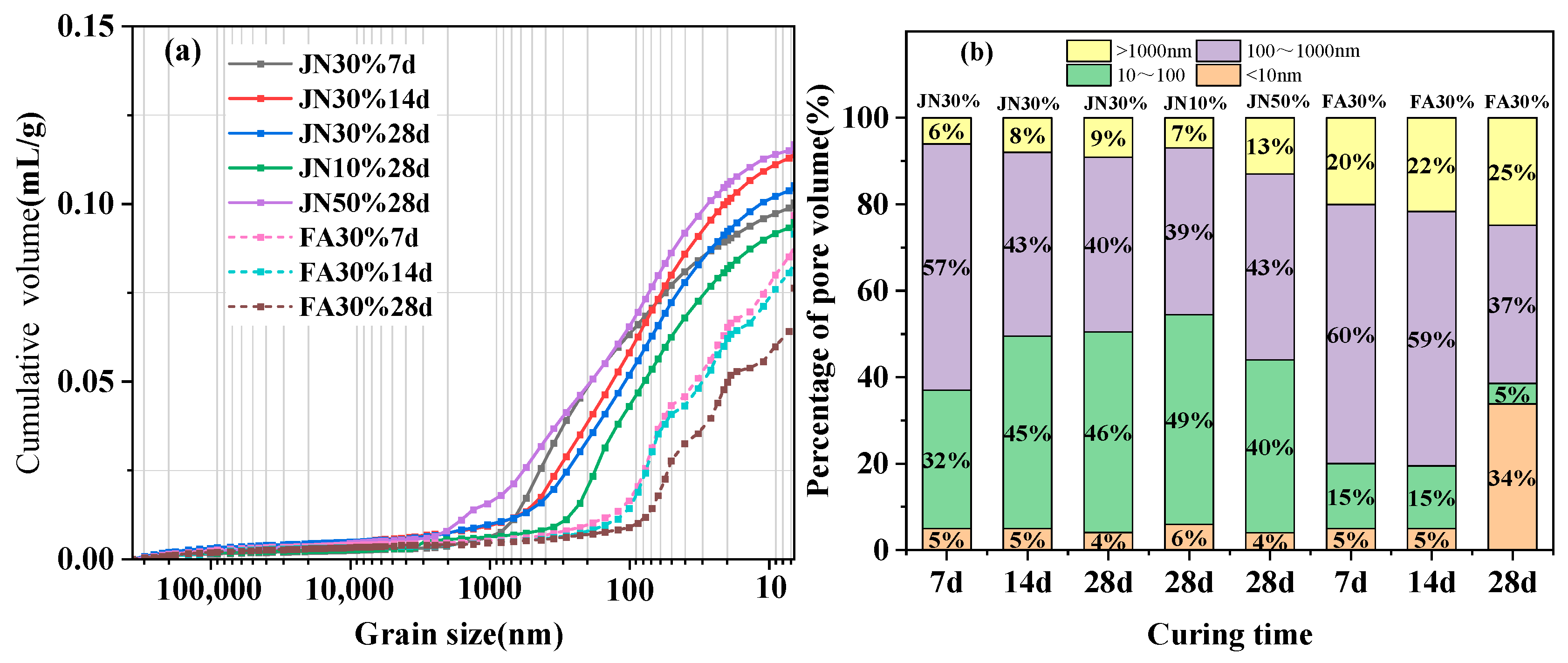
Figure 2a shows the cumulative pore volume of mortar with granite sawdust and compared to that of the fly ash. For the mortar with granite sawdust, the effects of different dosage (10%, 30% and 50%) and curing time (7d, 14d and 28d) were investigated on the pore structure. The control is the mortar with different curing time. The test results show that the total pore volume of 28d mortar under different granite sawdust content increases with the increase in the content, which is due to the decrease in hydration products and the increase in porosity. For 30% dosage, the cumulative pore volume of mortar with fly ash is generally smaller than that of granite sawdust. With the increase in curing time, the cumulative pore volume of samples with fly ash and granite sawdust all decrease. The proportion of pore size volume of mortar is shown in Figure 2b. Generally, the pore size of cementitious materials is classified into four types: pore diameters exceeding 1000 nm are called large pores; pore diameters ranging from 100 nm to 1000 nm are called capillary pores, pore sizes ranging from 10 nm to 100 nm are called transition pores, and pore sizes less than 10 nm are called gel pores. The capillary pores and transition pores account for a large proportion (≥70%) of the total pores of all samples, while gel pores account for the smallest proportion (≤6%), expect for FA30%28d. The hydration reaction continues to deepen with the increase in curing time, and the pores are gradually filled with hydration products, where more capillary pores (from 50% to 40%) change into transition pores (from 32% to 46%) and the percentages of large pores (6–8%) and gel pores (4–5%) are no significant changes. With the increasing granite sawdust, the cement content decreased and the hydration products were insufficient. Thus, the proportion of macro pores and capillary pores increased. However, fly ash is a relatively active mineral. The samples with fly ash tend to have more small pores (from 7% to 28%) with the increase in curing time.
Table 1 shows the test results of the sample pore structure parameters by mercury porosimeter. It can be found that with the increase in granite sawdust content, the total pore volume, median pore size (volume), median pore size (area), average pore size and porosity of the sample in 28d gradually increase. Due to the reduction in cement content, the hydration products are not enough to fill the pores of mortar [23], which is consistent with the trend that the compressive strength of mortar gradually decreases with the increase in sawdust content. At the same time, the large pores, fine pores and transition pores in the mortar are caused by the residual water between some hydration particles after evaporation [24]. Therefore, the porosity first increases and then decreases with the progress of hydration reaction. This conclusion is consistent with the variation trend observed in the present study. Previous studies have shown that the incorporation of granite sawdust into cement-based materials can significantly influence their pore structure. Liang et al. [25,26] reported that at low replacement levels, granite sawdust can refine the pore size distribution through a filling effect. However, with increasing replacement content, the reduction in cement dosage leads to insufficient hydration products, resulting in a marked increase in material porosity. Zhou et al. [10], in their investigation on the effects of iron tailings powder on the pore structure of dry-mixed mortar, pointed out that an increase in fine powder content promotes a shift in pore size distribution toward smaller pores. Nevertheless, at higher replacement levels, the volume fractions of macropores and capillary pores increase, leading to a looser pore structure. Although the material types differ, the evolution patterns of pore structure are similar to those observed in this study, indicating that low-reactivity fine powders are unable to continuously improve the pore structure of mortar at high replacement levels.

2.2. Workability Analysis

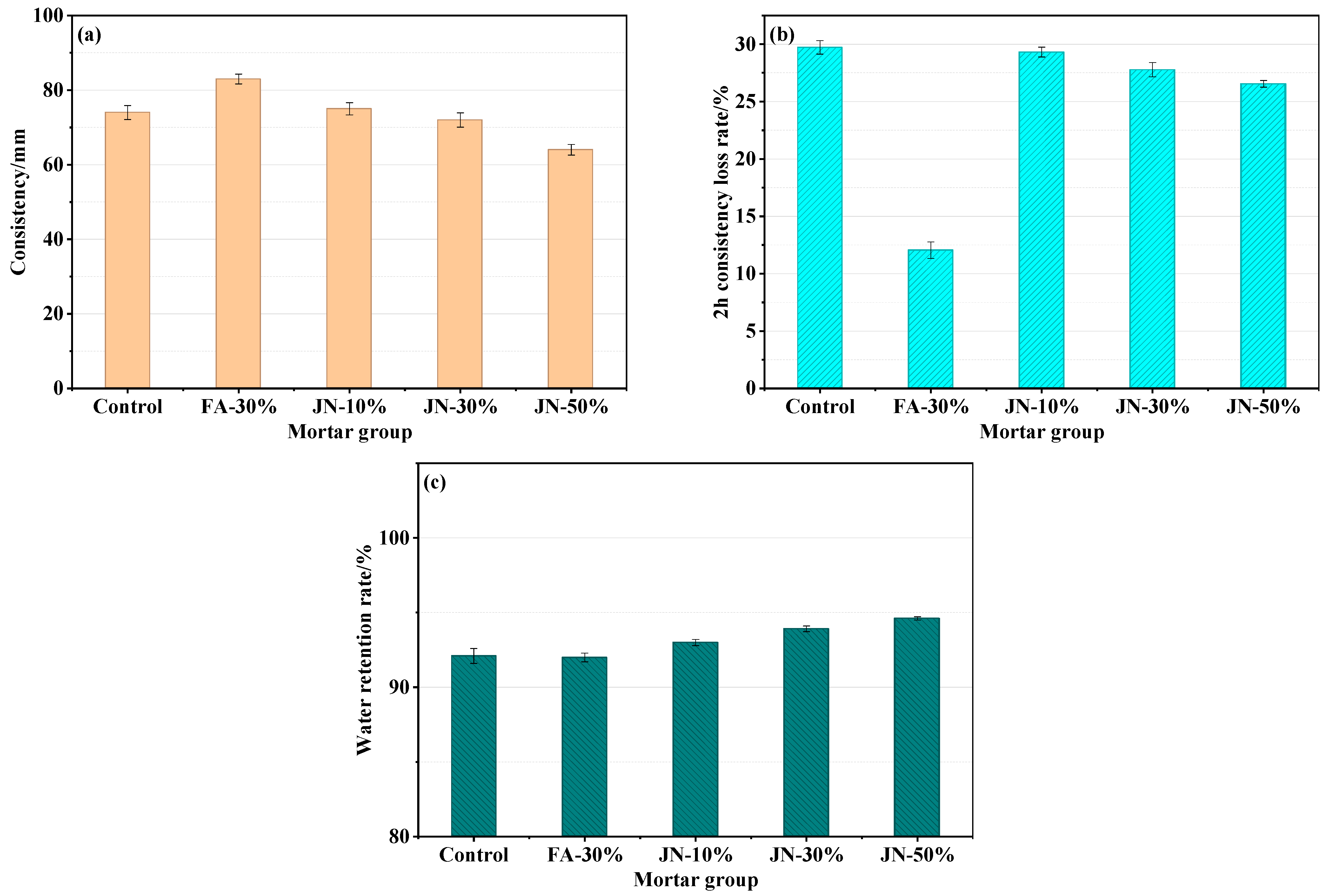
The workability parameters of mortar are shown in Figure 3, including (a) consistency (Figure 3a), 2 h consistency loss rate (Figure 3b) and water retention rate (Figure 3c). Compared to the control, the low-dosage (10%) granite sawdust has no significant effect on the consistency of the mortar, only from 74 to 75 (Figure 3a). With the increasing dosage (from 30% to 50%) of granite sawdust, the mortar consistency decreased by up to 13.5%. With the same dosage (30%), FA added has increased by 12.16%, which has to do with the spherical morphology of fly ash (Figure 4). With the increasing dosage of granite sawdust, the 2 h consistency loss rate of mortar gradually decreased. The 2 h consistency loss gradually decreases with the increasing granite sawdust from 10% to 50% (Figure 3b). It should be noted that it can meet the standard requirements of Ready-mixed Mortar (mortar consistency 70–90 mm, consistency loss rate less than 30%) when the dosage is 10% and 30%. However, there are too many fine particles of granite sawdust powder when the dosage reaches 50%, the specific surface area increases and more water molecules are adsorbed, which increases the viscosity and reduces the consistency of mortar. Therefore, the mortar mixed with fly ash has the highest consistency and the minimum 2 h consistency loss rate and the mortar consistency.
Compared to the control, the addition of granite sawdust improves the water retention of mortar by up to 2.71% (Figure 3c). With the increasing dosages from 10% to 50%, the water retention increases from 93.0 to 94.6. This is related to the water absorption of granite sawdust. Granite sawdust contains a large number of micropores and capillary structures, and its small particle size and large specific surface area make granite sawdust effectively absorb water [27]. Ling et al. [9] found that fine powder admixtures can significantly enhance the water retention of mortar due to their large specific surface area and strong water absorption capacity in their study on the effects of recycled powder on the workability of dry-mixed mortar. However, they simultaneously reduce consistency, and at high replacement levels may lead to insufficient fluidity. The variation trend revealed in that study is similar to the results of the present work, indicating that granite sawdust exerts a comparable influence on the workability of dry-mixed mortar, characterized by improved water retention but reduced consistency. Therefore, the appropriate replacement level of granite sawdust should be controlled within a certain range.

2.3. Mechanical Property Analysis

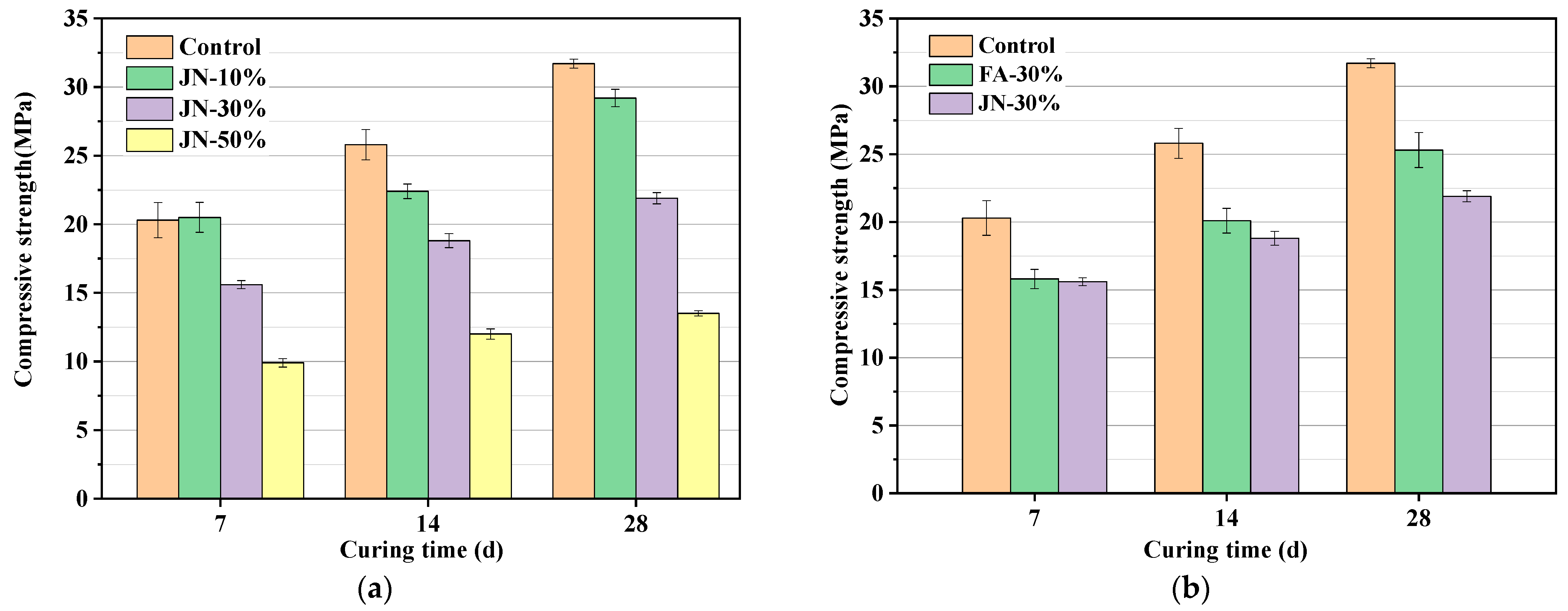
The effects of different amounts of granite sawdust on the compressive strength of mortar at 7d, 14d and 28d are compared (Figure 5a), where the granite sawdust is used to replace cement by equal mass substitution of 10%, 30% and 50%, respectively. With the increasing granite sawdust, the compressive strength decreased gradually. This is related to the increasing porosity of mortar (Table 1). The main reason is to control the total amount of cement and cementitious materials unchanged in the mix proportion design. The decreased cement content can decrease accordingly with the increase in sawdust content, which has a certain impact on the compressive strength of mortar [23]. The 28d compressive strength of mortar mixed with 10% granite sawdust is 29.2 MPa, and the 28d compressive strength of mortar mixed with 30% granite sawdust is 21.9 MPa, which meets the standard requirements of M25 and M20 dry-powder mortar strength in practical engineering. By comparing the compressive strength of the control group, the 7d strength of mortar with 10% granite sawdust is higher than that of the control. This indicates that the low content of granite sawdust not only ensures sufficient cement hydration products but also plays a bonding role as a filler and improves the early overall strength.
Under the same 30% dosage, the overall compressive strength of different admixtures (JN and FA) is lower than that of the reference mortar in the 28d standard curing cycle (Figure 5b). The compressive strength of mortar at all curing times generally exhibits a downward trend with increasing granite sawdust content. At low replacement levels, the variation in strength is not significant, whereas a pronounced reduction in strength is observed at high replacement levels. Liang et al. [25] likewise reported that granite sawdust can provide a certain compensatory effect on strength at low contents through a filling effect. However, the reduction in cement content and the insufficiency of hydration products lead to a significant decline in the later-time strength of the material as the replacement level increases. The conclusions of that study are consistent with the mechanical performance trends observed in the present work, indicating that granite sawdust in cement-based materials is generally beneficial at low replacement levels while detrimental when used at high contents. Different from direct hydration of cement, granite sawdust and fly ash are used as auxiliary cementitious materials, and their active ingredients (such as active SiO2 and Al2O3) take a long time to produce hydration products, which are not enough to make up for the loss of hydration products caused by replacing cement in the same amount [28]. Compared to the control, the decrease degree of mortar compressive strength owed to granite sawdust is higher than that of FA. At the curing time of 7d, 14d and 28d, their decrease degrees are 23.15%, 27.13%, 30.91% and 22.17%, 22.09%, 20.19%. This is related to a slightly higher activity index of the fly ash, thus resulting in a lesser reduction in compressive strength.

2.4. Correlation Analysis

To quantify the contribution weight of pore size distribution to strength and make up for the deficiency of qualitative analysis only in the existing studies, the grey correlation theory was employed to calculate and analyze the correlation degree of granite sawdust on the mechanical properties and microstructure of dry powder mortar [29].
Among them, grey correlation analysis is a factor analysis method of “less data and uncertainty” in the grey system, which seeks the correlation degree between various factors in the system and finds the main factors affecting the system. To explore the correlation between the mechanical properties and microstructure of dry powder mortar with different dosages of granite sawing mud and test times, the compressive strength was taken as the representative value of mechanical properties. The calculation procedure was as follows [29]:
(1) Assuming the compressive strength series is the mother sequence,
X0 = {x0(1), x0(2), …, x0(m)}, i.e., {15.6, 18.8, …, 25}
Here, m represents the number of samples. Let the proportions of different apertures be subsequences,
Xi = {xi(1), xi(2), …, xi(m)}, i = 1, 2, …, n
Here, i represents different aperture intervals, i.e., <10 nm, 10–100 nm, 100–1000 nm, >1000 nm.
(2) To eliminate the influence of dimensional differences, the initial value method is adopted for dimensionless processing,
x′i(k) = xi(k)/xi(1), x′0(k) = x0(k)/x0(1)
Obtaining the processed sequence,
X′0 = {x′0(1), x′0(2), …, x′0(m)}, X′i = {x′i(1), x′i(2), …, x′i(m)}
(3) Calculating the absolute difference between the mother sequence and the subsequence,
Δi(k) = |x′0(k) − x′i(k)|, Δmin = min_i min_k Δi(k), Δmax = max_i max_k Δi(k)
(4) The formula for calculating the grey correlation value is,
γi(k) = (Δmin + ρΔmax)/(Δi(k) + ρΔmax)
Here, ρ is the resolution coefficient, where 0 < ρ < 1, and the commonly used value of 0.5 is taken.
Grey correlation analysis quantifies the relationship between pore size and strength, which provides a theoretical basis for optimizing mortar performance through pore structure regulation. The ratio of compressive strength and pore size of different samples is listed in Table 2, and the compressive strength is used as the parent sequence and the pore size of different ranges is used as the sub sequence. The resolution coefficient is taken as 0.5, and the correlation coefficient is calculated in combination with the correlation coefficient calculation formula to obtain the corresponding correlation coefficient value. The output sequence values are shown in Table 3.
Table 3 shows the results of correlation value between pore size and compressive strength of different samples. From the calculation results, it can be concluded that the correlation degree of pore size range less than 10 nm and more than 1000 nm decreases with the increase in curing time when sawdust is used as the content. The correlation degree of pore size in the range of 100–1000 nm increased with time. When the content of fly ash is used, the correlation degree of 10–100 nm shows a decreasing trend, and the correlation degree of 100–1000 nm shows an increasing trend.
From the perspective of the average correlation degree of the pore size of the sample, whether it is the samples with different culture ages or different amounts of sawn mud and fly ash, the samples with the pore size range of more than 1000 nm and less than 10 nm have relatively high correlation degree, while the samples with the pore size range of 10–1000 nm have relatively low correlation degree. The greater the correlation value, the stronger the correlation between the compressive strength of the corresponding sample and its corresponding pore size range. Therefore, it can be determined that the compressive strength of the test sample has the strongest correlation with the pore size range greater than 1000 nm and less than 10 nm [30].
Based on grey relational analysis, the results of this study indicate that, among the tested samples, pore size ranges of <10 nm and >1000 nm exhibit relatively high correlations with compressive strength, suggesting that ultrafine pores and extremely large pores exert a significant influence on strength development. The large macropores (>1000 nm) are typically critical defects affecting strength, while gel pores (<10 nm) are associated with C-S-H structure [31,32]. This dual influence could be elaborated and linked to cement hydration theory.
A comparable study applied MIP combined with grey relational analysis to high water content grouting materials and demonstrated that porosity and the most probable pore diameter show strong correlations with compressive strength [31,32]. Moreover, pore size ranges of 100–500 nm and 10–100 nm were identified as having particularly pronounced effects on strength. Despite differences in material systems and critical pore size intervals, both studies consistently confirm a significant grey correlation between pore structure parameters and compressive strength, and emphasize the controlling role of specific pore size ranges within the pore size distribution on mechanical performance.

3. Materials and Methods

3.1. Raw Materials

The granite sawdust (abr. JN) was used as the partial substitution of cement and compared to that of fly ash (abr. FA) in this work. The chemical composition of cement, fly ash and granite sawdust used in the work is shown in Table 4. The cement is P·O 42.5 standard Portland cement (according to the Chinese standard of Common Portland Cement (GB175-2007)) [33]. The moisture content of the granite sawdust exceeds 20%, and it needs to be dried and ground before the experiment. The final moisture before use of granite sawdust should be lower 0.5% using 105 °C drying oven, which should meet the Chinese standard Ready-mixed Mortar (GB/T 25181-2019) [34]. Considering the low hardness and easy-to-grind nature of the mud samples, a batch grinding process was carried out using a SM500 × 500 mm ball mill from Shanghai Luda Experimental Instrument Co., Ltd. (Shanghai, China). The grinding time was set at 3 min, following the experimental design for grinding time in relevant literature [35].
The 28d activity index (Fly Ash Used For Cement And Concrete) (Chinese standard, GB/T 1596-2017) [36] of granite sawdust was 68%, which was slightly lower than that of fly ash (i.e., 71%). The mortar method was used, where the mix ratio of reference mortar is 450 g cement, 1350 g sand (ISO standard) and 225 g water and the testing mortar is that only 135 g cement was replaced by granite sawdust or fly ash, and their 28d standard mortar compressive strength ratio values was calculated as the activity index. The fly ash is type II, which meets the relevant performance index requirements (Fineness ≤ 30%, water demand ratio ≤ 105 and loss on ignition ≤ 8%) of Chinese standard of Fly Ash Used For Cement And Concrete (GB/T 1596-2017) [36]. The fineness of the fly ash was 27.1% through 0.045 mm sieve residue method. The loss on ignition (LOI) was 2.89% and its water demand ratio was 99%. The properties such as fineness, LOI, and water demand ratio were experimentally measured by the authors according to the Chinese standard. The raw materials were provided by Zhejiang Tianzao Environmental Protection Technology Co., Ltd., Lishui 323000, China.
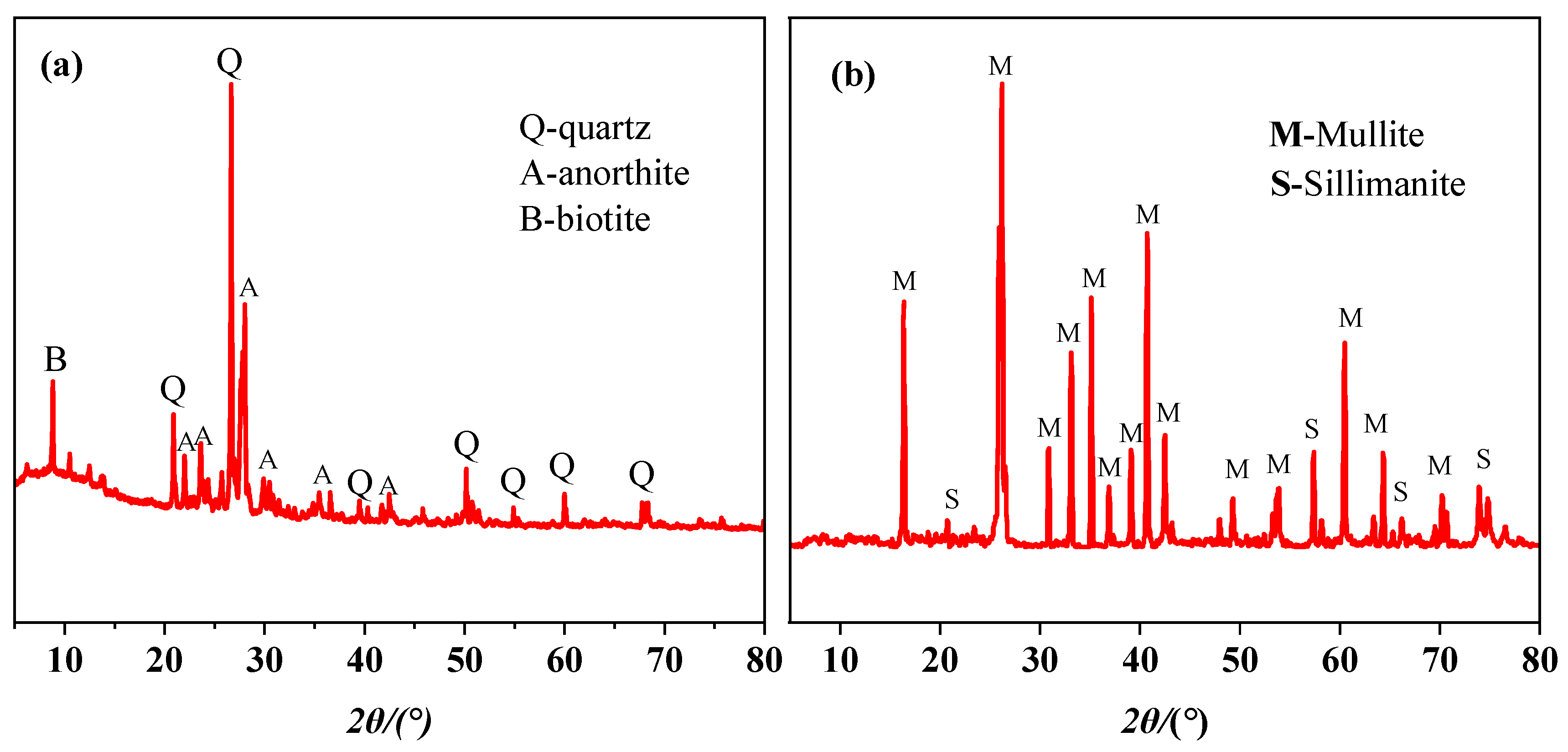
The mineral composition of granite sawdust is shown in Figure 6, which mainly contains quartz, anorthite and biotite.
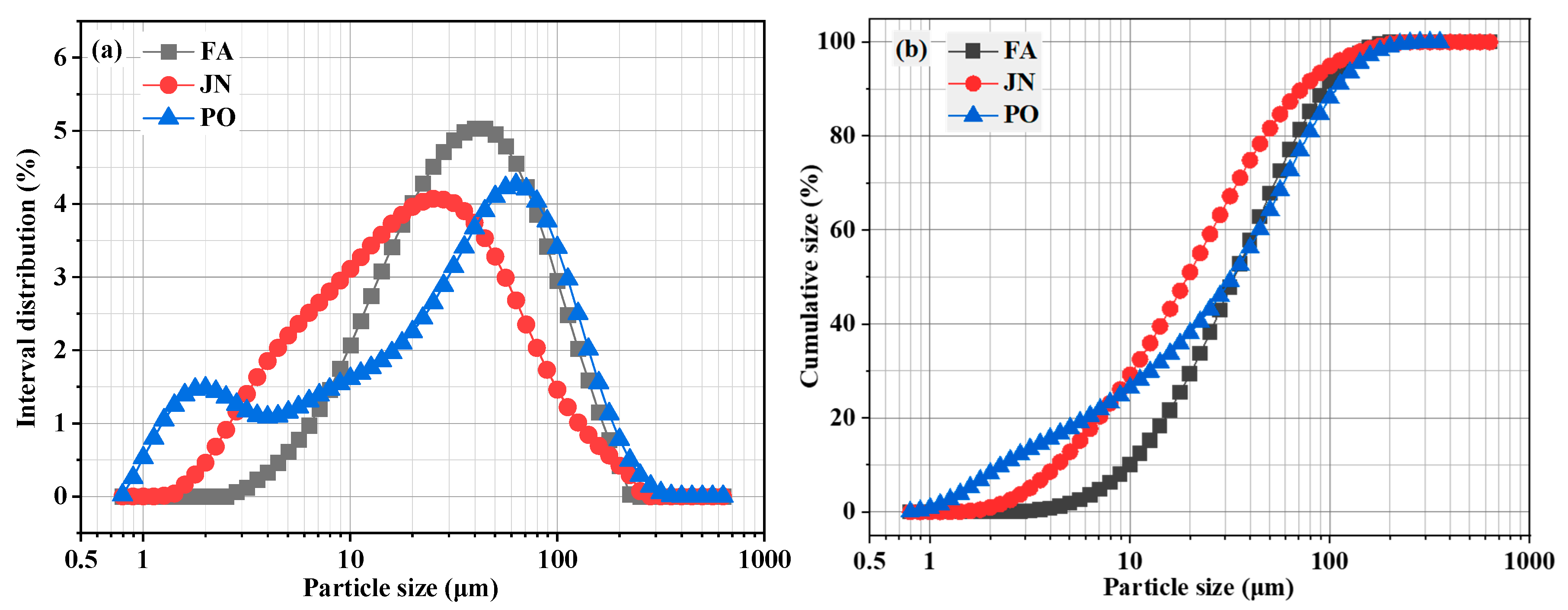
Particle size distribution of FA, JN and P·O and their cumulative distribution are shown in Figure 7. The critical particle sizes of FA, JN and P·O were 44.78 μm, 25.18 μm and 63.25 μm. This means that the particle sizes of JN tend to have a more fine distribution, while the cement particle sizes tend to have a more coarse distribution.
The fine aggregate is manufactured sand, which meets the requirements of Standard For Technical Requirements and Test Method of Sand and Crushed Stone (or gravel) For Ordinary Concrete (JGJ52) [37], and all pass through the 4.75 mm sieve. The grading screening results are shown in Table 5. The fineness modulus is 2.82, and the grading is good, meeting the requirements.
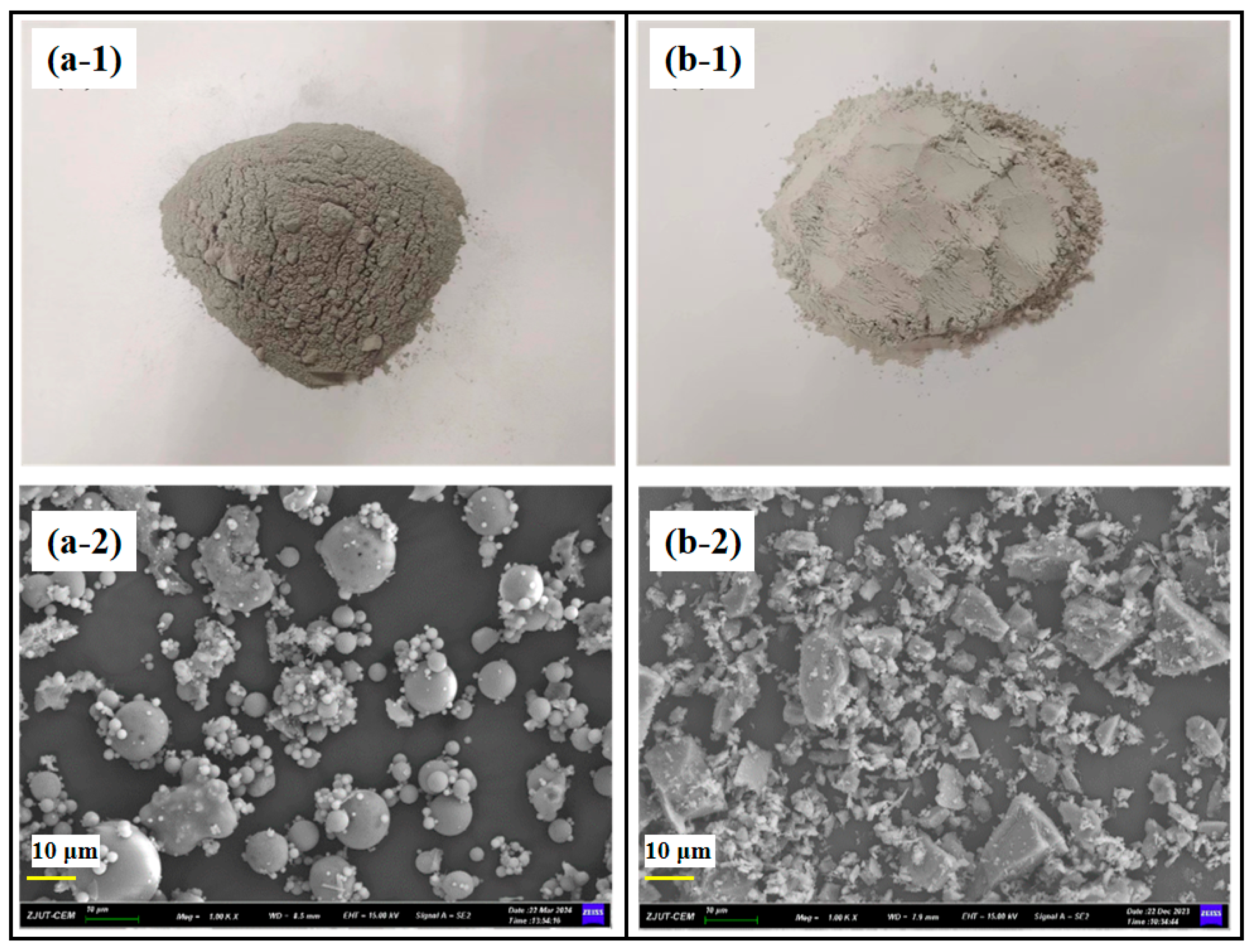
Fly ash appears as a greyish powder, while granite sawdust presents as a pale white powder (Figure 4(a-1,b-1)). This may be related to the chemical composition and mineral composition of fly ash and granite sawdust (Table 4 and Figure 6), where the relatively high iron content was contained in fly ash while the main component of granite sawdust is quartz mostly colourless and transparent. During the processing of granite, quartz is crushed into fine particles, resulting in a white powder overall. The microscopic morphology of the test powder material at the same electron microscope magnification (×1000 times) is shown in Figure 4. Fly ash appears as spherical particles with a smooth surface. When the mortar mixture flows, it can reduce frictional resistance, play a lubricating role, and improve the workability of the mortar. Granite saw mud is irregular in shape, with a rough surface and small scattered particles distributed. It exhibits different characteristics in particle size and distribution.

3.2. Testing Methods

The mechanical properties of mortar were in accordance with ISO Method Test Method for Strength of Cement Mortar (GB/T 17671-2021) [38]. The work ability of mortar shall be in accordance with Standard For Test Method of Basic Properties of Construction Mortar (JGJ/T 70-2009), similar to ASTM C230/C230M [39]. The consistency loss rate of mortar in 2 h shall be determined according to Chinese standard Ready-mixed Mortar (GB/T 25181-2019), similar to EN 998-1 (plastering mortar) and EN 998-2(Masonry Mortar) [34].
XRD Analysis. The processed sample powder was analyzed using model X’Pert PRO, with a working voltage of 40 kV and a working current of 40 mA, and CuKα rays. The 2θ range of the acquisition mode is 5°–80°, with a step size of 0.026°. Due to the complexity of the natural mineral samples and potential peak overlaps, the identification primarily relied on the three most intense characteristic peaks of each phase. All identified phases are consistent with the geological origin of the samples. SEM Analysis. The sample was dried in a vacuum drying oven at 60 °C until a constant weight was achieved. After the samples were gold-sprayed, they were observed using a field emission electron scanning microscope of model Regulus 8100.
MIP Analysis. Mercury intrusion porosimetry (MIP) method is used for analyzing the pore structure parameters. The pore structure parameters of mortar with 28d curing time were analyzed using MIP method. First, cube specimens with a side length of approximately 10 mm were cut. The specimens were mainly composed of mortar. Then, the specimens were immersed in anhydrous ethanol for 7 days until the hydration process was terminated. Before the experiment, the specimens were placed in a vacuum drying oven at 60 °C to reach constant weight, and then the MIP test was initiated. This test used the mercury intrusion apparatus of the Autopore IV 9500 from the American company Micromeritics. The pressure range for the mercury intrusion test was set from 0.5 psi to 33,000 psi, and the test environment temperature was 25 °C. The pore size range for the test was 5 nm to 800 μm.

3.3. Mortar Mix Proportion

According to Specification For Mix Proportion Design of Masonry Mortar (JGJ98-2010), the consistency and water retention requirements of fresh mortar are met, which is consistency of 70–90 mm, mortar water retention rate ≥ 88% [40]. Through trial mixing adjustment, the final mortar mix proportion is the sum of cementitious materials: Sand: water = 1:3:0.65. Taking P0 as the benchmark control group, granite sawdust was gradually replaced by 10%, 30% and 50% of cement in the control group (Table 6). Fly ash is incorporated as a supplementary cementitious material to partially replace cement. Its specific role in the mix design is to optimize performance (enhancing workability, reducing heat of hydration, improving long-term strength and durability, and promoting sustainability) and cost-effectiveness while meeting the required specifications. The replacement rate of cement in the control group was 30%, and the total amount of cementitious materials and mineral admixtures remained unchanged.

4. Conclusions

In this work, granite sawdust was used as a partial substitution of cement to analyze its influence on the performance of dry-mixed mortar. The correlations microstructure between mechanical properties were also analyzed based on the grey correlation theory. The main consequences can be summarized as follows:
(1)
The surface of granite sawdust is rough and small particles are distributed, which is smaller than the average particle size of common mineral admixture fly ash. The content of SiO2 and CaO in granite sawdust is slightly higher than that of fly ash, while its content of Al2O3 is much lower. The main mineral composition of granite sawdust is quartz, anorthite and biotite, and its reactivity index is slightly lower than that of fly ash.
(2)
Using 10% granite sawdust instead of cement, the workability and mechanical properties of mortar are the best and meet the M25 technical requirements. A total of 30% sawdust is used to replace cement, and mortar meets M20 technical requirements. With the increasing granite sawdust, the mortar consistency and 2 h consistency loss showed a downward trend. The 14d and 28d compressive strength of mortar showed a gradual decreasing trend and its critical pore-diameter gradually decreased.
(3)
For the calculation of correlation degree of different samples, the samples with pore size range greater than 1000 nm and less than 10 nm have relatively high average correlation degree, and these two pore size ranges have the greatest impact on the compressive strength of the samples.

Author Contributions

Conceptualization, Z.G. and R.Q.; methodology, R.Q. and F.W.; software, J.L. and T.M.; validation, H.N., S.L. and J.X.; formal analysis, J.X. and M.S.; investigation, S.L.; resources, Z.G.; data curation, J.L. and T.M.; writing—original draft preparation, M.S. and R.Q.; writing—review and editing, R.Q. and M.S.; visualization, H.Q.; supervision, S.L.; project administration, R.Q.; funding acquisition, Z.G. All authors have read and agreed to the published version of the manuscript.

Funding

This work was financially supported by the Fundamental Research Funds for the Provincial Universities of Zhejiang (RF-A2023015), Zhejiang Provincial Natural Science Foundation of China (NO. LQ23E080018), and National Natural Science Foundations of China (NO. 52208292).

Data Availability Statement

The original contributions presented in this study are included in the article. Further inquiries can be directed to the corresponding authors.

Conflicts of Interest

Zhiji Gao works at Hangzhou Huayao Zhikun Technology Co., Ltd. Haibo Nie works at Zhejiang Tianzao Environmental Protection Technology Co., Ltd. All authors declare that they have no known competing financial interests or personal relationships that could have appeared to influence the work reported in this paper.

References

  1. Jain, A.; Choudhary, S.; Gupta, R.; Chaudhary, S.; Gautam, L. Effect of granite industry waste addition on durability properties of fly ash blended self-compacting concrete. Constr. Build. Mater. 2022, 340, 127727. [Google Scholar] [CrossRef]
  2. Nuaklong, P.; Hamcumpai, K.; Keawsawasvong, S.; Pethrung, S.; Jongvivatsakul, P.; Tangaramvong, S.; Pothisiri, T.; Likitlersuang, S. Strength and post-fire performance of fiber-reinforced alkali-activated fly ash concrete containing granite industry waste. Constr. Build. Mater. 2023, 392, 13198. [Google Scholar] [CrossRef]
  3. Zhang, Y.; Li, Y.; Xue, L.T.; Wu, X.; Jian, S.; Lv, Y. Research progress on preparation of building materials from granite saw mud. Bull. Chin. Ceram. Soc. 2023, 42, 554–564. (In Chinese) [Google Scholar] [CrossRef]
  4. Wang, J.L.; Peng, S.W.; Wang, Q.; Dou, H.T.; Wei, S.J.; Lu, H.; Gao, L.; Li, B.Q.; Long, L.F.; Shen, Y.; et al. Experimental study on comprehensive utilization of granite saw mud tailings. Ceramics 2021, 11, 22–27. (In Chinese) [Google Scholar] [CrossRef]
  5. Hou, W.; Zhang, Q.; Zhuang, Z. Sustainable reuse of marble and granite powder in cementitious composites: A microstructural and durability perspective. ACS Sustain. Chem. Eng. 2024, 12, 2198–2215. [Google Scholar] [CrossRef]
  6. Dong, Y.R.; Zhao, C.L.; Guo, W.; Jiang, C.C.; Huang, S.F.; Cheng, X. Preparation of foamed ceramics from granite saw mud and marble waste powder. Bull. Chin. Ceram. Soc. 2023, 42, 939–947+969. (In Chinese) [Google Scholar] [CrossRef]
  7. Hamcumpai, K.; Nuaklong, P.; Chindasiriphan, P.; Jongvivatsakul, P.; Tangaramvong, S.; Di Sarno, L.; Likitlersuang, S. High-strength steel fibre-reinforced geopolymer concrete utilising recycled granite waste and rice husk ash. Constr. Build. Mater. 2024, 433, 136693. [Google Scholar] [CrossRef]
  8. Castán-Fernández, C.; Marcos-Robredo, G.; Castro-García, M.; Rey-Ronco, M.; Alonso-Sánchez, T. Development of a dry mortar with nanosilica and different types of industrial waste for the application in borehole heat exchangers. Constr. Build. Mater. 2022, 359, 129352. [Google Scholar] [CrossRef]
  9. Ling, G.; Xu, Z.Y.; Hu, L.; Lin, X. Influence of recycled sand and powder on workability and mechanical properties of dry-mixed mortar. China Concr. Cem. Prod. 2023, 95–98+102. (In Chinese) [Google Scholar] [CrossRef]
  10. Zhou, L.; Weng, J.H.; Li, K.W.; Wang, J.X.; Liu, Q.H. Influence and mechanism analysis of iron tailings powder on properties of dry-mixed mortar. Mod. Min. 2022, 38, 13–17. (In Chinese) [Google Scholar] [CrossRef]
  11. Stempkowska, A.; Gawenda, T.; Chajec, A.; Sadowski, Ł. Effect of Granite Powder Grain Size and Grinding Time on the Properties of Cementitious Composites. Materials 2022, 15, 8837. [Google Scholar] [CrossRef]
  12. Kaptan, K.; Cunha, S.; Aguiar, J. A review of the utilization of recycled powder from concrete waste as a cement partial replacement in cement-based materials: Fundamental properties and activation methods. Appl. Sci. 2024, 14, 9775. [Google Scholar] [CrossRef]
  13. Kawan, G.; Wael, M.; Warzer, Q.; Ahmed, M. Effect of Particle Size Distribution of Sand on Mechanical Properties of Cement Mortar Modified with Microsilica. Mater. J. 2020, 117, 47–60. [Google Scholar] [CrossRef]
  14. Malathy, R.; Shanmugam, R.; Chung, I.-M.; Kim, S.-H.; Prabakaran, M. Mechanical and Microstructural Properties of Composite Mortars with Lime, Silica Fume and Rice Husk Ash. Processes 2020, 10, 1424. [Google Scholar] [CrossRef]
  15. Zeng, H.; Li, Y. Effect of waste stone powder on compressive strength and pore structure of concrete in extreme low temperature and complex environment. J. Build. Eng. 2024, 95, 110108. [Google Scholar] [CrossRef]
  16. Tangaramvong, S.; Nuaklong, P.; Khine, M.T.; Jongvivatsakul, P. The influences of granite industry waste on concrete properties with different strength grades. Case Stud. Constr. Mater. 2021, 15, e00669. [Google Scholar] [CrossRef]
  17. Gehlot, R.M.; Shrivastava, S. An AHP based sustainability assessment of cement mortar with synergistic utilization of granite cutting waste. J. Build. Eng. 2024, 86, 108794. [Google Scholar] [CrossRef]
  18. de Medeiros, W.R.P.; Neto, O.D.M.; Luz, P.M.S.G.; de Oliveira, R.K.F.; Guedes, L.R. Utilizing marble and granite industry waste in asphalt mixtures for enhanced road performance and sustainability. J. Eng. Res. 2024, 12, 670–679. [Google Scholar] [CrossRef]
  19. Deng, J.L. Grey control system. J. Huazhong Inst. Technol. 1982, 9–18. (In Chinese) [Google Scholar] [CrossRef]
  20. Zhang, J.; Zheng, Y.; Zhao, Y.; Cui, K.; Shen, P.; Poon, C.S. Utilization of granite sludge in the production of low carbon cement composites after coupled mechanical and CO2 activation (CMCA). Cem. Concr. Compos. 2025, 106, 106284. [Google Scholar] [CrossRef]
  21. Medina, G.; del Bosque, I.S.; Frías, M.; de Rojas, M.S.; Medina, C. Mineralogical study of granite waste in a pozzolan/Ca(OH)2 system: Influence of the activation process. Appl. Clay Sci. 2017, 135, 362–371. [Google Scholar] [CrossRef]
  22. Morsy, M.; Shoukry, H.; Mokhtar, M.; Ali, A.M.; El-Khodary, S. El-Khodary Facile production of nano-scale metakaolin: An investigation into its effect on compressive strength, pore structure and microstructural characteristics of mortar. Constr. Build. Mater. 2018, 172, 243–250. [Google Scholar] [CrossRef]
  23. Ghorbani, S.; Ghorbani, S.; Elmi, A.; Soleimani, V.; Taji, I.; Mohammadi-Khatami, M.; Tavakkolizadeh, M.; de Brito, J. Simultaneous effect of granite waste dust as partial replacement of cement and magnetized water on the properties of concrete exposed to NaCl and H2SO4 solutions. Constr. Build. Mater. 2021, 288, 123064. [Google Scholar] [CrossRef]
  24. Yang, S.Y.; Zhao, R.D.; Jin, H.S.; Li, F.H. Mechanical properties and pore structure fractal characteristics of geopolymer mortar. J. South China Univ. Technol. (Nat. Sci. Ed.) 2020, 48, 126–135. (In Chinese) [Google Scholar] [CrossRef]
  25. Liang, H.Q.; Hu, X.J.; Hu, S.X.; Zhu, F.; Wan, H.W. Influence of granite saw mud on properties of ready-mixed concrete. J. Wuhan Univ. Technol. 2023, 45, 35–40. (In Chinese) [Google Scholar] [CrossRef]
  26. Li, S.; Hu, X.J.; Liang, H.Q.; Wan, H.W.; Shen, C. Effect of granite saw mud on properties of C80 pipe pile concrete. China Concr. Cem. Prod. 2023, 87–89+94. (In Chinese) [Google Scholar] [CrossRef]
  27. Shi, J.; Liu, B.; He, Z.; Wu, X.; Tan, J.; Chen, J.; Jiang, J. Properties evolution of high-early-strength cement paste and interfacial transition zone during steam curing process. Constr. Build. Mater. 2020, 252, 119095. [Google Scholar] [CrossRef]
  28. Duan, D.; Liao, H.; Wei, F.; Wang, J.; Wu, J.; Cheng, F. Solid waste-based dry-mix mortar using fly ash, carbide slag, and flue gas desulfurization gypsum. J. Mater. Res. Technol. 2022, 21, 3636–3649. [Google Scholar] [CrossRef]
  29. Zhang, M.; Yao, X.; Guan, J.; Li, L.; Wang, J.; Qing, L. Study of concrete strength and pore structure model based on grey relation entropy. Materials 2021, 14, 432. [Google Scholar] [CrossRef]
  30. Han, Y.; Xia, J.; Yu, L.; Su, Q.; Chen, X. The relationship between compressive strength and pore structure of the high water grouting material. Crystals 2021, 11, 865. [Google Scholar] [CrossRef]
  31. Yang, L.; Gao, D.; Zhang, Y.; Tang, J.; Li, Y. Relationship between sorptivity and capillary coefficient for water absorption of cement-based materials: Theory analysis and experiment. R. Soc. Open Sci. 2019, 6, 190112. [Google Scholar] [CrossRef] [PubMed]
  32. Li, Y.; Kong, X.; Cao, Z.; Yang, L.; Xu, W.; Gao, D. Mechanical properties of steel fiber reinforced concrete (SFRC) mixed with NaCl solutions of varying concentrations. Case Stud. Constr. Mater. 2025, 23, e05389. [Google Scholar] [CrossRef]
  33. GB 175-2007; Common Portland Cement. Standards Press of China: Beijing, China, 2007.
  34. GB/T 25181—2019; Ready-Mixed Mortar. China Standards Press: Beijing, China, 2019.
  35. Shang, X.; Shi, H.; Gong, B.; Chen, Y.Q. Preparation and properties of supplementary cementing materials based on recycling of straw solid wastes. Acta Mater. Compos. Sin. 2025, 42, 1566–1577. [Google Scholar] [CrossRef]
  36. GB/T 1596—2017; Fly Ash Used for Cement and Concrete. China Standards Press: Beijing, China, 2017.
  37. JGJ 52—2006; Standard for Quality and Test Methods of Sand and Stone for Ordinary Concrete. China Architecture & Building Press: Beijing, China, 2006.
  38. GB/T 17671—2021; Method of Testing Cements—Determination of Strength (ISO Method). China Standards Press: Beijing, China, 2021.
  39. JGJ/T 70—2009; Standard for Test Methods of Basic Properties of Building Mortar. China Architecture & Building Press: Beijing, China, 2009.
  40. JGJ 98—2010; Specification for Mix Proportion Design of Masonry Mortar. China Architecture & Building Press: Beijing, China, 2010.
Figure 1. Sample pore size distribution: (a) 30% granite sawdust mortar sample and (b) 28d mortar samples with different granite sawdust contents.
Recycling 11 00058 g001
Figure 2. Sample pore volume: (a) Cumulative pore volume and (b) percentage of pore volume.
Recycling 11 00058 g002
Figure 3. The workability indicators of mortar: (a) Consistency; (b) 2 h consistency loss rate; and (c) water retention rate.
Recycling 11 00058 g003
Figure 4. The microscopic morphology features of: (a-1,a-2) FA and (b-1,b-2) JN.
Recycling 11 00058 g004
Figure 5. Compressive strength of mortar at 7 d, 14 d and 28d: (a) Different amounts of granite sawdust and (b) types of different admixtures.
Recycling 11 00058 g005
Figure 6. XRD analysis: (a) Granite sawdust and (b) fly ash.
Recycling 11 00058 g006
Figure 7. Particle size distribution: (a) Interval distribution and (b) cumulative distribution.
Recycling 11 00058 g007
Table 1. Testing results of porosity structural parameters of specimens by mercury porosimetry.
SampleTotal Porosity
(mL/g)
Median Aperture Volume (nm)Median Aperture Area (nm)Mean Pore Size (nm)Porosity (%)
JN30%-7d0.1004187.5417.2155.8820.12
JN30%-14d0.1145104.0919.7247.5222.11
JN30%-28d0.105198.3920.0446.6720.56
JN10%-28d0.095085.5818.9541.6519.07
JN50%-28d0.1168132.0421.3655.0922.65
Table 2. Relationship between the compressive strength of the specimens and the proportion of pore diameters.
Compressive Strength (MPa)<10 nm10–100 nm100–1000 nm>1000 nm
15.6532576
18.8545438
21.9446409
29.2649397
13.54404313
16.05156020
20.05155922
25.03453725
Table 3. Correlation values between compressive strength and particle size.
Sample<10 nm10–100 nm100–1000 nm>1000 nm
JN30%-7d0.6770.5710.3410.700
JN30%-14d0.6140.4520.4720.673
JN30%-28d0.5490.4730.5460.631
JN10%-28d0.4830.5230.6950.494
JN50%-28d0.7020.4490.4221.000
FA30%-7d0.6670.9570.3330.846
FA30%-14d0.5950.8150.3610.917
FA30%-28d0.7100.5240.6471.000
Correlation mean value0.6250.5980.4790.779
Table 4. Chemical composition of cement, fly ash and granite sawdust samples (mass fraction/%).
Raw MaterialsSiO2Al2O3Na2OFe2O3CaOMgOK2OLOI
Cement21.756.150.194.3461.081.700.724.07
Granite sawdust67.8815.775.142.392.591.543.661.03
Fly ash51.0737.850.583.272.460.710.863.20
Table 5. Particle size distribution of mechanically produced sand.
Sieve Pore Size/mm4.752.361.180.60.30.15
Cumulative residue/%00.6435.6264.6585.1395.50
Grading requirements/%5~025~050~1070~4192~7094~80
Table 6. Mortar mix ratio (kg/m3).
SampleCementFly AshGranite SawdustManufactured SandWater
Control450001350292.5
FA-30%31513501350292.5
JN-10%4050451350292.5
JN-30%31501351350292.5
JN-50%22502251350292.5
Disclaimer/Publisher’s Note: The statements, opinions and data contained in all publications are solely those of the individual author(s) and contributor(s) and not of MDPI and/or the editor(s). MDPI and/or the editor(s) disclaim responsibility for any injury to people or property resulting from any ideas, methods, instructions or products referred to in the content.