Review

Recycled Versus Primary Aluminum in European Automotive Industry: Trends, Challenges, and Opportunities


1
Faculty of Mechanical, Industrial and Maritime Engineering, Ovidius University of Constanța, 900527 Constanța, Romania
2
Department of Metallic Materials Processing and Environmental Engineering, National University of Science and Technology Politehnica of Bucharest, 060042 Bucharest, Romania
*
Authors to whom correspondence should be addressed.
Recycling 2026, 11(1), 19; https://doi.org/10.3390/recycling11010019
Submission received: 26 November 2025 / Revised: 9 January 2026 / Accepted: 13 January 2026 / Published: 15 January 2026

Abstract

The automotive industry’s use of aluminum alloys continues to rise, driven by efforts to reduce vehicle weight—and thus fuel consumption—amid growing demand for larger vehicles such as SUVs, as well as the accelerating shift to electric vehicles and the expanding global vehicle fleet. These trends create major challenges for the aluminum sector. This paper provides a narrative literature review of available and published data, primarily from the period 2020–2025, examining new trends, challenges and opportunities regarding the implementation of recycled aluminum as a substitute for primary aluminum in the European automotive industry. The goal is to develop a discussion based on the answer to the following three issues: (1) What opportunities exist for increasing the production of recycled aluminum, given the imperative to conserve diminishing raw materials required for primary aluminum production? (2) What methods could enhance the obtaining of recycled aluminum over primary aluminum? (3) How might the technological barriers that hinder the wider use of recycled aluminum be overcome? This review finds that recycled aluminum availability in the EU automotive sector is improving due to rising demand for recycled material over primary aluminum—supported by a steadily growing scrap supply—alongside the development of advanced recycling strategies capable of producing high-purity recycled alloys.

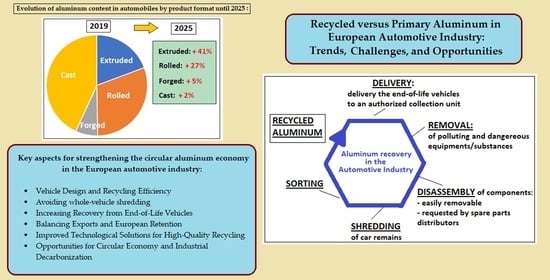
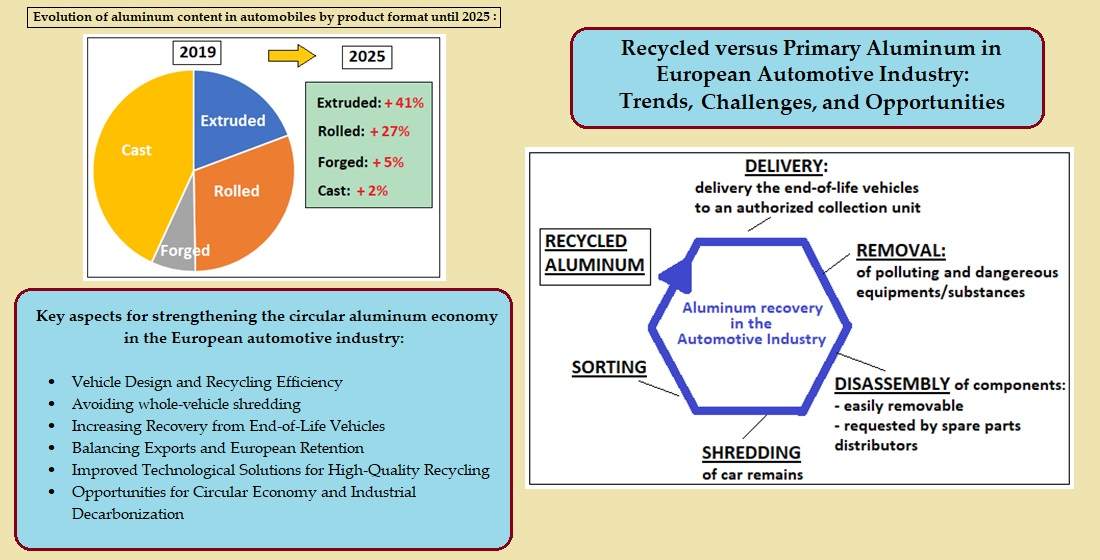
Graphical Abstract

1. Introduction

Aluminum alloys are among the fundamental materials used in the automotive industry, particularly in structural components, body panels, suspension elements, control systems, and steering systems [1,2,3], as well as in engine components such as pistons in internal combustion engines [4,5]. Consequently, end-of-life (EOL) vehicles represent a particularly valuable source of aluminum for recycling.
Global demand projections indicate that existing bauxite resources could sustain primary aluminum production for at least another century [6,7]. At the same time, China continues to hold a dominant position in global output [8]. These factors contribute to persistent uncertainty regarding both the long-term availability of primary aluminum and its future price trajectory, particularly given the well-documented volatility of aluminum markets [9].
Producing aluminum directly from bauxite is energy-intensive, requiring about 200 GJ per ton [10,11]—an order of magnitude higher than steelmaking. Consequently, primary aluminum is estimated to cost roughly five times more than steel [12,13]. This economic disparity strengthens the rationale for expanding the use of recycled aluminum. Secondary aluminum, derived from pre-consumer and post-consumer scrap, requires only around 5% of the energy needed for primary production [13], underscoring its substantial advantages in terms of both cost and sustainability.
The European Union has intensified its efforts to promote material recycling, including the recovery of aluminum alloys, by introducing more targeted policy measures [14,15]. A key legislative instrument in this regard is Directive 2008/98/EC, which defines the conditions under which specific waste categories can be reclassified as secondary raw materials suitable for recycling [16,17]. As a result, the contribution of recycled aluminum to industrial production streams is expected to rise substantially in the coming years.
In the European automotive sector, the availability of recycled aluminum has grown steadily, supported by the increasing demand for environmentally responsible materials and the continuous expansion of recycling capabilities across member states [18,19,20,21]. While primary aluminum remains accessible, recycled aluminum is increasingly favored due to its reduced carbon footprint and strong alignment with circular-economy principles [18,22,23]. Despite these advantages, ensuring a consistent supply and maintaining high-quality standards remain significant challenges, particularly in applications that require alloys with narrow compositional tolerances or enhanced performance.
Although the demand for scrap in long-lived applications such as automotive aluminum currently exceeds its availability—limiting the realization of circular-economy strategies—future projections suggest that the market will face an oversupply of low-quality scrap relative to the needs of foundry alloys [1,24]. These challenges are compounded by constraints in scrap processing. Automotive manufacturing still relies heavily on permanent joining methods, such as welding, despite a gradual shift toward mechanical fasteners [25]. Permanent joints impede efficient dismantling, while mechanical fasteners can introduce contaminants into the melt if not properly removed during pre-treatment [25]. As a result, recycled aluminum—though advantageous in terms of reduced material costs, decreased dependence on non-EU suppliers, and improved supply stability—often contains impurities such as oxides, organic residues, or unwanted metallic elements, which can degrade material quality and restrict the range of applications for secondary alloys [24,26,27,28].
This paper presents a narrative literature review of available published data, with the primary objective of providing context, identifying trends, challenges and opportunities concerning the implementation of recycled aluminum compared to primary aluminum in the European automotive industry and market, mainly from 2020 to 2025. The review period was limited to five years to reflect the accelerated pace of technological change in recent years, which has required rapid adaptation across industrial sectors, particularly within the automotive industry. A limited amount of data spanning longer time horizons was not excluded from the analysis, as it provides valuable context by capturing the continuity of evolving trends and persistent challenges. Between 2020 and 2025, the use of recycled aluminum in automotive applications increased substantially, driven by lightweighting strategies for electric vehicles (EVs) and increasingly stringent sustainability objectives. This growth represents a marked deviation from pre-2020 trends [1,5]. The early 2020s saw a sharp rise in the production of EVs and hybrid vehicles, which incorporate a considerably higher aluminum content per vehicle compared with conventional internal combustion engine (ICE) vehicles. In parallel, this period witnessed the development and industrial deployment of advanced recycling technologies capable of processing mixed-alloy aluminum scrap for use in structural automotive components, further underscoring the relevance of the selected timeframe.

2. Results

All data collected were systematically organized into two principal sections to facilitate analysis and presentation, with a focus on the accessibility and utilization of recycled versus primary aluminum. The Section 2.1 addresses the key factors driving the growing demand for aluminum, with particular emphasis on recycled aluminum and its increasing role in meeting industrial requirements. The Section 2.2 examines aluminum recycling progress within the European automotive industry, highlighting the integration of circular economy principles and the specific demands these impose on production, material management, and sustainability practices.

2.1. Growing Demand for Recycled Aluminum Relative to Primary Aluminum at the EU Level

The automotive industry’s ongoing transition toward lightweighting and electrification is driving a substantial increase in aluminum demand, thereby heightening the need for both primary and recycled aluminum. This trend reflects the industry’s dual objectives of reducing vehicle weight to improve energy efficiency and supporting sustainable material usage in line with circular economy principles.
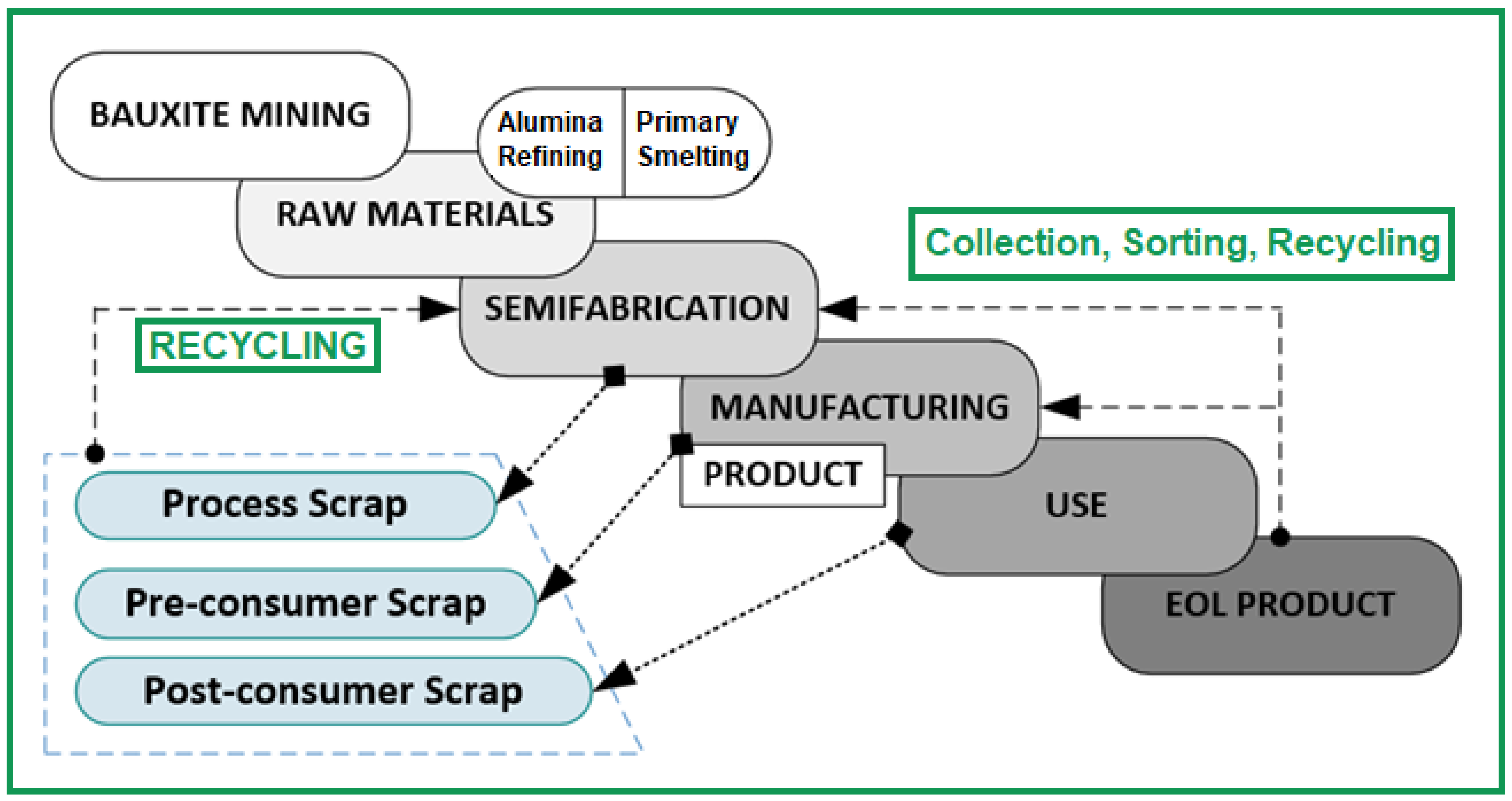
To provide a comprehensive overview of the movement of primary and recycled aluminum, Figure 1 illustrates the main stages of the “aluminum value chain.” This value chain begins with the extraction of raw materials, including bauxite mining and alumina refining, and continues through smelting, fabrication, and the production of semi-finished and finished components. The lifecycle culminates with the use phase of the final products and the recovery and recycling of aluminum at the end of their service life.
As shown in Figure 1, the industrial flow of aluminum contains multiple points at which scrap material is generated and reintroduced into the production system. Following the chronological order of the value chain, primary aluminum occupies the initial stage, providing the base material from which downstream products are fabricated, while recycled aluminum enters the flow at various subsequent stages, contributing to resource efficiency and sustainability. Post-consumer scrap refers to parts/components that deteriorate or wear out during the use of the car. In Figure 1, the difference appears between post-consumer scrap that is collected during the use of the car and the scrap that results from the shredding of vehicles (EOL product) at the end of their useful life.
The following two parts present, in turn, key data on primary and recycled aluminum, enabling an analysis of prevailing trends, challenges, and potential opportunities.
  • Primary aluminum:
To distinguish it from recycled aluminum, it is important to understand that primary aluminum is derived from bauxite, the main raw material. Bauxite is first converted into an intermediate product, alumina (aluminum oxide), through the Bayer refining process [29,30], which comprises two primary steps: (1) the dissolution of bauxite in caustic soda to remove impurities, producing aluminum hydroxide, and (2) the subsequent heating of aluminum hydroxide to remove its water content, yielding a fine white alumina powder [31].
The alumina is then transformed into metallic aluminum through the Hall–Héroult electrolysis process, which has been progressively improved over time [30,31,32,33]. This process breaks the chemical bonds between aluminum and oxygen, allowing the extraction of pure aluminum. The production of primary aluminum is highly energy-intensive and is associated with significant greenhouse gas emissions. It has been reported that approximately four tons of dried bauxite are required to produce two tons of alumina, from which only one ton of aluminum is ultimately obtained [34].
In contrast, recycled or secondary aluminum, recovered from post-consumer or industrial scrap, requires only a fraction of the energy needed for primary aluminum production. This distinction underscores the environmental and economic advantages of recycling and highlights the critical role of secondary aluminum in promoting sustainable practices within the aluminum and automotive industries.
Globally, total bauxite production has approximately doubled between 2006 and 2023, increasing from around 200 million tons to approximately 400 million tons [35,36]. In Europe, bauxite mining has declined over the past two decades but remains active, with Greece serving as the largest producer through the Mytilineos Group, followed by France, Hungary, and Romania. In Romania, the Dobresti mine in Bihor County was historically the largest, although it ceased operations in 1999 [37]. Consequently, the European Union primarily imports bauxite from Guinea, Brazil, and Jamaica [35].
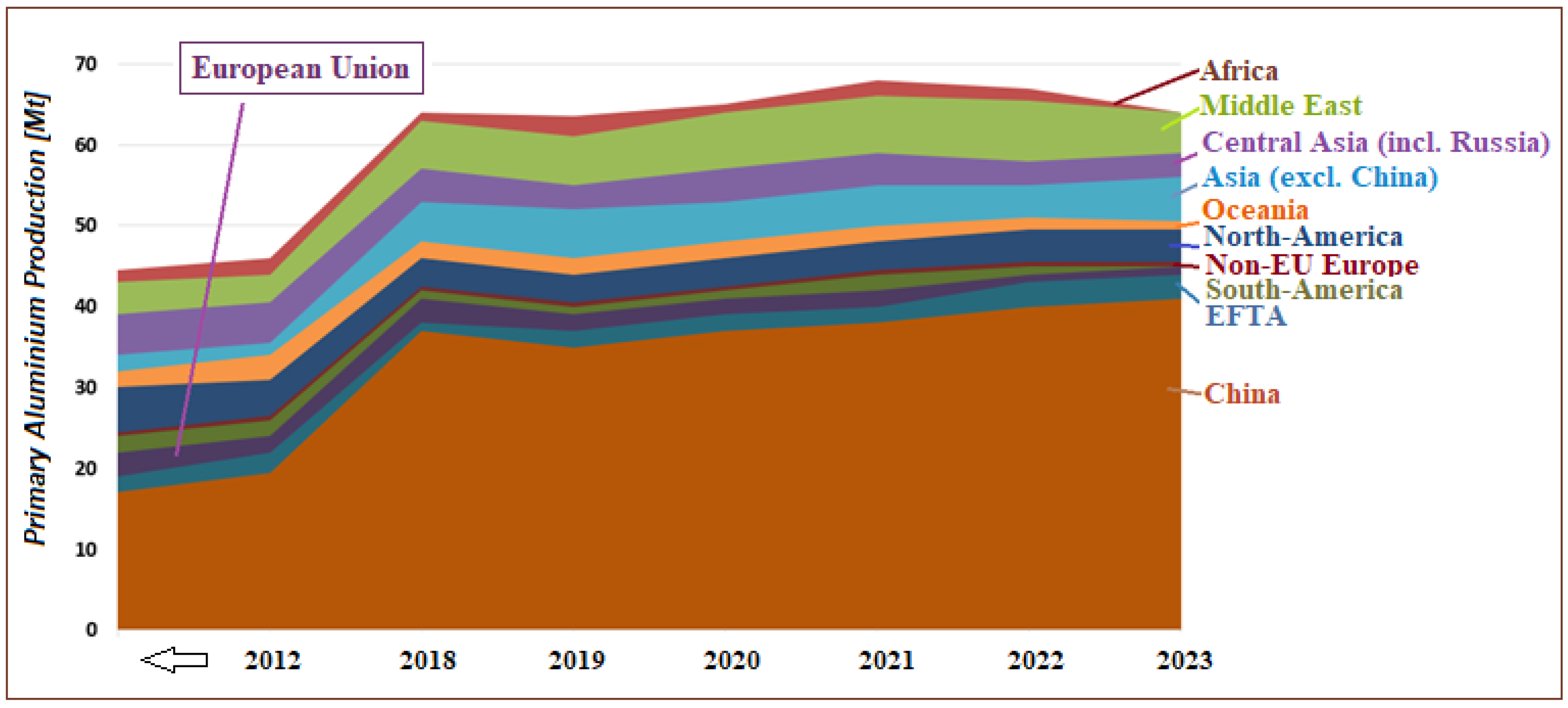
Reflecting the rising demand for aluminum, global primary aluminum production has grown at a rate similar to that of bauxite and alumina, increasing from 33 million tons in 2006 to 71 million tons in 2023 [38,39,40]. As illustrated in Figure 2, China accounted for more than half of global primary aluminum production in 2023, contributing approximately 58% of the total output [35,39].
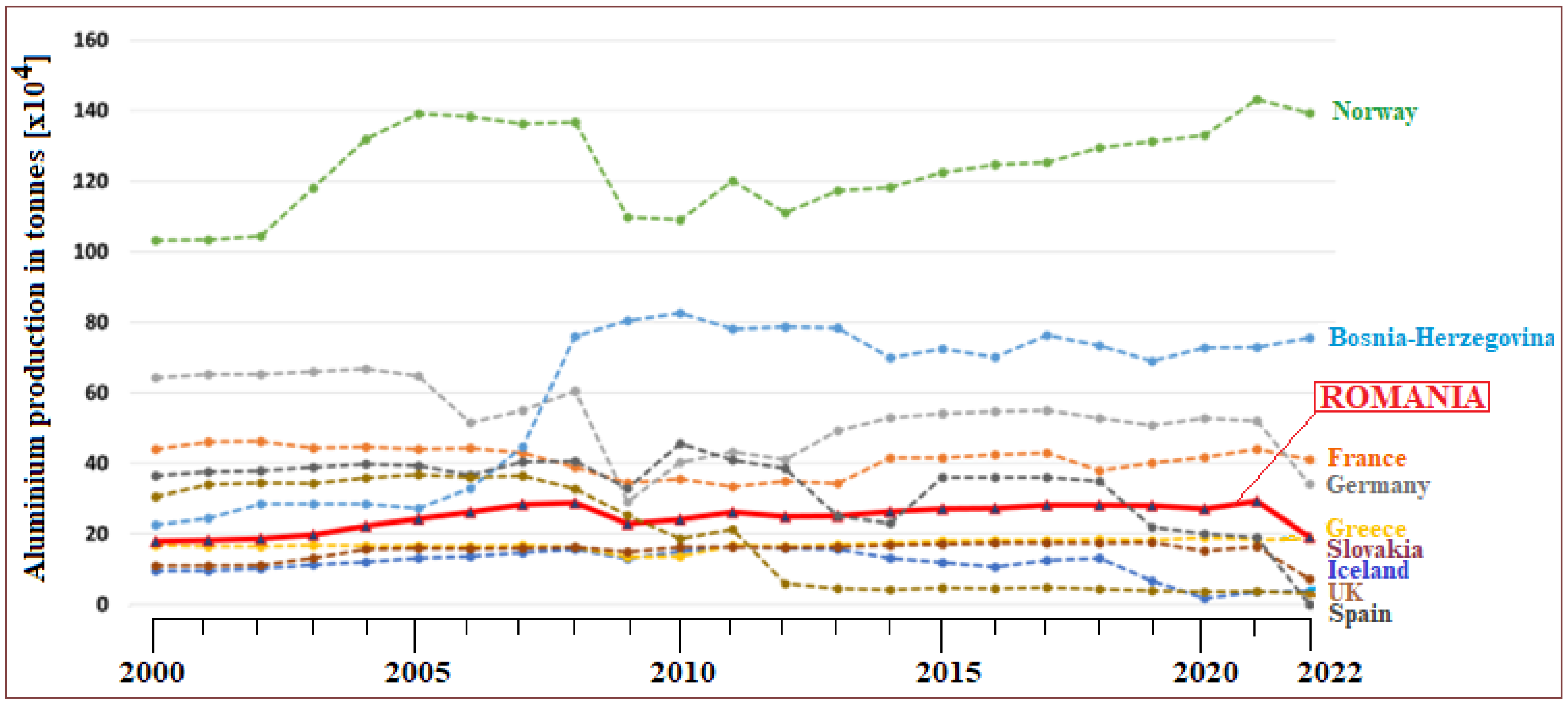
In Europe, ten primary aluminum producers were reported as operational in 2023, including ALRO in Romania, the origin country of the authors (Figure 3). By comparison, there were 23 active primary aluminum producers in 2002, indicating a significant reduction over the past two decades, not only in the number of producers, but also in their production volume. This decline, reported for 2022 [25,41], is largely attributed to external factors, including the EU energy crisis that began in 2021—triggered by COVID-19-related restrictions—and subsequently exacerbated by the Russian–Ukrainian war, both of which had a substantial impact on energy prices within the EU.
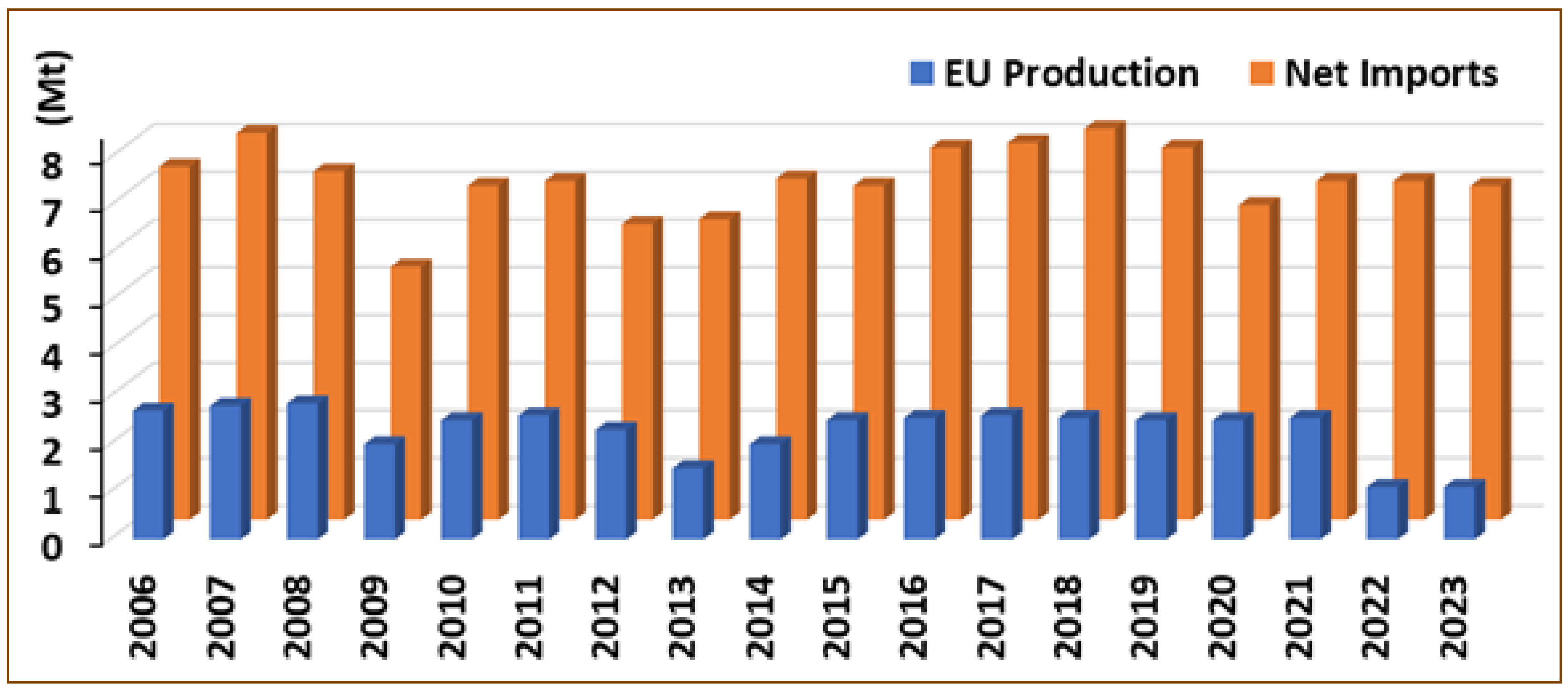
Despite the reduction in European production, demand—particularly from the automotive sector—continues to grow, and the gap is compensated through imports. For instance, in 2023, net imports of primary aluminum into the EU amounted to 5.8 million tons, against a total annual demand of 7.2 million tons (Figure 4) [25,28,35]. The majority of these imports originate from Norway and Iceland. Although the EU has only ten active producers, a comparable number of primary aluminum producers in Norway and Iceland collectively generate approximately 2 million tons annually, meeting around 28% of the EU’s total annual demand [25,35]. Consequently, a substantial portion of production from these countries is exported directly to EU member states.
In Romania, where the authors of this paper are originally from, ALRO is among the largest primary aluminum producers in Europe. The site comprises an anode plant, an aluminum smelter, a casting facility, an environmentally friendly aluminum recycling plant, units for the production of repair and spare parts, as well as road and rail transport infrastructure, along with other complementary sections [41]. According to the ALRO 2023 report [42], the company’s production capacity is 265,000 tons per year of primary aluminum and 340,000 tons per year of castings from aluminum. Anodes are manufactured in-house, supporting the smelting operations. ALRO’s recycling capacity is approximately 90,000 tons per year, with plans to expand to 120,000 tons per year. The smelter operates with its own anode production facility, while electricity for the operations is supplied by an on-site coal-fired power plant.
Figure 3. The main aluminum producers in Europe, including Romania, the origin country of the authors; data is from [43].
Recycling 11 00019 g003
  • Recycled aluminum:
As illustrated in Figure 1, recycled aluminum is derived from both pre-consumer and post-consumer scrap. Pre-consumer scrap arises during the production process when semi-finished products are converted into finished goods. Reducing this type of scrap primarily depends on improving manufacturing efficiency, optimizing material usage, and implementing better process control. Post-consumer scrap, in contrast, consists of aluminum products that have reached the end of their service life.
Figure 4. The production and net imports of primary aluminum in the EU; data is from [25,28,35,38].
Recycling 11 00019 g004
These materials represent a critical resource for the circular economy, as their recovery and reintegration into production can significantly reduce reliance on primary aluminum. The main goal for post-consumer scrap is to maximize collection rates, ensure proper sorting, and maintain material quality for reuse in high-value applications. In Europe, end-of-life (EOL) aluminum scrap is typically divided into several streams [6]:
-
Scrap from EOL products that remain within Europe, which constitutes the majority of available material;
-
Aluminum from EOL products exported outside Europe, either through legal trade or illicit channels;
-
Aluminum that is not collected and ends up in landfills or is lost during the collection and recycling process;
-
Material obtained through informal or unregistered recycling activities that are not systematically monitored or documented.
Currently, more than half of the EOL aluminum generated in the EU is collected and recycled, corresponding to an end-of-life recycling rate of approximately 69%. Recycled aluminum production already exceeds primary production by more than twofold, highlighting the growing economic and strategic importance of scrap recovery. This trend highlights the increasing role of secondary aluminum as a primary source of supply, emphasizing the importance of efficient collection, proper sorting, and stringent quality management to maintain the sustainability of the European aluminum industry.
Globally, aluminum is estimated to have the highest recycling rates among industrial metals, with approximately 75% of all aluminum being reintroduced into the circuit today, reflecting a low material loss. In the EU, according to EURIC [44,45], over 90% of aluminum was recovered in 2018, primarily from the construction and transport sectors, with a total of 4.9 million tons recycled in 2017. However, it should be considered that the aluminum products have a long service life—approximately 50 years for construction and 15 years for the automotive sector.
Thus, projections indicate that demand for aluminum scrap in the EU will increase by 2050, reaching an estimated 9 million tons per year. Recycling this volume of aluminum could reduce CO2 emissions by up to 92% compared to primary production. Additionally, the energy savings associated with aluminum recycling are substantial, as one ton of recycled aluminum can save up to 14,000 kWh of energy, and 7.6 cubic meters of landfill space [44,45].
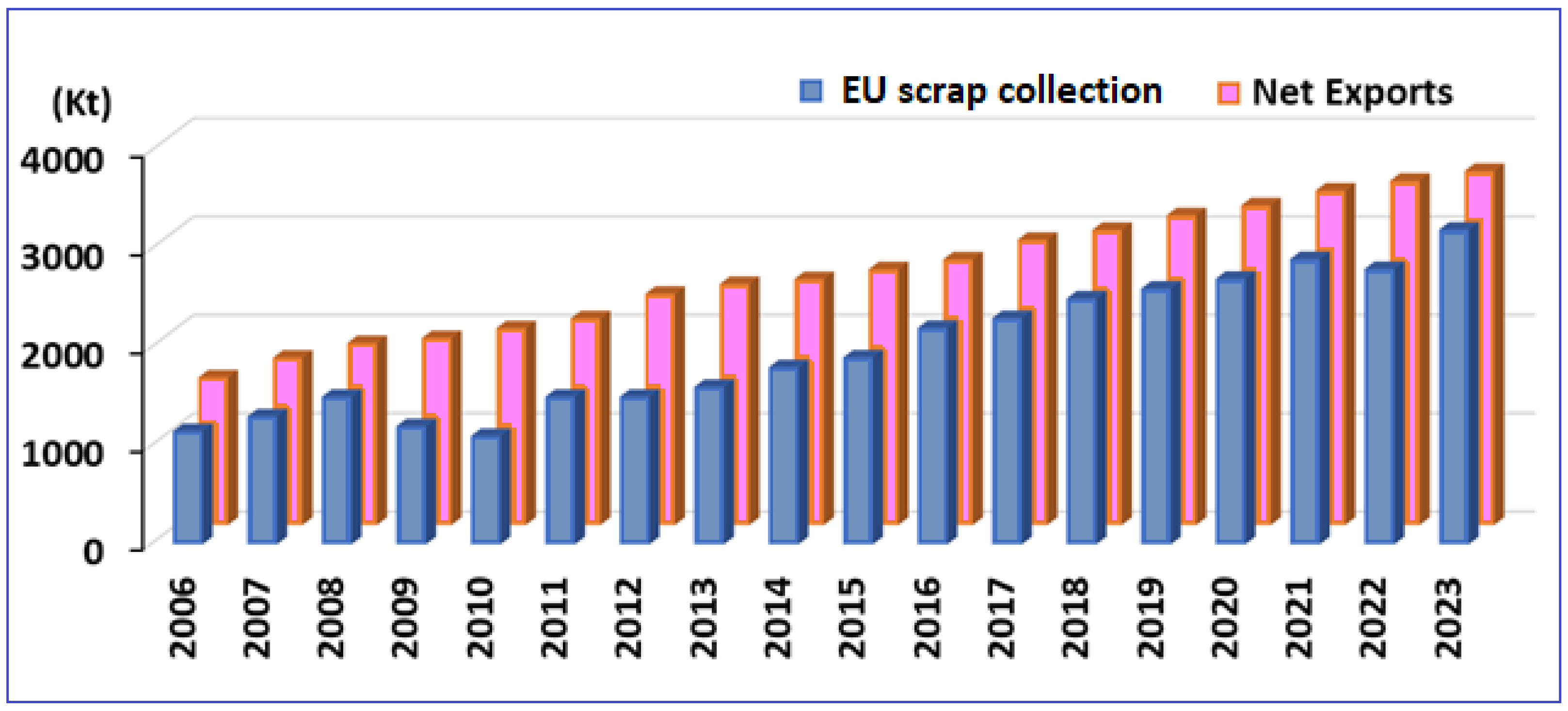
Figure 5 presents EU post-consumer scrap collection and exports [kilo-tons/year] from 2006 to 2023 [35]. EU aluminum scrap exports amount to approximately 1 million tons annually, representing a significant economic loss that could otherwise support domestic recycling. Notably, if scrap aluminum resulting from domestic consumption were retained within the EU rather than exported, the current volume of primary aluminum imports could potentially be reduced by about 24%, reinforcing the economic and environmental benefits of strengthening domestic recycling infrastructure [35,46,47].
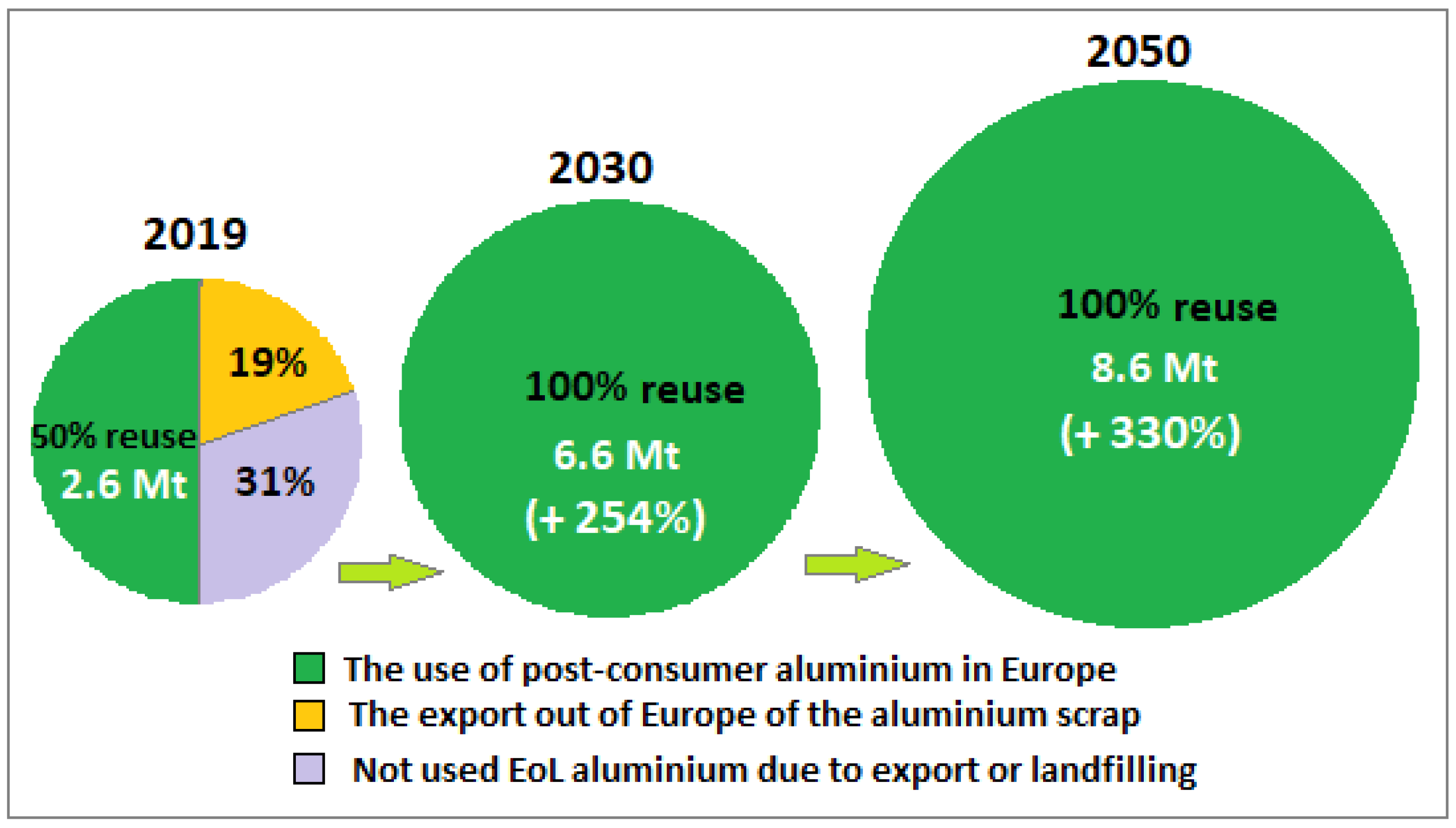
Figure 6 illustrates a potential scenario for the evolution of recycled aluminum quantities in the EU up to 2050, based on consumption forecasts [6]. Post-consumer aluminum available for recycling is projected to almost double by 2030, increasing from 3.6 million tons per year in 2019 to 6.6 million tons in 2030, and is expected to reach 8.6 million tons by 2050 [6,10]. Significantly, the utilization of post-consumer aluminum is anticipated to improve substantially. While current losses occur due to exports and landfilling, by 2050, it is expected that nearly all available post-consumer aluminum will be recovered and reintegrated into production [48,49]. Consequently, within the next 25 years, approximately 50% of the EU’s aluminum demand could be satisfied solely through post-consumer recycling.
These projected increases in recycled aluminum are driven by multiple factors. First, there is a growing recognition of the environmental and economic importance of recycling, which has long been emphasized in policy and industry discussions. Second, technological advancements in collection and processing have enabled higher recovery rates and improved quality control, allowing recycling operations to handle more aluminum scrap effectively [50]. Additionally, the expansion of recycled aluminum supply may be supported by material substitution trends across various industries. Aluminum may increasingly replace heavier or less sustainable materials such as steel, copper, plastics, PVC, or even wood, due to its favorable technological properties, cost-effectiveness, and design flexibility.
It should be noted that all future development scenarios considered are inherently provisional, as they are based on data from the specialized literature that are currently available and valid at the time of analysis. However, such data may change in the future—sometimes with significant fluctuations—potentially disrupting the anticipated trajectories of global or European economic flows. Consequently, as new data emerge, updated assessments will be required to more accurately predict developments under evolving European circumstances.

2.2. The Aluminum Recycling Progress Within the European Automotive Industry with a Focus on Circular Economy Concepts and Demands

The availability of recycled aluminum in the EU automotive industry is steadily improving, driven by rising demand, higher recycling rates, and an increasing emphasis on circular economy principles. Although challenges remain in maintaining consistent quality and supply, advances in recycling technologies, coupled with greater collaboration across the value chain, are enabling expanded use of recycled aluminum in the sector.
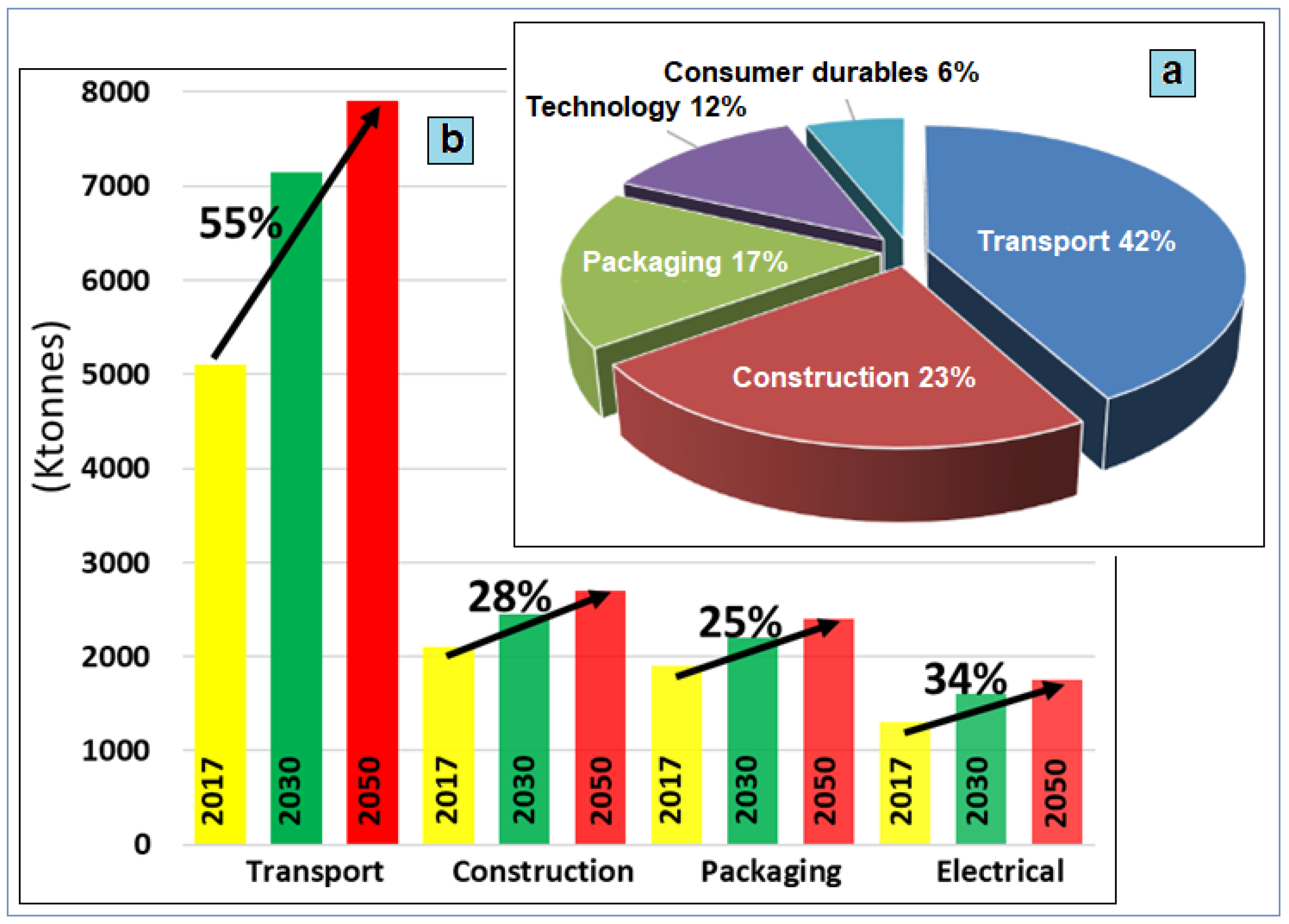
Within the EU, the transport industry accounts for the largest share of aluminum consumption—approximately 42%—with the automotive sector representing the majority of this usage (Figure 7a) [51,52]. Consequently, the automotive industry is a key driver of demand for recycled aluminum. As illustrated in Figure 7b, the transport sector significantly outpaces other sectors in its consumption of aluminum semi-finished products across Europe. The primary objectives in this sector include vehicle weight reduction, the development of new aluminum applications, and integration of components for electric vehicles (EVs), all of which contribute to lowering greenhouse gas emissions [50,53]. Furthermore, these innovations may accelerate EV adoption, as weight reduction enhances battery cooling efficiency and overall vehicle safety.
Electric vehicles (EVs) tend to gain significant weight due to their batteries, particularly in larger models. Using lighter metals, such as aluminum, in other vehicle components can substantially reduce overall weight, thereby decreasing the energy required from the battery. Consequently, aluminum usage in the automotive industry is steadily increasing.
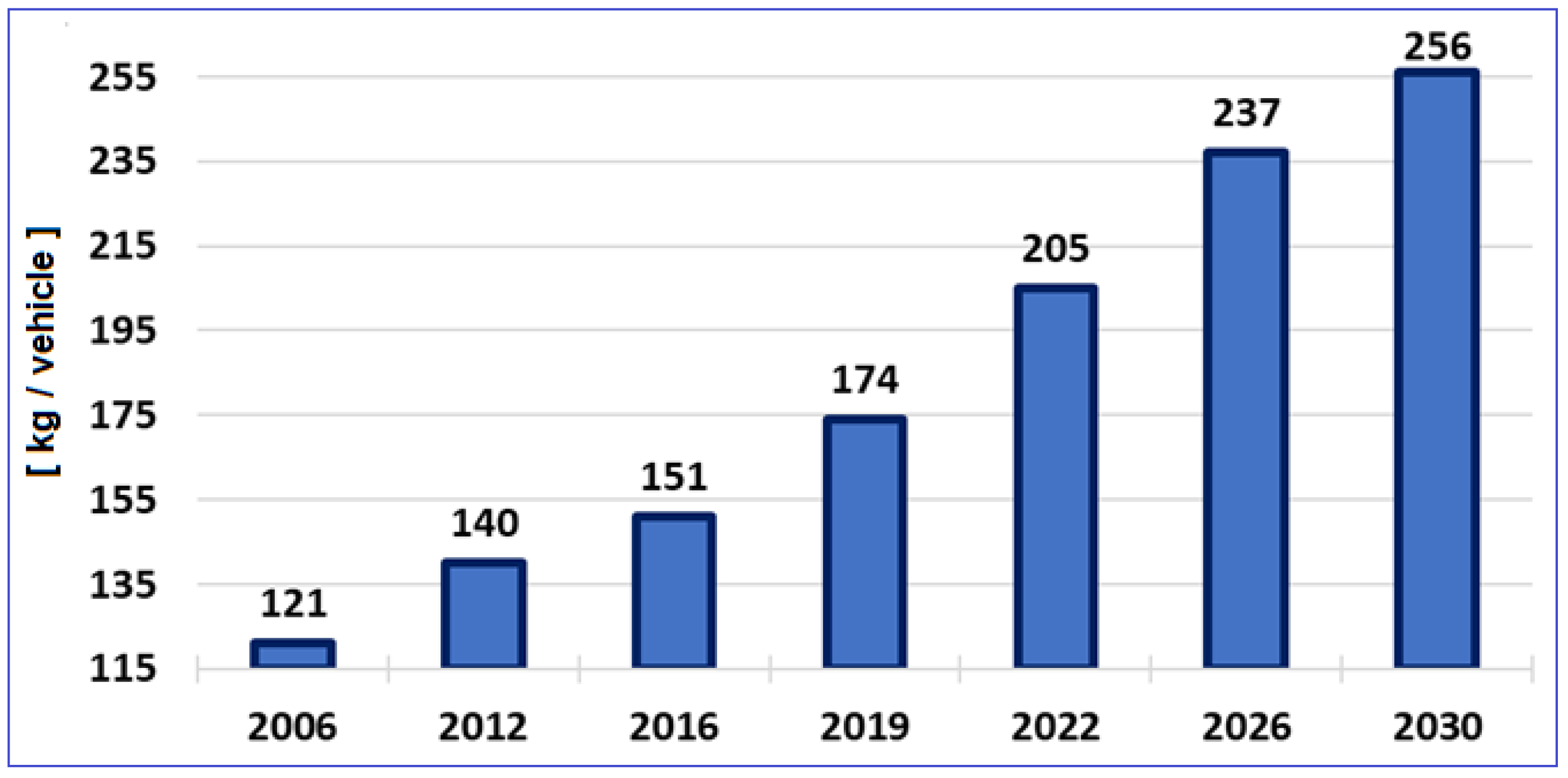
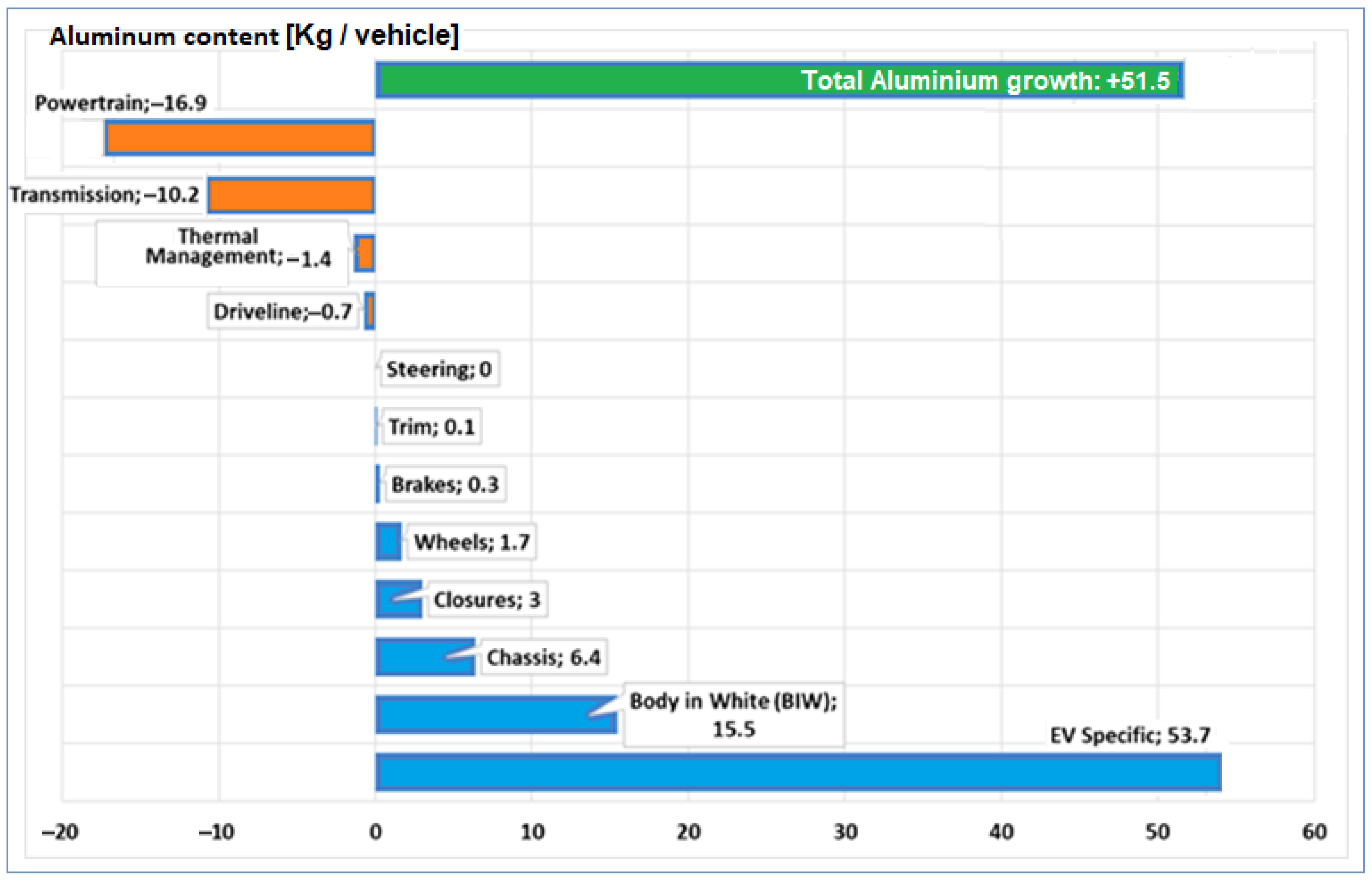
Figure 8 presents a projected scenario for the European automotive sector, illustrating this trend through 2030 [43,54]. In 2006, approximately 121 kg of aluminum was used per passenger vehicle; by 2030, this amount is expected to more than double to around 256 kg per vehicle [55]. Notably, as shown in Figure 9, this increase is not limited to conventional components, such as body-in-white or chassis, but is largely driven by EV-specific parts, which are projected to account for nearly 54 kg per vehicle by 2030. Overall, this corresponds to an estimated increase of approximately 51.5 kg of aluminum per vehicle [56,57].
Forecasts suggest that Europe will produce approximately 16.5 million cars in 2030, requiring around 4.2 million tons of aluminum annually—almost double the 2.5 million tons used in 2022 [54]. Of these vehicles, roughly 9.9 million (60%) are expected to be battery electric vehicles.
Relying exclusively on primary aluminum to meet the aforementioned production demand would have substantial environmental impacts, including high greenhouse gas (GHG) emissions and electricity consumption. The production of one ton of primary aluminum generates approximately 16.1 tons of CO2 [54]. Moreover, the Hall–Héroult electrolytic process for alumina reduction is highly energy-intensive, representing the largest component of electricity consumption in aluminum production.
France, for example, reports the following figures for its largest primary aluminum producer, Aluminum Dunkerque [43]: the company is one of the largest primary aluminum smelters in Europe and among the largest energy consumers in the country, with an annual electricity consumption of approximately 4 TWh (as reported for 2023 [58]). This corresponds to around 0.9% of France’s total annual electricity consumption. Another significant case is Iceland, also a major producer of primary aluminum in Europe. The country hosts three production plants whose combined electricity consumption represents roughly 70% of Iceland’s total national electricity use [43]. In contrast to primary aluminum production, recycling requires only about 5% of the energy needed for primary production, so it has a much lower electricity consumption [1,4,5,46]. Collecting and recycling the full volume of end-of-life (EOL) aluminum products across Europe, therefore, constitutes an objective of significant strategic value. Maximizing recycling rates in order to keep aluminum in active use for as long as possible represents a key priority for European countries.
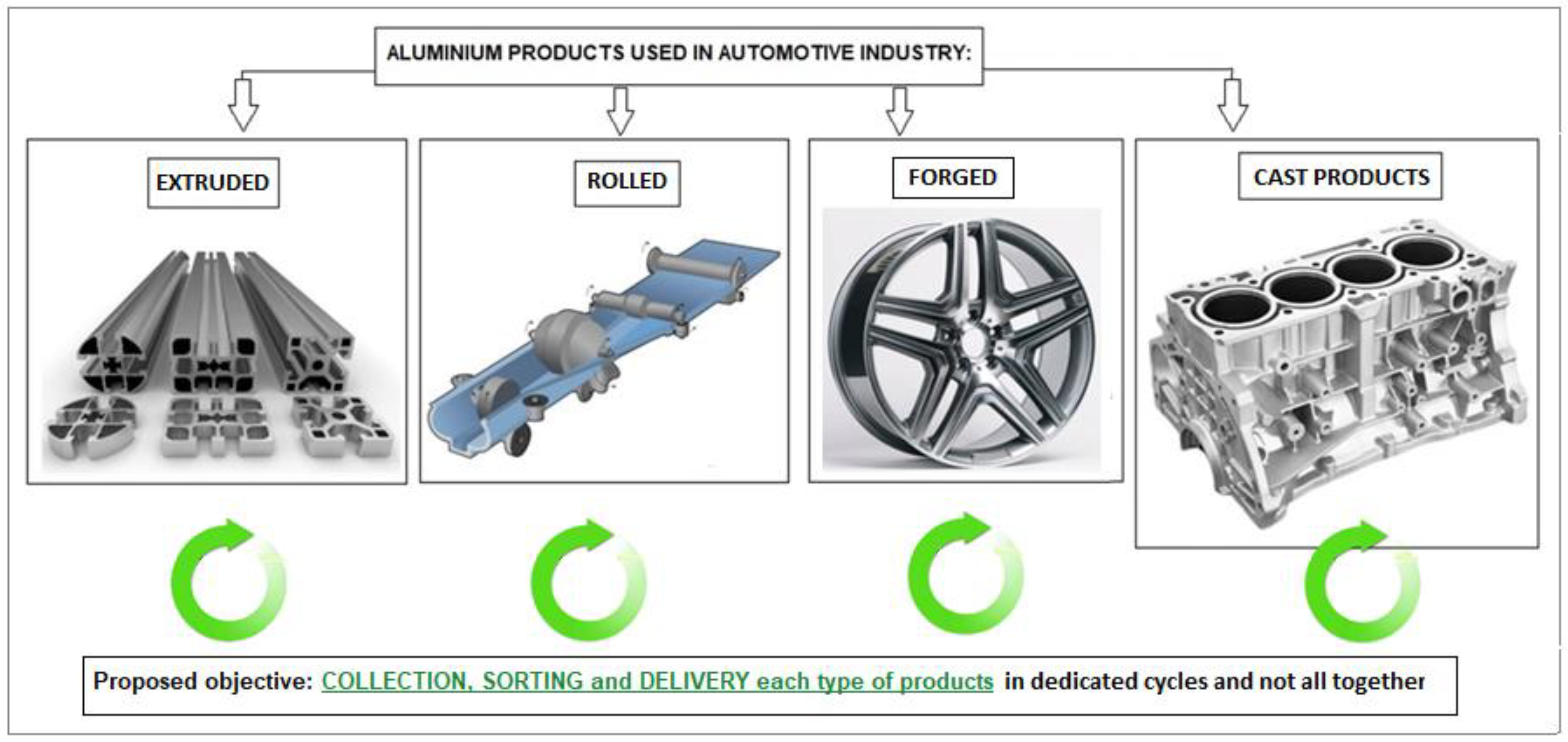
Aluminum products used in the automotive industry are generally classified into two main groups: (1) plastically deformed, i.e., extruded, rolled or forged, and (2) cast products (Figure 10).
For the automotive industry, the key stages in the aluminum recycling chain are the following [55,56,57]:
Collection—currently, collection is approximately 85% at the European level, with demand expected to continue rising;
Sorting—sorting is continuously improving through new technologies that enhance both the quantity and the quality of recovered material;
Delivery of recycled aluminum—this involves ideally returning the material to the same product categories from which it originated, namely extruded, rolled, and cast products.
In terms of end-of-life (EOL) product collection, most recycled aluminum currently comes from cast components, as cast components in the automotive industry are more numerous than plastically deformed ones. A major future objective is to implement pre-collection sorting of EOL parts into their respective product categories (extruded, rolled, forged or cast) [59,60]. This measure would enable the recovered aluminum to be reintroduced into equivalent product streams, thereby maximizing material efficiency and supporting short-loop recycling cycles.
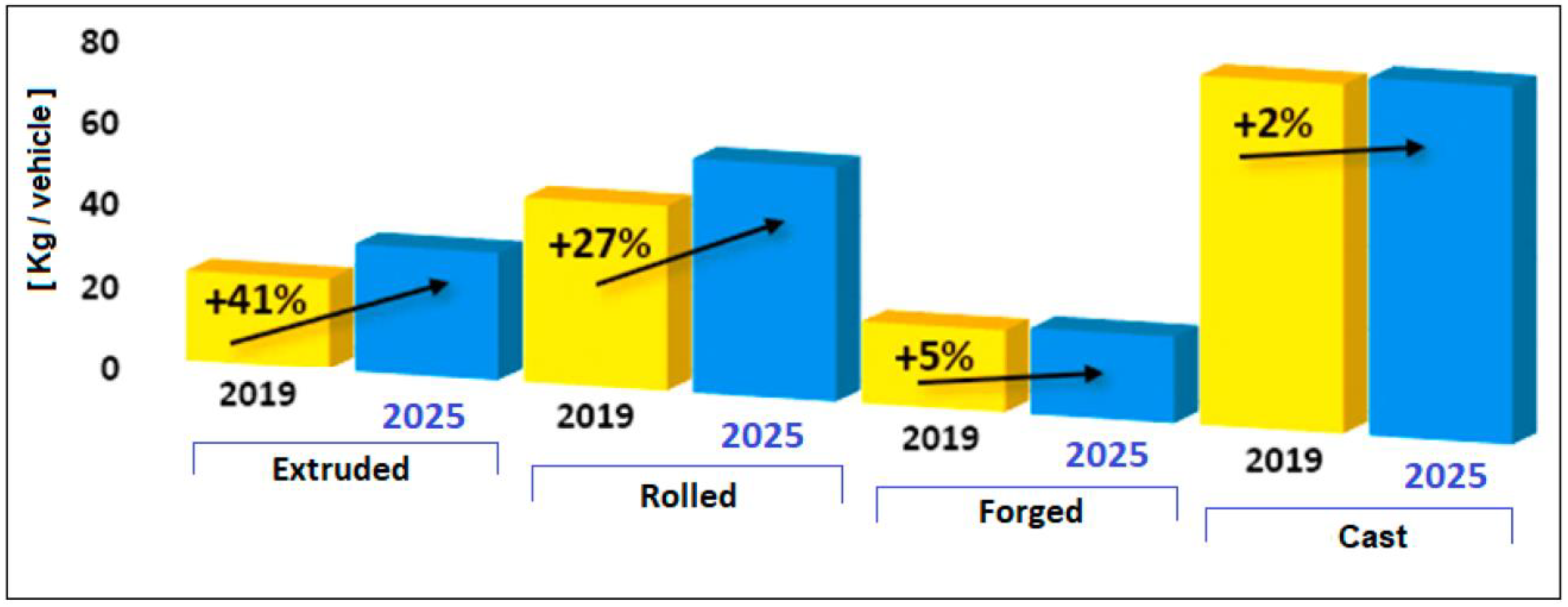
Looking forward, the trend indicates a decline in the use of cast aluminum—particularly for engine blocks—as the number of vehicles with internal combustion engines decreases in favor of electric vehicles. Consequently, the use of aluminum in extruded, rolled or forged forms is expected to increase, while demand for cast components will gradually diminish. As illustrated in Figure 11 [6], between 2019 and 2025, the automotive sector experienced only a modest increase of 2% in demand for cast alloys, compared with significantly higher growth rates of 27% for rolled products and 41% for extruded products.
Even if demand for cast aluminum stagnates or declines, the automotive industry will continue to require substantial quantities of aluminum for vehicle manufacturing. As the number of electric vehicles increases, the need to reduce vehicle weight will remain essential, both to offset the mass of large battery systems and because battery housing is increasingly made of aluminum to minimize overall vehicle weight [47]. However, it is unlikely that the automotive sector alone will be able to absorb the growing volume of high-quality post-consumer aluminum scrap [59]. This situation may encourage exports of aluminum scrap outside the EU, which would, unfortunately, result in the loss of a valuable secondary resource [48]. Consequently, as the volume of available aluminum increases, the industry will need to identify new applications capable of incorporating recycled material.
With respect to the three critical stages of aluminum recycling—collection, sorting, and delivery—the current situation reveals several obstacles that hinder the achievement of higher efficiency and improved recycling outcomes:
(1)
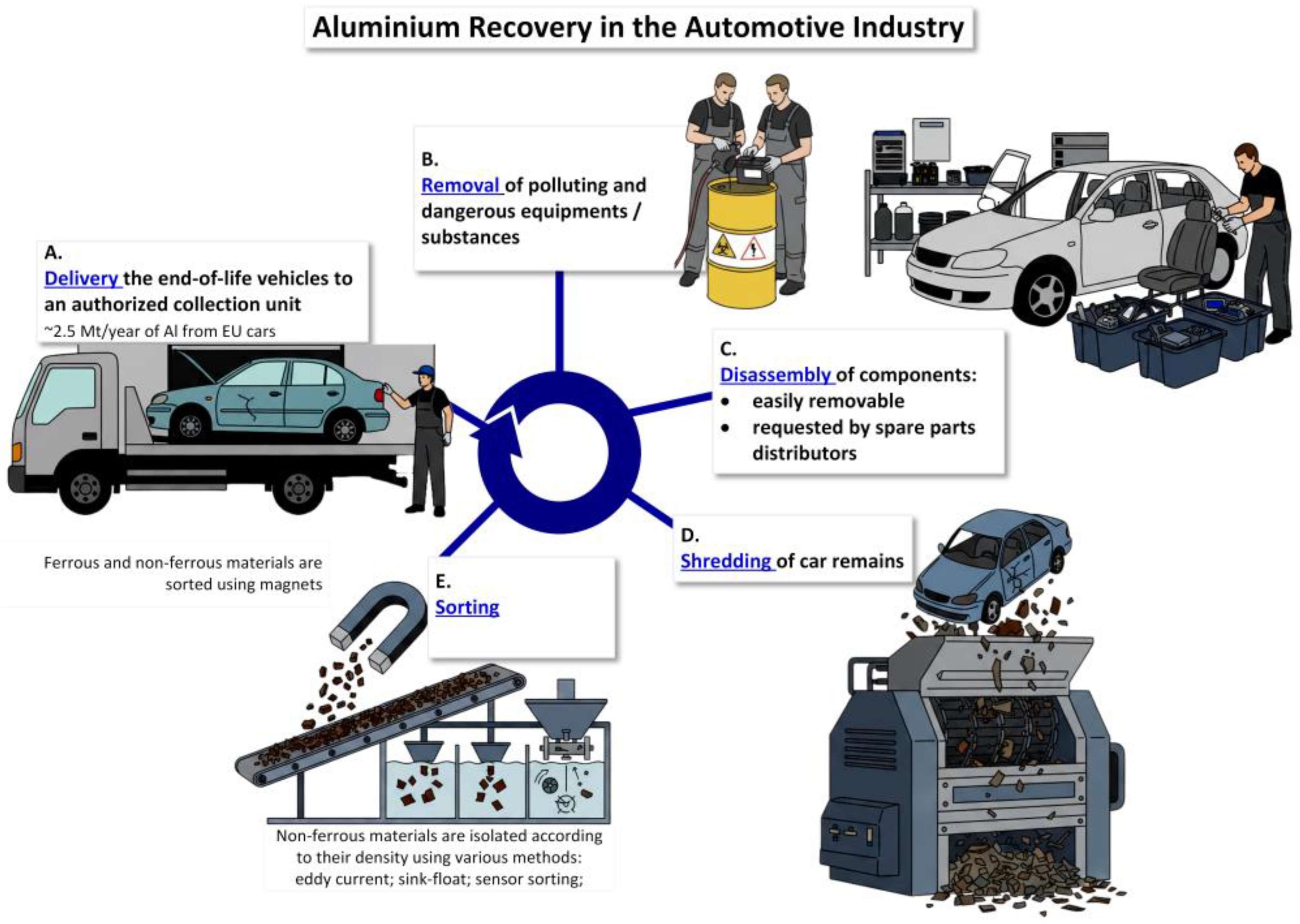
Most aluminum recovered from end-of-life vehicles (ELVs) is currently used for the production of cast alloys. However, the demand for wrought products in the automotive industry is increasing at a much faster rate than the demand for castings [59]. One possible solution is to enhance dismantling strategies and improve component-level sorting before any shredding occurs [54,57]. Such measures would facilitate more effective collection and recycling of wrought products (Figure 12).
(2)
Cast and wrought aluminum are still frequently shredded together, as ELV components are processed in bulk. EU directives require that all ELVs be collected, properly dismantled, and treated in a way that ensures a recovery rate of 95%, of which 85% must be reused or recycled [61]. Official reports indicate that more than 90% of aluminum from the automotive sector is recycled using modern treatment facilities [62]. Nevertheless, practical experience shows that metallic components are often not adequately sorted. As a result, some aluminum is lost in steel scrap streams or contaminated with unwanted elements, such as iron, which degrades the quality of the final material [63,64]. Furthermore, current recycling operations tend to prioritize volume over the quality of recycled materials. A potential solution is to collect, sort, and shred cast and wrought aluminum separately, ideally through shorter, dedicated recycling loops (Figure 12). This issue will be explored in greater detail in Section 3.
(3)
A significant share of ELVs is not recycled within the EU, as many vehicles disappear from formal reporting systems and are likely processed outside the EU [54,56]. Addressing this issue would require strengthened regulatory frameworks to ensure that Member States record, track, and report ELVs more accurately, enabling the generation of reliable statistics and closing existing data gaps.
Considering recent forecasts suggesting that aluminum content in vehicles will increase by approximately 40% by 2028 [17], it is evident that recycling activities within the automotive sector will remain both substantial and increasingly important.

3. Discussions

Building on the presentation of the collected data in the Section 2, the present Discussion aims to provide a coherent interpretation of the available research findings. Specifically, this section addresses the three analytical directions derived from the initially formulated research questions, the examination of which establishes a structured framework for the narrative analysis:
(1)
What would be the opportunity for a greater production of recycled aluminum, given the objective of conserving/protecting the ever-decreasing raw material resources for obtaining primary aluminum?
(2)
What would be the methods to increase the acquisition and deployment of recycled aluminum over primary aluminum?
(3)
How might the technological limitations that currently restrict the wider use of recycled aluminum be overcome?
The discussion corresponding to each of these research questions is organized into three dedicated sub-sections, as follows: 3.1. Possibilities for Increasing Recycled Aluminum Production; 3.2. Increasing the Use of Recycled Aluminum Relative to Primary Aluminum; and 3.3. Overcoming Technological Challenges to Expand Recycled Aluminum Use, with particular reference to both preliminary recycling operations and post-sorting processes.

3.1. Possibilities for Increasing Recycled Aluminum Production

Increasing the volume of post-consumer aluminum scrap is feasible, particularly through more accurate and detailed sorting of end-of-life (EOL) components. However, this approach faces a structural limitation: the automotive sector currently cannot absorb the full volume of available secondary aluminum, in part because significant quantities continue to be exported outside the EU. Although such exports enable recyclers to access global markets, they simultaneously represent a loss of a valuable domestic resource.
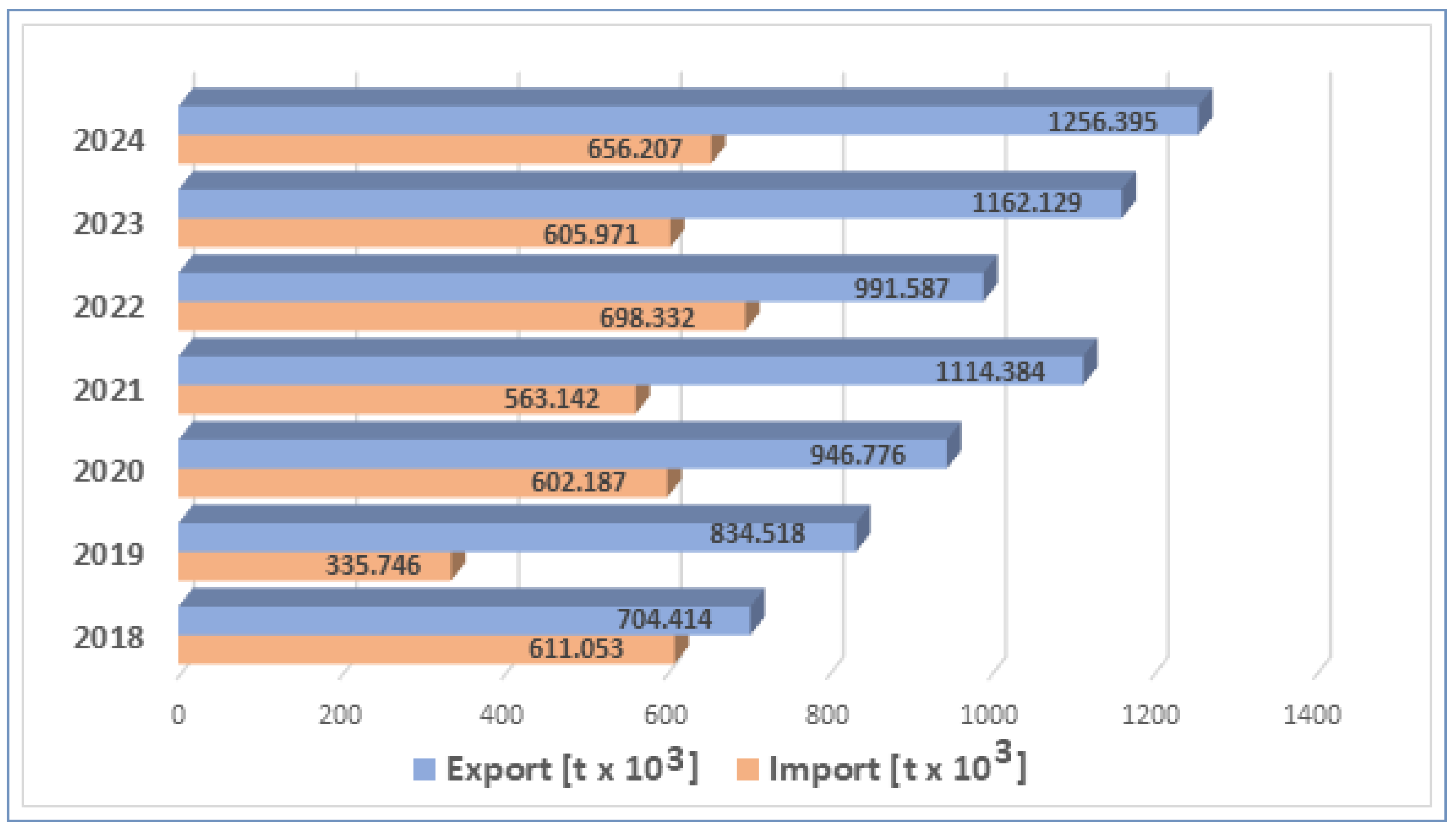
In response, EU policymakers are attempting to restrict exports—either through regulatory measures or through imposed levies—aimed at retaining more recycled material within Europe. Parallel to this, technological improvements in sorting and recycling have steadily enhanced the quality of secondary aluminum, increasing its market value. As indicated in Figure 13, exports have risen in recent years, whereas imports have stabilized, suggesting a more efficient valorization of Europe’s internal aluminum flows.
However, policies that heavily restrict exports may reduce the economic viability of recycling operations, lowering production volumes, discouraging investment, and jeopardizing employment in a sector essential for Europe’s green reindustrialization and decarbonization. These contradictory forces—retaining recycled aluminum within Europe on the one hand and supporting recyclers’ competitiveness on the other—risk creating disjunctions across the European aluminum value chain.
Figure 13 synthesizes the preceding results by highlighting the potential to increase recycled aluminum production. European export–import trends indicate a substantial rise in recycled aluminum availability, particularly from the automotive sector. Technological progress and market predictability are essential to maintaining the economic viability of recycling.

3.2. Increasing the Use of Recycled Aluminum Relative to Primary Aluminum

A substantial proportion of exported secondary aluminum consists of mixed non-ferrous scrap known as zorba [65], derived largely from EOL vehicle shredding after ferrous metals have been removed. Zorba contains aluminum enriched with copper, zinc, magnesium, and other metals, and is subsequently separated into heavier non-ferrous fractions (zebra) and light fractions (twitch) [65,66]. As EU quality requirements for recycled aluminum become more stringent, recyclers frequently turn to external markets that accept lower-quality or mixed grades, reinforcing export pressures.
According to the International Aluminum Institute [67], the automotive sector still relies on primary aluminum for approximately 58% of its total aluminum demand, with only 42% supplied by recycled material. The continued dominance of primary aluminum is partly due to the limited availability of high-quality, composition-specific secondary alloys free from contaminants. Considering that electric vehicle production is expected to rise significantly (21 million vehicles in 2030 compared with 12 million in 2025), and that many electric vehicle components—most notably battery enclosures—require strict compositional control, projections suggesting that primary aluminum will still account for around 50% of global production in 2050 (and 45% within the automotive sector) appear plausible [45,60].
Economic uncertainty in Europe, coupled with fluctuations in demand, further complicates long-term investment in advanced recycling infrastructures. Without stable market conditions, recyclers cannot be expected to make the substantial capital investments required to produce high-purity recycled alloys.
Rather than restricting exports, a more effective strategy would involve strengthening competitiveness along the entire aluminum recycling value chain. This could include measures addressing high energy prices, streamlining administrative requirements, improving trade conditions, and ensuring market predictability. Under such circumstances, the goals of industrial decarbonization—especially within the automotive sector—would become significantly more attainable.

3.3. Overcoming Technological Challenges to Expand Recycled Aluminum Use

An important aspect of the recovery stage of end-of-life (EOL) aluminum from the automotive industry is the adoption of significantly improved and more efficient technological solutions for collecting, sorting, and processing cast and wrought aluminum components, as outlined earlier in Figure 12.
These technological methods are divided into two main categories: preliminary operations that are essential for increasing bulk density, eliminating non-aluminum contaminants, and reducing impurity levels; and post-sorting operations that act for obtaining the final recycled product.
To expand the efficiency of aluminum recycling, including for the automotive industry, the new challenges implemented for the two categories of recycling technological methods that are currently being considered will be discussed below.

3.3.1. New Challenges for Preliminary Recycling Operations

Recycled aluminum typically contains a variety of impurities not present in primary alloys, including metallic contaminants (iron/steel, copper, zinc) as well as non-metallic materials such as rubber, plastics, and glass, depending on the component of origin [68,69]. Among these impurities, iron (Fe) is particularly problematic: primary aluminum alloys generally contain very low Fe levels [70], and iron cannot be easily removed once dissolved in molten aluminum. Moreover, iron-rich intermetallic compounds are brittle and adversely affect the mechanical properties of the final components [70]. This underscores the importance of effective pre-sorting of mixed cast and wrought aluminum scrap to ensure the production of high-quality recycled alloys. Although sorting technologies require substantial capital investment, their importance is indisputable, and ongoing improvements are essential.
When EOL vehicles are shredded, three principal fractions are generated [68,71]:
-
Ferrous fraction, consisting primarily of iron and steel, can be easily removed by magnetic separation.
-
Light fraction, composed mainly of dirt and fluff with a small metal content (<5%), typically recovered through screening and air classification.
-
Heavy fraction, consisting mainly of non-ferrous metals—largely copper and aluminum (≈78%)—and significantly more challenging to separate [72].
Both classical and innovative sorting technologies remain active research areas, aimed at improving the separation of aluminum waste and, increasingly, enabling recognition of alloy groups or even specific alloy types [69]. Traditional techniques—such as magnetic separation, eddy current separation, sink-float separation, sensor-based sorting, air classification, and manual sorting—are well established (Figure 12). However, they do not consistently achieve the high alloy-specific purity required by modern recycling standards [69].
For this reason, considerable attention is now directed toward advanced, high-speed, high-precision sorting technologies, many of which incorporate artificial intelligence (AI). These include dynamic laser-induced breakdown spectroscopy (LIBS), X-ray fluorescence (XRF), and X-ray transmission (XRT) [69].
Dynamic laser-induced breakdown spectroscopy (dynamic-LIBS) is a leading technology that uses high-energy laser pulses to generate a hot plasma on the material surface by vaporizing a minute quantity of scrap [73]. As the plasma cools, its emitted light is analyzed using a spectrometer to determine elemental composition, allowing precise alloy identification—particularly for 5xxx (Al–Mg) and 6xxx (Al–Mg–Si) series alloys [69,74,75]. Modern dynamic-LIBS systems incorporate detailed 3D scanning and AI-driven sensor technology, enabling purity levels exceeding 95% in sorted fractions [69]. These capabilities surpass earlier sorting methods and significantly increase the value of recycled aluminum. To further enhance accuracy, dynamic-LIBS is often combined with XRF and XRT technologies.
X-ray fluorescence (XRF) works by bombarding aluminum scrap with a collimated or diverging X-ray beam, causing atoms to emit secondary X-rays characteristic of their elemental composition [76,77]. XRF analyzers detect these emissions to identify alloy type. In industrial settings, XRF scanners can be integrated into automated sorting lines. However, because untreated scrap often moves irregularly on conveyor belts and may be positioned at varying distances from detectors, measured elemental concentrations may deviate from true values [76,77]. For this reason, XRF is typically combined with dynamic-LIBS, which offers superior 3D scanning and more precise compositional analysis.
X-ray transmission (XRT) sorts scrap based on atomic density differences, enabling automated separation of aluminum (light metals) from heavier non-ferrous metals such as copper, brass, and zinc, as well as other contaminants [69,75]. Key parameters for XRT include the intensity (I) of the incident X-ray beam, its attenuation as it passes through material of thickness t, and the attenuation coefficient (µ) [73,76,77].
Across all these technologies, several operational factors significantly influence sorting performance: feed rate, conveyor belt speed, and scrap shape/geometry.
The feed rate—defined as the number of waste particles processed per second (Nwp/s)—is the most critical operational parameter. Although higher feed rates theoretically increase throughput, automated sorting systems require a carefully calibrated balance between feed rate and sorting rate. High-precision sorting depends on maintaining sufficient spacing between individual particles, ensuring that sensors can accurately identify each item and trigger the corresponding ejection sequence [69].
Consequently, conveyor belt speed and scrap geometry are directly linked to feed rate. Belt speed determines inter-particle distance, while uniform, small scrap pieces ensure high-quality 3D scanning and high sorting efficiency [69].
Taken together, these advanced sorting technologies—augmented by AI and optimized operational parameters—enable precise control over the production of high-quality sorted aluminum scrap fractions. They make it possible not only to obtain high-purity aluminum but also to sort scrap into specific alloy series, thereby creating new market opportunities for recyclers and processors.

3.3.2. New Challenges for Obtaining Final Recycled Product—Post-Sorting Operations

After the preliminary sorting operations described above, the next stage involves converting the collected chips into a final recycled product. The initial sorting processes typically generate substantial volumes of metallic chips. To transform these chips into usable materials, two established recycling routes are employed [78,79]:
-
Conventional recycling methods—rely on remelting;
-
Direct conversion methods—follow a solid-state recycling approach that eliminates the need for melting.
Direct conversion is particularly advantageous for alloys such as aluminum, whose chips are covered by a thin Al2O3 layer that complicates melting and exacerbates oxidation losses. Furthermore, aluminum alloy chips smaller than 420 μm may pose explosion hazards when dispersed in air and exposed to ignition sources [80].
Direct conversion commonly utilizes severe plastic deformation (SPD) techniques. These low-temperature recycling approaches impose large plastic strains on the material, consolidating individual chips into dense semi-finished billets suitable for subsequent extrusion or forming operations [71,78]. The most prominent SPD-based recycling processes include friction stir extrusion, cyclic extrusion–compression, high-pressure torsion, and equal-channel angular pressing, summarized in Table 1.
For each method listed in Table 1, the key advantages identified can effectively guide decisions regarding their prioritization and selection over conventional methods. However, such decisions should also take into account the technological capabilities of individual recyclers and, consequently, the potential obstacles or disadvantages they may encounter. Therefore, the prioritization of one method over another should be considered in relative terms, reflecting the balance and interplay between their respective advantages and disadvantages.
Friction Stir Extrusion (FSE): FSE is a one-step SPD process for consolidating chips and powders through the combined action of severe plastic deformation and frictional heating. In this technique, a cartridge filled with chips or powder is axially pressed against a rotating die or plunger, facilitating either forward or backward extrusion [81]. Previous studies have demonstrated the successful conversion of aluminum alloy chips into wire feedstock with refined microstructures suitable for additive manufacturing applications [82]. The interplay of shear deformation and frictional heat typically produces an equiaxed, fine-grained microstructure, enabling the fabrication of lightweight, high-strength tubes for the automotive and aerospace sectors [83,84].
Cyclic Extrusion–Compression (CEC): CEC operates by repeatedly pressing a workpiece through a die with alternating cross-sectional diameters, imposing large cyclic strains on the material [71,85]. This severe deformation promotes the formation of ultrafine grains in lightweight, high-strength alloys [86]. The compaction stage plays a critical role in determining chip bonding quality, final density, and cyclic hardening behavior [87].
High-Pressure Torsion (HPT): HPT consolidates material by placing a disk-shaped specimen between two anvils, applying a high compressive force, and simultaneously introducing torsion through relative anvil rotation [87,88]. The technique can generate exceptionally high shear strains and allows controlled strain gradients across the specimen [89,90]. Although HPT is capable of producing highly uniform microstructures—except near the disk center unless saturation strain is achieved—its primary limitation is the relatively small sample size that can be processed [88,91,92].
Equal-Channel Angular Pressing (ECAP): ECAP introduces substantial shear deformation by pressing the material through two intersecting channels of identical cross-section. Multiple passes can be applied to enhance grain refinement and improve chip consolidation. When used with back pressure, the technique has been shown to consolidate machining chips to nearly full density (~99.9%) [84,93,94]. However, ECAP is constrained by limited hydrostatic pressure, which may restrict the quality of consolidation in certain applications [71,93].
Material recovery in conventional recycling is generally low. For aluminum and its alloys, typical recoveries are approximately 54%, primarily due to oxidation losses, the inherently low density of molten aluminum, and casting-related inefficiencies such as risers and shrinkage defects [71,95,96]. In contrast, direct conversion methods achieve significantly higher recoveries, typically in the range of 95–96%, and are applicable to aluminum, copper, and iron alloys [95,96,97,98].

4. Methods

As a narrative literature review, the present work offers a broad overview of the proposed topic by summarizing, synthesizing, and interpreting available research, without following a strict systematic approach as in a systematic literature review. The main objective was to create an informed backdrop that could integrate multiple viewpoints by covering a wide array of already published literature from the selected period in order to present diverse perspectives in a cohesive manner.
Hence, the main method of this study was to analyses the available literature following some specific keywords, with a focus on investigating the main aspects concerning the preeminence of recycled aluminum (RA) on European level, such as those related with: the growing demand of recycled aluminum; the possibility to increase the recycling rates with a focus on circular economy concepts; the quality and consistency of the obtained RA, such as the aspects of implement new innovative sorting technologies for a high-quality recycled alloys; the improvement of the alloy sorting operations logistic, followed by subsequent actions to rational implement/use RA in purpose to achieve sustainability.
Therefore, to collect all necessary data by applying a bibliographic search, the following keywords/terms were used to identify published articles and proceedings of various conferences on the field selected for study: primary aluminum, recycled aluminum, auto industry, circular economy for auto industry, methods of suitable recycling/rates improving, new innovative sorting technologies, and technologies preceding metallurgy. The in-depth study of several comprehensive databases, namely Science Direct, Scopus, etc. led to the extraction of relevant references from the specialized literature published between 2020 and 2025. Reports issued and published by the EU Commission, as well as by various European associations in the field, officially recognized by the EU Commission, such as European Aluminum, EURIC (European Recycling Industries Confederation), IFRI (Institut Francais des Relations Internationales), were also used.
To ensure a logically coherent organization of the collected data, three analytical directions were defined by formulating three principal research questions, the examination of which provides a structured framework for narrative data analysis. (1) What are the opportunities for increasing the production of recycled aluminum, in light of the need to conserve and protect increasingly scarce raw materials used in primary aluminum production? (2) What strategies/methods could enhance the obtaining of recycled aluminum over primary aluminum? (3) How can technological challenges that hinder the broader adoption of recycled aluminum be overcome?
The data obtained from the analysis of specialized literature have been organized into the following sections: Section 2.1—the growing demand for recycled aluminum relative to primary aluminum at the EU level; Section 2.2—the aluminum recycling progress within the European automotive industry, with a focus on circular economy concepts and demands; Section 3—discussion and comparison of the analyzed data, with reference to the three research questions outlined above; Section 5—conclusions, highlighting the main challenges and trends for developing the recycled aluminum use in automotive industry.

5. Conclusions

The present study highlights several key aspects for strengthening the circular aluminum economy in the European automotive industry:
  • Suitable vehicle design for increasing recycling efficiency: Effective recycling starts with the design of vehicles. Components should be engineered to facilitate dismantling, with clear separation of cast and wrought parts and categorization of materials by composition. This approach enables higher-quality recycling and ensures that recovered aluminum can meet the stringent requirements of automotive applications.
  • Avoiding whole-vehicle shredding: Traditional complete shredding of vehicles reduces the quality of recycled material, making pre-shredding sorting of components a critical step. Detailed component sorting before shredding ensures higher-quality recycled aluminum.
  • Increasing recovery from end-of-life vehicles: A substantial volume of aluminum is currently lost due to vehicles being dismantled outside the EU or lacking proper destruction certification, with estimates of around 600,000 tons per year. Expanding the proportion of vehicles entering formal recycling channels is essential for improving resource efficiency and reducing dependence on primary aluminum. However, European demand alone cannot absorb all available secondary aluminum, highlighting the need for careful policy measures.
  • Balancing exports and European retention: While restricting exports can help retain valuable recycled aluminum within Europe, overly strict limits risk undermining recyclers’ economic viability, reducing investment, and threatening employment. Policies must, therefore, balance the retention of material with the competitiveness of the recycling sector. Technological improvements and market predictability are critical to ensure that recycling remains economically attractive.
  • Improved technological solutions for high-quality recycling: The automotive industry continues to rely on primary aluminum (~58%) due to the limited availability of high-purity recycled alloys, particularly for electric vehicle components. Advanced sorting technologies—dynamic-LIBS, XRF, and XRT—enhanced with AI and optimized operational parameters (feed rate, conveyor speed, and scrap geometry) are essential for producing high-purity, alloy-specific recycled aluminum. Pre-sorting mitigates contamination, especially from iron, enabling recycled alloys suitable for critical automotive applications. Post-sorting, direct solid-state conversion via severe plastic deformation (SPD) outperforms conventional methods, yielding dense, fine-grained billets with high material recovery (~95–96%).
  • Advanced aluminum recycling strengthens value, sustainability, and competitiveness in Europe’s automotive industry: High-quality sorting and alloy-specific recovery not only improve material value but also create new market opportunities, support industrial decarbonization, and foster the green reindustrialization of Europe’s automotive sector. Strategic vehicle design, efficient collection, advanced technological adoption, and balanced regulatory policies together form the foundation for a sustainable and competitive aluminum recycling ecosystem.

Author Contributions

Conceptualization, A.N. and D.R.; methodology, A.N. and D.R.; software, C.I.; validation, A.N. and D.R.; formal analysis, C.T., C.I. and L.V.M.; investigation, C.T., C.I. and L.V.M.; resources, C.T., C.I., D.R. and L.V.M.; data curation, C.T., C.I., D.R. and L.V.M.; writing—original draft preparation, A.N.; writing—review and editing, A.N. and D.R.; visualization, A.N., C.T., C.I., D.R. and L.V.M.; supervision, A.N. and D.R. All authors have read and agreed to the published version of the manuscript.

Funding

This research received no external funding.

Institutional Review Board Statement

Not applicable.

Informed Consent Statement

Not applicable.

Data Availability Statement

Data are contained within the article.

Conflicts of Interest

The authors declare no conflicts of interest.

Abbreviations

The following abbreviations are used in this manuscript:
EUEuropean Union
RARecycled Aluminum
EURICEuropean Recycling Industries Confederation
IFRIInstitute Francais des Relations Internationales
ICEInternal Combustion Engine
EOLEnd-of-life Vehicles
WSRWaste Shipment Regulation
GHGGreenhouse Gas Emissions
EVsElectric Vehicles
LIBSLaser-Induced Breakdown Spectroscopy
XRFX-ray Fluorescence
XRTX-ray Transmission
SPDSevere Plastic Deformation
FSEFriction Stir Extrusion
CECCyclic Extrusion–Compression
HPTHigh-Pressure Torsion
ECAPEqual-Channel Angular Pressing

References

  1. Krall, P.; Weißensteiner, I.; Pogatscher, S. Recycling aluminum alloys for the automotive industry: Breaking the source-sink paradigm. Resour. Conserv. Recycl. 2024, 202, 107370. [Google Scholar] [CrossRef]
  2. Stemper, L.; Tunes, M.A.; Tosone, R.; Uggowitzer, P.J.; Pogatscher, S. On the potential of aluminum crossover alloys. Prog. Mater. Sci. 2022, 124, 100873. [Google Scholar] [CrossRef]
  3. Verband der Aluminium Recycling Industrie e.V.: Aluminium-Gusslegierungen. 2019. Available online: https://www.gutterundsohn.de/index_htm_files/VAR%20Aluminiumgusslegierungen.pdf (accessed on 8 September 2025).
  4. Rolseth, A.; Carlson, M.; Ghassemali, E.; Caro, L.P.; Jarfors, A.E. Impact of functional integration and electrification on aluminium scrap in the automotive sector: A review. Resour. Conserv. Recycl. 2024, 205, 107532. [Google Scholar] [CrossRef]
  5. Eynde, S.V.D.; Bracquené, E.; Diaz-Romero, D.; Zaplana, I.; Engelen, B.; Duflou, J.R.; Peeters, J.R. Forecasting global aluminium flows to demonstrate the need for improved sorting and recycling methods. Waste Manag. 2022, 137, 231–240. [Google Scholar] [CrossRef]
  6. European Aluminium Association. Circular Aluminium Action Plan—A Strategy for Achieving Aluminium’s Full Potential for Circular Economy By 2030; EAA: Brussels, Belgium, 2020. Available online: https://european-aluminium.eu/wp-content/uploads/2022/08/2020-05-13_european-aluminium_circular-aluminium-action-plan_executive-summary.pdf (accessed on 6 August 2025).
  7. Watari, T.; Nansai, K.; Nakajima, K. Major metals demand, supply, and environmental impacts to 2100: A critical review. Resour. Conserv. Recycl. 2021, 164, 105107. [Google Scholar] [CrossRef]
  8. Chen, W.; Sun, X.; Liu, L.; Liu, X.; Zhang, R.; Zhang, S.; Xue, J.; Sun, Q.; Wang, M.; Li, X.; et al. Carbon neutrality of China’s passenger car sector requires coordinated short-term behavioral changes and long-term technological solutions. One Earth 2022, 5, 875–891. [Google Scholar] [CrossRef]
  9. Average Prices for Aluminum from 2014 to 2026. Available online: https://www.statista.com/statistics/675845/average-prices-aluminum-worldwide/ (accessed on 2 September 2025).
  10. CM Group. An Assessment of Global Megatrends and Regional and Market Sector Growth Outlook for Aluminium Demand. 2020. Available online: https://international-aluminium.org/wp-content/uploads/2024/03/cm_2050_outlook_for_al_demand_20200528_4wycD18.pdf (accessed on 8 September 2025).
  11. Nunes, H.; Emadinia, O.; Soares, R.; Vieira, M.F.; Reis, A. Adding Value to Secondary Aluminum Casting Alloys: A Review on Trends and Achievements. Materials 2023, 16, 895. [Google Scholar] [CrossRef]
  12. Schlesinger, M.E. Aluminum Recycling; CRC Press, Taylor & Francis Group: Boca Raton, FL, USA, 2017. [Google Scholar]
  13. Al-Alimi, S.; Yusuf, N.K.; Ghaleb, A.M.; Lajis, M.A.; Shamsudin, S.; Zhou, W.; Altharan, Y.M.; Abdulwahab, H.S.; Saif, Y.; Didane, D.H.; et al. Recycling aluminium for sustainable development: A review of different processing technologies in green manufacturing. Results Eng. 2024, 23, 102566. [Google Scholar] [CrossRef]
  14. Padamata, S.K.; Yasinskiy, A.; Polyakov, P. A review of secondary aluminum production and its byproducts. JOM 2021, 73, 2603–2614. [Google Scholar] [CrossRef]
  15. Windmark, C.; Lattanzi, L.; Månberger, A.; Jarfors, A.E.W. Investigation on resource-efficient aluminium recycling—A state of the art review. In Advances in Transdisciplinary Engineering; IOS Press: Amsterdam, The Netherlands, 2022; pp. 15–27. [Google Scholar] [CrossRef]
  16. European Aluminium Association. Aluminium Content in European Passenger Cars. EAA: 2019. Available online: https://european-aluminium.eu/wp-content/uploads/2022/10/aluminum-content-in-european-cars_european-aluminium_public-summary_101019-1.pdf (accessed on 8 August 2025).
  17. European Aluminium. Aluminum Content in Passenger Vehicles (Europe): Assessment 2022 and Outlook 2026, 2030; Ducker Research & Consulting for European Aluminium: 2023. p. 14. Available online: https://european-aluminium.eu/wp-content/uploads/2023/05/2023_04_Aluminum-Content_Ducker-Study_EA-Public-Summary_190423.pdf (accessed on 16 September 2025).
  18. European Commission. CO2 Emission Performance Standards for Cars and Vans. Directorate-General for Climate Action. 2020. Available online: https://ec.europa.eu/clima/eu-action/transport-emissions/road-transport-reducing-co2-emissions-vehicles/co2-emission-performance-standards-cars-and-vans_en (accessed on 12 September 2025).
  19. Sivanur, K.; Umananda, K.V.; Pai, D. Advanced materials used in automotive industry-a review. AIP Conf. Proc. 2021, 2317, 020032. [Google Scholar] [CrossRef]
  20. Arowosola, A.; Gaustad, G.; Brooks, L. Aluminum Alloys in Autobodies: Sources and Sinks. In Light Metals; Springer: Cham, Switzerland, 2019; pp. 1381–1383. [Google Scholar] [CrossRef]
  21. Løvik, A.N.; Marmy, C.; Ljunggren, M.; Kushnir, D.; Huisman, J.; Bobba, S.; Maury, T.; Ciuta, T.; Garbossa, E.; Wäger, P.; et al. Material Composition Trends in Vehicles: Critical Raw Materials and Other Relevant Metals; Publications Office of the European Union, 2021. Available online: https://rmis.jrc.ec.europa.eu/uploads/library/JRC126564%20Material%20Composition%20Trends%20in%20vehicles.pdf (accessed on 16 September 2025).
  22. Saevarsdottir, G.; Kvande, H.; Welch, B.J. Aluminum production in the times of climate change: The global challenge to reduce the carbon footprint and prevent carbon leakage. JOM 2020, 72, 296–308. [Google Scholar] [CrossRef]
  23. Martínez-Hernando, M.P.; Bolonio, D.; Ortega, M.F.; Llamas, J.F.; García-Martínez, M.J. Material flow analysis and regional greenhouse gas emissions associated to permanent magnets and batteries used in electric vehicles. Sci. Total Environ. 2023, 904, 166368. [Google Scholar] [CrossRef]
  24. Raabe, D.; Ponge, D.; Uggowitzer, P.J.; Roscher, M.; Paolantonio, M.; Liu, C.; Antrekowitsch, H.; Kozeschnik, D.; Seidmann, B.; Gault, F.; et al. Making sustainable aluminum by recycling scrap: The science of “dirty” alloys. Prog. Mater. Sci. 2022, 128, 100947. [Google Scholar] [CrossRef]
  25. Soo, V.K.; Peeters, J.R.; Compston, P.; Doolan, M.; Duflou, J.R. Economic and environmental evaluation of aluminium recycling based on a belgian case study. Procedia Manuf. 2019, 33, 639–646. [Google Scholar] [CrossRef]
  26. Piatkowski, J.; Nowinska, K.; Matula, T.; Siwiec, G.; Szucki, M.; Oleksiak, B. Microstructure and Mechanical Properties of AlSi10MnMg Alloy with Increased Content of Recycled Scrap. Materials 2025, 18, 1119. [Google Scholar] [CrossRef] [PubMed]
  27. Billy, R.G.; Müller, D.B. Aluminium use in passenger cars poses systemic challenges for recycling and GHG emissions. Resour. Conserv. Recycl. 2023, 190, 106827. [Google Scholar] [CrossRef]
  28. Brough, D.; Jouhara, H. The aluminium industry: A review on state-of-the-art technologies, environmental impacts and possibilities for waste heat recovery. Int. J. Thermofluids 2020, 1–2. [Google Scholar] [CrossRef]
  29. U.S. Geological Survey. Mineral Commodity Summaries 2021: U.S. Geological Survey, 2021, 200p, p. 20–21. Available online: https://pubs.usgs.gov/publication/mcs2021 (accessed on 16 September 2025).
  30. Rossi, F.; De Bernardi, C.; Frey, M.; Niero, M. From past critiques to present challenges: A review of LCA approaches and results in the aluminum industry. Waste Manag. 2025, 204, 114900. [Google Scholar] [CrossRef]
  31. European Aluminium. Aluminium: A Unique Metal Driving the Green Transition. Available online: https://european-aluminium.eu/about-aluminium/the-material/ (accessed on 9 September 2025).
  32. Aluminum: The Car Industry’s Blind Spot, Why Car Companies Should Address the Human Rights Impact of Aluminum Production; Inclusive Development International. 2021. ISBN 9781623139247. Available online: https://humantraffickingsearch.org/resource/aluminum-the-car-industrys-blind-spot-why-car-companies-should-address-the-human-rights-impact-of-aluminum-production/ (accessed on 12 September 2025).
  33. Peng, J.; Song, Y.; Di, Y.; Wang, Y.; Feng, N. Towards improved current efficiency of Hall-He’roult cells by using a novel cathode and process parameters. JOM 2019, 71, 508–513. [Google Scholar] [CrossRef]
  34. Donoghue, A.M.; Frisch, N.; Olney, D. Bauxite Mining and Alumina Refining: Process Description and Occupational Health Risks. J. Occup. Environ. Med. 2014, 56, S12–S17. [Google Scholar] [CrossRef] [PubMed]
  35. European Aluminium. Third-Party Study on Impact of CBAM on Alumina & Scrap Markets, Copenhagen. 2025. Available online: https://european-aluminium.eu/wp-content/uploads/2025/05/2025-04-24-EA_Ramboll-CBAM-Full-Report.pdf (accessed on 9 September 2025).
  36. Pedneault, J.; Majeau-Bettez, G.; Krey, V.; Margni, M. What future for primary aluminium production in a decarbonizing economy? Glob. Environ. Change 2021, 70, 102352. [Google Scholar] [CrossRef]
  37. Deac, A. Clădiri Abandonate, Singurele Rămase Dintr-o Întreprindere Minieră Profitabilă în Perioada Comunistă. Digi24. 2018. Available online: https://www.digi24.ro/regional/digi24-oradea/cladiri-abandonate-singurele-ramase-dintr-o-intreprindere-miniera-profitabila-in-perioada-comunista-948757?__grsc=cookieIsUndef0&__grts=58942948&__grua=89db729cfcdc129111f017b0e7ac324a&__grrn=1 (accessed on 9 September 2025). (In Romanian)
  38. Al-Alimi, S.; Shamsudin, S.; Yusuf, N.K.; Lajis, M.A.; Zhou, W.; Didane, D.H.; Sadeq, S.; Saif, Y.; Wahib, A.; Harun, Z. Recycling Aluminium AA6061 Chips with Reinforced Boron Carbide (B4C) and Zirconia (ZrO2) Particles via Hot Extrusion. Metals 2022, 12, 1329. [Google Scholar] [CrossRef]
  39. European Commission. Study on the Critical Raw Materials for the EU 2023—Final Report; Publications Office of the European Union: 2023. Available online: https://single-market-economy.ec.europa.eu/publications/study-critical-raw-materials-eu-2023-final-report_en (accessed on 12 September 2025).
  40. Varriale, L. Interview: EU’s Aluminium Sector Needs Pragmatic Approach to Energy Transition, Rethink of CBAM—Mytilineos. 2024. Available online: https://www.spglobal.com/commodity-insights/en/news-research/latest-news/metals/022724-interview-eus-aluminum-sector-needs-pragmatic-approach-to-energy-transition-rethink-of-cbam-mytilineos (accessed on 12 September 2025).
  41. Zore, L. Decarbonisation Options for the Aluminium Industry; Publications Office of the European Union: 2024; ISSN 1831-9424. Available online: https://op.europa.eu/en/publication-detail/-/publication/3ca7d171-375a-11ef-b441-01aa75ed71a1/language-en (accessed on 9 September 2025).
  42. Alro. About Us. Récupéré sur Alro. 2023. Available online: https://www.alro.ro/en/about/alro/overview (accessed on 9 September 2025).
  43. Thibault, M. The Aluminum Value Chain: A Key Component of Europe’s Strategic Autonomy and Carbon Neutrality; Ifri Papers, Ifri, 2024. Available online: https://www.ifri.org/en/papers/aluminum-value-chain-key-component-europes-strategic-autonomy-and-carbon-neutrality (accessed on 4 September 2025).
  44. EURIC. Metal Recycling Factsheets. 2022. Available online: https://euric.org/images/Brochures/EuRICMetalRecyclingFactsheet.pdf (accessed on 9 September 2025).
  45. EURIC. Aluminium ‘Scrap’ Export Restrictions Won’t Solve the Trade and Energy Concerns Underpinning the Crisis Faced by EU Aluminium Producers. 2025. Available online: https://euric.org/resource-hub/press-releases-statements/aluminium-scrap-export-restrictions-wont-solve-the-trade-and-energy-concerns-underpinning-the-crisis-faced-by-eu-aluminium-producers (accessed on 9 September 2025).
  46. European Aluminium. Vision 2050, European Aluminium’s Contribution to the EU’s Mid-Century Low Carbon Roadmap. 2019. Available online: https://european-aluminium.eu/wp-content/uploads/2022/10/sample_vision-2050-low-carbon-strategy_20190401.pdf (accessed on 16 September 2025).
  47. Trade-Metal.com. Aluminium Scrap Market: Leading Countries and Prices. 2019. Available online: https://trade-metal.com/news-aluminium-scrap-market-leading-countries-and-prices-11.html (accessed on 18 September 2025).
  48. Bertram, M.; Ramkumar, S.; Rechberger, H.; Rombach, G.; Bayliss, C.; Martchek, K.J.; Müller, D.B.; Liu, G. A regionally-linked, dynamic material flow modelling tool for rolled, extruded and cast aluminium products. Resour. Conserv. Recycl. 2017, 125, 48–69. [Google Scholar] [CrossRef]
  49. Lu, X.; Zhang, Z.; Hiraki, T.; Takeda, O.; Zhu, H.; Matsubae, K.; Nagasaka, T. A solid-state electrolysis process for upcycling aluminium scrap. Nature 2022, 606, 511–515. [Google Scholar] [CrossRef] [PubMed]
  50. Kotadia, H.R.; Barekar, N.; Khan, M.H.; Ahuir-Torres, J.I.; Das, A. Aluminium recycling: A critical review of iron-bearing intermetallics in aluminium alloys. Mater. Today Sustain. 2025, 30, 101119. [Google Scholar] [CrossRef]
  51. International Energy Agency (IEA). Net Zero by 2050: A Roadmap for the Global Energy Sector. 2021. Available online: https://www.iea.org/reports/net-zero-by-2050 (accessed on 18 September 2025).
  52. European Aluminium. Net-Zero by 2050: Science-Based Decarbonisation Pathways for the European Aluminium Industry; European Aluminium: 2023; p. 15. Available online: https://european-aluminium.eu/wp-content/uploads/2023/11/23-11-14-Net-Zero-by-2050-Science-based-Decarbonisation-Pathways-for-the-European-Aluminium-Industry_FULL-REPORT.pdf (accessed on 12 September 2025).
  53. Daehn, K.; Basuhi, R.; Gregory, J.; Berlinger, M.; Somjit, V.; Olivetti, E.A. Innovations to decarbonize materials industries. Nat. Rev. Mater. 2022, 7, 275–294. [Google Scholar] [CrossRef]
  54. Gullino, A.; Matteis, P.; D’Aiuto, F. Review of Aluminum-To-Steel Welding Technologies for Car-Body Applications. Metals 2019, 9, 315. [Google Scholar] [CrossRef]
  55. The Aluminum Association. 2022 Roadmap for Automotive Aluminum. 2021. Available online: https://drivealuminum.org/wp-content/uploads/2022/06/Automotive-Aluminum-Roadmap_FINAL_2022.pdf (accessed on 9 September 2025).
  56. Pedneault, J.; Majeau-Bettez, G.; Pauliuk, S.; Margni, M. Sector-specific scenarios for future stocks and flows of aluminum—An analysis based on shared socioeconomic pathways. J. Ind. Ecol. 2022, 26, 1728–1746. [Google Scholar] [CrossRef]
  57. Deetman, S.; Pauliuk, S.; Van Vuuren, D.P.; Van Der Voet, E.; Tukker, A. Scenarios for demand growth of metals in electricity generation technologies, cars, and electronic appliances. ACS Publ. 2018, 52, 4950–4959. [Google Scholar] [CrossRef] [PubMed]
  58. Bonnefous, B. A Dunkerque, Dans la Plus Grande Fonderie D’Europe, L’Aluminium Doit Prendre le Virage de la Transition Énergétique. Le Monde. 2024. Available online: https://www.lemonde.fr/economie/article/2024/03/22/a-dunkerque-la-decarbonation-sous-contraintes-de-l-aluminium_6223362_3234.html (accessed on 8 September 2025).
  59. Shankar, S.; Söderhjelm, C.; Apelian, D. Classification of Automotive Aluminum Scrap into Cast and Wrought Alloys via Particle Size Analysis. J. Sustain. Metall. 2025, 11, 472–484. [Google Scholar] [CrossRef]
  60. Aluminum Association. Aluminum Alloys—RoHS Frequently Asked Questions. Available online: https://www.aluminum.org/sites/default/files/2024-05/RoHS_April-2024.pdf (accessed on 12 August 2025).
  61. Waste and Recycling Policy, CIRCABC (Communication and Information Resource Centre for Administrations, Businesses and Citizens)—European Commission. Available online: https://interoperable-europe.ec.europa.eu/collection/communication-and-information-resource-centre-administrations-businesses-and-citizens-circabc/solution/circabc (accessed on 26 August 2025).
  62. Díaz-Romero, D.; Eynde, S.V.D.; Zaplana, I.; Zhou, C.; Sterkens, W.; Goedemé, T.; Peeters, J. Classification of aluminum scrap by laser induced breakdown spectroscopy (LIBS) and RGB + D image fusion using deep learning approaches. Resour. Conserv. Recycl. 2023, 190, 106865. [Google Scholar] [CrossRef]
  63. Rathinasuriyan, C.; Bharath, A.; Sridhar, K. Reducing iron content from aluminium molten bath through filter bag, centrifugal separation and flux refining method. Mater. Today Proc. 2022, 62, 1026–1032. [Google Scholar] [CrossRef]
  64. Cinkilic, E.; Ridgeway, C.; Yan, X.; Luo, A. A formation map of iron-containing intermetallic phases in recycled cast aluminum alloys. Metall. Mater. Trans. A 2019, 50, 5945–5956. [Google Scholar] [CrossRef]
  65. Shankar, S.; Gois, N.; Molstad, E.; Soderhjelm, C.; Apelian, D. Upcycling of Low-Quality Aluminum Automotive Scrap: The DNA of Twitch. Int. J. Met. 2025, 19, 2544–2555. [Google Scholar] [CrossRef]
  66. International Energy Agency. Material Efficiency in Clean Energy Transitions. OECD: 2019. Available online: https://www.oecd.org/content/dam/oecd/en/publications/reports/2019/04/material-efficiency-in-clean-energy-transitions_c51a0e7a/aeaaccd8-en.pdf (accessed on 9 August 2025).
  67. International Aluminium Institute. Aluminium Sector Greenhouse Gas Pathways to 2050. Available online: https://international-aluminium.org/want-to-reduce-greenhouse-gas-emissions-while-meeting-global-aluminium-demand-here-are-the-pathways/ (accessed on 9 August 2025).
  68. Wu, Y.; Oudshoorn, T.; Rem, P. Modelling and optimization of an innovative facility for automated sorting of aluminium scraps. Waste Manag. 2024, 189, 103–113. [Google Scholar] [CrossRef]
  69. Timelli, G.; Fiorese, E. Methods to neutralize the effects of iron in Al-Si foundry alloys. Metall. Ital. 2011, 103, 9–23. [Google Scholar]
  70. Capuzzi, S.; Timelli, G. Preparation and Melting of Scrap in Aluminum Recycling: A Review. Metals 2018, 8, 249. [Google Scholar] [CrossRef]
  71. Golvaskar, M.; Ojo, S.A.; Kannan, M. Recent Advancements in Material Waste Recycling: Conventional, Direct Conversion, and Additive Manufacturing Techniques. Recycling 2024, 9, 43. [Google Scholar] [CrossRef]
  72. Díaz-Romero, D.J.; Eynde, S.V.D.; Sterkens, W.; Engelen, B.; Zaplana, I.; Dewulf, W.; Goedemé, T.; Peeters, J. Simultaneous mass estimation and class classification of scrap metals using deep learning. Resour. Conserv. Recycl. 2022, 181, 106272. [Google Scholar] [CrossRef]
  73. Park, S.; Lee, J.; Kwon, E.; Kim, D.; Shin, S.; Jeong, S.; Park, K. 3D Sensing System for Laser-Induced Breakdown Spectroscopy-Based Metal Scrap Identification. Int. J. Precis. Eng. Manuf. Technol. 2022, 9, 695–707. [Google Scholar] [CrossRef]
  74. Engelen, B.; De Marelle, D.; Diaz-Romero, D.J.; Eynde, S.V.D.; Zaplana, I.; Peeters, J.R.; Kellens, K. Techno-Economic Assessment of Robotic Sorting of Aluminium Scrap. Procedia CIRP 2022, 105, 152–157. [Google Scholar] [CrossRef]
  75. Li, Y.; Qin, X.; Zhang, Z.; Dong, H. Operation parameters optimization of a separating system for non-ferrous metal scraps from end-of-life vehicles based on coupled simulation. Waste Manag. 2021, 120, 667–674. [Google Scholar] [CrossRef]
  76. Kleinhans, R.; Jugert, C.; Pintore, M.; Volk, W. Impact of Scrap Impurities on AlSi7Cu0.5Mg Alloy Flowability Using Established Testing Methods. Recycling 2024, 9, 122. [Google Scholar] [CrossRef]
  77. Al-Helal, K.; Lazaro-Nebreda, J.; Patel, J.B.; Scamans, G.M. High-Shear De-Gassing and De-Ironing of an Aluminum Casting Alloy Made Directly from Aluminum End-of-Life Vehicle Scrap. Recycling 2021, 6, 66. [Google Scholar] [CrossRef]
  78. Shamsudin, S.; Lajis, M.; Zhong, Z. Evolutionary in Solid State Recycling Techniques of Aluminium: A review. Procedia CIRP 2016, 40, 256–261. [Google Scholar] [CrossRef]
  79. Wan, B.; Chen, W.; Lu, T.; Liu, F.; Jiang, Z.; Mao, M. Review of solid state recycling of aluminum chips. Resour. Conserv. Recycl. 2017, 125, 37–47. [Google Scholar] [CrossRef]
  80. Palimaka, P. Thermal Cleaning and Melting of Fine Aluminium Alloy Chips. Arch. Foundry Eng. 2021, 20, 91–96. [Google Scholar] [CrossRef]
  81. Feng, Z.; David, S.A.; Manchiraju, V.K.; Frederick, D.A.; Thomas, W. Friction Extrusion: Solid-State Metal Synthesis and Recycling in Sustainable Manufacturing. JOM 2023, 75, 2962–2973. [Google Scholar] [CrossRef]
  82. Buffa, G.; Campanella, D.; Adnan, M.; La Commare, U.; Ingarao, G.; Fratini, L. Improving the Industrial Efficiency of Recycling Aluminum Alloy Chips Using Friction Stir Extrusion: Thin Wires Production Process. Int. J. Precis. Eng. Manuf.-Green Technol. 2024, 11, 1133–1146. [Google Scholar] [CrossRef]
  83. Zhang, S.; Frederick, A.; Wang, Y.; Eller, M.; McGinn, P.; Hu, A.; Feng, Z. Microstructure Evolution and Mechanical Property Characterization of 6063 Aluminum Alloy Tubes Processed with Friction Stir Back Extrusion. JOM 2019, 71, 4436–4444. [Google Scholar] [CrossRef]
  84. El Mehtedi, M.; Forcellese, A.; Mancia, T.; Simoncini, M.; Spigarelli, S. A new sustainable direct solid state recycling of AA1090 aluminum alloy chips by means of friction stir back extrusion process. Procedia CIRP 2019, 79, 638–643. [Google Scholar] [CrossRef]
  85. Batista, C.D.; Fernandes, A.A.M.D.N.P.; Vieira, M.T.F.; Emadinia, O. From Machining Chips to Raw Material for Powder Metallurgy—A Review. Materials 2021, 14, 5432. [Google Scholar] [CrossRef]
  86. Dhiman, S.; Joshi, R.S.; Singh, S.; Gill, S.S.; Singh, H.; Kumar, R.; Kumar, V. Recycling of Ti6Al4V machining swarf into additive manufacturing feedstock powder to realise sustainable recycling goals. J. Clean. Prod. 2022, 348, 131342. [Google Scholar] [CrossRef]
  87. Pandey, A.K.; Prajapati, N.; Nayak, K.C.; Date, P.P. Sustainable manufacturing process for recycling of aluminum alloy waste into direct product by high pressure torsion process. Mater. Today Proc. 2019, 18, 3099–3108. [Google Scholar] [CrossRef]
  88. Khajouei-Nezhad, M.; Paydar, M.H.; Shirazi, M.M.H.; Gubicza, J. Microstructure and Tensile Behavior of Al7075/Al Composites Consolidated from Machining Chips Using HPT: A Way of Solid-State Recycling. Met. Mater. Int. 2019, 26, 1881–1898. [Google Scholar] [CrossRef]
  89. Wei, L.K.; Rahim, S.Z.A.; Abdullah, M.M.A.B.; Yin, A.T.M.; Ghazali, M.F.; Omar, M.F.; Nemeș, O.; Sandu, A.V.; Vizureanu, P.; Abdellah, A.E.-H. Producing Metal Powder from Machining Chips Using Ball Milling Process: A Review. Materials 2023, 16, 4635. [Google Scholar] [CrossRef]
  90. El Aal, M.I.A. Recycling of Al chips and Al chips composites using high-pressure torsion. Mater. Res. Express 2021, 8, 56514. [Google Scholar] [CrossRef]
  91. Deshpande, A.; Agiwal, H.; Baumann, C.; Krall, S.; Bleicher, F.; Pfefferkorn, F.E. Recycling metal cutting chips into a consolidated deposition with friction surfacing. Manuf. Lett. 2023, 35, 743–749. [Google Scholar] [CrossRef]
  92. Cislo, C.N.; Kronthaler, B.; Buchmayr, B.; Weis, C. Solid State Recycling of Aluminum Alloy Chips via Pulsed Electric Current Sintering. J. Manuf. Mater. Process. 2020, 4, 23. [Google Scholar] [CrossRef]
  93. Al-Alimi, S.; Lajis, M.A.; Shamsudin, S.; Yusuf, N.K.; Chan, B.L.; Didane, D.H.; Rady, M.H.; Sabbar, H.M.; Msebawi, M.S. Development of Hot Equal Channel Angular Processing (ECAP) Consolidation Technique in the Production of Boron Carbide(B4C)- Reinforced Aluminium Chip (AA6061)-Based Composite. Int. J. Renew. Energy Dev. 2021, 10, 607–621. [Google Scholar] [CrossRef]
  94. Mohammed, R.H.; Shahab, A.F.; Rezaei, A.F. Effect of ECAP process on mechanical properties and microstructure of AA-6061 recycled chips. Eng. Technol. J. 2023, 41, 1–16. [Google Scholar] [CrossRef]
  95. Noga, P.; Tuz, L.; Żaba, K.; Zwoliński, A. Analysis of Microstructure and Mechanical Properties of AlSi11 after Chip Recycling, Co-Extrusion, and Arc Welding. Materials 2021, 14, 3124. [Google Scholar] [CrossRef] [PubMed]
  96. Laurent-Brocq, M.; Lilensten, L.; Pinot, C.; Schulze, A.; Duchaussoy, A.; Bourgon, J.; Leroy, E.; Tekkaya, A.E. Solid state recycling of aluminium chips: Multi-technique characterization and analysis of oxidation. Materialia 2023, 31, 101864. [Google Scholar] [CrossRef]
  97. Krolo, J.; Gudić, S.; Vrsalović, L.; Lela, B.; Dadić, Z. Fatigue and Corrosion Behavior of Solid-State Recycled Aluminum Alloy EN AW6082. J. Mater. Eng. Perform. 2020, 29, 4310–4321. [Google Scholar] [CrossRef]
  98. Krolo, J.; Dumanić Labetić, I.; Lela, B.; Bilušić, M. Thixoforming of the Hot Extruded Aluminum AlSi9Cu3(Fe) Machining Chips. Metals 2024, 14, 796. [Google Scholar] [CrossRef]
Figure 1. The aluminum value chain.
Recycling 11 00019 g001
Figure 2. Global primary aluminum production; data is from [35,38].
Recycling 11 00019 g002
Figure 5. Collection and net exports of post-consumer scrap in the EU; data is from [35].
Recycling 11 00019 g005
Figure 6. The evolution of post-consumer aluminum, from today, when there are still losses due to export or landfilling, to 2050, when it is expected to be completely reused; data is from [6,10].
Recycling 11 00019 g006
Figure 7. Finished aluminum products used in the EU for main industrial domains (a); semi-finished aluminum products for various sectors, in demand in Europe, with a projection until 2050 (b); data is from [6,10].
Recycling 11 00019 g007
Figure 8. Average aluminum content per vehicle for passenger cars in Europe (including the UK), with an outlook to 2030; data is from [17,54].
Recycling 11 00019 g008
Figure 9. Outlook to 2030 for growth and loss of aluminum content/vehicle; data is from [17,54].
Recycling 11 00019 g009
Figure 10. Differentiated collection, sorting and delivery of aluminum products in the automotive industry in function of the product category: extruded, rolled, forged or cast.
Recycling 11 00019 g010
Figure 11. The evolution between 2019 and 2025 of the aluminum content in cars in function of the product format: extruded, rolled, forged and cast; data is from [6,16].
Recycling 11 00019 g011
Figure 12. Schematic of the currently used aluminum recycling process.
Recycling 11 00019 g012
Figure 13. EU external trade in aluminum scrap in 2018–2024, in tons; data is from [45].
Recycling 11 00019 g013
Table 1. Key characteristics of major Severe Plastic Deformation-based direct conversion techniques that can be applied after sorting procedures. Data is from [71,78].
Method
Key Advantages
Process PrincipleCharacteristics
General SPD AdvantagesHigh material recovery (95–96%)
No melting required
Environmentally favorable, low-energy qualities.
Solid-state, efficient recycling of aluminum alloys from the automotive industry
1. Friction Stir Extrusion (FSE)
Single-step consolidation
Material in the form of chips or powder is fused by pressing a cartridge against a rotating die or plunger, where friction and shear forces generate heat to consolidate it.
Produces wire feedstock for AM; Accurate control of rotation speed and axial pressure is necessary.
Produces uniform, equiaxed grains; More energy-efficient than melting processes; Requires complex equipment; Suitable for lightweight tubes in the automotive industry; Enables high-strength consolidated billets
2. Cyclic Extrusion–Compression (CEC)
Produces ultrafine-grained structures
The workpiece undergoes repeated extrusion through dies of varying diameters, generating significant cyclic strain; Complex tooling; High-strength billets.Improved density and chip bonding;
Materials requiring enhanced uniformity and densification; Multiple cycles are often required
3. High-Pressure Torsion (HPT) High shear strains achievableDisk-shaped specimen is subjected to high compressive load and torsion via rotating anvils; Very limited sample size.High microstructural uniformity (except center); Specialized equipment; Nanocrystalline materials
4. Equal-Channel Angular Pressing (ECAP)
Near full consolidation with back pressure (~99.9%)
Material is forced through intersecting channels of uniform cross-section, producing high shear strain;
Multiple passes are feasible;
Limited hydrostatic pressure;
Yields bulk ultrafine-grained billets;
Excellent grain refinement;
Requires multiple passes for optimal results;
High-strength components; Suitable for light alloys like Al
Disclaimer/Publisher’s Note: The statements, opinions and data contained in all publications are solely those of the individual author(s) and contributor(s) and not of MDPI and/or the editor(s). MDPI and/or the editor(s) disclaim responsibility for any injury to people or property resulting from any ideas, methods, instructions or products referred to in the content.