Article

Techno-Economic Analysis of Different Battery Cell Chemistries for the Passenger Vehicle Market

Institute of Vehicle Concepts, German Aerospace Center (DLR), Wankelstraße 5, 70563 Stuttgart, Germany
*
Author to whom correspondence should be addressed.
Batteries 2023, 9(7), 379; https://doi.org/10.3390/batteries9070379

Submission received: 16 May 2023 / Revised: 28 June 2023 / Accepted: 13 July 2023 / Published: 15 July 2023

Abstract

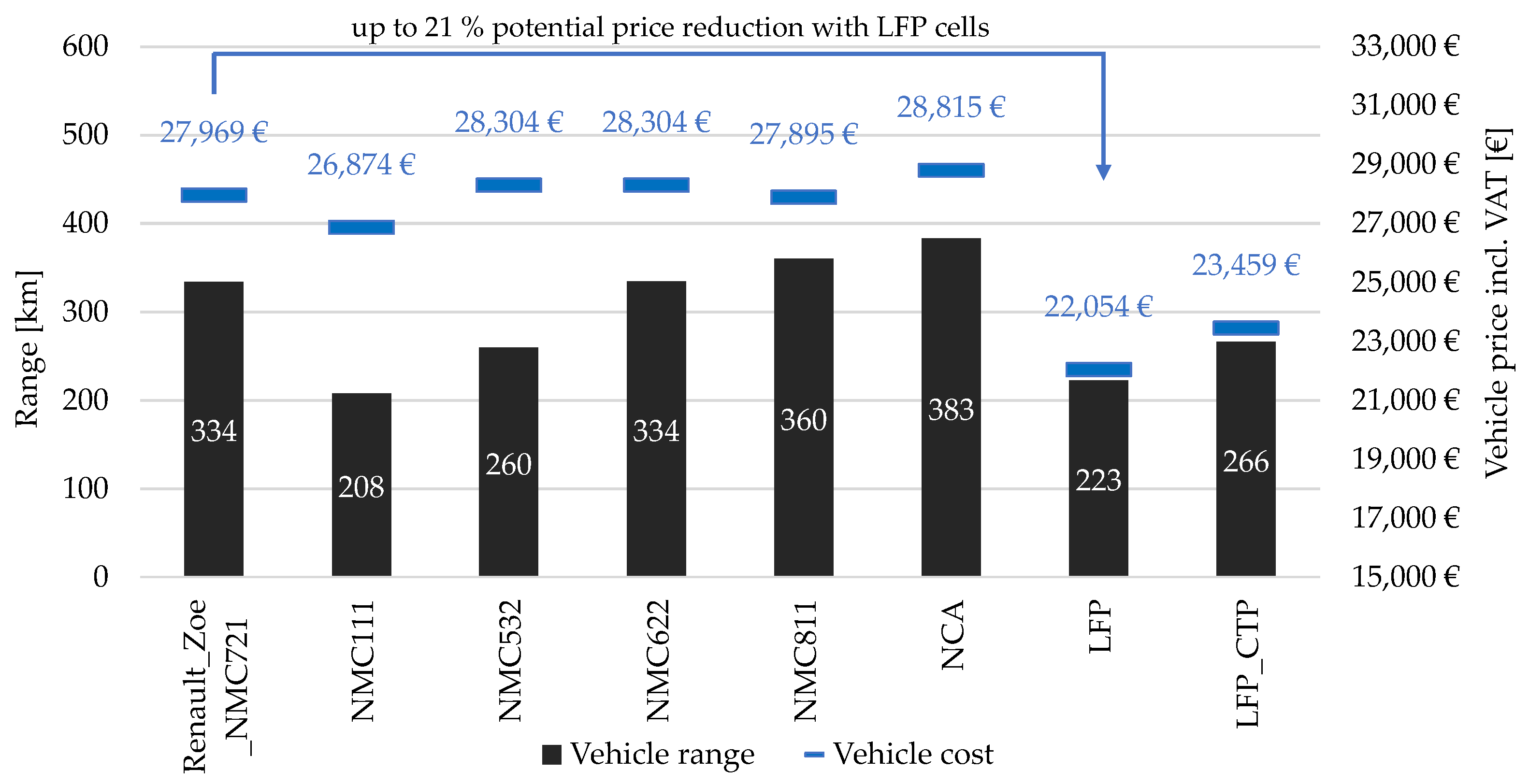
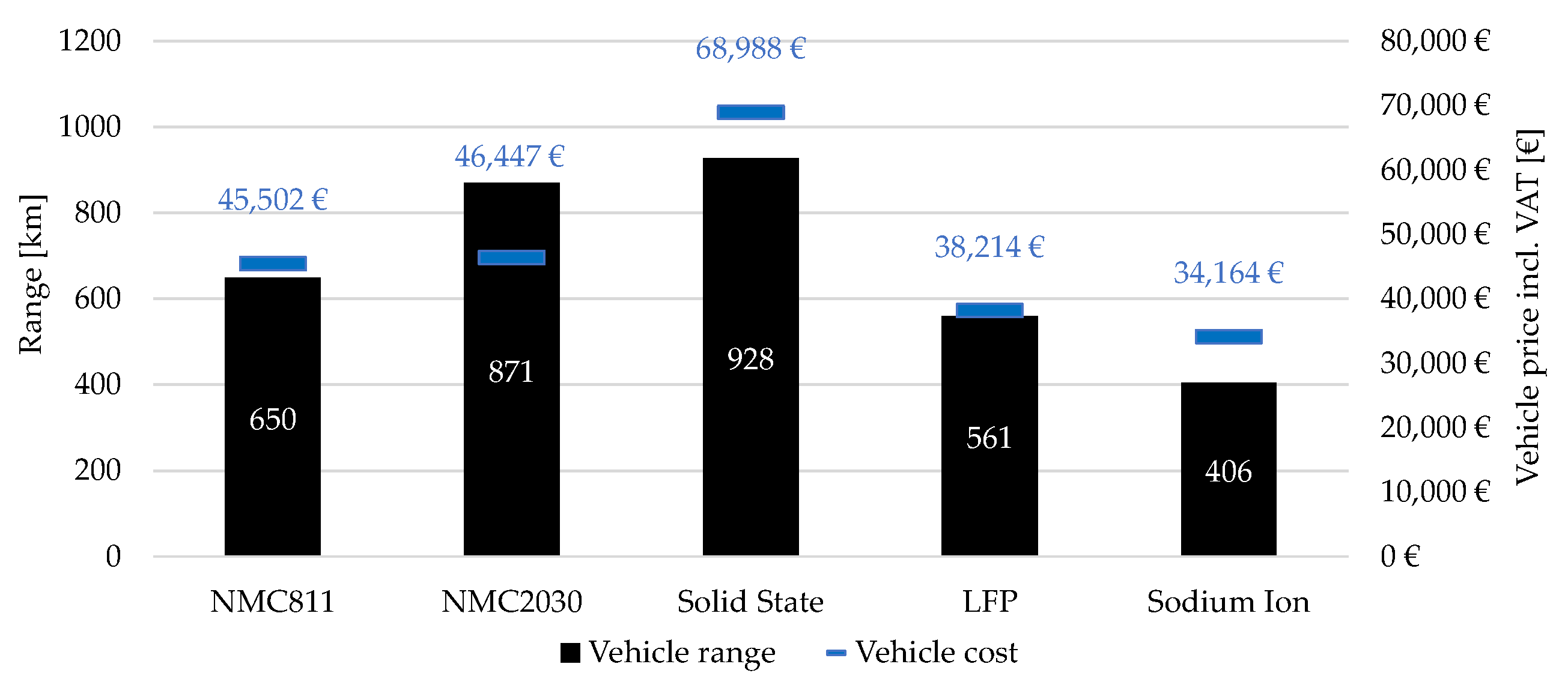
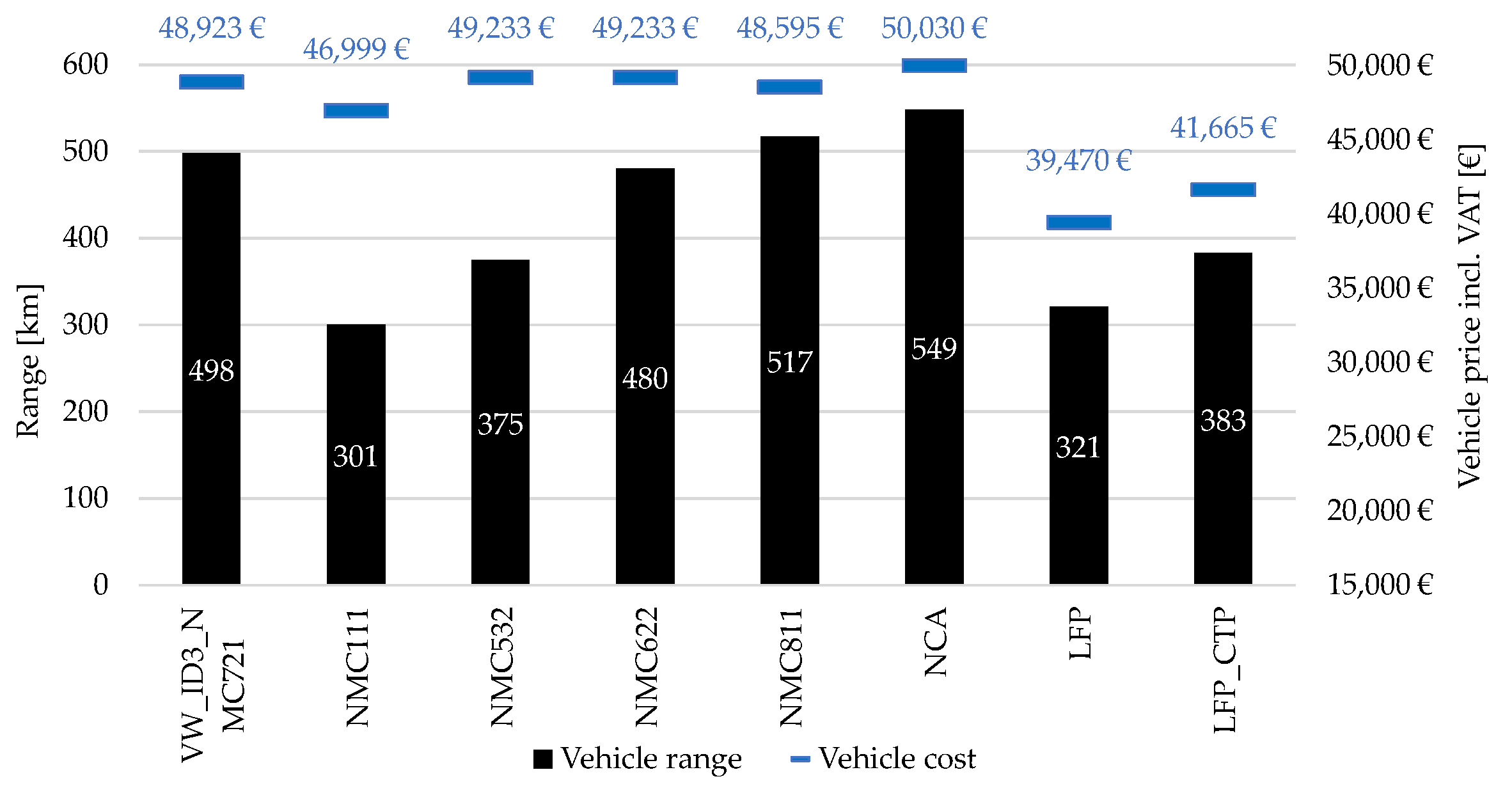
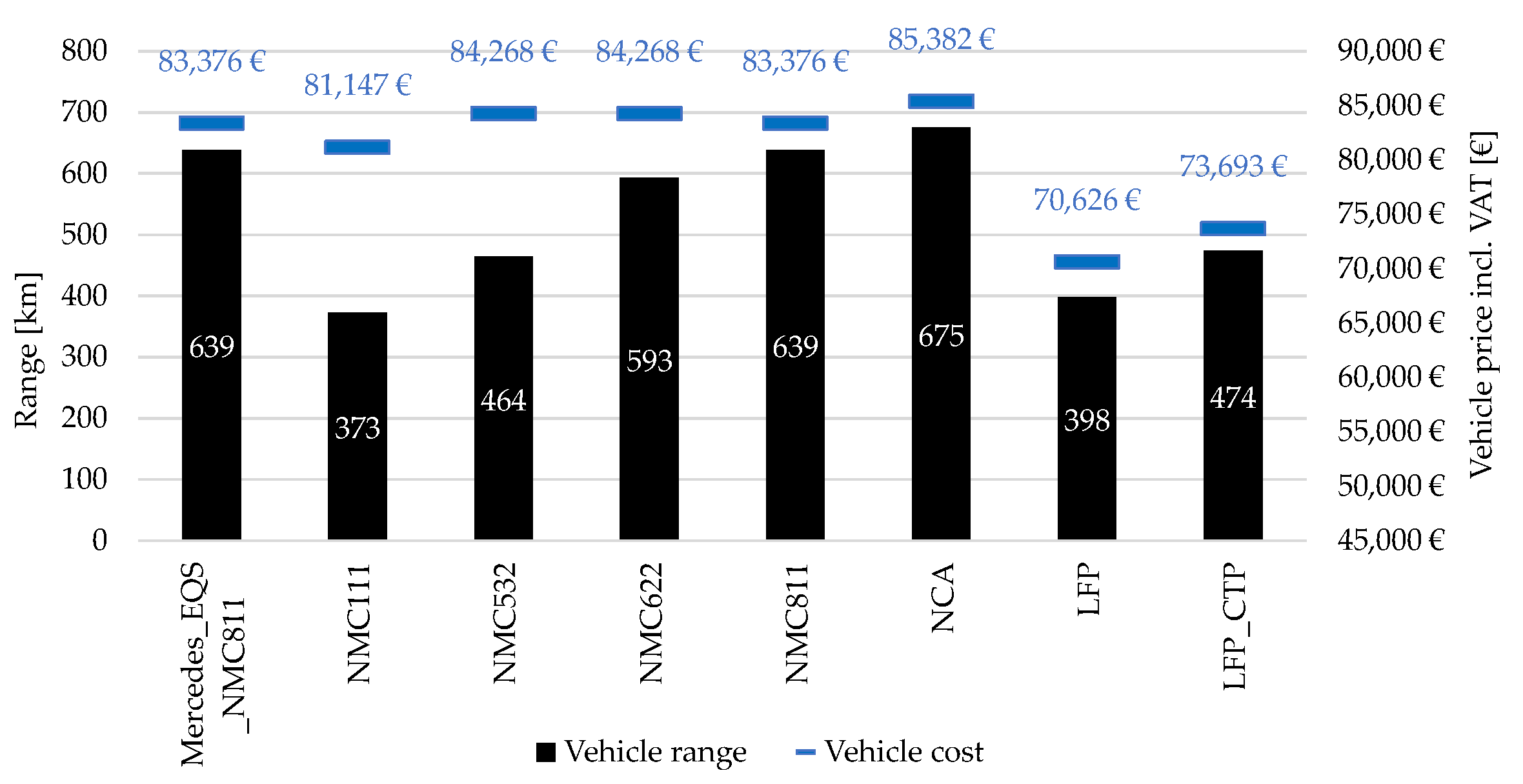
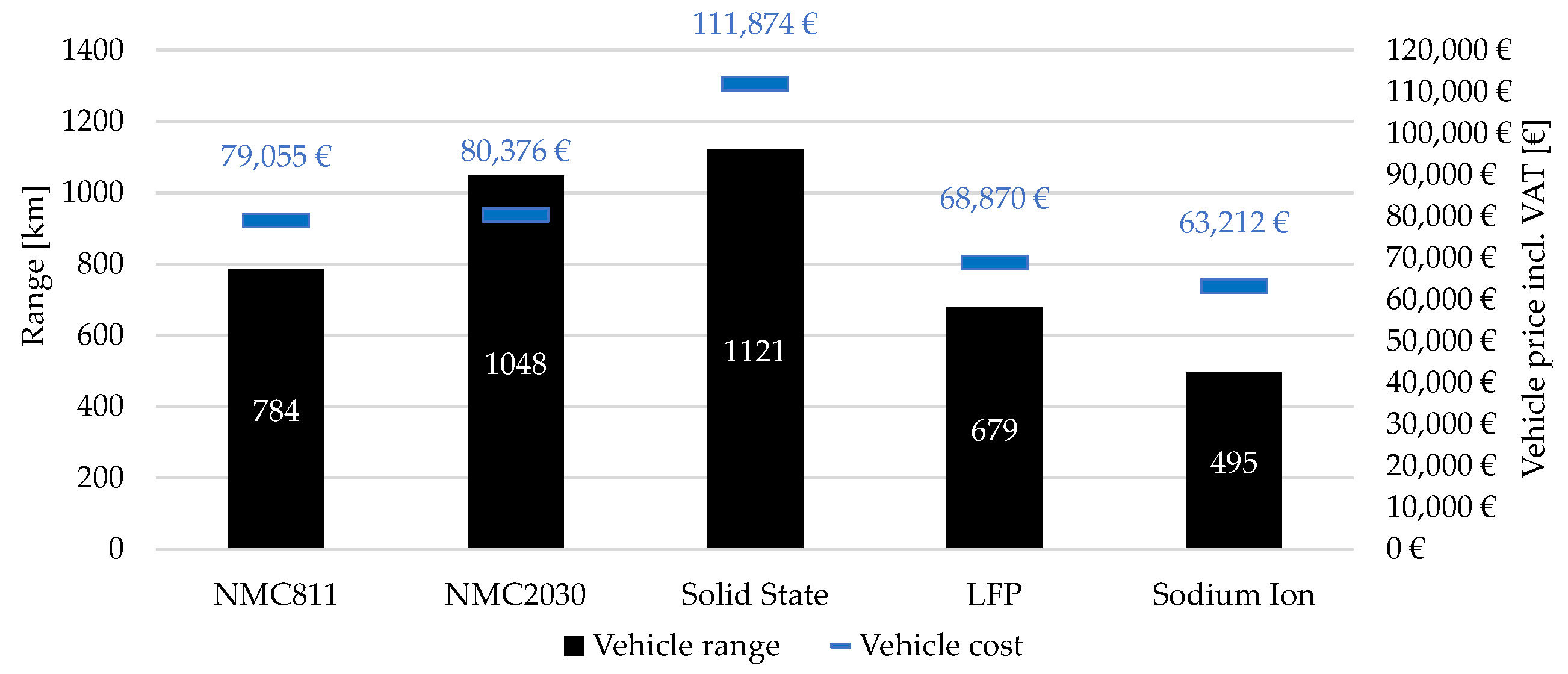
The introduction of battery electric vehicles on the global market has triggered a sustained upheaval in the automotive industry. In this process, the new properties of a battery-electric powertrain lead to a different set of central requirements, such as increasing the range, lifetime or the fast-charging capability of the vehicle battery. This paper develops a bottom-up systematic model to assess the current and future impact of different battery technologies on vehicle costs. For this purpose, it summarises the scientific findings of automotive battery cell chemistries and, flanked by novel expert interviews and teardown data, derives key values for them. Based on the data obtained, modelling is carried out to demonstrate the technical and economic suitability of the identified cell chemistries and their impact on the range and total cost of electric vehicles. Lithium iron phosphate batteries appear to be able to achieve a price saving of up to 21% in the small vehicle segment compared to nickel-rich cell chemistries, provided that customers are prepared to accept a reduced range. At the same time, further efficiency improvements of the powertrain lead us to expect that, in combination with future high-energy cells, ranges of more than 800 km can be achieved even in the mid-size vehicle segment. It turns out that depending on whether the focus of the vehicle is on cost, range or performance, different battery technologies are likely to be used in the future.
Keywords: battery electric; vehicle; passenger car; chemistry; vehicle cost; range battery electric; vehicle; passenger car; chemistry; vehicle cost; range