3.2.1. Mechanistic Interpretation of ESC Current Evolution
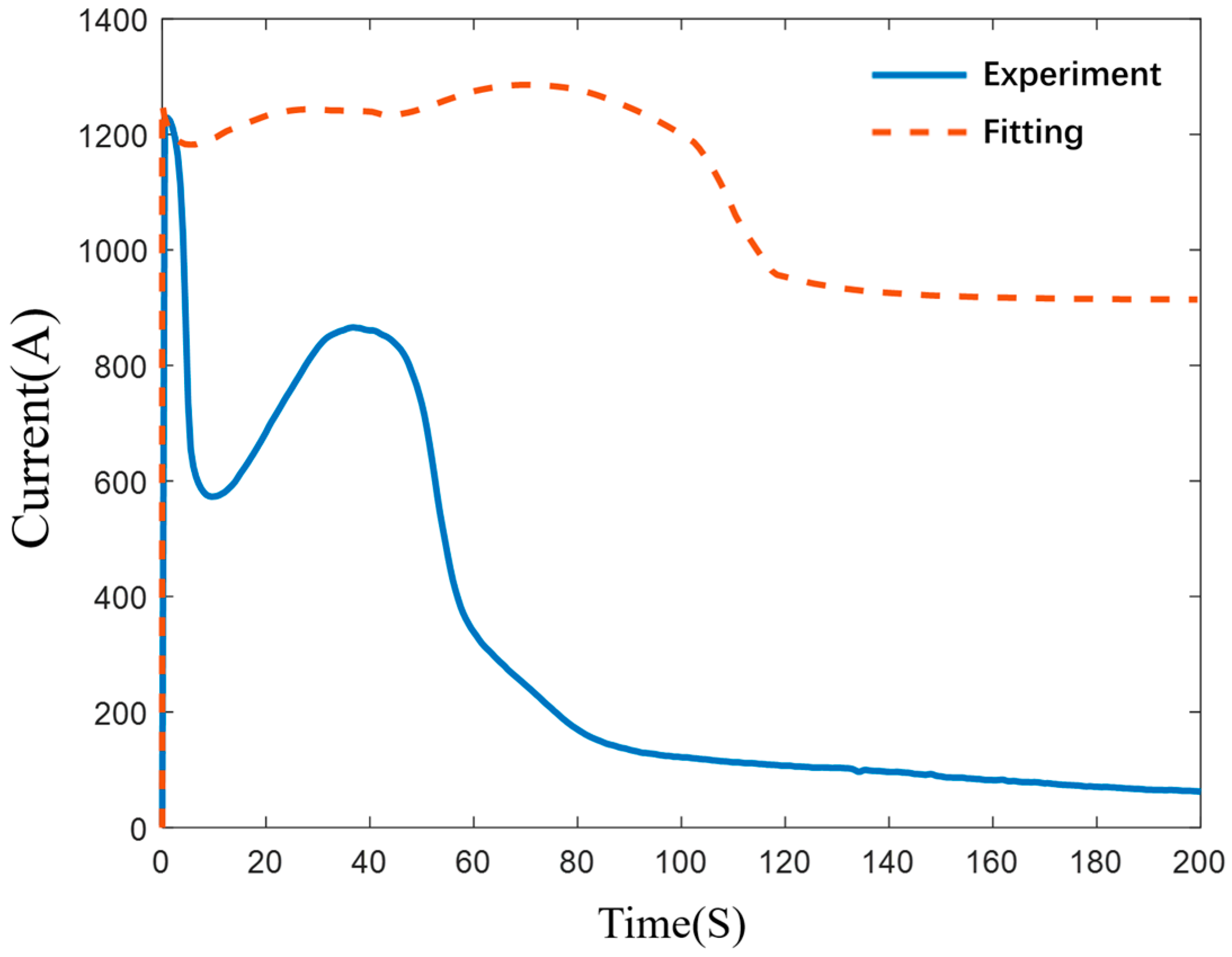
The discrepancy in
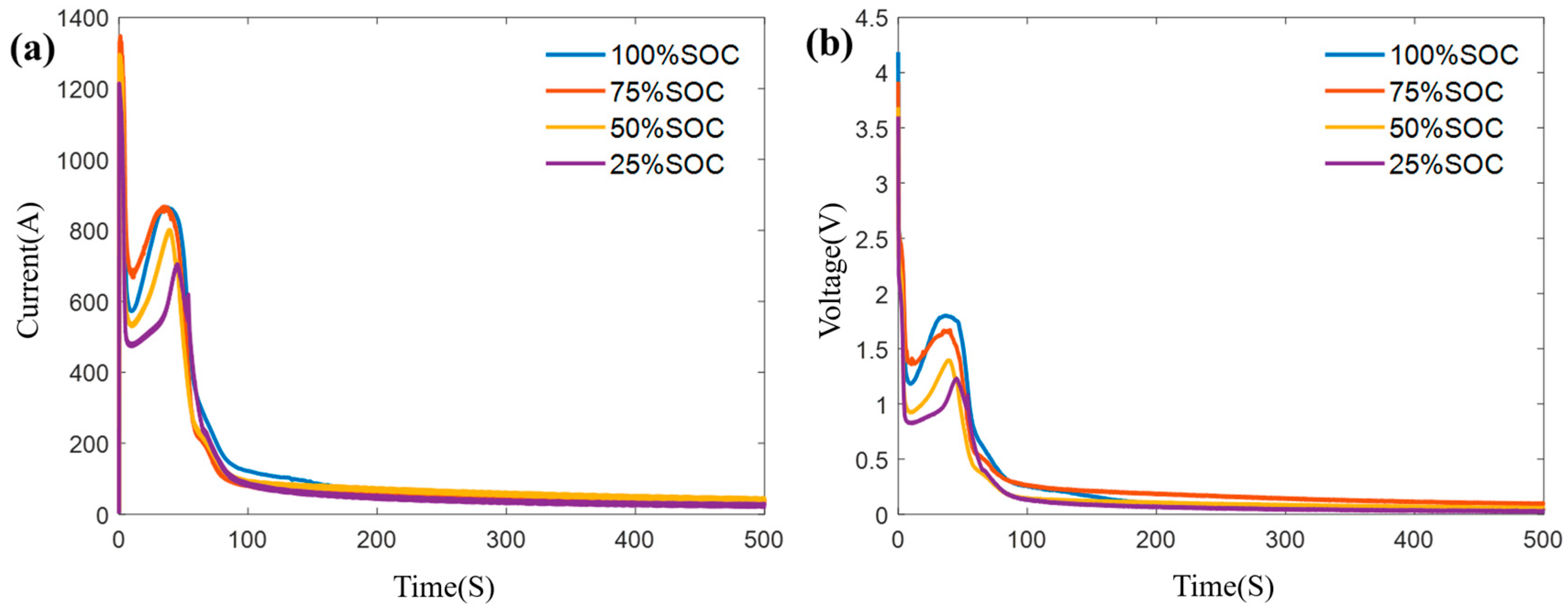
Figure 11 suggests that ESC current evolution is governed not only by electrical polarization but also by internal transport and thermal constraints. Under ESC, a large number of lithium ions de-intercalate from the negative electrode, migrate through the electrolyte and separator, and intercalate into the positive electrode within a very short time. This transport process is limited by several factors, including solid-phase diffusion in active particles, liquid-phase diffusion in the electrolyte, ion transference behavior, concentration gradients, and separator porosity and permeability. Accordingly, lithium-ion transport is subject to a finite flux limit rather than being unbounded. During normal operation, this transport bottleneck is not prominent because the current remains far below the limiting level. During ESC, however, the current can approach or even exceed that limit, causing ion-transport congestion, a sharp increase in transport resistance, and a rapid initial current drop.
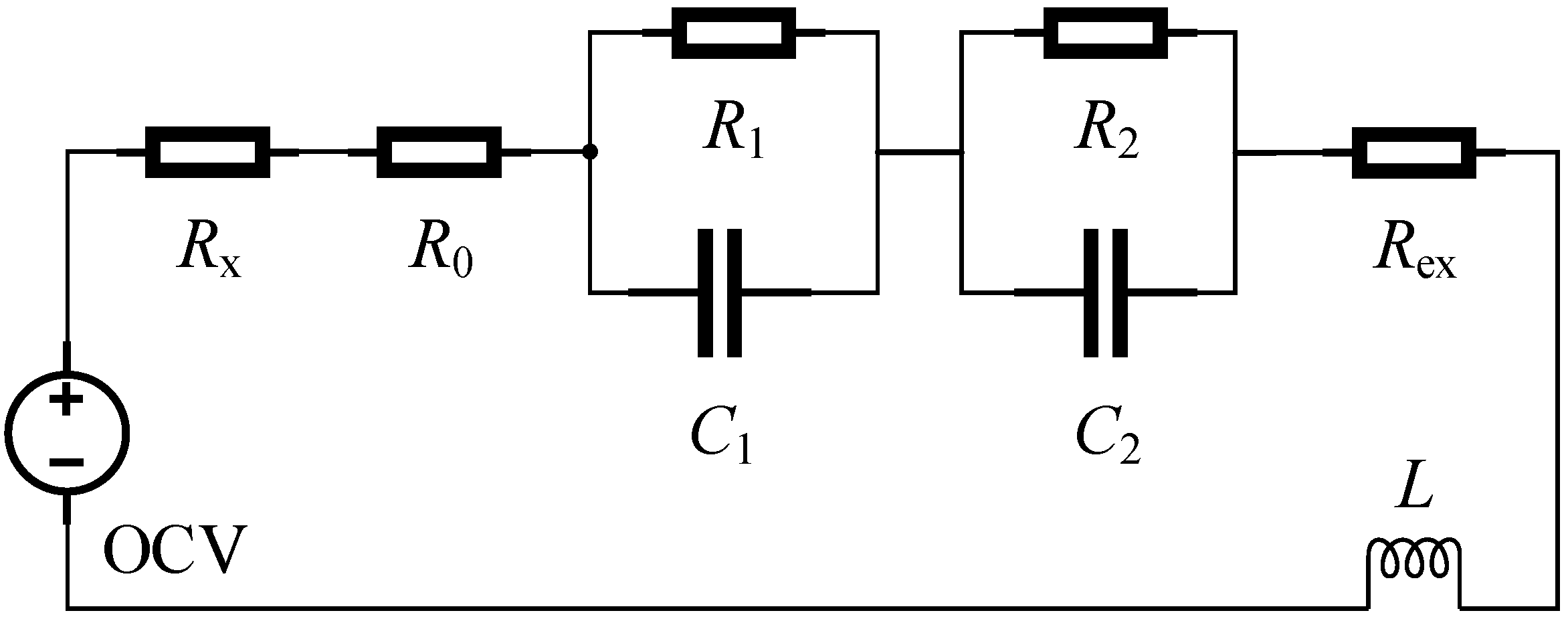
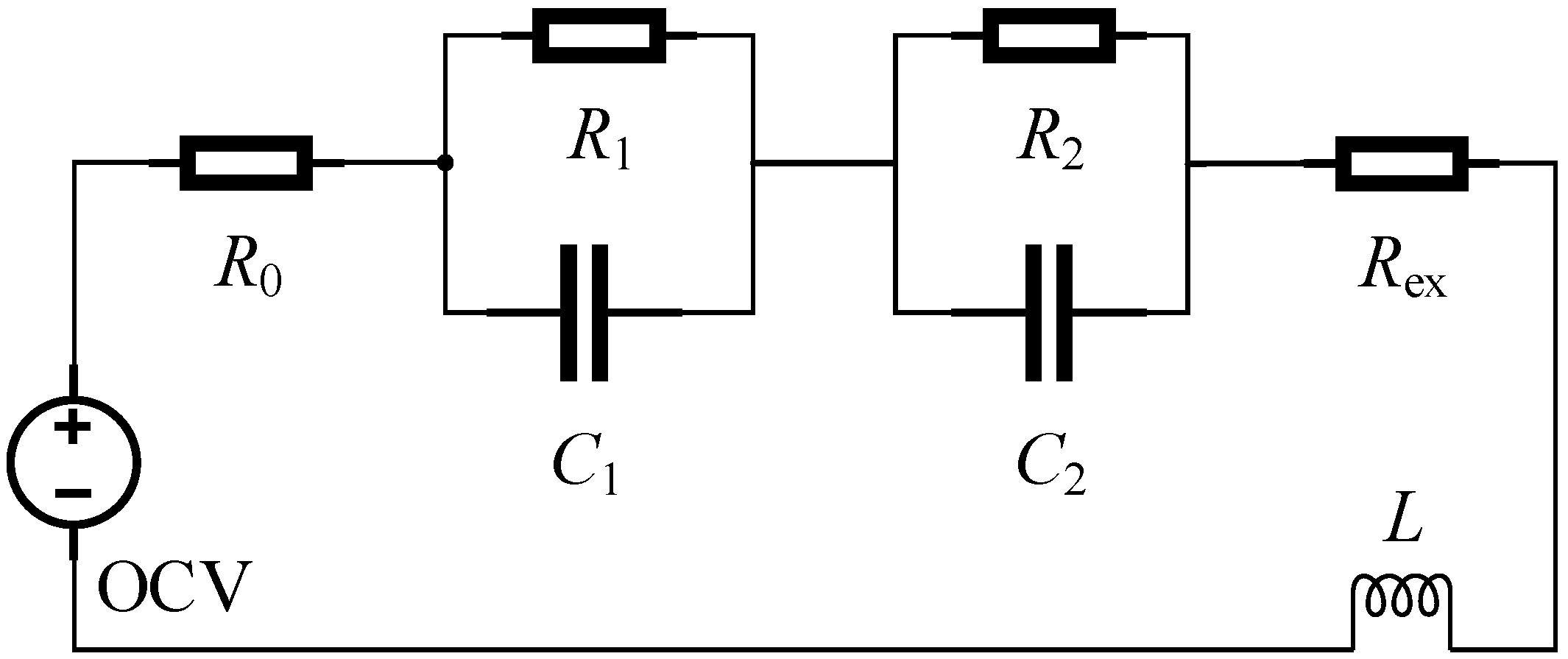
To capture this effect, an additional resistance
Rx is introduced into the model to represent the reaction-process-induced transport constraint. The equivalent circuit is therefore modified from
Figure 5 to
Figure 12.
The correction resistance Rx represents the difference between the actual internal resistance during ESC and the resistance predicted by the baseline equivalent circuit model. To determine Rx, the real-time internal resistance Rin is first calculated from the measured ESC current I, the terminal voltage U, and the OCV data using Equation (6).
It should be noted that
Rx is not intended to represent a pure ohmic resistance or a uniquely identifiable electrochemical parameter. Instead, it is introduced as a simplified lumped correction parameter outside the normal equivalent-circuit parameters. It reflects the additional obstruction effect that cannot be adequately described by the baseline second-order RC model under ESC conditions. This obstruction is associated with coupled effects such as lithium-ion transport limitation, charge accumulation, polarization enhancement, temperature rise, and thermally intensified separator pore closure. Therefore,
Rx should be interpreted as a phenomenological composite parameter representing the overall degree of reaction-process-induced hindrance in the current path.
Similarly, the modeled internal resistance
Rsim can be obtained from the simulation results, and the time-dependent correction resistance
Rx is then calculated according to Equation (7).
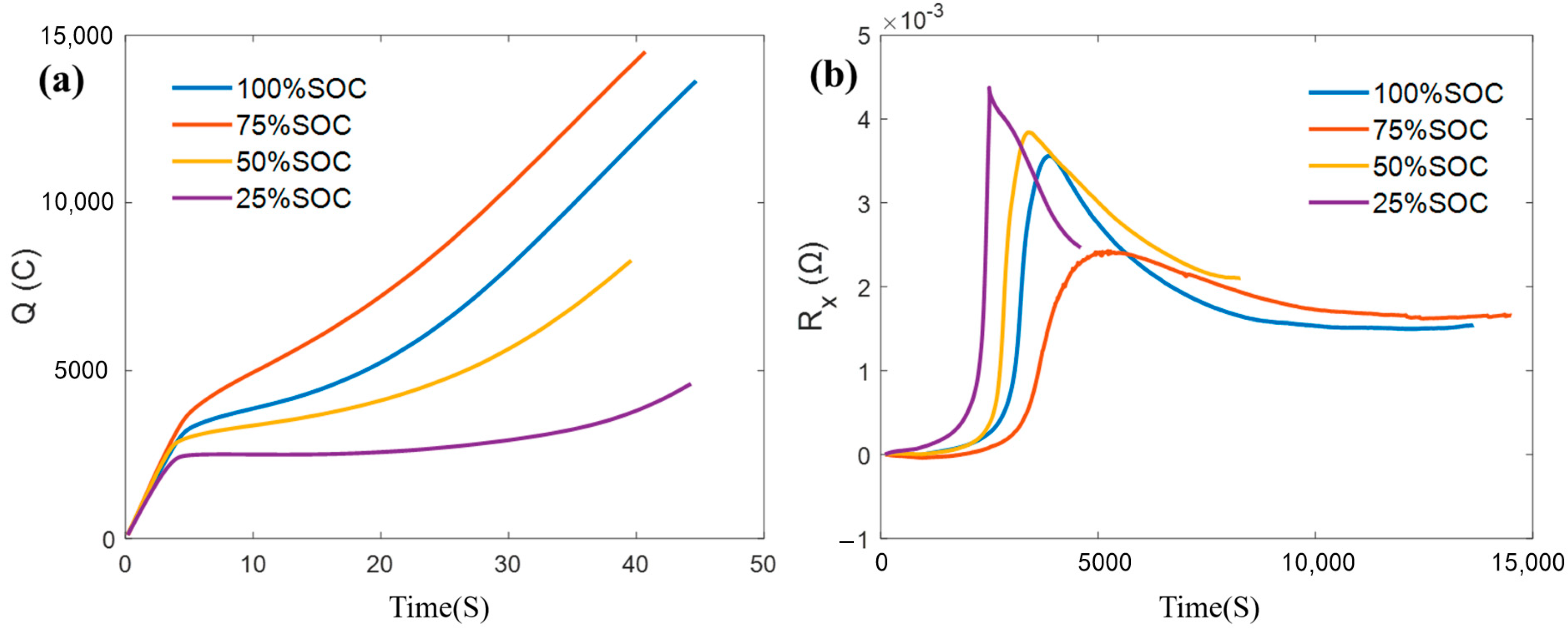
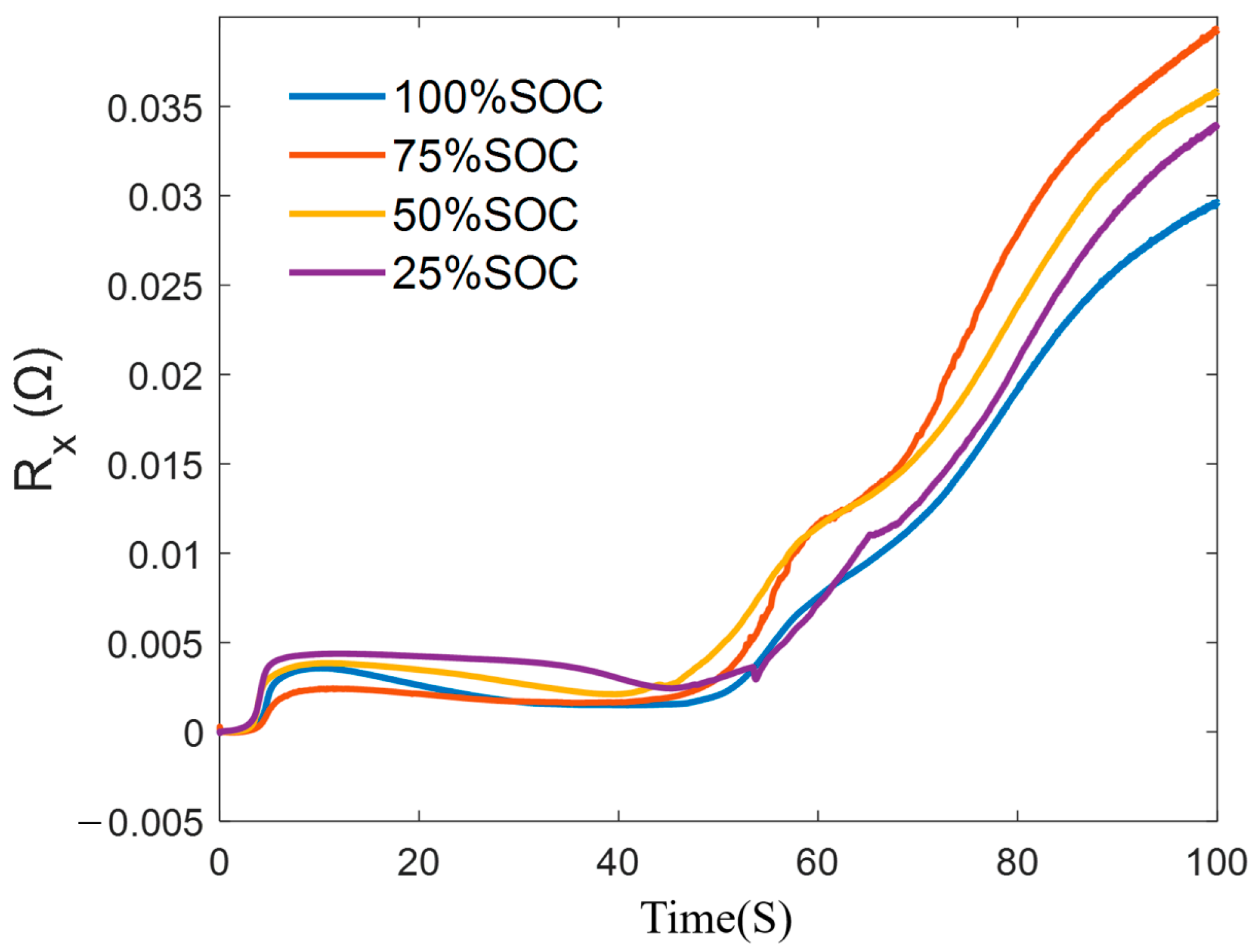
Figure 13 shows the evolution of
Rx during ESC at different initial SOCs. For all cells,
Rx is close to zero at the onset of ESC, rises quickly to a local maximum within about 10 s, decreases gradually over roughly 10–50 s, and then increases sharply again after about 50 s. The first maximum remains below 5 mΩ, whereas the later increase reaches several tens of milliohms.
This behavior suggests that different mechanisms dominate Rx at different stages of ESC. In the first several seconds, rapid ion transport drives the system toward a flux bottleneck, causing ion accumulation and a marked increase in resistance. As ion accumulation builds up, the concentration gradient also increases, which enhances diffusion and partially relieves the transport constraint, so Rx decreases after the local maximum. At later times, the cell temperature rises to about 80–90 °C and side reactions together with separator shrinkage begin to influence transport, resulting in a renewed and accelerated increase in Rx. Because the amount of transportable lithium and the thermal path depend on SOC, the late-stage variation in Rx also shows strong nonlinearity.
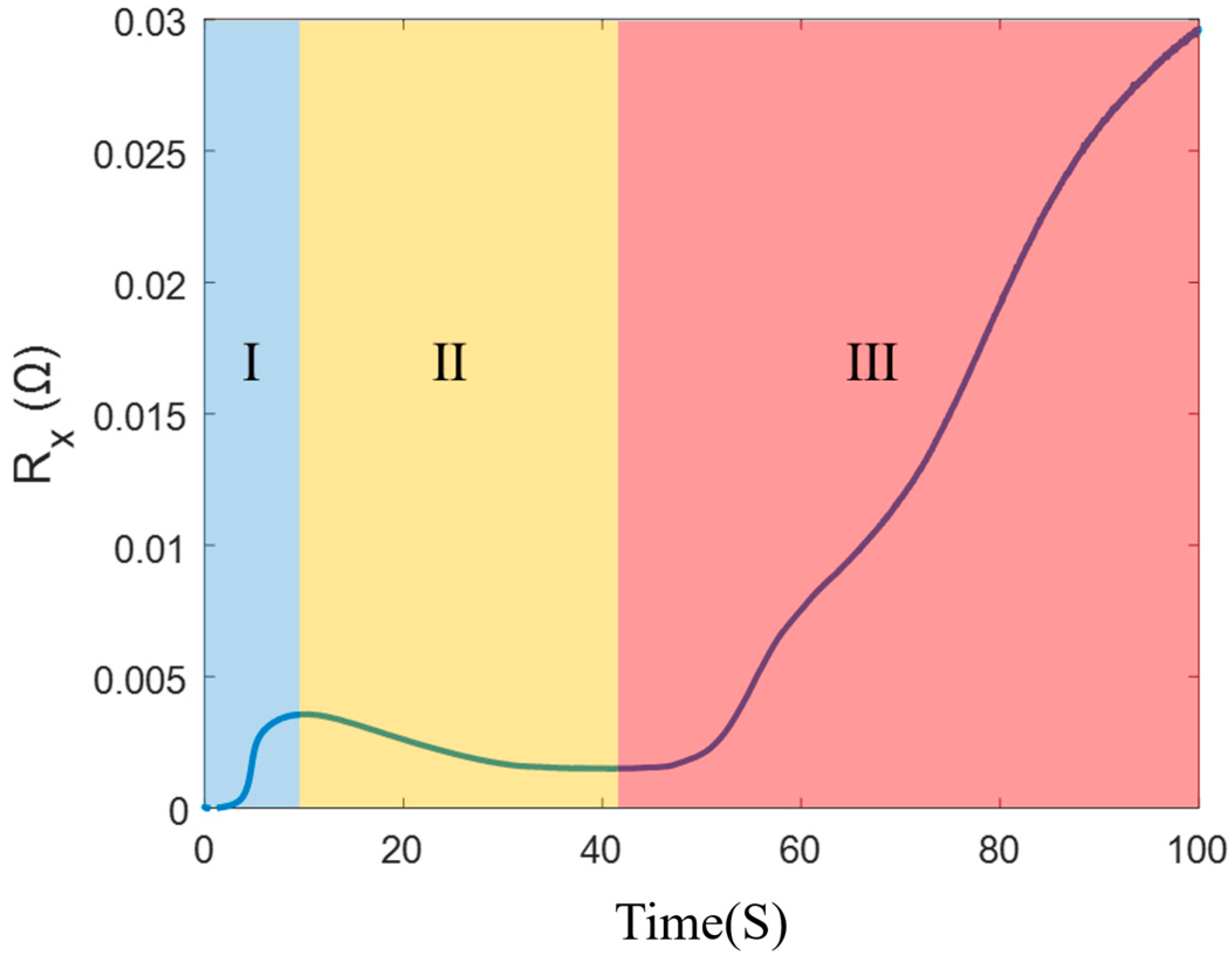
The three ESC stages are separated according to the joint evolution of the measured short-circuit current and the identified correction resistance Rx. Stage I corresponds to the initial period in which the short-circuit current decreases rapidly and Rx increases sharply, indicating a rapid increase in lithium-ion transport obstruction under extremely high current demand. Stage II corresponds to the period in which the current shows a secondary rebound or slower variation while Rx gradually decreases, indicating that the enhanced concentration gradient helps relieve the initial transport congestion. Stage III corresponds to the later period in which Rx increases again and the current finally attenuates, which is associated with thermally intensified transport obstruction and separator pore closure. The specific transition points are characteristic of the tested cell and ESC conditions rather than universal fixed boundaries.
Based on the above observations, the evolution of the correction resistance during ESC can be interpreted in terms of three successive control effects:
- (1)
Bottleneck-control effect. At the initial stage of ESC, the extremely high current approaches the lithium-ion transport bottleneck, leading to marked ion accumulation and a rapid increase in
Rx. This stage corresponds to Stage I in
Figure 14.
- (2)
Concentration-difference-control effect. After the initial bottleneck has formed, the enhanced concentration gradient promotes lithium-ion migration and gradually reduces
Rx. This stage corresponds to Stage II in
Figure 14.
- (3)
Separator pore-closure effect. With continued heating, separator shrinkage and porosity loss progressively hinder ion transport, causing
Rx to increase sharply again. This stage corresponds to Stage III in
Figure 14.
Because Rx is influenced by multiple coupled factors, it is difficult to derive from a single closed-form expression. Moreover, instantaneous external variables such as current and voltage cannot directly represent the cumulative effect of ion accumulation. To introduce a tractable descriptor of this accumulation process, the classical bottleneck model from transportation theory is adopted as an analogy for lithium-ion transport congestion.
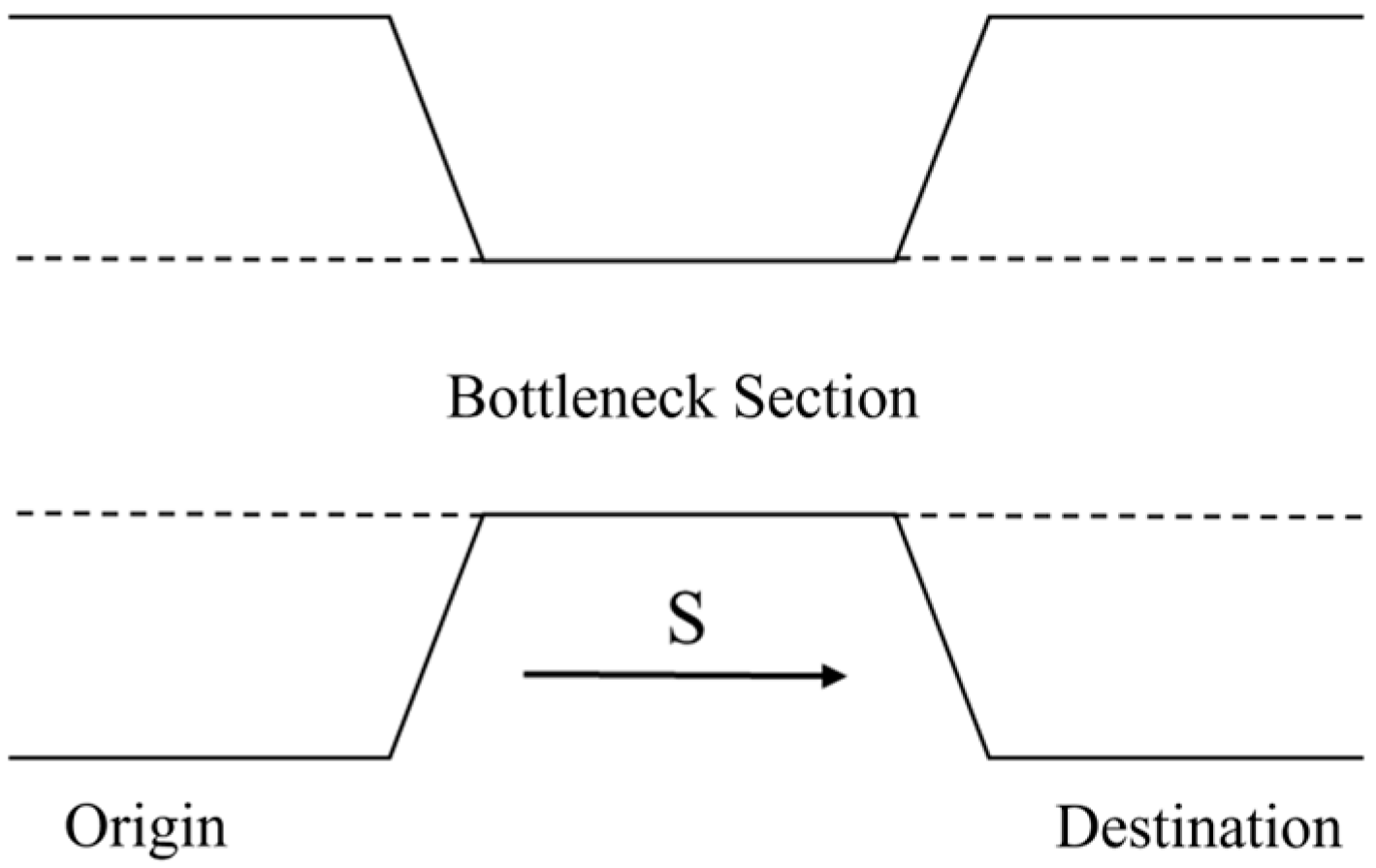
In the classical bottleneck model, as shown in
Figure 15, a traffic system contains a section with limited throughput capacity [
21]. When demand exceeds this capacity, a queue forms and the waiting time depends on both the cumulative queue and the bottleneck throughput. By analogy, when the short-circuit-driven lithium-ion migration demand exceeds the maximum transport capability inside the battery, a transport queue can be considered to form, which manifests as additional ion-transport resistance. This analogy provides a useful basis for defining a cumulative descriptor of transport congestion.
The queuing time for a traveler departing at time
t is expressed as:
According to this framework, queuing behavior is mainly determined by the cumulative queued amount and the maximum bottleneck throughput. A similar idea is used here for lithium-ion transport. Although the formation and relaxation of transport congestion in a battery are more complex than in a traffic system, defining a limiting throughput and a cumulative queued quantity still provides a practical descriptor for analyzing
Rx. The corresponding quantity is calculated by Equation (10).
In Equation (10), I(t) is the instantaneous ESC current, Im is the current associated with the transport bottleneck throughput, ts is the time when I reaches Im, and Q(t) is the cumulative queued charge at time t. According to the manufacturer specification, the maximum permissible discharge rate of the tested 37 Ah cell is 10 C-15 C, corresponding to a current range of approximately 370–555 A. Therefore, Im was constrained within this physically admissible interval rather than treated as an arbitrary fitting parameter.
The queued-charge descriptor Q should be interpreted as a phenomenological variable rather than a directly measured electrochemical state. It is introduced to describe the cumulative tendency of lithium-ion transport congestion during ESC. The bottleneck analogy is used only to define a practical cumulative obstruction effect when the short-circuit-driven ion-transport demand exceeds the limiting transport capability. Therefore, Q is not intended to fully represent the internal concentration field, but to provide a compact descriptor linking the early transport bottleneck and subsequent concentration-gradient relaxation to the evolution of Rx.
To evaluate the influence of
Im on the final ESC-current prediction, a sensitivity analysis was carried out by varying
Im from 370 A to 550 A at intervals of 10 A. For each
Im setting, the complete modeling procedure was repeated, including the calculation of the queued-charge descriptor
Q, the construction of the closed-loop
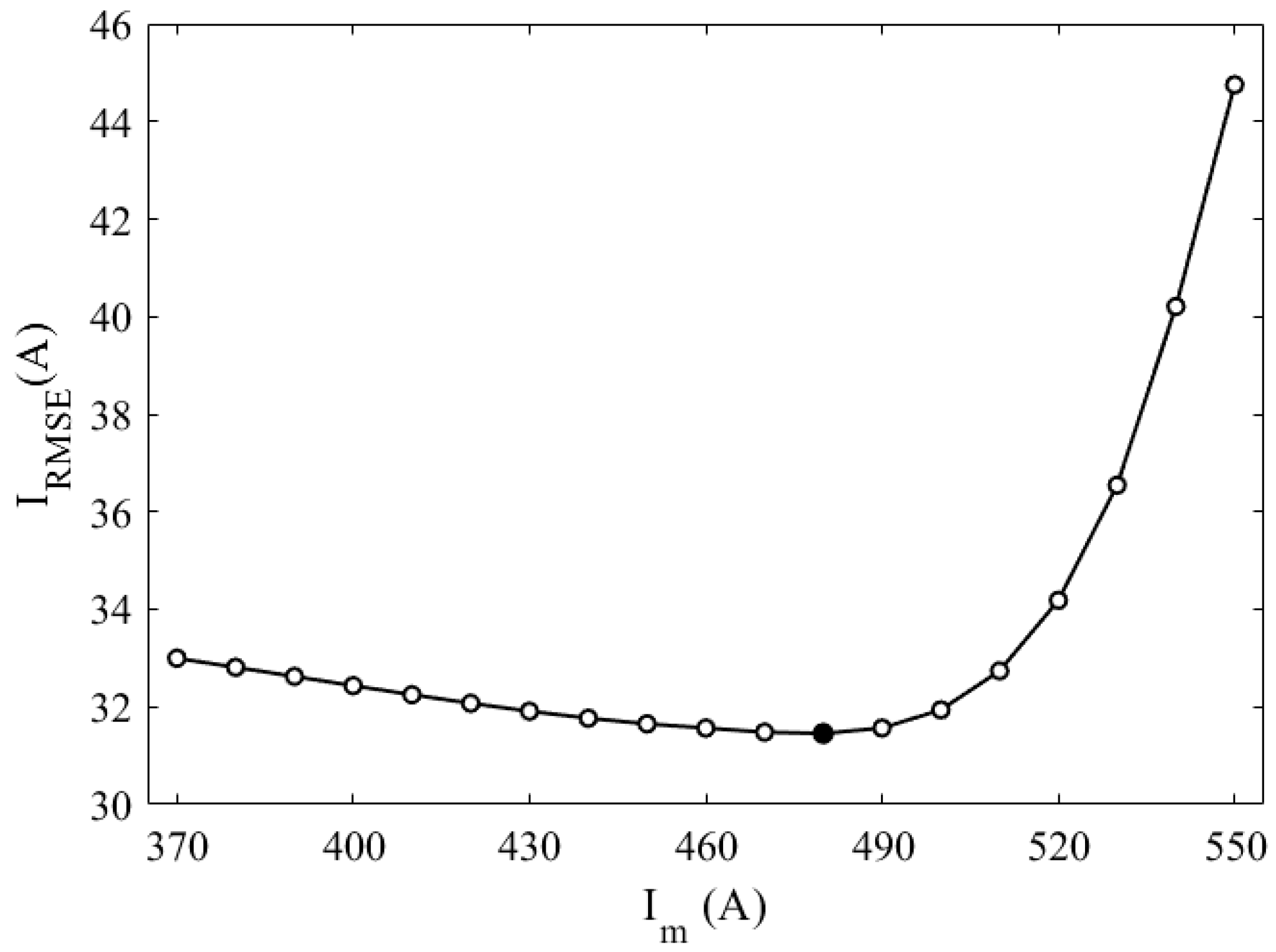
Rx correction process, and the final ESC-current simulation. The resulting RMSE variation with
Im is shown in
Figure 16.
As shown in
Figure 16, the current-prediction RMSE first decreases and then increases as
Im increases. When
Im is lower than about 430 A, the bottleneck capacity is underestimated, causing excessive queued-charge accumulation and a larger prediction error. When
Im exceeds about 500 A, the transport bottleneck effect is weakened excessively in the model, and the prediction error increases rapidly. The minimum RMSE is obtained at
Im = 480 A, with an RMSE of 31.454 A. Therefore,
Im = 480 A is selected as the bottleneck-throughput current for the tested cell and used in the subsequent closed-loop simulation. The selected
Im value is optimal for the present validation condition and should be further examined under additional SOCs, loop resistances, and cell types.
Before the cell body temperature reaches 90 °C, the cumulative queued lithium-ion charge calculated according to Equation (10) is shown in
Figure 17a, and the variation in
Rx with
Q is shown in
Figure 17b. It can be seen from
Figure 17 that, during the period from the onset of the short circuit until the temperature reaches 90 °C, the queued lithium-ion charge exhibits a two-stage growth pattern, while the resistance
Rx first increases rapidly with
Q and then decreases slowly. This is consistent with the previous theoretical analysis, suggesting that the cell successively underwent a bottleneck-controlled regime and a concentration-difference-controlled regime during this period.
The temperature of about 90 °C is interpreted here as a characteristic transition temperature identified from the present ESC dataset, rather than as a universal material threshold. Below this temperature, the evolution of
Rx is more closely associated with the queued-charge-driven transport process, whereas above this temperature the temperature dependence of
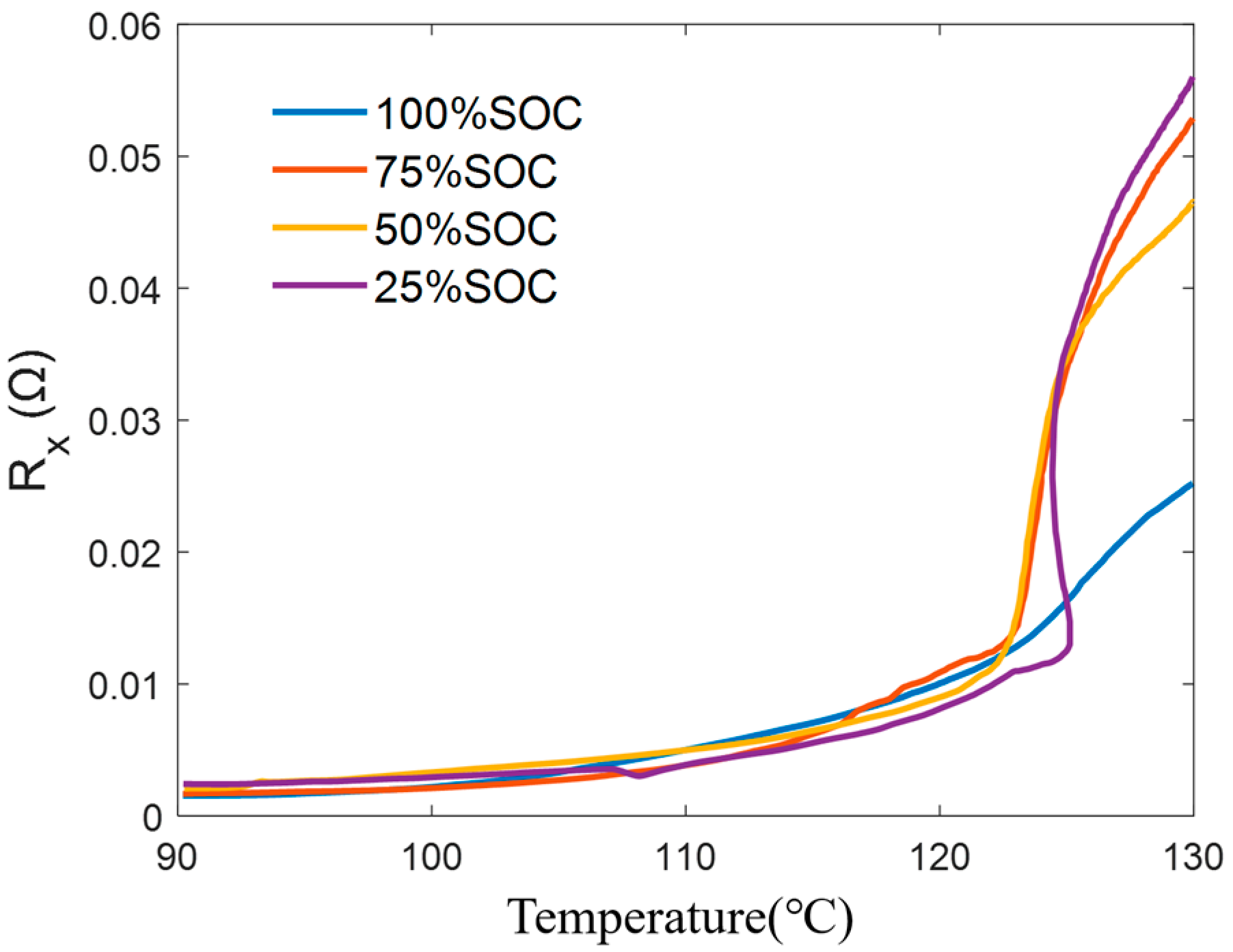
Rx becomes increasingly pronounced. As shown in
Figure 18,
Rx increases gradually from about 90 to 124 °C for all tested SOCs, indicating a thermally intensified regime associated with progressive separator pore closure. The temperature of about 124 °C is further interpreted as an apparent turning temperature at which the growth rate of
Rx becomes markedly steeper, rather than as an exact universal threshold. Because the separator is mainly based on a PP/PE polymer membrane, this turning temperature is physically consistent with the thermal-shutdown or melting range of the PE component. Moreover, the measured value corresponds to the surface-center temperature rather than the internal hot-spot temperature, so the actual internal separator temperature is expected to be higher. The sharp increase in
Rx near 124 °C is therefore consistent with accelerated separator pore closure and severe blockage of ion-transport pathways. At still higher temperatures, the dispersion of
Rx among different SOCs increases, indicating that
SOC should also be retained as an explanatory variable in the late stage.
It should be emphasized that Im, the transition temperature near 90 °C, and the apparent turning temperature near 124 °C are treated here as characteristic quantities identified from the present ESC dataset rather than as universal constants. Their role in the model is to mark stage transitions and dominant trend changes in the evolution of Rx; accordingly, the mechanistic interpretation relies primarily on the consistency of stage behavior rather than on the exact numerical value of any single threshold. Therefore, the subsequent validation should be understood as validation of the calibrated reaction-process correction framework, rather than as a fully parameter-free prediction.
3.2.2. Closed-Loop Segmented Ridge Regression for Rx Prediction and External Short-Circuit Simulation
Before introducing Rx into the closed-loop equivalent-circuit simulation, its physical consistency was further examined from the viewpoint of thermal behavior. In a conventional equivalent circuit model, the irreversible heat generation is mainly associated with Joule heating. If Rx represents an additional transport-related resistance under ESC conditions, it should also contribute to the heat generation term rather than acting only as a mathematical correction for current fitting.
To verify this point, a lumped thermal model was established as
where
T is the cell surface temperature,
Tamb is the initial ambient temperature,
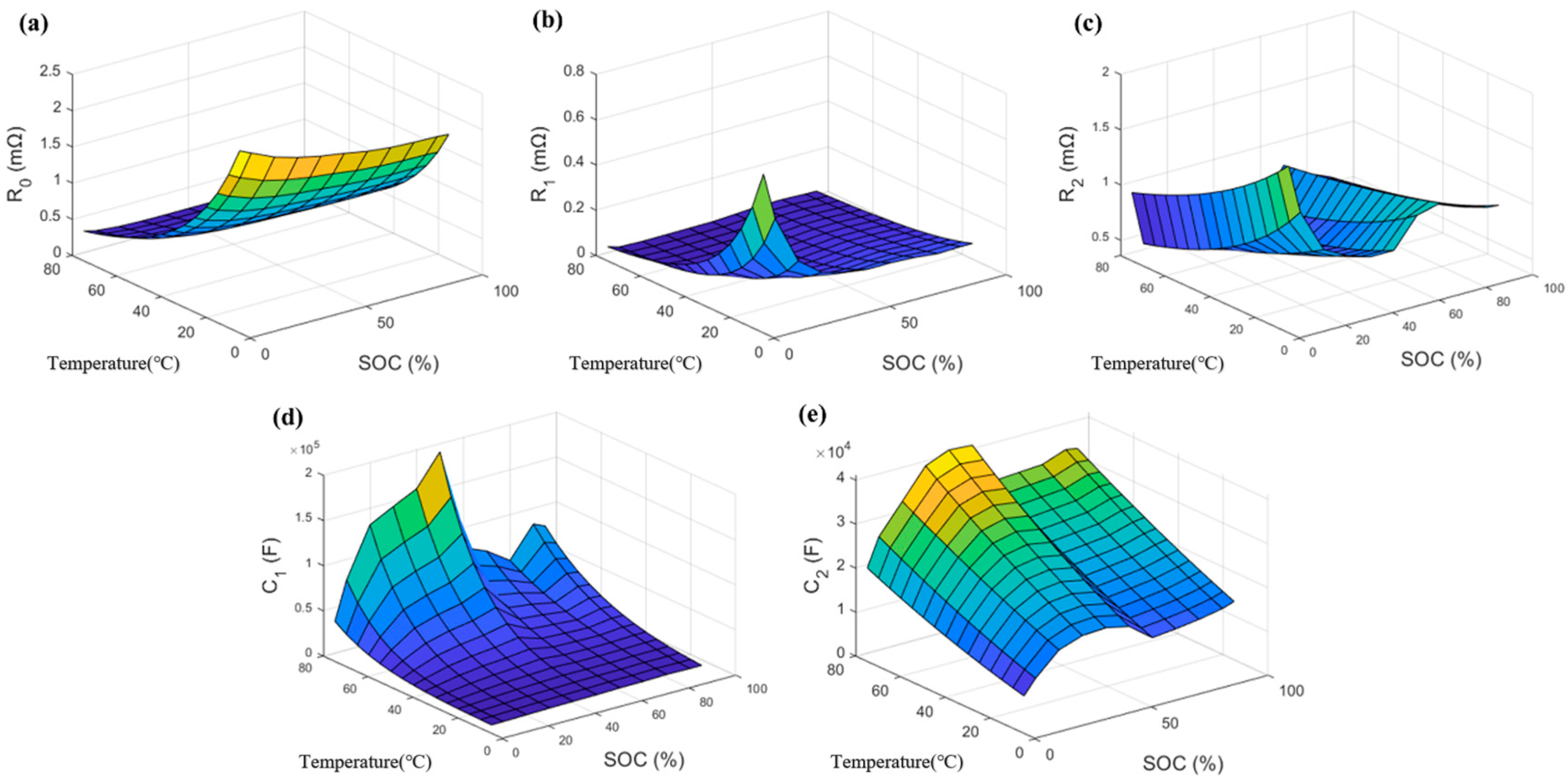
R0 is obtained from the Arrhenius-parameterized equivalent circuit model, and
Rx is the identified correction resistance. The parameters of the lumped thermal model were identified as
mc = 857.197 J/°C and
h = 1.620 W/°C. The same thermal parameters were used for all SOC conditions.
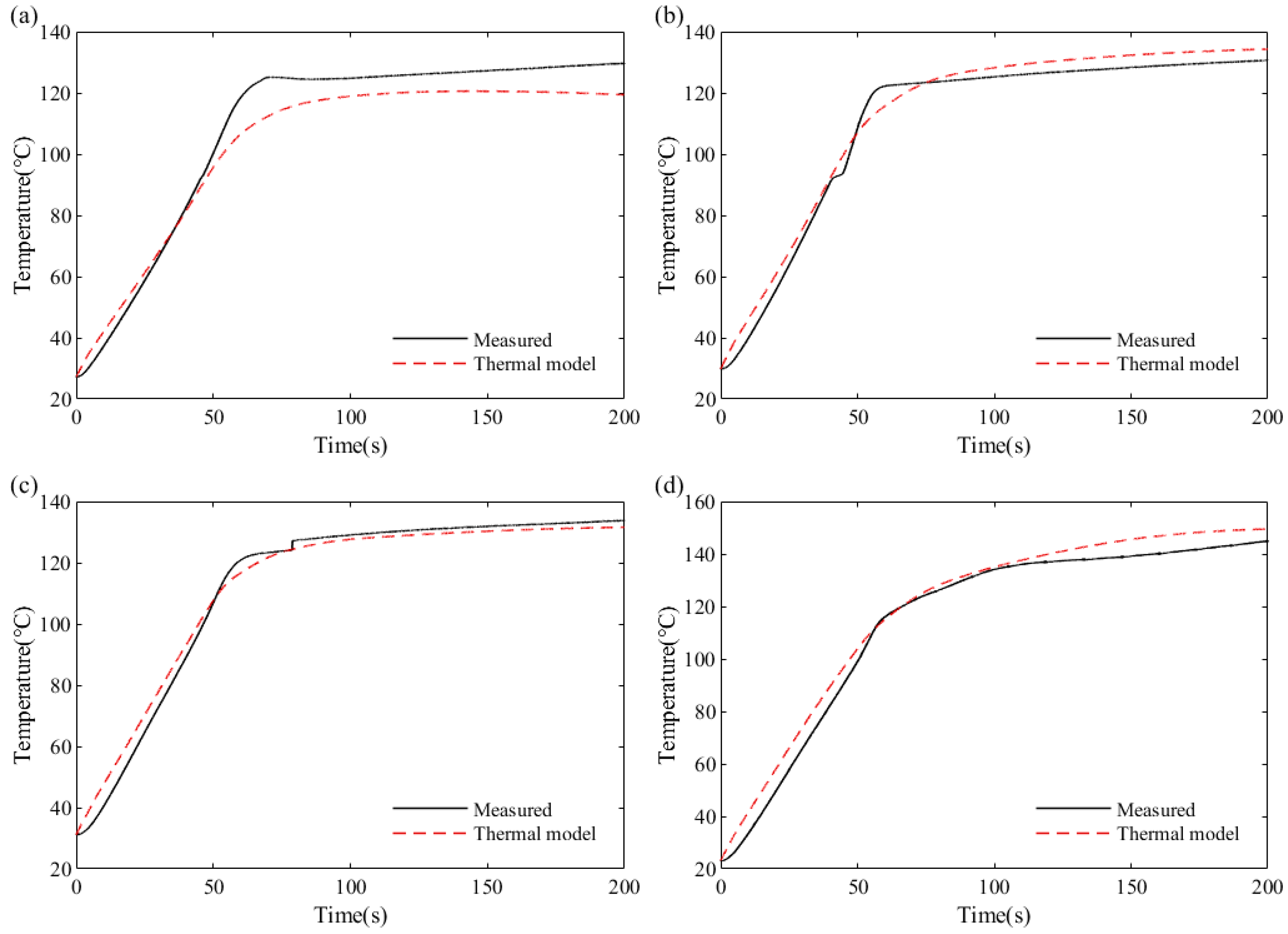
Figure 19 compares the measured temperature curves with the temperatures calculated by the lumped thermal model for the 25%, 50%, 75%, and 100% SOC ESC experiments. The calculated temperature trajectories reproduce the main heating trend under all SOC conditions, with RMSE values of 7.193 °C, 3.908 °C, 3.122 °C, and 5.289 °C, respectively. This agreement indicates that the additional correction resistance
Rx is consistent not only with the electrical current response but also with the overall heat-generation trend. Therefore, introducing
Rx into the equivalent circuit model is physically reasonable as a compact correction strategy. However, this thermal consistency check should be regarded as supporting evidence rather than proof that
Rx uniquely corresponds to a single irreversible loss mechanism.
Rx is better interpreted as a phenomenological composite parameter representing the overall reaction-process-induced obstruction effect during ESC.
This section establishes a closed-loop simulation strategy based on a modified equivalent circuit model. In this strategy, the resistance Rx is estimated in real time from the model’s own electrical state variables and immediately fed back into the equivalent-circuit calculation for the next time step, forming a closed-loop process of “prediction–simulation–update”.
In this work, the closed-loop process refers specifically to the recursive update of the electrical simulation variables, including current, SOC, Q, and Rx. The temperature sequence is not recursively updated within the same loop. Instead, before the closed-loop electrical simulation is performed, an independently trained LSTM model provides the temperature trajectory as an external thermal input. This temperature input is used to retrieve temperature-dependent equivalent-circuit parameters from the Arrhenius surfaces and to support the segmented prediction of Rx. This treatment reduces the accumulation of errors that could arise from simultaneously updating current, SOC, Q, Rx, and temperature in a fully coupled recursive loop. Therefore, the LSTM model is used to provide a stable thermal boundary for the current-prediction framework under the present experimental conditions, rather than to establish a fully self-contained electro-thermal closed-loop model.
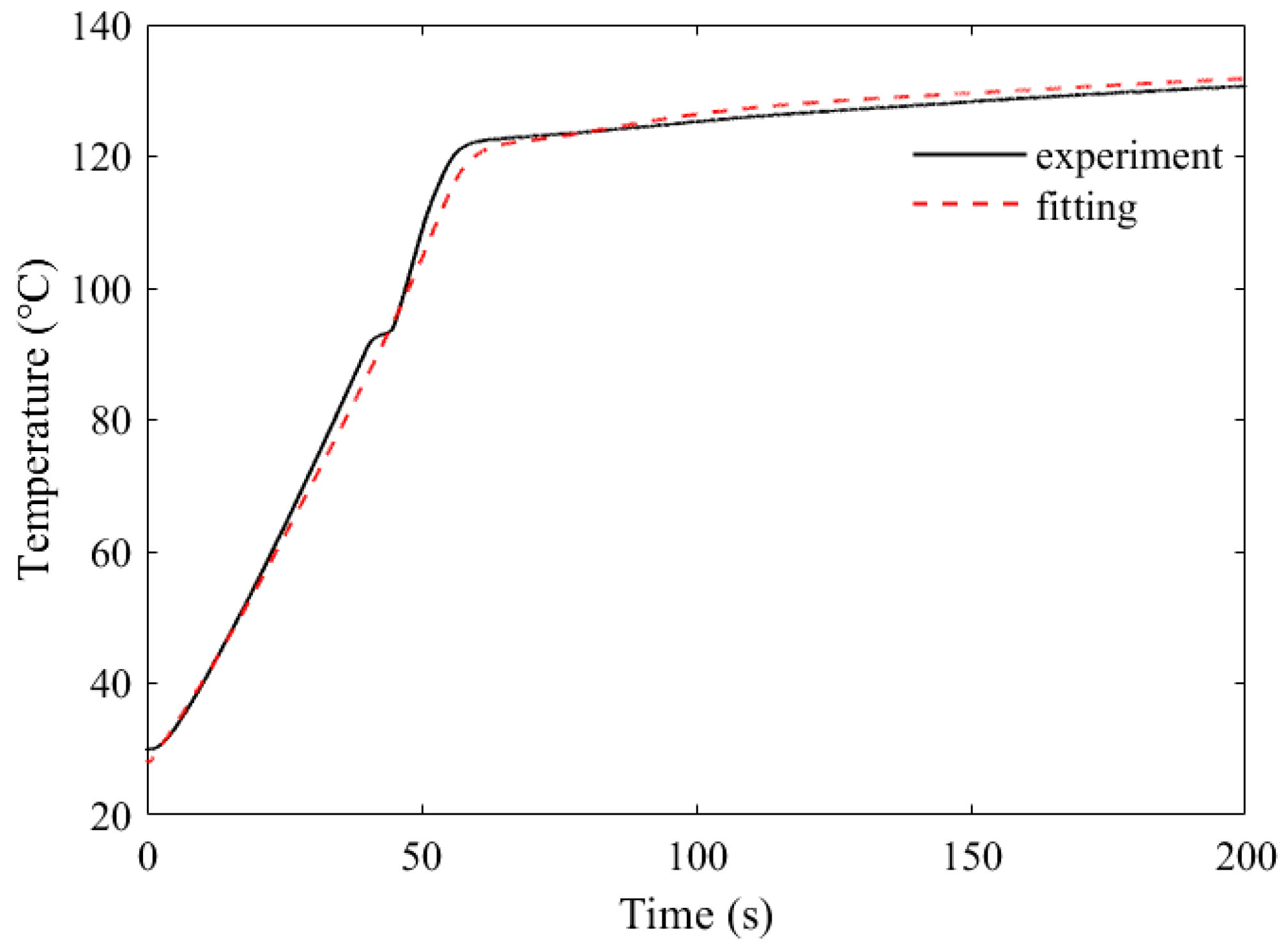
The LSTM temperature model is trained using the temperature sequences from the 25%, 75%, and 100% SOC external short-circuit experiments, with the time sequence and the initial thermal condition as inputs and the cell center-point temperature as the output. The 50% SOC temperature sequence is then predicted independently and used as the temperature input in the subsequent closed-loop simulation, as shown in
Figure 20. For the 50% SOC validation case, the predicted temperature agrees well with the measured center-point temperature, with an RMSE of 1.6954 °C. Since the temperature evolution under ESC is relatively smooth and this error is small compared with the overall temperature rise, the predicted temperature sequence provides a stable thermal boundary for
Rx prediction and parameter interpolation. It should be noted that the LSTM model is used here to support the current-prediction framework under the present experimental conditions, rather than to establish a generally applicable ESC thermal prediction model.
The prediction of Rx adopts a segmented ridge-regression strategy. The segment boundaries are selected according to the three control effects identified above and the corresponding change points in the Rx evolution. In Stage I, governed by the bottleneck-control effect, Rx changes most violently because the short-circuit current is highest and lithium-ion accumulation develops rapidly; therefore, the initial 0–10 s period is divided into five short intervals: 0–1 s, 1–5 s, 5–6.5 s, 6.5–8 s, and 8–10 s. This fine segmentation captures the steep increase in Rx and the local inflection behavior during the formation of the transport bottleneck. In Stage II, the concentration-difference-control effect becomes dominant and the enhanced concentration gradient promotes ion migration, so the variation in Rx is relatively smoother; consequently, 10–40 s, 40–50 s, and 50–70 s are used to describe the gradual decrease and the transition from concentration-gradient relaxation to the subsequent thermal-dominated response. In Stage III, separator pore closure progressively restricts ion transport and causes Rx to rise again, so the later period is divided into 70–85 s, 85–100 s, and 100–200 s to resolve the onset of pore-closure-induced acceleration while avoiding unnecessary over-segmentation in the slowly varying tail. Thus, the 11 sub-intervals are physically linked to the bottleneck-control, concentration-difference-control, and separator pore-closure effects, while also providing sufficient local flexibility for ridge regression in the strongly nonlinear transition regions.
It should be noted that the segmented ridge-regression model is a semi-empirical correction strategy guided by the observed three-stage ESC behavior. The segment boundaries, feature terms, hinge-temperature terms, ridge regularization, and local smoothing are introduced to improve the local description of the strongly nonlinear evolution of Rx. These treatments are physically motivated by the bottleneck-controlled, concentration-difference-controlled, and separator pore-closure stages, but they still require calibration under the tested conditions. Thus, the segmented strategy is used to balance physical interpretability, fitting stability, and engineering simplicity, rather than to provide a fully first-principles derivation.
For each time segment, the correction resistance
Rx is described as a linear function of the selected state variables:
where
s denotes the segment index,
β0,s is the intercept,
βs is the coefficient vector, and
zs is the standardized feature vector. The feature vector includes the initial
SOC, simulation time, battery temperature, temperature-change rate, simulated
SOC,
SOC decrease, and queued charge
Q. In addition, nonlinear descriptors such as normalized time, square-root time, squared time, normalized
Q, square-root
Q, and the temperature hinge terms
max(
T − 90,
0) and
max(
T − 124,
0) are included to improve the description of the nonlinear evolution of
Rx.
The coefficients of each segment are obtained by ridge regression:
where
Ωs is the set of training samples in the s-th time segment and
λ is the regularization coefficient. During closed-loop simulation, the corresponding sub-model is selected according to the current simulation time, and a local smoothing transition is applied near adjacent segment boundaries to avoid discontinuities in the predicted
Rx.
During the closed-loop simulation, Rx is predicted from the current simulated states and the independently predicted temperature sequence. The predicted Rx is then introduced into the modified equivalent circuit model to calculate the short-circuit current. The simulated current is subsequently used to update SOC by coulomb counting and Q by the bottleneck queued-charge equation with Im = 480 A. The updated states are then used for the next-step Rx prediction, forming a recursive closed-loop simulation process.
Thus, Rx is not assigned arbitrarily in the simulation. It is predicted using the segmented ridge-regression model based on the simulated electrical states, the queued-charge descriptor Q, and the independently predicted temperature information, so that the main effects of charge accumulation, thermal evolution, and transport obstruction can be represented within a concise equivalent-circuit framework.
A local smoothing transition is applied near the boundaries between adjacent Rx sub-models to avoid discontinuities caused by segmentation. Within a narrow time window around each boundary, the predictions of the neighboring sub-models are blended smoothly. This treatment preserves the advantage of segmented modeling while improving the continuity of the predicted Rx trajectory.
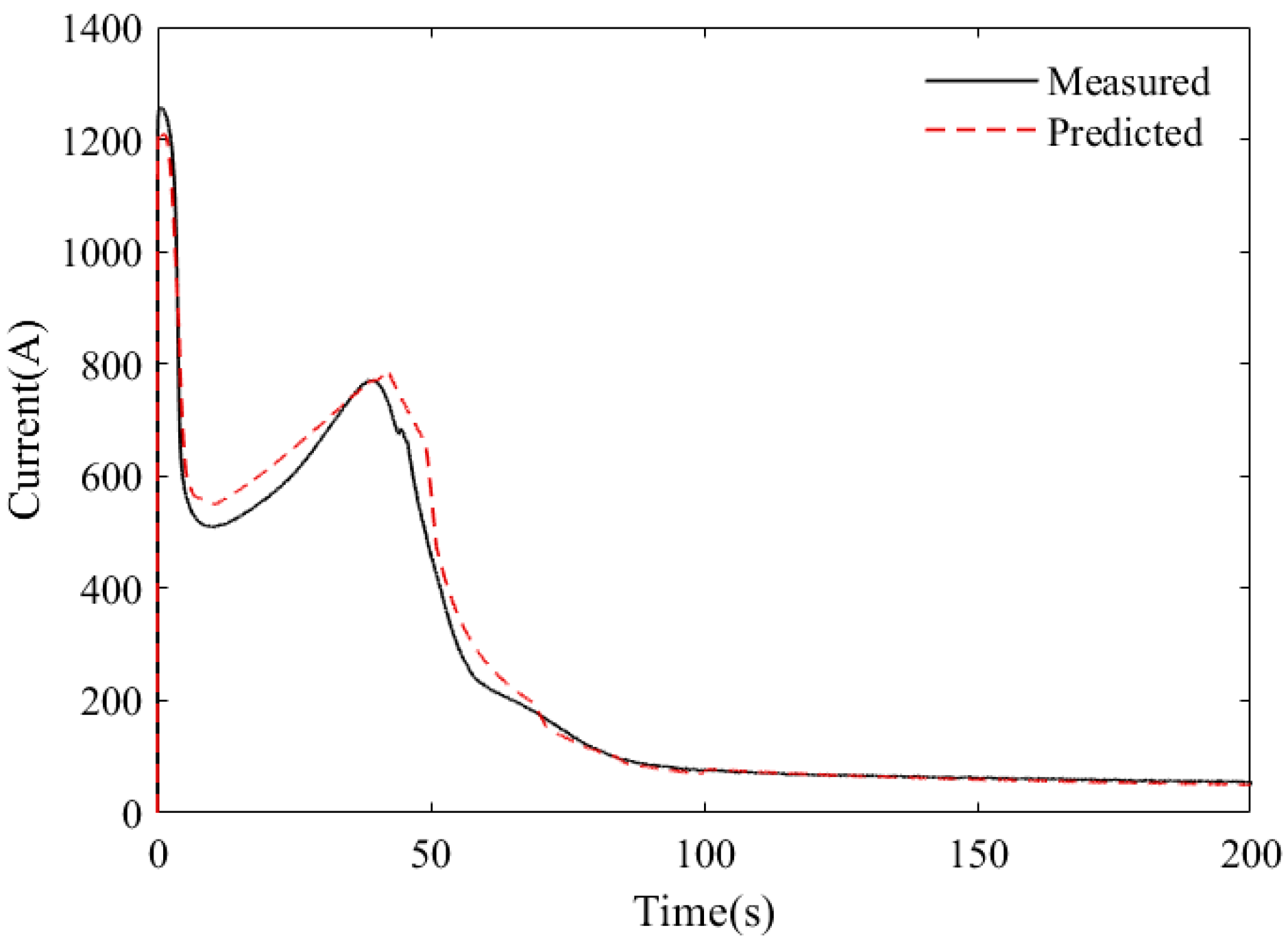
In the present validation strategy, the ESC data at 25%, 75%, and 100% SOC are used for model construction, parameter identification, and reaction-process interpretation, whereas the 50% SOC case is reserved as an unseen validation case. The closed-loop simulation result for this 50% SOC validation case is shown in
Figure 21, which compares the measured and predicted external short-circuit current. The predicted current successfully reproduces the main waveform characteristics of the nonlinear external short-circuit current, including the rapid initial drop, the secondary rebound, and the subsequent attenuation.
Prediction accuracy was evaluated using the root mean square error (RMSE) and normalized root mean square error (NRMSE). Under the 50% SOC validation condition, the proposed reaction-process-corrected second-order RC model achieved a current RMSE and NRMSE of 31.454 A and 2.50%, respectively. In contrast, the conventional second-order RC model yielded corresponding values of 986.60 A and 78.49%, respectively, indicating that the conventional model cannot reproduce the strongly nonlinear external short-circuit current evolution. Compared with the conventional model, the proposed model reduced the current RMSE by 96.81%.
These results demonstrate that the proposed model can accurately reproduce the highly nonlinear external short-circuit current evolution process.