Article

Enabling Holistic Tracking and Tracing in Battery Cell Production: Data Management and Applications


1
Institute of Machine Tools and Production Technology, Technical University of Braunschweig, Langer Kamp 19b, 38106 Braunschweig, Germany
2
Battery LabFactory Braunschweig (BLB), Langer Kamp 19, 38106 Braunschweig, Germany
3
Institute for Machine Tools and Industrial Management, TUM School of Engineering and Design, Technical University of Munich, Boltzmannstrasse 15, 85748 Garching, Germany
4
Institute for Particle Technology, Technical University of Braunschweig, Langer Kamp 19b, 38106 Braunschweig, Germany
5
Fraunhofer Institute for Casting, Composite and Processing Technology (IGCV), Am Technologiezentrum 10, 86159 Augsburg, Germany
*
Author to whom correspondence should be addressed.
Batteries 2026, 12(6), 216; https://doi.org/10.3390/batteries12060216 (registering DOI)
Submission received: 29 April 2026 / Revised: 3 June 2026 / Accepted: 10 June 2026 / Published: 14 June 2026

Abstract

The battery cell production, a cornerstone of the net-zero vision, is a multifaceted process chain involving diverse processes, spanning from batch to continuous to single-unit steps. The quality of the battery cell as the final product is affected by various product and process parameters along this process chain. In the era of Industry 4.0, data-driven approaches have emerged as a promising solution to navigate these complexities and derive effective quality management practices. A key prerequisite for the successful implementation is the availability of accurate data. A tracking and tracing system in battery cell production provides the foundation to acquire such data. It supports the development of a digital twin of the product, enabling real-time monitoring of key performance indicators, in-line quality control, resource optimization, and compliance fulfillment, among others. This article presents an implementation methodology and discusses the key aspects to consider for upscaling such a system focusing on data management, including relevant parameters, data acquisition, and storage, as well as data structuring and mapping. It highlights the advantages of using ontology-based data descriptions, enabling semantically mapped production environments. Lastly, this article explores potential use cases facilitated by a traceability system, emphasizing its potential to realize intelligent, data-driven production.

1. Introduction

As an integral part of climate change mitigation strategies and the transition towards renewable energy sources, the lithium-ion battery (LIB) has gained increasing attention over the last few years, emerging as a highly promising solution [1]. However, there are still certain challenges associated with battery cell production that need to be addressed to facilitate the widespread adoption of this technology. These challenges encompass a range of aspects, including the enhancement of cell performance through material advancements, gaining a profound understanding of the process chain as a complex production system characterized by a multitude of interconnected variables, and the establishment of robust processes and incorporating cost-efficient quality control measures [1]. To tackle these challenges effectively, different production scales are established for battery production, each with a specific focus. The laboratory scale primarily concentrates on material development and formulation aspects, whereas the pilot scale investigates the processes, the key parameters, and their interdependencies. At the industrial scale, characterized by a high degree of automation and throughput, the focus shifts towards maintaining and optimizing the quality assurance standards and enabling automated defect detection as early as possible in the process chain [2]. In the era of Industry 4.0, data-driven approaches have emerged as a promising solution to navigate these complexities. Recent research has highlighted the transformative potential of Artificial Intelligence (AI) and machine learning (ML) in optimizing manufacturing efficiency [3], underscoring the need for high-quality, traceability data. A tracking and tracing (T&T) system plays a critical role in supporting the primary objectives of battery cell production, particularly at the pilot and industrial scales. It enables the allocation of relevant products and process parameters to the final battery cell, contributes to a more profound process understanding by accurately monitoring and analyzing the interdependencies, and facilitates the implementation of a comprehensive and efficient quality management system.
In the context of quality management and assurance standards outlined by the International Organization for Standardization (ISO), an earlier version of ISO 8402 defined the term traceability as “the ability to trace the history, application or location of an entity, by means of recorded identification” [4]. It may address various aspects, including the origin of materials, the processing history of the product during production, and the subsequent post-delivery location of the product [4]. While the concept of traceability has been a long-standing standard in various industries such as food [5,6], it has only gained prominence in battery cell production in recent years. The article presented by Riexinger et al. [7] can be considered as one of the early efforts aimed at evaluating the possible solution combinations for tracing individual objects and batches of objects in the battery cell process chain. Wessel et al. [8] introduced a generic methodology for the development of a traceability system with the main phase encompassing four steps: (i) identification of product and information flow, (ii) linkage of a traceable resource unit (TRU) to a unique identification, (iii) information recording, and (iv) information storage and sharing. The article confirmed that the definition and establishment of a TRU is a relatively straightforward task in batch processes. However, when dealing with continuous processes, such as coating in battery cell production, the identification of a clear and distinct TRU can be more challenging and complex [8]. One potential solution in this context involves marking the electrode during the coating process [7,8]. Building upon these insights, Sommer et al. [9] analyzed the challenges and requirements associated with the marking process. The study focused on comparing two primary technologies: laser and inkjet. In subsequent work [10], a more extensive analysis for the integration of these technologies in battery cell production was presented. In a comprehensive study, Wessel et al. [11] introduced a framework to enable traceability at the electrode sheet level in battery cell production, combining it with a six-sigma approach. The primary goal of this combination was to identify electrode sheets that fell outside the specified quality tolerance, particularly concerning mass loading as a product parameter measured in-line during the coating process [11]. Over recent years, the topic of T&T in battery cell production has been explored from different perspectives with varying levels of detail. This article aims to provide a guideline for the implementation of T&T systems, drawing on insights gained through a three-year research project in the field of traceability. While a closely related study by Sommer et al. [12] focuses in detail on the marking aspects of T&T systems, this study aims to complete the holistic overview from the perspective of data management and applications. It provides a framework for scaling up T&T systems in battery cell production, addressing key considerations, requirements, and challenges that may arise in industrial applications. By synthesizing collective knowledge and best practices, this article offers actionable recommendations to support successful implementation.

2. Methodology and Preliminary Considerations

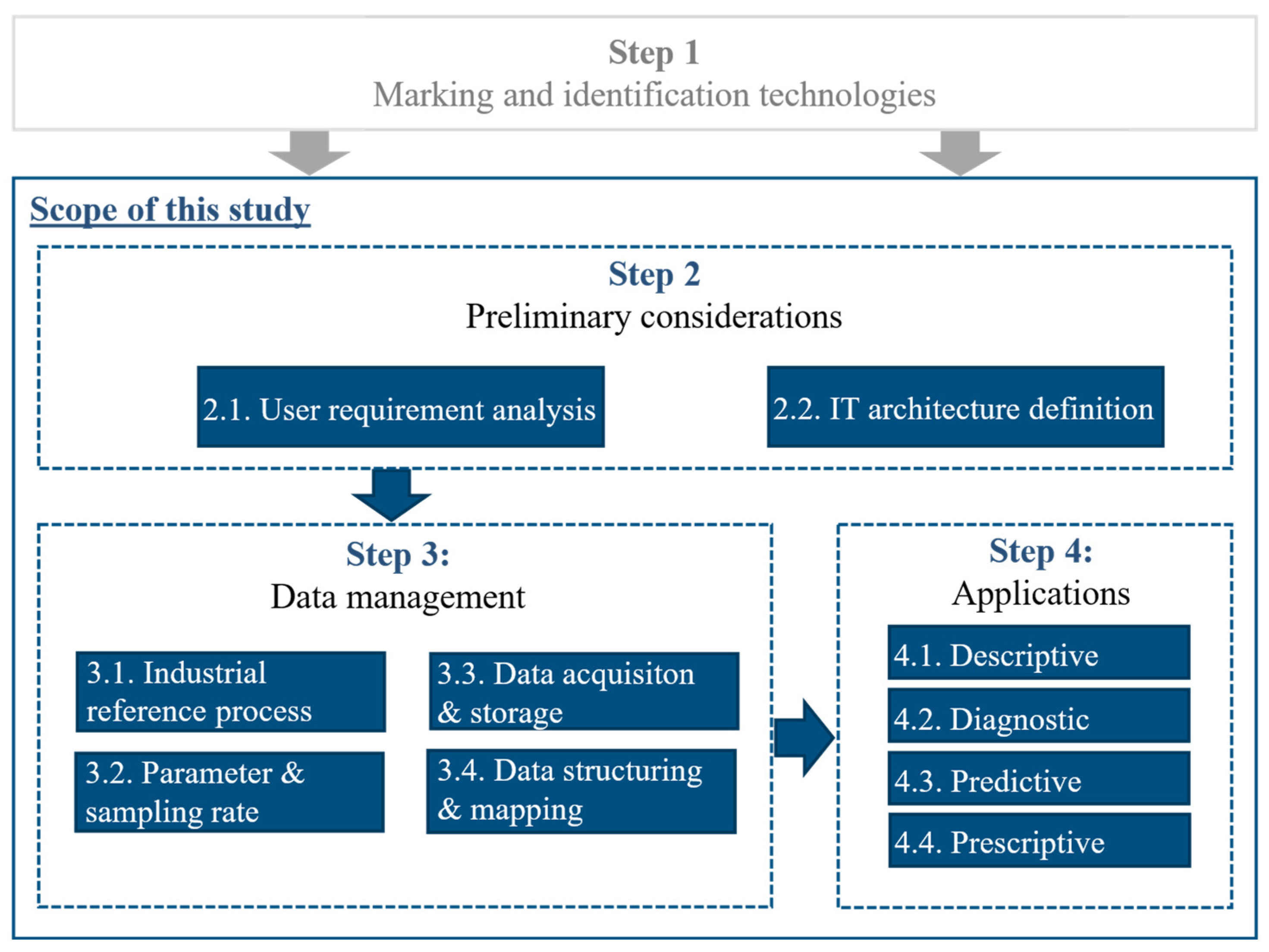
Figure 1 shows the four-step sequence for the implementation of a holistic T&T system. Step 1 begins with a guideline on how to select and implement the marking technology, as well as identification techniques used in T&T systems for battery electrode production. The implementation of marking technologies and code design is analyzed in detail, as presented in Sommer et al. [12]. Building on this previous work, Steps 2, 3, and 4 are introduced in this study. This section presents Step 2, which includes a user-centered requirement analysis of the T&T system as well as the definition of an IT architecture. In Section 3, the transfer of a marker-based T&T system to industrial-scale production is addressed, focusing on data management (Step 3). Section 3.1 defines an industrial reference process that serves as the basis for the subsequent considerations. In Section 3.2, the relevant parameters and the required sampling rates are discussed. Section 3.3 focuses on data acquisition and the estimation of required data storage capacities. Section 3.4 discusses data structuring and mapping. Exemplary use cases and methods regarding the software-based application of T&T systems are presented in Section 4.

2.1. User Requirement Analysis

To ensure functional utility and effectiveness of a T&T system with regard to the industrial application, the system requirements should be initially formulated and then recognized in various stages of the design and integration. To identify the requirements, one practical approach is to elaborate on the perspectives of the eventual end users as proposed by Wessel [13]. In this regard, the following end user groups are proposed to be involved: supply chain, production, quality, energy manager, production and factory planner, developer, and data analysts. Based on this, various key requirements of the T&T system need to be elaborated. In the following, key requirements from the perspective of two exemplary end-user groups are summarized [13].

2.1.1. Planner and Manager Perspective

  • Technical Interoperability: This involves building upon existing data acquisition methods to minimize additional investments and ensure seamless integration with current systems for consistent information flow across manufacturing components.
  • Informational Interoperability: This supports the incorporation of historical information for enhanced analysis, trend detection, and regulatory compliance.
  • Scalability and Customization: These are critical for handling increased production volumes or new manufacturing processes without major redesigns.
  • Automation: This aims to automate the capture, storage, and management of traceability information, reducing reliance on manual, error-prone methods, enhancing efficiency and accuracy.
  • Versatility and Real-Time Capability: These are achieved by enabling diverse application scenarios like in-line data-driven methods through a pre-clustered and consistent dataset, allowing real-time data processing and analysis for immediate insights.
  • Reporting: Capabilities are required to allow for the creation of custom reports and data visualizations tailored to the needs of various stakeholders, providing valuable insights to support decision-making.
  • Error Handling and Compliance: This entails implementing a system for detecting and handling errors, which includes alerts, notifications, and automated responses for anomalies or data inconsistencies both in real-time and offline. It also emphasizes adherence to industry standards, regulations, and best practices in traceability, data management, and sustainability reporting.
  • Continuous Improvement: This shall support systematic updates, feature enhancements, and issue resolution.

2.1.2. Data Analyst Perspective

  • Non-Disruptive Implementation: This involves deploying a strategy that preserves the integrity of the existing production workflows without causing disruptions, ensuring that the identification methodology does not negatively impact the quality of the final product (FP).
  • Adaptability: This requires a methodology that is highly flexible to accommodate varying conditions, such as spatial constraints across different production processes and traceable objects, while also keeping financial investments minimal.
  • In-line Capability: This focuses on enabling real-time assignment of object-specific associations and data to establish an in-line pipeline to support continuous quality control processes.

2.2. Definition of IT Architecture

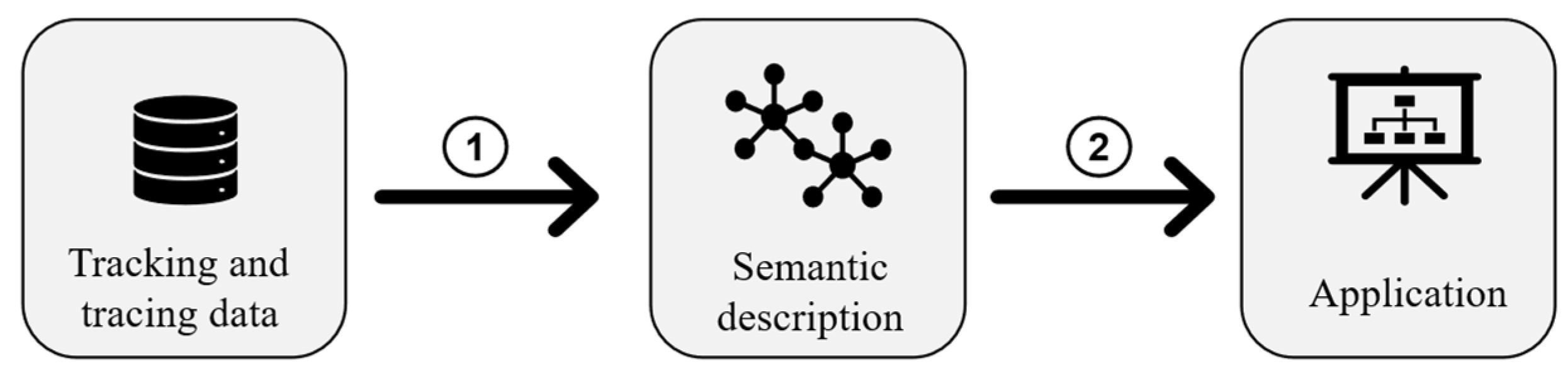
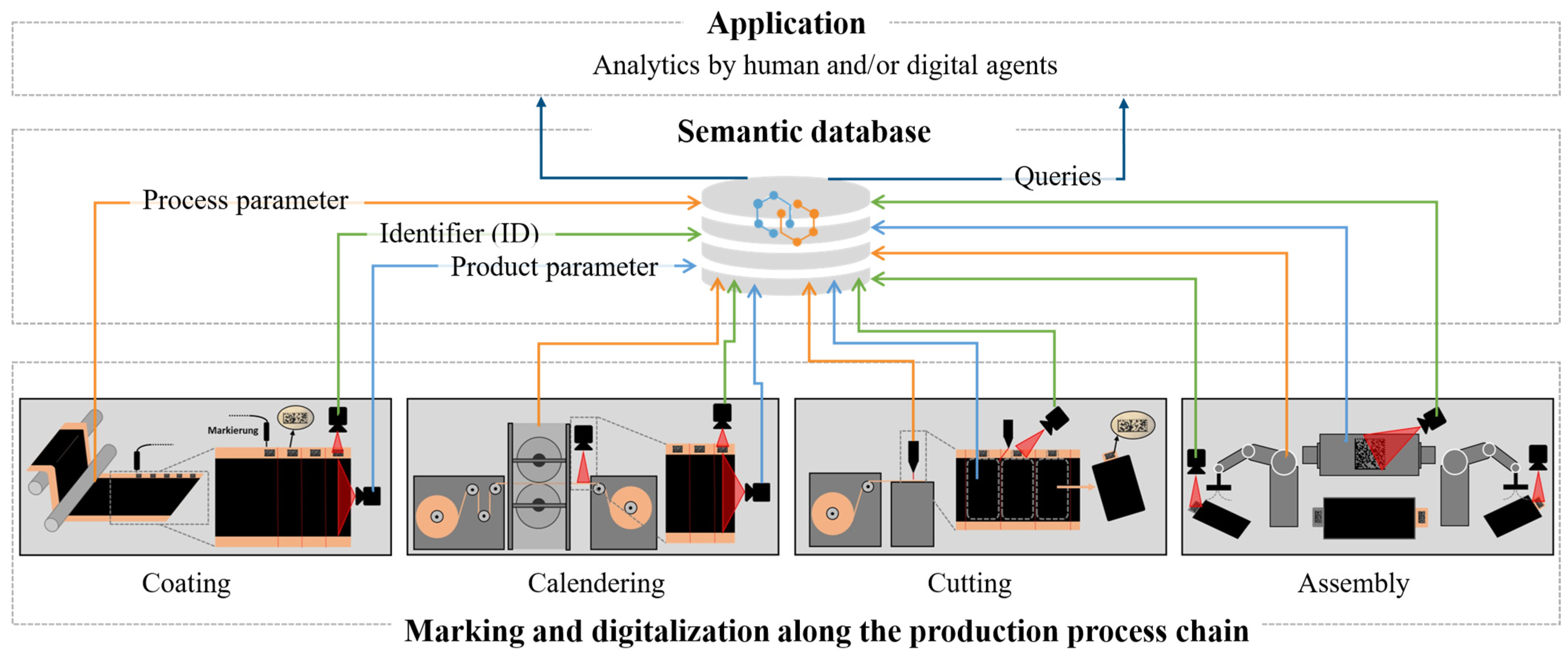
In order to enable a comprehensive implementation of a T&T system in battery cell production, it is necessary to consider the IT components adjacent to the system. Figure 2 shows the conceptual approach to foreseeing a versatile and scalable utilization of T&T data for various applications based on semantic descriptions.
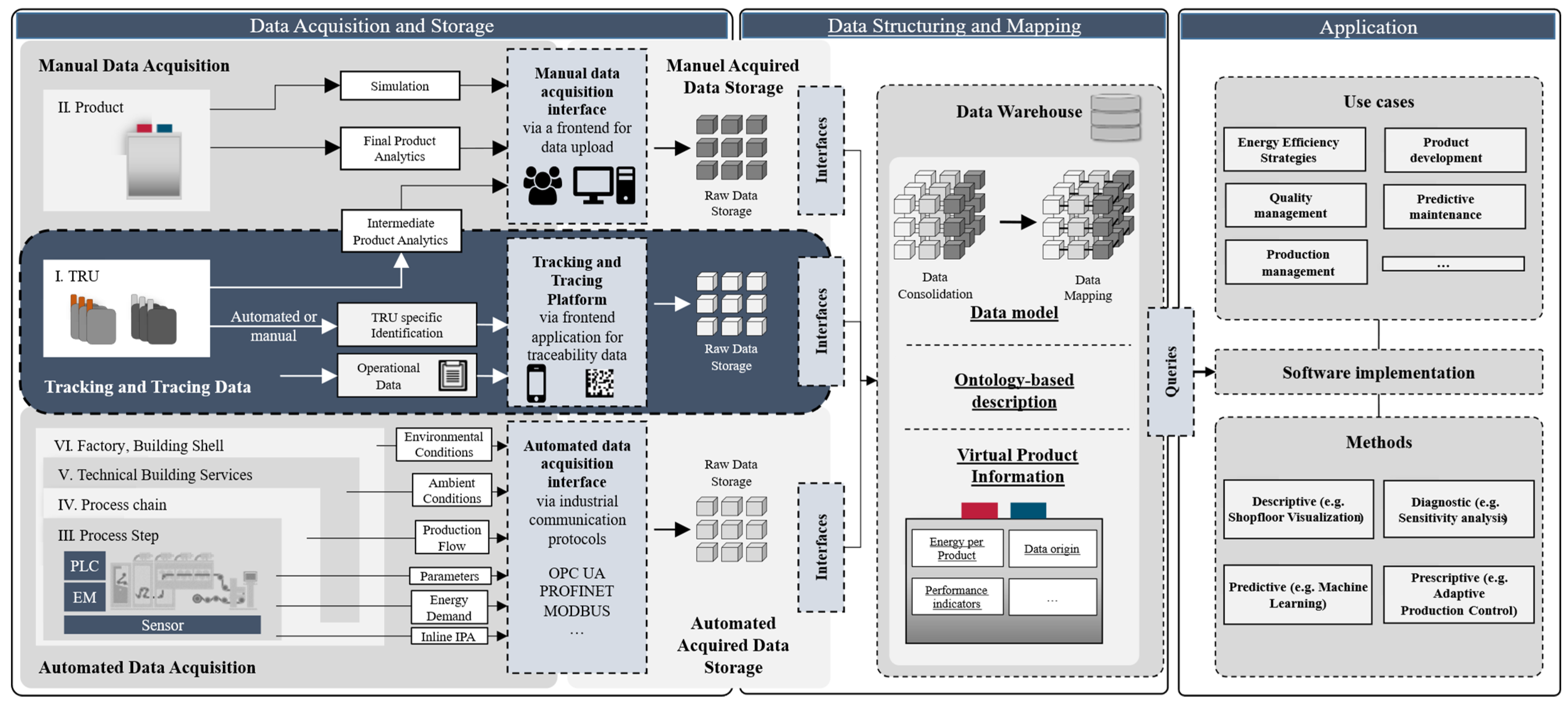
To specify the approach further, an IT architecture has to be defined. Based on the work of Wessel [13] and Turetskyy [14], Figure 3 illustrates an adapted architecture. It consists of three modules: data acquisition and storage, data structuring and mapping, and application.

2.2.1. Data Acquisition and Storage Module

According to Figure 3, the data acquisition and storage module is divided into manual and automated data acquisition. Data that cannot be accessed in-line is collected using a manual acquisition method. This includes historical data files and data from external sources, such as spreadsheets generated by analytical devices, which provide important insights into product features. Additionally, simulation data can be integrated. To aid in this process, a data acquisition interface is utilized, allowing users to upload data and metadata, ensuring proper organization within the data management system [13,14].
The integration of the object traceability module (highlighted blue in Figure 3) focuses on gathering operational data belonging to specific TRUs. This includes both identifying the TRU and collecting its operational data elements. TRUs can be identified using either manual or automated methods, depending on the implemented traceability solutions. Once a TRU is identified, its relevant operational data is collected and linked to it. To streamline this process, a T&T platform could be established that allows us to specifically manage object-related information and acts as a material management system, ensuring accurate tracking of data associated with each TRU throughout the production process chain [13]. In the context of automated data collection, real-time information is acquired from various sources using standardized industrial communication protocols. This information is obtained from four distinct layers: process step, process chain, TBS, and the factory and building envelope. The details of the collected data are as follows [13]:
  • Process Step Level: This captures data related to process parameters, settings, energy requirements, and data from additional in-line-capable sensors that provide insights into IP characteristics, such as mass loading during the coating process.
  • Process Chain Level: This acquires data that pertains to the production flow, including details about scheduling and configurations within the process chain.
  • Technical Building Service Level: This focuses on data concerning electric power usage, the flow of compressed air or gas, and district heating. It also collects information regarding environmental conditions, such as those found in dry rooms.
  • Factory and Building Shell Level: This protects the internal system from external disturbances, gathering data on environmental factors e.g., temperature and humidity.

2.2.2. Data Structuring and Mapping Module

This module is centrally located within the architecture that is depicted in Figure 3. Data gathered from diverse sources is stored in independent databases and aggregates virtual product information. For further use, the data needs to be consolidated and mapped. By centralizing the acquired data, it becomes more accessible and manageable, facilitating efficient processing and analysis to obtain valuable insights for various purposes. This requires a consistent data model of the physical objects as well as the data locations to which they belong. Such capabilities are addressed by semantic web technologies. As part of this, ontology represents the relationships between various entities on any level, from factory to process step, as well as between levels. Depending on the utilization, ontologies can be classified varying in generalizability, where it ranges between top-level (general) and application-level (specific) ontologies, as well as in subject-related and task-related ontologies [15]. In this context, the term data mapping refers to the data preprocessing step required to assign data acquired from different sensors or machines as features of virtual objects, such as virtual products. The data sources are positioned at various points along the process chain, each registered with different timestamps [13].

2.2.3. Application Module

The application module of the IT architecture (see Figure 3) enables the access, processing, and utilization of previously acquired, stored, consolidated, and mapped data. This allows us to interpret the data to generate information and knowledge that can be reintegrated into the action loop of production systems in various use cases. In order to comprehensively categorize the methods to utilize the T&T data independent of the use cases, four data analytics levels can be categorized: descriptive, diagnostic, predictive, and prescriptive [14,16]. The levels build upon each other and increase in complexity and value. At the base level, the analytics focus on providing descriptive insights into operations using historical data. Advancing diagnostics in which the system examines data to find root causes, for example, error tracing and troubleshooting. The next stage is a predictive system that allows us to anticipate potential issues in the future. The highest level, prescriptive analytics, enables direct feedback and action loops, enabling, for example, adaptive and, therefore, optimal production control.

3. Transferring a Marker-Based T&T System to Industrial-Scale Production—Data Management

A major challenge of T&T in the battery cell production is the high variability of process types: batch, continuous, and single unit [11]. Since the variability of process types is represented between the electrode coating and cell assembly, the respective process steps are mainly utilized for discussion in the following. Figure 4 shows a conceptual overview of a digitization concept for T&T, including the mentioned production process chain. The process and product parameters, as well as the identifiers (IDs), are allocated and stored in a semantically modeled database. Based on this, the end users may use the T&T data as part of software applications that could include various data mining or visualization approaches.
The following subsections discuss the respective requirements and challenges of data management based on a specific reference process chain and product. Based on this, the required considerations and potential challenges involved in the implementation of a T&T system are discussed from a data management perspective. With regard to the data granularity, electrode-sheet-level is considered as it enables the data-driven, hence ML-based, analytics required for intelligent production.

3.1. Key Aspects of the Industrial Scale Reference Process Chain

In this subsection, the key aspects of the industrial scale reference process chain, with a focus on electrode manufacturing as the challenging phase to enable T&T systems, are outlined. The defined reference process chain includes a slurry batch production and a tandem coating machine with a length of approximately 70 m and a maximum web speed of 100 m/min. The scenario considered is based on pouch or prismatic cells, which are regarded as more technically challenging for the implementation of a T&T system. In the case of cylindrical cell formats, the realization of a T&T system in the continuous process is less challenging from a data management perspective, as the marking interval can be larger compared to stacked electrodes, enabling the accurate allocation of intermediate product parameters to the battery cell. The challenge arises from the combination of high web speed and the necessity for a small marking interval, which results in a high marking frequency. The high frequency is essential to accurately map collected data to each electrode segment and ultimately to individual sheets. For cylindrical cells, such as the 18650 formats, the continuous electrode strip wound into a single “jelly roll” typically has a length of approximately 600 to 800 mm. Consequently, a marking interval of about 0.8 m is sufficient. At the defined maximum web speed of 100 m/min, this results in a relatively low marking frequency of approximately 2 Hz per lane. In contrast, stacked prismatic or pouch cells require tracking at the individual sheet level to ensure accurate data allocation. Assuming an electrode sheet length of 100 to 200 mm (depending on the specific cell design), the marking interval is reduced to 0.1–0.2 m. At the same web speed of 100 m/min, the resulting marking frequency increases to approximately 8 to 16 Hz per lane. This higher frequency presents a substantially greater challenge for both the physical hardware and the underlying data management infrastructure. In accordance with the state of the art, such as Günther et al. [17], a coating width of 104 cm is taken into account, corresponding to a cell area of approximately 10 cm by 51 cm. A mass loading fluctuation tolerance of ±1.5% is considered. In the case of calendering, the reference system can achieve a maximum web speed of 120 m/min, with an electrode thickness tolerance of ±2 µm. The tolerances have been defined based on the capabilities of state-of-the-art machinery used in industrial battery production.

3.2. Relevant Parameters and Required Sampling Rate

This subsection discusses the relevant parameters to be tracked at the electrode sheet level and the required sampling rates, including the potential constraints and challenges from the measurement system perspective. The sampling rate needed to ensure a high data granularity for a T&T system is largely impacted by the process capabilities of the machinery in use. It depends on the production speed and precision of the manufacturing equipment. Therefore, the data granularity refers to the level of detail of the data that can be linked to the smallest possible TRU, in this case, the electrode segment or sheet [18]. Machinery characterized by high process capability and minimal fluctuations can allow for lower sampling rates while still providing a high data granularity [18].
The continuous processes with a large number of parameters and high production speeds lead to the continuous generation of high-frequency data streams [18]. While it is technically feasible to implement a traceability system with a high level of data granularity, such as marking electrodes at close intervals during the coating process and mapping the data, it is essential to recognize that realizing such an endeavor on an industrial scale is associated with high cost and effort. Given the high number of parameters and the potential data volume in electrode manufacturing, Haghi et al. [18] have introduced a systematic approach for the identification of quality-relevant parameters and derivation of possible data allocation and storage strategies to be considered in a T&T system. This approach aimed to support the realization of a cost-effective management of data granularity while ensuring that the essential quality-related aspects are effectively monitored and tracked.
In the ramp-up phase, a data granularity on a single-sheet level, including mapping of both product and process parameters, can be highly advantageous, particularly when analyzing potential cause-and-effect relationships. Following the ramp-up phase in electrode manufacturing, it is sufficient to assign the process parameters to the batch level and the quality-relevant product parameters to the individual electrode segments [18]. Additionally, it is possible to establish tolerance ranges for the process parameters. When these ranges are exceeded, the changes should be tracked on the batch level. As mentioned earlier, an essential aspect involves a comprehensive assessment of the process capability of the machines. This evaluation serves as the basis for defining tolerances. In order to enable a T&T system to track the relevant product parameters at the electrode-sheet level, it is additionally important to consider the key characteristics of the measurement systems available in the market [19].
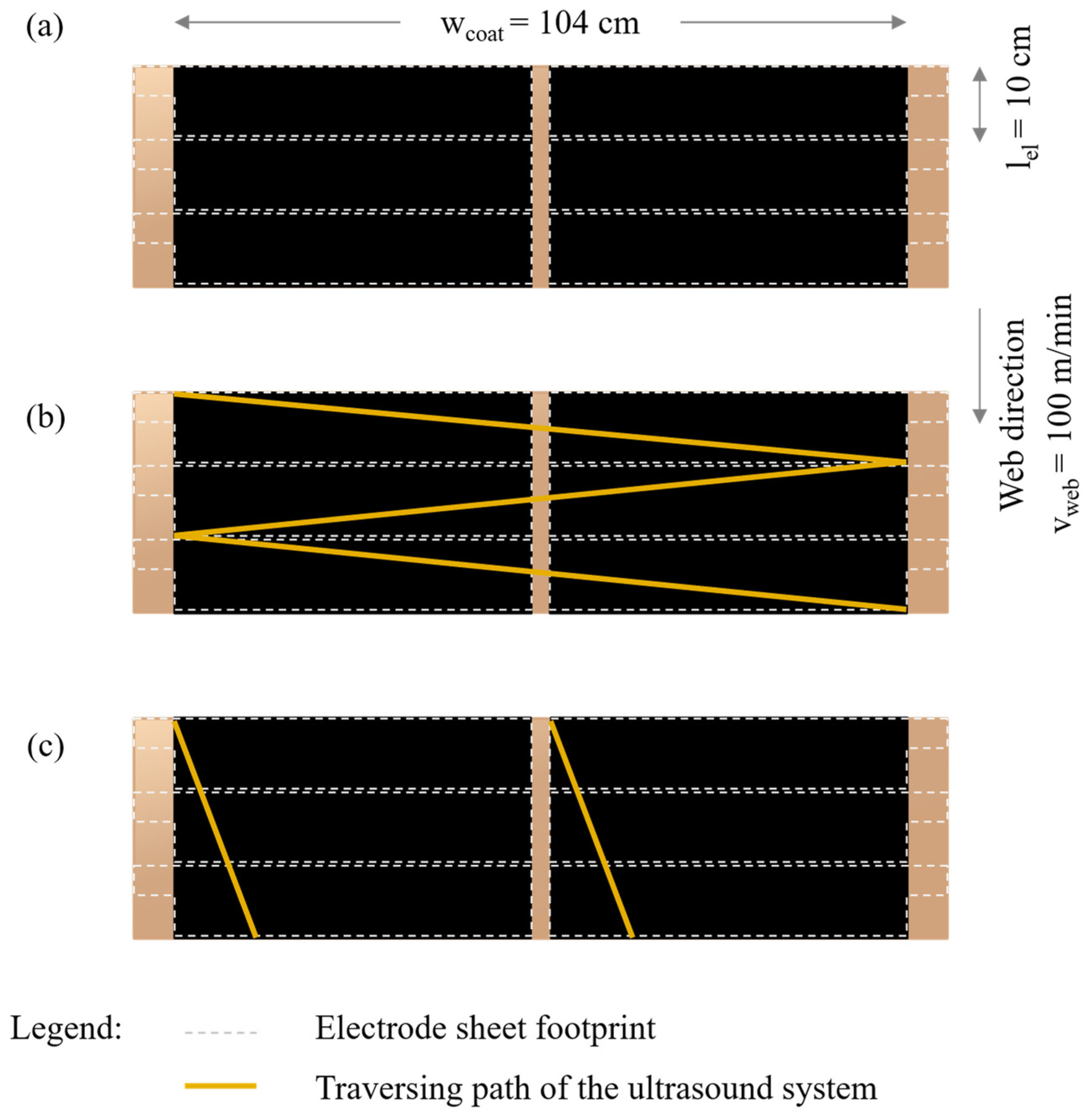
In the following, the quality-relevant product parameters and the requirements for the measurement systems to enable a robust T&T system are discussed. In order to demonstrate the potential limitations and specific demands, the requirements are exemplarily quantified using the predefined reference process and product. In the coating process, the quality-relevant product parameters include mass loading and the quality of the film. Given the reference process at the maximum assumed coating speed, to acquire at least one data sample for electrode sheets with a width of 10 cm, a sampling rate of at least approximately 16 Hz is necessary. This requirement aligns with the sampling rates offered by industry-graded measurement systems. Among other scanning technologies, such as X-ray, one commonly used mass loading measurement system is an ultrasound system operated on a traversing setup along the coating width [19]. Figure 5 illustrates the requirement from the T&T perspective on the measurement system, along with the potential challenges and solutions.
In order to map the mass loading measurements to each electrode segment (lel), the time required for the traversing ultrasound system, tscan, at a web speed of vweb can be determined using the following formula:
tscan = lel/vweb.
Subsequently, the required traverse speed (vtrav) of the measurement system to scan across the coating width (wcoat) is estimated as follows:
vtrav = wcoat/tscan.
In order not to overlook any sheet and avoid the need for data extrapolation, mass loading measurements shall be allocated to each electrode sheet at 10 cm intervals (cf. Figure 5b). Based on the formulas presented, with a coating width of 104 cm, applied continuously as a striped coating at a web speed of 100 m/min, the measurement system has to scan across the coating width in 0.06 s. This translates to a required traverse speed of 17.3 m/s. It is worth noting that the common traverse speed for the in-line measurement systems available in the market is approximately 0.3 m/s. Therefore, in order to meet this demanding requirement, one alternative is to enhance the traversing speed of the existing measurement systems while maintaining accuracy. Alternatively, as depicted in Figure 5c, another viable solution is to incorporate two scanning heads into the system. However, this approach may still introduce a degree of uncertainty due to the limited coverage of the electrode sheets per scan.
A higher coverage of the electrode surface can be achieved by using array sensors. In this case, multiple sensors are statically fixed at specific positions so that a consistent area of the electrode is covered, eliminating the need for rapid traversing. In a prior investigation of Wessel et al. [11], this setup demonstrated the capability to allocate mass loading to specific sections with a deviation from the actual weight of ±0.6%. The sensors, covering 25% of the electrode, allowed for the generation of a mass loading map represented as a heat map, showing fluctuations in areas larger than 1 cm2 [11]. Such a detailed heatmap can additionally facilitate the identification of possible inhomogeneities in the electrode with respect to its mass loading.
Another important product parameter in the coating and drying process is the quality of the wet film and the dried electrode concerning the common defects such as agglomerates or stripes [18]. Depending on their nature, these defects can reduce the long-term performance of the cell and favor lithium plating effects [20,21]. Additionally, larger agglomerates can damage the substrate during calendering [22], and contamination, for example, in the form of metal particles, can cause damage to the separator and lead to a short circuit [23,24]. An optical defect detection system can be used to identify these defects in-line during production [19]. Schoo et al. [25] demonstrated the capability of such a system to identify coating defects with a minimum size of 35 µm × 37 µm during production and automatically classify them using an ML algorithm. In the presented study, the defects were assigned to the respective electrode segments using a T&T system. Such systems can be used at web speed up to 1000 m/min with a maximum defect rate of 100 defects per second, making them suitable for industrial-scale electrode monitoring [25]. The same setup can be used to monitor the electrode surface quality after the drying process [26].
In the calendering process, an important product parameter to be tracked is the electrode thickness [18]. Considering the high web speed on an industrial scale and potential issues such as electrode corrugation [22], a preferred approach involves a single-spot measurement using a confocal or laser triangulation sensor [19]. With high-granularity data enabled by a T&T system, including mass loading and electrode thickness measurements allocated to electrode sheet segments, it is possible to calculate the porosity, or density, respectively, of the electrode in real-time, a key parameter that currently can only be measured offline. While this aspect can indeed be viewed as one of the vital benefits of a T&T system, it is equally crucial to consider process fluctuations and potential error propagation, considering that the measurements originate from various processes and sensors.
Based on the previously defined production tolerances of ±2 µm for the coating thickness and ±1.5% for mass loading fluctuation, it can be calculated, using an example, that with a mass loading of 9.64 mg/cm2 and a coating thickness of 39.7 µm, the coating density will fluctuate in a range of ±0.12 g/cm3 at maximum. A measuring system that can resolve and differentiate values within this range must be selected to trace these fluctuations. According to the German Association of the Automotive Industry Standard (VDA 5) [27], the resolution of the measuring system should correspond to at least 5% of the tolerance range. Two different scenarios are compared for this purpose. The determination of the coating density, offline using an analytical scale (±0.003 mg) and a coating thickness dial gauge (±3 µm) with the respective given measurement uncertainties, and in-line using a mass loading scanner (±0.5%) and a confocal sensor (±0.3 µm). The error propagation can be determined from these measurement uncertainties so that the offline system can evaluate the coating density with a maximum possible deviation of ±0.18 g/cm3 and the in-line system of ±0.006 g/cm3 due to the significantly more accurate determination of the coating thickness. It should be noted that although the confocal sensors have a considerably lower measurement uncertainty, the design of this sensor system is associated with challenges such as a small measuring spot, high cost, and calender-induced foil changes [24].

3.3. Data Acquisition and Storage

The data acquisition and storage as part of a T&T system in the industrial context requires being the most automated and interoperable to avoid software programming time. In the following, various available design choices to provide suitable solutions for the aspects of such a data acquisition and storage system are discussed, addressing the requirements as well as the challenges that occur during the implementation. This includes the following considerations:
  • Commonly utilized communication protocols and compaction through Ethernet network systems;
  • Data storage infrastructures, database types, and respective database management systems (DBMS);
  • An estimation of the required data storage volumes for a suggested set of sensors relevant for electrode production.
With regard to the engaged data acquisition interfaces, communication protocols connect the physical data access point, for example, PLCs, sensors, and other servers, to a database [15]. Commonly utilized protocols in industry are Profinet, Modbus TCP, OPC UA, and MQTT [28]. The protocols might be implemented in a heterogeneous way as each inherits varying advantages and disadvantages. Among the four, Profinet is commonly used for real-time and high-frequency data communication between field devices and local controllers, as its tightly controlled format enables fast processing with relatively small time constants for Ethernet network communication of about 1 ms at 1000 frames per second. However, the controlled formatting requires software programming when setting up a network, adding additional effort and hence costs. With respect to the relatively low effort for installation and related scalability, as well as due to its superiority in terms of interoperability, the Industry 4.0 standard protocol OPC UA is preferred [25,28].
The choice regarding the data storage infrastructure is mainly based on the targeted deployment strategy of processing resources, as well as the requirements on the data accessibility and data security. In case the data is processed in a decentralized manner, the storage can be implemented at the network edges close to the acquiring devices. In case of a centralized processing strategy, on-premise servers are engaged, and in case of an externalized processing to cloud services, the related storage is also externalized to the cloud server [28]. In a research context, an on-premise solution provides sufficient flexibility to integrate and modify the system, whereas for an industrial production, the cloud server architectures might be an optimal choice, as it allows worldwide data access and utilization as well as a reduced effort to apply standardized data management among various production sites and business processes. In this respect, the effort to install and maintain the IT infrastructure that is linked to costly expert knowledge could be avoided. To protect sensitive manufacturing data within these architectures, the T&T system leverages the security features inherent in the selected communication protocols. For instance, the OPC UA protocol provides built-in mechanisms for authentication, authorization, and encryption. In cloud-based deployments, data integrity is further ensured through encrypted data transmission, such as TLS or SSL, and strict role-based access control (RBAC) at the database management level to prevent unauthorized access.
Concerning the databases, there are two major types, which are relational and non-relational, also called NoSQL [29]. Their strengths and weaknesses differ depending on the data type and formats. Relational databases consist of collections of tables, which represent sets of tuples sharing the same attributes. Each table is organized in columns and rows, in which the column headers are called attributes. The rows are identified by unique keys and referred to as tuples. A pair of attributes and keys can store the respective data sample. Such DBMSs allow us to physically store and access such data from the tables. Due to the respective structure of time series sensor data, they are predestined to be stored in relational databases. The most commonly used query language for relational databases is SQL. In this regard, one commonly used DBMS is MySQL (https://www.mysql.com/) [29]. NoSQL databases allow us to store data in a non-relational way, and there exist several subtypes, of which document-based and graph-based are commonly utilized. A T&T system benefits majorly from a graph-based approach as it allows us to store data in a conceptual manner, connecting entities through the definition of relationships, so-called edges. The relationships are specified and stored as semantic metadata similar to an entity-relationship (ER) model.
Due to this characteristic, graph databases are predestined to visualize and query highly networked information using the most common query language, SPARQL [29]. With respect to industrial transfer, the query of highly networked data represents industrial potential when it comes to analyzing data of various production locations, multiple machines of varying OEMs, and finding inter-domain causalities, as discussed in the next section. Additionally, its semantic structure allows us to create process chain ontologies, allowing us to transfer the expert knowledge to a data analyst or quality planners [13,30].
In order to estimate the theoretically required data storage volume for upgrading the introduced industrial reference production with quality sensors and data matrix code (DMC) scanners, a standard sampling rate of 100 Hz is assumed for the mass loading and thickness measurements. This leads to a data granularity of one data sample every 1.66 cm in the web direction. Based on the maximum reference speed of 100 m/min and a footprint width of 10 cm, there are about six data samples per electrode sheet. Furthermore, one identification marking and 10 defects per reference electrode sheet are assumed. The parameter acquired by the sensors might be of type float or integer, which each require a specific memory of 4 bytes. One timestamp consists of one date and one time. The mass loading is assumed to be measured at five locations, which are plain foil as well as both sides, each wet and dry. Note that the reference setup includes a two-sided coating and should include the simultaneous production of anodes and cathodes. Conclusively, Table 1 shows the calculated data storage volumes based on the presented assumptions.
Compared to current data storage solutions on the market, the T&T system’s data storage volumes of about 5.5 terabytes per year are relatively small. However, with respect to the possible integration of additional imaging sensors and the deployment of multiple production lines, the data volumes might become considerably large. The error detection system already allows us to limit the required storage by avoiding storing large single data samples as images and instead saving extracted information in a less spacious format. Generally, it is recommended to consider the required data storage volume before integrating additional sensors.

3.4. Data Structure and Mapping

Traceability systems are mainly based on data mapping functionalities that enable the linking of digitally represented TRUs, such as single electrode sheets, to data generated on any production level. The production levels can be differentiated into process steps, process chains, technical building services, and factory and building shells. One of the most challenging mapping tasks is to link TRUs to high-frequency sensor readings. In this subsection, the requirements and challenges of mapping unique electrode sheet IDs to sensory in-line data are presented.
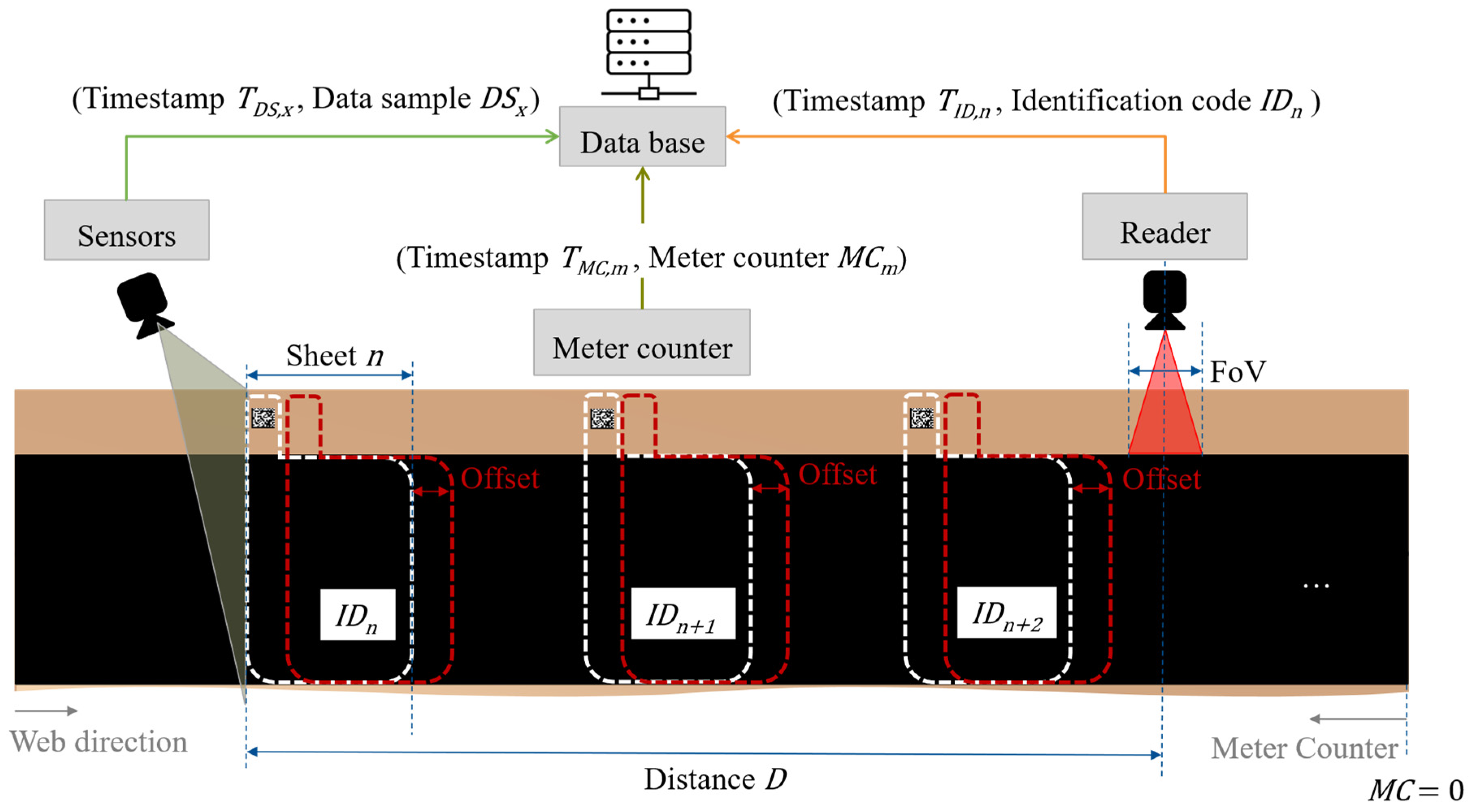
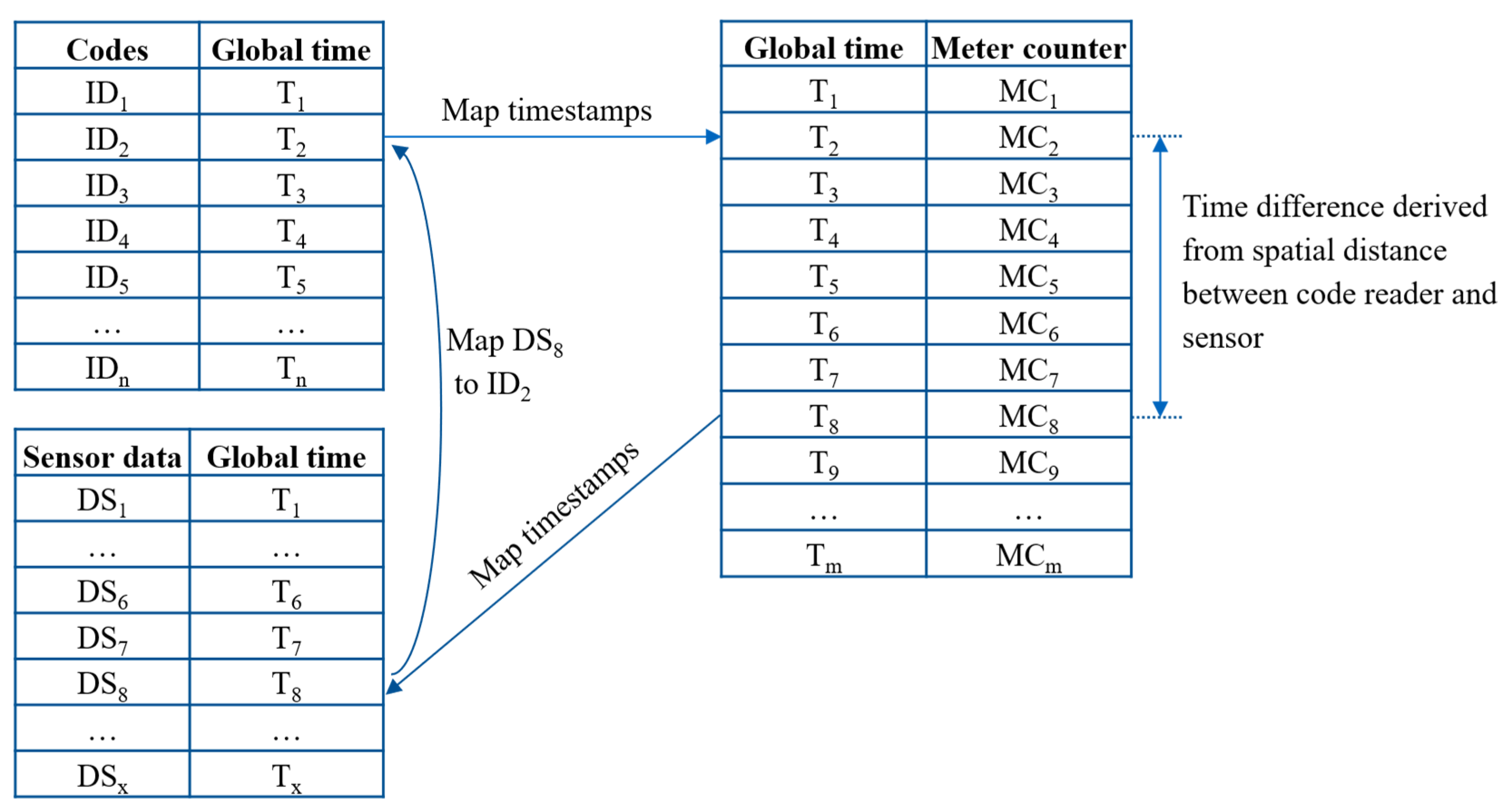
Within the reference production chain, electrode sheets are physically marked through DMCs. The setup is based on the machines and devices introduced by Sommer et al. [12], which present several in-line sensors, marking, and reading technologies applicable for roll-to-roll continuous battery production processes. In this implementation, the sensor data are linked by matching timestamps assigned to each data sample. The main challenge to implement this functionality is that linking based on the timestamps introduces sensitivity to incorrect time synchronicity of the data acquisition or incorrect timestamp assignments, resulting in mapping errors that manifest in spatial offsets between the physical and virtual electrode sheets. To mitigate this issue, the systems’ clock times must either be initially synchronized or their differences must be documented and used for subsequent correction. Figure 6 gives an overview of the mapping functionality implemented at a coating and drying machine, as well as the resulting offsets. In the given example, the mapping functionality identifies physical electrode sheets by reading a previously marked unique ID embodied in a DMC, as stated by Sommer et al. [31]. It needs to be noted that access to sheet-specific sensor data is only possible after the DMC is scanned once and, therefore, instantiated as a unique ID in the database. An additional assumption is that the DMCs are located at the same position on every sheet. In general, the mapping of DMCs and, hence, sheets-to-sensor data, can be realized via a speed-based or a distance-based strategy. Independent of the strategy, the reading timestamps and the distance between the devices need to be known. In the distance-based strategy, the time at which the sheet passes the sensor is determined through the additional allocation of the meter counter timetable representing the run coil meter. For this implementation, it is irrelevant whether the sensor is placed before or after the code readers. In the case of speed-based mapping, the time during which a sheet passes the sensor is determined by calculating the time integral of the web speed, as explained in the following.
When considering a constant coating speed v with a known distance between sensor and code reader D, the data mapping of the speed-based mapping can be expressed as follows:
{(IDn(TID,n), DSx(TDS,x))|TDS,x = TID,n − D/v}.
Equation (3) is only defined for a constant coating speed. In reality, speed variations occur. A varying coating speed can be considered when calculating a variable meter counter mc of the continuous web of the machine:
mc ( t )   =   t 0 t v t dt .
The error of the meter counter calculation increases as part of the integral over time, introducing additional uncertainty. To avoid this, the meter counter values can also be acquired from the machine or measured through an encoder on a roller. This transforms the time-based mapping to a distance-based mapping that can be written as:
{(IDn(TID,n), DSx(TDS,x))|TDS,x = TMC(mc(TID,n) − D)}.
An example of the data mapping approach is visualized in Figure 7, showing the mapping between the code reader, the meter counter, and sensor data tables generated by the T&T system.
Both the speed-based and distance-based strategies include the possibility of a spatial offset based on errors in the assignment of timestamps or the meter counter, which is highlighted in Figure 6. When mapping upon the timestamp based on a matching of the meter counter, the error is limited to the uncertainty of the meter counter measurements, but it can be compensated for by interpolating that starts from the last specific meter counter position. With respect to the industrial application of the system, the meter counter strategy is more robust, especially with regard to interrupted production, as the meter counter is time-independent and hence not affected by operational stops or heavy line speed variations. Furthermore, there are additional causes of incorrect mapping.
One cause might be the aperiodic triggering of the DMC reading, which leads to inconsistent positions of the codes during the read-in. The reader’s field of view (FoV) comprises an area that is bigger than the code itself, as shown in Figure 6. The error of the data allocation is directly proportional to the offset of the identified code.
Another cause might be the thermal-related elongation of the electrode foil during the process or the elongation due to mechanical tension. An assumed strain of 0.1% in an industrial production line that is approximately 70 m long (e.g., between the first slot die and the code reader at the end) would result in a spatial offset of the physical and virtual electrode sheet by 70 mm, representing a considerable issue.
Besides the ID-based mapping of sensor data to single electrode sheets, a holistic traceability system requires semantically linking various other production entities across domains, such as used materials and IPF allocated at various locations and times in the process chain. In practice, semantic descriptions represent interrelations between production entities and can be provided as ontologies in which entities are represented as nodes. For that, the World Wide Web Consortium (W3C) developed and standardized the Resource Description Framework (RDF) scheme in which the data are stored in so-called triplestores in the manner of subject–predicate–object. In terms of implementation, Wessel et al. [15] proposed to implement ontological data mapping using the software Protege (https://protege.stanford.edu/) and to map data to the involved entities using the semantic web tool standards such as the RDF mapping language (RML). As ontologies are sharable data files, they enable us to deploy formalized structural expert knowledge in a scalable way, being cost-effective and time-saving across companies and for their stakeholders. In terms of industry applicability, the Platform Industry 4.0 suggests fostering an industry-wide reference architecture called an Asset Administration Shell (AAS) [28,30].

4. Transferring a Marker-Based T&T System to Industrial-Scale Production—Applications

This section explores potential methods and the consequent use cases of utilizing the mapped data allocated from the battery cell production through a comprehensive T&T system. The structure of this section is based on the four-stage model of data analytics. In this regard, it includes the subsections for descriptive, diagnostic, predictive, and prescriptive methods and, respectively, showcases prominent applications. It can be stated that the electrode sheet-based T&T generally increases the data granularity and hence the feasibility to effectively apply analytical assessment to the battery cell production.

4.1. Descriptive Analytics: Shopfloor Visualization

One of the primary use cases for T&T systems in battery cell production is the ability to gain a comprehensive overview of the process and product performances on the individual electrodes and the cell level. In this regard, descriptive visualizations enable data interpretation and thereby serve as tools to translate data into understandable and actionable visual formats. Visualizations might serve statistical analysis to conduct event monitoring, failure detection, and situation analysis [14]. The belonging data are mostly historical and refer to past events, but they could also be utilized live in a data stream. This enables proactive, digitally assisted human decision-making, allowing for rapid response to deviations or issues that may impact production efficiency and product quality. In this sense, T&T data supports simplifying complex insights, for example, regarding the interaction among different manufacturing system elements from a temporal perspective.
In general, the selection of the visualization methods and styles is influenced by the particular data that needs to be depicted and the preferences of the stakeholders involved. In the following, various methods are explained in more detail based on Wessel [13]. Miscellaneous visual tools, such as line charts, bar graphs, pie charts, scatter plots, and radar charts, effectively convey trends, comparisons, distributions, and correlations within the data. These visualizations simplify the understanding of complex relationships and patterns, and they can be easily integrated into various applications, for example, on dashboards or in augmented reality (AR). Scatter plots, for instance, can descriptively visualize the quality distribution of finished cells at the end of the line by plotting each cell’s capacity against its internal resistance. Similarly, radar charts are effective for displaying the multi-dimensional quality profile of a finished roll, benchmarking historical parameters such as average mass loading, porosity, and thickness against their ideal target corridors. For spatial state documentation, heat maps are particularly useful. By utilizing color coding to visualize the spatial distribution of mass loading across the entire electrode web, they provide a descriptive overview of coating uniformity. To monitor temporal states, Gantt charts map exact processing schedules, giving stakeholders a clear descriptive timeline of historical operations, such as documenting when a specific slurry mixing batch started, the duration of its dispersion phases, and when the material was transferred. For system-level transparency, Sankey diagrams are highly effective in descriptively mapping material and resource flows. In battery production, they visualize mass balances, illustrating, for example, how many kilograms of active material entered the coating process versus how much was discarded as edge trim scrap. Finally, knowledge graphs serve the complex descriptive task of visualizing traceability structures. By illustrating the entities related to a specific trace object, they provide a comprehensible overview of a battery cell, clearly depicting its hierarchical links back to specific stacked sheets, parent electrode rolls, and the utilized powder batches. It should be noted that utilizing a mix of these visualization approaches can offer a detailed insight into the data allocated by the traceability system, supporting the process of making informed decisions.
Another crucial descriptive aspect is compliance with regulatory standards and reporting requirements. The data allocated by the T&T system can be used for the automated generation of compliance reports by presenting the necessary data in a consistent format and granularity. This aids regulatory audits, reduces the time spent on manual reporting tasks, and ensures adherence to environmental and safety standards.

4.2. Diagnostic Analytics: Cross-Process Relationships

In battery cell production systems, T&T data are the prerequisite for the allocation of product-specific, and most importantly, the intermediate product-specific characteristics along the process chain. This might include the tracing of quality issues, such as errors or defects in the coating of electrodes. As part of diagnostic analytics, the analyses aim to explain “why” a local or global observation is happening. By this, knowledge about the interrelations between IPs, FPs, and process parameters is generated. For this, it can be executed independently of the operation and hence is primarily conducted during offline studies. Exemplary inquiries might concern the propagation of, for example, defects of Ips, affecting the FP performance. In this context, advanced data mining approaches enable various diagnostic analyses demonstrated in the work by Turetskyy [14] and Haghi et al. [18].
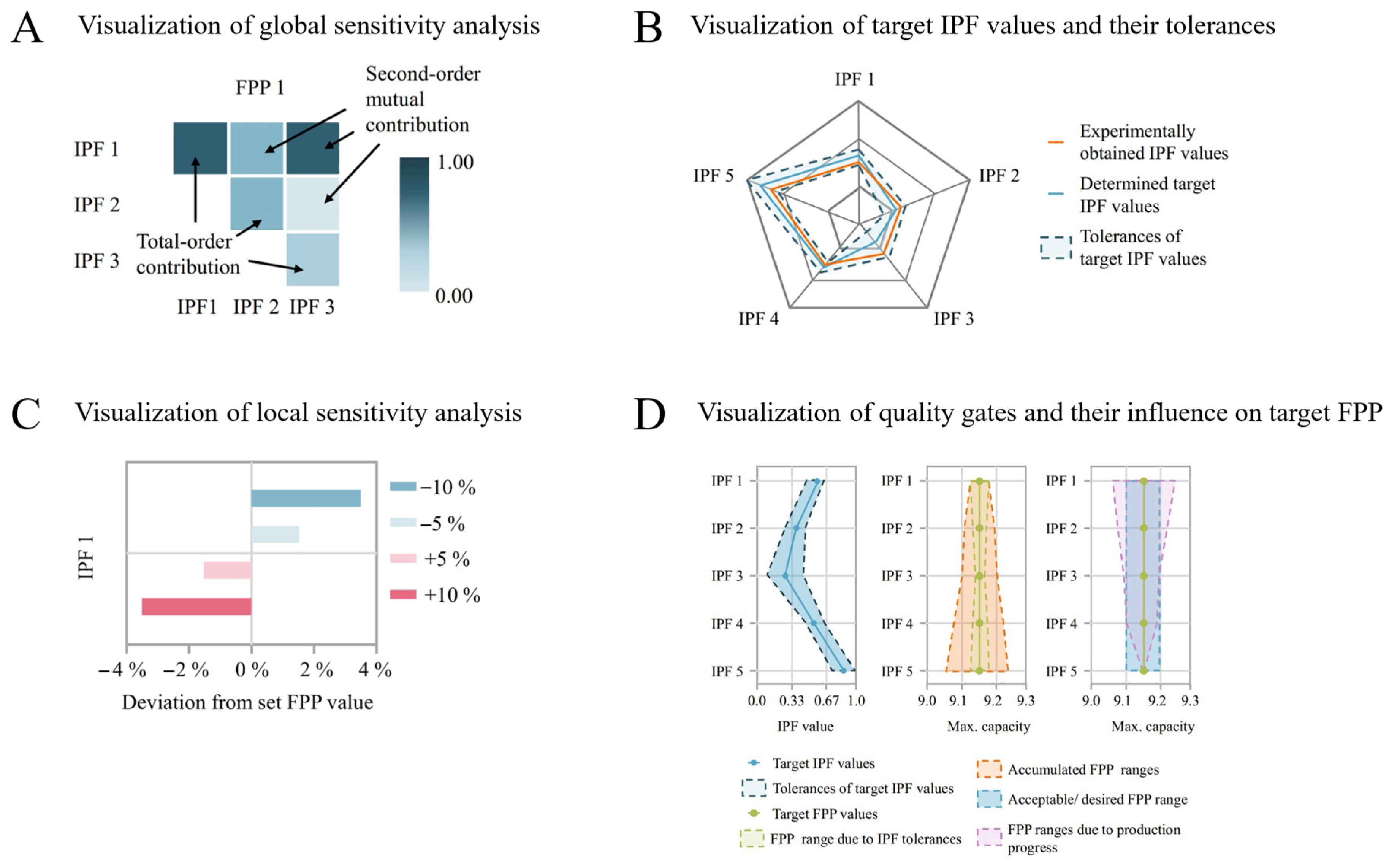
As part of this, various analytical methods, such as Bayesian networks, can be applied to highlight the weighted influence of specific features on a given product performance indicator. Figure 8 shows four examples of visualized results of such diagnostic analyses.

4.3. Predictive Analytics: Virtual Quality Gates and Machine Learning

On the third level, data interpretation is extended by integrating the diagnostic approaches with in-line capabilities to access and utilize predictions of future outcomes based on present data. This allows us to predict future in-line IPF quality based on the current IPF and enable so-called Virtual Quality Gates (VQGs). As outlined by Filz et al. [32], VQGs are considered as an additional capability of so-called soft sensoring that allows us to enhance conventional quality gates within the overall quality management system. The concept of VQGs involves the systematic division of the production chain into distinct decision points, each of which is critical for ensuring the final product quality. The VQGs serve as checkpoints along the process chain [33].
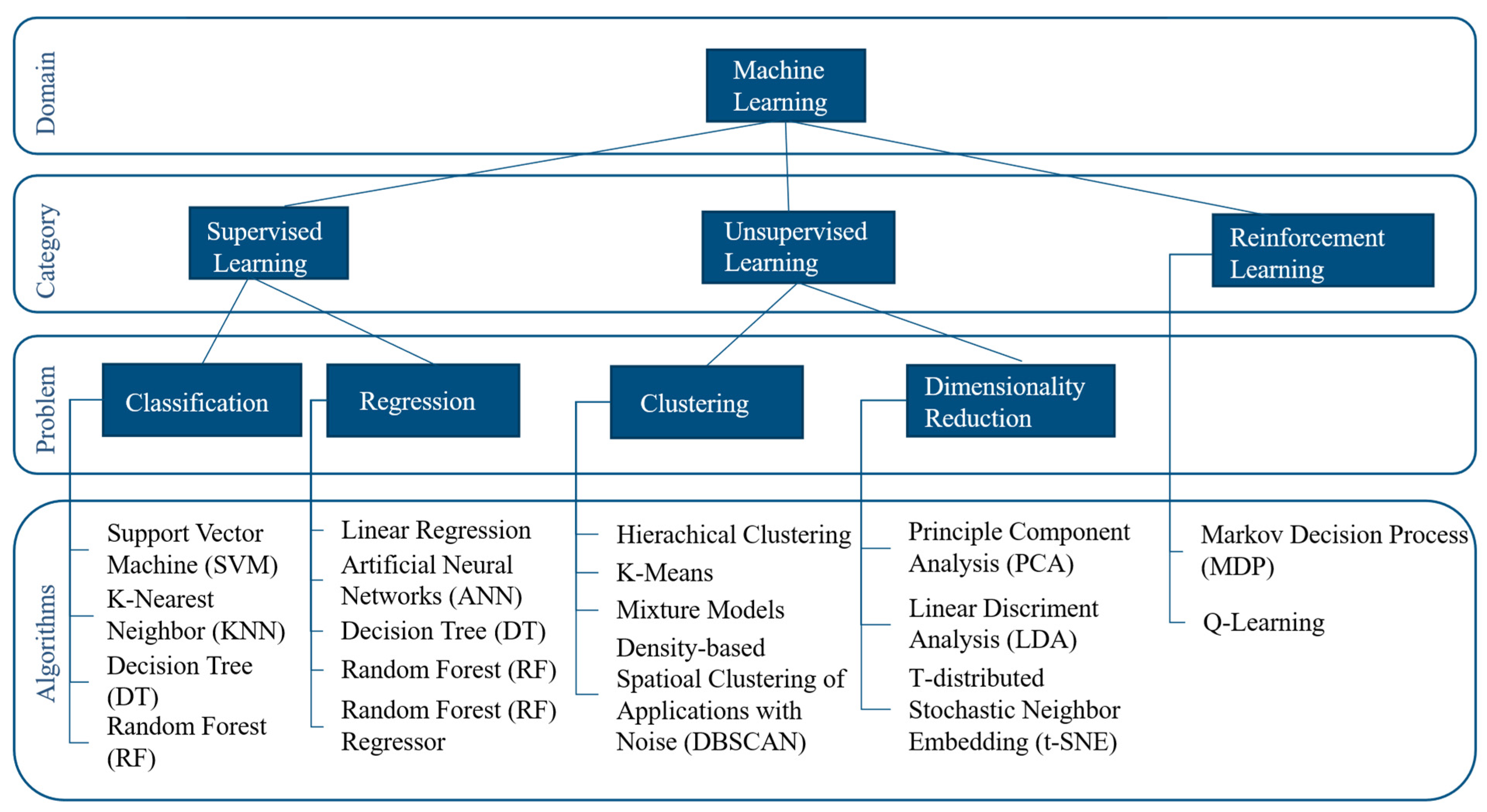
Turetskyy et al. [34] provided a use case for VQGs, enabled through ML models, assessing the influence of various product and process parameters on the final battery cell properties before the cell is produced. This enables insight into battery quality before it is finished, thus helping to identify scrap in the early stage of manufacturing. One major advantage of VQGs is the possibility to make maximum use of the present data of a high number of intermediate products and predict their future effects on the production and product. In order to provide such prediction capabilities, various data-based ML approaches can be applied. Figure 9 shows an overview of the ML categories, problems, and algorithms that might be selected. The application of such methods allows us to utilize the T&T data to facilitate the development of a comprehensive digital twin on the cell level, providing granular data that greatly enhances the development of ML models and analysis of interdependencies within the production chain. In a recent study, Haghi et al. [35] investigated the performance of different ML models in predicting intermediate and final product properties and, from this, evaluated the benefits of an in-line T&T system based on three scenarios concerning the input variables. The first scenario was based on product-specific parameters adopted as input variables, while the second one relied solely on the average values of the collected process parameters. In the third scenario, the basis was the average values of both process parameters and intermediate product parameters collected in-line. The study demonstrated that the ML models developed using product-specific parameters, which can be enabled by a T&T system, exhibited the highest performance. The findings underscore the benefits of high-granularity data as the foundation for accurate and robust predictive solutions based on ML models.

4.4. Prescriptive Analytics: Adaptive Production Control

At a fourth level, a link is established between manufacturing elements and the decision support of production control, allowing it to adapt flexibly and make real-time adjustments based on predicted outcomes. In this regard, prescriptive analytics tries to answer the questions of “what needs to be done” and “how to make it happen” [14]. Thereby, it goes beyond prediction and connects information, knowledge, and action plans that are then executed by operating agents. As part of the paradigm of cyber-physical production systems (CPPS), the approach to model and simulate battery cell production in a multi-scale approach fosters the idea of generating prescriptive insights. As elaborated by Schönemann [36], such approaches can contribute to interdisciplinary system understanding as well as provide a methodology for adaptively recommending improvement measures.
Exemplary use cases of adaptive control in battery cell production might be during the electrode stacking process, optimizing the arrangement of electrodes based on specific features. In that case, coating defects on specific electrode sheets can be traced back and rejected, or defects can be categorized as not safety-critical, and the electrodes can therefore be rated to a certain quality category [20]. Additionally, this could reduce the risk of issues such as lithium plating by preventing the use of unbalanced electrodes. Additionally, safety factors in battery cell production could lead to lower material consumption, cost savings, and a reduced environmental impact. Although such adaptive mechanisms are not yet used in battery production, their feasibility could increase with appropriate traceability systems.

5. Conclusions and Outlook

Based on a previously published study that highlights the methodology to implement a marker-based T&T system in an industrial context, this article explores the key aspects needed concerning data management as well as the enabled applications. From the perspective of data management, one of the primary challenges for the implementation of such a system in battery cell production involves the diverse nature of the processes, encompassing batch, continuous, and single-unit production steps. While some studies have proposed possible approaches to enable a T&T system showcasing successful implementation on a pilot scale, the transfer of such solutions to the industrial scale has received limited attention. This article aims to address this aspect by exploring technical challenges and potential solutions. For this purpose, the initial step involved presenting a requirement analysis as well as defining an overall IT architecture, which defines the boundary conditions for the implementation of the T&T system. To set a basis for the eventual discussion, an industrially relevant reference process and a reference product were defined. Building upon this foundation, topics such as relevant parameters to be tracked, required sampling rates, data acquisition and storage, and data structure and mapping challenges were discussed. As part of this, methods and technologies to enable a semantically mapped production environment are addressed, focusing on ontology-based data description and graph-based data storage. Additionally, an overview of potential use cases and methodologies that can be enabled and enhanced through the implementation of a T&T system was briefly presented.
A standardized implementation of the T&T system in battery cell production, as a major part of the value chain, can contribute to creating a more transparent and sustainable value chain. While the current reporting requirements for battery cell manufacturers are based on the battery passport [37] and can mostly afford to allocate metadata of lower data granularity than the TRU on the electrode-sheet level, the proposed T&T system could facilitate the reporting and investigation of more detailed information on individual units in a battery system in the future if required. In addition to exploring this possible contribution, future studies can focus on exploring the potential applications of T&T systems in more detail. This can include, for instance, the establishment of a comprehensive CO2 footprint of the final product along the value chain or the development and integration of a detailed product digital twin into a robust quality management system. By leveraging the capabilities of T&T systems, the battery production industry can not only meet current requirements but also proactively address emerging needs related to environmental impact assessment as well as overall system efficiency. Furthermore, the economic feasibility of implementing high-resolution T&T systems remains a critical factor for industrial adoption. Future work should investigate the trade-off between the monetary costs and benefits of such a T&T system. This shall include individual factors of manufacturing companies, such as the operational efficiency, product margins, and installed infrastructure, as well as the system’s performance in terms of increasing yield and reducing scrap rates.
With regard to the future of T&T systems, recent technological advancements in the field of generative AI promise significant potential regarding process automation, human-like decision-making, and knowledge discovery in technical systems. Since the proposed system involves the automated querying of semantically mapped objects, it can be integrated into new automation pipelines that are based on symbolic algorithms. Therefore, the presented methodology for integrating information system concepts into industrial applications could serve as a blueprint to establish novel capabilities in the future.

Author Contributions

Conceptualization, L.K., S.H., M.L. and A.S.; methodology, L.K. and M.M.; software, L.K. and M.L.; validation, L.K. and M.L.; formal analysis, L.K., S.H., M.L. and A.S.; investigation, L.K., S.H., M.L. and A.S.; resources, R.D., A.K. and C.H.; data curation, L.K., S.H., M.L. and A.S.; writing—original draft preparation, L.K., S.H., M.L. and A.S.; writing—review and editing, M.M., R.D., A.K. and C.H.; visualization, L.K., S.H., M.L. and A.S.; supervision, M.M., R.D., A.K. and C.H.; project administration, R.D., A.K. and C.H.; funding acquisition, M.M., R.D., A.K. and C.H. All authors have read and agreed to the published version of the manuscript.

Funding

This research work was conducted as part of the TrackBatt project (grant number: 03XP0310), funded by the German Federal Ministry of Education and Research, abbreviated BMBF. The authors gratefully acknowledge the financial support provided by BMBF.

Data Availability Statement

The raw data supporting the conclusions of this article will be made available by the authors on request.

Conflicts of Interest

The authors declare no conflicts of interest. The funders had no role in the design of the study; in the collection, analyses, or interpretation of data; in the writing of the manuscript; or in the decision to publish the results.

References

  1. Kwade, A.; Haselrieder, W.; Leithoff, R.; Modlinger, A.; Dietrich, F.; Droeder, K. Current status and challenges for automotive battery production technologies. Nat. Energy 2018, 3, 290–300. [Google Scholar] [CrossRef]
  2. Keppeler, M.; Tran, H.-Y.; Braunwarth, W. The Role of Pilot Lines in Bridging the Gap Between Fundamental Research and Industrial Production for Lithium-Ion Battery Cells Relevant to Sustainable Electromobility: A Review. Energy Technol. 2021, 9, 2100132. [Google Scholar] [CrossRef]
  3. Manoharan, A.; Chong, J.J.; Choong, Z.J.; Lambert, S.; Kumar Gupta, R.; Chandra, D.; Jain, A.; Rao, A.; Sharma, A. Optimizing lithium-ion battery manufacturing with digitalization and AI-driven frameworks. Int. J. Adv. Manuf. Technol. 2026, 142, 1–37. [Google Scholar] [CrossRef]
  4. ISO 8402; Quality Management and Quality Assurance Vocabulary. International Organization for Standardization: Geneva, Switzerland, 1995.
  5. Mari Karlsen, K.; Olsen, P.; Anne-Marie Donnelly, K. Implementing traceability: Practical challenges at a mineral water bottling plant. Br. Food J. 2010, 112, 187–197. [Google Scholar] [CrossRef]
  6. Bertolini, M.; Bevilacqua, M.; Massini, R. FMECA approach to product traceability in the food industry. Food Control 2006, 17, 137–145. [Google Scholar] [CrossRef]
  7. Riexinger, G.; Doppler, J.P.; Haar, C.; Trierweiler, M.; Buss, A.; Schöbel, K.; Ensling, D.; Bauernhansl, T. Integration of Traceability Systems in Battery Production. Procedia CIRP 2020, 93, 125–130. [Google Scholar] [CrossRef]
  8. Wessel, J.; Turetskyy, A.; Wojahn, O.; Herrmann, C.; Thiede, S. Tracking and Tracing for Data Mining Application in the Lithium-ion Battery Production. Procedia CIRP 2020, 93, 162–167. [Google Scholar] [CrossRef]
  9. Sommer, A.; Leeb, M.; Haghi, S.; Günter, F.J.; Reinhart, G. Marking of Electrode Sheets in the Production of Lithium-Ion Cells as an Enabler for Tracking and Tracing. Procedia CIRP 2021, 104, 1011–1016. [Google Scholar] [CrossRef]
  10. Sommer, A.; Leeb, M.; Weishaeupl, L.; Daub, R. Integration of Electrode Markings into the Manufacturing Process of Lithium-Ion Battery Cells for Tracking and Tracing Applications. Batteries 2023, 9, 89. [Google Scholar] [CrossRef]
  11. Wessel, J.; Schoo, A.; Kwade, A.; Herrmann, C. Traceability in Battery Cell Production. Energy Technol. 2023, 11, 2200911. [Google Scholar] [CrossRef]
  12. Sommer, A.; Gruhn, H.; Schoo, A.; Mund, M.; Bazlen, S.; Tran, H.-Y.; Kandula, M.W.; Dilger, K.; Braunwarth, W.; Daub, R. Enabling Holistic Tracking and Tracing in Battery Cell Production: Marking Technologies and Identification; Institut für Werkzeugmaschinen und Betriebswissenschaften, TUM School of Engineering and Design: München, Germany, 2024. [Google Scholar] [CrossRef]
  13. Wessel, J. Traceability in Battery Production Systems. In Dissertation; Vulkan Verlag: Essen, Germany, 2024; ISBN 978-3-8027-8389-0. [Google Scholar]
  14. Turetskyy, A. Data Analytics in Battery Production Systems. In Dissertation; Vulkan Verlag: Essen, Germany, 2022; ISBN 978-3-8027-8368-5. [Google Scholar]
  15. Wessel, J.; Turetskyy, A.; Wojahn, O.; Abraham, T.; Herrmann, C. Ontology-based Traceability System for Interoperable Data Acquisition in Battery Cell Manufacturing. Procedia CIRP 2021, 104, 1215–1220. [Google Scholar] [CrossRef]
  16. Sarker, I.H. Data Science and Analytics: An Overview from Data-Driven Smart Computing, Decision-Making and Applications Perspective. SN Comput. Sci. 2021, 2, 377. [Google Scholar] [CrossRef]
  17. Günter, F.J.; Wassiliadis, N. State of the Art of Lithium-Ion Pouch Cells in Automotive Applications: Cell Teardown and Characterization. J. Electrochem. Soc. 2022, 169, 30515. [Google Scholar] [CrossRef]
  18. Haghi, S.; Summer, A.; Bauerschmidt, P.; Daub, R. Tailored Digitalization in Electrode Manufacturing: The Backbone of Smart Lithium-Ion Battery Cell Production. Energy Technol. 2022, 10, 2200657. [Google Scholar] [CrossRef]
  19. Haghi, S.; Leeb, M.; Molzberger, A.; Daub, R. Measuring Instruments for Characterization of Intermediate Products in Electrode Manufacturing of Lithium-Ion Batteries. Energy Technol. 2023, 11, 2300364. [Google Scholar] [CrossRef]
  20. David, L.; Ruther, R.E.; Mohanty, D.; Meyer, H.M.; Sheng, Y.; Kalnaus, S.; Daniel, C.; Wood, D.L. Identifying degradation mechanisms in lithium-ion batteries with coating defects at the cathode. Appl. Energy 2018, 231, 446–455. [Google Scholar] [CrossRef]
  21. Kraytsberg, A.; Ein-Eli, Y. Conveying Advanced Li-ion Battery Materials into Practice The Impact of Electrode Slurry Preparation Skills. Adv. Energy Mater. 2016, 6, 1600655. [Google Scholar] [CrossRef]
  22. Günther, T.; Schreiner, D.; Metkar, A.; Meyer, C.; Kwade, A.; Reinhart, G. Classification of Calendering-Induced Electrode Defects and Their Influence on Subsequent Processes of Lithium-Ion Battery Production. Energy Technol. 2020, 8, 1900026. [Google Scholar] [CrossRef]
  23. Fink, K.E.; Polzin, B.J.; Vaughey, J.T.; Major, J.J.; Dunlop, A.R.; Trask, S.E.; Jeka, G.T.; Spangenberger, J.S.; Keyser, M.A. Influence of metallic contaminants on the electrochemical and thermal behavior of Li-ion electrodes. J. Power Sources 2022, 518, 230760. [Google Scholar] [CrossRef]
  24. Wang, H.; Tan, H.; Luo, X.; Wang, H.; Ma, T.; Lv, M.; Song, X.; Jin, S.; Chang, X.; Li, X. The progress on aluminum-based anode materials for lithium-ion batteries. J. Mater. Chem. A 2020, 8, 25649–25662. [Google Scholar] [CrossRef]
  25. Schoo, A.; Moschner, R.; Hülsmann, J.; Kwade, A. Coating Defects of Lithium-Ion Battery Electrodes and Their Inline Detection and Tracking. Batteries 2023, 9, 111. [Google Scholar] [CrossRef]
  26. Zhang, Y.S.; Courtier, N.E.; Zhang, Z.; Liu, K.; Bailey, J.J.; Boyce, A.M.; Richardson, G.; Shearing, P.R.; Kendrick, E.; Brett, D.J.L. A Review of Lithium-Ion Battery Electrode Drying: Mechanisms and Metrology. Adv. Energy Mater. 2022, 12, 2102233. [Google Scholar] [CrossRef]
  27. VDA Measurement and Inspection Processes; Verband der Automobilindustrie e.V. (VDA): Eisenach, Germany, 2024; p. 5.
  28. Bauernhansl, T.; Vogel-Heuser, B.; Hompel, M. Handbuch Industrie 4.0: Band 1: Produktion, 3rd ed.; Springer: Berlin/Heidelberg, Germany, 2023; ISBN 978-3-662-58531-3. [Google Scholar]
  29. Connolly, T.M.; Begg, C.E. Database Systems. A Practical Approach to Design, Implementation, and Management, 6th ed.; Pearson Education Limited: London, UK, 2015; ISBN 978-1-292-06118-4. [Google Scholar]
  30. Stuckenschmidt, H. Ontologien: Konzepte, Technologien und Anwendungen, 2nd ed.; Springer: Berlin/Heidelberg, Germany, 2011; ISBN 978-3-642-05403-7. [Google Scholar]
  31. Sommer, A.; Wachter, J.; Grabmann, S.; Daub, R. Determination of Electrode Balancing in Multilayer Pouch Cells Through Tracking and Tracing in Lithium-Ion Battery Production. Batter. Supercaps 2024, 7, e202400127. [Google Scholar] [CrossRef]
  32. Filz, M.-A.; Gellrich, S.; Turetskyy, A.; Wessel, J.; Herrmann, C.; Thiede, S. Virtual Quality Gates in Manufacturing Systems: Framework, Implementation and Potential. J. Manuf. Mater. Process. 2020, 4, 106. [Google Scholar] [CrossRef]
  33. Wilde, A.-S.; Czarski, M.; Schott, A.; Abraham, T.; Herrmann, C. Utilizing Artificial Intelligence for Virtual Quality Gates in Changeable Production Systems. In Production at the Leading Edge of Technology, Proceedings of the 12th Congress of the German Academic Association for Production Technology (WGP), University of Stuttgart, October 2022; Liewald, M., Verl, A., Bauernhansl, T., Möhring, H.-C., Eds.; Springer International Publishing; Imprint Springer: Cham, Switzerland, 2023; pp. 484–493. ISBN 978-3-031-18318-8. [Google Scholar]
  34. Turetskyy, A.; Wessel, J.; Herrmann, C.; Thiede, S. Data-driven cyber-physical System for Quality Gates in Lithium-ion Battery Cell Manufacturing. Procedia CIRP 2020, 93, 168–173. [Google Scholar] [CrossRef]
  35. Haghi, S.; Keilhofer, J.; Schwarz, N.; He, P.; Daub, R. Efficient Analysis of Interdependencies in Electrode Manufacturing Through Joint Application of Design of Experiments and Explainable Machine Learning. Batter. Supercaps 2023, 7, e202300457. [Google Scholar] [CrossRef]
  36. Schönemann, M. Multiscale Simulation Approach for Battery Production Systems; Springer: Berlin/Heidelberg, Germany, 2017; ISBN 978-3-319-49366-4. [Google Scholar]
  37. Battery Passport Content Guidance. Available online: https://thebatterypass.eu (accessed on 15 April 2026).
Figure 1. Overview of the recommended steps for the comprehensive implementation of a tracking and tracing (T&T) system into battery cell production. The content of Step 1 is published in the separate study by Sommer et al. [12].
Batteries 12 00216 g001
Figure 2. Conceptual approach to utilize T&T data (1) for semantic retrieval and (2) in various applications as part of the holistic T&T in battery cell production.
Batteries 12 00216 g002
Figure 3. Shows the IT architecture of a T&T system integrated in battery cell production, which consists of three modules. Dependencies are marked by arrows. TRU: Traceable resource unit; IPA: intermediate product attribute; PLC: programmable logic controller; EM: energy management. Adapted with permission from references [13,14,15]. 2024, 2022, Turetskyy. 2021, Wessel.
Batteries 12 00216 g003
Figure 4. Conceptual overview of the digitization of the battery cell production process chain, using in-line sensors to acquire intermediate product features (IPF) and linking them to traceable resource units (TRUs) of single electrode sheets through an identifier (ID). Based on this, a semantic database provides data for advanced analytics.
Batteries 12 00216 g004
Figure 5. Overview of (a) the assumed production line and the footprints of the electrode sheets, (b) the ideal setup without considering technical constraints for sheet-specific in-line measurement of mass loading, and (c) the possible configuration to enable data allocation at the sheet level using two scanning heads, considering the limited traversing speed.
Batteries 12 00216 g005
Figure 6. Schematic overview of the data mapping of in-line sensor data to a virtual electrode sheet (dotted lines). Data samples (DSx) are acquired by sensors and linked to unique identification codes (IDn) utilizing timestamps (T) and meter counter readings (MCm). An undesirable spatial offset between the virtual and the actual physical electrode sheet is depicted in red dotted lines.
Batteries 12 00216 g006
Figure 7. A schematic representation of the data tables generated by the T&T system, as well as the logic of mapping data using the timestamps of the code and sensor reader and the meter counter, in case of the distance-based mapping. The mapping is exemplarily depicted between the sensor measurement DS8 and sheet ID2.
Batteries 12 00216 g007
Figure 8. Visualization types for data-driven diagnostic methods that are enabled through the implementation of a T&T system, providing insights into the dependencies between IPF and final product features (FPF). Subfigure (A) shows a heatmap with color gradients, (B) a radar web diagram, (C) a tornado diagram and (D) shows vertical line charts with tolerance bands. Reprinted with permission from reference [14]. 2022, Turetskyy.
Batteries 12 00216 g008
Figure 9. The categories, problems, and algorithms of machine learning (ML), utilized to integrate predictive capabilities in T&T systems. Adapted with permission from reference [14]. 2022, Turetskyy.
Batteries 12 00216 g009
Table 1. Calculated theoretical data volumes generated by sensors and a T&T scanner for industrial electrode production at a feasible data granularity.
Sensor SystemGByte/DayGByte/MonthGByte/Year
Mass loading, array10.4316.23794.7
Mass loading, traverse3.5105.41264.9
Thickness0.412.6151.8
Error detection0.719.4232.2
Identification code0.071.923.2
Total15.1455.55466.8
Disclaimer/Publisher’s Note: The statements, opinions and data contained in all publications are solely those of the individual author(s) and contributor(s) and not of MDPI and/or the editor(s). MDPI and/or the editor(s) disclaim responsibility for any injury to people or property resulting from any ideas, methods, instructions or products referred to in the content.