Article

Facile Synthesis of High Purity Li2S by Titanothermic Reduction

1
Zijin Mining New Energy and New Materials Technology (Changsha) Co., Ltd., Changsha 410000, China
2
College of Chemistry and Chemical Engineering, Central South University, Changsha 410083, China
3
Fujian Zijin Lithium Materials Technology Co., Ltd., Longyan 364200, China
*
Author to whom correspondence should be addressed.
These authors contributed equally to this work.
Batteries 2026, 12(4), 128; https://doi.org/10.3390/batteries12040128
Submission received: 19 March 2026 / Revised: 30 March 2026 / Accepted: 3 April 2026 / Published: 7 April 2026
(This article belongs to the Special Issue Multiscale Co-Design of Electrode Architectures and Electrolytes)

Abstract

Lithium sulfide (Li2S) is indispensable for lithium–sulfur batteries and sulfide solid-state batteries. However, its high preparation cost and strict process conditions represent core bottlenecks restricting large-scale commercial application. To address this issue, a novel process featuring a low-cost, high-safety, and controllable reaction is proposed in this work. Compared with the commercial H2S-based route for Li2S production, the developed process presents distinct advantages, including accessible raw materials, high safety, low overall cost, and low environmental load. Using Li2SO4·H2O as the raw material and Ti as the reducing agent, high-purity T-Li2S (>99.9%) is successfully synthesized via solid-state sintering and purification, yielding a higher purity level than that of commercial C-Li2S (>99.7%). Furthermore, sulfide all-solid-state electrolytes T-Li5.3PS4.3ClBr0.7 and C-Li5.3PS4.3ClBr0.7 are prepared using the as-obtained T-Li2S and commercial C-Li2S as precursors, respectively. The room-temperature Li-ion conductivities are determined to be 14.5 mS/cm and 11.0 mS/cm, revealing faster ion migration and efficient ion transport in T-Li5.3PS4.3ClBr0.7 without high-temperature assistance, which fully validates the feasibility of the proposed strategy. Overall, this work provides a new technical route for the preparation of high-purity Li2S, showing promising application prospects.

1. Introduction

The rapid development of digital consumer batteries, electric vehicles, and large-scale energy storage has posed higher requirements for the energy density and safety of batteries [1,2,3,4,5,6,7]. Lithium–sulfur batteries (including solid-state lithium–sulfur batteries) and sulfide all-solid-state batteries represent two advanced battery systems that offer higher specific energy and enhanced safety compared to conventional lithium-ion batteries, demonstrating significant market potential [8,9,10,11]. Lithium sulfide (Li2S) serves as the critical material for these cutting-edge battery systems. In lithium–sulfur batteries, Li2S functions as the cathode material with an exceptionally high theoretical mass energy density, which is five to six times that of conventional lithium batteries. When paired with non-lithium anodes such as graphite or silicon carbon, this design fundamentally eliminates the risks of dendrite formation and explosion associated with active metallic lithium anodes [12,13]. Furthermore, Li2S is the essential raw material for synthesizing sulfide solid-state electrolytes, which exhibit ion conductivity comparable to or surpassing liquid electrolytes, enabling rapid charging and discharging. By replacing the flammable electrolyte in traditional lithium batteries with non-flammable solid-state electrolytes, sulfide-based systems completely resolve thermal runaway and fire hazards [14,15,16].
However, the current high market price of high-purity Li2S (2–5 million RMB/ton) has become a major obstacle to the large-scale application of all-solid-state batteries [17,18]. Driven by the booming new energy sector and advanced manufacturing, the demand for high-purity Li2S with low impurity content is growing rapidly. Consequently, exploring safe, efficient, and cost-effective synthetic routes for Li2S has emerged as a key research focus in the battery field [19,20,21].
Currently, the synthetic strategies for Li2S primarily include direct sulfurization of lithium metal, liquid-phase reactions, and carbothermal reduction. Although the direct reaction between elemental lithium and sulfur can yield Li2S in a straightforward manner, metallic lithium is highly chemically reactive and readily undergoes violent reactions with air and moisture. Consequently, the preparation must be performed under stringent inert or vacuum conditions, leading to high operational risks and prohibitive production costs [22,23]. Liquid-phase approaches typically use lithium carbonate (Li2CO3), lithium hydroxide (LiOH), lithium oxide (Li2O), or lithium hydride (LiH) as precursors, which react with toxic gases such as hydrogen sulfide (H2S) and carbon disulfide (CS2) in organic media. However, these routes suffer from the strong corrosivity of raw materials, challenging exhaust-gas treatment, and significant environmental burdens [24,25]. In contrast, the carbothermal reduction method relies on lithium sulfate (Li2SO4) as the lithium source, which contains sulfur in a high oxidation state. This induces complex side reactions during high-temperature reduction, resulting in poor controllability over product purity and low overall conversion efficiency [26]. Owing to the flammable and explosive nature of hydrogen at high temperatures, a H2-based reduction method also presents significant safety challenges [27]. Collectively, these technical bottlenecks severely impede the scalable production of Li2S. Therefore, the development of safe, stable, and precisely controllable synthetic routes is critically important for accelerating the industrial application of Li2S.
For a long time, titanium has been recognized as a structurally stable metal whose excellent properties are only manifested under strongly corrosive or high-temperature oxidizing conditions. Its industrial applications have been predominantly focused on structural materials (such as aerospace alloys) [28] or catalytic materials (such as TiO2 photocatalysts) [29], while it has rarely been considered as a reducing agent, and its high-temperature reducibility remains underexplored.
In this study, the high-temperature reducibility of titanium was exploited to precisely reduce lithium sulfate (Li2SO4), successfully yielding the target product Li2S and the by-product dilithium titanate (Li2TiO3). The specific chemical reaction involved is expressed as follows:
4Ti + 5Li2SO4 → Li2S + 4Li2TiO3 + 4SO2
Notably, no other elements participate in the above reaction process. After the reaction is completed, the solid products exclusively include Li2S and Li2TiO3, which can be separated by means of dissolution. Subsequent removal of the solvent enables the acquisition of high-purity and low-carbon Li2S product. In addition, Li2TiO3 can be further utilized as an anode material for lithium-ion batteries or as a tritium breeder in nuclear fusion reactors. Meanwhile, the single gaseous product SO2 can be recycled into concentrated sulfuric acid or sulfur through existing mature processes, realizing the cyclic utilization of all products and achieving a multi-benefit effect. Moreover, the core raw materials are easily accessible, non-toxic, and low-cost, with unstringent requirements for storage environments. This study thus provides a novel technical pathway for the industrial-scale preparation of Li2S.

2. Experimental Section

Synthesis of Li2S: 55 g of anhydrous lithium sulfate (Li2SO4, >99%, Aladdin, Shanghai, China; prepared by vacuum drying lithium sulfate monohydrate Li2SO4·H2O at 200 °C for 8 h) and 19.2 g of titanium powder (Ti, >99.5%, Aladdin) were added into a ball milling jar and mixed at 350 rpm for 1 h under argon protection. The mixture was collected in a glove box and transferred into a corundum crucible, followed by thermal reduction in a tube furnace under argon atmosphere at 800 °C for 3 h to obtain crude Li2S. The crude Li2S was dissolved in 400 mL of anhydrous ethanol under stirring. After filtration, the ethanol solution of Li2S was collected, and the filter residue was dried to obtain Li2TiO3. High-purity Li2S precursor was obtained by spray drying the Li2S ethanol solution. The precursor was then heated stepwise in a nitrogen atmosphere furnace to produce high-purity Li2S powder. The stepwise heating procedure was as follows: first heated to 150 °C and held for 5 h, then further heated to 800 °C and maintained for 3 h. A schematic illustration of the corresponding Li2S synthesis process is shown in Figure 1.
Characterization of Li2S: The phase composition of the samples was characterized by X-ray diffraction (XRD, Smartlab, Rigaku, Tokyo, Japan) with a Cu target radiation source at a scanning rate of 3 °/min. The microstructure of the powder was observed by field emission scanning electron microscopy (SEM, Sigma 300, Carl Zeiss, Oberkochen, Germany). In addition, the residual carbon content in Li2S was determined by a high-frequency infrared carbon-sulfur analyzer (HCS-140, Dekai Instruments, Shanghai, China). The contents of trace metallic impurity elements were measured by inductively coupled plasma optical emission spectrometry (ICP-OES, Avio 200, PerkinElmer, Waltham, MA, USA). Particle size distribution was determined by a Malvern Mastersizer 3000(Malvern Panalytical, Malvern, UK) particle size analyzer (UK). Specific surface area was measured by a JW-BK222 nitrogen adsorption BET (JWGB, Beijing, China) surface area analyzer.
Preparation and electrochemical performance characterization of electrolyte materials: The purified Li2S, LiCl, P2S5, and LiBr were weighed according to the stoichiometry of Li5.3PS4.3ClBr0.7 (molar ratio of Li2S: LiCl: P2S5: LiBr = 1.8: 1: 0.5: 0.7), and a total of 10 g of raw materials was used for ball milling amorphization. The ball milling was performed at 500 rpm for 20 h with a mass ratio of zirconia balls to powder of 20:1. The ball-milled powder was sintered at 450 °C for 10 h under argon atmosphere. After grinding, the as-obtained powder was packed into a stainless steel testing mold for cold pressing and electrochemical measurement under a pressure of 400 MPa. The lithium-ion conductivity was measured using an electrochemical workstation (PMC-200, Ametek-Princeton, Oak Ridge, TN, USA) with a DC bias of 20 mV and a frequency range of 1 Hz to 1 MHz.

3. Results and Discussion

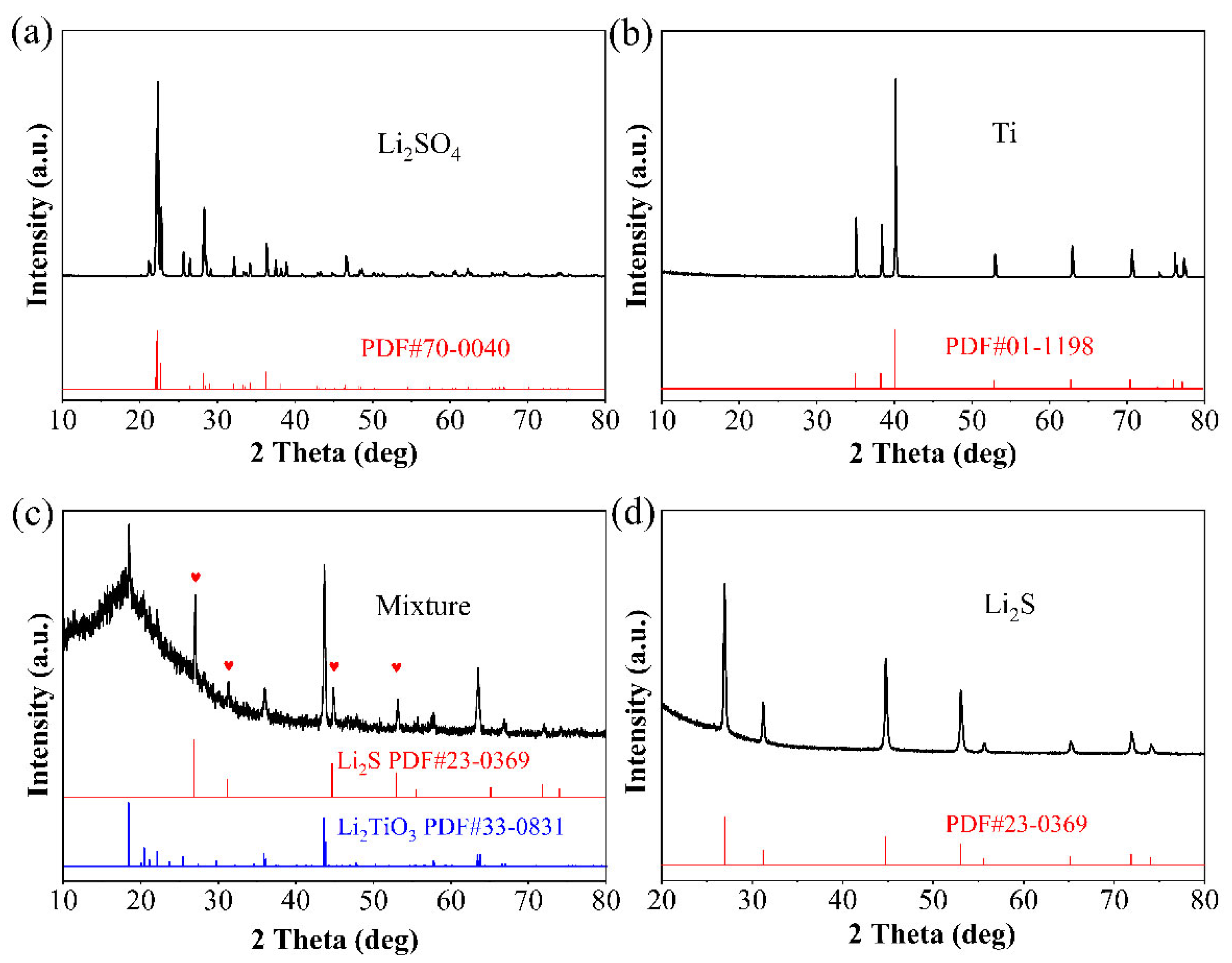
To investigate the phase composition of products at various stages during the preparation of high-purity Li2S via the titanothermic reduction, X-ray diffraction (XRD) was employed. Figure 2a,b show the XRD patterns of the raw materials Li2SO4 and Ti, respectively. Both present pure phases without impurities, confirming the successful dehydration of Li2SO4·H2O. In the XRD pattern of the mixed product after titanothermic reduction (Figure 2c), diffraction peaks located at 27.1°, 31.3°, 44.7°, and 53.1° are assigned to the (111), (200), (220), and (331) crystal planes of Li2S, respectively [30]. Meanwhile, diffraction peaks at 18.5°, 35.9°, 43.6°, and 63.2° correspond to the (002), (−131), (−133), and (312) crystal planes of Li2TiO3, respectively [31]. The hump at the low angle region originates from the high-temperature adhesive tape used for sealing. After separation and purification, the target product high-purity Li2S was obtained. Its XRD pattern is displayed in Figure 2d, in which no impurity peaks can be observed. All diffraction peaks match well with those of Li2S in Figure 2c, verifying the excellent purification effect.
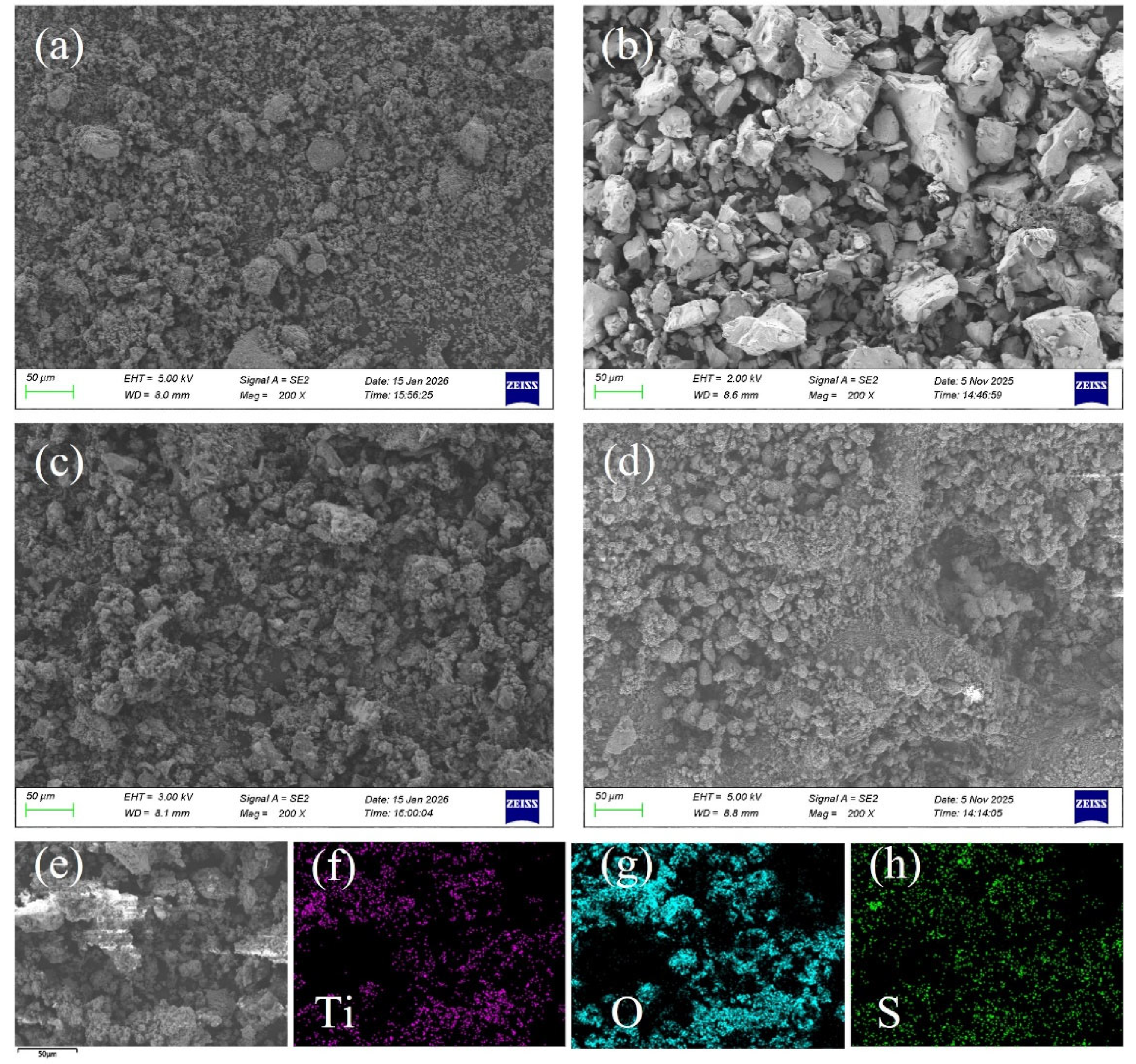
The micro-morphologies of the raw materials and products were characterized by scanning electron microscopy (SEM) and energy-dispersive X-ray spectroscopy (EDS).
Figure 3a,b show the SEM images of the raw materials Li2SO4 and Ti, respectively. It can be seen that both raw materials consist of small particles with sizes ranging from several micrometers to tens of micrometers. The micro-morphology of the mixture after the titanothermic reduction is shown in Figure 3c. After high-temperature sintering, the agglomeration of the sample is further enhanced, the particle size is increased, and slight agglomeration can be observed. Figure 3d displays the SEM image of the target product Li2S, which exhibits a similar morphology to Li2SO4, presenting microscale spheres formed by the accumulation of fine particles. Figure 3e–h show the SEM image and corresponding EDS elemental mappings of the mixture after the titanothermic reduction. The Ti, O, and S elements exhibit a high degree of spatial overlap, indicating that Li2S and Li2TiO3 are closely distributed, and thus further purification is required to obtain pure Li2S.
To evaluate the purity of Li2S prepared by titanothermic reduction, multiple characterization methods were employed in this work. ICP results for metallic impurity elements and carbon content of titanothermic-reduced Li2S (T-Li2S) and commercial Li2S (C-Li2S) are summarized. As shown in Table 1, the target product T-Li2S exhibits a carbon content of only 0.04 wt% and a total metallic impurity content of 581 ppm, corresponding to a purity higher than 99.9%. In contrast, commercial C-Li2S has a carbon content of 0.15 wt% and a total metallic impurity content of 642 ppm, with a purity above 99.7%, which is lower than that of T-Li2S. This indicates that the preparation method adopted in this study can effectively control the impurity content of Li2S at a low level.
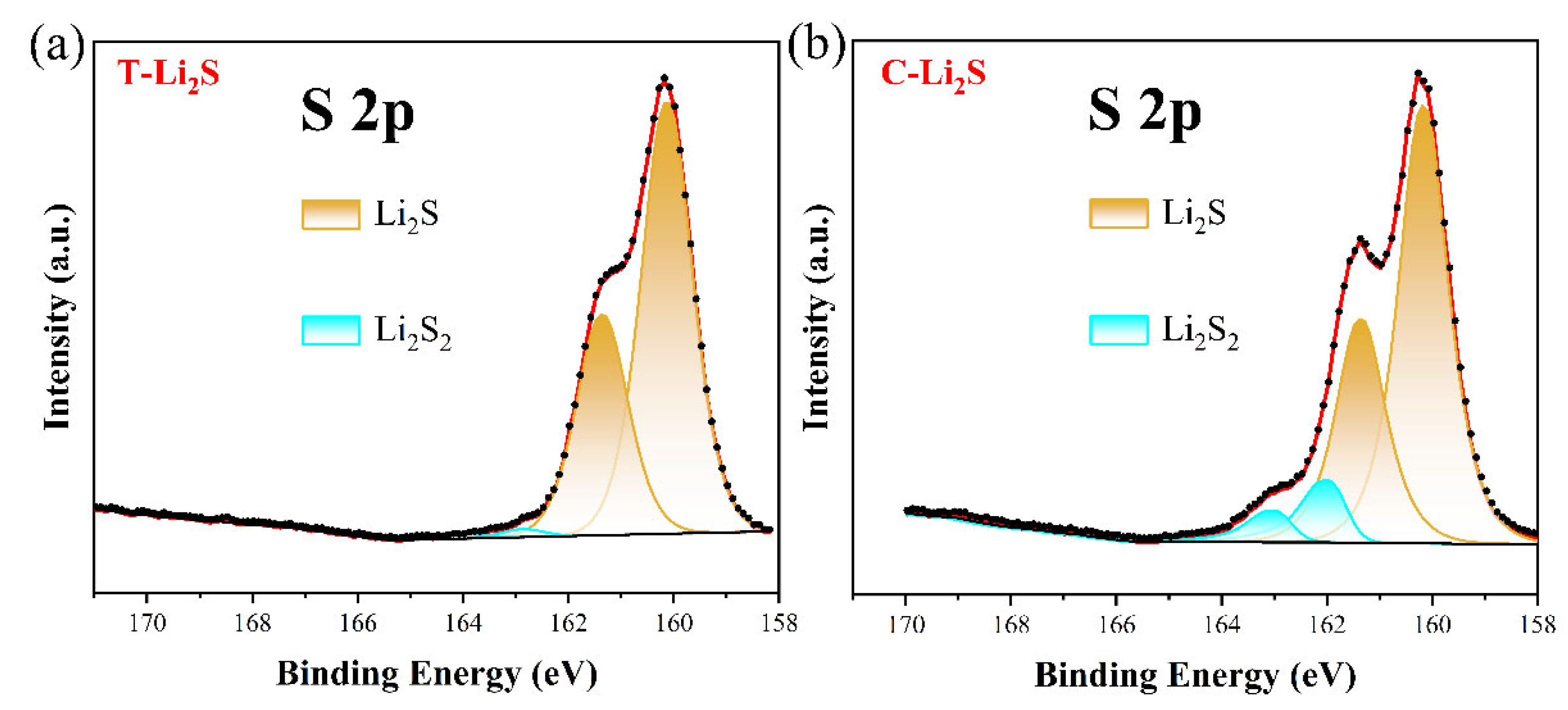
To further verify the high purity of Li2S synthesized via titanothermic reduction, X-ray photoelectron spectroscopy (XPS) was performed on T-Li2S and C-Li2S. The binding energy of XPS peaks is closely related to the valence state of the corresponding elements, and higher valence states generally correspond to higher binding energies. As displayed in Figure 4, the S 2p spectra of T-Li2S and C-Li2S within 158.0–170.0 eV can be well fitted into two doublets. The lower energy doublet located at 2p3/2 (160.2 eV) and 2p1/2 (161.4 eV) is assigned to S2- in Li2S. The doublet at slightly higher binding energy (2p3/2: 161.8 eV; 2p1/2: 162.9 eV) corresponds to S−1 in Li2S2 [32]. No additional peaks associated with high valence sulfur species (such as SO42−and SO32−) are observed at higher binding energies for either sample, indicating the absence of such oxide impurities. Quantitative analysis based on peak area ratios reveals that T-Li2S is composed of 98.5 mol% Li2S and 1.5 mol% Li2S2, whereas C-Li2S consists of 88.3 mol% Li2S and 11.7 mol% Li2S2. The significantly higher fraction of the target Li2S phase in T-Li2S further confirms its superior purity.
Compared with the previously reported metallothermic reduction strategies, such as magnesothermal reduction [33] and aluminothermal reduction [26], both strategies induce small-scale explosions during the high-temperature heating of reactants, presenting significant challenges in operational safety and process control. Additionally, the target product Li2S obtained via these two reduction routes contains trace impurities such as Li2SO4 or LiAlO2, respectively, while the by-products (MgO and Al2O3) exhibit low application value and limited reusability. In contrast, the titanothermic reduction route proposed in this study features a milder reaction process, free from uncontrollable phenomena such as explosions. XRD and XPS characterizations confirm that the target product Li2S is free of any impurities, with a lower content of Li2S2 and higher purity. Moreover, the reaction by-product (Li2TiO3) can be utilized with high added value.
Overall, the titanothermic reduction route proposed in this study exhibits mild reaction conditions, easy separation and reuse of by-products, high purity of the target product Li2S, and excellent operational stability and scalability. It effectively addresses the safety hazards and impurity issues associated with traditional metallothermic reduction strategies, demonstrating superior practical application value and promotion potential.
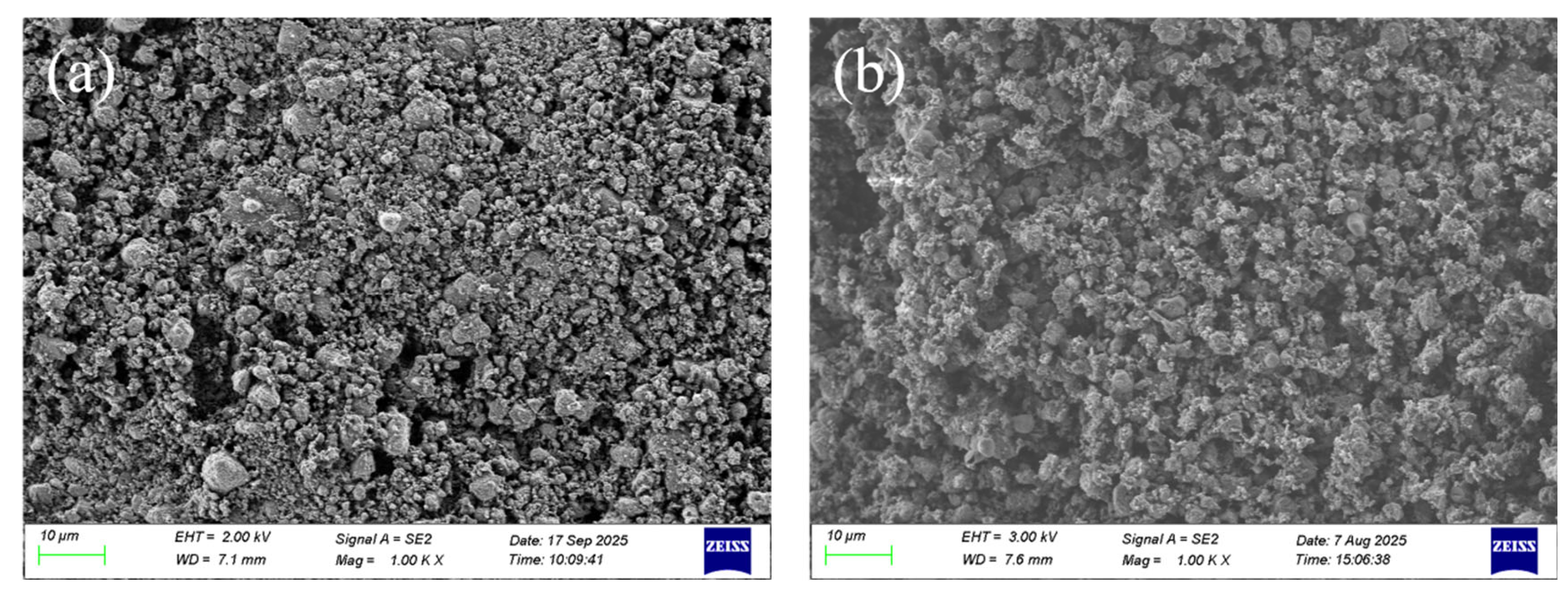
As depicted in Figure 5 (SEM images of T-Li2S and C-Li2S), both samples show a similar particulate morphology with particle sizes in the range of 3–5 μm. Further particle size distribution analysis reveals that T-Li2S exhibits a D10 of 0.53 μm, D50 of 3.1 μm, and D90 of 5.9 μm, whereas C-Li2S shows a D10 of 0.48 μm, D50 of 2.6 μm, and D90 of 5.3 μm, indicating a negligible difference in particle size distribution between the two materials. Moreover, BET-specific surface area measurements yield comparable values for T-Li2S (2.8 m2/g) and C-Li2S (3.0 m2/g). These results collectively confirm that T-Li2S and C-Li2S possess highly similar morphological and surface characteristics.
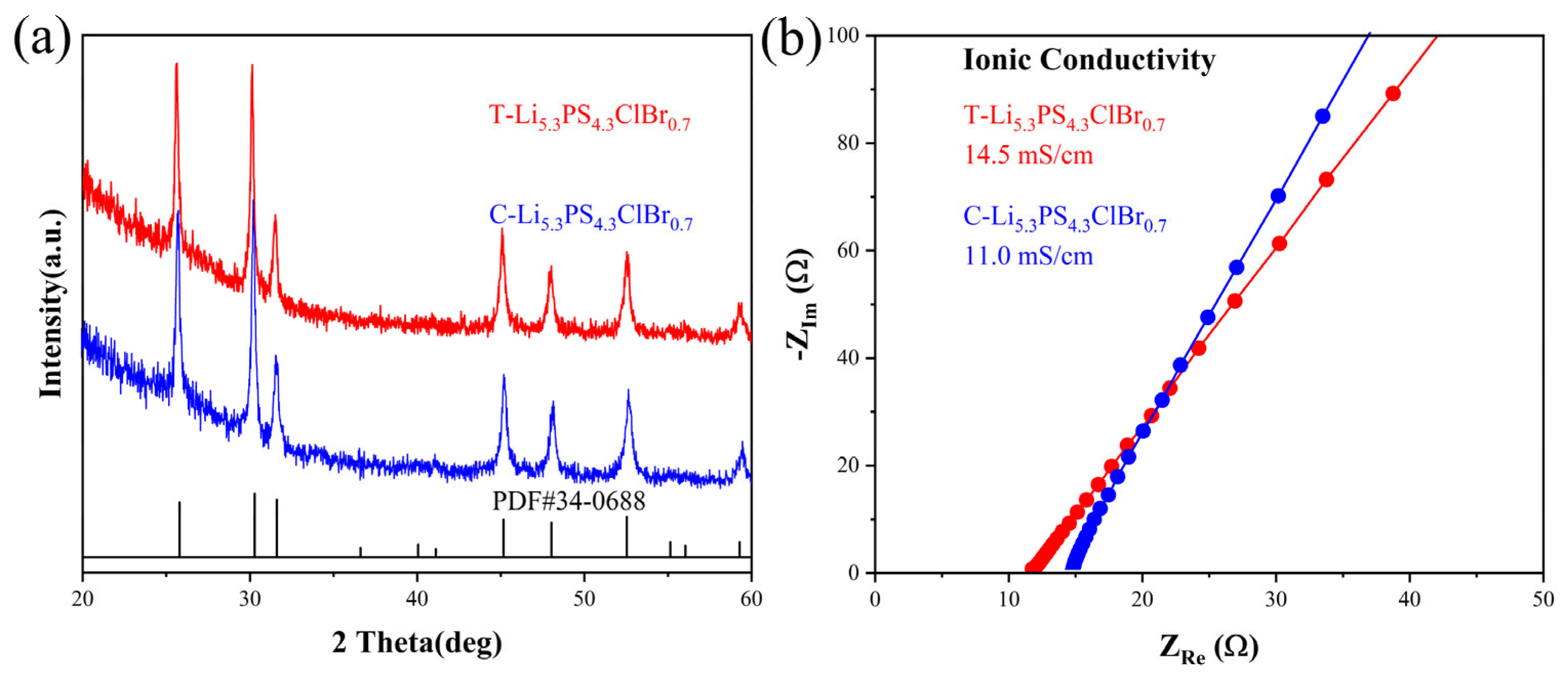
To verify the feasibility of replacing commercial Li2S with the as-prepared material in practical applications, T-Li2S was employed as the raw material to synthesize Li5.3PS4.3ClBr0.7 sulfide-based all-solid-state electrolytes (ASSSEs) following an identical synthetic procedure. For comparison, electrolytes prepared from T-Li2S and commercial C-Li2S are denoted as T-Li5.3PS4.3ClBr0.7 and C-Li5.3PS4.3ClBr0.7, respectively. As displayed in Figure 6a, all diffraction peaks of both electrolytes can be well indexed to the standard PDF card, confirming the successful preparation of phase-pure argyrodite-type sulfide electrolytes.
Furthermore, electrochemical impedance spectroscopy (EIS) was performed at room temperature to analyze the ionic transport properties, and the corresponding Nyquist plots are presented in Figure 6b. The Nyquist plots show a straight line over the entire frequency range, demonstrating that lithium-ion diffusion dominates the overall transport process. Quantitative calculations reveal that the ionic conductivity of T-Li5.3PS4.3ClBr0.7 reaches 14.5 mS/cm, while that of C-Li5.3PS4.3ClBr0.7 is 11.0 mS/cm. Both values are remarkably high and represent a substantial improvement. Given the negligible differences in morphology and surface properties between T-Li2S and C-Li2S, the superior ionic conductivity of the T- Li5.3PS4.3ClBr0.7 electrolyte can be reasonably attributed to the higher purity of T-Li2S relative to commercial C-Li2S.
As shown in Table 2, which summarizes representative solid electrolytes reported in recent years and their lithium-ion conductivities, the as-synthesized T-Li5.3PS4.3ClBr0.7 in this work exhibits outstanding lithium-ion transport performance.
Overall, these characterizations confirm that T-Li2S prepared via the titanothermic reduction method exhibits superior comprehensive performance to commercial C-Li2S, and the as-prepared sulfide solid-state electrolyte achieves significantly improved lithium-ion conductivity compared with previous studies, fully meeting the stringent requirements for the commercialization of high-performance sulfide-based all-solid-state battery materials. The high lithium-ion conductivity of bromine-doped argyrodite originates from lattice expansion, increased lithium vacancies, disordered anion framework, and reduced grain-boundary resistance. The Cl/Br co-substitution establishes a disordered structure to accelerate Li-ion diffusion, while lithium defects provide sufficient charge carriers. These factors collectively contribute to superionic conduction [34].
Table 2. Comparison of lithium-ion conductivities of different types of solid electrolytes.
MaterialElectrolyte TypeLithium-Ion Conductivity
/mS/cm
Ref.
Li6.4La3Zr1.4Ta0.6O12Oxide Solid Electrolyte0.662[35]
KBZ-PEOPolymer Solid Electrolyte0.140[36]
sc-HfO2@LCBComposite Solid Electrolyte1.23[37]
Li3YBr5.7F0.3Halide Solid Electrolyte1.80[38]
Li5.3PS4.3ClBr0.7Sulfide Solid Electrolyte5.20[39]
T-Li5.3PS4.3ClBr0.7Sulfide Solid Electrolyte14.5This Work
Although the titanothermic reduction method enables low-cost and safe synthesis of high-purity Li2S, it has certain limitations. The stability of Li2S during large-scale continuous production has not been fully validated, and the recovery and utilization of the by-product Li2TiO3 remain underexplored. Nevertheless, these issues are beyond the scope of the present study. Future work will focus on scaling up T-Li2S production, verifying process stability, and developing efficient strategies for Li2TiO3 recovery and reuse.

4. Conclusions

In this study, high-purity Li2S with low carbon content and low metallic impurities was successfully prepared via solid-state sintering and purification, using Li2SO4·H2O as the lithium and sulfur source, and Ti as the reducing agent. Compared with the H2S-based preparation method [40], the titanothermic reduction process exhibits distinct advantages, including non-toxic and readily available raw materials, simple process flow, high product purity, and remarkable environmental benefits. Li2TiO3, the by-product of solid-state sintering, can be efficiently separated from the target product Li2S and possesses multiple application values. It can not only serve as an anode material for lithium-ion batteries but also be further resourcefully utilized as a tritium breeder in nuclear fusion reactors. Meanwhile, SO2, the single gaseous product generated from the reaction, can be recovered and converted into concentrated sulfuric acid or sulfur by relying on the existing mature processes.
The above process realizes the recycling of all reaction products, achieving multiple benefits and reducing the overall production cost. Furthermore, the as-prepared T-Li2S exhibits higher purity and lower contents of metallic impurities and residual carbon than commercial C-Li2S. The electrolyte synthesized from T-Li2S delivers superior lithium-ion conductivity (14.5 mS/cm), which is attributed to the disordered structure induced by Cl/Br co-substitution that promotes lithium-ion diffusion. Overall, this study provides a novel technical route for the green production of Li2S, with broad application prospects.

Author Contributions

X.W. and S.L. contributed equally to this work and share first authorship. X.W. performed the experiments, summarized the data, and wrote the paper; S.L. designed the experiments and carried out data analysis; L.Z. guided the technical direction and promoted its engineering implementation; J.L. assisted in data analysis; D.G. assisted in material preparation; Q.H. assisted in characterization tests; G.T. assisted in paper proofreading; H.L. provided overall guidance and secured all necessary resources for the research. All authors have read and agreed to the published version of the manuscript.

Funding

This research received no external funding.

Data Availability Statement

Data will be provided upon request.

Acknowledgments

We acknowledge Zijin Mining Group Co., Ltd. and Zijin Mining New Energy and New Materials Technology (Changsha) Co., Ltd. for supporting this study.

Conflicts of Interest

Authors Xinyi Wang, Sha Li, Jun Li, Dan Guo, Qizhao Hu, Gang Tang and Hongxu Li were employed by Zijin Mining New Energy and New Materials Technology (Changsha) Co., Ltd. Author Lingwen Zhang was employed by Fujian Zijin Lithium Materials Technology Co., Ltd. The remaining authors declare that they have no competing financial interests or personal relationships that could have appeared to influence the work reported in this paper.

References

  1. Li, F.; Lin, Y.; Liu, J.; Chen, J.; Wan, X.; Zhao, L.; Xi, L.; Li, Z.; Zhang, H.; Xu, X.; et al. Boosting Oxygen Redox Reversibility in Chemo-Mechanically Robust Li-Rich Oxide Cathodes via Multi-Scale Defect Design. Energy Environ. Sci. 2025, 18, 1241–1254. [Google Scholar] [CrossRef]
  2. Zhang, D.; Liu, Y.; Sun, Z.; Liu, Z.; Xu, X.; Xi, L.; Ji, S.; Zhu, M.; Liu, J. Eutectic-Based Polymer Electrolyte with the Enhanced Lithium Salt Dissociation for High-Performance Lithium Metal Batteries. Angew. Chem. Int. Ed. 2023, 62, e202310006. [Google Scholar] [CrossRef] [PubMed]
  3. Zhou, X.; Zhang, B.; Lyu, P.; Xi, L.; Li, F.; Ma, Z.; Zhu, M.; Liu, J. Chemo-Mechanical Stable Cathode Interphase via Interface in Situ Catalytic-Conversion Integrated Design for All Solid-State Batteries. Energy Environ. Sci. 2024, 17, 8174–8188. [Google Scholar] [CrossRef]
  4. Shen, J.; Xu, X.; Liu, J.; Wang, Z.; Zuo, S.; Liu, Z.; Zhang, D.; Liu, J.; Zhu, M. Unraveling the Catalytic Activity of Fe-Based Compounds toward Li2Sx in L-S Chemical System from D-P Bands. Adv. Energy Mater. 2021, 11, 2100673. [Google Scholar] [CrossRef]
  5. Liang, Z.; Shen, J.; Xu, X.; Li, F.; Liu, J.; Yuan, B.; Yu, Y.; Zhu, M. Advances in the Development of Single-Atom Catalysts for High-Energy-Density Lithium-Sulfur Batteries. Adv. Mater. 2022, 34, 2200102. [Google Scholar] [CrossRef]
  6. Wang, Z.; Ran, M.; Cui, K.; Li, T.; Zou, J.; Zhu, J.; Chao, Y. Reinventing Phosphorus Anodes: Taming Pulverization via Strain-Induced Interfacial Coupling. Angew. Chem. Int. Ed. 2026, 65, e23513. [Google Scholar] [CrossRef]
  7. Guo, K.; Yan, W.; Liu, Y.; Zou, J.; Zhu, J.; Wang, Z.; Tian, Y.; Cui, X. Unveiling Confined Proton Desolvation Dynamics in Interlayer-Engineered Mxenes. Adv. Funct. Mater. 2026, e28186. [Google Scholar] [CrossRef]
  8. Wang, Z.; Han, C.; Ge, Y.; Lu, W.; Chao, Y.; Zhu, J.; Zhou, F.; Tian, Y.; Cui, X. Regulating the Co Spin State via Directional Fe Doping to Enhance Sulfur Conversion Catalysis. Adv. Funct. Mater. 2025, 35, e04753. [Google Scholar] [CrossRef]
  9. Lu, W.; Wang, L.; Han, C.; Chao, Y.; Xu, C.; Zhu, J.; Tian, Y.; Wang, Z.; Cui, X. MoP Quantum Dots Based Multifunctional Efficient Electrocatalyst for Stable and Long-Life Flexible Lithium-Sulfur Batteries. J. Colloid Interface Sci. 2024, 661, 83–90. [Google Scholar] [CrossRef]
  10. Xi, L.; Li, Y.; Zhang, D.; Liu, Z.; Xu, X.; Liu, J. The Contact Interface Engineering of All-Sulfide-Based Solid State Batteries via Infiltrating Dissoluble Sulfide Electrolyte. Energy Environ. Mater. 2023, 6, e12461. [Google Scholar] [CrossRef]
  11. Wang, Z.; Shen, J.; Xu, X.; Yuan, J.; Zuo, S.; Liu, Z.; Zhang, D.; Liu, J. In-Situ Synthesis of Carbon-Encapsulated Atomic Cobalt as Highly Efficient Polysulfide Electrocatalysts for Highly Stable Lithium-Sulfur Batteries. Small 2022, 18, 2106640. [Google Scholar] [CrossRef] [PubMed]
  12. Wang, Z.; Shen, J.; Liu, J.; Xu, X.; Liu, Z.; Hu, R.; Yang, L.; Feng, Y.; Liu, J.; Shi, Z.; et al. Self-Supported and Flexible Sulfur Cathode Enabled via Synergistic Confinement for High-Energy-Density Lithium-Sulfur Batteries. Adv. Mater. 2019, 31, 1902228. [Google Scholar] [CrossRef] [PubMed]
  13. Park, H.; Celeste, A.; Wang, S.; Lee, C.; Yang, Y.; Wang, K.; Matic, A.; Brutti, S.; Kansara, S.; Xiong, S.; et al. Designing with Li2S in Lithium-Sulfur Batteries: From Fundamental Chemistry to Practical Architectures. Small 2026, 22, e13644. [Google Scholar] [CrossRef]
  14. Xi, L.; Zhang, D.; Xu, X.; Wu, Y.; Li, F.; Yao, S.; Zhu, M.; Liu, J. Interface Engineering of All-Solid-State Batteries Based on Inorganic Solid Electrolytes. ChemSusChem 2023, 16, e202202158. [Google Scholar] [CrossRef]
  15. Yao, M.; Shi, J.; Luo, A.; Zhang, Z.; Zhu, G.; Xu, H.; Xu, J.; Jiang, L.; Jiang, K. Advances in Sulfide Solid-State Electrolytes for Lithium Batteries. Energy Storage Mater. 2025, 75, 104018. [Google Scholar] [CrossRef]
  16. Wu, L.; Liu, G.; Wan, H.; Weng, W.; Yao, X. Superior Lithium-Stable Li7P2S8I Solid Electrolyte for All-Solid-State Lithium Batteries. J. Power Sources 2021, 491, 229565. [Google Scholar] [CrossRef]
  17. Zhou, L.; Wei, X.; Zhang, J.; Mei, X.; Li, Y.; Zheng, C.; Zhang, F.; Wen, A.; Wang, B. Cost-Effective and High Ionic Conductivity Sulfide Solid Electrolyte Li7.3P2.9S10.75X0.3 (X = F, Cl, Br, and I) for All-Solid-State Lithium Batteries. ACS Appl. Energy Mater. 2025, 8, 473–482. [Google Scholar] [CrossRef]
  18. Tu, F.; Zhao, Z.; Zhang, X.; Wang, Z.; Ma, Y.; Zhang, H.; Song, D.; Zhang, L.; Yang, Y.; Zhu, L. Low-Cost and Scalable Synthesis of High-Purity Li2S for Sulfide Solid Electrolyte. ACS Sustain. Chem. Eng. 2022, 10, 15365–15371. [Google Scholar] [CrossRef]
  19. Zhang, Y.; Gao, L.; Zheng, H.; Zhao, H.; Zhao, G. Advancing Sulfide Solid Electrolytes via Green Li2S Synthesis. Nat. Commun. 2025, 16, 9981. [Google Scholar] [CrossRef]
  20. Weng, W.; Lan, Y.; Tang, D.; Fu, L.; Tan, W.; Zhong, S. Research Progress on Lithium Sulfide Synthesis: A Review. ACS Appl. Energy Mater. 2025, 8, 13139–13154. [Google Scholar] [CrossRef]
  21. Wei, Y.; Zhao, Z.; Qi, L.; Ma, Y.; Zhang, H.; Wang, Z.; Zhang, L.; Yang, Y.; Song, D. Low-Cost Preparation and Purification of Li2S for Sulfide Solid Electrolytes. J. Energy Storage 2024, 103, 114180. [Google Scholar] [CrossRef]
  22. Li, X.; Wolden, C.A.; Ban, C.; Yang, Y. Facile Synthesis of Lithium Sulfide Nanocrystals for Use in Advanced Rechargeable Batteries. ACS Appl. Mater. Interfaces 2015, 7, 28444–28451. [Google Scholar] [CrossRef]
  23. Ren, D.; Lu, L.; Hua, R.; Zhu, G.; Liu, X.; Mao, Y.; Rui, X.; Wang, S.; Zhao, B.; Cui, H.; et al. Challenges and Opportunities of Practical Sulfide-Based All-Solid-State Batteries. eTransportation 2023, 18, 100272. [Google Scholar] [CrossRef]
  24. Yang, S.; Wan, F.; Han, A.; Fang, L.; Sun, Q.; Zhao, Z.; Song, D.; Zhang, L.; Chen, L.; Wolden, C.A.; et al. Environmentally Friendly, Non-Glove Box, Closed-System and Continuously Massive Production of Lithium Sulfide for Battery Applications. J. Clean. Prod. 2023, 382, 135221. [Google Scholar] [CrossRef]
  25. Song, Y.; Jo, H.-R.; Park, S.-H.; Oh, J.; Jeoung, H.-J.; Kang, J. Investigation of the Carbothermic Reduction of Lithium Sulfate for the Production of Lithium Sulfide. J. Sustain. Metall. 2025, 11, 3887–3899. [Google Scholar] [CrossRef]
  26. Yang, H.; Sun, Y.; Yang, S.; Han, A.; Hu, X.; Zhang, H.; Yao, X.; Zhang, X.; Yang, Y. “One Stone Two Birds” Strategy of Synthesizing the Battery Material Lithium Sulfide: Aluminothermal Reduction of Lithium Sulfate. Inorg. Chem. 2023, 62, 5576–5585. [Google Scholar] [CrossRef]
  27. Yang, Y.; Tian, R.; Zhang, H.; Wang, Z.; Zhang, L.; Yang, Y.; Song, D. Preparation of High-Quality Lithium Sulfide by Reducing Lithium Sulfate with Hydrogen: A Green and Cost-Effective Method. Green Chem. 2024, 26, 7231–7245. [Google Scholar] [CrossRef]
  28. Chen, X.; Xie, Y.; Zhang, T.; Jiang, Z.; Bai, X.; Xu, S.; Lu, J. Harnessing Strengthening-Metastability Synergy for Extreme Work Hardening in Additively Manufactured Titanium Alloys. Nat. Commun. 2026, 17, 959. [Google Scholar] [CrossRef]
  29. Zhang, F.; Hong, F.; Qin, X.; Du, X.; Jiang, X.; Li, Y.; Guo, H.; Liu, P.; Cui, W.; Min, X.; et al. Achieving “True” Selective Hydrogenation by Co Treatment of the Pt/TiO2 Catalyst. J. Am. Chem. Soc. 2025, 147, 26319–26328. [Google Scholar] [CrossRef]
  30. Li, X.; Gao, M.; Du, W.; Ni, B.; Wu, Y.; Liu, Y.; Shang, C.; Guo, Z.; Pan, H. A Mechanochemical Synthesis of Submicron-Sized Li2S and a Mesoporous Li2S/C Hybrid for High Performance Lithium/Sulfur Battery Cathodes. J. Mater. Chem. A 2017, 5, 6471–6482. [Google Scholar] [CrossRef]
  31. Tan, G.; Hu, X.; Wang, S.; Yang, X.; Li, Y.; Yang, Z.; Zhang, Y. A Process for Fabrication of Li2TiO3 Ceramic Pebbles with High Mechanical Properties via Non-Hydrolytic Sol-Gel Method. Ceram. Int. 2020, 46, 27686–27694. [Google Scholar] [CrossRef]
  32. Sun, Y.; Zhang, X.; Xu, S.; Yang, S.; Wang, X.; Cao, X.; Sun, X.; Zhang, Y.; Ren, D.; Hu, X.; et al. A Green Method of Synthesizing Battery-Grade Lithium Sulfide: Hydrogen Reduction of Lithium Sulfate. ACS Sustain. Chem. Eng. 2024, 12, 2813–2824. [Google Scholar] [CrossRef]
  33. Zhang, X.; Yang, H.; Sun, Y.; Yang, Y. Lithium Sulfide: Magnesothermal Synthesis and Battery Applications. ACS Appl. Mater. Interfaces 2022, 14, 41003–41012. [Google Scholar] [CrossRef] [PubMed]
  34. Feng, X.; Chien, P.-H.; Wang, Y.; Patel, S.; Wang, P.; Liu, H.; Immediato-Scuotto, M.; Hu, Y.-Y. Enhanced Ion Conduction by Enforcing Structural Disorder in Li-Deficient Argyrodites Li6−XPS5−XCl1+X. Energy Storage Mater. 2020, 30, 67–73. [Google Scholar] [CrossRef]
  35. Zhuang, Y.; Wang, L.; Cui, C.; Cui, Y.; Yang, D.; Gao, K.; Hou, Z.; Yang, Y.; Zhang, T. Clean Synthesis of Oxide Electrolytes via a Boiling Water-Assisted Solid-Phase Sintering Route. ACS Appl. Mater. Interfaces 2025, 17, 18514–18521. [Google Scholar] [CrossRef]
  36. Wang, L.; Zheng, Y.; Yue, Z.; Tang, F.; Wang, Z.; Pang, X.; Chao, Y.; Cui, X. Anion Spatial Confinement via Amide Functionalization Induces LiF/Li3N-Rich Interphase for Stable All-Solid-State Lithium Metal Batteries. Energy Storage Mater. 2025, 81, 104538. [Google Scholar] [CrossRef]
  37. Shen, J.; Kim, G.; Chung, J.-w.; Kwon, S.; Chung, W.; Yoon, D.; Zhang, X.; Shen, L.; Chen, J.; Liu, J.; et al. Engineering Electronic Radial Effects for Fast Li+ Transport in Solid-State Electrolytes. Adv. Mater. 2026, 38, e20337. [Google Scholar] [CrossRef]
  38. Yu, T.; Liang, J.; Luo, L.; Wang, L.; Zhao, F.; Xu, G.; Bai, X.; Yang, R.; Zhao, S.; Wang, J.; et al. Superionic Fluorinated Halide Solid Electrolytes for Highly Stable Li-Metal in All-Solid-State Li Batteries. Adv. Energy Mater. 2021, 11, 2101915. [Google Scholar] [CrossRef]
  39. Cronau, M.; Szabo, M.; Roling, B. Single-Step Ball Milling Synthesis of Highly Li+ Conductive Li5.3PS4.3ClBr0.7 Glass Ceramic Electrolyte Enables Low-Impedance All-Solid-State Batteries. Mater. Adv. 2021, 2, 7842–7845. [Google Scholar] [CrossRef]
  40. Smith, W.H.; Vaselabadi, S.A.; Wolden, C.A. Synthesis of High-Purity Li2S Nanocrystals via Metathesis for Solid-State Electrolyte Applications. J. Mater. Chem. A 2023, 11, 7652–7661. [Google Scholar] [CrossRef]
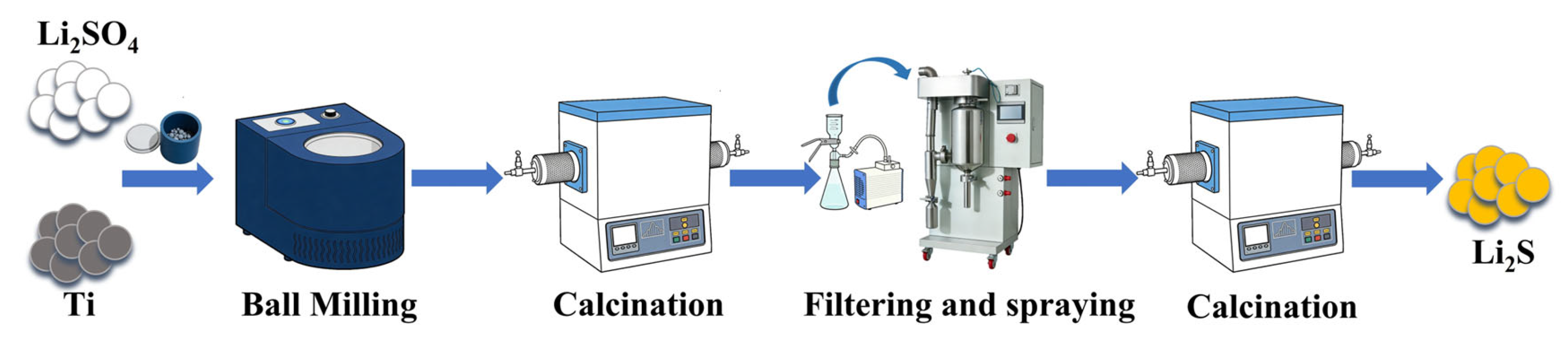
Figure 1. Schematic illustration of high-purity Li2S prepared by titanothermic reduction.
Batteries 12 00128 g001
Figure 2. XRD results of (a) Li2SO4, (b) Ti, (c) the mixture after titanothermic reduction and (d) purified Li2S.
Batteries 12 00128 g002
Figure 3. SEM image of (a) Li2SO4, (b) Ti, (c) the mixture after titanothermic reduction, (d) purified Li2S. (eh) SEM image of the mixture after titanothermic reduction and EDS mappings of Ti, O and S elements, respectively.
Batteries 12 00128 g003
Figure 4. XPS spectra of (a) T-Li2S and (b) C-Li2S for elemental analysis of S 2p.
Batteries 12 00128 g004
Figure 5. SEM image of (a) T-Li2S and (b) C-Li2S.
Batteries 12 00128 g005
Figure 6. Phase and electrical performance of T-Li5.3PS4.3ClBr0.7 and C-Li5.3PS4.3ClBr0.7 electrolytes: (a) XRD patterns and (b) Nyquist plots from EIS measurements.
Batteries 12 00128 g006
Table 1. Results of trace metallic impurity elements by ICP and carbon content by carbon-sulfur analyzer.
Content of Main Impurities
/ppm
Carbon Content
/wt%
ElementMgCuFeNiAlCaC
T-Li2S6826185397670.15
C-Li2S38281963831680.04
Disclaimer/Publisher’s Note: The statements, opinions and data contained in all publications are solely those of the individual author(s) and contributor(s) and not of MDPI and/or the editor(s). MDPI and/or the editor(s) disclaim responsibility for any injury to people or property resulting from any ideas, methods, instructions or products referred to in the content.