1. Introduction
Over the past few years, awareness of the environmental impact of humanity has grown, reinforcing the urgent need for a more sustainable future. This vision underpins the European Green Deal, which supports major investments to make food, industry, and daily life more sustainable while protecting public health. Indeed, this set of policies targets net-zero greenhouse gas emissions by 2050, making Europe climate-neutral, with a legally binding interim goal of at least a 55% reduction by 2030.
Within this policy-driven framework, sustainability objectives are strongly related to well-established theoretical paradigms, such as circular economy and industrial ecology, which provide the conceptual basis for minimizing environmental impacts while maintaining attention on economical aspect. The circular economy, which is strongly rooted in the principles of industrial ecology [
1], is based on the adoption of strategies such as design for durability, maintenance, repair, reuse, remanufacturing, and recycling, applied across the entire product life cycle. Through these approaches, the circular economy aims to reduce the use of primary resources, waste generation, emissions, and energy losses, by promoting the closing and slowing of material and energy loops within production systems [
2,
3].
The lithium-ion battery (LIB) market urgently requires regulatory frameworks based on circular economy principles, due to its relevant social, economic, and environmental impacts. The extraction of critical raw materials (CRMs) often occurs in economically vulnerable regions, creating social equity issues and environmental degradation. Moreover, the increasing volumes of waste generated by the LIB market led to the dissipation of valuable materials, which, if effectively recovered and reused, could significantly reduce the demand for primary resource extraction. As highlighted in recent studies, the implementation of circular strategies, including recycling and second-life applications, is therefore essential to mitigate these impacts and improve the sustainability of the LIB value chain [
4,
5].
These principles are particularly relevant for the transport sector, where decarbonization strongly depends on the rapid deployment of electric mobility and, consequently, on the widespread use of LIBs. Indeed, transport is a major contributor to European Union (EU) emissions: the European Environment Agency estimates it accounts for about one quarter of total CO
2 emissions, with road transport responsible for 71.7% of the emissions of the sector. As a result, the electric vehicle (EV) market is expanding rapidly, strongly driven by advances in LIB technology [
6]. Performances and sustainability are the essentials for such progress. It is also necessary to take into consideration each process from raw materials extraction to recycling, thus surpassing the usage phase and ensuring true sustainability in the battery sector. Lithium, cobalt and nickel, generally referred to “critical raw materials” are the main strategic elements for LIBs prosperity. These materials are often sourced outside the EU and frequently trigger human right concerns for the worker conditions. Moreover, environmental regulations and disclosure could interfere in some cases with EU expectations. The control of this information is difficult because batteries are mostly manufactured abroad. This results in challenges in controlling environmental and social impacts and in planning effective reuse, recycling, and end-of-life (EoL) management strategies. In this context, the Batteries Regulation (12 July 2023) was implemented to guarantee battery sustainability from raw material extraction to EoL recycling while promoting a competitive European battery sector [
7]. A central tool introduced by the Regulation is the Battery Passport (BP), designed to improve transparency and traceability by linking each battery to key data such as identification, composition, manufacturing details, performance, environmental and social impacts, usage, EoL information, certification and compliance. In light of these considerations, it is essential to clarify and critically examine this rapidly evolving topic, which will play a key role in shaping a sustainable future for both battery technologies and society as a whole. The purpose of this paper is to provide an in-depth analysis of the state of the art of the new EU Batteries Regulation, with a particular focus on the BP.
First, we discuss LIB technologies and markets, as well as the associated CRMs, in order to define the context that led the EU to develop the new Batteries Regulation, including the BP. This provides a comprehensive overview of the complexity and challenges of the battery value chain. We provide an exhaustive description of the new European battery regulation and its requirements. We then review the state of the art and the latest advances in the BP while discussing the challenges and opportunities related to its implementation. Finally, in addition to the legislative synthesis, we provide a critical analysis from a research-oriented (academic) perspective.
2. Lithium-Ion Battery Technology: Critical Raw Materials and Market
2.1. Lithium-Ion Battery Production, Second Use, and Recycling: Evolution Roadmap
The widespread deployment of LIBs is driven by a favorable combination of energy density, efficiency, and industrial maturity. However, the rapid scale-up of EV production in Europe and globally is intensifying demands on battery performance, manufacturing, sustainability, and EoL management [
8,
9]. Therefore, the main focus of researchers and the industry is to promote and replace conventional LIBs through the integration of environmentally friendly materials as well as resource-efficient production/recycling processes [
10]. The production and recycling strategies are critical and must adapt alongside the battery generations while ensuring all material sustainability aspects [
11].
The main classification of battery generations is illustrated in
Table 1. Lithium-ionbattery generations Gen 1 and 2 were built using graphitic carbon anodes coupled with cathode chemistries that evolved over time. Early commercial LIBs in 1990s’ utilized lithium cobalt oxide (LCO) cathodes, while subsequent designs in the 2000s incorporated lithium iron phosphate (LFP) and layered mixed transition-metal oxides such as lithium nickel manganese cobalt oxide (NMC) and lithium nickel cobalt aluminum oxide (NCA) [
12]. These early systems are characterized by relatively stable material compositions and standardized manufacturing methods, which have contributed to their technological robustness. From a recycling standpoint, these batteries are particularly compatible with established pyrometallurgical and hydrometallurgical processes, enabling the efficient recovery of critical metals including lithium, cobalt, nickel, and copper [
13,
14]. Their maturity as a technology has stimulated the creation of industrial-scale recycling systems.
Generation 3 points to the increase in LIB energy density through the incorporation of nickel-rich cathodes (NMC 622 to NMC 811) and silicon-containing graphite anodes [
12]. This generation is mainly characterized by the reduced battery mass and improved EV range. However, the production and recycling processes remain the most important challenges. The synthesis as well as the cell manufacturing processes require careful management when high-nickel-content cathodes are employed. Moreover, the mechanical separation and chemical recovery of silicon-containing anodes at EoL entails many complexities [
15,
16]. A higher metal content improves recycling profitability, emphasizing the importance of robust collection and processing systems [
17]. Gen 4 batteries incorporate solid-state lithium-ion and lithium–metal technologies, aiming for higher performances over the previously mentioned generations [
18]. The employment of solid-state electrolytes instead of conventional liquid ones allows for higher capacities and safer use through a significant reduction in the thermal runway risks. Nevertheless, the supply of critical raw materials and the adoption of new manufacturing and recycling strategies remain key obstacles for this particular generation [
19,
20]. Gen 5 batteries further advance innovations by exploring greener options like metal–air, lithium–sulfur, and advanced solid-state chemistries [
21]. While environmentally promising, their recyclability and scalability are uncertain. The lack of valuable metals may lower recycling incentives, making efficient processes and regulatory support essential. Early design for recycling is crucial to ensure a sustainable, circular battery value chain. In summary, advancements in lithium battery technologies go hand in hand with evolving production techniques and recycling approaches. While each generation delivers improved performance, it also presents fresh challenges for material recovery and environmental stewardship. To ensure the long-term sustainability of lithium-based energy storage, it is crucial to integrate technological progress with effective, scalable recycling solutions.
A more straightforward approach for material economy is second use. The rapid growth in demand for EVs has led to an increasing stock of lithium-ion batteries reaching their end-of-first-life (EoFL). Extending the useful lifetime of these batteries through second-life applications is therefore gaining significant attention. However, the successful deployment of automotive lithium-ion batteries in second-life uses depends not only on technical feasibility and economic viability, but also on the development of robust legal and regulatory frameworks that support a circular battery economy [
22]. In particular, the adoption of the new Batteries Regulation by the EU has marked a paradigm shift from waste-oriented regulation toward full life-cycle governance, explicitly addressing battery reuse, repurposing, traceability, and producer responsibility [
23]. Recent regulatory and legal analyses indicate that regulatory requirements such as BPs, sustainability due diligence obligations, and extended producer responsibility schemes play a decisive role in shaping both the technical feasibility and market structure of second-life battery applications, including stationary energy storage and off-grid energy systems [
24,
25,
26,
27,
28,
29,
30]. Moreover, emerging analyses emphasize the regulation’s extraterritorial effects, whereby EU compliance obligations influence battery value chains beyond Europe, raising complex questions under international trade law and regional governance frameworks, particularly in the context of Association of Southeast Asian Nations (ASEAN) [
26,
31,
32,
33]. These developments suggest that second-life battery markets will increasingly be shaped by regulatory convergence, cross-border legal compliance, and international cooperation, positioning law as a central enabler or barrier of sustainable battery reuse.
2.2. LIB Market
LIBs are the dominant technology for EVs, consumer electronics, and stationary energy storage systems. As a result, the LIB market has experienced rapid and sustained growth over the last decade. The European LIB market reached an estimated value of USD 84.7 billion in 2024 and is forecast to rise to USD 99.37 billion in 2025, with a projected Compound Annual Growth Rate (CAGR) of 17.32%, leading to a market size exceeding USD 350 billion by 2033 [
34]. The European green deal aims to limit greenhouse gas emissions towards climate neutrality by 2050. This led to the European LIB market expansion. Therefore, advanced battery technologies are facing significant demand due to the large-scale investments in electric mobility and renewable energies. Projections suggest that Europe’s annual battery requirements may surpass 1 TWh by 2030, implying that domestic battery manufacturing capacity must expand rapidly, with estimated yearly growth rates ranging from 31% to 68% to satisfy this demand. It is already expected that domestic production could cover only 50% to 60% of the European demand by 2030, which poses a great challenge, resulting in continued partial reliance on imports within the EU [
35]. This dependency is mainly related to the supply of CRMs. The global lithium supply chain is highly concentrated, with major extraction activities located in Australia and Chile, while processing and strategic control are increasingly dominated by Chinese companies. For example, the acquisition of significant shares in key mining companies by firms such as Tianqi Lithium has increased the exposure of Europe to geopolitical and economic risks [
36]. To address these challenges, the EU has launched several strategic initiatives, including the European Battery Alliance (EBA) in 2017. The EBA aims to establish a competitive, sustainable, and integrated battery value chain within Europe by promoting cooperation among industrial, institutional, and research stakeholders. According to EBA estimates, the annual European battery market could reach a value of €250 billion by 2025, highlighting both the economic potential and strategic relevance of the LIB sector [
37].
Within the context of the global LIB market, a perspective is essential to properly contextualize the position of the EU relative to other major regions. Recent studies show that China is the undisputed leader of the LIB market, dominating 11 out of 12 segments of the supply chain (including mining, refining, and cell manufacturing), as well as a large share of the related intellectual property, and accounting for more than 98% of global LFP production [
38]. By contrast, Europe does not hold a significant manufacturing capacity but plays a more strategic role through its ownership shares in mining activities (Ni, Co, Mn) and its contribution to NMC cathode production, where companies such as BASF and Umicore account for approximately 20% of global supply [
38].
Owing to this clear competitive disadvantage, and to regain oversight and control, regulatory instruments such as the BP are of strategic importance, as they introduce standardized requirements for data transparency and traceability across the value chain. Moreover, the BP would facilitate a broader and more direct deployment of second-life applications, enabling the effective use of the large stocks of batteries generated within the European market, an opportunity that is currently delayed by the lack of a dedicated regulatory framework [
5].
2.3. LIB Critical Raw Material Extraction and Processing
CRMs are essential for LIBs and constitute a major vulnerability of the European battery value chain. Key elements such as lithium, cobalt, nickel, and graphite are indispensable for battery performance; however, their extraction and processing are largely concentrated outside the EU. The rapid expansion of EVs and energy storage systems has therefore intensified concerns related to supply security, environmental impact, and social responsibility.
To enhance security and sustainability for strategic resources, the Raw Materials Initiative, according to the CRM concept, was first introduced by the European Commission in 2008. The CRM list, including several metals such as lithium, cobalt, nickel, copper and manganese, has been periodically updated since 2011, demonstrating their critical aspects [
39]. The identification of CRMs is based on economic importance (EI) and supply risk (SR), further refined by indicators of import reliance and EoL recycling input rates, reflecting Europe’s exposure to external suppliers and limited recycling performance [
39]. For most battery-related CRMs, the EU exhibits very high import reliance and extremely low recycling rates. In particular, lithium recycling remains below 1%, while cobalt and nickel recycling are still insufficient to significantly reduce primary resource demand [
40]. The global supply chain is highly concentrated, with China dominating processing activities and extraction concentrated in a limited number of countries, such as Australia and Chile for lithium and the Democratic Republic of Congo for cobalt [
39]. This concentration exposes the European battery industry to geopolitical risks, price volatility, and ethical concerns, including environmental degradation and human rights violations [
41]. To address these challenges, the EU adopted the Critical Raw Materials Act (CRMA) in 2023, aiming to diversify supply, promote domestic extraction and processing, and enhance recycling and circularity. The regulation sets targets for domestic extraction (10%), processing (40%), and recycling (15%) by 2030, although their achievement remains uncertain [
39]. In this context, improving recycling efficiency and data transparency is crucial. Recycling reduces energy consumption and environmental impacts compared to primary extraction but requires accurate information on battery composition and material flows [
40]. The BP is therefore expected to play a key role by enabling material traceability across the battery lifecycle, supporting due diligence, reducing supply risks, and increasing CRM recovery at EoL [
42].
3. EU Battery Regulation
The EU has introduced a transformative regulatory framework for batteries to support sustainability, transparency, and circular economy objectives. The Regulation EU 2023/1542 [
7], adopted on 12 July 2023, replaces the previous Directive 2006/66/EC [
43] and establishes new sustainability and recycling requirements, including the introduction of the BP.
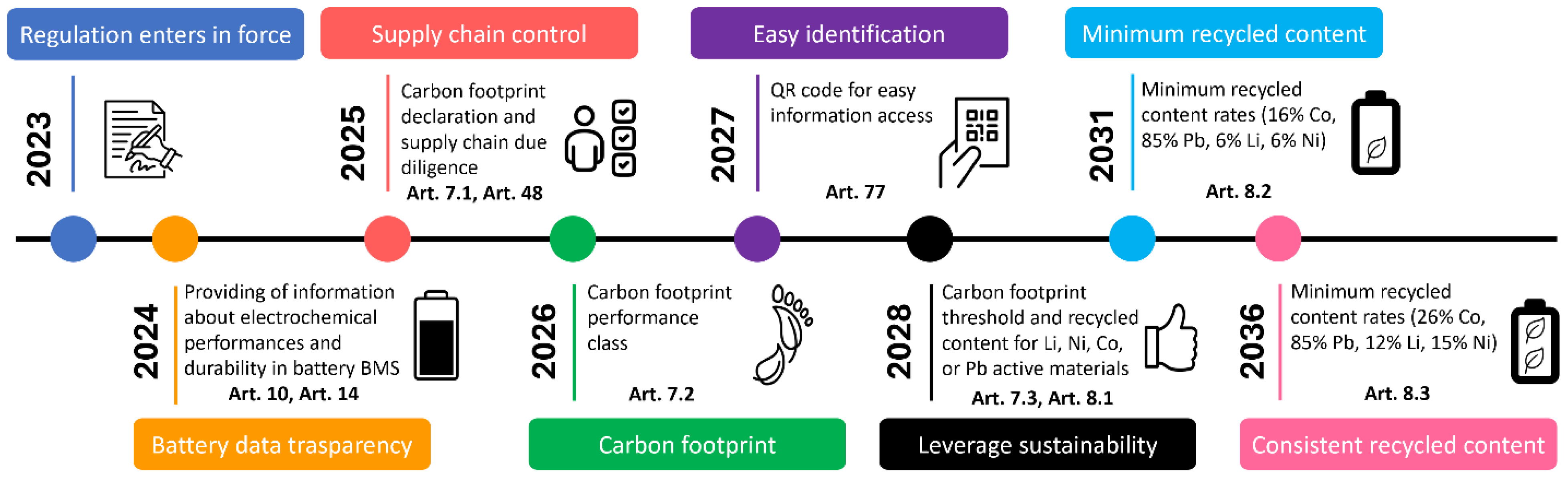
The EU Battery Regulation (BatReg) focuses on three main pillars. The first aim of BatReg is to promote battery production by standardizing and sharing a set of rules for all market participants. Then, the recycling gaps are to be mitigated by improving multiple steps (collection, recycling …), which supports the circular economy for batteries. The third objective is to prioritize sustainability and safety standards, leading to improving the social impact of the overall battery life cycle. Moreover, the regulation expands battery categories to include EV batteries and light means of transport (LMT) batteries (e.g., e-bikes, e-scooters). With a time frame spanning the next 13 years, BatReg addresses different stages of each battery category and its life cycle. The milestones listed in
Figure 1 outline most of the main requirements and timelines introduced by the new BatReg with the aim of having a sustainable battery supply chain and simplifying EoL battery management.
According to the same figure, the Regulation aims to reduce the environmental impact of the battery value chain by imposing stringent sustainability requirements on both battery manufacturing and second-life management. Key measures include mandatory carbon footprint (CF) reporting for industrial, LMT, and EV batteries starting in 2025, followed by the enforcement of maximum CF thresholds from 2027. Moreover, toxic chemicals including mercury and cadmium were subjected to strict restrictions by the regulations, aiming to overcome environmental and health issues. The definition of due diligence requirements by the framework is quite critical. In this context, battery manufacturers must identify, assess, and focus on social risks throughout their supply chains. Therefore, raw materials must be subjected to responsible sourcing policies as well as the supply chain. In general, the Regulation is in accordance with the Organization for Economic Co-operation and Development (OECD) due diligence guidance towards visible and environmentally friendly battery supply chain.
A transparent and traceable battery value chain is essential to guarantee the application of all the other requirements. The implementation of the BP allows us to keep track of all the actions involved in the battery value chain with easy access to consumers, manufacturers, and authorities. By February 2027, the BP will become mandatory for all LMT, EV, and industrial batteries.
BatReg underlines the need for removable and replaceable batteries, in particular for LMT. But, today, batteries that are replaced are often technically abandoned even though their operational life may be prolonged through battery replacement, leading to significant e-waste.
According to the Regulation, portable batteries should be gathered with a collection rate ranging from 45% (at the end 2023) to 63% and 73% by 2027 and 2030, respectively. In this context, collection points and awareness projects support these goals to contribute to the collection systems’ growth. Moreover, it is necessary to define recycling performances and recovered fractions to ensure the reduction in pristine raw materials dependence.
The Extended Producer Responsibility (EPR) mandates that battery manufacturers take full responsibility for their products over their entire lifecycle, including EoL management. Under EPR, manufacturers must also finance and manage battery waste collection systems at no cost to consumers.
The Regulation requires significant changes in manufacturing practices to meet new environmental, transparency, and ethical standards, while achieving the recycled content targets by 2028 will require significant investments in new technologies as well as recycling infrastructure and partnerships with suppliers of recycled materials. The Regulation also encourages the use of sustainable and less hazardous materials in battery production. It also promotes the development of sustainable alternatives that meet safety and performance standards, such as green and bioinspired batteries composed of biodegradable materials [
45]. New compliance and certifications are required, such as CE (European Conformity) marking and third-party audits, indicating compliance with evolving EU safety, health, and environmental standards, especially for carbon limits and recycled content. This requires the implementation of rigorous testing and certification processes. Article 13 of BatReg states that a quick response (QR) code must give access to a battery’s product passport and must be printed or engraved visibly, legibly and indelibly on the battery and should respect the guidelines of ISO/IEC 18004:2015 [
46].
4. The Digital Battery Passport
4.1. Battery Passport
As introduced in BatReg, a BP is a digital and dynamic collection of battery’s data, i.e., a digital product passport (DPP), ensuring transparency and traceability throughout the battery life cycle, from production to EoL management. Currently, the EU is among the first regulatory bodies to have formalized its framework. However, the goal is to establish the BP as a global standard, given the highly fragmented nature of the battery supply chain and markets.
The BP roadmap defined by Delegated and Implementing acts, scheduled by BatReg, sets as the first step the definition of the carbon footprint (CF) evaluation methodology. In 2025, many other requirements were mandated to be adopted to ensure consistency across the entire battery value chain, including the harmonized specification on labeling, data formats and information to be reported to the European Commission, CF declaration format, CF performance classes, and rules for calculation and verification of recycling efficiency. In 2026, several additional requirements must be defined, including access rights for the BP, CF formats for labeling and threshold values, methodologies for the recovery of critical materials, and minimum electrochemical performance criteria. All these requirements are essential for establishing the methodologies and key information needed for an accurate assessment of the data to be included in the BP from 2027 onwards.
The BP must be accessible through a QR code, which is a unique identifier provided by the operator placing the battery on the market. This operator is responsible for verifying and updating the BP’s information and for storing the corresponding data. The BP expires once the battery is recycled. If the battery is remanufactured, repurposed, prepared for re-use, and subsequently placed on the market again, a new BP is issued. The producer or the waste management operator is responsible for the BP when the battery is considered waste [
47].
BatReg establishes that the BP must have different accessibility layers for the following access groups: the general public; notified bodies, market surveillance authorities, and the EU Commission; and any natural or legal person with a legitimate interest in accessing and processing that information [
7]. General information on the battery will be available to the public. Data on battery composition, dismantling technique and safety measures, for example, shall be accessible to both the EU Commission and to persons with legitimate interest [
7].
The BP collects data from multiple sources, from raw material suppliers, passing through manufacturers, up to end-users. Hence, the data format should be interoperable and transferable through an open data exchange network. The BP must possess standardized data formats (e.g., JSON, XML), ensuring interoperability across different systems and stakeholders. All the information inside a BP must also be secure and immutable without permission because a digital attack can lead to dangerous situations or wrong economic investments. To mitigate these risks, blockchain technology has been proposed as a decentralized data storage approach capable of enhancing data immutability, transparency, and security [
47,
48]. However, several studies highlight that blockchain adoption in large-scale industrial and regulatory contexts is associated with non-negligible limitations, including scalability and performance constraints, energy consumption trade-offs depending on the adopted consensus mechanism, governance and accountability complexity, and interoperability challenges with legacy information systems [
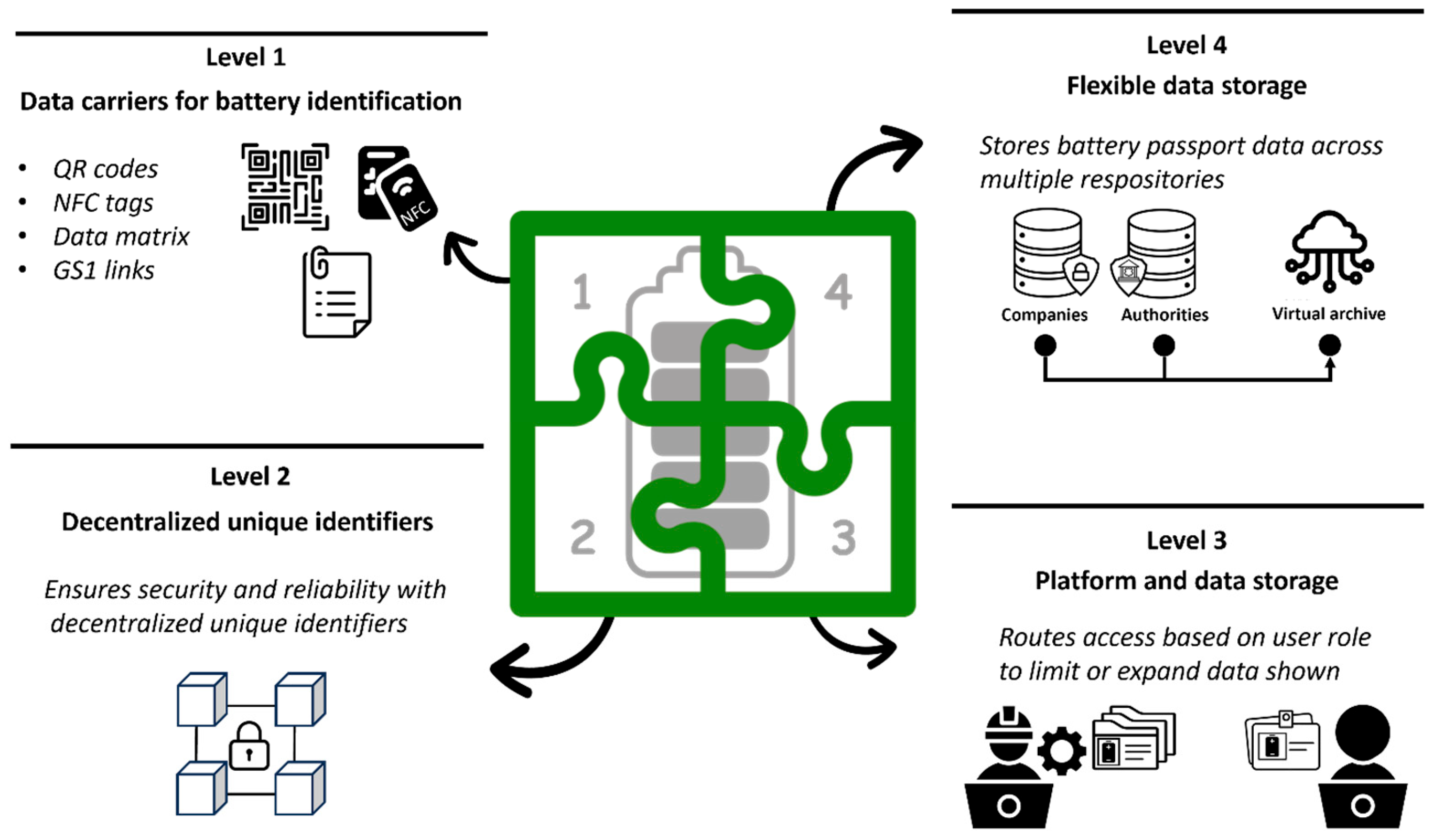
49]. Interoperability is divided in four main levels according to
Figure 2. QR codes, Near-Field Communication (NFC) tags, Data Matrix codes and/or GS1 links are the data carriers for the battery definition and its passport access (first level). If the single identifier is unavailable, the second level emerges. In this context, the decentralized unique identifiers are enabled, ensuring security and reliability. The third level must ensure storage solution flexibility, including the storage of the BP data, across several databases for companies and authorities.
For instance, the DIN DKE SPEC 99100 [
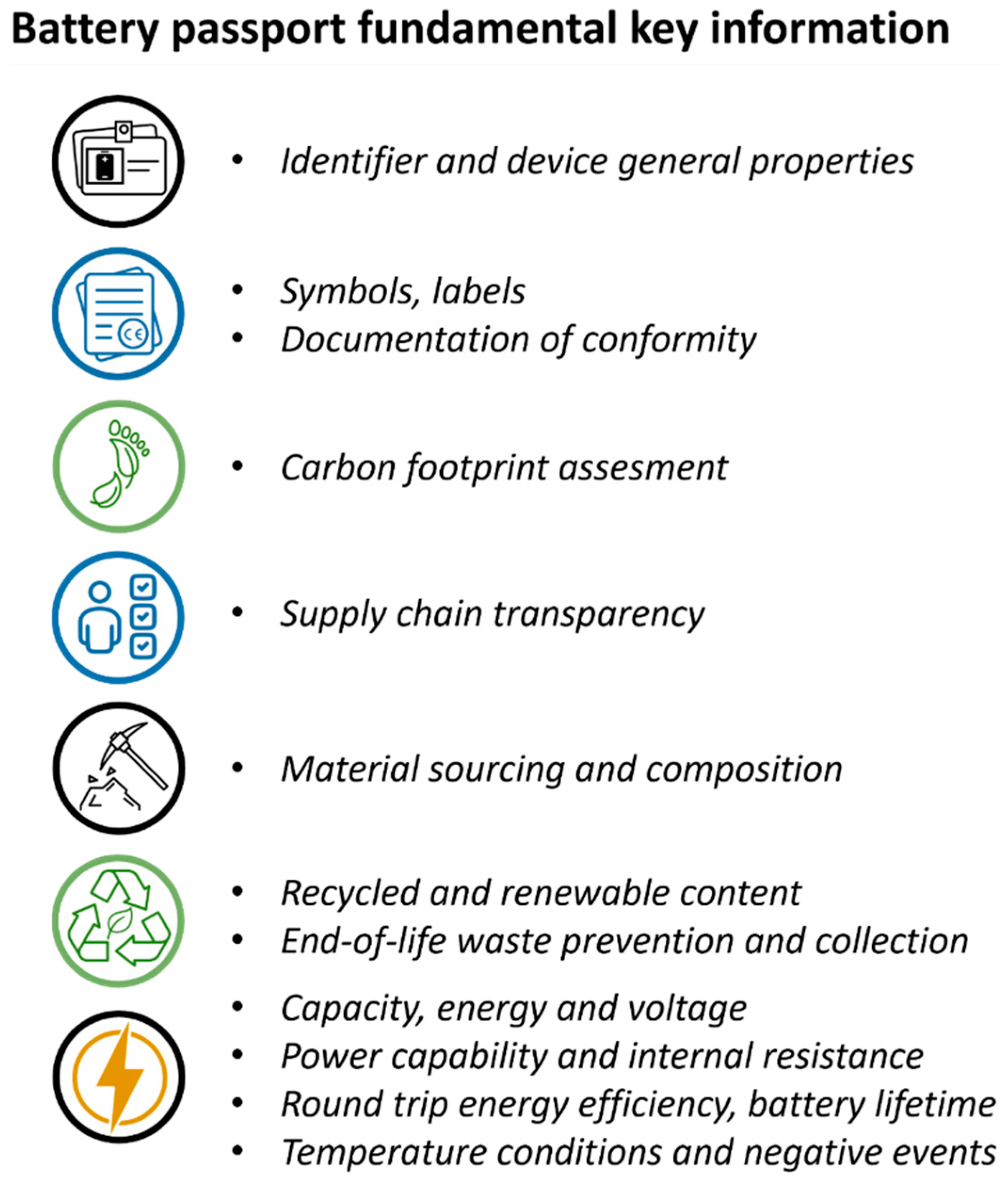
50], a new open standard recently published by the German Institute for Standardization (Deutsches Institut für Normung DIN) and the German Commission for Electrical, Electronic & Information Technologies (Deutsche Kommission Elektrotechnik Elektronik Informationstechnik, DKE), serves as practical guidance to implement and develop the BP. According to this standard, the BP consists of multiple data attributes divided into the seven main categories highlighted in
Figure 3.
Table 2 reports the data attributes for each category. For each data attribute, the BP must specify the EU Battery Regulation reference, the kind of data access (Public, Person with Legitimate Interest “PLI”), the data type (unit), if label information is present, and the information level (the information relates to either battery model, battery batch or battery item). In addition, data can be “static” or “dynamic”. Static data are unchangeable and inserted by the stakeholders of the supply chain. Instead, dynamic data are an event record or life status of the battery and are updated in real-time as the battery moves through its lifecycle.
4.2. The Battery Passport Through the Battery Supply Chain
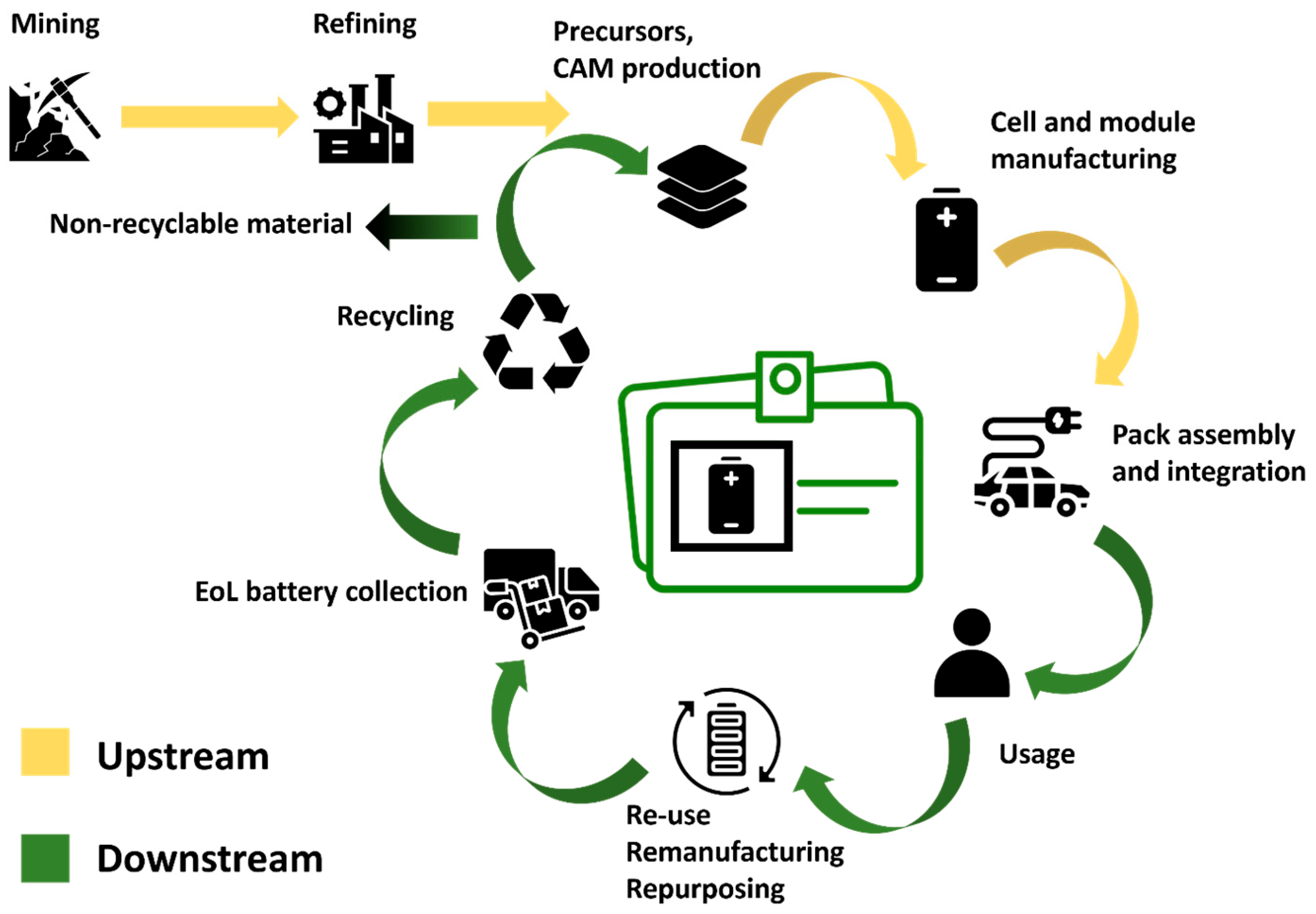
BP implementation involves all the stakeholders of the supply chain, as shown in
Figure 4. The players involved can be divided into two main groups. The upstream group that is formed from all the entities involved in the chain before a battery arrives to the user. The downstream group includes all parties engaged in the various stages of the battery’s operational lifecycle.
Figure 4 schematizes the circular battery value chain. The first step, i.e., mining, supplies the CRMs used in batteries, and should provide information about the CF of the process, the origin and the extraction methodologies, as well as the environmental, ethical, and social impact resulting from this work. Mining players must comply with regulations and implement some traceability technologies to ensure data accuracy and immutability. The second process (refining) transforms raw materials into high-quality components by different methodologies, like chemical purification, to obtain lithium hydroxide from lithium carbonate, or metal separation and extraction of nickel, cobalt and manganese. It is a highly energy-consuming process that contributes significantly to the CF, and involves critical risks for the environment, like high water consumption and pollution for lithium refinery, and hazardous waste disposal for nickel. The stakeholders of the refinery stage are responsible for providing the following information in the BP [
42,
50]: (i) refining process methodology and documentation, (ii) environmental impact and CO
2 footprint report, and (iii) due diligence, ensuring responsible and ethical sourcing and refining practices, in compliance with EU standards. The third important part is related to the Cathode Active Material (CAM) producers, which transform refined materials (lithium, nickel, etc.) into high-purity chemical compounds to be used for the CAM synthesis. The CAM producers should provide: (i) the mandatory declaration of CAM composition, (ii) the quantity of recycled materials in the production of the CAM, with minimum targets set for 2030 and 2035, (iii) the environmental impact and CO
2 footprint report, as well as (iv) the traceability of sourcing raw material. Cells and modules, after their manufacturing, should be provided with labels with the indication of the production CF, recycled content and performances and durability of the cell [
50]. The next stage (pack assembly and integration) involves assembling cells and modules into final battery packs, complete with a Battery Management System (BMS), embedded sensors to enable real-time digital monitoring of performance and diagnostics and the BP QR code. The assembly process of the battery pack is crucial, as it directly impacts key qualities such as thermal and energy efficiency, structural integrity, safety, lifespan, and recyclability. At this point, the BP is assigned to the battery.
In addition to incorporating all the data collected in previous stages, the BP must include the following essential requirements [
42,
50]:
- −
Traceability and origin of the battery pack components;
- −
Performance and durability metrics (refer to DIN DKE standards);
- −
Recycled content targets to promote sustainability;
- −
CF associated with the pack assembly process;
- −
Reliable communication of ESG (environmental, social, and governance) data;
- −
Guidelines for disassembly and recycling of the battery pack;
- −
Safety measures to ensure compliance with industry standards.
Indeed, consumers should be able to access reliable and comparable information inside the BP, which facilitates a more conscious purchasing decision [
42]. Moreover, the user is a passive part of the supply chain; thus, it cannot introduce/modify any BP information. Its access is granted for the sole purpose of being formed on propel maintenance and disposal of the device.
The next step is related to reuse, remanufacture, or repurpose of batteries for second-life applications. At this stage, performance and durability data (e.g., remaining capacity) enable downstream businesses and private users to assess the residual value of the battery and decide between recycling or second-life application [
42]. Battery reuse or repurpose has a higher priority than recycling from the EoL management hierarchy of electric vehicle batteries (EVBs). It is estimated that repurposing EVBs can extend their lifetime for another 8 to 10 years after their first life and reduce resource depletion and polluting production of a new battery [
48]. The repurpose of EVB can happen when its State of Health (SoH) is close to 80%, rated on the nominal capacity, since it cannot provide the required acceleration and mileage of an EV, therefore the battery enters in its second life as a stationary energy storage system (SESS), including large-scale energy storage units for grid, or small-scale for residential buildings. In the latter, the reuse of EVBs has a lower climate change impact compared to the production and use of a new battery [
51].
Remanufacturing, on the other hand, refers to the process of upgrading a battery whose SoH is between 100% and 80%. Through this process, the performance of the battery is restored to a level comparable to its original condition. The objective of this stage is to save material and reduce greenhouse gas (GHG) emissions, as well as preventing premature recycling of batteries. Second-life batteries must carry certifications and traceability to prevent fraudulent reselling and guarantee verified battery transition. By 2027, non-compliant batteries will not be permitted for resale, repurposing, or recycling within the EU [
42].
The first step in EoL management of EVBs is collection and logistics [
48]. The collection and logistics of EVBs involve getting EoL batteries from the location where EVs are retired and moved to facilities for disassembling. The EU has established collection rate targets to enhance the physical infrastructure for collecting, transporting, and managing EoL electric vehicle batteries. These measures aim to ensure widespread collection, as well as secure, efficient, and cost-effective transportation of EVBs [
52]. In addition, safety concerns arise during collection and logistics as potential battery damage or leakage, which will result in the necessity for specialized handling and transportation systems, in compliance with regulations concerning the logistics of hazardous materials [
53]. Different research papers have shown substantial variations in the collection and logistics cost. However, the estimated average is 41% of the total cost of the EVB recycling system [
54]. Moreover, the collection and logistics of EoL batteries are estimated to contribute 1–4% of the total GHG emissions in the entire life cycle of battery [
54]. The BP will help this stage by providing information on proper material composition and classification, speeding up sorting and dismantling.
Finally, the battery recycling stage closes the lifecycle loop. BP is fundamental to ensure an efficient recovery of valuable materials by providing data on battery composition, recycling routes, and dismantling methodologies, with the simultaneous reduction in hazardous waste production and pollution [
42]. Automated discharge and dismantling processes are introduced to reduce human exposure to hazardous substances. The last data of the battery are added to the BP concerning the name of the certified recycling facility and the date of recycling treatment. The quality of the final recycled product has to be kept constant, because its variability negatively impacts new battery compositions.
4.3. The Battery Passport Framework and Pilots
A BP is not yet mandatory, but many agencies and companies are working on its development, like the Global Battery Alliance (GBA) and the Battery Pass Consortium. The GBA is a partnership of more than 170 businesses, governments, academics, industry actors, and international and non-governmental organizations that cooperate with the aim of ensuring a sustainable and responsible battery value chain. Some of the most important automotive industries membership of the GBA are Audi, BMW, the Renault group, Honda, Volkswagen, and Tesla. The GBA has released three different proof-of-concept (POC) BPs, one for Tesla and the other two for Audi; obviously, they are not completed with full features and information, but still allow for a clear vision of the future BP framework. To get insight of the GBA BPs, we suggest accessing the related website [
55].
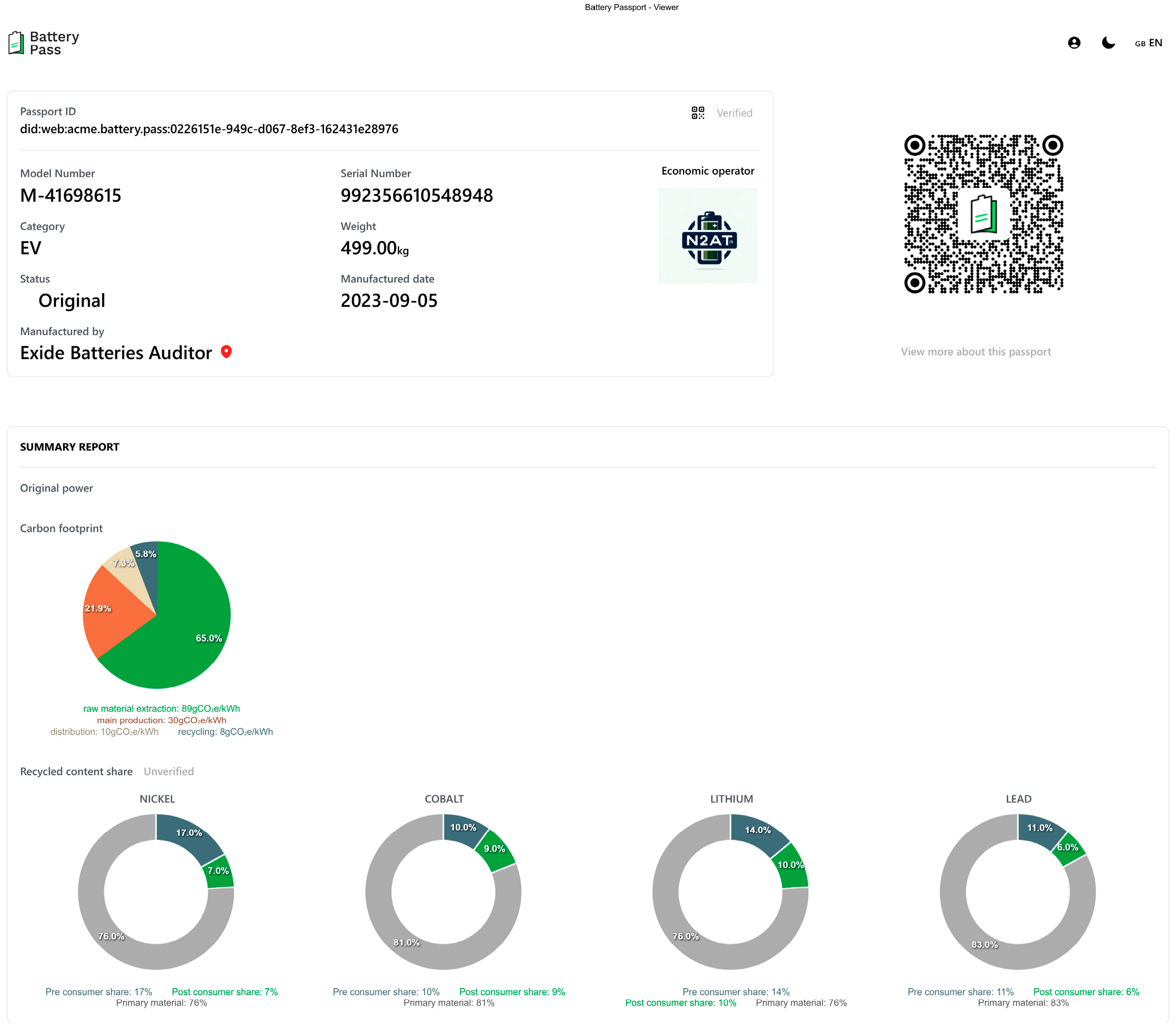
The Battery Pass Consortium is a group of partners from industry and research institutions that are focused on creating standards and guidelines to implement the new battery regulations. For example, they worked on the development of DIN DKE SPEC 99100. Some of the Battery Pass Consortium key members are Audi, BMW, BASF, and Siemens. The Battery Pass Consortium has released a demo version of a BP with a linked QR code, which is reported in
Figure 5 [
56]. The figure includes the pie charts that show the CF and material composition with a recycled content share. From the CF, it is noticeable that the impact of raw material extraction represents 65% of the overall battery CF, while recycling contributes only 5.8%, demonstrating the advantages of recycling compared to extraction. In the recycled content chart, there is also a subdivision between pre-consumer share and post-consumer share; the first one refers to the leftover material of the manufacturing process that has never been used in working battery packs; in contrast, the post-consumer share represents the material recovered from EoL products that have been recycled.
Given that the BP will become mandatory within the EU, data interoperability is more than just a necessity—it is a critical requirement. Therefore, organizations such as GBA and the Battery Pass Consortium have established collaborative partnerships to ensure integration and standardization of data across industries.
In addition to the GBA and the BP Consortium, there are several more initiatives actively developing BP solutions or contributing to this innovation, and some of them already have an available BP platform, but this is restricted to the manufacturer and not yet accessible to public. The European Commission funded many initiatives focused on DPPs, BPs, LIB production and value chain assessment. Some of them are BatWoMan, BATRAW and RECIRCULATE [
47]. BatWoMan is an EU Horizon Project [
57] involved in the development of a sustainable Li-ion battery cell production concept. It is a consortium of eight partners with the goal of creating a low-emission battery cell manufacturing, with half of the production cost and energy consumption compared to those of conventional processes. This will be achieved by innovative electrode processing, dry rooms, energy-efficient cell conditioning and improved electrolytes. These technological improvements are supported by a Digital Battery Passport AI-based platform [
58]. RECIRCULATE focuses on developing a Battery Marketplace [
59]. Their concept is to create a structured, safe, and trusted digital environment in which all the supply chain actors could trade batteries and components equipped with DPPs, as a guarantee for complying with EU battery regulation requirements [
59]. The BATRAW project is a significant example of an EU-funded initiative focused on improving battery sustainability and circularity [
60]. They are working on the implementation of two pilot systems for EV and domestic batteries to improve sustainable recycling and EoL management. The goal is to create a secondary stream of strategically vital critical raw materials, and to establish new methods for battery repair and reuse [
50]. In Italy, the DIGREEN project aims to contribute to the definition of the BP digital platform while proposing green approaches for LIB metal recovery and recycling. The CNR group has developed SINBAD—Semantic Interoperability of Battery Data—a novel data-driven framework for digital Battery Passport data based on modern data integration techniques [
61,
62].
Among the companies that are already active in establishing the BP, Siemens [
63] has developed a platform to digitally document the entire battery lifecycle. The platform features a user-friendly interface to minimize training time, with the support of robust Application Programming Interfaces (APIs) for continuous data exchange across the supply chain. While initially focused on batteries, the platform is designed to be flexible and expand its utility towards other emerging DPPs by incorporating DPP 4.0 submodules [
63]. Also, Circularise is a leading software platform that specializes in end-to-end traceability for complex industrial supply chains. Circularise has developed its own BP platform, but only for demonstration purposes, and this does not contain any data [
64,
65]. Minespider is another traceability technology company that provides blockchain technology to enhance transparency, traceability, and compliance throughout the battery supply chain [
66,
67]. In addition, the Royal Society of Chemistry Global Group (RSCGG) works mainly in responsible battery supply chain mapping, responsible sourcing, and mining of raw materials. By collaborating with the GBA in 2023, the RSCGG presented the first BP pilot, with a digital platform named Claritas [
44]. AVL is also known for its focus on the development, simulation and testing of electric motor propulsion in automotive and other sectors. The AVL group have launched their own BP claiming about an advanced and secure digital data platform, also using AI-based decision support and validation of lifecycle scenarios [
68].
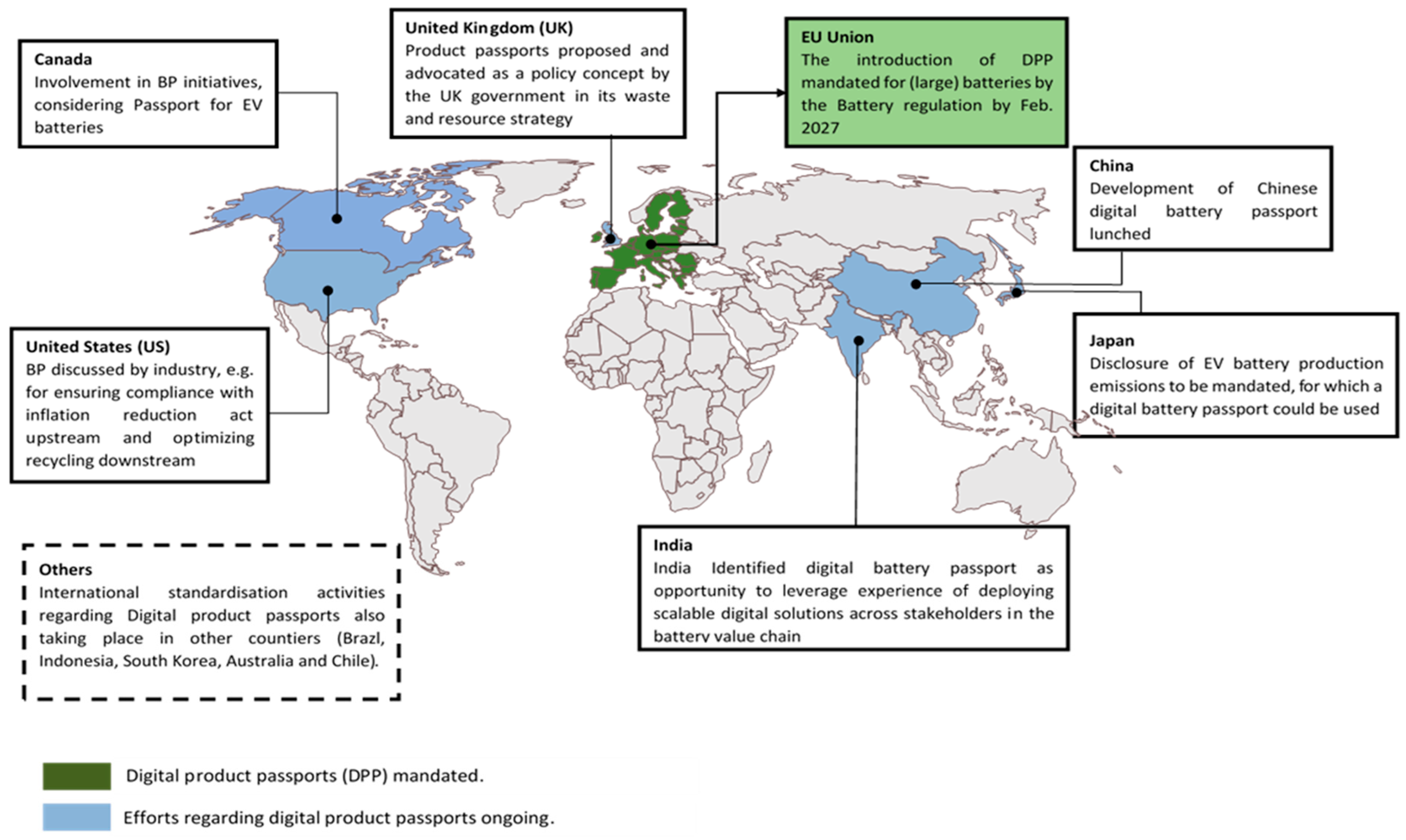
The BP is under development worldwide, as described in
Figure 6. According to the same figure, some countries have already launched and/or are currently assessing the feasibility of BPs and planning their implementation soon.
As an example, in Japan, the Ministry of Economy, Trade and Industry launched the Ouranos Ecosystem in April 2023. As its first use case, the project focuses on establishing a traceability system for rechargeable batteries. Following these indications, Denso, a global automotive component and embedded system product supplier, developed its own BP [
69].
Finally, the Circular Energy Storage (CES) platform, which is a digital platform that collects data from all parts of the value chain worldwide and provides analytics consultancy, focused on a lithium-ion battery EoL market. The platform serves as a BP data collector for batteries used in EVs and energy storage systems [
70].
4.4. BP Challenges and Opportunities
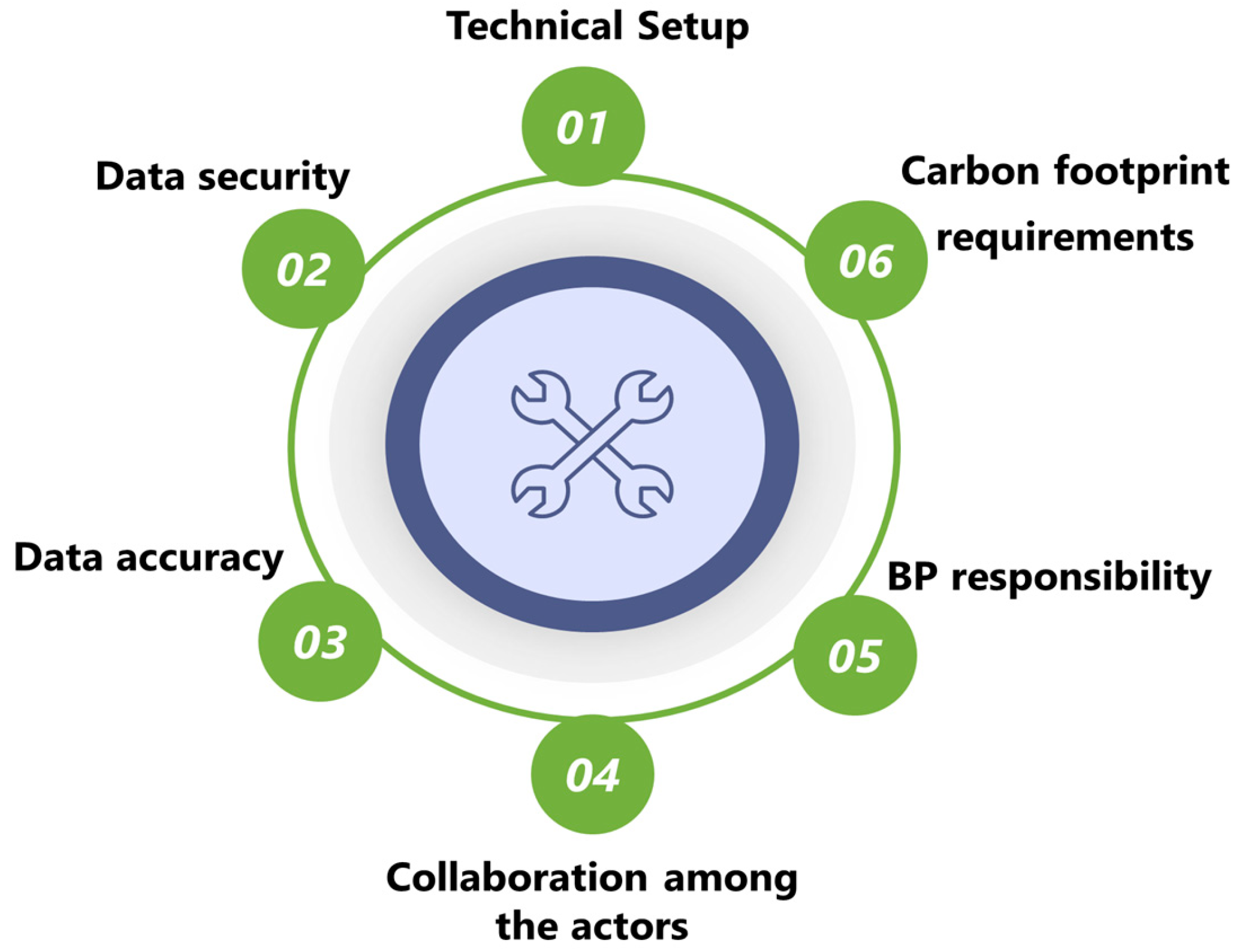
From the previous section, it is clear that BP development is expanding rapidly, with a competitive race to develop the best platform to capture this future market, which has extremely high expectations for growth. However, implementing the BP tool has some non-negligible challenges to overcome. While primary obstacles are technical, particularly concerning data collection and sharing [
47], a broader perspective highlights a complex landscape that also includes economic, governance, and environmental hurdles. The main BP implementation challenges can be classified into six categories, as shown in
Figure 7.
To provide a structured overview,
Table 3 synthesizes these categories into four dimensions—technical, economic, governance, and environmental—while prioritizing them based on their likelihood, impact, and temporal nature. Each challenge is categorized and prioritized according to its likelihood of occurrence and potential impact on BP adoption, offering a holistic perspective on the barriers that need to be addressed for successful implementation.
From a technical perspective, there is a need for harmonized standards, and some measures have already been taken, such as the recent publication of DIN DKE SPEC 99100. Additional issues which need to be solved are the lack of reliable and interoperable infrastructures, the complexity of integrating data into existing systems, and handling large volumes of data. Those can be partially addressed through blockchain-based solutions; however, the literature emphasizes that such approaches introduce additional complexity in terms of system governance, regulatory alignment, and cross-platform interoperability, and therefore these should be considered as powerful tools to store data, granting integrity and availability but requiring an integration effort and cost/benefit deep evaluation rather than being considered the only solution [
49]. In addition, concerns still arise from measures varying across different organizations and regions worldwide.
Data accuracy and collaboration among the actors are mutually dependent. Gathering all battery-related information needed to compile the BP is practically challenging, even when data collection tools are available [
47]. Indeed, it requires transparency and collaboration among suppliers and producers, battery dismantling and repair operators, and users. As aforementioned, these actors are spread worldwide, which results in complex coordination between them. These organizations also have a general reluctance to share data without a non-disclosure agreement. This, in addition to the competitive market nature, leads to a lack of trust between different actors. In addition, it is also important to establish procedures or systems to regularly review and verify data collection for guaranteed data quality and reliability [
42]. Moreover, as mentioned in the battery regulation requirement, due to BP service providers’ growth, the system interoperability and confidentiality become challenging issues to address [
47].
The definition of responsibilities for implementing the BP throughout a battery’s life cycle can be ambiguous, particularly when the EoL is reached and the battery is considered for repurposing, second use, or recycling [
42]. At this stage, it can be unclear which actor is responsible for gathering and updating the BP: the producer or the other operators.
Challenges may also arise from the CF requirements of the Batteries Regulation. While the European Commission’s Joint Research Centre has provided methodological guidelines for calculating the CF of batteries [
71], they do not consider that, at present, the battery supply chain is not standardized and depends on battery type and chemistry. It is difficult to compare CFs, which require considering even diverse global conditions (e.g., in terms of temperature, humidity) where battery production takes place and the involvement of multiple actors.
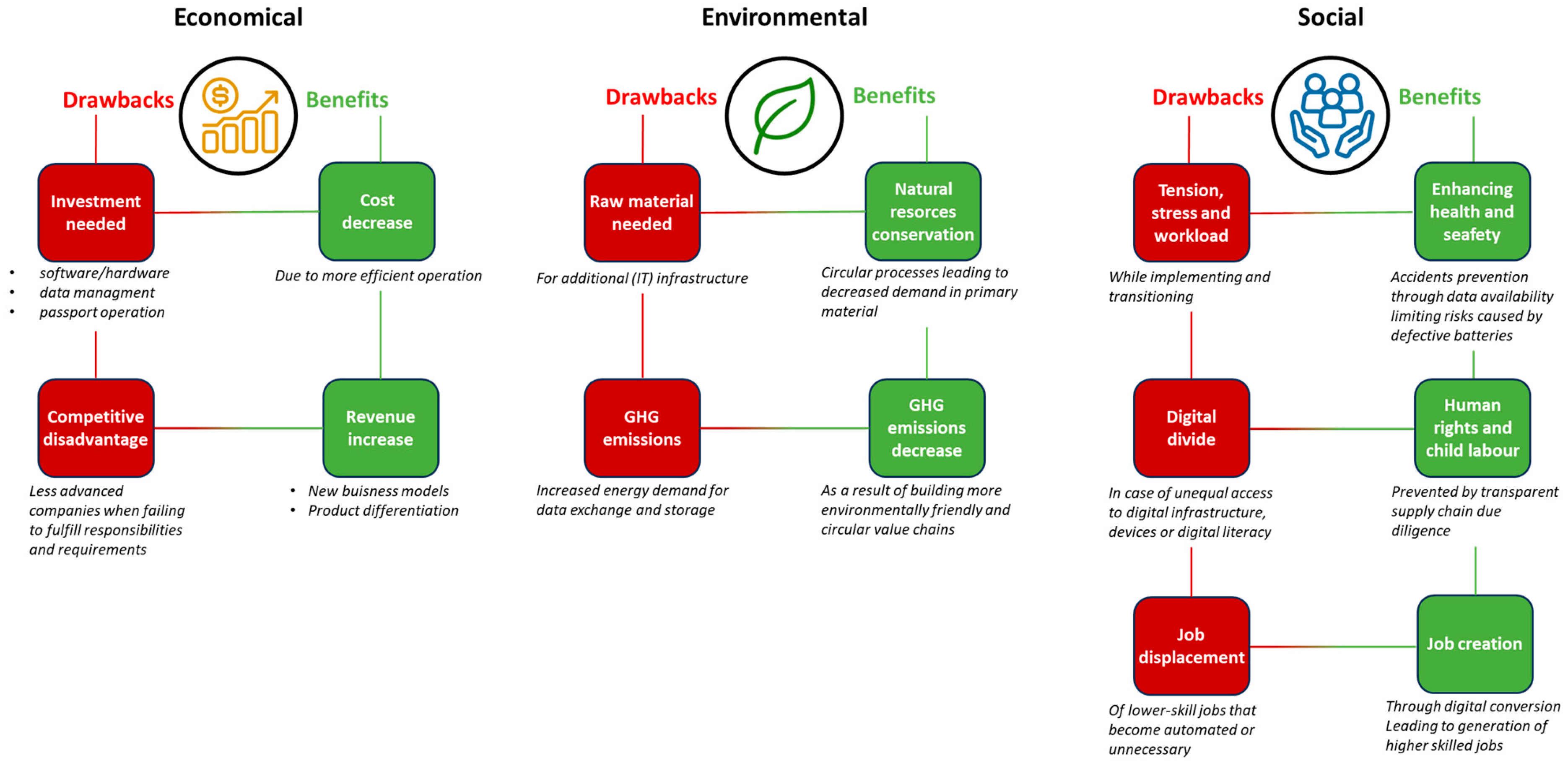
The impact of these challenges is highest for the role of the passport issuer, such as automotive Original Equipment Manufacturers (OEMs), which must coordinate all the technical set-up, data accuracy and security, and collaboration among the actors, and have the responsibility of the BP [
42]. In contrast, the main concerns of the data provider and receiver, like the miner, manufacturer, recycler, and end-consumer authorities, are only about data security and accuracy. In terms of economic, environmental and social impact, the implementation of the BP will bring some drawbacks, which will hopefully be offset by equivalent benefits, as highlighted in
Figure 8, and suggested by the Battery Pass Consortium.
Many other opportunities will come with the implementation of the BP. Starting from the first step of the battery supply chain, the difficulties regarding collecting reliable CF measures will be rewarded by huge help for industry actors in finding solutions for reducing emissions along the supply chain [
47].
Along with the battery lifecycle, two processes will significantly benefit from the introduction of the BP, i.e., recycling management, and reuse or repurpose of second-life batteries. The BP will provide performance data, like SoH, that can help the operator responsible for managing EoL batteries to predict the optimal time at which the battery will have to be recycled. Performance data could also simplify residual value determination and reduce the technical testing cost. The indication of battery manufacturing, composition and dismantling will ease the definition of the recycling paths and methodologies, including pre-processing and teardown.
Environmental, social, governance (ESG) and due diligence requirements play a key role in ensuring responsible and sustainable material sourcing, which represents an opportunity for suppliers and customers. Indeed, producers of batteries with a low CF and recycled materials can distinguish themselves from competitors and attract customers and investors committed to sustainability. In turn, consumers will be informed about the environmental impacts of batteries and will be educated on eco-conscious decisions [
47].
5. Critical Assessment from a Research Perspective
It should be noted that, in the previous sections, the term “battery” has been used in a general sense. However, it is important to recall that batteries consist of one or more electrochemical cells, which constitute their fundamental building blocks. Cells are connected in series or in parallel to form a battery. Multiple batteries can then be connected to create battery modules, which, in turn, can be assembled into battery packs. Such a distinction is essential to avoid interpretative and implementation ambiguities in the BatReg.
Indeed, in our view, to date, the EU market for the production and recycling of cells is not sufficiently developed. Numerous manufacturers and users are engaged in the assembly and deployment of battery modules and packs composed of cells produced outside Europe, predominantly in Asia. Consequently, in the short term, it will realistically be possible to “label” modules and packs and provide performance-related information that is also valuable for second-life applications and disassembly processes. Nevertheless, obtaining reliable data on the individual cells that constitute these batteries—particularly when they are already on the market, originate from non-European countries, and lack a unique identifier or digital passport—will be extremely challenging. Effective and sustainable recovery of critical chemical elements requires facilities designed on the basis of the actual chemical composition of the cells, information that can be obtained exclusively through the digital passport and the collaboration between industries and governments (authorities). Accurate knowledge of cell composition is essential for the proper separation of cells and for identifying the most appropriate recycling techniques and plants.
The interaction between industry and government is sometimes constrained by legal restrictions imposing confidentiality requirements, particularly when industrial stakeholders and governmental authorities are located in different countries. Industry actors should be encouraged to share relevant information regarding the properties of their battery products, while governments should streamline procedures and promote transparent communication. In our view, it is essential to establish an independent third-party body capable of overseeing and regulating this type of information exchange. Since the long-term target is to have a large dataset for each battery, in our opinion, an independent third-party organization should also be entrusted with the management of BP data.
On the other hand, from an academic perspective, we are witnessing an unprecedented acceleration in material discovery and in the conception of next-generation battery technologies, paralleled by the rapid industrial implementation of innovations throughout the battery value chain. A significant concern, however, is that BP development and deployment may not evolve at a commensurate pace. It is therefore imperative to adopt a flexible, system-level framework capable of adapting to materials, cells, batteries and processes breakthroughs, even beyond LIBs. The BP frame should be ready to be applied to other technologies that play a key role in the energy transition era, like fuel cells and electrolyzers.
Finally, we wish to emphasize the importance of metrological challenges in the EoL battery market. The proper classification of batteries with respect to their possible destinations—second-life applications, direct recycling, or pyrometallurgical/hydrometallurgical treatments—requires appropriate, standardized, and scientifically validated technical tools. These are technical decisions that may entail significant legal implications if an improper assessment leads to malfunctions or incidents resulting in harm to persons or property. To date, no fully adequate analytical framework capable of meeting these needs is available. It will therefore be essential to develop, standardize, and disseminate shared methodologies, in collaboration with the relevant European metrology bodies, like EURAMET (European Association of National Metrology).
6. Conclusions
The BP is the strategic tool introduced by the new EU Battery Regulation, aiming to establish a sustainable and transparent battery value chain by introducing a set of requirements spanning battery design, composition, and production, and by defining the responsibilities of the different operators. Overall, the transition towards electric mobility is mandatory and requires improved EoL battery management processes. This could be done by enhanced visibility regarding the ecological and social aspects along the battery supply chain, through the incorporation of efficient BP systems. However, several challenges related to the BP are to be considered to better explore its advantages. For instance, data collection and sharing are quite necessary and must follow reliable mechanisms. This results in strong coordination within regulatory authorities, industry stakeholders and all participants of the battery value chain. To achieve this, it is necessary to transcend competitive barriers and to focus on collective and transnational actions, aiming for a resilient and environmentally responsible future.
From a technological perspective, we emphasize the need for greater conceptual and regulatory clarity within BatReg, particularly regarding the distinction between cells, batteries, modules, and packs, in order to avoid interpretative ambiguities. In our view, one of the main obstacles lies in gathering the required information at the cell level. Furthermore, the standardization of testing procedures for assessing battery State of Health (SoH) should be further strengthened. Finally, we advocate for the BP to function as a flexible tool, capable of being extended to other key technologies and products, as well as to next-generation solutions.




 ,
,