1. Introduction
The global shift towards electric mobility relies critically upon the performance, safety, and scalable manufacturing efficiency of high-energy-density lithium-ion batteries (LIBs). Within the battery production process, sophisticated joining technologies are paramount, serving as the physical and electrical connection between internal cell components and external module architecture. Welding processes must achieve dual critical functions: guaranteeing mechanical integrity to withstand the rigorous vibration and mechanical stress inherent in vehicular operation, with simultaneous minimisation of ohmic resistance losses for improved energy efficiency [
1,
2,
3].
Cylindrical cell formats, including the 18650 and the subsequent 21700 cells, have been favoured historically due to their inherent mechanical stability, high-volume manufacturability, and relative effectiveness in passive thermal management [
4]. However, there is a continued demand for reduced system-level cost, higher power output and rapid charging capabilities. This particularly applies in the electric vehicle sector, where there is a demand for fundamental architectural revision to reduce the total number of cells by using fewer, larger cells and to mitigate severe internal resistance and thermal bottlenecks prevalent in traditional cell designs. The conventional 18650 and 21700 cylindrical cells utilise a jelly roll construction wherein electrode foils are wound with separators, and current collection relies upon tabs that connect the aluminium and copper current collectors (foils) to the respective positive and negative terminals. In this configuration, current must be conducted through a fairly long distance through each foil, around the spiral of the wound jellyroll, to reach the welded tab or tabs, resulting in considerable ohmic losses, which manifest as substantial internal heat generation, particularly near the electrode tabs to the cell terminal weld connections [
5,
6].
The number, size, and position of these tabs significantly influence a cell’s electrical and thermal performance, particularly by controlling current distribution and internal resistance [
7]. In the case of high-power cells, which demand large currents over short durations, a greater number of tabs are crucial to minimise localised hotspots and uniform current density distribution across the entire jelly roll. Welding the delicate, thin current collector foils to the tabs is typically achieved using ultrasonic welding. This solid-state joining process is preferential because it uses high-frequency vibrations and localised pressure to create a metallurgical bond without melting the base materials. This avoids thermal damage, crack formation, and undesirable intermetallic compounds (IMCs) that are often associated with high heat input fusion welding methods like traditional laser welding [
8].
Depending on the cell design, the tabs are oriented toward the top and bottom poles of the jelly roll, and they provide the electrical path to the cell terminals. The jelly roll is housed within a cylindrical cell container, commonly fabricated from nickel-plated steel, stainless steel, or aluminium. This container serves a critical function, providing mechanical strength to withstand internal pressure build-up and external physical damage. The anode terminal is typically connected to the cell casing, making the whole cell the negative terminal. This helps to reduce the risk of electrochemical corrosion on the internal structural components exposed to the electrolyte [
9]. This connection is generally established by welding the copper anode tab(s) to the base of the nickel-plated steel casing, often using a resistance spot welding process that reaches the connection point through the central hollow region of the jelly roll [
10]. The quality of this internal weld is paramount; defects such as porosity, cracks, and lack of fusion create bottlenecks that increase electrical resistance, leading to localised heating, which can accelerate the degradation of the active materials and compromise cell performance and safety [
11]. The positive pole tab(s) are welded to the cell cap structure using methods such as laser or ultrasonic welding. Depending on the cell design, the cell cap may integrate essential safety mechanisms, notably the current interrupt device (CID), positive temperature coefficient (PTC) device and venting mechanism, to ensure safe operation during overcharge or thermal events. Following electrolyte filling, the cell is sealed, typically via a crimping process, completing the cell assembly.
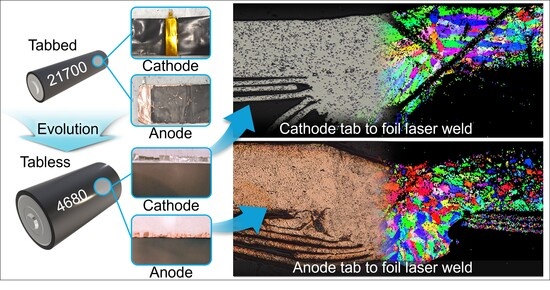
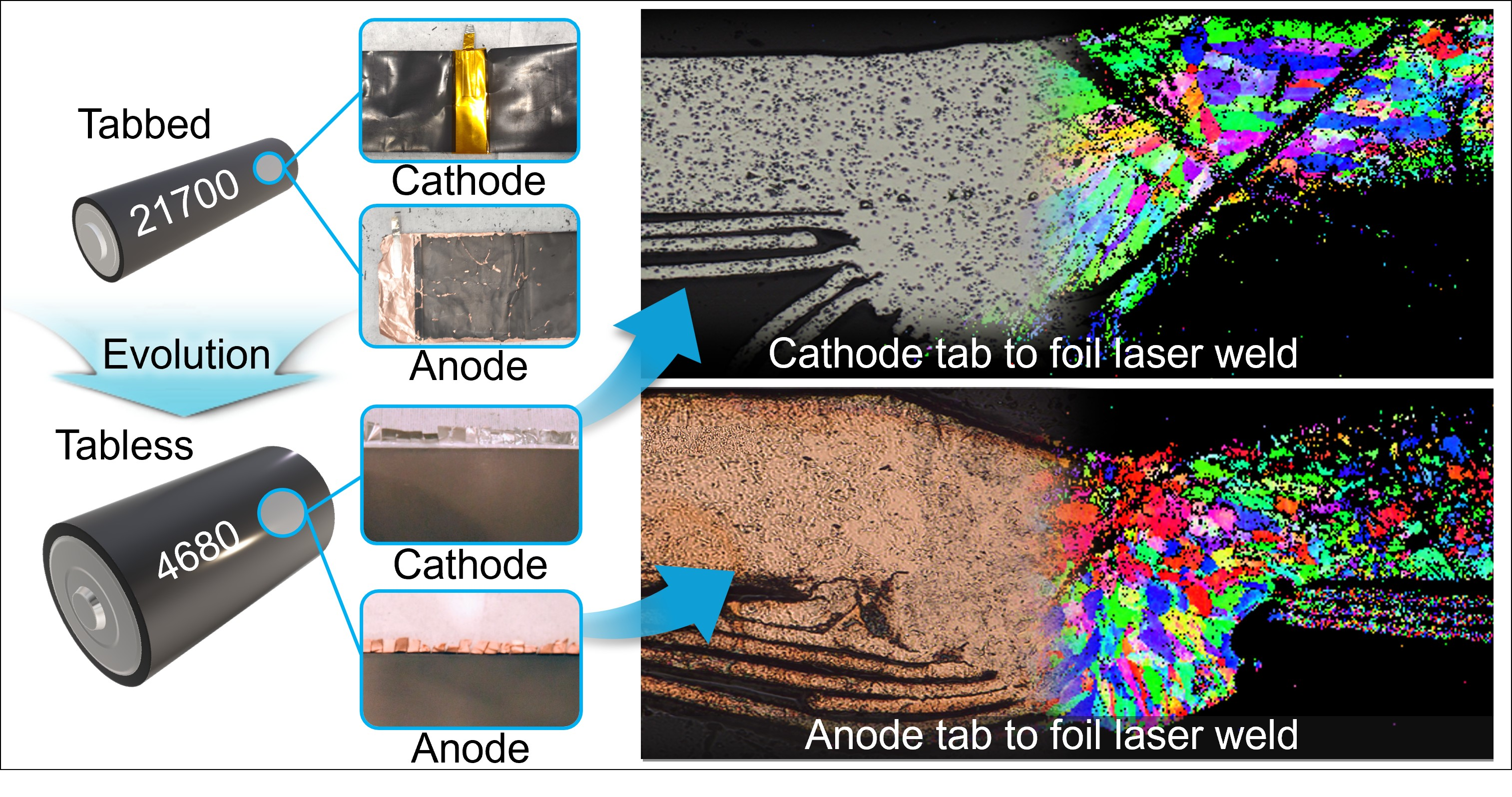
Historically, the electric vehicle industry relied on electrically connecting thousands of small, commercially available cells (e.g., the approximately 7000 cells in early Tesla Model S packs using 18650 cells, connected via wire bonding or laser welding). Such a high cell count introduces system-level complexity, inefficiency, and substantial manufacturing steps. The move toward large-format cylindrical cells, such as the 4680 (46 mm diameter, 80 mm height), directly addresses these issues by offering increased energy density and power capability while significantly reducing the number of cells required per battery pack. However, scaling the diameter introduces a major manufacturing challenge: the electrode length scales as the square of the diameter increase (L∝D2), leading to a considerably longer electrode stack [
12]. This extended length increases the internal resistance and thermal management issues inherent to conventional tabbed designs. To harness the potential of the larger cell, the “tab-less” design or quasi-tabless design was introduced [
13]. In this approach, the traditional, narrow tabs are eliminated. Instead, the current collector foils are notched or cut—typically using high-precision laser cutting—at the full length of the electrode to create a continuous array of contact surfaces. After the jelly roll is wound, these notched foils are folded and then welded circumferentially to the anode and cathode collecting discs/rings at both ends of the cell. While marketed as “tab-less,” this approach technically replaces discrete tabs with a full perimeter contact surface, effectively turning the entire edge of the current collector into a distributed current path. As such, the approach is more accurately termed a quasi-tab-less design because the electrical energy is still conducted from the electrodes to the cell terminal through a continuous welded interface [
4,
14]. The welding of these numerous thin foil edges to the solid end plates is a demanding manufacturing step, often requiring sophisticated, high-speed multi-beam laser welding techniques to ensure a low resistance, hermetically sealed, and thermally stable joint.
The internal design of the large-format 4680 cell represents a paradigm shift, which addresses these current collection limitations [
13]. The 4680 cell employs a quasi-tab-less or continuous current collection architecture, which requires the copper anode foil to extend beyond the separator at one end of the jellyroll, and the aluminium cathode foil to extend beyond the separator at the opposite end of the jellyroll. The entire spiral edge of the current collector is accessible for welding to the corresponding current collector disc and terminal. The fundamental purpose of this full-perimeter contact is to minimise the current conduction distance by changing the contact mechanism from a narrow tab contact to a wider surface contact. This significantly reduces internal ohmic resistance and minimises localised heat production, as compared to the tabbed cell design structure [
15]. However, this geometric transformation places new constraints on the welding process. The 4680 requires continuous, high-speed seam welding across a large area, joining a relatively thick current-collector disc to a thin and multi-layered electrode foil, which may contain creases or irregularities. This transition from localised tab welding to distributed current-collector disc welding introduces a significantly higher cumulative risk of macroscopic defects such as porosity or crack initiation over the extensive joint length [
16,
17].
Table 1 summarises the evolution of cylindrical cell formats and associated weld challenges.
This paper addresses an important and insufficiently explored issue in the literature concerning the influence of internal and terminal weld-integrity on the performance, reliability, and safety of large format cylindrical lithium-ion cells. Although recent studies and teardown reports have described the overall architecture, materials selection, and electrochemical characteristics of Tesla’s 4680 cells, including the adoption of a quasi-tab-less current collection approach, welding is typically treated only as an enabling manufacturing step rather than as a potential limiting factor [
6,
18,
19]. As a result, detailed information on weld morphology, microstructure, defect formation and their impact on electrical resistance, thermal behaviour, and degradation remains limited. In conventional tabbed cylindrical cells, weld quality is known to play a critical role in localised heating, impedance growth, and failure initiation, yet its influence in distributed, large area current collector welds has not been systematically examined. To address this gap, the present study undertakes a comparative forensic investigation of joining technologies in a high power 21700 cell (Molicel INR21700 P45B) and a first-generation Tesla 4680 cell using high resolution X ray computed tomography and microstructural analysis. The objectives are to characterise and compare internal electrode to collector and terminal weld geometries, to identify weld-related defects and heat-affected regions associated with tabbed and quasi-tab-less architectures, and to evaluate how these joining features influence current conduction paths, thermal behaviour, and potential degradation and safety risks. By focusing specifically on weld integrity rather than overall cell architecture, this work provides new insight into the manufacturing and reliability challenges that will shape the large-scale production of next-generation cylindrical lithium-ion cells.
2. Experimental Procedure
2.1. X-Ray Computed Tomography (XCT) Scanning
For a comprehensive analysis of their internal architecture and weld integrity, both 21700 and 4680 format lithium-ion cells were subjected to X-ray Computed Tomography (XCT). Data acquisition was performed using a Metrotom 1500 (Carl Zeiss GmbH; Oberkochen, Germany). The scan parameters were kept identical for both cell types for comparison. This approach yielded a consistent isotropic voxel size (resolution) of 56.3 μm for both datasets. The exposure settings were fixed at a voltage of 220 kV and a power of 48 W, with a 0.75 mm Cu filter in place. For each scan, a total of 3000 projections were acquired at a Source-to-Detector Distance (SDD) of 1450 mm. To improve image quality, each projection employed an effective 1 s exposure time, achieved by averaging 4 individual frames, each exposed for 0.25 s. The raw XCT data was managed and reconstructed using the Metrotom OS 3, with subsequent analysis, visualisation, and measurement of the volumetric data performed in VG Studio Max 2024.1 (Volume Graphics GmbH part of Hexagon; Heidelberg, Germany).
2.2. Cell Disassembly
Firstly, the cells were fully discharged to a 0% state of charge (SoC) to ensure safety before disassembly. After full discharge, the voltage of the cells was measured to confirm their SoC. The cells were then transferred to an argon-filled glovebox (MBraun), where the O2 and H2O levels were constantly monitored and regulated to below 0.1 parts per million (ppm). Secondly, the disassembly process began as follows: The top cap was removed from the cell housing using a pipe cutter. As the top cap was still attached to the positive tab, it was gently cut and detached using insulative scissors and tweezers, exposing the jelly roll. Due to the radial pressure of the jelly roll on the cell housing, it was not possible to remove the jelly roll simply by pulling it out. Therefore, the lip of the housing, previously connected to the top cap, was torn using diagonal cutters and a Dremel device. The metal casing was then carefully peeled back using needle-nose pliers, allowing the jelly roll to be removed. It is important to note that the negative tab at the bottom of the cell was attached to the metal case and needed to be carefully cut and detached using insulative scissor and tweezer. Thirdly, the jelly roll was unrolled for visual inspection. Finally, the casing components and positive and negative tabs were cut for welding characterisation.
2.3. Weld Microstructural Analysis
The cell casings, electrode-to-tab welds and external terminal to busbar welds were analysed for both 21700 and 4680 cells. The single tab welding of electrode-to-current collector tab from 21700 was removed from the jelly roll by cutting off the electrode-to-tab connection. On the 4680 continuous tab structure, the folded foils were cut off in selected regions to preserve the foils to the current collecting disc weld. The external terminal-to-busbar tab welds were investigated by sectioning the welds. The sectioned parts were ground, polished by standard metallography, and examined under optical and scanning electron microscopes. A VHS 7000 optical microscope (Keyence Corporation; Osaka, Japan) was used for characterising the weld surface and cross-sections. The 7800F Field Emission Gun Scanning Electron Microscope (JEOL ltd; Tokyo, Japan) was used for weld cross-sections SEM-EDS (Scanning Electron Microscopy-Energy Dispersive Spectroscopy) analysis and EBSD (Electron Backscatter Diffraction) of foils-current collector welds.
2.4. Assumptions and Limitations of This Study
In this forensic, microstructural case study, we investigated several 21700 cells and one 4680 cell, following a widely accepted methodology for teardown-based manufacturing analysis in the battery research community. The limited availability of 4680 cells necessitates the use of a single cell for such detailed investigation. The aim of the study is to provide in-depth structural and morphological insights rather than statistically representative performance data. The results are used to identify failure mechanisms, microstructural features, and manufacturing characteristics.
Baseline electrochemical performance tests, including capacity, internal resistance, rate capability, or accelerated aging tests, were not conducted, as the scope of this study is focused on detailed analysis of welds and manufacturing features, rather than establishing statistical correlations with electrochemical performance. Prior teardown and forensic studies have demonstrated that such structural and morphological observations are largely independent of individual cell performance variations and therefore remain highly relevant for understanding manufacturing processes and potential failure mechanisms even without pre-disassembly testing.
Additionally, the cells analysed come from different manufacturers and involve various welding technologies. We do not attempt to compare these processes quantitatively; instead, we highlight the implications of manufacturing choices on cell architecture and structural features, which provides insights relevant to manufacturing analysis across different product lines.
3. Results and Discussion
3.1. Cell Architecture Comparison Through CT Scan Analysis
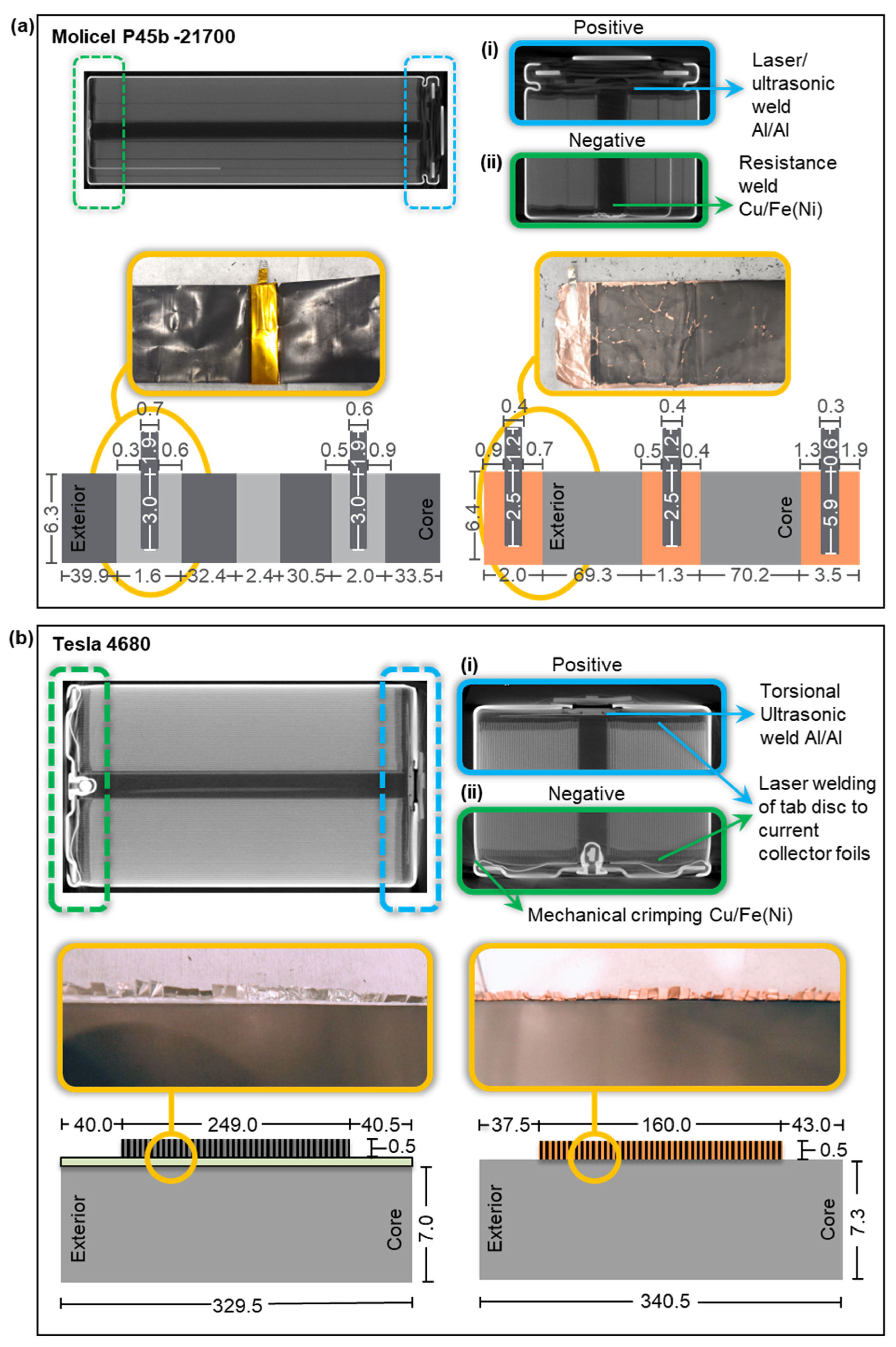
Figure 1 presents XCT images that compare the internal architectures of the two cylindrical cell formats: the 21700 and the 4680. In both cases, a central mandrel is used to support the winding of the jelly roll, which consists of alternating layers of anode and cathode materials separated by a polymer separator. The central mandrel is then retracted leaving the jelly roll with a hollow core. Despite this shared structural principle, the two formats differ significantly in their current collection strategies, terminal configurations, and assembly methodologies.
The Molicel P45B 21700 cell features a conventional design with a relatively complex positive terminal structure. The jelly roll incorporates discrete metal tabs that are welded to the electrode foils. In case of this cell, there were two tabs on the cathode and three on the anode (as shown in
Figure 1). The cell casing serves as the negative terminal and is electrically connected to the anode. This configuration provides corrosion protection to the casing. The negative current-collecting tabs are welded directly to the base of the cell. This welding operation is performed with high precision, through a central opening in the mandrel (the hollow core of the cell once the mandrel is retracted), and is one of the first electrical connections established during cell assembly.
The positive terminal is formed by welding the cathode tabs to the cathode cap. This cap integrates several critical safety and functional components, including:
A current interrupt device (CID), which severs the electrical connection in response to excessive internal pressure.
A venting mechanism, typically in the form of a scored groove, that allows controlled gas release under fault conditions.
A sealing structure that ensures hermetic sealing of the cell.
Following electrolyte filling, the cathode cap is mechanically crimped onto the open end of the cylindrical casing. This crimping operation forms a shoulder-like feature at the positive terminal and completes the sealing process.
Structural and Functional Features of the 4680 Cell
The Tesla 4680 cell represents a newer generation of cylindrical lithium-ion cells, designed to improve performance and simplify manufacturing. A key innovation in this format is the use of a tab-less or full-tab current collection approach. Instead of discrete tabs, the electrodes are notched and folded in a manner that allows direct connection to circular current collector discs. These discs, often described as petal-shaped or flower-like, are laser-welded to the electrode foils, creating a continuous electrical interface around the entire circumference of the jelly roll. This full-surface connection significantly reduces internal electrical resistance and enhances thermal conductivity. It also eliminates the current bottlenecks associated with traditional tabbed designs, thereby improving both power delivery and heat dissipation. In the 4680 configuration, the cell casing serves as the negative terminal, while a separate component, inserted in the base of the cell, acts as the positive terminal. Electrical isolation between the positive terminal and the negative casing is achieved using a plastic gasket. It can be deduced from the cell autopsy that the internal cathode current-collector disc is laser-welded to the cathode foils before the insertion of the jelly roll. The current-collector disc is then ultrasonically welded to the positive terminal after the insertion of the jelly roll in the cell casing. The anode current-collector disc, also laser-welded to its corresponding foils, is positioned at the opposite end of the cell.
Initial designs of the 4680-cell employed mechanical crimping and riveting to seal the anode terminal. A central hole in the top cap allowed for electrolyte filling, which was subsequently sealed using a copper or copper alloy rivet. This method provided both mechanical integrity and hermetic sealing. Recent iterations of the 4680 designs have transitioned toward laser welding for the final sealing step. This modification aims to further reduce internal resistance and improve both safety and thermal performance. In most cases, the safety and venting features are now centralized at the anode end of the cell, streamlining the overall architecture.
3.2. Current Collecting Tabs to Cell Terminal Welds in the Molicel 21700
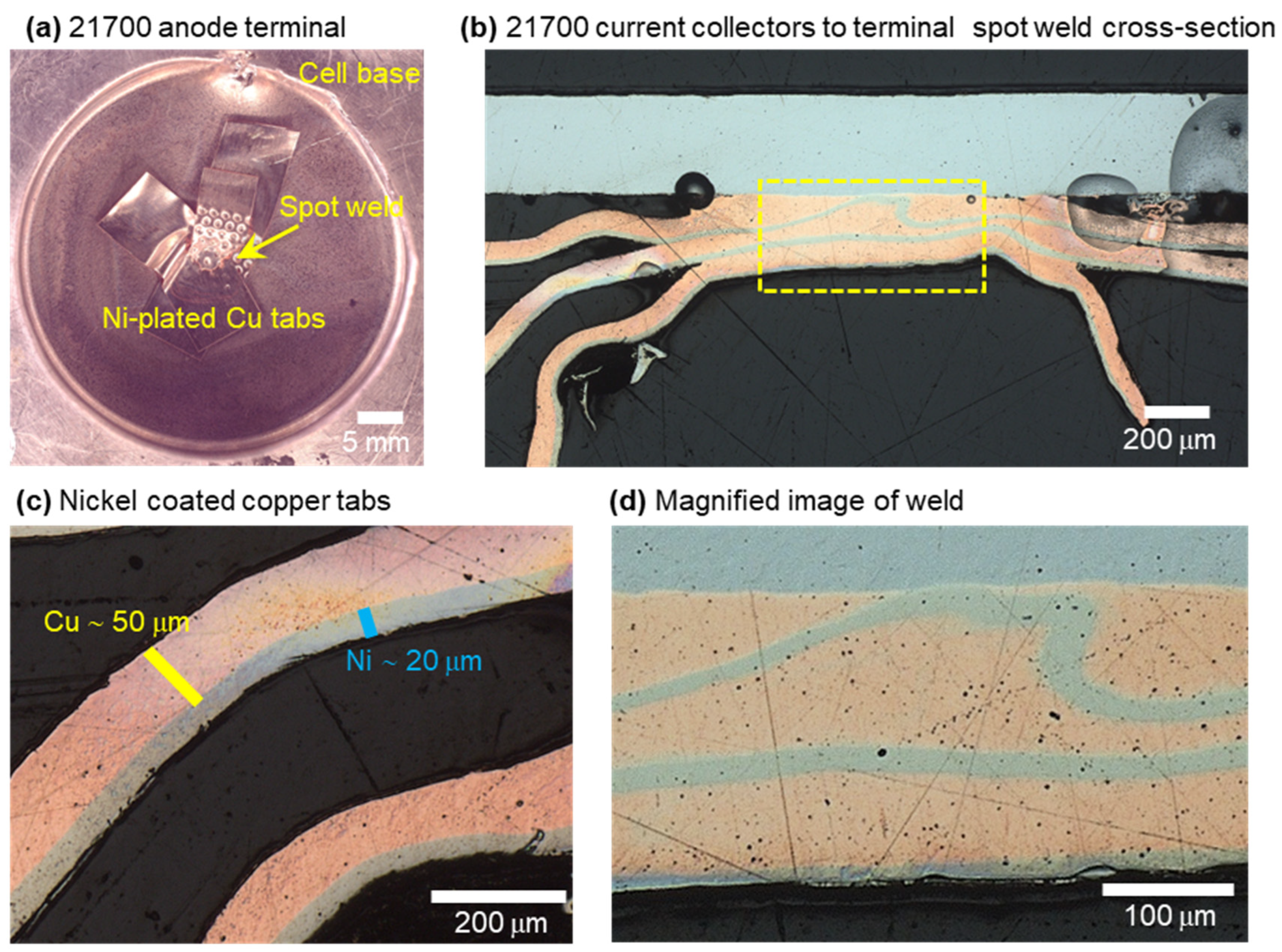
Figure 2 illustrates the ultrasonically welded anode tabs of the Molicel 21700, which are securely joined to the cell base using resistance spot welding. The subfigures provide a detailed visual breakdown of the weld configuration.
Figure 2a presents a top-view image showing the three anode tabs welded directly onto the cell base.
Figure 2b displays a cross-sectional view of the weld, revealing the internal structure and bonding quality.
Figure 2c,d offer magnified views of the tabs and weld interfaces, highlighting the microstructural features and weld integrity. The multiple circular indentation marks on the tabs in (a) appear to be the pattern of tool used for bending and positioning the tabs. Each cell contains three copper tabs, which are nickel-plated, on one side only, to enhance their performance and compatibility. The copper tab thickness is approximately 50 µm, while the nickel plating adds an additional 20 µm, accounting for around 30% of the total tab thickness. This substantial coating thickness underscores the importance of surface treatment in ensuring corrosion resistance and mechanical reliability. Notably, the nickel coating is applied to the internal sides (the sides facing the electrodes) of the tabs, suggesting its critical role in preventing corrosion in areas that may be exposed to electrolyte or environmental factors [
9,
20,
21].
From a metallurgical standpoint, nickel serves as a compatible mediator between copper and steel, facilitating effective spot welding. Its presence increases electrical resistance at the weld interface, which is beneficial for resistance spot welding involving multiple copper layers. This compatibility helps achieve strong, defect-free welds even when joining dissimilar metals. The cross-sectional image in
Figure 2b confirms that the three tabs are bonded in a layered configuration, forming a microstructurally sound weld with no visible defects such as voids or cracks. This is crucial because these joints serve as primary pathways for electrical current and thermal conduction. Therefore, ensuring high weld quality is essential for the electrical performance, thermal management, and long-term reliability of the cell.
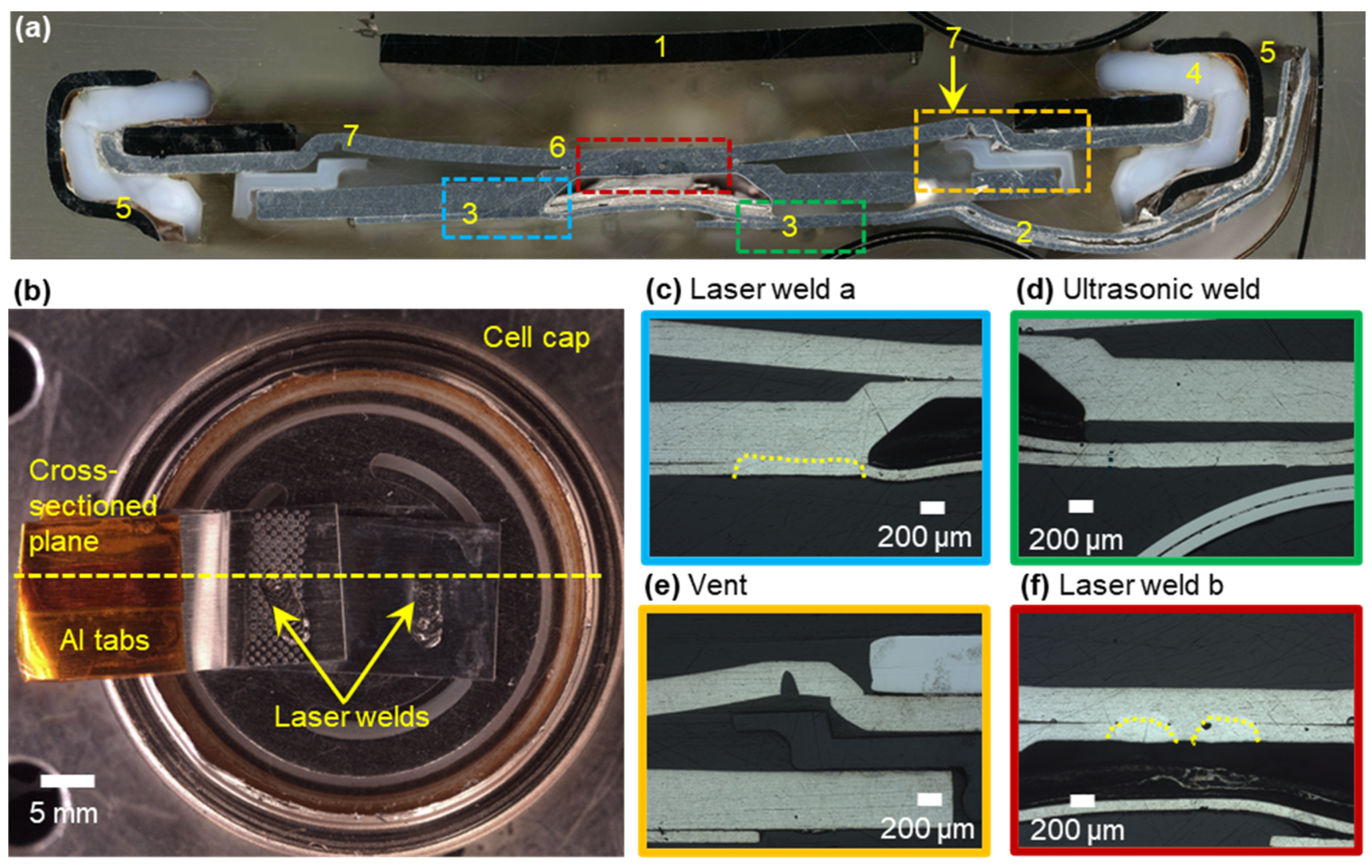
Figure 3 illustrates the weld structure of the cathode cap along with several key components associated with the welding process. The bottom-left image (b) provides an internal view of the cathode cap, and the top image (a) shows a cross-sectional cut made along the yellow dotted line in image (b), revealing the internal arrangement and weld interfaces. Key structural elements within the cathode cap are numerically labelled, and magnified views of selected features are presented in sub-images (c) through (f) to highlight critical details such as weld geometry, tab placement, and surface characteristics. The cathode tabs are joined to the cap using two laser welds, strategically placed on knurl marks—likely created by a forming tool used for bending and positioning the tabs during assembly. Interestingly, the left-side weld connects the two tabs to each other but does not bond them to the cap, whereas the right-side weld secures one tab directly to the cathode cap. This configuration has been observed in multiple cells, suggesting a design strategy that allows flexibility in tab length, potentially to accommodate crimping of the cap onto the cell body during final assembly. The additional weld serves a dual purpose: it holds the tab in place while still allowing mechanical flexibility, which may be essential for ensuring proper alignment and sealing during crimping. The welds exhibit a distinct wave pattern, indicating the use of laser beam welding with beam wobbling. This technique is advantageous because it delivers low heat input while distributing thermal energy over a broader area, reducing the risk of localized overheating and improving weld quality. Further inspection reveals vent grooves that appear slightly deeper, which may be designed to facilitate controlled pressure release in case of cell venting.
3.3. 4680 Cell Weld Analysis
3.3.1. Current Collecting Discs to Electrode Welds
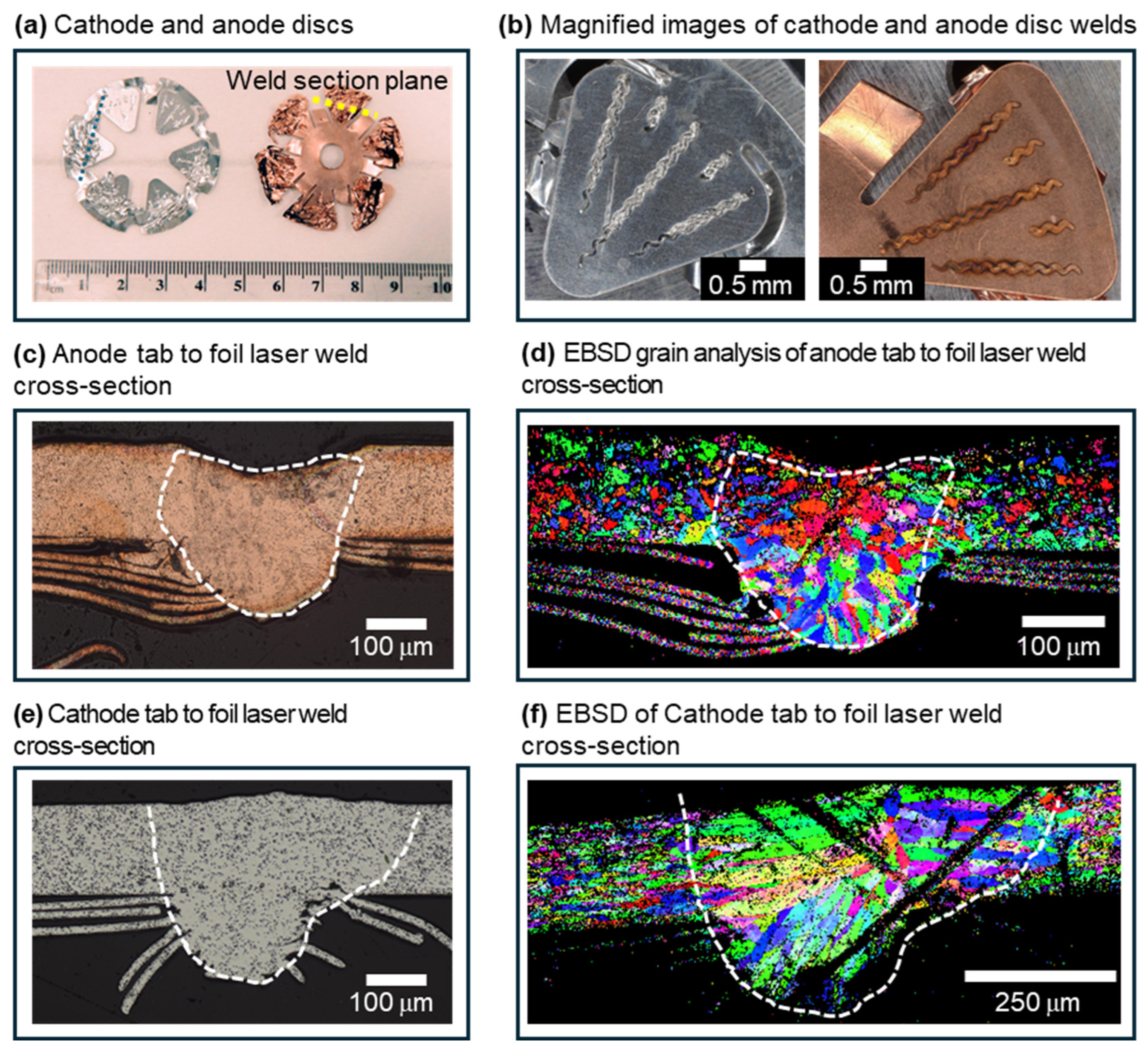
Figure 4 presents the structural and microstructural analysis of the welds between the current collector discs and the folded electrode stacks. In
Figure 4a, the underside view of the cathode and anode current collector discs is shown after separation from the jellyroll. These discs retain portions of the welded electrode foils, which are aluminium for the cathode and copper for the anode. Each disc is shaped with six petal-like extensions, and the anode disc has a diameter that is 4 mm larger than that of the cathode disc. The central region of the cathode disc has been removed to facilitate analysis of the weld between the cathode disc and the terminal. Similarly, the outer edge of the anode disc has been trimmed to examine the crimping interface between the anode disc and the terminal. A central hole with a diameter of 6.2 mm is present in the anode disc, which provides access to the torsional ultrasonic tool and serves as a channel for electrolyte filling and is subsequently sealed using copper riveting.
Figure 4b displays the weld surface of the discs. Each petal contains three long weld lines and two short welds arranged in a zigzag pattern. From the variation in weld width along the weld line, it would suggest that the welds were produced using laser beam welding with controlled power ramping. The laser power was gradually increased at the beginning of each weld and decreased at the end to optimize energy absorption and reduce the likelihood of defects. The central weld line measures 9 mm in length, while the two outer lines are 7 mm long. The short welds are approximately 2 mm in length and are included to enhance electrical contact with the folded electrode stack. The number and distribution of welds reflect the design intent to maximise electrical connectivity and improve thermal conduction across the joint.
Figure 4c–f present optical and EBSD weld cross-sections between the current collector discs and the folded electrodes. Due to the delicacy of the electrode foils and the destructive nature of the cell disassembly process, not all electrode foils could be preserved. However, analysis of several welds indicates that approximately ten layers of electrode foils were joined to the current collector disc.
EBSD analysis reveals distinct grain morphologies in the copper and aluminium welds. Copper welds exhibit fine, equiaxial grains with an average size of approximately 30 µm, along with a few elongated grains reaching up to 70 µm. In contrast, aluminium welds display predominantly elongated grains, with lengths exceeding 100 µm. This suggests that the aluminium side experienced longer thermal exposure and that heat transfer occurred primarily in the radial direction.
Several challenges are associated with laser welding for this type of application. First, copper and aluminium are highly reflective materials, which complicates the coupling of laser energy. The industrial-grade lasers with IR wavelength (~1.07 µm) show significantly lower absorption (4–10%) on copper surface, which necessitates high power and beam control. Second, the thick tab disc must be welded to multiple thin layers of current collector foils, requiring efficient heat transfer to all layers. The foils are extremely thin, with copper measuring approximately 7 µm and aluminium approximately 15 µm. Any discontinuity in energy transfer can result in defects such as blow holes or spatter. To overcome these challenges, two laser techniques could be employed. The use of low-wavelength lasers, such as green (570 nm) and blue (450 nm), improves energy absorption compared to conventional near-infrared lasers operating at 1.06 µm. Another approach is to use a single-mode fibre laser with small core diameter to achieve high-power density, typically in the 107 and 109 W/cm2 range against the normal range of 105 to 106 W/cm2. This drastic increase in power density helps laser energy coupling and facilitates the formation of a keyhole. This enables enhanced energy absorption through multiple internal reflections, a phenomenon known as Fresnel absorption. However, stabilising the weld immediately after initial contact remains a challenge due to the high reflectivity of copper. To address this, a combination of laser beam wobbling and power ramping may be implemented. From the laser power ramping and zig-zag weld profile, this cell design appears to have employed a high-power-density single-mode fibre laser, which offers higher process speed and industrial throughput. XCT scans revealed the presence of fine porosity and minor discontinuities in some welds. These defects are small and randomly distributed. Based on their characteristics, they are not expected to have a significant impact on overall cell performance.
3.3.2. Current Collector Discs to Terminal Welds
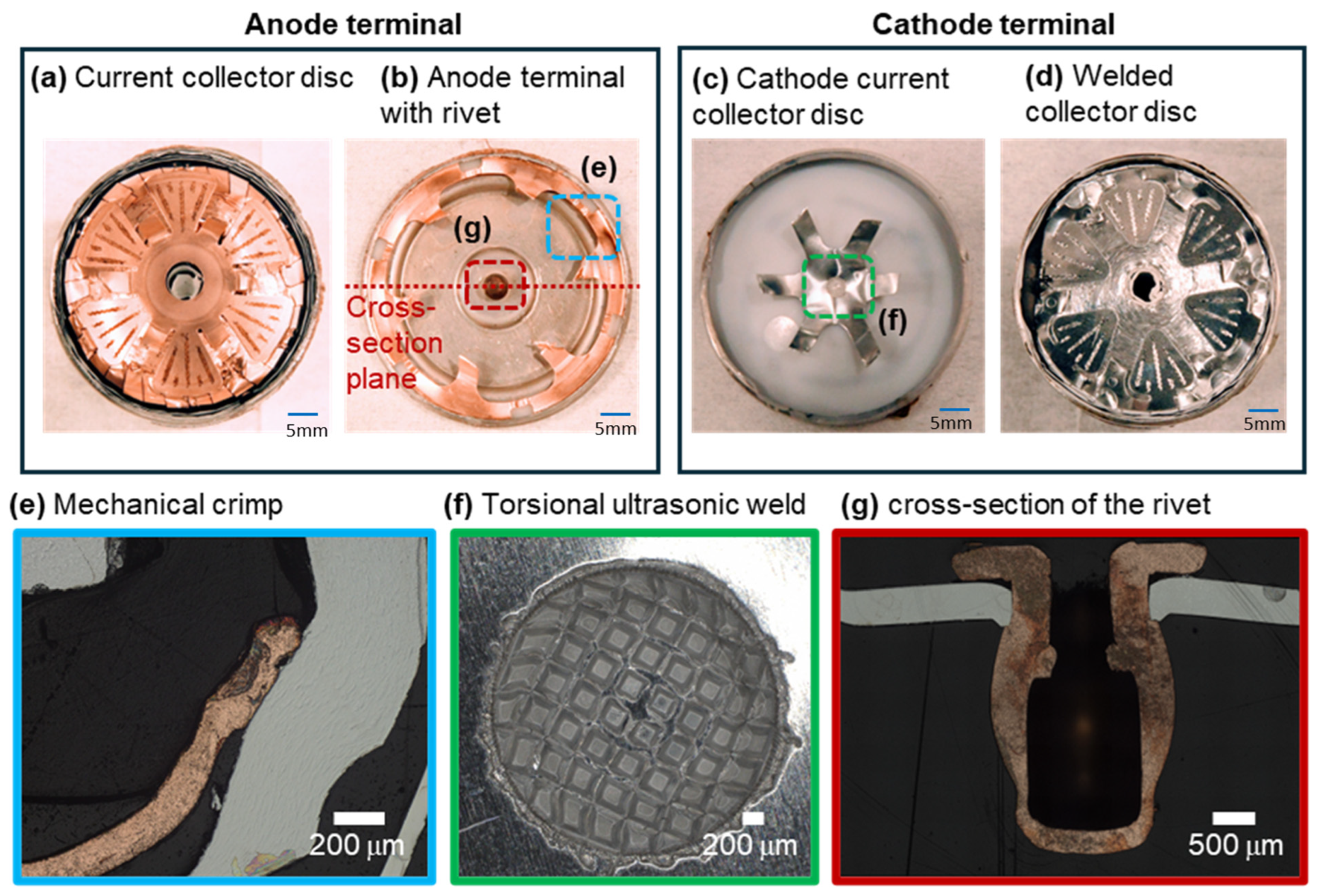
Figure 5 illustrates the joining strategy employed for connecting current collector discs to the terminal interfaces in Tesla’s 4680 quasi-tab-less cylindrical cells. The folded electrode is first laser-welded to the current collector discs. Subsequently, these discs are joined to the terminals using two distinct methods: torsional ultrasonic welding on the cathode side and mechanical crimping on the anode side.
Figure 5a,b depicts the anode side, where the copper current collector disc is mechanically crimped to the cell casing. This is the same crimp that secures the gasket seal between the casing and the cell cap, so the crimp serves a dual purpose.
Figure 5e presents a cross-sectional view of the crimped joint.
Figure 5c,d show the cathode disc joined to the positive terminal via torsional ultrasonic welding.
Figure 5f provides a magnified view of the ultrasonic weld surface, revealing the fine-grained lattice texture indicative of a solid-state metallurgical bond.
Figure 5g illustrates the mechanical rivet used to seal the electrolyte fill-port in the cell cap.
This hybrid joining approach—mechanical fastening on the anode and ultrasonic welding on the cathode—demonstrates integration of robust mechanical joining with highly conductive electrical interfaces. Traditional joining techniques such as resistance spot welding and laser welding often suffer from drawbacks including excessive heat input, electrode degradation, and the formation of brittle intermetallic phases at aluminium-to-terminal interfaces [
22,
23]. In contrast, torsional ultrasonic welding avoids melting and enables the formation of high-strength Al–Al bonds even on oxide-prone surfaces, resulting in lower interfacial resistance and improved durability under thermal cycling [
24,
25]. Previous studies have also shown that ultrasonic welding significantly reduces contact resistance and extends cycle life compared to mechanical pressing and thermal welding methods [
22,
26]. Moreover, the use of a rivet to seal the electrolyte fill-port enhances safety by avoiding heat input after the cell is filled with electrolyte. Overall, the asymmetric joining strategy in the 4680 cell reflects a shift toward scalable, high-throughput manufacturing while maintaining electrochemical reliability. Compared to conventional 18650 and 21700 formats that rely primarily on laser or resistance welding, the 4680 design offers a promising pathway for balancing mechanical stability, electrical performance, and manufacturability—key factors for advancing lithium-ion battery technology in electric vehicle applications [
4,
12,
14,
18].
3.4. Cell Interconnecting Busbar Welds
The deployment of cylindrical lithium-ion cells in automotive battery applications necessitates robust electrical interconnection in series and parallel to achieve the required system voltage, capacity and current capability. Traditional formats, such as the 18650 and 21700 cells, were initially adapted for module fabrication by large-scale welding processes, including laser welding, wire bonding, or micro-TIG welding. Early battery designs often utilised a complex busbar configuration, requiring individual busbar tabs to be welded to the positive cap at the cell top and the negative base of the cell casing. This required welding access to two opposing sides to the assembly, which added complexity to the manufacturing process. Furthermore, welding the negative busbar to the cell base presented a significant manufacturing challenge. The proximity of the jelly roll’s active material and electrolyte mandates extremely precise control over weld penetration. Component and process variations—including material thickness, laser focus drift, and fixturing discrepancies—can result in variable penetration depth, risking electrolyte leakage, internal short circuits, and subsequent electrochemical performance loss or in a worst-case scenario combustion. Controlling the penetration depth, often required to be within a narrow window of 25 to 50 μm, proved challenging for high-volume manufacturing.
To mitigate the risk of base penetration and reduce overall design and manufacturing complexity, a shift toward a single-sided busbar design was implemented. This architecture locates both busbar connections on the top (cathode) side of the cell. The positive tab is welded directly to the positive cap, while the anode tab is welded to the crimped shoulder region of the cell casing, placing both connections on the same end while maintaining electrical separation. This liberates the base of the cell to be utilized for active cooling methods, enhancing thermal management. However, welding to the crimped shoulder—a region primarily designed for hermetic sealing rather than welding—introduces a new set of fabrication complexities. The cell casing shoulder material can exhibit geometric variations from the large plastic strain involved in the crimping process. Furthermore, the crimped region is electrically isolated from the positive terminal by a polymer gasket; excessive weld heat in this area risks damaging the gasket, potentially compromising the cell’s hermetic seal and thereby risking electrolyte leakage and/or moisture ingress. The evolution to the large-format 4680 cell simplifies the busbar interconnect welding process while retaining the single-sided connection philosophy. To capitalise on weight and cost savings, Al busbars have been adopted in early applications, and the positive terminal material is also aluminium, facilitating an Al-Al weld for the positive busbar connection. The negative busbar connection is also made on the same end of the cell, welding the Al busbar tab to the nickel-plated steel cell casing, forming a dissimilar metal weld (Al-steel).
Both the positive and negative busbar-to-terminal weld nuggets of the 4680 cell were carefully extracted and subjected to detailed examination. The weld surfaces and cross-sections were analysed using both optical microscopy and SEM, including secondary electron imaging, to assess weld quality and microstructural features.
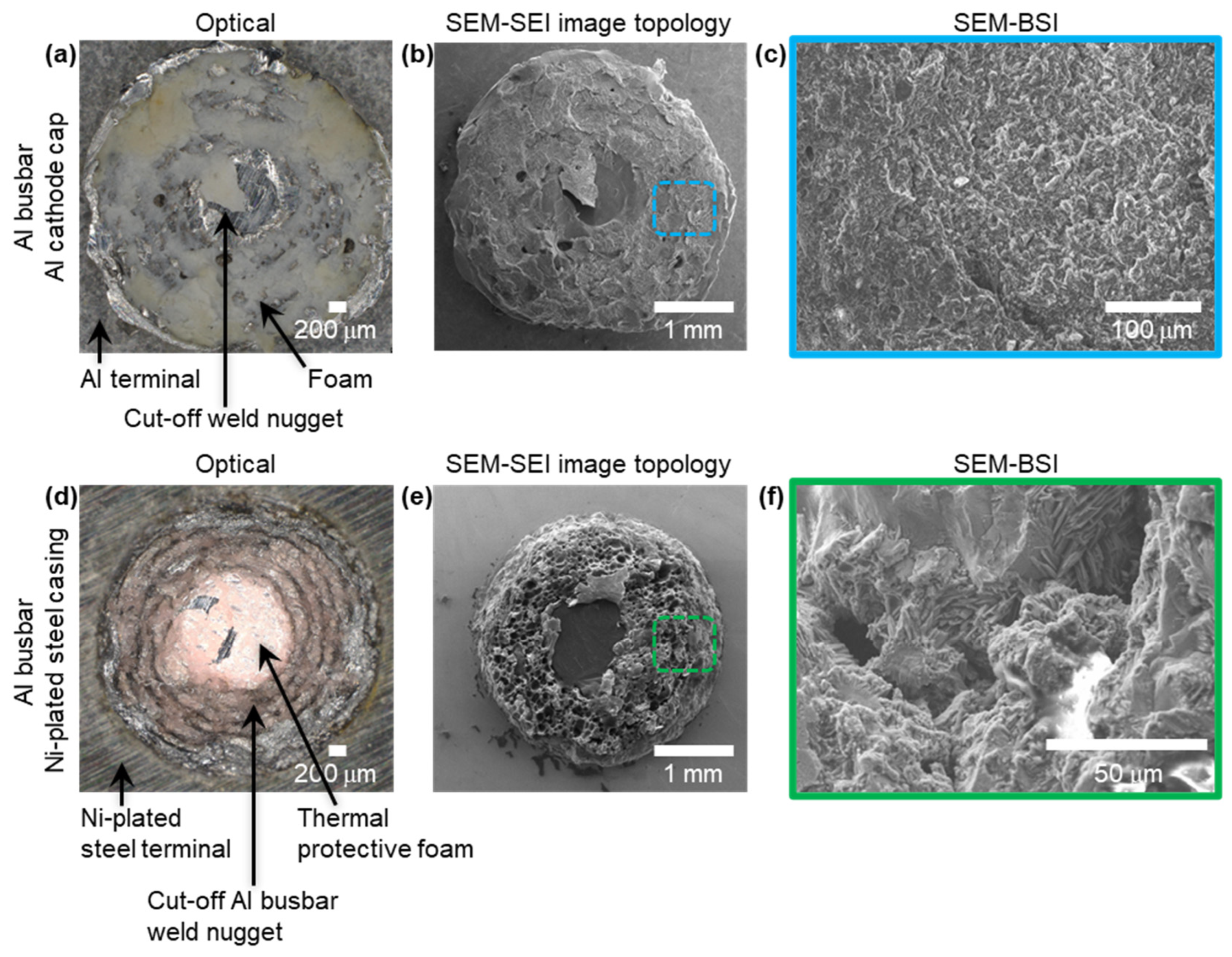
Figure 6 (cathode on top and anode on bottom rows) presents representative images of these weld nuggets. A preliminary observation across the weld nugget surfaces (exemplified in
Figure 6a,d) was the presence of a foam material, likely to have been introduced during the battery module assembly process. Foam may be used as electrical and/or thermal insulation to inhibit short-circuits or thermal propagation between cells and may also be used structurally to locate the cells. Focused analysis of the weld topography and fracture surfaces yielded distinct characteristics for the two joints. The positive connection utilises Al-Al welding (Al busbar to Al positive cap), a well-established similar-material joint. Inspection of the positive weld fracture surface, as shown in the magnified images in
Figure 6b,c, demonstrated ductile behaviour, characterised by the presence of dimples. This ductile failure mode is typically indicative of a high-quality, robust Al-Al fusion weld. In contrast, the negative connection involves a dissimilar metal weld between the Al busbar and the cell casing made of nickel-plated steel. The fracture and cross-sectional analysis of this Al-steel negative weld revealed a characteristic IMC morphology at the weld interface (
Figure 6e,f). The formation and control of this brittle IMC layer are critical factors influencing the long-term reliability and electrical resistance of dissimilar metal joints. Given that the Al-Al cathode weld exhibits expected ductile behaviour and represents a well-understood welding process, subsequent investigation (in the following section) will concentrate specifically on the negative Al-steel weld to further characterise its penetration, IMC thickness, and overall microstructural integrity.
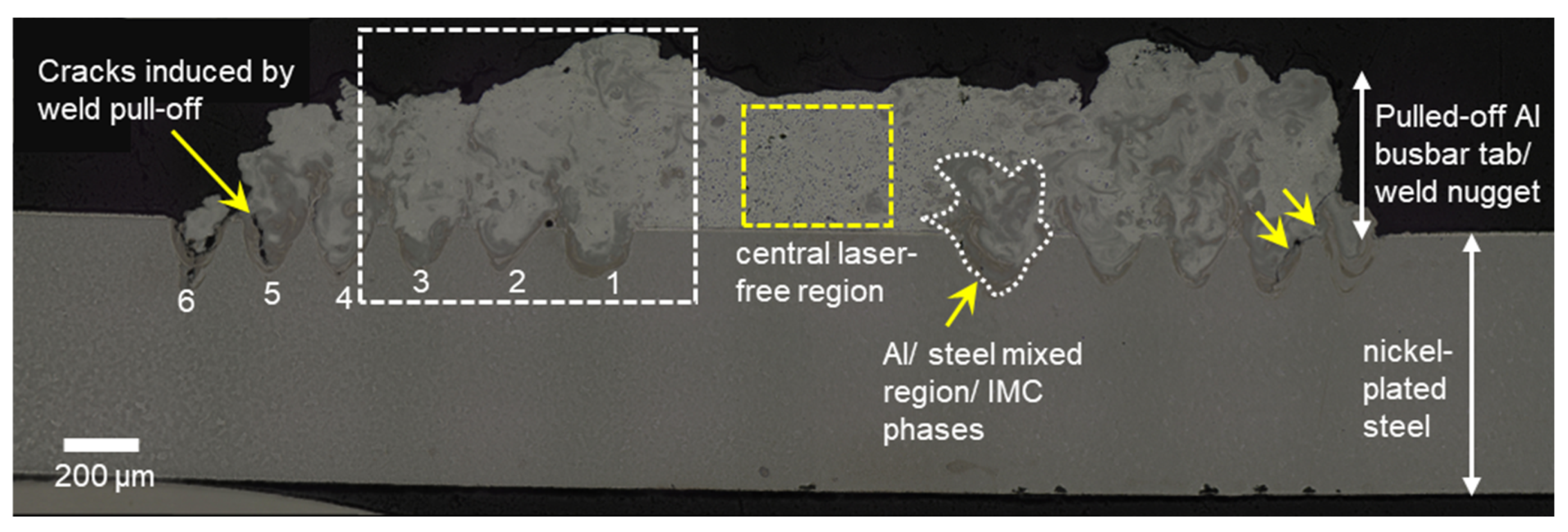
Figure 7 presents the cross-sectional view of the Al busbar to nickel-plated steel negative terminal weld nugget on the 4680 cell. Welding Al to steel is metallurgically challenging due to the significantly different thermo-physical properties of the two metals, which predisposes the joint to the formation of brittle IMCs. While surface examination suggested a circular spot weld approximately 3 mm in diameter (
Figure 6), the cross-section reveals that this spot is, in fact, formed by a spiral laser scan path originating from the centre and moving outward toward the periphery. This controlled laser scanning strategy is critical: it minimises the heat input and limits the mixing of Al with Fe, thereby suppressing the formation of undesirable, crack-prone Al-Fe IMCs. The weld exhibited excellent integrity, with no cracks or porosity-like defects observed within the fusion zone. The minor cracks visible in the outer spiral region are attributed to mechanical damage sustained during the removal of the busbar during disassembly. Notably, the central region of the weld appears free of direct laser fusion but maintains electrical contact, suggesting a localised diffusion bonding mechanism occurred due to the partial melting of Al onto the steel terminal. Crucially, the weld penetration depth was limited to approximately 20% of the cell casing thickness. This shallow penetration avoids overheating the cell’s active material and prevents detrimental Fe over-melting, which would otherwise lead to excessive mixing and widespread IMC formation, thus optimising weldability.
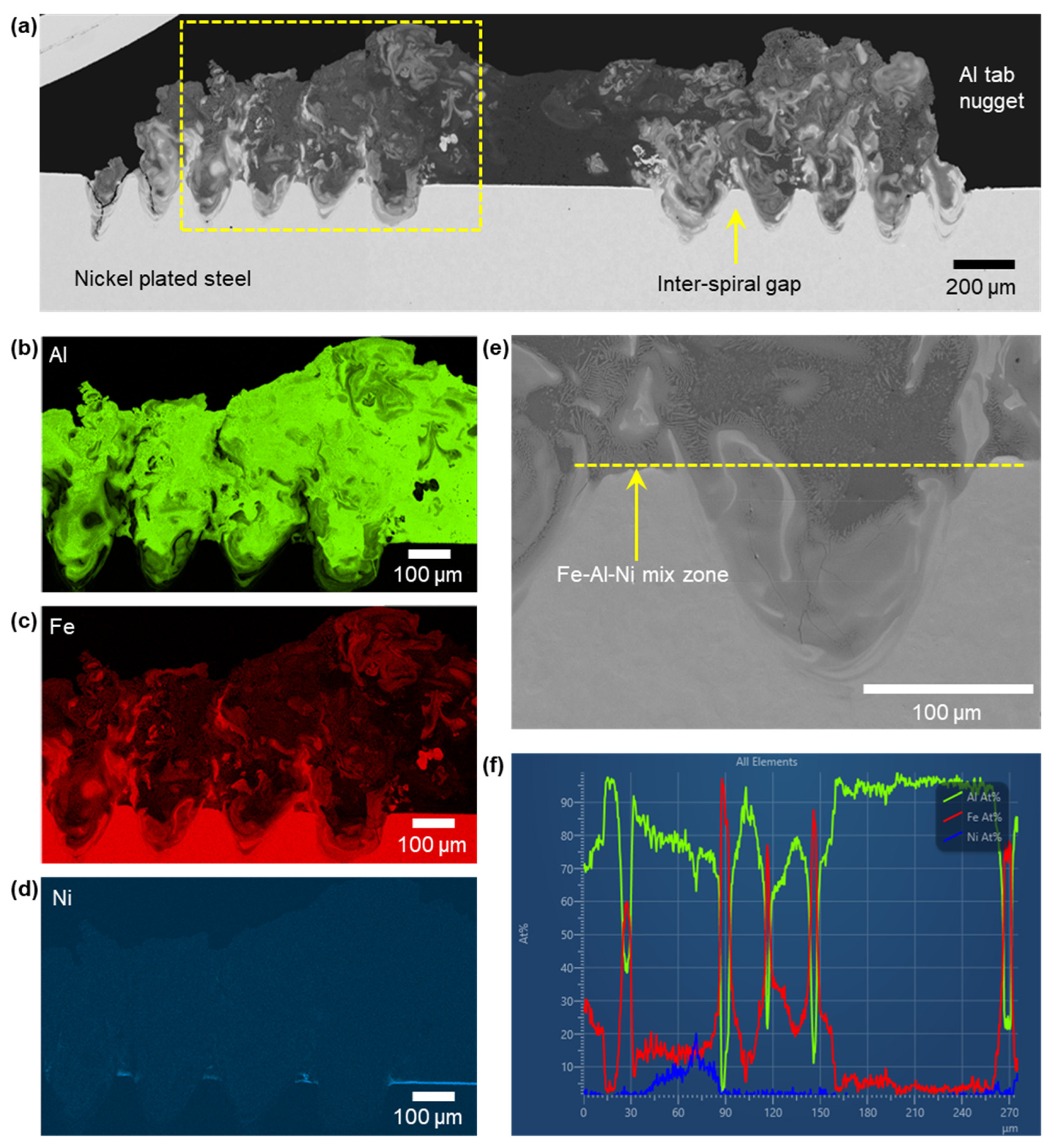
Further microstructural analysis of this dissimilar metal joint was performed using SEM-Backscatter Electron Imaging (BSI), elemental mapping, and line scan analysis (
Figure 8). The BSI images clearly illustrate the mixing of Al and Fe based on the difference in atomic numbers. The spiral laser scanning pattern creates a series of typical conical structures, characteristic of keyhole laser welding. Counting the visible features reveals approximately five to six spiral turns across the cross-section. The mixing of Al and Fe is predominantly concentrated at the weld interface and near the root of these conical structures, which is further substantiated by the elemental mapping of Al and Fe (
Figure 8b,c). Importantly, the inter-turn gap regions—the spaces between the concentric spiral weld turns—show evidence of Al and Fe mixing, critically incorporating the nickel plating found on the steel casing. Since Ni is metallurgically compatible with both Fe and Al, the resulting ternary Fe-Al-Ni microstructure is hypothesised to enhance weld strength and ductility compared to a binary Al-Fe IMC. The influence of Ni on phase formation and distribution is explicitly confirmed by the line scan analysis (
Figure 8e,f). Consequently, these inter-turn gap regions are structurally significant as they indirectly contribute to the joint’s overall strength and reliability via this complex ternary phase formation.
3.5. Cell Casing Analysis
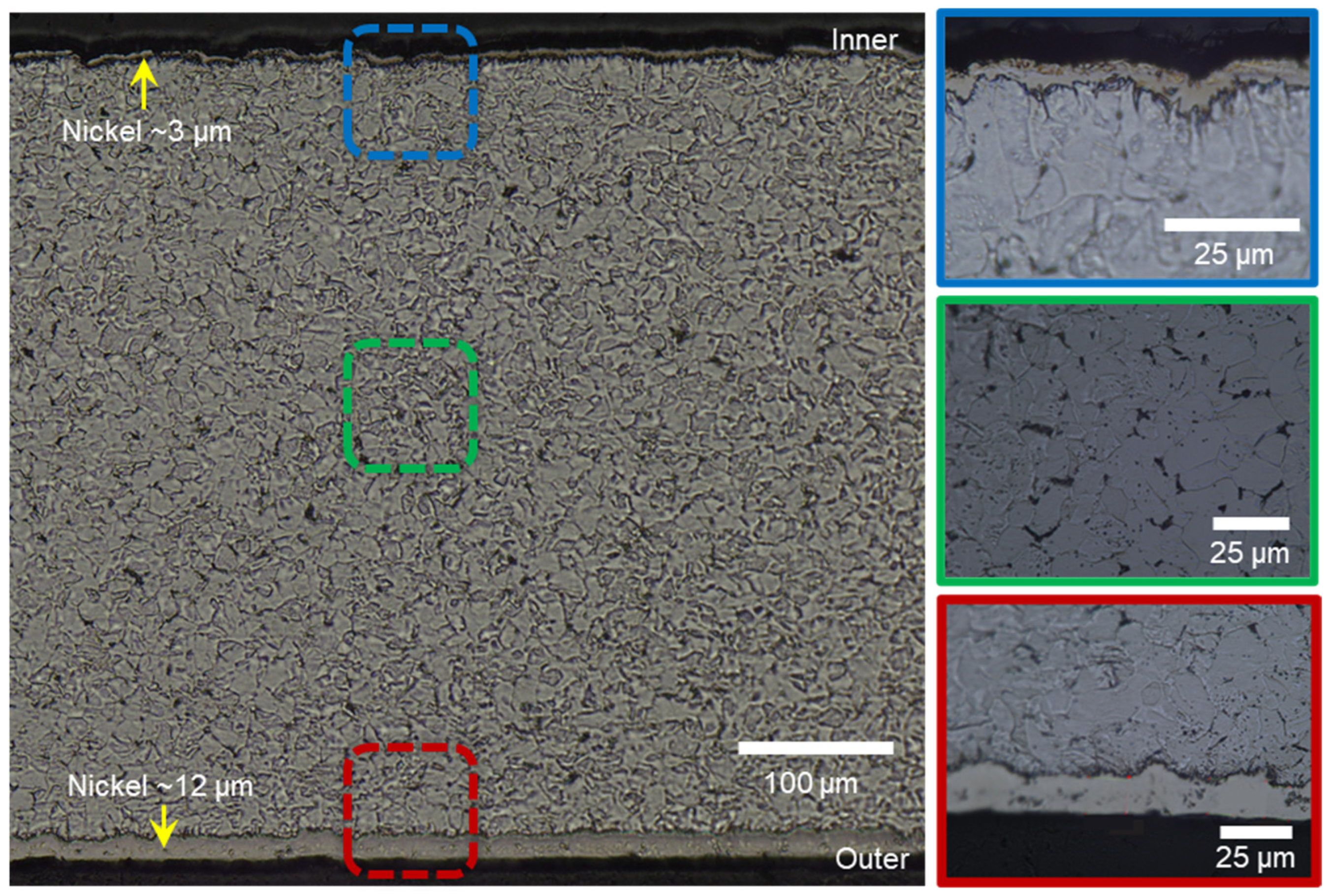
The materials used for cell casing reflect specific engineering considerations for manufacturability and safety. Both the Molicel 21700 and the Tesla 4680 cells utilise nickel-plated interstitial-free (IF) extra mild steel for the casing. IF steel is chosen for its excellent deep drawability and structural strength. The casings are nickel-plated primarily for corrosion resistance, but this plating also plays a secondary, beneficial role in facilitating the anode dissimilar metal weld, as demonstrated above. Examination of the casing cross-sections (
Figure 9) revealed variations in plating thickness: the internal side received approximately 3 μm of plating, while the external side received about 12 μm. This difference reflects precise manufacturing specifications designed to balance corrosion protection, welding requirements, and cost. Furthermore, the casing thickness of the Tesla 4680 cell is notably 0.54 mm to 0.7 mm at the terminal, which is substantially thicker than the 0.2 mm to 0.3 mm used in 18650 and 21700 cells. It is assumed that this increased thickness is a deliberate design choice intended to protect the cell from side wall rupture; a sensitive failure mode observed in large-format cylindrical cell battery design.
3.6. Welding Process Evolution in Cylindrical Cell Format
The shift to larger format cylindrical cells, such as the 4680, necessitates an evolution in manufacturing processes, particularly in critical welding steps, to manage increased current density and improve thermal pathways. Forensic investigation of these welds reveals that the challenges move from localised tab welding (in the 21700) to large-area and dissimilar-metal joining (in the 4680).
Table 2 outlines the comparison, welding processes, and associated challenges across three critical weld types for the Molicel 21700 (tabbed, conventional) and the 4680 Tesla (quasi-tab-less, large format) cells.
The design of Tesla’s 4680 cells has continued to evolve with respect to current collector geometry, weld interfaces, and overall manufacturability. Early 4680 implementations used a tabless “flower” or “petal” current collector concept to distribute current from the jelly roll, but later iterations eliminate the separate tab-like feature entirely by welding the electrode foil edges directly to the cell casing, thereby removing an intermediate component and eliminating associated weld steps. This direct weld of the electrode to the end cap or can simplifies internal architecture, reduces potential failure points, and frees internal space for additional active material, contributing to higher energy density in later 4680 variants. Teardown analyses indicate that Gen 2 4680 cells for Cybertruck applications employ multiple weld points directly between the foil edge and the cap, replacing the earlier reliance on a centralised copper tab and enhancing manufacturability and electrical uniformity. The steel cell can wall thickness has also been optimised, with Gen 2 cells exhibiting a reduced shell mass on the order of ~49 g compared with ~70 g in initial cells [
27]. This weight reduction was potentially achieved through thinner can walls and more efficient internal layout, which can translate to meaningful weight savings and increased pack efficiency.
3.7. Electrical, Thermal, and Safety Implications of Tabbed and Tabless Weld Architectures
The fundamental distinction between tabbed and tabless cylindrical cells lies in how electrical current is collected and transported out of the electrode stack, which in turn determines internal resistance and heat generation. In conventional 21700 tabbed cells, current must pass through a small number of welded tabs. These narrow, discrete current paths impose higher internal resistance and concentrate current density into limited cross-sectional areas. This configuration creates localised Joule heating and thermal hot spots under high load, as uneven current distribution amplifies resistive losses [
28,
29]. Numerical modelling by Tranter et al. also confirms that tab-based collection introduces significant ohmic losses around the jelly-roll current collectors, reducing efficiency and increasing heat production [
30]. By contrast, the Tesla-style 4680 quasi-tab-less architecture incorporates a continuous current-collecting edge along the entire electrode, effectively replacing a few welded tabs with a large number of parallel conduction paths. This dramatically reduces internal resistance and distributes current far more evenly across the electrode circumference. Both experimental and simulation show that tabless designs lower internal resistance, reduce heat generation, and mitigate the formation of localised hot spots [
15,
28,
31,
32,
33]. Quasi-tab-less structures also improve power capability by widening the current path and shortening electron travel distance.
The shift from a tabbed 21700 to a large-format 4680 cell changes the thermal landscape: The tabless design removes weld-driven hot spots, creating a more uniform circumferential temperature distribution and reducing degradation associated with localised overheating. However, the larger diameter of a 4680 cell inherently increases the distance from the core to the cell surface, reducing the surface-area-to-volume ratio available for heat rejection. As a result, thermal challenges become more volumetric, with heat accumulating toward the inner layers of the jelly roll—an issue highlighted in modelling studies exploring large-format cylindrical cells [
15,
31]. Consequently, while the 4680 architecture eliminates the electrical bottlenecks and thermal non-uniformities caused by discrete tabs, it introduces a bulk thermal management challenge: peak temperatures may shift away from tab regions and toward the core, making overall cooling strategy more critical for cycle life. Industry discussions and technical reports note that large quasi-tab-less cells rely heavily on system-level thermal management to fully realise their longevity and fast-charging potential [
31,
32,
34,
35].
Safety differences between 21700 tabbed cells and 4680 quasi-tab-less cells follow directly from these electrical and thermal characteristics. In 21700 cells, discrete tab welds act as concentrated current and heat sources, increasing the likelihood of localised overheating, separator damage, and thermal runaway initiation under abuse conditions. The 4680 tabless design mitigates this initiation risk by spreading current and heat more evenly and reducing weld related hot spots. However, the larger size of the 4680 increases the severity of potential failure events: reduced heat rejection and higher stored energy can lead to larger internal temperature rises and greater internal pressure during thermal runaway. As a result, 4680 safety relies more heavily on robust venting and pack-level thermal management, whereas 21700 safety is more closely tied to controlling local hot spots at tab welds. The larger physical dimensions of the 4680 format ultimately lead to accelerated aging when compared to smaller cylindrical cells, in that the 4680 reaches its end-of-life (80% capacity) in only 480 cycles, compared to 600 cycles for the 18650 format [
33]. This rapid degradation is a direct consequence of suboptimal heat dissipation, which elevates internal core temperatures, hastens Solid Electrolyte Interface (SEI) thickening, and triggers lithium plating during subsequent cycles. These effects highlight the necessity for advanced thermal management strategies in large-format cylindrical cells, prompting active research into base cooling, side cooling, and hybrid approaches to reduce internal temperature rise and thermal gradients, and thereby mitigate degradation while improving safety and longevity.




 ,
,