
Article

Deep Neural Network Optimization for Lithium-Ion Battery State of Health Prediction in Electric Vehicles: Outperforming Hybrid Models

1
Centre d’Excellence sur les Batteries, Université Privée de Fès, Lot. Quaraouiyine Route Ain Chkef, Fès 30040, Morocco
2
Laboratoire de Physique de Solide, Faculté des Sciences Dhar El Mahraz, Université Sidi Mohamed Ben Abdellah, B.P. 1796, Fès-Atlas 30003, Morocco
3
Faculty of Electronics, Vilnius Gediminas Technical University, 10223 Vilnius, Lithuania
4
Department of Computer Science and Engineering, Université du Québec en Outaouais, Gatineau, QC J8X 3X7, Canada
*
Author to whom correspondence should be addressed.
Batteries 2026, 12(2), 52; https://doi.org/10.3390/batteries12020052
Submission received: 25 November 2025 / Revised: 5 January 2026 / Accepted: 14 January 2026 / Published: 4 February 2026

Abstract

It is now crucial to accurately monitor the state of health (SoH) of batteries in a setting where the use of electric vehicles (EVs) and renewable energy technologies is still growing. To solve this issue and evaluate the SoH, this paper makes use of deep learning technology. The suggested method incorporates voltage, current, and temperature data, which are important indications of the SoH and can potentially be obtained directly from the battery management system (BMS). Although deep neural networks (DNNs) have previously been employed for SoH estimation, our study distinguishes itself by implementing a robust, completely configurable DNN application in MATLAB/Simulink R2019a. This design enables the adjustment of activation functions, layer depth, and neuron count to adapt to different battery aging conditions. To achieve optimal performance, numerous configurations were examined, highlighting the relevance of hyperparameter setting. Our technique avoids traditional feature engineering while providing a practical, adaptive, and accurate SoH estimate framework appropriate for real-world integration. The precision of the improved model was then verified against a Li-ion battery dataset with various discharge profiles given by the national aeronautics and space administration (NASA). The collected findings revealed that the proposed method is more accurate and robust than other regularly used models. The DNN model achieved a Mean absolute error (MAE) of 1.433% and a Coefficient of determination of 0.99998, outperforming previous methods such as CNN-BiGRU, which reported an MAE of 2.448% in a recent publication. This study demonstrates the reliable performance of the DNN in predicting the SoH of Li-ion cells.

1. Introduction

The energy transition to sustainable mobility is highly reliant on the electrification of the transportation sector, which aims to significantly reduce carbon dioxide emissions while improving overall energy efficiency [1]. As a result, an increasing number of countries have switched from internal combustion engine vehicles (ICE) to EVs fueled by improved battery systems. Owing to recent advances in energy storage technology, Li-ion packs have emerged as the preferred energy option for EVs. They outperform other battery technologies in terms of energy and power density, low self-discharge rate, long lifespan, and overall efficiency [2]. Due to its relatively high cost, the electric vehicle battery is equipped with a battery management system (BMS) [3]. This system ensures the safety, reliability, and proper functioning of the battery under a wide range of driving conditions. It continuously monitors several key parameters of internal battery states, including state of charge (SoC), state of health (SoH), state of energy (SoE) [4], and overall operating condition, to optimize performance, extend system lifespan, and prevent any risk of failure [5].
The SoH is a dynamic metric that indicates the gradual degradation of a battery, typically characterized by a decline in capacity or an increase in internal resistance over time [6]. It is commonly defined as follows:
S O H [ % ] = C k C 0 × 100
where C 0 represents the nominal capacity, and C k refers to the capacity measured during cycle k.
A new battery typically has an SoH of 100%, while a value below 70–80% generally indicates that it has neared its useful life [7]. Lithium ion battery technology is now the preferred solution for energy storage in both mobile devices and EVs, owing to its major advantages, including light weight, high energy density, small size and low memory effect [8,9]. However, these cells inevitably suffer from aging influenced by multiple internal and external factors, including operating conditions, constituent materials, increased internal resistance [10], charge/discharge rate, and temperature. This aging results in a gradual decrease in available capacity and power, compromising not only performance but also safety, and increasing the risk of failure and thermal runaway [11,12]. In a context where a sudden failure can lead to considerable economic losses, particularly in the industrial and electric mobility sectors, the ability to quickly and accurately predict the SoH of lithium ion packs is of crucial importance. It is in this context that deep learning models appear to be a promising avenue, offering powerful tools for predicting and monitoring SoH evolution in the face of the complexity and non-linearity of aging phenomena [13,14].
The SoH prediction methods for rechargeable cells are generally divided into three main categories: model-based approaches [15,16,17], data-based approaches, and hybrid approaches [18,19]. While model-based methods aim to simulate the internal variables of batteries, data-based methods aim directly to exploit the information collected during experimental measurements, thus reducing the complexity present in electrochemical systems [20], and this is considered an alternative and effective solution. Data-driven prediction approaches rely primarily on machine learning (ML) techniques rather than explicit physical models [21,22,23]. They use large sets of monitoring data, derived from experiments or real-world operations, to train mathematical models capable of describing the dynamics of aging and anticipating the degradation of Li ion packs [24,25]. Advances in computing power and hardware infrastructure have significantly reduced the complexity and costs associated with their implementation while facilitating their large-scale deployment. These approaches now provide an appealing blend of precision, minimal computational cost, and usefulness, making them a feasible option for reliably predicting battery SoH.
The process of experimentation is the simplest way to determine the state characteristics of a battery. In Ref. [26], a Li-ion electrochemical system using single-particle modeling was proposed to monitor the evolution of internal degradation in lithium ion packs in real time while improving the parameter identification procedure. In Ref. [27], factors influencing the SoH of lithium ion cells were extracted from electrochemical impedance spectroscopy and then used to predict SoH using a regression model based on Gaussian processes. However, this experimental approach requires strict environmental and experimental conditions, which limits its practical application for SoH prediction in real vehicles. In Ref. [28], a hybrid estimation algorithm combining the unscented Kalman filter, the Ampere-Hour method, and the open-circuit method was developed. This approach takes into account variations between cells in batteries and validates predictions obtained during real-world driving situations. In reference [29], the effect of SoH, SOC, and temperature on the parameters of the Thevenin equivalent circuit model was studied in order to obtain a more accurate identification of the parameters. Although electrochemical models offer high accuracy, identifying their parameters remains a major challenge, which limits their practical application [30]. In Ref. [31], a new approach to predicting the SoH was introduced, based on incremental capacity analysis and empirical signal decomposition using a directed acyclic graph structure. This method highlights regenerative fluctuations in battery capacity. However, model-based approaches require in-depth knowledge of aging mechanisms and precise mathematical formulation. They therefore remain complex and highly computationally intensive, which limits their practical applicability.
Model-based approaches founded on electrochemical theories or equivalent circuit models such as the Thevenin model [32] aim to simulate the internal processes of the battery with a solid physical foundation. These methods can achieve high accuracy when their numerous parameters (resistances, capacitances, diffusion coefficients) are precisely identified [33]. However, parameter identification is a complex task that must be repeated periodically to adapt to the evolving characteristics of the battery during aging. These requirements limit the practical applicability of such models for real-time estimation in embedded BMS, as effective parameter tuning remains challenging and computationally demanding under dynamic operating conditions.
Techniques based on data do not necessitate an in-depth knowledge of the aging mechanics of lithium ion battery cells. They use historical and real-time data to assess the state of the pack and predict its behavior. In recent years, the advancement of neural networks and big data technologies has enabled researchers to investigate the potential of machine learning to estimate the SoH of cells. In Ref. [34], a method combining particle filtering and support vector machines was developed to predict the remaining life of li-ion packs. In Ref. [35], an online estimation model for the actual capacity of vehicle batteries was developed using long short-term memory (LSTM) recurrent neural networks. The input data came directly from the vehicles’ voltage sensors, and the results confirmed the model’s ability to filter noise while demonstrating excellent reliability. In Ref. [36], a data-driven framework was proposed for estimating the SoH in real EVs using neural networks. The accuracy and feasibility of the method were verified using critical data like current and operating temperature from the vehicles’ BMS. In Ref. [37], a new method based on support vector machines was proposed to predict the remaining life and SoH of cells. In Ref. [38], a new SoH prediction model was introduced, based on the XGBoost algorithm applied to logistic atomic orbital search, enabling reliable estimates even under noisy conditions.
Among the most commonly used models for obtaining accurate estimates are linear regression (LR) [39], Gaussian process regression (GPR) [40], support vector regression (SVR) [41], long short-term memory (LSTM) networks [42], and temporal convolutional networks (TCNs) [43]. Much research aims to improve battery SoH estimation performance by combining these models with various hyperparameter optimization techniques. Optimized, data-driven models have been shown to adapt effectively to different types of datasets. In Ref. [44], a systematic review of machine-learning-based methods for predicting the SoH of lithium ion cells is presented.
Recent research in battery State of Health estimation has increasingly focused on complex hybrid deep learning architectures, such as Attention-CNN-LSTM and TCN-LSTM [45,46]. These models can capture both spatial and temporal dependencies in battery data, achieving high predictive accuracy. However, their architectural complexity comes at the cost of a large number of trainable parameters, intensive computational requirements, and challenging hyperparameter tuning. Furthermore, most of these models are trained on idealized laboratory datasets, which limits their generalization to real-world electric vehicle (EV) conditions, including sensor noise, dynamic load profiles, and temperature variations. Beyond predictive accuracy, most studies pay little attention to the strict hardware constraints of embedded BMS. Models must balance performance with computational efficiency, including limited parameters, low memory usage, and minimal energy consumption during inference. Complex hybrid architectures often overlook this requirement. Our work demonstrates that an optimized DNN can achieve high accuracy while remaining simple and suitable for microcontroller-based BMS deployment [47].

1.1. Current Challenges in Battery SoH Prediction

A significant amount of research has been devoted to predicting the SoH of lithium ion packs. Data-driven approaches, particularly those based on machine learning, are attracting growing interest. However, most existing work still relies heavily on experimental data, and several difficulties and challenges remain to be overcome:
(1)
The batteries in EVs are subject to dynamic and diverse environments (temperature, charge/discharge profiles, driving conditions). This variability contrasts sharply with the relatively stable and unique conditions found in experiments, making it difficult to generalize predictive models to real-world situations.
(2)
The extraction of parameters representative of the SoH of the battery suffers from low efficiency and presents great difficulties. These limitations complicate the adaptation of existing methods to online and embedded prediction, which is essential for deployment in battery management systems (BMSs) for vehicles.
(3)
The majority of current algorithms for SoH prediction rely heavily on data collected directly from vehicles. This data must be extensive and of high quality, but acquiring it is costly and difficult. This dependency limits the effectiveness and accuracy of predictions, particularly in varied or noisy conditions.
To respond to these challenges, the use of DNN is a promising approach. These networks make it possible to automatically capture complex, non-linear relationships, reduce dependence on traditional feature extraction methods, and improve the accuracy of SoH predictions in real-world conditions. In this work, the developed a DNN model that showed superior accuracy in terms of MAE compared to the CNN + BiGRU model presented in Ref. [39]. These results highlight the ability of DNNs to effectively exploit raw data and provide more reliable and generalizable SoH predictions.
The structure of this article is as follows: A comprehensive theoretical analysis of deep neural networks is given in Section 2. The methodology and experimental data are outlined in Section 3. Section 4 presents and discusses the experimental results. Finally, Section 5 concludes this work with a summary of the main contributions.

1.2. Main Contributions of This Study

The main contributions of this article can be summarized as follows:
  • A novel DNN architecture optimized for battery SoH estimation, featuring a strategic combination of tansig (hidden layers) and satlins (output) activation functions designed to ensure stable performance. The model demonstrates superior accuracy (1.433% MAE) compared to complex hybrid approaches like CNN-BiGRU (2.448% MAE) while maintaining substantially reduced computational complexity.
  • An enhanced MATLAB interface overcoming toolbox limitations by supporting 15 activation functions (compared to 3 or 4 standard options), enabling systematic architectural exploration and optimization for battery SoH estimation models through visual comparison rather than manual coding.
  • Comprehensive validation demonstrating robust performance across temperature variations (24 °C for B0006/B0007, 4 °C for B0048) and throughout aging cycles (1–168), confirming practical applicability for electric vehicle battery management systems.
  • The model in this study demonstrates enhanced generalization capability and superior modeling of complex battery dynamics compared to conventional architectures (1D CNN, BiGRU, BILSTM, GRU, LSTM, ANN) and hybrid approaches (CNN-BiGRU) while maintaining consistent performance accuracy across diverse operating conditions for reliable state of health monitoring.

2. Analysis of DNN Hyperparameters and Architectures for Reliable SoH Estimation

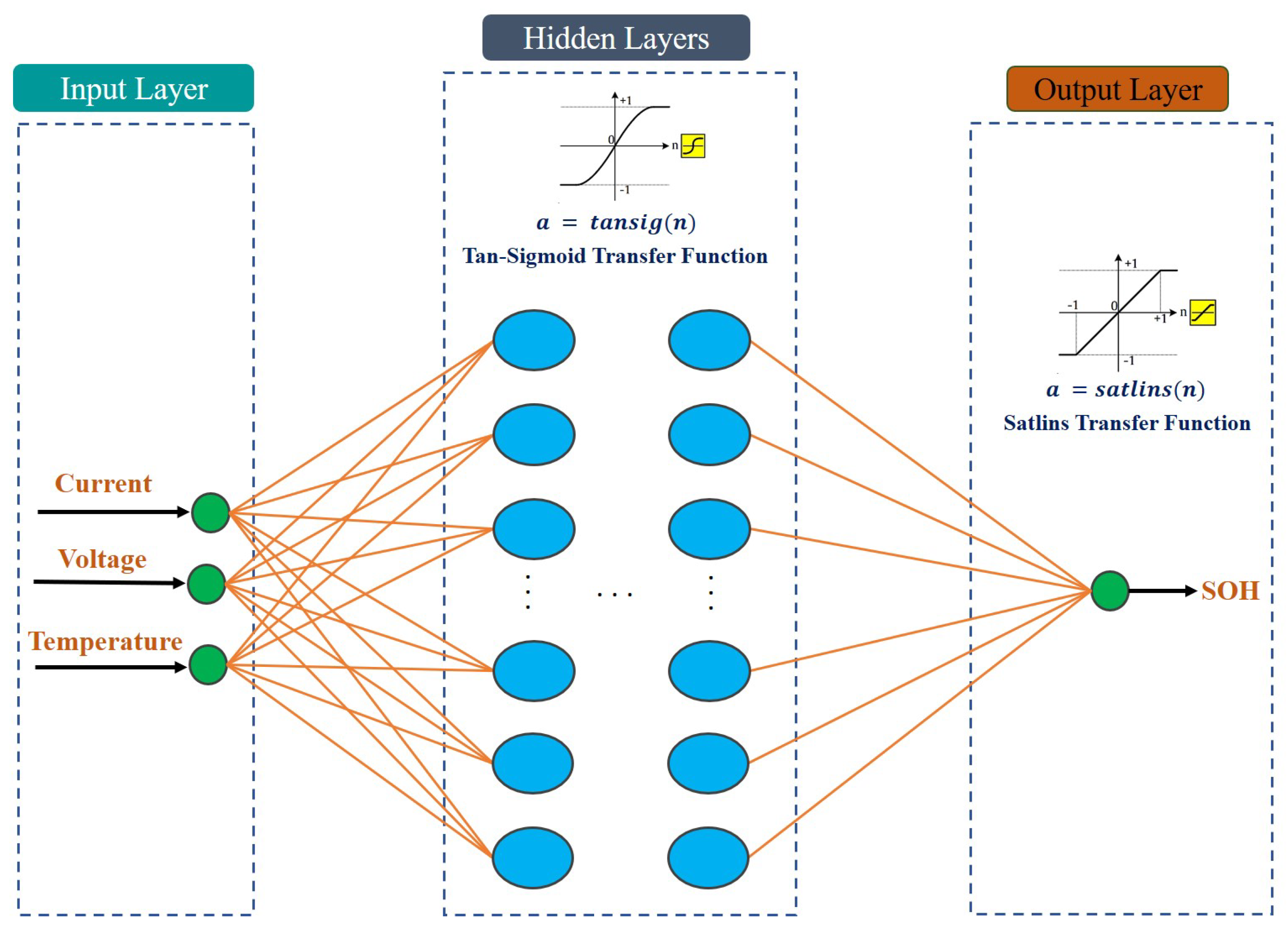
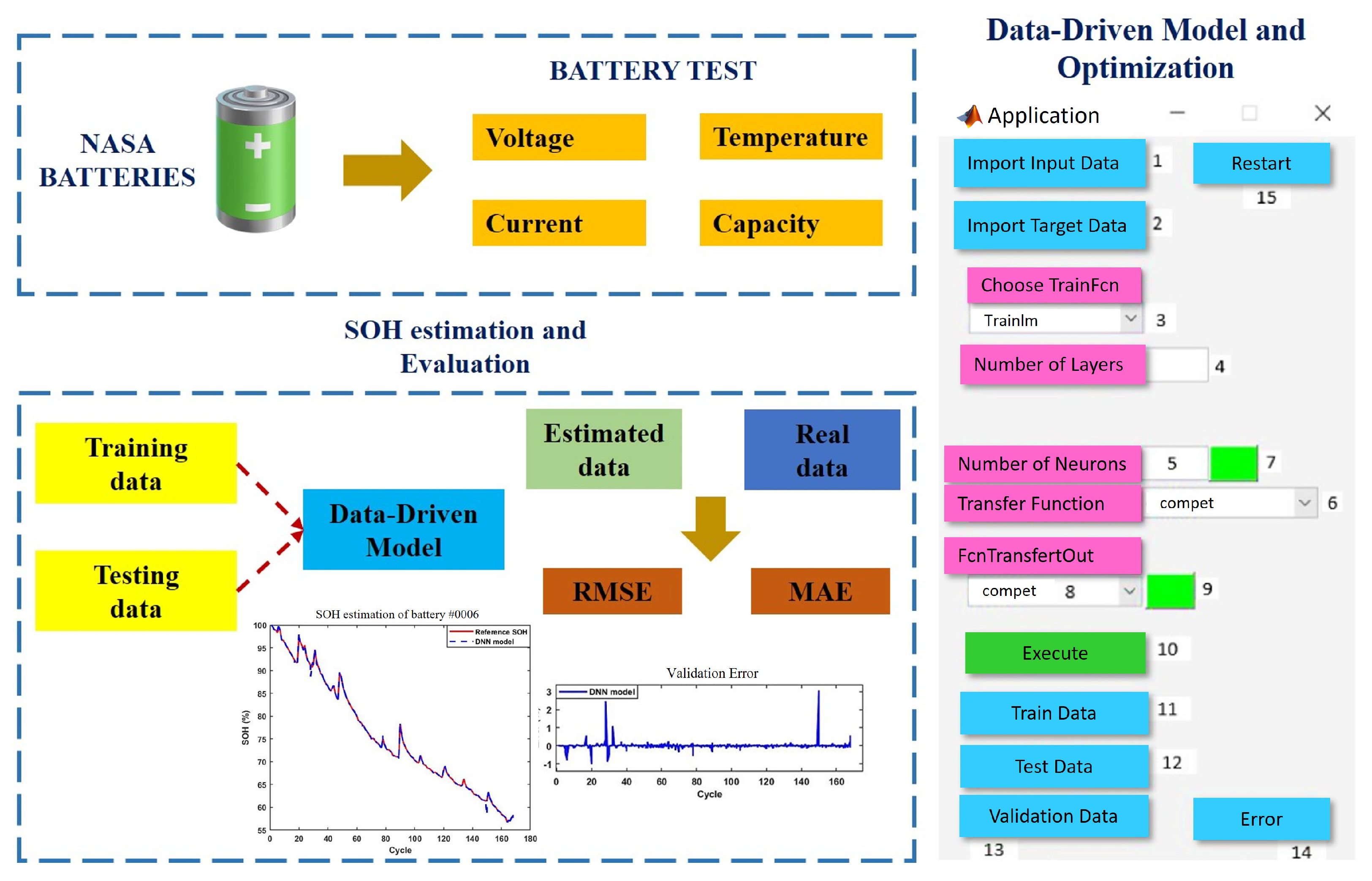
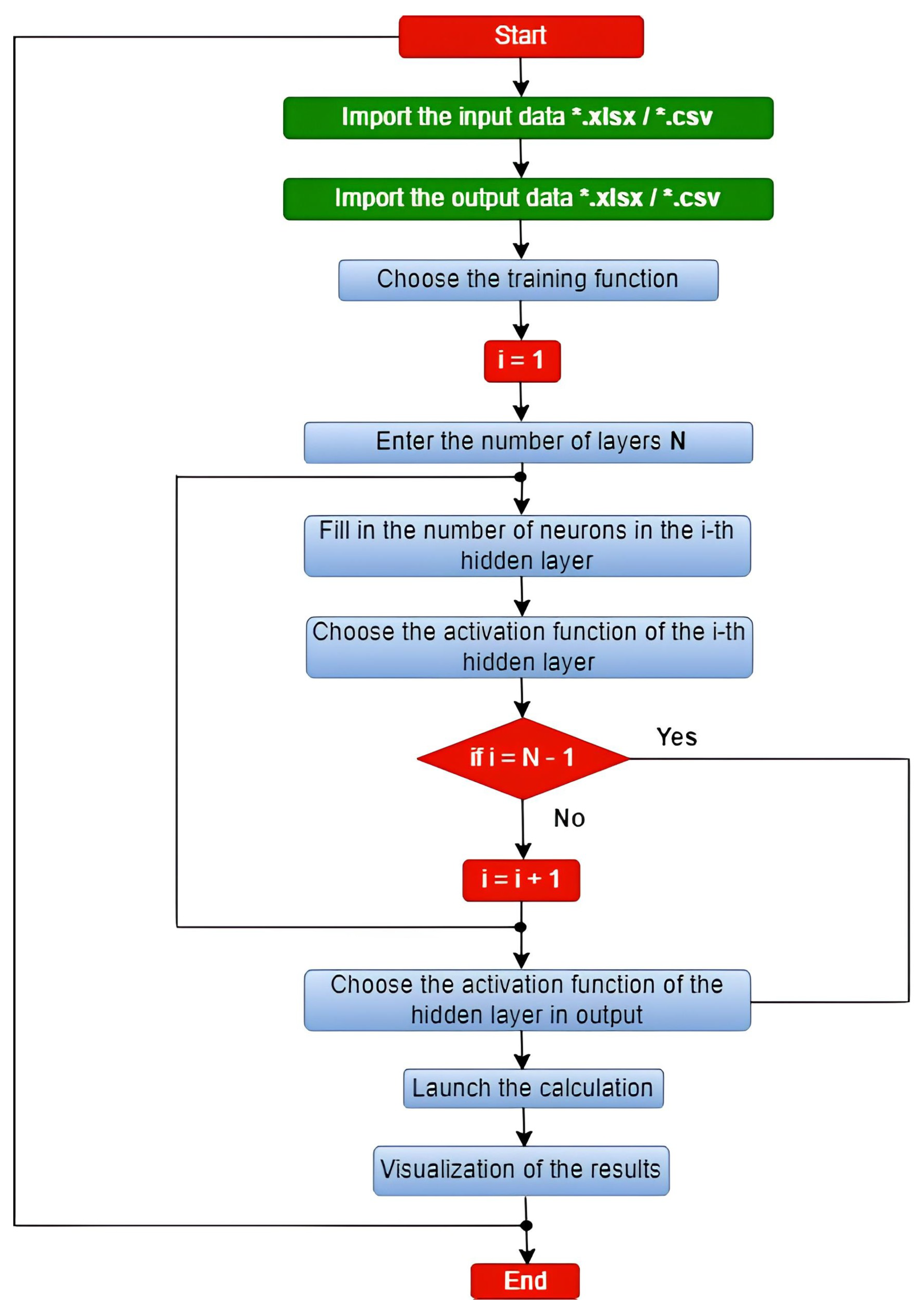
One of the main contributions of this work is the development of an interactive application that includes a dynamic DNN configuration module. This interface allows users to test and compare several activation functions and different neural network architectures in order to identify the optimal combination for estimating the SoH of li-ion cells. Figure 1 represents the architecture of a deep neural network for reliable SoH estimation, along with the corresponding activation functions. Unlike most existing studies, where the network architecture and hyperparameters are set manually, our approach offers an adaptable platform that allows for systematic exploration of the model parameters [1]. This flexibility offers a twofold advantage: on the one hand, it allows researchers to better understand the influence of activation functions and network structures on estimation accuracy; on the other hand, it facilitates the hyperparameter optimization process without requiring in-depth knowledge of the code. Figure 2 shows a diagram of the procedure for estimating SoH. Thus, the proposed model is distinguished by its explanatory and experimental nature, combining deep learning and interactivity to improve the reliability of battery health prediction. Figure 3 shows the flowchart of the proposed algorithm.
The main interface (see Figure 2) includes several features:
1-
Importation of experimental inputs.
2-
Importation of the corresponding output data.
3-
Enter the activation function to be used.
4-
Specify the hidden layer number.
5-
Set the total of neurons in each hidden layer.
6-
Drop-down menu includes several commonly used activation functions: satlin, satlins, netinv, poslin, purelin, radbas, radbasn, compet, hardlims, logsig, softmax, tribas, elliotsig, hardlim and tansig.
7-
Confirm the configuration before proceeding to the next step.
8-
Choose the output activation function appropriate for the type of prediction.
9-
Set the correct activation function.
10-
Generate the neural network and run the test.
11-
Plot the curves corresponding to the training data.
12-
Plot the curves corresponding to the testing data.
13-
Plot the validation curves.
14-
Visualize the error between the validation data and the output estimated by the DNN.
15-
Restart the application to perform a new simulation with modified parameters.
In this work, the tansig function was employed for hidden layers:
f ( x ) = e x e x e x + e x
It ensures efficient and reliable modeling of nonlinear relationships while maintaining values between −1 and 1, leading to excellent stability and optimal learning. For the output layer, the satlins function was selected so that we could obtain model outputs that are consistent with the physical changes related to SoH:
f ( x ) = x , if   1 < x < 1 , 1 , if   x 1 , 1 , if   x 1 .
For comparison, it was observed that the ReLU function, which has been utilized in various works related to this study, is defined as follows:
f ( x ) = max ( 0 ,   x )
While it accelerates learning, it can sometimes produce unlimited outputs, and the latter is not suitable for predicting SoH. In this study, several activation functions were tested (ReLU, logsig, purelin, radbas, etc.), while the combination of tansig–satlins gave a balanced result in terms of stability and accuracy despite the presence of measurement noise and convergence speed in training. The satlins function limits help to reduce the effects of noise (current, voltage, and temperature) and avoid extreme outputs, leading to physically consistent values. The tansig function exhibits moderate nonlinearity and is suitable for the gradual degradation caused by charge/discharge cycles. In contrast, the ReLU function generates positive and unbounded outputs, making it unsuitable for data settled in the interval [ 1 , 1 ] . Furthermore, it can create hollow activations, and this reduces the network’s ability to identify important small variables in battery signals.
In ref. [48], the authors employed the following activation functions tansig-purelin to predict SOC. However, the purelin function, although it simplifies the network output, does not limit the range of predicted values, and this may result in inefficient results when there is measurement noise. In this study, the satlins activation function was used instead of purelin to impose output saturation and achieve greater numerical stability. This approach allows for more accurate predictions of the SoH and a robust model capable of providing reliable results despite experimental variations.

3. Experimental Studies: Data Collection

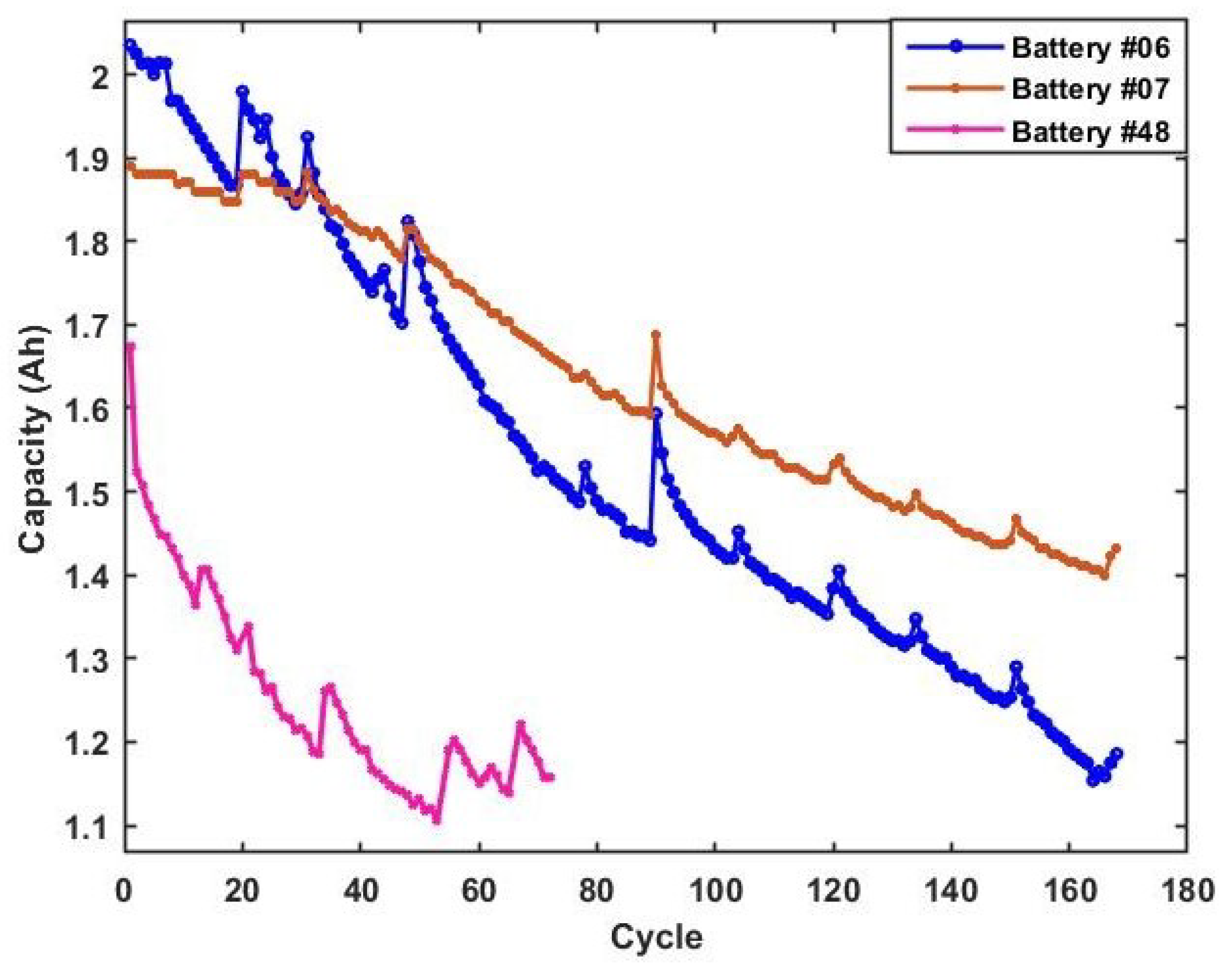
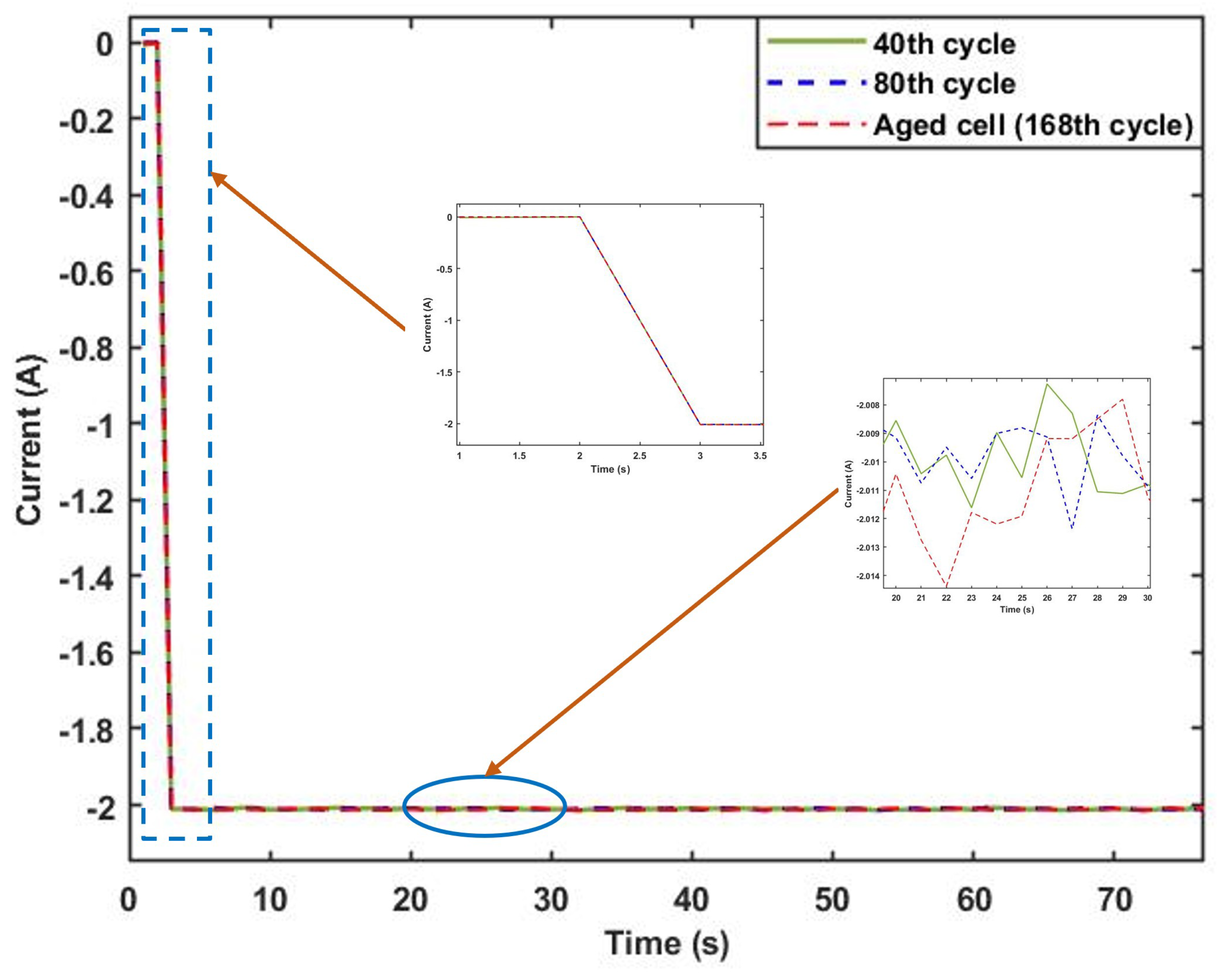
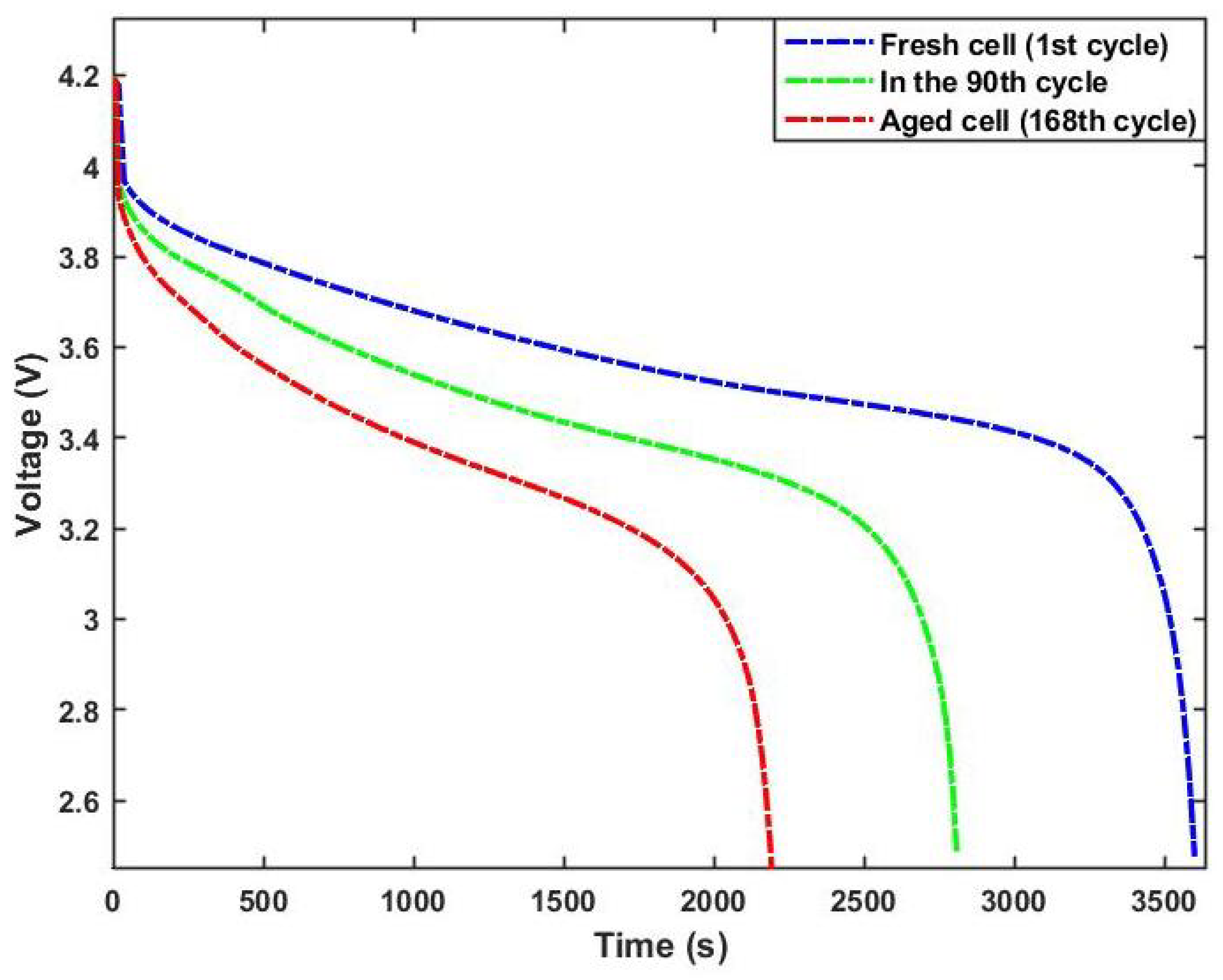
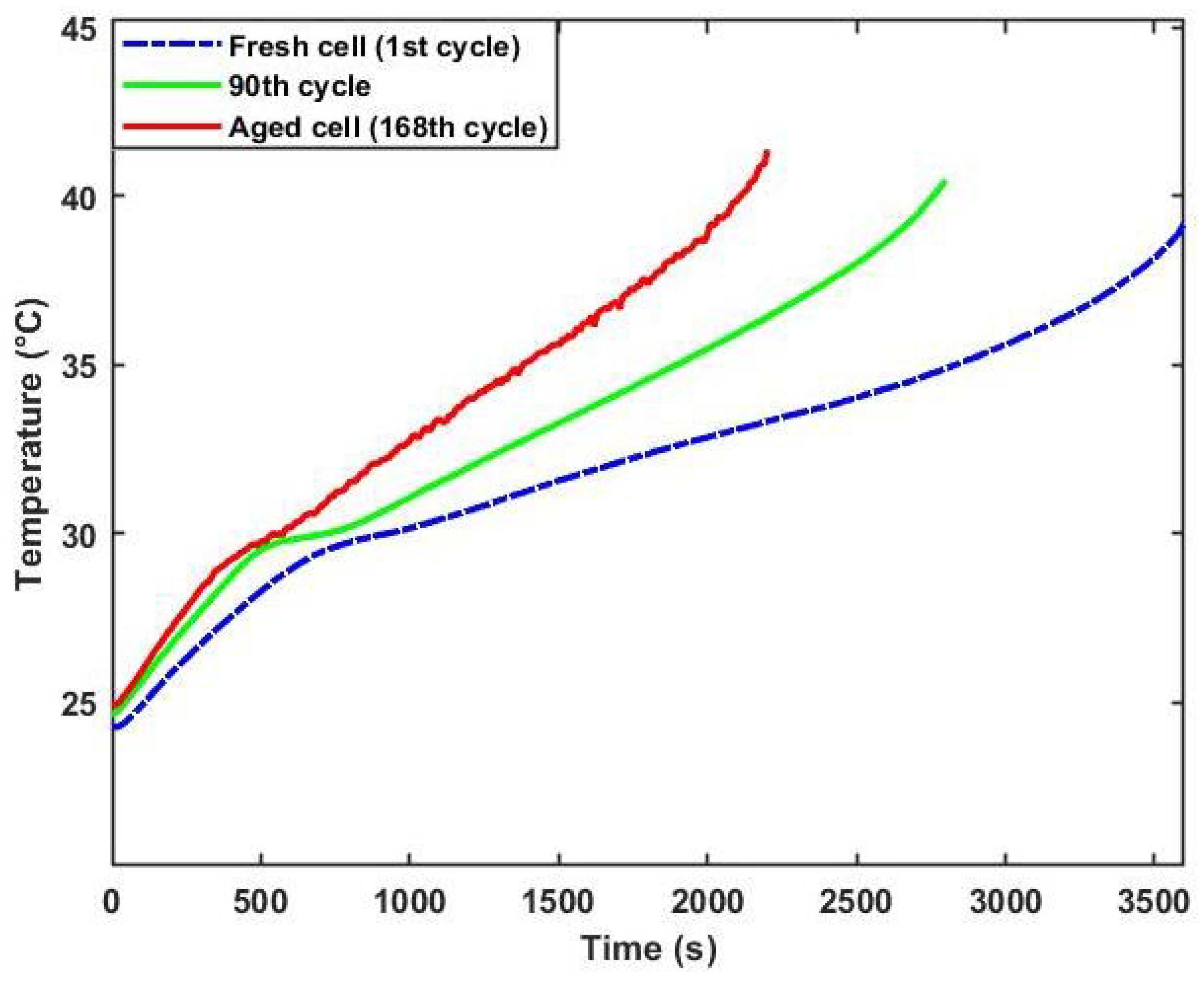
The experimental dataset used in this study was selected from the Li-ion database of the NASA PCoE (Prognostics Center of Excellence) research center. Batteries #06 and #07 had a nominal capacity of 2 Ah, and the charge/discharge tests were carried out at an ambient temperature equivalent to 24 °C. However, for battery #48, the tests were run with a temperature setting of 4 °C. The evolution of the SoH of batteries B0006, B0007, and B0048 versus cycles is depicted in Figure 4. The dataset includes values obtained from the terminal (V, I, T), capacity, and impedance of an 18650 NCA Li-ion cell. The main chemical characteristics of this rechargeable battery are summarized in Table 1. In the MATLAB implementation, the standard data division of the Neural Network Toolbox was used, with 70% of the cycles allocated to training, 15% to validation, and 15% to testing. The training data cover the entire battery aging process, while the randomly shuffled split enables the model to learn the relationship between voltage, current, temperature, and SoH across the full degradation range. The main characteristics of the discharge tests for the three Li-ion cells from the NASA dataset are summarized in Table 2. To evaluate the model’s performance at different temperatures and discharge rates, batteries 06, 07, and 48 were selected for this study [49]. Figure 5, Figure 6 and Figure 7 illustrate the discharge current, voltage, and temperature profiles of battery #0006 at different aging stages.

4. Results and Discussions

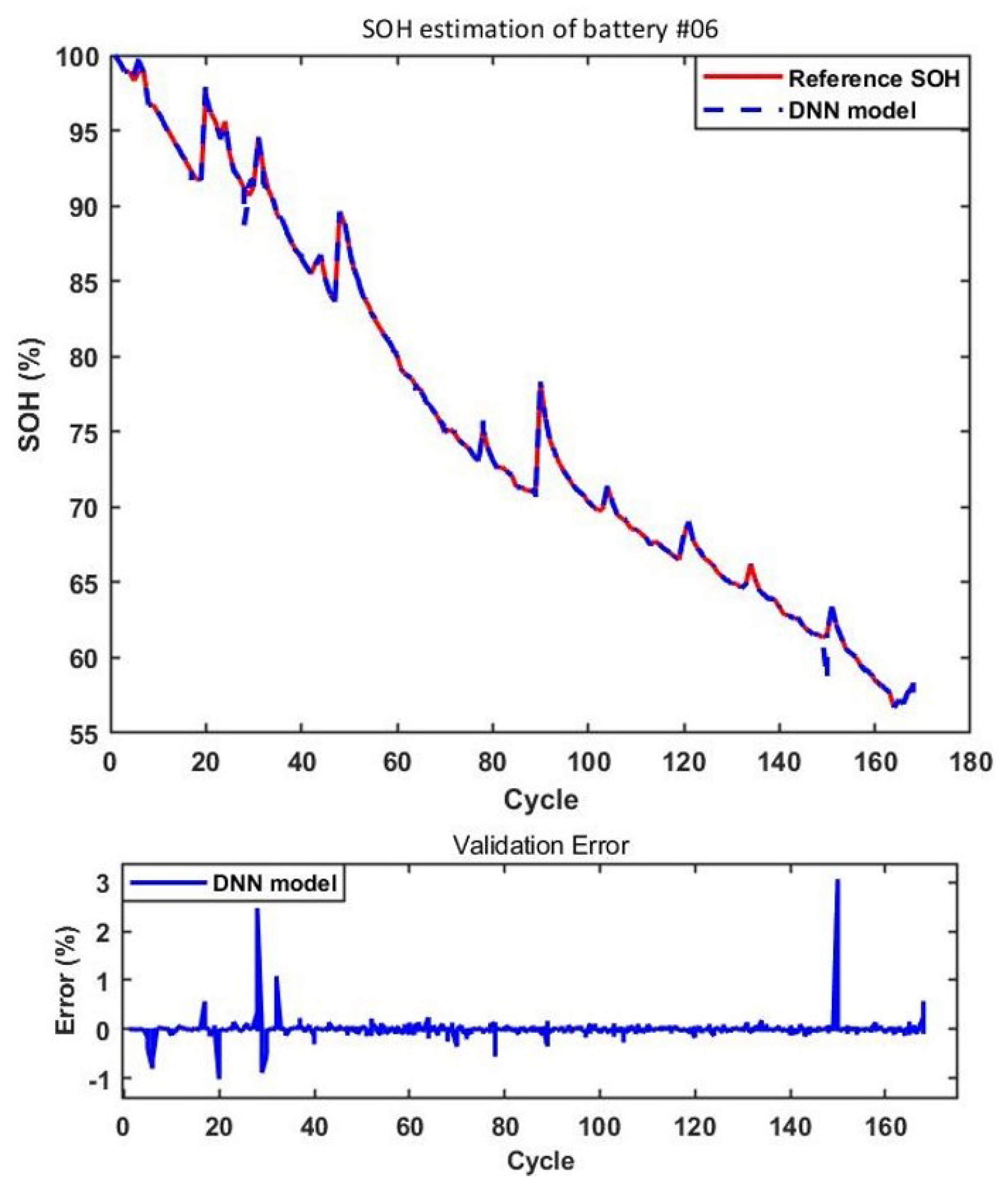
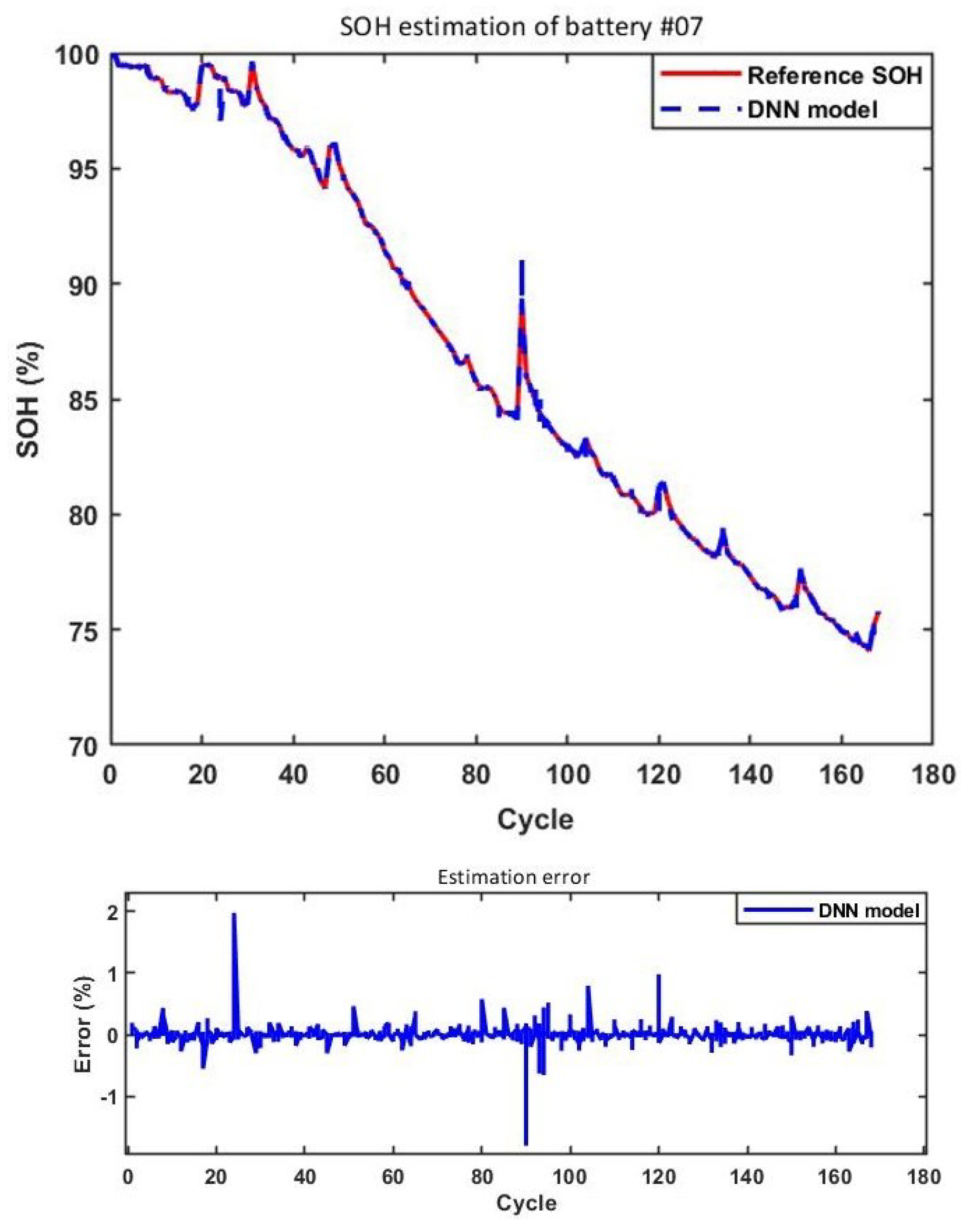
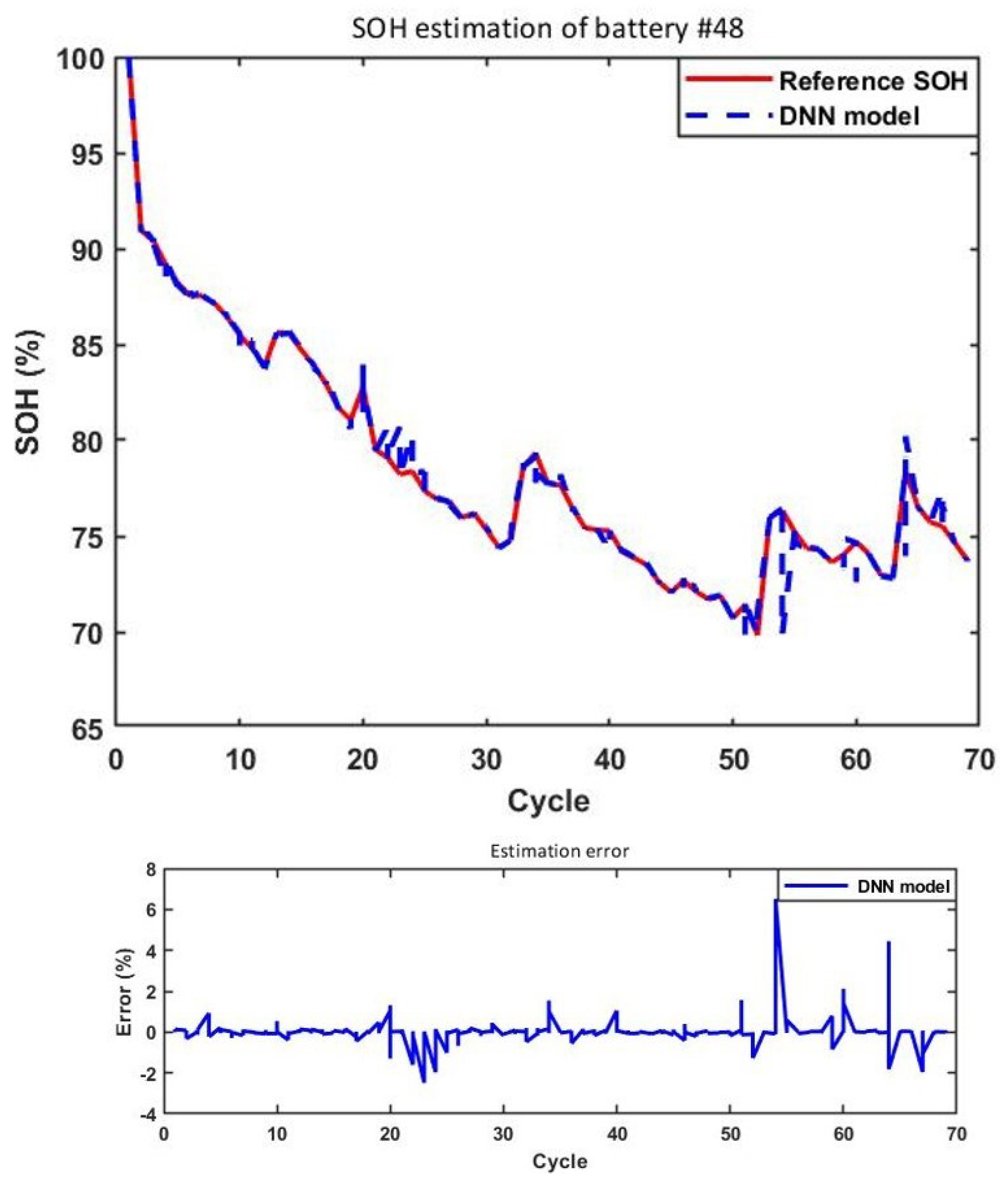
In this study, the developed DNN model provides even more accurate SoH estimates. For battery #06, the DNN achieves an MAE of 1.433%, while the CNN-BiGRU, used as a reference in previous work, has an MAE of 2.448%. As a reminder, the maximum errors observed for the CNN-BiGRU were 7.5% for set #06 and 6% for sets #07 and #48. These results highlight the superior performance and accuracy of the DNN compared to the CNN-BiGRU. Figure 8, Figure 9 and Figure 10 present the comparison between the DNN-estimated SoH and the measured SoH, along with the corresponding estimation errors, for battery sets #06, #07, and #48, respectively, demonstrating the high accuracy and consistency of the proposed model across different cells.
This improved performance is attributed to the ability of the DNN to exploit multiple hidden layers and various activation functions, enabling it to effectively model the complex dynamics of batteries and generalize across different charge profiles and temperature conditions. The DNN also accurately tracks the overall degradation trend while taking into account the local capacity regeneration phenomenon, which can cause occasional variations in estimates. The graphical interface developed for the DNN facilitates training, validation, and direct visualization of performance, offering a practical solution for implementing SoH estimation in battery management systems for EVs. These results suggest that DNN can outperform CNN-BiGRU models under certain conditions, due to its flexibility and capacity to handle complex nonlinearities. The potential limitations of CNN-BiGRU, such as the complexity of hyperparameter tuning or generalization across different battery sets, warrant exploration in future comparative studies. To accurately evaluate the performance of the proposed model, the mean absolute error (MAE), mean square error (MSE), and coefficient of determination R 2 were adopted as evaluation metrics.
MAE = 1 n i = 1 n y i y ^ i
MSE = 1 n i = 1 n y i y ^ i 2
R 2 = 1 i = 1 n y i y ^ i 2 i = 1 n y i y ¯ 2
where y ¯ represents the mean of actual SoH values.
The following presents the findings obtained from the DNN. The outcome of the SoH-monitoring experiment is presented once the model hyperparameters have been fixed. Next, the performance of the proposed DNN model is compared to that of the CNN-BiGRU model, and then to that of several other architectures, including 1D CNN, CNN-LSTM, BiGRU, and ANN. All of these models are supplied by the same (I, V, T) inputs. The errors MAE and MSE, and R 2 were evaluated for batteries B0006, B0007, and B0048 using the dataset of the NASA PCoE for the DNN algorithm. The findings are presented in Table 3.
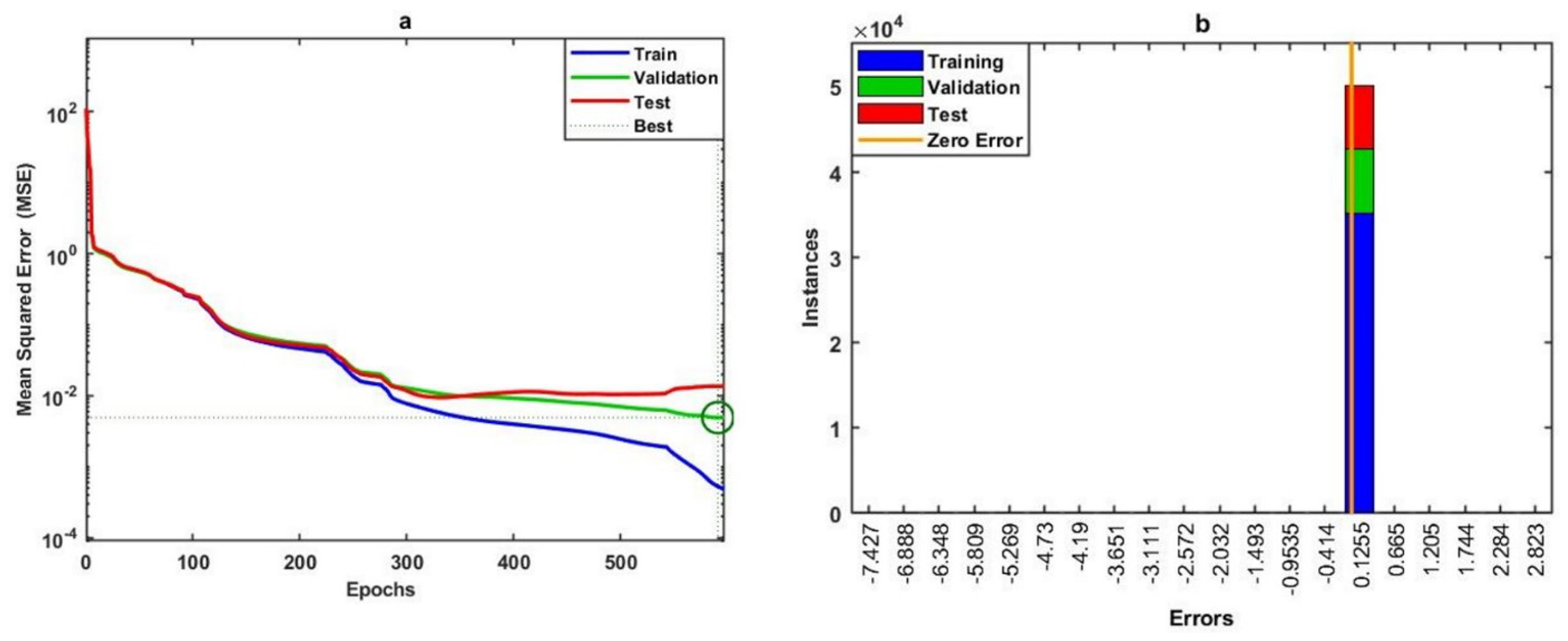
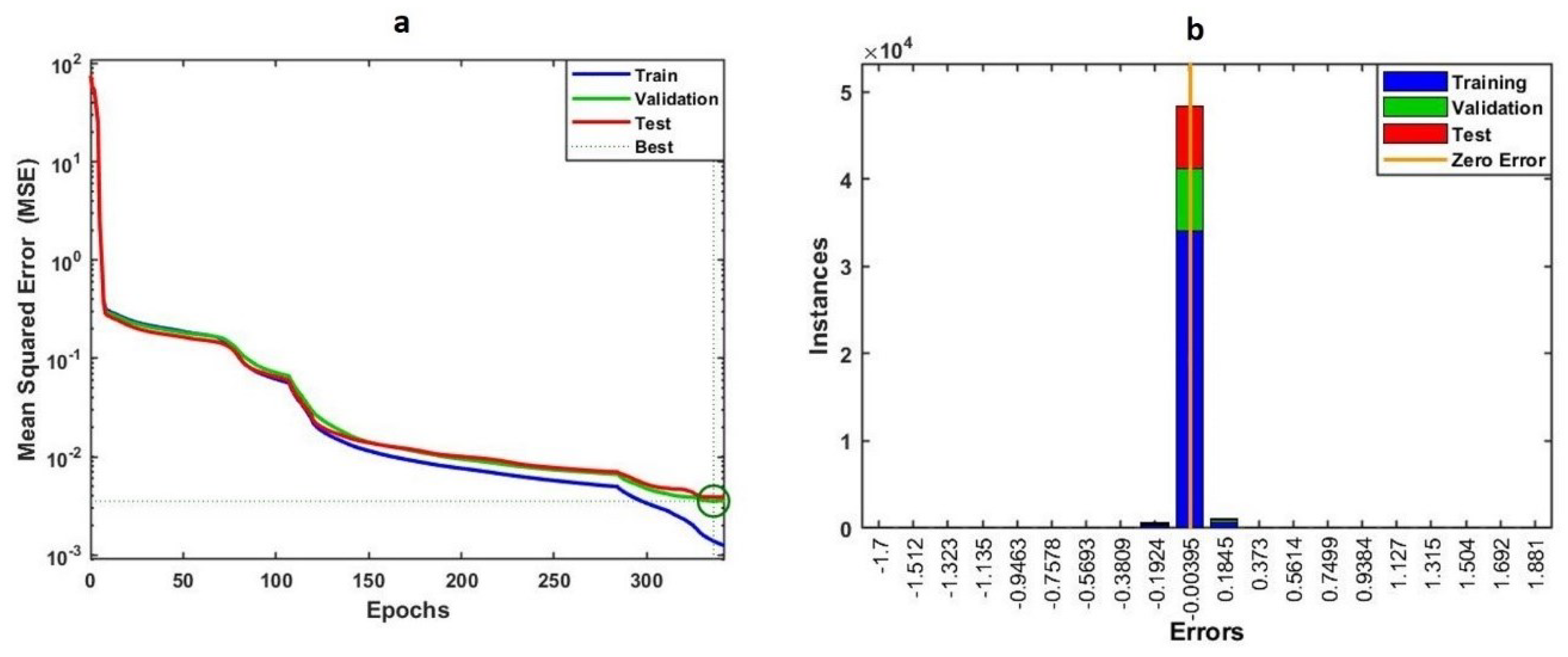
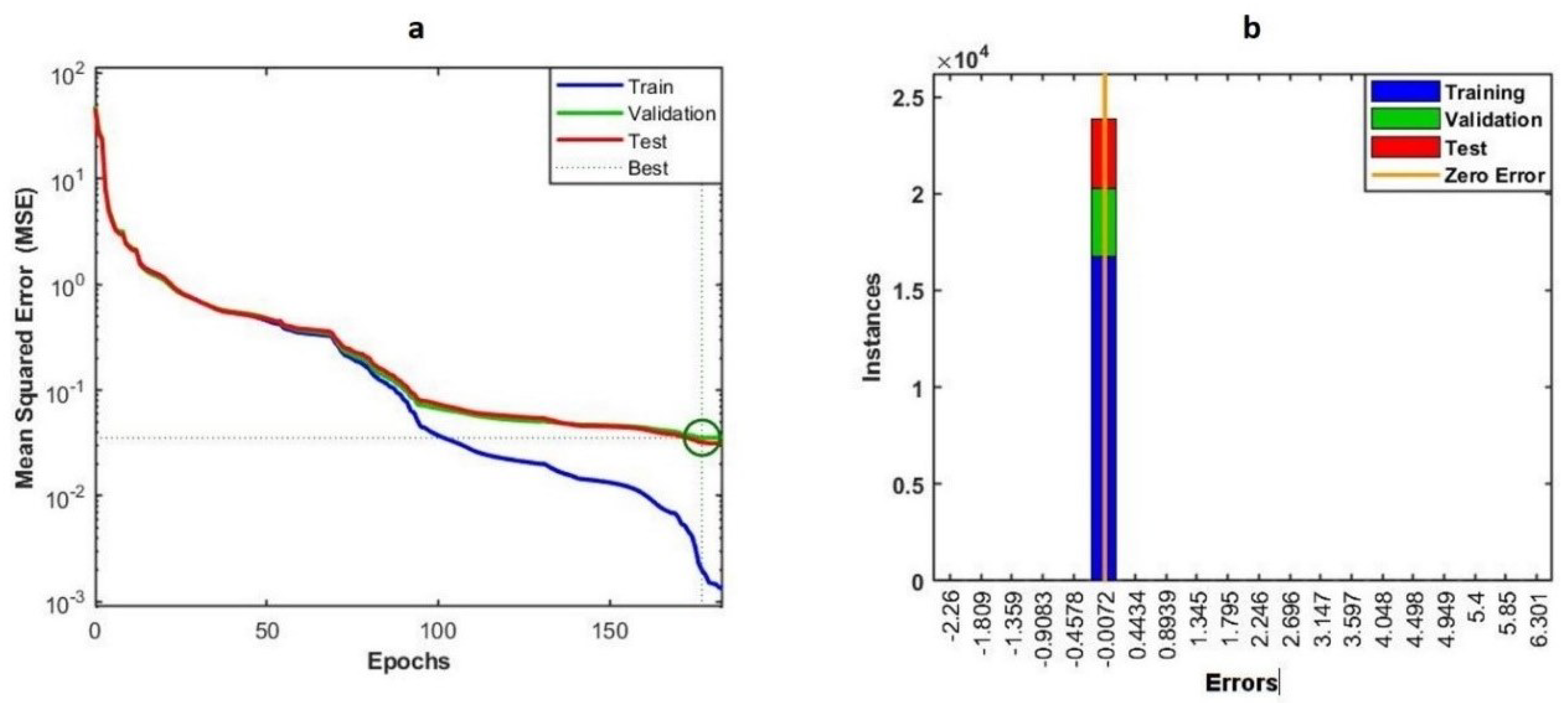
Variation in mean square error (MSE) at different epochs for the training, test, and validation datasets is depicted in Figure 11a, Figure 12a and Figure 13a. The green circle indicates the highest model performance. Figure 11b, Figure 12b and Figure 13b represent the error histograms of the selected datasets. These two figures reveal that the errors converged to zero. The errors correspond to the difference between the DNN outputs and the targets. The results presented in the figures were generated by a ten-layer DNN. In this case, the target was the SoH calculated from the experiment. For battery B0006, the validation trend indicates the highest performance at 4.9313 × 10 3 at 591 epochs. For the rechargeable cell B0007, the validation trend achieved the highest performance at 3.5265 × 10 3 at 336 epochs. For battery B0048, the validation trend attained the highest performance at 3.5485 × 10 2 at 177 epochs.
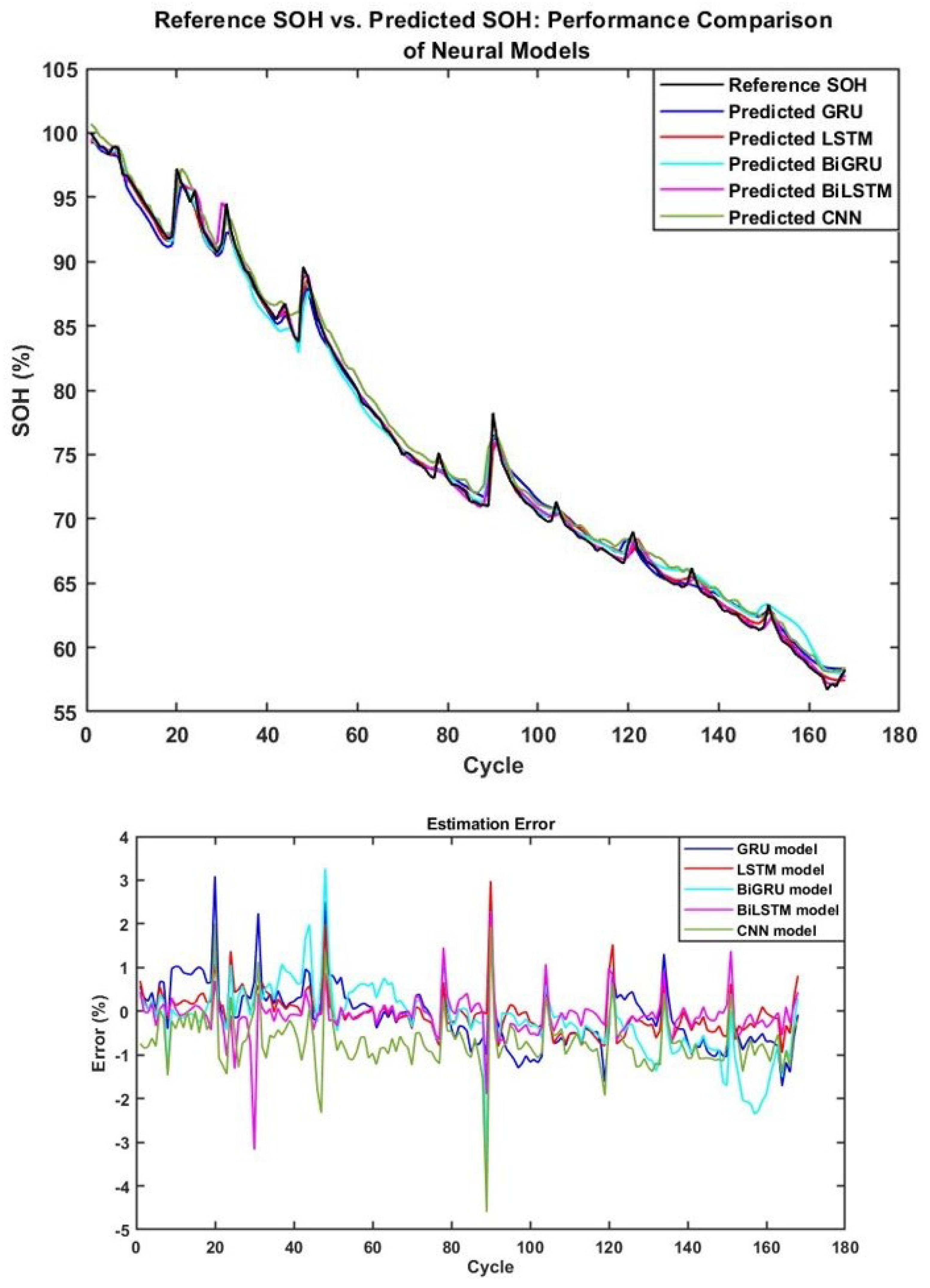
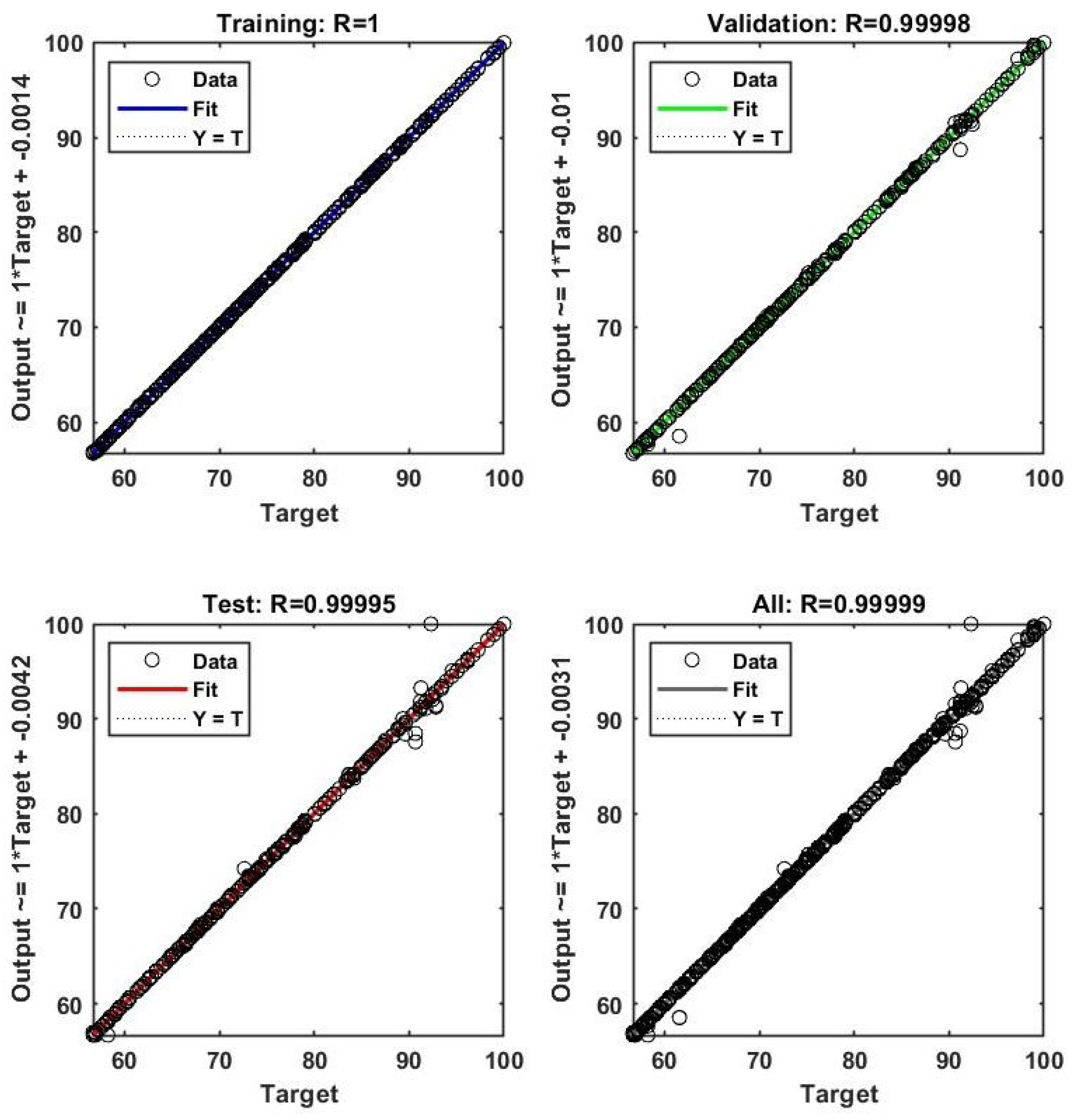
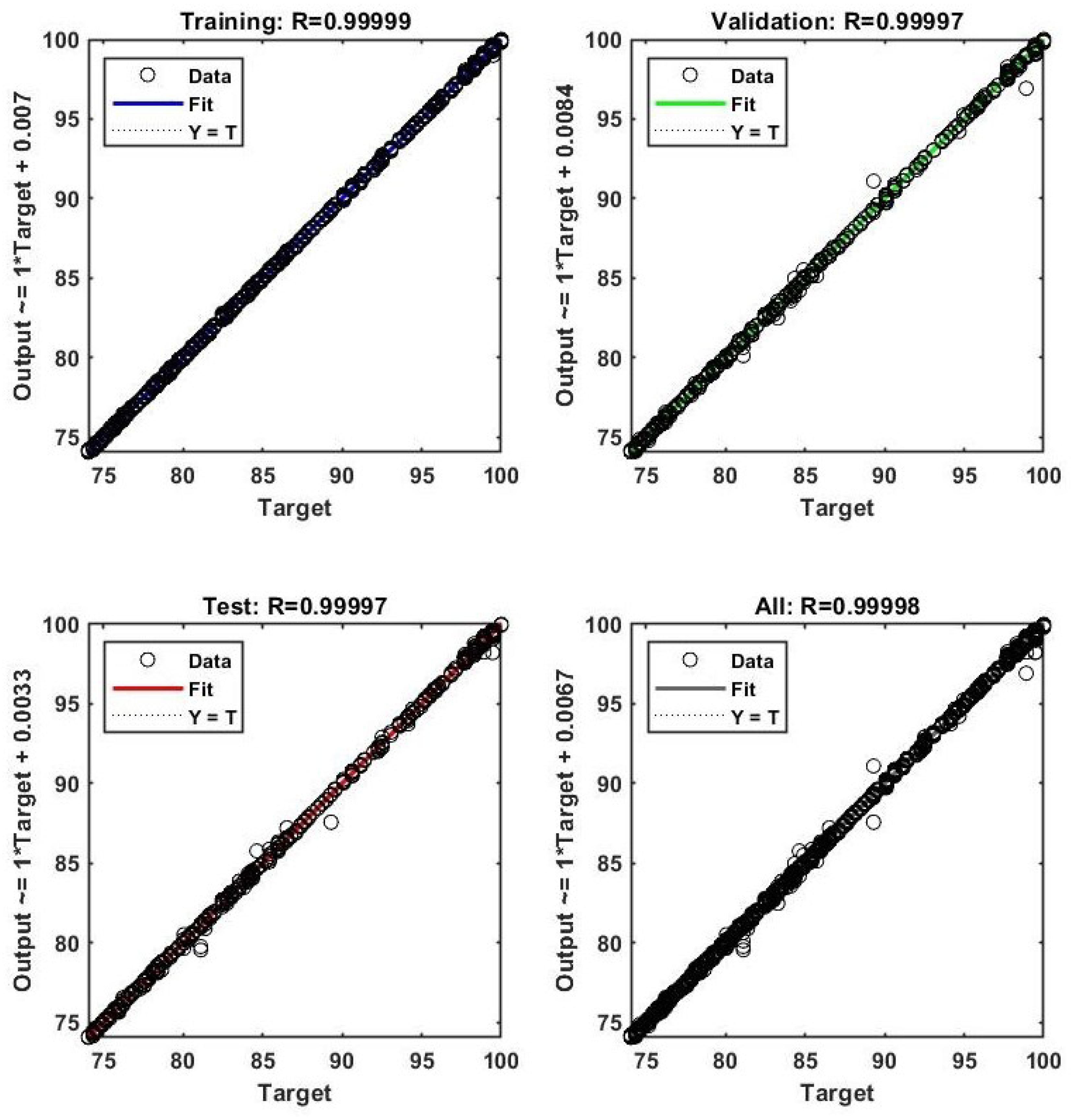
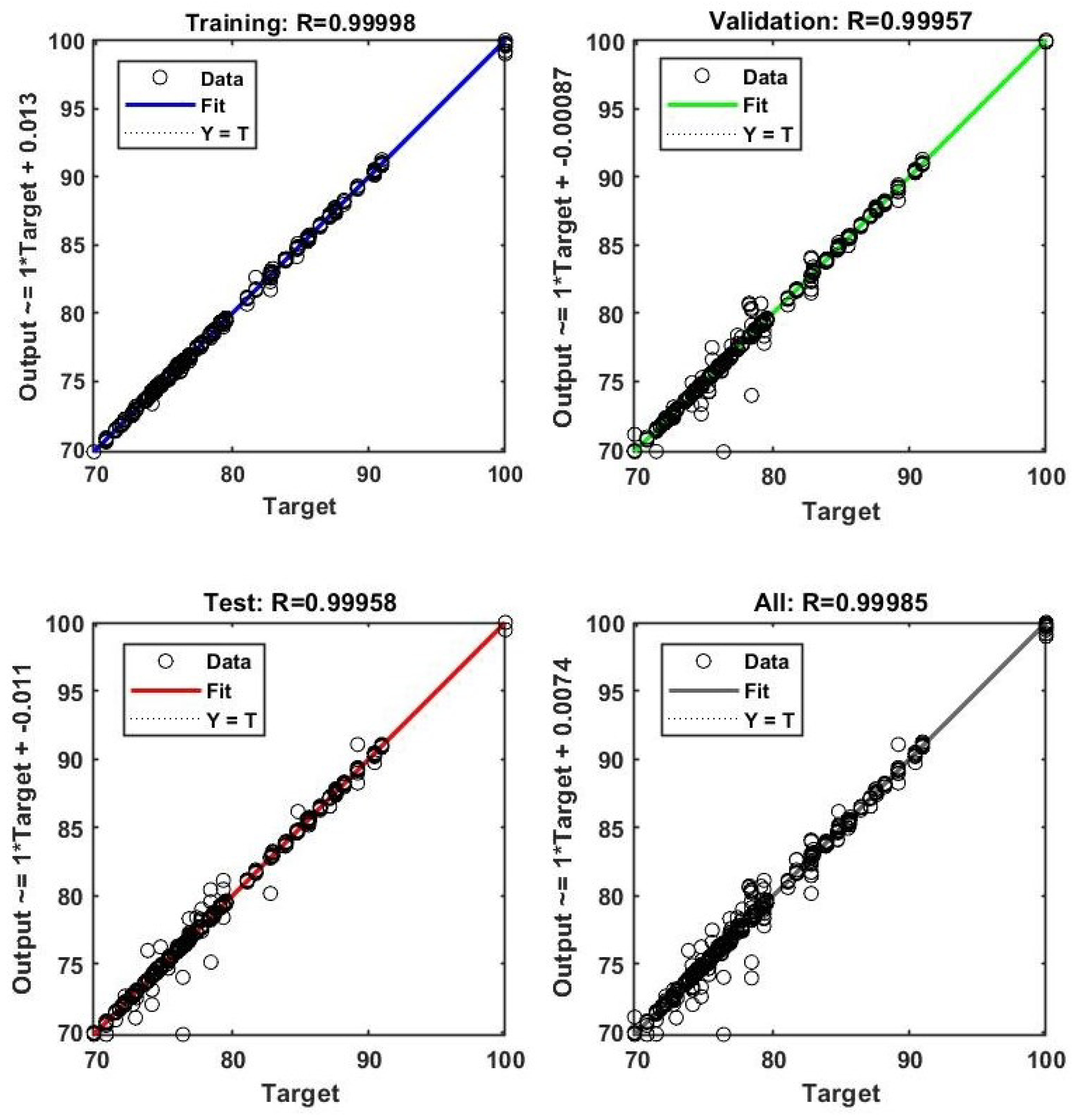
To provide a comprehensive evaluation of the proposed DNN model, additional neural network architectures, including GRU, LSTM, BiGRU, BiLSTM, and CNN, were considered for comparison, as they represent the main families of models commonly applied in recent SoH estimation studies. The architectures of these models are detailed in Table 4, highlighting their key configurations. Figure 14 illustrates the comparison of the actual SoH and the SoH predicted by each of these models over the battery cycles, along with the corresponding estimation errors on battery set #06. The results clearly demonstrate that the MATLAB-developed DNN consistently achieves estimation errors closer to zero and exhibits lower error variability compared to the other networks, confirming its superior performance in accurately capturing battery degradation trends. Figure 15, Figure 16 and Figure 17 were obtained using the DNN model trained on a publicly available NASA dataset. The results illustrate that the coefficient of determination values approach 1, demonstrating the reliable performance of the model for highly accurate SoH estimation.
Although the proposed DNN model does not explicitly predict the knee point as a standalone output, it provides an accurate and continuous estimation of the State of Health (SoH) over the entire aging process. This high-fidelity SoH trajectory constitutes a reliable basis for a posteriori knee-point identification through the analysis of degradation dynamics. As evidenced by the estimated SoH curves, a clear change in slope corresponding to accelerated degradation is observed for batteries B0006 and B0007 around cycles 50 and 48, respectively. These inflection points occur under identical experimental conditions (24 °C and identical charge/discharge profiles), highlighting consistent aging behavior while still reflecting cell-to-cell variability, mainly due to differences in initial capacity, which explains the distinct SoH levels at the knee point (approximately 88% for B0006 and 96% for B0007). In contrast, battery B0048, tested at a low temperature of 4 °C, exhibits a markedly different degradation pattern characterized by rapid and monotonic capacity loss from the first cycles, without a clearly identifiable classical knee point.
The MATLAB interface developed in this work serves solely as an offline tool for model development and is not integrated into the BMS for real-time operation. To assess the potential computational impact of the proposed approach, a comparison of model architectures has been performed. As summarized in Table 5, our optimized DNN architecture exhibits a low computational footprint, with only 8521 parameters, representing a substantial reduction compared to the referenced CNN-BiGRU model [50] with 299089 parameters. The characteristics of the observed knee points, including their occurrence cycles, corresponding SoH levels, and associated degradation behaviors, are systematically summarized in Table 6, providing a concise comparison across different batteries and operating temperatures and further illustrating the reliability of the proposed model with respect to cell-to-cell variability. The estimated inference latency of the compact DNN ranges from approximately 1 to 8 ms, based on established analytical frameworks linking model complexity and deployment constraints to execution times on microcontroller-class processors [53,56]. Although these estimates have not yet been validated experimentally, they demonstrate that the proposed architecture has the potential to satisfy typical BMS requirements. Furthermore, Table 7 presents a comparative analysis of SoH estimation methods including latency metrics, providing a broader context for the real-time applicability of different approaches. Experimental validation on representative embedded hardware, such as STM32 microcontrollers, is considered a perspective for future work, focusing on implementation engineering rather than algorithmic development.

Considerations on Real-World EV Applicability

While our model demonstrates strong performance on constant-current discharge data (MAE = 1.433%), its application to real electric vehicle (EV) operation requires consideration of several practical factors. Real-world EV usage involves dynamic current profiles from standardized driving cycles such as WLTC, UDDS, and US06, which feature significant current variability, temperature fluctuations, and partial cycling patterns not present in controlled laboratory CC tests. It is important to note that although our dataset includes different temperature conditions (24 °C for batteries B0006/B0007 and 4 °C for B0048), it does not capture continuous temperature variations during individual discharge cycles. This represents a limitation compared to real EV operation, where battery temperature evolves dynamically in response to driving conditions, ambient temperature changes, and thermal management system operation, all of which influence both performance and degradation rates.
Based on preliminary analysis and comparative studies from the literature [59], adapting our model to WLTC driving conditions might increase the MAE to approximately 1.6–2.2%, which remains competitive with state-of-the-art methods. Future work will focus on implementing transfer learning techniques to bridge the gap between CC laboratory data and dynamic real-world profiles, with particular emphasis on modeling the coupled electrical and thermal dynamics characteristic of actual EV operation.

5. Conclusions and Perspectives

The precise prediction of the SoH is a critical factor in maintaining battery efficiency, extending battery life, and preventing overuse. In this study, a DNN-based model was developed to improve SoH estimation accuracy compared to CNN-BiGRU hybrid approaches reported in the literature. To perform the suggested model’s effectiveness under real-world scenarios, a dataset on lithium ion batteries with various discharge configurations (discharge current and operating temperature) obtained from NASA was employed in all experiments. The designed model used current (I), voltage (V), and temperature (T) measurements as its direct input variables. In addition, the results of other networks, specifically BiGRU, 1D CNN, CNN/LSTM, and ANN, were also presented in this manuscript for performance comparison. The results show that the DNN achieves superior performance, with a MAE of 1.433% for battery B0006, compared to 2.448% for CNN-BiGRU. This improvement highlights the potential of DNN to effectively model complex nonlinear relationships between battery operating variables while ensuring better generalization across different datasets and temperature conditions. In addition, the integration of a graphical interface facilitates the process of training, validation, and performance visualization, making this approach particularly suitable for battery management systems in EVs.
Although hybrid architectures such as CNN-BiGRU have shown promising results in prior studies, their high structural complexity and large number of trainable parameters limit their suitability for embedded BMS implementation. In contrast, the proposed DNN offers a compact and computationally efficient architecture, enabling accurate and continuous SoH estimation with low inference latency compatible with real-time constraints. Beyond prediction accuracy, the smooth and continuous SoH trajectories produced by the model provide a reliable basis for identifying degradation inflection points, supporting advanced aging analysis without requiring an explicit knee-point predictor.
Future work will focus on extending the proposed framework toward real-world EV operating conditions by incorporating dynamic driving cycles and continuously varying thermal profiles. Transfer learning will be employed to adapt the model to different battery chemistries and operating domains, while additional degradation-related features, such as internal resistance indicators, will be integrated to further enhance generalization. Finally, experimental validation on representative embedded hardware platforms will be pursued to bridge the gap between algorithmic development and practical BMS deployment.

Author Contributions

Conceptualization, S.E.F. and J.K.; Methodology, S.E.F. and J.K.; Software, S.E.F.; Validation, J.K., J.V., A.L., H.Q. and M.O.J.; Formal analysis, S.E.F.; Investigation, S.E.F.; Resources, J.V., A.L. and H.Q.; Data curation, S.E.F.; Writing—original draft, S.E.F. and J.K.; Writing—review & editing, S.E.F., J.K., J.V. and A.L.; Visualization, S.E.F. and J.K.; Supervision, J.K. and M.O.J.; Project administration, J.K., H.Q. and M.O.J. All authors have read and agreed to the published version of the manuscript.

Funding

This research received no external funding.

Data Availability Statement

The data supporting this study’s findings are publicly available at NASA PCOE Research Center, https://ti.arc.nasa.gov/tech/dash/groups/pcoe/prognostic-data-repository, accessed on 24 November 2025.

Conflicts of Interest

The authors have no conflicts of interest to declare that are relevant to the content of this article.

References

  1. El Fallah, S.; Kharbach, J.; Hammouch, Z.; Rezzouk, A.; Ouazzani Jamil, M. State of charge estimation of an electric vehicle’sbattery using Deep Neural Networks: Simulation and experimental results. J. Energy Storage 2023, 62, 106904. [Google Scholar] [CrossRef]
  2. Song, K.; Hu, D.; Tong, Y.; Yue, X. Remaining life prediction of lithium-ion batteries based on health management: A review. J. Energy Storage 2023, 57, 106193. [Google Scholar] [CrossRef]
  3. El Fallah, S.; Kharbach, J.; Vanagas, J.; Vilkelytė, Ž.; Tolvaišienė, S.; Gudžius, S.; Ouazzani Jamil, M. Advanced state of charge estimation using deep neural network, gated recurrent unit, and long short-term memory models for lithium-Ion batteries under aging and temperature conditions. Appl. Sci. 2024, 14, 6648. [Google Scholar] [CrossRef]
  4. Yu, J.; Yao, F. Multi-Timescale Estimation of SOE and SOH for Lithium-Ion Batteries with a Fractional-Order Model and Multi-Innovation Filter Framework. Batteries 2025, 11, 372. [Google Scholar] [CrossRef]
  5. Luo, K.; Chen, X.; Zheng, H.; Shi, Z. A review of deep learning approach to predicting the state of health and state of charge of lithium-ion batteries. J. Energy Chem. 2022, 74, 159–173. [Google Scholar] [CrossRef]
  6. Hong, J.; Wang, Z.; Chen, W.; Wang, L.; Lin, P.; Qu, C. Online accurate state of health estimation for battery systems on real-world electric vehicles with variable driving conditions considered. J. Clean. Prod. 2021, 294, 125814. [Google Scholar] [CrossRef]
  7. Slattery, M.; Dunn, J.; Kendall, A. Transportation of electric vehicle lithium-ion batteries at end-of-life: A literature review. Resour. Conserv. Recycl. 2021, 174, 105755. [Google Scholar] [CrossRef]
  8. Lu, L.; Han, X.; Li, J.; Hua, J.; Ouyang, M. A review on the key issues for lithium-ion battery management in electric vehicles. J. Power Sources 2013, 226, 272–288. [Google Scholar] [CrossRef]
  9. El Fallah, S.; Kharbach, J.; Rezzouk, A.; Ouazzani Jamil, M. Robust state of charge estimation and simulation of lithium-ion batteries using deep neural network and optimized random forest regression algorithm. In Artificial Intelligence and Industrial Applications, Proceedings of the International Conference on Artificial Intelligence Industrial Applications, Meknes, Morocco, 17–18 February 2023; Springer Nature: Cham, Switzerland, 2023; pp. 34–45. [Google Scholar]
  10. Thele, M.; Bohlen, O.; Sauer, D.U.; Karden, E. Development of a voltage-behavior model for NiMH batteries using an impedance-based modeling concept. J. Power Sources 2008, 175, 635–643. [Google Scholar] [CrossRef]
  11. Jiang, L.; Deng, Z.; Tang, X.; Hu, L.; Lin, X.; Hu, X. Data-driven fault diagnosis and thermal runaway warning for battery packs using real-world vehicle data. Energy 2021, 234, 121266. [Google Scholar] [CrossRef]
  12. Tang, X.; Chen, J.; Liu, T.; Qin, Y.; Cao, D. Distributed deep reinforcement learning-based energy and emission management strategy for hybrid electric vehicles. IEEE Trans. Veh. Technol. 2021, 70, 9922–9934. [Google Scholar] [CrossRef]
  13. Hu, X.; Che, Y.; Lin, X.; Onori, S. Battery health prediction using fusion-based feature selection and machine learning. IEEE Trans. Transp. Electrif. 2021, 7, 382–398. [Google Scholar] [CrossRef]
  14. El Fallah, S.; Kharbach, J.; Vanagas, J.; Vilkelytė, Ž; Tolvaišienė, S.; Ikmel, G.; Jamil, M.O. Advanced Battery Management for Electric Vehicles: A Deep Dive into Estimation Techniques Based on Deep Learning for the State of Health and State of Charge of Lithium-Ion Batteries. In Proceedings of the 2024 IEEE Open Conference of Electrical, Electronic and Information Sciences (eStream), Vilnius, Lithuania, 25–25 April 2024; IEEE: New York, NY, USA, 2024; pp. 1–5. [Google Scholar]
  15. Fang, D.; Wu, W.; Li, J.; Yuan, W.; Liu, T.; Dai, C.; Wang, Z.; Zhao, M. Performance simulation method and state of health estimation for lithium-ion batteries based on aging-effect coupling model. Green Energy Intell. Transp. 2023, 2, 100082. [Google Scholar] [CrossRef]
  16. Feng, J.; Cai, F.; Zhan, X.; Zhang, X.; Zhao, Y.; Wang, S. A novel state-of-health prediction and assessment strategies for high-capacity mining lithium-ion batteries based on multi-indicator. J. Electrochem. Soc. 2024, 171, 0514. [Google Scholar] [CrossRef]
  17. Teki, V.K.; Kasi, J.; Chidurala, S.; Priyadarshini, S.; Ramana Kumar Joga, S.; Maharana, M.K.; Panigrahi, C.K. Analysis of lithium-ion batteries through electrochemical impedance spectroscopy modeling. J. Electrochem. Soc. 2024, 171, 060528. [Google Scholar] [CrossRef]
  18. Yang, Y.; Wen, J.; Shi, Y. Remaining useful life prediction for lithium-ion battery based on CEEMDAN and SVR. J. Electron. Meas. Instrum. 2020, 34, 197–205. [Google Scholar]
  19. Zhang, Y.; Wang, A.; Zhang, C.; He, P.; Shao, K.; Cheng, K.; Zhou, Y. State-of-Health Estimation for Lithium-Ion Batteries via Incremental Energy Analysis and Hybrid Deep Learning Model. Batteries 2025, 11, 217. [Google Scholar] [CrossRef]
  20. Hosseininasab, S.; Lin, C.; Pischinger, S. State-of-health estimation of lithium-ion batteries for electrified vehicles using a reduced-order electrochemical model. J. Energy Storage 2022, 52, 10. [Google Scholar] [CrossRef]
  21. Madani, S.S.; Hébert, M.; Boulon, L.; Lupien-Bédard, A.; Allard, F. Comparative Analysis of ML and DL Models for Data-Driven SOH Estimation of LIBs Under Diverse Temperature and Load Conditions. Batteries 2025, 11, 393. [Google Scholar] [CrossRef]
  22. Ye, H.; Liang, L.; Li, G.Y.; Kim, J.; Lu, L.; Wu, M. Machine learning for vehicular networks: Recent advances and application examples. IEEE Veh. Technol. Mag. 2018, 13, 94–101. [Google Scholar] [CrossRef]
  23. Christian, J.; Patrick, Z.; Kai, H. Machine learning and deep learning. Electron. Mark. 2021, 31, 685–695. [Google Scholar] [CrossRef]
  24. Xiao, Y.; Wen, J.; Yao, L.; Zheng, J.; Fang, Z.; Shen, Y. A comprehensive review of the lithium-ion battery state of health prognosis methods combining aging mechanism analysis. J. Energy Storage 2023, 65, 107347. [Google Scholar] [CrossRef]
  25. El Fallah, S.; Kharbach, J.; Lehmam, O.; Masrour, R.; Rezzouk, A.; Qjidaa, H.; Jamil, M.O. Review on Techniques for Evaluating the Degradation of Lithium-Ion Batteries Based on Artificial Intelligence: Algorithms, Implementations, Problems and Prospects. In Proceedings of the International Conference on Digital Technologies and Applications; Springer Nature: Cham, Switzerland, 2024; pp. 468–476. [Google Scholar]
  26. Lyu, C.; Song, Y.; Zheng, J.; Luo, W.; Hinds, G.; Li, J.; Wang, L. In situ monitoring of lithium-ion battery degradation using an electrochemical model. Appl. Energy 2019, 250, 685–696. [Google Scholar] [CrossRef]
  27. Wang, J.; Zhao, R.; Huang, Q.A.; Wang, J.; Fu, Y.; Li, W.; Bai, Y.; Zhao, Y.; Li, X.; Zhang, J. High-efficient prediction of state of health for lithium-ion battery based on AC impedance feature tuned with Gaussian process regression. J. Power Sources 2023, 561, 232737. [Google Scholar] [CrossRef]
  28. He, Z.; Chen, D.; Pan, C.; Chen, L.; Wang, S. State of charge estimation of power Li-ion batteries using a hybrid estimation algorithm based on UKF. Electrochim. Acta 2016, 211, 101–109. [Google Scholar]
  29. Tran, M.K.; Mathew, M.; Janhunen, S.; Panchal, S.; Raahemifar, K.; Fraser, R.; Fowler, M. A comprehensive equivalent circuit model for lithium-ion batteries, incorporating the effects of state of health, state of charge, and temperature on model parameters. J. Energy Storage 2021, 43, 103252. [Google Scholar] [CrossRef]
  30. Li, W.; Demir, I.; Cao, D.; Jöst, D.; Ringbeck, F.; Junker, M.; Sauer, D.U. Data-driven systematic parameter identification of an electrochemical model for lithium-ion batteries with artificial intelligence. Energy Storage Mater. 2022, 44, 557–570. [Google Scholar] [CrossRef]
  31. Sun, H.; Yang, D.; Wang, L.; Wang, K. A method for estimating the aging state of lithium-ion batteries based on a multi-linear integrated model. Int. J. Energy Res. 2022, 46, 24091–24104. [Google Scholar] [CrossRef]
  32. Wang, C.; Xu, M.; Zhang, Q.; Feng, J.; Jiang, R.; Wei, Y.; Liu, Y. Parameters identification of Thevenin model for lithium-ion batteries using self-adaptive Particle Swarm Optimization Differential Evolution algorithm to estimate state of charge. J. Energy Storage 2021, 44, 103244. [Google Scholar] [CrossRef]
  33. Guo, F.; Couto, L.D.; Mulder, G.; Trad, K.; Hu, G.; Capron, O.; Haghverdi, K. A systematic review of electrochemical model-based lithium-ion battery state estimation in battery management systems. J. Energy Storage 2024, 101, 113850. [Google Scholar] [CrossRef]
  34. Chang, Y.; Fang, H. A hybrid prognostic method for system degradation based on particle filter and relevance vector machine. Reliab. Eng. Syst. Saf. 2019, 186, 51–63. [Google Scholar] [CrossRef]
  35. Li, W.; Sengupta, N.; Dechent, P.; Howey, D.; Annaswamy, A.; Sauer, D.U. Online capacity estimation of lithium-ion batteries with deep long short-term memory networks. J. Power Sources 2021, 482, 228863. [Google Scholar] [CrossRef]
  36. You, G.; Park, S.; Oh, D. Real-time state-of-health estimation for electric vehicle batteries: A data-driven approach. Appl. Energy 2016, 176, 92–103. [Google Scholar] [CrossRef]
  37. Wei, J.; Dong, G.; Chen, Z. Remaining useful life prediction and state of health diagnosis for lithium-ion batteries using particle filter and support vector regression. IEEE Trans. Ind. Electron. 2018, 65, 5634–5643. [Google Scholar] [CrossRef]
  38. Zhang, M.; Chen, W.; Yin, J.; Feng, T. Lithium battery health factor extraction based on improved douglas–peucker algorithm and SOH prediction based on XGboost. Energies 2022, 15, 5981. [Google Scholar] [CrossRef]
  39. Wu, J.; Su, H.; Meng, J.; Lin, M. State of health estimation for lithium-ion battery via recursive feature elimination on partial charging curves. IEEE J. Emerg. Sel. Top. Power Electron. 2023, 11, 131–142. [Google Scholar] [CrossRef]
  40. He, Y.; Bai, W.; Wang, L.; Wu, H.; Ding, M. SOH estimation for lithium-ion batteries: An improved GPR optimization method based on the developed feature extraction. J. Energy Storage 2024, 83, 110678. [Google Scholar] [CrossRef]
  41. Zhu, T.; Wang, S.; Fan, Y.; Hai, N.; Huang, Q.; Fernandez, C. An improved dung beetle optimizer- hybrid kernel least square support vector regression algorithm for state of health estimation of lithium-ion batteries based on variational model decomposition. Energy 2024, 306, 132464. [Google Scholar] [CrossRef]
  42. Cho, S.; Han, D.; Kim, J.; Kim, J. State of health estimation embedded with hardware accelerator based on long short-term memory combined with Bayesian optimization considering extracted health indicator in charging conditions. J. Energy Storage 2024, 90, 111897. [Google Scholar] [CrossRef]
  43. Liu, S.; Chen, Z.; Yuan, L.; Xu, Z.; Jin, L.; Zhang, C. State of health estimation of lithium-ion batteries based on multi-feature extraction and temporal convolutional network. J. Energy Storage 2024, 75, 109658. [Google Scholar] [CrossRef]
  44. Shu, X.; Shen, S.; Shen, J.; Zhang, Y.; Li, G.; Chen, Z.; Liu, Y. State of health prediction of lithium-ion batteries based on machine learning: Advances and perspectives. Iscience 2021, 24, 103265. [Google Scholar] [CrossRef]
  45. Liu, G.; Deng, Z.; Xu, Y.; Lai, L.; Gong, G.; Tong, L.; Ye, Z. Lithium-Ion Battery State of Health Estimation Based on CNN-LSTM-Attention-FVIM Algorithm and Fusion of Multiple Health Features. Appl. Sci. 2025, 15, 7555. [Google Scholar] [CrossRef]
  46. Li, C.; Han, X.; Zhang, Q.; Li, M.; Rao, Z.; Liao, W.; Li, G. State-of-health and remaining-useful-life estimations of lithium-ion battery based on temporal convolutional network-long short-term memory. J. Energy Storage 2023, 74, 109498. [Google Scholar] [CrossRef]
  47. Liu, C.; Li, H.; Li, K.; Wu, Y.; Lv, B. Deep Learning for State of Health Estimation of Lithium-Ion Batteries in Electric Vehicles: A Systematic Review. Energies 2025, 18, 1463. [Google Scholar] [CrossRef]
  48. Cervellieri, A. A Feed-Forward Back-Propagation Neural Network Approach for Integration of Electric Vehicles into Vehicle-to-Grid (V2G) to Predict State of Charge for Lithium-Ion Batteries. Energies 2024, 17, 6107. [Google Scholar] [CrossRef]
  49. Saha, B.; Goebel, K. Battery Data Set, NASA Ames Prognostics Data Repository; NASA Ames Research Center: Moffett Field, CA, USA, 2007. [Google Scholar]
  50. Mazzi, Y.; Sassi, H.B.; Errahimi, F. Lithium-ion battery state of health estimation using a hybrid model based on a convolutional neural network and bidirectional gated recurrent unit. Eng. Appl. Artif. Intell. 2024, 127, 107199. [Google Scholar] [CrossRef]
  51. Zhang, D.; Zhao, W.; Wang, L.; Chang, X.; Li, X.; Wu, P. Evaluation of the state of health of lithium-ion battery based on the temporal convolution network. Front. Energy Res. 2022, 10, 929235. [Google Scholar] [CrossRef]
  52. Wang, J.; Deng, Z.; Yu, T.; Yoshida, A.; Xu, L.; Guan, G.; Abudula, A. State of health estimation based on modified Gaussian process regression for lithium-ion batteries. J. Energy Storage 2022, 51, 104512. [Google Scholar] [CrossRef]
  53. Crocioni, G.; Pau, D.; Delorme, J.-M.; Gruosso, G. Li-ion batteries parameter estimation with tiny neural networks embedded on intelligent IoT microcontrollers. IEEE Access 2020, 8, 122135–122146. [Google Scholar] [CrossRef]
  54. Tong, Z.; Miao, J.; Tong, S.; Lu, Y. Early prediction of remaining useful life for Lithium-ion batteries based on a hybrid machine learning method. J. Clean. Prod. 2021, 317, 128265. [Google Scholar] [CrossRef]
  55. Xiao, Z.; Jiang, B.; Zhu, J.; Wei, X.; Dai, H. State of Health Estimation for Lithium-Ion Batteries Using an Explainable XGBoost Model with Parameter Optimization. Batteries 2024, 10, 394. [Google Scholar] [CrossRef]
  56. Huber, P.; Göhner, U.; Trapp, M.; Zender, J.; Lichtenberg, R. Comprehensive Analysis of Neural Network Inference on Embedded Systems: Response Time, Calibration, and Model Optimisation. Sensors 2025, 25, 4769. [Google Scholar] [CrossRef]
  57. Al-Rahamneh, A.; Izco, I.; Serrano-Hernandez, A.; Faulin, J. Machine Learning-Based State-of-Health Estimation of Battery Management Systems Using Experimental and Simulation Data. Mathematics 2025, 13, 2247. [Google Scholar] [CrossRef]
  58. Chaoraingern, J.; Numsomran, A. Embedded Sensor Data Fusion and TinyML for Real-Time Remaining Useful Life Estimation of UAV Li Polymer Batteries. Sensors 2025, 25, 3810. [Google Scholar] [CrossRef]
  59. Hu, C.; Li, B.; Ma, L.; Cheng, F. State-of-charge estimation for lithium-ion batteries of electric vehicle based on sensor random error compensation. J. Energy Storage 2022, 55, 105537. [Google Scholar] [CrossRef]
Figure 1. Deep neural network architecture for estimating the SoH.
Batteries 12 00052 g001
Figure 2. A diagram outlining a reliable procedure for estimating the SoH.
Batteries 12 00052 g002
Figure 3. The application flowchart operation concept algorithm.
Batteries 12 00052 g003
Figure 4. Capacity degradation over cycles for the different cells selected.
Batteries 12 00052 g004
Figure 5. Current discharge profiles of battery #06 at the 40th, 80th, and 168th cycles (aging cell). Only a segment of the discharge is shown for clarity, as the current is constant at 2 A.
Batteries 12 00052 g005
Figure 6. Voltage discharge profiles of battery #06 for the fresh cell (1st cycle), the 90th cycle, and the aged state (168th cycle).
Batteries 12 00052 g006
Figure 7. Temperature profiles of battery #06 for the fresh cell (1st cycle), the 90th cycle, and the aged state (168th cycle).
Batteries 12 00052 g007
Figure 8. The DNN-calculated SoH vs the real SoH and the estimation error on battery set #06.
Batteries 12 00052 g008
Figure 9. The DNN-calculated SoH vs the real SoH and the estimation error on battery set #07.
Batteries 12 00052 g009
Figure 10. The DNN-calculated SoH vs the real SoH and the estimation error on battery set #48.
Batteries 12 00052 g010
Figure 11. (a) Mean square error of test, validation, and training datasets over various epochs. (b) Error histogram shows the difference in both the Target and DNN outputs for battery B0006.
Batteries 12 00052 g011
Figure 12. (a) Mean square error of test, validation, and training datasets over various epochs. (b) Error histogram shows the difference in both the Target and DNN outputs for battery B0007.
Batteries 12 00052 g012
Figure 13. (a) Mean square error of test, validation, and training datasets over various epochs. (b) Error histogram shows the difference in both the Target and DNN outputs for battery B0048.
Batteries 12 00052 g013
Figure 14. Comparison of the real SoH and SoH predicted by various neural network models (GRU, LSTM, BiGRU, BiLSTM, 1D CNN) over cycles and the estimation error on battery set #06.
Batteries 12 00052 g014
Figure 15. Training, testing, and validation values of the R 2 for the B0006 cell.
Batteries 12 00052 g015
Figure 16. Training, testing, and validation values of the R 2 for the B0007 cell.
Batteries 12 00052 g016
Figure 17. Training, testing, and validation values of the R 2 for the B0048 cell.
Batteries 12 00052 g017
Table 1. Battery chemical characteristics.
Characteristics of the Cells TestedSpecifications
Cell chemistry18650 NCA cell
Nominal capacity2000 mAh (2Ah)
Upper cut-off voltage4.2 V
Table 2. Characteristics of the discharge tests for three Li-ion cells from the NASA dataset.
Battery NumberDischarge CurrentTemperatureCut-Off VoltageInitial Capacity
#0006Constant 2 A (CC)24 °C2.5 V2.0353 Ah
#0007Constant 2 A (CC)24 °C2.2 V1.8910 Ah
#0048Constant 1 A (CC)4 °C2.7 V1.6579 Ah
Table 3. Comparison of different methods for evaluating the SoH of various batteries.
MethodBattery No.MAE (%)MSE (%) R 2 References
BIGRUBattery #065.467--[50]
CNN-BiGRU2.448--[50]
CNN-LSTM3.446--[50]
ANN4.333--[50]
1D CNN3.969--[50]
DNN proposed1.4330.49310.99998-
DNN proposedBattery #072.9320.35260.99996-
CNN-LSTMBattery #073.188--[50]
1D CNNBattery #073.673--[50]
ANNBattery #075.413--[50]
DNN proposedBattery #484.3913.54850.99957-
TCNBattery #051.455--[51]
Modified GPRBattery #051.700--[52]
CNN-GRUBattery #054.040--[53]
CNN-LSTMBattery #054.340--[53]
ADLSTM-MCBattery #062.700--[54]
BOA-XGBoost15 cells under different aging conditions2.640--[55]
Table 4. Architectures of the neural network models used in the comparison.
ModelArchitecture ComponentSpecification
GRUNumber of GRU units(64, 32)
LSTMNumber of LSTM units(128, 64)
BiGRUNumber of Bidirectional GRU units(96, 48)
BiLSTMNumber of Bidirectional LSTM units(256, 128)
1D-CNNNumber of convolutional filters(64, 128, 256)
Table 5. Computational complexity comparison of different models [50].
MetricsCNN-BiGRUCNN-LSTMBiGRU-1DCNNANN-1Proposed DNN
Number of trained parameters299,089228,401126,62535,04160178521
Model size (MB)3.572.731.520.480.090.10
Table 6. Comparative analysis of knee point occurrence and degradation behavior across different batteries and operating temperatures.
BatteryTemperatureSoH at Knee-PointCycle of Knee-PointCharacterization
#000624 °C∼88%∼Cycle 50A distinct change in slope, marking the onset of an accelerated degradation phase.
#000724 °C∼96%∼Cycle 48The same acceleration phenomenon is present, occurring at a higher state of health.
#00484 °CNot applicableFrom Cycle 0No classical knee-point is observed; rapid and continuous degradation is induced by the low temperature.
Table 7. Comparative analysis of SoH estimation methods including inference latency.
ReferenceModelDataset/SourceExecution PlatformLatencyLatency Type
[57]MLPXJTU battery dataset + simulationRaspberry Pi 4B (CPU)28 msMeasured
[57]LSTMXJTU battery dataset + simulationRaspberry Pi 4B (CPU)49 msMeasured
[58]TinyML FFNN
(quantized)
Experimental UAV Li-poly battery dataARM Cortex-M0+≈2 msMeasured
This workDNNNASA PCoE battery datasetMCU-class processor (Cortex-M)≈1–8 msEstimated (analytical, based on [53,56])
Disclaimer/Publisher’s Note: The statements, opinions and data contained in all publications are solely those of the individual author(s) and contributor(s) and not of MDPI and/or the editor(s). MDPI and/or the editor(s) disclaim responsibility for any injury to people or property resulting from any ideas, methods, instructions or products referred to in the content.