


Abstract
Zinc-ion batteries (ZIBs) are regarded as one of the promising next-generation energy storage technologies due to their high volumetric capacity, cost-effectiveness, and high safety. MXene materials, featuring a unique two-dimensional (2D) layered structure, excellent conductivity, and tunable surface chemistry, have been widely applied in energy storage systems. This review summarizes the recent progress in experimental and computational strategies for MXene-based ZIBs. The construction of MXene-based electrodes and the effect mechanisms of Zn-ion transport facilitation, electrode cycling stability, and anode dendrite suppression are discussed. Subsequently, the theoretical simulation strategies for MXene performance investigation are analyzed, including surface chemistry and defect engineering of MXene-based electrodes and the rational design of heterostructure interfaces for enhancing conductivity and suppressing Zn dendrite growth. Finally, the review outlines the major challenges that currently hinder the applications of MXene in ZIBs and proposes future research directions, offering insights that may guide the continued advancement of next-generation MXene-based energy storage systems.
1. Introduction
Over the past decades, lithium-ion batteries (LIBs) have dominated the global energy storage market owing to their high energy density, long cycle life, and excellent energy efficiency since their commercialization in the 1990s. LIBs have been widely used in portable electronic devices and electric vehicles [1,2]. However, as the demand for large-scale energy storage increases, LIBs are facing several critical challenges. The scarcity of lithium resources and the stringent manufacturing environment result in high production costs, while the flammability, toxicity, and volatility of organic electrolytes raise serious safety and environmental concerns [3,4,5]. Consequently, the development of next-generation alternative battery systems has become an urgent priority. In recent years, significant breakthroughs have been achieved in monovalent-ion (Na+ and K+) and multivalent-ion (Zn2+, Mg2+, Ca2+, and Al3+) batteries, offering new opportunities and directions for energy storage technologies. Among these, aqueous zinc-ion batteries (AZIBs), which employ water-based electrolytes, have emerged as particularly promising candidates. The use of aqueous electrolytes effectively mitigates the safety and environmental issues associated with conventional organic electrolytes. More importantly, zinc (Zn) metal exhibits several unique advantages, including a high volumetric capacity (5855 mAh cm−3), an appropriate redox potential (−0.763 V vs. SHE), natural abundance, low cost, and stability in humid and oxygen-rich environments [6]. These merits make AZIBs an attractive choice for safe, cost-effective, and sustainable energy storage. Nevertheless, the practical application of AZIBs remains hindered by several intrinsic challenges. The Zn metal anode suffers from dendrite growth and parasitic reactions (e.g., hydrogen evolution reaction, HER), leading to corrosion and surface passivation [7,8]. On the other hand, cathode materials generally exhibit low electrical conductivity, sluggish ion diffusion kinetics, structural degradation, and dissolution of active components, leading to poor rate capability and limited cycling stability of AZIBs.
Against this background, MXenes, two-dimensional (2D) transition metal carbides and nitrides, have been widely employed to enhance the performance of AZIBs due to their unique physicochemical properties. MXene-based materials offer numerous advantages in energy storage systems: High electrical conductivity improves charge transport; a large surface area promotes ion storage and interfacial reactions; tunable surface chemistry (e.g., –O, –OH, –F functional groups) enhances electrolyte wettability and interface compatibility; and excellent mechanical and thermal stability maintains structural integrity [9,10,11]. By leveraging these features, researchers have developed various modification strategies and structural designs, applying MXenes to both electrode and electrolyte design to significantly enhance AZIB performance. Furthermore, to elucidate the underlying mechanisms of MXene–ZIB interactions, experimental investigations have been complemented by theoretical simulations such as density functional theory (DFT) and molecular dynamics (MD) calculations [12,13,14]. These approaches provide insights into ion adsorption and diffusion behavior, electronic structure evolution, surface functional group effects, and electrochemical reaction pathways, thereby revealing the fundamental mechanisms by which MXenes enhance AZIB performance. Despite their attractive conductivity and hydrophilicity, MXenes suffer from stability issues in aqueous solutions [15]. The abundant surface terminations (–O, –OH, –F), while beneficial for interfacial coordination, also promote gradual oxidation to TiOx and can alter the electronic structure during cycling [16]. Furthermore, MXene nanosheets may undergo edge-site degradation or surface passivation when exposed to dissolved oxygen or electrolyte components. These intrinsic stability challenges have been frequently reported in MXene-based electrode and interphase systems and addressing them is crucial for achieving long-term electrochemical durability. This review summarizes the multifaceted roles and recent progress in MXene materials in enhancing the performance of aqueous zinc-ion batteries (AZIBs), including cathode activation and composite strategies for interfacial and structural optimization, anode interfacial engineering, electrolyte additive regulation, and zinc metal-free anode designs, for improved interfacial stability. Moreover, we highlight the critical contribution of atomistic simulations in clarifying the enhancement mechanisms within MXene-based AZIBs. The discussion emphasizes that computational methods are indispensable for interpreting fundamental electrochemical behaviors and guiding the prediction of superior performance. Finally, the existing challenges and future perspectives of MXene applications in ZIBs are outlined.
2. MXene-Based Materials for Zinc-Ion Storage Applications
2.1. Design Philosophy of MXene-Based Cathodes
The electrochemical performance of ZIBs largely depends on the structure and design of the cathode materials. Currently, the commonly used cathodes can be categorized into four main types: manganese-based oxides (e.g., MnO2, Ca2Mn3O8) [17,18,19], vanadium-based compounds (e.g., V2O5, Zn0.25V2O5·nH2O, Na2V6O16·3H2O) [20,21,22], Prussian blue analogues (PBAs) [23,24], and organic-based materials [25,26]. Most vanadium oxides possess intrinsically low electronic conductivity, which restricts their electrochemical activity. Finally, high-valence vanadium compounds are known to be toxic, posing challenges for the development of environmentally friendly energy storage systems. Manganese-based oxides have been extensively studied owing to their natural abundance, low cost, and environmental friendliness. They exhibit relatively high operating voltages (approximately 1.3–1.5 V) and decent energy densities. Nevertheless, the insertion and extraction of Zn2+ often induce lattice distortion and phase transitions, which lead to structural instability and severe volume changes, thereby resulting in capacity fading of ZIBs [27]. Vanadium-based materials exhibit diverse crystal structures. Owing to the multiple valence states of vanadium (V2+–V5+) and their open frameworks, these materials typically deliver high theoretical capacities and excellent cycling stability. For instance, layered vanadium oxide cathodes can achieve a discharge capacity of up to 585 mAh·g−1 at a current density of 0.1 A·g−1 [28]. This superior performance is attributed to the layered or tunnel structures that provide favorable channels for reversible Zn2+ intercalation, while their flexible frameworks mitigate volume expansion. However, during prolonged cycling, the repeated insertion/extraction of Zn2+ can result in sluggish ion kinetics, irreversible phase transitions, and even structural collapse. Prussian blue analogues (PBAs) feature a three-dimensional (3D) cubic open framework with large ionic channels that facilitate rapid Zn2+ diffusion. They can be synthesized through simple and low-cost procedures. Nonetheless, PBAs generally exhibit low theoretical capacities (typically 60–100 mAh·g−1) and limited cycling stability, which restrict their further application in high-performance ZIBs. Organic-based cathodes (e.g., calix quinone, pyrene-4,5,9,10-tetraone (PTO), diquinoxalino[2,3-a:2′,3′-c]phenazine (HATN), and HATN-2,8,14-tricarbonitrile (HATN-3CN)) possess flexible frameworks, tunable molecular structures, controllable compositions, and intrinsic mechanical ductility, making them promising candidates for flexible and wearable energy storage devices [29,30]. These cathodes store charge through n-type or p-type redox reactions. In particular, n-type organic materials with redox-active functional groups can reversibly coordinate with Zn2+ ions at active sites, effectively avoiding the structural collapse commonly observed in inorganic cathodes. However, their practical application still faces significant challenges, such as poor electrical conductivity, which limits the utilization of redox-active sites and hinders full capacity realization. Additionally, organic molecules or discharge products tend to dissolve in aqueous electrolytes, causing capacity degradation [31,32].
2.1.1. MXene Used as an Active Material for the Cathode
MXene materials have been recognized as highly promising hosts for zinc-ion storage due to their unique structural characteristics and outstanding physicochemical properties [33,34]. As a typical two-dimensional (2D) layered material, MXene possesses a large specific surface area and an open porous structure, which provides abundant active sites for Zn2+ insertion and extraction. In addition, its intrinsic high electronic conductivity (up to approximately 10 S·cm−1) effectively facilitates rapid charge transfer during the charge–discharge process. Meanwhile, the excellent hydrophilicity of MXene enhances the wettability of aqueous electrolytes on the electrode surface, thereby improving ion diffusion kinetics. For example, V2CTx (where Tx denotes surface terminal groups such as –F, –O, or –OH) MXene exhibits a characteristic “accordion-like” 2D layered structure with well-ordered nanochannels and abundant surface functional groups. Such features not only promote efficient electron transport but also provide sufficient active sites for reversible Zn2+ intercalation [35]. However, when pristine V2CTx MXene is directly employed as a cathode material in ZIBs, its specific capacity remains lower than that of other cathode materials. This limitation primarily arises from strong van der Waals interactions between adjacent layers, which cause severe nanosheet restacking and aggregation, thereby diminishing the inherent high surface area and active structural features of MXene [36]. To overcome these drawbacks, structural engineering strategies can be applied to expand the V2CTx interlayer spacing while maintaining the 2D architecture, thus facilitating rapid Zn2+ diffusion. Furthermore, electrochemical activation can induce a phase transformation in MXene, leading to the in situ formation of a secondary phase (e.g., transition metal oxides). The synergistic effect between the secondary phase and the MXene matrix effectively enhances electronic and ionic transport, thereby substantially improving zinc storage capacity and cycling stability [37].
Li et al. [38] proposed a strategy that combines metal-ion pre-intercalation with electrochemically induced in situ phase transformation to enhance the ionic/electronic transport and zinc storage capability of MXene materials. Specifically, the Mn–V2C composite was fabricated by alkalization of V2CTx with KOH and subsequently immersing it in an aqueous manganese acetate solution to conduct an ion-exchange reaction (Figure 1a). The incorporation of Mn ions effectively expanded the interlayer spacing of MXene and stabilized its layered structure during charge–discharge cycling. Subsequently, a single electrochemical charging process induced oxidation of Mn–V2C, leading to the in situ formation of amorphous vanadium oxide (VOx) nanoparticles on its surface. This phase transformation from V2C to amorphous VOx increased the valence state of the outermost vanadium atoms while preserving the layered framework of the inner V2C. As a result, the obtained VOx/Mn–V2C retained the characteristic “accordion-like” morphology, as shown in Figure 1b. The activated VOx/Mn–V2C cathode exhibited an impressive specific capacity of 530 mAh·g−1 at a current density of 100 mA·g−1 and still maintained a high capacity of 323 mA h g−1 after 2000 cycles at a high current density of 5 A g−1 (Figure 1c), demonstrating excellent electrochemical zinc storage performance. Two-dimensional transition metal selenides (TMSes) possess layered structures and metallic conductivity, which enable rapid ion diffusion and endow them with great potential for energy storage applications. However, the synthesis of TMSes is typically complex and difficult to control precisely. To integrate the complementary properties of V2CTx MXene and TMSes, Sha et al. [37] developed a simple in situ surface selenization strategy to induce phase transformation in MXene (Figure 1d). This approach allows the controlled and scalable construction of TMSes on the MXene surface, forming a VSe2@V2CTx composite. During the selenization process, metal atoms on the MXene surface serve as the metal source for the in situ growth of TMSe nanosheets, while the inner MXene layers remain intact and act as a substrate to anchor and prevent restacking of the TMSe nanosheets (Figure 1e). Electrochemical analyses combined with first-principles calculations revealed that the VSe2@V2CTx nanohybrid exhibits more efficient Zn2+ diffusion kinetics. Benefiting from this synergistic structure, the VSe2@V2CTx electrode delivered a high reversible capacity of 158.1 mAh·g−1 after 600 cycles at a current density of 2.0 A·g−1, corresponding to a capacity retention of 93.1%, indicating excellent cycling stability (Figure 1f).
Figure 1.
(a) Schematic illustration of the synthesis of Mn–V2C. (b) SEM image of “accordion-like” VOx/Mn–V2C composite. (c) Charging–discharging performance comparison of VOx/Mn–V2C and VOx/V2CTx cathodes at 5 A g−1 [38]. (d) Schematic illustration of the synthesis of VSe2@V2CTx, (e) SEM image of VSe2@V2CTx nanohybrid, and (f) cycling performance of VSe2@V2CTx cathodes at 2 A g−1 [37].
2.1.2. MXene-Derived Cathode Materials
The pristine MXene exhibits relatively limited specific capacity in multivalent-ion batteries. In addition, MXene materials are prone to oxidation and degradation during practical synthesis and application processes. Therefore, a key development direction in MXene research is to strategically exploit their intrinsic oxidizable nature. By employing controllable oxidation strategies, diverse derivatives with tunable properties can be constructed, thereby broadening the application potential of MXene in energy storage fields [39,40]. For instance, to address the limitations of traditional V2O5 electrodes in ZIBs, including poor electronic conductivity, sluggish ion insertion/diffusion within the V2O5 lattice, and irreversible structural degradation during charging, Tian et al. [40] developed a morphology-tunable, MXene-derived nanoporous V2O5 array as a ZIB cathode. The V2O5 array was obtained via the annealing transformation of a V2CTx MXene precursor (Figure 2a). The study investigated the influence of annealing conditions on the crystallinity, microstructure, and electrochemical performance of V2O5. The results revealed that when the V2CTx MXene precursor was annealed at 350 °C with a heating rate of 1 °C·min−1, the sample color changed from dark green to orange-yellow, forming a layered porous network composed of numerous VOx nanoparticles (denoted as VCT-350-1), while retaining the characteristic accordion-like structure. When the annealing temperature was increased to 450 °C (VCT-450-1), the layered structure was preserved; however, the MXene precursor gradually converted into larger rod-shaped V2O5 nanocrystals, leading to reduced pore size and porosity within the two-dimensional framework, suggesting that higher temperatures promote preferential crystal growth of V2O5 grains. Then, a slower heating rate of 0.1 °C·min−1 was applied, and thinner V2O5 nanosheets (VCT-350-0.1) were formed at an annealing temperature of 350 °C. These nanosheets were uniformly distributed over large MXene-derived sheets, displaying richer porosity (Figure 2b). XRD analysis confirmed that the crystal phase remained unchanged. Notably, the thinner nanosheet structure not only provides a larger electrode–electrolyte contact area but also promotes faster ion diffusion and offers a higher tolerance to volume expansion. When the annealing temperature was increased to 450 °C (VCT-450-0.1), the V2O5 nanosheets became thicker, which hindered ion transport. This work demonstrates that by tailoring the annealing temperature and heating rate, orthorhombic V2O5 with tunable structural characteristics can be directly and controllably fabricated to optimize its electrochemical properties. Consequently, in quasi-solid-state ZIBs, the VCT-350-0.1 electrode exhibited superior cycling stability compared with other samples, maintaining a high reversible capacity of 358.7 mAh·g−1 after 400 cycles at a current density of 200 mA·g−1, with nearly 100% coulombic efficiency (Figure 2c). Averianov et al. [41] synthesized a Zn-preintercalated MXene-derived bilayered vanadium oxide (MD-ZVO), as illustrated in Figure 2d. The synthesis began with the preparation of a V2CTx MXene precursor, which was subsequently dissolved in the presence of Zn2+ ions using hydrogen peroxide. The resulting solution was then subjected to a hydrothermal process, during which the dissolved MXene and ZnCl2 recrystallized to form MD-ZVO, consisting of nanoflower-like particles assembled from 2D nanosheets (Figure 2e). The rate capability of the MD-ZVO electrode was evaluated using a 2.6 M Zn(OTf)2 electrolyte (Figure 2f). The results showed an initial specific capacity exceeding 400 mAh g−1 at a current density of 0.1 A g−1 and a reversible capacity of 174 mAh g−1 even at a high current density of 10.0 A g−1. These findings demonstrate that the MD-ZVO nanoflowers exhibit excellent tolerance to high current densities, which is crucial for achieving fast-charging ZIBs. A heterostructured hybrid composed of Mn-intercalated hydrated vanadate and a residual V2CTx framework (MnxV10O24·nH2O@V2CTx, denoted as MVO@VC) was synthesized via same V2CTx MXene using an in situ derivation strategy [42]. The synergistic effect between Mn intercalation and the intrinsic conductive framework significantly enhanced Zn2+ diffusion kinetics and improved the structural stability of hydrated vanadate. Consequently, the MVO@VC heterostructured electrode exhibited excellent rate capability and long-term cycling stability.
Figure 2.
(a) Schematic illustrating the synthesis of V2CTx MXene-derived V2O5 at variable annealing temperatures and different heating rates; (b) TEM image of V2CTx-350-0.1; (c) cycling performance comparison of the various as-synthesized and commercial V2O5 cathodes at 200 mA g−1 [40]; (d) three-step synthesis of the V2CTx MXene-derived MD-ZVO; (e) SEM image of MD-ZVO with corresponding EDS mapping for V, O, and Zn; (f) rate capability testing of MD-ZVO cathode in a 2.6 M Zn(OTf)2 electrolyte [41].
2.1.3. MXene-Cathode Composite Materials
During charge–discharge cycling, cathode materials experience ion insertion and extraction, which often induce structural stress and volume expansion, leading to lattice distortion and capacity degradation. Incorporating cathode materials with highly conductive additives (e.g., carbon-based materials) [43,44,45] can construct an efficient conductive network within the electrode, thereby improving electronic transport and mitigating local polarization. This strategy not only helps maintain structural integrity but also significantly enhances the structural reversibility of the electrode. Compared with traditional conductive agents such as carbon black, 2D conductive materials (e.g., MXene, graphene, and reduced graphene oxide (rGO)) possess larger specific surface areas and lamellar morphologies that enable intimate contact with active particles. Their layered architecture can form continuous “electron highways” within the electrode, thereby improving overall electrical conductivity. In particular, 2D layered MXenes combine excellent hydrophilicity with high electronic conductivity. When composited with cathode active materials, the active particles can stack onto MXene nanosheets in a face-to-face manner, forming large interfacial contact areas that facilitate rapid electron transport, or connect in a face-to-edge configuration, promoting ion diffusion along the vertical direction. The synergistic transport of electrons and ions effectively reduces interfacial resistance, thereby enhancing both rate capability and capacity output [46,47].
Zhu et al. [48] reported a manganese−vanadium hybrid K−V2C@MnO2 composite employed as a cathode material for ZIBs. The composites were fabricated via the synthesis of MnO2 nanosheets on the surface and within the interlayer of 2D V2CTX MXene through a metal−cation intercalation and in situ growth strategy (Figure 3a). The conductive MXene layers significantly enhanced the overall electronic conductivity of the composite and simultaneously established efficient ion transport pathways within the electrode. Consequently, compared with pristine δ-MnO2 electrodes, the K−V2C@MnO2 composite cathode exhibited improved rate capability and prolonged cycling stability. The ZIB with a K−V2C@MnO2 electrode achieved over 5000 stable cycles at a current density of 2 A·g−1 and maintained a capacity of 119.2 mAh g−1 without obvious capacity decay for 10,000 cycles, even at a high current density of 10 A·g−1. VS2 nanosheets combined with 2D MXene to form a composite cathode (VS2 @MXene) can enhance its structural stability and its conductivity (Figure 3b) [49]. In addition, Wang et al. [31] reported a composite strategy that integrates Ti3C2Tx MXene with a novel polymer-based cathode material, imine-linked Tris(aza)-pentacene (C42N12H18, TAP) (Figure 3c). The incorporation of MXene not only facilitates ion transport kinetics but also effectively preserves the structural integrity of TAP. The TAP/Ti3C2Tx composite was synthesized via a one-pot condensation–solvothermal process, during which TAP was grown in situ on the “accordion-like” Ti3C2Tx nanosheets. Owing to the strong electronic interactions between the two components, TAP and Ti3C2Tx formed a stable composite exhibiting a sandwich-like layered architecture. This study combined theoretical calculations and experimental characterizations, revealing that different C=N sites within TAP, induced by spatial steric effects, enable selective Zn2+ storage. The abundant C=N active sites and the extended imine-conjugated backbone endow TAP with high specific capacity and excellent cycling stability, while the highly conductive Ti3C2Tx matrix promotes rapid in-plane ion diffusion and ensures structural robustness during repeated charge–discharge processes. As a result, the TAP/Ti3C2Tx composite electrode exhibits outstanding electrochemical performance, delivering a high specific capacity of 303 mAh·g−1 and maintaining 81.6% capacity retention after 10,000 cycles at a current density of 1 A·g−1. A heterostructure composed of a 2D metal–organic framework (MOF) was constructed as the host and conductive MXene as the guest to achieve more efficient mass and charge transport (Figure 3d) [50]. This strategy effectively harnessed the intrinsic advantages of both MOFs and MXenes, mitigating the severe aggregation of nanosheets during assembly while enhancing the overall electrical conductivity for efficient electron transfer. In this design, the researchers first functionalized V2CTx MXene (denoted as MX) using the cationic polymer poly(diallyldimethylammonium chloride) (PDDA) to obtain positively charged PDDA–MX nanosheets. Subsequently, chemically exfoliated Cu–HHTP MOFs and modified MX nanosheets were directly assembled in solution through electrostatic attraction, resulting in the self-assembly of Cu–HHTP/MX heterostructures. Within this architecture, MXene nanosheets not only significantly improved the electrical conductivity of the composite electrode but also inhibited the aggregation of Cu–HHTP during repeated charge–discharge cycles. Meanwhile, the Cu–HHTP layer served as the primary active site for Zn2+ storage and acted as a spacer to prevent restacking of MXene layers. The resulting 2D Cu–HHTP/MX heterostructure features an open layered framework that facilitates rapid Zn2+ insertion and extraction, thereby achieving higher specific capacity and superior rate performance. Furthermore, the heterostructure exhibited highly reversible structural evolution during the charge–discharge process, ensuring excellent cycling stability. Even after 1000 cycles at a current density of 4 A·g−1, the electrode retained as much as 92.5% of its initial capacity. Finally, Liu et al. [51] reported an efficient strategy for the suppression of vanadium dissolution in the cathode by coating a Ti3C2Tx MXene layer on the surface of V2O5 nanoplates (VPMX) through a van der Waals self-assembling process (Figure 3e). At the same time, the MXene layer facilitated interfacial Zn2+ diffusion, enabling the VPMX cathode to exhibit long-term cycling stability over 5000 cycles with high capacity retention, achieving high-performance ZIBs.
Figure 3.
Schematic diagrams of (a) K–V2C MXene synthesis and K–V2C@MnO2 composite cathode preparation [48], (b) VS2 synthesis and VS2@MXene composite cathode preparation [49], (c) TAP/Ti3C2Tx nanohybrid preparation [31], (d) the formation of the 2D Cu-HHTP/MX heterostructure and the mechanism of Cu-HHTP/MX within zinc-ion batteries [50], and (e) preparation of V2O5 nanoplates/MXene hybrids [51].
2.2. Effect Mechanism of MXene Materials for Anode
During the operation of ZIBs, continuous Zn2+/Zn deposition and stripping occur on the anode surface. Owing to the low surface energy and high ion migration barrier of metallic zinc, Zn2+ ions tend to deposit preferentially in localized regions, leading to the formation of zinc dendrites. As cycling proceeds, these dendrites continuously grow and accumulate, which may eventually pierce the separator and cause short circuits, posing serious threats to battery safety and stability [52,53,54]. Meanwhile, in aqueous electrolytes, water and dissolved oxygen will induce a series of parasitic reactions on the Zn anode surface. Among them, the hydrogen evolution reaction (HER) is the most representative side reaction, which not only results in uneven electrolyte distribution and local pH increase but also generates an alkaline environment that accelerates Zn corrosion [55,56,57]. The continuous gas generation during HER also causes cell swelling, structural damage, increased internal resistance, and even potential short-circuit failures. Additionally, the formation of inert by-products from side reactions leads to the passivation of the anode surface, significantly reducing the number of active deposition sites and thus hindering the reversibility of electrochemical reactions and overall battery performance. Therefore, developing dendrite-free, chemically stable, and long-life zinc anodes is crucial for the practical application of ZIBs. In addition to MXene-based cathode materials for ZIBs, a more promising approach is to employ MXenes as zinc-ion nucleation promoters or electrolyte additives to regulate Zn deposition behavior on zinc foil anodes. Alternatively, taking advantage of their large specific surface area and excellent electrical conductivity, MXenes can also serve as electrode materials for metal anode-free ZIBs.
2.2.1. Interfacial Engineering of Anode
Interfacial engineering of zinc metal is an effective physical strategy to mitigate dendrite growth and parasitic reactions during cycling of zinc anodes. Based on this concept, MXene materials can form functional protective layers on Zn anode surfaces through coating, self-assembly, or serve as electrolyte additives. These layers enable uniform electric field distribution, accelerate Zn2+ diffusion, suppress dendrite formation, induce uniform Zn deposition, and minimize side reactions.
Construction of interfacial protection layers for Zn anodes: Introducing an MXene-based protective layer on the Zn anode is an effective approach to achieving uniform zinc deposition. Generally, such protective layers can be constructed via two main methods: ex situ coating and in situ self-assembly. For example, MXene-based nanocomposite hydrogel anode protective films were assembled by using flexible cross-linked cellulose nanofibrils (CNF) as adhesives and matrices (denoted as MXene–CNF) [58]. The composite hydrogel ex situ coating on the anode can contain the Zn volume changes, effectively homogenize Zn2+ flow, and achieve a more uniform electric field distribution on the Zn anode surface (Figure 4a). The introduced CNF with dual network interactions of numerous physical entanglements and Zn2+ cross-linking for rigid MXene nanosheets helped to enhance the zincophilicity of MXene, enabling strong adhesion to the Zn surface. Moreover, the MXene–CNF interfacial engineering strategy significantly improved the hydrophilicity of the electrode, facilitating electrolyte wetting and ionic diffusion. Experimental results revealed that the Zn anode with MXene–CNF protective layer delivered a lower overpotential (19 mV) and a more negative hydrogen evolution potential (−0.21 V), thereby effectively suppressing dendrite growth and side reactions on the anode surface. Benefiting from these synergistic effects, the modified MXene–CNF–Zn anode exhibited excellent electrochemical performance; the symmetric cell maintained stable cycling for over 2700 h at a current density of 11.0 mA·cm−2, demonstrating highly reversible Zn plating/stripping behavior. The Zn‖MnO2 full cell based on this modified anode also exhibited outstanding specific capacity of 323 mAh g−1 and 119 mAh g−1 at 0.2 A g−1 and 3 A g−1, respectively. In addition, a MXene anode protective layer immobilized with iron atomic catalysts via a defect capture method was reported by Zhang’s team [59]. Iron atoms are anchored onto defect-rich Ti3C2Tx MXene nanosheets (denoted as SAFe@MXene), forming a catalytic modulation layer that provides significant catalytic activity. Meanwhile, the assembled MXene atomic layers effectively weaken the Zn2+–H2O interaction and facilitate rapid desolvation, thereby suppressing both the hydrogen evolution reaction (HER) and dendrite growth (Figure 4b,c). As a result, the SAFe@MXene–Zn electrode exhibits outstanding long-term stripping/plating stability, achieving sustainable cycling for over 800 h without dendrite formation, even at temperatures close to 0 °C. However, compared to the artificial coating method, the in situ assembly technique has been regarded to allow for the formation of a uniform conductive MXene layer on the anode surface, which effectively homogenizes the surface electric field of Zn and promotes the formation of a denser and smoother zinc layer during deposition. For instance, a spontaneous in situ reduction/assembly strategy was proposed to directly assemble an ultrathin and uniform MXene layer on the Zn surface [60]. Specifically, when zinc foil is immersed in a well-dispersed MXene solution, interfacial ionization occurs on the Zn surface, and the released electrons are transferred to the MXene sheets, partially reducing them. Meanwhile, the generated Zn2+ ions interact electrostatically with negatively charged oxygen-containing groups on the MXene surface, thereby weakening the electrostatic repulsion between MXene sheets. When the repulsive force becomes weaker than the interlayer bonding interactions, the MXene nanosheets self-assemble layer by layer on the Zn surface, forming a compact and conductive film. This approach enables precise control over the thickness and uniformity of the MXene layer. The resulting MXene coating effectively reduces the interfacial resistance between the Zn anode and the electrolyte, enhances charge transfer and Zn plating/stripping kinetics, and promotes uniform Zn nucleation while suppressing dendrite formation and side reactions (Figure 4d). ZIBs constructed with MXene-modified Zn anodes exhibit significantly improved cycling stability, enhanced electrochemical reversibility, and prolonged service life. Sun et al. [61] also employed a facile self-assembly strategy to construct an MX-TMA@Zn composite anode by intercalating tetramethylammonium (TMA+) into Ti3C2Tx MXene (denoted as MX-TMA). This modification effectively reduced the nucleation energy barrier and achieved a more uniform electric field distribution on the Zn anode surface.
Figure 4.
(a) Schematic diagrams of the Zn2+ deposition behaviors on bare Zn and MXene–CNF|Zn anodes [58], (b) schematic mechanism of the catalytic SAFe@MXene layer in accelerating desolvation and further promoting uniform Zn deposition at the Zn/electrolyte interface, and (c) the synergistic desolvation mechanism of catalysis with porous sieving from the SAFe@MXene nanosheets avoiding side reactions and dendrite growth [59]. (d) Schematic illustration of synchronously reducing and assembling the MXene layer on the surface of Zn foil and the Zn plating behavior of the MXene-coated Zn anode [60].
Electrolyte Additives: Optimizing electrolytes using additives such as polyacrylamide [62,63] or diethyl ether (Et2O) [64,65] is another strategy for regulating the Zn anode interface. This approach can stabilize the solid electrolyte interphase (SEI) and suppress dendrite growth by forming an electrostatic shielding layer on the Zn surface. However, conventional electrolyte additives often produce poorly conductive interfacial buffer layers, which hinder uniform Zn2+ nucleation and diffusion. To address this issue, the introduction of highly conductive MXene as a bifunctional electrolyte additive offers a promising solution. MXene can simultaneously facilitate rapid electron transport and construct a robust SEI layer to optimize ion transfer, thereby significantly enhancing the cycling stability of Zn anodes. For instance, an electrolyte additive based on Ti3C2Tx MXene has been reported to effectively improve the reversibility and kinetics of Zn plating/stripping [66]. The MXene additive interacts electrostatically with Zn2+ ions and adsorbs onto the Zn electrode surface, forming a conductive interfacial buffer layer. This MXene–Zn2+ functional layer promotes homogeneous Zn2+ distribution on the anode surface and provides uniformly dispersed “nucleation seed sites,” which facilitate uniform Zn nucleation and stable ion flux during deposition, thereby effectively suppressing dendrite formation. In addition, MXene nanosheets dispersed within the electrolyte can shorten Zn2+ diffusion pathways and accelerate ion transport, further enhancing plating/stripping kinetics. As a result, the Zn anode containing MXene additives exhibited remarkable cycling stability in symmetric cells, maintaining up to 1180 stable cycles with a high CE of 99.7%. Similarly, Zn‖V2O5 full cells incorporating this strategy demonstrated outstanding electrochemical performance and long-term cycling stability.
2.2.2. Structural Optimization for Anode
Structural engineering of Zn metal anodes is one of the most effective approaches to enhance the performance of ZIBs, particularly under high current densities. Typical 3D structural designs can significantly increase the specific surface area of the electrode, reduce local current density, and thus mitigate dendrite growth. In addition, 3D porous frameworks can regulate Zn2+ transport pathways and maintain the structural integrity and dimensional stability of the anode. Inspired by natural surface architectures, researchers have developed a foldable 3D MXene (Ti3C2Tx)/graphene aerogel composite (MXene–Graphene Aerogel, MGA) as a highly zincophilic 3D scaffold for Zn encapsulation [67]. Through a one-step electrodeposition process, bulk Zn metal can be uniformly and firmly deposited within the heterogeneous MGA framework, forming a microscale 3D composite architecture (Figure 5a,b). In the MGA@Zn anode, the terminal –F functional groups of MXene induce the in situ formation of a ZnF2-rich SEI at the anode/electrolyte interface, which effectively guides homogeneous Zn nucleation and deposition. Meanwhile, this interfacial layer suppresses the generation of inactive by-products (Zn(OH)42−) and inhibits the hydrogen evolution reaction (HER) during cycling. Benefiting from this synergistic structural design, the symmetric cell employing the MGA@Zn composite anode demonstrates exceptional electrochemical stability, sustaining over 1000 stable cycles even at a high current density of 10 mA·cm−2. These results confirm that the 3D MGA framework effectively suppresses dendrite formation and markedly enhances cycling stability. Similarly, a constant voltage was applied to a Zn plate to induce the gradual release of Zn2+ ions, which migrated into a composite matrix composed of conductive Ti3C2Tx MXene and reduced graphene oxide (rGO) (denoted as MG). During this process, Zn2+ ions ionically cross-linked with MG nanosheets, forming a Zn2+–MG hydrogel. The obtained Zn–MG hydrogel was then immersed in a water bath, where spontaneous hydrolysis reactions led to the in situ growth of ZnO nanoparticles on its surface. After freeze-drying, a ZnO/MG aerogel was successfully obtained (Figure 5c,d) [68]. This aerogel consists of a conductive MXene framework coated with an insulating ZnO shell layer, in which gradient-distributed Zn–O/Zn–F species facilitate Zn2+ transport, thereby enabling fast electrochemical kinetics and dendrite-free Zn deposition. Beneath the ZnO shell layer, the ZnO/MG aerogel can effectively suppress the hydrogen evolution reaction (HER) and associated corrosion by stripping away the hydration sheath of aqueous Zn2+ ions. Furthermore, an innovative 3D periodic-structured MXene/Zn-P aerogel anode was successfully fabricated using a novel 3D cold-trap environment printing (3DCEP) technique, exhibiting high shape fidelity and excellent directional alignment (Figure 5e) [69]. The 3D CEP process enables high-precision 3D printing under a cold-trap environment, where the formation of ice crystals induces laminar flow and promotes the ordered orientation of MXene nanosheets. Meanwhile, the 2D confined spaces formed by the aligned MXene layers ensure the stable immobilization of Zn-P within the interlayer regions and maintain the structural orientation of the anode during subsequent printing, as shown in Figure 5f. The superior lattice matching between MXene and Zn, together with the interfacial physical confinement of MXene layers, effectively suppresses the dendritic growth of Zn-P. Benefiting from these structural merits, the 3DCEP–MXene/Zn-P anode demonstrates remarkable cycling stability and an excellent Coulombic efficiency of 99.7% during prolonged Zn plating/stripping cycles over 1400 h.
Figure 5.
(a) Schematic illustration of the fabrication of MXene–Graphene Aerogel (MGA) material. (b) SEM images of top (left) and side views for the MGA composite [67]. (c) The fabrication procedures of ZnO/MG aerogel. (d) SEM images of side view of ZnO/MG aerogel [68]. (e) Schematic diagram of the fabrication of 3DCEP–MXene/Zn-P aerogel with aligned arrangement. (f) SEM image of DCEP–MXene/Zn-P aerogel [69].
2.2.3. MXene-Based Zinc Metal-Free Anode
In the practical application of ZIBs, the primary safety concern associated with metallic zinc foils as anodes lies in the tendency of zinc dendrites to form during repeated cycling. These redundant dendrites can penetrate the separator, causing short circuits and potentially leading to thermal runaway or even fire hazards. To address this issue, various strategies have been proposed to regulate the electrochemical behavior of zinc anodes in ZIBs; however, most approaches have failed to fundamentally prevent dendrite formation and growth. Therefore, in recent years, researchers have turned their attention to materials with low redox potentials as a means to intrinsically suppress dendrite formation [70,71,72]. Inspired by the working mechanism of lithium-ion battery anodes, replacing conventional metallic zinc anodes with zinc-ion insertion-type anodes provides an effective strategy to mitigate dendrite formation in metal-free ZIBs. In general, an ideal zinc insertion anode should exhibit high specific capacity, a relatively low operating potential, excellent electrochemical stability, and superior electronic/ionic conductivity. Zhang and co-workers [73] developed an MXene/organic polymer heterostructure to replace metallic zinc anodes for the construction of dendrite-free, metal-free ZIBs (Figure 6). The incorporation of MXene not only compensates for the intrinsically poor conductivity of the polymer but also effectively suppresses its solubility, thereby facilitating electron/ion transport and improving the structural stability of the anode. The metal-free composite anode was synthesized by in situ polymerization of 2D conjugated diketone-based polyimide (PTN) between MXene nanosheets, yielding a nanocomposite electrode (PTN–MXene). During synthesis, the unique layered structure of PTN exhibits excellent structural compatibility with MXene, enabling the formation of a well-aligned 2D/2D heterostructure. This configuration ensures intimate interfacial contact, expands the interlayer spacing, and accelerates electron/ion transport kinetics, providing more accessible active sites. Consequently, the metal-free ZIB based on the PTN–MXene anode delivers a high specific capacity of 283.4 mAh g−1 at 0.1 A g−1 and outstanding cycling stability exceeding 6000 cycles. Zhao et al. [74] designed a finger-like composite anode composed of Ti2C3Tx MXene and layered TiS2. The incorporation of MXene not only reduced the charge-transfer resistance of the anode but also provided additional zinc storage capacity. At the same time, researchers fabricated a finger-like VO2(B)-MWCNTs composite cathode and assembled a flexible, high-temperature-tolerant solid-state ZIB using a non-toxic polyacrylamide–zinc sulfate (PAM–ZnSO4) hydrogel electrolyte. Electrochemical tests revealed that the performance of MXene–TiS2 composite anodes varied significantly with different mass ratios. The cyclic voltammetry (CV) curves exhibited similar shapes but distinct peak current densities. When the mass ratio of MXene to TiS2 was 6:4, the electrode achieved the highest peak current density. This phenomenon can be attributed to the high capacity but poor intrinsic conductivity of TiS2. Moderate TiS2 loading improved the overall capacity, while excessive TiS2 increased the electrode resistance, leading to capacity degradation. Electrochemical impedance spectroscopy (EIS) further confirmed that the MXene–TiS2 (6:4) electrode displayed the smallest semicircle diameter and the steepest slope in the Nyquist plot, indicating the lowest interfacial resistance and the most efficient ion diffusion. Notably, the MXene–TiS2 anode retained its structural integrity without significant morphological changes after 500 charge–discharge cycles, demonstrating excellent structural stability and cycling durability. This study provides a promising direction for the development of dendrite-free, high-stability non-metallic anodes, laying a foundation for the safe and high-performance evolution of ZIBs.
Figure 6.
Schematic of the synthesis process of the PTN–MXene anode and its advantages in metal-free zinc-ion batteries [73].
To regulate zinc deposition and suppress dendrite growth, different MXene-based strategies have been developed. Table 1 summarizes four main approaches, including their mechanism, advantages, and limitations. These MXene-based approaches demonstrate the capability of MXenes to homogenize Zn2+ flux, enhance charge-transfer kinetics, suppress parasitic reactions, and improve interfacial stability. Nevertheless, challenges such as MXene oxidation in aqueous media, long-term interphase degradation, fabrication complexity, and the high cost or limited capacity of metal-free MXene anodes still hinder large-scale implementation. Continued efforts toward improving chemical stability, simplifying processing routes, and integrating MXene designs into practical high-areal-capacity conditions will be essential to advance their real-world applicability.
Table 1.
MXene-based strategies for dendrite suppression in Zn anodes.
3. Theoretical Calculation Strategies
As demonstrated in the previous sections, experimental studies have confirmed the significant potential of MXene for ZIBs. To rationally design high-performance MXene-based materials, however, it is crucial to bridge the gap between phenomenological experimental results and their underlying atomic origins. While experiments validate electrochemical performance, theoretical calculations serve as a powerful tool to uncover the fundamental mechanisms and operational principles behind these enhancements. Therefore, this section reviews the theoretical simulation strategies applied to MXene-based materials for ZIBs. These computational approaches provide insights into the connection between atomic-scale configurations and macroscopic electrochemical properties.
3.1. Theoretical Investigation of MXene Cathode
While experimental studies have demonstrated the potential of MXene-based cathodes for ZIBs, theoretical investigations have recently gained attention for providing atomistic insights into electrochemical performance. These studies help elucidate how material features, such as surface functional groups, structural defects, and interfacial interactions, influence ion adsorption, charge transfer, Zn-ion kinetics and overall electrochemical behavior. Such understanding is essential for guiding material engineering strategies aimed at performance enhancement.
3.1.1. Surface Chemistry and Defect Engineering for Cathode
The physicochemical features of MXenes are intrinsically related to their synthesis processes, specifically the selective etching process from MAX phases. This approach necessarily results in various types of surface terminations as well as structural defects. Theoretical studies suggest that these surface chemistries and defects are critical factors that modulate the electronic structure and electrochemical behavior. In the context of ZIB cathodes, improving Zn-ion adsorption energy and electronic conductivity requires careful consideration of surface termination and defect density. In this regard, Chen et al. [75] developed an OH-termination-rich V2CTx MXene with interlayer K-ion pillars to overcome the drawbacks of conventional F-terminated MXene, such as poor hydrophilicity and sluggish ion diffusion. By replacing -F with -OH terminations, they enhanced the hydrophilicity of MXene and created more active sites for ion storage. The intercalated K-ions act as structural pillars, stabilizing the layered architecture and expanding ion transport channels. DFT calculations for both Zn2+ and Li+ were carried out, since the experiments were conducted using Li+/Zn2+ hybrid-ion batteries. To elucidate the functional effect, Li and Zn adsorption behaviors on V2CF2 and V2C(OH)2 substrates were investigated, revealing that OH-terminated surfaces exhibited stronger Zn-ion affinity and lower adsorption energies than their F-terminated counterparts, as shown in Figure 7a. Additionally, Zn2+ and Li+ adsorption on V2C(OH)2 induces significant surface charge redistribution, demonstrating strong electronic interaction and stable binding (Figure 7b). Furthermore, lower ion migration barriers of Zn2+ and Li+ in V2C(OH)2 were confirmed, indicating enhanced Zn2+ and Li+ mobility in OH-terminated MXene, as displayed in Figure 7c,d. This designed configuration supports hybrid-ion co-insertion/extraction, where Li+ dominates the low-voltage region and Zn2+ contributes at higher voltages, enabling synergistic charge storage. As a result, the prepared cathode delivered an outstanding capacity of 498.2 mAh g− 1 and exceptional cycling stability over 20,000 cycles. Concerning the investigation of defect effects, Wu et al. [76] designed vanadium-deficient V2C MXene to improve Zn2+ storage, ion diffusion, and charge transport by synthesizing a porous MXene structure via a repeated etching strategy. As the etching process progressed, the V2C MXene exhibited increased V vacancies, expanded interlayer spacing, and the formation of mesoporous structures, which led to a higher specific surface area and facilitated ion diffusion pathways, thereby enhancing electrochemical behavior. They employed DFT calculations to understand the effects of defects in the V2C MXene cathode, as shown in Figure 7e. V defects not only reduced the bandgap and enhanced electrical conductivity but also lowered the Zn-ion diffusion barrier. However, when Zn ions became trapped within the defect sites, the reversibility of the system decreased, highlighting the need to optimize the defect concentration. Diffusion kinetics were investigated in structures with one to three vacancies, revealing that larger defect sizes induce changes in the electronic structure and further reduce the diffusion barrier, thus promoting more favorable ion transport. In the experiments, they achieved optimal electrochemical performance with the moderately defective sample, consistent with the DFT-derived insight that a balanced level of V vacancies enhances battery performance.
Figure 7.
(a) The adsorption energies, differential charge density, and (b) charge density difference of Zn2+/Li+ with F- and OH-functionalized V2C MXene. (c) Zn2+/Li+ diffusion pathways and (d) migration energy barriers on V2CF2 and V2C(OH)2 structures [75]. (e) Interplane and intraplane Zn diffusion paths and corresponding energy barriers in monolayer V2C MXene with various defect configurations [76].
3.1.2. MXene-Based Composite for Cathode Design
For a comprehensive understanding of enhanced battery performance enabled by synergistic effects in MXene-based composites, theoretical investigation is crucial. These studies are necessary for elucidating the unique charge transfer and ion storage mechanisms that occur specifically at the heterostructure interfaces.
In this regard, integrated theoretical and experimental studies have been reported on a diverse range of MXene-based composite systems, particularly MXene–polymer and MXene–metal compounds, as well as MXene-derived materials. Focusing on MXene–polymer composites, a MXene–imine composite (MXene@TAP) organic cathode was designed to enhance electronic conductivity, Zn affinity, and structural stability through interface engineering [31]. In this composite, Ti3C2Tx MXene acts as a highly conductive framework that accelerates charge transfer, suppresses dissolution of organic molecules, and stabilizes the redox interface, while TAP imine molecules improve intrinsic electronic conductivity by π-electron delocalization and provide abundant active sites for Zn2+. To elucidate the electronic interactions and adsorption behavior at the MXene–imine interface, DFT calculations were performed. As shown in Figure 8a, the HOMO and LUMO levels of TAP were analyzed and compared with other organic molecules, revealing the lowest LUMO energy level (−3.953 eV) and the smallest HOMO–LUMO gap (2.217 eV). These results indicate superior electronic conductivity and higher working potential, while the abundant C=N sites provide the highest theoretical capacity of 466 mAh g−1. The electrostatic potential (ESP) analyses exhibited that TAP stores Zn2+ at the inner N sites and H at the outer N sites in a sequential and energetically favorable process. The enlarged negative ESP regions facilitate ion migration, while MXene further enhances ion transport and structural stability. In the MXene@TAP structure, a charge transfer of 3.514e from MXene to TAP confirms strong interfacial electronic coupling (Figure 8b). The DOS results show the emergence of new states near the Fermi level in the MXene@TAP composite, indicating enhanced conductivity and strong electronic coupling between the two components, while MXene is highly conductive, and TAP has a 2.585 eV bandgap, as depicted in Figure 8c. Consequently, the designed cathode exhibited remarkable reversibility with a capacity of 303 mAh g−1 and long-term cycling stability over 10,000 cycles.
Figure 8.
Electronic structure analysis of TAP polymer and TAP/Ti3C2Tx MXene: (a) HOMO–LUMO energy levels of TAP, (b) charge density difference of TAP/MXene, and (c) DOS of MXene, TAP, and TAP/MXene [31]. (d) Crystal structures and DOS of MnS, MXene, and MnS/MXene structures. (e) Charge density difference and ELF analysis of MnS/MXene. (f) Zn2+/Li+ adsorption energies on MnS/MXene and intermediate phases [77]. In the charge density difference results, yellow and blue represent charge accumulation and depletion, respectively.
MXene-based metal–chalcogenide composites are also widely utilized as active components due to their high theoretical capacity. Zhu et al. [77] formed a 3D sulfur vacancy-heterostructured MnS/MXene aerogel cathode to overcome the challenges of MnS, such as sluggish kinetics and unstable structure, by using an in situ growth method. They utilized the synergetic effect of defect engineering and heterojunction engineering to increase active sites, stabilize the electrode structure, and enhance ion transport. This cathode material was designed based on theoretical prediction using DFT calculations. Figure 8d shows electronic structures of MnS, MXene, MnS/MXene, revealing that the incorporation of MXene significantly enhances the conductivity of MnS compared to pristine MnS due to its metallic nature. The charge redistribution calculation indicated strong interfacial electron transfer between MnS and MXene, as shown in Figure 8e. The designed cathode based on DFT underwent phase transition during cycling, while still maintaining excellent electrochemical performance. To understand this behavior, the adsorption energies of H+ and Zn2+ were calculated for the intermediate phase MnOx/MXene and ZnMnO3/MXene (Figure 8f). Consequently, intermediate phases showed strong adsorption abilities for H+ and Zn2+ compared to MnS/MXene, suggesting that phase-transformed structures play a crucial role in facilitating ion storage and maintaining high electrochemical performance. Notably, this DFT-designed cathode was applied in both ZIBs and zinc-ion capacitors, demonstrating outstanding performance in both systems.
Furthermore, the freestanding 1T MoS2@MXene hybrid film (MMHF) was developed to mitigate the inherent limitations of MoS2, such as severe restacking and poor electrical conductivity [78]. MMHF exhibited hierarchical layered architecture with strong interfacial interaction between the two components. DFT analysis showed charge transfer from MXene to MoS2, indicating strong electronic coupling at the interface. For the MMHF structure, the DOS results for MMHF showed a significant increase in electron states at the Fermi level compared to MoS2, demonstrating enhanced conductivity. Moreover, MMHF exhibited a much lower ion diffusion barrier of 0.23 eV relative to MoS2. The MMHF cathode delivered approximately 71% higher capacity than MoS2 at 0.1 A g−1, consistent with theoretical predictions. Another approach used a V-based chalcogenide. VSe2@V2CTx MXene was proposed using a surface selenization strategy to overcome MXene’s limited active sites, sluggish Zn-ion diffusion, and poor structural stability by introducing Zn-affinitive VSe2 sites, enhancing ion/electron transport through interfacial coupling, and protecting the MXene from surface oxidation [37]. In this design, the surface V atoms of MXene are partially selenized to form VSe2 nanoplates, while the inner V2CTx layers remain preserved, acting as a highly conductive and stable substrate that prevents VSe2 restacking and enhances ion and electron transport. To investigate stable Zn2+ intercalation sites, VSe2, V2CO2, and VSe2@V2CO2 structures were built. After exploring the possible adsorption sites, all possible sites were energetically favorable with negative energies. Based on this finding, diffusion energy barriers were calculated using two different diffusion pathways for all three substrates. As a result, VSe2@V2CO2 nanohybrid exhibited the lowest diffusion barrier for both routes, indicating rapid and easy Zn2+ kinetics. Cnsistent results were obtained in experiments, showing an increased Zn2+ diffusion coefficient. This synergistic configuration enables high capacity, notable rate capability, and excellent cycling stability.
MXene-based composites with metal oxides and hydroxides have increasingly attracted attention due to their promising electrochemical properties. Hydrated vanadium pentoxide (VOH) is an appealing cathode material due to its tunable layered structure, multivalent redox activity, and high theoretical capacity. However, its practical application is hindered by sluggish Zn2+ diffusion and severe structural instability. To address these limitations, Sun et al. [79] introduced Ti3C2Tx MXene to both expand the interlayer spacing and construct a stable V-O-Ti heterointerface. MXene, which acts as both a conductive matrix and a structural spacer, prevents volume degradation while facilitating sustained electrochemical reactions. The interfacial binding energy between the MXene and VOH was obtained as −0.1293 eV Å−2, indicating exothermic and stable heterogeneous bonding. Furthermore, the energy profile analysis shows that Zn2+ migration exhibits the lowest energy barrier at the MXene@VOH heterointerface, confirming that the interfacial structure effectively facilitates ion transport compared with pristine VOH. Experimental results are consistent with theoretical predictions, demonstrating excellent capacity retention after 1000 cycles and high specific capacity. Notably, MXene@VOH shows a higher average capacity of 238.85 mAh g−1 and better retention (84%) than pristine VOH (182.26 mAh g−1) after 200 cycles.
To address the common issue of vanadium dissolution and structural degradation of vanadium-based cathodes, Liu et al. [51] fabricated V2O5/MXene heterostructure (VPMX) using a van der Waals interaction-driven self-assembly strategy. In this design, MXene was used as a coating layer, providing structural protection against vanadium dissolution, enhancing electrochemical kinetics through heterointerface formation with V2O5, and facilitating Zn2+ diffusion by reducing electrostatic repulsion via interlayer water lubrication. DFT calculations verified that MXene strongly binds with vanadyl ions (VO2+ and VO2(OH)2−) (Figure 9a), which are produced during vanadium dissolution, accompanied by electron transfer at the interface, thereby mitigating vanadium loss and stabilizing the electrode–electrolyte interface. Furthermore, as shown in Figure 9b, Zn adsorption energy calculations revealed that VPMX possesses the lowest adsorption energies compared to pristine V2O5 and MXene structures, indicating the most favorable sites for Zn2+ storage. Additionally, the VPMX structure exhibits charge accumulation near V2O5, indicating strong interfacial electronic interaction, while the introduction of MXene induces a Fermi level shift of V2O5 toward the conduction band (Figure 9c). Thus, VPMX has metallic-like higher conductivity than V2O5. Moreover, the VPMX structure exhibits the lowest Zn2+ diffusion barriers compared to pristine V2O5 and MXene (Figure 9d), supporting its superior rate capability. Experimentally, the VPMX electrode achieved a high specific capacity of 382.5 mAh g−1 at 0.1 A g−1, excellent rate capability, and superior long-term stability. Furthermore, a VO2 layer containing high-valent V5+ species was formed on V2C MXene by Wu et al. [80] through in situ surface oxidation of MXene, creating an integrated metal–oxide heterostructure. The resulting VO2/V2C nanosheets were anchored onto carbon nanofibers to prevent V2C restacking and increase the number of active sites. To further understand the role of the heterostructure, DFT analysis was employed to investigate the characteristics of pristine VO2 and VO2/V2C. Zn2+ shows stronger adsorption at the VO2/V2C interface with an energy of 2.28 eV compared to 0.60 eV for pristine VO2, suggesting improved binding affinity. After forming the heterostructure, charge transfer from V2C to VO2 at the interface confirmed the strong electronic interactions and promoted Zn2+ insertion and extraction. The improved electrical conductivity of the VO2/V2C structure, attributed to V2C MXene, was confirmed by PDOS results. Zn2+ diffusion along the a- and b-axes revealed lower diffusion energy barriers in VO2/V2C, confirming improved Zn2+ migration behavior. Consequently, the electrode demonstrated excellent capacity retention, maintaining 549 mAh g−1 at 0.1 A g−1 after 100 cycles with stable cycling behavior. In addition, Fan et al. [81] applied a dual strategy combining interlayer spacing optimization and zincophilic surface engineering to boost Zn2+ storage in V2CTx MXene. While NH4+ intercalation expanded the interlayer spacing to facilitate ion diffusion, the incorporation of ZnO nanoparticles significantly improved the structural stability and Zn2+ storage capability. Theoretical studies were conducted using V2CO2, ZnO, and V2CO2/ZnO structures. As shown in Figure 9e, Zn adsorption energy calculations confirmed that the V2CO2/ZnO structure exhibits the highest affinity for Zn atom adsorption. Furthermore, Zn atoms preferentially bind to ZnO rather than V2CO2, indicating stronger interaction at the ZnO sites. The DOS analysis revealed that the V2CO2/ZnO heterostructure exhibits a higher electronic state density near the Fermi level compared to pristine V2CO2 or ZnO (Figure 9f), indicating enhanced electrical conductivity. In addition, Zn shows the lowest migration energy barrier at the heterointerface, as depicted in Figure 9g, suggesting that the interfacial structure significantly facilitates Zn2+ diffusion. ELF analysis confirms that Zn atoms in ZnO at the composite interface are stably bonded to O atoms in V2CO2, confirming strong interfacial coupling (Figure 9h). This interaction enhances Zn2+ storage, accelerates ion diffusion, and improves structural stability of the heterostructure. The designed cathode achieved a high reversible capacity of 256.58 mAh g−1 at 0.1 A g−1 and excellent rate capability.
Figure 9.
(a) Charge redistribution diagrams of MXene–vanadyl ion adsorption. (b) Zn adsorption energies of V2O5, MXene, and MXene/V2O5 at three different sites. (c) Differential charge density and DOS of MXene/V2O5. (d) Zn diffusion energy barriers on V2O5, MXene, and MXene/V2O5 [51]. (e) Adsorption energies and charge redistribution of V2CO2, ZnO, and V2CO2/ZnO. (f) DOS, (g) Zn2+ migration behavior, and (h) ELF isosurfaces of V2CO2, ZnO, and V2CO2/ZnO [81]. In the charge density difference results, yellow and cyan represent charge accumulation and depletion, respectively.
As a MXene-based iron oxide composite cathode, the Fe3O4@ZnFe2O4@NC/Mo2TiC2Tx composite proposed by Guan et al. [82] was designed to regulate electron distribution and enhance charge storage. In this study, MXene provides a highly conductive and stable framework that promotes electron transport, optimizes charge redistribution, and reinforces structural integrity. Additionally, Zn doping induced electron redistribution among Fe, Zn, and O atoms, which generates abundant active sites and stronger Fe–O bonding. This electron transfer from Fe and Zn to O atoms was confirmed by differential charge density calculations, indicating efficient charge redistribution and improved Zn2+ affinity. Moreover, PDOS analysis revealed that Zn doping and MXene incorporation increase the electronic states near the Fermi level (Figure 10a), resulting in enhanced conductivity. As shown in Figure 10b, the adsorption energy between Zn and Fe3O4@ZnFe2O4@NC/Mo2TiC2Tx was calculated to be the lowest (1.5 eV), suggesting the most favorable Zn2+ interaction and enhanced charge storage capability. Furthermore, ion migration kinetics demonstrated that the prepared composite exhibited the lowest Zn2+ diffusion energy barrier (Figure 10c), leading to the most favorable ion transport behavior. The composite delivered a high specific capacity of 364.4 mAh g−1, validating the theoretical predictions and confirming its excellent charge storage performance. Focusing on a less-explored MXene, Liu et al. [83] utilized Ta4C3 MXene to construct a 3D crosslinked VO2(B)@Ta4C3 architecture as a high-performance cathode (Figure 10d). To synthesize the structure, vanadium-MOF was directly grown on MXene and converted to VO2(B) during the annealing process. In this cathode material, MXene provides fast electron pathways and structural stability, while VO2(B) offers abundant active sites and efficient Zn2+ intercalation channels. Through theoretical studies, insights into charge redistribution and energy barriers for Zn2+ diffusion were obtained. As depicted in Figure 10e, the DOS of VO2(B)@Ta4C3 indicates metallic behavior with states crossing the Fermi level, contributed by the Ta4C3 MXene component. In addition, the charge density difference revealed electron transfer from MXene to VO2(B) via the heterointerface (Figure 10f), validating efficient charge redistribution. Finally, the prepared composite shows favorable Zn2+ diffusion kinetics, featuring the lowest diffusion barrier of 0.34 eV (Figure 10g), which enables faster ion transport due to the synergistic effect of the two components. As a result, the VO2(B)@ Ta4C3 cathode significantly enhanced both the capacity and cycling durability of ZIBs.
Figure 10.
(a) PDOS profiles and (b) Zn adsorption energy of Fe3O4, Fe3O4@NC, and Fe3O4@ZnFe2O4@NC, and Fe3O4@ZnFe2O4@NC/Mo2TiC2Tx. (c) Zn2+ diffusion energy barriers in Fe3O4, ZnFe2O4, and ZnFe2O4/Mo2TiC2Tx [82]. (d) Optimized structure of VO2(B)@Ta4C3. (e) DOS diagrams of VO2(B), Ta4C3, and VO2(B)@Ta4C3. (f) Charge density difference of VO2(B)@Ta4C3. (g) Zn2+ diffusion energy barrier on three different structures (yellow: charge accumulation, cyan: charge depletion) [83].
Derived from MXene, Ma et al. [84] proposed ultrathin V2O3 nanosheets encapsulated by dual carbon layers (C@V2O3@C) via a stepwise MXene–MOF conversion strategy. V2CTx MXene was thermally converted into V2O3 with an inner carbon layer, followed by MOF coating and subsequent carbonization to form the outer carbon layer. The resulting nanosheets feature a porous, ultrathin architecture with high V2O3 content and dual carbon layers, offering multidirectional electronic pathways and robust structural protection. To perform DFT calculations, a-VOx and a-VOx/C structures were constructed since V2O3 transformed into amorphous VOx during activation and becoming the active phase. Charge density analysis revealed strong electronic interactions with evident charge transfer, while DOS calculations confirmed that a-VOx/C has a narrower bandgap than a-VOx. The Zn2+ and H+ adsorption abilities of both a-VOx and a-VOx/C structures were evaluated to compare their ion affinities. The a-VOx/C structures exhibited stronger adsorption behavior for both atoms, indicating enhanced interactions and potential for improved electrochemical performance. Moreover, the a-VOx/C heterostructure possesses lower diffusion energy barriers for both atoms, indicating faster ion transport. Thus, the synergistic carbon-oxide structure ensures fast kinetics and exceptional durability. It maintained structural integrity under high-rate cycling, with nearly 100% capacity retention at 1 A g−1 and high-rate performance of 402 mAh g−1 at 50 A g−1.
3.2. Atomistic Modeling of MXene Anodes
The application of MXene in anode primarily focuses on regulating Zn metal reversibility. Theoretical modeling is crucial for addressing significant breakdown mechanisms such as uncontrolled dendrite growth and side reactions. By clarifying migration energy barriers and interfacial adsorption energies, atomistic simulations provide significant guidelines for designing MXene-based hosts and protective layers that ensure stable Zn insertion and extraction.
3.2.1. Surface Chemistry and Doping Strategy for Anode
As previously discussed, the electrochemical performance of MXene anodes is fundamentally governed by their surface characteristics, including termination groups and heteroatom dopants. In this regard, Liu et al. [85] performed theoretical calculations to investigate the adsorption interactions of Zn and H2O on pristine Ti3C2 MXene. They addressed the limitations of Zn metal anodes by fabricating a bifunctionally structured MXene–Ag protective layer on Zn metal via a displacement reaction and electrostatic self-assembly method. DFT calculations were performed to examine adsorption energies of Zn and H2O on three different substrates, including Zn, Ag, and MXene. The results revealed that Ag exhibits the strongest affinity for Zn, with −1.04 eV, while MXene shows the highest adsorption energy of −1.35 eV for H2O. These findings indicate that the complementary adsorption properties of Ag and MXene synergistically enable uniform Zn deposition and effectively suppress side effects. They achieved excellent long-term cycling stability of 4000 h in the MXene–Ag@Zn symmetric cell. Similarly, Li et al. [68] carried out DFT calculations for the Ti3C2Tx MXene. They used a gradient structural and compositional design to improve Zn metal anodes by synthesizing a ZnO/MXene-reduced graphene oxide aerogel (ZnO/MG aerogel)-Zn. The conductive MXene/rGO nanosheets facilitated fast electron transport and supported uniform Zn ion diffusion, while the ZnO insulating layer suppressed hydrogen evolution and guided homogeneous Zn deposition. To investigate the suppression of hydrogen evolution, the binding energies between Zn and electrode materials including Zn metal, ZnO, and MXene were calculated, as shown in Figure 11a. ZnO and MXene exhibited binding energies of −0.44 and −1.54 eV, respectively, indicating a naturally favorable interaction for Zn adsorption, whereas Zn metal showed 0 eV. Moreover, interfacial charge density analysis revealed strong Zn atom affinity toward both the ZnO and MXene surfaces. These theoretical studies validated the intended functional roles of the ZnO insulating layer and the conductive MXene in suppressing hydrogen evolution and enabling uniform Zn deposition. Beyond conventional surface terminations, the properties of halogen-functionalized MXenes were investigated. Li et al. [86] applied halogenated MXenes as an artificial protective layer to induce uniform Zn deposition on the Zn anode. Due to its high lattice matching with Zn deposits, Ti3C2 MXene was used as the matrix of Cl-, Br-, and I-terminated MXenes. They first performed DFT calculations to understand the interaction between halogenated MXenes and Zn ions. They built F-, Cl-, Br-, and I- terminated MXenes and obtained lattice parameters and calculated lattice matching with Zn in the range of 81% to 90% (Figure 11b). Subsequently, adsorption distances and energies were evaluated. Among the halogenated MXenes, Ti3C2Cl2 showed the minimum absolute adsorption energy with Zn, indicating the weakest binding behavior. Moreover, when an additional Zn atom was placed along the stacking direction on all MXenes, the energy changes were positive, revealing that horizontal spreading on the MXene surface is more energetically favorable than vertical stacking. These findings suggest that halogenated MXenes can effectively regulate Zn deposition, promoting broad and smooth surface coverage, with Ti3C2Cl2 predicted to be the most effective. Moreover, electronic structure calculations showed metallic behavior for all examined MXenes (Figure 11c), exhibiting high electronic mobility. In agreement with the theoretical predictions, Ti3C2Cl2 showed outstanding electrochemical performance experimentally, maintaining stable cycling for over 840 h, which is approximately 13 times longer than bare Zn metal.
Figure 11.
(a) Zn atom binding energies on different surfaces of the Zn/MG-Zn anode [68]. (b) Lattice matching, Zn adsorption behavior, and Zn–Zn interaction energies on halogen-terminated Ti3C2 MXene surfaces. (c) Band structures and PDOS of halogen-terminated Ti3C2 MXene [86]. (d) Optimized adsorption configurations and diffusion energy profiles of Zn on Ti3C2Cl2 and Cu-Ti3C2Cl2 [87].
Building upon the superior characteristics of Ti3C2Cl2, Li et al. [87] synthesized the Cu-modified Ti3C2Cl2 (Cu-Ti3C2Cl2) MXene to protect the Zn anode using a coating method. They achieved zincophilic and hydrophobic features by Cu coating on MXene, leading to uniform Zn deposition, suppressed dendrite growth, and effective hindrance of side reactions. Thus, this enabled excellent cycling stability for 1000 cycles at 4 A g−1. To understand the role of Cu in Zn behavior, adsorption energies were first calculated using Ti3C2Cl2 and Cu-Ti3C2Cl2 structures. Cu-modified MXenes exhibited stronger adsorption behaviors at all adsorption sites. When a Zn atom was placed on the Cu site, it showed the most negative adsorption energy and shortest adsorption distance, indicating the most favorable adsorption site. Charge redistribution analysis confirmed that more charge accumulated near the Cu atom when Zn was adsorbed on Cu-Ti3C2Cl2 compared to Ti3C2Cl2, revealing a preference for Zn adsorption at Cu sites. Therefore, Cu-Ti3C2Cl2 is expected to increase Zn nucleation sites, promoting homogeneous nucleation and the deposition of Zn clusters. As depicted in Figure 11d, Zn diffusion barriers were determined to be 0.46 eV on Cu-Ti3C2Cl2 MXene, while Ti3C2Cl2 MXene showed a higher barrier of 0.63 eV, indicating faster Zn2+ transport on the Cu-modified MXene surface.
3.2.2. MXene-Based Composites for Anode Design
To address the intrinsic limitations of Zn anodes, research efforts are increasingly focused on designing MXene-based composite through both experimental and theoretical approaches. As a study combining MXene and polymer, Hu et al. [88] developed an inorganic MXene and organic ABS polymer composite (MXene/ABS) coating on the Zn metal anode. In this study, Ti3C2Tx MXene promotes uniform Zn nucleation via lattice matching and electric field homogenization, suppressing dendrite growth. In addition, ABS polymer enhances mechanical stability and adhesion, and its hydrophobicity prevents direct electrolyte contact, mitigating interfacial side reactions. Through the binding energy calculations, the adsorption behavior between substrates (bare Zn and MXene@Zn) and adsorbates (H2O and Zn ions) was investigated. MXene@Zn showed a higher binding energy of −1.583 eV with the Zn atom compared to bare Zn, suggesting its effective Zn anchoring ability and uniform Zn deposition. For H2O binding, MXene@Zn exhibited a binding energy of −0.639 eV, while bare Zn displayed −0.256 eV. The stronger H2O adsorption on MXene forms a protective layer that prevents direct contact between H2O and Zn, thereby restraining side reactions. Compared to H2O, the stronger binding of MXene with Zn2+ demonstrates its Zn2+ adsorption preference, facilitating Zn transport. Moreover, charge density difference simulations exhibited electron transfer from ABS to MXene, enhancing Zn2+ and charge transport. Experimental results showed remarkable cycling stability for 4000 h.
In the field of MXene–metal oxide composite anodes, Zhen et al. [89] constructed a TiO2-x and Ti-defective Ti3C2Tx MXene heterostructure as a protective layer, where the defect-induced electron coupling and zincophilic TiO2 (001) crystal facet synergistically enable homogeneous Zn nucleation, enhanced charge transfer, and efficient inhibition of hydrogen evolution, as confirmed by DFT calculations. As shown in Figure 12a, the PDOS results indicated that the Ti 3d and O 2p orbitals in the heterostructure shifted, leading to their overlap in the conduction band and demonstrating strong electronic coupling between TiO2-x and MXene. Charge redistribution revealed a built-in field with 1.072e transfer from MXene to T(001) (Figure 12b,c), facilitating charge compensation and uniform Zn deposition. These DFT results indicate that T(001)@MXene has a moderately upshifted d-band center (−0.69 eV), implying stronger Zn2+ adsorption and suppressed HER due to enhanced electronic interaction at the heterointerface. In addition, the calculated binding energies revealed stronger Zn adsorption on the T(001) surface than on T(101), while T(101)@MXene exhibited the highest binding energy among bare Zn and TiO2 surfaces (Figure 12d), indicating superior zincophilicity and interfacial synergy. Furthermore, the obtained Gibbs free energy of 1.35 eV for T(001)@MXene verifies its low HER activity (Figure 12e), highlighting the synergistic effect of the (001) facet and heterostructure in stabilizing Zn deposition. As depicted in Figure 12f, multiphysics numerical analysis demonstrated that the T(001)@MXene layer generates a well-balanced electric field and homogeneous Zn2+ distribution through charge redistribution induced by the built-in electric field. This effect facilitates smooth Zn plating/stripping and accelerates Zn2+ diffusion while effectively alleviating dendrite formation. Experimentally, the TiO2-x (001)@MXene@Zn electrode exhibited outstanding cycling stability for 5200 h, confirming its superior interfacial stability and dendrite suppression capability.
Figure 12.
DFT and multiphysics numerical analysis on various structures (T(001), T(101), T(001)@MXene, and bare Zn): (a) PDOS of Ti 3d and O 2p orbitals; (b) planar-averaged charge density difference; and (c) Bader charge analysis. (d) Zn binding energies and (e) Gibbs free energies for HER. (f) Electric field and Zn2+ concentration distribution for bare [89]. (g) Desolvation energy barriers of Zn2+ with and without SAFe@MXene, (h) adsorption energies of Zn atoms on different surfaces [59]. Adsorption energies of (i) Zn and (j) H2O on (k) Zn migration energy barriers on Zn, V2CTx, and ZnF2/V2CTx [90].
Regarding MXene–metal and halide composites, diverse strategies have been explored to stabilize the Zn anode interface. Zhang et al. [59] conducted a study on the application of ZIBs under a low-temperature environment. However, poor desolvation kinetics of Zn2+ and nonuniform ion flux promote hydrogen evolution and Zn dendrite formation. They developed highly active single atomic Fe catalysts anchored on defect-rich MXene (SAFe@MXene) to overcome these limitations. The anchoring of Fe atoms onto defect-rich MXene induced charge redistribution, which increased the number of catalytic active sites and enhanced the Zn adsorption affinity. Moreover, this modulation significantly lowered the desolvation energy barrier, referring to the energy required for Zn ions to release their surrounding water molecules. DFT calculations demonstrated these effects by showing that the desolvation energy of [Zn(H2O)6]2+ was reduced from 7.02 eV on pristine Zn to 5.21 eV at the SAFe@MXene–Zn interface (Figure 12g). Additionally, the Zn adsorption energy became more negative, reaching −1.26 eV in the SAFe@MXene–Zn structure compared to −0.88 eV on MXene–Zn (Figure 12h), indicating stronger ion–surface interaction. This theoretical insight was further validated by experimental results, which showed stable cycling performance and suppressed dendrite growth even at 0 °C. In another study, ZnF2/V2CTx MXene was prepared by an in situ gas-fluorination method from the V2ZnC MAX phase precursor [90]. By combining the hydrophobicity and fast Zn2+ transport capability of ZnF2 with high conductivity and excellent Zn affinity of V2CTx MXene, they effectively suppressed Zn dendrite growth. For three different anodes (Zn foil, V2CTx, and ZnF2/V2CTx), adsorption energies with Zn and H2O were investigated, as shown in Figure 12i,j. The prepared ZnF2/V2CTx has the strongest adsorption behavior toward the Zn atom and the weakest adsorption interaction with the H2O molecule, indicating its ability to induce uniform Zn deposition and effectively suppress hydrogen evolution. The investigated diffusion energy barrier shows rapid Zn ion migration on the ZnF2/V2CTx surface compared to pristine V2CTx (Figure 12k), highlighting the critical role of ZnF2 in facilitating ion transport. These characteristics ultimately led to improved electrochemical performance, with the ZnF2/V2CTx@Zn anode exhibiting outstanding cycling stability for up to 2100 h and excellent rate performance. Meanwhile, Wang et al. [91] prepared a Ti3C2Tx MXene-derived ZnF2 layer as a protective layer. In the designed structure, the ZnF2-rich layer forms through the reaction between F terminations on the MXene and Zn metal surfaces, exhibiting multifunctionality by balancing Zn2+ distribution, suppressing side reactions, and enhancing Zn2+ kinetics. In the charge density difference analysis by DFT calculation, the change in charge distribution resulting in the charge transfer at the Zn–ZnF2 interface demonstrated interaction between them. The binding energy between Zn and ZnF2 was obtained as −0.577 eV, exhibiting higher binding energy compared to Zn adsorption on the Zn metal surface (−0.325 eV). Additionally, the calculated adsorption energies of H2O on the Zn and ZnF2 surfaces revealed a stronger interaction between H2O and ZnF2 (−0.335 eV), indicating accelerated Zn ion desolvation and suppressed side reactions, whereas the adsorption energy on the Zn metal structure was lower (−0.231 eV). Their DFT results suggest that the ZnF2 layer enhances the cycling stability of ZIBs by promoting uniform Zn nucleation and reducing the desolvation energy barrier, with superior performance experimentally demonstrated compared to pristine Zn metal.
Parallel to electrode engineering, modifying separators with MXene has emerged as a promising strategy to overcome the intrinsic limitations of Zn anodes. Bu et al. [92] introduced abundant edge-Ti−O sites in mesoporous Ti3C2 MXene as a catalytic recycler to revitalize the Zn dendrite by reoxidizing inactive Zn0 back into Zn ions. To elucidate the underlying mechanism, DFT calculations were conducted to explore the interactions between Zn atoms and OH-/O- terminated Ti3C2 MXene. Among the basal and edge sites, the edge-Ti–O group exhibited a highly active and strongly electrophilic character, showing the highest binding energy and high electron transfer numbers, as shown in Figure 13a,b. These results indicate that edge-Ti–O sites serve as the dominant active centers for the redox conversion of Zn0 into Zn ions, resulting in prolonged battery stability and durability. Furthermore, mesoporous structures significantly accelerated this recycling process. They reported an approximately 10-fold improvement in ZIB lifetime by applying a mesoporous MXene-wrapped pp separator compared to a bare pp separator. Although MXenes possess attractive properties for ZIBs, their strong affinity for Zn ions causes an ion trapping phenomenon that inhibits rapid ion migration. To address this problem, Huang et al. [93] coated the MXene surface on glass fiber (MXene–GF) with porous SiO2 (pSiO2) to optimize the adsorption strength. The SiO2 layer enables the MXene–GF separator to possess an appropriate binding behavior, thereby efficiently desolvating Zn ions and facilitating their easy migration. In Figure 13c, the obtained adsorption energies clearly demonstrated the reduced binding affinity for Zn2+ due to the SiO2 coating on MXene. Furthermore, compared with pSiO2@MXene and pristine MXene, the pSiO2-coated MXene structure exhibited a lower diffusion barrier, indicating improved Zn ion diffusivity (Figure 13d,e). These findings were consistent with experimental results. The pSiO2 coating enhanced ionic conductivity and increased Zn ion transference number, leading to prolonged stability in ZIBs.
Figure 13.
(a) Binding energies, charge transfer, (b) charge density difference between Zn atom and O-/OH-functional groups on Ti3C2 [92]. (c) Zn2+ adsorption energies on SiO2, pSiO2@MXene, and MXene surfaces. (d) Zn diffusion energy barriers and (e) corresponding pathways on pSiO2@MXene and MXene [93].
As a new strategy for suppressing dendrite formation by regulating Zn nucleation, theoretical investigation of electrolyte additives has emerged as a promising direction. Sun et al. [66] first introduced Ti3C2Tx MXene as an electrolyte additive. To evaluate the zincophilicity of different functional groups (-F, -O, -OH), their interactions with Zn atoms were explored via DFT. Binding energies with Zn foil and Zn atoms were calculated to evaluate interfacial adhesion and nucleation ability, respectively (Figure 14a,b). Among the three different functional groups, O-terminated MXene exhibited the strongest binding with Zn foil and Zn atoms, indicating strong surface affinity and effective Zn nucleation sites for uniform Zn layer formation. The other two functional groups also showed negative binding energies, exhibiting favorable interactions with Zn. Consequently, MXene-containing electrolyte enabled high coulombic efficiency of 99.7% and long-term cycling stability exceeding 1100 cycles.
Figure 14.
Optimized structures and binding energies of (a) terminated MXenes on Zn foil and (b) Zn atoms on Zn foil and terminated MXenes [66].
Similarly, Chen et al. [94] added sulfonate-modified MXene (SM-MXene) to electrolytes to improve electrochemical performance. Sulfonic acid group (-SO3H) on SM-MXene significantly contributed to Zn affinity, promoted uniform Zn nucleation along the (002) facet, mitigated side reactions, and facilitated Zn ion desolvation, enabling stable Zn cycling without dendrite formation. DFT calculations were employed to investigate the interaction between SM-MXene and Zn. The binding energy of Zn-SM-MXene was calculated to be −1.97 eV, which is significantly lower than that of Zn-H2O (−0.22 eV), indicating a strong zincophilic interaction and the potential to mitigate side reactions. Meanwhile, MD simulations confirmed that the SM-MXene-derived interphase facilitates Zn ion transport while blocking H2O penetration, as evidenced by the relative concentrations of Zn2+ and H2O before and after passing through the SM-MXene layer. Consistent with theoretical results, the SM-MXene electrolyte showed lower nucleation overpotential, faster ion transport, and better interfacial stability, resulting in a significantly extended cycle life beyond 5000 cycles. Furthermore, MXene quantum dots (MQDs) functioned as a high-performance interfacial material, integrating ion transport enhancement, interfacial stabilization, self-healing capability, and corrosion resistance [95]. MQDs strongly interact with H2O molecules, reconstructing the H-bond network. This phenomenon facilitates Zn2+ desolvation and reduces the concentration of free water in the electrolyte, thereby suppressing side reactions. These effects were confirmed by MD simulations, which revealed changes in H-bonding upon MQD addition, as well as radial distribution function analysis showing alterations in the Zn2+ solvation environment. Moreover, DFT calculations demonstrated stronger adsorption of MQDs on Zn foil compared to H2O, suggesting their preferential anchoring behavior that reinforces the protective interphase and contributes to long-term electrochemical stability. Furthermore, when Zn atoms were added to the MQD–Zn structures, adsorption calculation revealed that Zn2+ preferentially adsorbs on the MQD–Zn (100) surface. This suggests that MQDs not only anchor selectively but also guide directional Zn deposition. As a result, this additive strategy enabled dendrite-free deposition with a high coulombic efficiency of 99.2%, a reversible lifetime of 3700 h in symmetric cells, anti-corrosion performance exceeding 4000 h, along with 3900 h of self-repairing cycling.
4. Conclusions and Outlook
MXenes offer unique properties, such as high conductivity, tunable surface chemistry, a large surface area promoting ion storage and interfacial reactions, and excellent mechanical/thermal stability, which have been widely employed in energy storage systems. This review summarizes the multifaceted roles and recent advances of MXene materials in enhancing the performance of aqueous zinc-ion batteries. Firstly, we introduce the MXene-based cathode designs for high-performance AZIBs, including pure/derived MXene cathode and MXene composite cathode strategies for interfacial and structural optimization. Secondly, the MXene strategies for dendrite- and side-reaction-suppressed anodes are discussed, such as anode interfacial engineering, anode structural optimization, and metal-free anode designs. Furthermore, the progress of theoretical simulation is highlighted, focusing on their capability to guide the rational design of MXene-based materials. The review emphasizes how computational approaches elucidate critical structure–property relationships, specifically regarding surface termination engineering, defect regulation, and heterostructure interface design, to predict and enhance ZIBs performance.
Despite significant advances in the development of MXene-based strategies for AZIBs enhancement, there are still hurdles to be faced in the practical application. Future research efforts should be directed toward addressing and overcoming the current challenges. (i) The severe self-aggregation and restacking of MXene layers significantly reduce their specific surface area and hinder ion diffusion. Future research should focus on developing novel surface-modification strategies to improve MXene dispersibility and effectively suppress layer restacking. (ii) MXenes are highly susceptible to oxidation when exposed to water, air, or during electrochemical cycling, and current approaches have not fully resolved this issue. Enhancing the chemical stability of MXenes is thus essential for ensuring their long-term reliability in critical energy storage applications. (iii) Although chemical etching remains the most widely used method for synthesizing MXenes and offers certain advantages, it still presents several limitations. These include difficulties in producing uniform, high-quality MXenes and the use of hazardous and corrosive chemicals (such as HF), which pose risks to both the environment and operational safety. Consequently, developing more efficient, environmentally friendly, and scalable synthesis routes is crucial for unlocking the full potential of MXenes in energy storage systems. (iv) When MXenes are directly employed as cathode active materials in AZIBs, their storage capacity remains relatively low. Tailoring the nanostructure, layer thickness, and pore characteristics of MXenes may further enhance their charge-storage capability. (v) Theoretical investigations of MXene materials have primarily relied on DFT and MD simulations, which often face limitations in accessible time and length scales. Therefore, future studies should incorporate more advanced computational and modeling techniques to facilitate deeper mechanistic understanding and drive next-generation design strategies with accurate performance prediction in energy storage systems. For instance, multiscale modeling strategies are needed to bridge atomistic calculations with continuum models, capturing meso-scale phenomena like dendrite growth. Additionally, understanding slow processes crucial for ZIBs, including SEI evolution, requires long-time-scale ion-transport simulations. Furthermore, enabling the predictive screening of diverse MXene features, such as surface functional groups, interlayer spacing, and heterostructure interfaces, will allow for the rapid discovery of high-performance candidates, significantly accelerating MXene optimization for ZIBs. With continued research efforts, MXene-based materials are expected to achieve even more remarkable breakthroughs in the field of energy storage.
Author Contributions
Conceptualization, M.L. and S.S.; methodology, M.L. and S.S.; investigation, M.L. and S.S.; writing—original draft preparation, M.L. and S.S.; writing—review and editing, M.L. and S.S. All authors have read and agreed to the published version of the manuscript.
Funding
This study was supported by the National Research Foundation of Korea (NRF 2021R1A2C1008272). This work was supported by the Ministry of Trade, Industry and Energy, KEIT, under the project title “International standard development of evaluation methods for nano-carbon-based high performance supercapacitors for electric vehicles” (project # 20016144). This study was supported by the National Research Foundation of Korea (grant number: RS-2024-00466792).
Institutional Review Board Statement
Not applicable.
Data Availability Statement
No new data were created or analyzed in this study.
Conflicts of Interest
The authors declare no conflicts of interest.
References
- Degen, F.; Winter, M.; Bendig, D.; Tübke, J. Energy consumption of current and future production of lithium-ion and post lithium-ion battery cells. Nat. Energy 2023, 8, 1284–1295. [Google Scholar]
- Li, M.; Lu, J.; Chen, Z.; Amine, K. 30 Years of Lithium-Ion Batteries. Adv. Mater. 2018, 30, 1800561. [Google Scholar]
- Mayyas, A.; Steward, D.; Mann, M. The case for recycling: Overview and challenges in the material supply chain for automotive li-ion batteries. Sustain. Mater. Technol. 2019, 19, e00087. [Google Scholar] [CrossRef] [Scilit]
- Li, M.; Chen, T.; Song, S.; Li, Y.; Bae, J. HKUST-1@IL-Li Solid-state Electrolyte with 3D Ionic Channels and Enhanced Fast Li(+) Transport for Lithium Metal Batteries at High Temperature. Nanomaterials 2021, 11, 736. [Google Scholar] [CrossRef] [Scilit] [PubMed]
- Arbizzani, C.; Gabrielli, G.; Mastragostino, M. Thermal stability and flammability of electrolytes for lithium-ion batteries. J. Power Sources 2011, 196, 4801–4805. [Google Scholar] [CrossRef] [Scilit]
- Han, W.; Lee, H.; Liu, Y.; Kim, Y.; Chu, H.; Liu, G.; Yang, W. Toward highly reversible aqueous zinc-ion batteries: Nanoscale-regulated zinc nucleation via graphene quantum dots functionalized with multiple functional groups. Chem. Eng. J. 2023, 452, 139090. [Google Scholar] [CrossRef] [Scilit]
- Blanc, L.E.; Kundu, D.; Nazar, L.F. Scientific Challenges for the Implementation of Zn-Ion Batteries. Joule 2020, 4, 771–799. [Google Scholar] [CrossRef] [Scilit]
- Hao, J.; Li, B.; Li, X.; Zeng, X.; Zhang, S.; Yang, F.; Liu, S.; Li, D.; Wu, C.; Guo, Z. An In-Depth Study of Zn Metal Surface Chemistry for Advanced Aqueous Zn-Ion Batteries. Adv. Mater. 2020, 32, 2003021. [Google Scholar]
- Li, X.; Huang, Z.; Shuck, C.E.; Liang, G.; Gogotsi, Y.; Zhi, C. MXene chemistry, electrochemistry and energy storage applications. Nat. Rev. Chem. 2022, 6, 389–404. [Google Scholar] [CrossRef] [Scilit]
- Nan, J.; Guo, X.; Xiao, J.; Li, X.; Chen, W.; Wu, W.; Liu, H.; Wang, Y.; Wu, M.; Wang, G. Nanoengineering of 2D MXene-Based Materials for Energy Storage Applications. Small 2021, 17, 1902085. [Google Scholar] [CrossRef] [Scilit]
- Li, K.; Liang, M.; Wang, H.; Wang, X.; Huang, Y.; Coelho, J.; Pinilla, S.; Zhang, Y.; Qi, F.; Nicolosi, V.; et al. 3D MXene Architectures for Efficient Energy Storage and Conversion. Adv. Funct. Mater. 2020, 30, 2000842. [Google Scholar] [CrossRef] [Scilit]
- Zhang, L.; Shi, J.; Niu, K.; Jia, P.; Gao, Y.; Gao, G. First-Principles Studies on High-Entropy Ti0.75V0.75Cr0.75Mo0.75C2 MXene Nanosheets as Anode Materials in Zinc-Ion Batteries. ACS Appl. Nano Mater. 2023, 6, 20812–20822. [Google Scholar] [CrossRef] [Scilit]
- Saharan, S.; Ghanekar, U.; Meena, S. Sulphur-decorated Ti3C2 MXene structures as high-capacity electrode for Zn-ion batteries: A DFT study. Nanoscale 2025, 17, 7898–7907. [Google Scholar] [PubMed]
- Luo, H.; Jiang, J.; Arramel; Li, M.; Sun, K.; Zheng, Y. Working mechanism of MXene as the anode protection layer of aqueous zinc-ion batteries. J. Colloid Interface Sci. 2024, 654, 289–299. [Google Scholar] [PubMed]
- Cao, F.; Zhang, Y.; Wang, H.; Khan, K.; Tareen, A.K.; Qian, W.; Zhang, H.; Ågren, H. Recent Advances in Oxidation Stable Chemistry of 2D MXenes. Adv. Mater. 2022, 34, 2107554. [Google Scholar] [CrossRef] [Scilit] [PubMed]
- Wang, C.; Yang, Y.; Zhang, S.; Yang, Z.; Song, Y.; Tang, Z.; Sang, T.-Y.; Wan, F.; Sun, S.; Chen, W. The impact of surface functional groups on MXene anode protective layer in aqueous zinc-ion batteries: Understanding the mechanism. J. Energy Storage 2024, 94, 112360. [Google Scholar] [CrossRef] [Scilit]
- Liu, Z.; Li, X.; He, J.; Wang, Q.; Zhu, D.; Yan, Y.; Chen, Y. Is proton a charge carrier for δ-MnO2 cathode in aqueous rechargeable magnesium-ion batteries? J. Energy Chem. 2022, 68, 572–579. [Google Scholar] [CrossRef] [Scilit]
- Liu, G.; Huang, H.; Bi, R.; Xiao, X.; Ma, T.; Zhang, L. K+ pre-intercalated manganese dioxide with enhanced Zn2+ diffusion for high rate and durable aqueous zinc-ion batteries. J. Mater. Chem. A 2019, 7, 20806–20812. [Google Scholar]
- Ding, S.; Zhang, M.; Qin, R.; Fang, J.; Ren, H.; Yi, H.; Liu, L.; Zhao, W.; Li, Y.; Yao, L.; et al. Oxygen-Deficient β-MnO2@Graphene Oxide Cathode for High-Rate and Long-Life Aqueous Zinc Ion Batteries. Nano-Micro Lett. 2021, 13, 173. [Google Scholar]
- Liu, Y.; Wu, X. Hydrogen and sodium ions co-intercalated vanadium dioxide electrode materials with enhanced zinc ion storage capacity. Nano Energy 2021, 86, 106124. [Google Scholar] [CrossRef] [Scilit]
- Chen, D.; Rui, X.; Zhang, Q.; Geng, H.; Gan, L.; Zhang, W.; Li, C.; Huang, S.; Yu, Y. Persistent zinc-ion storage in mass-produced V2O5 architectures. Nano Energy 2019, 60, 171–178. [Google Scholar] [CrossRef] [Scilit]
- Li, Q.; Rui, X.; Chen, D.; Feng, Y.; Xiao, N.; Gan, L.; Zhang, Q.; Yu, Y.; Huang, S. A High-Capacity Ammonium Vanadate Cathode for Zinc-Ion Battery. Nano-Micro Lett. 2020, 12, 67. [Google Scholar] [CrossRef] [Scilit] [PubMed]
- Yang, Q.; Mo, F.; Liu, Z.; Ma, L.; Li, X.; Fang, D.; Chen, S.; Zhang, S.; Zhi, C. Activating C-Coordinated Iron of Iron Hexacyanoferrate for Zn Hybrid-Ion Batteries with 10 000-Cycle Lifespan and Superior Rate Capability. Adv. Mater. 2019, 31, 1901521. [Google Scholar] [CrossRef] [Scilit] [PubMed]
- Kasiri, G.; Glenneberg, J.; Bani Hashemi, A.; Kun, R.; La Mantia, F. Mixed copper-zinc hexacyanoferrates as cathode materials for aqueous zinc-ion batteries. Energy Storage Mater. 2019, 19, 360–369. [Google Scholar] [CrossRef] [Scilit]
- Cui, H.; Wang, T.; Huang, Z.; Liang, G.; Chen, Z.; Chen, A.; Wang, D.; Yang, Q.; Hong, H.; Fan, J.; et al. High-Voltage Organic Cathodes for Zinc-Ion Batteries through Electron Cloud and Solvation Structure Regulation. Angew. Chem. Int. Ed. 2022, 61, e202203453. [Google Scholar] [CrossRef] [Scilit]
- Li, D.; Guo, Y.; Zhang, C.; Chen, X.; Zhang, W.; Mei, S.; Yao, C.-J. Unveiling Organic Electrode Materials in Aqueous Zinc-Ion Batteries: From Structural Design to Electrochemical Performance. Nano-Micro Lett. 2024, 16, 194. [Google Scholar] [CrossRef] [Scilit]
- Liu, Y.; Wu, X. Strategies for constructing manganese-based oxide electrode materials for aqueous rechargeable zinc-ion batteries. Chin. Chem. Lett. 2022, 33, 1236–1244. [Google Scholar] [CrossRef] [Scilit]
- Guo, Y.; Jiang, H.; Liu, B.; Wang, X.; Zhang, Y.; Sun, J.; Wang, J. Better engineering layered vanadium oxides for aqueous zinc-ion batteries: Going beyond widening the interlayer spacing. SmartMat 2024, 5, e1231. [Google Scholar] [CrossRef] [Scilit]
- Guo, Z.; Ma, Y.; Dong, X.; Huang, J.; Wang, Y.; Xia, Y. An Environmentally Friendly and Flexible Aqueous Zinc Battery Using an Organic Cathode. Angew. Chem. Int. Ed. 2018, 57, 11737–11741. [Google Scholar] [CrossRef] [Scilit]
- Tie, Z.; Liu, L.; Deng, S.; Zhao, D.; Niu, Z. Proton Insertion Chemistry of a Zinc–Organic Battery. Angew. Chem. Int. Ed. 2020, 59, 4920–4924. [Google Scholar] [CrossRef] [Scilit]
- Wang, X.; Liu, Y.; Wei, Z.; Hong, J.; Liang, H.; Song, M.; Zhou, Y.; Huang, X. MXene-Boosted Imine Cathodes with Extended Conjugated Structure for Aqueous Zinc-Ion Batteries. Adv. Mater. 2022, 34, e2206812. [Google Scholar] [CrossRef] [Scilit]
- Cui, H.; Ma, L.; Huang, Z.; Chen, Z.; Zhi, C. Organic materials-based cathode for zinc ion battery. SmartMat 2022, 3, 565–581. [Google Scholar] [CrossRef] [Scilit]
- Liu, Y.; Wang, S.; Huang, Z.; Yang, X.; Zhang, R.; Liu, X.; Lu, S.; Ma, X. Recent advances and promise of zinc-ion energy storage devices based on MXenes. J. Mater. Sci. 2022, 57, 13817–13844. [Google Scholar] [CrossRef] [Scilit]
- Chen, X.; Wang, Z.; Xue, S.; Guan, W.; Gao, L.; Ma, T.; Ren, X.; Liu, A.; Li, X. MXene-based materials: Potential high-performance electrodes for aqueous ion batteries. J. Mater. Chem. A 2024, 12, 30944–30970. [Google Scholar] [CrossRef] [Scilit]
- Li, X.; Li, M.; Yang, Q.; Li, H.; Xu, H.; Chai, Z.; Chen, K.; Liu, Z.; Tang, Z.; Ma, L.; et al. Phase Transition Induced Unusual Electrochemical Performance of V2CTX MXene for Aqueous Zinc Hybrid-Ion Battery. ACS Nano 2020, 14, 541–551. [Google Scholar] [CrossRef] [Scilit]
- Bai, Y.; Liang, W.; Zhang, H. Advancements and perspectives: MXene-based materials for high-performance aqueous zinc-ion batteries. Chem. Commun. 2025, 61, 12643–12663. [Google Scholar] [CrossRef] [Scilit] [PubMed]
- Sha, D.; Lu, C.; He, W.; Ding, J.; Zhang, H.; Bao, Z.; Cao, X.; Fan, J.; Dou, Y.; Pan, L.; et al. Surface Selenization Strategy for V2CTx MXene toward Superior Zn-Ion Storage. ACS Nano 2022, 16, 2711–2720. [Google Scholar] [CrossRef] [Scilit]
- Li, Z.; Wei, Y.; Liu, Y.; Yan, S.; Wu, M. Dual Strategies of Metal Preintercalation and In Situ Electrochemical Oxidization Operating on MXene for Enhancement of Ion/Electron Transfer and Zinc-Ion Storage Capacity in Aqueous Zinc-Ion Batteries. Adv. Sci. 2023, 10, e2206860. [Google Scholar] [CrossRef] [Scilit]
- Liu, Y.; Jiang, Y.; Hu, Z.; Peng, J.; Lai, W.; Wu, D.; Zuo, S.; Zhang, J.; Chen, B.; Dai, Z.; et al. In-Situ Electrochemically Activated Surface Vanadium Valence in V2C MXene to Achieve High Capacity and Superior Rate Performance for Zn-Ion Batteries. Adv. Funct. Mater. 2021, 31, 2008033. [Google Scholar] [CrossRef] [Scilit]
- Tian, Y.; An, Y.; Wei, H.; Wei, C.; Tao, Y.; Li, Y.; Xi, B.; Xiong, S.; Feng, J.; Qian, Y. Micron-Sized Nanoporous Vanadium Pentoxide Arrays for High-Performance Gel Zinc-Ion Batteries and Potassium Batteries. Chem. Mater. 2020, 32, 4054–4064. [Google Scholar] [CrossRef] [Scilit]
- Averianov, T.; Matthews, K.; Zhang, X.; Nguyen, H.T.K.; Zhang, Y.; Gogotsi, Y.; Pomerantseva, E. Operation of MXene-Derived Zinc-Preintercalated Bilayered Vanadium Oxide Cathode in Aqueous Zn-Ion Batteries. ACS Appl. Energy Mater. 2025, 8, 12695–12711. [Google Scholar] [CrossRef] [Scilit] [PubMed]
- Zhu, X.; Cao, Z.; Li, X.-L.; Pei, L.; Jones, J.; Zhou, Y.-N.; Dong, P.; Wang, L.; Ye, M.; Shen, J. Ion-intercalation regulation of MXene-derived hydrated vanadates for high-rate and long-life Zn-Ion batteries. Energy Storage Mater. 2022, 45, 568–577. [Google Scholar] [CrossRef] [Scilit]
- Wang, Z.; Zhang, M.; Ma, W.; Zhu, J.; Song, W. Application of Carbon Materials in Aqueous Zinc Ion Energy Storage Devices. Small 2021, 17, 2100219. [Google Scholar] [CrossRef] [Scilit] [PubMed]
- Yang, J.; Yao, G.; Li, Z.; Zhang, Y.; Wei, L.; Niu, H.; Chen, Q.; Zheng, F. Highly Flexible K-Intercalated MnO2/Carbon Membrane for High-Performance Aqueous Zinc-Ion Battery Cathode. Small 2023, 19, 2205544. [Google Scholar] [CrossRef] [Scilit]
- Wang, J.; Liu, Z.; Wang, H.-G.; Cui, F.; Zhu, G. Integrated pyrazine-based porous aromatic frameworks/carbon nanotube composite as cathode materials for aqueous zinc ion batteries. Chem. Eng. J. 2022, 450, 138051. [Google Scholar] [CrossRef] [Scilit]
- Shi, M.; Wang, B.; Shen, Y.; Jiang, J.; Zhu, W.; Su, Y.; Narayanasamy, M.; Angaiah, S.; Yan, C.; Peng, Q. 3D assembly of MXene-stabilized spinel ZnMn2O4 for highly durable aqueous zinc-ion batteries. Chem. Eng. J. 2020, 399, 125627. [Google Scholar] [CrossRef] [Scilit]
- Shi, M.; Wang, B.; Chen, C.; Lang, J.; Yan, C.; Yan, X. 3D high-density MXene@MnO2 microflowers for advanced aqueous zinc-ion batteries. J. Mater. Chem. A 2020, 8, 24635–24644. [Google Scholar] [CrossRef] [Scilit]
- Zhu, X.; Cao, Z.; Wang, W.; Li, H.; Dong, J.; Gao, S.; Xu, D.; Li, L.; Shen, J.; Ye, M. Superior-Performance Aqueous Zinc-Ion Batteries Based on the In Situ Growth of MnO2 Nanosheets on V2CTX MXene. ACS Nano 2021, 15, 2971–2983. [Google Scholar] [CrossRef] [Scilit]
- Meng, P.; Wang, W.; Shang, J.; Liu, P.; Xu, H.; Wang, Q.; Wang, S.; Wang, F.; Wang, X. 2D VS2 @MXene Based Zinc Ion Batteries with SPANI-Contained Electrolyte Enables Dendrite-Free Anode for Stable Cycling. Small Methods 2023, 7, e2201471. [Google Scholar] [CrossRef] [Scilit]
- Wang, Y.; Song, J.; Wong, W.Y. Constructing 2D Sandwich-like MOF/MXene Heterostructures for Durable and Fast Aqueous Zinc-Ion Batteries. Angew. Chem. Int. Ed. Engl. 2023, 62, e202218343. [Google Scholar] [CrossRef] [Scilit]
- Liu, H.; Jiang, L.; Cao, B.; Du, H.; Lu, H.; Ma, Y.; Wang, H.; Guo, H.; Huang, Q.; Xu, B.; et al. Van der Waals Interaction-Driven Self-Assembly of V2O5 Nanoplates and MXene for High-Performing Zinc-Ion Batteries by Suppressing Vanadium Dissolution. ACS Nano 2022, 16, 14539–14548. [Google Scholar] [CrossRef] [Scilit]
- Zhang, M.; Xu, W.; Han, X.; Fan, H.; Chen, T.; Yang, Y.; Gao, Y.; Zheng, C.; Yang, Y.; Xiong, T.; et al. Unveiling The Mechanism of The Dendrite Nucleation and Growth in Aqueous Zinc Ion Batteries. Adv. Energy Mater. 2024, 14, 2303737. [Google Scholar] [CrossRef] [Scilit]
- Zhang, Q.; Luan, J.; Tang, Y.; Ji, X.; Wang, H. Interfacial Design of Dendrite-Free Zinc Anodes for Aqueous Zinc-Ion Batteries. Angew. Chem. Int. Ed. 2020, 59, 13180–13191. [Google Scholar] [CrossRef] [Scilit] [PubMed]
- Cao, J.; Zhang, D.; Gu, C.; Wang, X.; Wang, S.; Zhang, X.; Qin, J.; Wu, Z.-S. Manipulating Crystallographic Orientation of Zinc Deposition for Dendrite-free Zinc Ion Batteries. Adv. Energy Mater. 2021, 11, 2101299. [Google Scholar] [CrossRef] [Scilit]
- Bayaguud, A.; Fu, Y.; Zhu, C. Interfacial parasitic reactions of zinc anodes in zinc ion batteries: Underestimated corrosion and hydrogen evolution reactions and their suppression strategies. J. Energy Chem. 2022, 64, 246–262. [Google Scholar] [CrossRef] [Scilit]
- Kao, C.-C.; Ye, C.; Hao, J.; Shan, J.; Li, H.; Qiao, S.-Z. Suppressing Hydrogen Evolution via Anticatalytic Interfaces toward Highly Efficient Aqueous Zn-Ion Batteries. ACS Nano 2023, 17, 3948–3957. [Google Scholar] [CrossRef] [Scilit]
- Liu, X.; Guo, Y.; Ning, F.; Liu, Y.; Shi, S.; Li, Q.; Zhang, J.; Lu, S.; Yi, J. Fundamental Understanding of Hydrogen Evolution Reaction on Zinc Anode Surface: A First-Principles Study. Nano-Micro Lett. 2024, 16, 111. [Google Scholar] [CrossRef] [Scilit]
- Liu, M.; Zhang, L.; Rostami, J.; Zhang, T.; Matthews, K.; Chen, S.; Fan, W.; Zhu, Y.; Chen, J.; Huang, M.; et al. Tough MXene-Cellulose Nanofibril Ionotronic Dual-Network Hydrogel Films for Stable Zinc Anodes. ACS Nano 2025, 19, 13399–13413. [Google Scholar] [CrossRef] [Scilit]
- Zhang, J.; Pan, L.; Jia, L.; Dong, J.; You, C.; Han, C.; Tian, N.; Cheng, X.; Tang, B.; Guan, Q.; et al. Delocalized Electron Engineering of MXene-Immobilized Atomic Catalysts toward Fast Desolvation and Dendritic Inhibition for Low-Temperature Zn Metal Batteries. Nano Lett. 2025, 25, 3756–3765. [Google Scholar] [CrossRef] [Scilit]
- Zhang, N.; Huang, S.; Yuan, Z.; Zhu, J.; Zhao, Z.; Niu, Z. Direct Self-Assembly of MXene on Zn Anodes for Dendrite-Free Aqueous Zinc-Ion Batteries. Angew. Chem. Int. Ed. Engl. 2021, 60, 2861–2865. [Google Scholar] [CrossRef] [Scilit]
- Zhu, X.; Li, X.; Essandoh, M.L.K.; Tan, J.; Cao, Z.; Zhang, X.; Dong, P.; Ajayan, P.M.; Ye, M.; Shen, J. Interface engineering with zincophilic MXene for regulated deposition of dendrite-free Zn metal anode. Energy Storage Mater. 2022, 50, 243–251. [Google Scholar] [CrossRef] [Scilit]
- Zeng, X.; Meng, X.; Jiang, W.; Ling, M.; Yan, L.; Liang, C. In-situ constructing polyacrylamide interphase enables dendrite-free zinc anode in aqueous batteries. Electrochim. Acta 2021, 378, 138106. [Google Scholar] [CrossRef] [Scilit]
- Zhang, Q.; Luan, J.; Fu, L.; Wu, S.; Tang, Y.; Ji, X.; Wang, H. The Three-Dimensional Dendrite-Free Zinc Anode on a Copper Mesh with a Zinc-Oriented Polyacrylamide Electrolyte Additive. Angew. Chem. Int. Ed. 2019, 58, 15841–15847. [Google Scholar] [CrossRef] [Scilit] [PubMed]
- Xu, W.; Zhao, K.; Huo, W.; Wang, Y.; Yao, G.; Gu, X.; Cheng, H.; Mai, L.; Hu, C.; Wang, X. Diethyl ether as self-healing electrolyte additive enabled long-life rechargeable aqueous zinc ion batteries. Nano Energy 2019, 62, 275–281. [Google Scholar] [CrossRef] [Scilit]
- Du, Y.; Li, Y.; Xu, B.B.; Liu, T.X.; Liu, X.; Ma, F.; Gu, X.; Lai, C. Electrolyte Salts and Additives Regulation Enables High Performance Aqueous Zinc Ion Batteries: A Mini Review. Small 2022, 18, 2104640. [Google Scholar] [CrossRef] [Scilit] [PubMed]
- Sun, C.; Wu, C.; Gu, X.; Wang, C.; Wang, Q. Interface Engineering via Ti3C2Tx MXene Electrolyte Additive toward Dendrite-Free Zinc Deposition. Nanomicro Lett. 2021, 13, 89. [Google Scholar] [CrossRef] [Scilit]
- Zhou, J.; Xie, M.; Wu, F.; Mei, Y.; Hao, Y.; Li, L.; Chen, R. Encapsulation of Metallic Zn in a Hybrid MXene/Graphene Aerogel as a Stable Zn Anode for Foldable Zn-Ion Batteries. Adv. Mater. 2022, 34, e2106897. [Google Scholar] [CrossRef] [Scilit] [PubMed]
- Li, Y.; Pang, Z.; Ghani, A.; Little, J.M.; Wang, L.; Yang, H.; Zhao, Y.; Chen, P.Y. Gradient Structural and Compositional Design of Conductive MXene Aerogels for Stable Zn Metal Anodes. Adv. Energy Mater. 2023, 13, 2301557. [Google Scholar] [CrossRef] [Scilit]
- Lu, H.; Hu, J.; Zhang, Y.; Zhang, K.; Yan, X.; Li, H.; Li, J.; Li, Y.; Zhao, J.; Xu, B. 3D Cold-Trap Environment Printing for Long-Cycle Aqueous Zn-Ion Batteries. Adv. Mater. 2023, 35, e2209886. [Google Scholar] [CrossRef] [Scilit]
- Xiong, T.; Zhang, Y.; Wang, Y.; Lee, W.S.V.; Xue, J. Hexagonal MoO3 as a zinc intercalation anode towards zinc metal-free zinc-ion batteries. J. Mater. Chem. A 2020, 8, 9006–9012. [Google Scholar] [CrossRef] [Scilit]
- Tian, Y.; An, Y.; Wei, C.; Xi, B.; Xiong, S.; Feng, J.; Qian, Y. Recent Advances and Perspectives of Zn-Metal Free “Rocking-Chair”-Type Zn-Ion Batteries. Adv. Energy Mater. 2021, 11, 2002529. [Google Scholar] [CrossRef] [Scilit]
- Liu, Y.; Huang, M.; Xiong, F.; Zhu, J.; An, Q. Improved zinc-ion storage performance of the metal-free organic anode by the effect of binder. Chem. Eng. J. 2022, 428, 131092. [Google Scholar] [CrossRef] [Scilit]
- Zhang, R.; Xu, H.; Li, Z.; Dou, H.; Zhang, X. Regulation of Ion Transport Behavior in Layer-by-Layer Assembled Polymer/MXene Heterostructure Anodes for Metal-Free Aqueous Zinc Ion Batteries. Adv. Funct. Mater. 2025, 35, 2424649. [Google Scholar] [CrossRef] [Scilit]
- Zhao, B.; Wang, S.; Yu, Q.; Wang, Q.; Wang, M.; Ni, T.; Ruan, L.; Zeng, W. A flexible, heat-resistant and self-healable “rocking-chair” zinc ion microbattery based on MXene-TiS2 (de)intercalation anode. J. Power Sources 2021, 504, 230076. [Google Scholar] [CrossRef] [Scilit]
- Chen, C.; Wang, T.; Zhao, X.; Wu, A.; Li, S.; Zhang, N.; Qu, X.; Jiao, L.; Liu, Y. Customizing Hydrophilic Terminations for V2CTx MXene Toward Superior Hybrid-Ion Storage in Aqueous Zinc Batteries. Adv. Funct. Mater. 2024, 34, 2308508. [Google Scholar] [CrossRef] [Scilit]
- Wu, B.; Li, M.; Mazánek, V.; Liao, Z.; Ying, Y.; Oliveira, F.M.; Dekanovsky, L.; Jan, L.; Hou, G.; Antonatos, N. In Situ Vanadium-Deficient Engineering of V2C MXene: A Pathway to Enhanced Zinc-Ion Batteries. Small Methods 2024, 8, 2301461. [Google Scholar]
- Zhu, Y.; Zhao, R.; Xu, Y.; Chen, W.; Hu, Z.; Xi, L.; Xie, Y.; Hou, H.; Liu, T.; Amine, K. Anion Vacancies Coupling with Heterostructures Enable Advanced Aerogel Cathode for Ultrafast Aqueous Zinc-Ion Storage. Adv. Mater. 2025, 37, 2419582. [Google Scholar] [CrossRef] [Scilit]
- Zhai, H.; Liu, H.; Zhang, Y.; Wen, J.; Yang, W.; Xu, H.; Yan, X.; Peng, W.; Liu, J. Freestanding 1T MoS2@ MXene hybrid film with strong interfacial interaction for highly reversible zinc ions storage. J. Mater. Sci. Technol. 2024, 188, 183–190. [Google Scholar] [CrossRef] [Scilit]
- Sun, Y.; Wang, C.; Natsuki, J.; Zu, Y.; Wang, Z.; Nie, W.; Natsuki, T. MXene-induced V2O5 structural modulation enables fast ion transport in zinc-ion batteries. Chem. Eng. J. 2025, 522, 167664. [Google Scholar] [CrossRef] [Scilit]
- Wu, Z.-H.; Yang, Z.-Q.; Yu, Y.-X. In situ synthesis of VO2 containing high-valent vanadium via surface oxidation of V2C MXene for robust near-interface reactions in aqueous zinc-ion batteries. Chem. Eng. J. 2025, 511, 162146. [Google Scholar]
- Fan, Y.; Yao, X.; Wang, G.; Xie, Y.; Wu, T.; Zhou, N.; Wei, Y.; Qu, G. Interlayer Spacing Optimization Combined with Zinc-Philic Engineering Fostering Efficient Zn2+ Storage of V2CTx MXenes for Aqueous Zinc-Ion Batteries. Small 2025, 21, 2408930. [Google Scholar] [CrossRef] [Scilit] [PubMed]
- Guan, X.; Zhang, J.; Zhu, E.; Li, R.; Yang, L.; Liu, B.; Zhang, H.; Yin, P.; Wang, G. Electron Distribution Regulation of Nanoparticle Assembled Hollow Structured Fe3O4@ ZnFe2O4@ NC/Mo2TiC2Tx for High-Performance Aqueous Zinc-Ion Batteries. Adv. Funct. Mater. 2025, 35, 2418960. [Google Scholar]
- Liu, W.; Zong, H.; Li, M.; Zeng, Z.; Gong, S.; Yu, K.; Zhu, Z. Ta4C3-modulated MOF-derived 3D crosslinking network of VO2 (B)@ Ta4C3 for high-performance aqueous zinc ion batteries. ACS Appl. Mater. Interfaces 2023, 15, 13554–13564. [Google Scholar] [PubMed]
- Ma, X.; Han, K.; Li, H.; Song, L.; Lin, Y.; Lin, L.; Liu, Y.; Zhao, Y.; Yang, Z.; Huang, W. Stepwise MXene and MOF conversion assisted ultrathin dual-carbon-protected V2O3 nanosheets for ultrafast and durable Zn-ion storage. Energy Environ. Sci. 2025, 18, 897–909. [Google Scholar]
- Liu, Z.; Li, X.; Li, Z.; Ma, L.; Wang, Y.; Ye, C.; Ye, M.; Shen, J. Stable dendrite-free Zn anode with Janus MXene-Ag interfacial bifunctional protective layer for aqueous zinc-ion batteries. Chem. Eng. J. 2024, 479, 147412. [Google Scholar]
- Li, X.; Li, M.; Luo, K.; Hou, Y.; Li, P.; Yang, Q.; Huang, Z.; Liang, G.; Chen, Z.; Du, S. Lattice matching and halogen regulation for synergistically induced uniform zinc electrodeposition by halogenated Ti3C2 MXenes. ACS Nano 2021, 16, 813–822. [Google Scholar] [CrossRef] [Scilit]
- Li, Y.; Zhu, Q.; Xu, M.; Zang, B.; Wang, Y.; Xu, B. Cu-modified Ti3C2Cl2 MXene with zincophilic and hydrophobic characteristics as a protective coating for highly stable Zn anode. Adv. Funct. Mater. 2023, 33, 2213416. [Google Scholar]
- Hu, J.; Li, Y.; Liu, X.; Dong, Y.; Wan, G.; Chen, Y.; Li, D.; Ma, H.; Du, X.; Fu, Y. Robust Zn metal anode by a Ti3C2Tx MXene/acrylonitrile–butadiene–styrene terpolymer composite coating. Chem. Eng. J. 2025, 510, 161929. [Google Scholar] [CrossRef] [Scilit]
- Zhen, M.; Li, K.; Zhang, C.; Zhao, Q.; An, C.; Li, H.; Guo, S.-Q.; Ma, T. TiO2-x@ MXenes with highly exposed (001) crystal facet and overlap orbitals for ultra-stable and kinetics-enhanced aqueous zinc-ion batteries. Nano Energy 2025, 144, 111401. [Google Scholar] [CrossRef] [Scilit]
- Gao, X.; Liu, Y.; Shen, M.; Liu, X.; Zhao, Y.; Hou, L.; Yuan, C. Gas-Phase Conversion Promising Controlled Construction of Functional ZnF2/V2CTx for Stabilizing Zn Metal Anodes Toward Aqueous Zinc-Ion Batteries. Adv. Funct. Mater. 2025, 35, 2503212. [Google Scholar] [CrossRef] [Scilit]
- Wang, T.; Yao, K.; Li, K.; Yu, J.S. Influence of MXene-assisted multifunctional interface on zinc deposition toward highly reversible dendrite-free zinc anodes. Energy Storage Mater. 2023, 62, 102921. [Google Scholar] [CrossRef] [Scilit]
- Bu, F.; Sun, Z.; Zhou, W.; Zhang, Y.; Chen, Y.; Ma, B.; Liu, X.; Liang, P.; Zhong, C.; Zhao, R. Reviving Zn0 dendrites to electroactive Zn2+ by mesoporous MXene with active edge sites. J. Am. Chem. Soc. 2023, 145, 24284–24293. [Google Scholar] [CrossRef] [Scilit]
- Huang, X.; Tian, Y.; Ma, X.; Zheng, Y.; Zhang, L.; Chao, Y.; Wang, L.; Cui, X. Promoting Migration Kinetic of Desolvated Zn2+ by Functional Interlayer Toward Superior Zn Metal Anode. Small 2025, 21, 2500503. [Google Scholar] [CrossRef] [Scilit]
- Chen, Y.; Chen, X.; Xu, X.; Liu, H.; Guo, C.; Li, X.; Pu, J.; Gong, W.; Liu, Y.; Xue, P. Synergistically enhancing ion migration kinetics and inducing orientation deposition for dendrite-free aqueous zinc-ion batteries. Energy Storage Mater. 2024, 71, 103676. [Google Scholar] [CrossRef] [Scilit]
- Liu, X.; Chung, K.Y.; Yang, Q.; Fang, C.; Deng, S.; Han, J.; Lu, J.; Xu, B. MXene quantum dots enable self-repairing and anti-corrosive interphase for high-performance zinc anode. Mater. Today 2025, 87, 103–113. [Google Scholar] [CrossRef] [Scilit]
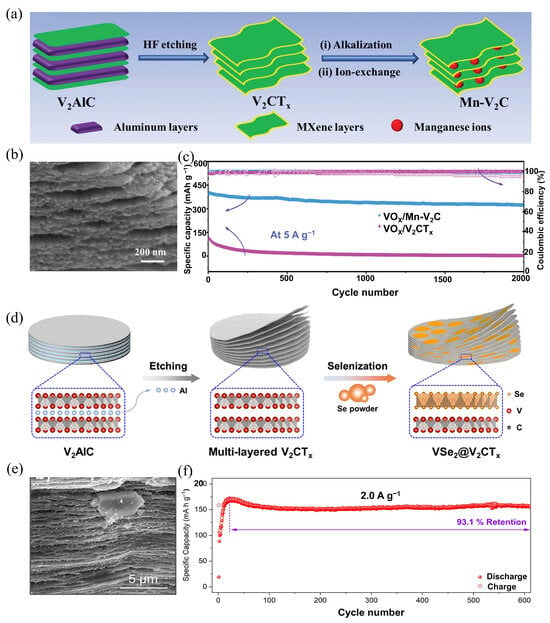
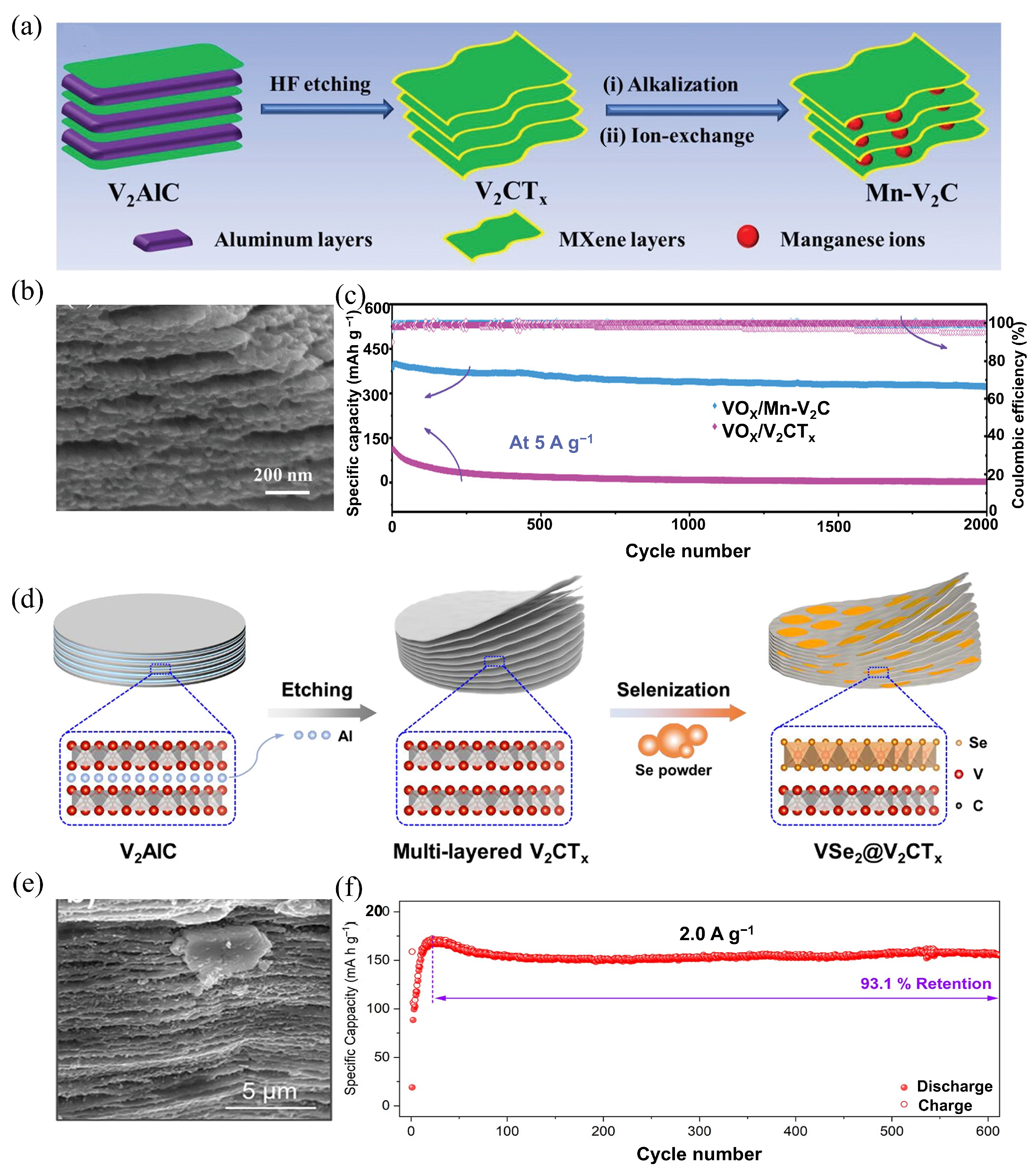
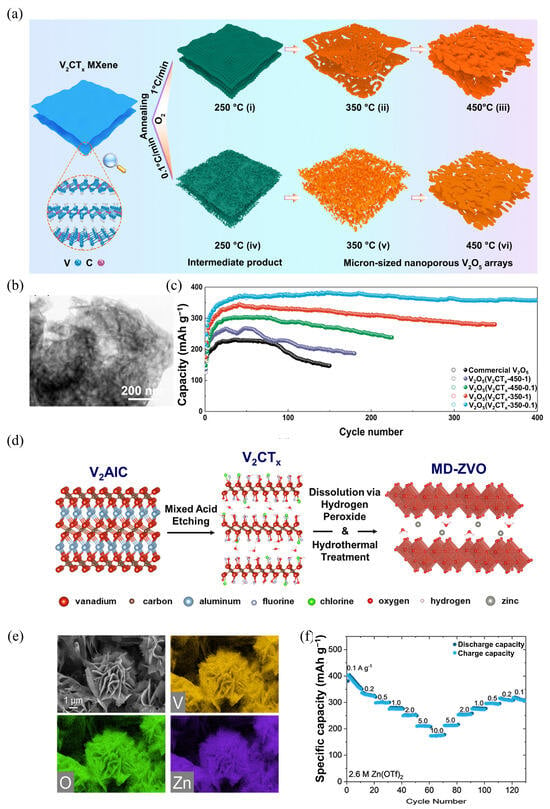
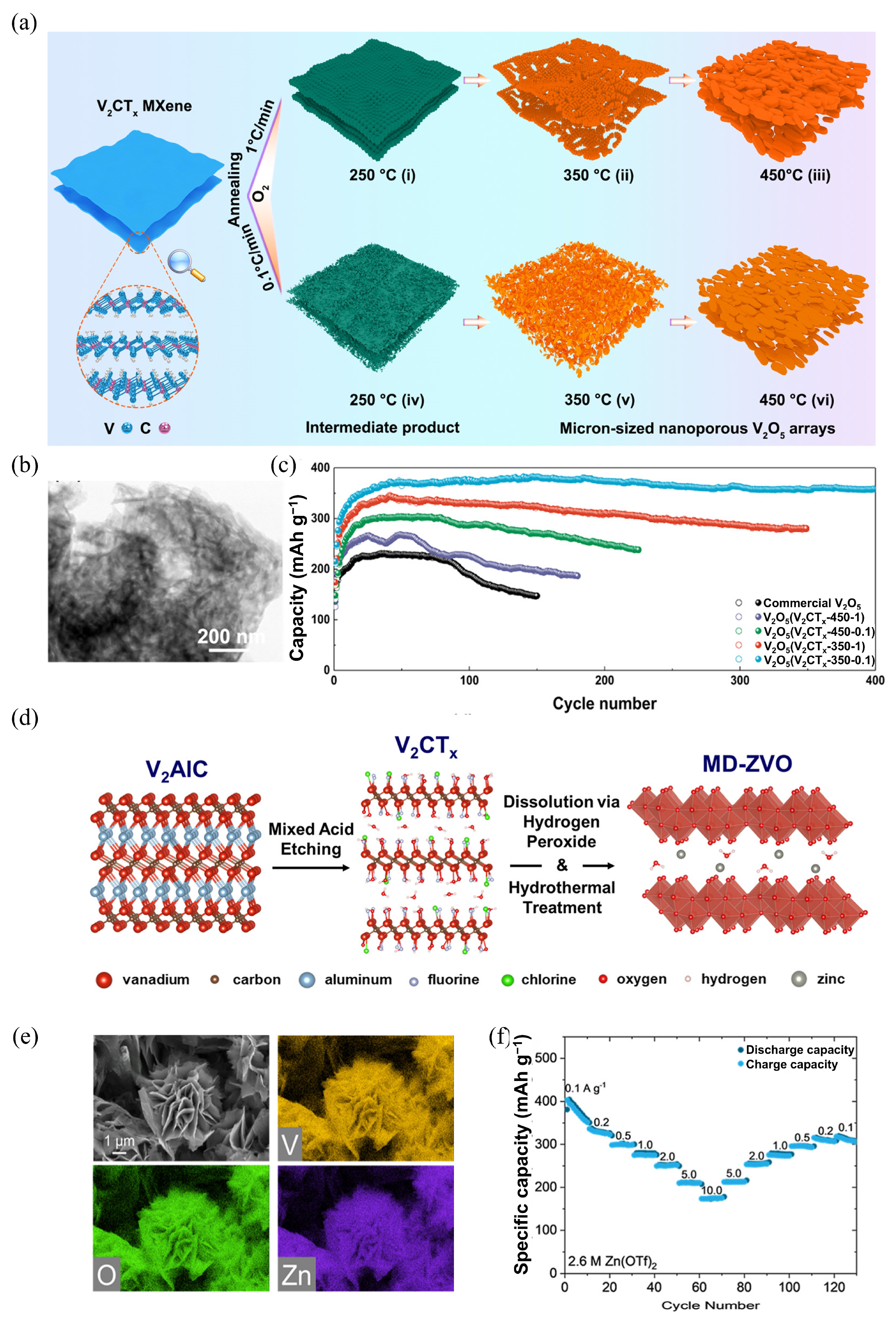
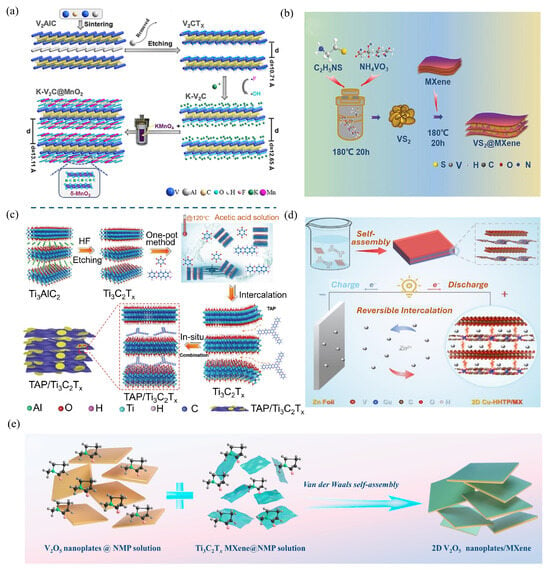
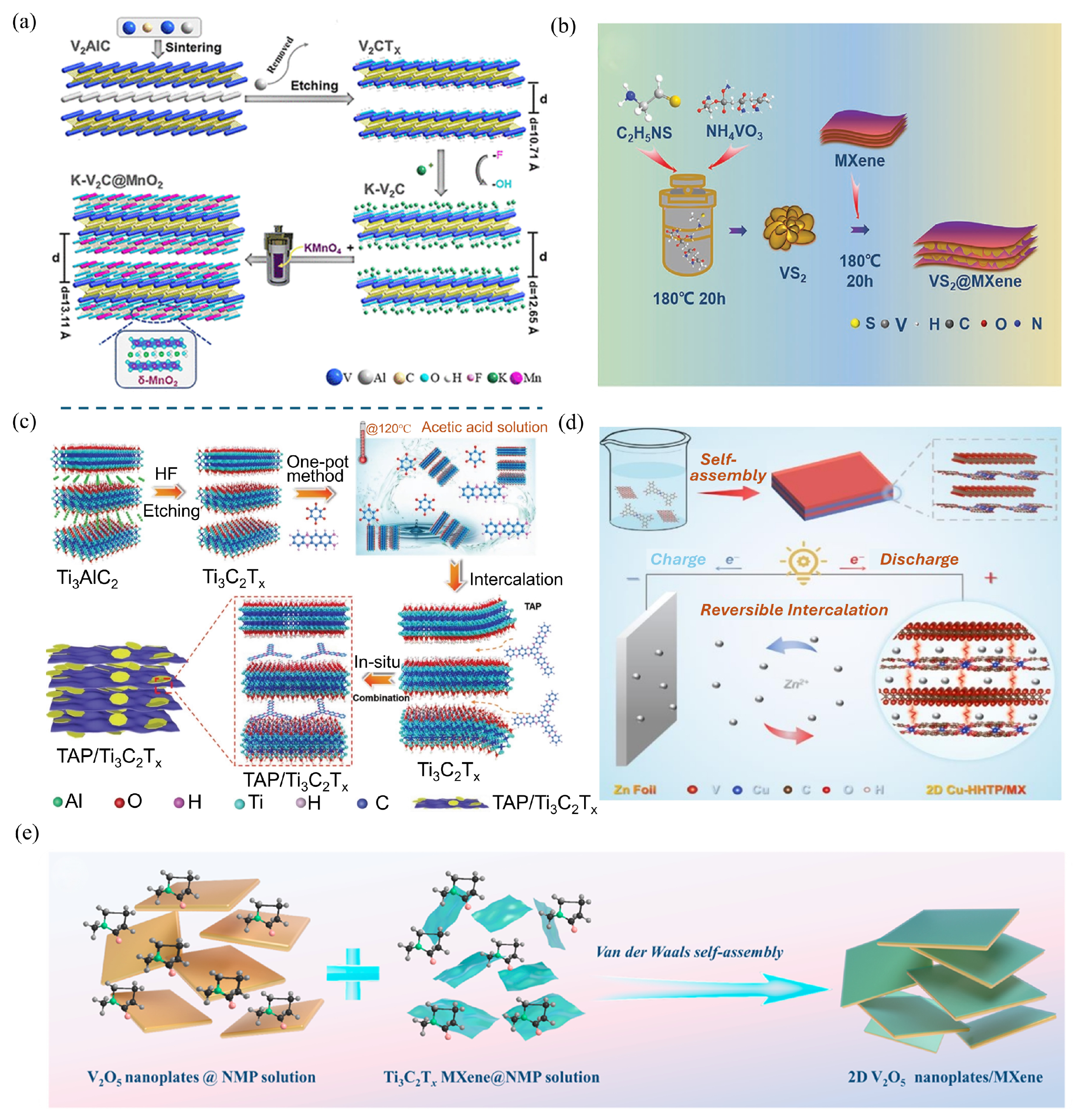
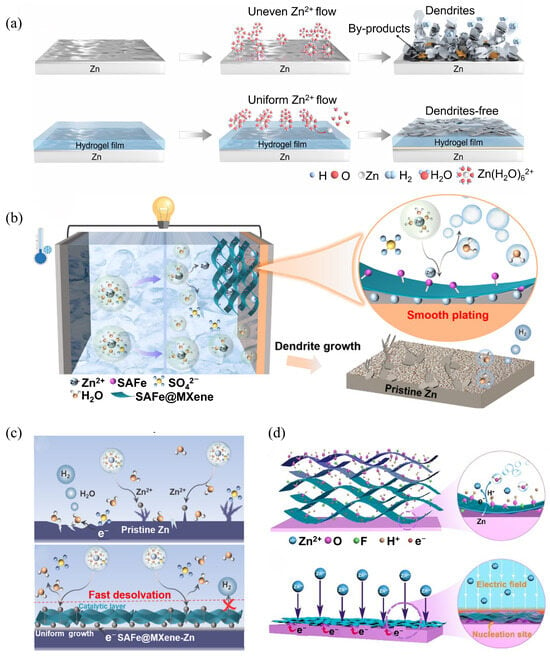
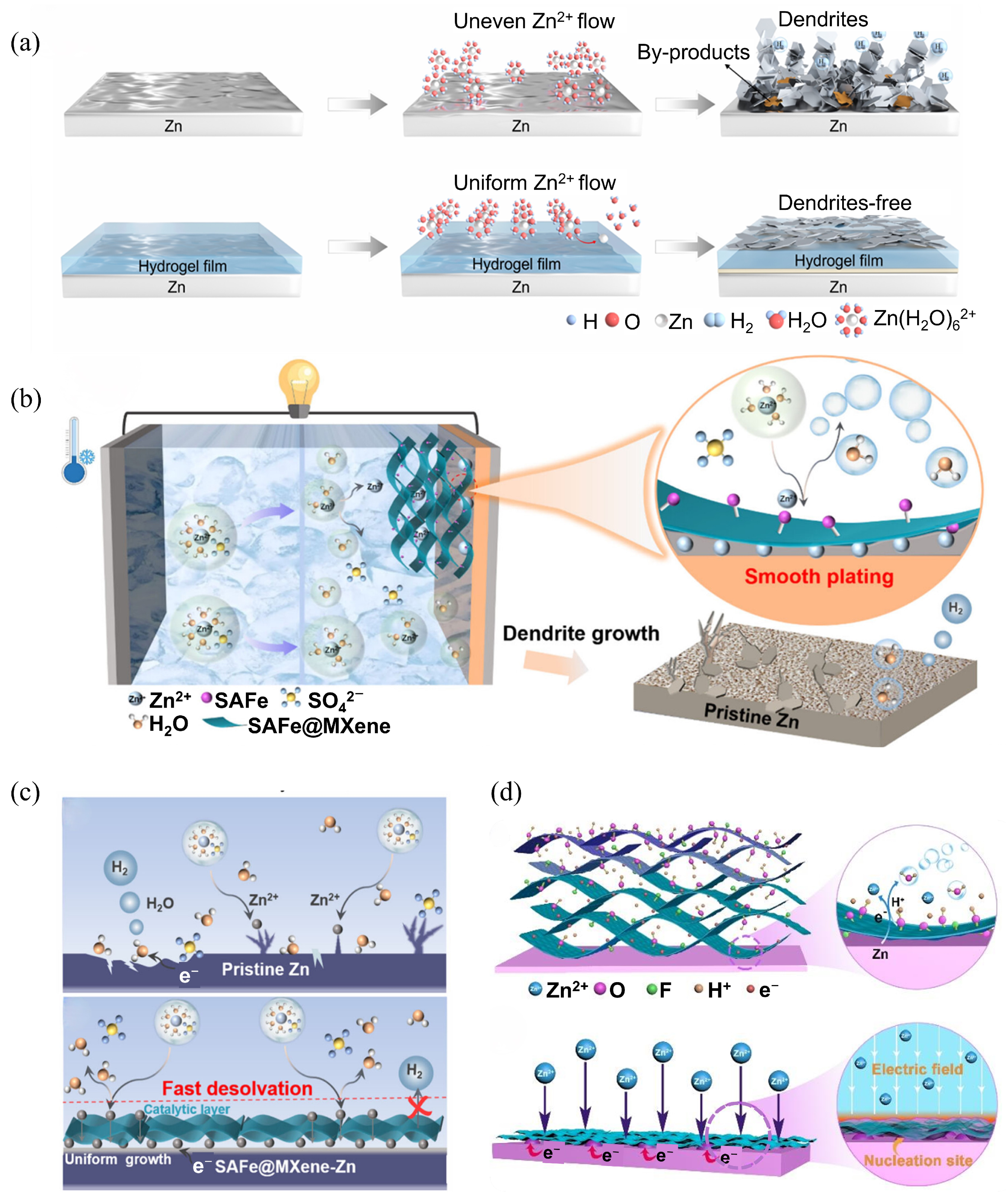
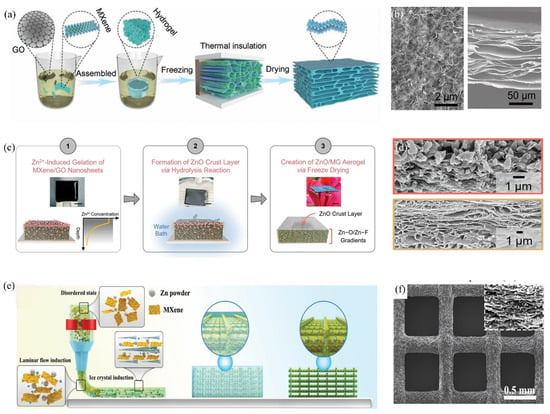
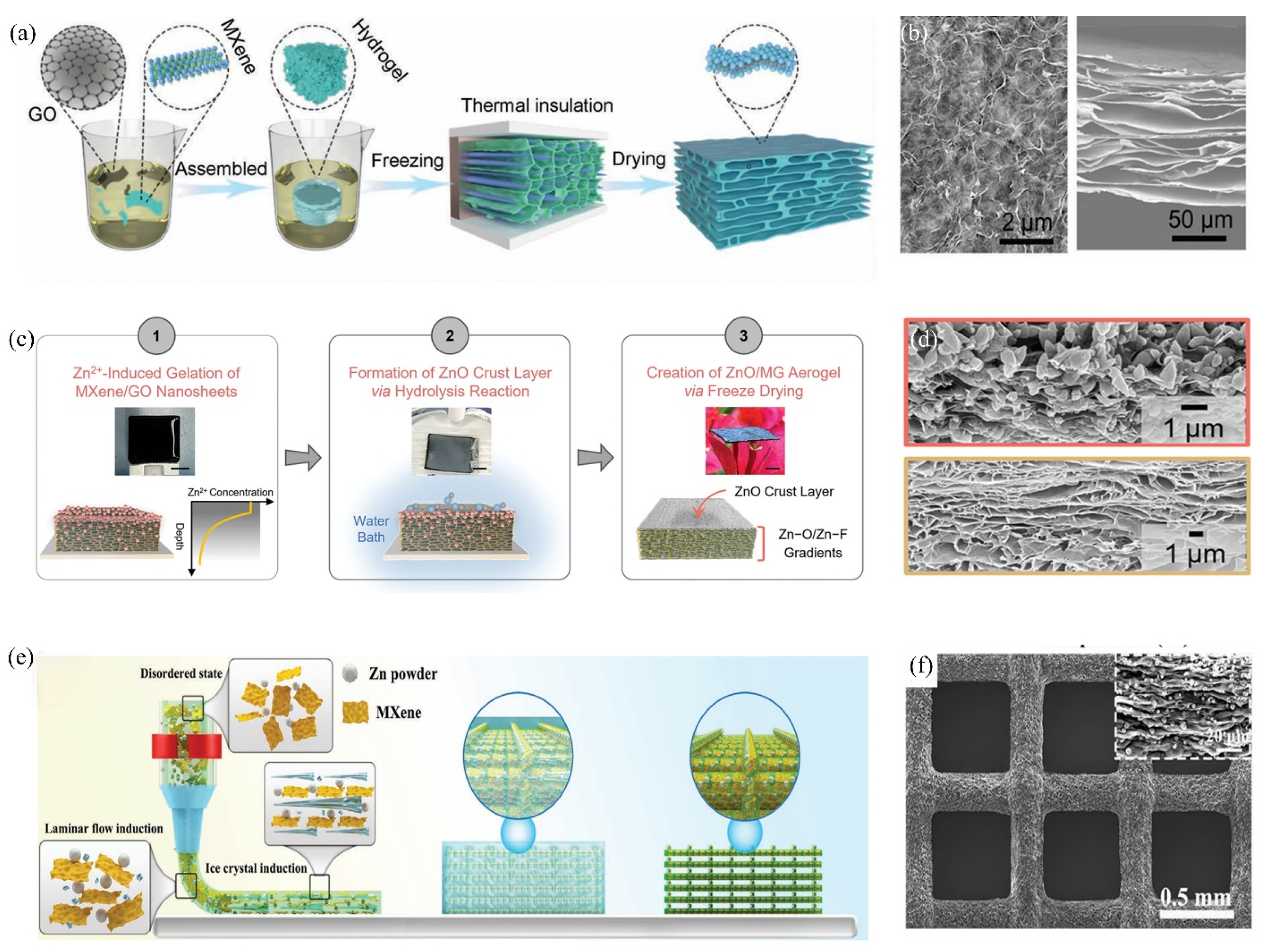
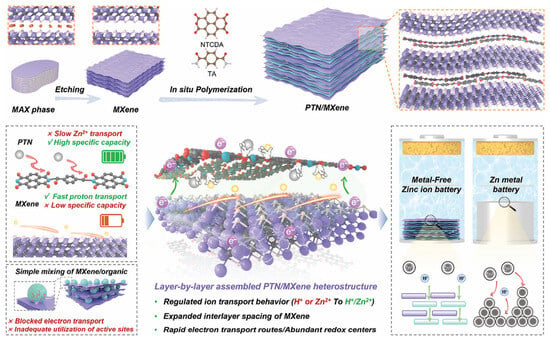
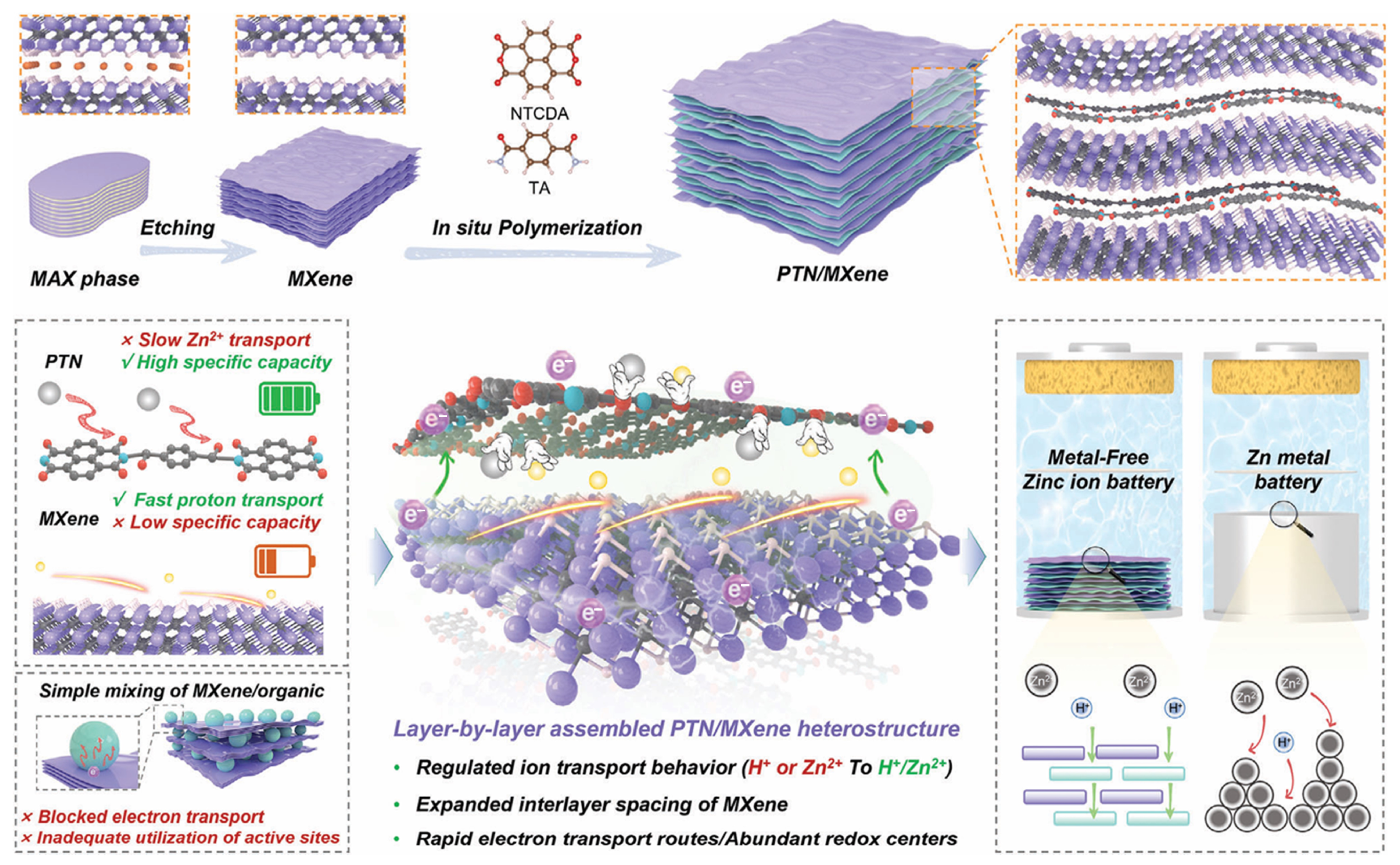
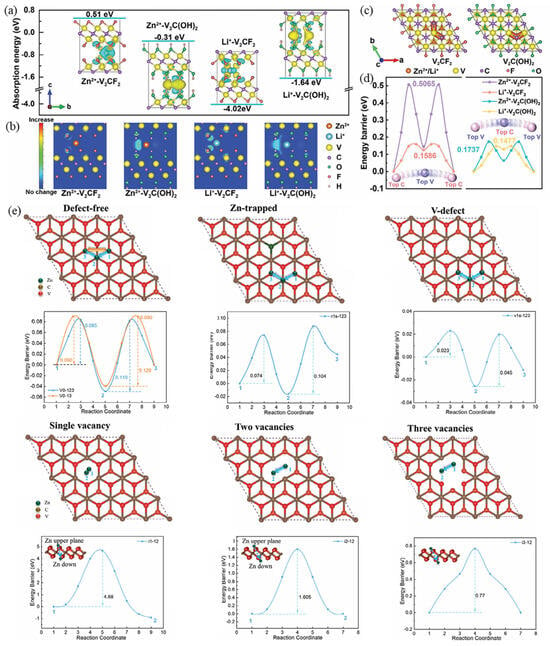
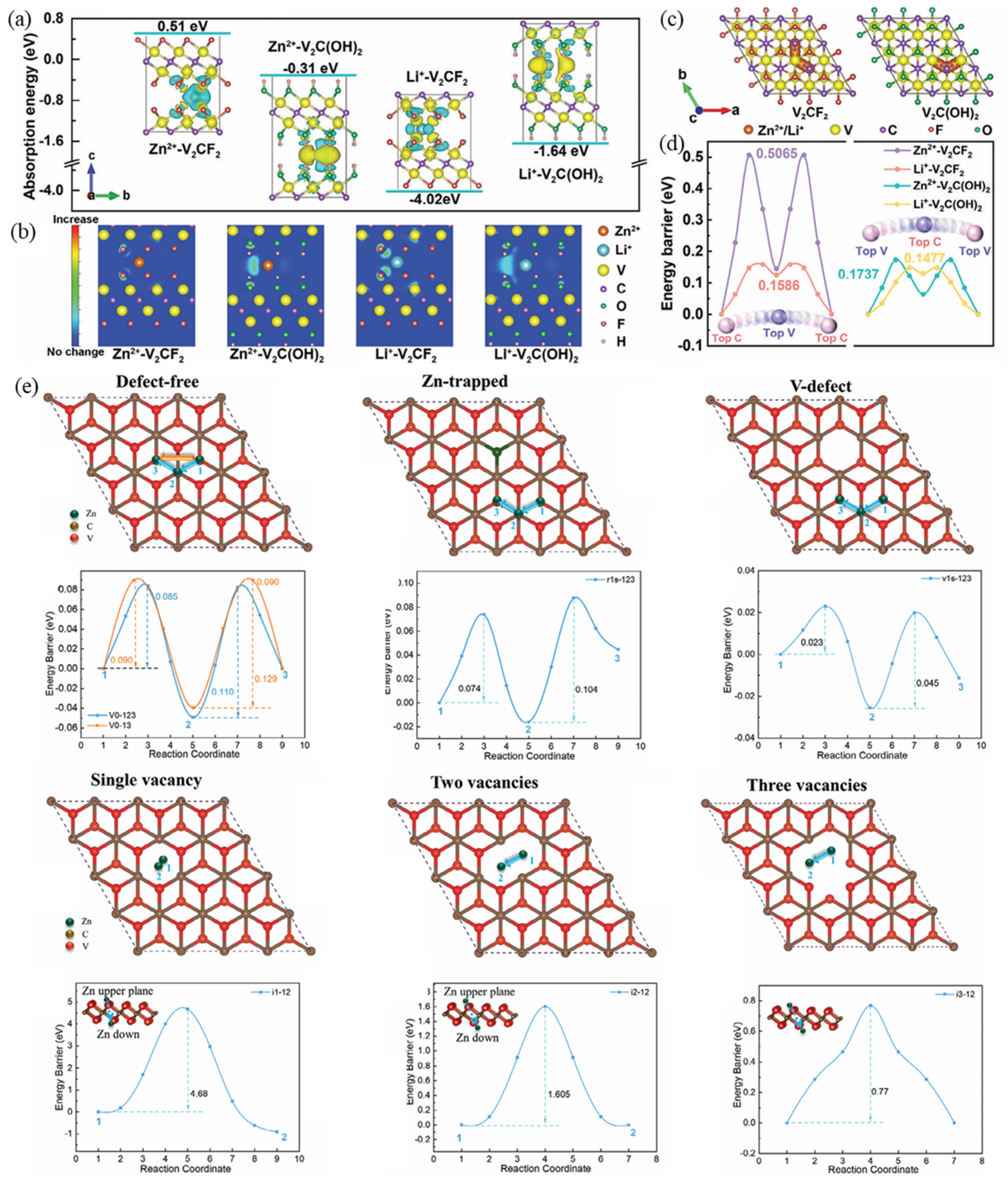
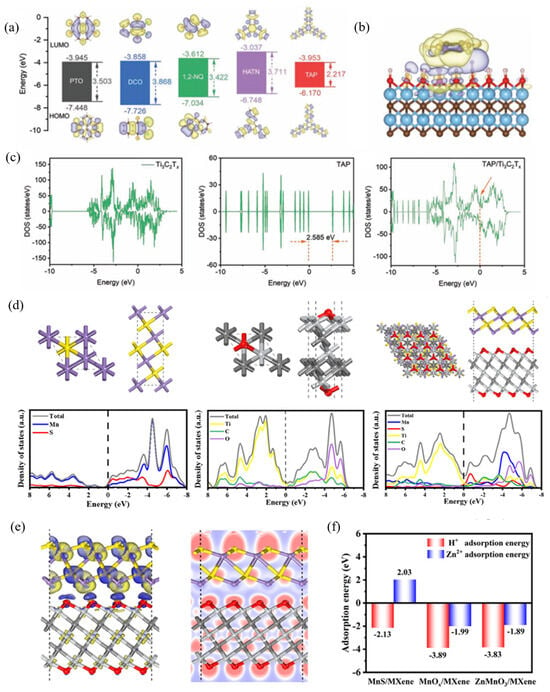
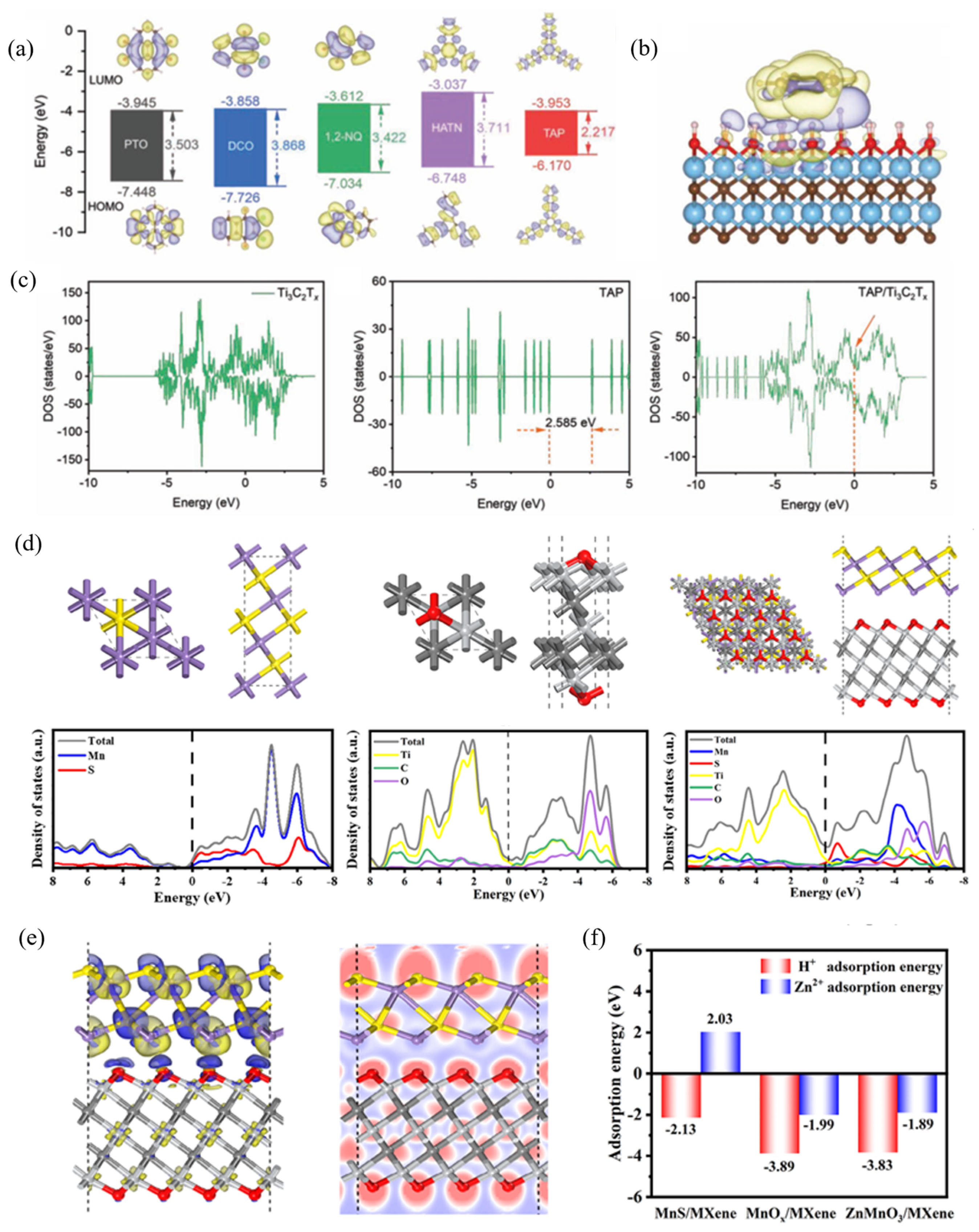
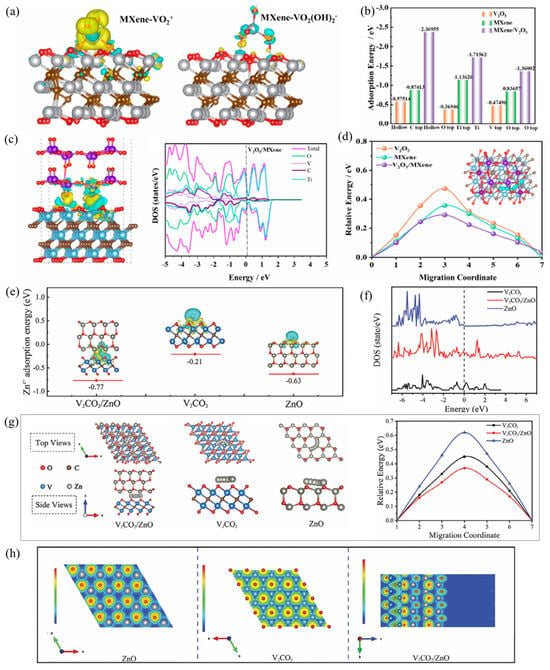
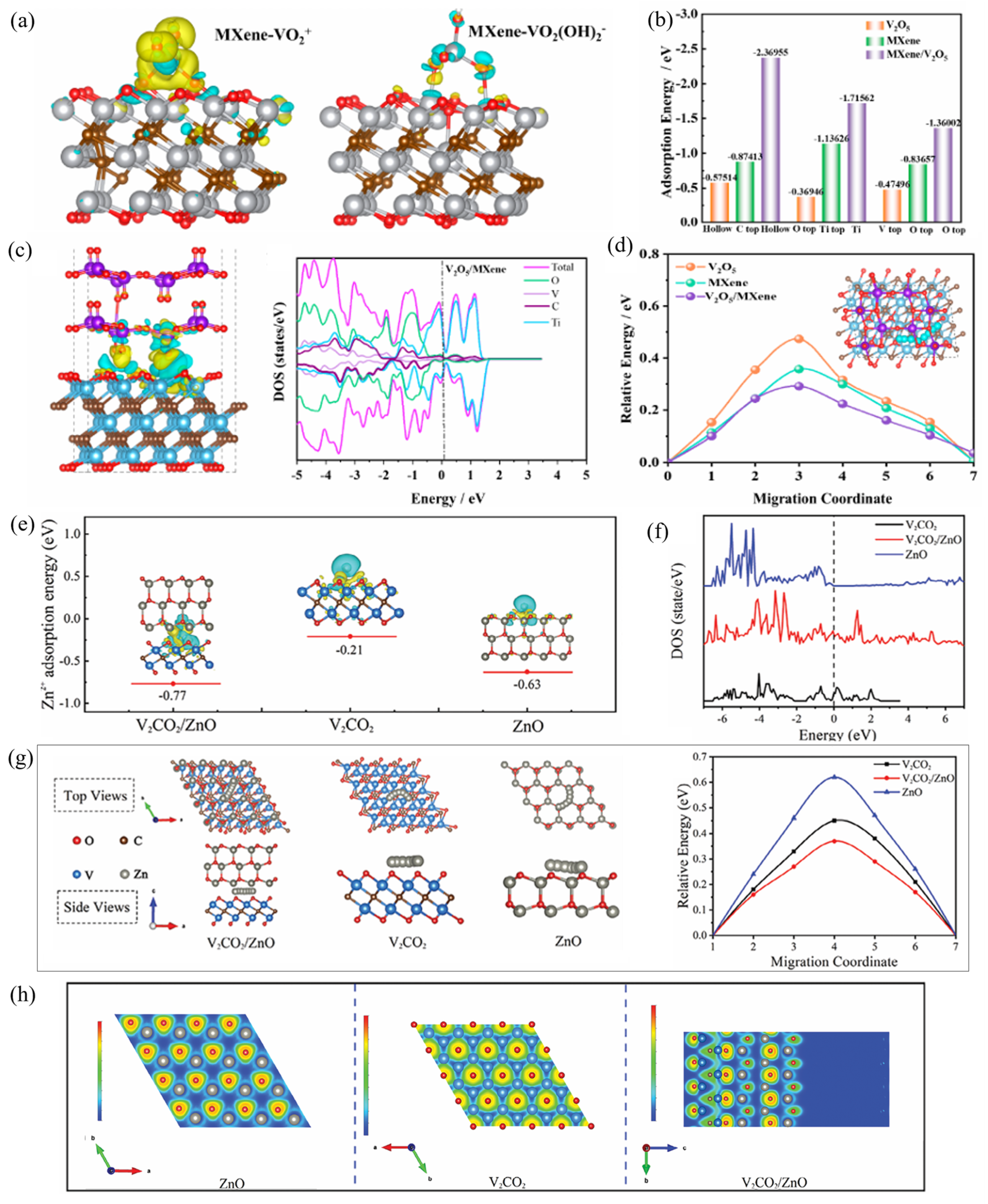
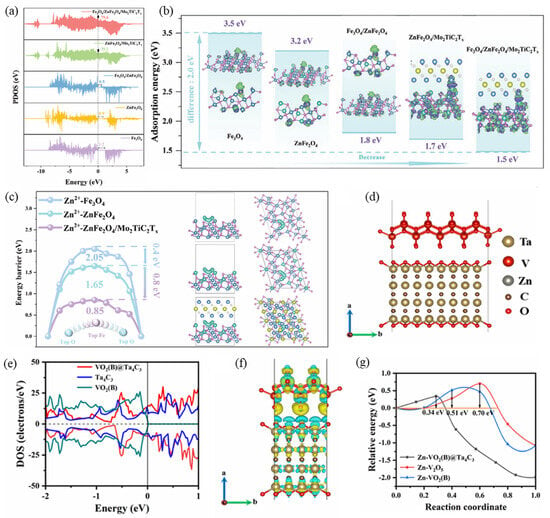
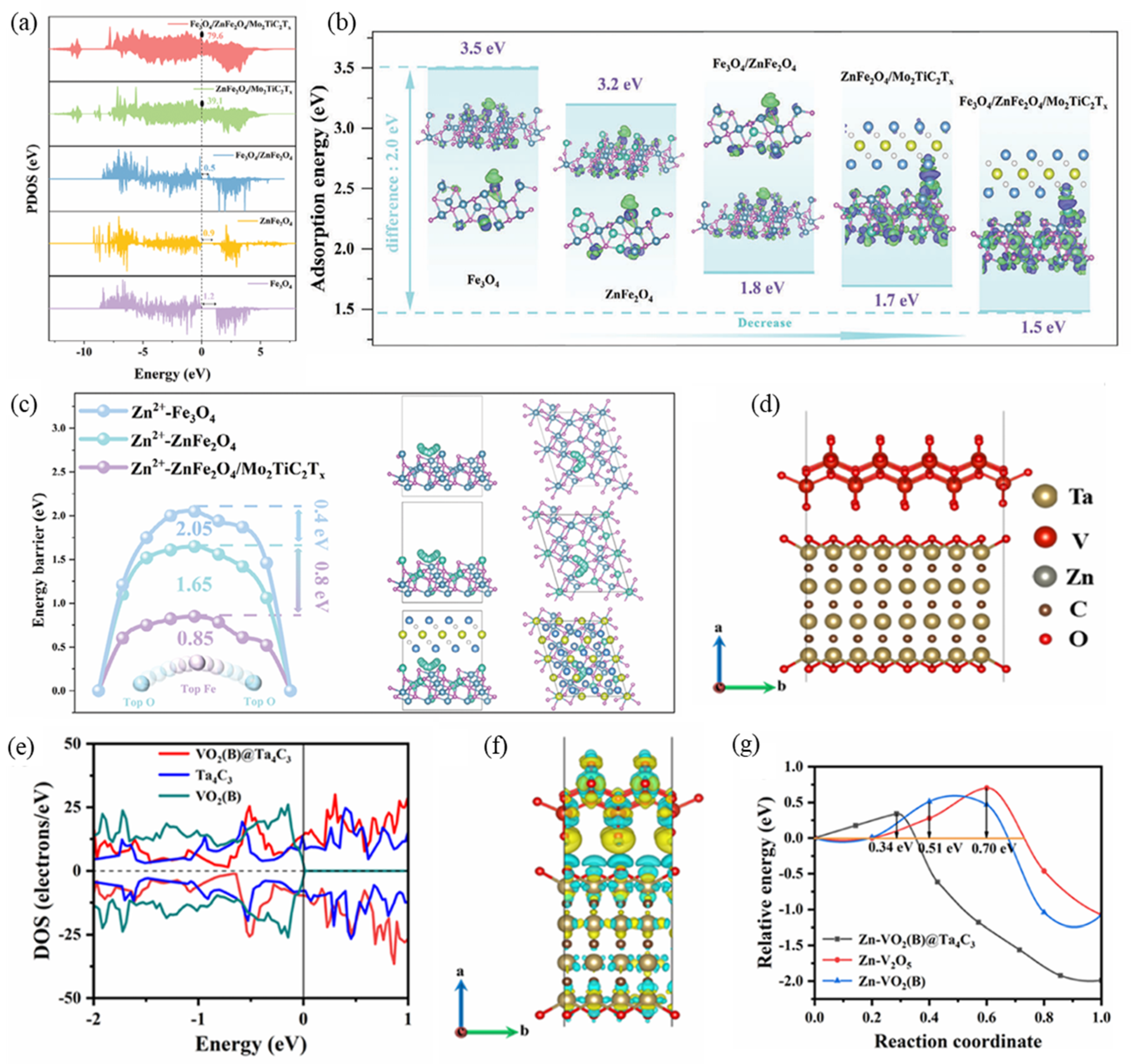
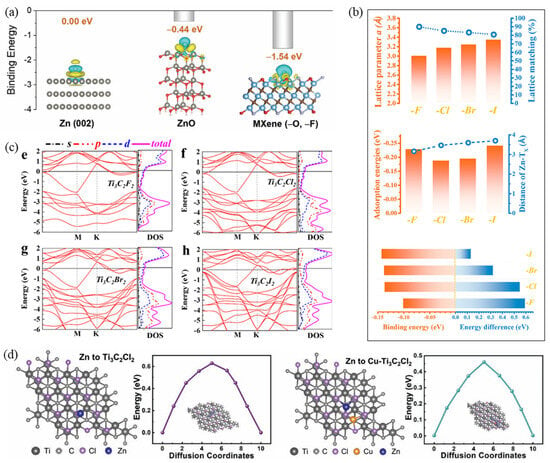
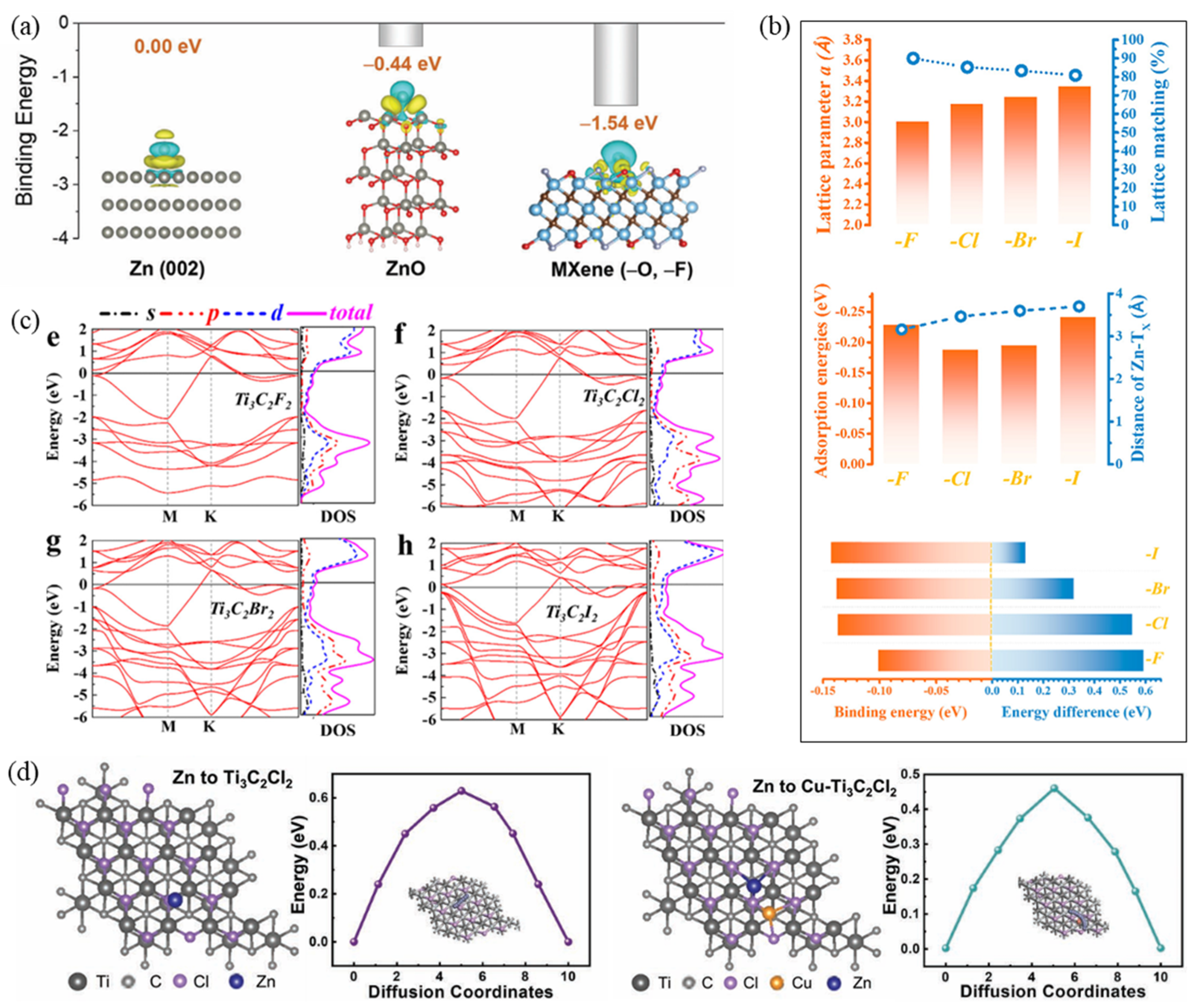
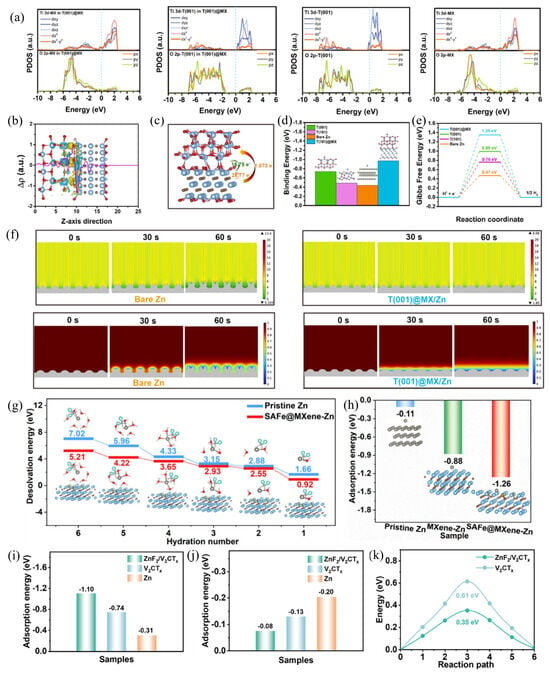
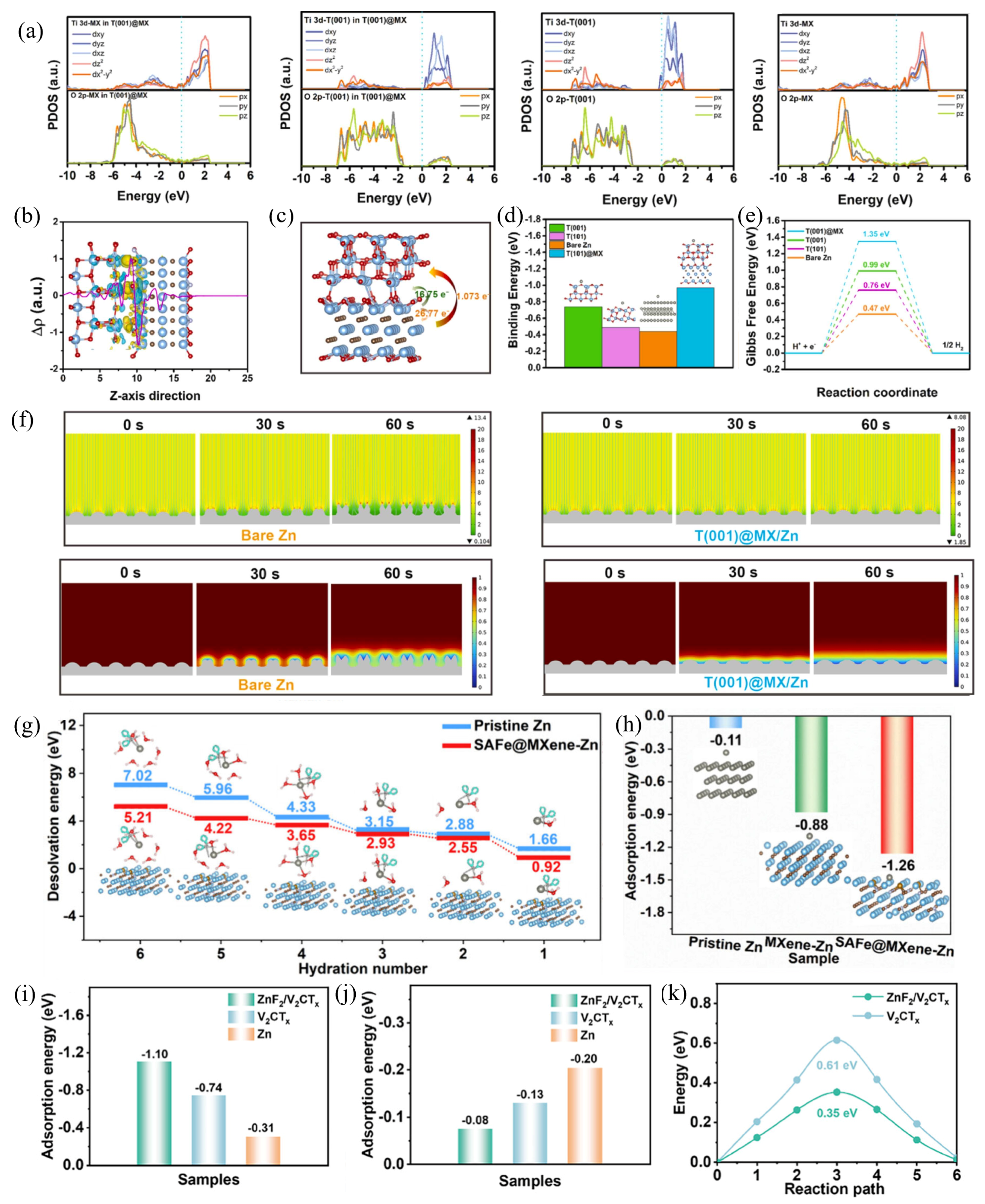
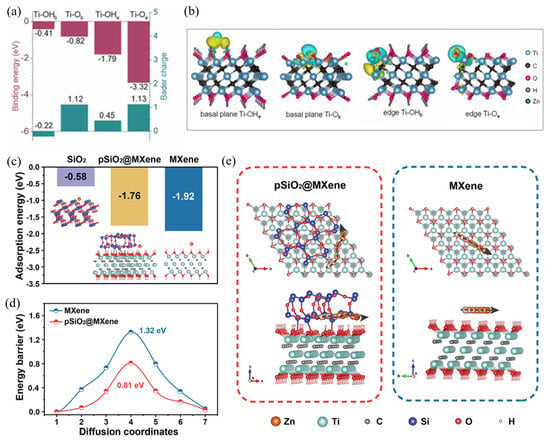
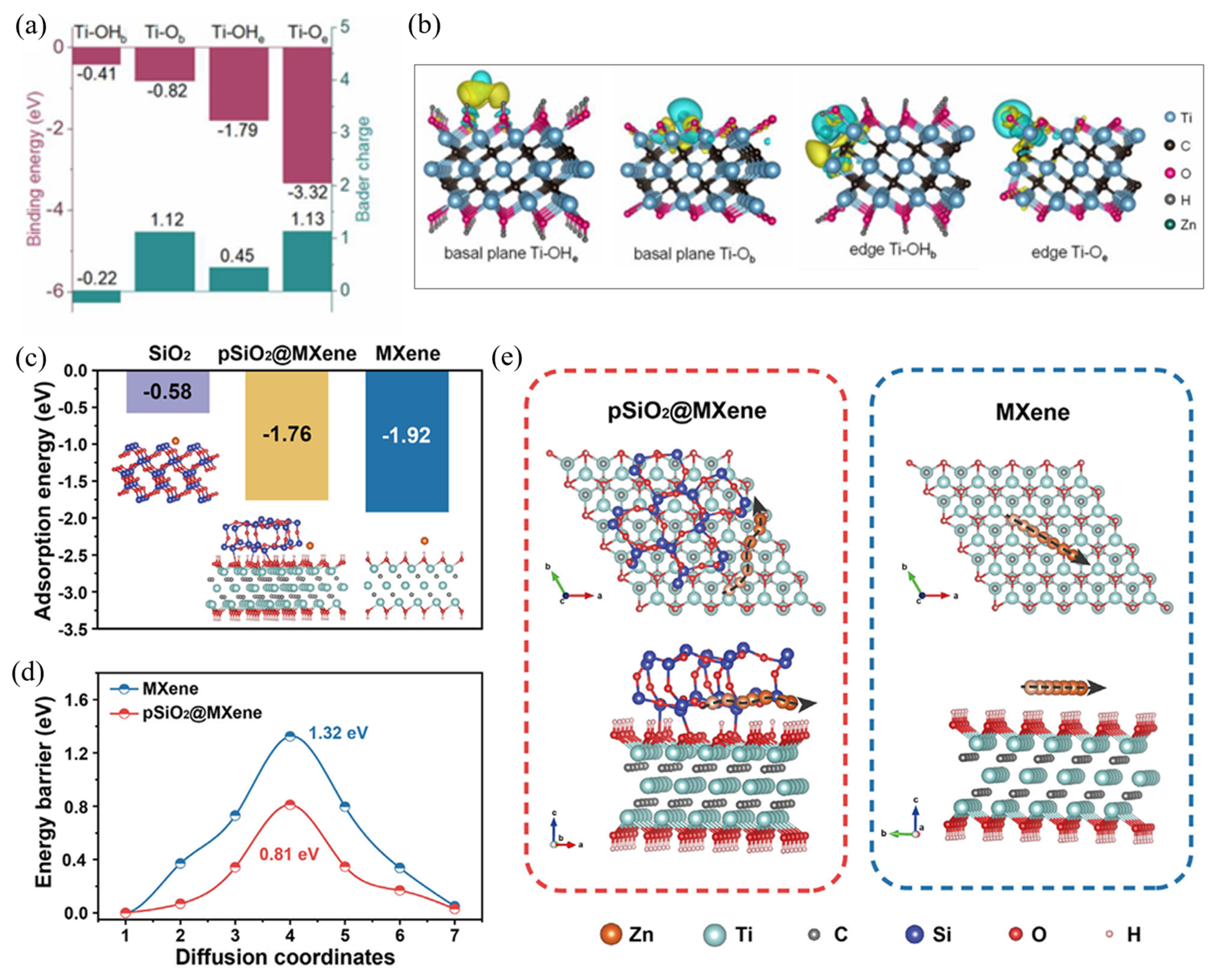
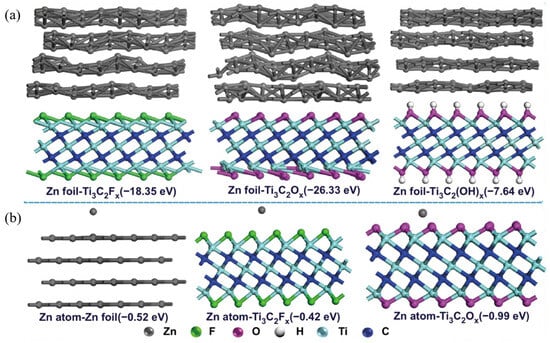
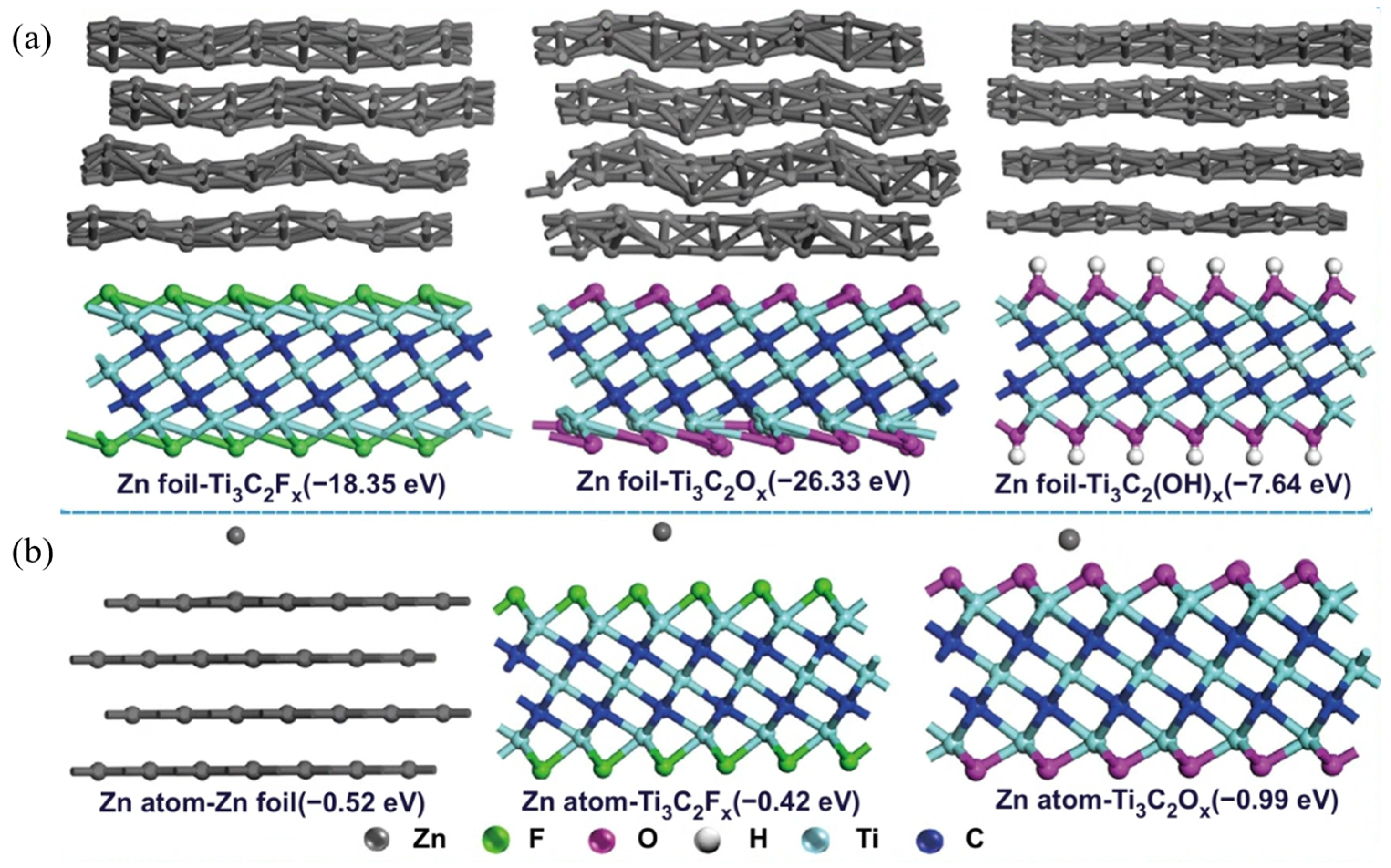

Disclaimer/Publisher’s Note: The statements, opinions and data contained in all publications are solely those of the individual author(s) and contributor(s) and not of MDPI and/or the editor(s). MDPI and/or the editor(s) disclaim responsibility for any injury to people or property resulting from any ideas, methods, instructions or products referred to in the content. |
© 2025 by the authors. Licensee MDPI, Basel, Switzerland. This article is an open access article distributed under the terms and conditions of the Creative Commons Attribution (CC BY) license.