1. Introduction
Since the 1990s, the application of hydrogen energy in the field of transportation has become increasingly active. Hydrogen as a fuel for fuel cell vehicles (FCVs), has a high energy conversion rate, good fuel economy, and emits no pollutants during driving. Despite the superior energy conversion efficiency of fuel cell vehicles (FCVs), the associated waste heat generation remains substantial. Consequently, the thermal load imposed on the system is approximately 2.5 to 3 times greater than that of conventional internal combustion engines. At the same time, the FCV operates over a high-temperature range. One of the most important problems in its operation is thermal management. In order to ensure safe operation, the proton exchange membrane fuel cell stack (PEMFCs) temperature should be maintained between 60 and 80 °C. Elevating the temperature accelerates the reaction kinetics and enhances proton conductivity within the membrane, thereby improving the overall performance of the fuel cell stack [
1]. However, since water content strongly affects membrane conductivity, high temperature will dehydrate the proton exchange membrane, which does not satisfy the wet condition of the membrane. As a result, its electrical conductivity decreases and fuel cell stack performance deteriorates [
2,
3]. The operating temperature of the fuel cell stack dictates that the exhaust gas temperature is significantly lower than that of internal combustion engines. Consequently, nearly 80% of the waste heat must be dissipated by the external cooling system, imposing a severe challenge on the design of the FCV thermal management system. Liquid cooling is considered the best cooling method [
4,
5,
6].
A. Fly et al. [
7] conducted a comparative study between liquid cooling and evaporative cooling strategies for FCV thermal management. Their findings indicate that evaporative cooling can diminish the heat exchanger’s frontal area by up to 27%. However, this advantage is counterbalanced by the requirement for superior liquid water separation efficiency. Lee et al. [
8] investigated the stack’s cooling efficacy and conducted optimizations based on dynamic road operating conditions. Zhang et al. [
9] employed a 1D-3D co-simulation strategy to model the thermal management system of a proton exchange membrane fuel cell (PEMFC) engine. This coupled framework was subsequently utilized to quantify the system’s heat rejection performance. Song et al. [
10] investigated energy management strategies for FCVs in low-temperature environments. Focusing on the interdependence among fuel cell temperature, efficiency, and preheating energy consumption, the authors proposed a hierarchical energy–thermal cooperative control scheme that explicitly incorporates the thermal characteristics of the fuel cell. Tan et al. [
11] conducted comprehensive energy flow experiments on a fuel cell passenger vehicle in a climate wind tunnel, quantifying energy distribution and thermal management performance under varying vehicle speeds, gradients, and environmental conditions. Yang et al. [
12] developed an integrated thermal management system model for fuel cell hybrid electric vehicles, encompassing cooling subsystems for the fuel cell stack, battery, electric motor, and passenger compartment. They validated the effectiveness of their multi-loop coupled control strategy through high-temperature operating condition simulations. Ferreira et al. [
13] developed an open-ended cathode and anode dead-end PEM fuel cell stack for drone applications. They investigated the effects of operational parameters such as fan speed, short-circuit humidification, and hydrogen purging on its performance, providing important references for simplified system design and control strategies for drone fuel cells.
In the study of radiators, a large number of scholars have studied radiators [
14,
15,
16,
17]. Wang et al. [
18] investigated a small-channel parallel-flow heat exchanger designed for FCV applications. Using a 50% ethylene glycol–water solution as the working fluid, the study derived correlations linking the heat transfer coefficient to the friction factor. Oliveira et al. [
19] employed a porous media approach to numerically investigate the thermo-fluid characteristics of a finned tube intercooler. This study resolved the spatial distributions of temperature and pressure, while also evaluating the impact of air flow on both hydraulic resistance and heat transfer performance. Gong et al. [
20,
21] proposed embedding metal elbow structures on the air side of traditional compact radiators to enhance heat dissipation performance in FCVs. Experimental and numerical simulation results indicate that the optimized radiator achieves a 17.1% to 22.5% increase in heat transfer capacity under various operating conditions, with minimal pressure drop increase. This demonstrates that the structure effectively guides air flow to scour tube walls, enhancing cooling efficiency and offering broad engineering application prospects. Subsequently, a novel windward louvered radiator structure was proposed. This design leverages the vertical deflection effect of air flow to effectively scavenge tube walls, boosting the radiator’s total heat transfer capacity by approximately 25% under identical pump power conditions. Jung et al. [
22] investigated staggered bar fin heat exchangers for integrated cooling systems in fuel cell electric vehicles (FCEVs) through numerical simulation and multi-objective optimization. By simultaneously optimizing fin geometries on both sides based on different fluid-side velocities (full optimization scheme), overall performance significantly outperformed single-side optimization approaches.
2. FCE Thermal Management System Model
2.1. One-Dimensional Model of the FCE Thermal Management System
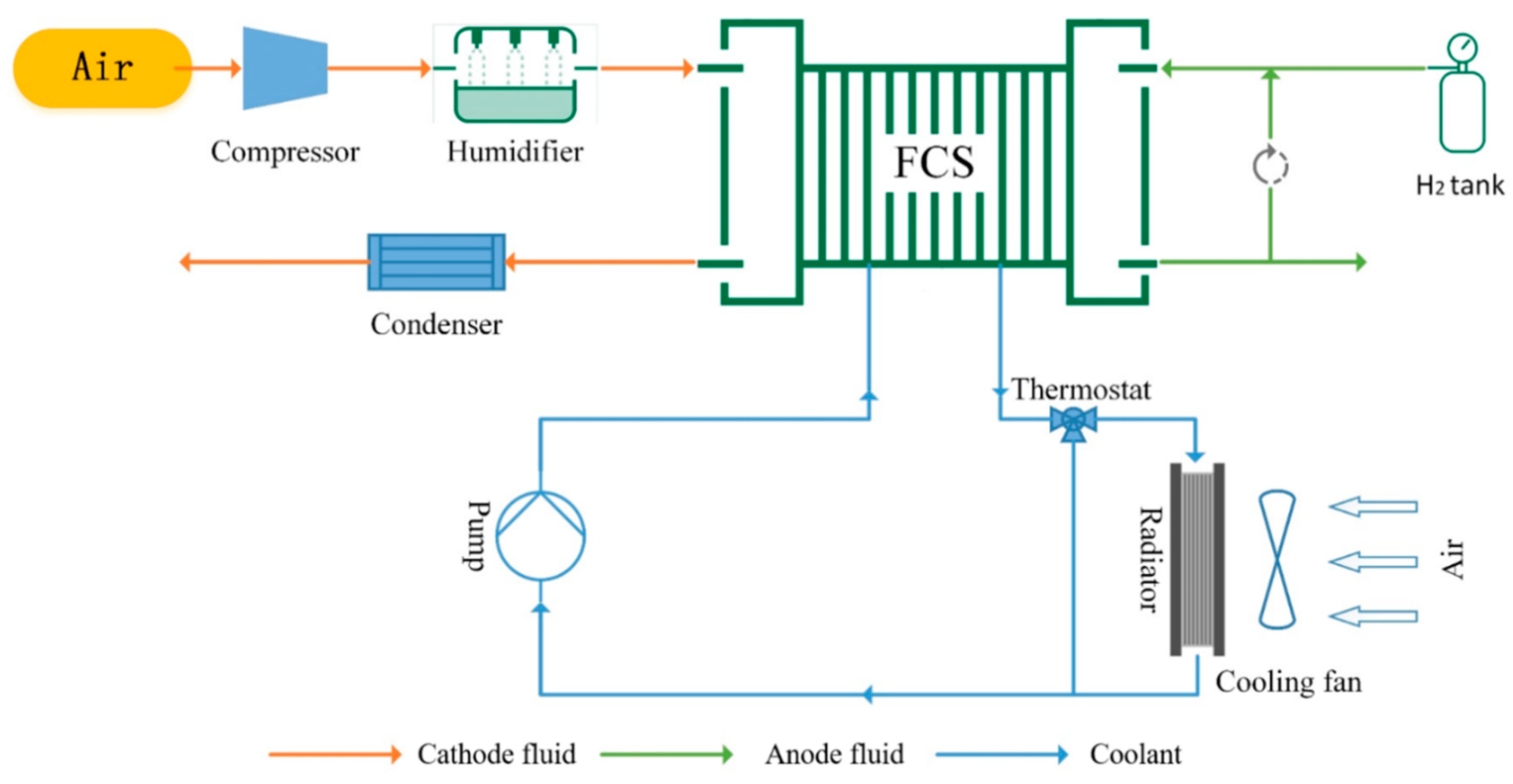
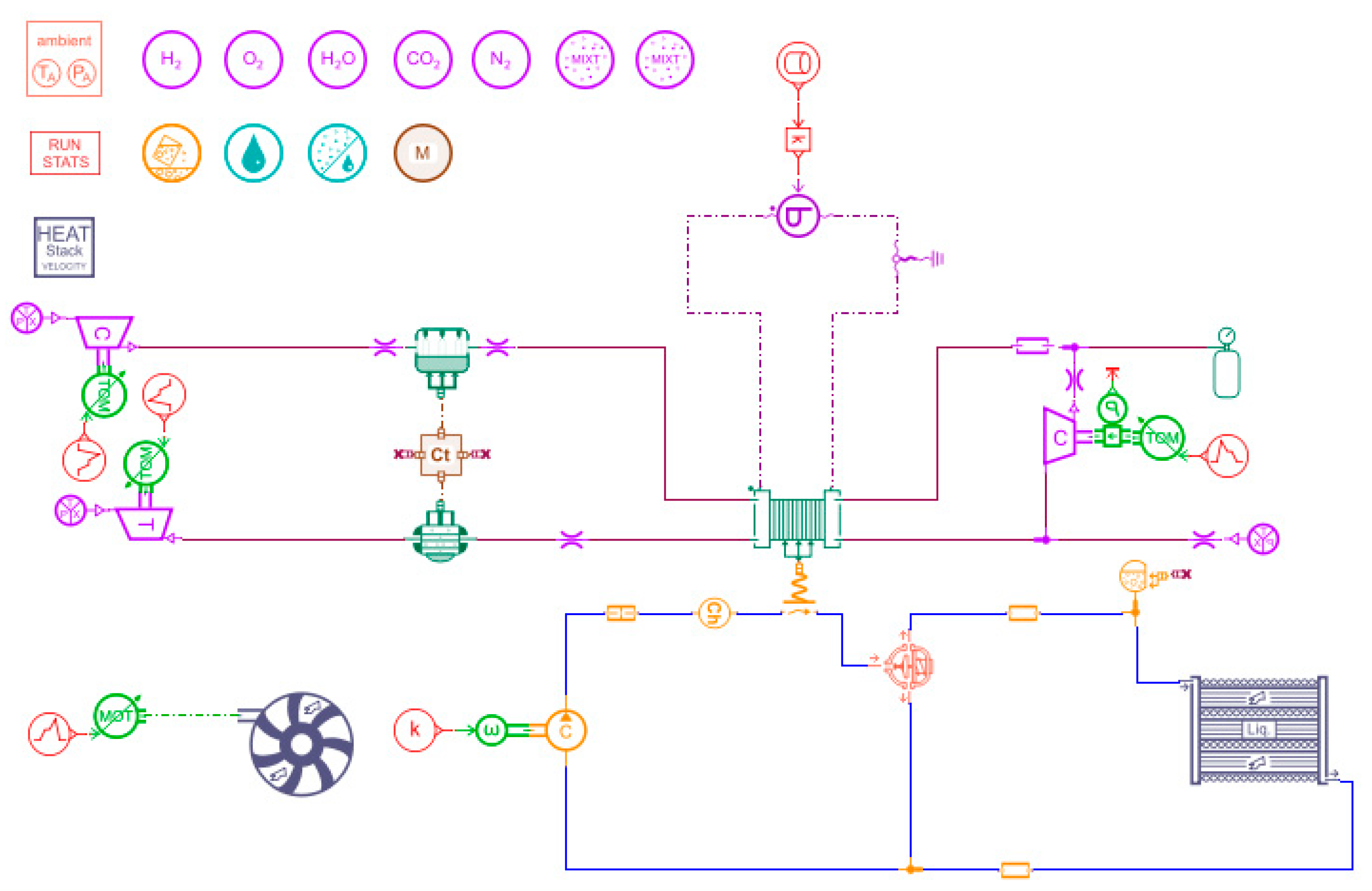
Based on the operational characteristics of FCVs, a cooling circuit is integrated into the existing fuel cell stack model. The schematic diagram is illustrated in
Figure 1. The system primarily comprises the fuel cell stack (FCS), air compressor, humidifier, hydrogen storage tank, water recovery unit, and cooling loop. The FCS model is positioned at the center of the schematic. It is flanked by the cathode side on the left and the anode side on the right. Air is introduced into the circuit by the air compressor. After being humidified by the humidifier, it enters the FCS to react. After the reaction, the mixture is discharged and the water is recovered. On the right side, which is the anode side of the fuel cell stack, pure hydrogen enters the fuel cell stack loop from the hydrogen storage tank, and unreacted hydrogen is recovered after the reaction. A heat exchange plate connects the cathode humidifier and the condenser. Its primary function is to equilibrate the temperatures of the cathode inlet and outlet streams, effectively recovering waste heat from the exhaust gas. Additionally, the cooling system is depicted in the lower section of the circuit to dissipate the heat generated by the fuel cell stack.
The calculation models for the main components in the system is shown below, where the data required for the radiator and fan are taken from the 3D numerical analysis.
2.1.1. Fuel Cell Stack
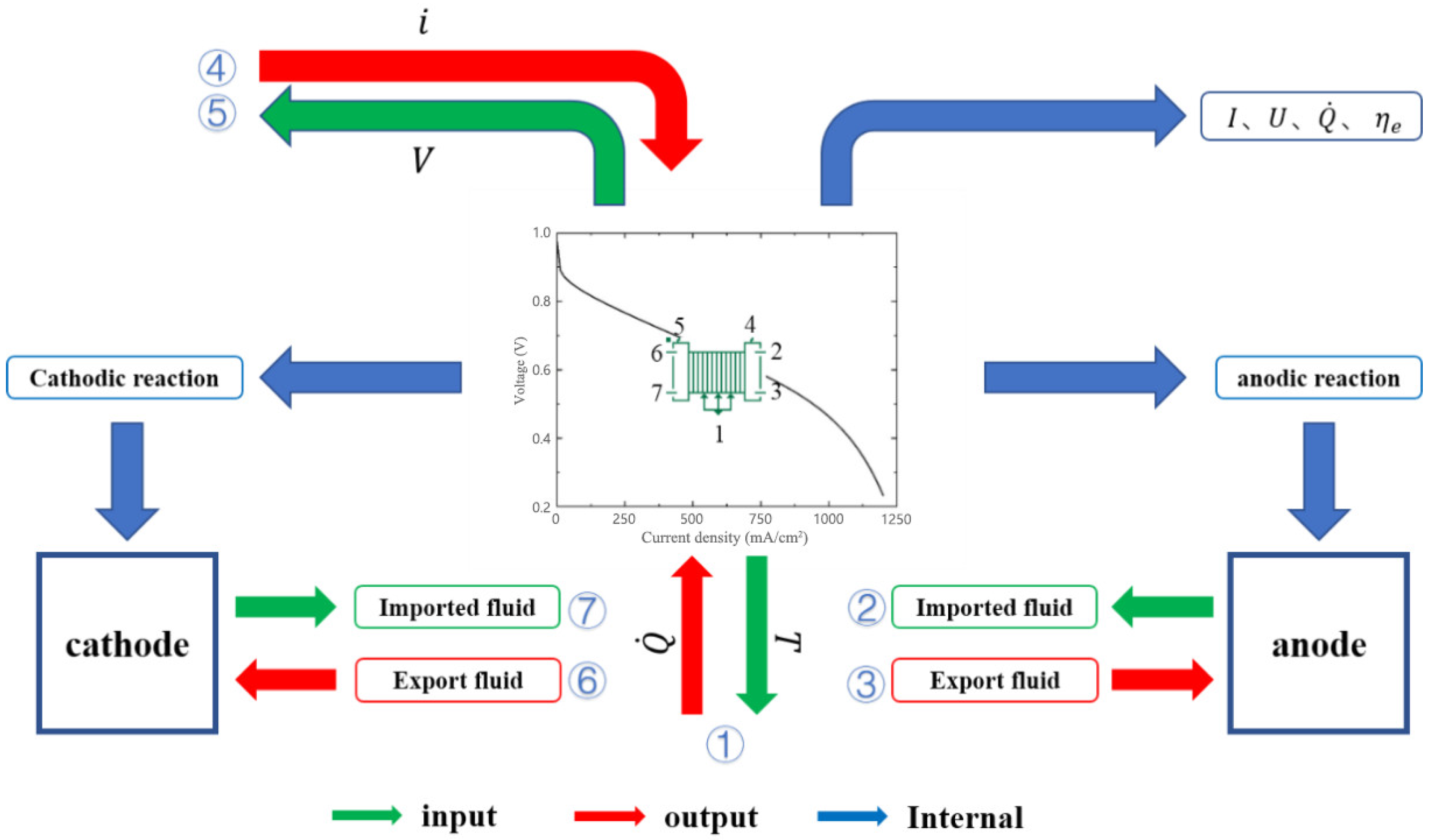
This component models the PEMFCs, predicting the output voltage as a function of the load current. The temperature of the stack is calculated by considering electrochemical reaction losses and heat exchange with the cooling device. The model also estimates the composition, temperature, and pressure of the gas flow at the anode and cathode outlets. Finally, it determines current density, battery power, electrical efficiency, and heat production rate. The schematic representation of the working mechanism is depicted in
Figure 2.
The stack voltage is governed by the polarization curve. To compute the fuel cell stack temperature, the model incorporates electrochemical reaction losses, convective heat exchange with the fluid, and the stack’s heat capacity. Furthermore, the power loss is calculated based on the stack’s operating voltage and current:
where
is the number of cells in FCS,
is the cell voltage,
is the stack current, and
is the open-circuit voltage. External heat is also exchanged by convection between the anode and cathode gas streams and heat capacity of the stack. The rate of heat generation and electrical efficiency can be calculated by the following formula:
where
is the stack power and U is the stack voltage.
Component balance in the stack: The composition of the outlet fluid at the electrode depends on the inlet fluid and the consumption/production of the material due to the electrochemical reactions. Hydrogen oxidation occurs on the anode side, whereas the cathode side facilitates oxygen reduction, resulting in the production of water. The molar reaction rate of a substance can be derived from Faraday’s law:
Generation is positive and consumption is negative. is the number of electrons in the electrochemical process, with and . F is the Faraday constant. Water transport through diffusion and electro-osmosis is not taken into account.
Stack temperature is calculated as follows:
where
is the sum of the waste heat produced by the FCS and the thermal energy dissipated by the external cooling circuit,
is the specific heat, and
is the mass of the stack.
2.1.2. Humidifier and Condenser
PEMECs require humidification during operation, as proton transport in the electrolyte requires the electrolyte to remain wet. Although water is produced as a by-product of fuel cell operation, it is frequently insufficient to satisfy the strict membrane hydration requirements. Consequently, a humidifier is integrated into the system to regulate the relative humidity of the reactant air flows. The definition of relative humidity is given as follows:
where
represents the partial pressure of water vapor in the gas mixture,
is the saturated vapor pressure at a given temperature, and the humidity is maintained at a set value by PID control. The saturation pressure of water vapor is determined using the following equation:
By setting the target versus humidity, the inlet air relative humidity value is first determined and compared with the target humidity. A proportional integral differential is then used to control the water flow introduced to minimize the difference between the measured and target values.
The fuel cell system generates water in the reaction, which is discharged with the gas flow on the cathode outlet side. In order to provide water for the humidifier and maintain the water balance in the system, it is necessary to recover the water generated by the cathode. The relative humidity is calculated based on the internal temperature of the condenser. Condensation is triggered when the relative humidity surpasses 100%. Consequently, the model calculates the condensate mass flow rate and the quantity of water recovered by the system.
2.1.3. Thermostat
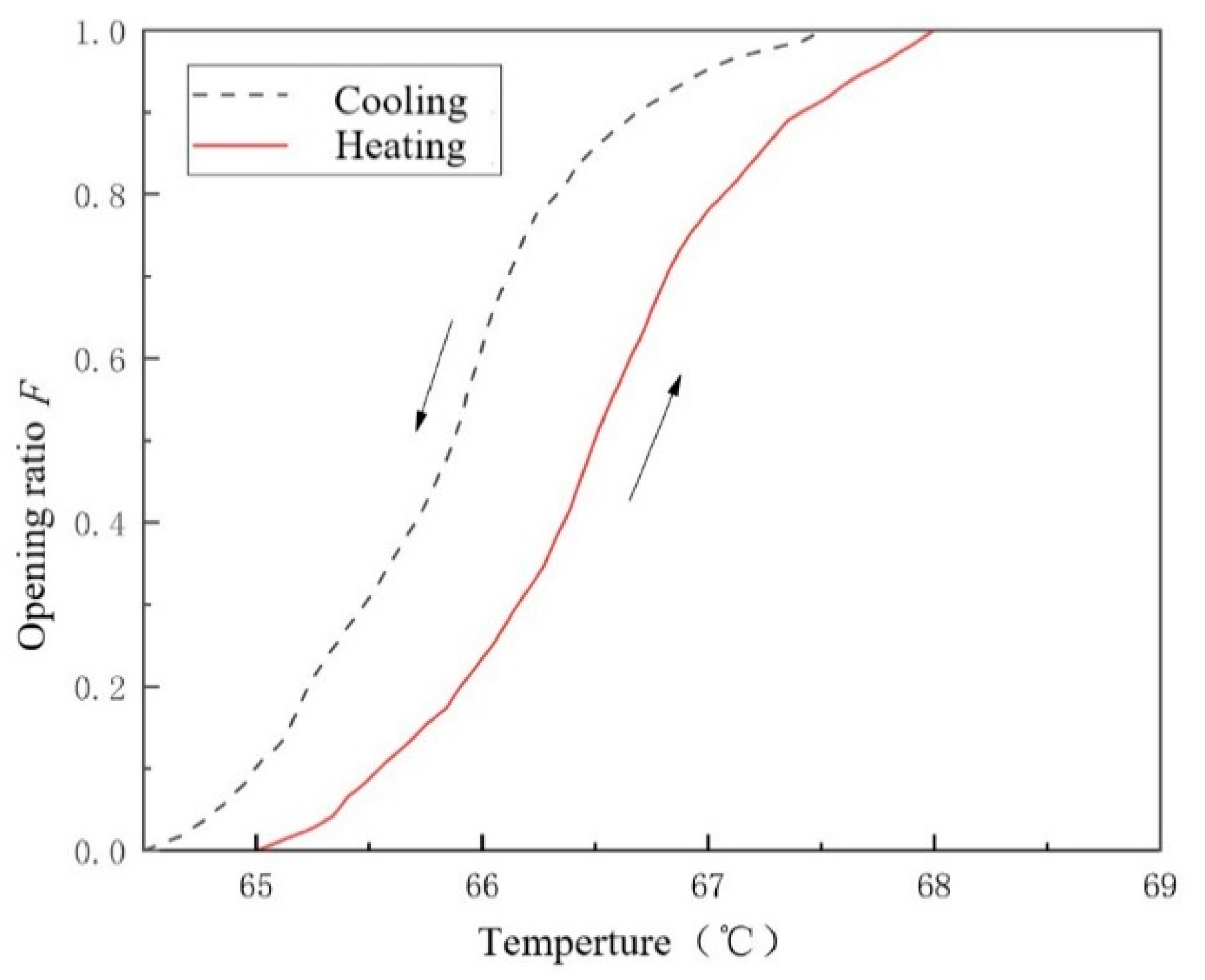
The thermostat is modeled as an orifice with a variable cross-sectional area. This area variation is dictated by the coolant-to-wax convective heat transfer. The thermostat starts to open at a given initial temperature and is fully open at a given final temperature. As the temperature of the wax inside the thermostat rises, the valve opening varies according to the temperature-dependent curve for a given cross-sectional area, as shown in
Figure 3.
The variable
is used to characterize the opening of the thermostat and is calculated as follows:
where
is the currently open cross-sectional area and
is the maximum open area. Specifically, the opening fraction
is defined as 0 when the wax temperature remains below the initial opening threshold. Conversely, the value saturates at one once the temperature reaches the fully open limit. The wax temperature is treated as a dynamic state and is obtained by integrating its time derivative:
where
represents the convective heat transfer coefficient at the coolant–wax interface,
is the heat capacity of the wax, and
is the inlet coolant temperature.
2.2. Three-Dimensional Heat Exchanger Model
The radiator is the main component responsible for heat convection. Since FCVs require a coolant inlet temperature lower than 80 °C, the system faces a more rigorous cooling challenge compared with conventional ICEs. To accommodate this, larger radiators are employed to ensure adequate heat rejection. Experimental and computational studies have demonstrated that the geometric parameters of the heat exchanger have a significant impact on thermal performance. Notably, optimizing these dimensions can enhance the heat transfer rate by more than 50%.
Due to the tight interior layout of the car body in FCVs, efficient and compact heat exchangers must be considered. The radiator selected is a unit parallel-flow heat exchanger with louver fins. Unit parallel-flow heat exchangers are used as external heat sinks (such as for the FCS and PCU heat sinks) in FCV cooling systems. The in-tube coolant passes through the heat exchanger in a single pass and is cooled by the outside air. The outer side of the heat exchanger adopts louver strip fins, which can effectively destroy the air boundary layer and has high heat exchange capacity and a large heat exchange area per unit volume.
Extensive theoretical and experimental research has been conducted on heat exchangers. In the realm of numerical simulation, studies have primarily focused on the thermal characteristics of local fin structures. The goal is to optimize the fin heat dissipation performance of the partial fins. The window opening angle is changed to study the heat transfer performance under different Reynolds air flow rates. However, applying this detailed method to a full-scale radiator is problematic due to the sheer volume of fins. The resulting computational burden is prohibitive, rendering this approach impractical for analyzing macroscopic flow and heat transfer characteristics.
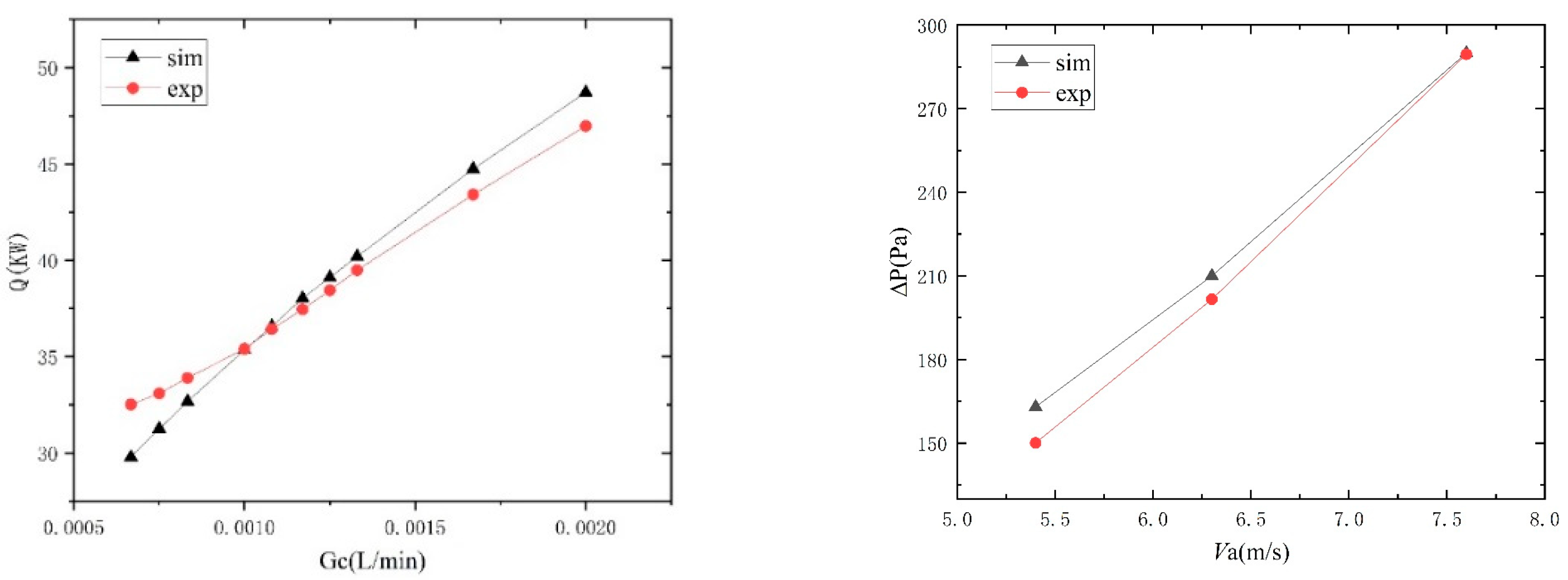
In order to carry out three-dimensional simulation of the overall radiator model, three-dimensional numerical simulations of the fins were first carried out in this section. The partial fin flow and pressure drop characteristics at different flow rates were obtained by changing the air flow rate. The parameters required to obtain a porous medium model to replace the fins were then determined. Consequently, a porous medium model was adopted to approximate the finned structure of the full-scale radiator. Numerical simulations were conducted to resolve the velocity and temperature fields, and the results were validated against the data reported in article [
19].
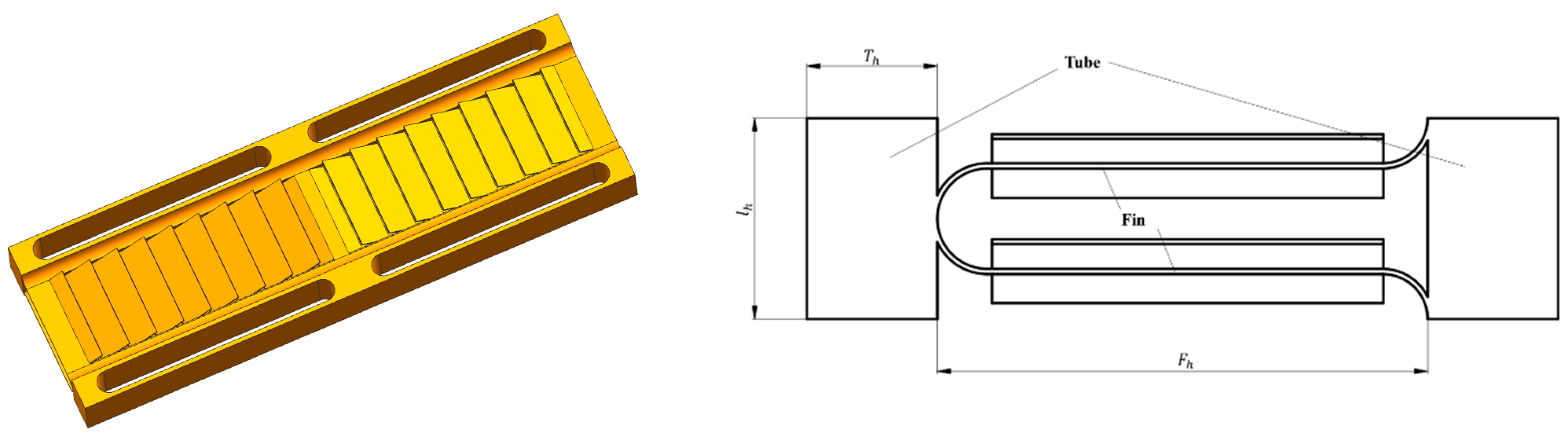
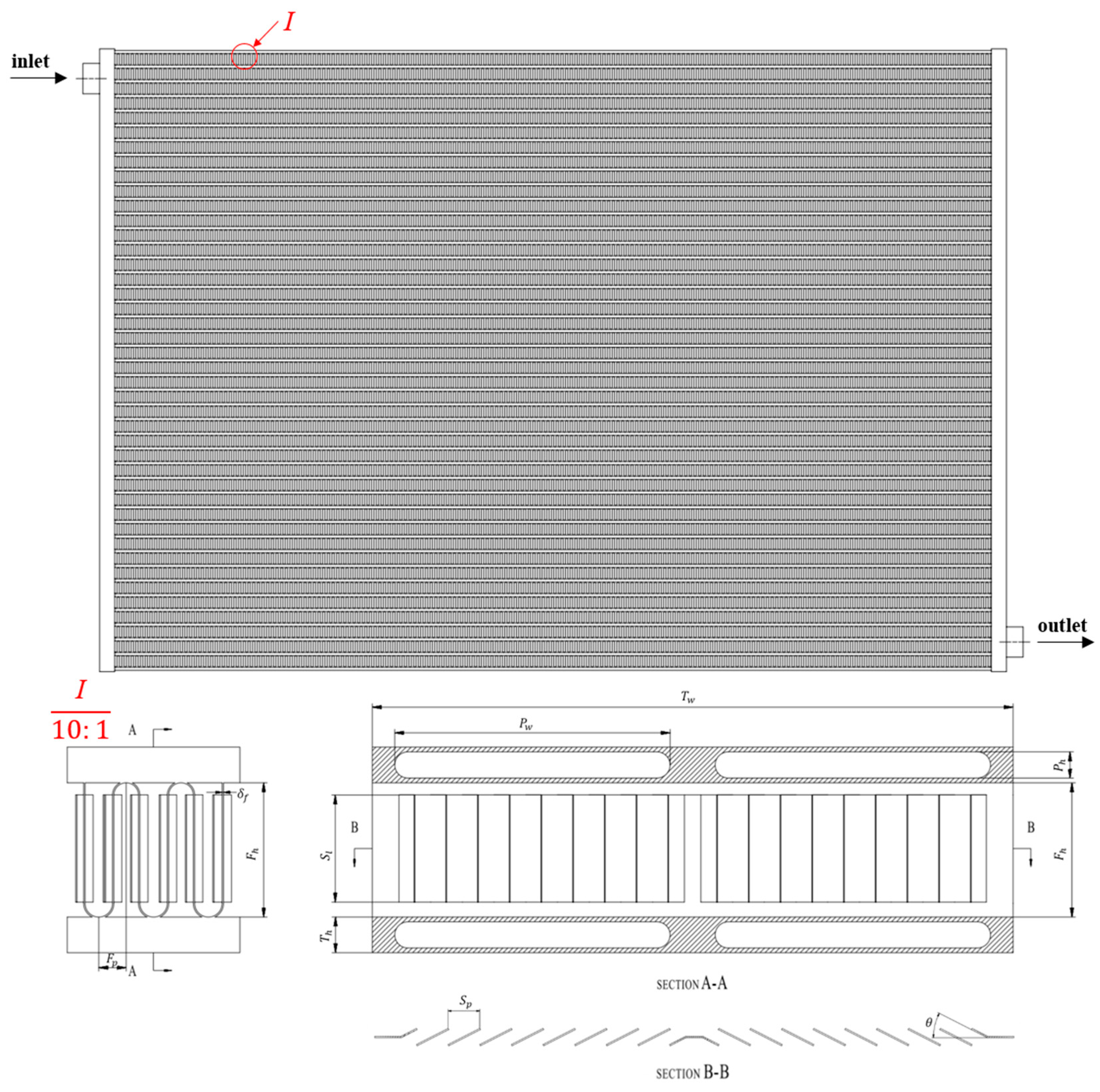
The research object in this paper is the unit parallel-flow heat exchanger consisting of double O-hole flat aluminum tube and U-shaped strip fin with louvers, as shown in
Figure 4. It has a total length of 580 mm, a height of 424 mm, and a thickness of 36 mm. The equivalent diameter of the small passages in the tubes is 2.685 mm. The specific size parameters of the radiator and the fin louver parameters are shown in
Table 1.
2.2.1. Partial Fin
The partial fin geometry model is a unit taken along the height direction between the flat tubes of the actual radiator. The partial fin model consists of two rows of double O-hole flat aluminum tubes and U-shaped strip fins with louvers. The cross-section is shown in
Figure 5. The height is 3.1 mm, the width is 11.6 mm, and the length is 36 mm.
The calculation range of the partial fin model is 40 mm × 3.1 mm, with a calculated domain length of 100 mm. The fin region is 14 mm from the inlet and 50 mm from the exit, and the boundary between the left and right sides is 14.2 mm. The air flow is modeled as a three-dimensional, steady-state, turbulent, and incompressible fluid. The standard model was employed to simulate turbulence, with no-slip boundary conditions applied to the walls. Regarding the boundaries, a velocity inlet was specified with flow rates ranging from 2 to 10 m3/s, while the outlet was defined as a pressure outlet with zero-gauge pressure.
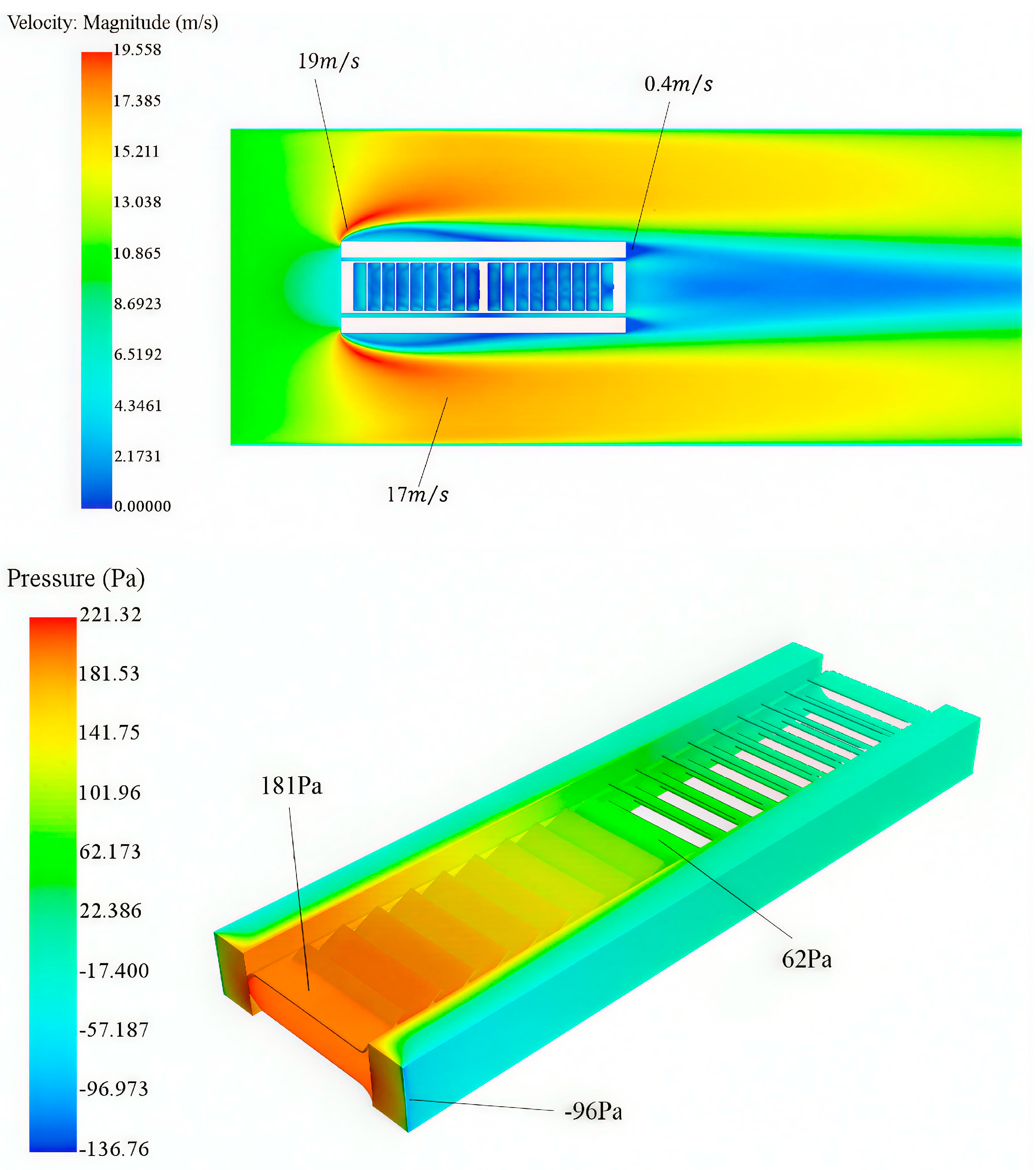
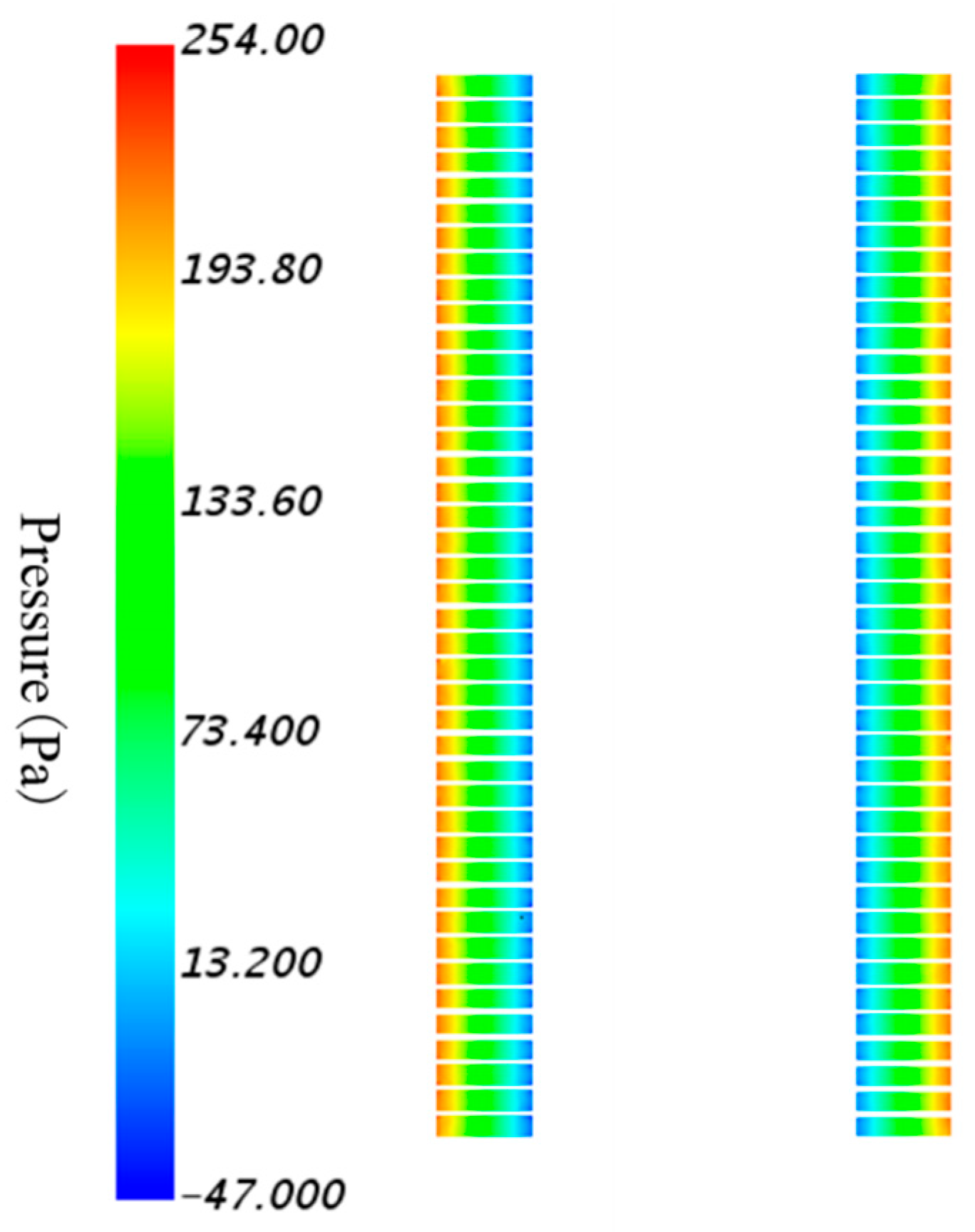
The pressure and velocity distributions of the partial fin model at different air inlet flow rates were obtained by simulation. The fin surface pressure and velocity distribution cloud diagrams at an inlet air flow rate of 10 m
3/s are shown in
Figure 6.
The pressure distribution at different flow rates was obtained by changing the inlet flow rate of the model. In this study, the inlet volumetric flow rate of the partial fin model varied from 2 m
3/s to 10 m
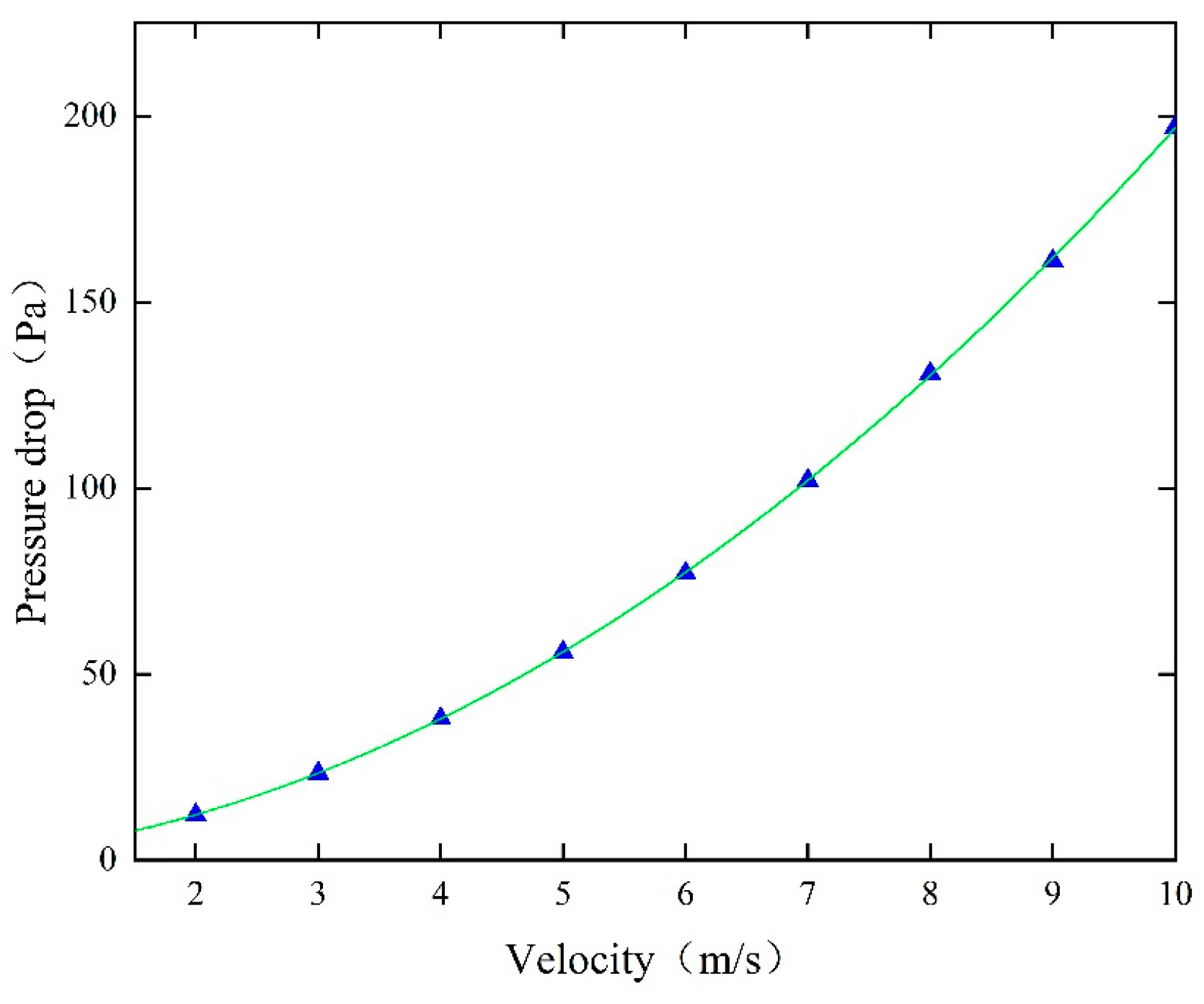
3/s. Consequently, the variations in pressure drop between the inlet and outlet were monitored. A quadratic fit was made to the velocity and pressure in the model, and the quadratic fit curve is shown in
Figure 7. The fitted resistance coefficients mainly influence the pressure drop prediction of the radiator, while their effect on the overall thermal performance remains limited within the calibrated operating range. The inertial drag coefficient
and viscous drag coefficient
were obtained from the fitted relationship:
2.2.2. Radiator
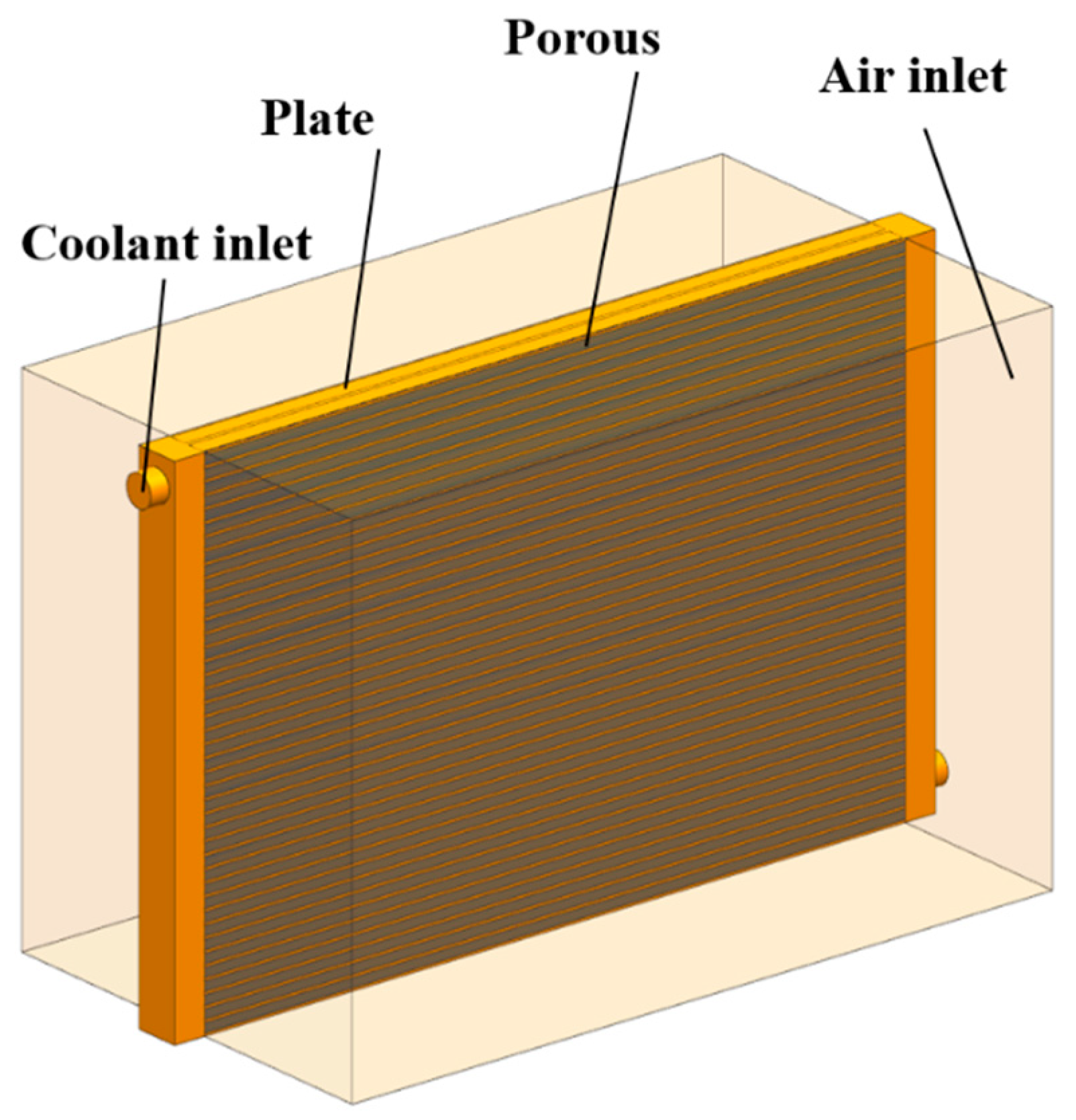
The geometry of the radiator and its cross-sectional structure are shown in
Figure 8. The porous medium model is used instead of the real fin by adding a momentum source term. The left round tube is the coolant inlet area, the front is the air inlet area, and the porous medium area is located between the plates. The flat tubes are spaced apart from the porous medium. The drag coefficients and effective thermal conductivity, derived from the fin model and phase properties, respectively, are incorporated into the governing equations. The conservation laws for the 3D incompressible flow include mass (continuity), momentum, and energy.
- (1)
Governing equations
Given the high density of fins and the resulting geometric complexity, direct simulation of the full-scale structure is computationally prohibitive. Consequently, a porous media formulation is employed to approximate the aerodynamic resistance. In this approach, the flow resistance is modeled by introducing a negative momentum source term into the governing equations, defined as follows:
where
is the third-order inertia resistance matrix and
is the third-order viscous resistance matrix.
The effective thermal conductivity within the porous domain is computed as the volume-weighted average of the thermal conductivities of the fluid and solid phases:
In this equation, stands for the medium’s porosity. The terms and correspond to the thermal conductivity of the fluid and solid phases, respectively.
- (2)
Parameters in the model
A 50% aqueous ethylene glycol solution is employed as the coolant. The air and coolant properties, evaluated at the inlet temperature, are listed in
Table 2.
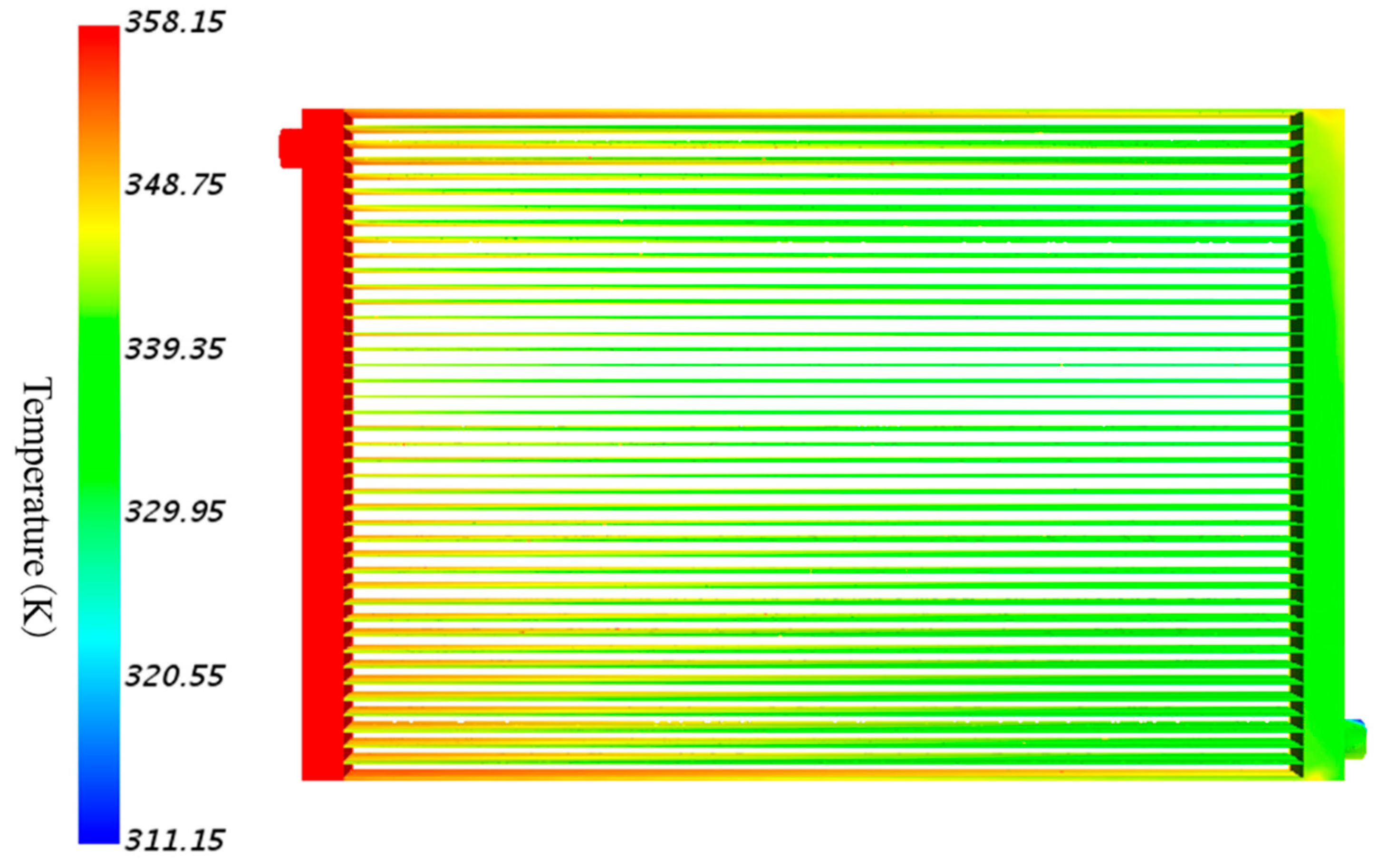
For working conditions 1–10, the air inlet temperature is 38 °C, the coolant inlet temperature is 85 °C, and the air flow rate is 7.6
. Only the coolant inlet mass flow rate is varied across these ten sets of working conditions. For working conditions 11–13, only the air flow rate is varied, with speed values of 5.4, 6.3, and 7.6
. The coolant inlet mass flow is varied only among groups 2–5. The detailed operating parameters are summarized in
Table 3.
The overall radiator model is mainly divided into seven parts: air inlet area, air outlet area, coolant inlet area, coolant outlet area, coolant flow path, flat tube area, and porous medium area. The computational model is divided into distinct fluid and solid zones. The coolant loop occupies the inlet/outlet sections and the flow path, whereas the air inlet, outlet, and porous regions are filled with air. The solid flat tube domain is initialized at the ambient air temperature. Regarding thermal boundaries, heat exchange occurs at the coolant–tube interface, while the interface with the porous zone is set as thermally insulated. The porous resistance is configured to act solely along the principal air flow vector.
2.2.3. Fan
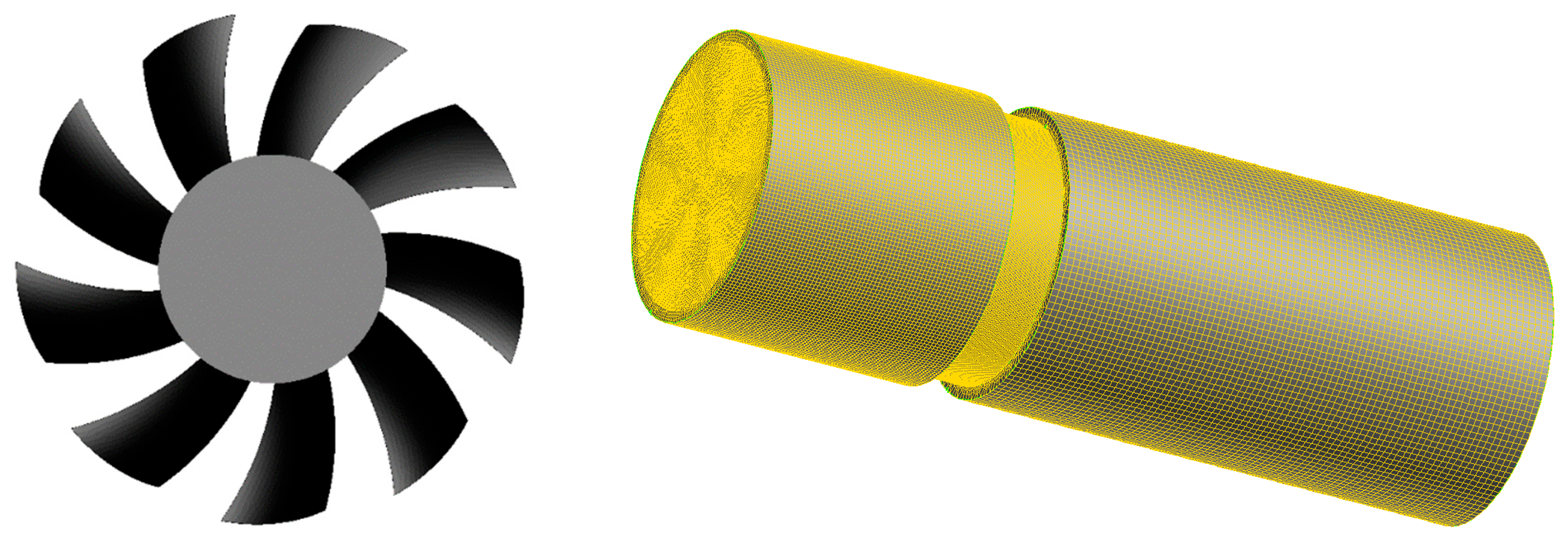
A three-dimensional fan model was constructed to obtain the flow field data. The model geometry and its corresponding computational domain are illustrated in
Figure 9.
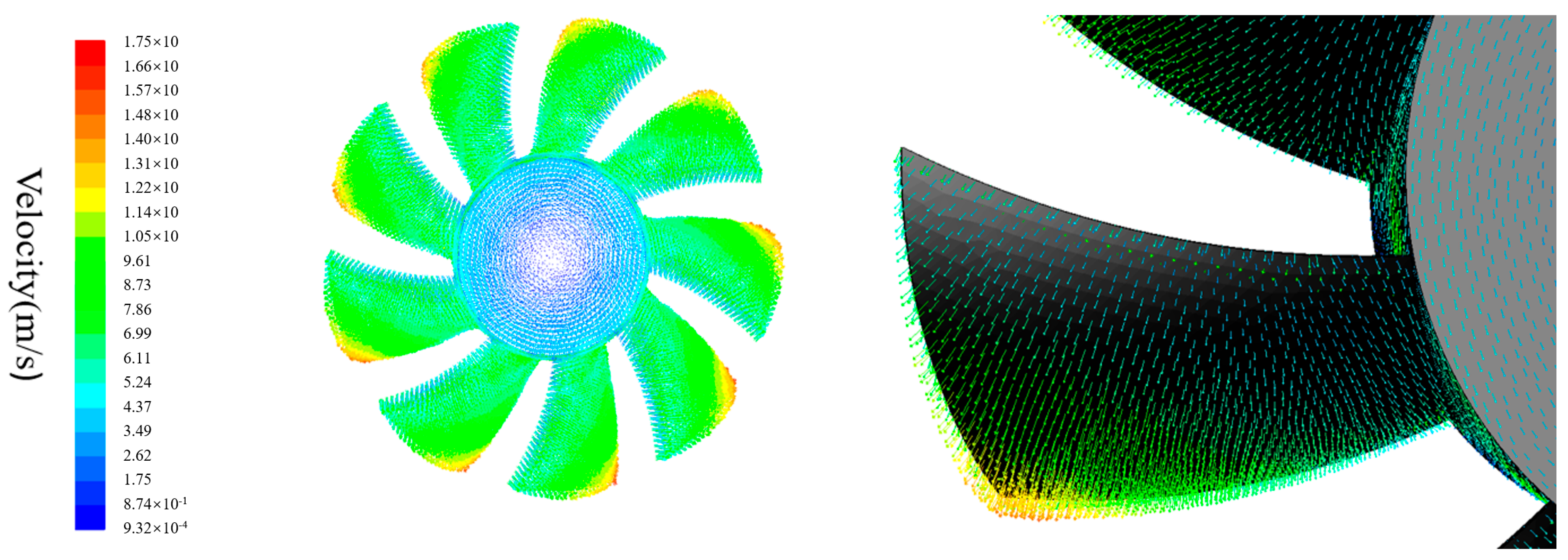
The flow field data of the fan were acquired via numerical simulation, as illustrated in
Figure 10.
2.3. Coupled Thermal Management Model
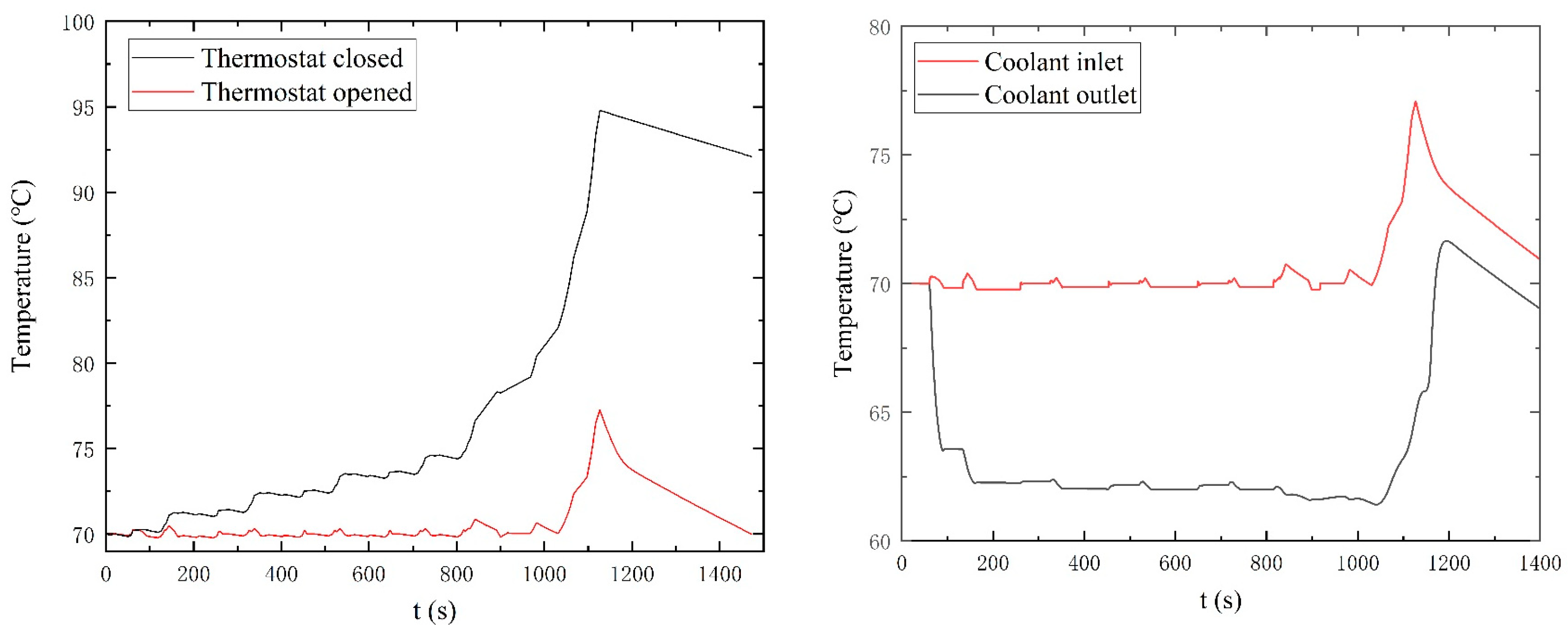
After obtaining the flow field data of fan and the radiator model, simulations of the coupled model were performed. The 3D CFD-derived air flow and heat transfer data are mapped into the 1D model through spatially resolved lookup tables and velocity matrices, enabling stable transient simulations while preserving non-uniform flow characteristics. To ensure that the stack temperature remains within a specified range, a thermostat was added to the circuit. The constructed circuit is shown in
Figure 11.
Initial Conditions
The simulation environment is set to an ambient temperature of 25 °C. Considering the PEMFC’s optimal operating range (60–80 °C), the stack temperature is initialized at 70 °C. The stack specifications include a mass of 50 kg, a total of 330 cells, and an active area of 800 cm
2.
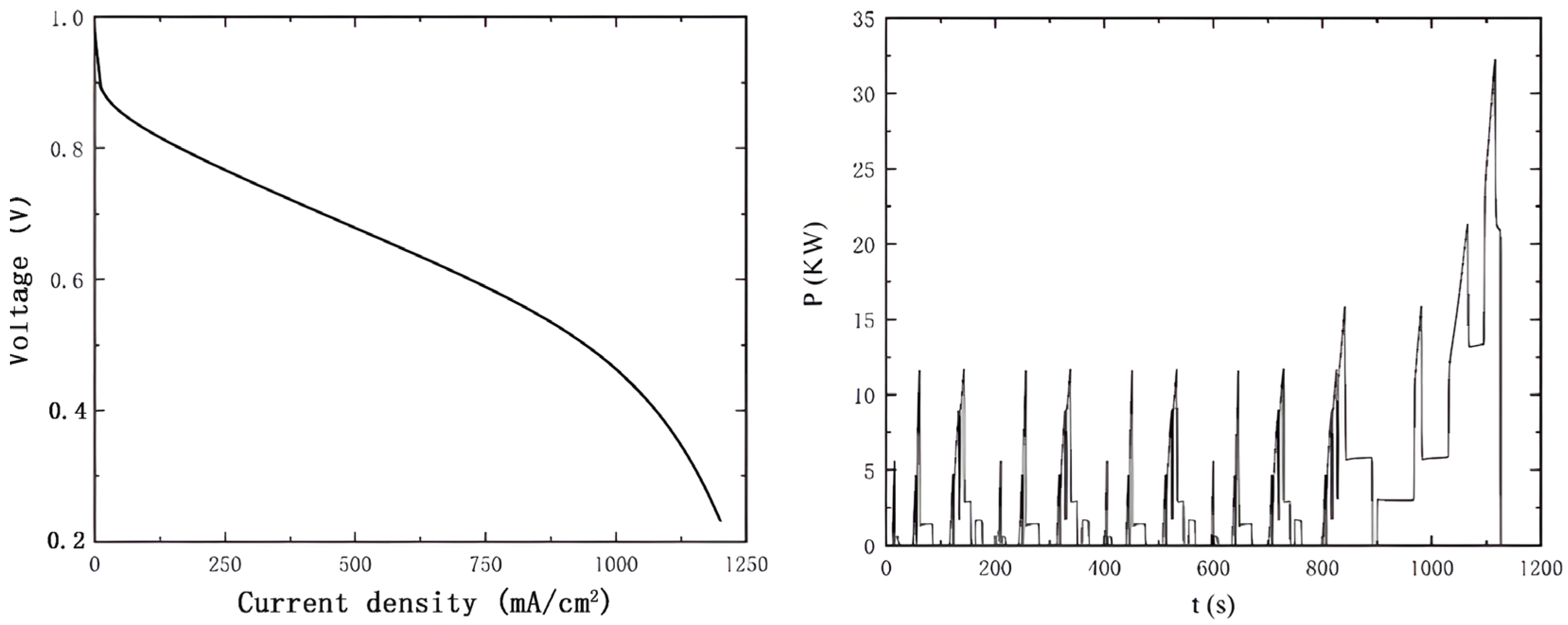
Figure 12 illustrates the polarization curve and the corresponding power demand. Additionally, the humidifier is configured to maintain a target relative humidity of 90%, while the hydrogen supply is regulated from an initial tank pressure of 70 MPa to an outlet pressure of 1.5 MPa.



 ,
,