Article

Experimental Study of Pouch-Type Battery Cell Thermal Characteristics Operated at High C-Rates

by
Marius Vasylius
1,*,
Deivydas Šapalas
1,
Benas Dumbrauskas
1,
Valentinas Kartašovas
1,*,
Audrius Senulis
1,
Artūras Tadžijevas
1,
Pranas Mažeika
2,
Rimantas Didžiokas
2,
Ernestas Šimkutis
2 and
Lukas Januta
2
1
Marine Research Institute, Klaipeda University, Universiteto Av. 17, LT-92295 Klaipeda, Lithuania
2
Department of Engineering, Klaipeda University, Bijunu St. 17, LT-91224 Klaipeda, Lithuania
*
Authors to whom correspondence should be addressed.
Batteries 2026, 12(1), 14; https://doi.org/10.3390/batteries12010014 (registering DOI)
Submission received: 27 November 2025 / Revised: 17 December 2025 / Accepted: 26 December 2025 / Published: 28 December 2025

Abstract

This paper investigates pouch-type lithium-ion battery cells with a nominal voltage of 3.7 V and a nominal capacity of 57 Ah. A numerical model of the cell was developed and implemented using the NTGK method, which accurately predicts electrochemical and thermal processes. The results of numerical modeling matched with the experimental results of battery cell temperature measurements—the average deviation was about 4.5%; therefore, it can be considered reliable for further engineering research and construction of battery modules. In the experimental part of the paper, the battery cell was loaded in various C-rates (from 0.5 to 2 C), using heat flux sensors, thermocouples, and a thermal imaging camera. The studies revealed that the highest temperature is in the tabs area of cells. The temperature on the face of the cell surface exceeds 35 °C already from a load of 1.35 C, which accelerates cell degradation and reduces the number of cycles. Thermal imaging revealed uneven temperature distribution, whereby the top of the cell heats up more than the bottom of the cell and the temperature gradient can reach 2–4 °C. It was observed that during faster charge/discharge modes, the temperature rises from the tabs of the cell, and during slower ones, more in the middle face surface of the cell. The studies highlight the need to apply additional cooling solutions, especially cooling of the upper cell face, to ensure durability and uniform heat distribution.

1. Introduction

The battery is the key component of electric vehicles, storing energy to power the motor. Among various rechargeable batteries, lithium-ion cells dominate EV applications due to their high energy density. Lithium-ion batteries are one of the most important energy sources for electric vehicles, but their performance and lifetime are severely limited by temperature conditions. To ensure the safety of vehicle operation and to reduce range anxiety, there is an urgent need to understand the current situation and to anticipate the development and challenges of the battery thermal management system.
Lithium-ion battery technology is one of the most suitable energy storage options for driving electric vehicles due to its high specific power and high specific energy density. The high capacity of the battery pack poses safety challenges, such as overheating, combustion, and explosion, as the battery heats up during operation.
The general trend in electric transport technology is to develop cells with higher gravimetric and volumetric energy densities (Wh·kg−1 or Wh·L−1) to increase the distance traveled per charge [1]. In addition to energy density, safety and charging time are also critical factors. Pouch-type cells combine high energy density with compactness and lightness, making them attractive for EV applications. Different chemistries (LTO, LFP, and NMC) are used in EVs, but pouch-type NMC cells dominate due to their high energy density. High-capacity batteries extend the driving range but also increase vehicle weight and energy consumption, which highlights the importance of efficient thermal management solutions.
Zhonghao Rao et al. [2] stated that the optimal operating temperature for a battery is between 25 and 40 °C, and the temperature difference between individual modules should be less than 5 °C to ensure maximum power output and cycle time. Therefore, to meet these operational requirements, a battery thermal management system (BTMS) must be designed and effectively developed.
Thomas Buidin et al. [3] analyzed existing research related to the types, designs, and thermal operating principles of BTMS used in various lithium-ion battery configurations. Lithium-ion batteries are preferred for EVs, but their cost and energy density limit efficiency [2]. The performance of EVs strongly depends on battery capacity, with temperature being the most critical factor. Zhao et al. [4] reviewed electrode modifications to enhance BTMS thermal performance. Battery temperature has a major impact on the charging and discharging rate of the battery. For this reason, temperature management of the EV battery pack is of vital importance, and the design of energy-intensive packs has to use efficient yet sophisticated cooling systems that employ hundreds of cooling channels. Such cooling systems add 10–20% to the battery cost [5]. Lithium-ion batteries are susceptible to thermal runaway when the electrolyte reaches 70–130 °C. In addition, lithium-ion cells naturally degrade over time due to their operating conditions and state of charge. Temperature has a strong influence on the performance of almost all batteries. Fast charging and high currents increase heat loss in cells [5,6].
There are two main sources of heat generation in a battery cell: electrochemical action and joule heating by the movement of electrons. A temperature range of 25–40 °C provides ideal working conditions for lithium-ion batteries, while temperatures above 50 °C are detrimental to battery life. Elevated temperatures accelerate parasitic side reactions according to the Arrhenius law, leading to faster electrolyte decomposition and destabilization of the solid electrolyte interphase (SEI). This increases internal resistance, promotes gas generation, and reduces life cycle. Recent studies also emphasize the importance of predictive modeling for battery aging trajectories. For instance, Wang et al. [7] proposed a transferable generative pretrained transformer (TransLoRA-GPT) capable of forecasting SOH degradation from partial charging data, highlighting the growing role of advanced data-driven methods in understanding battery reliability.
Even immature deterioration of a single cell can significantly reduce the performance and efficiency of the entire battery. The main objective of BTMS is to regulate the temperature of the battery cells to increase lifetime [8,9]. Conventional BTMS systems are divided into active and passive cooling. Active cooling involves forced circulation of air, coolant, or mixed techniques, typically using fans and pumps [9]. Passive cooling uses heat pipes, hydrogels, and PCMs, but poor conductivity limits performance. Composite PCMs with graphite or metal additives improve heat transfer [10,11]. Despite many theoretical alternatives [12], EV manufacturers prefer liquid cooling with conductive plates due to stability, cost, and simplicity [9,13,14]. Coolants with additives such as glycol or nanoparticles further enhance heat transfer [15]. Recent studies on cylindrical 21700 cells have demonstrated the importance of cooling plate design parameters for effective BTMS [16]. Recent experimental work has investigated pouch-type Li-ion cells cooled with mini-channel plates, showing that optimized plate geometry can effectively reduce heat generation and improve thermal uniformity under high C-rate operation [14]. A recent comprehensive review has summarized global advancements and challenges in BTMS, emphasizing the need for innovative cooling strategies to meet the demands of modern EV applications [17]. This work provides a broad perspective that complements experimental studies by situating BTMS development within long-term technological trends. Together, these studies and reviews underline the urgent need for effective BTMS solutions in modern EVs.
Cicconi et al. [18] conducted an analysis of the thermal behavior of a lithium-ion battery using a three-dimensional model, which was experimentally validated under a driving cycle.
Geesoo Lee et al. [19] used FireM Multiphysics CFD software to investigate and analyze the electrical and thermal behavior of a pouch-type lithium-ion battery. They developed a model and examined its performance under different charging conditions.
Ansys Fluent is recognized as one of the most advanced platforms for computational modeling, offering robust capabilities for the thermal analysis of lithium-ion batteries. The software supports multi-scale multi-domain (MSMD) modeling, which enables the simultaneous simulation of electrochemical and thermal processes within the battery [20]. This integrated approach is particularly critical for evaluating heat generation resulting from Joule heating and electrochemical reactions, especially under high C-rate conditions.
In a recent study, computational fluid dynamics (CFD) analysis was employed to investigate the thermal behavior of a lithium-ion battery pack utilizing air-cooling strategies. A three-dimensional model was developed to assess temperature distribution, heat flux, and cooling efficiency under various operational scenarios. The findings indicated that relatively simple air-cooling configurations can be optimized to reduce temperature gradients, thereby enhancing battery safety and extending operational lifespan [21,22].
Another investigation using Ansys Fluent explored the thermal responses of different battery pack formats, including prismatic, cylindrical, and pouch-type cells. The simulations revealed that pouch-type cells exhibit greater sensitivity to temperature non-uniformity, underscoring the need for more effective thermal management strategies tailored to this cell format [23].
The aim of this research is to develop and validate a numerical model of pouch-type lithium-ion battery cells that accurately predicts thermal behavior under various charging and discharging conditions, and to experimentally investigate temperature distribution and gradients across the cell face surface. The study seeks to quantify thermal non-uniformity and assess the impact of C-rate on cell heating, with the goal of informing the design of effective cooling strategies for battery module development.
This study uniquely focuses on the thermal non-uniformity of pouch-type cells, with special attention to face cooling implications, combining NTGK modeling and thermal imaging validation.

2. Methodology

2.1. Specification of the Cells

In electric transport (especially buses), pouch-type cells are increasingly preferred due to their lightweight and flexible design and high energy density. This type of cell is lighter than cylindrical or prismatic cells, resulting in a reduction of the overall weight of the vehicle and improved energy consumption. This has a direct impact on vehicle range, efficiency, and carrying capacity. Reducing the weight of the battery allows buses to travel longer distances between charges and improves performance on routes with frequent stops. The flat shape of the pouch-type cells allows for tighter packing, maximizing space in battery packs. The pouch-type cells also offer better heat dissipation, which is essential for thermal stability and safety in demanding bus operating conditions. Although these cells require external support structures and the management of cell swelling must also be considered, in general, pouch-type cells are an excellent choice for modern, high-performance electric bus systems.
Considering these key requirements for bus battery packs, the SolarEdge (formerly Kokam) 57 Ah, 3.7 V, and 209.8 Wh lithium-ion pouch cell with liquid electrolyte was chosen for its high-power and high-capacity characteristics. In this study, the C-rate is defined based on the nominal capacity of 57 Ah. Accordingly, 1 C corresponds to a charge or discharge current of 57 A, 1.5 C to 85.5 A, and 2 C to 114 A. The flexible polymer packaging format provides mechanical advantages, but the cell itself employs a conventional liquid electrolyte system. It also demonstrates high performance up to 10 C-rate, high cycle capacity (up to 6000 cycles), low impedance, and reduced heat generation, which increases the safety of the cell. The cell and its technical characteristics are given in Table 1.

2.2. Methodology of the Battery Modeling Using the “NTGK” Model

In Ansys Fluent software, a multi-scale multi-domain (MSMD) comprehensive three-dimensional simulation of the lithium-ion cell battery model was developed. This model allows modeling with multiple parameters and different physical properties. The MSMD approach covers different physics in different solution domains. The MSMD approach has several computational models depending on the known and calculated parameters: the NTGK model, ECM model, and Newman P2D model. The NTGK model is used in this numerical study. This is because it requires fewer parameters and is easier to calculate. This has been shown to be an advantage when charging the battery, as it is difficult to obtain the technical characteristics [24].
The NTGK (Newman-Tiedmann-Gauthier-Kim) model is an advanced method used for the numerical simulation of lithium-ion battery cells in Ansys Fluent. The model is based on a mathematical analysis of electrochemical and thermal processes, which provides insight into the performance of batteries under different operating conditions. One of the key advantages of the NTGK model is its ability to model the electrochemical processes inside the battery, including the diffusion of lithium ions and their interaction with electrodes. The approach also includes analysis of temperature distribution and heat generation mechanisms, which are critical for battery safety and efficiency. In addition, the NTGK model allows the study of voltage changes during the discharge process and the assessment of battery performance parameters, such as energy density and cycle life.
This model was proposed by Kwon [25]. In the formulation of the model, jECh is the volumetric current transfer rate, which is related to the potential field, as shown in the following algebraic equation [26,27]:
j E C h = a Y U φ + φ .
Here, a is the specific area of the electrode sandwich sheet in the battery, while Y and U are the model parameters, which are functions of the depth of discharge (DoD) of the battery [26,27]:
D o D = V o l 3600 Q A h 0 t j E C h d t .
Vol is the volume of the battery and QAh is the total electrical capacity of the battery in amp-hours.
The battery voltage and current curve graph can be obtained experimentally. Y and U can be determined from the curve by fitting the data. Ansys Fluent has adopted this formulation of the Y and U functions [26,27]:
Y = Y 0 e x p C 1 1 T i 1 T r e f , U = U 0 C 2 T i T r e f ,
where Y0 and U0 are values of Y and U at an environmental temperature Tref, while as for Ti this term represents the temperature of the battery cell, and C1 and C2 are the constants in the NTGK model.
The volumetric heat generation rate in a battery cell is expressed as [26,27]:
q E C h = σ + 𝛻 2 φ + + σ 𝛻 2 φ + j E C h U φ + φ T d U d T .
It includes Ohmic heating, reaction (overpotential) heating, and entropic heating. The first term describes resistive (Joule) heating in the positive and negative electrodes due to ionic/electronic current flow, the second term captures irreversible heat from electrochemical reactions, and the third term represents reversible heat, which is directly linked to entropy changes during electrochemical reactions in the battery.

2.3. Experimental Methodology

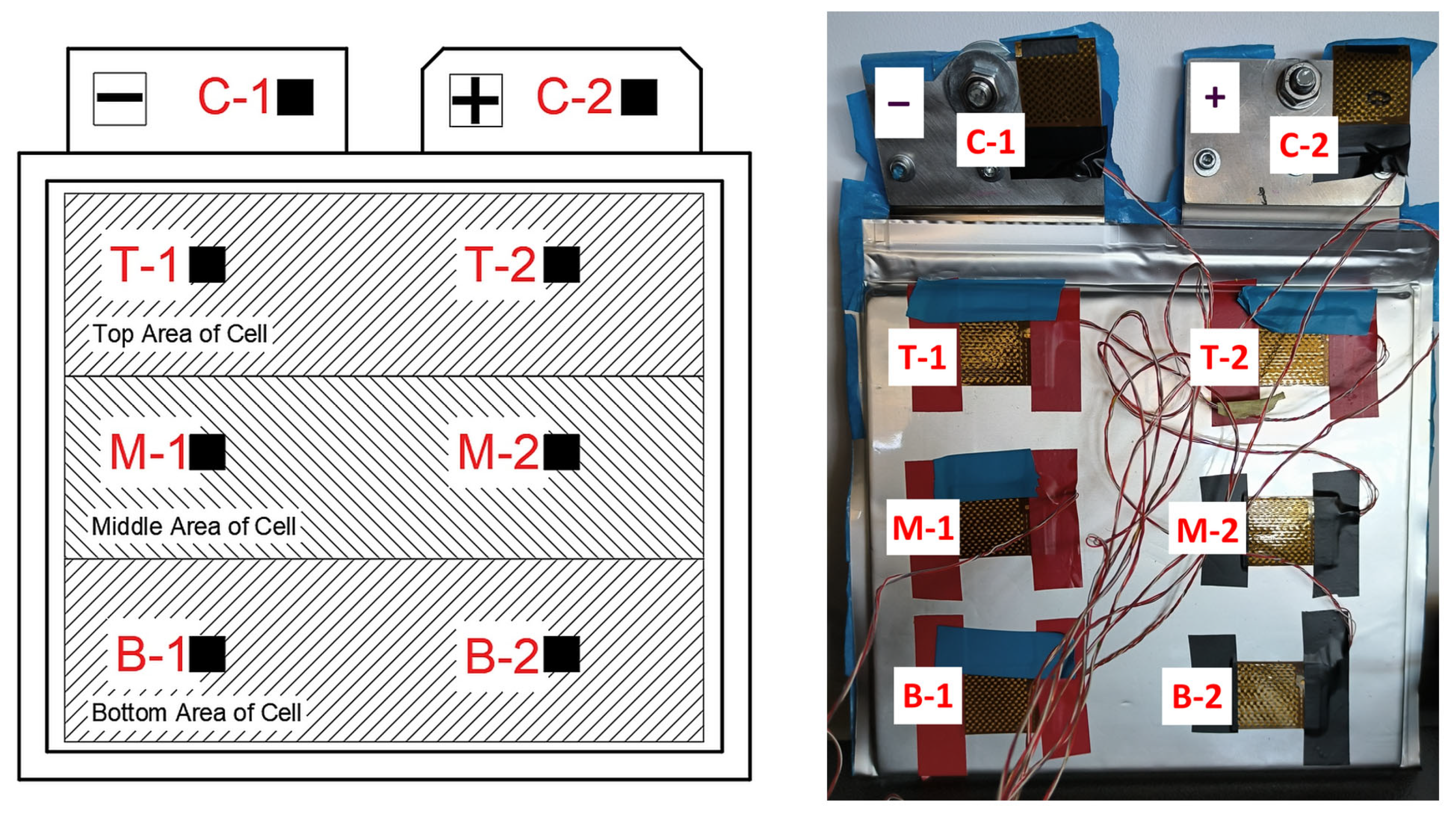
To assess the temperatures of the battery cell during charging/discharging at different intensities, 8 heat flux sensors with thermocouples were installed on the cell face. The positions in which the sensors were mounted are shown in Figure 1. The chosen positions for the temperature measurements were on the battery contacts or tabs (positions C-1 and C-2), on the top area of the battery cell (positions T-1 and T-2), on the middle area of the battery cell (positions M-1 and M-2), and on the bottom area of the battery cell (positions B-1 and B-2).
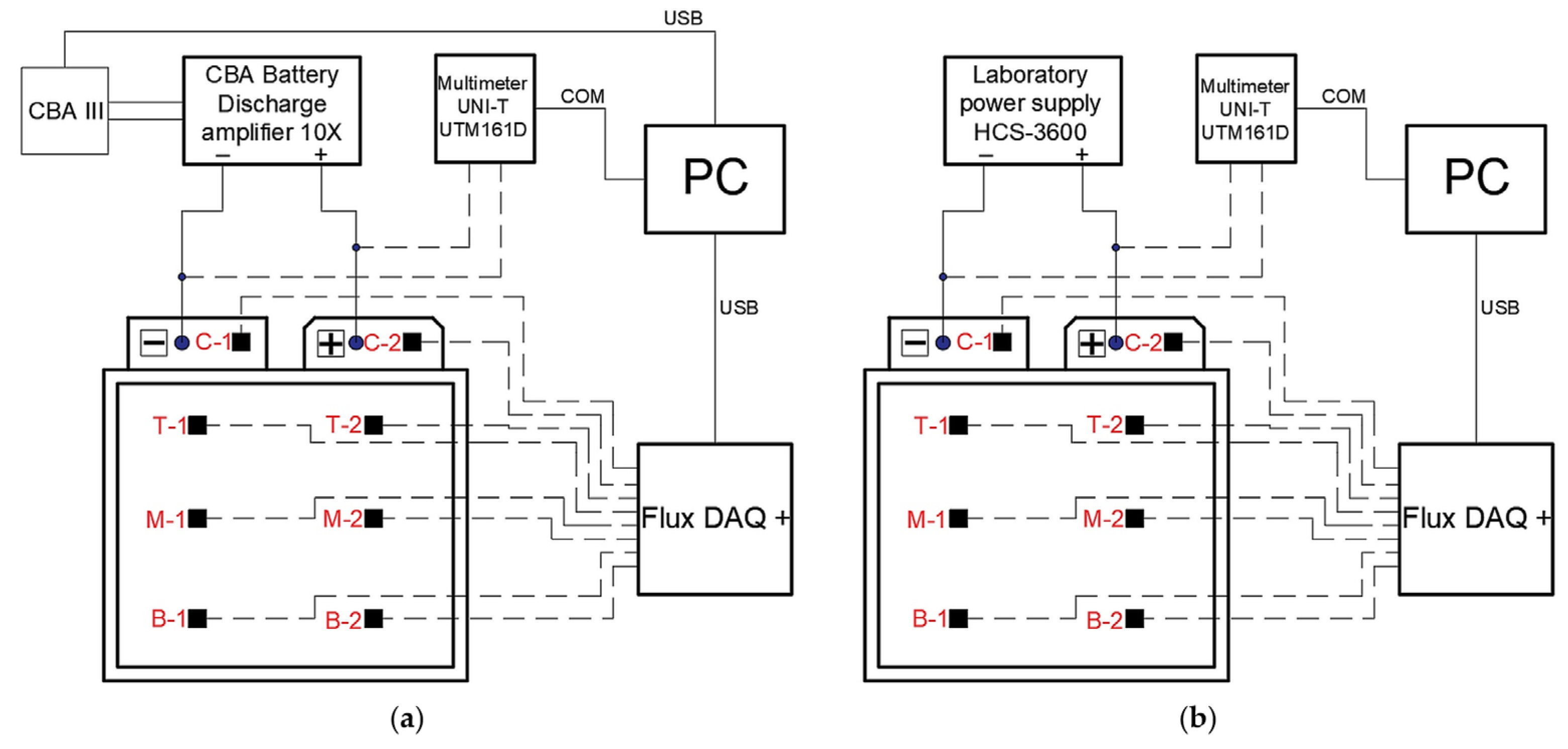
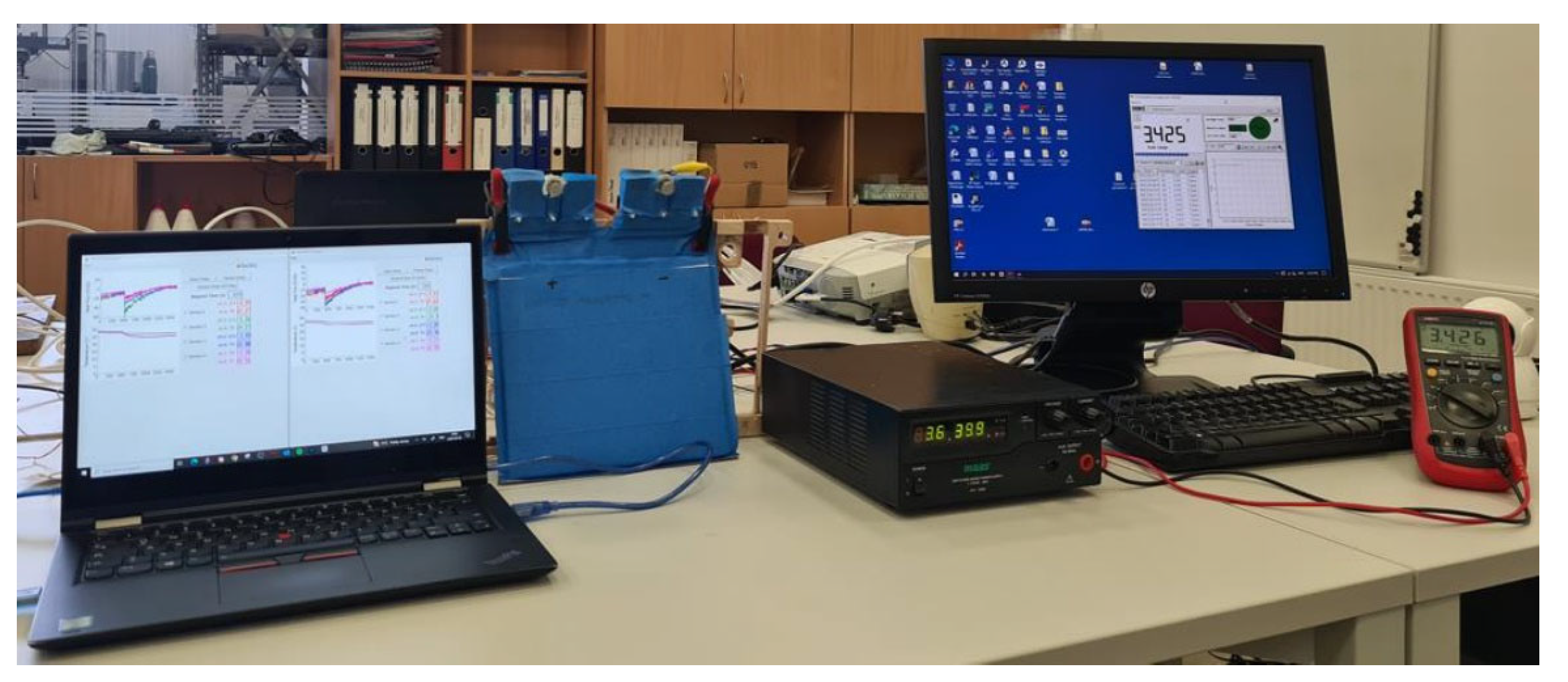
The schematic diagram for charging and discharging the battery cell was quite similar (Figure 2), apart from a different power supply. For discharging, a CBA Amplifier 10X (West Mountain Radio, Waukesha, WI, USA) was used, and for charging, a laboratory bench power supply HCS-3600 (Manson, Kwai Chung, Hong Kong) was used, which can maintain a constant charging current of up to 60 A and can maintain a constant voltage at the required battery cell voltage, thus fully charging the battery cell. The battery voltage values were evaluated and recorded with a UNI-T multimeter. Temperature and heat flux were measured with Heat Flux and a Thermocouple Data Logger. A general view of the experimental test bench is shown in Figure 3. Temperatures on the face of the cell were also assessed with a FLIR T335 thermal imager (Teledyne FLIR LLC, Wilsonville, OR, USA) at 10 min intervals.
Thermal imaging measurements were also carried out to determine the temperature distribution across the entire face of the pouch cell. A FLIR T335 thermal imager was used. As the face of the battery cell has a glossy surface, the emissivity needs to be considered for measurement and selected correctly, as this can lead to measurement errors. In addition to the lengthy calibration process, to determine the correct emissivity, it is essential to try to measure the surface as perpendicularly as possible to minimize the effects of reflections. It was, therefore, decided to use an adhesive matt tape, which was applied to the entire face of the cell. The calibration with temperature sensors gave the closest result (difference from the sensors of around 0.1–0.2 °C) with an emissivity of e = 0.95 and a reflected temperature of 21.2 °C. An image of the cell taped with blue adhesive tape is shown in Figure 3.
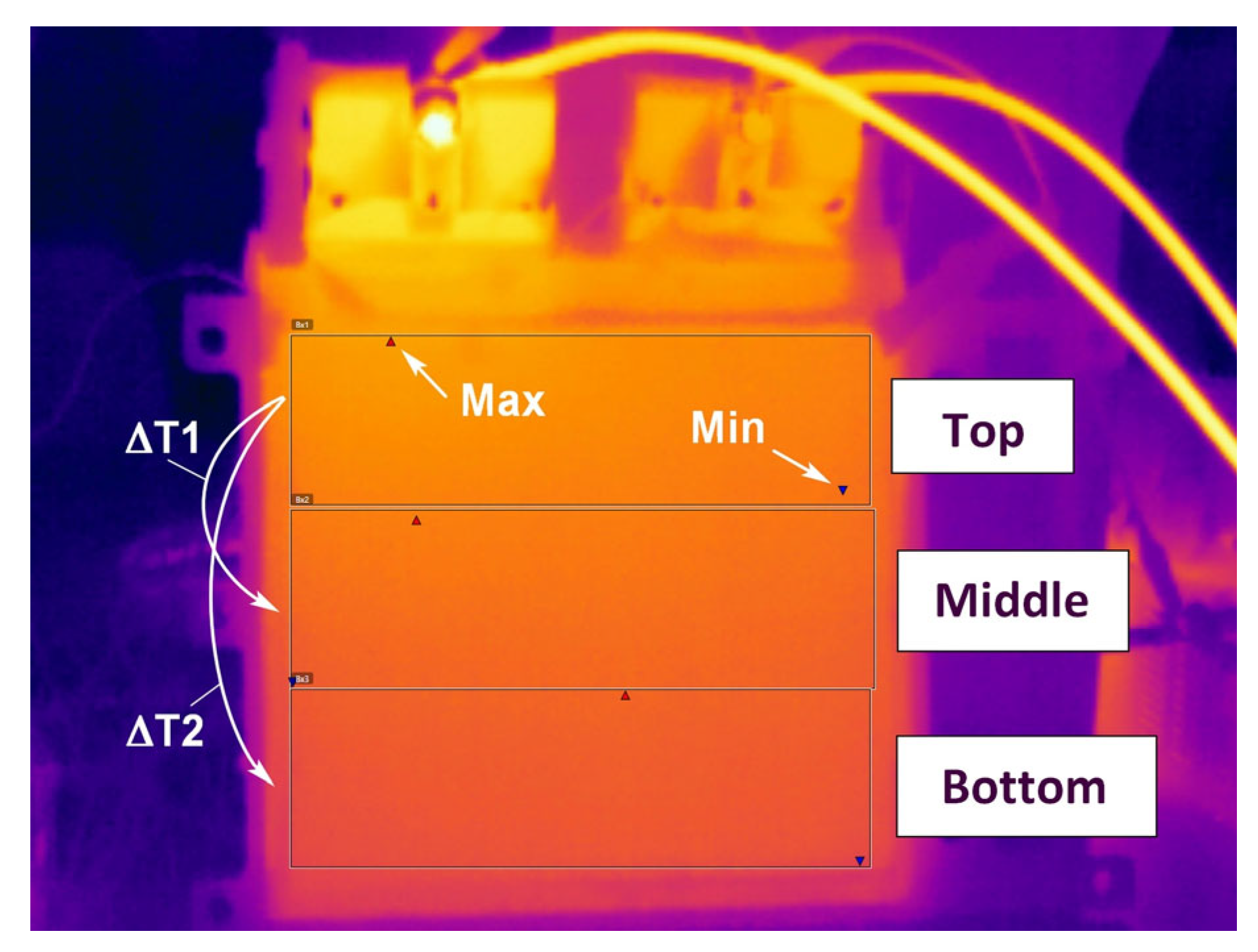
Using the Flir Tools program, the face of the cell in the thermal images was divided into three equal parts (named “Bottom,” “Middle,” and “Top”), as shown in Figure 4. The program was used to determine the temperature extremes in these areas, i.e., the highest and lowest temperatures (Min. and Max., shown in the figure as blue and red triangles). To determine the temperature differences between these zones during charging and discharging, the ΔT1 and ΔT2 temperature differences were calculated, where ΔT1 is the temperature difference between the top and the middle, and ΔT2 is the temperature difference between the top and the bottom. Also, since the program allows the export of thermal image temperature points, after transferring them to the Matlab program, the isotherms of the face of the cells were obtained.

3. Results and Discussion

3.1. Results of the Numerical Study

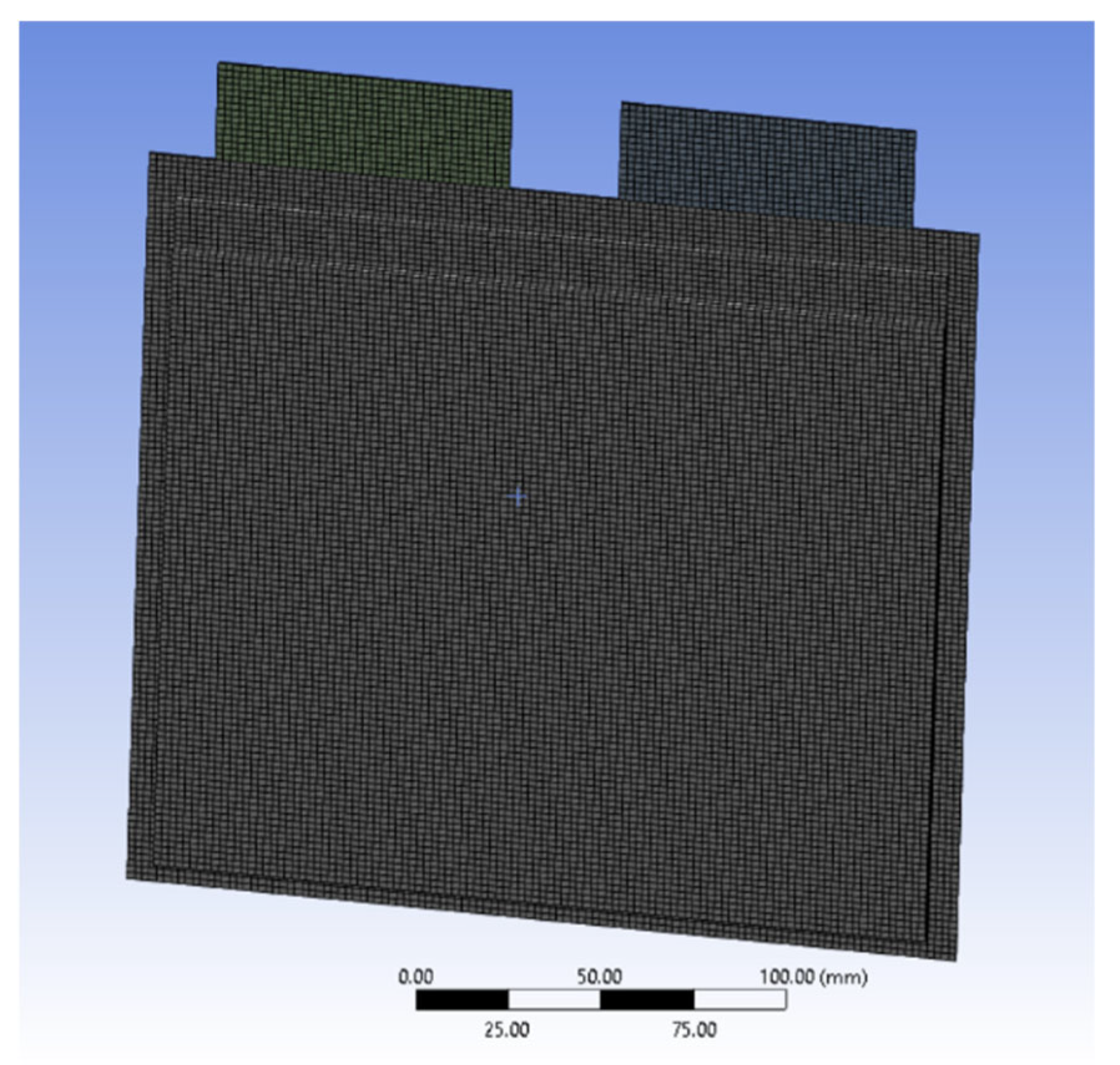
Based on the actual dimensions of the cell, a 3D model was created in Ansys software, consisting of 92,418 nodes and 76,312 elements, as shown in Figure 5.
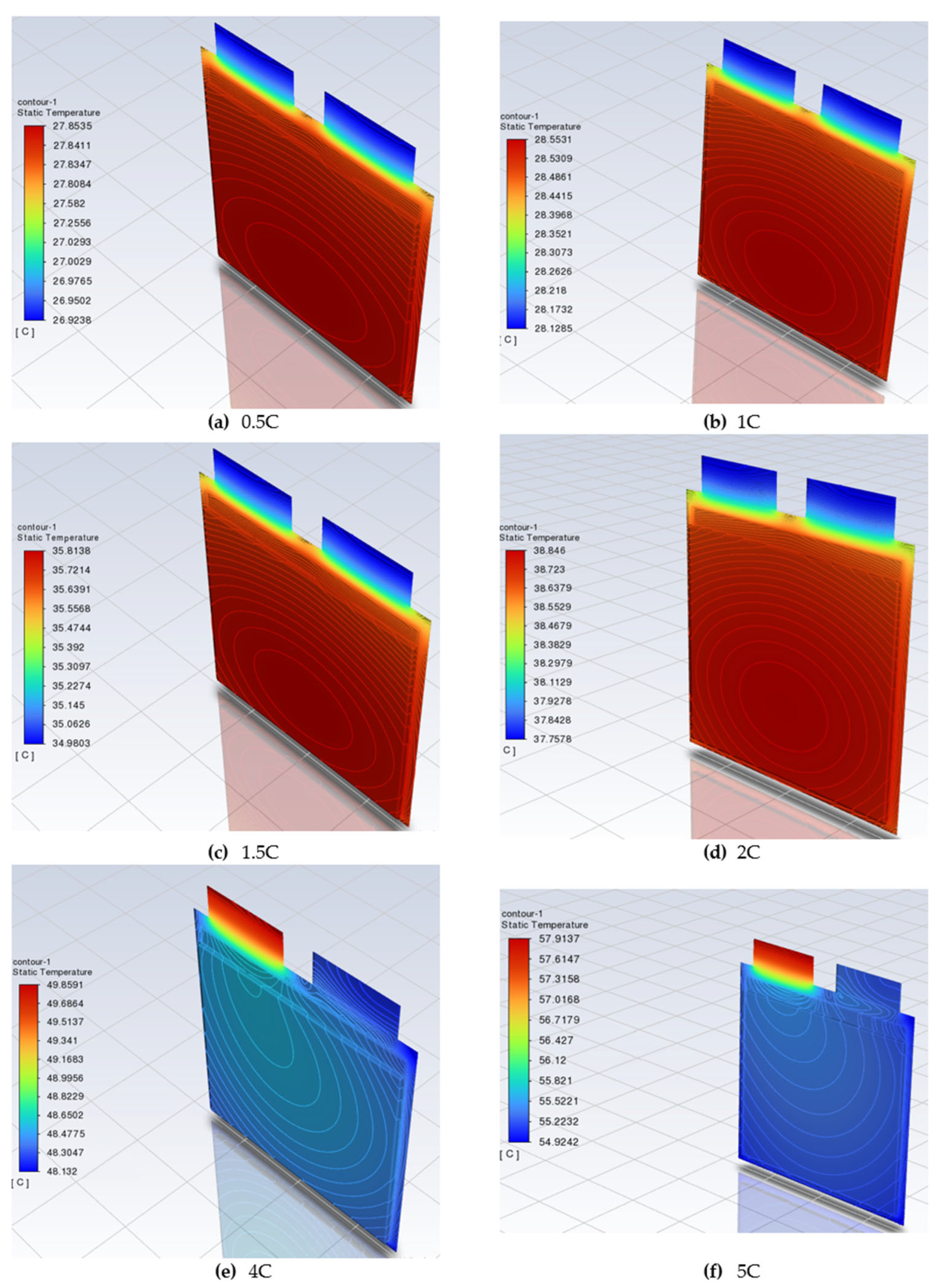
The tested battery cell was discharged at 0.5 C, 1 C, 1.5 C, 2 C, 4 C, and 5 C, and calculated temperatures of the battery cell are presented in Figure 6. The discharge loads and timing of the battery were set in the Ansys battery module. The manufacturer’s technical specification for the cell specifies a minimum battery cell voltage that cannot fall below 2.7 V.
Summarizing the simulation results with one KOKAM KCL216057PN battery cell at different loads showed that the maximum recommended temperature of 35 °C was not reached at 0.5 C and 1 C loads. The highest temperature was recorded in the cell body at the junction between the contacts and the body. At loads of 1.5 C, 2 C, 4 C, and 5 C, the maximum recommended temperature was exceeded, and at loads of 4 C and 5 C the maximum permissible battery cell temperature was also exceeded. Additional cooling is required to operate the battery cell at these loads.
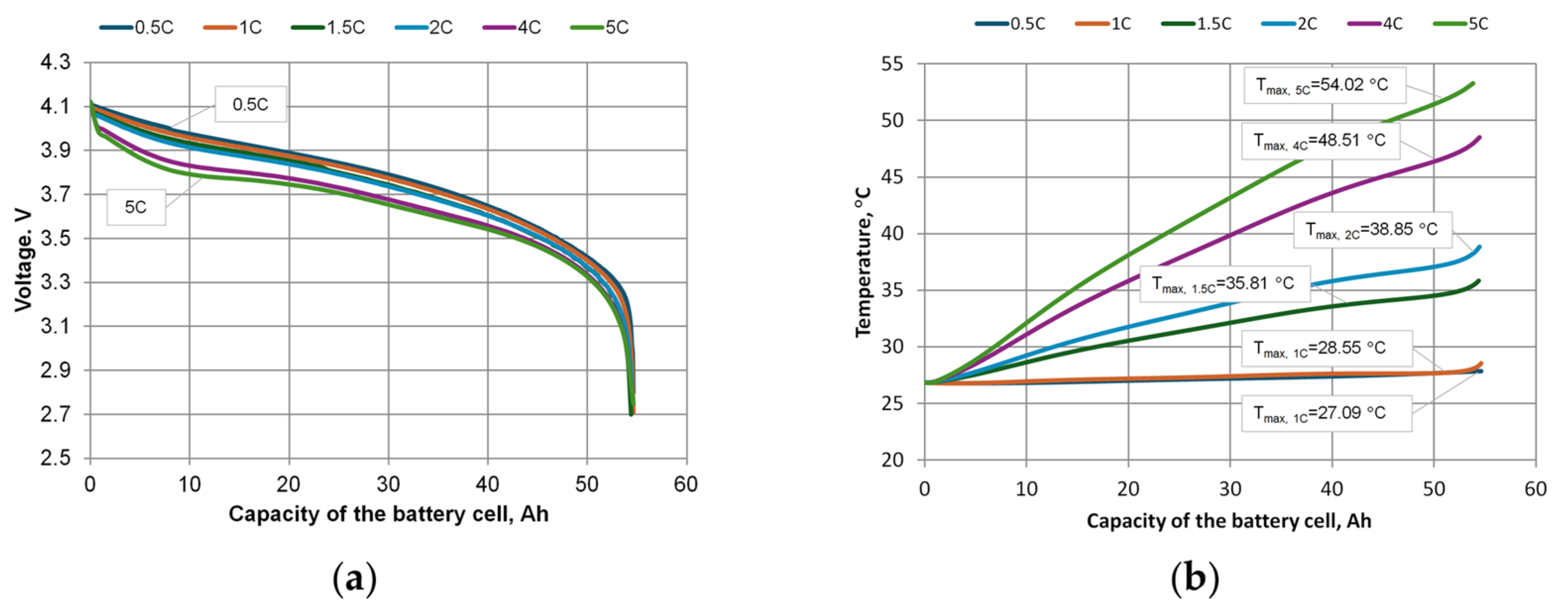
The results of the simulation performed by the Ansys software are presented in Figure 7. They show the dependence of voltages (Figure 7a) and temperatures (Figure 7b) on battery cell capacity at different discharge rates. The voltage graphs correspond to the physics of the cell discharge process, as when discharged at a higher rate, the voltage drop at the beginning of the discharge process is greater.
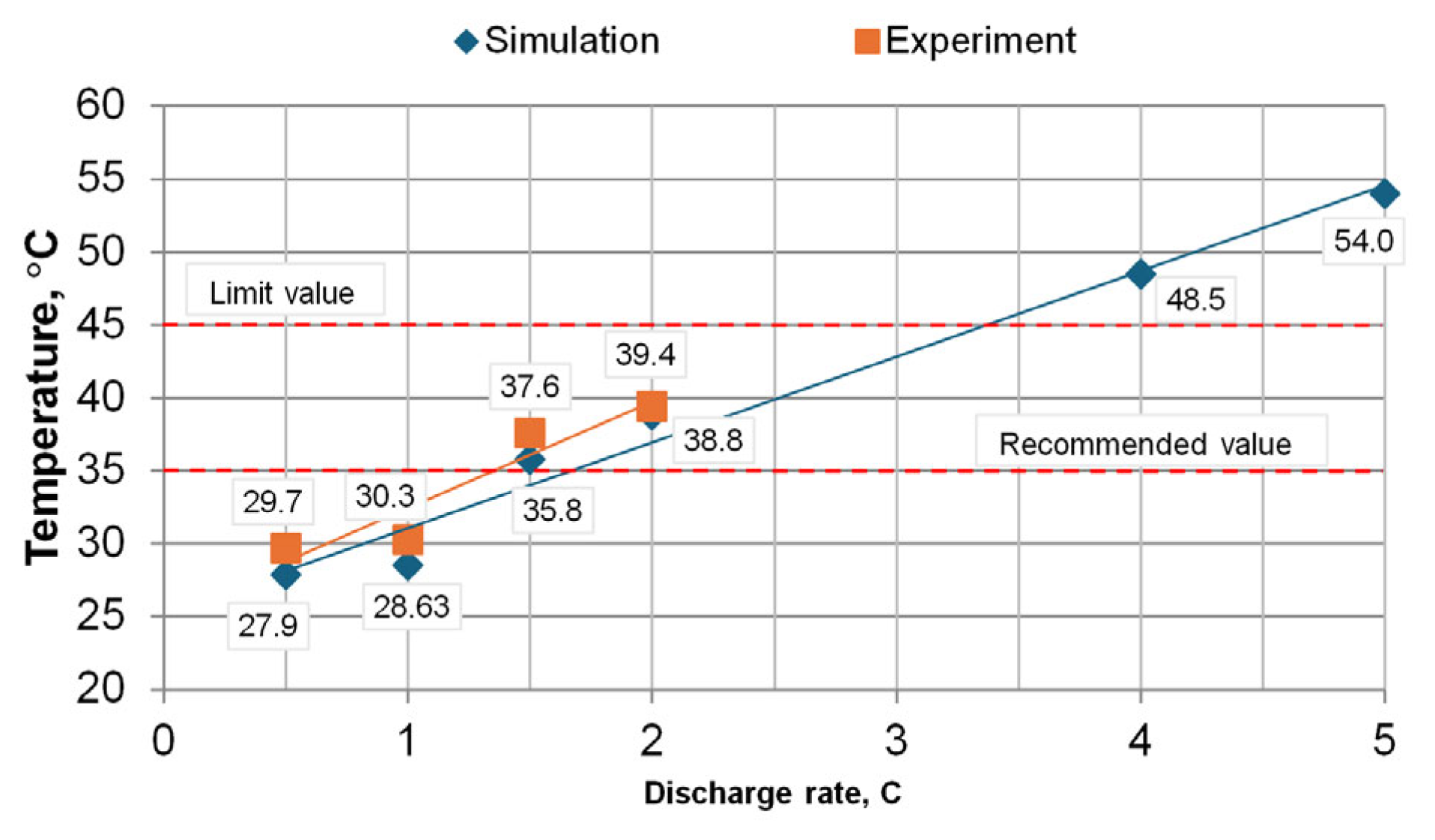
The temperature results obtained from the Ansys simulation of the battery module (Figure 7b) were compared with the experimental data, which are shown in Figure 8 and Table 2. The analysis and the calculation of the percentage deviations showed that the average difference between the simulation and the experimental data is about 4.54%, which suggests that the created battery model has sufficient accuracy and can be considered as a reliable tool for engineering calculations.

3.2. Results of Experimental Studies

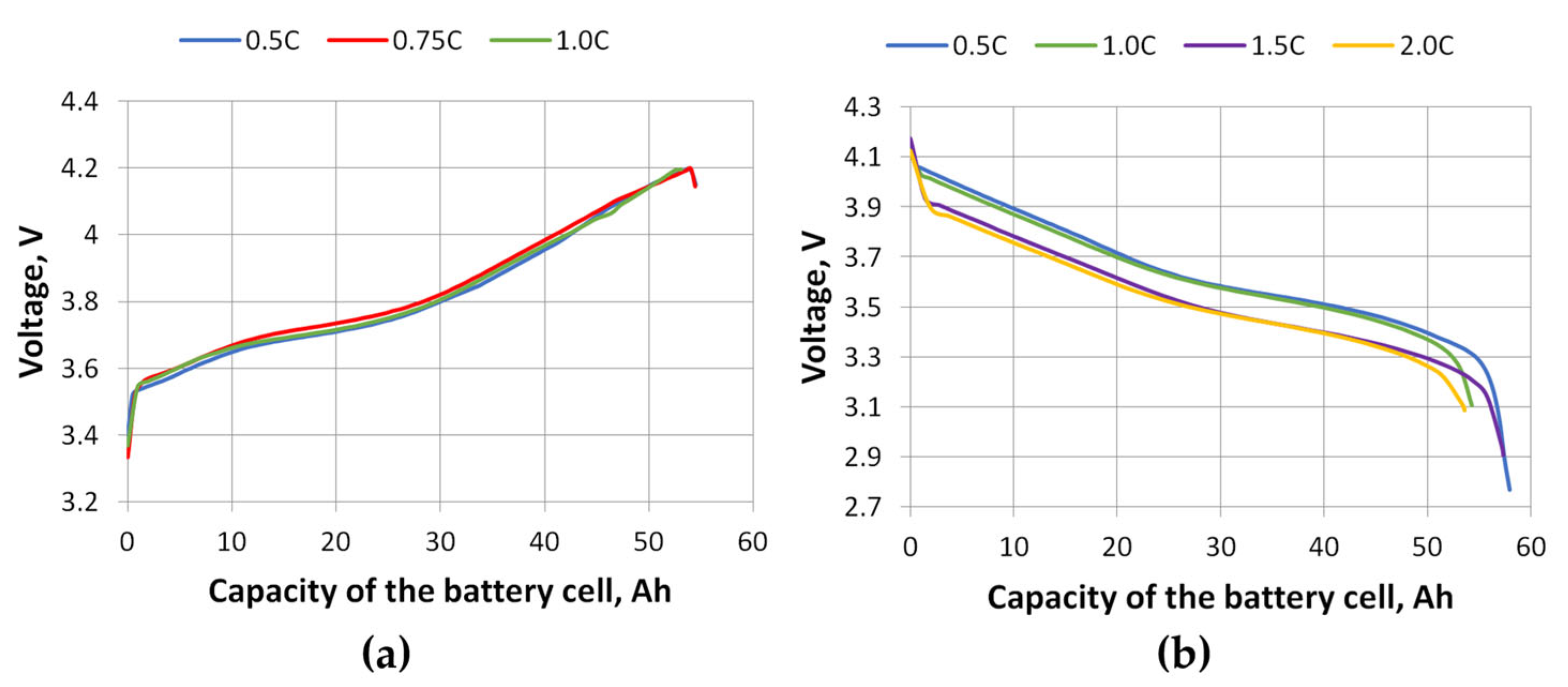
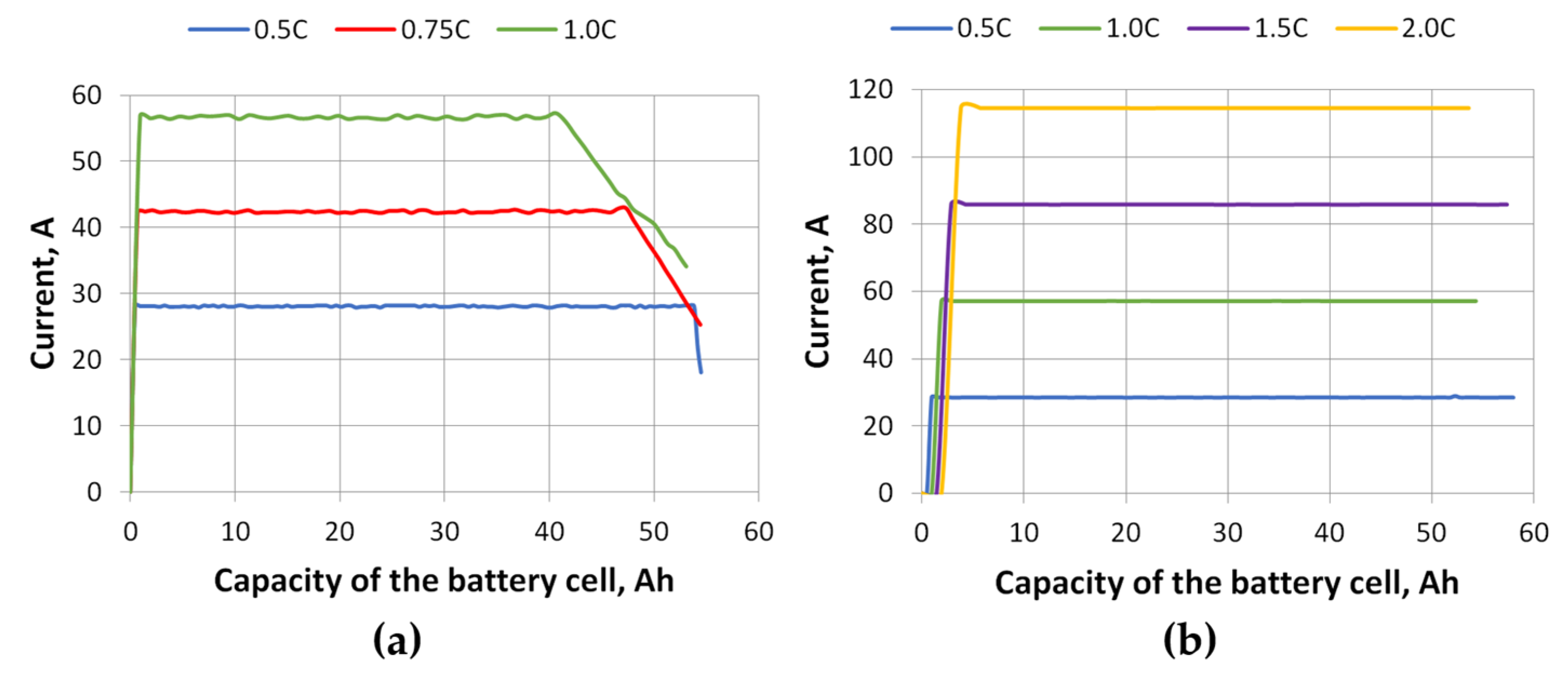
At the start of this study, the battery cell was fully charged and discharged, charging up to 4.2 V and discharging until the battery cell voltage dropped to 2.7 V. The graphs of the battery cell voltage variation during charging and discharging are shown in Figure 9, and the charging and discharging current change in relation to the battery cell capacity is shown in Figure 10. The results of the voltage drop simulation (Figure 7a) are similar to the experimental results (Figure 9b). This can be explained by the fact that when a lithium-ion battery is discharged at higher C-rates, the terminal voltage drops more sharply due to increased internal resistance and accelerated electrochemical polarization. This initial voltage drop reflects the battery’s limited ability to maintain stable ion transport under high current demand [28].
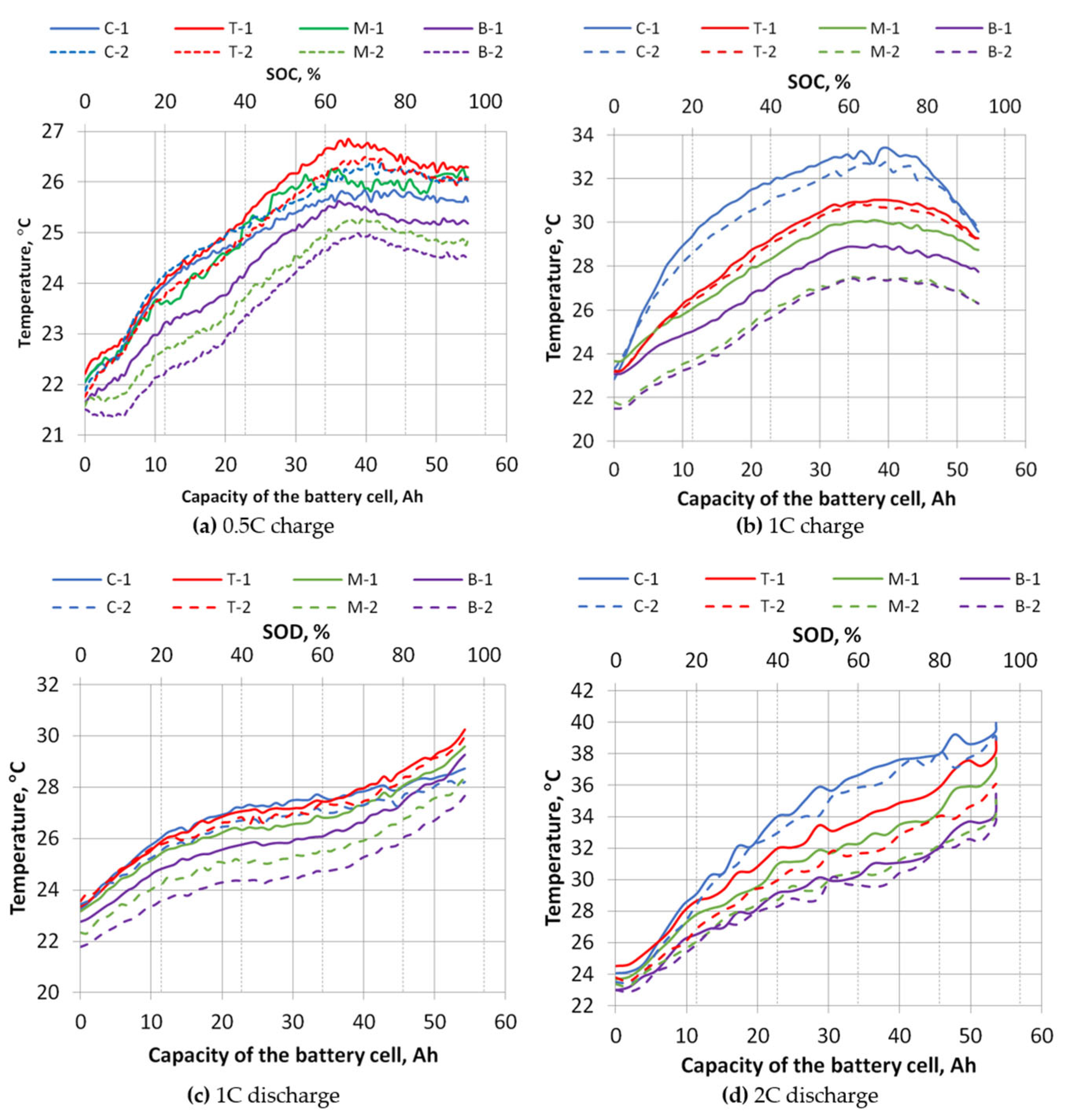
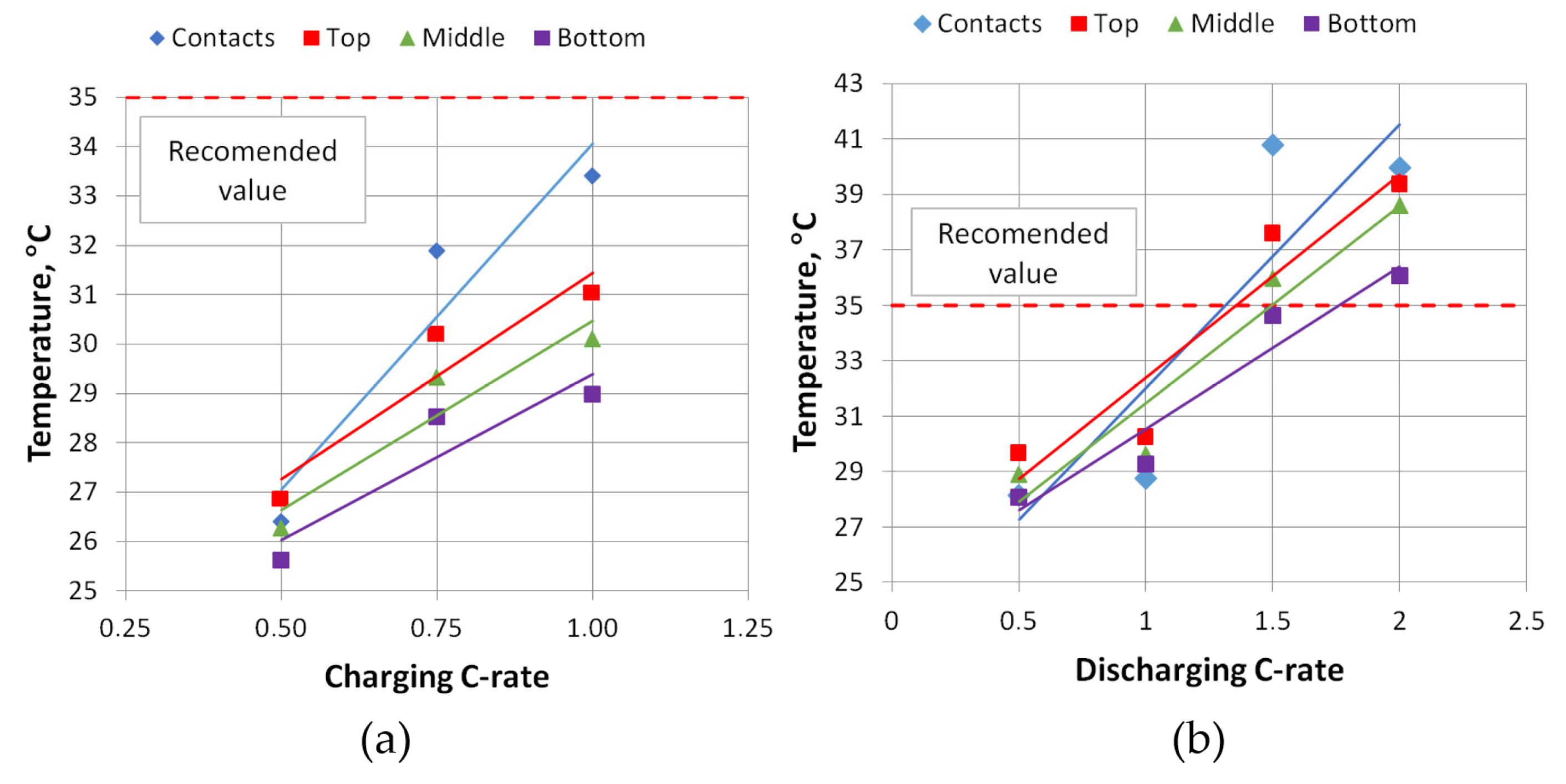
The plots of the measured temperatures were obtained from the temperature and heat flux sensors that are shown in Figure 11, but not all measurements are shown here, only the charging at 0.5 C and 1 C, and the discharging process at 1 C and 2 C. The summarized dependencies of the maximum temperatures achieved for all measurements on the charging/discharging rates are given in Figure 12.
As shown in Figure 11 and Figure 12, the temperature variation and the dependence on the charge/discharge rate show that the hottest part of the battery cell is the cell connection terminals. The temperatures measured on the cell terminals increase, especially with higher charging/discharging rates. When charging slowly (0.5 C), the contact temperatures are similar to, and even slightly lower than, the temperature measured at the top of the cell. From the temperature graphs in Figure 8, during charging, the temperature of the battery cells rises only up to a point where the cell voltage reaches its maximum value of 4.2 V and the controller switches from constant current mode to constant voltage mode. When the switch to constant voltage mode is made, the charging current starts to decrease, thus reducing the load on the cell, and the temperature starts to decrease. During discharge, the current is almost constant throughout the discharge process. The discharge current decreases gradually as the discharge resistors become progressively hotter. Thus, the temperature rise is consistent, and the maximum temperature is reached at the end of the discharge process.
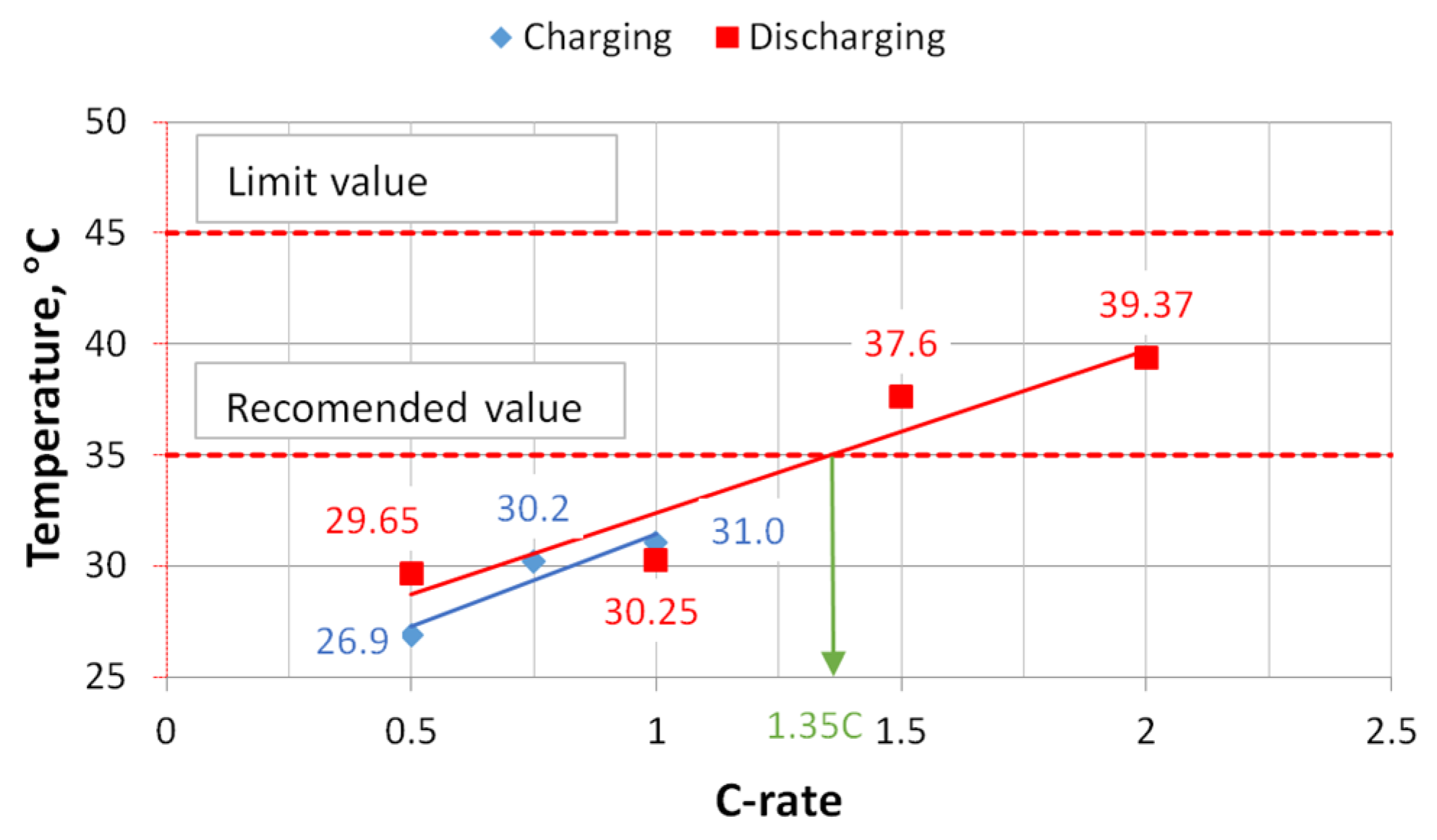
During the charging process at 1 C, the highest temperature reached was 31 °C, and during the discharge process at the same rate it was 30.3 °C. During discharging at 2 C, the temperature on the face of the cell reached 39.4 °C. This temperature on the face of the cell is too high, because at cell temperatures above 35 °C the degradation processes of the cell start to intensify, and thus the number of charge/discharge cycles of the cell start to decrease, which is declared by the manufacturer. As can be seen from the dependency graph, without the use of cooling and keeping the cell face temperature below 35 °C, the cells can only be discharged up to a rate of 1.35 C. Figure 13 also shows that during the discharge process, the temperature of the face of the cell is slightly higher.
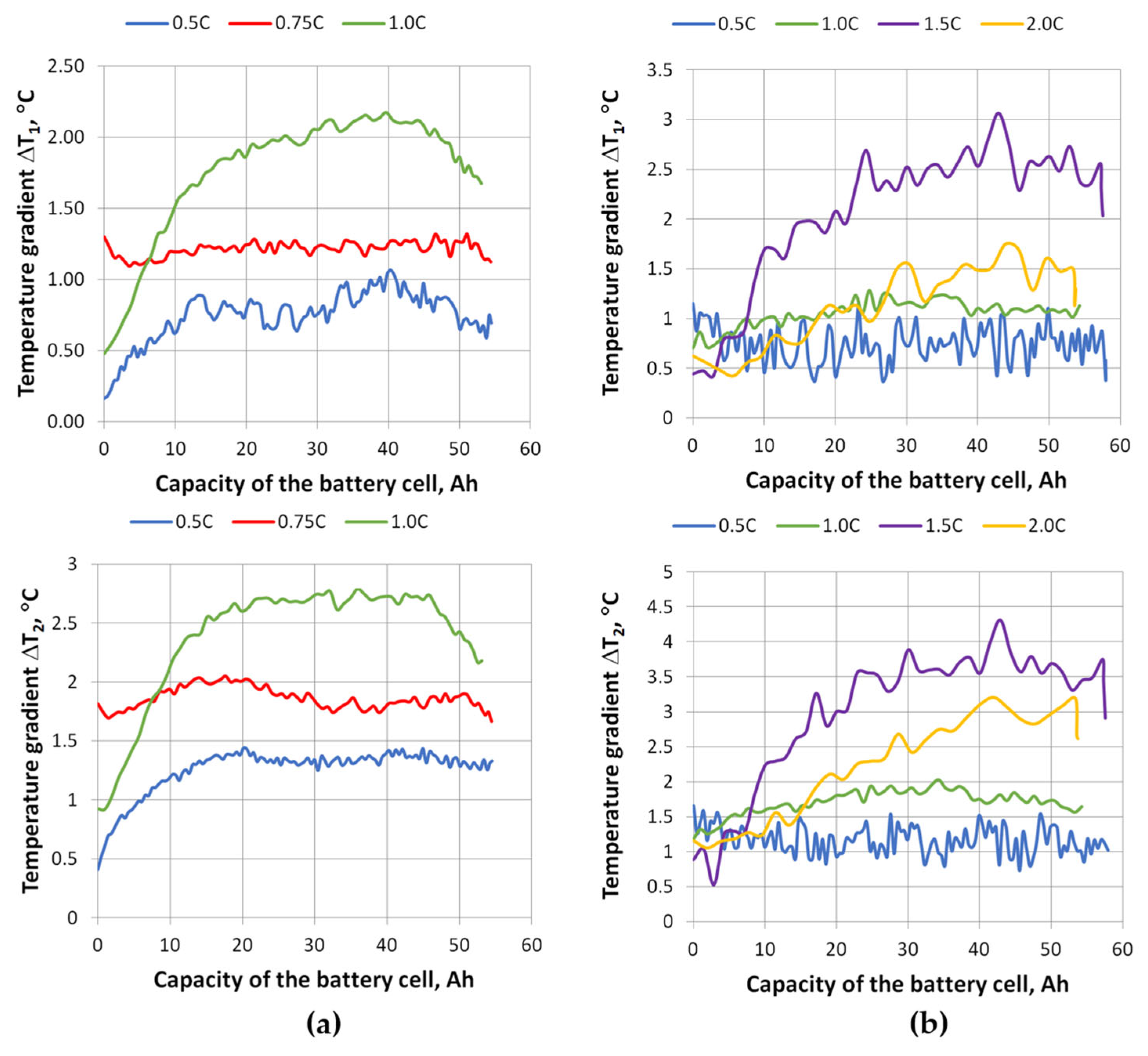
The data results in Figure 14 show that the temperature gradient on the face of the cell also changes. The top of the cell is the warmest and the bottom of the cell is the coolest. As seen for both charging and discharging, the temperature gradient increases with a rise of the C-rate, but at 2 C the temperature gradient starts to drop. Due to a higher discharge rate, the cell heats rapidly and warms up more uniformly.

3.3. Results of Thermal Imaging Studies

While measuring the temperatures of the battery cells with heat flux and temperature sensors, thermal imaging measurements were also performed at the same time. The thermal images obtained were used to obtain a clearer picture of how the temperature is distributed on the face of the cell, how it changes during charging and discharging, and what temperature differences occur between the top and bottom of the cell. Knowing this information allows us to select the most suitable cooling method for pouch-type cells, the best configuration of cooling plate channels, and the best cooling fluid flow control.
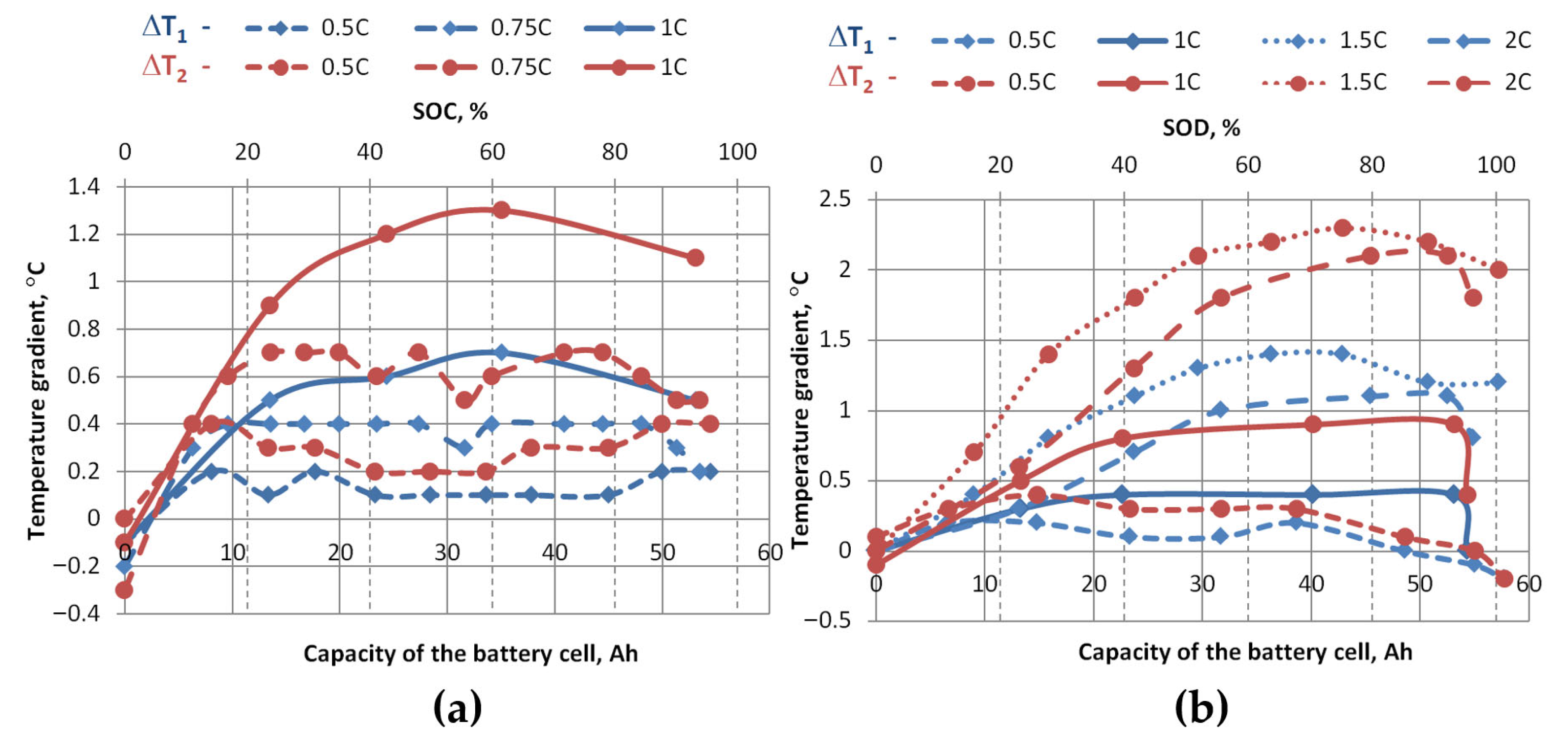
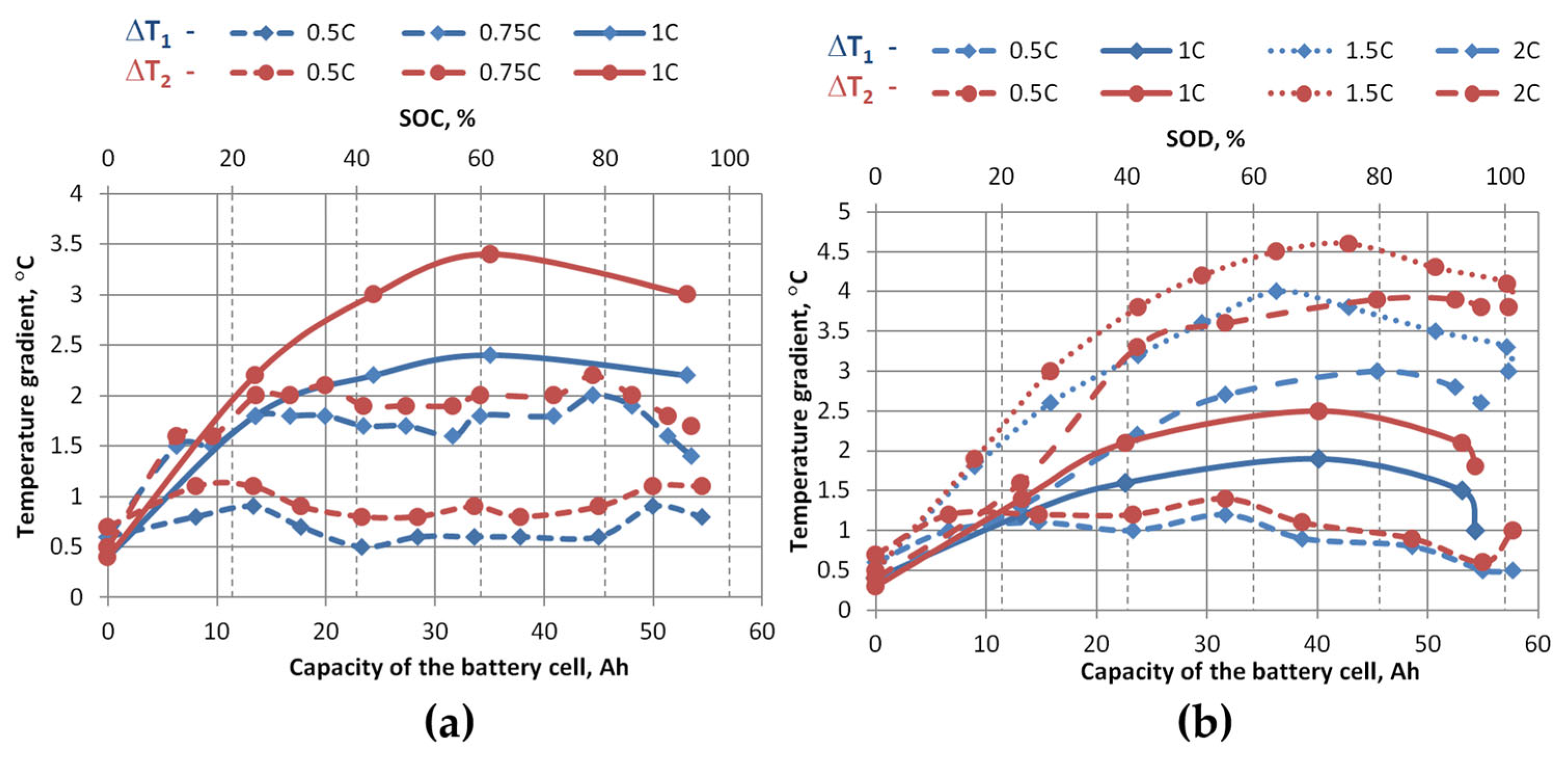
Figure 15 and Figure 16 show how temperature gradients vary with different charging and discharging C-rates. For the graphs in Figure 15, average values were taken from the three measured zones shown in Figure 4 and temperature differences were calculated (ΔT1avg—the difference between the average temperature at the top of the cell and the average temperature in the middle of the cell, and ΔT2avg—the difference between the average temperature at the top of the cell and the average temperature at the bottom of the cell). For the graphs in Figure 16, the maximum temperatures at the top of the cells were taken and subtracted from the minimum temperatures at the middle and bottom of the cells, and the temperature differences were calculated (ΔT1max-min—the difference between the maximum temperature at the top of the cell and the minimum temperature at the middle of the cell, and ΔT2max-min—the difference between the maximum temperature at the top of the cell and the minimum temperature at the bottom of the cell).
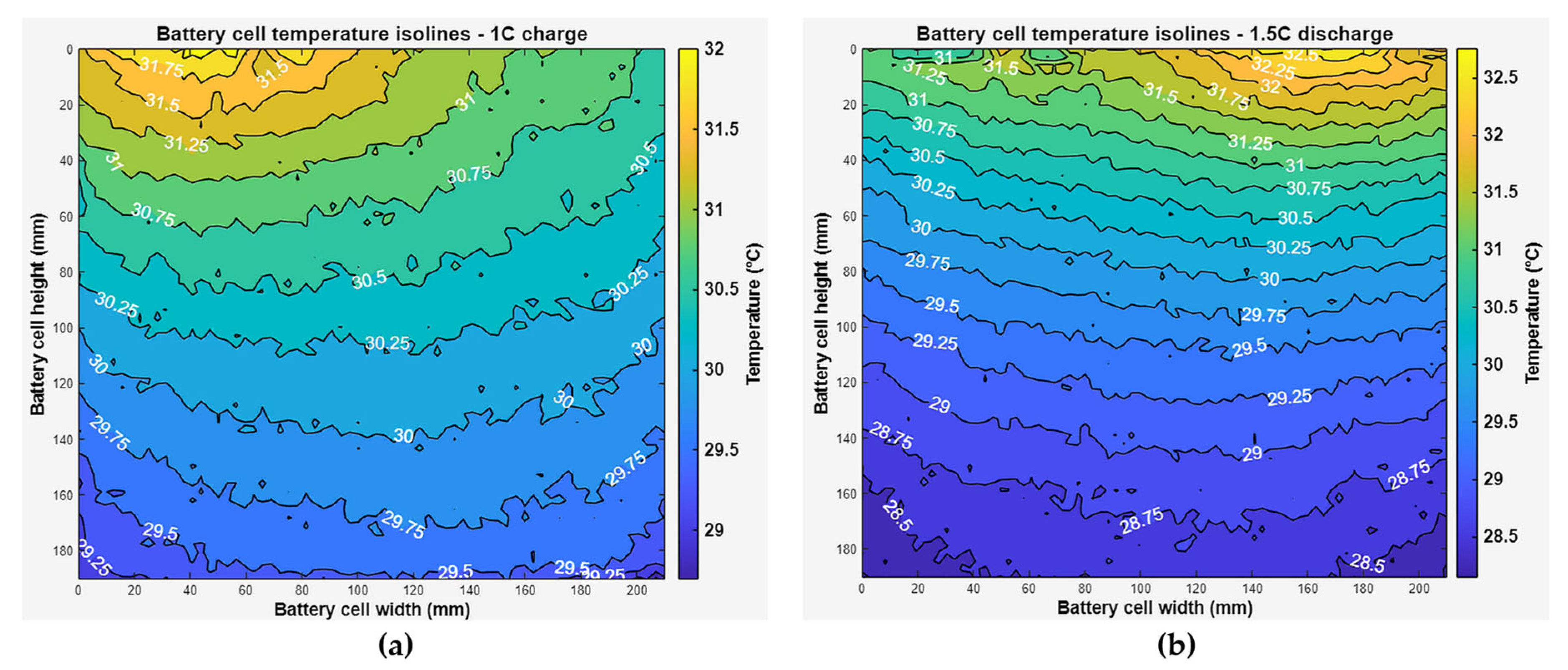
These graphs show that the temperature differences during charging are greater than during discharging at the same charging/discharging rate. When charging the cell, the average temperature difference between the top and bottom ΔT2avg at 1 C is 1.3 °C (maximum difference ΔT2max-min is 3.4 °C), and when discharging, 0.9 °C (maximum difference ΔT2max-min is 2.5 °C). During discharge, the maximum temperature differences ΔT2 were recorded at a discharge rate of 1.5 C, which are greater than those measured at a discharge rate of 2 C, during which the highest temperatures were recorded. The average temperature difference between the top and bottom ΔT2avg at a discharge rate of 1.5 C was 2.3 °C (maximum difference ΔT2max-min is 4.6 °C), and at a discharge rate of 2 C, ΔT2avg was 2.1 °C (maximum difference ΔT2max-min is 3.9 °C). This reduction in ΔT at 2 C compared to 1.5 C can be explained by the non-uniform current density distribution in pouch cells: at lower C-rates, current density is concentrated near the tabs, leading to localized heating and pronounced gradients, while at higher C-rates the current spreads more evenly across the electrode area, generating heat more uniformly. As a result, rapid and spatially widespread internal heat generation overwhelms the thermal diffusion timescale, producing a more homogeneous temperature field despite higher absolute temperatures [29,30,31]. Meanwhile, during slower discharge (e.g., 1.5 C), heat accumulates closer to the contacts, so the cell face temperature rises from the contact side, and the temperature gradient becomes more pronounced. Based on experimental studies with pouch-type lithium-ion cells, it is recommended that the temperature gradient of the cell face does not exceed 2–3 °C, to avoid uneven aging and electrochemical imbalance [32]. Since this study was performed without active cooling, the observed larger temperature gradient (~4 °C) indicates the need to apply thermal management solutions that would ensure a more even temperature distribution and reduce the risk of degradation.
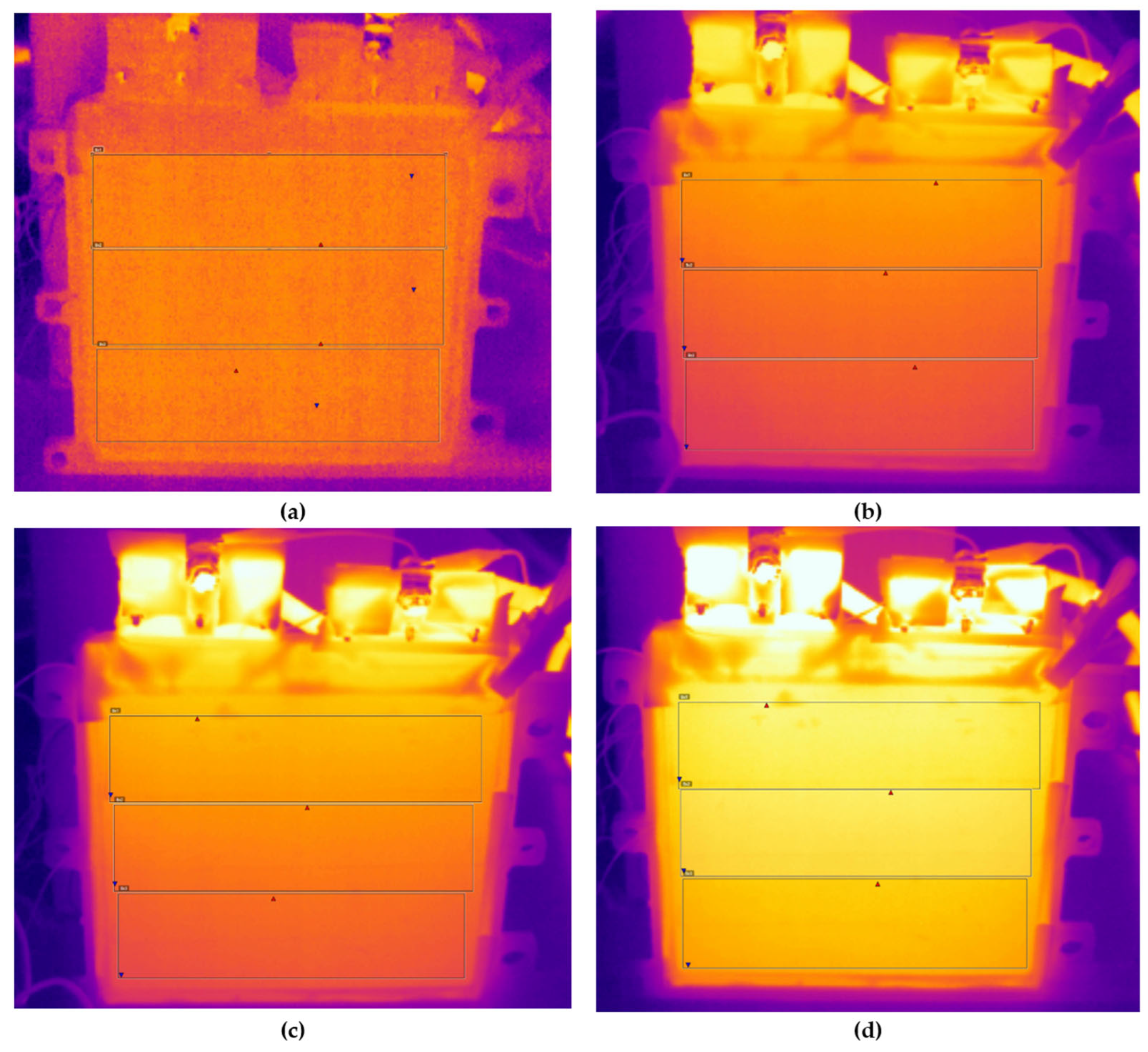
The thermal images of the cell face at 2 C discharge from the start of discharge to the end of discharge are shown in Figure 17. During these tests, the highest temperatures were recorded on the face of the cell. The temperature change curves repeat the curves obtained from the temperature sensors (see Figure 11d).
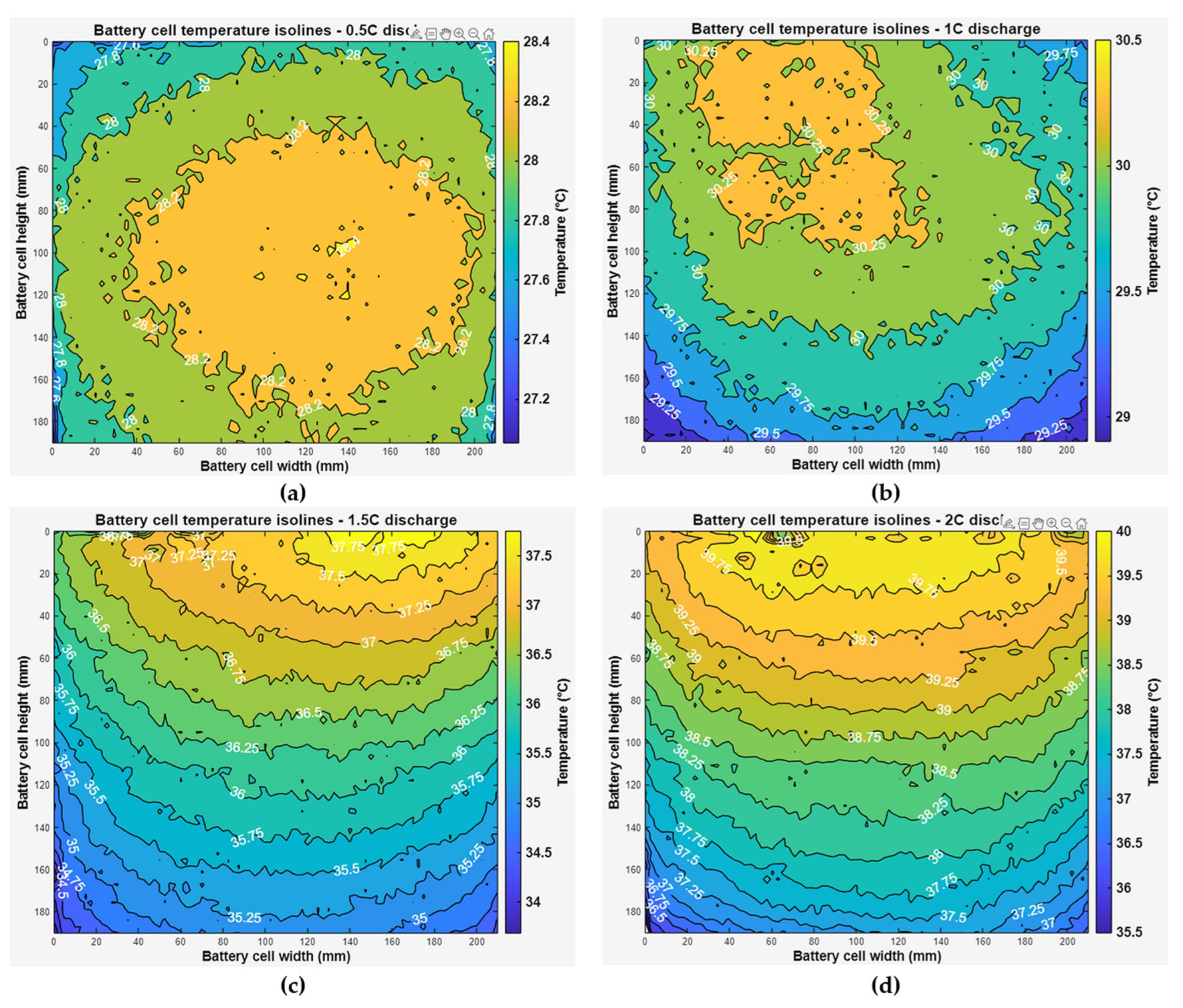
From the thermal images obtained, temperature contour maps (isotherms) were created, which clearly show the hottest area of the cell’s face and the temperature gradient, the graphs of which are presented in Figure 18 and Figure 19. The graphs were taken from the measurement points where the highest temperature gradients were obtained during charging and discharging (Figure 18) and during discharging at different C-rates at maximum temperature (Figure 19), which is typically the end of discharging.
It was found that when discharging at a rate of up to 1 C, the highest temperatures were recorded in the middle and top areas of the cell face, and as the discharge rate increased, the heating of the cell was most affected by the heating of the contacts. When charging only to a temperature of 0.5 C, the temperature rose in the middle part of the cell, and when charging faster, the highest temperatures were observed under the cell contacts.
Summarizing the results of temperature measurements, it was found that when the connecting cell contacts mechanically, good cell contact is very important. If the cell contacts are compressed even slightly less, the contacts and the cell itself immediately begin to heat up, and we had to repeat these tests because they distorted the overall results. It is obvious that when charging and discharging faster, the cell temperatures will be higher, and when charging/discharging above 1.5 C, it is necessary to apply an additional cooling method and first try to remove the temperature from the upper face of the cell.
The goal of further research is to create a battery module that would consist of 30 cells mechanically connected in series and cool their cell faces with cooling plates. During the research, fast charging up to 4 C will be used, and environmental operating conditions will be changed from −10 °C to 50 °C.

4. Conclusions

During the investigation of these pouch-type cells, a numerical model of the cell was created, and the results of numerical modeling were presented, which correlated with the experimental investigations performed. The average difference between simulation and experimental data was less than 5%, which indicates that the battery model created is sufficiently accurate and can be considered a reliable tool for engineering calculations. This cell model will continue to be used in the development of battery modules with different cooling methods.
After conducting experimental studies of pouch-type cells and measuring temperatures at different locations on the face of the cell under different charging and discharging modes, it was found that the cell heats up quite rapidly if no cooling is used. The approximate curves obtained show that at 1.35 C and higher C modes, the battery cell temperature exceeded 35 °C. Once this value is reached, the manufacturer declares that a more intense battery degradation process may begin and the number of charging and discharging cycles will decrease. While charging at a rate of 1 C, the maximum measured temperature on the face of the cell was at the top of the cell, above the contacts, and reached 31.0 °C. During discharge at 1.5 C, the maximum measured temperature was 37.6 °C, and at 2 C it was 39.4 °C.
It was also found that the face of the battery cell heated up unevenly—it depends on the C-rate. The top of the cell heated up the most, while the bottom heated up less. Additional thermal imaging studies were performed to determine the temperature gradients between the top and middle of the cell (ΔT1) and between the top and bottom of the cell (ΔT2), and graphs of their changes at different charging/discharging C-rates were presented. During charging at 1C, the average difference between the top and bottom was ΔT2avg = 1.3 °C, and the maximum difference was ΔT2max-min = 3.4 °C. During discharge at 1.5 C, the highest temperature gradients were obtained, with an average difference between the top and bottom of ΔT2avg = 2.3 °C, and a maximum difference of ΔT2max-min = 4.6 °C.


Author Contributions

Conceptualization, M.V., A.S. and R.D.; methodology, A.T., R.D. and A.S.; software, P.M. and L.J.; validation, A.T. and V.K.; formal analysis, M.V. and A.T.; investigation, M.V., D.Š., E.Š. and B.D.; writing—original draft preparation, M.V.; writing—review and editing, V.K. All authors have read and agreed to the published version of the manuscript.
Funding

This research received no external funding.

Data Availability Statement

The data presented in this study are available upon request from the corresponding authors.

Conflicts of Interest

The authors declare no conflicts of interest.

References

  1. Ellingsen, L.A.-W.; Hung, C.R.; Majeau-Bettez, G.; Singh, B.; Chen, Z.; Whittingham, M.S.; Strømman, A.H. Nanotechnology for Environmentally Sustainable Electromobility. Nat. Nanotechnol. 2016, 11, 1039–1051. [Google Scholar] [CrossRef] [PubMed]
  2. Rao, Z.; Wang, S. A Review of Power Battery Thermal Energy Management. Renew. Sustain. Energy Rev. 2011, 15, 4554–4571. [Google Scholar] [CrossRef]
  3. Buidin, T.I.C.; Mariasiu, F. Battery Thermal Management Systems: Current Status and Design Approach of Cooling Technologies. Energies 2021, 14, 4879. [Google Scholar] [CrossRef]
  4. Zhao, R.; Zhang, S.; Liu, J.; Gu, J. A Review of Thermal Performance Improving Methods of Lithium Ion Battery: Electrode Modification and Thermal Management System. J. Power Sources 2015, 299, 557–577. [Google Scholar] [CrossRef]
  5. Bandhauer, T.M.; Garimella, S.; Fuller, T.F. A Critical Review of Thermal Issues in Lithium-Ion Batteries. J. Electrochem. Soc. 2011, 158, R1. [Google Scholar] [CrossRef]
  6. Yun, F.-L.; Tang, L.; Li, W.-C.; Jin, W.-R.; Pang, J.; Lu, S.-G. Thermal Behavior Analysis of a Pouch Type Li[Ni0.7Co0.15Mn0.15]O2-Based Lithium-Ion Battery. Rare Met. 2016, 35, 309–319. [Google Scholar] [CrossRef]
  7. Wang, Z.; Lv, R.; Liao, J.; Lei, L.; Hao, S.; Zhang, X. Transferable Generative Pretrained Transformer Using Low-Rank Adaptation (TransLoRA-GPT): A Framework for Predicting Battery Aging Trajectories from Charging Fragments. Chem. Bio. Eng. 2025. [Google Scholar] [CrossRef]
  8. Katoch, S.S.; Eswaramoorthy, M. A Detailed Review on Electric Vehicles Battery Thermal Management System. IOP Conf. Ser. Mater. Sci. Eng. 2020, 912, 042005. [Google Scholar] [CrossRef]
  9. Gungor, S.; Gocmen, S.; Cetkin, E. A Review on Battery Thermal Management Strategies in Lithium-Ion and Post-Lithium Batteries for Electric Vehicles. J. Therm. Eng. 2023, 9, 1078–1099. [Google Scholar] [CrossRef]
  10. Nazar, M.W.; Iqbal, N.; Ali, M.; Nazir, H.; Amjad, M.Z. Bin Thermal Management of Li-Ion Battery by Using Active and Passive Cooling Method. J. Energy Storage 2023, 61, 106800. [Google Scholar] [CrossRef]
  11. Kharabati, S.; Saedodin, S. A Systematic Review of Thermal Management Techniques for Electric Vehicle Batteries. J. Energy Storage 2024, 75, 109586. [Google Scholar] [CrossRef]
  12. Hwang, F.S.; Confrey, T.; Reidy, C.; Picovici, D.; Callaghan, D.; Culliton, D.; Nolan, C. Review of Battery Thermal Management Systems in Electric Vehicles. Renew. Sustain. Energy Rev. 2024, 192, 114171. [Google Scholar] [CrossRef]
  13. Tai, L.D.; Lee, M.-Y. Advances in the Battery Thermal Management Systems of Electric Vehicles for Thermal Runaway Prevention and Suppression. Batteries 2025, 11, 216. [Google Scholar] [CrossRef]
  14. Ren, H.; Jia, L.; Dang, C.; Yang, C.; Jia, H.; Liu, J. Experimental Investigation on Pouch Lithium-Ion Battery Thermal Management with Mini-Channels Cooling Plate Based on Heat Generation Characteristic. J. Therm. Sci. 2022, 31, 816–829. [Google Scholar] [CrossRef]
  15. Hasan, H.A.; Togun, H.; Abed, A.M.; Qasem, N.A.A.; Mohammed, H.I.; Abderrahmane, A.; Guedri, K.; Tag-ElDin, E.S.M. Efficient Cooling System for Lithium-Ion Battery Cells by Using Different Concentrations of Nanoparticles of SiO2-Water: A Numerical Investigation. Symmetry 2023, 15, 640. [Google Scholar] [CrossRef]
  16. You, N.; Ham, J.; Shin, D.; Cho, H. Performance Analysis of the Liquid Cooling System for Lithium-Ion Batteries According to Cooling Plate Parameters. Batteries 2023, 9, 538. [Google Scholar] [CrossRef]
  17. Khoharo, H.; Selvaraj, J.; Hasanuzzaman, M.; Kumar, L.; Manghwar, R. Global Advancement, Prospect and Challenges of Battery Thermal Management Systems: A Comprehensive Review. Renew. Sustain. Energy Rev. 2025, 222, 115923. [Google Scholar] [CrossRef]
  18. Cicconi, P.; Landi, D.; Germani, M. Thermal Analysis and Simulation of a Li-Ion Battery Pack for a Lightweight Commercial EV. Appl. Energy 2017, 192, 159–177. [Google Scholar] [CrossRef]
  19. Lee, G. Electro-Thermal Analysis of a Pouch–Type Lithium–Ion Battery with a High Discharge Rate for Urban Air Mobility. Batteries 2023, 9, 476. [Google Scholar] [CrossRef]
  20. ANSYS Inc. Chapter 31: Modeling Batteries. Ansys Fluent User’s Guide. Available online: https://ansyshelp.ansys.com/public////Views/Secured/corp/v242/en/flu_ug/flu_ug_models_battery.html (accessed on 11 May 2025).
  21. Kadam, S.; Tiwari, S.; Jankar, D.; Jahagirdar, S.; Kashid, D.T. Analysis of Battery Pack Used in BTMS by Using ANSYS Software. Int. J. Sci. Res. Sci. Eng. Technol. 2024, 11, 126–142. [Google Scholar]
  22. Chen, W.; Hou, S.; Shi, J.; Han, P.; Liu, B.; Wu, B.; Lin, X. Numerical Analysis of Novel Air-Based Li-Ion Battery Thermal Management. Batteries 2022, 8, 128. [Google Scholar] [CrossRef]
  23. Parmar, M.P.; Patel, D.R.; Patel, V.K.; Patel, R.S. Thermal Simulation of Li-Ion Battery Pack Using ANSYS Fluent. In Recent Advances in Mechanical Infrastructure; Springer: Berlin/Heidelberg, Germany, 2021; pp. 265–274. [Google Scholar]
  24. ANSYS Inc. ANSYS Fluent Advanced Add-On Modules Manual; SAS IP Inc.: Cary, NC, USA, 2022. [Google Scholar]
  25. Kwon, K.H.; Shin, C.B.; Kang, T.H.; Kim, C.-S. A Two-Dimensional Modeling of a Lithium-Polymer Battery. J. Power Sources 2006, 163, 151–157. [Google Scholar] [CrossRef]
  26. Kök, C.; Alkaya, A. Investigation of Thermal Behavior of Lithium-Ion Batteries under Different Loads. Eur. Mech. Sci. 2020, 4, 96–102. [Google Scholar] [CrossRef]
  27. Abbas, A.; Rizoug, N.; Trigui, R.; Babin, A.; Redondo-Iglesias, E.; Pelissier, S. Thermal Modeling of Batteries for EV Energy Management. In Proceedings of the 2022 IEEE Vehicle Power and Propulsion Conference (VPPC), Merced, CA, USA, 1–4 November 2022; IEEE: New York, NY, USA, 2022; pp. 1–6. [Google Scholar]
  28. Wang, X.; Chen, Y.; Chen, L.; Liu, S.; Zhu, Y.; Deng, Y. The Impact of Wide Discharge C-Rates on the Voltage Plateau Performance of Cylindrical Ternary Lithium-Ion Batteries. Energies 2024, 17, 3488. [Google Scholar] [CrossRef]
  29. Drummond, R.; Tredenick, E.C.; Kirk, T.L.; Forghani, M.; Grant, P.S.; Duncan, S.R. Graded Lithium-Ion Battery Pouch Cells to Homogenise Current Distributions and Mitigate Lithium Plating. arXiv 2024, arXiv:2407.21071. [Google Scholar] [CrossRef]
  30. Lin, N.; Röder, F.; Krewer, U. Multiphysics Modeling for Detailed Analysis of Multi-Layer Lithium-Ion Pouch Cells. Energies 2018, 11, 2998. [Google Scholar] [CrossRef]
  31. Taheri, P.; Mansouri, A.; Yazdanpour, M.; Bahrami, M. Theoretical Analysis of Potential and Current Distributions in Planar Electrodes of Lithium-Ion Batteries. Electrochim. Acta 2014, 133, 197–208. [Google Scholar] [CrossRef]
  32. Du, X.; Hu, Y.; Song, M.; Choi, C.; Choe, S.-Y.; Labaza, C.; Gao, J.; Koch, B.J.; Garrick, T.R. Experimental Studies of Effects of Temperature Gradients on Performance of Pouch Type Large Format NMC/C Lithium-Ion Battery. J. Power Sources 2023, 587, 233688. [Google Scholar] [CrossRef]
Figure 1. Mounting of the heat flux and temperature sensors on the battery cell face.
Batteries 12 00014 g001
Figure 2. Principal diagrams for discharging (a) and charging (b) the battery cell.
Batteries 12 00014 g002
Figure 3. General view of the battery cell experimental test bench.
Batteries 12 00014 g003
Figure 4. Temperature measurement areas and determination of temperature gradients ΔT1 and ΔT2 charging at 1 C, Tmax,top = 32.1 °C, Tmax,middle = 30.9 °C, Tmax,bottom = 30.2 °C, and time = 1427 s.
Batteries 12 00014 g004
Figure 5. Mesh of a pouch battery cell in Ansys Fluent.
Batteries 12 00014 g005
Figure 6. Temperature distribution in a battery cell during discharge at different C-rates.
Batteries 12 00014 g006
Figure 7. Ansys simulation results of battery cell at different discharging C-rates: plots of voltages (a) and plots of temperatures (b).
Batteries 12 00014 g007
Figure 8. Comparison of simulation and experimental results.
Batteries 12 00014 g008
Figure 9. Plots of battery cell voltages during charging (a) and discharging (b).
Batteries 12 00014 g009
Figure 10. Plots of the variation of the battery cell currents during charging (a) and discharging (b).
Batteries 12 00014 g010
Figure 11. Plots of battery cell temperature changes during charging (a,b) and discharging (c,d): C—contacts of cell, T—top of cell, M—middle of cell, and B—bottom of cell.
Batteries 12 00014 g011
Figure 12. Dependence of maximum temperatures during charging (a) and discharging rates (b).
Batteries 12 00014 g012
Figure 13. C-rate dependence of the maximum temperatures reached during charging and discharging of the battery cell.
Batteries 12 00014 g013
Figure 14. Variation of the temperature gradient with the capacity of the battery cell: (a) ΔT1 and ΔT2 charging the cell, and (b) ΔT1 and ΔT2 discharging the cell.
Batteries 12 00014 g014
Figure 15. Temperature gradient variation (average–average) depending on battery cell charge (a) and discharge (b) levels at different C-rates.
Batteries 12 00014 g015
Figure 16. Temperature gradient variation (Max.–Min.) depending on battery cell charge (a) and discharge (b) levels at different C-rates.
Batteries 12 00014 g016
Figure 17. Thermal images of battery cell during discharge at 2 C: (a) Tmax, top = 22.3 °C, Tmax, middle = 22.3 °C, Tmax, bottom = 22.1 °C, and time = 0 s, (b) Tmax, top = 31.4 °C, Tmax, middle = 30.4 °C, Tmax, bottom = 29.8 °C, and time = 774 s, (c) Tmax, top = 35.4 °C, Tmax, middle = 34.1 °C, Tmax, bottom = 33.1 °C, and time = 1427s, and (d) Tmax, top = 40.2 °C, Tmax, middle = 39.5 °C, Tmax, bottom = 38.5 °C, and time = 1867 s.
Batteries 12 00014 g017
Figure 18. Temperature isotherms on the battery cell faces at maximum temperature gradients: (a) charge at 1 C, Tmax, top = 32.1 °C; ΔT1max-min = 2.4 °C; ΔT2 max-min = 3.4 °C; time = 2227 s; capacity of cell = 35.1 Ah; SOC = 61.5%. (b) Discharge at 1.5 C, Tmax, top = 32.7 °C; ΔT1 max-min = 4.0 °C; ΔT2 max-min = 4.5 °C; time = 1522 s; capacity of cell = 36.3 Ah; SOD = 63.7%.
Batteries 12 00014 g018
Figure 19. Temperature isotherms on the battery cell faces when cells were discharged from 0.5 C to 2 C at maximum temperature: (a) discharge at 0.5 C, Tmax, top = 28.3 °C; ΔT1 = 0.5 °C; ΔT2 = 1.0 °C; time = 7288 s; capacity of battery cell = 57.7 Ah; SOD = 100%. (b) Discharge at 1.0 C, Tmax, top = 30.6 °C; ΔT1 = 1.0 °C; ΔT2 = 1.8 °C; time = 3846 s; capacity of battery cell = 54.3 Ah; SOD = 95.2%. (c) Discharge at 1.5 C, Tmax, top = 37.9 °C; ΔT1 = 3.0 °C; ΔT2 = 3.8 °C; time = 2570 s; capacity of battery cell = 57.3 Ah; SOD = 100%. (d) Discharge at 2.0 C, Tmax, top = 40.2 °C; ΔT1 = 2.6 °C; ΔT2 = 3.8 °C; time = 1867 s; capacity of battery cell = 54.9 Ah; SOD = 96.2%.
Batteries 12 00014 g019
Table 1. SolarEgde SLPB120216216G1H cell technical characteristics.
ParameterValue
Nominal capacity (Ah)57
Nominal energy (Wh)209.8
Nominal voltage (V)3.7
Specific energy (Wh/kg)180
Internal resistance (mΩ/Max)0.5
Cathode materialNickel manganese cobalt oxide (NMC)
Anode materialGraphite
ElectrolyteLithium hexafluorophosphate (LiPF6)
Width (mm)226
Length (mm)227
Thickness (mm)12.2
Weight (g)1175
Table 2. Comparison of maximum temperatures from simulations and experimental results.
Discharge Rate, CMaximum Temperature, °CDifference, %
Experimental TestsNumerical Calculations
0.529.727.856.22
130.328.555.77
1.537.635.814.76
239.438.851.41
4-48.51-
5-54.02-
Disclaimer/Publisher’s Note: The statements, opinions and data contained in all publications are solely those of the individual author(s) and contributor(s) and not of MDPI and/or the editor(s). MDPI and/or the editor(s) disclaim responsibility for any injury to people or property resulting from any ideas, methods, instructions or products referred to in the content.