Review

Gas Emissions from Lithium-Ion Batteries: A Review of Experimental Results and Methodologies

by
Elna J. K. Nilsson
1,* and
Annika Ahlberg Tidblad
2,3
1
Combustion Physics, Department of Physics, Lund University, P.O. Box 118, SE 221 00 Lund, Sweden
2
Volvo Car Corporation, SE 405 31 Gothenburg, Sweden
3
The Ångström Advanced Battery Center, Department of Chemistry–Ångström, Uppsala University, P.O. Box 538, SE 751 21 Uppsala, Sweden
*
Author to whom correspondence should be addressed.
Batteries 2024, 10(12), 443; https://doi.org/10.3390/batteries10120443

Submission received: 1 November 2024 / Revised: 6 December 2024 / Accepted: 10 December 2024 / Published: 14 December 2024
(This article belongs to the Special Issue Battery Safety: Recent Advances and Perspective)

Abstract

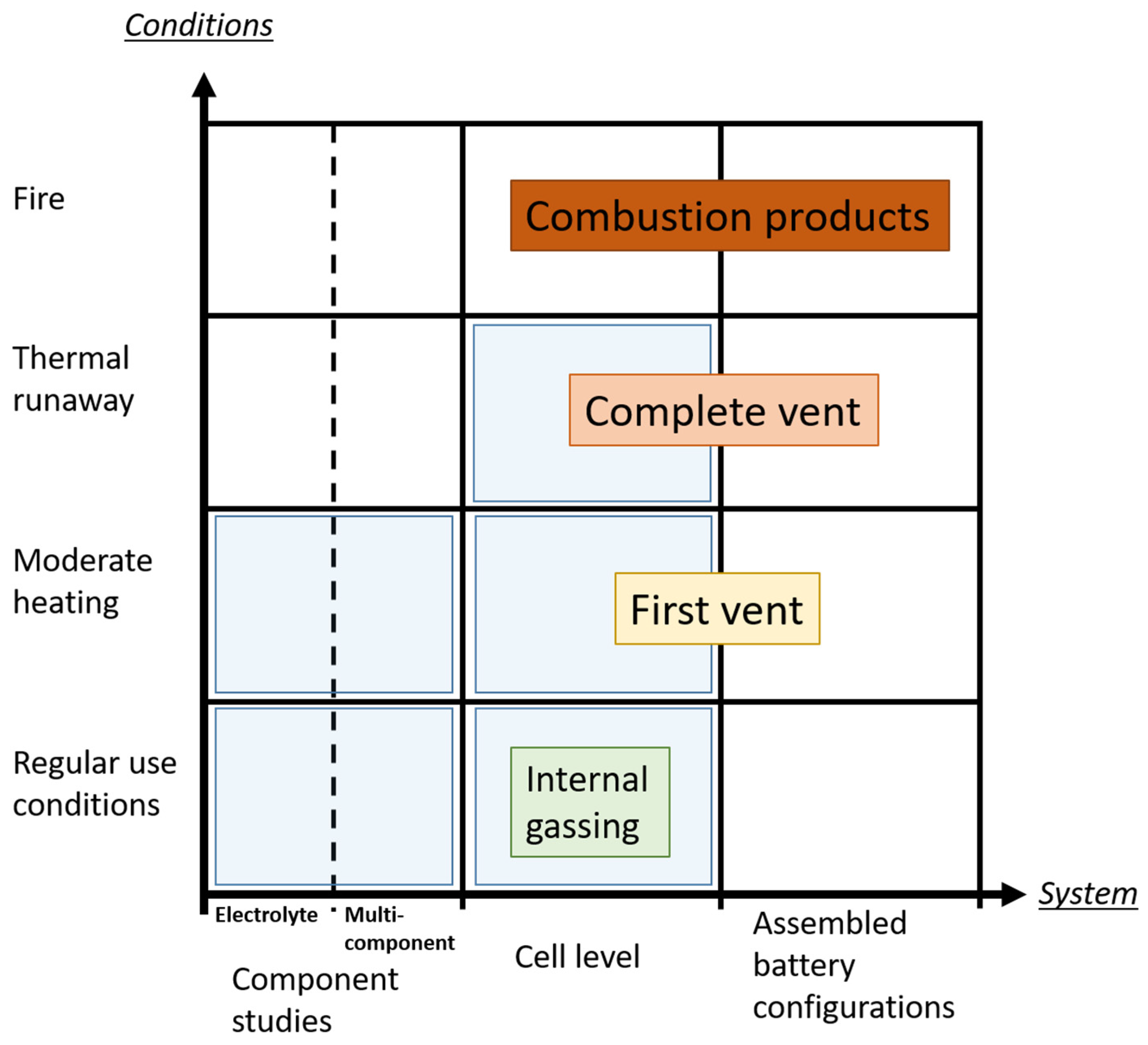
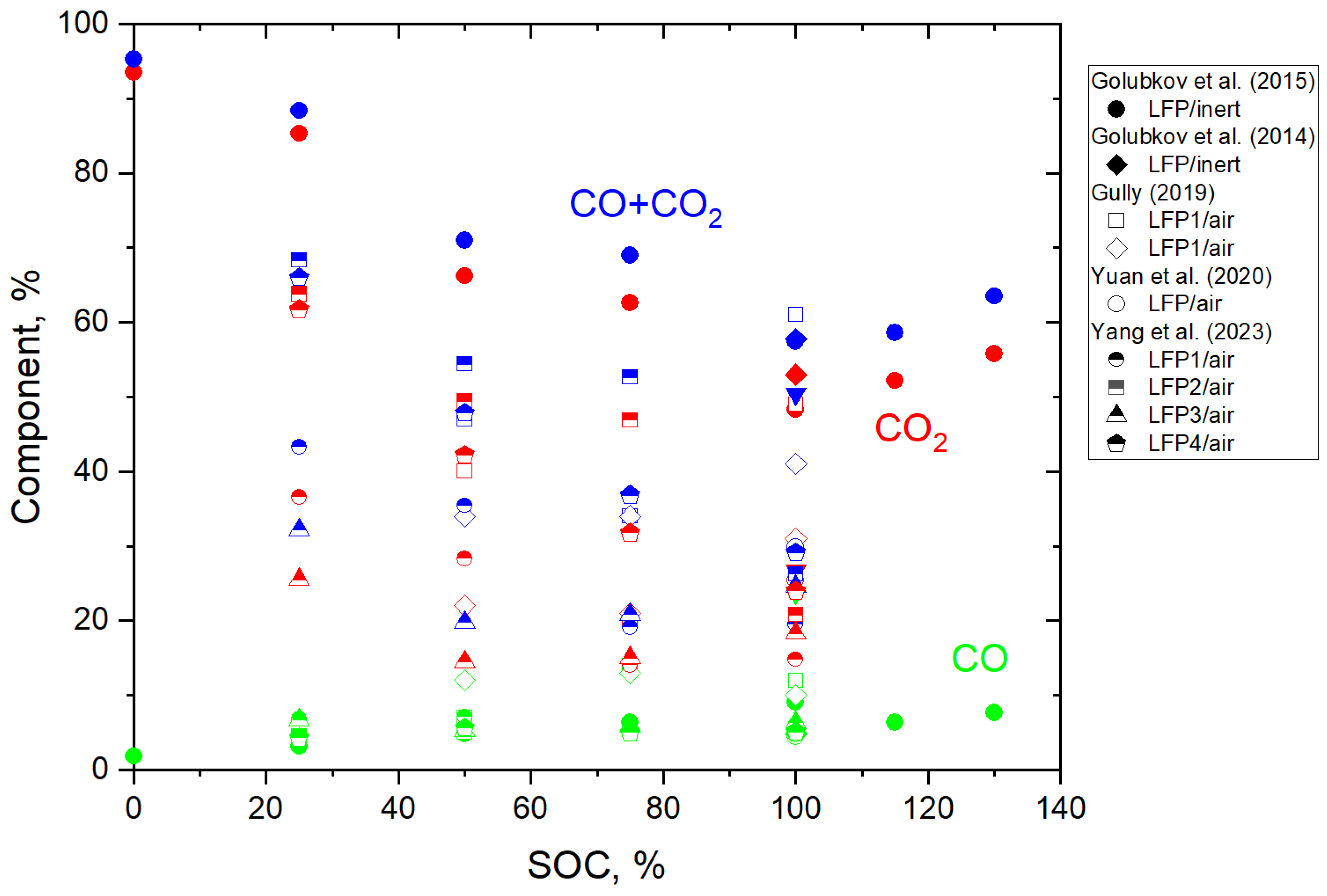
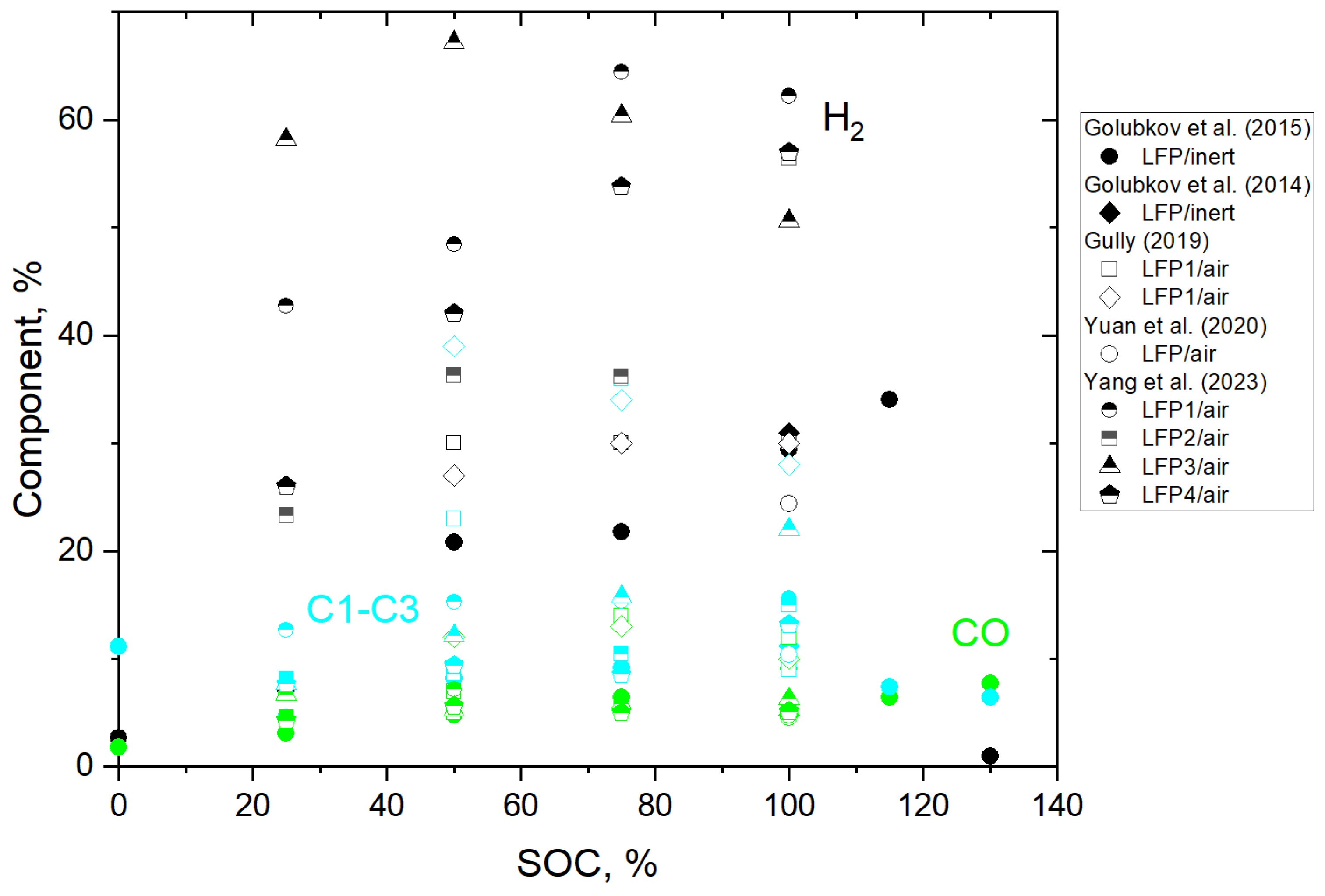
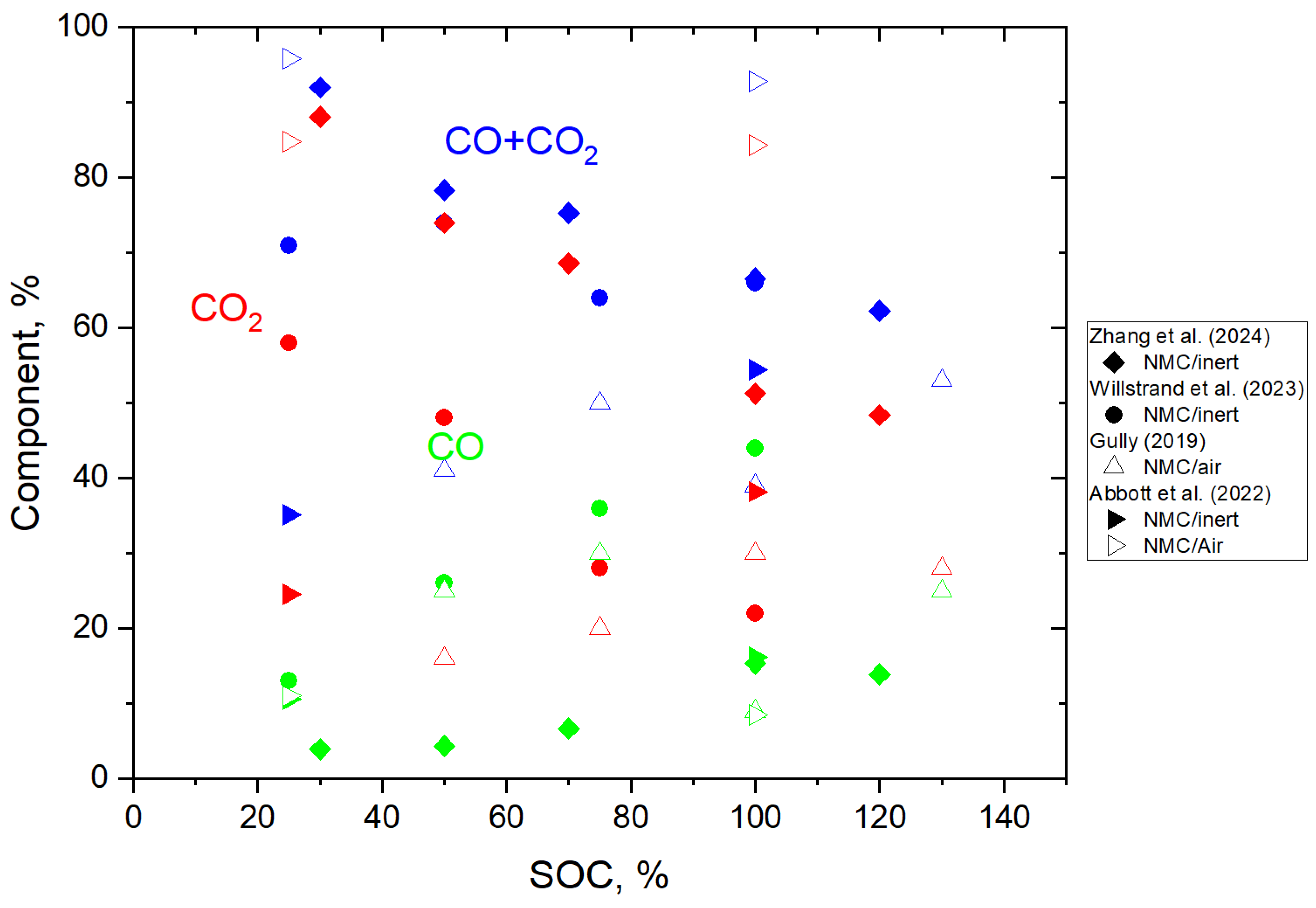
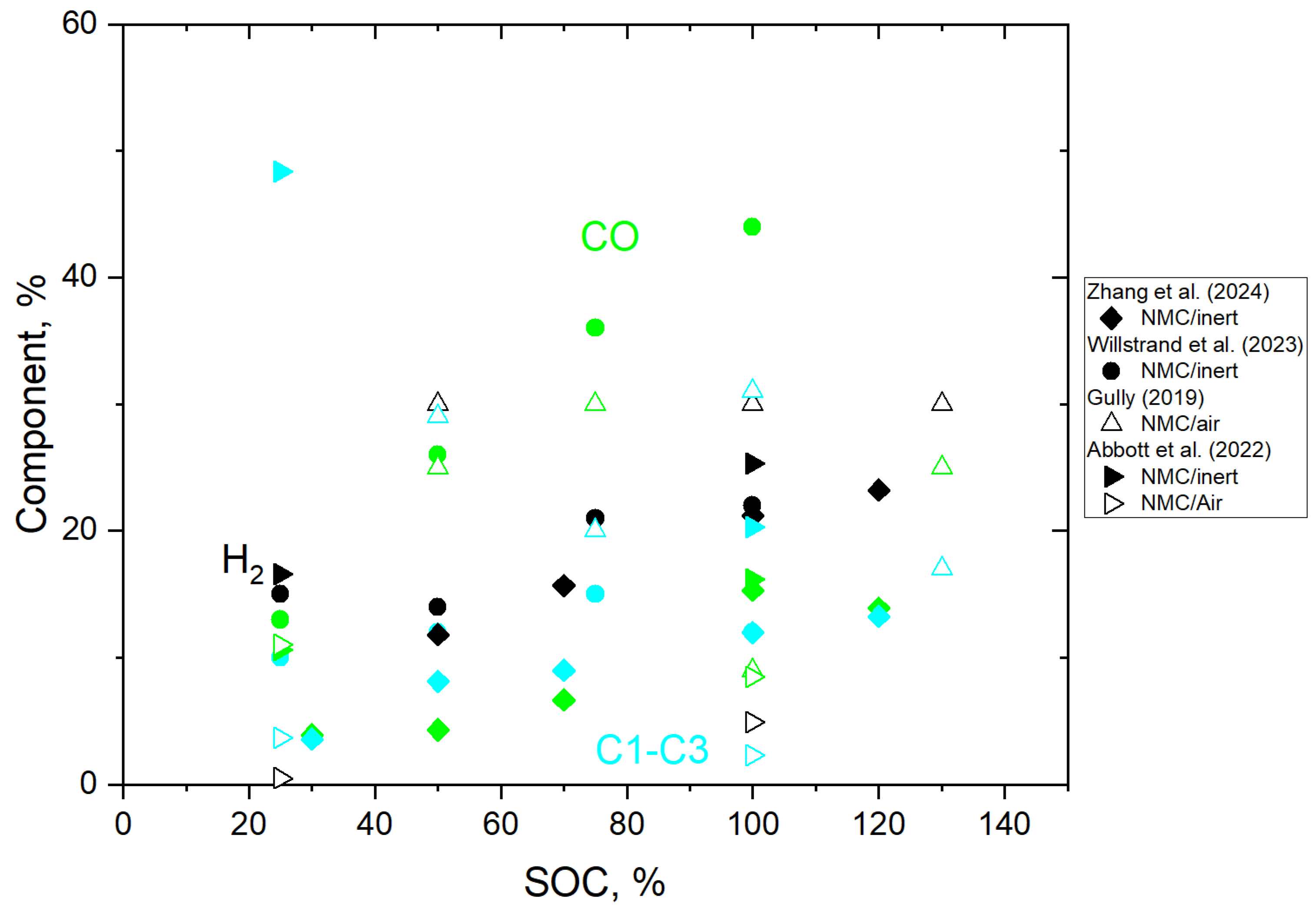
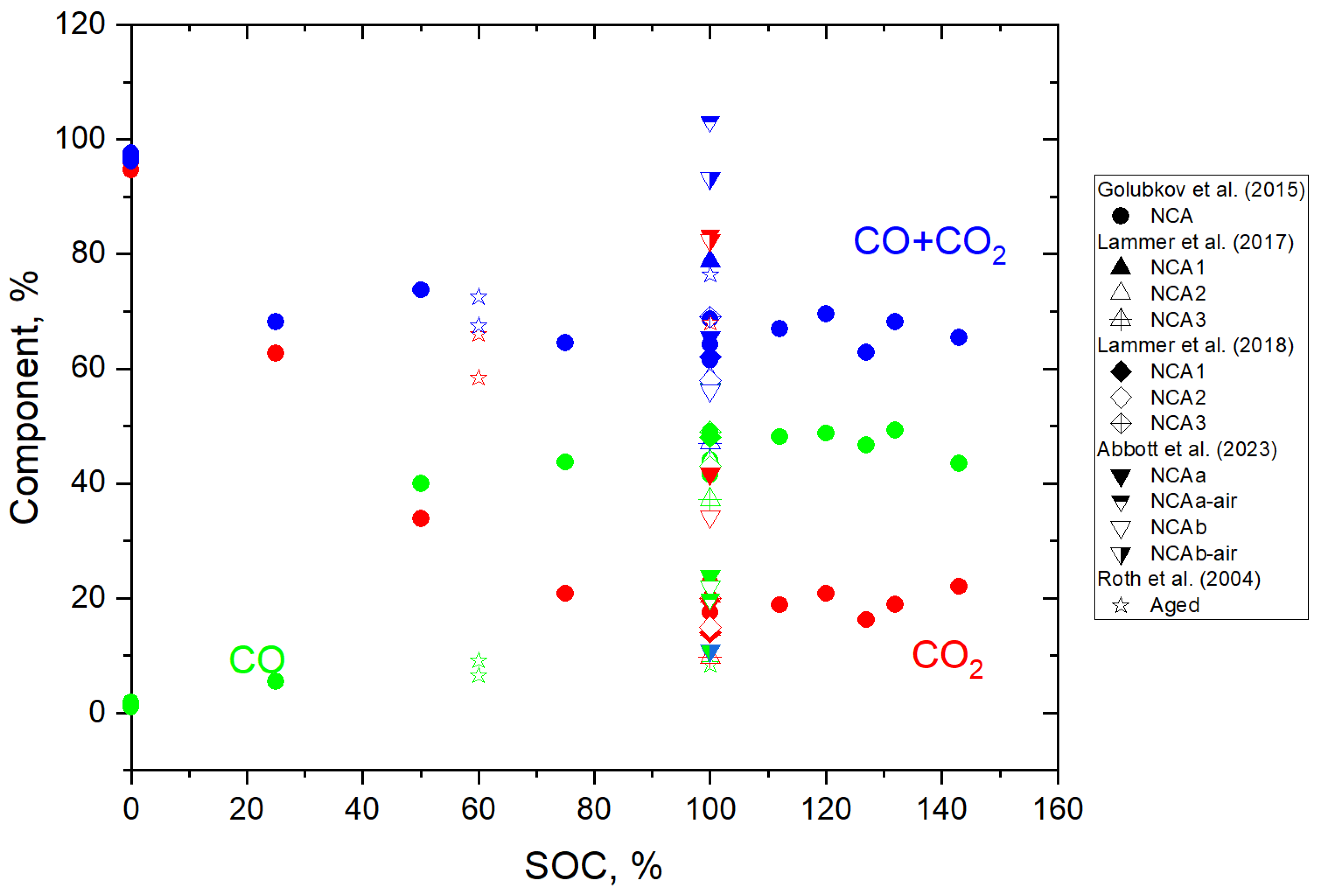
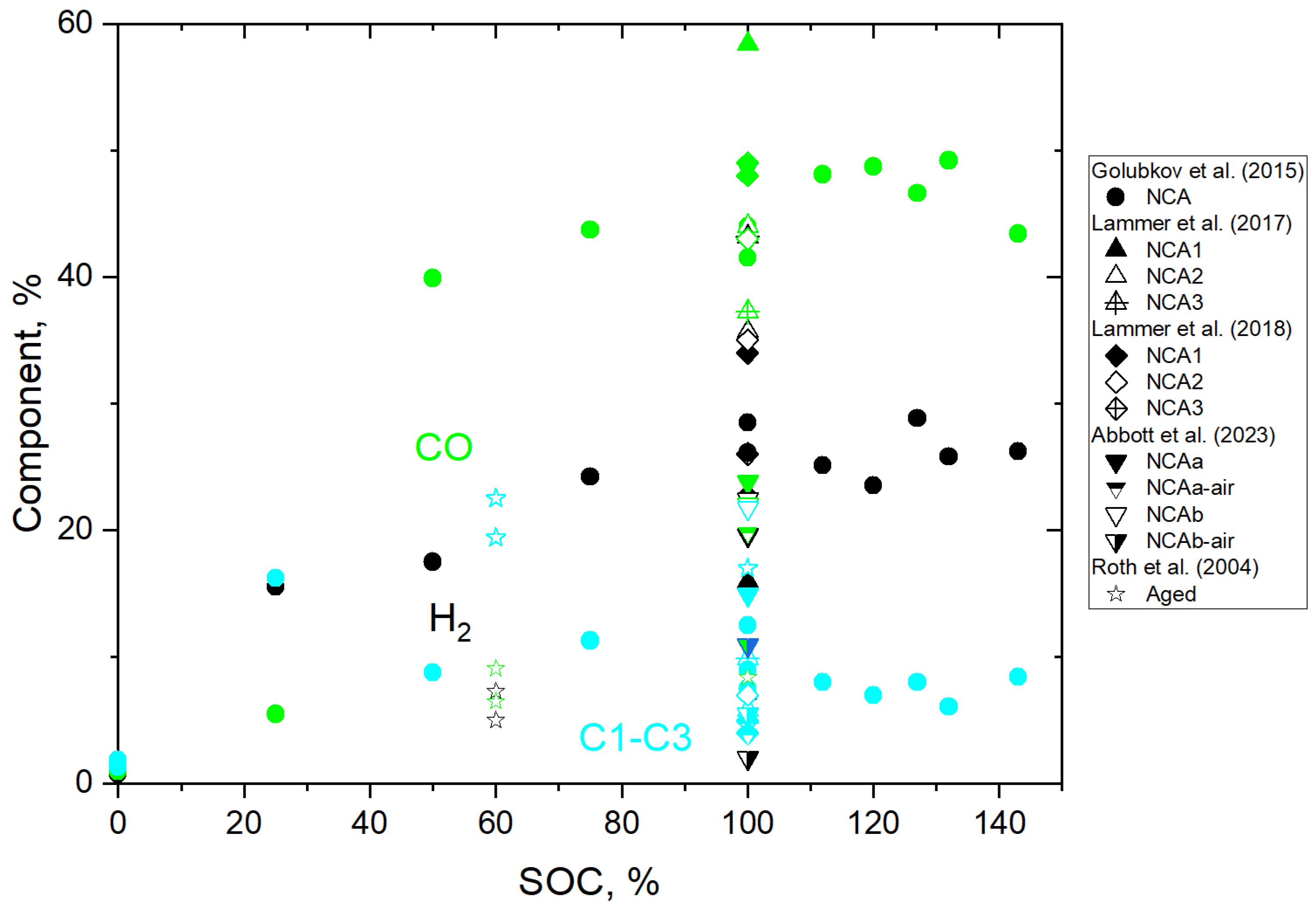
Gas emissions from lithium-ion batteries (LIBs) have been analysed in a large number of experimental studies over the last decade, including investigations of their dependence on the state of charge, cathode chemistry, cell capacity, and many more factors. Unfortunately, the reported data are inconsistent between studies, which can be explained by weaknesses in experimental methodologies, the misinterpretation of data, or simply due to the comparison of datasets that build on different prerequisites. In the present work, the literature on gassing from battery components and battery cells is reported, with a focus on vent gas composition resulting from internal chemical processing in the battery and excluding studies where the gases are combusted after venting. The aim is to identify datasets of high quality that contribute to the advancement of our understanding of gas emissions from LIBs. Gas compositions from different stages in the gassing process are included, starting with the slow formation of gases during normal operation via mild thermal events to a thermal runaway (TR) with extensive gas production. Available published data are used to map gas quantity and composition from LIBs undergoing venting, with or without a TR, and to identify gaps in understanding and the need for further research.
Keywords: lithium-ion; battery vent gas; thermal runaway; gas analysis; battery fire; gas composition; electrolyte decomposition products; cell internal pressure build-up; thermal failure; thermal event lithium-ion; battery vent gas; thermal runaway; gas analysis; battery fire; gas composition; electrolyte decomposition products; cell internal pressure build-up; thermal failure; thermal event