
Effect of Magnetic Excitation Intensity on Stress Recognition and Quantitative Evaluation in Ferromagnetic Pipelines


Abstract
1. Introduction
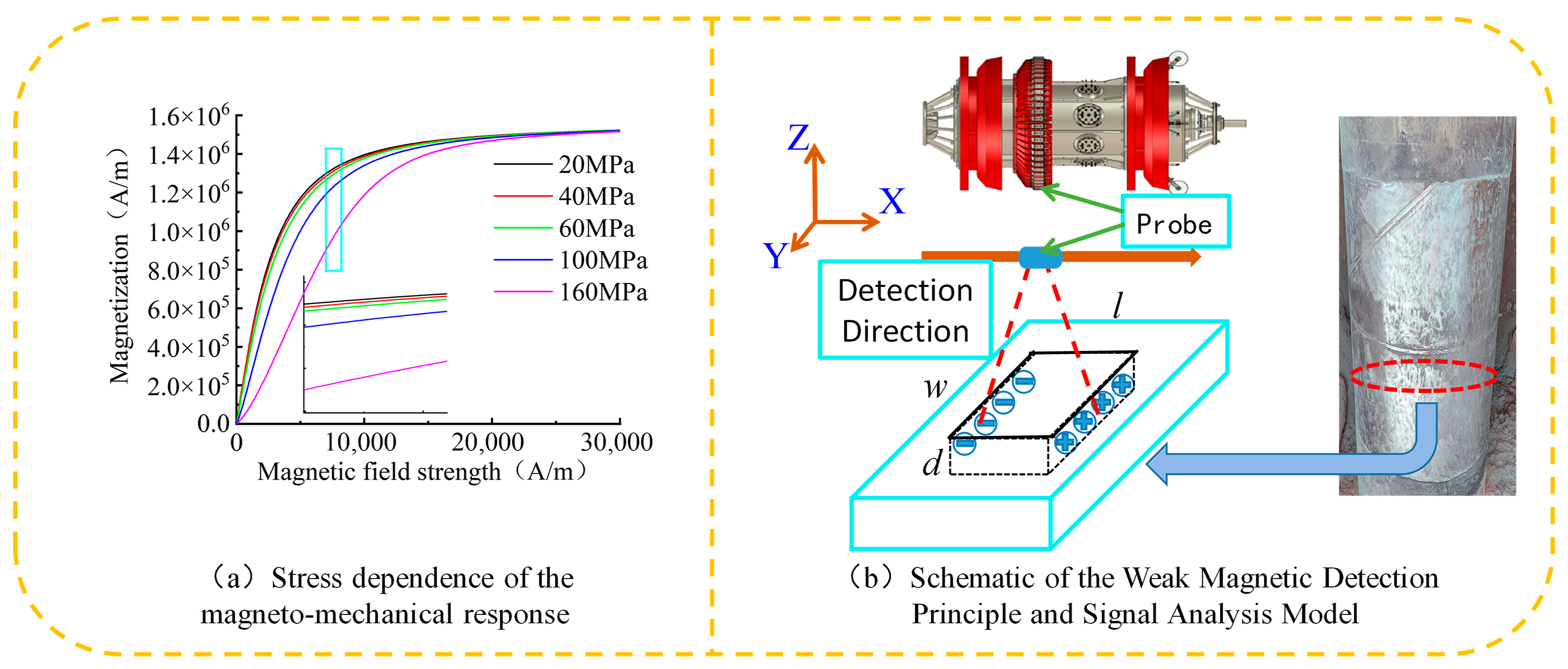
- A stress-dependent magneto–mechanical coupling model is developed by introducing an equivalent stress-induced field into the excitation and hysteretic magnetization processes. The resulting M(H, σ) curves under different excitation intensities form the basis for analyzing stress-related weak-magnetic signals.
- An analytical weak-magnetic field model for stress-concentrated regions is established. By modeling the stressed zone as a cuboid with stress-dependent equivalent magnetic charge density, explicit tangential and normal field expressions are obtained, enabling analytical mapping from stress level to signal features.
- A quantitative accuracy-evaluation method is proposed by combining the signal resolution ϕ with the ambient magnetic field H0. These indices allow systematic assessment of how excitation intensity influences stress recognition and help identify optimal excitation intervals.
- An engineering-oriented excitation selection procedure is formulated by integrating material characterization, excitation design and calibration. This provides practical guidance for applying weak-magnetic stress detection in pipeline integrity assessment.
2. Weak Magnetic Stress Detection Model
2.1. Force-Magnetic Coupling Model
2.2. Weak Magnetic Model for Stress Detection
3. Influence of Excitation Intensity on the Weak Magnetic Signals for Stress Detection
3.1. Selection of the Weak Excitation Intensity
3.2. Weak Magnetic Signals for Stress Detection at Different Excitation Intensities
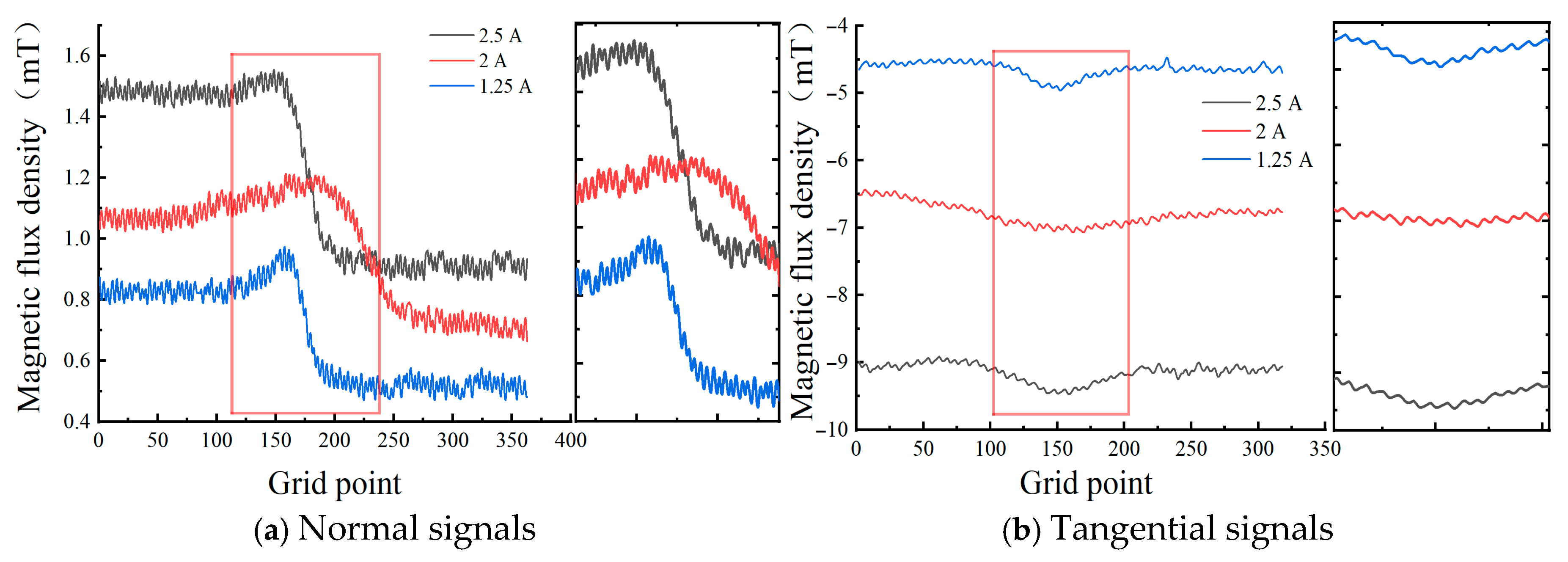
3.2.1. Weak Magnetic Signals at the Excitation Intensity of 2.5 kA/m and Varying Stress Levels
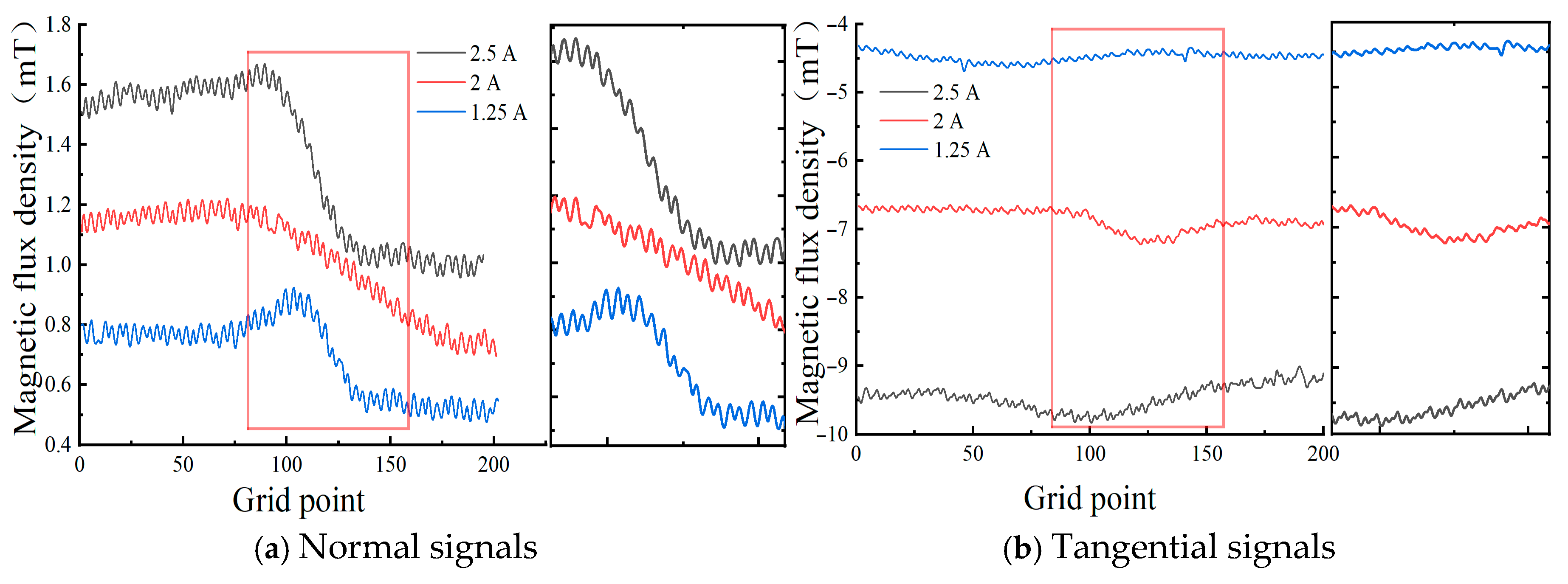
3.2.2. Weak Magnetic Signals at the Excitation Intensity of 5 kA/m for Varying Stress Levels
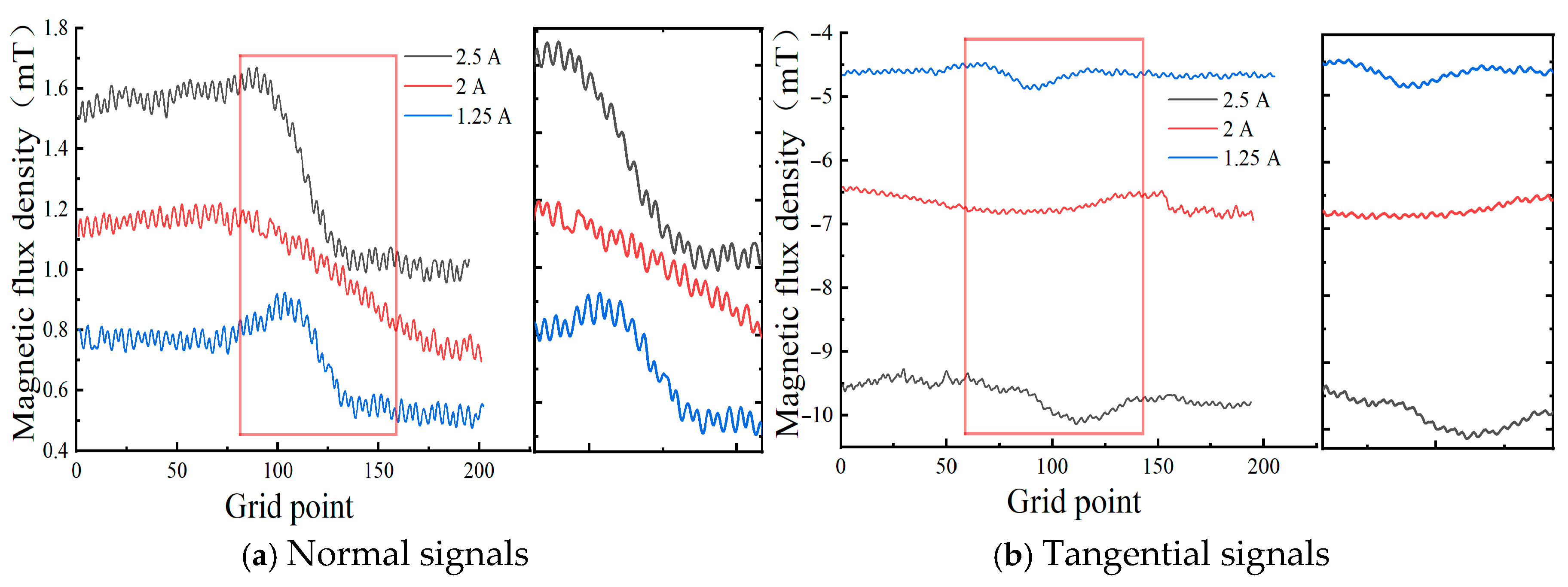
3.2.3. Weak Magnetic Signals at the Excitation Intensity of 7.5 kA/m for Varying Stress Levels
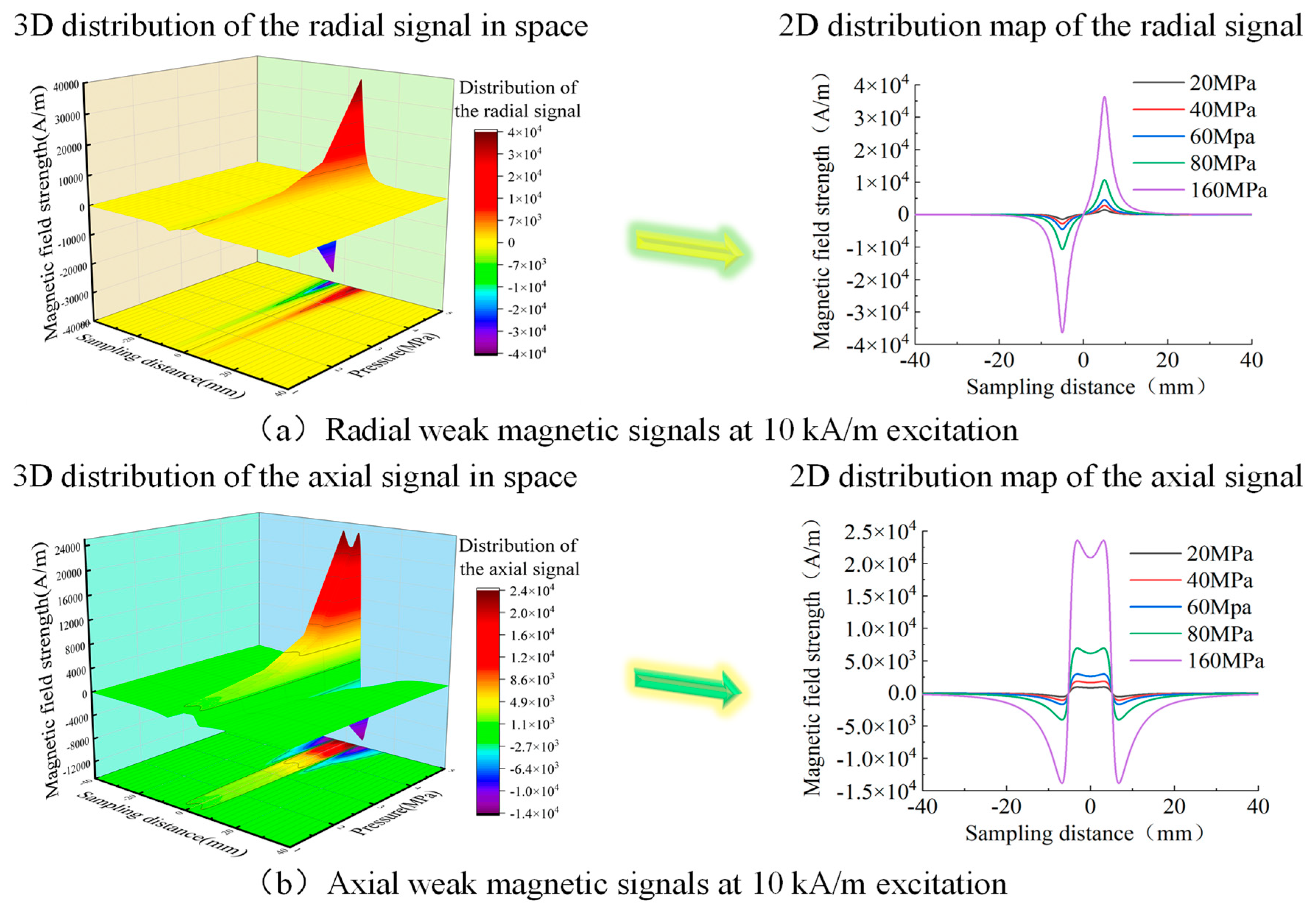
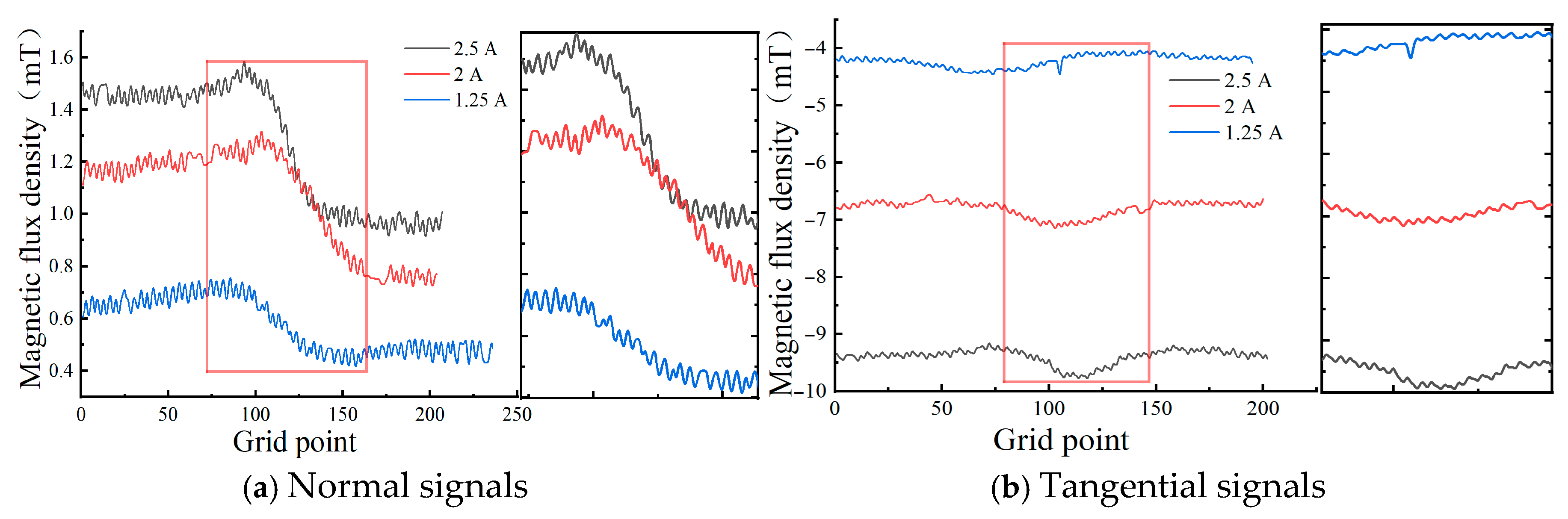
3.2.4. Weak Magnetic Signals at the Excitation Intensity of 10 kA/m for Varying Stress Levels
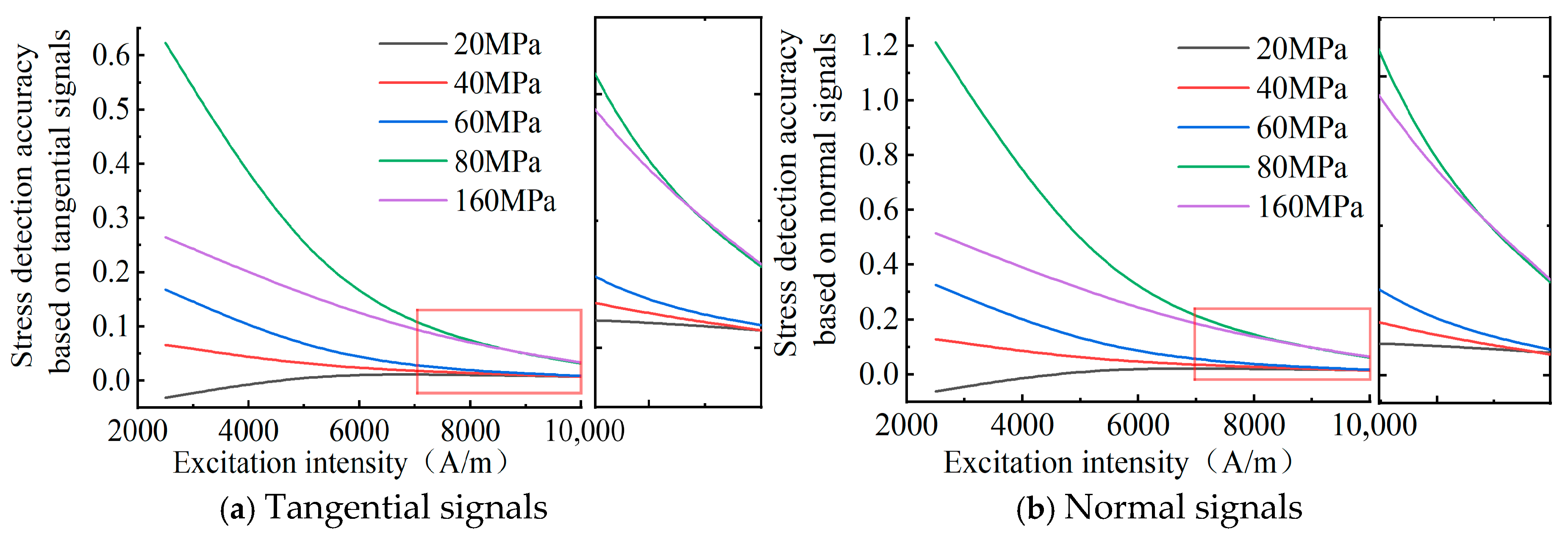
3.3. Accuracy Analysis of Stress Detection
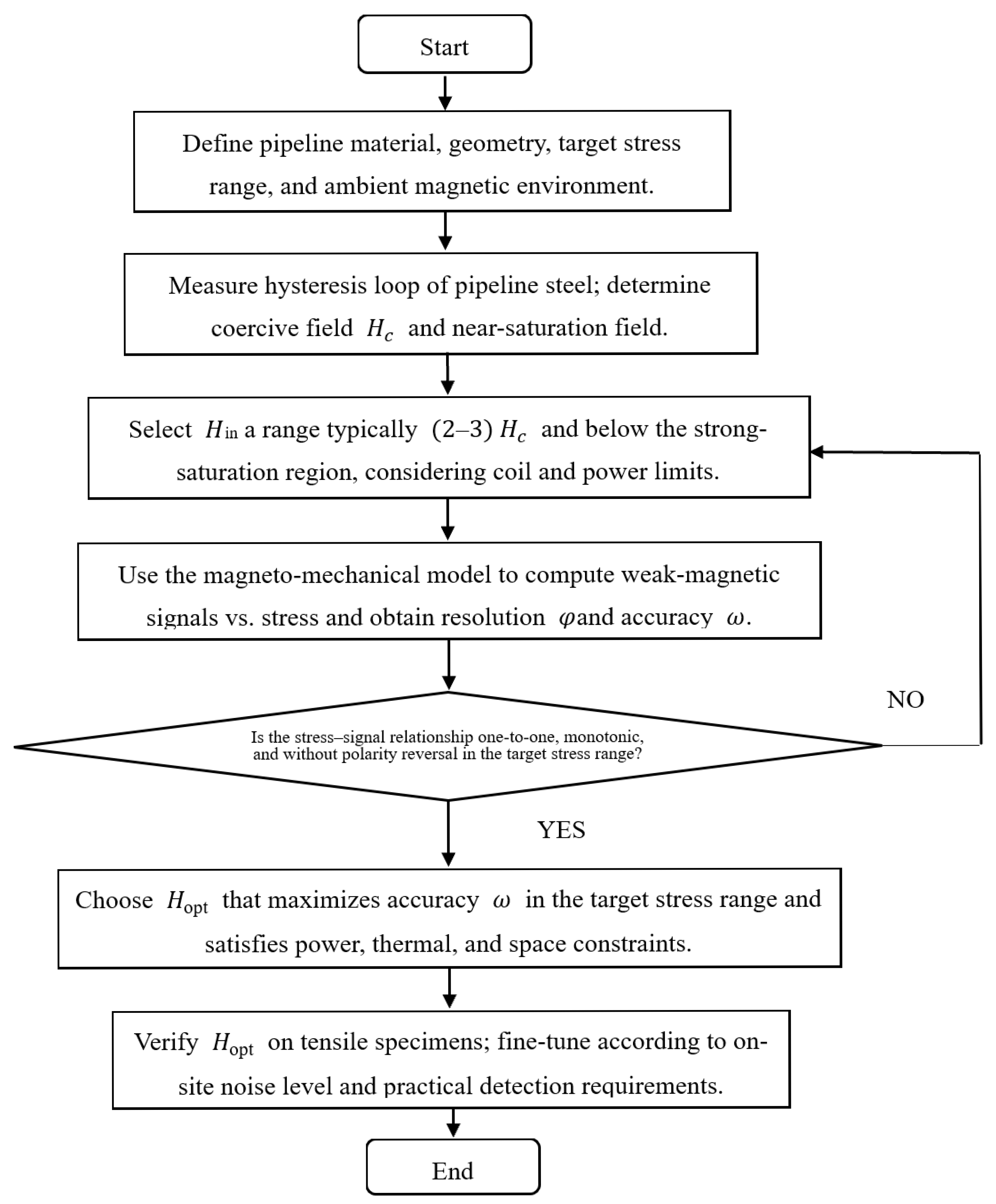
3.4. Engineering Procedure for Determining the Optimal Excitation Intensity
- Define detection requirements. Specify the pipeline steel grade, wall thickness and diameter, expected stress range to be monitored (early-warning low-stress range or medium-to-high stress range), and the background magnetic field level.
- Obtain magnetic properties. Measure the quasi-static hysteresis loop of the pipeline steel (or use data from material characterization) to determine the coercive field and the approximate near-saturation field.
- Set a candidate excitation interval. Select a preliminary excitation interval in which the applied magnetic field is typically 2–3 times the coercive field to overcome magnetic history effects, while remaining below the strong-saturation region so that the stress-dependent magnetization maintains sufficient sensitivity.
- Evaluate stress–signal mapping. Within this interval, use the proposed magneto-mechanical coupling model to calculate the weak-magnetic signal characteristics and then derive the resolution and accuracy indices according to Equations (11) and (12). This step provides a quantitative mapping between stress and weak-magnetic response under different excitation intensities.
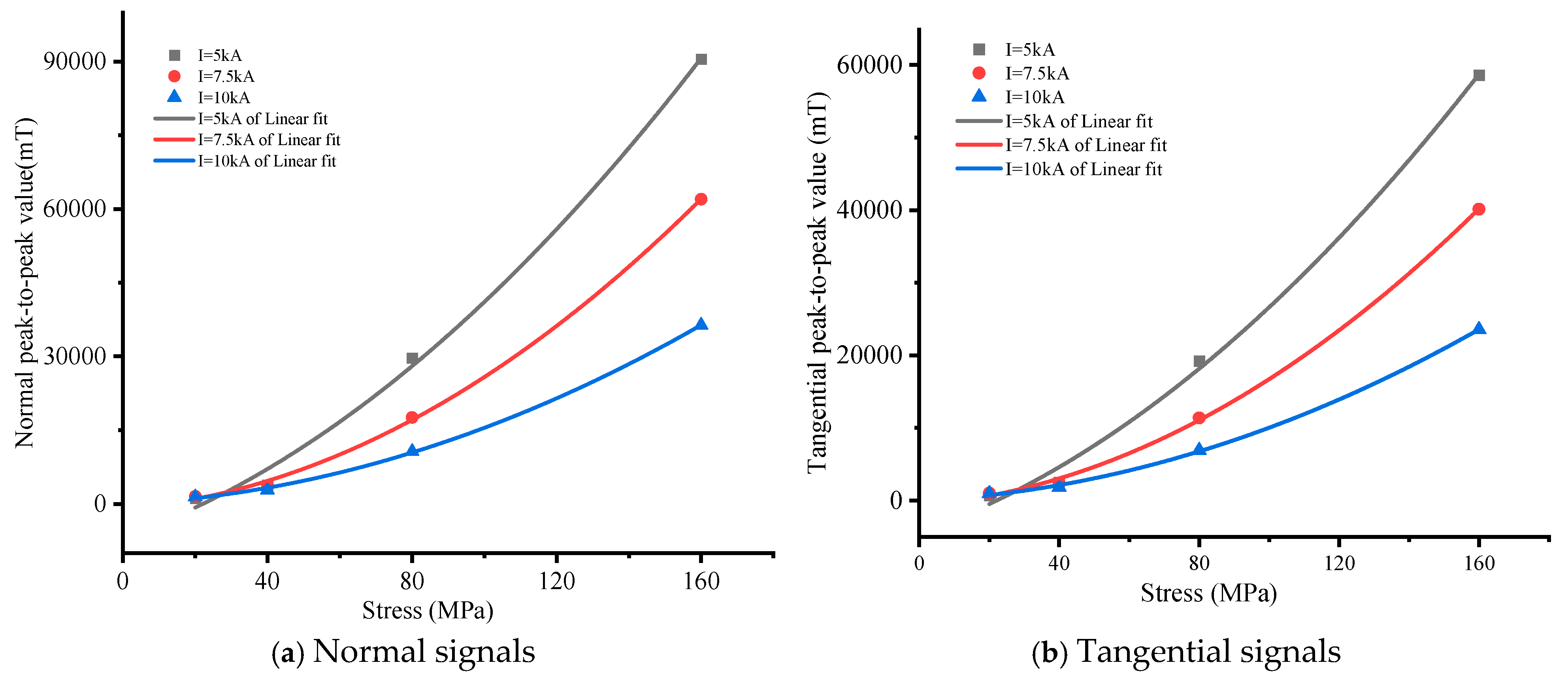
- Select the optimal intensity. For the target stress range, choose the excitation intensity that yields the highest accuracy, ensures a one-to-one and monotonic relationship between stress and signal (no polarity reversal), and satisfies constraints on coil power, thermal load, and structural integration. For the Q235 steel considered in this work, this procedure leads to an excitation of about 7.5 kA/m for low-stress detection (<40 MPa) and about 5 kA/m for quantitative evaluation in the 40–160 MPa range.
- Verify and adjust. Finally, verify the selected excitation intensity through tensile tests on representative specimens and adjust slightly according to the on-site noise level and detection requirements.
4. Tests and Result Analysis
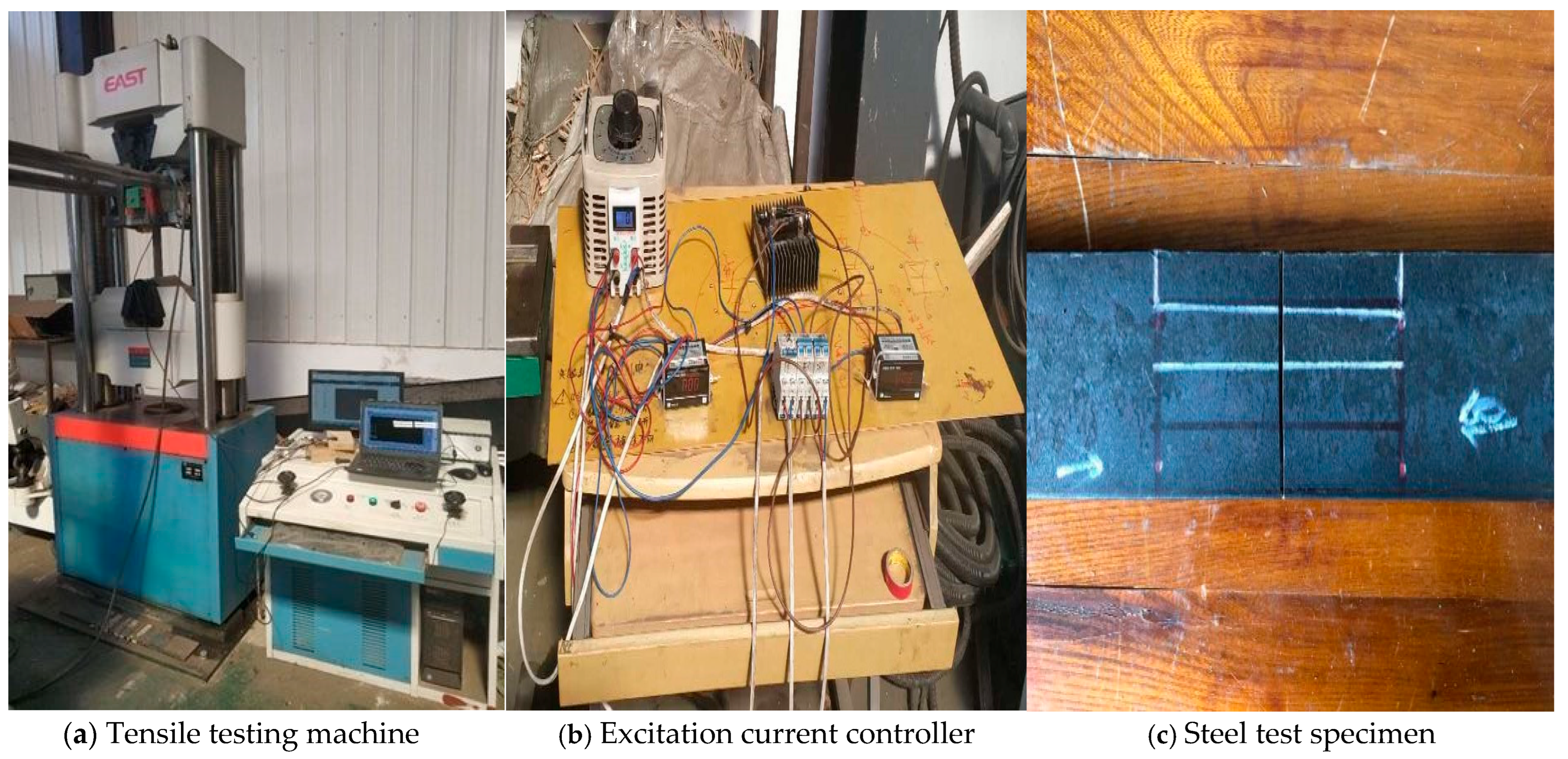
4.1. Tests on the Fluence of Excitation Intensity on Weak Magnetic Signals for Stress Detection
4.2. Test Data and Analysis
Practical Considerations
4.3. Experimental Verification of Stress Identification and Quantitative Evaluation Accuracy
5. Conclusions
- Theoretical Advancement in the Excitation–Stress Relationship
- Enhanced Engineering Applicability and Detection Reliability
- Expansion of Theoretical and Methodological Boundaries
Author Contributions
Funding
Data Availability Statement
Conflicts of Interest
References
- Qin, Y.-Q.; Feng, Q.-S.; Hu, Y.-B.; Liu, Z.-F.; Zhao, Z.-F.; Yu, Q.-C.; Yin, S.-B.; Jia, S.-J. Effect of Cr microalloying on microstructure evolution and toughness in SCGHAZ of X80 pipeline steel. J. Iron Steel Res. Int. 2025, 32, 3573–3586. [Google Scholar] [CrossRef]
- Zhang, L.; Yan, X.; Yu, J.; Ding, J.; Lv, X. Investigation of the stoichiometric hydrogen–air detonation evolution in T-shaped pipeline. Energy 2025, 336, 138434. [Google Scholar] [CrossRef]
- Wang, Y.; Zhang, R.; Chen, L.; Liu, Y.; Yu, L. Steady-state modeling and analysis of solid–liquid two-phase flow in vertical and flexible pipelines for deep-sea mining. Ocean. Eng. 2025, 341, 122757. [Google Scholar] [CrossRef]
- Choudhary, R.; Singh, S.; Kumar, S.; Gautam, S.; Kumar, A. Performance evaluation of a zwitterionic surfactant for the emulsification of an Indian heavy crude oil for pipeline transportation. Fuel 2026, 405, 136547. [Google Scholar] [CrossRef]
- Chen, C.; Li, C.; Reniers, G.; Yang, F. Safety and security of oil and gas pipeline transportation: A systematic analysis of research trends and future needs using WoS. J. Clean. Prod. 2021, 279, 123583. [Google Scholar] [CrossRef]
- Kikuchi, H. Current status and prospects of nondestructive inspection for steels by magnetic measurements. J. Inst. Electr. Eng. Jpn. 2015, 35, 629–632. [Google Scholar] [CrossRef]
- Liu, B.; He, L.-Y.; Zhang, H.; Fernandes, H.C.; Fu, Y.; Maldague, X. Study on characteristics of magnetic memory testing signal based on the stress concentration field. IET Sci. Meas. Technol. 2017, 11, 2–8. [Google Scholar] [CrossRef]
- He, T.; Liao, K.; He, G.; Zhao, J.; Deng, S.; Leng, J. Quantitative study on magnetic-based stress detection and risk evaluation for girth welds with unequal wall thickness of high-grade steel pipelines. J. Nat. Gas Sci. Eng. 2022, 108, 104825. [Google Scholar] [CrossRef]
- Chen, B.; Wang, B.; Qiu, F.; Luo, C.; Chen, J.; Gou, G. A Pipeline Hoop Stress Measurement Method Based on Propagation Path Correction of LCR Waves. J. Mar. Sci. Eng. 2025, 13, 1845. [Google Scholar] [CrossRef]
- Hu, Z.; Ren, X.; Wang, Q.; Wang, R.; Pan, R. Analytical method for the mechanical response of buried pipeline under the action of strike-slip faulting. Undergr. Space 2022, 7, 268–277. [Google Scholar] [CrossRef]
- Wang, G.; Xia, Q.; Yan, H.; Bei, S.; Zhang, H.; Geng, H.; Zhao, Y. Research on Pipeline Stress Detection Method Based on Double Magnetic Coupling Technology. Sensors 2024, 24, 6463. [Google Scholar] [CrossRef]
- Fan, X.; Yang, L. Exploring Weak Magnetic Signal Characteristics of Pipeline Welds: Insights into Stress Non-Uniformity Effects. Sensors 2024, 24, 5074. [Google Scholar] [CrossRef]
- He, T.; Liao, J.; Liao, K.; Zhu, H.; Tang, J.; Jiang, P.; Xia, G. Experimental study on strengthening the magneto-mechanical coupling effect of X80 steel by weak magnetic excitation. Meas. Sci. Technol. 2024, 35, 105021. [Google Scholar] [CrossRef]
- Zhang, J.; Qin, L.; Sun, M.; Lin, D.; Liu, C.; Zhou, Z. Influence of excitation parameters on the magnetization of MFL ILI tools for small-diameter pipelines. J. Magn. Magn. Mater. 2025, 616, 17280. [Google Scholar] [CrossRef]
- Huang, P.; Li, Y.; Zheng, F.; Yang, L.; Su, Y.; Ma, L.; Wang, C.; Dou, J.; Li, Y.; Qiu, Z. Magnetic leakage behavior assessment in pipeline stress-concentrated areas using improved force-magnetic coupling model. Rev. Sci. Instrum. 2024, 95, 054701. [Google Scholar] [CrossRef]
- Dubov, A.A. Development of a Metal Magnetic Memory Method. Chem. Pet. Eng. 2012, 47, 837–839. [Google Scholar] [CrossRef]
- Zhang, Y.; Wang, W.; Zhang, Y.; Zhang, M.; Xue, H.; Zhang, D.; Zhang, Z.; Jiang, Y. Crystallographically textured zinc nucleation and planar electrodeposition for zinc metal batteries via magnetoelectric and magnetization effects. Energy Storage Mater. 2024, 72, 103751. [Google Scholar] [CrossRef]
- Li, M.; Feng, Z.-B.; Zhao, Z.-Y. Symmetry and magnetization effect on the selective spin-valley polarized transport through the ferromagnetic–normal–ferromagnetic ZSiNR junction. Phys. E Low-Dimens. Syst. Nanostruct. 2023, 151, 115729. [Google Scholar] [CrossRef]
- Zeng, K.; Tian, G.; Gao, B.; Liu, J.; Liu, Y.; Liu, Q. Comparison of Repeatability and Stability of Residual Magnetic Field for Stress Characterization in Elastic and Plastic Ranges of Silicon Steels. Sensors 2022, 22, 3052. [Google Scholar] [CrossRef]
- Wang, Y.J.; Liu, X.C. Dipole modeling of stress-dependent magnetic flux leakage. NDT E Int. 2018, 95, 1–8. [Google Scholar] [CrossRef]
- Liu, B.; He, L.-Y.; Zhang, H.; Cao, Y.; Fernandes, H.C. The axial crack testing model for long-distance oil–gas pipelines based on MFL internal inspection. Measurement 2017, 103, 275–282. [Google Scholar] [CrossRef]
- Huang, S.; Peng, L.; Sun, H.; Li, S. Deep Learning for Magnetic Flux Leakage Detection and Evaluation of Oil & Gas Pipelines: A Review. Energies 2023, 16, 1372. [Google Scholar] [CrossRef]
- Bao, S.; Jin, P.; Zhao, Z.; Fu, M. A Review of the Metal Magnetic Memory Method. J. Nondestruct. Eval. 2020, 39, 11. [Google Scholar] [CrossRef]
- Alobaidi, W.M.; Alkuam, E.A.; Al-Rizzo, H.M.; Sandgren, E. Applications of ultrasonic techniques in oil and gas pipeline industries: A review. Am. J. Oper. Res. 2015, 5, 274–287. [Google Scholar] [CrossRef]
- Tian, L.; Yin, C.; Cheng, Y.; Bai, L. Successive approximation method for the measurement of thickness using pulsed eddy current. In Proceedings of the 2015 IEEE International Instrumentation and Measurement Technology Conference (I2MTC) Proceedings, Pisa, Italy, 11–14 May 2015; pp. 848–852. [Google Scholar]
- Chen, H.; Wang, C.; Zuo, X. Research on methods of defect classification based on metal magnetic memory. NDT E Int. 2017, 92, 82–87. [Google Scholar] [CrossRef]
- Ni, C.; Hua, L.; Wang, X. Crack propagation analysis and fatigue life prediction for structural alloy steel based on metal magnetic memory testing. J. Magn. Magn. Mater. 2018, 462, 144–152. [Google Scholar] [CrossRef]
- Ren, S.; Ren, X. Studies on laws of stress–magnetization based on magnetic memory testing technique. J. Magn. Magn. Mater. 2018, 449, 165–171. [Google Scholar] [CrossRef]
- Shi, P.; Jin, K.; Zheng, X. A magnetomechanical model for the magnetic memory method. Int. J. Mech. Sci. 2017, 124–125, 229–241. [Google Scholar] [CrossRef]
- Gobov, Y.L. Identification of Cracks and a Mathematical Model of the Magnetostatic Field of Defects in a Plate. Russ. J. Nondestruct. Test. 2024, 60, 431–439. [Google Scholar] [CrossRef]
- Liu, B.; He, L.; Ma, Z.; Zhang, H.; Sfarra, S.; Fernandes, H.; Perilli, S. Study on internal stress damage detection in long distance oil and gas pipelines via weak magnetic method. ISA Trans. 2019, 89, 272–280. [Google Scholar] [CrossRef] [PubMed]
- Chen, Y.; Li, L.; Ma, Z.; Wen, X.; Pang, J.; Yuan, W. Improving weak-magnetic detection of ferromagnetic-material defects via transfer learning-enhanced residual networks. Eng. Appl. Artif. Intell. 2025, 150, 110647. [Google Scholar] [CrossRef]
- Liu, B.; Fu, Y.; He, L.; Geng, H.; Yang, L. Weak Magnetic Internal Signal Characteristics of Pipe Welds under Internal Pressure. Sensors 2023, 23, 1147. [Google Scholar] [CrossRef]
- Wang, S.; Sun, X.; Miao, X.; Ye, H. Quantitative Evaluation of Mechanical Properties of Hydrogen Transmission Pipelines Based on Weak Magnetic Detection. Sensors 2025, 25, 3778. [Google Scholar] [CrossRef] [PubMed]
- Liu, B.; Luo, N.; Feng, G. Quantitative Study on MFL Signal of Pipeline Composite Defect Based on Improved Magnetic Charge Model. Sensors 2021, 21, 3412. [Google Scholar] [CrossRef] [PubMed]
- Kim, H.M.; Park, G.S. A study on the estimation of the shapes of axially oriented cracks in CMFL-type NDT system. IEEE Trans. Magn. 2014, 50, 109–112. [Google Scholar] [CrossRef]
- Sablik, M.J.; Rubin, S.W.; Riley, L.A.; Jiles, D.C.; Kaminski, D.A.; Biner, S.B. A model for hysteretic magnetic properties under the application of noncoaxial stress and field. J. Appl. Phys. 1993, 74, 480–488. [Google Scholar] [CrossRef]



| Method | Principle/Quantity Measured | Advantages | Limitations | Applicability |
|---|---|---|---|---|
| Hole-drilling | Local strain relief → residual stress | Quantitative, standardized | Semi-destructive, low efficiency | Not suitable for long-distance pipelines |
| X-ray diffraction (XRD) | Lattice strain → near-surface stress | High accuracy | Shallow penetration, surface preparation required | Limited for field/on-pipe inspection |
| Neutron diffraction | Lattice strain → bulk stress | Deep penetration | Very expensive, non-portable | Not applicable to engineering practice |
| Ultrasonic acoustoelastic | Wave-velocity change → stress | Non-destructive, deeper probing | Sensitive to coupling/temperature; slow scanning | Useful for local welds |
| Magnetic Barkhausen noise | Barkhausen activity → near-surface stress & microstructure | High sensitivity; portable | Needs excitation; surface preparation; shallow depth | Not for long-distance pipeline inspection |
| MMMT | Stress-induced residual magnetic field | No excitation needed; early-damage sensitive | Strongly interfered; poor repeatability; weak quantification | Screening only; low confidence |
| WMD | Controlled low-field excitation → stress-induced magnetic response | Non-contact, coating-free, stable signals, suitable for long-range scanning | Calibration required; affected by lift-off/material | Highly suitable for in-service pipelines (used in this work) |
| 20 MPa | 40 MPa | 60 MPa | 80 MPa | 160 MPa | |
|---|---|---|---|---|---|
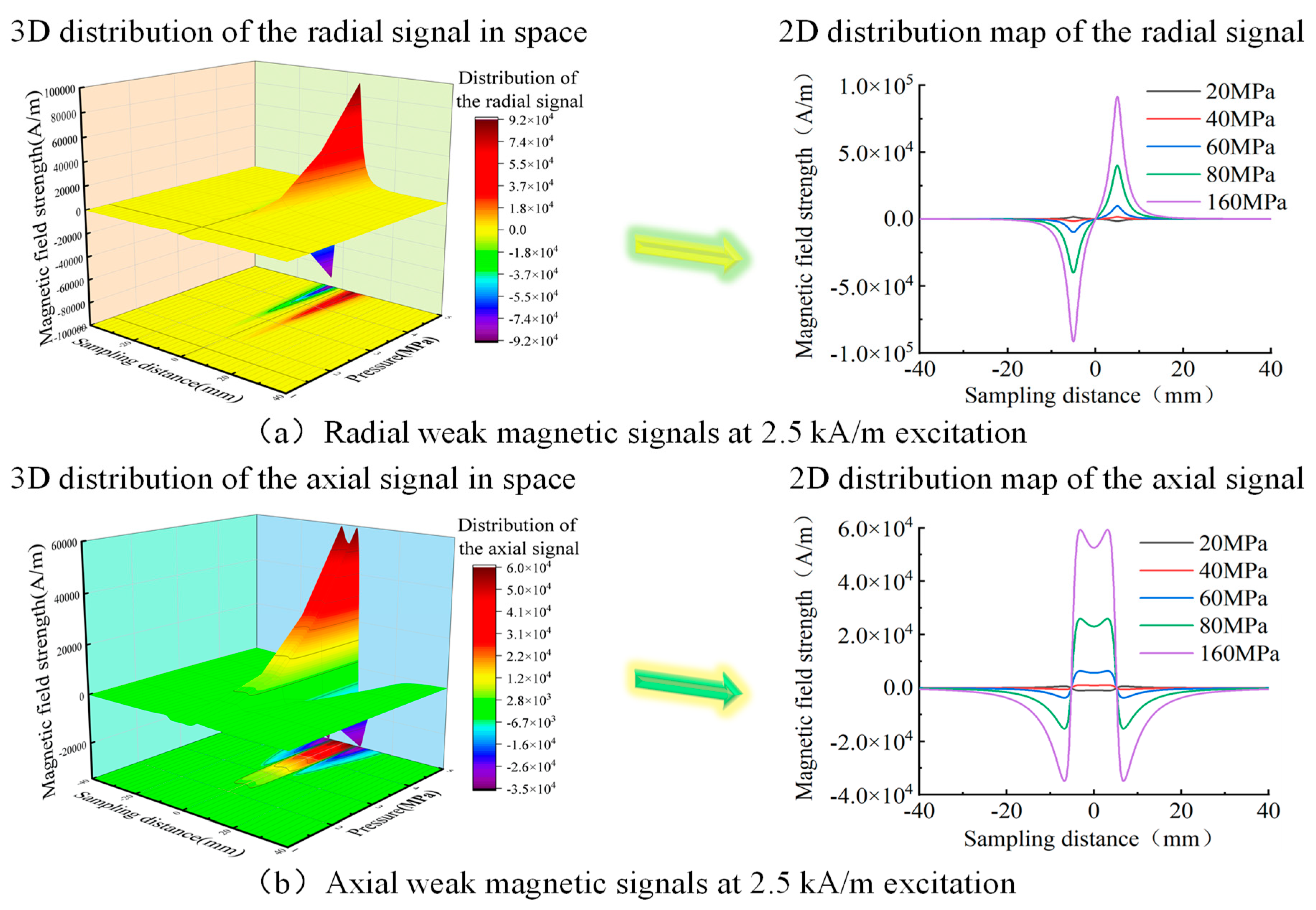
| Tangential amplitude | 1159 | 3999 | 9614 | 30,506 | 93,026 |
| Normal peak amplitude | 2254 | 7777 | 18,697 | 59,327 | 180,914 |
| 20 MPa | 40 MPa | 60 MPa | 80 MPa | 160 MPa | |
|---|---|---|---|---|---|
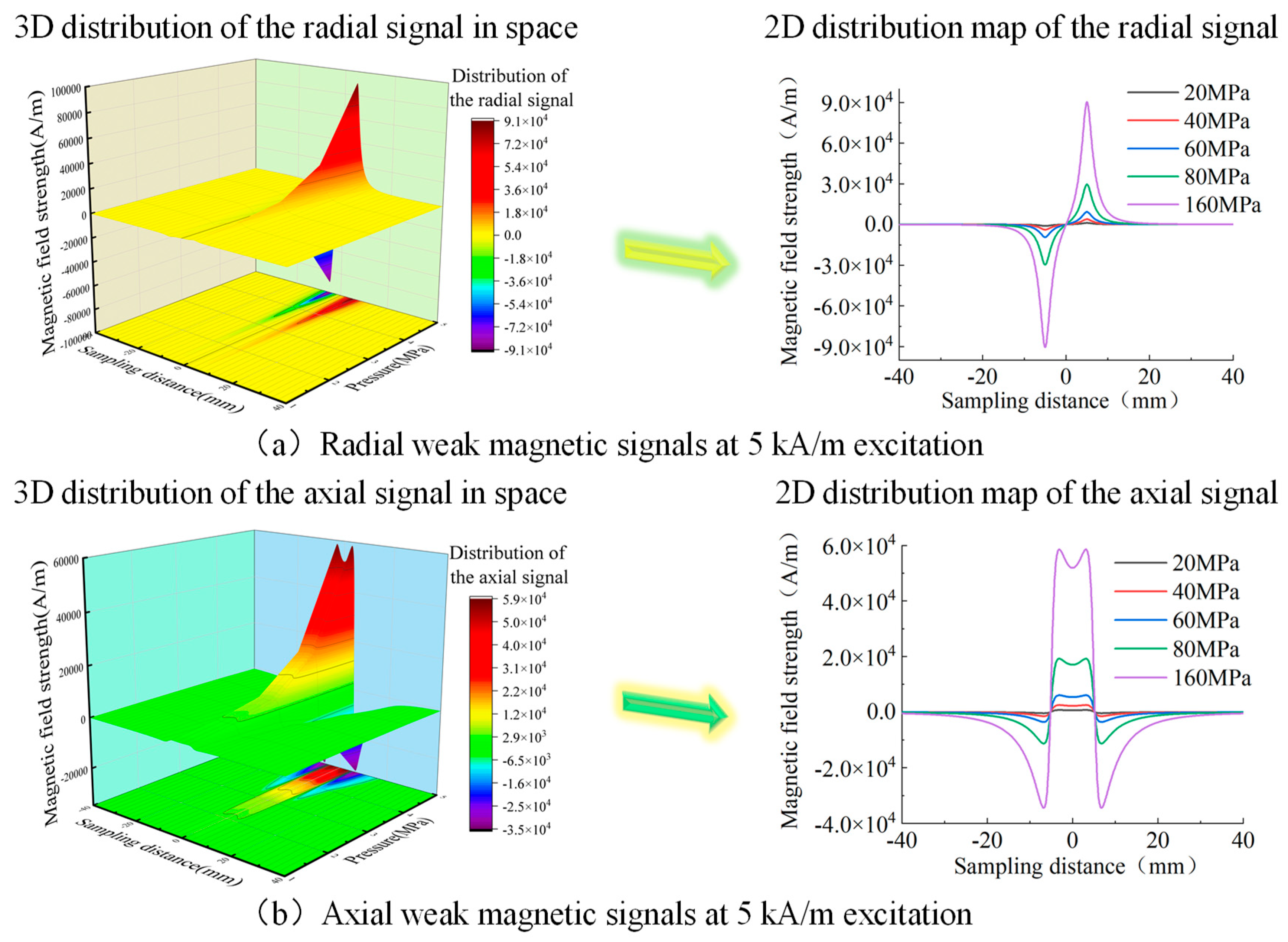
| Tangential amplitude | 1614 | 3854 | 6777 | 18,079 | 63,741 |
| Normal peak amplitude | 3138 | 7495 | 13,180 | 35,159 | 123,962 |
| 20 MPa | 40 MPa | 60 MPa | 80 MPa | 160 MPa | |
|---|---|---|---|---|---|
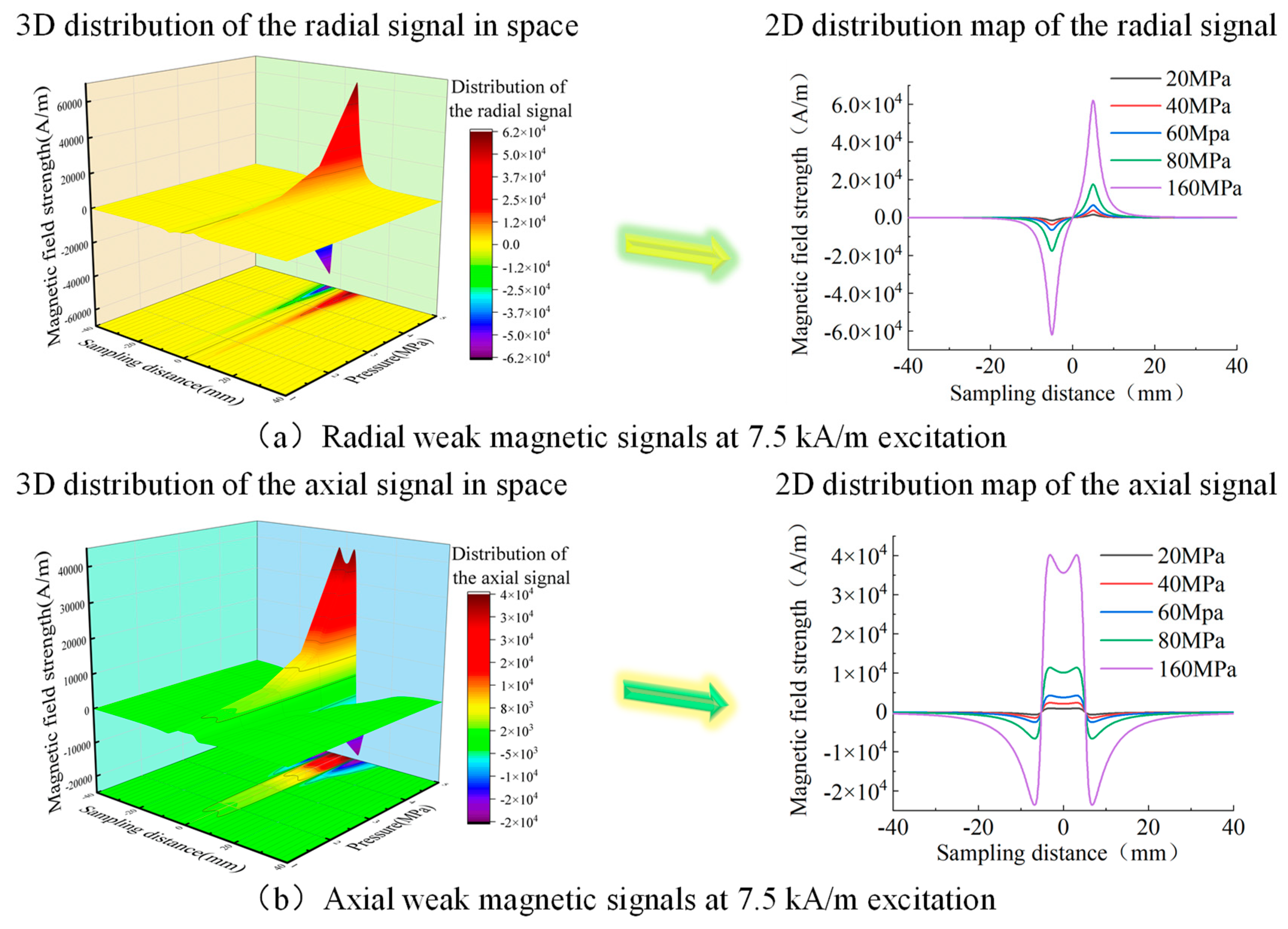
| Tangential amplitude | 1492 | 2906 | 4661 | 11,002 | 37,398 |
| Normal peak amplitude | 2901 | 5652 | 9064 | 21,396 | 72,730 |
| 20 MPa | 40 MPa | 60 MPa | 80 MPa | 160 MPa | ||
|---|---|---|---|---|---|---|
| 2.5 kA/m | Tangential | 0.032 | 0.066 | 0.168 | 0.623 | 0.265 |
| Normal | 0.062 | 0.128 | 0.326 | 1.212 | 0.515 | |
| 5 kA/m | Tangential | 0.012 | 0.028 | 0.056 | 0.209 | 0.156 |
| Normal | 0.023 | 0.055 | 0.109 | 0.406 | 0.304 | |
| 7.5 kA/m | Tangential | 0.011 | 0.015 | 0.019 | 0.075 | 0.076 |
| Normal | 0.021 | 0.029 | 0.038 | 0.147 | 0.148 | |
| 10 kA/m | Tangential | 0.007 | 0.007 | 0.009 | 0.032 | 0.033 |
| Normal | 0.015 | 0.014 | 0.017 | 0.062 | 0.064 | |
Disclaimer/Publisher’s Note: The statements, opinions and data contained in all publications are solely those of the individual author(s) and contributor(s) and not of MDPI and/or the editor(s). MDPI and/or the editor(s) disclaim responsibility for any injury to people or property resulting from any ideas, methods, instructions or products referred to in the content. |
© 2025 by the authors. Licensee MDPI, Basel, Switzerland. This article is an open access article distributed under the terms and conditions of the Creative Commons Attribution (CC BY) license (https://creativecommons.org/licenses/by/4.0/).
Share and Cite
Zhang, J.; Luo, N.; Chao, L.; Liu, N.; Lian, Z.; Liu, B.; Yang, L. Effect of Magnetic Excitation Intensity on Stress Recognition and Quantitative Evaluation in Ferromagnetic Pipelines. Magnetochemistry 2025, 11, 110. https://doi.org/10.3390/magnetochemistry11120110
Zhang J, Luo N, Chao L, Liu N, Lian Z, Liu B, Yang L. Effect of Magnetic Excitation Intensity on Stress Recognition and Quantitative Evaluation in Ferromagnetic Pipelines. Magnetochemistry. 2025; 11(12):110. https://doi.org/10.3390/magnetochemistry11120110
Chicago/Turabian StyleZhang, Jiawen, Ning Luo, Long Chao, Nan Liu, Zheng Lian, Bin Liu, and Lijian Yang. 2025. "Effect of Magnetic Excitation Intensity on Stress Recognition and Quantitative Evaluation in Ferromagnetic Pipelines" Magnetochemistry 11, no. 12: 110. https://doi.org/10.3390/magnetochemistry11120110
APA StyleZhang, J., Luo, N., Chao, L., Liu, N., Lian, Z., Liu, B., & Yang, L. (2025). Effect of Magnetic Excitation Intensity on Stress Recognition and Quantitative Evaluation in Ferromagnetic Pipelines. Magnetochemistry, 11(12), 110. https://doi.org/10.3390/magnetochemistry11120110