
Identification and Expression Analysis of SHN Gene Family in Melon
 , and
, and
Abstract
1. Introduction
2. Materials and Methods
2.1. Plant Materials
2.2. Identification of CmSHN Gene Family Members in Melon
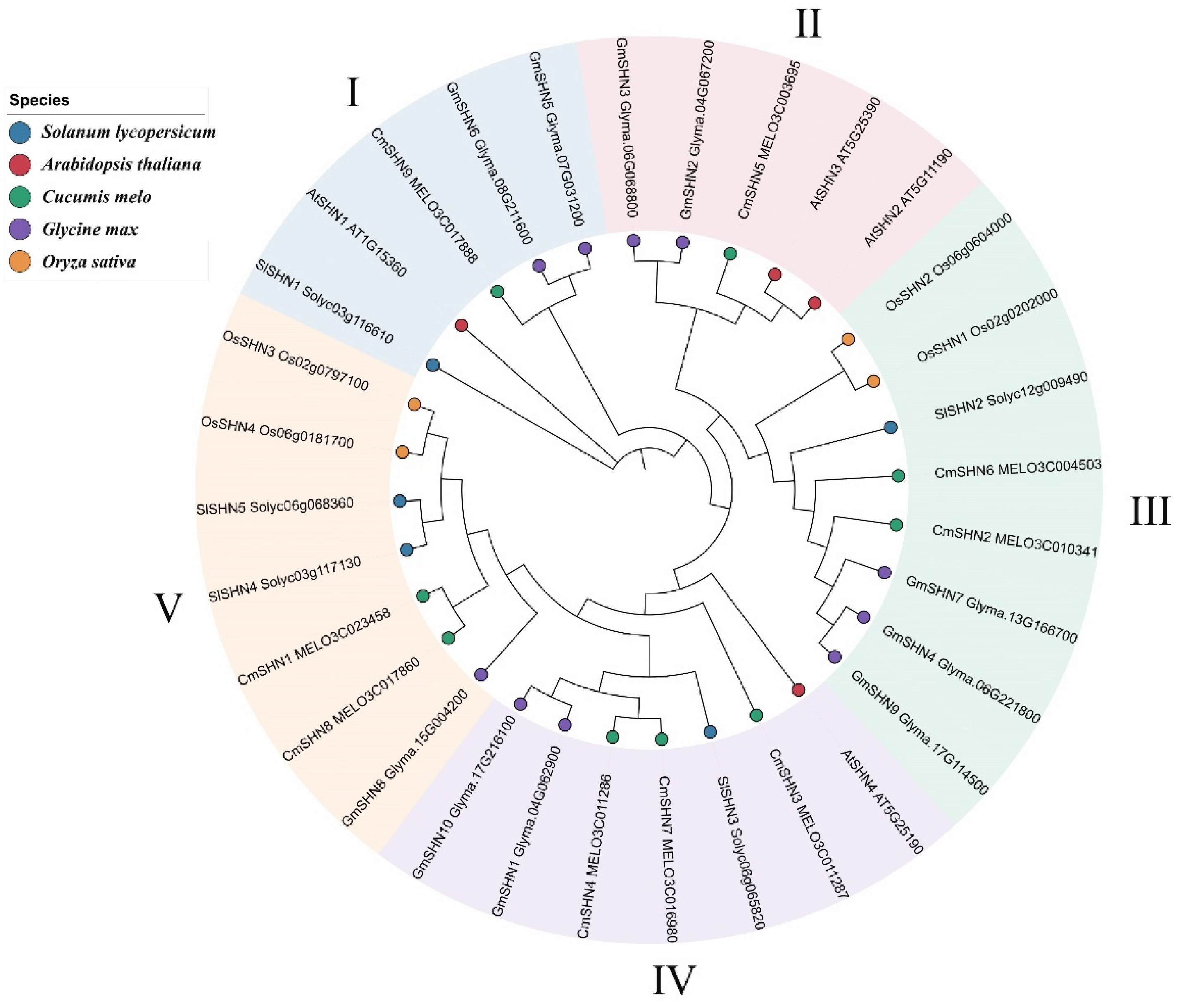
2.3. Structural Characteristics and Phylogenetic Analysis of the CmSHN Gene Family in Melon
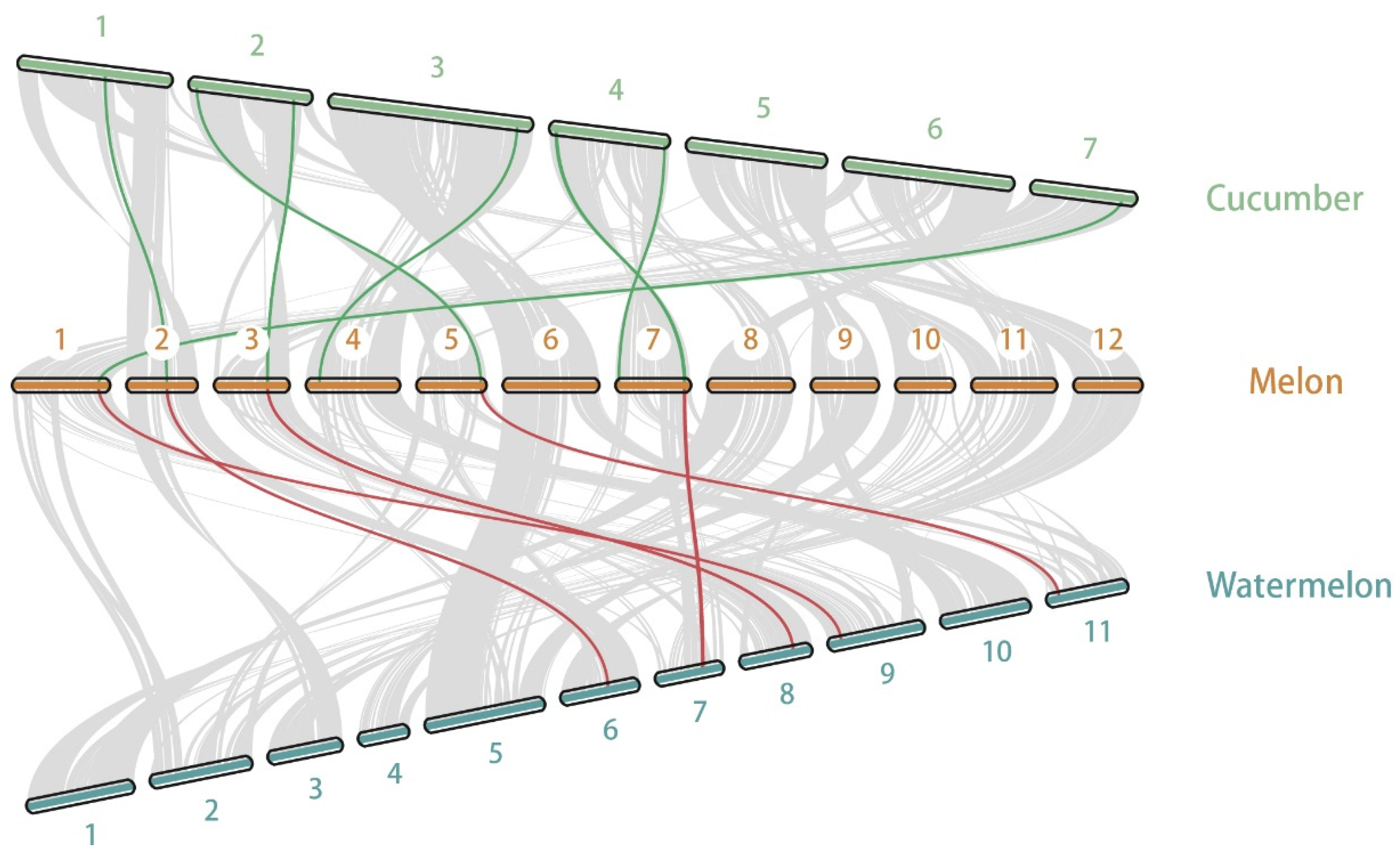
2.4. Collinearity Analysis of SHN Family Genes in Cucurbitaceae
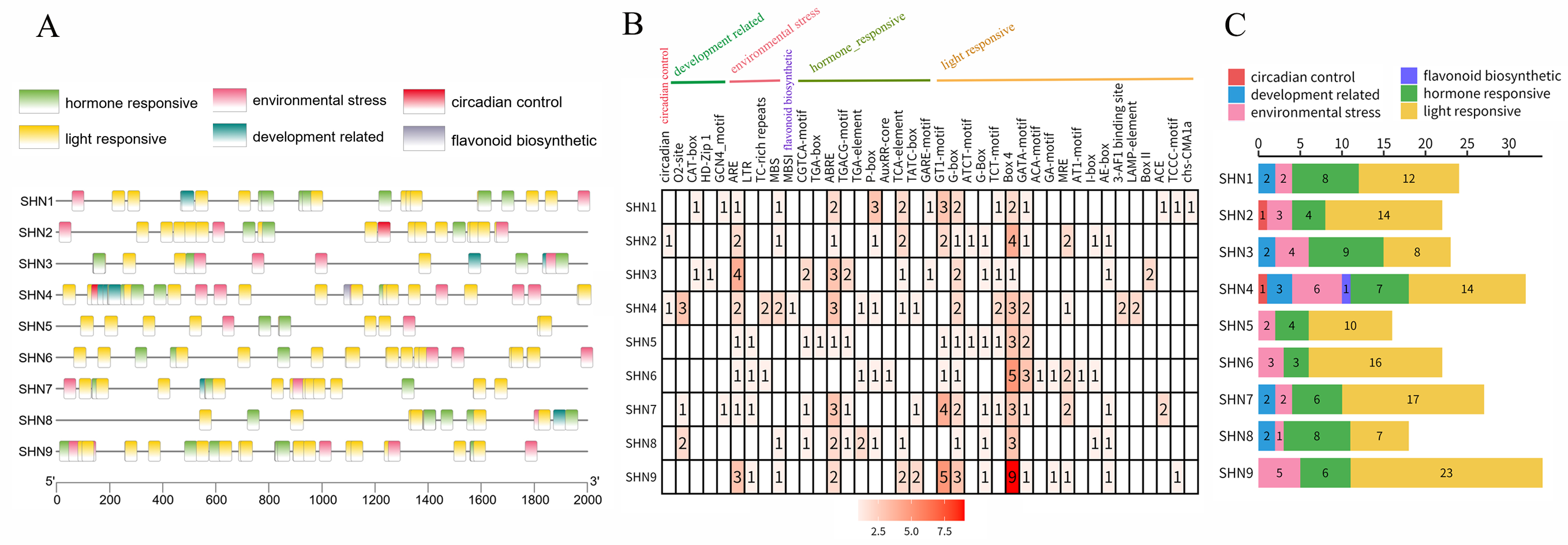
2.5. Cis-Acting Element Analysis of Promoters of the CmSHN Gene Family in Melon
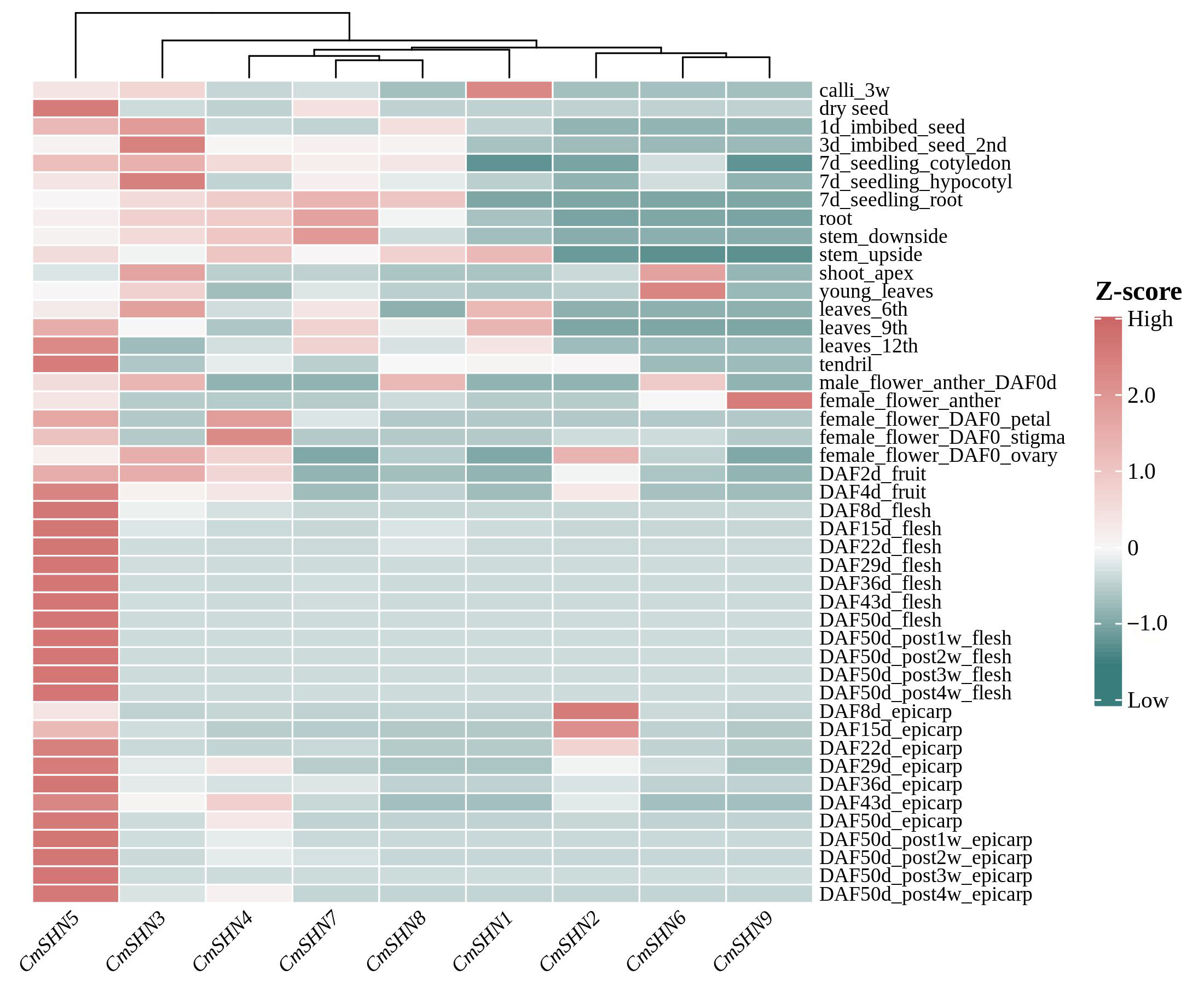
2.6. Expression Pattern Analysis of the SHN Gene Family in Melon
2.6.1. Tissue-Specific Expression of Melon SHN Genes
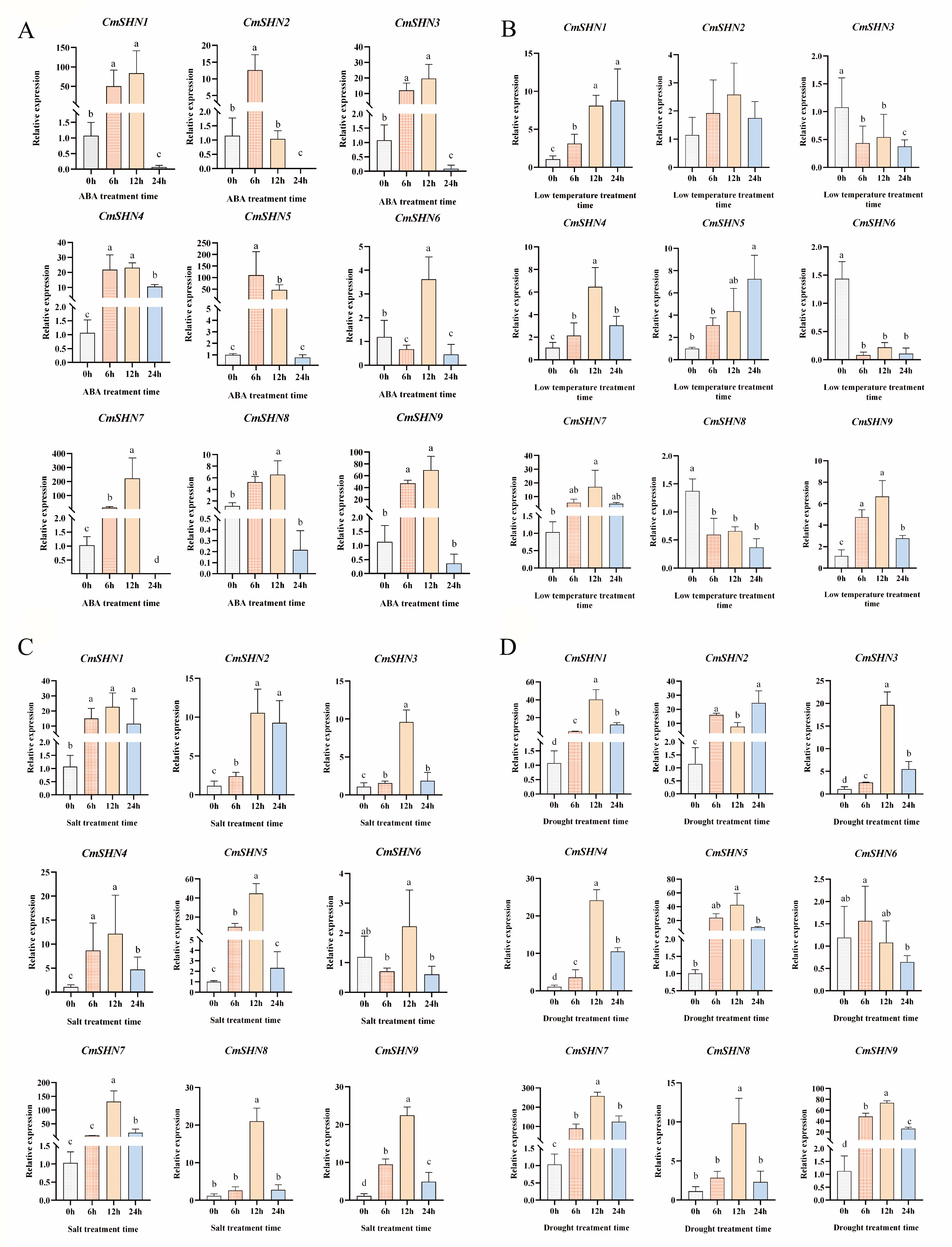
2.6.2. Expression Analysis of CmSHN Genes Under Abiotic Stress Treatments
3. Results
3.1. Genome-Wide Identification and Physicochemical Characterization of the CmSHN Gene Family in Melon
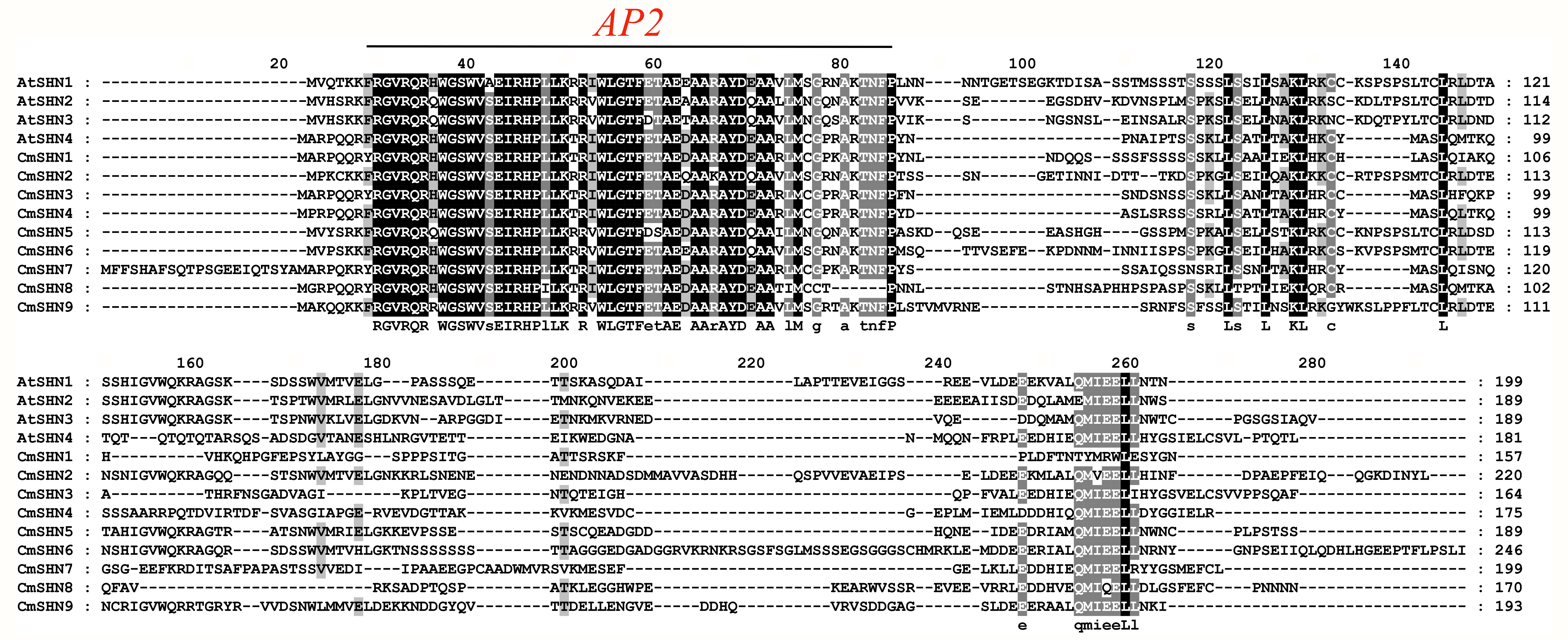
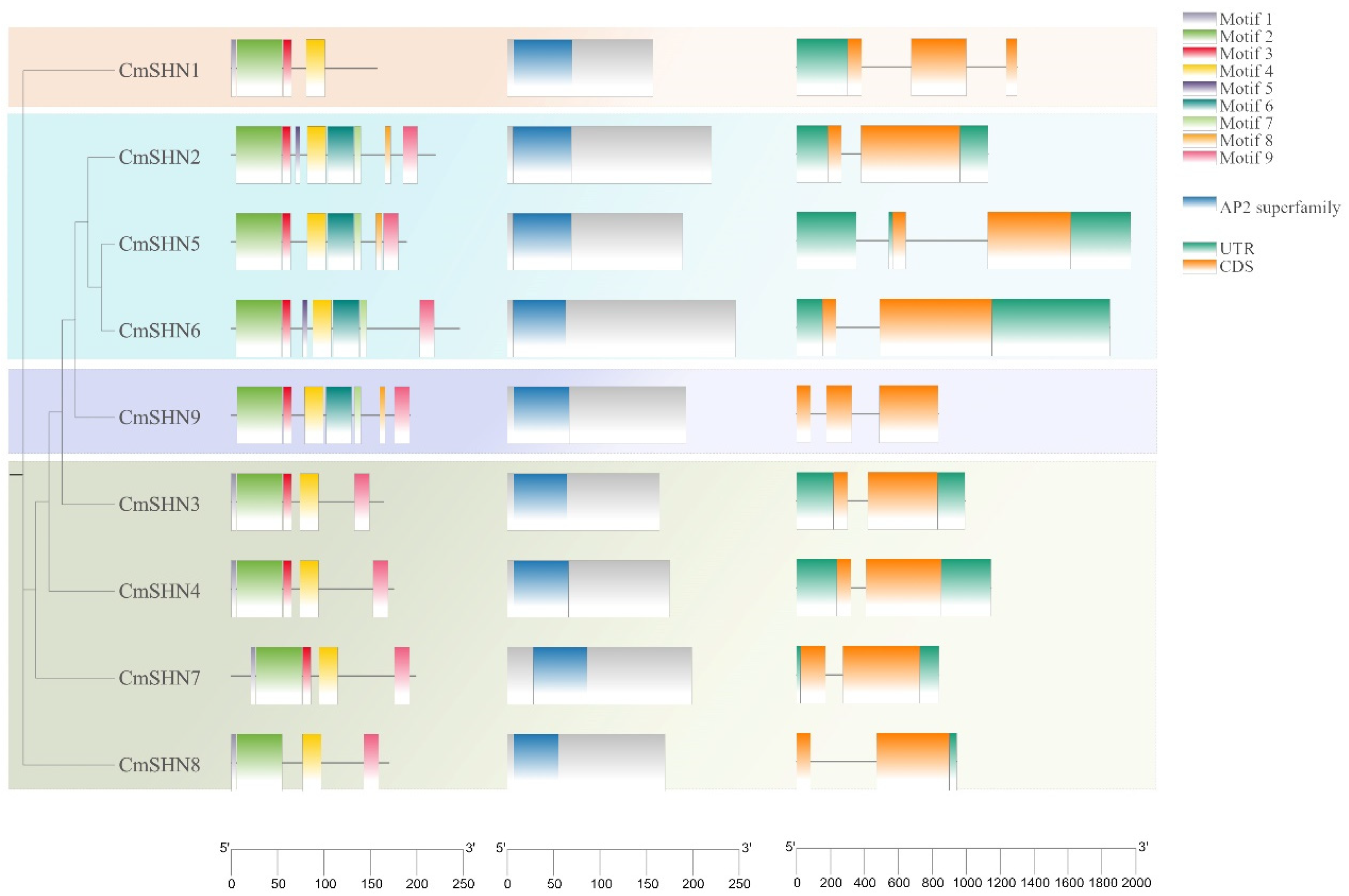
3.2. Gene Structure and Conserved Motifs of the SHN Gene Family in Melon
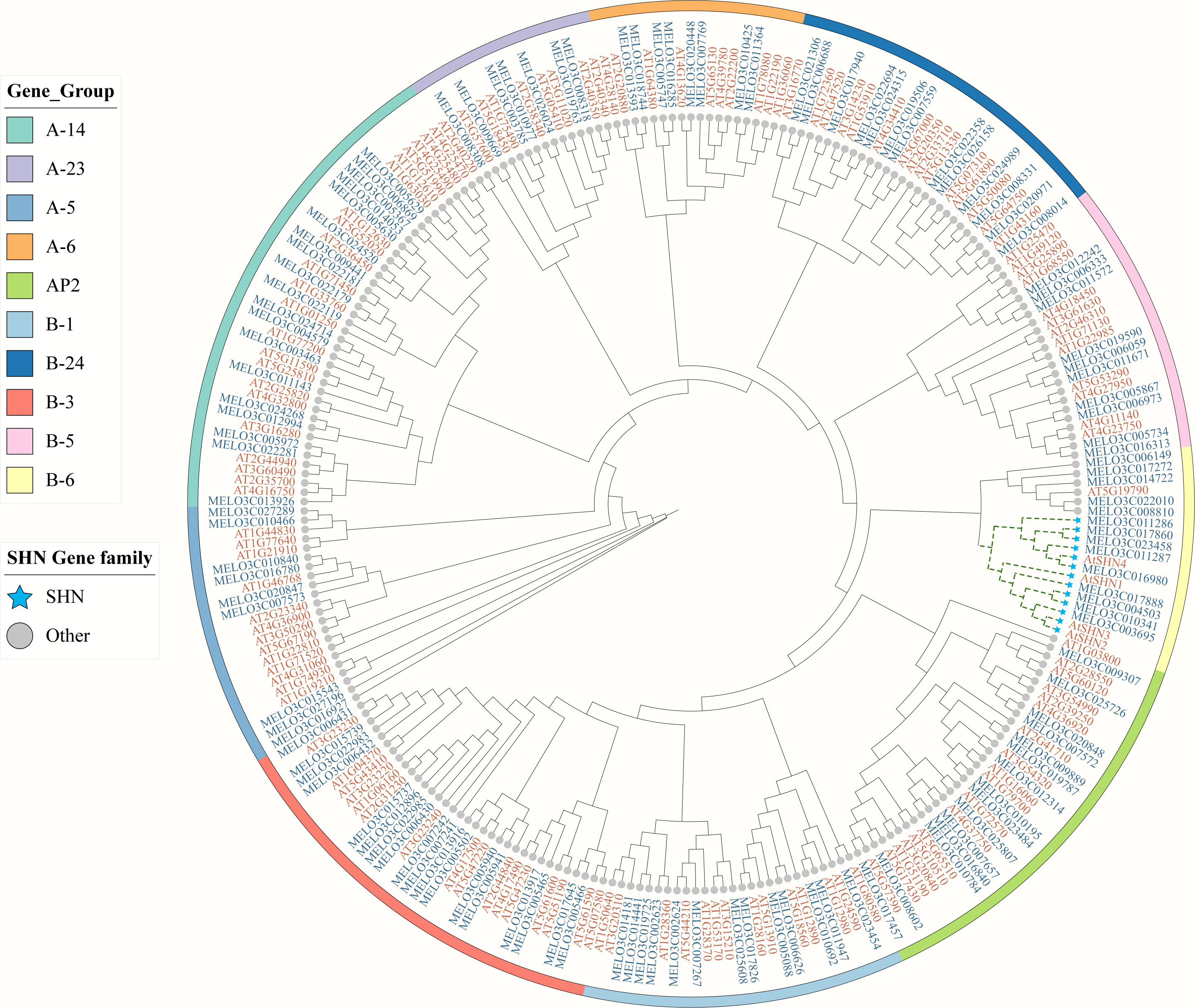
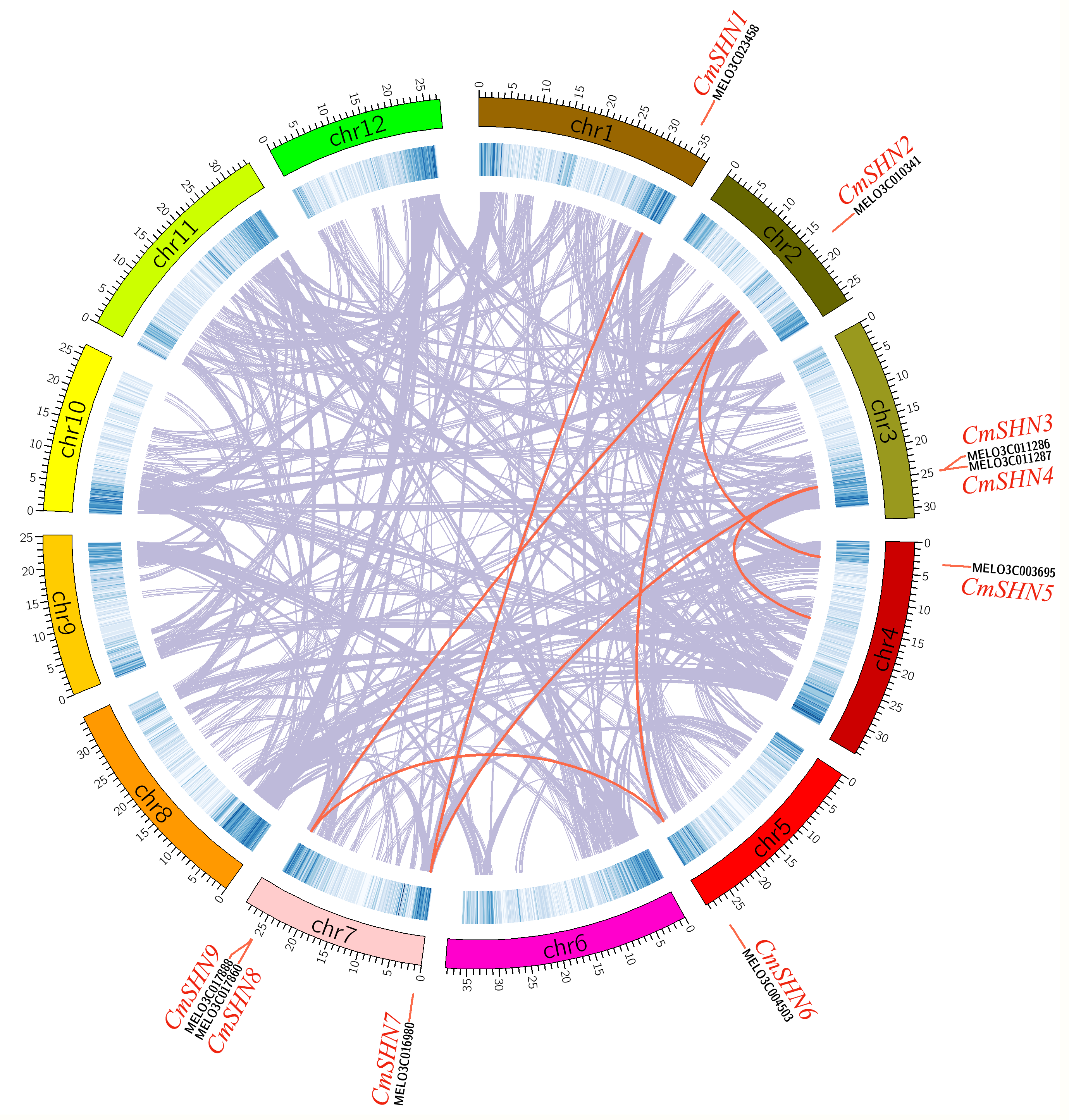
3.3. Phylogenetic and Collinearity Analysis of the CmSHN Gene Family
3.4. Cis-Acting Element Profiling in Promoters of Melon CmSHN Family Genes
3.5. Tissue-Specific Expression Profiling of SHN Genes in Melon
3.6. Expression Profiling of Melon CmSHN Family Genes in Response to Various Abiotic Stresses
4. Discussion
5. Conclusions
Author Contributions
Funding
Data Availability Statement
Conflicts of Interest
References
- Michel, P. Phenotypic diversity in wild and cultivated melons (Cucumis melo). Plant Biotechnol. 2013, 30, 273–278. [Google Scholar] [CrossRef] [Scilit]
- Shahwar, D.; Khan, Z.; Park, Y. Molecular marker-assisted mapping, candidate gene identification, and breeding in melon (Cucumis melo L.): A Review. Int. J. Mol. Sci. 2023, 24, 15490. [Google Scholar] [CrossRef] [Scilit] [PubMed]
- Cohen, H.; Dong, Y.H.; Szymanski, J.; Lashbrooke, J.; Meir, S.; Almekias-Siegl, E.; Zeisler-Diehl, V.V.; Schreiber, L.; Aharoni, A. A multilevel study of melon fruit reticulation provides insight into skin ligno-suberization hallmarks. Plant Physiol. 2019, 179, 1486–1501. [Google Scholar] [CrossRef] [Scilit] [PubMed]
- Puthmee, T.; Takahashi, K.; Sugawara, M.; Kawamata, R.; Motomura, Y.; Nishizawa, T.; Aikawa, T.; Kumpoun, W. The role of net development as a barrier to moisture loss in netted melon fruit (Cucumis melo L.). HortScience 2013, 48, 1463–1469. [Google Scholar] [CrossRef] [Scilit]
- Xue, D.W.; Zhang, X.Q.; Lu, X.L.; Chen, G.; Chen, Z.H. Molecular and evolutionary mechanisms of cuticular wax for plant drought tolerance. Front. Plant Sci. 2017, 8, 621. [Google Scholar] [CrossRef] [Scilit] [PubMed]
- Yeats, T.H.; Rose, J.K.C. The formation and function of plant cuticles. Plant Physiol. 2013, 163, 5–20. [Google Scholar] [CrossRef] [Scilit] [PubMed]
- Zhao, G.; Liu, S.; Gao, P.; Zhu, Q.L.; Zhu, Z.C.; Liu, H.Y.; Wang, X.Z.; Weng, Y.Q.; Gao, M.L.; Luan, F.S. Resequencing of 297 melon accessions reveals the genomic history of improvement and loci related to fruit traits in melon. Plant Biotechnol. J. 2020, 18, 2545–2558. [Google Scholar] [CrossRef] [Scilit] [PubMed]
- Luan, F.; Delannay, I.; Staub, J.E. Chinese melon (Cucumis melo L.) diversity analyses provide strategies for germplasm curation, genetic improvement, and evidentiary support of domestication patterns. Euphytica 2008, 164, 445–461. [Google Scholar] [CrossRef] [Scilit]
- Cong, Y.D.; Yan, G.R.; Li, Z.Q.; Deng, C.H.; Ma, Y.; Wang, F.; Zhao, L.J.; Liu, N.; Wang, W.; Song, Y. Phenotypic variation and classification of melon germplasm resources based on DUS test characteristics. Plants 2026, 15, 2384. [Google Scholar] [CrossRef] [Scilit] [PubMed]
- Liang, X.X.; Li, Q.; Cao, L.; Du, X.Y.; Qiang, J.H.; Hou, J.; Li, X.; Zhu, H.Y.; Yang, S.; Liu, D.M.; et al. Natural allelic variation in the EamA-like transporter, CmSN, is associated with fruit skin netting in melon. Theor. Appl. Genet. 2023, 136, 192. [Google Scholar] [CrossRef] [Scilit] [PubMed]
- Zhang, H.; Wang, Y.; Tan, J.; Weng, Y. Functional copy number variation of CsSHINE1 is associated with fruit skin netting intensity in cucumber, Cucumis sativus. Theor. Appl. Genet. 2022, 135, 2101–2119. [Google Scholar] [CrossRef] [Scilit] [PubMed]
- Broun, P.; Poindexter, P.; Osborne, E.; Jiang, C.Z.; Riechmann, J.L. WIN1, a transcriptional activator of epidermal wax accumulation in Arabidopsis. Proc. Natl. Acad. Sci. USA 2004, 101, 4706–4711. [Google Scholar] [CrossRef] [Scilit] [PubMed]
- Aharoni, A.; Dixit, S.; Jetter, R.; Thoenes, E.; van Arkel, G.; Pereira, A. The SHINE clade of AP2 domain transcription factors activates wax biosynthesis, alters cuticle properties, and confers drought tolerance when overexpressed in Arabidopsis. Plant Cell 2004, 16, 2463–2480. [Google Scholar] [CrossRef] [Scilit] [PubMed]
- Shi, J.X.; Adato, A.; Alkan, N.; He, Y.H.; Lashbrooke, J.; Matas, A.J.; Meir, S.; Malitsky, S.; Isaacson, T.; Prusky, D.; et al. The tomato SlSHINE3 transcription factor regulates fruit cuticle formation and epidermal patterning. New Phytol. 2013, 197, 468–480. [Google Scholar] [CrossRef] [Scilit] [PubMed]
- Wang, Y.H.; Wan, L.Y.; Zhang, L.X.; Zhang, Z.J.; Zhang, H.W.; Quan, R.D.; Zhou, S.R.; Huang, R.F. An ethylene response factor OsWR1 responsive to drought stress transcriptionally activates wax synthesis related genes and increases wax production in rice. Plant Mol. Biol. 2012, 78, 275–288. [Google Scholar] [CrossRef] [Scilit] [PubMed]
- Al-Abdallat, A.M.; Al-Debei, H.S.; Ayad, J.Y.; Hasan, S. Over-expression of SlSHN1 gene improves drought tolerance by increasing cuticular wax accumulation in tomato. Int. J. Mol. Sci. 2014, 15, 19499–19515. [Google Scholar] [CrossRef] [Scilit] [PubMed]
- Petit, J.; Bres, C.; Mauxion, J.-P.; Bakan, B.; Rothan, C. Breeding for cuticle-associated traits in crop species: Traits, targets, and strategies. J. Exp. Bot. 2017, 68, 5369–5387. [Google Scholar] [CrossRef] [Scilit] [PubMed]
- Huang, Z.; Zhu, P.L.; Zhong, X.J.; Qiu, J.R.; Xu, W.X.; Song, L. Transcriptome analysis of moso bamboo (Phyllostachys edulis) reveals candidate genes involved in response to dehydration and cold stresses. Front. Plant Sci. 2022, 13, 960302. [Google Scholar] [CrossRef] [Scilit] [PubMed]
- Wang, P.; Wang, J.J.; Zhang, H.Y.; Wang, C.; Zhao, L.N.K.; Huang, T.; Qing, K. Chemical composition, crystal morphology, and key gene expression of the cuticular waxes of goji (Lycium barbarum L.) berries. J. Agric. Food Chem. 2021, 69, 7874–7883. [Google Scholar] [CrossRef] [Scilit] [PubMed]
- Mukherjee, A.; Dwivedi, S.; Bhagavatula, L.; Datta, S. Integration of light and ABA signaling pathways to combat drought stress in plants. Plant Cell Rep. 2023, 42, 829–841. [Google Scholar] [CrossRef] [Scilit] [PubMed]
- Sakuma, Y.; Liu, Q.; Dubouzet, J.G.; Abe, H.; Shinozaki, K.; Yamaguchi-Shinozaki, K. DNA-binding specificity of the ERF/AP2 domain of Arabidopsis DREBs, transcription factors involved in dehydration- and cold-inducible gene expression. Biochem. Biophys. Res. Commun. 2002, 290, 998–1009. [Google Scholar] [CrossRef] [Scilit] [PubMed]
- Nakano, T.; Suzuki, K.; Fujimura, T.; Shinshi, H. Genome-wide analysis of the ERF gene family in Arabidopsis and rice. Plant Physiol. 2006, 140, 411–432. [Google Scholar] [CrossRef] [Scilit] [PubMed]
- Lewandowska, M.; Keyl, A.; Feussner, I. Wax biosynthesis in response to danger: Its regulation upon abiotic and biotic stress. New Phytol. 2020, 227, 698–713. [Google Scholar] [CrossRef] [Scilit] [PubMed]
- Zhang, W.D.; Wang, Y.; Guo, H.J.; Yang, W.T.; Guo, M.R.; Chen, G.G. Cuticular wax removal on reactive oxygen species-related mechanisms and on the quality of hami melon cultivars. Postharvest Biol. Technol. 2022, 193, 112060. [Google Scholar] [CrossRef] [Scilit]
- Zhang, R.; Chen, J.; Zhang, Y.B.; Lu, X.M.; Cheng, C.Y.; Li, J.; Lou, Q.F.; Wang, Y.H.; Qian, C.T. Long noncoding RNA–messenger RNA (lncRNA–mRNA) network in resistance to gummy stem blight (Stagonosporopsis cucurbitacearum) of melon plant introduction (PI) 420145. Horticulturae 2025, 11, 31. [Google Scholar] [CrossRef] [Scilit]
- Shen, J.; Xu, X.Y.; Zhang, Y.J.; Niu, X.W.; Shou, W.S. Genetic mapping and identification of the candidate genes for mottled rind in Cucumis melo L. Front. Plant Sci. 2021, 12, 769989. [Google Scholar] [CrossRef] [Scilit] [PubMed]
- Wu, W.J.; Jiang, B.; Liu, R.L.; Han, Y.C.; Fang, X.J.; Mu, H.L.; Farag, M.A.; Simal-Gandara, J.; Prieto, M.A.; Chen, H.J.; et al. Structures and functions of cuticular wax in postharvest fruit and its regulation: A comprehensive review with future perspectives. Engineering 2023, 23, 118–129. [Google Scholar] [CrossRef] [Scilit]
- Shi, J.X.; Malitsky, S.; De Oliveira, S.; Branigan, C.; Franke, R.B.; Schreiber, L.; Aharoni, A. SHINE transcription factors act redundantly to pattern the archetypal surface of Arabidopsis flower organs. PLoS Genet. 2011, 7, e1001388. [Google Scholar] [CrossRef] [Scilit] [PubMed]
- Xu, Y.Y.; Wu, H.Y.; Zhao, M.M.; Wu, W.W.; Xu, Y.N.; Gu, D. Overexpression of the transcription factors GmSHN1 and GmSHN9 differentially regulates wax and cutin biosynthesis, alters cuticle properties, and changes leaf phenotypes in Arabidopsis. Int. J. Mol. Sci. 2016, 17, 587. [Google Scholar] [CrossRef] [Scilit] [PubMed]
- Lescot, M.; Déhais, P.; Thijs, G.; Marchal, K.; Moreau, Y.; Van de Peer, Y.; Rouzé, P.; Rombauts, S. PlantCARE, a database of plant cis-acting regulatory elements and a portal to tools for in silico analysis of promoter sequences. Nucleic Acids Res. 2002, 30, 325–327. [Google Scholar] [CrossRef] [Scilit] [PubMed]
- Lu, Z.F.; Marand, A.P.; Ricci, W.A.; Ethridge, C.L.; Zhang, X.Y.; Schmitz, R.J. The prevalence, evolution and chromatin signatures of plant regulatory elements. Nat. Plants 2019, 5, 1250–1259. [Google Scholar] [CrossRef] [Scilit] [PubMed]
- Mahapatra, K.; Dwivedi, S.; Mukherjee, A.; Pradhan, A.A.; Rao, K.V.; Singh, D.; Bhagavatula, L.; Datta, S. Interplay of light and abscisic acid signaling to modulate plant development. J. Exp. Bot. 2024, 76, 730–745. [Google Scholar] [CrossRef] [Scilit] [PubMed]
- Zhang, Y.L.; Zhang, C.L.; Wang, G.L.; Wang, Y.X.; Qi, C.H.; You, C.X.; Li, Y.Y.; Hao, Y.J. Apple AP2/EREBP transcription factor MdSHINE2 confers drought resistance by regulating wax biosynthesis. Planta 2019, 249, 1627–1643. [Google Scholar] [CrossRef] [Scilit] [PubMed]
- Li, X.; Liu, N.; Sun, Y.; Wang, P.; Ge, X.; Pei, Y.; Liu, D.; Ma, X.; Li, F.; Hou, Y. The cotton GhWIN2 gene activates the cuticle biosynthesis pathway and influences the salicylic and jasmonic acid biosynthesis pathways. BMC Plant Biol. 2019, 19, 379. [Google Scholar] [CrossRef] [Scilit] [PubMed]
- Khoudi, H. SHINE clade of ERF transcription factors: A significant player in abiotic and biotic stress tolerance in plants. Plant Physiol. Biochem. 2023, 195, 77–88. [Google Scholar] [CrossRef] [Scilit] [PubMed]
- McAllister, T.; Campoli, C.; Eskan, M.; Liu, L.; McKim, S.M. A gene encoding a SHINE1/WAX INDUCER1 transcription factor controls cuticular wax in barley. Agronomy 2022, 12, 1088. [Google Scholar] [CrossRef] [Scilit]
- Djemal, R.; Mila, I.; Bouzayen, M.; Pirrello, J.; Khoudi, H. Molecular cloning and characterization of novel WIN1/SHN1 ethylene responsive transcription factor HvSHN1 in barley (Hordeum vulgare L.). J. Plant Physiol. 2018, 228, 39–46. [Google Scholar] [CrossRef] [Scilit] [PubMed]
- Ger, K.J.; Miskó, A.; Fábián, A.; Deák, C.; Kiss Bába, E.; Polgári, D.; Barnabás, B.; Papp, I. Expression of a WIN/SHN-type regulator from wheat triggers disorganized proliferation in the Arabidopsis leaf cuticle. Biol. Plant. 2015, 59, 29–36. [Google Scholar] [CrossRef] [Scilit]
- Lawson, S.S. Investigation of the effect of AtWIN1/SHN1 overexpression on poplar trees. Res. J. Bot. 2016, 12, 1–13. [Google Scholar] [CrossRef] [Scilit][Green Version]
- Djemal, R.; Khoudi, H. TdSHN1, a WIN1/SHN1 type transcription factor, imparts multiple abiotic stress tolerance in transgenic tobacco. Environ. Exp. Bot. 2016, 131, 89–100. [Google Scholar] [CrossRef] [Scilit]
- Djemal, R.; Khoudi, H. The barley SHN1-type transcription factor HvSHN1 imparts heat, drought and salt tolerances in transgenic tobacco. Plant Physiol. Biochem. 2021, 164, 44–53. [Google Scholar] [CrossRef] [Scilit] [PubMed]
- Liu, Y.; Wei, M.; Hou, C.; Lu, T.; Liu, L.; Wei, H.; Cheng, Y.; Wei, Z. Functional characterization of Populus PsnSHN2 in coordinated regulation of secondary wall components in tobacco. Sci. Rep. 2017, 7, 42. [Google Scholar] [CrossRef] [Scilit] [PubMed]



| Gene | Forward Primer | Reverse Primer |
|---|---|---|
| CmSHN1 | CACAAACAACACCCTGGATTCG | GCTAGTGGTGGCTCCGGTAAT |
| CmSHN2 | CGCACTCCTTCACCGTCAATG | TCCTAGCTCGACCGTCATAACC |
| CmSHN3 | GCTGACGGTGGAGGGAAACA | TGAGAGGGTGGCACAACAGAG |
| CmSHN4 | AATCTTCCTCTGCCGCTCGTC | CCCACAATCCACGCTTTCCATT |
| CmSHN5 | CCTACGGCTCGACAGTGACA | GCTTGTGGATTCAGACGAAGGT |
| CmSHN6 | GATGAGCCAAACGACGGTGTC | GCGTGGAGAATCTCCGATAAGC |
| CmSHN7 | GACATTACCTCGGCGTTTCC | CACACTTCTCACCATCCAATCC |
| CmSHN8 | AATCCGCCGACCCAACTCAAAG | CTGGAGACCCATCTGGCCTCTT |
| CmSHN9 | TTGGCAGAGGCGTACAGGAC | ACTTGGTAACCGTCGTCGTTCT |
| CmActin | GCCCTTCCTCATGCCATTCT | CAATTTCCCGTTCGGCAGTG |
| Gene Name | Sequence ID | Number of Amino Acid | Molecular Weight (kDa) | Theoretical pI | Instability Index | Aliphatic Index | Grand Average of Hydropathicity | Location Prediction |
|---|---|---|---|---|---|---|---|---|
| CmSHN1 | MELO3C023458 | 157 | 17.79 | 9.84 | 63.24 | 61.66 | −0.67 | Mitochondria, Nuclear |
| CmSHN2 | MELO3C010341 | 220 | 24.86 | 5.80 | 65.80 | 70.50 | −0.72 | Nuclear |
| CmSHN3 | MELO3C011287 | 164 | 18.46 | 7.78 | 48.85 | 71.46 | −0.47 | Mitochondria, Nuclear |
| CmSHN4 | MELO3C011286 | 175 | 19.78 | 8.51 | 60.66 | 75.89 | −0.50 | Chloroplast, Nuclear |
| CmSHN5 | MELO3C003695 | 189 | 21.23 | 6.96 | 65.13 | 64.07 | −0.76 | Nuclear |
| CmSHN6 | MELO3C004503 | 246 | 27.20 | 9.01 | 78.05 | 65.41 | −0.67 | Nuclear |
| CmSHN7 | MELO3C016980 | 199 | 22.53 | 5.78 | 62.27 | 65.83 | −0.45 | Nuclear |
| CmSHN8 | MELO3C017860 | 170 | 19.45 | 7.76 | 58.36 | 63.76 | −0.78 | Nuclear |
| CmSHN9 | MELO3C017888 | 193 | 22.39 | 8.55 | 49.23 | 77.25 | −0.66 | Chloroplast, Peroxisome |
Disclaimer/Publisher’s Note: The statements, opinions and data contained in all publications are solely those of the individual author(s) and contributor(s) and not of MDPI and/or the editor(s). MDPI and/or the editor(s) disclaim responsibility for any injury to people or property resulting from any ideas, methods, instructions or products referred to in the content. |
© 2026 by the authors. Licensee MDPI, Basel, Switzerland. This article is an open access article distributed under the terms and conditions of the Creative Commons Attribution (CC BY) license.
Share and Cite
Lian, Z.; Li, M.; Wang, X.; Li, M.; Li, L.; Niu, X.; Li, X.; Hou, J.; Li, Q.; Mao, W.; et al. Identification and Expression Analysis of SHN Gene Family in Melon. Horticulturae 2026, 12, 1125. https://doi.org/10.3390/horticulturae12091125
Lian Z, Li M, Wang X, Li M, Li L, Niu X, Li X, Hou J, Li Q, Mao W, et al. Identification and Expression Analysis of SHN Gene Family in Melon. Horticulturae. 2026; 12(9):1125. https://doi.org/10.3390/horticulturae12091125
Chicago/Turabian StyleLian, Zhu, Mengze Li, Xiaoyu Wang, Meng Li, Lan Li, Xuxu Niu, Xiang Li, Juan Hou, Qiong Li, Wenwen Mao, and et al. 2026. "Identification and Expression Analysis of SHN Gene Family in Melon" Horticulturae 12, no. 9: 1125. https://doi.org/10.3390/horticulturae12091125
APA StyleLian, Z., Li, M., Wang, X., Li, M., Li, L., Niu, X., Li, X., Hou, J., Li, Q., Mao, W., Li, L., Luo, C., Hu, J., & Wang, P. (2026). Identification and Expression Analysis of SHN Gene Family in Melon. Horticulturae, 12(9), 1125. https://doi.org/10.3390/horticulturae12091125