Review

Sexual and Vegetative Propagation of Eastern Hemlock (Tsuga canadensis): An Overview of Methods and Best Practices for Success

by
Daniel M. Dlugos
1,
Rachel H. Kappler
1,
Alorah L. Filak-Wingard
1,
Chelsea Elizabeth Obrebski
1,2,
Jennifer Koch
3 and
David J. Burke
1,*
1
The Holden Arboretum, Kirtland, OH 44060, USA
2
Miami University Hamilton, Department of Biological Sciences, Hamilton, OH 45011, USA
3
U. S. Forest Service, Northern Research Station, Delaware, OH 43015, USA
*
Author to whom correspondence should be addressed.
Horticulturae 2026, 12(8), 980; https://doi.org/10.3390/horticulturae12080980
Submission received: 23 June 2026 / Revised: 30 July 2026 / Accepted: 1 August 2026 / Published: 6 August 2026
(This article belongs to the Section Propagation and Seeds)

Abstract

Eastern hemlock (Tsuga canadensis) is an important species in the horticulture trade, with cultivars used in the landscaping industry in much of the eastern half of North America. It is also a foundational species in many North American forests, where it provides ecosystem services and habitat for other plants and animals. Given the impact of the invasive insect hemlock woolly adelgid (Adelges tsugae) on eastern hemlock, knowledge about the efficient propagation of this tree species is especially needed for the development of resistance cultivars and seed sources. Here, we summarize propagation information for germination, cuttings, air layering, and grafting in eastern hemlock. Areas for future advances and improvements in eastern hemlock propagation are discussed that will help ensure the continued existence of the tree in the landscape.

1. Introduction

Eastern hemlock (Tsuga canadensis) is a key North American tree species in both natural forests and the horticultural trade. It is valued by the nursery and horticulture industries and is extensively planted in residential and commercial landscapes. Eastern hemlock is a desirable landscape specimen due to its dark green, evergreen foliage, and the soft texture and form of its needles [1]. These traits and its silhouette provide landscapes that incorporate eastern hemlock with year-round visual interest and beauty, which have been written about since the early 1800s and have led to the creation of many cultivars [2]. Eastern hemlock is also one of our most shade-tolerant conifers and can be planted in locations with low light unsuited to other evergreen species [3,4]. Because of its fine foliage, hemlock can also be sheared and shaped and is useful for hedges and hedgerows [5]. It can be kept in a shrub-like form useful for foundation plantings near buildings [6]. In general, eastern hemlocks are not affected by many pests and diseases and have traditionally been considered a low-maintenance tree species [3,7]. However, the invasive insect hemlock woolly adelgid (Adelges tsugae, HWA), first introduced to Virginia in the 1950s, can have devastating impacts on eastern hemlock health [8]. In both residential and natural landscapes, declining hemlock health contributes to lower property value [9,10]. In areas where HWA is prevalent, eastern hemlock is no longer a suitable landscape specimen without chemical treatment to control the pest [11].
Eastern hemlock is a foundation species for many forests, occupying an especially critical role in riparian corridors where it influences water quality, nutrient cycling, and microclimate [12]. In the natural landscape, eastern hemlock trees are responsible for driving the composition, processes, and structure of specific ecosystems upon which other species rely [13]. It is estimated that over forty mammal species and over ninety bird species are associated with hemlock forests [14]. Eastern hemlock trees thrive in cool, humid climates with well-drained soil [15], and when grown in proximity, their dense canopy and heavy needle drop help create an insulated, moist microclimate [16]. They influence forest structure for hundreds of years, as they are known to grow very slowly and commonly reach 400 years of age with diameters of 89 to 102 cm (35 to 40 in) in typical stands, but ages up to 900 years have been recorded [3]. Eastern hemlocks are one of the few shade-tolerant tree species that have substantial influence on the understory microclimate and community structures of both terrestrial and aquatic habitats [12].
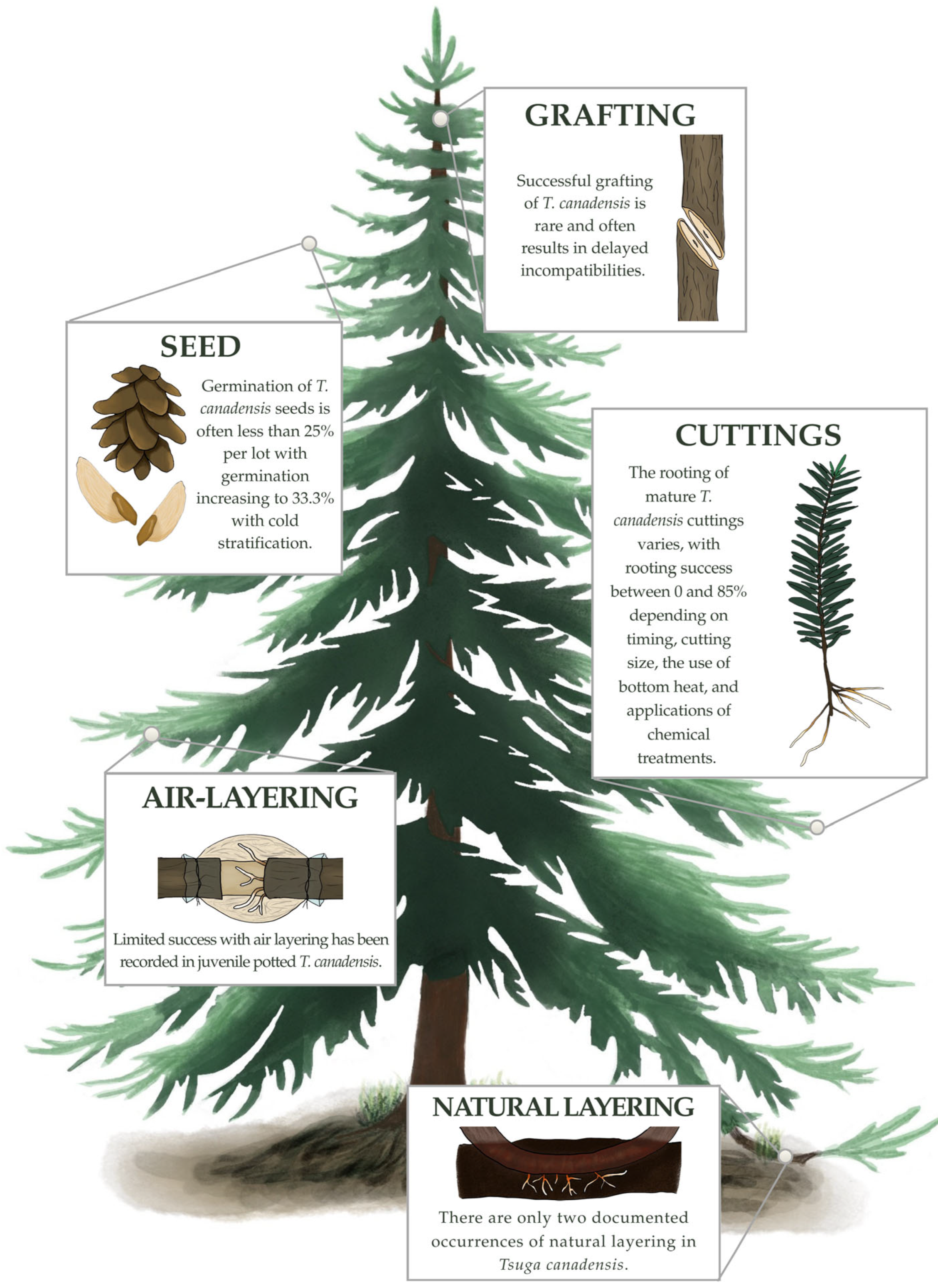
Because of the importance of eastern hemlock in both forest ecosystems and horticulture, a better understanding of current propagation methods and future improvement in such methods is needed for continued successful cultivation of this tree. These methods are also potentially valuable to tree breeding and improvement programs, especially those related to developing superior trees to resist pests such as HWA. Published research on asexual propagation specific to eastern hemlock (T. canadensis) is limited. In this review, we used a broad and inclusive literature search strategy to capture and highlight the full scope of current knowledge of successful methods for eastern hemlock propagation (Figure 1) and areas for future study and improvement. This included multiple search engines and the International Plant Propagator Society Archives.

2. Propagation Assessment of Eastern Hemlock: Seedling Germination and Growth

Eastern hemlock seeds are small, around 3 mm, with a translucent wing; each cone contains 25–31 ovules but produces fewer seeds, likely from lack of pollination [17,18]. Viability is known to be low [19], with slow [20] and erratic [21] germination percentages usually less than 25% per seed lot [3]. Tsuga species have a reputation for being more difficult than other conifers, with 50–60% of the seeds being blank and ‘keeping quality’ low [19]. Stratification of seeds is required at cold temperatures above freezing for ten weeks, with germination occurring at 15 °C (59 °F) on average, and seeds needing consistently moist conditions for survival [3]. In a study of peak stratification time by Jetton et al. 2014 [22], the duration of cold stratification varied from 1 to 120 days, with seeds in Petri dishes that contained moist germination paper kept at 22 °C and a 16:8 light:dark cycle. Overall, germination of eastern hemlock needed a minimum of 15 days of cold stratification, with increasing stratification time positively increasing germination percentage [22].
In addition to stratification, seed germination, growth rate, and survival are impacted by other factors. An 8–12 h photoperiod could result in quicker germination, particularly on unstratified seed [23]. Germination rates do vary among sampled populations but averaged at 33.3%, where trees with HWA infestations were found to have significantly decreased germination rates [22]. Adequate levels of moisture are important to germination [20], but particularly high levels of moisture can be damaging to the seed [21]. Seedling germination can be affected by fungal diseases, with seeds found to be susceptible to and carriers of Fusarium moniliforme [24]. After germination, seedlings have been noted as difficult to grow and susceptible to sun damage [25], performing better in the shade, but on average grow 25 to 38 mm (1–1.5 inches) in the first year [3]. Nutrient experiments have shown that reduced calcium fertilization of hemlock seedlings resulted in dark terminal rosettes of shorter needles, whereas reduced potassium fertilization resulted in stunting, chlorosis, and shorter needles [26]. Leaf litter surface temperatures of 71 °C (160 °F) can outright kill seedlings, but even an indoor experiment showed a negative impact of 32 °C (90 °F) temperatures on seedlings [27]. A prominent issue in nursery-grown seedlings is damping off by Rhizoctonia spp. within the first few months [17]. Seedling growth was found to vary by seed source, with those from more northern and high elevation sources growing less and entering dormancy earlier [28]. Seed germination produces trees with genetic variations necessary for adaptation, although in some cases specific individuals are preferred for future breeding and vegetation propagation methods are needed.

3. Propagation Assessment of Eastern Hemlock: Vegetative Propagation

Asexual, or vegetative, propagation is able to produce genetic clones of the same individual [29]. Vegetative propagation is a key component to tree breeding research [30]. Vegetative propagation in breeding is useful to produce and establish breeding populations of select candidate trees with potential to reduce pest and disease symptoms. There are multiple ways to produce asexually propagated clones of select plants, and the capability and success of different techniques depends on the species of interest. Since the collective work on asexual propagation for any one Tsuga species is sparse, this section will cover propagation of the North American species eastern hemlock (T. canadensis), western hemlock (T. heterophylla), and Carolina hemlock (T. caroliniana). The most widely used cloning techniques of Tsuga species are grafting and rooted cuttings [31,32], but prospects for air layering are also discussed.

3.1. Cuttings

For Tsuga species, cuttings have been the most studied propagation method (Table 1). Rooting cuttings of eastern hemlock (T. canadensis) has long been noted as a challenge to plant propagators [33,34], although in one instance a grower accidentally started cuttings in his pruning debris one fall but could not replicate the success with diligent efforts the subsequent year [34]. The most extensive Tsuga species cutting studies have been conducted on western hemlock (T. heterophylla), due to its economic importance in western North America [30,35]. However, many nursery propagation studies have also examined methods relating to eastern hemlock (T. canadensis) due to its role in the landscape [31,32,33,34,36,37,38,39]. Only one study was found documenting cuttings for Carolina hemlock (T. caroliniana) [37]. Multiple aspects of cuttings have been researched, including timing of cuttings, age and genotype, cutting size, exogenous auxin, mist, bottom heat, and growing media.

3.1.1. Timing of Cuttings

The time of year cuttings are taken is considered a critically important success factor, as the literature demonstrates consistently among the different North American Tsuga species. Successful cuttings of hemlocks have been reported in both summer [36,37] and fall/winter [32,33,34,35,36,38,39], although the body of literature regarding ideal seasonality is conflicting [36]. The worst time to take cuttings of western hemlock (T. heterophylla) was reported to be March and April, and the best time for western hemlock was mid-October to mid-February [35]. Eastern hemlock (T. canadensis) best times for cuttings were October and November [32]. One study of eastern hemlock (T. canadensis) compared cultivar cutting success between July and January of two years, reporting that July rooting success ranged from 0–95%, and January success from 10–85% [36]. This is in line with textbook statements that narrow-leaved evergreens are often best taken in winter, as they root better after exposure to cold temperatures [29]. However, fall/winter cuttings were reported to have minimal to no growth in the first growing season, corroborating reports from Gray 1958 [33]. The caveat of this among growers is that plants that did root in summer had much better growth the following season, making summer cuttings more commercially economical [36]. Currently, there are no known peer-reviewed papers documenting summer vs. fall/winter cuttings on eastern hemlock (T. canadensis) and Carolina hemlock (T. caroliniana) [37], indicating an area that needs further research.

3.1.2. Age and Genotype of Cuttings

For cutting propagation, age of the donor or parent plant has been found to affect rooting success, but without proposed mechanisms. When compared in a study, 6-year-old eastern hemlock (T. canadensis) rooted more easily than 12-year-old plants, with individual trees yielding 40% to 100% and 0% to 80% success, respectively [38]. Similarly, for western hemlock (T. heterophylla), cuttings from juvenile plants rooted at 60% on average while those from mature plants rooted at 35% [30]. In such an instance, it would be expected that juvenility is the cause of differential success rates [29,40,41]. Vegetative propagation is known to become more difficult with age [41], and shoots near the top of the plant are the most mature [40]. The most juvenile—and therefore potentially easiest to root—tissues remain near the base of plants in an area known as the ‘cone of juvenility’ [29,40]. Changing the maturity level of a conifer can be notoriously difficult [41]. However, some studies involving eastern hemlock (T. canadensis) have also found no problems in rooting cuttings from trees up to 150 years old and 50 feet tall [35,36]. In addition to age, genotype may be a factor, with certain clones easier to root than others [30,34,38]. In a study of western hemlock (T. heterophylla), rooting success did not vary significantly between stands but did between individuals [35]. And, while success varied between individuals, 11 of 128 trees in this experiment would not root [35]. Once cuttings from hard-to-root individuals are successful, these are then used as a source for future cuttings rather than the mature adult trees [29].

3.1.3. Taking Cuttings

Cuttings from Tsuga species are often taken from the current year’s growth [31,35,36], less often from two-year-old wood [38], or multiple flushes [32] and have been shown to be collected from middle [35] to lower [37] parts of the tree. Length of cuttings varies but often averages around 6 cm [35,36,37,39], and rarely over 20 cm long [33,34]. Application of clean cuts [35] or spiral cuts [33], and wounding have been used to help in rooting [33,39]. In one study documenting different cutting lengths, it was found that 6 cm cuttings had greater mortality than 3 cm cuttings, but upon rooting, the 6 cm cuttings had more and longer roots [37]. It is possible that the higher mortality of 6 cm cuttings could have been due to water losses from increased transpiration, and that the ideal cutting size is a balance between being small enough to minimize transpiration and large enough to effectively photosynthesize [37]. As with any asexual propagation, sanitation is extremely important, as cuttings are prone to harbor the same pests and pathogens as their parent plants [29,42].

3.1.4. Rooting Compounds for Cuttings

Woody cuttings are especially known to benefit from exogenous auxin [29]. Once Tsuga species cuttings are taken, they are typically treated with an auxin compound, of which two, 1-Napthaleneacetic acid (NAA) and Indole-3-butyric acid (IBA), are commercially used. Species are known to respond differently based on auxin type and concentration [43]. IBA is used in many forms, such as liquid dip, spray, immersion, or powder [31,33,35,36,38,44]. IBA is used for a variety of propagation purposes, including grafting, transplanting, and cuttings, and the concentration used depends on the species, seasonality, and application method [44]. Concentrations of 0.8% to 2% are recommended for cuttings of Tsuga species [33], although in a case with western hemlock (T. heterophylla), no IBA was necessary [35]. This falls largely within the range of textbook recommendations for quick dips for all cuttings; as a rule, these use 0.05% to 1% for 3–5 s [43]. Other studies have used 1% powder dusting [39] and 2% liquid dip [38] IBA treatments. A study on western hemlock (T. heterophylla) utilized a 0.01% IBA 24-h dip [35]. Two studies have utilized NAA alone as a 3 s basal dip of 1 cm [37], or a dust application [39], and one study used both IBA and NAA at 0.5% each [32]. With mixed levels of success, liquid dips are reported to be more effective than talc-based powders [33]. However, when IBA is dissolved into solution using high alcohol concentrations, injury to the plant can result [44]. Applications of fungicides to Tsuga species cuttings are not widespread in the literature, but 10% Benlate and Captan (50:50 with a rooting compound) were found to improve rooting [35,39], which is consistent with rooting in other conifers [42].

3.1.5. Mist, Heat, and Media for Cuttings

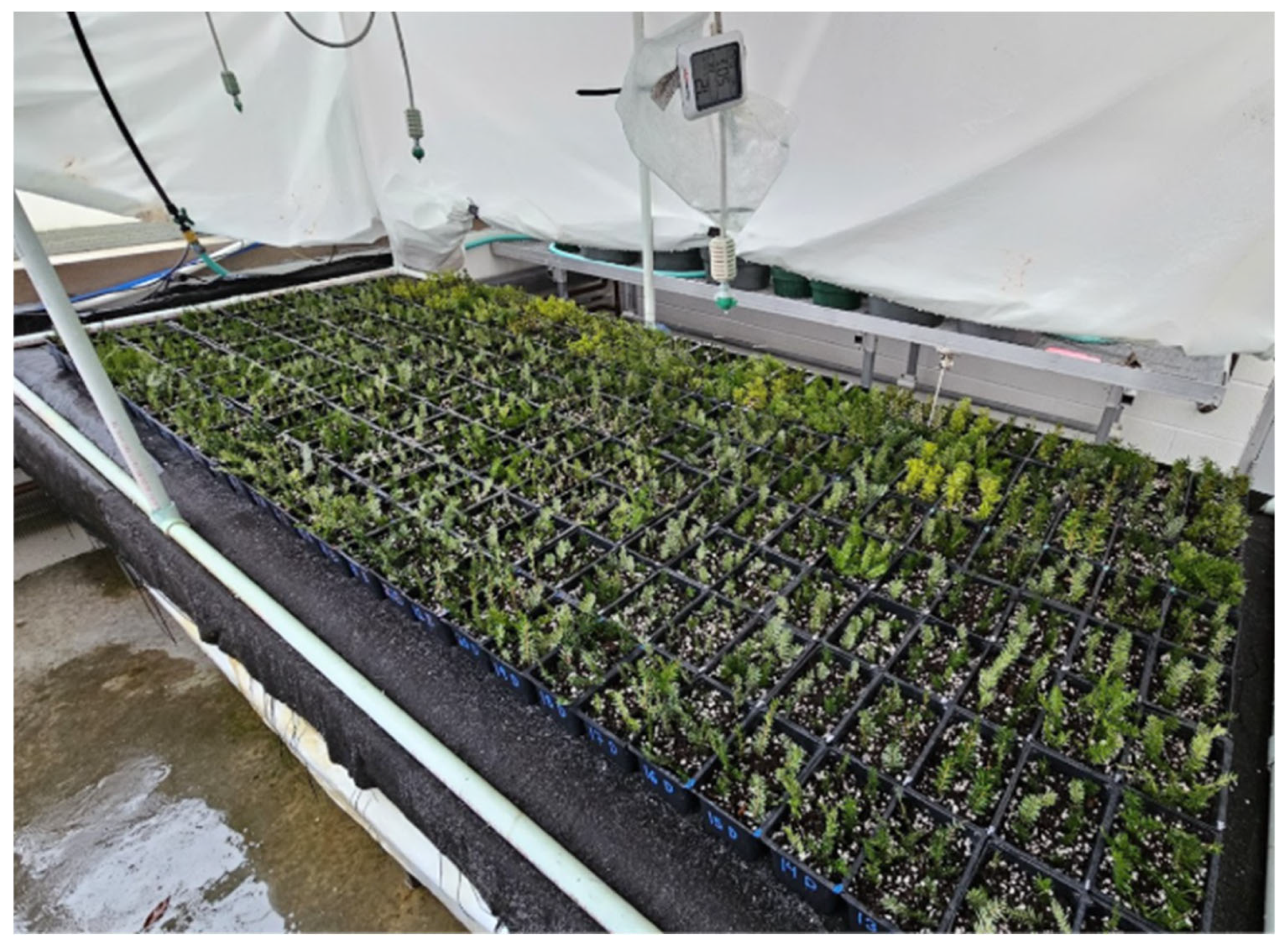
Like timing of cuttings and auxins, mist is a critical component of cutting success [29]. It has been reported that conifer cuttings can successfully be rooted in summer with intermittent mist [45], and both studies on Tsuga species summer cuttings have used a misting system [36,37]. Summer mist was intermittent, related to humidity [37], or on a timer system of 2.5 s of mist every 2.5 min during daylight [36]. Some authors suggest cuttings are only misted during the growing season, and not during winter [34,39]. More typically, they are sealed in polyethylene chambers (Figure 2) [32,33,36] or treated with fog or a low-volume mist [30].
In addition to misting, soil and air temperature are additional variables that may greatly impact the rooting of Tsuga species cuttings, but studies have shown mixed results. In general, narrow-leaved evergreens benefit from bottom heat [29]. For dormant-season cuttings of western hemlock (T. heterophylla), it was found that neither air temperature change nor bottom heat was optimal for rooting, and the lowest success rate occurred with both increased air temperature and bottom heat [35]. A second study of western hemlock (T. heterophylla) did not use bottom heat during a successful rooting attempt [30]. For both summer and winter cuttings of eastern hemlock (T. canadensis), bottom heat to 21 °C (70 °F) was utilized [36]. Conifer cuttings, in general, are reported to root best at 24 °C (75 °F) [42]. For Tsuga species, rooting occurred better at 20 °C (68 °F) than 26 °C (79 °F) [46]. A separate study found eastern hemlock (T. canadensis) responded well to bottom heat before and after winter [39]. Air temperatures were kept moderate 20–26 °C (68–79 °F) in summer [37] and going down as low as 12.8 °C (55° F) in winter [36]. Media was variable in composition, but across all studies peat, sand, and perlite were used [31,33,35,36,37,38,39]. Occasionally, materials such as Styrofoam were used [33]. Selection of media is important, as the success of cutting root development can depend on the oxygen diffusion rate in the media [47].

3.2. Layering

Propagation by layering has been documented as naturally occurring in three Tsuga species of North America, western hemlock (T. heterophylla), mountain hemlock (T. mertensiana) [48], and eastern hemlock (T. canadensis) [49]. Layering is common in conifers and important to forest dynamics, where lower branches accumulate debris on them, develop adventitious roots, and the branch growth turns to support a shoot [48]. In some situations, such as Picea mariana in Michigan, the species rarely spreads by seeds but reproduces by layering as trees grow and slowly sink into sphagnum mats [50]. This phenomenon has also been found on P. mariana in Northern Ontario, where it is accompanied by low seedling recruitment likely due to environmental conditions [51]. The only two documented cases of natural layering in eastern hemlock (T. canadensis) were in New Hampshire and Massachusetts, where this occurred in mountain habitats known for harsh winter weather and lower branches being pinned down [49]. In this instance, the 7 to 17 m tall trees included some second-generation layers, highlighting the success and importance of this method of reproduction in eastern hemlock (T. canadensis) in certain habitats [49].
Since layering is often impractical for commercial production, a modified form called air layering is sometimes used. Air layering is used in the nursery industry for asexual propagation of tree species that are more difficult to root by cuttings [52], as rooting by this method is noted, at times, to be more successful than cutting propagation [53]. Methodology for air layering includes girdling a portion of a branch, auxin application—especially to the distal portion of the girdle, surrounding the girdle with sphagnum moss, followed by wraps of plastic and aluminum foil around the moss [52,53,54]. Some increased rooting success and survival have also been found with follow-up spray treatments of the branch at regular intervals with both IBA and GA3 during rooting [55]. Alternative methods have included 1.5-inch Oasis Root Cubes in place of sphagnum moss [53,54]. A 2-cm girdle on 1.5 to 2.5-cm-diameter branches was found to be optimal for production [52]. It is the least used of the asexual propagation methods but can lead to salable trees within a year [56].
Air layering has been well documented for tropical and subtropical trees, including multiple species of mangroves [57], the endangered Prunus azorica [58], guava (Psidium guajava) [59], Carissa carandas [60], Magnolia grandiflora [53], and others [52]. It is not limited to more tropical plants, with 21 out of 25 attempted temperate woody plant species native to Ohio and Indiana also documented as rooted by air layering [54]. Work in the southern United States reported success in the period from June through October [52,53], and work on native trees in Indiana was performed between April and June [54]. Success varied, with reported rates between 70% and 100% [52,54,58]. Rooting occurred as early as three weeks during optimal months [52] but could take up to 12 weeks to form [53]. Using newer growth [52] and with field-grown trees, more northerly plants and southern-exposed branches [54] were found to yield more success. Limited success with air layering potted juvenile eastern hemlock (T. canadensis) has been recorded, with root formation in one individual and callus formation in two, with the use of powdered Hormodin #3 [61]. While observations of natural layering confirm the biological potential for adventitious rooting on intact branches, current evidence from documented controlled trials is insufficient to evaluate the efficacy of air layering as a standard propagation method.

3.3. Grafting

Grafting of trees is the fusion of the vascular systems of two separate trees, often via one tree’s upper shoot (scion) or bud with another tree’s stem connected to the roots (root-stock or under-stock). Grafting can form naturally in trees growing in close proximity. However, it has been artificially implemented by humans for 3000 to 5000 years and was initially developed in deciduous fruit species for human consumption [62,63]. Reasons for grafting vary, but prevention of pest damage, disease resistance, environmental suitability, damage repair, and cloning unique specimens are among them [62]. Grafting in conifers has a long history within the genus Pinus, where variables such as health, age, hormone production, and environmental conditions impact grafting success [64]. Grafting of ornamental conifers has also been described as “unpredictable and variable” [44]. However, application of IBA can lead to higher grafting survival in Pinus and Abies species [44]. Traditionally, Tsuga grafting is to be performed as a side veneer graft when the rootstock has new root growth and involves less heat and light during healing [2]. Cutting back the rootstock canopy should be done in stages over the course of weeks, and while there may be initial survival of the grafted trees, often an imperfect union or delayed incompatibility decreases success in this costly endeavor [2]. Still, success, even for a period of time, may result in enhanced cone production when compared to seedlings or cuttings [65,66,67]. Based on the limited published trials, it appears that grafting is not as successful as other methods of vegetative propagation of hemlock, but further research is needed.

3.4. Micropropagation and Somatic Embryogenesis

While traditional vegetative techniques such as cuttings, air layering, and grafting remain the most accessible and cost-effective methods for propagation, advanced biotechnological approaches have also been recently developed for Tsuga species. Somatic embryogenesis has been used to successfully propagate hybrid crosses between Carolina hemlock (T. caroliniana) and Asian hemlock species, including Chinese hemlock (T. chinensis) and southern Japanese hemlock (T. sieboldii) [68]. Micropropagation and somatic embryogenesis offer potential pathways for preserving threatened germplasm, establishing cryopreserved genetic banks, and scaling up propagation of lineages screened for resistance to HWA. However, in vitro culture of eastern hemlock (T. canadensis) remains a highly specialized and emerging field of research, with few published protocols and limited accessible data.

4. Conclusions

Growing eastern hemlock (T. canadensis) from seed, while possible, can have low germination success [69], and its varied genetic composition, due to sexual recombination, does not yield the uniformity in propagation that nurseries usually prefer. Uniformity is also useful in developing improved seed sources—several copies of each parent with the desired trait can be included in an orchard using a design that maximizes pollination between each parent/male parent in the orchard [70]. Here we have assessed past differences in propagation practices, so others can make future adjustments that could produce better results. With numerous propagation specialists using different types of propagation and individualized protocols, sharing information on which methods work better is important for research to make strides against the onslaught of new pests, diseases, and irregular climate.
Nursery locations spread across the eastern hemlock range likely face genetic differences and environmental factors impacting propagation results. Future research to specifically assess genetics by environmental factors to improve propagation development across the eastern hemlock range would be beneficial. By optimizing hemlock propagation methods, future breeding programs can become a bigger part of integrated pest management against hemlock woolly adelgid, climate issues, and, in the end, refresh nursery stock with improved eastern hemlock for landscape use.

Funding

This research was funded by the Tree Species in Peril program through the Nature Conservancy and USDA U.S. Forest Service grants 22-JV-11242316-058 and 25-JV-11242314-060.

Data Availability Statement

No new data were created or analyzed in this study. Data sharing does not apply to this article.

Conflicts of Interest

The authors declare no conflicts of interest.

Abbreviations

The following abbreviations are used in this manuscript:
HWAHemlock Woolly Adelgid
NAA1-Napthanleneacetic acid
IBAIndole-3-butyric acid
GAGibberellic acid

References

  1. Montgomery, M.E.; Bentz, S.E.; Olsen, R.T. Evaluation of hemlock (Tsuga) species and hybrids for resistance to Adelges tsugae (Hemiptera: Adelgidae) using artificial infestation. J. Econ. Entromol. 2009, 102, 1247–1254. [Google Scholar] [CrossRef]
  2. Swartley, J.C. The Cultivated Hemlocks, 1st ed.; Timber Press: Portland, OR, USA, 1984. [Google Scholar]
  3. Godman, R.M.; Lancaster, K. Tsuga canadensis (L.) Carr., Eastern Hemlock. In Silvics of North America Vol. 1 Conifers; Agriculture Handbook 654; Burns, R.M., Honkala, B.H., Eds.; USDA Forest Service: Washington, DC, USA, 1990; pp. 604–612. [Google Scholar]
  4. Niinemets, U.; Valladares, F. Tolerance to Shade, Drought, and Waterlogging of Temperate Northern Hemisphere Trees and Shrubs. Ecol. Monogr. 2006, 76, 521–547. [Google Scholar] [CrossRef]
  5. van de Werken, H. Evaluation and Maintenance of Woody Ornamentals Used as Hedges and Screens; University of Tennessee Agricultural Experiment Station Bulletin; University of Tennessee Agricultural Experiment Station: Knoxville, TN, USA, 1966. [Google Scholar]
  6. Jull, L. Choosing the Right Landscape Plants: Factors to Consider; A3864; University of Wisconsin Cooperative Extension: Madison, WI, USA, 2008; pp. 4–6. [Google Scholar]
  7. Hansen, E.M.; Lewis, K.J.; Chastagner, G.A. Compendium of Conifer Diseases, 2nd ed.; APS Press: St. Paul, MN, USA, 2018. [Google Scholar]
  8. McClure, M.S.; Salom, S.M.; Shields, K.S. Hemlock Woolly Adelgid; FHTET-96-35; U.S. Department of Agricultre, Forest Service, Forest Health Technology Enterprise Team: Fort Collins, CO, USA, 1996. [Google Scholar]
  9. Holmes, T.P.; Murphy, E.A.; Royle, D.D. The Economic Impacts of Hemlock Woolly Adelgid on Residential Landscape Values: Sparta, New Jersey Case Study. In Proceedings of the 3rd Symposium on Hemlock Woolly Adelgid; Morgantown, W.V., Ed.; U.S. Department of Agriculture, Forest Service: Washington, DC, USA, 2005. [Google Scholar]
  10. Li, X.; Preisser, E.L.; Boyle, K.J.; Holmes, T.P.; Liebhold, A.; Orwig, D. Potential Social and Economic Impacts of the Hemlock Woolly Adelgid in Southern New England. Southeast Nat. 2014, 13, 130–146. [Google Scholar] [CrossRef]
  11. McCarty, E.P.; Addesso, K.M. Hemlock woolly adelgid (Hemiptera: Adelgidae) management in forest, landscape, and nursery production. J. Insect Sci. 2019, 19, iez031. [Google Scholar] [CrossRef] [PubMed]
  12. Hadley, J.L. Understory microclimate and photosynthetic response of saplings in an old-growth eastern hemlock (Tsuga canadensis L.) forest. Ecoscience 2000, 7, 66–72. [Google Scholar] [CrossRef]
  13. Ellison, A.M.; Orwig, D.A.; Fitzpatrick, M.C.; Preisser, E.L. The Past, Present, and Future of the Hemlock Woolly Adelgid (Adelges tsugae) and Its Ecological Interactions with Eastern Hemlock (Tsuga canadensis) Forests. Insects 2018, 9, 172. [Google Scholar] [CrossRef] [PubMed]
  14. Yamasaki, M.; DeGraaf, R.M.; Lanier, J.W. Wildlife habitat associations in eastern hemlock—Birds, smaller mammals, and forest carnivores. In Symposium on Sustainable Management of Hemlock Ecosystems in Eastern North America; General Technical Report NE-267; U.S. Department of Agriculture, Forest Service, Northeastern Forest Experiment Station: Newtown Square, PA, USA, 2000. [Google Scholar]
  15. Dirr, M.A. Manual of Woody Landscape Plants Their Identification, Ornamental Characteristics, Culture, Propagation and Uses, 6th ed.; Stipes Publishing LLC: Champaign, IL, USA, 2009; pp. 1159–1163. [Google Scholar]
  16. Ellison, A.M.; Bank, M.S.; Clinton, B.D.; Colburn, E.A.; Elliott, K.; Ford, C.R.; Foster, D.R.; Kloeppel, B.D.; Knoepp, J.D.; Lovett, G.M.; et al. Loss of Foundation Species: Consequences for the Structure and Dynamics of Forested Ecosystems. Front. Ecol. Environ. 2005, 3, 479–486. [Google Scholar] [CrossRef]
  17. Barbour, J.R.; Ruth, R.H.; Karrafalt, R.P. Tsuga Carr. In The Woody Plant Seed Manual; Agriculture Handbook 727; Bonner, F.T., Karrfalt, R.P., Eds.; United States Department of Agriculture Forest Service: Washington, DC, USA, 2008; pp. 1127–1139. [Google Scholar]
  18. Thomas, P.A.; Orwig, D.A. International Biological Flora: Tsuga canadensis. J. Ecol. 2025, 113, 3037–3080. [Google Scholar] [CrossRef]
  19. Toumey, J.W.; Stevens, C.L. The Testing of Coniferous Tree Seeds at the School of Forestry, Yale University 1906–1926; Yale School of Forestry Bulletin 21; Yale University: New Haven, CT, USA, 1928; p. 46. [Google Scholar]
  20. Baldwin, H.I. The effect of after-ripening treatment on the germination of eastern hemlock seed. J. For. 1930, 28, 853–857. [Google Scholar] [CrossRef]
  21. Baldwin, H.I. Further notes on the germination of hemlock seed. J. For. 1934, 32, 99–100. [Google Scholar]
  22. Jetton, R.M.; Whittier, A.; Dvorak, W.S. Evaluation of Cold-Moist Stratification Treatments for Germinating Eastern and Carolina Hemlock Seeds for ex Situ Gene Conservation. Southeast Nat. 2014, 13, 168–177. [Google Scholar] [CrossRef]
  23. Stearns, F.; Olson, J. Interactions of photoperiod and temperature affecting seed germination in Tsuga canadensis. Am. J. Bot. 1958, 45, 53–58. [Google Scholar] [CrossRef]
  24. LeMadeleine, L.A. Seed-Borne Pathogens of Hemlock Seed from the Argonne Experimental Forest; U.S. Department of Agriculture, Forest Service, Northeastern Area State and Private Forestry: Broomall, PA, USA, 1980. [Google Scholar]
  25. Dirr, M.A.; Heuser, C.W. The Reference Manual of Woody Plant Propagation: From Seed to Tissue Culture, 2nd ed.; Timber Press: Portland, OR, USA, 2006. [Google Scholar]
  26. Olson, J.; Stearns, F.; Nienstaedt, H. Eastern Hemlock Seeds and Seedlings Response to Photoperiod and Temperature; Bulletin 620; The Connecticut Agricultural Experiment Station: New Haven, CT, USA, 1959; pp. 1–68. [Google Scholar]
  27. Olson, J.S.; Nienstaedt, H. Hemlock in Connecticut. Front. Plant Sci. 1953, 6, 2–8. [Google Scholar]
  28. Nienstaedt, H.; Olson, J.S. Heredity and Environment: Short-cut study shows both affect hemlock growth. Front. Plant Sci. 1955, 6, 7. [Google Scholar]
  29. Ruter, J.M. Cloning plants by rooting stem cuttings. In Plant Propagation Concepts and Laboratory Exercises; CRC Press: Boca Raton, FL, USA, 2015. [Google Scholar]
  30. Shinn, C.W. Rooting conifer cuttings with a fog system. Proc. Intl. Plant Prop. Soc. 1983, 33, 110–113. [Google Scholar]
  31. Cesarini, J. Dwarf conifers. Proc. Intl. Plant Prop. Soc. 1968, 18, 255–258. [Google Scholar]
  32. Fordham, A.J. Canadian hemlock variants and their propagation. Proc. Intl. Plant Prop. Soc. 1971, 21, 470–476. [Google Scholar]
  33. Gray, H. Tsuga canadensis from cuttings. Proc. Intl. Plant Prop. Soc. 1958, 8, 166–167. [Google Scholar]
  34. Wilson, C.G. Success and failure in rooting Tsuga canadensis. Proc. Intl. Plant Prop. Soc. 1965, 15, 139–141. [Google Scholar]
  35. Brix, H.; Barker, H. Rooting Studies of Western Hemlock Cuttings; Canadian Forestry Service, Pacific Forest Research Centre: Victoria, BC, Canada, 1975; Report BC-X-131. [Google Scholar]
  36. Del Tedici, P. Propagation of Tsuga canadensis cultivars: Hardwood versus softwood cuttings. Proc. Intl. Plant Prop. Soc. 1985, 35, 565–569. [Google Scholar]
  37. Jetton, R.M.; Frampton, J.; Hain, F.P. Vegetative propagation of mature eastern and Carolina hemlock. HortScience 2005, 40, 1469–1473. [Google Scholar] [CrossRef]
  38. Waxman, S. Clonal differences in propagating conifers. Proc. Intl. Plant Prop. Soc. 1985, 35, 555–560. [Google Scholar]
  39. van Elk, I. The propagation of conifers by cuttings. Proc. Intl. Plant Prop. Soc. 1969, 19, 232–241. [Google Scholar]
  40. Beyl, C.A. Juvenility and its Effect on Macropropagation and Micropropagation. In Plant Propagation Concepts and Laboratory Exercises, 2nd ed.; Beyl, C.A., Trigiano, R.N., Eds.; CRC Press: Boca Raton, FL, USA, 2015; pp. 85–91. [Google Scholar]
  41. Greenwood, M.S. Juvenility and maturation in conifers: Current concepts. Tree Physiol. 1995, 15, 433–438. [Google Scholar] [CrossRef] [PubMed]
  42. Fordham, A.J.; Spraker, L.J. Propagation manual of selected gymnosperms. Arnoldia 1977, 37, 1–79. [Google Scholar] [CrossRef]
  43. Beyl, C.A.; Burger, D.W.; Cheng, Z.M. Plant Growth Substances Used in Propagation. In Plant Propagation Concepts and Laboratory Exercises, 2nd ed.; Beyl, C.A., Trigiano, R.N., Eds.; CRC Press: Boca Raton, FL, USA, 2015; pp. 47–63. [Google Scholar]
  44. Kroin, J. Advances using indole-3-butyric acid (IBA) dissolved in water for rooting cuttings, transplanting, and grafting. Proc. Intl. Plant Prop. Soc. 1992, 42, 489–492. [Google Scholar]
  45. Nelson, S.H. The summer propagation of conifer cuttings under intermittent mist. Proc. Intl. Plant Prop. Soc. 1959, 9, 61–66. [Google Scholar]
  46. Jesinger, R.; Hopp, R.J. Rooting of conifer cuttings. Arnoldia 1967, 27, 85–90. [Google Scholar] [CrossRef]
  47. Gislerød, H.R. Physical conditions of propagation media and their influence on the rooting of cuttings: I. Air content and oxygen diffusion at different moisture tensions. Plant Soil 1982, 69, 445–456. [Google Scholar] [CrossRef]
  48. Cooper, W.S. The Layering Habit in Sitka Spruce and the Two Western Hemlocks. Bot. Gaz. 1931, 91, 441–451. [Google Scholar] [CrossRef] [PubMed]
  49. Del Tredici, P.; Orwig, D.A. Layering and rejuvenation in Tsuga canadensis (Pinaceae) on Wachusett Mountain, Massachusetts. Rhodora 2017, 119, 16–32. [Google Scholar] [CrossRef] [PubMed]
  50. Gates, F.C. Layering in black spruce (Picea mariana (Mill.) BSP.). Am. Midl. Nat. 1938, 19, 589–594. [Google Scholar] [CrossRef]
  51. Stanek, W. Natural Layering of Black Spruce in Northern Ontario. For. Chron. 1961, 37, 245–258. [Google Scholar] [CrossRef]
  52. Bhattacharya, S. Asexual reproduction of trees by air-layering. Proc. Intl. Plant Prop. Soc. 2003, 53, 387–388. [Google Scholar]
  53. Byrnes, B. Air Layering: A rooting alternative. Proc. Intl. Plant Prop. Soc. 2002, 52, 450–452. [Google Scholar]
  54. Hendricks, D.R. Air layering of native woody plants. Proc. Intl. Plant Prop. Soc. 1984, 34, 528–531. [Google Scholar]
  55. Noori, I.M.; Ahmad, F.K.; Aziz, R.R.; Mohammed, A.A. Propagation of pistachio Pistacia vera L. by air layering under the effects of IBA and GA3 treatments. Eurasia J. Biosci. 2019, 13, 2001–2004. Available online: https://hal.science/hal-04044758v1 (accessed on 31 July 2026).
  56. Nelson, W.L. Innovations in air layering. Proc. Intl. Plant Prop. Soc. 1987, 37, 88–89. [Google Scholar]
  57. Eganathan, P.; Srinivasa, R.C.; Anand, A. Vegetative propagation of three mangrove species by cuttings and air layering. Wetl. Ecol. Manag. 2000, 8, 281–286. [Google Scholar] [CrossRef]
  58. Moreira, O.; Martins, J.; Silva, L.; Moura, M. Propagation of the endangered Azorean cherry Prunus azorica using stem cuttings and air layering. Mar. Life Sci. 2009, 26, 9–14. [Google Scholar]
  59. Naithani, D.C.; Nautiyal, A.R.; Rana, D.K.; Mewar, D. Effect of time of air layering, IBA concentrations, growing media and their interaction on the rooting behaviour of Pat Prabhat guava (Psidium guajava L.) under sub-tropical condition of Garhwal Himalaya. Int. J. Pure App. Biosci. 2018, 6, 169–180. [Google Scholar] [CrossRef]
  60. Raut, U.A.; Jadhav, G.G.; Bhogave, A.F.; Deshmukh, M.S. Effect of different IBA levels on air layering of karonda (Carissa carandas L.). Res. Crops 2015, 16, 537–541. [Google Scholar] [CrossRef]
  61. Dlugos, D.M.; Koch, J.L.; Burke, D.J. Propagation of Tsuga canadensis. Proc. Intl. Plant Prop. Soc. 2024, 74, 517–519. [Google Scholar]
  62. MacDonald, P.T. The Manual of Plant Grafting: Practical Techniques for Ornamentals, Vegetables, and Fruit; Timber Press: Portland, OR, USA, 2014. [Google Scholar]
  63. Mudge, K.; Janick, J.; Scofield, S.; Goldschmidt, E.E. A History of Grafting. Hortic. Rev. 2009, 35, 437–493. [Google Scholar] [CrossRef]
  64. Pérez-Luna, A.L.; Wehenkel, C.H.; Prieto-Ruíz, J.Á.; López-Upton, J.; Solís-González, S.; Chávez-Simental, J.A.; Hernández-Díaz, J.C. Grafting in Conifers: A review. Pak. J. Bot. 2020, 52, 1369–1378. [Google Scholar] [CrossRef] [PubMed]
  65. Fins, L.; Reedy, V. Cone production by rooted cuttings, grafts, and seedlings of western larch. West. J. Appl. For. 1992, 7, 108–109. [Google Scholar] [CrossRef]
  66. Loewe-Muñoz, V.; Del Río, R.; Delard, C.; Balzarini, M. Enhancing Pinus pinea cone production by grafting in a non-native habitat. New For. 2022, 53, 37–55. [Google Scholar] [CrossRef]
  67. Hildebrant, T. (Coldwater Pond Nursery, Phelps, NY, USA). Personal communication, 2026.
  68. Merkle, S.A.; Tull, A.R.; Gladfelter, H.J.; Montello, P.M.; Mitchell, J.E.; Ahn, C.; McNeill, R.D. Somatic Embryogenesis and Cryostorage for Conservation and Restoration of Threatened Forest Trees. In Proceedings of Workshop on Gene Conservation of Tree Species—Banking on the Future; US Department of Agriculture, Forest Service, Pacific Northwest Research Station: Chicago, IL, USA, 2016. [Google Scholar]
  69. U.S. Department of Agriculture, Forest Service. Seeds of Woody Plants in the United States; Schopmeyer, C.S., Technology Coordinator; U.S. Department of Agriculture, Agriculture Handbook 450; U.S. Department of Agriculture: Washington, DC, USA, 1974; p. 1135. [Google Scholar]
  70. Zobel, B.; Talbert, J. Applied Forest Tree Improvement; The Blackburn Press: Caldwell, NJ, USA, 1984. [Google Scholar]
Figure 1. Eastern hemlock (Tsuga canadensis) diagram highlighting the different parts of the tree used for propagation. Illustration created by author A. L.F-W without the use of AI tools. Diagram is schematic and not to scale.
Horticulturae 12 00980 g001
Figure 2. A propagation chamber used for hemlock cuttings with heating mats below, a frame to hold misting heads, and white plastic to retain humidity and create shade. Photo taken by author A. L.F-W.
Horticulturae 12 00980 g002
Table 1. A summary table of propagation methods and success rates of North American Tsuga species currently in the literature. Units have been standardized to SI metric and missing values reflect parameters that were not reported in the original source publications.
Publication Rooting CompoundSetup
AuthorsYearParent InfoMonthCutting SizeAuxinConcentrationApplicationMistHeatSuccessTime to RootingNotes
Cesarini1968---Hormodin #3------Unknown success rates
Del Tredici1985Up to 120 yearsJuly and January2.54–12.7 cmIBA in ethanol10%5 s dipIn July: 2.5 s every 2.5 min during daylight In January no mist, a sealed polyethylene frameWinter low of 12.8 °C Both cases with 21.1 °C bottom heatJuly: 0–95% January: 10–85% In all but one instance, July was lower than January4 monthsSummer cuttings grew a lot in the following season compared to winter cuttings
Fordham1971-October and November-IBA and NAA0.5% each5 s dipOpen bench or polyethylene chambers---Unknown success rates
Gray19585 yearsDecember25.4 cmIBA in talc and alcohol0.8% and 2%quick dip and powderPolyethylene case-Up to 74.9% depending on IBA and media3 monthsquick dip is better than powder; spiral cuts & wounding
Jetton et al.2005MatureJune3 and 6 cmNAA0, 1, 2, 4, 8 mM3 s basal dip of 1 cmIntermittent and related to humidity20—26 °C air temp41%6 monthsRooting differences between species, length of cutting, and NAA
Waxman19855 and 12 year oldJanuary-IBA2%dip--40–100% for 5 year old clones 0–80% for 12 year old clones4 monthsUnknown success rates
van Elk1969-Autumn5.08–7.62 cmNAA or IBA0.1% NAA or 1% IBADustOnly mist in growing season; do not mist in winterHeating raised rooting 10%84%-Fungicide Captan 50:50 with Rooting Compound improved rooting; Wounding bark
Disclaimer/Publisher’s Note: The statements, opinions and data contained in all publications are solely those of the individual author(s) and contributor(s) and not of MDPI and/or the editor(s). MDPI and/or the editor(s) disclaim responsibility for any injury to people or property resulting from any ideas, methods, instructions or products referred to in the content.