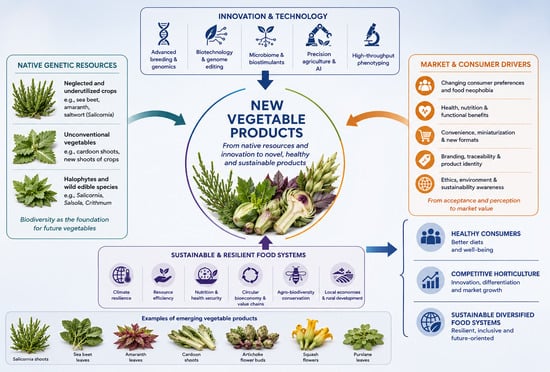
1. Introduction
The selection of appropriate plant material is determinant for the successful commercialization of vegetables, as it directly influences final product quality, market competitiveness, and consumer acceptance. The main vegetable species exhibit secure and consistent market demand because consumers are familiar with them, feel comfortable using them, and know how to prepare them for consumption.
Accepting unfamiliar vegetable species requires targeted marketing interventions to mitigate consumers’ neophobia, while willingness to adopt such products remains strongly influenced by sensory attributes, perceived health benefits, and, to some degree, environmental considerations. By contrast, changing dietary patterns and increased health awareness have stimulated interest in differentiated vegetable products with added nutritional and functional value, particularly among consumers who actively seek healthy and sustainable options. In response, the vegetable industry continues to develop innovative products that address evolving market demands, cultivation challenges, and environmental concerns.
The introduction of new vegetable crops presents substantial challenges, as they must not only be well adapted to local environmental conditions but also demonstrate competitive economic performance relative to existing crops [
1]. As a result, market demand for these new vegetables remains limited, and the most notable diversification trends are associated with the development of new typologies in well-established species, with specialty and miniature crops as viable alternatives.
However, there is still growing interest in restoring food traditions and diversifying products, highlighting the potential of unfamiliar and wild species. They are, for instance, traditionally used in Mediterranean cuisine as new products [
2]. Particularly, neglected crops are plant species that were formerly cultivated but later marginalized and are now being reintroduced into agricultural systems. They are gaining renewed attention for their agronomic resilience, nutritional value, and potential to contribute to sustainable, diversified food systems. In addition, there is a growing demand in some countries for unconventional plants valued for their unique culinary properties, even if they are not traditionally consumed as vegetables (partially or entirely). Finally, edible halophytes have recently emerged as relevant crops within the food industry, as they not only offer significant nutritional value but also represent a promising alternative crop in the context of climate change, with their high productivity under harsh conditions, such as elevated salinity and limited water availability [
3,
4]. Consequently, in the current context of climate change, soil degradation, and dietary homogenization at the global scale, these underutilized species represent strategic resources for broadening production systems and enhancing nutritional security. To fully exploit their potential, their genetic material must be effectively selected and improved using both conventional breeding and biotechnological approaches, facilitating their incorporation into breeding programs and climate-smart agricultural strategies [
5,
6].
In recent years, the retail sector has shown growing commercial interest in products marketed as functional food or “superfoods,” particularly in the retail sector. Although the term “superfoods” lacks an official scientific or regulatory definition, it is commonly used in marketing to describe foods rich in phytochemicals, valued for their potential health benefits, and often associated with local genetic resources or newly selected species. Also, branding is having a significant influence on the food retail sector and consumer trends, driving the adoption of market-oriented strategies that actively involve both farmers and vegetable breeding companies in promoting new products.
Although several recent reviews have examined individual topics such as neglected crops, edible halophytes, functional foods, or consumer preferences, these aspects are generally addressed independently. Consequently, an integrated perspective linking plant genetic resources, horticultural innovation, nutritional quality, consumer acceptance, and commercialization strategies is still lacking. The present review aims to bridge these interconnected themes to provide a full-chain integrated review of innovative vegetable products and future opportunities for the horticultural sector.
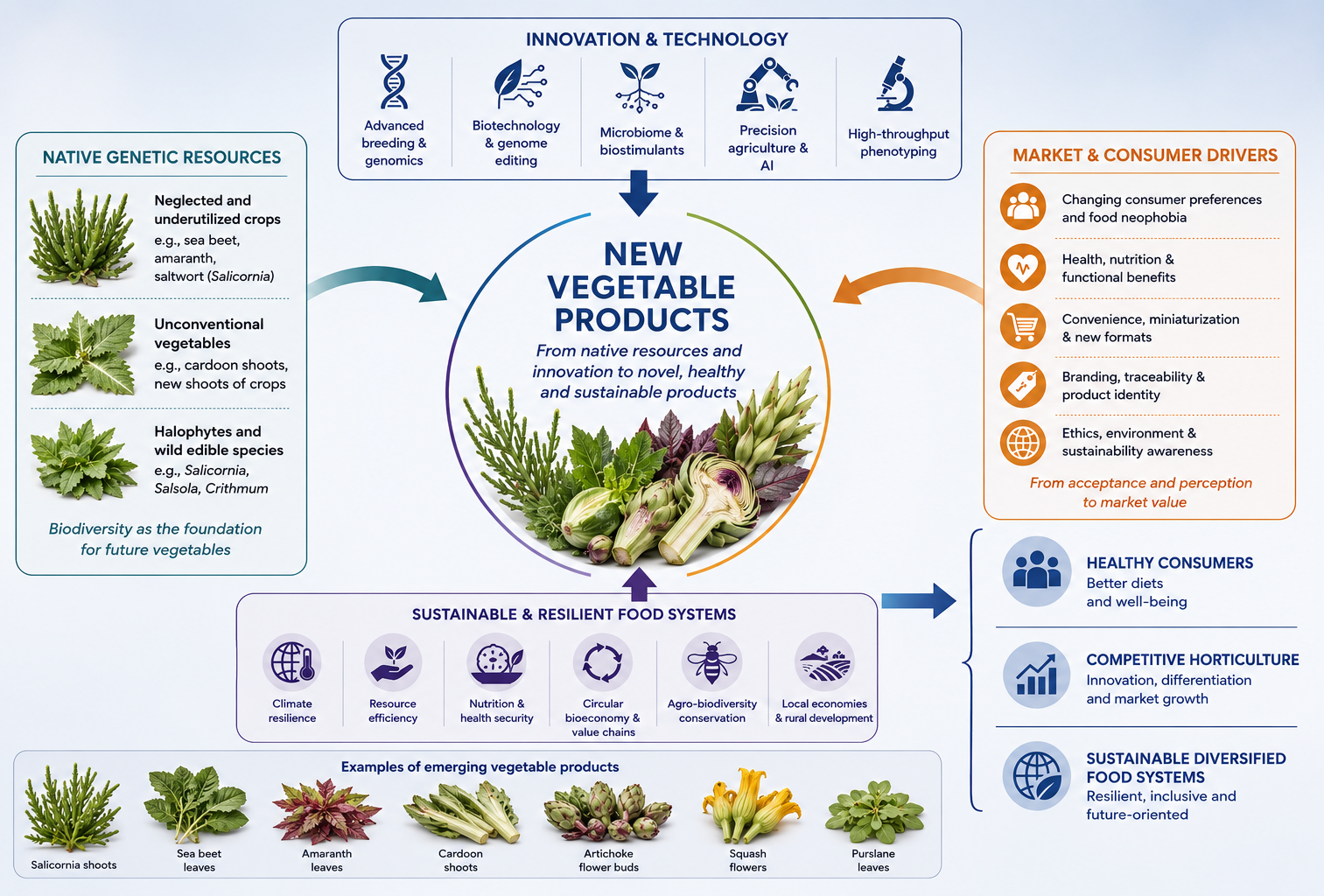
This narrative review aims to provide a comprehensive overview of recent developments concerning innovative vegetable products, ranging from native genetic resources to novel products derived from widely cultivated vegetable species.
2. Materials and Methods
The literature was identified through searches performed in the scientific databases Web of Science, Scopus, PubMed and Google Scholar. The search primarily focused on publications published between 2000 and 2025, while earlier highly cited papers were included when considered fundamental for understanding specific concepts or historical developments. The literature search combined keywords related to the main topics addressed in the review, including native vegetables, underutilized crops, neglected crops, halophytes, unconventional vegetables, specialty vegetables, functional foods, superfoods, microgreens, consumer acceptance, and branding, using different combinations depending on the specific section. Priority was given to peer-reviewed articles published in international scientific journals. Additional authoritative sources, including books, review articles, and publications from international organizations, were considered where appropriate to provide conceptual background or policy context. References were selected according to their scientific relevance, methodological quality, originality, and contribution to the topics discussed. The final reference list was assembled to provide a balanced and updated overview of the current state of knowledge by prioritizing conceptual relevance and knowledge transferability over exhaustiveness. This review aims to provide researchers and stakeholders with a critically synthesized state of the art on the topic and a foundation for future investigation and real-world applications.
3. Native Vegetable Resources
Native vegetable resources comprise plant species cultivated predominantly within their centres of origin by local farmers, as well as wild species, semi-domesticated forms, and landraces. These edible species are generally little known and remain largely confined to specific geographic regions. In the scientific literature, they are referred to as minor, underrepresented, underutilized, neglected, orphan, abandoned crops, traditional or rare vegetables, and wild edible species [
7,
8]. This broad group may also include unconventional vegetables derived from uncommon edible species, non-conventional plant parts, and agricultural by-products or waste streams [
9]. Together, these resources represent an important component of agrobiodiversity with considerable agricultural, economic, and socio-cultural significance.
The decline and underutilization of native vegetable resources result from multiple interconnected factors. Limited commercial interest and insufficient policy support have contributed to the erosion of germplasm conservation systems and have restricted investment in breeding programs, seed systems, and dedicated research activities. In some cases, local species and landraces have also been displaced because of susceptibility to biotic stresses or lower yield performance compared with modern cultivars [
10]. Cultural and socio-economic factors have further reinforced this process, as many traditional crops and wild edible species have historically been associated with subsistence farming, rural poverty, and marginal production systems. Consequently, their use has declined alongside the erosion of local knowledge, indigenous traditions, and cultural heritage [
8]. Moreover, limited knowledge regarding their agronomic performance, nutritional properties, and technological applications remains a major constraint to their wider adoption and valorization.
Despite being historically overlooked, native vegetable germplasm has attracted increasing scientific interest due to its recognized agronomic, nutritional, and commercial potential [
11]. Effective conservation and valorization require coordinated actions involving research institutions, policymakers, private stakeholders, and farming communities. The recovery of plant material and associated traditional knowledge represents a fundamental first step. In situ, ex situ, and on-farm conservation strategies are essential for preserving, studying, sanitizing, and multiplying genetic resources. Comprehensive botanical, agronomic, genetic, biochemical, and technological characterization is necessary to support both institutional protection and commercial recognition by registering autochthonous genetic resources and integrating them into value chains. Furthermore, the systematic collection and dissemination of information through public databases can facilitate knowledge transfer among academia, industry, and society [
9]. Continued research should also promote innovative cultivation practices, novel processing technologies, and new culinary applications.
The long-term adaptation of native vegetable resources to specific environments, combined with their high intraspecific diversity, makes them valuable assets for sustainable agriculture. These resources can enhance agroecosystem resilience, support ecosystem services, and improve tolerance to biotic and abiotic stresses, particularly in marginal environments and low-input or agroecological production systems [
12,
13,
14,
15]. Halophytes provide a notable example, as they are cultivated or harvested for their culinary and nutritional value while exhibiting remarkable tolerance to saline conditions [
16]. Wild edible species and marginal crops may also serve as candidates for domestication, as demonstrated by wild rocket (
Diplotaxis tenuifolia), and represent valuable sources of genetic variation for crop improvement [
17,
18,
19]. In some cases, underutilized crops may outperform commercial cultivars under specific environmental conditions or within innovative production systems, as reported for vegetable melon compared with cucumber [
20]. Consequently, these resources constitute an important reservoir of traits for plant breeding and varietal development [
21].
Beyond their agronomic importance, native vegetable resources possess substantial biochemical diversity, including compounds associated with nutritional quality, sensory attributes, and nutraceutical properties. Increasing attention is being directed toward their aromatic, medicinal, and health-promoting characteristics, as well as their distinctive organoleptic and visual features. Several species are currently being investigated as ingredients for functional foods and health-oriented products [
22,
23]. Their diversity in colour, flavour, and appearance also creates opportunities for niche markets and innovative products such as microgreens [
24].
These resources further contribute to social and cultural sustainability. Educational and recreational initiatives centred on local crops can strengthen connections between consumers and agricultural systems, support the preservation of traditional knowledge, and reinforce local identity and cultural heritage [
25,
26].
Renewed scientific, agronomic, and socio-economic attention to native and underutilized vegetable resources is strategically important for the development of sustainable and resilient food systems. Integrating germplasm conservation, genomic and phenotypic characterization, participatory breeding, agroecological evaluation, and value-chain development will be essential to unlock their full potential and enhance their contribution to future agriculture.
3.1. Neglected and Underutilized Crops
Neglected and underutilized crops (NUCs) are non-commodity crops that have historically supported local food systems but are currently receiving limited attention from global food markets, scientific research, conservation, and modern agriculture, despite their valuable agronomic, health, and nutritional potential. They are adapted to limited areas and local cultural and agronomic contexts and are cultivated predominantly within their centres of origin and maintained by smallholder farmers or indigenous communities [
8,
27].
At the local level, NUCs play a paramount role in supporting ecological sustainability and dietary diversity in traditional, marginal, and indigenous agroecosystems [
28]. Also, in favourable and rich areas, they are crucial for sustainable agriculture, agroecological or low-input practices, and social agriculture [
29]. These resources provide income opportunities for smallholder farmers to niche markets for traditional and organic products, often generating higher profit margins than conventional staples [
30]. Socio-economic and institutional factors are the primary causes of crop marginalization: weak or absent formal seed supply systems; limited commercial integration owing to their failure to meet modern quality standards for uniformity; and under-representation in research and global agricultural scenarios [
8,
31]. Although still underrepresented in research and commercial agriculture, these crops frequently display strong adaptation to low-input environments, along with valuable nutritional traits and adaptability to low-input or stress-prone conditions [
11,
15,
30,
32]. Cultivation of NUCs directly contributes to biodiversity conservation in both agricultural systems and natural ecosystems by promoting the use of a wider range of plant species, thereby counteracting genetic erosion and supporting ecosystem services [
27].
In recent decades, neglected crops have been emphasized as an opportunity [
33] and are increasingly regarded by the Food and Agriculture Organization (FAO) [
34] as strategic resources for dietary diversification and nutritional security, thereby improving human health and diversifying diets. They exhibit superior or complementary nutrient profiles compared with widely cultivated species, being rich in high-quality proteins, dietary fibre, essential amino acids, and vitamins such as provitamin A, vitamin E, and B-complex vitamins, together with significant concentrations of essential minerals including iron (Fe), zinc (Zn), calcium (Ca), and magnesium (Mg) [
27,
35,
36].
Recent studies have highlighted that increased consumption of underexploited plant species may help alleviate micronutrient deficiencies, commonly referred to as “hidden hunger”, particularly in regions where access to diversified diets remains limited [
5,
8,
37]. Their integration into local food systems, therefore, represents a valuable strategy for improving nutritional security while preserving agrobiodiversity. Furthermore, unconventional edible plants are increasingly recognized for their richness in phytochemicals, including polyphenols, flavonoids, carotenoids, and omega-3 fatty acids, compounds associated with antioxidant, anti-inflammatory, and cardioprotective effects, thereby positioning many of these species as promising candidates for functional foods and nutraceutical applications [
27]. As sources of high levels of nutrients and bioactive compounds, these foods have a phytochemical composition associated with several health-promoting properties [
8]. For example, vegetable melons (
Cucumis melo L.) landraces from Southern Italy offer the uncommon polyphenol methyl gallate, a strong health-promoting antioxidant [
38]; tamarillo (
Solanum betaceum (Cav.) Sendt.) is valued for the good productivity, adaptability, and the wide range of bioactive molecules of the edible fruit, such as Vitamins A, C, E, potassium (K), and antioxidants [
39]; taro (
Colocasia esculenta L.), a zero wastage crop provides starch, dietary fibres, sugars, vitamin A, essential minerals (Ca, Fe, Zn, Mg); species of Cactaceae family with potential for human and animal nutrition, pharmaceutical and cosmetic industries [
40]. Despite their nutritional advantages, many NUCs may contain antinutritional compounds; therefore, controlling nitrate and oxalate levels is essential to ensure food quality and compliance with safety standards [
2]. Since the accumulation of these compounds varies among species and is influenced by environmental and agronomic factors, their assessment should be included in the selection and domestication of promising wild vegetables.
Across the reported cases, neglected and underutilized crops share several recurring strengths, including adaptation to local environments, tolerance to low-input or stress-prone conditions, high nutritional and phytochemical diversity, and potential value for niche markets and smallholder livelihoods. However, these advantages are not universal and should not be generalized across species. Agronomic performance, yield stability, antinutritional compound content, consumer acceptance, and commercial quality vary considerably among crops and production environments. For instance, vegetable melon illustrates the potential of locally adapted germplasm to outperform conventional crops under specific environmental conditions, whereas species such as taro, tamarillo, and members of the Cactaceae mainly exemplify nutritional, multifunctional, or zero-waste value rather than direct agronomic superiority. Therefore, the contribution of NUCs to sustainable food systems depends on matching species-specific characteristics with appropriate production systems, dietary needs, and market opportunities. This also highlights the need for comparative agronomic evaluation, food safety assessment, consumer-oriented research, and value-chain development alongside germplasm conservation and characterization.
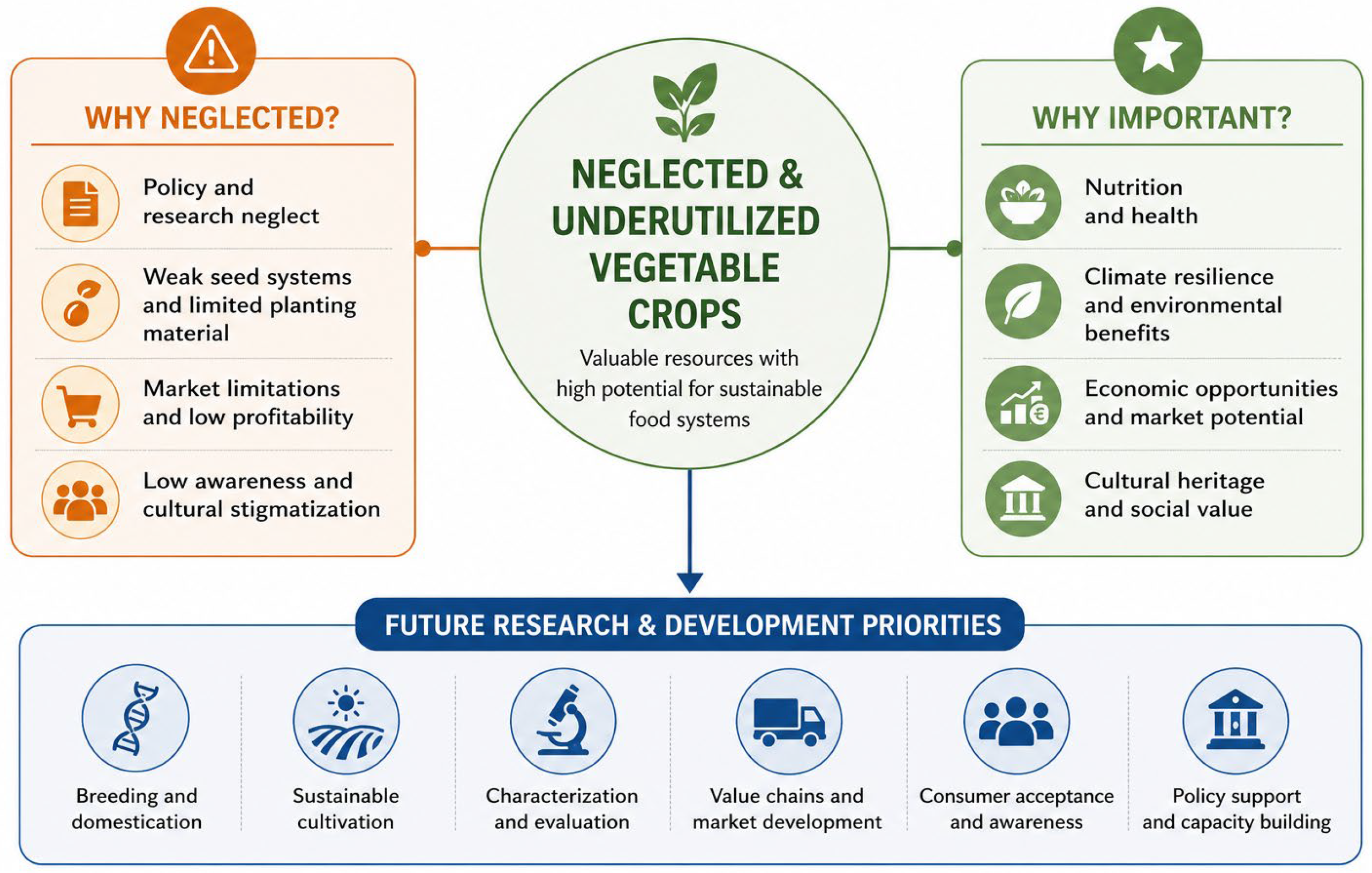
To sum up, these crops constitute relevant food-systems genetic resources for building resilient and diversified agricultural systems while contributing to dietary diversification and future-oriented agricultural innovation (
Figure 1). Nevertheless, their wider adoption remains constrained by the limited availability of improved cultivars and certified seed, insufficient agronomic knowledge, fragmented value chains, low consumer awareness, and inadequate policy support. Addressing these challenges will require coordinated efforts integrating breeding programmes, seed-system development, agronomic optimization, market development, extension services, and consumer education. Overall, neglected and underutilized crops should be regarded as heterogeneous resources rather than as a uniform crop category. Their successful reintroduction will depend on species-specific evidence, targeted breeding and agronomic development, reliable seed systems, consumer acceptance, and supportive market and policy frameworks.
3.2. Unconventional Vegetables
The term “unconventional vegetables” denotes edible plant species or plant parts that are not commonly used in mainstream diets or formal agricultural supply chains. These may include underutilized species, wild edible plants, or portions of cultivated crops generally regarded as by-products or agricultural waste [
9]. Recent studies highlight their potential contribution to dietary diversification and the recovery of overlooked edible resources [
41]. Within agricultural sciences, these species are increasingly recognized for their potential contribution to agrobiodiversity conservation, sustainable food systems, and dietary diversification.
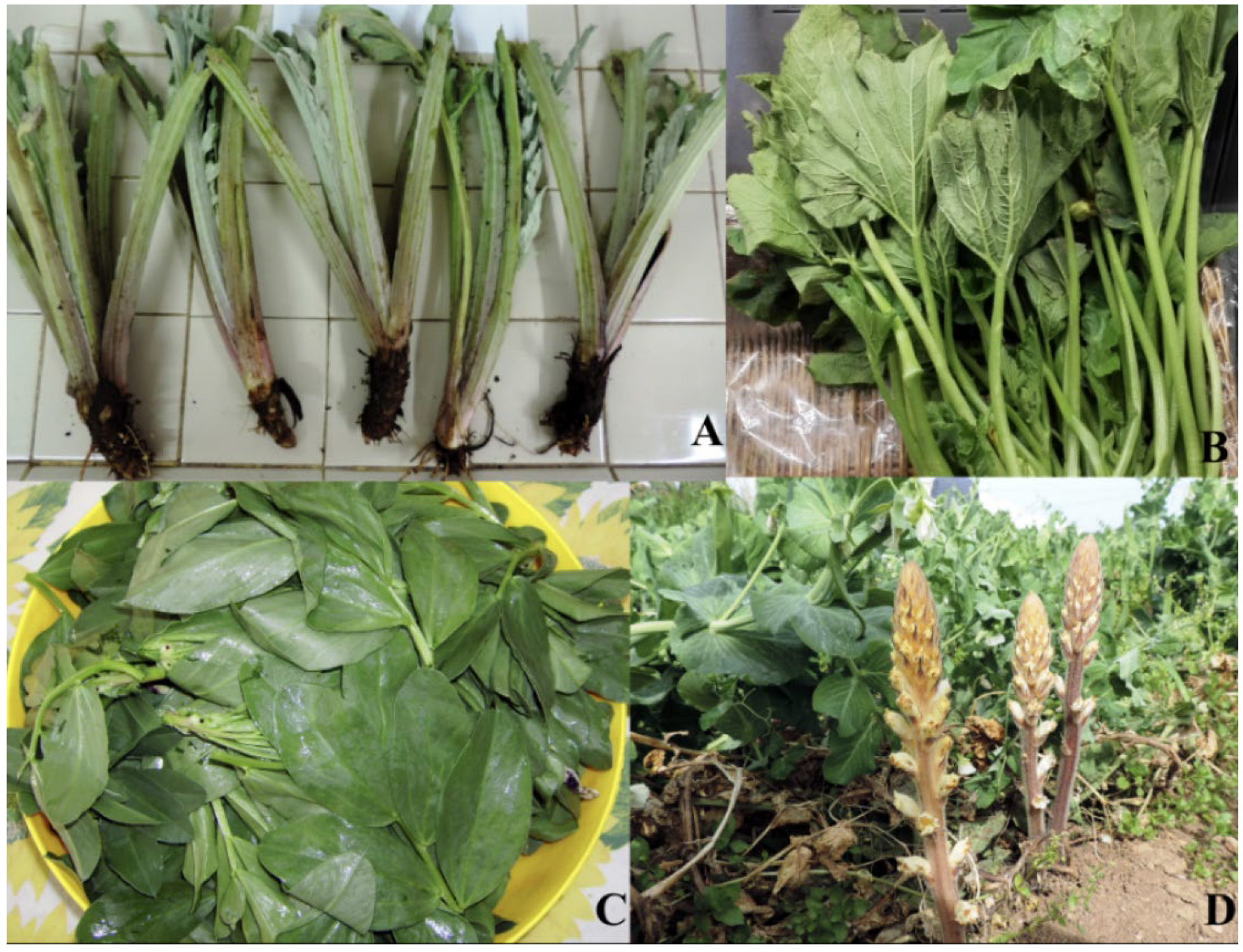
In Mediterranean countries, several unconventional vegetables are traditionally consumed locally. For instance, the lateral shoots of globe artichoke (
Cynara cardunculus L. subsp.
scolymus), commonly referred to as “cardoni” or “carducci” (
Figure 2A), develop during the vegetative phase and are removed as part of standard agronomic management practices. Rather than being discarded, these shoots are consumed like cultivated cardoon (
C. cardunculus L. var.
altilis DC). In the case of summer squash, the tender stems, petioles, flowers, and young leaves are traditionally harvested and prepared as leafy greens (known as “cime di zucchini”—
Figure 2B), comparable to other commonly consumed leafy vegetables such as chicory (
Cichorium intybus L.) and Swiss chard (
Beta vulgaris L.). Similarly, the apical portion of the faba bean plant—approximately 5–10 cm in length and collected during green pruning—is utilized as a leafy vegetable (referred to as “cime di fava”—
Figure 2C), in much the same way as spinach leaves. Crenate broomrape (
Orobanche crenata Forssk.
Figure 2D), a root-parasitic species that severely affects numerous crops, particularly legumes, is also gathered and prepared in a fashion analogous to asparagus (
Asparagus officinalis L.), forming the basis of several traditional culinary preparations [
9]. Moreover, faba bean (
Vicia faba L. var.
major Harz) hulls are a by-product of bean processing and are typically discarded as waste. However, they are incorporated into certain traditional Italian dishes [
42].
Beyond the Mediterranean basin, other regions offer relevant examples of wild or semi-cultivated unconventional vegetables. In southern Africa, some indigenous species (i.e.,
Amaranthus dubius Mart. ex Thell. and
Cleome gynandra L.) are consumed as leafy vegetables [
10]. Similarly, Asia hosts a remarkable diversity of traditional vegetable species, many of which remain underutilized outside their regions of origin. Beyond the already established Chinese cabbage (
Brassica rapa subsp.
pekinensis) and pak choi (
B. rapa subsp.
chinensis), species such as mizuna (
B. rapa var.
nipposinica), shiso (
Perilla frutescens var.
crispa), and water spinach (
Ipomoea aquatica) represent promising crops for diversification owing to their nutritional value, unique sensory characteristics, and potential for functional food markets [
43]. Several unconventional vegetables (e.g.,
Ampelygonum chinense (L.) Lindl.,
Solanum indicum L.,
Vigna grahamiana (Wight & Arn.) Verdc.,
Sarcochlamys pulcherrima) that grow wild in specific regions of Bangladesh are consumed only by local people [
44]. In Brazil, unconventional vegetables are considered those with limited distribution (i.e.,
Basella alba L.,
Amaranthus viridis L.,
Eryngium campestre L.,
Lactuca canadensis L.,
Stachys byzantine K. Koch, etc.), usually circumscribed to certain localities and/or regions, which were once widely consumed and produced by some populations and still compose typical regional dishes, important in the cultural expression of these populations [
45].
Several characterization studies have revealed favourable nutritional and functional properties of many unconventional vegetables. For example, because of their fibre content, offshoots of globe artichokes can be considered a useful food for the bowel. Summer squash greens could be recommended as a vegetable, especially for hypoglycemic diets, given their carbohydrate composition. Due to their low nitrate content, faba greens could be recommended as a substitute for nitrate-rich leafy vegetables. Crenate broomrape exhibits high antioxidant activity and may be considered a very nutritious agri-food product [
9]. Due to their low vicine content and high levels of polyphenols and levodihydroxyphenylalanine (L-DOPA), fava bean hulls have been highlighted as a potential functional food for patients with Parkinson’s disease [
42]. Characterization studies on native vegetables from different parts of the world have revealed high levels of antioxidant activity, suggesting their potential use in the development of functional foods [
41,
44,
45]. Such characteristics reinforce their relevance in diversified, resource-efficient food systems.
Overall, the cases reviewed here reveal three principal pathways through which unconventional vegetables can be valorised: (i) the recovery of traditionally consumed wild or semi-cultivated species, (ii) the use of edible plant parts normally removed during crop management, and (iii) the conversion of processing by-products into food products. These pathways differ substantially in their technical and commercial requirements. Wild and regionally consumed species generally require domestication, propagation protocols, agronomic standardization, and greater consumer familiarity, whereas edible crop parts and processing by-products can often be integrated more readily into existing production systems but still require evidence regarding food safety, nutritional consistency, shelf life, and processing suitability. Across the reviewed cases, nutritional or functional value alone does not guarantee successful adoption. Sensory quality, culinary traditions, consumer acceptance, regulatory compliance, reliable supply chains, and economic viability are equally important determinants of their wider utilization. Accordingly, the most promising unconventional vegetables are likely to be those that combine demonstrated nutritional value with practical integration into existing production, processing, and distribution systems. Future research should therefore move beyond descriptive compositional studies towards comparative evaluations of agronomic feasibility, food safety, consumer acceptance, processing performance, and economic viability.
3.3. Halophytes
Halophytes are salt-tolerant plant species capable of completing their life cycle under high-salinity conditions that are unsuitable for glycophytes. Their ability to withstand saline environments relies on a range of adaptive strategies, including ion compartmentalization and/or exclusion/excretion, osmotic adjustment, tissue succulence, and enhanced antioxidant defences [
46].
Numerous halophyte species growing in coastal and inland saline habitats are edible and have traditionally been appreciated for their distinctive organoleptic characteristics [
16]. Many of these wild edible plants possess an adequate nutritional profile for human diets, providing valuable minerals and various bioactive compounds that are beneficial to health [
47,
48]. The growing incorporation of edible halophytes into specialty markets reflects not only their nutritional potential but also rising awareness of healthy and sustainable diets. Their demand in specialty markets is additionally driven by their naturally salty flavour, resulting from salt accumulation in the aerial parts of the plant, and by their succulent leaves, which confer a light, crisp, and appealing texture [
49].
Recent studies demonstrate that several edible halophytes, such as glasswort (
Salicornia spp.), garden orache (
Atriplex hortensis L.), scurvy grass (
Cochlearia officinalis L.), and palm kale (
Brassica oleracea L. var.
palmifoli), have been reported to contain relevant concentrations of proteins, polyunsaturated fatty acids, essential minerals, and antioxidant compounds [
50]. In controlled saline agricultural systems, species such as
Salicornia and
Sarcocornia have shown notable concentrations of dietary fibre, Fe, Mg, and bioactive carotenoids. Moreover, Salicornia shoots have demonstrated good postharvest performance, maintaining high quality as ready-to-eat products, which further increases their commercial and horticultural value [
51]. However, the accumulation of plant secondary metabolites varies according to both salinity gradients and species-specific responses. Salinity stress can modulate secondary metabolite biosynthesis and, in some cases, enhance phenolic content and antioxidant capacity [
52].
Sea fennel (
Crithmum maritimum L.) represents a Mediterranean halophyte with increasing horticultural potential. It is frequently used as a model species to study the effects of salinity on plant metabolism and nutritional quality. Under hydroponic saline conditions, this species maintains satisfactory edible quality despite increased sodium and chloride concentrations, remaining a nutritious vegetable crop [
53]. Salinity may also stimulate stress-related metabolic pathways and promote the accumulation of secondary metabolites. Furthermore, treatments such as methyl jasmonate (MeJA) have been shown to alleviate salt stress while enhancing flavonoid and mineral content and preserving antioxidant capacity [
54], highlighting promising agronomic strategies to improve the nutritional and functional quality of halophyte crops under controlled cultivation.
Despite their nutritional advantages, many unconventional and neglected crops contain antinutritional compounds that may reduce mineral uptake or affect sensory quality. These include antinutritional factors such as phytates and oxalates, as well as elevated concentrations of certain ions that may accumulate under specific environmental conditions. For example, purslane may accumulate substantial amounts of nitrates and oxalates depending on developmental stage and cultivation conditions. Thus, reported nitrate concentrations range from 1100 to 3400 mg kg
−1 in baby leaves and 2500–2800 mg kg
−1 in microgreens, while oxalate levels may reach 1500–2700 mg kg
−1 in baby leaves and 4300–5300 mg kg
−1 in microgreens [
55,
56]. In other stress-adapted halophytes such as
Mesembryanthemum crystallinum, oxalate concentrations exceeding 9000 mg kg
−1 have been reported [
57]. However, certain strategies can reduce the antinutritional content of these products; for example, nitrate levels have been shown to decrease under higher salinity treatments [
50]. Moreover, traditional processing methods—such as fermentation, soaking, or thermal treatment—can also reduce the concentration of these compounds and improve nutrient bioaccessibility. In parallel, modern analytical approaches, including metabolomics and in vitro digestion models, are increasingly used to characterize nutrient functionality and health-promoting properties.
The successful incorporation of wild halophyte species into vegetable supply chains requires structured and multidisciplinary approaches. This process demands comprehensive knowledge of propagation techniques—such as seed production and germination—as well as cultivation practices tailored to optimize plant performance under specific soil and climatic conditions [
58].
Halophytes constitute a strategic option for the productive use of marginal areas. Their resilience to abiotic stresses, particularly salinity and drought, combined with their nutritional, phytoremediation, and phytochemical attributes, favours their inclusion in diversification-oriented production systems focused on crop diversification and land restoration. However, despite the promising characteristics of several species, further investigations are necessary to refine propagation protocols, particularly seed germination and dormancy-breaking strategies. In addition, innovations in seed priming techniques and the application of biostimulants may significantly enhance plant establishment and early development under stress conditions. Beyond propagation, defining species-specific cultivation protocols is crucial to facilitate the shift from wild harvesting to domesticated production. Overall, incorporating halophytes into cropping systems is a strategic approach to strengthening agricultural resilience, conserving biodiversity, and generating economic opportunities in marginal and coastal environments [
46].
Although edible halophytes exhibit several desirable characteristics, their commercial adoption is still relatively low. Production is still based largely on small-scale cultivation or wild harvesting, while standardized cultivation protocols, postharvest handling procedures, consumer familiarity, and regulatory frameworks are still developing. Future research should therefore focus not only on agronomic optimization but also on market development and supply-chain organization.
4. Innovative Developments in High-Consumption Species
Nowadays, consumer adoption of entirely novel vegetables remains limited, with diversification trends primarily focused on developing new varieties within well-established species, as previously mentioned. Molecular advances, including SNP markers and next-generation sequencing, have become key drivers of innovation, revolutionizing breeding programs by enabling high-resolution trait mapping and the identification of candidate genes. These technologies have accelerated the development of nutritionally enhanced cultivars and laid the foundation for innovative breeding strategies in high-consumption vegetables, where improving nutritional quality while maintaining agronomic performance and consumer acceptance has become a major research priority. Complementing these approaches, modern biotechnological tools such as genetic engineering and genome editing enable the targeted modification of specific nutritional traits. Building on these advances, emerging breeding strategies integrate multi-omics technologies, plant microbiome research, and artificial intelligence (AI). The combination of diverse biological datasets with microbiome information and AI-based models enhances the understanding of complex traits, speeds up the selection of superior genotypes, and supports the development of climate-resilient, nutrient-rich cultivars. Notable examples include increasing vitamin content in tomatoes and reducing anti-nutritional compounds in spinach, highlighting the potential of these technologies to improve the nutritional profile of vegetables [
6]. The impact of these advances is particularly evident in crop diversification within established vegetable species, where breeding efforts have focused on exploiting intraspecific genetic diversity to generate novel cultivars with improved nutritional, sensory, and agronomic attributes. This strategy has been especially successful in economically important crops such as tomato, lettuce, and melon [
59]. Tomatoes, for example, are now available in an exceptional diversity of fruit sizes, shapes, colours, textures, and flavour profiles, illustrating how modern breeding has expanded consumer choice while increasing product value and market differentiation. Some of them are new cultivars resembling old heirloom varieties [
10]. In this context, the case of the cultivar RAF (an acronym for
Fusarium-Resistant) is particularly relevant in Spain. RAF is an open-pollinated variety derived from a Marmande tomato strain, which has been cultivated in Almería since the sixties. It was characterized by its intensely sweet–acidic, pleasant flavour and firm flesh. Due to its lower yields, attributable to the cultivation of a variety with limited breeding improvement under saline conditions, and high market demand, it was and remains considered a gourmet product. At the end of the 20th century, a hybrid known as ‘Delizia’ was developed from the original RAF variety, successfully preserving its defining quality traits. Subsequently, the hybrids ‘Ambrosia,’ ‘Poesía’ and ‘Conquista’ were introduced, incorporating enhanced resistance to viral diseases while preserving the distinctive flavour profile of the original RAF tomato. Owing to their shared sensory and quality attributes, these hybrids continue to be marketed under the traditional RAF designation, sometimes accompanied by quality labels such as “
Pata Negra” or “
Premium”, which are used to differentiate their commercial or enterprise origin. In addition, a distinctive variant known as ‘Miniraf’ was included in this group, characterized by its smaller fruit size, which results from production at the end of the growing cycle of the aforementioned hybrids. All of them are still considered gourmet products and can reach market prices of up to €25 per kilogram, particularly during peak periods such as the Christmas season. This has led several vegetable breeding companies to develop new RAF-like varieties, including blue or chocolate-brown RAF types, as well as more productive hybrids with resistance to current tomato viruses.
In parallel, the recent introduction of specialty crops has contributed to horticultural diversification. These crops are agronomically related to established species and, despite their limited adoption in large-scale production systems, exhibit high economic value and substantial cultural or nutritional importance. However, the concept of specialty crops presents several challenges, as there is no internationally accepted definition of the term. It may encompass vegetables considered new or unusual due to the way they are grown, as well as varieties distinguished by their colour, shape, flavour, size, or by their diverse origins and market demand [
60]. An example of these specialty crops is Crunshella™, a snack lettuce with naturally spoon-shaped leaves and sufficient strength to support both hot and cold toppings, making it ideal for creating tapas-style spoons, wraps, and salads. Moreover, factors such as convenience, portability, reduced food waste, and suitability for smaller households with lower vegetable consumption have led to smaller sizes of commonly consumed vegetables [
61]. Common examples include personal-sized watermelon and melon, compact lettuce types such as baby lettuce, mini cauliflower, and, recently, mini celery.
Miniaturisation represents another relevant diversification strategy, e.g., miniature vegetables consumed as snacks in one or two bites. The distribution of these snack vegetables through refrigerated “healthy vending” machines is already well established and is expected to expand further. As many snacking occasions occur in the workplace, office meetings represent a promising context for promoting vegetable consumption. In addition, their presentation as ready-to-eat mini vegetables is increasingly common in supermarkets, particularly in countries such as the Netherlands, where they are popular among adolescents and typically consumed without further preparation [
62]. In addition, offering fruits and vegetables as snacks in childcare facilities increases children’s consumption and helps them meet recommendations [
63]. Because dietary habits formed in childhood and adolescence often persist into adulthood, fostering them early supports long-term health. There is evidence that cherry tomatoes are the best-known snack vegetable due to their appealing taste, nutritional benefits, and versatility in culinary applications. In addition, snack peppers and cucumbers (sweeter versions of their larger counterparts) and baby carrots are now common healthy alternatives to sweet or savoury snacks. Snack sweet peppers are smaller-fruited varieties of sweet pepper with thin skins, crisp flesh and a naturally sweet flavour. While conventional sweet snack pepper cultivars are well established, seedless varieties are still emerging. However, several seedless commercial lines are now available, offered in a range of pericarp colours (e.g., red, yellow, and orange) and sizes, including one-bite and two-bite formats. Snack cucumbers have a refreshing crunch with a juicy, mild flavour and a sweeter finish than their larger counterparts. Because they are consumed unpeeled, they are rich in insoluble fibre and retain significantly higher levels of key micronutrients, particularly essential vitamins and minerals. Baby carrots are small in size, averaging 7–10 cm in length, harvested before reaching their maturity. Nowadays, certain carrot cultivars have been bred for use at the “baby” stage. They are crunchy and tender, with a sweeter flavour than full-grown, mature carrots. There is some confusion about what qualifies as a baby carrot, since there is another small carrot type, known as baby-cut carrots, that are cut and shaped from larger carrots. Carrots show substantial variation in their phytochemical profiles depending on their size and skin colour. Overall, the superior properties of miniature varieties, particularly mini purple carrots, offer a promising opportunity to develop novel, high-value food products with enhanced health benefits [
64].
The other specialty vegetable segment, represented by sprouts, microgreens, and baby leaves, has become an important component of convenience-oriented vegetable products in the food industry because it imparts intense flavours, enticing aromas, and outstanding nutritional value to a variety of dishes. In addition, as consumers look for softer textures in prepared salad mixes, baby-sized leafy vegetables have been among the most promising ready-to-eat developments. The cultivation of microgreens and baby leaves has expanded rapidly in recent years, a trend largely attributed to growing public awareness of their nutritional advantages and increasing recognition of their commercial potential [
65,
66,
67]. The key advantages of cultivating these vegetables lie in their relatively low production and maintenance costs [
67,
68].
The increasing market demand for microgreens and baby leaves has driven the expansion of their large-scale production in controlled-environment agriculture (CEA) systems, where indoor vertical farming techniques are predominantly used to optimize space, resource efficiency, and year-round yields. Within these systems, LED lighting technologies have become particularly important because they enable precise control of light spectra, intensity, and photoperiod, thereby influencing plant growth, yield, and phytochemical accumulation [
69,
70]. This approach is especially relevant for halophytic microgreens, which have gained increasing interest as nutrient-dense crops due to the possibility of simultaneously controlling environmental factors such as light quality, salinity, and nutrient management. For instance, specific LED lighting conditions have been shown to improve yield and quality in purslane microgreens cultivated under saline conditions while also reducing antinutritional compounds [
56]. These findings highlight the importance of integrating advanced lighting technologies into microgreen production systems to optimize both nutritional quality and functional properties.
In this context, a new concept termed “farm on the fork” has recently been developed in the field of microgreens by Rodríguez-Sánchez-de-Molina et al. [
71], enabling the efficient production of mustard microgreens within an edible substrate–packaging system using gellan gum as growing medium. In addition, special attention must be given to leguminous microgreens, which are a concentrated source of protein and exhibit a superior nutritional profile compared to mature plants, with higher levels of fibre, vitamins, minerals, antioxidants, and bioactive compounds [
72]. Particularly, pea shoots are increasingly recognized as a valuable functional food ingredient. Traditionally popular in Asia and Africa, they are now gaining wider acceptance in North America and Europe. Rich in bioactive compounds such as flavonoids, carotenoids and ascorbic acid, pea shoots contribute to dietary antioxidant intake and provide potential health benefits [
73]. Recent studies have also shown that LED lighting can enhance their nutritional quality and preserve phytonutrient composition during postharvest storage [
74]. Finally, the “teen leaf” category should be considered. This product represents an emerging salad concept in which plants are harvested at a slightly more advanced developmental stage than traditional baby leaves. This results in firmer leaf tissue while maintaining acceptable organoleptic quality, thereby enhancing harvest efficiency and overall yield [
75]. Within this product segment, the use of lettuce varieties such as the Salanova
® type is highly recommended, as they are particularly well suited for fresh-cut processing. Some of these varieties contain Knox™, a natural trait that delays browning, thereby extending shelf life and reducing postharvest waste.
Despite the rapid market expansion of these innovative developments, several challenges remain, including relatively high production costs under controlled environments, short shelf life, food safety management, and the need for standardized quality protocols. Addressing these issues will facilitate wider commercialization and consumer acceptance.
5. Functional Foods vs. “Superfoods”
Functional foods are foods that deliver health-promoting effects beyond their basic nutritional value. Recently, the term “superfoods” has also become widely used in food marketing to describe nutrient-dense products associated with perceived health-promoting properties. Although the concept lacks a standardized scientific definition, it is commonly linked to foods rich in vitamins, minerals, antioxidants, and other bioactive compounds. The commercial success of these products has been strongly supported by marketing strategies emphasizing naturalness, exotic origin, and wellness-oriented lifestyles. Although many health claims associated with superfoods are broadly supported by scientific evidence, they frequently rely on in vitro or animal studies rather than robust human clinical trials. Consequently, the European Union prohibited the use of the term “superfood” on food packaging unless accompanied by an authorized health claim [
76,
77]. Despite these regulatory limitations, consumer interest in “superfoods” has continued to increase. Marketing strategies that emphasize exotic origins and pristine imagery have proven particularly effective, significantly boosting demand [
77]. The global superfoods market is projected to grow from a minimum estimated size of 155.2 billion dollars in 2022 to a maximum of 344.9 billion dollars by 2033, with a compound annual growth rate ranging between 4.0% and 10.2% during the forecast period, depending on the information source [
78]. This market expansion has also influenced global production systems. A relatively small group of countries dominates the global superfood market, largely due to favourable climates and deeply rooted agricultural traditions. Many of these products have long been cultivated and consumed by indigenous communities, who value them for their nutritional and therapeutic properties [
79]. Their continued link to these cultures and traditional farming systems helps reinforce perceptions of authenticity, sustainability, and health benefits. However, they are sometimes produced far from where they are consumed, and their growing demand has led to socio-environmental impacts in producer countries, including the expansion of monocultures, the loss of traditional crops, and intensified agricultural practices [
80,
81].
These dynamics also raise ethical and social-responsibility questions that merit explicit acknowledgment. Framing traditional foods as generic “superfoods,” detached from their cultural and geographical origin, can amount to a form of cultural appropriation, as extensively documented for quinoa, whose global commercialization has been criticized for decoupling the product from the Andean communities that domesticated and selected it over centuries [
26,
82]. Moreover, unless mechanisms consistent with the access and benefit-sharing (ABS) principles of the Nagoya Protocol to the Convention on Biological Diversity are applied, the communities that conserved the genetic resources and associated traditional knowledge underlying these products may not proportionally share in the economic value generated by their commercialization. In parallel, consumers’ right to accurate information is also at stake: marketing narratives relying on exoticism and unsubstantiated health claims can be misleading, a concern partly addressed at the regulatory level by the EU restriction on the term “superfood” [
76,
77], but still calling for more transparent traceability and labelling practices.
Within the vegetable sector, the superfood concept includes both traditional crops, particularly landraces and locally adapted genotypes recognized for their unique phytochemical profiles, and innovative vegetable products. Accordingly, emerging crops, such as water lentils, microgreens, and seaweeds, have increasingly been marketed as “superfoods” because of their high nutrient density and abundance of bioactive compounds. Moreover, the lack of standardized cultivation and quality control protocols underscores the need for industry-wide guidelines to ensure consistent sensory, nutritional, and postharvest quality.
Cruciferous vegetables such as kale, broccoli, Bimi
®, collard greens, rocket salad, etc., as well as leafy greens like spinach and Swiss chard, are among the most common vegetable “superfoods”. Numerous epidemiological studies have shown that higher intakes of cruciferous vegetables are associated with a reduced risk of cardiometabolic diseases, musculoskeletal disorders, and cancer [
83], generally associated with their glucosinolate content and their hydrolysis products (isothiocyanates, notably sulforaphane) [
84]. The concentration of these compounds is influenced by both genetic and environmental factors, including nutrient availability, light quality, and abiotic stress conditions [
85]. Thus, targeted manipulation of the N:S ratio in nutrient solution can modulate glucosinolate content in soilless Brassicaceae [
86].
Besides conventional cruciferous vegetables, several emerging horticultural products have gained considerable scientific and commercial interest. Among them, microgreens have emerged as a prominent category of nutrient-dense functional foods. High concentrations of bioactive compounds, including polyphenols, carotenoids, vitamins, and glucosinolates, characterize these young seedlings. In many cases, their nutritional value exceeds that of mature plants [
87,
88,
89]. Red cabbage microgreens, for instance, contain up to 6-fold higher vitamin C and 69-fold higher vitamin K than mature red cabbage [
87]. Additionally, compared to their counterparts, vegetables often used cooked, the consumption of raw microgreens has the advantage of avoiding nutrient loss or the degradation of thermolabile vitamins. However, microgreens can accumulate relatively high levels of nitrates in their leaves, with their concentration depending largely on the plant species and growing conditions [
88]. Finally, their short production cycle and suitability for soilless and indoor systems make them particularly attractive for sustainable and urban agriculture.
There is also growing interest in underutilized and traditional vegetable species, which could become “superfoods” due to their high nutritional value and adaptability to marginal environments. These crops may contribute to dietary diversification and food security, particularly in regions facing climatic and economic constraints [
90]. Examples include purslane (
Portulaca oleracea), rich in omega-3 fatty acids; moringa (
Moringa oleifera), rich in proteins and vitamins; and Mediterranean wild edible greens such as
Cichorium intybus,
C. spinosum (stamnagathi),
Silene vulgaris and
Diplotaxis tenuifolia (wild rocket). Nevertheless, as previously mentioned, some leafy wild vegetables may contain antinutritional compounds [
55,
56]; therefore, monitoring nitrate and oxalate levels is essential to ensure food quality and compliance with safety standards.
Recent research has focused on enhancing functional properties through agronomic practices. The manipulation of environmental factors, such as light spectrum (using LEDs), nutrient solution composition, and the controlled application of abiotic stresses (e.g., salinity, UV radiation), has been shown to stimulate secondary metabolite synthesis [
4,
91,
92,
93,
94]. This approach allows the production of vegetables with tailored nutritional profiles. This strategy, termed “eustress” management, exploits mild, controlled stress to trigger defence mechanisms, thereby enhancing bioactive compounds without significant yield penalties [
86]. In addition, biotechnological approaches, including biofortification and the use of beneficial microorganisms, are also being explored to enhance the nutritional quality of vegetable crops further the nutritional quality of vegetable crops [
95,
96]. These strategies are aligned with the concept of “functional horticulture,” which integrates crop production with human health objectives. Selenium and iodine biofortification via nutrient solution in soilless systems has shown promising results in addressing micronutrient deficiencies [
97,
98].
Overall, while the term “superfood” remains scientifically imprecise, the underlying research on enhancing bioactive compounds in vegetables constitutes a highly dynamic interdisciplinary field. In addition, while vegetable-based foods commonly labelled as superfoods can contribute to nutrient intake, their purported exceptional properties cannot substitute for an overall balanced dietary pattern and healthy lifestyle. Moreover, ensuring the accessibility and affordability of nutrient-dense vegetables remains a key challenge. Future developments will likely focus on combining genetic improvement, controlled environment cultivation, and targeted agronomic strategies to enhance the functional quality of vegetables. Priority areas include: (i) cultivar-specific light recipes optimizing yield and nutritional quality; (ii) multi-omics approaches to understand genotype-by-environment interactions; and (iii) standardized protocols for evaluating phytochemical bioaccessibility and bioavailability.
6. Product Attributes and Consumer Acceptance
Product quality in horticultural supply chains is a multidimensional and stakeholder-dependent concept, with breeders, producers, retailers, and consumers prioritizing different attribute sets [
92,
93,
94,
99]. While international marketing standards (e.g., FAO, UNECE, and OECD) predominantly focus on external appearance traits such as size, shape, colour, and absence of defects, comprehensive quality assessment increasingly incorporates sensory performance, nutritional value, health-related properties, and alignment with evolving consumer lifestyles [
92,
93,
94,
99]. The key determinants of consumer acceptance are summarized in
Table 1.
Consumer acceptance of vegetable products is primarily driven by the interaction between intrinsic attributes (e.g., flavour, texture, aroma, and freshness) and extrinsic cues (e.g., origin, price, branding, and sustainability claims) [
94]. Among intrinsic factors, sensory perception remains the strongest determinant of repeat purchase and long-term consumption [
100]. In particular, the balance of bitterness and sweetness, mouthfeel, and aroma intensity significantly influence hedonic evaluation and willingness to purchase. Accordingly, the sensory properties of vegetables are closely linked to consumer acceptance, with preparation methods, product familiarity, and individual sensory preferences further shaping acceptance and consumption patterns [
100].
Improving sensory quality therefore represents a major opportunity for product innovation. Evidence shows that relatively small modifications in product preparation can substantially increase consumer acceptance. For example, Feng et al. [
101] demonstrated that seasoning substantially increases consumer liking of vegetables, highlighting the importance of palatability-oriented innovation in promoting vegetable consumption. Thus, sensory optimisation represents not only a culinary improvement but also a key strategy in product development and public health-oriented food innovation.
Beyond sensory quality, nutritional and health-related attributes are increasingly recognized as important drivers of perceived product value. Consumers generally show greater appreciation for vegetables with enhanced nutritional profiles, elevated levels of bioactive compounds, or demonstrated health benefits. However, these attributes rarely compensate for poor sensory quality. This interaction between sensory and non-sensory attributes is supported by the systematic review of Laureati et al. [
102], which concluded that consumer acceptance of novel foods is shaped by the combined effects of perceived health benefits, sustainability considerations, sensory expectations, and individual consumer characteristics.
Although sensory quality is essential, consumers cannot always evaluate intrinsic characteristics before purchase. Consequently, they rely on extrinsic cues to form quality expectations. Thus, provenance and labelling strongly influence purchasing behaviour, as demonstrated by Gruda et al. [
94], where locally labelled produce was preferred even under minimal production differences. Similarly, branding and geographical indications contribute to perceived quality and market value, particularly within protected EU frameworks [
93,
94].
Economic accessibility represents an additional determinant of consumer acceptance, particularly for innovative vegetable products entering competitive markets. Although consumers increasingly value nutritional quality, sustainability, and health-promoting attributes, purchasing decisions remain strongly influenced by price, affordability, and perceived value for money. A recent systematic review demonstrated that consumers are generally willing to pay premium prices for healthier food products when the added value is clearly communicated; however, affordability remains a major constraint for widespread adoption [
103]. Similar findings were reported for vegetables in China, where consumers were willing to pay premium prices for safe vegetables, while excessive prices and price fluctuations negatively affected purchasing intentions [
104]. These findings indicate that successful commercialization of innovative vegetable products requires balancing product quality and added value with acceptable price levels to ensure broad consumer adoption.
Consumer responses are further shaped by heterogeneity in preferences. Using a Best–Worst Scaling approach, Massaglia et al. [
105] showed that while freshness and sensory quality are generally prioritised, certain consumer segments place greater emphasis on credence attributes such as sustainability and local origin. These findings are consistent with more recent evidence showing that demographic characteristics, lifestyle, personal values, and sustainability orientations further influence consumer preferences and acceptance patterns [
106]. Together, these studies emphasize that successful commercialization strategies should be tailored to the expectations and motivations of different consumer groups rather than relying on a one-size-fits-all approach.
However, cognitive drivers such as sustainability and environmental claims do not always translate into purchasing behaviour. A systematic review by Onwezen et al. [
107] indicates that affective responses, including food neophobia and familiarity, often outweigh rational evaluations. Although consumers may acknowledge environmental benefits, actual consumption is more strongly influenced by taste, familiarity, and perceived price. Günden et al. [
106] further emphasized that behavioural barriers, including uncertainty, unfamiliarity, and lack of knowledge, can limit acceptance of novel foods despite positive attitudes.
Within plant-based innovations, acceptance typically follows a familiarity–neophobia continuum. More established plant-based foods (e.g., pulses and conventional meat substitutes) are more widely accepted due to dietary familiarity, whereas novel foods such as algae often face greater resistance [
107]. Within this framework, microgreens benefit from visual familiarity and perceived naturalness, while halophytes may encounter sensory barriers linked to salinity and unfamiliar flavour profiles. Nutritional claims can support acceptance but are rarely sufficient without positive sensory experience.
In addition to product characteristics and individual perceptions, cultural and social factors influence how consumers interpret unfamiliar foods. Food traditions, social norms, regional preferences, and previous exposure shape expectations and willingness to adopt novel products [
107]. Therefore, acceptance strategies should consider not only product optimisation but also communication approaches that increase familiarity and consumer confidence.
Furthermore, convenience-related aspects influence whether initial acceptance translates into regular consumption. Preparation requirements, accessibility, availability, and compatibility with existing dietary routines can determine the integration of novel vegetables into everyday diets. Both sensory quality and practical usability therefore contribute to sustained consumption patterns [
100,
106].
Table 1.
Key intrinsic and extrinsic quality dimensions affecting consumer perception, acceptance, and purchasing decisions for horticultural products.
Table 1.
Key intrinsic and extrinsic quality dimensions affecting consumer perception, acceptance, and purchasing decisions for horticultural products.
| Dimension | Key Components | Consumer Relevance | Main Evidence |
|---|
| External quality standards | Size, shape, colour, absence of defects | Basis for trade classification; limited role in sensory acceptance | [94] |
| Intrinsic sensory attributes | Flavour, texture, aroma, freshness, bitterness–sweetness balance, mouthfeel | Primary determinant of liking and repeat purchase | [100,101] |
| Extrinsic cues | Origin, price, branding, sustainability claims, geographical indications | Shapes expectations and perceived quality when intrinsic attributes are unknown | [93,94] |
| Economic accessibility (price and affordability) | Price level, affordability, willingness to pay, value for money, price–quality perception | Strong determinant of purchasing decisions, particularly for novel vegetable products. Consumers are generally willing to pay a premium when health, quality, safety, or sustainability benefits are clearly perceived, whereas high prices may constitute an important barrier to market adoption. | [103,104] |
| Consumer heterogeneity | Segmentation by preference for taste, freshness, sustainability, origin | Determines market positioning strategies for novel products | [103] |
| Cognitive vs. affective drivers | Sustainability, health, ethics vs. taste, familiarity, price, neophobia | Affective responses often dominate final purchasing decisions | [107] |
| Familiarity and neophobia | Dietary familiarity, perceived naturalness, exposure to novel foods | Strong predictor of acceptance of novel vegetables and plant-based products | [107] |
| Cultural and social influences | Food traditions, cultural norms, social environment, peer influence, regional preferences | Shape interpretation of unfamiliar products and willingness to adopt new foods | [106] |
| Convenience and usage context | Preparation requirements, availability, accessibility, compatibility with dietary routines | Influences whether initial acceptance translates into regular consumption and integration into everyday diets | [100,106] |
Overall, successful innovation in vegetable products requires an integrated strategy combining: (i) optimisation of intrinsic sensory quality, (ii) consideration of consumer heterogeneity, (iii) ensuring economic accessibility through appropriate pricing and value communication, (iv) effective use of credible extrinsic quality cues and (v) reduction in behavioural barriers through familiarity, convenience, and appropriate communication strategies. The interaction of these dimensions determines both initial acceptance and long-term consumption.
7. Branding
Traditionally, fresh vegetables have been offered to consumers as unbranded products, with growers making little use of innovation to differentiate their products, resulting in minimal distinctions beyond basic attributes such as price, appearance, and availability [
108]. This lack of brands may be explained by the inherent limitations of the crop production sector, such as the predominance of numerous small-scale farms and the nature of vegetable products, which are seasonal, highly perishable, and difficult to differentiate. In addition to the difficulties on the producer side and in the product, it is necessary to understand the effects of brand and fresh product marketing on consumer behaviour and choice. Nowadays, branding strategies have progressively become a central component of marketing activities, and it has become increasingly common for food products to be marketed as branded goods. Effective brand management can help farmers differentiate their products, highlight unique characteristics, and create stronger connections with consumers [
109]. In this context, branding represents a strategic innovation that can transform both tangible and intangible product attributes, particularly by emphasizing aspects such as provenance, quality, and production methods [
108].
Different branding strategies can be adopted depending on product characteristics, market objectives, and the profile of agricultural entrepreneurs. A specific strategy, typically associated with widely consumed products, involves exclusive framework agreements between vegetable breeding companies that supply specialized products and producers who cultivate them exclusively, ensuring consistently superior quality standards. Some of the most well-known examples are ‘Kumato’ and ‘Monterosa’ tomatoes, ‘Fashion’ seedless watermelon, ‘Sweet Palermo’ pepper, etc. [
59]. This approach remains active, exemplified by recent partnerships including a collaboration between a Dutch breeding company and a consortium of Spanish melon growers to develop the Galkia™ Galia melon, distinguished by consistent quality, superior flavour and extended shelf life, as well as an alliance between a French seed company and three Andalusian enterprises to commercialize the chocolate-brown RAF tomato ‘Adora’.
A related strategy has been in the melon sector through long-established brands associated with high-quality Piel de Sapo melons. These brands belong to agricultural companies that carefully select cultivars and implement strict production protocols to guarantee consistent taste and sweetness year-round, relying on crops grown in different countries to ensure a continuous supply.
Beyond product-based branding, the communication of origin and producer identity represents another powerful strategy. Local identity can increase consumer demand for foods associated with a specific place or region of origin [
110], enhance perceived product credibility, and strengthen customer loyalty through a strategy commonly referred to as Farmer Identity Marketing. Consumers often prefer locally produced goods because they believe these products are fresher and of higher quality [
111], while also supporting the local economy and contributing to rural development [
112]. Overall, farm branding also strengthens a producer–consumer relationship. In this regard, the strategy used in countries such as Japan is particularly noteworthy: products are often marketed with a photograph of the farmer, along with the farm name and region of origin, thereby reinforcing transparency and authenticity and humanizing the supply chain.
Sustainability attributes provide an additional opportunity for differentiation. Consumers with strong environmental concerns tend to show greater interest in organically produced vegetables and eco-labelled products. When sustainability information is clearly communicated, eco-labels can improve product perception and increase purchase intention by helping consumers identify environmentally responsible options [
113].
Finally, celebrity endorsement tends to generate stronger purchase intentions when there is a high level of congruence between the celebrity and the brand. When consumers perceive a natural fit between the endorser and the product, the message becomes more credible and persuasive, resulting in more favourable brand evaluations, deeper emotional connections, and ultimately higher purchase intention [
114].
8. Addressing the Value Chain for New Vegetable Products
The successful development of new vegetable products depends not only on breeding and cultivation but also on the establishment of efficient and sustainable value chains that facilitate the transformation of agricultural raw materials into marketable products that satisfy consumer needs and preferences. In the context of the modern farm-to-fork approach, vegetable value chains have evolved from production-oriented systems into integrated, market-driven networks that emphasize quality, nutritional value, sustainability, traceability, and resilience. Rather than focusing exclusively on maximizing yield, these value chains seek to optimize product quality, environmental performance, consumer satisfaction, and economic returns for all stakeholders involved [
115]. In addition, the value chain dictates how that brand-consumer value is created and delivered.
For innovative vegetables, the value chain starts with the conservation and utilization of germplasm, followed by breeding, seed multiplication, commercial cultivation, postharvest handling, processing, distribution, and market positioning. Throughout this process, value can be added through quality certification, branding strategies, and the promotion of distinctive traits such as nutritional value, climate resilience, or links to local heritage. The commercialization of crops such as Salicornia demonstrates that successful market adoption relies on coordinated efforts among researchers, breeders, producers, processors, retailers, and consumers [
116,
117].
Digital technologies are increasingly supporting more transparent and efficient agri-food value chains. Blockchain-based traceability systems, together with Internet of Things (IoT) technologies, improve product integrity, food safety, resource efficiency, and consumer confidence by enabling real-time monitoring throughout the production process [
118]. These tools also facilitate compliance with increasingly demanding quality assurance and traceability standards. Despite significant progress, several challenges continue to constrain the effective integration of stakeholders into modern agri-food value chains. Climate change threatens production stability, while inadequate postharvest infrastructure contributes to substantial losses of highly perishable vegetables, particularly in developing countries [
115]. In addition, consumers increasingly demand sustainable production practices, pesticide-free products, and full traceability. For functional vegetables, commercialization also requires compliance with regulatory frameworks governing nutrition and health claims, which must be supported by robust scientific evidence. Therefore, the future success of new vegetable products will depend on integrating resilient production systems, efficient postharvest management, digital traceability, and effective market differentiation within sustainable and inclusive value chains.
9. Conclusions
Vegetable crop diversification is a strategic pathway to enhance both agricultural sustainability and producers’ competitiveness. Native resources and underutilized crops represent underexploited assets, particularly because of their nutritional and functional qualities, which are becoming central drivers of product differentiation. In this context, halophytes offer a distinctive opportunity for diversification under climate change conditions. However, market innovation remains largely concentrated on well-established species. In addition, the concept of “superfood” is commercially potent but scientifically imprecise. Ultimately, consumer acceptance is shaped more by taste and familiarity than by ethical considerations, positioning branding as a key differentiating tool in the commercialization of horticulture.
While this review mainly draws upon evidence and representative case studies from Mediterranean horticultural systems, where research on innovative vegetable products is particularly well developed, examples from Asia, Africa, and Latin America have also been included to broaden the international perspective. Nevertheless, the diversity of local vegetable resources and production systems worldwide means that some findings should be interpreted within their regional context, and further geographically focused reviews would complement the broader framework presented here.
Future research should prioritize the domestication of promising underutilized vegetable species, breeding programs aimed at improving resilience and quality traits, the development of standardized cultivation protocols, comprehensive food safety assessments, and the establishment of efficient and sustainable value chains to facilitate market adoption. Equal priority should be given to the ethical and socio-legal dimensions of vegetable commercialization, including equitable benefit-sharing with the custodian communities of traditional and native genetic resources. The applicability of these strategies will depend on regional agroecological conditions, market demand, available infrastructure, and economic feasibility. Therefore, implementation should be adapted to local production systems and socio-economic contexts. Achieving these objectives will require interdisciplinary approaches that combine horticultural science, plant breeding, food technology, nutrition, consumer behavior, and marketing to successfully translate scientific advances into commercially viable, competitive, and sustainable vegetable products.




 ,
,