Article

Terrace-Mediated Nutrient Redistribution Enhances Nitrogen Assimilation and Amino Acid Accumulation in Tea Plantations Across Hillslope Positions

1
Department of Environmental Design, School of Design, Hebei Academy of Fine Arts, North Campus, Shijiazhuang 050700, China
2
College of Architecture and Landscape, Peking University, Beijing 100080, China
Horticulturae 2026, 12(7), 843; https://doi.org/10.3390/horticulturae12070843
Submission received: 9 June 2026 / Revised: 4 July 2026 / Accepted: 6 July 2026 / Published: 10 July 2026
(This article belongs to the Section Plant Nutrition)

Abstract

Terracing is widely used for soil conservation in hilly tea plantations, yet its influence on tea quality formation across landscape positions remains insufficiently understood. This study compared terraced and sloping tea gardens at summit, midslope, and footslope positions in a subtropical tea-growing region of Hunan Province, China. Soil nutrients, leaf nitrogen (LeafN) status, nitrogen-assimilation enzyme activities, chlorophyll characteristics, and amino acid profiles were evaluated to explore the ecological links between terrace management and tea quality formation. Terracing significantly increased soil organic matter (SOM) and total nitrogen (TN), exhibiting peak increases of 18.1% and 32.8%, respectively, at the midslope position. These soil nutrient improvements significantly altered leaf carbon-nitrogen balance, resulting in lower leaf C/N ratios, a 49.3% increase in chlorophyll content, and a marked enrichment of total free amino acids (particularly glutamic acid and arginine) at the midslope position. While sloping gardens showed a conventional decline in fertility and quality from footslope to summit, terraced gardens exhibited a distinct midslope optimum. Redundancy analysis indicated that TN accounted for a substantial proportion of variation in tea quality indicators. These patterns are primarily driven by terrace-mediated nutrient redistribution and improved hillslope drainage conditions at the midslope position. Overall, the findings suggest that terracing may modify hillslope nutrient redistribution patterns and contribute to optimized nitrogen utilization and tea quality stability in mountainous tea-growing systems.

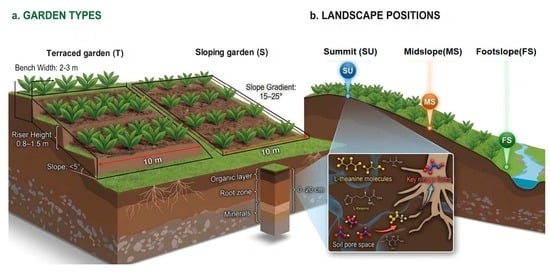
Graphical Abstract

1. Introduction

Tea (Camellia sinensis L.) is one of the most widely consumed beverages worldwide and an important economic crop in subtropical mountainous regions. In China and other traditional tea-producing areas of Asia, tea plantations are commonly established on hilly terrain. However, steep slopes, concentrated rainfall, and shallow soils interact to create not only high risks of soil erosion and nutrient depletion but also disrupt the field microenvironments and nutrient supply [1]. These processes suppress tea plant growth, reduce free amino acid accumulation, and ultimately lead to a substantial loss of flavor quality. The quality of green tea depends strongly on metabolites in young shoots, particularly amino acids, catechins, caffeine, and volatile compounds. Among these compounds, theanine is a major contributor to umami taste and mellow flavor. Its accumulation is closely associated with soil nitrogen availability and nitrogen assimilation [2]. Landscape management that modifies soil nitrogen supply may therefore influence tea quality through its effects on leaf nitrogen metabolism.
Tea plants preferentially use ammonium nitrogen, which is assimilated into glutamine by glutamine synthetase (GS) [1]. This reaction supplies nitrogen for amino acid biosynthesis and links soil nitrogen availability to leaf nitrogen status and flavor-related metabolism. Theanine synthetase (TS) subsequently catalyzes the formation of theanine from glutamate and ethylamine. Together, these processes define a soil-to-quality pathway in which soil nitrogen availability may influence leaf nitrogen assimilation, GS and TS activities, and amino acid accumulation. However, field evidence showing how terrain management regulates this pathway remains limited.
Terracing may intervene at the first step of this pathway by reshaping water flow, sediment deposition, and nutrient retention across hillslopes. By transforming continuous hillslopes into horizontal or near-horizontal benches, terraces reduce runoff velocity, improve water infiltration, and retain sediment [3]. These processes can promote localized soil organic matter (SOM) accumulation and reduce macronutrient losses [4,5]. According to classical catena theory, gravity-driven transport typically depletes nutrients from erodible summits and accumulates them at footslopes [5,6]. However, terracing disrupts this toposequence by creating midslope benches that intercept upslope resources while maintaining better drainage and light conditions than footslopes [7]. Understanding how this landscape reconfiguration modifies localized soil resource availability is therefore fundamental to deciphering terrace-mediated tea quality formation [8].
Previous studies of terraced landscapes have focused primarily on erosion control, soil organic carbon sequestration, and hydrological regulation [9,10]. It remains unclear whether terrace-induced resource redistribution propagates from soil fertility through leaf nitrogen assimilation to amino acid profiles that determine tea quality [10,11]. Addressing this gap requires soil, plant, and metabolic responses to be resolved by slope position rather than averaged across an entire plantation. Here, we compared terraced and sloping tea gardens at summit, midslope, and footslope positions and jointly assessed soil properties, leaf nitrogen status, GS and TS activities, and amino acid profiles. The novelty of this design lies in integrating landscape position, soil fertility, leaf nitrogen assimilation, and flavor-related metabolism within a single field framework. This integration may also support spatially targeted harvesting, fertilization, and terrace management in mountainous tea regions [12]. The primary objectives of this study were to: (1) investigate whether terraced gardens exhibit higher soil nutrient availability than sloping gardens; (2) evaluate how terrace-associated soil nutrient differences relate to leaf nitrogen assimilation and amino acid accumulation; and (3) determine whether terrace construction modifies conventional slope-position patterns of tea quality indicators.

2. Materials and Methods

2.1. Study Region

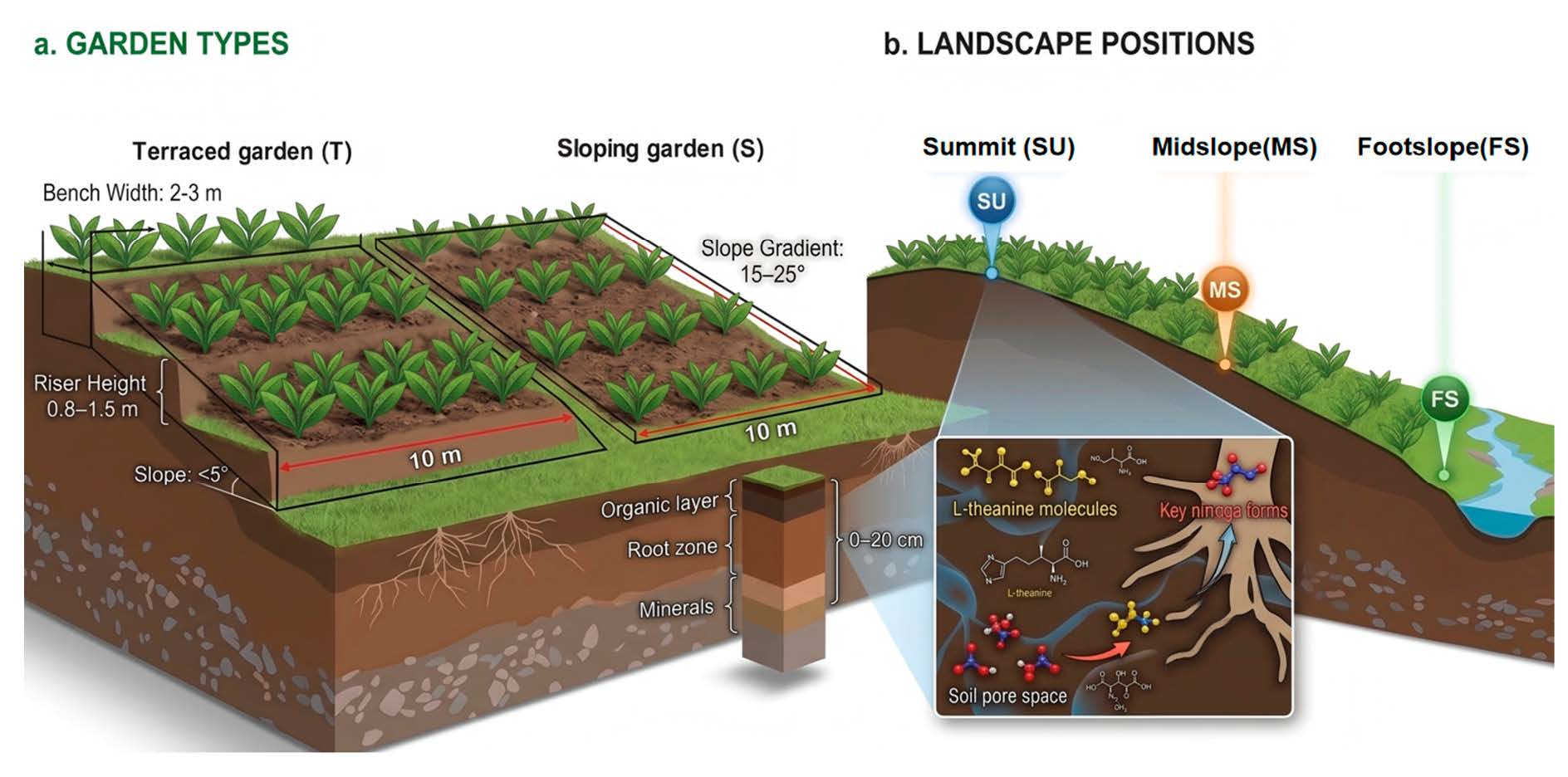
This field experiment was conducted at the Experimental Station of the Chinese Academy of Sciences in North Hunan Province, China (28°23′ N, 113°11′ E, and at an altitude of 100–200 m) (Figure 1). The mean annual temperature across the four seasons is between 16.8 and 19.5 °C, ranging from 4.5 °C in January to 40.6 °C in July, and the mean annual rainfall is 1437 mm. The soil is an acidic red soil (Ultisol) derived from granite, with a pH range of 4.1–6.4 and relatively homogeneous fertility. The Xiangfeng Tea Plantation covers a total area of over 200,000 mu (approximately 13,333 ha) and produces roughly 38,000 tons of tea annually, of which high-quality green tea accounts for 35%. This red soil type is widely distributed across subtropical tea-growing regions and serves as the reference soil for tea cultivation in the area.
To minimize environmental heterogeneity, the experimental tea gardens were established on adjacent hillslopes sharing uniform elevation, aspect, and land-use history. The tea plants (Camellia sinensis L.) were selected based on comparable age and identical cultivar backgrounds. Both terraced and conventional sloping plantations were maintained under consistent agronomic management, which encompassed routine pruning, organic fertilization, manual weeding, and standard harvesting. Crucially, no artificial irrigation was applied throughout the study period; thus, soil water availability was purely mediated by the coupling interaction of ambient rainfall, local topography, and terrace engineering measures.

2.2. Experimental Design

A factorial field design was used to examine the effects of garden type and landscape position on tea quality formation. The two garden types were terraced tea gardens (Terrace, denoted as T) and traditional sloping tea gardens (Slope, denoted as S). The three landscape positions along the hillslope sequence were summit (SU), midslope (MS), and footslope (FS). This combination produced six treatments: terrace-summit, terrace-midslope, terrace-footslope, slope-summit, slope-midslope, and slope-footslope.
To ensure statistical robustness, three independent replicate plots (n = 3 biological replicates per treatment) were established across adjacent hillslope sequences. Each plot was uniformly standardized to a width of 10 m. In the traditional sloping tea gardens (S), the plots were located on natural continuous slopes with gradients ranging from 15° to 25° and a total slope length of 30–50 m. In contrast, in the terraced tea gardens (T), the original natural slopes were modified into a series of engineered level terraces, with each terrace having a width of 2–3 m, a riser height of 0.8–1.5 m, and an internal slope of less than 5° on the terrace surface.
In both garden types, to capture spatial heterogeneity, three permanent sampling points were established within each plot, evenly distributed across the upper, middle, and lower sections to ensure broad representativeness and avoid boundary effects. At each sampling point, soil collection was restricted to the 0–20 cm surface layer. These sampling points were used for all subsequent soil chemical analyses and plant physiological measurements.

2.3. Soil Sampling and Analysis

Surface soil samples were collected from the 0–20 cm layer at each sampling point. At each point, multiple subsamples were collected within a small radius and composited to reduce microsite variability. Soil samples were transported to the laboratory, air-dried, gently crushed, and passed through a 2 mm sieve before chemical analysis.
SOM was determined using the potassium dichromate oxidation method. TN was measured using the Kjeldahl digestion method. Hydrolyzable nitrogen, TP, and TK were determined following standard soil analytical procedures. Available potassium was extracted with ammonium acetate and measured by flame photometry.

2.4. Leaf Sampling and Biochemical Measurements

Fresh tea shoots were sampled from each treatment during the same field campaign as soil sampling. The second and third fully expanded leaves from actively growing shoots were collected to reduce variation associated with leaf age. Samples were transported to the laboratory under cooled conditions. A portion of fresh material was used for enzyme assays, and the remaining material was dried for nitrogen and amino acid analyses. Prior to destructive leaf sampling, soil–plant analysis development (SPAD) values, serving as an index of relative leaf chlorophyll content, were recorded in situ across the identical sampling positions using a portable chlorophyll meter (SPAD-502, Minolta, Japan). Ten representative fully expanded leaves were randomly measured per plot to obtain a mean value.
Leaf total nitrogen was determined by Kjeldahl digestion. GS activity was measured using the hydroxylamine-dependent method, and TS activity was determined based on the formation of theanine from appropriate substrates under controlled assay conditions.
Free amino acids were extracted from dried leaf samples and quantified by high-performance liquid chromatography after derivatization. Eighteen amino acids were quantified, including theanine, glutamic acid, aspartic acid, serine, glycine, alanine, valine, leucine, isoleucine, tyrosine, phenylalanine, lysine, histidine, arginine, proline, threonine, methionine, and cysteine. Total free amino acids were calculated as the sum of all quantified amino acids [13].

2.5. Statistical Analysis

All statistical analyses were conducted using R software (version 4.3.1). Two-way analysis of variance (ANOVA) was performed to evaluate the main effects of garden type (terraced vs. sloping), landscape position (summit, midslope, and footslope), and their interactive effects on soil properties and tea quality indicators. The three independent field plots per treatment combination were utilized as true biological replicates (n = 3) in the model. Prior to ANOVA, data normality and homogeneity of variance were verified using the Shapiro–Wilk and Levene’s tests, respectively. Duncan’s multiple range test was employed for post hoc pairwise comparisons of treatment means when significant effects were detected (p < 0.05).
Pearson correlation analysis was performed using the 18 individual measurements derived from the six treatment plots to examine associations among soil properties, leaf physiological traits, enzyme activities, and amino acid contents. Spearman’s rank correlation was also used as a robustness check. Because technical replicates can reduce within-treatment variation and increase apparent correlation strength, correlation coefficients were interpreted as indicators of treatment-level coordination rather than precise individual-plant prediction.
Redundancy analysis (RDA) was used to evaluate the relationship between core soil variables and leaf quality indicators. Soil TN and AK were selected as environmental predictors based on ecological relevance and to reduce collinearity. Leaf quality indicators included LeafN, SPAD, total amino acids, theanine, and glutamic acid. GS and TS were not included in the RDA response matrix to avoid circularity, because these enzymes occur within the metabolic pathway linking nitrogen status and amino acid accumulation. The significance of RDA axes was assessed by permutation testing.

3. Results

3.1. Soil Fertility Characteristics

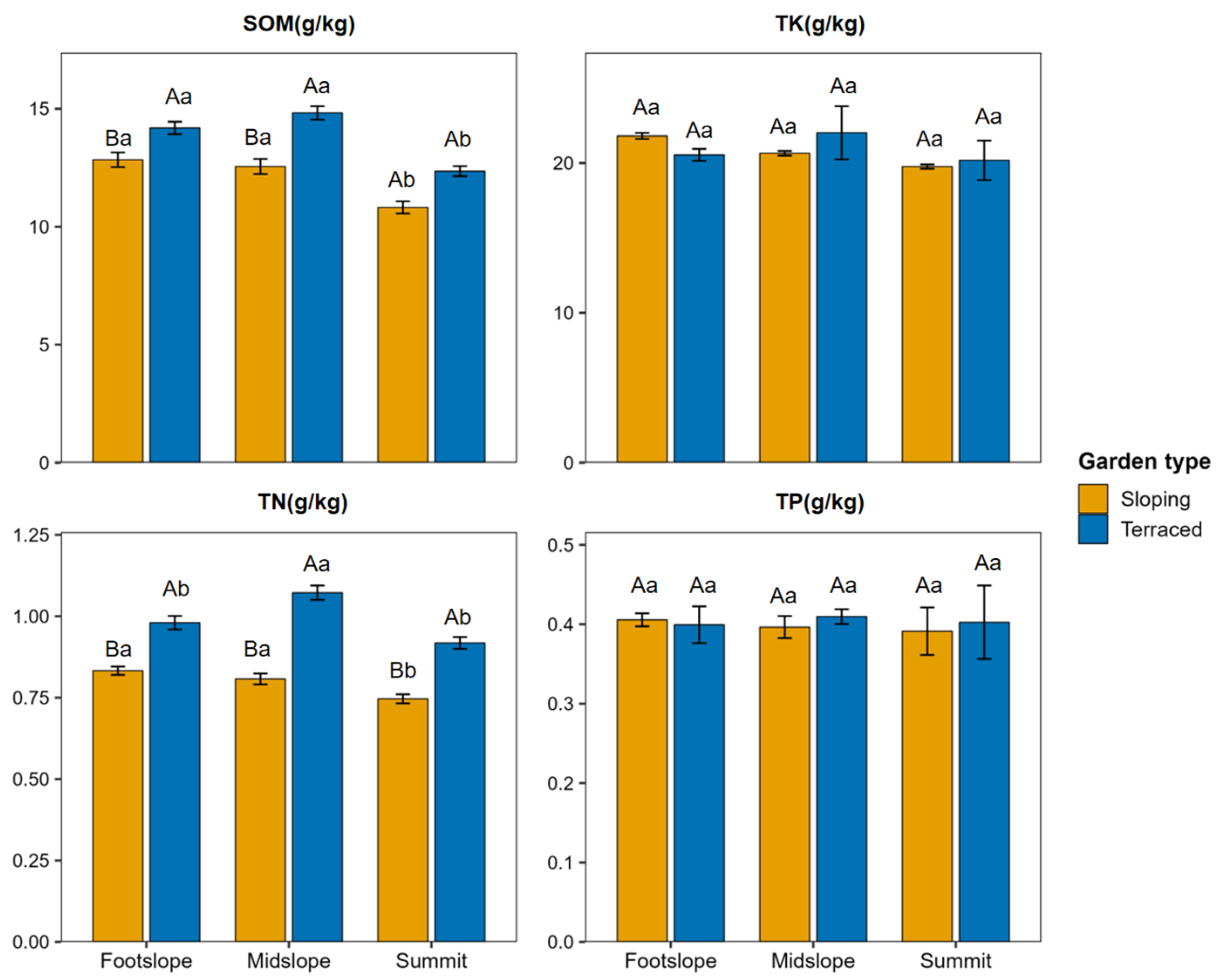
Terracing affected SOM and TN more consistently than TP and TK (Figure 1 and Table A1). Averaged across landscape positions, SOM was significantly higher in terraced gardens (13.79 g kg−1) than in sloping gardens (12.07 g kg−1) (p < 0.05). Similarly, mean TN increased from 0.796 g kg−1 in sloping gardens to 0.990 g kg−1 in terraced gardens (p < 0.05, Figure 1). The highest values occurred at the terraced midslope, where SOM reached 14.82 g kg−1 compared with 12.55 g kg−1 in the corresponding sloping plots, representing an increase of 18.1% (p < 0.05). TN reached 1.072 g kg−1 in terraced midslope plots compared with 0.807 g kg−1 in sloping midslope plots, representing an increase of 32.8% (p < 0.05). Neither TP nor TK differed significantly between garden types or among slope positions. The comparatively large SE values for TK in midslope and summit terraced gardens, and for TP at the summit, indicated substantial within-treatment variability. Accordingly, numerical differences in these variables were not interpreted as treatment effects.

3.2. LeafN Status and Enzyme Activities

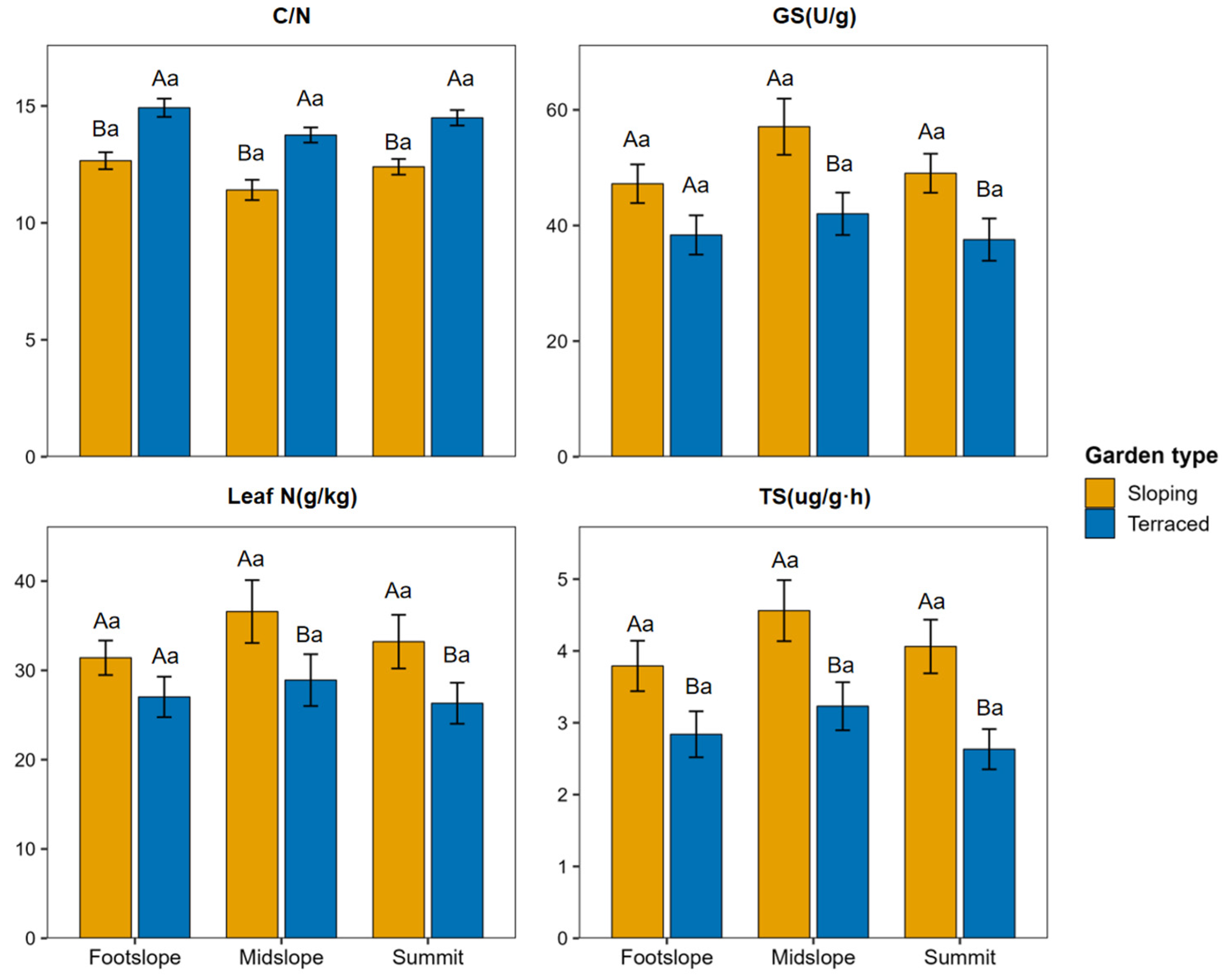
The leaf C/N ratio was significantly reduced, whereas chlorophyll content was significantly higher in terraced systems than in sloping systems across all landscape positions (p < 0.05, Figure 2, Table A1). In contrast, statistical analysis revealed that LeafN concentrations, as well as GS and TS activities, exhibited no significant differences between terraced and sloping gardens at any specific slope position (p > 0.05, Figure 2). These physiological patterns indicate that while terrace management significantly alters leaf structural properties and carbon-nitrogen balance indicators, it maintains a stable, comparable baseline for direct nitrogen assimilation enzyme expression and total leaf nitrogen allocation across individual landscape positions.

3.3. Amino Acid Accumulation

Terraced gardens contained significantly higher concentrations of most quantified amino acids than sloping gardens (Table 1 and Table A2). Glutamic acid, arginine, and proline were significantly higher in terraced gardens at each slope position. Glutamic acid, rather than theanine, was the most abundant quantified amino acid.
Theanine showed numerical but not statistically significant differences among treatments. At the midslope position, the mean theanine concentration was 0.2364 ± 0.0308 g kg−1 in terraced gardens and 0.1647 ± 0.0209 g kg−1 in sloping gardens. This represented a numerical increase of 43.5%. However, both means shared the same significance letters, and this difference was therefore not interpreted as statistically significant.
Several amino acids were significantly lower at the footslope than at the midslope or summit in sloping gardens. In terraced gardens, many amino acids reached their highest numerical means at the midslope. However, midslope and summit treatments frequently shared significance letters. The results therefore supported amino-acid-specific responses rather than a universal significant midslope optimum.

3.4. Redundancy Analysis

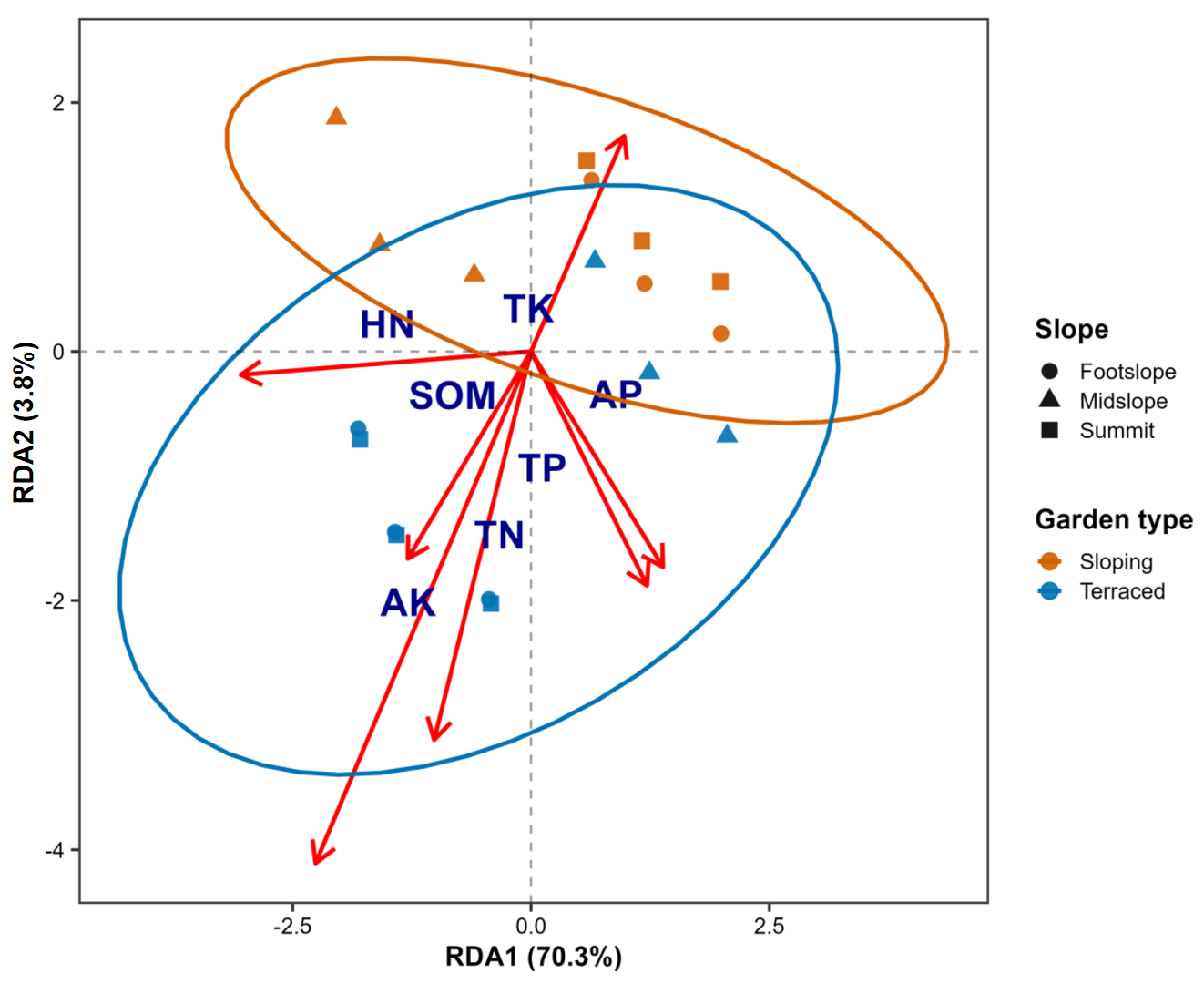
Redundancy analysis (RDA) revealed clear differentiation between terraced and sloping tea gardens along the primary ordination axis (Figure 3). Permutation testing (999 permutations) verified that the overall RDA model was statistically highly significant (pseudo-F = 12.45, p < 0.001). Furthermore, the first ordination axis (RDA1) was highly significant (pseudo-F = 23.82, p < 0.001), explaining 70.3% of the constrained variation. In contrast, the second axis (RDA2) did not reach statistical significance (pseudo-F = 1.28, p = 0.295), explaining only 3.8% of the remaining variation. This clear statistical divergence confirms that the primary gradient was strongly associated with the separation between garden types.
Soil TN and AK together accounted for a substantial proportion of variation in tea quality indicators. Both vectors pointed toward the right side of the RDA1 axis, where terraced samples were predominantly located. In contrast, sloping samples were more broadly dispersed across the left side of the ordination space, reflecting greater spatial heterogeneity in soil properties and tea quality attributes.
LeafN, total amino acids, and theanine were aligned with the nutrient-enriched side of the RDA ordination space, consistent with their higher concentrations in terraced gardens. Terraced samples generally clustered toward this direction, while sloping samples showed greater dispersion. This pattern suggests that terracing may reduce some of the spatial heterogeneity associated with hillslope nutrient redistribution, while simultaneously shifting the system toward higher soil fertility and enhanced nitrogen assimilation capacity in tea leaves.
Soil TP and SOM contributed less to the observed variation along RDA1, consistent with the weaker statistical responses of TP and the relatively smaller differences in SOM between garden types observed in earlier analyses. The dominance of TN and AK in the RDA indicates that nitrogen and potassium availability were the primary measured soil factors associated with tea quality variation. Nevertheless, unmeasured factors such as soil moisture, microbial processes, and microclimate likely contributed to the remaining unexplained variation (28.5% of the total inertia), suggesting that future studies should incorporate additional environmental variables to more fully explain the terrace effect on tea quality.

3.5. Random Forest Analysis of Theanine

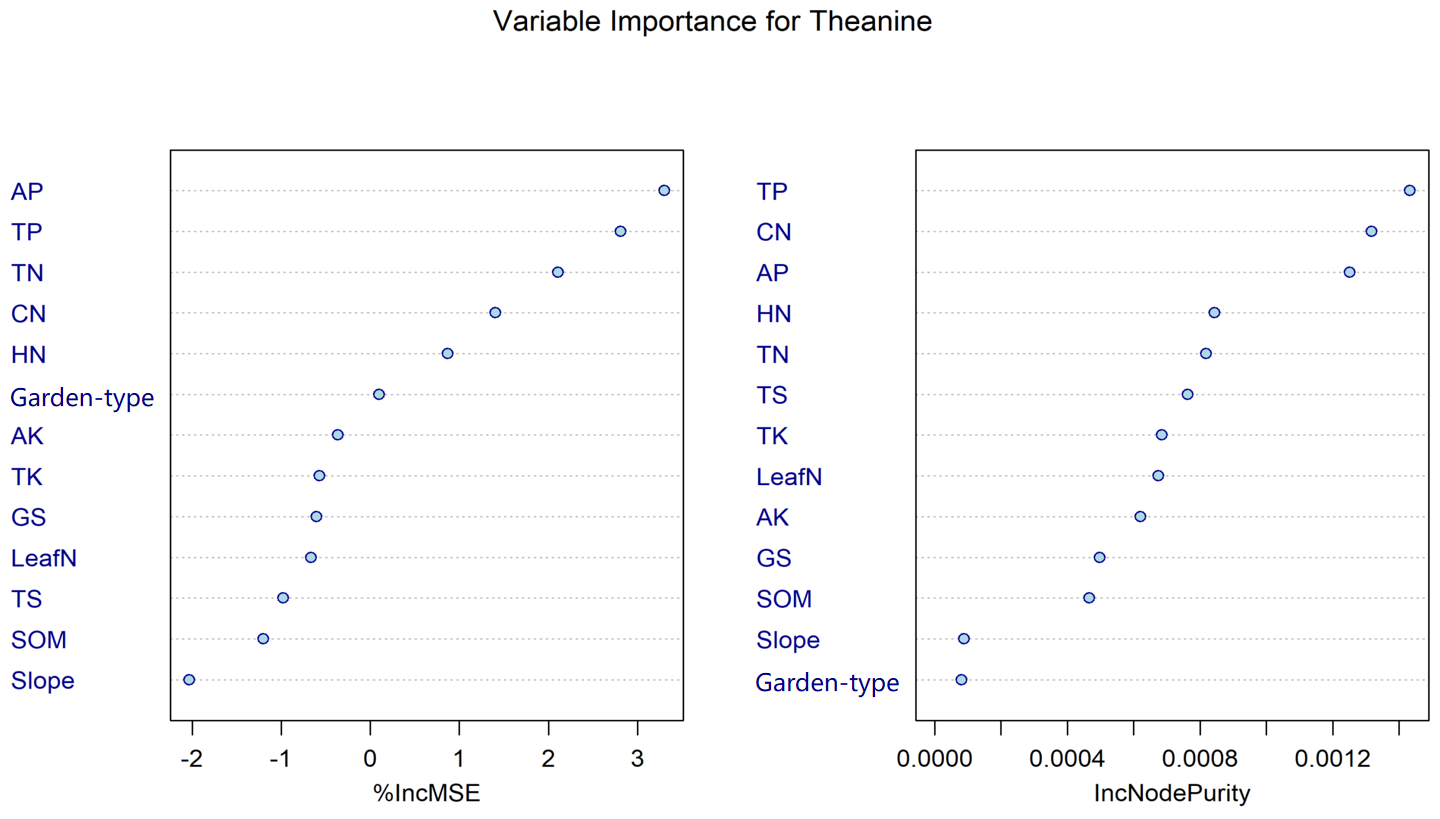
To evaluate the relative importance of soil properties and leaf physiological traits in regulating theanine accumulation, we performed a random forest analysis. The variable importance ranking, based on the percent increase in mean squared error (%IncMSE), revealed that phosphorus-related variables (AP and TP) were the strongest predictors of theanine concentration, followed by nitrogen-related variables (TN, CN, and HN) (Figure 4). Garden type, potassium-related variables (AK and TK), and leaf physiological traits (GS, LeafN, and TS) showed moderate importance, whereas SOM and slope position ranked the lowest.
These results indicate that soil phosphorus and nitrogen availability are the dominant factors influencing theanine accumulation in tea leaves under the conditions of this study. The relatively lower importance of leaf physiological traits (GS, LeafN, TS) suggests that soil nutrient status may exert a stronger direct control on theanine biosynthesis than leaf-level metabolic capacity. The weak contribution of slope position and SOM further implies that the effects of terracing on theanine are primarily mediated through modifications in soil phosphorus and nitrogen rather than through changes in organic matter content or topographic position alone.

4. Discussion

4.1. Effects of Terrace Cultivation on Soil Nutrients

In this study, the effects of terracing on different soil fertility indicators showed significant differences (Figure 1, Table A1), such as SOM and TN, were significantly higher in terraced tea gardens than in sloping tea gardens, whereas TP and TK showed no significant differences between the two garden types (Figure 1). This result is consistent with the spatial distribution patterns of different nutrients in hillslope soil science. SOM and TN are primarily enriched in the surface soil layer and are highly dependent on the association between light fraction organic carbon and microaggregates, rendering them highly susceptible to surface runoff erosion and downslope transport [14,15]. The construction of terraces transforms continuous slopes into multiple level benches, which reduces the effective slope length and mitigates surface runoff velocity, thereby effectively intercepting these easily eroded surface fine particles and biotic residual inputs [6,16]. Consequently, the reduction in nutrients caused by surface soil erosion is alleviated, and the intercepted litter and plant residues are allowed to undergo in situ mineralization, resulting in nutrient enrichment [15,17]. In contrast, TP andTK, as nutrient pools dominated by mineral sources, primarily depend on the mineral composition of the parent material and long-term historical basic fertilizer applications, and their nutrients are less susceptible to short-term topographic physical modifications and surface soil deposition dynamics [14,18], explaining why TP and TK show lower sensitivity to terracing. Furthermore, terracing significantly changed the spatial redistribution characteristics of nutrients along the slope. In traditional sloping tea gardens, due to the dual effects of rainfall washout and gravity, surface fertility followed a typical declining pattern from footslope to summit positions [14,15,19,20]. However, in terraced tea gardens, the maximum nutrient values did not appear at the footslope position but shifted to the midslope position. This occurs because when the continuous natural slope is cut by multiple level planes, the sediment and dissolved nutrients carried by runoff encounter the first highly efficient physical barrier at the midslope benches during downslope transport, leading to intercepted sedimentation and directional nutrient subsidies at this position [15,21]. This effective interception of upslope material disrupts the conventional hillslope landscape pattern where nutrients indefinitely accumulate toward the footslope [15,22,23]. Therefore, these results demonstrate that terrace construction can artificially interfere with the distribution of hillslope soil nutrients by building surface physical barriers.

4.2. Driving Mechanisms of Phosphorus and Nitrogen Inputs on Theanine Synthesis

The clear decoupling between enriched soil substrate availability (TN and SOM) and stable leaf physiological traits (LeafN, GS, and TS activities) provides critical insights into the mechanisms of terrace-mediated quality formation (Figure 1 and Figure 2). Traditional views suggest that enhanced soil nitrogen directly upregulates leaf nitrogen-assimilation enzyme expression [1,9]. However, our findings show that despite a 32.8% increase in soil TN at the terraced midslope, individual enzyme activities (GS and TS) did not exhibit statistically significant divergence between terraced and sloping systems (Figure 1 and Figure 2). This statistical parity strongly implies that as perennial woody plants, tea bushes rely on robust physiological homeostasis and internal nutrient recycling to buffer tissue-level metabolic machinery against direct topographic physical alterations [24].
Interestingly, although enzyme abundance was not directly upregulated, bulk amino acid accumulation—particularly glutamic acid and arginine—was significantly enhanced under the terraced system (Table 1). This phenomenon can be elegantly explained by our random forest analysis, which positioned soil phosphorus availability (AP and TP) as the most pivotal upstream predictor for amino acid profiles, outranking TN (Figure 4). It is well established that the synthesis of specialized metabolites requires substantial cellular metabolic energy [25,26]. Enhanced soil phosphorus availability at the terraced midslope likely optimizes root-zone bioenergetics or cellular adenylate adjustments necessary for downstream substrate conversion [27,28], thereby alleviating energetic constraints on amino acid biosynthesis without requiring an over-production of the enzyme proteins themselves [24]. Therefore, the terrace-mediated quality boost is driven by an optimized soil-resource blend (high P and N availability) that enhances metabolic conversion efficiency [25,29], rather than a simplistic upregulation of leaf nitrogen assimilation capacity.

4.3. Effects of Terrace Slope-Position Spatial Heterogeneity on Tea Quality

In terraced tea gardens, TN, total amino acids, and multiple individual amino acids (including aspartic acid, valine, and phenylalanine) culminated in their highest values at the midslope position (Table 1). This spatial pattern presents a clear departure from traditional open-slope tendencies. In traditional sloping tea gardens, soil fertility and quality indicators followed a conventional declining pattern from footslope to summit positions [30,31]. Under the unique bench configurations of terraces, however, the footslope positions exhibited unexpectedly lower values for multiple leaf quality indicators despite a high soil nutrient background (Table 1).
While this spatial differentiation is highly distinct, the precise environmental and physiological mechanisms driving the footslope-to-midslope variations were not explicitly measured in this study and must be interpreted with caution [32]. Speculatively, the lower leaf quality attributes at the footslope benches could potentially relate to localized microenvironmental constraints [33]. For example, because footslope benches naturally occupy the lowest topographic zone, they might experience greater downslope hydrological accumulation, which could hypothetically induce periodic soil water saturation or altered root-zone aeration during wet periods [34]. Additionally, potential microclimatic variations, such as shading from adjacent terrace risers, might alter localized light interception or quality [35]. However, since soil redox potential, root mitochondrial respiration, and light spectra were not directly monitored, these potential environmental stresses remain unverified hypotheses [36].
Conversely, the summit position is systematically constrained by shallow soil layers, poor water-holding capacity, and greater exposure to meteorological stressors such as high wind speeds and intense radiation [31,34]. Midslope terraces, however, occupy a relatively balanced spatial node: they can effectively receive nutrient replenishment from upslope gravity material to maintain a high-level soil fertility substrate, possess superior hillslope drainage conditions to avoid root asphyxiation from water saturation, and maintain a more stable moisture buffering capacity than the summit [28,30]. This localized alignment of environmental factors strongly correlates with optimized nitrogen assimilation and premium amino acid accumulation [20,35], indicating that the midslope constitutes a critical equilibrium niche for tea quality stability within terraced landscapes [18,33].

4.4. Agronomic Management Strategies for Tea Gardens Based on Spatial Heterogeneity

Redundancy analysis (RDA) results showed that soil TN and available potassium were the primary axes explaining the separation of garden types and quality attributes; however, 28.5% of the total variation remained unexplained by the measured soil physicochemical parameters (Figure 3). This statistical variance gap, coupled with the low importance ranking of SOM in the random forest analysis, clearly implies that the core leverage of terrace cultivation on tea quality operates through modulating specific nutrient availabilities (such as phosphorus supply) and root-zone microenvironmental conditions (such as aeration and water-retention characteristics), rather than a generalized increase in soil organic carbon total bulk matter without differentiation [21]. Constrained by the objective limitations of actual land-use history and long-term managed plots, this study utilized a multi-point nested sampling design within a single plot to characterize spatial heterogeneity [23]. While this design successfully revealed consistent topographic response characteristics at the site-scale, caution must be exercised when extrapolating these relationships to larger and more diverse geological backgrounds and tea garden landscapes [20]. In agronomic practice, these spatial characteristics demonstrate that hilly tea plantations should not be managed as a uniform, homogenous unit [18]. Midslope terraces, due to their inherent advantages in water-nutrient balance and potential for quality amino acid accumulation, should be preferentially designated as premium green tea harvest zones and precision agronomic fertilizer application zones [37,38]. In addition, these findings provide actionable insights for precision nutrient management, demonstrating that terrace-mediated nutrient redistribution necessitates topography-specific fertilization [39,40]. Specifically, summit positions, characterized by lower nutrients due to historical leaching, require supplementary organic or slow-release nitrogen to enhance leaf nitrogen assimilation [41,42]. Conversely, midslope positions, where terracing maximizes amino acid accumulation (particularly theanine and glutamic acid), should focus on potassium and phosphorus balance to sustain this high metabolic efficiency [43]. Finally, at footslope positions that naturally accumulate down-slope runoff and nutrients, nitrogen inputs can be moderately reduced to prevent nitrate leaching and optimize economic efficiency without compromising tea quality [44].

4.5. Limitations and Future Perspectives

Nevertheless, several methodological limitations must be acknowledged. First, although our experimental layout incorporated independent biological replicates across distinct hillslope blocks to avoid strict pseudo-replication, sampling within a single macro-geographical catena inherently constrains the direct extrapolation of these findings to regions with drastically different parent materials or climate zones. Second, the study lacked controlled irrigation facilities, meaning that the observed micro-topographical redistributions of soil nutrients and subsequent leaf quality traits remain coupled with natural precipitation patterns, obscuring the precise interactions between water availability and nitrogen assimilation. To build upon these insights, future research should transition toward multi-year, longitudinal studies that track seasonal and inter-annual variations in soil–plant dynamics, capturing how terrace degradation or maturation affects long-term quality formation. Furthermore, evaluating the interactive effects of terracing across different tea cultivars will provide a more comprehensive framework for sustainable, climate-resilient tea plantations and agroforestry management in subtropical regions.

5. Conclusions

In summary, this study demonstrates a distinct spatial association between terrace landscape engineering and altered soil–plant nutrient distribution across hillslope toposequences. Compared with conventional sloping tea gardens, terracing effectively reconfigures the spatial pattern of key fertile substrates, with the engineered midslope position emerging as a highly favorable spatial node that optimizes both soil nutrient retention (particularly organic matter and total nitrogen) and downstream quality-related amino acid accumulation (such as theanine). However, the wider generalizability of these insights remains subject to certain experimental boundaries. As an in situ observational evaluation conducted within a specific subtropical toposequence, this study did not explicitly capture transient microclimatic dynamics, root-zone redox variations, or long-term hydrological fluctuations across broader geographic scales. Consequently, while micro-topographical management via terracing represents a highly promising landscape strategy to support premium tea cultivation in hilly regions, further multi-regional evaluations and controlled physiological trials are warranted to fully clarify the underlying mechanisms and confirm its universal applicability across diverse environmental gradients.

Funding

This research was funded by Hebei Provincial Culture and Arts Science Planning and Tourism Research Project, grant number HB25-QN053.

Data Availability Statement

The original contributions presented in this study are included in the article. Further inquiries can be directed to the corresponding author.

Conflicts of Interest

The author declares no conflicts of interest.

Appendix A

Table A1. Summary of key treatment responses. Values are mean ± SD (n = 3).
VariableGarden_TypeFootslopeMidslopeSummit
chlorophyllSloping16.84 ± 0.79 a13.07 ± 0.82 b11.08 ± 0.66 b
Terraced16.96 ± 0.931 ab19.51 ± 0.86 a14.77 ± 0.75 b
HN (mg/kg)Sloping102.89 ± 0.93 a104.69 ± 0.68 a90.53 ± 0.54 b
Terraced116.95 ± 4.27 a102.37 ± 3.00 ab90.82 ± 3.90 b
AP (mg/kg)Sloping14.32 ± 0.14 a12.47 ± 0.11 b11.07 ± 0.07 c
Terraced14.02 ± 0.08 b15.52 ± 0.13 a12.87 ± 0.12 c
AK (mg/kg)Sloping19.13 ± 0.68 a19.13 ± 0.38 a19.05 ± 0.20 a
Terraced25.14 ± 1.09 a23.73 ± 0.91 a22.32 ± 0.70 a
Different lowercase letters (a, b, c) indicate significant differences among slope positions (footslope, midslope, summit) within the same garden type (p < 0.05).
Table A2. Summary of key treatment responses. Values are mean ± SD (n = 3).
Variable (g/kg)Garden_TypeFootslopeMidslopeSummit
Aspartic_acidSloping0.1499 ± 0.0105 Bb0.1832 ± 0.0126 Ba0.1732 ± 0.0114 Ba
Terraced0.2195 ± 0.0161 Aa0.2492 ± 0.0177 Aa0.2371 ± 0.0120 Aa
ThreonineSloping0.0703 ± 0.0047 Bb0.0807 ± 0.0054 Ba0.0760 ± 0.0050 Ba
Terraced0.1012 ± 0.0074 Aa0.1116 ± 0.0076 Aa0.1042 ± 0.0048 Aa
SerineSloping0.0804 ± 0.0054 Bb0.0940 ± 0.0063 Ba0.0888 ± 0.0058 Ba
Terraced0.1152 ± 0.0078 Aa0.1273 ± 0.0088 Aa0.1203 ± 0.0059 Aa
GlycineSloping0.0891 ± 0.0062 Bb0.1045 ± 0.0071 Ba0.0988 ± 0.0065 Ba
Terraced0.1279 ± 0.0096 Aa0.1410 ± 0.0099 Aa0.1336 ± 0.0071 Aa
AlanineSloping0.0859 ± 0.0055 Bb0.1126 ± 0.0076 Ba0.1057 ± 0.0071 Ba
Terraced0.1234 ± 0.0084 Ab0.1511 ± 0.0100 Aa0.1432 ± 0.0068 Aa
CystineSloping0.0161 ± 0.0012 Bb0.0253 ± 0.0018 Ba0.0236 ± 0.0017 Ba
Terraced0.0226 ± 0.0015 Ab0.0351 ± 0.0024 Aa0.0314 ± 0.0017 Aa
ValineSloping0.0926 ± 0.0062 Bb0.1270 ± 0.0085 Ba0.1183 ± 0.0078 Ba
Terraced0.1333 ± 0.0092 Ab0.1680 ± 0.0111 Aa0.1596 ± 0.0079 Aa
MethionineSloping0.0549 ± 0.0037 Bc0.0706 ± 0.0048 Ba0.0606 ± 0.0042 Bb
Terraced0.0765 ± 0.0050 Ab0.0922 ± 0.0063 Aa0.0828 ± 0.0042 Aa
IsoleucineSloping0.0825 ± 0.0056 Bb0.1019 ± 0.0069 Ba0.0958 ± 0.0065 Ba
Terraced0.1180 ± 0.0080 Ab0.1355 ± 0.0091 Aa0.1300 ± 0.0063 Aa
LeucineSloping0.1015 ± 0.0068 Bb0.1243 ± 0.0085 Ba0.1146 ± 0.0078 Ba
Terraced0.1466 ± 0.0094 Aa0.1665 ± 0.0111 Aa0.1549 ± 0.0077 Aa
TyrosineSloping0.0488 ± 0.0032 Ba0.0540 ± 0.0037 Ba0.0551 ± 0.0037 Ba
Terraced0.0702 ± 0.0047 Aa0.0717 ± 0.0047 Aa0.0732 ± 0.0039 Aa
PhenylalanineSloping0.0825 ± 0.0056 Bc0.1171 ± 0.0079 Ba0.0977 ± 0.0068 Bb
Terraced0.1173 ± 0.0080 Ac0.1559 ± 0.0104 Aa0.1318 ± 0.0067 Ab
LysineSloping0.1342 ± 0.0092 Ba0.1438 ± 0.0098 Ba0.1419 ± 0.0097 Ba
Terraced0.1895 ± 0.0129 Aa0.1915 ± 0.0127 Aa0.1918 ± 0.0097 Aa
HistidineSloping0.0402 ± 0.0030 Bb0.0490 ± 0.0034 Ba0.0467 ± 0.0033 Ba
Terraced0.0577 ± 0.0039 Ab0.0658 ± 0.0043 Aa0.0653 ± 0.0034 Aa
ProlineSloping0.0690 ± 0.0046 Ba0.0768 ± 0.0054 Ba0.0726 ± 0.0049 Ba
Terraced0.0973 ± 0.0068 Aa0.1012 ± 0.0071 Aa0.0965 ± 0.0050 Aa
Different uppercase letters (A, B) indicate significant differences between garden types (Sloping, Terraced) within the same slope position. Different lowercase letters (a, b, c) indicate significant differences among slope positions (footslope, midslope, summit) within the same garden type (p < 0.05).

References

  1. Sun, Q.; Wu, F.; Wu, W.; Yu, W.; Zhang, G.; Huang, X. Identification and quality evaluation of Lushan Yunwu tea from different geographical origins based on metabolomics. Food Res. Int. 2024, 186, 114379. [Google Scholar] [CrossRef] [PubMed]
  2. Wang, S.; Sun, B.; Li, C.; Li, Z.; Ma, B. Runoff and Soil Erosion on Slope Cropland: A Review. J. Resour. Ecol. 2018, 9, 461–470. [Google Scholar] [CrossRef]
  3. Liu, X.; He, B.; Li, Z. Influence of land terracing on agricultural and ecological environment in the loess plateau regions of China. Env. Earth Sci. 2011, 62, 797–807. [Google Scholar]
  4. Dorren, L.; Rey, F. A review of the effect of terracing on erosion. Soil Tillage Res. 2004, 77, 21–30. [Google Scholar]
  5. Qiang, M.; Zhang, X.; Liu, Y. Conversion of Slope Cropland to Terrace Influences Soil Organic Carbon and Nitrogen in the Loess Plateau. Pol. J. Environ. Stud. 2020, 29, 1923–1932. [Google Scholar]
  6. Rosenbloom, N.A.; Doney, S.C.; Schimel, D.S. Geomorphic evolution of soil texture and organic matter in eroding landscapes. Glob. Biogeochem. Cycles 2001, 15, 365–381. [Google Scholar] [CrossRef]
  7. Li, Y.; Lindstrom, M.J.; Zhang, X.; Yang, X.; Li, R. Evaluating soil quality–soil redistribution relationship on terraces and steep hillslope. Soil Sci. Soc. Am. J. 2001, 65, 1500–1508. [Google Scholar] [CrossRef]
  8. Zehetner, F.; Lair, G.J.; Gerzabek, M.H.; Hein, T. Soil and phosphorus redistribution along a steep tea plantation in the Mountain Chittagong region, Bangladesh. J. Plant Nutr. Soil Sci. 2008, 171, 665–673. [Google Scholar]
  9. Chen, Y.; Han, Y.; Tong, H. Amino acids and flavonoids analysis reveals quality constituents difference among different albino tea resources. Food Chem. 2024, 449, 139200. [Google Scholar] [CrossRef] [PubMed]
  10. Lin, S.; Liu, Z.; Wang, Y.; Li, J.; Wang, G.; Ye, J.; Wang, H.; He, H. Soil metagenomic analysis on changes of functional genes and microorganisms involved in nitrogen-cycle processes of acidified tea soils. Front. Plant Sci. 2022, 13, 998178. [Google Scholar] [CrossRef] [PubMed]
  11. Liu, J.; Liu, M.; Fang, H.; Zhang, Q.; Ruan, J. Accumulation of Amino Acids and Flavonoids in Young Tea Shoots Is Highly Correlated with Carbon and Nitrogen Metabolism in Roots and Mature Leaves. Front. Plant Sci. 2021, 12, 756433. [Google Scholar] [CrossRef] [PubMed]
  12. Zhou, B.; Chen, Y.; Zeng, L.; Cui, Y.; Li, J.; Tang, H.; Liu, J.; Tang, J. Soil nutrient deficiency decreases the postharvest quality-related metabolite contents of tea (Camellia sinensis (L.) Kuntze) leaves. Food Chem. 2022, 377, 132003. [Google Scholar] [CrossRef] [PubMed]
  13. Guo, J.; Huang, H.; He, X.; Cai, J.; Zeng, Z. Improving the detection accuracy of the nitrogen content of fresh tea leaves by combining FT-NIR with moisture removal method. Food Chem. 2023, 405, 134905. [Google Scholar]
  14. Ma, L.; Yang, X.; Shi, Y.; Yi, X.; Ji, L.; Cheng, Y.; Ni, K. Response of tea yield, quality and soil bacterial characteristics to long-term nitrogen fertilization in an eleven-year field experiment. Appl. Soil Ecol. 2021, 166, 103976. [Google Scholar]
  15. Ran, W.; Li, Q.; Hu, X.; Zhang, D.; Yu, Z.; Chen, Y. Scientia Horticulturae Comprehensive analysis of environmental factors on the quality of tea (Camellia sinensis var. sinensis) fresh leaves. Sci. Hortic. 2023, 319, 112177. [Google Scholar]
  16. Duan, Y.; Wang, T.; Zhang, P.; Zhao, X. The effect of intercropping leguminous green manure on theanine accumulation in the tea plant: A metagenomic analysis. Plant Cell Environ. 2024, 47, 1141–1159. [Google Scholar] [PubMed]
  17. Yang, T.; Xie, Y.; Lu, X.; Yan, X.; Wang, Y.; Ma, J.; Cheng, X.; Lin, S.; Bao, S.; Wan, X.; et al. Shading Promoted Theanine Biosynthesis in the Roots and Allocation in the Shoots of the Tea Plant (Camellia sinensis L.) Cultivar Shuchazao. J. Agric. Food Chem. 2021, 69, 4795–4803. [Google Scholar] [CrossRef] [PubMed]
  18. Yang, T.; Li, H.; Tai, Y.; Dong, C.; Cheng, X.; Xia, E. Transcriptional regulation of amino acid metabolism in response to nitrogen deficiency and nitrogen forms in tea plant root (Camellia sinensis L.). Sci. Rep. 2020, 10, 6868. [Google Scholar] [CrossRef] [PubMed]
  19. Xie, H.; Chen, Z.; Feng, X.; Wang, M.; Luo, Y.; Wang, Y.; Xu, P. Science of the Total Environment L-theanine exuded from Camellia sinensis roots regulates element cycling in soil by shaping the rhizosphere microbiome assembly. Sci. Total Environ. 2022, 837, 155801. [Google Scholar] [PubMed]
  20. Zhang, W.; Ni, K.; Long, L.; Ruan, J. Nitrogen transport and assimilation in tea plant (Camellia sinensis): A review. Front. Plant Sci. 2023, 14, 1249202. [Google Scholar] [CrossRef] [PubMed]
  21. Qiu, Z.; Liao, J.; Chen, J.; Li, A.; Lin, M.; Liu, H.; Huang, W.; Sun, B.; Liu, J.; Liu, S.; et al. Comprehensive analysis of fresh tea (Camellia sinensis cv. Lingtou Dancong) leaf quality under different nitrogen fertilization regimes. Food Chem. 2024, 439, 138127. [Google Scholar] [PubMed]
  22. Chen, L.; Cheng, Z.; Xu, M.; Yang, Z.; Yang, L. Effects of Nitrogen Deficiency on the Metabolism of Organic Acids and Amino Acids in Oryza sativa. Plants 2022, 11, 2576. [Google Scholar] [CrossRef] [PubMed]
  23. Hu, Y.; Wang, J.; Luo, W.; Tang, J.; Tuo, Y.; Liao, N.; Zhuang, D.; Yang, K.; Lin, J.; Zhang, Y.; et al. Study on metabolic variation reveals metabolites important for flavor development and antioxidant property of Hainan Dayezhong black tea. Food Res. Int. 2024, 196, 115112. [Google Scholar] [CrossRef] [PubMed]
  24. Li, J.; Li, Q.; Zhang, X.; Zhang, L.; Zhao, P.; Wen, T.; Zhang, J. Exploring the E ff ects of Magnesium De fi ciency on the Quality Constituents of Hydroponic-Cultivated Tea (Camellia sinensis L.) Leaves. J. Agric. Food Chem. 2021, 68, 14278–14286. [Google Scholar]
  25. Ma, Q.; Qin, M.; Song, L.; Sun, H.; Zhang, H.; Wu, H.; Ren, Z.; Liu, H.; Duan, G.; Wang, Y.; et al. Molecular Link in Flavonoid and Amino Acid Biosynthesis Contributes to the Flavor of Changqing Tea in Different Seasons. Foods 2022, 11, 2289. [Google Scholar] [CrossRef] [PubMed]
  26. Raza, A.; Li, L.; Luo, L.; Asghar, A. Rational application of combined fertilizers improved tea growth and quality components. J. Sci. Food Agric. 2025, 105, 3923–3930. [Google Scholar] [CrossRef] [PubMed]
  27. Tang, S.; Pan, W.; Tang, R.; Ma, Q.; Zhou, J.; Zheng, N. Effects of balanced and unbalanced fertilisation on tea quality, yield, and soil bacterial community. Appl. Soil Ecol. 2022, 175, 104442. [Google Scholar] [CrossRef]
  28. Zhou, Y.; Luo, F.; Gong, X.; Liu, D.; Li, L.; Yao, Y.; Fang, C.; Ye, Y. Targeted metabolomics and DIA proteomics-based analyses of proteinaceous amino acids and driving proteins in black tea during withering. LWT 2022, 165, 113701. [Google Scholar] [CrossRef]
  29. Ma, J.; Li, S.; Yang, Z.; Yang, W.; Liu, W.; Wang, Y.; Wang, M.; Liu, D. Scientia Horticulturae Integrated transcriptomic and metabolomic analysis reveal the response of tea plants to nitrogen and magnesium. Sci. Hortic. 2025, 352, 114433. [Google Scholar]
  30. He, D.; Chen, X.; Zhang, Y.; Huang, Z.; Yin, J.; Weng, X.; Yang, W.; Wu, H.; Zhang, F.; Wu, L. Scientia Horticulturae Magnesium is a nutritional tool for the yield and quality of oolong tea (Camellia sinensis L.) and reduces reactive nitrogen loss. Sci. Hortic. 2023, 308, 111590. [Google Scholar]
  31. Kuntz, L.O.; Zheng, Y.; Wang, P.; Chen, X.; Yue, C.; Guo, Y.; Yang, J.; Sun, Y.; Ye, N. Plant Physiology and Biochemistry Integrated transcriptomics and metabolomics provide novel insight into changes in specialized metabolites in an albino tea cultivar (Camellia sinensis (L.) O. Kuntz). Plant Physiol. Biochem. 2021, 160, 27–36. [Google Scholar]
  32. Huang, X.; Tang, Q.; Li, Q.; Lin, H.; Li, J.; Zhu, M.; Liu, Z.; Wang, K. Plant Physiology and Biochemistry Integrative analysis of transcriptome and metabolome reveals the mechanism of foliar application of Bacillus amyloliquefaciens to improve summer tea quality (Camellia sinensis L.). Plant Physiol. Biochem. 2022, 185, 302–313. [Google Scholar] [PubMed]
  33. Chen, Q.; Zhu, Y.; Liu, Y.; Liu, Y.; Dong, C.; Lin, Z.; Teng, J. Black tea aroma formation during the fermentation period. Food Chem. 2022, 374, 131640. [Google Scholar] [CrossRef] [PubMed]
  34. Dai, W.; Gu, S.; Xu, M.; Wang, W.; Yao, H.; Zhou, X.; Ding, Y. The effect of tea polyphenols on biogenic amines and free amino acids in bighead carp (Aristichthys nobilis) fillets during frozen storage. LWT 2021, 150, 111933. [Google Scholar] [CrossRef]
  35. Pokharel, S.S.; Zhong, Y.; Changning, L.; Shen, F.; Likun, L.; Parajulee, M.N.; Fang, W.; Chen, F. Influence of reduced N-fertilizer application on foliar chemicals and functional qualities of tea plants under Toxoptera aurantii infestation. BMC Plant Biol. 2022, 22, 166. [Google Scholar] [CrossRef] [PubMed]
  36. Wang, Y.; Wang, Y.-M.; Lu, Y.; Qiu, Q.; Fan, D.; Wang, X.; Zheng, X. Plant Physiology and Biochemistry Influence of different nitrogen sources on carbon and nitrogen metabolism and gene expression in tea plants (Camellia sinensis L.). Plant Physiol. Biochem. 2021, 167, 561–566. [Google Scholar] [PubMed]
  37. Yin, R.; Li, L.; Li, X.; Liu, H.; Yao, J.; Ma, C.; Pu, L.; Peng, Y.; Lei, Z. Environmental Technology & Innovation Positive effects of nitrogen fertilization on the flavor ingredients of tea (Wuniuzao), soil physicochemical properties, and microbial communities. Environ. Technol. Innov. 2025, 37, 103911. [Google Scholar]
  38. Xi, S.; Chu, H.; Zhou, Z.; Li, T.; Zhang, S.; Xu, X.; Pu, Y.; Wang, G.; Jia, Y.; Liu, X. Effect of potassium fertilizer on tea yield and quality: A meta-analysis. Eur. J. Agron. 2023, 144, 126767. [Google Scholar]
  39. Wang, M.; Yang, J.; Li, J.; Zhou, X.; Xiao, Y.; Liao, Y.; Tang, J.; Dong, F.; Zeng, L. Effects of temperature and light on quality-related metabolites in tea [Camellia sinensis (L.) Kuntze] leaves. Food Res. Int. 2022, 161, 111882. [Google Scholar] [CrossRef] [PubMed]
  40. Xu, J.; Zhang, Y.; Zhang, M.; Wei, X.; Zhou, Y. Effects of foliar selenium application on Se accumulation, elements uptake, nutrition quality, sensory quality and antioxidant response in summer-autumn tea. Food Res. Int. 2024, 175, 113618. [Google Scholar] [PubMed]
  41. Soil, R.; Ma, L.; Ni, K. Influence of Organic and Inorganic Fertilizers on Tea Growth and Quality and Soil Properties of Tea Orchards ’ Top. Plants 2024, 13, 207. [Google Scholar]
  42. Liu, Y.; Chen, Q.; Liu, D.; Yang, L.; Hu, W.; Kuang, L.; Huang, Y.; Teng, J. Multi-omics and enzyme activity analysis of flavour substances formation: Major metabolic pathways alteration during Congou black tea processing. Food Chem. 2023, 403, 134263. [Google Scholar] [PubMed]
  43. Xiang, L.; Zhu, C.; Qian, J.; Zhou, X.; Wang, M.; Song, Z. Positive contributions of the stem to the formation of white tea quality-related metabolites during withering. Food Chem. 2024, 449, 139173. [Google Scholar] [CrossRef] [PubMed]
  44. Li, D.; Zhou, C.; Zou, N.; Wu, Y.; Zhang, J.; An, Q.; Li, J.; Pan, C. Nanoselenium foliar application enhances biosynthesis of tea leaves in metabolic cycles and associated responsive pathways. Environ. Pollut. 2021, 273, 116503. [Google Scholar] [CrossRef] [PubMed]
Figure 1. Soil properties (SOM, TN, TP, and TK) in sloping versus terraced tea gardens across three slope positions (footslope, midslope, and summit). Bars represent means ± SE. Different uppercase letters (A and B) indicate significant differences between garden types (Sloping, Terraced) within the same slope position. Different lowercase letters (a and b) indicate significant differences among slope positions (footslope, midslope, summit) within the same garden type (p < 0.05).
Horticulturae 12 00843 g001
Figure 2. Leaf nitrogen concentration (LeafN), C/N ratio (CN), glutamine synthetase (GS) activity (GS), and theanine synthase activity (TS) in sloping versus terraced tea gardens across three slope positions (footslope, midslope, and summit). Bars represent means ± SE. Different uppercase letters (A and B) indicate significant differences between garden types (Sloping, Terraced) within the same slope position. Different lowercase letters (a and b) indicate significant differences among slope positions (footslope, midslope, summit) within the same garden type (p < 0.05).
Horticulturae 12 00843 g002
Figure 3. Redundancy analysis (RDA) biplot showing the relationship between soil properties and tea quality indicators. Redundancy analysis (RDA) showing the relationships between soil environmental variables and tea quality indicators. Red arrows represent soil environmental factors (SOM: soil organic matter; TN: total nitrogen; TP: total phosphorus; TK: total potassium; HN: hydrolyzable nitrogen; AK: available potassium; AP: available phosphorus).
Horticulturae 12 00843 g003
Figure 4. Variable importance plot from random forest analysis predicting theanine concentration in tea leaves.
Horticulturae 12 00843 g004
Table 1. Summary of key treatment responses. Values are mean ± SD (n = 3).
Variable (g/kg)Garden_TypeFootslopeMidslopeSummit
Glutamic_acidSloping0.3429 ± 0.0226 Ba0.3871 ± 0.0224 Ba0.3692 ± 0.0195 Ba
Terraced0.4798 ± 0.0366 Aa0.5283 ± 0.0349 Aa0.5158 ± 0.0226 Aa
ArginineSloping0.1160 ± 0.0080 Ba0.1307 ± 0.0092 Ba0.1228 ± 0.0084 Ba
Terraced0.1655 ± 0.0112 Aa0.1725 ± 0.0115 Aa0.1657 ± 0.0087 Aa
ProlineSloping0.0690 ± 0.0046 Ba0.0768 ± 0.0054 Ba0.0726 ± 0.0049 Ba
Terraced0.0973 ± 0.0068 Aa0.1012 ± 0.0071 Aa0.0965 ± 0.0050 Aa
TheanineSloping0.1599 ± 0.0201 Aa0.1647 ± 0.0209 Aa0.1459 ± 0.0197 Aa
Terraced0.1964 ± 0.0243 Aa0.2364 ± 0.0308 Aa0.1978 ± 0.0209 Aa
Different uppercase letters (A, B) indicate significant differences between garden types (Sloping, Terraced) within the same slope position. Different lowercase letters (a and b) indicate significant differences among slope positions (footslope, midslope, summit) within the same garden type (p < 0.05).
Disclaimer/Publisher’s Note: The statements, opinions and data contained in all publications are solely those of the individual author(s) and contributor(s) and not of MDPI and/or the editor(s). MDPI and/or the editor(s) disclaim responsibility for any injury to people or property resulting from any ideas, methods, instructions or products referred to in the content.