1. Introduction
Apples (
Malus domestica) are climacteric fruits in which ripening is regulated by ethylene production [
1]. During maturation, the synthesis of ethylene increases considerably [
2,
3], triggering a series of physiological and biochemical changes, including peel color development, flesh softening, aroma formation, and alterations in flavor [
4,
5]. As ripening progresses, the storage potential of apples declines, leading to reduced market value. Therefore, accurate determination of fruit maturity is essential both at harvest and during storage [
6].
Managing ripening processes and extending postharvest shelf life are key challenges in apple production. Among the available technologies, 1-methylcyclopropene (1-MCP) has become one of the most effective tools for controlling ethylene-mediated ripening [
7]. By binding to ethylene receptors, 1-MCP inhibits ethylene perception, thereby delaying softening, reducing chlorophyll degradation, and suppressing respiration [
7,
8].
In commercial orchards, determining the optimal harvest time is particularly challenging, as fruits within the same orchard often reach maturity simultaneously. This creates logistical difficulties, especially under conditions of limited labor availability or unfavorable weather. Consequently, preharvest treatments are widely used to slow fruit maturation and extend the harvest window. Delayed harvest can also increase fruit size and improve economic returns, and is sometimes necessary for the development of adequate red skin coloration in cultivars such as ‘Cripps Pink’ [
9] and ’Gala’.
Preharvest application of 1-MCP, for example using the Harvista™ formulation, has been shown to effectively delay ripening on the tree by inhibiting ethylene signaling pathways [
10,
11,
12]. In addition to delaying harvest maturity, such treatments can also improve postharvest quality and storability. Varanasi et al. [
13] demonstrated in ‘Golden Delicious’ apples that preharvest 1-MCP application improved firmness retention and reduced ethylene production during storage. They also reported that treatment timing is critical, with applications at a starch pattern index of 2.5 resulting in firmer fruit compared to earlier or later applications. Furthermore, 1-MCP treatments influenced the expression of genes involved in ethylene biosynthesis and signaling.
Consistent with these findings, several studies have reported improvements in flesh firmness, reduced ethylene production, and decreased fruit drop following preharvest 1-MCP application [
11,
12,
14]. Sidhu et al. [
15], working with the ‘Scilate’ cultivar, found that treated fruit maintained higher malic acid content and lower juice pH even after 7.5 months of cold storage. In addition, fruit softening was substantially reduced, while respiration rate and the incidence of CO
2 injury were significantly lower. Notably, the treatment completely prevented the occurrence of radial-type, senescence-related flesh browning. Similarly, preharvest 1-MCP application has been shown to markedly reduce the development of stem-end flesh browning [
16].
Despite the well-documented benefits of preharvest 1-MCP application, its effectiveness is not always consistent and can vary considerably depending on several factors. The response to treatment has been shown to be cultivar-dependent [
17,
18], with different apple varieties exhibiting varying sensitivity to ethylene inhibition [
19]. In addition, the timing of application relative to fruit maturity plays a critical role in determining treatment efficacy, as suboptimal timing may lead to reduced effectiveness in delaying ripening processes [
7,
13,
20,
21,
22]. Environmental conditions, including temperature and orchard management practices, may further influence the physiological response of the fruit to 1-MCP treatment [
18,
19,
22]. Moreover, variability in the regulation of ethylene biosynthesis and signaling pathways can result in differing levels of responsiveness, highlighting the complexity of the underlying mechanisms, as 1-MCP has been shown to differentially affect the expression of key genes involved in ethylene biosynthesis (e.g., ACS, ACO) and signal transduction (e.g., ETR, EIN, ERF), leading to variable physiological responses depending on the biological context [
23,
24]. These sources of variability emphasize the need for a more refined understanding of optimal application strategies under specific production conditions.
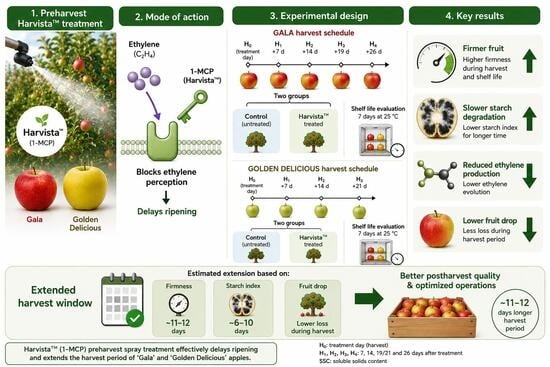
The objective of this work was to evaluate the efficiency of preharvest 1-MCP spray treatment to delay the maturation of ‘Gala’ and ‘Golden Delicious’ apples and help growers with the extended harvest period during the season. Fruit drop, fruit diameter, flesh firmness, ethylene production, soluble solid content, starch index and color index were measured to determine how long the harvest time could be delayed.
2. Materials and Methods
Apple trees of ‘Gala’ and ‘Golden Delicious’ from a commercial orchard in Zalaszántó, Hungary (46°53′15.0″ N, 17°12′46.5″ E) were used for this study. The plantation system was established at a spacing of 3.4 m × 0.7 m, corresponding to an approximate planting density of 4000 trees per hectare. The trees were grafted on M9 rootstock and trained to a super spindle canopy system. The orchard was managed under integrated pest management, with standard nutrient supply practices. Weather conditions (including precipitation, temperature, and wind) during the experimental period are presented in
Supplementary Figure S1. Two rows including around 520 apple trees (260 trees for Harvista™ treatment and 260 trees for untreated) were used for the experiment. Apple trees served as the control (untreated row) and the Harvista™-treated row belonged to different sides of the orchard.
For Harvista™, the 1-MCP content is 1.3%, sourced from AgroFresh, Philadelphia, PA, USA.
2.1. HarvistaTM Solution Preparation and Treatment
First, one tank was filled with water, and another tank was filled with Harvista™ (1-methylcyclopropene; AgroFresh Inc., Philadelphia, PA, USA). The machine mixed Harvista™ and water, and the pressure was 6 bar. The Harvista™ solution was sprayed on the tree with a backpack sprayer on a tractor at a dose of 8.75 L/ha according to the manufacturer’s recommendations. On 18th August, the row (260 trees) of ‘Gala’ apple trees was treated with Harvista™. On 6th September, the rows (260 trees) of ‘Golden Delicious’ apple trees were treated with Harvista™.
After Harvista™ treatment, 40 pieces of treated apple and 40 pieces of control apple were harvested, each time according to the schedule for quality parameter measurement (
Table 1 for ‘Gala’ and
Table 2 for ‘Golden Delicious’). The 20 apples of each group were measured at the harvest time, and the rest were measured after 7 days of shelf life at 25 °C.
2.2. Measurements
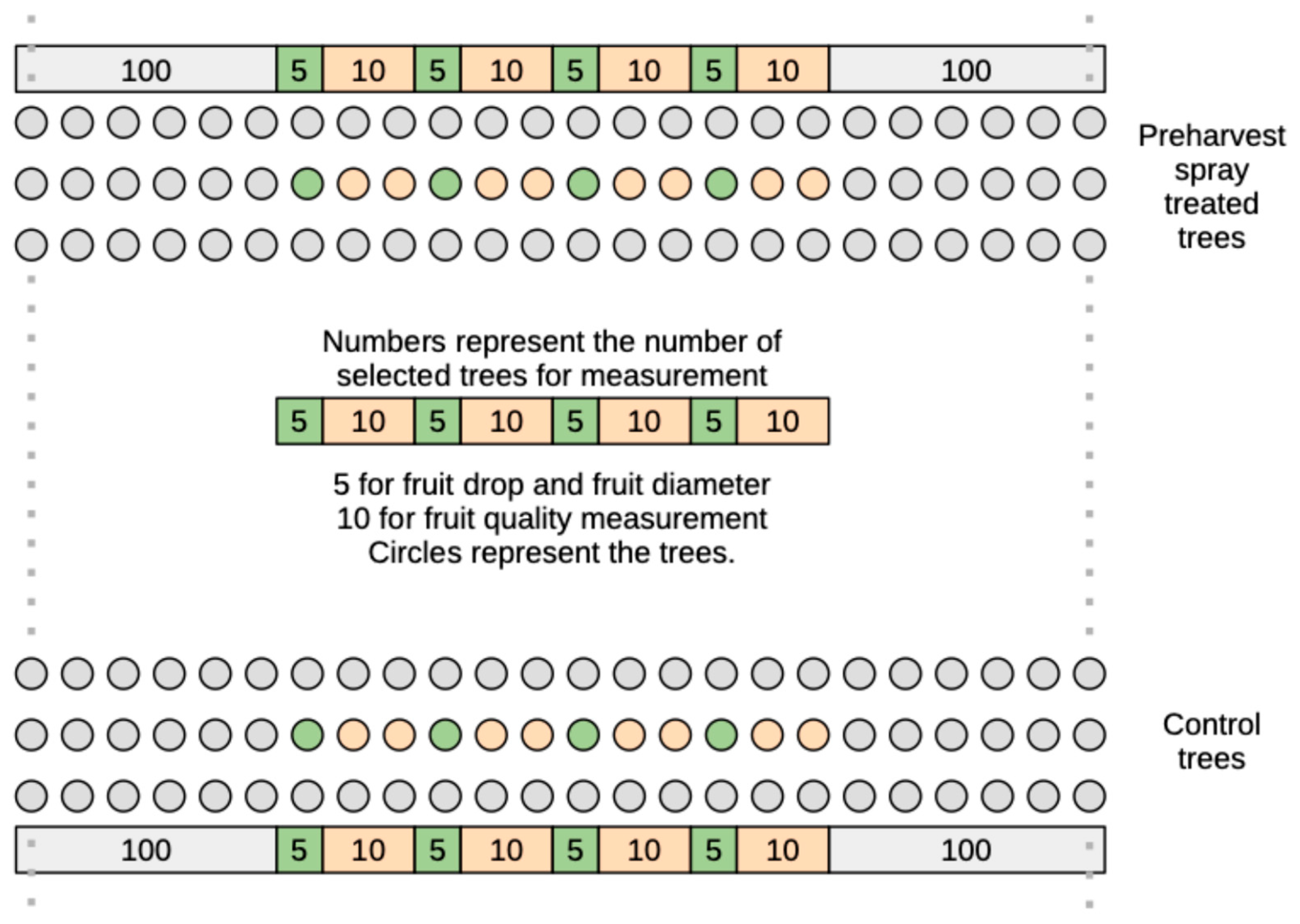
In each row, the first and the last 100 trees were not used for the measurement. Five trees were marked to count for the fruit dropping rate and fruit diameter, and the next ten trees were used for quality measurements including flesh firmness, color, starch index, total soluble solid content and ethylene production (
Figure 1). This consecutive order was repeated 4 times (totaling 60 trees).
At each harvest date, forty pieces of apple were harvested for the quality assessments.
The measurement was applied to two apple cultivars, ‘Gala’ and ‘Golden Delicious’.
2.3. Fruit Dropping Rate
In each row, one hundred pieces of apple were marked, and at each harvest date, the number of apples dropped was counted. The fruit dropping rate is calculated as the percentage of dropped fruit.
2.4. Fruit Diameter
In each row, one hundred pieces of apple were marked, and at each harvest date, apple fruit diameter was measured with a digital caliper (CD-20B, Mitutoyo, Kawasaki, Japan).
2.5. Ethylene Production
Ethylene production was determined at room temperature by an ICA-56 hand-held ethylene analyzer (International Controlled Atmosphere Ltd., Paddock Wood, UK). Approximately 1 kg of fruit was placed in a hermetically closed plastic container of 4 L for 1 h before measurement was performed. Measurement was repeated in triplicate, and the average value was used to describe samples. Results are expressed in μL kg−1 h−1 on a fresh weight basis.
2.6. Flesh Firmness
The Magness–Taylor firmness was measured with a handheld fruit firmness tester (FT 327, T.R. Turoni srl, Forlì, Italy). The instrument was mounted on a vertical stand to stabilize measurement. A cylindrical probe of 11 mm diameter penetrated the peeled tissue until 10 mm depth. The maximum force was recorded at two opposite locations on the external circumference, and their average was calculated for each fruit. Results were expressed in N, calculated from the unit of the instrument (kg cm−2).
2.7. Starch Index
Starch index was determined using Lugol’s solution (aqueous Iodine) on half the cut fruit. The surface pattern was compared to the reference guide and starch index was assigned in the scale of 1–10.
2.8. Soluble Solids Content
The soluble solids content (SSC) was measured with a portable refractometer (Atago Co., Ltd., Tokyo, Japan) after juice was squeezed from the tissue. Results were expressed as °Brix.
2.9. Color Index
The surface color of the apple was determined based on the commercial color scale.
For ‘Golden Delicious’ apple, the color code ‘Golden’ of CTIFL (Le Centre Technique Interprofessionnel pour les Fruits et Légumes, Paris, France [
25]) was used. Twenty fruit samples were evaluated in each group for each measurement day.
For ‘Gala’ apples, the color code ‘Gala’ of CTIFL [
26] was used. Twenty fruit samples were evaluated in each group for each measurement day.
2.10. Statistics
Statistical analysis was performed using R (version 4.5.1, R Foundation for Statistical Computing, Vienna, Austria) and RStudio (version 2026.04.0 build 526, Posit Software PBC, Boston, MA, USA). The homogeneity of variances was evaluated with the Fligner–Killeen test. When the homogeneity of variances was violated, the Kruskal-Wallis test was used, while one-way analysis of variances (ANOVA) was applied in case of homogeneous variances. The Duncan’s multiple range test (
p < 0.001) was used as a post hoc test for comparison among group means. Linear regression was performed to estimate the effect of harvest date on selected quality parameters, following do Amarante et al. [
9]. The performance of the models was compared using the R
2 value. The R
2 value reflects how the model fit to data and scaled from 0 to 1. The significance level is reported where appropriate (like
p < 0.001). The error bars on figures represent mean values and standard deviations.
4. Discussion
Preharvest Harvista™ application in the field has shown positive effects in delaying fruit maturation [
9]. However, the effects also depend on the cultivars and the time between the treatment and the harvest [
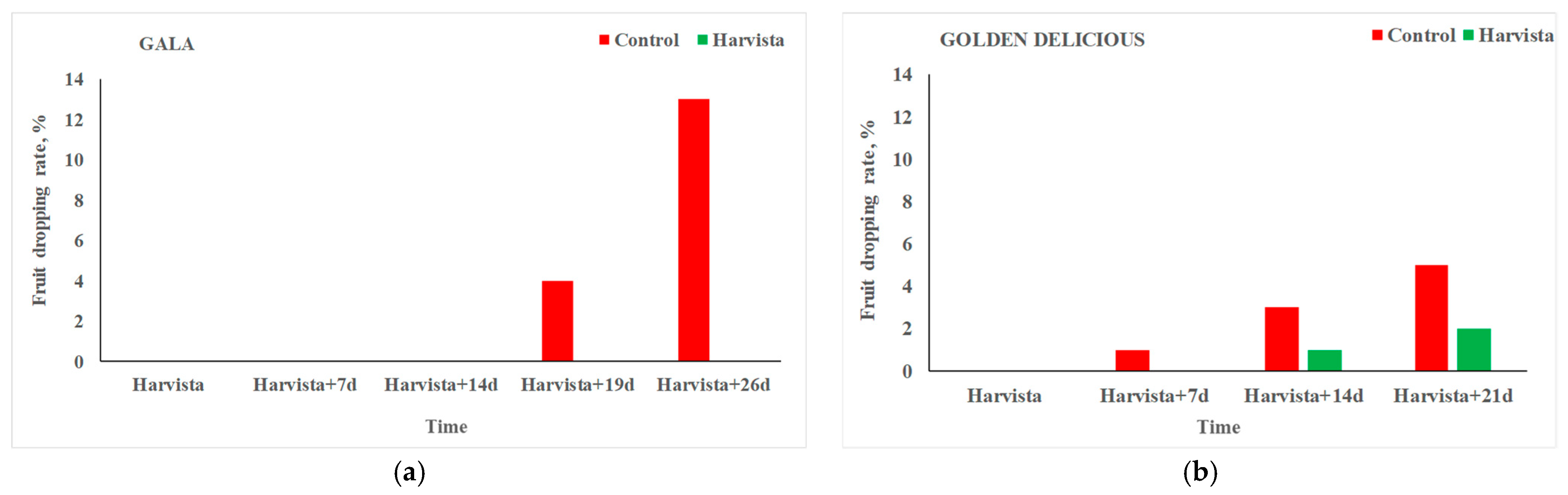
10]. In this study, Harvista™ could prevent fruit drop in ‘Gala’, whereas in ‘Golden Delicious’, treated trees had 1% fruit drop at the 14th day after treatment and increased to 2% at the 21st day. Fruit drop of the control trees was only observed after 19 days of Harvista™ treatment for ‘Gala’ and at the 7th day for ‘Golden Delicious’. Comparing to the control groups at different harvest times, treated trees had much lower fruit dropping rates. This agrees with the findings for ‘Starkrimson’ apple [
12], ‘Golden Delicious’ apple [
11,
14,
29], and ‘McIntosh’, ‘Empire’, ‘Macoun’, and ‘Honeycrisp’ apple [
30].
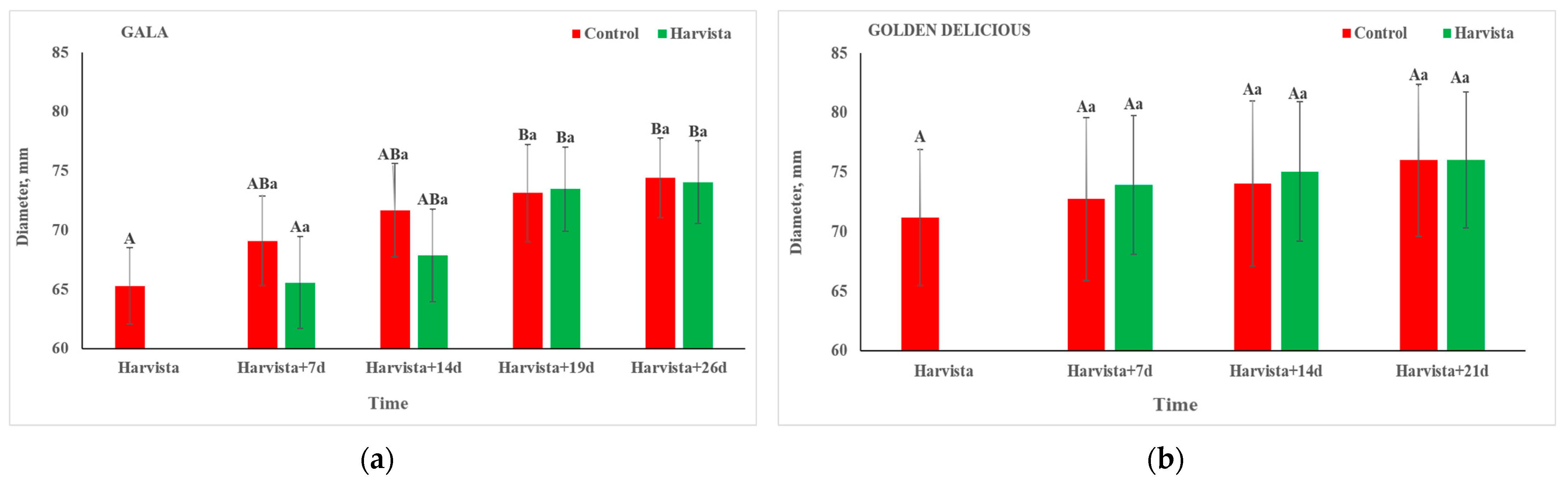
No significant difference was observed in single fruit diameter at the end of the experiment. The spray treatment did not show a significant effect on fruit size over the harvest period. The treated apples had smaller diameters than controls in case of ‘Gala’ till the 14th day after Harvista treatment, but there was no significant difference. For ‘Golden Delicious’ apples, the diameters of control and treated samples were similar during the experiment.
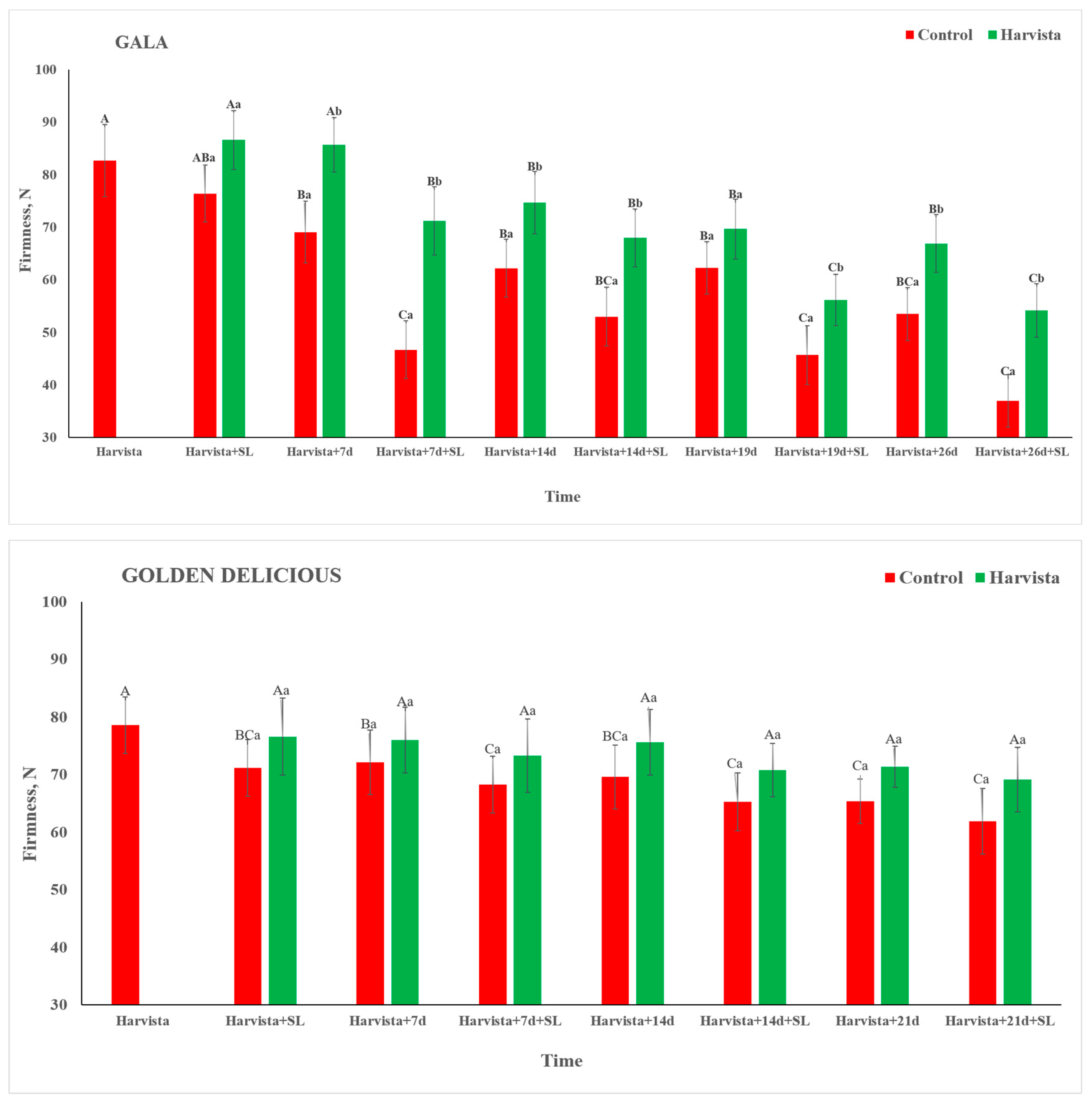
The preharvest treatment strongly affected the softening of both cultivars but at different rates. The observed behavior in this work is consistent with previous studies. Preharvest 1-MCP could delay harvest time by 6 days for ‘Cripps Pink’ apple according to its specific firmness threshold of 71.1 N [
9]. The treated apples of both cultivars were harder than the control samples at different harvest times and shelf lives as well. The rate of softening of ‘Gala’ is higher than that of ‘Golden Delicious’, particularly for the control samples. The ‘Golden Delicious’ apples had minor changes at each harvest time and shelf life for both control and treated fruit. Different cultivars behaved differently during the harvest period and also responded differently to the applied preharvest treatment. This agrees with a previous study, where the authors evaluated the preharvest 1-MCP treatment on ‘Law Rome’ and ‘Golden Delicious’ apples [
13,
31]. That report indicated that the positive effect of the preharvest Harvista application on firmness declined when increasing the harvest period. The firmness of treated ‘Law Rome’ apples at harvest was higher than that of a control only till the third day after spraying. On the other hand, preharvest 1-MCP still had an effect on the firmness of ‘Golden Delicious’ apples harvested up to 9 days after treatment [
31]. Contradictorily, no difference in firmness between control and treated fruit was observed at harvest for ‘Scilate’ apple [
15] and ‘McIntosh’ apple [
30]. As Harvista has no or less effect on some cultivars, it may be the case that apples on trees have the ability to form new ethylene receptors rapidly [
31].
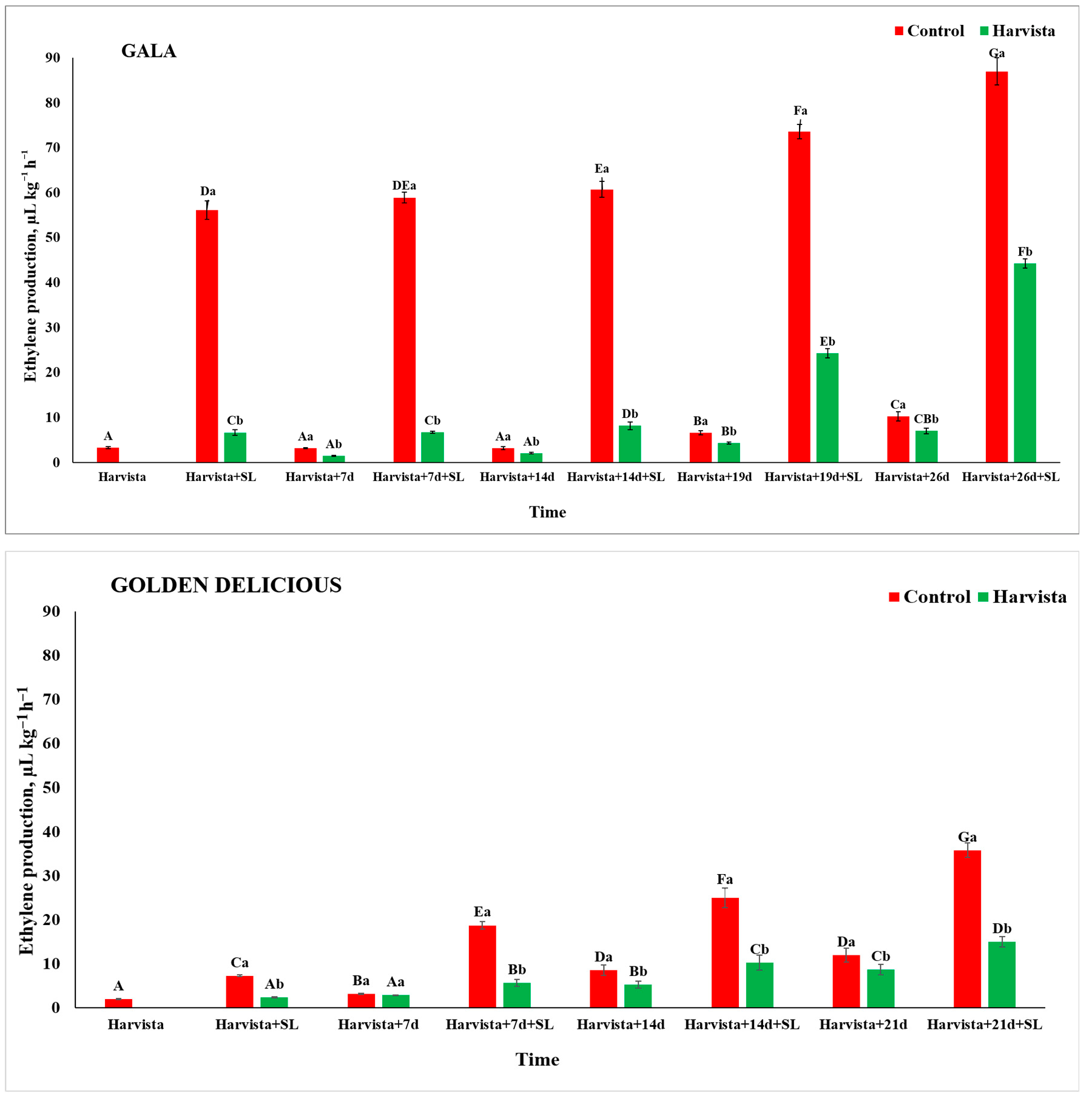
The observed differences between the cultivars can be attributed to the stronger ethylene production of ‘Gala’ apples compared to ‘Golden Delicious’ ones, inducing the advanced ripening process of ‘Gala’. The preharvest 1-MCP treatment could decrease the ethylene production for both cultivars. The results of this work showed that the treated ‘Gala’ apples had much lower ethylene production compared to the control. This is in agreement with the previous reports for ‘Golden Delicious’ apple [
11], ‘Starkrimson’ apple [
12] and ‘McIntosh’ apple [
30]. These authors also found that application of Harvista slowed the maturation of fruit. Ethylene is the hormone regulating the maturation and ripening process, as high ethylene production triggers the maturation and induces physical and chemical changes in the fruit [
32]. Ethylene production rate reflects the stage of fruit ripening. In this study, the ethylene production in ‘Gala’ apples was higher than those of ‘Golden Delicious’. This is the reason why ‘Gala’ fruit lost flesh firmness rapidly, while the reduction in firmness of ‘Golden Delicious’ apples was not significant regardless of time and treatment.
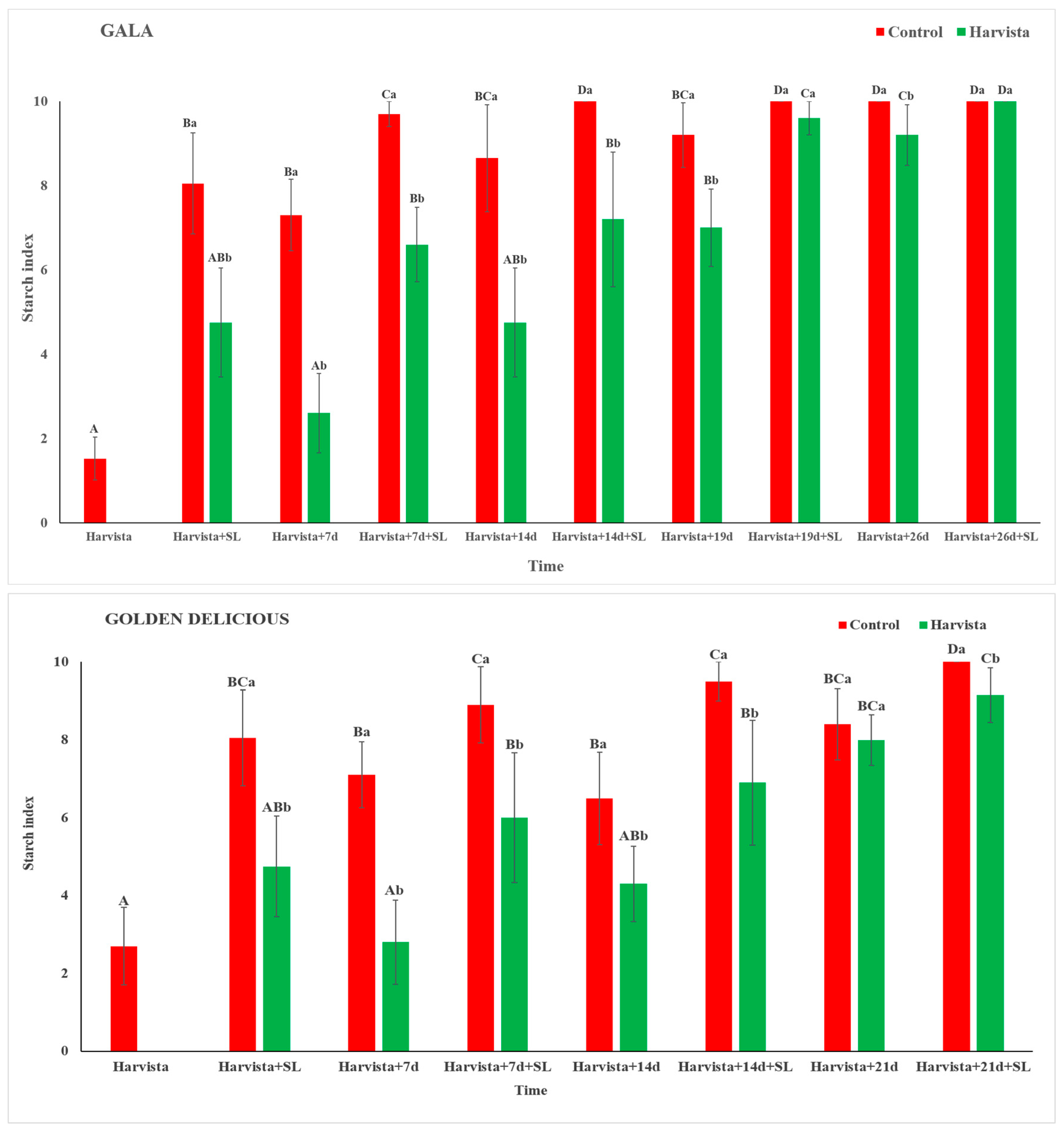
Regarding the starch index, the 1-MCP application on the field could slow down the starch breakdown. However, there was no significant difference between control and treated fruit at the end of the harvest period for ‘Gala’ at 26 days after treatment and ‘Golden Delicious’ at 21 days after treatment. A similar result was also found for ‘Scilate’ apple: preharvest 1-MCP treatment had no significant effect on starch index at harvest [
15]. On the contrary, Harvista-treated ‘Ambrosia’ apple had a higher starch content (lower starch index) compared to the control [
33]. Those reports showed that different cultivars respond differently to the treatment.
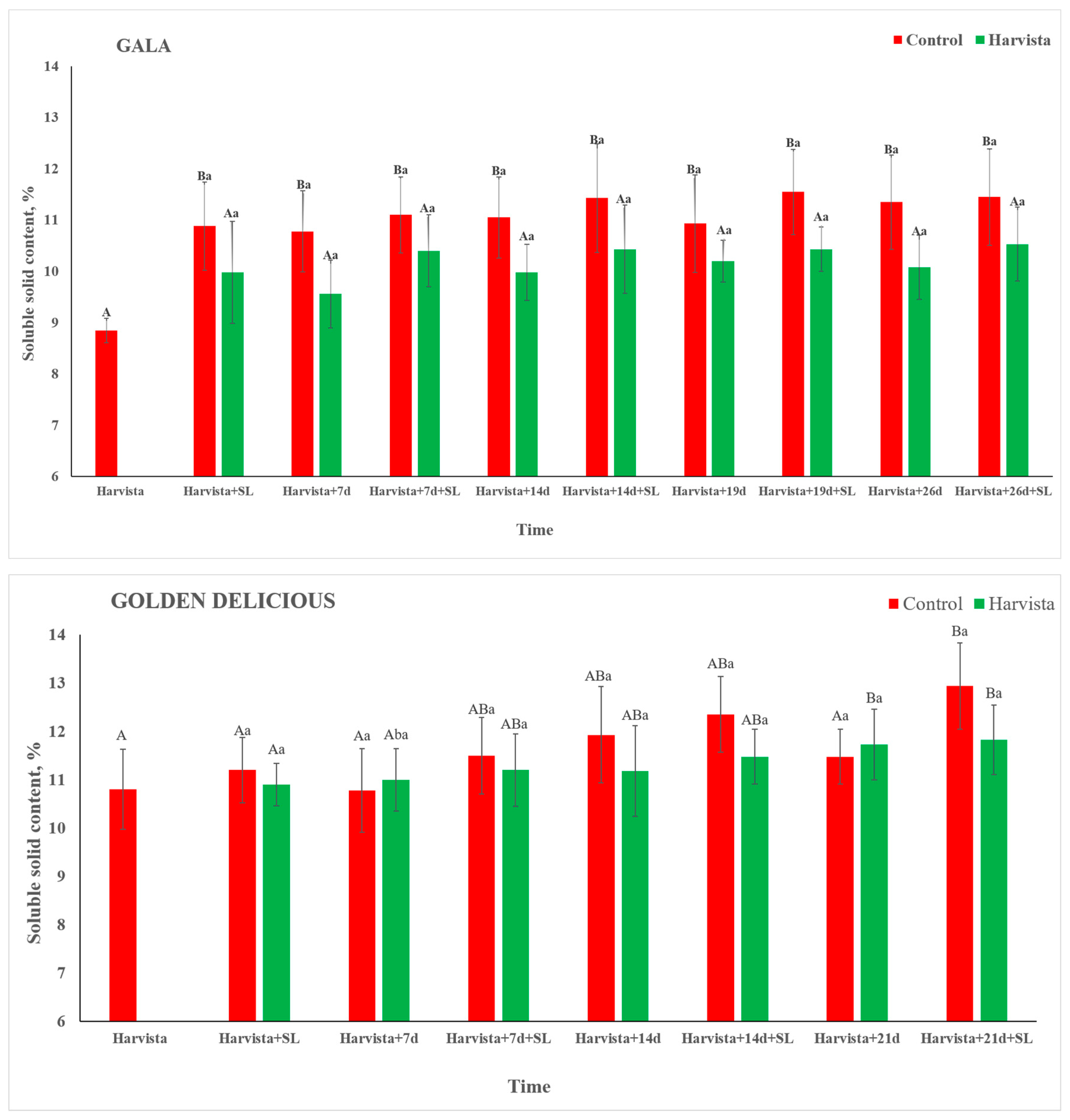
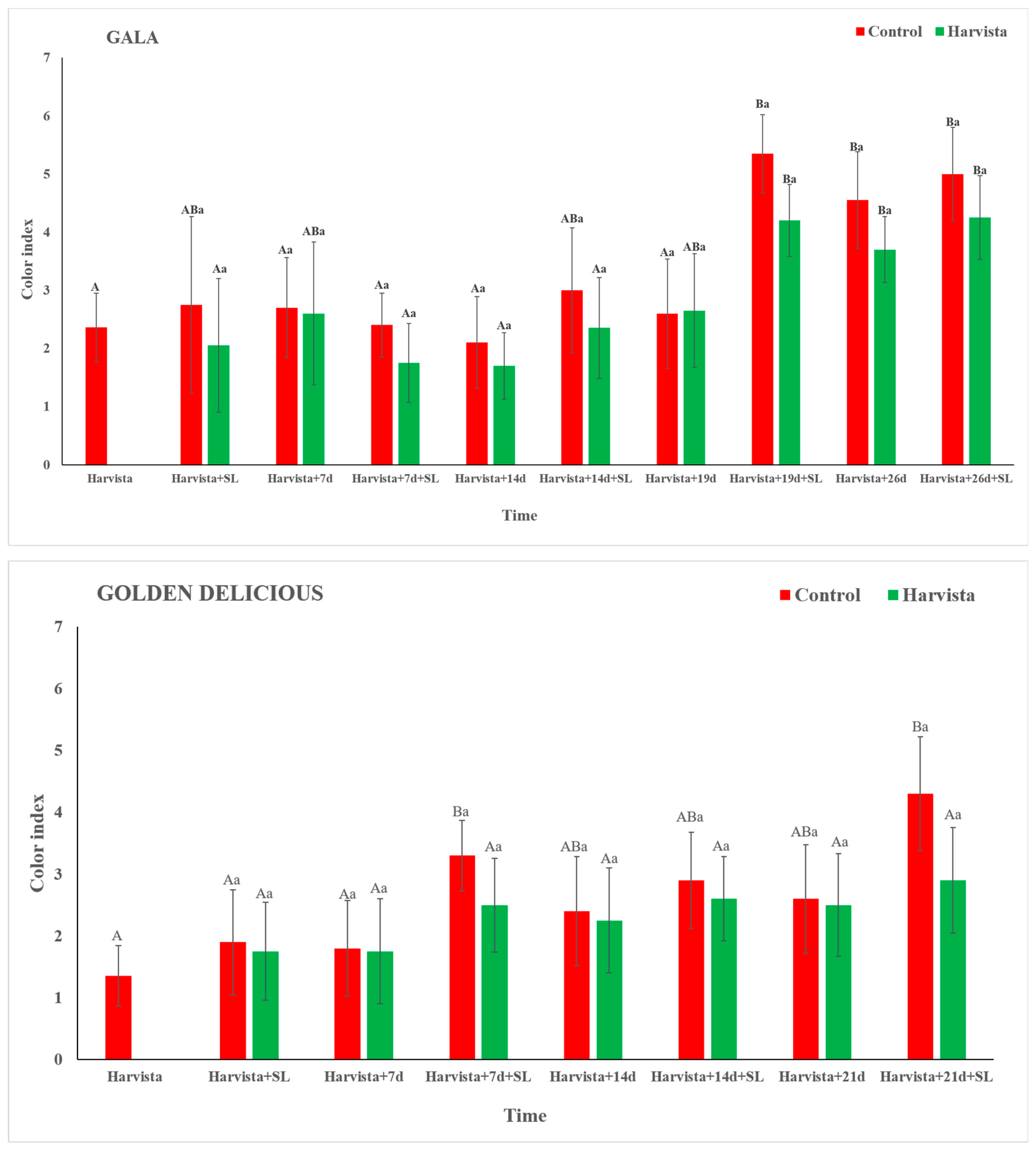
No significant difference was observed between the color index values of control and treated fruit over the harvest period. The SSC had the same trend in the color index. Harvista™ treatment did not yield significant changes for these parameters. The observed results are similar to previous studies, indicating that SSC is not affected by spraying 1-MCP on trees for ‘Cripps Pink’, ‘Scilate’, ‘Royal Gala’ and ‘Gala’ apple [
9,
15,
34,
35].
The changes in fruit quality parameters (firmness, ethylene production, starch index, color index and soluble solid content) were affected by harvest date. The Harvista™ treatment delayed the fruit maturation, and thereby could extend the harvest time. Different quality parameters resulted in different possible extensions to the harvest. The advancement of the presented results over previous research in this topic is the result of multiple quality factors. Producers can meet different consumers’ preferences, such as color, firmness, and sweetness. It is challenging for growers when they have to schedule harvesting a large number of apples in a short time. Besides the control of harvested fruit quality, food waste and economic loss can also decrease, with a fruit dropping rate of less than 10% [
36]. In this work, the application of preharvest Harvista™ treatment was successful in addressing multiple factors. Apples exposed to the treatment could maintain their acceptable quality and comply with the SmartFresh™ guidelines. However, this experiment was carried out in a single season and location. Despite the encouraging results, long-term studies of consecutive production cycles are planned to validate the findings.




 ,
,