1. Introduction
Rose (
Rosa hybrida L.) belongs to the Rosaceae family and the Rosa genus. They are thorny shrubs, serving as an important cultivated group for cut flower production and one of the most popular cut flower varieties in the global flower trading market [
1]. After the cut roses are harvested from the industrial park, they are first subjected to pre-cooling treatment to reduce the respiratory rate and inhibit aging. Then, through grading and screening, as well as standardized packaging, they are transferred to low-temperature storage for transportation. After that, they are transported via cold chain to various markets and eventually reach consumers. During this process, the cut roses are prone to water loss and wilting due to water imbalance. At the same time, the emerging problems such as petal shedding, stem rot, and dull color may occur, which can seriously affect the commercial quality and ornamental value of the cut roses. Therefore, the extension of the preservation period of cut roses is urgently needed to reduce post-harvest losses, enhance product value, and meet consumer demands. Additionally, the cut roses are one of the most favored cut flowers by consumers, but their petals are susceptible to being influenced by multiple factors, which then decreases the preservation time of the cut roses. Thus, developing efficient preservatives to prolong the post-harvest preservation time and ensure post-harvest quality of cut rose flowers, especially their petals, is significant for cut rose production. The preservation period of cut flowers depends on the genetic background of the variety and various external environmental factors, such as ambient temperature, humidity, light, and nutrients in the vase solution [
2]. The internal physiological changes associated with the senescence of cut flowers include a decrease in the rate of fresh weight change, excessive release of ethylene, a decline in soluble sugar, soluble protein, and proline (Pro) contents, weakened antioxidant enzyme activities, and an increase in the production of reactive oxygen species (ROS) [
3,
4]. Although numerous studies have been conducted to extend the preservation period of cut roses, the development of highly effective preservatives remains a current research hot topic.
Hydrogen sulfide (H
2S) is an important gaseous signaling molecule that regulates fruit ripening and senescence, and it is primarily synthesized by two key enzymes: L-cysteine desulfhydrase (LCD) and D-cysteine desulfhydrase (DCD) [
5,
6]. For instance, H
2S donors delayed the decline in fruit firmness and the color change while increasing the contents of reducing sugars, soluble proteins, and free amino acids during the post-harvest storage of strawberry fruits [
7]. However, the mechanism by which H
2S affects the ripening of fruits and the post-cutting storage of cut flowers has only been reported in recent years. For example, studies have shown that the use of exogenous H
2S had a significant impact on the antioxidant enzyme activity of carnation cut flowers, thereby extending the post-harvest preservation period of the flowers [
8]. However, the interaction relationship between H
2S and other plant growth regulators is still unclear. For example, the relationship with melatonin (MT) remains unknown.
MT is a key antioxidant molecule involved in horticultural crop postharvest regulation [
9]. MT also plays a key role in the ripening, aging regulation, and post-harvest preservation of horticultural crops. For example, during the normal temperature storage of grape fruits, the application of exogenous MT delayed the decrease in soluble solids content and inhibited the accumulation of ROS and hydrogen peroxide (H
2O
2), thereby improving the post-harvest storage quality [
10]. When applied to the preservation of cut roses, the antibacterial effect of MT was better than 8-hydroxyquinoline (8-HQ), consistent with a better condition of water absorption and an increase in flower diameter [
11]. Furthermore, research conducted on wheat (
Triticum aestivum L.) demonstrated that both MT and H
2S conferred tolerance to salt stress by potentiating antioxidant enzyme activities and upregulating the expression of sodium transport genes. In addition, MT employed multiple potential signaling pathways to alleviate salt stress, with the H
2S-mediated pathway representing one of them [
12]. Whereas the regulatory mechanisms governing the interactions between MT and other gas transmitters, including H
2S, during the preservation of cut flowers remain to be elucidated.
For now, most current studies have focused on the individual use of MT and H2S for cut rose preservation. However, the aspects of their joint use and the role of MT in regulating H2S in order to enhance the freshness of cut roses are unknown. In this study, the ‘Corolla’ rose (Rosa hybrida L.) was selected as the plant material, and the solutions of sodium hydrosulfide (NaHS) and hypotaurine (HT) were applied as H2S donor and scavenger, respectively. The effects of combined MT and H2S treatment on the vase life and senescence process of cut roses, as well as the relationship and specific regulatory mechanisms between them, were analyzed. The core scientific hypothesis proposed in this study is that MT and H2S function synergistically as vital signal substances to jointly mitigate postharvest senescence and sustain the storage quality of cut roses, with H2S serving as a key downstream component participating in the MT-associated regulatory cascade governing cut flower senescence. Unlike prior investigations predominantly concentrating on the independent physiological effects of individual signaling molecules, the current research attempts to elucidate the interactive crosstalk between MT and H2S during cut rose preservation. This research established a new framework of coordinated regulation by H2S and MT, opening up a new direction for post-harvest physiology research of cut flowers.
2. Materials and Methods
2.1. Plant Materials and Experimental Conditions
Cut roses ‘Corolla’ were harvested from a commercial grower in Lanzhou (Gansu Province, China) early in the morning and transferred to the laboratory immediately. Buckets containing the flower stems were covered with a plastic film shroud to minimize moisture loss during transportation. In the laboratory, the cut rose stems were re-cut to a length of 35 cm under distilled water to avoid air embolism. The upper 3 leaves were retained on each stem. Then, the base of the stem was inserted into distilled water for a 2 h rehydration treatment. Among the properly selected roses, a certain number of flower buds with an open degree of four, a net weight of 23 ± 3 g, and without any mechanical damage or infection were initially selected to ensure the uniformity of the experimental materials. Three independent biological replicates were set up for each treatment, with six flowers used in each replicate. The experiment was conducted under controlled environmental conditions at 20 ± 1 °C, 60 ± 5% relative humidity, and a 12 h photoperiod (08:00–20:00 h) provided by cool fluorescent lamps at a photosynthetic photon flux density (PPFD) of 15 µmol·m−2·s−1.
In the control group, the vase solution was a base solution consisting of 20 g·L
−1 sucrose and 200 mg·L
−1 8-HQ. In the MT treatment group, the base solution was used as the solvent to prepare MT (Shanghai Yuanye Bio-Technology Co., Ltd., Shanghai, China) solutions at concentrations of 0, 1, 25, 50, and 100 mg·L
−1. The concentration gradient of MT was screened and finalized according to our preliminary experimental results. We used NaHS (Tianjin Kemiou Chemical Reagent Co., Ltd., Tianjin, China) as H
2S scavenger in this study, whose reagent purity is ≥98%. It can effectively avoid the interference of impurities. The H
2S treatment group’s vase solution contained 50 mg·L
−1 sodium bisulfide (NaHS) in the base solution. This working concentration of NaHS was determined based on previous studies [
7]. The HT treatment group’s base solution was prepared by adding 60 mg·L
−1 hypotaurine (HT, Shanghai Macklin Biochemical Co., Ltd., Shanghai, China) in the base solution, and the applied HT concentration was also optimized via preliminary trials. The treated petals were used as tissue samples for subsequent analysis.
2.2. Measurement of Morphological Indexes
Following the methods of Ren et al. (2017) with slight modifications, we determined vase life duration, maximum flower diameter, and relative fresh weight [
13]. The phenotypic changes of cut roses, including petal color, shape, and texture, were recorded daily throughout the experimental period. Vase life was considered terminated when any of the following symptoms occurred: substantial petal abscission; severe water loss accompanied by abscission of more than half of the outer petals; prominent yellowing and desiccation of petal apices; or obvious softening of the flower head. The maximum flower diameter was defined as the maximum width of each flower, which was the average value obtained from two cross-sectional measurements. The measurement was conducted using a vernier caliper. On the 6th d of the bottle culture, a unified measurement and calculation were carried out. Starting from the first d of vase insertion, the fresh weight of the cut rose branches was measured daily at a fixed time (13:00 h) using a platform scale for 7 consecutive d. The daily measurements were then used to calculate the increase in fresh weight change rate of the cut roses. The average values of the lifespan, maximum petal diameter, and fresh weight of 6 flowers in each treatment group were calculated.
2.3. Determination of Soluble Sugar and Soluble Protein
The soluble sugar content in the experiment was determined using the anthrone colorimetric method. The cut rose petals that were treated with different solutions for 6 d were retained as the following experimental materials. 0.5 g of fresh-cut rose samples were accurately weighed, homogenized with distilled water, transferred to a centrifuge tube, and made up to 10 mL before being treated in a boiling water bath for 30 min. After the samples cooled to room temperature, filtration was performed, and the filtrate was further made up to 100 mL. 0.3 mL of the sample solution was mixed with 1.7 mL of distilled water, and the absorbance value was detected at a 630 nm wavelength using a spectrophotometer. The actual content was calculated using the established standard curve.
The determination of soluble protein content was accomplished using the coomassie brilliant blue staining method. The cut rose petals that had undergone 6 d of bottle insertion liquid treatment were retained as experimental materials for the following experiment. The rose samples were rapidly frozen with liquid nitrogen and ground, then fully lysed with phosphate buffer solution (PBS, pH 7.4). After centrifugation at 4 °C and 12,000 g, for 20 min, the supernatant was collected. An appropriate amount of protein extract was reacted with the coomassie brilliant blue reagent, and the absorbance value was measured at a wavelength of 595 nm. The soluble protein content was calculated based on a pre-prepared bovine serum albumin standard curve.
2.4. Determination of Pro Content
The content of Pro was determined by the sulfosalicylic acid method. The petals of the cut roses that had undergone 6 d of different treatments were retained as the experimental materials. Firstly, 0.5 g of fresh rose petals were weighed and placed in a capped test tube. Five mL of 3% sulfosalicylic acid was added, and the tube was covered. The mixture was heated for 10 min. When the temperature dropped to room temperature, it was centrifuged at 4 °C, 12,000 g, for 10 min. Two mL of the supernatant was withdrawn and mixed with 2 mL of ice-cold acetic acid and 3 mL of acidic ninhydrin. In the control group, 2 mL of distilled water was used instead of the supernatant. The mixture was heated for 30 min. After cooling to room temperature (25 °C), 5 mL of toluene was added for thorough shaking to extract the red substance. After the layers were separated, the toluene layer was taken and measured at an absorbance of 520 nm.
2.5. Determination of Malondialdehyde (MDA) Content
The experiment used the thiobarbituric acid (TBA) method to determine the MDA content. The cut rose petals that were collected on the 6th d from different treatments were used as the experimental samples. 0.8 g of fresh rose petals were cut, and a small amount of 10% trichloroacetic acid (TCA) and quartz sand were added. The mixture was ground into a homogenate, which was then centrifuged at 4 °C for 15 min at 4000
g. Next, 3 mL of the supernatant was mixed with 0.5% TBA in a 10% TCA solution and boiled for 15 min, then quickly cooled. The cooled solution was transferred to a centrifuge tube and centrifuged at 4 °C for 15 min at 4000
g. The absorbance values of the supernatant were measured at 450, 532, and 600 nm. MDA concentration was calculated using the following formula based on the method described: C
MDA = [6.45 × (A
532 − A
600) − 0.56 × A
450] × V
total/(V
sample × FW). Where C
MDA is the MDA concentration (nmol·g
−1); A
450, A
532, and A
600 refer to absorbance values at corresponding wavelengths; V total means the total extraction volume; V sample stands for the volume of supernatant taken for reaction; FW indicates the fresh weight of petal samples [
14].
2.6. Determination of Enzyme Activities of Ascorbic Acid Peroxidase (APX), Peroxidase (POD), and Catalase (CAT)
The cut rose petals that were collected on the 6th d from different treatments were used as the experimental samples. The enzyme activity of APX was determined using the ascorbic acid (AsA) oxidation method. Firstly, the crude enzyme solution was extracted. 0.5 g of frozen rose samples under different treatments were taken and placed in a pre-cooled mortar, with 1 mL of enzyme extraction solution added, which contained 2 mM AsA, 2 mM ethylene diamine tetraacetic acid (EDTA), and 1% polyvinyl pyrrolidone (PVP) in 200 mM PBS (pH 7.8). A small amount of quartz sand was then added, and the mixture was ground on ice until a homogeneous suspension was obtained. Subsequently, centrifugation (4 °C, 4000 g, 20 min) was performed to obtain the supernatant, which was the crude APX enzyme solution. Based on this, the activity was measured. The reaction system was 3 mL containing 50 mM pH 7.0 PBS buffer, 0.1 mM EDTA, 0.5 mM AsA, 0.1 mM H2O2, and an appropriate amount of the samples to be tested was added to initiate the reaction. The absorbance was measured at 290 nm immediately, and the amount of the enzyme with an A290 reduction of 0.1 within 1 min was defined as 1 APX activity unit (U·g−1·min).
The enzyme activity of POD was determined by the guaiacol colorimetric method. Firstly, the crude enzyme solution was extracted. 0.5 g of different treated frozen rose samples were taken and placed in a pre-cooled mortar. Five mL of PBS (pH 7.0, 200 mM) and a small amount of quartz sand were added. The mixture was ground on ice until homogenized. The resulting supernatant was centrifuged at 4 °C and 10,000 g for 20 min. The obtained supernatant was the crude POD enzyme solution. Then, the absorbance value was measured: Three mL of the reaction system included 2.6 mL of a 50 mM pH 6.0 PBS, 200 μL of 3% H2O2 and 200 μL of the crude enzyme solution. A blank tube without H2O2 was used as the reference solution. Finally, H2O2 was added to initiate the reaction, and the absorbance value at 470 nm of the reaction system was measured immediately on a spectrophotometer. The absorbance value was read every 10 s and recorded every 5 min.
The activity of the CAT enzyme was determined by the ultraviolet absorption method for H2O2. The preparation method for the crude enzyme solution was the same as that used for determining POD enzyme activity. During the activity measurement, the reaction system contained 2.86 mL of 50 mM pH 7.0 PBS and 40 μL of 3% H2O2 in a 3 mL volume. Then, 100 μL of the crude enzyme solution was added to initiate the reaction. The absorbance value at 240 nm was recorded every 10 s after the reaction began. The amount of the enzyme that reduced A240 by 0.1 within 1 min was defined as 1 CAT activity unit (U·g−1·min).
2.7. RNA Isolation and Real-Time Reverse Transcription Quantitative PCR (qRT-PCR)
On the 6th d of different treatments, the petals from 3 cut roses were collected in each treatment group and were ground into powder in liquid nitrogen. The Mini BEST PLANT RNA extraction kit was used to extract total RNA from the ground powder. Then, cDNA synthesis was carried out. Specifically, at a reaction temperature of 37 °C for 15 min, 85 °C for 5 s, and 4 °C for an indefinite period, the bright and appropriately concentrated RNA was reverse-transcribed into cDNA. The resulting product was then stored at −20 °C for future use.
qRT-PCR was performed using the LightCycler 480 real-time fluorescence quantitative PCR system (Roche Applied Science, Penzberg, Germany) and the SYBR Green Premix Pro Taq HS Premix kit. The primers used in qRT-PCR were designed by Primer Premier 5.0 and were listed in
Supplemental Table S1. The tissue samples in each treatment were analyzed with three replicates to monitor possible sampling and experimental errors. The CT values were within the linear amplification range to ensure the reliability of the data. The internal reference gene was
RhActin. The amplification efficiency of each gene-specific primer pair was evaluated via serial 5-fold dilutions of pooled cDNA templates to generate standard curves before formal qRT-PCR detection. Only primers with amplification efficiency ranging from 90.0% to 110.0% and correlation coefficient R
2 > 0.98 were adopted for subsequent quantification. The specificity of all primers was verified by melting curve analysis following each qRT-PCR run, which produced a single sharp peak for each target amplicon. In addition, agarose gel electrophoresis was performed to confirm a single expected band size for each PCR product, eliminating non-specific amplification and primer-dimer interference (
Supplement Figure S1). Relative gene expression levels were calculated using the classic 2
−ΔΔCt comparative Ct method.
2.8. Determination of ROS Content
The petals of the cut roses treated with different solutions for 6 d were collected as the plant samples. Firstly, 0.5 g of fresh rose petals was taken as the sample. Acetone was added to a pre-cooled mortar, and the petals were ground at an ice bath to form a homogenate, then diluted to 5 mL with pre-cooled acetone. Next, the mixture was centrifuged for 20 min (4 °C, 12,000 g) to obtain the supernatant. Then, 1 mL of the supernatant, + 0.1 mL of TiCl4 + 0.2 mL of concentrated ammonia water were added successively to a 5 mL centrifuge tube and mixed well. Then, the tube was centrifuged at 5000 g for 10 min, the supernatant was removed, the pigments were removed, and the precipitate was washed with acetone 2–3 times. Three mL of 2 MH2SO4 was added to dissolve the precipitate. After complete dissolution, the absorbance was measured at a 412 nm wavelength; then the H2O2 content was calculated through the standard curve.
The content of superoxide anion O2·− was determined by the hydroxylamine reduction method. Firstly, 1 g of fresh rose petals was taken and added to a mortar with PBS (0.05 M, pH 7.8). The solution was then made up to 5 mL and homogenized at 4 °C under an ice bath. After centrifugation at 12,000 g for 20 min at 4 °C, the supernatant obtained was the crude enzyme extract. 0.5 mL of the extract was added to a centrifuge tube, and 0.5 mL of PBS (0.05 M, pH 7.8) and 1 mL of hydroxylamine (1 mM) were mixed. Then, it was placed at 25 °C for 1 h, followed by the addition of 1 mL of 1-naphthylamine (7 mM) and 1 mL of sulfanilic acid (17 mM). The mixture was shaken up and down and then incubated at 25 °C for 20 min. Finally, the absorbance value was measured at a wavelength of 530 nm.
2.9. Determination of 1-Aminocyclopropane-1-carboxylic Acid (ACC) Content and Enzyme Activities of ACC Synthase (ACS) and ACC Oxidase (ACO)
The determination of ACC content was performed following previously reported protocols [
15]. Petals from three randomly selected cut roses per treatment were sampled and ground into fine powder with liquid nitrogen. Briefly, 3 g of the petal powder was homogenized in 10 mL of 95% alcohol, followed by centrifugation at 4000×
g for 20 min. The resulting supernatant was concentrated at 55 °C, resuspended with 0.5 mL trichloromethane and 5 mL distilled water, and centrifuged again at 4000×
g for 20 min. For the assay tube, 0.5 mL supernatant was mixed with 10 μM HgCl
2 and 0.5 mL of a 2:1 (
v/
v) solution of 5% NaClO + saturated NaOH. The standard tube was prepared identically except for the absence of ACC. After a 30-min incubation on ice, both tubes were vortexed, and 1 mL of headspace gas was collected to quantify ethylene concentration using gas chromatography (GC-17A, Shimadzu, Kyoto, Japan). Activities of ACS and ACO were assayed in accordance with previously established procedures [
16].
2.10. Determination of Endogenous H2S Content
The petals of the cut roses treated with different solutions for 6 d were collected as the plant samples. The frozen samples were ground into powder using liquid nitrogen, and 0.5 g of the powder was accurately weighed and transferred to a pre-cooled centrifuge tube. Then, 2 mL of PBS containing 200 mM AsA and 0.1 mM EDTA-Na2 (50 mM, pH 6.8) was added and vortexed to mix. The mixture was then centrifuged at 4 °C (12,000 g, 15 min), the supernatant was collected and transferred to a clean test tube and left on ice for later use. Next, 2 mL of a mixed solution containing 100 mM PBS (pH 7.4), 2 mM pyridoxal phosphate (PLP), and 10 mM L-cysteine was added to the supernatant, vortexed to mix, and then incubated at 25 °C in the dark for 30 min. Subsequently, 0.15 mL of 5 mm dimethylphenidine (DMPD) solution and 0.15 mL of a 50 mM ammonium ferric sulfate solution were added to the reaction system, vortexed to mix, and incubated at 25 °C in the dark for 15 min. Finally, the absorbance of the reaction solution at 667 nm was measured. The same volume of ultrapure water without adding zinc acetate was used as a blank control. A standard curve was established using the standard solution, and the content of the target substance in the sample was calculated.
2.11. Determination of Enzyme Activities of LCD and DCD
The cut rose petals collected on the 6th d from different treatments were used as experimental samples. The activities of LCD and DCD were determined via the H2S colorimetric method. Firstly, the crude enzyme solution was extracted. 0.5 g of frozen rose samples from different treatments were placed in a pre-cooled mortar, and 1 mL of enzyme extraction solution (200 mM PBS, pH 7.5, containing 2 mM EDTA and 1% PVP) was added. A small amount of quartz sand was supplemented, and the mixture was fully ground on ice to obtain a homogeneous suspension. After centrifugation at 4 °C and 4000 g for 20 min, the supernatant was collected as the crude enzyme solution for LCD and DCD determination.
The LCD activity reaction system was 3 mL, containing 100 mM Tris-HCl (pH 9.0), 2.5 mM DTT, 0.8 mM L-cysteine, and an appropriate amount of crude enzyme solution to initiate the reaction. After incubation, the absorbance was measured at 670 nm. One unit of LCD activity (U·g−1·min) was defined as the enzyme amount required to produce 1 nmol H2S per minute.
The DCD activity reaction system was 3 mL, containing 100 mM Tris-HCl (pH 8.0), 2.5 mM DTT, 0.8 mM D-cysteine, and an equal amount of crude enzyme solution to initiate the reaction. The absorbance was determined at 670 nm with the same reaction and colorimetric conditions. The definition of DCD activity unit was consistent with that of LCD (U·g−1·min). All samples were determined with three biological replicates to ensure experimental accuracy.
2.12. Statistical Analysis
The data were analyzed using the software SPSS 22.0 (SPSS Inc., Chicago, IL, USA). All datasets were first subjected to a normality test and homogeneity of variance test to verify the prerequisites for one-way analysis of variance (ANOVA). Values were expressed as mean ± standard error (SE) of three independent experiments, with three biological replicates in each experiment. Multiple comparisons were handled by applying Tukey’s honestly significant difference (HSD) test method to determine the significance of the results between different treatments, with the significance level set at p < 0.05.
4. Discussion
In recent years, numerous studies have delved deeply into the physiological mechanisms underlying the preservation of cut flower quality after harvest [
17,
18]. However, there are numerous factors that affect the blooming and aging of cut flowers. For instance, once detached from the mother plant, cut flowers undergo a gradual loss of water, nutrients, and energy, leading to petal wilting and abscission and ultimately resulting in the loss of ornamental value [
19]. Previous studies have shown that MT can effectively delay senescence and maintain the postharvest quality of fruits and vegetables. For example, treating postharvest sweet cherry fruits with MT inhibits their decay rate, respiration rate, and mass loss, while enhancing their antioxidant enzyme activities, thereby effectively delaying fruit senescence [
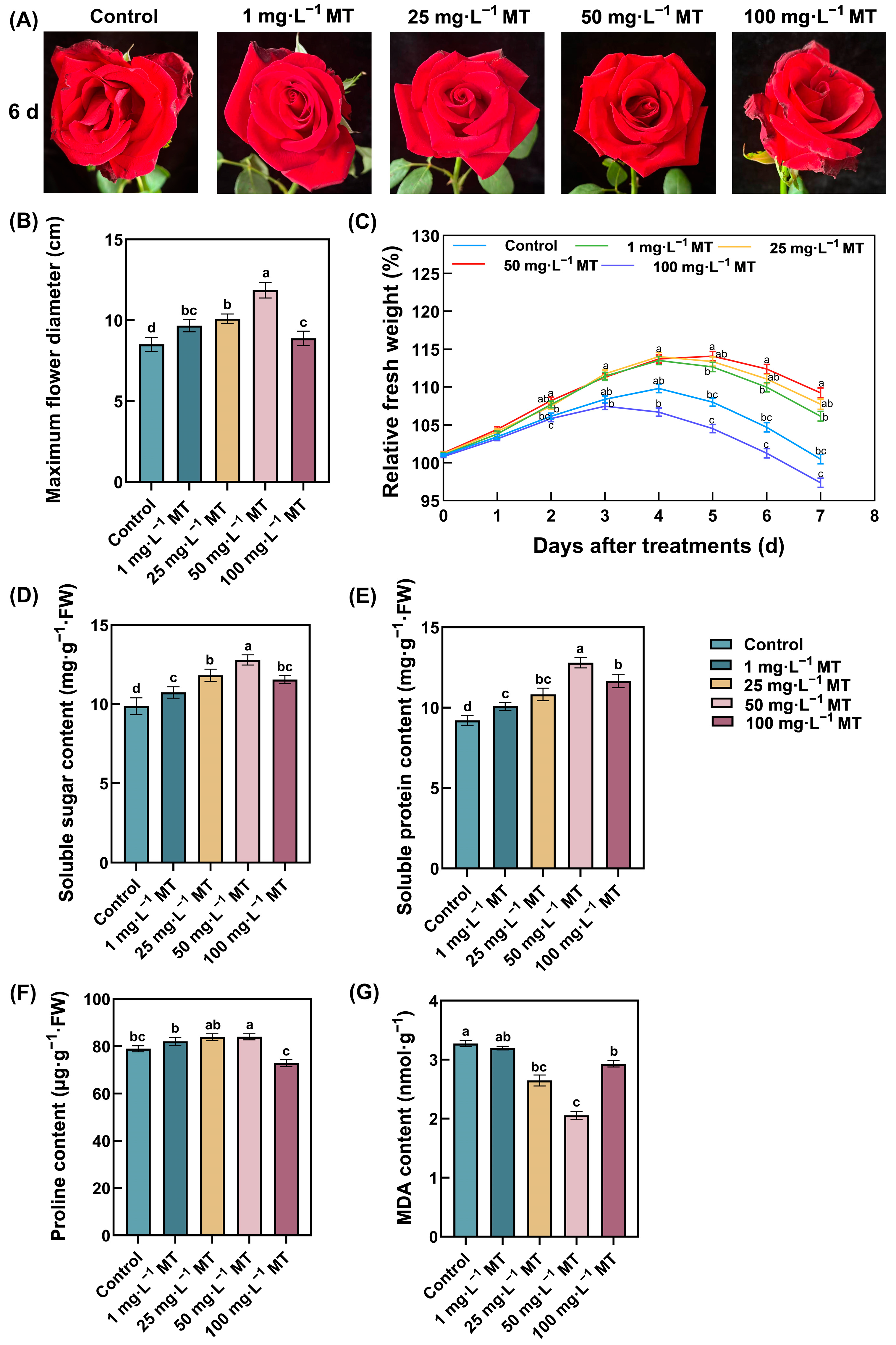
20]. This study shows that cut rose flowers treated with 50 mg·L
−1 MT had the longest vase life (
Table 1). At the same time, the maximum flower diameter and the fresh weight change rate of this treatment were significantly better than those of the other treatment groups, effectively maintaining petal cell turgor pressure and metabolic activity (
Figure 1B,C). This further confirms that the 50 mg·L
−1 MT treatment can extend the flowering period by increasing water absorption and reducing fresh weight loss. Notably, its MDA content showed a decreasing trend (
Figure 1G), and the MDA content was the lowest among all treatments. Previous studies also supported the importance of MT concentration selection. For example, in cut carnation research, high-concentration MT treatment led to a significant decrease in vase life and an increase in MDA content [
20]. In the study on ‘Bartzella’ cut flowers, treatment with 100 µMMT increased flower diameter and water absorption capacity but did not extend vase life [
14]. It reported that 50 µMMT significantly extended the vase life and increased the maximum flower diameter of the herbaceous peony cultivars ‘Da Fu Gui’ and ‘Qi Hua Lu Shuang’ [
21]. The differences in these results may be related to the variety of cut flowers, and they also indicate that an excessively high concentration of MT will reduce the preservation effect of the cut flowers, revealing the importance of the ratio of hormone concentrations. Therefore, in this study, 50 mg·L
−1 was selected as the appropriate MT concentration for the subsequent experiments.
Previous studies reported that some small-molecule compounds had been confirmed to be involved in maintaining the preservation quality of cut flowers and extending their vase life [
22]. For example, endogenous H
2S delayed post-preservation senescence in daisies by enhancing antioxidant capacity and maintaining energy status [
23]. As a signaling molecule, H
2S is transported within cells via simple diffusion without the need for specific carriers. Therefore, it is widely involved in various physiological processes in plants, including diverse protective mechanisms. For example, It showed that HT treatment attenuated the resistance of postharvest peaches to cold stress by reducing the content of endogenous H
2S. Similarly, endogenous H
2S enhanced the salt tolerance of alfalfa seedlings by promoting the restoration of redox balance and inhibiting potassium ion efflux [
24,
25]. In addition, H
2S was confirmed to extend the vase life of cut carnations [
8] and to improve the vase life and quality of cut roses and chrysanthemums (
Dendranthema morifolium Ramat.) [
26]. It also prolonged the storage period of fruits by activating the antioxidant system to maintain good appearance and nutritional quality [
27,
28]. During the senescence of cut flowers, water deficit stress disrupted the normal balance of reactive oxygen species, leading to oxidative stress. Studies showed that the activities of the contents of soluble sugar and soluble protein, were positively correlated with water uptake, water loss, and relative water content [
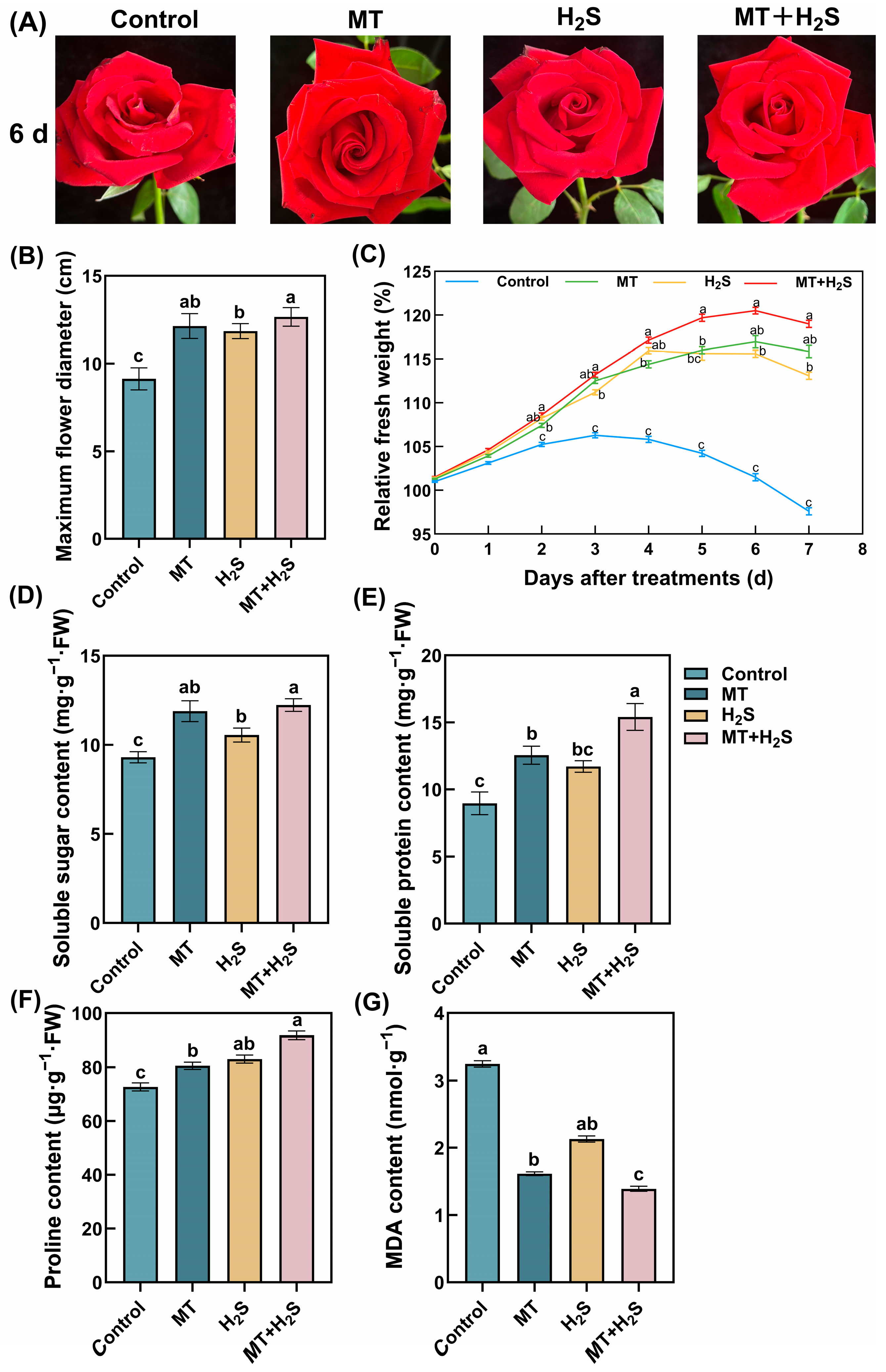
14]. MT influenced flower diameter and fresh weight by affecting water uptake, which in turn affected the activities of the levels of osmotic regulatory substances such as soluble sugar and soluble protein, thereby maintaining the water balance of cut flowers. To date, no study has reported the combined treatment of hydrogen sulfide and melatonin on the preservation of cut roses during production. In this study, MT + H
2S-treated cut roses exhibited a longer flowering period, intact petals, and no wilting (
Figure 2A), with significantly better maximum flower diameter and fresh weight change rate than the control (
Figure 2B,C). Thus, MT + H
2S effectively delayed senescence and extended vase life. This indicates that H
2S can significantly enhance the MT-induced physiological effects. Through a synergistic action, it further increases the levels of osmotic regulatory substances while more effectively reducing the level of the membrane lipid peroxidation product MDA, thereby exhibiting superior cytoprotective and antioxidant effects compared to MT treatment alone. The observed synergistic interaction between MT and H
2S signals points to a likely bidirectional regulatory relationship of their signaling pathways. MT may function as a potential upstream signal to moderately induce endogenous H
2S biosynthesis. In turn, accumulated H
2S could partially boost MT-dependent antioxidant and osmotic protective responses, which tend to establish a partial positive feedback regulatory pattern within senescing petal tissues to a certain extent. Consistent with previous studies focused on postharvest horticultural crops, the joint action of melatonin and H
2S signaling molecules moderately improves osmotic homeostasis maintenance and partially mitigates oxidative injury to cell membranes in most reported systems, though obvious differences exist in the magnitude and composition of downstream gene regulatory cascades across various ornamental plant varieties [
5]. Previous studies have shown that soluble sugars, soluble proteins, and Pro are key substances involved in osmotic regulation in cut flowers, and their content changes are closely related to the osmotic regulatory function of the petals themselves [
26]. After the combined treatment with MT and H
2S, the contents of these osmotic regulatory substances in the cut flower petals have significantly increased overall. By increasing the cell solute concentration and optimizing the cell osmotic potential, it effectively alleviates the stress caused by water imbalance and jointly mediates the adaptive response of the petal osmotic regulation system. In summary, MT and H
2S can jointly regulate the accumulation of osmotic regulatory substances and activate the petal osmotic regulation mechanism to improve the water status of cut flowers and achieve post-harvest preservation effects. Furthermore, the role of HT as an H
2S scavenger has been reported in other plants. For example, HT promoted color transition and softening in tomato fruits by reducing the activities of gene expression of chlorophyll synthesis-related enzymes and upregulating the expression of genes related to chlorophyll degradation, softening, and ethylene synthesis [
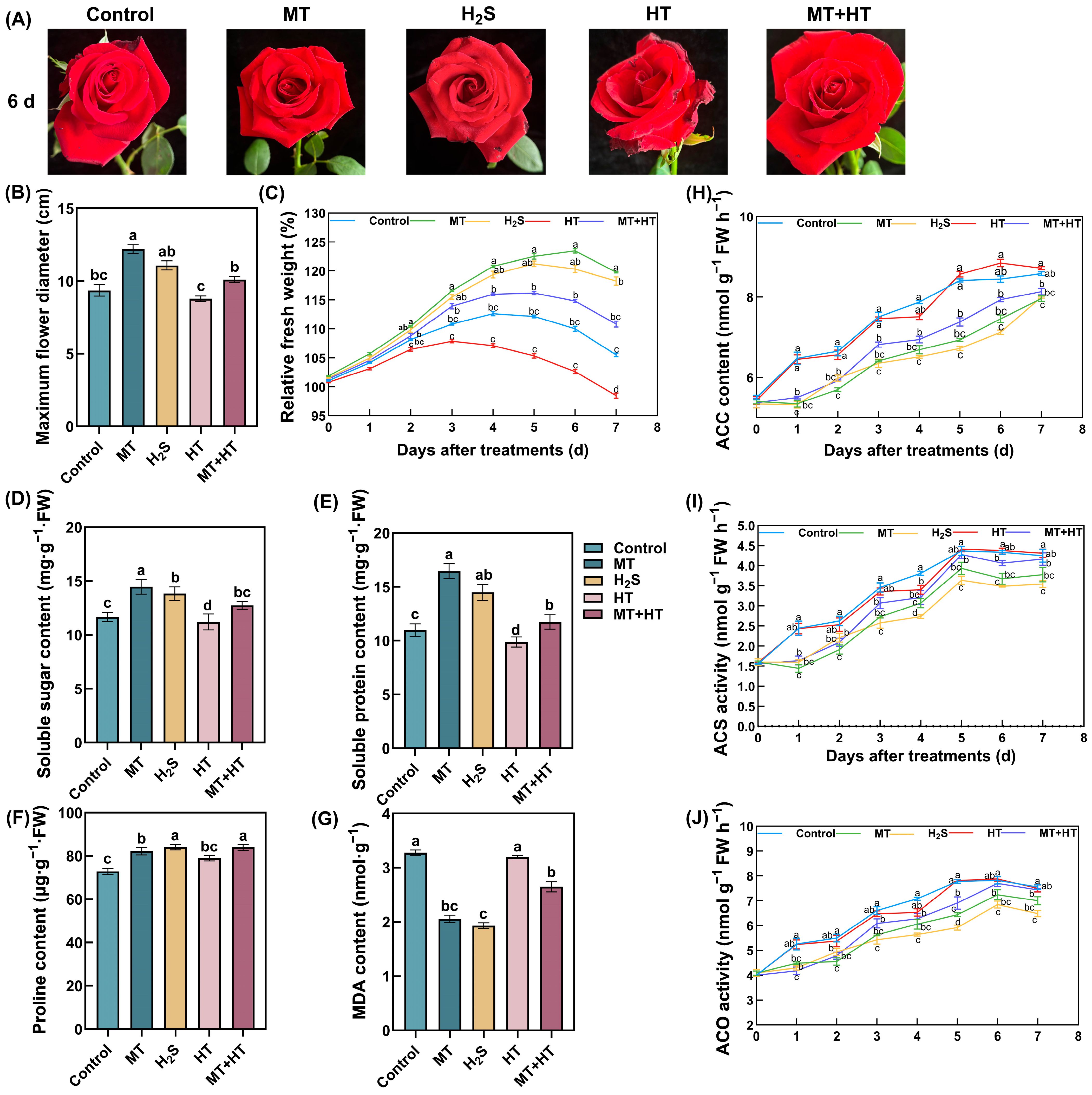
29]. In our research, HT treatment caused severe wilting and scarring of petals, while MT + HT treatment led to curled outer petals (
Figure 4A). HT also reduced maximum flower diameter compared to MT (
Figure 4B). MT + HT treatment increased soluble sugar, soluble protein, and proline contents and reduced MDA content, thereby delaying senescence (
Figure 4D–G). However, HT has removed some of its protective effects, indicating that MT action partially depends on the H
2S signaling pathway. It should be noted that the application of exogenous HT for exploring signal interactions carries certain inherent limitations within the present experimental system. As a chemical scavenger rather than a specific inhibitor targeting H
2S biosynthesis, HT non-selectively eliminates most cellular free H
2S and may moderately interfere with the homeostasis of other sulfur-containing metabolites. This effect may partially contribute to the abnormal petal phenotypes, such as wilting and scarring, observed in our study. In addition, chemical scavengers hardly achieve fine, gene- or tissue-specific modulation of H
2S signaling, which increases the difficulty in distinguishing direct MT-H
2S interactive responses from the reagent’s non-specific adverse side effects. Further genetic assays are therefore required to provide more supportive evidence for the proposed MT-H
2S signaling interaction and make up for the inherent deficiencies of pharmacological experimental approaches. As key components of ethylene biosynthesis, ACC content and the activities of ACS and ACO are closely linked to the onset and progression of flower senescence. In this study, HT treatment significantly accelerated the accumulation of ACC, alongside higher ACS and ACO activities, consistent with its role in promoting ethylene production and hastening senescence. In contrast, MT and H
2S treatments markedly suppressed these ethylene-related parameters, maintaining lower ACC levels and reduced enzyme activities throughout the vase life. These results collectively indicate that MT and H
2S may delay cut roses senescence by downregulating the ethylene biosynthetic pathway, thereby limiting ethylene production (
Figure 4H–J).
MT, as an indoleamine compound, scavenged free radicals, conferred antioxidant properties, and inhibited lipid peroxidation and had been widely used in the preservation of cut flowers [
30,
31]. Membrane lipid peroxidation is one of the important mechanisms leading to the aging of cut flowers [
32]. Meanwhile, osmotically active substances protected the organs and cells of cut flowers and enhanced their adaptability to stress [
33]. Additionally, previous studies also supported the findings of the present study. It found that in ‘Bartzella’ Itoh peony cut flowers, exogenous melatonin reduced the content of MDA; significantly increased the activities of SOD, POD, and CAT; and alleviated oxidative stress throughout the entire opening process of the cut flowers [
14]. It suggested that treating cut peony flowers with melatonin reduced the MDA content and increased the contents of related components [
21]. In the banana variety ‘
Musa nana’, 0.5 mM NaHS reduced the accumulation of MDA, H
2O
2, and O
2, and promoted the activities of antioxidant enzymes, thereby alleviating low-temperature injury in postharvest bananas [
34]. This indicates that H
2S plays a significant role in promoting the antioxidant enzyme activities after post-harvest treatment. To ensure that the observed effects were specifically attributable to H
2S rather than to the counterion Na
+ of the donor compound, we examined the potential interference of Na
+ released from NaHS. Although NaHS dissociates into Na
+ and HS
- in aqueous solution, and elevated Na
+ levels could theoretically alter osmotic potential or interfere with membrane ion transport, pre-experiments confirmed that at the concentration used (50 mg·L
−1), the Na
+ release is within a physiologically negligible range [
35]. Hence, the preservation effects reported herein can be reliably ascribed to H
2S signaling. In this study, the MT + H
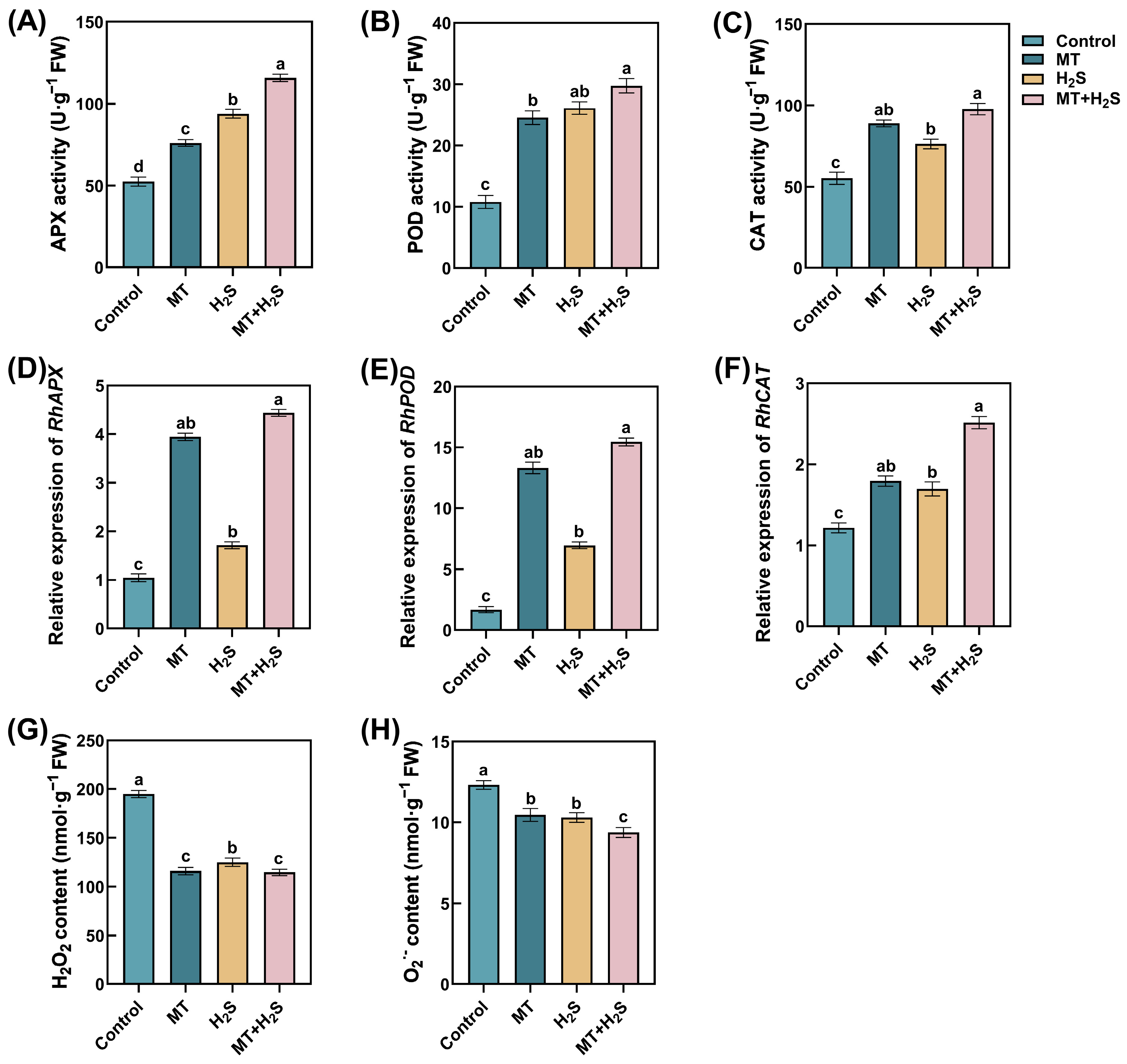
2S treatment significantly increased the enzymatic activities of APX, POD, and CAT (
Figure 3A–C). Previous studies had found that MT delayed petal browning by upregulating the activities of SOD and CAT [
36]. It was further confirmed in this study that MT + H
2S delayed the senescence of cut roses by upregulating the activities of APX, POD, and CAT. Excessive production of reactive oxygen species leads to oxidative damage to plant cell membranes and ultimately results in the death of cells and organisms. Additionally, MT + H
2S significantly reduced the contents of H
2O
2 and O
2, and decreased the electrolyte leakage rate in cut flowers. Similarly, It reported that in two-week-old pepper seedlings, 0.2 mM NaHS enhanced tolerance to boron toxicity by reducing H
2O
2 content and membrane electrolyte leakage rate [
37]. Therefore, these results indicate that MT + H
2S can significantly protect the cell membranes of cut-flower roses. The mechanism lies in promoting the activity of antioxidant enzymes and reducing the accumulation of reactive oxygen species. For example, in postharvest celery (
Apium graveolens L.), NaHS treatment significantly increased the activities of SOD, POD, and CAT, while HT treatment decreased these activities. The relative expression levels of
AgSOD1,
AgPOD, and
AgCAT showed a similar trend to the enzyme activities [
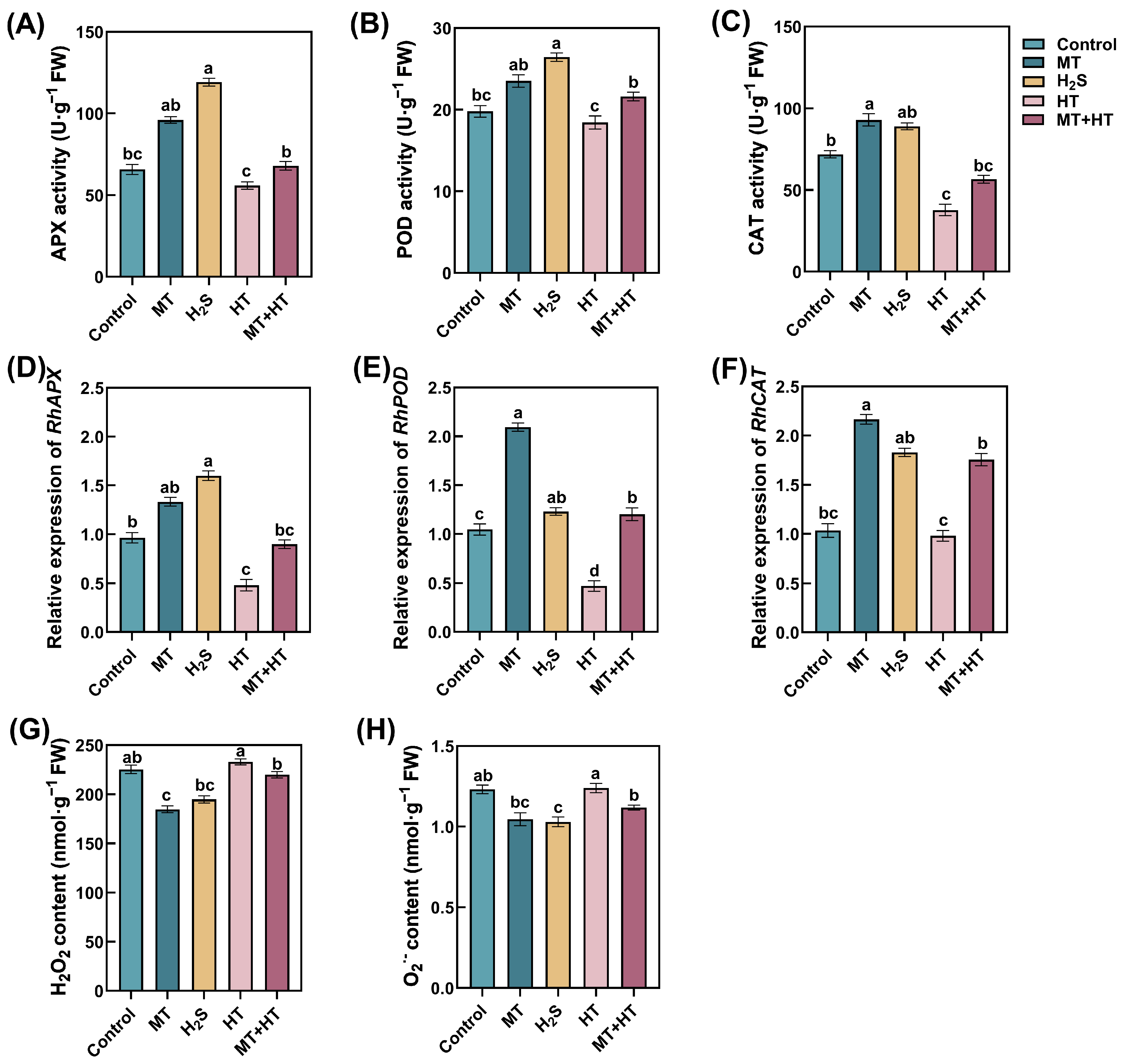
38]. In this study, HT significantly inhibited APX, POD, and CAT activities and the
RhAPX,
RhPOD, and RhPOD gene expression in cut roses, leading to H
2O
2 and O
2·− accumulation. It is speculated that HT can significantly reduce the activity of antioxidant enzymes in cut flower petals by inhibiting the biosynthesis of endogenous H
2S in the plants, thus preventing excessive accumulation of H
2O
2 and O
2− within the petals. MT, on the other hand, possesses non-enzymatic antioxidant properties and can directly eliminate ROS. Compared with the HT treatment alone group, the accumulation of ROS in the petals of the MT + HT treatment group was significantly reduced (
Figure 5G,H). Thus, the effect of MT on ROS accumulation does not only rely on the enzymatic antioxidant system mediated by H
2S. Notably, the combined MT + H
2S treatment outperformed either treatment alone, further confirming that MT enhanced the antioxidant defense system and alleviated oxidative damage via the H
2S signaling pathway.
Regarding endogenous H
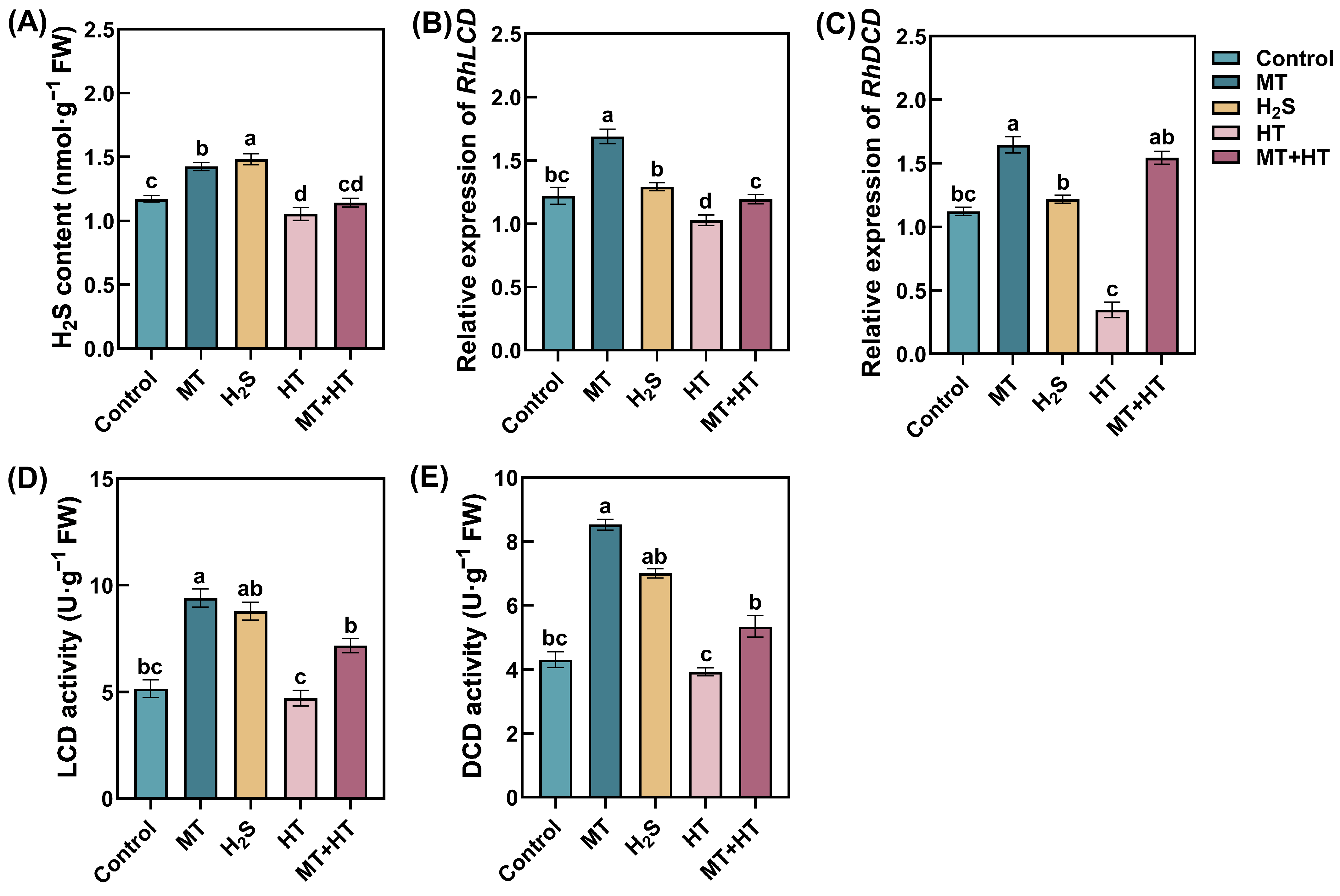
2S synthesis, this study revealed a clear upward trend in H
2S content in cut roses (
Figure 6A), indicating activation of the biosynthetic mechanism in response to post-harvest storage-induced cell senescence. Meanwhile, HT treatment significantly suppressed endogenous H
2S accumulation, thereby shortening the lifespan of cut roses. H
2S was mainly synthesized by the key enzymes L-cysteine desulfhydrase (LCD) and D-cysteine desulfhydrase (DCD) [
39]. For example, in tomatoes,
SlDCD2 delayed fruit ripening and leaf senescence by producing H
2S to maintain ROS homeostasis and inhibit ethylene synthesis, and its loss of function led to accelerated fruit ripening and premature leaf senescence [
40]. Similarly, in the study on
Crataegus pinnatifida, treatment with NaHS promoted endogenous H
2S accumulation by triggering LCD and DCD enzyme activities and subsequently enhanced ROS scavenging enzyme activities [
41]. In addition, HT treatment significantly increased the activities of LCD and DCD and the expression levels of
AgOASTL,
AgSAT, and
AgLCD compared with the control, indicating that endogenous H
2S biosynthesis was activated during storage to counteract cell senescence. Exogenous H
2S treatment further enhanced endogenous H
2S biosynthesis, as evidenced by increased LCD and DCD activities and upregulation of
AgLCD and
AgDCD expression [
39]. This study showed that exogenous MT significantly upregulated the expression of
RhLCD and
RhDCD, the key enzyme genes for H
2S synthesis in cut roses, thereby increasing endogenous H
2S content (
Figure 6). This result was consistent with previous reports showing that MT induces H
2S production in various plant species. In contrast, HT treatment significantly weakened the above effects of MT, reducing H
2S content and synthase gene expression to levels below those of the control. Combined with the promoting effects of MT on the antioxidant system and osmotic regulatory substances shown in
Figure 4 and
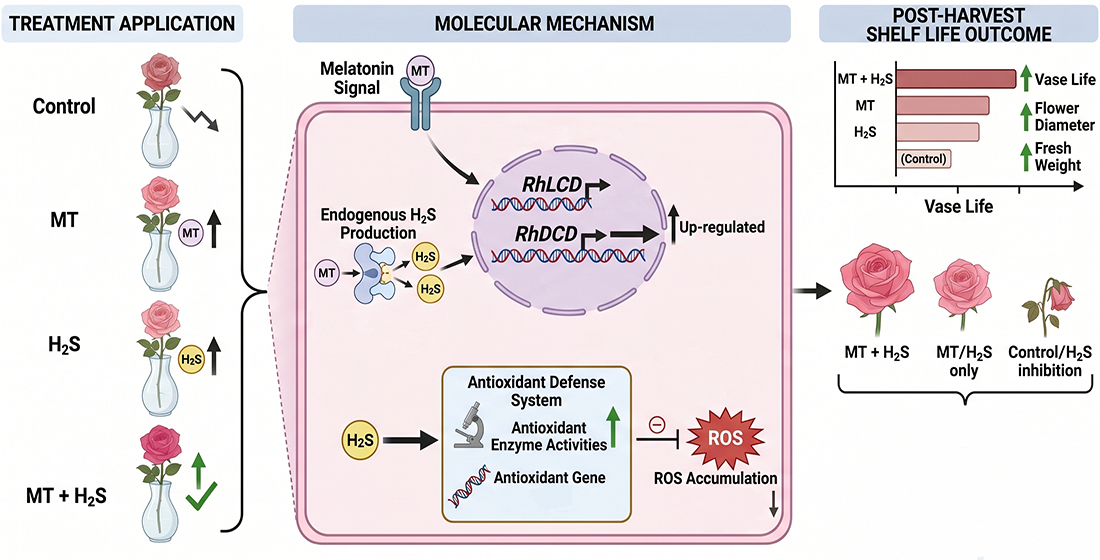
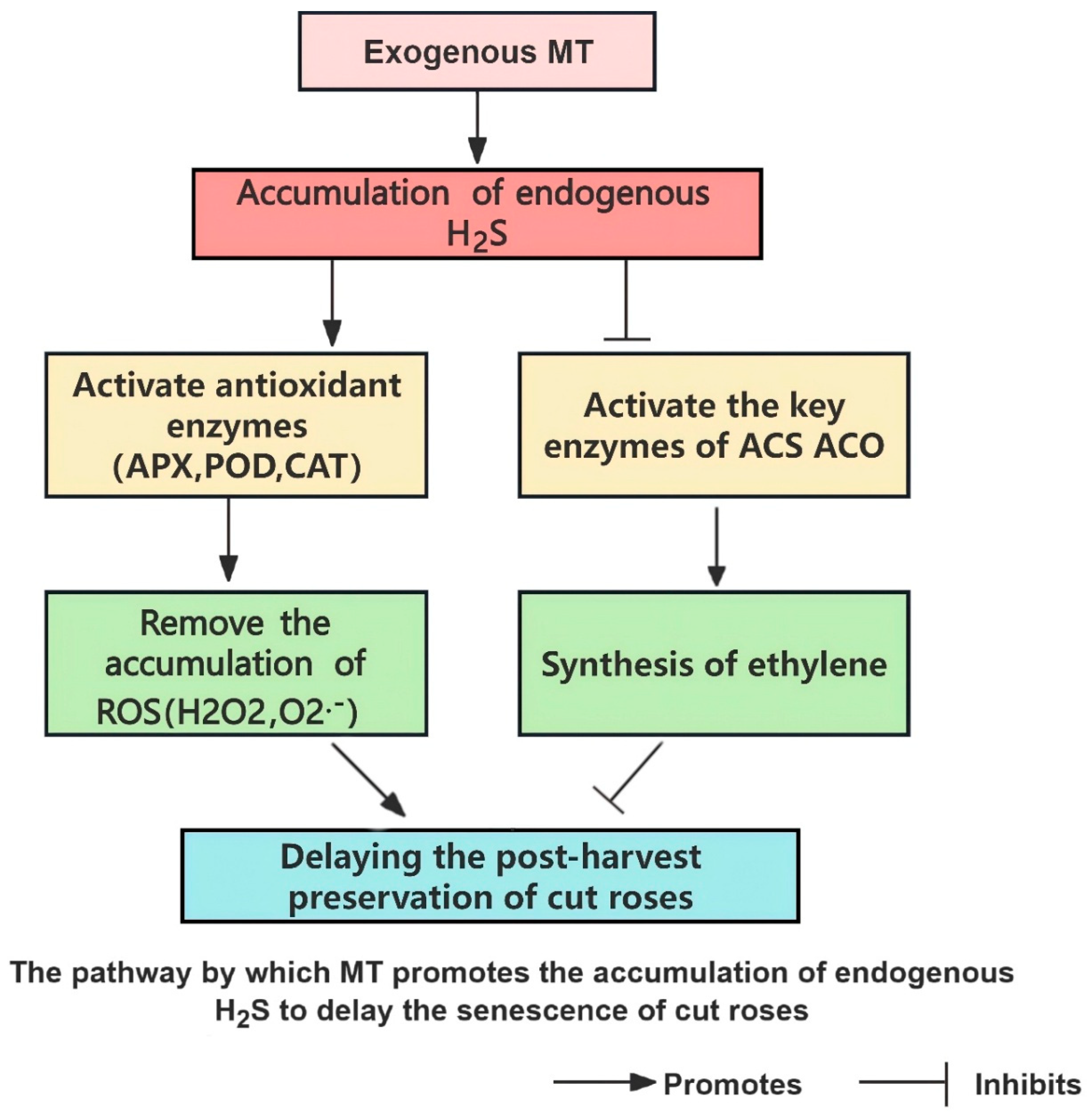
Figure 5, we speculated that MT might delay the senescence process of cut roses by activating the endogenous H
2S synthesis pathway, thereby initiating downstream antioxidant defense and osmotic regulation responses. The reversal of MT effects by HT further confirmed, from a reverse perspective, the indispensable mediating role of H
2S in the MT signaling pathway. From a practical perspective, our findings provide a feasible and low-cost preservation strategy for commercial cut flower production and postharvest handling. Different from most previous studies that separately investigated the independent functions of MT or H
2S in regulating flower senescence, this study further advances the current knowledge by uncovering their internal regulatory cascade and synergistic mechanism in cut roses. A major novelty of the present study lies in the integrated exploration of the cooperative regulatory relationship between MT and endogenous H
2S in cut roses, demonstrating that MT positively modulates endogenous H
2S production to jointly mediate cut rose preservation, which clarifies a new physiological mechanism underlying MT-delayed flower senescence. Exogenous combined MT and H
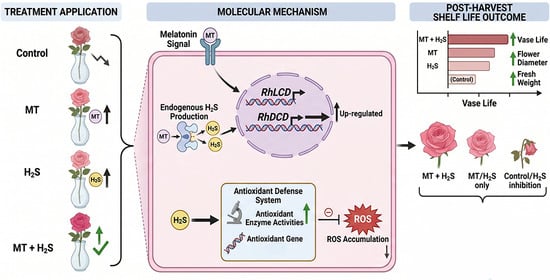
2S application effectively maintains petal water balance, alleviates oxidative membrane damage, and suppresses petal senescence, significantly extending the ornamental vase life of cut flowers (
Figure 7). This simple vase solution treatment avoids complex technical operations and is compatible with conventional postharvest transportation and retail storage systems used in floriculture industries. Therefore, the co-application of MT and H
2S shows great potential to reduce postharvest quality losses, lower commodity waste, and improve the economic value of fresh-cut flowers during commercial circulation. Future research could focus on dynamic and real-time monitoring of H
2S synthesis and ROS accumulation during the preservation of cut roses by MT. This will help us more accurately clarify how MT suppresses ROS through H
2S. Additionally, continuous detection of ethylene release will further reveal the comprehensive functions of MT and H
2S. Further future validations incorporating precise ethylene quantification and systematic molecular approaches are also warranted to consolidate and strengthen the reliability and integrity of the proposed MT-H
2S signaling cascade underlying cut rose senescence regulation. Finally, all experiments in this study were completed under laboratory-controlled conditions, where the temperature, humidity, and light conditions were relatively stable. However, these conditions differ from the complex and variable environmental parameters in commercial post-harvest processing, which may limit the practical application value of the experimental results and make it difficult to directly replicate them in commercial production scenarios.