CmNAC29 Positively Regulates Chilling Tolerance in Melon Seedlings by Activating Antioxidant Defense, Proline Biosynthesis, and the ICE-CBF-COR Pathway
 ,
,
Abstract
1. Introduction
2. Materials and Methods
2.1. Generation of CmNAC29-Overexpressing Melon Seedlings Using a Root Transformation System
2.2. Cold Stress Treatment
2.3. Measurement of Phenotypic Parameters
2.4. Measurement of Physiological Parameters
2.5. Transcriptome Sequencing
2.6. qRT-PCR Analysis
2.7. Yeast One-Hybrid Assay
2.8. Dual-Luciferase Reporter Assay
2.9. Electrophoretic Mobility Shift Assay (EMSA)
2.10. Statistical Analysis and Graph Preparation
3. Results
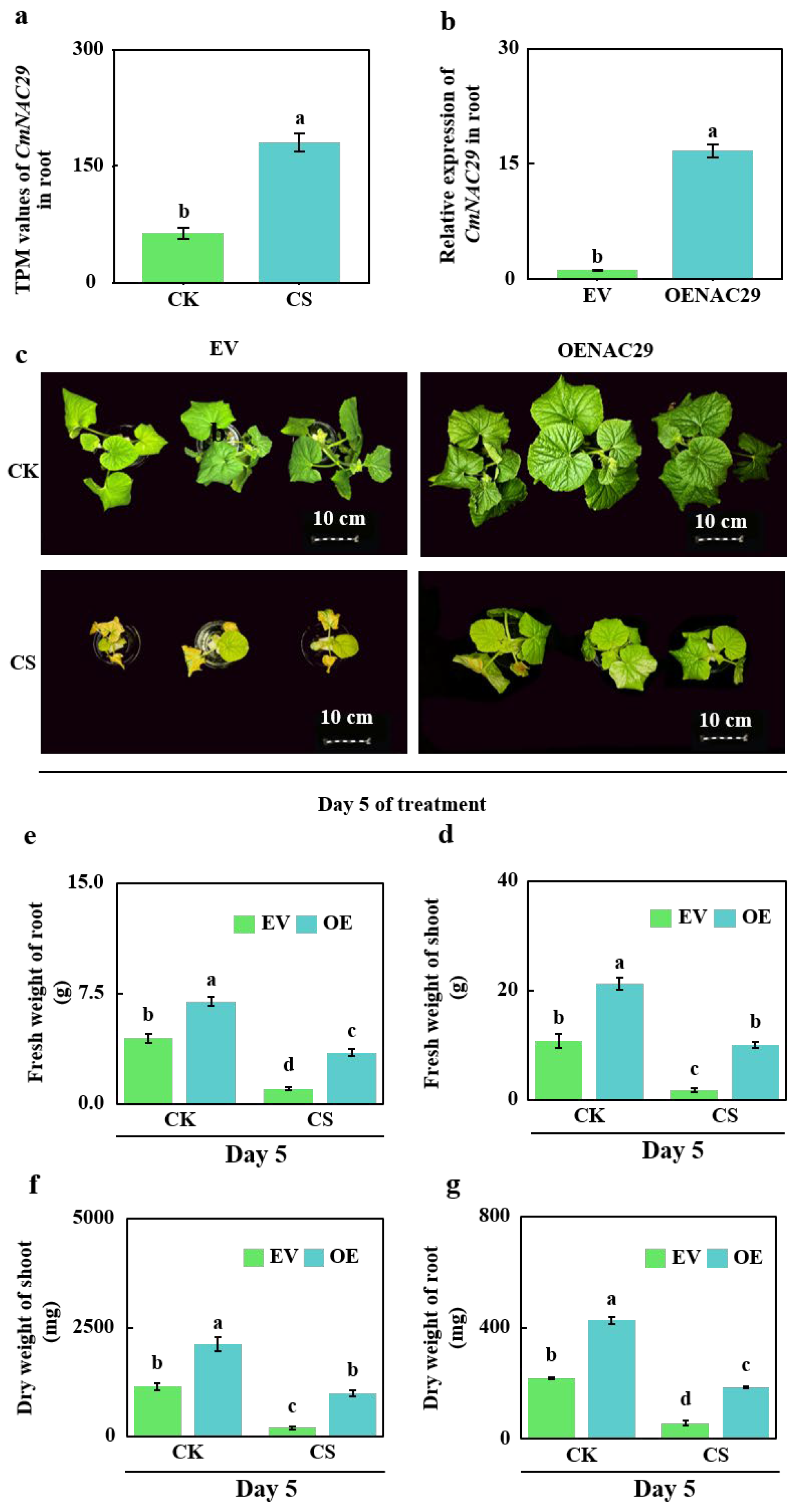
3.1. CmNAC29 Enhances Chilling Tolerance in Melon Seedlings
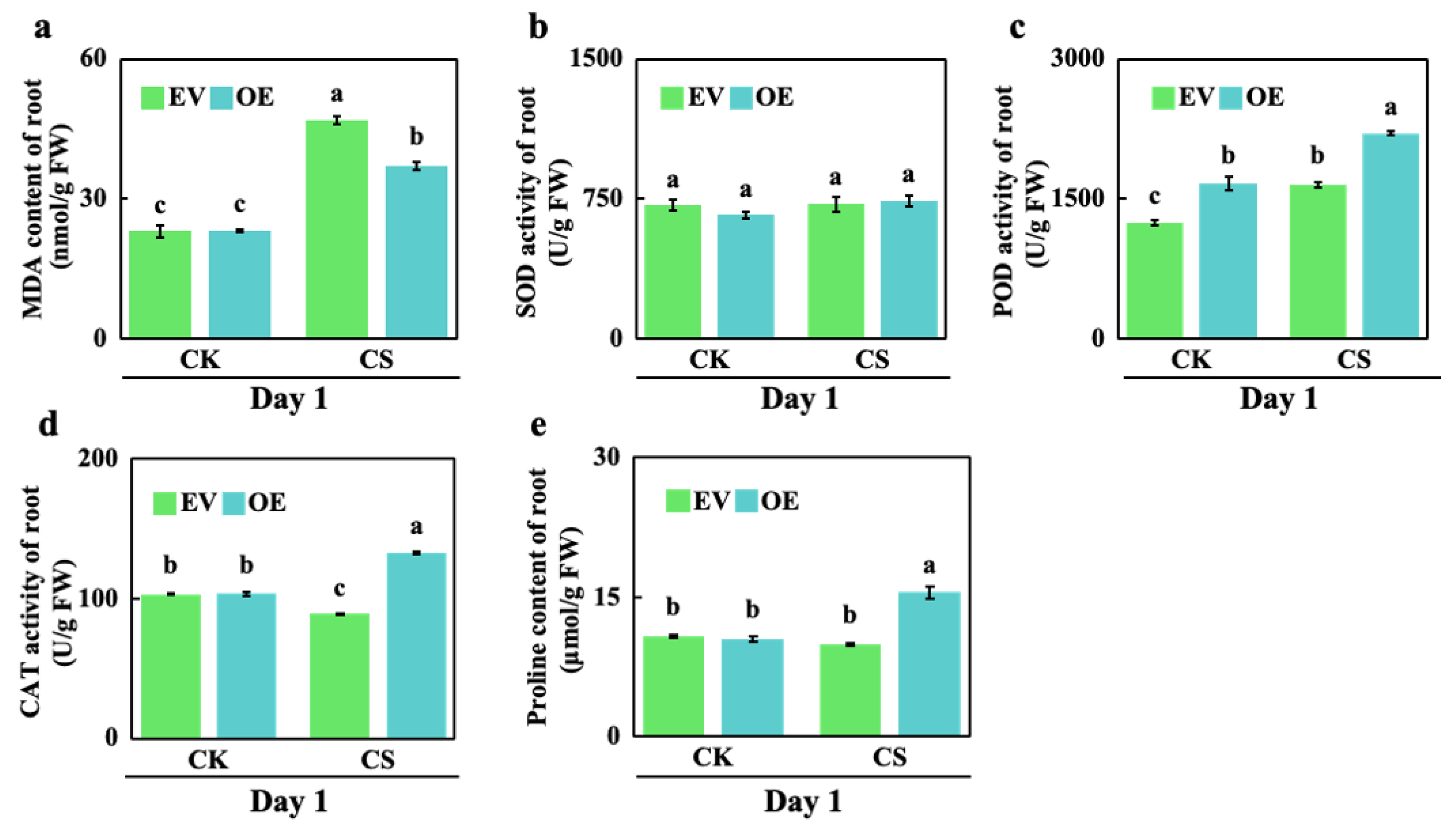
3.2. CmNAC29 Enhances Antioxidant Enzyme Activities and Proline Accumulation in Melon Seedlings
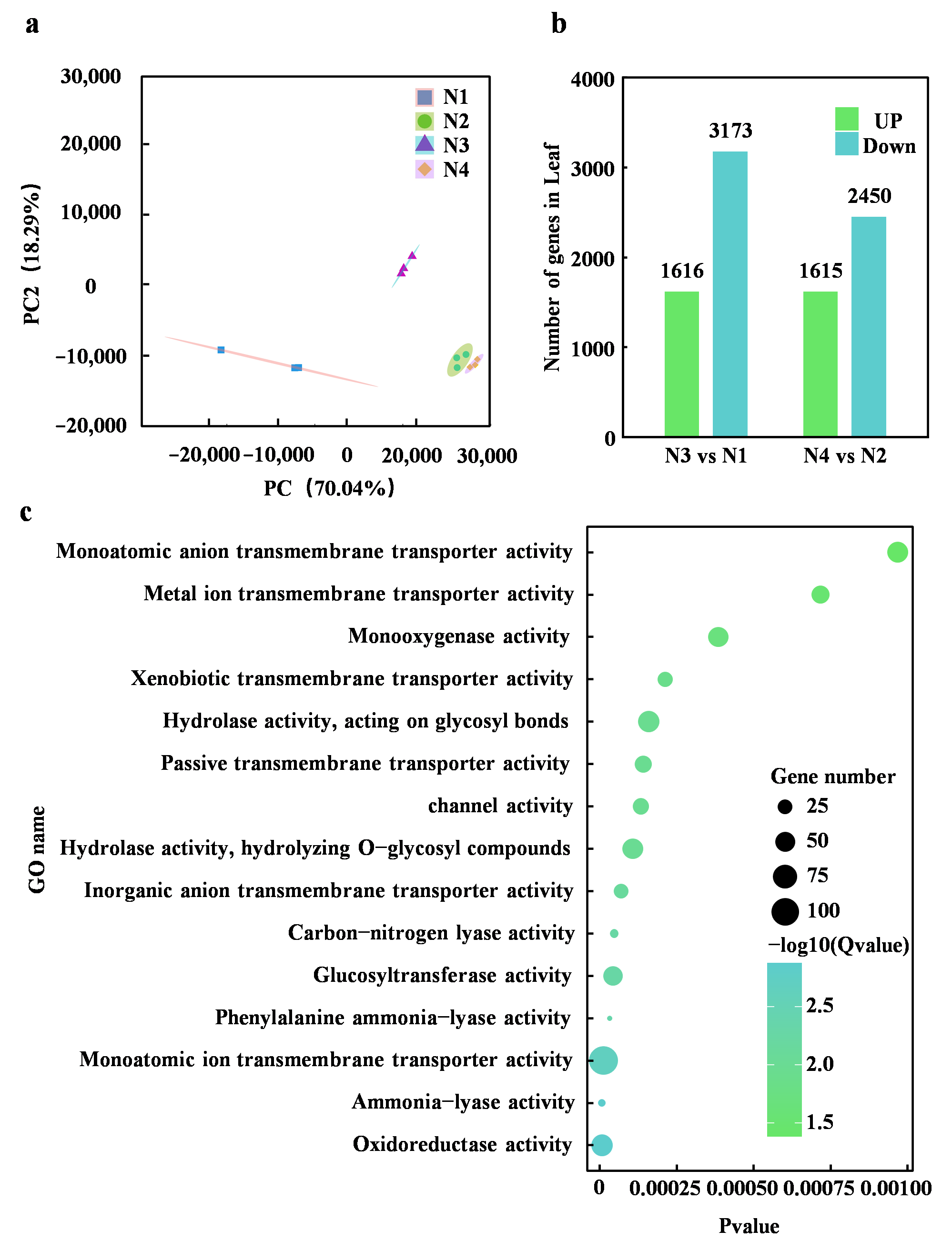
3.3. Transcriptome Analysis of CmNAC29-Overexpressing Melon Roots
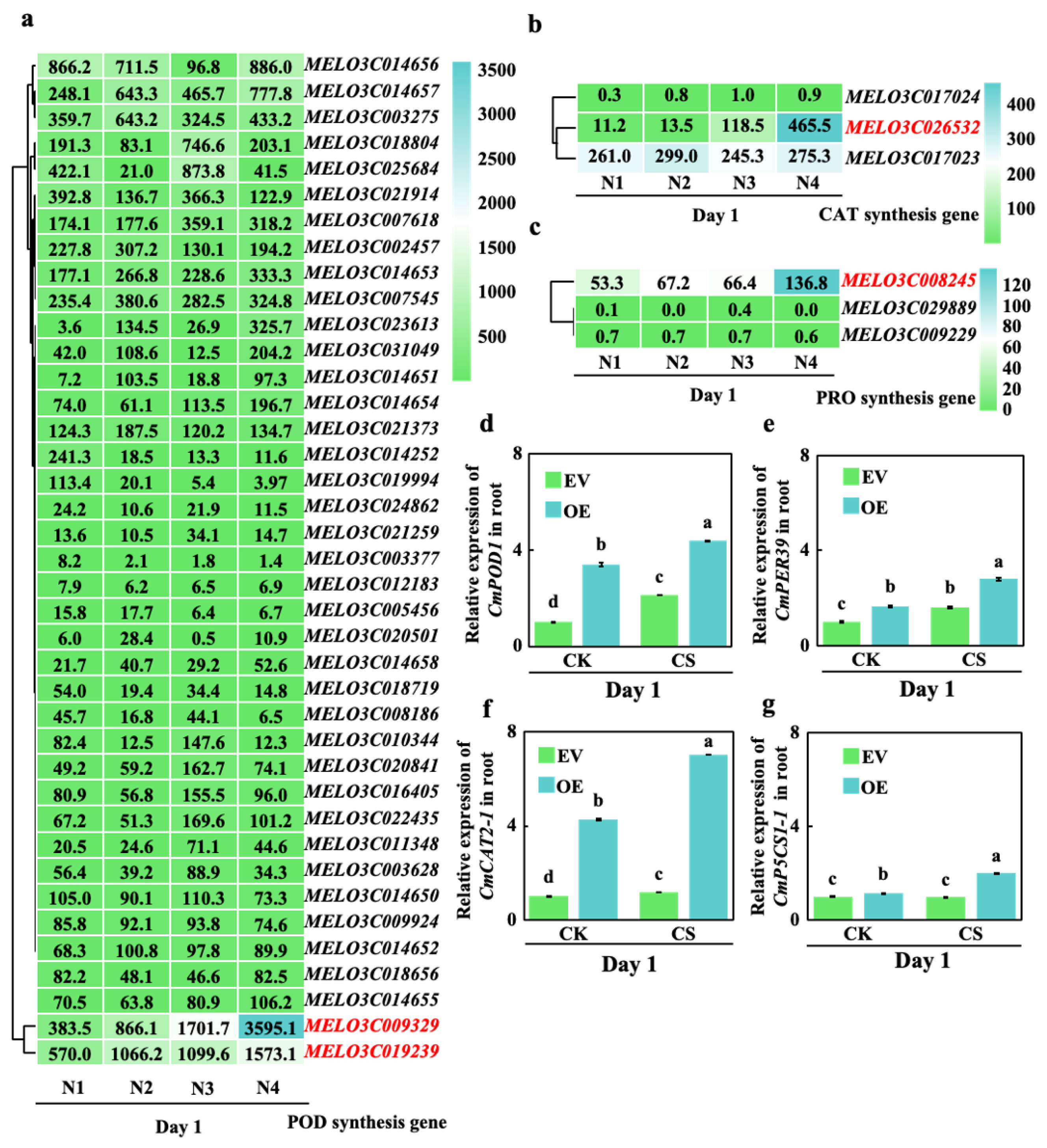
3.4. CmNAC29 Upregulates Genes Related to Antioxidant Enzymes and Proline Biosynthesis
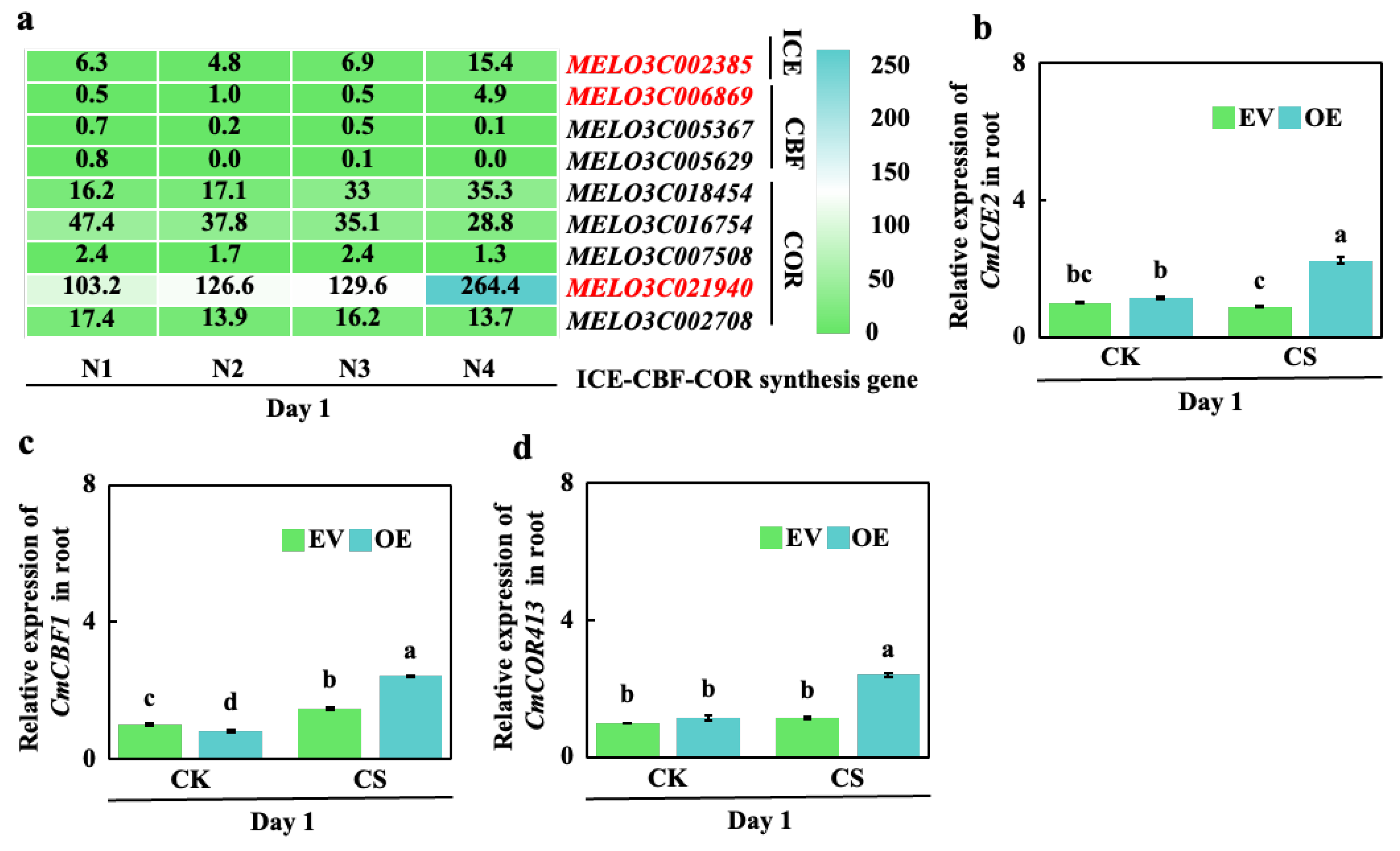
3.5. CmNAC29 Activates the Expression of Genes Related to the ICE-CBF-COR Pathway
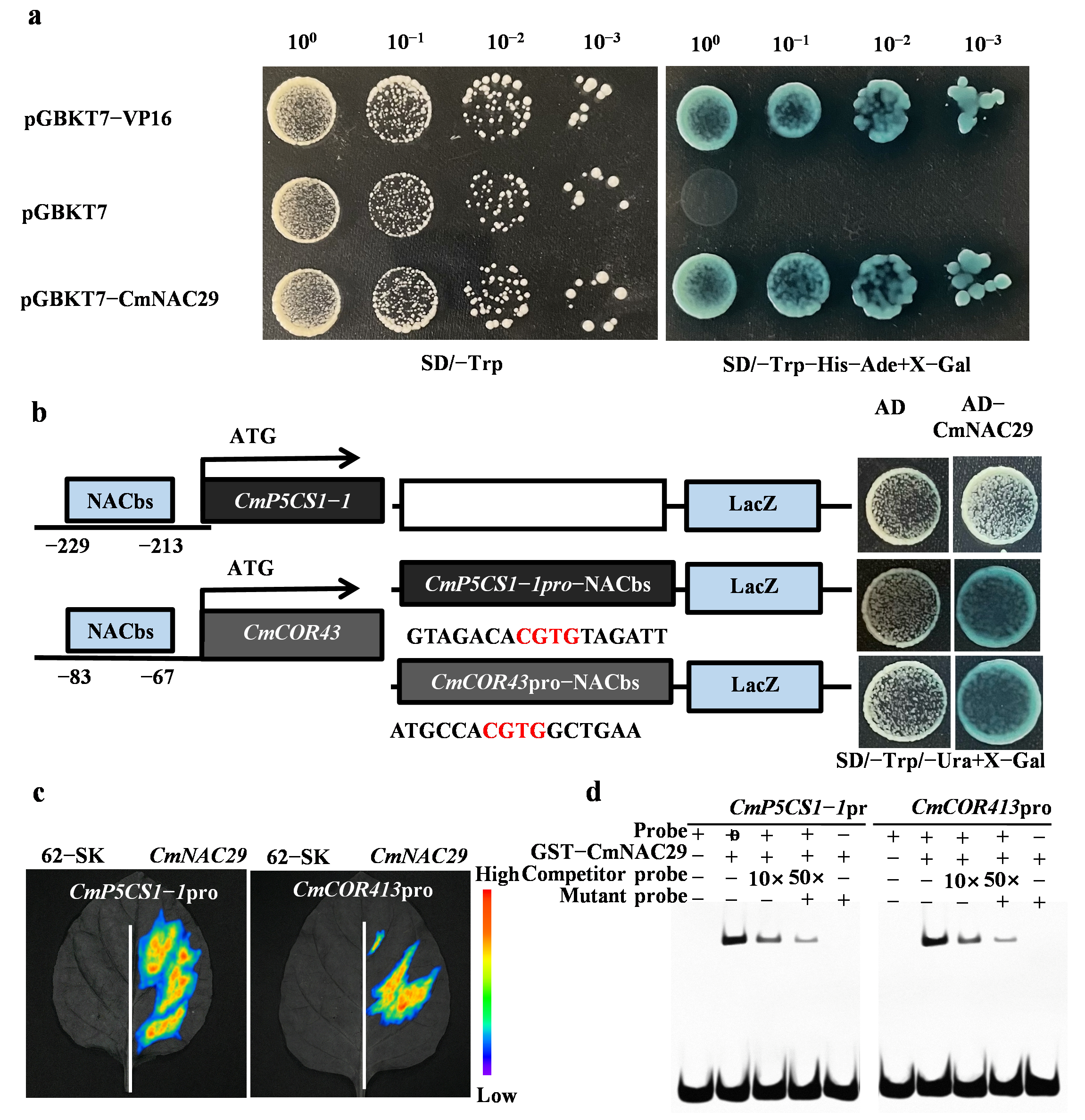
3.6. CmNAC29 Directly Binds to the Promoters of Downstream Target Genes
4. Discussion
4.1. CmNAC29 Positively Regulates Chilling Tolerance in Melon Seedlings
4.2. CmNAC29 Enhances Chilling Tolerance in Melon by Regulating Antioxidant Enzymes and Related Genes
4.3. CmNAC29 Enhances Chilling Tolerance by Binding to the Promoters of CmP5CS1-1 and CmCOR413 to Regulate Proline Biosynthesis and the ICE-CBF-COR Pathway
5. Conclusions
Supplementary Materials
Author Contributions
Funding
Data Availability Statement
Conflicts of Interest
Abbreviations
| ICE-CBF-COR | Inducer of CBF Expression–C-repeat Binding Factor–Cold-Regulated |
| ROS | reactive oxygen species |
| MDA | malondialdehyde |
| PRO | proline |
| SOD | superoxide dismutase |
| POD | peroxidase |
| CAT | catalase |
| P5CS | Δ1-pyrroline-5-carboxylate synthetase |
| PDH | proline dehydrogenase |
| GO | Gene Ontology |
References
- Jahed, K.R.; Saini, A.K.; Sherif, S.M. Coping with the cold: Unveiling cryoprotectants, molecular signaling pathways, and strategies for cold stress resilience. Front. Plant Sci. 2023, 14, 1246093. [Google Scholar] [CrossRef] [PubMed]
- Bai, H.; Liao, X.; Li, X.; Wang, B.; Luo, Y.; Yang, X.; Tian, Y.; Zhang, L.; Zhang, F.; Pan, Y.; et al. DgbZIP3 interacts with DgbZIP2 to increase the expression of DgPOD for cold stress tolerance in chrysanthemum. Hortic. Res. 2022, 9, uhac105. [Google Scholar] [CrossRef] [PubMed]
- Wang, Y.; Wang, J.; Sarwar, R.; Zhang, W.; Geng, R.; Zhu, K.-M.; Tan, X.-L. Research progress on the physiological response and molecular mechanism of cold response in plants. Front. Plant Sci. 2024, 15, 1334913. [Google Scholar] [CrossRef] [PubMed]
- Li, Y.; Tan, Z.; Liu, Y.; Wu, X.; Zhu, J.; Peng, Y. Overexpression of CmDUF239-1 Enhances Cold Tolerance in Melon Seedlings by Reinforcing Antioxidant Defense and Activating the ICE-CBF-COR Pathway. Agronomy 2025, 15, 2725. [Google Scholar] [CrossRef]
- Kidokoro, S.; Shinozaki, K.; Yamaguchi-Shinozaki, K. Transcriptional regulatory network of plant cold-stress responses. Trends Plant Sci. 2022, 27, 922–935. [Google Scholar] [CrossRef] [PubMed]
- Zhou, L.; Ullah, F.; Zou, J.; Zeng, X. Molecular and Physiological Responses of Plants that Enhance Cold Tolerance. Int. J. Mol. Sci. 2025, 26, 1157. [Google Scholar] [CrossRef] [PubMed]
- Wan, F.; Pan, Y.; Li, J.; Chen, X.; Pan, Y.; Wang, Y.; Tian, S.; Zhang, X. Heterologous expression of Arabidopsis C-repeat binding factor 3 (AtCBF3) and cold-regulated 15A (AtCOR15A) enhanced chilling tolerance in transgenic eggplant (Solanum melongena L.). Plant Cell Rep. 2014, 33, 1951–1961. [Google Scholar] [CrossRef] [PubMed]
- Shah, S.H.; Ali, S.; Qureshi, A.A.; Zia, M.A.; Din, J.; Ali, G.M. Chilling tolerance in three tomato transgenic lines overexpressing CBF3 gene controlled by a stress inducible promoter. Environ. Sci. Pollut. Res. 2017, 24, 18536–18553. [Google Scholar] [CrossRef]
- Caccialupi, G.; Milc, J.; Caradonia, F.; Nasar, M.F.; Francia, E. The Triticeae CBF Gene Cluster—To Frost Resistance and Beyond. Cells 2023, 12, 2606. [Google Scholar] [CrossRef] [PubMed]
- Xiong, H.; He, H.; Chang, Y.; Miao, B.; Liu, Z.; Wang, Q.; Dong, F.; Xiong, L. Multiple roles of NAC transcription factors in plant development and stress responses. J. Integr. Plant Biol. 2025, 67, 510–538. [Google Scholar] [CrossRef] [PubMed]
- Mei, C.; Yang, J.; Mei, Q.; Jia, D.; Yan, P.; Feng, B.; Mamat, A.; Gong, X.; Guan, Q.; Mao, K.; et al. MdNAC104 positively regulates apple cold tolerance via CBF-dependent and CBF-independent pathways. Plant Biotechnol. J. 2023, 21, 2057–2073. [Google Scholar] [CrossRef] [PubMed]
- Yuan, X.; Wang, H.; Cai, J.; Bi, Y.; Li, D.; Song, F. Rice NAC transcription factor ONAC066 functions as a positive regulator of drought and oxidative stress response. BMC Plant Biol. 2019, 19, 278. [Google Scholar] [CrossRef] [PubMed]
- Hou, X.; Zhang, H.; Liu, S.; Wang, X.; Zhang, Y.; Meng, Y.; Luo, D.; Chen, R. The NAC transcription factor CaNAC064 is a regulator of cold stress tolerance in peppers. Plant Sci. 2020, 291, 110346. [Google Scholar] [CrossRef] [PubMed]
- Seo, P.J.; Kim, M.J.; Park, J.Y.; Kim, S.Y.; Jeon, J.; Lee, Y.H.; Kim, J.; Park, C.M. Cold activation of a plasma membrane-tethered NAC transcription factor induces a pathogen resistance response in Arabidopsis. Plant J. Cell Mol. Biol. 2010, 61, 661–671. [Google Scholar] [CrossRef]
- Huang, L.; Hong, Y.; Zhang, H.; Li, D.; Song, F. Rice NAC transcription factor ONAC095 plays opposite roles in drought and cold stress tolerance. BMC Plant Biol. 2016, 16, 203. [Google Scholar] [CrossRef] [PubMed]
- Diao, Q.; Tian, S.; Cao, Y.; Yao, D.; Fan, H.; Jiang, X.; Zhang, W.; Zhang, Y. Physiological, transcriptomic, and metabolomic analyses of the chilling stress response in two melon (Cucumis melo L.) genotypes. BMC Plant Biol. 2024, 24, 1074. [Google Scholar] [CrossRef] [PubMed]
- Li, X.; Wang, Q.; Guo, C.; Sun, J.; Li, Z.; Wang, Y.; Yang, A.; Pu, W.; Guo, Y.; Gao, J.; et al. NtNAC053, A Novel NAC Transcription Factor, Confers Drought and Salt Tolerances in Tobacco. Front. Plant Sci. 2022, 13, 817106. [Google Scholar] [CrossRef] [PubMed]
- Nakashima, K.; Takasaki, H.; Mizoi, J.; Shinozaki, K.; Yamaguchi-Shinozaki, K. NAC transcription factors in plant abiotic stress responses. Biochim. Biophys. Acta (BBA) Gene Regul. Mech. 2012, 1819, 97–103. [Google Scholar] [CrossRef]
- Li, L.; Li, Q.; Chen, B.; Wang, J.; Ding, F.; Wang, P.; Zhang, X.; Hou, J.; Luo, R.; Li, X.; et al. Identification of candidate genes that regulate the trade-off between seedling cold tolerance and fruit quality in melon (Cucumis melo L.). Hortic. Res. 2023, 10, uhad093. [Google Scholar] [CrossRef] [PubMed]
- Li, Q.; Li, L.; Hou, J.; Luo, R.; Wang, R.; Hu, J.; Huang, S. Advances on Mechanism of Cucurbit Crops in Response to Low- temperature Stress. Acta Hortic. Sin. 2022, 49, 1382–1394. [Google Scholar]
- Peng, Y.Q.; Cao, H.S.; Cui, L.J.; Wang, Y.; Wei, L.X.; Geng, S.Y.; Yang, L.; Huang, Y.; Bie, Z.L. CmoNAC1 in pumpkin rootstocks improves salt tolerance of grafted cucumbers by binding to the promoters of CmoRBOHD1, CmoNCED6, CmoAKT1;2 and CmoHKT1;1 to regulate H2O2, ABA signaling and K+/Na+ homeostasis. Hortic. Res. 2023, 10, uhad157. [Google Scholar] [CrossRef] [PubMed]
- Li, M.; Yue, T.; Han, J.; Wang, J.; Xiao, H.; Shang, F. Exogenous glucose irrigation alleviates cold stress by regulating soluble sugars, ABA and photosynthesis in melon seedlings. Plant Physiol. Biochem. 2024, 217, 109214. [Google Scholar] [CrossRef] [PubMed]
- Weng, J.; Rehman, A.; Li, P.; Chang, L.; Zhang, Y.; Niu, Q. Physiological and Transcriptomic Analysis Reveals the Responses and Difference to High Temperature and Humidity Stress in Two Melon Genotypes. Int. J. Mol. Sci. 2022, 23, 734. [Google Scholar] [CrossRef] [PubMed]
- Martinez, C.; Ruiz, M.; Garcia, L. Laser-assisted microdissection and high-throughput RNA sequencing of the Arabidopsis gynoecium. Plant Methods 2026, 22, 47. [Google Scholar]
- Niedziela, G.; Szabelska-Beręsewicz, A.; Zyprych-Walczak, J.; Graczyk, M. Application of edgeR and DESeq2 methods in plant experiments based on RNA-seq technology. Biom. Lett. 2022, 59, 127–139. [Google Scholar] [CrossRef]
- Li, D.; Zand, M.S.; Dye, T.D.; Goniewicz, M.L.; Rahman, I.; Xie, Z. An evaluation of RNA-seq differential analysis methods. PLoS ONE 2022, 17, e0264246. [Google Scholar] [CrossRef] [PubMed]
- Bai, L.; Zhu, H.; Shi, Y.; Li, Y.; Miao, Y.; Yu, X.; Zhang, Y.; Li, Y. Antisense Overexpression of Gγ Subunit CsGG3.1-2 Reduces Soluble Sugar Content and Chilling Tolerance in Cucumber. Horticulturae 2023, 9, 240. [Google Scholar] [CrossRef]
- Reece-Hoyes, J.S.; Walhout, A.J.M. Gateway-Compatible Yeast One-Hybrid and Two-Hybrid Assays. Cold Spring Harb. Protoc. 2018, 2018, 487–497. [Google Scholar] [CrossRef] [PubMed]
- Moyle, R.L.; Carvalhais, L.C.; Pretorius, L.-S.; Nowak, E.; Subramaniam, G.; Dalton-Morgan, J.; Schenk, P.M. An optimized transient dual luciferase assay for quantifying microRNA directed repression of targeted sequences. Front. Plant Sci. 2017, 8, 1631. [Google Scholar] [CrossRef] [PubMed]
- Zhu, J.K. Abiotic stress signaling and responses in plants. Cell 2016, 167, 313–324. [Google Scholar] [CrossRef] [PubMed]
- Thomashow, M.F. Molecular basis of plant cold acclimation: Insights gained from studying the CBF cold response pathway. Plant Physiol. 2010, 154, 571–577. [Google Scholar] [CrossRef] [PubMed]
- Jensen, M.K.; Skriver, K. Nac transcription factor gene regulatory and protein-protein interaction networks in plant stress responses and senescence. IUBMB Life 2014, 66, 156–166. [Google Scholar] [CrossRef] [PubMed]
- Ma, N.; Zuo, Y.; Liang, X.; Yin, B.; Wang, G.; Meng, Q. The multiple stress-responsive transcription factor SlNAC1 improves the chilling tolerance of tomato. Physiol. Plant. 2013, 149, 474–486. [Google Scholar] [CrossRef] [PubMed]
- Li, W.; Li, H.; Wei, Y.; Han, J.; Wang, Y.; Li, X.; Zhang, L.; Han, D. Overexpression of a Fragaria vesca NAM, ATAF, and CUC (NAC) transcription factor gene (FvNAC29) increases salt and cold tolerance in Arabidopsis thaliana. Int. J. Mol. Sci. 2024, 25, 4088. [Google Scholar] [CrossRef] [PubMed]
- Yarra, R.; Wei, W. The NAC-type transcription factor GmNAC20 improves cold, salinity tolerance, and lateral root formation in transgenic rice plants. Funct. Integr. Genom. 2021, 21, 473–487. [Google Scholar] [CrossRef]
- Mittler, R.; Zandalinas, S.I.; Fichman, Y.; Van Breusegem, F. Reactive oxygen species signalling in plant stress responses. Nat. Rev. Mol. Cell Biol. 2022, 23, 663–679. [Google Scholar] [CrossRef] [PubMed]
- Hasanuzzaman, M.; Bhuyan, M.H.M.B.; Zulfiqar, F.; Raza, A.; Mohsin, S.M.; Mahmud, J.A.; Fujita, M.; Fotopoulos, V. Reactive Oxygen Species and Antioxidant Defense in Plants under Abiotic Stress: Revisiting the Crucial Role of a Universal Defense Regulator. Antioxidants 2020, 9, 681. [Google Scholar] [CrossRef] [PubMed]
- Dumanović, J.; Nepovimova, E.; Natić, M.; Kuča, K.; Jaćević, V. The significance of reactive oxygen species and antioxidant defense system in plants: A concise overview. Front. Plant Sci. 2021, 11, 552969. [Google Scholar] [CrossRef] [PubMed]
- Shao, H.; Wang, H.; Tang, X. NAC transcription factors in plant multiple abiotic stress responses: Progress and prospects. Front. Plant Sci. 2015, 6, 902. [Google Scholar] [CrossRef] [PubMed]
- Tang, K.; Zhao, L.; Ren, Y.; Yang, S.; Zhu, J.; Zhao, C. The transcription factor ICE1 functions in cold stress response by binding to the promoters of CBF and COR genes. J. Integr. Plant Biol. 2020, 62, 258–263. [Google Scholar] [CrossRef] [PubMed]
- Song, Y.; Zhang, X.; Li, M.; Yang, H.; Fu, D.; Lv, J.; Ding, Y.; Gong, Z.; Shi, Y.; Yang, S. The direct targets of CBFs: In cold stress response and beyond. J. Integr. Plant Biol. 2021, 63, 1874–1887. [Google Scholar] [CrossRef] [PubMed]
- Wang, X.; Li, Z.; Shi, Y.; Liu, Z.; Zhang, X.; Gong, Z.; Yang, S. Strigolactones promote plant freezing tolerance by releasing the WRKY41-mediated inhibition of CBF/DREB1 expression. EMBO J. 2023, 42, e112999. [Google Scholar] [CrossRef] [PubMed]
- Park, J.; Jung, J.H. Revalidation of the ICE1–CBF Regulatory Model in Arabidopsis Cold Stress Response. J. Plant Biol. 2024, 67, 391–398. [Google Scholar] [CrossRef]
- Li, M.; Duan, X.D.; Gao, G.; Liu, T.; Qi, H. Cmabf1 and cmcbf4 cooperatively regulate putrescine synthesis to improve cold tolerance of melon seedlings. Hortic. Res. 2022, 9, uhac002. [Google Scholar] [CrossRef] [PubMed]


Disclaimer/Publisher’s Note: The statements, opinions and data contained in all publications are solely those of the individual author(s) and contributor(s) and not of MDPI and/or the editor(s). MDPI and/or the editor(s) disclaim responsibility for any injury to people or property resulting from any ideas, methods, instructions or products referred to in the content. |
© 2026 by the authors. Licensee MDPI, Basel, Switzerland. This article is an open access article distributed under the terms and conditions of the Creative Commons Attribution (CC BY) license.
Share and Cite
Li, Y.; Tan, Z.; Li, Y.; Li, X.; Li, X.; Li, Q.; Liu, C.; Peng, Y. CmNAC29 Positively Regulates Chilling Tolerance in Melon Seedlings by Activating Antioxidant Defense, Proline Biosynthesis, and the ICE-CBF-COR Pathway. Horticulturae 2026, 12, 803. https://doi.org/10.3390/horticulturae12070803
Li Y, Tan Z, Li Y, Li X, Li X, Li Q, Liu C, Peng Y. CmNAC29 Positively Regulates Chilling Tolerance in Melon Seedlings by Activating Antioxidant Defense, Proline Biosynthesis, and the ICE-CBF-COR Pathway. Horticulturae. 2026; 12(7):803. https://doi.org/10.3390/horticulturae12070803
Chicago/Turabian StyleLi, Yang, Zhanming Tan, Yanqi Li, Xinyue Li, Xintian Li, Qi Li, Chunyan Liu, and Yuquan Peng. 2026. "CmNAC29 Positively Regulates Chilling Tolerance in Melon Seedlings by Activating Antioxidant Defense, Proline Biosynthesis, and the ICE-CBF-COR Pathway" Horticulturae 12, no. 7: 803. https://doi.org/10.3390/horticulturae12070803
APA StyleLi, Y., Tan, Z., Li, Y., Li, X., Li, X., Li, Q., Liu, C., & Peng, Y. (2026). CmNAC29 Positively Regulates Chilling Tolerance in Melon Seedlings by Activating Antioxidant Defense, Proline Biosynthesis, and the ICE-CBF-COR Pathway. Horticulturae, 12(7), 803. https://doi.org/10.3390/horticulturae12070803