1. Introduction
Onion (
Allium cepa L.) is one of the most widely cultivated and consumed vegetable crops worldwide and is highly valued for its unique flavor, nutritional quality, and health-promoting properties [
1,
2]. Onion bulbs are rich in diverse bioactive compounds, particularly organosulfur compounds and phenolic compounds, including S-alk(en)yl-L-cysteine sulfoxides, quercetin, quercetin glucosides, and anthocyanins [
3,
4]. These compounds contribute not only to the characteristic pungent aroma and sensory quality of onions but also to their antioxidant, antimicrobial, anti-inflammatory, and health-promoting functions [
5]. Sulfur-containing compounds are regarded as the major contributors to onion flavor and pungency, while flavonoids, especially quercetin derivatives and anthocyanins, are closely associated with antioxidant activity and nutritional value [
6]. Previous studies have shown that onions are among the richest dietary sources of flavonoids, and the composition of bioactive compounds differs substantially among cultivars with different bulb colors [
7]. In particular, red onion varieties generally contain higher levels of anthocyanins and flavonols than yellow or white onions, resulting in stronger antioxidant capacity and distinct flavor characteristics. In addition, metabolomic studies have demonstrated that onion cultivars differ significantly in amino acids, organic acids, sugars, and phenolic metabolites, indicating strong cultivar-dependent metabolic diversity [
8].
As a typical storage vegetable, onions are usually stored for several months after harvest to ensure a year-round market supply [
3]. However, prolonged storage can induce substantial quality deterioration, including water loss, shrinkage, firmness decline, internal discoloration, sprouting, and flavor changes, thereby reducing commercial value and consumer acceptability [
9,
10]. Previous studies on onion storage mainly focused on basic quality indicators, such as weight loss, firmness, sprouting, decay rate, and soluble solids content, while relatively limited attention has been paid to storage-induced metabolic regulation and flavor changes [
11,
12,
13]. In recent years, several storage technologies, including irradiation treatment, antimicrobial agents, and plasma-activated water treatments, have been applied to improve onion storage quality [
14,
15,
16]. These approaches have been reported to delay respiration, inhibit microbial growth, reduce moisture loss, and maintain bulb quality during storage. However, storage treatments may simultaneously alter sulfur-containing flavor compounds, antioxidant activity, and secondary metabolism [
11,
16]. Sulfur-containing volatiles generated from S-alk(en)yl-L-cysteine sulfoxides are responsible for the characteristic “onion-like”, “garlic-like”, and “sulfury” aromas of onions, and their formation is highly sensitive to storage conditions and tissue senescence. Controlled-atmosphere storage has been reported to suppress sulfur flavor precursor metabolism and reduce pungency [
3]. Therefore, low-temperature storage may preserve physical quality while simultaneously modifying characteristic onion flavor and metabolite accumulation.
Recent advances in metabolomics have provided powerful tools for comprehensively evaluating postharvest metabolic changes in horticultural crops [
17,
18,
19,
20]. Non-targeted metabolomics has been widely used to characterize onion metabolites associated with cultivar discrimination, nutritional quality, and flavor formation [
2,
7]. Previous studies have identified substantial differences in flavonoids, sulfur-containing compounds, amino acids, organic acids, and sugars among onion cultivars and storage conditions. Volatile metabolomics has also revealed that sulfur compounds, thiols, sulfides, disulfides, and thiophenes are key contributors to onion aroma characteristics [
8]. However, most previous studies have mainly focused on either non-volatile metabolites or volatile compounds alone, while integrated analyses of non-volatile and volatile metabolic responses during onion storage remain limited. Moreover, the differential responses of red and yellow onion cultivars to ambient, cold, and frozen storage conditions have not been systematically compared.
Therefore, the present study investigated the effects of ambient storage, cold storage, and frozen storage on the physical quality, sensory characteristics, non-volatile metabolites, and volatile aroma compounds of red onion ‘Kewei Red 10’ and yellow onion ‘Kewei Yellow 14’. Integrated non-targeted and volatile metabolomic analyses were performed to compare metabolic responses between cultivars under different storage conditions and to identify cultivar-specific preservation strategies associated with quality maintenance during storage.
2. Materials and Methods
2.1. Plant Materials and Storage Treatments
Two onion cultivars, red onion ‘Kewei Red 10’ (R10) and yellow onion ‘Kewei Yellow 14’ (Y14), were used in this study. Onion bulbs were harvested on April 26, 2025, from the onion breeding and propagation base located in Baizhishu Village, Anning Town, Xichang City, Sichuan Province, China. Bulbs were harvested at the late stage of bulb enlargement when 30–50% of plants showed neck lodging. After harvest, the bulbs were air-dried under ambient conditions for 24 h prior to storage. Uniform bulbs with similar size, color, and maturity and free from mechanical damage or disease symptoms, were selected for subsequent experiments.
The selected bulbs were divided into four groups: fresh control, ambient storage (A), cold storage (C), and frozen storage (F). Fresh samples were analyzed immediately after harvest. Ambient storage was conducted by hanging the bulbs in a ventilated color-steel shed equipped with storage racks under natural conditions, with a temperature range of 20–25 °C and a relative humidity of 60–70% throughout the storage period. Cold storage (5 ± 1 °C) and frozen storage (−19 ± 1 °C) were conducted in a cold-storage chamber equipped with an RC2-250 refrigeration compressor (Shanghai Hanbell Machinery Co., Ltd., Shanghai, China), with the relative humidity maintained at 60–70%. Bulbs were stored in plastic baskets (50 × 50 cm) during cold and frozen storage.
Each treatment consisted of three biological replicates, with ten onion bulbs per replicate. After six months of storage, samples were collected on October 26, 2025, for physical quality evaluation, sensory analysis, and metabolomic profiling. Frozen-stored bulbs were thawed to permit quality evaluation, and no additional shelf-life period was applied after removal from storage. Bulb weight, transverse diameter, firmness, and sensory quality were determined immediately after sampling. For metabolomic analyses, tissues from randomly selected bulbs within each replicate were mixed as one biological sample, immediately frozen in liquid nitrogen, and stored at −80 °C until further analysis.
2.2. Determination of Physical and Sensory Quality
Bulb weight was measured using an electronic balance with an accuracy of 0.01 g, and the average value for each biological replicate was recorded.
The transverse diameter of onion bulbs was measured at the equatorial region using a digital caliper with an accuracy of 0.01 mm, and the average value was recorded.
Bulb firmness was determined using an ENS-PRO texture analyzer (Ensoul Technology Ltd., Beijing, China) equipped with a P/2 probe. The probe penetration depth was set to 7 mm, with a pre-test speed of 60 mm min−1, a test speed of 30 mm min−1, and a trigger force of 0.05 N. Measurements were performed at the equatorial fleshy region of peeled onion bulbs. The probe was cleaned with lens tissue after each measurement. Each sample was measured three times, and the average value was recorded as the firmness.
Sensory quality was evaluated by five trained panelists with prior experience in postharvest quality assessment. Before the experiment, the panelists underwent training sessions to standardize the evaluation criteria for bulb appearance, shrinkage, firmness, discoloration, sprouting, and overall acceptability. Onion samples were scored using a 10-point scale, where 10 represented excellent freshness and 1 represented severe deterioration and poor marketability. Sensory evaluation was used as a complementary assessment and was interpreted together with physicochemical measurements and metabolomic analyses.
2.3. UPLC–MS/MS-Based Non-Targeted Metabolomic Analysis
Freeze-dried onion samples were ground into powder using a mixer mill (MM 400, Retsch, Germany). Approximately 30 mg of powder was extracted with 1.5 mL of pre-cooled 70% methanol containing internal standards, vortexed intermittently, and centrifuged at 12,000 rpm for 3 min. The supernatant was filtered through a 0.22 μm membrane for LC–MS/MS analysis.
Metabolite profiling was performed using a UPLC system coupled with a QTRAP/TOF mass spectrometer. Chromatographic separation was achieved on a Waters ACQUITY UPLC HSS T3 column (2.1 × 100 mm, 1.8 μm) at 40 °C with a flow rate of 0.4 mL min
−1. The mobile phases consisted of water and acetonitrile containing 0.1% formic acid. Mass spectrometry data were acquired in both positive and negative ion modes using information-dependent acquisition (IDA). Principal component analysis (PCA) and hierarchical clustering analysis (HCA) were performed in R. Differential metabolites were screened using VIP > 1 and (|Log
2FC| ≥ 1.0) or (
p < 0.05). The KEGG database (
https://www.genome.jp/kegg/, accessed on 1 May 2026) was used for metabolite annotation and pathway enrichment analysis.
2.4. HS-SPME–GC–MS-Based Volatile Metabolomic Analysis
Onion samples were immediately frozen in liquid nitrogen after collection and stored at −80 °C until analysis. Samples were ground into powder under liquid nitrogen. Approximately 500 mg of sample powder was transferred into a 20 mL headspace vial containing 2 mL of saturated NaCl solution. The vial was sealed with a TFE-silicone septum cap and equilibrated at 60 °C for 5 min. Volatile compounds were extracted using a 120 μm DVB/CAR/PDMS SPME Arrow fiber (Agilent Technologies, Santa Clara, CA, USA) at 60 °C for 15 min.
GC–MS analysis was performed using an Agilent 8890 gas chromatograph coupled with a 7000D mass spectrometer (Agilent Technologies, Santa Clara, CA, USA) equipped with a DB-5MS capillary column (30 m × 0.25 mm × 0.25 μm). Desorption was conducted at 250 °C for 5 min in splitless mode. Helium was used as the carrier gas at a flow rate of 1.2 mL min−1. The oven temperature program was set as follows: 40 °C for 3.5 min, increased to 100 °C at 10 °C min−1, then to 180 °C at 7 °C min−1, and finally to 280 °C at 25 °C min−1, where it was held for 5 min. Mass spectra were acquired under electron impact ionization mode (70 eV). Differential metabolites were screened using VIP > 1 and (|Log2FC| ≥ 1.0) or (p < 0.05). KEGG database was used for metabolite annotation and pathway enrichment analysis.
2.5. Statistical Analysis
All experiments were conducted with three biological replicates, and the results were expressed as mean ± standard deviation (SD). Statistical analysis was performed using DPS 15.10 software. Significant differences among treatments were analyzed by two-way analysis of variance (ANOVA), and mean comparisons were performed using the least significant difference (LSD) test at
p < 0.05. Principal component analysis (PCA), hierarchical clustering analysis (HCA), and K-means clustering were performed based on normalized metabolite data. Figures were generated using Origin 2021 (OriginLab Corporation, Northampton, MA, USA) and the online platform Metware Cloud (
https://cloud.metware.cn, accessed on 10 May 2026).
3. Results
3.1. Effects of Different Storage Conditions on Onion Quality
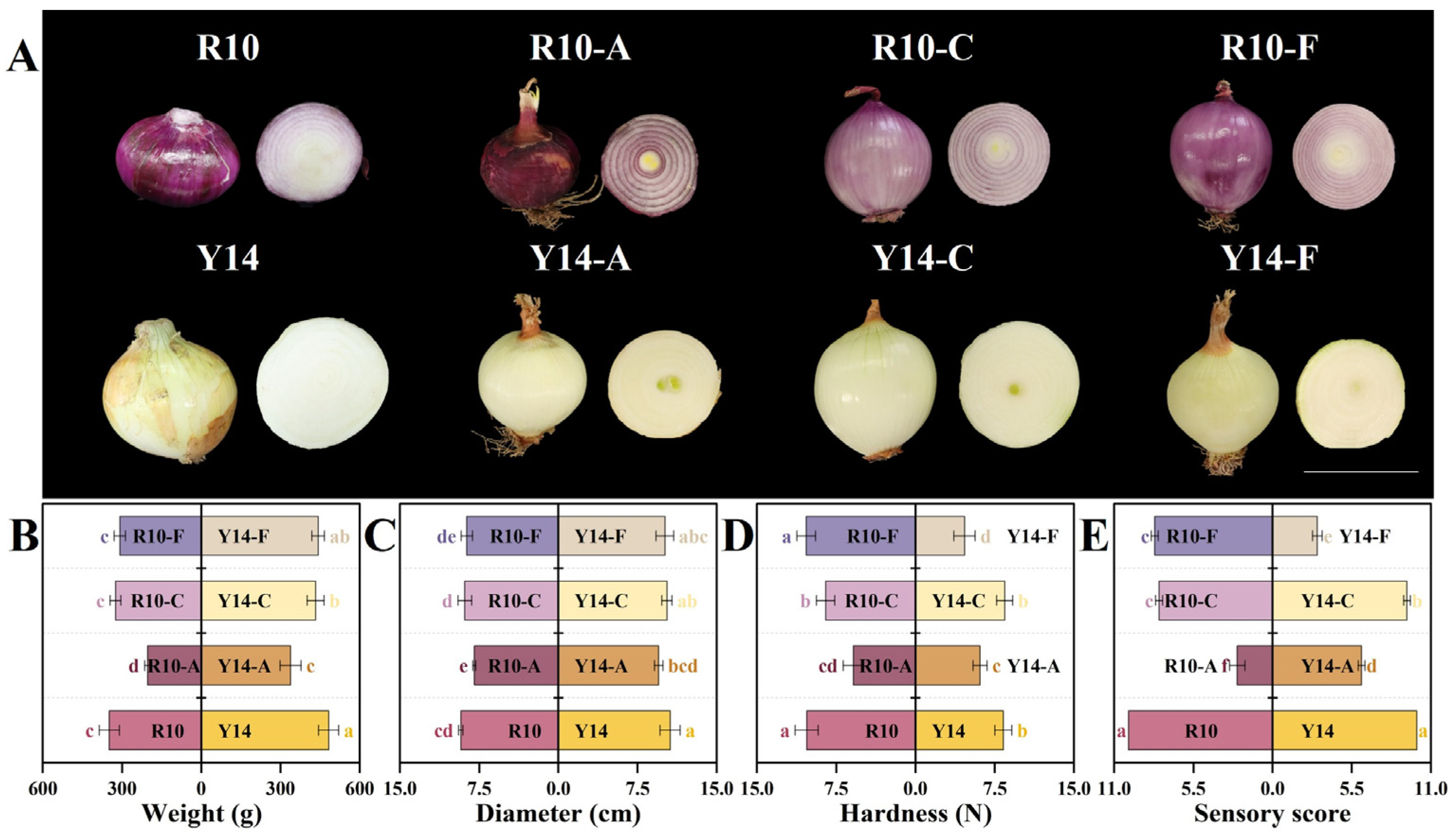
Representative images of the eight onion groups are shown in
Figure 1A. Fresh R10 and Y14 exhibited typical purple-red and yellow bulb characteristics, respectively, while Y14 bulbs were visibly larger than R10. After six months of storage, obvious cultivar-dependent differences were observed among the treatments. R10-A showed severe shrinkage and loss of surface brightness, accompanied by dark purple-red coloration. Cross-sections further revealed browning of the bulb scales, yellowing in the central region, and a tendency toward sprouting. In contrast, Y14-A mainly exhibited water loss and moderate shrinkage without obvious internal discoloration, although slight sprouting was also observed. R10-C, R10-F, and Y14-C maintained a relatively fresh appearance with limited shrinkage and discoloration. However, Y14-F exhibited obvious softening despite maintaining its external color, showing a partially thawed-like texture.
As shown in
Figure 1B, bulb weight significantly decreased after ambient storage. The weight of R10-A decreased to 58.5% of that of fresh R10, whereas R10-C and R10-F maintained significantly higher weights, which were 1.60- and 1.51-fold higher than that of R10-A, respectively. Y14 bulbs were substantially larger than R10, with fresh bulb weight being 1.38-fold higher than that of R10. Similarly, the weight of Y14-A decreased to 70.2% of that of fresh Y14, while Y14-C and Y14-F effectively alleviated weight loss and were 1.28- and 1.31-fold higher than Y14-A, respectively.
Changes in bulb diameter showed a similar trend to weight loss (
Figure 1C). Both R10-A and Y14-A showed significant decreases in bulb diameter compared with fresh samples. R10-C maintained a significantly larger diameter than R10-A, whereas no significant differences were observed among the remaining treatments.
Bulb firmness also showed distinct cultivar-dependent responses during storage (
Figure 1D). The firmness of R10-A decreased significantly to 57.1% of fresh R10. In contrast, R10-C and R10-F effectively delayed firmness loss and were 1.45- and 1.76-fold higher than R10-A, respectively. Fresh Y14 bulbs showed lower firmness than R10. During storage, the firmness of Y14-A decreased to 73.6% of fresh Y14, whereas Y14-C maintained firmness at a level 1.38-fold higher than that of Y14-A. However, Y14-F exhibited severe softening, with firmness decreasing to only 75.9% of that of Y14-A, consistent with its thawed-like appearance.
Sensory evaluation integrating appearance, weight loss, and firmness further confirmed these differences (
Figure 1E). The sensory score of R10-A decreased sharply to 2.45, whereas R10-C and R10-F maintained relatively high scores of 7.88 and 8.18, respectively. Although Y14-A also showed a decline in sensory quality, its score (6.18) remained markedly higher than that of R10-A. Among the Y14 treatments, Y14-C showed the best storage performance with a score of 9.33, whereas Y14-F exhibited severe quality deterioration and obtained a low score of 3.10, even lower than that of Y14-A.
3.2. Non-Volatile Metabolomic Profiling of Onions Under Different Storage Conditions
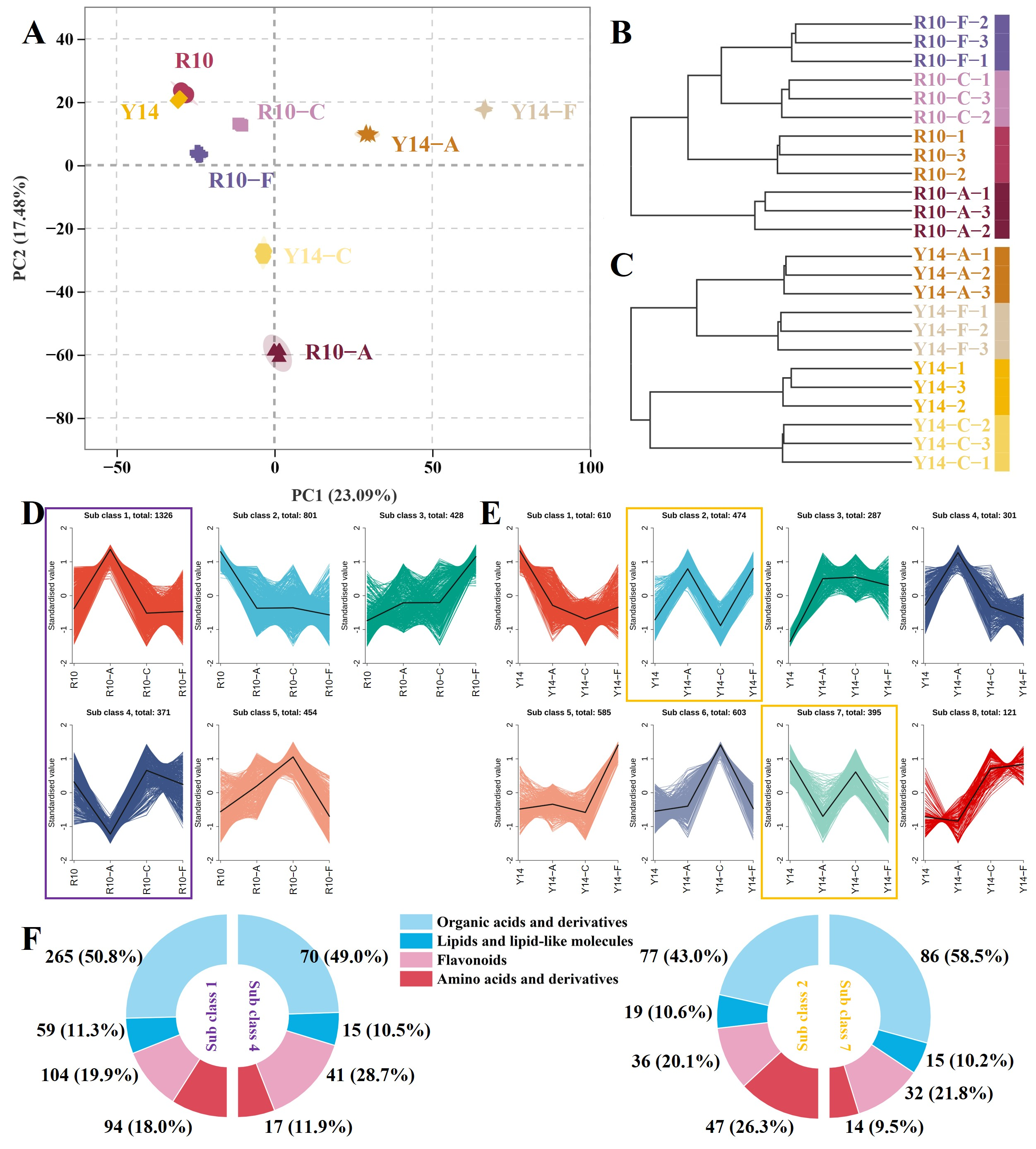
To further investigate the metabolic responses of onions to different storage conditions, non-targeted metabolomic analysis was performed. Principal component analysis (PCA) showed clear separation among the eight sample groups, while biological replicates clustered closely together, indicating good reproducibility and reliability of the metabolomic data (
Figure 2A). The first two principal components explained 23.09% and 17.48% of the total variance, respectively. Fresh R10 and Y14 samples were located relatively close to each other, whereas storage treatments resulted in obvious shifts in metabolic profiles. In R10, the ambient-stored sample (R10-A) showed the largest deviation from fresh R10, while R10-C and R10-F remained relatively close to the fresh samples. In contrast, the yellow onion cultivar showed a different pattern, with Y14-F exhibiting the greatest separation from fresh Y14, whereas Y14-A and Y14-C remained relatively closer to Y14.
Hierarchical clustering analysis further supported the PCA results (
Figure 2B,C). In R10, fresh, cold-stored, and frozen samples were clustered together, whereas R10-A formed a separate branch. In Y14, fresh and cold-stored samples clustered together, while ambient-stored and frozen samples were grouped into another cluster, suggesting distinct cultivar-dependent metabolic responses to the storage conditions.
Based on these differences, K-means clustering analysis of differential accumulated metabolites (DAMs) was performed separately for the two cultivars (
Figure 2D,E). In R10, subclass 1 contained 1326 DAMs and showed markedly higher metabolite accumulation in R10-A than in the other three groups, indicating a potential association with senescence-related metabolic responses. In contrast, subclass 4 contained 371 DAMs and exhibited lower accumulation in R10-A but higher levels in fresh, cold-stored, and frozen samples, suggesting a potential relationship with delayed senescence and quality maintenance. Similar patterns were observed in Y14. Subclass 2 contained 474 DAMs and showed higher metabolite accumulation in Y14-A and Y14-F, whereas subclass 7 contained 395 DAMs with an opposite trend, showing higher levels in Y14 and Y14-C and indicating possible preservation-associated metabolic characteristics.
To further characterize these storage-related metabolic patterns, the major metabolite categories enriched in the representative subclasses were analyzed (
Figure 2F). Non-targeted metabolomics detected 4363 metabolites belonging to multiple chemical classes (
Supplementary Figure S1). Among the metabolites enriched in the representative subclasses, organic acids and derivatives, lipids and lipid-like molecules, flavonoids, and amino acids and derivatives exhibited the most pronounced storage-dependent variations. Therefore, subsequent analyses focused primarily on these metabolite groups. In R10, the proportions of organic acids and derivatives and lipids and lipid-like molecules were relatively similar between subclass 1 and subclass 4, accounting for approximately 50% and 11% of the DAMs, respectively. However, flavonoids were markedly enriched in the preservation-associated subclass 4, increasing from 19.9% to 28.7%, whereas the proportion of amino acids and derivatives decreased. In Y14, organic acids and derivatives were substantially enriched in the preservation-associated subclass 7, increasing from 43.0% to 58.5%, while amino acids and derivatives decreased from 26.3% to 9.5%. In contrast, the proportions of lipids and lipid-like molecules and flavonoids showed relatively limited changes. These results suggest that delayed senescence in the two onion cultivars may involve distinct metabolic strategies, with flavonoid accumulation playing a more important role in R10, whereas the maintenance of organic acid metabolism appeared to be more closely associated with preservation in Y14. Meanwhile, lipids and amino acid derivatives were more strongly associated with senescence-related metabolic changes.
3.3. Senescence-Associated Amino Acids and Lipid-Related Metabolites
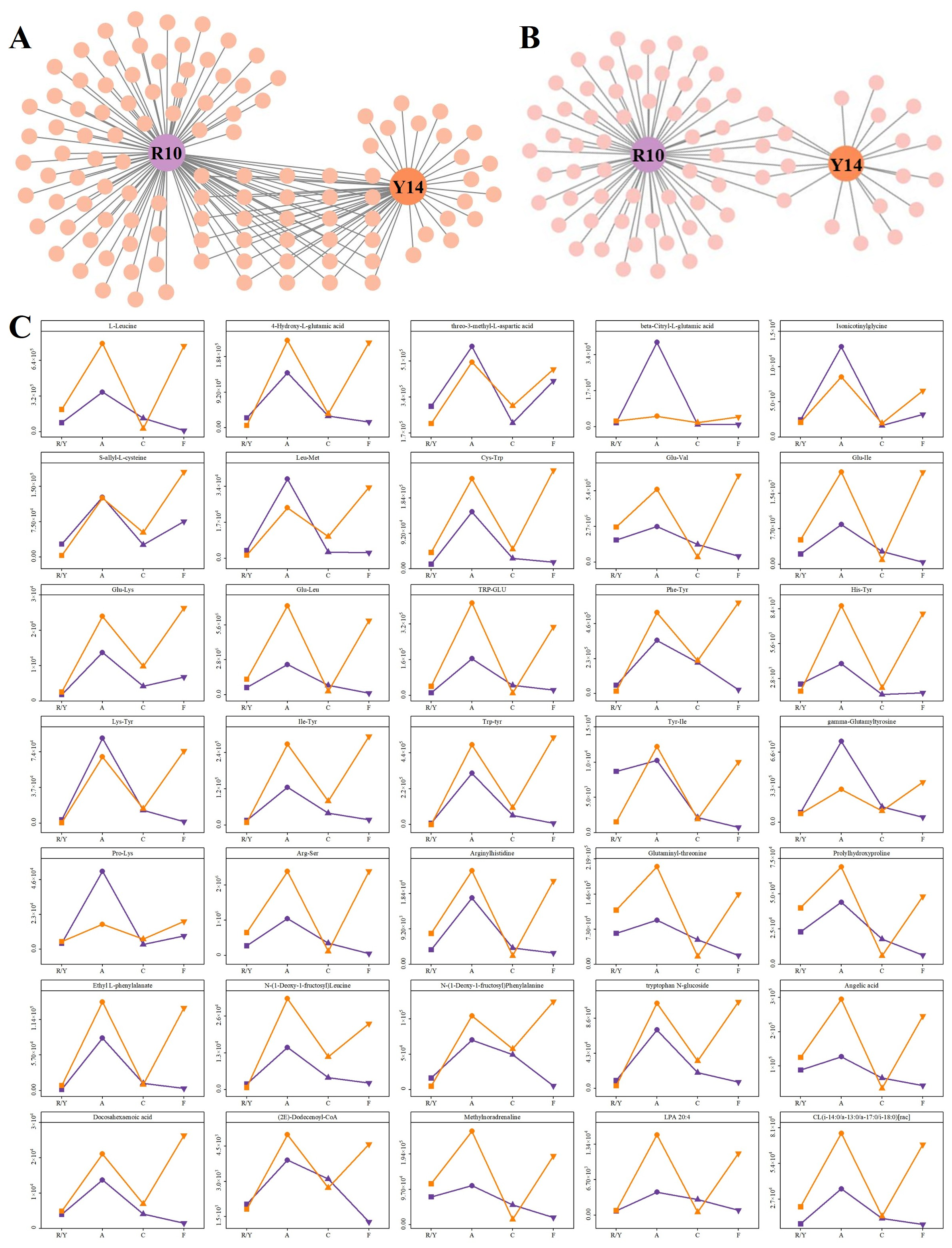
To further investigate the metabolic characteristics associated with onion senescence, shared senescence-related metabolites in the two cultivars were analyzed. As shown in
Figure 3A, a total of 29 common amino acids and derivative metabolites were identified between the senescence-associated subclasses of R10 and Y14. In addition, six common lipids and lipid-like metabolites were identified between the senescence-associated subclasses of the two cultivars (
Figure 3B). Although the number of shared lipid metabolites was relatively limited, their consistent accumulation patterns suggested that lipid remodeling may represent a common metabolic feature associated with onion senescence. Therefore, subsequent analyses focused on these shared metabolites to highlight common senescence-associated responses.
The relative abundances of these representative metabolites are shown in
Figure 3C. Most amino acids and derivatives exhibited markedly higher accumulation in ambient-stored samples, particularly in R10-A and Y14-A, whereas cold-stored samples generally maintained lower levels. Several amino acid-related compounds, including L-leucine, 4-hydroxy-L-glutamic acid, Glu-Ile, Glu-Leu, and Arg-Ser, showed substantial accumulation during ambient storage. For example, Glu-Ile increased from 2.23 × 10
6 in fresh R10 to 8.62 × 10
6 in R10-A, while Y14-A reached 2.01 × 10
7. Similarly, Glu-Leu and Arg-Ser showed pronounced increases in both cultivars under senescence-associated storage conditions. Sulfur-related amino acid derivatives, including S-allyl-L-cysteine, Leu-Met, and Cys-Trp, also accumulated markedly in R10-A and Y14-A, indicating enhanced sulfur amino acid turnover during storage. In particular, S-allyl-L-cysteine increased approximately 4.6-fold in R10-A and more than 37-fold in Y14-A compared with the fresh samples. Several Tyr-containing dipeptides, including Phe-Tyr, Lys-Tyr, Ile-Tyr, Trp-Tyr, and γ-glutamyltyrosine, exhibited similar trends, with significantly higher accumulation in senescence-associated samples. Among them, Trp-Tyr increased from 8.87 × 10
3 in fresh R10 to 3.15 × 10
5 in R10-A, while Y14-F reached 5.35 × 10
5, suggesting substantial changes in nitrogen remobilization and peptide metabolism during storage deterioration. In contrast, most cold-stored samples, especially Y14-C, maintained relatively lower levels of these metabolites.
Lipid-related metabolites also showed distinct senescence-associated accumulation patterns. Angelic acid, docosahexaenoic acid, methylnoradrenaline, LPA 20:4, and cardiolipin [CL(i-14:0/a-13:0/a-17:0/i-18:0)[rac]] accumulated substantially in ambient-stored samples, particularly in Y14-A. Among these metabolites, LPA 20:4 and cardiolipin showed especially pronounced increases, indicating active membrane lipid remodeling during storage-induced senescence. Compared with ambient storage, cold storage generally maintained lower accumulation levels of lipid-related metabolites, whereas frozen samples exhibited cultivar-dependent responses.
3.4. Cultivar-Dependent Flavonoid and Organic Acid Responses Associated with Delayed Senescence
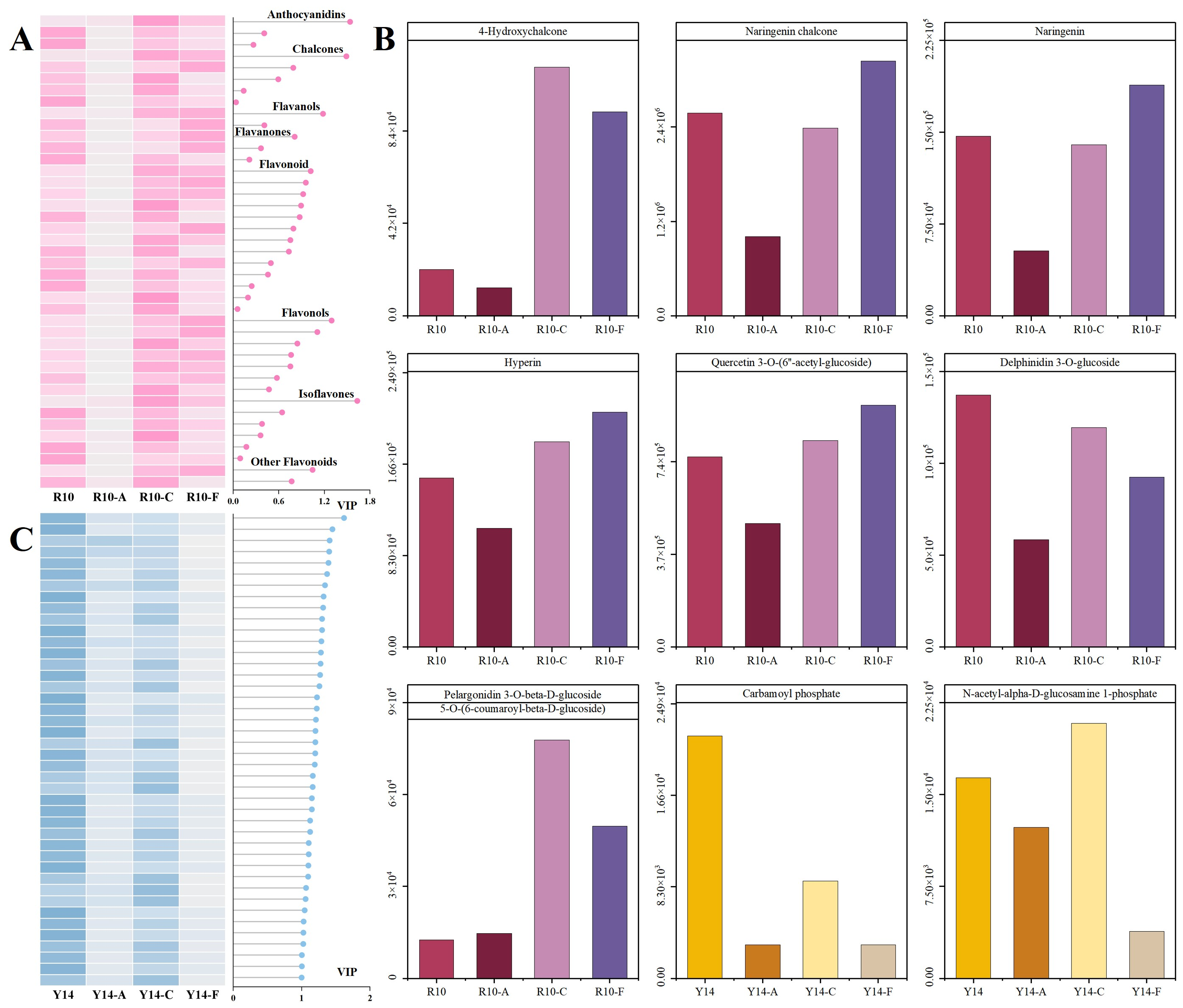
To further characterize the preservation-associated metabolic responses in the two onion cultivars, representative flavonoids and organic acids enriched in the preservation-related subclasses were analyzed (
Supplementary Tables S1 and S2). As shown in
Figure 4A, flavonoids in the R10 preservation-associated subclass generally exhibited lower accumulation in R10-A, whereas fresh, cold-stored, and frozen samples maintained relatively higher levels. Similar trends were observed among different flavonoid subclasses, including chalcones, flavanones, flavonols, and anthocyanidins.
Representative flavonoids are shown in
Figure 4B. Chalcone-related metabolites, including 4-hydroxychalcone and naringenin chalcone, accumulated markedly in R10-C and R10-F compared with R10-A. In particular, 4-hydroxychalcone increased from 1.28 × 10
4 in R10-A to 1.13 × 10
5 and 9.26 × 10
4 in R10-C and R10-F, respectively. Naringenin, a key intermediate in flavonoid biosynthesis, also showed substantially higher accumulation in preservation-associated samples. Similarly, flavonols, including hyperin and quercetin 3-O-(6″-acetyl-glucoside) maintained relatively high levels in R10-C and R10-F. Anthocyanidins, represented by delphinidin 3-O-glucoside and pelargonidin derivatives, showed comparable patterns, with significantly lower accumulation in R10-A than in the other treatments. These results suggest that the maintenance of flavonoid metabolism, particularly anthocyanidin and flavonol accumulation, may contribute to delayed senescence and improved storage tolerance in R10 onions.
In contrast, organic acids and derivatives were more strongly associated with preservation in Y14 (
Figure 4C). Representative metabolites, including carbamoyl phosphate and N-acetyl-alpha-D-glucosamine 1-phosphate maintained relatively higher levels in fresh and cold-stored samples, whereas their accumulation decreased markedly in ambient-stored and frozen onions (
Figure 4B). Carbamoyl phosphate decreased from 2.20 × 10
4 in fresh Y14 to 3.04 × 10
3 and 3.03 × 10
3 in Y14-A and Y14-F, respectively, while Y14-C maintained a relatively higher level. Similarly, N-acetyl-alpha-D-glucosamine 1-phosphate accumulated to its highest level in Y14-C and showed the lowest accumulation in Y14-F. These results indicate that the maintenance of organic acid metabolism and carbohydrate-related intermediates may play an important role in delaying senescence in Y14 onions during cold storage.
3.5. Changes in Sulfur-Related Volatile Compounds During Storage
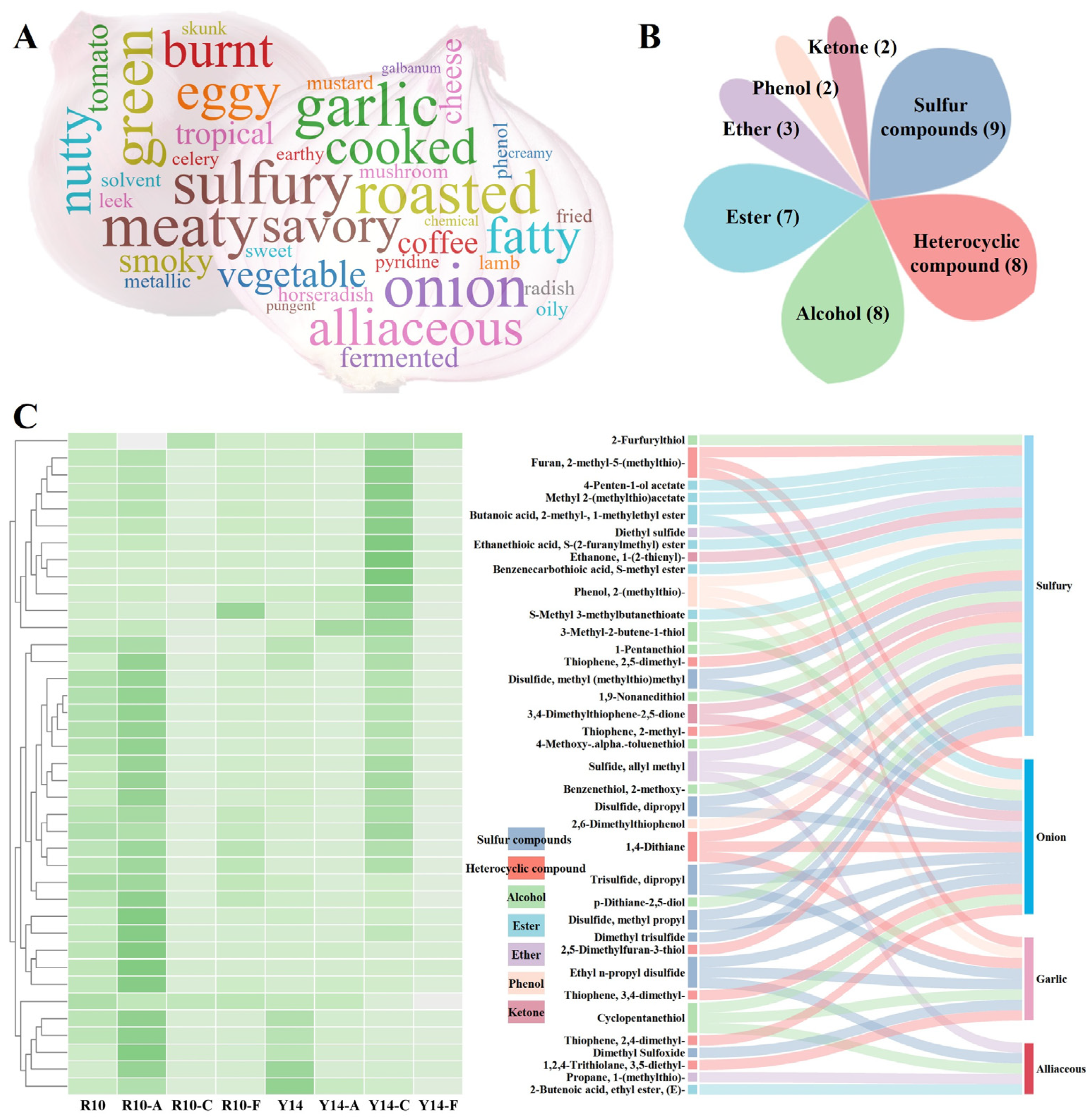
To further evaluate the effects of storage conditions on onion aroma characteristics, volatile metabolomic analysis was performed using HS-SPME–GC–MS. Odor annotation and word cloud analysis revealed that “sulfury”, “onion”, “garlic”, and “alliaceous” were the dominant aroma descriptors associated with onion flavor (
Figure 5A). These odor characteristics were mainly associated with sulfur compounds, heterocyclic compounds, alcohols, esters, ethers, phenols, and ketones. Among them, sulfur compounds, heterocyclic compounds, alcohols, and esters represented the predominant volatile categories (
Figure 5B).
Heatmap analysis revealed distinct cultivar- and storage-dependent accumulation patterns of sulfur-related volatiles (
Figure 5C). Overall, fresh R10 and ambient-stored R10-A maintained relatively high levels of many sulfur-containing volatiles, whereas Y14 and Y14-C showed comparatively higher accumulation among the yellow onion samples. In contrast, frozen Y14 samples exhibited markedly reduced accumulation of most sulfur-related compounds. Representative onion-like sulfur volatiles, including dipropyl disulfide, dipropyl trisulfide, dimethyl trisulfide, and methyl propyl disulfide, showed relatively high accumulation in R10 and R10-A, whereas their levels decreased substantially under cold and frozen storage. Similarly, sulfur-containing alcohols and heterocyclic compounds, including 3-methyl-2-butene-1-thiol, 1-pentanethiol, and thiophene derivatives, accumulated prominently in R10-A. In contrast, Y14-C maintained relatively higher levels of several sulfur-containing esters and heterocyclic compounds compared with Y14-A and Y14-F. Notably, frozen storage caused substantial reductions in most odor-active sulfur volatiles in Y14-F.
3.6. Key Odor-Active Sulfur Compounds During Storage
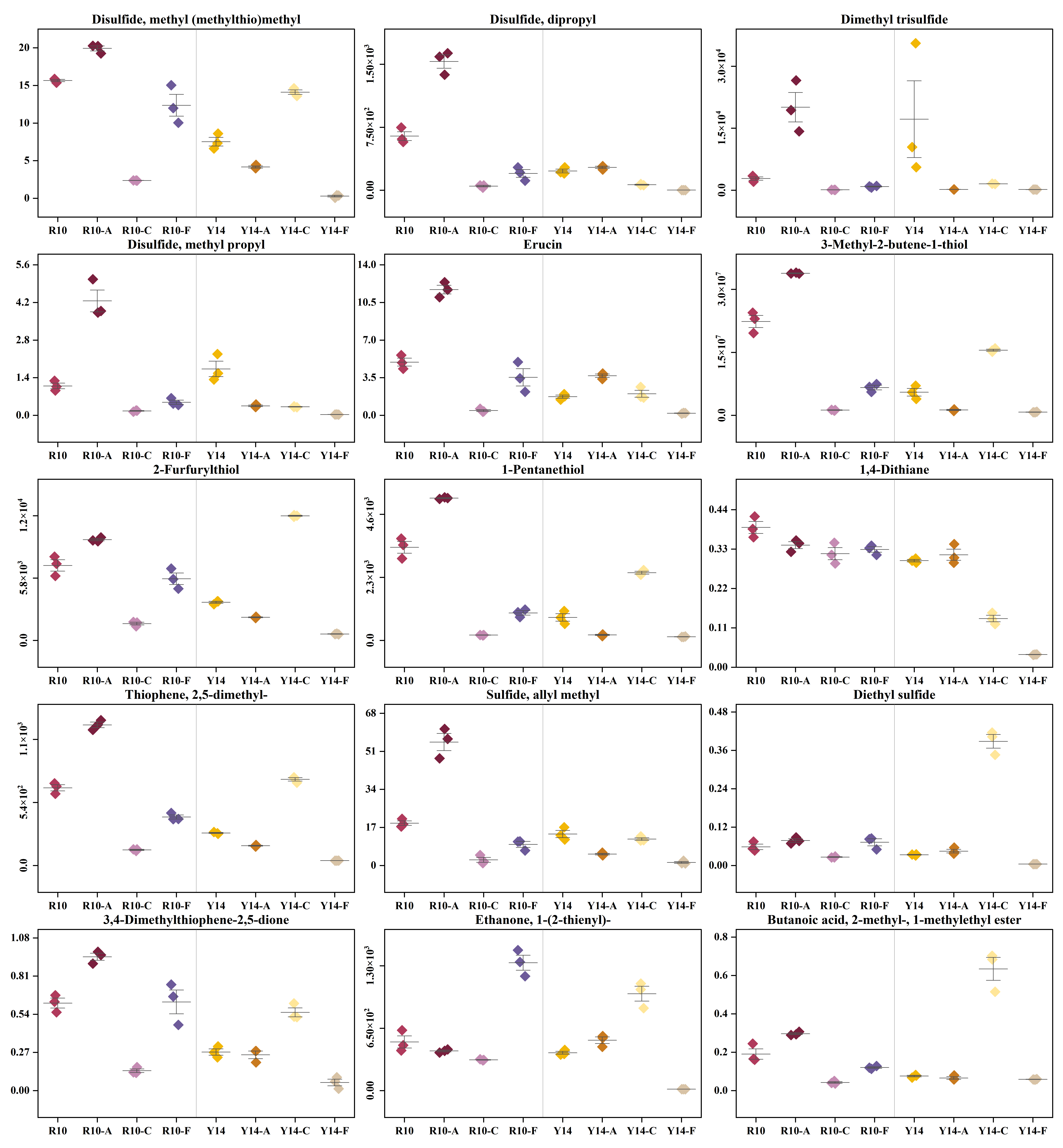
To further evaluate the contribution of sulfur-related volatiles to onion aroma, odor-active compounds with rOAV values greater than 1 were selected for analysis (
Figure 6). A total of 15 key odor-active compounds were identified, mainly belonging to sulfur compounds, alcohols, heterocyclic compounds, ethers, ketones, and esters. Among them, sulfur compounds and sulfur-containing alcohols showed the highest odor contribution.
Sulfur compounds, including dipropyl disulfide, dimethyl trisulfide, methyl propyl disulfide, and erucin exhibited strong onion- and garlic-like aroma characteristics. In general, these compounds maintained relatively high rOAV values in R10 and R10-A, whereas cold and frozen storage substantially reduced their odor contribution. In particular, dipropyl disulfide and dimethyl trisulfide showed extremely high rOAV values, indicating their dominant contribution to the characteristic onion aroma. Similar trends were also observed for sulfur-containing alcohols, including 3-methyl-2-butene-1-thiol, 2-furfurylthiol, and 1-pentanethiol. Among them, 3-methyl-2-butene-1-thiol showed the highest rOAV values across all samples and accumulated prominently in R10-A and Y14-C.
Several heterocyclic sulfur compounds, including 1,4-dithiane and thiophene derivatives, also contributed to sulfury and onion-like aroma profiles. In addition, sulfur-containing ethers and ketones, such as sulfide, allyl methyl and ethanone, 1-(2-thienyl)-, maintained relatively high odor activity in fresh and cold-stored samples but decreased substantially in Y14-F. Overall, frozen Y14 samples exhibited the lowest rOAV values for most odor-active sulfur compounds, indicating a marked reduction in characteristic onion aroma during frozen storage.
4. Discussion
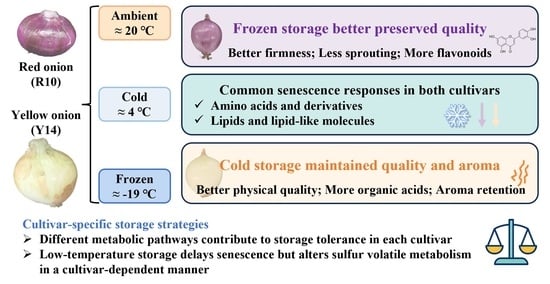
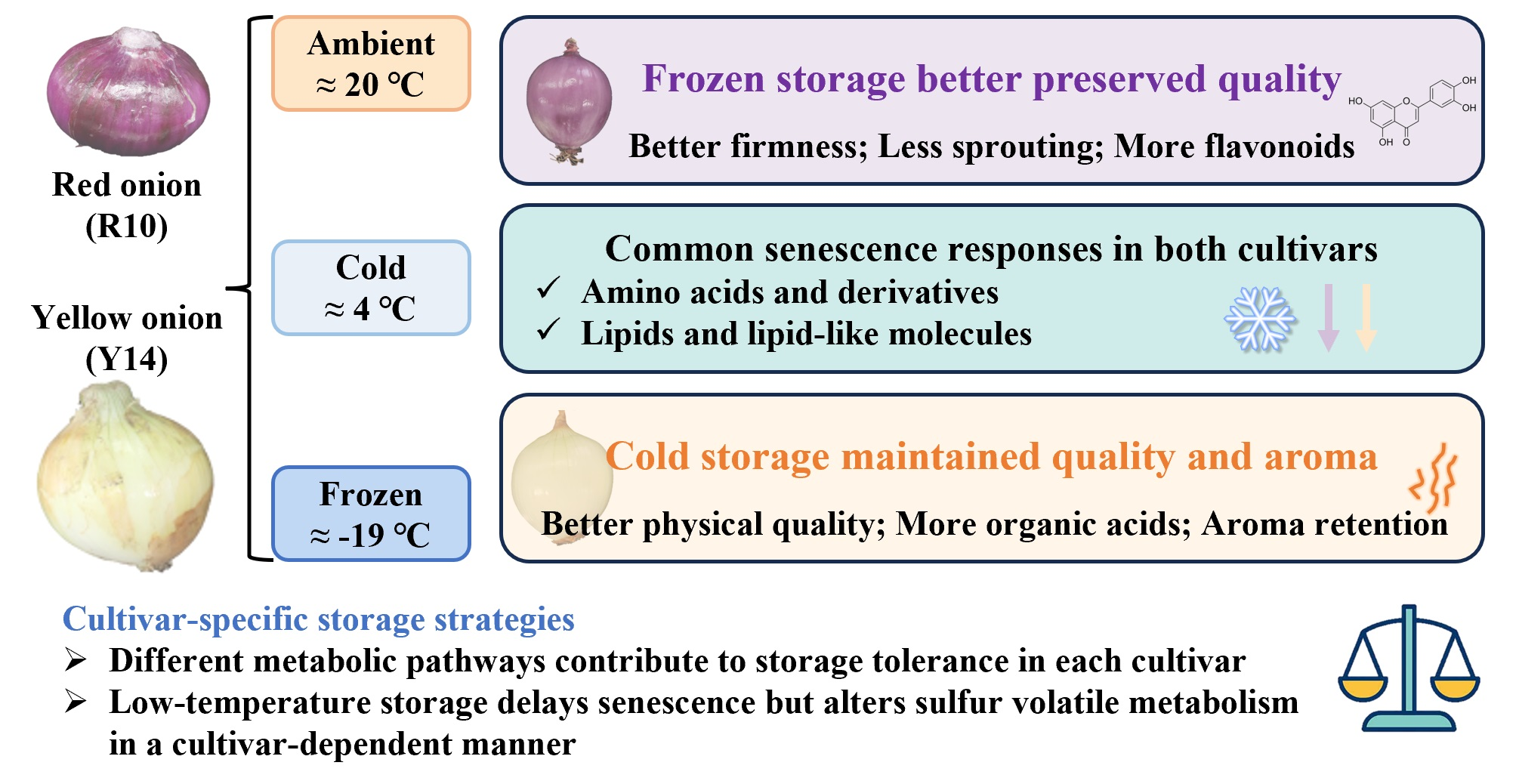
Postharvest storage markedly affected the physical quality, metabolomic characteristics, and sulfur-related aroma of onions, while distinct cultivar-dependent responses were observed under different storage conditions. In this study, integrated non-volatile and volatile metabolomic analyses revealed that red onion R10 showed better tolerance to frozen storage, whereas yellow onion Y14 performed better under cold storage.
4.1. Cultivar-Dependent Responses to Postharvest Storage
Long-term storage significantly influenced the appearance, texture, and sensory quality of onion bulbs [
3]. Ambient storage accelerated water loss and tissue senescence, resulting in severe shrinkage, firmness decline, internal discoloration, and reduced sensory scores. In contrast, low-temperature storage effectively delayed these changes, indicating that reduced temperatures suppressed postharvest deterioration and maintained bulb quality. Previous studies have demonstrated that storage conditions strongly affect onion firmness, antioxidant activity, flavor, pungency, and marketability during prolonged storage [
9,
13]. Low-temperature and controlled-atmosphere storage have been reported to reduce the respiration rate, delay tissue senescence, and maintain bulb quality during storage [
10,
21,
22]. Similarly, fast-curing treatment before storage has been shown to reduce bulb decay and improve storage stability by promoting outer scale formation and reducing moisture loss [
12].
However, the responses of the two onion cultivars to low-temperature storage were markedly different. Frozen storage better preserved the firmness and sensory quality of R10, whereas Y14 exhibited obvious softening after freezing despite maintaining external color. Such differences may be associated with cultivar-dependent tolerance to oxidative and freezing stress. Previous studies have reported that red onion varieties generally contain higher levels of flavonols, quercetin derivatives, and anthocyanins than yellow onions [
3,
7], contributing to stronger antioxidant capacity and stress tolerance. Red onions are particularly rich in anthocyanins and flavonols, which are closely related to antioxidant activity and membrane protection [
23]. In contrast, freezing has been reported to reduce antioxidant activity and total phenolic content in baby mustard [
24]. Therefore, the better freezing tolerance observed in R10 may be associated with a stronger antioxidant buffering capacity against freezing-induced oxidative damage. These phenotypic differences were further reflected in the distinct metabolomic responses observed under different storage conditions.
4.2. Amino Acid and Lipid Remodeling During Onion Senescence
Amino acid and lipid metabolism represented common senescence-associated responses in both onion cultivars. Multiple amino acids, peptides, and sulfur-containing amino acid derivatives accumulated markedly in ambient-stored samples, suggesting enhanced protein degradation and nitrogen remobilization during storage deterioration [
25]. Amino acid accumulation is a common characteristic of postharvest senescence and is frequently associated with cellular degradation and metabolic imbalance [
26]. In the present study, glutamyl-containing compounds and Tyr-related dipeptides showed substantial accumulation in senescence-associated subclasses, indicating active peptide turnover and nitrogen recycling during tissue deterioration [
27].
Sulfur-containing amino acid derivatives, including S-allyl-L-cysteine and Leu-Met, also accumulated substantially in senescent onions. Onion flavor precursors are primarily derived from sulfur-containing amino acids, particularly S-alk(en)yl-L-cysteine sulfoxides, which are converted into characteristic sulfur volatiles after tissue disruption [
11]. Previous studies have demonstrated that sulfur-containing compounds are the major contributors to onion pungency and aroma intensity [
4]. Therefore, the accumulation of sulfur-related amino acid derivatives observed in ambient-stored onions may provide an important metabolic basis for the enhanced sulfury and pungent aroma detected during storage [
3]. In addition, pyruvic acid and sulfur precursor metabolism have been reported to be positively associated with onion pungency and flavor strength, further supporting the close relationship between amino acid turnover and sulfur aroma formation during senescence [
28,
29]. Although pyruvic acid is recognized as an important indicator of onion pungency and sulfur metabolism, it was not specifically quantified in the present study. Future studies integrating targeted analyses of pyruvic acid and sulfur precursors with metabolomic profiling would provide a more comprehensive understanding of onion flavor formation during storage.
Lipid-related metabolites also showed clear senescence-associated accumulation patterns [
30]. Membrane lipids are highly sensitive to oxidative stress and storage injury, and lipid remodeling is closely associated with membrane degradation and tissue softening [
31]. In this study, lysophospholipid- and cardiolipin-related metabolites accumulated substantially in ambient-stored onions, particularly in Y14-A, indicating active membrane restructuring during senescence. The accumulation of these metabolites corresponded well with the observed firmness decline and tissue shrinkage. Similar studies have demonstrated that oxidative stress during storage can induce membrane lipid degradation and accelerate postharvest quality deterioration [
32,
33]. Moreover, disruption of membrane integrity can enhance the interaction between sulfur flavor precursors and alliinase, thereby promoting sulfur volatile formation [
34]. These results suggest that amino acid turnover and membrane lipid remodeling are common metabolic characteristics associated with onion senescence during prolonged storage.
4.3. Cultivar-Specific Preservation Mechanisms: Flavonoids in R10 and Organic Acids in Y14
Although both onion cultivars exhibited common senescence-associated metabolic responses, their preservation-related metabolic characteristics differed markedly. In R10, flavonoids were significantly enriched in the preservation-associated subclass, suggesting that flavonoid metabolism may contribute to delayed senescence and enhanced freezing tolerance [
23]. Onion is considered one of the richest dietary sources of flavonoids, particularly quercetin derivatives and anthocyanins, which possess strong antioxidant properties [
5,
6]. Previous studies have demonstrated that red onion varieties contain higher levels of anthocyanins and flavonols than yellow onions [
7], and these compounds are closely associated with antioxidant capacity and stress resistance [
35].
In the present study, representative flavonoids, including naringenin chalcone, hyperin, quercetin derivatives, and delphinidin 3-O-glucoside maintained relatively high accumulation in R10-C and R10-F but decreased substantially in R10-A. Anthocyanidins and flavonols are effective reactive oxygen species scavengers and may help stabilize cellular membranes during low-temperature stress [
23,
36]. Previous studies have also reported that storage conditions strongly influence flavonoid accumulation and antioxidant activity in onions. Controlled-atmosphere storage with elevated CO
2 was shown to maintain anthocyanin accumulation and antioxidant enzyme activities, while low-temperature storage helped preserve quercetin and flavonol content [
10,
37]. Furthermore, flavonoids in onions are mainly distributed in the outer bulb scales, which are highly susceptible to oxidative stress and low-temperature injury during storage [
3]. Therefore, the maintenance of flavonoid metabolism may partially explain why R10 retained higher firmness and sensory quality under frozen storage. In particular, anthocyanin-rich red onions may possess a stronger antioxidant buffering capacity against freezing-induced oxidative damage.
In contrast, organic acids and derivatives appeared to play a more important role in maintaining the postharvest quality of Y14. Organic acids are closely associated with respiratory metabolism, osmotic regulation, and cellular energy balance during storage [
38,
39]. In this study, carbamoyl phosphate and N-acetyl-alpha-D-glucosamine 1-phosphate maintained relatively higher accumulation in fresh and cold-stored Y14 onions, whereas their levels decreased substantially in the ambient and frozen storage groups. Previous studies have reported that carbohydrate metabolism and respiratory homeostasis are critical for maintaining onion quality during storage [
40]. Controlled-atmosphere storage has been reported to maintain sugar metabolism and reduce respiratory consumption in onions, thereby delaying quality deterioration [
41]. Therefore, maintenance of organic acid metabolism under cold storage may help preserve metabolic homeostasis in Y14, whereas frozen storage resulted in metabolic alterations similar to those observed under ambient storage, accompanied by severe softening and quality deterioration [
42]. These results suggest that Y14 was more susceptible to freezing-induced stress, while R10 maintained higher levels of flavonoids and better metabolic stability under frozen storage. Consequently, the two onion cultivars adopted distinct preservation strategies under low-temperature conditions, with R10 relying more on flavonoid-associated antioxidant protection and Y14 depending more on the maintenance of organic acid metabolism and respiratory homeostasis. These contrasting responses further highlight the importance of cultivar-specific storage strategies for maintaining onion quality during prolonged storage.
4.4. Sulfur-Containing Volatiles and Aroma Changes During Storage
Sulfur-containing volatiles are the major contributors to characteristic onion aroma and pungency [
43]. In the present study, odor annotation analysis revealed that “sulfury”, “onion”, “garlic”, and “alliaceous” were the dominant aroma descriptors associated with onion flavor. Several sulfur-containing compounds, including dipropyl disulfide, dimethyl trisulfide, methyl propyl disulfide, and sulfur-containing thiols, exhibited high odor activity values and represented the major contributors to onion aroma characteristics [
16]. Similar sulfur volatiles have previously been identified as key aroma-active compounds in onions and other Allium vegetables [
8].
Interestingly, sulfur-related volatiles exhibited distinct cultivar-dependent accumulation patterns during storage. Many sulfur compounds accumulated prominently in ambient-stored R10-A, whereas cold-stored Y14-C maintained relatively higher levels of characteristic onion-like aroma compounds. Previous studies have demonstrated that sulfur-containing flavor compounds are generated through enzymatic hydrolysis of S-alk(enyl)-L-cysteine sulfoxides after tissue disruption, and their formation is strongly influenced by storage conditions and tissue senescence [
44,
45]. The substantial accumulation of sulfur volatiles in R10-A may therefore be associated with accelerated tissue senescence, membrane degradation, and enhanced precursor conversion during ambient storage. Similar increases in pungency-related compounds have also been reported during onion curing and prolonged storage [
3,
12]. These sulfur compounds likely contributed to stronger sulfury and pungent aroma characteristics in ambient-stored red onions. In contrast, Y14-C retained relatively high levels of several characteristic sulfur volatiles while simultaneously maintaining better firmness and sensory quality, suggesting that cold storage helped preserve both physical quality and desirable onion aroma in yellow onions [
11].
Notably, Y14-F exhibited the lowest odor activity values for many sulfur volatiles and showed severe firmness decline after frozen storage, indicating substantial freezing injury in yellow onions. These findings suggest that sulfur volatile metabolism and storage tolerance were strongly cultivar-dependent. Overall, different onion cultivars exhibited distinct responses to low-temperature storage, indicating that cultivar-specific storage strategies are required to optimize both shelf life and aroma quality.
In commercial practice, long-term storage is essential to ensure a stable year-round onion supply, and yellow onions are generally considered more suitable for prolonged storage. Therefore, the present study focused on the quality characteristics and metabolic profiles after six months of storage under different temperature conditions to identify cultivar-specific preservation strategies. Future studies involving multiple sampling time points and time-resolved metabolomic analyses will provide further insights into the dynamic metabolic changes associated with onion senescence and quality maintenance during storage.




 ,
,