Article

Integrated Multi-Omics Analysis Elucidates the Anthocyanin Regulatory Mechanism Underlying Flower Color Variation in Impatiens walleriana

1
Research and Development Center of Landscape Plants and Horticulture Flowers, Yunnan Key Laboratory of Landscape Plant Resource Cultivation and Application, College of Landscape Architecture and Horticulture Sciences, Southwest Forestry University, Kunming 650224, China
2
Yunnan Provincial Academy of Science and Technology, Kunming 650224, China
*
Authors to whom correspondence should be addressed.
These authors contributed equally to this work.
Horticulturae 2026, 12(6), 713; https://doi.org/10.3390/horticulturae12060713
Submission received: 23 April 2026 / Revised: 30 May 2026 / Accepted: 6 June 2026 / Published: 9 June 2026

Abstract

Impatiens walleriana is a widely cultivated ornamental species extensively used in landscaping and garden design, with its vibrant floral colors constituting one of the primary determinants of its ornamental value. We found in preliminary observations that treatment of I. walleriana seeds with colchicine at 60 mg L−1 induced significant flower color variation, with petals changing from purple to pink. Based on this, the present study used the wild-type (purple) and induced mutant plants (pink) of I. walleriana as materials, and systematically elucidated the molecular regulatory mechanism underlying its flower color variation via integrated analysis of targeted metabolomics and transcriptomics. Metabolomic analysis identified 84 anthocyanin-related metabolites. Metabolite composition and accumulation levels differed significantly between Iw-MU and Iw-WT. Pelargonidin, peonidin, and petunidin were markedly elevated in Iw-MU, while procyanidins accumulated to higher levels in Iw-WT. These metabolic differences may serve as the key metabolic basis for the petal color transition to pink. Transcriptomic analysis identified a total of 689 differentially expressed genes, of which 386 were upregulated and 303 were downregulated. Subsequent functional annotation and enrichment analysis revealed that the flavonoid biosynthesis pathway played a key regulatory role in flower color variation. Among these, the significant downregulation of key anthocyanin biosynthetic genes, DFR and ANS, likely suppressed the production of colored anthocyanins. In contrast, the expression levels of ANR and LAR genes were significantly upregulated, which may drive the metabolic flux to shift toward proanthocyanidin biosynthesis. This study elucidated the metabolomic composition characteristics and key regulatory genes associated with the floral color transition from pinkish-purple to light pink in I. walleriana, as well as clarified the core metabolic pathways and molecular regulatory mechanisms underlying this variation. These findings provide a theoretical foundation for the genetic improvement of flower color and the breeding of new cultivars in I. walleriana.

1. Introduction

Anthocyanins are an important subclass of flavonoid secondary metabolites, widely distributed in various organs of higher plants, including flowers, fruits, and leaves. They represent a group of naturally occurring, water-soluble pigments [1,2]. Most anthocyanins possess a fundamental C6-C3-C6 carbon skeleton, with the C3, C5, and C7 positions typically substituted by hydroxyl groups [3]. The variation in plant flower color is mainly attributed to the distinct positions of these substituents and subsequent modification reactions, including hydroxylation, methylation, glycosylation, and acylation, which can extend their color range from red and purple to blue [4]. Based on the differences in substituents on the B ring, anthocyanidins can be classified into six major categories: cyanidin, pelargonidin, peonidin, delphinidin, petunidin, and malvidin [5,6]. Among them, cyanidin (brick red/magenta), delphinidin (blue/purple), and pelargonidin (orange/red) are the three most common and abundant anthocyanidins [7]. Anthocyanins exhibit relatively low stability and are rarely found in free form in nature. They typically undergo condensation reactions via glycosidic bonds with sugar molecules such as glucose, rhamnose, and xylose, forming anthocyanin glycosides in the form of monosaccharides, disaccharides, or polysaccharides, thereby enhancing their structural stability [8,9]. To date, more than 500 types of anthocyanin glycosides have been reported [10].
Although the core metabolic pathway underlying flower color formation in plants has been well characterized, the regulatory mechanisms governing pigment biosynthesis still exhibit significant species-specificity. For instance, floral coloration in some plant species relies on the biosynthesis and accumulation of anthocyanins, whereas certain species predominantly employ betalains as their principal pigments [11,12]. In addition, the composition and number of structural genes mediating pigment biosynthesis differ significantly among species. Multiple regulatory mechanisms, including substrate competition between metabolic pathways, functional variation of structural genes, and altered expression patterns of regulatory genes, collectively contribute to the diverse floral color phenotypes in plants [13,14,15]. For example, analysis of petal color diversity in three Camellia varieties identified 29 key structural genes, including PAL, CHS, and ANS, whose expression patterns in different color varieties were closely associated with the accumulation profiles of flavonoid metabolites [16]. Similarly, the floral color of the I. hybrida ‘Solarscape’ turned orange, and the accumulation of cyanidin and pelargonidin was the key factor underlying the petal color shift to orange. A strong correlation was also observed between anthocyanin accumulation and multiple genes, including IhC4H, IhDFR, and IhANS [17]. Therefore, studies on the mechanisms underlying floral color variation in specific species and their novel genetic materials can not only systematically identify the key genes involved in the regulation of floral color phenotypes in the target species, but also provide in-depth insights into their interaction networks and molecular regulatory pathways. Meanwhile, such investigations can serve as an important supplement to the theory of genetic regulation underlying floral color development in this species, and further promote breeding for floral color improvement.
Balsaminaceae plants are a core group with remarkable ornamental value in ornamental landscaping, and numerous scholars have carried out in-depth research on this family from the perspectives of taxonomy and cytology [18,19]. I. walleriana, a perennial herbaceous species belonging to the family Balsaminaceae and genus Impatiens, is native to tropical regions of East Africa [20]. Characterized by abundant flowers and vivid coloration, this species thrives in warm and humid environments and is widely cultivated as an ornamental horticultural species worldwide [21]. In landscaping applications, I. walleriana can be used both for potted ornamental display and as an open-field flower deployed in flower beds and flower borders. Meanwhile, it is a routinely utilized material for urban vacant land greening and landscape construction, with remarkable landscape ornamental value [22]. In recent years, due to its outstanding ornamental performance and environmental adaptability in outdoor landscape construction, the application scale of I. walleriana in urban landscaping in China has expanded continuously, accompanied by a significant increase in market demand, demonstrating broad development prospects and application potential. In our preliminary work, we found that treatment with 60 mg L−1 colchicine changed the petals of I. walleriana from wild-type purple to pink, with distinct phenotypic differences. Although flower color regulatory mechanisms have been well studied in ornamental plants, relevant reports on the color variation of this species remain scarce. Taking this as the entry point, this study aims to elucidate the molecular regulatory basis underlying its flower color variation, so as to provide a theoretical reference for the directional improvement of flower color and new variety breeding of I. walleriana.

2. Materials and Methods

2.1. Research Material Collection

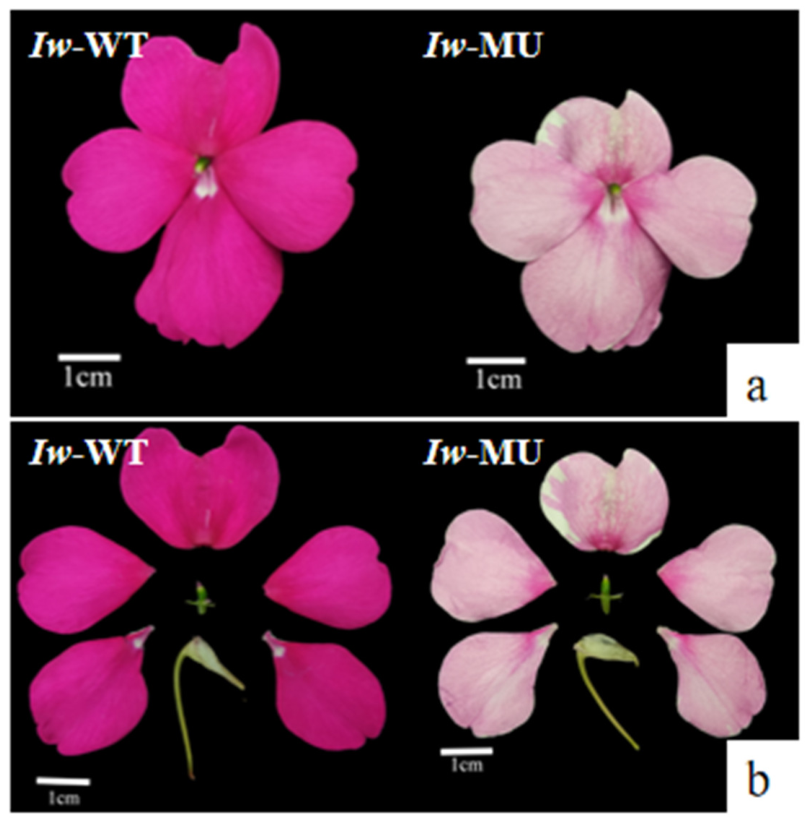
In this study, the wild-type I. walleriana (Iw-WT) was used as the control, and a mutant line (Iw-MU) with stable flower color variation was selected as experimental material. This line was previously generated by seed mutagenesis using 60 mg L−1 colchicine in our research group (Figure 1). Plant materials were grown at 25 °C under a 16 h light/8 h dark photoperiod in a growth substrate consisting of potting mix, vermiculite, and perlite at a 2:1:1 (v/v) ratio. We separately collected full-flowering-stage petals from the two materials and submitted them to Metware Biotechnology Co., Ltd., based in Wuhan, China. for Targeted Metabolomics of Anthocyanins and Transcriptome Sequencing.

2.2. Determination of Petal Color Parameters

Fresh petals of Iw-WT and Iw-MU were collected separately with five biological replicates, respectively. Based on the CIE Lab color system, the lightness value (L*), red-green chromaticity value (a*), and yellow-blue chromaticity value (b*) were measured at the central region of the adaxial petal surface using a colorimeter. Chroma (c*) and hue angle (h) were subsequently calculated using the respective formulas.
c* = (a*2 + b*2)1/2
h = arctan(b*/a*)

2.3. Determination of Pigment Content

2.3.1. Determination of Total Anthocyanin Content

Referring to the method of Mei et al. [23], 0.1 g of each of the two I. Walleriana materials were accurately weighed, soaked, and extracted with 65% acidic ethanol (containing 1% HCl) for 3–4 d, and the extract was brought to a constant volume of 10 mL with distilled water. The pH-differential method was employed by diluting the samples separately with pH 1.0 and pH 4.5 buffers. The pH differential method was adopted: the samples were diluted with buffer solutions at pH 1.0 and pH 4.5, respectively. After standing in the dark for 15 min, the absorbance was measured at 510 nm and 700 nm, and the total anthocyanin content was calculated accordingly [17].

2.3.2. Determination of Total Flavonoid Content

With reference to the method of Porra [24] with modifications, samples were fully ground in liquid nitrogen, and 0.1 g of the powder was weighed for dark extraction with 25 mL of methanol. The filtrate was collected, concentrated under vacuum, and brought to a constant volume of 10 mL with 75% ethanol to obtain the total flavonoid extract. 1 mL of the extract was transferred to a volumetric flask, followed by sequential addition of 5 mL ethanol, 0.5 mL 0.5 mol/L AlCl3 solution, and 2 mL pH 5.4 HAc-NaAc (acetic acid-sodium acetate) buffer. After 20 min of reaction, the absorbance was detected at 415 nm.

2.4. Sample Pretreatment

Samples were vacuum freeze-dried and ground to a fine powder. Exactly 0.5 g of the powder was weighed and transferred to a centrifuge tube, with 500 μL of extraction solution (50% methanol, 0.1% HCl in water) added subsequently. The mixture was vortexed and ultrasonically treated for 5 min and then centrifuged at 12,000 rpm for 3 min. The supernatant was collected, filtered through a 0.22 μm microporous filter membrane, and transferred to sample vials for subsequent LC-MS/MS analysis.

2.5. Chromatographic and Mass Spectrometric Acquisition Conditions

The data acquisition system consisted of ultra-performance liquid chromatography (UPLC, ExionLC™ AD, SCIEX, Framingham, MA, USA) coupled with tandem mass spectrometry (MS/MS, QTRAP® 6500+, SCIEX, Framingham, MA, USA) [25]. Separation was performed on an ACQUITY BEH C18 column (1.7 μm, 2.1 mm × 100 mm, Waters, Milford, MA, USA). The mobile phase comprised Phase A (ultrapure water with 0.1% formic acid) and Phase B (methanol with 0.1% formic acid). The elution gradient was programmed as 5% Phase B at 0 min, increased to 50% at 6 min, and 95% at 12 min (held for 2 min), and then decreased to 5% at 14 min, followed by 2 min of equilibration. Injection volume was 2 μL, column temperature was maintained at 40 °C, and flow rate was set at 0.35 mL/min. Key electrospray ionization (ESI) parameters were temperature 550 °C, ion spray voltage 5500 V in positive ion mode, and curtain gas (CUR) 35 psi. Detection of each ion pair was conducted per its individually optimized declustering potential (DP) and collision energy (CE) parameters.

2.6. Qualitative and Quantitative Analysis of Anthocyanin Metabolites

Qualitative analysis of mass spectrometric data utilized the Metware Database (v2.0). Quantitative analysis employed the Multiple Reaction Monitoring (MRM) mode: characteristic fragment ions of target ions were selected to exclude non-target ion interference. After acquiring mass spectrometric data from all samples, chromatographic peaks of all target compounds were integrated, and standard curves were generated for each metabolite. Integrated peak areas from samples were substituted into the linear regression equations of respective standard curves to calculate the content of each target compound. Furthermore, fold changes of metabolite quantitative data between groups were compared, and differential metabolites were annotated for enrichment using the Kyoto Encyclopedia of Genes and Genomes (KEGG) database. Results were visualized via the Chiplot online plotting platform (https://www.chiplot.online, accessed on 7 March 2026).

2.7. RNA Extraction and Illumina Sequencing

Total RNA was extracted from Iw-WT and Iw-MU samples using the EASY spin Plant RNA Rapid Extraction Kit (Aidlab Biotechnologies Co., Ltd., Beijing, China) (per manufacturer’s instructions). RNA concentration and integrity were assessed via 1% agarose gel electrophoresis and a Nanodrop 2000 UV-Vis spectrophotometer (Thermo Fisher, Shanghai, China). Poly(A)-tailed mRNA was enriched with Oligo (dT) magnetic beads, and cDNA libraries were constructed through fragmentation, synthesis, and end repair. Following library quality control, sequencing was performed on an Illumina high-throughput platform to generate Raw Data. Raw Data were quality-filtered with Fastp (v0.23.2) software to obtain high-quality Clean Reads, which were then assembled using Trinity (v2.13.2) software for reference sequences in downstream analysis [26]. Corset (v1.09) was used for clustering, with the longest transcript in each cluster designated as a Unigene [27]. Finally, Unigene sequences were aligned to the KEGG, GO, and Pfam databases via the DIAMOND (v2.0.9) tool to retrieve functional annotation information [28].

2.8. Screening and Enrichment Analysis of Differentially Expressed Genes

Transcript expression levels were calculated using RESM (v1.3.1) software [29]. After normalizing mapped read counts and transcript length per sample, per-transcript Fragments Per Kilobase of transcript per Million fragments mapped (FPKM) values were derived. Differential expression analysis between sample groups was performed using DESeq2 (v1.22.2). The p-values obtained from hypothesis testing were adjusted for multiple hypothesis testing to generate the False Discovery Rate (FDR). Differentially expressed genes (DEGs) were filtered using the criteria of |log2(fold change)| ≥ 2 and p-value < 0.05. Following the differential expression analysis, the total number of DEGs, the number of upregulated genes, and the number of downregulated genes in each comparison group were quantified. Volcano plots and 3D pie charts were generated to visualize the distribution and expression patterns of DEGs. The screened DEGs were functionally annotated and subjected to enrichment analysis against the GO and KEGG public databases. A p-value < 0.05 was set as the threshold for significant enrichment, and enrichment circle plots were generated to visualize the results [30,31,32]. Core KEGG metabolic pathways were subsequently identified. Standard pathway maps were retrieved from the official KEGG Pathway database, and the FPKM expression values of key differentially expressed genes (DEGs) within these pathways were extracted to generate pathway heatmaps.

3. Results and Analysis

3.1. Determination of Petal Hue Values in I. walleriana

The CIELab color space was applied to quantitatively analyze the flower petals of wild-type (Iw-WT) and flower color mutant (Iw-MU) lines of I. walleriana (Table 1). The lightness L* values of Iw-WT petals (22.60 ± 0.34) were markedly lower than those of Iw-MU (35.67 ± 2.34), reflecting a duller petal color of wild type and a significantly increased lightness induced by the flower color mutation. The a* and b* values of Iw-WT petals were 11.84 ± 1.59 and −5.02 ± 0.79, respectively, compared with 12.12 ± 1.44 and −2.17 ± 0.27 for Iw-MU. The a* values of both materials were positive and similar in magnitude, indicating that red served as the core hue. The b* values were negative for both, suggesting a blue tint in the petal coloration to varying degrees. Notably, Iw-WT exhibited a higher absolute b* value, corresponding to a more purple. Petal chroma c* values were 12.88 ± 1.66 for Iw-WT and 12.32 ± 1.41 for Iw-MU. With respect to hue angle h, only minor differences were observed between the two materials, with h values of −0.42 ± 0.06 for Iw-WT and −0.18 ± 0.03 for Iw-MU.

3.2. Determination of Pigment Contents in I. walleriana

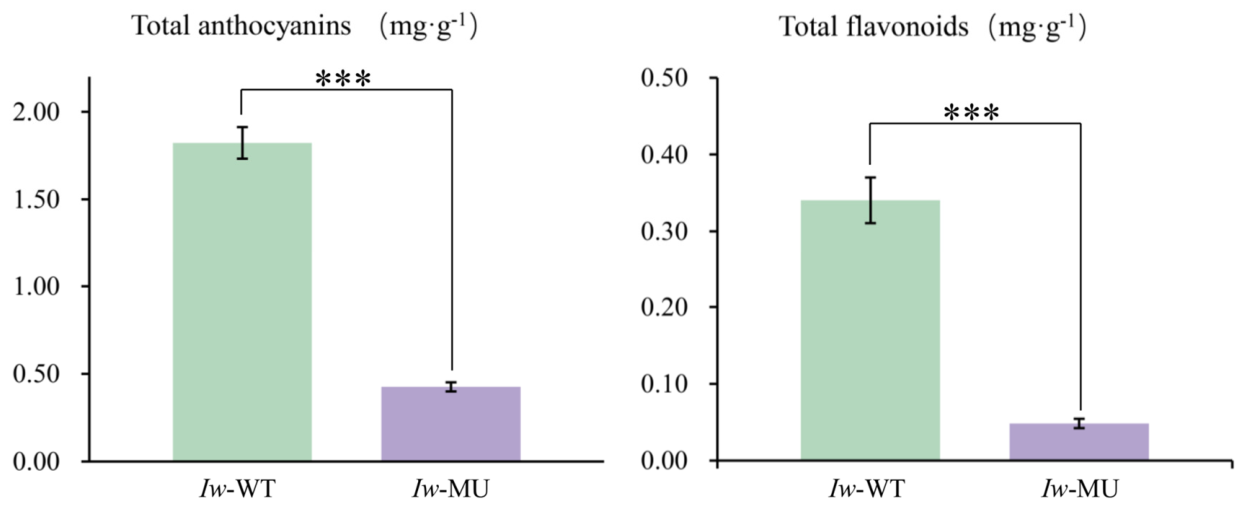
Quantitative analysis of total flavonoids, total anthocyanins, and total chlorophyll was performed in wild-type (Iw-WT) and color-variant (Iw-MU) plants of I. walleriana (Figure 2). The results showed that total anthocyanin content in Iw-WT plants was 1.823 mg·g−1, which was significantly higher than the 0.426 mg·g−1 detected in Iw-MU plants. The variation trend of total flavonoids was consistent with that of total anthocyanins. The total flavonoid content in the Iw-MU was only 0.048 mg·g−1, which was significantly lower than the 0.340 mg·g−1 in the Iw-WT. Collectively, these findings indicate that there were varying degrees of differences in the accumulation of each pigment between the two experimental materials of I. walleriana. Among these, the difference in anthocyanin content was the most pronounced, suggesting that it may be the main contributor influencing the flower color variation in I. walleriana.

3.3. Analysis of Metabolic Differences Underlying Flower Color Variation in I. walleriana

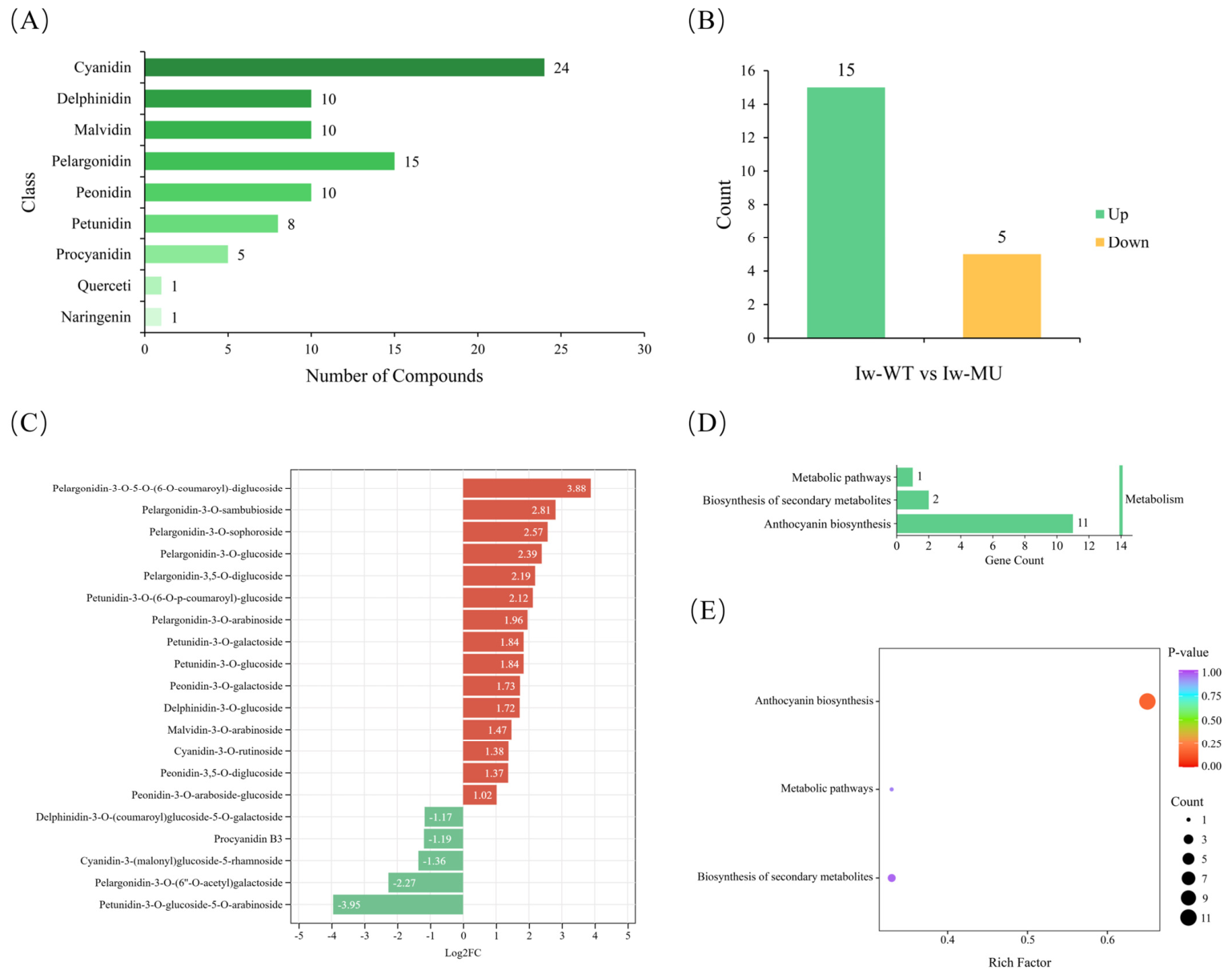
Through targeted anthocyanin metabolomic analysis of the petals from wild-type (Iw-WT) and flower color mutant (Iw-MU) I. walleriana, a total of 84 anthocyanin compounds were identified, mainly including 24 cyanidin derivatives, 15 pelargonidin derivatives, and 10 derivatives each of delphinidin, malvidin, and peonidin (Figure 3A). Using the screening criteria of fold change ≥ 2 and fold change ≤ 0.5, a total of 41 differential metabolites were preliminarily identified. Compared with Iw-WT, 27 metabolites showed significantly upregulated accumulation, while 14 metabolites exhibited significantly downregulated accumulation in the petals of Iw-MU (Figure 3B). After further filtering out metabolites with a fold change value of Inf, a total of 20 metabolites with significant differences in accumulation were finally screened out, comprising 15 up-accumulated and 5 down-accumulated metabolites. Figure 3C illustrates the differential accumulation characteristics of anthocyanin metabolites in the petals of Iw-MU and Iw-WT. Overall, the significantly upregulated metabolites in Iw-MU petals were dominated by pelargonidin derivatives, among which pelargonidin-3-O-5-O-(6-O-coumaroyl)-diglucoside exhibited the most significant upregulation (Log2FC = 3.88). It is speculated that this class of metabolites may play a key role in the flower color variation. Only 5 metabolites were significantly downregulated, among which petunidin-3-O-glucoside-5-O-arabinoside exhibited the most significant downregulation (Log2FC = −3.95). KEGG annotation and enrichment analysis revealed that differentially accumulated metabolites during floral color variation in I. walleriana were significantly enriched in specific pathways, including anthocyanin biosynthesis, biosynthesis of secondary metabolites, and metabolic pathways (Figure 3D). Among these, the anthocyanin biosynthesis pathway had the largest number of enriched differential metabolites (11) and exhibited the highest enrichment level (Figure 3D,E). The above results, at the transcriptome level, verified that the core regulatory pathway for flower color variation is the anthocyanin synthesis pathway, laying the foundation for the subsequent screening of key regulatory genes.
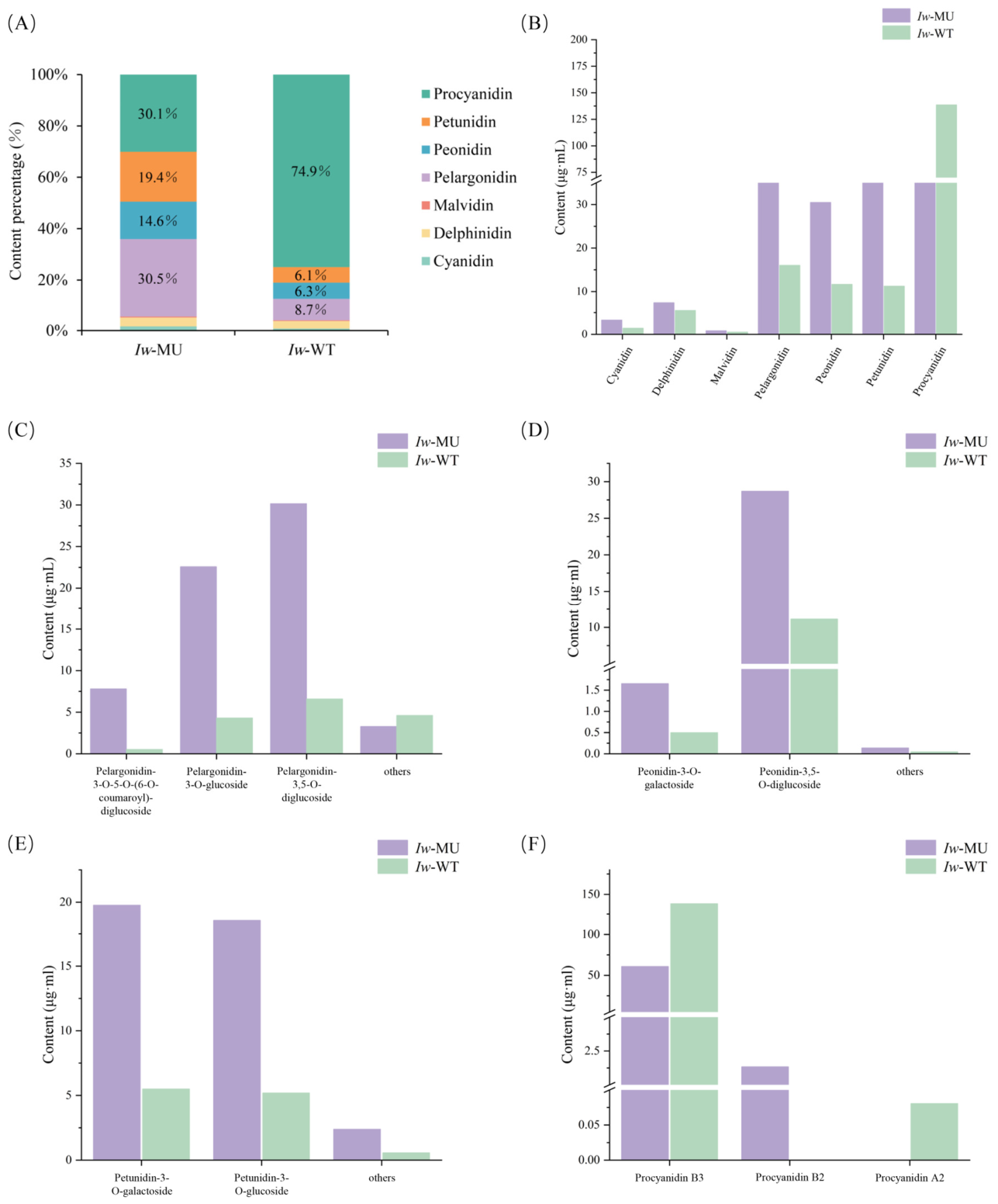
Statistical analysis revealed that the composition of differential metabolites exhibited distinct differences between the two lines. In Iw-MU, pelargonidin accounted for the highest relative abundance at 30.5%, followed by procyanidin (30.1%) and petunidin (19.4%). In contrast, procyanidin was the overwhelmingly dominant metabolite in Iw-WT, with a relative abundance as high as 74.9%; the other metabolites with higher proportions were pelargonidin (8.7%) and peonidin (6.3%) in descending order (Figure 4A). A comparative assessment of accumulation levels across metabolite classes further confirmed divergent metabolic profiles between the two materials. Among all detected metabolites, only procyanidin showed a higher accumulation level in Iw-WT than in Iw-MU, reaching 138.64 μg·mL in the former; all other detected metabolites exhibited higher accumulation levels in Iw-MU (Figure 4B). As shown in Figure 4C, pelargonidin derivatives such as pelargonidin-3,5-O-diglucoside and pelargonidin-3-O-glucoside accumulated at relatively low levels in Iw-WT, whereas their levels were markedly elevated in the color-variant mutant Iw-MU. Regarding peonidin metabolites, the accumulation of peonidin-3,5-O-diglucoside and peonidin-3-O-galactoside was substantially higher in Iw-MU than in Iw-WT, with peonidin-3,5-O-diglucoside exhibiting both the highest absolute content and the most pronounced difference between the two genotypes (Figure 4D). Petunidin-type anthocyanin metabolites also exhibited a similar accumulation pattern, with compounds including petunidin-3-O-galactoside (19.771 μg·mL) and petunidin-3-O-glucoside (18.535 μg·mL) showing a substantial increase in accumulation in Iw-MU (Figure 4E). In contrast, procyanidins accumulated to higher overall levels in Iw-WT than in Iw-MU. Among these, procyanidin B3 was identified as the predominant component exhibiting both the highest absolute abundance and the most pronounced inter-genotype difference, with a concentration of 138.563 μg·mL in Iw-WT that declined to 60.841 μg·mL in Iw-MU (Figure 4F). Furthermore, procyanidin B2 was exclusively detected in Iw-MU (2.267 μg·mL), whereas procyanidin A2 was detected only in Iw-WT (0.081 μg·mL). The differential accumulation of the aforementioned metabolites may be the key metabolic basis underlying the petal color transition from purple to pink in I. walleriana.

3.4. Accumulation Characteristics of Differential Metabolites in the Anthocyanin Biosynthesis Pathway

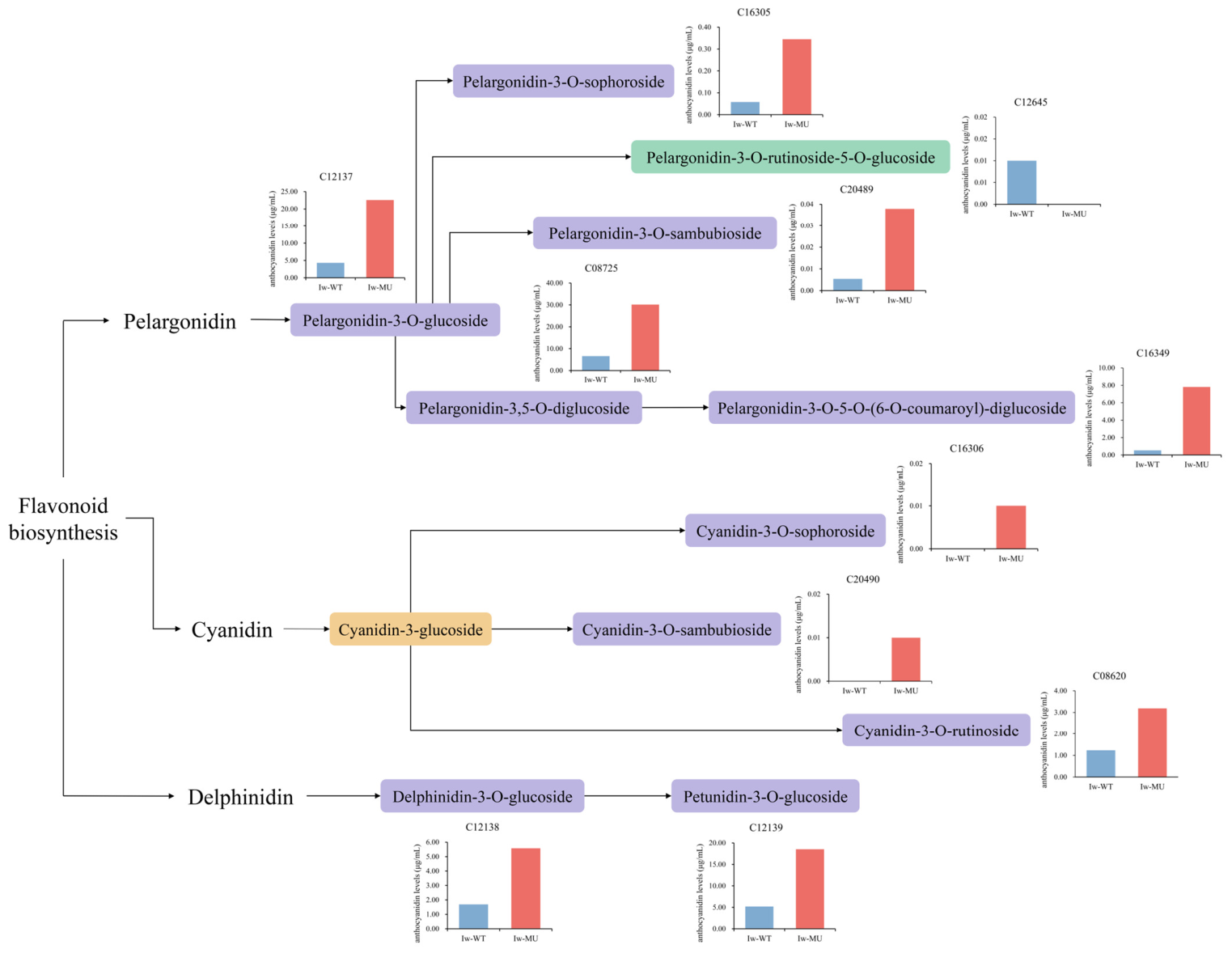
Given that the anthocyanin biosynthesis pathway is the key metabolic pathway underlying flower color variation in I. walleriana, we extracted and collated the abundance levels of the 11 enriched differential metabolites in this pathway from the metabolomic data and further constructed a regulatory network diagram of these differential metabolites (Figure 5). The analysis revealed that the anthocyanin biosynthesis pathway involves three core anthocyanidin classes (pelargonidin, cyanidin, and delphinidin) and their glycoside derivatives. Among these, the largest number of differential metabolites (6) were enriched in the pelargonidin branch. Compared to Iw-WT, the levels of most pelargonidin derivatives in the Iw-MU petals, including pelargonidin-3-O-glucoside, pelargonidin-3-O-sophoroside, and pelargonidin-3-O-sambubioside, were significantly increased, whereas the content of pelargonidin-3-O-rutinoside-5-O-glucoside was markedly decreased. As canonical anthocyanins responsible for red and pink flower coloration, the massive accumulation of pelargonidin derivatives likely constitutes the core biochemical basis underlying the light pink petal phenotype of Iw-MU. Concurrently, the levels of cyanidin derivatives (e.g., cyanidin-3-O-sophoroside, cyanidin-3-O-sambubioside), delphinidin derivatives (delphinidin-3-O-glucoside), and downstream petunidin derivatives (petunidin-3-O-glucoside) in Iw-WT petals were significantly lower than those in Iw-MU plants. Notably, certain cyanidin derivatives (cyanidin-3-O-sophoroside, cyanidin-3-O-sambubioside) were barely detectable in Iw-WT petals. Although cyanidin and delphinidin typically confer purplish-red and bluish-purple hues to plants, their high accumulation in Iw-MU did not result in a dark-colored phenotype. Considering the concurrent high accumulation of pelargonidin derivatives in Iw-MU plants, these findings suggest that the coordinated accumulation of the three types of anthocyanins in a specific ratio constitutes the key metabolic basis for the formation of the pale pink petal phenotype in the flower color variant of I. walleriana.

3.5. Identification and Enrichment Analysis of Differentially Expressed Genes

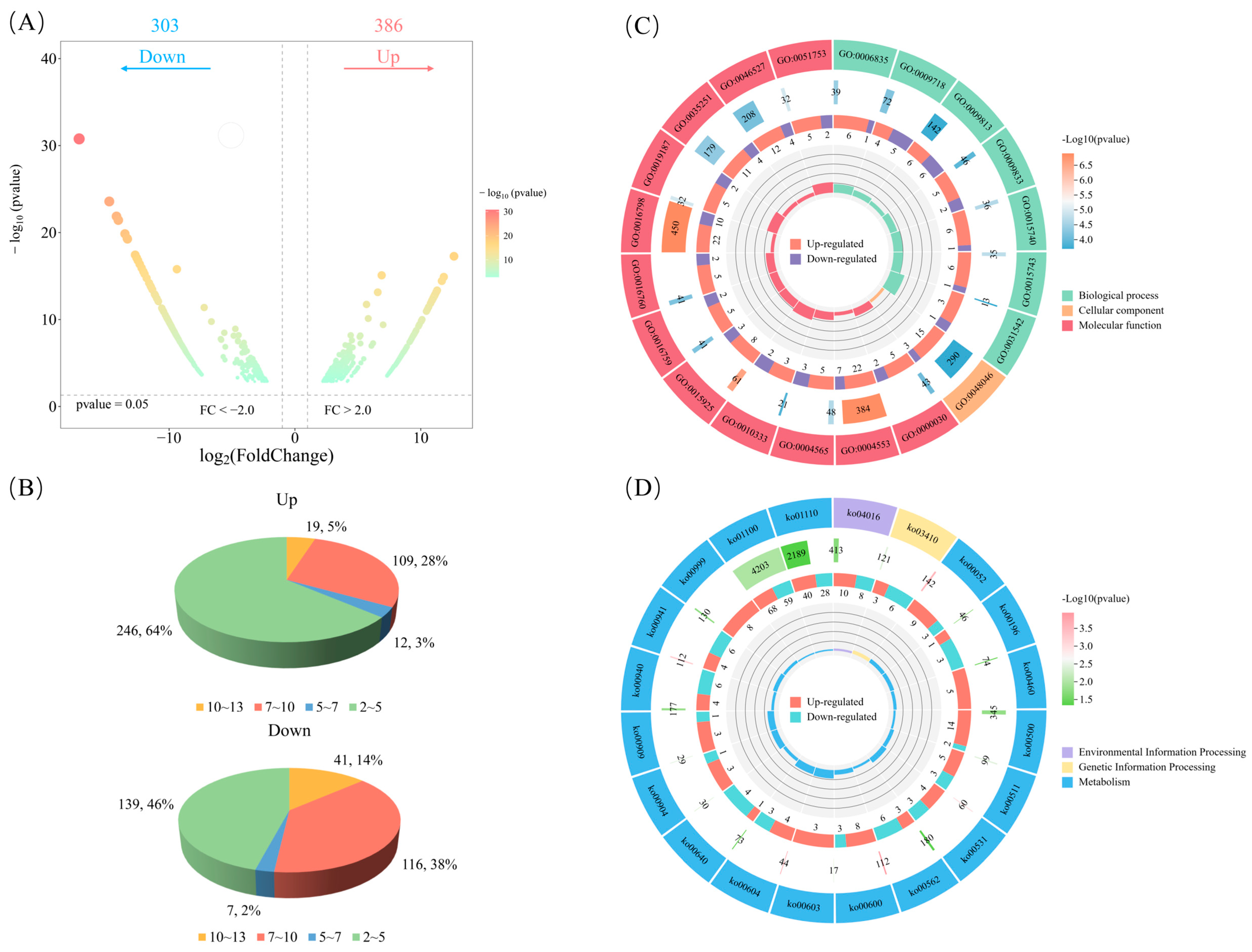
Comparative analysis identified a total of 689 DEGs in the Iw-WT versus Iw-MU comparison. Compared to Iw-WT, 386 genes were significantly upregulated, while 303 genes were significantly downregulated in the petals of the color-mutant plants (Figure 6A). Statistical analysis revealed that 246 genes were significantly upregulated by 2–5 fold, accounting for 64% of all upregulated genes. Among downregulated genes, 139 genes were downregulated by 2–5 fold (46%), while 116 genes were downregulated by 7–10 fold, representing a substantial proportion of 38% (Figure 6B). The DEGs were annotated, categorized, and subjected to GO enrichment analysis using the GO database (Figure 6C). Among the top 20 most significantly enriched GO terms, 12 terms were assigned to the Molecular Function (MF) category, with the main terms including hydrolase activity, acting on glycosyl bonds (GO:0016798, 32 DEGs), UDP-glycosyltransferase activity (GO:0035251, 15 DEGs), and glucosyltransferase activity (GO:0046527, 16 DEGs). Under the Biological Process (BP)category, seven GO terms were enriched, including malate transport (GO:0015743, 7 DEGs), the anthocyanin-containing compound biosynthetic process (GO:0009718, 9 DEGs), and the flavonoid biosynthetic process (GO:0009813, 12 DEGs). Whereas only 1 GO term, apoplast (GO:0048046, 18 DEGs), was annotated to the Cellular Component (CC) category. The above significantly enriched GO terms, particularly those involved in flavonoid/anthocyanin biosynthesis, glycosyltransferase activity, and apoplast, suggest that significant alterations occurred in the key processes of anthocyanin biosynthesis, modification, and transport in the I. walleriana flower color variant. These changes collectively contributed to the phenotypic shift from deep purple to pale pink petals in I. walleriana. KEGG annotation and enrichment analysis were performed on the screened DEGs. As shown in the statistical plot (Figure 6D), among the top 20 most significantly enriched pathways, 18 pathways were assigned to the Metabolism category, with the core pathways including flavonoid biosynthesis (ko00941, 10 DEGs), starch and sucrose metabolism (ko00500, 16 DEGs), and biosynthesis of various plant secondary metabolites (ko00999, 8 DEGs). The remaining two categories each harbored one enriched pathway: base excision repair (ko03410, 9 DEGs) and MAPK signaling pathway-plant (ko04016, 18 DEGs). These significantly enriched pathways demonstrate that the flower color variation in I. walleriana is not only directly mediated by the flavonoid biosynthesis pathway, but may also be shaped by multi-pathway crosstalk and hierarchical regulatory networks, including carbon skeleton provision through starch and sucrose metabolism and upstream signal transduction regulation, ultimately contributing to the alteration in petal color.

3.6. Flavonoid Pathway DEGs Regulate Flower Pigmentation Variation in I. walleriana

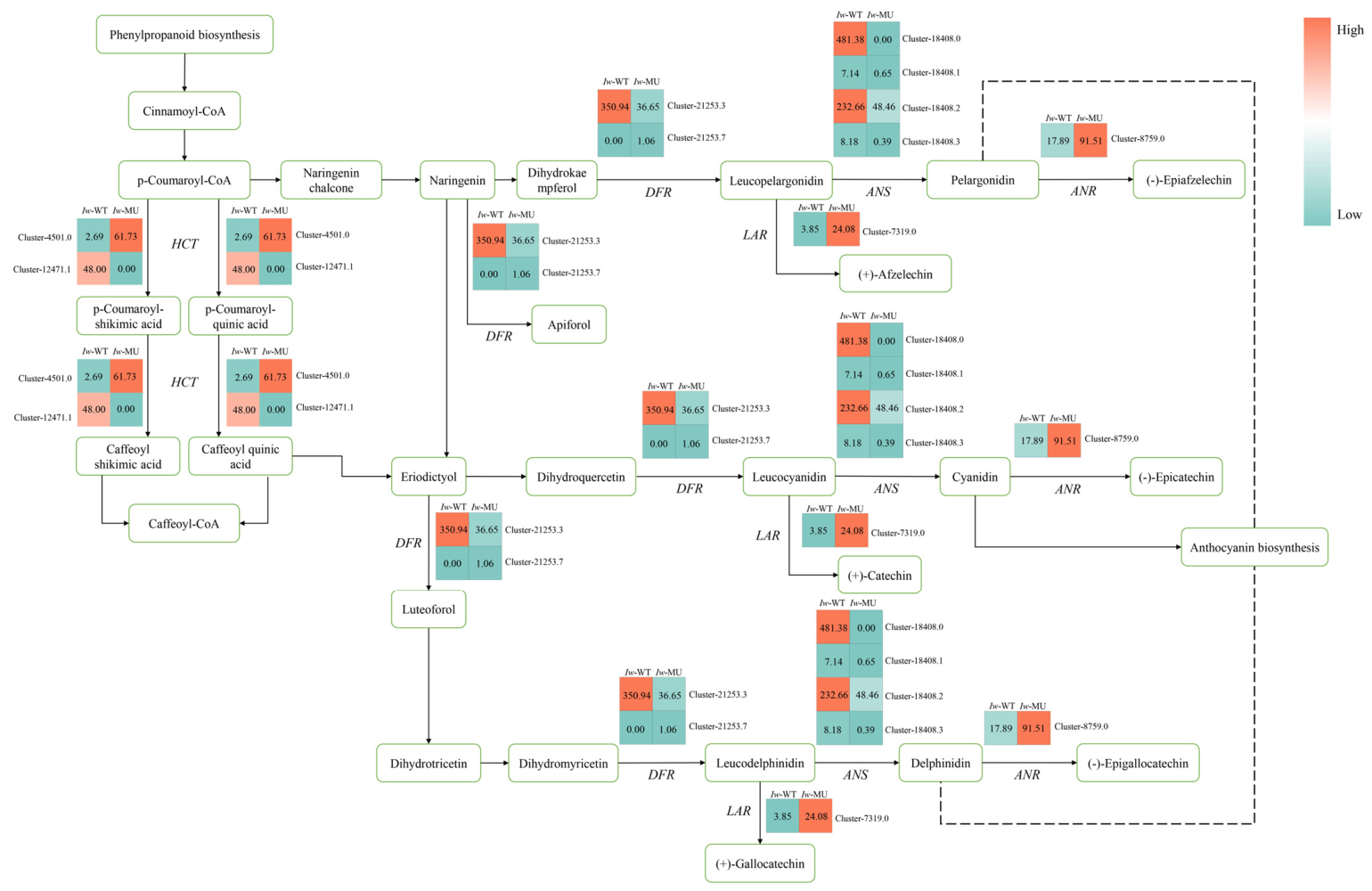
The results of transcriptomic GO and KEGG enrichment analyses consistently indicate that the flavonoid biosynthesis pathway is the key metabolic pathway regulating flower color variation in I. walleriana. Accordingly, based on our transcriptomic dataset, we collated all DEGs significantly enriched in this pathway and generated a regulatory network heatmap (Figure 7) to dissect the transcriptional regulatory mechanism underlying the flower color variation of I. walleriana.
Flavonoid biosynthesis is initiated from the phenylpropanoid pathway, with cinnamoyl-CoA and p-coumaroyl-CoA serving as the critical upstream precursors of this pathway. p-Coumaroyl-CoA not only participates in flavonoid biosynthesis but can also be catalyzed by hydroxycinnamoyl-CoA: shikimate/quinate hydroxycinnamoyl transferase (HCT) to form caffeoyl-CoA, which is then shunted toward lignin biosynthesis. In this study, two differentially expressed HCT genes (Cluster-4501.0 and Cluster-12471.1) were identified in I. walleriana, and the two genes exhibited opposite expression patterns in Iw-MU. On the other hand, p-Coumaroyl-CoA is catalyzed sequentially by enzymatic genes to generate Naringenin chalcone and subsequently Naringenin, and the latter can be further converted to dihydrokaempferol, dihydroquercetin, and dihydromyricetin, respectively, through hydroxylation reactions. These aforementioned dihydroflavonols are catalyzed by dihydroflavonol 4-reductase (DFR) to yield the corresponding leucoanthocyanidins: leucopelargonidin, leucocyanidin, and leucodelphinidin. As shown in the figure, the expression level of the DFR gene (Cluster-21253.3) is significantly downregulated in the flower color variant Iw-MU. This downregulation may inhibit the synthesis and accumulation of pigment precursors, ultimately leading to a lighter flower color. Downstream of the leucoanthocyanidins, Anthocyanidin synthase (ANS) catalyzes their conversion into the corresponding colored anthocyanidins, including pelargonidin, cyanidin, and delphinidin. A total of 4 differentially expressed ANS genes (Cluster-18408.0/1/2/3) were identified in I. walleriana, all of which exhibited significantly downregulated expression in Iw-MU. This suggests that the reduced expression of these genes may inhibit the conversion of leucoanthocyanidins to colored anthocyanidins, thereby contributing to the observed lighter flower color. Notably, the transcript level of the leucoanthocyanidin reductase (LAR) gene (Cluster-7319.0) was significantly upregulated in Iw-MU. Its encoded product can compete with ANS for the common leucoanthocyanidin substrates, thereby shunting the metabolic flux toward proanthocyanidin biosynthesis. Similarly, the Anthocyanidin reductase (ANR) gene (Cluster-8759.0) was also significantly upregulated in Iw-MU. This upregulation may act synergistically with the downregulation of ANS, competitively consume colored anthocyanidin substrates, further promote the diversion of metabolic flux toward proanthocyanidin accumulation, and thus induce the fading of the flower color phenotype.

3.7. Integrated Analysis of Differential Metabolites and DEGs Related to Flower Color Variation in I. walleriana

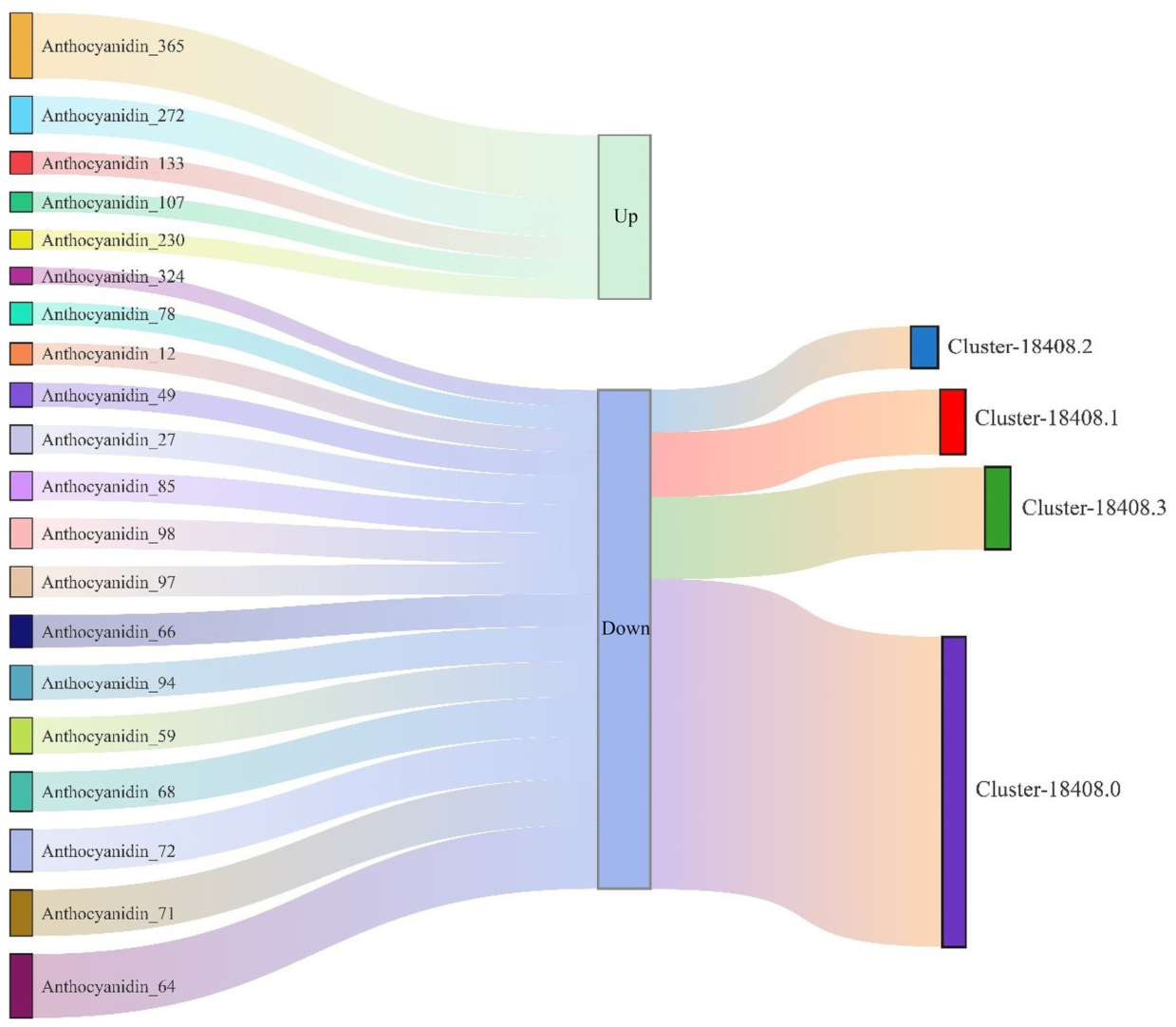
To further identify the key candidate genes underlying flower color variation in I. walleriana, this study conducted a correlation analysis between differential metabolites and differentially expressed genes (DEGs), and visually presented the interactions between anthocyanin metabolites and key genes using a Sankey diagram (Figure 8). The direction and width of the bands in the figure can clearly reflect the coordinated changes in gene expression patterns and metabolite accumulation levels. The analysis results showed that the contents of 14 anthocyanin metabolites in Iw-MU decreased significantly, indicating that the lighter flower color was mainly caused by the reduced accumulation of anthocyanins. In addition, 4 DEGs highly correlated with downregulated metabolites were screened out, which are Cluster-18408.0/1//2/3. Transcriptomic gene annotation results confirmed that all 4 genes belong to the ANS family and were significantly downregulated in Iw-MU, showing a high correlation with the accumulation trends of the vast majority of anthocyanin metabolites. Therefore, it is speculated that ANS family genes play a core role in the flower color metabolic regulatory network of I. walleriana, and the downregulation of their expression inhibits the biosynthesis and accumulation of anthocyanins, thereby leading to flower color variation.

4. Discussion

4.1. Pelargonidin Derivatives as Key Drivers of Flower Pigmentation Variation in I. walleriana

Flower color is a key quality trait of ornamental plants, which directly affects their ornamental and economic value. Meanwhile, it acts as a visual signal to attract pollinators and plays a critical role in plant growth and development [33,34]. Flower color in plants is predominantly determined by three major classes of pigments: flavonoids, carotenoids, and betalains. Anthocyanins are one of the most important flavonoid compounds, and their biosynthesis, accumulation, and degradation processes are tightly regulated, which in turn affects flower color in plants [6,35]. Targeted metabolomics analysis in this study revealed that the anthocyanin biosynthesis pathway is the core metabolic pathway regulating flower color variation in I. walleriana, among which the upregulated accumulation of pelargonidin derivatives was particularly prominent. In addition, similar patterns have been observed in studies on the formation mechanism of diverse flower colors in Rosa. The anthocyanin content in petals of pink and black cultivars was significantly higher than that in white cultivars, with the highest accumulation detected in black cultivars. By contrast, pelargonidin-3,5-O-diglucoside and pelargonidin-3-O-glucoside exhibited the highest content in pink cultivars [36]. In Chrysanthemum morifolium, only peonidin and delphinidin were detected in yellow cultivars, whereas high levels of pelargonidin and its derivatives were accumulated in pink cultivars. The key precursor pelargonidin 3-O-glucoside is efficiently converted into downstream derivatives in these pink varieties. This characteristic indicates that the color difference between pink and yellow chrysanthemum varieties mainly results from variations in the composition and accumulation levels of pelargonidin and its derivatives [37]. The aforementioned studies are consistent with the findings observed in the present study, indicating that pelargonidin and its derivatives are the key pigments responsible for pink flower coloration in plants, and further corroborating the critical regulatory role of anthocyanin composition and content in governing plant flower color phenotype.

4.2. DFR and ANS Mediated Regulatory Mechanisms of Flower Color Variation in I. walleriana

The anthocyanin biosynthesis pathway in plants has been fully elucidated, and its core steps are dependent on a series of catalytically active proteins encoded by structural genes [38]. Divergence in flower color across plants is primarily governed by the substrate specificity of DFR towards dihydroflavonol substrates and the subsequent generation of corresponding downstream products [39]. Relevant studies have confirmed that the catalytic properties of DFR are a key factor limiting flower color variation, and its expression level is highly correlated with pigment accumulation, with high expression frequently accompanied by deeper flower coloration [40,41,42]. In this study, we found that the expression level of the DFR gene was significantly downregulated and maintained at a low level in the flower color variant of I. walleriana compared with wild-type plants. Similarly, studies in the model plant Nicotiana tabacum have demonstrated that DFR expression directly regulates anthocyanin accumulation, thereby determining the white or pink floral phenotype. Overexpression of DFR can significantly promote anthocyanin accumulation, resulting in a deep red petal color [43]. Accordingly, we speculated that the transcript downregulation of DFR in the I. walleriana flower color variant may reduce the catalytic conversion efficiency of dihydroflavonols to leucoanthocyanidins, thereby resulting in insufficient substrate availability for downstream ANS and subsequent failure to generate adequate amounts of colored anthocyanidins.
ANS functions downstream of DFR to catalyze the oxidative conversion of leucoanthocyanidins to colored anthocyanidins, a reaction that constitutes the first committed step in the flavonoid biosynthesis pathway for generating a visible chromophore [44]. The ANS gene showed high transcript abundance in wild-type I. walleriana (Iw-WT), whereas its expression was significantly downregulated in the flower color variant (Iw-MU). Numerous other studies have also confirmed that the transcript level of the ANS gene is closely correlated with flower color intensity in plants. In plants with a dark-flowered phenotype, the expression level of this gene is generally maintained at a high level, with a correspondingly high content of anthocyanin compounds; conversely, in plants with a light-flowered phenotype, the gene exhibits a relatively low expression level, accompanied by a similarly low content of anthocyanin compounds [35,38,45]. Thus, the transcript abundance of ANS may directly govern anthocyanin accumulation in I. walleriana, with reduced ANS expression inhibiting pigment biosynthesis, resulting in the accumulation of colorless precursor compounds and flower color lightening [46,47]. In addition, we observed a synchronously downregulated expression pattern of DFR and ANS in the I. walleriana flower color variant in this study. Relevant reports have indicated that alterations in the expression pattern of the DFR gene can affect the transcript levels of several other structural genes in the anthocyanin biosynthesis pathway. For example, downregulation of DFR in apple (Malus × domestica) suppresses the expression of genes including F3H, ANS, and UFGT, while simultaneously promoting the expression of CHS and CHI genes [48]. Accordingly, we hypothesize that the significant downregulation of the DFR gene in I. walleriana may be the key factor leading to the synchronous downregulation of ANS.

4.3. High Expression of ANR and LAR Genes Promotes Lightened Flower Color in I. walleriana

Anthocyanidins and proanthocyanidins belong to the same flavonoid metabolic pathway, share common precursor substrates, and differ only in the final reaction steps. Specifically, unstable anthocyanidins are catalyzed by UFGT to form stable anthocyanins, while ANR and LAR catalyze the conversion of unstable anthocyanidins into proanthocyanidins. Upregulated expression of LAR and ANR usually leads to reduced anthocyanidin biosynthesis [49,50,51]. In this study, we detected low expression levels of the ANR and LAR genes in wild-type I. walleriana plants, whereas the expression of both genes was significantly upregulated in the flower color variant. This expression pattern is consistent with the results of multiple previously reported studies. For instance, multi-omics investigations into the mechanisms underlying flower color variation among cotton (Gossypium hirsutum) cultivars revealed that ANR and LAR genes were highly expressed in white-flowered varieties but exhibited low expression levels in purple-flowered varieties. Furthermore, the expression levels of these genes were found to be significantly negatively correlated with anthocyanin content in the plants [52]. ‘Da Sajin’ is a natural flower color mutant of lotus (Nelumbo nucifera), characterized by predominantly white petals with slight red pigmentation at the margins. In this species, the NnLAR gene specifically participates in proanthocyanin biosynthesis and is significantly upregulated in white petal tissues. This upregulation likely redirects metabolic flux from anthocyanin synthesis toward the accumulation of colorless flavonoids, which may be a key factor contributing to the absence of anthocyanins in the white regions of the petals [53]. Furthermore, functional validation studies of the ANR gene have confirmed that silencing of the VvANR gene in grape (Vitis vinifera) fruits directly resulted in reduced ANR enzyme activity and simultaneously suppressed the expression of related genes, including VvLAR and VvDFR. Meanwhile, it induced the upregulated expression of VvANS and VvUFGT, significantly promoted anthocyanin accumulation, and subsequently drove the reddening of the fruit [54]. Based on the results of this study, it is hypothesized that the high expression of LAR and ANR in the flower color variant of I. walleriana may activate the specific synthesis of the proanthocyanidin branch, shifting the metabolic flux towards the accumulation of colorless proanthocyanidins. This diversion likely reduces the accumulation of deep purple anthocyanins in the petals, ultimately leading to the fading of flower color to pale pink.

5. Conclusions

In this study, we performed metabolomics and transcriptomics sequencing to preliminarily investigate the regulatory mechanism underlying the petal color transition from purple to pink in I. walleriana. Our results revealed that this flower color variation does not arise from a simple change in the content of a single pigment, but rather a complex process in which coordinated alterations in the expression patterns of multiple key genes drive the differential accumulation of various anthocyanin derivatives, ultimately leading to the observed phenotypic change. Notably, pelargonidin derivatives (pelargonidin-3-O-glucoside, pelargonidin-3-O-sophoroside) exhibited a specific and significant accumulation pattern in petals of the Iw-MU mutant. These findings suggest that the accumulation profile of these compounds may be potentially associated with the formation of the light pink petal phenotype. At the transcriptional regulation level, altered expression of key structural genes in the flavonoid/anthocyanin biosynthetic pathway is associated with flower color variation in I. walleriana. In Iw-MU, the expression levels of DFR and ANS were significantly downregulated, while the expression of ANR and LAR, key genes in the proanthocyanidin biosynthetic branch, was significantly upregulated. These expression patterns suggest that ANR and LAR may compete with ANS for common substrates, which may drive metabolic flux toward proanthocyanidin biosynthesis and restrict the synthesis of terminal colored anthocyanins, thereby potentially contributing to the lighter petal color phenotype. Given that this study only conducted targeted anthocyanin metabolomic analysis on I. walleriana, the potential influence of other pigments or physiological factors on the floral color phenotypes was not investigated. Future work will further elucidate the effects of non-anthocyanin metabolites on petal pigmentation, verify the regulatory functions of the key genes via transgenic and other related techniques, and further explore the upstream transcriptional regulatory network to refine the systematic understanding of the regulatory mechanism underlying flower color variation in I. walleriana.

Author Contributions

Conceptualization, F.Y. and M.-J.H.; methodology, X.-Y.C. and Y.T.; software, Y.L., X.-Y.C. and Y.T.; formal analysis, F.Y. and J.X.; writing—original draft preparation, F.Y. and J.X.; writing—review and editing, H.-Q.H. and M.-J.H.; visualization, X.Z.; project administration, H.-Q.H. and M.-J.H. All authors have read and agreed to the published version of the manuscript.

Funding

This work was supported by Yunnan Fundamental Research Projects (grant NO. 202501AS070052, 202601AS070015), the National Natural Science Foundation of China (grant NO. 32560389), the Project of High-level Introduction Talents in Yunnan Province, and the Scientific Research Startup Project of Southwest Forestry University.

Data Availability Statement

The raw data supporting the conclusions of this article will be made available by the authors on request.

Conflicts of Interest

The author declares that there are no competing interests.

References

  1. Tanaka, Y.; Sasaki, N.; Ohmiya, A. Biosynthesis of plant pigments: Anthocyanins, betalains and carotenoids. Plant J. 2008, 54, 733–749. [Google Scholar] [CrossRef]
  2. Zhao, D.; Tao, J. Recent advances on the development and regulation of flower color in ornamental plants. Front. Plant Sci. 2015, 6, 261. [Google Scholar] [CrossRef]
  3. Saito, K.; Sakakibara, K.Y.; Nakabayashi, R.; Higashi, Y.; Yamazaki, M.; Tohge, T.; Fernie, A.R. The flavonoid biosynthetic pathway in Arabidopsis: Structural and genetic diversity. Plant Physiol. Biochem. 2013, 72, 21–34. [Google Scholar] [CrossRef] [PubMed]
  4. Landi, M.; Tattini, M.; Gould, K.S. Multiple functional roles of anthocyanins in plant-environment interactions. Environ. Exp. Bot. 2015, 119, 4–17. [Google Scholar] [CrossRef]
  5. Winkel-shirley, B. Flavonoid biosynthesis. a colorful model for genetics, biochemistry, cell biology, and biotechnology. Plant Physiol. 2001, 126, 485–493. [Google Scholar] [CrossRef] [PubMed]
  6. Grotewold, E. The genetics and biochemistry of floral pigments. Annu. Rev. Plant Biol. 2006, 57, 761–780. [Google Scholar] [CrossRef]
  7. Rezende, F.M.; Rossi, M.; Furlan, C.M. Molecular control of flower colour change in Angiosperms. Plants 2025, 14, 2185. [Google Scholar] [CrossRef]
  8. Grünig, N.; Horz, J.M.; Pucker, B. Diversity and ecological functions of anthocyanins. BMC Plant Biol. 2026, 26, 146. [Google Scholar] [CrossRef]
  9. Davies, K.M.; Andre, C.M.; Kulshretha, S.; Zhou, Y.F.; Schwinn, K.E.; Albert, N.W.; Chagne, D.; Klink, J.W.; Landi, M.; Bowman, J.L. The evolution of flavonoid biosynthesis. Philos. Trans. R. Soc. B 2024, 379, 20230361. [Google Scholar] [CrossRef]
  10. He, F.; Mu, L.; Yan, G.L.; Liang, N.N.; Pan, Q.H.; Wang, J.; Reeves, M.J.; Duan, C.Q. Biosynthesis of anthocyanins and their regulation in colored grapes. Molecules 2010, 15, 9057–9097. [Google Scholar] [CrossRef]
  11. Sheehan, H.; Feng, T.; Walker-Hale, N.; Lopez-Nieves, S.; Puker, B.; Guo, R.; Yim, W.C.; Badgami, R.; Timoneda, A.; Zhao, L.J.; et al. Evolution of L-DOPA 4,5-dioxygenase activity allows for recurrent specialisation to betalain pigmentation in Caryophyllales. New Phytol. 2020, 227, 914–929. [Google Scholar] [CrossRef]
  12. Brockington, S.F.; Walker, R.H.; Glover, B.J.; Soltis, P.S.; Soltis, D.E. Complex pigment evolution in the Caryophyllales. New Phytol. 2011, 190, 854–864. [Google Scholar] [CrossRef] [PubMed]
  13. Yuan, Y.W.; Rebocho, A.B.; Sagawa, J.M.; Bradshaw, H.D. Competition between anthocyanin and flavonol biosynthesis produces spatial pattern variation of floral pigments between Mimulus species. Proc. Natl. Acad. Sci. USA 2016, 113, 2448–2453. [Google Scholar] [CrossRef] [PubMed]
  14. Wu, X.X.; Zhou, Y.; Yao, D.; Iqbal, S.; Gao, Z.H.; Zhang, Z. DNA methylation of LDOX gene contributes to the floral colour variegation in peach. J. Plant Physiol. 2020, 246–247, 153116. [Google Scholar] [CrossRef] [PubMed]
  15. Gong, J.Y.; Wang, Y.; Xue, C.; Wu, L.S.; Sheng, S.; Wang, M.; Peng, J.Q.; Cao, S.J. Regulation of blue infertile flower pigmentation by WD40 transcription factor HmWDR68 in Hydrangea macrophylla ‘forever summer’. Mol. Biol. Rep. 2024, 51, 328. [Google Scholar] [CrossRef]
  16. Wang, Y.; Lu, C.; Zou, S.H.; Li, X.M.; Ai, L.J. Integrated transcriptomic and metabolomic analyses of the molecular mechanisms of flower color variation in three Camellia species. Plant Growth Regul. 2025, 105, 1251–1273. [Google Scholar] [CrossRef]
  17. Tian, Y.; Luo, X.Y.; Li, X.Y.; He, J.Q.; Chen, X.Y.; Zhao, L.Q.; Huang, H.Q.; Huang, M.J. Integrated metabolomic and transcriptomic profiling unveils anthocyanin regulation in chemically induced flower color variation of Impatiens hybrida ‘Solarscape’. BMC Plant Biol. 2025, 25, 1644. [Google Scholar] [CrossRef]
  18. Rahman, F.; Ahmad, M.; Zafar, M.; Mumtaz, A.S.; Shah, S.A. Taxonomic implications of foliar epidermis in Impatiens (Balsaminaceae): Investigating 12 Pakistani taxa as an example. Plant Biosyst.-Int. J. Deal. All Asp. Plant Biol. 2017, 151, 642–648. [Google Scholar] [CrossRef]
  19. Li, Y.; Huang, W.L.; Li, X.Y.; Zhang, Y.D.; Meng, D.C.; Wei, C.M.; Huang, M.J.; Huang, H.Q. The cellular and molecular basis of the spur development in Impatiens uliginosa. Hortic. Res. 2024, 11, uhae015. [Google Scholar] [CrossRef]
  20. Kong, H.; Liu, T. Effect of Sodium Carbonate Stress on Seed Germination and Seeding Growth in Impatiens walleriana Hook. f. Seed 2017, 36, 49–50+55. (In Chinese) [Google Scholar] [CrossRef]
  21. Wei, J.L.; Lai, H.Y.; Chen, Z.S. Chelator effects on bioconcentration and translocation of cadmium by hyperaccumulators, Tagetes patula and Impatiens walleriana. Ecotoxicol. Environ. Saf. 2012, 84, 173–178. [Google Scholar] [CrossRef]
  22. Đurić, M.; Motyka, V.; Dobrev, P.I.; Nedvěd, D.; Pokorná, E.; Subotić, A.; Trifunović-Momčilov, M.; Milošević, S. Changes in the Endogenous Phytohormone Status of Drought-Stressed Impatiens walleriana Hook. f. Plants Treated with Methyl Jasmonate. J. Plant Growth Regul. 2025, 44, 266–283. [Google Scholar] [CrossRef]
  23. Mei, H.; Zhang, X.Y.; Zhao, F.K.; Ruan, R.X.; Fu, Q.J. Integrated metabolome and transcriptome analysis provides insight into the leaf color change of Cymbidium ensifolium. Acta Physiol. Plant. 2024, 46, 50. [Google Scholar] [CrossRef]
  24. Porra, R.J. The chequered history of the development and use of simultaneous equations for the accurate determination of chlorophylls a and b. Discov. Photosynth. 2002, 73, 149–156. [Google Scholar] [CrossRef]
  25. Saw, N.M.M.T.; Moser, C.; Martens, S.; Franceschi, P. Applying generalized additive models to unravel dynamic changes in anthocyanin biosynthesis in methyl jasmonate elicited grapevine (Vitis vinifera cv. Gamay) cell cultures. Hortic. Res. 2017, 4, 17038. [Google Scholar] [CrossRef] [PubMed]
  26. Grabherr, M.G.; Haas, B.J.; Yassour, M.; Levin, J.Z.; Thompson, D.A.; Amit, I. Full-length transcriptome assembly from RNA-Seq data without a reference genome. Nat. Biotechnol. 2011, 29, 644–652. [Google Scholar] [CrossRef]
  27. Davidson, N.M.; Oshlack, A. Corset: Enabling differential gene expression analysis for de novo assembled transcriptomes. Genome Biol. 2014, 15, 410. [Google Scholar] [CrossRef] [PubMed]
  28. Huson, D.H.; Buchfink, B. Fast and sensitive protein alignment using DIAMOND. Nat. Methods 2015, 12, 59–60. [Google Scholar] [CrossRef]
  29. Dewey, C.N.; Li, B. RSEM: Accurate transcript quantification from rna-seq data with or without a reference genome. BMC Bioinform. 2011, 12, 323. [Google Scholar] [CrossRef]
  30. Kanehisa, M.; Araki, M.; Goto, S.; Hattori, M.; Hirakawa, M.; Itoh, M.; Katayama, T.; Kawashima, S.; Okuda, S.; Tokimatsu, T.; et al. KEGG for linking genomes to life and the environment. Nucleic Acids Res. 2008, 36, D480–D484. [Google Scholar] [CrossRef]
  31. Ashburner, M.; Ball, C.A.; Blake, J.A.; Botstein, D.; Cherry, J.M.; Davis, A.P.; Dolinski, K.; Dwight, S.S.; Eppig, J.T.; Harris, M.A.; et al. Gene ontology: Tool for the unification of biology. The gene ontology consortium. Nat. Genet. 2000, 25, 25–29. [Google Scholar] [CrossRef] [PubMed]
  32. Tatusov, R.L.; Galperin, M.Y.; Natale, D.A.; Koonin, E.V. The COG database: A tool for genome-scale analysis of protein functions and evolution. Nucleic Acids Res. 2000, 28, 33–36. [Google Scholar] [CrossRef]
  33. Iwashina, T. Contribution to flower colors of flavonoids including anthocyanins: A review. Nat. Prod. Commun. 2015, 10, 529–544. [Google Scholar] [CrossRef] [PubMed]
  34. Jezek, M.; Allan, A.C.; Jones, J.J.; Geilfus, C.M. Why do plants blush when they are hungry? New Phytol. 2023, 239, 494–505. [Google Scholar] [CrossRef]
  35. Zhou, X.; Wang, X.H.; Wei, H.H.; Zhang, H.J.; Wu, Q.; Wang, L.S. Integrative analysis of transcriptome and target metabolites uncovering flavonoid biosynthesis regulation of changing petal colors in Nymphaea ‘Feitian 2’. BMC Plant Biol. 2024, 24, 370. [Google Scholar] [CrossRef]
  36. Cheng, Y.X.; Tian, Y.L.; Guo, P.Y.; Luo, J.J.; Xu, C.; Zhang, Y.; Chen, G.P.; Xie, Q.L.; Hu, Z.L. Novel Insights into Pigment Composition and Molecular Mechanisms Governing Flower Coloration in Rose Cultivars Exhibiting Diverse Petal Hues. Plants 2024, 13, 3353. [Google Scholar] [CrossRef]
  37. Wu, D.; Zhuang, F.C.; Wang, J.R.; Gao, R.Q.; Zhang, Q.N.; Wang, X.; Zhang, G.C.; Fang, M.H.; Zhang, Y.; Li, Y.H.; et al. Metabolomics and Transcriptomics Revealed a Comprehensive Understanding of the Biochemical and Genetic Mechanisms Underlying the Color Variations in Chrysanthemums. Metabolites 2023, 13, 742. [Google Scholar] [CrossRef]
  38. Liu, Y.; Wang, C.C.; Chen, H.D.; Shen, W.J.; Chen, L.L.; Tan, C.; Chen, D.Z. Identification and characterization of the gene OvANS associated with purple flower in Orychophragmus violaceus. BMC Plant Biol. 2025, 25, 1349. [Google Scholar] [CrossRef]
  39. Martens, S.; Teeri, T.; Forkmann, G. Heterologous expression of dihydroflavonol 4-reductases from various plants. FEBS Lett. 2002, 531, 453–458. [Google Scholar] [CrossRef]
  40. Jiang, J.R.; Huang, H.T.; Gao, Q.; Li, Y.; Xiang, H.Y.; Zeng, W.L.; Xu, L.; Xin, L.; Li, J.; Mi, Q.L.; et al. Effects of editing DFR genes on flowers, leaves, and roots of tobacco. BMC Plant Biol. 2023, 23, 349. [Google Scholar] [CrossRef]
  41. Tsuda, S.; Fukui, Y.; Nakamura, N.; Katsumoto, Y.; Yonekura-Sakakibara, K.; Fukuchi-Mizutani, M.; Ohira, K.; Ueyama, K.; Ohkawa, H.; Holton, T.A. Flower color modification of Petunia hybrida commercial varieties by metabolic engineering. Plant Biotechnol. 2004, 21, 377–386. [Google Scholar] [CrossRef]
  42. Miyagawa, N.; Miyahara, T.; Okamoto, M.; Hirose, Y.; Ozeki, Y. Dihydroflavonol 4-reductase activity is associated with the intensity of flower colors in delphinium. Plant Biotechnol. 2015, 32, 249–255. [Google Scholar] [CrossRef]
  43. Luo, P.; Ning, G.G.; Wang, Z.; Shen, Y.X.; Jin, H.N.; Li, P.H.; Huang, S.S.; Zhao, J.; Bao, M.Z. Disequilibrium of Flavonol Synthase and Dihydroflavonol-4-Reductase Expression Associated Tightly to White vs. Red Color Flower Formation in Plants. Front. Plant Sci. 2016, 6, 1257. [Google Scholar] [CrossRef] [PubMed]
  44. Yang, S.Y.; Khan, W.U.; Zhang, J.Y.; Zhang, J.Y.; Zhang, J.; Liang, Y.F.; Bai, Y.; Chen, F. The sequence and expression analysis of anthocyanin synthase (ANS) genes in Nymphaea colorata with different flower colors. Trop. Plants 2025, 4, e011. [Google Scholar] [CrossRef]
  45. Ma, S.W.; Zhou, H.L.; Ren, T.T.; Yu, E.R.; Feng, B.; Wang, J.Y.; Zhang, C.S.; Zhou, C.; Li, Y.Q. Integrated transcriptome and metabolome analysis revealed that HaMYB1 modulates anthocyanin accumulation to deepen sunflower flower color. Plant Cell Rep. 2024, 43, 74. [Google Scholar] [CrossRef]
  46. Han, T.Y.; Wu, W.L.; Li, W. Transcriptome analysis revealed the mechanism by which exogenous ABA increases anthocyanins in blueberry fruit during veraison. Front. Plant Sci. 2021, 12, 758215. [Google Scholar] [CrossRef]
  47. Bhat, Z.Y.; Mir, J.A.; Yadav, A.K.; Singh, D.; Ashraf, N. CstMYB1R1, a REVEILLE-8-like transcription factor, regulates diurnal clock-specific anthocyanin biosynthesis and response to abiotic stress in Crocus sativus L. Plant Cell Rep. 2023, 43, 20. [Google Scholar] [CrossRef]
  48. Tian, J.; Han, Z.Y.; Zhang, J.; Hu, Y.J.; Song, T.T.; Yao, Y.C. The Balance of Expression of Dihydroflavonol 4-reductase and Flavonol Synthase Regulates Flavonoid Biosynthesis and Red Foliage Coloration in Crabapples. Sci. Rep. 2015, 5, 12228. [Google Scholar] [CrossRef]
  49. Schaart, J.G.; Dubos, C.; Fuente, I.D.L.; Houwelingen, A.V.; Vos, R.; Jonker, H.; Xu, W.J.; Routaboul, L.; Lepiniec, L.; Bovy, A. Identification and characterization of MYB-Bhlh-WD40 regulatory complexes controlling proanthocyanidin biosynthesis in strawberry (Fragaria × ananassa) fruits. New Phytol. 2013, 197, 454–467. [Google Scholar] [CrossRef]
  50. Han, Y.P.; Vimolmangkang, S.; Soria-Guerra, R.E.; Korban, S.S. Introduction of apple ANR genes into tobacco inhibits expression of both CHI and DFR genes in flowers, leading to loss of anthocyanin. J. Exp. Bot. 2012, 63, 2437–2447. [Google Scholar] [CrossRef]
  51. Sverine, G.; Soizic, L.; Olivier, C.; Laurence, G. Leucoanthocyanidin reductase and anthocyanidin reductase gene expression and activity in flowers, young berries and skins of Vitis vinifera L. cv. Cabernet-sauvignon during development. Plant Physiol. Biochem. 2009, 47, 282–290. [Google Scholar] [CrossRef]
  52. Xing, A.S.; Wang, X.Y.; Nazir, M.F.; Zhang, X.M.; Wang, X.X.; Yang, X.X.; Yang, R.; Chen, B.J.; Fu, G.Y.; Wang, J.J.; et al. Transcriptomic and metabolomic profiling of flavonoid biosynthesis provides novel insights into petals coloration in Asian cotton (Gossypium arboreum L.). BMC Plant Biol. 2022, 22, 416. [Google Scholar] [CrossRef]
  53. Liu, X.J.; Du, F.F.; Sun, L.H.; Li, J.F.; Chen, S.Z.; Li, N.W.; Chang, Y.J.; Cui, J.; Chen, W.; Yao, D.R. Anthocyanin metabolism in Nelumbo: Translational and post-translational regulation control transcription. BMC Plant Biol. 2023, 23, 61. [Google Scholar] [CrossRef]
  54. Yang, B.; Wei, Y.; Liang, C.M.; Guo, J.Y.; Niu, J.Y.; Zhang, P.F.; Wen, P.F. VvANR silencing promotes expression of VvANS and accumulation of anthocyanin in grape berries. Protoplasma 2022, 259, 743–753. [Google Scholar] [CrossRef]
Figure 1. Sample Materials of I. walleriana. (a) Morphology of intact flowers; (b) Morphology of dissected petals and floral organs.
Horticulturae 12 00713 g001
Figure 2. Determination of Pigment Contents in I. walleriana Petals. All values are the means of three independent replicates ± SE (n = 3). *** indicates p < 0.001.
Horticulturae 12 00713 g002
Figure 3. Comparison of differential metabolites between wild type (Iw-WT) and flower color variant (Iw-MU) of I. walleriana. (A) Classification and statistics of anthocyanin metabolites. (B) Screening and statistics of differential metabolites. (C) Fold change bar plot of differential metabolites. (D) KEGG functional classification of differential metabolites. (E) KEGG enrichment analysis of differential metabolites.
Horticulturae 12 00713 g003
Figure 4. Statistical analysis of differential metabolites in I. walleriana. (A) Analysis of the content proportion of differential metabolites. (B) Content analysis of all differential metabolites. (C) Analysis of pelargonidin differential metabolites. (D) Analysis of peonidin differential metabolites. (E) Analysis of petunidin differential metabolites. (F) Analysis of procyanidin differential metabolites.
Horticulturae 12 00713 g004
Figure 5. Regulatory network of differential metabolites in the anthocyanin biosynthetic pathway of I. walleriana. Blue bars represent the metabolite abundance in Iw-WT, while red bars represent that in Iw-MU.
Horticulturae 12 00713 g005
Figure 6. Transcriptome analysis of I. walleriana wild-type (Iw-WT) and its flower color variant (Iw-MU). (A) Volcano plot of DEGs. The x-axis indicates the log2FC value, and the y-axis indicates the significance level of gene expression. Dot color gradients from green to red, indicating the magnitude of differential expression from low to high. (B) Pie chart for statistics of the number of DEGs. Different colors represent different fold changes. Pie charts for “Up” and “Down” display upregulated and downregulated DEGs, respectively. (C) Circular plot of GO enrichment for DEGs. The first circle shows GO term IDs, color-coded by functional category. The second circle displays the ratio of term-annotated background genes to total annotated background genes and the corresponding p-value, with a blue-to-orange bar color gradient indicating increasing enrichment significance. The third circle presents bar plots of up- (orange) and downregulated (purple) genes, with exact gene counts labeled below. The fourth circle indicates the Rich factor for each GO term, with background grid lines at 0.2 intervals. (D) Circular plot of KEGG enrichment for DEGs. Layout and annotation are consistent with C.
Horticulturae 12 00713 g006
Figure 7. Heatmap of DEGs regulatory networks in the flavonoid biosynthesis pathway of I. walleriana. The colors grade from cyan to orange-yellow, indicating low to high expression levels of DEGs.
Horticulturae 12 00713 g007
Figure 8. Sankey diagram of metabolome-transcriptome association analysis.
Horticulturae 12 00713 g008
Table 1. Colorimetric measurement and statistics of I. walleriana.
MaterialsCIE Lab Color Coordinate
L*a*b*c*h
Iw-WT22.60 ± 0.3411.84 ± 1.59−5.02 ± 0.7912.88 ± 1.66−0.42 ± 0.06
Iw-MU35.67 ± 2.3412.12 ± 1.44−2.17 ± 0.2712.32 ± 1.41−0.18 ± 0.03
Disclaimer/Publisher’s Note: The statements, opinions and data contained in all publications are solely those of the individual author(s) and contributor(s) and not of MDPI and/or the editor(s). MDPI and/or the editor(s) disclaim responsibility for any injury to people or property resulting from any ideas, methods, instructions or products referred to in the content.