Article

Valorization of Propolis Waste for Sustainable Agriculture: The Aqueous Extract Has a Unique Phytotoxic Profile

1
CBMA—Centre of Molecular and Environmental Biology, Department of Biology, University of Minho, 4710-057 Braga, Portugal
2
Mel Montesino, Brigantia-EcoPark, Av. Cidade de León 506, 5301-358 Bragança, Portugal
*
Authors to whom correspondence should be addressed.
Horticulturae 2026, 12(6), 693; https://doi.org/10.3390/horticulturae12060693
Submission received: 23 April 2026 / Revised: 24 May 2026 / Accepted: 2 June 2026 / Published: 4 June 2026
(This article belongs to the Section Processed Horticultural Products)

Abstract

Propolis is a resinous bee product rich in bioactive compounds and widely recognized for its antimicrobial and antioxidant properties, but its effects on plants remain poorly explored, which could prove particularly relevant for applications in sustainable agriculture, namely in weed control. This in vitro study evaluated the phytotoxicity of propolis extracts obtained from materials considered waste, aiming for their valorization as natural bioherbicides. Two hydroalcoholic extracts produced from raw propolis—mPN.EE70 (from mixed leftover samples) and Cr18.EE70 (from a sample rejected by the pharmaceutical industry)—and one aqueous extract (RE23.WE) obtained from the residues of a previous ethanolic extraction were analyzed. All extracts exhibited antioxidant activity (DPPH assay), with mPN.EE70 showing the lowest EC50 and RE23.WE the highest. Significant differences were observed in total phenolic and flavonoid contents, with Cr18.EE70 presenting the highest values and RE23.WE the lowest. In vitro germination and early growth assays revealed pronounced species-, extract- and dose-dependent effects. White mustard (Sinapis alba) and lettuce (Lactuca sativa) were particularly sensitive to RE23.WE, which severely inhibited root growth. Interestingly, the spontaneous weeds Plantago lanceolata and Dactylis glomerata were sensitive to all the extracts, P. lanceolata being the most sensitive of all species. This species was particularly affected in root growth by mPN.EE70, and in epicotyl development by Cr18.EE70. Dactylis glomerata was specifically root-responsive, where RE23.WE, like in P. lanceolata, was the only extract causing significant inhibitions in both root and leaf growth at all concentrations. Although experiments at larger scales are needed for validation before agricultural applications, overall these findings demonstrate the potential of unused propolis samples and extraction residues as a source of bioherbicides for a more sustainable and circular agriculture. In particular, the remarkable effectiveness of the aqueous extract RE23.WE against all tested species promises an effective, environmentally safer, less costly, and therefore more economically viable approach for a weed control strategy.

Graphical Abstract

1. Introduction

The demand for environmentally safe agrochemicals is growing, along with rising global awareness of the risks that pesticides pose to health and the environment, including soil degradation, water pollution, and habitat destruction [1], creating pressure for the adoption of sustainable agricultural production systems. According to FAO data, global pesticide usage in agriculture reached approximately 3.73 million tonnes in 2023, with the global value of the pesticide trade reaching an estimated USD 42.8 billion, reflecting the widespread reliance on chemical inputs in crop production despite the growing concerns [2]. Herbicides alone, which are used to control ca. 8000 weed species worldwide [3], accounted for 52.6% of total pesticide use in 2022 [4]. Furthermore, according to data for that year, the majority of sales in the European Union (EU) were attributed to organophosphate herbicides, a group that includes glyphosate, which is known for its potential impacts on health and the environment [5]. Policies and targets set by international organizations and governments, such as the European Green Deal, particularly its Farm to Fork strategy [6], and the United Nations 2020 Agenda Sustainable Development Goals (SDGs) [7], are driving this transition to more sustainable production systems, aiming to reduce the global environmental and health impact of agriculture while maintaining productivity and food security.
Propolis, a product composed of approximately 50% resins and balsams collected by bees from plant exudates, has a rich and diverse plethora of compounds, varying geographically according to the flora from which bees collect the raw material, and the different behavioral patterns exhibited by various bee communities [8]. According to [9], this combination of factors exerts a significant influence on the physical, chemical, and biological properties of propolis. Evolution has allowed bees to select from nature the substances that best meet their needs, which is believed to be the origin of some common and widely reported biological activities of propolis [10], namely its antibacterial [11,12], antifungal [11,13], antiviral [12], and antioxidant [11,14] properties. Phytotoxic activity was reported more recently but only in very few studies [15,16,17,18]. Approximately 800 molecules have already been identified in various samples of honeybee and stingless bee propolis [19], such as phenolic, aliphatic, aromatic compounds, benzoic and cinnamic acid derivatives and esters, sesquiterpenes and other terpenes, benzaldehyde derivatives, hydrocarbons, sugars, amino acids, alcohols, aldehydes, ketones, vitamins, minerals, stilbenes, proteins, and even enzymes [11,19,20,21,22]. The phenolic compounds present in propolis originate from the secondary metabolism of plants, where they play important roles in defense against environmental stress, namely against pathogens such as fungi and bacteria [23,24]. Many of these compounds, particularly phenolic acids and flavonoids, have been directly associated with relevant bioactivities, including antimicrobial and antioxidant activities, supporting the frequent use of total phenolics and total flavonoids as indicators of propolis bioactivity [19,20,22,25]. The remarkable diversity of propolis’s chemical composition and biological properties underscores its relevance as a valuable natural resource with broad potential across multiple scientific and industrial fields. Indeed, propolis is already utilized in various industries, including cosmetics, dietary supplements, and pharmaceuticals [25,26,27,28,29]. Although some current research is ongoing on this area [17,18,29,30], propolis’s relevance to agriculture is still in the lab or at the pilot scale.
In the context of the transition to bio-based renewable resources and a circular economy, propolis presents great potential as a sustainable resource [31]. Its use in agriculture in plant disease and weed control could reduce dependence on harmful pesticides, lowering its environmental impact and promoting safer food products. In this sense, formulations obtained by macerating propolis in hydroalcoholic (EE70) or aqueous (WE) solutions for application in agriculture have become attractive [31,32]. Furthermore, although there are no precise estimates, a fraction of Portuguese propolis production remains underutilized due to non-compliance with commercial quality standards, including excessive wax or impurities, when the volumes collected from dispersed small apiaries are too small to justify the logistics of a high-purity extraction chain [33] or because it is discarded during primary processing [34]. Importantly, propolis production and demand is on the rise in Portugal and around the world [35,36], which results in a larger volume of propolis waste that can be recovered for the value chain.
The aim of this research was to evaluate, using in vitro bioassays, the phytotoxicity of hydroalcoholic and aqueous extracts obtained from wasted propolis sources on crop species, such as white mustard (Sinapis alba) and lettuce (Lactuca sativa), and on the spontaneous weeds ribwort plantain (Plantago lanceolata) and orchard grass (Dactylis glomerata) in apple tree orchards, envisaging its potential agricultural use as a bioherbicide.

2. Materials and Methods

2.1. Propolis Samples and Extracts

2.1.1. mPN.EE70

The propolis samples used to obtain this extract were collected in 2014, in four distinct locations situated in Northern Portugal: Amares (41°37′50.1″ N, 8°21′25.9″ W) and Sameiro (41°32′31″ N, 8°22′10″ O), in the municipality of Braga; Brito (41°27′16.27″ N, 8°21′58.1″ O), in the municipality of Guimarães; and Moncorvo (41°10′32″ N, 7°03′09″ O), in Torre de Moncorvo, Bragança district. These samples, consisting of leftovers with insufficient quantity for industrial use, were mixed in equal proportions to obtain a composite sample designated as mPN [33].
The hydroalcoholic extract (70% v/v ethanol; EE70) (ITW Reagents, S.R.L., >99.9%, Milano, Italy) was prepared by [33] as previously described by [30]: briefly, 15 g of mPN were mixed with 90 mL of solvent and kept at 24 °C, under orbital agitation at 125 rpm (Orbital Shaker SO1, Bibby, Stuart, Stone, UK) in the dark for 24 h. A second extraction of the solid residues was performed using 80 mL of EtOH70%. The resulting filtrates were combined, and the solvent was evaporated using a rotary evaporator (Buchi R-200, Marshall Scientific, Hampton, NH, USA). The concentrate was frozen at −80 °C and lyophilized (Bioblock Christ Alpha 2-4 LD Plus, Martin Christ, Osterode am Harz, Germany) for three days to remove residual water. The dry extract (mPN.EE70) was stored at 4 °C in the dark.

2.1.2. Cr18.EE70

The extract Cr18.EE70 was obtained from a sample collected in Serra do Caramulo (40°35′19.1″ N, 8°09′58.9″ W) in 2018, designated as Cr18, following the nomenclature that combines the abbreviation of the locality with the year of collection. This sample was considered unsuitable for the target industry due to the presence of mold [30].
The hydroalcoholic extract (Cr18.EE70) was prepared in 2020 by [30] and stored following the same procedure described above.

2.1.3. RE23.WE

Solid residues resulting from propolis extractions (RE) with 99.9% ethanol in 2023 (provided by Montesino)—RE23—were air-dried at room temperature (~25 °C) in the dark until constant weight. This type of material—residues resulting from industrial extraction of propolis samples—is considered waste and discarded, thus falling outside the production chain.
An aqueous extraction protocol was established following [37,38] with adaptations. For this, extraction temperature (24 °C and 37 °C) and ultrasound application (with and without sonication) were tested using extraction yield (w/w) and antimicrobial activity as selection criteria (unpublished). Briefly, 30 g of RE23 was suspended in 240 mL of distilled water (1:8, w/v) at room temperature and agitated at 200 rpm for 24 h in the dark. The resulting suspension was filtered, cooled to promote wax solidification, and re-filtered to remove insoluble fractions. The clarified extract was subsequently deep frozen at −80 °C and lyophilized. The resulting aqueous propolis extract (RE23.WE) was stored as above.

2.2. Quantification of Total Phenolics and Flavonoids and of the Antioxidant Capacity of the Extracts

2.2.1. Determination of Antioxidant Capacity by the DPPH• Method

The antioxidant capacity of the hydroalcoholics and aqueous extracts prepared was determined using the 2,2-diphenyl-1-picrylhydrazyl (DPPH•) radical reduction revised method [39]. For the assay, 50 μL of extract at 0.5, 1, 5, 10, 25, and 50 μg/mL were added to 100 μL of DPPH• solution (Sigma-Aldrich, St. Louis, MO, USA) (0.004%, w/v) in a 96-well microplate. For each concentration, a blank was prepared containing 100 μL of EtOH100% and 50 μL of extract; also, a control containing 50 μL of hydroalcoholic solvent and 100 μL of DPPH• was prepared. After 30 min of incubation in the dark at room temperature (RT) 21–22 °C, absorbance was measured at 517 nm (Spectramax Plus 384 Microplate Reader). Gallic acid (GA; 98%, Thermo Scientific, Porto Salvo, Portugal) was used as the antioxidant standard at concentrations of 0.2, 0.35, 0.5, 0.75, 1, and 1.5 μg/mL. Two independent assays were carried out, and each condition was prepared in triplicate.
The antiradical capacity of the extracts and gallic acid was expressed as the percentage (%) of DPPH• reduction, calculated according to the following equation:
% D P P H   R e d u c t i o n = A   c o n t r o l     A   s a m p l e     A   b l a n k A   c o n t r o l   ×   100   %
From these results, the EC50 values (the concentration required to reduce 50% of the DPPH• radical) for the extracts and GA were calculated using the equation describing the linear regression of DPPH• reduction (%) in relation to concentration, as a parameter indicating the antioxidant capacity of the extracts.

2.2.2. Determination of Total Polyphenol Content

The total polyphenol content (TPC) of the different extracts was determined using the colorimetric Folin–Ciocalteu method [40]. In a 96-well microplate, 10 μL of extract at 10, 25, 50, 100, 150, 200, 250, and 300 μg/mL was added to each well, followed by 50 μL of 10% (v/v) Folin–C reagent (Sigma-Aldrich, Darmstadt, Germany) and 40 μL of 7.5% (w/v) Na2CO3 solution (Merck, Darmstadt, Germany). For each concentration, blanks were prepared containing 90 μL of solvent and 10 μL of extract; controls contained 10 μL of solvent, 50 μL of Folin–C reagent, and 40 μL of Na2CO3 solution. After 1 h of incubation in the dark at RT, the absorbance was measured at 760 nm. Gallic acid (GA; 98%, Thermo Scientific, Porto Salvo, Portugal) was used as the phenolic standard at 1, 2, 5, 10, 15, 20, 25, 30, and 50 μg/mL, following the same procedure as for the extracts. All solutions were freshly prepared, and one independent assay was carried out, with each condition in triplicate. The results were compared with the gallic acid calibration curve, and the total polyphenol content of the extracts was expressed as milligrams of gallic acid equivalents per gram of extract (mg GAE/g extract).

2.2.3. Determination of Total Flavonoid Content

The total flavonoid content (TFC) of the various extracts was determined spectrophotometrically, according to the method described by [41]. In a 96-well microplate, 50 μL of extract at 100, 200, 400, 800, 1000, 1200, 1400, and 1600 μg/mL was added, followed by 50 μL of 2% AlCl3 solution (Acros Organics, Waltham, MA, USA). The mixture was incubated at RT for 1 h in the dark, and absorbance was then measured at 420 nm. For each extract concentration, a blank was prepared with equal volumes of extract and solvent, and a control with equal volumes of solvent and reagent (50 μL). Quercetin (Q; Sigma Aldrich, >95%, Darmstadt, Germany) was used as the flavonoid standard at 25, 50, 100, 150, and 200 μg/mL, following the same procedure as for the extracts. All solutions were freshly prepared, and one independent assay was carried out, with each condition in triplicate. The results were compared with the quercetin calibration curve, and the total flavonoid content of the extracts was expressed as milligrams of quercetin equivalents per gram of extract (mg QE/g extract).

2.3. In Vitro Phytotoxic Assays

To evaluate the effect of propolis extracts on germination and early plant development, in vitro assays were performed using species of agronomic relevance: crop model species with herbicide susceptibility [42], namely white mustard (Sinapis alba) and lettuce (Lactuca sativa)—for this study the variety “Maravilha 4 estações” was used (all the seeds were purchased from Casa César Santos)—and the spontaneous weeds ribwort plantain (Plantago lanceolata), a perennial herb (eudicot), and orchard grass (Dactylis glomerata), a perennial grass (monocot). Ripe fruits were collected from plants in an apple orchard in 2023 (Community Vegetable Gardens of UMinho, Braga, Portugal).
Murashige and Skoog (MS) medium [43] (Duchefa Biochemie, Haarlem, The Netherlands) was prepared and supplemented with 1.5% (w/v) sucrose (Grisp Research Solutions, Porto, Portugal). The pH was adjusted to 5.7 prior to the addition of agar 0.8% (w/v) (LABCHEM, >99%, Zedelgem, Belgium). After boiling, 20 mL of the culture medium was dispensed into glass culture flasks with transparent polypropylene caps, sterilized by autoclaving (121 °C, 30 min), and subsequently kept in an oven (60 °C) until the incorporation of the propolis extracts within up to 5 h.
Working dilutions of the hydroalcoholic (EE70) and aqueous (WE) propolis extracts were prepared in order to add the same volume to the medium and test the final concentrations of 250, 500, and 1000 μg/mL. The set of concentrations used in this screening bioassay were selected based on previous evidence that ≥1500 µg/mL generally results in the absence of seed germination in several species. In the laminar flow chamber (HSM 1200, HSM, Kassel, Germany), 25 μL of each dilution was added to the molten medium, mixed gently, and allowed to solidify. Two controls were also prepared by adding 25 μL of distilled water (control) and 25 μL of EtOH70% (solvent control, S-C) to the culture medium. The inclusion of the S-C was critical to monitor any solvent-related effect by comparing the treatments with hydroalcoholic extracts directly against the S-C, ensuring that the observed phytotoxicity was a specific result of the propolis phytochemicals. For each species and treatment, four independent biological replicates were established, with each replicate consisting of a culture flask containing 6–8 seeds (n = 24–32 seeds per condition). Prior to inoculation, seeds were surface sterilized using 0.5% (v/v) active chlorine (Moderna, >12%, Lisbon, Portugal) under gentle agitation for 20 min, followed by several rinses with deionized sterile water. Finally, the flasks containing the seeds were placed in an in vitro plant growth room, under a 16 h photoperiod, at 23 °C (±1 °C) and a light intensity of 50–95 μmol m−2 s−1. Germination was recorded over 14 days, after which destructive sampling was carried out to measure biometric parameters of all seedlings: root length, hypocotyl length (only in white mustard), length of the largest leaf, and number of leaves.

2.4. Statistical Analysis

The colorimetric assays were conducted in triplicate and repeated independently at least three times. The flask-based assays were performed at least once, with a minimum of three independent flask-replicates per condition. Results are presented as the mean ± standard deviation (SD). Statistical analysis was carried out using GraphPad Prism 8.0.2 for Windows (GraphPad Software, San Diego, CA, USA, www.graphpad.com). Analysis of Variance (ANOVA) was employed to assess the effect of one factor (one-way ANOVA) or two factors (two-way ANOVA), followed by Tukey’s post hoc test for multiple mean comparisons. For assays involving only two experimental groups, a t-test was used. The significance of the statistics from multiple comparisons was expressed using letter notation, where means with different letters are significantly different (p ≤ 0.05), while means with a common letter are not significantly different (p > 0.05).

3. Results

3.1. Yield in Dry Extract

It is established that the extraction yield of ethanolic propolis extracts are strongly affected by the ethanol–water ratio, with yields generally increasing up to ethanol concentrations around 70% due to improved solubilization of both hydrophilic and moderately lipophilic constituents [44,45]. The extraction yields (%, w/w) of the different extracts are presented in Table 1.
The hydroalcoholic extracts mPN.EE70 and Cr18.EE70 showed similar high yields above 60%. Considering that mPN.EE70 was prepared 5 years ago from 7-year-old leftovers and Cr18.EE70 was prepared 6 years ago from a sample rejected by the industry, both demonstrated a high extraction yield, indicating potential for valorization.
In contrast, RE23.WE yielded a markedly lower yield. This lower yield was expected, as this aqueous extract results from residues from a previous extraction with ethanol (99.9%), a solvent known to solubilize most propolis compounds. Still, the yield is not irrelevant, and these residues were never studied. Therefore, the aim was to evaluate aqueous extracts from these solid residues, which would otherwise be discarded.

3.2. Total Phenolics and Flavonoids and of the Antioxidant Capacity of the Extracts

3.2.1. Antioxidant Capacity

According to [46], a natural substance may be considered a potential natural antioxidant if it demonstrates the ability to scavenge the DPPH• radical. In one of the first studies conducted with Portuguese propolis [47], a dose-dependent reduction of the DPPH• radical was observed, confirming the applicability of the method to propolis. Table 2 presents the results obtained for the three extracts, with antioxidant capacity expressed as EC50.
As shown in Table 2, mPN.EE70 exhibited the lowest EC50, followed by Cr18.EE70, whilst RE23.WE showed the highest, roughly double that of mPN.EE70. The decreasing order of antioxidant capacity can thus be summarized as: mPN.EE70 > Cr18.EE70 > RE23.WE. The antioxidant control, gallic acid, displayed a much lower EC50 value compared to all propolis extracts, which is expected given it is a pure compound and the extracts are a mixture of several compounds different in chemical nature and relative abundance. In numbers, the antioxidant efficacy of mP.EE70, the extract with the highest antioxidant capacity, is approximately 16 times lower than that of gallic acid.

3.2.2. Total Phenolic Content (TPC) and Total Flavonoid Content (TFC) of the Propolis Extracts

Phenolic and flavonoid contents are amongst the most important parameters for the commercial valorization of propolis, since they have been associated with propolis bioactivities, particularly its antioxidant capacity and antimicrobial activity [48]. Also, they are reported as allelochemicals with inhibitory effects on plants [15,16]. It is also important to add here that pinpointing a precise cause is complex; phenolics and flavonoids can directly alter membrane integrity, enzyme activity, and auxin movement, or act indirectly through dual pro-oxidant and antioxidant effects that vary by concentration and compound type [14,49].
The contents of phenolic compounds—total phenolics (TPC), total flavonoids (TFC)—were determined for all extracts analyzed (Table 3).
Cr18.EE70 had the highest phenolic and flavonoid contents, the richest extract in bioactive compounds, followed by mPN.EE70, while RE23.WE showed much lower levels, particularly for flavonoids. The higher content of these compounds in the hydroalcoholic extracts compared to those of the aqueous extract RE23.WE matches their greater antioxidant activities shown above (Table 2). RE23.WE would likely have lower efficacy in some applications, such as therapeutics and cosmetics, and Cr18.EE70 appears to be the most promising extract.

3.3. Assessment of the Phytotoxic Effects of Propolis Extracts on Seed Germination and Early Plant Development In Vitro

Phytotoxicity bioassays are commonly used to screen natural compounds and extracts for herbicidal potential by evaluating their effects on seed germination and early plant development. These assays follow standardized methodologies, such as those proposed by [50], ensuring the reliability and comparability of results.
In this in vitro study, both susceptible plant models and spontaneous species representative of weeds were used to assess the phytotoxic effects and potential selectivity of propolis extracts.

3.3.1. Crop Models

Sinapis alba (White Mustard)
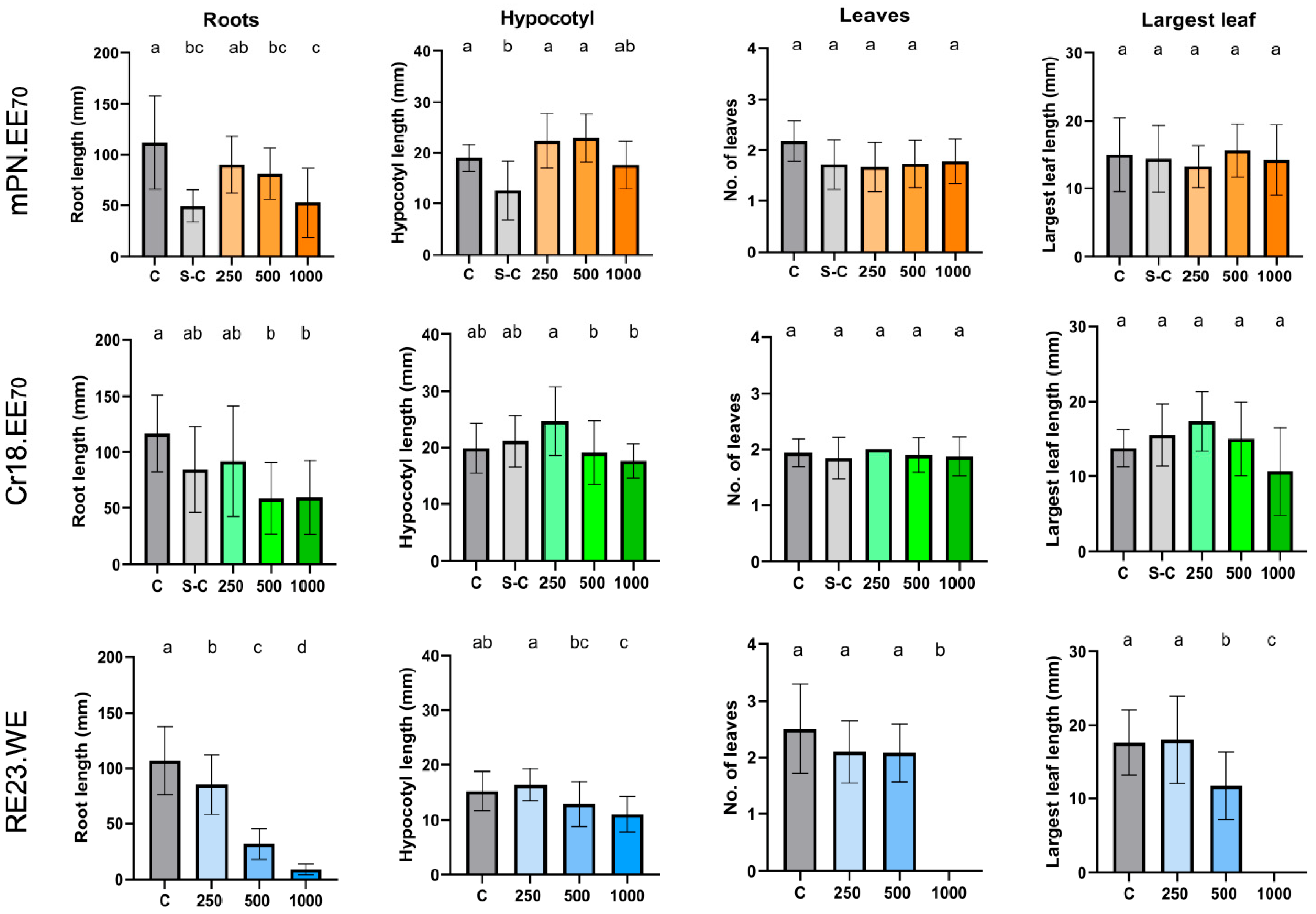
The phytotoxicity of the different extracts was evaluated in white mustard (Sinapis alba), as this is a fast-growing species and highly responsive to treatments with potentially phytotoxic compounds or extracts in in vitro assays [51,52]. All extracts were tested and biometric parameters were recorded after 14 days (Figure 1), as is routine in such assays.
Regarding the effect of the hydroalcoholic solvent (S-C), a significant inhibition relative to the control (C) was observed for both root and hypocotyl length, particularly for the root, but only in one of the two independent assays (C and S-C data obtained in the two experiments evaluating each of the hydroalcoholic extracts can be considered to come from independent experiments), indicating a certain variability among experiments. However, when this solvent effect was observed, lower extract concentrations were able to restore root length (at 250 µg/mL) or hypocotyl length (at 250 and 500 µg/mL) to control values (Figure 1—mPN.EE70), demonstrating a mitigation of solvent-induced stress or damage by the extract.
Considering the overall response to the three extracts, there is an evident difference between the hydroalcoholic extracts and the aqueous extract. Both hydroalcoholic extracts had no effect on the development of the aerial part of the plantlets, and only mPN.EE70 exhibited a dose-dependent inhibitory effect on root growth, with a significant reduction to 58% from 250 to 1000 µg/mL. Contrary to this pattern, the aqueous extract RE23.WE induced a notable effect on the aerial part, with a total absence of epicotyl development and leaf formation at the highest concentration (1000 µg/mL), a significant reduction in leaf length at 500 µg/mL, and of hypocotyl elongation (15%) at 1000 µg/mL. Also, RE23.WE induced the greatest inhibition of root growth at the highest concentration (1000 µg/mL), proving to be the most phytotoxic for this species (Figure 1).
Lactuca sativa (Lettuce)
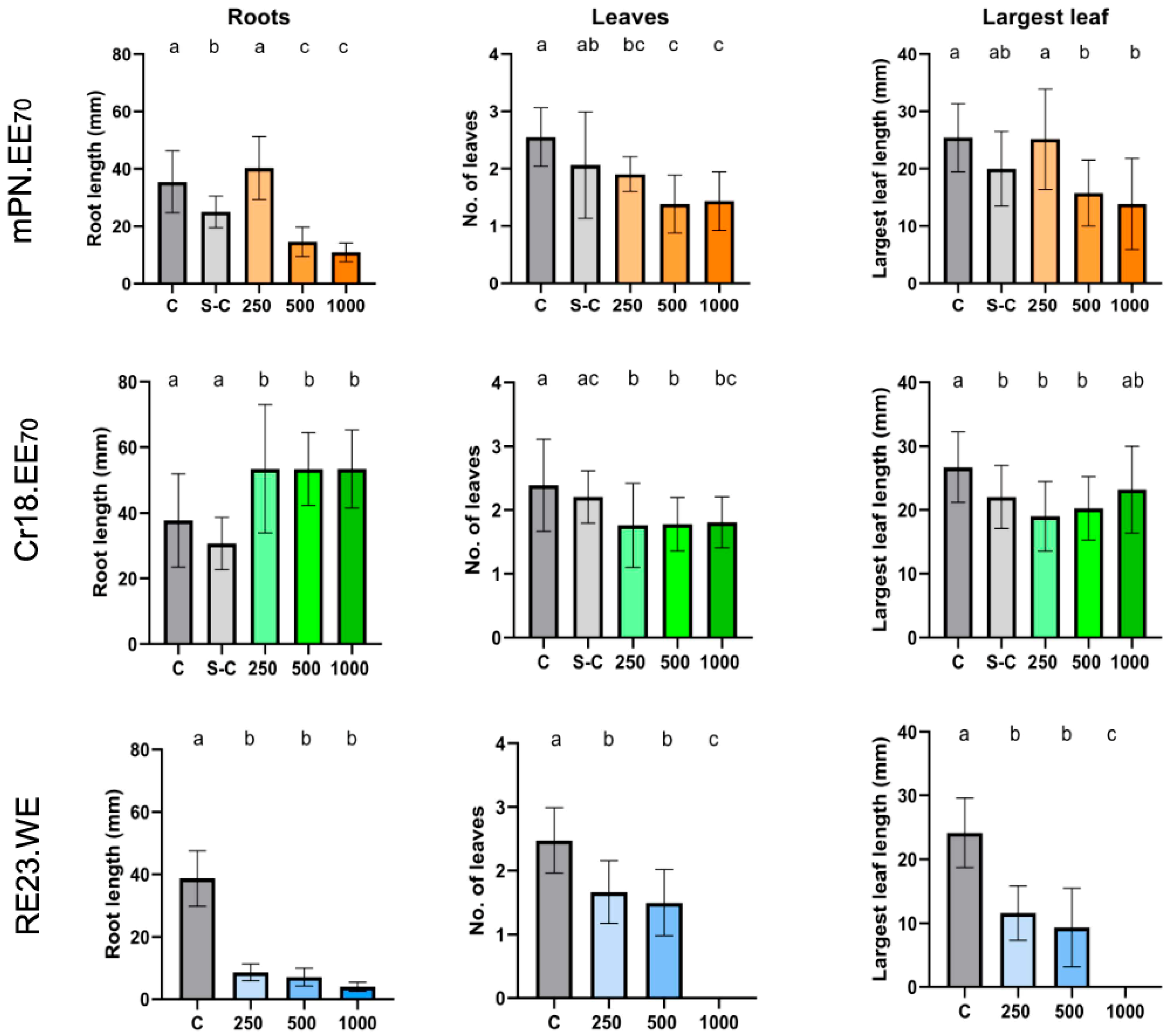
In addition to mustard, the phytotoxicity of the three extracts was also tested in lettuce, as it is a cultivated model species with seeds that are highly sensitive to toxic compounds, making it a reliable indicator of toxicity [49]—a reason it is widely used as a model plant in various research studies [53,54]. Biometric parameters were also evaluated in seedlings 14 days after seed inoculation (Figure 2).
In relation to the solvent effect, in lettuce the differences between the control (C) and the solvent control (S-C) were occasional and inconsistent between the two independent experiments. The solvent affected root length only in the assay with mPN.EE70, but it recovered to C values by the lowest extract concentration; and affected the length of the largest leaf only in the assay with Cr18.EE70 (Figure 2).
Considering the response to the three extracts in this species, Cr18.EE70 promoted a significant increment in root growth at all tested concentrations, and no inhibition in the number or length of leaves at 1000 µg/mL. On the contrary, mPN.EE70 and RE23.WE both induced significant inhibitory effects on root growth and leaf number (Figure 2). However, and similarly to what was observed with white mustard, the aqueous extract RE23.WE exhibited the strongest inhibitory effect, significantly reducing root growth at all concentrations, with values approaching incipient root development; and significantly reducing both leaf number and largest leaf length even at the lowest concentration, while at 1000 µg/mL, although germination and root emergence were observed, no epicotyl development occurred. These results highlight the stronger phytotoxic effect of the aqueous extract compared to the hydroalcoholic ones in these crop species, and that each species responds differently to each of the hydroalcoholic extracts.

3.3.2. Spontaneous Orchard Weeds

Plantago lanceolata (Ribwort Plantain)
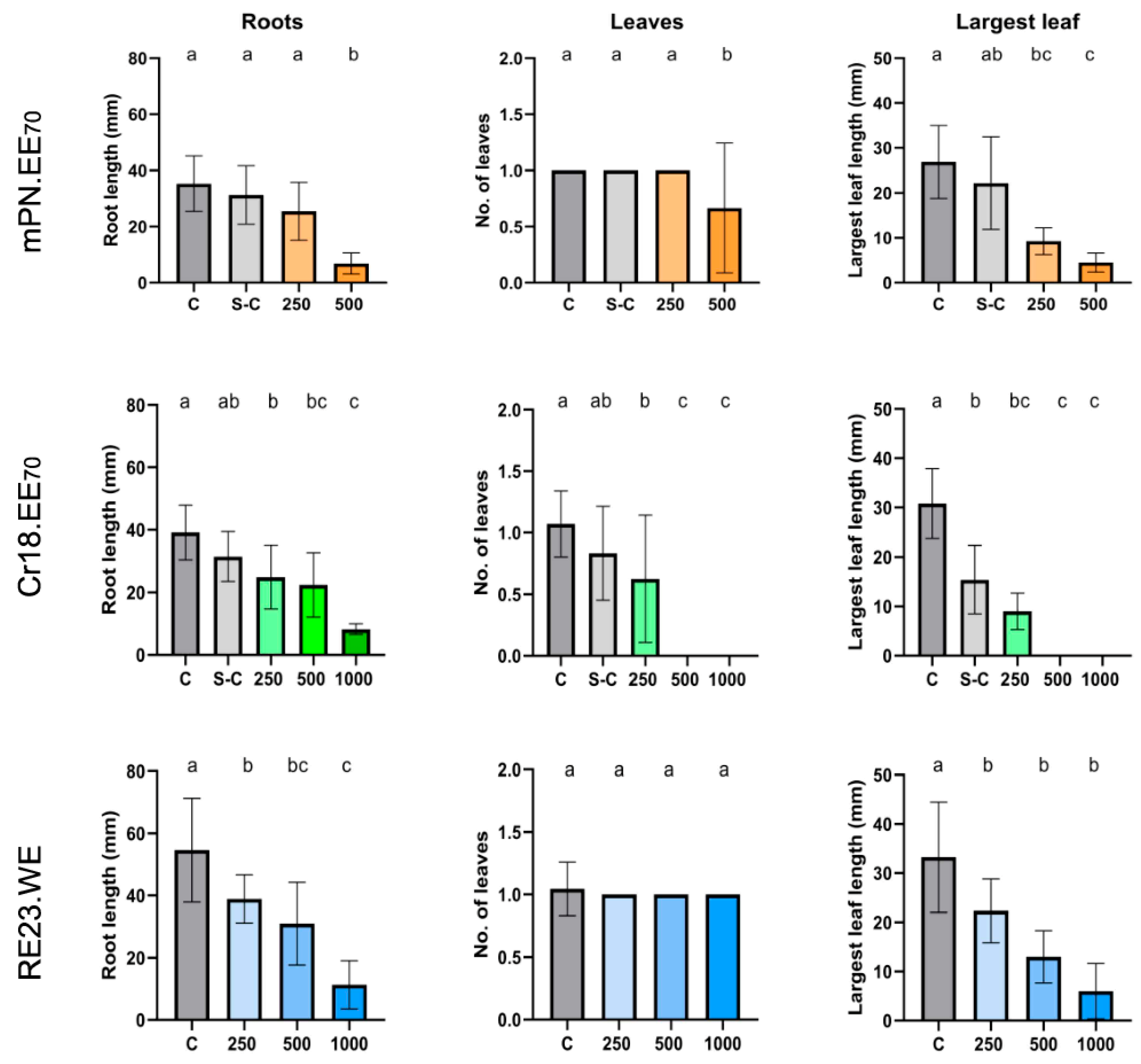
In addition to cultivated and model species, the extracts were also tested on weed species, one of which was ribwort plantain (Plantago lanceolata), a hardy, perennial herb with a worldwide distribution, commonly found in pastures, meadows, and roadsides, which is frequently treated as a weed in intensive agricultural systems due to its spontaneous occurrence [55]. As in the crop species, biometric parameters were determined 14 days after the onset of the assay (Figure 3).
With this species, no phytotoxic effect of the hydroalcoholic solvent was detected, except for the length of the largest leaf in the assay with Cr18.EE70; however, random experimental variability cannot be ruled out. Globally, there is an evidently greater impact of all the extracts on leaf length observed in this species compared to the previous ones (Figure 1 and Figure 2), and a similar dose-dependent inhibition of root growth.
Based on the overall response of the three species to the extracts, it is possible to perceive that the hydroalcoholic extracts exhibited a stronger phytotoxic effect on this weed species than on the cultivated ones (Figure 1 and Figure 2).
The overall effect of hydroalcoholic extracts was comparable to or stronger than that of the aqueous extract RE23.WE in ribwort plantain: mPN.EE70 totally inhibited germination and seedling development at 1000 µg/mL and induced root growth inhibition (78.1%) at 500 µg/mL, similar to that induced by Cr18.EE70 (74%) and by RE23.WE (79.2%) at 1000 µg/mL; and Cr18.EE70 totally inhibited leaf differentiation and development at 500 and 1000 µg/mL (Figure 3). However, RE23.WE was the only extract that was effective at the lowest concentration (250 µg/mL), significantly inhibiting both root and leaf growth (Figure 3).
Due to lower variability and higher responsiveness, the parameter leaf length was considered more reliable and useful than the parameter number of leaves for evaluating the bioherbicidal potential of the extracts against this weed species (Figure 3).
Dactylis glomerata (Orchard Grass)
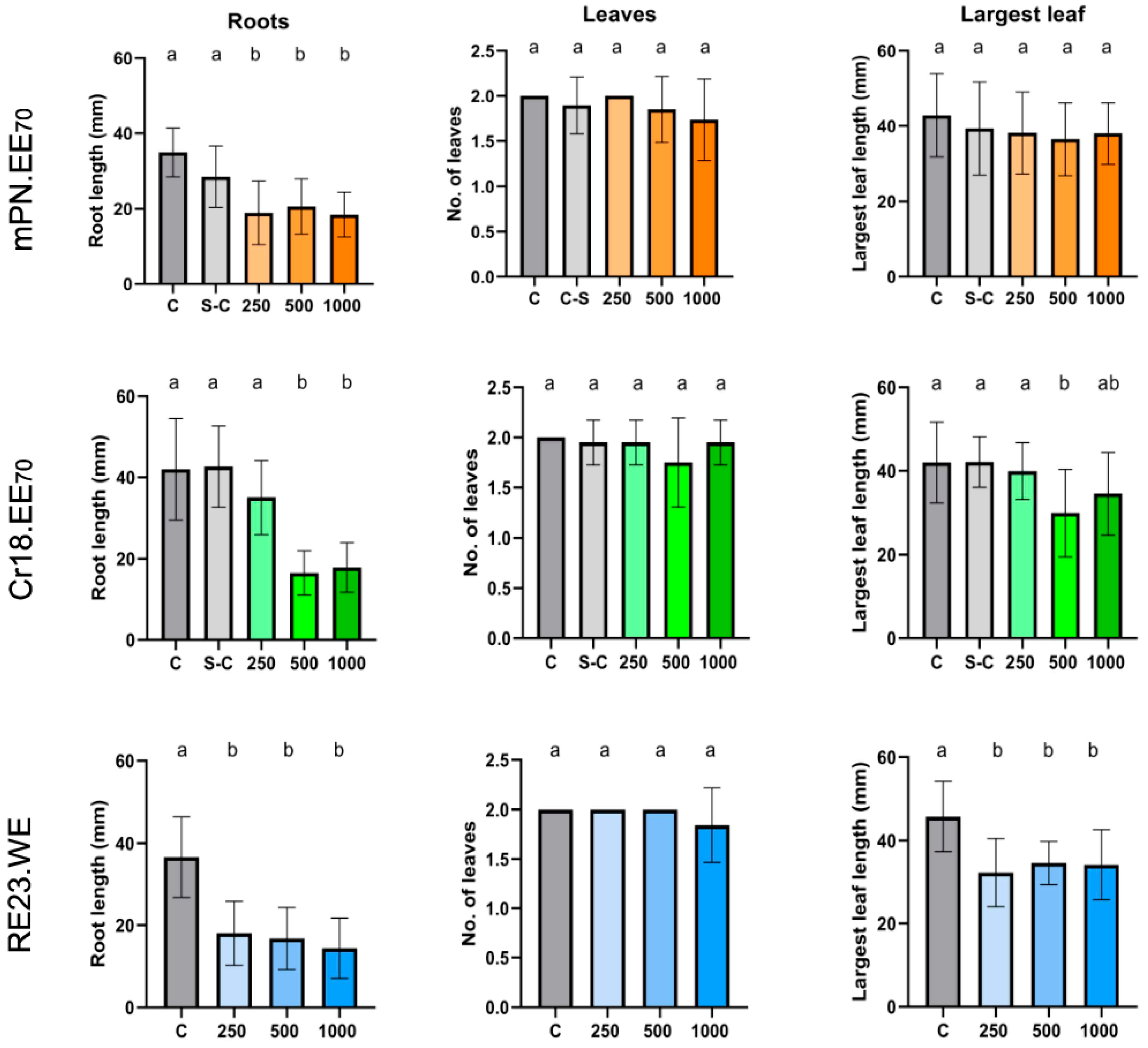
Another weed species tested was orchard grass (Dactylis glomerata L.), a cool-season, perennial bunchgrass widely distributed throughout temperate regions and commonly found in pastures, meadows, roadsides, and disturbed sites worldwide. Due to its robust perennial growth and competitive nature, orchard grass can behave as a troublesome weed in agricultural and grassland ecosystems [56]. As with ribwort plantain, it was exposed to the various propolis extracts and concentrations to evaluate phytotoxicity (Figure 4).
Unlike the observations for the other assays, no significant differences between the control (C) and the solvent control (S-C) were registered in any parameter or hydroalcoholic extract (Figure 4), indicating the absence of a detectable solvent effect in this species.
Contrary to what was observed with ribwort plantain, the extracts had much less impact on leaf parameters and caused weaker and dose-independent inhibition of root growth. The aqueous extract RE23.WE stood out as the most effective against this species, being the only extract that strongly inhibited both root growth and leaf development across all tested concentrations (Figure 4).
To summarize the most relevant aspects of the results obtained for the common biometric parameters, using the three extracts across the four species, Table 4 presents the main effects expressed as a percentage of the C value (or C-S) to provide a better overview that facilitates comparison and interpretation.
As is quite clear, Plantago lanceolata was the most susceptible species, having been strongly affected by all the extracts, particularly in root and largest leaf length, while Sinapsis alba was the most resistant, having been affected only by the RE23.WE extract. The root was the most responsive organ, showing significant reductions in growth in all species, often from the lowest concentration tested.
RE23.WE was the most effective extract, producing the most pronounced and consistent reductions in most parameters across all species. This highlights the importance of identifying other chemical markers for the phytotoxic activity of propolis aqueous extracts. Specific interactions were observed in Dactylis glomerata, whose roots were not affected as severely as in other species, but it showed inhibition with all the extracts and concentrations with the exception of Cr18.EE70 at 250 µg/mL. The hydroalcoholic extracts mPN.EE70 and Cr18.EE70 proved particularly effective against Plantago lanceolata, the former severely affecting root growth, and the latter markedly affecting the development of the aerial parts.

4. Discussion

4.1. Comparison of Extraction Yields Among Different Propolis Extracts

The extraction yields obtained for the hydroalcoholic extracts mPN.EE70 (64.11%) and Cr18.EE70 (61.4%) and the aqueous extract RE23.WE (5.24%) (Table 1) are consistent with the well-documented influence of ethanol concentration in the solvent on propolis extraction efficiency. Aqueous extractions was reported to produce very low yields (<5%) [45], whereas ethanol–water mixtures have resulted in marked increases in yield with increasing ethanol percentages, up to ~51% at ethanol concentration ≥ 75% (1.81 ± 0.05, 3.71 ± 0.14, 42.14 ± 0.51, 47.60 ± 0.79, 49.36 ± 0.65, and 51.03 ± 0.16% for 0, 25, 50, 75, 95, and 100% ethanol, respectively), highlighting the superior extraction capacity of hydroalcoholic solutions compared to pure water for propolis extraction.
Regarding Portuguese propolis, mPN.EE70 and Cr18.EE70 yields are in line with those recently reported for hydroalcoholic extracts from different samples—73–75% [57]. Propolis from the Gerês apiary (G) is among the most extensively studied Portuguese propolis type, with several works consistently reporting high chemical richness and pronounced biological activities [58,59]. Our results are also comparable with those reported by [60], where the hydroalcoholic extract G18.EE70 exhibited a yield of 68.3%, further corroborating the effectiveness of 70% ethanol in recovering high yields, a versatile solvent capable of extracting both hydrophilic and moderately lipophilic compounds. An extraction yield of 70.6% for the G23.EE extract using absolute ethanol (100%) was reported by [61]. As pure ethanol enhances the solubilization of less polar resinous constituents, regional variability in propolis composition may require adjustments in ethanol concentration to maximize the recovery of bioactive compounds. Together, these findings support the robustness of ethanol-based extraction strategies and highlight their applicability for the valorization of alternative propolis matrices, including mixed leftovers and industry-rejected samples.
The aqueous extract RE23.WE exhibited a very low yield (5.24%), which is consistent with the generally low extraction efficiency reported for aqueous propolis extracts, such as those obtained from Chinese propolis [45]. Similarly, studies on Lithuanian propolis have shown that aqueous extraction yields remain low even when enhanced techniques, such as microwave-assisted extraction, are applied [62]. Given that the material used (RE23) was not raw propolis, but rather the solid residues obtained from a previous ethanol extraction—in which most ethanol-soluble constituents had likely been removed—this result is very interesting. The literature consistently reports that aqueous extractions of propolis yield substantially lower amounts of extractable material than hydroalcoholic or ethanolic extractions, in some cases containing up to ten-fold-lower levels of bioactive compounds, mainly due to the limited solubility of many resin constituents in water [57,62]. As observed for ethanolic extracts, a range of extraction yields are also reported for aqueous extractions of propolis samples. A yield of 6.3 ± 0.7% was obtained for G18.WE when working with a Gerês sample [60], not very different from that of the RE23.WE yield (Table 1), and both much higher than the value 1,81% reported by [45].
The chemical composition and bioactivities of propolis aqueous extracts, and specifically those from propolis residues, remain virtually unknown. This supports the potential value of aqueous extracts from residues, as even with low yields they may still contain functionally relevant compounds for specific applications.

4.2. Antioxidant Profile and Phenolic Content of the Extracts: The Rich and the Poor

4.2.1. Antioxidant Capacity

Antioxidant activity is among the most commonly reported properties of propolis [9,11,12,25], and has also been consistently demonstrated in several studies using Portuguese propolis samples [14,47,58,59,63]. Knowing that inhibitory effects on seed germination and early seedling growth can be explained by an imbalance in the redox state and ROS-mediated signaling during this phase [49], it is relevant to analyze the antioxidant capacity of the extracts.
As shown by [64], hydroalcoholic extracts from Portuguese propolis samples collected in Gerês exhibited strong antioxidant activity assessed by the DPPH assay, with EC50 values ranging from 4.71 ± 0.76 to 16.69 ± 1.57 µg/mL. Notably, the extract obtained from a mixture of crude propolis samples (mG.EE70) showed an EC50 (4.73 ± 0.36 µg/mL), comparable to or even better than several extracts obtained from the individual samples. Concordantly, mPN.EE70, a hydroalcoholic extract obtained from a mixture of leftover propolis samples and conserved for almost 10 years, showed an EC50 of 19.16 µg/mL (Table 2), still roughly in the range of mG.EE70. These results indicate that mixing propolis samples does not necessarily lead to a loss of antioxidant capacity, suggesting that blending different samples may help to maintain a high and more consistent bioactive profile, highlighting the potential of using mixed formulations to achieve standardization. Moreover, the antioxidant potential of mPN.EE70 and Cr18.EE70 (Table 2) was even higher than reported values for individual European crude samples—26.45 μg/mL for a sample from Ireland [65] and 27.72 μg/mL for a sample from the Czech Republic [66].
RE23.WE presented a lower antioxidant activity (37.42 ± 1.75 μg/mL, Table 2), consistent with other reports showing that aqueous propolis extracts generally tend to exhibit weaker antioxidant activity than their hydroalcoholic counterparts, but again a range can be observed. For instance, nine aqueous extracts (WE) from crude propolis collected from different regions in Romania showed EC50 values ranging from 11.70 ± 0.2 to 18.30 ± 0.6 µg/mL [17]. However, some studies have shown that aqueous extracts can display antioxidant activity higher than ethanolic extracts obtained from the same raw propolis sample [60], as with G18.WE (4.54 ± 0.23 µg/mL) vs. G18.EE (10.78 ± 0.43 µg/mL). Although RE23.WE is deprived of many antioxidant compounds, this aqueous extract still retained more than half of the antioxidant activity of hydroalcoholic ones (Table 2).

4.2.2. Total Polyphenol Content (TPC) and Total Flavonoid Content (TFC)

The total phenolic and flavonoid contents of the extracts, in addition to reflecting the floristic composition of the region where the propolis was collected, are also influenced by the ethanol-to-water ratio of the extraction solvent [45]. In general, extracts prepared with a higher proportion of ethanol contain greater amounts of these compounds [48,67]. With regard to the samples used to obtain the hydroalcoholic extracts, both from Northern Portugal, the botanical sources are likely dominated by Populus tremula L. and Castanea sativa Mill. These sources typically contribute with specific markers such as caffeic acid derivatives and prenylated flavonoids (e.g., pinocembrin, chrysin, and galangin) known to be bioactive compounds [68]. Regarding propolis residues, since they are obtained from mixtures of samples from various locations in Portugal, it is not possible to identify the most likely botanical sources.
The values of Cr18.EE70 (Table 3) are very similar to those reported by [30] for the same extract obtained by that time—TPC: 166.31 ± 5.42 and TFC: 69.33 ± 4.60—showing that the phenolic content has been maintained over the years. Cr18.EE70, mPN.EE70 values (Table 3) were higher than those reported for hydroalcoholic extracts from Portuguese propolis samples collected in Gerês in previous years, which showed TPC ranging from 67.6 ± 7.7 to 112.86 ± 19.24 mg GAE/g and TFC from 30.5 ± 3.9 to 57.6 ± 6.7 mg QE/g [64,69]. Also, an extract obtained from a mixture of crude samples (mG.EE70) showed a TPC of 96.13 ± 18.35 mg GAE/g and a TFC of 56.67 ± 4.65 mg QE/g, falling within the range of the individual samples, while maintaining relevant bioactive potential [64]. Although Cr18.EE70 presented the highest total phenolic and flavonoid contents, the superior antioxidant activity observed for mPN.EE70 suggests that the antioxidant potential cannot be explained only be the concentration of these compounds [70]. This discrepancy may be attributed to differences in the specific phenolic profile and the presence of highly active individual compounds, such as certain caffeic acid derivatives, which possess higher radical scavenging capacities even at lower total concentrations [70]. Furthermore, eventual synergistic interactions between constituents in the mixed sample mPN.EE70 can enhance its overall bioactive performance compared to individual crude samples [20]. In addition, and as previously noted, the combination of different plant matrices can lead to improved recovery and stability of bioactive compounds, potentially explaining why a mixture conserved for a longer period still maintains or exceeds the functional efficiency of fresh individual extracts [71].
Comparable or even higher ranges of phenolic and flavonoid contents have been reported for propolis from other geographical origins, such as Brazil and China, in extracts typically obtained using ethanol or ethanol–water mixtures (70–95%), with TPC values reaching 277.81–398.11 mg GAE/g and TFC ranging from 42.00 to 108.02 mg QE/g in Brazilian samples [72], while Chinese propolis extracts have shown TPC values typically ranging from approximately 100 to 200 mg GAE/g and flavonoid contents between 52.11 and 173.90 mg QE/g [22], highlighting the strong influence of the botanical source on phenolic composition.
Finally, the aqueous extract RE23.WE displayed the lowest TPC and TFC (Table 3), which is expected due to the lower solubility of most propolis bioactive constituents in water [62]. However, higher values were also reported, as in a study with nine aqueous propolis extracts collected from different regions in Romania, which revealed TPC values ranging from 102.7 ± 2.53 to 189.4 ± 5.82 mg GAE/g and TFC values between 65.30 ± 0.10 and 85.19 ± 0.07 mg QE/g [17]. In addition, significant differences were also found between TPC and TFC values, as reported in a study by [60], which found a TPC value of 1261.11 ± 27.86 and a TFC value of 7.40 ± 0.14 for G18.WE.
In conclusion, despite being derived from leftover or waste/rejected material, the hydroalcoholic extracts analyzed in this study retain a high phenolic content. This highlights the significant phytochemical value that persists after primary processing. In contrast, the aqueous extract RE23.WE shows a markedly lower phenolic content, most likely due to the prior ethanol extraction, which depleted the majority of phenolic compounds. However, since phenolics represent only one class of bioactive compounds in propolis, evaluating the bioactivity profile of aqueous extracts is still of major relevance.

4.3. Propolis Extracts Have Inhibitory Effects on In Vitro Germination and Growth of Several Plant Species: The Interesting Fingerprint of RE23.WE

In vitro bioassays were conducted using model crop species commonly employed in phytotoxicity studies (lettuce and white mustard) to enable comparison with the existing literature, as well as weed species (ribwort plantain and orchard grass), all representing plant species of agronomic relevance, to assess the broader phytotoxic potential of the extracts. It is worth noting here, however, that there is very little literature on the effects of propolis on plants.
With regard to the inhibitory phenotype observed it is important to note here that it is not possible to identify a probable cause in this study because phenolics and flavonoids can act directly (e.g., decreasing membrane integrity, inhibiting the activity of enzymes, blocking the vectorial movement of auxin) [49], or indirectly by modulating the cellular redox environment, either via pro-oxidant or antioxidant activities, depending on the concentration and the specific type of compounds [14]. They can interfere with oxidative signaling pathways essential for cell division and root elongation by either maintaining ROS homeostasis at low concentrations or disrupting the “oxidative window” required for successful germination and elongation at higher doses [73,74]. By altering the ROS balance or inducing a pro-oxidant state within the seed embryo, these compounds trigger physiological inhibition, a process consistent with reports showing that while low doses of propolis can promote growth and enhance antioxidant defenses [75], the same molecules responsible for protective effects also trigger toxicity when the oxidative signaling is overwhelmed [73]. On top of that, ethanol also has a strong inhibitory effect on seed germination by disrupting the natural hormonal balance and levels of ROS signaling molecules, such as H2O2 [76]. So, as the onset of germination and early seedling growth are processes tightly regulated by the cellular redox state [73,76], care must be taken to avoid overly simplistic mechanistic explanations.

4.3.1. Effects on Model Crop Species

The results clearly indicate differences in sensitivity to propolis extracts among species, but RE23.WE was by far the most effective extract, affecting all the biometric parameters analyzed in both species, but especially lettuce (Figure 1 and Figure 2, Table 4). In addition, a dual response can be observed: growth inhibition and mitigation of the hydroalcoholic solvent effect (Figure 1 and Figure 2).
In both white mustard and lettuce, mPN.EE70 showed a dual behavior, with dose-dependent reductions in root growth but also a protective effect against solvent-induced stress at the lowest concentration (Figure 1 and Figure 2). The recovery of root and hypocotyl length to control values at 250 µg/mL suggests that certain propolis constituents may mitigate solvent-induced toxicity through hormetic or stress-protective responses [73,74], as previously reported for natural extracts and phenolic compounds [77,78].
In lettuce, Cr18.EE70 promoted significant root growth at all tested concentrations (Figure 2), which was a singular effect, as it was observed only in this species and with this extract out of all the species and extracts tested in this study (Table 4). On the other hand, hormetic effects are generally described for lower concentrations, whereas higher concentrations produce extract-dependent inhibitory responses [79], suggesting that this species/extract combination could be useful for studying the mode of action of specific compounds as root biostimulants.
Interestingly, and somewhat unexpectedly, the aqueous extract RE23.WE consistently exerted the strongest phytotoxic effects on both species, inhibiting root, hypocotyl (in white mustard), and leaf differentiation and development, particularly at the highest concentration, where epicotyl development was completely suppressed (Figure 1 and Figure 2, Table 4). Similar inhibitory effects on germination and early growth have also been reported by [80], using aqueous propolis extracts in several agricultural species, including wheat, maize, barley, and oats. In this latter study, aqueous propolis extracts frequently caused marked inhibition of radicle and plumule elongation, a pattern that closely mirrors the strong inhibitory effects observed for RE23.WE in both crops. However, the strong phytotoxicity revealed by this aqueous extract is particularly noteworthy, suggesting that highly active polar compounds remain bioavailable after ethanol extraction. Similarly, earlier studies such as [17,18] reported that propolis extracts can impair seed germination and early growth, likely due to the combined action of multiple bioactive constituents.

4.3.2. Effects on Spontaneous Weeds

As in crop species, the results clearly show sharp differences in sensitivity to propolis extracts between the wild weed species, with ribwort plantain being the most susceptible (Figure 3 and Figure 4, Table 4). It is also evident that, contrary to white mustard and lettuce, all the three extracts were effective against both weeds, suggesting less selectivity, although the aqueous extract remains, globally, the most effective one. Furthermore, again unlike what was observed with the crops, no effect of the hydroalcoholic solvent was observed on the weeds. This result is particularly relevant in the context of phytotoxicity screening assays, as it allows for the evaluation of hydroalcoholic extracts at higher concentrations or volumes, minimizing the risk of having confounding factors.
Interestingly, of the four species studied, ribwort plantain was the only one that demonstrated higher susceptibility to hydroalcoholic propolis than to RE23.WE. On the other hand, orchard grass was the only species to experience an effect by the three extracts on root growth at the lower concentrations tested (Table 4). Together these results suggest that different species may respond to different types and ranges of chemical com-pounds—broader in the case of orchard grass—reflecting species-specific differences in sensitivity to phytotoxic agents [81]. In the case of the orchard grass, the singular response may be explained by the fact that is a monocot, the only monocot species in this study.
As with the crop species, both wild weeds were particularly affected at the root system level, and these findings are in agreement with previous reports showing that propolis-derived compounds can induce physiological stress and inhibit root development in a dose-dependent manner [17], but the effects on specific biometric parameters differed significantly between the two weeds: ribwort plantain plants suffered inhibitions in all the biometric parameters, while orchard grass suffered inhibition mainly in root length (Figure 3 and Figure 4, Table 4). The parameter mostly affected in ribwort plantain was highly dependent on the extract: mPN.EE70 was the most effective on the roots and Cr18.EE70 caused a complete absence of epicotyl development at intermediate and high concentrations. Although both are hydroalcoholic extracts, they appear to act differently, suggesting different modes of action due to differences in chemical composition and/or their bioavailability. Conversely, the aqueous extract RE23.WE consistently reduced root and leaf growth, but not leaf number, at all concentrations tested in both species (Table 4).
Together these findings support the idea that different types of extracts (hydroalcoholic vs. aqueous) target specific plant organs, but also that each species has its own specific sensitivities, a factor that is highly relevant for bioherbicide development. From a mechanistic perspective, these effects are consistent with the known allelopathic activity of plant secondary metabolites commonly found in propolis. Compounds such as flavonoids, terpenes, alkaloids, and organic acids have been widely reported to interfere with plant growth and development [15,16]. Flavonoids, in particular, are known to disrupt photosynthesis, inhibit cell-cycle progression, and suppress auxin-regulated cell proliferation in root meristems, thereby strongly affecting root elongation [82,83]. While no specific propolis-derived compound has been identified as a consistent promoter of root elongation, certain phenolic compounds, particularly flavonoids, are known to modulate auxin transport and signaling pathways, leading to dose-dependent effects that can range from inhibition to neutral or slightly stimulatory responses [84]. Comparable inhibitory effects on root development, accompanied by morphological alterations, have been reported for hydroalcoholic extracts of Brazilian propolis [16]. Furthermore, aqueous propolis extracts may contain organic acids (e.g., propanoic acid) and low concentrations of certain terpenoids [85].
Overall, these findings show that the propolis extracts had relevant phytotoxic potential against the four species studied, with effects that depended on the type of extract, target species, and plant organ. The particularly strong activity of RE23.WE, together with the differential responses observed for the hydroalcoholic extracts, highlights the potential of propolis-derived products as selective bioherbicidal agents and supports the need for further studies on their active compounds and mechanisms of action.

5. Conclusions

Returning to the heading “the rich and the poor”, RE23.WE, an aqueous extract obtained from the residues of a previous propolis extraction, exhibited low antioxidant capacity and very low phenolic and flavonoid contents, suggesting low bioactive potential. It was the extract with the strongest phytotoxic effect and the only one to affect all the studied species, which was quite an impressive and novel result. Ironically, if we had relied solely on those parameters in an initial screening, we would have excluded the extract with the highest and most transversal phytotoxic potential.
Phytotoxic effects were species-, extract- and organ-dependent, with roots being the most affected organ. Hydroalcoholic extracts (mPN.EE70 and Cr18.EE70) showed mainly inhibitory effects but root stimulatory, hormetic and protective effects against solvent-induced stress could also be found, while RE23.WE consistently induced strong inhibition. Weed species were generally more sensitive than crops, which is a very interesting finding in the context of potential weed control strategies. Crops were more affected by the hydroalcoholic solvent than weeds, highlighting the importance of plant species selection in phytotoxic screening assays. The contrasting responses among species to the different extracts indicate differences in susceptibility and possibly in the mode of action and bioavailability of the compounds involved, paving the way for a more rational and targeted weed management strategy.
Overall, the pronounced phytotoxicity exhibited by propolis leftovers/rejected samples and industrial by-products (residues) underscores the potential value of propolis waste as a source of bioactive compounds in the development of natural bioherbicides, contributing to a more circular economy. Here, it is important to highlight again the unique and remarkable effectiveness of RE23.WE, because as an aqueous extract, it offers a safer, less costly, and therefore more economically viable approach to weed control compared to hydroalcoholic extracts. In the future, aqueous extracts from propolis leftovers/rejected samples should be tested. Although these in vitro results are promising, further validation will be required through pot experiments, followed by field trials, before practical agricultural applications can be proposed. In addition, studies should identify the compounds responsible and evaluate their safety and effectiveness under field conditions.

Author Contributions

Conceptualization, N.M. and A.C.; Methodology, N.M., S.B., C.A.A. and A.C.; Investigation, N.M.; Resources, S.B. and A.C.; Data curation, N.M.; Writing—original draft, N.M.; Writing—review & editing, C.A.A. and A.C.; Supervision, C.A.A. and A.C.; Project administration, C.A.A. and A.C.; Funding acquisition, A.C. All authors have read and agreed to the published version of the manuscript.

Funding

This work was supported by the “Contrato-Programa” UID/04050/2025 funded by FCT I.P. https://doi.org/10.54499/UID/04050/2025. This work was conducted within the STrengthS4WineChaiN Project (NORTE2030-FEDER-01786100) and was co-financed by the European Regional Development Fund (ERDF) under the Northern Regional program 2021–2027 [NORTE2030].

Data Availability Statement

The original contributions presented in this study are included in the article. Further inquiries can be directed to the corresponding authors.

Acknowledgments

The authors thank Leonor Pereira and Lucas Falcão for kindly preparing the hydroalcoholic extracts Cr18.EE70 and mPN.EE70, respectively.

Conflicts of Interest

Author Sandra Barbosa is the CEO of the company Mel Montesino. The remaining authors declare that the research was conducted in the absence of any commercial or financial relationships that could be construed as a potential conflict of interest.

References

  1. Elumalai, P.; Gao, X.; Parthipan, P.; Luo, J.; Cui, J. Agrochemical pollution: A serious threat to environmental health. Curr. Opin. Environ. Sci. Health 2025, 43, 100597. [Google Scholar] [CrossRef]
  2. FAO. Pesticides Use and Trade: 1990–2023; FAOSTAT Database; Food and Agriculture Organization of the United Nations: Rome, Italy, 2024. [Google Scholar]
  3. Baćmaga, M.; Wyszkowska, J.; Kucharski, J. Environmental implication of herbicide use. Molecules 2024, 29, 5965. [Google Scholar] [CrossRef]
  4. Statista Research Department. Global Pesticide Agricultural Use 2022, by Type. 2024. Available online: https://www.statista.com/statistics/1263206/global-pesticide-use-by-type/ (accessed on 26 March 2026).
  5. Statista Research Department. Global Pesticide Agricultural Use 1990–2022. 2024. Available online: https://www.statista.com/statistics/1263077/global-pesticide-agricultural-use/ (accessed on 8 October 2024).
  6. European Commission. Annex to the Communication from the Commission to the European Parliament, the Council, the European Economic and Social Committee and the Committee of the Regions—A Farm to Fork Strategy: For a Fair, Healthy and Environmentally-Friendly Food System; European Commission: Brussels, Belgium, 2020; Available online: https://eur-lex.europa.eu/resource.html?uri=cellar:ea0f9f73-9ab2-11ea-9d2d-01aa75ed71a1.0001.02/DOC_2&format=PDF (accessed on 8 October 2024).
  7. United Nations. Transforming Our World: The 2030 Agenda for Sustainable Development (A/RES/70/1); United Nations: New York, NY, USA, 2015; Available online: https://sdgs.un.org/2030agenda (accessed on 8 October 2024).
  8. Bankova, V.; Popova, M.; Trusheva, B. Propolis volatile compounds: Chemical diversity and biological activity: A review. Chem. Cent. J. 2014, 8, 28. [Google Scholar] [CrossRef]
  9. Burdock, G.A. Review of the biological properties and toxicity of bee propolis. Food Chem. Toxicol. 1998, 36, 347–363. [Google Scholar] [CrossRef] [PubMed]
  10. Falcão, S.I.; Vale, N.; Gomes, P.; Domingues, M.R.M.; Freire, C.; Cardoso, S.M.; Vilas-Boas, M. Phenolic profiling of Portuguese propolis by LC-MS spectrometry: Uncommon propolis rich in flavonoid glycosides. Phytochem. Anal. 2013, 24, 309–318. [Google Scholar] [CrossRef]
  11. Silva-Carvalho, R.; Baltazar, F.; Almeida-Aguiar, C. Propolis: A complex natural product with a plethora of biological activities that can be explored for drug development. Evid.-Based Complement. Altern. Med. 2015, 2015, 206439. [Google Scholar] [CrossRef]
  12. Anjum, S.I.; Ullah, A.; Khan, K.A.; Attaullah, M.; Khan, H.; Ali, H.; Bashir, M.A.; Tahir, M.; Ansari, M.J.; Ghramh, H.A.; et al. Composition and functional properties of propolis (bee glue): A review. Saudi J. Biol. Sci. 2019, 26, 1695–1703. [Google Scholar] [CrossRef]
  13. Cerqueira, P.; Cunha, A.; Almeida-Aguiar, C. Potential of propolis antifungal activity for clinical applications. J. Appl. Microbiol. 2022, 133, 1207–1228. [Google Scholar] [CrossRef]
  14. Cruz, M.; Antunes, P.; Paulo, L.; Ferreira, A.M.; Cunha, A.; Aguiar, C.A.; Oliveira, R. Antioxidant and dual dose-dependent antigenotoxic and genotoxic properties of an ethanol extract of propolis. RSC Adv. 2016, 6, 49806–49816. [Google Scholar] [CrossRef]
  15. Macías, F.A.; Molinillo, J.M.G.; Varela, R.M.; Galindo, J.C.G. Allelopathy—A natural alternative for weed control. Pest Manag. Sci. 2007, 63, 327–348. [Google Scholar] [CrossRef] [PubMed]
  16. Gusman, G.S.; Bittencourt, A.H.C.; Vestena, S. Allelopathy of Baccharis dracunculifolia DC. on germination and development of cultivated species. Acta Sci. Biol. Sci. 2008, 30, 119–125. [Google Scholar] [CrossRef]
  17. Heghedűş-Mîndru, R.C.; Glevitzky, M.; Heghedűş-Mîndru, G.; Dumitrel, G.A.; Popa, M.; Popa, D.M.; Vică, M.L. Applications of Romanian propolis in phyto-inhibitory activity and antimicrobial protection: A comparative study. Antibiotics 2023, 12, 1682. [Google Scholar] [CrossRef]
  18. Heghedűş-Mîndru, G.; Glevitzky, M.; Heghedűş-Mîndru, R.C.; Dumitrel, G.A.; Popa, M.; Glevitzky, I.; Vică, M.L. Inhibitory effects and composition analysis of Romanian propolis: Applications in organic and sustainable agriculture. Plants 2024, 13, 3355. [Google Scholar] [CrossRef]
  19. Šturm, L.; Ulrih, N.P. Advances in the propolis chemical composition between 2013 and 2018: A review. Efood 2020, 1, 24–37. [Google Scholar] [CrossRef]
  20. Bankova, V.S.; de Castro, S.L.; Marcucci, M.C. Propolis: Recent advances in chemistry and plant origin. Apidologie 2000, 31, 3–15. [Google Scholar] [CrossRef]
  21. Toreti, V.C.; Sato, H.H.; Pastore, G.M.; Park, Y.K. Recent progress of propolis for its biological and chemical compositions and its botanical origin. Evid.-Based Complement. Altern. Med. 2013, 2013, 697390. [Google Scholar] [CrossRef]
  22. Huang, S.; Zhang, C.P.; Wang, K.; Li, G.Q.; Hu, F.L. Recent advances in the chemical composition of propolis. Molecules 2014, 19, 19610–19632. [Google Scholar] [CrossRef]
  23. Michalak, A. Phenolic compounds and their antioxidant activity in plants growing under heavy metal stress. Pol. J. Environ. Stud. 2006, 15, 523–530. [Google Scholar]
  24. Menezes, H. Propolis: A review of recent studies on its pharmacological properties. Arq. Inst. Biol. 2005, 72, 405–411. [Google Scholar] [CrossRef]
  25. Fokt, H.; Pereira, A.; Ferreira, A.M.; Cunha, A.; Aguiar, C. How do bees prevent hive infections? The antimicrobial properties of propolis. In Current Research, Technology and Education Topics in Applied Microbiology and Microbial Biotechnology; Formatex: Badajoz, Spain, 2010; Volume 1, pp. 481–493. [Google Scholar]
  26. Irigoiti, Y.; Navarro, A.; Yamul, D.; Libonatti, C.; Tabera, A.; Basualdo, M. The use of propolis as a functional food ingredient: A review. Trends Food Sci. Technol. 2021, 115, 297–306. [Google Scholar] [CrossRef]
  27. Zulhendri, F.; Felitti, R.; Fearnley, J.; Ravalia, M. The use of propolis in dentistry, oral health, and medicine: A review. J. Oral Biosci. 2021, 63, 23–34. [Google Scholar] [CrossRef]
  28. Saraiva, N.; Nicolai, M.; Martins, M.; Almeida, N.; Gusmini, M.; Muchagato Mauricio, E.; Duarte, M.P.; Gonçalves, M.; Baby, A.R.; Fernandes, A.; et al. Impact of Portuguese propolis on keratinocyte proliferation, migration and ROS protection: Significance for applications in skin products. Int. J. Cosmet. Sci. 2022, 44, 333–342. [Google Scholar] [CrossRef] [PubMed]
  29. Pereira, D.S.; Santana de Oliveira, M.; Cruz, J.N.; do Nascimento Bezerra, P.; Gomes da Silva, A.; Pereira, N.S.; Ports, P.S.; da Silva Souza Filho, A.P.; Maracajá, P.B.; Freitas, M.O.; et al. Herbicidal potential (phytotoxic) of honey bee propolis extracts of the Brazilian northeast on weeds of cultivated pastures. J. Apic. Res. 2024, 63, 112–121. [Google Scholar] [CrossRef]
  30. Pereira, L.; Cunha, A.; Almeida-Aguiar, C. Portuguese propolis from Caramulo as a biocontrol agent of the apple blue mold. Food Control 2022, 139, 109071. [Google Scholar] [CrossRef]
  31. Bankova, V.; Popova, M. Propolis: Harnessing nature’s hidden treasure for sustainable agriculture. Agrochemicals 2023, 2, 581–597. [Google Scholar] [CrossRef]
  32. Carvalho, G.J.L.D.; Sodré, G.D.S. Application of propolis in agriculture. Arq. Inst. Biol. 2021, 88, e0632019. [Google Scholar] [CrossRef]
  33. Pereira, L.; Carneiro, A.B.; Falcão, L.; Cunha, A.; Almeida-Aguiar, C. Propolis and fruit preservation: An added value. AGROTEC 2022, 45, 30–33. [Google Scholar]
  34. Falcão, S.I.; Freire, C.; Vilas-Boas, M. A proposal for physicochemical standards and antioxidant activity of Portuguese propolis. J. Am. Oil Chem. Soc. 2013, 90, 1729–1741. [Google Scholar] [CrossRef]
  35. Archaina, D.; Rivero, R.; Sosa, N.; Baldi Coronel, B. Influence of the harvesting procedure and extracting process on the antioxidant capacity of ethanolic propolis extracts. J. Apic. Res. 2015, 54, 474–481. [Google Scholar] [CrossRef]
  36. Gusain, P. Global Propolis Market Size, Share, and Trends Analysis Report—Industry Overview and Forecast to 2032; Data Bridge Market Research: Pune, India, 2024; Available online: https://www.databridgemarketresearch.com/reports/global-propolis-market (accessed on 22 May 2026).
  37. Passão, C. Evaluation of the Effect of Portuguese Propolis Extracts Against Phytopathogenic Agents. Master’s Dissertation, School of Sciences, University of Minho, Braga, Portugal, 2021. [Google Scholar]
  38. Mello, B.C.B.S.; Petrus, J.C.C.; Hubinger, M.D. Performance of the concentration process of propolis extracts by nanofiltration. Food Sci. Technol. 2010, 30, 166–172. [Google Scholar] [CrossRef]
  39. Sharma, O.P.; Bhat, T.K. DPPH antioxidant assay revisited. Food Chem. 2009, 113, 1202–1205. [Google Scholar] [CrossRef]
  40. Kumazawa, S.; Hamasaka, T.; Nakayama, T. Antioxidant activity of propolis of various geographic origins. Food Chem. 2004, 84, 329–339. [Google Scholar] [CrossRef]
  41. Woisky, R.G.; Salatino, A. Analysis of propolis: Some parameters and procedures for chemical quality control. J. Apic. Res. 1998, 37, 99–105. [Google Scholar] [CrossRef]
  42. Sekutowski, T. Application of bioassays in studies on phytotoxic herbicide residues in the soil environment. In Herbicides and Environment; Kortekamp, A., Ed.; InTech: Rijeka, Croatia, 2011; pp. 253–272. [Google Scholar] [CrossRef]
  43. Murashige, T.; Skoog, F. A revised medium for rapid growth and bio assays with tobacco tissue cultures. Physiol. Plant. 1962, 15, 473–497. [Google Scholar] [CrossRef]
  44. Cottica, S.M.; Sawaya, A.C.; Eberlin, M.N.; Franco, S.L.; Zeoula, L.M.; Visentainer, J.V. Antioxidant activity and composition of propolis obtained by different methods of extraction. J. Braz. Chem. Soc. 2011, 22, 929–935. [Google Scholar] [CrossRef]
  45. Sun, C.; Wu, Z.; Wang, Z.; Zhang, H. Effect of ethanol/water solvents on phenolic profiles and antioxidant properties of Beijing propolis extracts. Evid.-Based Complement. Altern. Med. 2015, 2015, 595393. [Google Scholar] [CrossRef]
  46. Sheng, J.; Zhou, J.; Wang, L.; Xu, J.; Hu, Q. Antioxidant activity of ethanol and petroleum ether extracts from Brazilian propolis. Eur. Food Res. Technol. 2007, 225, 249–253. [Google Scholar] [CrossRef]
  47. Moreira, L.; Dias, L.G.; Pereira, J.A.; Estevinho, L. Antioxidant properties, total phenols and pollen analysis of propolis samples from Portugal. Food Chem. Toxicol. 2008, 46, 3482–3485. [Google Scholar] [CrossRef]
  48. Devequi-Nunes, D.; Machado, B.A.S.; Barreto, G.A.; Rebouças Silva, J.; da Silva, D.F.; da Rocha, J.L.C.; Umsza-Guez, M.A. Chemical characterization and biological activity of six different extracts of propolis through conventional methods and supercritical extraction. PLoS ONE 2018, 13, e0207676. [Google Scholar] [CrossRef] [PubMed]
  49. Mierziak, J.; Kostyn, K.; Kulma, A. Flavonoids as important molecules of plant interactions with the environment. Molecules 2014, 19, 16240–16265. [Google Scholar] [CrossRef]
  50. OECD. Terrestrial plant test: 208: Seedling emergence and seedling growth test. In OECD Guidelines for the Testing of Chemicals; Organisation for Economic Co-Operation and Development: Paris, France, 2003. [Google Scholar]
  51. Morra, M.J.; Popova, I.E.; Boydston, R.A. Bioherbicidal activity of Sinapis alba seed meal extracts. Ind. Crops Prod. 2018, 115, 174–181. [Google Scholar] [CrossRef]
  52. Rys, M.; Saja-Garbarz, D.; Skoczowski, A. Phytotoxic effects of selected herbal extracts on the germination, growth and metabolism of mustard and oilseed rape. Agronomy 2022, 12, 110. [Google Scholar] [CrossRef]
  53. Hunter, D.C. Light quality influences adventitious shoot production from cotyledon explants of lettuce (Lactuca sativa L.). Vitr. Cell. Dev. Biol.-Plant 2004, 40, 215–220. [Google Scholar] [CrossRef]
  54. Yang, C. The effects of red, blue, and white light-emitting diodes on the growth, development, and edible quality of hydroponically grown lettuce (Lactuca sativa L.). Sci. Hortic. 2013, 150, 86–91. [Google Scholar] [CrossRef]
  55. Pol, M.; Schmidtke, K.; Lewandowska, S. Plantago lanceolata—An overview of its agronomically and healing valuable features. Open Agric. 2021, 6, 479–488. [Google Scholar] [CrossRef]
  56. Holm, L.G.; Doll, J.D.; Holm, E.; Pancho, J.V.; Herberger, J.P. World Weeds: Natural Histories and Distribution; John Wiley & Sons: New York, NY, USA, 1997. [Google Scholar]
  57. Peixoto, S.; Nascimento, A.P.S.; Vicente, C.; Barros, A.N. Solvent-driven extraction of bioactive compounds from propolis for application in food industry matrices. Appl. Sci. 2025, 15, 9928. [Google Scholar] [CrossRef]
  58. Freitas, A.S.; Cunha, A.; Cardoso, S.M.; Oliveira, R.; Almeida-Aguiar, C. Constancy of the bioactivities of propolis samples collected in the same apiary over four years. Food Res. Int. 2019, 119, 622–633. [Google Scholar] [CrossRef] [PubMed]
  59. Caetano, A.R.; Oliveira, R.D.; Pereira, R.F.C.; Cardoso, T.V.; Cardoso, A.; Almeida-Aguiar, C. Examination of raw samples and ethanol extracts of Gerês propolis collected in different years. Plants 2023, 12, 3909. [Google Scholar] [CrossRef] [PubMed]
  60. Freitas, A.S.; Cunha, A.; Parpot, P.; Cardoso, S.M.; Oliveira, R.; Almeida-Aguiar, C. Propolis efficacy: The quest for eco-friendly solvents. Molecules 2022, 27, 7531. [Google Scholar] [CrossRef] [PubMed]
  61. Rodrigues, R.; Almeida, R.; Rodrigues, S.C.V.; Castro, J.; Oliveira, R.; Mendes, N.; Almeida, C.; Silva, S.; Araújo, D.; Almeida-Aguiar, C. In vitro investigation of the antimicrobial properties of Gerês propolis in bacteria isolated from companion animals and safety profile characterization using the Galleria mellonella model. Pathogens 2025, 14, 826. [Google Scholar] [CrossRef]
  62. Juodeikaitė, D.; Žilius, M.; Briedis, V. Preparation of aqueous propolis extracts applying microwave-assisted extraction. Processes 2022, 10, 1330. [Google Scholar] [CrossRef]
  63. Peixoto, M.; Freitas, A.S.; Cunha, A.; Oliveira, R.; Almeida-Aguiar, C. Mixing propolis from different apiaries and harvesting years: Towards propolis standardization. Antibiotics 2022, 11, 1181. [Google Scholar] [CrossRef]
  64. Araújo, C.; Oliveira, R.D.; Pinto-Ribeiro, F.; Almeida-Aguiar, C. An insight on the biomedical potential of Portuguese propolis from Gerês. Foods 2022, 11, 3431. [Google Scholar] [CrossRef]
  65. Mašek, T.; Verbanac, D.; Radić, B.; Šuran, J.; Starčević, K. Chemical composition, antioxidant and antibacterial activity of different extracts of poplar type propolis. Croat. Chem. Acta 2018, 91, 81–88. [Google Scholar] [CrossRef]
  66. Al-Ani, I.; Zimmermann, S.; Reichling, J.; Wink, M. Antimicrobial activities of European propolis collected from various geographic origins alone and in combination with antibiotics. Medicines 2018, 5, 2. [Google Scholar] [CrossRef] [PubMed]
  67. Zin, N.B.M.; Azemin, A.; Rodi, M.M.M.; Mohd, K.S. Chemical composition and antioxidant activity of stingless bee propolis from different extraction methods. Int. J. Eng. Technol. 2018, 7, 90–95. [Google Scholar] [CrossRef]
  68. Falcão, S.I.; Vilas-Boas, M.; Estevinho, L.M.; Barros, C.; Domingues, M.R.; Cardoso, S.M. Phenolic characterization of Northeast Portuguese propolis: Usual and unusual compounds. Anal. Bioanal. Chem. 2010, 396, 887–897. [Google Scholar] [CrossRef] [PubMed]
  69. Oliveira, R.D.; Araújo, C.; Almeida-Aguiar, C. In vitro antimicrobial potential of Portuguese propolis extracts from Gerês against pathogenic microorganisms. Antibiotics 2024, 13, 655. [Google Scholar] [CrossRef]
  70. Sánchez-Moreno, C. Methods used to evaluate the free radical scavenging activity in foods and biological systems. Food Sci. Technol. Int. 2002, 8, 121–137. [Google Scholar] [CrossRef]
  71. Caverzan, A.; Casassola, A.; Patussi Brammer, S. Reactive Oxygen Species and Antioxidant Enzymes Involved in Plant Tolerance to Stress. In Abiotic and Biotic Stress in Plants—Recent Advances and Future Perspectives; Shanker, A.K., Shanker, C., Eds.; IntechOpen: Rijeka, Croatia, 2016; pp. 463–480. [Google Scholar] [CrossRef]
  72. Coelho, J.; Falcão, S.I.; Vale, N.; Almeida-Muradian, L.B.; Vilas-Boas, M. Phenolic Composition and Antioxidant Activity Assessment of Southeastern and South Brazilian Propolis. J. Apic. Res. 2017, 56, 21–31. [Google Scholar] [CrossRef]
  73. Bailly, C. The signalling role of ROS in the regulation of seed germination and dormancy. Biochem. J. 2019, 476, 3019–3032. [Google Scholar] [CrossRef]
  74. Weir, T.L.; Park, S.W.; Vivanco, J.M. Biochemical and physiological mechanisms mediated by allelochemicals. Curr. Opin. Plant Biol. 2004, 7, 472–479. [Google Scholar] [CrossRef]
  75. Abd El-Hady, N.A.A.; ElSayed, A.I.; El-Saadany, S.S.; Deligios, P.A.; Ledda, L. Exogenous application of foliar salicylic acid and propolis enhances antioxidant defenses and growth parameters in tomato plants. Plants 2021, 10, 74. [Google Scholar] [CrossRef]
  76. Chen, J.; Jin, Z.; Xiang, L.; Chen, Y.; Zhang, J.; Zhao, J.; Huang, F.; Shi, Y.; Cheng, F.; Pan, G. Ethanol suppresses rice seed germination through inhibiting ROS signaling. J. Plant Physiol. 2023, 291, 154123. [Google Scholar] [CrossRef] [PubMed]
  77. Calabrese, E.J.; Baldwin, L.A. Hormesis: The dose-response revolution. Annu. Rev. Pharmacol. Toxicol. 2003, 43, 175–197. [Google Scholar] [CrossRef]
  78. Gniazdowska, A.; Bogatek, R. Allelopathic interactions between plants: Multi-site action of allelochemicals. Acta Physiol. Plant. 2005, 27, 395–407. [Google Scholar] [CrossRef]
  79. Calabrese, E.J.; Blain, R.B. Hormesis and plant biology. Environ. Pollut. 2009, 157, 42–48. [Google Scholar] [CrossRef] [PubMed]
  80. Dadgostar, S. Evaluation of propolis extract in preventing weed seed germination. Proc. Int. Acad. Ecol. Environ. Sci. 2020, 10, 125–130. [Google Scholar]
  81. Zarzecka, K.; Pszczółkowski, P.; Mystkowska, I.; Baranowska, A.; Gugała, M. Sensitivity assessment of varieties and effectiveness of weed control by selected herbicides. Agronomy 2020, 10, 1115. [Google Scholar] [CrossRef]
  82. Takatsuka, H.; Umeda, M. Hormonal control of cell division and elongation along differentiation trajectories in roots. J. Exp. Bot. 2014, 65, 2633–2643. [Google Scholar] [CrossRef]
  83. King-Díaz, B.; Granados-Pineda, J.; Bah, M.; Rivero-Cruz, J.F.; Lotina-Hennsen, B. Mexican propolis flavonoids affect photosynthesis and seedling growth. J. Photochem. Photobiol. B 2015, 151, 213–220. [Google Scholar] [CrossRef] [PubMed]
  84. Peer, W.A.; Murphy, A.S. Flavonoids and auxin transport: Modulators or regulators? Trends Plant Sci. 2007, 12, 556–563. [Google Scholar] [CrossRef] [PubMed]
  85. Salleh, S.N.A.S.; Hanapiah, N.A.M.; Johari, W.L.W.; Ahmad, H.; Osman, N.H. Analysis of bioactive compounds and chemical composition of Malaysian stingless bee propolis water extracts. Saudi J. Biol. Sci. 2021, 28, 6705–6710. [Google Scholar] [CrossRef] [PubMed]
Figure 1. In vitro phytotoxic assay with white mustard (Sinapis alba)—biometric parameters of plantlets grown in MS medium with increasing concentrations of mPN.EE70, Cr18.EE70 and RE23.WE for 14 days. C corresponds to the control (MS medium), and S-C to the solvent control (MS medium supplemented with 70% ethanol). Statistical lettering refers to the result of Tukey’s post hoc test for multiple comparisons among conditions, where, for each variable and extract, means/columns with different letters are statistically different from each other (p ≤ 0.05).
Horticulturae 12 00693 g001
Figure 2. In vitro phytotoxic assay with lettuce (Lactuca sativa)—biometric parameters of plantlets grown in MS medium with increasing concentrations of mPN.EE70, Cr18.EE70 and RE23.WE for 14 days. C corresponds to the control (MS medium), and S-C to the solvent control (MS medium supplemented with 70% ethanol). Statistical lettering refers to the result of Tukey’s post hoc test for multiple comparisons among conditions, where, for each variable and extract, means/columns with different letters are statistically different from each other (p ≤ 0.05).
Horticulturae 12 00693 g002
Figure 3. In vitro phytotoxic assay with ribwort plantain (Plantago lanceolata)—biometric parameters of plantlets grown in MS medium with increasing concentrations of mPN.EE70, Cr18.EE70 and RE23.WE for 14 days. C corresponds to the control (MS medium), and S-C to the solvent control (MS medium supplemented with 70% ethanol). Statistical lettering refers to the result of Tukey’s post hoc test for multiple comparisons among conditions, where, for each variable and extract, means/columns with different letters are statistically different from each other (p ≤ 0.05).
Horticulturae 12 00693 g003
Figure 4. In vitro phytotoxic assay with orchard grass (Dactylis glomerata)—biometric parameters of plantlets grown in MS medium with increasing concentrations of mPN.EE70, Cr18.EE70 and RE23.WE for 14 days. C corresponds to the control (MS medium), and S-C to the solvent control (MS medium supplemented with 70% ethanol). Statistical lettering refers to the result of Tukey’s post hoc test for multiple comparisons among conditions, where, for each variable and extract, means/columns with different letters are statistically different from each other (p ≤ 0.05).
Horticulturae 12 00693 g004
Table 1. Extraction yields (%, w/w) of different extracts: Cr18.EE70 (industry-rejected sample) and mPN.EE70 (mixed leftovers) obtained using 70% ethanol as solvent, and RE23.WE obtained by aqueous extraction of residues from prior ethanolic extractions.
ExtractsmPN.EE70Cr18.EE70RE23.WE
Yield (%)64.1161.45.24
Table 2. DPPH• scavenging activities of the propolis extracts. Results are expressed as mean EC50 (μg/mL) ± SD (n ≥ 3), with means followed by different letters being statistically different from each other (p ≤ 0.05). Gallic acid was used as the standard antioxidant compound.
mPN.EE70Cr18.EE70RE23.WEGallic Acid
EC50 (µg/mL)19.16 ± 1.84 a25.29 ± 0.51 b37.42 ± 1.75 c1.21 ± 0.08
Table 3. Total phenolic and flavonoid contents of the propolis extracts. TPC values are expressed as milligrams of gallic acid equivalents per gram of extract (mg GAE/g), and TFC as milligrams of quercetin equivalents per gram of extract (mg QE/g). Values are presented as mean ± SD (n = 3). For each parameter, means with different letters are statistically different from each other (p ≤ 0.05).
mPN.EE70Cr18.EE70RE23.WE
TPC (mg GAE/g)128.1 ± 7.0 b175.3 ± 0.9 a60.7 ± 3.65 c
TFC (mg QE/g)59.1 ± 2.1 b77.8 ± 2.3 a10.21 ± 2.2 c
Table 4. Effects of the different propolis extracts (mPN.EE70, Cr18.EE70 and RE23.WE) tested at 250, 500 and 1000 µg/mL on root length, number of leaves, and largest leaf length of the four plant species tested (Sinapis alba, Lactuca sativa, Plantago lanceolata and Dactylis glomerata). The color scale (green for values indicating stimulation, and increasing orange shades for increasing inhibition) was defined by the authors to facilitate an overall comparative analysis of the results, with values being expressed as percentage relative to the respective control value: ≥100 (no inhibition or stimulation), 66–99 (low inhibition), 46–65 (moderate inhibition), 26–45 (high inhibition), and 0–25 (very high inhibition). Values in gray are not statistically significant.
Biometric
Parameters
SpeciesSinapis albaLactuca sativaPlantago lanceolataDactylis glomerata
Extracts/Concentrations (µg/mL)mPN.EE70Cr18.EE70RE23.WEmPN.EE70Cr18.EE70RE23.WEmPN.EE70Cr18.EE70RE23.WEmPN.EE70Cr18.EE70RE23.WE
Root length (mm)2501831088016117422.2827971668249
50016569305817418.421.97147723946
10001077004417410.302620.8654239
N° of leaves25097108849280671007596106100100
5009910383678161670969890100
1000104102----70820----0969210092
Largest leaf length (mm)250921121021268648425866979571
500109966679923920.3033937176
10009968----691050----018.1978275
Disclaimer/Publisher’s Note: The statements, opinions and data contained in all publications are solely those of the individual author(s) and contributor(s) and not of MDPI and/or the editor(s). MDPI and/or the editor(s) disclaim responsibility for any injury to people or property resulting from any ideas, methods, instructions or products referred to in the content.