Article

Biodiversity for Sustainable Viticulture: Seed Morphometry in Portuguese Cultivars of Vitis vinifera L.


by
José Javier Martín-Gómez
1,
Jorge Cunha
2,
José Luis Rodríguez-Lorenzo
3,
Ángel Anocibar Beloqui
4,
Félix Cabello Sáenz de Santa María
5,
Gregorio Muñoz Organero
5,
Ángel Tocino
6,* and
Emilio Cervantes
1,*
1
Instituto de Recursos Naturales y Agrobiología de Salamanca (IRNASA), Consejo Superior de Investigaciones Científicas (CSIC), Cordel de Merinas, 40, 37008 Salamanca, Spain
2
Instituto Nacional de Investigação Agrária e Veterinária, Quinta da Almoinha, 2565-191 Dois Portos, Portugal
3
Plant Developmental Genetics, Institute of Biophysics v.v.i, Academy of Sciences of the Czech Republic, Královopolská 135, 612 65 Brno, Czech Republic
4
Abadía Retuerta, 47340 Sardón de Duero, Spain
5
Finca El Encín, Instituto Madrileño de Investigación y Desarrollo Rural Agrario y Alimentario (IMIDRA), 28805 Alcalá de Henares, Spain
6
Departamento de Matemáticas, Facultad de Ciencias, Universidad de Salamanca, Plaza de la Merced 1-4, 37008 Salamanca, Spain
*
Authors to whom correspondence should be addressed.
Horticulturae 2026, 12(5), 634; https://doi.org/10.3390/horticulturae12050634 (registering DOI)
Submission received: 22 April 2026 / Revised: 11 May 2026 / Accepted: 18 May 2026 / Published: 20 May 2026
(This article belongs to the Section Viticulture)

Abstract

Seeds are the result of sexual reproduction, containing the embryo that stores genetic information from past generations, surrounded by protective and nutritional tissues. In Vitis, seed morphology provides valuable insights into varietal diversity and domestication processes. In the context of transitioning toward sustainable viticulture, understanding varietal diversity provides key insights into crop evolution and adaptation. This study explores relationships in seed morphology among 91 varieties conserved in the Portuguese Ampelographic Collection (PRT 051 in FAO). Based on images of well-oriented seeds, outline geometry was described using Fourier coefficients and curvature values measured at key points along the outline. Seeds were classified according to their similarity to four reference models: Sylvestris, Hebén, Traminer, and Koenigin der Weingaerten. A high proportion of cultivars showed strong similarity to the Koenigin der Weingaerten model, suggesting an advanced stage of domestication. In contrast, very few cultivars matched the Sylvestris model. Significant differences in curvature values were observed among groups. The results confirm known pedigree relationships and the key role played by ancient varieties and provide new insights into the evolution of seed morphology during grapevine domestication. Among cultivars resembling the Koenigin der Weingaerten model, some result from crosses involving Iberian and European varieties, suggesting that the different Vitis haplotypes may be associated with progressive stages during the process of domestication that define the current resilience of Mediterranean grapevines.

Graphical Abstract

1. Introduction

The currently accepted view of viticulture, based on traditional knowledge and supported by modern bioinformatic and genetic models, proposes that grape domestication originated from the Eurasian wild grapevine (Vitis vinifera subsp. sylvestris; hereafter V. sylvestris) with the dawn of agriculture in the Neolithic (around 11,000 years ago) in two regions: Western Asia and the Caucasus [1,2,3,4]. Today, thousands of Vitis vinifera L. cultivars are the result of a long history of complex relationships between humans and grapes [5]. Nevertheless, a reduced group of selected cultivars account for a large proportion of wine and table grape production. Examples include Cabernet Sauvignon and Tempranillo among wine grapes and Kyoho, Red Globe, and Sultana among table grapes. Understanding the relationships between cultivars can help to clarify the genetic basis and potential application of desired agronomic traits.
Pedigree analyses based on SSR (simple sequence repeats) and SNP (single-nucleotide polymorphism) markers reveal family relationships between hundreds of cultivars establishing progenies, sometimes derived from a unique ancestor and representing some of the major haplotypes [4,6]. While Savagnin Blanc (Traminer) was fundamental in the formation of Central European cultivars [6,7], the female cultivar Hebén (syn. Mourisco Branco in Portugal), with dozens of cultivars in its progeny including Cayetana Blanca (syn. Sarigo in Portugal), played a crucial role in the development of viticulture in the Iberian Peninsula [8,9]. Nevertheless, as in traditional genealogical analysis, the history of viticulture reaches certain limiting points from which the history of cultivars becomes obscure, and it becomes difficult to obtain further information. While some Portuguese cultivars, including Alfrocheiro (syn. Bruñal, Bastardo Negro, and Baboso Negro in Spain), are in the progeny of Savagnin Blanc (Traminer), others are the result of crosses involving either Savagnin Blanc or Alfrocheiro with Hebén or its offspring, Cayetana Blanca [9,10]. Beyond those points, the genealogical record stops, and the progenitors of Traminer or Hebén are, as for many other traditional cultivars, unknown. The Iberian Peninsula is rich in cultivars of unknown origin that may be useful for understanding grapevine relationships.
Seed morphology has traditionally been used to differentiate between V. sylvestris and V. vinifera cultivars. The seeds of V. sylvestris are smaller and exhibit what is known as the ‘wild syndrome’, characterized by rounded, relatively wide seeds with a very short beak or stalk [11,12,13,14,15]. The morphological characterization of seeds is based on measurements like the Stummer and Mangafa and Kotsakis indexes [11,16], as well as other combinations of lineal measurements [14]. We have proposed two original methods: J-index, a measurement of the similarity between the outline of a seed and a geometric model and a curvature analysis of the seed outlines [17,18,19], showing that, in addition to identifying relationships between wild and domesticated forms, seed shape can be used to discriminate among cultivars [20].
Six basic haplotypes among the Vitis cultivars were described corresponding to table grape varieties from Central Asia (CG1), cultivars from the Caucasus (e.g., Georgia and Armenia) and Eastern Europe used for both table and wine grapes (CG2), Muscat Group (Koenigin der Weingaerten and Muscat Hamburg; CG3), Balkan (Furmint; CG4), Iberian wines (Hebén and Cayetana Blanca; CG5), and Western European wines (Traminer; CG6) [4]. Seed morphotypes corresponding to the cultivars representing CG3, CG5, and CG6 (Regina dei Vigneti and Muscat Hamburg, Hebén, and Traminer, respectively) have been described as having different geometric properties in their outlines [17,18,19]. While the seeds of cultivars in the muscat group (CG3) have a higher aspect ratio and lower solidity values than those of Hebén and Traminer (CG5 and CG6), the difference between these two groups is based on curvature analysis [18,19]. Curvature is an important property of seed outlines that indicates the rate of change along the slope of a curve. While the curvature values at the joint between the stalk and the body of the seed are negative in both groups, they are of higher absolute value in the Traminer cultivars than in the Hebén group [18]. Curvature is related to solidity, a property of closed-plane curves related to their convexity that expresses the ratio of the area of an object to the area of its convex hull (i.e., the smallest convex set that contains its plane figure) [21]. The evolution of cultivars has been accompanied by reduced seed solidity and increased negative curvature in the seed outlines.
The seed outlines are approximated as closed-plane curves using sums of trigonometric functions as truncated Fourier expansions [22,23]. The representation of seed outlines as Fourier equations has been a useful tool in the geometric analysis of morphometric complexity in seeds [19,24,25,26,27]. The coefficients a n , b n ,   c n ,   d n of EFT equations can be extracted automatically with the software Momocs [28]. The number N of harmonics determines the degree of precision in the adjustment of the closed curve to the image outline, and it may vary depending on the objectives of the study as well as on the characteristics of the image under analysis. While low-order coefficients ( a i , b i ,   c i ,   d i   ,   i = 1 ,   2 ) define the basic structure of the curves, higher-order coefficients ( a i , b i ,   c i ,   d i   ,   i > 4 ) are responsible for surface details. In addition, b and c coefficients determine the symmetry of the curve. Curves with bilateral symmetry may have b i =   d i = 0 ,   i = 1 ,   2 , .
Curvature values in the seed outlines can be obtained directly from the Fourier coefficients in Mathematica [20]. Ten common relevant points of curvature can be identified in the outlines of all the cultivars when six harmonics are used in the expansion, allowing for a direct comparison between diverse cultivars [20]. A new and original set of tools consisting of a combination of Fourier coefficients, a curvature analysis, and a comparison with models has been applied here for studying the relationships between varieties in the Portuguese collection and comparing them to reference cultivars.

2. Materials and Methods

2.1. Plant Materials

A total of 91 grapevine (Vitis vinifera L.) varieties from the Portuguese Ampelographic Collection (https://www.iniav.pt/can, accessed on 2 January 2026) were analyzed in this study (Table 1a). The same nomenclature as the one in the collection was used, except for synonyms. Synonyms were given the corresponding primary name according to [5] (e.g., Aragonez is herein named Tempranillo Tinto). Homonyms are the same as in the original collection (Ferral, Malvasía, Olho de Lebre, Rabo de Ovelha, Tinta Grossa, and Uva Rei). Seeds of Vitis vinifera subsp. sylvestris were obtained from wild female plants and collected directly from riparian woodland habitats along river margins, as described in previous studies [29,30], consistent with sampling approaches used for other European populations [31]. In addition, seeds from different origins were used in the PCA and for the design of models (Table 1b) [20]. Both the seed images of the Portuguese varieties and those of the other varieties are available (see Supplementary Materials).

2.2. Seed Sampling and Image Acquisition

For each variety in the Portuguese collection, mature seeds were collected in 2006. Three clusters were taken from three different plants of each variety, taking the first cluster from the base of the shoot. Seeds were collected from berries located at three distinct positions within the cluster: the region near the peduncle, the central position, and the region opposite from the peduncle. In addition, berries were sampled from different sides, namely the most exposed surface and the inner side. A total of thirty berries were randomly collected from three clusters (i.e., ten berries per cluster). The number of seeds per berry ranged from two in Vitis sylvestris to four in cultivated grapevine cultivars. This sampling strategy yielded sufficient material to select between 16 and 30 seeds for Vitis sylvestris and cultivated varieties. Prior to analysis, seeds were visually inspected to ensure structural integrity and the absence of physical deformation. Only seeds found to be free from mold, fungal infection, and insect damage were selected for morphometric measurement. The seeds were placed on a microscope slide with their ventral side facing up (chalazal knot in the dorsal side). In this position, the seeds are more stable, and the plane of the image is perpendicular to the line of vision.
A Sony α5100 24-megapixel camera (Sony, Tokyo, Japan) with an AF-S Micro NIKKOR 60 mm f/2.8G ED lens (Nikon, Tokyo, Japan), an ISO of 100, and an object distance of 17 cm was used. The shutter speed was set manually to 1/5 s and the aperture to F/16. In both cases, the ISO values were set manually. An F-stop of f/18 was used, with a brightness value between 800 and 1200 lumens and a color temperature of 6400 K. No filters were used to clean up the images. The focal distance of the objectives guarantees minimal distortion. Additionally, the photographs of the seeds occupied the central part of the image, leaving the edges unoccupied to avoid distortion. Color correction is not required as the images are transformed into corresponding black contours. The image quality is sufficient (ISO values of 400 or less guarantee that noise-reducing digital filters are not required). The original seed images are available at Zenodo (see Supplementary Materials).

2.3. General Morphological Measurements

Measurements of aspect ratio (AR) and solidity (S) were taken for each variety using ImageJ 1.54h [32]. The number of seeds per variety was between 18 and 30. ImageJ converts pixels into millimeters according to a ruler contained within the images. For this, the cursor is placed at the start of the ruler, and a line corresponding to the ruler is drawn using the “Analyse”, “Set Scale” function. For example, the average area of 30 Hebén seeds (2020) is 42,320 pixels (21 mm2). After adjusting the pixel-to-millimeter ratio, the images were converted to 8 bit, and the threshold was adjusted before taking the measurements using the “Analyse particles” function.
Solidity is a property of plane figures that is related to their convexity. It expresses the ratio of the area of an object to the area of its convex hull (the convex hull of a plane figure is the smallest convex set that contains it) [21]. Solidity has a maximum value of 1, and it is here given as ×1000.

2.4. Outline Extraction and Fourier Analysis

Seed outlines were extracted from digital images and modelled as closed planar curves. The contour of each seed was described using a truncated Fourier series, allowing for the accurate representation of shape geometry. Images (JPG) containing the seeds were converted into .TPS files. After extraction of the coordinates for each seed outline, the corresponding Fourier coefficients were obtained following the protocol outlined in Momocs v1.4.0 [28]. These coefficients were used (with a Mathematica code) to determine the Average outlines (Aos) relative to each seed population. For the equations representing the curves, coefficients belonging to N = 6 harmonics were considered for curvature analysis.

2.5. Curvature Analysis

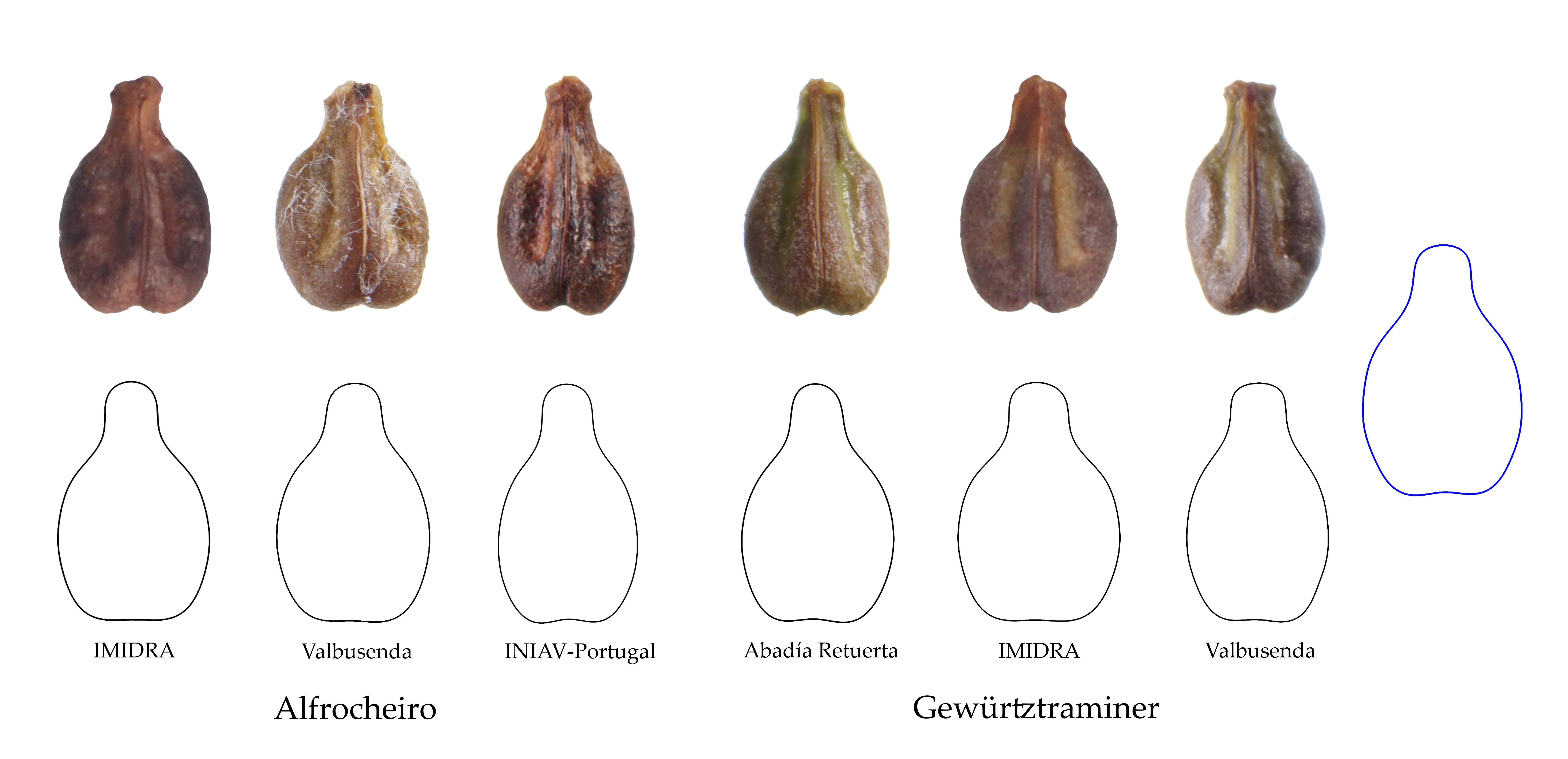
Although previous analysis estimated that N = 7 accounts for 95% of the total shape variation in Vitis [13,19] and higher values resolve details of the outlines in particular cultivars, in this study, N = 6 harmonics were selected, giving us the curvature values at ten notable points that are well conserved in most varieties, which simplifies the comparisons (Figure 1), enabling direct comparison between cultivars [20]. Due to the symmetry of the image and to facilitate the analysis, the ten points were converted into six as indicated in Figure 1. Points 1 and 6 are unique and correspond to the seed apex and basis. Point 1 indicates the maximum curvature value in all seeds. The remaining points are treated as pairs, and values at points 2, 3, 4, and 5 are calculated as the average values for 2 and 2’, 3 and 3’, 4 and 4’, and 5 and 5’. Values at point 2 (average of 2 and 2’) are negative for most cultivars and give the minimum curvature of each outline. These six values of curvature, together with average curvature and curvature ratio (ratio max to average), and the morphological measurements (AR and S) for 121 seed populations are shown in Table S1 (see Supplementary Materials). PCA was run to identify correlations between curvature values and morphological measurements.

2.6. Models and J-Index Measurements

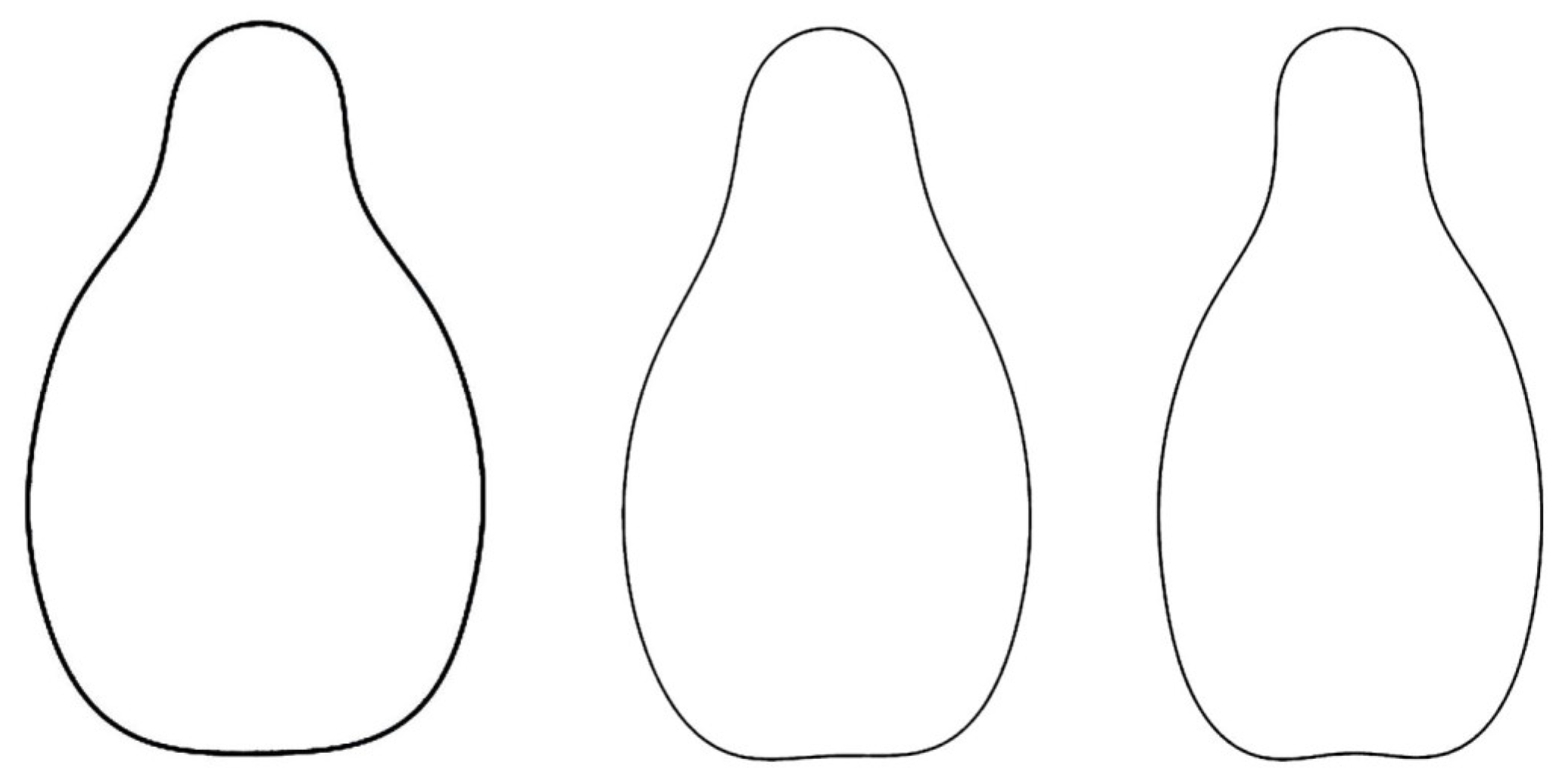
J-index is the percent similarity between a seed image and a given model. For each sample, an average outline was designed with the corresponding Fourier equation and ten harmonics. Seed shapes were compared with four reference models representing distinct morphotypes: Sylvestris, Hebén, Traminer, and Koenigin der Weingaerten. The models are the average outlines corresponding to populations of these cultivars. Similarity between each seed type and the reference models was quantified using the J-index, defined as the percentage of overlapping area between the seed outline and the model after optimal superposition.
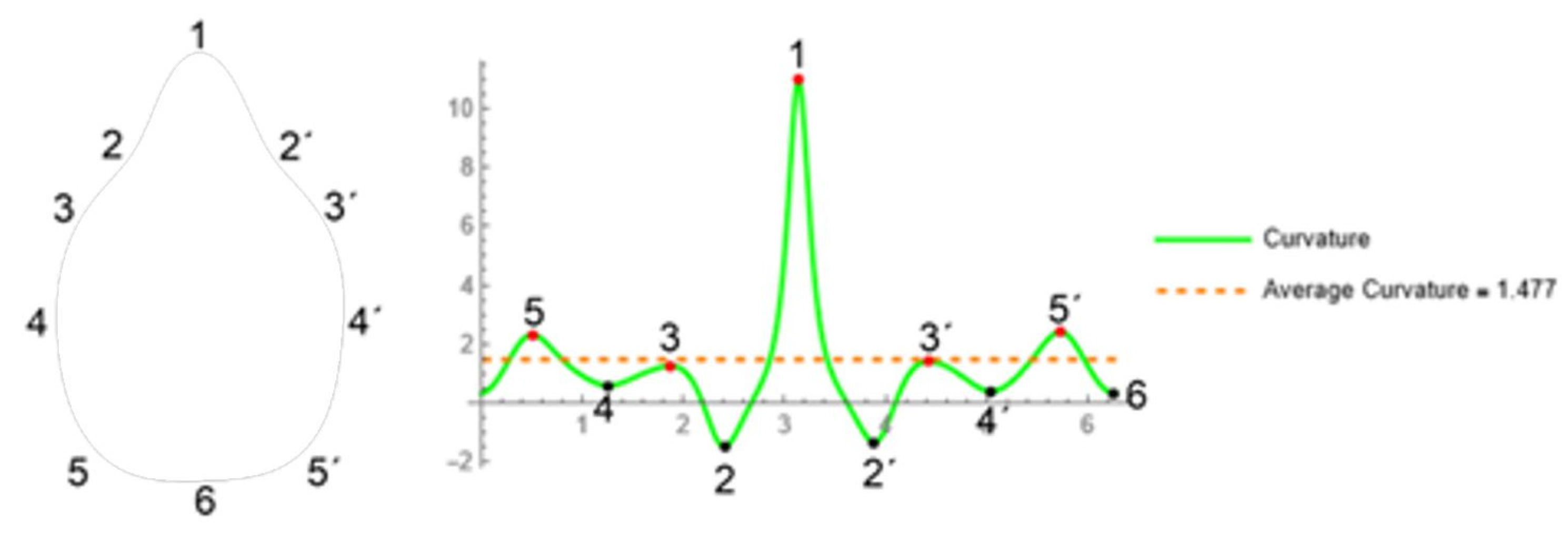
The J-index is calculated by comparing the images and the model. For this, the models are superimposed on images of outlines of each cultivar to maximize overlap and similarity. The models are overlaid on Corel PhotoPaint 24.5.0.731 (Corel Corporation; Ottawa, ON, Canada), which included outlines of each cultivar, and two new files are saved for each of these images: one with the model in black and one with the model in white. The ImageJ program [32] gives the values of total area (T, shown in gray in third image in Figure 2; the whole area is considered) and area shared between the model and the seeds (S, shown in red in fourth image in Figure 2, where the measured area is limited to the area shared between the seed and the model; Figure 2). Note that “T” is the total surface occupied by either the seed or the model, i.e., the number of pixels, whereas in “S”, the measured surface is shortened by the line corresponding to the profile of the model. For each seed, the J-index is calculated as the ratio S/T. During this process, a change in aspect ratio during adjustment was allowed. The images used for the J-index calculation are available at Zenodo (see Supplementary Materials).

2.7. Statistics

Table S1 (see Supplementary Materials) contains average values for ten measurements for 120 seed populations: Two correspond to aspect ratio and solidity, and eight of them correspond to curvature values for each average outline at six points (P1 to P6), average curvature along the outline, and curvature ratio (max to average). Statistical analyses were performed to evaluate differences among groups and relationships between morphometric variables. The statistical analysis was carried out using IBM SPSS statistics v28 (SPSS 2021). Since the measurements did not follow a Gaussian distribution, non-parametric tests were applied for the comparisons (Kruskal–Wallis and Campbell and Skillings). On the other hand, principal component analysis (PCA) was performed with R [33] using data in Table S1 to identify the main sources of variation and to explore correlations among variables.

3. Results

3.1. Models for the Classification of Seeds

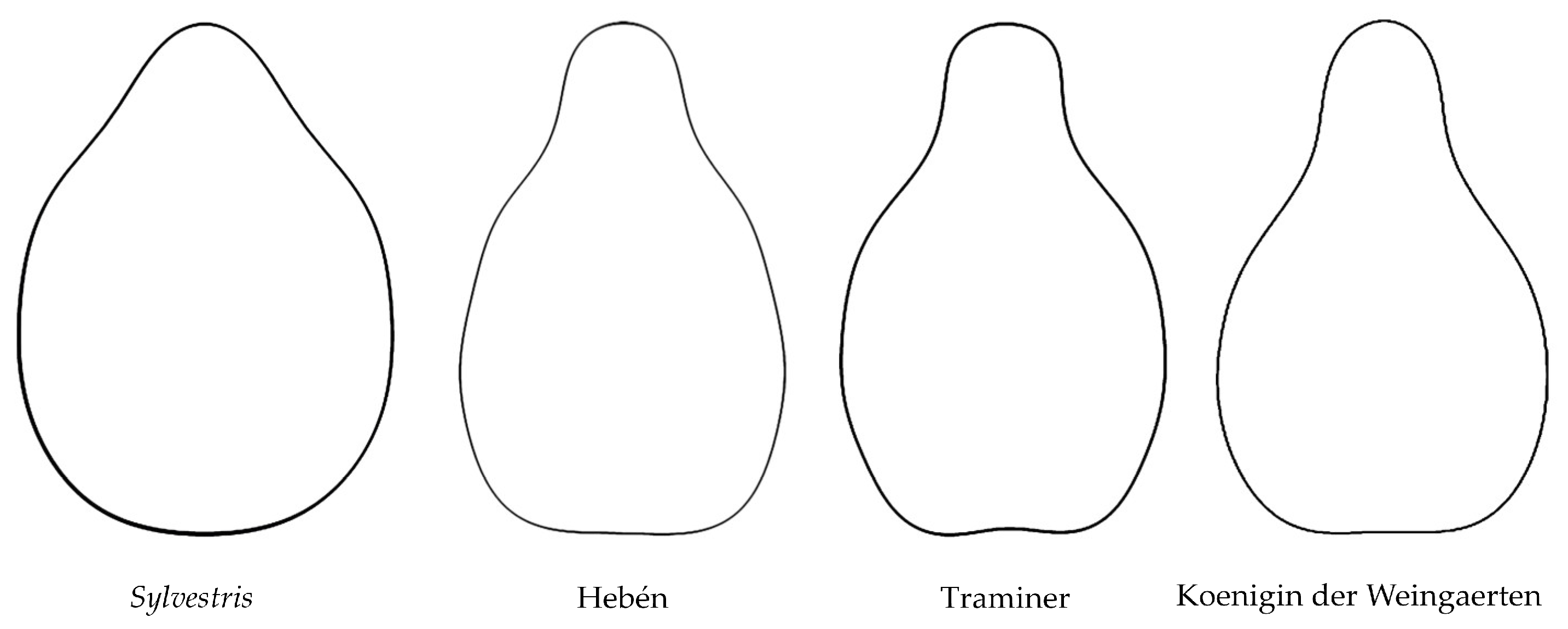
The four models used in the classification of the seeds were as follows: (1) Sylvestris, made from the Fourier coefficients in the average outline of subspecies: Vitis amurensis, V. berlandieri, V. californica, V. candicans, V. doaniana, V. riparia, and V. rupestris [17,18,19]; (2) Hebén, made with the average outlines of three populations of this cultivar collected at IMIDRA in 2020, 2024, and 2025; (3) Traminer, made with the average outlines of three populations of Gewürtztraminer; and (4) Koenigin der Weingaerten, made with the average outlines of three populations of Koenigin der Weingaerten [19]. These models are represented in Figure 3.

3.2. Cultivar Classification by Seed Shape

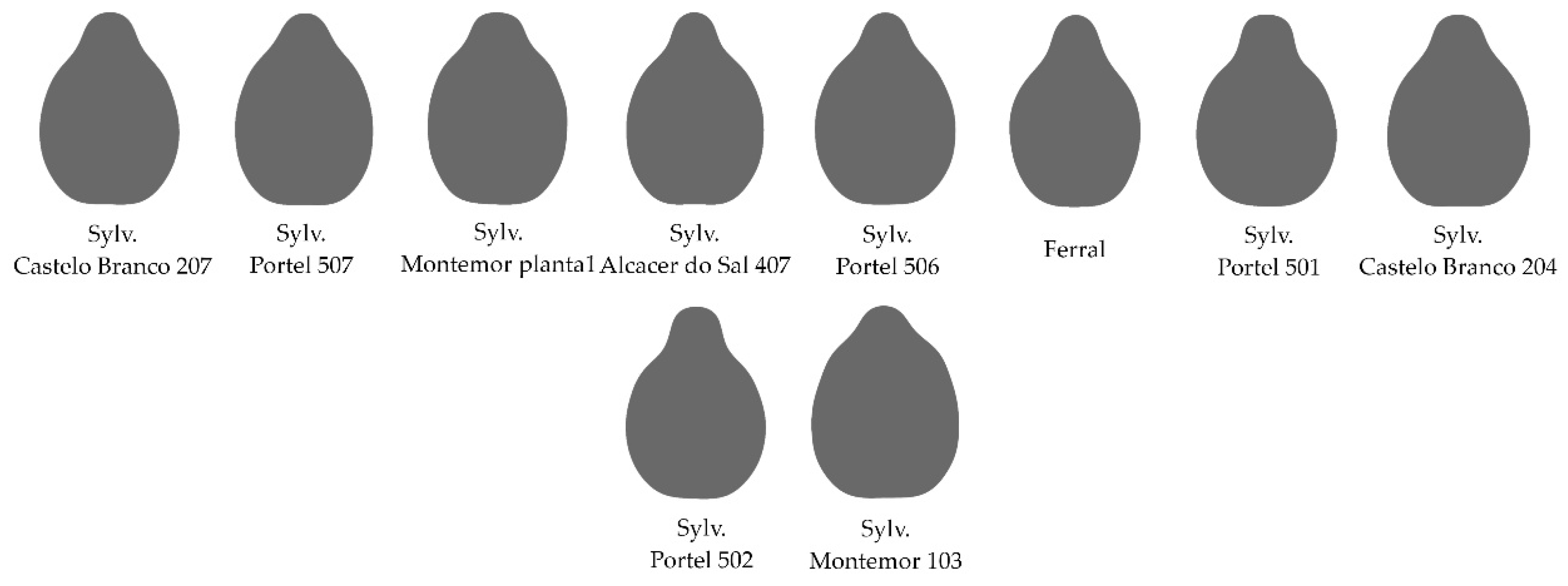
The calculation of the J-index (the percentage of similarity) for each of the four models in all the cultivars was the basis for the classification in four groups. Group 1 contained the 10 cultivars, showing J-index values that were higher with the Sylvestris model than with the other models (Figure 4).
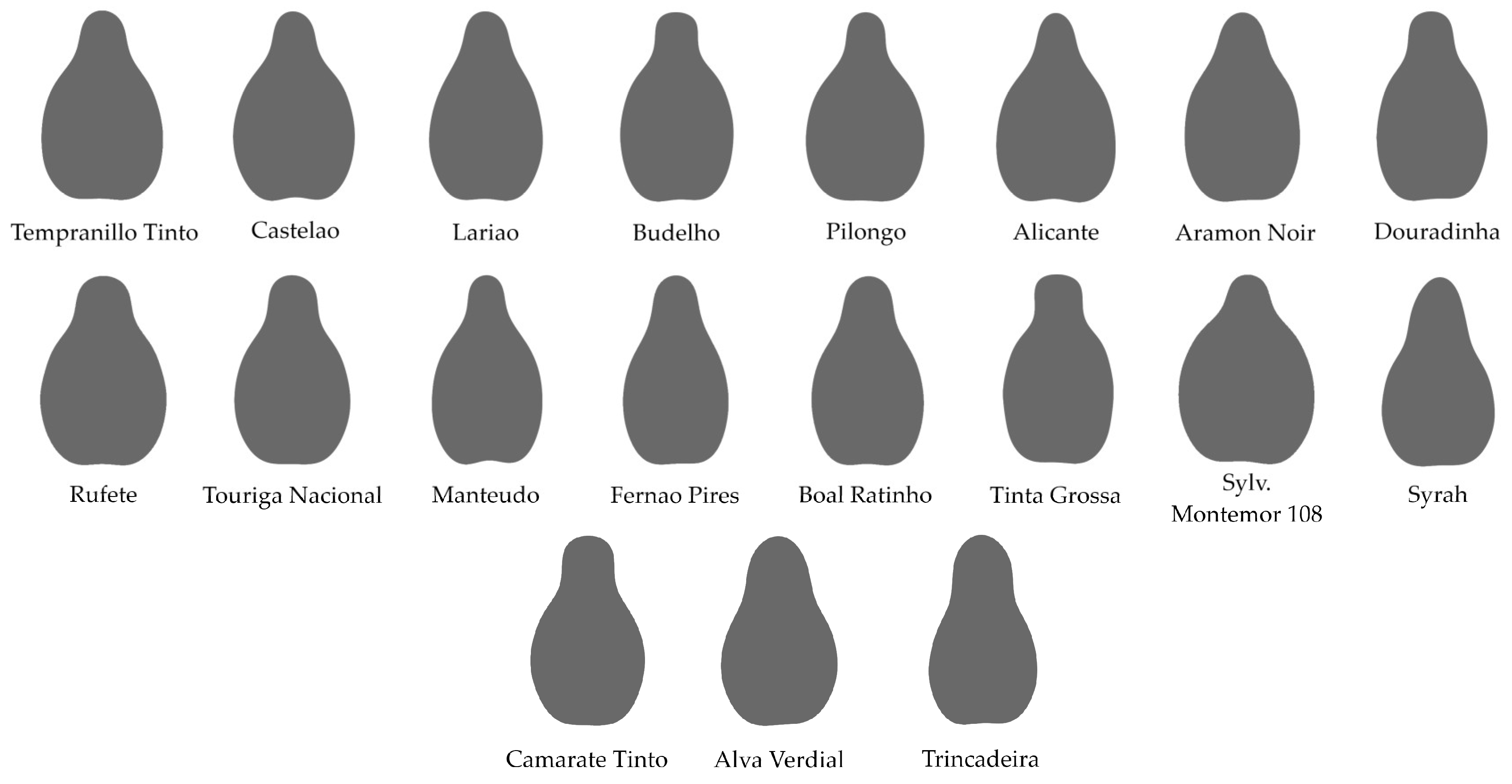
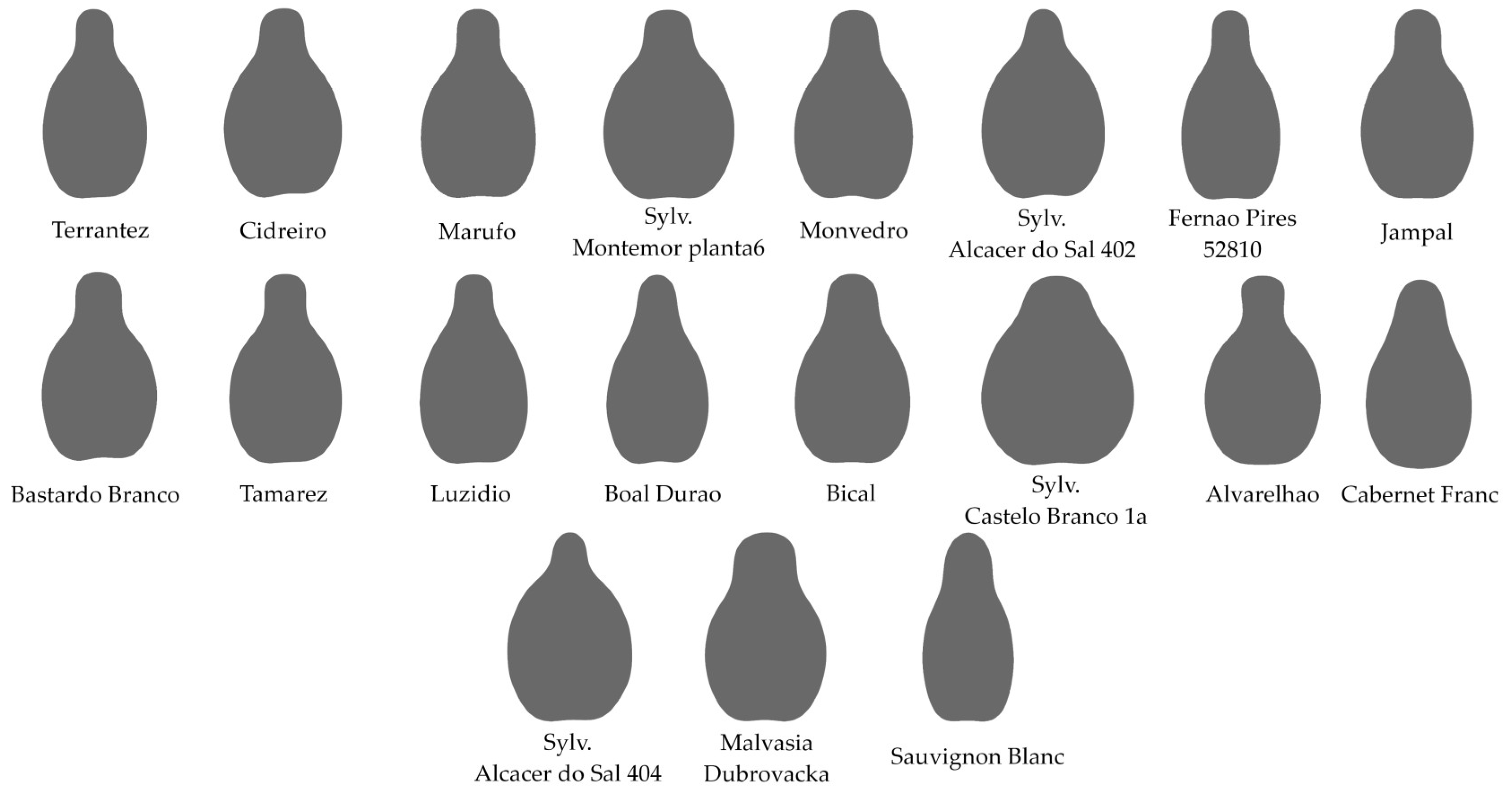
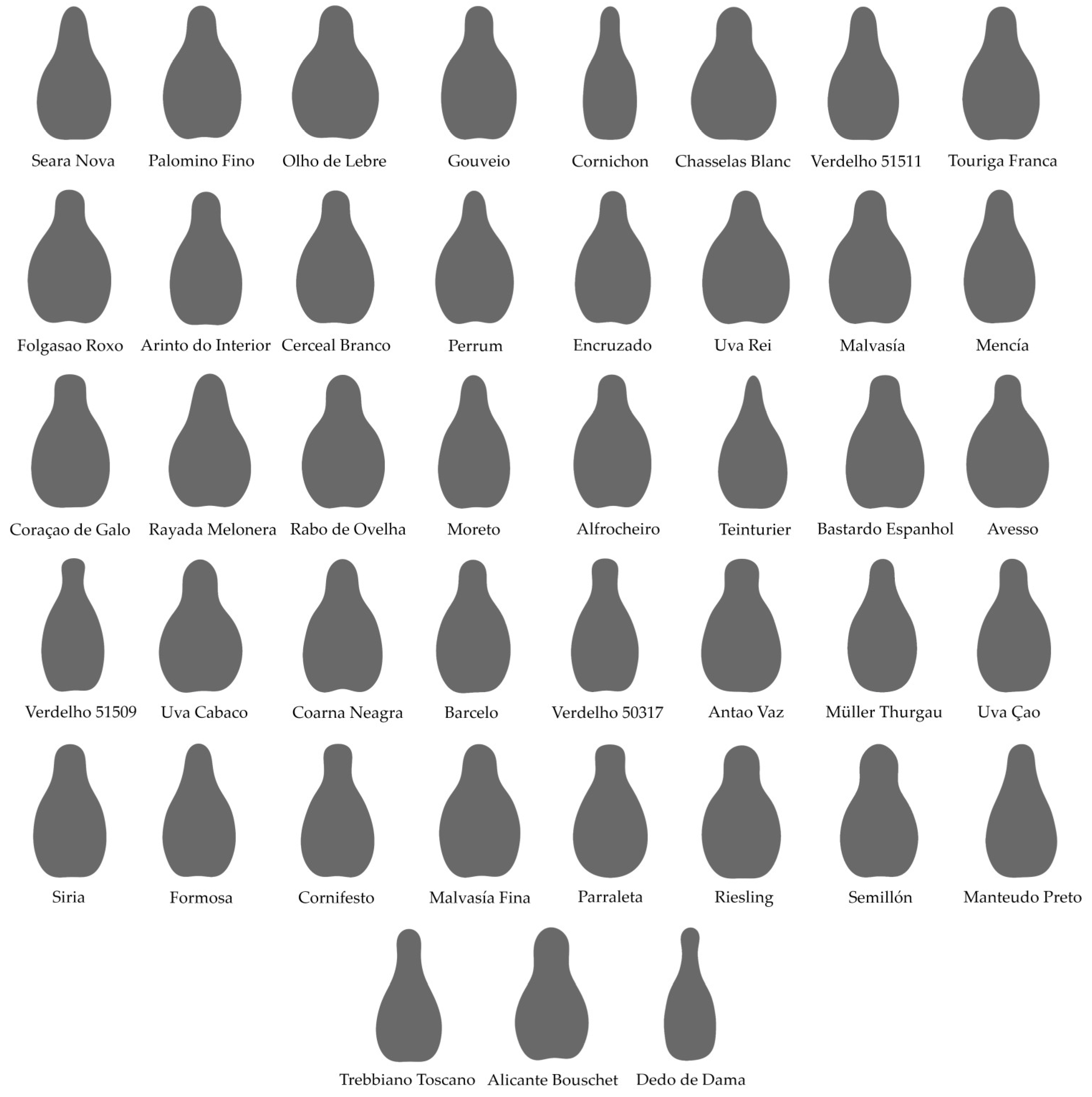
Group 2 contained 19 cultivars that showed higher J-index values with the Hebén model than with the other models (Figure 5). Similarly, group 3 was formed by 19 cultivars that showed higher J-index values with the Traminer model than with the other models (Figure 6), and a larger group, group 4, comprised the 43 cultivars that showed higher J-index values with the Koenigin der Weingaerten model than with the other models (Figure 7).

3.3. PCA with Morphometric Measurements and Curvature Values at Notable Points

Correlation analysis and PCA were performed on measurements of 124 different seed samples: seven of species of Vitis non vinifera, 14 of sylvestris plants (female genotypes only), and 83 corresponding cultivars (Table S1). For each sample, the measurements included aspect ratio (AR), solidity, curvature values at six notable points (P1 to P6), average curvature, and maximum to average ratio.
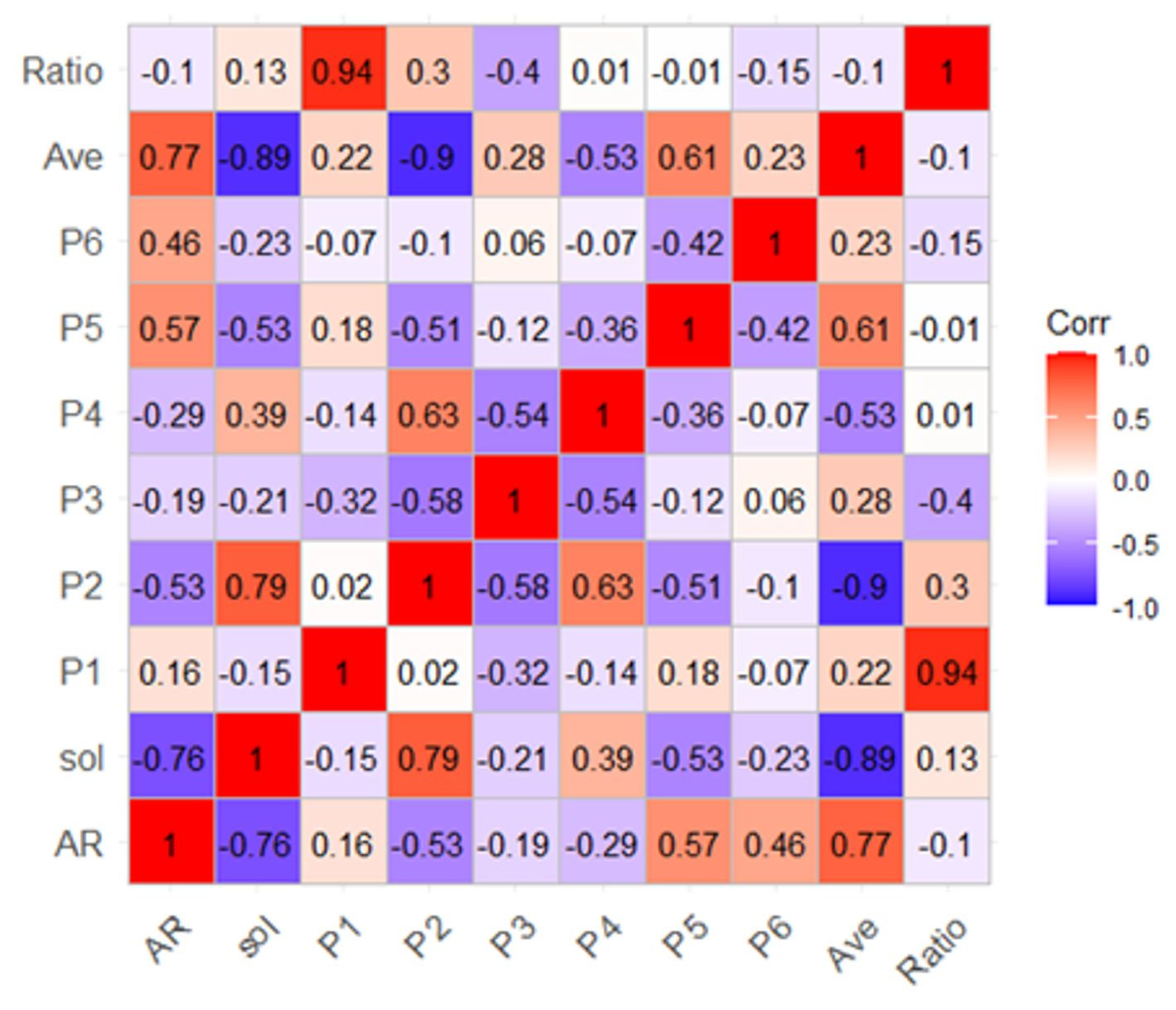
Significant correlations were found between curvature values as well as between some curvature values and measurements (Figure 8), such as for P1 and curvature ratio (0.94), P2 and average curvature (−0.9), P2 and solidity (0.79), P3 and P2 (−0.58), P3 and P4 (−0.54), P4 and P2 (0.63), P4 and average curvature (−0.53), and P5 and aspect ratio (0.57) (Figure 8).
The results of the PCA revealed three components (Table 2).
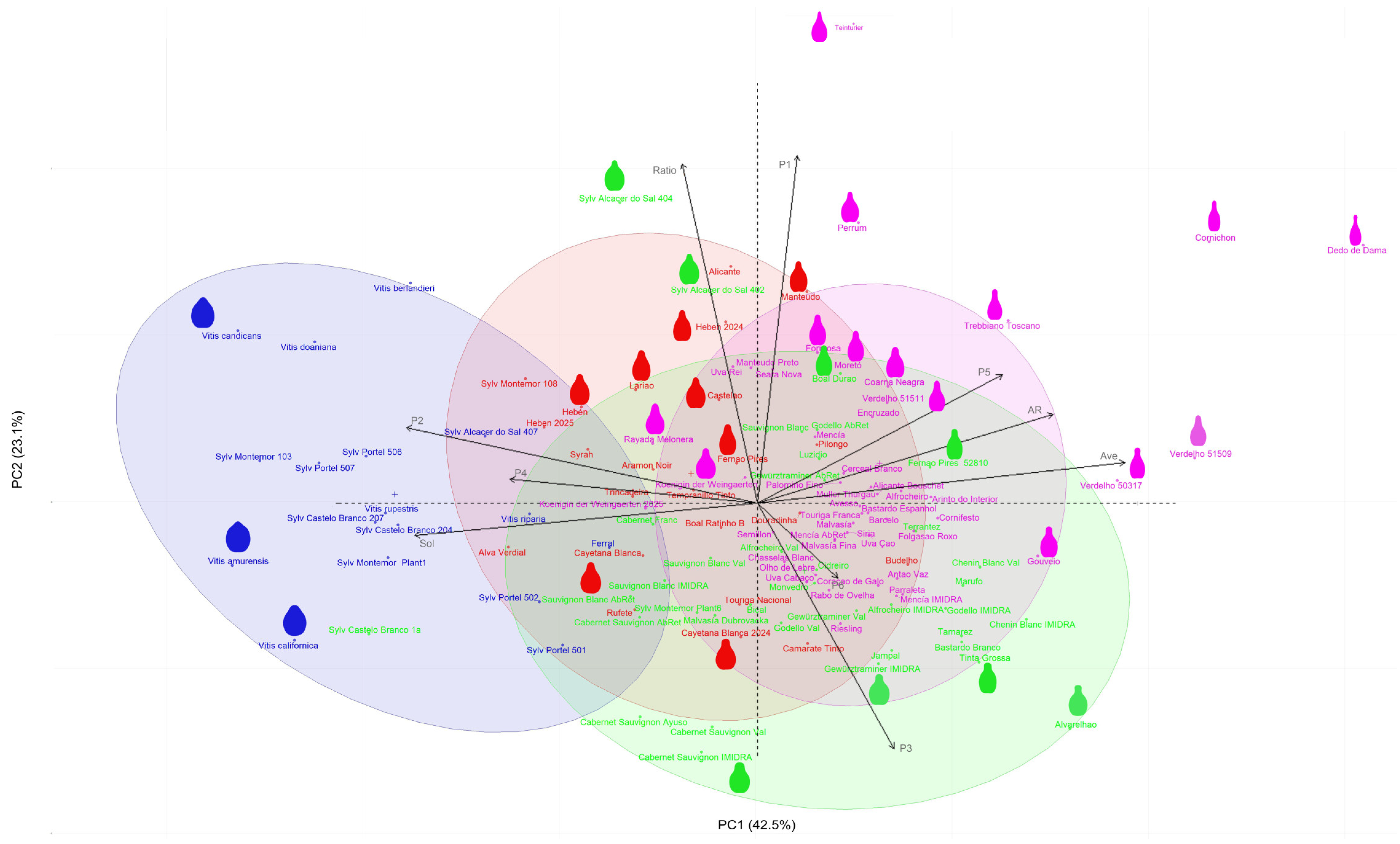
PC1 accounted for 42.6% of the variance and was positively related to P2, solidity, and P4, and negatively related to average curvature and P3. PC2 accounted for 23% of the variance and was positively related to P1, curvature ratio, and P5. PC3 accounted for 14% of the variance and was dependent on aspect ratio and P6. A PERMANOVA analysis to determine whether the differences between the centroids of the groups were significant revealed differences between the centroids (F = 19.46; R2 = 0.33; P = 0.001) (Figure 8).
The biplot resulting from the PCA shows the contributions of each variable and the position of the cultivars (Figure 9). Each group presents a characteristic disposition. While groups 1 and 2 of Vitis not vinifera and Hebén are on the left half-plane, indicating negative values of PC1, group 4 is almost completely on the right. Group 3 of the Traminer-related seeds is predominantly on the lower part of the figure with negative values of PC2.
The silhouette values of the groups represent the degree of separation and cohesion of the clusters, indicating how similar a cultivar is to its own group compared to other groups. The obtained silhouette values oscillated between −0.005 (Koenigin group) and 0.347 (Vitis no vinifera group), thus indicating low separation and a high degree of overlap between the groups. The increase in aspect ratio and average curvature along the horizontal axis are associated with reduced solidity and higher absolute values of negative curvature (P2). P1, P3, and curvature ratio determine the distribution along the vertical axis. There were notable differences among the cultivars, offering the possibility to define the characteristic morphotypes of each group.

3.4. Comparison Between Groups

There were differences between morphological measurements and curvature values between the groups, as indicated in Table 3. The values of P2 are lower in group 4 than in groups 1 and 2. The values of P3 are higher in group 3 than in groups 1 and 4. The highest values of P4 correspond to group 1.

3.5. Examples of Seed Shape Variation Between Different Populations of the Same Cultivar

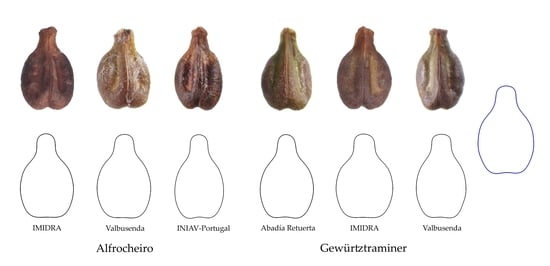
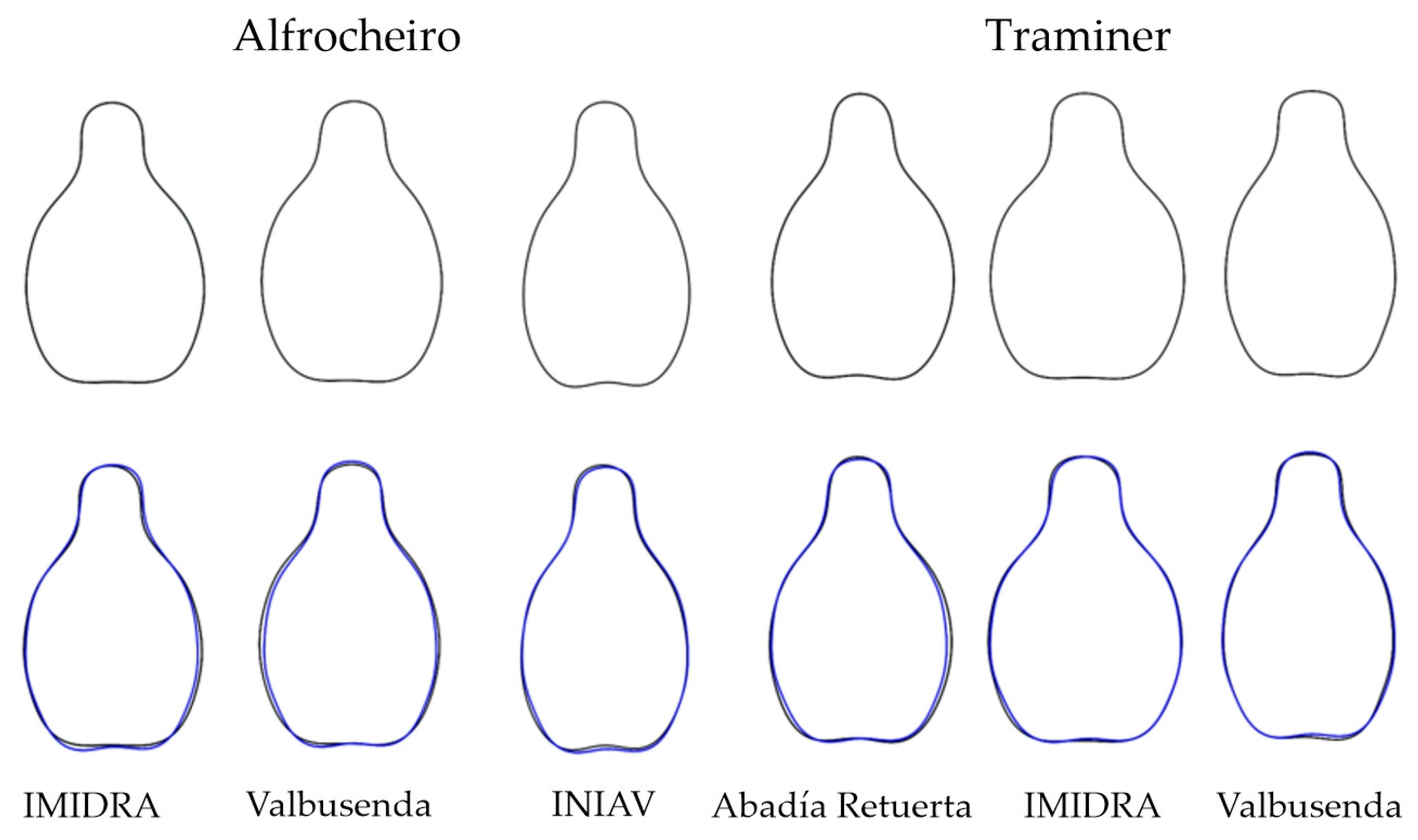
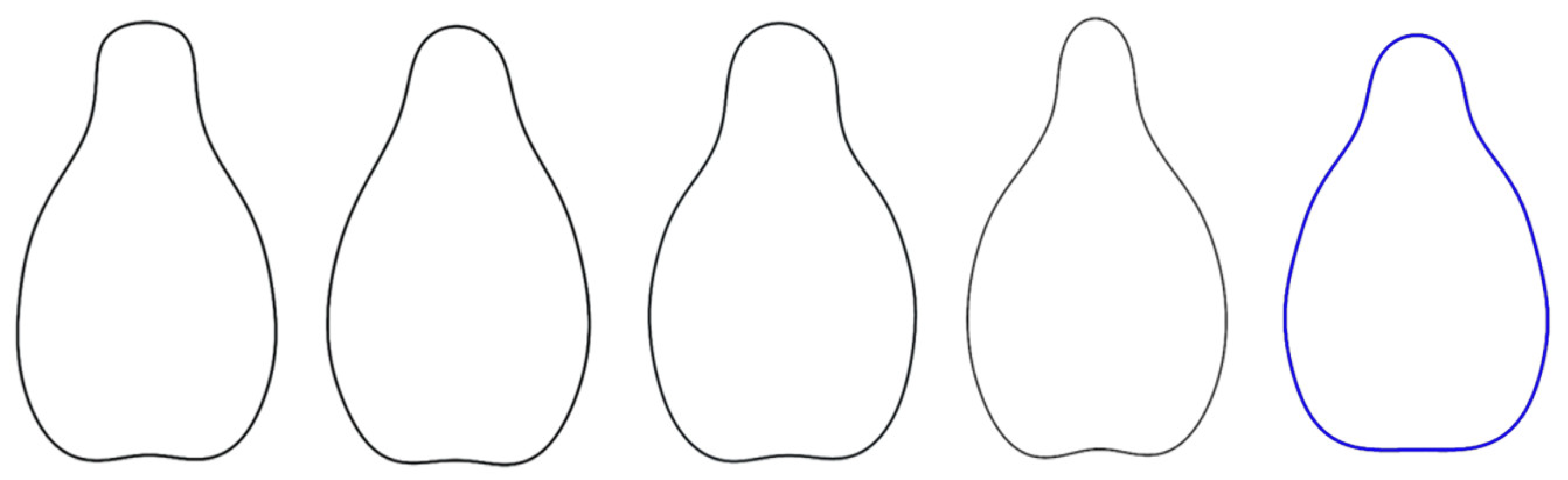
The variation in shape between the different populations is shown here for three samples of Alfrocheiro, Traminer, and Fernão Pires. The seeds of the three Alfrocheiro populations from different origins have a similar shape to the three Traminer populations (Figure 10). As previously observed, variations in shape mainly concern changes in aspect ratio [17,18,19]. Refer to the blue outline in Figure 10, which corresponds to the adjusted Traminer model on top of the average outlines, allowing for changes in aspect ratio.
Figure 11 shows the average outlines corresponding to the three populations of Fernão Pires. In addition to changes in aspect ratio, there is a notable difference in curvature between the outlines at point 2: the curvature is more negative for the samples on both sides than for the middle sample. This explains why the sample in the center is attributed to group 2 (Hebén) and the sample on the right to group 3 (Traminer).

3.6. Examples of Seed Shape Variation in the Pedigrees

3.6.1. In the Progeny of Hebén

Bastardo Espanhol, Larião, Malvasía Fina, and Perrum are the progeny of Hebén. The corresponding outlines are shown in Figure 12, together with the model Hebén. While Larião is in group 2 (Hebén) by J-index, Bastardo Espanhol, Malvasía Fina, and Perrum are in group 4, with the highest similarity to the Koenigin der Weingaerten model.

3.6.2. In the Progeny of Traminer

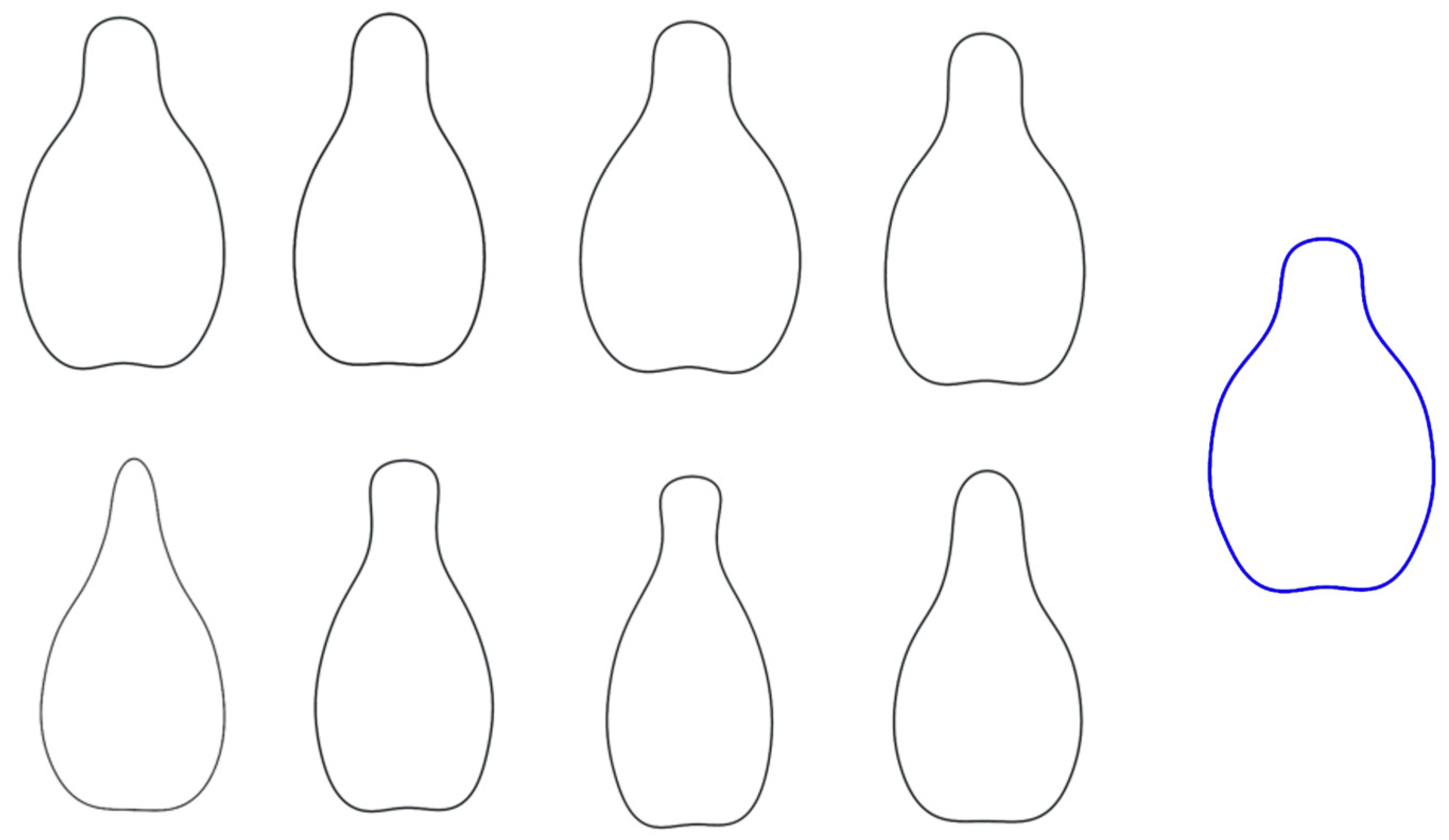
The following cultivars are in the progeny of Traminer: Alfrocheiro, Arinto do Interior, Folgasao Roxo, Gouveio, Teinturier, and Verdelho (three different samples) (Figure 13). All of them were more similar to the Koenigin der Weingaerten model than to their parental model Traminer, being classified by J-index values in group 4.

3.6.3. In the Offspring of Cayetana Blanca × Alfrocheiro

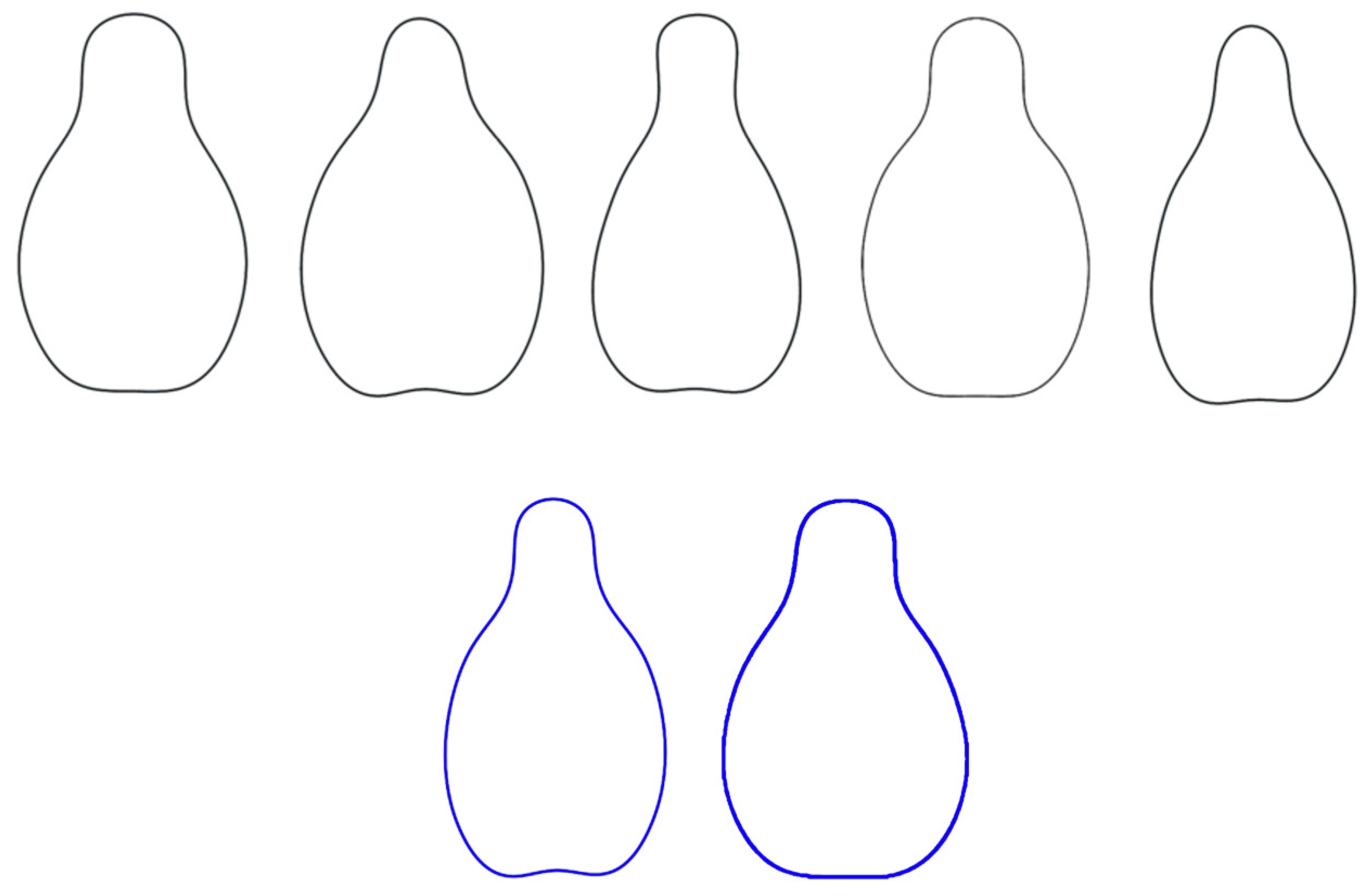
The following cultivars are the progeny of Cayetana Blanca x Alfrocheiro: Camarate Tinto, Castelão, Cornifesto, Jampal, and Moreto. Their outlines are shown in Figure 14 together with those of Cayetana Blanca and Alfrocheiro. Camarate Tinto and Castelão are in group 2, Jampal in group 3, and Cornifesto and Moreto in group 4.

4. Discussion

4.1. The Inheritance of Seed Characters in Vitis

In angiosperms, the seed comprises three genetically distinct tissues: (1) the embryo (50% maternal and 50% paternal), (2) the endosperm (66% maternal and 33% paternal), and (3) the seed coat (testa) and perisperm (both 100% maternal). In Vitis, the perisperm constitutes a significant proportion of the seed mass [34,35], consequently determining seed shape based on the maternal genotype inheritance. During cultivation, grapes are propagated vegetatively, and the products of crosses made long ago can display some of the characteristics from the original cross for decades or even centuries. In crosses involving female cultivars such as Hebén, the female parent provides the seed genotype for seed shape in the first generation [17]. Whether characters encoded by the founder genotype are maintained in subsequent generations depends on the DNA supplied by the second parental and the method used to select the products of crosses, as well as on the selection during cultivation. During seed formation, the phenotype of the seed may differ depending on the pollen source, which may affect the fruit [36,37]. However, in culture, the plants are maintained vegetatively, and the successive pollinations over the years will not affect the plant phenotype because the seeds will not affect reproduction during the usual propagation of grapevine varieties.

4.2. Sylvestris and Ferals

Traditionally, the methods used to differentiate between sylvestris seeds and cultivars were based on linear measurements [11,14,16]. The description of seed outlines based on elliptic Fourier coefficients was a breakthrough in the field, demonstrating the differences in overall shape between wild and cultivated seeds [13]. However, in addition to the wild (V. vinifera subsp. sylvestris) and cultivated (V. vinifera subsp. vinifera) types of Vitis, a third type demands our attention: ferals, i.e., plants that live in unmanaged environments (wild habitats) but descend from domesticated ancestors, carrying the genetic signatures of human selection rather than the ancestral wild lineage. Several studies provide evidence that many wild populations originate from the propagation of domestic seeds [32,38,39]. Regarding seed morphology, the study presented here on Portuguese varieties provides good examples of these types. While most of the seed populations studied here belong to cultivars, some belong to the sylvestris type and others are feral. Additionally, species other than V. vinifera, such as V. amurensis, V. californica, V. candicans, V. doaniana, V. riparia, and V. rupestris, exhibit a similar seed morphotype. These have been under cultivation at IMIDRA for a short time and retain their characteristic round shape, with high solidity values and low absolute values of negative curvature at P2. Of the 14 varieties labelled as sylvestris in the Portuguese collection, seven have seeds that are very similar to those of Vitis non vinifera and most likely correspond to the true sylvestris type. This high level of similarity between these seed groups is consistent with the reduced diversity in the Portuguese sylvestris subspecies reported previously [40,41,42].
Conversely, it is highly probable that three of the 14 wild plants labelled as sylvestris are ferals, because the flower shape did not show fully developed stamens but the gynoecium is fully developed. These are Sylv Alcácer do Sal 0402 and 0404, whose seed shapes are very similar to those of Alicante, and Sylv Montemor Plant 6, which is close to the seeds of Sauvignon Blanc in the lower central part of the biplot. Alcácer do Sal 0407 and Montemor 0108 are very close to the Hebén samples in the top left corner of the biplot, suggesting that they may be ferals or sylvestris that are very similar to Hebén. Sylv Portel 0501 and 0502 are in the lower part of the biplot, between the Sauvignon Blanc seeds and those of the non-vinifera and true sylvestris groups. This suggests that they could be an intermediate in the feralization process. Nevertheless, for all of them, including the seven populations that are most likely true sylvestris, it is difficult to rule out the possibility that they are ferals that escaped cultivation a long time ago and regained some characteristics of wild seeds, i.e., those related to seed shape. It is striking that some high-impact studies in Vitis genomics appear to have overlooked the possibility of feral populations. For example, Myles et al. [43] observed that the results for populations of V. sylvestris were more like those for Vitis cultivars than for other Vitis species, suggesting that some of the V. sylvestris samples used in this study were indeed feral. The failure to consider ferals is a recurring issue in other molecular phylogeny articles, although this possibility is considered in other cases [44].
Apart from sylvestris, the only cultivar that showed high scores with this model was ferral. This Portuguese stock is in striking contrast with the homonym in the Spanish IMIDRA collection, suggesting it could be a Manseng Noir or Achladi sample, and not a true ferral in the Hebén offspring [17].

4.3. The Relationship Between Seed Morphology and the Known Pedigrees

Surprisingly, most of the cultivars, up to 43, showed the highest percentage of similarity with the Koenigin der Weingarten model. On the other hand, 19 cultivars were more similar to the Hebén and Traminer models, and 10 cultivars matched the Sylvestris model. Given that one of the recently described haplotypes corresponds to the Iberian varieties represented by Hebén, we would expect to find many Portuguese cultivars in the group corresponding to the Hebén model. Indeed, both Hebén and its offspring, Cayetana Blanca, have been shown to play an important role in the development of many Portuguese cultivars [8,9]. Similarly, Alfrocheiro, the offspring of Traminer and a representative of the CG6 haplotype found in Central European grapes, is the progenitor of many Portuguese cultivars [10]. Therefore, we also expected to find many cultivars in the corresponding group.
The similarity in seed shape between the three Alfrocheiro varieties was an indication of the stability of this trait in this cultivar. In favor of the inheritance of seed shape was the finding that Alfrocheiro seeds are very similar to Traminer seeds. However, the Alfrocheiro cultivar at INAV was more similar to the Koenigin der Weingarten model than to the Traminer model. This shift to the right in the PCA biplot is not unique to this Alfrocheiro population. Of the five cultivars in the Hebén offspring (Bastardo Espanhol, Larião, Malvasía Fina, and Perrum), only Larião had the highest J-index with the Hebén model; the other four had the highest values with the Koenigin der Weingarten model. Similarly, all the cultivars in the Traminer progeny (Arinto do Interior, Folgasao Roxo, Gouveio, Teinturier, and three different genotypes of Verdelho) had a higher percentage of similarity to the Koenigin der Weingarten model than to their own parental Traminer model.

4.4. Haplotypes and Morphotypes

The results based on the measurements of solidity and curvature in the seed outlines show a relationship between seed morphology and evolutionary stage in the cultivars. The cultivars corresponding to CG3 are in general at an advanced stage of domestication, and some of them are the result of crossings between selected types presenting a high aspect ratio and low solidity values [18,19,20]. The morphometric analysis of the seeds of Vitis species other than V. vinifera supports that some varieties classified as V. sylvestris may sometimes correspond to ferals, and the comparison of morphometric characteristics may indicate the cultivar of origin [20]. In this context, Portuguese viticulture, with many ancient varieties of unknown origin and others being the product of crosses between ancient Iberian (Hebén and Cayetana Blanca) or Traminer-related cultivars, presents a promising perspective for the morphometric comparison between varieties.
Seara Nova is the cultivar with the highest score in the Koenigin der Weingaerten group. It is the offspring of a cross between Diagalves (Chelva) and Fernão Pires, made in Portugal in 1951 by Leão Ferreira [45]. The second and third highest scores correspond to Palomino Fino and its synonym, Olho de Lebre. Palomino Fino, of unknown parentage, is native to Spain, has a long history, and has a global distribution with a large number of synonyms in various countries [5,45]. Other cultivars in this group are the offspring of Savagnin (Gouveio, Verdelho, Folgasao Roxo, and Arinto do Interior), as well as other known crosses, such as Touriga Franca (between Marufo and Touriga Nacional) and Cerceal Branco (between Malvasía Fina and Tinta Pereira) [5,6,45,46]. This group also includes cultivars of unknown parentage, such as Cornichon, Chasselas Blanc, Uva Rei, Encruzado, Coraçao de Galo, and Rayada Melonera. However, the cultivars in this group that were indicated as representative of haplotype CG3 are Koenigin der Weingaerten and Muscat Hamburg. These are recently developed varieties. The former was developed in Hungary by Mathiasz János in 1916 through the crossing of Afus Ali and Csaba Gyoenye [47,48], while Muscat Hamburg was developed in the United Kingdom by Seward Snow through the crossing of Schiava Grossa and Muscat of Alexandria [49,50]. Among the Portuguese varieties analyzed, the majority resemble the representative cultivars corresponding to haplotype CG3, including many cultivars known to proceed from crosses involving the representative cultivars corresponding to haplotypes CG5 and CG6. The groups resulting from the ADMIXTURE analysis based on SNPs aligned to the Pinot Noir 40024 assembly reference genome in the work of Dong et al. [4] may represent progressive stages during the process of domestication. Secondary events were also identified in local regions, like the Iberian Peninsula, where Alfrocheiro, Cayetana Blanca, and Hében are the parentals of many local varieties [6,8,9,10,46].

4.5. Implications for Developing Organic and Low-Input Viticulture Strategies

The morphological characterization of the Portuguese Ampelographic Collection provides more than a retrospective view of domestication. It offers a foundational framework that indirectly supports the transition toward sustainable viticulture by providing the tools necessary to manage and identify diverse genetic resources. As the industry transitions toward organic production (post-cultural vines), the reliance on a narrow range of international “elite” clones is increasingly seen as a vulnerability, particularly in light of the pressure of climate change and the need for reduced chemical inputs [51,52].
The distinction between true sylvestris and feral populations (Section 4.2) is of paramount importance for conservation and breeding programs. Feral vines, having escaped cultivation and survived in unmanaged environments, represent a unique reservoir of “resilience traits.” These individuals have undergone a secondary selection process, potentially re-acquiring or maintaining resistance to local pathogens and environmental stressors that are often lost in highly pampered commercial vineyards. Utilizing these morphological insights as indirect indicators of lineage allows viticulturists to more efficiently identify and preserve germplasm that is inherently better suited for low-input systems, where the plant must rely on its own physiological robustness rather than synthetic treatments [53,54].
Our findings on the inheritance of seed characters and the prevalence of the CG3-related morphotype (Koenigin der Weingaerten model) among Portuguese cultivars suggest a high degree of adaptability in the Iberian germplasm. The fact that many cultivars resulting from ancient crosses (Section 4.3) have shifted towards more domesticated morphotypes while maintaining regional identity indicates a successful long-term adaptation to the Mediterranean climate. For organic viticulture, utilizing these locally adapted cultivars—such as those belonging to the Hebén or Alfrocheiro lineages—is a more sustainable strategy than attempting to adapt non-native varieties through intensive management. While this study focuses on geometric stability, the observed shift toward larger, lower-solidity seeds in cultivated groups (e.g., CG3) reflects selection pressures for larger berry size and potentially correlates with higher endosperm volume, an attribute of increasing interest for grape seed oil production.
Finally, the correlation between haplotypes (CG5, CG6, and CG3) and seed morphotypes offers a predictive tool for evaluating biodiversity. By understanding the “evolutionary stage” of a cultivar through its seed morphology, breeders can better select for diverse genetic backgrounds. A diverse vineyard, based on a deep understanding of pedigree and domestication stages, is naturally more resilient to pests and diseases, aligning with the core principles of agroecology and organic viticulture. While morphometric analysis is an indirect proxy for genetic resilience, the methods proposed in this study provide a cost-effective, high-throughput means of auditing the genetic heritage of vineyards. This ensures that the transition to sustainability is built upon a verified foundation of locally proven genetic resources.

5. Conclusions

This study demonstrates that seed morphometry—utilizing elliptic Fourier descriptors (EFDs), curvature analysis, and the J-index—constitutes a robust, high-throughput, and cost-effective tool for characterizing Vitis germplasm collections. A significant finding is the clear distinction between true sylvestris populations and feral individuals; the latter, often overlooked in genomic studies, represent a unique “intermediate” germplasm. These post-cultural vines have potentially re-acquired resilience traits through secondary selection in unmanaged environments, serving as a vital genetic reservoir. Furthermore, our results confirm that morphometry is effective at identifying synonyms (e.g., Azores and Madeira accessions) and distinguishing homonyms (e.g., Italian vs. Portuguese accessions), while remaining stable across somatic mutations, as seen in the Traminer lineage.
The high prevalence of the Koenigin der Weingaerten morphotype (associated with the CG3 haplotype) among Portuguese cultivars—even those descended from ancestral Hebén (CG5) and Alfrocheiro (CG6) lineages—suggests a progressive morphological shift toward advanced domesticated stages. This shift reflects the successful long-term adaptation of the Iberian germplasm to Mediterranean environmental pressures.
From a practical perspective, this morphological framework provides an essential baseline for assessing vineyard biodiversity. In the context of organic and low-input viticulture, our findings highlight the indirect but vital role of preserving locally adapted varieties. Utilizing these robust genetic resources, rather than a narrow range of international clones, is a prerequisite for building resilient agroecosystems capable of maintaining productivity with reduced chemical interventions. Ultimately, the correlation between seed morphotypes and evolutionary haplotypes established here serves as a predictive proxy for breeders, ensuring that the transition to sustainable viticulture is grounded in the functional diversity of proven, regional genetic resources.

Supplementary Materials

The following supporting information: Images of seeds harvested in IMIDRA in 2020 and 2024 are available at https://zenodo.org/records/15829028 and https://zenodo.org/records/14610754 (accessed on 2 March 2026), respectively. Images of seeds from Abadía Retuerta, IMIDRA, and Jardín Ampelográfico Valbusenda harvested in 2025 are available at https://zenodo.org/records/18622032 (accessed on 2 March 2026). Seed images of the Portuguese collection at INAV and Table S1 are available at https://zenodo.org/records/19566279 (accessed on 21 April 2026).

Author Contributions

Conceptualization, E.C.; methodology, J.J.M.-G., Á.T. and E.C.; software, J.J.M.-G., Á.T. and E.C.; validation, J.J.M.-G., J.C., J.L.R.-L., Á.A.B., G.M.O., F.C.S.d.S.M., Á.T. and E.C.; formal analysis, J.J.M.-G., J.L.R.-L., Á.T. and E.C.; investigation, J.J.M.-G., J.C., J.L.R.-L., Á.A.B., G.M.O., F.C.S.d.S.M., Á.T. and E.C.; resources, J.J.M.-G., J.C., J.L.R.-L., Á.A.B., G.M.O., F.C.S.d.S.M., Á.T. and E.C.; data curation, J.J.M.-G. and E.C.; writing—original draft preparation, J.J.M.-G. and E.C.; writing—review and editing, J.J.M.-G., J.C., J.L.R.-L., Á.A.B., G.M.O., F.C.S.d.S.M., Á.T. and E.C.; visualization, J.J.M.-G. and E.C.; supervision, Á.T. and E.C.; project administration, Á.T. and E.C.; funding acquisition, Á.T. and E.C. All authors have read and agreed to the published version of the manuscript.

Funding

This research was funded by the Junta de Castilla y León and the European Union (FEDER “Europe boosts our growth”) grant number CLU-2025-2-02—Unit of Excellence IRNASA_CSIC; CSIC grant number DEEP-MaX-2024_IRNASA. Information regarding the funder and the funding number should be provided. Please check the accuracy of funding data and any other information carefully.

Data Availability Statement

The data presented in this study are openly available in accessible repository (See Supplementary Materials section).

Acknowledgments

We would like to thank Miguel Ángel Marino of Jardín Ampelográfico Valbusenda (Toro, Zamora, Spain), María José Jerez Catalán of Bodegas Ayuso Villarrobledo (Albacete, Spain), and the personnel of Abadía Retuerta (Sardón de Duero, Valladolid, Spain) for providing the seeds used in this study.

Conflicts of Interest

Author Ángel Anocibar Beloqui is employed by Abadía Retuerta. The remaining authors declare that the research was conducted in the absence of any commercial or financial relationships that could be construed as a potential conflict of interest.

Abbreviations and Definitions

The following abbreviations and terms are used in this manuscript:
AosAverage outlines. Closed curves represent the seed outlines or a given cultivar
CultivarAny of the varieties of Vitis vinifera subsp. vinifera or hybrids traditionally established as a crop to produce wine or table grapes. A cultivar has been historically bred or developed by humans for its desirable characteristics.
CurvatureCurvature is the rate of change of the tangent in a curve. Mathematically, it is the derivative of the tangent’s angle with respect to arc length, often described as the inverse of the radius for a circle (a straight line has zero curvature)
Notable curvature pointsNotable curvature points refer to key locations on curves where curvature changes significantly, such as inflection points (where a curve goes from curving left to right, locally straight), cusps (sharp points where direction reverses), vertices, foci, and points of maximum/minimum curvature
VarietyAny of the lines of Vitis grown in experimental stations. They can belong to cultivars or to other species of Vitis or to Vitis vinifera subsp. sylvestris

References

  1. Fuller, D.Q.; Stevens, C.J. Between domestication and civilization: The role of agriculture and arboriculture in the emergence of the first urban societies. Veg. Hist. Archaeobot. 2019, 28, 263–282. [Google Scholar] [CrossRef]
  2. McGovern, P.; Jalabadze, M.; Batiuk, S.; Callahan, M.P.; Smith, K.E.; Hall, G.R.; Kvavadze, E.; Maghradze, D.; Rusishvili, N.; Bouby, L.; et al. Early Neolithic wine of Georgia in the South Caucasus. Proc. Natl. Acad. Sci. USA 2017, 114, E10309–E10318. [Google Scholar] [CrossRef] [PubMed]
  3. This, P.; Lacombe, T.; Thomas, M.R. Historical origins and genetic diversity of wine grapes. TRENDS Genet. 2006, 22, 511–519. [Google Scholar] [CrossRef] [PubMed]
  4. Dong, Y.; Duan, S.; Xia, Q.; Liang, Z.; Dong, X.; Margaryan, K.; Musayev, M.; Goryslavets, S.; Zdunić, G.; Bert, P.F.; et al. Dual domestications and origin of traits in grapevine evolution. Science 2023, 379, 892–901. [Google Scholar] [CrossRef]
  5. Lexicon: The Largest Wine Encyclopedia in the World with 26,513 Terms. Available online: https://www.vivc.de/ (accessed on 1 January 2025).
  6. Lacombe, T.; Boursiquot, J.M.; Laucou, V.; Di Vecchi-Staraz, M.; Péros, J.P.; This, P. Large-scale parentage analysis in an extended set of grapevine cultivars (Vitis vinifera L.). Theor. Appl. Genet. 2013, 126, 401–414. [Google Scholar] [CrossRef] [PubMed]
  7. Bowers, J.; Meredith, C. The parentage of a classic wine grape, Cabernet Sauvignon. Nat. Genet. 1997, 16, 84–87. [Google Scholar] [CrossRef]
  8. Zinelabidine, L.H.; Cunha, J.; Eiras-Dias, J.E.; Cabello, F.; Martínez-Zapater, J.M.; Ibáñez, J. Pedigree analysis of the Spanish grapevine cultivar ‘Hebén’. Vitis 2015, 54, 81–86. [Google Scholar] [CrossRef]
  9. Zinelabidine, L.H.; Haddioui, A.; Rodríguez, V.; Cabello, F.; Eiras-Dias, J.E.; Martínez-Zapater, J.M.; Ibáñez, J. Identification by SNP analysis of a major role for Cayetana Blanca in the genetic network of Iberian Peninsula grapevine varieties. Am. J. Enol. Vitic. 2012, 63, 121–126. [Google Scholar] [CrossRef]
  10. Cunha, J.; Zinelabidine, L.H.; Teixeira-Santos, M.; Brazão, J.; Fevereiro, P.; Martinez-Zapater, J.M.; Ibáñez, J.; Eiras-Dias, J.E. Grapevine cultivar “Alfrocheiro” or “Bastardo Negro” plays a primary role in Iberian grapevine diversity. Vitis 2015, 54, 59–65. [Google Scholar] [CrossRef]
  11. Levadoux, L. Les populations sauvages et cultivées de Vitis vinifera L. Ann. L’amélioration Plantes 1956, 6, 59–117. [Google Scholar]
  12. Mangafa, M.; Kotsakis, K. A New Method for the Identification of Wild and Cultivated Charred Grape Seeds. J. Archaeol. Sci. 1996, 23, 409–418. [Google Scholar] [CrossRef]
  13. Terral, J.F.; Tabard, E.; Bouby, L.; Ivorra, S.; Pastor, T.; Figueiral, I.; Picq, S.; Chevance, J.-B.; Jung, C.; Fabre, L.; et al. Evolution and history of grapevine (Vitis vinifera) under domestication: New morphometric perspectives to understand seed domestication syndrome and reveal origins of ancient European cultivars. Ann. Bot. 2010, 105, 443–455. [Google Scholar] [CrossRef] [PubMed]
  14. Obón, C.; Rivera-Obón, D.J.; Valera, J.; Matilla, G.; Alcaraz, F.; Maghradze, D.; Kikvadze, M.; Ocete, C.A.; Ocete, R.; Nebish, A.; et al. Is there a domestication syndrome in Vitis (Vitaceae) seed morphology? Genet. Resour. Crop Evol. 2024, 72, 1541–1565. [Google Scholar] [CrossRef]
  15. Di Cecco, V.; Manzi, A.; Zulli, C.; Di Musciano, M.; D’Archivio, A.A.; Di Santo, M.; Palmerini, G.; Di Martino, L. Study of Grapevine (Vitis vinifera L.) Seed morphometry and comparison with archaeological remains in central Apennines. Seeds 2024, 3, 311–323. [Google Scholar] [CrossRef]
  16. Stummer, A. Zur urgeschichte der rebe und des weinbaues. Mitteilungen Anthropol. Ges. Wien 1911, 41, 283–296. [Google Scholar]
  17. Cervantes, E.; Martín-Gómez, J.J.; Rodríguez-Lorenzo, J.L.; del Pozo, D.G.; Cabello Sáenz de Santamaría, F.; Muñoz-Organero, G.; Tocino, Á. Seed morphology in Vitis cultivars related to Hebén. AgriEngineering 2025, 7, 62. [Google Scholar] [CrossRef]
  18. Martín-Gómez, J.J.; Rodríguez-Lorenzo, J.L.; Espinosa-Roldán, F.E.; Sáenz de Santamaría, F.C.; Muñoz-Organero, G.; Tocino, Á.; Cervantes, E. Seed morphometry reveals two major groups in Spanish grapevine cultivars. Plants 2025, 14, 1522. [Google Scholar] [CrossRef]
  19. Martín-Gómez, J.J.; Rodríguez-Lorenzo, J.L.; Espinosa-Roldán, F.E.; Sáenz de Santamaría, F.C.; Muñoz-Organero, G.; Tocino, Á.; Cervantes, E. Morphometric analysis reveals new data in the history of Vitis cultivars. Plants 2025, 14, 2481. [Google Scholar] [CrossRef]
  20. Rodríguez-Lorenzo, J.-L.; Martín-Gómez, J.J.; Anocibar Belloqui, Á.; Cabello Sáenz de Santamaría, F.; Muñoz Organero, G.; Tocino, Á.; Cervantes, E. Seed morphological changes associated with the domestication of Vitis cultivars. Phyton 2026, in press. [Google Scholar]
  21. Gray, A. Modern Differential Geometry of Curves and Surfaces with Mathematica; CRC Press: Boca Raton, FL, USA, 1998; pp. 163–165. [Google Scholar]
  22. McLellan, T.; Endler, J.A. The relative success of some methods for measuring and describing the shape of complex objects. Syst. Biol. 1998, 47, 264–281. [Google Scholar] [CrossRef]
  23. Kuhl, F.P.; Giardina, C.R. Elliptic Fourier features of a closed contour. Comput. Graph. Image Process. 1982, 18, 236–258. [Google Scholar] [CrossRef]
  24. Bouby, L.; Figueiral, I.; Bouchette, A.; Rovira, N.; Ivorra, S.; Lacombe, T.; Pastor, T.; Picq, S.; Marinval, P.; Terral, J.F. Bioarchaeological Insights into the Process of Domestication of Grapevine (Vitis vinifera L.) during Roman Times in Southern France. PLoS ONE 2013, 8, e63195. [Google Scholar] [CrossRef]
  25. Bonhomme, V.; Terral, J.F.; Zech-Matterne, V.; Ivorra, S.; Lacombe, T.; Deborde, G.; Kuchler, P.; Limier, B.; Pastor, T.; Rollet, P.; et al. Seed morphology uncovers 1500 years of vine agrobiodiversity before the advent of the Champagne wine. Sci. Rep. 2021, 11, 2305. [Google Scholar] [CrossRef]
  26. Bouby, L.; Wales, N.; Jalabadze, M.; Rusishvili, N.; Bonhomme, V.; Ramos-Madrigal, J.; Evin, A.; Ivorra, S.; Lacombe, T.; Pagnoux, C.; et al. Tracking the history of grapevine cultivation in Georgia by combining geometric morphometrics and ancient DNA. Veg. Hist. Archaeobot. 2021, 30, 63–76. [Google Scholar] [CrossRef]
  27. Orrù, M.; Grillo, O.; Venora, G.; Bacchetta, G. Computer vision as a method complementary to molecular analysis: Grapevine cultivar seeds case study. Comptes Rendus Biol. 2012, 335, 602–615. [Google Scholar] [CrossRef]
  28. Bonhomme, V.; Picq, S.; Gaucherel, C.; Claude, J. Momocs: Outline Analysis Using R. J. Stat. Softw. 2014, 56, 1–24. [Google Scholar] [CrossRef]
  29. Cunha, J.; Teixeira-Santos, M.; Veloso, M.; Carneiro, L.; Eiras-Dias, J.E.; Fevereiro, P. The portuguese Vitis vinifera L. germplasm: Genetic relations between wild and cultivated vines. Ciênc. Téc. Vitiviníc. 2010, 25, 25–37. [Google Scholar]
  30. Cunha, J.; Cunha, J.P.; Carneiro, L.C.; Fevereiro, P.; Eiras-Dias, J.E. Carpometria da grainha na identificação de ancestrais selvagens de Vitis vinifera L. Ciênc. Téc. Vitiviníc. 2007, 22, 29–34. [Google Scholar]
  31. Arnold, C. Ecologie de la Vigne Sauvage, Vitis vinifera L. ssp. sylvestris (Gmelin) Hegi, Dans les Forêts Alluviales et Collu-Viales d’Europe; vdf Hochschulverlag AG: Zollikon, Switzerland, 2002. [Google Scholar]
  32. Ferreira, T.; Rasband, W. ImageJ User Guide-Ij1.46r, 186 p. 2012. Available online: https://imagej.net/ (accessed on 12 June 2025).
  33. R Core Team. R: A Language and Environment for Statistical Computing, Version 4.1.2; R Foundation for Statistical Computing: Vienna, Austria, 2021. Available online: https://www.R-project.org (accessed on 2 April 2026).
  34. Pratt, C. Reproductive anatomy in cultivated grapes—A review. Am. J. Enol. Vitic. 1971, 22, 92–109. [Google Scholar] [CrossRef]
  35. Cadot, Y.; Miñana-Castelló, M.T.; Chevalier, M. Anatomical, histological, and histochemical changes in grape seeds from Vitis vinifera L. cv Cabernet franc during fruit development. J. Agric. Food Chem. 2006, 54, 9206–9215. [Google Scholar] [CrossRef] [PubMed]
  36. Kaya, O. Harmony in the vineyard: Exploring the eco-chemical interplay of Bozcaada Çavuşu (Vitis vinifera L.) grape cultivar and pollinator varieties on some phytochemicals. Eur. Food Res. Technol. 2024, 250, 1327–1339. [Google Scholar] [CrossRef]
  37. Fotiric, M.; Mulitinovic, M.; Nikolic, D.; Rakonjac, V. Pollenizer influence on berry and seed properties in grapevine cultivar ‘Bagrina’ (Vitis vinifera L.). Acta Hortic. 2003, 603, 775–777. [Google Scholar] [CrossRef]
  38. Petitpierre, B.; Arnold, C.; Phelps, L.N.; Guisan, A. A tale of three vines: Current and future threats to wild Eurasian grape-vine by vineyards and invasive rootstocks. Divers. Distrib. 2023, 29, 1594–1608. [Google Scholar] [CrossRef]
  39. Di Vecchi-Staraz, M.; Laucou, V.; Bruno, G.; Lacombe, T.; Gerber, S.; Bourse, T.; Boselli, M.; This, P. low level of pollen-mediated gene flow from cultivated to wild grapevine: Consequences for the evolution of the endangered subspecies Vitis vinifera L. subsp. silvestris. J. Hered. 2009, 100, 66–75. [Google Scholar] [CrossRef] [PubMed]
  40. Cunha, J.; Ibáñez, J.; Teixeira-Santos, M.; Brazão, J.; Fevereiro, P.; Martínez-Zapater, J.M.; Eiras-Dias, J.E. Genetic relationships among portuguese cultivated and wild Vitis vinifera L. Germplasm. Front. Plant Sci. 2020, 11, 127. [Google Scholar] [CrossRef]
  41. Marrano, A.; Birolo, G.; Prazzoli, M.L.; Lorenzi, S.; Valle, G.; Grando, M.S. SNPDiscovery by RAD-Sequencing in a germplasm collection of wild and cultivated grapevines (V. vinifera L.). PLoS ONE 2017, 12, e0170655. [Google Scholar] [CrossRef]
  42. Marrano, A.; Micheletti, D.; Lorenzi, S.; Neale, D.; Grando, M.S. Genomic signatures of different adaptations to environmental stimuli between wild and cultivated Vitis vinifera L. Hortic. Res. 2018, 5, 34. [Google Scholar] [CrossRef]
  43. Myles, S.; Chia, J.-M.; Hurwitz, B.; Simon, C.; Zhong, G.Y.; Buckler, E.; Ware, D. Rapid genomic characterization of the genus Vitis. PLoS ONE 2010, 5, E8219. [Google Scholar] [CrossRef]
  44. Zhou, Y.; Massonnet, M.; Sanjak, J.S.; Cantu, D.; Gaut, B.S. Evolutionary genomics of grape (Vitis vinifera ssp. vinifera) domestication. Proc. Natl. Acad. Sci. USA 2017, 114, 11715–11720. [Google Scholar] [CrossRef]
  45. Galet, P. Dictionnaire Encyclopédique des Cépages; Hachette: Paris, France, 2000. [Google Scholar]
  46. Laucou, V.; Launay, A.; Bacilieri, R.; Lacombe, T.; Adam-Blondon, A.F.; Berard, A.; Chauveau, A.; de Andrés, M.T.; Hausmann, L.; Ibáñez, J.; et al. Extended diversity analysis of cultivated grapevine Vitis vinifera with 10K genome-wide SNPs. PLoS ONE 2018, 13, e0192540. [Google Scholar] [CrossRef]
  47. Cosmo, I. Principali Vitigni da Vino Coltivati in Italia; Ministero dell’Agricoltura e Foreste: Rome, Italy, 1952–1966; Volume 1–5.
  48. D’Onofrio, C.; Tumino, G.; Gardiman, M.; Crespan, M.; Bignami, C.; de Palma, L.; Barbagallo, M.G.; Muganu, M.; Morcia, C.; Novello, V.; et al. Parentage Atlas of Italian Grapevine Varieties as Inferred from SNP Genotyping. Front. Plant Sci. 2020, 11, 605934. [Google Scholar] [CrossRef] [PubMed]
  49. Viala, P.; Vermorel, V. Traité Général de Viticulture; Ampélographie; Masson et Compagnie: Paris, France, 1905–1910; Volume 3, p. 105. [Google Scholar]
  50. Cho, K.H.; Bae, K.M.; Noh, J.H.; Shin, I.S.; Kim, S.H.; Kim, J.H.; Kim, D.-Y.; Hwang, H.S. Genetic diversity and identification of Korean grapevine cultivars using SSR markers. Korean J. Breed. Sci. 2011, 43, 422–429. [Google Scholar]
  51. Wolkovich, E.M.; García de Cortázar-Atauri, I.; Morales-Castilla, I.; Nicholas, K.A.; Lacombe, T. From Pinot to Xinomavro in the world’s future wine-growing regions. Nat. Clim. Change 2018, 8, 29–37. [Google Scholar] [CrossRef]
  52. Palliotti, A.; Tombesi, S.; Silvestroni, O.; Lanari, V.; Gatti, M.; Poni, S. Changes in vineyard establishment and canopy management urged by earlier climate-related grape ripening: A review. Sci. Hortic. 2014, 178, 43–54. [Google Scholar] [CrossRef]
  53. Ocete, R.; Muñoz-Organero, G.; López, M.Á.; Pérez Izquierdo, M.Á.; Benito, A.; Cabello, F.; Valle, J.M. Environmental, sanitary and ampelographic characterization of wild grapevine in Western Pyrenées (Spain, France). OENO One 2011, 45, 1–12. [Google Scholar] [CrossRef]
  54. Ortigosa, P.; Laucou, V.; Lacombe, T.; Varès, D.; Gerber, S.; Boselli, M.; Di Vecchi Staraz, M.; Bruno, G.; This, P. Evidence of gene flow between wild and cultivated grapevine (Vitis vinifera L.) in France. Acta Hortic. 2009, 827, 103–106. [Google Scholar] [CrossRef]
Figure 1. (Left) Seed outline resulting from the representation of a Fourier equation with six harmonics. (Right) Ten notable points of curvature conserved in the cultivars and average curvature (bold). The curvature is given in mm−1.
Horticulturae 12 00634 g001
Figure 2. Schematic representation of the protocol to measure J-index (the percent of similarity between a seed and a given model). From left to right: The model, a seed, the seed and the superimposed model showing total area (T), and finally the image in red representing the area shared between the image and the model (S).
Horticulturae 12 00634 g002
Figure 3. The four models used in the classification of the cultivars. From left to right: Sylvestris, Hebén, Traminer, and Koenigin der Weingaerten.
Horticulturae 12 00634 g003
Figure 4. Group 1. Outlines of the 10 cultivars that showed higher J-index values with the model Sylvestris than with the other models. The images are ordered by decreasing similarity with the Sylvestris model (from highest to lowest values of J-index).
Horticulturae 12 00634 g004
Figure 5. Group 2. Outlines of the 19 cultivars that showed higher J-index values with the Hebén model than with the other models. The images are ordered by decreasing similarity with the Hebén model (from highest to lowest values of J-index).
Horticulturae 12 00634 g005
Figure 6. Group 3. Outlines of the 19 cultivars that showed higher J-index values with the Traminer model than with the other models. The images are ordered by decreasing similarity with the model (from highest to lowest values of J-index).
Horticulturae 12 00634 g006
Figure 7. Group 4. Outlines of the 43 cultivars that showed higher J-index values with the Koenigin der Weingaerten model than with the other models. The images are ordered by decreasing similarity with the model (from highest to lowest values of J-index).
Horticulturae 12 00634 g007
Figure 8. Correlations between curvature values and measurements.
Horticulturae 12 00634 g008
Figure 9. Biplot with the results of PCA. Dark blue: Group 1: Seeds giving higher values with the Sylvestris model made with average outlines of Vitis species other than V. vinifera; Red: Hebén group; Green: Traminer group; Purple: Koenigin der Weingaerten group. PC1 is related to average curvature, aspect ratio, and P5 and inversely related to P2, solidity, and P4. PC2 is related to P1 and curvature ratio and inversely related to P3.
Horticulturae 12 00634 g009
Figure 10. Above: The average seed outlines corresponding (left to right) to three populations of Alfrocheiro (IMIDRA, Valbusenda, and INIAV), and Traminer (Abadía de Retuerta, IMIDRA, and Valbusenda). Below: Same as above with the outline of the model Traminer superimposed in blue on each sample to show similarity of all six samples to the model when changes in aspect ratio are allowed during the adjustment.
Horticulturae 12 00634 g010
Figure 11. The seed outlines corresponding (left to right) to three populations of Fernão Pires: IMIDRA, INIAV unnumbered, and INIAV 52810.
Horticulturae 12 00634 g011
Figure 12. Outlines of cultivars that are the progeny of Hebén. Left to right: Bastardo Espanhol, Larião, Malvasía Fina, and Perrum and model of their parental Hebén (blue).
Horticulturae 12 00634 g012
Figure 13. Outlines of cultivars that are the progeny of Traminer. Above, left to right: Alfrocheiro, Arinto do Interior, Folgasao Roxo, Gouveio. Below, left to right: Teinturier, Verdelho (accessions 50317, 51509, 51511) and right: model Traminer (blue).
Horticulturae 12 00634 g013
Figure 14. Outlines of cultivars that are the progeny of Alfrocheiro x Cayetana Blanca. Above, left to right: Camarate Tinto, Castelão, Cornifesto, Jampal, and Moreto. Below, in blue: Alfrocheiro and Cayetana Blanca.
Horticulturae 12 00634 g014
Table 1. (a) List of genotypes of the Portuguese Ampelographic Collection used in the present work. INIAV is the Instituto Nacional de Investigación Agraria e Veterinaria (https://www.iniav.pt/, accessed on 11 May 2026). (b) List of genotypes from diverse origins other than the Portuguese Ampelographic Collection used in the PCA and/or models. The seeds of Valbusenda and Abadía Retuerta were collected in 2025.
(a)
VarietyCode INIAVVarietyCode INIAV
Alfrocheiro52003Moreto52301
Alicante Bouschet53808Muller Thurgau53313
Alicante50711Olho de Lebre51109
Alva Verdial41501Palomino Fino53013
Alvarelhao53207Parraleta51905
Antao Vaz52316Perrum51617
Aramon Noir53704Pilongo51606
Arinto do Interior51412Rabo de Ovelha51703
Avesso52310Rayada Melonera51405
Barcelo52407Riesling53209
Bastardo Branco52803Rufete52106
Bastardo Espanhol51108Sauvignon Blanc53211
Bical52016Seara Nova40403
Boal Durao50818Semillon53212
Boal Ratinho52309Siria51914
Budelho40707Sylvestris Alcacer do Sal402
Cabernet Franc50801Sylvestris Alcacer do Sal404
Camarate Tinto52402Sylvestris Alcacer do Sal407
Castelão 53106Sylvestris Castelo Branco1a
Cerceal Branco52410Sylvestris Castelo Branco204
Chasselas Blanc50311Sylvestris Castelo Branco207
Cidreiro51404Sylvestris Montemor103
Coarna Neagra51102Sylvestris Montemor108
Coracao de Galo51304Sylvestris MontemorPlanta 1 2001
Cornichon40708Sylvestris MontemorPlanta 6 2001
Cornifesto52004Sylvestris Portel501
Dedo de Dama51209Sylvestris Portel502
Douradinha51610Sylvestris Portel506
Encruzado52207Sylvestris Portel507
Fernão Pires Syrah41407
Fernão Pires52810Tamarez51910
Ferral50104Teinturier53807
Folgasao Roxo52708Tempranillo Tinto52603
Formosa50614Terrantez52210
Gouveio52112Tinta Grossa52906
Jampal52515Touriga Franca52205
Larião 51113Touriga Nacional52206
Luzidio51115Trebbiano Toscano53114
Malvasía Dubrovacka50910Trincadeira (Folha de Abobora)41602
Malvasía Fina52512Uva Cavaço52211
Malvasía52612Uva Çao51415
Manteudo Preto41603Uva Rei50713
Manteudo51413Verdelho (Açores)50317
Marufo52002Verdelho (Madeira)51509
Mencía52503Verdelho (Italy) *51511
Monvedro51804
(b)
CultivarPopulationCultivarPopulation
AlfrocheiroIMIDRAHebénIMIDRA 2020
Alfrocheiro ValbusendaHebénIMIDRA 2024
Cabernet Sauvignon Abadía RetuertaHebénIMIDRA 2025
Cabernet SauvignonBodegas AyusoKoenigin der WeingaertenIMIDRA 2020
Cabernet SauvignonIMIDRA 2020Koenigin der WeingaertenIMIDRA 2025
Cabernet SauvignonValbusendaMencíaAbadía Retuerta
Cayetana BlancaIMIDRA 2020MencíaIMIDRA 2020
Cayetana BlancaIMIDRA 2024Sauvignon Blanc Abadía Retuerta
Chenin BlancIMIDRA 2020Sauvignon BlancIMIDRA 2020
Chenin BlancValbusendaSauvignon BlancValbusenda
GewürztraminerAbadía RetuertaVitis amurensisIMIDRA 2020
GewürztraminerIMIDRA 2020Vitis berlandieriIMIDRA 2020
GewürztraminerValbusendaVitis californicaIMIDRA 2020
GodelloAbadía RetuertaVitis candicansIMIDRA 2020
GodelloIMIDRA 2020Vitis doanianaIMIDRA 2020
GodelloValbusendaVitis ripariaIMIDRA 2020
Fernão PiresIMIDRA 2020Vitis rupestrisIMIDRA 2020
* Verdelho 50317 (Azores) and Verdelho 51509 (Madeira) are synonyms. In contrast, Verdello 51511 (Italy) represents a distinct cultivar (homonym).
Table 2. Results of PCA on 121 genotypes of varieties and/or cultivars of Vitis. AR (aspect ratio), sol (solidity), P1 to P6 (curvature points), Ave (average curvature), Ratio (max to average curvature).
PC1PC2PC3
AR14.2 17.9
sol19.0
P1 36.0
P219.9
P3 17.913.6
P410.0 10.5
P59.85.06.1
P6 45.4
Ave21.9
Ratio 34.4
Table 3. Results of Kruskal–Wallis test for the comparison between groups of mean values of AR (aspect ratio), Sol (solidity), curvature at points P1 to P6, average curvature (Ave), and Ratio (Max to Ave). Between brackets: coefficient of variation. Different lowercase letters in the same column indicate significant differences. N is the number of seeds in each group.
NARSolP1P2P3P4P5P6AveRatio
Group 1101.38 a
(3.3)
969.0 d
(0.6)
5.23 ab
(14.9)
−0.84 c
(56.6)
1.32 a
(14.3)
0.54 b
(13.0)
2.01 a
(4.5)
0.59 ab
(37.6)
1.27 a
(7.3)
4.14 b
(14.4)
Group 2191.69 b
(7.6)
953.4 c
(0.8)
5.50 ab
(27.8)
−1.50 b
(23.5)
1.35 ab
(15.3)
0.39 a
(72.5)
2.63 b
(10.1)
0.46 a
(87.0)
1.46 b
(4.7)
3.78 ab
(27.3)
Group 3191.69 b
(10.2)
946.3 b
(1.2)
5.37 a
(36.4)
−1.79 ab
(26.9)
1.50 b
(17.0)
0.31 a
(61.7)
2.55 b
(11.7)
0.64 b
(60.6)
1.52 c
(6.9)
3.53 a
(36.2)
Group 4431.86 c
(12.3)
933.3 a
(1.5)
6.00 b
(38.1)
−1.92 a
(11.6)
1.33 a
(13.9)
0.39 a
(54.6)
2.71 b
(9.7)
0.63 ab
(85.3)
1.59 d
(4.7)
3.76 ab
(34.4)
Disclaimer/Publisher’s Note: The statements, opinions and data contained in all publications are solely those of the individual author(s) and contributor(s) and not of MDPI and/or the editor(s). MDPI and/or the editor(s) disclaim responsibility for any injury to people or property resulting from any ideas, methods, instructions or products referred to in the content.