Streptomyces hanimojiang sp. nov. AMJ-169, a Novel Biocontrol Agent Producing Volatile (1S)-(-)-α-Pinene, Suppresses Strawberry Postharvest Rot Caused by Neopestalotiopsis rosae
 ,
,  and
and
Abstract
1. Introduction
2. Materials and Methods
2.1. Isolation and Screening of Antagonistic Actinomycetes Strains
2.2. Identification of Novel Antagonistic Actinomycetes Species of Strain AMJ-169
2.3. Identification of VOC Components in Strain AMJ-169
2.4. Antifungal Activity Evaluation of Identified VOCs
2.5. Effect of (1S)-(-)-α-Pinene on Controlling Strawberry Postharvest Rot
2.6. Antifungal Mechanism of (1S)-(-)-α-Pinene on Strawberry Postharvest Rot
2.7. Statistical Analysis
3. Results
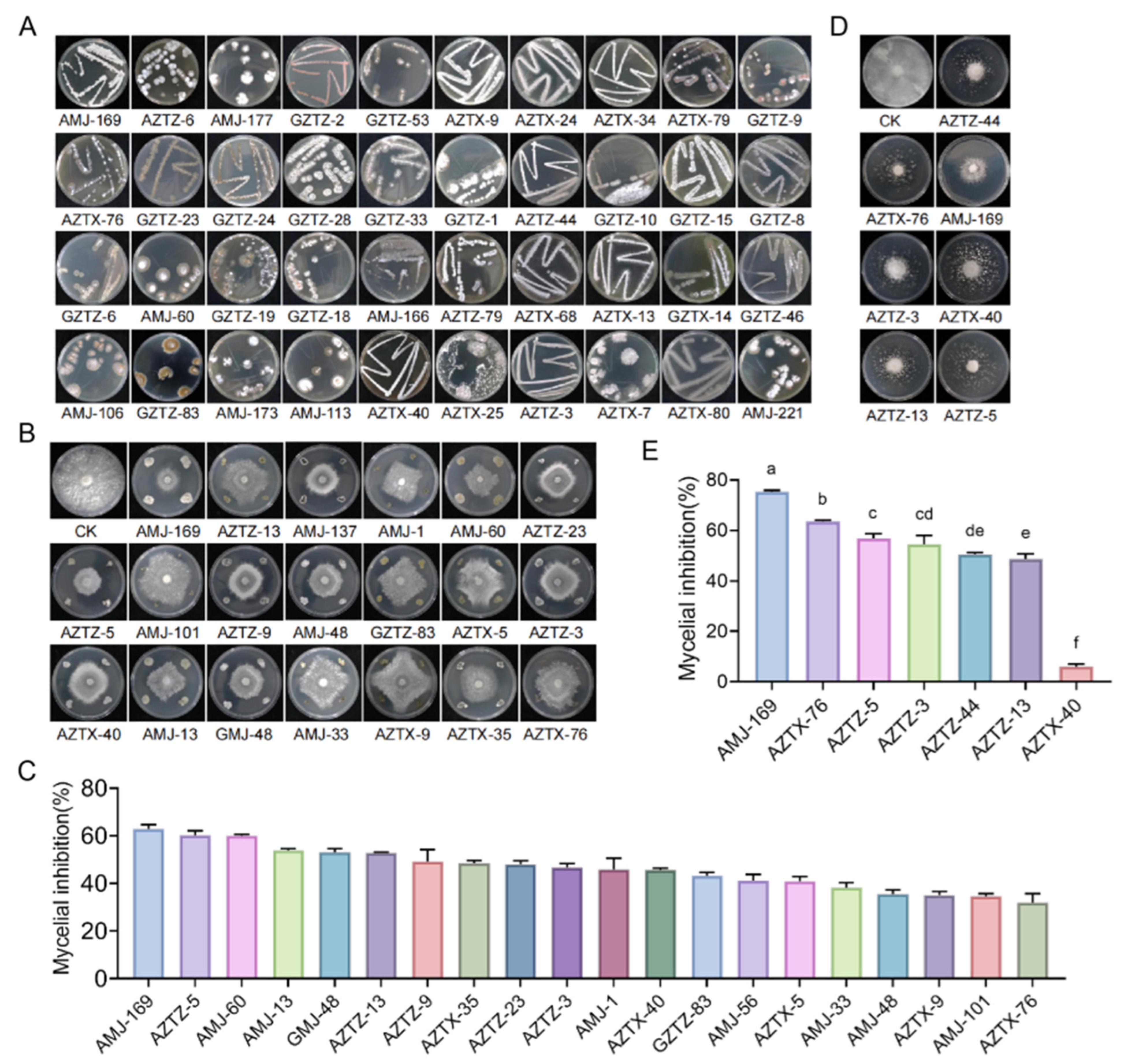
3.1. Screening and Isolation of Antagonistic Actinomycetes Strains
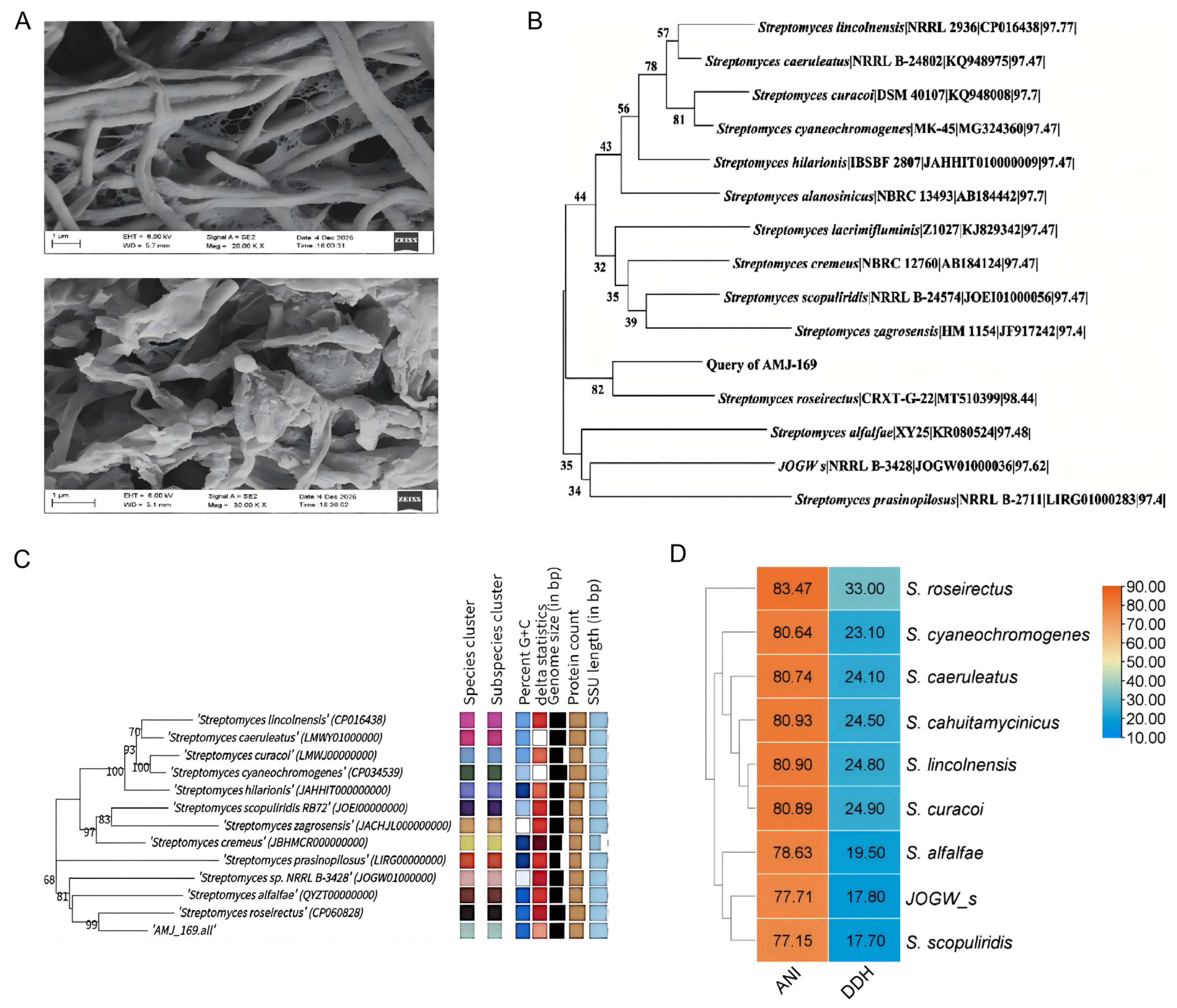
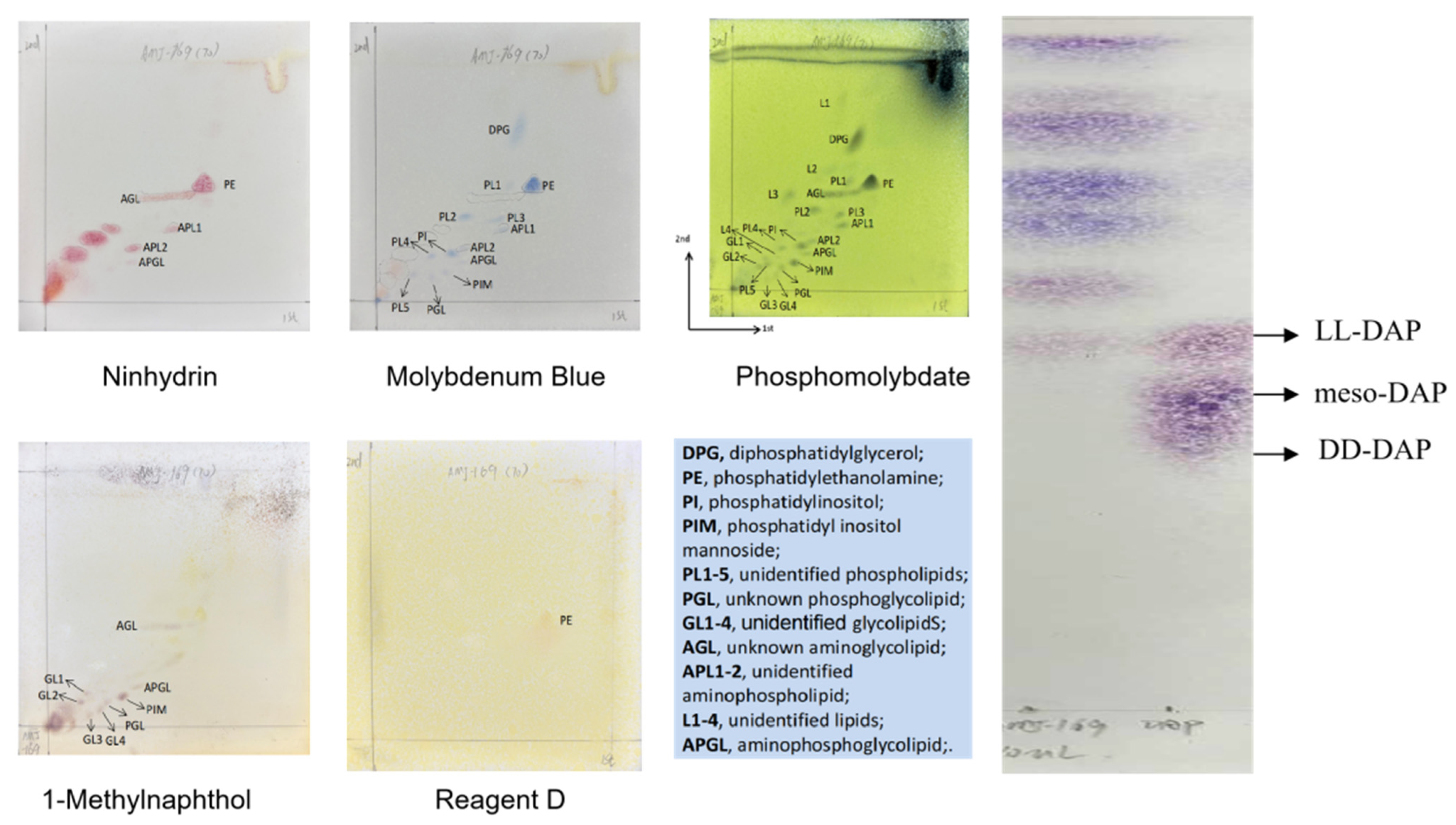
3.2. Taxonomic Identification of Strain AMJ-169 as a Novel Antagonistic Actinomycete Species
3.3. Genome Analysis and Annotation of Streptomyces sp. nov. AMJ-169
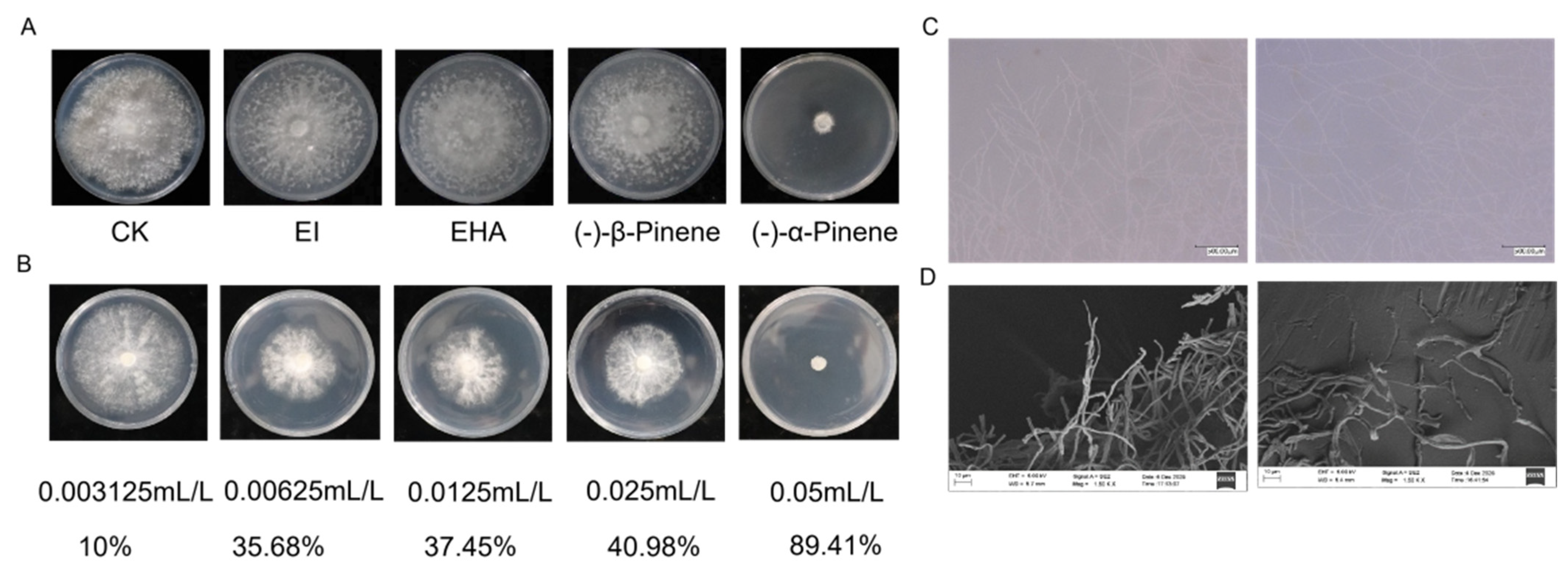
3.4. Identification and Antifungal Activity of VOC Components from Strain AMJ-169
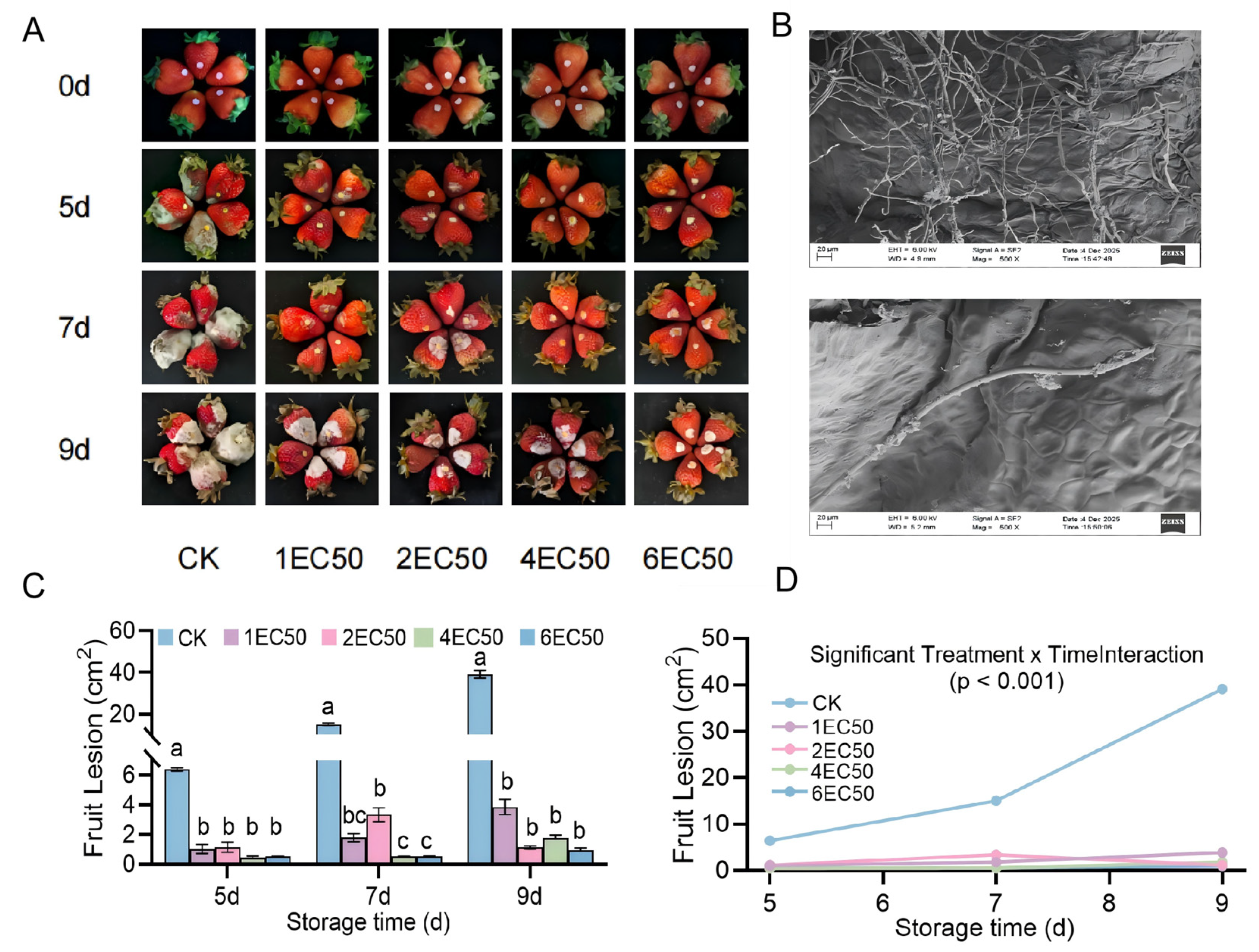
3.5. Efficiency of (1S)-(-)-α-Pinene on Controlling Strawberry Postharvest Rot
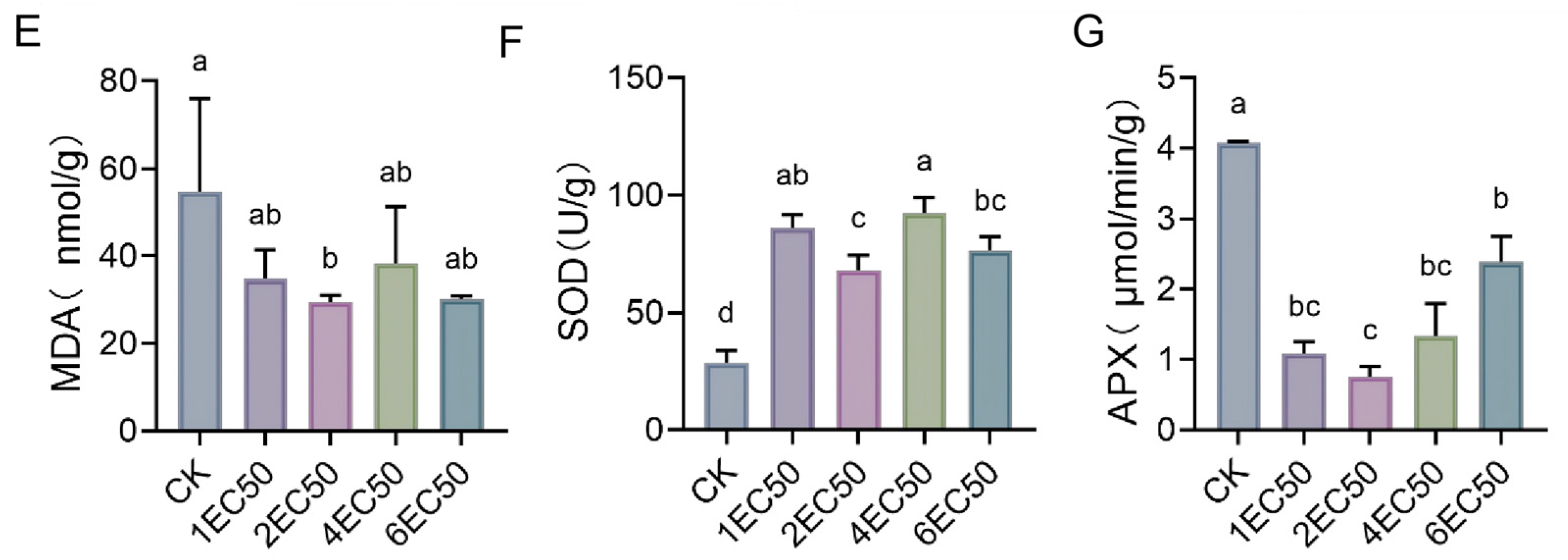
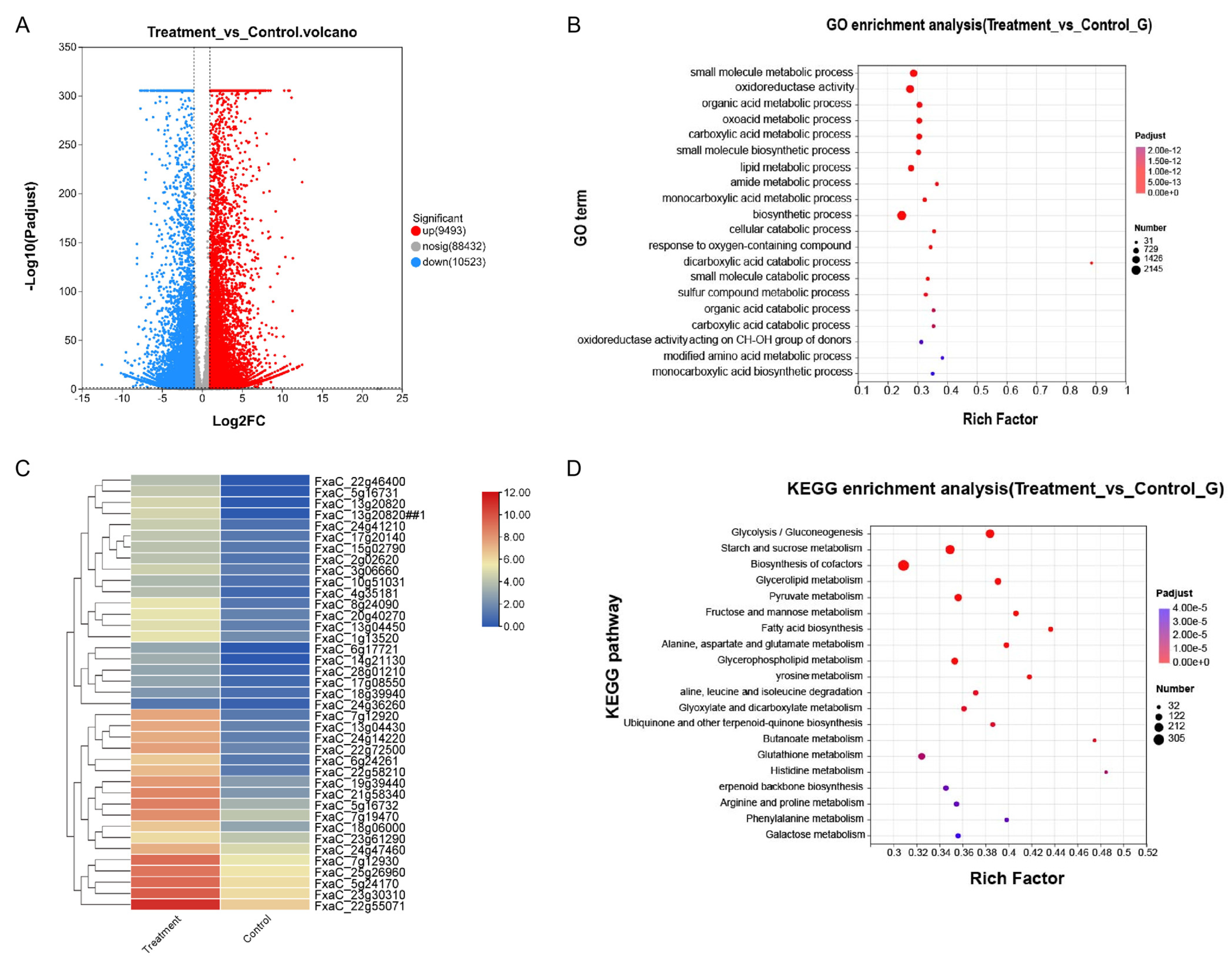
3.6. Effects of (1S)-(-)-α-Pinene on Fungal Hyphae and Host Responses
3.7. Description of S. hanimojiang sp. nov. AMJ-169
4. Discussion
5. Conclusions
Supplementary Materials
Author Contributions
Funding
Data Availability Statement
Conflicts of Interest
References
- Zhang, S.; Wu, J.; Chen, J.; Jun, S.; Yuan, Y.; Dai, X.; Wang, F.; Ma, Y. The biological control effect of Bacillus cereus on strawberry leaf spot disease caused by Neopestalotiopsis clavispora. Sci. Hortic. 2024, 327, 112841. [Google Scholar] [CrossRef]
- Bhowal, R.R.; Hossain, M.M.; Kayesh, E.; Hasan, M. Morphological and Molecular Characterization of Tropical Strawberry. Plant Tissue Cult. Biotechnol. 2019, 29, 267–276. [Google Scholar] [CrossRef]
- Maharachchikumbura, S.S.N.; Hyde, K.D.; Groenewald, J.Z.; Xu, J.; Crous, P.W. Pestalotiopsis revisited. Stud. Mycol. 2014, 79, 121–186. [Google Scholar] [CrossRef]
- Ávila-Hernández, J.G.; León-Ramírez, C.G.; Abraham-Juárez, M.d.R.; Tlapal-Bolaños, B.; Olalde-Portugal, V.; Délano-Frier, J.P.; Martínez-Antonio, A.; Aguilar-Zárate, P. Neopestalotiopsis spp.: A Threat to Strawberry Production and Management. Horticulturae 2025, 11, 288. [Google Scholar] [CrossRef]
- Araújo, A.S.; Lima, G.S.D.; Nunes, I.D.S.; Aguiar, J.C.R.d.O.F.d.; Navarro, D.M.D.A.F.; Melo, N.F.C.B.; Magalhães, N.S.S.; França, R.; Carvalho, R.d.S.F.; Stamford, T.C.M. Chitosan Hydrochloride-gum Arabic-passion fruit seed oil nanoparticle edible coating to control fungal infection and maintain quality parameters of Strawberries. Food Control 2024, 161, 110360. [Google Scholar] [CrossRef]
- Ling, L.; Li, Y.; Jiang, K.; Wang, Y.; Luo, H.; Cheng, W.; Pang, M.; Feng, L.; Yue, R.; Zhou, Y. Volatile organic compounds of Bacillus spp. as an emerging antifungal resource play a significant role in fruit postharvest disease control. Food Biosci. 2023, 56, 103201. [Google Scholar] [CrossRef]
- Zhang, X.; Yang, Q.; Solairaj, D.; Sallam, N.M.A.; Zhu, M.; You, S.; Zhang, H. Volatile Organic Compounds of Wickerhamomyces anomalus Prevent Postharvest Black Spot Disease in Tomato. Foods 2024, 13, 1949. [Google Scholar] [CrossRef]
- Wu, Y.; Ji, C.; Jiang, Y.; Hu, H.; Yu, T.; Yan, F. Mechanisms of Meyerozyma caribbica isolated from Tibetan soil to inhibit Aspergillus ochraceus on Grapes. Postharvest Biol. Technol. 2024, 210, 112797. [Google Scholar] [CrossRef]
- Xu, M.; Guo, J.; Li, T.; Zhang, C.; Peng, X.; Xing, K.; Qin, S. Antibiotic Effects of Volatiles Produced by Bacillus tequilensis XK29 against the Black Spot Disease Caused by Ceratocystis fimbriata in Postharvest Sweet Potato. J. Agric. Food Chem. 2021, 69, 13045–13054. [Google Scholar] [CrossRef]
- Razo-Belman, R.; Ozuna, C. Volatile Organic Compounds: A Review of Their Current Applications as Pest Biocontrol and Disease Management. Horticulturae 2023, 9, 441. [Google Scholar] [CrossRef]
- Moradinezhad, F.; Ranjbar, A. Advances in Postharvest Diseases Management of Fruits and Vegetables: A Review. Horticulturae 2023, 9, 1099. [Google Scholar] [CrossRef]
- Tilocca, B.; Cao, A.; Migheli, Q. Scent of a Killer: Microbial Volatilome and Its Role in the Biological Control of Plant Pathogens. Front. Microbiol. 2020, 11, 41. [Google Scholar] [CrossRef] [PubMed]
- Oufensou, S.; Ul Hassan, Z.; Balmas, V.; Jaoua, S.; Migheli, Q. Perfume Guns: Potential of Yeast Volatile Organic Compounds in the Biological Control of Mycotoxin-Producing Fungi. Toxins 2023, 15, 45. [Google Scholar] [CrossRef]
- Li, X.; Li, B.; Cai, S.; Zhang, Y.; Xu, M.; Zhang, C.; Yuan, B.; Xing, K.; Qin, S. Identification of Rhizospheric Actinomycete Streptomyces lavendulae SPS-33 and the Inhibitory Effect of its Volatile Organic Compounds against Ceratocystis fimbriata in Postharvest Sweet Potato (Ipomoea batatas (L.) Lam.). Microorganisms 2020, 8, 319. [Google Scholar] [CrossRef]
- Zhao, X.; Zhou, J.; Tian, R.; Liu, Y. Microbial volatile organic compounds: Antifungal mechanisms, applications, and challenges. Front. Microbiol. 2022, 13, 980532. [Google Scholar] [CrossRef]
- Gao, Y.; Ren, H.; He, S.; Duan, S.; Xing, S.; Li, X.; Huang, Q. Antifungal activity of the volatile organic compounds produced by Ceratocystis fimbriata strains WSJK-1 and Mby. Front. Microbiol. 2022, 13, 1036076. [Google Scholar] [CrossRef] [PubMed]
- Ling, L.; Luo, H.; Yang, C.; Wang, Y.; Cheng, W.; Pang, M.; Jiang, K. Volatile organic compounds produced by Bacillus velezensis L1 as a potential biocontrol agent against postharvest diseases of wolfberry. Front. Microbiol. 2022, 13, 854423. [Google Scholar] [CrossRef]
- Almeida, O.A.C.; De Araujo, N.O.; Dias, B.H.S.; Freitas, C.d.S.; Coerini, L.F.; Ryu, C.-M.; Oliveira, J.V.d.C. The power of the smallest: The inhibitory activity of microbial volatile organic compounds against phytopathogens. Front. Microbiol. 2023, 13, 114. [Google Scholar] [CrossRef] [PubMed]
- Williams, S.T.; Goodfellow, M.; Wellington, E.M.H.; Vickers, J.C.; Alderson, G.; Sneath, P.H.A.; Sackin, M.J.; Mortimer, A.M. A Probability Matrix for Identification of some Streptomycetes. Microbiology 1983, 129, 1815–1830. [Google Scholar] [CrossRef]
- Jing, T.; Zhou, D.; Zhang, M.; Yun, T.; Qi, D.; Wei, Y.; Chen, Y.; Zang, X.; Wang, W.; Xie, J. Newly Isolated Streptomyces sp. JBS5-6 as a Potential Biocontrol Agent to Control Banana Fusarium Wilt: Genome Sequencing and Secondary Metabolite Cluster Profiles. Front. Microbiol. 2020, 11, 1492. [Google Scholar] [CrossRef]
- Zou, N.; Zhou, D.; Chen, Y.; Lin, P.; Chen, Y.; Wang, W.; Xie, J.; Wang, M. A Novel Antifungal Actinomycete Streptomyces sp. Strain H3-2 Effectively Controls Banana Fusarium Wilt. Front. Microbiol. 2021, 12, 365. [Google Scholar] [CrossRef]
- Komagata, K.; Suzuki, K.I. 4 Lipid and Cell-Wall Analysis in Bacterial Systematics. In Methods in Microbiology; Elsevier: Amstedam, The Netherlands, 1988; Volume 19, pp. 161–207. [Google Scholar] [CrossRef]
- Gupta, V.K.; Shivasharanappa, N.; Kumar, V.; Kumar, A. Diagnostic evaluation of serological assays and different genes based PCR for detection of Brucella melitensis in Goat. Small Rumin. Res. 2014, 117, 94–102. [Google Scholar] [CrossRef]
- Yoon, S.-H.; Ha, S.-M.; Kwon, S.; Lim, J.; Kim, Y.; Seo, H.; Chun, J. Introducing EzBioCloud: A taxonomically united database of 16S rRNA gene sequences and whole-genome assemblies. Int. J. Syst. Evol. Microbiol. 2017, 67, 1613–1617. [Google Scholar] [CrossRef] [PubMed]
- Meier-Kolthoff, J.P.; Göker, M. TYGS is an automated high-throughput platform for state-of-the-art genome-based taxonomy. Nat. Commun. 2019, 10, 2182. [Google Scholar] [CrossRef]
- Zou, X.; Wei, Y.; Jiang, S.; Cao, Z.; Xu, F.; Wang, H.; Zhan, P.; Shao, X. Volatile organic compounds and rapid proliferation of Candida pseudolambica W16 are modes of action against gray mold in peach fruit. Postharvest Biol. Technol. 2022, 183, 111751. [Google Scholar] [CrossRef]
- Vanewijk, P.H.; Hoekstra, J.A. Calculation of the EC50 and Its Confidence Interval When Subtoxic Stimulus Is Present. Ecotoxicol. Environ. Saf. 1993, 25, 25–32. [Google Scholar] [CrossRef]
- Oztekin, S.; Karbancioglu-Guler, F. Bioprospection of Metschnikowia sp. isolates as biocontrol agents against postharvest fungal decays on lemons with their potential modes of action. Postharvest Biol. Technol. 2021, 181, 111634. [Google Scholar] [CrossRef]
- Li, C.; Ou, X.; Qi, D.; Wang, W.; Zhu, G.; Chen, Y.; Zhang, M.; Zhao, Y.; Wei, Y.; Feng, J.; et al. Streptomyces yinggelingensis sp. nov. YGL11-2: A novel biocontrol agent with dual activity against banana soil-borne and postharvest fungal diseases. Biol. Control 2026, 212, 105947. [Google Scholar] [CrossRef]
- Richter, M.; Rosselló-Móra, R. Shifting the genomic gold standard for the prokaryotic species definition. Proc. Natl. Acad. Sci. USA 2009, 106, 19126–19131. [Google Scholar] [CrossRef]
- Goris, J.; Konstantinidis, K.T.; Klappenbach, J.A.; Coenye, T.; Vandamme, P.; Tiedje, J.M. DNA–DNA hybridization values and their relationship to whole-genome sequence similarities. Int. J. Syst. Evol. Microbiol. 2007, 57, 81–91. [Google Scholar] [CrossRef]
- Hu, S.; Wang, Y.; Wang, J.; Liu, K.; Tang, X.; Gao, J. Streptomyces xanthii sp. nov. and Streptomyces roseirectus sp. nov. isolated from a Chinese medicinal plant. Int. J. Syst. Evol. Microbiol. 2021, 71, 004962. [Google Scholar] [CrossRef]
- Fernandes, K.F.D.; Queiroga, T.S.; Lima, M.D.C.; de Oliveira, K.Á.R.; de Souza, E.L. Interventions based on alternative and sustainable strategies for postharvest control of anthracnose and maintain quality in tropical Fruits. Compr. Rev. Food Sci. Food Saf. 2024, 23, 13711. [Google Scholar] [CrossRef]
- McLaughlin, M.S.; Roy, M.; Abbasi, P.A.; Carisse, O.; Yurgel, S.N.; Ali, S. Why Do We Need Alternative Methods for Fungal Disease Management in Plants? Plants 2023, 12, 3822. [Google Scholar] [CrossRef] [PubMed]
- Ceresini, P.C.; Silva, T.C.; Vicentini, S.N.C.; Júnior, R.P.L.; Moreira, S.I.; Castro-Ríos, K.; Garcés-Fiallos, F.R.; Krug, L.D.; de Moura, S.S.; da Silva, A.G.; et al. Strategies for managing fungicide resistance in the Brazilian tropical agroecosystem: Safeguarding food safety, health, and the environmental Quality. Trop. Plant Pathol. 2024, 49, 36–70. [Google Scholar] [CrossRef]
- Fenta, L.; Mekonnen, H. Microbial Biofungicides as a Substitute for Chemical Fungicides in the Control of Phytopathogens: Current Perspectives and Research Directions. Scientifica 2024, 2024, 5322696. [Google Scholar] [CrossRef]
- Ebrahimi-Zarandi, M.; Saberi Riseh, R.; Tarkka, M.T. Actinobacteria as Effective Biocontrol Agents against Plant Pathogens: An Overview of Their Role in Eliciting Plant Defense. Microorganisms 2022, 10, 1739. [Google Scholar] [CrossRef]
- Sneha, K.B.; Indra, N.; Vanitha, S.; Saranya, S.; Ramalakshmi, A. Exploring the Non-chemical alternatives for the management of post-harvest fungal diseases of major tropical fruits- mango, banana and Papaya. Physiol. Mol. Plant Pathol. 2024, 134, 102460. [Google Scholar] [CrossRef]
- Geng, Y.; Gui, K.; Pan, T.; Ye, J.; Li, J.; Feng, J.; Ma, Z.; Lei, P.; Gao, Y. Preparation of terpene-derived fungicidal candidates with a 1,3,4-thiadiazole moiety for natural product-inspired agrochemical discovery. Ind. Crops Prod. 2022, 189, 115889. [Google Scholar] [CrossRef]
- Shen, Y.; Li, X.; Xiong, R.; Ni, Y.; Tian, S.; Li, B. Effect of peach trichome removal on Postharvest brown rot and on the fruit surface Microbiome. Int. J. Food Microbiol. 2023, 402, 110299. [Google Scholar] [CrossRef]
- Zhang, L.; Gade, V.; Kirienko, N.V. Pathogen-induced dormancy in liquid limits gastrointestinal colonization of Caenorhabditis elegans. Virulence 2023, 14, 2204004. [Google Scholar] [CrossRef] [PubMed]
- Waszczuk, W.; Czajkowska, J.; Dutkiewicz, A.; Klasa, B.; Carolak, E.; Aleksandrowicz, A.; Grzymajlo, K. It takes two to attach-endo-1,3-β-d-glucanase as a potential receptor of mannose-independent, FimH-dependent Salmonella typhimurium binding to spinach Leaves. Food Microbiol. 2024, 121, 104519. [Google Scholar] [CrossRef]
- Li, M.; Lin, H.; Wang, C.; Chen, Y.; Lin, M.; Hung, Y.-C.; Lin, Y.; Fan, Z.; Wang, H.; Chen, Y. Acidic Electrolyzed-oxidizing water treatment mitigated the disease progression in Phomopsis longanae Chi-infected longans by modulating ROS and membrane lipid Metabolism. Food Chem. 2024, 449, 139175. [Google Scholar] [CrossRef]
- Siebenichler, T.J.; Crizel, R.L.; Rombaldi, C.V.; Galli, V. Regulation of phenylpropanoid biosynthesis in strawberry ripening: Molecular and hormonal mechanisms. Phytochem. Rev. 2024, 23, 923–941. [Google Scholar] [CrossRef]
- Toljamo, A.; Blande, D.; Kärnlampi, S.; Kokko, H. Reprogramming of strawberry (Fragaria vesca) root transcriptome in response to Phytophthora cactorum. PLoS ONE 2016, 11, e0161078. [Google Scholar] [CrossRef]
- Ren, X.; Jemth, P.; Board, P.G.; Luo, G.; Mannervik, B.; Liu, J.; Zhang, K.; Shen, J. A Semisynthetic Glutathione Peroxidase with High Catalytic Efficiency. J. Biol. Chem. 2002, 277, 268. [Google Scholar] [CrossRef]
- Kubik, J.; Humeniuk, E.; Adamczuk, G.; Madej-Czerwonka, B.; Korga-Plewko, A. Targeting Energy Metabolism in Cancer Treatment. Int. J. Mol. Sci. 2022, 23, 5572. [Google Scholar] [CrossRef]
- Mitrić, A.; Castellano, I. Targeting gamma-glutamyl transpeptidase: A pleiotropic enzyme involved in glutathione metabolism and in the control of redox homeostasis. Free Radic. Biol. Med. 2023, 208, 326. [Google Scholar] [CrossRef]
- Waxman, D.J. P450 Gene Induction by Structurally Diverse Xenochemicals: Central Role of Nuclear Receptors CAR, PXR, and PPAR. Arch. Biochem. Biophys. 1999, 369, 11–23. [Google Scholar] [CrossRef]
- Aguirre, J.; Lambeth, J.D. Nox enzymes from fungus to fly to fish and what they tell us about Nox function in Mammals. Free Radic. Biol. Med. 2010, 49, 1342–1353. [Google Scholar] [CrossRef] [PubMed]
- García-Gutiérrez, C.; Pérez-Victoria, I.; Montero, I.; la Hoz, J.F.-D.; Malmierca, M.G.; Martín, J.; Salas, J.A.; Olano, C.; Reyes, F.; Méndez, C. Unearthing a Cryptic Biosynthetic Gene Cluster for the Piperazic Acid-Bearing Depsipeptide Diperamycin in the Ant-Dweller Streptomyces sp. CS113. Int. J. Mol. Sci. 2024, 25, 2347. [Google Scholar] [CrossRef] [PubMed]



| Characteristic | AMJ-169 | Characteristic | AMJ-169 |
|---|---|---|---|
| Major menaquinones (%) | Major fatty acids (0.5%) | ||
| MK9(H8) | 44.566 | Sum In Feature 9 | 0.91 |
| MK10(H4) | 41.509 | 17:1 anteiso w9c | 1.88 |
| MK9 (H6) | 13.925 | 17:0 iso | 1.68 |
| Major fatty acids (0.5%) | 17:0 anteiso | 2.45 | |
| 14:0 iso | 14.80 | 17:0 cyclo | 7.57 |
| 14:0 | 1.46 | Sum In Feature 5 | 0.61 |
| 15:0 iso | 6.57 | Summed Feature 3 | 2.63 |
| 15:0 anteiso | 12.21 | Summed Feature 5 | 0.61 |
| 16:1 iso H | 2.25 | Summed Feature 9 | 0.91 |
| 16:0 iso | 20.66 | ||
| Sum In Feature 3 | 2.63 | ||
| 16:0 | 23.84 |
| Characteristics | 1 | 2 |
|---|---|---|
| Morphology | Straight to slightly curved aerial hyphae, elliptical spores with smooth surface | Branched substrate and aerial mycelium, straight chains of smooth-surfaced spores. |
| Physiological | ||
| pH range for growth | 4–9 | 5–11 |
| NaCl tolerance (%) | 1–3 | 0–6 |
| Gelatin liquefaction | − | + |
| Tween degradation | − | + |
| Nitrate reduction | − | + |
| Medium | Aerial Mycelium Color | Substrate Mycelium Color | Soluble Pigment | Growth | ||||
|---|---|---|---|---|---|---|---|---|
| 1 | 2 | 1 | 2 | 1 | 2 | 1 | 2 | |
| ISP2 | White | Pale Lumiere Green | White | Snuff Brown | None | None | Good | Good |
| ISP3 | White | White | White | Light Ochraceons-Buff | None | None | Good | Good |
| ISP4 | White | Tibber Green | White | Clear Yellow-Green | None | None | Good | Good |
| ISP5 | White | Sea-foam Green | White | Isabella Color | None | None | Good | Good |
| ISP6 | White | White | White | Clay color | None | None | Good | Good |
| ISP7 | White | Pale Fluorite Green | White | Walnut Brown | None | Black | Good | Good |
| Gause’s No. 1 | White | Pale yellow | None | Good | ||||
| PDA | White | White | None | Good | ||||
Disclaimer/Publisher’s Note: The statements, opinions and data contained in all publications are solely those of the individual author(s) and contributor(s) and not of MDPI and/or the editor(s). MDPI and/or the editor(s) disclaim responsibility for any injury to people or property resulting from any ideas, methods, instructions or products referred to in the content. |
© 2026 by the authors. Licensee MDPI, Basel, Switzerland. This article is an open access article distributed under the terms and conditions of the Creative Commons Attribution (CC BY) license.
Share and Cite
Zhang, H.; Zhang, M.; Li, X.; Jing, T.; Zhao, Y.; Chen, Y.; Feng, J.; Zheng, Z.; Wang, W.; Qi, D.; et al. Streptomyces hanimojiang sp. nov. AMJ-169, a Novel Biocontrol Agent Producing Volatile (1S)-(-)-α-Pinene, Suppresses Strawberry Postharvest Rot Caused by Neopestalotiopsis rosae. Horticulturae 2026, 12, 577. https://doi.org/10.3390/horticulturae12050577
Zhang H, Zhang M, Li X, Jing T, Zhao Y, Chen Y, Feng J, Zheng Z, Wang W, Qi D, et al. Streptomyces hanimojiang sp. nov. AMJ-169, a Novel Biocontrol Agent Producing Volatile (1S)-(-)-α-Pinene, Suppresses Strawberry Postharvest Rot Caused by Neopestalotiopsis rosae. Horticulturae. 2026; 12(5):577. https://doi.org/10.3390/horticulturae12050577
Chicago/Turabian StyleZhang, Huaying, Miaoyi Zhang, Xiaojuan Li, Tao Jing, Yankun Zhao, Yufeng Chen, Junting Feng, Zai Zheng, Wei Wang, Dengfeng Qi, and et al. 2026. "Streptomyces hanimojiang sp. nov. AMJ-169, a Novel Biocontrol Agent Producing Volatile (1S)-(-)-α-Pinene, Suppresses Strawberry Postharvest Rot Caused by Neopestalotiopsis rosae" Horticulturae 12, no. 5: 577. https://doi.org/10.3390/horticulturae12050577
APA StyleZhang, H., Zhang, M., Li, X., Jing, T., Zhao, Y., Chen, Y., Feng, J., Zheng, Z., Wang, W., Qi, D., Li, K., Xie, J., Chen, D., & Zhou, D. (2026). Streptomyces hanimojiang sp. nov. AMJ-169, a Novel Biocontrol Agent Producing Volatile (1S)-(-)-α-Pinene, Suppresses Strawberry Postharvest Rot Caused by Neopestalotiopsis rosae. Horticulturae, 12(5), 577. https://doi.org/10.3390/horticulturae12050577