Article

Establishment of a CRISPR/Cas9-Mediated Genome Editing System in Physalis grisea by Targeting the PgPDS Gene

1
College of Horticulture and Plant Protection, Henan University of Science and Technology, Luoyang 471023, China
2
Henan Provincial Engineering Research Center on Characteristic Berry Germplasm Innovation & Utilization, Luoyang 471023, China
*
Author to whom correspondence should be addressed.
Horticulturae 2026, 12(5), 571; https://doi.org/10.3390/horticulturae12050571
Submission received: 3 April 2026 / Revised: 29 April 2026 / Accepted: 5 May 2026 / Published: 7 May 2026
(This article belongs to the Section Genetics, Genomics, Breeding, and Biotechnology (G2B2))

Abstract

Physalis grisea is an orphan crop with significant economic and medicinal potential. Although initial genome editing applications have recently emerged for Physalis species, the development and optimization of highly efficient, visually traceable Agrobacterium-mediated editing platforms remain crucial for advancing its functional genomics. This study uses the phytoene desaturase (PDS) gene—a key enzyme in the carotenoid biosynthetic pathway—as a visual reporter to develop a CRISPR/Cas9-mediated genome editing platform in P. grisea. A dual-target guide RNA (sgRNA) expression vector was constructed, and transgenic plants were successfully generated via Agrobacterium-mediated transformation of hypocotyl explants. Strikingly, phenotypic observations revealed that the regenerated mutants exhibited characteristic complete albino or green-white chimeric phenotypes, accompanied by distinct developmental retardation and dwarfing. Physiological quantitative analysis showed that total chlorophyll and carotenoid contents in the mutant leaves were significantly reduced by over 70% and 78%, respectively. Targeted sequencing further confirmed that the CRISPR/Cas9 system efficiently induced various mutations at the PgPDS locus (derived from Physalis grisea)—including fragment deletions, 1–4 bp insertions, and 2–3 bp substitutions—revealing a specific preference for non-homologous end joining (NHEJ) repair. In summary, this study not only validates the suitability of PgPDS as a reporter gene but also successfully establishes a robust genome editing technical system for P. grisea, providing a solid foundation for future functional genomics research and molecular breeding in this crop.

1. Introduction

Genome editing technologies are core tools for elucidating gene functions and accelerating crop improvement [1]. Previously, the absence of efficient genetic transformation and targeted manipulation platforms hindered in-depth in vivo functional validation in many non-model plants of significant economic value, thereby severely restricting their molecular breeding progress [2]. In recent years, the CRISPR/Cas9 system has effectively overcome these technical bottlenecks owing to its notable advantages, such as simplified vector construction and shortened mutant generation cycles [3]. Consequently, this system has enabled rapid gene functional analysis and precise targeted improvement even in plants with complex genetic backgrounds [4]. At present, this technology has not only been successfully applied in model plants such as Arabidopsis (Arabidopsis thaliana) and tobacco (Nicotiana tabacum) [5,6], but has also been broadly extended to species with complex genomes. These include fruit trees (e.g., Fragaria × ananassa) [7], medicinal plants (e.g., Rehmannia glutinosa and Salvia miltiorrhiza) [8,9], and leguminous crops (e.g., Medicago truncatula and Arachis hypogaea) [10,11], thereby greatly accelerating the molecular breeding and genetic improvement of non-model plants. Specifically, the CRISPR/Cas9 system has been successfully utilized to improve major solanaceous crops, including tomato (Solanum lycopersicum) [12], potato (Solanum tuberosum) [13], eggplant (Solanum melongena) [14], and pepper (Capsicum annuum) [15].
Phytoene desaturase (PDS) plays a central role in the plant carotenoid metabolic network, where it primarily catalyzes the conversion of colorless phytoene into colored carotenoids [16]. Mutations in the PDS gene directly block carotenoid biosynthesis, leading to chlorophyll degradation due to the loss of photoprotection. Consequently, mutant plants exhibit a typical and easily observable albino phenotype during development [17]. Given the simplicity and high efficiency of this visual phenotype-based screening, targeted knockout of the PDS gene has become a universally recognized reporter system [18]. It is now widely utilized to evaluate the feasibility and mutagenesis efficiency of CRISPR/Cas9 editing platforms across various emerging plant species.
As an orphan crop with immense developmental potential [19], Physalis grisea produces sweet and palatable fruits that are rich in flavonoids and physalins, conferring significant medicinal and health-promoting values [20]. The genome of P. grisea is approximately 1.4 Gb in size with a diploid chromosome number of 2n = 24, representing a relatively compact genome that favors its development as a tractable system for functional genomics research within the Solanaceae family. In recent years, P. grisea has increasingly been utilized as a research material; notably, Zachary B. Lippman at Cold Spring Harbor Laboratory (New York, NY, USA) has proposed its adoption as a novel model plant [21]. P. grisea is suitable as a plant model due to its relatively small genome, short life cycle, and high productivity of nutrient-rich fruits, making it an ideal candidate for rapid genetic research. To date, although a genetic transformation system has been established for P. grisea, and genome editing technologies have recently begun to be successfully applied to Physalis species. This includes the rapid improvement of domestication traits in Physalis pruinosa [22], virus-induced heritable gene editing [23], and multiplex gene editing in Physalis [24]. Building upon these foundational advancements, there is a continued need to optimize stable Agrobacterium-mediated transformation protocols and develop robust visual reporter systems to further streamline editing efficiency evaluation in this crop.
In the present study, the phytoene desaturase gene of P. grisea (PgPDS) was targeted for genome editing. Specific target sites were designed within its exonic regions, and a CRISPR/Cas9 editing vector was constructed. Subsequently, PgPDS knockout mutants were generated via Agrobacterium-mediated genetic transformation. This research lays a vital foundation for further elucidating the molecular mechanisms of carotenoid biosynthesis in P. grisea. Additionally, it provides robust technical support for the in-depth functional characterization of other genes in this species using CRISPR/Cas9 technology.

2. Materials and Methods

2.1. Plant Materials and Growth Conditions

The wild-type (WT) seeds of P. grisea used in this study were collected from a single plant to minimize genetic variability and ensure experimental consistency. These seeds were submerged in deionized water for 30 min at 4 °C, then transferred to a 55 °C water bath for another 30 min, and ultimately chilled at 4 °C for two hours. Surface sterilization was performed under aseptic conditions by treating the seeds with a 75% sodium hypochlorite solution, after which they were thoroughly washed three times using deionized water. The sterilized seeds were subsequently inoculated onto a basal sprouting medium containing 4.4 g/L Murashige and Skoog (MS) salts, 10 g/L sucrose, and 7 g/L agar, calibrated to a pH of 5.8. Cultivation took place in a controlled climate chamber set to a 16 h light/8 h dark cycle. Following a 14-day growth period, the tissue culture seedlings of P. grisea were utilized for subsequent experimental procedures.

2.2. CRISPR/Cas9 Target Site Selection and Vector Construction

Based on the sequence characteristics of PgPDS and the target recognition specificity of the CRISPR/Cas9 system, potential target sites with high on-target scores and low off-target potential were predicted using an online tool (http://cbi.hzau.edu.cn/CRISPR2/, accessed on 15 March 2025). The final target sites were strategically selected within the early exons (the 3 and 4 exons) to maximize the likelihood of inducing a complete loss-of-function mutation through frameshift-induced premature stop codons. Subsequently, target-specific primers (PgPDS-F and PgPDS-R) were synthesized (Table 1). PCR amplification was conducted using the pCBC-DT1T2 intermediate vector as a template. The amplified products were purified and then subjected to restriction enzyme digestion and ligation. A 10 μL aliquot of the ligation product was transformed into competent Escherichia coli DH5α cells. Positive single colonies were screened on a medium containing kanamycin (Kan) and submitted for sequencing. Recombinant plasmids with verified sequences were subsequently transformed into competent Agrobacterium tumefaciens GV3101 cells according to the freeze–thaw method described by Zhang et al. [25]. Positive Agrobacterium colonies were then identified via colony PCR using the pKSE401 vector-specific primers U6P-F and Cas9-R (Table 1). The confirmed positive strains were preserved as glycerol stocks for subsequent genetic transformation.

2.3. Genetic Transformation of P. grisea

Agrobacterium tumefaciens harboring the pKSE401-PgPDS construct was streaked onto solid Luria–Bertani (LB) medium and incubated at 28 °C for 2 d prior to infection. Two independent positive single colonies were selected and inoculated onto fresh solid LB medium, followed by inverted incubation at 28 °C for 48 h. Subsequently, well-grown colonies were inoculated into 50 mL of liquid LB selection medium and cultured with shaking at 250 rpm and 28 °C for 18–24 h, using plain LB as a control, until the optical density at 600 nm (OD600) reached approximately 1.2. Under aseptic conditions, the Agrobacterium culture was transferred to a 50 mL centrifuge tube and centrifuged at 8000 rpm and 20 °C for 10 min to collect the bacterial pellet. After discarding the supernatant, the pellet was thoroughly resuspended in liquid MSO (Murashige and Skoog Organics) medium (4.3 g/L MS salts, 100 mg/L myo-inositol, 0.4 mg/L thiamine, and 20 g/L sucrose, adjusted to pH 5.8). The OD600 of the suspension was adjusted to 0.6–0.7 for subsequent use.
Hypocotyl segments (0.5–1.0 cm in length) were excised from approximately 14-day-old in vitro P. grisea seedlings to serve as explants. These explants were pre-cultured in the dark at 25 °C for 1 d. The pre-cultured hypocotyls were then completely immersed in the prepared Agrobacterium suspension and infected with gentle shaking at room temperature for 6–8 min. Following infection, residual bacterial suspension on the explant surfaces was blotted dry using sterile filter paper. The explants were transferred to a co-cultivation medium and co-cultured in the dark at 25 °C for 2 d. After co-cultivation, the hypocotyls were transferred to a callus and shoot differentiation induction medium (4.3 g/L MS salts, 100 mg/L myo-inositol, 1 mL/L 1000× modified Nitsch vitamin solution, 2 mg/L trans-zeatin (TZ), 300 mg/L timentin, 200 mg/L kanamycin, 5.2 g/L Caisson TC agar, and 20 g/L sucrose). Approximately 21 d later, the cut ends of the hypocotyls were observed to swell, leading to the formation of yellow-green resistant calli. These calli were subsequently subcultured onto a selection medium with an identical composition except for a reduced TZ concentration of 1 mg/L, with subculturing performed every 15 d. On the selection medium, the growth of non-transformed cells was inhibited, whereas transformed cells continued to proliferate. After about 40 d of culture, some resistant calli began to differentiate into shoot primordia; by approximately 60 d, these primordia further elongated to form distinct shoot cluster. Concurrently, a specific class of regenerated shoots was observed on the selection medium, exhibiting completely albino or green-white chimeric leaf phenotypes, providing a crucial visual indicator for the preliminary assessment of successful PgPDS editing.
Once the resistant regenerated shoots reached approximately 2 cm in length, they were excised and transferred to a rooting medium (4.3 g/L MS salts, 0.1 mg/L indole-3-butyric acid (IBA), 300 mg/L timentin, 200 mg/L kanamycin, 5.2 g/L Caisson TC agar, and 20 g/L sucrose) for root induction. Upon the development of a robust root system, the plantlets were removed from the culture vessels, and their roots were washed clean. They were acclimatized indoors for 5–7 d before being transplanted into nutrient soil for greenhouse cultivation and subsequent observation.

2.4. Identification of Gene-Edited Regenerated Plants and Detection of CRISPR/Cas9 Mutation Sites

Using wild-type P. grisea as a control, approximately 0.1 g of leaves from PgPDS transgenic plants were collected. Genomic DNA was extracted using a DNA extraction kit (Yali Bio, YC22014, Suzhou, China). To screen for positive transgenic plants, PCR amplification was performed on the tested lines using the vector-specific primers U6P-F and Cas9-R (Table 1), with wild-type genomic DNA serving as the negative control and the recombinant plasmid as the positive control. Subsequently, specific primers flanking the PgPDS target sites, namely PgPDS-Text 1-F/R and PgPDS-Text 2-F/R (Table 1), were designed and synthesized for targeted regional PCR amplification (with theoretical amplicon lengths of 1274 bp and 945 bp, respectively). The PCR products were separated on a 1.5% agarose gel, purified, and submitted to a commercial sequencing facility (Genewiz, Suzhou, China) for sequencing. The resulting sequences were aligned against the wild-type sequence, and SnapGene software version 8.0 was utilized to identify and confirm the mutation types (including base deletions, insertions, or substitutions) at the PgPDS editing sites.

2.5. Determination of Chlorophyll and Carotenoid Contents

Fresh P. grisea leaves (0.2 g) were collected and ground with an appropriate amount of quartz sand, calcium carbonate powder, and absolute ethanol in the dark until the tissue was completely blanched. The homogenate was allowed to stand for 3 min, filtered, and then diluted to a final volume of 25 mL in a brown volumetric flask. The absorbance values of the extracts were measured at wavelengths of 665, 649, and 470 nm using a UV-Vis spectrophotometer. All measurements were performed in biological triplicates, and the average values were calculated. The calculation methods were based on the protocol described by Ai et al. [22].

2.6. Data Analysis

Data statistics were compiled using Microsoft Excel 2016. Graphical representations were generated using Microsoft PowerPoint 2016. Statistical significance analysis and multiple comparisons were performed utilizing SPSS software version 26.

3. Results

3.1. Selection of sgRNA Target Sites and Construction of the CRISPR/Cas9 Recombinant Plasmid

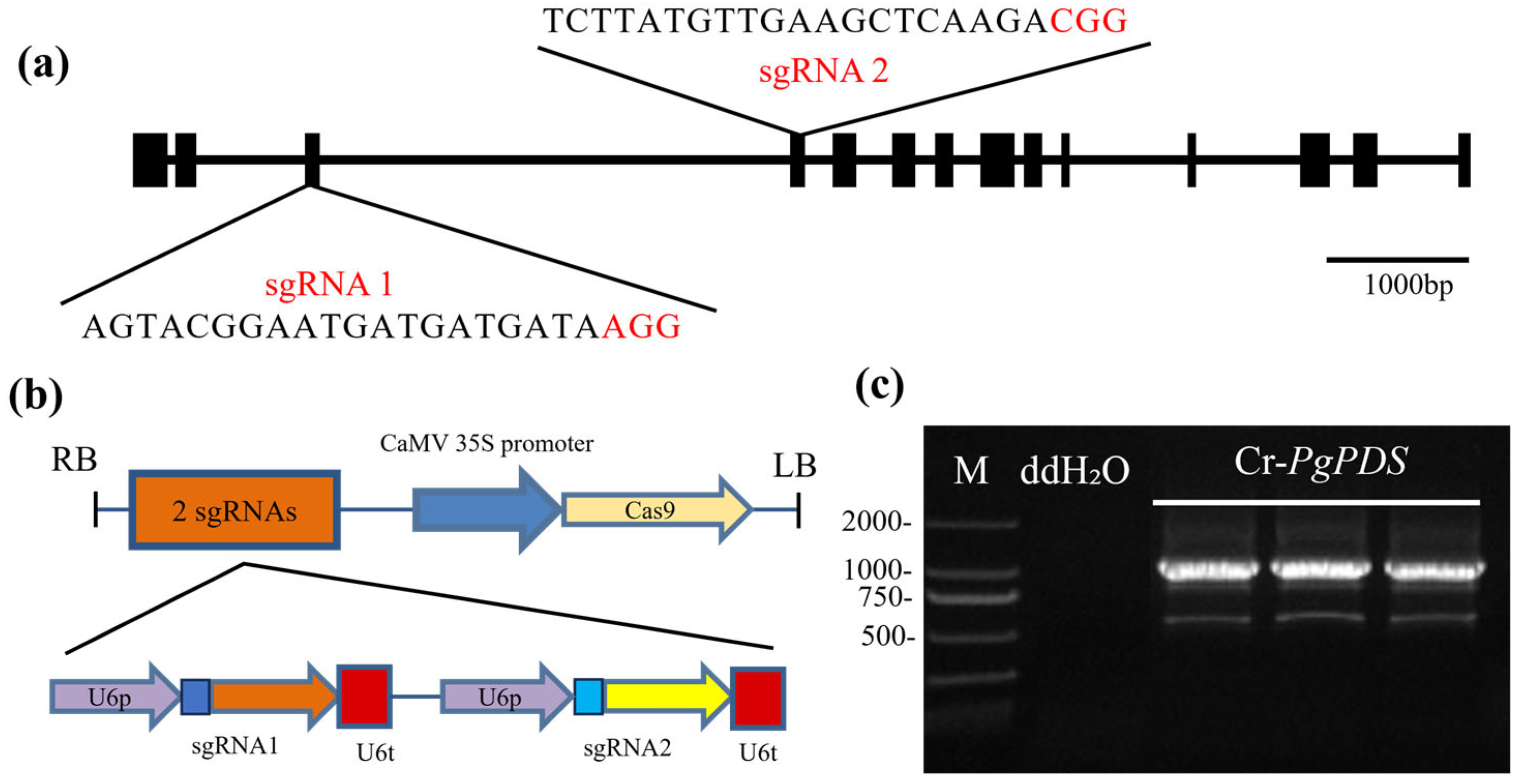
The full-length PgPDS gene is 9408 bp and comprises 14 exons, with a total coding sequence (CDS) length of 1749 bp. BLAST analysis using TBtools-II software (version 2.466) against the P. grisea reference genome confirmed that PgPDS is a single-copy gene, with no additional paralogous sequences detected. This single-copy nature eliminates the risk of functional redundancy and ensures that CRISPR/Cas9-mediated knockout will produce a clear, interpretable phenotype. Based on its sequence characteristics, two target sites containing protospacer adjacent motif (PAM) sequences were selected within the third and fourth exons (5′-AGTACGGAATGATGATGATA-3′ and 5′-TCTTATGTTGAAGCTCAAGA-3′, respectively) (Figure 1a). These target sequences were subsequently cloned into the CRISPR/Cas9 expression vector pKSE401 (Figure 1b). Following transformation into Escherichia coli DH5α, single colonies were subjected to colony PCR for identification. The amplification of a target band of approximately 1061 bp (Figure 1c) indicated the successful construction and introduction of the recombinant plasmid into Escherichia coli. The positive plasmids were submitted for commercial sequencing to verify their accuracy. Upon confirmation, the sequence-verified plasmids were transformed into competent Agrobacterium tumefaciens GV3101 cells for subsequent use.

3.2. Agrobacterium-Mediated Genetic Transformation of P. grisea

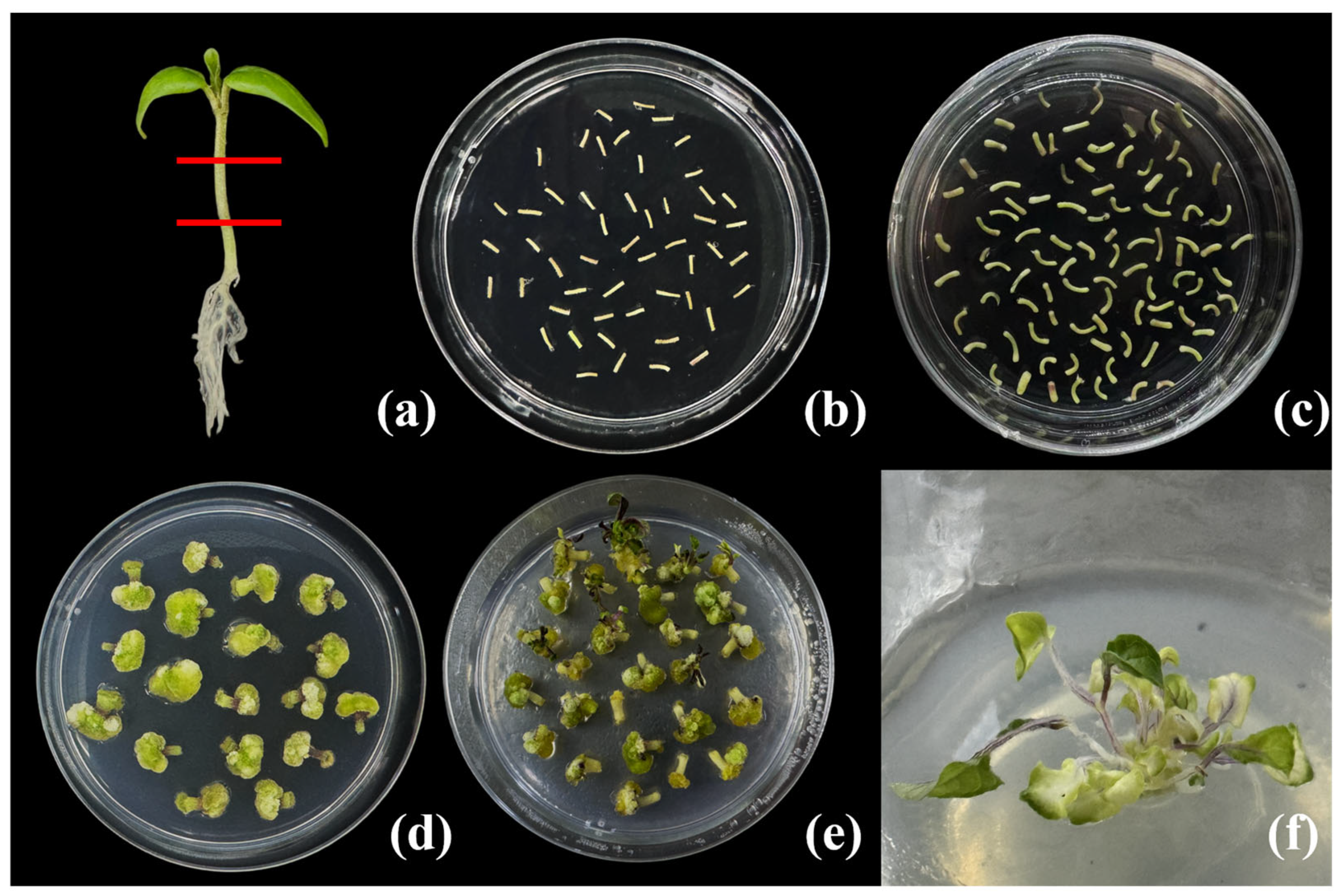
To verify whether the CRISPR/Cas9 genome editing system could achieve target gene mutagenesis and induce visible phenotypic alterations in P. grisea, the constructed pKSE401-PgPDS recombinant plasmid was transformed into hypocotyl explants (Figure 2a–c). Following Agrobacterium-mediated transformation, the cut ends of the hypocotyls were observed to swell after approximately 21 d of cultivation on the differentiation medium, leading to the formation of yellow-green resistant calli (Figure 2d). On the selection medium, the growth of non-transformed cells was effectively inhibited, whereas transformed cells continued to proliferate. After about 40 d of culture, resistant calli began to differentiate into shoot primordia, which further elongated to form distinct shoot clusters by approximately 60 d (Figure 2e). Concurrently, a specific class of regenerated shoots emerged on the selection medium exhibiting completely albino or green-white chimeric leaf phenotypes (Figure 2f). This provided a crucial visual indicator for the preliminary assessment of successful PgPDS knockout. In this genetic transformation experiment, a total of 184 explants were utilized, from which 55 resistant calli were induced, resulting in a callus induction rate of 29.89%. On the selection medium, 16 resistant shoots were differentiated, corresponding to a differentiation rate of 29%. Among these, 3 plants displayed completely albino or chimeric albino phenotypes, accounting for 18.75% of the total regenerated plants. Once the regenerated shoots reached approximately 2 cm in length, they were excised and transferred to a rooting medium. After approximately 15 d, new roots were successfully induced, resulting in the formation of complete plantlets.

3.3. Molecular Identification of Regenerated P. grisea Plants

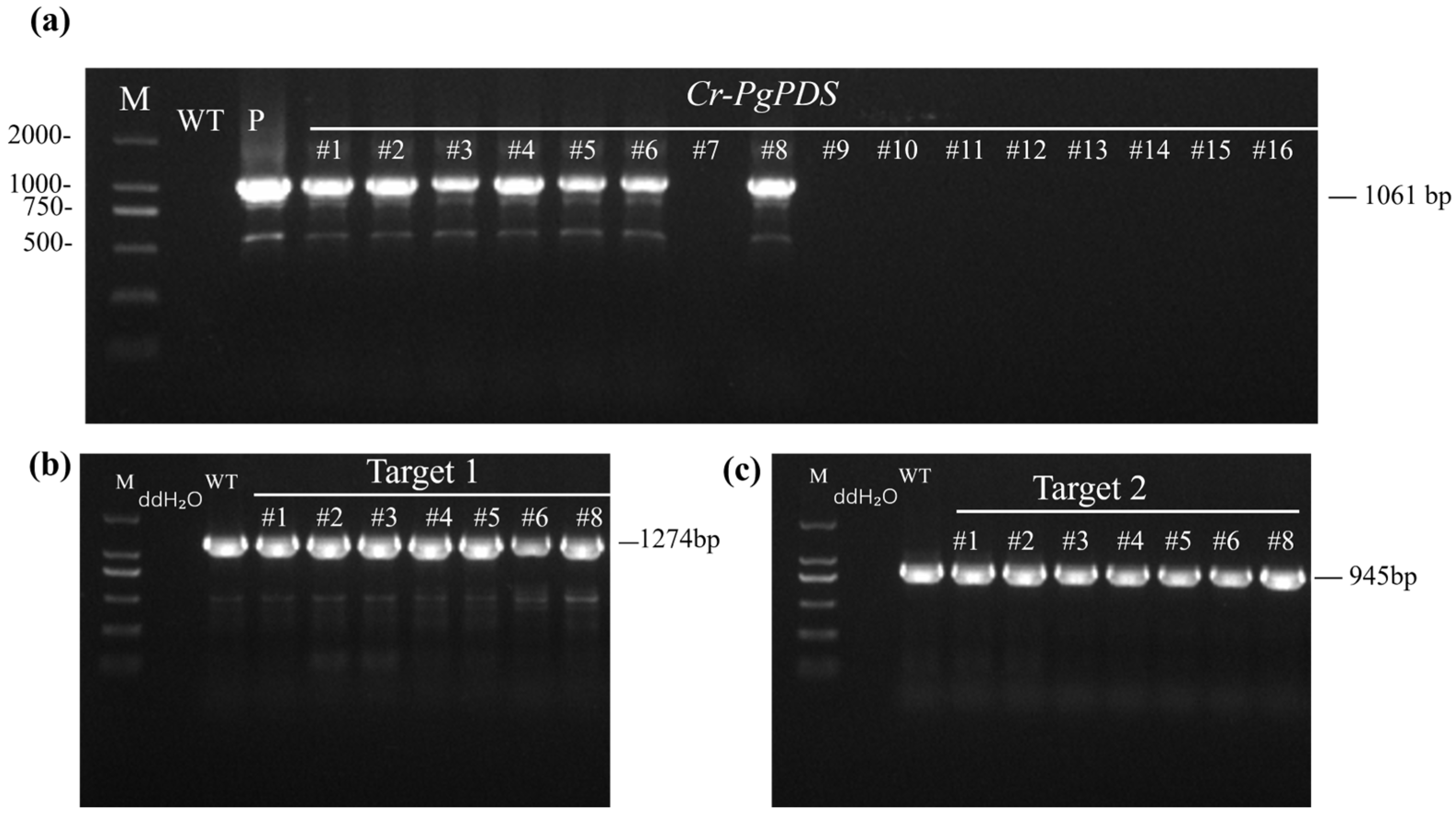
Genomic DNA was extracted from the leaves of all kanamycin-resistant plants. PCR amplification was performed using vector-specific primers U6P-F and Cas9-R (Table 1), with wild-type (WT) P. grisea plants serving as the negative control and the pKSE401-PgPDS plasmid serving as the positive control. Agarose gel electrophoresis revealed (Figure 3a) that no bands were amplified from the wild-type plants, whereas a target band of 1061 bp was amplified from the positive control plasmid (P). Among the 16 kanamycin-resistant plants obtained, 7 plants yielded a target band identical in size to that of the positive control, preliminarily indicating that these plants were positive transgenic lines, representing a positive transformation rate of 43.75%.

3.4. Phenotypic Analysis of PgPDS-Edited P. grisea Plants

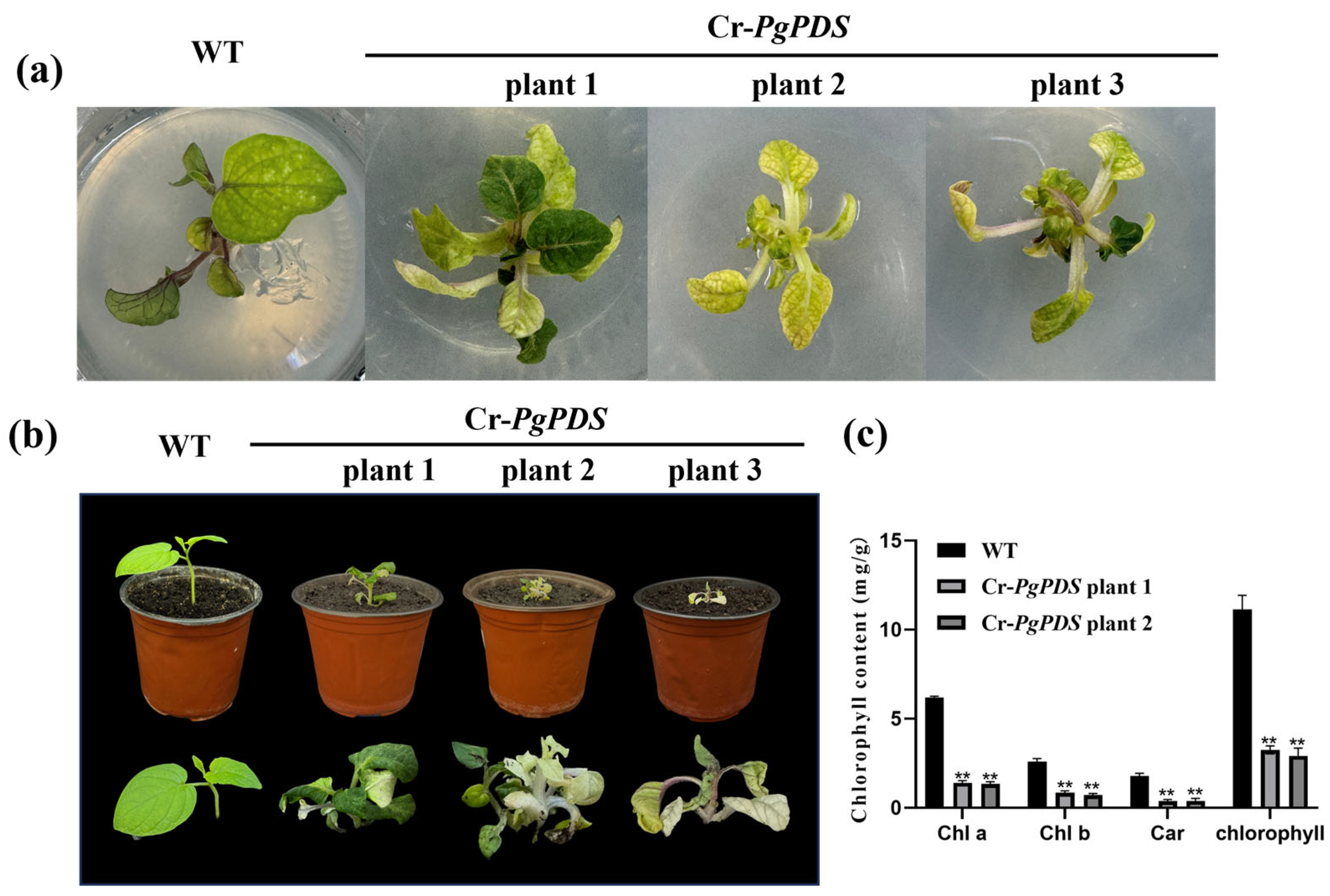
To investigate the effects of PgPDS editing on the growth and development of P. grisea, phenotypic observations were conducted on the obtained positive transgenic plants. The results showed that, approximately 60 d post-transformation, some regenerated plants exhibited phenotypic characteristics completely distinct from those of the wild-type. Wild-type plants displayed dark green leaves and robust growth, whereas the edited plants exhibited obvious albino or green-white chimeric phenotypes (Figure 4a). Furthermore, the height of the gene-edited plants was significantly reduced compared to the wild-type, displaying typical growth retardation and dwarfing phenomena (Figure 4b).
Notably, after transplanting the regenerated plants into nutrient soil, the maximum survival period of the completely albino lines did not exceed 25 d, whereas the green-white chimeric lines survived for over 45 d. This difference suggests that different types of mutations exert varying degrees of impact on plant physiological activity, which may be related to impaired physiological functions caused by disrupted chlorophyll and carotenoid synthesis.
Furthermore, the chlorophyll and carotenoid contents in the leaves of the wild-type and two representative albino mutants (Cr-PgPDS plant 1 and Cr-PgPDS plant 2) were determined. The results indicated that the photosynthetic pigment contents in the mutant leaves were significantly lower than those in the wild-type control (Figure 4c). Compared to the wild-type, the total chlorophyll contents of the two albino mutants significantly decreased by 70.77% and 73.84%, respectively, and the carotenoid contents decreased by 78.83% and 78.18%, respectively. These results confirm that the loss of PgPDS gene function blocks carotenoid biosynthesis and subsequently induces chlorophyll degradation, thereby resulting in the albino phenotype of the mutants.

3.5. Identification of Genome Editing Efficiency and Mutation Types in P. grisea

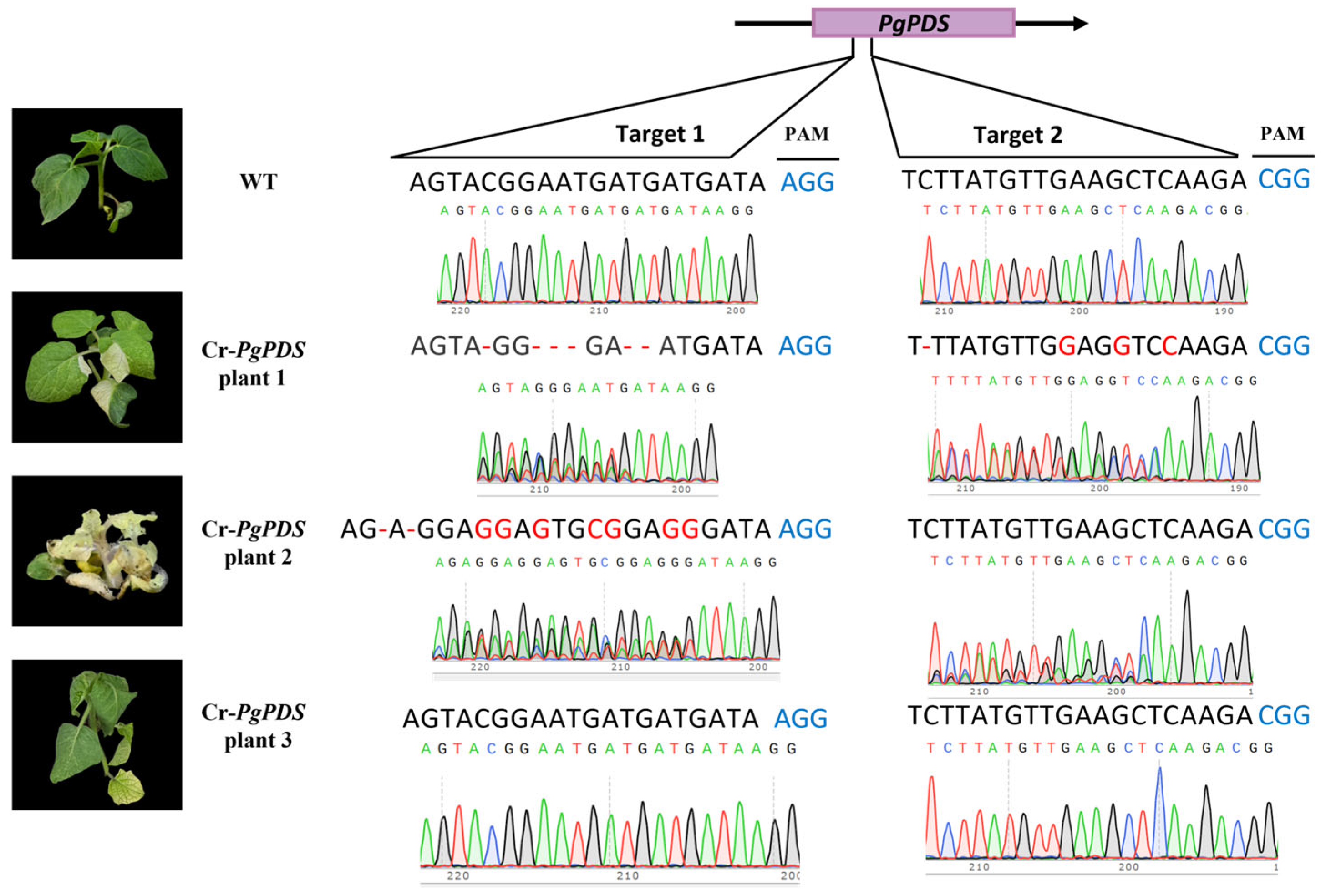
To investigate the mutations within the PgPDS target sequences in the transgenic albino plants, target sites were amplified from the genomic DNA of the aforementioned PCR-positive plants using two pairs of specific primers, PgPDS-Text 1-F/R and PgPDS-Text 2-F/R (Table 1). The PCR amplicons (Figure 3b,c) with the correct expected sizes were recovered and submitted for commercial sequencing. The results demonstrated that the PgPDS target sequences in both albino mutants had undergone mutations (Figure 5).
Specifically, the Cr-PgPDS plant 1 line was successfully edited at both target sites; a 6 bp deletion was detected in the sgRNA 1 region, while a 1 bp deletion, two base substitutions, and a 1 bp insertion were simultaneously detected in the sgRNA 2 target region. Conversely, the Cr-PgPDS plant 2 line exhibited mutations exclusively in the sgRNA 1 target region, consisting of a 3 bp deletion, a 4 bp insertion, and three base substitutions. The sequence of the sgRNA 2 target region in this line was completely identical to that of the wild-type, suggesting that this target site either failed to undergo effective cleavage or was restored to the wild-type sequence after DNA repair (Figure 5).

4. Discussion

CRISPR/Cas9-based genome editing technology has been developed as a site-specific, precise, and highly efficient technique for genetic modification in plants [26]. It holds immense potential for gene functional studies and crop improvement, enabling the realization of desirable traits such as enhanced nutritional value and increased resistance to biotic and abiotic stresses [27]. To evaluate the efficiency of genome editing in P. grisea, a CRISPR/Cas9-based system was employed to target the phytoene desaturase (PDS) gene, a key element in the plant carotenoid biosynthetic pathway. PDS plays a crucial role in carotenoid biosynthesis, and its loss of function results in an albino phenotype [28]. Consequently, the PDS gene has been widely utilized as a visual marker for establishing genome editing platforms in numerous plant species [29].
The full-length PgPDS gene in P. grisea is 1749 bp and comprises 14 exons. In the present study, target sites within the third and fourth exons were selected for sgRNA design, and the pKSE401 genome editing vector was successfully constructed for P. grisea transformation [30]. Similar to previous findings where CRISPR/Cas9 was utilized to target the FvPDS gene in woodland strawberry, resulting in albino and chimeric plants [31], typical albino and green-white chimeric mutants were also obtained in this study. Notably, chromatogram analysis of these T0 mutant lines (Figure 5) revealed distinct double peaks starting from the cleavage sites. This sequence complexity provides direct evidence to estimate the genotypic state of the edited genes, indicating that the recovered mutants are likely in a state of heterozygosis, bi-allelic mutation, or cellular chimerism—a common phenomenon in primary (T0) transgenic plants generated via Agrobacterium-mediated transformation. However, significant differences were observed regarding the preference for mutation types. Mutations in woodland strawberry predominantly involved single-base and small-fragment deletions, with rare occurrences of insertions and substitutions. In contrast, sequencing analysis of the PgPDS target sites in the present study revealed effective mutations at both targets; in addition to 1–6 bp fragment deletions, high frequencies of 1–4 bp base insertions and 2–3 bp base substitutions were detected. This discrepancy may be attributed to differences in the preference of the non-homologous end joining (NHEJ) repair mechanism in response to DNA double-strand breaks among different species [32]. Furthermore, to evaluate the efficiency between the chosen targets, the analytical results revealed that Target 1 (sgRNA 1) demonstrated robust and consistent cleavage across mutant lines, effectively inducing frameshift mutations, whereas Target 2 (sgRNA 2) exhibited lower relative efficiency, failing to edit the locus in some lines. This variance may be highly associated with differences in the GC content between the target sequences, alongside other unpredictable local genomic constraints. Ultimately, this highlights the necessity of utilizing multi-target strategies in non-model plants to maximize the probability of successful gene disruption.
It is important to note that since the knockout of the PgPDS gene leads to severe albinism, it prevents the plants from reaching reproductive maturity and surviving to produce T1 seeds. This early lethality represents a study limitation as it precludes the segregation analysis necessary to obtain and confirm homozygous mutant lines in subsequent generations. Nevertheless, this highly visible phenotype provides compelling evidence that the established CRISPR/Cas9 genome editing system can achieve highly efficient targeted editing within the P. grisea genome. Genetic transformation efficiency is a critical prerequisite for the successful application of CRISPR/Cas9 genome editing technology in plants [33]. In this study, a transformation efficiency of 43.75% was achieved (based on 7 PCR-positive lines obtained from 16 kanamycin-resistant shoots). Among these confirmed transgenic lines, the editing efficiency reached 28.57% (2 out of 7 PCR-positive plants), evidenced by the albino phenotype and sequencing results. The global efficiency, calculated as the number of mutants per total treated explants, was 12.5% (2/16). While the standardized global efficiency in our P. grisea system (12.5%) is currently lower than that of the highly optimized tomato model, and numerically lower than certain reports in recalcitrant crops like pepper [34], this raw percentage must be interpreted alongside the species’ overall amenability to tissue culture. The stable recovery of mutant plants in pepper is notoriously hindered by exceptionally low regeneration rates. In contrast, P. grisea possesses a much higher regeneration capacity. This biological advantage, combined with its compact growth habit and short life cycle, fundamentally compensates for the initially lower editing efficiency. Studies have demonstrated that the use of codon-optimized Cas9 and endogenous promoters to drive the expression of Cas9 and sgRNAs can result in higher mutation frequencies across various crops, such as soybean [35], rice [36], Chinese kale [37] and barley [38]. Future studies could focus on optimizing sgRNA design (e.g., increasing GC content or selecting more conserved functional domains) or employing endogenous promoters to drive Cas9 expression, thereby improving editing efficiency and the acquisition rate of homozygous mutants.
Through CRISPR/Cas9 technology, PgPDS gene-edited P. grisea plants were successfully generated in this study, exhibiting typical albino and green-white chimeric phenotypes. This is consistent with observations in other Solanaceae species; for instance, CRISPR/Cas9-mediated mutagenesis of the PDS gene in tomato (Solanum lycopersicum) consistently produces complete albino plantlets with a high average mutation frequency of 83.56% in T0 transgenic plants. This is consistent with observations in other plants, including Arabidopsis [39], poplar [40], highbush blueberry [41], banana [42] and vanilla [43]. The significant decrease in pigment content in the albino plants confirms the direct impact of PDS loss of function on carotenoid and chlorophyll biosynthesis [44]. Notably, the edited plants exhibiting typical albino or chimeric phenotypes were significantly dwarfed and displayed growth retardation. Following transplantation, the completely albino lines survived for no more than 25 d, whereas the chimeric lines survived for over 45 d. This phenomenon has been reported in the gene-editing practices of various crops, such as apples and poplars [45]. Pigment content analysis revealed that the total chlorophyll and carotenoid contents in the mutants decreased by over 70% and approximately 78%, respectively. This indicates that the emergence of the albino phenotype directly originates from the blockage of carotenoid biosynthesis caused by the loss of PgPDS gene function, which subsequently leads to chlorophyll degradation due to the loss of photoprotection.
These results validate the suitability of PgPDS as a reporter gene in P. grisea and confirm that the CRISPR/Cas9 system established herein can effectively achieve targeted gene editing, providing a reliable technical platform for subsequent gene functional studies and molecular breeding in this species. Despite the inherent limitation of marker-induced lethality in the T0 generation, the implications of this study are profound: by validating a visually traceable CRISPR/Cas9 editing platform, we bridge a critical technical gap, accelerating the genetic investigation and domestication of P. grisea as an emerging orphan crop model.

Supplementary Materials

The following supporting information can be downloaded at: https://www.mdpi.com/article/10.3390/horticulturae12050571/s1, Figures S1–S3: Uncropped gel images of PCR amplification; Figure S4: Original sequencing chromatograms.

Author Contributions

Conceptualization, R.Y., Y.Y. (Yingjun Yang) and Y.Y. (Yihe Yu); methodology, R.Y., G.K., Y.Y. (Yingjun Yang) and Y.Y. (Yihe Yu); validation, R.Y. and Y.Y. (Yihe Yu); formal analysis, G.K. and H.L.; investigation, R.Y. and Y.Z.; resources, Y.Y. (Yihe Yu); data curation, R.Y., G.K., H.L. and Y.Z.; writing—original draft preparation, R.Y.; writing—review and editing, R.Y., Y.Y. (Yingjun Yang) and Y.Y. (Yihe Yu); visualization, R.Y.; supervision, Y.Y. (Yingjun Yang) and Y.Y. (Yihe Yu); project administration, Y.Y. (Yihe Yu); funding acquisition, Y.Y. (Yihe Yu). All authors have read and agreed to the published version of the manuscript.

Funding

This work was supported by Program for Science & Technology Innovation Talents in Universities of Henan Province (Grant No. 21HASTIT035), Top Young Talents in Central Plains (Grant No. Yuzutong (2021)44).

Data Availability Statement

The original contributions presented in the study are included in the article/Supplementary Materials, further inquiries can be directed to the corresponding author.

Acknowledgments

The authors would like to sincerely thank Minghui Lu from Northwest A&F University for kindly providing the plasmids (pKSE401 and pCBC-DT1T2) used in this study.

Conflicts of Interest

The authors declare no conflicts of interest. The funders had no role in the design of the study; in the collection, analyses, or interpretation of data; in the writing of the manuscript; or in the decision to publish the results.

References

  1. Chen, K.; Wang, Y.; Zhang, R.; Zhang, H.; Gao, C. CRISPR/Cas genome editing and precision plant breeding in agriculture. Annu. Rev. Plant Biol. 2019, 70, 667–697. [Google Scholar] [CrossRef] [PubMed]
  2. Altpeter, F.; Springer, N.M.; Bartley, L.E.; Blechl, A.E.; Brutnell, T.P.; Citovsky, V.; Conrad, L.J.; Gelvin, S.B.; Jackson, D.P.; Kausch, A.P. Advancing crop transformation in the era of genome editing. Plant Cell 2016, 28, 1510–1520. [Google Scholar] [CrossRef]
  3. Jinek, M.; Chylinski, K.; Fonfara, I.; Hauer, M.; Doudna, J.A.; Charpentier, E. A programmable dual-RNA–guided DNA endonuclease in adaptive bacterial immunity. Science 2012, 337, 816–821. [Google Scholar] [CrossRef] [PubMed]
  4. Zhu, H.; Li, C.; Gao, C. Applications of CRISPR–Cas in agriculture and plant biotechnology. Nat. Rev. Mol. Cell Biol. 2020, 21, 661–677. [Google Scholar] [CrossRef]
  5. Feng, Z.; Zhang, B.; Ding, W.; Liu, X.; Yang, D.-L.; Wei, P.; Cao, F.; Zhu, S.; Zhang, F.; Mao, Y. Efficient genome editing in plants using a CRISPR/Cas system. Cell Res. 2013, 23, 1229–1232. [Google Scholar] [CrossRef]
  6. Jiang, W.; Zhou, H.; Bi, H.; Fromm, M.; Yang, B.; Weeks, D.P. Demonstration of CRISPR/Cas9/sgRNA-mediated targeted gene modification in Arabidopsis, tobacco, sorghum and rice. Nucleic Acids Res. 2013, 41, e188. [Google Scholar] [CrossRef]
  7. Wilson, F.M.; Harrison, K.; Armitage, A.D.; Simkin, A.J.; Harrison, R.J. CRISPR/Cas9-mediated mutagenesis of phytoene desaturase in diploid and octoploid strawberry. Plant Methods 2019, 15, 45. [Google Scholar] [CrossRef]
  8. Li, X.; Zuo, X.; Li, M.; Yang, X.; Zhi, J.; Sun, H.; Xie, C.; Zhang, Z.; Wang, F. Efficient CRISPR/Cas9-mediated genome editing in Rehmannia glutinosa. Plant Cell Rep. 2021, 40, 1695–1707. [Google Scholar] [CrossRef]
  9. Deng, C.; Shi, M.; Fu, R.; Zhang, Y.; Wang, Q.; Zhou, Y.; Wang, Y.; Ma, X.; Kai, G. ABA-responsive transcription factor bZIP1 is involved in modulating biosynthesis of phenolic acids and tanshinones in Salvia miltiorrhiza. J. Exp. Bot. 2020, 71, 5948–5962. [Google Scholar] [CrossRef] [PubMed]
  10. Shi, L.; Zhao, H.; Liu, H.; Wang, X.; Li, X.; Qu, P.; Xue, L.; Huang, B.; Qi, F.; Dai, X. Development of novel transgene-free high-oleic peanuts through CRISPR-Cas9-mediated gene editing of two AhFAD2 homologues. Plant Biotechnol. J. 2025, 23, 4618–4620. [Google Scholar] [CrossRef]
  11. Meng, Y.; Hou, Y.; Wang, H.; Ji, R.; Liu, B.; Wen, J.; Niu, L.; Lin, H. Targeted mutagenesis by CRISPR/Cas9 system in the model legume Medicago truncatula. Plant Cell Rep. 2017, 36, 371–374. [Google Scholar] [CrossRef] [PubMed]
  12. Pan, C.; Ye, L.; Qin, L.; Liu, X.; He, Y.; Wang, J.; Chen, L.; Lu, G. CRISPR/Cas9-mediated efficient and heritable targeted mutagenesis in tomato plants in the first and later generations. Sci. Rep. 2016, 6, 24765. [Google Scholar] [CrossRef]
  13. Siddappa, S.; Sharma, N.; Salaria, N.; Thakur, K.; Pathania, S.; Singh, B.; Sharma, H.; Sood, S.; Bhardwaj, V.; Thakur, A.K. CRISPR/Cas9-mediated editing of phytoene desaturase (PDS) gene in an important staple crop, potato. 3 Biotech 2023, 13, 129. [Google Scholar] [CrossRef]
  14. Phad, A.P.; Takate, U.B.; Rawal, S.K.; Pyati, P.S.; Lomate, P.R. Targeted gene knockout via CRISPR/Cas9: Precise genome editing in eggplant (Solanum melongena) through phytoene desaturase gene disruption. J. Crop Sci. Biotechnol. 2024, 27, 249–259. [Google Scholar] [CrossRef]
  15. Mishra, R.; Mohanty, J.N.; Mahanty, B.; Joshi, R.K. A single transcript CRISPR/Cas9 mediated mutagenesis of CaERF28 confers anthracnose resistance in chilli pepper (Capsicum annuum L.). Planta 2021, 254, 5. [Google Scholar] [CrossRef]
  16. Sun, T.; Yuan, H.; Cao, H.; Yazdani, M.; Tadmor, Y.; Li, L. Carotenoid metabolism in plants: The role of plastids. Mol. Plant 2018, 11, 58–74. [Google Scholar] [CrossRef]
  17. Xu, B.; Zhang, C.; Gu, Y.; Cheng, R.; Huang, D.; Liu, X.; Sun, Y. Physiological and transcriptomic analysis of a yellow leaf mutant in watermelon. Sci. Rep. 2023, 13, 9647. [Google Scholar] [CrossRef]
  18. Mehboob, I.; Mughees, M.; Baig, A.; Ali, S.; Sajjad, Y.; Iqbal, S.; Hussain, Z.; Fiaz, S.; Abbas, F.; Attia, K.A. An efficient virus-induced gene silencing of PDS gene in Solanum lycopersicum (cv. Rio Grande) and its functional analysis. Braz. J. Bot. 2023, 46, 881–892. [Google Scholar] [CrossRef]
  19. Jiang, Y.; Jin, Y.; Shan, Y.; Zhong, Q.; Wang, H.; Shen, C.; Feng, S. Advances in Physalis molecular research: Applications in authentication, genetic diversity, phylogenetics, functional genes, and omics. Front. Plant Sci. 2024, 15, 1407625. [Google Scholar] [CrossRef] [PubMed]
  20. Wu, J.; Zhao, J.; Zhang, T.; Gu, Y.; Khan, I.A.; Zou, Z.; Xu, Q. Naturally occurring physalins from the genus Physalis: A review. Phytochemistry 2021, 191, 112925. [Google Scholar] [CrossRef]
  21. He, J.; Alonge, M.; Ramakrishnan, S.; Benoit, M.; Soyk, S.; Reem, N.T.; Hendelman, A.; Van Eck, J.; Schatz, M.C.; Lippman, Z.B. Establishing Physalis as a Solanaceae model system enables genetic reevaluation of the inflated calyx syndrome. Plant Cell 2023, 35, 351–368. [Google Scholar] [CrossRef]
  22. Lemmon, Z.H.; Reem, N.T.; Dalrymple, J.; Soyk, S.; Swartwood, K.E.; Rodriguez-Leal, D.; Van Eck, J.; Lippman, Z.B. Rapid improvement of domestication traits in an orphan crop by genome editing. Nat. Plants 2018, 4, 766–770. [Google Scholar] [CrossRef] [PubMed]
  23. Tibebu, R.; Ellison, E.E.; Winecke, S.R.; Prichard, L.E.; Klejeski, N.; Donahue, L.I.; Cody, J.P.; Baysal, C.; Starker, C.G.; Van Eck, J. Virus-mediated, heritable gene editing in groundcherry (Physalis grisea). Front. Plant Sci. 2026, 17, 1794888. [Google Scholar] [CrossRef]
  24. Liu, Q.; Wu, L.; Liu, P.; He, C. Editing multiple genes in Physalis pubescens provides valuable lessons and implications for creating new germplasm and varieties of Physalis crops. Plant Cell Physiol. 2025, 66, 912–925. [Google Scholar] [CrossRef] [PubMed]
  25. Zhang, H.; Wang, R.; Li, H.; Liu, Y.; Jing, P.; Shi, Q.; Yu, Y. Establishment of Physalis grisea genetic transformation system and overexpression of AtPAP1 enhances drought stress. Plant Physiol. Biochem. 2026, 230, 110859. [Google Scholar] [CrossRef]
  26. Rao, Y.; Yang, X.; Pan, C.; Wang, C.; Wang, K. Advance of clustered regularly interspaced short palindromic repeats-Cas9 system and its application in crop improvement. Front. Plant Sci. 2022, 13, 839001. [Google Scholar] [CrossRef]
  27. Gao, C. Genome engineering for crop improvement and future agriculture. Cell 2021, 184, 1621–1635. [Google Scholar] [CrossRef] [PubMed]
  28. Hwarari, D.; Radani, Y.; Ke, Y.; Chen, J.; Yang, L. CRISPR/Cas genome editing in plants: Mechanisms, applications, and overcoming bottlenecks. Funct. Integr. Genom. 2024, 24, 50. [Google Scholar] [CrossRef]
  29. Wang, Q.; Zhang, D.; Dai, Y.R.; Liu, C.C. Efficient tobacco rattle virus-induced gene editing in tomato mediated by the CRISPR/Cas9 system. Biotechnol. J. 2024, 19, 2400204. [Google Scholar] [CrossRef]
  30. Xing, H.-L.; Dong, L.; Wang, Z.-P.; Zhang, H.-Y.; Han, C.-Y.; Liu, B.; Wang, X.-C.; Chen, Q.-J. A CRISPR/Cas9 toolkit for multiplex genome editing in plants. BMC Plant Biol. 2014, 14, 327. [Google Scholar] [CrossRef]
  31. Han, X.; Liang, X.; Li, D.; Song, M.; Ma, Z.; Li, R.; Meng, H.; Cai, Y.; Song, B.; Liu, Z. A native visual screening reporter-assisted CRISPR/Cas9 system for high-efficient genome editing in strawberry. Mol. Hortic. 2025, 5, 29. [Google Scholar] [CrossRef]
  32. Graham, E.L.; Fernandez, J.; Gandhi, S.; Choudhry, I.; Kellam, N.; LaRocque, J.R. The impact of developmental stage, tissue type, and sex on DNA double-strand break repair in Drosophila melanogaster. PLoS Genet. 2024, 20, e1011250. [Google Scholar] [CrossRef] [PubMed]
  33. Niu, Y.-X.; Wu, Q.-Y.; Ren, S.-N.; Won, J.H.; Wang, H.-L. Developmental regulators and additives in promoting genetic transformation and genome editing efficiency. Plant Physiol. Biochem. 2026, 230, 110811. [Google Scholar] [CrossRef] [PubMed]
  34. Bulle, M.; Venkatapuram, A.K.; Abbagani, S.; Kirti, P. CRISPR/Cas9 based genome editing of Phytoene desaturase (PDS) gene in chilli pepper (Capsicum annuum L.). J. Genet. Eng. Biotechnol. 2024, 22, 100380. [Google Scholar] [CrossRef]
  35. Zheng, N.; Li, T.; Dittman, J.D.; Su, J.; Li, R.; Gassmann, W.; Peng, D.; Whitham, S.A.; Liu, S.; Yang, B. CRISPR/Cas9-based gene editing using egg cell-specific promoters in Arabidopsis and soybean. Front. Plant Sci. 2020, 11, 800. [Google Scholar] [CrossRef]
  36. Mikami, M.; Toki, S.; Endo, M. Comparison of CRISPR/Cas9 expression constructs for efficient targeted mutagenesis in rice. Plant Mol. Biol. 2015, 88, 561–572. [Google Scholar] [CrossRef]
  37. Huang, W.; Zheng, A.; Huang, H.; Chen, Z.; Ma, J.; Li, X.; Liang, Q.; Li, L.; Liu, R.; Huang, Z. Effects of sgrnas, promoters, and explants on the gene editing efficiency of the CRISPR/Cas9 system in Chinese Kale. Int. J. Mol. Sci. 2023, 24, 13241. [Google Scholar] [CrossRef]
  38. Gasparis, S.; Kała, M.; Przyborowski, M.; Łyżnik, L.A.; Orczyk, W.; Nadolska-Orczyk, A. A simple and efficient CRISPR/Cas9 platform for induction of single and multiple, heritable mutations in barley (Hordeum vulgare L.). Plant Methods 2018, 14, 111. [Google Scholar] [CrossRef]
  39. Xu, W.; Fu, W.; Zhu, P.; Li, Z.; Wang, C.; Wang, C.; Zhang, Y.; Zhu, S. Comprehensive analysis of CRISPR/Cas9-mediated mutagenesis in Arabidopsis thaliana by genome-wide sequencing. Int. J. Mol. Sci. 2019, 20, 4125. [Google Scholar] [CrossRef]
  40. Bae, E.-K.; Choi, H.; Choi, J.W.; Lee, H.; Kim, S.-G.; Ko, J.-H.; Choi, Y.-I. Efficient knockout of the phytoene desaturase gene in a hybrid poplar (Populus alba× Populus glandulosa) using the CRISPR/Cas9 system with a single gRNA. Transgenic Res. 2021, 30, 837–849. [Google Scholar] [CrossRef] [PubMed]
  41. Vaia, G.; Pavese, V.; Moglia, A.; Cristofori, V.; Silvestri, C. Knockout of phytoene desaturase gene using CRISPR/Cas9 in highbush blueberry. Front. Plant Sci. 2022, 13, 1074541. [Google Scholar] [CrossRef] [PubMed]
  42. Ntui, V.O.; Tripathi, J.N.; Tripathi, L. Robust CRISPR/Cas9 mediated genome editing tool for banana and plantain (Musa spp.). Curr. Plant Biol. 2020, 21, 100128. [Google Scholar] [CrossRef]
  43. Brym, M.; Brewer, S.; Wu, X.; Chambers, A.H. CRISPR/Cas9-mediated editing of the phytoene desaturase gene in Vanilla planifolia enabling targeted domestication. J. Hortic. Sci. Biotechnol. 2024, 99, 421–430. [Google Scholar] [CrossRef]
  44. Qin, G.; Gu, H.; Ma, L.; Peng, Y.; Deng, X.W.; Chen, Z.; Qu, L.-J. Disruption of phytoene desaturase gene results in albino and dwarf phenotypes in Arabidopsis by impairing chlorophyll, carotenoid, and gibberellin biosynthesis. Cell Res. 2007, 17, 471–482. [Google Scholar] [CrossRef] [PubMed]
  45. Li, F.; Kawato, N.; Sato, H.; Kawaharada, Y.; Henmi, M.; Shinoda, A.; Hasunuma, T.; Nishitani, C.; Osakabe, Y.; Osakabe, K. Release of chimeras and efficient selection of editing mutants by CRISPR/Cas9-mediated gene editing in apple. Sci. Hortic. 2023, 316, 112011. [Google Scholar] [CrossRef]
Figure 1. CRISPR/Cas9 target site selection and recombinant plasmid construction (a) Schematic diagram showing the PgPDS gene structure (total length: 9408 bp, CDS length 1749 bp). (b) Schematic of the CRISPR/Cas9 binary vector pKSE401. RB, Right Border; LB, Left Border. (c) Results of transformation detection by PCR using target-specific primers (U6P-F and Cas9-R). Lane M: DNA marker; Lane ddH2O: Negative control; Lane Cr-PgPDS: PCR products from three independent Escherichia coli single colonies transformed with the Cr-PgPDS recombinant plasmid.
Horticulturae 12 00571 g001
Figure 2. Agrobacterium-mediated genetic transformation process in Physalis grisea. (a) In vitro seedlings of P. grisea. (b) Pre-culture of explants. (c) Co-cultivation of explants. (d) Selection of resistant calli. (e) Differentiation of resistant shoots. (f) Regeneration of albino shoots. The red line in (a) indicates the hypocotyl region where the explants were excised.
Horticulturae 12 00571 g002
Figure 3. Molecular identification of transgenic Physalis grisea lines. (a) PCR amplification results using vector-specific primers U6P-F/Cas9-R. M: DNA molecular weight marker; WT: wild type (negative control); Plasmid: pKSE401-PgPDS (positive control); #1–#16: Cr-PgPDS transgenic lines. (b) PCR amplification results for Target 1. This shows the genomic region containing the first target site amplified using primers PgPDS-Text 1-F/R, with a theoretical amplicon length of 1274 bp. (c) PCR amplification results for Target 2. This shows the genomic region containing the second target site amplified using primers PgPDS-Text 2-F/R, with a theoretical amplicon length of 945 bp.
Horticulturae 12 00571 g003
Figure 4. Phenotypes of wild-type (WT) and PgPDS knockout Physalis grisea plants. (a,b) Phenotypic comparison between wild-type and the edited Cr-PgPDS lines. (c) Determination of chlorophyll a (Chl a), chlorophyll b (Chl b), and carotenoid (Car) contents in the leaves of wild-type and edited lines. Data are expressed as mean ± SD with three biological replicates. Significant differences were determined by Student’s t-test (** p < 0.01, n = 3).
Horticulturae 12 00571 g004
Figure 5. Sequence analysis of mutations at the PgPDS target sites in Physalis grisea. The WT (wild-type) sequence is shown at the top as a reference. The target sequences for sgRNA 1 and sgRNA 2 are indicated by the black lines above the sequences, and the PAM (Protospacer Adjacent Motif, NGG) sequences are highlighted in blue text. Mutation sites in the edited lines (Cr-PgPDS plant 1–3) are indicated in red. The purple box represents the PgPDS gene, and the black arrow indicates the direction of transcription. The red hyphens (-) represent deleted nucleotides.
Horticulturae 12 00571 g005
Table 1. The primer names and sequences.
Primer NameSequences of Primers (5′–3′)
Cr-PgPDS-FTCGAAGTAGTGATTGAGTACGGAATGATGAT
GATAGTTTTAGAGCTAGAAATAGC
Cr-PgPDS-RTTCTAGCTCTAAAACTCTTGAGCTTCAACAT
AAGACAATCTCTTAGTCGACTCTAC
PgPDS-Text 1-FGCCATGAACAGAAGATTGGCTAAGG
PgPDS-Text 1-RCACCTAGCAATTGTTCGAGCAAGT
PgPDS-Text 2-FACCTTCTGATACTCTCATTGCAATTT
PgPDS-Text 2-RTGGCAATGAACACCTCATCTGTCAC
U6P-FTCAAAAGGCCCCTGGGAATCTGAT
Cas9-RCATGTTGACCTGCAGGCATGCAAGCT
Disclaimer/Publisher’s Note: The statements, opinions and data contained in all publications are solely those of the individual author(s) and contributor(s) and not of MDPI and/or the editor(s). MDPI and/or the editor(s) disclaim responsibility for any injury to people or property resulting from any ideas, methods, instructions or products referred to in the content.