Article

Temporal Accumulation and Partitioning of Mineral Nutrients in Developing Macadamia Fruit

1
Department of Primary Industries and Regional Development, Wollongbar, NSW 2477, Australia
2
Faculty of Science and Engineering, Southern Cross University, Lismore, NSW 2480, Australia
*
Author to whom correspondence should be addressed.
Horticulturae 2026, 12(5), 522; https://doi.org/10.3390/horticulturae12050522
Submission received: 29 March 2026 / Revised: 21 April 2026 / Accepted: 21 April 2026 / Published: 24 April 2026

Abstract

This study quantified nutrient accumulation and partitioning among the kernel, shell, husk, rachis, and leaves during fruit development in three macadamia cultivars. Racemes and leaves were sampled at biweekly intervals until kernel maturity. The shell and rachis ceased to accumulate biomass earlier in the season than the husk or kernel. Nitrogen (N) and potassium (K) were the dominant nutrients accumulated in the fruit. Despite declining concentrations between 80 and 140 DAF, total kernel nutrient content continued to increase, indicating sustained nutrient import during this critical period. The kernel was the primary sink for N, phosphorus (P), sulfur (S), and magnesium (Mg), with peak accumulation occurring during rapid kernel growth at 80–175 days after flowering (DAF). In contrast, the accumulation of calcium (Ca) and manganese (Mn) into the kernel ceased earlier, suggesting limited late-stage mobility. The husk accumulated more K than the kernel and remained an active sink for K, S, Mg, Ca, and Mn until maturity, while N, P, and boron (B) accumulation slowed after ~107 DAF. The shell contributed minimally to nutrient demand, with N, zinc (Zn), and B accumulation ceasing after shell hardening (90–110 DAF). The cultivars exhibited consistent temporal patterns, differing mainly in magnitude. Nutrient partitioning efficiency among-the fruit components was highest for cv. A38. The rachis acted as a transient sink early in development before declining in mobile nutrients, while leaf nutrient dynamics did not reflect fruit demand.

1. Introduction

Nutrient uptake into fruit components is not constant during their development. Understanding when nutrients are accumulating in the kernel, shell, and husk can guide fertiliser applications for optimal production and to minimise nutrient losses to the environment. Nutrient availability at specific growth stages is important for successful flowering and pollination [1], cell division [2], sugar accumulation [3], protein synthesis [4], and oil accumulation [5] so that seed and fruit growth are not limited and a premium product can be harvested. Matching nutrient supply to plant requirements also improves tolerance to abiotic stresses such as flooding [6], heat, and drought [7,8,9].
Macadamia-(Macadamia integrifolia and M. tetraphylla) are native to Australian subtropical forests and are an important commercial crop, with nearly 100,000 tonnes of kernel grown globally in countries such as South Africa, Kenya, China, and Australia. These perennial evergreen trees have a long juvenile phase and begin commercial production 4–6 years after planting. Productivity is determined by environmental factors [10] and is strongly influenced by nutritional status [11,12]. Kernel oil accumulation relies on a continuous supply of carbohydrates from photoassimilates, and fertiliser management regulates numerous nutrient-requiring metabolic pathways that support growth and the conversion of sugars into lipids [13]. Nutrient management is challenging due to this perennial crop’s tree size, long reproductive cycle, and strong competition between vegetative growth and fruiting. For example, N is required for both kernel fill and canopy development; however, excess levels stimulate vegetative growth at the expense of nut retention, growth, and oil accumulation [14].
The macadamia fruit is a follicle [15,16] composed of the kernel (seed), shell (endocarp), and a dehiscent husk (mesocarp plus exocarp) and these are borne on a rachis in a pendant raceme [17]. The husk and lignified testa (shell) are maternal tissues forming the pericarp, whereas the kernel consists predominantly of embryonic tissue [16]. The macadamia kernel, being an oilseed, is likely a strongly phloem-dependent sink due to its high carbon (C) requirements [18] and thus may have different nutrient requirements from the pericarp, which has a protective function. Each component of the fruit has its unique growth timeline, function, and nutrient requirements, and temporal data informs on the competition between the structural tissues and the economic product (kernel). Temporal information will allow optimised fertiliser timing and improved nutrient use efficiency because it defines when and where the nutrients are deposited within the tree during the season. This is especially important in a high rainfall environment, such as northern NSW, where nutrients are mobile and easily lost. It is also relevant for irrigated trees grown on sandy soil with low nutrient-holding capacity.
Macadamia cultivars are estimated to be only 2–5 generations removed from the wild populations [19,20]. Despite this, there are approximately 10–12 commonly grown commercial macadamia cultivars and they differ in their growth habits and canopy density [21,22]. They also differ in their root architecture and root depth [23], as well as nutrient acquisition and partitioning behaviour [24]. Finally, the timing, duration and intensity of flowering, the propensity for nut abortion and oil composition are cultivar-dependent [25,26,27]. These cultivar differences can shape nutrient demand despite cultivation in similar soil. The cultivars chosen in this study are A38, A203, and 849, all with medium vigour and representing cultivars commonly grown in the Northern Rivers of NSW. A38 is an upright, medium-sized tree with an open canopy. A203 is a smaller, slightly upright, more precocious tree with a moderately open canopy, while 849 is a larger, more spreading tree with an open canopy and relatively large nuts [28]. This work characterises trends over time (DAF) in nutrient accumulation during development and maturation of the maternal pericarp and filial kernel in these three cultivars of macadamia. We hypothesise that nutrient accumulation in macadamia fruit is governed by sequential sink prioritisation, whereby the kernel, shell, husk, and rachis all act as strong sinks during early development, after which the filial kernel becomes the dominant sink during maturation, with cultivar-specific differences in the timing and quantity of nutrient transfer to the kernel. We also hypothesise that nutrient partitioning efficiency (nutrients allocated to the kernel as a proportion of total nutrient in the fruit) differs between the cultivars.

2. Materials and Methods

2.1. Study Site

The study was located at the Southern Cross University’s Morelia Lane Farm, Wollongbar, NSW, Australia (28°49′53.8″ S 153°24′52.9″ E). The plants were 6 years of age, grafted on H2 rootstock and planted at a 6 × 4 m spacing in a red ferralsol [29] with a pH of 5.1 (water) and effective cation exchange capacity of 25 mmolc kg−1. The 0–10 cm soil layer contained 5.4% organic matter, 3.2 mg kg−1 P (Bray), 4.3 mg kg−1 nitrate nitrogen (KCl), and 15 mg kg−1 ammonium nitrogen (KCl). Concentrations of exchangeable cations (ammonium acetate) included: 228 Ca, 65 Mg, 68 K, <15 Na, 24 Al, and 3.1 mg kg−1 H (acidity titration). The plants were not fertilised during the trial to avoid the confounding effects of fertiliser-induced nutrient spikes over normal developmental processes.
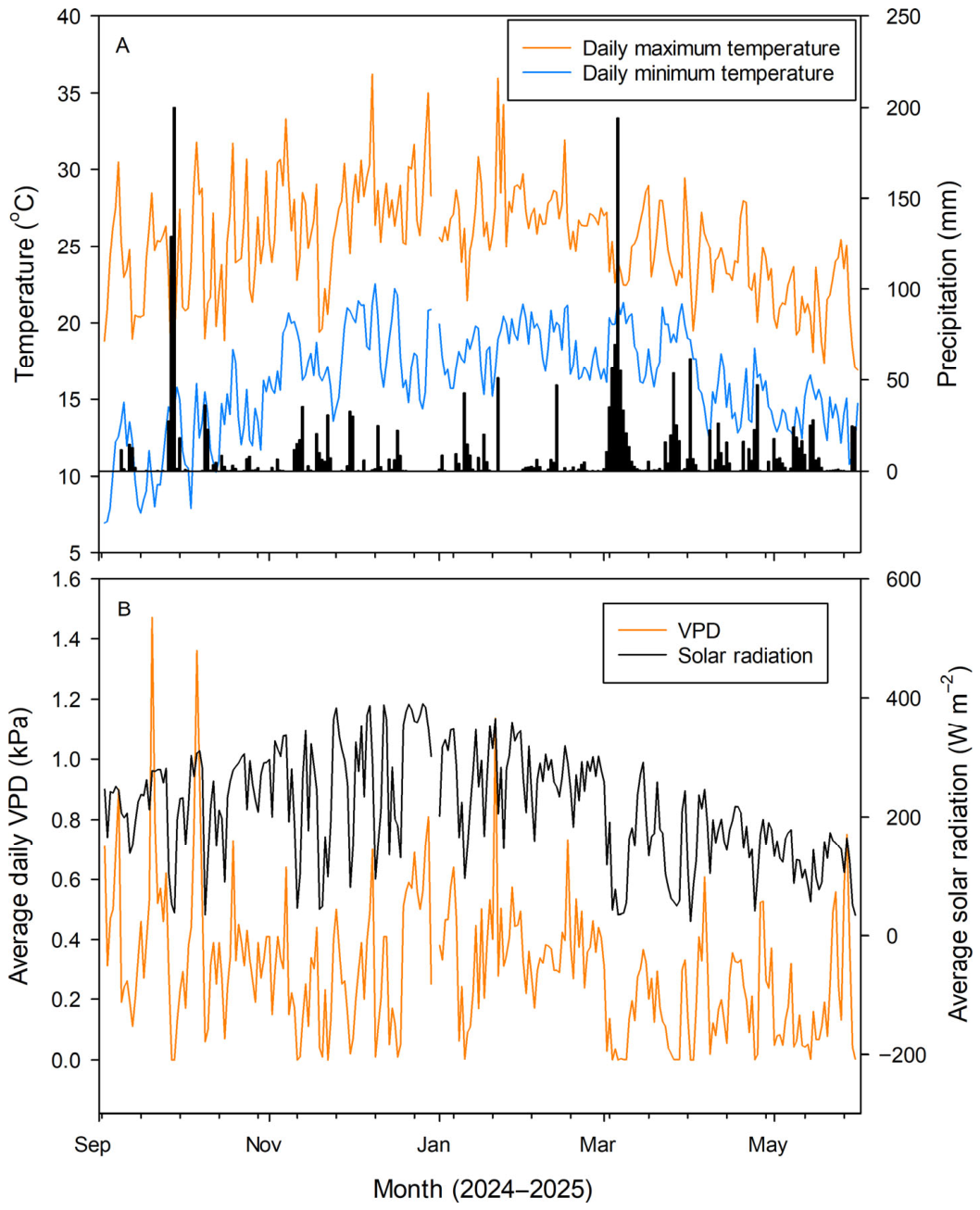
The research site has a subtropical climate, and the seasonal conditions are presented in Figure A1. A weather station (iMETOS 3.3, Pessl Instruments, Weiz, Austria) located within 1 km from the site measured environmental parameters hourly, including temperature, solar radiation, and precipitation. Average maximum and minimum temperatures were 24.0 °C and 11.5 °C in September, increasing to 28.7 °C and 18.7 °C in January, the hottest month. By May, the average monthly temperature had declined to a maximum of 21.3 °C and a minimum of 13.8 °C. The average minimum relative humidity was 52.8, 56.2, 72.8, 65.5, 63.9, 63.1, 78.3, 69.2, and 69.9% for each month between September and May. Average daily vapour pressure deficit (VPD) ranged from 0.14 to 0.49 kPa between September and May. Average solar radiation increased from 212 W m−2 in September to 300 W m−2 in December and then declined to 123 W m−2 in May. September and March had significant rainfall concentrated over a few days, and total monthly precipitation of 418 and 643 mm, respectively. During other months, precipitation ranged from 93 to 277 mm.

2.2. Plant Sampling

Racemes and leaves of cultivars 849, A38, and A203 were sampled every 2 weeks from flowering to maturity. Each row (replicate) was one cultivar of 30 trees, and 4 rows of each cultivar were sampled in a randomised block design. Entire racemes (n = 30 per row) were severed at the branch junction and immediately placed in a plastic bag and pooled for analysis. The racemes were kept at 4 °C in a refrigerator until processing. Concurrently, two young but hardened mature leaves from the whorl at the second- to third-youngest node position were sampled from each tree [30].

2.3. Plant Nutrient Analysis

Fruit were removed from the raceme and separated into the husk, shell, and kernel. The leaves and fruit components were dried until constant weight at 60 °C. Subsequently, leaves and kernels were ground in a high-power food blender (Anko, BL9710A-SA, Kmart, Mulgrave, Australia). The husks and rachis were ground with a coffee grinder (Anko CG9701B-SA, Kmart, Mulgrave, Australia). The shell was pre-ground with a laboratory mill (SK100, Retsch GmbH, Haan, Germany) followed by a fine mill (IKA microfine mill Culatti, Janke & Kunkel, Germany). The powdered tissues (<2 mm) were redried in a 40 °C oven until they reached constant weight before weighing for nitric acid digestion. Acid-digested samples were analysed by Inductively Coupled Plasma Mass Spectrometry (ICP-MS) based on the standard method, APHA 3125 [31], for the quantification of macro- and micronutrients at the Environmental Analysis Laboratory, Southern Cross University, Lismore. N and S were assessed on dried tissue using a combustion elemental analyser (TruMac CNS, Leco Corp, St. Joseph, MI, USA).

2.4. Data Analysis

Data were analysed using a linear mixed model (LMM) performed in Genstat (v. 23.1). The experimental design was a Randomised Complete Block Design (RCBD) consisting of three cultivars replicated in four blocks (adjacent physical sub-sections within the orchard), with 7–20 (depending on variable) sequential sampling dates per row. The analysis was conducted using Residual Maximum Likelihood (REML) to account for the spatial and temporal dependencies in the data. The fixed effects in the model included Cultivar, DAF, and their interaction (Cultivar × DAF). The random structure was defined as Block/RowID to account for the nesting of individual rows within blocks and the spatial variation between blocks. To account for the temporal correlation of repeated measurements on the same experimental units (rows), a First-Order Autoregressive (AR1) covariance structure was applied to the time factor (DAF). To examine differences between cultivars at individual DAF, post-hoc comparisons were performed using estimated marginal means (EMMs) derived from the fitted mixed model. Pairwise comparisons between cultivars within each sampling date were conducted with Tukey-adjusted p-values to control for multiple testing.
Principal component analysis (PCA) was performed using the correlation matrix to examine patterns of covariation among nutrient variables across cultivars and sampling dates. The analysis incorporated all observations from the three cultivars over sequential developmental stages to capture both genotypic and temporal variation. Principal components were derived by eigenanalysis, generating orthogonal linear combinations of the original variables that successively maximised explained variance. Component loadings were used to assess the contribution of individual nutrients to each principal component, thereby identifying key nutrient associations. The scores were used to visualise relationships among samples, with particular attention to clustering according to cultivar and developmental stage. The interpretation focused on the first two principal components, supported by biplot visualisation to illustrate nutrient interrelationships and their variation across cultivars and over time.
Nutrient dynamics are presented as content per organ to describe demand; concentration data are provided in Appendix A Figures to aid physiological interpretation.

3. Results

3.1. Fruit Development

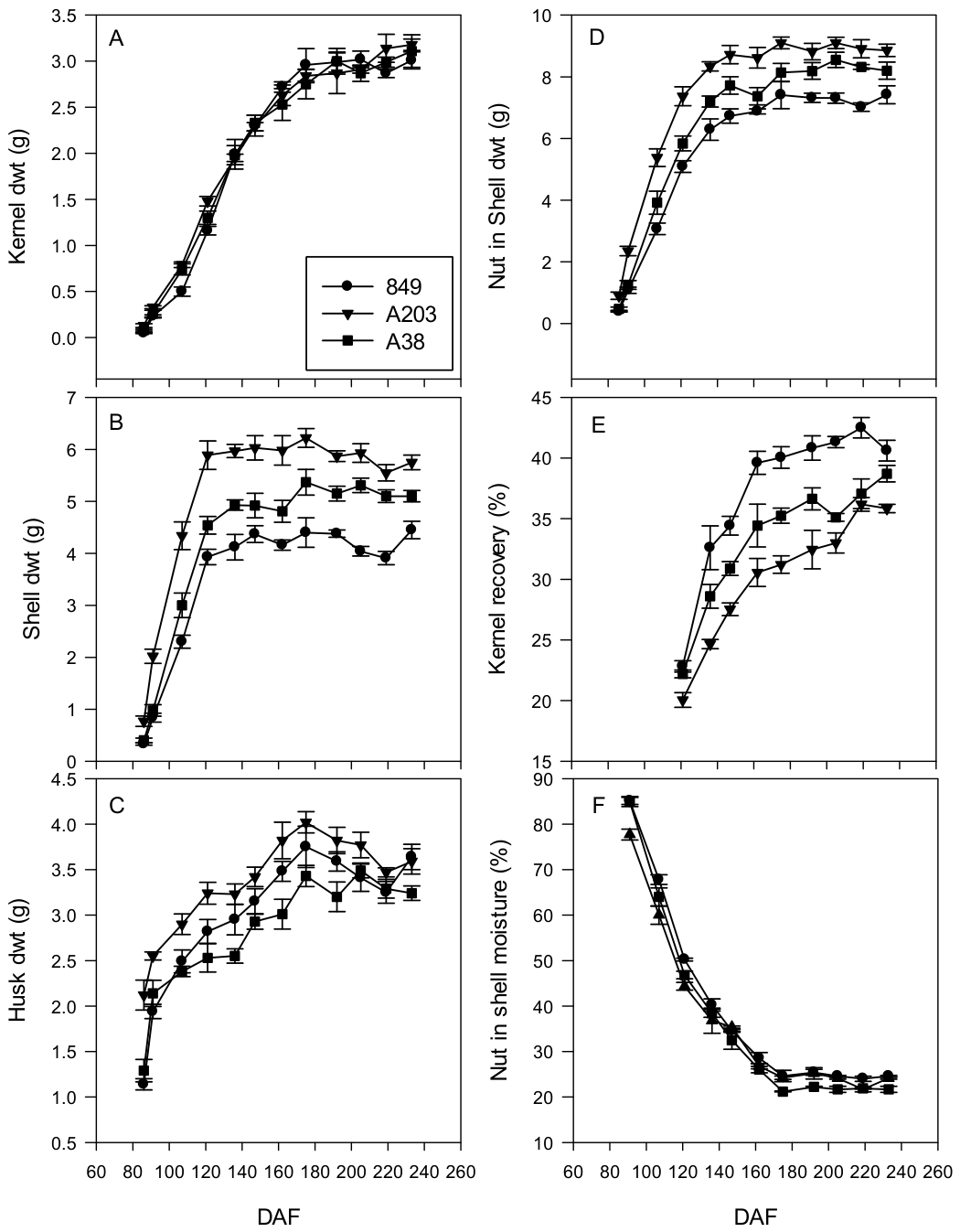
Kernel dry weight increased rapidly (33 mg day−1, p < 0.001) until 175 DAF, when it stabilised at around 3.0 g kernel−1 in all three cultivars (ns) until harvest at 235 DAF (Figure 1A). The shell contained the largest proportion (45%) of the total fruit biomass, despite ceasing to accumulate dry mass much earlier (at 121 DAF) than the kernel and husk. Shell hardening (lignification) occurred between 90 and 121 DAF, with a colour change from cream to dark brown. Shell dry weight was greatest in cv. A203 and lowest in cv. 849, reaching 6.0 g shell−1 and 4.4 g shell−1, respectively (p < 0.001) (Figure 1B). Maximum husk dry weight coincided with the onset of the kernel dry weight plateau and reached 3.7 g husk−1 with no significant cultivar differences, before declining by 10–15% (Figure 1C). Nut-in-shell dry weight was greatest in cv. A203 at 8.9 g and lightest in cv. 849 at 7.7 g (p < 0.01) (Figure 1D). Kernel recovery, an important industry parameter, was highest for cv. 849 at 42.7% and lowest at 35.9% for cv. A203 at harvest (p < 0.001) (Figure 1E). Nut-in-shell moisture declined steadily from 91 DAF to 175 DAF and then remained stable and was lower in cv. 849 at 68% than in the other two cultivars at 72% (p < 0.001) (Figure 1F).
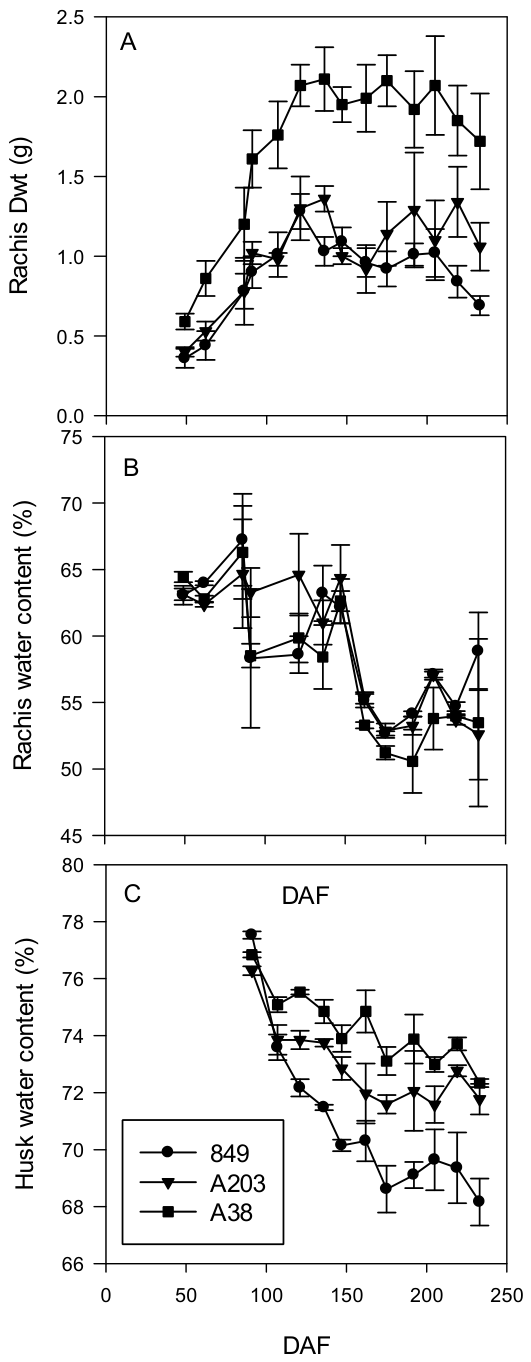
Rachis dry weight increased steadily until 121 DAF, then declined gradually, leading up to harvest for all cultivars (Figure 2A). Cultivar A38 had the highest dry weight at 2.1 g rachis−1, declining to 1.7 g rachis−1, more than double that of cv. 849 at 0.7 g (p < 0.01) (Figure 2B). Conversely, rachis water content declined continuously throughout development, from 70% to less than 60%, with no cultivar differences. Husk water content also declined steadily, but at double the rate for cv. 849 (9.4% over 20-weeks, p < 0.001), down to 68% at harvest, compared to 72% (4.6% over 20 weeks) in the other two cultivars (p < 0.01) (Figure 2C).

3.2. Kernel Nutrients

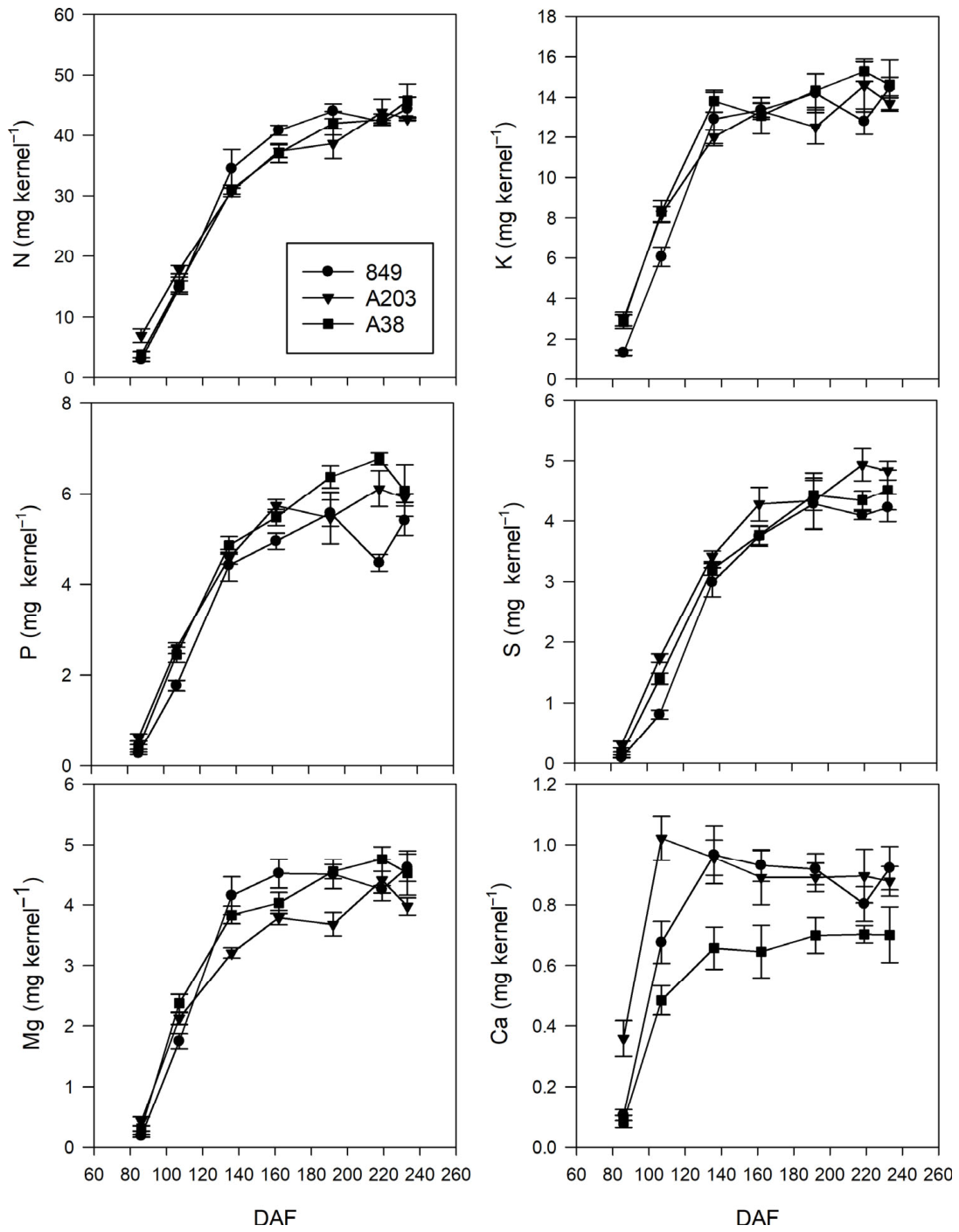
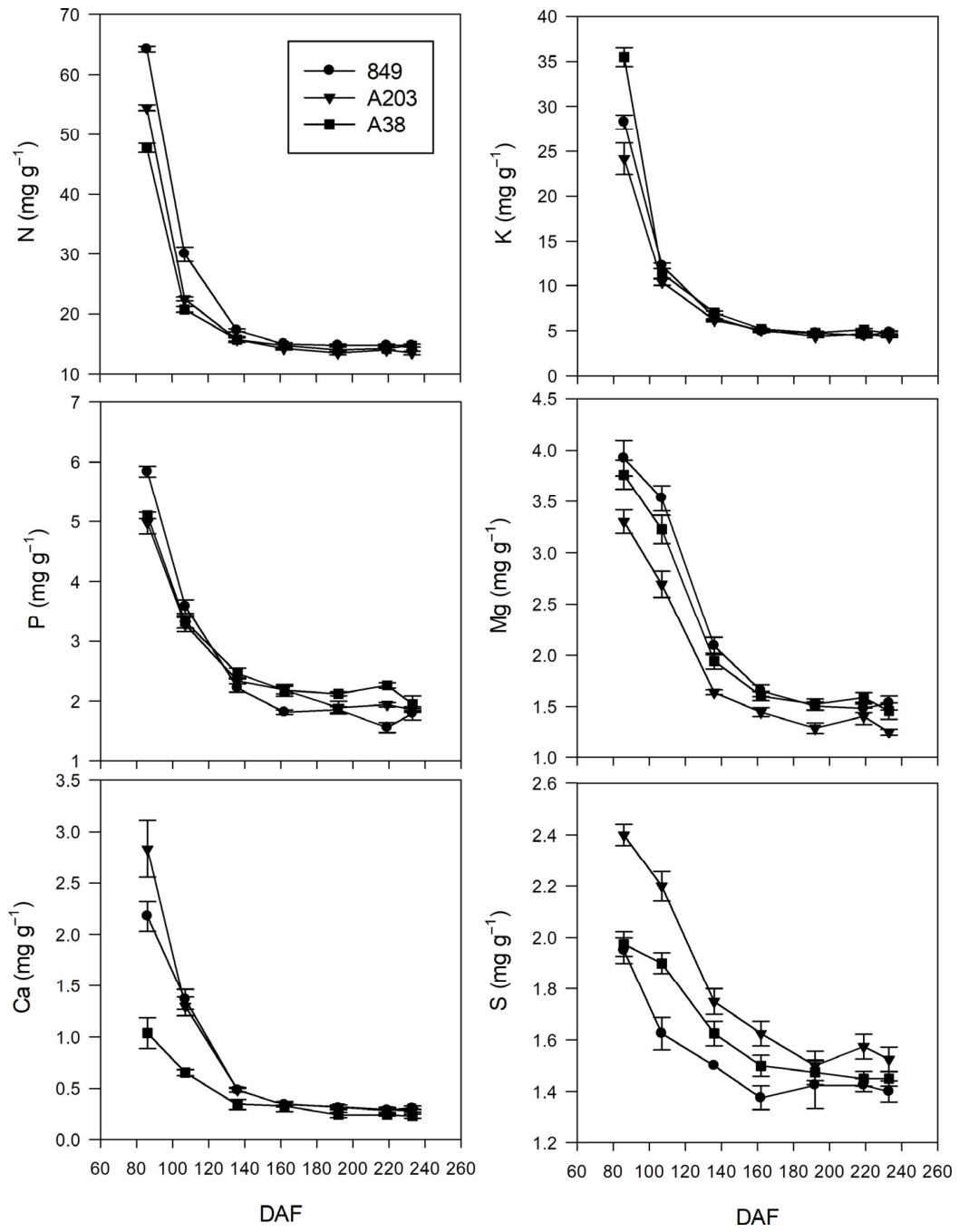
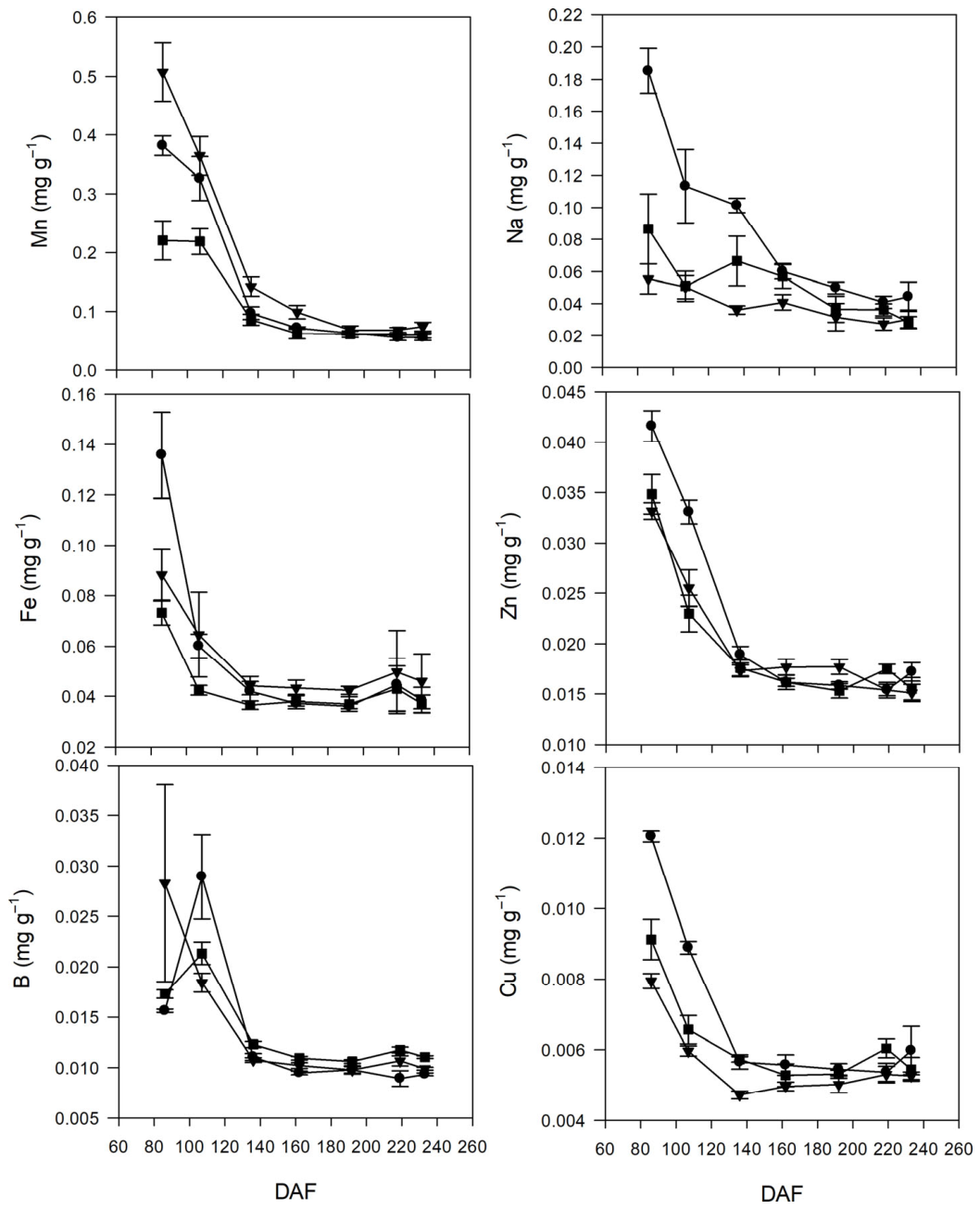
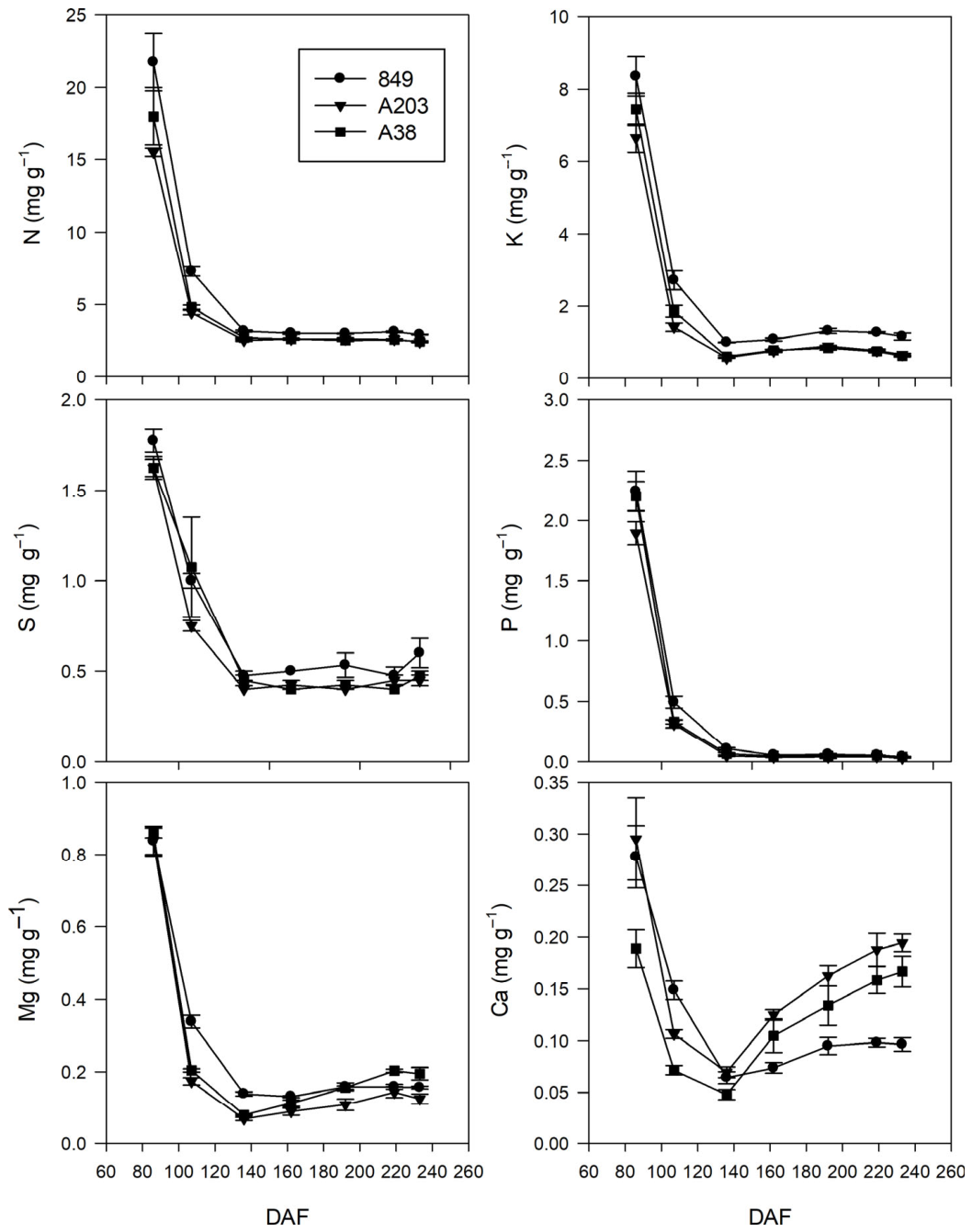
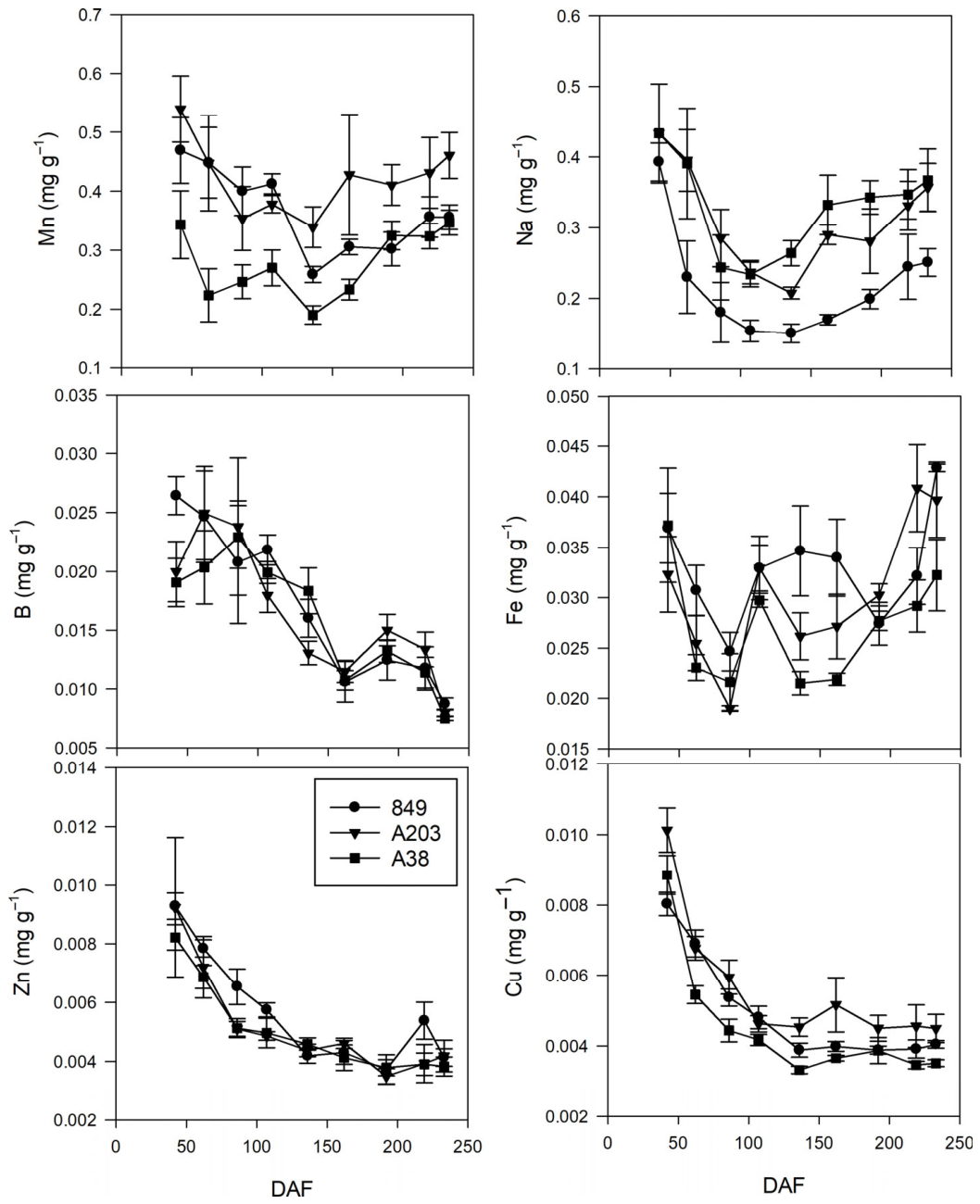
Macro- and micronutrient concentrations (mg g−1) in the kernel declined rapidly in a curvilinear manner during development (Figure A2 and Figure A3). The nutrient content (mg kernel−1) increased (Figure 3 and Figure 4) and then either slowed or ceased accumulation beyond 160 DAF. Nitrogen content climbed to 42.8–44.5 mg kernel−1, while the second most abundant element, K, reached 13.7–14.6 mg kernel−1 with no cultivar differences. At maturity, kernel P content was 5.7–6.0 mg kernel−1, and kernel S and Mg content was 4.5–4.9 mg kernel−1, also with no cultivar differences. Ca was lowest in cv. A38, between 120 and 200 DAF (p < 0.05), but these cultivar differences were no longer statistically significant in mature nuts at 0.8–1.1 g.
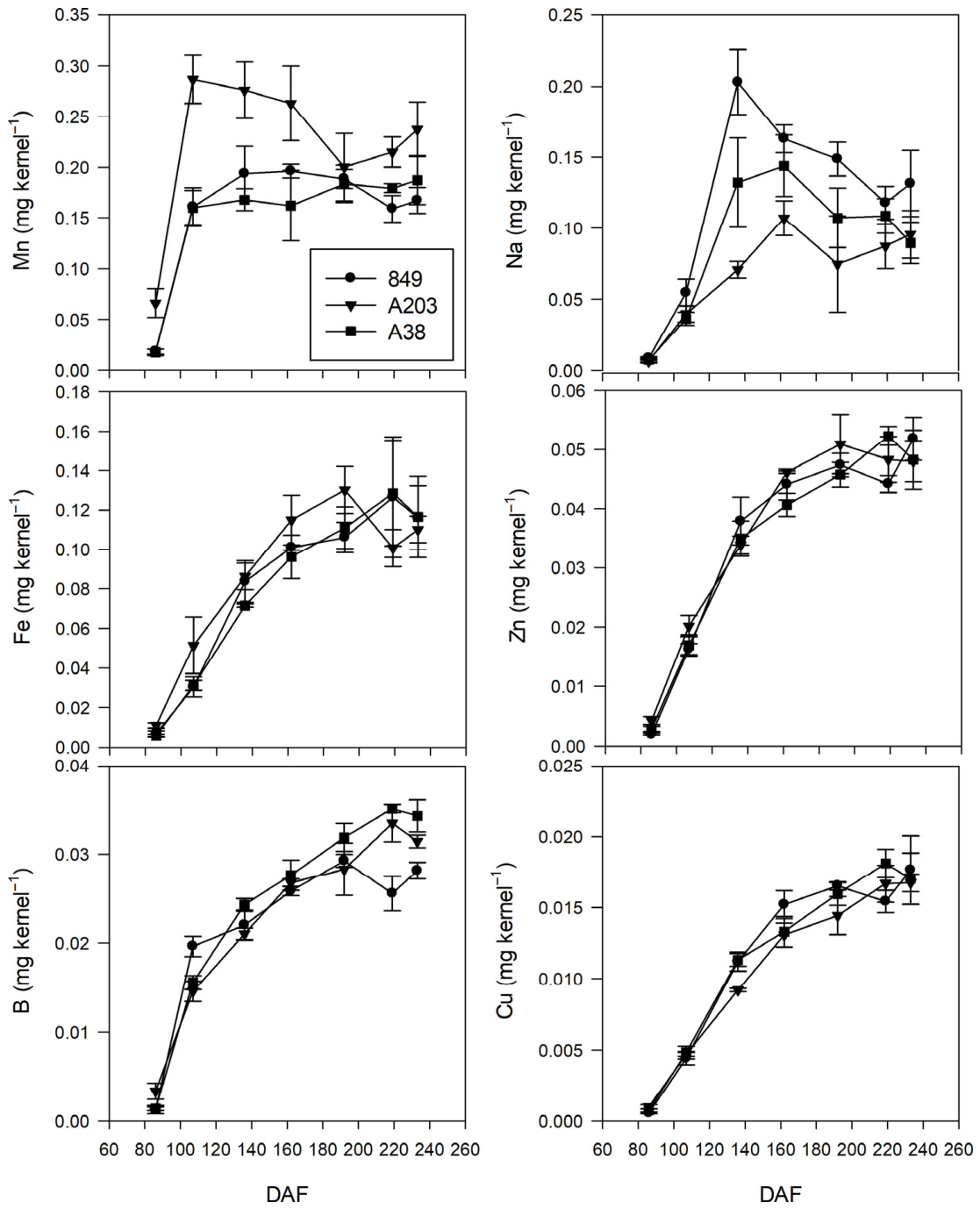
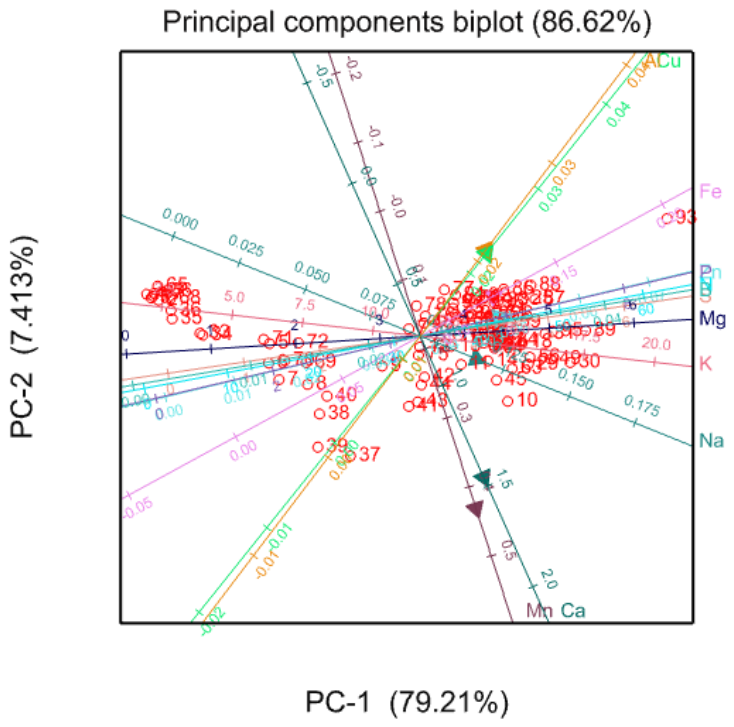
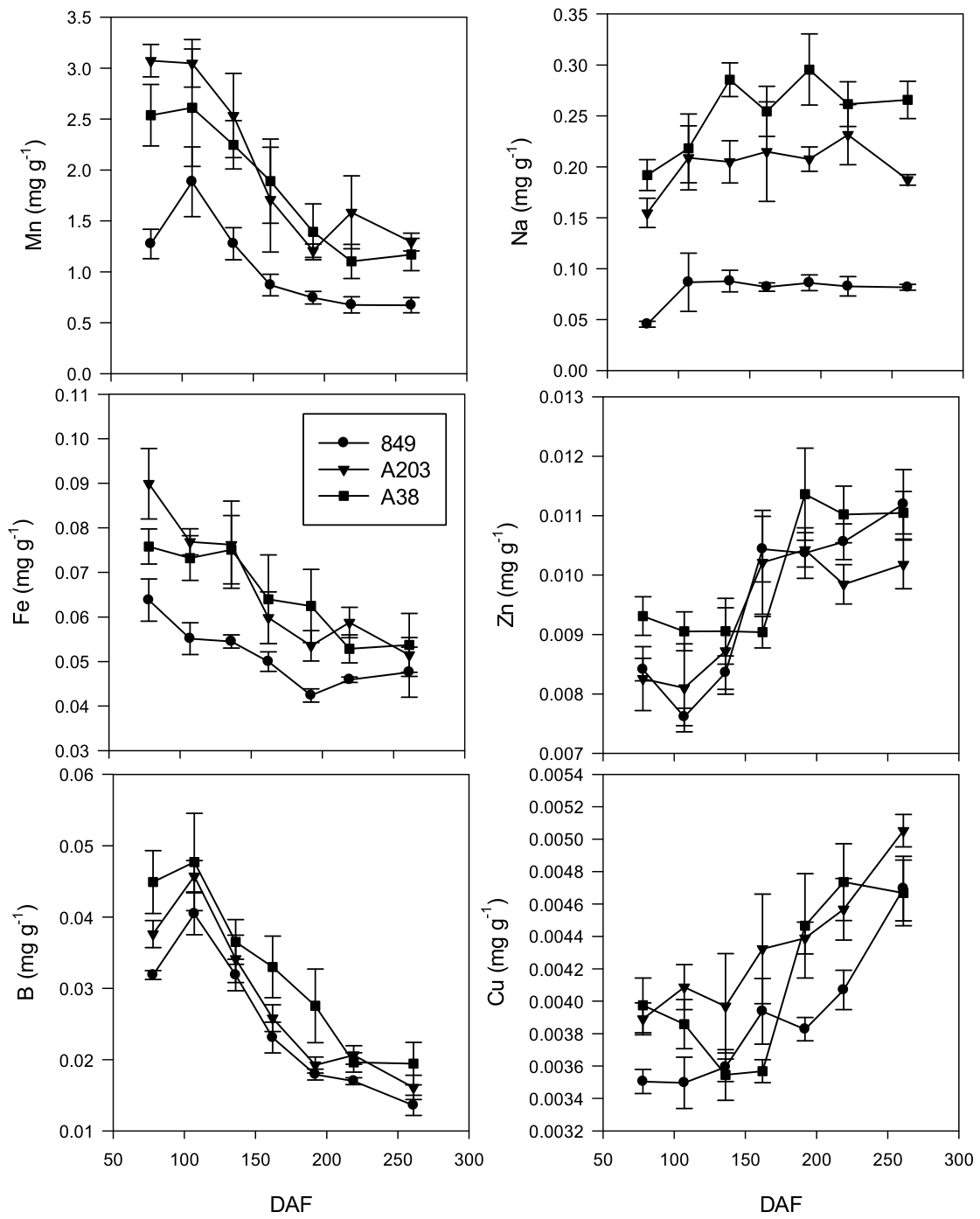
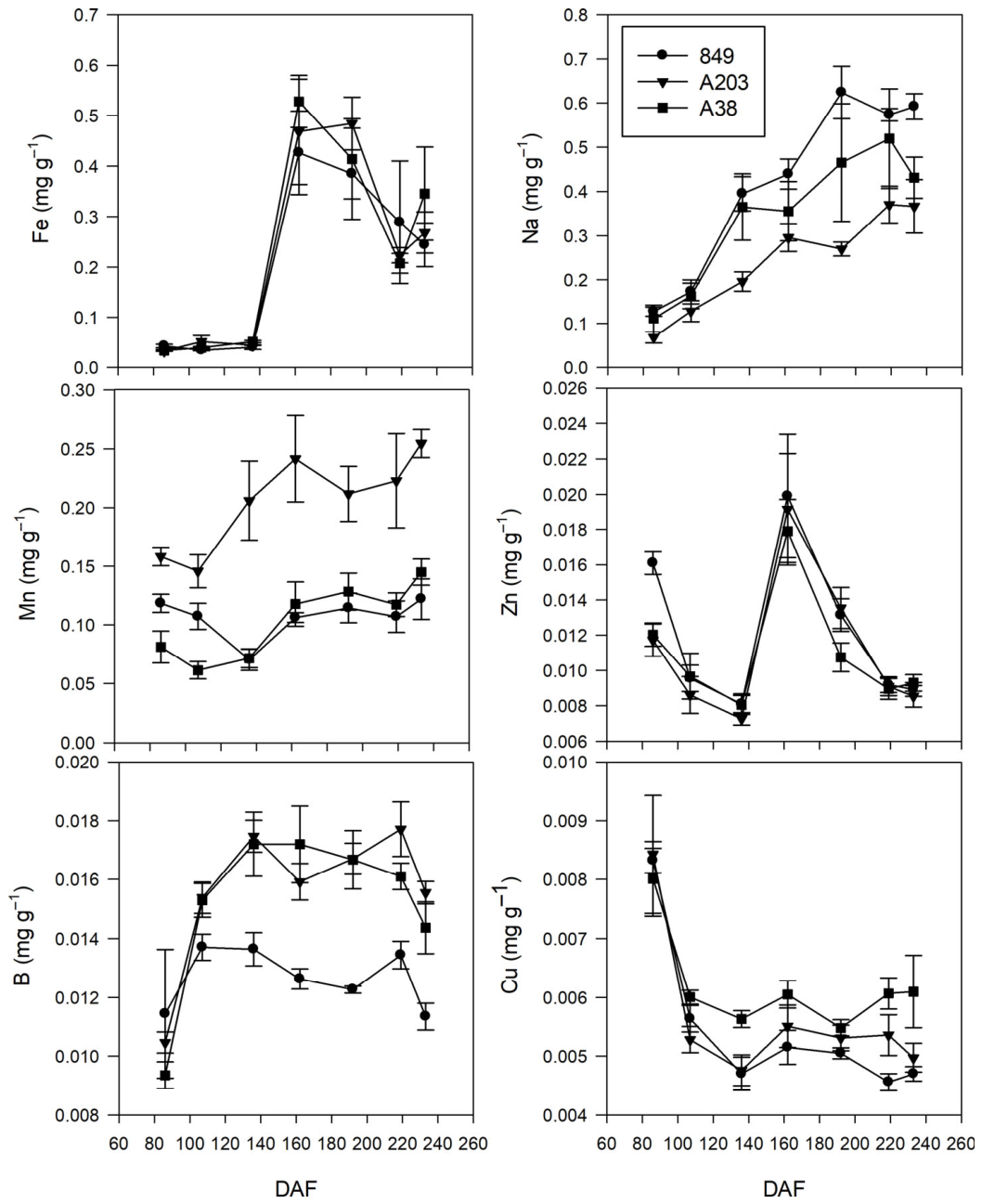
The PCA of kernel nutrient content (Figure 5) explained 86.6% of the total variation, with Principal Component 1 (PC1) accounting for 79.2% of the variation, where all elements loaded positively and showed similar trends, and Principal Component 2 (PC2) accounting for 7.4% of the variation, with Ca and Mn separating from the other nutrients. This is likely because kernel Mn accumulation followed similar trends to that of Ca, with import slowing or halting beyond 107 DAF. In mature nuts, Mn varied between 0.15 and 0.24 mg kernel−1, with higher levels in the earlier developmental stages for cv. A203 (p < 0.001) (Figure 4). Na was positioned separately in the PCA and was highest for cv. 849 at 140 DAF (p < 0.05), peaking at 0.20 mg kernel−1 before declining to 0.14 mg kernel−1 to be in line with the other cultivars. In cv. A203, Na content did not rise above 0.11 mg kernel−1. The accumulation patterns for Fe, Zn, B, and Cu were similar to those of the macronutrients, with continued import until 233 DAF. Kernels attained 0.11 mg Fe, 0.05 mg Zn, 0.032–0.034 mg B, and 0.015 mg Cu kernel−1.

3.3. Husk Nutrients

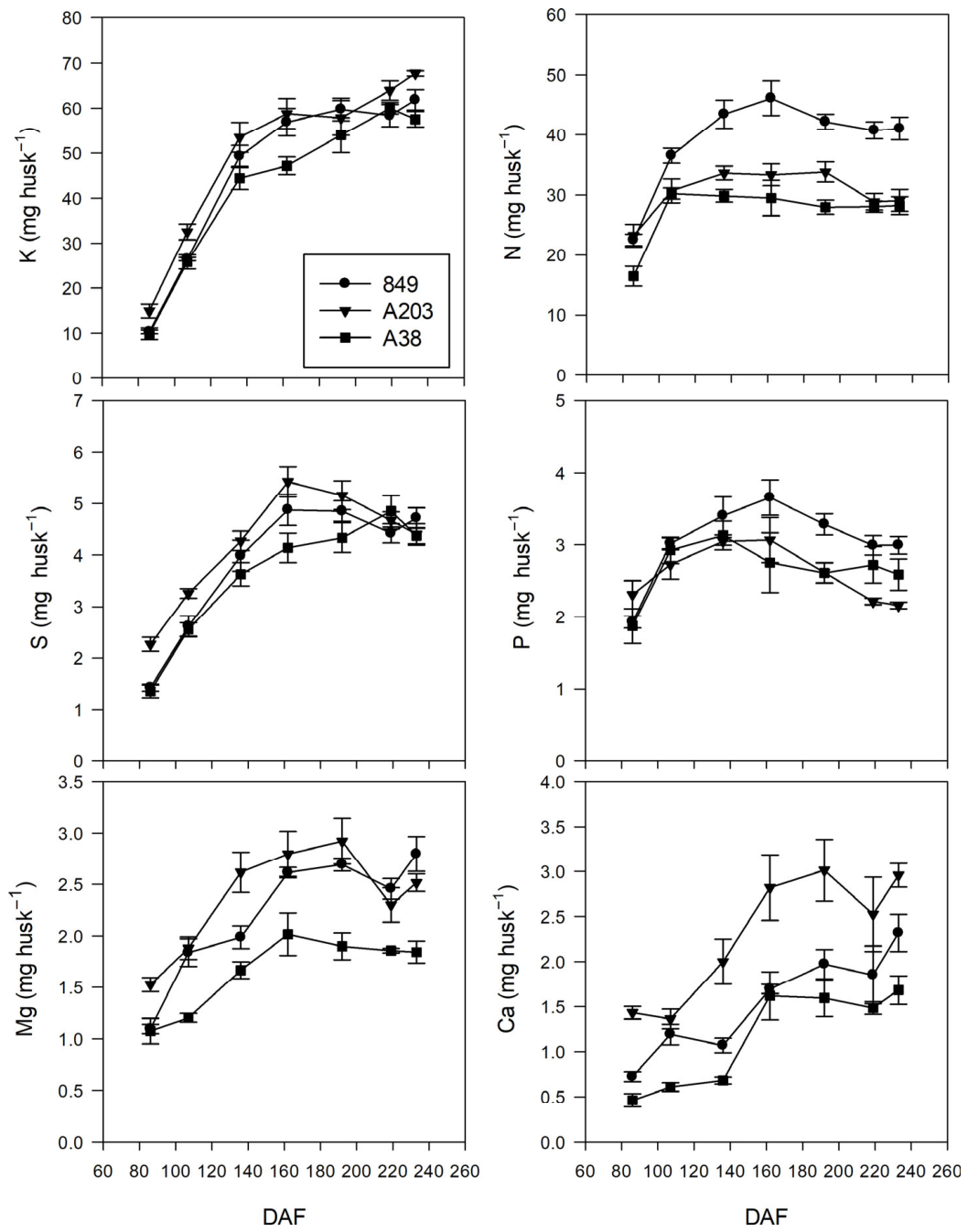
The husk was a major mineral sink for K (Figure 6). Husk K concentrations (mg g−1) increased 2.5-fold during development, most of this occurring before 136 DAF (Figure A4). Potassium accumulation (mg husk−1) was also rapid until 136 DAF, and this was followed by a slower increase in all three cultivars. At maturity, K ranged between 61.8 and 67.8 mg husk−1 (Figure 6). N content in A203 peaked at 33.6 mg and subsequently declined to 29.1 mg husk−1, while cv. A38 peaked at 30.2 mg husk−1 and subsequently declined to 28.4 mg husk−1 (p < 0.001). Nitrogen concentration (Figure A4) and accumulation (Figure 6) were greatest for cv. 849 with a peak at 46.1 mg husk−1 at 162 DAF (p < 0.05) and a subsequent decline to 41.1 mg husk−1 (p < 0.05). In accordance with the PCA, trends in P accumulation were similar to those of N accumulation, with greatest levels at 162 DAF. This was followed by a decline in all three cultivars to end at 2.2–3.0 mg husk−1 at maturity. Sulfur accumulation was steady until 162 DAF for the three cultivars, and while most rapid for cv. A203, this was followed by a decline and all three cultivars ended with 4.4–4.7 mg husk−1. Husk Mg content was lowest for cv. A38 at 1.7 mg husk−1 (p < 0.001). In contrast, Ca was highest for cv. A203 during most of development at 3.0 mg husk−1, and this was followed by 2.3 mg husk−1 for cv. 849 and only 1.7 mg husk−1 for cv. A38 (p < 0.01). The continued accumulation of N, P, and Mg into the husk occurred despite a decline in the concentrations of these elements (Figure A4).
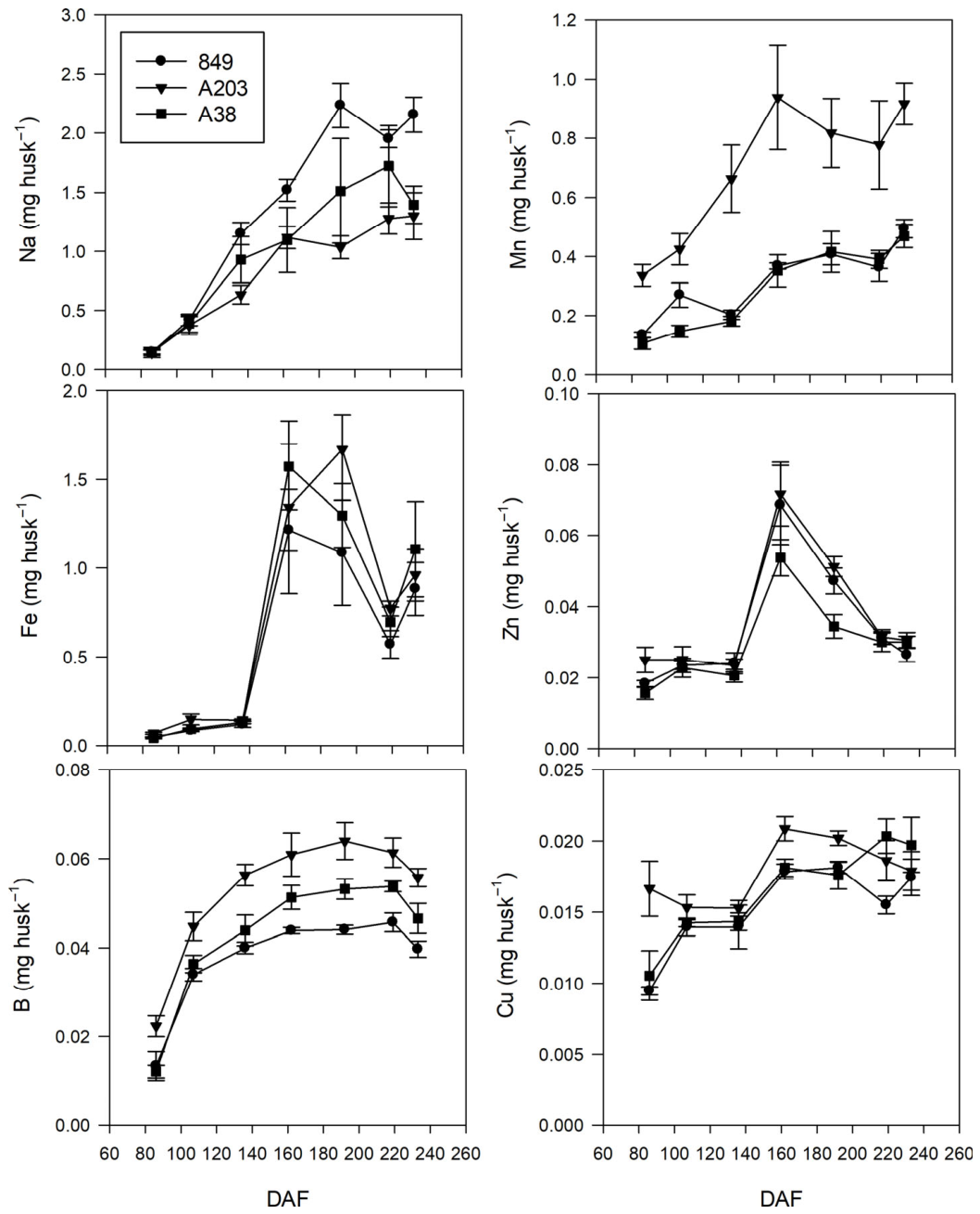
Iron (Fe) and Zn content (Figure 7) and concentration (Figure A5) peaked and then declined in the husk, but levels were less than 2 mg husk−1. Sodium content increased during development in the three cultivars, with the highest levels in cv. 849 at maturity (p < 0.001). A203 had double the Mn content than the other two cultivars, at 0.9 mg husk−1 (p < 0.001). Boron was also highest for this cultivar at 0.056 mg husk−1 (p < 0.01), and this was followed by 0.047 mg husk−1 in cv. A38 and 0.040 mg for cv. 849, but these last two values were not significantly different from each other. Copper levels also increased during husk development but remained below 0.020 mg husk−1 with no cultivar differences at harvest.
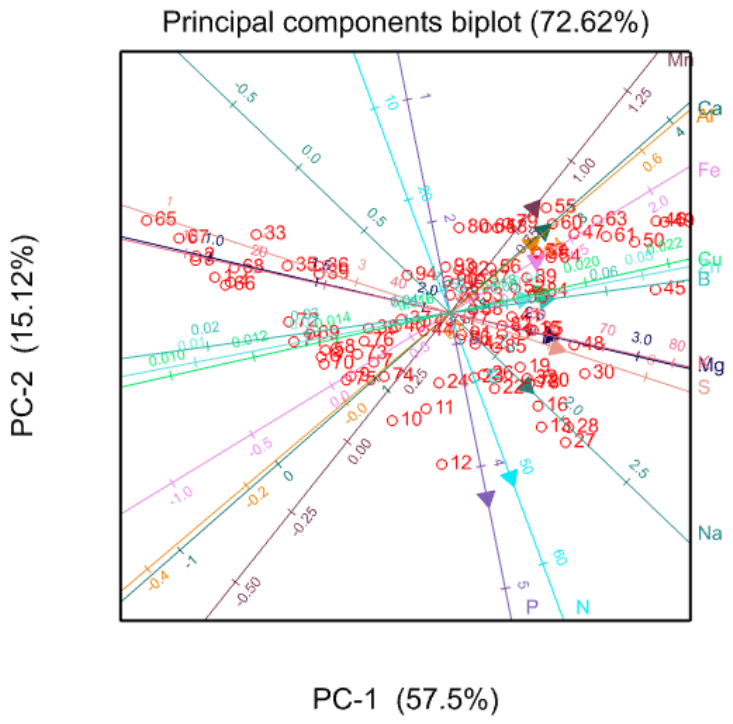
The PCA of the husk nutrient content explained 72.6% of the total variation in nutrient composition, with PC1 taking up 57.5% of the variation and PC2 taking up 15.1% (Figure 8). The separation along PC1 was caused primarily by the variation in macronutrients, with N and P loading strongly in the negative direction, opposed by elements such as Ca, Mn, Fe, and Al in the positive direction. PC2 captured a secondary gradient associated with Mg, S, and Na, which were oriented negatively, while micronutrients, including Cu and B, were positioned positively. The close clustering of most observations near the origin indicates relatively gradual changes in the overall nutrient composition in samples, rather than distinct groupings. Strong alignment among vectors such as Ca, Mn, and Fe suggests coordinated accumulation, whereas the opposing vectors (e.g., N and P versus Ca and Mn) indicate contrasting nutrient partitioning patterns.

3.4. Shell Nutrients

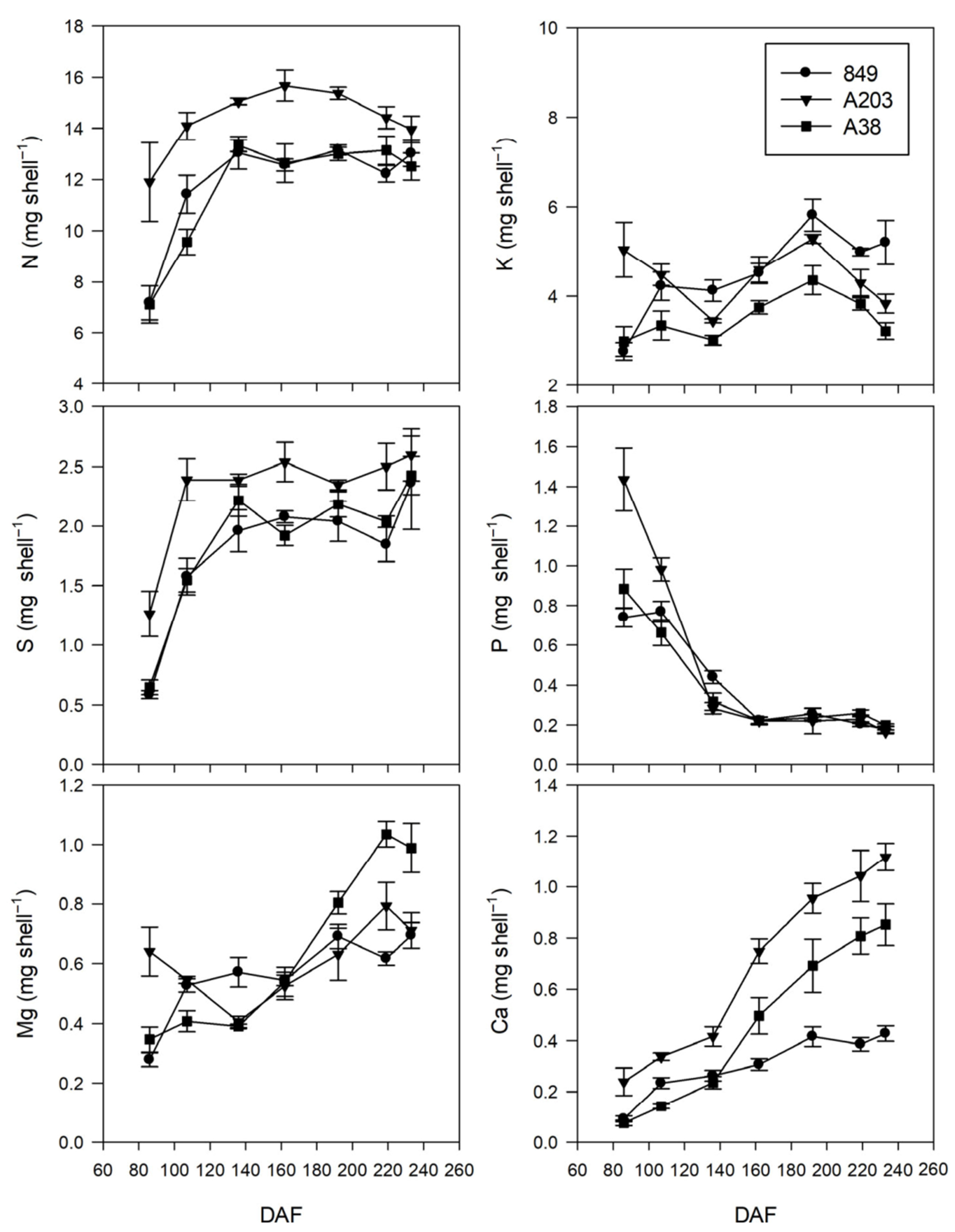
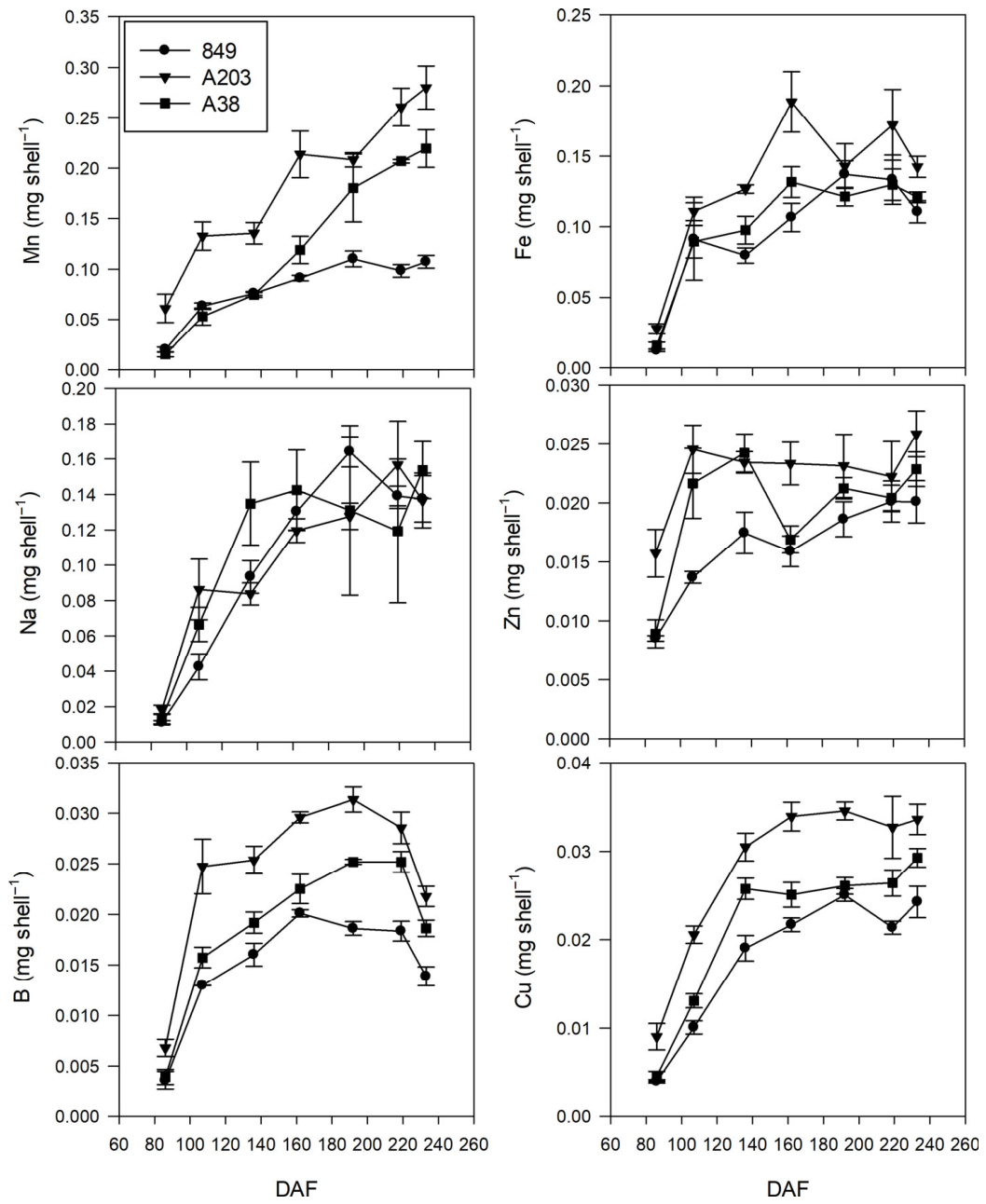
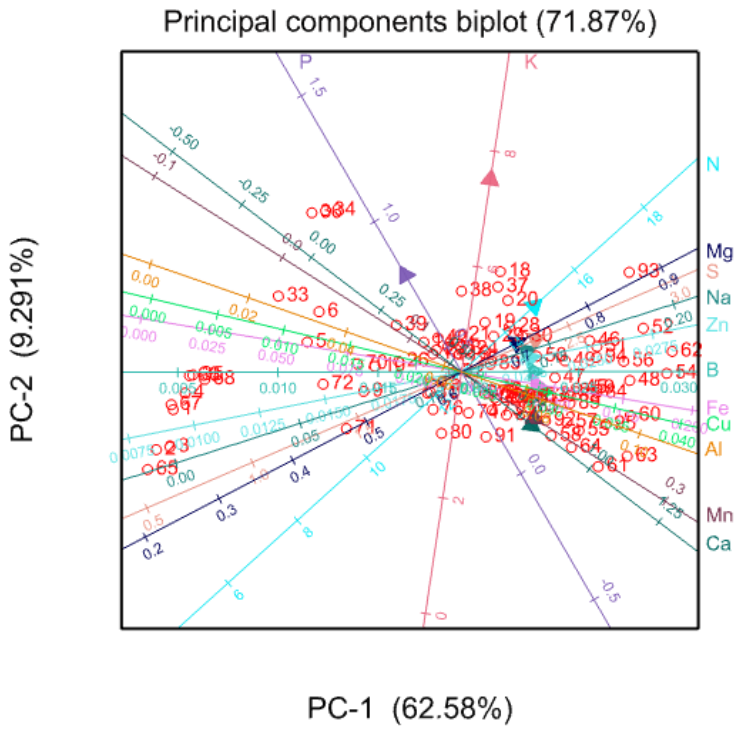
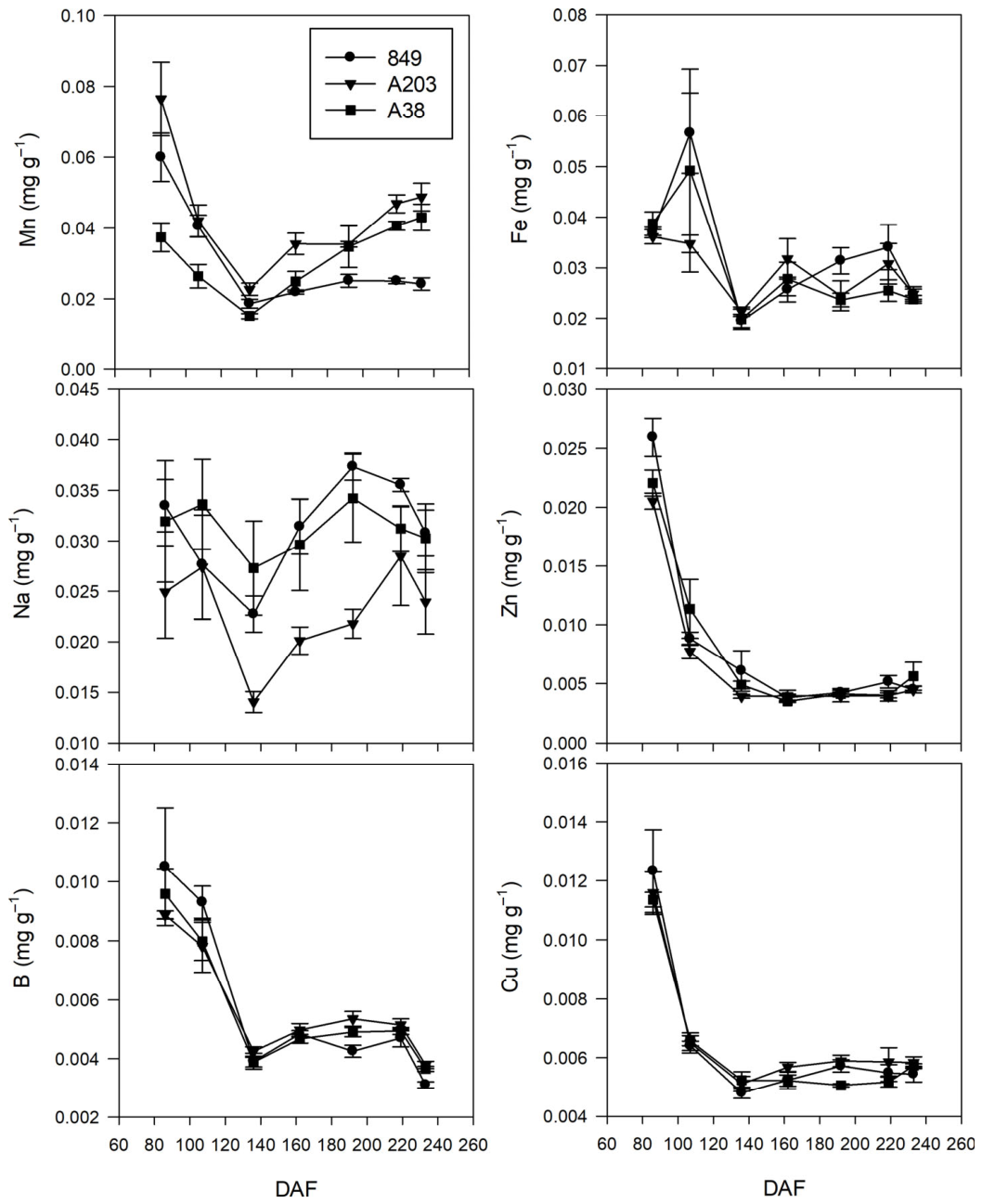
Shell nutrient content (Figure 9 and Figure 10) was a fraction of that of the husk and kernel despite larger biomass (Figure 2). All tested macro- and micronutrients declined in concentration during fruit maturation (Figure A6 and Figure A7). Despite this, N, S, Zn, Al, B, and Cu content increased and plateaued beyond 140 DAF (Figure 9 and Figure 10). At harvest, N content was between 12.5 and 13.9 mg shell−1, but there were no cultivar differences. Shell K content fluctuated during development with no obvious long-term trends, but at maturity it was highest for cv. 849 at 5.2 mg shell−1 (p < 0.05), followed by cv. A203 at 3.8 mg shell−1 and cv. A38 at 3.2 mg shell−1 at maturity, with no differences between these two cultivars. The PCA of shell nutrient content indicated that 62.6% of the variation was accounted for by PC1 and 9.3% of the variation was accounted for by PC2 (Figure 11). Phosphorus separated strongly from the other elements in PC1, as did K, suggesting that their levels vary independently from the other nutrients. The PC2 indicated strong separation of Mn and Ca, plus a weak separation of Fe, B, and Cu from the other elements. Phosphorus was the only nutrient that declined severalfold during development, finalising at less than 0.2 mg shell−1.
Conversely, shell Ca and Mn (Figure 9 and Figure 10) content increased consistently, being highest for cv. A203 and lowest for cv. 849 (p < 0.01). Shell Fe did not increase significantly beyond 160 DAF and remained below 0.20 mg shell−1. Shell B and Cu content had a rapid initial rise, but subsequently stabilised (Cu), or stabilised and declined (B). Shell Na content increased to 0.14–0.16 mg shell−1, with no cultivar differences.
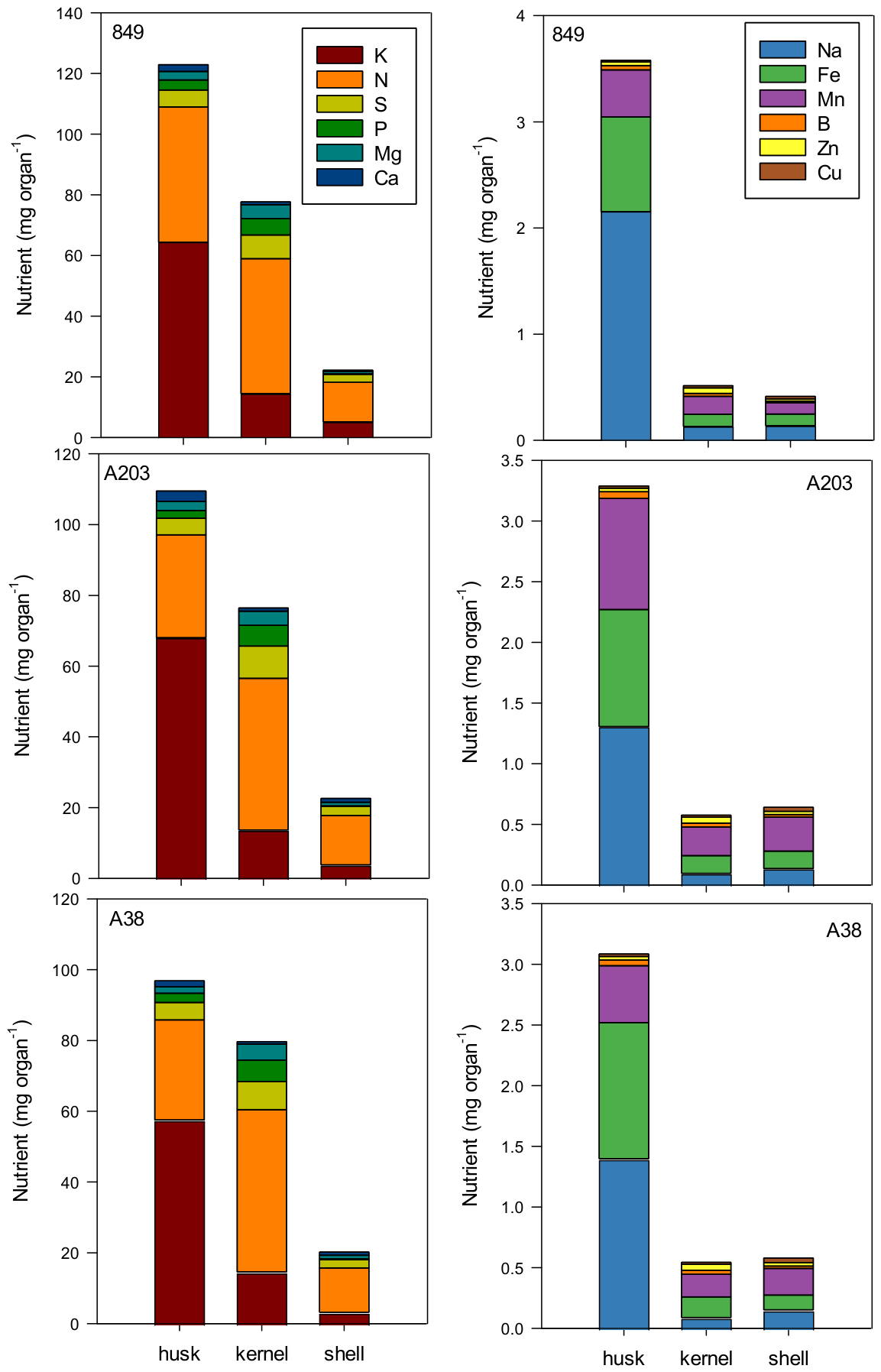
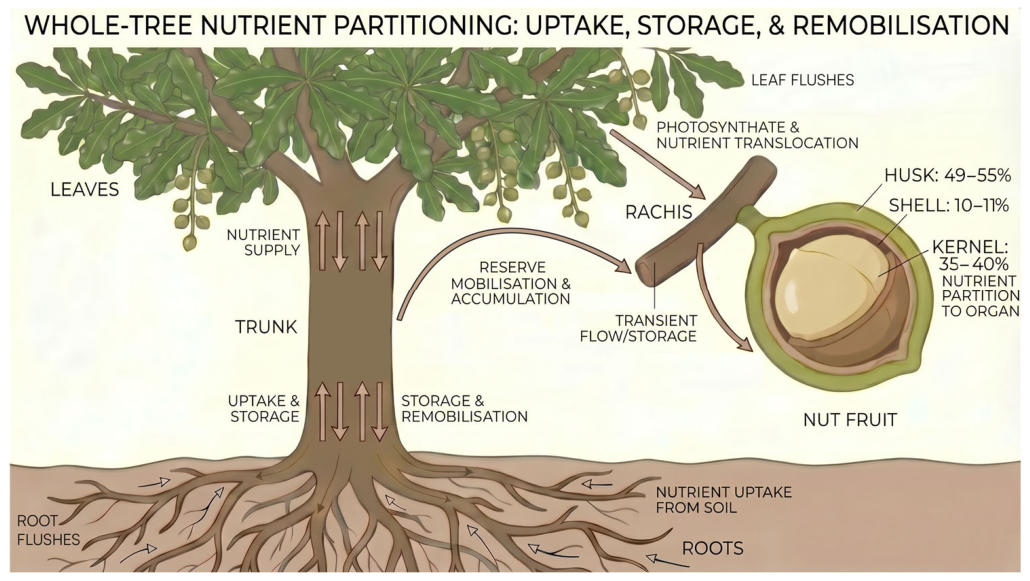
Figure 12 illustrates the relative nutrient content of the husk, shell, and kernel at maturity. The husk harbours most of the inorganic nutrients at 49–55% of the fruit, while the kernel harbours 35–40%, and the shell harbours 10–11%. Significant cultivar differences in nutrient partitioning efficiency (total nutrients in the kernel as a proportion of the total nutrients in the fruit) were evident at 33.7 ± 0.7% in cv. 849, 35.0 ± 0.3% in cv. A203, and 38.9 ± 0.9% in cv. A38 (p < 0.001).

3.5. Rachis Nutrients

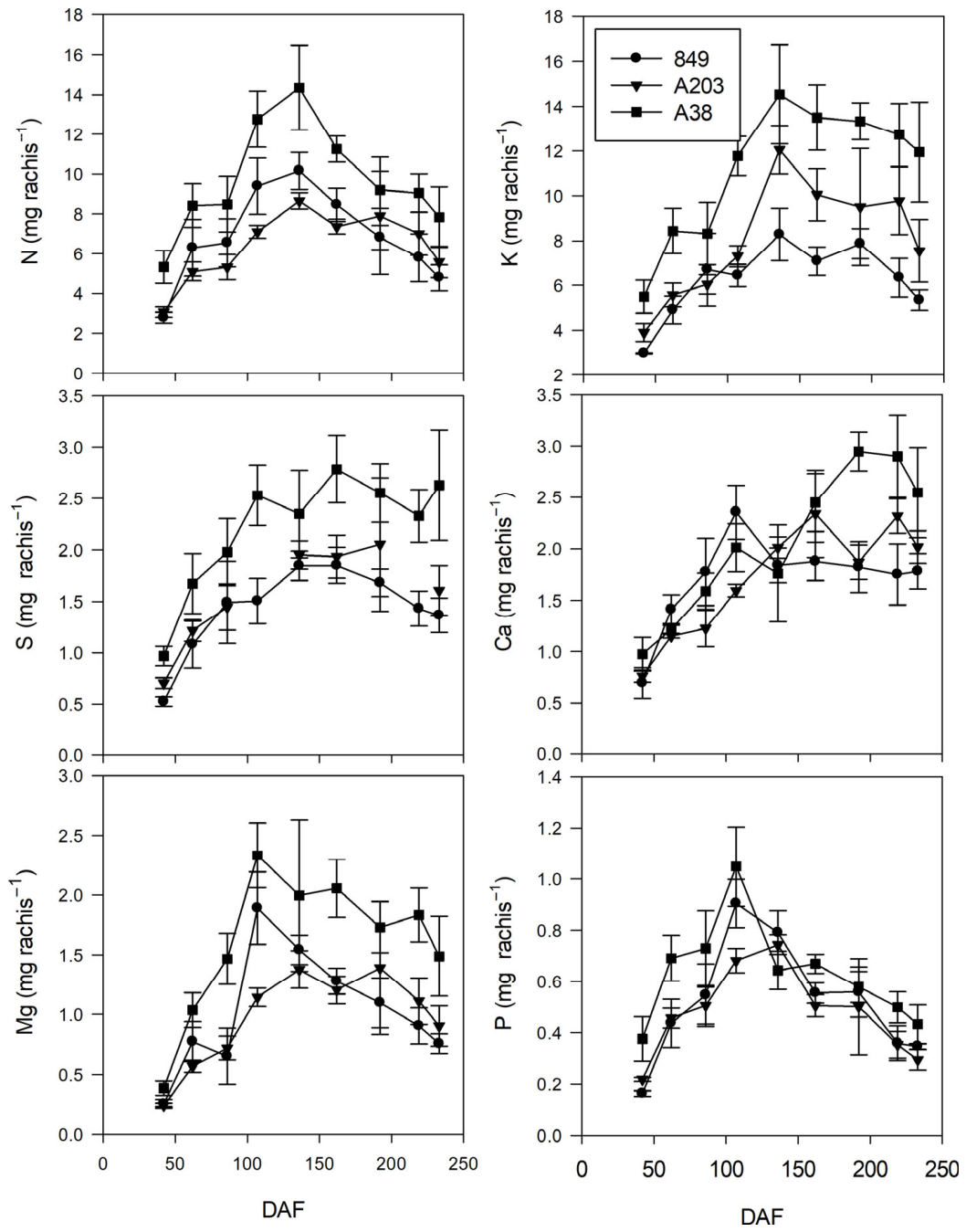
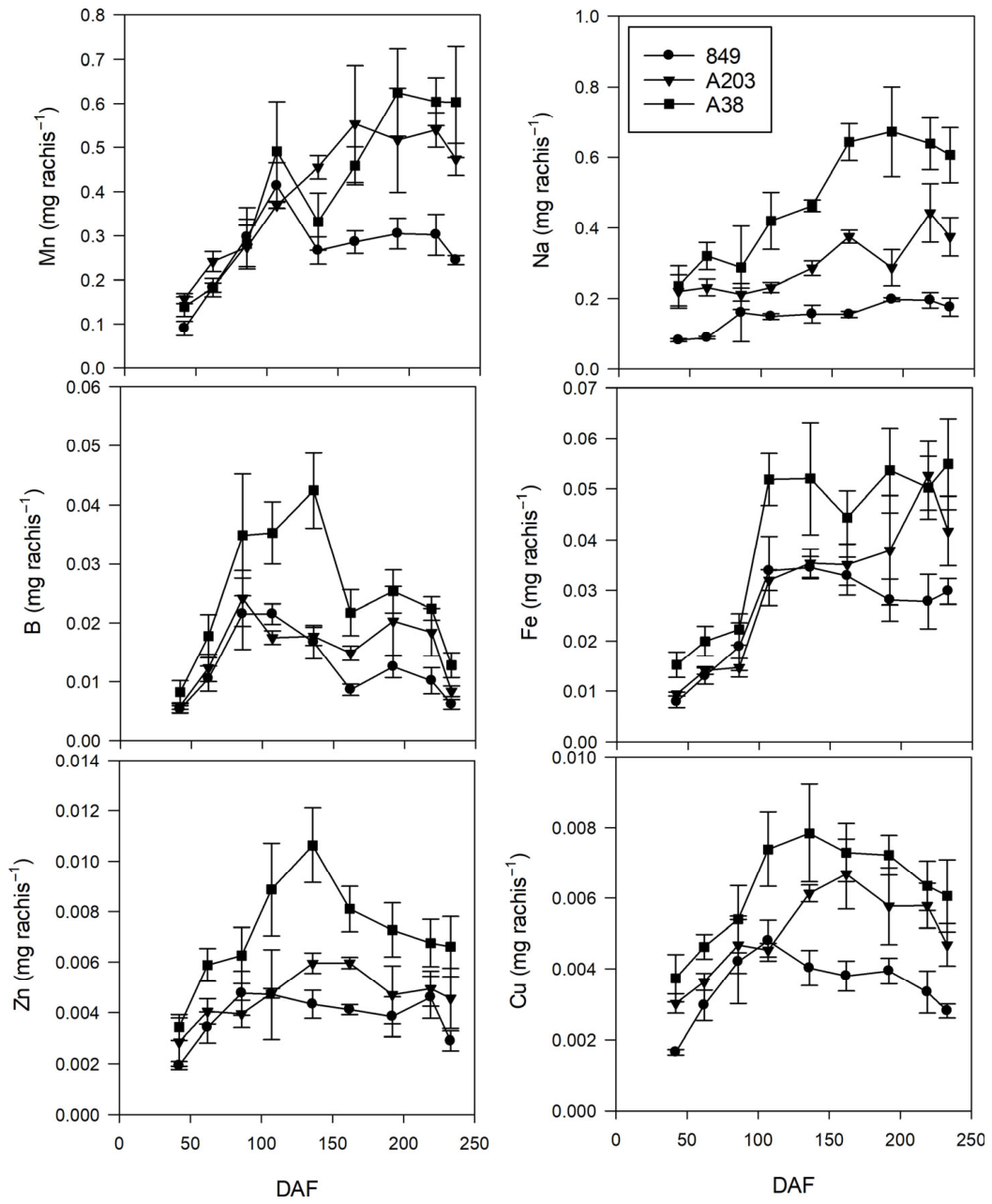
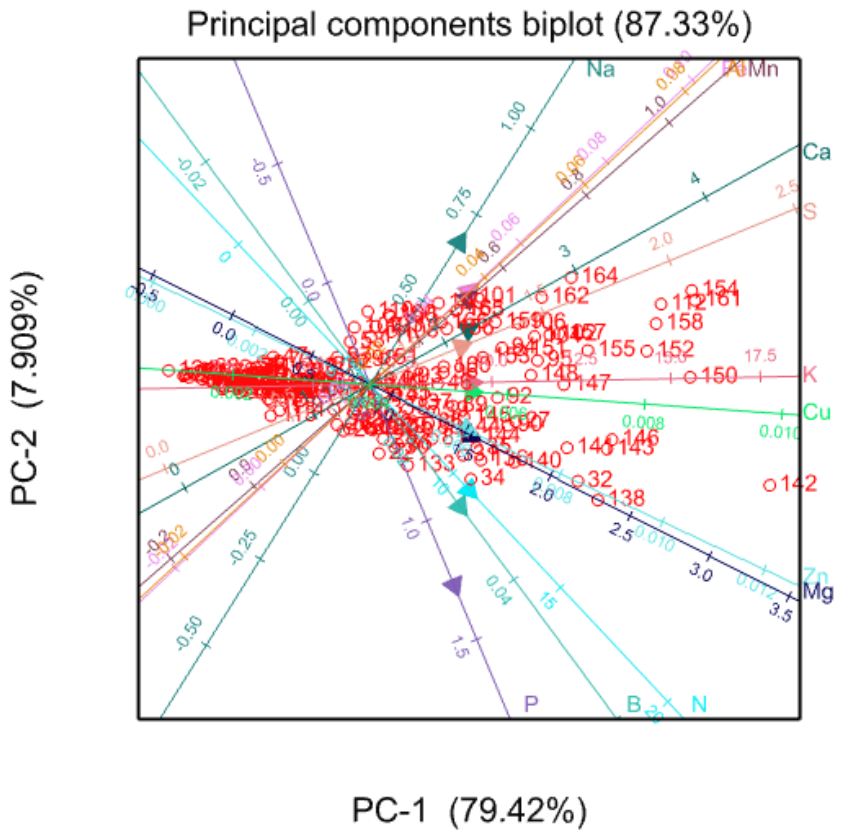
The nutrient dynamics of the rachis differed from those of the fruit and leaf. Rachis macro- and micronutrient concentrations either increased, remained stable, or declined during development (Figure A8 and Figure A9). Nitrogen, K, Ca, P, B, Zn, and Cu concentrations showed similar curvilinear declines, while Mg peaked and then declined. Conversely, Mn, Na, and Fe concentrations decreased and then increased. Overall, the concentrations were about 2–3-fold higher than those of the shell, but lower than in the leaf, kernel, and husk (Figure A8, Figure A9 and Figure A10). On a content basis, N, K, P, Mg, Zn, B, and Cu peaked at 140–160 DAF prior to declining (Figure 13 and Figure 14). The PCA for nutrient accumulation within the rachis (Figure 15) indicated that 79.4% of the variation was accounted for by PC1, suggesting that most nutrients changed in a coordinated way throughout development, and 7.9% of the variation was accounted for by PC2. PC2 indicated a separation of P, B, and N from Na, Mn, and Ca.
Conversely, rachis S, Ca, Fe, and Na content remained stable during late development (Figure 13 and Figure 14). Rachis N and K content were similar, both peaking at 15 mg rachis−1 at 136 DAF. Cultivars A203 and 849 had lower N and K content through most of development (p < 0.001). Sulfur content was highest for cv. A38 and reached 2.6 mg rachis−1, while the other two cultivars averaged 1.6–1.4 mg rachis−1 (p < 0.01). Calcium content and trends were similar to those of S. Conversely, Mg and P content halved from the peak and averaged at 0.9–1.6 mg rachis−1 for Mg and 0.3–0.5 mg rachis−1 for P. At maturity, nutrient content ranges were: Mn: 0.22–0.65 mg rachis−1, Na: 0.018–0.062 mg rachis−1, Fe: 0.03–0.055 mg rachis−1, B: 0.005–0.015 mg rachis−1, and Zn and Cu: 0.003–0.007 mg rachis−1.

3.6. Leaf Nutrients

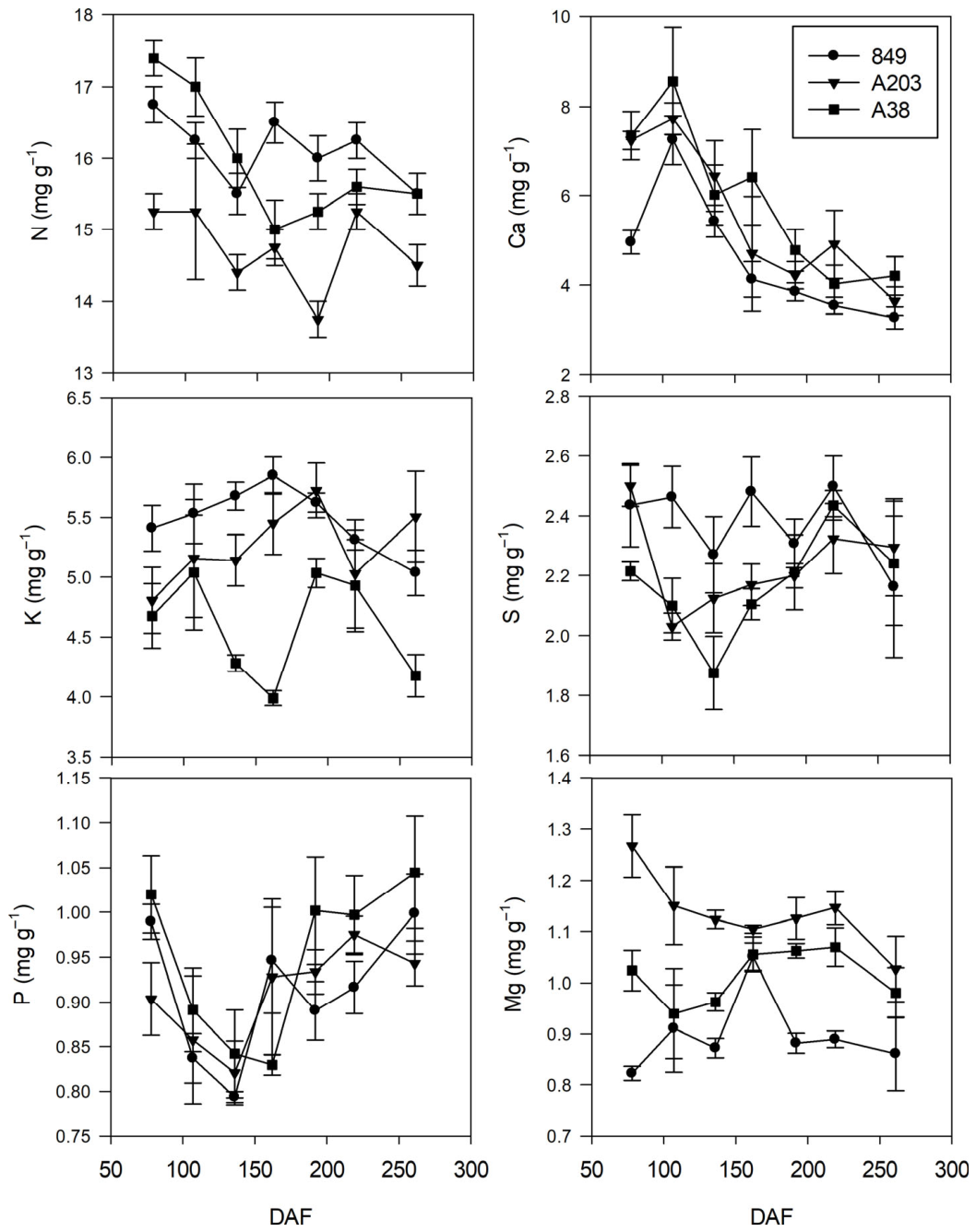
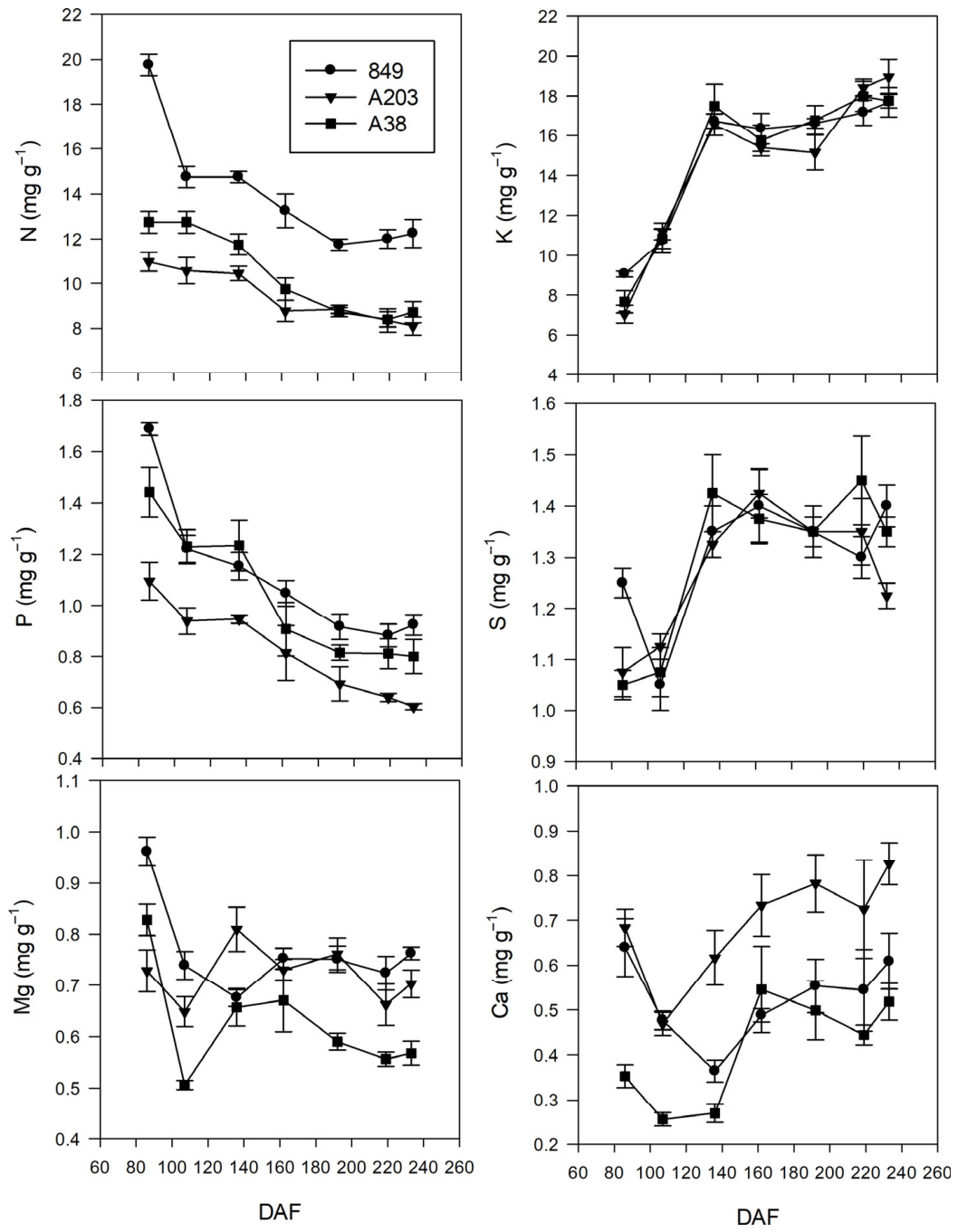
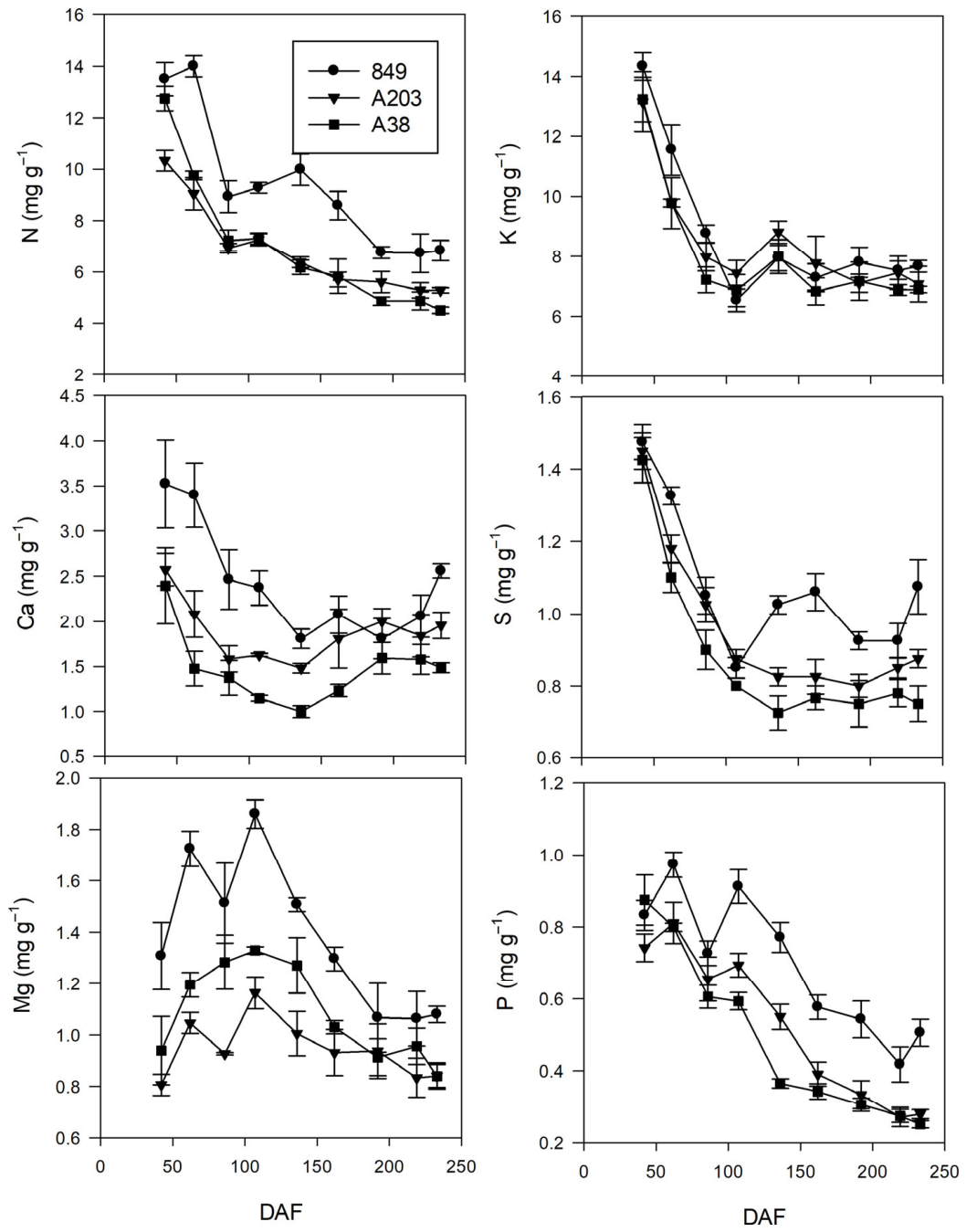
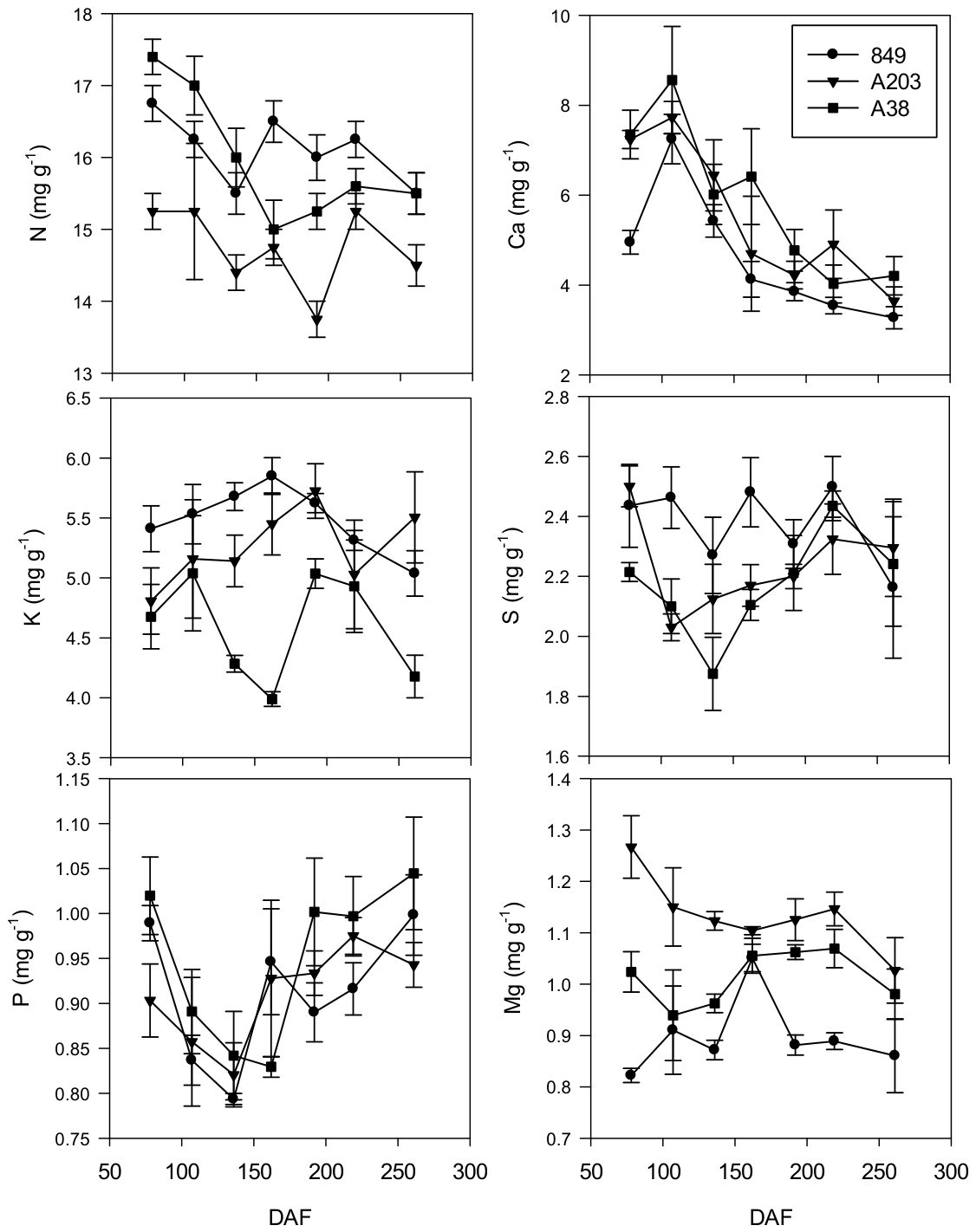
Leaf macro- and micronutrient concentrations were more variable than those of the fruit components at any sampling date (Figure 16 and Figure 17). Leaf N concentration declined in cv. A38 but fluctuated in the other two cultivars, with final concentrations ranging between 14.5 and 15.5 mg g−1. After a peak at 107 DAF of 7.2–8.4 mg g−1, Ca concentration declined in all three cultivars to 3.2–4.2 mg g−1. K trends over time were insignificant, fluctuating between 4 and 6 mg g−1, while S was also insignificant and fluctuated between 1.9 and 2.5 mg g−1. Phosphorus concentrations declined in all three cultivars from 78 DAF to 136 DAF but then increased again to reach 0.94 to 1.05 mg g−1 at harvest, 235 DAF. Mg declined in cv. A203 from 1.27 to 1.03 mg g−1, but the other two cultivars hovered between 0.8 and 1.08 mg g−1. Overall, the leaf macronutrients were in similar concentrations to those of the kernel (Figure A2 and Figure 16). Leaf Mn, Fe, and B concentrations declined over the reproductive phase; however, Zn and Cu increased by 50%. Manganese was the predominant micronutrient and its concentration halved in all three cultivars, dropping to 1.3, 1.2, and 0.7 mg g−1 in cultivars A203, A38, and 849, respectively. Leaf Na concentration in cv. 849 was within the acceptable range and less than half that of the other two cultivars, which were in the high range. Leaf Mn was also in the high range, while leaf N, S, P, Mg, Ca Mn, Fe, B, and Cu were in the acceptable range. Leaf K and Zn were in the low range.

4. Discussion

This study offers new insights into the timing of nutrient accumulation in macadamia fruit components, relevant to commercial nutrient application strategies that aim to maximise kernel yield and quality. Nutrient partitioning between husk, shell, and kernel has implications for broader agronomic strategies and the selection of orchard management practices. Partitioning efficiency and the proportion of total nutrient allocated to the kernel vs. the husk/shell was 4–5% greater for cv. A38 compared to cv. A203 and cv. 849, and this translates directly to productivity, profitability, and input efficiency. Since high kernel partitioning efficiency results in higher returns per unit fertiliser input, selecting genotypes with superior allocation to the kernel itself improves productivity without increasing inputs. Genotypes with lower partitioning efficiency may require higher or more precisely timed fertiliser inputs, and possibly stricter canopy control, to compensate for inefficient allocation to the kernel.

4.1. Fruit Nutrient Accumulation

The husk is the dominant mineral element sink of the macadamia fruit, holding about half of all mineral elements. The kernel harboured 40% of the nutrients and the shell comprised the smallest fraction (10%), despite having the largest biomass as assessed by dry weight. Similar amounts of the macronutrients N and K were present in the whole fruit, at about 85–100 mg each. Cultivar 849 had slightly higher fruit N accumulation than cv. A203 and cv. A38 due to a higher concentration (mg g−1) in the husk. While the husk contained more K, the shell and kernel components contained more N. The greatest sink for P, S, and Mg was the kernel, but the shell was a small sink for these elements. The husk accumulated approximately twice as much Ca as the shell or kernel. Of the micronutrients, the husk held Fe in the greatest proportions, contrasting with the kernel and shell, where Mn presided. Following on from the highest to lowest, the relative amounts of P, S, Mg, Ca, Na, Fe, Mn, Zn, B, Cu, Ba, and Se allocated to each fruit were 10, 10, 8, 4, 1.5, 1, 1, 0.1, 0.1, 0.06, 0.01, and 0.01 mg, respectively. These quantities are in line with previous studies [32], and the nut-in-husk nutrient replacement values reported for macadamia [30]. Nutrient removal for avocado, a fleshy fruit, is about 2 kg N t−1 and 4.0 kg K t−1 [33]. This is much lower compared to 50 kg N t−1 and 54 kg K t−1 for almond, and 34 kg N t−1 and 10 kg K t−1 for walnut, including the husk and shell [34]. According to results herein, macadamia has much lower nutrient accumulation than the other dry nuts at 8 kg N t−1 and 8 kg of K t−1.
Macadamia nut-in-shell must be removed from the orchard for processing, but the fate of the husk depends on harvest techniques, as fruit can be dehusked during harvest, or harvested whole, and the husk can be removed later at a processing facility. Nutrient replacement rates required are higher where the husk is removed from the orchard [30]. The accumulation of nutrients in the husk, shell, and kernel in this study broadly supports the current Australian recommendations for nutrient replacement rates. However, the Ca quantities required to mature the fruit are approximately 15% higher in this study than the recommended rates. Therefore, careful attention to Ca is especially important in contexts where the husk is being removed from the orchard.

4.2. Peak Periods of Nutrient Accumulation

As expected, peak nutrient accumulation in the kernel coincided with the phase of rapid growth and dry weight accumulation. The kernel was a strong sink for N, P, and B, with their accumulation into the husk beginning to slow at 107 DAF, despite increases in husk growth and dry mass to 180 DAF. This pattern suggests preferential allocation to the kernel at the expense of the husk. From flowering, the kernel required 235 days (33–34 weeks) to reach full maturity (oil content >72%). While the concentrations of the macro- and micronutrients declined from 80 to 140 DAF (see figures in the Appendix A) due to faster biomass accumulation than nutrient accumulation, the amount of nutrient per kernel increased rapidly for N, K, P, S, Mg, Na, Fe, Zn, B, and Cu over this period. Subsequently, during the rapid oil-filling phase, at 140 DAF and onwards, the accumulation of these nutrients continued at a slower pace. Oil accumulation begins after most of the structural biomass accumulation is complete. During this period, sugar levels in the kernel decline as oil content rises [35], indicating that, along with hexose import, the existing sugar supply is used as a substrate for oil synthesis within the kernel. As the fruit matures, the decline in husk, shell, and kernel moisture slows cell division and expansion and reduces metabolic activity. The stabilisation of nut-in-shell moisture beyond 170 DAF signifies that the kernel-filling phase is nearly complete and suggests that active vascular flow declines and nutrient import slows and ceases. Dehydration stabilises kernel storage compounds through decreased molecular mobility and reduced enzymatic and oxidative degradation [36].
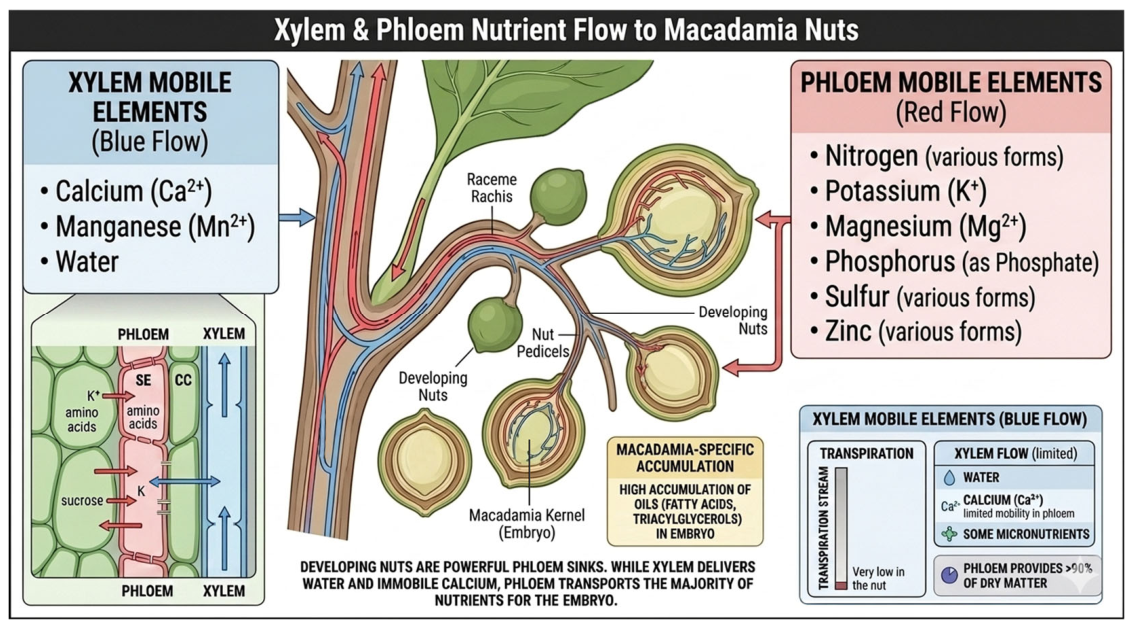
Changing trends in the rate of nutrient accumulation demonstrate that the import of phloem mobile nutrients into macadamia kernels is dynamic (see Figure 18), and this is likely regulated by source strength, phloem path conductance, and sink demand [37]. Macadamia is similar to other seed systems, such as legumes and cereals, in that the seed (kernel) is isolated from the maternal tissues (husk and shell). Therefore, it is likely that there are no plasmodesmata between the maternal and filial tissues and that they are symplastically isolated. This suggests symplastic unloading into maternal tissues and apoplastic unloading into the kernel. Symplastic unloading into maternal tissues is influenced by concentration gradients and is common in early seed coat development as tissues are actively dividing [38,39]. Apoplastic unloading occurs at the seed coat–kernel interface via membrane transporters and occurs during later seed development, when storage begins [39,40]. Therefore, the interface between the maternal seed coat and the filial endosperm/embryo is a selective control point that allows the regulation of nutrient flow [37,41]. The phloem mobile ions (K, Mg, Zn, and possibly B) must cross membrane barriers via transport proteins with efflux into the apoplast, followed by uptake into the kernel. While there is limited information for macadamia, the transporter families are highly conserved across plants [42,43]. N is likely transported as amino acids using key transporter families such as amino acid permeases (AAPs) and lysine-histidine transporters (LHTs) [41,44]. Potassium transport involves Shaker-type K channels, HAK/KUP/PT transporters, and TPK channels, which contribute to bulk flow and regulated uptake into embryo cells [42]. P is transported as inorganic phosphate, primarily via the members of the PHT1 family, and it likely functions at the embryo interface [43].
Contrasting with the phloem mobile elements, Ca and Mn are predominantly transported through the xylem [45,46] and cease to accumulate in the kernel much earlier than the other inorganic nutrients. This suggests that xylem transport in the kernel slowed or ceased from about 110 DAF. This mobility constraint may be a function of the low vapour pressure deficit, and thus the transpiration rate of this organ encased within the shell and the husk [47,48]. These findings imply that the stage of rapid kernel expansion and kernel dry weight accumulation is predominantly supported by phloem flow. Unlike the kernel, xylem transport capacity appears to be upheld in the husk and shell throughout development. Husk K and S, as well as husk and shell Mg, Ca, and Mn, did not cease to accumulate, suggesting continued phloem and xylem transport. From a practical standpoint, these results indicate that late-season application of most nutrients may result in changes in the husk; however, some late applied micronutrients may not enter the kernel. The period of rapid kernel growth (80–175 DAF) therefore represents a key window for fertiliser application in macadamia. Xylem-transported nutrients applied after this time are unlikely to reach the kernel. Since macadamia is a perennial species, its nutrient uptake is not solely coupled to immediate kernel demand but reflects both direct allocation to developing fruit and longer-term storage within the tree. This is particularly relevant for P, which plays a central role in storage and remobilisation, so that fertiliser treatment regimes may influence both current-season kernel development and subsequent growth.
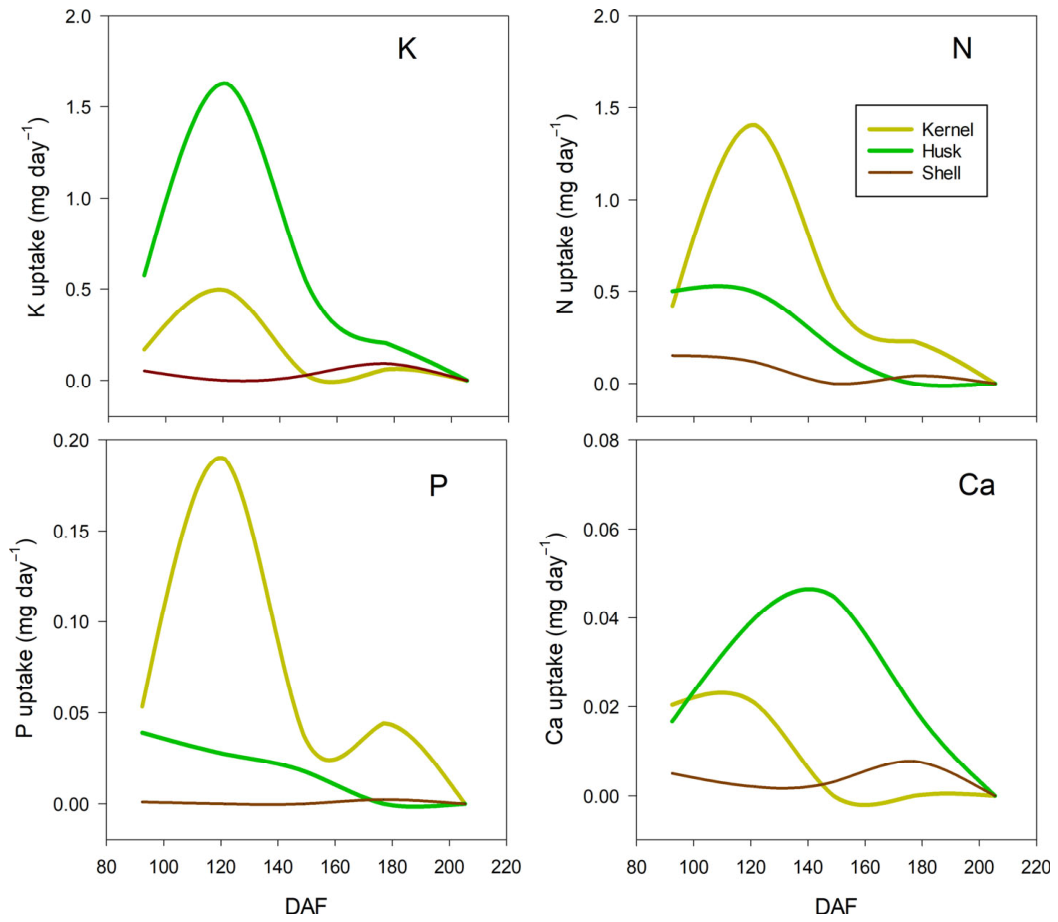
A conceptual figure, developed to illustrate the peak periods of K, N, P, and Ca uptake, is presented below (Figure 19). Peak accumulation of K, N, and P in the whole fruit (husk, shell, and kernel) occurred at approximately 120 days after flowering (DAF), whereas Ca accumulation peaked later, around 150 DAF. Notably, substantial nutrient uptake had already occurred by 80 DAF. These patterns indicate that adequate soil nutrient availability is required prior to 80 DAF to support the phase of rapid fruit growth. As well as ensuring adequate nutrients for fruit set, a target timeframe for solid nutrient application could be 40–100 DAF, while fertigation systems could adapt application timings that more closely follow the observed physiological development of the fruit. As nutrient uptake is largely complete by the time nut-in-shell moisture declines to ~25%, fertiliser applications beyond ~170 DAF—when kernels have entered the oil accumulation phase—are unlikely to significantly influence fruit maturation.

4.3. Nutrient Function

The differences in nutrient composition among the husk, shell, and kernel reflect contrasting functional roles. The primary function of the kernel is to store oil, protein, and minerals to allow embryo germination and seedling development [36]. For this reason, the kernel is a strong, persistent sink for N, which is converted to proteins and enzymes, P, which is incorporated into phospholipids, S, used in sulfur-containing amino acids, and K for phloem transport and unloading, osmotic regulation, charge regulation, and cell expansion during kernel filling and dry matter accumulation. Micronutrients are required for enzyme systems [49]. For instance, Mg is an essential cofactor for acetyl-CoA [50] carboxylase, which forms malonyl-CoA, a primary building block for fatty acids [51]. Manganese is a cofactor for pyruvate carboxylase, which supports the generation and metabolism of acetyl-CoA [52], while Cu is required for enzymes involved in fatty acid desaturases [53]. Phosphorus is required for ATP, which drives multiple steps in fatty acid synthesis [54]. Phosphorus also forms glycerol-3-phosphate, the backbone for triacylgycerols [55]. Additionally, zinc is required in the expression of lipid metabolism genes [56].
As biomass accumulated, all measured nutrients were diluted in the kernel and the shell, but not in the husk. Several husk nutrients were in high concentrations compared to the kernel and shell and, except for N and P, these did not decline with development. For example, K, S, Ca, Mg, and Mn concentration increased or remained stable. This points towards the husk as a strong sink within the fruit for these elements. Aside from offering mechanical support and protection from insect and physical abrasion [10], the green husk likely transpires and carries out photosynthesis, as evidenced by the presence of stomata [57]. Photosynthesis and transpiration early in the development of the fruit are not unusual [58,59]. To support photosynthesis, Mg is an important component of chlorophyll [60], while K is important for regulating stomatal opening and closing [61]. Mn and Fe are critical for enzyme function in photosynthesis; Fe is a component of cytochromes and ferredoxin in the electron transport chain, and Mn is part of the oxygen-evolving complex of photosystem II [49].
The cessation of N, P, and B accumulation by the husk early in development (around 120 DAF), despite continued dry weight accumulation, suggests that cell division had ceased and that active growth was influenced by cell expansion. Structural polysaccharides for cell wall material and carbohydrates likely continued to accumulate through photosynthesis. It is interesting that husk dry weight accumulation occurred despite simultaneous declines in husk water content. This desiccation may have resulted from high transpiration rates, allowing husk splitting and eventual dehiscence of the nut. In its native habitat, after the macadamia fruit falls on the ground, microbial activity mineralises the nutrients stored in the husk, and these can be absorbed by emerging roots to facilitate early seedling establishment.
The shell, offering mechanical protection and structural integrity [62], was a weak nutrient sink and had particularly low concentrations of many nutrients, including N and K, and especially P, after 107 DAF. This aligns with the notion that, after the cell division phase, P is prioritised for tissues with high protein and nucleic acid demands, such as the kernel. N, Zn, and B accumulation ceased as the shell-hardening phase ended at around 120 DAF. This is also when the interface between the shell and the husk transforms from a sticky, white residue to a dry, thin brown layer, and suggests the termination of cell differentiation and cell wall formation phases. Reduced tissue hydration, lignification, and cell wall thickening lower hydraulic conductivity, reduce apoplastic permeability, and increase resistance to solute movement. Moreover, vascular connections may become compressed or undergo partial senescence. N may have been required for enzymes, such as phenylalanine ammonia-lyase and peroxidases, which are involved in lignin biosynthesis and cell wall modifications, as well as a structural protein associated with secondary wall formation [63,64,65,66]. Zn is a cofactor for numerous transcription factors, and it plays an indirect role in cell wall thickening by acting as a cofactor for Zn finger transcription factors and enzymes that regulate the expression of lignin biosynthesis enzymes [67,68]. B forms cross-links in rhamnogalacturonan II, contributing to wall stability [69]. Surprisingly, Ca—important for cell wall fortification—was not observed in higher concentrations relative to the other tissues tested. Similar results were apparent for the husk, with Ca concentrations lower than those observed in the leaves and rachis. This likely reflects the predominance of xylem-driven Ca transport and its limited phloem mobility, resulting in preferential accumulation in highly transpiring tissues such as leaves.

4.4. Cultivar Differences

The three cultivars exhibited comparable trends in nutrient concentration and content, with differences largely confined to absolute quantities, consistent with a previous study showing that mineral element accumulation varies among macadamia cultivars and fruit tissues [32]. Fast-growing tissues create strong nutrient sinks and cultivar differences may be the result of differences in cell division rates and organ size. For instance, even though kernel dry weight did not differ between the cultivars, cv. A203 had the highest shell and husk dry weights. Accordingly, it could be expected that cv. A203 have higher sink strength. This was the case for the shell, with higher nutrient concentrations and content for this cultivar. However, this was not always apparent in the husk. As expected, the husk of cv. A203 had the highest Ca concentrations and content, but cv. 849 had a higher husk N concentration and content, despite having substantially lower dry weight. Aside from the physical size, other drivers for nutrient sink strength include the capacity for vascular storage [70] and activities of enzymes such as nitrate reductase and glutamine synthetase [71], which convert the nutrients into organic forms, maintaining import gradients. The greater kernel partitioning efficiency observed in cv. A38 was not the result of the earlier allocation to the kernel, but rather the result of the increased allocation to the kernel relative to the husk and shell in the same time period.

4.5. Nutrient Mobilisation from the Rachis

The rachis anchors the growing fruit and contains the vascular conduits for nutrient transport. On a concentration basis (mg g−1), the rachis macro- and micronutrients increased during flowering and fruit set. However, after about 30 days, when rapid growth of the rachis began, most of these concentrations began to decline and continue to do so until full maturity. The exceptions were Mg and B which peaked at about 100 DAF and then declined. Cultivar differences in rachis macronutrient concentrations and content were evident. While cv. 849 exhibited higher N, Ca, Mg, and P concentrations (mg g−1), all tested nutrients were observed in greater quantities (mg rachis−1) in cv. A38. This is likely because the rachis of cv. A38 is relatively long compared to those of cultivars 849 and A203, and in this study it had double the dry weight. Accordingly, the rachis content (mg rachis−1) of all tested nutrients was greater in cv. A38.
The rachis attained its maximum size at about 100 DAF and, subsequently, N, K, S, P, Mg, Zn, B, and Cu content (mg rachis−1) declined over the next 4 months through to full maturity in cv. 849. This suggests the export either to the fruit or back to the non-reproductive components of the plant. Similar to the leaf petiole [72], the rachis may behave as a transient nutrient pool and may play a role in nutrient storage and remobilisation. The rachis nutrient pool would not be the sole source of nutrients for the fruit at this late stage, as the amount exported from this organ was smaller than the gain by the fruit components. Nutrient remobilisation to developing seeds/fruits may lead to declining concentrations in supporting vegetative or structural tissues (e.g., stems, leaves, perennial wood) as reproductive demand increases [73,74]. In contrast, rachis Ca, Fe, and Mn content (mg rachis−1) tended to plateau and remained stable. These nutrients are considered particularly immobile and, therefore, were likely locked in this tissue.
Although direct evidence for macadamia is lacking, it is mechanistically plausible the husk may act as a transient nutrient buffer, analogous to the pericarp tissues in other species. For instance, nutrient withdrawal from legume pod walls during seed filling is well documented [75,76]. In Styrax tonkinensis, the pericarp and seed coat act as a nutrient buffer storage area from which nutrients are subsequently transferred to the developing kernel [77]. Similarly, in legumes such as bean (Phaseolus vulgaris), the pericarp accumulates starch and soluble sugars early in development, which are later mobilised to support seed growth and to buffer fluctuations in assimilate supply [75,76,78]. However, in our study, the husk and kernel nutrient content changed in parallel throughout fruit development, suggesting that the husk did not function as a reserve that was remobilised for kernel development. Figure 20 depicts nutrient storage and remobilisation processes within the macadamia tree during nut development.

4.6. Relationship Between the Leaves and Fruit

The dynamics in leaf nutrient concentrations were nutrient-specific. Generally, leaf N, Ca, Mn, Fe, B, and Cu concentrations declined from 80 DAF, while K, S, Mg, and Na levels remained constant, and Zn and Cu content increased. Although the transport of some of these nutrients to the rachis or fruit may have occurred, the inconsistent trends between the leaf and the rachis or the leaf and the fruit suggest that the reproductive organs were not the only sink for these nutrients. For instance, flushes of leaf and root growth may act as competing sinks. Generally, the spring vegetative flush occurs before flowering, but a summer vegetative flush may occur during late nut development if conditions are favourable [79]. Root flushes may also coincide with nut development [80]. Inconsistent relationships with leaf nutrients and fruit nutrients may also be attributed to the deposition and mobilisation from other sources such as woody above- and below-ground tissues. Considering leaves may not reflect reproductive demand, this has implications for interpreting leaf tissue tests and determining when to apply nutrients. Sampling the fruit may provide better insights into true nutrient demands for optimal yield.

5. Conclusions

This study demonstrates that macadamia fruit development is characterised by strong, dynamic nutrient partitioning among the fruit tissues. N and K were accumulated in the largest amounts in the kernel, shell, and husk. The kernel was the principal sink for phloem mobile nutrients, supporting storage and metabolism (N, P, S, Mg, and K). Their accumulation slowed during the oil-filling phase, while the xylem mobile Ca and Mn ceased to accumulate much earlier in development. In contrast, the husk remained a strong sink for phloem- and xylem-associated nutrients throughout development. The shell was a weak nutrient sink overall, but exhibited a transient peak in N, Zn, and B during shell hardening. Cultivar differences were mainly quantitative and linked to tissue size and its role in sink strength. Compared to A203 and 849, A38 showed more efficient allocation of nutrients to the kernel, indicating superior partitioning efficiency. The rachis functioned as a transient nutrient pool, accumulating nutrients early and later exporting mobile elements as fruit demand increased.

Author Contributions

Conceptualisation, S.Y.R. and T.J.R.; methodology and data collection, S.Y.R., J.T.P., M.T., and K.J.; formal analysis, S.Y.R.; writing—original draft preparation, S.Y.R.; writing—review and editing, all authors; funding acquisition, T.J.R. All authors have read and agreed to the published version of the manuscript.

Funding

This research was funded by the ARC Linkage Program, grant number LP220100073, in partnership with the Australian Macadamia Society and NSW Department of Primary Industries and Regional Development.

Data Availability Statement

The raw data supporting the conclusions of this article will be made available by the authors on request.

Acknowledgments

We thank David Robertson for the technical support he provided to this study.

Conflicts of Interest

The authors declare no conflicts of interest.

Abbreviations

The following abbreviations are used in this manuscript:
DAFdays after flowering
SEMstandard error of the mean
VPDvapour pressure deficit

Appendix A

Figure A1. Daily maximum and minimum temperature, precipitation (A), and average daily VPD and solar radiation (B) during the sampling period.
Horticulturae 12 00522 g0a1
Figure A2. Kernel macronutrient concentrations (mg g−1) in cultivars 849, A203, and A38 during nut development. Means ± SEM, n = 4. DAF was significant for N (p < 0.001), K (p < 0.001), P (p < 0.001), Mg (p < 0.001), Ca (p < 0.001), and S (p < 0.001). Cultivar was significant for N (p < 0.001), K (p < 0.001), P (p < 0.001), Mg (p < 0.001), Ca (p < 0.001), and S (p < 0.001). The cultivar x DAF interaction was significant for N (p < 0.001), K (p < 0.001), P (p < 0.001), Mg (p < 0.05), Ca (p < 0.001), and S (p < 0.001).
Horticulturae 12 00522 g0a2
Figure A3. Kernel micronutrient concentrations (mg g−1) in cultivars 849, A203, and A38 during nut development. Means ± SEM, n = 4. DAF was significant for Mn (p < 0.001), Na (p < 0.001), Fe (p < 0.001), Zn (p < 0.001), B (p < 0.001), and Cu (p < 0.001). Cultivar was significant for Mn (p < 0.001), Na (p < 0.001), Fe (p < 0.05), Zn (p < 0.001), and Cu (p < 0.05). Cultivar x DAF interaction was significant for Mn (p < 0.001), Na (p < 0.001), Fe (p < 0.05), and Zn (p < 0.001).
Horticulturae 12 00522 g0a3
Figure A4. Husk macronutrient concentrations (mg g−1) in cultivars 849, A203, and A38 during nut development. Means ± SEM, n = 4. DAF was significant for N (p < 0.001), K (p < 0.001), P (p < 0.001), S (p < 0.001), Mg (p < 0.001), and Ca (p < 0.001). Cultivar was significant for N (p < 0.001), P (p < 0.001), Mg (p < 0.001), and Ca (p < 0.001). The cultivar x DAF interaction was significant for N (p < 0.001) and Mg (p < 0.001).
Horticulturae 12 00522 g0a4
Figure A5. Husk micronutrient concentrations (mg g−1) in cultivars 849, A203, and A38 during nut development. Means ± SEM, n = 4. DAF was significant for Fe (p < 0.001), Na (p < 0.001), Mn (p < 0.001), Zn (p < 0.001), and Cu (p < 0.001). Cultivar was significant for Na (p < 0.001), Mn (p < 0.001), B (p < 0.001), and Cu (p < 0.01). The cultivar x DAF interaction was significant for Na (p < 0.05) and B (p < 0.001).
Horticulturae 12 00522 g0a5
Figure A6. Shell macronutrient concentrations (mg g−1) in cultivars 849, A203, and A38 during nut development. Means ± SEM, n = 4. DAF was significant for N (p < 0.001), K (p < 0.001), S (p < 0.001), P (p < 0.001), Mg (p < 0.001), and Ca (p < 0.001). Cultivar was significant for N (p < 0.001), K (p < 0.001), S (p < 0.01), Mg (p < 0.01), and Ca (p < 0.001). The cultivar x DAF interaction was significant for N (p < 0.01), K (p < 0.05), Mg (p < 0.05), and Ca (p < 0.001).
Horticulturae 12 00522 g0a6
Figure A7. Shell micronutrient concentrations (mg g−1) in cultivars 849, A203, and A38 during nut development. Means ± SEM, n = 4. DAF was significant for Mn (p < 0.001), Fe (p < 0.001), Na (p < 0.01), Zn (p < 0.001), B (p < 0.001), and Cu (p < 0.001). Cultivar was significant for Mn (p < 0.001) and Zn (p < 0.05). Cultivar x DAF interaction was significant for Mn (p < 0.001) and Zn (p < 0.01).
Horticulturae 12 00522 g0a7
Figure A8. Rachis macronutrient concentration (mg g−1) in cultivars 849, A203, and A38 during nut development. Means ± SEM, n = 4. DAF was significant for N (p < 0.001), K (p < 0.001), Ca (p < 0.001), S (p < 0.001), Mg (p < 0.001), and P (p < 0.001). Cultivar was significant for N (p < 0.001), Ca (p < 0.001), S (p < 0.05), Mg (p < 0.001), and P (p < 0.001). The cultivar x DAF interaction was significant for N (p < 0.001), Ca (p < 0.001), Mg (p < 0.001), and P (p < 0.001).
Horticulturae 12 00522 g0a8
Figure A9. Rachis micronutrient concentrations (mg g−1) in cultivars 849, A203, and A38 during nut development. Means ± SEM, n = 4. DAF was significant for Mn (p < 0.001), Na (p < 0.001), Fe (p < 0.001), B (p < 0.001), Zn (p < 0.001), and Cu (p < 0.001). Cultivar was significant for Mn (p < 0.001), Fe (p < 0.05), Na (p < 0.001), Zn (p < 0.001), and Cu (p < 0.001). Cultivar x DAF interaction was significant for Mn (p < 0.001), Na (p < 0.001), Fe (p < 0.001), and Cu (p < 0.001).
Horticulturae 12 00522 g0a9
Figure A10. Leaf macronutrient (mg g−1) in cultivars 849, A203 and A38 during nut development. Means ± SEMs, n = 4. Sampling date was significant for N (p < 0.001), Ca (p < 0.001), S (p < 0.001), P (p < 0.05), and Mg (p < 0.001). Cultivar was significant for N (p < 0.001), Ca (p < 0.01), K (p < 0.01), S (p < 0.001), and Mg (p < 0.001). The cultivar x sampling date interaction was significant for N (p < 0.05), K (p < 0.05), P (p < 0.001), and Mg (p < 0.05).
Horticulturae 12 00522 g0a10

References

  1. Cho, H.; Choi, I.; Shahzad, Z.; Brandizzi, F.; Rouached, H. Nutrient cues control flowering time in plants. Trends Plant Sci. 2025, 30, 1274–1285. [Google Scholar] [CrossRef]
  2. Yang, H.; Li, Y.; Cao, Y.; Shi, W.; Xie, E.; Mu, N.; Du, G.; Shen, Y.; Tang, D.; Cheng, Z. Nitrogen nutrition contributes to plant fertility by affecting meiosis initiation. Nat. Commun. 2022, 13, 485. [Google Scholar] [CrossRef]
  3. Shah, I.H.; Jinhui, W.; Li, X.; Hameed, M.K.; Manzoor, M.A.; Li, P.; Zhang, Y.; Niu, Q.; Chang, L. Exploring the role of nitrogen and potassium in photosynthesis implications for sugar: Accumulation and translocation in horticultural crops. Sci. Hortic. 2024, 327, 112832. [Google Scholar] [CrossRef]
  4. Lilay, G.H.; Thiébaut, N.; du Mee, D.; Assunção, A.G.; Schjoerring, J.K.; Husted, S.; Persson, D.P. Linking the key physiological functions of essential micronutrients to their deficiency symptoms in plants. New Phytol. 2024, 242, 881–902. [Google Scholar] [CrossRef]
  5. Gu, H.; Li, J.; Lu, Z.; Li, X.; Cong, R.; Ren, T.; Lu, J. Effects of combined application of nitrogen and potassium on oil concentration and fatty acid component of oilseed rape (Brassica napus L.). Field Crops Res. 2024, 306, 109229. [Google Scholar] [CrossRef]
  6. Zhao, H.; Sharmita, O.; Siddique, A.B.; Shabala, S.; Zhou, M.; Zhao, C. Optimizing nitrogen supplementation: Timing strategies to mitigate waterlogging stress in winter-and spring-type canola. Plants 2025, 14, 2641. [Google Scholar] [CrossRef]
  7. Lee, S.; Showalter, J.; Zhang, L.; Cassin-Ross, G.; Rouached, H.; Busch, W. Nutrient levels control root growth responses to high ambient temperature in plants. Nat. Commun. 2024, 15, 4689. [Google Scholar] [CrossRef]
  8. Jhanji, S.; Chumber, M.; Kaur, G.; Kaur, R.; Goyal, E.; Dhingra, M. Nutrient driven stress resilience: Mechanisms of nutrient uptake, sensing and signaling in plants. Plant Physiol. Biochem. 2025, 229, 110456. [Google Scholar] [CrossRef]
  9. Bolat, I.; Korkmaz, K.; Dogan, M.; Turan, M.; Kaya, C.; Seyed Hajizadeh, H.; Kaya, O. Enhancing drought, heat shock, and combined stress tolerance in Myrobalan 29C rootstocks with foliar application of potassium nitrate. BMC Plant Biol. 2024, 24, 140. [Google Scholar] [CrossRef]
  10. Rogiers, S.Y.; Quinlan, K.P.; Bright, J.D. Challenges to optimal macadamia (Macadamia spp.) kernel quality in a changing climate. Funct. Plant Biol. 2025, 52, FP24218. [Google Scholar] [CrossRef] [PubMed]
  11. Huett, D.; Vimpany, I. Revised diagnostic leaf nutrient standards for macadamia growing in Australia. Aust. J. Exp. Agric. 2007, 47, 869–876. [Google Scholar] [CrossRef]
  12. De Silva, A.L.; Kämper, W.; Wallace, H.M.; Ogbourne, S.M.; Hosseini Bai, S.; Nichols, J.; Trueman, S.J. Boron effects on fruit set, yield, quality and paternity of macadamia. Agronomy 2022, 12, 684. [Google Scholar] [CrossRef]
  13. Tong, C.; Ding, Y.; Cheng, X.; Liu, L.; Liu, X.; Zhang, Y.; Xia, Y.; Li, M.; Liu, S. Plant oil biosynthesis and genetic improvement: Progress, challenges, and opportunities. Plant Physiol. 2025, 199, kiaf358. [Google Scholar] [CrossRef] [PubMed]
  14. Stephenson, R.; Gallagher, E.; Doogan, V.; Mayer, D.G. Nitrogen and environmental factors influencing macadamia quality. Aust. J. Exp. Agric. 2000, 40, 1145–1150. [Google Scholar] [CrossRef]
  15. Schüler, P.; Speck, T.; Bührig-Polaczek, A.; Fleck, C. Structure-function relationships in Macadamia integrifolia seed coats–fundamentals of the hierarchical microstructure. PLoS ONE 2014, 9, e102913. [Google Scholar] [CrossRef] [PubMed]
  16. Hartung, M.; Storey, W. The development of the fruit of Macadamia ternifolia. J. Agric. Res. 1940, 59, 397. [Google Scholar]
  17. Walton, D. Anatomy and Handling: Implications for Macadamia Nut Quality; University of the Sunshine Coast: Queensland, Australia, 2005. [Google Scholar]
  18. Ludewig, F.; Flügge, U.I. Role of metabolite transporters in source-sink carbon allocation. Front. Plant Sci. 2013, 4, 231. [Google Scholar] [CrossRef]
  19. Peace, C.; Hardner, C.; Brown, A.; O’Connor, K.; Vithanage, V.; Turnbull, C.; Carroll, B. The diversity and origins of macadamia cultivars. WANATCA Yearb. 2002, 26, 19–25. [Google Scholar]
  20. Topp, B.L.; Nock, C.J.; Hardner, C.M.; Alam, M.; O’Connor, K.M. Macadamia (Macadamia spp.) breeding. In Advances in Plant Breeding Strategies: Nut and Beverage Crops: Volume 4; Springer: Berlin/Heidelberg, Germany, 2020; pp. 221–251. [Google Scholar]
  21. Toft, B.D.; Alam, M.M.; Wilkie, J.D.; Topp, B.L. Phenotypic association of multi-scale architectural traits with canopy volume and yield: Moving toward high-density systems for macadamia. HortScience 2019, 54, 596–602. [Google Scholar] [CrossRef]
  22. Bright, J.; Alt, S. Bearing trees. In Macadamia Grower’s Guide; NSW Department of Primary Industries and Regional Development: Orange, Australia, 2024. [Google Scholar]
  23. Firth, D.; Whalley, R.; Johns, G. Distribution and density of the root system of macadamia on krasnozem soil and some effects of legume groundcovers on fibrous root density. Aust. J. Exp. Agric. 2003, 43, 503–514. [Google Scholar] [CrossRef]
  24. Jeong, K.; Rogiers, S.; Gibson, A.J.; Mieog, J.; Thapa, M.; Kretzschmar, T.; Barkla, B.J.; Rose, T.J. Cluster root rormation in Macadamia integrifolia seedlings: Responses to phosphorus and variation among grafted scions. Agronomy 2026, 16, 309. [Google Scholar] [CrossRef]
  25. Kaur, P.; Cowan, M.; De Faveri, J.; Alam, M.; Topp, B. Evaluating Self-Pollination Methods: Their Impact on Nut Set and Nutlet Abscission in Macadamia. Plants 2024, 13, 3456. [Google Scholar] [CrossRef]
  26. Hu, W.; Fitzgerald, M.; Topp, B.; Alam, M.; O’Hare, T.J. Fatty acid diversity and interrelationships in macadamia nuts. LWT 2022, 154, 112839. [Google Scholar] [CrossRef]
  27. Trueman, S.J. The reproductive biology of macadamia. Sci. Hortic. 2013, 150, 354–359. [Google Scholar] [CrossRef]
  28. Bright, J.; Alt, S. Cultivars. In Macadamia Grower’s Guide; NSW Department of Primary Industries: Orange, Australia, 2024. [Google Scholar]
  29. Group, I.W. IUSS Working Group. World Reference Base for Soil Resources. International Soil Classification System for Naming Soils and Creating Legends for Soil Maps, 4th ed.; International Union of Soil Sciences (IUSS): Vienna, Austria, 2022. [Google Scholar]
  30. Bright, J.; Alt, S. Nutrition and soil health–Part 2: The next level. In Macadamia Grower’s Guide; NSW Department of Primary Industries: Orange, Australia, 2023; p. 64. [Google Scholar]
  31. Standard Methods Committee of the American Public Health Association; American Water Works Association; Water Environment Federation. 3125 Metals by Inductively Coupled Plasma-Mass Spectrometry. In Standard Methods for the Examination of Water and Wastewater; American Public Health Association: Washington, DC, USA, 2018. [Google Scholar]
  32. Kang, Z.; Guo, G.; He, F.; Zeng, H.; Tu, X.; Wang, W. An analysis of the main nutrient components of the fruits of different macadamia (Macadamia integrifolia) cultivars in rocky desertification areas and a comprehensive evaluation of the mineral element contents. Horticulturae 2024, 10, 468. [Google Scholar] [CrossRef]
  33. Rebolledo-Roa, A.; Burbano-Diaz, R.A. Nutrient Balance in Hass Avocado Trees as a Tool to Optimize Crop Fertilization Management. Agronomy 2023, 13, 1956. [Google Scholar] [CrossRef]
  34. Yarra. Almond Nutritional Summary; Yarra Valley Almonds: Richmond, Australia, 2026. [Google Scholar]
  35. Jones, W.W.; Shaw, L. The process of oil formation and accumulation in the macadamia. Plant Physiol. 1943, 18, 1. [Google Scholar] [CrossRef] [PubMed]
  36. Bewley, J.D.; Bradford, K.; Hilhorst, H. Seeds: Physiology of Development, Germination and Dormancy; Springer Science & Business Media: Berlin/Heidelberg, Germany, 2012. [Google Scholar]
  37. Zhang, W.-H.; Zhou, Y.; Dibley, K.E.; Tyerman, S.D.; Furbank, R.T.; Patrick, J.W. Nutrient loading of developing seeds. Funct. Plant Biol. 2007, 34, 314–331. [Google Scholar] [CrossRef]
  38. Borisjuk, L.; Nguyen, T.H.; Neuberger, T.; Rutten, T.; Tschiersch, H.; Claus, B.; Feussner, I.; Webb, A.G.; Jakob, P.; Weber, H. Gradients of lipid storage, photosynthesis and plastid differentiation in developing soybean seeds. New Phytol. 2005, 167, 761–776. [Google Scholar] [CrossRef]
  39. Patrick, J. Phloem unloading: Sieve element unloading and post-sieve element transport. Annu. Rev. Plant Biol. 1997, 48, 191–222. [Google Scholar] [CrossRef] [PubMed]
  40. Ruan, Y.-L.; Patrick, J.W.; Bouzayen, M.; Osorio, S.; Fernie, A.R. Molecular regulation of seed and fruit set. Trends Plant Sci. 2012, 17, 656–665. [Google Scholar] [CrossRef]
  41. Tegeder, M.; Rentsch, D. Uptake and partitioning of amino acids and peptides. Mol. Plant 2010, 3, 997–1011. [Google Scholar] [CrossRef]
  42. Maathuis, F.J. Physiological functions of mineral macronutrients. Curr. Opin. Plant Biol. 2009, 12, 250–258. [Google Scholar] [CrossRef]
  43. Nussaume, L.; Kanno, S.; Javot, H.; Marin, E.; Pochon, N.; Ayadi, A.; Nakanishi, T.M.; Thibaud, M.-C. Phosphate import in plants: Focus on the PHT1 transporters. Front. Plant Sci. 2011, 2, 83. [Google Scholar] [CrossRef] [PubMed]
  44. Müller, B.; Fastner, A.; Karmann, J.; Mansch, V.; Hoffmann, T.; Schwab, W.; Suter-Grotemeyer, M.; Rentsch, D.; Truernit, E.; Ladwig, F. Amino acid export in developing Arabidopsis seeds depends on UmamiT facilitators. Curr. Biol. 2015, 25, 3126–3131. [Google Scholar] [CrossRef] [PubMed]
  45. White, P.J. The pathways of calcium movement to the xylem. J. Exp. Bot. 2001, 52, 891–899. [Google Scholar] [CrossRef]
  46. Clarkson, D.T. The uptake and translocation of manganese by plant roots. In Proceedings of the International Symposium on ‘Manganese in Soils and Plants’, Glen Osmond, Australia, 22–26 August 1988; pp. 101–111. [Google Scholar]
  47. Taylor, M.D.; Locascio, S.J. Blossom-End Rot: A Calcium Deficiency. J. Plant Nutr. 2004, 27, 123–139. [Google Scholar] [CrossRef]
  48. Montanaro, G.; Dichio, B.; Xiloyannis, C. Significance of fruit transpiration on calcium nutrition in developing apricot fruit. J. Plant Nutr. Soil Sci. 2010, 173, 618–622. [Google Scholar] [CrossRef]
  49. White, P.J.; Brown, P. Plant nutrition for sustainable development and global health. Ann. Bot. 2010, 105, 1073–1080. [Google Scholar] [CrossRef]
  50. Greenspan, M.D.; Lowenstein, J.M. Effects of magnesium ions, adenosine triphosphate, palmitoylcarnitine, and palmitoyl coenzyme A on acetyl coenzyme A carboxylase. J. Biol. Chem. 1968, 243, 6273–6280. [Google Scholar] [CrossRef]
  51. Ke, J.; Behal, R.H.; Back, S.L.; Nikolau, B.J.; Wurtele, E.S.; Oliver, D.J. The role of pyruvate dehydrogenase and acetyl-coenzyme A synthetase in fatty acid synthesis in developing Arabidopsis seeds. Plant Physiol. 2000, 123, 497–508. [Google Scholar] [CrossRef] [PubMed]
  52. Schmidt, S.B.; Husted, S. The biochemical properties of manganese in plants. Plants 2019, 8, 381. [Google Scholar] [CrossRef]
  53. Rai, S.; Singh, P.K.; Mankotia, S.; Swain, J.; Satbhai, S.B. Iron homeostasis in plants and its crosstalk with copper, zinc, and manganese. Plant Stress 2021, 1, 100008. [Google Scholar] [CrossRef]
  54. Wakil, S.J. Mechanism of fatty acid synthesis. J. Lipid Res. 1961, 2, 1–24. [Google Scholar] [CrossRef]
  55. Wendel, A.A.; Lewin, T.M.; Coleman, R.A. Glycerol-3-phosphate acyltransferases: Rate limiting enzymes of triacylglycerol biosynthesis. Biochim. Biophys. Acta (BBA)-Mol. Cell Biol. Lipids 2009, 1791, 501–506. [Google Scholar] [CrossRef]
  56. Kolesnikov, Y.; Kretynin, S.; Markhaichuk, V.; Filepova, R.; Dobrev, P.I.; Martinec, J.; Shablykin, O.; Schmülling, T.; Kravets, V. The role of zinc in regulation of plant metabolism: What is known to date? J. Plant Growth Regul. 2026, 45, 1639–1660. [Google Scholar] [CrossRef]
  57. Akinsanmi, O.A.; Topp, B.; Drenth, A. Pericarps retained in the tree canopy and stomatal abundance are components of resistance to husk spot caused by Pseudocercospora macadamiae in macadamia. Euphytica 2012, 185, 313–323. [Google Scholar] [CrossRef]
  58. Garrido, A.; Conde, A.; Serôdio, J.; De Vos, R.C.; Cunha, A. Fruit photosynthesis: More to know about where, how and why. Plants 2023, 12, 2393. [Google Scholar] [CrossRef]
  59. Simkin, A.J.; Faralli, M.; Ramamoorthy, S.; Lawson, T. Photosynthesis in non-foliar tissues: Implications for yield. Plant J. 2020, 101, 1001–1015. [Google Scholar] [CrossRef] [PubMed]
  60. Cakmak, I.; Yazici, A.M. Magnesium: A forgotten element in crop production. Better Crops 2010, 94, 23–25. [Google Scholar]
  61. Kollist, H.; Nuhkat, M.; Roelfsema, M.R.G. Closing gaps: Linking elements that control stomatal movement. New Phytol. 2014, 203, 44–62. [Google Scholar] [CrossRef]
  62. Khan, M.S.; Islam, M.M.; Epaarachchi, J.; Shibata, S. Exploring the prospects of macadamia nutshells for bio-synthetic polymer composites: A review. Polymers 2023, 15, 4007. [Google Scholar] [CrossRef]
  63. Solanki, M. The Zn as a vital micronutrient in plants. J. Microbiol. Biotechnol. Food Sci. 2021, 11, e4026. [Google Scholar] [CrossRef]
  64. Vallee, B.L.; Auld, D.S. Zinc coordination, function, and structure of zinc enzymes and other proteins. Biochemistry 1990, 29, 5647–5659. [Google Scholar] [CrossRef]
  65. Takatsuji, H. Zinc-finger transcription factors in plants. Cell. Mol. Life Sci. CMLS 1998, 54, 582–596. [Google Scholar] [CrossRef]
  66. Kanwal, F.; Tabusam, J.; Khan, A.; Askri, S.M.H.; Ullah, S.; Zhang, G. Zn induced modifications in cell wall structure and lignin biosynthesis pathways improving cadmium tolerance in barley. Environ. Exp. Bot. 2025, 237, 106183. [Google Scholar] [CrossRef]
  67. Zhao, Q.; Nakashima, J.; Chen, F.; Yin, Y.; Fu, C.; Yun, J.; Shao, H.; Wang, X.; Wang, Z.-Y.; Dixon, R.A. Laccase is necessary and nonredundant with peroxidase for lignin polymerization during vascular development in Arabidopsis. Plant Cell 2013, 25, 3976–3987. [Google Scholar] [CrossRef]
  68. Boerjan, W.; Ralph, J.; Baucher, M. Lignin biosynthesis. Annu. Rev. Plant Biol. 2003, 54, 519–546. [Google Scholar] [CrossRef]
  69. O’Neill, M.A.; Ishii, T.; Albersheim, P.; Darvill, A.G. Rhamnogalacturonan II: Structure and function of a borate cross-linked cell wall pectic polysaccharide. Annu. Rev. Plant Biol. 2004, 55, 109–139. [Google Scholar] [CrossRef]
  70. Etxeberria, E.; Pozueta-Romero, J.; Gonzalez, P. In and out of the plant storage vacuole. Plant Sci. 2012, 190, 52–61. [Google Scholar] [CrossRef]
  71. Miflin, B.J.; Habash, D.Z. The role of glutamine synthetase and glutamate dehydrogenase in nitrogen assimilation and possibilities for improvement in the nitrogen utilization of crops. J. Exp. Bot. 2002, 53, 979–987. [Google Scholar] [CrossRef]
  72. Baby, T.; Moroni, F.; Gascon-Aldana, P.; Moroni, N.; Holzapfel, B.; Schmidtke, L.; Walker, R.; Rogiers, S. Characterising leaf petiole, blade and bunchstem nutrient concentration across three grapevine cultivars. Aust. J. Grape Wine Res. 2021, 27, 442–452. [Google Scholar] [CrossRef]
  73. Lu, S.; Xv, J.; Gong, Y.; Gong, W.; Hui, W.; Qiu, J.; Zhai, Y.; Wang, J. Seasonal changes of mineral nutrient absorption and allocation in the branch and leaf of Zanthoxylum bungeanum ‘Hanyuan’ during the fruit development. Front. Plant Sci. 2024, 15, 1484762. [Google Scholar] [CrossRef]
  74. Gourieroux, A.M.; Holzapfel, B.P.; Scollary, G.R.; McCully, M.E.; Canny, M.J.; Rogiers, S.Y. The amino acid distribution in rachis xylem sap and phloem exudate of Vitis vinifera ‘Cabernet Sauvignon’ bunches. Plant Physiol. Biochem. 2016, 105, 45–54. [Google Scholar] [CrossRef]
  75. Fallahi, H.; Scofield, G.N.; Badger, M.R.; Chow, W.S.; Furbank, R.T.; Ruan, Y.-L. Localization of sucrose synthase in developing seed and siliques of Arabidopsis thaliana reveals diverse roles for SUS during development. J. Exp. Bot. 2008, 59, 3283–3295. [Google Scholar] [CrossRef]
  76. Bennett, E.J.; Roberts, J.A.; Wagstaff, C. The role of the pod in seed development: Strategies for manipulating yield. New Phytol. 2011, 190, 838–853. [Google Scholar] [CrossRef]
  77. Wu, Q.; Zhang, Z.; Peng, H.; Wu, Y.; Yu, F. The nutrient distribution in the continuum of the pericarp, seed coat, and kernel during Styrax tonkinensis fruit development. PeerJ 2019, 7, e7996. [Google Scholar] [CrossRef]
  78. Belmont, R.; Bernal, L.; Padilla-Chacón, D.; Coello, P.; Martínez-Barajas, E. Starch accumulation in bean fruit pericarp is mediated by the differentiation of chloroplasts into amyloplasts. Plant Sci. 2022, 316, 111163. [Google Scholar] [CrossRef]
  79. Olesen, T.; McPhan, A. Some observations on the flowering of macadamia. Aust. Macadamia Soc. News Bull. 2003, 30, 38–40. [Google Scholar]
  80. Akinsanmi, O.A.; Drenth, A. Phosphite and metalaxyl rejuvenate macadamia trees in decline caused by Phytophthora cinnamomi. Crop Prot. 2013, 53, 29–36. [Google Scholar] [CrossRef]
Figure 1. Developmental changes in (A) kernel dry weight; (B) shell dry weight; (C) husk dry weight; (D) nut in shell dry weight; (E) kernel recovery; and (F) nut in shell moisture in cultivars 849, A203, and A38. Means ± SEM, n = 4. DAF was significant for all parameters (p < 0.001). Cultivar was significant for shell dry weight (p < 0.001), husk dry weight (p < 0.001), nut-in-shell dry weight (p < 0.001), and nut-in-shell moisture (p < 0.01). There were no significant cultivar x DAF interactions.
Horticulturae 12 00522 g001
Figure 2. Developmental changes in (A) rachis dry weight; (B) rachis water content; and (C) husk water content in cultivars 849, A203, and A38. Means ± SEM, n = 4. DAF was significant for rachis dry weight (p < 0.001), rachis water content (p < 0.01), and husk water content (p < 0.001). Cultivar was significant for rachis dry weight (p < 0.001) and husk water content (p < 0.001). The cultivar x DAF interaction was significant for rachis dry weight (p < 0.01) and husk water content (p < 0.001).
Horticulturae 12 00522 g002
Figure 3. Kernel macronutrients (mg kernel−1) for cultivars 849, A203, and A38 during nut development. Means ± SEM, n = 4. DAF was significant for N (p < 0.001), K (p < 0.001), P (p < 0.001), S (p < 0.001), Mg (p < 0.001), and Ca (p < 0.001). Cultivar was significant for K (p < 0.05), P (p < 0.001), Mg (p < 0.001), and Ca (p < 0.001). The cultivar x DAF interaction was significant for P (p < 0.05), Mg (p < 0.05), and Ca (p < 0.01).
Horticulturae 12 00522 g003
Figure 4. Kernel micronutrient content (mg kernel−1) for cultivars 849, A203, and A38 during nut development. Means ± SEM, n = 4. DAF was significant for Mn (p < 0.001), Na (p < 0.001), Fe (p < 0.001), Zn (p < 0.001), B (p < 0.001), and Cu (p < 0.001). Cultivar was significant for Mn (p < 0.001), Na (p < 0.001), and B (p < 0.001). Cultivar x DAF interaction was significant for Na (p < 0.001) and B (p < 0.001).
Horticulturae 12 00522 g004
Figure 5. PCA biplot of standardised kernel nutrient content for cultivars 849, A203, and A38 during nut development. N, P, B, S, Zn, and Mg are clustered together. Vector length reflects the strength of each nutrient’s contribution to the principal components. The angle between vectors indicates the correlation among nutrients (acute angles = positive correlation; obtuse angles = negative correlation; right angles ≈ no correlation).
Horticulturae 12 00522 g005
Figure 6. Husk macronutrient content (mg husk−1) for cultivars 849, A203, and A38 during nut development. Means ± SEM, n = 4. DAF was significant for K (p < 0.001), N (p < 0.001), S (p < 0.001), P (p < 0.001), Mg (p < 0.001), and Ca (p < 0.001). Cultivar was significant for K (p < 0.001), N (p < 0.001), S (p < 0.001), P (p < 0.01), Mg (p < 0.001), and Ca (p < 0.001). The cultivar x DAF interaction was significant for N (p < 0.01) and Mg (p < 0.01).
Horticulturae 12 00522 g006
Figure 7. Husk micronutrient content (mg husk−1) for cultivars 849, A203, and A38 during nut development. Means ± SEM, n = 4. DAF was significant for Na (p < 0.001), Fe (p < 0.001), Mn (p < 0.001), Zn (p < 0.001), B (p < 0.001), and Cu (p < 0.001). Cultivar was significant for Na (p < 0.001), Fe (p < 0.05), Mn (p < 0.001), Zn (p < 0.05), B (p < 0.001), and Cu (p < 0.01). The cultivar x DAF interaction was significant for Na (p < 0.05).
Horticulturae 12 00522 g007
Figure 8. PCA biplot of standardised husk nutrient content for cultivars 849, A203, and A38 during nut development. Zn, Cu, and B form one cluster while K, Mg, and S form another cluster. Vector length reflects the strength of each nutrient’s contribution to the principal components. The angle between vectors indicates the correlation among nutrients (acute angles = positive correlation; obtuse angles = negative correlation; right angles ≈ no correlation).
Horticulturae 12 00522 g008
Figure 9. Shell macronutrient content (mg shell−1) for cultivars 849, A203, and A38 during nut development. Means ± SEM, n = 4. DAF was significant (p < 0.001) for N, K, S, P, Mg, and Ca. Cultivar was significant for N (p < 0.001), K (p < 0.001), P (p < 0.001), Mg (p < 0.001), and Ca (p < 0.001). The cultivar x DAF interaction was significant for N (p < 0.001), K (p < 0.05), P (p < 0.001), and Mg (p < 0.001).
Horticulturae 12 00522 g009
Figure 10. Shell micronutrient content (mg shell−1) for cultivars 849, A203, and A38 during nut development. Means ± SEM, n = 4. DAF was significant for Mn (p < 0.001), Fe (p < 0.001), Na (p < 0.001), Zn (p < 0.001), B (p < 0.001), and Cu (p < 0.001). Cultivar was significant for Mn (p < 0.001), Fe (p < 0.001), Na (p < 0.01), Zn (p < 0.001), B (p < 0.001), and Cu (p < 0.001). Cultivar x DAF interaction was significant for Mn (p < 0.001), Zn (p < 0.05), Na (p < 0.05), and B (p < 0.001).
Horticulturae 12 00522 g010
Figure 11. PCA biplot of standardised shell nutrient content for cultivars 849, A203, and A38 during nut development. Vector length reflects the strength of each nutrient’s contribution to the principal components. The angle between vectors indicates the correlation among nutrients (acute angles = positive correlation; obtuse angles = negative correlation; right angles ≈ no correlation).
Horticulturae 12 00522 g011
Figure 12. Nutrient content (mg organ−1) of the husk, shell and kernel in cultivars 849, A203 and A38 at maturity.
Horticulturae 12 00522 g012
Figure 13. Rachis macronutrient content (mg rachis−1) in cultivars 849, A203, and A38 during nut development. Means ± SEM, n = 4. DAF was significant for N (p < 0.001), K (p < 0.001), S (p < 0.001), Ca (p < 0.001), Mg (p < 0.001), and P (p < 0.001). Cultivar was significant for N (p < 0.001), K (p < 0.001), P (p < 0.001), Ca (p < 0.001), and Mg (p < 0.001). The cultivar x DAF interaction was significant for K (p < 0.05), Ca (p < 0.01), and Mg (p < 0.001).
Horticulturae 12 00522 g013
Figure 14. Rachis micronutrient content (mg rachis−1) in cultivars 849, A203, and A38 during nut development. Means ± SEM, n = 4. DAF was significant (p < 0.001) for Mn, Na, Fe, B, Zn, and Cu. Cultivar was significant for Mn (p < 0.001), Na (p < 0.001), Fe (p < 0.001), B (p < 0.001), Zn (p < 0.001), and Cu (p < 0.001). Cultivar x DAF interaction was significant for Mn (p < 0.001), Fe (p < 0.05), and B (p < 0.05).
Horticulturae 12 00522 g014
Figure 15. PCA biplot of standardised rachis nutrient content for cultivars 849, A203, and A38 during nut development. Mn, Fe, and Al have clustered together. Vector length reflects the strength of each nutrient’s contribution to the principal components. The angle between vectors indicates the correlation among nutrients (acute angles = positive correlation; obtuse angles = negative correlation; right angles ≈ no correlation).
Horticulturae 12 00522 g015
Figure 16. Leaf macronutrient concentration (mg g−1) in cultivars 849, A203, and A38 during nut development. Means ± SEM, n = 4. DAF was significant for N (p < 0.001), Ca (p < 0.001), S (p < 0.001), P (p < 0.05), and Mg (p < 0.001). Cultivar was significant for N (p < 0.001), Ca (p < 0.01), K (p < 0.01), S (p < 0.001), and Mg (p < 0.001). The cultivar x DAF interaction was significant for N (p < 0.05), K (p < 0.05), P (p < 0.001), and Mg (p < 0.05).
Horticulturae 12 00522 g016
Figure 17. Leaf micronutrient concentration (mg g−1) in cultivars 849, A203, and A38 during nut development. Means ± SEM, n = 4. DAF was significant for Mn (p < 0.001), Na (p < 0.001), Fe (p < 0.001), Zn (p < 0.001), B (p < 0.001), and Cu (p < 0.001). Cultivar was significant for Mn (p < 0.001), Na (p < 0.001), Fe (p < 0.001), Zn (p < 0.05), B (p < 0.001), and Cu (p < 0.001). Cultivar x DAF interaction was significant for Cu (p < 0.05).
Horticulturae 12 00522 g017
Figure 18. Nutrient flow and accumulation in macadamia nuts. Xylem flow (blue) is responsible for the transport of water and immobile or low-mobility minerals like Ca and Mn. Xylem flow is driven by transpiration, which is limited in the kernel. Phloem flow (red) represents the primary supply of sucrose, amino acids, and highly mobile elements such as N, K, P, S, Mg, and Zn. The inset (bottom left) details the cellular exchange between the phloem (sieve elements and companion cells) and xylem.
Horticulturae 12 00522 g018
Figure 19. Peak periods of nutrient demand in mg day−1 for the kernel, husk, and shell during their development.
Horticulturae 12 00522 g019
Figure 20. The translocation of photoassimilates, reserve carbohydrates, and mineral nutrients occurs among source and sink organs, including roots, trunk, leaves, and reproductive structures such as the rachis, husk, shell, and kernel. Concurrent sink demands arising from vegetative flushes, root growth, and nut development can lead to competition for assimilates and nutrients, thereby influencing reproductive development and final yield. The husk constitutes a substantial nutrient reservoir during fruit development, and its removal at harvest, together with the nut, represents a considerable export of nutrients from the orchard system, necessitating appropriate nutrient replacement strategies.
Horticulturae 12 00522 g020
Disclaimer/Publisher’s Note: The statements, opinions and data contained in all publications are solely those of the individual author(s) and contributor(s) and not of MDPI and/or the editor(s). MDPI and/or the editor(s) disclaim responsibility for any injury to people or property resulting from any ideas, methods, instructions or products referred to in the content.