Article

An Integrated AI Framework for Crop Recommendation

1
Engineering Institute of Technology, Perth Campus, 6 & 8 Thelma Street, West Perth, WA 6005, Australia
2
Engineering Institute of Technology, Brisbane Campus, 333 Adelaide Street, Brisbane, QLD 4000, Australia
3
Suliman S. Olayan School of Business, American University of Beirut, Riad El Solh, P.O. Box 11-0236, Beirut 1107 2020, Lebanon
*
Authors to whom correspondence should be addressed.
Horticulturae 2026, 12(4), 416; https://doi.org/10.3390/horticulturae12040416
Submission received: 15 February 2026 / Revised: 16 March 2026 / Accepted: 20 March 2026 / Published: 27 March 2026

Abstract

Despite recent advances in artificial intelligence for agriculture, reliable crop recommendation remains constrained by limited access to soil diagnostics, insufficient integration of environmental context, and the absence of transparent, quantitative evaluation frameworks. This study addresses the research question: How can we integrate multiple indicators to generate accurate, explainable, and context-sensitive crop recommendations? To this end, we propose a multimodal decision-support framework that combines image-based soil texture classification with geospatial, and climatic information. A convolutional neural network was trained on a curated dataset of 3250 soil images aggregated from four publicly available sources, covering four primary soil texture classes, alongside tabular soil and nutrient data. The model was evaluated using 5-fold stratified cross-validation, achieving an average classification accuracy of 99.30% (standard deviation ≈ 0.66), and was further validated on an independent hold-out test set to assess generalization performance. To enhance practical applicability, the framework incorporates elevation, rainfall, temperature, and major soil nutrients, and employs a large language model to generate user-oriented, interpretable justifications for each recommendation. Crop recommendations were quantitatively evaluated using a novel Agronomic Suitability Score (ASS), which measures alignment across soil compatibility, climatic suitability, seasonal alignment, and elevation tolerance. Across six geographically diverse case studies, the framework achieved mean ASS values ranging from 3.76 to 4.96, with five regions exceeding 4.45, demonstrating strong agronomic validity, robustness, and scalability. A Streamlit-based application further illustrates the system’s ability to deliver accessible, location-aware, and explainable agronomic guidance. The results indicate that the proposed approach constitutes a scalable decision-support tool with significant potential for sustainable agriculture and food security initiatives.

1. Introduction

Ensuring sustainability and food security in agricultural practices has been a serious challenge the world is facing [1]. For this purpose, the United Nations has taken actions to encourage countries to shift more towards sustainable practices in all sectors through the sustainable development goals (SDGs) [2]. In agriculture, sustainable practices mainly include preserving the available resources as much as possible; in other words, benefiting from the available resources to maximize the yield as much as possible [3]. The factors that affect the yield are many, but the most important include the suitability of soil texture for the selected crop type [3], geographical properties [4], and climate [4]. However, determining soil texture requires laboratory testing which is not applicable for farmers in most countries, especially in rural areas where there is plenty of agricultural land [5]. It is also difficult for farmers to determine the exact elevation and climatic conditions such as precipitation and humidity [6]. Moreover, microbial activity influences nutrient cycling, soil structure, and plant–soil interactions, which may ultimately affect crop suitability and yield potential. Recent studies highlight the importance of incorporating microbial indicators when evaluating soil health and agricultural sustainability [7]. Although the present study focuses primarily on soil texture and environmental factors due to data availability constraints, integrating microbial soil characteristics represents a promising direction for future crop recommendation systems.
AI and machine learning tools have emerged as a powerful tool in modern agriculture, particularly for tasks involving image analysis and prediction [8]. Many existing studies focus on crop health monitoring. For example, ref. [9] developed models to detect pests and diseases from plant images, while Naik and Chaubey [10] achieved over 96% accuracy in weed detection using RCNNs. Similarly, Arslanova et al. [11] applied UAV imagery for fine-scale crop classification, underscoring the growing role of remote sensing and computer vision in precision agriculture.
Beyond crop monitoring, machine learning has also been applied to yield prediction and crop recommendation. Bhat et al. [12] proposed a GBRT–DNN hybrid model incorporating SMOTE-Tomek sampling and SHAP explainability for soil suitability analysis, addressing issues of dataset imbalance and interpretability. Rajak et al. [13] employed ensemble classifiers to support Indian farms, though their work lacked scalability and yield prediction. Rajest et al. [14] developed land-based crop recommendations but without field validation or economic analysis. Collectively, these works highlight the growing role of ML in supporting agricultural decisions. Despite such advances, soil-related prediction tasks remain underexplored. In particular, image-based soil texture classification (e.g., sandy, loamy, clay soils) is limited, even though soil type is a fundamental determinant of yield [3]. This gap may be attributed to the difficulty of collecting large, labeled datasets of soil images and the subtle visual differences across textures. As a result, most research has focused on crop or vegetation imagery rather than soil imagery, leaving soil-based crop recommendation underdeveloped. In parallel, artificial intelligence (AI) has begun to expand the scope of recommendation systems in agriculture, though adoption among farmers remains modest due to accessibility and trust barriers. Traditional algorithms such as Random Forests, SVMs, and KNN still dominate for structured soil–climate datasets, while deep learning methods, especially Convolutional Neural Networks (CNNs), are gaining traction for heterogeneous inputs such as transformed sensor data and images. Cloud platforms have enabled scalability, user-friendly interfaces, and IoT integration, yet significant challenges remain in terms of data quality, regional generalization, explainability, and long-term deployment.
Several recent works illustrate these developments. Madhu and Prakash [15] designed a CNN-based, cloud-hosted crop recommendation system that integrates soil (pH, NPK), climate, and other agricultural data to deliver near real-time recommendations. Nawaz and Babar [16] examined AI–IoT solutions for resource-constrained environments, addressing hardware limitations, intermittent connectivity, and energy efficiency while exploring opportunities for lightweight AI models. Shahab et al. [17] proposed an IoT-driven system that continuously monitors soil parameters that include temperature, moisture, salinity, electrical conductivity, pH, nitrogen, potassium, and phosphorus. All these parameters are fed into an AI-powered mobile application to support timely irrigation, fertilization, and disease management. Their scalable, cloud-supported platform, tested in rice fields in Pakistan, demonstrates how AI can align with the SDGs by improving resource efficiency and crop resilience. Modern research highlights the increasing integration of artificial intelligence and deep learning within horticultural decision-making tools [18]. These technologies are proving essential for identifying plant diseases, tracking crop health, and optimizing the management of production systems [19].
At a broader level, Prashanth et al. [20] reviewed 88 studies on deep learning and IoT applications in agriculture, highlighting innovations such as EffiMob-Net, which achieved 99.92% accuracy in disease identification, and hybrid optimization methods that enhanced IoT node placement by 18%, improving energy efficiency. However, the review also emphasized persistent barriers including cybersecurity risks, rural connectivity challenges, and interoperability issues.
Taken together, the literature shows that while machine learning and AI have advanced rapidly in terms of pest detection, crop monitoring, and yield prediction, their application to soil-based crop recommendation remains limited. Moreover, there is a lack of integrated indicators that help in the recommendation of suitable crops. This reveals a key research gap: the need for interpretable, accurate, and accessible frameworks that integrate soil texture, geographical features, and climatic data into practical decision-support tools for farmers. This paper addresses the following research question: How can we integrate multiple indicators to generate accurate, explainable, and context-sensitive crop recommendations?
This paper contributes to the literature in the following aspects. The development of a CNN model for soil texture classification that is trained on a curated dataset of 3250 soil images, achieving a classification accuracy of 99.3%; the creation of multimodal framework that combines AI and machine learning to recommend crops. the design of a Streamlit application that provides actionable, location-specific crop recommendations along with justifications, empowering farmers to make informed agricultural decisions; and the introduction of the Agronomic Suitability Score (ASS), a quantitative evaluation metric that measures the compatibility between recommended crops and environmental conditions.

2. Research Methodology

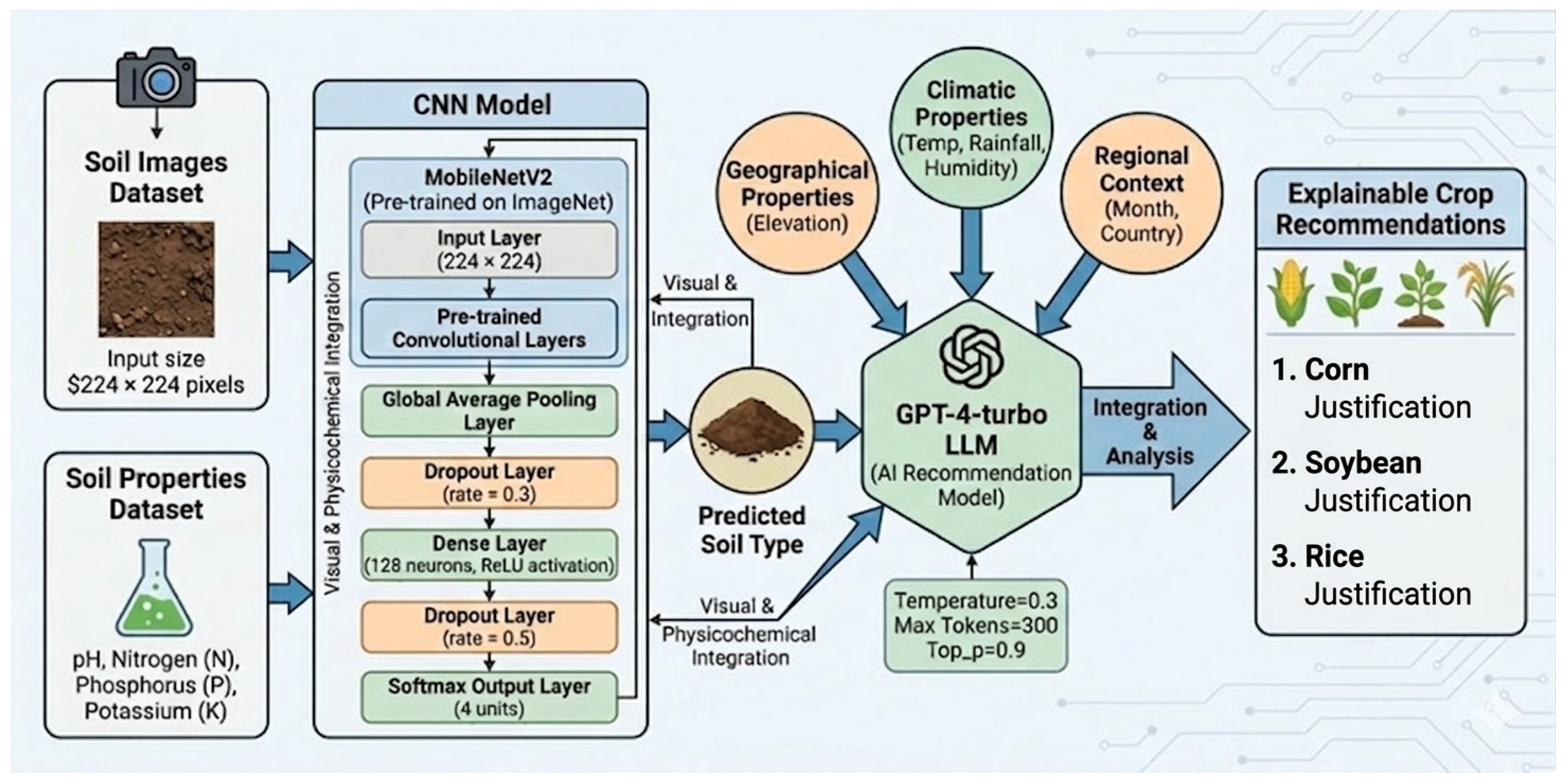
This study adopts an integrated framework designed to support suitable crop recommendation by combining soil texture, geographical characteristics, and climate-related indicators. As illustrated in Figure 1, the proposed framework consists of three main stages: (i) soil texture identification using a convolutional neural network (CNN) applied to soil images and soil nutrients dataset, (ii) extraction of location-specific geographical features such as elevation and regional context, and (iii) AI-driven crop recommendation that synthesizes these heterogeneous inputs to generate explainable and actionable outputs. After the integration of all these inputs within a single pipeline, the framework addresses the limitations of traditional soil testing and fragmented decision-support systems. The overall methodology combines machine learning, geographical context and LLMs to help farmers in making informed crop selection decisions.

2.1. Machine Learning Model for Soil Texture Identification

Traditionally, soil texture is identified through laboratory-based experiments such as sedimentation analysis, hydrometer tests, and sieve analysis. While these methods are accurate, they require specialized equipment, trained personnel, and considerable financial resources, making them inaccessible to many farmers, especially in developing countries and rural regions [21]. To address these limitations, this study employed a machine learning approach, specifically a convolutional neural network (CNN), to classify soil textures using image data. CNNs, widely used in computer vision tasks, provide a faster, cheaper, and scalable alternative to laboratory testing [22].

CNN Architecture and Training

The dataset consists of 3250 soil images categorized into four major soil types: sandy, sandy loam, loamy, and clay. All input images were resized to 224 × 224 pixels and preprocessed using the MobileNetV2 normalization pipeline to ensure compatibility with the pre-trained convolutional network. The proposed architecture follows a multimodal deep learning framework combining image-based and tabular data inputs. The image branch employs a MobileNetV2 convolutional neural network pre-trained on ImageNet, with the classification head removed. The extracted visual features are processed using a Global Average Pooling layer followed by a dropout layer (rate = 0.3) to reduce overfitting. Extracted features were flattened and passed through a dense layer of 128 neurons (ReLU activation) with a dropout rate of 0.5. The final softmax output layer contained four units corresponding to the soil classes [23,24].
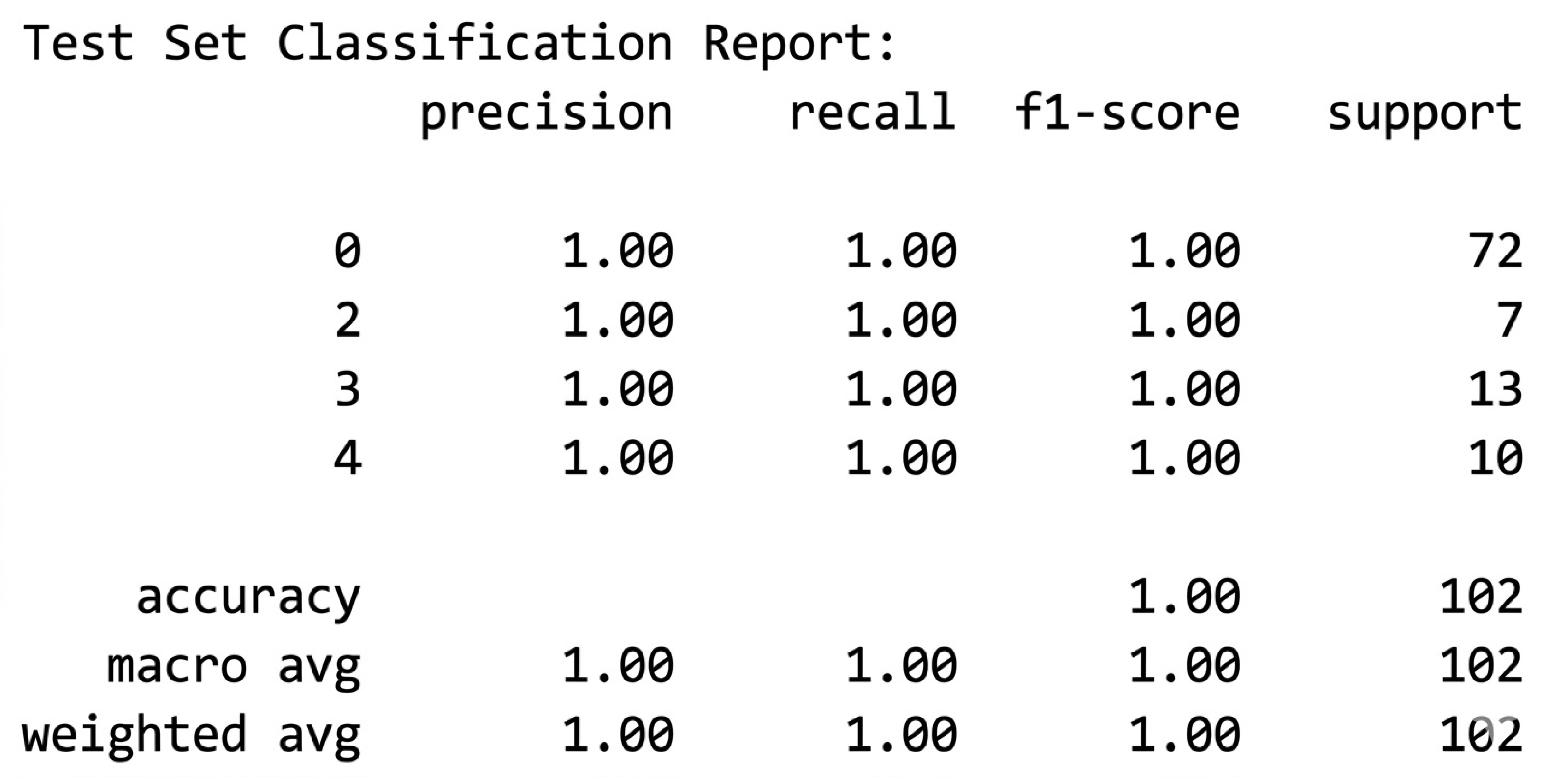
The model was trained using the Adam optimizer [25] with categorical cross-entropy loss, a batch size of 32, and 20 training epochs [26]. To ensure a robust evaluation strategy, the dataset was first divided into a training/validation set (85%) and an independent hold-out test set (15%). The training portion was further evaluated using 5-fold stratified cross-validation to preserve class distribution across folds and reduce bias associated with a single train-test split. All experiments were implemented in Python 3.12 using TensorFlow/Keras and executed on a system equipped with an NVIDIA RTX 3060 GPU (12 GB VRAM) and 16 GB RAM. A classification report of the CNN model is generated and presented in Figure 2 below.
The classification report further showed precision, recall, and F1-scores approaching 1.00 across the soil classes, confirming that the multimodal model effectively captured both visual and physicochemical characteristics of soil textures. An additional evaluation was performed on an independent hold-out test set comprising 15% of the dataset. The results confirmed that the model maintained very high predictive performance on previously unseen data, indicating strong generalization capability.
While highly encouraging, these results must be interpreted with caution: the relatively small sample sizes for loamy and sandy loam classes, combined with possible dataset overlap or visually homogeneous samples, may have contributed to the exceptionally high performance. Moreover, the merged dataset may not fully capture variability introduced by different lighting conditions, geographical diversity, or smartphone camera differences. Thus, future work should emphasize validation on larger, independent datasets and field-level trials with images collected under uncontrolled conditions. This will help ensure that the model’s promising performance translates into practical reliability for farmers and agricultural stakeholders.

2.2. LLM Model

The crop recommendations are generated using a large language model, specifically GPT-4-turbo (March 2023 version). To ensure reproducibility and consistency of outputs, the API call uses a temperature of 0.3, a maximum token limit of 300, and a top_p value of 0.9. Lower temperature values reduce randomness and encourage more stable responses across repeated calls with the same inputs.
The structured prompt provided to the model includes the key contextual variables obtained from the earlier stages of the framework, including the country, elevation, season, climate and the predicted soil type. These variables are dynamically inserted into the prompt to guide the model in generating location-aware crop recommendations. The prompt template used in the system is shown below:
“You are an agricultural expert. Based on the following details:
  • Country: {country}
  • Elevation: {elevation} meters
  • Season: {Season}
  • Soil Type: {soil_type}
  • Climate: {climate}
Suggest the most suitable crops to grow in this location. List them in bullet points with short reasons.”
This prompt design encourages the model to produce concise and interpretable recommendations suitable for decision-support purposes. The recommendations generated by the LLM are guided by agronomic knowledge implicitly captured in the model and supported by contextual information derived from agricultural datasets and literature [23,27]. These sources describe crop-specific requirements related to soil characteristics, climatic conditions, and cultivation practices. The contextual inputs provided in the prompt help to constrain the model’s reasoning toward agronomically plausible crop selections. While the LLM synthesizes this information to generate recommendations, the final suitability of the crops is quantitatively evaluated using the Agronomic Suitability Score (ASS), which measures compatibility with soil texture, climate, elevation, and planting season. Another consideration when employing large language models in decision-support systems is the potential generation of hallucinated or unsupported outputs. Recent studies have highlighted the importance of mitigation strategies for hallucinations in multimodal and vision–language models through improved alignment techniques and structured reasoning constraints [28]. In this work, the structured prompt design plays an important role in reducing this risk by explicitly constraining the model with relevant contextual variables such as soil type, elevation, and geographical location.

2.3. ASS Evaluation Metric

The agronomic validity of the crop recommendations generated by the framework are quantitatively evaluated through the Agronomic Suitability Score (ASS). The ASS measures the compatibility between a recommended crop and the environmental conditions provided as inputs to the system: soil texture, climate conditions, elevation, and planting month. The evaluation considers four complementary dimensions: soil compatibility, climate suitability, seasonal alignment, and elevation tolerance. Soil compatibility measures the alignment between the predicted soil texture and the known soil requirements of the crop. Climate suitability evaluates whether local temperature and moisture conditions fall within the typical growth range of the crop [29]. Seasonal alignment assesses the correspondence between the selected planting month and the crop’s cultivation cycle, while elevation tolerance reflects the crop’s adaptability to altitude-related environmental constraints. To capture varying levels of compatibility, each dimension is evaluated using a five-level ordinal scale ranging from 1 to 5, where higher values indicate stronger agreement between crop requirements and environmental conditions. The overall ASS for a given crop is computed as the mean of the four dimension scores, producing a final value between 1 and 5. Equal weighting across the four dimensions is intentionally adopted because the ASS is designed to evaluate the consistency between the system’s recommendations and the provided environmental inputs, rather than to estimate the relative agronomic influence of each factor on crop productivity. Case-level performance is summarized using the mean ASS across all crops recommended for a given scenario.

3. Geographical Characteristics

Even though soil texture is a fundamental factor in crop suitability, it cannot be considered in isolation. Climatic and geographical conditions [27] play an equally critical role in determining whether a crop can thrive in a particular location [30]. To incorporate these variables, the developed system prompts the farmer to specify the exact location of the land for which a prediction is being made. This step is integrated into the Streamlit application (https://soiltypebyshadi-fixbmrrskas2me7xbzumi3.streamlit.app/, accessed on 16 March 2026) through an interactive map interface. The farmer selects the location of their plot directly on the map, ensuring that the system accounts for the precise geographical coordinates of the soil sample previously uploaded.
Once the location is specified, the system automatically retrieves contextual geographical data. The spatial interface is implemented using Folium (version 0.14.x), a Python wrapper for the Leaflet (version 1.9.x), and integrated within the Streamlit framework via streamlit-folium (version 0.15.x). The map tiles and geographic base layers are provided by OpenStreetMap. Figure 1 illustrates the architecture of our tool. The most important parameters derived from this process include the country in which the land is situated and its elevation above sea level [31]. These variables serve as proxies for a range of environmental factors that directly affect crop growth, including temperature, precipitation, and humidity; for example, elevation has a strong influence on both average temperature and rainfall patterns, while geographical region provides critical insight into seasonal cycles and climate zones. This information is combined with the soil texture prediction obtained from the CNN and helps the system accurately identifying the agricultural potential of the land, which makes crop recommendation accurate and feasible, thus improving the sustainability of agricultural practices.

4. Workflow of the Tool

Since the inputs are readily available (soil type and geographical characteristics), the system generates tailored crop recommendations using large language models (OpenAI) to analyze key input factors and return a list of crops most suitable for cultivation under the given conditions. These inputs are sent using a prompt to OpenAI using an API key to receive the appropriate recommendations. The workflow of our tool is illustrated in Figure 3.
The information provided to the model includes the predicted soil type, elevation, and climatic variables inferred from the geographical location, as well as the country in which the land is located. Moreover, users can specify the intended planting month, as agricultural viability is closely tied to seasonality. Many crops are sensitive to variations in temperature, precipitation, and day length, requiring precise alignment with seasonal cycles to achieve optimal yields. The interaction with OpenAI produces a list of crops accompanied by explanatory justifications for each recommendation, fostering transparency and trust.

5. Evaluation

5.1. Soil Images Data

It is very important to identify soil texture easily and accurately, because this will help in identifying crop suitability. The more soil images there are, the higher the automated soil texture identification accuracy. Thus, a set of soil images was collected from four sources:
The first dataset contains 144 labeled soil images of the four soil types. They are categorized in folders and available on Kaggle [31].
The second dataset contains 156 labeled soil images of the same four soil types, and they are categorized in folders and available on Kaggle [32].
The third dataset contains 1555 soil images of the four soil types, and they are categorized in folders and available on Kaggle [33].
The fourth dataset is obtained from Roboflow website and contains 1395 soil images of the four soil types [34].
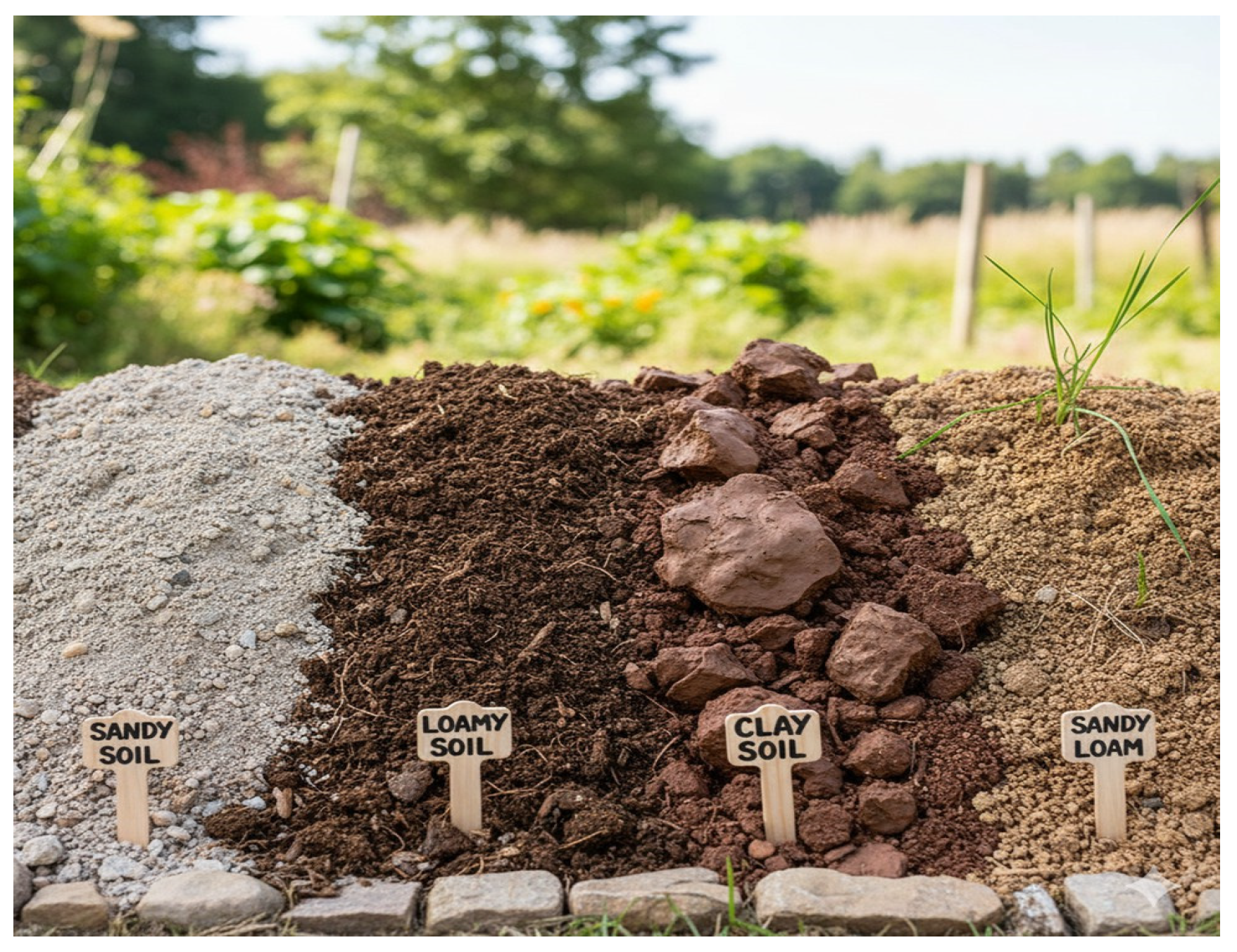
The collected images were categorized into four principal soil types—sandy, loamy, clay, and sandy loam, presented in Figure 4, which collectively represent the majority of soil types found globally. The dataset comprises a total of 3250 images, with images distributed approximately evenly across these four categories. Before merging the datasets, a verification step was conducted to identify potential duplicate or near-duplicate images across the sources. No duplicates were detected among the collected images, and therefore no removal was required. This verification helps to reduce the risk of data leakage between training and testing splits. This classification provides a foundational layer for the recommendation system, allowing it to account for soil texture as a key determinant of crop suitability.

5.2. Crop Type and Nutrient Requirements

In this study, data from the Indian Chamber of Food and Agriculture [35] was collected in addition to data from Lebanon [36] as representative samples, as shown in Table 1. The required key parameters for cultivation are: Nitrogen, Phosphorous and Potassium content in soil, seasonal variations in temperature, humidity, rainfall, soil pH, and soil texture with the suitable crops. The focus in this research was on the 3 nutrients, temperature, and soil texture, because they show some trends that must be analyzed [37]. The dataset contains 9 columns and 2200 rows. All these factors and features will help in determining which crop to plant.
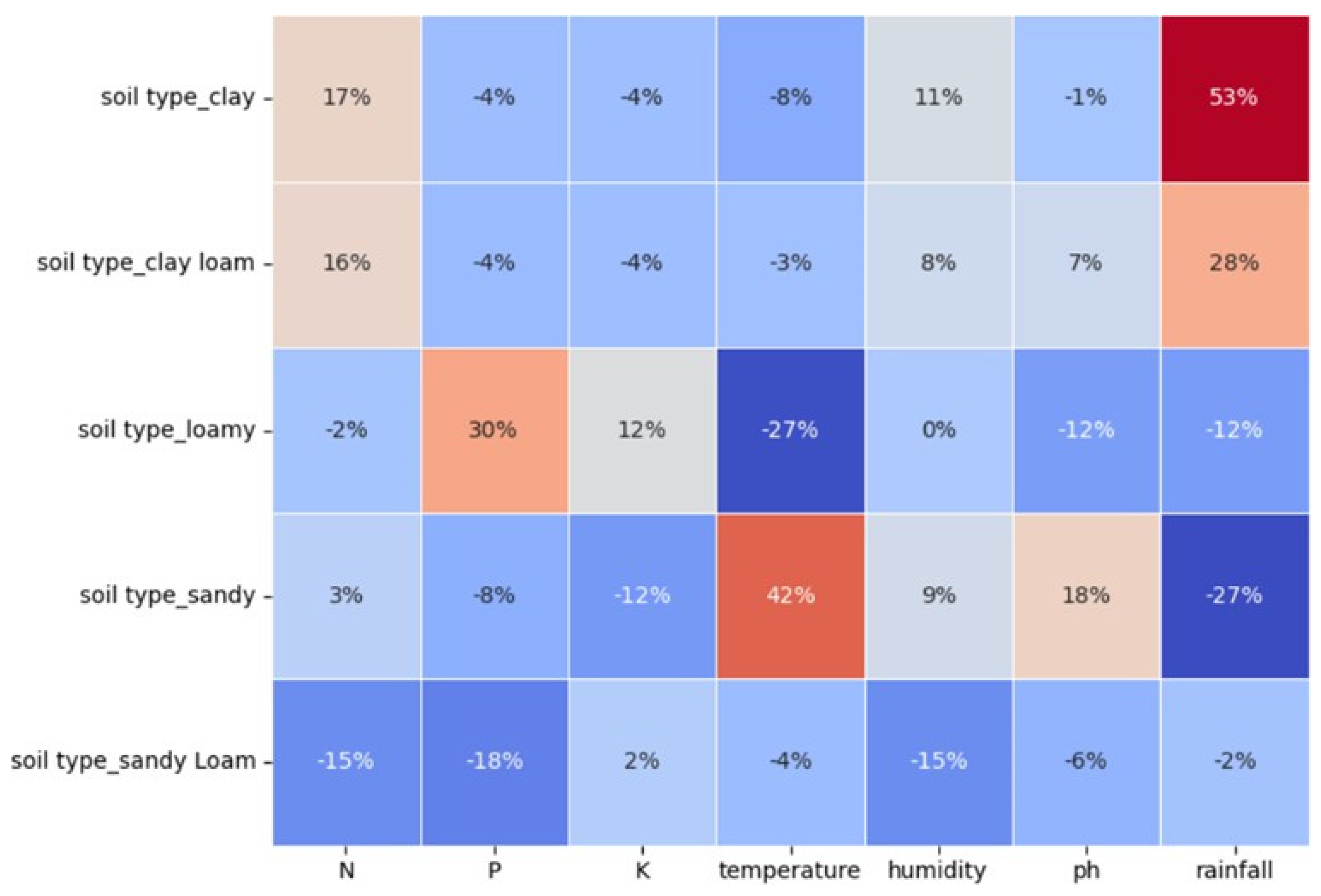
This dataset was analyzed to determine the relationship between the different parameters with respect to the soil texture. Since the soil texture is determined using a CNN model, it is important to introduce assumptions about the other parameters, which will make the crop recommendation more accurate. The analysis included correlation analysis and box plots. For example, Figure 5 shows positive correlation between clay soil and rainfall which suggests that, if the soil is clay, then the land is receiving sufficient rainfall. The blue color presents negative correlation, the darker the color, the higher the correlation. However, the near-red to red color represents positive correlation and also the darker the color, the better. This shifts the recommendation towards crops that need high amounts of water. Similarly, sandy soil showed high positive correlation with temperature which suggests that, if the soil is sandy, the weather is more likely to be warm.

5.3. Results

The evaluation of the proposed methodology consists of a two-stage process focusing on soil texture classification performance and the effectiveness of the crop recommendation component. For the soil classification task, the model demonstrated consistently high predictive performance across the validation folds, confirming the robustness of the proposed approach. Using 5-fold stratified cross-validation, the classification accuracies obtained were 100.00%, 100.00%, 99.13%, 99.13%, and 98.26%, yielding an average accuracy of 99.30% with a standard deviation of approximately 0.66. These results indicate stable performance across different training and validation partitions of the dataset. The final evaluation on an independent hold-out test set further confirmed the strong generalization capability of the model when applied to previously unseen samples. The classification reports obtained during validation showed very high precision, recall, and F1-scores across the soil categories, suggesting minimal confusion between soil texture classes. At the decision-support level, conventional classification metrics such as accuracy, precision, and recall are not directly applicable, as multiple crops may be agronomically suitable for the same soil and environmental conditions. Therefore, the crop recommendation component focuses on identifying a set of compatible crops based on soil characteristics and environmental parameters, rather than producing a single deterministic output. Despite the strong performance observed, the results should still be interpreted with caution. The dataset remains relatively limited in size and may not fully represent the variability encountered in real agricultural environments, including differences in soil appearance, lighting conditions, geographical regions, and image acquisition devices. Future work should therefore emphasize testing the system on larger and more diverse datasets collected under real field conditions, which will help ensure the practical reliability of the proposed decision-support system.
This limitation was addressed using a scalable quantitative evaluation, which is the Agronomic Suitability Score (ASS). The Agronomic Suitability Score (ASS) quantifies the degree of compatibility between the crop recommended by the framework and the evaluation conditions which are soil texture, climate, elevation and planting month. The score focuses on the suitability of the recommended crop with the available conditions. The Agronomic Suitability Score evaluates each recommended crop in four complementary dimensions. Soil compatibility measures the alignment between the predicted soil texture and the known soil requirements of the crop. Climate compatibility assesses whether local temperature and moisture conditions fall within the optimal growth range of the crop. Seasonal alignment evaluates the correspondence between the selected planting month and the phenological growth cycle of the crop, while elevation tolerance accounts for the crop’s ability to adapt to environmental constraints related to altitude. To better capture varying levels of compatibility, each dimension is evaluated using a five-level ordinal scoring scale ranging from 1 to 5. The ASS for a given crop is computed as the mean of the four-dimension scores, namely soil compatibility, climate suitability, seasonal alignment, and elevation tolerance. This formulation produces an overall ASS value ranging from 1 to 5, where higher scores indicate stronger compatibility between crop requirements and local environmental conditions. The ASS for a given crop was computed as the unweighted mean of these four dimensions. Case-level performance was then summarized using the mean ASS across all recommended crops. The results are illustrated in Table 2 below.

5.4. Verification of Accuracy: Case Study 1: South Africa

In the first case study, the model was tested in South Africa, where a point on map was chosen in this country on the interface at coordinates −34.0162, 23.2031 and an elevation of 342 m, with January designated as the planting month. We also uploaded a picture of sandy loam soil which is common in South Africa [38]. The CNN classified the soil as sandy loam, a texture commonly found in the country’s coastal regions. Based on this classification and the climatic profile, the system recommended maize, sunflowers, soybeans, groundnuts, sorghum, and sweet potatoes. These crops are known to perform well under warm, moderately humid summer conditions. The agronomic suitability of each recommendation was evaluated using the Agronomic Suitability Score (ASS), which considers soil compatibility, climate suitability, seasonal alignment, and geographical suitability. Sunflower achieved the highest ASS value of 5, indicating optimal compatibility with the environmental conditions. Maize, sorghum, and sweet potatoes obtained scores of 4.75, reflecting very high suitability with only minor deviations across the evaluation dimensions. Soybean achieved a score of 4, while ground nuts attained a score of 3.75 due to partial limitations related to soil or geographical compatibility. The mean ASS for this case study was 4.5, indicating very high agronomic suitability overall. Validation against the USDA crop calendar helped in scoring since it confirmed that these crops are typically sown between mid-November and mid-January, aligning with the rainy season in South Africa [39]. The recommendations also considered soil fertility and drought tolerance factors, showing the model’s capacity to provide agronomically rational decisions consistent with regional practices.

5.5. Verification of Accuracy: Case Study 2: Canada

The second test was conducted in Canada, which has a totally different climate and is situated in the opposite part of the world (northern part) at coordinates 52.0525, −123.7500, with an elevation of 1063 m and a March planting window. The relatively high elevation and cooler climate in this region present distinct agronomic challenges. The model recommended peas, spinach, lettuce, radishes, carrots, and onions, which are all cool-season crops adapted to short growing periods and low temperatures. The agronomic suitability of each recommendation was evaluated using the Agronomic Suitability Score (ASS), which considers soil compatibility, climate suitability, seasonal alignment, and geographical suitability. Spinach and radish achieved the highest ASS values of 5, indicating optimal compatibility with the evaluated environmental conditions. Lettuce obtained a score of 4.75, while peas achieved a score of 4.5, reflecting very high suitability with minor deviations across one of the evaluation dimensions. Onion obtained a score of 4.25, indicating generally favorable compatibility with some environmental constraints. Carrot received a lower score of 3.25, primarily due to climatic limitations affecting its suitability under the evaluated conditions. The mean ASS for this case study was 4.46, indicating high overall agronomic suitability for the recommended crops. These outputs indicate that the model correctly captured Canada’s early-spring planting conditions and proposed species with proven resilience to frost. Validation was performed through regional planting data and agricultural guidelines, confirming that these crops are indeed cultivated during early spring [40]. This case demonstrates the system’s sensitivity to climatic limitations and its adaptability to temperate high-latitude environments.

5.6. Verification of Accuracy: Case Study 3: United Kingdom

In the United Kingdom, the model was evaluated using the coordinates 51.3992, −1.7578 at an elevation of 199 m, with June as the planting month. The model predicted suitable crops such as carrots, beetroot, lettuce, radishes, spinach, and French beans. These selections correspond to the mild summer conditions typical of the U.K., where moderate temperatures and extended daylight hours favor leafy and root vegetables. The agronomic suitability of each recommendation was evaluated using the Agronomic Suitability Score (ASS), which considers soil compatibility, climate suitability, seasonal alignment, and geographical suitability. Carrot, beetroot, lettuce, and radish achieved the highest ASS values of 5, indicating optimal compatibility with the evaluated environmental conditions. Spinach obtained a score of 4.25 due to partial seasonal constraints, while French beans achieved a score of 4, reflecting generally favorable compatibility with the local environmental conditions. The mean ASS for this case study was 4.71, reflecting very strong alignment with the U.K.’s temperate maritime climate. The validation process compared these recommendations with the U.K. crop calendars and agricultural extension guidelines, confirming their accuracy [41]. The results illustrated the model’s ability to align planting choices with seasonal temperature ranges and local soil fertility conditions, reaffirming its reliability in temperate maritime climates.

5.7. Verification of Accuracy: Case Study 4: Lebanon

A fourth case study was carried out in Lebanon, located at coordinates 33.1559, 35.3979, with an elevation of 856 m and a June planting schedule. The model recommended warm-season crops including tomatoes, peppers, cucumbers, melons, eggplants, beans, and zucchini. Given Lebanon’s Mediterranean climate, characterized by hot summers and relatively dry conditions, these crops are agronomically suitable for the specified time of year. Validation using Lebanese agricultural calendars confirmed that such crops are typically planted at the onset of the summer season [42]. The agronomic suitability of each recommendation was evaluated using the Agronomic Suitability Score (ASS), which considers soil compatibility, climate suitability, seasonal alignment, and geographical suitability. Pepper, cucumber, melon, eggplant, beans, and zucchini achieved the highest ASS values of 5, indicating optimal compatibility with the evaluated environmental conditions. Tomato obtained a score of 4.75 due to a minor deviation in seasonal suitability. The mean ASS for this case study was 4.96, indicating very strong overall agronomic suitability for the recommended crops. These results reflect complete compatibility across soil, climate, season, and geography, consistent with Lebanon’s Mediterranean climate and summer planting practices. The recommendations demonstrated that the system accurately integrates both thermal and moisture parameters, offering location-specific crop guidance in semi-arid to Mediterranean conditions.

5.8. Verification of Accuracy: Case Study 5: Turkmenistan

In Turkmenistan, the model was tested under arid conditions at coordinates 39.5040, 54.4043 and an elevation of 16 m, with June as the planting month. The tool generated a set of drought-tolerant crop recommendations, including melons, sunflowers, millet, sorghum, sesame, sweet potatoes, and chickpeas. These selections are highly consistent with agricultural strategies used in water-scarce environments. Validation against USDA crop calendar data confirmed that these crops are traditionally cultivated during the summer in Turkmenistan [39], where irrigation is limited and high temperatures prevail. The agronomic suitability of each recommendation was evaluated using the Agronomic Suitability Score (ASS), which considers soil compatibility, climate suitability, seasonal alignment, and geographical suitability. Melon, sunflower, millet, and sorghum achieved the highest ASS values of 5, indicating optimal compatibility with the evaluated environmental conditions. Sesame and sweet potatoes obtained scores of 4.75, reflecting very high suitability with minor deviations in one of the evaluation dimensions. Chickpeas received a lower score of 3, due to climatic and seasonal limitations affecting their suitability under the conditions evaluated. The mean ASS for this case study was 4.58, indicating high overall agronomic suitability for the recommended crops. The system’s performance in this context highlights its capacity to incorporate environmental stress factors such as heat and water availability into its predictive model, ensuring realistic and sustainable recommendations.

5.9. Verification of Accuracy: Case Study 6: Australia

The final case study examined Australia at coordinates −32.9902, 116.2353, with an elevation of 165 m and September as the planting month. The system recommended wheat, barley, canola, lupins, and oats, crops that are typically planted during the Australian spring season. These species are well-suited to the region’s temperate climate and moderate rainfall conditions. Validation through Australian crop calendars confirmed the accuracy of these predictions, demonstrating strong alignment with national agricultural trends [43]. The agronomic suitability of each recommendation was evaluated using the Agronomic Suitability Score (ASS), which considers soil compatibility, climate suitability, seasonal alignment, and geographical suitability. Canola achieved the highest ASS value of 4.25, indicating strong compatibility with the evaluated environmental conditions. Lupins obtained a score of 3.75, while oats achieved a score of 3.5, reflecting moderate suitability under the given environmental constraints. Wheat and barley each received scores of 3.25, primarily due to seasonal and climatic limitations affecting their compatibility with the evaluated planting conditions. The mean ASS for this case study was 3.76, the lowest among all evaluated regions but still indicating moderate agronomic suitability for the recommended crops. The results emphasize the model’s ability to generalize effectively across hemispheres, accounting for reversed seasonal patterns and adapting crop recommendations accordingly.

5.10. Summary of Findings

Across the six evaluated case studies, mean Agronomic Suitability Score (ASS) values ranged from 3.76 to 4.96, with five regions achieving scores exceeding 4.45. Higher ASS values were consistently associated with locations where climatic conditions and planting seasons closely aligned with crop-specific agronomic requirements. In contrast, lower scores were predominantly attributable to seasonal or climatic mismatches rather than errors in soil texture classification. The inputs and results of the case studies are displayed in Appendix A Table A1. These findings highlight the robustness of the CNN-based soil perception layer and reflect the conservative design of the recommendation logic, which prioritizes agronomic feasibility under uncertain environmental conditions. Moreover, the ASS framework provides a scalable and region-agnostic evaluation mechanism, enabling quantitative comparison of crop suitability across heterogeneous agro-climatic contexts without reliance on rigid or location-specific ground-truth labels. This property is critical for evaluating decision-support systems intended for deployment across diverse geographic regions.

5.11. Contribution to Sustainable Development Goals

This framework is designed to do more than just crunch numbers; it is built to support the UN’s Sustainable Development Goals (SDGs) by making agricultural planning more precise. Specifically, it advances SDG 2 by promoting resilient, sustainable farming. The system helps secure local food supplies against the threat of unexpected shortages or market volatility by providing data that anticipates crop performance. When we put it to the test across six diverse regions, it performed remarkably well, with Agronomic Suitability Scores (ASS) mostly landing between 4.45 and 4.96 on a 5-point scale. The system effectively lowers the risk of crop failure because it matches crops to specific local factors like soil texture and elevation. It also hits the mark for SDG 12 and SDG 13, helping farmers use their resources more efficiently and adapt to unpredictable climatic shifts [44]. This shift toward resource-conscious planting ensures that we are not just farming for today, but also protecting the long-term health of the soil and water for future generations.

6. Conclusions

This study demonstrates the potential of multimodal artificial intelligence frameworks to support sustainable and precision agriculture through the integrated analysis of soil texture, geospatial context, and climatic conditions. The proposed convolutional neural network achieved high reliability in distinguishing among the four primary soil texture classes, while the incorporation of environmental and soil nutrient parameters enabled the generation of location-aware and agronomically grounded crop recommendations. The framework was evaluated across diverse geographic regions using a novel Agronomic Suitability Score (ASS), which provided a scalable and quantitative means of assessing recommendation quality without reliance on rigid ground-truth labels. Consistently high ASS values across most case studies highlight the robustness and generalizability of the system under varying climatic, seasonal, and elevation constraints. These results indicate that the proposed approach can adapt effectively to heterogeneous agro-climatic contexts, a key requirement for real-world deployment. The integration of a large language model generated interpretable justifications for crop recommendations, which enhances transparency and addresses a critical barrier to adoption. Thus, the framework functions as a decision-support tool rather than an opaque automation mechanism. Overall, these findings affirm that multimodal AI can effectively support context-sensitive and explainable crop planning.

Limitations and Future Work

Despite the promising results, several limitations should be acknowledged. The soil image dataset, while curated from multiple public sources, remains relatively small and unevenly distributed across classes, raising concerns about generalizability. The perfect classification scores observed may in part reflect dataset bias or overlap, rather than true robustness under real-world conditions. Moreover, the images were collected under controlled or semi-controlled environments, whereas field-level images may vary considerably in lighting, resolution, and background noise. The crop recommendations generated by the large language model, although plausible and contextually relevant, have not yet been validated by agronomic experts or tested in field trials. Furthermore, the current evaluation relies primarily on comparisons with agricultural calendars and documented agronomic guidelines, rather than direct validation with farmer planting practices. As a result, the potential gap between the system’s recommendations and real-world farming decisions remains unexplored. Given the international scope of the tool and the diversity of agricultural contexts considered in this study, conducting field-based validation across multiple regions was not feasible within the time constraints of this work. One limitation of this framework is its dependence on GPT-4. While it is great at reasoning, using a proprietary model like this makes it harder to be fully transparent or reproduce results, since we do not have access to its inner workings or training data. Plus, relying on an API can be expensive and requires a steady internet connection. This underscores the need to look into more open, controllable alternatives. Future research should therefore prioritize expanding the dataset with geographically diverse and field-captured soil images, conducting expert reviews of AI-generated recommendations, and piloting the system with farmers in practical settings. Incorporating additional modalities, such as hyperspectral data, IoT sensor readings, or soil moisture measurements, may further improve accuracy and enhance trustworthiness. Recent advances in open-source LLMs provide promising alternatives for agricultural decision-support systems. Models such as LLaMA 2, Mistral, Falcon, and BLOOM enable local deployment and domain-specific fine-tuning [45,46]. These models could be adapted using agricultural datasets, crop calendars, and agronomic guidelines to produce explainable recommendations while improving transparency and reproducibility. Future work should therefore benchmark these open-source models against GPT-based systems in terms of recommendation quality, computational cost, and deployment feasibility.

Author Contributions

Conceptualization, S.Y.; methodology, S.Y.; software, S.Y.; validation, S.Y.; formal analysis, S.Y.; investigation, S.Y.; data curation, S.Y.; writing—original draft preparation, S.Y.; writing—review and editing, K.G. and F.Z.; visualization, S.Y.; supervision, K.G. and F.Z.; project administration, K.G. All authors have read and agreed to the published version of the manuscript.

Funding

This research received no external funding.

Data Availability Statement

The original contributions presented in this study are included in the article. Further inquiries can be directed to the corresponding authors.

Acknowledgments

The authors gratefully acknowledge the Engineering Institute of Technology (EIT) for providing academic guidance, technical resources, and institutional support throughout the course of this research.

Conflicts of Interest

The authors declare no conflicts of interest.

Appendix A. Crop Recommendations

Table A1. Sample crop recommendations across locations.
LocationCoordinates (Lat, Long)Elevation (m)Planting MonthRecommended Crops
South Africa−34.0162, 23.2031342JanuaryMaize, Sunflowers, Soybeans, Groundnuts, Sorghum, Sweet potatoes
Canada52.0525, −123.75001063MarchPeas, Spinach, Lettuce, Radishes, Carrots, Onions
United Kingdom51.3992, −1.7578199JuneCarrots, Beetroot, Lettuce, Radishes, Spinach, French beans
Lebanon33.1559, 35.3979856JuneTomatoes, Peppers, Cucumbers, Melons, Eggplants, Beans, Zucchini
Turkmenistan39.5040, 54.404316JuneMelons, Sunflowers, Millet, Sorghum, Sesame, Sweet potatoes, Chickpeas
Indonesia0.8789, 113.3789281SeptemberRice, Maize, Soybeans, Peanuts, Cassava, Sweet potatoes
Australia−32.9902, 116.2353165SeptemberWheat, Barley, Canola, Lupins, Oats

References

  1. Muren, J.; Sun, X.; Yao, J.; Cao, L. Evaluating agricultural efficiency and sustainable development in China. Sci. Rep. 2025, 15, 23047. [Google Scholar] [CrossRef]
  2. Ávila, L.V.; Shulla, K.; Favarin, R.; Filho, W.L.; Trevisan, M.; Salvia, A.L.; Santini, É. The role of science and technology parks in meeting the sustainable development goals (importance of sustainability for the STPs). Discov. Sustain. 2025, 6, 842. [Google Scholar] [CrossRef]
  3. Sharma, R.; Rallapalli, S.; Magner, J. Optimizing water-efficient agriculture: Evaluating the sustainability of soil management and irrigation synergies using fuzzy extent analysis. Sci. Rep. 2025, 15, 29382. [Google Scholar] [CrossRef]
  4. Madin, M.; Nelson, K.; Sanderson, M.; Moley, L. A synthesis of factors influencing sustainable agriculture practices adoption among rural farmers: A scoping review. J. Rural Stud. 2025, 120, 103853. [Google Scholar] [CrossRef]
  5. Vos, C.; Don, A.; Prietz, R.; Heidkamp, A.; Freibauer, A. Field-based soil-texture estimates could replace laboratory analysis. Geoderma 2016, 267, 215–219. [Google Scholar] [CrossRef]
  6. Kumar, N.; Kaur, B.; Sharma, D.; Korpole, S.; Shukla, S.; Bhardwaj, P.; Saxena, S. Impact of altitudinal variations on plant growth dynamics, nutritional composition, and free living rhizospheric N2 fixing bacterial community of Eruca sativa. Sci. Rep. 2025, 15, 13839. [Google Scholar] [CrossRef] [PubMed]
  7. Yang, H.; Wang, D.; Pan, W.; Jiang, C.; Gao, W.; Luo, X.; Tu, Z. MicroGraphBERT: Soil microbial gene sequence classification via fusing taxonomic hierarchies and DNABERTbased contextual embeddings. Intell. Robot. 2025, 5, 541. [Google Scholar] [CrossRef]
  8. Gopi, P.S.S.; Karthikeyan, M. Multimodal machine learning based crop recommendation and yield prediction model. Intell. Autom. Soft Comput. 2023, 36, 313–326. [Google Scholar] [CrossRef]
  9. Zhang, X.; Xu, Y.; Liao, H. BiFusionNet: A lightweight model for detecting Red Turpentine Beetle infestation in pine trees. Ecol. Inform. 2025, 91, 103403. [Google Scholar] [CrossRef]
  10. Naik, N.S.; Chaubey, H.K. Weed detection and classification in sesame crops using region-based convolution neural networks. Neural Comput. Appl. 2024, 36, 18961–18977. [Google Scholar] [CrossRef]
  11. Arslanova, L.; Hese, S.; Fölsch, M.; Scheibler, F.; Schmullius, C. Assessing data and sample complexity in unmanned aerial vehicle imagery for agricultural pattern classification. Smart Agric. Technol. 2025, 10, 100799. [Google Scholar] [CrossRef]
  12. Bhat, S.A.; Hussain, I.; Huang, N.F. Soil suitability classification for crop selection in precision agriculture using GBRT-based hybrid DNN surrogate models. Ecol. Inform. 2023, 75, 102109. [Google Scholar] [CrossRef]
  13. Rajak, R.K.; Pawar, A.; Pendke, M.; Shinde, P.; Rathod, S.; Devare, A. Crop recommendation system to maximize crop yield using machine learning technique. Int. Res. J. Eng. Technol. 2017, 4, 950–953. [Google Scholar]
  14. Rajest, S.S.; Suman, S.; Priscila, R.S.; Regin, T.; Shynu, T.; Steffi, R. Application of machine learning to the process of crop selection based on land dataset. Int. J. Orange Technol. 2023, 5, 91–112. [Google Scholar]
  15. Madhu, S.; Prakash, A.J. An advanced crop recommendation system for empowering agriculture using AI & cloud computing. In AIP Conference Proceedings; AIP Publishing: Melville, NY, USA, 2025; Volume 3298, p. 020037. [Google Scholar] [CrossRef]
  16. Nawaz, M.; Babar, M.I.K. IoT and AI for smart agriculture in resource-constrained environments: Challenges, opportunities and solutions. Discov. Internet Things 2025, 5, 24. [Google Scholar] [CrossRef]
  17. Shahab, H.; Naeem, M.; Iqbal, M.; Aqeel, M.; Ullah, S.S. IoT-driven smart agricultural technology for real-time soil and crop optimization. Smart Agric. Technol. 2025, 10, 100847. [Google Scholar] [CrossRef]
  18. Lahari, S.A.; Kumawat, N.; Amreen, K.; Ponnalagu, R.N.; Goel, S. IoT integrated and deep learning assisted electrochemical sensor for multiplexed heavy metal sensing in water samples. npj Clean Water 2025, 8, 10. [Google Scholar] [CrossRef]
  19. Li, J.; Ke, T.; Yue, F.; Wang, N.; Guo, K.; Mei, L.; Song, Y. A cross-crop and cross-regional generalized deep learning framework for intelligent disease detection and economic decision support in horticulture. Horticulturae 2025, 11, 1397. [Google Scholar] [CrossRef]
  20. Prashanth, J.S.; Bala Krishna, G.; Krishna Prasad, A.V.; Ravinder Rao, P. Smart farming revolution: A cutting-edge review of deep learning and IoT innovations in agriculture. Oper. Res. Forum 2025, 6, 35. [Google Scholar] [CrossRef]
  21. Bao, W.; Su, W.; Zhao, X.; Zhuang, J. A study on short-term vegetable price prediction based on the CNN-LSTM-Attention model. Discov. Food 2025, 5, 176. [Google Scholar] [CrossRef]
  22. Dhouibi, M.; Salem, A.K.B.; Saoud, S.B. Optimization of CNN model for image classification. In 2021 IEEE International Conference on Design & Test of Integrated Micro & Nano-Systems (DTS); IEEE: New York, NY, USA, 2021; pp. 1–6. [Google Scholar]
  23. Xu, H.; Ediger, D.; Sharifi, M. Horticultural practices in early spring to mitigate the adverse effect of low temperature on fruit set in ‘Lapins’ sweet cherry. Plants 2023, 12, 468. [Google Scholar] [CrossRef] [PubMed]
  24. Yang, D.; Cao, B.; Qu, S.; Lu, F.; Gu, S.; Chen, G. Retrieve-then-compare mitigates visual hallucination in multi-modal large language models. Intell. Robot. 2025, 5, 248–275. [Google Scholar] [CrossRef]
  25. Kingma, D.P.; Ba, J. Adam: A method for stochastic optimization. arXiv 2014, arXiv:1412.6980. [Google Scholar]
  26. Elngar, A.A.; Arafa, M.; Fathy, A.; Moustafa, B.; Mahmoud, O.; Shaban, M.; Fawzy, N. Image classification based on CNN: A survey. J. Cybersecur. Inf. Manag. 2021, 6, 18–50. [Google Scholar] [CrossRef]
  27. Hosen, M.B.; Islam, M.R.; Tahera-Tun-Humayra, U.; Sharker, R.; Kader, Z.; Aziz, M.T.; Tofiquzzaman, M. Assessing land suitability for dragon fruit cultivation in Bangladesh: A GIS-based AHP approach. Smart Agric. Technol. 2025, 12, 101241. [Google Scholar] [CrossRef]
  28. Lee, Y.H.; Sang, W.G.; Baek, J.K.; Kim, J.H.; Shin, P.; Seo, M.C.; Cho, J.I. The effect of concurrent elevation in CO2 and temperature on the growth, photosynthesis, and yield of potato crops. PLoS ONE 2020, 15, e0241081. [Google Scholar] [CrossRef]
  29. Valfré-Giorello, T.A.; Torres, R.C.; Navarro-Ramos, S.E.; Hensen, I.; Renison, D. Enhancing the performance of native tree plantings in a seasonally dry mountain forest: The effects of elevation, irrigation and herbaceous cover. Restor. Ecol. 2025, 33, e70082. [Google Scholar] [CrossRef]
  30. Sathiyamurthi, S.; Youssef, Y.M.; Gobi, R.; Ravi, A.; Alarifi, N.; Sivasakthi, M.; Saqr, A.M. Optimal land selection for agricultural purposes using hybrid Geographic Information System–Fuzzy Analytic Hierar- chy Process–Geostatistical approach in Attur Taluk, India: Synergies and trade-offs among sustainable development goals. Sustainability 2025, 17, 809. [Google Scholar] [CrossRef]
  31. Matshidiso. Soil Types [Data Set]. Kaggle. 2021. Available online: https://www.kaggle.com/datasets/matshidiso/soil-types (accessed on 26 September 2025).
  32. Satpathy, P. Soil Types Image Dataset [Data Set]. Kaggle. 2020. Available online: https://www.kaggle.com/datasets/prasanshasatpathy/soil-types (accessed on 25 September 2025).
  33. Sharma, S. Crop Recommendation Dataset [Data Set]. Kaggle. 2020. Available online: https://www.kaggle.com/datasets/siddharthss/crop-recommendation-dataset (accessed on 1 October 2025).
  34. Roboflow Universe. Crop Recommendation—Soil-Type Images [Data Set]. Available online: https://universe.roboflow.com/crop-recomendation-wfyn7/soil-type-ladmq/browse (accessed on 25 September 2025).
  35. Indian Council of Food and Agriculture (ICFA). Indian Council of Food and Agriculture. Available online: https://www.icfa.org.in/ (accessed on 1 July 2025).
  36. Humanitarian Data Exchange. Lebanon Agriculture Datasets. Available online: https://data.humdata.org (accessed on 1 July 2025).
  37. Oduro, C.; Lim Kam Sian, K.T.C.; Hagan, D.F.T.; Babaousmail, H.; Ayugi, B.O.; Wu, Y.; Wu, N. The influence of land surface temperature on Ghana’s climate variability and implications for sustainable development. Sci. Rep. 2025, 15, 2595. [Google Scholar] [CrossRef]
  38. Matlala, F.L.; Fourie, H.; Haddad, W.; De Waele, D.; Daneel, M.S. Prevalence of plant-parasitic nematodes in nethouse tomato production in Limpopo Province, South Africa, and relationships with physico-chemical soil properties. J. Plant Dis. Prot. 2025, 132, 140. [Google Scholar] [CrossRef]
  39. U.S. Department of Agriculture, Foreign Agricultural Service. Crop Calendar—Europe. USDA FAS. Available online: https://ipad.fas.usda.gov/rssiws/al/crop_calendar/europe.aspx (accessed on 10 December 2025).
  40. Agriculture and Agri-Food Canada. ISO 19131 Extreme Weather Indices: Heat—Data Product Specification (Revision A). Government of Canada. 2018. Available online: https://open.canada.ca/en/open-government-licence-canada (accessed on 15 November 2025).
  41. National Trust. Guide to Seasonal Food. Available online: https://www.nationaltrust.org.uk/discover/gardening-tips/guide-to-seasonal-food (accessed on 18 December 2025).
  42. Investment Development Authority of Lebanon. Annual Calendar: Fruits Vegetables’ Production in Lebanon. Available online: https://investinlebanon.gov.lb/Content/uploads/SideBlock/180709040825141~ANNUAL%20CALENDAR%20FRUITS%20AND%20VEGETABLES.pdf (accessed on 25 September 2025).
  43. Department of Agriculture, Fisheries and Forestry. Australian Crop Report: September 2025 (No. 215). Australian Bureau of Agricultural and Resource Economics and Sciences. 2025. Available online: https://www.agriculture.gov.au/abares/research-topics/agricultural-outlook/australian-crop-report/september-2025 (accessed on 28 December 2025).
  44. Yusuf, R.; Santari, P.T.; Amin, M.; Nugroho, W.A.; Hindarwati, Y. Optimizing Dryland Agriculture: Intercrop- ping Corn and Superior Rice Varieties in Maluku, Indonesia. Int. J. Agric. Biosci. 2025, 14, 648–656. [Google Scholar]
  45. Kukreja, S.; Kumar, T.; Purohit, A.; Dasgupta, A.; Guha, D. A literature survey on open source large language models. In Proceedings of the 2024 7th International Conference on Computers in Management and Business, Singapore, 12–14 January 2024. [Google Scholar]
  46. Alizadeh, M.; Kubli, M.; Samei, Z.; Dehghani, S.; Zahedivafa, M.; Bermeo, J.D.; Korobeynikova, M.; Gilardi, F. Open-source LLMs for text annotation: A practical guide for model setting and fine-tuning. J. Comput. Soc. Sci. 2025, 8, 17. [Google Scholar] [CrossRef] [PubMed]
Figure 1. Framework: integration of soil image, geography, and climate data for crop recommendation.
Horticulturae 12 00416 g001
Figure 2. Classification Report of the CNN model.
Horticulturae 12 00416 g002
Figure 3. Workflow of the proposed tool: sequential stages of image upload, soil prediction, and AI-based crop recommendation. Image Upload, Soil Prediction, AI-Based Crop Recommendation.
Horticulturae 12 00416 g003
Figure 4. The four soil types.
Horticulturae 12 00416 g004
Figure 5. Correlation between soil types and properties.
Horticulturae 12 00416 g005
Table 1. A randomly selected representative sample of the database.
N (kg/ha)P (kg/ha)K (kg/ha)Temp. (°C)HumiditypHRainfall (mL)Crop TypeSoil Type
101174729.594.76.226.3muskmelonsandy
9885126.286.56.349.4watermelonsandy loam
59624943.493.46.9114.8papayasandy
44605534.390.66.898.5papayasandy
3013720022.990.75.6118.6appleloamy
18192727.752.34.894.1mangosandy loam
3514519522.194.66.2110.9appleloamy
16154219.789.16.9108.5pomegranateloamy
70383524.479.37.0164.3juteclay loam
25122628.695.76.4134.8coconutsandy loam
Table 2. Summary of evaluated case studies and corresponding mean Agronomic Suitability Scores (ASS).
Case StudyRecommended CropsMean ASS
South AfricaMaize, Sunflower, Sorghum, Sweet Potatoes, Soybean, Groundnuts4.5
CanadaPeas, Spinach, Lettuce, Radish, Carrot, Onion4.46
United KingdomCarrot, Beetroot, Lettuce, Radish, Spinach, French Beans4.71
LebanonTomato, Pepper, Cucumber, Melon, Eggplant, Beans, Zucchini4.96
TurkmenistanMelon, Sunflower, Millet, Sorghum, Sesame, Sweet Potatoes, Chickpeas4.58
AustraliaCanola, Lupins, Wheat, Barley, Oats3.76
Disclaimer/Publisher’s Note: The statements, opinions and data contained in all publications are solely those of the individual author(s) and contributor(s) and not of MDPI and/or the editor(s). MDPI and/or the editor(s) disclaim responsibility for any injury to people or property resulting from any ideas, methods, instructions or products referred to in the content.