Article

Synergistic Effects of Silicon and Selenium Application on Salt Stress Resistance in Tomato Under Different Application Patterns


Key Laboratory of Quality and Safety Control for Subtropical Fruit and Vegetable, Ministry of Agriculture and Rural Affairs, Collaborative Innovation Center for Efficient and Green Production of Agriculture in Mountainous Areas of Zhejiang Province, College of Horticulture Science, Zhejiang Agriculture and Forestry University, Hangzhou 311300, China
*
Author to whom correspondence should be addressed.
These authors contributed equally to this work.
Horticulturae 2026, 12(4), 402; https://doi.org/10.3390/horticulturae12040402
Submission received: 4 February 2026 / Revised: 20 March 2026 / Accepted: 23 March 2026 / Published: 24 March 2026

Abstract

Salt stress is one of the major environmental constraints in agriculture, significantly limiting crop yield and causing substantial economic loss worldwide. Silicon (Si) and selenium (Se) are widely recognized as beneficial elements for plants, and the application of Si- and Se-based fertilizers is considered a promising strategy for promoting crop growth and sustainable agricultural production under expanding salinization of arable land. In this study, aiming for the targeted application of Si and Se in agricultural production, the individual and synergistic effects of Si and Se on salt stress resistance in tomato when applied via root application or foliar spray were comprehensively investigated. Plant growth parameters, photosynthesis performance, oxidative damage, the activity of the antioxidant system, sodium/potassium (Na/K) content, and the expression of genes related to Na/K homeostasis were determined and further compared using principal component analysis (PCA). The results showed that salt stress markedly inhibited plant growth and photosynthetic performance, while inducing oxidative damage and disrupting Na/K homeostasis in tomato seedlings. In contrast, the application of both Si and Se significantly promoted tomato growth and ameliorated the detrimental effects of salt stress. Moreover, Si and Se exhibited a synergistic effect in promoting salt stress resistance under both root and foliar application. Root application of Si and Se is more effective in enhancing ionic homeostasis, while foliar spray of Si and Se is more effective in promoting photosynthesis performance under salt stress. Overall, considering the convenience and use-cost efficiency of Si and Se application in agricultural practices, the results of this study showed that the synergy application of Si and Se via foliar spray is most effective in promoting salt stress resistance in tomato through modulating photosynthesis performance, antioxidant capacity, and ionic homeostasis.

1. Introduction

Salt stress is a major environmental problem in agricultural production, causing significant plant growth limitation, crop yield decline, and economic loss worldwide [1]. It has been estimated that more than 20% of total arable land is affected by salt stress, and this situation is worsening due to global climate change, groundwater irrigation, and excess chemical fertilizer application [2,3]. To mitigate agricultural salinization and ensure food security, various efforts have been made, including transgenic crop breeding, reasonable irrigation and fertilization, and the application of plant growth stimulants [4,5,6].
Silicon (Si) and selenium (Se) are essential elements for humans and animals [7,8,9]. Although their essentiality for plants has not been confirmed, numerous studies have demonstrated that Si and Se can act as beneficial elements stimulating plant growth and improving crop yield, particularly under biotic and abiotic stress conditions, including salt stress [10,11,12]. To date, the alleviating effects of Si and Se on salt stress have been reported in various plant species such as rice, wheat, maize, tomato, and cucumber [13,14,15,16,17]. Therefore, with increasing global salinization, the application of Si and Se fertilizers has been regarded as a promising agronomic strategy to protect plants against salt stress and ensure a stable food supply.
However, it should be noted that, considering the distinct physicochemical nature of Si and Se in plant biology, their regulatory effects and underlying mechanisms in enhancing plant stress resistance differ significantly [18,19]. For instance, Si application has been shown to regulate the expression of genes responsible for the uptake and transport of sodium/potassium (Na/K), thereby promoting Na/K homeostasis in plants grown under salt stress [20]. In contrast, the application of Se has been reported to regulate the activities of the antioxidant system and ameliorate salt stress-induced oxidative damage in plants [21]. Therefore, it is not surprising that Si and Se may act synergistically in enhancing plant growth under different stressful conditions, including salt stress [22,23,24], cadmium (Cd) stress [25,26,27], and arsenic (As) stress [28,29]. In agricultural practice, Si and Se fertilizers are commonly applied through two main approaches, including root application and foliar spray. These application methods can significantly influence the uptake and physiological effects of Si and Se in plants [26,30,31]. However, the comparative regulatory effects and underlying mechanisms of Si and Se, particularly their synergistic interactions, in enhancing plant salt stress resistance under different application methods remain largely unclear.
When grown under excess salts, plants suffer from salt stress-induced ionic toxicity, osmotic constraint, oxidative damage, and growth inhibition [32,33]. As typical beneficial elements, Si and Se share several common roles in alleviating salt stress in plants. It has been documented that both Si and Se can ameliorate salt stress and promote plant growth through photosynthesis system protection [34,35,36], antioxidant system regulation [37,38], water status maintenance [39,40], and Na/K homeostasis modulation [41,42,43,44]. Nevertheless, the comparative effects and mechanisms of Si and Se in mitigating salt stress in plants remain insufficiently understood, which limits the targeted application of Si- and Se-based fertilizers in agricultural production.
Tomato (Solanum lycopersicum L.) is one of the most important horticultural crops worldwide and is highly sensitive to salt stress. In the present study, Si and Se were applied individually or in combination via root application or foliar spray. The effects of Si and Se application on photosynthesis system performance, oxidative damage, antioxidant enzyme activities, non-enzymatic antioxidant contents, and Na/K homeostasis in tomato under salt stress were systematically investigated. In addition, principal component analysis (PCA) was employed to comprehensively dissect the comparative effects and mechanisms of individual and synergistic application of Si and Se via root irrigation and foliar spray in alleviating salt stress in tomato.

2. Materials and Methods

2.1. Plant Materials and Growth Conditions

Tomato (Solanum lycopersicum L. cv. Microtom) seeds were sterilized with deionized water at 55 °C for 15 min and subsequently germinated on moist filter paper at 30 °C in the dark for 2 d. After 30 d of growth in a substance containing peat, vermiculite, and perlite (Golden No.3, Jinhai, Hangzhou, China), four tomato seedlings each were transplanted into a black plastic container filled with 1.2 L nutrient solution prepared according to Yan et al. [45]. The nutrient solution was renewed every 3 d. Tomato seedlings were cultivated in an environmentally controlled chamber under a 14/10 h day/night photoperiod, 28/22 °C day/night temperature regime, and 70% relative humidity.

2.2. Experimental Design

Tomato seedlings (33-d-old) were subjected to different treatments including control (CK), salt stress (NaCl, 150 mM NaCl), salt stress combined with root application of Si (NaCl + R Si, 1.5 mM Na2SiO3), salt stress combined with root application of Se (NaCl + R Se, 0.03 mM Na2SeO3), salt stress combined with root application of Si and Se (NaCl + R Si + Se, 1.5 mM Na2SiO3, and 0.03 mM Na2SeO3), salt stress combined with foliar spray of Si (NaCl + F Si, 1.5 mM Na2SiO3), salt stress combined with foliar spray of Se (NaCl + F Se, 0.03 mM Na2SeO3), and salt stress combined with root application of Si and Se (NaCl + F Si + Se, 1.5 mM Na2SiO3, and 0.03 mM Na2SeO3).
For root application treatments, NaCl, Na2SiO3, and Na2SeO3 were directly added to the nutrient solution to achieve the concentrations specified above. For foliar application treatments, approximately 3 mL of Si (1.5 mM Na2SiO3) or Se (0.03 mM Na2SeO3) solution was sprayed onto the leaves every 3 d. The concentrations of Si and Se application via root application or foliar spray were selected based on previous studies [20,46,47]. To eliminate the potential influence of Na Na2SiO3 and Na2SeO3 addition, Na2SO4 solutions of corresponding concentrations were supplied through root application or foliar spraying. Detailed Na2SO4 supplementation for each treatment is presented in Table S1.

2.3. Plant Growth, Chlorophyll Content, and Photosynthesis Performance

After 9 d of treatment, plant growth parameters, including fresh weight and root length, were measured [20,43]. The root/shoot ratio was calculated based on fresh weight. Chlorophyll was extracted using ethyl alcohol solution (95%, v/v) and measured using a UV-vis spectrophotometer (UV-2600, Shimadzu, Kyoto, Japan) at the wavelengths of 665, 649, and 470 nm [48].
Photosynthetic parameters, including net photosynthesis rate (Pn), transpiration rate (Tr), intercellular CO2 concentration (Ci), and stomatal conductance (Gs), and chlorophyll fluorescence parameters, including maximum photochemical efficiency (Fv/Fm), non-photochemical quenching index (NPQ), photochemical quenching index (qP), and electron transport rate (ETR), were measured using a portable photosynthesis system (LI-6800, Licor, Lincoln, NE, USA)

2.4. Oxidative Damage and Antioxidant System Activity

Relative electrolyte leakage was determined according to Lutts et al. [49] using a conductivity meter (DDB-305, Leici Instrument, Shanghai China). Malondialdehyde (MDA) and hydrogen peroxide (H2O2) contents were measured spectrophotometrically following the methods described by Heath and Packer [50] and Patterson et al. [51], respectively.
Fresh shoot samples were homogenized using phosphate buffer (50 mM, pH 7.8, containing 0.2 mM EDTA and 2% polyvinylpyrrolidone), and then the raw extract was collected after centrifugation at 10,000 rpm for 15 min at 4 °C. The activity of antioxidant enzymes, including superoxide dismutase (SOD) [52], catalase (CAT) [53], ascorbate peroxidase (APX) [54], dehydroascorbate reductase (DHAR) [53], guaiacol peroxidase (POD) [55], and glutathione reductase (GR) [56], and the content of nonenzymatic antioxidants, including ascorbic acid (AsA), oxidized glutathione (GSSG), and reduced glutathione (GSH) [20], were measured following established protocols as reported.

2.5. Na/K Contents

Shoot and root samples were digested with 5 mL HNO3 and 1 mL H2O2 on a thermal digest system (SH230N, Hanon Instrument, Shanghai, China) at 120 °C for 30 min and 160 °C for 60 min. The concentrations of Na and K were measured using a flame photometer (FP6410, Inesa Instrument, Shanghai, China) and calculated based on a NaCl/KCl standard curve.

2.6. Gene Expression

Total RNA was extracted from about 100 mg of shoot and root samples using TRIzol reagent kit (Sangon, Shanghai, China) and subsequently converted into cDNA using the Hifair III 1st strand cDNA synthesis supermix kit (Yeasen, Shanghai, China) according to the manufacturer’s instructions. Gene expression was determined using the Hieff qPCR SYBR green master mix kit on a quantitative PCR system (qTower3, Analytik Jena, Jena, Germany). Relative gene expression was calculated using the ΔΔCt method. Actin was selected as the internal reference gene. The sequences of primers used in this study were obtained from Yan et al. [45] or designed using Primer Premier (version 5, Premier, San Francisco, CA, USA) and are listed in Table S2.

2.7. Statistical Analysis

All the data were calculated using Excel software (version 2604, Microsoft, Redmond, WA, USA) and subjected to one-way or two-way analysis of variance (ANOVA). Significant difference was determined at p < 0.05 (LSD). In addition, PCA was performed using the “vegan” package of R software (version 4.2.2) [57,58] to evaluate the overall treatment effects on parameters of interest, including plant growth, photosynthesis performance, oxidative damage, antioxidant system activity, and Na/K balance. All parameters were standardized before PCA, and the effect of treatment was further assessed using permutational multivariate analysis of variance (PERMANOVA).

3. Results

3.1. Effects of Si and Se Application on Tomato Growth Under Salt Stress

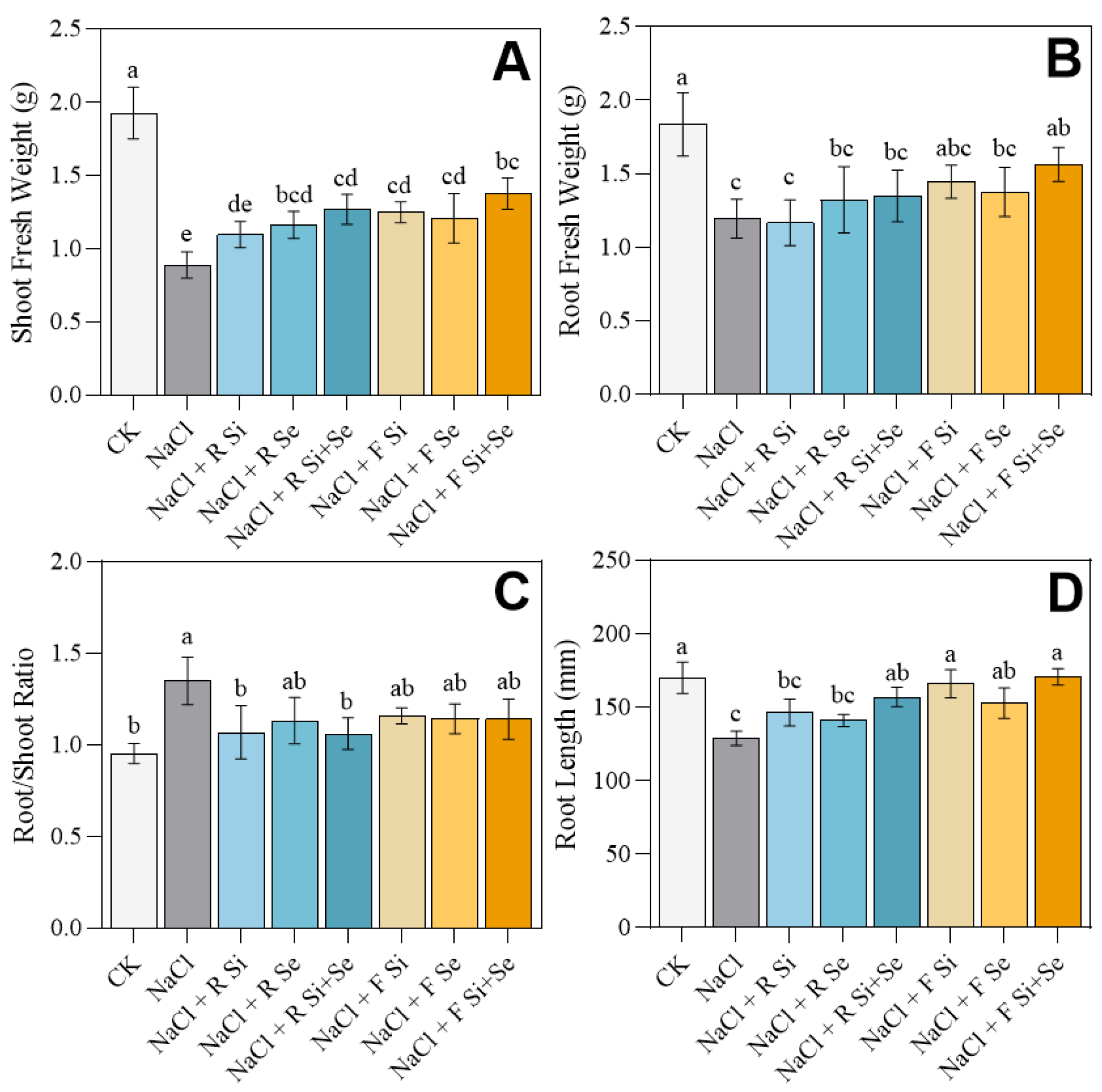
After 9 d of treatment, salt stress treatment significantly decreased shoot fresh weight, root fresh weight, and root length, while significantly increasing the root/shoot fresh weight ratio in tomato (Figure 1; the growth phenotypes are shown in Figure S1).
Compared with salt stress alone, the application of Si and/or Se through either root application or foliar spray under salt stress improved shoot fresh weight (except the root application of Si treatment) (Figure 1A). In addition, foliar spray of Si + Se significantly ameliorated salt stress-induced decline of root fresh weight (Figure 1B). As for root/shoot ratio, root application of Si and Si + Se significantly decreased root/shoot ratio in tomato under salt stress (Figure 1C). Furthermore, root application of Si + Se, foliar spray of Si, foliar spray of Se, and foliar spray of Si + Se treatments significantly promoted root length in tomato under salt stress, while Si application and Se application in the form of root application exhibited no significant effect on root length (Figure 1D). Overall, these results indicate that Si and Se application promoted tomato growth under salt stress, while the combined application of Si and Se through foliar spray was more effective in promoting tomato growth under salt stress (Figure 1).

3.2. Effects of Si and Se Application on Chlorophyll Content and Oxidative Damage in Tomato Under Salt Stress

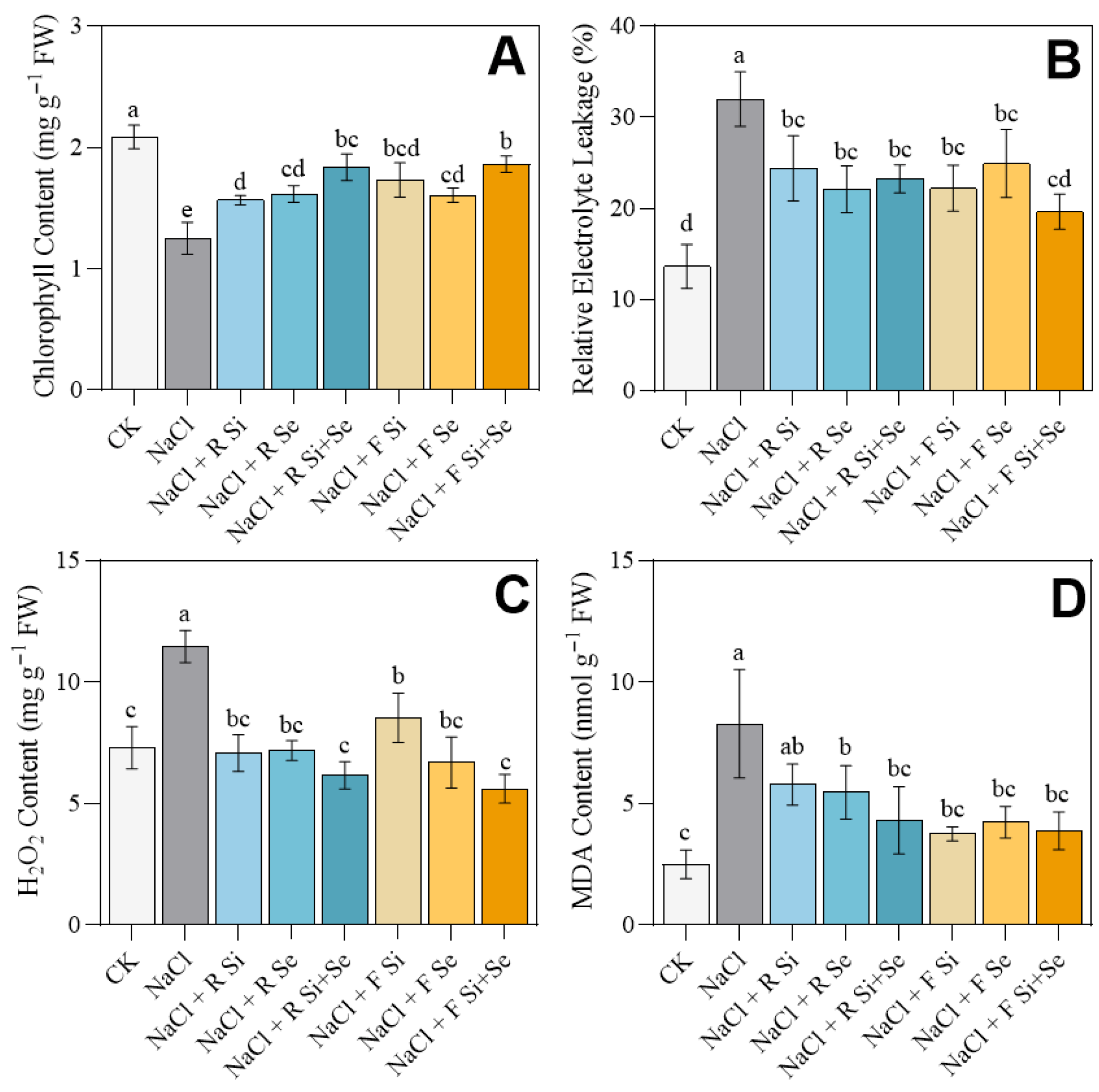
Salt stress significantly decreased chlorophyll content in tomato. In addition, salt stress induced a significant increase in relative electrolyte leakage, H2O2 content, and MDA content in contrast with CK treatment (Figure 2B–D).
All the Si- and/or Se-based treatments promoted chlorophyll content under salt stress. Particularly, the combined application of Si and Se induced higher promotion of chlorophyll content than that under individual Si and Se application under both root application and foliar spray (Figure 2A). Furthermore, Si and/or Se application decreased relative electrolyte leakage, while the most significant decline of relative electrolyte leakage was observed under the treatment of foliar spray of Si and Se (Figure 2B). As for H2O2 content, root application and foliar spray of Si and/or Se ameliorated salt stress-induced H2O2 accumulation in tomato, and the combined application of Si and Se induced the most significant decline of H2O2 content (Figure 2C). The application of both Si and Se (except the root application of Si) downregulated the content of MDA, while lower MDA content was observed under foliar spray of Si and Se application (Figure 2D). Collectively, the results indicated that the application of Si and Se, particularly their combined application, alleviated salt stress-induced chlorophyll content decline and oxidative damage in tomato under salt stress.

3.3. Effects of Si and Se Application on Photosynthesis Performance in Tomato Under Salt Stress

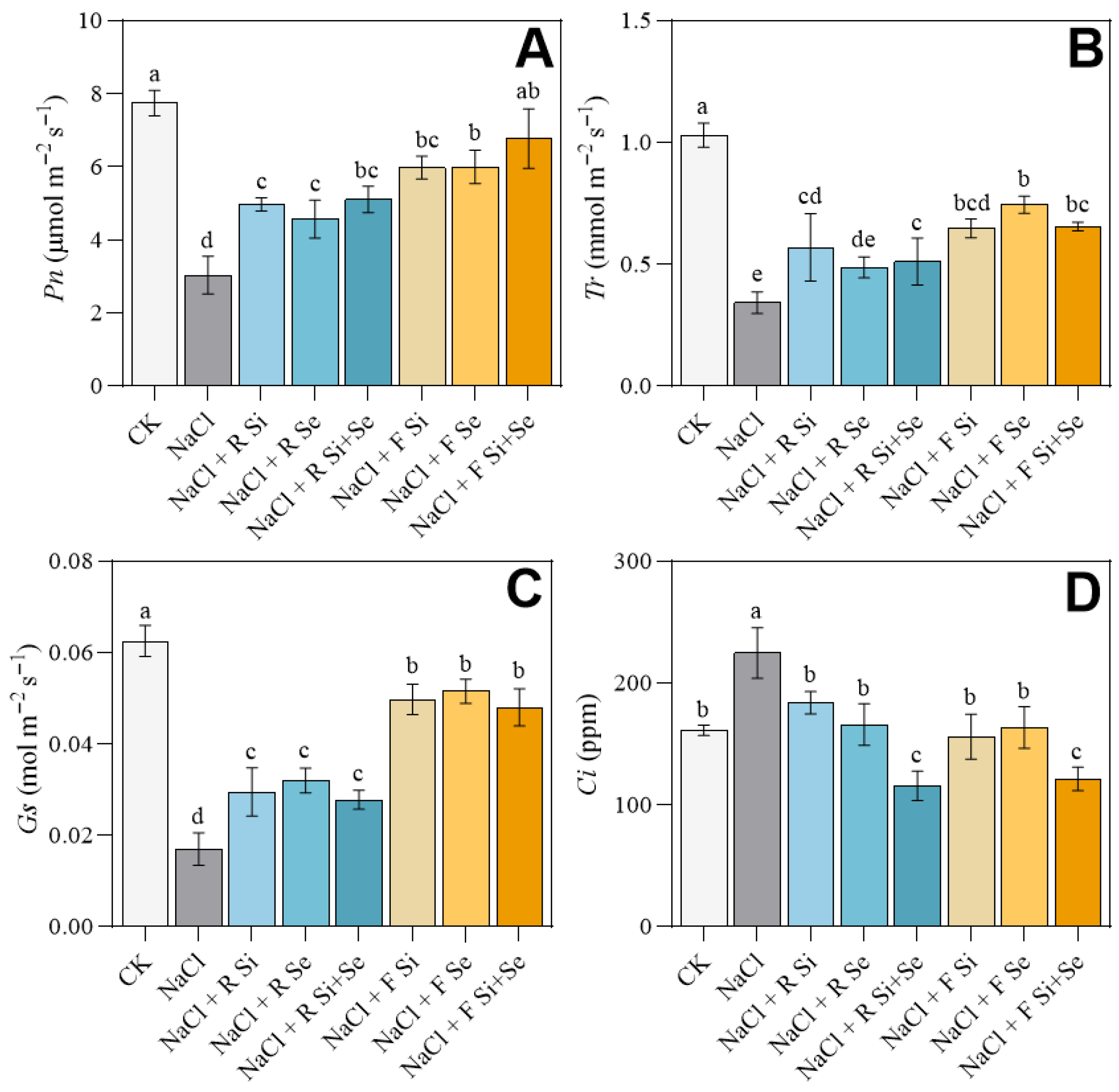
Salt stress dramatically decreased Pn, Tr, and Gs, while increasing Ci (Figure 3). Both the application of Si and Se promoted Pn, Tr, and Gs, and decreased Ci under salt stress (Figure 3). It should be noted that Si and Se application in the form of foliar spray induced a more significant increase in Gs than that under root application. Moreover, Si and Se treatment in the form of root application or foliar spray induced a significant decline of Ci, while the most significant decrement of Ci was observed under the treatments of combined application of Si and Se through root application and foliar spray (Figure 3D).
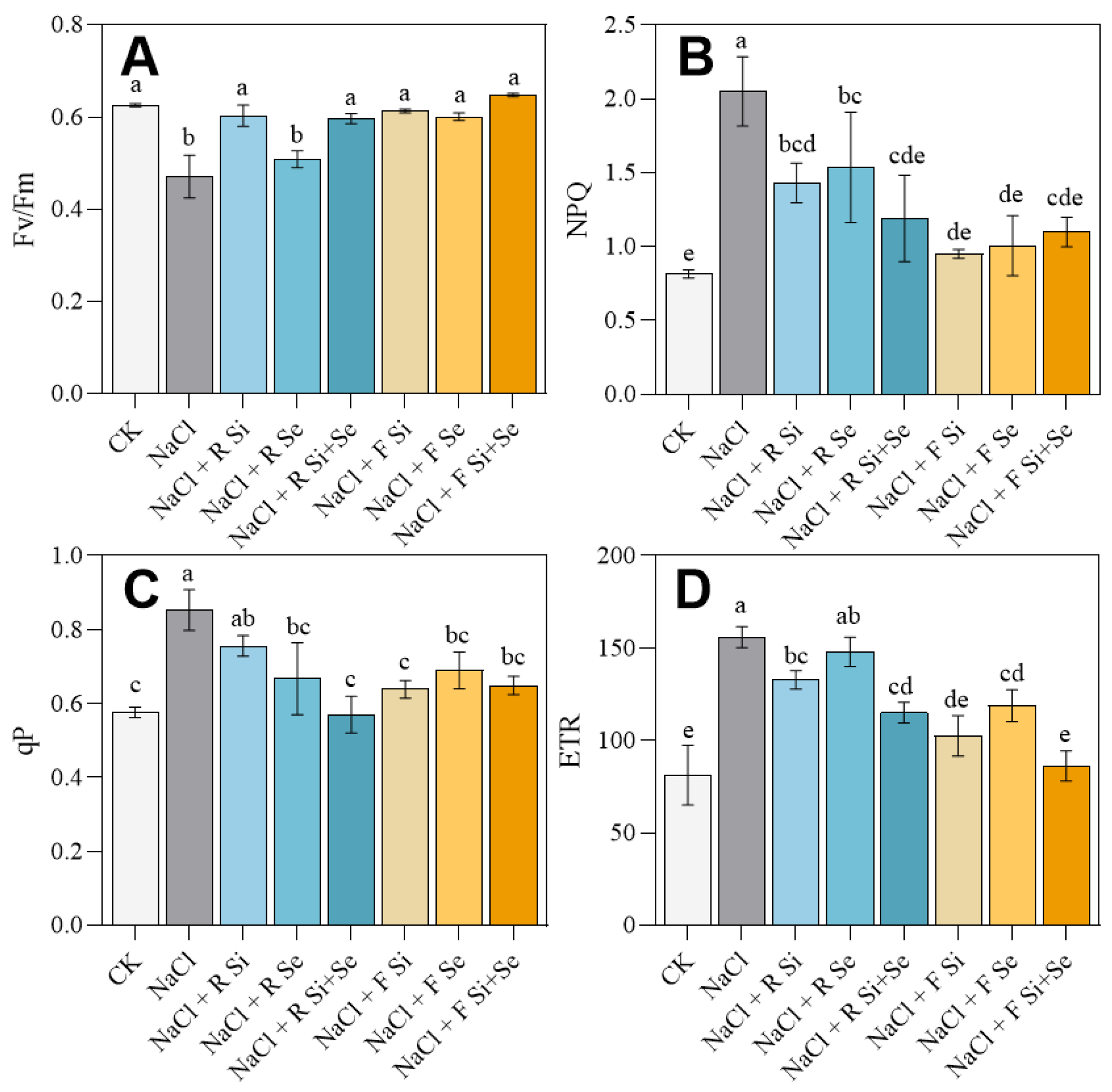
As for chlorophyll fluorescence parameters, salt stress induced a significant decline in Fv/Fm and a significant increase in NPQ, qP, and ETR (Figure 4). Under salt stress, Si and/or Se application in the form of root application or foliar spray (except the root application of Se) promoted Fv/Fm in tomato (Figure 4A). In addition, both the application of Si and/or Se decreased NPQ (Figure 4B). As for the qP parameter, Si and/or Se treatments (except the root application of Si) decreased qP to a similar level as the CK treatment (Figure 4C). Moreover, the application of Si and/or Se, but not the root application of Se, induced a significant decline of ETR, while the most significant decrement of ETR was observed under the treatment of foliar spray of Si and Si + Se (Figure 4D). Overall, these results indicate that both the application of Si and/or Se alleviated salt stress-induced inhibition of the photosynthesis system, while foliar spray was more effective than root application (Figure 3 and Figure 4).

3.4. Effects of Si and Se on Antioxidant System in Tomato Under Salt Stress

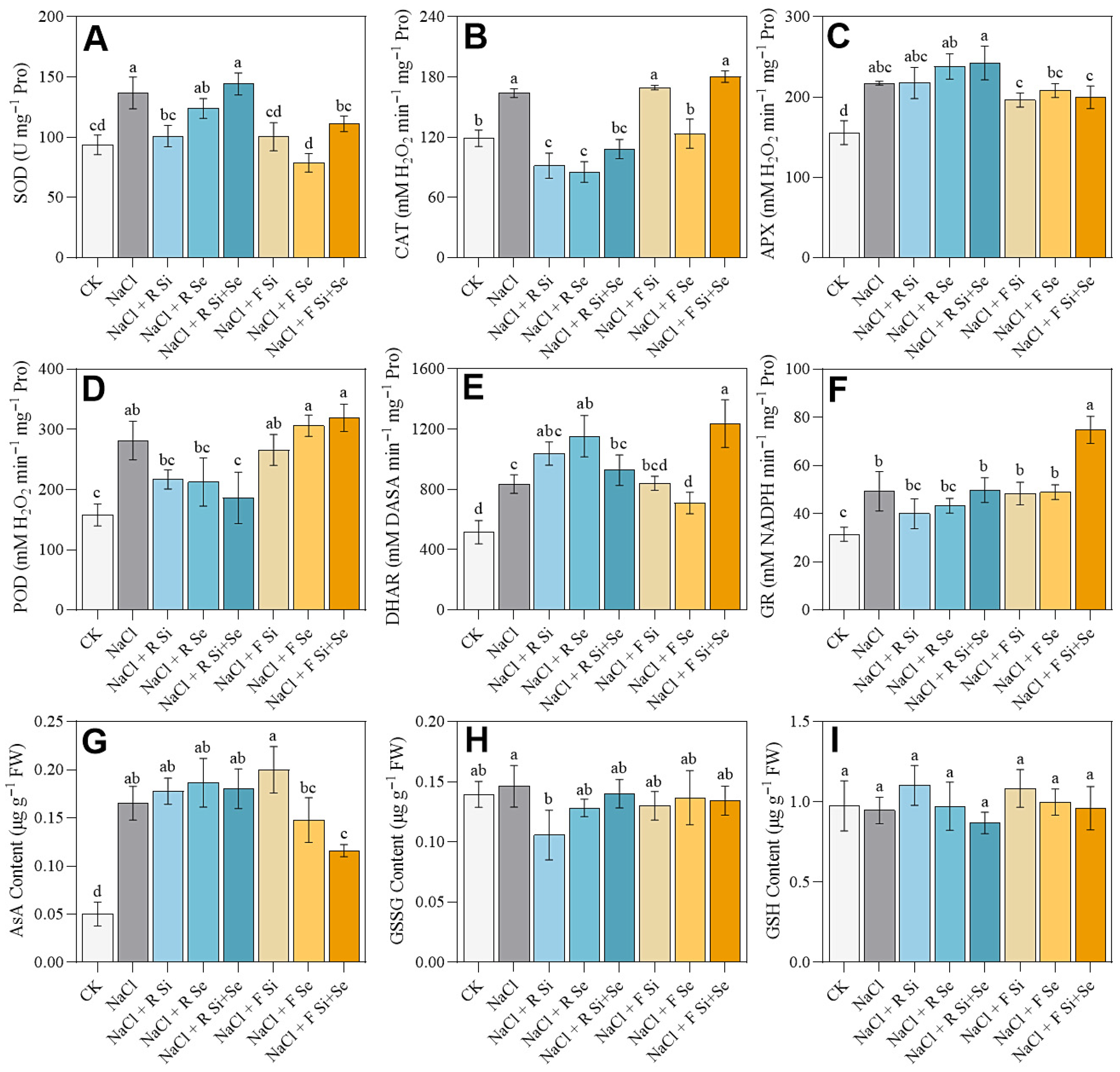
In general, salt stress upregulated the activity of antioxidant enzymes and the content of AsA, with no significant effect on the content of GSSG and GSH (Figure 5). The application of Si or Se alone further modulated antioxidant enzyme activities and non-enzymatic antioxidants compared with salt stress treatment alone. Under salt stress, root application of Si decreased the activity of SOD and CAT, and the content of GSSG, while foliar spray of Si decreased the activity of SOD. In addition, root application of Se decreased the activity of CAT and increased the activity of DHAR, while foliar spray of Se decreased the activity of SOD, CAT, and DHAR (Figure 5). Notably, the combined treatment of Si and Se in the form of root application decreased the activities of SOD and POD, while foliar spray of Si and Se downregulated the activities of SOD and the contents of AsA and increased the activity of DHAR and GR (Figure 5). In conclusion, Si and/or Se application through different forms modulated antioxidant capacity in tomato under salt stress, with the synergistic application of Si and Se inducing more significant modulation than individual applications of Si and Se (Figure 5).

3.5. Effects of Si and Se on Na/K Homeostasis in Tomato Under Salt Stress

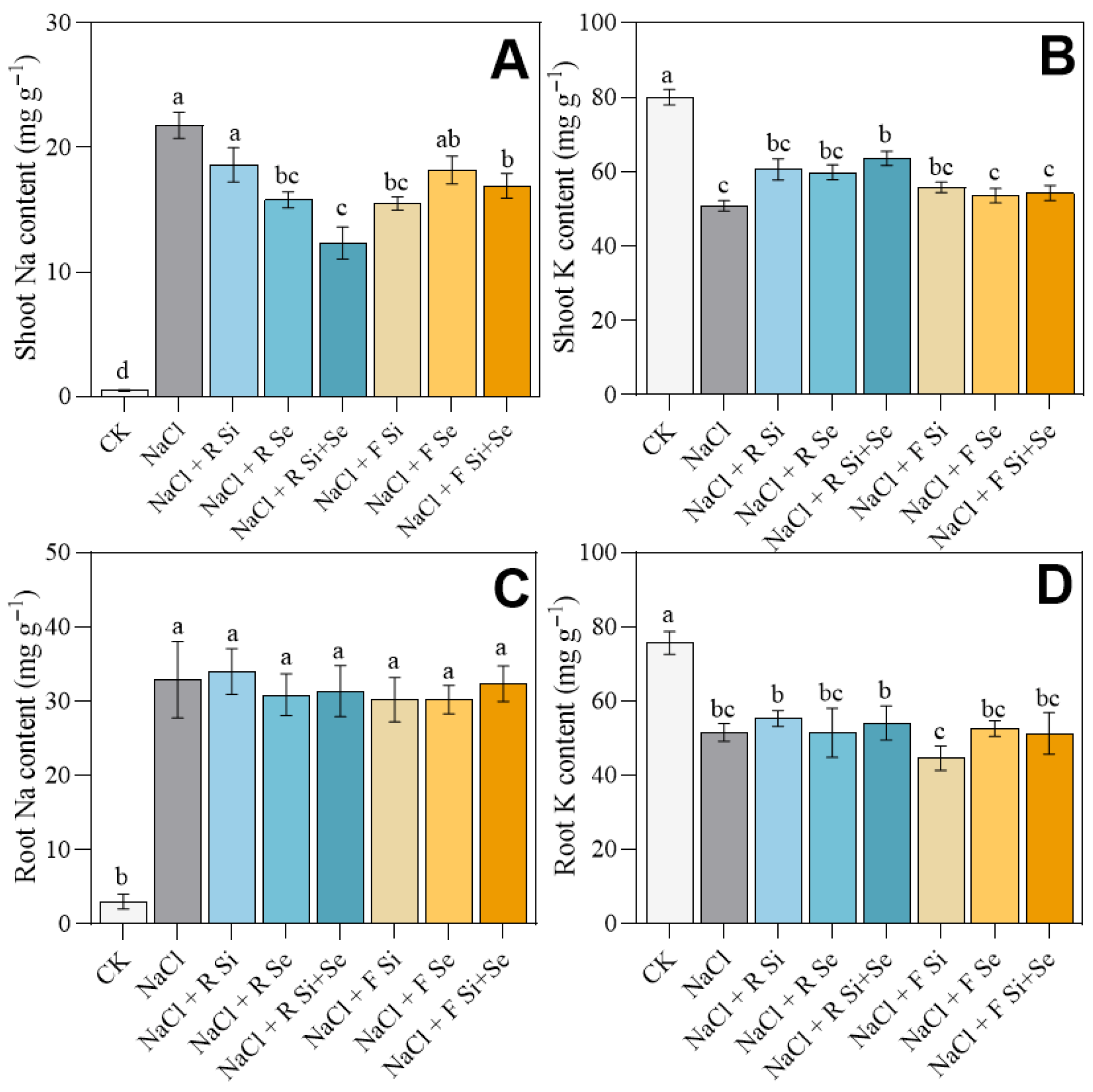
In tomato, salt stress caused a dramatic increase in Na and a decline in K in both shoot and root (Figure 6). Under salt stress, the application of Si and/or Se (except the root application of Si and foliar spray of Se) decreased the content of Na in the tomato shoot (Figure 6A). Moreover, the application of Si and Se in the form of root application significantly increased shoot K content under salt stress, while individual Si or Se application, and the foliar spray of Si and Se in combination, induced no significant change of shoot K content (Figure 6B). However, in contrast with the regulatory effects of Si and Se application on the contents of Na and K in the shoot, no significant difference in Na and K content in the root was observed among different treatments in tomato under salt stress (Figure 6C,D).

3.6. The Expression of Genes Related to Na/K Homeostasis Under Different Treatments

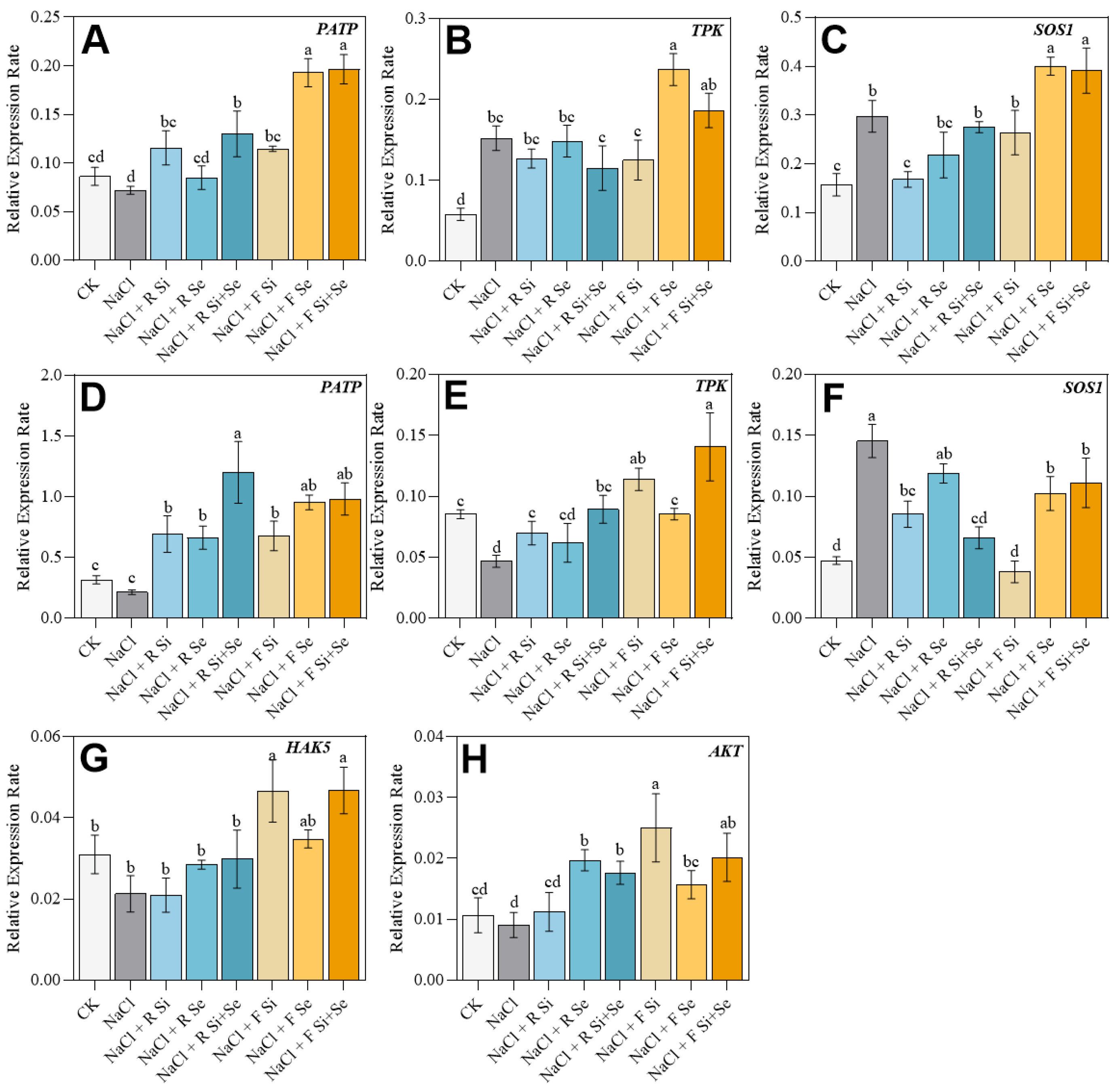
The expression of genes responsible for K (TPK, HAK5, AKT) and Na transport (SOS1, PATP) was determined in this study. Considering that HAK5 and AKT are responsible for K uptake in the root, the expression of these two genes was not determined in the tomato shoot under different treatments. As shown in Figure 7, salt stress dramatically increased the expression of TPK and SOS1 in the shoot, with no significant effect on the expression of PATP. In the tomato root, salt stress upregulated the expression of SOS1, while the expression of TPK was downregulated.
In the tomato shoot, the application of Si and/or Se (except the root application of Se) promoted the expression of PATP, while foliar application of Se and foliar application of Si and Se induced the most significant promotion of the expression of PATP (Figure 7A). In addition, foliar spray of Se upregulated the expression of TPK in tomato shoot, while foliar spray of Se and foliar spray of Si and Se upregulated the expression of SOS1, and root application of Si downregulated the expression of SOS1 (Figure 7B,C). In the tomato root, all Si- and Se-based treatments increased the expression of PATP (Figure 7D). In contrast, the application of Si and/or Se (except the root application of Se) promoted the expression of TPK (Figure 7E). Similarly, the application of Si and/or Se (except the root application of Se) downregulated the expression of SOS1 in tomato root, and root application of Si and Se and foliar spray of Si treatments induced the most significant decrement of the expression of SOS1 (Figure 7F). As for HAK5, foliar spray of Si and foliar spray of Si and Se treatments promoted the expression of HAK5 in contrast to salt stress treatment, while no significant change of the expression of HAK5 was observed under other treatments (Figure 7G). Moreover, the expression of AKT was promoted by all the treatments of Si and/or Se (except the root application of Si treatment) (Figure 7H).

3.7. Principal Component Analysis

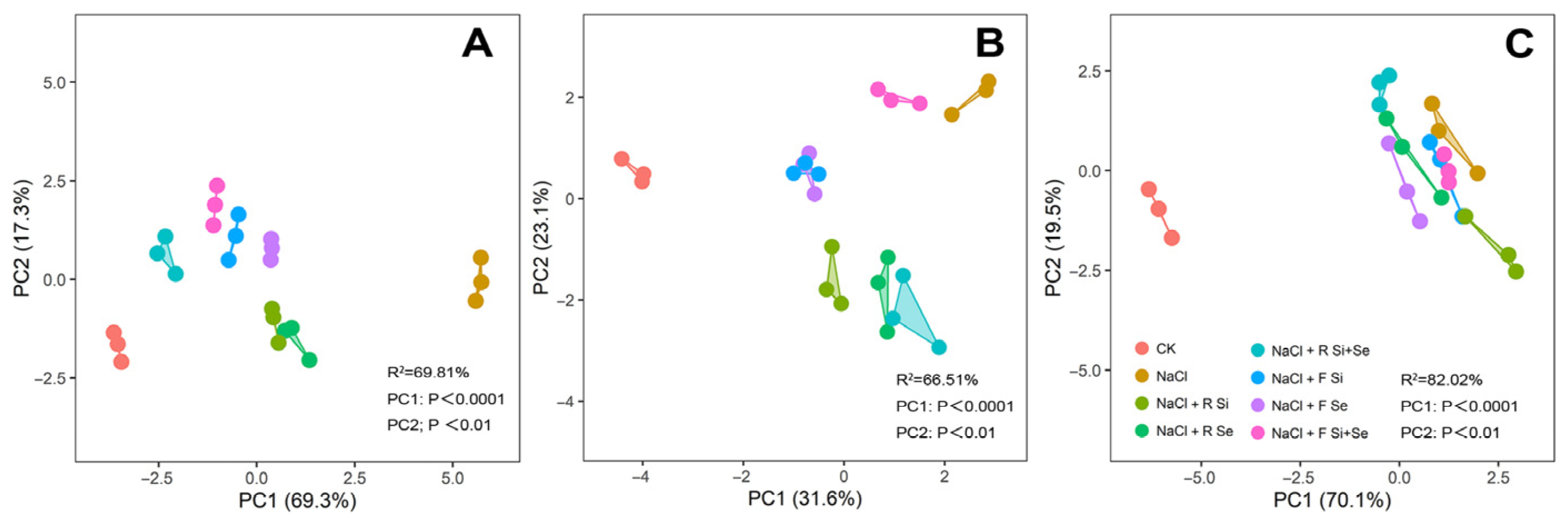
To comprehensively evaluate the effects of Si and/or Se application via different application forms on salt stress resistance in tomato, PCA was conducted based on three categories of data, including photosynthetic performance, oxidative damage and antioxidant system activity, and ionic homeostasis (Figure 8). The results showed that the different treatments differ significantly when mapped on the first principal axis (PC1) and the second principal axis (PC2), while PC1 accounted for 69.3%, 31.6%, and 70.1% of the total variation of photosynthesis system performance, oxidative damage and antioxidant system activity, and ionic homeostasis, respectively (Figure 8).
Across all three PCA plots, salt stress resulted in the farthest deviation from the CK, indicating the salt stress-induced growth inhibition in tomato. In contrast, the application of Si and/or Se generally shifted the deviation towards CK treatment along the PC1 axis, while the regulatory effects differed with Si/Se treatments, application patterns, and growth parameters (Figure 8). For tomato photosynthetic performance, the application of Si and Se in the forms of root application and foliar spray induced the strongest shift to CK than other treatments (Figure 8A). In the aspect of oxidative damage and antioxidant system activity, the plots of foliar spray of Si and foliar spray of Se treatments were closer to the CK treatment when mapped on the PC1 axis than other treatments (Figure 8B). As for ionic homeostasis, root application of Se, root application of Si and Se, and foliar spray of Se shifted the overall performance closer to CK than other treatments (Figure 8C). Collectively, the results of PCA indicate that both the application of Si and Se, particularly when applied in combination, significantly ameliorated the salt stress-induced shifts of tomato physiological parameters, while the regulation effects differed between root application and foliar spray (Figure 8).

4. Discussion

Salt stress induces significant crop yield loss and threatens food safety worldwide. As two widely recognized beneficial elements, Si and Se can promote stress resistance in plants [59,60]. Particularly, the growth promotion effects of Si and Se in plants under salt stress have been reported in different plant species such as rice [31,61], maize [38,44], cucumber [20,62], and tomato [63,64]. In accordance with previous reports, the results of this study showed that the application of Si and/or Se promoted tomato growth parameters, including shoot and root biomass, root length, chlorophyll content, and alleviated salt stress-induced oxidative damage, indicated by the decreased relative electrolyte leakage, H2O2 content, and MDA content (Figure 1 and Figure 2). The results imply that the application of Si- and Se-based fertilizers is a promising strategy in promoting plant growth and crop yield under the increasing global threat of soil salinization.
Aiming for targeted usage of Si/Se fertilizers in agricultural production, the effects of Si and Se application, either individually or synergistically with root application or foliar spray, were comparatively evaluated. The results indicated that a more significant increase in biomass, root length, and chlorophyll content was observed under the treatment of Si and Se in combination (Figure 1 and Figure 2), highlighting a synergistic interaction between Si and Se in enhancing tomato tolerance to salt stress. Furthermore, the alleviating effects of Si and Se differed between root application and foliar spray, suggesting that different physiological mechanisms may underlie the enhanced salt tolerance induced by these application methods. Under salt stress, the excess salts in the growth substance under saline conditions would limit plant water uptake and induce primary osmotic constraint in the aspect of plant physiology, subsequently causing ionic toxicity after being assimilated and accumulated by plants [65,66]. Due to the dual toxic effects, including osmotic and ionic aspects, salt stress would result in photosynthesis performance inhibition, membrane peroxidation, and mineral nutrition disturbance, ultimately restricting crop yield and quality [67].
It has been documented that the application of Si and Se can alleviate salt stress in plants with multiple mechanisms involved, such as photosynthesis enhancement, alleviation of oxidative damage, and modulation of ionic balance [20,21]. Therefore, the comparative effects of Si and/or Se via root application and foliar spray on three key aspects, including photosynthesis performance, oxidative damage and antioxidant system activity, and Na/K homeostasis in tomato under salt stress, were determined in this study. In the aspect of photosynthesis performance, a key mechanism of salt stress-induced toxicity symptoms, the application of Si and/or Se in the form of foliar spray induced more significant promotion of photosynthesis parameters and chlorophyll fluorescence parameters (Figure 3 and Figure 4), which could be due to the more direct effects of foliar spray than that of root application in accordance with previous literature [28,29]. In addition to inhibition of photosynthetic performance, both the water constraint and excessive accumulation of Na in plants would cause membrane peroxidation and oxidative damage, while the antioxidant system driven by antioxidant enzymes and nonenzymatic antioxidants plays key roles in protecting plants against salt stress [68]. The results of this study show that both the application of Si and Se effectively regulated the activity of the antioxidant system in tomato under salt stress (Figure 5). However, the regulatory effects of Si and Se application on the antioxidant system differed significantly between root application and foliar spray. The results showed that root application of Si/Se more effectively regulated the activities of CAT, POD, and DHAR, while the foliar spray of Si/Se exhibited more significant regulation of SOD, GR, and AsA content in tomato under salt stress (Figure 5).
As a key mechanism in salt stress-induced toxicity in plants, the excess NaCl in the growth substance would induce the accumulation of Na and a decline in K nutrition status [20,32]. In contrast with the more effective regulation of the foliar spray of Si and Se on the photosynthesis system in tomato, root application of Si/Se induced more significant promotion of ionic homeostasis with decreased Na content and increased K content (Figure 6), which could be due to the fact that root uptake and translocation play pivotal roles in ionic homeostasis under salt stress. Moreover, it should be noted that whether the application of Si/Se was via root or foliar, the expression of genes responsible for Na/K uptake and translocation in both shoot and root were dramatically modulated (Figure 7), which was in accordance with previous studies where the results showed that the foliar application of Si and Se can effectively reduce Na/K concentration ratio and enhance ionic balance in plant under salt stress [30,69]. These results imply that the signal transduction between root and shoot could participate in the regulation of Si and Se on Na/K homeostasis in tomato under salt stress.
Given the complexity of the treatments and the limitations of evaluating plant stress responses based on single physiological parameters, PCA was employed in this study to comparatively evaluate the effectiveness of Si and Se application in alleviating salt stress in tomato. The results of PCA confirmed that the application of Si and Se in combination can promote salt stress resistance in tomato via more effective modulation of photosynthesis performance, antioxidant capacity, and ionic homeostasis (Figure 8). As for application patterns, root application of Si and Se is more effective in enhancing ionic homeostasis, while foliar spray of Si and Se is more effective in promoting photosynthesis performance in tomato under salt stress (Figure 8). It should be noted that the effects of Si and Se application in alleviating salt stress differ significantly among different plant species [70], and the physiological and molecular bases of Si/Se application via root application and foliar spray in different plant species deserve more attention in further research. In addition, hydroponic experiments were conducted in this study, which differs significantly from the field study. Particularly, it has been documented that the application of Si and Se can modulate the rhizosphere microbial community structures and the interaction between plant and microorganisms, thereby enhancing plant growth under salt stress [71,72]. Considering the importance of soil–plant interaction in salt stress resistance in plants, more attention should be paid to investigating the potential effects of Si/Se application in alleviating salt stress in agricultural practices.

5. Conclusions

The results of this study indicated that the application of Si and/or Se can promote salt stress resistance in tomato, while the combined application of Si and Se is more effective in ameliorating salt stress in tomato via modulating photosynthesis performance, antioxidant capacity, and ionic homeostasis than individual application. In addition, the results of PCA showed that distinct mechanisms were involved in the enhancement of stress resistance under different application patterns. Ionic homeostasis was more effectively regulated by root application of Si and Se, whereas foliar spray more efficiently enhanced photosynthesis performance. Based on the overall regulatory effects and the cost efficiency of different treatments, foliar application of Si and Si in combination is recommended in agricultural practices. Considering the difference between the hydroponic experiment and field cultivation, the potential effects of Si and Se on plant–microorganism interaction and their roles in salt stress resistance deserve further investigation.

Supplementary Materials

The following supporting information can be downloaded at: https://www.mdpi.com/article/10.3390/horticulturae12040402/s1; Figure S1: Tomato growth phenotypes under different treatments; Table S1: The application of Na2SO4 in different treatments; Table S2: Sequences of primers used in this study.

Author Contributions

Conceptualization, G.Y. and Z.Z.; formal analysis and investigation, S.M., X.Z., L.C. and G.Z.; writing—original draft preparation, S.M. and X.Z.; writing—review and editing, Y.H., Z.Z. and G.Y.; funding acquisition, G.Y. All authors have read and agreed to the published version of the manuscript.

Funding

This research was funded by the National Natural Science Foundation of China, grant number 32202583.

Data Availability Statement

The original contributions presented in this study are included in the article/Supplementary Materials. Further inquiries can be directed to the corresponding author.

Conflicts of Interest

The authors declare no conflicts of interest.

References

  1. Byrt, C.S.; Munns, R. Living with salinity. New Phytol. 2008, 179, 903–905. [Google Scholar] [CrossRef]
  2. Munns, R.; Gilliham, M. Salinity tolerance of crops—What is the cost? New Phytol. 2015, 208, 668–673. [Google Scholar] [CrossRef]
  3. Munns, R.; Day, D.A.; Fricke, W.; Watt, M.; Arsova, B.; Barkla, B.J.; Bose, J.; Byrt, C.S.; Chen, Z.H.; Foster, K.J.; et al. Energy costs of salt tolerance in crop plants. New Phytol. 2020, 225, 1072–1090. [Google Scholar] [CrossRef]
  4. Munns, R. Genes and salt tolerance: Bringing them together. New Phytol. 2005, 167, 645–663. [Google Scholar] [CrossRef]
  5. Fita, A.; Rodriguez-Burruezo, A.; Boscaiu, M.; Prohens, J.; Vicente, O. Breeding and domesticating crops adapted to drought and salinity: A new paradigm for increasing food production. Front. Plant Sci. 2015, 6, 978. [Google Scholar] [CrossRef] [PubMed]
  6. Dodd, I.C.; Perez-Alfocea, F. Microbial amelioration of crop salinity stress. J. Exp. Bot. 2012, 63, 3415–3428. [Google Scholar] [CrossRef]
  7. Chauhan, R.; Awasthi, S.; Srivastava, S.; Dwivedi, S.; Pilon-Smits, E.A.H.; Dhankher, O.P.; Tripathi, R.D. Understanding selenium metabolism in plants and its role as a beneficial element. Crit. Rev. Environ. Sci. Technol. 2019, 49, 1937–1958. [Google Scholar] [CrossRef]
  8. Epstein, E. Silicon. Annu. Rev. Plant Physiol. Plant Mol. Biol. 1999, 50, 641–664. [Google Scholar] [CrossRef]
  9. Pilon-Smits, E.A.H.; Quinn, C.F.; Tapken, W.; Malagoli, M.; Schiavon, M. Physiological functions of beneficial elements. Curr. Opin. Plant Biol. 2009, 12, 267–274. [Google Scholar] [CrossRef]
  10. Wang, M.; Gao, L.M.; Dong, S.Y.; Sun, Y.M.; Shen, Q.R.; Guo, S.W. Role of silicon on plant-pathogen interactions. Front. Plant Sci. 2017, 8, 701. [Google Scholar] [CrossRef] [PubMed]
  11. Hasanuzzaman, M.; Bhuyan, M.H.M.B.; Raza, A.; Hawrylak-Nowak, B.; Matraszek-Gawron, R.; Al Mahmud, J.; Nahar, K.; Fujita, M. Selenium in plants: Boon or bane? Environ. Exp. Bot. 2020, 178, 104170. [Google Scholar] [CrossRef]
  12. Liang, Y.C.; Nikolic, M.; Belanger, R.; Gong, H.J.; Song, A.L. Silicon in Agriculture: From Theory to Practice; Springer: Dordrecht, The Netherlands, 2015. [Google Scholar]
  13. Coskun, D.; Britto, D.T.; Huynh, W.Q.; Kronzucker, H.J. The role of silicon in higher plants under salinity and drought stress. Front. Plant Sci. 2016, 7, 1072. [Google Scholar] [CrossRef] [PubMed]
  14. Zhu, Y.X.; Gong, H.J. Beneficial effects of silicon on salt and drought tolerance in plants. Agron. Sustain. Dev. 2014, 34, 455–472. [Google Scholar] [CrossRef]
  15. Kamran, M.; Parveen, A.; Ahmar, S.; Malik, Z.; Hussain, S.; Chattha, M.S.; Saleem, M.H.; Adil, M.; Heidari, P.; Chen, J.-T. An overview of hazardous impacts of soil salinity in crops, tolerance mechanisms, and amelioration through selenium supplementation. Int. J. Mol. Sci. 2020, 21, 148. [Google Scholar] [CrossRef]
  16. Gui, J.; Rao, S.; Huang, X.; Liu, X.; Cheng, S.; Xu, F. Interaction between selenium and essential micronutrient elements in plants: A systematic review. Sci. Total Environ. 2022, 853, 158673. [Google Scholar] [CrossRef] [PubMed]
  17. Liu, H.; Xiao, C.; Qiu, T.; Deng, J.; Cheng, H.; Cong, X.; Cheng, S.; Rao, S.; Zhang, Y. Selenium regulates antioxidant, photosynthesis, and cell permeability in plants under various abiotic stresses: A review. Plants 2023, 12, 44. [Google Scholar] [CrossRef]
  18. Gao, M.; Zhou, J.; Liu, H.L.; Zhang, W.T.; Hu, Y.M.; Liang, J.N.; Zhou, J. Foliar spraying with silicon and selenium reduces cadmium uptake and mitigates cadmium toxicity in rice. Sci. Total Environ. 2018, 631–632, 1100–1108. [Google Scholar] [CrossRef]
  19. Das, S.; Biswas, A.K. Comparative study of silicon and selenium to modulate chloroplast pigments levels, Hill activity, photosynthetic parameters and carbohydrate metabolism under arsenic stress in rice seedlings. Environ. Sci. Pollut. Res. 2022, 29, 19508–19529. [Google Scholar] [CrossRef]
  20. Yan, G.C.; Zhao, S.J.; Dong, J.Q.; Qiu, H.Y.; Li, B.Y.; Cao, L.; Yuan, T.T.; Zhu, X.Y.J.; Mao, S.M.; Wang, P.W.; et al. Silicon enhances root potassium retention in cucumber under salt stress through promoting sodium exclusion and antioxidant capacity. Plant Physiol. Biochem. 2025, 227, 110156. [Google Scholar] [CrossRef]
  21. Elkelish, A.A.; Soliman, M.H.; Alhaithloul, H.A.; El-Esawi, M.A. Selenium protects wheat seedlings against salt stress-mediated oxidative damage by up-regulating antioxidants and osmolytes metabolism. Plant Physiol. Biochem. 2019, 137, 144–153. [Google Scholar] [CrossRef]
  22. Xu, S.; Zhao, N.; Qin, D.; Liu, S.; Jiang, S.; Xu, L.; Sun, Z.; Yan, D.; Hu, A. The synergistic effects of silicon and selenium on enhancing salt tolerance of maize plants. Environ. Exp. Bot. 2021, 187, 104482. [Google Scholar] [CrossRef]
  23. Sattar, A.; Cheema, M.A.; Abbas, T.; Sher, A.; Ijaz, M.; Hussain, M. Separate and combined effects of silicon and selenium on salt tolerance of wheat plants. Russ. J. Plant Physiol. 2017, 64, 341–348. [Google Scholar] [CrossRef]
  24. Taha, R.S.; Seleiman, M.F.; Shami, A.; Alhammad, B.A.; Mahdi, A.H.A. Integrated application of selenium and silicon enhances growth and anatomical structure, antioxidant defense system and yield of wheat grown in salt-stressed soil. Plants 2021, 10, 1040. [Google Scholar] [CrossRef] [PubMed]
  25. Huang, H.; Li, M.; Rizwan, M.; Dai, Z.; Yuan, Y.; Hossain, M.M.; Cao, M.; Xiong, S.; Tu, S. Synergistic effect of silicon and selenium on the alleviation of cadmium toxicity in rice plants. J. Hazard. Mater. 2021, 401, 123393. [Google Scholar] [CrossRef]
  26. Li, D.; Liu, H.; Gao, M.; Zhou, J.; Zhou, J. Effects of soil amendments, foliar sprayings of silicon and selenium and their combinations on the reduction of cadmium accumulation in rice. Pedosphere 2022, 32, 649–659. [Google Scholar] [CrossRef]
  27. Ding, Y.; Wang, Y.; Zheng, X.; Cheng, W.; Shi, R.; Feng, R. Effects of foliar dressing of selenite and silicate alone or combined with different soil ameliorants on the accumulation of As and Cd and antioxidant system in Brassica campestris. Ecotoxicol. Environ. Saf. 2017, 142, 207–215. [Google Scholar] [CrossRef]
  28. Kumar, A.; Ansari, M.I.; Singh, P.K.; Baker, A.; Gupta, K.; Srivastava, S. Synergistic effects of selenium and silicon mitigate arsenic toxicity in Oryza sativa L. J. Plant Growth Regul. 2023, 43, 1272–1286. [Google Scholar] [CrossRef]
  29. Qin, C.; Lian, H.; Zhang, B.; He, Z.; Alsahli, A.A.; Ahanger, M.A. Synergistic influence of selenium and silicon supplementation prevents the oxidative effects of arsenic stress in wheat. J. Hazard. Mater. 2024, 465, 133304. [Google Scholar] [CrossRef] [PubMed]
  30. Shalaby, T.; Bayoumi, Y.; Alshaal, T.; Elhawat, N.; Sztrik, A.; El-Ramady, H. Selenium fortification induces growth, antioxidant activity, yield and nutritional quality of lettuce in salt-affected soil using foliar and soil applications. Plant Soil 2017, 421, 245–258. [Google Scholar] [CrossRef]
  31. Subramanyam, K.; Du Laing, G.; Van Damme, E.J.M. Sodium selenate treatment using a combination of seed priming and foliar spray alleviates salinity stress in rice. Front. Plant Sci. 2019, 10, 116. [Google Scholar] [CrossRef]
  32. Munns, R.; Tester, M. Mechanisms of salinity tolerance. Annu. Rev. Plant Biol. 2008, 59, 651–681. [Google Scholar] [CrossRef]
  33. Zhu, J.K. Plant salt tolerance. Trends Plant Sci. 2001, 6, 66–71. [Google Scholar] [CrossRef]
  34. Mahdieh, M.; Habibollahi, N.; Amirjani, M.R.; Abnosi, M.H.; Ghorbanpour, M. Exogenous silicon nutrition ameliorates salt-induced stress by improving growth and efficiency of PSII in Oryza sativa L. cultivars. J. Soil Sci. Plant Nutr. 2015, 15, 1050–1060. [Google Scholar] [CrossRef]
  35. Diao, M.; Ma, L.; Wang, J.; Cui, J.; Fu, A.; Liu, H.Y. Selenium promotes the growth and photosynthesis of tomato seedlings under salt stress by enhancing chloroplast antioxidant defense system. J. Plant Growth Regul. 2014, 33, 671–682. [Google Scholar] [CrossRef]
  36. Alsamadany, H.; Alharby, H.F.; Al-Zahrani, H.S.; Kusvuran, A.; Kusvuran, S.; Rady, M.M. Selenium fortification stimulates antioxidant- and enzyme gene expression-related defense mechanisms in response to saline stress in Cucurbita pepo. Sci. Hortic. 2023, 312, 111886. [Google Scholar] [CrossRef]
  37. Kim, Y.H.; Khan, A.L.; Kim, D.H.; Lee, S.Y.; Kim, K.M.; Waqas, M.; Jung, H.Y.; Shin, J.H.; Kim, J.G.; Lee, I.J. Silicon mitigates heavy metal stress by regulating P-type heavy metal ATPases, Oryza sativa low silicon genes, and endogenous phytohormones. BMC Plant Biol. 2014, 14, 13. [Google Scholar] [CrossRef]
  38. Ashraf, M.A.; Akbar, A.; Parveen, A.; Rasheed, R.; Hussain, I.; Iqbal, M. Phenological application of selenium differentially improves growth, oxidative defense and ion homeostasis in maize under salinity stress. Plant Physiol. Biochem. 2018, 123, 268–280. [Google Scholar] [CrossRef]
  39. Shi, Y.; Wang, Y.C.; Flowers, T.J.; Gong, H.J. Silicon decreases chloride transport in rice (Oryza sativa L.) in saline conditions. J. Plant Physiol. 2013, 170, 847–853. [Google Scholar] [CrossRef] [PubMed]
  40. Kong, L.; Wang, M.; Bi, D. Selenium modulates the activities of antioxidant enzymes, osmotic homeostasis and promotes the growth of sorrel seedlings under salt stress. Plant Growth Regul. 2005, 45, 155–163. [Google Scholar] [CrossRef]
  41. Rasool, A.; Shah, W.H.; Padder, S.A.; Tahir, I.; Alharby, H.F.; Hakeem, K.R.; ul Rehman, R. Exogenous selenium treatment alleviates salinity stress in Proso Millet (Panicum miliaceum L.) by enhancing the antioxidant defence system and regulation of ionic channels. Plant Growth Regul. 2022, 100, 479–494. [Google Scholar] [CrossRef]
  42. Habibi, G. Physiological, photochemical and ionic responses of sunflower seedlings to exogenous selenium supply under salt stress. Acta Physiol. Plant. 2017, 39, 213. [Google Scholar] [CrossRef]
  43. Flam-Shepherd, R.; Huynh, W.Q.; Coskun, D.; Hamam, A.M.; Britto, D.T.; Kronzucker, H.J. Membrane fluxes, bypass flows, and sodium stress in rice: The influence of silicon. J. Exp. Bot. 2018, 69, 1679–1692. [Google Scholar] [CrossRef]
  44. Bosnic, P.; Bosnic, D.; Jasnic, J.; Nikolic, M. Silicon mediates sodium transport and partitioning in maize under moderate salt stress. Environ. Exp. Bot. 2018, 155, 681–687. [Google Scholar] [CrossRef]
  45. Yan, G.C.; Jin, H.; Yin, C.; Hua, Y.C.; Huang, Q.Y.; Zhou, G.F.; Xu, Y.M.; He, Y.; Liang, Y.C.; Zhu, Z.J. Comparative effects of silicon and silicon nanoparticles on the antioxidant system and cadmium uptake in tomato under cadmium stress. Sci. Total Environ. 2023, 904, 166819. [Google Scholar] [CrossRef] [PubMed]
  46. Zhang, W.; He, X.; Chen, X.; Han, H.; Shen, B.; Diao, M.; Liu, H.Y. Exogenous selenium promotes the growth of salt-stressed tomato seedlings by regulating ionic homeostasis, activation energy allocation and CO2 assimilation. Front. Plant Sci. 2023, 14, 1206246. [Google Scholar] [CrossRef] [PubMed]
  47. Yang, L.; Han, R.; Duan, Y.; Li, J.; Gou, T.; Zhou, J.; Zhu, H.; Xu, Z.; Guo, J.; Gong, H. Exogenous application of silicon and selenium improves the tolerance of tomato plants to calcium nitrate stress. Plant Physiol. Biochem. 2024, 207, 108416. [Google Scholar] [CrossRef] [PubMed]
  48. Porra, R.J.; Thompson, W.A.; Kriedemann, P.E. Determination of accurate extinction coefficients and simultaneous-equations for assaying chlorophyll-a and chlorophyll-b extracted with 4 different solvents-verification of the concentration of chlorophyll standards by atomic-absorption spectroscopy. Biochim. Biophys. Acta 1989, 975, 384–394. [Google Scholar] [CrossRef]
  49. Lutts, S.; Kinet, J.M.; Bouharmont, J. NaCl-induced senescence in leaves of rice (Oryza sativa L.) cultivars differing in salinity resistance. Ann. Bot. 1996, 78, 389–398. [Google Scholar] [CrossRef]
  50. Heath, R.L.; Packer, L. Photoperoxidation in isolated chloroplasts. I. kinetics and stoichiometry of fatty acid peroxidation. Arch. Biochem. Biophys. 1968, 125, 189–198. [Google Scholar] [CrossRef]
  51. Patterson, B.D.; Macrae, E.A.; Ferguson, I.B. Estimation of hydrogen-peroxide in plant-extracts using titanium(IV). Anal. Biochem. 1984, 139, 487–492. [Google Scholar] [CrossRef]
  52. Giannopolitis, C.N.; Ries, S.K. Superoxide dismutases. I. occurrence in higher plants. Plant Physiol. 1977, 59, 309–314. [Google Scholar] [CrossRef]
  53. Cakmak, I.; Marschner, H. Magnesium deficiency and high light intensity enhance activities of superoxide dismutase, ascorbate peroxidase, and glutathione reductase in bean leaves. Plant Physiol. 1992, 98, 1222–1227. [Google Scholar] [CrossRef] [PubMed]
  54. Nakano, Y.; Asada, K. Hydrogen peroxide is scavenged by ascorbate-specific peroxidase in spinach chloroplasts. Plant Cell Physiol. 1981, 22, 867–880. [Google Scholar] [CrossRef]
  55. Egley, G.H.; Paul, R.N.; Vaughn, K.C.; Duke, S.O. Role of peroxidase in the development of water-impermeable seed coats in Sida spinosa L. Planta 1983, 157, 224–232. [Google Scholar] [CrossRef]
  56. Foyer, C.H.; Halliwell, B. Presence of glutathione and glutathione reductase in chloroplasts—Proposed role in ascorbic-acid metabolism. Planta 1976, 133, 21–25. [Google Scholar] [CrossRef] [PubMed]
  57. R CoreTeam. A Language and Environment for Statistical Computing; R Foundation for Statistical Computing: Vienna, Austria, 2014; Available online: https://www-r-project.org/ (accessed on 9 July 2021).
  58. Oksanen, J.; Blanchet, G.; Friendly, M.; Kindt, R.; Legendre, P.; McGlinn, D. vegan: Community Ecology Package, R package version 2.5. 2019. Available online: http://CRAN.R-project.org/package=vegan (accessed on 15 April 2023).
  59. Feng, R.W.; Wei, C.Y.; Tu, S.X. The roles of selenium in protecting plants against abiotic stresses. Environ. Exp. Bot. 2013, 87, 58–68. [Google Scholar] [CrossRef]
  60. Yan, G.C.; Nikolic, M.; Ye, M.J.; Xiao, Z.X.; Liang, Y.C. Silicon acquisition and accumulation in plant and its significance for agriculture. J. Integr. Agric. 2018, 17, 2138–2150. [Google Scholar] [CrossRef]
  61. Yan, G.C.; Fan, X.P.; Peng, M.; Yin, C.; Xiao, Z.X.; Liang, Y.C. Silicon improves rice salinity resistance by alleviating ionic toxicity and osmotic constraint in an organ-specific pattern. Front. Plant Sci. 2020, 11, 260. [Google Scholar] [CrossRef]
  62. Amerian, M.; Palangi, A.; Gohari, G.; Ntatsi, G. Enhancing salinity tolerance in cucumber through Selenium biofortification and grafting. BMC Plant Biol. 2024, 24, 24. [Google Scholar] [CrossRef]
  63. Gou, T.; Su, Y.; Han, R.; Jia, J.; Zhu, Y.; Huo, H.; Liu, H.; Gong, H. Silicon delays salt stress-induced senescence by increasing cytokinin synthesis in tomato. Sci. Hortic. 2022, 293, 110750. [Google Scholar] [CrossRef]
  64. Wu, H.; Fan, S.; Gong, H.; Guo, J. Roles of salicylic acid in selenium-enhanced salt tolerance in tomato plants. Plant Soil 2023, 484, 569–588. [Google Scholar] [CrossRef]
  65. Julkowska, M.M.; Testerink, C. Tuning plant signaling and growth to survive salt. Trends Plant Sci. 2015, 20, 586–594. [Google Scholar] [CrossRef] [PubMed]
  66. Zhu, J.K. Regulation of ion homeostasis under salt stress. Curr. Opin. Plant Biol. 2003, 6, 441–445. [Google Scholar] [CrossRef]
  67. van Zelm, E.; Zhang, Y.; Testerink, C. Salt tolerance mechanisms of plants. Annu. Rev. Plant Biol. 2020, 71, 403–433. [Google Scholar] [CrossRef] [PubMed]
  68. Deinlein, U.; Stephan, A.B.; Horie, T.; Luo, W.; Xu, G.; Schroeder, J.I. Plant salt-tolerance mechanisms. Trends Plant Sci. 2014, 19, 371–379. [Google Scholar] [CrossRef] [PubMed]
  69. Jam, B.J.; Shekari, F.; Andalibi, B.; Fotovat, R.; Jafarian, V.; Najafi, J.; Uberti, D.; Mastinu, A. Impact of silicon foliar application on the growth and physiological traits of Carthamus tinctorius L. exposed to salt stress. Silicon 2023, 15, 1235–1245. [Google Scholar] [CrossRef]
  70. Puppe, D.; Sommer, M. Experiments, Uptake Mechanisms, and Functioning of Silicon Foliar Fertilization—A Review Focusing on Maize, Rice, and Wheat. Adv. Agron. 2018, 152, 1–49. [Google Scholar] [CrossRef]
  71. Wang, Y.; Hu, C.; Wang, X.; Shi, G.; Lei, Z.; Tang, Y.; Zhang, H.; Wuriyanghan, H.; Zhao, X. Selenium-induced rhizosphere microorganisms endow salt-sensitive soybeans with salt tolerance. Environ. Res. 2023, 236, 116827. [Google Scholar] [CrossRef]
  72. Manimaran, G.; Duraisamy, S.; Subramanium, T.; Rangasamy, A.; Alagarsamy, S.; James, P.; Selvamani, S.; Perumal, D.; Veerappan, M.; Arunan, Y.E.; et al. Silicon-driven approaches to salinity stress tolerance: Mechanisms, uptake dynamics, and microbial transformations. Plant Stress 2025, 16, 100825. [Google Scholar] [CrossRef]
Figure 1. The effects of silicon (Si) and/or selenium (Se) application on tomato growth under salt stress. Shoot fresh weight (A), root fresh weight (B), root/shoot ratio (C), and root length (D). The data are the mean values ± SD of three individual replications, and different letters indicate significant differences (p < 0.05). CK, control treatment; NaCl, salt stress treatment with 150 mM NaCl; R, root application; F, foliar spray.
Horticulturae 12 00402 g001
Figure 2. The effects of silicon (Si) and/or selenium (Se) application on chlorophyll content and oxidative damage in tomato under salt stress. (A) Chlorophyll content, (B) relative electrolyte leakage, (C) H2O2 content, (D) MDA content. The data are the mean values ± SD of three individual replications, and different letters show significant differences (p < 0.05). FW, fresh weight; MDA, malondialdehyde; CK, control treatment; NaCl, salt stress treatment with 150 mM NaCl; R, root application; F, foliar spray.
Horticulturae 12 00402 g002
Figure 3. The effects of silicon (Si) and selenium (Se) application on photosynthesis performance in tomato under salt stress. (A) Net photosynthesis rate, Pn, (B) transpiration rate, Tr, (C) stomatal conductance, Gs, (D) intercellular CO2 concentration, Ci. The data are the mean values ± SD of three individual replications, and different letters show significant differences (p < 0.05). CK, control treatment; NaCl, salt stress treatment with 150 mM NaCl; R, root application; F, foliar spray.
Horticulturae 12 00402 g003
Figure 4. The effects of silicon (Si) and selenium (Se) application on chlorophyll fluorescence parameters in tomato under salt stress. (A) Maximum photochemical efficiency, Fv/Fm, (B) non-photochemical quenching index, NPQ, (C) photochemical quenching index, qP, (D) electron transport rate, ETR. The data are the mean values ± SD of three individual replications, and different letters show significant differences (p < 0.05). CK, control treatment; NaCl, salt stress treatment with 150 mM NaCl; R, root application; F, foliar spray.
Horticulturae 12 00402 g004
Figure 5. The effects of silicon (Si) and selenium (Se) application on the antioxidant system in tomato under salt stress. (A) Super anion dismutase (SOD) activity, (B) catalase (CAT) activity, (C) ascorbate peroxidase (APX) activity, (D) peroxidase (POD) activity, (E) dehydroascorbase (DHAR) activity, (F) glutathione reductase (GR) activity, (G) ascorbate acid (AsA) content, (H) oxidized glutathione (GSSG) content, and (I) reduced glutathione (GSH) content. The data are the mean values ± SD of three individual replications, and different letters show significant differences (p < 0.05). Pro, protein; FW, fresh weight; CK, control treatment; NaCl, salt stress treatment with 150 mM NaCl; R, root application; F, foliar spray.
Horticulturae 12 00402 g005
Figure 6. The effects of silicon (Si) and selenium (Se) application on Na/K homeostasis in tomato under salt stress. (A) Shoot Na content, (B) shoot K content, (C) root Na content, (D) root K content. The data are the mean values ± SD of three individual replications, and different letters show significant differences (p < 0.05). CK, control treatment; NaCl, salt stress treatment with 150 mM NaCl; R, root application; F, foliar spray.
Horticulturae 12 00402 g006
Figure 7. The effects of silicon (Si) and selenium (Se) application on the expression of genes related to Na/K homeostasis in tomato under salt stress. (A) Shoot PATP expression, (B) shoot TPK expression, (C) shoot SOS1 expression, (D) root PATP expression, (E) root TPK expression, (F) root SOS1 expression, (G) root HAK5 expression, (H) root AKT expression. The data are the mean values ± SD of three individual replications, and different letters show significant differences (p < 0.05). CK, control treatment; NaCl, salt stress treatment with 150 mM NaCl; R, root application; F, foliar spray.
Horticulturae 12 00402 g007
Figure 8. Principal component analysis (PCA) of (A) photosynthesis performance, (B) oxidative damage and antioxidant system activity, and (C) ionic homeostasis in tomato under different treatments. CK, control treatment; NaCl, salt stress treatment with 150 mM NaCl; R, root application; F, foliar spray.
Horticulturae 12 00402 g008
Disclaimer/Publisher’s Note: The statements, opinions and data contained in all publications are solely those of the individual author(s) and contributor(s) and not of MDPI and/or the editor(s). MDPI and/or the editor(s) disclaim responsibility for any injury to people or property resulting from any ideas, methods, instructions or products referred to in the content.