Article

Transcriptome of lncRNAs and mRNAs and Their Network Profile in Relation to Phenotypic Variation in Grafted Peach–Apricot Chimeras

1
Research Institute of Non-Timber Forestry, Chinese Academy of Forestry, Zhengzhou 450003, China
2
Huanghe Jiaotong University, Jiaozuo 454950, China
3
School of Horticulture and Landscape Architecture, Henan Institute of Science and Technology, Xinxiang 453003, China
*
Author to whom correspondence should be addressed.
These authors contributed equally to this work.
Horticulturae 2026, 12(3), 345; https://doi.org/10.3390/horticulturae12030345

Submission received: 29 January 2026 / Revised: 9 March 2026 / Accepted: 10 March 2026 / Published: 12 March 2026

Abstract

Grafted plants carrying DNA from both species are prone to new phenotypes. Specific long non-coding RNA (lncRNA) sequences are known to play roles in the formation and development of grafted plants. However, the roles of lncRNAs in phenotypic variation in grafts between peach and apricot remain unexplored. In this study, mixed tissues (leaves, buds and fully bloomed flowers) of peach branches from heterografts between apricot/peach (A/P) and peach/apricot (P/A) and homografted peach (SP) were collected for transcriptome sequencing. The differentially expressed genes (DEGs) and lncRNAs (DElncRNAs) between A/P and P/A were identified as candidates mediating the formation of divergent traits. Compared with SP, 1115 and 624 DEGs were detected in A/P and P/A, respectively. There were 173 DEGs shared between A/P and P/A, whereas the transcripts of 942 genes were specifically altered in A/P and 451 DEGs were specific to P/A. There were 29 DElncRNAs in A/P and 26 DElncRNAs in P/A, of which, 21 DElncRNAs were specific to A/P and 18 were specific to P/A. The biological functions of the DEGs and DElncRNAs were predicted via GO and KEGG enrichment analyses. A total of 24 co-expressed ‘lncRNA-mRNA’ pairs were identified, including 14 ‘lncRNA-mRNA’ pairs in A/P and 10 ‘lncRNA-mRNA’ pairs in P/A. The ‘MSTRG.17020.2-XM_007210198-2’ pair potentially participates in aminoacyl biosynthesis, and the ‘MSTRG.8395.1-XM_007217967.2’ pair may regulate galactose metabolism. The lncRNA MSTRG.6365.3 may regulate defense response through altering the levels of XM_020556240.1 and XM_020556234.1. These findings provide valuable insights into the molecular mechanisms underlying grafting-induced differential trait formation and establish a foundation for further research on the functional roles of ‘lncRNA-mRNA’ pairs in fruit tree grafting systems.

1. Introduction

Grafting is a traditional technique that joins the shoot system (scion) of one plant to the root system (rootstock) of another plant. Grafting has been used for more than 2000 years and continues to be widely used in the propagation of agricultural and forestry crops [1,2,3]. Grafting between plants of distinct genotypes can induce the exchange of genetic materials between the rootstock and scion and even an interstock between the two, leading to significant changes in the traits of the scion and the emergence of new phenotypes [4,5]. This phenomenon of rootstock–scion interaction is termed ‘graft hybridization’, and the resulting novel plants are referred to as ‘grafted hybrids’ or ‘grafted chimeras’. Chimeras derived from heterografting are more prone to developing new, stably heritable traits, which provides a novel approach for creating a new germplasm [6,7,8].
Grafting exerts significant effects on the chimeric plants, altering traits related to height [9,10], growth vigor [11], flowering period [12,13], fruit size and shape [14], yield and quality [15,16,17], stress tolerance [18,19], and physiological metabolism [20]. For instance, the addition of an interstock between persimmon scions and rootstock induces dwarfing of the scion [9]; soybeans grafted onto early-flowering rootstocks bloom 27–30 days earlier [12]; and grafting of ‘Sahahmiveh’ pear on six different rootstocks significantly increased both fruit weight and yield [20,21]. Grafting European grape varieties onto pest-resistant wild American grape reduces phylloxera damage [22], while pumpkin rootstocks can protect scion cucumbers from soil-borne diseases [23]. In tomato, using msh1 mutants as rootstocks boosted the yield in the progeny by 35%, and this effect can persist for up to five generations [11]. Grafting can be reliably used to improve various plant traits.
The success of grafting relies on a successful interaction between the rootstock and the scion that enables the long-distance transport and exchange of endogenous substances [24,25,26], then the two separate plants appear to grow as a single unit. A vascular connection between the scion and the rootstock is an essential prerequisite in grafted plants [8]. When successful, the communication of endogenous various molecules, including DNA, RNA, protein, and hormone via graft union, might play key roles in the new traits’ formation and influence the development of graft hybrids [7,27,28]. The plastid DNA can move across cellular barriers adjacent to the graft junction [6], and nuclear genomes can be transferred between plant-fused grafting cells [29], while heritable changes induced by epigenetic modifications of genomic DNA may occur as a result of the movement [27]. Long-distance translocation of mRNA between rootstocks and scions has also been documented in several diverse grafting systems such as cucumber/pumpkin (Cucurbita maxima) [30,31], melon/squash [32], and Vitis vinifera/Schisandra chinensis [33]. mRNA can form mRNA–protein complexes by binding to specific ribonucleoproteins, which not only protects them from degradation but also facilitates their translocation [34]. In addition, small RNAs and other epigenetic-related factors have been demonstrated to modulate the phenotypic traits of grafted plants [25,35,36]. For instance, various non-coding small RNAs, such as microRNAs [37,38] and small interfering RNAs [39,40], can undergo both short-distance cell-to-cell transport and long-distance movement across graft junctions, where they act as signaling factors, regulating distal cell or tissue development or stress responses, ultimately leading to significant phenotypic changes in grafted plants [41]. Thus, successful interaction between the rootstock and the scion is crucial for the generation of new phenotypes in grafted plants.
Non-coding RNAs vary in length, with lncRNAs categorized as longer than 200 nucleotides, which exert their cis or trans regulatory roles in the nucleus to modulate the gene expression. An lncRNA transcript may function in cis via interaction with proteins and RNAs [42]. Meanwhile, some trans regulatory mechanisms of lncRNA can alter the transcriptional output of a cell [43], mRNA translation [44] or mRNA degradation [45].
In A. thaliana, lncRNAs (COOLAIR and COLDAIR) can inhibit the FLC (FLOWERING LOCUS C) gene expression [46]. In Gossypium hirsutum, lnc883 acts as a cis regulator to modulate GhD03G0339 expression under salt stress [47]. In apple (Malus spp.), the lncRNA (MSTRG.85814.11) can promote the expression of the SAUR32 gene, thereby activating proton transport under iron-deficient conditions [48]. These studies indicate that lncRNAs play crucial regulatory roles in plant growth, development, and stress acclimation [46,47,48]. However, the function of lncRNAs in regulating trait differences in heterografting remains unreported.
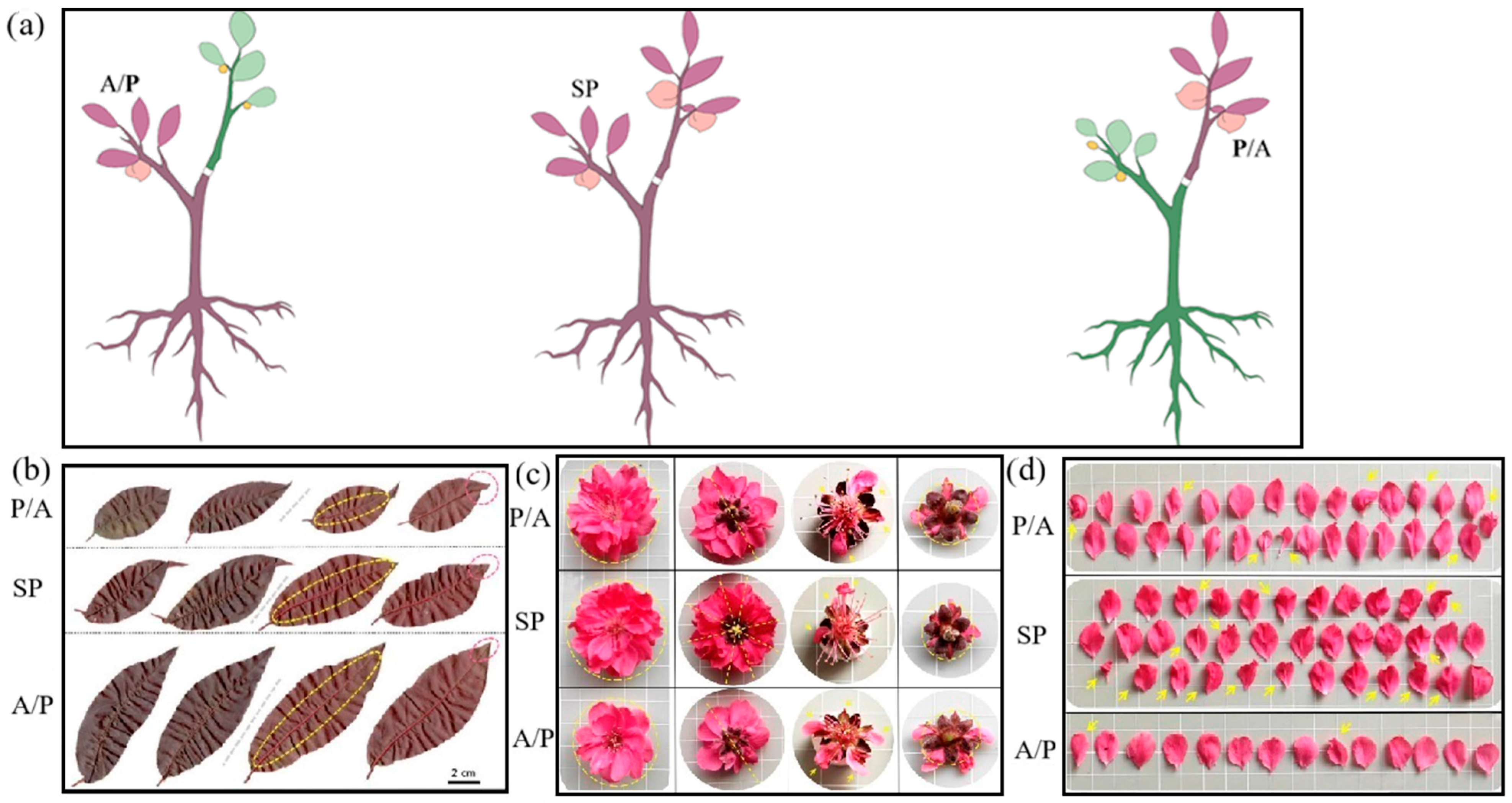
‘Ziye’ peach (Prunus persica), with purple leaves and double-petaled red flowers, offers excellent ornamental value. Its fruits are large and edible. Kernel apricot cultivar ‘Youyi’, with green leaves and a single-petaled flower, small fruit and kernels, has its flowering period earlier than that of peaches. In our previous study, heterografting of ‘Ziye’ peach and ‘Youyi’ kernel apricot was performed using different scion/rootstock combinations, including peach/apricot (P/A), apricot/peach (A/P), and self-rooted peach (SP). The resulting grafted chimeras exhibited notable variations in leaf and flower morphology (Figure 1), flowering period and the size of pits and kernels [49,50]. However, the mRNA and lncRNA molecules involved in regulating the formation of differential traits in peach chimeras remain unclear. In this study, the key lncRNAs and mRNAs in peach chimeras were identified by transcriptome sequencing, and further identify co-expressed ‘lncRNA-mRNA’ pairs. These results establish a theoretical foundation for investigating the molecular mechanisms underlying the formation of differential traits in peach chimeras and provide new insights into creating an improved peach or kernel apricot germplasm through the heterografting of genetically distant plants.

2. Materials and Methods

2.1. Plant Materials and Growth Conditions

Trees of peach cultivar ‘Ziye’ and kernel apricot cultivar ‘Youyi’ were maintained in an open field with sandy soil under normal cultivation and management conditions at the Mengzhou County Experimental Base (112°42′51″ E, 34°51′35″ N), affiliated with the Research Institute of Non-timber Forestry, Chinese Academy of Forestry, Zhengzhou, China. This region is a warm temperate monsoon climate. Reciprocal peach–apricot heterografted chimeras, namely peach/apricot (P/A) and apricot/peach (A/P), were obtained by grafting the peach cultivar ‘Ziye’ as the scion onto the apricot cultivar ‘Youyi’ as the rootstock, and vice versa, on 15 June 2014 [49,50], with the homografted peach cultivar ‘Ziye’ (SP) used as a control (Figure 1a). After successful grafting, chimeric branches of P/A and A/P above the graft union were retained, and began to blossom and bear fruit in 2016. For each combination (P/A, A/P and SP), more than 10 chimeric trees were preserved. Phenotypic analyses were conducted on the leaves, flower buds and fully opened flowers of each scion from the peach (P) portion of each graft. These tissues were harvested, immediately immersed in liquid nitrogen for flash freezing, and subsequently stored in –80 °C until further use. The samples for RNA-seq were carried out with three biological replicates, and the samples for qRT-PCR were carried out with three technical replications.

2.2. Total RNA Extraction and Transcriptome Sequencing

The collected leaf, flower bud and fully opened flower samples from the peach branches of P/A, A/P, and SP grafts were taken out of the freezer and quickly ground into powder with liquid nitrogen. For each sample, 100 mg of powder was used for total RNA extraction with the Plant RNA Extraction Kit (Vazyme, Nanjing, China). RNA purity and concentration were evaluated in a NanoDrop 2000c spectrophotometer (Termo Scientifc, Waltham, MA, USA), and RNA integrity was assessed using electrophoresis on a 1.0% agarose gel. For each combination, the high-quality (A260/280 and A260/230 ratios between 1.8 and 2.2) RNA isolated from the three different tissues were selected and mixed, respectively. cDNA for library construction was synthesized using PrimeScript™ RT-PCR Kit (Takara, Dalian, China) with 2 μg of total RNA. Each library was constructed three independent times using mixed peach samples of P/A, A/P and SP, for a total of nine cDNA libraries. After a library quality test, transcriptome sequencing was performed via the Illumina Novaseq 4000 platform at the LC-BIO (Hangzhou, China), using the method of 2 × 150 bp paired-end sequencing.

2.3. Screening and Analysis of Differentially Expressed Genes (DEGs)

The raw RNA-Seq data were uploaded to the National Biotechnology Data Center database after sequencing was completed. Adapter sequences, empty reads, and low-quality reads were removed from the raw RNA-Seq data using Trimmomatic v.0.36 to generate high-quality reads. The GC content and the quality scores (Q20/Q30) were also calculated. The clean reads were subsequently aligned to the peach reference genome (https://phytozome.jgi.doe.gov/pz/portal.html#!info?alias=Org_Ppersica, accessed on 5 March 2023) using Tophat (http://tophat.cbcb.umd.edu) [51] and mapped to gene IDs.
To evaluate the expression levels of DEGs, the fragments per kilobase of exon model per million mapped 23 fragments (FPKM) value for each transcript was calculated using the R package DESeq. The obtained p-value was adjusted using the Benjamini–Hochberg program to determine the False Discovery Rate (FDR), and then the expression of each transcript was quantified using RSEM. Finally, DEGs were isolated using DESeq2 and a relatively strict criterion, with |log2(fold change)| > 1 and p-value/FDR < 0.05 as the thresholds [52]. To further elucidate the biological processes in which these DEGs may be involved, enrichment analysis was performed on the identified DEGs using GO seq R (https://bioconductor.org/packages/2.6/bioc/html/GOSemSim.html, accessed on 5 March 2023) and the KEGG Orthology database (https://www.kegg.jp/kegg/ko.html, accessed on 5 March 2023).

2.4. Identification and Analysis of lncRNA

To identify the lncRNAs in peach chimeras, comprehensive analysis of lncRNAs in the peach chimeras was performed via BLAST (version 2.12.0+) alignment combined with predictions using Crawford Network Consulting Inc (CNCI), Coding Potential Calculator (CPC), and PfamScan. Firstly, transcripts overlapping with annotated protein-coding genes were discarded. In addition, transcripts shorter than 200 bp were removed. The remaining transcripts were evaluated for coding potential using the CPC and the CNCI. Transcripts with CPC score ≥ 1 or CNCI score ≥ 0 were considered to have coding potential and were excluded. Only transcripts with a CPC score < 1 and CNCI score < 0 were retained as non-coding candidates. Finally, transcripts classified with class codes “i”, “j”, “o”, “u”, or “x” by gff compare were identified as putative lncRNAs.

2.5. Screening of DElncRNA and the Analysis of Co-Expressed lncRNAs and mRNAs

The differentially expressed lncRNAs (DElncRNAs) in peach chimeras of A/P and P/A were identified using DESeq2 (version1.38.3) with |log2(fold change)| > 1 and FDR < 0.05 as screening criteria. To predict potential ‘lncRNA-mRNA’ networks associated with the growth and development of peach chimeras, Pearson’s correlation coefficients (r) were calculated using an R package (version 3.2.5), with |r| values ≥ 0.6 identifying co-expressed ‘lncRNA-mRNA’ pairs. GO and KEGG enrichment analyses were performed for these co-expressed mRNAs to predict possible biological functions based on the peach reference genome. Finally, the ‘lncRNA-mRNA’ co-expression networks were constructed and visualized using Cytoscape software (v.3.7.1).

2.6. qRT-PCR Analysis of DEmRNAs and DElncRNAs

To verify the reliability of the RNA-Seq data and the identified ‘lncRNA-mRNA’ co-expression pairs, quantitative real-time PCR (qRT-PCR) was used to analyze the transcriptional levels of 10 DEmRNAs and 8 DElncRNAs derived from the predicted ‘lncRNA-mRNA’ pairs. The target molecules were randomly selected and included 5 DEmRNAs and 4 DElncRNAs from the A/P vs. SP comparison, and 5 DEmRNAs and 4 DElncRNAs from P/A vs. SP. The peach 18s rRNA and RPL13 genes were used as internal references to normalize the relative expression levels of mRNAs and lncRNAs, respectively. The primer sequences were designed by Primer Premier 5.0 (Tables S1 and S2). The qRT-PCR assay followed the manufacturer’s protocol for the ChamQ Universal SYBR qPCR Master Mix (Vazyme, Nanjing, China) using an ABI PRISM 7500 FAST Sequence Detection System (Applied Biosystems, USA) with 20 μL reaction mixtures. Each experiment was repeated three times with three biological replicates. The relative expression levels of the target genes were normalized using the 2−ΔΔCT method against the reference gene, and then the multiples of changes in expression levels in A/P vs. SP and P/A vs. SP were analyzed.

3. Results

3.1. Identification of DEGs in Peach Chimeras

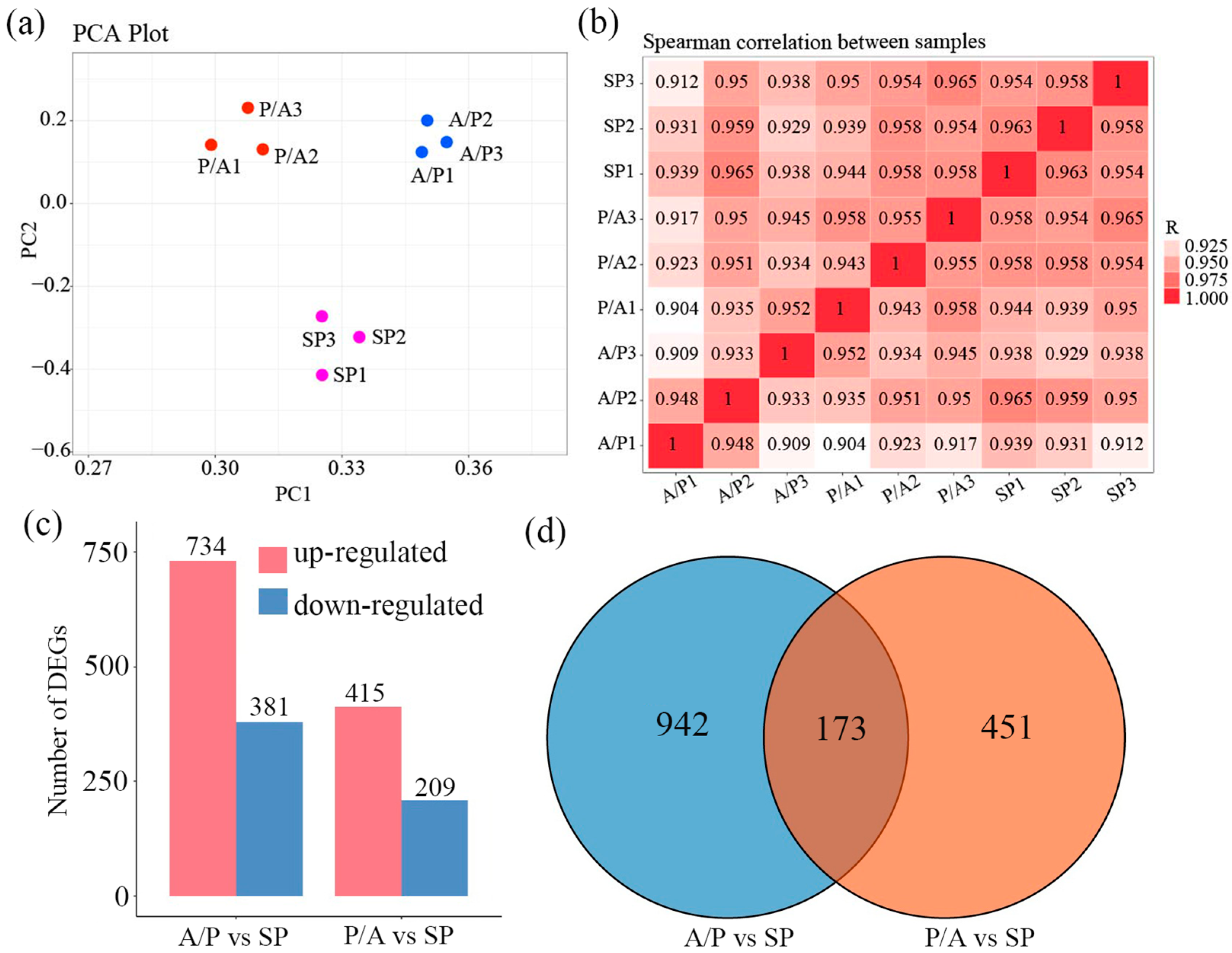
For each sample used for RNA-seq in this study, 7.65–11.69 Gb clean bases were generated using the Illumina Novaseq 4000 platform (Illumina, Inc., San Diego, CA, USA). The sequencing quality parameters were calculated to be Q20 ≥ 99.97%, Q30 ≥ 97.62%, and an average GC content ≥ 43% (Table S3). Principal component analysis (PCA) confirmed that the profiles of differed significantly between the A/P, P/A, and SP transcriptomes (Figure 2a). Furthermore, Spearman correlation values between the nine transcriptomes were calculated. The correlation coefficient (r) values were high between the three biological replicates, with an average of 0.9 for the A/P samples, 0.94 for P/A and 0.95 for SP (Figure 2b). These results indicated that the sequencing quality was relatively high and that the RNA-seq data of the biological replicates were suitable for further analysis.
To identify the DEGs related to the growth and development of peach–apricot graft chimeras, the transcriptome data of peach samples from A/P, P/A and SP were analyzed using the DESeq2 R software (version1.38.3) package to identify DEGs with a relatively strict criterion [False Discovery Rate (FDR) ≤ 0.05, fold change ≥ 2]. Compared to the SP transcriptomes, 1739 DEGs were detected in A/P and P/A (all DEGs are listed in Table S4). Specifically, 1115 DEGs were identified in A/P vs. SP, among which 734 genes were up-regulated and 381 genes were down-regulated in A/P compared to SP. There were 624 DEGs between P/A vs. SP, comprising 415 up-regulated and 209 down-regulated DEGs in P/A compared to SP (Table S4, Figure 2c). A Venn diagram revealed that 173 DEGs were shared between P/A vs. SP and A/P vs. SP. There were relatively more DEGs (942) specific to A/P vs. SP, with only 451 DEGs unique to P/A vs. SP (Figure 2d). These unique DEGs in P/A vs. SP and A/P vs. SP may be related to the differential phenotypes in the peach–apricot grafted chimeras.

3.2. Functional Analysis of DEGs in Peach Chimeras

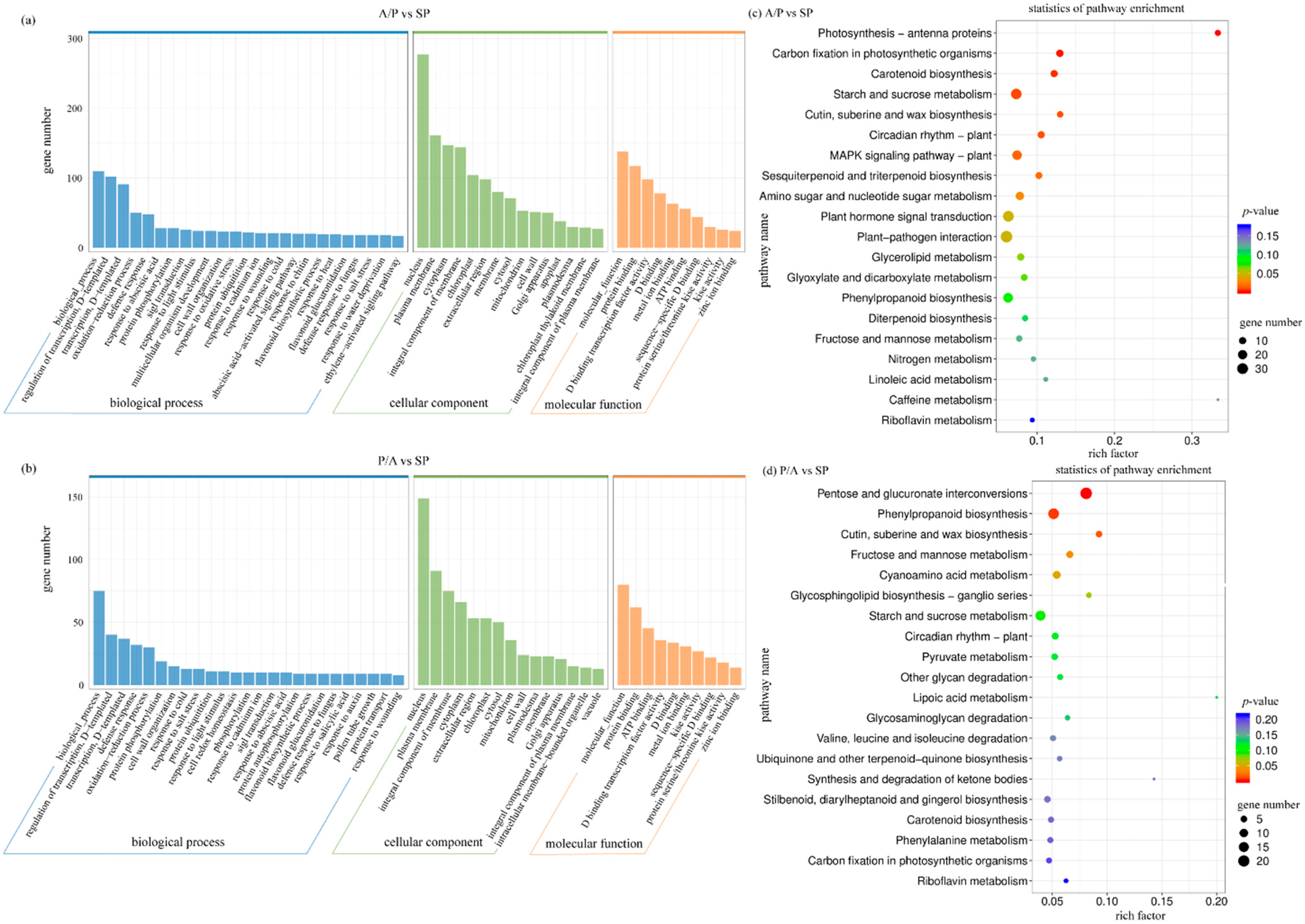
To investigate the potential biological functions of DEGs in the peach–apricot grafted chimeras, the 1739 DEGs in A/P and P/A were classified by GO enrichment analysis (Figure 3). The detected DEGs were mainly enriched in 25 functional terms within the biological processes (BPs) category, 15 functional terms within the cellular components (CCs) category, and 10 functional terms within the molecular functions (MFs) category (Figure 3a,b). In the comparison between A/P vs. SP, a total of 833 DEGs may be involved in regulating CCs, mainly related to the nucleus, plasma membrane, cytoplasm, integral component of membranes and chloroplast. The nucleus category was the most enriched. Additionally, 401 DEGs were assigned to BPs, predominantly involving biological processes, regulation of transcription, D-templated, oxidation reduction process, and defense responses. Within the MFs category, the DEGs were mainly concentrated in molecular function, protein binding and D binding transcription factor activity, accounting for 52.37%, with fewer genes related to metal ion binding, ATP binding, and sequence-specific D binding (Figure 3a). In the P/A vs. SP group, 537 DEGs were associated with regulating CCs, including the nucleus, plasma membrane, integral component of membrane, cytoplasm, extracellular region, chloroplast and cytoplasm, with the nucleus again being the most enriched category. Within BPs, DEGs were mainly involved in biological processes, regulation of transcription, D-templated, transcription, D-templated defense regulation, and oxidation reduction processes. Among the DEGs annotated to the MF category, protein binding and ATP binding exceeded 50% (Figure 3b).
KEGG pathway enrichment analysis was also performed for the 1739 DEGs identified in the A/P vs. SP and P/A vs. SP. Among the 1115 DEGs in A/P vs. SP, the most DEGs were enriched in the plant–pathogen interaction (ko04626) pathway, followed by plant hormone signal transduction (ko04075), starch and sucrose metabolism (ko00500), MAPK signaling pathway–plant (ko04016), and phenylpropanoid biosynthesis (ko00940) (Figure 3c). Among the 624 DEGs in P/A vs. SP, the majority of DEGs were enriched in pentose and glucuronate interconversions (ko00040), followed by phenylpropanoid biosynthesis (ko00940) and starch and sucrose metabolism (ko00500) pathways (Figure 3d).

3.3. Analysis of lncRNA and mRNA in Peach Chimeras

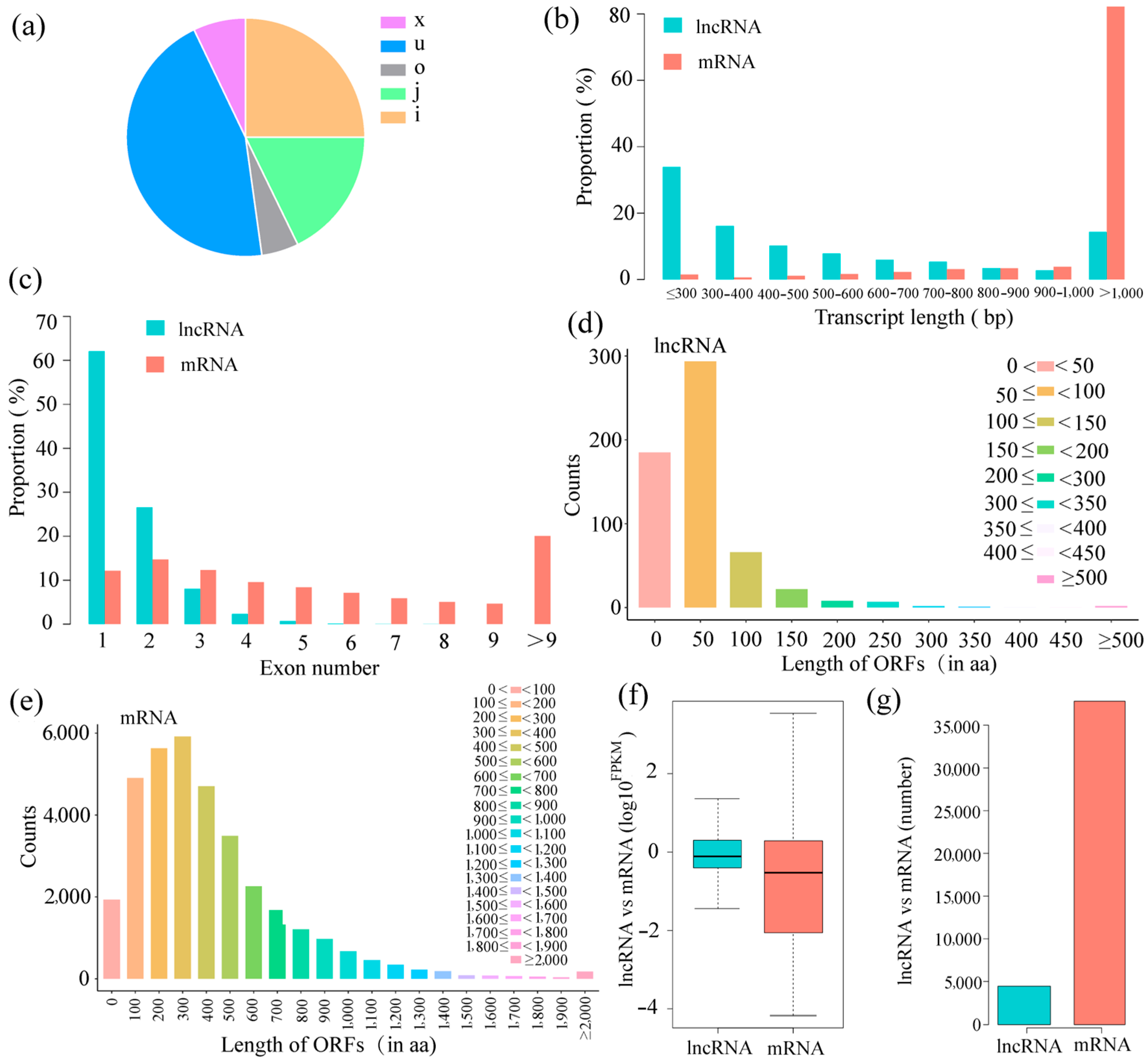
In addition to identifying the mRNAs in the transcriptomes of the peach chimeras, comprehensive analysis of lncRNAs in the peach genome was performed via BLAST alignment combined with predictions using CNCI and CPC, 4445 novel lncRNAs were identified from the RNA-seq data, and these lncRNAs were classified into five categories based on their class codes (x, u, o, j and i), with their proportion distribution shown in Figure 4a. Among these categories, the u-type lncRNAs (usually containing one or more U-rich regions) constituted the largest proportion (45.08%). Comparative analysis revealed distinct distributions based on transcript length between the lncRNAs and mRNAs: over 80% of mRNAs were longer than 1000 bp, whereas more than 60% of lncRNAs were shorter than 500 bp (Figure 4b). A higher proportion of lncRNAs contained 1–3 exons, with single-exon lncRNAs being the most prevalent (Figure 4c). Furthermore, the number of lncRNAs and mRNA with different lengths of ORFs were analyzed based on their amino acid (aa), and lncRNAs exhibited significantly shorter predicted amino acid sequences from their ORFs compared to the mRNAs (Figure 4d,e). Most lncRNAs contain short ORF-encoding peptides less than 100 aa (Figure 4d), while most mRNAs containing ORF-encoding peptides are between 100 aa and 700 aa (Figure 4e). Finally, the lncRNAs had lower FPKM values compared to mRNAs (Figure 4f), and the number of lncRNAs was fewer than the number of mRNAs (Figure 4g). These findings collectively demonstrated that the lncRNAs generally possessed simpler structural features than mRNAs.

3.4. Identification of DElncRNAs in Peach Chimeras

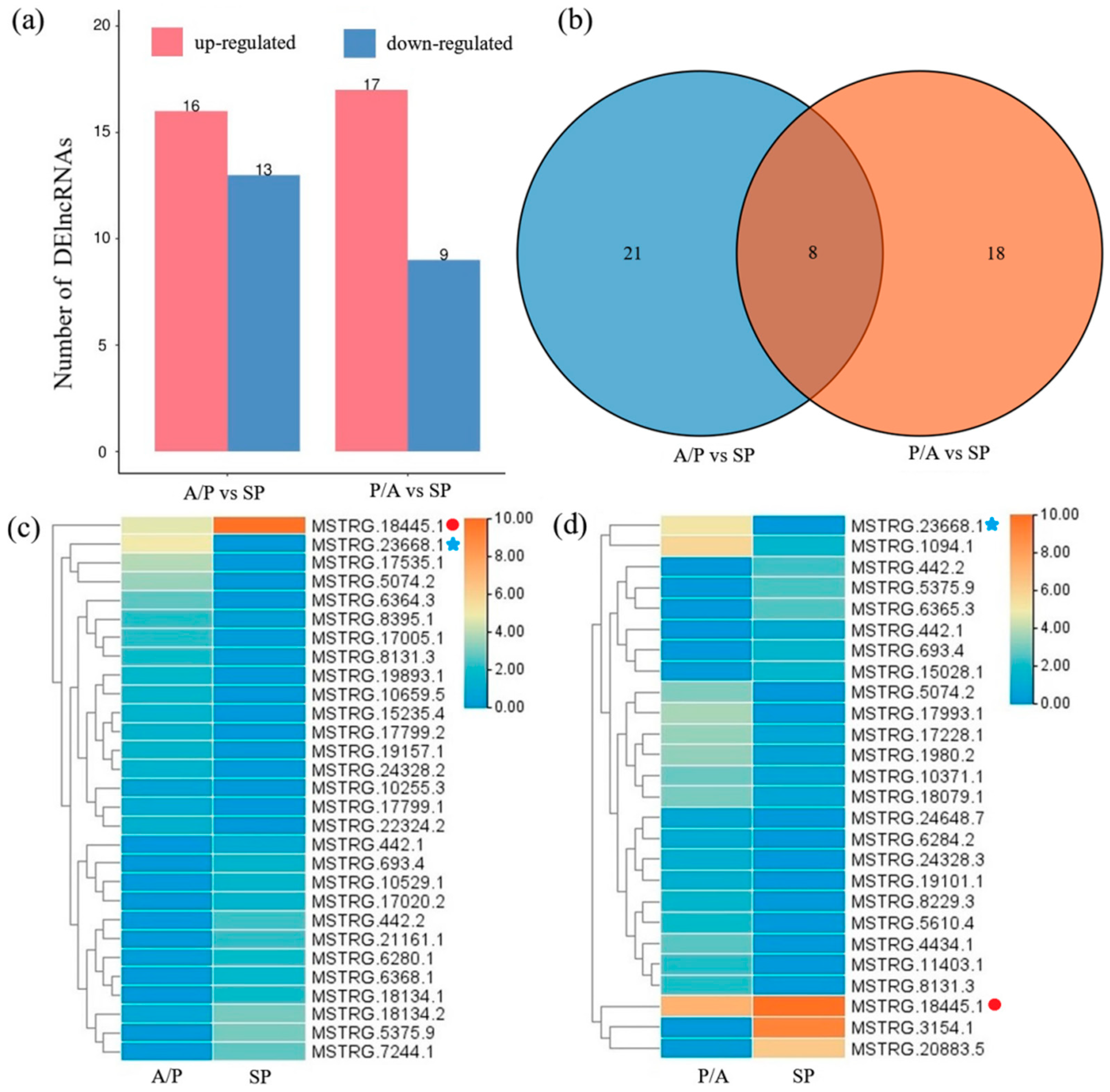
The differentially expressed lncRNAs (DElncRNAs) in A/P and P/A were further analyzed using DEseq2 R software package, with a relatively strict criterion [False Discovery Rate (FDR) ≤ 0.05, fold change ≥ 2]. A total of 55 lncRNAs showing significant differences in expression were detected in A/P and P/A, with 29 and 26 DElncRNAs identified in A/P vs. SP and P/A vs. SP, respectively (Figure 5a). The detailed information for all significant DElncRNAs is listed in Table S5. In the group of A/P vs. SP, the transcriptional levels of 16 significant DElncRNAs were up-regulated and 13 significant lncRNAs were down-regulated in A/P compared to SP. Among the 26 DElncRNAs in P/A vs. SP, 17 were up-regulated and nine were down-regulated (Figure 5a). A Venn diagram of the 55 DElncRNAs revealed that eight DElncRNAs were present in both the P/A vs. SP and A/P vs. SP comparisons. On the other hand, 21 DElncRNAs were specific to the A/P graft and 18 DElncRNAs were specific to the P/A graft (Figure 5b). These specific DElncRNAs may be related to the differential phenotypes of the peach chimeras.
Heatmap analysis was performed to visualize the expression levels of the 29 DElncRNAs detected from the A/P vs. SP comparison and the 26 DElncRNAs from the P/A vs. SP comparison. The result showed that MSTRG.18445.1 exhibited the highest expression level in SP, and its transcript levels were significantly down-regulated in both A/P and P/A compared to SP (Figure 5c,d). In contrast, MSTRG.23668.1 in SP had relatively low expression, but its transcript level was significantly up-regulated in both A/P and P/A compared to SP (Figure 5c,d).

3.5. Functional Analysis of Co-Expressed mRNA with DElncRNAs in Peach Chimeras

Potential functions of lncRNAs can be inferred based on the functional annotation of their target mRNAs. To further dissect the potential functions of DElncRNAs, the target mRNAs of DElncRNAs in peach–apricot graft chimeras were identified by finding co-expressed genes [Pearson’s correlation coefficients (r) between the transcripts of mRNAs and DElncRNAs were calculated, with |r| values ≥ 0.6 identifying co-expressed genes]. Specifically, 67 mRNAs were found to be co-expressed with the 29 DElncRNAs in the A/P vs. SP (Table S6), and 52 mRNAs were targeted by the 26 DElncRNAs from the P/A vs. SP (Table S7), resulting in a total of 119 potential target mRNAs corresponding to the 55 DElncRNAs.
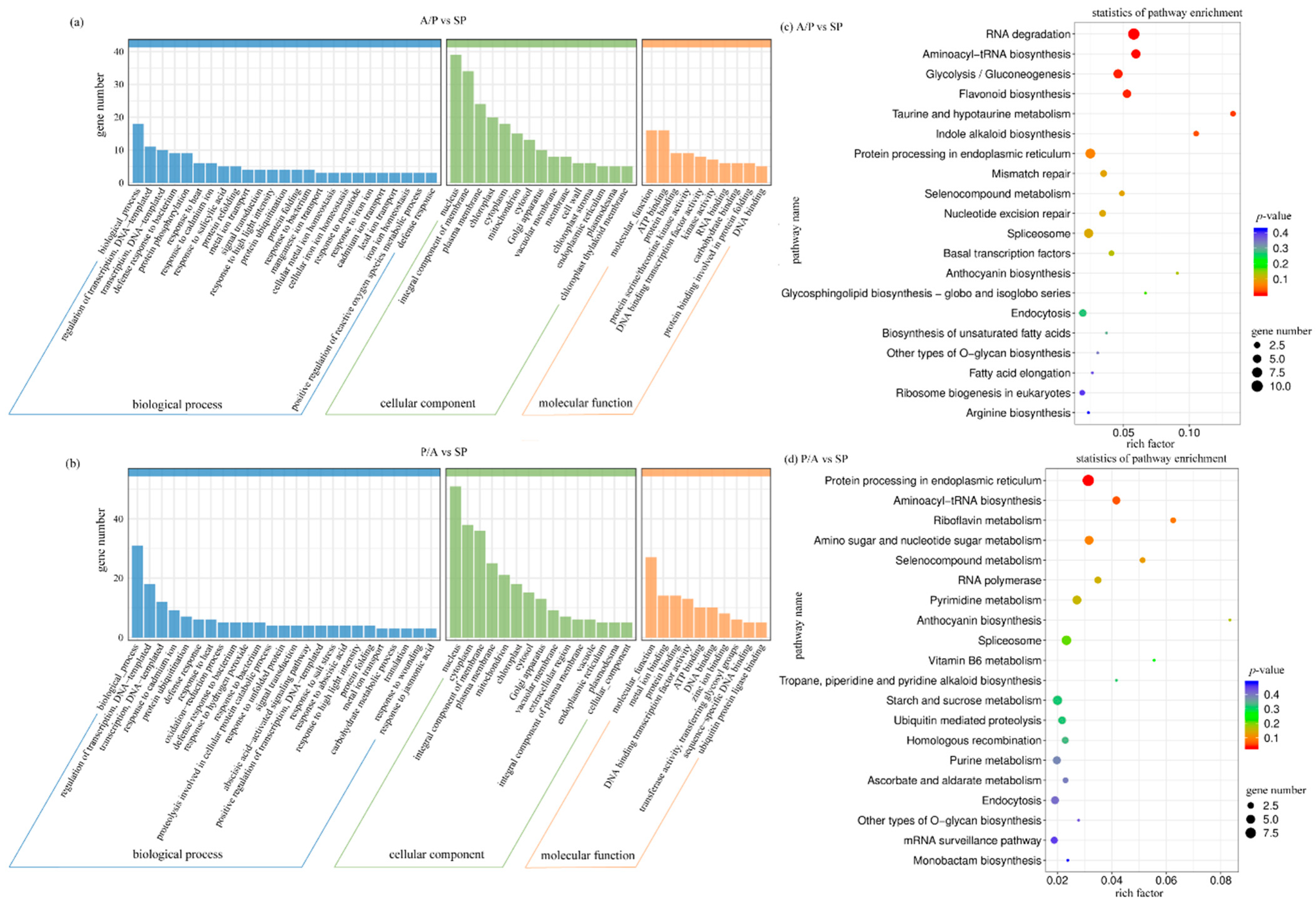
For these 119 mRNAs co-expressed with the DElncRNAs, GO and KEGG enrichment analyses were performed (Figure 6). The 67 potential mRNAs targeted by the 29 DElncRNAs in A/P vs. SP were significantly enriched in the cellular component category, including the nucleus, integral component of membrane, plasma membrane, chloroplast, and cytoplasm, as well as biochemical process and molecular function categories, with a particular focus on ATP binding (Figure 6a). The 52 mRNAs targeted by the 26 DElncRNAs in P/A vs. SP were significantly enriched in cellular component categories such as the nucleus, cytoplasm, and integral component of membrane, followed by molecular functions such as metal ion binding, protein binding, and DNA-binding transcription factor activity (Figure 6b).
The results of the KEGG analysis indicated that the mRNAs targeted by DElncRNAs in A/P vs. SP were mainly enriched in pathways such as RNA degradation, protein processing in endoplasmic reticulum, aminoacyl–tRNA biosynthesis, glycolysis/gluconeogenesis, and spliceosome (Figure 6c). The mRNAs targeted by DElncRNAs in P/A vs. SP were mainly enriched in key pathways, namely protein processing in endoplasmic reticulum, aminoacyl–tRNA biosynthesis, starch and sucrose metabolism, spliceosome, pyrimidine metabolism, and amino sugar and nucleotide sugar metabolism (Figure 6d).

3.6. Analysis of Co-Expression Regulatory Patterns of ‘lncRNA-mRNA’

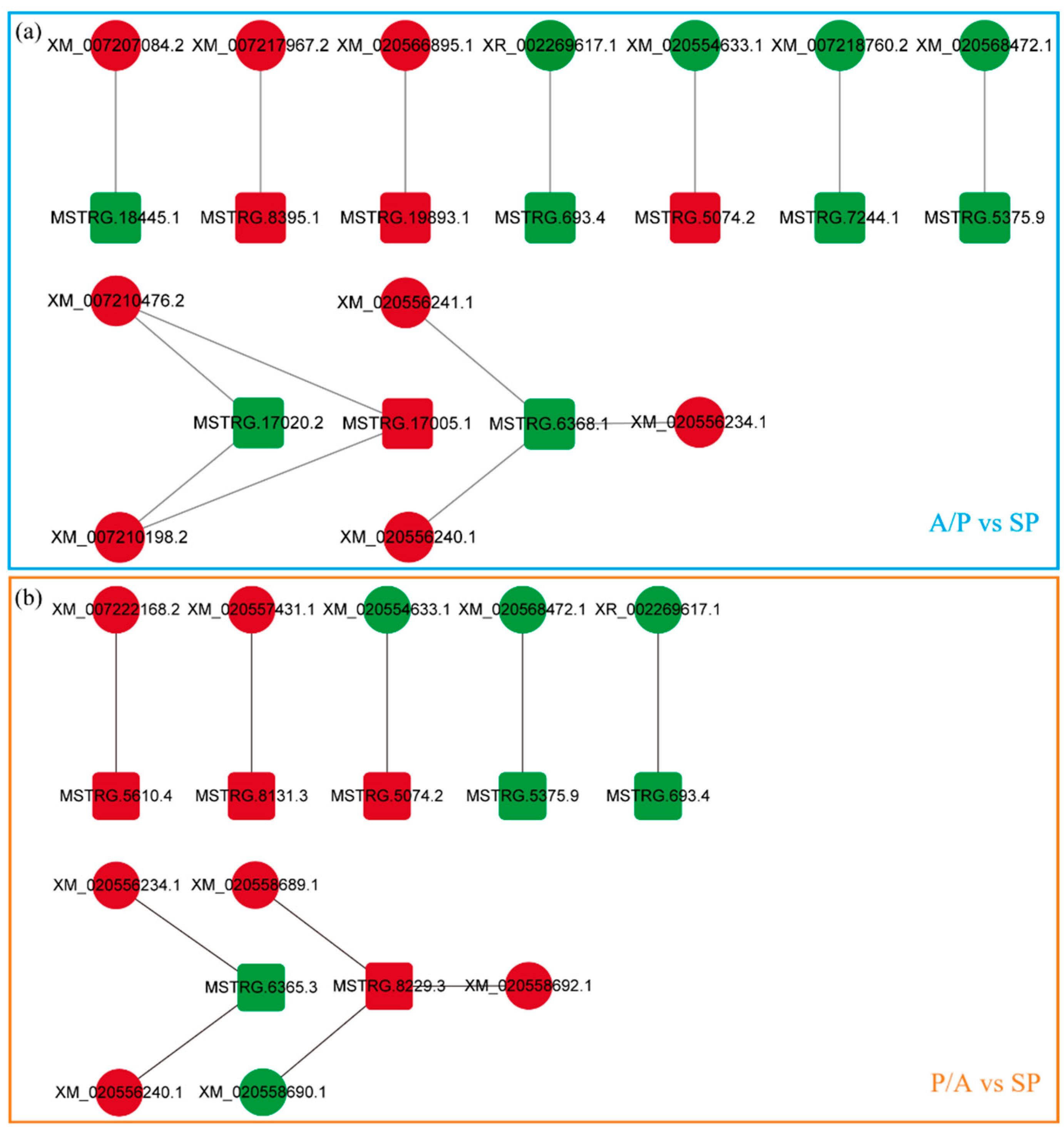
To identify the ‘lncRNA-mRNA’ pairs related to growth and development in peach and apricot grafts, we constructed a visual co-expression network of DElncRNAs and DEmRNAs using Cytoscape software. The results showed that DElncRNAs and mRNAs exhibited both one-to-one and one-to-many co-expression patterns (Figure 7). A total of 24 ‘lncRNA-mRNA’ pairs were discovered, including 14 ‘lncRNA-mRNA’ pairs in A/P vs. SP (Figure 8a) and 10 ‘lncRNA-mRNA’ pairs in P/A vs. SP (Figure 7b). Among these pairs, 13 DElncRNAs were positively correlated with their target DEmRNAs, while 11 pairs were negatively correlated (Figure 7a,b). For example, MSTRG.18445.1 was down-regulated and its target XM_007207084.2 was up-regulated in A/P compared with SP, indicating that MSTRG.18445.1 may negatively regulate the transcription of XM_007207084.2 in ungrafted peach. MSTRG.17020.2 was down-regulated in A/P, whereas XM_007210198.2 and XM_00721476.2 were both up-regulated in A/P. MSTRG.8395.1 and XM_007217967.2 were both up-regulated in A/P (Figure 7a). In the P/A vs. SP comparison, MSTRG.6365.3 was down-regulated in the P/A graft, while XM_020556240.1 and XM_020556234.1 were both up-regulated in the P/A graft (Figure 7b). Based on the functional annotations of the DEmRNAs, it can be extrapolated that MSTRG.17020.2, found in the A/P vs. SP comparison, may participate in aminoacyl–tRNA biosynthesis by negatively regulating XM_007210198.2, which encodes a phenylalanine–tRNA ligase beta subunit, cytoplasmic protein. MSTRG.8395.1 may be involved in galactose metabolism by positively regulating the expression of XM_007217967.2, which encodes an alpha-galactosidase 3. MSTRG.6365.3, found in the P/A vs. SP comparison, may be involved in plant defense response by negatively regulating the expression of two putative disease resistance protein-encoding genes XM_020556240.1 and XM_020556234.1.

3.7. qRT-PCR Validation of DElncRNAs and DEmRNAs

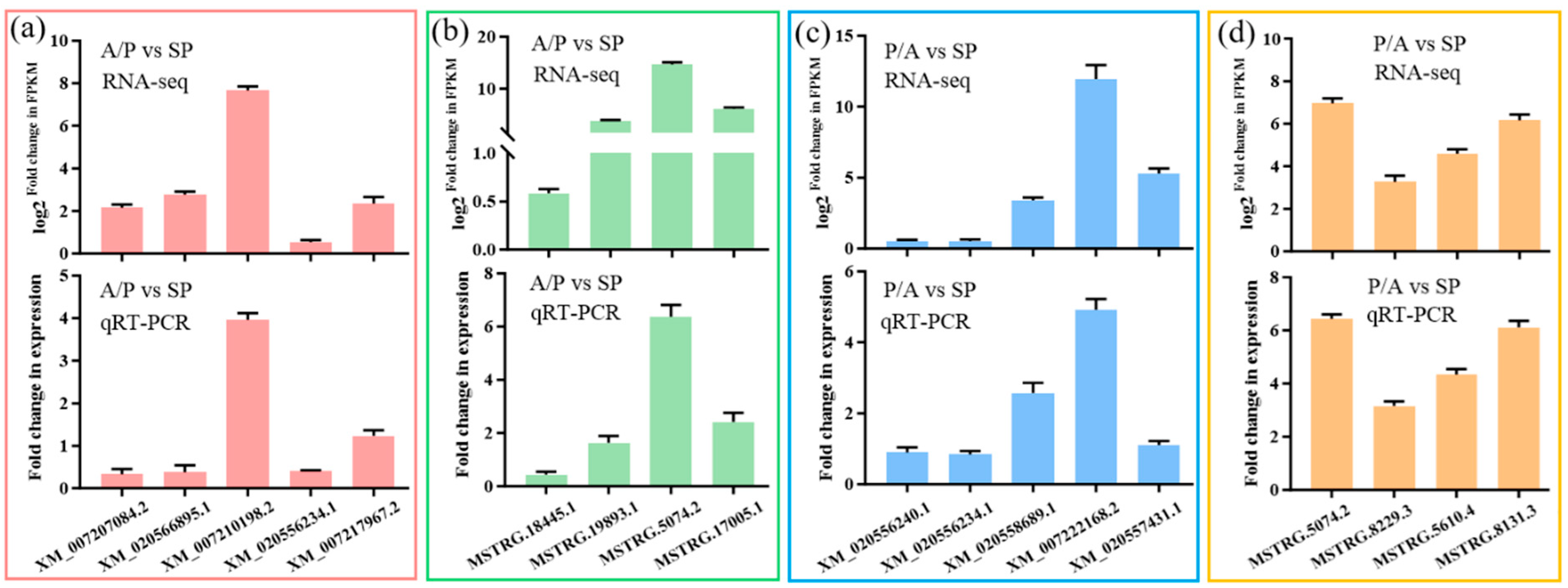
To verify the accuracy and reliability of the RNA-Seq results and the ‘lncRNA-mRNA’ co-expression network construction, 10 DEmRNAs and eight DElncRNAs were randomly selected from the co-expressed ‘lncRNA-mRNA’ pairs for qRT-PCR verification. The fold change trends of the DEmRNAs and DElncRNAs as detected by qRT-PCR were generally consistent with those from RNA-Seq (Figure 8), indicating that the RNA sequencing results are reliable. Compared with SP, the expression levels in P/A of XM_020558689.1, XM_007222168.2 and XM_020557431.1 were up-regulated (Figure 8a) as were the expression levels of MSTRG.5074.2, MSTRG.8229.3, MSTRG.5610.4 and MSTRG.8131.3 (Figure 8c). In the P/A vs. SP comparison, the expression of XM_020558689.1 was positively correlated with MSTRG.8229.3, XM_007222168.2 was positively correlated with MSTRG.5610.4, and XM_020557431.1 was positively correlated with MSTRG.8131.3. These results were consistent with the analysis of the ‘lncRNA-mRNA’ co-expression network (Figure 8b). In addition, compared with SP, the expressions of XM_007207084.2, XM_020566895.1, XM_007210198.2, XM_020556234.1 and XM_007217967.2 were all up-regulated in A/P (Figure 8b). The expression of MSTRG.18445.1 was down-regulated in A/P, while MSTRG.19893.1, MSTRG.5074.2 and MSTRG.17005.1 were all up-regulated in A/P compared to SP (Figure 8d). And in the A/P vs. SP comparison, the expression trend of XM_007207084.2 was negatively correlated with that of MSTRG.18445.1, and the expression trend of XM_020566895.1 was positively correlated with that of MSTRG.19893.1. These results were also consistent with the analysis of the co-expressed ‘lncRNA-mRNA’ pairs (Figure 7a). Collectively, these results indicated that the transcriptome and ‘lncRNA-mRNA’ co-expression network are reliable, and thus can be used to further explore and characterize key genes involved in the growth and development of peach and apricot grafts.

4. Discussion

LncRNAs are a class of non-coding RNAs widely found in eukaryotes that lack protein-coding capability [53]. Although their processing mechanisms may resemble those of mRNAs, lncRNAs exhibit higher cell-type specificity, lower abundance, and a degree of sequence conservation. Nevertheless, lcnRNAs play crucial regulatory roles in biological processes such as gene silencing, mRNA splicing, translation, genomic rearrangement, and chromatin modification [43,46,54]. To date, numerous lncRNAs have been identified in diverse species, including Arabidopsis thaliana [53], tomato (Solanum lycopersicum) [55,56], strawberry (Fragaria spp.) [57], and melon (Cucumis melo) [58], and so on. lncRNAs have emerged as important regulators of gene expression across diverse organisms, functioning through epigenetic modification, transcriptional regulation, and post-transcriptional regulation [59,60]. However, research on the roles of lcnRNAs in mediating differential phenotypic traits in plant grafts remains relatively limited.
Our previous study revealed significant differences in important agronomic traits, such as leaf shape, flower morphology, flowering period, and kernel size, between peach–apricot grafts (A/P and P/A) and a peach homograft (SP) (Figure 1) [50]. Additionally, we identified several key mRNAs and miRNAs that may be involved in regulating the growth and development of peach chimeras [49]. In this study, a total of 1739 DEGs were detected in A/P and P/A compared to SP. Specifically, 1115 DEGs were identified in A/P vs. SP, and 624 DEGs were found in P/A vs. SP (Figure 2). GO enrichment analysis showed that these DEGs may participate in a series of highly coordinated biological processes during graft growth and development. Notably, the significant changes in the expression levels of genes related to cytoplasm, membrane proteins, membrane channels, and ion pumps (Figure 3a,b) may play important roles in the growth and development of peach chimeras [61,62]. Subsequent KEGG enrichment analysis of DEGs demonstrated that in A/P vs. SP, DEGs were significantly enriched in pathways including “Plant hormone signal transduction”, “Plant MAPK signaling pathway”, “Phenylpropanoid biosynthesis”, and “Amino sugar and nucleotide sugar metabolism”. In contrast, in P/A vs. SP, DEGs were mainly involved in pathways such as “Starch and sucrose metabolism”, “Plant–pathogen interaction”, and “Plant hormone signal transduction” (Figure 3c,d). These findings indicated that these DEGs may be involved in regulating biological processes, substance transport, signal transmission, and graft junction healing [33,63,64].
The identification of lncRNAs and their target mRNAs, along with the analysis of their interactions, can help elucidate the biological processes regulated by ‘lncRNA-mRNA’ pairs. In this study, the characteristics of lncRNA transcripts, including transcript length, exon number, ORF length, and FPKM values, were identified in peach chimeras (Figure 4). These characteristics are similar to those reported for lncRNAs in tea sugar beet [65] and Chinese cabbage (Brassica campestris L. ssp. pekinensis) [66]. A total of 55 DElncRNAs in A/P and P/A were further analyzed, with 29 DElncRNAs in A/P vs. SP and 26 identified in P/A vs. SP, respectively (Figure 5a). Compared with SP, 21 DElncRNAs were specific to A/P, while 18 were only in P/A, respectively (Figure 5b). These specific DElncRNAs may be related to the formation of differential phenotypes of the peach grafts. Since many lncRNAs regulate mRNAs, the biological functions of the lncRNAs could be predicted based on their positional relationships and expression correlations with protein-coding genes. GO and KEGG enrichment analyses were performed on the 119 mRNAs potentially targeted by the 55 DElncRNAs (Figure 6).
The identification of lncRNAs, their target genes, and their interactions provides a valuable resource for future research. To further explore the regulatory roles of the lncRNAs, we used Cytoscape to construct a co-expression network of ‘lncRNA-mRNA’, identifying 24 co-expressed ‘lncRNA-mRNA’ pairs (Figure 7). Subsequently, functional annotation of the mRNAs targeted by the DElncRNAs was performed to explore potential regulatory roles. The results revealed that in A/P vs. SP, the pair ‘MSTGR.17020.2-XM_007210198.2’ may be involved in aminoacyl–tRNA biosynthesis, while ‘MSTRG.8395.1-XM_007217967.2’ may participate in galactose metabolism. In P/A vs. SP, and ‘MSTRG.6365.3-XM_020556240.1/XM_020556234.1’ may play a role in plant defense responses. These findings suggest that the identified ‘lncRNA-mRNA’ pairs are potentially involved in metabolic and defense processes in peach chimeras, thereby contributing to the formation of differential phenotypes.
LncRNA act in both cis or trans regulatory roles to modulate the expression levels of protein-coding genes [48]. So, the ‘lncRNA–mRNA’ regulatory pairs include both sense-oriented and antisense-oriented relationships with respect to the target gene. In Arabidopsis thaliana [67], HDA6, a homolog of the gene XM_007210198.2, functions as a histone deacetylase. It integrates into the SANT complex and promotes flowering by repressing floral repressors such as FLC, MAF4, and MAF5. In this study, peach chimeras contain ‘lncRNA-mRNA’ pairs differentially expressed in the A/P vs. SP and P/A vs. SP comparisons. And the lncRNA MSTRG.17020.2, which shows differential expression in A/P compared to SP, was found to negatively regulate XM_007210198.2, suggesting that the ‘MSTRG.17020.2-XM_007210198.2’ pair may influence the floral development and flowering time in peach chimeras. In tomato, the lncRNA16397-SIGRX22 module has been shown to reduce membrane damage by suppressing reactive oxygen species (ROS) accumulation [58]. In Arabidopsis, HPU26, a homolog of XM_007328760.2, modulates hypoxic and biotic stress responses by regulating PR1 and ROS levels, thereby increasing resistance to bacterial pathogens [67]. We observed that MSTRG.7244.1—a DElncRNA in A/P vs. SP—negatively regulates XM_007218760.2, including its potential role in the ROS pathway. This leads us to hypothesize that apricot–peach grafting may also alter the biotic stress response in peach chimeras. Overall, this study establishes a theoretical foundation for understanding how ‘lncRNA-mRNA’ pairs contribute to trait variation in grafting chimeras and offers insights for germplasm innovation through cross-species grafting.

5. Conclusions

We identified 1739 DEGs and 55 DElncRNAs between peach chimeras of A/P, P/A and SP. Compared with SP, 1115 and 624 DEGs were detected in A/P and P/A, and 942 and 451 DEGs were specifically altered in A/P and P/A, respectively. A total of 29 and 26 DElncRNAs were found in A/P and P/A, of which, 21 DElncRNAs were specific to A/P and 18 were specific to P/A. The biological functions of the 1739 DEGs and 55 DElncRNAs were predicted via GO and KEGG enrichment analyses. And 24 co-expressed ‘lncRNA-mRNA’ pairs were identified, including 14 and 10 ‘lncRNA-mRNA’ pairs in A/P and P/A, respectively. Altogether, these findings contribute to our understanding of molecular mechanisms underlying grafting-induced differential trait formation and establish a foundation for further research on the functional roles of ‘lncRNA-mRNA’ pairs in grafted peach chimeras.

Supplementary Materials

The following supporting information can be downloaded at: https://www.mdpi.com/article/10.3390/horticulturae12030345/s1, Table S1: The quantitative primers sequences designed to amplify 10 DEmRNAs. Table S2: The quantitative primers sequences designed to amplify eight DElncRNAs. Table S3: Statistical analysis of the RNA-Seq data. Table S4: Detailed information for all DEGs in A/P vs. SP and in P/A vs. SP. Table S5: Detailed information for all DElncRNAs in A/P vs. SP and in P/A vs. SP. Table S6: Detailed information for mRNAs co-expressed with the 29 DElncRNAs in A/P vs. SP. Table S7: Detailed information for mRNAs co-expressed with the 26 DElncRNAs in P/A vs. SP.

Author Contributions

Formal analysis, J.C., B.F. and Z.Z.; data curation and validation, X.H. and S.W.; investigation, Z.Z. and H.Y.; resources, S.Z. and G.Z.; writing—original draft, J.C., B.F. and M.Z.; writing—review and editing, H.Y., S.Z., G.Z. and M.Z. All authors have read and agreed to the published version of the manuscript.

Funding

This work was supported by the Fundamental Research Funds for the Central Non-Profit Research Institution of CAF (CAFYBB2023MB032).

Data Availability Statement

The original contributions presented in this study are included in the article/Supplementary Material. Further inquiries can be directed to the corresponding author.

Acknowledgments

We are grateful to Anita K. Snyder for critical reading and editing the paper.

Conflicts of Interest

The authors declare no conflicts of interest.

References

  1. Melnyk, C.W.; Meyerowitz, E.M. Plant grafting. Curr. Biol. 2015, 25, R183–R188. [Google Scholar] [CrossRef]
  2. Turnbull, C.; Carrington, S. A hard graft problem solved for key global food crops. Nature 2022, 602, 214–215. [Google Scholar] [CrossRef]
  3. Zhang, X.; Khan, A.; Zhou, R.Y.; Liu, Y.S.; Zhang, B.H.; Wang, Q.L.; Zhang, Z.Y. Grafting in cotton: A mechanistic approach for stress tolerance and sustainable development. Ind. Crop. Prod. 2022, 175, 114227. [Google Scholar] [CrossRef]
  4. Janos, T.; Noboru, Y.; Yutaka, H. Graft-induced variants as a source of novel characteristics in the breeding of pepper (Capsicum annuum L.). Euphytica 1999, 108, 73–78. [Google Scholar] [CrossRef]
  5. Warschefsky, E.J.; Klein, L.L.; Frank, M.H.; Chitwood, D.H.; Londo, J.P.; von Wettberg, E.J.B.; Miller, A.J. Rootstocks: Diversity, domestication, and impacts on shoot phenotypes. Trends Plant Sci. 2016, 21, 418–437. [Google Scholar] [CrossRef] [PubMed]
  6. Stegemann, S.; Bock, R. Exchange of genetic material between cells in plant tissue grafts. Science 2009, 324, 649–651. [Google Scholar] [CrossRef]
  7. Zhao, H.; Diao, S.F.; Liu, P.F.; Luo, Y.; Wuyun, T.N.; Zhu, G.P. The Communication of Endogenous Biomolecules RNA, DNA, Protein, Hormone via Graft Union Might Play Key Roles in the New Traits Formation of Graft Hybrids. Pak. J. Bot. 2018, 50, 717–726. Available online: https://www.kiphub.com/paper/64d5f5abc002acbc59363ea6 (accessed on 4 March 2026).
  8. Feng, M.; Augstein, F.; Kareem, A.; Melnyk, C.W. Plant grafting: Molecular mechanisms and applications. Mol. Plant 2024, 17, 75–91. [Google Scholar] [CrossRef] [PubMed]
  9. Shen, Y.; Zhuang, W.; Tu, X.; Gao, Z.; Xiong, A.; Yu, X.; Li, X.; Li, F.; Qu, S. Transcriptomic analysis of interstock-induced dwarfism in Sweet Persimmon (Diospyros kaki Thunb.). Hortic. Res. 2019, 6, 51. [Google Scholar] [CrossRef]
  10. Dong, Y.; Ye, X.; Xiong, A.; Zhu, N.; Jiang, L.; Qu, S. The regulatory role of gibberellin related genes DKGA2ox1 and MIR171f_3 in persimmon dwarfism. Plant Sci. 2021, 310, 110958. [Google Scholar] [CrossRef]
  11. Kundariya, H.; Yang, X.; Morton, K.; Sanchez, R.; Axtell, M.J.; Hutton, S.F.; Fromm, M.; Mackenzie, S.A. MSH1-induced heritable enhanced growth vigor through grafting is associated with the RdDM pathway in plants. Nat. Commun. 2020, 11, 5343. [Google Scholar] [CrossRef]
  12. Cober, E.R.; Curtis, D.F. Both promoters and inhibitors affected flowering time in grafted soybean flowering-time isolines. Crop Sci. 2003, 43, 886–891. [Google Scholar] [CrossRef]
  13. Li, W.J.; Chen, X.Y.; Zhao, S.; Zhan, Q.L.; Chen, S.M.; Jiang, J.F.; Fang, W.M.; Chen, F.D.; Guan, Z.Y. Effect of grafting on the growth and flowering of sprays chrysanthemums. Sci. Hortic. 2022, 291, 110607. [Google Scholar] [CrossRef]
  14. Aliki, X.; Tsaballa, A.; Ganopoulos, I.; Kapazoglou, A.; Madesis, P. Intra-species grafting induces epigenetic and metabolic changes accompanied by alterations in fruit size and shape of Cucurbita pepo L. Plant Growth Regul. 2019, 87, 93–108. [Google Scholar] [CrossRef]
  15. Riga, P.; Benedicto, L.; García-Flores, L.; Villaño, D.; Medina, S.; Gil-Izquierdo, Á. Rootstock effect on serotonin and nutritional quality of tomatoes produced under low temperature and light conditions. J. Food Compos. Anal. 2016, 46, 50–59. [Google Scholar] [CrossRef]
  16. Musa, I.; Rafii, M.Y.; Ahmad, K.; Ramlee, S.I.; Md Hatta, M.A.; Oladosu, Y.; Muhammad, I.; Chukwu, S.C.; Mat Sulaiman, N.N.; Ayanda, A.F.; et al. Effects of grafting on morphophysiological and yield characteristic of eggplant (Solanum melongena L.) grafted onto wild relative rootstocks. Plants 2020, 9, 1583. [Google Scholar] [CrossRef]
  17. Su, J.; Jiang, M.; Pan, H.; Zhou, W.; Cai, X.; Wang, Y.; Liu, W.; Wang, D.; Bai, M.; Wu, H. Multi-omics analyses reveal the effects of layerage and grafting on flavonoid synthesis and accumulation in Citrus reticulata ‘Chachi’. Hortic. Res. 2025, 12, uhaf177. [Google Scholar] [CrossRef]
  18. Li, H.; Guo, Y.; Lan, Z.; Xu, K.; Chang, J.; Ahammed, G.J.; Ma, J.; Wei, C.; Zhang, X. Methyl jasmonate mediates melatonin-induced cold tolerance of grafted watermelon plants. Hortic. Res. 2021, 8, 57. [Google Scholar] [CrossRef]
  19. Villalobos-Soublett, E.; Verdugo-Vásquez, N.; Díaz, I.; Zurita-Silva, A. Adapting grapevine productivity and fitness to water deficit by means of naturalized rootstocks. Front. Plant Sci. 2022, 13, 870438. [Google Scholar] [CrossRef] [PubMed]
  20. Kawaguchi, K.; Nakaune, M.; Ma, J.F.; Kojima, M.; Takebayashi, Y.; Sakakibara, H.; Otagaki, S.; Matsumoto, S.; Shiratake, K. Plant hormone and inorganic ion concentrations in the xylem exudate of grafted plants depend on the scion-rootstock combination. Plants 2022, 11, 2594. [Google Scholar] [CrossRef] [PubMed]
  21. Askari-Khorasgani, O.; Jafarpour, M.; Hadad, M.M.; Pessarakli, M. Fruit yield and quality characteristics of “Shahmiveh” pear cultivar grafted on six rootstocks. J. Plant Nutr. 2019, 42, 323–332. [Google Scholar] [CrossRef]
  22. Tedesco, S.; Fevereiro, P.; Kragler, F.; Pina, A. Plant grafting and graft incompatibility: A review from the grapevine perspective. Sci. Hortic. 2022, 299, 111019. [Google Scholar] [CrossRef]
  23. Huang, Y.; Kong, Q.S.; Chen, F.; Bie, Z.L. The history, current status and future prospects of vegetable grafting in China. Acta Hortic. 2015, 1086, 31–39. [Google Scholar] [CrossRef]
  24. Imlau, A.; Truernit, E.; Sauer, N. Cell-to-cell and long-distance trafficking of the green fluorescent protein in the phloem and symplastic unloading of the protein into sink tissues. Plant Cell. 1999, 11, 309–322. [Google Scholar] [CrossRef]
  25. Li, C.; Li, Y.; Bai, L.; Zhang, T.; He, C.; Yan, Y.; Yu, X. Grafting-responsive miRNAs in cucumber and pumpkin seedlings identified by high-throughput sequencing at whole genome level. Physiol. Plant. 2014, 151, 406–422. [Google Scholar] [CrossRef]
  26. Rasool, A.; Mansoor, S.; Bhat, K.M.; Hassan, G.I.; Baba, T.R.; Alyemeni, M.N.; Alsahli, A.A.; El-Serehy, H.A.; Paray, B.A.; Ahmad, P. Mechanisms underlying graft union formation and rootstock scion interaction in horticultural plants. Front. Plant Sci. 2020, 11, 590847. [Google Scholar] [CrossRef] [PubMed]
  27. Haroldsen, V.M.; Szczerba, M.W.; Aktas, H.; Lopez-Baltazar, J.; Odias, M.J.; Chi-Ham, C.L.; Labavitch, J.M.; Bennett, A.B.; Powell, A.L. Mobility of transgenic nucleic acids and proteins within grafted rootstocks for agricultural improvement. Front. Plant Sci. 2012, 3, 39. [Google Scholar] [CrossRef] [PubMed]
  28. Kodama, H.; Miyahara, T.; Oguchi, T.; Tsujimoto, T.; Ozeki, Y.; Ogawa, T.; Yamaguchi, Y.; Ohta, D. Effect of transgenic rootstock grafting on the omics profiles in tomato. Food Saf. 2021, 9, 32–47. [Google Scholar] [CrossRef]
  29. Fuentes, I.; Stegemann, S.; Golczyk, H.; Karcher, D.; Bock, R. Horizontal genome transfer as an asexual path to the formation of new species. Nature 2014, 511, 232–235. [Google Scholar] [CrossRef]
  30. Xoconostle-Cázares, B.; Xiang, Y.; Ruiz-Medrano, R.; Wang, H.L.; Monzer, J.; Yoo, B.C.; McFarland, K.C.; Franceschi, V.R.; Lucas, W.J. Plant paralog to viral movement protein that potentiates transport of mRNA into the phloem. Science 1999, 283, 94–98. [Google Scholar] [CrossRef]
  31. Ruiz-Medrano, R.; Xoconostle-Cázares, B.; Lucas, W.J. Phloem long-distance transport of CmNACP mRNA: Implications for supracellular regulation in plants. Development 1999, 126, 4405–4419. [Google Scholar] [CrossRef] [PubMed]
  32. Hou, S.; Zhu, Y.; Wu, X.; Xin, Y.; Guo, J.; Wu, F.; Yu, H.; Sun, Z.; Xu, C. Scion-to-rootstock mobile transcription factor CmHY5 positively modulates the nitrate uptake capacity of melon scion grafted on squash rootstock. Int. J. Mol. Sci. 2022, 24, 162. [Google Scholar] [CrossRef]
  33. Zhang, S.L.; Chen, Z.; Zhao, J.; Diao, S.; Tian, L.; Zhao, Y.; Li, F.; Zhu, G.P. Interfamily grafted hybrids Vitis vinifera/Schisandra chinensis resulted in transcriptomic, phenotypic, and metabolic changes. Plants 2024, 13, 1676. [Google Scholar] [CrossRef] [PubMed]
  34. Ham, B.K.; Brandom, J.L.; Xoconostle-Cázares, B.; Ringgold, V.; Lough, T.J.; Lucas, W.J. A polypyrimidine tract binding protein, pumpkin RBP50, forms the basis of a phloem-mobile ribonucleoprotein complex. Plant Cell. 2009, 21, 197–215. [Google Scholar] [CrossRef]
  35. Tamiru, M.; Hardcastle, T.J.; Lewsey, M.G. Regulation of genome-wide DNA methylation by mobile small RNAs. New Phytol. 2018, 217, 540–546. [Google Scholar] [CrossRef]
  36. Yuan, M.; Jin, T.; Wu, J.; Li, L.; Chen, G.; Chen, J.; Wang, Y.; Sun, J. IAA-miR164a-NAC100L1 module mediates symbiotic incompatibility of cucumber/pumpkin grafted seedlings through regulating callose deposition. Hortic. Res. 2023, 11, uhad287. [Google Scholar] [CrossRef]
  37. Lin, S.I.; Chiang, S.F.; Lin, W.Y.; Chen, J.W.; Tseng, C.Y.; Wu, P.C.; Chiou, T.J. Regulatory network of microRNA399 and PHO2 by systemic signaling. Plant Physiol. 2008, 147, 732–746. [Google Scholar] [CrossRef]
  38. Pant, B.D.; Buhtz, A.; Kehr, J.; Scheible, W.R. MicroRNA399 is a long-distance signal for the regulation of plant phosphate homeostasis. Plant J. 2008, 53, 731–738. [Google Scholar] [CrossRef]
  39. Molnar, A.; Melnyk, C.W.; Bassett, A.; Hardcastle, T.J.; Dunn, R.; Baulcombe, D.C. Small silencing RNAs in plants are mobile and direct epigenetic modification in recipient cells. Science 2010, 328, 872–875. [Google Scholar] [CrossRef] [PubMed]
  40. Rubio, B.; Stammitti, L.; Cookson, S.J.; Teyssier, E.; Gallusci, P. Small RNA populations reflect the complex dialogue established between heterograft partners in grapevine. Hortic. Res. 2022, 9, uhab067. [Google Scholar] [CrossRef]
  41. Harada, T. Grafting and RNA transport via phloem tissue in horticultural plants. Sci. Hortic. 2010, 125, 545–550. [Google Scholar] [CrossRef]
  42. Guttman, M.; Rinn, J.L. Modular regulatory principles of large non-coding RNAs. Nature 2012, 482, 339–446. [Google Scholar] [CrossRef]
  43. Kornienko, A.E.; Guenzl, P.M.; Barlow, D.P.; Pauler, F.M. Gene regulation by the act of long non-coding RNA transcription. BMC Biol. 2013, 11, 59. [Google Scholar] [CrossRef]
  44. Carrieri, C.; Cimatti, L.; Biagioli, M.; Beugnet, A.; Zucchelli, S.; Fedele, S.; Pesce, E.; Ferrer, I.; Collavin, L.; Santoro, C.; et al. Long non-coding antisense RNA controls Uchl1 translation through an embedded SINEB2 repeat. Nature 2012, 491, 454–457. [Google Scholar] [CrossRef]
  45. Golden, D.E.; Gerbasi, V.R.; Sontheimer, E.J. An inside job for siRNAs. Mol. Cell. 2008, 31, 309–312. [Google Scholar] [CrossRef] [PubMed]
  46. Heo, J.B.; Sung, S. Vernalization-mediated epigenetic silencing by a long intronic noncoding RNA. Science 2011, 331, 76–79. [Google Scholar] [CrossRef] [PubMed]
  47. Deng, F.; Zhang, X.; Wang, W.; Yuan, R.; Shen, F. Identification of Gossypium hirsutum long non-coding RNAs (lncRNAs) under salt stress. BMC Plant Biol. 2018, 18, 23. [Google Scholar] [CrossRef]
  48. Sun, Y.; Hao, P.; Lv, X.; Tian, J.; Wang, Y.; Zhang, X.; Xu, X.; Han, Z.; Wu, T. A long non-coding apple RNA, MSTRG.85814.11, acts as a transcriptional enhancer of SAUR32 and contributes to the Fe-deficiency response. Plant J. 2020, 103, 53–67. [Google Scholar] [CrossRef] [PubMed]
  49. Zhang, S.L.; Feng, L.Y.; Jia, W.Q.; Wuyun, T.N.; Zhu, G.P.; Zhao, H.; Li, F.D. Identification of miRNA-mRNA pairs involved in the development of grafted peach hybrids by integrating sRNAome and transcriptome. Sci. Hortic. 2023, 321, 112302. [Google Scholar] [CrossRef]
  50. Zhang, S.; Zhi, Z.; Tian, L.; Zhou, R.; Chen, H.; Yue, H.; Li, F.; Zhu, G.P.; Jia, W.; Zhang, M. Integrated multi-omics analyses reveal the roles of apricot miR166a and miR396c in the growth and development of apricot-peach grafted chimera. Int. J. Biol. Macromol. 2025, 318, 145121. [Google Scholar] [CrossRef]
  51. Trapnell, C.; Pachter, L.; Salzberg, S.L. TopHat: Discovering splice junctions with RNA-Seq. Bioinformatics 2009, 25, 1105–1111. [Google Scholar] [CrossRef]
  52. Cheng, J.; Zhang, M.; Tan, B.; Jiang, Y.; Zheng, X.; Ye, X.; Guo, Z.; Xiong, T.; Wang, W.; Li, J.; et al. A single nucleotide mutation in GID1c disrupts its interaction with DELLA1 and causes a GA-insensitive dwarf phenotype in peach. Plant Biotechnol. J. 2019, 17, 1723–1735. [Google Scholar] [CrossRef] [PubMed]
  53. Li, R.; Fu, D.; Zhu, B.; Luo, Y.; Zhu, H. CRISPR/Cas9-mediated mutagenesis of lncRNA1459 alters tomato fruit ripening. Plant J. 2018, 94, 513–524. [Google Scholar] [CrossRef] [PubMed]
  54. Kim, D.H.; Sung, S. Vernalization-triggered intragenic chromatin loop formation by long noncoding RNAs. Dev. Cell. 2017, 40, 302–312.e4. [Google Scholar] [CrossRef]
  55. Cui, J.; Jiang, N.; Hou, X.; Wu, S.; Zhang, Q.; Meng, J.; Luan, Y. Genome-wide identification of lncRNAs and analysis of ceRNA networks during tomato resistance to phytophthora infestans. Phytopathology 2020, 110, 456–464. [Google Scholar] [CrossRef]
  56. Tang, Y.; Qu, Z.; Lei, J.; He, R.; Adelson, D.L.; Zhu, Y.; Yang, Z.; Wang, D. The long noncoding RNA FRILAIR regulates strawberry fruit ripening by functioning as a noncanonical target mimic. PLoS Genet. 2021, 17, e1009461. [Google Scholar] [CrossRef] [PubMed]
  57. Gao, C.; Sun, J.; Dong, Y.; Wang, C.; Xiao, S.; Mo, L.; Jiao, Z. Comparative transcriptome analysis uncovers regulatory roles of long non-coding RNAs involved in resistance to powdery mildew in melon. BMC Genom. 2020, 21, 125. [Google Scholar] [CrossRef]
  58. Jamet, E.; Dunand, C. Plant cell wall proteins and development. Int. J. Mol. Sci. 2020, 21, 2731. [Google Scholar] [CrossRef]
  59. Kurokawa, R.; Rosenfeld, M.G.; Glass, C.K. Transcriptional regulation through noncoding RNAs and epigenetic modifications. RNA Biol. 2009, 6, 233–236. [Google Scholar] [CrossRef][Green Version]
  60. Smith, M.A.; Mattick, J.S. Structural and functional annotation of long noncoding RNAs. Methods Mol. Biol. 2017, 1526, 65–85. [Google Scholar] [CrossRef]
  61. Cosgrove, D.J. Structure and growth of plant cell walls. Nat. Rev. Mol. Cell Biol. 2024, 25, 340–358. [Google Scholar] [CrossRef]
  62. Liang, Y.; Li, X.; Lei, F.; Yang, R.; Bai, W.; Yang, Q.; Zhang, D. Transcriptome profiles reveals ScDREB10 from Syntrichia caninervis regulated phenylpropanoid biosynthesis and starch/sucrose metabolism to enhance plant stress tolerance. Plants 2024, 13, 205. [Google Scholar] [CrossRef]
  63. Jiménez, A.; Sevilla, F.; Martí, M.C. Reactive oxygen species homeostasis and circadian rhythms in plants. J. Exp. Bot. 2021, 72, 5825–5840. [Google Scholar] [CrossRef] [PubMed]
  64. Li, J.; Cui, J.; Dai, C.; Liu, T.; Cheng, D.; Luo, C. Whole-transcriptome RNA sequencing reveals the global molecular responses and CeRNA regulatory network of mRNAs, lncRNAs, miRNAs and circRNAs in response to salt stress in sugar beet (Beta vulgaris). Int. J. Mol. Sci. 2020, 22, 289. [Google Scholar] [CrossRef] [PubMed]
  65. Shi, F.; Xu, H.; Liu, C.; Tan, C.; Ren, J.; Ye, X.; Feng, H.; Liu, Z. Whole-transcriptome sequencing reveals a vernalization-related ceRNA regulatory network in chinese cabbage (Brassica campestris L. ssp. pekinensis). BMC Genom. 2021, 22, 819. [Google Scholar] [CrossRef]
  66. Zhou, X.; He, J.; Velanis, C.N.; Zhu, Y.; He, Y.; Tang, K.; Zhu, M.; Graser, L.; de Leau, E.; Wang, X.; et al. A domesticated harbinger transposase forms a complex with HDA6 and promotes histone H3 deacetylation at genes but not TEs in Arabidopsis. J. Integr. Plant Biol. 2021, 63, 1462–1474. [Google Scholar] [CrossRef] [PubMed]
  67. Huh, S.U. New function of hypoxia-responsive unknown protein in enhanced resistance to biotic stress. Plant Signal. Behav. 2021, 16, 1868131. [Google Scholar] [CrossRef]
Figure 1. Heterografted trees of peach/apricot (P/A) and apricot/peach (A/P) and homografted peach (SP). (a) Schematic diagram of the grafted trees of peach (P, in purple) cultivar ‘Ziye’ and kernel apricot (A, in green) cultivar ‘Youyi’ of A/P, SP and P/A. (b) Phenotypes of leaves from the peach branches of P/A, SP and A/P. (c) Phenotypes of fully opened flowers from the peach branches of P/A, SP and A/P. (d) Phenotypes of petals from the peach branches of P/A, SP and A/P. The phenotypic differences were marked with arrows and dashed lines.
Horticulturae 12 00345 g001
Figure 2. RNA-Seq analysis revealed the differentially expressed genes (DEGs) in A/P and P/A compared to the SP. (a) Principal component analysis (PCA) of transcriptomic profiles of samples from A/P, P/A, and SP. Three dots of the same color represent three biological replicates of a sample. (b) The heatmap of Spearman correlation coefficients (r) between samples of A/P, P/A and SP. (c) Number of the DEGs in A/P vs. SP and P/A vs. SP. (d) Venn diagram of the DEGs in A/P vs. SP and P/A vs. SP.
Horticulturae 12 00345 g002
Figure 3. GO and KEGG enrichment analyses of DEGs in A/P and P/A compared to the SP. (a,b) GO enrichment analysis of DEGs in A/P vs. SP and P/A vs. SP. (c,d) KEGG enrichment analysis of DEGs in A/P vs. SP and P/A vs. SP.
Horticulturae 12 00345 g003
Figure 4. Analysis of lncRNAs and mRNAs in peach–apricot grafted chimeras. (a) The proportion of different types of lncRNAs. (b,c) The proportion of lncRNAs and mRNAs by transcript length and exon number. (d) The number of lncRNAs with different lengths of ORFs were analyzed based on their amino acid (aa) length. (e) The number of lncRNAs with different lengths of ORFs were analyzed based on their amino acid (aa) length. (f,g) FPKM value and number of lncRNAs and mRNAs.
Horticulturae 12 00345 g004
Figure 5. Identification and expression analysis of DElncRNAs in A/P and P/A grafts. (a) Number of DElncRNAs in A/P vs. SP and P/A vs. SP. (b) Venn diagram of DElncRNAs in A/P vs. SP and P/A vs. SP. (c,d) Heat map of the FPKM value in the RNAseq data of the DElncRNAs in A/P and SP and in P/A and SP. DElncRNAs in both A/P vs. SP and P/A vs. SP are marked with asterisks and circles.
Horticulturae 12 00345 g005
Figure 6. GO and KEGG enrichment analysis of mRNAs co-expressed with DElncRNAs in P/A and A/P grafts. (a,b) GO enrichment analysis of mRNAs co-expressed with DElncRNAs in A/P vs. SP and P/A vs. SP. (c,d) KEGG enrichment analysis of mRNAs co-expressed with DElncRNAs in A/P vs. SP and P/A vs. SP.
Horticulturae 12 00345 g006
Figure 7. Co-expression network of DElncRNAs and DEmRNAs in A/P and P/A grafts. (a) Co-expression network of DElncRNAs and DEmRNAs in A/P vs. SP. (b) Co-expression network of DElncRNAs and DEmRNAs in P/A vs. SP. Red and green indicate up-regulated and down-regulated, respectively. The circle and square nodes represent mRNAs and lncRNAs, respectively.
Horticulturae 12 00345 g007
Figure 8. Expression analysis of 10 DEmRNA and 8 DElncRNA based on RNA-Seq and qRT-PCR. (a,b) Expression analysis of 5 DEmRNAs and 4 DElncRNAs in A/P vs. SP. (c,d) Expression analysis of 5 DEmRNAs and 4 DElncRNAs in P/A vs. SP. Upper panels show log2fold change as determined through RNA-Seq, while the lower panels show fold change as determined by qRT-PCR.
Horticulturae 12 00345 g008
Disclaimer/Publisher’s Note: The statements, opinions and data contained in all publications are solely those of the individual author(s) and contributor(s) and not of MDPI and/or the editor(s). MDPI and/or the editor(s) disclaim responsibility for any injury to people or property resulting from any ideas, methods, instructions or products referred to in the content.