Article

Enhancement of Cold Tolerance by Drought Stress in Pitaya (Hylocereus undatus)

1
Institute of Pomology Science, Guizhou Academy of Agricultural Sciences, Guiyang 550009, China
2
College of Horticulture, South China Agricultural University, Guangzhou 510642, China
*
Author to whom correspondence should be addressed.
Horticulturae 2026, 12(3), 272; https://doi.org/10.3390/horticulturae12030272
Submission received: 10 January 2026 / Revised: 18 February 2026 / Accepted: 24 February 2026 / Published: 26 February 2026
(This article belongs to the Special Issue Response of Tropical Crops to Biotic and Abiotic Stresses)

Abstract

Pitaya (Hylocereus undatus) is a typical Crassulacean Acid Metabolism (CAM) plant with strong drought tolerance but high sensitivity to low temperatures. In this study, the responses of pitaya cultivated in the karst areas of Guizhou Province in southwest China to drought and low temperature were examined in winter seasons. The stems of ‘Zihonglong’ pitaya were used as materials to investigate the physiological responses to cold temperatures of pitaya stems under different water conditions, so as to understand the effects of drought stress on the response to low temperatures. The results showed that the severity of chilling injury in pitaya stems was influenced by cold degree and duration and temperature variation. Under sustained low-temperature conditions, the lower the temperature and the longer the duration, the more severe the chilling injury, particularly at 4 °C and below. Drastic temperature rise after exposure to low temperature of 5 °C aggravated the damage, especially when the temperature rise exceeded 10 °C. Compared to normally irrigated plants, those subjected to drought pretreatment exhibited milder chilling injury and higher survival rates under a temperature shift from 5 to 20 °C. The drought-treated pitaya stems had significantly lower membrane leakage and malondialdehyde (MDA) and reactive oxygen species (ROS) contents compared with the well-watered control under different temperature increases starting from 5 °C. Drought significantly reduced soluble sugars and soluble proteins but increased proline under a temperature shift from 5 to 20 °C. It significantly enhanced the activities of catalase (CAT) and ascorbate peroxidase (APX) under temperature shifts from 5 to 10 or 20 °C, but had no significant effect on peroxidase (POD) and superoxide dismutase (SOD). Drought also significantly increased ascorbic acid (ASA) content but significantly reduced glutathione (GSH). It is concluded that a drastic post-cold temperature rise causes more severe damage than the cold temperature itself. Drought pretreatment increases the chilling tolerance of pitaya stems. This effect involves an enhanced ASA-GSH cycle, which strengthens ROS scavenging and prevents membrane damage.

1. Introduction

Pitaya (Hylocereus undatus), a large herbaceous plant of the Hylocereus genus in the Cactaceae family, is native to Central American regions with tropical climates [1]. Pitaya is sensitive to low temperatures. Chilling injury occurs when the plant is exposed to temperatures below 4 °C [2], and plant death occurs when the temperature is below −4 °C [3]. The severity of damage intensifies with both lower temperature and prolonged exposure [2]. Therefore, temperature is a main factor limiting the distribution of pitaya cultivation. Our field observations further indicate that the development of cold injury in pitaya is also closely related to post-cold temperature increase. More rapid warming after a cold event tends to exacerbate the severity of cold injury. However, the specific physiological and biochemical effects of such temperature fluctuations on pitaya following cold stress remain unclear and warrant further investigation.
When exposed to one type of environmental stress, plants can develop not only tolerance to that specific stress but also enhanced resilience to other adversities. This phenomenon is called plant cross-resistance [4]. As a non-facultative CAM plant, pitaya exhibits strong drought tolerance [5] but is weak to cold temperatures [2]. Many studies have confirmed that there are complex interactions and common expression products in response to different stresses in higher plants, especially between drought and low temperature stresses. For instance, moderate drought treatment can improve the low-temperature tolerance in viola [6,7], strawberry [8], perennial ryegrass [9] and tomato [10]. Until now, there is no information about the interaction between drought and low temperature in pitaya.
This study systematically investigates the effects of drought pretreatment on the cold resistance of pitaya under low-temperature conditions. Specifically, it aims to: (1) examine the impact of drought treatment on morphological damage and the survival ability of potted pitaya plants under natural overwintering conditions; (2) analyze how drought pretreatment influences key physiological and biochemical indicators—including membrane stability, osmotic regulation, and the antioxidant system—in pitaya stems under controlled low-temperature stresses of varying intensity and duration; and (3) determine whether and how drought pretreatment modulates the damage response and defense mechanisms of pitaya during rapid warming after cold exposure. By integrating field and simulated experiments, this research aims to elucidate the physiological and ecological mechanisms underlying drought-enhanced cold tolerance in pitaya, and to clarify its efficacy and limitations under different low-temperature regimes, including sustained chilling and fluctuating temperature scenarios. The study also aims to provide evidence of cross-resistance between drought and cold stress in pitaya and to establish references for developing water management methods to ensure that it is during overwintering.

2. Materials and Methods

2.1. Materials and Drought Pretreatment

Six hundred healthy, annual ‘Zihonglong’ pitaya stem cuttings with same maturity, each grown in a 4 L pot, were selected as experimental materials and were evenly divided into two groups for two treatments. In the control group (CK), each potted plant was irrigated with 500 mL of water every three days, maintaining a soil water content around 80%, and pitaya stem water content around 89.5%. Plants in the other group were given drought treatment without irrigation throughout the experiment.

2.2. Methods

2.2.1. Natural Overwintering Experiment

This experiment was conducted in a greenhouse with no artificial heating. The drought pretreatment was initiated in early September of both 2016 and 2017. Twelve weeks later, the soil moisture content in the drought-treated group decreased to 15%, while the relative water content of the pitaya plants reached approximately 80%, after which the natural overwintering experiment commenced. During the coldest month (January) of the winters in 2016 and 2017, the average temperatures were 6 °C and 7 °C, respectively. Both the drought treatment and control groups consisted of 100 potted pitaya seedlings. During the experiment, the photosynthetic photon flux density (PPFD) at the test site was approximately 300–500 μmol·m−2·s−1, the photoperiod/dark period was 10.5 h/13.5 h, and the relative humidity (RH) was 60–80% (daytime)/80–95% (nighttime).

2.2.2. Artificial Low-Temperature Treatments

Twelve weeks after drought treatment, the potted plants were exposed to different low temperatures in growth chambers set at 12 °C, 8 °C, 4 °C and 0 °C. There were 25 potted plants under each low-temperature treatment. After exposure to cold temperatures for 3, 7 and 14 days, five plant samples were collected from each treatment group for physiological analysis. During the experiment, the photosynthetic photon flux density (PPFD) in the growth chamber was adjusted to 400 μmol·m−2·s−1, the photoperiod/dark period was set at 10.5 h/13.5 h, and the relative humidity (RH) was maintained at 60% (daytime)/80% (nighttime).

2.2.3. Post-Cold Warming Treatments

A total of 300 pots of plants from the control group and drought-treated group were placed into three incubators (100 plants per incubator) and subjected to treatment at 5 °C for 14 days. Subsequently, the temperature was increased to 10 °C, 15 °C, and 20 °C, respectively, within 24 h, and the 300 pots of plants were treated at these three temperatures for 3 days each. Morphological changes were observed, and plants were sampled for physiological analyses. Five plant-based biological replicates were set for each treatment at each sampling time. The light and humidity conditions for the treatments in this experiment were the same as described above.
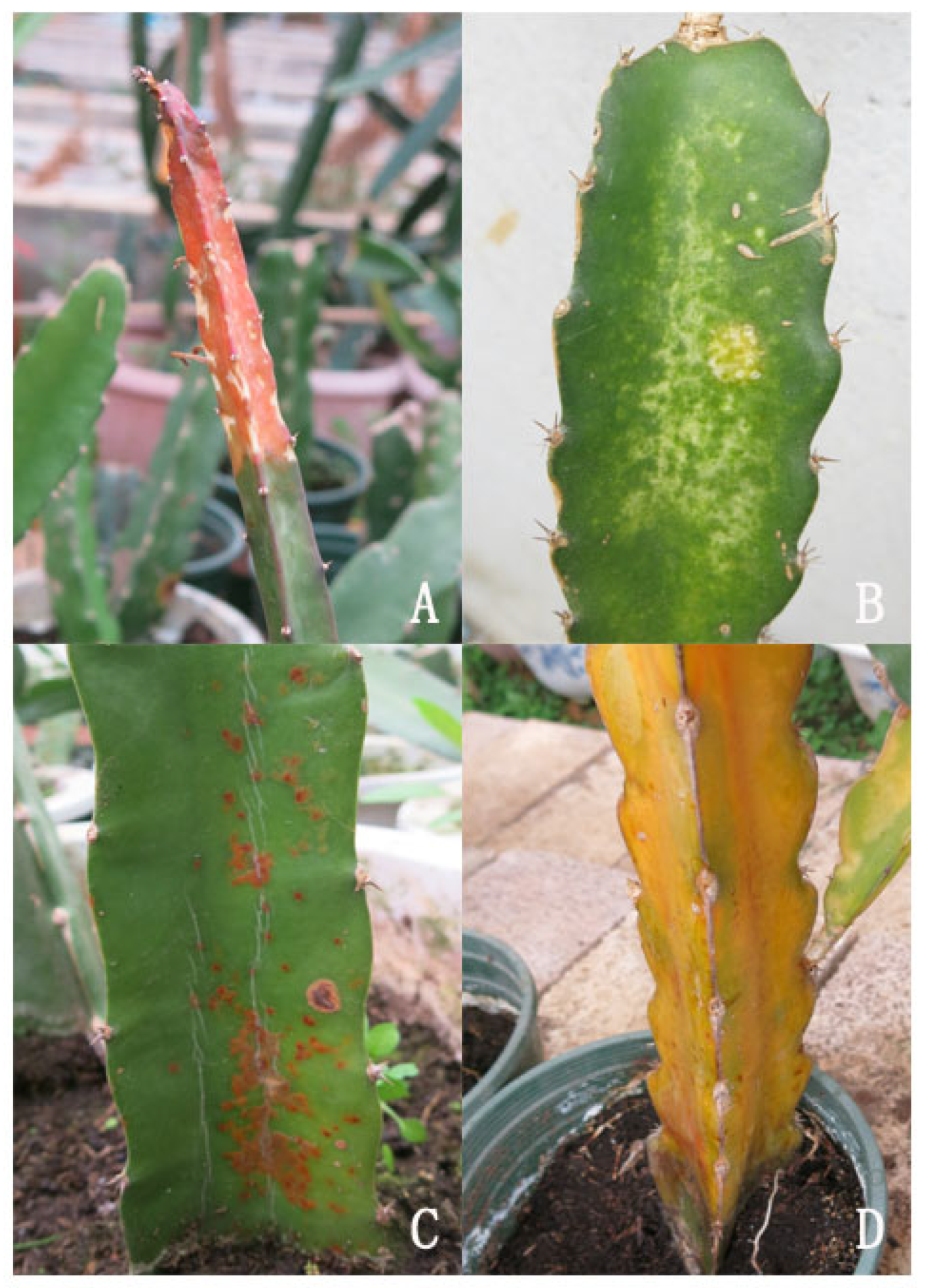
Cold injury displayed different symptoms (Figure 1), and mild cases included reddening of the tender stem tip (Figure 1A), chlorosis of the mature stem (Figure 1B), and development of brown necrotic spots (Figure 1C), and severe cases involved deep necrosis in part of or the whole stem (Figure 1D).

2.2.4. Membrane Leakage Test

The pitaya stems were first rinsed with distilled water and the thorns were removed. After drying with clean paper towels, the pitaya stems were cut into slices of about 0.5 mm and mixed well. Then, 3.0 g of the tissue was put into a clean jar with 30 mL of distilled water. After infiltrating at room temperature for 6 h, the solution was shaken well to measure the initial electric conductivity (C1) with a DDS-11A electric conductivity meter. Subsequently, the jar was sealed with plastic film and put in a boiling water bath for 30 min. After cooling to room temperature and leaving to set for 6 h, the final electric conductivity (C2) was measured. Each treatment was repeated 5 times. The relative electric conductivity (REC, %) was calculated according to the formula (C1/C2) × 100% and was used to quantify membrane leakage.

2.2.5. Soluble Sugars (SSs) and Proteins (SPs), Malondialdehyde (MDA), Proline (Pro), Glutathione (GSH) and Ascorbic Acid (ASA)

Assay kits from Suzhou Comin Biotechnology Co., Ltd. (Suzhou, China); Nanjing Jiancheng Biochemical Reagent Co. (Nanjing, China) were used to analyze the contents of soluble sugars (KT-2-Y), soluble proteins (SSNP-2-W), MDA (MDA-2-Y), proline (PRO-2-Y), GSH (GSH-2-W) and ASA (ASA-2A-W). Procedures of extraction and analysis followed the kit’s instructions. Each treatment was repeated 5 times.

2.2.6. Determination of Antioxidant Enzymes

The activities of superoxide dismutase (SOD), peroxidase (CAT), catalase (POD) and ascorbate peroxidase (APX) were measured using the ELISA method with assay kits (Suzhou Comin Biotechnology Co., Ltd., Suzhou, China; Nanjing Jiancheng Biochemical Reagent Co., Nanjing, China). Procedures of enzyme extraction and analysis followed the kit’s instructions. Each treatment was repeated 5 times.

2.2.7. Determination of Reactive Oxygen Species (ROS)

Superoxide anion radical (O2·−) and hydrogen peroxide (H2O2) were determined using a double-antibody sandwich indirect enzyme-linked immunosorbent assay with an ELISA detection kit (Suzhou Comin Biotechnology Co., Ltd., Suzhou, China; Nanjing Jiancheng Biochemical Reagent Co., Nanjing, China) involving color development with 3,3′,5,5′-Tetramethylbenzidine (TMB). The color of TMB was converted into blue under the catalysis of peroxidase and finally converted into yellow under the action of acid. The color intensity was positively correlated with the plant’s superoxide anion radical (O2·−) or hydrogen peroxide (H2O2) in the sample. By using a microplate reader to measure the absorbance (OD value) at 450 nm, contents of O2·− and H2O2 in the sample were calculated. The contents of O2·− and H2O2 were determined using a kit from Suzhou Comin Biotechnology Co., Ltd. The specific procedures were carried out according to the manufacturer’s instructions, and a standard curve was plotted using known concentrations of standards. The procedures of ROS extraction and analysis followed the kit’s instructions. Each treatment was repeated 5 times.

2.3. Statistics

All analyses were carried out with five biological replicates. Enzyme activities and component contents were measured on a dry weight (DW) basis of pitaya stem. Data were initially analyzed using Microsoft Excel 2007 and one-way ANOVA, and multiple range tests (LSD) were conducted using DPS 7.05 software. Figures were generated using Origin 6.0. Principal component analysis (PCA) was performed and the plots were generated using OriginLab (2022).

3. Results

3.1. Effects of Drought on Morphology of Potted Pitaya Plants Exposed to Natural Winter Low Temperatures

As shown in Table 1, under natural overwinter conditions, the potted pitaya seedlings responded differently to low temperatures between the watered control and the drought-treated group in both the 2016 and 2017 seasons. In January of both years, seedlings in both groups showed chlorosis or redness in tender stems. However, severe cold damage symptoms were found only in the control; 2% (2016) and 1.3% (2017) of the seedlings showed water-soaked necrosis in January. However, no such symptoms were found in the drought treatment.
In the following winter, upon a sudden temperature recovery in March, 40% (2016) and 29.3% (2017) of the control plants showed water-soaked necrosis, while only 2% (2016) and 4.8% (2017) occurred in the drought-treated plants (Table 1). This result indicates that drought stress significantly improved cold tolerance in pitaya.

3.2. Effects of Drought Stress on Pitaya Stem Exposed to Artificial Low Temperatures for Different Durations

3.2.1. Effects on Physiological Parameters Reflecting Damage

As shown in Table 2, after the potted pitaya seedlings were exposed to 12 °C and 8 °C for 3, 7, and 14 days, no significant difference in membrane leakage was observed between the drought treatment group and CK. In contrast, when the temperature was lowered to 4 °C, a marked increase in membrane leakage was noted in the CK compared to conditions at both 12 °C and 8 °C. Notably, after maintaining the seedlings at 4 °C for 14 days or at 0 °C for 7 and 14 days, membrane leakage was significantly lower in the drought treatment than in the CK. These findings indicate that drought pretreatment reduced damage on the cell membrane in pitaya stems under low-temperature conditions.
The MDA content in CK pitaya stems exhibited a consistent increase with temperature decrease or prolonged exposure to a constant low temperature. Consequently, the highest level of MDA was observed in samples treated at 0 °C for 14 days. In contrast, drought-pretreated plants showed no significant increase in MDA when temperatures were above 4 °C, and a notable increase occurred only after exposure to 0 °C for 7 and 14 days. Furthermore, the MDA levels in the drought treatment remained significantly lower than in the CK across all temperature treatments.

3.2.2. Effects on Major Osmotic Substances

Proline content in CK pitaya stems increased as the temperature decreased or with prolonged exposure to low temperatures. A significant increase in proline content was observed in both the drought treatment group and CK at 12 °C, 4 °C and 0 °C for 7 and 14 days. No significant difference between drought treatment and the control was found at 12 °C and 8 °C across all sampling times. However, under more severe cold stress (4 °C for 14 days and 0 °C for 7 and 14 days), proline content in the drought treatment group was significantly higher than that in the control.
With the decrease in temperature, the contents of soluble sugars and soluble proteins in pitaya stems tended to increase. However, in drought treatment, they were consistently lower than those of the CK, with significant differences observed at 4 °C and 0 °C. Therefore, low temperatures induced the accumulation of soluble sugars and soluble proteins in pitaya stems, but drought may inhibit their accumulation.

3.2.3. Effects on Antioxidant Properties

Different low temperatures and exposure durations significantly affected the key indicators of antioxidant system in pitaya stems, including the activities of SOD, POD, CAT, and APX, and contents of ASA and GSH (Table 3).
With the decrease in temperature, SOD activity increased first and then decreased, reaching a peak level at 8 °C in the drought group, while in the CK, it peaked at 4 °C. In contrast, the POD and CAT activities showed an overall decreasing trend with temperature drop in both the drought group and CK, indicating that low temperature had a greater impact on both enzymes than drought. Compared with the CK, drought stress generally suppressed SOD and POD activities, while CAT activity was enhanced at 8 °C for 7 d and 14 d, and at 4 °C and 0 °C, though the effect was not significant. These results suggest that drought stress primarily inhibits SOD and POD activities, while it slightly activates CAT.
APX activity and ASA content generally increased with the decrease in temperature, reaching peak levels at 4 °C in the drought group and at 8 °C in the CK. ASA content was significantly higher in most drought treatments, whereas a significant increase in APX activity was observed under severe low-temperature conditions (4 °C and 0 °C). These findings indicate that low temperature and drought treatment could effectively induce ASA accumulation and enhance APX activity. However, drought stress significantly inhibited the accumulation of GSH in pitaya stems, and the GSH content in the drought group was significantly lower than that in the CK. With the decrease in temperature, the content of GSH in CK peaked at 4 °C, while that in the drought group continuously increased without an obvious peak. This indicates that although low temperature can promote GSH accumulation to some extent, drought stress overall impairs GSH biosynthesis.
All antioxidant indicators exhibited obvious temperature-dependent responses. Under the relatively mild low temperatures (12 °C and 8 °C), the activities of SOD, POD and APX and contents of ASA and GSH in the CK showed an increasing trend with prolonged exposure to low temperatures. In contrast, under more severe low-temperature stress (4 °C and 0 °C), these indicators generally declined. The activity of CAT seemed most sensitive to low temperatures, increasing with extended treatment only at 12 °C.

3.3. Effects of Post-Cold Temperature Rise on Pitaya Plants

3.3.1. Morphological Effects

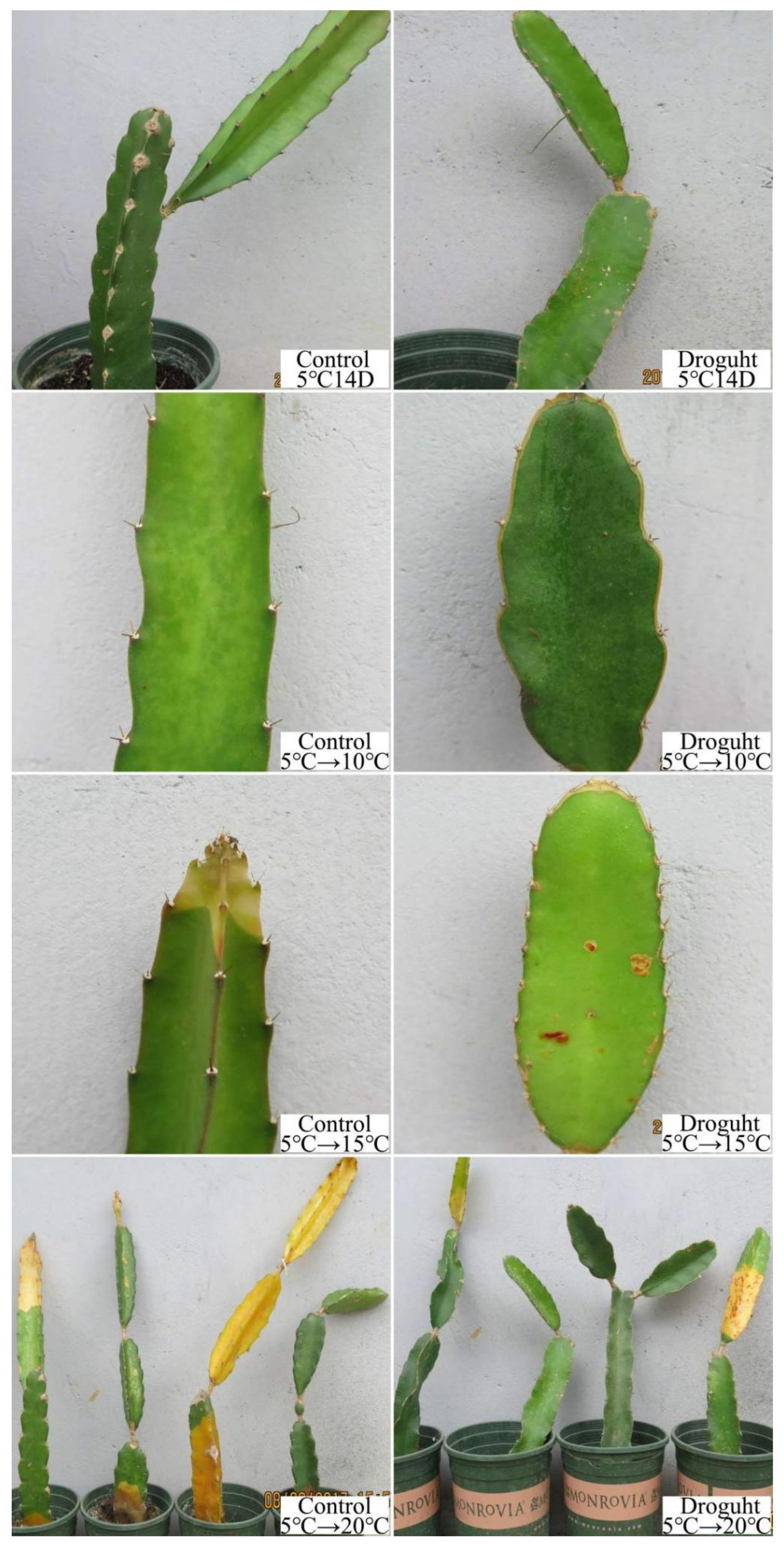
As shown in Figure 2 and Table 4, mild chilling injury was observed in both the control (4.8%) and drought treatment (6.7%) groups after 14 days at 5 °C, with no severe injury detected. However, as the post-cold temperature rise range increased, the incidence of mild chilling injury increased in both groups. Following a temperature rise of 15 °C, the control stems exhibited extensive water-soaked necrosis, with a mortality rate of 59.3%. In contrast, the drought-treated plants only developed yellowing and yellow spots on the secondary stems (23%), with no symptoms observed on the primary stems or stem bases. These results demonstrate that the drought treatment significantly alleviated the damaging effects of rapid post-cold warming on potted pitaya seedlings.

3.3.2. Effects on Relative Electric Conductivity (REC) and Malondialdehyde (MDA) Content in Pitaya Stems

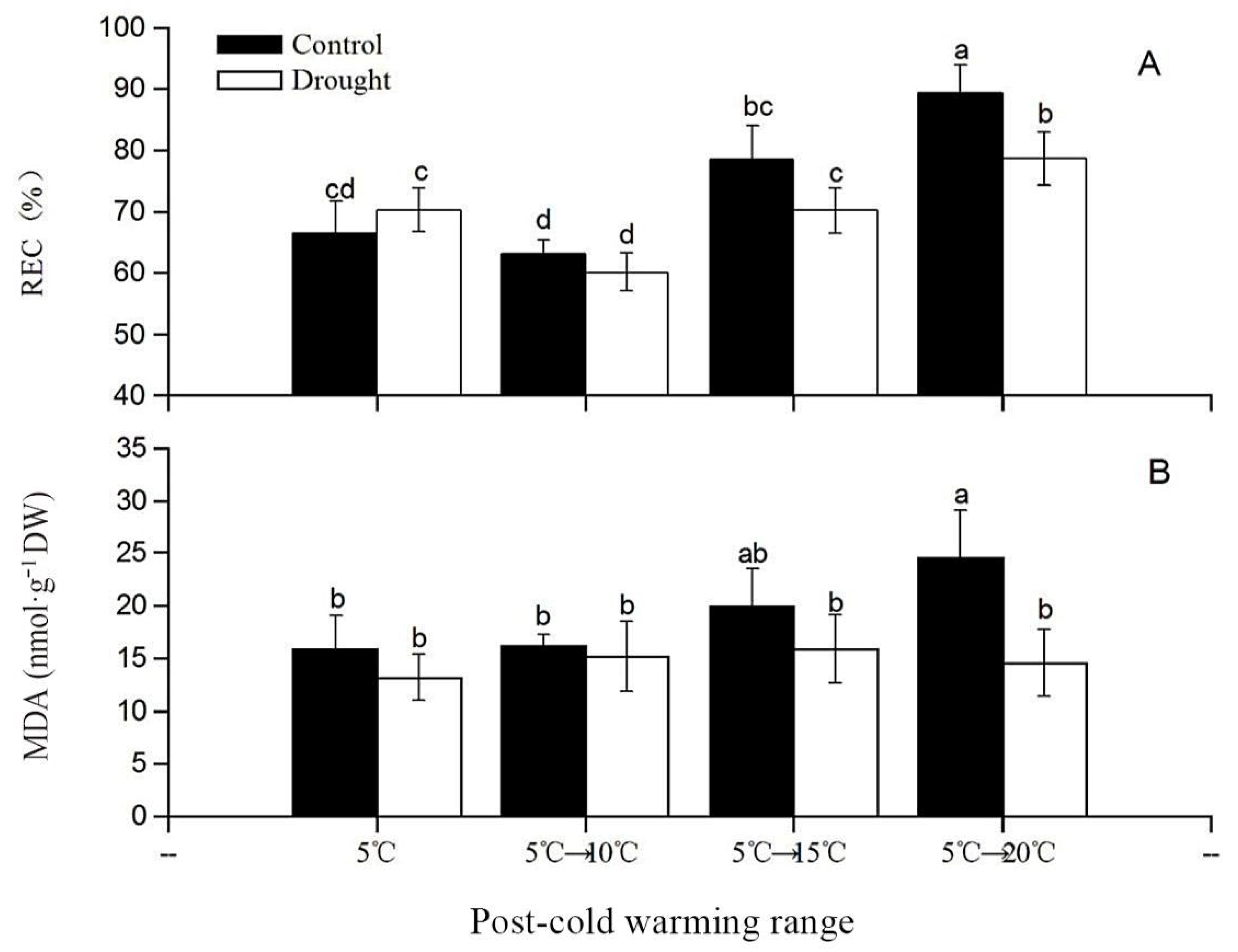
As shown in Figure 3A, upon rewarming from 5 °C to 10 °C, 15 °C, or 20 °C, the membrane leakage reflected by relative electrical conductivity (REC) in both the control and drought groups exhibited an initial decline followed by an increase, reaching the highest level at the rewarming treatment from 5 °C to 20 °C (89.52% for control and 78.56% for drought treatment). Meanwhile, Figure 3B shows that during the rewarming process, the malondialdehyde (MDA) content in the control group gradually increased with increasing temperature. In contrast, the MDA content in the drought treatment group showed no significant change, and both REC and MDA levels were significantly lower than those in the control. These results demonstrate that compared to the low-temperature stress at 5 °C for 14 days, the drastic temperature rise after low-temperature exposure intensifies membrane lipid peroxidation, leading to more severe membrane damage in pitaya stems. However, drought pretreatment alleviated this membrane damage induced by post-cold warming.

3.3.3. Effects on ROS

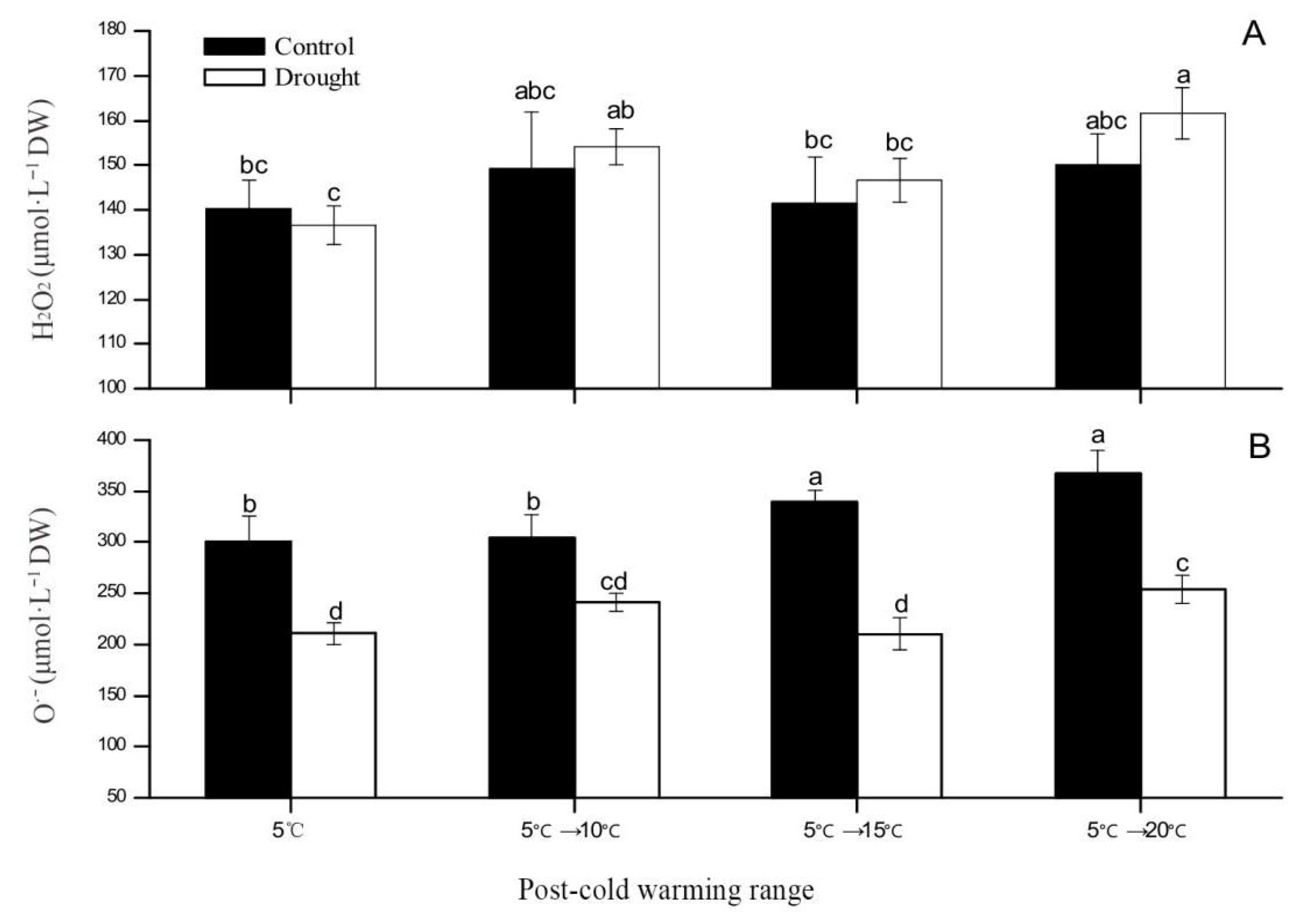
Different post-cold warming ranges had inconsistent effects on the contents of hydrogen peroxide (H2O2) and superoxide anion (O2·−) in pitaya stems (Figure 4). Temperature rise range seemed to have no significant effect on H2O2 content, which did not differ between the control and the drought groups (Figure 4A). In contrast, with the increase in post-cold temperature rise range, O2·− content in the control group displayed an increasing pattern, whereas in the drought treatment group, it maintained a relatively stable level and was significantly lower than in the control. This indicates that drought stress inhibits the accumulation of O2·− in pitaya stems under cold temperatures and post-cold warming.

3.3.4. Effects on Osmotic Substances

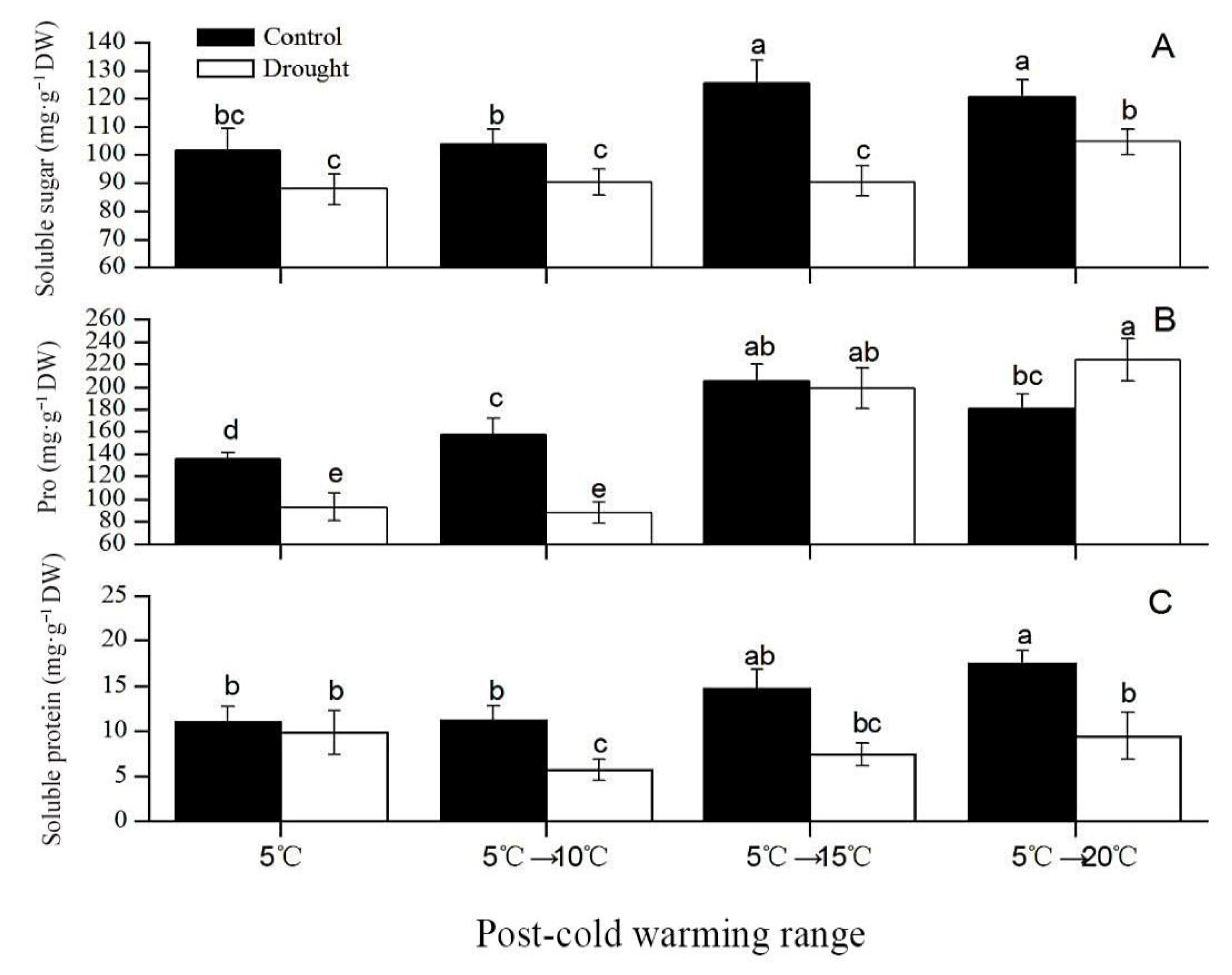
In the control plants, the content of soluble sugars increased with the magnitude of the post-cold temperature rise. Under drought, soluble sugars maintained levels significantly lower than in the control, indicating that drought inhibits sugar accumulation (Figure 5). Similar to soluble sugars, proline content in stems increased with the increase in the range of the post-cold temperature rise (Figure 5B). Drought stress significantly reduced proline accumulation in pitaya stems maintained at 5 °C and those experiencing a post-cold temperature rise of 5 °C. However, when the rewarming range exceeded 10 °C, proline content in the drought treatment group accumulated significantly, and became significantly higher than in the control when the rewarming range was 15 °C.
In contrast, soluble protein content increased with rewarming in the control plants but remained relatively constant and significantly lower in the drought-treated group (Figure 5C).
These results indicate that post-cold rewarming induces osmotic adjustment with the accumulation of proline and soluble sugars in pitaya stem. Drought stress impairs the osmotic adjustment that involves sugar and protein accumulation, especially under low rewarming ranges. Under drought, proline accumulation occurs only at high rewarming ranges.

3.3.5. Effects on Activities of Superoxide Dismutase (SOD), Peroxidase (POD) and Catalase (CAT)

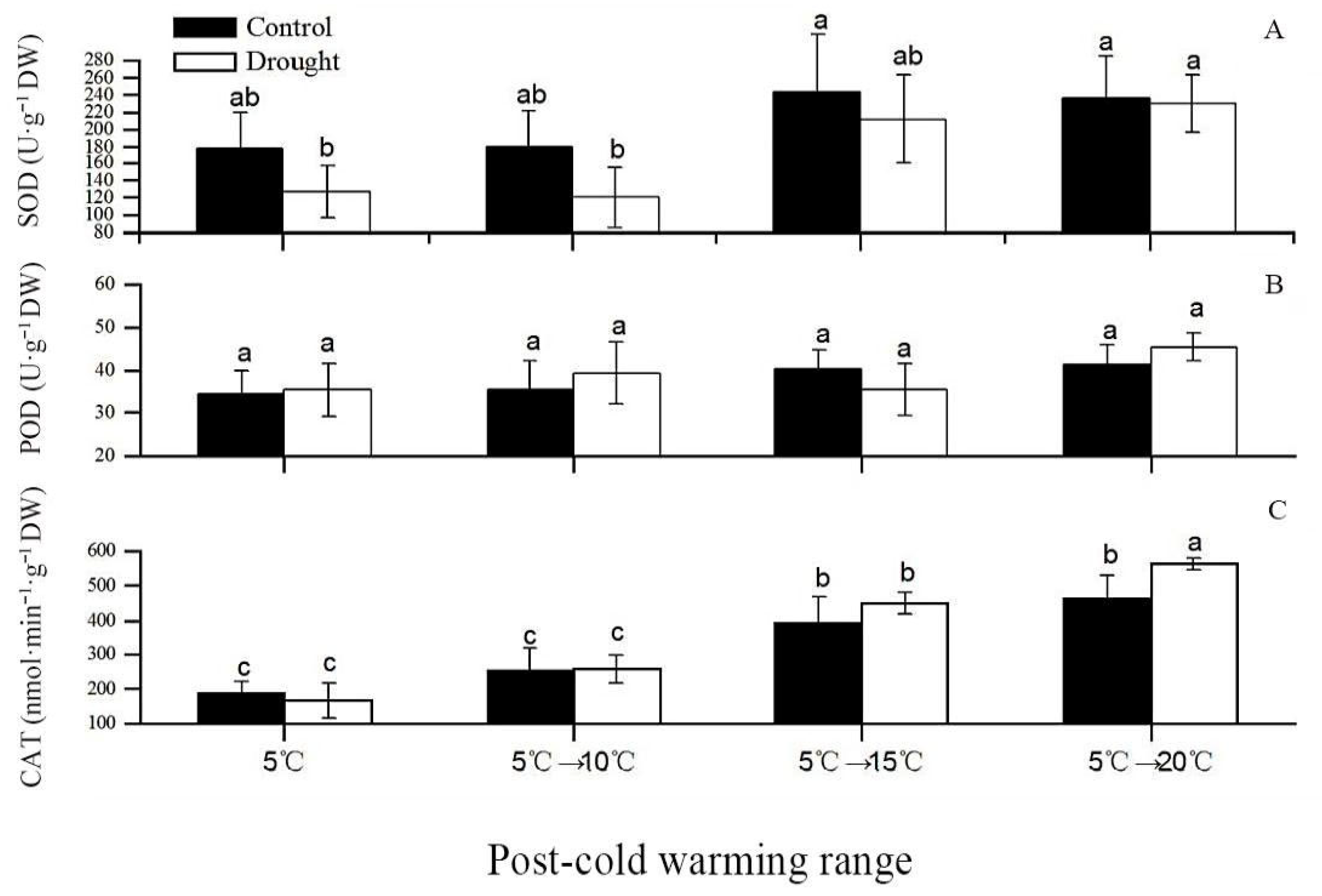
With the increase in post-cold rewarming range, the activities of SOD and CAT in pitaya stems showed an increasing trend in both the control and the drought treatment, while POD activity remained relatively stable, indicating that neither temperature increase nor drought stress had significant effects on POD activity (Figure 6).
Specifically, compared to the 5 °C condition, SOD activity increased significantly in the drought-treated group after rewarming from 5 °C to 20 °C. In addition, across different temperature treatments, although SOD activity in the drought group was consistently lower than in the control, the difference was not statistically significant. When the temperature was increased by 10 °C, the CAT activity of both the control group and the drought group increased significantly. At 5 °C, CAT activity was lower in the drought group. However, as the rewarming range widened, the drought group exhibited a more pronounced increase in CAT activity, eventually surpassing the control, reaching a significantly higher level at a rewarming range of 15 °C. This indicates that drought stress significantly promotes CAT activity during the rewarming process.

3.3.6. Effects on Activities of Antiscorbutic Acid Peroxidase (APX) and Contents of Ascorbic Acid (ASA) and Glutathione (GSH)

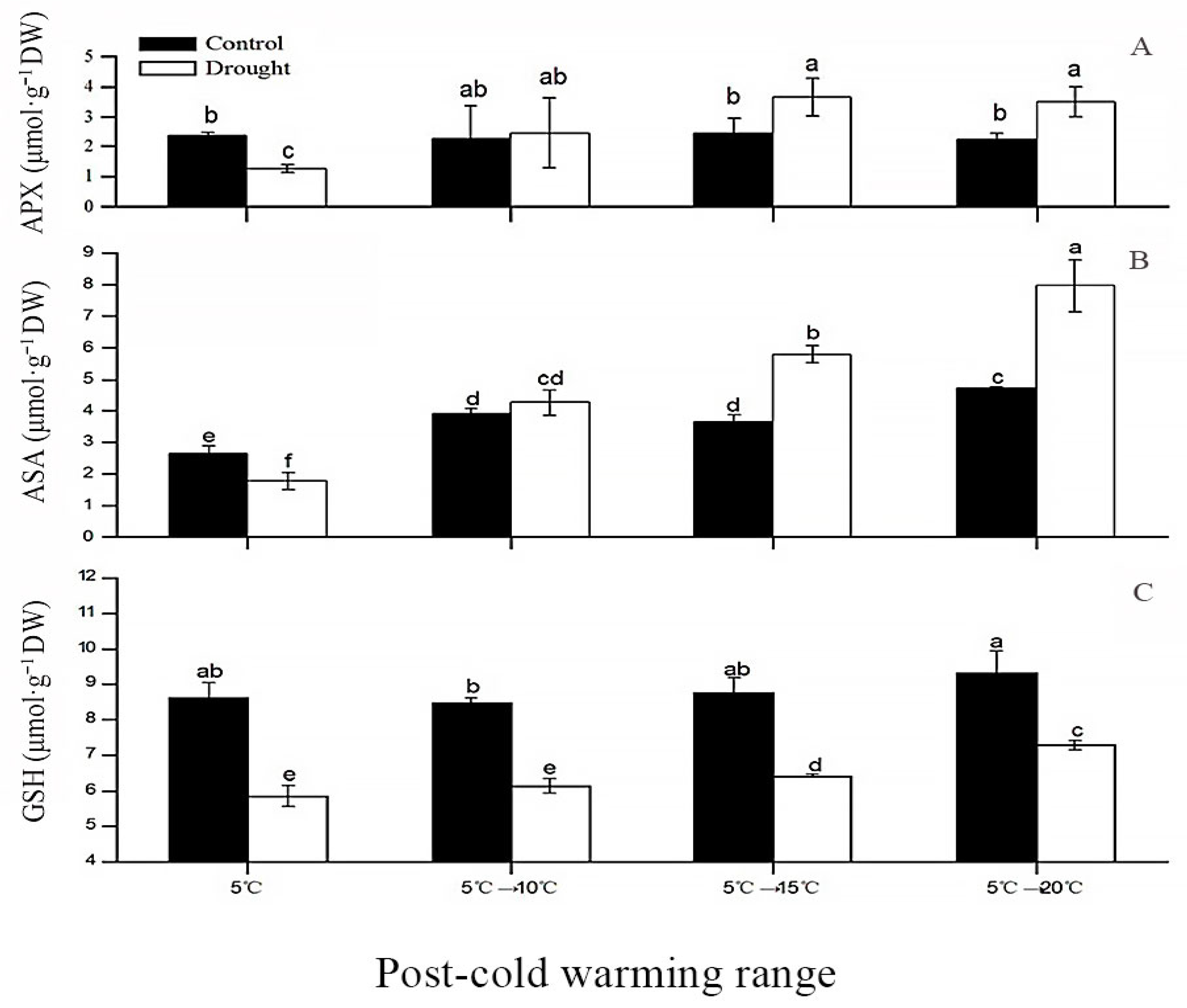
As shown in Figure 7, APX activity and ASA and GSH contents in pitaya stems showed an overall increasing trend as the temperature rise range increased.
Compared to the 5 °C condition, ASA content increased significantly in both the control and drought-treated groups after the temperature rose. APX activity increased significantly only under drought treatment, and GSH content increased significantly only in the drought group under rewarming ranges of above 10 °C. APX activity and ASA content exhibited similar patterns under different temperature conditions. Both were lower in the drought group than in the control at 5 °C and showed a greater increase with the increase in rewarming range, exceeding the control significantly when the rewarming range was 10 °C and 15 °C. This indicates that higher rewarming ranges enhanced the promoting effect of drought stress on APX activity and ASA content. In contrast, GSH content was consistently and significantly lower in the drought group than in the control across all the temperature treatments. Although GSH content increased with temperature rise range in both groups, there was always a significant difference between them, suggesting that drought impairs GSH accumulation.
Overall, the post-cold rewarming activated the ASA-GSH cycle, and drought stress significantly enhanced ASA accumulation and APX activity, thus initiating active antioxidant defense.

3.3.7. Effects of Drought Treatment on Factors in the Principal Component Analysis of Chilling Tolerance in Pitaya

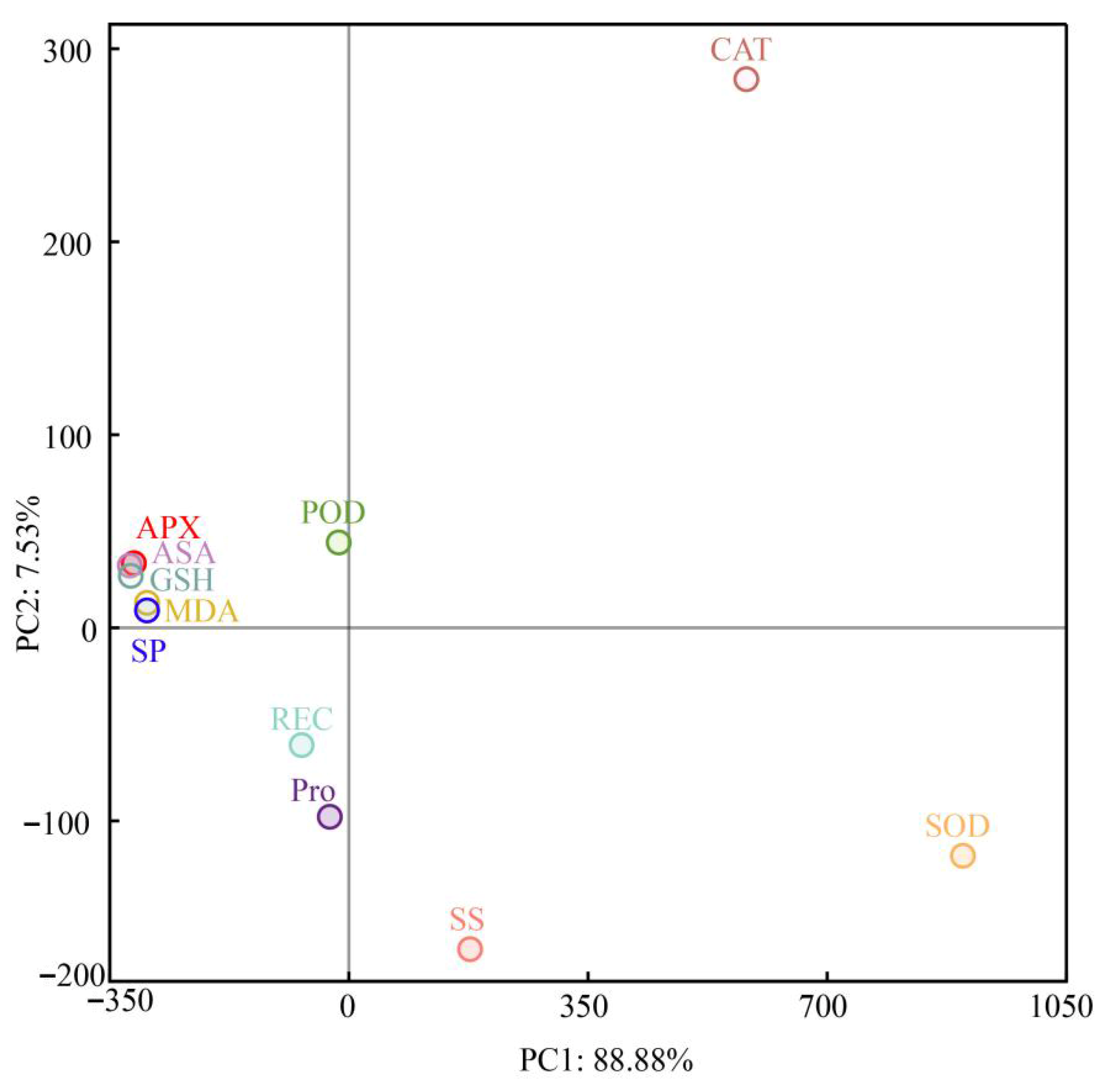
To elucidate the comprehensive effect of drought pretreatment on the chilling tolerance of pitaya, principal component analysis (PCA) was performed on key physiological indicators monitored throughout the entire process of low-temperature stress and subsequent rewarming. As shown in Figure 8, the first principal component (PC1) accounted for 88.88% of the total variance, serving as the dominant factor determining the sample distribution pattern. Along the PC1 dimension, CAT, SOD, and soluble protein (SP) exhibited high loading values, indicating that these variables are the core indicators driving the variation along PC1. This reveals that the basal accumulation of primary antioxidant enzymes and osmotic adjustment substances constitutes a critical physiological basis for pitaya’s response to chilling stress.
The second principal component (PC2), with a contribution of 7.53%, represented a secondary factor that primarily reflects the fine-tuned regulatory characteristics during the late stage of stress and the rewarming phase. On the PC2 axis, POD, APX, and ASA displayed high loadings; these components are closely associated with the ascorbate–glutathione (ASA-GSH) cycle. This suggests that the activation level of the ASA-GSH cycle is strongly linked to the oxidative stress regulation capacity of pitaya during the chilling recovery period.
In summary, CAT, SOD, SS, POD, APX, and ASA exhibited high loadings and strong discriminatory power in the PCA, establishing them as key physiological indicators for assessing the low-temperature response and the effect of drought pretreatment in pitaya. From a multivariate statistical perspective, these results validate the synergistic contributions of primary antioxidant enzymes, osmotic adjustment substances, and core components of the ASA-GSH cycle within the cross-adaptation framework.

4. Discussion

4.1. Drought Treatment Enhances Cell Membrane Stability Under Chilling Stress

Similar to other tropical crops, pitaya is sensitive to chilling stress and easily damages at temperatures below 5 °C; cold stress induces excessive accumulation of ROS in plants, resulting in lipid peroxidation. The higher the stress intensity, the more severe the damage [2,11]. During the low-temperature phase, no difference in REC was observed between drought-treated stems and the CK under mild chilling (12 °C and 8 °C). However, when the temperature dropped to 4 °C and below with sustained stress, the REC of drought-treated stems was significantly lower than that of the CK, indicating that the membrane stability of pitaya under a continuous low temperature was enhanced by drought stress. This result is consistent with the chilling tolerance study in tomato [12], which demonstrated that after 3 days of treatment at 10 °C and 6 °C, no significant difference in REC was observed between chilling-tolerant and chilling-sensitive cultivars; however, the difference became significant at 5 °C. Furthermore, this phenomenon confirms the existence of a distinct damage threshold in tropical crops under low temperature stress [13], wherein the membrane system remains relatively stable when temperatures exceed a certain critical point, yet once it is below this threshold, membrane damage intensifies sharply.
In this study, the MDA content in the control group increased linearly with the duration of low-temperature stress, indicative of the progressive accumulation of chilling-induced membrane lipid peroxidation, a hallmark of chilling injury physiology in most thermophilic crops [14]. However, the MDA content in drought-treated stems remained lower than in the CK throughout the low-temperature process, indicating that drought stress reduced membrane lipid peroxidation and mitigated oxidative damage. This finding corroborates the conclusion of [10], demonstrating that mitigating chilling injury by alleviating membrane lipid peroxidation is one of the key mechanisms underlying drought-induced cross-resistance. Furthermore, studies have shown that chilling injury symptoms develop more rapidly after fruits are transferred from low to high temperatures [15]; lipid peroxidation was observed during the post-stress recovery phase rather than during low-temperature exposure [16], which is consistent with our findings. In our study, after rewarming following 14 days of exposure to a chilling temperature (5 °C), membrane damage was more severe. However, drought-treated pitaya plants showed a smaller increase in membrane leakage with no significant increase in MDA content, and both ERC and MDA levels remained consistently lower compared with the CK. This suggests that drought treatment not only enhanced low-temperature tolerance but also effectively mitigated membrane lipid peroxidation during the post-cold temperature rise, thereby maintaining membrane integrity.

4.2. Drought Treatment Establishes a Proline-Dominated Osmotic Adjustment System

This study indicates that low-temperature stress induces increases in proline, and soluble sugar and soluble protein contents in pitaya stems, which is consistent with the common osmotic adjustment response mechanism of plants under abiotic stress [17,18]. Consistent with previous findings [19,20,21], a gradual increase in proline content in pitaya stems with decreasing temperature and extended low-temperature duration was observed. Moreover, the proline content in drought-treated stems became significantly higher than in the CK under sustained low temperatures below 4 °C. This trend aligned with the observed lowered REC and MDA in the drought group. Increased proline content under drought stress has been reported in crops such as watermelon [22], peanut [23], and maize [24], indicating that proline accumulation is a key physiological response for the active adaptation of drought-treated plants to low temperature; both drought priming and low-temperature priming have been shown to specifically enhance proline accumulation, whereas other osmolytes—including soluble sugars and soluble proteins—exhibit only marginal increases or remain largely unchanged [25]. Soluble sugars and proteins serve not only as nutrients and energy sources but as important osmoregulation and stress-resistant substances, enhancing plants’ adaptation to adversity [26,27,28]. In this study, soluble sugars and proteins also increased with intensified stress, consistent with the research of [29], but their contents in drought-treated stems were consistently lower than in the CK. The synthesis of osmoregulation substances is an energy-consuming process [30,31]. In this study, drought treatment might have directed resources preferentially towards proline synthesis, establishing an efficient osmotic adjustment system dominated by proline and supplemented by soluble sugars and proteins.

4.3. Drought Treatment Activate the ASA-GSH Cycle for Antioxidant Defense

Previous studies on cold tolerance in pitaya have demonstrated that exposure to 4 °C exerts the most pronounced inhibitory effect on CAT activity, whereas the activities of SOD, POD, and GST exhibit an initial increase followed by a subsequent decline [32]. In this study, significant activation of the antioxidant system was observed in pitaya stems during the rewarming phase following low-temperature stress (temperature increase from 5 °C to 10–20 °C). In the control group, the activities of SOD, POD, CAT, and APX, as well as ASA content, generally showed an upward trend. However, drought pretreatment did not uniformly enhance all antioxidant components; instead, it exhibited a clear pathway-specific metabolic response. This phenomenon is highly consistent with the theory of coordinated regulation of antioxidant enzymes proposed by Bowler et al. [33], which posits that under combined stress conditions, plants tend to prioritize the activation of the most critical H2O2-scavenging pathways rather than upregulating all antioxidant enzymes indiscriminately. Drought pretreatment had no significant effect on SOD activity in pitaya stems. This result is consistent with the findings of Rizhsky et al. [34] in Arabidopsis; as the primary scavenger of O2·−, SOD maintains a basal level of activity that is sufficient to meet the demand for ROS scavenging and does not require further induction. Nevertheless, their overall antioxidant capacity was not weakened, as the ASA-GSH cycle was further significantly activated: both ASA content and APX activity were significantly higher in drought-treated stems compared to the CK. APX is a key enzyme for scavenging H2O2, and ASA serves as both its substrate and a potent antioxidant [32,35]. These results indicate that pitaya preferentially mobilizes the ASA-GSH cycle and elevates APX activity in response to low temperature-induced oxidative stress. This is consistent with observations in crops such as kiwifruit [36], sweet pepper [37], and tomato [38], in which enhancing the activity of this cycle suppresses the excessive accumulation of ROS like H2O2 and O2·−.
The peak of ROS damage often occurs during the rapid rewarming phase after low-temperature stress. Rewarming leads to metabolic recovery and electron transport chain disruption [39], triggering O2·− bursts and H2O2 accumulation [40]. This study showed that during the rewarming phase, the activities of CAT, ASA, and APX in drought treatment were significantly higher than those in the CK when the temperature increased by 10 °C and 15 °C. Although SOD and POD activities showed no significant difference with the CK, H2O2 content in drought-stressed plants was relatively stable after the temperature rose. However, oxidative damage intensified during the rewarming phase [16,41]. In this study, O2·− continuously accumulated in the CK, and membrane damage indicators (REC and MDA) increased significantly. In contrast, drought treatment effectively suppressed O2·− accumulation, maintaining its content level consistently lower than CK, thereby reducing membrane lipid peroxidation and structural damage. This was due to a significant increase in proline content as well as the efficient ASA-GSH cycle and APX scavenging system, ensuring that H2O2, produced from O2·− converted by SOD, could be promptly and efficiently removed, thereby achieving effective regulation of oxidative stress.

4.4. Multidimensional Synergistic Mechanisms of Drought Pretreatment in Enhancing Cold Hardiness in Pitaya

The responses of higher plants to different abiotic stresses are not isolated events; rather, they involve complex signaling crosstalk pathways and shared functional gene expression profiles [42]. This interactive adaptive response is primarily epitomized by the synergistic remodeling of three core systems—enhanced cell membrane stability, proline-mediated osmotic adjustment, and antioxidant defense—which together establish an efficient and integrated comprehensive mechanism for cold tolerance [43].
At the molecular signaling level, moderate water stress rapidly activates key signaling pathways involving abscisic acid (ABA) and H2O2, which coordinately trigger integrated responses including membrane stabilization, osmotic adjustment, and antioxidant defense [44,45]. In the present study, these responses were reflected in the rapid accumulation of proline and the activation of the ASA-GSH cycle. These results are consistent with those reported by Zhang et al. [46], who demonstrated that drought-induced signal pre-activation significantly shortens the response lag phase of the defense system under subsequent cold stress, thus improving chilling tolerance.
At the physiological level, the preferential accumulation of proline confers a dual protective effect: it acts as a compatible solute to maintain osmotic potential and turgor, while its imino group directly quenches OH and O2·−, thereby alleviating the metabolic burden on the antioxidant system [47]. This multifunctionality positions proline as a central hub metabolite in drought–cold cross-adaptation, as validated by metabolomic network analysis [48].
Concurrently, APX-mediated H2O2 scavenging not only suppresses oxidative damage but also stabilizes membrane lipid bilayers and inhibits lipoxygenase (LOX) activity, forming a positive feedback loop of antioxidant–membrane stabilization [37]. The functional importance of this synergy is evidenced in tomato, where APX deficiency leads to elevated LOX activity and MDA accumulation [20].

5. Conclusions

The severity of chilling injury in pitaya was dependent on the intensity and duration of low temperature, as well as the rewarming rate. Lower temperature and longer duration led to more severe symptoms, while rapid rewarming after low temperatures aggravated the damage. Drought treatment significantly enhanced the overall tolerance of the plants to both chilling and subsequent rewarming stresses. This enhancement was achieved through the synergistic actions of multiple mechanisms, including proline-dominated osmotic adjustment and enhanced ROS scavenging systems including activated ASA-GSH cycle and higher antioxidant enzyme activities, especially catalase.

Author Contributions

Conceptualization, L.W. and X.H.; Methodology, X.Z.; Software, E.W.; Validation, X.F. and X.Z.; Formal Analysis, Y.W.; Investigation, L.W.; Data Curation, L.W.; Writing—Original Draft Preparation, L.W.; Writing–Review and Editing, Z.L.; Visualization, X.Z.; Supervision, X.H.; Project Administration, L.W. All authors have read and agreed to the published version of the manuscript.

Funding

This study was supported by the National Natural Science Foundation of China (Grant No. 31560543), the Guizhou Provincial Department of Science and Technology (Guizhou Science and Technology Support Project [2023] General 248), and the Guizhou Academy of Agricultural Sciences (GJHX [2025] No. 02).

Data Availability Statement

The original contributions presented in this study are included in the article. Further inquiries can be directed to the corresponding author.

Conflicts of Interest

The authors declare no conflicts of interest.

References

  1. Nobel, P.S.; De la Barrera, E. Nitrogen Relations for Net CO2 Uptake by the Cultivated Hemiepiphytic Cactus, Hylocereus undatus. Sci. Hortic. 2002, 96, 281–292. [Google Scholar] [CrossRef]
  2. Deng, R.J.; Fan, J.X.; Wang, Y.Q.; Jin, J.F.; Liu, T. Semilethal Temperature of Pitaya under Low Temperature Stress and Evalua-tion on Their Cold Resistance. Plant Physiol. J. 2014, 50, 1742–1748. [Google Scholar] [CrossRef]
  3. Thomson, P.H. Pitahaya (Hylocereus Species): A Promising New Fruit Crop for Southern California; Bonsall Publications: Bonsall, CA, USA, 2002. [Google Scholar]
  4. Boussiba, S.; Rikin, A.; Richmond, A.E. The Role of Abscisic Acid in Cross-Adaptation of Tobacco Plants. Plant Physiol. 1975, 56, 337–339. [Google Scholar] [CrossRef] [PubMed]
  5. Wang, L.; Zhang, X.; Ma, Y.; Qing, Y.; Wang, H.; Huang, X. The Highly Drought-Tolerant Pitaya (Hylocereus undatus) Is a Non-Facultative CAM Plant Under Both Well-Watered and Drought Conditions. J. Hortic. Sci. Biotechnol. 2019, 94, 643–652. [Google Scholar] [CrossRef]
  6. Oraee, A.; Tehranifar, A.; Nezami, A.; Shoor, M. Effects of Drought Stress on Cold Hardiness of Non-Acclimated Viola (Viola × Wittrockiana ‘Iona Gold with Blotch’) in Controlled Conditions. Sci. Hortic. 2018, 238, 98–106. [Google Scholar] [CrossRef]
  7. Oraee, A.; Tehranifar, A.; Nezami, A.; Shoor, M. The Effects of Three Levels of Irrigation Water on the Improvement of Cold Tolerance of Acclimated Viola. Acta Physiol. Plant. 2020, 42, 111. [Google Scholar] [CrossRef]
  8. Rajashekar, C.B.; Panda, M. Water Stress Is a Component of Cold Acclimation Process Essential for Inducing Full Freezing Tolerance in Strawberry. Sci. Hortic. 2014, 174, 54–59. [Google Scholar] [CrossRef]
  9. Fu, J.; Zhang, S.; Jiang, H.; Zhang, X.; Gao, H.; Yang, P.; Hu, T. Melatonin-Induced Cold and Drought Tolerance Is Regulated by Brassinosteroids and Hydrogen Peroxide Signaling in Perennial Ryegrass. Environ. Exp. Bot. 2022, 196, 104815. [Google Scholar] [CrossRef]
  10. Ghanbari, F.; Sayyari, M. Controlled Drought Stress Affects the Chilling-Hardening Capacity of Tomato Seedlings as Indicated by Changes in Phenol Metabolisms, Antioxidant Enzymes Activity, Osmolytes Concentration and Abscisic Acid Accumulation. Sci. Hortic. 2018, 229, 167–174. [Google Scholar] [CrossRef]
  11. Wang, X.L.; Luo, X.; Wang, C.Q.; Xu, J.N. Effects of Low Temperature Stress on Antioxidant System and FattyAcid Composition in Pitaya Plants. J. Sichuan Agric. Univ. 2024, 42, 339–345. [Google Scholar] [CrossRef]
  12. Cao, X.; Jiang, F.; Wang, X.; Zang, Y.; Wu, Z. Comprehensive Evaluation and Screening for Chilling-Tolerance in Tomato Lines at the Seedling Stage. Euphytica 2015, 205, 569–584. [Google Scholar] [CrossRef]
  13. Tang, L.S.; Wang, H.; Hu, F.; Xiong, X.Z. Cold injury symptoms and physiological responses of mango seedlings under low tempera-ture stress. Chin. J. Ecol. 2016, 35, 2627–2636. [Google Scholar] [CrossRef]
  14. Valenzuela, J.; Manzano, S.; Palma, F.; Carvajal, F.; Garrido, D.; Jamilena, M. Oxidative Stress Associated with Chilling Injury in Immature Fruit: Postharvest Technological and Biotechnological Solutions. Int. J. Mol. Sci. 2017, 18, 1467. [Google Scholar] [CrossRef] [PubMed]
  15. Anderson, R.E. The Influence of Storage Temperature and Warming During Storage on Peach and Nectarine Fruit Quality. J. Am. Soc. Hortic. Sci. 1979, 104, 459–461. [Google Scholar] [CrossRef]
  16. Hariyadi, P.; Parkin, K.L. Chilling-Induced Oxidative Stress in Cucumber Fruits. Postharvest Biol. Technol. 1991, 1, 33–45. [Google Scholar] [CrossRef]
  17. Kumar, V.; Shriram, V.; Hoque, T.S.; Hasan, M.; Burritt, D.J.; Hossain, M.A. Glycinebetaine-Mediated Abiotic Oxidative-Stress Tolerance in Plants: Physiological and Biochemical Mechanisms; Springer International Publishing: Cham, Switzerland, 2017; pp. 111–133. [Google Scholar]
  18. Kumar, A.; Nayak, A.K.; Hanjagi, P.S.; Kumari, K.; Shanmugam, V.; Mohanty, S.; Tripathi, R.; Panneerselvam, P. Submergence Stress in Rice: Adaptive Mechanisms, Coping Strategies and Future Research Needs. Environ. Exp. Bot. 2021, 186, 104448. [Google Scholar] [CrossRef]
  19. Qi, W.; Wang, F.; Ma, L.; Qi, Z.; Liu, S.; Chen, C.; Wu, J.; Wang, P.; Yang, C.; Wu, Y.; et al. Physiological and Biochemical Mechanisms and Cytology of Cold Tolerance in Brassica napus. Front. Plant Sci. 2020, 11, 1241. [Google Scholar] [CrossRef]
  20. Liu, X.; Wang, Y.; Feng, Y.; Zhang, X.; Bi, H.; Ai, X. SlTDC1 Overexpression Promoted Photosynthesis in Tomato Under Chilling Stress by Improving CO2 Assimilation and Alleviating Photoinhibition. Int. J. Mol. Sci. 2023, 24, 11042. [Google Scholar] [CrossRef]
  21. Döweler, F.; Case, B.S.; Buckley, H.L.; Bader, M.K.-F. High Light-Induced Photoinhibition Is Not Limiting Seedling Establishment at Abrupt Treeline Ecotones in New Zealand. Tree Physiol. 2021, 41, 2034–2045. [Google Scholar] [CrossRef]
  22. Wang, Z.; Yang, Y.; Yadav, V.; Zhao, W.; He, Y.; Zhang, X.; Wei, C. Drought-Induced Proline Is Mainly Synthesized in Leaves and Transported to Roots in Watermelon Under Water Deficit. Hortic. Plant J. 2022, 8, 615–626. [Google Scholar] [CrossRef]
  23. Furlan, A.L.; Bianucci, E.; Giordano, W.; Castro, S.; Becker, D.F. Proline Metabolic Dynamics and Implications in Drought Tolerance of Peanut Plants. Plant Physiol. Biochem. 2020, 151, 566–578. [Google Scholar] [CrossRef] [PubMed]
  24. Khan, P.; Abdelbacki, A.M.M.; Albaqami, M.; Jan, R.; Kim, K.-M. Proline Promotes Drought Tolerance in Maize. Biology 2025, 14, 41. [Google Scholar] [CrossRef] [PubMed]
  25. Sun, C.; Li, X.; Hu, Y.; Zhao, P.; Xu, T.; Sun, J.; Gao, X. Proline, Sugars, and Antioxidant Enzymes Respond to Drought Stress in the Leaves of Strawberry Plants. Hortic. Sci. Technol. 2015, 33, 625–632. [Google Scholar] [CrossRef]
  26. Ghosh, T.K.; Tompa, N.H.; Rahman, M.; Mohi-Ud-Din, M.; Al-Meraj, S.M.Z.; Biswas, S.; Mostofa, M.G. Acclimation of Liverwort Marchantia polymorpha to Physiological Drought Reveals Important Roles of Antioxidant Enzymes, Proline and Abscisic Acid in Land Plant Adaptation to Osmotic Stress. PeerJ 2021, 9, e12419. [Google Scholar] [CrossRef]
  27. Cui, Y.-N.; Yan, S.-J.; Zhang, Y.-N.; Wang, R.; Song, L.-L.; Ma, Y.; Guo, H.; Yang, P.-Z. Physiological, Metabolome and Gene Expression Analyses Reveal the Accumulation and Biosynthesis Pathways of Soluble Sugars and Amino Acids in Sweet Sorghum Under Osmotic Stresses. Int. J. Mol. Sci. 2024, 25, 8942. [Google Scholar] [CrossRef]
  28. Yamagishi, M.; Uchiyama, H.; Handa, T. Floral Pigmentation Pattern in Oriental Hybrid Lily (Lilium Spp.) Cultivar ‘Dizzy’ Is Caused by Transcriptional Regulation of Anthocyanin Biosynthesis Genes. J. Plant Physiol. 2018, 228, 85–91. [Google Scholar] [CrossRef]
  29. Deng, R.J.; Fan, J.X.; Wang, B.; Cai, Y.Q. Preliminary Study on Determination of Chilling-resistance in Pitaya (Hylocereus spp.). Plant Physiol. J. 2009, 45, 1023–1026. [Google Scholar] [CrossRef]
  30. Mansour, M.M.F. Role of Vacuolar Membrane Transport Systems in Plant Salinity Tolerance. J. Plant Growth Regul. 2023, 42, 1364–1401. [Google Scholar] [CrossRef]
  31. Munns, R.; Passioura, J.B.; Colmer, T.D.; Byrt, C.S. Osmotic Adjustment and Energy Limitations to Plant Growth in Saline Soil. New Phytol. 2020, 225, 1091–1096. [Google Scholar] [CrossRef]
  32. Li, X.; Wu, Y.J.W.; Yu, C.; Zhou, H.; Xu, X.; Wang, C.; Guo, B. Effects of exogenous salicylic acid on morphology and physiology of pitaya seedlings under low temperature stress. Guangxi Zhiwu 2023, 43, 2309–2318. [Google Scholar] [CrossRef]
  33. Bowler, C.; Montagu, M.V.; Inze, D. Superoxide Dismutase and Stress Tolerance. Annu. Rev. Plant Physiol. Plant Mol. Biol. 1992, 43, 83–116. [Google Scholar] [CrossRef]
  34. Rizhsky, L.; Liang, H.; Shuman, J.; Shulaev, V.; Davletova, S.; Mittler, R. When Defense Pathways Collide. The Response of Arabidopsis to a Combination of Drought and Heat Stress. Plant Physiol. 2004, 134, 1683–1696. [Google Scholar] [CrossRef] [PubMed]
  35. Pandey, S.; Fartyal, D.; Agarwal, A.; Shukla, T.; James, D.; Kaul, T.; Negi, Y.K.; Arora, S.; Reddy, M.K. Abiotic Stress Tolerance in Plants: Myriad Roles of Ascorbate Peroxidase. Front. Plant Sci. 2017, 8, 581. [Google Scholar] [CrossRef] [PubMed]
  36. Zheng, Y.; Chen, X.; Chen, W.; Yang, Z.; Li, X.; Cao, S.; Shi, L. Inhibition of DNA Methylation Modification Regulates Endogenous GABA, Proline and AsA-GSH Metabolism and Enhances Antioxidant Capacity to Improve Chilling Tolerance in Postharvest Kiwifruit. Postharvest Biol. Technol. 2025, 230, 113812. [Google Scholar] [CrossRef]
  37. Yao, M.; Ge, W.; Zhou, Q.; Zhou, X.; Luo, M.; Zhao, Y.; Wei, B.; Ji, S. Exogenous Glutathione Alleviates Chilling Injury in Postharvest Bell Pepper by Modulating the Ascorbate-Glutathione (AsA-GSH) Cycle. Food Chem. 2021, 352, 129458. [Google Scholar] [CrossRef]
  38. Li, Z.; Min, D.; Fu, X.; Zhao, X.; Wang, J.; Zhang, X.; Li, F.; Li, X. The Roles of SlMYC2 in Regulating Ascorbate-Glutathione Cycle Mediated by Methyl Jasmonate in Postharvest Tomato Fruits under Cold Stress. Sci. Hortic. 2021, 288, 110406. [Google Scholar] [CrossRef]
  39. Sies, H.; Mailloux, R.J.; Jakob, U. Fundamentals of Redox Regulation in Biology. Nat. Rev. Mol. Cell Biol. 2024, 25, 701–719. [Google Scholar] [CrossRef]
  40. Zhu, J.; Li, Y.; Liao, J. Involvement of Anthocyanins in the Resistance to Chilling-Induced Oxidative Stress in Saccharum officinarum L. Leaves. Plant Physiol. Biochem. 2013, 73, 427–433. [Google Scholar] [CrossRef]
  41. Lee, D.H.; Lee, C.B. Chilling Stress-Induced Changes of Antioxidant Enzymes in the Leaves of Cucumber: In Gel Enzyme Activity Assays. Plant Sci. 2000, 159, 75–85. [Google Scholar] [CrossRef]
  42. Chen, H.; Bullock, D.A.; Alonso, J.M.; Stepanova, A.N. To Fight or to Grow: The Balancing Role of Ethylene in Plant Abiotic Stress Responses. Plants 2021, 11, 33. [Google Scholar] [CrossRef]
  43. Janská, A.; Maršík, P.; Zelenková, S.; Ovesná, J. Cold Stress and Acclimation—What Is Important for Metabolic Adjustment? Plant Biol. 2010, 12, 395–405. [Google Scholar] [CrossRef]
  44. Suzuki, N.; Rivero, R.M.; Shulaev, V.; Blumwald, E.; Mittler, R. Abiotic and Biotic Stress Combinations. New Phytol. 2014, 203, 32–43. [Google Scholar] [CrossRef]
  45. Zhang, H.; Zhu, J.; Gong, Z.; Zhu, J.-K. Abiotic Stress Responses in Plants. Nat. Rev. Genet. 2022, 23, 104–119. [Google Scholar] [CrossRef]
  46. Zhang, J.; Luo, W.; Zhao, Y.; Xu, Y.; Song, S.; Chong, K. Comparative Metabolomic Analysis Reveals a Reactive Oxygen Species-dominated Dynamic Model Underlying Chilling Environment Adaptation and Tolerance in Rice. New Phytol. 2016, 211, 1295–1310. [Google Scholar] [CrossRef]
  47. Signorelli, S.; Coitiño, E.L.; Borsani, O.; Monza, J. Molecular Mechanisms for the Reaction Between OH Radicals and Proline: Insights on the Role as Reactive Oxygen Species Scavenger in Plant Stress. J. Phys. Chem. B 2014, 118, 37–47. [Google Scholar] [CrossRef]
  48. Liu, D.; Qiu, C.; Huang, S.; Mo, R.; Lu, X.; Zeng, Y.; Zhu, G.; Zhang, C.; Lin, Q. Transcriptome Sequencing and Metabolome Analysis to Reveal Renewal Evidence for Drought Adaptation in Mulberry. IET Syst. Biol. 2025, 19, e70004. [Google Scholar] [CrossRef]
Figure 1. Symptoms of cold damage in pitaya stem. Note: (A), reddening at tender stem tip; (B), chlorosis in mature stem; (C), brown spots in mature stem; (D), deep necrosis in stem.
Horticulturae 12 00272 g001
Figure 2. Morphological comparison of pitaya stems in drought-pretreated and control groups after different post-cold warming treatments.
Horticulturae 12 00272 g002
Figure 3. Effects of drought treatment and control on changes in relative electrical conductivity (REC) (A) and malondialdehyde (MDA) (B) in pitaya stems under different rewarming treatments. Note: different letters indicate significant differences among treatments, p ≤ 0.05 (LSD) test.
Horticulturae 12 00272 g003
Figure 4. Effects of drought treatment and control on changes in hydrogen peroxide (H2O2) (A) and superoxide anion (O2·−) (B) contents in pitaya stem under different post-cold warming treatments. Note: different letters indicate significant differences among treatments, p ≤ 0.05 (LSD) test.
Horticulturae 12 00272 g004
Figure 5. Effects of drought treatment and control on changes in soluble sugar (SS) (A), proline (Pro) (B) and soluble protein (SP) (C) in pitaya stems under different post-cold warming ranges. Note: different letters indicate significant differences among treatments, p ≤ 0.05 (LSD) test.
Horticulturae 12 00272 g005
Figure 6. Effects of drought treatment and control stress on changes in the activities of superoxide dismutase (SOD) (A), peroxidase (POD) (B), and catalase (CAT) (C), in pitaya stems under different post-cold warming ranges. Note: different letters indicate significant differences among treatments, p ≤ 0.05 (LSD) test.
Horticulturae 12 00272 g006
Figure 7. Effects of drought treatment and control on changes in activities of antiscorbutic acid peroxidase (APX) (A), ascorbic acid (ASA) (B) and glutathione (GSH) (C) in pitaya stems under different post-cold warming ranges. Note: different letters indicate significant differences among treatments, p ≤ 0.05 (LSD) test.
Horticulturae 12 00272 g007
Figure 8. Effects of drought treatment on factor loadings in the principal component analysis of chilling tolerance in pitaya.
Horticulturae 12 00272 g008
Table 1. Incidence of cold injury in potted pitaya plants under drought and well-watered conditions.
Date of ObservationAverage Daily Temperature (°C)Humidity (%)Incidence of Cold Injury
SeverityControlDrought Treatment
18 January 2016
Low temperature phase
687.8Light20%33%
Severe2%0
22 March 2016
After the temperature rises
1589.3Light60%50%
Severe40%2%
20 January 2017
Low temperature phase
785.0Light20.3%31.1%
Severe1.3%0
23 March 2017
After a steep rise in temperature
1990.0Light24.6%39.8%
Severe29.3%4.8%
Table 2. Effects of drought on relative electric conductivity (REC), malondialdehyde (MDA), proline (Pro), soluble sugars (SSs) and soluble proteins (SPs) in pitaya stems under low temperatures.
Temperature and DurationREC (%)MDA (mg·g−1 DW)Pro (mg·g−1 DW)SS (mg·g−1 DW)SP (mg·g−1 DW)
ControlDroughtControlDroughtControlDroughtControlDroughtControlDrought
12 °C 3 Day52.7 ± 4.8 cd53.5 ± 5.2 cd11.2 ± 0.5 e7.6 ± 0.8 f53.2 ± 6.3 fg49.5 ± 4.2 fg94.7 ± 4.4 ef88.4 ± 5.2 f7.8 ± 1.2 ef6.4 ± 0.8 g
12 °C 7 Day55.4 ± 7.5 cd60 ± 9.4 bc9.3 ± 0.92 e6.8 ± 0.5 fg77.6 ± 7.3 d74.5 ± 7.9 de104.1 ± 16.9 e95.2 ± 8.1 ef8 ± 1.6 ef6.9 ± 1.4 fg
12 °C 14 Day49.8 ± 2.8 d50.1 ± 4.4 d12.7 ± 0.5 de5.7 ± 0.7 gh87.1 ± 5.1 cd78.5 ± 4.6 d105.9 ± 12.8 e90.1 ± 7.4 ef8.6 ± 2.1 ef7 ± 1.2 f
8 °C 3 Day55.5 ± 7.2 cd45.5 ± 6.1 d13.2 ± 0.7 d6.8 ± 0.7 fg69.8 ± 2.3 e66.9 ± 3.7 e111.6 ± 11.4 de101.8 ± 7.3 e9.4 ± 1.6 ef7.4 ± 1.2 f
8 °C 7 Day57.1 ± 5.1 cd64 ± 7.3 bc11.3 ± 0.8 e7.2 ± 1.1 f45.3 ± 3.5 g39.8 ± 2.6 h109.5 ± 5.1 e110.9 ± 9.5 de9 ± 1.2 ef7.8 ± 1.3 f
8 °C 14 Day61.4 ± 4.4 c59.8 ± 6.4 c15.2 ± 0.8 c6.2 ± 0.8 fg69.3 ± 6.8 e58.1 ± 7.1 ef130.3 ± 10.4 cd122.8 ± 7.4 d10.8 ± 1.4 de8.7 ± 1.8 ef
4 °C 3 Day73.3 ± 3.5ab68.5 ± 4.4 bc11.4 ± 1.6 e8.3 ± 2.8 ef57.1 ± 5.3 ef46.7 ± 4.1 fg107.6 ± 10.4 e95.1 ± 4.4 ef13.4 ± 1.0 c10.9 ± 1.4 de
4 °C 7 Day55.6 ± 7.5 cd52.1 ± 6.2 cd14.2 ± 2.4 cd4.9 ± 1.1 h98.4 ± 6.1 c68.9 ± 6.2 e120.9 ± 11.7 d110.4 ± 9.1 de14 ± 1.6 bc11.7 ± 1.6 de
4 °C 14 Day81.4 ± 4.5 a72.1 ± 2.4 b20.5 ± 1.1 b7.5 ± 1.5 f88.6 ± 4.7 cd100.5 ± 7.2 c140.6 ± 12.5 bc127.9 ± 10.4 d17.9 ± 2.4 ab13.8 ± 1.4 c
0 °C 3 Day53.3 ± 5.6 cd54.2 ± 4.1 cd9.9 ± 0.7 e5.5 ± 0.8 gh36 ± 3.2 h28.3 ± 2.7 i114 ± 8.5 de96.1 ± 8.9 ef16.8 ± 1.9 ab13.9 ± 0.5 c
0 °C 7 Day75.3 ± 4.5 ab62.3 ± 2.3 c19.1 ± 2.12 b15.5 ± 1.1 c69.4 ± 3.6 e132.3 ± 9.1 b159.8 ± 9.5 b118.5 ± 10.2 d18.2 ± 1.1 a14.2 ± 2.1 bc
0 °C 14 Day85.2 ± 7.4 a62.4 ± 5.4 c23.7 ± 1.3 a15.1 ± 1.1 c89.5 ± 5.4 cd177.3 ± 5.8 a170.5 ± 14.3 a164.4 ± 12.4 a19.8 ± 2.9 a15.8 ± 1.0 b
Note: Different letters in the column indicate significant differences among different treatments, p ≤ 0.05 (LSD test).
Table 3. Effects of drought treatment and control on superoxide dismutase (SOD), peroxidase (POD), catalase (CAT), antiscorbutic acid peroxidase (APX), ascorbic acid (ASA) and glutathione (GSH) in pitaya stems under different low-temperature conditions.
Temperature and DurationSOD (U·g−1 DW)POD (U·g−1 DW)CAT (nmol min−1·g−1 DW)APX (mmol min−1·g−1 DW)ASA (mmol·g−1 DW)GSH (mmol·g−1 DW)
ControlDroughtControlDroughtControlDroughtControlDroughtControlDroughtControlDrought
12 °C 3 Day271.1 ± 47.1 ab214.2 ± 44.1 b74.9 ± 7.9 c61.3 ± 5.4 d274.9 ± 47.7 a261.3 ± 39.4 ab5 ± 0.3 e 5.1 ± 0.2 e2.6 ± 0.4 f3.7 ± 0.2 e4.6 ± 0.3 e2.3 ± 0.2 g
12 °C 7 Day297.6 ± 46.2 ab245.6 ± 37.8 ab102.9 ± 7.7 b74.3 ± 6.7 c294.9 ± 27.3 a274.3 ± 27.7 a5.5 ± 0.8 de5.6 ± 0.4 de3.2 ± 0.7 ef4.2 ± 0.3 de5.1 ± 0.6 de3 ± 0.4 fg
12 °C 14 Day280.9 ± 34.9 ab254.7 ± 44.7 ab120.7 ± 9.8 a88.5 ± 4.8 b305.7 ± 29.2 a268.5 ± 29.4 ab6.6 ± 0.2 cd7.1 ± 0.3 bc4.6 ± 0.2 de5.9 ± 0.2 c6.2 ± 0.3 c2.7 ± 0.3 g
8 °C 3 Day287.9 ± 30.8 ab260.4 ± 40.9 ab67.3 ± 6.1 cd48.6 ± 6.1 e287.3 ± 26.4 a268.6 ± 26.4 a6.3 ± 0.1 d6.9 ± 0.1 c4.6 ± 0.3 de5.6 ± 0.4 cd6.7 ± 0.2 c3.9 ± 0.1 ef
8 °C 7 Day315.3 ± 43.5 a341.7 ± 56.1 a87.4 ± 7.2 bc78.3 ± 7.2 bc258.4 ± 27.2 ab278.3 ± 27.3 a7.3 ± 1.0 bc7.8 ± 0.2 b5.1 ± 0.5 d6.7 ± 0.2 bc7.1 ± 0.6 b3.7 ± 0.1 f
8 °C 14 Day330.3 ± 30.5 a317.8 ± 38.3 a98.6 ± 7.7 b90.1 ± 7.7 b161.6 ± 37.4 bc200.1 ± 37.0 b7.4 ± 0.8 bc8.2 ± 0.1 b5.8 ± 0.6 cd8.4 ± 0.5 a7.6 ± 0.6 a4.2 ± 0.1 ef
4 °C 3 Day324 ± 38.5 a227.3 ± 47.0 b51.5 ± 5.1 e60.1 ± 6.1 d91.5 ± 40.0 c121.1 ± 30.3 c7.3 ± 0.7 bc8.6 ± 0.2 a4.6 ± 0.4 de7.3 ± 0.3 b8.6 ± 0.5 a3.4 ± 0.1 f
4 °C 7 Day333.1 ± 50.7 a220.9 ± 18.6 b62.4 ± 6.2 cd57.4 ± 5.2 de102.4 ± 26.1 c120.4 ± 26.1 c5.6 ± 0.5 de8 ± 0.2 b5 ± 0.4 d8.6 ± 0.1 a8.4 ± 0.5 a4.2 ± 0.2 ef
4 °C 14 Day292.4 ± 22.3 ab113.6 ± 16.5 d50.8 ± 7.7 e46.3 ± 4.7 e50.8 ± 7.1 e66.3 ± 7.8 d4.3 ± 0.2 f7.6 ± 0.3 b3.8 ± 0.1 e6.1 ± 0.3 c8.1 ± 0.2 ab4.9 ± 0.1 e
0 °C 3 Day267.1 ± 30.0 ab156.3 ± 22.8 c46.8 ± 4.3 e51.7 ± 3.3 de90.8 ± 33.1 c114.7 ± 33.4 c5.7 ± 1.0 cde7.8 ± 0.4 b4.1 ± 0.1 e6.4 ± 0.3 c7.9 ± 0.3 ab5.4 ± 0.3 d
0 °C 7 Day194.1 ± 22.5 bc107.2 ± 14.9 d38.6 ± 4.7 f36.6 ± 4.7 f81.6 ± 14.0 cd89.6 ± 14.5 cd3.3 ± 0.2 g7 ± 0.1 c4.9 ± 0.1 d6.1 ± 0.4 c8.3 ± 0.5 ab5.6 ± 0.1 d
0 °C 14 Day143.1 ± 15.1 c90.8 ± 14.4 d30.5 ± 5.9 f22 ± 4.9 g40.5 ± 8.7 e52 ± 8.6 e3 ± 0.2 g6.3 ± 0.3 d3.7 ± 0.3 e5.8 ± 0.2 cd7.9 ± 0.4 ab4.9 ± 0.3 e
Note: Different letters in the column indicate significant difference among treatments, p ≤ 0.05 (LSD) test.
Table 4. Injury effects of post-cold warming treatment on the pitaya stems in the drought-treated and control groups.
TemperatureInjury SeverityControlDrought Treatment
5 °C 14 dLight4.8%6.7%
Severe00
5 °C → 10 °CLight18.6%20.2%
Severe00
5 °C → 15 °CLight34.0%37.1%
Severe00
5 °C → 20 °CLight34.1%23%
Severe59.3%0
Disclaimer/Publisher’s Note: The statements, opinions and data contained in all publications are solely those of the individual author(s) and contributor(s) and not of MDPI and/or the editor(s). MDPI and/or the editor(s) disclaim responsibility for any injury to people or property resulting from any ideas, methods, instructions or products referred to in the content.