Article

Sustainable Nutrient Recovery from Porcine Slurry: Agronomic Evaluation of Filtered and Ozonated Effluents in Internet-of-Things-Enabled Aeroponic Lettuce Cultivation


by
Xavier Parra
1,*,
Marta Musté
1,
Marga López
2,
Joan Piñol
2,
Elsa Pérez
1 and
Roger Acín
1
1
TOC Research Group, Campus UPC Vilanova, Universitat Politècnica de Catalunya (UPC), 08800 Vilanova i la Geltrú, Spain
2
Agri-Food Engineering and Biotechnology Department, Barcelona School of Agri-Food and Biosystems Engineering, Universitat Politècnica de Catalunya (UPC), 08860 Castelldefels, Spain
*
Author to whom correspondence should be addressed.
Horticulturae 2026, 12(3), 258; https://doi.org/10.3390/horticulturae12030258
Submission received: 15 January 2026 / Revised: 19 February 2026 / Accepted: 20 February 2026 / Published: 24 February 2026
(This article belongs to the Special Issue Application of Aeroponics System in Horticulture Production)

Abstract

Intensive porcine livestock production generates approximately 15 million cubic meters of slurry annually, exerting significant environmental pressure on groundwater and contributing to greenhouse gas emissions. The AEROFER project aims to mitigate this impact by demonstrating the conversion of nitrogen-rich waste into liquid fertilizers for soilless cultivation. Using an Internet of Things (IoT)-enabled aeroponic platform controlled by an ESP32 microcontroller, this study evaluated filtration (40 microns) and ozone-based stabilization (N-Amatic technology). Three lettuce varieties (Lactuca sativa L.)—Longifolia (Romaine lettuce), Capitata (Butterhead lettuce), and Capitata (Red leaf lettuce)—were grown to compare Filtered Slurry (FS) and Filtered–Ozonated Slurry (FOS) against a mineral control standard solution (SS). The results indicate that ozone treatment eliminated detectable E. coli and coliforms while increasing the phosphorus availability by 78% (from 30.9 to 55 mg/L), despite an 11% reduction in the potassium content (from 180 to 160 mg/L). Agronomic data reveal variety-specific responses, and mass balance analysis shows that the solutions are potassium-deficient, meeting only 32–64% of crop needs. In conclusion, while aeroponics is a viable tool for nutrient recovery and requires targeted mineral supplementation to achieve full parity with commercial fertilizers, it satisfies a substantial proportion of plant nutritional requirements. Consequently, it represents a sustainable approach to food production through waste recycling, contributing to a circular economy in the pig industry without apparent sanitary risks.

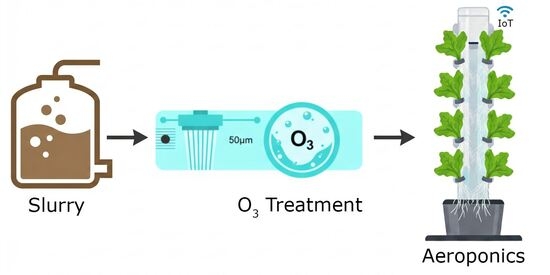
Graphical Abstract

1. Introduction

The contemporary global agricultural landscape is defined by a paradoxical challenge: the urgent need to expand food production capabilities to sustain a projected population of nearly 10 billion by 2050 while simultaneously operating within the increasingly rigid constraints of planetary boundaries [1,2]. Traditional agricultural paradigms, heavily reliant on fertile soil and excessive freshwater consumption, are proving inadequate in the face of escalating climate volatility, soil degradation, and resource scarcity. One of the most critical resources under pressure is water, with agricultural irrigation currently accounting for over 70% of global freshwater withdrawals [3].
In regions such as the Mediterranean basin, which is identified as a climate change hotspot [4,5], the scarcity of water is coupled with the degradation of groundwater quality due to intensive livestock practices, a phenomenon extensively documented in high-pressure agricultural regions [6]. Catalonia, as a major European hub for porcine production with a livestock population that equals its human population [7], exemplifies the environmental conflicts inherent in modern livestock intensification. The regional porcine population, exceeding 5 million places for fattening and over 600,000 sows, generates a massive volume of waste that is traditionally managed through land application as fertilizer. However, the spatial concentration of these farms has led to an excess of nitrogen beyond the land’s assimilation capacity, resulting in approximately 40% of Catalonia’s groundwater being contaminated with nitrates [8]. Furthermore, porcine slurry management is responsible for nearly 30% of all greenhouse gas (GHG) emissions attributed to the livestock sector in Spain [9]. Transitioning this “waste” into a “resource” is therefore not merely an economic opportunity but an environmental imperative for the sustainability of the territory.
Simultaneously, the global horticulture sector is grappling with a fertilizer crisis. The production of synthetic nitrogen fertilizers is an energy-intensive process highly dependent on natural gas, contributing significantly to global carbon emissions and leaving farmers vulnerable to geopolitical instability and price fluctuations. The European Union currently exceeds planetary boundaries for nitrogen and phosphorus flows by factors of 3.3 and 2, respectively, highlighting the urgent need for recovered nutrient sources [10,11,12].
In this context, the AEROFER project (AEROponics for the study of FERtilizer viability) proposes a radical departure from conventional land application of slurry by integrating advanced oxidation processes with aeroponic cultivation [13,14,15]. Aeroponics represents the pinnacle of soilless cultivation technology, wherein plants are grown with their roots suspended in a light-opaque chamber and periodically misted with a nutrient-rich aerosol [16]. Unlike traditional hydroponic systems, such as Nutrient Film Technique (NFT) or Deep Water Culture (DWC), where roots are partially or totally submerged in a liquid solution, aeroponics eliminates the need for a continuous liquid medium [17]. This fundamental difference addresses one of the primary limitations of hydroponics: root zone hypoxia. By maintaining the roots in an air-saturated environment, aeroponics ensures a theoretical maximum oxygen transfer to the rhizosphere, which significantly enhances root respiration and metabolic efficiency [18]. This system offers several physiological and operational advantages over traditional soil-based and hydroponic systems [19]. Primarily, the maximum exposure of the root system to oxygen accelerates metabolic rates and nutrient uptake, leading to faster growth cycles and higher yields per unit of space. Specifically, studies on leafy greens such as lettuce have shown that aeroponic systems can significantly outperform other soilless methods in terms of shoot fresh weight and biomass accumulation [20]. Moreover, aeroponics can reduce water use by up to 95% compared to soil and has demonstrated a Water Use Efficiency (WUE) nearly double that of traditional hydroponic systems (e.g., 52.9 g/L in aeroponics vs. 28.1 g/L in ebb-and-flow) [21], while fertilizer consumption can be reduced by over 50% [22]. Furthermore, the isolation of individual root systems in air helps prevent the rapid systemic spread of waterborne pathogens, a common risk in recirculating hydroponic solutions [23]. This precision is achieved because the misting protocol can be precisely tuned to the plant’s transpiration needs and growth stage [22].
However, the application of organic waste streams like porcine slurry in aeroponic systems is technically demanding. As recently highlighted in the context of nutrient cycling for soilless cultivation [24], the high concentration of suspended solids, the risk of pathogen transmission, and the chemical instability of raw slurry can lead to the clogging of atomization nozzles and the development of anaerobic biofilms on root surfaces. The innovation of the AEROFER approach lies in the use of microfiltration to reduce the presence of particles and pathogens, and in the use of ozone (O3) as a stabilizing agent. Ozone is a powerful oxidant capable of reducing pathogenic loads, thereby enhancing the sanitary safety of the effluent, oxidizing odor-causing compounds [25,26,27], and potentially altering the speciation of nutrients to enhance their bioavailability in recirculating systems [28,29]. This study aims to evaluate the technical and agronomic feasibility of using filtered and ozonated porcine slurry as a primary nutrient source for lettuce (Lactuca sativa L.) grown in a vertical aeroponic setup. By integrating IoT-based monitoring and analyzing the differential responses of three commercial varieties, the research provides a comprehensive assessment of how recovered nutrients can be successfully deployed in high-tech, decentralized food production systems. This work aligns with the European “Farm to Fork” strategy and the Circular Economy Action Plan, offering a tangible solution for the sustainable management of agricultural externalities [30,31]. Furthermore, previous studies have already demonstrated the nutrient potential of organic liquid solutions for aeroponic cultivation systems [23].
The practical interests of this study lie in providing a scalable and decentralized solution for nutrient recovery in regions under high environmental pressure. For local livestock producers, this approach offers a pathway to reduce reliance on volatile global synthetic fertilizer markets by utilizing locally generated waste. Furthermore, the integration of ozone treatment and IoT-enabled aeroponics addresses critical biosecurity concerns and environmental compliance, offering a technologically robust alternative for the recovery of nutrients from porcine slurry and potentially other organic liquid wastes (e.g., municipal wastewater), to mitigate groundwater nitrate contamination while enabling high-value crop production in Nitrate-Vulnerable Zones (NVZs).

2. Materials and Methods

The experimental design evaluated three fertilizing solutions across three lettuce varieties. The treatments consisted of (1) 40-micron filtered porcine slurry diluted 1:20 (Solution FS—Filtered Slurry); (2) filtered and ozonated porcine slurry diluted 1:20 (Solution FOS—Filtered–Ozonated Slurry); and (3) a standard mineral solution serving as a control (Solution SS—Standard Solution). Three aeroponic towers were deployed, one for each fertilizing treatment. Each tower accommodated 24 plants, consisting of 8 biological replicates for each of the three lettuce varieties. To ensure uniform exposure to light and environmental conditions, the varieties were arranged in a spiral pattern from the bottom to the top of the tower, ensuring that the varieties were distributed across the eight vertical levels. Different environmental and plant growth parameters were monitored throughout the cycle. At the end of the experiment, production and nutritional characterization were conducted to assess differences between treatments. Figure 1 summarizes the experimental design and a detailed description of each step is provided in the following sections.

2.1. Advanced Oxidation and Mechanical Pre-Treatment of Porcine Slurry

The conversion of raw porcine slurry into a standardized fertilizer suitable for aeroponics requires a rigorous multi-stage treatment process designed to align the solution’s physical and chemical properties with the requirements of high-pressure misting systems. The variability inherent in slurry composition—driven by animal life cycles, feeding regimes, and seasonal fluctuations—presents a significant hurdle for precision agriculture [32]. To address this, the AEROFER project utilizes the technology developed by N-Amatic Systems S.L. (Patent ES2845275), which focuses on mechanical refining and ozone purification [33].

2.1.1. Mechanical Separation and Particle Refinement

Raw slurry typically contains a high percentage of fibrous material and heavy organic matter that is incompatible with the fine orifices of aeroponic atomizers, which often measure less than 1 mm in diameter. The first stage of treatment involves mechanical separation using a 1000-micron sieve to isolate the bulk solid fraction. This solid fraction is redirected toward composting, where it can be used to improve soil structure due to its high carbon-to-nitrogen ratio. The resulting liquid fraction, although clarified, still contains substantial suspended solids and colloidal matter. A second stage of pre-treatment follows, utilizing a filter-press with a 240-micron mesh to further reduce the particulate load. For the specific application in aeroponics, a final refinement stage is critical, where the liquid is passed through a 50-micron fine filter. This ensures that the slurry-derived solution can be circulated through the pump and delivered through the nozzles without immediate risk of mechanical failure as well as main pathogenic load is reduced.

2.1.2. Ozone Purification Technology

The defining innovation of the AEROFER methodology is the application of ozone-based stabilization. Ozone (O3) acts as a potent biocide and oxidant, targeting the unique biological and chemical challenges of livestock waste. In the AEROFER demonstration, a portion of the filtered liquid was subjected to intensive ozonation to create the Filtered–Ozonated Slurry (FOS) treatment, while another portion remained as the Filtered Slurry (FS) control. From a microbiological perspective, the ozonation process is highly effective at neutralizing pathogens such as Escherichia coli and Salmonella, which are significant concerns for food safety in production for raw consumption. Furthermore, ozone treatment targets the viral load often present in porcine waste, including Porcine Circovirus Type 2 (PCV2) and Type 3 (PCV3), thereby reducing the biosecurity risks associated with waste recycling.
Chemical Oxygen Demand (COD) is used as a measure of the organic content in the solution. Analytical results show that the ozonated treatment (FOS) actually exhibited a notably higher COD level (48,845 mg O2/L), representing a 20.6% increase compared to the filtered treatment (FS) (40,485 mg O2/L). This increment suggests that ozone treatment facilitates the fragmentation and solubilization of complex particulate organic matter into smaller, more easily oxidizable soluble fractions. Consequently, the breakdown of these insoluble compounds increases the detectable COD in the liquid phase, even though the solution’s biological stability is improved.

2.1.3. Physicochemical Characterization

A comprehensive analysis of the two slurry treatments (FS and FOS) reveals the impact of the oxidation process on nutrient availability and solution density (Table 1). The physicochemical characterization of the slurry samples was conducted following standardized methodologies according to [34]. Regarding the nutrient composition, the physicochemical characterization (Table 1) indicates that the ozone treatment did not substantially alter the macronutrient profile of the effluent.
The ammoniacal nitrogen, which is readily available for plant uptake but susceptible to volatilization, represents approximately 67–68% of the total nitrogen in both treatments. The nitrates (not showed in Table 1) are lower than 50 mg/L, which is a comparable value to the limit allowed to drinking water (Directive 2020/2184) [35]. While minor variations in nitrogen and potassium levels were observed between the Filtered Slurry (FS) and the Filtered–Ozonated Slurry (FOS), these differences are comparable and likely reflect the natural heterogeneity of the organic matrix and the inherent uncertainty of the analytical methods rather than a significant chemical transformation caused by the ozone. However, ozonation played a critical role in stabilizing the organic load and sanitizing the effluent, as evidenced by the microbiological counts. Regarding the E. coli content, the values of both samples (230 and 100 CFU/mL for FS and FOS, respectively) are well below the safety thresholds established by Regulation (EU) 2019/1009 [36] on fertilizing products. This regulation sets a limit of 1000 CFU/mL (or g) for categories such as organic fertilizers, growing media, and biostimulants. Consequently, these concentrations are considered safe from a sanitary perspective for general agricultural use, including fertigation in closed systems or direct soil applications, ensuring a minimal risk of pathogen dissemination in the environment and the food chain. Phosphorus levels remained consistent across both treatments (approx. 2.1% DM), but potassium (K) levels were lower in the FOS treatment (8.21% vs. 9.02% in FS), suggesting that the oxidation process may induce the precipitation of certain potassium salts or alter their solubility in the presence of ozone. Trace element analysis confirms the presence of Copper (Cu) and Zinc (Zn) at levels typical for porcine diets (around 390 mg/kg for Cu and 1100 mg/kg for Zn in the ozonated fraction). While essential as micronutrients, their concentrations must be monitored to prevent phytotoxicity in recirculating systems. Safety-wise, heavy metals like Cadmium, Lead, and Mercury were found at extremely low levels or below detection limits, reinforcing the technical viability of the reclaimed solution.

2.2. Agronomic Evaluation and Plant Material Characteristics

The selection of appropriate crop species and varieties is vital for validating the efficiency of recovered fertilizers. Lettuce (Lactuca sativa L.) was chosen as the model crop for the AEROFER demonstration due to its economic importance, high sensitivity to nutrient imbalances, and suitability for vertical, high-density cultivation [37].

2.2.1. Varietal Adaptability and Characteristics

Three commercial varieties were selected to represent different growth habits and consumer preferences:
  • Lactuca sativa var. Longifolia (Romaine lettuce): Characterized by upright, robust leaves with a marked central rib. This variety is generally considered high-yielding and requires a steady supply of nitrogen to maintain its crisp texture.
  • Lactuca sativa var. Capitata (Butterhead lettuce): A butterhead variety with tender, smooth leaves. It is highly valued for its delicate flavor but is susceptible to tipburn and osmotic stress.
  • Lactuca sativa var. Capitata (Red leaf lettuce): A curly-leaf variety known for its rapid growth and high environmental resilience. It serves as an excellent indicator for potential growth inhibition under sub-optimal nutritional conditions.
The experimental design followed a randomized block approach, with each tower level hosting one individual of each variety (a total of 8 plants per species for each treatment) to ensure that spatial variations in light and mist distribution were accounted for in the statistical analysis.

2.2.2. Nutrient Solution Preparation and Conditioning

The fundamental comparison in this study was between a conventional mineral solution (Control) and the two slurry treatments (FS and FOS). The Standard Solution (SS) served as the control treatment and was prepared using the Tripart® commercial fertilizer series (Terra Aquatica, Fleurance, France). The solution was composed of three formulations: Tripart Micro (NPK 5-0-1) at 3.4 mL/L, Tripart Grow (NPK 3-1-6) at 1.8 mL/L, and Tripart Bloom (NPK 0-5-4) at 2.0 mL/L. This combination was selected to target an ideal NPK ratio of approximately 5:1:9, providing a balanced nutrient supply comparable to standard hydroponic requirements for lettuce and ensuring that any differences observed in the agronomic trial were due to the nature of the nutrient source (organic vs. mineral) rather than a fundamental deficiency in the control. For the slurry treatments, the concentrated effluents were diluted with local municipal water to reach a target electrical conductivity (EC) and nutrient density compatible with lettuce cultivation. Based on the analytical characterization, a dilution ratio of 1:20 was employed. This dilution is essential not only to prevent osmotic stress on the plants but also to manage the high concentration of ammoniacal nitrogen, which can lead to toxicity in recirculating systems if not stabilized [38,39,40,41,42].

2.2.3. Nitric Acid Acidification and Nitrogen Enrichment

Porcine slurry naturally exhibits an alkaline pH (often >8.0), which facilitates the conversion of ammonium ( N H 4 + ) to volatile ammonia gas (NH3), resulting in nitrogen losses and the emission of unpleasant odors. To stabilize the solution and optimize the nutrient uptake environment, an acidification protocol was implemented to bring the pH down to a target value of 6.0. After evaluating various mineral acids, nitric acid (HNO3) at 70% concentration was chosen. Unlike sulfuric or phosphoric acid, nitric acid provides a direct “top-up” of nitrogen in the form of nitrates ( N O 3 ), which are the preferred nitrogen source for lettuce to achieve high growth rates and low oxalate content. The quantification of nitrogen added through acidification was calculated for mass balance: in the FS solution, 0.5 mL of HNO3 (70% dilution) per liter of 1/20 diluted slurry contributed an additional 93.27 mg of N per liter; in the FOS solution, 4.0 mL of HNO3 (70% dilution) per liter of 1/20 diluted slurry contributed 74.61 mg of N per liter. This dual-action step primarily serves to correct the pH to optimal hydroponic levels, while simultaneously supplementing the solution with nitrate nitrogen ( N O 3 ) to balance the nutrient profile.

2.2.4. Precision Irrigation Scheduling

To maximize water use efficiency and prevent root zone environmental stress, a tripartite irrigation schedule was established using a Wi-Fi-enabled digital timer EP2 (GHome Smart, Shenzhen Cuco Smart Technology Co., Ltd., Shenzhen, China):
  • Peak Photosynthetic Period (08:00–18:00): 8 min of misting every 20 min to maintain high leaf turgor and support maximum transpiration.
  • Twilight/Cool-down Period (18:00–22:00): 5 min every 30 min
  • Nocturnal Period (22:00–08:00): 5 min every 45 min to prevent root dehydration while avoiding excessive cooling of the reservoir.
This precision timing, enabled by IoT integration, allows the system to respond to the plant’s biological clock, ensuring that nutrient availability is always synchronized with the metabolic demand.

2.2.5. Production and Composition Assessment

To assess the effects of the treatments on plant material, parameters were monitored during the experiment and at the end:
  • Periodical measurements: Throughout the experiment, the content of chlorophyll in the plants was monitored as the Chlorophyll Content Index (CCI), measured with OptiSciences CCM200plus (Opti-Sciences, Inc., Hudson, NY, USA). Between 2 and 3 three plants of each variety in each aeroponic tower were chosen, and the chlorophyll content of 2–3 leaves of each plant was measured in a weekly basis. For the same plants, the length of the longest leaf was measured.
  • Production assessment: At the end of the experiment, the weight of each plant was measured for total, root and aerial part to assess production. Also, the final values of leaves and root length of each plant were measured. Consumption of the nutrient solution for each aeroponic was also assessed.
  • Plant characterization: We assessed dry matter (80 °C until constant weight), organic nitrogen via Kjeldahl digestion (Selecta RAT-2, J.P. Selecta, S.A., Abrera, Spain) and quantification via potentiometry (Jenway Ion Meter 3345, Jenway, Stone, UK) with an ammonia-selective electrode (Jenway 3345, Jenway, Stone, UK), protein content (organic nitrogen × 5), total phosphorus and potassium using an acid solution of the ashes (loss on ignition in muffle furnace at 470 °C) with HNO3 3N and quantification via colorimetry for total phosphorus (Spectrometer Shimadzu UV-VIS 160, Shimadzu Corporation, Kyoto, Japan), and flame photometry for total potassium (Flame photometer Corning 410, Corning Incorporated, Halstead, UK).
  • Sampling strategy and replicates: Regarding the sampling strategy, for the agronomic evaluation described above (fresh weight, aerial weight, and chlorophyll), the entire population of surviving plants was analyzed. This corresponds to a census of 8 biological replicates per variety for each treatment (tower); therefore, no sub-sampling randomization was required for these variables. However, for the nutritional characterization which required destructive analysis, a subset of plants was selected. To ensure unbiased selection, a randomization method was applied using a pre-generated random sequence of integers from 1 to 24 (representing plant positions in the tower). The first three unique positions corresponding to each variety in the sequence were selected for analysis (n = 3 biological replicates per variety per treatment). This random selection pattern was applied consistently across all three towers. Analytical determinations in the laboratory were performed in triplicate to ensure instrumental precision.

2.3. IoT-Integrated Aeroponic Platform and Monitoring Framework

The AEROFER platform was designed to serve as a high-precision demonstration unit that marries structural simplicity with advanced sensorization. In aeroponics, the lack of a substrate buffer means that any failure in the irrigation system or shift in solution chemistry can result in plant wilting within hours. Therefore, a robust monitoring and control framework is essential for the successful deployment of unstable organic nutrients like porcine slurry.

2.3.1. Structural Design and Modular Components

The experimental setup consisted of three independent vertical towers, each capable of supporting 24 plants [43]. These towers were constructed from food-grade PVC and modular plastic components to ensure durability and resistance to the corrosive nature of acidified slurry. The internal architecture of the towers, designed to ensure uniform misting of the suspended root systems, and the overall physical configuration of the experimental platform are illustrated in Figure 2. The spacing between towers (70 cm) was adjusted to minimize shading effects and allow for uniform ventilation, which is critical for preventing high humidity levels that favor fungal pathogens in the canopy. At the base of each tower, a 25 L reservoir stored the nutrient solution. A high-pressure submersible pump delivered the solution through a central vertical pipe equipped with 18 high-efficiency atomizers per tower. This distribution ensures that every level of the tower receives an identical mist volume, promoting homogeneous plant growth. To maintain this growth, the system requires strict control of parameters such as pH, electrical conductivity, and misting frequency [44]. To mitigate the risk of nozzle blockage from biological biofilms or residual slurry particles, a 50-micron secondary filtration mesh was integrated into the return line of the slurry-fed towers.

2.3.2. IoT Sensor Array and Cloud Infrastructure

The AEROFER platform is integrated with a monitoring framework centered on a dual-microcontroller architecture using the ESP32, selected for its low power consumption, integrated Wi-Fi capabilities, and support for multiple peripheral interfaces. This system allows for high-precision acquisition and real-time visualization of the aeroponic system’s ‘metabolism’ from any location via a cloud interface. The sensor array tracks atmospheric conditions (ambient temperature (T) and relative humidity (RH) to calculate vapor pressure deficit (VPD)), root chamber microclimate (internal T and RH for thermal stability monitoring), and nutrient solution dynamics. Specific components include SHT20 and SHT40 digital sensors (±0.3 °C and ±0.3% RH precision), a BH1750 sensor for solar radiation tracking, and a DS18B20 1-Wire probe for nutrient solution temperature. Physicochemical and volumetric dynamics are monitored through a PH-4502C module, an YF-S201 Hall-effect flow meter for irrigation auditing, and a redundant level-sensing system employing both capacitive (XKC-Y25-V) and ultrasonic (HC-SR04) technologies to prevent pump cavitation. Operational metrics also include total crop weight to monitor growth in real-time without destructive sampling [45].
Data synchronization is managed via the ESP32 using I2C, SPI, and One-Wire protocols, with metrics transmitted to the ThingSpeak cloud server for longitudinal analysis and the generation of automated alerts. For instance, the system issues notifications if the pH drifts outside the 5.5–6.5 range or if irrigation failure is detected via the flow sensor. This level of automation is crucial for the future scalability of aeroponics in commercial and urban environments where labor costs are a constraint [17]. The technical implementation of the monitoring and control hardware, including the custom ESP32-based PCB and the integrated sensor array, is illustrated in Figure 3.

2.3.3. Machine Learning and Predictive Analytics

A secondary goal of the AEROFER project’s sensorization is to build a dataset for future machine learning applications. By correlating real-time sensor data (such as pH fluctuations and solution temperature) with the final crop yield and quality, predictive models can be developed to automate nutrient dosing and adjust misting schedules based on historical performance patterns [46,47]. This “smart” control system will be particularly valuable for managing porcine slurry, as the mineralization rate of organic nitrogen is highly sensitive to temperature and solution chemistry.

2.4. Statistical Analysis

Statistical analysis was performed using IBM SPSS Statistics software, version 31 (IBM Corp., Armonk, NY, USA). Data were subjected to Analysis of Variance (ANOVA) to evaluate the differences between treatments for the same variety and between varieties within the same treatment. When significant differences were detected (p < 0.05), means were compared using Tukey’s HSD post hoc test. The analysis for yield parameters (fresh weight, aerial weight) and chlorophyll content was performed on the total population (n = 8 biological replicates per variety for each treatment). For the nutritional characterization parameters, the analysis was performed on the selected sub-sample (n = 3 biological replicates).

3. Results

The data generated provide a detailed view of the technical viability and the limitations of using treated pig slurry. By analyzing the chemical mass balance alongside crop yields, the study identifies critical bottlenecks that must be addressed for commercial implementation [48].

3.1. Solution Chemistry and Electrical Conductivity

Monitoring showed that the ozonated slurry (FOS) exhibited electrical conductivity values (2.58 dS/m) comparable to those of the filtered slurry (2.47 dS/m) at a 1/20 dilution (Table 2). These results, along with the stable pH and Total Nitrogen levels, suggest that the slight variations observed fall within the range of analytical uncertainty rather than indicating a significant effect of the ozone treatment on the gross solution chemistry.
Chemical analysis demonstrates that FOS has significantly more assimilable phosphorus (P) than FS (55 mg/L vs. 30.9 mg/L). This increase is attributed to the oxidative degradation of organic phosphorus compounds and the disruption of colloidal aggregates by ozone, which promotes the release of soluble orthophosphates into the solution. Regarding potassium, although the FOS treatment shows a slightly lower value (160 mg/L) compared to FS (180 mg/L), this difference is likely attributable to analytical variability rather than a significant chemical depletion, suggesting that ozone does not compromise potassium availability.
From a sanitary perspective, while the concentrated treated slurries already met the safety thresholds for E. coli, the subsequent 1:20 dilution with potable municipal water acts as a final safety barrier. This high-factor dilution theoretically reduces the E. coli load to negligible levels (approximately 11.5 and 5 CFU/mL for the FS and FOS nutrient solutions, respectively), effectively eliminating any residual microbiological contamination risks in the recirculating hydroponic system.

3.2. NPK Mass Balance and Extraction Ratios

The fundamental goal of fertilization is to match the solution concentration with the crop’s extraction needs. For lettuce, the required NPK ratio based on standard extraction rates is approximately 5.1:1:9.17 [48].
The mass balance analysis reveals a significant disparity (Figure 4). As observed in Figure 4, the Control (SS) solution, prepared with standard commercial fertilizers, presented an NPK ratio of approximately 4.35:1:3.58. It is worth noting that this commercial standard provides a lower proportion of potassium compared to the theoretical Ideal Target (5:1:9). Interestingly, the FS treatment achieved a potassium ratio of 5.83, effectively surpassing the commercial control in terms of potassium relative abundance and approaching closer to the theoretical ideal. Regarding the FOS treatment, although it presented the lowest value (2.92), it is comparable to the commercial control (3.58) in the context of the large gap towards the theoretical target (9.0); this indicates that both the ozonated effluent and the commercial standard operate within a similar range of potassium limitation relative to the ideal. The acidification process with nitric acid leads to a surplus of nitrogen, particularly in the FS treatment. Conversely, both slurry treatments are chronically deficient in potassium. This deficiency is extreme in the FOS solution, which provides only about 32% of the required potassium relative to the phosphorus content. This imbalance is a critical finding: porcine slurry is naturally “unbalanced” for leafy green production, and while ozonation lowered E. coli counts to levels well below the 1000 CFU/mL threshold established by Regulation (EU) 2019/1009 (see Table 1), contributing to the sanitary quality of the effluent and minimizing the initial risk for agricultural application, it implies a trade-off regarding nutrient availability. Furthermore, understanding the long-term microbiological dynamics and potential contamination risks within the recirculating hydroponic system remains an essential subject for further investigation in future stages of the project. However, it is worth noting that the aim is to recycle a waste and it is proven that even the product does not cover the expected needs of nutrients the plants had grown.

3.3. Physiological Response: Chlorophyll and Biomass

The physiological health of the lettuce plants was monitored through non-destructive and post-harvest assessments to evaluate the impact of organic nutrient sources on metabolic activity. Despite the nutritional imbalances identified in the chemical analysis, all varieties achieved 100% survival across all treatments. The Chlorophyll Content Index (CCI), measured with OptiSciences CCM200plus, served as a proxy for nitrogen assimilation and photosynthetic potential, showing a strong correlation ( R 2 0.95 ) with leaf nitrogen levels.
Varietal responses to the ozonated treatment (FOS) were statistically distinct (ANOVA, p < 0.05 ). The romaine lettuce variety exhibited the highest stability across all treatments; its total fresh weight reached 246.00 g (±standard error) in the standard solution (SS) and maintained a statistically comparable 231.88 g in the FOS treatment (Figure 5). Conversely, the red leaf lettuce variety showed significant growth inhibition under the ozonated treatment. Its total fresh weight dropped from 177.81 g in the SS to 129.25 g in FOS, a reduction marked as statistically significant (noted as ‘Ba’ in Figure 5).
The chlorophyll data further highlight this sensitivity. While romaine lettuce maintained high and consistent CCI values at harvest (reaching 28.01 in FOS), the red leaf lettuce variety experienced a drastic reduction in chlorophyll levels when grown with slurry-derived solutions. Its final CCI fell from 29.18 in the standard solution to just 15.20 in the FOS treatment. This suggests that the growth inhibition in red leaf lettuce is likely driven by a synergistic effect of nutritional and chemical stressors. As shown in Figure 4, the FOS treatment presented the lowest potassium availability (Ratio K: ~2.92), significantly below the theoretical target. While the Control (SS) also operated with a sub-optimal K levels (Ratio K: ~3.58) without yield loss, the combination of severe nutrient deficiency in FOS and the presence of residual COD or oxidation by-products likely overwhelmed the plant’s defense mechanisms. This “multi-stress” environment appears particularly detrimental to the red leaf variety, limiting its osmotic regulation and biomass accumulation compared to the more robust green variety.

3.4. Nutrient Content of Harvested Tissue

Tissue analysis revealed that while nitrogen uptake was sufficient across all treatments, the potassium and phosphorus levels in the slurry-fed plants were significantly lower than those in the control group. In particular, the potassium content in red leaf lettuce leaves under FOS was below the optimal range for commercial quality. This confirms that the low potassium availability in the ozonated solution directly limits the final nutritional profile of the crop.

4. Discussion

The preliminary results of the AEROFER project demonstrates that porcine slurry can be repurposed for high-tech agriculture. The transition from waste to standardized fertilizer is a non-linear process involving complex interactions between mechanical filtration, chemical oxidation, and biological uptake. The scalability and sustainability of the proposed methodology require in-depth study.

4.1. The Paradox of Ozone Treatment

Ozone is a dual-edged sword in the context of nutrient recovery. On the one hand, it is highly effective at stabilizing the solution, reducing odors, and neutralizing pathogens, which are absolute requirements for the social acceptance and regulatory approval of waste-derived fertilizers. The increase in assimilable phosphorus in the FOS treatment highlights ozone’s ability to “unlock” nutrients from complex organic matrices, potentially reducing the need for mineral phosphorus supplements.
On the other hand, the reduction in assimilable potassium and the increase in COD suggest that ozone treatment induces chemical shifts that may not always align with plant physiology. The higher COD in FOS indicates that the solution contains more soluble organic fragments. While these fragments can be beneficial for microbial diversity in the root zone, they also compete for dissolved oxygen in the recirculating reservoir. In an aeroponic mist, this competition can lead to localized oxygen stress at the root–air interface, especially for high-metabolism varieties like red leaf lettuce.

4.2. The Critical Need for Potassium Supplementation

The most significant bottleneck identified in this study is the NPK imbalance. Porcine slurry is inherently rich in phosphorus because a significant portion of the phosphorus in pig diets is excreted in forms like phytate which are later mineralized in the waste stream. Conversely, the potassium levels in the effluent are consistently insufficient to meet the demands of fast-growing leafy greens.
This finding suggests that a “pure” organic slurry solution is not viable for commercial-grade aeroponics without hybrid supplementation. To maintain the circular economy principles of the AEROFER project, future research should explore the integration of other recovered organic streams. For example, the addition of potassium-rich fruit processing waste or the use of wood ash extracts could balance the slurry’s NPK ratio without reintroducing synthetic chemicals.

4.3. IoT as the Enabler of Organic Precision Agriculture

The technical success of the AEROFER towers—specifically the lack of nozzle clogging and 100% plant survival—is directly attributable to the IoT monitoring system. In a mineral system, pH and EC drifts are relatively slow and predictable. In a slurry system, the solution is biologically “alive,” with ongoing mineralization, bacterial activity, and thermal instability.
The ESP32-based alerts for pH and solution level provided the necessary “fail-safe” that allowed the organic nutrient experiments to proceed. Furthermore, the continuous logging of ambient and root zone humidity allowed for the identification of periods of high fungal risk, which were mitigated through manual ventilation adjustments. The integration of these sensors into an automated feedback loop—where the pump frequency increases or decreases based on real-time tower weight—represents the next evolution in sustainable aeroponics.

4.4. Territorial and Socio-Economic Impact

The impact of the AEROFER project extends beyond the laboratory. By demonstrating that even a small percentage of porcine slurry can be converted into high-value horticultural products, the project offers a pathway for farm diversification. Calculations suggest that if only 3% of Catalonia’s porcine census were linked to aeroponic systems, it could free up approximately 5000 hectares of agricultural land currently dedicated to excessive slurry application. If scaled to 10%, the territorial relief would exceed 16,000 hectares, significantly reducing the pressure on vulnerable aquifers.
Furthermore, the ‘clean’ vertical towers of aeroponics are suitable for integration into urban environments and therapeutic settings, such as the Hospital de Bellvitge initiative [49]. This project, known as ‘Rega(lem) salut mental,’ implements horticultural therapy not only for psychiatry patients but also for those in cardiology, transplants, and persistent COVID-19 units, aiming to enhance emotional well-being, empower patients, and reduce social stigma. The inclusion of custom-built aeroponic systems could specifically address the spatial and water access limitations characteristic of urban hospital environments while fostering cognitive development and physical stimulation. Moreover, these systems can provide educational value for schools, illustrating the science of technology and circularity, while producing local, nutritious food with a near-zero carbon footprint from transport.

4.5. Practical Implications and Future Perspectives

The practical significance of this study is grounded in the validation of porcine slurry as a viable alternative to mineral fertilizers in soilless agriculture. It is crucial to emphasize that the objective was to demonstrate the agronomic equivalence of the recovered nutrients rather than their superiority. The mass balance analysis revealed that the Filtered (FS) and Ozonated (FOS) solutions contained significantly lower potassium levels than the Standard Solution (SS). Remarkably, despite this nutrient deficit, the key growth parameters—such as fresh weight, aerial part development, and chlorophyll index—remained statistically comparable across all treatments. This finding confirms that the system can effectively valorize this waste stream, maintaining commercial production standards even when the nutrient input is not chemically optimal.
Looking ahead, the research roadmap addresses the need for larger datasets and deeper quality assessments. The next experimental phase is designed to increase statistical robustness by tripling the number of aeroponic platforms and cultivation cycles. Furthermore, while the current study focused on yield, future investigations will prioritize the nutritional quality analysis of the lettuce leaves. Specifically, we will evaluate whether the lower potassium input in FS and FOS solutions translates into differences in the tissue mineral composition compared to crops grown in standard solutions.
Finally, the findings of this research highlight the potential to adapt this technological framework for the recycling of other liquid organic wastes, such as municipal wastewater or effluents derived from sewage sludge processing. In these contexts, ozonation offers the added advantage of degrading emerging organic contaminants (e.g., pharmaceutical residues), which are a primary concern for the agricultural reuse of urban waste. The acidification required for nutrient stabilization further contributes to microbial control and safety. Such circular economy approaches are particularly relevant in regions facing acute water scarcity, where treated organic effluents can provide a reliable source of both water and nutrients for sustainable horticultural production.

5. Conclusions

The AEROFER demonstration project successfully proves that porcine slurry, when subjected to mechanical refinement and ozone stabilization, is a technically viable nutrient source for aeroponic lettuce production. The integration of advanced oxidation processes effectively mitigates the primary environmental and mechanical risks associated with livestock waste recycling.
The study’s principal conclusions include the following:
  • Technical Reliability: Mechanical filtration down to 50 microns combined with ESP32-based IoT monitoring ensures that slurry-derived nutrient solutions can be delivered via high-pressure misting systems without significant mechanical failure or nozzle clogging.
  • Varietal Sensitivity: While the romaine lettuce variety exhibits high stability, the red leaf lettuce variety shows growth inhibition under ozonated slurry, highlighting the need for variety-specific nutrient management in organic systems.
  • Nutrient Balance Imperative: Porcine slurry is naturally unbalanced for horticulture, providing a nitrogen surplus but a chronic potassium deficiency (covering only 32–64% of needs). Ozonation further mineralizes phosphorus but appears to reduce potassium bioavailability.
  • Operational Safety: Ozone treatment effectively reduces bacterial loads (as evidenced by E. coli counts), contributing to the sanitary safety of the slurry. The obtained values (100 CFU/mL in FOS) clearly comply with the safety thresholds established by Regulation (EU) 2019/1009 for fertilizing products (<1000 CFU/mL), making the effluent acceptable for general agricultural use. However, microbiological contamination remains one of the main limitations associated with the agricultural valorization of porcine slurry. While these levels are entirely suitable for extensive or processed crops, their application in horticultural crops intended for raw consumption presents stricter risks. Therefore, even though the treatment significantly reduces the content of pathogens, in order to make a full assessment of waste effluents—particularly those of fecal origin—further research and long-term monitoring must be conducted to ensure strict food safety for raw product consumption.
  • Circular Economy Scale: Scaling this technology to just 5–10% of the regional porcine census could release up to 16,000 hectares of agricultural base from nitrate over-application, significantly protecting groundwater resources.
To advance this technology toward commercial maturity, it is recommended that future implementations adopt a Hybrid Nutrient Management approach, where ozonated slurry serves as the base effluent, supplemented with targeted organic potassium sources to achieve a balanced NPK ratio. Additionally, the transition from cloud-based monitoring to fully automated AI-driven control will be essential for managing the dynamic chemistry of recovered organic solutions, ensuring high yields and nutritional quality in the next generation of resilient, circular agri-food systems.

Author Contributions

Conceptualization, X.P., M.M., M.L. and J.P.; methodology, X.P., M.M., M.L., J.P., E.P. and R.A.; electronics, X.P. and R.A.; agricultural advice, M.M., M.L. and J.P.; aeroponics manufacturing, X.P., M.M. and R.A.; analysis, X.P., M.M., M.L. and E.P.; investigation, X.P., M.M., M.L., J.P., E.P. and R.A.; original draft preparation, X.P. and J.P.; writing, review and editing: X.P., M.M., M.L. and E.P. All authors have read and agreed to the published version of the manuscript.

Funding

This research was funded by the Departament d’Acció Climàtica, Alimentació i Agenda Rural de la Generalitat de Catalunya, grant number ACC_2023_EXP_SIA002_17_0001597, corresponding to the AEROFER project.

Data Availability Statement

The original data presented in the study are openly available in the CORA–Research Data Repository at https://doi.org/10.34810/data2976.

Acknowledgments

The authors would like to thank Andreu Català, Núria Jiménez and Eva Gallego for their valuable advice and support throughout the development of the project and the implementation of the research.

Conflicts of Interest

The authors declare no conflicts of interest. The funders had no role in the design of the study; in the collection, analyses, or interpretation of data; in the writing of the manuscript, or in the decision to publish the results.

Abbreviations

The following abbreviations are used in this manuscript:
CCIChlorophyll Content IndexNFTNutrient Film Technique
CODChemical Oxygen DemandNPKNitrogen Phosphorus Potassium
DMDry MatterNVZNitrate Vulnerable Zone
DWCDeep Water CultureOMOrganic Matter
ECElectrical ConductivityPCV2Porcine Circovirus Type 2
FOSFiltered–Ozonated SlurryPCV3Porcine Circovirus Type 3
FSFiltered SlurrySSStandard Solution
GHGGreenhouse GasTNTotal Nitrogen
IoTInternet of ThingsWUEWater Use Efficiency

References

  1. Cohen, J. World population in 2050: Assessing the projections. In Seismic Shifts: The Economic Impact of Demographic Change; Little, J.S., Triest, R.K., Eds.; Federal Reserve Bank of Boston: Boston, MA, USA, 2002; pp. 83–113. Available online: https://www.bostonfed.org/economic/conf/conf46/conf46d1.pdf (accessed on 23 February 2025).
  2. ONU. World Population Prospects: The 2010 Revision; United Nations, Department of Economic and Social Affairs: New York, NY, USA, 2010. [Google Scholar]
  3. Bliesner, R.D.; Darghouth, M.S.; Hanneman, M.; Gohring, T. Implications of irrigated agriculture with growing water scarcity, increasing food requirements, environmental sustainability, and changing climate panel discussion. In Proceedings of the World Water and Environmental Resources Congress, Anchorage, AK, USA, 15–19 May 2005. [Google Scholar] [CrossRef]
  4. Cramer, W.; Guiot, J.; Fader, M.; Garrabou, J.; Gattuso, J.-P.; Iglesias, A.; Lange, M.A.; Lionello, P.; Llasat, M.C.; Paz, S.; et al. Climate change and interconnected risks to sustainable development in the Mediterranean. Nat. Clim. Change 2018, 8, 972–980. [Google Scholar] [CrossRef]
  5. Tuel, A.; Eltahir, E.A.B. Why Is the Mediterranean a Climate Change Hot Spot? J. Clim. 2020, 33, 5829–5843. [Google Scholar] [CrossRef]
  6. Menció, A.; Mas-Pla, J.; Otero, N.; Regàs, O.; Boy-Roura, M.; Puig, R.; Bach, J.; Domènech, C.; Zamorano, M.; Brusi, D.; et al. Nitrate pollution of groundwater; all right…, but nothing else? Sci. Total Environ. 2016, 539, 241–251. [Google Scholar] [CrossRef] [PubMed]
  7. Statistical Institute of Catalonia. Statistical Yearbook of Catalonia. Head of Swine Livestock. Provinces; Generalitat de Catalunya: Barcelona, Spain, 2024; Available online: https://www.idescat.cat/indicadors/?id=aec&n=15430&lang=en (accessed on 23 February 2025).
  8. Margalef-Marti, R.; Carrey, R.; Merchán, D.; Soler, A.; Causapé, J.; Otero, N. Feasibility of using rural waste products to increase the denitrification efficiency in a surface flow constructed wetland. J. Hydrol. 2019, 578, 124035. [Google Scholar] [CrossRef]
  9. Menegat, S.; Ledo, A.; Tirado, R. Greenhouse gas emissions from global production and use of nitrogen synthetic fertilisers in agriculture. Sci. Rep. 2022, 12, 19777. [Google Scholar] [CrossRef] [PubMed]
  10. European Environment Agency; Federal Office for the Environment FOEN. Is Europe Living Within the Limits of Our Planet? An Assessment of Europe’s Environmental Footprints in Relation to Planetary Boundaries; Publications Office: Luxembourg, 2020; Available online: https://data.europa.eu/doi/10.2800/890673 (accessed on 23 February 2025).
  11. OECD/FAO. OECD-FAO Agricultural Outlook 2023–2032; OECD Publishing: Paris, France, 2023. [Google Scholar] [CrossRef]
  12. Availability of fertilisers in the EU. In Commission Communication on Ensuring Availability and Affordability of Fertilisers; European Commission: Brussels, Belgium, 2023; Available online: https://eur-lex.europa.eu/legal-content/EN/TXT/?uri=CELEX:52023IP0059 (accessed on 23 February 2025).
  13. Raviv, M.; Lieth, J.H.; Bar-Tal, A. Chapter 1—Significance of Soilless Culture in Agriculture. In Soilless Culture, 2nd ed.; Raviv, M., Lieth, J.H., Bar-Tal, A., Eds.; Elsevier: Amsterdam, The Netherlands, 2019; pp. 3–14. [Google Scholar] [CrossRef]
  14. Lakhiar, I.A.; Gao, J.; Syed, T.N.; Chandio, F.A.; Buttar, N.A.; Qureshi, W.A. Monitoring and Control Systems in Agriculture Using Intelligent Sensor Techniques: A Review of the Aeroponic System. J. Sens. 2018, 2018, 8672769. [Google Scholar] [CrossRef]
  15. Garzón, J.; Montes, L.; Garzón, J.; Lampropoulos, G. Systematic Review of Technology in Aeroponics: Introducing the Technology Adoption and Integration in Sustainable Agriculture Model. Agronomy 2023, 13, 2517. [Google Scholar] [CrossRef]
  16. Osvald, J.; Petrovic, N.; Demsar, J. Sugar and organic acid content of tomato fruits (Lycopersicon lycopersicum mill.) grown on aeroponics at different plant density. Acta Aliment. 2001, 30, 53–61. [Google Scholar] [CrossRef]
  17. Lakhiar, I.A.; Gao, J.; Syed, T.N.; Chandio, F.A.; Buttar, N.A. Modern plant cultivation technologies in agriculture under controlled environment: A review on aeroponics. J. Plant Interact. 2018, 13, 338–352. [Google Scholar] [CrossRef]
  18. Eldridge, B.M.; Manzoni, L.R.; Graham, C.A.; Rodgers, B.; Farmer, J.R.; Dodd, A.N. Getting to the roots of aeroponic indoor farming. New Phytol. 2020, 228, 1183–1192. [Google Scholar] [CrossRef]
  19. Butler, J.D.; Oebker, N.F. Hydroponics as a Hobby: Growing Plants Without Soil; Circular 844; University of Illinois: Urbana, IL, USA, 2006; Available online: https://www.ideals.illinois.edu/items/33314 (accessed on 23 February 2025).
  20. Impallomeni, G.; Lupini, A.; Sorgonà, A.; Gattuso, A.; Barreca, F. The Qualitative and Quantitative Relationship of Lettuce Grown in Soilless Systems in a Mediterranean Greenhouse. Int. J. Plant Biol. 2025, 16, 94. [Google Scholar] [CrossRef]
  21. Carotti, L.; Pistillo, A.; Zauli, I.; Meneghello, D.; Martin, M.; Pennisi, G.; Gianquinto, G.; Orsini, F. Improving water use efficiency in vertical farming: Effects of growing systems, far-red radiation and planting density on lettuce cultivation. Agric. Water Manag. 2023, 285, 108365. [Google Scholar] [CrossRef]
  22. NASA Spinoff. Progressive plant growing has business blooming. In Environmental and Agricultural Resources; NASA Spinoff: New York, NY, USA, 2006; pp. 64–77. Available online: https://spinoff.nasa.gov/Spinoff2006/PDF/accessible.pdf (accessed on 23 February 2025).
  23. Ntinas, G.K.; Bantis, F.; Koukounaras, A.; Kougias, P.G. Exploitation of Liquid Digestate as the Sole Nutrient Source for Floating Hydroponic Cultivation of Baby Lettuce (Lactuca sativa) in Greenhouses. Energies 2021, 14, 7199. [Google Scholar] [CrossRef]
  24. Junge, R.; Schmautz, Z.; Milliken, S. Toward nutrient cycling from organic waste streams for soilless cultivation. Curr. Opin. Food Sci. 2025, 61, 101257. [Google Scholar] [CrossRef]
  25. Omer, A.R.; Walker, P.M. Treatment of Swine Slurry by an Ozone Treatment System to Reduce Odor. J. Environ. Prot. 2011, 2, 867–872. [Google Scholar] [CrossRef]
  26. Wu, J.J.; Park, S.; Hengemuehle, S.M.; Yokoyama, M.T.; Person, H.L.; Gerrish, J.B.; Masten, S.J. The Use of Ozone to Reduce the Concentration of Malodorous Metabolites in Swine Manure Slurry. J. Agric. Eng. Res. 1999, 72, 317–327. [Google Scholar] [CrossRef]
  27. Tchobanoglous, G.; Stensel, H.D.; Tsuchihashi, R.; Burton, F.L. Wastewater Engineering: Treatment and Resource Recovery, 5th ed.; Metcalf & Eddy, Inc., Ed.; McGraw-Hill Education: New York, NY, USA, 2014; ISBN 978-0-07-340118-8. [Google Scholar]
  28. Machuca Vargas, A.; Sánchez-García, P.; Enríquez-Reyes, S.A.; García-Morales, S.; Hernández-Rodríguez, A.; Rodríguez-Mendoza, M.N. Effect of the Ozone Application in the Nutrient Solution and the Yield and Oxidative Stress of Hydroponic Baby Red Chard. Horticulturae 2023, 9, 1234. [Google Scholar] [CrossRef]
  29. Colunje, J.; García-Caparrós, P.; Moreira, J.F.; Lao, M.T. Effect of Ozonated Fertigation in Pepper Cultivation under Greenhouse Conditions. Agronomy 2021, 11, 544. [Google Scholar] [CrossRef]
  30. Ottaiano, L.; Di Mola, I.; Cozzolino, E.; El-Nakhel, C.; Rouphael, Y.; Mori, M. Biostimulant Application under Different Nitrogen Fertilization Levels: Assessment of Yield, Leaf Quality, and Nitrogen Metabolism of Tunnel-Grown Lettuce. Agronomy 2021, 11, 1613. [Google Scholar] [CrossRef]
  31. European Commission. A New Circular Economy Action Plan for a Cleaner and More Competitive Europe; COM(2020) 98 final; European Commission: Brussels, Belgium, 2020; Available online: https://eur-lex.europa.eu/legal-content/EN/TXT/?uri=CELEX:52020DC0098 (accessed on 23 February 2025).
  32. Engenhart, M. The influence of lead ions on productivity and mineral balance of Phaseolus-vulgaris L. in hydroponics and aeroponics. Flora 1984, 175, 273–282. [Google Scholar] [CrossRef]
  33. N-Amatic Systems S.L. Procedimiento para la Recuperación de Efluentes Procedentes de la Industria Agroalimentaria y de las Deyecciones Ganaderas. Patent ES2845275, 7 February 2022. [Google Scholar]
  34. Huerta, O.; López, M.; Soliva, M. Procés de Compostatge: Caracterització de Mostres; Diputació de Barcelona: Barcelona, Spain, 2010; ISBN 978-84-9803-428-8. Available online: https://llibreria.diba.cat/es/libro/proces-de-compostatge-caracteritzacio-de-mostres_48938 (accessed on 23 February 2025).
  35. European Parliament and Council of the European Union. Directive (EU) 2020/2184 of the European Parliament and of the Council of 16 December 2020 on the quality of water intended for human consumption (recast). Off. J. Eur. Union 2020, L 435, 1–62. Available online: https://eur-lex.europa.eu/eli/dir/2020/2184/oj (accessed on 23 February 2025).
  36. European Parliament and Council of the European Union. Regulation (EU) 2019/1009 of the European Parliament and of the Council of 5 June 2019 laying down rules on the making available on the market of EU fertilising products and amending Regulations (EC) No 1069/2009 and (EC) No 1107/2009 and repealing Regulation (EC) No 2003/2003. Off. J. Eur. Union 2019, L 170, 1–114. Available online: https://eur-lex.europa.eu/eli/reg/2019/1009/oj (accessed on 23 February 2025).
  37. Maroto Borrego, J.V.; Baixauli Soria, C. Cultivos Hortícolas al Aire Libre; Ediciones Mundi-Prensa: Madrid, Spain, 2019; ISBN 978-84-8476-713-8. [Google Scholar]
  38. Savvas, D.; Karagianni, V.; Kotsiras, A.; Demopoulos, V.; Karkamisi, I.; Pakou, P. Interactions between ammonium and pH of the nutrient solution supplied to gerbera (Gerbera jamesonii) grown in pumice. Plant Soil 2003, 254, 393–402. [Google Scholar] [CrossRef]
  39. Ronga, D.; Setti, L.; Salvarani, C.; De Leo, R.; Bedin, E.; Pulvirenti, A.; Milc, J.; Pecchioni, N.; Francia, E. Effects of solid and liquid digestate for hydroponic baby leaf lettuce (Lactuca sativa L.) cultivation. Sci. Hortic. 2019, 244, 172–181. [Google Scholar] [CrossRef]
  40. Heinen, M.; de Jager, A.; Niers, H. Uptake of nutrients by lettuce on NFT with controlled composition of the nutrient solution. Neth. J. Agric. Sci. 1991, 39, 197–212. [Google Scholar] [CrossRef]
  41. Incrocci, L.; Massa, D.; Pardossi, A. New Trends in the Fertigation Management of Irrigated Vegetable Crops. Horticulturae 2017, 3, 37. [Google Scholar] [CrossRef]
  42. Zandvakili, O.R.; Barker, A.V.; Hashemi, M.; Etemadi, F.; Autio, W.R. Comparisons of commercial organic and chemical fertilizer solutions on growth and composition of lettuce. J. Plant Nutr. 2019, 42, 990–1000. [Google Scholar] [CrossRef]
  43. Nir, I. Growing plants in aeroponics growth systems. Acta Hortic. 1982, 126, 435–448. [Google Scholar] [CrossRef]
  44. Mbiyu, M.W.; Muthoni, J.; Kabira, J.; Elmar, G.; Muchira, C.; Pwaipwai, P.; Ngaruiya, J.; Otieno, S.; Onditi, J. Use of aeroponics technique for potato (Solanum tuberosum) minitubers production in Kenya. J. Hortic. For. 2012, 4, 172–177. [Google Scholar]
  45. Barak, P.; Smith, J.D.; Krueger, A.R.; Peterson, L.A. Measurement of short-term nutrient uptake rates in cranberry by aeroponics. Plant Cell Environ. 1996, 19, 237–242. [Google Scholar] [CrossRef]
  46. Gowtham, R.; Jebakumar, R.A. Machine Learning Approach for Aeroponic Lettuce Crop Growth Monitoring System. In Intelligent Sustainable Systems; ICoISS 2023, Lecture Notes in Networks and Systems; Springer: Singapore, 2023; Volume 665, pp. 99–116. [Google Scholar] [CrossRef]
  47. Tang, L.; Syed, A.-u.-A.; Otho, A.R.; Junejo, A.R.; Tunio, M.H.; Hao, L.; Asghar Ali, M.N.H.; Brohi, S.A.; Otho, S.A.; Channa, J.A. Intelligent Rapid Asexual Propagation Technology—A Novel Aeroponics Propagation Approach. Agronomy 2024, 14, 2289. [Google Scholar] [CrossRef]
  48. Maynard, D.N.; Hochmuth, G.J. Knott’s Handbook for Vegetable Growers, 5th ed.; John Wiley & Sons: Hoboken, NJ, USA, 2007; ISBN 978-0-471-73828-2. [Google Scholar]
  49. Hospital Universitari de Bellvitge. Un Hort Terapèutic Contribuirà a Cultivar el Benestar Emocional dels Pacients de Salut Mental de l’Hospital de Bellvitge. Available online: https://bellvitgehospital.cat/ca/actualitat/noticia/un-hort-terapeutic-contribuira-cultivar-el-benestar-emocional-dels-pacients-de (accessed on 23 February 2025).
Figure 1. Integrated technical workflow of lettuce pro-duction by using treated porcine slurry.
Horticulturae 12 00258 g001
Figure 2. Structural design and operating principle of the AEROFER aeroponic platform: (a) a schematic representation of the internal misting mechanism, nutrient recirculation system, and automated timing control; (b) the experimental setup showing the three independent vertical towers, one for each treatment (SS, FS, and FOS) during the final stages of the lettuce cultivation cycle.
Horticulturae 12 00258 g002
Figure 3. Implementation of the IoT monitoring and control hardware: (a) the custom ESP32-based printed circuit board (PCB) for multi-channel data acquisition; (b) a close-up of the integrated sensor array indicating (1) the ESP32-based microcontroller system with wireless communication capabilities (Bluetooth and Wi-Fi), (2) ambient light level sensor, (3) nutrient solution temperature probe, (4) irrigation flow meter, (5) internal tube temperature and relative humidity sensor, (6) ambient temperature and relative humidity sensor, (7) nutrient solution level sensor, and (8) maximum and minimum level thresholds; (c) logical architecture and data flow of the AEROFER IoT platform.
Horticulturae 12 00258 g003
Figure 4. Comparison of N/P/K nutrient ratios (normalized to P = 1) between the target nutrient solution, the control solution and the treated pig slurries. The bars represent the relative proportions of Nitrogen (N), Phosphorus (P), and Potassium (K) for the Ideal Target, SS (Standard Solution), FS (Filtered Slurry), and FOS (Filtered-Ozonated Slurry). Percentage labels above the bars indicate the relative deviation of the treatments compared to the theoretical target requirements. Note: Values represent the physicochemical characterization of single composite samples (n = 1) of the solutions used in the experiment. Statistical analysis is not applicable as these data describe the experimental inputs rather than biological response variables.
Horticulturae 12 00258 g004
Figure 5. The effect of slurry conditioning treatments on the agronomic performance and physiological status of three lettuce varieties (Lactuca sation L.: Romaine Butterhead, and Red Leaf). The panels represent (a) Total fresh weight per plant (g); (b) Aerial (leaves) fresh weight per plant (g); and (c) Chlorophyll Content Index (CCI). Data are presented as the mean standard deviation (SD). Different uppercase letters indicate significant differences between varieties within a treatment; different lowercase letters indicate significant differences between treatments within a variety (Tukey’s HSD, p < 0.05).
Horticulturae 12 00258 g005
Table 1. Physicochemical characterization of the slurry treatments.
ParameterFiltered Slurry (FS)Filtered–Ozonated Slurry (FOS)Unit
Density10081006kg/m3
Dry Matter (DM)3.333.74%
Organic Matter (OM)63.464.8% DM
Total Nitrogen (TN)10.239.70% DM
Organic Nitrogen3.213.23% DM
Ammoniacal Nitrogen7.026.48% DM
Phosphorus (P)2.132.10% DM
Potassium (K)9.028.21% DM
Calcium (Ca)3.063.06% DM
Magnesium (Mg)1.241.22% DM
Iron (Fe)0.360.39% DM
Copper (Cu)358393mg/kg
Zinc (Zn)10741167mg/kg
Cadmium (Cd)0.660.73mg/kg
Lead (Pb)<5<5mg/kg
Mercury (Hg)<0.4<0.4mg/kg
Chromium VI (Cr)12.512.2mg/kg
Nickel (Ni)11.211.3mg/kg
C/N Ratio9.8810.03
Nitrites5.776.74mg/kg
COD40,48548,845mg O2/L
Electrical Conductivity19.0319.69dS/m
Escherichia coli230100CFU/mL
Note: Values represent the physicochemical characterization of single composite samples (n = 1) of the solutions used in the experiment. All values for nutrients and heavy metals represent the total fraction and are expressed on a dry matter basis. Statistical analysis is not applicable as these data describe the experimental inputs rather than biological response variables. Values correspond to the concentrated samples (undiluted stock) prior to the 1:20 dilution with municipal water. Salmonella spp. was not included in the analytical panel; the sanitary assessment of the treatments relies on E. coli counts as the primary indicator of fecal contamination. The dash “–” in the Unit column indicates that the quantity is a dimensionless ratio and therefore has no units.
Table 2. Characteristics of nutrient solutions at 1/20 dilution.
ParameterFiltered Slurry (FS)Filtered–Ozonated Slurry (FOS)Unit
Density10031002.5mg/L
pH7.867.90
Electrical Conductivity (EC)2.472.58dS/m
Total Nitrogen (TN)5346mg/L
Soluble Ammoniacal Nitrogen (SAN)130170mg/L
Available Phosphorus (AP)30.955mg/L
Available Potassium (AK)180160mg/L
Note: Values represent the physicochemical characterization of single composite samples (n = 1) of the solutions used in the experiment. Statistical analysis is not applicable as these data describe the experimental inputs rather than biological response variables. Specific E. coli counts and other microbiological parameters were not analyzed for the 1:20 diluted nutrient solutions; however, the dilution of the concentrated slurries with potable water minimizes any residual microbial load to negligible levels, thereby effectively mitigating contamination risks. The dash “–” in the Unit column indicates that the quantity is a dimensionless ratio and therefore has no units.
Disclaimer/Publisher’s Note: The statements, opinions and data contained in all publications are solely those of the individual author(s) and contributor(s) and not of MDPI and/or the editor(s). MDPI and/or the editor(s) disclaim responsibility for any injury to people or property resulting from any ideas, methods, instructions or products referred to in the content.