Review

From Garden to Weed: Invasive Ornamental Plants in Europe and Emerging Challenges for Biodiversity, Agroecosystems, Agriculture and Management


1
Department of Agronomy, Food, Natural Resources, Animals and Environment (DAFNAE), University of Padova, Viale dell’Università 16, 35020 Legnaro, Italy
2
Department of Land, Environment, Agriculture and Forestry (TESAF), University of Padova, Viale dell’Università 16, 35020 Legnaro, Italy
*
Author to whom correspondence should be addressed.
Horticulturae 2026, 12(2), 257; https://doi.org/10.3390/horticulturae12020257
Submission received: 1 February 2026 / Revised: 19 February 2026 / Accepted: 20 February 2026 / Published: 23 February 2026

Abstract

Ornamental horticulture represents one of the dominant pathways for the introduction of alien plant species and has played a central role in shaping current and future invasion dynamics. Many ornamental plants escape cultivation after long lag phases, driven by high propagule pressure, human-mediated selection of functional traits, and increasing climatic suitability. As a result, ornamental species contribute substantially to Europe’s invasion debt, with many future invasions already “locked in” under ongoing global change. In this review, we synthesize current knowledge on the invasive risk of ornamental plants in Europe, examining introduction pathways, biological traits promoting invasiveness, the role of climate change, and the ecological, economic, and social impacts associated with ornamental plant invasions. We highlight that beyond biodiversity loss, invasive ornamental plants pose underappreciated threats to agriculture and related activities, including increased management costs, weed problems in managed landscapes, and disruption of water management and irrigation infrastructure, particularly through invasive aquatic species. We further review tools for risk assessment and prevention, including weed risk assessment frameworks, green lists, horizon scanning, and climate-informed spatial forecasting, emphasizing the importance of proactive, pathway-based approaches. Where prevention fails, management of established invasive ornamentals relies on integrated strategies combining mechanical, chemical, and biological control, often generating large quantities of biomass and long-term economic costs. We discuss the emerging but still limited potential of invasive plant biomass valorization as a complementary management option, highlighting both opportunities and constraints. Finally, we discuss implications for horticultural practices, policy development, and future research, arguing that reconciling ornamental horticulture with biodiversity conservation and sustainable agriculture will require anticipatory governance, stakeholder engagement, and climate-aware decision-making. By aligning horticultural innovation with invasion risk awareness, it may be possible to reduce future invasions while maintaining the social and economic benefits of ornamental plant use in Europe.

Graphical Abstract

1. Introduction

Biological invasions are widely recognized as one of the most pervasive components of global environmental change, posing major challenges to biodiversity conservation, ecosystem functioning, and human well-being. Over the past decades, the increasing recognition of the ecological, economic, and social consequences of invasive alien species has fostered the development of a dedicated research field, commonly referred to as invasion science, aimed at understanding invasion processes and mitigating their impacts [1,2,3]. Despite this growing scientific consensus, the field of invasion biology has not been free from controversy. Invasion scientists have at times been accused of xenophobic bias, particularly because of their focus on the non-native origin of invasive species. However, this critique largely overlooks the empirical basis of invasion research, which demonstrates that non-native species have a substantially higher probability of causing ecological harm than native species, and that the frequency of biological invasions has increased exponentially in recent centuries. Importantly, the emphasis on species origin reflects not cultural prejudice, but the elevated risk of negative impacts associated with biological introductions mediated by human activities [4,5,6]. A key challenge in invasion science lies in defining and evaluating impacts. Ecological impacts encompass any significant change in ecological patterns or processes, yet whether such impacts are perceived as beneficial or detrimental often depends on the perspective of different stakeholders. For example, introduced plant species may act as an ecological trap and provide resources or habitat for certain native organisms while simultaneously reducing their survival or reproductive success [7]. Similarly, traits such as nitrogen fixation may enhance productivity in some ecosystems but disrupt nutrient-poor systems. These context-dependent outcomes complicate management decisions and often influence public perception, which tends to focus on visible invaders and obvious effects rather than long-term or indirect ecological consequences [8,9,10,11,12].
Europe represents a particularly relevant context for studying biological invasions. As a historical center of international trade and species exchange, the continent has accumulated a large pool of non-native species over several centuries. As a result, many species are already considered naturalized. For instance, in Central Europe, it has been estimated that 279 alien species have become naturalized, 103 of which were introduced for ornamental purposes, and 40 species can be considered invasive. Noteworthy are Acer negundo, Ailanthus altissima and Robinia pseudoacacia among trees, Amorpha fruticosa and Buddleja davidii among shrubs and Aster novi-belgi, Impatiens glandulifera and Solidago canadensis among herbaceous plants [13].
While not all introduced species have become established, non-native species are now recognized as one of the major drivers of biodiversity loss in Europe, with documented impacts on ecosystems, economies, and human health [14,15].
The invasion process is typically described as a sequence of stages, ranging from casual occurrences beyond cultivation, to established self-sustaining populations, and ultimately to invasive species that spread widely and cause measurable environmental, economic, or human health impacts [16].
Among the various introduction pathways, ornamental horticulture has emerged as the dominant route for plant invasions in Europe. A large proportion of alien plant species established on the continent were introduced intentionally for ornamental, horticultural, or agricultural purposes, with ornamental introductions being particularly important for both terrestrial and aquatic plants [8,16]. Gardens, urban parks, botanical gardens, and landscaped areas act as primary points of introduction, from which ornamental plants may escape cultivation and spread into surrounding habitats [16,17,18].
An example of this phenomenon is Ailanthus altissima, which was introduced to Italy via the Botanical Garden of Padova in 1760. Originally imported for ornamental purposes and as a host for silk production, it has since escaped cultivation to become one of the most aggressive invasive species across the entire Italian peninsula [19,20]. Today, it is not only an ecological threat but also a significant economic burden, classified under Regulation (EU) No 1143/2014 as a species of Union concern due to its impact on biodiversity, urban infrastructure, and its potential role as a reservoir for agricultural pests and pathogens [21].
The importance of this pathway is further amplified by propagule pressure and residence time, as species that are widely available, frequently planted, and present for longer periods are more likely to establish and expand their ranges. Market availability, frequency of sales, and low prices have been repeatedly shown to correlate with invasion success, highlighting the role of horticultural trade dynamics in shaping invasion outcomes [16,17,22,23]. The ecological consequences of ornamental plant invasions are often not immediately apparent. In Europe, lag phases of several decades or even centuries between introduction and widespread invasion have been documented for many plant species, generating an invasion debt that may only become evident long after initial planting [16,24,25,26,27]. By the time impacts are detected, irreversible ecosystem changes may already have occurred, or management options may be economically or technically unfeasible. These observations underpin the widely accepted principle that prevention is the most effective and cost-efficient strategy for managing biological invasions, followed by early detection and rapid response, with long-term control representing a last resort [15,28,29].
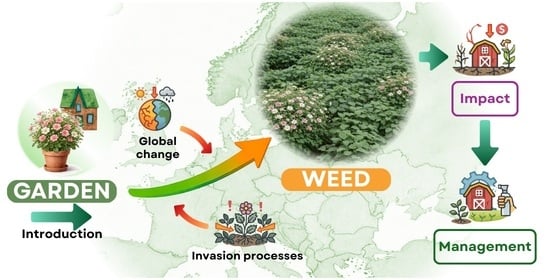
Given the scale of ornamental plant use in Europe and the ongoing expansion of global trade, urbanization, and climate change, the risk that ornamental species transition from garden plants to invasive weeds is expected to increase. Understanding the mechanisms that promote invasiveness in ornamental plants, the pathways that facilitate their spread, and the tools available for risk assessment and prevention are therefore critical. Because agriculture depends on stable ecosystem services and water availability, invasive ornamental plants represent a particularly insidious threat, as their impacts often emerge indirectly and accumulate over time. In this review, we synthesize current knowledge on the invasive risk of ornamental plants in Europe, examining the ecological, climatic, economic, and social dimensions of the problem, and discussing implications for agriculture, horticultural practices, policy development, and sustainable landscape management. The conceptual framework linking pathways, invasion drivers, impacts and management responses is summarized in Figure 1.

2. Pathways: From Cultivation to Escape

The introduction of alien plant species beyond their native ranges is primarily mediated by human activities, and the success of plant invasions largely depends on the pathways through which species are transported, introduced, and repeatedly released into new environments. For a plant species to become invasive, it must first be introduced by a pathway that allows it to survive transport, escape cultivation, and establish self-sustaining populations without direct human assistance [8,15,16]. Among the multiple pathways documented for plant introductions, ornamental horticulture has consistently been identified as the dominant route for alien plant invasions worldwide and particularly in Europe. Unlike accidental introductions, this pathway is characterized by intentional, repeated and widespread introductions, resulting in a large proportion of alien plant species established in Europe having been deliberately introduced for ornamental, horticultural or agricultural purposes, with ornamentals accounting for the majority of these introductions [16,30,31]. This pattern is even more pronounced for aquatic plants, for which the ornamental trade represents by far the most important introduction pathway [32,33,34].
Residential gardens, urban parks, botanical gardens, and landscaped areas function as primary entry points for ornamental alien plants. These environments host high numbers of non-native species and act as continual sources of propagules, facilitating repeated escape events into surrounding semi-natural and natural habitats [16,35,36]. Urban areas are widely recognized as primary introduction hubs for ornamental alien plants due to high propagule pressure associated with horticulture, landscaping and nursery trade [37,38]. From these initial introduction points, invasive ornamental species may progressively spread along the urban–peri-urban–rural gradient, with peri-urban areas acting as transitional zones facilitating establishment and further dispersal into agricultural and natural ecosystems [37,39]. Human-managed green spaces represent key propagule reservoirs at the urban fringe, increasing the likelihood of escape and secondary spread into adjacent habitats [38,39]. This spatial progression reflects the role of human-dominated landscapes as stepping-stone environments that connect ornamental plantings with semi-natural and agricultural systems, thereby facilitating landscape-scale invasion processes. Urban parks, in particular, have been identified as hotspots for the introduction of non-native ornamentals, as they combine intensive planting, high propagule pressure, and frequent human-mediated disturbance [40,41,42]. Furthermore, urban environments often expose ornamental plants to multiple abiotic stressors, including elevated temperatures, drought, pollution and soil disturbance, which act as strong selective filters favoring stress-tolerant genotypes [43,44]. Plant populations established in urban and peri-urban environments may therefore undergo rapid ecological and evolutionary adaptation, including genetic differentiation and phenotypic plasticity that enhance tolerance to stressful conditions [44,45]. As a result, species that successfully establish in urban environments may be pre-adapted to conditions expected under ongoing climate change and agricultural disturbance, facilitating their subsequent spread into surrounding rural, agricultural and semi-natural systems [45,46]. This interaction between introduction pathways, urban selective pressures and adaptive plant traits highlights the important role of cities as evolutionary filters shaping invasion risk [47,48]. The role of ornamental horticulture as an invasion pathway is further reinforced by the structure and dynamics of the horticultural trade. The repeated local introduction of plants through nurseries, garden centers, and landscape projects, combined with the development of cultivars selected for ease of propagation, climatic suitability, and resistance to pests and diseases, substantially increases the likelihood that ornamental plants escape cultivation and establish in the wild [23,29,49]. Consequently, propagule pressure emerges as a key determinant of invasion success, driven by both the frequency of introduction events and the number of propagules released during each event [16,22,23,50]. Market forces play a central role in shaping these dynamics. Ornamental species that are widely available, sold by many nurseries, and offered at relatively low prices are more frequently planted and thus more likely to escape cultivation and become invasive. Empirical evidence shows that invasive ornamental species tend to have higher market presence and lower seed or plant prices than non-invasive species, highlighting the strong link between commercial success and invasion risk [22,51,52,53]. In addition to traditional retail pathways, recent changes in global trade and distribution networks have further increased invasion risks associated with ornamental plants. The expansion of international supply chains, the growing diversity of exporting countries, and the increasing importance of internet-based trade have greatly facilitated access to a wider range of ornamental taxa, often bypassing national regulations and biosecurity controls [17,54,55]. Even after ornamental plants die, risks may persist if contaminated plant material is improperly disposed of through composting or organic waste streams [56].
Once introduced, the likelihood that an ornamental plant progresses along the invasion path is strongly influenced by residence time. Species that have been present in cultivation for longer periods have had more opportunities for repeated introductions and escape events, increasing their chances of naturalization and spread [27,57]. In Europe, lag phases between introduction and invasion can extend over several decades or even centuries, particularly for woody ornamental species, masking future invasion risks and contributing to an accumulation of invasion debt [57]. Finally, ornamental plant pathways do not operate in isolation but interact with broader environmental changes. Key introduction pathways, trait categories and major environmental drivers associated with invasion risk in ornamental plants are summarized in Table 1.
Urbanization, habitat disturbance, and climate warming can relax previously limiting factors, increasing the probability that ornamental plants escape cultivation and establish in the wild. Gardens and urban areas may thus function as long-term reservoirs of potential invaders, from which species can spread rapidly once environmental conditions become favorable [58,59,60,61].

3. Traits and Mechanisms Promoting Invasiveness in Ornamental Plants

The likelihood that ornamental plants escape cultivation and become invasive is not determined solely by introduction pathways, but also by a combination of biological traits, physiological characteristics, and human-mediated selection processes that influence their performance in novel environments (Table 1). Many invasive plants share functional traits associated with rapid resource acquisition, high growth rates, and effective reproduction, although broad comparisons between native and non-native species often reveal substantial context dependency in trait–invasiveness relationships [62,63,64]. Among the traits most frequently associated with plant invasiveness, reproductive characteristics play a central role. Successful germination is a critical determinant of population establishment, influencing plant fitness, niche occupation, and the potential for population expansion. Rapid germination, in particular, has been shown to be a stronger predictor of invasiveness than overall germination percentage, as it allows invasive species to establish earlier than competitors and exploit available resources more efficiently [65,66,67]. Dispersal of vegetative propagules through plant fragmentation (e.g., stem, rhizome, leaves) may also represent a significant invasive pathway, especially for aquatic plants [68]. Chemical interactions may further contribute to invasion success. Some invasive ornamental species produce allelochemicals and secondary metabolites that suppress competitors or alter plant–soil interactions, thereby promoting competitive dominance and persistence [69]. In addition, invasive plants may influence soil nutrient dynamics through high biomass production and nutrient accumulation, contributing to feedback mechanisms that enhance persistence and reinvasion potential [70,71,72].
Phenological traits are also closely linked to invasion success. Long flowering periods increase the temporal availability of reproductive opportunities and enhance the likelihood of successful pollination and seed production. Extended flowering phenology may allow ornamental plants to occupy vacant temporal niches, thereby reducing competition with native species and facilitating naturalization [73]. Physiological tolerance to abiotic stress represents another key mechanism promoting invasiveness. Many ornamentals exhibit a high capacity to tolerate water stress, salinity, and nutrient limitation, traits that are often deliberately selected for landscaping under harsh environmental conditions. Tolerance to drought and salinity can enhance survival and establishment in novel habitats, particularly in Mediterranean and coastal regions, where water availability and soil salinity act as strong environmental filters [74,75,76]. Experimental studies have shown that invasive ornamental species frequently display higher germination rates, greater recovery capacity after stress exposure, and sustained growth under moderate abiotic stress compared to non-invasive ornamentals. Such traits confer a competitive advantage during early life stages and increase the probability of establishment following escape from cultivation [67,75]. Human aesthetic preferences further interact with plant traits to shape invasion risk. In ornamental horticulture, plant selection is strongly driven by visual attributes such as showy flowers, bright colors, large floral displays, and long flowering periods. These traits not only enhance ornamental value but may also promote pollinator attraction, reproductive success, and population persistence in the wild [40,77,78]. In reality, the opposite can also be true, as some desired traits (e.g., dwarfism, variegated leaves and petaloidy) are likely to result in a lower invasiveness [79,80].
Urban parks and managed green spaces amplify the effects of trait selection by concentrating non-native ornamentals with high aesthetic value and invasion potential. Studies have shown that exotic ornamental species in urban parks tend to display more conspicuous floral traits than native species, reflecting a human-driven filtering process that favors traits linked to invasiveness [40]. Although plant breeding programs sometimes attempt to reduce invasion risk by selecting traits such as sterility or reduced pollen production, these strategies are not universally effective. Some cultivars may revert to fertile forms, and sterile cultivars may still spread vegetatively, highlighting the limitations of trait-based containment strategies [81,82]. Furthermore, besides human facilitated introduction and physiological competitiveness, in the new areas of introduction, ornamental plants could benefit from biological and evolutionary mechanisms that contribute to the invasive success of ornamental plants, such as the lack of natural enemies. Indeed, the enemy release hypothesis proposes that alien plant species may experience reduced pressure from specialist herbivores and pathogens in their introduced range, allowing increased growth and reproductive output compared to native species [83,84]. Importantly, the relationship between traits and invasiveness is highly context dependent. The effects of ornamental plant traits on invasion outcomes depend not only on species characteristics but also on the properties of the invaded ecosystem or agroecosystem, including disturbance regimes, resource availability, and biotic interactions. For example, long-term field studies demonstrate that plant communities subjected to sustained management and disturbance regimes may undergo shifts in species composition and adaptive responses, contributing to the persistence and spread of competitive species over time [85]. This could indicate that in future, some invasive ornamental species might take advantage of this shift, and establish themselves as dominant weeds. As a result, no single trait or trait syndrome universally predicts invasiveness, underscoring the need for integrative approaches that combine trait-based analyses with pathway dynamics and environmental context [8,70,86].

4. Climate Change and the Invasion Debt of Ornamental Plants in Europe

Climatic suitability is a key determinant of plant establishment, spread, and naturalization, and ongoing climate change is expected to substantially modify invasion dynamics across Europe. Changes in temperature and precipitation regimes may relax climatic constraints that have historically limited the establishment of many alien ornamental plants, thereby increasing the number of species able to progress along the invasion path [59,87]. Ornamental plants are particularly sensitive to shifts in climatic suitability because many species are already cultivated beyond the climatic limits of their native ranges. This widespread cultivation allows ornamental plants to persist in managed environments under conditions that would not yet permit establishment in the wild. As the climate warms, these cultivated populations may gain a “head start”, enabling rapid colonization of newly suitable habitats before other species are able to track shifting climatic envelopes [58,60]. Europe hosts an exceptionally large pool of alien ornamental plants currently in cultivation for ornamental purposes. Public and private gardens thus represent the largest reservoir of non-native plant species on the continent, substantially increasing the likelihood that future invaders will emerge from this pool under changing climatic conditions [88,89,90,91]. Species distribution modelling studies have demonstrated that a considerable proportion of ornamental alien plants already encounter suitable climatic conditions in parts of Europe under current climates, and that this suitability is expected to increase under future climate scenarios. In particular, projected warming is predicted to expand the potential range size of many ornamental species and to increase the number of species finding large areas of suitable habitat, especially in western, central, and southern Europe [60]. These patterns contribute to the accumulation of an invasion debt, defined as the future establishment and spread of alien species that have already been introduced but have not yet naturalized or become invasive. In Europe, thousands of alien ornamental plant species are currently present in cultivation, and it is likely that a substantial fraction of these will naturalize and potentially become invasive in the future as climatic conditions become more favorable [61,92]. Analyses of naturalization success across large datasets of ornamental plants have shown that climatic suitability is a strong predictor of both current and future naturalization probability. Naturalized ornamental species tend to have higher climatic suitability than non-naturalized species, and projected future climates further increase suitability for many species that are not yet established in the wild [61]. In addition to climate, propagule pressure and availability in nurseries strongly interact with climatic suitability to shape future invasion risk. Species that are widely available in the horticultural trade, have large, naturalized ranges outside Europe, and experience increasing climatic suitability are particularly likely to contribute to future invasion debt [61,93].
Urban and suburban areas are expected to play a central role in mediating climate-driven invasions. These areas function as centers of cultivation and introduction, and the proportion of alien species typically decreases along urban–rural gradients. Under climate warming, ornamental plants cultivated in cities and gardens may act as sources for rapid spread into surrounding natural and semi-natural habitats [60,88]. Climate change may also facilitate the invasion of ecosystems that have so far been relatively resistant to plant invasions. For example, rising temperatures, combined with increasing human activity and propagule pressure associated with tourism and ornamental planting, are expected to increase invasion risks at higher elevations, where climatic barriers have historically limited alien plant establishment [30,60,94]. Together, these findings highlight that climate change is likely to accelerate the transition of ornamental plants from cultivation to naturalization and invasion in Europe. The existence of a large invasion debt underscores the urgency of proactive management strategies that integrate climate projections, horticultural practices, and early risk assessment to prevent future invasions before they manifest irreversible ecological impacts [60,61]. It is also important to highlight that invasion debt is driven not only by climatic factors but also by propagule pressure, dispersal limitations, and ecological barriers, reflecting the complex interaction between introduction history, species traits and environmental conditions.

5. Ecological, Economic and Social Impacts of Ornamental Plant Invasions in Europe

Once ornamental plants escape cultivation and become established in the wild, their impacts can manifest across multiple ecological, economic, and social dimensions. For instance, using the generic impact scoring system (GISS), Nentwig et al. [95], classified living organisms according to their impact, identifying Acacia dealbata, Lantana camara, Pueraria lobata and Eichhornia crassipes as the four plant species with the most serious potential impact. GISS can be an extremely valuable tool for assessing the potential impact that ornamental species can pose as weeds, as it is a standardized framework used to quantify and compare the environmental and socio-economic impacts of alien species across taxonomic groups and ecosystems. It evaluates impacts across twelve categories, including effects on biodiversity, ecosystem processes, agriculture, human health and economic activities. This allows a comparison of impact magnitude among species and can be used to determine which management actions should be prioritized to reduce the negative impacts [96,97].
Focusing on specific aspects, invasive alien plants are known to alter ecosystem structure and functioning, affect native biodiversity, and disrupt ecological interactions, often resulting in long-lasting or irreversible changes [62,98]. Ecologically, invasive ornamental plants can transform both above- and below-ground processes by modifying vegetation structure, nutrient cycling, hydrology, and disturbance regimes. Species that differ markedly in functional traits from native flora are particularly likely to drive ecosystem-level changes, although the magnitude and direction of these effects are strongly context dependent and vary among invaded habitats [62,70,86]. Therefore, the magnitude and type of impacts caused by invasive ornamental plants may vary across urban, agricultural and natural environments. These plants can alter not just biodiversity, ecosystem functioning and ecosystem services, but may also cause socio-economic damages such as infrastructure impairment and increased management costs, especially as new potential weeds in agricultural production [99,100,101]. In Europe, many invasive ornamental plant species are recognized as major drivers of biodiversity loss, primarily through competitive exclusion, habitat modification, and alteration of biotic interactions. Several of the most damaging invasive plant species on the continent are known to reduce native species’ habitats, disrupt community assemblages, and interfere with plant–pollinator networks, thereby affecting ecosystem resilience and functioning [16,102]. Invasive ornamental plants may also hybridize with closely related native species, leading to genetic introgression and the erosion of native genotypes. Such processes can reduce genetic diversity and compromise the evolutionary potential of native plant populations, representing a less visible but significant ecological impact [16].
Beyond ecological effects, invasive ornamental plants impose substantial economic costs. These include direct costs associated with control, management, and eradication efforts, as well as indirect costs arising from damage to agriculture, forestry, fisheries, and infrastructure. In Europe, invasive terrestrial plants are estimated to cause economic losses amounting to several billion euros annually, with particularly high costs reported for species such as Carpobrotus spp., which require intensive management in coastal ecosystems [16,98,103]. The estimates suggest that globally, invasive alien species have generated management costs exceeding 90 billion euros, while damage-related costs have surpassed 1 trillion euros over recent decades [104]. While in Europe, invasion-related costs have been estimated at over 130 billion euros, with the majority associated with direct damage affecting multiple sectors, including agriculture, infrastructure and ecosystem services [105].
Ornamental plant invasions can also pose direct risks to human health. Certain invasive species produce allergens or toxic compounds that cause severe health problems upon contact or inhalation. Examples include species whose pollen triggers allergic reactions or whose sap causes skin lesions, leading to significant medical costs and reduced quality of life in affected regions such as Heracleum mantegazzianum [16,106].
Social impacts further complicate the management of invasive ornamental plants. Public perception of invasive species is often influenced by cultural values, aesthetic appreciation, and emotional attachment, particularly when invasive plants are visually attractive or have become iconic elements of urban or historical landscapes. Such perceptions can generate strong opposition to management interventions, including eradication campaigns, even when ecological impacts are well documented [107,108,109]. Conflicts between conservation objectives and public values are especially evident in urban environments and heritage sites, where ornamental plants may be perceived as contributing to cultural identity or landscape character. In these contexts, management actions such as tree removal can provoke resistance from local communities, highlighting the need to consider social dimensions alongside ecological evidence when designing invasion management strategies [110,111,112]. Importantly, the perception of risk associated with invasive ornamental plants does not always align with scientific assessments of their impacts. Studies have shown that perceived harmfulness is shaped not only by species origin but also by perceived attractiveness, economic importance, and familiarity. Ornamental plants that are highly valued for landscaping or commercial purposes are often perceived as less risky, reducing public and professional support for preventive or restrictive measures [102]. Together, these ecological, economic, and social impacts underscore the complexity of managing ornamental plant invasions in Europe. Effective management requires not only ecological understanding but also consideration of economic trade-offs, public perception, and cultural values. Recognizing and addressing these multiple dimensions is essential for developing socially acceptable and ecologically effective strategies to mitigate the impacts of ornamental plant invasions.

6. Impact on Agriculture and Related Activities

Beyond biodiversity impacts, invasive alien plants also impose substantial burdens on primary economic sectors, particularly agriculture. Representative examples of impacts and management constraints across agriculture, irrigation networks and riparian systems are summarized in Table 2.
On the European scale, biological invasions generate large and increasing economic costs, a considerable proportion of which affect productive sectors through yield losses, increased management expenditures and infrastructure damage [105,113]. Although impacts on agriculture are often underreported, recent syntheses indicate that agriculture is among the most consistently and heavily affected sectors worldwide, accounting for the largest share of reported invasion costs [114]. Importantly, many invasive plants affecting agricultural systems originate from pathways unrelated to food production, including ornamental horticulture. Species initially introduced for aesthetic or recreational purposes may subsequently spread into managed landscapes, where they act as weeds in croplands, pastures, and field margins, increasing control costs and reducing agricultural productivity [17,114]. These impacts are particularly relevant in regions where agricultural systems are closely interconnected with urban, peri-urban and semi-natural habitats, facilitating repeated introductions and secondary spread. Similar dynamics have been reported for terrestrial ornamental plants, such as Gazania spp., which have escaped cultivation and become difficult-to-control weeds in pastures and different cropping systems, illustrating how ornamental introductions can translate into direct agricultural management challenges [101].
Another example of an ornamental escape is Ageratina adenophora, a perennial shrub belonging to the Asteraceae family. Native to Mexico, this perennial shrub was widely distributed during the 19th century as a decorative flowering species [115]. While its most devastating impacts have been historically documented in Asia and Oceania, A. adenophora is now recognized as a significant emerging threat in Southern Europe, particularly within the Mediterranean basin. Beyond its ecological impact, its primary danger lies in its zootoxicity, specifically inducing “Numinbah Horse Sickness” in equines. Its toxic biomass frequently leads to feed contamination, compromising the safety of harvested hay and forage while imposing substantial economic burdens on the livestock sector [116].
Invasive ornamental plants can also indirectly affect agricultural production by impairing water management and irrigation infrastructure [117,118]. Several invasive alien aquatic plants, many of which were intentionally introduced through the ornamental plant trade, form dense monospecific stands in ditches, canals, wetlands and slow-flowing water bodies. These infestations can obstruct water flow, increase sedimentation and flood risk, and interfere with irrigation and drainage systems essential for agricultural activities. In Europe, Eichhornia crassipes, Pistia stratiotes and species of the genus Ludwigia, originally introduced as ornamental aquatic plants, exemplify these impacts. Ludwigia species, for instance, form extensive floating mats that degrade watercourses, hinder water use by multiple stakeholders and generate high management costs, particularly in irrigation and drainage networks [119]. The recognition that invasive ornamental plants can generate tangible impacts on agricultural production and water infrastructure reinforces the need for preventive and integrative management approaches. Given that many high-impact species were introduced intentionally through horticulture, effective management must combine pathway-based prevention, early detection, and long-term control strategies that consider both ecological and agronomic dimensions.

7. Risk Assessment and Prevention Strategies

Given the long lag phases typical of plant invasions and the high costs of post-establishment control, prevention is widely regarded as the most effective and cost-efficient strategy for reducing impacts from invasive alien species. This principle is reflected in international guidance that prioritizes prevention, followed by early detection and rapid response when prevention fails, and long-term management as a last option [15,25,26]. The rationale is straightforward, by the time ecological impacts become visible, irreversible changes may already have occurred, and eradication or control may be prohibitively expensive or technically infeasible [120]. A central pillar of prevention is the ability to screen species before they are widely introduced or traded. Weed Risk Assessment (WRA) frameworks provide a systematic approach to estimating invasion risk using evidence on species’ biology, geographic distribution, and invasion history. The Australian WRA was one of the first widely adopted tools and has inspired regionally adapted screening systems in multiple countries, including those in Europe [121,122]. Over time, screening approaches have evolved from simple trait-based tools to more integrative frameworks that combine plant traits with environmental suitability, human factors, and species interactions, resulting in improved predictive performance [40,61,123]. Nonetheless, extensive experience has also highlighted limitations in screening ornamentals, including uncertainty for a non-trivial fraction of assessed species [40,55,124]. Specific WRA, designed to screen ornamental plants prior to being released into the environment, has been proposed by [125]. This WRA is based on 19 predictive questions derived from existing WRA models, such as the Australian WRA.
Where formal risk assessment capacity is limited, complementary approaches have been proposed to guide safer planting choices. One prominent strategy is the development of “green lists”, lists of alien ornamental species that have a sufficiently long residence time, high planting frequency, and thus high propagule pressure, and yet show no evidence of invasion, suggesting a low probability of becoming invasive under current conditions [57]. Green lists are often framed within broader list-based systems that combine black lists (banned species), white lists (permitted species), and grey lists (uncertain status), with the explicit warning that “low risk” does not imply uncontrolled release should be encouraged [57,126]. A key advantage of green listing is its practicality; it promotes non-invasive alternatives and supports voluntary codes of conduct when comprehensive prevention risk assessments (PRAs) are too costly or slow to implement across thousands of traded ornamental taxa [127]. However, both blacklists and whitelists face challenges in practice. Blacklists are rarely comprehensive due to the very large number of ornamental species available for trade, the costs of assessment, and stakeholder disagreement over listing criteria. Whitelist approaches can be more effective in principle, but both systems may be undermined by weak compliance mechanisms, poor species identification, and the growing role of internet trade that bypasses traditional regulatory controls [54,55,128,129].
Horizon scanning represents a further proactive approach designed to identify future high-risk invaders before they are introduced or widely distributed. Horizon scanning combines evidence on climatic suitability, economic use, and documented impacts elsewhere to priorities species most likely to establish and cause harm under current or future climates [130,131]. Because climate change can substantially alter invasion risk, several horizon scanning approaches explicitly integrate climate projections and climatic niche overlap to anticipate which ornamental species might become problematic in the near future [132,133]. Such frameworks are transferable across countries with appropriate adjustment of national species lists, climate variables, and economic-use data sources [134,135,136]. Despite its effectiveness, implementation may be limited by the need for expert knowledge, coordinated monitoring systems and institutional capacity. However, preventive approaches such as horizon scanning are widely recognized as more cost-effective than managing invasive species after establishment, as control costs and impacts increase substantially once species become widespread [137]. In agricultural systems, horizon scanning can support pest risk assessment and surveillance planning, helping reduce the likelihood of invasive species establishment and associated economic losses affecting crop production and land management [138]. Furthermore, risk assessment is most effective when coupled with spatial forecasting of where invasions are likely to occur. Species distribution models (SDMs), including widely used tools such as MaxEnt, are commonly applied to estimate potentially suitable habitat under current and future climates. When integrated with risk assessment outputs, SDMs can support targeted surveillance, prioritized management, and efficient allocation of limited resources [121,139,140,141].
Once an ornamental species is identified as high risk or has already become invasive, management options include eradication, containment, or long-term control, depending on the stage of invasion and feasibility. In the policy domain, one post-border instrument is a ban on the sale and movement of nursery stock, seeds, or other propagules. Such bans can reduce propagule pressure and slow spread but may face strong resistance and lobbying from trade associations and industry stakeholders, particularly when high-revenue species are involved [17,102,142,143]. This tension highlights the importance of designing interventions that are both ecologically effective and socioeconomically acceptable [144,145]. Because the majority of ornamental plants are ultimately purchased and planted by the general public, consumer behavior is a crucial leverage point for prevention. Education campaigns that promote native or non-invasive alternatives, provide disposal guidance for green waste, and raise awareness of invasive ornamentals can reduce accidental introductions and repeated releases into the environment [146]. At the same time, consumer preferences often favor alien plants over natives, with choices driven by flower size, color, foliage attributes, and low-maintenance performance, traits that may also facilitate invasiveness, creating a persistent challenge for behavioral interventions [147,148,149,150]. Taken together, these approaches indicate that effective prevention and management of ornamental plant invasions requires a portfolio of complementary tools: pre-border screening where feasible, post-border restrictions for high-risk taxa, positive promotion of low-risk alternatives (including green lists), horizon scanning under climate change, spatial forecasting to prioritize surveillance, and sustained engagement with the horticultural industry and consumers to reduce propagule pressure at source.

8. Management of Species Established as Weeds

Once ornamental alien plants become widely established and spread beyond cultivation, management options are largely constrained by ecological, economic and regulatory limitations. An overview of the main management options and their trade-offs is provided in Figure 2.
At this stage, eradication is rarely feasible, and management efforts primarily aim to reduce impacts, limit further spread and maintain invaded systems below acceptable thresholds [151]. Mechanical and physical control methods, including cutting, mowing, uprooting or harvesting, are commonly employed as first-line interventions, particularly at local scales or during early stages of establishment. However, these approaches are often labor-intensive, costly and prone to failure in species capable of rapid resprouting or vegetative regeneration, especially in riparian habitats and irrigation networks [151,152]. Chemical control remains a widely used component of invasive plant management due to its scalability and operational efficiency, particularly where mechanical control alone is insufficient. Global syntheses indicate that herbicides have been applied in approximately 40–42% of invasive plant control interventions, especially in high-income regions, including Europe [152]. Nevertheless, herbicide use is associated with trade-offs, such as resistance development, non-target effects, delayed native vegetation recovery and risks of secondary invasions, underscoring the need for careful planning, regulatory compliance and long-term monitoring [140,153]. Biological control represents an alternative or complementary strategy in specific contexts, offering the potential for long-term, self-sustaining suppression of invasive plant populations. Although classical biological control has demonstrated high benefit–cost ratios and a strong safety record when appropriately regulated, its application is species-specific, time-consuming and subject to social and regulatory acceptance [151,153]. Increasingly, the literature emphasizes that no single method is universally effective and that integrated management approaches, combining mechanical, chemical and biological control with follow-up monitoring, are required to achieve durable outcomes. Recent European studies illustrate that chemical treatments are often most effective when combined with mechanical removal and sustained over multiple years to prevent resprouting and reinvasion, particularly under regulatory constraints limiting available active ingredients [154]. The management of invasive ornamental species typically follows a dual approach determined by infestation density. When these species are dispersed as minor components of the weed flora, their control is generally incorporated into the standard mechanical, chemical, or biological protocols designed for the primary crop’s associated weeds, rather than being specifically targeted. However, a significant management shift occurs when ornamental escapes establish dense, high-biomass populations over vast areas. In such cases, the species’ dominance necessitates specialized, targeted interventions, often involving specific herbicide formulations or mechanical clearing, resulting in the generation of large quantities of plant biomass and substantial long-term costs. In aquatic and riparian systems, management expenses can reach several thousand euros per hectare per year, particularly for species forming dense monospecific stands such as Ludwigia spp. and Eichhornia crassipes [155,156,157]. In response to these economic and logistical challenges, the potential valorization of invasive plant biomass has been proposed as a complementary management strategy. Rather than treating harvested biomass solely as waste, several studies have explored its use in composting, nutrient recovery, or biogas production as a means to offset management and disposal costs [158,159]. However, such approaches require careful evaluation of biomass composition, as invasive aquatic plants may accumulate contaminants, including heavy metals, that could limit safe reuse in agricultural or food-related applications [160,161,162]. From an agronomic perspective, invasive plant biomass may also represent a source of bioactive compounds. Research on allelopathic secondary metabolites has highlighted the potential of plant-derived extracts for sustainable weed management, particularly in low-input and organic systems [163]. In this context, invasive ornamental species have been investigated as model systems. For example, Baccharis halimifolia, a widespread invasive ornamental shrub in Europe, produces large amounts of biomass during mechanical control operations, and aqueous extracts derived from its tissues have shown phytotoxic effects on several agronomically relevant weed species under experimental conditions [164]. Despite these promising findings, field-scale application remains limited. Variability in chemical composition, uncertainties regarding environmental safety, regulatory constraints and the lack of field validation currently restrict the implementation of biomass valorization at scale. Additionally, while biomass valorization may contribute to reducing management costs, it also raises important ecological and regulatory concerns. Economic incentives associated with the use of invasive plant biomass could unintentionally encourage maintenance, intentional propagation, or insufficient control of invasive populations in order to ensure a continuous supply of raw material. To prevent such unintended consequences, biomass valorization should be strictly regulated to avoid the deliberate spread of invasive species. Appropriate regulatory frameworks at both national and European levels are therefore essential to ensure that biomass use remains a tool supporting invasive species management rather than creating new economic drivers of invasion. Clear guidelines, monitoring systems, and restrictions on intentional propagation are necessary to prevent conflicts between economic interests and ecological management goals. Consequently, the use of invasive plant biomass should be regarded as a complementary option embedded within integrated management strategies, rather than a stand-alone solution for invasive species control.

9. Implications for Horticulture, Policy and Future Directions

The evidence reviewed here highlights that ornamental horticulture plays a dual role in biological invasions, it is simultaneously a major driver of alien plant introductions and a critical leverage point for prevention and mitigation. Because the majority of invasive ornamental plants were introduced intentionally, decisions made by plant breeders, nursery operators, landscape designers, and consumers have far-reaching consequences for invasion risk across Europe [16,17,30,165]. From a horticultural perspective, these findings underscore the need to integrate invasion risk into plant selection, breeding, and marketing practices. With a few exceptions (e.g., petaloidy, dwarfism, variegate foliage), traits commonly selected for ornamental values, such as rapid growth, long flowering periods, stress tolerance, and low maintenance requirements, are often the same traits that promote establishment and spread in the wild. As a result, plant choice based solely on aesthetic or economic criteria can inadvertently favor future invaders [31,40]. Breeding programs aimed at reducing invasion risk, such as the development of sterile cultivars or plants with reduced reproductive output, may contribute to risk mitigation but should not be viewed as universally reliable solutions. More specifically, a non-invasive crop ideotype for plant breeding has been suggested in which the following traits should be included: reduced genetic variation in propagules, slowed growth rates, non-flowering, elimination of asexual propagules, absence of pollinator rewards, non-shattering seeds, non-fleshy fruits, lack of seed germination, sterility, and programmed death prior to seed production [79].
Evidence suggests that sterility may be incomplete, unstable across environments, or circumvented by vegetative reproduction, highlighting the importance of combining breeding strategies with broader preventive frameworks [17,81,82]. Policy interventions targeting the ornamental sector must therefore operate across the entire supply chain. Pre-border screening and post-border regulation of high-risk species are essential but insufficient on their own, given the large number of ornamental taxa in trade and the limitations of enforcement. Complementary instruments, including green lists, voluntary codes of conduct, and industry-led best-practice guidelines, offer pragmatic pathways to reduce invasion risk while maintaining economic viability [56,57,166,167]. Engaging the horticultural industry as an active partner rather than a passive target of regulation has been shown to improve acceptance and effectiveness of preventive measures. Collaborative approaches that involve nursery owners, breeders, and trade associations in risk communication and decision-making can help align commercial incentives with biodiversity conservation goals [55,168,169]. Such alignment can be achieved through the development of certification schemes and regulatory frameworks that promote the production and marketing of non-invasive or low-risk species, while discouraging the sale of known invasive plants. These measures allow the horticultural industry to maintain economic viability while reducing the risk of introducing harmful species. Consumer behavior represents another critical component of invasion prevention. Because most ornamental plants are ultimately purchased by private individuals, raising public awareness about invasive risks and promoting informed planting choices can substantially reduce propagule pressure [130,170]. Educational initiatives, including labelling schemes, plant lists, outreach materials, and media engagement, have been identified as effective tools for shifting consumer preferences towards native or non-invasive alternatives [55,146]. However, the promotion of native species also requires careful evaluation, as cultivated native plants are often selectively bred for traits such as rapid growth, environmental tolerance and aesthetic performance. These traits, while desirable for horticulture, may increase their capacity to spread beyond intended planting areas. In some cases, even native species may exhibit invasive behavior outside their natural range or under altered environmental conditions, highlighting the importance of risk assessment and responsible plant selection regardless of geographic origin. Nevertheless, such efforts must cope with persistent preferences for alien plants driven by aesthetic appeal and perceived performance advantages [171,172,173]. Looking forward, climate change adds urgency to the need for proactive management. The existence of a large invasion debt associated with ornamental plants implies that many future invasions are already “locked in” unless preventive action is taken. Integrating climate projections into risk assessment, horizon scanning, and spatial modelling is therefore essential for anticipating which ornamental species are most likely to become invasive under future conditions [60,61].

10. Conclusions

Ornamental horticulture has played a central role in shaping the current pool of alien plant species in Europe and will continue to influence future invasion dynamics under ongoing global change. The evidence synthesized in this review highlights that ornamental plants represent not only a major introduction pathway but also a growing source of ecological, economic and agronomic impacts, including pressures on agricultural systems and water management infrastructure. Climate change, long residence times and sustained propagule pressure contribute to a substantial invasion debt, implying that many future invasions are already underway unless proactive measures are implemented. Effective responses, therefore, require a shift from reactive control to anticipatory governance, integrating risk assessment, climate-aware forecasting, horticultural practices and stakeholder engagement. While prevention remains the most cost-effective strategy, the management of established invasive ornamentals will continue to generate significant biomass and economic costs. Exploring the responsible valorization of invasive plant biomass may offer complementary opportunities to support long-term management, provided that ecological safety and regulatory constraints are carefully addressed. Ultimately, reconciling ornamental horticulture with biodiversity conservation and sustainable agriculture will require coordinated action across science, policy and practice. This coordination may include strengthening risk assessment frameworks, expanding horizon scanning and monitoring programs, improving regulatory oversight of ornamental plant trade, and fostering collaboration between researchers, policymakers, and the horticultural sector. By aligning horticultural innovation with invasion risk awareness, it may be possible to reduce future invasions while maintaining the social and economic benefits of ornamental plant use. Several key research gaps remain. These include limited empirical data on long-term invasion dynamics of ornamental species, insufficient integration of socio-economic drivers into invasion models, and a lack of standardized, Europe-wide monitoring systems for ornamental plant escapes. Addressing these gaps will require interdisciplinary collaboration between weed scientists, ecologists, agriculture and horticultural scientists, economists, and social scientists, as well as improved data sharing across national and institutional boundaries. In conclusion, preventing ornamental plants from transitioning from garden assets to invasive weeds in Europe requires a shift from reactive management to anticipatory governance. By combining pathway-based prevention, trait-informed risk assessment, climate-aware forecasting, and active engagement with both the horticultural industry and the public, it is possible to reduce future invasion risks while supporting sustainable and responsible ornamental plant use. Such integrated approaches are essential for reconciling horticultural practices with biodiversity conservation in an era of rapid environmental change.

Author Contributions

Conceptualization, N.N., M.S. and G.Z.; methodology, N.N.; validation, M.S. and G.Z.; formal analysis, N.N.; investigation, N.N.; resources, N.N., M.S. and G.Z.; data curation, N.N.; writing—original draft preparation, N.N.; writing—review and editing, M.S. and G.Z.; visualization, M.S. and G.Z.; supervision, N.N. and G.Z.; project administration, N.N. All authors have read and agreed to the published version of the manuscript.

Funding

This research received no external funding.

Data Availability Statement

No new data were created or analyzed in this study. Data sharing is not applicable to this article.

Conflicts of Interest

The authors declare no conflicts of interest.

References

  1. National Research Council. Global Change Ecosystems Research; National Academies Press: Washington, DC, USA, 2000; ISBN 978-0-309-07148-2. [Google Scholar]
  2. Millennium Ecosystem Assesment. Millennium Ecosystem Assessment Ecosystems and Human Well-Being; Island Press: Washington, DC, USA, 2003; ISBN 1559634030. [Google Scholar]
  3. Richardson, D.M. Fifty Years of Invasion Ecology; Richardson, D.M., Ed.; Wiley, Wiley-Blackwell: Hoboken, NJ, USA, 2010; ISBN 9781444335859. [Google Scholar]
  4. Young, A.M.; Larson, B.M.H. Clarifying Debates in Invasion Biology: A Survey of Invasion Biologists. Environ. Res. 2011, 111, 893–898. [Google Scholar] [CrossRef]
  5. Simberloff, D.; Souza, L.; Nũnez, M.A.; Barrios-Garcia, M.N.; Bunn, W. The Natives Are Restless, but Not Often and Mostly When Disturbed. Ecology 2012, 93, 598–607. [Google Scholar] [CrossRef] [PubMed]
  6. Rabitsch, W.; Essl, F.; Genovesi, P.; Scalera, R. Invasive Alien Species Indicators in Europe; Publications Office of the European Union: Luxembourg, 2012; ISBN 9789292133429. [Google Scholar]
  7. Buchholz, S.; Kowarik, I. Urbanisation Modulates Plant-Pollinator Interactions in Invasive vs. Native Plant Species. Sci. Rep. 2019, 9, 1–9. [Google Scholar] [CrossRef] [PubMed]
  8. Pyšek, P.; Jarošík, V.; Hulme, P.E.; Pergl, J.; Hejda, M.; Schaffner, U.; Vilà, M. A Global Assessment of Invasive Plant Impacts on Resident Species, Communities and Ecosystems: The Interaction of Impact Measures, Invading Species’ Traits and Environment. Glob. Chang. Biol. 2012, 18, 1725–1737. [Google Scholar] [CrossRef]
  9. Duffy, E.J. Why Biodiversity Is Important to the Functioning of Real-World Ecosystems. Front. Ecol. Environ. 2009, 7, 437–444. [Google Scholar] [CrossRef]
  10. Rodewald, A.D. Spreading Messages about Invasives. Divers. Distrib. 2012, 18, 97–99. [Google Scholar] [CrossRef]
  11. Vitule, J.R.S.; Freire, C.A.; Vazquez, D.P.; Nuñez, M.A.; Simberloff, D. Revisiting the Potential Conservation Value of Non-Native Species. Conserv. Biol. 2012, 26, 1153–1155. [Google Scholar] [CrossRef]
  12. Ehrenfeld, J.G. Ecosystem Consequences of Biological Invasions. Annu. Rev. Ecol. Evol. Syst. 2010, 41, 59–80. [Google Scholar] [CrossRef]
  13. Müller, N.; Sukopp, H. Influence of Different Landscape Design Styles on Plant Invasions in Central Europe. Landsc. Ecol. Eng. 2016, 12, 151–169. [Google Scholar] [CrossRef]
  14. Vilà, M.; Basnou, C.; Pyšek, P.; Josefsson, M.; Genovesi, P.; Gollasch, S.; Nentwig, W.; Olenin, S.; Roques, A.; Roy, D.; et al. How Well Do We Understand the Impacts of Alien Species on Ecosystem Services? A Pan-European, Cross-Taxa Assessment. Front. Ecol. Environ. 2010, 8, 135–144. [Google Scholar] [CrossRef]
  15. Simberloff, D.; Martin, J.L.; Genovesi, P.; Maris, V.; Wardle, D.A.; Aronson, J.; Courchamp, F.; Galil, B.; García-Berthou, E.; Pascal, M.; et al. Impacts of Biological Invasions: What’s What and the Way Forward. Trends Ecol. Evol. 2013, 28, 58–66. [Google Scholar] [CrossRef] [PubMed]
  16. Keller, R.P.; Geist, J.; Jeschke, J.M.; Kühn, L. Invasive Species in Europe: Ecology, Status, and Policy. Environ. Sci. Eur. 2011, 23, 8–11. [Google Scholar] [CrossRef]
  17. Van Kleunen, M.; Essl, F.; Pergl, J.; Brundu, G.; Carboni, M.; Dullinger, S.; Early, R.; González-Moreno, P.; Groom, Q.J.; Hulme, P.E.; et al. The Changing Role of Ornamental Horticulture in Alien Plant Invasions. Biol. Rev. 2018, 93, 1421–1437. [Google Scholar] [CrossRef] [PubMed]
  18. Hulme, P.E. Addressing the Threat to Biodiversity from Botanic Gardens. Trends Ecol. Evol. 2011, 26, 168–174. [Google Scholar] [CrossRef]
  19. Saccardo, P.A. Sulla Introduzione Dell’Ailantus Glandulosa in Italia e Particolarmente Nel Veneto; Atti e Memorie della R. Accademia di Scienze lettere ed Arti in Padova, Accademia Patavina di Scienze, Lettere ed Arti: Padova, Italy, 1890; pp. 173–176. [Google Scholar]
  20. Montecchiari, S.; Tesei, G.; Allegrezza, M. Ailanthus Altissima Forests Determine a Shift in Herbaceous Layer Richness: A Paired Comparison with Hardwood Native Forests in Sub-Mediterranean Europe. Plants 2020, 9, 1–14. [Google Scholar] [CrossRef]
  21. European Union. Commission Implementing Regulation (EU) 2016/1141 - of 13 July 2016 - Adopting a List of Invasive Alien Species of Union Concern Pursuant to Regulation (EU) No 1143/2014 of the European Parliament and of the Council. Off. J. Eur. Union 2016, 2016, 4–8. [Google Scholar]
  22. Lockwood, J.L.; Cassey, P.; Blackburn, T. The Role of Propagule Pressure in Explaining Species Invasions. Trends Ecol. Evol. 2005, 20, 223–228. [Google Scholar] [CrossRef]
  23. Dehnen-Schmutz, K.; Touza, J.; Perrings, C.; Williamson, M. A Century of the Ornamental Plant Trade and Its Impact on Invasion Success. Divers. Distrib. 2007, 13, 527–534. [Google Scholar] [CrossRef]
  24. Gassó, N.; Pyšek, P.; Vilà, M.; Williamson, M. Spreading to a Limit: The Time Required for a Neophyte to Reach Its Maximum Range. Divers. Distrib. 2010, 16, 310–311. [Google Scholar] [CrossRef]
  25. Vilà, M.; Espinar, J.L.; Hejda, M.; Hulme, P.E.; Jarošík, V.; Maron, J.L.; Pergl, J.; Schaffner, U.; Sun, Y.; Pyšek, P. Ecological Impacts of Invasive Alien Plants: A Meta-Analysis of Their Effects on Species, Communities and Ecosystems. Ecol. Lett. 2011, 14, 702–708. [Google Scholar] [CrossRef]
  26. Rejmánek, M.; Pitcairn, M.J. When Is Eradication of Exotic Pest Plants a Realistic Goal? Turn. Tide Erad. Invasive Species 2002, 249–253. [Google Scholar]
  27. Pyšek, P.; Jarošík, V. Residence Time Determines the Distribution of Alien Plants. Invasive Plants Ecol. Agric. Asp. 2005, 77–96. [Google Scholar] [CrossRef]
  28. Keller, R.P.; Lodge, D.M.; Finnoff, D.C. Risk Assessment for Invasive Species Produces Net Bioeconomic Benefits. Proc. Natl. Acad. Sci. USA 2007, 104, 203–207. [Google Scholar] [CrossRef] [PubMed]
  29. Mack, R.; Simberloff, D.; Lonsdale, M.; Evans, H.; Clout, M.; Bazzaz, F. Biotic Invasions: Causes, Epidemiology, Global Consequences, and Control. Issues Ecol. 2000, 10, 689–710. [Google Scholar] [CrossRef]
  30. Pyšek, P.; Jarošík, V.; Pergl, J. Alien Plants Introduced by Different Pathways Differ in Invasion Success: Unintentional Introductions as a Threat to Natural Areas. PLoS ONE 2011, 6, e24890. [Google Scholar] [CrossRef]
  31. Lambdon, P.W.; Pyšek, P.; Basnou, C.; Hejda, M.; Arianoutsou, M.; Essl, F.; Jarošík, V.; Pergl, J.; Winter, M.; Anastasiu, P.; et al. Alien Flora of Europe: Species Diversity, Temporal Trends, Geographical Patterns and Research Needs. Preslia 2008, 80, 101–149. [Google Scholar]
  32. Keller, R.P.; Zu Ermgassen, P.S.E.; Aldridge, D.C. Vectors and Timing of Freshwater Invasions in Great Britain. Conserv. Biol. 2009, 23, 1526–1534. [Google Scholar] [CrossRef]
  33. EPPO. Pest Risk Analysis for Alternanthera Philoxeroides, European and Mediterranean Plant Protection Organization; Paris, France, 2015; ISBN 20150420/24. [Google Scholar]
  34. Vogrinec, L.; Bačnik, K.; Bačič, M.; Mehle, N.; Fowkes, A.R.; Lengar, Ž.; Harju, V.; Adams, I.P.; Fox, A.; Kutnjak, D. Wild and Globally Traded Ornamental Aquatic Plants Harbor Diverse Plant Viruses, Including Notable Crop Pathogens. Environ. Microbiome 2025, 20. [Google Scholar] [CrossRef]
  35. Celesti-Grapow, L.; Ricotta, C. Plant Invasion as an Emerging Challenge for the Conservation of Heritage Sites: The Spread of Ornamental Trees on Ancient Monuments in Rome, Italy. Biol. Invasions 2021, 23, 1191–1206. [Google Scholar] [CrossRef]
  36. Gavier-Pizarro, G.I.; Radeloff, V.C.; Stewart, S.I.; Huebner, C.D.; Keuler, N.S. Housing Is Positively Associated with Invasive Exotic Plant Species Richness in New England, USA. Ecol. Appl. 2010, 20, 1913–1925. [Google Scholar] [CrossRef]
  37. Kowarik, I. Beyond Urban Introduction Hubs: Accounting for Rural Legacies in Plant Invasions. J. Appl. Ecol. 2026, 63, 1–10. [Google Scholar] [CrossRef]
  38. Montagnani, C.; Sebesta, N.; Vegini, E.; Daniele, G.; Barni, E.; Celesti-Grapow, L.; Emili, F.; Larcher, F.; Gentili, R.; Citterio, S. Invasive Alien Plants and the City: Distribution Patterns in Response to Urban Elements and Urbanization in Three of the Largest Cities in Italy. Urban Ecosyst. 2026, 29, 1–19. [Google Scholar] [CrossRef]
  39. Afonso, L.; Esler, K.J.; Gaertner, M.; Geerts, S. Comparing Invasive Alien Plant Community Composition between Urban, Peri-Urban and Rural Areas; the City of Cape Town as a Case Study; Elsevier Inc, Elsevier: Amsterdam, Netherlands, 2020; ISBN 9780128207307. [Google Scholar]
  40. Hu, S.; Jin, C.; Liao, R.; Huang, L.; Zhou, L.; Long, Y.; Luo, M.; Jim, C.Y.; Hu, W.; Lin, D.; et al. Herbaceous Ornamental Plants with Conspicuous Aesthetic Traits Contribute to Plant Invasion Risk in Subtropical Urban Parks. J. Environ. Manage. 2023, 347, 119059. [Google Scholar] [CrossRef] [PubMed]
  41. Guo, W.Y.; van Kleunen, M.; Pierce, S.; Dawson, W.; Essl, F.; Kreft, H.; Maurel, N.; Pergl, J.; Seebens, H.; Weigelt, P.; et al. Domestic Gardens Play a Dominant Role in Selecting Alien Species with Adaptive Strategies That Facilitate Naturalization. Glob. Ecol. Biogeogr. 2019, 28, 628–639. [Google Scholar] [CrossRef]
  42. Talal, M.L.; Santelmann, M.V. Plant Community Composition and Biodiversity Patterns in Urban Parks of Portland, Oregon. Front. Ecol. Evol. 2019, 7, 1–16. [Google Scholar] [CrossRef]
  43. Ruas, R.B.; Costa, L.M.S.; Bered, F. Urbanization Driving Changes in Plant Species and Communities – A Global View. Glob. Ecol. Conserv. 2022, 38. [Google Scholar] [CrossRef]
  44. Carfora, A.; Lucibelli, F.; Di Lillo, P.; Mazzucchiello, S.M.; Saccone, G.; Salvemini, M.; Varone, M.; Volpe, G.; Aceto, S. Genetic Responses of Plants to Urban Environmental Challenges. Planta 2025, 261, 1–21. [Google Scholar] [CrossRef]
  45. Briski, E.; Langrehr, L.; Kotronaki, S.G.; Sidow, A.; Martinez Reyes, C.G.; Geropoulos, A.; Steffen, G.; Theurich, N.; Dickey, J.W.E.; Hütt, J.C.; et al. Urban Environments Promote Adaptation to Multiple Stressors. Ecol. Lett. 2025, 28, 1–11. [Google Scholar] [CrossRef]
  46. Toscano, S.; Romano, D.; Lazzeri, V.; Leotta, L.; Bretzel, F. How Can Plants Used for Ornamental Purposes Contribute to Urban Biodiversity? Sustainability 2025, 17, 1–31. [Google Scholar] [CrossRef]
  47. Mori, E.; Di Lorenzo, T.; Viviano, A.; Jakovljević, T.; Marra, E.; Moura, B.B.; Garosi, C.; Manzini, J.; Ancillotto, L.; Hoshika, Y.; et al. Under Pressure: Environmental Stressors in Urban Ecosystems and Their Ecological and Social Consequences on Biodiversity and Human Well-Being. Stresses 2025, 5, 1–19. [Google Scholar] [CrossRef]
  48. Lozano, V.; Di Febbraro, M.; Brundu, G.; Carranza, M.L.; Alessandrini, A.; Ardenghi, N.M.G.; Barni, E.; Bedini, G.; Celesti-Grapow, L.; Cianfaglione, K.; et al. Plant Invasion Risk inside and Outside Protected Areas: Propagule Pressure, Abiotic and Biotic Factors Definitively Matter. Sci. Total Environ. 2023, 877, 162993. [Google Scholar] [CrossRef] [PubMed]
  49. Kowarik, I. Human Agency in Biological Invasions: Secondary Releases Foster Naturalisation and Population Expansion of Alien Plant Species. Biol. Invasions 2003, 5, 293–312. [Google Scholar] [CrossRef]
  50. Perrings, C.; Mooney, H.; Mark, W. The Problem of Biological Invasions. In Bioinvasions and Globalization; Oxford University Press: Oxford, UK, 2009; Volume 9780199560, pp. 1–16. ISBN 9780191721557. [Google Scholar]
  51. Dehnen-Schmutz, K.; Williamson, M. Rhododendron Ponticum in Britain and Ireland: Social, Economic and Ecological Factors in Its Successful Invasion. Environ. Hist. Camb. 2006, 12, 325–350. [Google Scholar] [CrossRef]
  52. Beaury, E.M.; Patrick, M.; Bradley, B.A. Invaders for Sale: The Ongoing Spread of Invasive Species by the Plant Trade Industry. Front. Ecol. Environ. 2021, 19, 550–556. [Google Scholar] [CrossRef]
  53. Fernandez, R.D.; Haubrock, P.J.; Cuthbert, R.N.; Heringer, G.; Kourantidou, M.; Hudgins, E.J.; Angulo, E.; Diagne, C.A.; Courchamp, F.; Nuñez, M.A. Underexplored and Growing Economic Costs of Invasive Alien Trees. Sci. Rep. 2023, 13, 1–10. [Google Scholar] [CrossRef]
  54. Humair, F.; Humair, L.; Kuhn, F.; Kueffer, C. E-Commerce Trade in Invasive Plants. Conserv. Biol. 2015, 29, 1658–1665. [Google Scholar] [CrossRef]
  55. Hulme, P.E.; Brundu, G.; Carboni, M.; Dehnen-Schmutz, K.; Dullinger, S.; Early, R.; Essl, F.; González-Moreno, P.; Groom, Q.J.; Kueffer, C.; et al. Integrating Invasive Species Policies across Ornamental Horticulture Supply Chains to Prevent Plant Invasions. J. Appl. Ecol. 2018, 55, 92–98. [Google Scholar] [CrossRef]
  56. Hinsley, A.; Hughes, A.C.; Van Valkenburg, J.; Stark, T.; Van Delft, J.; Sutherland, W.; Petrovan, S.O. Understanding the Environmental and Social Risks from the International Trade in Ornamental Plants. Bioscience 2025, 75, 222–239. [Google Scholar] [CrossRef]
  57. Dehnen-Schmutz, K. Determining Non-Invasiveness in Ornamental Plants to Build Green Lists. J. Appl. Ecol. 2011, 48, 1374–1380. [Google Scholar] [CrossRef]
  58. Van Der Veken, S.; Hermy, M.; Vellend, M.; Knapen, A.; Verheyen, K. Garden Plants Get a Head Start on Climate Change. Front. Ecol. Environ. 2008, 6, 212–216. [Google Scholar] [CrossRef]
  59. Walther, G.R.; Roques, A.; Hulme, P.E.; Sykes, M.T.; Pyšek, P.; Kühn, I.; Zobel, M.; Bacher, S.; Botta-Dukát, Z.; Bugmann, H.; et al. Alien Species in a Warmer World: Risks and Opportunities. Trends Ecol. Evol. 2009, 24, 686–693. [Google Scholar] [CrossRef] [PubMed]
  60. Dullinger, I.; Wessely, J.; Bossdorf, O.; Dawson, W.; Essl, F.; Gattringer, A.; Klonner, G.; Kreft, H.; Kuttner, M.; Moser, D.; et al. Climate Change Will Increase the Naturalization Risk from Garden Plants in Europe. Glob. Ecol. Biogeogr. 2017, 26, 43–53. [Google Scholar] [CrossRef] [PubMed]
  61. Haeuser, E.; Dawson, W.; Thuiller, W.; Dullinger, S.; Block, S.; Bossdorf, O.; Carboni, M.; Conti, L.; Dullinger, I.; Essl, F.; et al. European Ornamental Garden Flora as an Invasion Debt under Climate Change. J. Appl. Ecol. 2018, 55, 2386–2395. [Google Scholar] [CrossRef]
  62. Wardle, D.A.; Bardgett, R.D.; Callaway, R.M.; Van Der Putten, W.H. Terrestrial Ecosystem Responses to Species Gains and Losses. Science 2011, 332, 1273–1277. [Google Scholar] [CrossRef]
  63. Gross, N.; Börger, L.; Duncan, R.P.; Hulme, P.E. Functional Differences between Alien and Native Species: Do Biotic Interactions Determine the Functional Structure of Highly Invaded Grasslands? Funct. Ecol. 2013, 27, 1262–1272. [Google Scholar] [CrossRef]
  64. Liao, C.; Peng, R.; Luo, Y.; Zhou, X.; Wu, X.; Fang, C.; Chen, J.; Li, B. Altered Ecosystem Carbon and Nitrogen Cycles by Plant Invasion: A Meta-Analysis. New Phytol. 2008, 177, 706–714. [Google Scholar] [CrossRef]
  65. Donohue, K.; Rubio De Casas, R.; Burghardt, L.; Kovach, K.; Willis, C.G. Germination, Postgermination Adaptation, and Species Ecological Ranges. Annu. Rev. Ecol. Evol. Syst. 2010, 41, 293–319. [Google Scholar] [CrossRef]
  66. Gioria, M.; Pyšek, P. Early Bird Catches the Worm: Germination as a Critical Step in Plant Invasion. Biol. Invasions 2017, 19, 1055–1080. [Google Scholar] [CrossRef]
  67. Mircea, D.M.; Calone, R.; Estrelles, E.; Soriano, P.; Sestras, R.E.; Boscaiu, M.; Sestras, A.F.; Vicente, O. Responses of Different Invasive and Non-Invasive Ornamental Plants to Water Stress during Seed Germination and Vegetative Growth. Sci. Rep. 2023, 13, 1–16. [Google Scholar] [CrossRef]
  68. Montagnani, C.; Gentili, R.; Brundu, G.; Caronni, S.; Citterio, S. Accidental Introduction and Spread of Top Invasive Alien Plants in the European Union through Human-Mediated Agricultural Pathways: What Should We Expect? Agronomy 2022, 12, 423. [Google Scholar] [CrossRef]
  69. Kato-Noguchi, H.; Kato, M. Evolution of the Defense Compounds Against Biotic Stressors in the Invasive Plant Species Leucaena Leucocephala. Molecules 2025, 30, 2453. [Google Scholar] [CrossRef] [PubMed]
  70. Ehrenfeld, J.G. Effects of Exotic Plant Invasions on Soil Nutrient Cycling Processes. Ecosystems 2003, 6, 503–523. [Google Scholar] [CrossRef]
  71. Chang, X.; Wang, W.; Zhou, H. Nitrogen Acquisition by Invasive Plants: Species Preferential N Uptake Matching with Soil N Dynamics Contribute to Its Fitness and Domination. Plants 2025, 14, 1–23. [Google Scholar] [CrossRef] [PubMed]
  72. Pearson, B.M.; Minor, M.A.; Robertson, A.W.; Clavijo McCormick, A.L. Plant Invasion down under: Exploring the below-Ground Impact of Invasive Plant Species on Soil Properties and Invertebrate Communities in the Central Plateau of New Zealand. Biol. Invasions 2024, 26, 4215–4228. [Google Scholar] [CrossRef]
  73. Zettlemoyer, M.A.; Schultheis, E.H.; Lau, J.A. Phenology in a Warming World: Differences between Native and Non-Native Plant Species. Ecol. Lett. 2019, 22, 1253–1263. [Google Scholar] [CrossRef]
  74. Qi, S.; Wang, J.; Zhang, Y.; Naz, M.; Afzal, M.R.; Du, D.; Dai, Z. Omics Approaches in Invasion Biology: Understanding Mechanisms and Impacts on Ecological Health. Plants 2023, 12, 1–17. [Google Scholar] [CrossRef]
  75. Mircea, D.M.; Boscaiu, M.; Sestras, R.E.; Sestras, A.F.; Vicente, O. Abiotic Stress Tolerance and Invasive Potential of Ornamental Plants in the Mediterranean Area: Implications for Sustainable Landscaping. Agronomy 2025, 15, 1–25. [Google Scholar] [CrossRef]
  76. Nikolić, N.; Cucchiaro, S.; Straffelini, E.; Tarolli, P.; Masin, R. Remote Sensing Assessment of the Weed Adaptability to Soil Salinization Induced by Extreme Droughts on Coastal Agriculture. iScience 2025, 28, 112410. [Google Scholar] [CrossRef]
  77. Morales, C.L.; Traveset, A. A Meta-Analysis of Impacts of Alien vs. Native Plants on Pollinator Visitation and Reproductive Success of Co-Flowering Native Plants. Ecol. Lett. 2009, 12, 716–728. [Google Scholar] [CrossRef]
  78. Lunau, K. Flower Colour: How Bumblebees Handle Colours with Perceptually Changing Hues. Curr. Biol. 2016, 26, R229–R231. [Google Scholar] [CrossRef]
  79. Anderson, N.O.; Gomez, N.; Galatowitsch, S.M. A Non-Invasive Crop Ideotype to Reduce Invasive Potential. Euphytica 2006, 148, 185–202. [Google Scholar] [CrossRef]
  80. Freyre, R. Breeding for Sterility in Invasive Ornamental Plants. Acta Hortic. 2015, 1085, 15–20. [Google Scholar] [CrossRef]
  81. Freyre, R.; Deng, Z.; Knox, G.W.; Montalvo, S.; Zayas, V. Fruitless Ruellia Simplex R12-2-1 (Mayan Compact Purple). HortScience 2016, 51, 1057–1061. [Google Scholar] [CrossRef]
  82. Brand, M.H.; Lehrer, J.M.; Lubell, J.D. Fecundity of Japanese Barberry (Berberis Thunbergii) Cultivars and Their Ability to Invade a Deciduous Woodland. Invasive Plant Sci. Manag. 2012, 5, 464–476. [Google Scholar] [CrossRef]
  83. Keane, R.M.; Crawley, M.J. Exotic Plant Invasions and the Enemy Release Hypothesis. Trends Ecol. Evol. 2002, 17, 164–170. [Google Scholar] [CrossRef]
  84. Chun, Y.J.; van Kleunen, M.; Dawson, W. The Role of Enemy Release, Tolerance and Resistance in Plant Invasions: Linking Damage to Performance. Ecol. Lett. 2010, 13, 937–946. [Google Scholar] [CrossRef]
  85. Otto, S.; Masin, R.; Nikolić, N.; Berti, A.; Zanin, G. Effect of 20-Years Crop Rotation and Different Strategies of Fertilization on Weed Seedbank. Agric. Ecosyst. Environ. 2023, 354, 1–10. [Google Scholar] [CrossRef]
  86. Ordonez, A.; Wright, I.J.; Olff, H. Functional Differences between Native and Alien Species: A Global-Scale Comparison. Funct. Ecol. 2010, 24, 1353–1361. [Google Scholar] [CrossRef]
  87. Catford, J.A.; Jansson, R.; Nilsson, C. Reducing Redundancy in Invasion Ecology by Integrating Hypotheses into a Single Theoretical Framework. Divers. Distrib. 2009, 15, 22–40. [Google Scholar] [CrossRef]
  88. Niinemets, Ü.; Peñuelas, J. Gardening and Urban Landscaping: Significant Players in Global Change. Trends Plant Sci. 2008, 13, 60–65. [Google Scholar] [CrossRef]
  89. Costello, K.E.; Scalera, R.; Nunes, A.L.; Smith, K. An Introduction to the EU Regulation on Invasive Alien Species; European Commission, Publications Office of the European Union: Luxembourg, 2022; ISBN 9789276575047. [Google Scholar]
  90. Kalusová, V.; Čeplová, N.; Danihelka, J.; Večeřa, M.; Pyšek, P.; Albert, A.; Anastasiu, P.; Biurrun, I.; Boch, S.; Cottaz, C.; et al. Alien Plants of Europe: An Overview of National and Regional Inventories. Preslia 2024, 96, 149–182. [Google Scholar] [CrossRef]
  91. European Commision. Invasive Alien Species of Union Concern; European Commision, Publications Office of the European Union: Luxembourg, 2017; ISBN 9789279701696. [Google Scholar]
  92. Essl, F.; Dullinger, S.; Rabitsch, W.; Hulme, P.E.; Hülber, K.; Jarošík, V.; Kleinbauer, I.; Krausmann, F.; Kühn, I.; Nentwig, W.; et al. Socioeconomic Legacy Yields an Invasion Debt. Proc. Natl. Acad. Sci. USA 2011, 108, 203–207. [Google Scholar] [CrossRef] [PubMed]
  93. Sonkoly, J.; Molnár, V.A.; Török, P.; Süveges, K.; Takács, A. Nurseries and Garden Centres as Hubs of Alien Plant Invasions. bioRxiv 2024. [Google Scholar] [CrossRef]
  94. Pauchard, A.; Milbau, A.; Albihn, A.; Alexander, J.; Burgess, T.; Daehler, C.; Englund, G.; Essl, F.; Evengård, B.; Greenwood, G.B.; et al. Non-Native and Native Organisms Moving into High Elevation and High Latitude Ecosystems in an Era of Climate Change: New Challenges for Ecology and Conservation. Biol. Invasions 2016, 18, 345–353. [Google Scholar] [CrossRef]
  95. Nentwig, W.; Bacher, S.; Kumschick, S.; Pyšek, P.; Vilà, M. More than “100 Worst” Alien Species in Europe. Biol. Invasions 2018, 20, 1611–1621. [Google Scholar] [CrossRef]
  96. Nentwig, W.; Bacher, S.; Pyšek, P.; Vilà, M.; Kumschick, S. The Generic Impact Scoring System (GISS): A Standardized Tool to Quantify the Impacts of Alien Species. Environ. Monit. Assess. 2016, 188, 315. [Google Scholar] [CrossRef]
  97. Kumschick, S.; Bacher, S.; Evans, T.; Marková, Z.; Pergl, J.; Pyšek, P.; Vaes-Petignat, S.; van der Veer, G.; Vilà, M.; Nentwig, W. Comparing Impacts of Alien Plants and Animals in Europe Using a Standard Scoring System. J. Appl. Ecol. 2015, 52, 552–561. [Google Scholar] [CrossRef]
  98. Vilà, M.; Trillo, A.; Castro-Díez, P.; Gallardo, B.; Bacher, S. Field Studies of the Ecological Impacts of Invasive Plants in Europe. NeoBiota 2024, 90, 139–159. [Google Scholar] [CrossRef]
  99. Bartz, R.; Kowarik, I. Assessing the Environmental Impacts of Invasive Alien Plants: A Review of Assessment Approaches. NeoBiota 2019, 43, 69–99. [Google Scholar] [CrossRef]
  100. Wilson, S.B.; Freyre, R.; Knox, G.W.; Deng, Z. Characterizing the Invasive Potential of Ornamental Plants. Acta Hortic. 2012, 937, 1183–1192. [Google Scholar] [CrossRef]
  101. Shahzad, B.; Adnan, M.; Bajwa, A.A. What’s Wrong with Gazanias? A Review of the Biology and Management of Weedy Gazania Species. Plants 2025, 14, 1–20. [Google Scholar] [CrossRef] [PubMed]
  102. Humair, F.; Kueffer, C.; Siegrist, M. Are Non-Native Plants Perceived to Be More Risky? Factors Influencing Horticulturists’ Risk Perceptions of Ornamental Plant Species. PLoS ONE 2014, 9, 1–12. [Google Scholar] [CrossRef] [PubMed]
  103. Pimentel, D.; Zuniga, R.; Morrison, D. Update on the Environmental and Economic Costs Associated with Alien-Invasive Species in the United States. Ecol. Econ. 2005, 52, 273–288. [Google Scholar] [CrossRef]
  104. Cuthbert, R.N.; Diagne, C.; Hudgins, E.J.; Turbelin, A.; Ahmed, D.A.; Albert, C.; Bodey, T.W.; Briski, E.; Essl, F.; Haubrock, P.J.; et al. Biological Invasion Costs Reveal Insufficient Proactive Management Worldwide. Sci. Total Environ. 2022, 819, 153404. [Google Scholar] [CrossRef]
  105. Haubrock, P.J.; Turbelin, A.J.; Cuthbert, R.N.; Novoa, A.; Taylor, N.G.; Angulo, E.; Ballesteros-Mejia, L.; Bodey, T.W.; Capinha, C.; Diagne, C.; et al. Economic Costs of Invasive Alien Species across Europe. NeoBiota 2021, 67, 153–190. [Google Scholar] [CrossRef]
  106. Carboneras, C.; Genovesi, P.; Vilà, M.; Blackburn, T.M.; Carrete, M.; Clavero, M.; D’hondt, B.; Orueta, J.F.; Gallardo, B.; Geraldes, P.; et al. A Prioritised List of Invasive Alien Species to Assist the Effective Implementation of EU Legislation. J. Appl. Ecol. 2018, 55, 539–547. [Google Scholar] [CrossRef]
  107. Rodríguez-Rey, M.; Borrell, Y.J.; Dopico, E.; Muha, T.P.; Rolla, M. Understanding Public Perceptions toward Invasive Species in Different Parts of Europe. J. Environ. Plan. Manag. 2022, 65, 2257–2275. [Google Scholar] [CrossRef]
  108. Jarić, I.; Fernández-Llamazares, Á.; Molnár, Z.; Arbieu, U.; Canavan, S.; Correia, R.A.; Essl, F.; Kamelamela, K.L.; Ladle, R.J.; Maurice, A.-C.; et al. Cultural Integration of Invasive Species. NPJ Biodivers. 2025, 4, 25. [Google Scholar] [CrossRef]
  109. Novoa, A.; Dehnen-Schmutz, K.; Fried, J.; Vimercati, G. Does Public Awareness Increase Support for Invasive Species Management? Promising Evidence across Taxa and Landscape Types. Biol. Invasions 2017, 19, 3691–3705. [Google Scholar] [CrossRef]
  110. Gaertner, M.; Novoa, A.; Fried, J.; Richardson, D.M. Managing Invasive Species in Cities: A Decision Support Framework Applied to Cape Town. Biol. Invasions 2017, 19, 3707–3723. [Google Scholar] [CrossRef]
  111. Dickie, I.A.; Bennett, B.M.; Burrows, L.E.; Nuñez, M.A.; Peltzer, D.A.; Porté, A.; Richardson, D.M.; Rejmánek, M.; Rundel, P.W.; van Wilgen, B.W. Conflicting Values: Ecosystem Services and Invasive Tree Management. Biol. Invasions 2014, 16, 705–719. [Google Scholar] [CrossRef]
  112. Čeplová, N.; Lososová, Z.; Kalusová, V. Urban Ornamental Trees: A Source of Current Invaders; a Case Study from a European City. Urban Ecosyst. 2017, 20, 1135–1140. [Google Scholar] [CrossRef]
  113. Henry, M.; Leung, B.; Cuthbert, R.N.; Bodey, T.W.; Ahmed, D.A.; Angulo, E.; Balzani, P.; Briski, E.; Courchamp, F.; Hulme, P.E.; et al. Unveiling the Hidden Economic Toll of Biological Invasions in the European Union. Environ. Sci. Eur. 2023. [Google Scholar] [CrossRef] [PubMed]
  114. Turbelin, A.J.; Hudgins, E.J.; Catford, J.A.; Cuthbert, R.N.; Diagne, C.; Kourantidou, M.; Roiz, D.; Courchamp, F. Biological Invasions as Burdens to Primary Economic Sectors. Glob. Environ. Chang. 2024, 87, 1–21. [Google Scholar] [CrossRef]
  115. Fried, G.; Datta, A.; Brundu, G.; Chapman, D.; Follak, S.; Frohlich, D.; Richardson, D.M.; van Valkenburg, J.; Tanner, R. Monographs on Invasive Plants in Europe: Ageratina Adenophora (Spreng.) R.M. King & H. Rob. Bot. Lett. 2025. [Google Scholar] [CrossRef]
  116. Ren, Z.; Okyere, S.K.; Wen, J.; Xie, L.; Cui, Y.; Wang, S.; Wang, J.; Cao, S.; Shen, L.; Ma, X.; et al. An Overview: The Toxicity of Ageratina Adenophora on Animals and Its Possible Interventions. Int. J. Mol. Sci. 2021, 22. [Google Scholar] [CrossRef]
  117. EPPO. PM 9/19 (1) Invasive Alien Aquatic Plants. EPPO Bull. 2014, 44, 457–471. [Google Scholar] [CrossRef]
  118. Hussner, A.; Stiers, I.; Verhofstad, M.J.J.M.; Bakker, E.S.; Grutters, B.M.C.; Haury, J.; van Valkenburg, J.L.C.H.; Brundu, G.; Newman, J.; Clayton, J.S.; et al. Management and Control Methods of Invasive Alien Freshwater Aquatic Plants: A Review. Aquat. Bot. 2017, 136, 112–137. [Google Scholar] [CrossRef]
  119. Fried, G. Information on Measures and Related Costs in Relation to Species Included on the Union List: Ludwigia Grandiflora and Ludwigia Peploides. Eur. Comm. 2019, 1, 1–27. [Google Scholar]
  120. Wang, H.; Yang, M.; Ma, X.; Hu, Q.; Feng, L.; Hu, Y.; He, J.; Zhang, X.; Zheng, J. The Ecological Risks and Invasive Potential of Introduced Ornamental Plants in China. Plants 2025, 14. [Google Scholar] [CrossRef]
  121. Renteria, J.L.; Darin, G.M.S.; Grosholz, E.D. Assessing the Risk of Plant Species Invasion under Different Climate Change Scenarios in California. Invasive Plant Sci. Manag. 2021, 14, 172–182. [Google Scholar] [CrossRef]
  122. Roberts, W.; Harrod, O.; Mitterdorfer, B.; Pheloung, P. Regulating Invasive Plants and Use of Weed Risk Assessments. Curr. Opin. Environ. Sustain. 2011, 3, 60–65. [Google Scholar] [CrossRef]
  123. O’Neill, M.W.; Bradley, B.A.; Allen, J.M. Hotspots of Invasive Plant Abundance Are Geographically Distinct from Hotspots of Establishment. Biol. Invasions 2021, 23, 1249–1261. [Google Scholar] [CrossRef]
  124. Hulme, P.E. Weed Risk Assessment: A Way Forward or a Waste of Time? J. Appl. Ecol. 2012, 49, 10–19. [Google Scholar] [CrossRef]
  125. Conser, C.; Seebacher, L.; Fujino, D.W.; Reichard, S.; Di Tomaso, J.M. The Development of a Plant Risk Evaluation (PRE) Tool for Assessing the Invasive Potential of Ornamental Plants. PLoS ONE 2015, 10, 1–16. [Google Scholar] [CrossRef]
  126. Roy, H.E.; Adriaens, T.; Aldridge, D.C.; Bacher, S.; Bishop, J.D.D.; Blackburn, T.M.; Branquart, E.; Brodie, J.; Carboneras, C.; Cook, E.J.; et al. Invasive Alien Species—Prioritising Prevention Efforts Through Horizon Scanning. ENV.B.2/ETU/2014/0016. European Commission; European Commission, Publications Office of the European Union: Luxembourg, 2015; ISBN 9789279503498. [Google Scholar]
  127. Drew, J.; Anderson, N.; Andow, D. Conundrums of a Complex Vector for Invasive Species Control: A Detailed Examination of the Horticultural Industry. Biol. Invasions 2010, 12, 2853. [Google Scholar] [CrossRef]
  128. Hulme, P.E. Invasion Pathways at a Crossroad: Policy and Research Challenges for Managing Alien Species Introductions. J. Appl. Ecol. 2015, 52, 1418–1424. [Google Scholar] [CrossRef]
  129. Thum, R.A.; Mercer, A.T.; Wcisel, D.J. Loopholes in the Regulation of Invasive Species: Genetic Identifications Identify Mislabeling of Prohibited Aquarium Plants. Biol. Invasions 2012, 14, 929–937. [Google Scholar] [CrossRef]
  130. Bayón, Á.; Vilà, M. Horizon Scanning to Identify Invasion Risk of Ornamental Plants Marketed in Spain. NeoBiota 2019, 52, 47–86. [Google Scholar] [CrossRef]
  131. CBD. Decision Adopted by the Conference of the Parties to the Convention on Biological Diversity. In Proceedings of the Conference of the Parties to the Convention on Biological Diversity, Montreal, QC, Canada, 7–19 December 2022. [Google Scholar]
  132. EPPO. PRA. Available online: https://pra.eppo.int/ (accessed on 25 December 2025).
  133. Ivison, K.; Howard, C.; Baldini, L.; Essl, F.; Pyšek, P.; Dawson, W.; Speed, J.D.M. Horizon Scanning of Potential Invasive Alien Plant Species and Their Distribution in Norway under a Changing Climate. Ecography 2025, 2025, 1–15. [Google Scholar] [CrossRef]
  134. Van Kleunen, M.; Pyšek, P.; Dawson, W.; Essl, F.; Kreft, H.; Pergl, J.; Weigelt, P.; Stein, A.; Dullinger, S.; König, C.; et al. The Global Naturalized Alien Flora (GloNAF) Database. Ecology 2019, 100, 1–2. [Google Scholar] [CrossRef] [PubMed]
  135. Davis, A.J.S.; Dawson, W.; Essl, F.; Kreft, H.; Lenzner, B.; Pergl, J.; Pyšek, P.; Weigelt, P.; Winter, M.; van Kleunen, M. The Updated Global Naturalized Alien Flora (GloNAF 2.0) Database. Ecology 2025, 106, 10–11. [Google Scholar] [CrossRef] [PubMed]
  136. USDA. Agricultural Research Germplasm Resources Information Network (GRIN); USDA: Washington, DC, USA, 2023. [Google Scholar] [CrossRef]
  137. Peyton, J.M.; Rorke, S.; Aldridge, D.C.; Pescott, O.L.; Dehnen-Schmutz, K.; Noble, D.G.; Sewell, J.; Stewart, A.J.A.; Adriaens, T.; Beckmann, B.C.; et al. Assessing the Success of a Horizon Scanning Approach in Predicting Invasive Non-Native Species Arrival. J. Appl. Ecol. 2026, 63, 1–16. [Google Scholar] [CrossRef]
  138. Tshikhudo, P.P.; Simandla, A.; Nnzeru, L.R.; Gebeyehu, S.; Mokwele, J.; Rambauli, M.; Makhado, R.A.; Nelufule, T.; Munyai, T.C. Horizon Scanning for Invasive Insects with Potential Threats to Crop Production in South Africa. Discov. Sustain. 2025, 6. [Google Scholar] [CrossRef]
  139. Phillips, S.J.; Anderson, R.P.; Dudík, M.; Schapire, R.E.; Blair, M.E. Opening the Black Box: An Open-Source Release of Maxent. Ecography 2017, 40, 887–893. [Google Scholar] [CrossRef]
  140. Guillera-Arroita, G.; Lahoz-Monfort, J.J.; Elith, J.; Gordon, A.; Kujala, H.; Lentini, P.E.; Mccarthy, M.A.; Tingley, R.; Wintle, B.A. Is My Species Distribution Model Fit for Purpose? Matching Data and Models to Applications. Glob. Ecol. Biogeogr. 2015, 24, 276–292. [Google Scholar] [CrossRef]
  141. Nikolić, N.; Masin, R. Exploring Germination Requirements of Iva Xanthiifolia: Implications for Potential Spread in Europe. Plant Stress 2024, 11, 100312. [Google Scholar] [CrossRef]
  142. Vanderhoeven, S.; Piqueray, J.; Halford, M.; Nulens, G.; Vincke, J.; Mahy, G. Perception and Understanding of Invasive Alien Species Issues by Nature Conservation and Horticulture Professionals in Belgium. Environ. Manage. 2011, 47, 425–442. [Google Scholar] [CrossRef]
  143. Verbrugge, L.N.H.; van den Born, R.J.G.; Verbrugge, L.N.H.; Leuven, R.S.E.W.; van Valkenburg, J.L.C.H. Evaluating Stakeholder Awareness and Involvement in Risk Prevention of Aquatic Invasive Plant Species by a National Code of Conduct. Aquat. Invasions 2014, 9, 369–381. [Google Scholar] [CrossRef]
  144. Crowley, S.L.; Hinchliffe, S.; McDonald, R.A. Invasive Species Management Will Benefit from Social Impact Assessment. J. Appl. Ecol. 2017, 54, 351–357. [Google Scholar] [CrossRef]
  145. Linders, T.E.; Bekele, K.; Schaffner, U.; Allan, E.; Alamirew, T.; Choge, S.K.; Eckert, S.; Haji, J.; Muturi, G.; Mbaabu, P.R. The Impact of Invasive Species on Social-Ecological Systems: Relating Supply and Use of Selected Provisioning Ecosystem Services. Ecosyst. Serv. 2020, 41, 101055. [Google Scholar] [CrossRef]
  146. Marchante, E.; Marchante, H. Engaging Society to Fight Invasive Alien Plants in Portugal—One of the Main Threats to Biodiversity. World Sustain. Ser. 2016, 107–122. [Google Scholar] [CrossRef]
  147. Yue, C.; Hurley, T.M.; Anderson, N. Do Native and Invasive Labels Affect Consumer Willingness to Pay for Plants? Evidence from Experimental Auctions. Agric. Econ. 2011, 42, 195–205. [Google Scholar] [CrossRef]
  148. Yue, C.; Hurley, T.; Anderson, N.O. Heterogeneous Consumer Preferences for Native and Invasive Plants: Evidence from Experimental Auctions. HortScience 2012, 47, 1091–1095. [Google Scholar] [CrossRef]
  149. Maurel, N.; Hanspach, J.; Kühn, I.; Pyšek, P.; van Kleunen, M. Introduction Bias Affects Relationships between the Characteristics of Ornamental Alien Plants and Their Naturalization Success. Glob. Ecol. Biogeogr. 2016, 25, 1500–1509. [Google Scholar] [CrossRef]
  150. Wei, X.; Knuth, M.; Khachatryan, H. The Role of Consumers’ Knowledge of Native and Pollinator-Friendly Plants and Their Prioritization of Plant Characteristics in Purchase Decisions. HortScience 2024, 59, 941–948. [Google Scholar] [CrossRef]
  151. Culliney, T.W. Benefits of Classical Biological Control for Managing Invasive Plants. CRC. Crit. Rev. Plant Sci. 2005, 24, 131–150. [Google Scholar] [CrossRef]
  152. Weidlich, E.W.A.; Flórido, F.G.; Sorrini, T.B.; Brancalion, P.H.S. Controlling Invasive Plant Species in Ecological Restoration: A Global Review. J. Appl. Ecol. 2020, 57, 1806–1817. [Google Scholar] [CrossRef]
  153. Peterson, P.G.; Merrett, M.F.; Fowler, S.V.; Barrett, D.P.; Paynter, Q. Comparing Biocontrol and Herbicide for Managing an Invasive Non-Native Plant Species: Efficacy, Non-Target Effects and Secondary Invasion. J. Appl. Ecol. 2020, 57, 1876–1884. [Google Scholar] [CrossRef]
  154. Soler, J.; Izquierdo, J. Chemical Control of the Invasive Tree Ailanthus Altissima. Agriculture 2024, 14. [Google Scholar] [CrossRef]
  155. EPPO. Eichhornia Crassipes. EPPO Bull. 2009, 39, 460–464. [Google Scholar] [CrossRef]
  156. EPPO. Ludwigia Grandiflora and L. Peploides Onagraceae – Water Primroses. EPPO Bull. 2011, 41, 414–418. [Google Scholar] [CrossRef]
  157. Macêdo, R.L.; Haubrock, P.J.; Klippel, G.; Fernandez, R.D.; Leroy, B.; Angulo, E.; Carneiro, L.; Musseau, C.L.; Rocha, O.; Cuthbert, R.N. The Economic Costs of Invasive Aquatic Plants: A Global Perspective on Ecology and Management Gaps. Sci. Total Environ. 2024, 908. [Google Scholar] [CrossRef] [PubMed]
  158. Quilliam, R.S.; van Niekerk, M.A.; Chadwick, D.R.; Cross, P.; Hanley, N.; Jones, D.L.; Vinten, A.J.A.; Willby, N.; Oliver, D.M. Can Macrophyte Harvesting from Eutrophic Water Close the Loop on Nutrient Loss from Agricultural Land? J. Environ. Manage. 2015, 152, 210–217. [Google Scholar] [CrossRef]
  159. Zehnsdorf, A.; Hussner, A.; Eismann, F.; Rönicke, H.; Melzer, A. Management Options of Invasive Elodea Nuttallii and Elodea Canadensis. Limnologica 2015, 51, 110–117. [Google Scholar] [CrossRef]
  160. Chowdhury, P.; Mahi, N.A.; Yeassin, R.; Chowdhury, N.U.R.; Farrok, O. Biomass to Biofuel: Impacts and Mitigation of Environmental, Health, and Socioeconomic Challenges. Energy Convers. Manag. X 2025, 25, 100889. [Google Scholar] [CrossRef]
  161. Mukherjee, S.; Leri, A.C.; Bandaranayaka, C.; Vázquez-Núñez, E.; Barros, R.; Khan, A.H.A.; Zhou, P.; Zhang, T.; Bernal, M.P.; Clemente, R.; et al. Sustainable Management of Post-Phytoremediation Biomass. Energy Ecol. Environ. 2025, 10. [Google Scholar] [CrossRef]
  162. Peter, A.; Žlabur, J.Š.; Šurić, J.; Voća, S.; Purgar, D.D.; Pezo, L.; Voća, N. Invasive Plant Species Biomass—Evaluation of Functional Value. Molecules 2021, 26, 3814. [Google Scholar] [CrossRef]
  163. Khamare, Y.; Chen, J.; Marble, S.C. Allelopathy and Its Application as a Weed Management Tool: A Review. Front. Plant Sci. 2022, 13, 1–17. [Google Scholar] [CrossRef]
  164. Trespidi, G.; Xotta, V.; Sut, S.; Otto, S.; Nikolić, N.; Strati, E.; Vitalini, S.; Dall’Acqua, S.; Iriti, M.; Masin, R.; et al. Phytotoxic Activity and Chemical Characterization of Baccharis Halimifolia L. (Asteraceae) Aqueous Extracts. Front. Agron. 2025, 7, 1–15. [Google Scholar] [CrossRef]
  165. Rojas-Sandoval, J.; Ackerman, J.D. Ornamentals Lead the Way: Global Influences on Plant Invasions in the Caribbean. NeoBiota 2021, 64, 177–197. [Google Scholar] [CrossRef]
  166. Burgiel, S.; Foote, G.; Orellana, M.; Perrault, A. Invasive Alien Species and Trade: Integrating Prevention Measures and International Trade Rules; Center for International Environmental Law & Defenders of Wildlife: Washington, DC, USA, 2006; ISBN 1703841530. [Google Scholar]
  167. Robinson, B.S.; Inger, R.; Crowley, S.L.; Gaston, K.J. Weeds on the Web: Conflicting Management Advice about an Invasive Non-Native Plant. J. Appl. Ecol. 2017, 54, 178–187. [Google Scholar] [CrossRef]
  168. Burt, J.W.; Muir, A.A.; Piovia-Scott, J.; Veblen, K.E.; Chang, A.L.; Grossman, J.D.; Weiskel, H.W. Preventing Horticultural Introductions of Invasive Plants: Potential Efficacy of Voluntary Initiatives. Biol. Invasions 2007, 9, 909–923. [Google Scholar] [CrossRef]
  169. Krebs, C.L.; Warner, L.A.; Baker, L.M.; Daniels, J.C.; Dale, A. Innovative Industry: Environmental Horticulture Professionals’ Perceptions on Wildlife-Friendly Plants and a Potential Certification Offering. J. Appl. Commun. 2022, 106. [Google Scholar] [CrossRef]
  170. Frem, M.; Petrontino, A.; Fucilli, V.; De Lucia, B.; Tria, E.; Campobasso, A.A.; Calderoni, F.; Bozzo, F. Consumers’ Perceptions for an Outdoor Ornamental Plant: Exploring the Influence of Novel Plant Diseases Diagnostics and Sustainable Nurseries Cultivation Management. Horticulturae 2024, 10. [Google Scholar] [CrossRef]
  171. Höbart, R.; Schindler, S.; Essl, F. Perceptions of Alien Plants and Animals and Acceptance of Control Methods among Different Societal Groups. NeoBiota 2020, 58, 33–54. [Google Scholar] [CrossRef]
  172. Lindemann-Matthies, P. Beasts or Beauties? Laypersons’ Perception of Invasive Alien Plant Species in Switzerland and Attitudes towards Their Management. NeoBiota 2016, 29, 15–33. [Google Scholar] [CrossRef]
  173. Wosnick, N.; Leite, R.D.; Giareta, E.P.; Nunes, A.R.O.P.; Nunes, J.L.S.; Charvet, P.; Monteiro-Filho, E.L.A. Evaluating Conservation Status and Governmental Efforts towards Regional Flagship Species in Brazil. J. Environ. Manage. 2021, 292, 112732. [Google Scholar] [CrossRef]
Figure 1. Conceptual framework of the review illustrating the progression from ornamental plant introduction to invasion risk in Europe, highlighting the role of plant traits and invasion processes, and potential management options.
Horticulturae 12 00257 g001
Figure 2. Overview of management strategies applied to established invasive ornamental plants. Advantages and limitations of each strategy are indicated. indicates pros; × indicates cons.
Horticulturae 12 00257 g002
Table 1. Summary of main introduction pathways, biological traits and environmental drivers associated with the invasive risk of ornamental plants in Europe.
CategoryKey FactorsMechanisms
Introduction pathwaysOrnamental trade,
garden escape
High propagule pressure,
repeated introductions
Biological traitsFast growth,
resprouting ability,
allelopathy,
stress tolerance
Competitive dominance,
persistence after
biotic and/or
abiotic disturbance
Residence timeLong lag phasesInvasion debt accumulation
Climate changeIncreasing climatic
suitability
Range expansion, higher
establishment probability
Table 2. Summary of main introduction pathways, biological traits and environmental drivers associated with the invasive risk of ornamental plants in Europe.
System AffectedMain ImpactManagement Challenges
AgricultureWeed pressure, yield losses, food and feed contamination, reservoir for pathogens,
alternative hosts
Repeated control,
herbicide limits,
cleaning, increase of plant protection product
Irrigation networksCanal obstruction,
reduced water flow
Mechanical and chemical control, high costs
Riparian systemsBiomass accumulation,
habitat alteration
Disposal, reinvasion risk
Managed landscapesLong-term maintenance costsIntegrated management
Disclaimer/Publisher’s Note: The statements, opinions and data contained in all publications are solely those of the individual author(s) and contributor(s) and not of MDPI and/or the editor(s). MDPI and/or the editor(s) disclaim responsibility for any injury to people or property resulting from any ideas, methods, instructions or products referred to in the content.