Article

Effect of Exogenous 2,4-Epibrassinolide (EBR) on Color Change in Tomato Fruit

1
College of Horticulture, Gansu Agri Cultural University, Lanzhou 730070, China
2
State Key Laboratory of Aridland Crop Science, Lanzhou 730070, China
*
Authors to whom correspondence should be addressed.
Horticulturae 2026, 12(2), 254; https://doi.org/10.3390/horticulturae12020254
Submission received: 12 January 2026 / Revised: 13 February 2026 / Accepted: 17 February 2026 / Published: 22 February 2026

Abstract

Fruit ripening and color change form a complex physiological and biochemical process involving the accumulation and breakdown of a series of metabolites. Brassinolide plays an important role in the regulation of fruit ripening. In this study, the effects of exogenous EBR (2,4-epibrassinolide) and BRZ (Brassinazole, an inhibitor of BR biosynthesis) on fruit color change were investigated using ‘Micro-Tom’ tomatoes (Solanum lycopersicum L.) as an experimental material. The experiment was set up with five treatments: CK (distilled water + 0.01% Tween-80) and T1–T4 (0.05, 0.1, 0.15, 0.2 mg/L EBR). In addition, a BRZ-treated group (4 μmol/L BRZ + 0.01% Tween-80) was set up in a follow-up experiment. The results showed that different concentrations of EBR treatments significantly increased the carotenoid and lycopene contents and decreased the chlorophyll contents in fruits compared with CK, with the T3 treatment (0.15 mg/L EBR) showing the most significant effect. Simultaneously, EBR induced the expression of the carotenoid metabolism genes SlGGPPS, SlPSY, SlPDS and SlZDS and promoted carotenoid accumulation. On the 20th day, compared with the CK and BRZ treatments, chlorophyll a and chlorophyll b contents were significantly reduced by 20.06% and 46.03% respectively; the expression of the chlorophyll degradation-related genes SlNYC, SlSGR1, SlPPH, and SlPAO was upregulated under a 0.15 mg/L EBR treatment, accelerating chlorophyll degradation. Furthermore, the EBR treatment reduced fruit brightness (L*) and increased fruit red saturation (a*), while yellow saturation (b*) showed an increasing and then decreasing trend; on the 20th day, compared with CK and BRZ, the red saturation of the EBR treatment group increased by 125.57% and 67.37% respectively, while the brightness decreased significantly by 24.28% and 23.83% respectively. In conclusion, exogenous application of 0.15 mg/L EBR significantly accelerated fruit ripening and color transformation by promoting the accumulation of carotenoids and the degradation of chlorophyll.

1. Introduction

The tomato (Solanum lycopersicum L.) belongs to the genus Solanum and is native to Peru and Ecuador in South America. It is an important edible and processed fruit widely cultivated around the world, as well as a major horticultural crop in vegetable production in China. The ripening process of tomato fruit serves as an excellent system for studying the function of brassinosteroids (BRs) [1,2]. Fruit ripening is an important process in plant growth and development and involves a series of changes in appearance, flavor, and nutritional qualities, such as color, aroma, and sugar accumulation [1]. It also entails a range of complex physiological and biochemical changes, including chlorophyll degradation, carotenoid accumulation, and cell wall synthesis and degradation. Fruit ripening is regulated by a combination of factors, such as environmental conditions, endogenous hormones, and genetic determinants [3,4]. Color changes in tomato fruits are primarily driven by lycopene and carotenoid accumulation, along with chlorophyll degradation [5]. Color parameters (L, a, b*) represent the most intuitive indicators of fruit ripeness and also serve as a key factor influencing consumers’ purchasing decisions; thus, they can be utilized as objective indices for assessing fruit ripeness [6,7].
Chlorophyll absorbs most red and violet light but reflects green light, thereby imparting the green color characteristic of chlorophyll and playing a central role in light absorption during photosynthesis. The main chlorophylls in higher plants are chlorophyll a (blue–green) and chlorophyll b (yellow–green). Degradation of chlorophyll marks the gradual transition of plants into the mature stage, during which chlorophyll b is converted to chlorophyll a by non-yellow coloring (NYC). Chlorophyll a is subsequently broken down by different dechlorinating enzymes, such as stay-green (SGR), pheophytin pheophorbide hydrolase (PPH), and pheophorbide a monooxygenase (PAO) [8,9]. For example, in Arabidopsis thaliana, Chl b is reduced by the NYC1-encoded Chl b reductase, and its product is converted by HCAR to Chl a. Chl a is deMG’d by SGR and converted to Phein a, which is then hydrolyzed by PPH to form Pheide a. The porphyrin ring of Pheide a was subsequently cleaved by PAO, resulting in complete loss of green color in the chlorophyll catabolite [10,11,12]. In addition, SGR proteins are involved in the regulation of carotenoid accumulation in plants. SGR1 is shown to interact directly with phytoene synthase 1 (PSY1), a key enzyme in carotenoid synthesis, thereby inhibiting its activity and reducing lycopene accumulation [13]. Lycopene is the most abundant carotenoid in ripe tomatoes. Carotenoids participate in a wide range of physiological processes, including plant growth, development, and responses to environmental stimuli. Based on their chemical structure and pigmentation, carotenoids are broadly categorized into two subgroups: lutein and carotenes, which typically exhibit orange, red, or yellow coloration. There have been many reports on the biosynthetic pathways of carotenoids [14]. The carotenoid biosynthesis precursor isopentenyl diphosphate (IPP) is catalyzed by geranylgeranyl pyrophosphate synthase (GGPS) to produce geranylgeranyl diphosphate (GGPP). GGPP is catalyzed by PSY to form phytoene, which is catalyzed by phytoene desaturase (PDS) to form ζ-carotene. ζ-carotene undergoes desaturation by ζ-carotene desaturase (ZDS) and other steps to form red lycopene. Lycopene is catalyzed by a series of enzymes to produce α-carotene, β-carotene and lutein [15,16,17].
BRs are a class of growth-promoting steroid hormones, identified after the five major endogenous plant hormones: auxins (IAA), cytokinins (CTK), ethylene (ETH), gibberellins (GA), and abscisic acid (ABA) [18]. They comprise nearly 70 polyhydroxylated sterol derivatives and are recognized as environmentally benign, novel phytohormones widely distributed throughout the plant kingdom, with important roles in plant growth, development, and defense processes [19,20]. BRs are critically involved in regulating a wide range of physiological, cellular, and molecular mechanisms underlying plant growth and development. These included root morphogenesis, seed germination, fruit ripening, senescence, and photomorphogenesis [21,22]. Early investigations into BR activity primarily relied on the application of exogenous 24-epibrassinolide (EBR), a bioactive BR isomer, which demonstrated its ability to interact with other endogenous signaling pathways to coordinately regulate diverse plant physiological processes [23]. It has been found that BR contributes to ethylene synthesis during tomato fruit ripening, increases the content of endogenous substances such as carotenoids and lycopene, and promotes fruit color change and ripening [24]. The transcription factor MaBZR1 during BR signal transduction interacts with the promoter of the ethylene biosynthesis gene MaACS to induce ethylene synthesis and promote banana ripening [25]. Another study found that 10 μM EBR treatment promoted ethylene production and ripening in dates [26]. In addition, externally applied EBR accelerated fruit softening and color change after mango picking, increased ethylene levels and advanced peak respiration rates [27]. During persimmon ripening, EBR treatment not only significantly reduced acid-soluble pectin and cellulose contents but also induced the expression of ethylene biosynthesis-related genes (including LeACS and LeACO), which significantly increased the ethylene content and led to earlier coloring of persimmons [28].
However, most existing studies have focused on the physiological outcomes of EBR treatment, such as an increased pigment content or softening, with limited mechanistic insight into how BR signaling coordinates chlorophyll degradation and carotenogenesis at the transcriptional level. Moreover, whether BRs directly regulate key structural genes in both metabolic pathways—and how these effects are integrated during fruit coloration—remains largely unexplored. We hypothesized that exogenous EBR accelerates tomato fruit coloration by synergistically upregulating chlorophyll degradation genes and carotenoid biosynthesis genes, whereas BRZ antagonizes these effects. To test this hypothesis, we designed a two-phase experiment: (1) screening for the optimal EBR concentration that promotes fruit color change, and (2) validating the regulatory role of BR signaling using BRZ as a reverse tool. By integrating colorimetric parameters, pigment composition dynamics, and time-series expression analysis of key structural genes, this study aims to elucidate the molecular mechanism by which BRs regulate fruit pigmentation. This work not only provides the first integrated evidence of BR-mediated co-regulation of chlorophyll catabolism and carotenoid anabolism in tomato but also offers a theoretical basis for the applying of EBR as a ripening regulator in fruit production.

2. Materials and Methods

Uniform and plump tomato seeds were selected, soaked in 50 °C warm water for 10 min, and then placed on a shaker at 28 °C and shaken at 180 rpm until germination. The germinated seeds were evenly sown in seedling trays lined with filter paper. Once the cotyledons had fully expanded and the first true leaves became visible, the seedlings were transplanted into cultivation pots. A specialized composite cultivation substrate was used, and plants were watered with Yamazaki nutrient solution. The concentration of the nutrient solution was gradually increased during seedling growth, starting from 1/8 strength, followed by 1/6, 1/4, and finally 1/2 strengths, while maintaining a consistent watering volume each time to keep the substrate moist. Tomatoes were cultivated in an RDN-1000D-4 artificial climate chamber. Growth conditions included a photoperiod of 16/8 h, light intensity of 300 μmol m−2 s−1, temperature cycle of 28 °C/20 °C, and relative humidity maintained at approximately 65%.
Experiment I included the following treatments: Employing a completely randomized block design, the following treatments were established: CK (distilled water + 0.01% Tween-80), T1 (0.05 mg/L EBR + 0.01% Tween-80), T2 (0.1 mg/L EBR + 0.01% Tween-80), T3 (0.15 mg/L EBR + 0.01% Tween-80), and T4 (0.2 mg/L EBR + 0.01% Tween-80). Each treatment had 3 biological replicates, with each replicate containing 15 tomato plants of consistent growth. Each tomato plant retained 4–5 fruits.
Exogenous EBR was applied by direct spraying onto the fruit surface during the green ripening stage. This method facilitates EBR penetration through the fruit cuticle and epidermis, directly affecting pigment metabolism in the pericarp. Although root or substrate application could also influence fruit ripening via systemic transport, this study focused on the direct and localized effect of EBR on fruit surface pigmentation; therefore, foliar/fruit spraying was adopted. During the tomato green ripening period, EBR was sprayed every 3 days. Fruit samples were collected on days 5, 10, 15, 20, and 25 following the first treatment application. At each sampling point, fruits were harvested between 9:00 and 10:00 a.m., immediately cryopreserved in liquid nitrogen, and stored at −80 °C for subsequent parameter measurements.
Experiment II consisted of three treatments: CK (distilled water + 0.01% Tween-80), EBR (0.15 mg/L EBR + 0.01% Tween-80), and BRZ (4 μmol/L BRZ + 0.01% Tween-80). Plant cultivation and fruit treatment methods followed the same procedures as described above.

2.1. Determination of Tomato Fruit Color Parameters

The color difference index of tomato was determined using a CR-10 Plus colorimeter (KONIC MINOLTA, Tokyo, Japan) to determine the color parameters of the fruit skin, in which L*, a*, and b* represent the brightness, red saturation, and yellow saturation of the fruit, respectively. Tomato fruits of a consistent size and color were randomly selected. L, a, and b* values were measured using a colorimeter at two uniformly spaced points along the equatorial plane of each fruit, and the mean values were calculated. Each treatment included three biological replicates (fruits), with two technical replicates per fruit. Chroma was subsequently derived using Formula (1).
chroma   value = a 2 + b 2

2.2. Determination of Chlorophyll Content in Tomato Fruit

The chlorophyll and carotenoid contents of tomato fruits were extracted and determined by the methods described by Meng et al. (2023) and Chazaux et al. (2022) [24,29]. With slight modification, fresh tomato fruits were ground into a homogenized state using a mortar and pestle, 2 g of homogenized pulp was weighed into a stoppered tube, 10 mL of 80% acetone liquid was added, and the stoppered tube was shaken every 12 h for a total of four times. Then, the sample was analyzed using a UV-1780 spectrophotometer, and the absorbance values at 663 nm, 645 nm and 470 nm were read to calculate the contents of chlorophylls a and b, total chlorophylls and carotenoids, respectively, with the following Formulae (2)–(5):
Ch a (chlorophyll a) = 12.21A663 nm − 2.81A645 nm
Ch b (chlorophyll b) = 20.13A645 nm − 5.03A663 nm
Cht (total chlorophyll) = Cha + Chb
Ccar (carotenoids) = 4.4A470 nm − 0.01Cha − 0.45Chb

2.3. Determination of Pigment Content of Tomato Fruits

For the extraction of tomato fruit pigments, we referred to the method of Jin and co-workers (2022) [30]. A 0.5 g sample of dried fruit tissue was accurately weighed into an amber bottle. A total of 30 mL of a mixed solvent consisting of petroleum ether and acetone (2:1, v/v) was added, followed by ultrasonic extraction at 20 °C for 40 min until complete pigment removal was observed. An additional 20 mL of the same solvent mixture was added, and the contents were gently shaken. The solution was transferred to a separatory funnel and washed twice with 100 mL of distilled water, after which the aqueous phase was discarded. To remove residual moisture, 1.5 g of anhydrous sodium sulfate was added. The solution was then vacuum-filtered through a sintered glass funnel, collected in a round-bottom flask, and concentrated under reduced pressure at 40 °C for 3–6 min to evaporate the petroleum ether extract to complete dryness. Finally, the extract was dissolved in 25 mL of acetonitrile: dichloromethane: methanol (55:20:25) into a 50 mL centrifuge tube under dark conditions and filtered onto the machine through a 0.22 μm organic filter membrane. High-herformance liquid chromatography (HPLC) was performed using an AllianceWaterse 2695 quadratic gradient ultra-fast liquid chromatograph (Waters, Milford, MA, USA). The chromatographic conditions were as follows: the HPLC column was C18 (250 mm × 4.6 mm, 5 μm, Waters Symmetry, USA). The column temperature was 30 °C, the flow rate was 1.5 mL·min−1, and the mobile phase was acetonitrile: dichloromethane: methanol (55:20:25, v/v/v). The compounds were characterized according to the retention times of various compound standards (lycopene, β-carotene, α-carotene and lutein standards were purchased from Shanghai Yuanye Biotechnology Co., Shanghai, China) The retention time and peak area of the compounds were determined under the following wavelength conditions according to the maximum response area of each compound at the following wavelengths: 450 nm (β-carotene), 470 nm (lycopene), 286 nm (α-carotenoids and lutein). The quantitative calculations were also carried out based on the standard curve.

2.4. Qrt-Pcr

Total RNA from tomato fruit was extracted using a TIANGEN Centrifugal Column RNA Extraction Kit, reverse transcription was performed according to the instructions of a FastKing RT Kit First Strand Synthesis Kit, and the reagents used for quantitative PCR were purchased from TIANGEN (TIANGEN, Beijing, China). The qRT-PCR was performed using a LightCycler@480 II real-time fluorescence quantitative PCR instrument. The 2−∆∆Ct method was used to calculate the relative expression levels of the relevant genes. Detailed primer information, including the amplicon size, GC content, and amplification conditions, is provided in Table 1.

2.5. Data Analysis

Data statistics and organization were performed using Microsoft Excel 2020, one-way ANOVA (p < 0.05) using SPSS 22.0, and multiple comparisons using Duncan’s method, and the results were expressed as ‘mean ± standard error’ and plotted using Origin 2021.
Pearson correlation analysis was performed to examine relationships between color parameters, pigment contents, and gene expression levels. Normalized data were visualized as a heatmap using the “heatmap” function in Origin 2021. The color gradient represents relative expression levels or pigment contents, with red indicating high values and blue indicating low values.

3. Results

3.1. Effect of Exogenous Application of Different Concentrations of Ebr on the Colors of Tomato Fruits

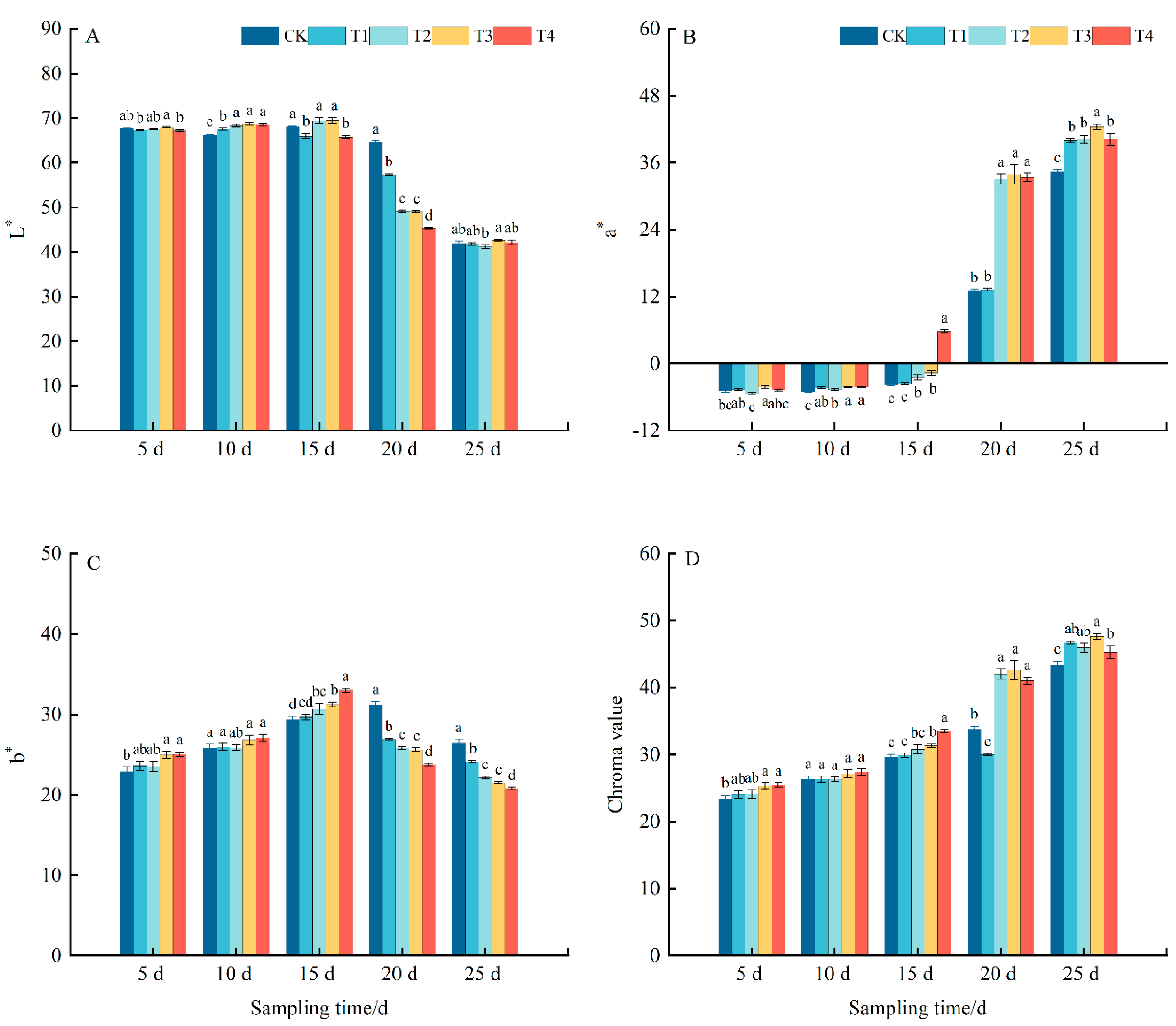
As can be seen from Figure 1A, fruit brightness decreased significantly at the 20th d with an increasing treatment time. As can be seen from Figure 1B, the degree of red color of fruits in the T4 treatment was significantly higher than for the other treatments at the 15th d. At the 20th d, the degree of red color of the T2, T3 and T4 treatments was significantly increased by 156.64, 159.77 and 159.24%, respectively, when compared with CK. The yellow color of fruits showed a tendency to increase and then decrease with the increase in treatment time (Figure 1C). There was no significant change in the treatments at the 5th and 10th d. At the 15th d, the yellow color of fruits was significantly increased by 6.39% and 12.24% in the T3 and T4 treatments, respectively, as compared to that of CK. At the 20th d, b* values were significantly lower in all treatments as compared to CK. Different concentrations of EBR can promote the color transformation of tomato fruits, especially the T3 (0.15 mg/L) treatment, which had the best effect.

3.2. Effect of Exogenous Application of Different Concentrations of Ebr on the Carotenoid Contents of Tomato Fruits

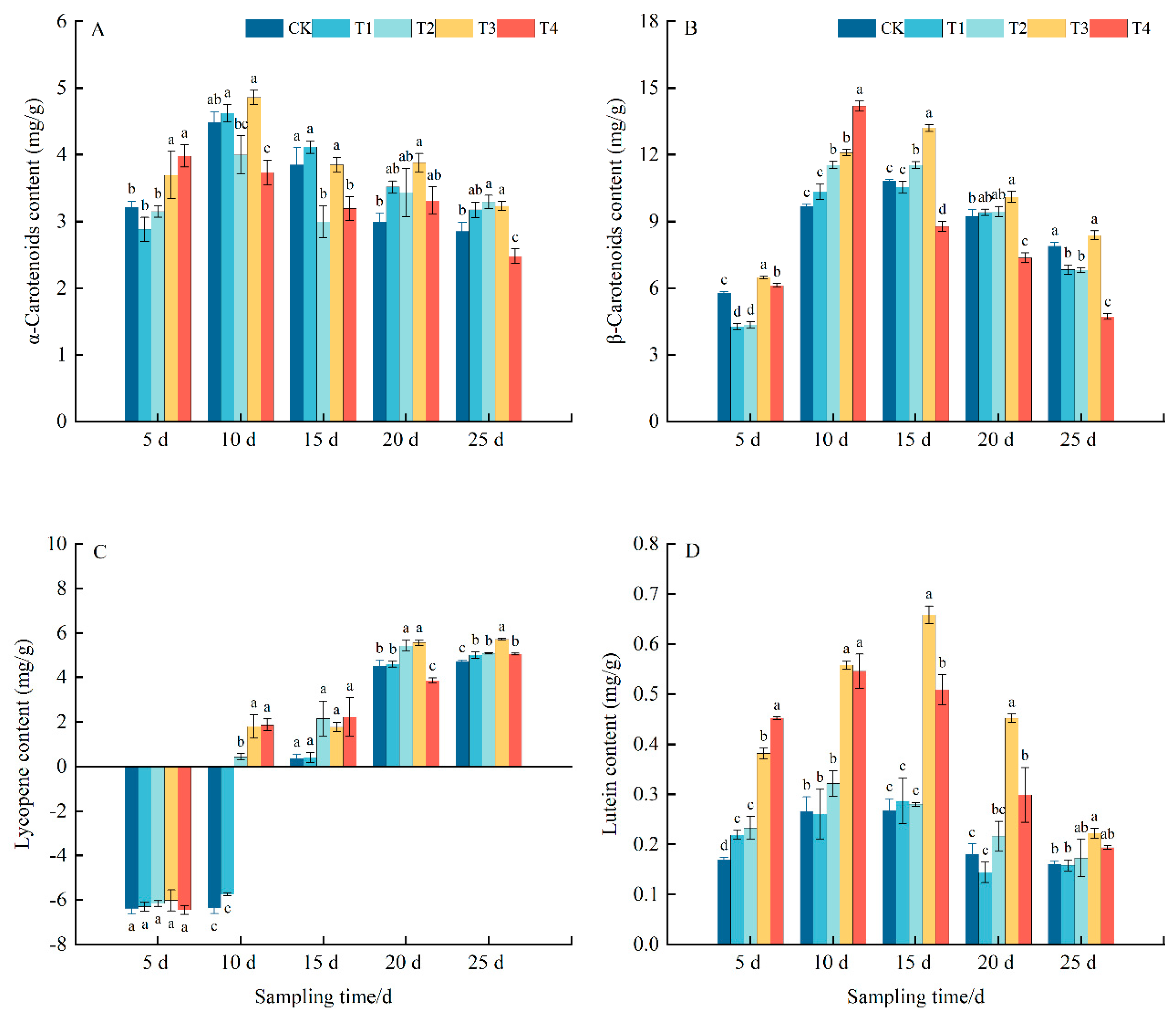
As shown in Figure 2A,B, α-carotene and β-carotene showed a tendency of increasing and then decreasing with an increasing treatment time. At the 10th d, the α-carotene content under the T3 treatment was the highest, which was significantly increased by 8.48% compared to CK. At the 15th d, the highest β-carotene content was recorded under the T3 treatment, which significantly increased by 21.87% compared to CK. And the lycopene content showed an increasing trend with increasing treatment time. At the 20th d, the lycopene content of the T3 treatment was significantly higher than the other treatments, with a significant increase of 23.55% compared to CK (Figure 2C). With the extension of the treatment time, the lutein content exhibited an initial increase followed by a subsequent decline. Between days 5 and 20 of treatment, lutein levels in both the T3 and T4 treatments were significantly higher than those in the CK control. Specifically, by day 20, the lutein content in the T3 treatment was 2.52 times that of CK, while the T4 treatment reached 1.66 times the CK level. In conclusion, the exogenous application of EBR promoted the accumulation of carotenoids in tomato fruits, especially the T3 (0.15 mg/L) treatment, which had the best effect (Figure 2D).

3.3. Effect of Exogenous Application of Different Concentrations of Ebr on Chlorophyll Contents of Tomato Fruits

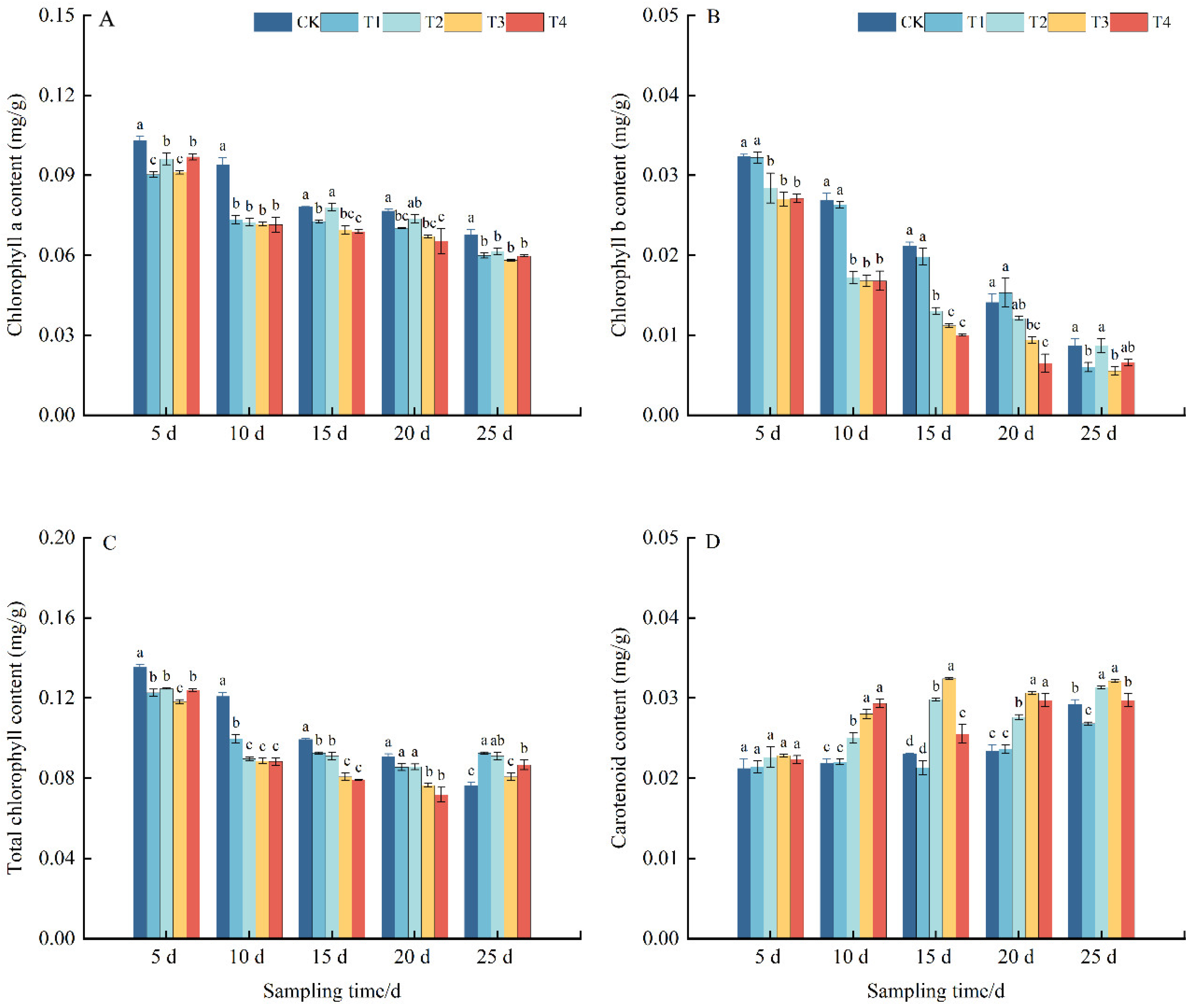
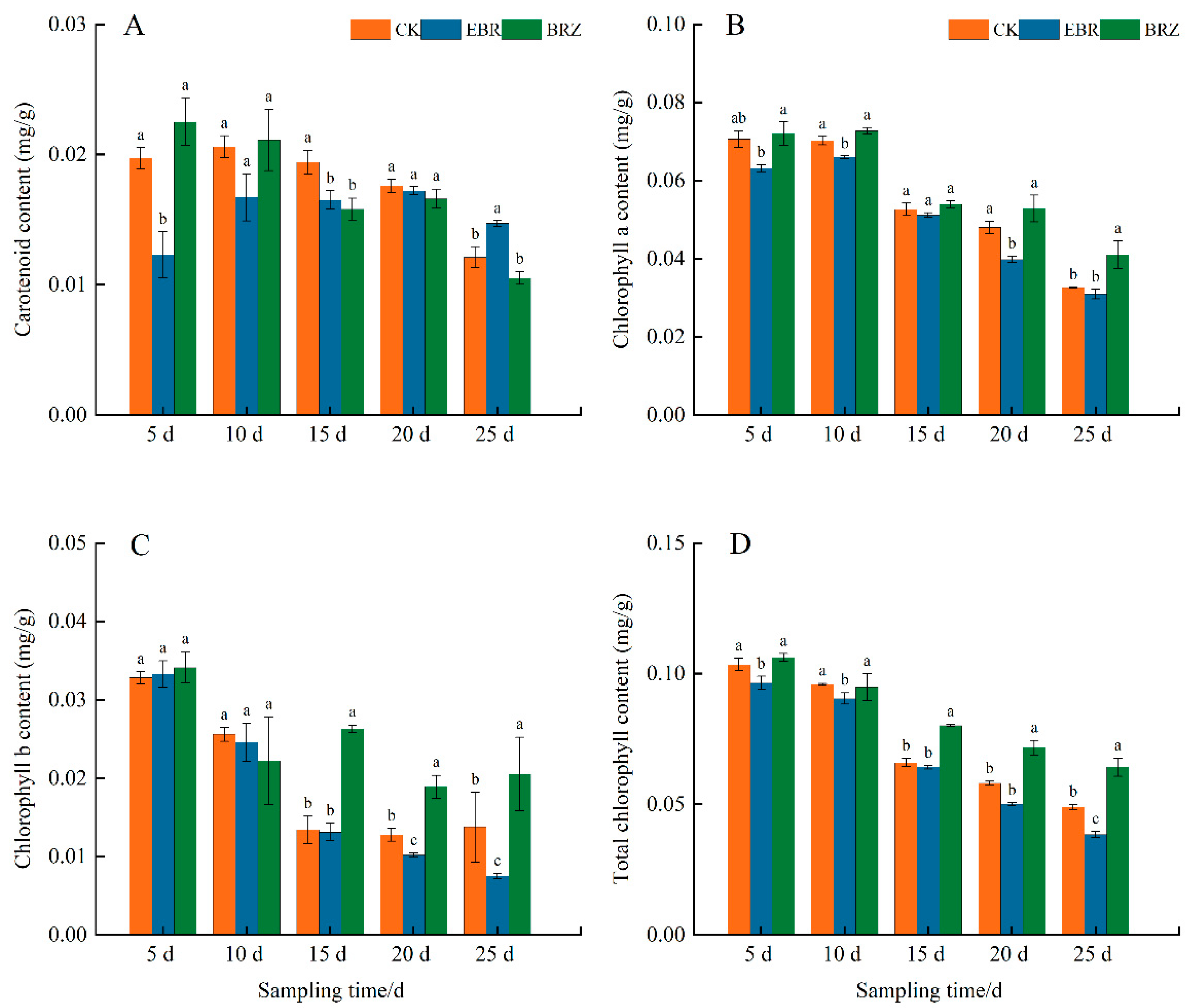
Exogenous application of EBR treatments with different concentrations significantly promoted the degradation of chlorophyll and the accumulation of carotenoids in tomato fruits. Chlorophyll a, chlorophyll b and total chlorophyll contents showed a significant decreasing trend with an increasing treatment time, indicating that exogenous application of different concentrations of EBR treatment reduced the chlorophyll content (Figure 3). At the 25th d, the chlorophyll a content was significantly decreased by 14.18% and chlorophyll b content was significantly decreased by 36.78% in T3 treatments compared to CK. As shown in Figure 3D, the carotenoids showed an increasing trend with an increasing treatment time. At the 15th d, the carotenoid content was significantly increased by 40.87% under the T3 treatment as compared to CK. In conclusion, different concentrations of EBR treatments promoted the degradation of chlorophyll in tomato fruits, accelerated the accumulation of carotenoids, and promoted fruit ripening.

3.4. Effect of Exogenous Ebr and Brz on the Color of Tomato Fruits

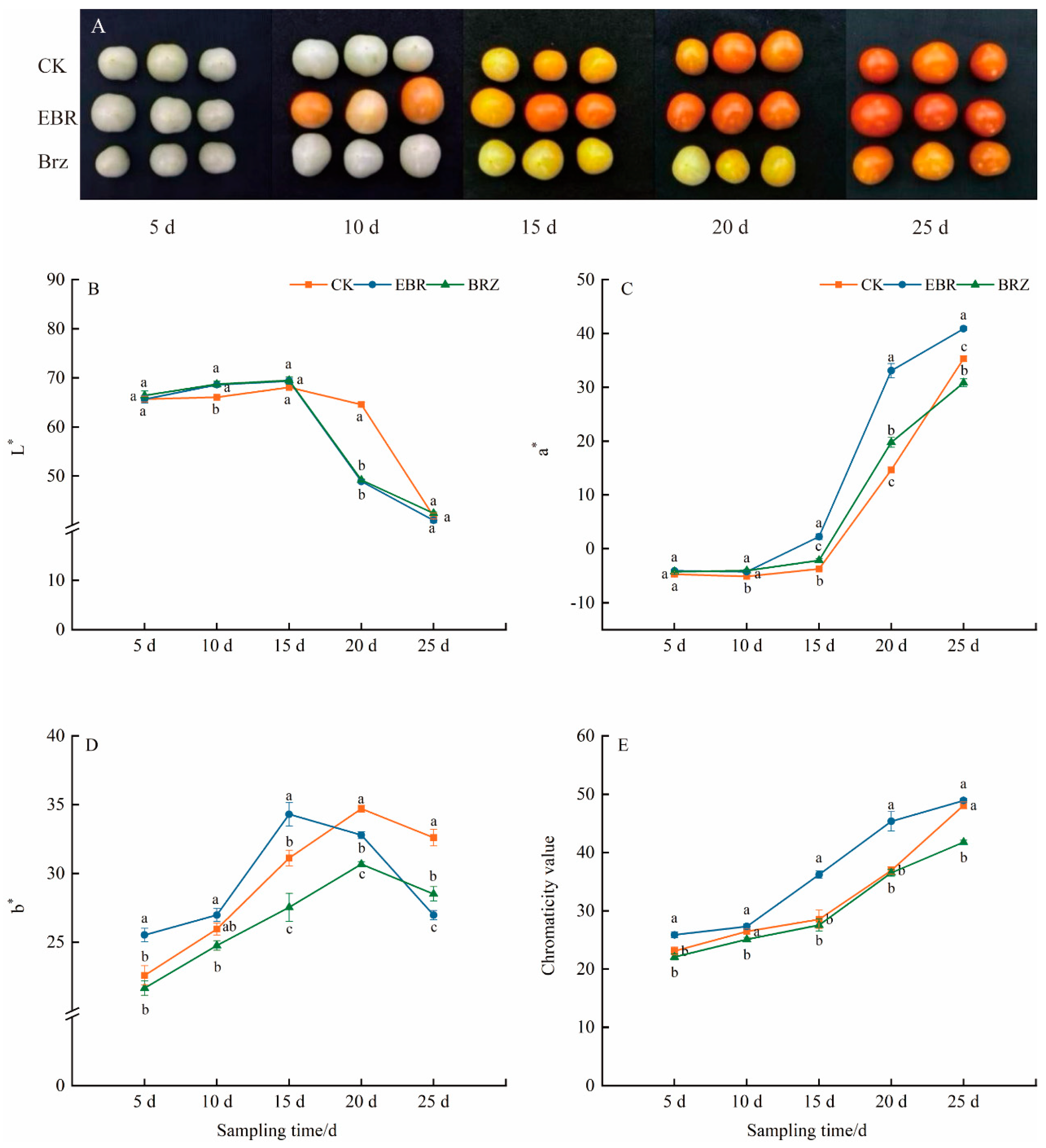
As the processing time increased, the EBR treatment effectively promoted the ripening and color change in tomato fruits, while the BRZ treatment showed the opposite result. The color changes in tomato fruits under exogenous EBR and Brz treatments are shown in Figure 4A. As can be seen in Figure 4B, the fruit brightness under EBR and BRZ treatments significantly decreased by 24.28% and 23.83%, respectively, compared to CK at the 20th d. As can be seen in Figure 4C, the redness of the fruit under the EBR treatment was significantly higher than that of other treatments at the 15th and 20th d. At the 20th d, the EBR treatment increased compared to CK and BRZ by 125.57% and 67.37%, respectively. The yellow color saturation of the fruits showed a tendency of increasing and then decreasing with the increase in treatment time (Figure 4D), and the color difference values of fruits showed an increasing trend (Figure 4E). The color difference in fruits under the EBR treatment was significantly higher than the other treatments at the 15th and 20th d. In conclusion, EBR could promote tomato fruit to turn from green to red and accelerate fruit ripening, while BRZ could partially reverse this effect of EBR.

3.5. Effect of Exogenous Ebr and Brz on Chlorophyll Contents of Tomato Fruits

As can be seen from Figure 5A, the carotenoid content was significantly increased by 21.49% and 40% at the 25th d under EBR treatment as compared to CK and BRZ, respectively, and the chlorophyll a content was significantly reduced by 17.08% and 26.16% at the 20th d (Figure 5B). The chlorophyll b content under BRZ treatment was significantly higher than for the other treatments at the 15th d. At the 25th d, the chlorophyll b content under the EBR treatment was significantly lower than the other treatments; it was reduced by 45.49 and 63.49 percent as compared to CK and BRZ, respectively (Figure 5C). As can be seen in Figure 5D, the total chlorophyll content under EBR treatment was significantly lower than those under the other treatments. In conclusion, faster chlorophyll degradation under the EBR treatment and the opposite effect under the BRZ treatment inhibited fruit ripening.

3.6. Effect of Exogenous Ebr on the Expression of Chlorophyll Degradation-Related Genes in Tomato Fruits

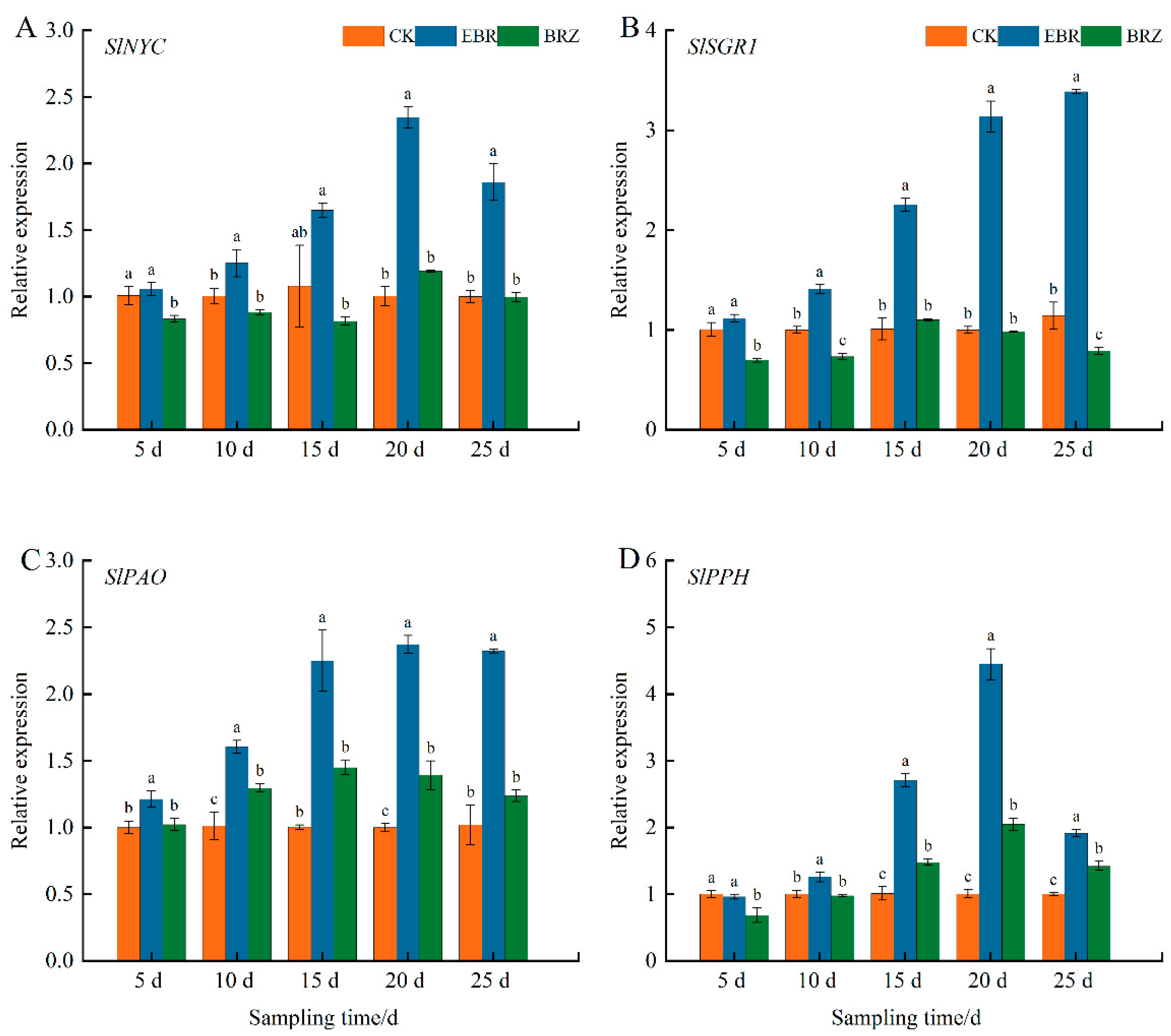
To determine whether EBR reduces the fruit chlorophyll content by upregulating genes related to chlorophyll degradation, we analyzed the expression of SlNYC, SlSGR1, SlPAO and SlPPH genes. As shown in Figure 6, the expression of SlNYC, SlSGR1, SlPAO, and SlPPH was significantly higher in tomato fruit under the EBR treatment with an increasing treatment time. At the 20th d, the gene expression of SlNYC (Figure 3A) and SlPPH (Figure 6D) under the EBR treatment was the highest and significantly different from other treatments, which were 2.34, 1.97-fold and 4.42, 2.17-fold higher than those of CK and BRZ, respectively. At the 25th d, the gene expression of SlSGR1 (Figure 6B) and SlPAO (Figure 6C) under the EBR treatment was the highest and significantly different from the other treatments, which were 2.97- or 4.3-fold and 2.27- or 1.88-fold higher than those of CK and BRZ, respectively. In conclusion, EBR was able to upregulate the expression of chlorophyll degradation genes and accelerate chlorophyll degradation.

3.7. Effect of Exogenous Ebr and Brz on Carotenoid Content of Tomato Fruit

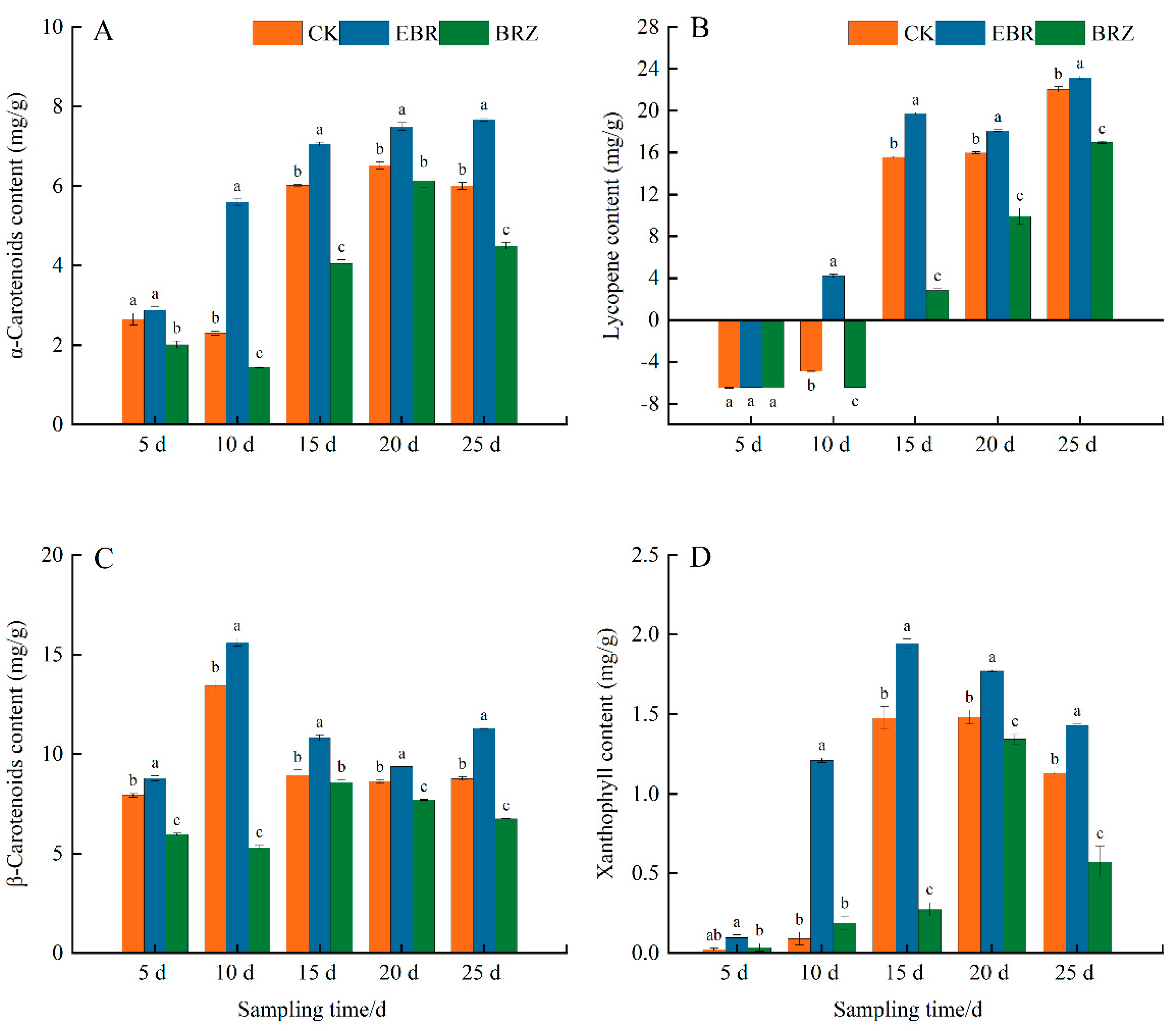
With the increase in treatment time, the carotenoid contents were significantly higher under the EBR treatment at the 10th–25th d than all other treatments. The lycopene (Figure 7B) content was detected under EBR treatment at the 10th d. At the 25th d, the highest contents of α-carotene (Figure 7A) and lycopene were observed in the EBR treatment, which were significantly increased by 27.90% and 5.13% compared to CK, and by 70.62% and 36.56% compared to BRZ. For β-carotene (Figure 7C), the highest content was recorded in the EBR treatment at the 10th d, which was significantly increased by 16.31% compared to CK. For lutein (Figure 7D), the highest content was found in the EBR treatment at the 15th d, which was significantly increased by 31.55% compared to CK. In conclusion, α-carotene and lycopene contents under the EBR treatment showed an increasing trend, and β-carotene and lutein contents showed an increasing and then decreasing trend as the fruits ripened. In contrast, the pigment contents under BRZ treatment were all lower than the control in the same period.

3.8. Effect of Exogenous Ebr on the Expression of Carotenoid Metabolism-Related Genes in Tomato Fruits

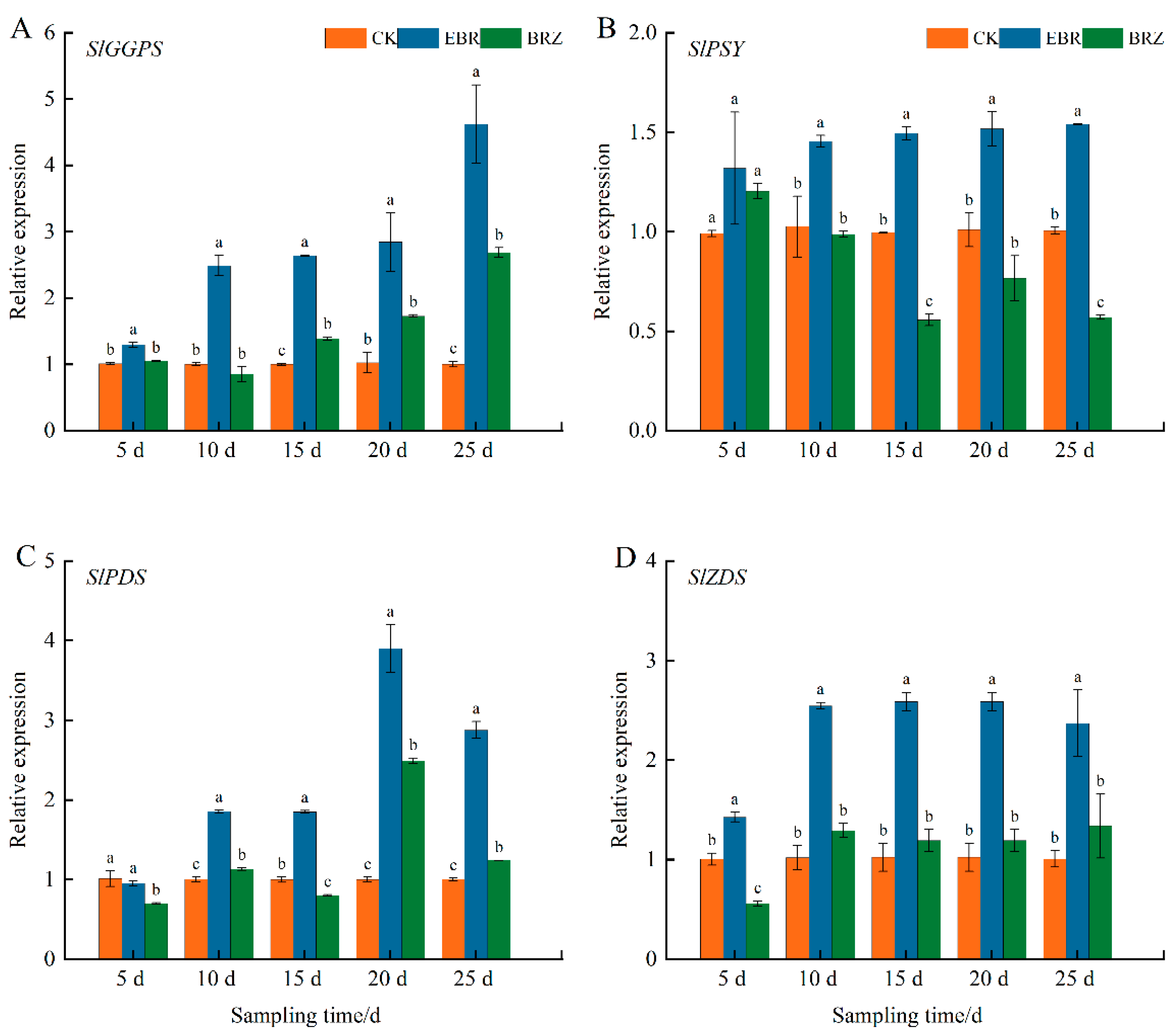
The objective of this study was to determine whether EBR promotes carotenoid accumulation by regulating the expression of genes in the carotenoid metabolic pathway, which we determined for the SlPSY, SlPDS, SlGGPS, and SlZDS genes. As shown in Figure 8, within 10th–25th d, the expression of SlPSY, SlPDS, SlGGPS, and SlZDS under EBR treatment was significantly higher than those of the other treatments, showing an increasing trend. At the 25th d, the expression of SlGGPS under the EBR treatment was the highest, which was 4.62 and 1.72 times higher than those of CK and BRZ, respectively, and at the 20th d, the expression of SlPDS was the highest, which was 3.91 and 1.57 times higher than those of CK and BRZ, respectively. As shown in Figure 8B, SlPDS expression under BRZ treatment showed a decreasing trend and was significantly lower than other treatments at the 15th and 25th d. In conclusion, EBR regulates the upregulation of carotenoid metabolic pathway gene expression to promote carotenoid accumulation, whereas BRZ inhibits the expression of related metabolic genes and slows down the rate of accumulation.

3.9. Correlation Between Exogenous Ebr, Brz and Substances Regulating Color Change in Fruits

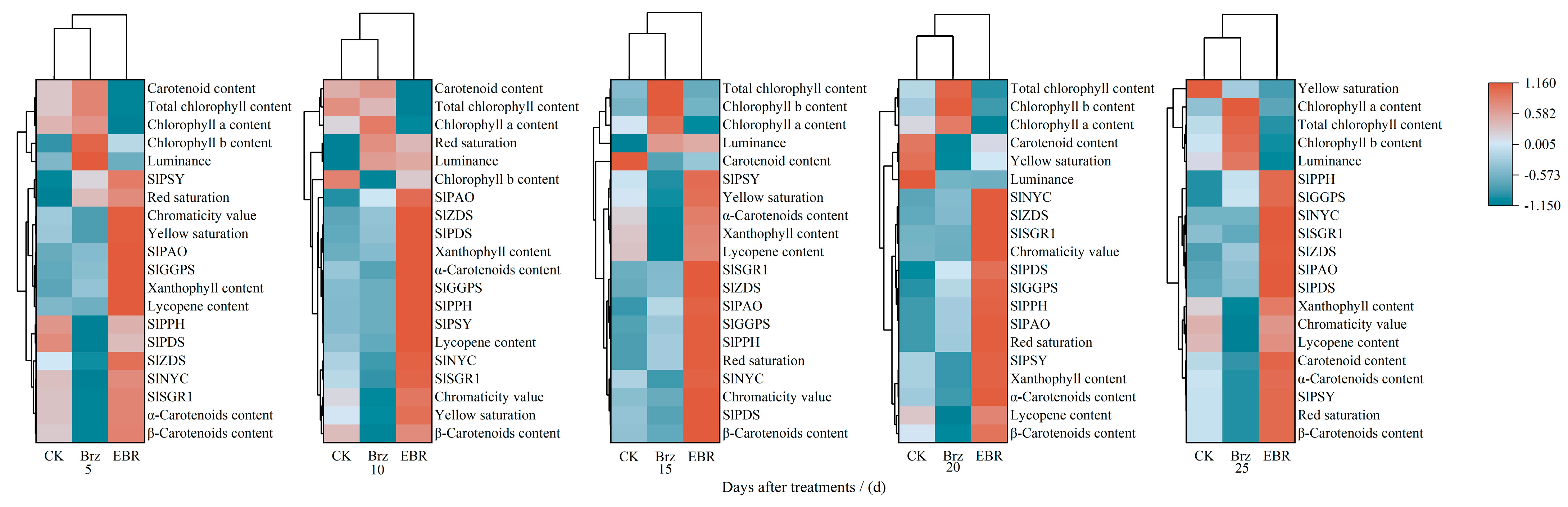
As can be seen in Figure 9, the carotenoid and lycopene contents of tomato fruits were positively correlated with the values of a*, L*, and b* and significantly negatively correlated with the total chlorophyll content at the 10th and 15th d in the EBR treatment. However, at the 20th and 25th d, carotenoid and lycopene contents were positively correlated only with a* values and significantly negatively correlated with L* and b* values. For carotenoid and lycopene biosynthesis genes, the expression of SlGGPPS, SlPSY, SlPDS and SlZDS showed a significant positive correlation with carotenoid and lycopene contents at the 15th d of EBR treatment. In addition, the expression of chlorophyll-degrading genes SlNYC, SlSGR1, SlPPH and SlPAO showed a significant negative correlation with the chlorophyll content at the 20th d under the EBR treatment. The BRZ treatment showed a significant positive correlation between the total chlorophyll content and L* values and a significant negative correlation with b* values and the carotenoid content at the 25th d. In conclusion, EBR treatment promoted carotenoid accumulation and chlorophyll degradation in tomato fruits and accelerated fruit color transformation, whereas BRZ produced the opposite effect.

4. Discussion

BR has a wide range of biological functions, including the promotion of plant growth and development, cell elongation and division, enhancement of crop resistance, and increase in yield [31]. EBR has the same biological functions as BR; it can stimulate plant vigor and growth by regulating endogenous plant hormones and has a variety of effects, such as improving the quality and yield [32,33]. Research has found that EBR is involved in regulating fruit ripening. For example, EBR promoted grapevine pigmentation and shortened its ripening cycle by inducing anthocyanin biosynthesis [34]. In the present experiment, exogenously applied EBR treatments at different concentrations (0.05, 0.1, 0.15, and 0.2 mg/L) significantly increased the brightness, red saturation, yellow saturation, and chromaticity values of the fruits. Overall, the EBR treatment had a positive effect in accelerating the softening of tomato fruits and their color, with the most significant effect observed in the T3 treatment (0.15 mg/L EBR). This finding is similar to the results of the experiment by Mandava and Wang, in which 0.4 mg/L EBR treatment accelerated cherry color change, increased fruit firmness, and shortened the ripening cycle [35]. Another study showed that strawberry fruits treated with 4 μmol/L EBR ripened 8 days earlier than the control fruits, reaching ripeness on day 12 [36]. This may be related to the increased and continuous accumulation of lycopene and carotenoid contents in the fruits after EBR spraying, which accelerated the expression of key genes in the carotenoid synthesis pathway.
Changes in pigments are indicative of the developmental stage and physiological condition of the fruit, and changes in the color of epidermal tissues during fruit ripening are measured by the values of L*, a*, and b* [37,38]. It has been found that L* values gradually decrease and a* values gradually increase with fruit ripening, which may be related to the gradual accumulation of deeper red pigments. b* values decrease after reaching a maximum in mid-ripening, which may be related to the fact that ζ-carotene (light yellow) reaches its maximum concentration before ripening [39]. The optimal concentration of EBR in tomatoes was 0.15 mg/L. This study elucidates the dynamic trends of L*, a*, and b* values during tomato color development. The b* value exhibited a dynamic pattern of an initial increase followed by a decrease, which correlated with the dynamic accumulation of carotenoids—a phenomenon rarely reported in tomatoes. This experiment showed that tomato fruits under the EBR treatment exhibited a* values from day 15, which was 5 days earlier than in the CK and BRZ treatments, while the total color difference value of the BRZ treatment was significantly lower than that of the other treatments at 25 d. Therefore, EBR promoted fruit color change at appropriate concentrations, while BRZ had an inhibitory effect on fruit color change. This finding is similar to the results of the experiment by Zhu and co-workers (2015) [40]. In barley, endogenous BR levels increased under 0.1 μM EBR treatment, while 10 μM BRZ treatment produced the opposite effect [41]. Thus, EBR had a promoting effect on fruit color transformation, whereas BRZ had an inhibitory effect. However, previous studies have primarily focused on single crops or physiological indicators, lacking systematic analyses linking pigment gene expression to the pigment content.
Chlorophylls are photosynthetic pigments that are essential for plant development, and their main role is to absorb light energy from the sun to synthesize ATP. There are two types of chlorophylls in plants: the main component is chlorophyll a, and a smaller amount is chlorophyll b [42]. It has been found that SGR may constitute a ‘metabolic pathway’ for the rapid degradation of chlorophyll by stimulating several chlorophyll-degrading enzymes, such as NYC, PPH, and PAO, in the light-harvesting complex II (LHCII) [43]. An association has been observed between color parameters (L*, a*, b*) and the metabolic shifts in chlorophyll and lycopene during fruit ripening [44]. BRs may play an important role in tomato fruit ripening, with EBR-treated tomato fruits showing a reduced total chlorophyll content and increased lycopene content, while BRZ-treated fruits showed slight chlorophyll degradation and lower lycopene contents than controls [45]. In this study, lycopene was detected in tomato fruits under EBR treatment on day 10, which was 5 days earlier than in the CK and BRZ treatments. Another study found that at a concentration of 20 μM EBR, the expression levels of the chlorophyll-degrading genes BoPPH and BoPAO gradually increased with the treatment time, which led to a decrease in the chlorophyll level and a gradual yellowing of broccoli [46]. The present study demonstrates for the first time in the tomato system that EBR upregulates the expression of chlorophyll degradation genes, confirming that their expression timing aligns with the dynamic changes in chlorophyll content. Furthermore, BRZ treatment reverses this effect, reinforcing the direct regulatory role of the BR signaling pathway in tomato chlorophyll degradation. Following EBR treatment, the expression levels of the chlorophyll degradation genes SlNYC, SlSGR1, SlPPH, and SlPAO were significantly higher at 20 d post-treatment compared to those in the other two treatments, while BRZ treatment reduced their expression levels. Correspondingly, the chlorophyll content under EBR treatment was significantly lower than those under the other treatments at 20 d, whereas the chlorophyll content of tomato fruits under BRZ treatment was significantly higher than those under the other two treatments at 25 d.
The onset of fruit ripening marks the degradation of chlorophyll and the biosynthesis of the red pigments carotenoids (α-carotene, β-carotene, and lutein) and lycopene [47,48]. However, the biosynthesis of carotenoids and lycopene is not directly related to chlorophyll degradation, and the fruit surfaces usually change through the normal accumulation of red color and slow degradation of green color [49]. Hu and co-workers (2020) showed that the accumulation of BRs during tomato fruit ripening induced the expression of key genes of the carotenoid metabolism pathway, SlGGPPS, SlPSY, SlPDS, and SlZDS [50]. Exogenous EBR also had a positive effect on carotenoid biosynthesis, and carotenoid levels were significantly increased in tank bean seedlings under 1 μM EBR treatment compared with the controls [51]. Other studies have shown that carotenoid accumulation in kale callus tissues incubated in medium supplemented with 1 μM EBR and 1 μM BRZ showed significant promotion and inhibition, respectively, and that the expression of BoaPSY1 and BoaPDS1 under EBR treatment was 1.49 and 1.45 times higher than that of the control group, respectively [52]. Similarly, the carotenoid content and PSY1 expression were significantly higher in maize seeds under treatment with 0.1 mg/L EBR than in controls [53]. The present study not only validated the upregulation effect of EBR on SlGGPPS, SlPSY, SlPDS, and SlZDS expression levels but also, for the first time, integrated the tomato pigment content with gene expression temporal data. It clearly demonstrated that EBR led to lycopene accumulation five days earlier, with gene expression peaks matching pigment accumulation peaks. In contrast, BRZ inhibited this process. At days 15 and 20, EBR treatment significantly increased carotenoid and lycopene contents in tomato fruits compared to the other two treatments. Expression levels of the key metabolic pathway genes SlGGPPS, SlPSY, SlPDS, and SlZDS also progressively increased, whereas BRZ treatment yielded the opposite results. In summary, previous studies primarily focused on EBR’s effects on individual pigments or genes [54]. The present experimental system comprehensively analyzed the dynamic changes in gene expression and pigment content across both carotenoid and chlorophyll metabolic pathways. By comparing EBR and BRZ treatments, it rigorously confirmed the central role of the BR signaling pathway in tomato coloration. While this study focused on chlorophyll degradation and carotenoid biosynthesis genes, future research could explore the role of chlorophyll synthesis genes (e.g., FC2, MgPEC), carotenoid cleavage genes (e.g., NCED3, NCED5), and lutein synthesis genes (e.g., BCH2) in EBR-mediated fruit ripening [55,56]. Additionally, the potential involvement of the 26S proteasome in degrading chlorophyll-binding proteins under EBR treatment warrants further investigation.

5. Conclusions

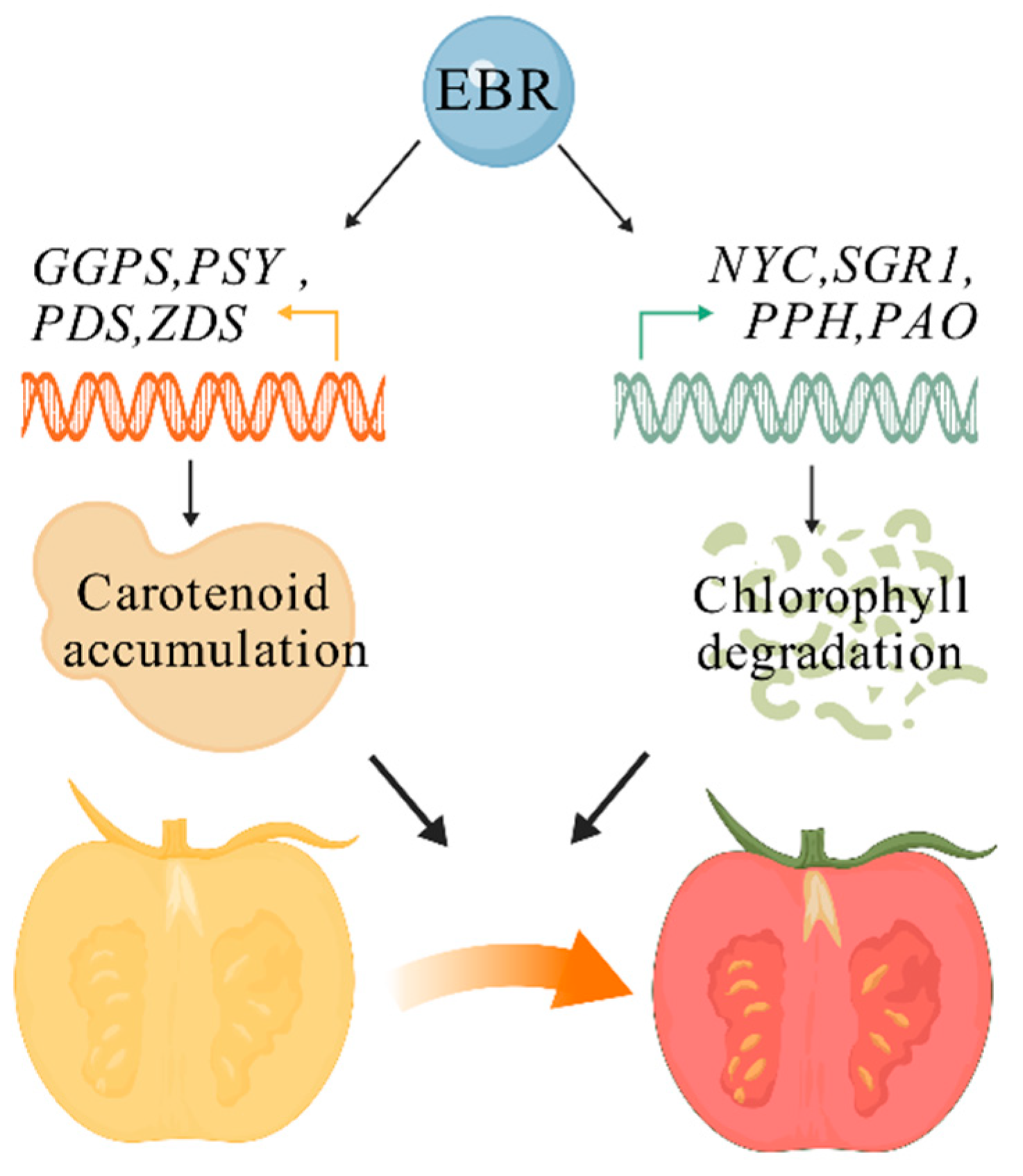
This study systematically investigated the role and mechanism of the brassinosteroid (BR) signaling pathway in tomato fruit coloration through exogenous application of 2,4-epibrassinolide (EBR) and brassinazole (BRZ). Figure 10 elucidates the mechanism by which exogenous 2,4-epibrassinolide (EBR) regulates tomato fruit coloration. The key findings demonstrate that exogenous EBR treatment, particularly at an optimal concentration of 0.15 mg/L, significantly enhances tomato fruit coloration by markedly reducing fruit brightness (L*), increasing red saturation (a*), and modulating the dynamic changes in yellow saturation (b*). Mechanistically, EBR promotes the accumulation of key carotenoids—α-carotene, β-carotene, lycopene, and lutein—through the upregulation of carotenoid biosynthesis genes (SlGGPPS, SlPSY, SlPDS, and SlZDS). Concurrently, it accelerates chlorophyll a and b degradation by inducing the expression of chlorophyll degradation genes (SlNYC, SlSGR1, SlPPH, and SlPAO), whereas BRZ treatment reverses these effects. Correlation analysis further revealed significant associations between the pigment content, color parameters, and gene expression, forming an integrated regulatory network for pigment metabolism during fruit ripening. In summary, exogenous EBR accelerates tomato fruit coloration by synergistically regulating carotenoid synthesis and chlorophyll degradation pathways. These findings provide systematic physiological and molecular evidence supporting the role of BR in fruit coloring and offer theoretical support for the potential application of EBR to improve the fruit appearance quality. Future research could focus on exploring the interaction network between EBR and other plant hormones (e.g., ETH and ABA) during tomato coloration, as well as conducting field trials to evaluate EBR’s applicability across diverse cultivars and cultivation systems.

Author Contributions

L.L.: formal analysis, investigation, data curation, visualization, writing—original draft, writing—review and editing; S.L.: conceptualization, methodology, supervision, funding acquisition, writing—review and editing; J.Y.: conceptualization, supervision, funding acquisition, writing—review and editing; G.Z., Z.L. and J.L.: resources, writing—review and editing; R.Z., T.M., Y.W. and H.C.: investigation, data curation, visualization. All authors have read and agreed to the published version of the manuscript.

Funding

This study was supported by funding from the China National Natural Fund (32160705); major science and technology projects of Gansu Province (23ZDNA008); Innovation Fund Project for College Teachers (2023B-084); Gansu Youth Science and Technology Fund (24JRRA671); and Gansu Top Leading Talent Plan (GSBJLJ-2021-14).

Data Availability Statement

The original contributions presented in this study are included in the article. Further inquiries can be directed to the corresponding authors.

Conflicts of Interest

The authors declare that they have no known competing financial interests or personal relationships that could have appeared to influence the work reported in this paper.

References

  1. Zhu, F.; Wen, W.; Cheng, Y.; Fernie, A.R. The metabolic changes that effect fruit quality during tomato fruit ripening. Mol. Hortic. 2022, 2, 2. [Google Scholar] [CrossRef]
  2. Yang, C.; Chen, J.; Zhang, Y.; Huang, J.; Wang, H.; Chen, J. Non-targeted metabolomics reveals the taste variations during Baccaurea ramiflora Lour. fruit maturation. Front. Plant Sci. 2024, 15, 1420231. [Google Scholar] [CrossRef]
  3. Li, X.; Wang, X.; Zhang, Y.; Zhang, A.; You, C.X. Regulation of fleshy fruit ripening: From transcription factors to epigenetic modifications. Hortic. Res. 2022, 9, uhac013. [Google Scholar] [CrossRef]
  4. Jia, K.; Wang, W.; Zhang, Q.; Jia, W. Cell Wall Integrity Signaling in Fruit Ripening. Int. J. Mol. Sci. 2023, 24, 4054. [Google Scholar] [CrossRef]
  5. Yahia, E.M.; Ornelas-Paz, J.D.J.; Victoria-Campos, C.I. Changes in color, vitamin C, carotenoids and tocopherols during ripening and senescence of tomato fruit. J. Hortic. Postharvest Res. 2024, 7, 335–344. [Google Scholar] [CrossRef]
  6. Horvath-Mezofi, Z.; Baranyai, L.; Nguyen, L.L.P.; Dam, M.S.; Ha, N.T.T.; Gob, M.; Sasvar, Z.; Csurka, T.; Zsom, T.; Hitka, G. Evaluation of Color and Pigment Changes in Tomato after 1-Methylcyclopropene (1-MCP) Treatment. Sensors 2024, 24, 2426. [Google Scholar] [CrossRef] [PubMed]
  7. Dorairaj, D.; Sharma, S.; Mawale, K.S.; Puthusseri, B.; Parvatam, G.; Shetty, N.P. Determining the function of ripening associated genes and biochemical changes during tomato (Solanum lycopersicum L.) fruit maturation. Biotechnol. Lett. 2025, 47, 22. [Google Scholar] [CrossRef]
  8. Sakuraba, Y.; Schelbert, S.; Park, S.Y.; Han, S.H.; Lee, B.D.; Andres, C.B.; Kessler, F.; Hortensteiner, S.; Paek, N.C. STAY-GREEN and chlorophyll catabolic enzymes interact at light-harvesting complex II for chlorophyll detoxification during leaf senescence in Arabidopsis. Plant Cell 2012, 24, 507–518. [Google Scholar] [CrossRef]
  9. Chen, H.; Ji, H.; Huang, W.; Zhang, Z.; Zhu, K.; Zhu, S.; Chai, L.; Ye, J.; Deng, X. Transcription factor CrWRKY42 coregulates chlorophyll degradation and carotenoid biosynthesis in citrus. Plant Physiol. 2024, 195, 728–744. [Google Scholar] [CrossRef] [PubMed]
  10. Shimoda, Y.; Ito, H.; Tanaka, A. Arabidopsis STAY-GREEN, Mendel’s Green Cotyledon Gene, Encodes Magnesium-Dechelatase. Plant Cell 2016, 28, 2147–2160. [Google Scholar] [CrossRef] [PubMed]
  11. Schelbert, S.; Aubry, S.; Burla, B.; Agne, B.; Kessler, F.; Krupinska, K.; Hortensteiner, S. Pheophytin pheophorbide hydrolase (pheophytinase) is involved in chlorophyll breakdown during leaf senescence in Arabidopsis. Plant Cell 2009, 21, 767–785. [Google Scholar] [CrossRef] [PubMed]
  12. Hörtensteiner, S.; Hauenstein, M.; Kräutler, B. Chlorophyll breakdown—Regulation, biochemistry and phyllobilins as its products. In Metabolism, Structure and Function of Plant Tetrapyrroles: Introduction, Microbial and Eukaryotic Chlorophyll Synthesis and Catabolism; Elsevier: Amsterdam, The Netherlands, 2019; pp. 213–271. [Google Scholar]
  13. Luo, Z.; Zhang, J.; Li, J.; Yang, C.; Wang, T.; Ouyang, B.; Li, H.; Giovannoni, J.; Ye, Z. A STAY-GREEN protein SlSGR1 regulates lycopene and beta-carotene accumulation by interacting directly with SlPSY1 during ripening processes in tomato. New Phytol. 2013, 198, 442–452. [Google Scholar] [CrossRef]
  14. Sun, T.; Tadmor, Y.; Li, L. Pathways for Carotenoid Biosynthesis, Degradation, and Storage. Methods Mol. Biol. 2020, 2083, 3–23. [Google Scholar] [CrossRef]
  15. Zhou, X.; Rao, S.; Wrightstone, E.; Sun, T.; Lui, A.C.W.; Welsch, R.; Li, L. Phytoene Synthase: The Key Rate-Limiting Enzyme of Carotenoid Biosynthesis in Plants. Front. Plant Sci. 2022, 13, 884720. [Google Scholar] [CrossRef]
  16. Quian-Ulloa, R.; Stange, C. Carotenoid Biosynthesis and Plastid Development in Plants: The Role of Light. Int. J. Mol. Sci. 2021, 22, 1184. [Google Scholar] [CrossRef] [PubMed]
  17. Misawa, N. Carotenoids: Biosynthetic and Biofunctional Approaches; Springer: Berlin/Heidelberg, Germany, 2021. [Google Scholar]
  18. Clouse, S.D.; Sasse, J.M. BRASSINOSTEROIDS: Essential Regulators of Plant Growth and Development. Annu. Rev. Plant Biol. 1998, 49, 427–451. [Google Scholar] [CrossRef]
  19. Manghwar, H.; Hussain, A.; Ali, Q.; Liu, F. Brassinosteroids (BRs) Role in Plant Development and Coping with Different Stresses. Int. J. Mol. Sci. 2022, 23, 1012. [Google Scholar] [CrossRef]
  20. Nolan, T.M.; Vukasinovic, N.; Liu, D.; Russinova, E.; Yin, Y. Brassinosteroids: Multidimensional Regulators of Plant Growth, Development, and Stress Responses. Plant Cell 2020, 32, 295–318. [Google Scholar] [CrossRef]
  21. Li, S.M.; Zheng, H.X.; Lin, L.; Wang, F.; Sui, N. Roles of brassinosteroids in plant growth and abiotic stress response. Plant Growth Regul. 2021, 93, 29–38. [Google Scholar] [CrossRef]
  22. Hafeez, M.B.; Zahra, N.; Zahra, K.; Raza, A.; Batool, A.; Shaukat, K.; Khan, S. Brassinosteroids: Molecular and physiological responses in plant growth and abiotic stresses. Plant Stress 2021, 2, 100029. [Google Scholar] [CrossRef]
  23. Zhang, Y.; Xiao, Y.; Zhang, Y.; Dong, Y.; Liu, Y.; Liu, L.; Wan, S.; He, J.; Yu, Y. Accumulation of Galactinol and ABA Is Involved in Exogenous EBR-Induced Drought Tolerance in Tea Plants. J. Agric. Food Chem. 2022, 70, 13391–13403. [Google Scholar] [CrossRef]
  24. Meng, F.; Liu, H.; Hu, S.; Jia, C.; Zhang, M.; Li, S.; Li, Y.; Lin, J.; Jian, Y.; Wang, M.; et al. The brassinosteroid signaling component SlBZR1 promotes tomato fruit ripening and carotenoid accumulation. J. Integr. Plant Biol. 2023, 65, 1794–1813. [Google Scholar] [CrossRef]
  25. Guo, Y.F.; Shan, W.; Liang, S.M.; Wu, C.J.; Wei, W.; Chen, J.Y.; Lu, W.J.; Kuang, J.F. MaBZR1/2 act as transcriptional repressors of ethylene biosynthetic genes in banana fruit. Physiol. Plant 2019, 165, 555–568. [Google Scholar] [CrossRef]
  26. Zhu, Z.; Zhang, Z.Q.; Qin, G.Z.; Tian, S.P. Effects of brassinosteroids on postharvest disease and senescence of jujube fruit in storage. Postharvest Biol. Technol. 2010, 56, 50–55. [Google Scholar] [CrossRef]
  27. Zaharah, S.; Singh, Z. Role of brassinosteroids in mango fruit ripening. In Proceedings of the XXVIII International Horticultural Congress on Science and Horticulture for People (IHC2010): International Symposium on 934, Lisbon, Portugal, 22–27 August 2010. [Google Scholar]
  28. He, Y.; Li, J.; Ban, Q.; Han, S.; Rao, J. Role of Brassinosteroids in Persimmon (Diospyros kaki L.) Fruit Ripening. J. Agric. Food Chem. 2018, 66, 2637–2644. [Google Scholar] [CrossRef]
  29. Chazaux, M.; Schiphorst, C.; Lazzari, G.; Caffarri, S. Precise estimation of chlorophyll a, b and carotenoid content by deconvolution of the absorption spectrum and new simultaneous equations for Chl determination. Plant J. 2022, 109, 1630–1648. [Google Scholar] [CrossRef] [PubMed]
  30. Jin, N.; Jin, L.; Wang, S.; Meng, X.; Ma, X.; He, X.; Zhang, G.; Luo, S.; Lyu, J.; Yu, J. A Comprehensive Evaluation of Effects on Water-Level Deficits on Tomato Polyphenol Composition, Nutritional Quality and Antioxidant Capacity. Antioxidants 2022, 11, 1585. [Google Scholar] [CrossRef] [PubMed]
  31. Hussain, M.A.; Fahad, S.; Sharif, R.; Jan, M.F.; Mujtaba, M.; Ali, Q.; Ahmad, A.; Ahmad, H.; Amin, N.; Ajayo, B.S.; et al. Multifunctional role of brassinosteroid and its analogues in plants. Plant Growth Regul. 2020, 92, 141–156. [Google Scholar] [CrossRef]
  32. Khan, R.; Ma, X.; Hussain, Q.; Asim, M.; Iqbal, A.; Ren, X.; Shah, S.; Chen, K.; Shi, Y. Application of 2,4-Epibrassinolide Improves Drought Tolerance in Tobacco through Physiological and Biochemical Mechanisms. Biology 2022, 11, 1192. [Google Scholar] [CrossRef]
  33. Kim, E.J.; Russinova, E. Brassinosteroid signalling. Curr. Biol. 2020, 30, R294–R298. [Google Scholar] [CrossRef]
  34. Vergara, A.; Torrealba, M.; Alcalde, J.A.; Perez-Donoso, A.G. Commercial brassinosteroid increases the concentration of anthocyanin in red tablegrape cultivars (Vitis vinifera L.). Aust. J. Grape Wine Res. 2020, 26, 427–433. [Google Scholar] [CrossRef]
  35. Mandava, B.; Wang, Y. Effect of brassinosteroids on cherry maturation, firmness and fruit quality. Acta Hortic. 2016, 1139, 451–458. [Google Scholar] [CrossRef]
  36. Zahedipour-Sheshglani, P.; Asghari, M. Impact of foliar spray with 24-epibrassinolide on yield, quality, ripening physiology and productivity of the strawberry. Sci. Hortic. 2020, 268, 109376. [Google Scholar] [CrossRef]
  37. Vegh, R.; Sipiczki, G.; Csoka, M. Investigating the Antioxidant and Color Properties of Bee Pollens of Various Plant Sources. Chem. Biodivers. 2023, 20, e202300126. [Google Scholar] [CrossRef] [PubMed]
  38. López-Rodríguez, D.; Micó-Vicent, B.; Jordán-Núñez, J.; Belda, A. Extraction of natural pigments from Mediterranean environments plants. Ind. Crops Prod. 2024, 221, 119352. [Google Scholar] [CrossRef]
  39. Tosun, I.; Ustun, N.S.; Tekguler, B. Physical and chemical changes during ripening of blackberry fruits. Sci. Agric. 2008, 65, 87–90. [Google Scholar] [CrossRef]
  40. Zhu, T.; Tan, W.R.; Deng, X.G.; Zheng, T.; Zhang, D.W.; Lin, H.H. Effects of brassinosteroids on quality attributes and ethylene synthesis in postharvest tomato fruit. Postharvest Biol. Technol. 2015, 100, 196–204. [Google Scholar] [CrossRef]
  41. Bajguz, A.; Orczyk, W.; Golebiewska, A.; Chmur, M.; Piotrowska-Niczyporuk, A. Occurrence of brassinosteroids and influence of 24-epibrassinolide with brassinazole on their content in the leaves and roots of Hordeum vulgare L. cv. Golden Promise. Planta 2019, 249, 123–137. [Google Scholar] [CrossRef] [PubMed]
  42. Genesio, L.; Bassi, R.; Miglietta, F. Plants with less chlorophyll: A global change perspective. Glob. Chang. Biol. 2020, 27, 959–967. [Google Scholar] [CrossRef] [PubMed]
  43. Jiao, B.; Meng, Q.; Lv, W. Roles of stay-green (SGR) homologs during chlorophyll degradation in green plants. Bot. Stud. 2020, 61, 25. [Google Scholar] [CrossRef]
  44. López Camelo, A.F.; Gómez, P.A. Comparison of color indexes for tomato ripening. Hortic. Bras. 2004, 22, 534–537. [Google Scholar] [CrossRef]
  45. Jiroutova, P.; Oklestkova, J.; Strnad, M. Crosstalk between Brassinosteroids and Ethylene during Plant Growth and under Abiotic Stress Conditions. Int. J. Mol. Sci. 2018, 19, 3283. [Google Scholar] [CrossRef]
  46. Cai, J.H.; Luo, F.; Zhao, Y.B.; Zhou, Q.; Wei, B.D.; Zhou, X.; Ji, S.J. 24-Epibrassinolide treatment regulates broccoli yellowing during shelf life. Postharvest Biol. Technol. 2019, 154, 87–95. [Google Scholar] [CrossRef]
  47. Kahlon, P.S.; Seta, S.M.; Zander, G.; Scheikl, D.; Huckelhoven, R.; Joosten, M.; Stam, R. Population studies of the wild tomato species Solanum chilense reveal geographically structured major gene-mediated pathogen resistance. Proc. Biol. Sci. 2020, 287, 20202723. [Google Scholar] [CrossRef] [PubMed]
  48. Wei, L.; Lu, L.; Shang, Y.; Ran, X.; Liu, Y.; Fang, Y. Can SPAD Values and CIE L*a*b* Scales Predict Chlorophyll and Carotenoid Concentrations in Leaves and Diagnose the Growth Potential of Trees? An Empirical Study of Four Tree Species. Horticulturae 2024, 10, 548. [Google Scholar] [CrossRef]
  49. Kapoor, L.; Simkin, A.J.; George Priya Doss, C.; Siva, R. Fruit ripening: Dynamics and integrated analysis of carotenoids and anthocyanins. BMC Plant Biol. 2022, 22, 27. [Google Scholar] [CrossRef]
  50. Hu, S.; Liu, L.; Li, S.; Shao, Z.; Meng, F.; Liu, H.; Duan, W.; Liang, D.; Zhu, C.; Xu, T.; et al. Regulation of fruit ripening by the brassinosteroid biosynthetic gene SlCYP90B3 via an ethylene-dependent pathway in tomato. Hortic. Res. 2020, 7, 163. [Google Scholar] [CrossRef] [PubMed]
  51. Amsarajan, A.; Lingakumar, K. Effect of 24-Epibrassinollide on the Morphological and Biochemical Constitutions Vigna unguiculata (L.) Seedlings. Ind. J. Sci. Res. Technol. 2015, 3, 35–39. [Google Scholar]
  52. Zhang, C.; Liang, Q.; Wang, Y.; Liang, S.; Huang, Z.; Li, H.; Escalona, V.H.; Yao, X.; Cheng, W.; Chen, Z.; et al. BoaBZR1.1 mediates brassinosteroid-induced carotenoid biosynthesis in Chinese kale. Hortic. Res. 2024, 11, uhae104. [Google Scholar] [CrossRef]
  53. Yang, W.; Xu, H.; Wang, F.; He, W.; Li, D.; Guo, Q.; Bao, Y.; Zhang, Z. Influence of exogenous 24-epibrassinolide on improving carotenoid content, antioxidant capacity and gene expression in germinated maize seeds. J. Sci. Food Agric. 2024, 105, 798–806. [Google Scholar] [CrossRef]
  54. Chai, Y.M.; Zhang, Q.; Tian, L.; Li, C.L.; Xing, Y.; Qin, L.; Shen, Y.Y. Brassinosteroid is involved in strawberry fruit ripening. Plant Growth Regul. 2013, 69, 63–69. [Google Scholar] [CrossRef]
  55. Chen, X.L.; Lv, R.; Zhang, Y.; Mo, F.L.; Meng, F.Y.; Cheng, M.Z.; Huang, X.M.; Qi, H.A.; Wang, A.X. Identification of the NCED gene family in tomato (Solanum lycopersicum) and functional analysis of SlNCED2 in response to drought stress. Sci. Hortic. 2024, 330, 113087. [Google Scholar] [CrossRef]
  56. Zhang, Y.; Jin, J.; Zhu, S.; Sun, Q.; Zhang, Y.; Xie, Z.; Ye, J.; Deng, X. Citrus β-carotene hydroxylase 2 (BCH2) participates in xanthophyll synthesis by catalyzing the hydroxylation of β-carotene and compensates for BCH1 in citrus carotenoid metabolism. Hortic. Res. 2023, 10, uhac290. [Google Scholar] [CrossRef] [PubMed]
Figure 1. Effects of exogenous application of different concentrations of EBR on L* (A), a* (B), b* (C) and chroma value (D) of tomato fruits. CK: distilled water + 0.01% Tween-80; T1: 0.05 mg/L EBR + 0.01% Tween-80; T2: 0.1 mg/L EBR + 0.01% Tween-80; T3: 0.15 mg/L EBR + 0.01% Tween-80; T4: 0.2 mg/L EBR + 0.01% Tween-80. Data are expressed as the mean of the three biological replicates ±SE. Different lowercase letters indicate significant differences based on the Duncan multiple range test (p < 0.05).
Horticulturae 12 00254 g001
Figure 2. Effects of exogenous application of different concentrations of EBR on α-carotenoids (A), β-carotenoids (B), lycopene (C) and lutein (D) of tomato fruits. CK: distilled water + 0.01% Tween-80; T1: 0.05 mg/L EBR + 0.01% Tween-80; T2: 0.1 mg/L EBR + 0.01% Tween-80; T3: 0.15 mg/L EBR + 0.01% Tween-80; T4: 0.2 mg/L EBR + 0.01% Tween-80. Data are expressed as the mean of the three biological replicates ±SE. Different lowercase letters indicate significant differences based on the Duncan multiple range test (p < 0.05).
Horticulturae 12 00254 g002
Figure 3. Effects of exogenous application of different concentrations of EBR on chlorophyll a (A), chlorophyll b (B), total chlorophyll (C) and carotenoid (D) of tomato fruits. CK: distilled water + 0.01% Tween80; T1: 0.05 mg/L EBR + 0.01% Tween-80; T2: 0.1 mg/L EBR + 0.01% Tween-80; T3: 0.15 mg/L EBR + 0.01% Tween-80; T4: 0.2 mg/L EBR + 0.01% Tween-80. Data are expressed as the mean of the three biological replicates ±SE. Different lowercase letters indicate significant differences based on the Duncan multiple range test (p < 0.05).
Horticulturae 12 00254 g003
Figure 4. Effects of exogenous EBR and BRZ on fruit phenotype (A), L* (B), a* (C), b* (D) and chroma value (E) of tomato fruits. CK: distilled water + 0.01% Tween80; EBR: 0.15 mg/L EBR + 0.01% Tween-80; BRZ: 4 μmol/L BRZ + 0.01% Tween-80. Data are expressed as the mean of the three biological replicates ±SE. Different lowercase letters indicate significant differences based on the Duncan multiple range test (p < 0.05).
Horticulturae 12 00254 g004
Figure 5. Effects of exogenous application of different concentrations of EBR on carotenoid (A), chlorophyll a (B), chlorophyll b (C), and total chlorophyll (D) of tomato fruits. CK: distilled water + 0.01% Tween80; EBR: 0.15 mg/L EBR + 0.01% Tween-80; BRZ: 4 μmol/L BRZ + 0.01% Tween-80. Data are expressed as the mean of the three biological replicates ±SE. Different lowercase letters indicate significant differences based on the Duncan multiple range test (p < 0.05).
Horticulturae 12 00254 g005
Figure 6. Effects of exogenous EBR and BRZ on the chlorophyll-degrading genes SlNYC (A), SlSGR1 (B), SlPAO (C), and SlPPH (D). CK: distilled water + 0.01% Tween-80; EBR: 0.15 mg/LEBR + 0.01% Tween-80; BRZ: 4 μmol/L BRZ + 0.01% Tween-80. Data are expressed as mean ± SE of three biological replicates. Different lowercase letters indicate significant differences based on Duncan’s Multiple Extreme Difference Test (p < 0.05).
Horticulturae 12 00254 g006
Figure 7. Effects of exogenous application of different concentrations of EBR on α-carotenoids (A), lycopene (B), β-carotenoids (C), and xanthophyll (D) of tomato fruits. CK: distilled water + 0.01% Tween-80; EBR: 0.15 mg/LEBR + 0.01% Tween-80; BRZ: 4 μmol/L BRZ + 0.01% Tween-80. Data are expressed as the mean of the three biological replicates ±SE. Different lowercase letters indicate significant differences based on the Duncan multiple range test (p < 0.05).
Horticulturae 12 00254 g007
Figure 8. Effects of exogenous EBR and BRZ on the carotenoid metabolism genes SlGGPS (A), SlPSY (B), SlPDS (C), and SlZDS (D). CK: distilled water + 0.01% Tween-80; EBR: 0.15 mg/LEBR + 0.01% Tween-80; BRZ: 4 μmol/L BRZ + 0.01% Tween-80. Data are expressed as mean ± SE of three biological replicates. Different lowercase letters indicate significant differences based on Duncan’s Multiple Extreme Difference Test (p < 0.05).
Horticulturae 12 00254 g008
Figure 9. Heat map of effects of EBR and BRZ on pigment components in tomato fruit. The Min–Max normalization method was used to standardize the data. The color block indicates the relative value of the amino acid component at the corresponding position.
Horticulturae 12 00254 g009
Figure 10. The effect of exogenous 2,4-epibrassinolide (EBR) on tomato fruit color transformation. SlGGPPS/SlPSY/SlPDS/SlZDS, carotenoid metabolic pathway genes. SlNYC/SlSGR1/SlPPH/SlPAO, chlorophyll-degrading gene.
Horticulturae 12 00254 g010
Table 1. Primer information for qRT-PCR.
Gene NamePrimer Sequence (5′-3′)Amplicon Size (bp)GC (%)TM (°C)
PDS-FAAGGCGCTGTCTTATCAGGAAA2245.4559
PDS-RTAAACTACGCTTGCTTCCGACA2245.4559.06
PSY1-FCAAATGGGACAAGTTTCATGGA2240.9154.32
PSY1-RTTCCTATGCCTCGATGAATCAA2240.9156.52
ZDS-FACCGTACAACTACGCTACAATGG2347.8358.39
ZDS-RCATCTGGCGTATAGAGGAGATTG2347.8358.75
NYC-FAGAGGCAGATCGACTCCGTA205558.87
NYC-RCTCCGTAACTGGGCTGAAAG205557.04
PAO-FTGGATTAGCATACATTCTACACGAA253657.3
PAO-RTTGTGTTTTGTGCTGTTTCTGA2236.3654.79
PPH-FCCCATGATGAAGTCCCAGAG205555.5
PPH-RGGGAGAGGCTTTCCATGTTT205054.87
SGR-FAAAATGGGACCATCCAACAA204051.38
SGR-RGCTGCTTCCACAAACCCTAT205055.52
GGPS-FGACAGCATCTGAGTCCGTCA205557.57
GGPS-RCTTGGCCAGGACAGAGTAGC206058.51
Actin-FAGAACTATGAATTGCCTGATGGAC2441.6757.28
Actin-RTGAGCACAATGTTACCGTAGAGG2347.8358.66
Disclaimer/Publisher’s Note: The statements, opinions and data contained in all publications are solely those of the individual author(s) and contributor(s) and not of MDPI and/or the editor(s). MDPI and/or the editor(s) disclaim responsibility for any injury to people or property resulting from any ideas, methods, instructions or products referred to in the content.