Article

Dual Benefits of Compost Tea Bacteria: Boosting ‘San Andreas’ Strawberries’ Productivity and Fruit Quality


by
Gisela M. Seimandi
1,
Gabriela Garmendia
2,
Juan G. Nicolier
3,
María A. Favaro
1,3,
Laura N. Fernandez
1,3,
Verónica E. Ruiz
1,3,
Silvana Vero
2,* and
Marcos G. Derita
1,4,*
1
Instituto de Ciencias Agropecuarias del Litoral CONICET-UNL, Esperanza S3080, Santa Fe, Argentina
2
Facultad de Química, Universidad de la República, Montevideo 11200, Uruguay
3
Facultad de Ciencias Agrarias, Universidad Nacional del Litoral, Esperanza S3080, Santa Fe, Argentina
4
Facultad de Ciencias Bioquímicas y Farmacéuticas, Universidad Nacional de Rosario, Rosario S2002, Santa Fe, Argentina
*
Authors to whom correspondence should be addressed.
Horticulturae 2026, 12(2), 252; https://doi.org/10.3390/horticulturae12020252
Submission received: 28 December 2025 / Revised: 18 February 2026 / Accepted: 19 February 2026 / Published: 21 February 2026

Highlights

What are the main findings?
  • Bacillus licheniformis and Pseudomonas mendocina from compost tea improved soil properties and strawberry performance.
  • B. licheniformis increased individual fruit weight and enhanced several fruit quality traits.
  • Both bacteria showed plant growth-promoting traits, including IAA production, phytase activity, and siderophore production.
What is the implication of the main finding?
  • Compost tea bacteria represent promising bioinoculants for improving strawberry productivity and fruit nutritional quality.
  • Their use may contribute to more sustainable horticultural systems with reduced reliance on synthetic fertilizers.

Abstract
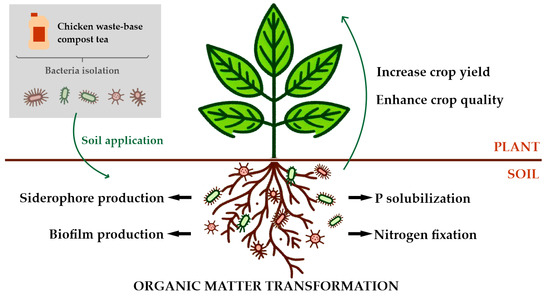
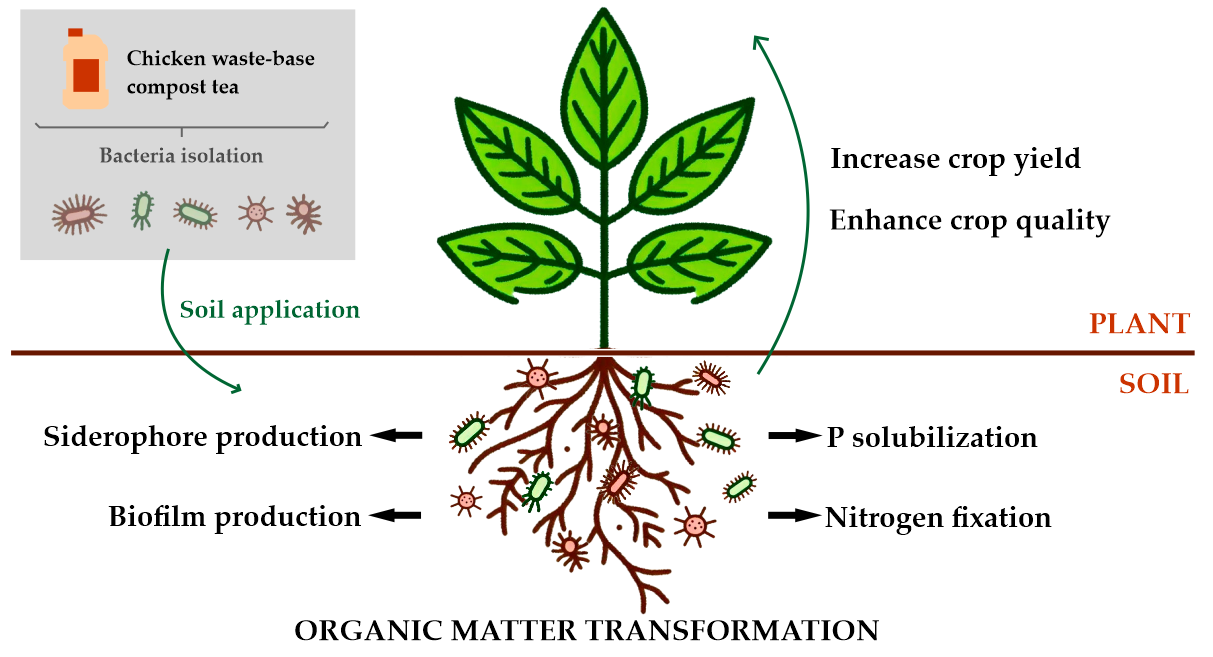
Bacteria represent promising tools for reducing the use of synthetic inputs in crop production. In this study, we evaluated the effects of two bacterial strains isolated from chicken compost tea—Bacillus licheniformis and Pseudomonas mendocina—on the yield and quality of strawberry. Experimental assays were conducted in two seasons (2023 and 2024) under macro-tunnel conditions, with the following treatments: control without applications (Con); commercial NPK fertilizer (FerC); application of B. licheniformis (BL) and P. mendocina (PM) solution in soil once a month. Both bacterial treatments enhanced soil properties. Fruit individual weight significantly increased in BL treatment compared to the control. Similar trends were observed for anthocyanin and ascorbic acid content (increases > 25%), as well as for antioxidant activity (increases of more than 20% and 13% for BL and PM, respectively). The differences were more significant in 2023. In addition, both strains showed positive in vitro results for phytase, siderophore, and IAA production (5.8–8.8 and 9.3–13 µg IAA/mL for BL and PM after 15 days). Although further field validation is required, these results indicate that bacteria (particularly B. licheniformis) show strong potential as bioinoculants to enhance the productivity and quality of strawberry.

Graphical Abstract

1. Introduction

Soils are extremely complex and highly dynamic, multifunctional systems in which components interact through multiple chemical, physical, and biological processes [1]. For this, the imbalance of any of these components can affect soil health, altering its capacity to sustain biological productivity and environmental quality [2]. In recent decades, global population growth and the resulting demand for increased food production have contributed to reduced arable land availability and a decline in agricultural soil productivity, manifested by decreased organic matter content, erosion, pollution, and biodiversity loss [3]. Although many parameters influence soil degradation (tillage, monoculture, compaction, irrigation, and others), the repeated use of synthetic fertilizers to sustain crop yield and quality is among the main contributing factors [4]. These fertilizers provide nutrients to plants immediately, but they do not improve soil health or replace its organic matter; rather, damage to the soil and contamination of surface and groundwater occur mainly, among others, to the rapid mineralization of organic matter and excessive accumulation of nutrients [5,6]. This scenario highlights the need to seek alternatives to conventional fertilization that allow for achieving the highest possible yield and quality without compromising soil health.
The Plant Growth Promoting Bacteria (PGPB) have generated great interest in the agricultural sector for the formulation of biological inoculants [7]. PGPB are microorganisms that can transform soil nutrients (through mobilization and solubilization processes) so that they are available to plants [8]. These microorganisms employ diverse mechanisms of action that promote both crop development and plant health across a wide range of agricultural systems [8,9,10]. In particular, the genera Bacillus and Pseudomonas are considered dominant in most compost teas [11,12]. Several studies have highlighted the mechanisms of action associated with these genera. Among the most important are the ability to generate Induced Systemic Resistance (ISR) in plants, synthesize plant growth–related hormones (indoleacetic acid, abscisic acid, and gibberellins), fix atmospheric nitrogen and solubilize phosphates, produce siderophores, and synthesize a wide range of antibiotics active against plant pathogens [8,13,14,15].
Regarding strawberry cultivation, Argentina produces approximately 45,000 to 50,000 tons annually on 1500–1700 ha, corresponding to an average yield of 34 tn/ha [16,17]. The province of Santa Fe is one of the country’s main strawberry producers and, together with Tucumán province, defines national strawberry prices due to high production volumes and the timing of market entry (September and November) [18]. According to the Central Market of Buenos Aires (Argentina’s largest fruit and vegetable trading center), the San Andreas, Camino Real, and Benicia cultivars are the most widely cultivated in Santa Fe. Between 50 and 70% of production is destined for the fresh market, while the remainder is directed to the industrial sector for the production of jams, juices, and frozen products, with the United States being the primary export destination [17,19].
While the potential applications of the genera Bacillus and Pseudomonas in different agricultural soils have been widely explored, evidence regarding the effects of B. licheniformis and P. mendocina on strawberry productivity and fruit quality remains scarce. For this reason, a preliminary study was conducted in the present work to evaluate the effects of B. licheniformis and P. mendocina (isolated from a chicken compost tea) on the strawberry cultivar ‘San Andreas’.

2. Materials and Methods

2.1. Bacteria Isolation and Identification

Bacteria were isolated from chicken compost tea (TC). TC was supplied by EnBio, an agricultural bio-inputs company based in Rafaela city, Santa Fe province. Briefly, 200 µL of TC dilutions were inoculated onto Petri dishes containing Luria–Bertani (LB) medium and incubated at 37 °C for 48 h. Six randomly selected colonies with different morphologies, sizes, and colors were selected and subcultured onto fresh LB agar plates. These isolates were initially identified by MALDI-TOF MS (Matrix Assisted Laser Desorption/Ionization-Time of Flight Mass Spectrometry, Bruker Daltonics, Bremen, Germany), revealing the presence of five Bacillus (two Bacillus cereus and three Bacillus sp.) and one Pseudomonas (P. mendocina). Two Bacillus (one Bacillus sp., B1, and one B. cereus, B2) and the Pseudomonas (P1) isolate were subsequently selected for molecular identification.
Genomic DNA was extracted using the Quick-DNA™ Fungal/Bacterial Miniprep Kit (Tanirel Biotechnology, Montevideo, Uruguay). Molecular identification was based on the amplification and sequencing of the 16S rRNA gene and two additional housekeeping genes, gyrA and rpoD, which provide higher taxonomic resolution than 16S rRNA within the genera Bacillus and Pseudomonas, respectively. PCR amplification of the 16S rRNA gene was performed using universal bacterial primers 27F (5′-AGAGTTTGATCCTGGCTCAG-3′) and 1492 R (5′-GGTTACCTTGTTACGACTT-3′) [20]. Partial fragments of the gyrA gene were amplified using primers gyrA-42F (5′-CAGTCAGGAAATGCGTACGTCCTT-3′) and gyrA-1066R (5′-CAAGGTAATGCTCCAGGCAATGCT-3′) [21], and partial fragments of the rpoD gene were amplified using primers PsEG30F (5′-ATYGAAATCGCCAARCG-3′) and PsEG790R (5′-CGGTTGATKTCCTTGA-3′) [22].
PCR reactions were carried out in a final volume of 25 µL containing 0.5 µL of each primer, 0.1 µL of Taq DNA polymerase (5 U/µL), 2.5 µL of 10× reaction buffer, 0.7 µL of dNTPs (10 mM), 1 µL of genomic DNA, and Milli-Q water to volume. Thermal cycling conditions for 16S rRNA gene amplification consisted of an initial denaturation at 94 °C for 5 min, followed by 30 cycles of denaturation at 94 °C for 1 min, annealing at 55 °C for 30 s, and extension at 72 °C for 1 min 30 s, with a final extension at 72 °C for 7 min. Amplification of the gyrA gene was performed using an initial denaturation at 94 °C for 5 min, followed by 30 cycles of 94 °C for 30 s, 58 °C for 45 s, and 72 °C for 1 min 30 s, with a final extension at 72 °C for 10 min. For the rpoD gene, PCR conditions consisted of an initial denaturation at 94 °C for 5 min, followed by 35 cycles of 94 °C for 1 min, 52.3 °C for 30 s, and 72 °C for 1 min 30 s, with a final extension at 72 °C for 5 min.
PCR products were verified by electrophoresis on 0.8% agarose gels, and amplicons of the expected size were submitted to Macrogen Inc. (Seoul, Republic of Korea) for Sanger sequencing. The resulting sequences were analysed using the BLASTn algorithm (MEGA 12.1) against sequences from type strains deposited in the GenBank database (https://blast.ncbi.nlm.nih.gov/Blast.cgi, accessed on 27 October 2025). Species-level identification using the 16S rRNA gene was considered reliable when sequence identity values were ≥98.65%, in accordance with widely accepted thresholds for bacterial species delineation [20].
For protein-coding housekeeping genes (gyrA and rpoD), no universally accepted similarity thresholds have been formally established. Therefore, species assignment was based on high sequence similarity to type strain sequences.

2.2. Experimental Design in Strawberry Cultivar ‘San Andreas’

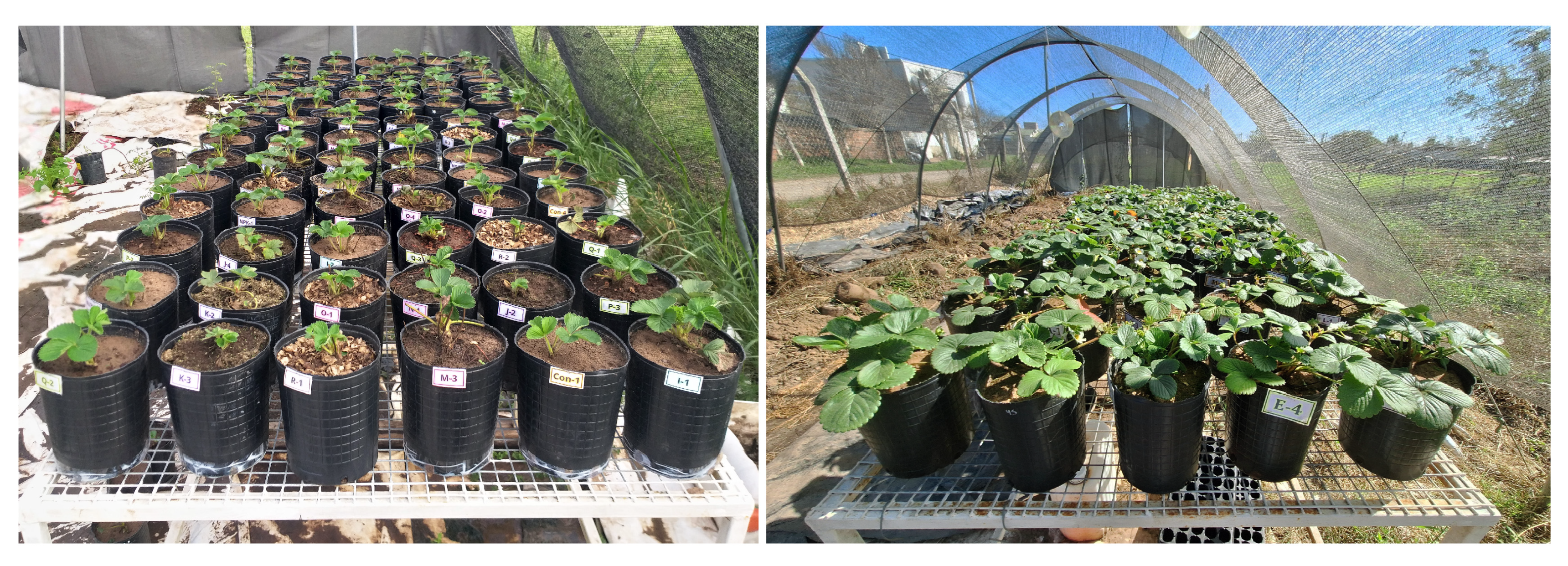
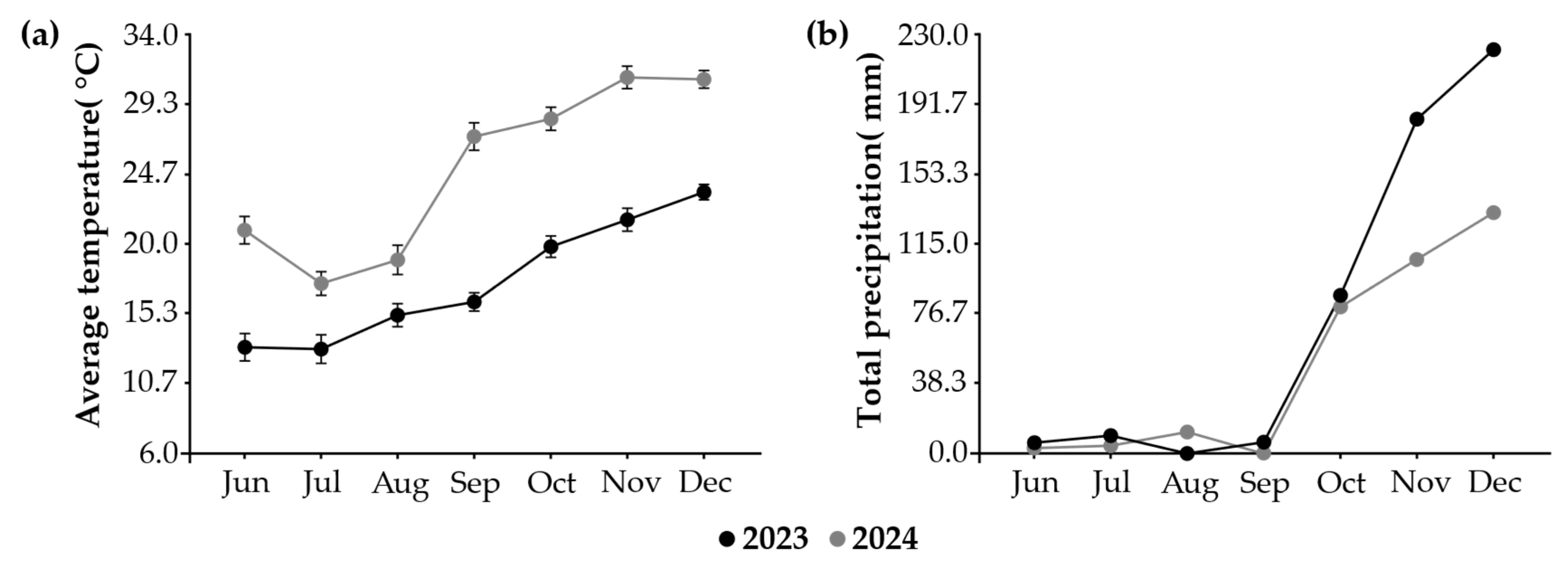
The experiments were conducted under a macro-tunnel located on the FAVE Campus in Esperanza city (Santa Fe, Argentina) (Figure 1). The use of macro-tunnels in strawberry cultivation is a technology that has been implemented in Santa Fe for several years. This relatively recent innovation offers several structural and productive advantages, e.g., as it can be assembled and disassembled during the growing season, it protects against adverse weather, and reduces fruit deformation problems [23]. Figure 2 summarizes the meteorological conditions (average temperature and total precipitation) for the period in which the crop was grown (June to December). Cultivar ‘San Andreas’ was used, supplied by Patagonia Agrícola S.A. from Coronda city (Santa Fe). Their vigor and health characteristics were similar at the time of implant. The seedlings were implanted in pots (3 L) using sandy loam soil, collected from a plot of land dedicated to this crop, at a depth of 0 to 15 cm. A completely randomized design was established, considering the following treatments: control without applications (Con); application of 1 g/pot of a commercial fertilizer with a composition of 18% N, 8% P, and 14.7% K at trial initiation (FerC); application of 100 mL of B. licheniformis suspension once a month (BL); and application of 100 mL of P. mendocina suspension once a month (PM). The bacterial suspensions were adjusted to the 0.5 McFarland turbidity standard, which corresponds to a concentration of 1.5 × 10⁸ CFU/mL [24]. Four plants per treatment were used. The experiment was conducted twice (in 2023 and 2024) under the conditions described above, from June to December (complete vegetation cycle in Santa Fe). The optimal rainfall for this period in the region ranges between 450 and 550 mm. Optimal temperatures for strawberry development and reserve accumulation range between 2 and 12 °C (June to August), whereas during the flowering and fruiting period (September to December), optimal temperatures are approximately 15 to 25–30 °C [25]. During the experiments, the plants were irrigated with demineralized water according to their water requirements.

2.3. Analysis of Soil

For each treatment, soil chemical properties were evaluated both initially (before planting) and at the end of the cropping cycle to assess the nutritional contributions of the proposed treatments and the residual nutrient levels in the soil. To assess the chemical properties at the end of the cycle, the four pots from the same treatment were combined to produce a homogeneous sample. Organic matter (OM) was quantified using the Walkley–Black method [26] and expressed in g/kg. For this, 0.2 g of soil was weighed, to which 1 mL of H2Cr2O7 solution and 3 mL of H2SO4 were added. Finally, a titration was carried out with an indicator solution and Mohr’s salt until a green endpoint was reached.
Total nitrogen (Total N) was determined using the Kjeldahl method [27] and expressed in g/kg. For this, the organic matter was digested by heating the sample with H2SO4 in the presence of catalysts, promoting oxidation and the conversion of organic nitrogen to ammonia. The released ammonia was subsequently distilled with NaOH, trapped in a boric acid solution, and titrated with sulfuric acid. Total phosphorus (Total P) was determined by digesting the sample in an acidic solution (HNO3 and H2O2) and quantifying it using Inductively Coupled Plasma Mass Spectrometry (ICP-MS) [28]. Results were expressed in mg/kg. Available phosphorus (Av. P) was quantified using the Bray–Kurtz method [29] and expressed in mg/kg. The sample was first extracted with a solution of NH4F and HCl. Subsequently, a reagent mixture (H2SO4, ammonium molybdate, antimony potassium tartrate, and ascorbic acid) was added, and the absorbance was measured at 880 nm using a spectrophotometer. Total potassium (Total K) and sodium (Total Na) were quantified following wet digestion with HNO3 and H2O2, and measurements were performed using ICP-MS [28]. Results were expressed in mg/kg.
pH was measured in a soil–water suspension (1:2.5) using a potentiometric pH meter [30]. Electrical conductivity (EC) was determined by a saturation paste and expressed in dS/m [31]. For this, a specific volume of soil was weighed, water was added until saturation, and the mixture was allowed to equilibrate for 24 h. The paste was then filtered under vacuum, and EC was measured with a conductivity meter.
Cation Exchange Capacity (CEC) was determined by extraction with ammonium acetate [31]. Excess extractant was removed with 70% ethanol, followed by the addition of 10 mL NaCl and centrifugation to obtain the ammonium-containing supernatant. Distillation was then performed with 10 mol/L NaOH and boric acid, and the distillate was titrated with standardized H2SO4. Results were expressed in cmolc/kg. Finally, exchangeable cations Ca2+, Mg2+, Na+, and K+ (Ex. Ca2+, Mg2+, Na+, and K+) were quantified from the CEC extract and expressed in mg/kg. Ex. Ca2+ and Ex. Mg2+ were determined by complexometric titration with ethylenediaminetetraacetic acid (EDTA), while Ex. Na+ and Ex. K+ were measured directly using a flame spectrophotometer [32].

2.4. Production and Quality Parameters of Strawberry Cultivar ‘San Andreas’

Once a month, the leaf area (cm2) of each plant was registered; for this, all leaf length and width were measured and multiplied by a conversion factor (0.85) calculated using a non-destructive method [33]. At three crop stages (July, October, and December), two leaves per plant (8/treatment) were collected to determine foliar concentrations of nitrogen by the Kjeldahl method (%), phosphorus by the ascorbic acid method (ppm), and potassium by nitric acid extraction and ICP-MS (ppm). When the fruits reached harvest maturity (≈90% of the surface red), they were manually harvested. Methods for measuring fruit quality parameters are summarized in Table 1. Fruit weight, firmness, and color were recorded immediately after harvest. Juice from ten randomly selected fruits per treatment was used to quantify acidity, TSS, and TSS/acid ratio (Table 1). Anthocyanin, ascorbic acid, and phenolic compounds content, as well as the antioxidant activity, were determined following ethanol extraction from the fruit samples. For the extractions, twelve fruits were randomly selected from each treatment, ground, and 750 mg of sample was weighed into hemolysis tubes (twelve tubes per treatment). Subsequently, 2 mL of analytical ethanol (96.6%) was added to each tube and kept in the dark for 24 h. Finally, the tubes were centrifuged to separate the pellet from the extract.

2.5. Mechanisms of Bacterial Action In Vitro

To evaluate the ability of bacteria to solubilize phosphates, a specific medium was prepared and adjusted to pH 7.2 [38]. The medium was poured into 90 × 15 mm Petri dishes, and 10 µL of each bacterium was inoculated in triplicate. The plates were incubated at 37 °C for 48 h. The formation of a clear halo around the bacteria indicates a positive result for phosphate solubilization.
For phytases production, the specific culture medium was adjusted to a pH of 5.5 [39]. The medium was poured into 90 × 15 mm Petri dishes, and 10 µL of each bacterium was inoculated in triplicate. The plates were incubated at 37 °C for 48 h. The formation of a clear halo around the bacteria indicates a positive result for phytase production.
Siderophore production was assessed with a chrome azurol sulfonate (CAS) agar plate assay and Grimm Allen medium as a base [40]. Each bacterial strain was inoculated at the center of the plate and incubated at 25 °C for 2 days. The presence of a siderophore was indicated by a color change from blue to orange surrounding the streaks of growing cultures.
Indoleacetic acid (IAA) production was quantified according to the methodology described by Karimi et al. [41]. Bacteria were inoculated in quadruplicate into Erlenmeyer flasks containing 25 mL of a liquid culture medium composed of peptone, yeast extract, NaCl, and tryptophan. Two Erlenmeyer flasks of each bacterium were incubated at 37 °C, and two were incubated at room temperature (approximately 25 °C) for 15 days. IAA concentration was measured at four time points (3, 6, 9, and 15 days). For this, an aliquot of the culture medium was centrifuged to remove the bacterial pellet. For the reaction, 1 mL of the supernatant, 50 µL of 10 mM phosphoric acid, and 2 mL of IAA reagent (composed of FeCl3 and HClO4) were used. The reaction was incubated at room temperature for 30 min in darkness; the appearance of an orange-pink color suggests the possible production of IAA, and its absorbance was recorded at 530 nm in a spectrophotometer [42]. The IAA level was estimated using the calibration curve (y = 52,805 x + 0.8007) and expressed in micrograms per milliliter (µg/mL).

2.6. Statistical Analysis

Experimental assays were conducted in two seasons (2023 and 2024) under identical experimental conditions. Data were subjected to a one-way analysis of variance (ANOVA), and Dunnett’s test at p < 0.05 was used to compare means between FerC, BL, and PM treatments with respect to the control without applications (Con). All variables were analyzed separately for each experimental assay.

3. Results

3.1. Bacteria Isolation and Identification

Analysis of the 16S rRNA gene sequence confirmed the genus-level assignments previously obtained by MALDI-TOF MS, identifying the isolates B1 and B2 as belonging to the genera Bacillus (Bacillus sp. and B. cereus) and P1 as Pseudomonas (P. mendocina). Additionally, sequence analysis of the housekeeping genes gyrA and rpoD, which provide improved resolution within the genera Bacillus and Pseudomonas, respectively, allowed a more refined taxonomic assessment (Table 2).
Based on gyrA sequence analysis, Bacillus isolates B1 and B2 were assigned to B. licheniformis. For the Pseudomonas isolate (P1), rpoD sequence analysis revealed the highest sequence similarity to P. mendocina, with a percentage of identity of 96.00% (Table 2). This value suggests a close phylogenetic relationship rather than an unequivocal species-level assignment. Accordingly, this isolate was considered a Pseudomonas sp. closely related to P. mendocina. According to these results, the Bacillus sp. (B. licheniformis) and P. mendocina strains were selected for the strawberry plant trials.

3.2. Analysis of Soil

Initial and final chemical soil parameters are summarized in Table 3. OM increased slightly towards the end of the cycle in both trials with respect to initial soil analysis; however, the final soil analysis revealed comparable OM values across all treatments (10–11.2 g/kg in 2023 and 13.7–14.6 g/kg in 2024). A similar trend was observed for Total N, except in 2024, when the BL and PM treatments showed values lower than those of the control (Table 3). Regarding phosphorus, while the Total P content of the bacterial treatments did not exceed that of the control, available P (Av. P) was higher in BL and FerC, particularly in 2024. Total K decreased towards the end of the cycle in both trials, with similar values for all treatments (Table 3). As for Total Na, a higher content was observed in the treatments with FerC and the bacteria (mainly BL). The pH was not affected by the application of bacteria (pH between 6 and 7), nor was the EC (EC between 0.4–0.5 and 0.2–0.3 dS/m for 2023 and 2024, respectively) (Table 3). Regarding the exchangeable complex, a slightly higher CEC was recorded for the BL and PM treatments, and a higher content of the cations K+, Na+, and Mg2+; however, in 2024, the values for these variables were similar in all treatments, except for the Ca2+ and Mg2+ content, which was higher in the PM treatment (Table 3).

3.3. Vegetative Parameters of Strawberry Cultivar ‘San Andreas’

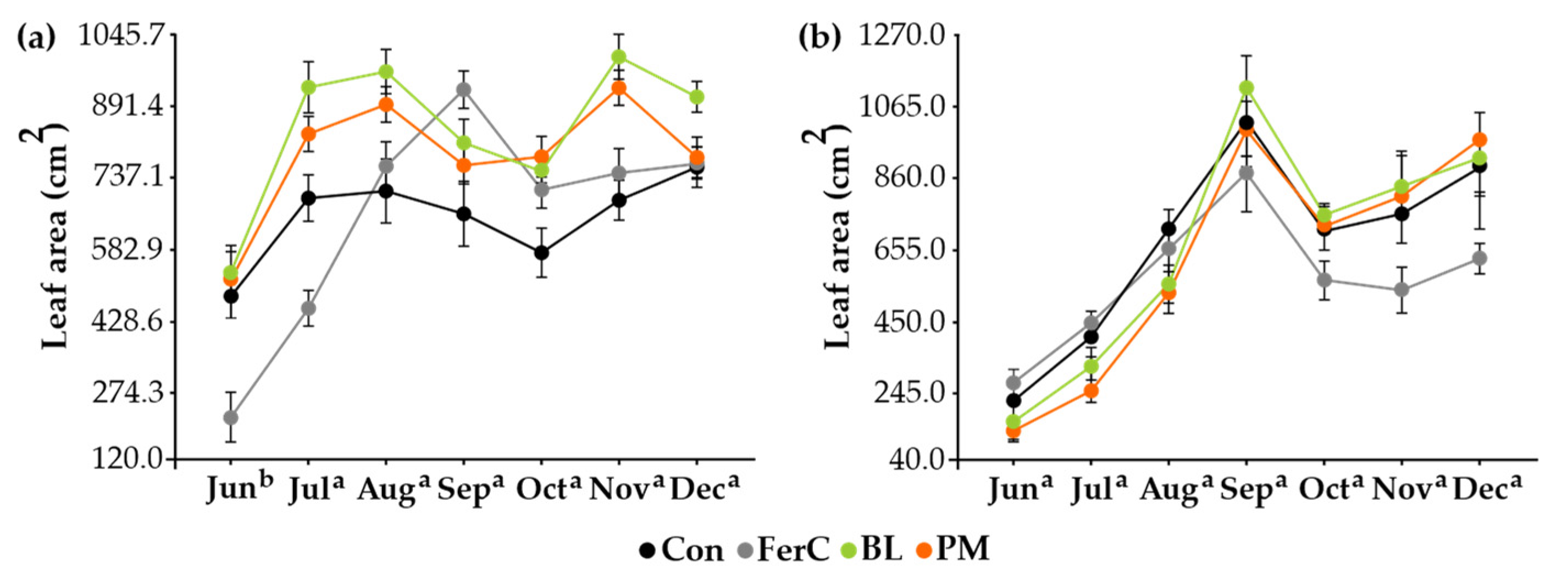
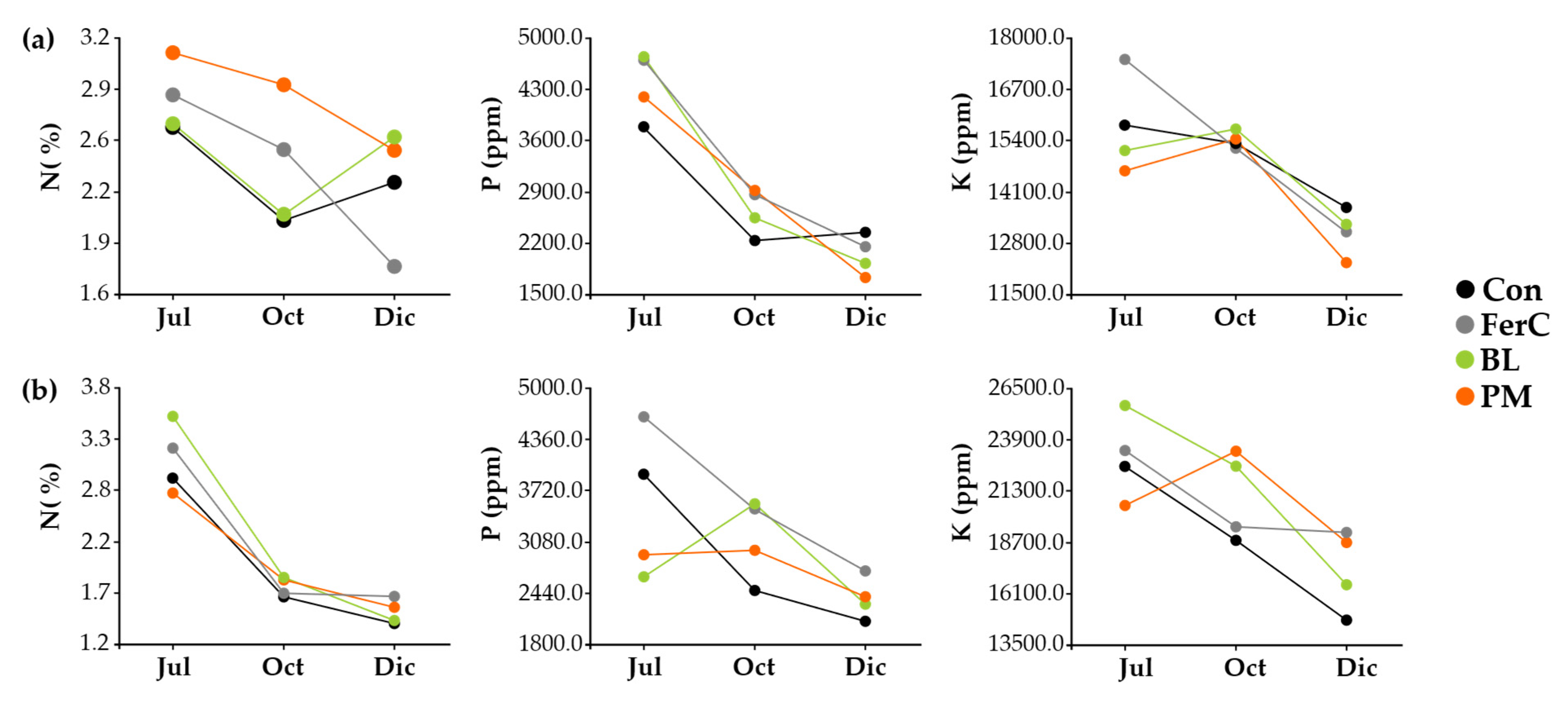
In 2023, bacterial treatments exhibited higher leaf area values across all evaluated months; however, these differences were not statistically significant compared with the control (Con); significant differences were only detected in June 2023 between the FerC and Con treatments (Figure 3a). In 2024, leaf development was similar among all treatments (Figure 3b). The analysis of total leaf nutrients revealed, in general terms, a similar pattern across all treatments (Figure 4). Nitrogen concentration declined toward the end of the cycle, ranging between 1.5 and 3.5%. For phosphorus, FerC, BL, and PM treatments presented the highest values in both 2023 and 2024, particularly in the measurements taken in October. Finally, potassium content in leaves was comparable between treated and control (Con) groups in 2023 (Figure 4a), whereas in 2024 (Figure 4b), higher levels of this nutrient were detected in the FerC, BL, and PM treatments, especially in the samples collected in October and December.

3.4. Productive Parameters of Strawberry Cultivar ‘San Andreas’

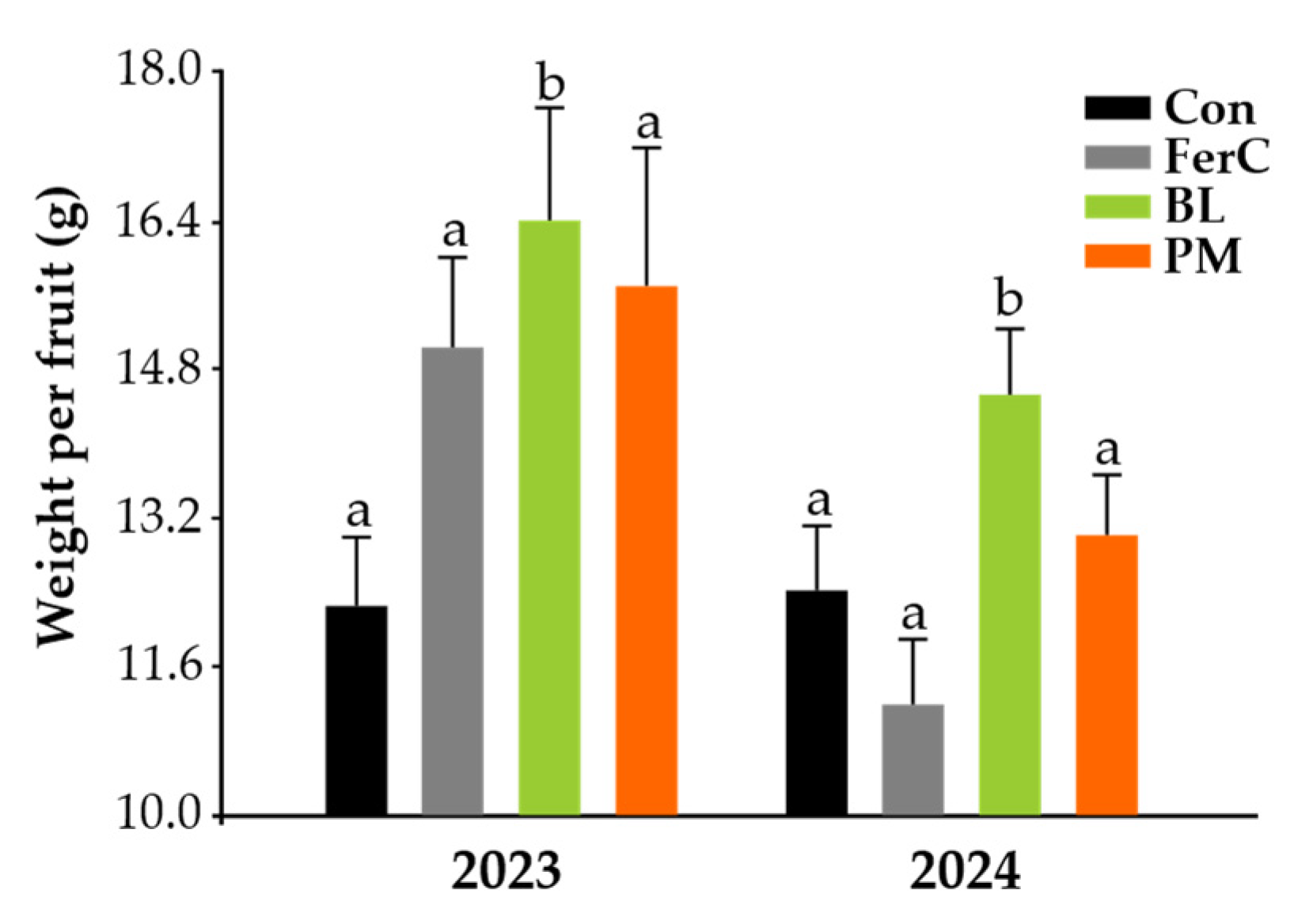
BL produced the largest fruits in terms of individual fruit weight (16.4 ± 7.12 g and 14.0 ± 5.06 g in 2023 and 2024, respectively), and this difference was statistically significant compared to the control (Con) (Figure 5). In accordance with Figure 5, Table 4 indicates that BL and PM treatments resulted in the lowest percentage of small fruits (<7 g) and the highest percentage of fruits exceeding 20 g, in both 2023 and 2024. Colorimetric analysis indicated that the BL and FerC treatments resulted in the highest color index in 2023, showing statistically significant differences compared to Con; in 2024, the color index was similar across all treatments (51.5–54.8 g/kg), and no significant statistical differences were observed (Table 5). Additionally, BL produced slightly firmer fruits in both 2023 and 2024; however, this difference was not statistically significant compared to Con (Table 5). The bacterial and FerC treatments showed higher fruit acidity, but no significant differences were observed compared to the control (Table 5). In 2023, the TSS content of FerC, BL, and PM was slightly lower, while in 2024 it was similar for all treatments (4.3–4.9 °Brix); however, as with acidity, no statistically significant differences were observed (Table 5). Ratio values were similar across all treatments in both trials (0.5–0.7 in 2023 and 0.3–0.4 in 2024), with no statistically significant differences relative to Con (Table 5).
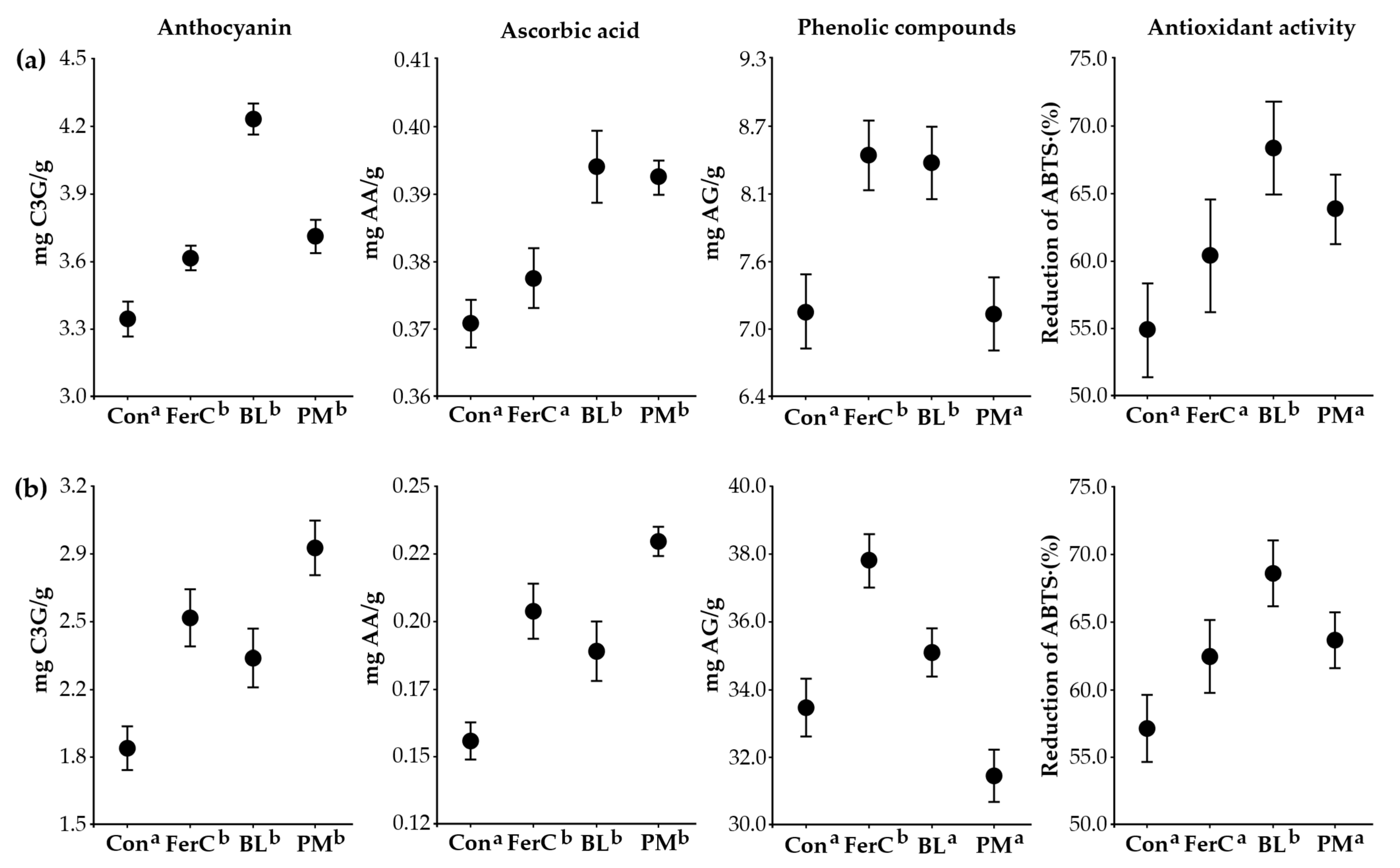
With respect to anthocyanin content, all treatments showed significantly higher values compared to the control in both seasons (Figure 6). Additionally, BL and PM exhibited significantly higher ascorbic acid contents, whereas FerC showed a statistically significant increase only in 2024. FerC and BL presented the higher phenolic compounds contents; these increases were statistically significant in both trials for FerC and only in 2023 for BL (Figure 6). Finally, antioxidant activity was higher in BL and PM, although statistically significant differences were only observed between BL and the control from both seasons (Figure 6).

3.5. Mechanisms of Bacterial Action In Vitro

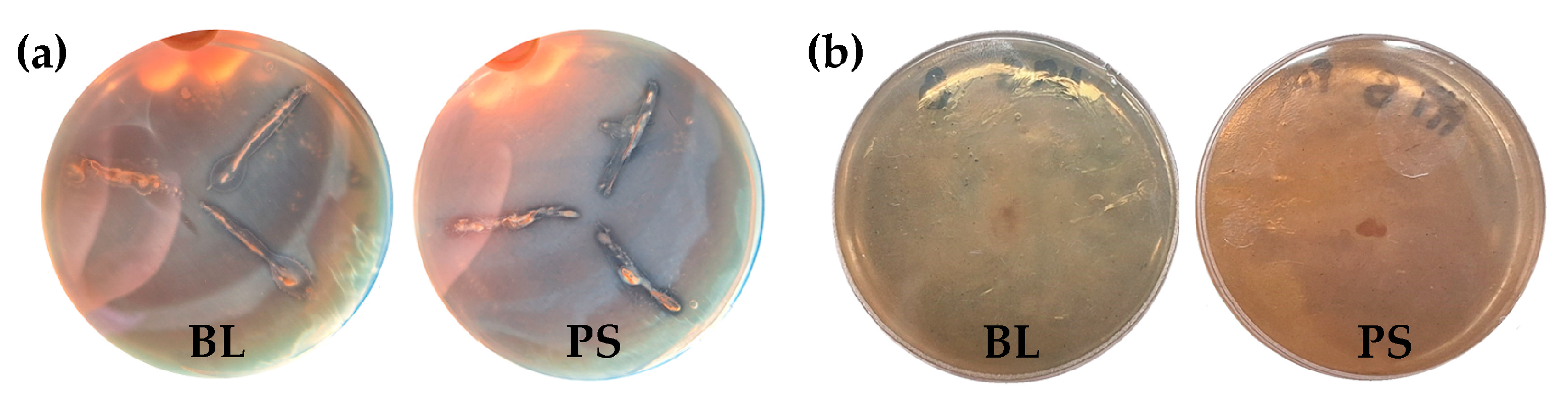
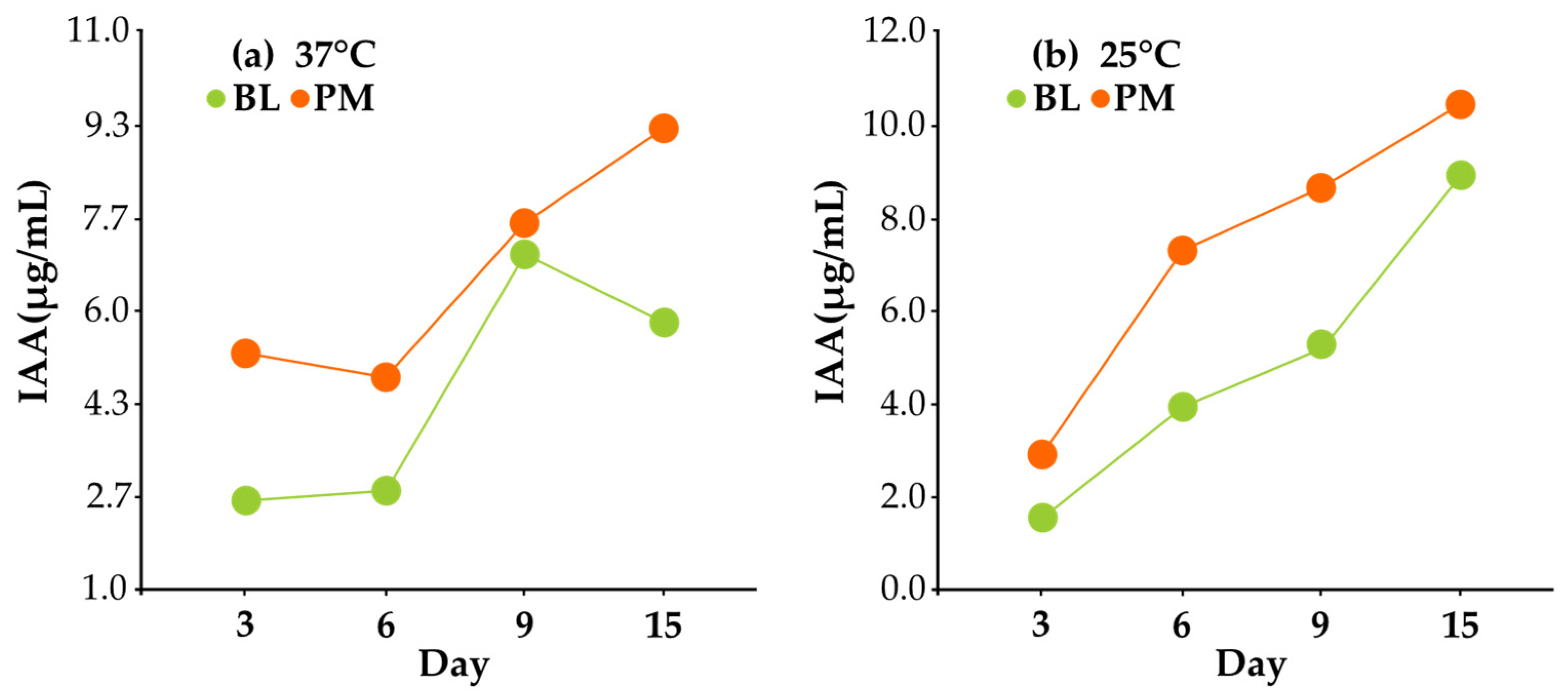
The positive (+) and negative (−) results of bacterial mechanisms of action are summarized in Table 6. The in vitro phosphate solubilization assay was negative, as no clear halo formed around the inoculated bacteria. However, both bacteria showed a positive response in the phytase production assay, with the formation of a clear halo around the colonies (Figure 7a). Regarding the siderophore production assay, a clear orange coloration was observed in the culture medium of PM, indicating a positive result (Table 6, Figure 7b). The BL culture also exhibited orange pigmentation in the culture medium, although with lower intensity than that observed for PM. Additionally, both BL and PM showed positive IAA production at 37 °C (Figure 8a) and at room temperature (Figure 8b) (Table 6). In particular, PM showed higher IAA production compared to BL at both temperatures, reaching 10.36 and 9.3 µg IAA/mL at 25 °C and 37 °C, respectively. BL produced IAA exponentially at 25 °C, but its production decreased at 37 °C after 15 days of culture (Figure 8).

4. Discussion

Enhancing food production in terms of both quantity and quality remains one of the primary challenges in the agricultural sector. Although synthetic agrochemicals have been extensively employed to meet this demand, accumulating evidence indicates that their prolonged use contributes to soil degradation, the emergence of novel phytopathogens, and contamination of groundwater resources. Consequently, scientific efforts have increasingly focused on the development of alternative, bio-based inputs that align with the demands of both sustainable agriculture and environmental stewardship. Among these, the application of plant growth-promoting bacteria (PGPB) has garnered considerable attention due to their multifaceted benefits for soil health, plant development, and ecological balance. Particularly, soil microorganisms play a crucial role in the decomposition of organic matter, facilitating the release and biochemical transformation of nutrients into plant-available forms [43,44]. In this study, two bacteria (B. licheniformis and P. mendocina) were isolated from a chicken-waste compost tea and applied to strawberry soils. According to molecular analysis, strain P. mendocina is more appropriately described as a Pseudomonas sp. closely related to P. mendocina. Hence, this similarity alone is insufficient for a definitive species assignment; however, the MALDI-TOF method confirmed this strain as P. mendocina. Nevertheless, further taxonomic resolution would require the analysis of additional housekeeping genes (e.g., gyrB, recA, atpD) or a multilocus sequence analysis (MLSA) approach.
Both bacteria improved the soil’s chemical parameters, increased fruit weights, and some quality parameters such as color, anthocyanin, ascorbic acid, phenolic compound contents, and antioxidant activity. In statistical terms, bacterial performance was more pronounced in the 2023 trial. Nevertheless, the trends observed in 2024 were comparable across most measured parameters. Climatic conditions influence crop development, which may account for these differences. According to meteorological data from the FAVE Campus weather station (Esperanza, Santa Fe), average temperatures during June–December 2023 were lower than those recorded in 2024 (13.1–23.4 °C and 20.8–30.9 °C for 2023 and 2024, respectively), while cumulative precipitations was higher, particularly between October and December (507.8 mm and 333.2 mm for 2023 and 2024, respectively). In this regard, the hypothesis that meteorological parameters may have influenced bacterial performance in the soil is considered. Consequently, new trials are required to evaluate the effects of precipitation and temperature on microbial activity. On the other hand, and from a statistical standpoint, B. licheniformis showed a better performance than P. mendocina for most of the analyzed parameters. Numerous studies have documented the effects of various Bacillus species, such as B. velezensis, B. subtilis, B. safensis, and B. megaterium (e.g., [45,46,47,48,49,50,51,52,53,54,55]) as well as Pseudomonas species, including P. fluorescens, P. putida, and P. monteilii (e.g., [46,49,52,56,57]) on strawberry production parameters. However, aside from the study conducted by Seema et al. [58], no research to date has evaluated the impact of soil application of B. licheniformis and P. mendocina on strawberry yield and quality traits. Therefore, the present study represents one of the first reports addressing this gap.

4.1. Impact of Bacteria on Soil Chemical Properties

The abundance and diversity of microorganisms generated during composting processes contribute to the release of substances that activate various mechanisms of action, such as the solubilization and/or mineralization of non-labile nutrient-containing molecules. These processes increase the concentration of nutrients available in the soil and, consequently, enhance their absorption by plants [46].
In 2023, BL and PM treatments exhibited the highest values of exchangeable Na+ and Mg2+, whereas BL achieved the best performance in available P levels, particularly in 2024. Moreover, soil pH and electrical conductivity (EC) remained stable after bacterial application, showing values comparable to the initial analysis. This outcome can be attributed to the broad spectrum of mechanisms through which bacteria act in soils [13,14], facilitating nutrient availability to plants without disrupting the soil’s functional dynamics. Arunrat et al. [59] reported a positive correlation between the microbial community (especially Bacillus) and several soil properties, including pH, EC, available phosphorus, and CEC. Similarly, optimizing CEC and exchangeable cation content following bacterial application has been associated with greater nutrient availability and uptake by plants [60]. Furthermore, the diverse interactions between bacteria and soil minerals (such as dissolution, transformation, reduction, siderophore production, and chelation) directly influence nutrient availability and enhance plant absorption [61].
Regarding nitrogen, no changes were detected in the soil N content under treatments with either the commercial fertilizer or the bacterial inoculant. However, plants treated with bacteria (particularly P. mendocina) exhibited higher foliar N levels, suggesting an effective transformation of nitrogen compounds into forms available for plant uptake. Evidence indicates that both B. licheniformis [62,63,64] and P. mendocina [65,66,67,68,69] are nitrogen-fixing bacteria capable of converting nitrogen fertilizers into bioavailable forms for plants.
One of the main mechanisms by which bacteria act is their ability to solubilize phosphates. Phosphorus is an essential nutrient for plants, as it plays a critical role in DNA synthesis, cell membrane formation, respiration, and photosynthesis. However, P often limits crop productivity due to its chemical binding to colloidal soil surfaces and fixation with elements such as aluminum, iron, and calcium, depending on soil pH [70]. Consequently, both chemical and biological processes are required to enhance its availability. Although total soil P content was lower in plots treated with bacteria compared to other treatments, the available P in the soil and the total foliar P content were higher in plants treated with B. licheniformis and P. mendocina. Numerous studies have demonstrated that many bacteria solubilize phosphates through the production of organic acids and phosphatase enzymes (including phytases), thereby increasing the availability of this essential nutrient [71,72,73,74,75]. Despite this evidence, the in vitro phosphate solubilization assay yielded negative results for both bacterial strains tested. Timofeeva et al. [76], however, highlight conflicting reports regarding the influence of temperature on phosphate solubilization, with some studies identifying an optimal range of 20–25 °C, while others report activity up to 45 °C. This variability may explain the negative results obtained under the conditions applied in this work and suggests the need to repeat the assays at different temperature ranges, given that both B. licheniformis [62,63,77,78,79] and P. mendocina [65,66,67,80,81] are widely recognized as phosphate solubilizers. Nevertheless, positive results were obtained for phytase enzyme production in both strains. Phytases, a subclass of phosphatases, hydrolyze phytic acid (phytate) and release P, Zn2+, Cu2+, Ca2+, Fe3+, and Al3+ in inorganic forms, thereby improving mineral uptake by plants [82]. Several studies have confirmed the ability of bacteria, particularly those belonging to the genera Bacillus and Pseudomonas, to secrete phytases in diverse environments [82,83,84].
Siderophore production is another widely studied bacterial mechanism that influences Fe3+ availability in plants. Siderophores are low-molecular-weight organic compounds that chelate Fe3+, thereby facilitating iron uptake by plants and contributing to spatial competition against pathogens [77,85]. P. mendocina exhibited positive results in the in vitro siderophore production assay, consistent with previous reports [86,87,88]. In contrast, siderophore production by B. licheniformis was negligible, which contradicts findings reported by other authors [78,85,89,90]. However, Bordé-Pavlicz et al. [85] noted strain-dependent variability in siderophore production within B. licheniformis, with some strains showing positive results and others negative. This variability may explain the absence of siderophore detection in the present study.

4.2. Impact of Bacteria on Productive Parameters

Bacterial treatments affected fruit weight, with the most pronounced effects observed in plants treated with B. licheniformis. As previously noted, although no studies have specifically evaluated the application of B. licheniformis -except Seema et al. [58], who reported comparable outcomes- and P. mendocina in strawberry cultivation, both bacteria have shown promising results in other crop systems. Thus, soil application of B. licheniformis has been shown to enhance root system volume, germination rate, plant height, foliar development, and overall yield in various crops, including tomato crops [91,92,93], pepper [93], maize [89,94], peanut [95,96], potato [85], and quinoa [78]. Additionally, B. licheniformis has demonstrated efficacy under abiotic stress conditions, such as soil salinity [78,92]. The use of P. mendocina as a plant growth-promoting in soil crops is scarce; only a few studies in lettuce [81,97], basil [98], tomato, and wheat [99] have been reported. Most studies on this bacterium have focused on its bioremediation capacity in soils contaminated with diverse pollutants [86,100,101,102,103,104]. Therefore, this study represents one of the first reports on the application of P. mendocina in crops.
Conversely, soil microbial biomass has been shown to contribute to the synthesis of phytohormones that act as plant growth regulators, independent of nutrient availability, thereby enhancing plant development and productivity [44]. Among the predominant genera, Bacillus and Pseudomonas are recognized for their capacity to produce key plant growth-promoting hormones, including auxins, IAA, gibberellins, and abscisic acid [105]. In this study, both bacterial strains showed a progressive production of IAA over the 15 days, with a continuous increase in concentration, which may partially explain the greater fruit weight and improved quality observed under bacterial treatments. Several studies have reported the production of IAA by these bacteria, although the recorded concentrations varied. For B. licheniformis, IAA levels ranging from 2.5 to 35 µg/mL have been documented [62,85,91,95,106], which are consistent with the findings of the present study. Higher IAA concentrations, reaching up to 200 µg/mL, have also been reported, depending on the specific strain used [78,107]. No studies have been found that quantify IAA production by P. mendocina; therefore, this study constitutes the first report.
Regarding the organoleptic properties of the fruit, plants treated with B. licheniformis showed significant improvements in anthocyanin content, ascorbic acid, and antioxidant activity in both 2023 and 2024, whereas the increase in phenolic compounds was significant only in 2023 for BL. For the P. mendocina treatment, only anthocyanin and ascorbic acid contents exhibited statistically significant increases. Fruit firmness, acidity, and total soluble solids content were similar across all treatments in both experimental years, with the exception of the color index, which was significantly higher in BL and FerC. In terms of fruit firmness, several studies have found no significant differences following bacterial treatment [49,56]. Similarly, the TSS content observed in this study was lower than values reported in previous investigations involving Bacillus [47,48,52,54,58,108] and Pseudomonas [47,52]. In contrast, the ascorbic acid content recorded here was comparable to that reported in earlier studies [52,58,108]. However, the concentrations of anthocyanins, total phenolic compounds, and antioxidant capacity measured in the present study exceeded those documented by the aforementioned authors for both bacterial genera.
Furthermore, several authors agree that fruit ripening involves various biochemical and physiological processes that lead to color changes, driven in part by the accumulation of anthocyanins and sugars, as well as alterations in acidity [109,110]. Although no significant differences were observed in TSS or acidity between the B. licheniformis and control treatments, the fruits harvested from plants treated with exhibited a high anthocyanin content, reflected in the highest color index recorded for this treatment. Fruits harvested from P. mendocina-treated plants also showed elevated anthocyanin levels (albeit lower than B. licheniformis), but their color index did not differ significantly from the control. Notably, B. licheniformis stood out for its elevated levels of ascorbic acid, phenolic compounds, and antioxidant activity. Scientific evidence supports a positive correlation among these three variables in various fruits [111]. Moreover, fruits rich in anthocyanins have been shown to possess greater antioxidant capacity [112,113], consistent with the enhanced color index and anthocyanin content observed in B. licheniformis. A similar trend was observed for P. mendocina, except for its phenolic compound content, which was comparatively low with respect to other treatments. Although phenolic compounds are known for their strong electron-donating capacity and contribution to antioxidant activity, their specific composition and distribution within different fruit tissues can significantly influence antioxidant potential, either positively or negatively [114].

5. Conclusions

Based on the results obtained, the bacteria isolated from chicken compost tea (primarily B. licheniformis) may be considered promising candidates for enhancing the productivity, yield, and quality of strawberries. These microorganisms not only improved several soil physicochemical properties (available P, total Na, exchangeable Na+, and exchangeable Mg2+) but also significantly increased yield and most assessed quality parameters, including color index, anthocyanin concentration, ascorbic acid content, total phenolic compounds, and antioxidant activity. Moreover, both B. licheniformis and P. mendocina demonstrated beneficial mechanisms of action, particularly in nutrient mobilization within the soil (e.g., phytase and siderophore production) and in promoting plant growth (e.g., IAA synthesis). The trends observed across all analyzed parameters were similar in 2023 and 2024; however, bacterial activity was greater in 2023 than in 2024. Although multiple factors influence crop development, we believe that the low rainfall recorded in 2024 may have directly affected the activity of the bacteria applied to the strawberry plants. These findings highlight the need for further studies to evaluate the impact of climatic conditions on bacterial activity in crop soils. Moreover, further complementary studies, such as raised bed trials and fruit nutrient profiling, are warranted to validate these effects and investigate additional application strategies under diverse agronomic conditions. These findings may contribute to the development of more efficient and sustainable biological inputs for agricultural systems.

Author Contributions

Conceptualization, M.G.D.; methodology, G.M.S., M.A.F., G.G., J.G.N., V.E.R., S.V. and M.G.D.; software, G.M.S. and L.N.F.; validation, V.E.R., G.G., S.V. and M.G.D.; formal analysis, G.M.S., L.N.F., V.E.R., J.G.N. and S.V.; investigation, G.M.S., M.A.F., G.G., S.V. and M.G.D.; resources, M.A.F., V.E.R., S.V. and M.G.D.; data curation, L.N.F., G.G., J.G.N. and M.G.D.; writing—original draft preparation, G.M.S.; writing—review and editing, G.M.S., M.A.F., S.V. and M.G.D.; visualization, S.V. and M.G.D.; supervision, S.V. and M.G.D.; project administration, S.V. and M.G.D.; funding acquisition, S.V. and M.G.D. All authors have read and agreed to the published version of the manuscript.

Funding

This research was funded by Agencia Nacional de Promoción Científica y Tecnológica (ANPCyT), grant numbers PICT-2020-SERIEA-02504, PICT-2021-CAT-II-00097; Consejo Nacional de Investigaciones Científicas y Técnicas (CONICET) under grant code PIP 11220210100388CO; and Universidad Nacional de Rosario (UNR) under project 80020190400002UR.

Data Availability Statement

The original contributions presented in this study are included in the article. Further inquiries can be directed to the corresponding author.

Acknowledgments

To CONICET and AUGM for G.M.S. scholarships and funding.

Conflicts of Interest

The authors declare no conflicts of interest.

References

  1. Urra, J.; Alkorta, I.; Garbisu, C. Potential benefits and risks for soil health derived from the use of organic amendments in agriculture. Agronomy 2019, 9, 542. [Google Scholar] [CrossRef]
  2. Doran, J.W.; Zeiss, M.R. Soil health and sustainability: Managing the biotic component of soil quality. Appl. Soil Ecol. 2000, 15, 3–11. [Google Scholar] [CrossRef]
  3. Kirschenmann, F. Alternative agriculture in an energy-and resource-depleting future. Renew. Agric. Food Syst. 2010, 25, 85–89. [Google Scholar] [CrossRef]
  4. Pahalvi, H.N.; Rafiya, L.; Rashid, S.; Nisar, B.; Kamili, A.N. Chemical fertilizers and their impact on soil health. In Microbiota and Biofertilizers; Dar, G.H., Bhat, R.A., Mehmood, M.A., Hakeem, K.R., Eds.; Springer: Cham, Switzerland, 2021; Volume 2, pp. 1–20. [Google Scholar] [CrossRef]
  5. Agegnehu, G.; Srivastava, A.K.; Bird, M.I. The role of biochar and biochar-compost in improving soil quality and crop performance: A review. Appl. Soil Ecol. 2017, 119, 156–170. [Google Scholar] [CrossRef]
  6. Hernández, T.; Chocano, C.; Moreno, J.L.; García, C. Use of compost as an alternative to conventional inorganic fertilizers in intensive lettuce (Lactuca sativa L.) crops-Effects on soil and plant. Soil Tillage Res. 2016, 160, 14–22. [Google Scholar] [CrossRef]
  7. Pérez-Montaño, F.; Aparicio, N.; Arenas, F.; Arjona, J.M.; Camacho, M.; Fernández-García, N.; Garcia-Fraile, P.; Goicochea, N.; Macias-Naranjo, S.; Matias, J.; et al. Emerging crops and plant growth-promoting bacteria (PGPB): A synergistic approach to climate-resilient agriculture. Microbiome 2025, 13, 228. [Google Scholar] [CrossRef]
  8. Ahmed, T.; Shahid, M.; Noman, M.; Hussain, S.; Khan, M.A.; Zubair, M.; Ismail, M.; Manzoor, N.; Shahzad, T.; Mahmood, F. Plant growth-promoting rhizobacteria as biological tools for nutrient management and soil sustainability. In Plant Growth Promoting Rhizobacteria for Agricultural Sustainability: From Theory to Practices; Kumar, A., Singh, M.V., Eds.; Springer: Singapore, 2019; pp. 95–110. [Google Scholar] [CrossRef]
  9. Mohanty, P.; Singh, P.K.; Chakraborty, D.; Mishra, S.; Pattnaik, R. Insight into the role of PGPR in sustainable agriculture and environment. Front. Sustain. Food Syst. 2021, 5, 667150. [Google Scholar] [CrossRef]
  10. Morales-Cedeño, L.R.; del Carmen Orozco-Mosqueda, M.; Loeza-Lara, P.D.; Parra-Cota, F.I.; de Los Santos-Villalobos, S.; Santoyo, G. Plant growth-promoting bacterial endophytes as biocontrol agents of pre-and post-harvest diseases: Fundamentals, methods of application and future perspectives. Microbiol. Res. 2021, 242, 126612. [Google Scholar] [CrossRef]
  11. Yin, J.; Wang, J.; Zhao, L.; Cui, Z.; Yao, S.; Li, G.; Yuan, J. Compost tea: Preparation, utilization mechanisms, and agricultural applications potential—A comprehensive review. Environ. Technol. Innov. 2025, 38, 104137. [Google Scholar] [CrossRef]
  12. Campana, E.; Ciriello, M.; Lentini, M.; Rouphael, Y.; De Pascale, S. Sustainable agriculture through compost tea: Production, application, and impact on horticultural crops. Horticulturae 2025, 11, 433. [Google Scholar] [CrossRef]
  13. Adeleke, B.S.; Babalola, O.O. Roles of plant endosphere microbes in agriculture: A review. J. Plant Growth Regul. 2022, 41, 1411–1428. [Google Scholar] [CrossRef]
  14. Kenneth, O.C.; Nwadibe, E.C.; Kalu, A.U.; Unah, U.V. Plant growth-promoting rhizobacteria (PGPR): A novel agent for sustainable food production. Am. J. Agric. Biol. Sci. 2019, 14, 35–54. [Google Scholar] [CrossRef]
  15. Santoyo, G.; Orozco-Mosqueda, M.D.; Govindappa, M. Mechanisms of biocontrol and plant growth-promoting activity in soil bacterial species of Bacillus and Pseudomonas: A review. Biocontrol Sci. Technol. 2012, 22, 855–872. [Google Scholar] [CrossRef]
  16. Food and Agriculture Organization of the United Nations (FAO). Available online: https://www.fao.org/faostat/en/#data/QC (accessed on 5 December 2025).
  17. Ministerio de Economía de Argentina. Producción de frutilla en Argentina. Secretaría de Agricultura, Ganadería y Pesca. 2023. Available online: https://www.argentina.gob.ar/agricultura/subsecretaria-agricultura/informes-sectoriales-de-frutas (accessed on 25 November 2025).
  18. Ministerio de Economía de Argentina. Informe Síntesis: Economía Regional—Frutillas. Informe de la Secretaría de Bioeconomía del Ministerio de Economía de Argentina. 2024. Available online: https://alimentosargentinos.magyp.gob.ar/HomeAlimentos/ (accessed on 25 November 2025).
  19. Caminiti, A. Cultivo de Frutillas en la Provincia de Neuquén; Ediciones INTA: Bariloche, Argentina, 2015; pp. 4–7. Available online: https://repositorio.inta.gob.ar/handle/20.500.12123/2815 (accessed on 25 November 2025).
  20. Kim, M.; Oh, H.S.; Park, S.C.; Chun, J. Towards a taxonomic coherence between average nucleotide identity and 16S rRNA gene sequence similarity for species demarcation of prokaryotes. Int. J. Syst. Evol. Microbiol. 2014, 64, 346–351. [Google Scholar] [CrossRef] [PubMed]
  21. Chun, J.; Bae, K.S. Phylogenetic analysis of Bacillus subtilis and related taxa based on partial gyrA gene sequences. Antonie Leeuwenhoek 2000, 78, 123–127. [Google Scholar] [CrossRef] [PubMed]
  22. Mulet, M.; Bennasar, A.; Lalucat, J.; García-Valdés, E. An rpoD-based PCR procedure for the identification of Pseudomonas species and for their detection in environmental samples. Mol. Cell. Probes 2009, 23, 140–147. [Google Scholar] [CrossRef]
  23. Pernuzzi, C.; Sordo, M.H.; Travadelo, M.; Maina, M.; Acetta, P. Evaluación de la conveniencia de los macrotúneles en comparación con microtúneles para el cultivo de frutilla en Coronda. Rev. FAVE 2017, 16, 163–175. [Google Scholar] [CrossRef]
  24. CLSI. Performance Standards for Antimicrobial Susceptibility Testing, 30th ed.; Clinical and Laboratory Standards Institute: Wayne, PA, USA, 2020. [Google Scholar]
  25. Sigrid Vargas, S. Requerimientos de clima y suelo. In Manual de Manejo Agronómico de la Frutilla; Morales, C.G., Ed.; Boletín N° 17 INIA; Instituto de Investigaciones Agropecuarias: Santiago, Chile, 2017; pp. 19–23. [Google Scholar]
  26. IRAM-SAGyP 29571-2; Calidad Ambiental—Calidad del Suelo. Determinación de Materia Orgánica en Suelos. Parte 2—Determinación de Carbono Orgánico Oxidable por Mezcla Sulfocrómica en Suelos. Instituto Argentino de Normalización y Certificación: Buenos Aires, Argentina, 2016.
  27. IRAM-SGAyP 29572; Calidad Ambiental—Calidad del Suelo. Determinación de Nitrógeno en Suelo por el Método Kjeldahl Modificado. Instituto Argentino de Normalización y Certificación: Buenos Aires, Argentina, 2019.
  28. Peters, J.; Sherri, M.; Hoskins, B.; Jarman, J.; Kovar, J.; Watson, M.; Wolf, A.; Wolf, N. Digestion and dissolution methods for P, K, Ca, K and trace elements. In Recommended Methods of Manure Analysis; University of Wisconsin: Madison, WI, USA, 2003; pp. 36–38. [Google Scholar]
  29. IRAM-SAGyP 29570-1; Calidad Ambiental—Calidad del Suelo. Determinación de Fósforo Extraíble en Suelos. Parte 1—Método Bray Kurtz 1 Modificado (Extracción Con Solución de Fluoruro de Amonio-Ácido Clorhídrico). Instituto Argentino de Normalización y Certificación: Buenos Aires, Argentina, 2020.
  30. IRAM-SAGyP 29574; Calidad del Suelo. Determinación de pH en Suelo Para Uso Agropecuario. Instituto Argentino de Normalización y Certificación: Buenos Aires, Argentina, 2021.
  31. Secretaría de Agricultura, Ganadería, Pesca y Alimentación de la Nación Argentina. Sistema de Apoyo Metodológico a los Laboratorios de Análisis de Suelos; SAMLA: Buenos Aires, Argentina, 2004. [Google Scholar]
  32. IRAM-SAGyP 29577-1; Calidad del Suelo. Determinación de Cationes Básicos Intercambiables y Capacidad de Intercambio Catiónico. Parte 1—Extracción de Cationes Básicos Intercambiables Con Acetato de Amonio a pH 7 y su Cuantificación. Instituto Argentino de Normalización y Certificación: Buenos Aires, Argentina, 2022.
  33. Demirsoy, H.; Demirsoy, L.; Öztürk, A. Improved model for the non-destructive estimation of strawberry leaf area. Fruits 2005, 60, 69–73. [Google Scholar] [CrossRef]
  34. Abdel-Aal, E.S.; Hucl, P. A Rapid method for quantifying total anthocyanins in blue aleurone and purple pericarp wheats. Cereal Chem. 1999, 76, 350–354. [Google Scholar] [CrossRef]
  35. Klein, B.P.; Perry, A.K. Ascorbic acid and vitamin A activity in selected vegetables from different geographical areas of the United States. J. Food Sci. 1982, 47, 941–945. [Google Scholar] [CrossRef]
  36. Singleton, V.L.; Orthofer, R.; Lamuela-Raventos, R.M. Analysis of total phenols and other oxidation substrates and antioxidants by means of Folin Ciocalteu reagent. Methods Enzymol. 1999, 299, 152–178. [Google Scholar] [CrossRef]
  37. Miller, N.J.; Rice-Evans, C.; Davies, M.J.; Gopinathan, V.; Milner, A. A novel method for measuring antioxidant capacity and its application to monitoring the antioxidant status in premature neonates. Clin. Sci. 1993, 84, 407–412. [Google Scholar] [CrossRef]
  38. Qian, Y.; Shi, J.; Chen, Y.; Lou, L.; Cui, X.; Cao, R.; Li, P.; Tang, J. Characterization of phosphate-solubilizing bacteria in sediments from a shallow eutrophic lake and a wetland: Isolation, molecular identification, and phosphorus release ability determination. Molecules 2010, 15, 8518–8533. [Google Scholar] [CrossRef] [PubMed]
  39. Kerovuo, J.; Lauraeus, M.; Nurminen, P.; Kalkkinen, N.; Apajalahti, J. Isolation, characterization, molecular gene cloning, and sequencing of a novel phytase from Bacillus subtilis. Appl. Environ. Microbiol. 1998, 64, 2079–2085. [Google Scholar] [CrossRef] [PubMed]
  40. Vero, S.; Garmendia, G.; González, M.B.; Bentancur, O.; Wisniewski, M. Evaluation of yeasts obtained from Antarctic soil samples as biocontrol agents for the management of postharvest diseases of apple (Malus × domestica). FEMS Yeast Res. 2013, 13, 189–199. [Google Scholar] [CrossRef]
  41. Karimi, K.; Amini, J.; Harighi, B.; Bahramnejad, B. Evaluation of biocontrol potential of Pseudomonas and Bacillus spp. against fusarium wilt of chickpea. Aust. J. Crop Sci. 2012, 6, 695–703. Available online: https://search.informit.org/doi/10.3316/informit.362736293688389 (accessed on 25 November 2025).
  42. Guardado-Fierros, B.G.; Tuesta-Popolizio, D.A.; Lorenzo-Santiago, M.A.; Rodriguez-Campos, J.; Contreras-Ramos, S.M. Comparative study between Salkowski reagent and chromatographic method for auxins quantification from bacterial production. Front. Plant Sci. 2024, 15, 1378079. [Google Scholar] [CrossRef]
  43. Wang, X.; Wei, Q.; Zhao, Q.; Liu, X.; Deng, H.; Li, Z. Short-chain fatty acid producers in compost tea as affected by brewing time and aeration condition. J. Soils Sediments 2023, 23, 3096–3107. [Google Scholar] [CrossRef]
  44. Mehdizadeh, M.; Darbandi, E.I.; Naseri-Rad, H.; Tobeh, A. Growth and yield of tomato (Lycopersicon esculentum Mill.) as influenced by different organic fertilizers. Int. J. Plant Prod. 2013, 4, 734–738. [Google Scholar]
  45. Cao, H.; Chen, Z.; Li, X.; Song, G.; Wu, Y.; Jin, J.; Cui, F.; Yuan, J.; Qi, H.; Wang, J.; et al. Optimization of fermentation conditions for Bacillus velezensis TCS001 and evaluation of its growth promotion and disease prevention effects on strawberries. Biol. Control 2024, 198, 105632. [Google Scholar] [CrossRef]
  46. Wang, Q.; Chu, C.; Zhao, Z.; Wu, S.; Zhou, D. Pseudomonas fluorescens enriched by Bacillus velezensis containing agricultural waste promotes strawberry growth by microbial interaction in plant rhizosphere. Land Degrad. Dev. 2024, 35, 2476–2488. [Google Scholar] [CrossRef]
  47. Huasasquiche, L.; Alejandro, L.; Ccori, T.; Cántaro-Segura, H.; Samaniego, T.; Quispe, K.; Solórzano, R. Bacillus subtilis and Rhizophagus intraradices improve vegetative growth, yield, and fruit quality of Fragaria × ananassa var. San Andreas. Microorganisms 2024, 12, 1816. [Google Scholar] [CrossRef]
  48. Elikara, A.U.; Popescu, G.C.; Demirel, S.; Sümbül, A.; Yaman, M.; Demirel, F.; Say, A.; Güneş, A. Effect of rhizobacteria application on nutrient content, bioactive compounds, antioxidant activity, color properties, and fruit characteristics of strawberry cultivars. Processes 2024, 12, 2242. [Google Scholar] [CrossRef]
  49. Nam, J.H.; Thibodeau, A.; Qian, Y.L.; Qian, M.C.; Park, S.H. Multidisciplinary evaluation of plant growth-promoting rhizobacteria on soil microbiome and strawberry quality. AMB Express 2023, 13, 18. [Google Scholar] [CrossRef]
  50. Liu, L.; Li, X.; Li, T.; Xie, Y.; Cao, Z.; Fang, P. Bio-organic fertilizer with Bacillus subtilis F2 promotes strawberry plant growth and changes rhizosphere microbial community. J. Soil Sci. Plant Nutr. 2022, 22, 3045–3055. [Google Scholar] [CrossRef]
  51. Li, Q.; Zhang, D.; Song, Z.; Ren, L.; Jin, X.; Fang, W.; Yan, D.; Li, Y.; Wang, Q.; Cao, A. Organic fertilizer activates soil beneficial microorganisms to promote strawberry growth and soil health after fumigation. Environ. Pollut. 2022, 295, 118653. [Google Scholar] [CrossRef]
  52. Badar, M.A.; Mehmood, K.; Hassan, I.; Ahmed, M.; Ahmad, I.; Ahmad, N.; Hasan, M.U. Plant growth-promoting bacteria (PGPB) enhance growth and yield of strawberry cultivars. Appl. Ecol. Environ. Res. 2022, 20, 2187–2203. [Google Scholar] [CrossRef]
  53. Mei, C.; Amaradasa, B.S.; Chretien, R.L.; Liu, D.; Snead, G.; Samtani, J.B.; Lowman, S. A potential application of endophytic bacteria in strawberry production. Horticulturae 2021, 7, 504. [Google Scholar] [CrossRef]
  54. Morais, M.C.; Mucha, Â.; Ferreira, H.; Gonçalves, B.; Bacelar, E.; Marques, G. Comparative study of plant growth-promoting bacteria on the physiology, growth and fruit quality of strawberry. J. Sci. Food Agric. 2019, 99, 5341–5349. [Google Scholar] [CrossRef] [PubMed]
  55. Esitken, A.; Yildiz, H.E.; Ercisli, S.; Donmez, M.F.; Turan, M.; Gunes, A. Effects of plant growth promoting bacteria (PGPB) on yield, growth, and nutrient contents of organically grown strawberry. Sci. Hortic. 2010, 124, 62–66. [Google Scholar] [CrossRef]
  56. Huasasquiche, L.; Ccori, T.; Alejandro, L.; Cántaro-Segura, H.; Samaniego, T.; Solórzano, R. Interaction between Trichoderma sp., Pseudomonas putida, and two organic amendments on the yield and quality of strawberries (Fragaria x annanasa cv. San Andreas) in the Huaral region, Peru. Appl. Microbiol. 2024, 4, 1110–1123. [Google Scholar] [CrossRef]
  57. Sangiorgio, D.; Cellini, A.; Spinelli, F.; Donati, I. Promoting strawberry (Fragaria × ananassa) stress resistance, growth, and yield using native bacterial biostimulants. Agronomy 2023, 13, 529. [Google Scholar] [CrossRef]
  58. Seema, K.; Mehta, K.; Singh, N. Studies on the effect of plant growth-promoting rhizobacteria (PGPR) on growth, physiological parameters, yield, and fruit quality of strawberry cv. chandler. J. Pharmacog. Phytochem. 2018, 7, 383–387. [Google Scholar]
  59. Arunrat, N.; Sansupa, C.; Sereenonchai, S.; Hatano, R.; Lal, R. Fire-induced changes in soil properties and bacterial communities in rotational shifting cultivation fields in Northern Thailand. Biology 2024, 13, 383. [Google Scholar] [CrossRef] [PubMed]
  60. Yang, M.; Zhou, D.; Hang, H.; Chen, S.; Liu, H.; Su, J.; Lv, H.; Jia, H.; Zhao, G. Effects of balancing exchangeable cations Ca, Mg, and K on the growth of tomato seedlings (Solanum lycopersicum L.) based on increased soil cation exchange capacity. Agronomy 2024, 14, 629. [Google Scholar] [CrossRef]
  61. Mueller, B. Experimental interactions between clay minerals and bacteria: A review. Pedosphere 2015, 25, 799–810. [Google Scholar] [CrossRef]
  62. Tariq, M.; Zahoor, M.; Yasmeen, T.; Naqqash, T.; Rashid, M.A.; Abdullah, M.; Rafiq, A.R.; Zafar, M.; Irfan, I.; Rasul, I. Biocontrol efficacy of Bacillus licheniformis and Bacillus amyloliquefaciens against rice pathogens. PeerJ 2025, 13, e18920. [Google Scholar] [CrossRef]
  63. Ni, S.; Wu, Y.; Zhu, N.; Leng, F.; Wang, Y. Bacillus licheniformis YB06: A Rhizosphere–Genome-Wide analysis and Plant Growth-Promoting Analysis of a Plant Growth-Promoting Rhizobacterium isolated from Codonopsis pilosula. Microorganisms 2024, 12, 1861. [Google Scholar] [CrossRef]
  64. Yousuf, J.; Thajudeen, J.; Rahiman, M.; Krishnankutty, S.P.; Alikunj, A.; Abdulla, M.H. Nitrogen fixing potential of various heterotrophic Bacillus strains from a tropical estuary and adjacent coastal regions. J. Basic Microbiol. 2017, 57, 922–932. [Google Scholar] [CrossRef]
  65. Wang, Q.G.; Shi, W.Y.; Zhang, K.J.; Wang, P.; Wang, W.H.; Li, J.F. Simultaneous and efficient removal of carbon, nitrogen, and phosphorus by Pseudomonas mendocina MGAD-04 under aerobic conditions: Performance and mechanism. Bioresour. Technol. 2025, 439, 133369. [Google Scholar] [CrossRef]
  66. Shu, H.; Ma, Y.; Lu, H.; Sun, H.; Zhao, J.; Ruan, Z.; Zhou, J.; Liu, Y.; Liu, F.; Xu, J.; et al. Simultaneous aerobic nitrogen and phosphate removal capability of novel salt-tolerant strain, Pseudomonas mendocina A4: Characterization, mechanism and application potential. Bioresour. Technol. 2024, 393, 130047. [Google Scholar] [CrossRef]
  67. Zhou, H.; Cheng, L.; Xia, L.; Deng, G.; Zhang, Y.; Shi, X. Rapid simultaneous removal of nitrogen and phosphorus by a novel isolated Pseudomonas mendocina SCZ-2. Environ. Res. 2023, 231, 116062. [Google Scholar] [CrossRef] [PubMed]
  68. Xie, F.; Thiri, M.; Wang, H. Simultaneous heterotrophic nitrification and aerobic denitrification by a novel isolated Pseudomonas mendocina X49. Bioresour. Technol. 2021, 319, 124198. [Google Scholar] [CrossRef] [PubMed]
  69. He, X.; Sun, Q.; Xu, T.; Dai, M.; Wei, D. Removal of nitrogen by heterotrophic nitrification–aerobic denitrification of a novel halotolerant bacterium Pseudomonas mendocina TJPU04. Bioprocess Biosyst. Eng. 2019, 42, 853–866. [Google Scholar] [CrossRef]
  70. Ahmad, M.; Ishaq, M.; Shah, W.A.; Adnan, M.; Fahad, S.; Saleem, M.H.; Khan, F.U.; Mussarat, M.; Khan, S.; Ali, B.; et al. Managing phosphorus availability from organic and inorganic sources for optimum wheat production in calcareous soils. Sustainability 2022, 14, 7669. [Google Scholar] [CrossRef]
  71. Pang, F.; Li, Q.; Solanki, M.K.; Wang, Z.; Xing, Y.X.; Dong, D.F. Soil phosphorus transformation and plant uptake driven by phosphate-solubilizing microorganisms. Front. Microbiol. 2024, 15, 1383813. [Google Scholar] [CrossRef]
  72. Berza, B.; Sekar, J.; Vaiyapuri, P.; Pagano, M.C.; Assefa, F. Evaluation of inorganic phosphate solubilizing efficiency and multiple plant growth promoting properties of endophytic bacteria isolated from root nodules Erythrina brucei. BMC Microbiol. 2022, 22, 276. [Google Scholar] [CrossRef] [PubMed]
  73. Kour, D.O.; Rana, K.L.; Kaur, T.; Yadav, N.; Yadav, A.N.; Kumar, M.; Kumar, V.; Dhaliwal, H.S.; Saxena, A.K. Biodiversity, current developments and potential biotechnological applications of phosphorus-solubilizing and-mobilizing microbes: A review. Pedosphere 2021, 31, 43–75. [Google Scholar] [CrossRef]
  74. Corrales Ramírez, L.C.; Arevalo Galvez, Z.Y.; Moreno Burbano, V.E. Solubilización de fosfatos: Una función microbiana importante en el desarrollo vegetal. Nova 2014, 12, 67–79. [Google Scholar] [CrossRef]
  75. Naz, I.; Bano, A. Biochemical, molecular characterization and growth-promoting effects of phosphate-solubilizing Pseudomonas sp. isolated from weeds grown in salt range of Pakistan. Plant Soil 2010, 334, 199–207. [Google Scholar] [CrossRef]
  76. Timofeeva, A.; Galyamova, M.; Sedykh, S. Prospects for using phosphate-solubilizing microorganisms as natural fertilizers in agriculture. Plants 2022, 11, 2119. [Google Scholar] [CrossRef]
  77. Rawat, P.; Sharma, A.; Shankhdhar, D.; Shankhdhar, S.C. Comparative response of phosphate-solubilizing indigenous Bacillus licheniformis, Pantoea dispersa, and Staphylococcus sp. from rice rhizosphere for their multifarious growth-promoting characteristics. Geomicrobiol. J. 2022, 39, 445–452. [Google Scholar] [CrossRef]
  78. Mahdi, I.; Fahsi, N.; Hafidi, M.; Allaoui, A.; Biskri, L. Plant growth enhancement using rhizospheric halotolerant phosphate-solubilizing bacterium Bacillus licheniformis QA1 and Enterobacter asburiae QF11 isolated from Chenopodium quinoa Willd. Microorganisms 2020, 8, 948. [Google Scholar] [CrossRef]
  79. Thomas, S.; Mathew, L.; Rishad, K. Isolation and molecular identification of phosphate-solubilizing bacteria, Bacillus licheniformis UBPSB-07 capable of enhancing seed germination in Vigna radiata L. Phytomorphology 2018, 68, 13–18. [Google Scholar]
  80. Liu, Y.; Yin, P.; Zhou, J.; Ma, Y.; Lai, X.; Lin, J.; Peng, H.; Shu, H.; Huang, W. Removal of nitrogen and phosphorus by a novel salt-tolerant strain Pseudomonas sediminis D4. Water 2025, 17, 502. [Google Scholar] [CrossRef]
  81. Kohler, J.; Caravaca, F.; Carrasco, L.; Roldan, A. Contribution of Pseudomonas mendocina and Glomus intraradices to aggregate stabilization and promotion of biological fertility in rhizosphere soil of lettuce plants under field conditions. Soil Use Manag. 2006, 22, 298–304. [Google Scholar] [CrossRef]
  82. Rizwanuddin, S.; Kumar, V.; Singh, P.; Naik, B.; Mishra, S.; Chauhan, M.; Saris, P.E.; Verma, A.; Kumar, V. Insight into phytase-producing microorganisms for phytate solubilization and soil sustainability. Front. Microbiol. 2023, 14, 1127249. [Google Scholar] [CrossRef] [PubMed]
  83. Mussa, L.A.; Yadetie, D.M.; Temesgen, E.A.; Tefera, A.T.; Gemeda, M.T. Isolation and In-Vitro characterization of extracellular phytase-producing bacterial isolates for potential application in poultry feed. BMC Microbiol. 2023, 23, 296. [Google Scholar] [CrossRef]
  84. Li, Q.; Yang, X.; Li, J.; Li, M.; Li, C.; Yao, T. In-depth characterization of phytase-producing plant growth promotion bacteria isolated in alpine grassland of Qinghai-Tibetan Plateau. Front. Microbiol. 2023, 13, 1019383. [Google Scholar] [CrossRef] [PubMed]
  85. Bordé-Pavlicz, Á.; Zhumakayev, A.R.; Allaga, H.; Vörös, M.; Ramteke, P.W.; Monostori, T.; Vágvölgyi, C. Characterisation of the endophytic and rhizospheric Bacillus licheniformis strains isolated from sweet potato with plant growth-promoting and yield-enhancing potential. Adv. Agric. 2024, 2024, 4073275. [Google Scholar] [CrossRef]
  86. Jiao, Y.; Leng, G.; Ran, M.; Wu, J.; Zhou, Y.; Li, J. Integrated genomic and functional analysis of a Pb-resistant Pseudomonas mendocina L1 for phytoremediation of contaminated soils. World J. Microbiol. Biotechnol. 2025, 41, 493. [Google Scholar] [CrossRef]
  87. Mishra, S.; Kumar, S.; Verma, S.K. Arsenic resistance mechanisms in Pseudomonas mendocina SMSKVR-3 strain isolated from Khetri copper mines, Rajasthan, India. Curr. Microbiol. 2022, 79, 69. [Google Scholar] [CrossRef]
  88. Hersman, L.E.; Huang, A.; Maurice, P.A.; Forsythe, J.H. Siderophore production and iron reduction by Pseudomonas mendocina in response to iron deprivation. Geomicrobiol. J. 2000, 17, 261–273. [Google Scholar] [CrossRef]
  89. Medison, R.G.; Jiang, J.; Medison, M.B.; Tan, L.T.; Kayange, C.D.; Sun, Z.; Zhou, Y. Evaluating the potential of Bacillus licheniformis YZCUO202005 isolated from lichens in maize growth promotion and biocontrol. Heliyon 2023, 9, e20204. [Google Scholar] [CrossRef]
  90. Temirov, Y.V.; Esikova, T.Z.; Kashparov, I.A.; Balashova, T.A.; Vinokurov, L.M.; Alakhov, Y.B. A catecholic siderophore produced by the thermoresistant Bacillus licheniformis VK21 strain. Russ. J. Bioorganic Chem. 2003, 29, 542–549. [Google Scholar] [CrossRef]
  91. Nunes, P.S.; De Medeiros, F.H.; De Oliveira, T.S.; de Almeida Zago, J.R.; Bettiol, W. Bacillus subtilis and Bacillus licheniformis promote tomato growth. Braz. J. Microbiol. 2023, 54, 397–406. [Google Scholar] [CrossRef]
  92. Muthuraja, R.; Muthukumar, T. Co-inoculation of halotolerant potassium solubilizing Bacillus licheniformis and Aspergillus violaceofuscus improves tomato growth and potassium uptake in different soil types under salinity. Chemosphere 2022, 294, 133718. [Google Scholar] [CrossRef] [PubMed]
  93. García, J.A.; Probanza, A.; Ramos, B.; Palomino, M.; Mañero, F.J. Effect of inoculation of Bacillus licheniformis on tomato and pepper. Agronomie 2004, 24, 169–176. [Google Scholar] [CrossRef]
  94. Akhtar, S.S.; Amby, D.B.; Hegelund, J.N.; Fimognari, L.; Großkinsky, D.K.; Westergaard, J.C.; Müller, R.; Moelbak, L.; Liu, F.; Roitsch, T. Bacillus licheniformis FMCH001 increases water use efficiency via growth stimulation in both normal and drought conditions. Front. Plant Sci. 2020, 11, 297. [Google Scholar] [CrossRef]
  95. Goswami, D.; Dhandhukia, P.; Patel, P.; Thakker, J.N. Screening of PGPR from saline desert of Kutch: Growth promotion in Arachis hypogea by Bacillus licheniformis A2. Microbiol. Res. 2014, 169, 66–75. [Google Scholar] [CrossRef]
  96. Prashanth, S.; Mathivanan, N. Growth promotion of groundnut by IAA-producing rhizobacteria Bacillus licheniformis MML2501. Arch. Phytopathol. Plant Prot. 2010, 43, 191–208. [Google Scholar] [CrossRef]
  97. Kohler, J.; Caravaca, F.; Roldán, A. An AM fungus and a PGPR intensify the adverse effects of salinity on the stability of rhizosphere soil aggregates of Lactuca sativa. Soil Biol. Biochem. 2010, 42, 429–434. [Google Scholar] [CrossRef]
  98. Agami, R.A.; Medani, R.A.; Abd El-Mola, I.A.; Taha, R.S. Exogenous application with plant growth promoting rhizobacteria (PGPR) or proline induces stress tolerance in basil plants (Ocimum basilicum L.) exposed to water stress. Int. J. Environ. Agri. Res. 2016, 2, 78. [Google Scholar]
  99. Sadrnia, M.; Maksimava, N. A comparative study on the effects of wild form and transformant Pseudomonas mendocina with enhanced ACC deaminase production on seed germination and growth of tomato and wheat plants. Water Soil Sci. 2017, 26, 149–158. [Google Scholar]
  100. Doszhanov, Y.; Sabitov, A.; Mansurov, Z.; Kaiyrmanova, G. Bioremediation of oil-contaminated soils of the Zhanazhol deposit from West Kazakhstan by Pseudomonas mendocina H-3. Appl. Environ. Soil Sci. 2024, 2024, 8510911. [Google Scholar] [CrossRef]
  101. Wei, S.; Zhao, Y.; Zhou, R.; Lin, J.; Su, T.; Tong, H.; Wang, Z. Biodegradation of polybutylene adipate-co-terephthalate by Priestia megaterium, Pseudomonas mendocina, and Pseudomonas pseudoalcaligenes following incubation in the soil. Chemosphere 2022, 307, 135700. [Google Scholar] [CrossRef]
  102. Mir, Z.A.; Ali, S.; Tyagi, A.; Ali, A.; Bhat, J.A.; Jaiswal, P.; Qari, H.A.; Oves, M. Degradation and conversion of endosulfan by newly isolated Pseudomonas mendocina ZAM1 strain. 3 Biotech 2017, 7, 211. [Google Scholar] [CrossRef]
  103. Tu, Y.T.; Liu, J.K.; Lin, W.C.; Lin, J.L.; Kao, C.M. Enhanced anaerobic biodegradation of OCDD-contaminated soils by Pseudomonas mendocina NSYSU: Microcosm, pilot-scale, and gene studies. J. Hazard. Mater. 2014, 278, 433–443. [Google Scholar] [CrossRef]
  104. Lin, W.C.; Chang-Chien, G.P.; Kao, C.M.; Newman, L.; Wong, T.Y.; Liu, J.K. Biodegradation of polychlorinated dibenzo-p-dioxins by Pseudomonas mendocina Strain NSYSU. J. Environ. Qual. 2014, 43, 349–357. [Google Scholar] [CrossRef]
  105. Hashem, A.; Tabassum, B.; Abd Allah, E.F. Bacillus subtilis: A plant-growth promoting rhizobacterium that also impacts biotic stress. Saudi J. Biol. Sci. 2019, 26, 1291–1297. [Google Scholar] [CrossRef]
  106. Pappalettere, L.; Bartolini, S.; Toffanin, A. Auxin-producing bacteria used as microbial biostimulants improve the growth of tomato (Solanum lycopersicum L.) seedlings in hydroponic systems. BioTech 2024, 13, 32. [Google Scholar] [CrossRef]
  107. Kwon, J.H.; Won, S.J.; Moon, J.H.; Lee, U.; Park, Y.S.; Maung, C.E.; Ajuna, H.B.; Ahn, Y.S. Bacillus licheniformis PR2 controls fungal diseases and increases production of jujube fruit under field conditions. Horticulturae 2021, 7, 49. [Google Scholar] [CrossRef]
  108. Anuradha; Goyal, R.K.; Bishnoi, S.; Sindhu, S.S. Bio-inoculation of strawberry plants with Bacillus strains having promoting effect on growth, yield and quality. J. Appl. Hortic. 2022, 24, 278–281. [Google Scholar] [CrossRef]
  109. Zeliou, K.; Papasotiropoulos, V.; Manoussopoulos, Y.; Lamari, F.N. Physical and chemical quality characteristics and antioxidant properties of strawberry cultivars (Fragaria × ananassa Duch.) in Greece: Assessment of their sensory impact. J. Sci. Food Agric. 2018, 98, 4065–4073. [Google Scholar] [CrossRef] [PubMed]
  110. Cocco, C.; Magnani, S.; Maltoni, M.L.; Quacquarelli, I.; Cacchi, M.; Antunes, L.E.; D’Antuono, L.F.; Faedi, W.; Baruzzi, G. Effects of site and genotype on strawberry fruit quality traits and bioactive compounds. J. Berry Res. 2015, 5, 145–155. [Google Scholar] [CrossRef]
  111. Carranza-Téllez, J.; Torres-Hernández, D.M.; Contreras-Martínez, C.S.; García-González, J.M.; Carranza-Concha, J. Influencia en la capacidad antioxidante de los fenoles totales, vitamina C y color en frutas. Rev. Fitotec. Mex. 2024, 47, 19–26. [Google Scholar]
  112. Cömert, E.D.; Mogol, B.A.; Gökmen, V. Relationship between color and antioxidant capacity of fruits and vegetables. Curr. Res. Food Sci. 2020, 2, 1–10. [Google Scholar] [CrossRef]
  113. Villanueva-Tiburcio, J.E.; Condezo-Hoyos, L.A.; Asquieri, E.R. Antocianinas, ácido ascórbico, polifenoles totales y actividad antioxidante, en la cáscara de camu-camu (Myrciaria dubia (HBK) McVaugh). Food Sci. Technol. 2010, 30, 151–160. [Google Scholar] [CrossRef]
  114. Das, G.; Nath, R.; Das Talukdar, A.; Ağagündüz, D.; Yilmaz, B.; Capasso, R.; Shin, H.; Patra, J.K. Major bioactive compounds from Java plum seeds: An investigation of its extraction procedures and clinical effects. Plants 2023, 12, 1214. [Google Scholar] [CrossRef] [PubMed]
Figure 1. Illustrative photographs of strawberry trials under the macro-tunnel, FAVE Campus (Esperanza, Santa Fe).
Horticulturae 12 00252 g001
Figure 2. (a) Average temperature and (b) total precipitation during the crop cycle (June to December). The data were obtained from the meteorological station at the FAVE Campus.
Horticulturae 12 00252 g002
Figure 3. Leaf area measured monthly throughout the crop cycle in (a) 2023 and (b) 2024. Different letters within each month indicate statistically significant differences among treatments (FerC, BL, and PM) compared with the control (Con) (Dunnett’s test, p < 0.05); the lines above the dots indicate the standard error.
Horticulturae 12 00252 g003
Figure 4. Leaf nutrient concentrations at three crop stages (Jul, Oct, and Dec) in (a) 2023 and (b) 2024. Nutrients: nitrogen (N) in %, phosphorus (P) in ppm, and potassium (K) in ppm.
Horticulturae 12 00252 g004
Figure 5. Fruit weight per treatment. Different letters among treatments indicate statistically significant differences compared to the control (Con) (Dunnett’s test, p < 0.05); the lines above the bars indicate the standard error.
Horticulturae 12 00252 g005
Figure 6. Biochemical properties of the harvested fruits in (a) 2023 and (b) 2024. Ref.: anthocyanin content (mg cyanidin-3-glucoside/g); ascorbic acid content (mg ascorbic acid/g); phenolic compounds content (mg gallic acid/g); and antioxidant activity (reduction of ABTS radical in %). Different letters among treatments indicate statistically significant differences compared to the control (Con) (Dunnett’s test, p < 0.05); the lines above the dots indicate the standard error.
Horticulturae 12 00252 g006
Figure 7. In vitro (a) phytase production and (b) siderophore production for B. licheniformis (BL) and P. mendocina (PM).
Horticulturae 12 00252 g007
Figure 8. Indoleacetic acid (IAA) production by B. licheniformis (BL) and P. mendocina (PM) at (a) 37 °C and (b) room temperature (25 °C).
Horticulturae 12 00252 g008
Table 1. Methods for measuring fruit quality parameters.
ParameterTechnique
Weight (g)Fruits were weighed using a digital scale. The fruits were classified into three categories: weight < 7 g (very small fruit), weight between 7 and 20 g, and weight > 20 g.
Color index (CI)L*, a* and b* registered with digital colorimeter; CI = (a* × 1000)/(L* × b*)
Firmness (°Shore)Firmness was measured using a digital penetrometer at two points in the equatorial zone.
Total Soluble Solids-TSS (°Brix)TSS of fruit juice was determined using a digital refractometer.
Acidity (eq. citric acid/mL)Fruit juice acid-base titration with NaOH 0.1 N;
Acidity = mL NaOH consumed × NaOH normality × (citric acid molecular weight/citric acid number of equivalents)
RatioRelationship between TSS content and acidity
Anthocyanins in mg cyanidin-3-glucoside (mg C3G/g)Direct measurement of the extract using a spectrophotometer at 540 nm [34]
Ascorbic acid in mg ascorbic acid (mg AA/g)Reaction: 200 µL of extract + 250 µL of sodium acetate buffer (400 mM, pH 4) + 80 µL of 2,6-dichloroindophenol + 1470 µL of distilled water. Absorbance was measured at 515 nm [35]
Phenolic compounds in mg gallic acid (mg GA/g)Reaction: 250 µL of extract + 1250 µL of distilled water + 100 µL of Folin–Ciocalteu reagent + 200 µL of 7.5% Na2CO3 (water bath at 50 °C for 5 min). Absorbance was measured at 765 nm [36].
Antioxidant activity (reduction in ABTS· radical in %)Reaction: 250 µL of extract + 250 µL of radical ABTS· ± 0.7 Abs. Absorbance was measured at 734 nm [37].
Table 2. Molecular identification parameters of bacteria isolated from compost tea.
GenSp. Identified by MALDI-TOFBLAST Analysis
% Identity (Id.)E-ValueSequence with the Highest ID in
Genbank (Access)
GyrAB1-Bacillus sp.1000.0B. licheniformis culture SZMC:27712 DNA gyrase subunit alpha(gyrA) gene, partial cds (OP620082)
B2-B. cereus99.790.0
rpoDP1-P. mendocina96.000.0P. mendocina ATCC 25411partial rpoD gene for DNA-directed RNA polymerase subunit D (AJ633567.1)
Table 3. Initial and final chemical soil characteristics for each treatment.
ParameterInitial Soil20232024
ConFerCBLPMConFerCBLPM
OM (g/kg)6.410.511.210.010.814.614.213.713.9
Total N (g/kg)0.30.71.31.00.80.60.50.30.4
Av. P (mg/kg)53.747.453.951.151.436.9124.980.738.3
Total P (mg/kg)157.5242.5204.5179.9220.5448.3402.9439.2461.9
Total K (mg/kg)1149.0938.0854.0974.0961.0927.9867.9907.9992.9
Total Na (mg/kg)1062.0909.01132.11268.01171.0793.8918.51032.8809.4
pH6.17.36.16.96.87.07.06.57.0
CE (dS/m)0.70.40.40.50.50.30.20.30.3
CEC (cmolc/kg)6.14.44.95.05.14.23.84.24.6
Ex. Ca2+ (mg/kg)400.8258.0433.4270.0279.0400.8440.9416.8440.9
Ex. K+ (mg/kg)391.097.789.9113.4101.7154.0127.0107.0121.0
Ex. Na+ (mg/kg)46.046.032.269.092.064.060.058.065.0
Ex. Mg2+ (mg/kg)133.8122.0117.2158.0147.0158.1121.6133.8170.2
Table 4. Percentage of fruits by individual weight (%). Categories: fruits weighing less than 7 g (<7 g); fruits weighing between 7 and 20 g (7–20 g); and fruits weighing more than 20 g (>20 g). Values calculated from fruits collected per treatment throughout the growing cycle.
TrialTreatmentFruit Categorization Based on Individual Weight (%)
<7 g7–15 g>20 g
2023Con17.574.67.90
FerC18.661.421.4
BL10.062.530.0
PM16.761.125.0
2024Con27.565.26.2
FerC28.867.28.1
BL4.6088.49.3
PM4.588.69.1
Table 5. Color index, firmness, acidity, and total soluble solids (TSS) of fruits (mean ± standard error). Different letters among treatments indicate statistically significant differences compared to the control (Con) (Dunnett’s test, p < 0.05).
TrialTreatmentColor IndexFirmness
(°Shore)
Acidity (eq. Citric Acid/mL)TSS
(°Brix)
Ratio
2023Con53.9 ± 3.1 a44.0 ± 2.0 a9.9 ± 1.1 a6.8 ± 0.7 a0.7 ± 0.1 a
FerC65.8 ± 1.6 b45.5 ± 1.9 a11.8 ± 0.9 a6.2 ± 0.3 a0.5 ± 0.04 a
BL65.7 ± 3.5 b46.1 ± 2.3 a10.5 ± 0.7 a5.6 ± 0.4 a0.5 ± 0.06 a
PM57.0 ± 2.8 a42.0 ± 2.5 a13.7 ± 2.9 a6.2 ± 0.2 a0.5 ± 0.1 a
2024Con51.5 ± 1.7 a43.2 ± 1.3 a10.2 ± 0.7 a4.3 ± 0.2 a0.4 ± 0.01 a
FerC53.0 ± 2.1 a42.8 ± 1.7 a14.2 ± 1.1 a4.9 ± 0.3 a0.3 ± 0.03 a
BL54.8 ± 3.0 a44.5 ± 2.1 a14.1 ± 1.9 a4.7 ± 1.9 a0.4 ± 0.04 a
PM53.9 ± 2.9 a41.0 ± 2.4 a14.6 ± 1.8 a4.3 ± 0.4 a0.3 ± 0.03 a
Table 6. Positive (+) and negative (−) results of the mechanism of bacterial action in vitro.
MechanismB. licheniformis (BL)P. mendocina (PM)
Phosphate solubilization
Phytase production++
Siderophore production+ (low)+
IAA production++
Disclaimer/Publisher’s Note: The statements, opinions and data contained in all publications are solely those of the individual author(s) and contributor(s) and not of MDPI and/or the editor(s). MDPI and/or the editor(s) disclaim responsibility for any injury to people or property resulting from any ideas, methods, instructions or products referred to in the content.