Article

Autotetraploidization Induces a Metabolic Shift from Flavonoids to Coumarins While Maintaining Volatile Stability in Yuzu (Citrus junos Sieb. ex Tanaka)


1
State Key Laboratory of Forest Food Resources Development and Utilization, Zhejiang A&F University, Hangzhou 311300, China
2
Key Laboratory of Quality and Safety Control for Subtropical Fruit and Vegetable, Ministry of Agriculture and Rural Affairs, School of Horticulture Science, Zhejiang A&F University, Hangzhou 311300, China
3
Quzhou Academy of Agricultural and Forestry Sciences, Quzhou 324000, China
4
Zhejiang Agricultural Technology Extension Center, Hangzhou 310020, China
*
Authors to whom correspondence should be addressed.
Horticulturae 2026, 12(2), 216; https://doi.org/10.3390/horticulturae12020216
Submission received: 19 January 2026 / Revised: 6 February 2026 / Accepted: 7 February 2026 / Published: 10 February 2026
(This article belongs to the Topic Nutritional and Phytochemical Composition of Plants)

Abstract

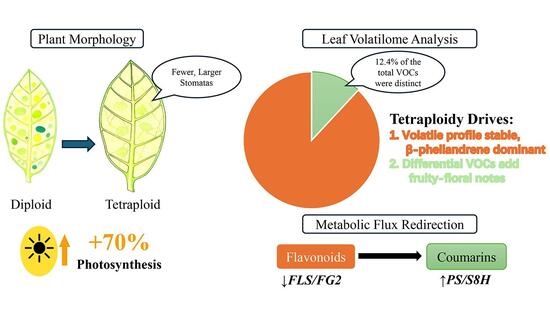
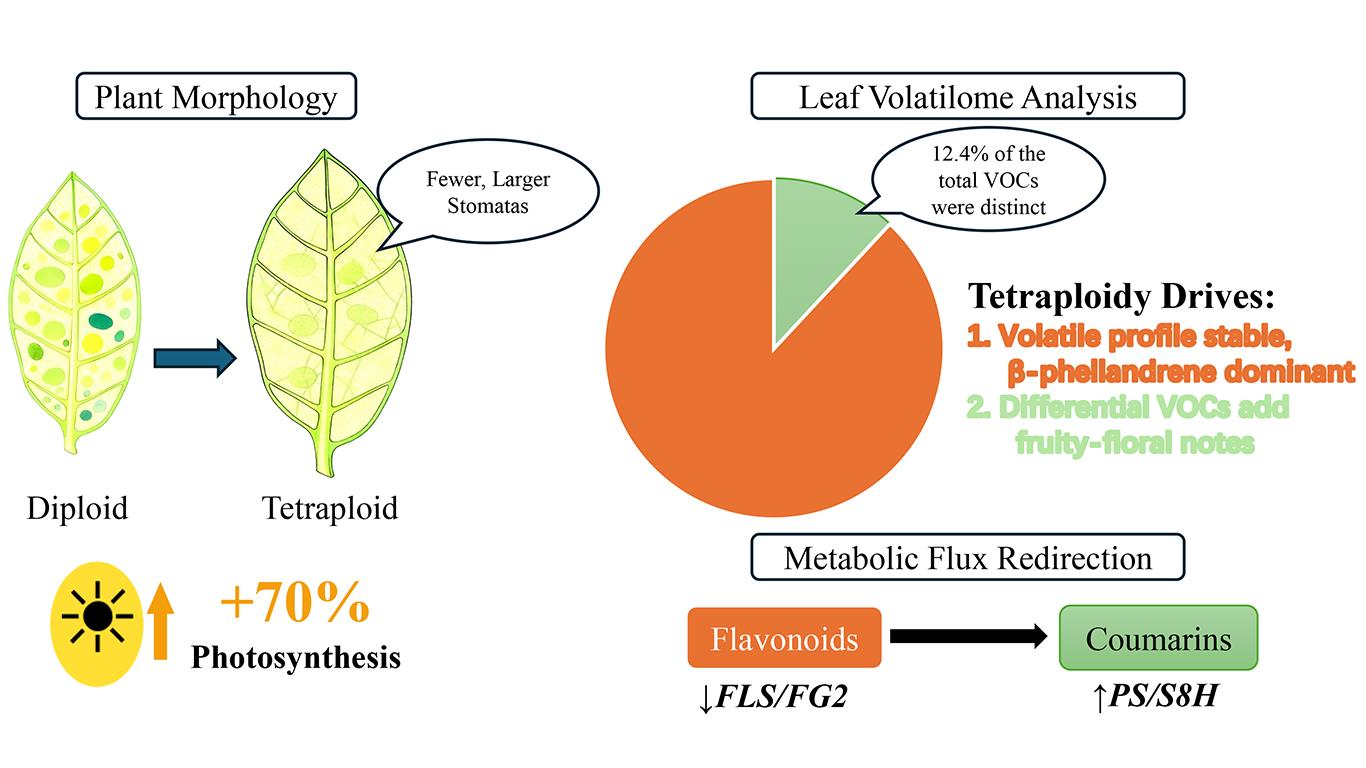
Polyploidy modifies metabolic profiles and transcriptional regulation of biosynthetic pathways. Citrus tetraploids are characterized by dwarf growth and increased leaf biomass. Citrus leaves are valuable resources for essential oils and natural food additives because of their rapid regrowth, high biomass yield, and year-round availability. In this study, 11 spontaneous autotetraploids (1.14%) were identified among 967 yuzu seedlings. Compared with diploids, tetraploids exhibited reduced plant height, wider leaves, and fewer but larger stomata, accompanied by a 70% increase in net photosynthetic rate and a 2.6-fold increase in stomatal conductance. Volatilomic analysis showed that only 12.4% of the 920 detected volatile organic compounds (VOCs) differed significantly between ploidy levels; notably, two esters—methyl 2-(methylamino) benzoate and 2-methoxyethyl benzoate—were substantially enriched in tetraploids (~400-fold and ~8-fold, respectively). Nonvolatile metabolomic analysis revealed higher accumulation of bioactive coumarins (e.g., bergapten, imperatorin, and isopimpinellin) and lower levels of flavonoids in tetraploid leaves. Transcriptomic analysis indicated enrichment of genes involved in flavonoid and coumarin biosynthesis. Integrated multi-omics analysis demonstrated that upregulation of psoralen synthase (PS) and scopoletin 8-hydroxylase (S8H) was positively associated with increased coumarin accumulation, whereas downregulation of flavonol synthase (FLS) and flavonol-3-O-glucoside L-rhamnosyltransferase (FG2) contributed to reduced flavonoid content, indicating a metabolic shift from flavonoids to coumarins in tetraploid leaves. These findings provide insight into secondary metabolite reprogramming following autotetraploidization in yuzu and highlight its potential value for the bioactive coumarin industry.

Graphical Abstract

1. Introduction

Polyploidization, meaning the presence of more than two complete chromosome sets, can occur through whole-genome duplication (WGD) at the organismal level or via endoreduplication in specific somatic tissues [1]. This phenomenon underpins crop evolution and domestication and is a common driver of speciation [2]. Based on their origin, polyploids can be categorized as autopolyploids, arising from the doubling of a single diploid genome, or allopolyploids, occurring due to the combination of distinct genomes via hybridization and subsequent chromosome doubling [3]. Research on autopolyploids remains limited [4]; however, evidence increasingly suggests that autopolyploids exhibit enhanced tolerance to short-term environmental fluctuations [4,5,6,7], partially because WGD enhances metabolic flexibility [8,9].
Autopolyploid citrus plants exhibit desirable physiological traits, making tetraploid plants, particularly rootstocks, a valuable resource for agriculture. Spontaneous tetraploidization, which is caused primarily by chromosome doubling in nucellar cells of apomictic genotypes, is a frequent event, with seedling frequencies ranging from 0% to over 20%, and is significantly influenced by both genotype and environmental conditions [10]. Tetraploid citrus plants consistently differ from diploids in terms of leaf color, shape index, thickness, plant stature, and photosynthetic efficiency [11,12,13], and can better tolerate drought [13,14], salinity [8,15,16], and low temperatures [17], providing them with broad resilience to both biotic and abiotic stresses [18]. In addition, citrus polyploidy may substantially reshape transcriptional networks [19] and metabolite pools [20], including flavonoids [21] and essential oils (EOs) [22]. Polyploidization is often associated with extensive metabolic reprogramming through genome dosage effects and epigenetic modifications, leading to targeted shifts in the accumulation of key secondary metabolites [23]. This reprogramming enhances the adaptivity of polyploid plant lines and increases their nutritional and medicinal value, highlighting their potential for improving metabolic traits [24]. Recently, citrus EOs, obtained from various parts of the citrus plant [25], have garnered considerable interest owing to their unique aroma and widespread application in air fresheners, medications, cleaning agents, soft drinks, solvents, and high-end perfumes [26], in addition to their anti-inflammatory [27], anxiolytic, and sedative effects [28]. In addition to their peels, citrus leaves also serve as excellent raw materials for EOs. Huang et al. [29] systematically studied the chemical composition of citrus leaf oils from 110 Chinese-origin citrus species, varieties, hybrids, and cultivars to identify new EO sources. They provided chemical-composition data on the leaf oils of citrus plants, aiding in their taxonomy. Interestingly, according to a report on at least 10 citrus species, citrus leaves and peels share many volatile organic compounds (VOCs), particularly terpenoids [30]. A definite correlation exists between the metabolites and volatiles of leaves and those of fruits, which is reflected in these organs’ shared partial biosynthetic pathways and precursors, while the accumulation of final compounds shows distinct organ specificity [31]. Moreover, VOC emissions from both of these plant organs exhibit developmental synergy; for example, in apple and peach trees, the total emissions from both leaves and fruits decrease as the fruits develop [32]. Therefore, analyzing the composition and regulation of volatile substances in leaves not only aids in understanding plant adaptations but also provides key insights into the regulatory basis of fruit quality traits, such as flavor and resistance, through indirect observations of leaf characteristics, providing a significant theoretical basis for research and agricultural applications. However, studies on changes in citrus leaf’s VOC profile after polyploidization remain scarce. In addition, recent advances in citrus metabolomics have revealed that polyploidization drives significant changes in the composition of non-volatile metabolites, including flavonoids, phenolic acids, and coumarins, which are essential for plant defense and fruit quality [33]. These compounds exhibit pronounced antioxidant, anti-inflammatory, and antimicrobial activity, thereby contributing to the nutritional and pharmaceutical value of citrus products [34]. Recent metabolomic surveys across diverse citrus germplasms indicate that leaves enriched in coumarins and flavonoids scale positively with field-level tolerance to both biotic and abiotic stresses, underscoring the agronomic value of exploiting foliar secondary metabolism in polyploid breeding programmes [35].
Yuzu (Citrus junos Sieb. ex Tanaka) is a small Rutaceae tree native to the upper Yangtze River basin. It was first introduced to the Korean Peninsula and then subsequently to Japan during the 7th–8th centuries AD. Modern phylogenetic analyses suggest that yuzu is likely a natural hybrid, with Ichang papeda (Citrus cavaleriei) and mandarin (Citrus reticulata) as the maternal and paternal parents, respectively [36]. While its small, highly acidic fruit is rarely eaten fresh [37], its high vitamin C content, abundant flavonoids, and unique aroma profile make yuzu valuable for producing beverages and EOs [38]. While flavonoids, EOs, and volatile compounds are traditionally extracted from the peel of yuzu for industrial use (for example, in pickled teas, juices, and diverse food products) [39], yuzu’s leaves represent a largely untapped yet promising alternative resource [40]. Studies on citrus leaves have demonstrated their value as predictors of fruit metabolic profiles; for example, strong compositional correspondence has been identified between leaf- and peel-derived essential oils across diverse sweet orange cultivars [41]. This finding suggests that leaf analysis is a viable tool for forecasting metabolite outcomes in citrus breeding. Furthermore, the substantial antioxidant and antimicrobial activity of leaf-derived essential oils underscores their industrial potential [42]. Advanced green extraction technologies, such as sequential supercritical CO2 and natural deep-eutectic-solvent-based processes, have been effectively employed to recover high-value, bioactive phenolic and terpenoid fractions from citrus leaves, illustrating their suitability for biorefinery applications [43]. In addition, yuzu has been researched from a medical perspective, exhibiting potential antihypertensive [34], antioxidant [34], neuroprotective [44], anti-inflammatory [44], and antidiabetic activity [45].
In the present study, we identified eleven juvenile seedlings from spontaneous tetraploids whose agronomic potential and unique attributes are unknown. To investigate how polyploidy alters the external and internal features of yuzu plants, we compared the morphology, photosynthetic physiology, and volatilomic, non-volatile metabolomic, and transcriptomic profiles of 11 seedlings.

2. Materials and Methods

2.1. Plant Culture and Ploidy Screening

In 2022, seeds were collected from naturally pollinated mature yuzu fruits harvested in Quzhou, Zhejiang, China. They were sterilized, sown in a peat-based medium, and grown at 25 °C using a 16/8 h light/dark cycle. For ploidy screening, a total of 1256 seeds were sown, of which 967 germinated (76.99% germination rate) and survived to the four-leaf stage for morphological pre-selection and flow cytometry confirmation. Four months after germination, following the morphological criteria of Aleza et al. [10] and Huang et al. [7], putative tetraploids with a compact or dwarf stature combined with visibly wider and thicker leaves were pre-selected, and flow cytometry (CyFlow, Sysmex Partec, Gorlitz, Germany) was conducted to confirm ploidy, with leaf samples processed using the CyStain™ UV Precise P Ploidy Analysis Kit (Sysmex, Kobe, Japan). Approximately 0.5 cm2 of young leaf tissue was chopped and added to 200 μL of nuclei extraction buffer, followed by the addition of 800 μL of staining buffer. The homogenate was filtered through a 50 μm mesh and analyzed using a flow cytometer with three replicates per sample.

2.2. Growth Conditions and Sampling

Selected plants were transplanted into 0.5-gallon pots containing a 3:1 (v/v) peat–perlite mixture and maintained in a multi-span greenhouse under natural environmental conditions (ambient light; natural temperature fluctuations within 18–30 °C; relative humidity of 50–80%). They were irrigated daily to field capacity and fertilized weekly with a half-strength Hoagland solution. One year after germination, fully expanded leaves from the spring flush were harvested between 10:00 and 11:00 a.m. The use of one-year-old juvenile leaves was necessary because the protracted juvenile phase in yuzu seedlings precludes access to adult foliage within a standard research timeframe [46]. Therefore, this approach was designed to investigate the early effects of tetraploidization on leaf development and metabolism in juvenile plants. For the diploid and tetraploid plants, three replicate leaf samples were collected from a combination of three distinct randomly selected plants. All the samples were immediately snap-frozen in liquid nitrogen, freeze-dried (Scientz-100F, Ningbo Xinzhi Biological Technology Co. Ltd., Ningbo, Zhejiang, China), and stored at −80 °C.

2.3. Morphological, Anatomical, and Photosynthetic Analyses

2.3.1. Whole-Plant and Leaf Morphometry

A digital caliper (Mitutoyo Corporation, Kawasaki, Japan) with a precision of 0.01 mm was used to measure plant height and leaf dimensions (length, width, and thickness). To ensure consistency, leaf thickness was determined at the midpoint between the midrib and the leaf margin.

2.3.2. Electron Microscopy Observation of Stoma Morphology

Leaf segments (2 × 5 mm) were fixed with 2.5% glutaraldehyde, post-fixed with 1% osmium tetroxide, and dehydrated using an ethanol series. After drying at the critical point, they were sputter-coated with a gold–palladium alloy. Finally, an SU-8010 field-emission Scanning Electron Microscope (SEM, Hitachi High-Technologies, Tokyo, Japan) was used at 5 kV to determine stomatal morphology and density.

2.3.3. Observation of the Anatomical Structure of Leaves

Mature leaves were processed to prepare longitudinal resin-embedded cross-sections according to the procedure reported by Jiang et al. [13]. Briefly, leaf samples were fixed with 2.5% glutaraldehyde, dehydrated using an ethanol series, embedded in Spurr’s resin, sectioned into 2–3 μm thick sections, and stained with toluidine blue O. The images were observed under a Leica DMLA light microscope (Leica Microsystems, Wetzlar, Germany).

2.3.4. Photosynthetic Intensity Measurement

Photosynthetic gas exchange measurements were conducted on one-year-old clonal seedlings. The measurements were taken from fully expanded, sun-exposed leaves at the mid-canopy position of the spring flush. An LI-6800 portable photosynthesis system (LI-COR, Lincoln, NE, USA) was used to measure gas-exchange traits (net photosynthetic rate, Pn; stomatal conductance, Gs; intercellular CO2 concentration, Ci; and transpiration rate, Tr) between 10:00 and 11:00 a.m. Measurements were taken under the following controlled conditions, as described by Shi et al. [47], with slight modifications: 30 °C, 55% relative humidity, 400 μmol mol−1 CO2, and 800 μmol m−2 s−1 light intensity.

2.4. Metabolomics

2.4.1. Volatile Metabolomics

Headspace solid-phase microextraction (HS-SPME, Merck, Darmstadt, Germany) using a 120 μm DVB/CAR/PDMS fiber assembly (Supelco, Bellefonte, PA, USA) was conducted to extract 500 mg of lyophilized leaf powder. Analysis was performed on an Agilent 8890 gas chromatography (GC, Agilent Technologies, Santa Clara, CA, USA) system coupled to a 7000E triple quadrupole mass spectrometer (MS, Wilmington, DE, USA), and compounds were identified based on retention indices and mass spectral matching against NIST20 and in-house libraries. Quantification was performed using β-caryophyllene as an external standard, and orthogonal partial least-squares discriminant analysis (OPLS-DA) models were used to select differential VOCs. The conditions were VIP > 1 and |log2FC| ≥ 1.

2.4.2. Non-Volatile Metabolomics

Lyophilized leaf powder (50 mg) was extracted using 70% methanol containing lidocaine as an internal standard. The metabolites were separated using the Thermo Vanquish UPLC system (UPLC, ExionLC™ AD, Framingham, MA, USA) coupled with the Q Exactive HF-X MS. Data were processed using Compound Discoverer (v3.3), and metabolites were identified using the Kyoto Encyclopedia of Genes and Genomes (KEGG) compound database and Metabolic Map (MetMap) databases. MetaboAnalystR (v3.2) was used to perform multivariate statistical analyses (Principal component analysis [PCA] and OPLS-DA).

2.5. Genetic Characterization via Single-Nucleotide Polymorphism (SNP) Analysis

A modified CTAB method was used to extract genomic DNA from diploid and tetraploid leaf tissues [48]. BGI-Shenzhen conducted whole-genome resequencing. BWA-MEM2 (v.2.0-pre2) was used to align clean reads to the Citrus maxima ‘Wanbaiyou’ reference genome (http://citrus.hzau.edu.cn/download.php, accessed on 6 August 2025), and initial SNP detection was performed via MUMmer-4.0.0rc1. To ensure calling accuracy in the polyploid context, each candidate SNP was verified by extracting its 100 bp flanking sequences from the reference genome and realigning them to the assembly using BLAT; sites with an alignment length of <101 bp were discarded. SAMtools (v1.10) and BCFtools (v1.10.2) were used for SNP calling, and variants near indels (±5 bp) and those with missing rates of >20% or a minor allele frequency of <0.05 were filtered out. Additionally, repetitive regions in the reference genome were predicted via BLAST (v2.15.0), Tandem Repeats Finder (TRF, v4.10.0), and RepeatMasker (v4.1.5), and SNPs located within these regions were filtered out. Publicly available resequencing data for 10 additional citrus accessions were retrieved from the NCBI Sequence Read Archive (SRA) and processed identically (the accession numbers are listed in Table S1). The loci harboring common SNPs between diploid and tetraploid yuzu were counted and visualized using a Venn diagram generated with the R package VennDiagram (v1.7.3). A final dataset of 4.84 million high-quality SNPs was used to construct a neighbor-joining tree in MEGA X, employing the p-distance model and 1000 bootstrap replicates. The phylogenetic tree was subsequently visualized and annotated using the Interactive Tree of Life (iTOL v6) online tool.

2.6. RNA Extraction and Transcriptome Sequencing

The CTAB-PBIOZOL method was used to extract total RNA from lyophilized leaf powder. Then, RNA integrity was verified (RIN ≥ 7.0), and the TruSeq Stranded mRNA Kit (Illumina, San Diego, CA, USA) was used to generate strand-specific cDNA libraries. Sequencing was performed on the Illumina NovaSeq X Plus platform (150 bp paired-end), and clean reads were aligned to the Citrus maxima ‘Wanbaiyou’ genome (v1.0) using HISAT2 v2.2.1. Counts v2.0.3 was used to obtain gene-level counts, which were normalized to FPKM; DESeq2 v1.34.0 was used to analyze differential expression (|log2FC| ≥ 1, FDR < 0.05); and Cluster Profiler v4.2.2 (FDR < 0.05) was used to perform GO, KEGG, and MetMap enrichment.

2.7. Quantitative Real-Time PCR (qRT-PCR)

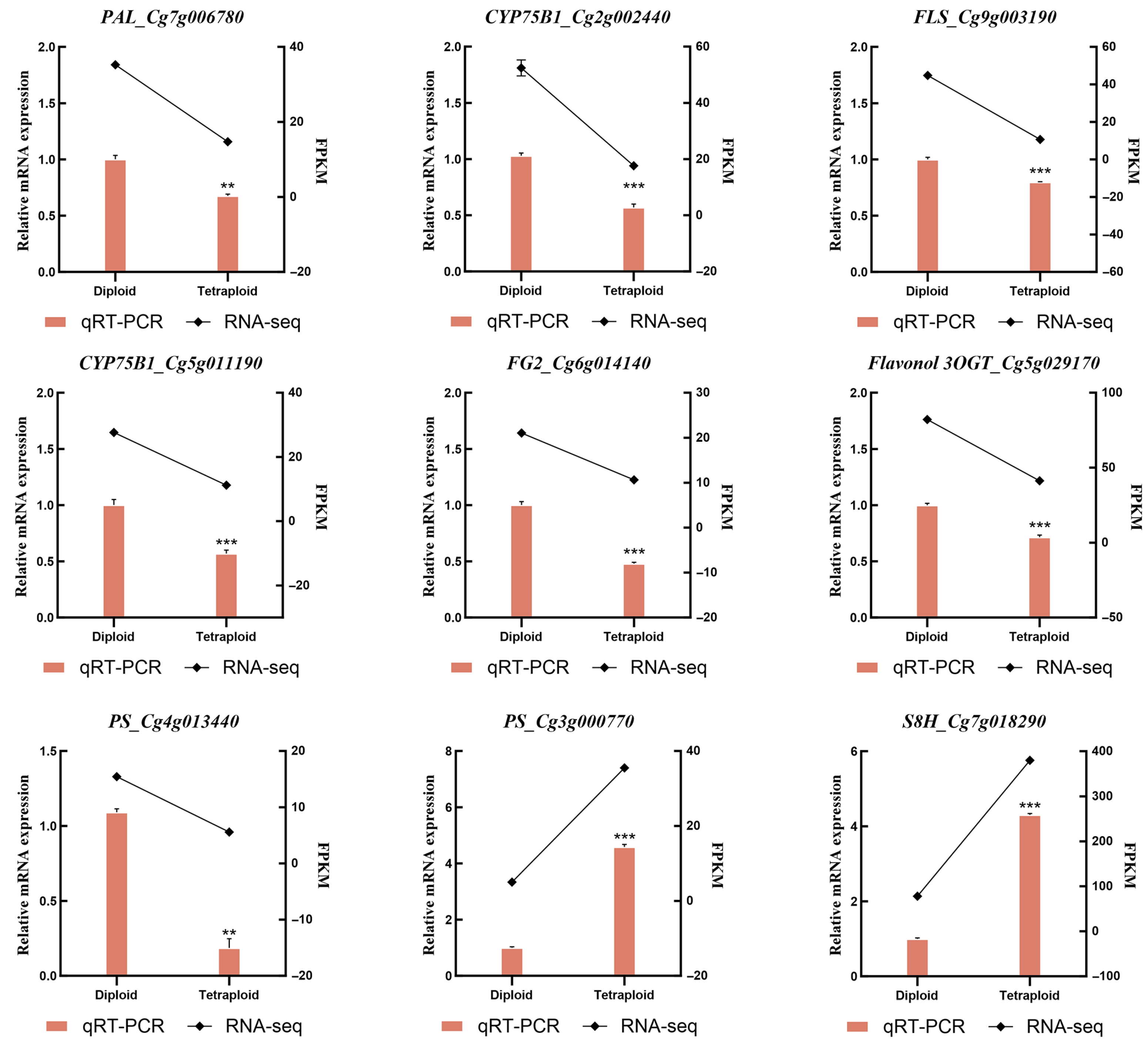
Nine DEGs were selected for qRT-PCR validation, and cDNA was synthesized with 1 µg of total RNA using the PrimeScript RT Reagent Kit (Takara Bio, Kusatsu, Japan). The ABI 7500 system with SYBR Green Master Mix was used, with CsACTIN employed as the internal control, and the relative expression was calculated using the 2−ΔΔCt method. Table S2 lists the primer sequences.

3. Results

3.1. Identification and Morphological Characterization of Autotetraploid Yuzu

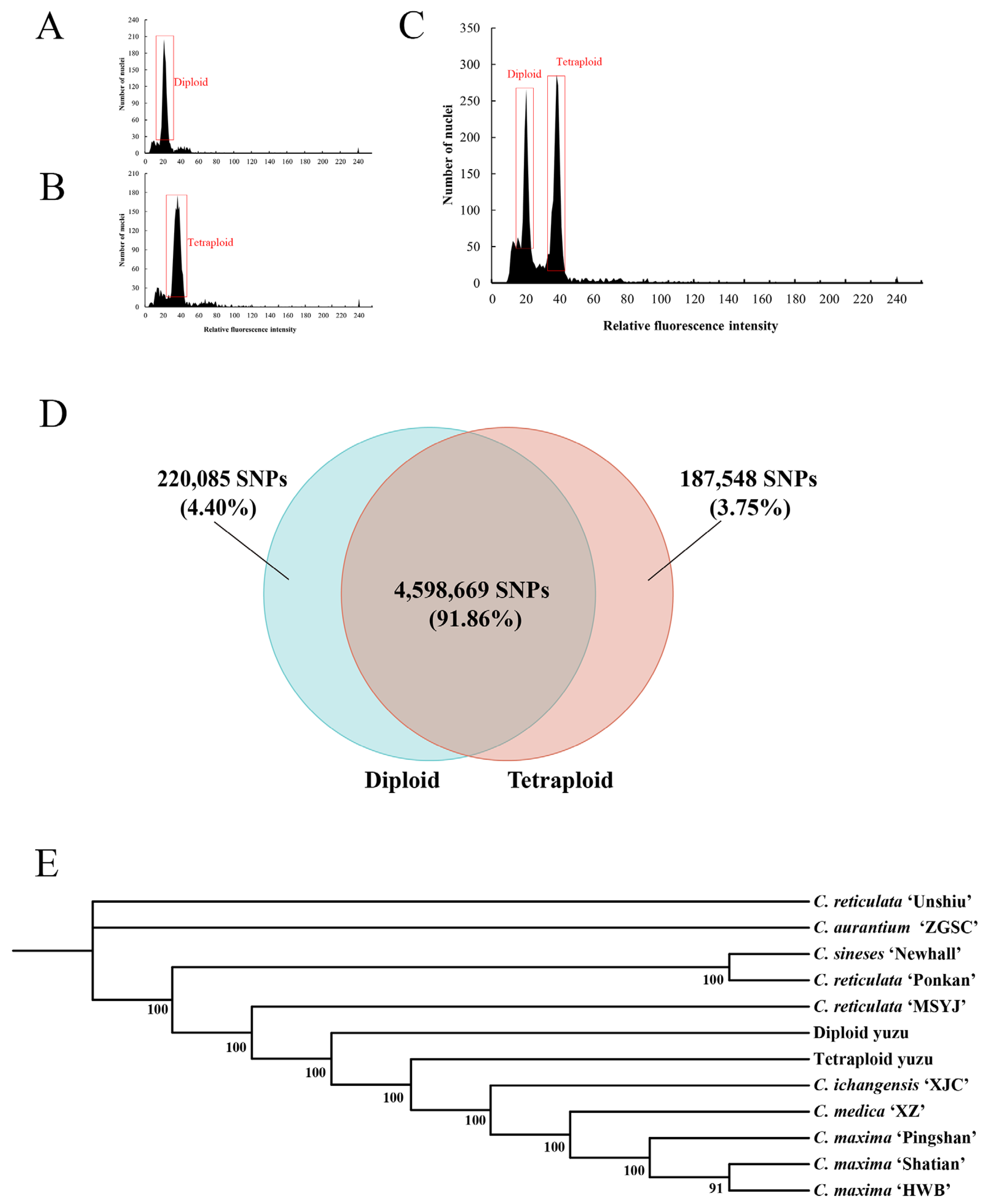
In total, 967 seedlings were obtained from 1256 seeds (germination rate 76.99%), and eleven individuals exhibited decreased stature and markedly wider leaves. Flow cytometry revealed a fluorescence peak at approximately twice the DNA content compared with the diploid peak (Figure 1A,B), confirming that the eleven seedlings were tetraploids. To genetically confirm the origin of these tetraploids, both diploid and tetraploid accessions underwent whole-genome resequencing. Since there is currently no reference genome for yuzu, the high-quality Citrus maxima ‘Wanbaiyou’ (HWB.v1.0) genome was used for SNP calling, which was performed using whole-genome resequencing datasets from Citrus maxima ‘HWB’, Citrus maxima ‘Pingshan’, Citrus maxima ‘Shatian’, Citrus reticulata ‘MSYJ’, Citrus reticulata ‘Ponkan’, Citrus reticulata ‘Unshiu’, Citrus ichangensis ‘XJC’, Citrus sinensis ‘Newhall’, Citrus medica ‘XZ’, and Citrus aurantium ‘ZGSC’ against the Wanbaiyou genome. Comparative genome analysis revealed that the diploid and tetraploid yuzu lines share 4,598,669 SNPs, which account for 91.86% of the total polymorphic sites (Figure 1C). SNP-based phylogenetic analysis revealed that the tetraploid yuzu clustered most closely with its diploid counterpart while also exhibiting relatively close relationships with Citrus reticulata ‘MSYJ’ and Citrus ichangensis ‘XJC’ (Figure 1D). The finding that diploid and tetraploid yuzu share more than 91% polymorphic sites, together with their sister-group relationships in the phylogeny, supports the conclusion that the tetraploids are likely autopolyploids arising from spontaneous genome duplication of the diploid yuzu rather than through hybridization with other species.
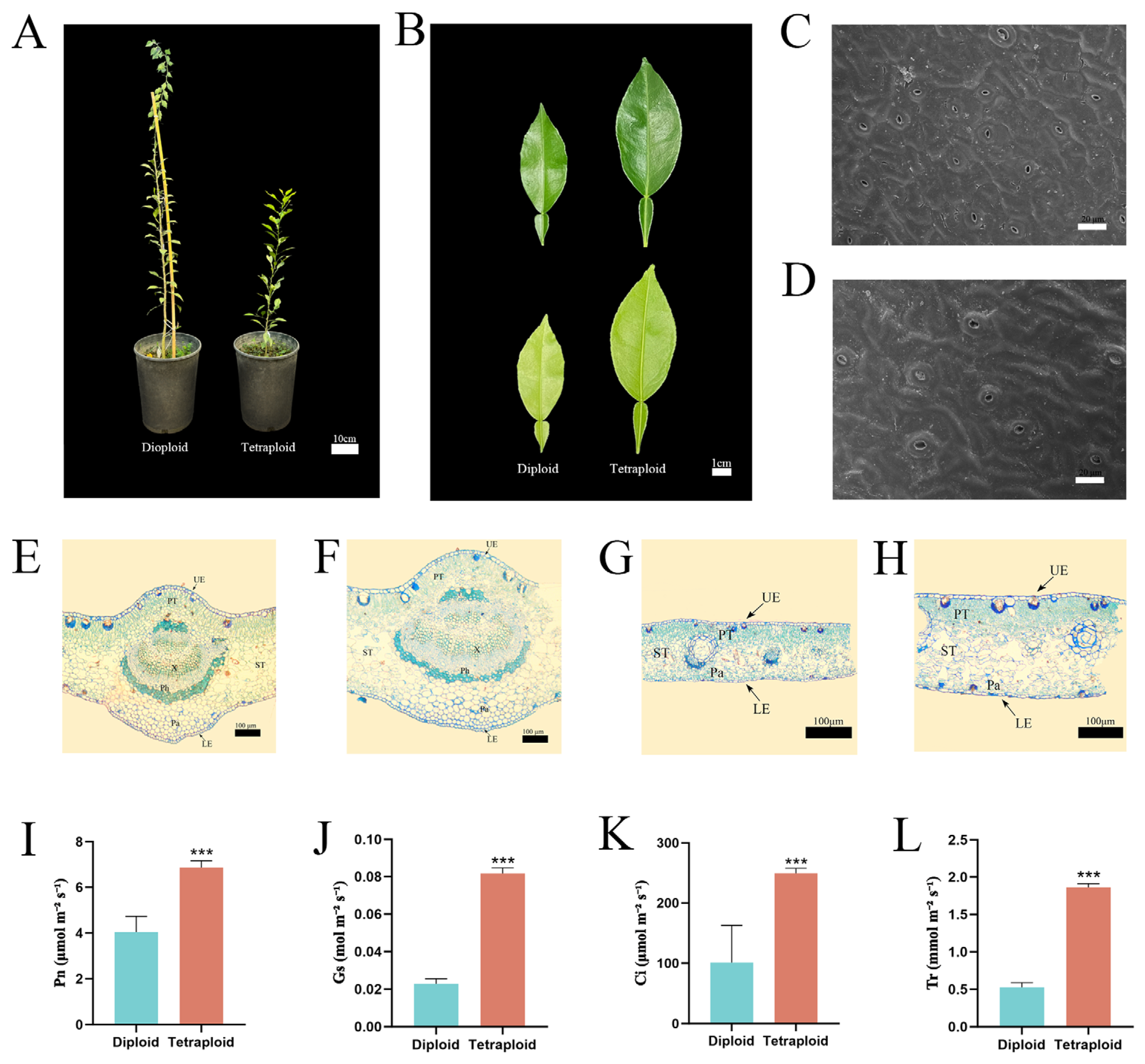
Additional morphological analysis revealed that the tetraploid plants were significantly shorter (52.49 ± 11.08 cm) than their diploid counterparts (107.58 ± 11.91 cm) (Figure 2A,B and Table 1), a hallmark of juvenile citrus autotetraploids; however, the leaves of tetraploids were significantly larger, exhibiting greater length, width, and thickness (Figure 2B and Table 1). SEM revealed that tetraploids have longer stomatal length and width but lower stomatal density (Figure 2C,D and Table 1), while cross-sectional light microscopy indicated that the increased leaf thickness was due to the hypertrophy of palisade and spongy mesophyll cells (Figure 2E–H and Table 1). Gas-exchange analyses revealed marked physiological divergence between cytotypes. Compared with diploids, in tetraploid leaves, the net photosynthetic rate (Pn) was 70% higher (6.87 ± 0.27 vs. 4.05 ± 0.61 μmol m−2 s−1) (Figure 2I); the stomatal conductance (Gs) was increased by 260% (0.08 ± 0.003 vs. 0.02 ± 0.002 mol m−2 s−1) (Figure 2J); the intercellular CO2 concentration (Ci) was increased by 150% (249.14 ± 7.69 vs. 101.11 ± 55.32 μmol m−2 s−1) (Figure 2K); and the transpiration rate (Tr) was 260% higher (1.86 ± 0.04 vs. 0.52 ± 0.06 mmol m−2 s−1) (Figure 2L). Collectively, the thicker palisade and spongy tissues, as well as the enlargement and lower density of stomata, result in more efficient carbon assimilation in the leaves of tetraploid yuzu.

3.2. Volatile Metabolomic Profiles of Diploid and Tetraploid Yuzu

3.2.1. Identification and Classification of Leaf VOCs

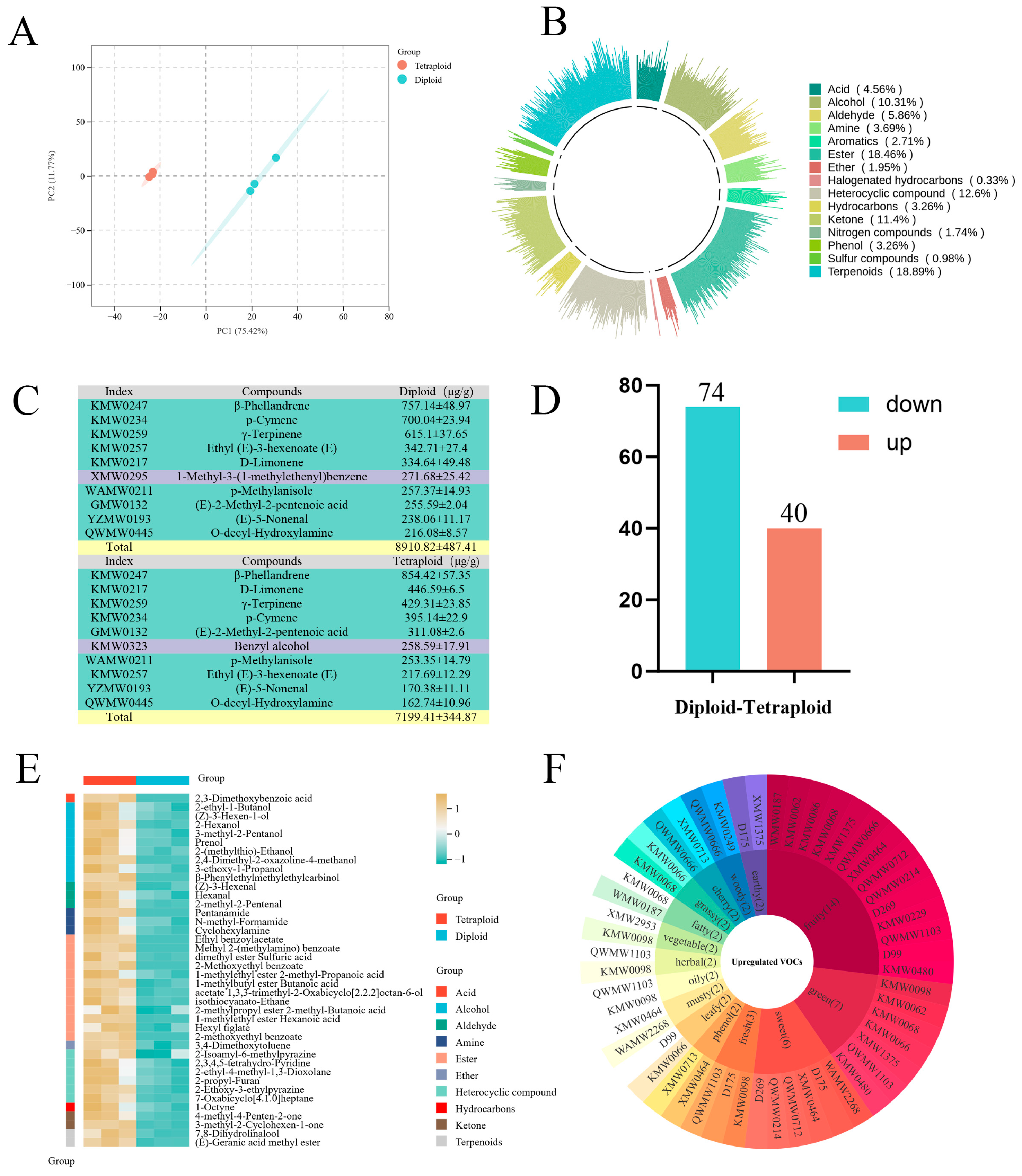
In total, 920 VOCs were identified via HS-SPME and GC–MS analysis (Table S3). PCA of the volatile matrix revealed segregation along PC1 (75.42% variance), with consistent clustering of biological replicates (Figure 3A). The categorized VOCs were terpenoids (18.89%), esters (18.46%), heterocyclic compounds (12.60%), ketones (11.40%), alcohols (10.31%), aldehydes (5.86%), acids (4.56%), amines (3.69%), hydrocarbons (3.26%), phenols (3.26%), aromatics (2.71%), ethers (1.95%), nitrogen compounds (1.74%), sulfur compounds (0.98%), and halogenated hydrocarbons (0.33%). Terpenoids and esters collectively accounted for 37.35% of the VOCs, being the dominant groups (Figure 3B), followed by heterocycle compounds and ketones. The composition of the most abundant volatiles was highly conserved, with nine out of the top ten compounds being identical between diploid and tetraploid leaves. (Figure 3C). In particular, β-phellandrene (KMW0247) was the dominant compound at both ploidy levels (854.42 vs. 757.14 µg/g).

3.2.2. Differential VOC Analysis

OPLS-DA revealed 114 differential VOCs (VIP > 1, |log2FC| ≥ 1)—40 upregulated and 74 downregulated—in tetraploid yuzu (Figure 3D and Table S4). Notably, none of the differential VOCs were identified in the 10 most abundant VOCs. Esters were identified as the most prominently upregulated VOC group. Notably, two esters, methyl 2-(methylamino) benzoate (XMW0464) and 2-methoxyethyl benzoate (D99), exhibited marked accumulation in tetraploid leaves, with their semiquantitative levels increasing dramatically compared with those in diploids. On the basis of semiquantitative estimates, the relative abundance of the former increased by more than 400-fold in tetraploids compared to diploids (log2FC = 8.82), and that of the latter increased by approximately 8-fold (log2FC = 3.12) (Figure 3E). To translate the sensory effect of the upregulated VOCs, we matched each compound to public odor–activity databases (Flavornet, FEMA, and OdourDB). As a result, 23 VOCs were annotated with odor value. The odor profile diagram revealed a predominance of fruity notes (14), followed by green (7), sweet (6), fresh (3), phenol (2), leafy (2), musty (2), oily (2), herbal (2), vegetable (2), fatty (2), grassy (2), woody (2), and earthy (2) descriptors (Figure 3F and Table S5). Among these, the tetraploid-specific esters methyl 2-(methylamino) benzoate and 2-methoxyethyl benzoate are associated with fruity-floral and sweet-oily odor descriptors. The increased abundance of these genes might therefore modulate the overall aroma profile of tetraploid leaves. The introduction of these compounds suggests modulation of the aromatic bouquet, which might be perceived as more complex and appealing.

3.3. Non-Volatile Metabolomic Changes in Diploid and Tetraploid Yuzu

3.3.1. Non-Volatile Metabolite Identification, Classification, and Differential Analysis

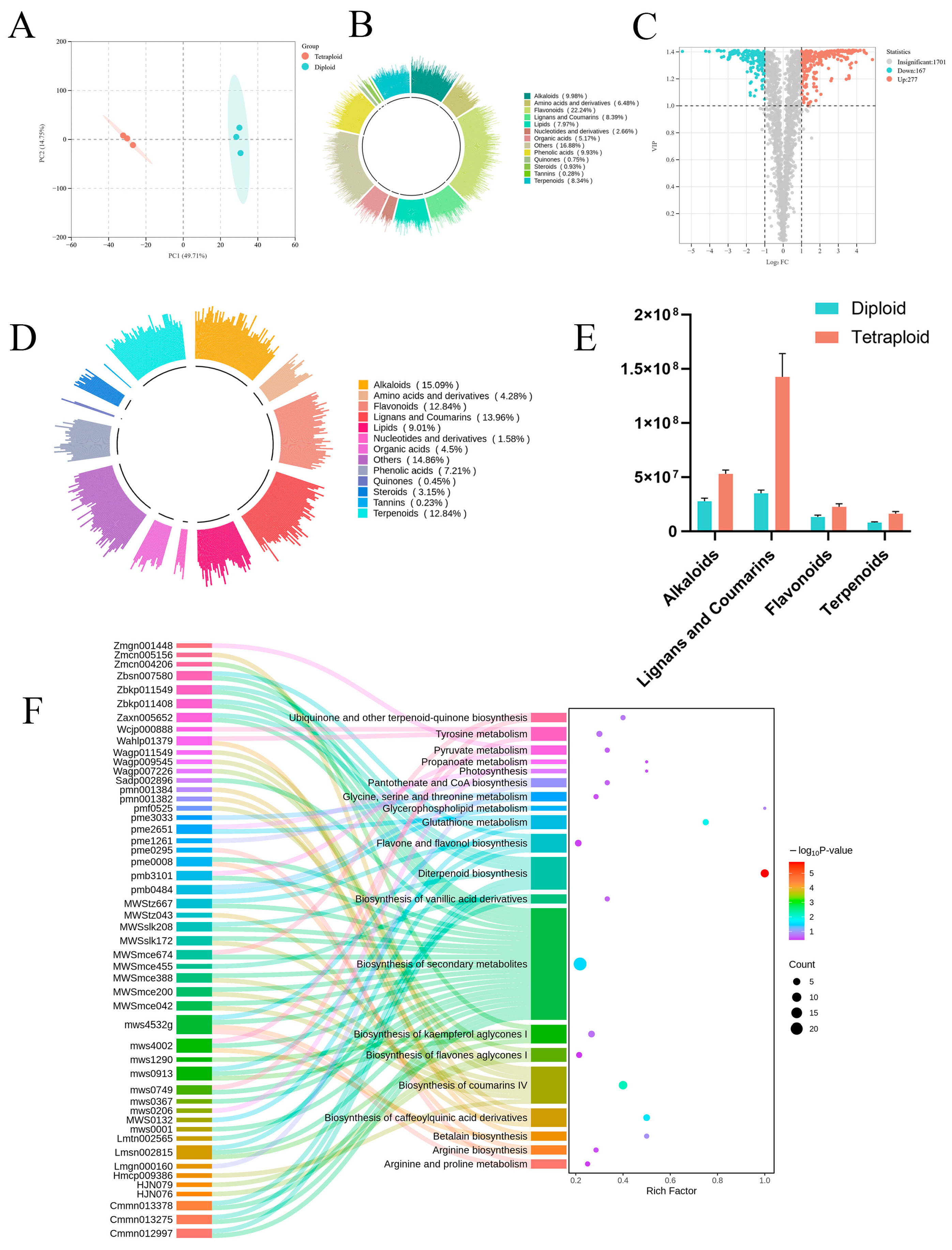
PCA revealed a clear distinction between the diploid and tetraploid groups (Figure 4A). In total, 2145 non-volatile metabolites from 13 classes were detected, dominated by flavonoids (22.24%), alkaloids (9.98%), and phenolic acids (9.93%) (Figure 4B and Table S6), and 444 differentially accumulated metabolites (DAMs) were identified (VIP ≥ 1, FC ≥ 2 or ≤0.5), including 277 upregulated and 167 downregulated compounds (Figure 4C and Table S7). Alkaloids (15.09%), lignans and coumarins (13.96%), flavonoids (12.84%) and terpenoids (12.84%) were the dominant classes among the 444 DAMs (Figure 4D). To further visualize the magnitude of the metabolic changes, we plotted a bar chart of the relative abundances of the four most upregulated metabolite classes among the DAMs (alkaloids, lignans and coumarins, flavonoids, and terpenoids) (Figure 4E), which highlights the pronounced enrichment of coumarins in tetraploids.

3.3.2. KEGG and MetMap Pathway Enrichment Analysis

Enrichment mapping revealed that DAMs were assigned to more than 50 KEGG and MetMap routes. (Figure 4F and Table S8). The two most significantly enriched pathways were “biosynthesis of secondary metabolites” (ko01110) and “biosynthesis of coumarins IV” (MetMap130). Given that coumarins and flavonoids collectively constituted the second-largest category among the 444 DAMs (Figure 4D), the subsequent analysis focused on these two classes, which indeed exhibited the most pronounced upregulation (Figure 4E). We then extracted all annotated metabolites belonging to each of these groups, yielding 112 metabolites. Among them, 23 exhibited clear pathway annotations distributed across 10 discrete branches, including “biosynthesis of coumarins IV” (MetMap130), “biosynthesis of coumarins III” (MetMap129), “flavone and flavonol biosynthesis” (ko00944), “flavonoid biosynthesis” (ko00941), “biosynthesis of flavone aglycones I” (MetMap110), “biosynthesis of flavone aglycones II” (MetMap120), “biosynthesis of kaempferol aglycones I” (MetMap113), “biosynthesis of kaempferol aglycone II” (MetMap114), “biosynthesis of quercetin aglycone II” (MetMap116), and “isorhamnetin O-glycoside biosynthesis” (MetMap109) (Table S9). These 23 metabolites comprised 9 coumarins (8 upregulated, including key compounds such as bergapten, imperatorin, and isopimpinellin, and 1 downregulated) and 14 flavonoids (8 upregulated, including syringetin and quercetagetin-3,4′-dimethyl ether, and 6 downregulated, including nictoflorin and myricetin-3-O-(6′-malony) glucoside).

3.4. Transcriptome Changes in Diploid and Tetraploid Yuzu

3.4.1. Transcriptome Profiling and DEG Identification

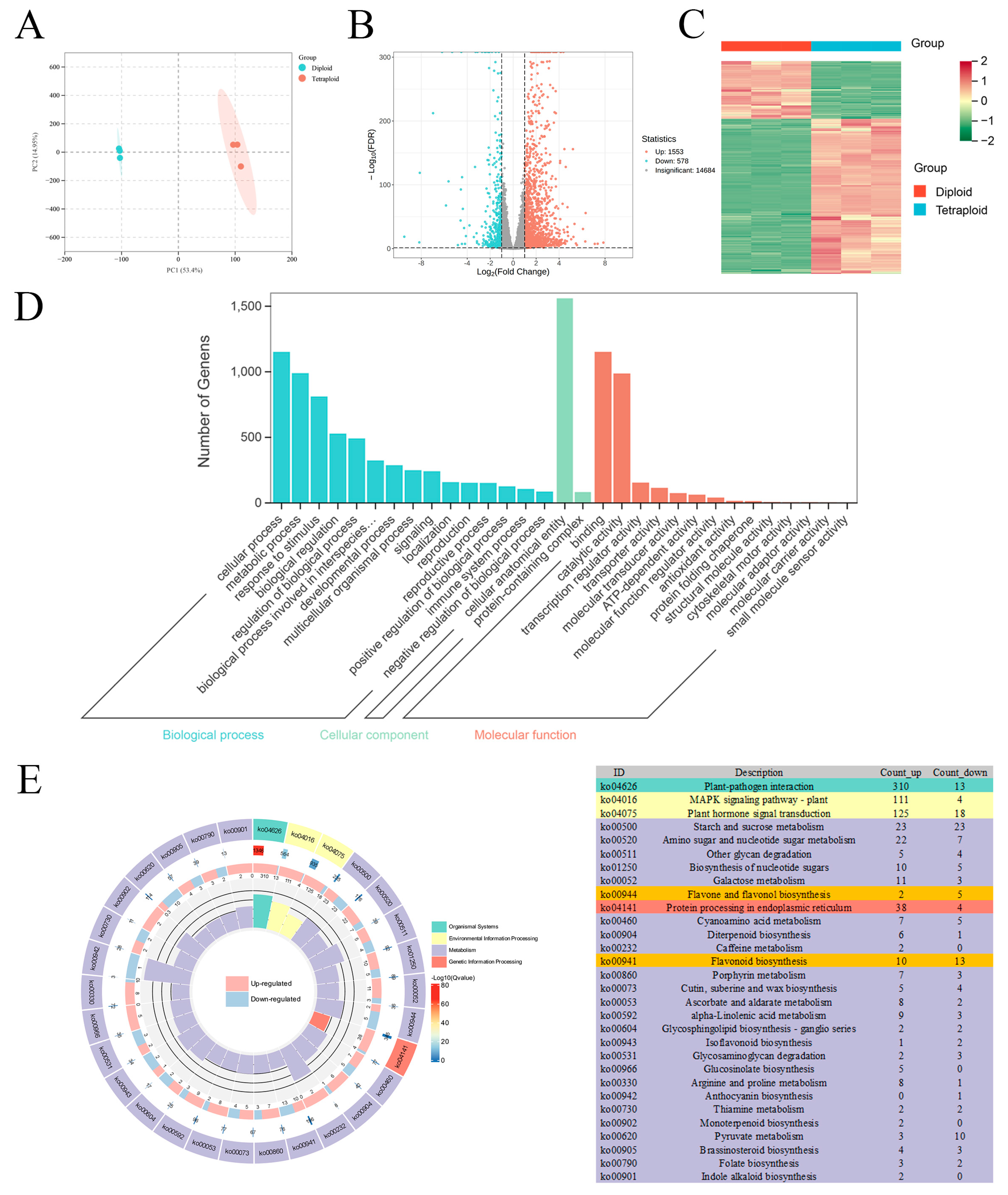
Yuzu transcriptome profiling was performed using RNA-seq, and PCA separated the tetraploid and diploid samples along PC1 (Figure 5A). Using |log2FC| ≥ 1 and FDR < 0.05, we identified 2131 differentially expressed genes (DEGs). Among them, 1553 were upregulated, and 578 were downregulated (Figure 5B and Table S10). The expression of a representative gene, Cg7g018290, increased from 78.15 to 379.80 FPKM in tetraploids (log2FC = 2.22). Hierarchical clustering of all DEGs revealed distinct expression patterns between cytotypes with high biological reproducibility (Figure 5C).

3.4.2. GO, KEGG, and MetMap Functional Dissection of DEGs

To explore the metabolic and developmental processes that may underlie the observed phenotypes and are associated with the transcriptional reprogramming in tetraploid leaves, we performed functional enrichment analysis of the DEG set using GO, KEGG, and MetMap databases. GO analysis revealed that these genes were significantly enriched in molecular functions, cellular components, and biological processes (Figure 5D and Table S11). Furthermore, KEGG and MetMap pathway mapping highlighted their involvement in diverse metabolic and regulatory networks, including organismal systems, environmental information processing, metabolism, and genetic information processing (Figure 5E and Table S12). The key pathways affected by DEGs were “flavonoid biosynthesis” (ko00941), with 10 upregulated and 13 downregulated DEGs, and “flavone and flavonol biosynthesis” (ko00944), with 2 upregulated and 5 downregulated DEGs. In addition, there was significant regulation of the DEGs involved in “biosynthesis of various plant secondary metabolites” (ko00999) and “biosynthesis of coumarins IV” (MatMap130). As important secondary metabolites, citrus flavonoids contribute to detoxification against biotic and abiotic stresses and to the modulation of plant hormone activity [49]. In the present study, we focused on four KEGG and MetMap pathways to investigate how tetraploidization redirects these routes. A detailed examination of the expression of core structural genes was conducted on the basis of the pathway enrichment results. Compared with diploid leaves, tetraploid leaves exhibited differential expression of structural genes. Using KEGG analysis, we retrieved 13 annotated DEGs, and they were categorized into five functional classes: phenylalanine ammonia-lyase (PAL, one upregulated and one downregulated), chalcone isomerase (CHI, one downregulated), flavonoid 3′-monooxygenase (CYP75B1, one upregulated and two downregulated), flavonol synthase (FLS, three upregulated and two downregulated), and flavonol-3-O-glucoside L-rhamnosyltransferase (FG2, two downregulated) (Table S10). Furthermore, we retrieved 11 annotated DEGs via MetMap analysis. These DEGs were classified into three functional classes: flavonol 3-O-glycosyltransferase (Flavonol 3OGT, one upregulated and one downregulated), psoralen synthase (PS, three upregulated and one downregulated), and scopoletin 8-hydroxylase (S8H, three upregulated and one downregulated) (Table S13). These coordinated shifts selectively channel the metabolic flux toward coumarin accumulation while reducing specific flavonol branches. This coordinated transcriptional shift, together with the corresponding metabolite changes, supports a model wherein polyploidization could lead to the reallocation of metabolic resources toward specific secondary metabolite branches.

3.5. Integrated Transcriptomic–Metabolomic Dissection of the Flavonoid Network

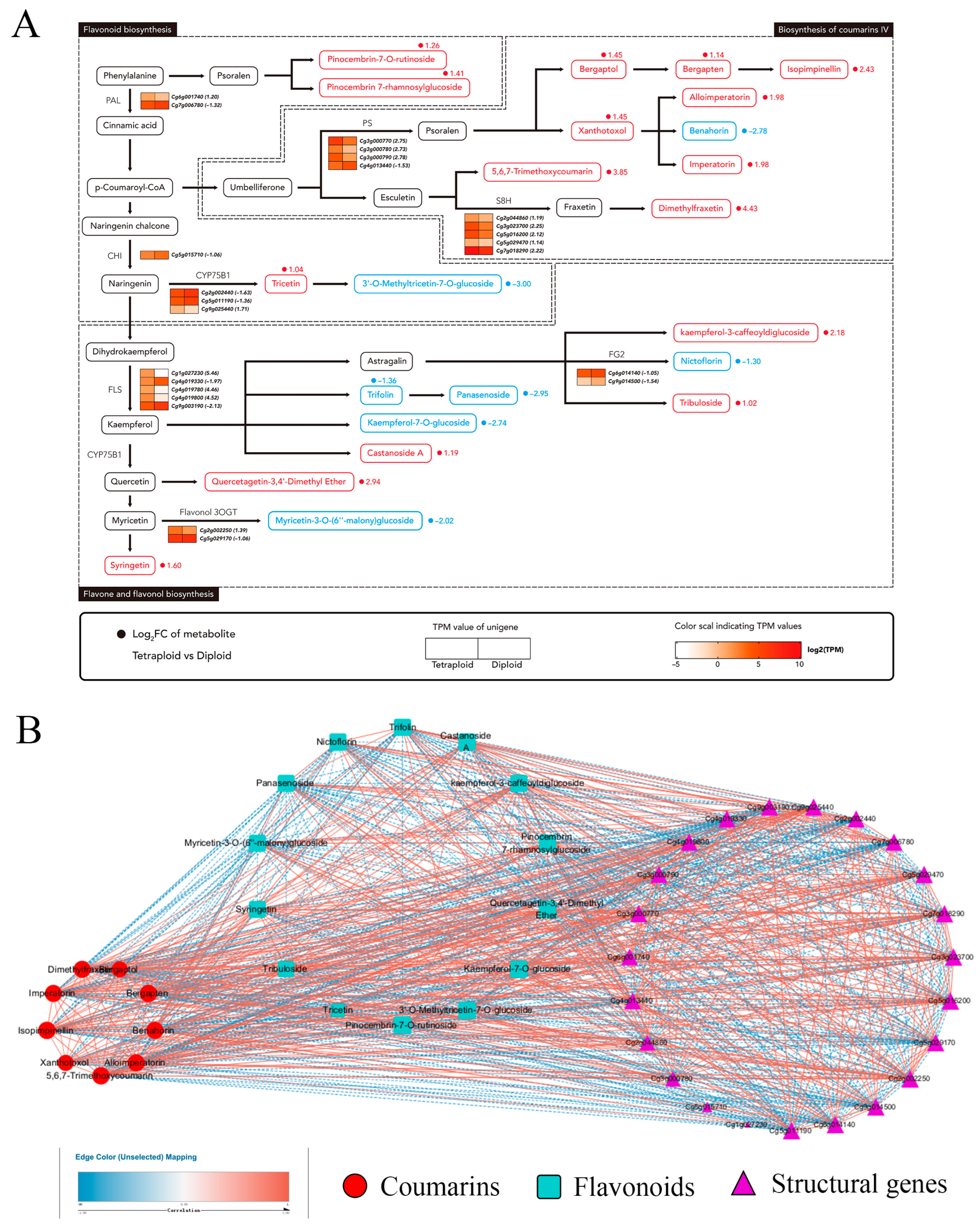
To elucidate how tetraploidization reprograms phenylpropanoid metabolism in yuzu, we focused on the biosynthetic pathways leading to flavonoids and coumarins, two major classes of specialized metabolites derived from the phenylpropanoid pathway (Figure 6A). Briefly, phenylalanine is deaminated by PAL to form cinnamate, which serves as a common precursor. Downstream, the pathway bifurcates into two major branches: (i) the flavonoid branch, where CHI, CYP75B1, FLS, and flavonol glycosyltransferases (e.g., FG2) catalyze the formation of flavonol glycosides, and (ii) the coumarin branch, in which PS and S8H drive the synthesis of furanocoumarins such as bergapten and imperatorin. These two branches compete for shared precursors and cellular resources, making their regulation pivotal for metabolic allocation.
We combined RNA-seq and metabolomic datasets to understand how tetraploidization reshapes flavonoid metabolism in yuzu (Figure 6A). A strict correlation network (|r| > 0.8, p < 0.05) of 24 genes and 23 metabolites (9 coumarins and 14 flavonoids) revealed coordinated regulation (Figure 6B and Table S14). Coumarin accumulation was positively associated with PS and S8H abundance, while flavonol levels were negatively associated with FLS, FG2, and CYP75B1 expression. Tight associations (|r| > 0.99) underscored this polarity: PS transcripts were associated with isopimpinellin (MWSslk172), alloimperatorin (Hmcp009386), and imperatorin (pmf0525), and S8H expression with 5,6,7-trimethoxycoumarin (Hmlp006964) and quercetagetin-3,4′-dimethyl ether (Lmjp005033). In contrast, PAL, FLS, and CYP75B1 were negatively correlated with 3′-O-methyltricetin-7-O-glucoside (Zbsp004450) and kaempferol-7-O-glucoside (mws0089). These reciprocal relationships point toward targeted reallocation of carbon flux, augmenting coumarin biosynthesis concurrently with the suppression of competing flavonoid glycosylation, thereby optimizing metabolic efficiency in autotetraploid yuzu leaves.
To corroborate the RNA-seq results, nine DEGs involved in the biosynthesis of coumarins IV, flavonoids, and flavones and flavonols were subjected to qRT-PCR using the same leaf samples. Expression patterns obtained via qRT-PCR were highly consistent with the transcriptomic data (Figure 7), confirming the reliability of the observed expression changes.

4. Discussion

Tetraploidization drives extensive physiological and metabolic changes in plants. However, the underlying mechanisms in citrus species, including yuzu, remain unclear. The spontaneous-tetraploid frequency identified in this study (1.14%) lies within the broad range (0–20%) documented for apomictic citrus seedlings, which varies markedly with genotype and environmental conditions [10]. In the present study, by comparing spontaneously derived tetraploids with their diploid counterparts, we revealed notable differences in leaf anatomy, volatile emissions, and secondary metabolite accumulation. The sections below focus on interpreting three significant observations: improved photosynthetic performance in tetraploid leaves, sustained dominance of β-phellandrene accompanied by increased ester production in the leaf volatilome, and enhanced accumulation of coumarin compounds. Each aspect is examined in relation to its possible genomic, biochemical, and adaptive implications.

4.1. Tetraploidization Enhances Photosynthesis Through Altered Mesophyll Anatomy

Tetraploid yuzu leaves presented typical polyploid anatomical features, including thicker leaves with larger but fewer stomata, which is consistent with previously reported autotetraploid citrus phenotypes and may contribute to improved water conservation and drought tolerance [10,13,14]. These anatomical improvements underpin the significant increases in Pn and Gs observed in tetraploids (Figure 2I,J). Notably, Ci also increased substantially in tetraploid leaves (Figure 2K). A similar coordinated rise in Gs, Ci, and Pn has also been reported in the autotetraploid Acer buergerianum [50], suggesting that polyploidization enhances both stomatal and conductance. This improvement directly increases the availability of carbon skeletons and energy [35], which likely supports the redirection of flux toward the biosynthesis of specialized metabolites, including coumarins.

4.2. β-Phellandrene Dominated the VOC Profile and Increased the Ester Content in the Leaves of Tetraploid Yuzu

Previous studies have focused on VOCs from peels, with limonene (56–79%) dominant in yuzu peel [38]. However, studies on the VOCs emitted from yuzu leaves are limited. In the present study, we comprehensively analyzed VOCs in yuzu leaves and observed that β-phellandrene is the major leaf volatile in both diploid and tetraploid yuzu (Figure 3C); however, limonene levels decreased. This discrepancy primarily stems from the tissue-specific expression and functional diversification of terpene synthase (TPS) genes [51]. In citrus peel, limonene synthase is highly expressed and catalyzes the conversion of GPP into limonene. Limonene dominates the volatile profile and serves as a primary defense compound against pathogens and herbivores during fruit development [52]. β-Phellandrene synthase (e.g., PHS) presumably exhibits a leaf preference in yuzu, where it may channel metabolic flux toward β-phellandrene synthesis [53]. Beyond enzymatic specialization, the dominance of β-phellandrene in leaves likely reflects its optimized ecological functions. In addition to its role as an important volatile, β-phellandrene has been suggested to play a part in environmental defense by deterring pests such as the Asian citrus psyllid (Diaphorina citri), the vector of Huanglongbing (HLB) [54], and has demonstrated spasmolytic [55] and antibacterial properties [56]. Therefore, the stability of β-phellandrene as the dominant leaf volatile in polyploidy yuzu underscores its ecological and potential industrial significance.
The leaf volatile profile of yuzu remained largely stable after tetraploidization because only 114 of the 920 detected volatiles (12.4%) were differentially accumulated (Figure 3D). This robustness was further underscored by the high similarity in the most abundant volatiles: the top 10 profiles were nearly identical between both cytotypes, which were both dominated by nine common compounds and β-phellandrene (757.14 vs. 854.42 µg/g in diploid and tetraploid, respectively). Under the experimental conditions of this study, autotetraploidization in yuzu had only a modest effect on the volatile profile of the core leaf. This pattern appears to differ from the more extensive restructuring of volatiles reported in some other polyploid systems. [51,57,58], suggesting that citrus species possess distinct homeostatic mechanisms that buffer the major terpenoid profile against genome-dosage effects [59,60]. Additional studies across diverse citrus species are warranted to confirm these findings. This stability in the core volatile profile may contribute to ecological adaptation by preserving established chemical communication with pollinators and herbivorous natural enemies, which could be important for the successful establishment of polyploids in natural environments [53,58]. Against this stable background, tetraploidization was linked with a pronounced increase in the relative abundance of certain ester compounds. In particular, methyl 2-(methylamino) benzoate and 2-methoxyethyl benzoate were detected at substantially higher levels in tetraploids. Their presence subtly affected the leaves’ fruity-floral character, with both of these compounds representing fruity-floral GRAS flavor molecules (FDA/EFSA) and FEMA-listed additives (nos. 2718 and 4039) used in high-end perfumery and food seasoning [61,62].

4.3. Tetraploidization Redirects Phenylpropanoid Flux Toward Coumarin Biosynthesis in Exchange for Flavonoid Biosynthesis

Polyploid plants can undergo extensive metabolic reprogramming after WGD, primarily driven by genome dosage effects and epigenetic modifications [9,63]. In citrus, polyploidization has been shown to remodel fruit metabolism by altering carbon source utilization and metabolic flux, as demonstrated in the autotetraploid Ponkan mandarin, where citrate accumulation increased due to suppressed degradation and transport, while flavonoids and carotenoids decreased [23]. Our integrated transcriptomic and metabolomic analyses revealed pronounced modifications of the phenylpropanoid pathway in autotetraploid yuzu. The coordinated gene-metabolite correlation network (Figure 6B) suggests that the observed flux redirection likely stems from tetraploid-specific regulatory adjustments rather than a uniform genome-dosage effect. This was characterized by opposing expression trends in key structural genes, which markedly shifted the metabolite accumulation patterns. Notably, genes encoding PS and S8H, which are essential for coumarin biosynthesis, were significantly upregulated in tetraploids (Figure 6A), which enhanced metabolic flux toward the synthesis of bioactive coumarins such as bergapten, imperatorin, and isopimpinellin. From an energy perspective, coumarin biosynthesis is relatively economical: the production of major coumarins, such as bergapten or imperatorin, requires only four enzymatic steps from cinnamate and no UDP-sugar donors [64]. These accumulated coumarins have been documented to exhibit bioactivity (e.g., anti-inflammatory, antibacterial), indicating that tetraploid yuzu leaves could serve as an enhanced raw material for extracting high-value compounds for nutraceutical or pharmaceutical applications [65,66]. In contrast, the genes involved in flavonol glycosylation, namely, FLS and FG2, were downregulated in tetraploids (Figure 6A), attenuating the biosynthesis of flavonol glycosides, whose synthesis requires additional glycosylation steps that consume UDP-sugars. The downregulation of FG2 and related glycosyltransferases (e.g., Flavonol 3OGT) may conserve UDP-sugar pools, which may be reallocated to other essential biosynthetic processes [67,68]. Thus, the metabolic trade-off optimizes energy allocation by decreasing investment in the synthesis of flavonol glycosides, while supporting the production of energetically efficient coumarins. In summary, autotetraploidy in yuzu induces the targeted reprogramming of phenylpropanoid metabolism, favoring energetically economical coumarin biosynthesis over the more costly synthesis of flavonol glycosides. This shift not only enhances the defensive capability of the plant, but also significantly enriches the leaf metabolome with high-value medicinal compounds. This underscores the potential of polyploid breeding for the metabolic engineering of citrus plants.

5. Conclusions

We combined physiological, cytological, and multi-omics approaches to understand the consequences of spontaneous autotetraploidization in Citrus junos. Tetraploid plants exhibit a shrunken stature, produce thicker leaves with enlarged yet fewer stomata, and achieve a 70% higher net photosynthetic rate. The combination of thicker leaves and altered stomatal traits could contribute to improved water use efficiency and drought tolerance. Despite pronounced anatomical and physiological changes, the leaf volatilome remains remarkably stable: only 12.4% of the 920 detected volatiles differed at the two ploidy levels. Two esters, methyl 2-(methylamino) benzoate and 2-methoxyethyl benzoate, were markedly enriched in tetraploids, contributing subtle fruity-floral notes without disrupting the dominant β-phellandrene-based profile. Moreover, multi-omics analyses revealed a targeted shift in specialized metabolism: genes associated with the coumarin pathway (PS, S8H) were upregulated, whereas flavonol glycosylation genes (FLS, FG2) were downregulated, resulting in the preferential accumulation of bioactive coumarins (bergapten, imperatorin, and isopimpinellin) and high-value flavonoids (syringetin and quercetagetin-3,4′-dimethyl ether). In contrast, the levels of 15 flavonol glycosides were decreased. Our findings suggest that tetraploidization reallocates resources to augment the production of medicinal compounds while imposing only limited changes to the global volatile signature, providing a physiological and molecular basis for further evaluating autotetraploid yuzu as a potential source of high-value metabolites.

Supplementary Materials

The following supporting information can be downloaded at: https://www.mdpi.com/article/10.3390/horticulturae12020216/s1, Table S1: Accession numbers of citrus varieties used for SNP-based phylogenetic analysis. Table S2: Primer sequences used for qRT-PCR validation. Table S3: Complete profile of volatile organic compounds (VOCs) identified in yuzu leaves. Table S4: Differential volatile organic compounds (VOCs) between diploid and tetraploid yuzu. Table S5: Odor attributes of the differential VOCs. Table S6: Complete profile of non-volatile metabolites identified in yuzu leaves. Table S7: Differentially accumulated metabolites (DAMs) between diploid and tetraploid yuzu. Table S8: KEGG and MetMap pathway enrichment analysis of DAMs. Table S9: KEGG and MetMap pathway enrichment analysis of DAMs. Table S10: List of all differentially expressed genes (DEGs). Table S11: Gene Ontology (GO) enrichment analysis of DEGs. Table S12: KEGG pathway enrichment analysis of DEGs. Table S13: Expression data of genes involved in coumarin and flavonoid biosynthesis. Table S14: Correlation network data between DEGs and key metabolites.

Author Contributions

Conceptualization, C.Z. and M.Z.; methodology, H.Z., S.S., Z.Y., J.W., C.Z. and M.Z.; software, H.Z.; validation, H.Z., S.S., Z.Y. and J.W.; formal analysis, H.Z.; investigation, H.Z., Q.W., Y.Y. and L.Z.; resources, Q.W., Y.Y., L.Z., C.Z. and M.Z.; data curation, H.Z. and C.Z.; writing—original draft preparation, H.Z., C.Z. and M.Z.; writing—review and editing, C.Z. and M.Z.; visualization, H.Z.; supervision, M.Z.; project administration, M.Z.; funding acquisition, C.Z. and M.Z. All authors have read and agreed to the published version of the manuscript.

Funding

This work was supported by the Central Agricultural Management Main Capacity Improvement Fund Project (2024ZDXT04); Kecheng District Science and Technology Project (ZJZX2023021); and Kecheng District Citrus Industry Science and Technology Research Project ([2022]22-3).

Data Availability Statement

The datasets generated and analyzed during the current study are available in the NCBI SRA repository, with accession number PRJNA1370179. All data generated or analyzed during this study are included in this published article and its Supplementary Files.

Conflicts of Interest

The authors declare that they have no known competing financial interests or personal relationships that could have appeared to influence the work reported in this paper.

Abbreviations

The following abbreviations are used in this manuscript:
CiIntercellular CO2 Concentration
cDNAComplementary DNA
CTABCetyltrimethylammonium Bromide
DAMsDifferentially Accumulated Metabolites
DEGsDifferentially Expressed Genes
EOsEssential Oils
FCFold Change
FDRFalse Discovery Rate
FEMAFlavor and Extract Manufacturers Association
FPKMFragments Per Kilobase of transcript per Million Mapped Reads
GC-MSGas Chromatography–Mass Spectrometry
GOGene Ontology
GRASGenerally Recognized as Safe
GsStomatal Conductance
HLBHuanglongbing (citrus greening disease)
HS-SPMEHeadspace Solid-Phase Microextraction
KEGGKyoto Encyclopedia of Genes and Genomes
MetMapMetabolic Map
MSMass Spectrometry
OPLS-DAOrthogonal Partial Least Squares Discriminant Analysis
PCAPrincipal Component Analysis
PnNet Photosynthetic Rate
qRT-PCRQuantitative Real-Time Polymerase Chain Reaction
RNA-seqRNA Sequencing
SEMScanning Electron Microscopy
SNPSingle-Nucleotide Polymorphism
SRASequence Read Archive
TrTranspiration Rate
UPLCUltra-Performance Liquid Chromatography
VIPVariable Importance in Projection
VOCsVolatile Organic Compounds
WGDWhole-Genome Duplication

References

  1. Van de Peer, Y.; Mizrachi, E.; Marchal, K. The evolutionary significance of polyploidy. Nat. Rev. Genet. 2017, 18, 411–424. [Google Scholar] [CrossRef] [PubMed]
  2. Van de Peer, Y.; Ashman, T.L.; Soltis, P.S.; Soltis, D.E. Polyploidy: An evolutionary and ecological force in stressful times. Plant Cell 2021, 33, 11–26. [Google Scholar] [CrossRef]
  3. Chen, Z.J. Genetic and epigenetic mechanisms for gene expression and phenotypic variation in plant polyploids. Annu. Rev. Plant Biol. 2007, 58, 377–406. [Google Scholar] [CrossRef] [PubMed]
  4. Liu, S.; Yang, Y.; Wei, F.; Duan, J.; Braynen, J.; Tian, B.; Cao, G.; Shi, G.; Yuan, J. Autopolyploidy leads to rapid genomic changes in Arabidopsis thaliana. Theory Biosci. 2017, 136, 199–206. [Google Scholar] [CrossRef] [PubMed]
  5. Wei, T.; Wang, Y.; Xie, Z.; Guo, D.; Chen, C.; Fan, Q.; Deng, X.; Liu, J.-H. Enhanced ROS scavenging and sugar accumulation contribute to drought tolerance of naturally occurring autotetraploids in Poncirus trifoliata. Plant Biotechnol. J. 2019, 17, 1394–1407. [Google Scholar] [CrossRef]
  6. Wang, Y.; Zuo, L.; Wei, T.; Zhang, Y.; Zhang, Y.; Ming, R.; Bachar, D.; Xiao, W.; Madiha, K.; Chen, C.; et al. CHH methylation of genes associated with fatty acid and jasmonate biosynthesis contributes to cold tolerance in autotetraploids of Poncirus trifoliata. J. Integr. Plant Biol. 2022, 64, 2327–2343. [Google Scholar] [CrossRef]
  7. Huang, P.; Xu, T.; Wang, G.; Zhang, L.; Yao, Y.; Zhang, M.; Zhang, C. Morphological and metabolic changes in Changshan Huyou (Citrus changshan-huyou) following natural tetraploidization. BMC Plant Biol. 2025, 25, 301. [Google Scholar] [CrossRef]
  8. Song, X.; Zhang, M.; Wang, T.T.; Duan, Y.Y.; Ren, J.; Gao, H.; Fan, Y.J.; Xia, Q.M.; Cao, H.X.; Xie, K.D.; et al. Polyploidization leads to salt stress resilience via ethylene signaling in citrus plants. New Phytol. 2025, 246, 176–191. [Google Scholar] [CrossRef]
  9. Ding, M.; Chen, Z.J. Epigenetic perspectives on the evolution and domestication of polyploid plant and crops. Curr. Opin. Plant Biol. 2018, 42, 37–48. [Google Scholar] [CrossRef]
  10. Aleza, P.; Froelicher, Y.; Schwarz, S.; Agustí, M.; Hernández, M.; Juárez, J.; Luro, F.; Morillon, R.; Navarro, L.; Ollitrault, P. Tetraploidization events by chromosome doubling of nucellar cells are frequent in apomictic citrus and are dependent on genotype and environment. Ann. Bot. 2011, 108, 37–50. [Google Scholar] [CrossRef]
  11. Guerra, D.; Wittmann, M.T.S.; Schwarz, S.F.; Souza, P.V.D.d.; Gonzatto, M.P.; Weiler, R.L. Comparison between diploid and tetraploid citrus rootstocks: Morphological characterization and growth evaluation. Bragantia 2014, 73, 1–7. [Google Scholar] [CrossRef]
  12. Latado, R.R.; Cristofani-Yaly, M.; Carvalho, C.R.D.; Machado, M.A. Plantas autotetraplóides de citros sob tratamento. Pesqui. Agropecu. Bras. 2007, 42, 1429–1435. [Google Scholar] [CrossRef]
  13. Jiang, J.; Yang, N.; Li, L.; Qin, G.; Ren, K.; Wang, H.; Deng, J.; Ding, D. Tetraploidy in Citrus wilsonii enhances drought tolerance via synergistic regulation of photosynthesis, phosphorylation, and hormonal changes. Front. Plant Sci. 2022, 13, 875011. [Google Scholar] [CrossRef] [PubMed]
  14. Da Silva Costa, L.; Coelho Filho, M.A.; Araújo da Silva, M.A.; Moreira, A.S.; dos Santos Soares Filho, W.; Freschi, L.; Da Silva Gesteira, A. Revisiting citrus rootstocks polyploidy as a means to improve drought resilience: Sometimes less is more. Plant Cell Environ. 2024, 48, 149–163. [Google Scholar] [CrossRef]
  15. Ruiz, M.; Pensabene-Bellavia, G.; Quinones, A.; Garcia-Lor, A.; Morillon, R.; Ollitrault, P.; Primo-Millo, E.; Navarro, L.; Aleza, P. Molecular characterization and stress tolerance evaluation of new allotetraploid somatic hybrids between carrizo citrange and Citrus macrophylla W. rootstocks. Front. Plant Sci. 2018, 9, 901. [Google Scholar] [CrossRef] [PubMed]
  16. Khalid, M.F.; Hussain, S.; Anjum, M.A.; Ahmad, S.; Ali, M.A.; Ejaz, S.; Morillon, R. Better salinity tolerance in tetraploid vs diploid volkamer lemon seedlings is associated with robust antioxidant and osmotic adjustment mechanisms. J. Plant Physiol. 2020, 244, 153071. [Google Scholar] [CrossRef] [PubMed]
  17. Oustric, J.; Morillon, R.; Luro, F.; Herbette, S.; Lourkisti, R.; Giannettini, J.; Berti, L.; Santini, J. Tetraploid Carrizo citrange rootstock (Citrus sinensis Osb. × Poncirus trifoliata L. Raf.) enhances natural chilling stress tolerance of common clementine (Citrus clementina Hort. ex Tan). J. Plant Physiol. 2017, 214, 108–115. [Google Scholar] [CrossRef]
  18. Anatskaya, O.V.; Vinogradov, A.E. Polyploidy as a fundamental phenomenon in evolution, development, adaptation and diseases. Int. J. Mol. Sci. 2022, 23, 3542. [Google Scholar] [CrossRef]
  19. Zhang, M.; Tan, F.Q.; Fan, Y.J.; Wang, T.T.; Song, X.; Xie, K.D.; Wu, X.M.; Zhang, F.; Deng, X.X.; Grosser, J.W.; et al. Acetylome reprograming participates in the establishment of fruit metabolism during polyploidization in citrus. Plant Physiol. 2022, 190, 2519–2538. [Google Scholar] [CrossRef]
  20. Tan, F.Q.; Tu, H.; Wang, R.; Wu, X.M.; Xie, K.D.; Chen, J.J.; Zhang, H.Y.; Xu, J.; Guo, W.W. Metabolic adaptation following genome doubling in citrus doubled diploids revealed by non-targeted metabolomics. Metabolomics 2017, 13, 143. [Google Scholar] [CrossRef]
  21. Di Nunzio, M.; Betoret, E.; Taccari, A.; Dalla Rosa, M.; Bordoni, A. Impact of processing on the nutritional and functional value of mandarin juice. J. Sci. Food Agric. 2020, 100, 4558–4564. [Google Scholar] [CrossRef]
  22. Ferrer, V.; Paymal, N.; Quinton, C.; Costantino, G.; Paoli, M.; Froelicher, Y.; Ollitrault, P.; Tomi, F.; Luro, F. Influence of the rootstock and the ploidy level of the scion and the rootstock on sweet orange (Citrus sinensis) peel essential oil yield, composition and aromatic properties. Agriculture 2022, 12, 214. [Google Scholar] [CrossRef]
  23. Tan, F.Q.; Zhang, M.; Xie, K.D.; Fan, Y.J.; Song, X.; Wang, R.; Wu, X.M.; Zhang, H.Y.; Guo, W.W. Polyploidy remodels fruit metabolism by modifying carbon source utilization and metabolic flux in Ponkan mandarin (Citrus reticulata Blanco). Plant Sci. 2019, 289, 110276. [Google Scholar] [CrossRef]
  24. Liu, J.; Yang, D.; Li, X.; Jin, Z.; Li, J. In vitro induced tetraploid Elsholtzia splendens Nakai ex F. Maek. alters polyphenol species and synthesis. Plants 2024, 13, 3374. [Google Scholar] [CrossRef] [PubMed]
  25. Brah, A.S.; Armah, F.A.; Obuah, C.; Akwetey, S.A.; Adokoh, C.K. Toxicity and therapeutic applications of citrus essential oils (CEOs): A review. Int. J. Food Prop. 2023, 26, 301–326. [Google Scholar] [CrossRef]
  26. Mahato, N.; Sharma, K.; Koteswararao, R.; Sinha, M.; Baral, E.; Cho, M.H. Citrus essential oils: Extraction, authentication and application in food preservation. Crit. Rev. Food Sci. Nutr. 2017, 59, 611–625. [Google Scholar] [CrossRef] [PubMed]
  27. Yang, J.; Lee, S.Y.; Jang, S.K.; Kim, K.J.; Park, M.J. Anti-inflammatory effects of essential oils from the peels of citrus cultivars. Pharmaceutics 2023, 15, 1595. [Google Scholar] [CrossRef]
  28. Viana, M.D.M.; Silva Neto, G.J.d.; Lima, A.A.d.; Leite, A.B.; Souza, I.T.; Santana, A.E.G.; Campesatto, E.A.; Moreira, M.S.A. Citrus limon (L.) Burm f. Essential oil has anxiolytic and sedative properties by modulating GABAA-receptors. Braz. Arch. Biol. Technol. 2020, 63, e20200206. [Google Scholar] [CrossRef]
  29. Huang, Y.Z.; Pu, Z.L.; Chen, Q.Y. The chemical composition of the leaf essential oils from 110 Citrus species, cultivars, hybrids and varieties of Chinese origin. Perfum. Flavor. 2000, 25, 53–66. [Google Scholar]
  30. Gonzalez-Mas, M.C.; Rambla, J.L.; Lopez-Gresa, M.P.; Blazquez, M.A.; Granell, A. Volatile compounds in citrus essential oils: A comprehensive review. Front. Plant Sci. 2019, 10, 12. [Google Scholar] [CrossRef] [PubMed]
  31. Zhang, H.; Chen, M.; Wen, H.; Wang, Z.; Chen, J.; Fang, L.; Zhang, H.; Xie, Z.; Jiang, D.; Cheng, Y.; et al. Transcriptomic and metabolomic analyses provide insight into the volatile compounds of citrus leaves and flowers. BMC Plant Biol. 2020, 20, 7. [Google Scholar] [CrossRef] [PubMed]
  32. Li, S.; Yuan, X.; Xu, Y.; Li, Z.; Feng, Z.; Yue, X.; Paoletti, E. Biogenic volatile organic compound emissions from leaves and fruits of apple and peach trees during fruit development. J. Environ. Sci. 2021, 108, 152–163. [Google Scholar] [CrossRef]
  33. Xie, C.; Zhong, W.T.; Luo, J.; Xiong, Y.Y.; Wang, J. Combinatorial phytochemical investigation: Systematic anti-oxidant constituent identification and chemical markers discovery in immature Citrus oils via temperature-stratified distillation metabolomics. J. Essent. Oil Bear. Plants 2025, 28, 625–646. [Google Scholar] [CrossRef]
  34. Nam, S.H.; Cho, H.S.; Jeong, H.; Lee, B.B.; Cho, Y.S.; Rameeza, F.; Eun, J.B. Physiochemical properties, dietary fibers, and functional characterization of three yuzu cultivars at five harvesting times. Food Sci. Biotechnol. 2021, 30, 117–127. [Google Scholar] [CrossRef]
  35. Passi, A.; Campos, D.T.; Kumar, M.; Bonilla, J.D.T.; Zuñiga, C.; Peacock, B.; Hale, A.; Palominos, R.S.; Borneman, J.; Zengler, K. Unveiling organ-specific metabolism of Citrus clementina. Proc. Natl. Acad. Sci. USA 2025, 122, e2503406122. [Google Scholar] [CrossRef]
  36. Yun, Y.B.; Jeong, H.; Cho, Y.; Kim, S. Analysis of genetic diversity of yuzu (Citrus junos Sieb. Ex Tanaka) using single nucleotide polymorphisms identified through RNA-seq and whole-genome resequencing analyses. J. Hortic. Sci. Biotechnol. 2023, 99, 298–310. [Google Scholar] [CrossRef]
  37. Jeong, H.; Rani Das, P.; Kim, H.; Im, A.E.; Lee, B.B.; Yang, K.Y.; Nam, S.H. A combination of commercial and traditional food-source-derived enzymatic treatment acts as a potential tool to produce functional yuzu (Citrus junos) powder. Food Chem. X 2023, 20, 100918. [Google Scholar] [CrossRef] [PubMed]
  38. Uehara, A.; Baldovini, N. Volatile constituents of yuzu (Citrus junos Sieb. ex Tanaka) peel oil: A review. Flavour Fragr. J. 2020, 36, 292–318. [Google Scholar] [CrossRef]
  39. Lan-Phi, N.T.; Shimamura, T.; Ukeda, H.; Sawamura, M. Chemical and aroma profiles of yuzu (Citrus junos) peel oils of different cultivars. Food Chem. 2009, 115, 1042–1047. [Google Scholar] [CrossRef]
  40. Clery, R.A.; Armendi, A.; Franco, V.; Furrer, S.; Genereux, J.C.; Kahn, T.L.; Koshiro, K. Chemical diversity of citrus leaf essential oils. Chem. Biodivers. 2022, 19, e202100963. [Google Scholar] [CrossRef]
  41. Ferrer, V.; Paymal, N.; Costantino, G.; Paoli, M.; Quinton, C.; Tomi, F.; Luro, F. Correspondence between the compositional and aromatic diversity of leaf and fruit essential oils and the pomological diversity of 43 sweet oranges (Citrus x aurantium var sinensis L.). Plants 2023, 12, 990. [Google Scholar] [CrossRef]
  42. Chi, P.T.L.; Van Hung, P.; Le Thanh, H.; Phi, N.T.L. Valorization of citrus leaves: Chemical composition, antioxidant and antibacterial activities of essential oils. Waste Biomass Valor. 2019, 11, 4849–4857. [Google Scholar] [CrossRef]
  43. Dominguez-Rodriguez, G.; Amador-Luna, V.M.; Benesova, K.; Pernica, M.; Parada-Alfonso, F.; Ibanez, E. Biorefinery approach with green solvents for the valorization of Citrus reticulata leaves to obtain antioxidant and anticholinergic extracts. Food Chem. 2024, 456, 140034. [Google Scholar] [CrossRef] [PubMed]
  44. Lee, B.B.; Kim, Y.M.; Pyeon, S.M.; Jeong, H.J.; Cho, Y.S.; Nam, S.H. Physiochemical properties and neuroprotective function of Korean major yuzu varieties. Food Sci. Technol. 2022, 42, e69222. [Google Scholar] [CrossRef]
  45. Kim, S.H.; Hur, H.J.; Yang, H.J.; Kim, H.J.; Kim, M.J.; Park, J.H.; Sung, M.J.; Kim, M.S.; Kwon, D.Y.; Hwang, J.T. Citrus junos Tanaka peel extract exerts antidiabetic effects via AMPK and PPAR-γ both in vitro and in vivo in mice fed a high-fat diet. Evid.-Based Complement. Altern. Med. 2013, 2013, 921012. [Google Scholar]
  46. Almeida, L.S.; Sousa, E.M.R.; Silva, P.H.d.; Oliveira, T.M.; Almeida, A.-A.F.d.; Coelho, M.A.; Soares, W.d.S.; Gesteira, A.d.S. The morphological study and gene expression analysis in citrus hybrid with a short juvenile period. Crop Breed. Appl. Biotechnol. 2019, 19, 262–268. [Google Scholar] [CrossRef]
  47. Shi, C.; Gu, M.; Huang, Y.; You, C.; Bao, S.; Xie, S.; Gong, J.; Deng, G.; Wu, P.; Wu, W.; et al. Integrated genomic and transcriptomic analysis reveals the mechanisms underlying leaf variegation in ‘Gonggan’ mandarin. BMC Plant Biol. 2025, 25, 472. [Google Scholar] [CrossRef]
  48. Cheng, Y.J.; Guo, W.W.; Yi, H.L.; Pang, X.M.; Deng, X. An efficient protocol for genomic DNA extraction from Citrus species. Plant Mol. Biol. Rep. 2003, 21, 177–178. [Google Scholar] [CrossRef]
  49. Falcone Ferreyra, M.L.; Rius, S.P.; Casati, P. Flavonoids: Biosynthesis, biological functions, and biotechnological applications. Front. Plant Sci. 2012, 3, 222. [Google Scholar] [CrossRef]
  50. Wang, Y.; Jia, B.; Ren, H.; Feng, Z. Ploidy level enhances the photosynthetic capacity of a tetraploid variety of Acer buergerianum Miq. PeerJ 2021, 9, e12620. [Google Scholar] [CrossRef]
  51. Yuan, C.; Wang, F.; Chen, S.; Lin, Z.; Deng, R.; Tian, X.; Liao, J.; Lei, D.; Zhang, J.; Liu, Y. Identification and functional analysis of terpene synthases revealing the aroma variations among different Chrysanthemum indicum var. aromaticum ploidy germplasm. Int. J. Biol. Macromol. 2025, 312, 143896. [Google Scholar] [CrossRef]
  52. Scipion, C.P.M.; Esque, J.; Borkar, S.; Ong, J.S.; Seah, C.; Ong, L.; Ng, P.; Kanagasundaram, Y.; Remaud-Simeon, M.; Bozonnet, S.; et al. Enhanced Production of (+)-Limonene through Targeted Engineering of Citrus sinensis Limonene Synthase. ACS Synth. Biol. 2025, 14, 2151–2161. [Google Scholar] [CrossRef]
  53. Dudareva, N.; Klempien, A.; Muhlemann, J.K.; Kaplan, I. Biosynthesis, function and metabolic engineering of plant volatile organic compounds. New Phytol. 2013, 198, 16–32. [Google Scholar] [CrossRef]
  54. Hijaz, F.; Nehela, Y.; Killiny, N. Possible role of plant volatiles in tolerance against huanglongbing in citrus. Plant Signal. Behav. 2016, 11, e1138193. [Google Scholar] [CrossRef]
  55. Bi, W.; Zhou, J.; Zhao, L.; Wang, C.; Wu, W.; Zhang, L.; Ji, B.; Zhang, N.; Zhou, F. Preventive effect of different citrus essential oils on primary dysmenorrhea in vivo and in vitro study. Food Biosci. 2021, 42, 101135. [Google Scholar] [CrossRef]
  56. Gupta, S.; Bhagat, M.; Sudan, R.; Dogra, S.; Jamwal, R. Comparative chemoprofiling and biological potential of threeeucalyptusspecies growing in jammu and kashmir. J. Essent. Oil Bear. Plants 2015, 18, 409–415. [Google Scholar] [CrossRef]
  57. Schlager, E.; Dötterl, S.; Thompson, J.N.; Friberg, M.; Gross, K. Direct effects of polyploidization on floral scent. J. Chem. Ecol. 2025, 51, 89. [Google Scholar] [CrossRef] [PubMed]
  58. Jersáková, J.; Castro, S.; Sonk, N.; Milchreit, K.; Schödelbauerová, I.; Tolasch, T.; Dötterl, S. Absence of pollinator-mediated premating barriers in mixed-ploidy populations of Gymnadenia conopsea s.l. (Orchidaceae). Evol. Ecol. 2010, 24, 1199–1218. [Google Scholar] [CrossRef]
  59. Nawade, B.; Yahyaa, M.; Reuveny, H.; Shaltiel-Harpaz, L.; Eisenbach, O.; Faigenboim, A.; Bar-Yaakov, I.; Holland, D.; Ibdah, M. Profiling of volatile terpenes from almond (Prunus dulcis) young fruits and characterization of seven terpene synthase genes. Plant Sci. 2019, 287, 110187. [Google Scholar] [CrossRef]
  60. Wen, H.; Liu, Y.; Hu, Z.; Wu, D.; Shui, L.; Zhao, Z.; Li, G.; Chen, G.; Chen, J.; Liu, X.; et al. A solo-LTR insertion in the CreTPS3a promoter enhances γ-terpinene biosynthesis and affects consumer preference for tangerine-like aroma in citrus fruits. Mol. Plant 2025, 19, 242–261. [Google Scholar] [CrossRef] [PubMed]
  61. Cohen, S.M.; Flikushima, S.; Gooderham, N.J.; Hecht, S.S.; Marnett, L.J.; Rietjens, I.M.C.M.; Smith, R.L.; Bastaki, M.; Mcgowen, M.M.; Harman, C. GRAS 27 flavoring substances. Food Technol. 2015, 69, 41–59. [Google Scholar]
  62. Fenaroli, G. Fenaroli’s Handbook of Flavor Ingredients, 2nd ed.; CRC Press: Cleveland, OH, USA, 1976. [Google Scholar]
  63. Milosavljevic, S.; Kauai, F.; Mortier, F.; Van de Peer, Y.; Bonte, D. A metabolic perspective on polyploid invasion and the emergence of life histories: Insights from a mechanistic model. Am. J. Bot. 2024, 111, e16387. [Google Scholar] [CrossRef] [PubMed]
  64. Bourgaud, F.; Hehn, A.; Larbat, R.; Doerper, S.; Gontier, E.; Kellner, S.; Matern, U. Biosynthesis of coumarins in plants: A major pathway still to be unravelled for cytochrome P450 enzymes. Phytochem. Rev. 2006, 5, 293–308. [Google Scholar] [CrossRef]
  65. Phucharoenrak, P.; Trachootham, D. Bergaptol, a major furocoumarin in citrus: Pharmacological properties and toxicity. Molecules 2024, 29, 713. [Google Scholar] [CrossRef] [PubMed]
  66. Wang, K.S.; Lv, Y.; Wang, Z.; Ma, J.; Mi, C.; Li, X.; Xu, G.H.; Piao, L.X.; Zheng, S.Z.; Jin, X. Imperatorin efficiently blocks TNF-alpha-mediated activation of ROS/PI3K/Akt/NF-kappaB pathway. Oncol. Rep. 2017, 37, 3397–3404. [Google Scholar] [CrossRef] [PubMed]
  67. Zhang, W.Q. An overview of UDP-glucose pyrophosphorylase in plants. Trop. Plant Biol. 2024, 18, 10. [Google Scholar] [CrossRef]
  68. Reboul, R.; Geserick, C.; Pabst, M.; Frey, B.; Wittmann, D.; Lutz-Meindl, U.; Leonard, R.; Tenhaken, R. Down-regulation of UDP-glucuronic acid biosynthesis leads to swollen plant cell walls and severe developmental defects associated with changes in pectic polysaccharides. J. Biol. Chem. 2011, 286, 39982–39992. [Google Scholar] [CrossRef]
Figure 1. Ploidy verification and genome analysis of autotetraploid yuzu. Ploidy level of diploid (A) and tetraploid (B) yuzu using FCM. (C) FCM analysis of a mixed sample containing nuclei from both diploid and tetraploid plants. (D) A Venn diagram illustrating the shared and unique SNPs between diploid and tetraploid yuzu. (E) A phylogenetic tree constructed using the SNP data of 12 Citrus genotypes, including diploid yuzu, tetraploid yuzu, and publicly available genomes from SRA (C. maxima ‘HWB’: SRS1411990; C. maxima ‘Pingshan’: SRS23712843; C. maxima ‘Shatian’: SRR31908762; C. reticulata ‘MSYJ’: SRR31695057; C. reticulata ‘Ponkan’: SRS22492105; C. reticulata ‘Unshiu’: SRR27535888; C. ichangensis ‘XJC’: SRR4006657; C. sinensis ‘Newhall’: SRS21586811; C. medica ‘XZ’: SRS1576862; and C. aurantium ‘ZGSC’: SRS23518655). Comparisons were made against the Wanbaiyou genome.
Horticulturae 12 00216 g001
Figure 2. Morphology of diploid and tetraploid yuzu. (A) Representative images of 1-year-old diploid and tetraploid plants. (B) Comparison of leaf morphology. SEM images of the stomata in diploid (C) and tetraploid (D) leaves. Light micrographs of the cross-section of the leaf vein in diploid (E) and tetraploid (F) plants. Cross-sections of leaf blades exhibiting mesophyll anatomy in diploid (G) and tetraploid (H) plants. Abbreviations: UE, upper epidermis; LE, lower epidermis; ST, spongy tissue; PT, palisade tissue; Ph, phloem; X, xylem; Pa, parenchyma. Gas-exchange traits (Pn (I), Gs (J), Ci (K), and Tr (L)) are expressed as means ± SD (n = 5); *** p < 0.001.
Horticulturae 12 00216 g002
Figure 3. Metabolomic QC and VOC profiles. (A) PCA score plot. (B) Classification and proportions of 15 VOC classes. (C) Top 10 VOCs based on their relative content in the leaves of diploid and tetraploid yuzu. (D) Heatmap of differential VOCs. (E) Heatmap of the 40 upregulated VOCs. (F) Flavor wheel depicting the odor characteristics of the upregulated VOCs in tetraploid yuzu.
Horticulturae 12 00216 g003
Figure 4. Metabolomics QC and DAM dynamics. (A) PCA score plot. (B) Classification and proportion of 13 non-volatile metabolite classes. (C) Volcano plot of DAMs. (D) Classification and proportion of DAMs. (E) Relative abundances of the top four classes of upregulated DAMs, with values representing normalized peak areas (mean ± SD, n = 3). (F) Sankey-to-bubble plot of the top 20 KEGG and MetMap enrichment results for the DAMs in diploid and tetraploid yuzu. Left Sankey nodes: individual metabolites mapped to their respective KEGG and MetMap pathways. Right bubble layer: each bubble represents a pathway; the bubble size is proportional to the enriched metabolite count from the Sankey plot. Color intensity (red, low p-value; blue, high p-value) reflects statistical significance.
Horticulturae 12 00216 g004
Figure 5. Results of yuzu sequencing analysis. (A) PCA score plot of transcriptomes. (B) Volcano plot of DEGs. (C) Heatmap of DEG expression. (D) Top 30 GO terms (x-axis: term; y-axis: gene count). (E) Top 30 KEGG enrichment circles of DEGs (inner to outer: pathway category, Q-value, up/downregulated DEGs, enrichment factor).
Horticulturae 12 00216 g005
Figure 6. Combined metabolomic and transcriptomic analyses. (A) Flavonoid–coumarin pathway: red boxes = upregulated DEGs; blue boxes = downregulated DEGs; node color = log2FC of metabolites; and intensity = gene expression (TPM). (B) Correlation network: triangles = genes; squares = flavonoids; and circles = coumarins. Edge color: red (positive) and blue (negative) correlations. Larger nodes indicate a higher level of network centrality.
Horticulturae 12 00216 g006
Figure 7. Concordance between RNA-seq and qRT-PCR data for the nine selected DEGs. Transcript abundance values obtained by the two platforms are plotted side-by-side; error bars indicate ±SD (n = 3). Significance levels: ** p < 0.01, *** p < 0.001; ns, not significant.
Horticulturae 12 00216 g007
Table 1. Leaf morphology, stomatal traits, and anatomical parameters of diploid and tetraploid yuzu.
IndexPlant Height (cm, n = 4)Leaf Length (cm, n = 10)Leaf Width (cm, n = 10)Leaf Thickness
(mm, n = 10)
Palisade Tissue Thickness (μm, n = 10)Spongy Tissue Thickness (μm, n = 10)Thickness of Upper Epidermis (μm, n = 10)Thickness of Lower Epidermis (μm, n = 10)Stomata Length
(µm, n = 100)
Stomata Width
(µm, n = 100)
Stomata Density
(N/mm2, n = 10)
Diploid107.58 ± 11.914.75 ± 0.402.32 ± 0.130.52 ± 0.0379.29 ± 4.32203.03 ± 17.3414.14 ± 1.0315.85 ± 0.6218.79 ± 1.7021.76 ± 1.8320.97 ± 0.73
Tetraploid52.49 ± 11.08 **5.62 ± 0.48 ***3.15 ± 0.22 ***0.70 ± 0.03 ***101.31 ± 6.85 ***269.45 ± 15.43 ***22.54 ± 2.58 ***18.56 ± 2.40 **21.27 ± 2.17 ***24.67 ± 2.85 ***9.93 ± 1.03 ***
Values represent means ± SD of three biological replicates; ns, not significant; ** p < 0.01, *** p < 0.001.
Disclaimer/Publisher’s Note: The statements, opinions and data contained in all publications are solely those of the individual author(s) and contributor(s) and not of MDPI and/or the editor(s). MDPI and/or the editor(s) disclaim responsibility for any injury to people or property resulting from any ideas, methods, instructions or products referred to in the content.