Article

Effects of Nitrogen Form and Concentration on Growth and Chlorophyll Fluorescence Parameters of Banana Seedlings Before and After Foc TR4 Infection

1
State Key Laboratory of Tropical Crop Breeding, School of Tropical Agriculture and Forestry, Hainan University, Haikou 570228, China
2
State Key Laboratory of Tropical Crop Breeding, Institute of Tropical Bioscience and Biotechnology, Chinese Academy of Tropical Agricultural Sciences, Haikou 571101, China
3
Sanya Research Academy, Chinese Academy of Tropical Agriculture Science, Sanya 572019, China
*
Authors to whom correspondence should be addressed.
Horticulturae 2026, 12(2), 152; https://doi.org/10.3390/horticulturae12020152
Submission received: 30 December 2025 / Revised: 26 January 2026 / Accepted: 27 January 2026 / Published: 29 January 2026

Abstract

Banana Fusarium wilt represents a considerable threat to the sustainable development of the global banana industry. Nonetheless, the regulatory mechanisms through which different nitrogen forms (nitrate, ammonium) and concentrations (low, normal) affect the growth and photosynthetic functions of banana seedlings following Foc TR4 infection are not yet fully elucidated. This study employed these nitrogen treatments to assess seedling growth indicators, chlorophyll fluorescence parameters, and light response curves both prior to and following Foc TR4 infection. The findings indicated that, before infection, ammonium nitrogen significantly enhanced root growth and increased leaf relative chlorophyll content (SPAD) and non-photochemical quenching (NPQ) values, whereas low-nitrogen conditions promoted biomass allocation to roots but inhibited maximum photochemical quantum yield of photosystem II (Fv/Fm). Post-infection, critical photosynthetic parameters such as SPAD value and Fv/Fm were significantly elevated in the nitrate nitrogen treatment compared to the ammonium nitrogen treatment, with the normal-nitrogen treatment yielding the most favorable results. Furthermore, Foc TR4 infection significantly reduced the leaf electron transport rate (ETR) across all treatments. In summary, nitrogen is integral to the modulation of seedling growth and stress resistance, primarily through its regulation of leaf photosynthetic apparatus efficiency, photoprotection mechanisms, and biomass allocation. These findings offer significant insights for formulating nitrogen management strategies aimed at the sustainable prevention and control of banana Fusarium wilt.

1. Introduction

The banana (Musa spp.), a perennial herbaceous plant, holds the distinction of being the most widely consumed fruit, with the highest import and export volumes in the global fresh fruit market. Additionally, it serves as a crucial food crop in lower-income nations situated within tropical and subtropical regions [1,2]. Nevertheless, Fusarium wilt of banana, induced by Fusarium oxysporum f. sp. cubense tropical race 4 (Foc TR4), is characterized by its rapid propagation and challenging management. The worldwide spread of this pathogen has caused significant damage to the banana industry, posing a severe threat to the sustainability of global banana production systems [3,4,5]. Bananas are characterized by biological traits such as sterility and polyploidy, which contribute to notably low success rates in crossbreeding efforts. This challenge is further compounded by the scarcity of genomic resources and molecular markers, rendering the development of disease-resistant cultivars a slow, labor-intensive, and costly endeavor [6]. In light of these constraints on breeding resistant varieties, nutritional regulation has emerged as a promising research focus. This approach, considered a green and sustainable supplementary strategy for disease management, aims to enhance stress resistance by optimizing the physiological status of plants [7]. Empirical studies have demonstrated that the provision of specific nutrients, such as sulfur and potassium, has a direct impact on plant disease resistance [8,9]. During pathogen-induced stress, plants reallocate nutrients to bolster their defense mechanisms [10]. Consequently, nutrient management strategies that aim to fortify the intrinsic disease resistance mechanisms of plants and systematically enhance the overall resistance of crops are increasingly recognized as effective.
Nitrogen is a crucial macronutrient necessary for plant growth and development, playing a significant role in various physiological processes throughout the plant life cycle [11]. The different forms and concentrations of nitrogen not only directly influence plant growth rates and biomass distribution [12,13] but also act as pivotal factors in regulating plant responses to stress and disease resistance [14,15]. Existing research indicates that nitrogen forms can precisely modulate the intensity and efficiency of photosynthetic function. For instance, in Thalassiosira, nitrate enhances photosynthesis, whereas elevated concentrations of ammonium or urea exert inhibitory or restrictive effects [16]. Additionally, studies have demonstrated that nitrogen deficiency in plants such as Arabidopsis, wheat, and soybean generally suppresses photosynthetic rates and stomatal activity, thereby constraining carbon assimilation capacity [17]. In peanuts, an appropriate supply of nitrogen optimizes chlorophyll fluorescence parameters and electron transfer efficiency, whereas excessive nitrogen can inhibit these processes [18]. The addition of nitrogen can directly enhance photosynthetic carbon acquisition in plants by increasing leaf nitrogen content and expanding leaf area. However, this regulation is complex, with benefits that vary depending on the duration of treatment and the nitrogen load, often accompanied by trade-offs such as increased transpiration [19]. Plant growth and biomass allocation patterns are intricate, with nitrogen serving as a crucial factor in regulating biomass allocation under varying environmental conditions [20]. Variations in nitrogen concentration significantly influence plant growth strategies. Notably, when elevated nitrogen concentrations in the environment result in “enrichment stress,” they systematically induce fundamental shifts in plant biomass allocation patterns, prioritizing aboveground vegetative growth [21].
Nitrogen occupies a pivotal and multifaceted regulatory position in plant immunity, with its influence on pathogen resistance being intricate and contingent upon the form and concentration of nitrogen [7,22]. This complexity is evidenced by the dual role of nitrogen supply, which can both exacerbate certain diseases and enhance resistance to other pathogens. Specifically, in the rice-blast fungus interaction system, an elevated nitrogen supply concurrently amplifies both plant defense mechanisms and fungal pathogenicity pathways, with a more pronounced increase in the latter, thereby resulting in heightened plant susceptibility [23]. In tomatoes, low-nitrogen conditions can markedly enhance plant immunity by activating the salicylic acid defense pathway, which is intricately regulated by the nitrogen metabolism gene NiR1 [24]. Conversely, elevated nitrogen levels can also bolster tomato plant resistance to Fusarium oxysporum f. sp. Lycopersici [25]. Chloroplasts are essential organelles in plants, responsible for converting light energy into chemical energy via photosynthesis, synthesizing organic compounds, and participating in metabolic regulation and stress responses [26]. For example, Phytophthora infestans secretes effector proteins that specifically disrupt chloroplast development to suppress plant immunity [27]. Therefore, maintaining chloroplast function and photosynthetic balance through strategies such as nutritional regulation may represent an effective approach to stabilizing the foundation of systemic plant defense.
Chlorophyll fluorescence measurement technique constitutes a fundamental approach for examining the micro-mechanisms underlying photosynthesis. This method facilitates non-invasive and precise quantification of critical parameters, including the Fv/Fm, Y(II), and ETR. These parameters directly indicate the functional state of the photosynthetic apparatus and the efficiency of light-driven reactions, thereby offering quantitative evidence for elucidating the intrinsic mechanisms by which nitrogen regulates photosynthesis [28,29,30]. Nonetheless, comprehensive investigations into the coordinated regulation of nitrogen forms and concentrations on banana seedling growth and photosynthetic function, both prior to and following Foc TR4 stress, remain scarce. Specifically, the mechanisms by which light influences chlorophyll fluorescence parameters—key indicators of photosynthetic function—are not well understood. This lack of clarity hinders the precise application of nitrogen nutrition strategies in managing Fusarium wilt in bananas.
Building on this premise, the present study employed Cavendish banana seedlings to investigate the regulatory effects of various nitrogen forms and concentrations on the plant’s response to Fusarium oxysporum f. sp. cubense Tropical Race 4 (Foc TR4) infection. By assessing growth metrics and chlorophyll fluorescence parameters, we sought to elucidate the mechanisms by which different nitrogen treatments influence banana seedling development and chlorophyll fluorescence. This investigation aims to delineate the differential regulatory roles of nitrogen nutrition on banana seedling growth and disease resistance, both prior to and following Foc TR4 stress. Ultimately, the findings are intended to provide a theoretical basis for optimizing nutrient management and implementing sustainable control strategies for Fusarium wilt in the banana industry.

2. Materials and Methods

2.1. Experimental Materials

The banana cultivar utilized in this study was the ‘Brazilian Cavendish’ (Musa AAA Cavendish cv. Brazil), propagated through tissue culture. The Fusarium oxysporum f. sp. cubense tropical race 4 (Foc TR4) strain was supplied by the Institute of Tropical Bioscience and Biotechnology, affiliated with the Chinese Academy of Tropical Agricultural Sciences. Following activation and cultivation on potato dextrose agar (PDA) medium, a spore suspension was prepared at a concentration of 1 × 10⁶ conidia per milliliter for infection purposes.

2.2. Experimental Design

The experiment utilized a two-factor completely randomized block design. The first factor was the form of nitrogen, which included NO3-N (NN, with potassium nitrate as the nitrogen source) and NH4+-N (AN, with ammonium sulfate as the nitrogen source). The second factor was nitrogen concentration, comprising low nitrogen (LN, with a total nitrogen concentration of 0.6 mmol·L−1) and normal nitrogen (NN, with a total nitrogen concentration of 3 mmol·L−1). Two total nitrogen concentration treatments were implemented: 3.0 mmol/L and 0.6 mmol/L. The concentration of 3.0 mmol/L served as the reference, as it falls within the optimal nitrogen concentration range for banana seedling growth, as indicated by previous research [31,32]. Conversely, the 0.6 mmol/L concentration was established to induce low-nitrogen stress, allowing for the examination of the physiological and pathological responses of banana seedlings under nitrogen-limited conditions. For each nitrogen concentration treatment, potassium nitrate (KNO3) was utilized as the source of nitrate nitrogen (NO3-N), while ammonium sulfate [(NH4)2SO4] provided ammonium nitrogen (NH4+-N). This approach facilitated a comparative analysis of the regulatory effects of different nitrogen forms on banana seedlings.
An independent-sample t-test was employed for comparisons between two groups, while Tukey’s multiple comparison test was utilized to analyze differences among multiple groups. Each treatment involved 45 seedlings, which were randomly allocated into three groups of 15 seedlings each, serving as three biological replicates. Initially, seedlings were cultivated in plug trays using a substrate mixture of nutrient soil and vermiculite in a 3:1 (v/v) ratio and were irrigated with tap water for an initial period. The seedlings were subsequently transplanted into polypropylene (PP5) plastic pots, each possessing a diameter of 12 cm and featuring drainage holes at the base. Each pot was filled with 500 g of high-purity quartz sand, characterized by a grain size ranging from 4 to 8 mm and a silicon dioxide (SiO2) content of 99.8%, which served as the substrate.
Initially, the seedlings were irrigated with a modified Hoagland’s solution at a concentration of 3 mmol·L−1. Upon reaching the 4 to 5 leaf stage, the seedlings were subjected to a two-week treatment with Hoagland’s solutions tailored to the specific experimental conditions. Nitrogen nutrient solutions were administered twice weekly, with each pot receiving 200 mL per irrigation. After this period, half of the plants in each treatment group were infected with Foc TR4. The infection treatment involved immersing the roots in a Fusarium oxysporum spore suspension at a concentration of 1 × 10⁶ conidia·mL−1 for 2 h, while the control treatment consisted of immersing the roots in an equivalent volume of sterile water. Relevant indicators were measured at 0 days (prior to infection), 7 days, and 14 days post- infection. Growth and fluorescence parameters were evaluated at 0 days, 14 days, and 28 days throughout the nitrogen treatment period.

2.3. Measurement of Growth Parameters

Leaf relative chlorophyll content (SPAD) values were quantified utilizing a SPAD-502 chlorophyll meter (Konica Minolta, Tokyo, Japan). For each plant, the third fully expanded mature leaf from the apex was selected for measurement, with a sample size of 10 plants per treatment. Shoot and root biomass were assessed through the oven-drying method. Following the separation of above-ground and below-ground components, samples were initially deactivated at 105 °C for 30 min and subsequently dried at 75 °C until a constant weight was achieved. The dry weight measurements were obtained utilizing a Precisa LS320M electronic balance (Precisa, Zurich, Switzerland; precision: 0.001 g). Plant phenotypic characteristics were documented through digital photography, employing a scale bar calibrated to 5 cm for accurate size reference.

2.4. Measurement of Chlorophyll Fluorescence Parameters

Chlorophyll fluorescence parameters were assessed utilizing an Imaging-PAM (Pulse Amplitude Modulation) M-series Maxi version (Walz, Effeltrich, Germany). The Meas-Light and Act-Light parameters were calibrated to maintain the fluorescence value within the area of interest (AOI) between 0.1 and 0.2, with nine replicates per treatment. Sample collection occurred between 8:00 and 14:00 on sunny days. Prior to measurement, leaves underwent a 30-min dark adaptation, were detached, and subsequently exposed to a saturation pulse to ascertain the following fundamental fluorescence parameters: maximum photochemical efficiency of PSII (Fv/Fm), actual photochemical quantum yield of photosystem II [Y(II)], electron transport rate (ETR), non-photochemical quenching coefficient (NPQ), and photochemical quenching coefficient (qP). Following this, light-response curves were generated by incrementally increasing light intensity every 20 s. These curves documented the actual photo-chemical quantum yield of photosystem II [Y(II)], electron transport rate (ETR), non-photochemical quenching coefficient (NPQ), and photochemical quenching coefficient (qP). The photosynthetic photon flux density (PAR) gradient was established as follows: 0, 1, 11, 21, 36, 56, 81, 111, 146, 186, 231, 281, 336, 396, 461, 531, 611, 701, 801, and 926 μmol photons m−2 s−1.

2.5. Data Analysis

Graphs were generated, and statistical analyses were conducted utilizing GraphPad Prism 10 and SPSS 22.0 software. Before conducting data analysis, the assumption of normality was evaluated using the Shapiro–Wilk test. Additionally, the homogeneity of variances was assessed through the F-test for comparisons involving two groups, and the Brown–Forsythe test was employed for comparisons involving multiple groups. Unpaired t-tests were employed to compare the effects between NO3-N and NH4+-N treatments, as well as between normal nitrogen and low-nitrogen treatments. A two-way ANOVA was utilized to assess the significance of interactions among nitrogen form, nitrogen concentration, and infection status. Tukey’s multiple comparison test was applied for multiple comparisons, with a significance threshold set at p < 0.05. Data are presented as means ± standard error (SE). The notation “ns” denotes no significant difference, while “**”, “***”, and “****” indicate significant differences at p < 0.01, p < 0.001, and p < 0.0001, respectively.

3. Results

3.1. Effects of Different Nitrogen Forms on Growth Parameters of Banana Seedlings

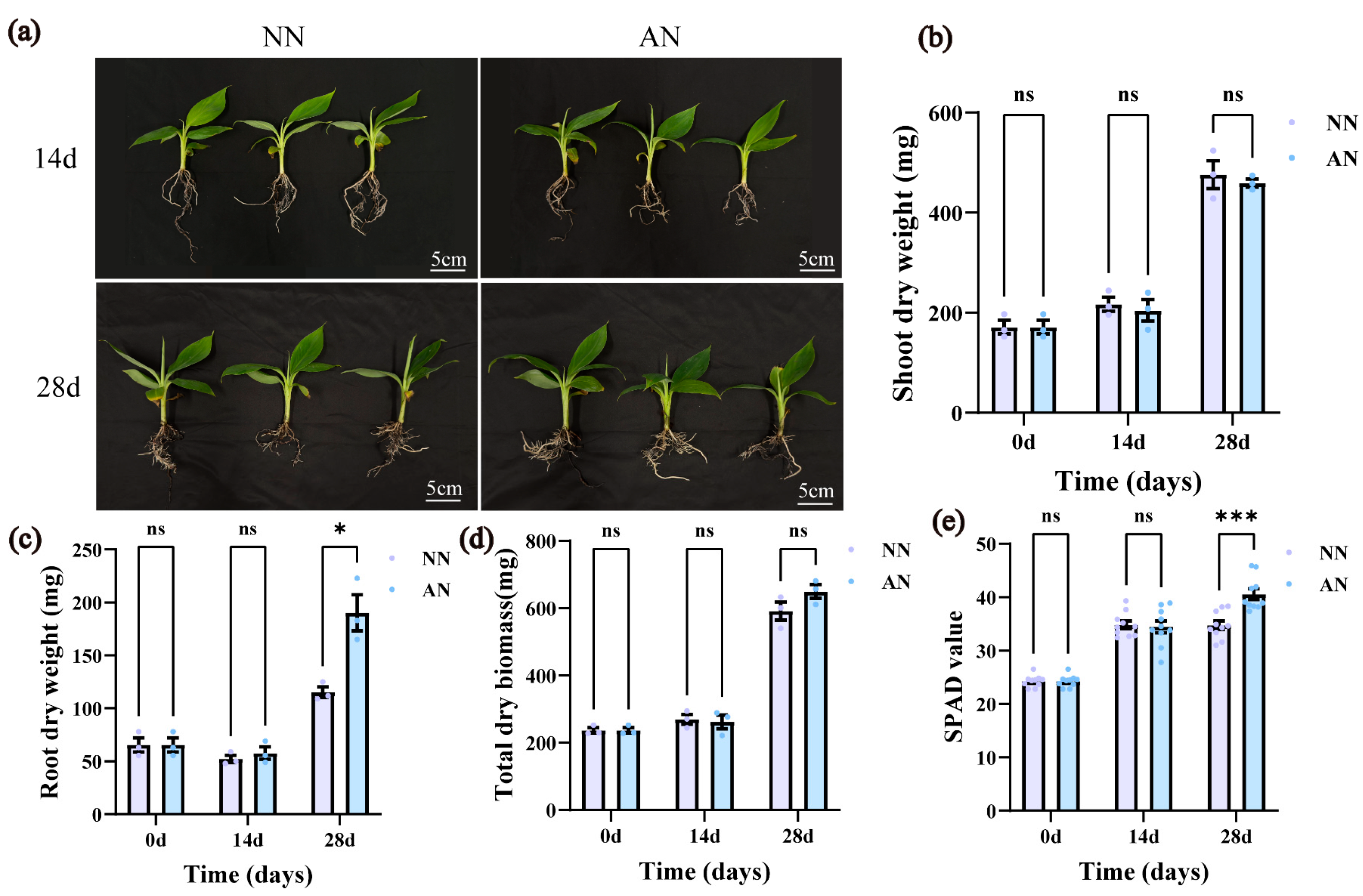
To investigate the impact of various nitrogen forms on the growth of banana seedlings, this study assessed plant phenotype, biomass, and leaf SPAD values following 14 and 28 days of cultivation under different nitrogen conditions. In terms of plant phenotype and root dry weight, no significant difference was observed between the nitrate (NN) and ammonium (AN) treatments at 14 days. However, by 28 days, the root dry weight in the AN treatment was significantly greater than that in the NN treatment. The plant phenotype further demonstrated that roots under the AN treatment exhibited more advanced development at 28 days (Figure 1a,c), suggesting that NH4+-N facilitated root biomass accumulation during the mid-to-late growth stage. Concerning shoot dry matter accumulation, no significant differences in shoot dry weight were detected between the two nitrogen forms at either 14 or 28 days (Figure 1b). In a similar manner, the total biomass did not exhibit significant differences between the two nitrogen treatments at either time point (Figure 1d). Regarding leaf SPAD values, no significant difference was detected between the NN and AN treatments at 14 days. However, at 28 days, the SPAD value under the AN treatment was significantly higher than that under the NN treatment (Figure 1e). This finding suggests that a short-term NH4+-N supply is more effective in maintaining or enhancing leaf nitrogen and chlorophyll levels. In conclusion, the NH4+-N treatment promoted the development of a more extensive root system, thereby increasing nitrogen uptake capacity and supporting higher leaf SPAD values. Conversely, plants subjected to NO3-N treatment demonstrated comparatively weaker root growth and lower SPAD values.

3.2. Effects of Different Nitrogen Forms on Chlorophyll Fluorescence Parameters of Banana Seedlings

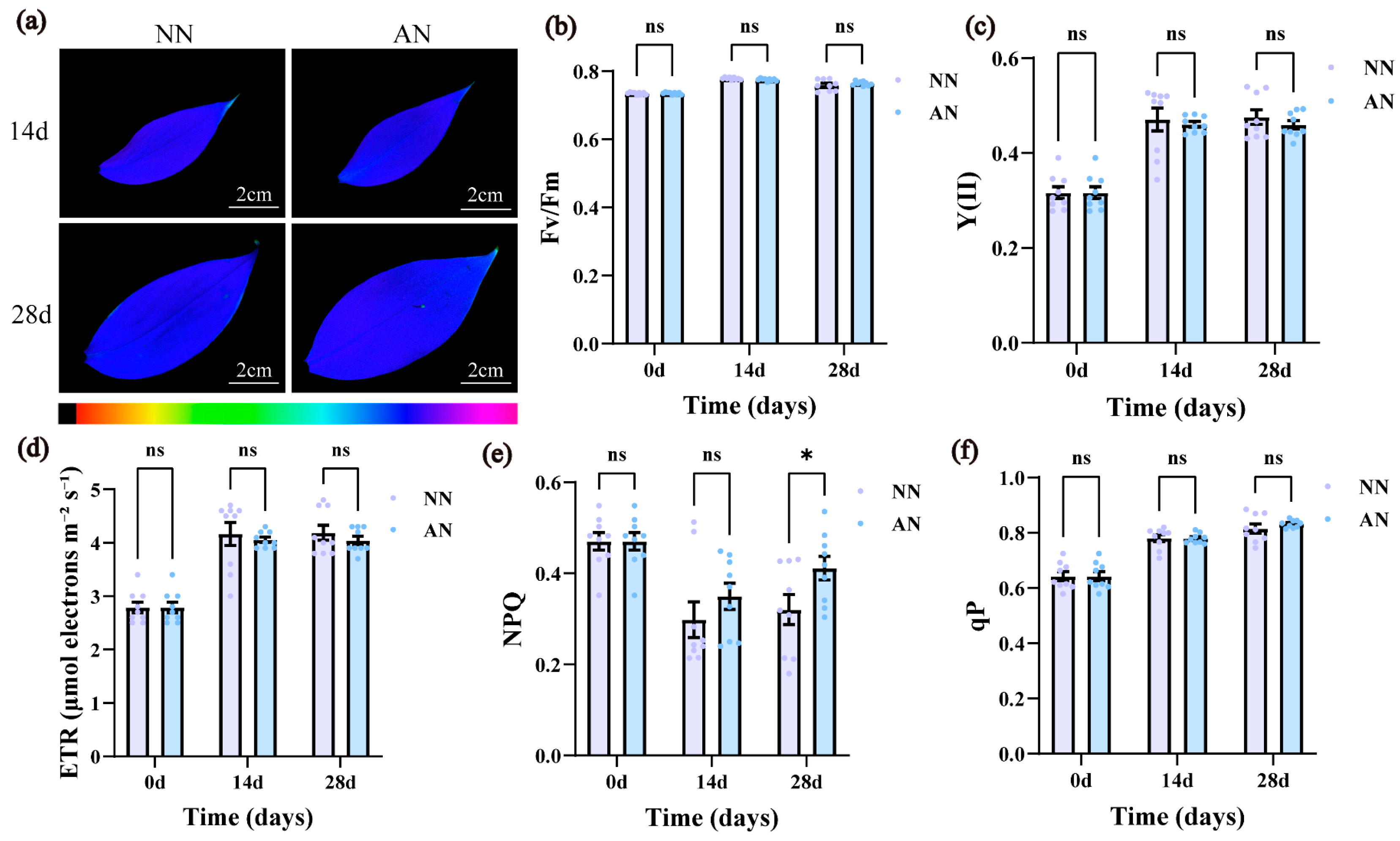
In order to elucidate the impact of various nitrogen forms on the chlorophyll fluorescence characteristics of banana seedlings, this study conducted an analysis of the chlorophyll fluorescence parameters in seedling leaves subjected to NO3-N and NH4+-N treatments (Figure 2). The findings indicated that, at both 14 and 28 days, the overall distribution characteristics of chlorophyll fluorescence in banana seedling leaves remained consistent across the two treatments, with no discernible visual alterations (Figure 2a). Moreover, at 0, 14, and 28 days, no significant differences were detected between the NN and AN treatments in relation to Fv/Fm, [Y(II)], ETR, or qP (Figure 2b–d,f). This indicates that, within the experimental parameters of this study, the type of nitrogen applied did not have a direct significant impact on the fundamental structural integrity of the photosynthetic system in banana seedling leaves. Furthermore, it did not lead to significant changes in the photochemical conversion efficiency or electron transport capacity associated with the functional regulation of Photosystem II (PSII), as inferred from chlorophyll fluorescence parameters. However, at 28 days, NPQ under the AN treatment was significantly higher than under the NN treatment (Figure 2e), indicating that NH4+-N treatment substantially enhanced the level of non-photochemical quenching in the growing leaves of banana seedlings in the short term. In conclusion, during the brief experimental period, the form of nitrogen did not significantly influence the fundamental structure of the photosynthetic system in banana seedling leaves, although NH4+-N treatment notably increased the level of non-photochemical quenching in their growing leaves.
To assess the impact of varying nitrogen forms on the preservation of photosynthetic function in banana leaves, this study examined the light response curves of chlorophyll fluorescence parameters in leaves subjected to NO3-N (NN) and NH4+-N (AN) treatments (Figure S1). The procedure for measuring light response involved dark-adapting the leaves for 30 min, followed by detachment and stabilization in a leaf chamber for 5 min. Subsequently, photosynthetically active radiation (PAR) was incrementally increased from 0 to a high light intensity (PAR > 800 μmol photons m−2 s−1). During this increase in PAR, leaves treated with NN exhibited higher values of the Y(II), ETR, and qP compared to those treated with AN. This indicates that leaves treated with NO3-N demonstrated superior photochemical conversion efficiency and electron transport capacity at this stage. Conversely, leaves under the AN treatment exhibited elevated NPQ, suggesting a relatively enhanced level of photoprotection.

3.3. Effects of Nitrogen Concentration on Growth Parameters of Banana Seedlings

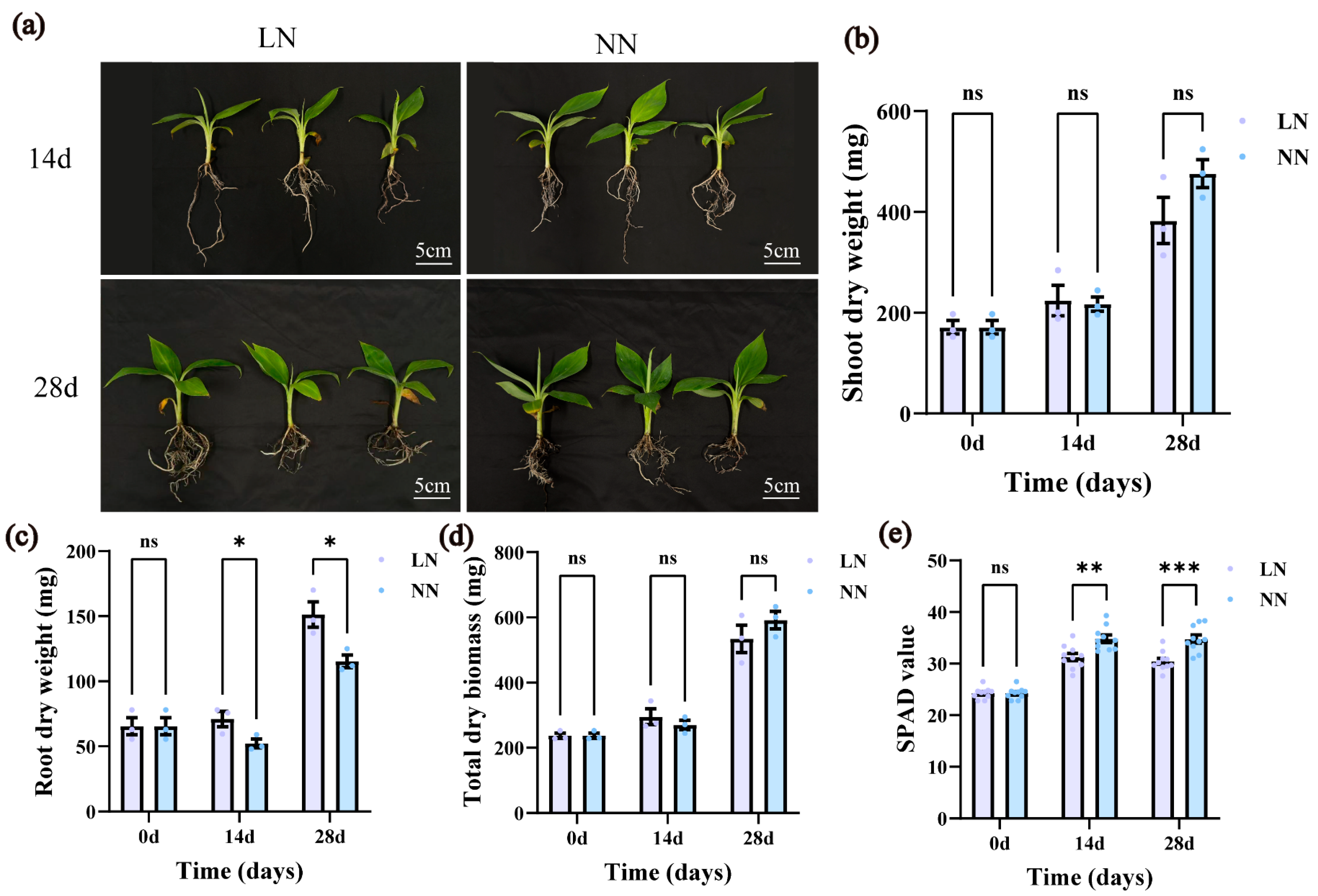
To assess the regulatory impact of nitrogen concentration on the growth of banana seedlings, this study examined plant phenotype, biomass allocation, and leaf SPAD values under conditions of low-concentration NO3-N (0.6 mmol L−1) (LN) and standard-concentration NO3-N (3.0 mmol L−1) (NN) treatments (Figure 3). In terms of plant phenotype, by day 14, seedlings subjected to the NN treatment demonstrated more vigorous shoot growth, whereas those under the LN treatment exhibited more developed root systems. By day 28, there was a notable reduction in the number of white roots in the low-nitrogen treatment (Figure 3a). Regarding dry matter accumulation, no significant differences in shoot biomass or total biomass were detected between the NN and LN treatments at day 14. However, by day 28, the NN treatment exhibited a trend towards higher biomass values compared to the LN treatment (Figure 3b,d). In contrast, the root dry weight under low-nitrogen treatment was significantly greater than under the NN treatment at both 14 days and 28 days (Figure 3c). This suggests that LN treatment stress prompts a reallocation of photosynthetic products to the roots, thereby increasing the nitrogen absorption area. Total biomass (Figure 3d) exhibited a tendency to be higher in the NN treatment compared to the LN treatment at 28 days, although this difference was not statistically significant. Measurements of leaf SPAD values further corroborated these growth characteristics: at both 14 days and 28 days, SPAD values were significantly higher under the NN treatment than under the LN treatment (Figure 3e). This indicates that an adequate nitrogen supply is more favorable for promoting chlorophyll synthesis and enhancing light capture capacity, thereby providing physiological support for vigorous shoot growth. In summary, an adequate nitrogen supply (NN) facilitates robust shoot growth by promoting leaf chlorophyll synthesis, whereas LN treatment induces an adaptive growth strategy in seedlings, reallocating photosynthetic products to the roots to enhance nitrogen uptake capacity.

3.4. Effects of Nitrogen Concentration on Chlorophyll Fluorescence Parameters of Banana Seedlings

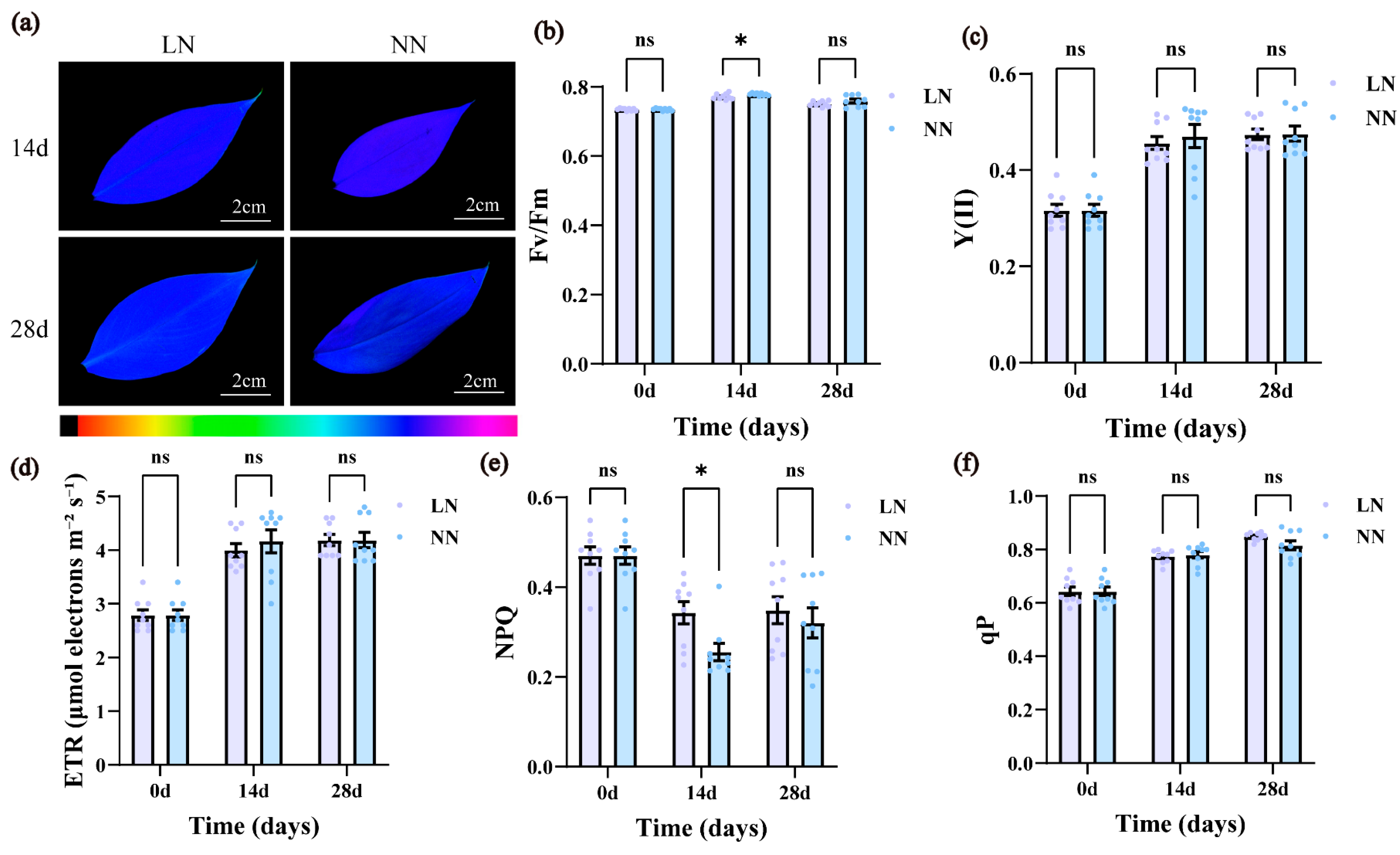
To elucidate the impact of nitrogen concentration on the chlorophyll fluorescence characteristics of banana seedlings, this study examined chlorophyll fluorescence-related parameters under conditions of LN and NN treatments (Figure 4). Overall, no discernible visual differences were observed in the chlorophyll fluorescence images of leaves subjected to the LN and NN treatments at both 14 and 28 days (Figure 4a). The Fv/Fm (Figure 4b) was significantly greater in the NN treatment compared to the LN treatment at 14 days; however, no significant difference was noted between the two treatments at 28 days (Figure 4b). Furthermore, the Y(II), ETR and qP (Figure 4c–e) were not significantly influenced by nitrogen concentration at 0, 14, or 28 days, with no statistical differences detected between the two treatments. This suggests that varying nitrogen concentrations did not modify the fundamental mechanisms of photosynthesis in leaves nor influence the openness of the photosynthetic reaction centers. However, NPQ (Figure 4e) was markedly higher in the LN treatment compared to the NN treatment at 14 days. Consequently, under short-term low-nitrogen conditions, banana leaves demonstrated a notable reduction in Fv/Fm and a significant increase in NPQ at 14 days. In conclusion, short-term low-nitrogen treatment did not alter the photosynthetic structure of banana seedling leaves but enhanced their capacity for non-photochemical quenching.
To further investigate the impact of nitrogen concentration on the light-response characteristics of chlorophyll fluorescence parameters in banana seedling leaves, this study assessed the light-response curves of chlorophyll fluorescence parameters under LN and normal nitrogen NN conditions (Figure S2). With an increase in photosynthetically active radiation (PAR), leaves subjected to the NN treatment exhibited elevated values of the Y(II), ETR and qP (Figure S2a,b,d) compared to those under the LN treatment. Conversely, leaves under the LN treatment demonstrated higher levels of NPQ (Figure S2c) than those under the NN treatment. These findings suggest that, under normal nitrogen supply, leaves exhibit enhanced photochemical efficiency and electron transport capacity, whereas low-nitrogen conditions promote increased photoprotection.

3.5. Effects of Different Nitrogen Forms on Growth Parameters of Banana Seedlings After Foc TR4 Treatment

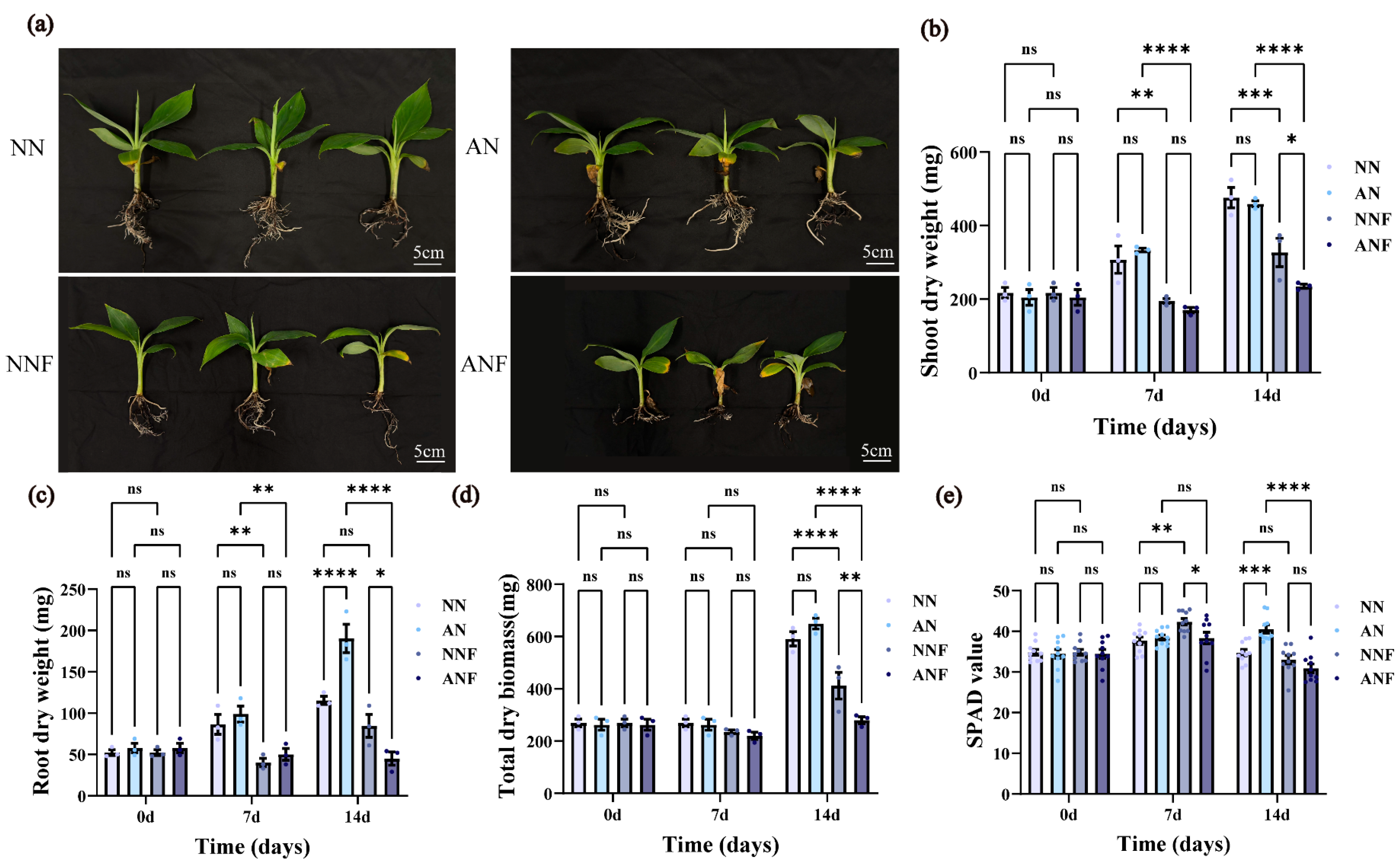
To elucidate the regulatory effects of various nitrogen forms on the growth and photosynthetic characteristics of banana seedlings following Foc TR4 infection, this study examined plant phenotype, biomass, and leaf SPAD values under NO3-N (NN), NH4+-N (AN), and their respective infected treatments (NNF: NO3-N + Foc TR4; ANF: NH4+-N + Foc TR4) (Figure 5). Regarding plant phenotype, seedlings subjected to uninfected treatments (NN, AN) demonstrated robust growth. In contrast, among the infected treatments, seedlings in the NNF group maintained relatively stable growth, whereas those in the ANF group exhibited pronounced leaf chlorosis symptoms (Figure 5a). In terms of biomass, measurements taken at 7 and 14 days post-infection revealed that shoot dry weight, root dry weight, and total biomass in both NH4+-N and NO3-N infected treatments were significantly reduced compared to their respective uninfected controls. This suggests that Foc TR4 infection substantially inhibited dry matter accumulation in banana plants (Figure 5b–d). The temporal variations in leaf SPAD values indicated that, at 7 days post-infection, the SPAD value associated with the NNF treatment exhibited a significant increase and surpassed that of the NN treatment. Conversely, at 14 days post-infection, the SPAD value under the NNF treatment was lower than that of the NN treatment, while the SPAD value under the ANF treatment was significantly reduced compared to the AN treatment. In conclusion, following Foc TR4 infection, NO3-N treatment (NNF) was more favorable for maintaining the growth status and SPAD values of banana seedlings. In contrast, ammonium-N treatment (ANF) significantly hindered dry matter accumulation in both shoots and roots, thereby markedly suppressing plant growth.

3.6. Effects of Nitrogen Forms on Chlorophyll Fluorescence Parameters of Banana Seedlings After Foc TR4 Treatment

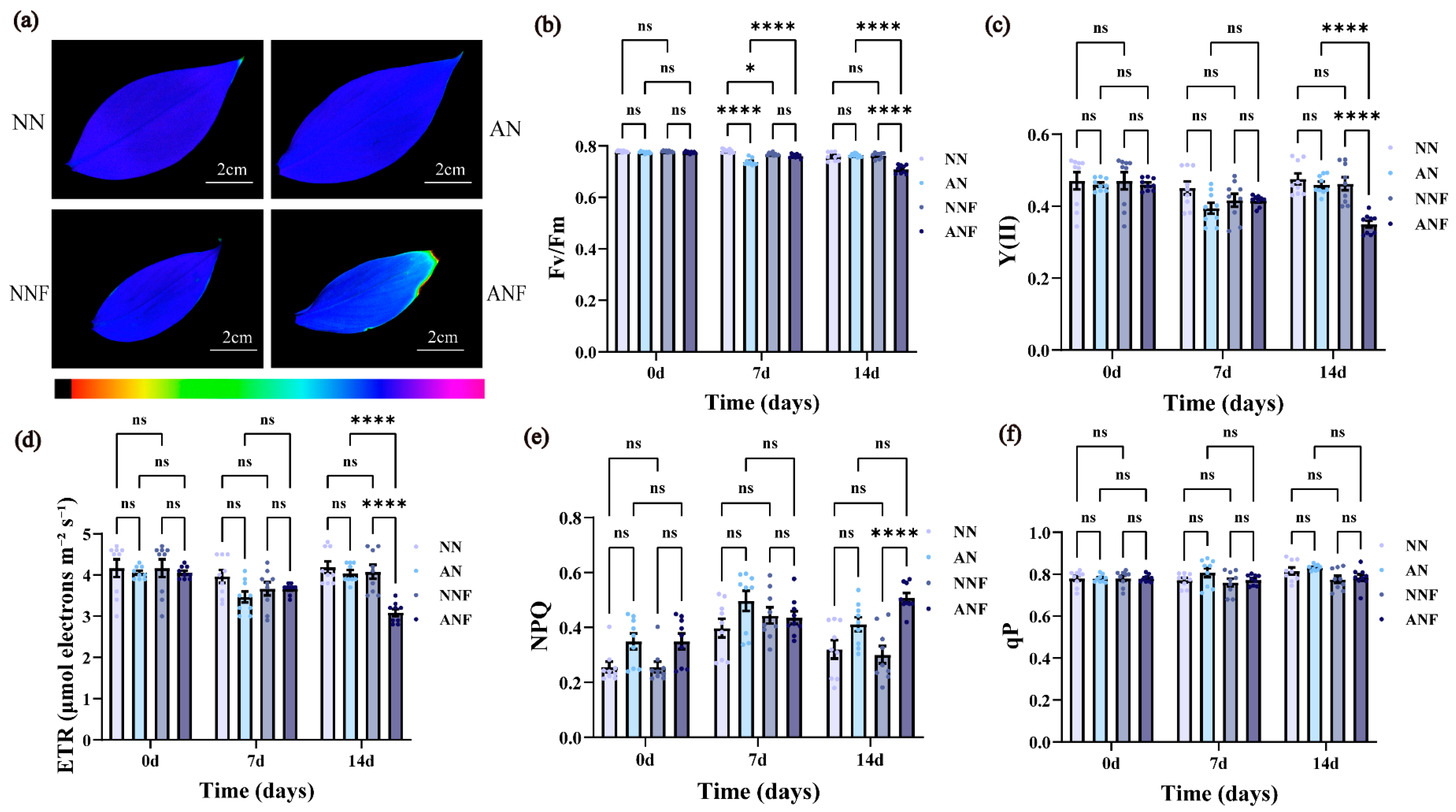
To elucidate the impact of various nitrogen forms on the chlorophyll fluorescence characteristics of banana seedlings following Foc TR4 infection, this study examined the chlorophyll fluorescence distribution and associated parameters in seedlings subjected to NO3-N (NN), NH4+-N (AN), and their respective infected treatments (NNF: NO3-N + Foc TR4; ANF: NH4+-N + Foc TR4) (Figure 6). Observations of direct leaf coloration revealed leaf margin chlorosis in the NH4+-N treatment 14 days post-infection with Foc TR4. In terms of chlorophyll fluorescence parameters, the Fv/Fm value of leaves from plants in the NO3-N treatment (NNF) was significantly higher than that in the NH4+-N treatment (ANF) at 14 days post-infection. Notably, no significant alteration in leaf Fv/Fm was detected in the NO3-N treatment before and after infection, whereas a significant decrease in leaf Fv/Fm was observed in the NH4+-N treatment (ANF) following infection (Figure 6b). This suggests that the infection with Foc TR4 under NH4+-N treatment resulted in more pronounced potential damage to the photosystem II in the seedlings. 14 days post-infection, the Y(II) and the ETR were significantly elevated under the NNF treatment compared to the ANF treatment. Simultaneously, both Y(II) and ETR were notably reduced under the ANF treatment relative to the AN treatment (Figure 6c,d). These findings indicate that Foc TR4 infection subsequent to NH4+-N treatment substantially compromised the actual photochemical efficiency and electron transport rate in the plant leaves. The forms of nitrogen and the infection treatment exhibited differential effects on the photochemical and non-photochemical processes of Photosystem II (PSII). 14 days post-infection, a significant increase in non-photochemical quenching (NPQ) was observed in plantlets subjected to the ANF treatment (Figure 6e). This increase indicates an enhancement in photoprotective thermal dissipation, a typical response of leaves to light stress resulting from decreased photochemical efficiency, as evidenced by reduced Y(II) and electron transport rate (ETR). However, no significant differences were observed in photochemical quenching (qP) across all treatments (Figure 6f), suggesting that the openness of PSII reaction centers was not the limiting factor contributing to the observed differences. In summary, Fs post-infection with Foc TR4, the NO3-N treatment (NNF) sustained higher functionality of photosystem II (Fv/Fm) and photosynthetic efficiency ([Y(II)], ETR). In contrast, under NH4+-N treatment, the seedlings demonstrated increased damage to photosystem II, reduced photosynthetic efficiency, and consequently experienced significant photochemical limitations.
To further explore the impact of various nitrogen forms on the light-response characteristics of chlorophyll fluorescence parameters in banana seedling leaves following Foc TR4 infection, an analysis of the light response curves under the specified treatments was conducted. The findings indicated that, within the light response curve of Y(II), the Y(II) value for the ANF treatment was significantly lower than that for the NNF treatment at 14 days post-infection (Figure S3a). Additionally, in the light response curve of the ETR, the ETR values for leaves from both infected treatments were reduced compared to pre-infection levels, with the NNF treatment exhibiting higher ETR values than the ANF treatment (Figure S3b). In the light response curve of NPQ, the NPQ observed in the ANF treatment was greater than that in the NNF treatment (Figure S3c). These results demonstrate that, at 14 days post-infection, leaves subjected to the NO3-N treatment (NNF) exhibited higher Y(II) and ETR compared to those from the ANF treatment. In contrast, leaves subjected to the NH4+-N treatment (ANF) exhibited increased levels of NPQ. This suggests that, under stress induced by pathogens, NO3-N is more effective in maintaining the photosynthetic efficiency of banana seedling leaves. Conversely, NH4+-N appears to cause either the inactivation of photosystem II (PSII) reaction centers or extended photoinhibition, resulting in a reduced photoprotective capacity.

3.7. Effect of Nitrogen Concentration on Foc TR4 Infection in Banana Seedlings

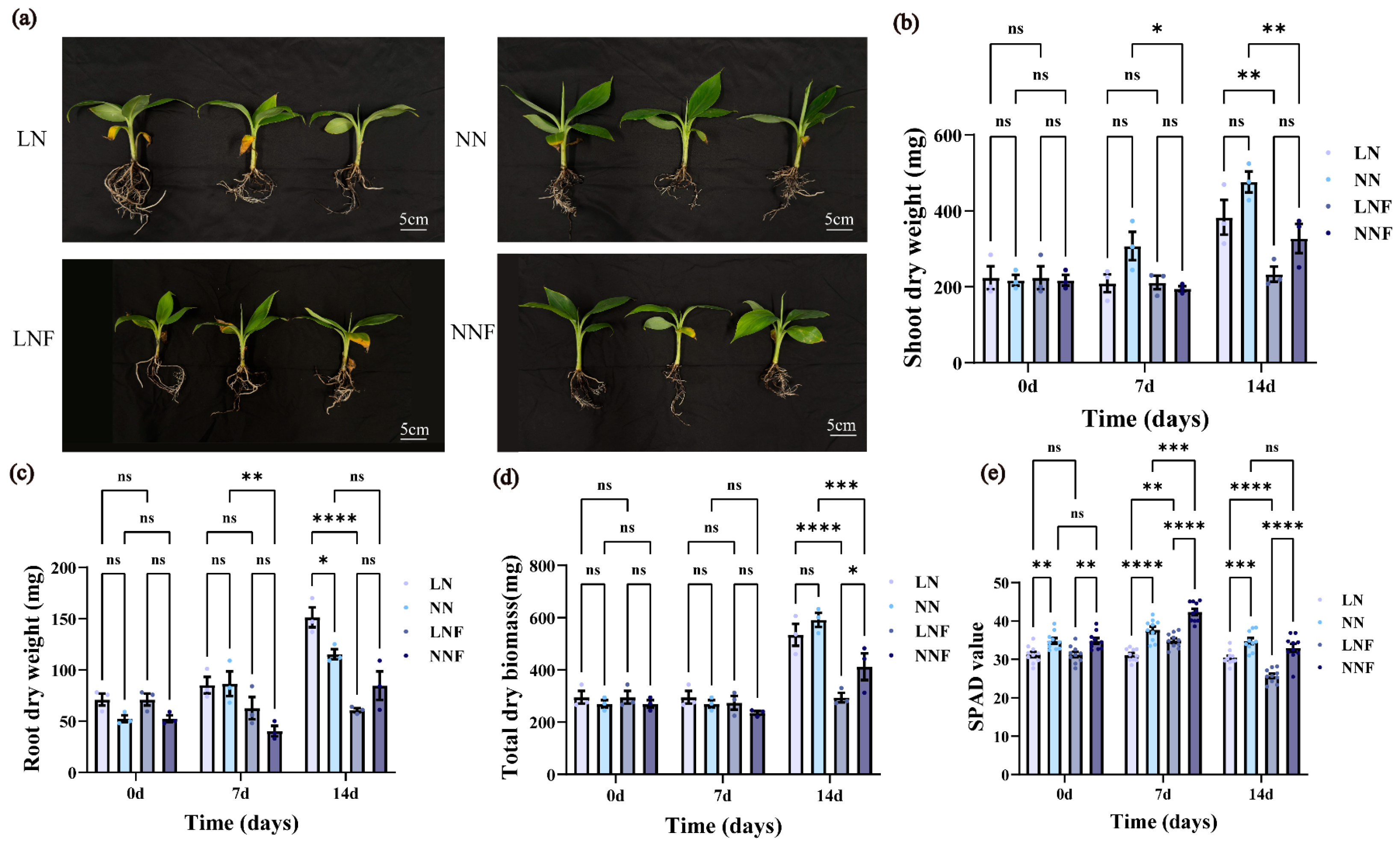
To elucidate the impact of nitrogen concentration on Fusarium oxysporum f. sp. cubense tropical race 4 (Foc TR4) infection in banana seedlings, this study examined plant phenotypic characteristics, biomass, and leaf SPAD values under conditions of low nitrogen, normal nitrogen, and their respective infected treatments [LNF: low-concentration NO3-N (0.6 mmol L−1) with Foc TR4; NNF: standard-concentration NO3-N (3.0 mmol L−1) with Foc TR4]. Prior to Foc TR4 infection, seedlings subjected to both LN and NN conditions demonstrated stable and healthy growth. However, following infection, seedlings in the LN infected (LNF) and NN infected (NNF) treatments exhibited pronounced leaf chlorosis (Figure 7a). Analysis of biomass dynamics revealed that, at 7 days post-infection, both shoot and root dry weights were reduced in the LNF treatment compared to the corresponding uninfected treatment (LN). At 14 days post-infection, the root dry weight in the LNF treatment was significantly lower compared to the uninfected LN treatment. Similarly, shoot dry weight in the NNF treatment was reduced relative to its corresponding uninfected NN treatment. However, the difference in root dry weight did not reach statistical significance (Figure 7b,c). Regarding total biomass, at 14 days post-infection, the total biomass in the LNF treatment was significantly lower than that in the LN and NNF treatments (Figure 7d). Alterations in leaf SPAD values indicated that, at 7 days post-infection, the SPAD value associated with the LNF treatment was significantly elevated compared to that of the LN treatment. Conversely, at 14 days post-infection, the SPAD value for the LNF treatment was significantly reduced in comparison to both the LN and NNF treatments (Figure 7e). In conclusion, infection with Foc TR4 resulted in the manifestation of leaf chlorosis phenotypes in banana seedlings. Although shoot and total biomass were significantly reduced in the infected groups compared to the uninfected controls, root dry weight demonstrated a trend towards reduction. Meanwhile, infection with Foc TR4 significantly decreased the leaf SPAD values in seedlings. Notably, the treatment with normal nitrogen levels exhibited a more pronounced enhancement in SPAD values compared to the treatment with low nitrogen levels.

3.8. Effects of Nitrogen Concentration on Chlorophyll Fluorescence Parameters of Banana Seedlings After Foc TR4 Treatment

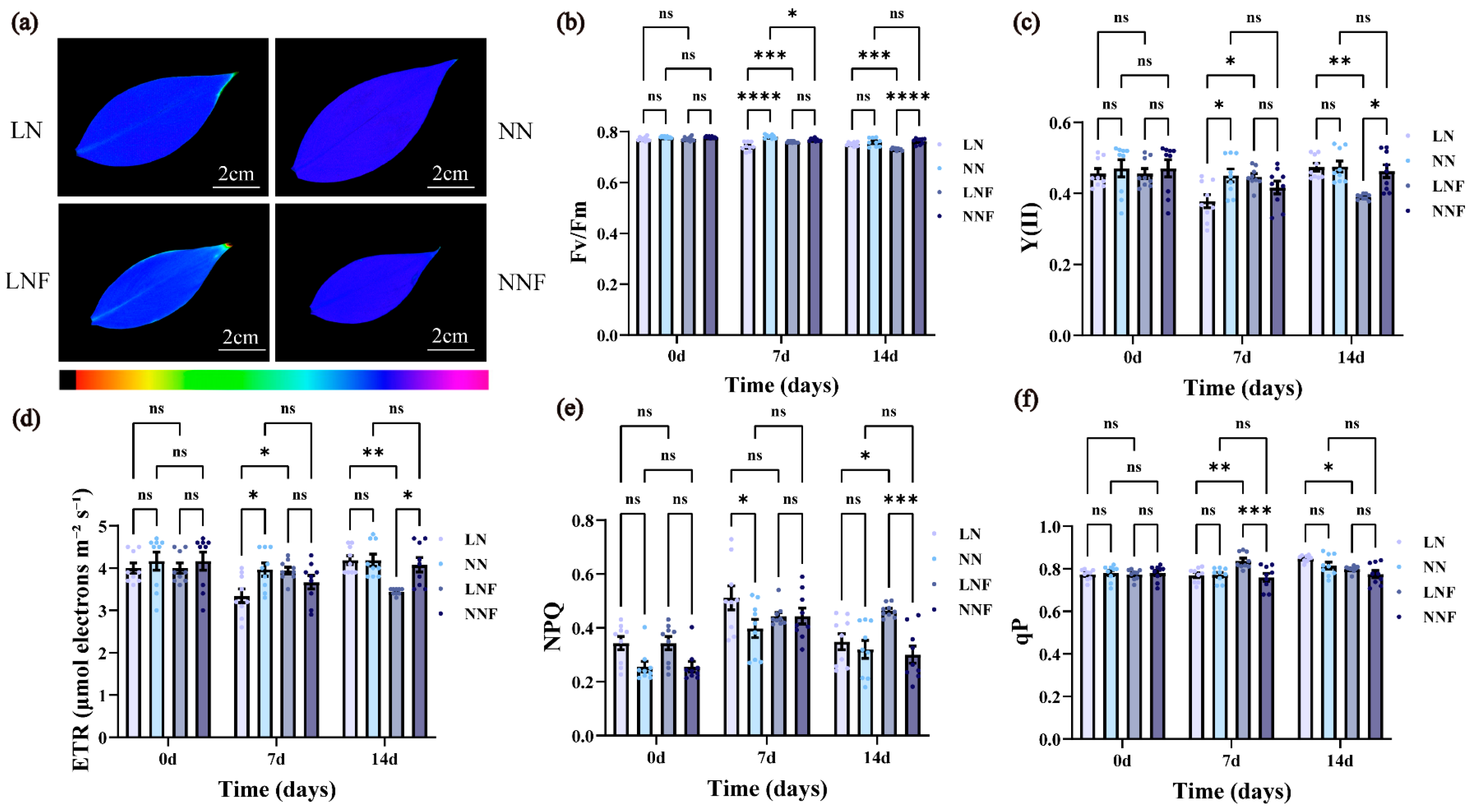
This study aimed to examine the impact of varying nitrogen concentrations on the chlorophyll fluorescence characteristics of banana seedlings following infection with Fusarium oxysporum f. sp. cubense tropical race 4 (Foc TR4). To achieve this, experimental treatments were established, including low nitrogen, normal nitrogen, and their respective infected counterparts, with subsequent analysis of chlorophyll fluorescence distribution and related parameters in the seedling leaves (Figure 8). The results indicated that, under low-nitrogen treatment, the leaf margins of plants infected with Foc TR4 for 14 days exhibited chlorotic symptoms as evidenced by chlorophyll fluorescence imaging (Figure 8a). In terms of the Fv/Fm, measurements taken at 14 days post-infection revealed that the Fv/Fm under the NNF treatment was significantly higher than that observed under the LNF treatment. Conversely, the Fv/Fm under the LNF treatment was significantly lower than that under the LN treatment (Figure 8b). The findings suggest that following Foc TR4 infection, a 14-day period of sustained stress exacerbates functional impairment of photosystem II under conditions of low nitrogen availability. Analysis of dynamic changes in the Y(II) and the ETR demonstrated that, at 14 days post-infection, both Y(II) and ETR were significantly elevated under the NNF treatment compared to the LNF treatment. Furthermore, Y(II) and ETR values under the LNF treatment were lower than those observed under the LN treatment (Figure 8c,d). These results underscore the importance of adequate nitrogen levels in sustaining photosynthetic electron transport capacity under pathogen-induced stress. Additionally, NPQ measurements indicated that, at 14 days post-infection, NPQ was significantly higher under the LNF treatment than under both the LN and NNF treatments (Figure 8e), suggesting that nitrogen deficiency exacerbates pathogen stress and triggered higher non-photochemical quenching. Photochemical quenching (qP) demonstrated a dynamic trajectory characterized by an initial increase followed by a subsequent decline. At 7 days post-infection, qP under the LNF treatment was elevated compared to other treatments; however, by 14 days post-infection, qP under the LNF treatment had decreased below that of the LN treatment (Figure 8f). This observation indicates a temporary enhancement in the openness of photosynthetic reaction centers during the early phase, which could not be maintained as the stress persisted, resulting in an intensified inhibition of photosynthetic electron transport. In conclusion, following Foc TR4 infection, the NNF was more effective in sustaining higher photosystem II functionality (Fv/Fm) and photosynthetic efficiency ([Y(II)], ETR) compared to the LNF. In contrast, the functionality of photosystem II under the LNF was markedly diminished compared to the low-concentration NO3-N uninfected treatment (LN), indicating more pronounced potential damage to photosystem II and reduced photosynthetic efficiency. Nevertheless, the photoprotective response, while photochemical quenching (qP) exhibited a declining trend with the prolongation of stress duration.
To investigate the impact of varying nitrogen levels on the light-response characteristics of chlorophyll fluorescence parameters in banana seedlings 14 days following Foc TR4 infection, this study analyzed the light-response curves of chlorophyll fluorescence parameters in leaves subjected to the four treatments outlined previously (Figure S4). The findings indicated that, in the light-response curve of the Y(II), the Y(II) value for the LNF treatment was lower than that for the NNF treatment at 14 days post-infection. Regarding the light-response curve of the ETR, the ETR values for all infected treatments (LNF, NNF) were lower than those for the uninfected treatments (LN, NN), with the ETR level in the NNF treatment exceeding that in the LNF treatment. The light-response curve of NPQ demonstrated that NPQ was higher in the LNF treatment compared to the NNF treatment. In the light-response curve of photochemical quenching (qP), all treatments exhibited a decreasing trend in qP as photosynthetically active radiation (PAR) increased, with no distinct differences observed among the treatments. In conclusion, 14 days post Foc TR4 infection under controlled infection conditions, the NNF demonstrated elevated Y(II) and ETR values compared to the reduced LNF, indicative of enhanced photosynthetic performance. In comparison to the NNF treatment, the NPQ values exhibited a significant increase under the LNF treatment. This elevation, coupled with the observed reductions in Y(II) and ETR under the LNF treatment, indicates that inadequate nitrogen nutrition exacerbated the disruption of the photosynthetic electron transport chain induced by pathogen stress. Consequently, this disruption led to an imbalance between the utilization and dissipation of light energy. These findings highlight the critical role of sufficient nitrogen nutrition in preserving the stability of the photosynthetic system in banana plantlets subjected to biotic stress.

4. Discussion

Various forms of nitrogen, including inorganic nitrogen such as NO3-N and NH4+-N, as well as organic nitrogen, are crucial for crop growth and photosynthetic processes [33]. The findings of this study indicate that, after 14 days of exposure to the two nitrogen forms, NO3-N and NH4+-N, there were no significant differences in the total biomass or leaf SPAD values of banana seedlings. However, after 28 days of treatment, both the below-ground dry weight and leaf SPAD values of plants subjected to NH4+-N treatment were significantly greater than those under NO3-N treatment. This suggests that NH4+-N not only aids in maintaining leaf nitrogen levels but also consistently enhances root growth (Figure 1). Previous research has corroborated these findings, demonstrating that rice plants treated with NH4+-N exhibit significantly higher SPAD values, shoot dry weight, and root dry weight compared to those treated with NO3-N [34]. Additional studies have also highlighted that, although the two nitrogen sources did not significantly differ in their effect on potato leaf SPAD values during the early tuber formation stage, NH4+-N treatment resulted in significantly higher SPAD values than NO3-N treatment [35]. Furthermore, ammonium nitrogen (ammonium-N) can facilitate lateral root branching by modulating auxin distribution and inducing the synthesis of cell wall-loosening enzymes, which reduces tissue mechanical resistance and thereby synergistically promotes lateral root formation [36]. Following infection with Foc TR4, the regulatory effects of nitrogen forms become more intricate. Seven days following Foc TR4 infection, plants receiving NO3-N treatment exhibited significantly elevated SPAD values relative to their non-infected counterparts, suggesting a potential short-term adaptive response to pathogen-induced stress. Conversely, both SPAD values and biomass in plants subjected to NH4+-N infection treatment were markedly reduced, indicating a heightened susceptibility to pathogen stress (Figure 5). Previous studies have demonstrated that, in comparison to NH4+-N, NO3-N significantly inhibits cucumber Fusarium wilt [37] and can enhance plant resistance to this disease by regulating the photorespiration pathway [38]. At equivalent concentrations, NO3-N also enhances resistance to rice stripe virus in rice [39].
In comparison to conditions with adequate nitrogen supply, plants experiencing nitrogen deficiency adjust their biomass allocation by promoting root growth to enhance nitrogen uptake capacity, a well-documented adaptive strategy in response to nitrogen scarcity [40,41]. The findings of this study indicate that sufficient nitrogen supply is associated with higher leaf SPAD values and increased shoot growth. Conversely, under low-concentration NO3-N conditions, plants substantially increase root biomass accumulation, demonstrating a typical allocation pattern favoring belowground components (Figure 3). Previous research has shown that low-nitrogen conditions can induce the expression of the GmGLP20.4 gene, which regulates soybean root development by promoting both primary and lateral root growth, thereby increasing root biomass [42]. In maize, the ZmNLP3.2 gene facilitates root growth under low-nitrogen conditions by negatively regulating ZmAux/IAA14 [43]. Although prolonged nitrogen deficiency may constrain overall plant growth, it can partially offset this limitation through enhanced root development, thereby improving nutrient acquisition. Seven days following Foc TR4 infection, leaf SPAD values exhibited a modest increase across both treatments. However, by the 14 days, the SPAD value under the LNF treatment was significantly lower than those observed in the LN and NNF treatments. This difference is likely indicative of a physiological response of the plant to pathogen-induced stress. This study observed a general reduction in the biomass of infected plants, with the inhibitory effect being significantly more pronounced in the low-nitrogen treatment compared to the normal-nitrogen treatment (Figure 6). This suggests that low nitrogen availability impairs the plant’s capacity to maintain growth under pathogen stress. Previous studies have corroborated that low-nitrogen treatment markedly diminishes cotton resistance to Verticillium wilt, resulting in exacerbated leaf chlorosis and wilting [44], aligning with the findings of this study. Conversely, other research has indicated that low-nitrogen treatment may enhance disease resistance in rice [45], underscoring the complexity of nitrogen nutrition in modulating plant disease resistance.
Chlorophyll fluorescence parameters serve as effective indicators of the functional status of the plant photosynthetic system. Monitoring changes in these parameters facilitates the early detection of variations in photosynthetic efficiency and stress responses [46,47]. Analysis of light-response curves provides further insights into the plant’s adaptive mechanisms to varying light environments [48]. In conjunction with the findings of this study, it is evident that the regulatory effects of nitrogen form and concentration on the physiological processes of banana seedlings exhibit significant differences (Figure 1 and Figure 3). NPQ plays a crucial role in dissipating excess light energy as heat, thereby mitigating photoinhibition under conditions of high light intensity or stress [49]. Notably, treatment with NH4+-N consistently resulted in enhanced photoprotection, as evidenced by increased NPQ levels (Figure 2). The primary signal for NPQ activation is the acidification of the thylakoid lumen, which is driven by light-dependent electron transport [50]. The assimilation of ammonium within cells generates protons (H+), leading to a reduction in cellular pH [51]. Simultaneously, NH4+-N treatment was observed to promote root biomass accumulation (Figure 1). The local supply of ammonium can induce apoplast acidification, stimulate radial auxin diffusion, and ultimately promote lateral root formation [36]. This is consistent with previous findings indicating that plants allocate more carbon to roots in acidified soils [52]. Furthermore, this study observed that NO3-N treatment rapidly enhanced leaf photochemical efficiency at 14 days, demonstrating a significant photosynthetic advantage. However, this advantage diminished over time, likely due to the limited capacity of root support, which hinders the fulfillment of long-term growth demands under highlight conditions. Conversely, the NH4+-N treatment allocated more resources towards root system development and photoprotection at 14 days, thereby temporarily constraining short-term photosynthetic expansion. Under conditions of high-light stress at 28 days, the subject demonstrated an increased ETR and a relatively declining trend in NPQ (Figure S1). This response may be attributed to the previously established well-developed root system, which facilitated enhanced water and nutrient uptake, thereby sustaining carbon assimilation efficiency and alleviating photoinhibition. In rice, the overexpression of the OsA1 gene significantly enhances root ammonium assimilation, promotes stomatal opening, and elevates leaf photosynthetic rate and yield [53]. This provides a crucial physiological explanation for the observed photosynthetic advantage in plants treated with NH4+-N at later stages. Alterations in nitrogen concentration elicit phased physiological responses in banana seedlings. During the initial phase of low-nitrogen stress, there is a direct inhibition of the maximum photochemical efficiency of photosystem II (PSII), resulting in a marked decline in Fv/Fm, while photoprotective mechanisms are swiftly activated (Figure 3). These observations align with the response patterns documented in proso millet [54] and sorghum [55] under low-nitrogen conditions. As low-nitrogen stress continues, seedlings acclimate to the environmental pressure by optimizing carbon allocation. Recent research suggests that under nitrogen deficiency, plants initiate systemic coordination strategies to optimize resource allocation. For example, the transcription factor TGA7 can act as a long-distance signal transported via the phloem to the roots, ultimately suppressing excessive shoot growth while enhancing root development and nitrogen uptake [56]. These adaptive modifications collectively enhance the restoration of photosynthetic capacity. By the 28th day of growth, there is an observable upward trend in the ETR, which comprehensively illustrates the inherent adaptive mechanisms of plants in response to nitrogen stress (Figure S2). Indeed, relying solely on phenotypic and chlorophyll fluorescence parameters to assess nitrogen utilization status is inherently limited. Future research should integrate the measurement of critical physiological and biochemical markers, such as total leaf nitrogen, chlorophyll components, and soluble nitrogen, alongside transcriptional profiling. This comprehensive approach would offer more robust evidence for validating and refining the conclusions drawn from such studies.
This study elucidates nitrogen form management strategies for banana seedlings. For healthy seedlings, the application of NH4+-N is deemed appropriate to facilitate root development and enhance photoprotective capacities, such as NPQ. Conversely, low-nitrogen stress should be avoided to prevent a reduction in the maximum photochemical efficiency of the photosystem (Fv/Fm). For seedlings infected with Foc TR4, the preferential application of NO3-N is recommended, as it significantly enhances chlorophyll content (SPAD value) and preserves the integrity of the photosynthetic apparatus. This is evidenced by parameters such as Fv/Fm, Y(II), and ETR, which are markedly superior under NO3-N treatment compared to NH4+-N treatment, thereby effectively mitigating the disease-induced suppression of photosynthetic function. It is important to note that these conclusions are derived from research conducted at the seedling stage. Owing to the intrinsic differences in physiological metabolism and environmental adaptability between seedlings and field-grown mature plants, the long-term effects throughout the entire growth cycle and the direct applicability of these findings in field conditions necessitate further validation. Future research should systematically investigate the relationship between nitrogen regulation and disease resistance across different growth stages, the ratio and interaction between ammonium and nitrate, the effects of alternative nitrogen sources such as amide nitrogen, and the synergy between nitrogen management and biological control measures. Additionally, the current results are specific to the ‘Brazilian’ banana cultivar. Subsequent studies should examine the genotypic differences in nitrogen response across various cultivars to develop more tailored nitrogen fertilization strategies. This would enhance the field applicability and universality of this approach and provide a robust nutritional regulation foundation for the sustainable management of banana Fusarium wilt.

5. Conclusions

This study aimed to clarify the differential characteristics of plant growth and photosynthetic function under varying nitrogen treatments by examining the regulatory effects of different nitrogen forms and concentrations on the growth and leaf chlorophyll fluorescence traits of banana seedlings, both before and after infection with Foc TR4. Prior to infection with Foc TR4, treatment with ammonium nitrogen significantly enhanced root biomass, leaf SPAD values, and chlorophyll fluorescence parameters, such as NPQ, in banana seedlings. Conversely, low-nitrogen treatment resulted in increased biomass allocation to the roots but adversely affected the Fv/Fm.
Following infection with Foc TR4, nitrate nitrogen demonstrated a significant advantage in stress resistance. Seedlings treated with nitrate nitrogen exhibited higher SPAD values, Fv/Fm, Y(II), ETR, and other related parameters compared to those treated with ammonium nitrogen, which was more effective in preserving the integrity of the photosynthetic apparatus. Although ammonium nitrogen treatment significantly increased leaf NPQ, it did not mitigate the inhibition of growth and photosynthesis. Low-nitrogen stress notably decreased leaf chlorophyll fluorescence parameters, including Fv/Fm, Y(II), and ETR, with the ETR of leaves in the inoculated groups consistently lower than that in the corresponding non-infected control groups. In summary, nitrogen influences plant growth and disease resistance by differentially regulating photosynthetic efficiency, photoprotection intensity, and biomass allocation. These findings offer both theoretical and practical insights for optimizing nitrogen management under standard nitrogen levels and for developing green control strategies for managing banana Fusarium wilt.

Supplementary Materials

The following supporting information can be downloaded at: https://www.mdpi.com/article/10.3390/horticulturae12020152/s1. Figure S1: Light response curves of chlorophyll fluorescence parameters in banana seedling leaves under different nitrogen forms. Figure S2: Light response curves of chlorophyll fluorescence parameters in banana seedling leaves under different nitrogen concentrations. Figure S3: Effects of different nitrogen forms on light response curves of chlorophyll fluorescence parameters in banana seedling leaves after 14 d of Foc TR4 treatment. Figure S4: Effects of different nitrogen concentrations on light response curves of chlorophyll fluorescence parameters in banana seedling leaves at 14 d after Foc TR4 treatment. Table S1: Variations in plant growth status and photosynthetic parameters under different nitrogen forms and concentrations. Table S2: Variations in plant growth and photosynthetic parameters under different nitrogen treatments after Foc TR4 infection.

Author Contributions

Conceptualization, Y.W. and J.X.; methodology, J.C., J.F. and Y.C.; software, J.C. and D.Q.; validation, J.C., W.W. and D.Z.; investigation, M.Z. and Z.Z.; resources, W.W. and D.Z.; data curation, J.C. and Y.W.; writing—original draft preparation, J.C. and Y.W.; writing—review and editing, J.X. and Y.W.; project administration, J.X. and Y.W.; funding acquisition, Y.W., and J.X. All authors have read and agreed to the published version of the manuscript.

Funding

This research was supported by the Project of State Key Laboratory of Tropical Crop Breeding (SKLTCBGJ2025l2, SKLTCBYWF202505 and NKLTCB202414), the Hainan Province Science and Technology Special Fund (ZDYF2023XDNY179), the Social Public-Interest Scientific Institution Reform Special Fund (1630052024003), and the China Agriculture Research System (CARS- 31).

Data Availability Statement

The original contributions presented in the study are included in the article/Supplementary Materials; further inquiries can be directed to the corresponding authors.

Conflicts of Interest

The authors declare that they have no conflicts of interest.

Abbreviations

The following abbreviations are used in this manuscript:
Foc TR4Fusarium oxysporum f. sp. cubense Tropical Race 4
SPADRelative chlorophyll content
Fv/FmMaximum photochemical quantum yield of photosystem II
Y(II)Actual photochemical quantum yield of photosystem II
ETRElectron transport rate
NPQNon-photochemical quenching
qPPhotochemical quenching

References

  1. López, J.; Rayas, A.; Medero, V.; Santos, A.; Basail, M.; Beovides, Y. Somatic Embryogenesis in Banana (Musa spp.). Methods Mol. Biol. 2022, 2527, 97–110. [Google Scholar]
  2. van Westerhoven, A.C.; Meijer, H.J.G.; Seidl, M.F.; Kema, G.H.J. Uncontained spread of Fusarium wilt of banana threatens African food security. PLoS Pathog. 2022, 18, e1010769. [Google Scholar] [CrossRef]
  3. Ploetz, R.C. Fusarium Wilt of Banana. Phytopathology 2015, 105, 1512–1521. [Google Scholar] [CrossRef]
  4. Dita, M.; Barquero, M.; Heck, D.; Mizubuti, E.S.G.; Staver, C.P. Fusarium Wilt of Banana: Current Knowledge on Epidemiology and Research Needs Toward Sustainable Disease Management. Front. Plant Sci. 2018, 9, 1468. [Google Scholar] [CrossRef]
  5. Ali, M.M.; Cheng, X.; Zhang, J.; Zheng, Y.; Li, X.; Liu, J. Biotechnological advances in combating Fusarium wilt of banana: From pathogen biology to sustainable disease management. Hortic. Plant J. 2025. [Google Scholar] [CrossRef]
  6. Cheng, C.; Wu, S.; Deng, G.; Sheng, O.; Yi, G.; Yang, Q. Recent advances and future directions in banana molecular biology and breeding. Mol. Hortic. 2024, 4, 42. [Google Scholar] [CrossRef]
  7. Wang, L.; Ju, C.; Han, C.; Yu, Z.; Bai, M.Y.; Wang, C. The interaction of nutrient uptake with biotic and abiotic stresses in plants. J. Integr. Plant Biol. 2025, 67, 455–487. [Google Scholar] [CrossRef]
  8. Jez, J.M. Structural biology of plant sulfur metabolism: From sulfate to glutathione. J. Exp. Bot. 2019, 70, 4089–4103. [Google Scholar] [CrossRef]
  9. Johnson, R.; Vishwakarma, K.; Hossen, M.S.; Kumar, V.; Shackira, A.M.; Puthur, J.T.; Abdi, G.; Sarraf, M.; Hasanuzzaman, M. Potassium in plants: Growth regulation, signaling, and environmental stress tolerance. Plant Physiol. Biochem. 2022, 172, 56–69. [Google Scholar] [CrossRef]
  10. Munteanu, C.; Schwartz, B. The relationship between nutrition and the immune system. Front. Nutr. 2022, 9, 1082500. [Google Scholar] [CrossRef]
  11. Yousuf, P.Y.; Shabir, P.A.; Hakeem, K.R. miRNAomic Approach to Plant Nitrogen Starvation. Int. J. Genom. 2021, 2021, 8560323. [Google Scholar] [CrossRef]
  12. Zhang, D.; Chen, Z.; Liu, J.; Yang, J. Research progress on the response and mechanism of maize (Zea mays L.) to nitrogen forms. J. Plant Nutr. Fert. 2024, 30, 1020–1031. [Google Scholar]
  13. Cui, H.; Luo, Y.; Li, C.; Chang, Y.; Jin, M.; Li, Y.; Wang, Z. Effects of nitrogen forms on nitrogen utilization, yield, and quality of two wheat varieties with different gluten characteristics. Eur. J. Agron. 2023, 149, 126919. [Google Scholar] [CrossRef]
  14. Song, J.; Wang, Y.; Pan, Y.; Pang, J.; Zhang, X.; Fan, J.; Zhang, Y. The influence of nitrogen availability on anatomical and physiological responses of Populus alba × P. glandulosa to drought stress. BMC Plant Biol. 2019, 19, 63. [Google Scholar] [CrossRef]
  15. Ye, J.Y.; Tian, W.H.; Jin, C.W. Nitrogen in plants: From nutrition to the modulation of abiotic stress adaptation. Stress Biol. 2022, 2, 4. [Google Scholar] [CrossRef]
  16. Zheng, C.; Liu, X.; Li, W.; He, Y.; Zhang, Y.; Zhao, T. Effects of different nitrogen sources on the growth and photosynthetic fluorescence characteristics of Cyanodictyon. J. Hydroecol. 2023, 44, 131–138. [Google Scholar]
  17. Wang, L.; Chen, S.; Shi, W.; Xing, S.; Han, C.; Bai, M.Y.; Fan, M. Nitrate starvation inhibits stomatal opening via the long-distance CEP1-CEPR2 signaling cascade. Cell Rep. 2025, 44, 116424. [Google Scholar] [CrossRef]
  18. Guo, P.; Ren, J.; Shi, X.; Xu, A.; Zhang, P.; Guo, F.; Feng, Y.; Zhao, X.; Yu, H.; Jiang, C. Optimized nitrogen application ameliorates the photosynthetic performance and yield potential in peanuts as revealed by OJIP chlorophyll fluorescence kinetics. BMC Plant Biol. 2024, 24, 774. [Google Scholar] [CrossRef]
  19. Liang, X.; Zhang, T.; Lu, X.; Ellsworth, D.S.; BassiriRad, H.; You, C.; Wang, D.; He, P.; Deng, Q.; Liu, H.; et al. Global response patterns of plant photosynthesis to nitrogen addition: A meta-analysis. Glob. Chang. Biol. 2020, 26, 3585–3600. [Google Scholar]
  20. Fujita, Y.; Venterink, H.O.; van Bodegom, P.M.; Douma, J.C.; Heil, G.W.; Hölzel, N.; Jabłońska, E.; Kotowski, W.; Okruszko, T.; Pawlikowski, P.; et al. Low investment in sexual reproduction threatens plants adapted to phosphorus limitation. Nature 2014, 505, 82–86. [Google Scholar] [CrossRef]
  21. Yue, K.; Fornara, D.A.; Li, W.; Ni, X.; Peng, Y.; Liao, S.; Tan, S.; Wang, D.; Wu, F.; Yang, Y. Nitrogen addition affects plant biomass allocation but not allometric relationships among different organs across the globe. J. Plant Ecol. 2021, 14, 361–371. [Google Scholar] [CrossRef]
  22. Fagard, M.; Launay, A.; Clément, G.; Courtial, J.; Dellagi, A.; Farjad, M.; Krapp, A.; Soulié, M.C.; Masclaux-Daubresse, C. Nitrogen metabolism meets phytopathology. J. Exp. Bot. 2014, 65, 5643–5656. [Google Scholar] [CrossRef]
  23. Huang, H.; Nguyen Thi Thu, T.; He, X.; Gravot, A.; Bernillon, S.; Ballini, E.; Morel, J.-B. Increase of Fungal Pathogenicity and Role of Plant Glutamine in Nitrogen-Induced Susceptibility (NIS) To Rice Blast. Front. Plant Sci. 2017, 8, 265. [Google Scholar] [CrossRef]
  24. Ding, S.; Shao, X.; Li, J.; Ahammed, G.J.; Yao, Y.; Ding, J.; Hu, Z.; Yu, J.; Shi, K. Nitrogen forms and metabolism affect plant defence to foliar and root pathogens in tomato. Plant Cell Environ. 2021, 44, 1596–1610. [Google Scholar] [CrossRef]
  25. Mur, L.A.J.; Simpson, C.; Kumari, A.; Gupta, A.K.; Gupta, K.J. Moving nitrogen to the centre of plant defence against pathogens. Ann. Bot. 2017, 119, 703–709. [Google Scholar] [CrossRef]
  26. Zhang, C.; Li, W.; Wu, Y.; Li, S.; Hua, B.; Sun, H. Chloroplast Functionality at the Interface of Growth, Defense, and Genetic Innovation: A Multi-Omics and Technological Perspective. Plants 2025, 14, 978. [Google Scholar] [CrossRef]
  27. Qi, Y.; Wu, J.; Yang, Z.; Li, H.; Liu, L.; Wang, H.; Sun, X.; Wu, X.; Nie, J.; Zhou, J.; et al. Chloroplast elongation factors break the growth-immunity trade-off by simultaneously promoting yield and defence. Nat. Plants 2024, 10, 1576–1591. [Google Scholar] [CrossRef]
  28. Tantray, A.Y.; Bashir, S.S.; Ahmad, A. Low nitrogen stress regulates chlorophyll fluorescence in coordination with photosynthesis and Rubisco efficiency of rice. Physiol. Mol. Biol. Plants 2020, 26, 83–94. [Google Scholar] [CrossRef]
  29. Zivcak, M.; Olsovska, K.; Slamka, P.; Galambosova, J.; Rataj, V.; Shao, H.B.; Brestič, M. Application of Chlorophyll Fluorescence Performance Indices to Assess the Wheat Photosynthetic Functions Influenced by Nitrogen Deficiency. Plant Soil Environ. 2014, 60, 210–215. [Google Scholar] [CrossRef]
  30. Mu, X.; Chen, Y. The physiological response of photosynthesis to nitrogen deficiency. Plant Physiol. Biochem. 2021, 158, 76–82. [Google Scholar] [CrossRef]
  31. Zhang, C.; Fan, X. Dynamic Kinetic Characteristics of Different Ratios of Ammonium and Nitrate Absorbed by Banana Seedlings. Sci. Agric. Sin. 2015, 48, 2777–2784. [Google Scholar]
  32. Zhao, L.; Cai, B.; Zhang, X.; Zhang, B.; Feng, J.; Zhou, D.; Chen, Y.; Zhang, M.; Qi, D.; Wang, W.; et al. Physiological and Transcriptional Characteristics of Banana Seedlings in Response to Nitrogen Deficiency Stress. Horticulturae 2024, 10, 290. [Google Scholar] [CrossRef]
  33. Guan, C.; Zhang, D.; Chu, C. Interplay of light and nitrogen for plant growth and development. Crop J. 2025, 13, 641–655. [Google Scholar] [CrossRef]
  34. Zhang, W.; Han, Z.; Miao, Y.; Yue, N.; Zhang, Z.; Chen, H. Mechanism of nitrate nitrogen inhibiting iron upward transport and exacerbating low-cadmium stress in rice. J. Plant Nutr. Fert. 2025, 31, 697–708. [Google Scholar]
  35. Wang, F.; Yao, B.; Huang, C.; Lu, Z.; Pu, Z.; Qi, Z. Research Progress in Nutrient Requirements and Nutritional Regulation of Potato. Chin. Potato J. 2023, 37, 353–359. [Google Scholar]
  36. Meier, M.; Liu, Y.; Lay-Pruitt, K.S.; Takahashi, H.; von Wirén, N. Auxin-mediated root branching is determined by the form of available nitrogen. Nat. Plants 2020, 6, 1136–1145. [Google Scholar] [CrossRef]
  37. Wang, M.; Sun, Y.; Gu, Z.; Wang, R.; Sun, G.; Zhu, C.; Guo, S.; Shen, Q. Nitrate protects cucumber plants against Fusarium ox-ysporum by regulating citrate exudation. Plant Cell Physiol. 2016, 57, 2001–2012. [Google Scholar] [CrossRef]
  38. Sun, Y.; Li, Y.; Li, Y.; Wang, M.; Mur, L.A.J.; Shen, Q.; Guo, S. Nitrate mediated resistance against Fusarium infection in cucumber plants acts via photorespiration. Plant Cell Environ. 2021, 44, 3412–3431. [Google Scholar] [CrossRef]
  39. Xu, S.; Wei, Y.; Zhao, P.; Sun, Y.; Gao, K.; Yin, C.; Wang, C.; Fang, R.; Ye, J. A Nitrate Transporter OsNPF6.1 Promotes Nitric Oxide Signaling and Virus Resistance. Plant Cell Environ. 2025, 48, 6493–6508. [Google Scholar] [CrossRef]
  40. Liu, X.; Huang, K.; Chu, C. The genetic basis of nitrogen-dependent root system architecture in plants. Front. Agric. Sci. Eng. 2025, 12, 3–15. [Google Scholar]
  41. Hines, P.J. Root growth regulation by requirement. Science 2020, 368, 42–44. [Google Scholar] [CrossRef]
  42. Wang, W.; Li, J.; Nadeem, M.; Wang, J.; Huang, R.; Liu, Q.; Fan, W.; Zheng, H.; Yan, L.; Wang, X. The central role of GmGLP20.4 in root architecture modifications of soybean under low-nitrogen stress. TAG 2022, 135, 4083–4093. [Google Scholar] [CrossRef]
  43. Wang, R.; Zhong, Y.; Han, J.; Huang, L.; Wang, Y.; Shi, X.; Li, M.; Zhuang, Y.; Ren, W.; Liu, X.; et al. NIN-LIKE PROTEIN3.2 inhibits repressor Aux/IAA14 expression and enhances root biomass in maize seedlings under low nitrogen. Plant Cell 2024, 36, 4388–4403. [Google Scholar] [CrossRef]
  44. Zhang, X.; Wen, J.; Jia, S.; He, Y.; Yang, W.; Chen, W.; Li, D.; Liu, R.; Liu, Q.; Cai, Y.; et al. Glutamine synthetase GhGLN1.5 regulates arbuscular mycorrhizal symbiosis and Verticillium wilt resistance in cotton by modulating in- organic nitrogen assimilation. New Phytol. 2025, 246, 702–717. [Google Scholar] [CrossRef]
  45. Huang, Q.; Wang, R.; Ding, Q.; Liao, F.; Zhu, L.; Huang, M.; Li, J.; Zeng, J.; Shen, Q.; Wang, M.; et al. Low-nitrogen input enriches Massilia bacteria in the phyllosphere to improve blast resistance in rice. New Phytol. 2025, 248, 3151–3167. [Google Scholar] [CrossRef] [PubMed]
  46. Pleban, J.R.; Guadagno, C.R.; Mackay, D.S.; Weinig, C.; Ewers, B.E. Rapid Chlorophyll a Fluorescence Light Response Curves Mechanistically Inform Photosynthesis Modeling. Plant Physiol. 2020, 183, 602–619. [Google Scholar] [CrossRef]
  47. Moustaka, J.; Moustakas, M. Early-Stage Detection of Biotic and Abiotic Stress on Plants by Chlorophyll Fluorescence Imaging Analysis. Biosensors 2023, 13, 796. [Google Scholar] [CrossRef]
  48. Proctor, M.C.F.; Bates, J.W. Chlorophyll-fluorescence measurements in bryophytes: Evidence for three main types of light-curve response. J. Bryol. 2018, 40, 1–11. [Google Scholar] [CrossRef]
  49. Zuo, G. Non-photochemical quenching (NPQ) in photoprotection: Insights into NPQ levels required to avoid photoinactivation and photoinhibition. New Phytol. 2025, 246, 1967–1974. [Google Scholar] [CrossRef]
  50. Glowacka, K. Mechanisms underpinning natural variation in non-photochemical quenching kinetics. Biochem. Soc. Trans. 2025, 53, 1237–1248. [Google Scholar] [CrossRef]
  51. Hachiya, T.; Inaba, J.; Wakazaki, M.; Toyooka, K.; Miyagi, A.; Kawai-Yamada, M.; Sugiura, D.; Nakagawa, T.; Kiba, T.; Gojon, A.; et al. Excessive ammonium assimilation by plastidic glutamine synthetase causes ammonium toxicity in Arabidopsis thaliana. Nat. Commun. 2021, 12, 4944. [Google Scholar] [CrossRef]
  52. Shang, Y.; Wang, R.; Wang, B.; Zhang, Y.; Li, T.; Feng, X.; Liu, H.; Bahn, M.; Sun, O.J.; Han, X.; et al. Trade-off in carbon allocation between roots and rhizodeposition underpins plant adaptation to acidification in a meadow steppe. J. Ecol. 2025, 113, 2992–3004. [Google Scholar] [CrossRef]
  53. Zhang, M.; Wang, Y.; Chen, X.; Xu, F.; Ding, M.; Ye, W.; Kawai, Y.; Toda, Y.; Hayashi, Y.; Suzuki, T.; et al. Plasma Membrane H+- ATPase Overexpression Increases Rice Yield via Simultaneous Enhancement of Nutrient Uptake and Photosynthesis. Nat. Commun. 2021, 12, 735. [Google Scholar] [CrossRef]
  54. Liu, C.; Gong, X.; Wang, H.; Dang, K.; Deng, X.; Feng, B. Low-nitrogen tolerance comprehensive evaluation and physio- logical response to nitrogen stress in broomcorn millet (Panicum miliaceum L.) seedling. Plant Physiol. Biochem. 2020, 151, 233–242. [Google Scholar] [CrossRef] [PubMed]
  55. Zhang, F.; Wang, J.; Zhang, K.; Duan, Y.; Wang, Y.; Zhang, Z. Study on microenvironment and photosynthetic fluorescence response of nitrogen-efficient sorghum population under low nitrogen stress. J. Shanxi Agric. Univ. (Nat. Sci. Ed.) 2021, 41, 32–41. [Google Scholar]
  56. Ye, J.Y.; Sakuraba, Y.; Zhuo, M.N.; Torii, Y.; Ohtsuki, N.; Tian, W.H.; Jin, C.W.; Zheng, S.J.; Mochida, K.; Yanagisawa, S.; et al. Trans-organ analysis of gene co-expression networks reveals a mobile long-distance regulator that balances shoot and root development in Arabidopsis. Nat. Plants 2025, 11, 1544–1557. [Google Scholar] [CrossRef] [PubMed]
Figure 1. Effects of different nitrogen forms on growth parameters of banana seedlings. (a) Plant phenotypes at 14 d and 28 d (Scale bar = 5 cm); (b) Dynamic changes in shoot biomass; (c) Dynamic changes in root biomass (dry weight of underground parts); (d) Dynamic changes in total biomass; (e) Leaf SPAD values at different treatment times (0 d, 14 d, 28 d). NN, 3 mmol·L−1 NO3-N treatment; AN, 3 mmol·L−1 NH4+-N treatment; ns indicates no significant difference. Data are presented as “means ± SE”. Sample sizes: n = 3 for panels (bd); n = 10 for panel (e). Differences were analyzed using unpaired t-test. Asterisks denote statistically significant differences, with * indicating p < 0.05 and *** indicating p < 0.001.
Horticulturae 12 00152 g001
Figure 2. Effects of different nitrogen forms on chlorophyll fluorescence parameters of banana seedlings. (a) Chlorophyll fluorescence images of banana seedling leaves under different nitrogen forms (Scale bar = 2 cm); (b) Maximum photochemical quantum yield of photosystem II (Fv/Fm); (c) Actual photochemical quantum yield of photosystem II [Y(II)]; (d) Apparent electron transport rate (ETR), expressed in μmol electrons m−2 s−1; (e) Non-photochemical quenching (NPQ); (f) Photochemical quenching (qP). Data are presented as means ± SE (n = 9). Differences were analyzed using an unpaired t test. Asterisks denote statistically significant differences, with ns indicating non-significance and * indicating p < 0.05.
Horticulturae 12 00152 g002
Figure 3. Effects of nitrogen concentration on growth parameters of banana seedlings. (a) Plant phenotypes at 14 d and 28 d (Scale bar = 5 cm); (b) Dynamic changes in shoot biomass; (c) Dynamic changes in root biomass (dry weight of underground parts); (d) Dynamic changes in total biomass; (e) Leaf SPAD values at different treatment times (0 d, 14 d, 28 d). LN, 0.6 mmol·L−1 NO3-N treatment; NN, 3 mmol·L−1 NO3-N treatment; ns indicates no significant difference. Data are presented as “means ± SE”. Sample sizes: n = 3 for panels (bd); n = 10 for panel (e). Differences were analyzed using unpaired t-test. Asterisks denote statistically significant differences, with * indicating p < 0.05, ** indicating p < 0.01 and *** indicating p < 0.001.
Horticulturae 12 00152 g003
Figure 4. Effects of nitrogen concentration on chlorophyll fluorescence parameters of banana seedlings. (a) Chlorophyll fluorescence images of banana seedling leaves under different nitrogen concentrations (Scale bar = 2 cm); (b) Fv/Fm; (c) Y(II); (d) ETR, expressed in μmol electrons m−2 s−1; (e) NPQ; (f) qP. Data are presented as means ± SE (n = 9). Differences were analyzed using an unpaired t test. Asterisks denote statistically significant differences, with ns indicating non-significance and * indicating p < 0.05.
Horticulturae 12 00152 g004
Figure 5. Effects of different nitrogen forms on banana seedling growth after Foc TR4 treatment. (a) Plant phenotypes of banana seedlings 14 days after infection (Scale bar = 5 cm); (b) Shoot biomass of banana seedlings at 0, 7, and 14 days after infection; (c) Root biomass of banana seedlings at 0, 7, and 14 days after infection; (d) Dynamic changes in total biomass of banana seedlings at 0, 7, and 14 days after infection; (e) Leaf SPAD values of banana seedlings at 0, 7, and 14 days after infection. NN, 3 mmol·L−1 NO3-N treatment; AN, 3 mmol·L−1 NH4+-N treatment; NNF, 3 mmol·L−1 NO3-N + Foc TR4 treatment; ANF, 3 mmol·L−1 NH4+-N + Foc TR4 treatment. Data are presented as “means ± SE” (n = 9). Data were analyzed by Tukey’s multiple comparison test. The levels of significance are indicated as follows: ns, not significant; * (p < 0.05), ** (p < 0.01), *** (p < 0.001), **** (p < 0.0001).
Horticulturae 12 00152 g005
Figure 6. Effects of different nitrogen forms on chlorophyll fluorescence characteristics of banana seedlings after Foc TR4 treatment. (a) Chlorophyll fluorescence images of leaves (Scale bar = 2 cm); (b) Dynamic changes in the maximum photochemical quantum yield of photosystem II (Fv/Fm); (c) Dynamic changes in the actual photochemical quantum yield of photosystem II [Y(II)]; (d) Dynamic changes in the apparent electron transfer rate (ETR), expressed in μmol electrons m−2 s−1; (e) Dynamic changes in non-photochemical quenching (NPQ); (f) Dynamic changes in photochemical quenching (qP). Data are presented as “means ± SE” (n = 9). Data were analyzed by Tukey’s multiple comparison test. The levels of significance are indicated as follows: ns, not significant; * (p < 0.05), **** (p < 0.0001).
Horticulturae 12 00152 g006
Figure 7. Effects of nitrogen concentration on banana seedling growth after Foc TR4 treatment. (a) Plant phenotypes; (b) Shoot biomass; (c) Root biomass; (d) Dynamic changes in total biomass; (e) Leaf SPAD values. LN, 0.6 mmol·L−1 NO3-N treatment; NN, 3 mmol·L−1 NO3-N treatment; NNF, 3 mmol·L−1 NO3-N + Foc TR4 treatment; LNF, 0.6 mmol·L−1 NO3-N + Foc TR4 treatment. Data are presented as “means ± SE” (n = 9). Data were analyzed by Tukey’s multiple comparison test. The levels of significance are indicated as follows: ns, not significant; * (p < 0.05), ** (p < 0.01), *** (p < 0.001), **** (p < 0.0001).
Horticulturae 12 00152 g007
Figure 8. Effects of nitrogen concentration on chlorophyll fluorescence characteristics of banana seedling leaves after Foc TR4 treatment. (a) Chlorophyll fluorescence images of banana seedling leaves (Scale bar = 2 cm); (b) Fv/Fm; (c) Y(II); (d) ETR, expressed in μmol electrons m−2 s−1; (e) NPQ; (f) qP. Data are presented as “means ± SE” (n = 9). Data were analyzed by Tukey’s multiple comparison test. The levels of significance are indicated as follows: ns, not significant; * (p < 0.05), ** (p < 0.01), *** (p < 0.001), **** (p < 0.0001).
Horticulturae 12 00152 g008
Disclaimer/Publisher’s Note: The statements, opinions and data contained in all publications are solely those of the individual author(s) and contributor(s) and not of MDPI and/or the editor(s). MDPI and/or the editor(s) disclaim responsibility for any injury to people or property resulting from any ideas, methods, instructions or products referred to in the content.