Review

Emerging Ornamental Species from South Africa and Australia for Mediterranean Basin

1
Institute of Crop Science, School of Advanced Studies Sant’Anna, Piazza Martiri della Libertà 33, 56127 Pisa, Italy
2
Department of Agricultural and Environmental Sciences, University of Milan, Via Celoria 2, 20133 Milan, Italy
3
Department of Agricultural, Food and Environmental Sciences, University of Pisa, Via del Borghetto 80, 56124 Pisa, Italy
*
Authors to whom correspondence should be addressed.
Horticulturae 2026, 12(2), 147; https://doi.org/10.3390/horticulturae12020147
Submission received: 6 December 2025 / Revised: 23 January 2026 / Accepted: 24 January 2026 / Published: 28 January 2026
(This article belongs to the Topic Mediterranean Biodiversity, 2nd Edition)

Abstract

The ornamental industry encompasses a wide range of species cultivated for their aesthetic value, including floriculture crops, ornamental and turf grasses, trees, and shrubs. In Italy, in particular, this sector represents a significant component of the agricultural economy, with an annual wholesale production value of approximately EUR 2.6 billion. Despite its economic importance, the industry has recently faced challenges related to the COVID-19 pandemic and increasing international competition. Moreover, ornamental production is highly water-demanding, making water availability a critical concern under climate change scenarios. The future competitiveness of ornamental sector depends on its ability to adapt to environmental and market pressures through sustainable cultivation practices, diversification with value-added crops, and improved post-production management. This study investigates the potential introduction of non-endemic wild or underutilized species as innovative ornamental crops for EU markets. While economic evaluation will be essential prior to commercialization, the current focus is on identifying promising species and outlining strategies to optimize the production chain. These approaches aim to enhance the sector’s resilience, align with sustainability goals, and foster innovation within the Italian and Mediterranean ornamental industry.

1. Introduction

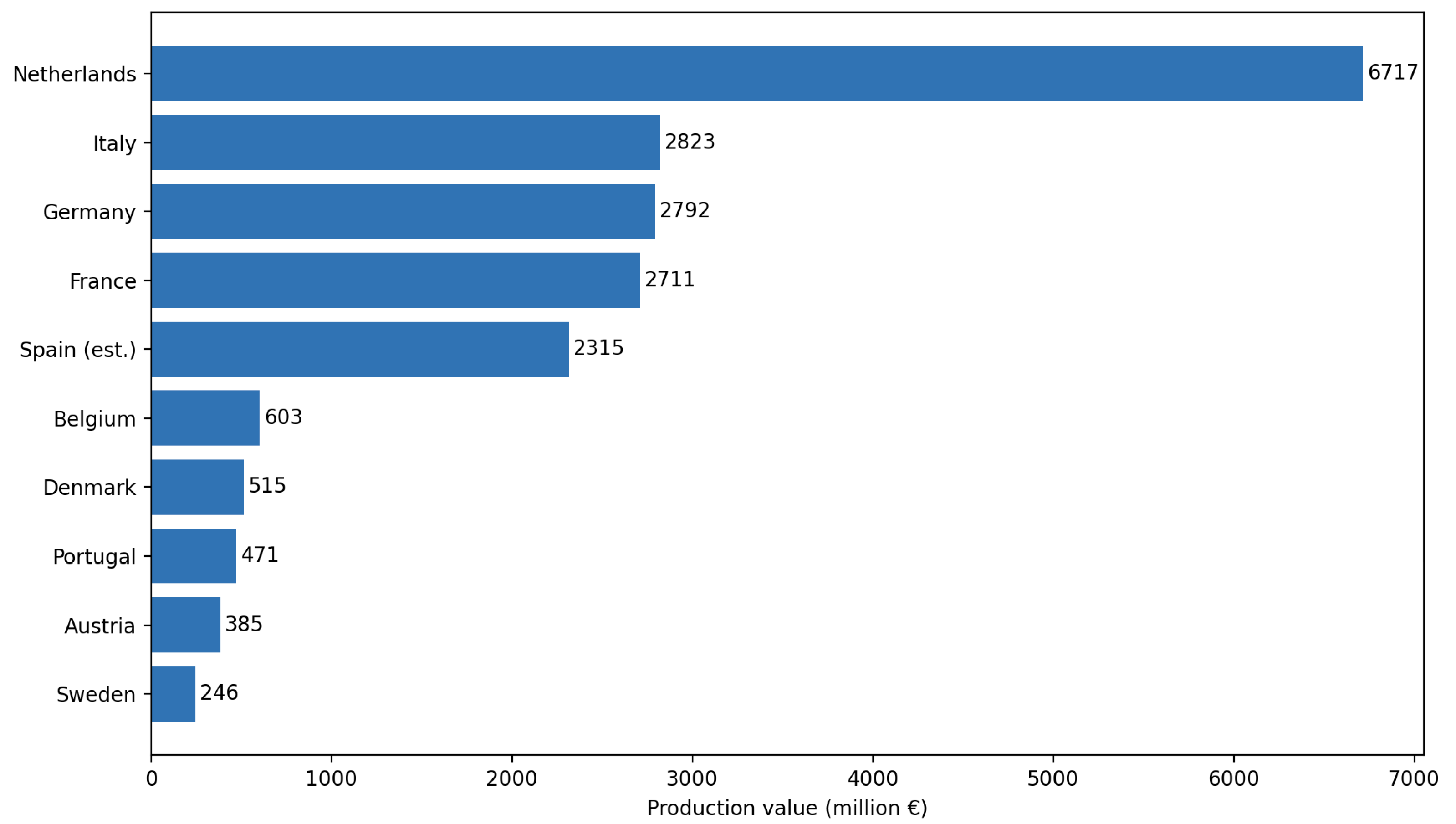
Floriculture is an international, dynamic multi-billion-euro industry that includes the production of cut flowers, indoor potted plants, and outdoor ornamental plants. In Italy, the floriculture sector plays a significant role within the economic framework and the national GDP, accounting for about 8.6% of national agricultural production, with a turnover of about EUR 3.2 billion divided approximately into EUR 1.465 billion for flowers and potted plants and EUR 1.68 billion for nursery products (trees and shrubs) [1,2,3]. The cut flower and ornamental pot-plant industry in the EU scenario is dominated by the Netherlands, with 31% production (Figure 1), followed by Italy holding the second place, and Germany producing 13% of the entire European market [4].
Despite the significant economic importance of the floriculture sector, the COVID-19 pandemic and subsequent public shutdowns had a profound impact on the ornamental industry, as was the case for many non-essential commodities and industries. In Italy, in particular, this led to a notable decline, with production volume decreasing by 8.4% and market value by 2.4% [5]. Moreover, in addition to challenges posed by the COVID-19 pandemic, the Italian floriculture sector must also contend with intense competition in international markets. This is particularly driven by the emergence of new production areas that benefit from favourable climatic conditions, abundant natural resources, and lower production costs, further pressuring the industry’s competitiveness [6]. The increase in the production of traditional ornamental crops reduced the market price with negative impact on economic sustainability of ornamental growers.
Coupled with these changes, the ornamentals trade has been further exacerbated by the global climate changes leading to water deficits and temperature increase. Water resource availability in the countries of the Mediterranean area has already been affected by a combination of effects varying from global climate change and anthropogenic pressures [7], and in the future will have to deal with the potential challenge of increased water scarcity, undermining the productivity and quality of crops [8].
Crop diversification can be obtained through product innovation, which plays an important role in helping the ornamental horticulture sector to deal with global competitiveness, declining profits, and uncertainty related to climate change. The aim of crop diversification is to increase crop profile so that farmers are not dependent on a single crop to generate their income. As a recognized risk-coping strategy, crop diversification includes several profitability and environmental benefits [9]. Expanding the range of ornamental varieties can reduce vulnerability to market and climate variability. In fact, when farmers only cultivate one or few crop types, they are exposed to high risks in the event of unforeseen climate events that could severely impact agricultural production, such as the emergence of pests and the onset of heat or drought. Introducing alternative crops can also provide commercial opportunities in multiple markets allowing the production of several products for different uses, strengthening simultaneously the domestic and international competitiveness.
Certain species from subtropical dry regions could be considered for diversifying cultivated plants in the Mediterranean area, presenting novelty and opportunities for innovation [10]. Their introduction could contribute to the renewal of plant material and the development of climate-resilient agricultural systems, enhancing global competitiveness while creating profitable alternatives and new market opportunities [10,11]. There has been a growing mainstream interest in the development of ornamental edible products, plant species that not only offer aesthetic value but also possess functional nutritional properties [12]. This trend includes edible flowers and ornamental horticultural products designed for edible landscaping, which have gained significant attention over the past decade [11,13]. Mediterranean wild species are also an important source of plant species that can be used as ornamental plants, some of them especially for the tolerance to drought conditions [14]. These species have been also considered as potential plants for urban landscaping and improve sustainability [15]. The aim of this review is to examine promising ornamental plant species from South Africa and Australia with strong potential for introduction into Mediterranean regions, particularly Italy, in the context of climate-change-driven challenges such as summer drought, water scarcity, and increasing temperature.

2. Promising Plant Resources from South Africa and Australia

In this context, the native flora of Australia and South Africa stands out for its remarkable diversity, encompassing species that are typical of various habitats and climatic conditions (Table 1) [16,17]. Although, Mediterranean basin can be also a source of biodiversity for ornamental selection, South African and Australian plants represent novelties for the EU market. Australian and South African plants present intriguing prospects for innovation in the floriculture industry both in Italy and in Mediterranean countries. Many of these species are exceptionally well-adapted to arid and/or saline environments, which suggests that they will be resilient in the face of changing climatic conditions [18]. Ornamental plants already spread in floriculture or landscape design coming from South African taxa (Proteaceae: Protea, Leucadendron, Leucospermum; and non-Proteaceae ornamentals: Strelitzia, Agapanthus, Pelargonium) or Australian taxa (Proteaceae: Banksia, Grevillea; Myrtaceae: Callistemon/Melaleuca; Haemodoraceae: Anigozanthos).
Moreover, some Australian native plants termed ‘bush tucker’ have a long history of use as a food and as such as high antioxidant activity, exceptionally rich content in vitamins, minerals, and fibres [19].
Many of these un-explored and non-traditional ornamental plants, as listed in Table S1, have the potential to expand the floriculture industry market as novel ornamental-agrifood commodities (value-added crops) because of their potential decorative characteristics (i.e., colourful flowers and fruits; scented foliage with many bright colours). These are documented in dedicated databases, accessible via the links provided in Table S2, and include superior adaptive traits for drought tolerance, compact habitus suitable for growing in pots, and their health and nutritional benefits.
Table 1. Comparison of main specific feature for the evaluation of South African or Australian species as sources of species innovation in the ornamental industry [20,21].
FeatureSouth African SpeciesAustralian Species
Flower showinessVery high (Protea, Strelitzia)High (Banksia, Kangaroo Paw)
Drought toleranceStrong (i.e., shrubs −1.9 to −4.9 MPa)Strong (shrubs and woody trees, −3.13 to −9.64 MPa)
Soil preferenceAcidic, well-drainedSandy, low nutrients
Wildlife attractionModerateHigh (birds, pollinators)
Global popularityVery popular in floristryIncreasing in landscaping

3. Unlocking Ornamental Potential

3.1. Thriving in Stressful Environments

Given the escalating challenges posed by climate change, exploring and introducing plant species with intrinsic tolerance to multiple abiotic stresses represents a key strategy for the future of sustainable ornamental production. Climate change is responsible for multiple abiotic stresses on plants, including frequent episodes of extreme weather events, drought caused by water shortage that can be exacerbated by high temperatures and altered precipitation patterns, flooding, and salinity, in addition to the combined effects of multiple simultaneous stresses. These pressures, whether natural or human-induced, have already started a critical transition toward a tipping point [22] where the pace of climate change is forcing biodiversity to adapt rapidly. To cope with singular or combined stress, plants adopt diverse strategies for adaptation whether on the molecular, physiological, or/and morphological levels to ensure species survival [23]. Many subtropical regions, including Australia and South Africa, are global biodiversity hotspots, yet they are vulnerable due to their exposure to extremely hot, dry summers, and mild, wet winters [24]. Plants in these areas, such as Daniellia spp. (fam. Fabaceae), Tulbaghia violacea Harv. (fam. Amaryllidaceae), Bulbine frutescens Willd. (fam. Asphodelaceae), and Eriocephalus africanus L. (fam. Asteraceae), are compelled to develop a range of molecular, physiological, and morphological adaptations to survive in their challenging environments. For example, on the morphological level, evolutionary variability has been observed in Daniellia spp. which is an endemic genus of nine species of subtropical Africa. Their adaptative traits in terms of leaflet shape suggest a high degree of phenotypic plasticity. In fact, the presence of glands enhances water retention and protects against heat or drought stress. D. alsteeniana P.A. Duvign. features long lateral branches and midrib glands, which are specific adaptations that help the plant to cope with environmental stresses [25]. On the other hand, physiological adaptations to drought implies more efficient water-use strategies adapted by the plant by accumulation osmolytes and high-efficiency stomata opening regulation to reduce water loss and developing deep root systems. Tulbaghia violacea, endemic to Southern Africa and comprising about 20 species, stores water in its rhizomatous roots and reduces water loss through waxy leaves [26]. Similarly, Bulbine frutescens, a succulent plant, stores water in its fleshy leaves and thrives in poor soils, making it valuable for ecological restoration [27]. Eriocephalus africanus adapts to drought with its deep roots, hairy leaves, and seasonal growth patterns, conserving resources during dry periods and flourishing when conditions improve [28]. Additional adaptations across subtropical flora include wax-coated leaves in species like Eucalyptus, nutrient storage in thick trunks as found out in Xanthorrhoea fulva (A.T. Lee) D.J. Bedford (fam. Asphodelaceae), and fire-resilient seeds in Fynbos shrubs, illustrating the resilience and resourcefulness of nature in the face of climate change [29]. Dianella longifolia R.Br. produces lightweight seeds that are dispersed by wind or water, allowing colonization of new habitats with favourable conditions. Seeds can remain dormant and germinate only when conditions are suitable, aiding survival in unpredictable climates. From sustainability point of view, before the introduction of a new species in the production chain, it is important to evaluate the water use efficiency (WUE) and carbon footprint compared with traditional crops. The WUE must be determined by measuring water consumption in relationship to the biomass accumulation. WUE can be defined through the leaf gas exchanges that can be measured using non-destructive methods. This data can provide carbon dioxide accumulation through net photosynthesis rate. Cultivation systems are also important for the evaluation of carbon footprint and potential impact at environmental and economic levels, especially if cultivations are carried out in geographical areas with greenhouse heating requirements [30]. Moreover, understanding these adaptive traits in the context of climate change can inform conservation strategies and ensure the survival of these ecologically significant plants species in their native habitats.
Altogether, natural adaptive strategies not only ensure plant survival under increasingly stressful climatic conditions but also provide a functional foundation for the identification of novel ornamental species that combine environmental resilience with ornamental value.

3.2. Unveiling Novel Ornamental: Aesthetic

Beyond their adaptive capacity, however, the potential of plant species as new ornamentals ultimately depends on the expression of distinctive aesthetic traits, including floral morphology, colour, foliage texture, growth habit, and overall visual impact in cultivated landscapes. One of the fundamental aspects of the selection of ornamental species is undoubtedly aesthetic value, which plays a crucial role both visually and emotionally at the time of purchase. In recent years, their aesthetic importance has grown significantly, driven by their increasing use in both indoor and outdoor spaces [31]. While the choice of plants for interiors was once primarily driven by emotional needs [32], it also carries architectural significance. Plants have thus become an essential element in interior design [33], enhancing overall home well-being and boosting productivity, creativity, and satisfaction in workplaces [34,35,36,37]. Moreover, there is an increasing demand for ornamental plants for outdoor use, aimed at improving the quality of cities through the creation of hedges, flower beds, roundabouts, and, in modern cities, vertical gardens [38,39]. The growing demand for ornamental plants has led producers to expand their offerings, focusing not only on aesthetics, such as vibrant leaves, flowers, and colours, but also on biodiversity and adaptability to various environments and conditions, including indoor use [40], driven by the need to cope with the increasing intensity of climate-related challenges. In this scenario, to find plants with all these required characteristics, it would be interesting to search among endemic species, which are rustic and excellent at surviving in a wide variety of harsh environments but are also characterized by bright colours, unusual shapes, and other characteristics. The similarity between South African, Australian, and Mediterranean climatic conditions could push the Italian floricultural sector towards the selection of endemic species from the hotspots. Their commercialization has been exploited since the 18th century, when European interest in Australian and South African species emerged because of their rich diversity. Many South African species have been used for hybridization, resulting in numerous varieties currently sold in all the European ornamental market [41]. Among the most important African species sold worldwide are Gladiolus spp. (L.) Tourn. and Freesia spp. (Klatt) Eckl. [42], but many interesting plant species have also been selected for their potential use in cut flower trading, both as potted, fresh, and dry flowers, and for their foliage [41]. Among them, we find a lot of South African genera and species that during the previous years were considered in the ranking of the best-selling cut flower native plants: Agapanthus africanus (L.) Hoffmanns (fam. Amaryllidaceae), Gerbera jamesonii Adlam (fam. Asteraceae), Gladiolus hybrids, Gloriosa rothschildiana O’Brien (fam. Colchicaceae), Leucadendron spp. R.Br. (fam. Proteaceae), Leucospermum spp. R.Br. (fam. Proteaceae), Ornithogalum arabicum L. (fam. Asparagaceae) and Protea spp. [43]. Moreover, going through the species capable of coping with stress that also have aesthetic potential, we find Dianella longifolia, an Australian plant resistant to both drought and freezing that produces little stared blue flowers, which can be used for flower beds realization.
Another aspect to be considered is the possibility of selling plants that can flower in unconventional periods of the year to guarantee continuous plant sales by floricultural industries. For example, Eriocephalus africanus, also known as “African rosemary”, is a drought-resistant plant that produces scented white flowers with a violet centre during late winter and potentially decorative woolly fruits [44]. Among the South African species capable of flowering for long periods, we can find Tulbaghia violacea, which is resistant to aridity and produces violet inflorescences that last from spring to fall [45].

3.3. Potential Edible Use

Exploring and incorporating non-traditional, underutilized native plant species offers significant potential for agricultural food industries. These plants, known for their enhanced drought tolerance and enriched bioactive phytochemical profiles, could significantly reduce water usage during production while providing profitable value-added crops with enhanced sustainability. In addition to contributing to Mediterranean regions, these species are crucial for addressing food security challenges in areas such as West Africa, where erratic rainfall patterns and rising temperatures demand crops adapted to climate change. Among these subtropical plants, Tulbaghia violacea (wild garlic) is noteworthy for its garlic-like flavour and potential nutritional and medicinal benefits. The extracts of its edible flowers are rich in flavonoids and phenolic compounds with strong antioxidant properties [46,47]. Similarly, Bulbine spp. with their fleshy, succulent leaves, offer both nutritional and medicinal value. The leaves and essential oils, characterized by bioactive compounds with antioxidants and antimicrobial properties, hold potential for medical and cosmetic applications [48]. Specifically, B. bulbosa (Golden Lily) from the Southeast Asia region is valued for its starchy bulbs. Another promising species is Eriocephalus africanus (also known as African rosemary), a drought- and salinity-tolerant perennial plant native to South Africa. Its aromatic profile closely resembles that of rosemary, making its edible leaves suitable for culinary applications [49]. By integrating such underutilized plants with high nutraceutical value, the industry can address climate challenges while enhancing sustainability and economic growth of the industry.

3.4. Richness of Valuable Bioactive Phytochemicals

The increasing common interest in bioactive compounds, linked to the rising consumer awareness towards the selection of “natural” products instead of those formulated with synthetic components [50,51], incentivized producers to implement more natural compounds inside their products formulation and the scientific community to investigate more in the field of bioactive compounds; such research has deepened our knowledge on those already discovered and used, and supported the search for new interesting bioactives that could enrich the category and have new potential uses. In plants, bioactive phytochemicals are principally found in fruits and green parts and are mostly antioxidant compounds (carotenoids, phenols, anthocyanins, tocopherols, and vitamins) capable of coping with cellular oxidative stress [52]. There are some examples of novel garden roses that are rich in vitamin C, as well as phenols such as quercetin 3-O-glycosydes and quinic acid, which can have moderate neuroprotective activity [53]. Their ability to modulate diverse aspects of human well-being by affecting biological processes makes them a widely used component in different fields. In medicine, for instance, bioactives are known to prevent some types of cancer, reduce inflammation [54], and have cardioprotective effects [55]. For instance, secondary metabolites derived from Acacia sp. exhibit a broad range of biological activities, including antibacterial and antifungal effects, antioxidant and anticancer properties, as well as antiparasitic, antidiabetic, immunomodulatory, and cytotoxic actions [56].
The use of bioactive compounds is also increasing in colour, additives [57], and cosmetic industries [58], leading to the production of new medicines, dietary supplements, and cosmetic formulations [59]. Essential oils extracted are also important sources of bioactive compounds; for example, Tulbaghia violacea essential oil extracted from its rhizome is rich in sulphur-containing compounds, exhibiting strong nitric oxide scavenging and iron chelation activities [47]. Moreover, the genus Persoonia belonging to the Proteaceae family shows interesting potentialities in terms of bioactive compounds (saponins and tannins), being a plant-based medicine and one of the main sources of food for aboriginal Australian people [60]. Bioactive phytochemicals are typically produced by maceration or extraction from horticultural and medicinal species cultivated for this purpose [61]. However, other matrices, such as by-products [62] and plant cellular suspensions, have been successfully tested for their extraction [58].
To search for novel bioactive compounds, the scientific community has focused on endemic species that live in specific environmental niches and can produce a large number of molecules that could be useful in the aforementioned fields. Among the endemic species, Australian “bush foods” have recently been exploited, as they are considered rich in nutrients and antioxidants as mentioned before [61,63,64]. In addition, some of these species have ornamental potential, and it may be possible to enrich the floricultural portfolio of commercialized species.
For example, Citrus australasica F.Muell. (fam. Rutaceae) and Santalum sp. (fam. Santalaceae), known as Finger Lime and Quandong, respectively, are both valued in the culinary sector for their unique flavours and have already been studied for their volatile components. Finger Lime, thanks to its valuable bioactives (organic acids, minerals, carotenoids, vitamins, and chlorophylls) can be considered beneficial for chronic diseases and cancer prevention [65]. Moreover, Santalum sp. essential oil and its components (α-santalol and β-santalol) give the sandalwood extract antioxidant, anti-inflammatory, antibacterial, antifungal, antiviral, neuroleptic, antihyperglycemic, antihyperlipidemic, and anticancer capacity [66]. Numerous Australian species belonging to families such as Labiatae, Myrtaceae, and Rutaceae have been explored for industrial production of flavours and pigments [57]. Several Melaleuca species belonging to the Myrtaceae family, ordinarily used in Australia for honey production, are excellent producers of volatile oils and contain pentacyclic terpenes with anti-cancer and anti-inflammatory properties [67].
Some species of interest in metabolite production can also be found in Africa. Eriocephalus africanus, for example, has flowers and fruits with aesthetic potential and is traditionally used for medical purposes. Indeed, it can ameliorate skin irritation and gastrointestinal issues, along with the antifungal activity of its organic extracts. It is also used for culinary purposes because of its aroma and palatability [68]. Another genus rich in bioactive is Gynura sp., which is distributed in Asia, Africa, and Australia. Species belonging to this genus are traditionally used as herbal medicine because of its high quantity of bioactive compounds with antioxidant activity [69,70]. In conclusion, although the present review does not aim to address the industrial exploitation of these compounds, their documented bioactivity (Table S3) may represent an added value for ornamental products and opens for future applied research.

4. Propagation Strategies and Production Chain Requirements for Novel Ornamental Species

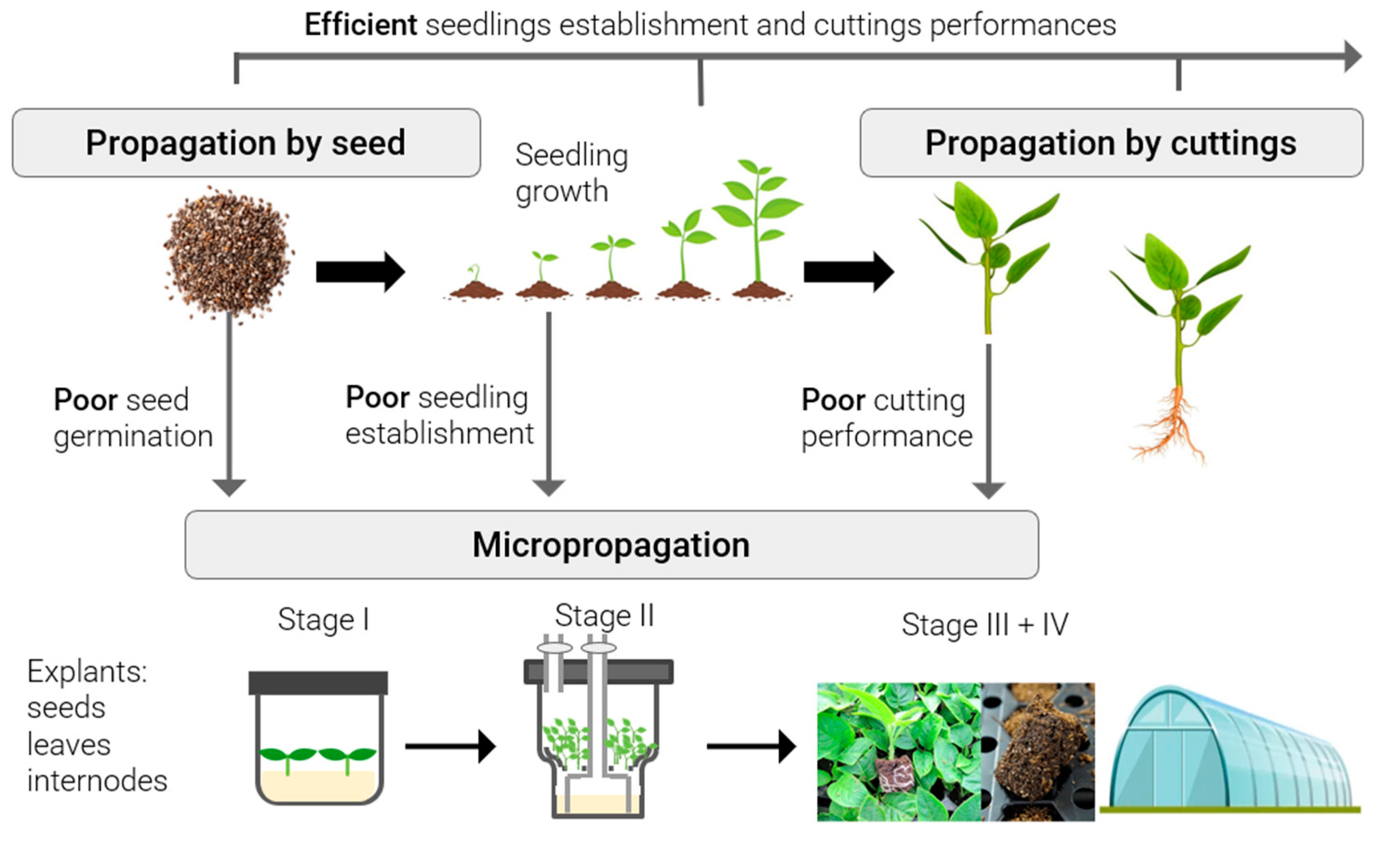
The introduction of new ornamental species must be evaluated by the ability to set up constant production of propagation materials that should be of high quality and homogeneous (Figure 2). Unfortunately, wild species often produce seeds with a long period of dormancy or with low germination rate or with high variability. Therefore, an appropriate study should be considered, and many evaluations should be taken into account (Figure 2).
Considering the vase-life aspect, some perennial and succulent plants, such as Bulbine frutescens, which produces orange-yellow inflorescences in both spring and autumn, are ideal in terms of long-lasting flowering and resistance to long periods of transportation, which is possible because of their low water needs [27].
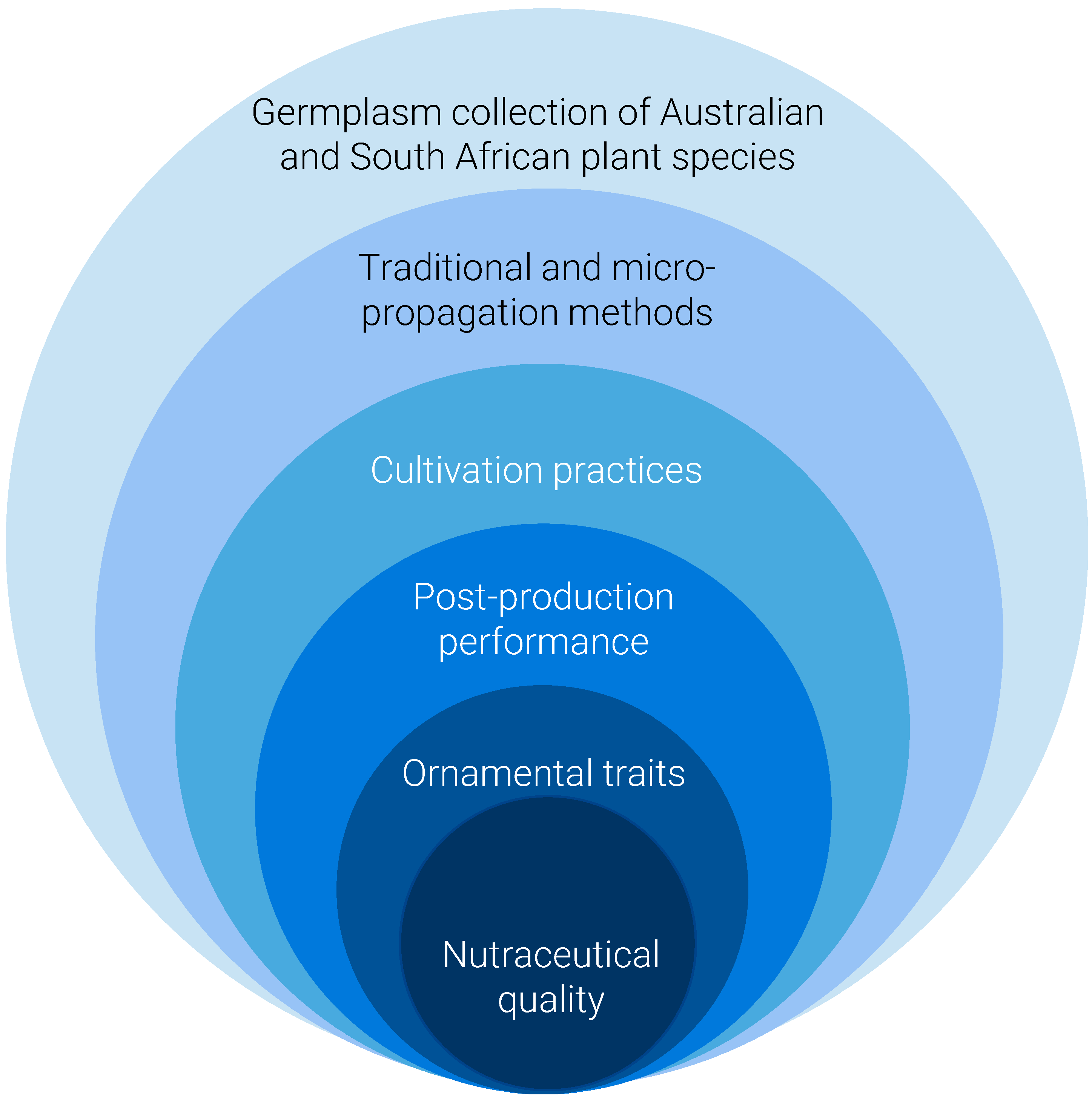
The overall evaluation must consider all steps from the production and post-production chain to the consumer (Figure 3). The introduction of high-value multifunctional plant species could make it easier to propagate these new plants, thanks to the enhanced drought tolerance, remarkable post-production performance, high decorative value, health and nutritional benefits. All these aspects are required for a dynamic ornamental industry, resilient to climate change and constantly looking for new products, technologies and market niches.

5. Assessing the Invasive Potential of New Ornamental Species

A species introduced outside its natural range (past or present) whose introduction and spread threaten biodiversity, ecosystems, human health, or cause economic damage. Global ornamental horticulture plays a pivotal role in the introduction and spread of plant species beyond their native ranges [71]. Among the primary pathways for plant invasions, the deliberate sale and trade of ornamental plants, particularly through nurseries, is a major contributor [72]. Many invasive species that pose significant ecological threats today were initially introduced for their aesthetic value before establishing themselves in the wild, where they outcompete native flora and disrupt ecosystems [73]. Given the increasing demand for novel ornamental plants, it is crucial to implement proactive measures to prevent the introduction of species with invasive potential.
One of the most effective strategies for mitigating these risks is the use of preventative screening tools within the nursery industry. By systematically evaluating plant species before their commercial release, it is possible to identify and exclude those with a high risk of becoming invasive species. Researchers have developed a Plant Risk Evaluation (PRE) tool to accurately screen ornamental plants for their invasive potential [74]. By refining key questions from existing Weed Risk Assessment (WRA) tools [75,76,77,78,79], PRE ensures high accuracy while remaining practical for the horticultural industry [74]. This voluntary tool helps prevent the introduction of invasive species and supports sustainable and responsible plant trade.
Moreover, online databases, including the Global Invasive Species Database (GISD), noxious weed lists, and the Delivering Alien Invasive Species Inventories for Europe (DAISIE) database, are essential tools for evaluating the invasive potential of newly introduced plant species [80,81]. Noxious weed lists compiled by governmental and regulatory bodies provide additional insights into species that threaten agriculture, biodiversity, and ecosystem stability [81,82]. The DAISIE database further supports this assessment by offering insights into the alien species present in Europe and their potential risks [83]. GISD compiles comprehensive data on known invasive plants worldwide [84]. By systematically cross-referencing proposed ornamental species against these resources, researchers, growers, and policymakers can make well-informed decisions, minimize the risk of biological invasions while supporting the responsible expansion of the floriculture industry in South Africa. The integration of such precautionary measures ensures that innovation in the ornamental plant trade aligns with biodiversity conservation and ecological sustainability, fostering a balance between economic development and environmental sustainability. For Italy, the regulation refers to a specific UE legislation to prevent the spread of Invasive Alien Species (IAS). The EU regulation n. 1143/2014 reports a set of measures to be taken across the EU in relation to IAS. This regulation establishes rules to prevent, minimize, and mitigate the adverse impacts of IAS across the EU. The list of alien species has been recently updated with the Implementing Regulation (IR) n. 2025/1422. This IR included eight additional plant species.

6. Conclusions

Australian and South African plant species constitute a valuable reservoir of genetic resources for the development of novel ornamental plants adapted to Mediterranean environments. The introduction of new ornamental taxa into competitive national and international markets requires a comprehensive evaluation of traits that determine their commercial success. Among these, tolerance to abiotic stresses, such as drought, salinity, and temperature extremes, is of paramount importance, particularly under the current scenario of climate change and water scarcity in Mediterranean countries in Mediterranean countries, including Italy. In addition, the multifunctional nature of several species—combining ornamental value with potential edible uses or the presence of bioactive compounds—may increase their attractiveness to both producers and consumers, thereby enhancing competitiveness within a rapidly evolving market. Despite this promising potential, critical bottlenecks remain in the pathway from research to industrialization. Key limitations include the availability of reliable and scalable propagation methods, particularly for wild or under-domesticated species exhibiting seed dormancy, low germination rates, or high phenotypic variability. Furthermore, the lack of standardized cultivation protocols and limited knowledge of long-term performance under Mediterranean growing conditions can hinder commercial adoption. Market-related barriers, such as consumer familiarity and acceptance of novel ornamental taxa, also represent a non-negligible constraint.
Consequently, these aspects must be systematically addressed within research and experimental programs prior to large-scale commercialization. A multidisciplinary approach, combining plant physiology, horticultural technology, and market analysis, will be critical to fully exploit the potential of South African and Australian plant resources and to ensure their successful and resilient incorporation into the ornamental sector of Mediterranean countries.

Supplementary Materials

The following supporting information can be downloaded at: https://www.mdpi.com/article/10.3390/horticulturae12020147/s1. Table S1. Australian species potentially suitable as multifunctional ornamental plants. Table S2. Australian native species common names and picture links. Table S3. Australian and South African species potentially suitable as ornamental plants and source of bioactive compounds.

Author Contributions

Conceptualization, A.M. (Anna Mensuali), A.T. and A.F. writing—original draft preparation, A.M. (Annalisa Meucci), E.S. and F.S.d.C.; writing—review and editing A.M. (Anna Mensuali) and A.F., funding acquisition, A.M. (Anna Mensuali) and A.F. All authors have read and agreed to the published version of the manuscript.

Funding

This research was funded by the project “Exploring edible and native Australian and South African plant species for the Mediterranean ornamental industry_NATIVASA” (Grant code: 2022E7RFMX), under the PRIN 2022 program, Call D.D. No. 104 of 2 February 2022.

Data Availability Statement

No new data were created or analyzed in this study. Data sharing is not applicable to this article.

Conflicts of Interest

The authors declare no conflicts of interest.

References

  1. CREA—Consiglio per la Ricerca in Agricoltura e l’Analisi dell’Economia Agraria. Il Florovivaismo Italiano nel 2024: Numeri e Tendenze; Centro Politiche e Bioeconomia: Rome, Italy, 2024. [Google Scholar]
  2. MyPlant & Garden. Il Florovivaismo Italiano Nel 2023: Dati, Valori e Tendenze del Settore. 2024. Available online: https://creafuturo.crea.gov.it/13865/ (accessed on 2 December 2025).
  3. CREA—Consiglio per la Ricerca in Agricoltura e l’Analisi dell’Economia Agraria. Il Sistema Florovivaistico Italiano: Struttura, Mercato e Competitività; Annuario dell’agricoltura Italiana; Centro Politiche e Bioeconomia: Rome, Italy, 2023; Volume 77. [Google Scholar]
  4. European Commission, DG Agriculture and Rural Development. Flowers and ornamental plants: Production statistics 2010–2019. 2020. Available online: https://agriculture.ec.europa.eu/ (accessed on 14 November 2025).
  5. ISTAT—Istituto Nazionale di Statistica. Statistiche Report: Andamento Dell’economia Agricola Anno 2023; ISTAT—Istituto Nazionale di Statistica: Roma, Italy, 2024. [Google Scholar]
  6. Ferrante, A.; Trivellini, A.; Scuderi, D.; Romano, D.; Vernieri, P. Post-production physiology and handling of ornamental potted plants. Postharvest Biol. Technol. 2015, 100, 99–108. [Google Scholar] [CrossRef]
  7. Cherlet, M.; Hutchinson, C.; Reynolds, J.; Hill, J.; Sommer, S.; von Maltitz, G. (Eds.) World Atlas of Desertification; Publication Office of the European Union: Luxembourg, 2018. [Google Scholar]
  8. Snyder, R.L. Climate change impacts on water use in horticulture. Horticulturae 2017, 3, 27. [Google Scholar] [CrossRef]
  9. McCord, P.F.; Cox, M.; Schmitt-Harsh, M.; Evans, T. Crop diversification as a smallholder livelihood strategy within semi-arid agricultural systems near Mount Kenya. Land Use Policy 2015, 42, 738–750. [Google Scholar] [CrossRef]
  10. Costes, E.; Khadari, B.; Zaher, H.; Moukhli, A.; Morillon, R.; Legave, J.M.; Regnard, J.L. Adaptation of Mediterranean Fruit Tree Cultivation to Climate Change; IRD: Montpellier, France, 2016. [Google Scholar]
  11. Trivellini, A.; Lucchesini, M.; Ferrante, A.; Massa, D.; Orlando, M.; Incrocci, L.; Mensuali-Sodi, A. Pitaya, an attractive alternative crop for Mediterranean region. Agronomy 2020, 10, 1065. [Google Scholar] [CrossRef]
  12. Micek, J.; Rop, O. Fresh edible flowers of ornamental plants—A new source of nutraceutical foods. Trends Food Sci. Technol. 2011, 22, 561–569. [Google Scholar]
  13. Fetouh, M.I. Edible Landscaping in Urban Horticulture. In Urban Horticulture; Nandwani, D., Ed.; Sustainable Development and Biodiversity; Springer: Cham, Switzerland, 2018; Volume 18. [Google Scholar]
  14. Toscano, S.; Ferrante, A.; Romano, D. Response of Mediterranean ornamental plants to drought stress. Horticulturae 2019, 5, 6. [Google Scholar] [CrossRef]
  15. Leotta, L.G.; Toscano, S.; Ferrante, A.; Romano, D. The use of Mediterranean native shrubs for improving the sustainability of urban environments. Front. Hortic. 2025, 4, 1652517. [Google Scholar] [CrossRef]
  16. Rehana, S.; Bala, M. Under exploited ornamental crops: Treasure for floriculture industry. Ann. Hortic. 2022, 15, 43–55. [Google Scholar] [CrossRef]
  17. Seaton, K.; Bettin, A.; Grüneberg, H. New Ornamental Plants for Horticulture. In Horticulture: Plants for People and Places; Dixon, G., Aldous, D., Eds.; Springer: Dordrecht, Switzerland, 2014; Volume 1. [Google Scholar]
  18. Mathew, S.M.; Lee, L.S.; Race, D. Conceptualising climate change adaption for native bush food production in arid Australia. Learn. Communities Int. J. Learn. Soc. Contexts 2016, 19, 98–115. [Google Scholar] [CrossRef]
  19. Sultanbawa, Y.; Sultanbawa, F. (Eds.) Australian Native Plants: Cultivation and Uses in the Health and Food Industries; CRC Press: Boca Raton, FL, USA, 2017. [Google Scholar]
  20. Skelton, R.P.; Buttner, D.; Potts, A.J. Mixed hydraulic responses to drought in six common woody species from a dry evergreen sclerophyll forest in South Africa. Tree Physiol. 2025, 45, tpaf045. [Google Scholar] [CrossRef] [PubMed]
  21. Peters, J.M.; Gauthey, A.; Lopez, R.; Carins-Murphy, M.R.; Brodribb, T.J.; Choat, B. Non-invasive imaging reveals convergence in root and stem vulnerability to cavitation across five tree species. J. Exp. Bot. 2020, 71, 6623–6637. [Google Scholar] [CrossRef]
  22. Barnosky, A.D.; Hadly, E.A.; Bascompte, J.; Berlow, E.L.; Brown, J.H.; Fortelius, M.; Getz, W.M.; Harte, J.; Hastings, A.; Marquet, P.A.; et al. Approaching a state shift in Earth’s biosphere. Nature 2012, 486, 52–58. [Google Scholar] [CrossRef]
  23. Berteaux, D.; Blois, S.D.; Angers, J.-F.; Bonin, J.; Casajus, N.; Darveau, M.; Fournier, F.; Humphries, M.M.; McGill, B.; Larivée, J.; et al. The CC-Bio Project: Studying the Effects of Climate Change on Quebec Biodiversity. Diversity 2010, 2, 1181–1204. [Google Scholar] [CrossRef]
  24. Huggi, L.; Thimmegowda, M.N.; Sridhara, S.; Manjunatha, M.H.; Das, B. Climate Change-Induced Spatiotemporal Monsoon Variability: Assessment of Its Implications on Global and Regional Production Systems. In Climate Change Impacts on Soil-Plant-Atmosphere Continuum; Pathak, H., Chatterjee, D., Saha, S., Das, B., Eds.; Springer Nature: Singapore, 2024; Volume 78, pp. 713–758. [Google Scholar]
  25. De La Estrella, M.; Aedo, C.; Velayos, M. A morphometric analysis of Daniellia (Fabaceae—Caesalpinioideae). Bot. J. Linn. Soc. 2009, 159, 268–279. [Google Scholar] [CrossRef]
  26. Styger, G.; Aboyade, O.M.; Gibson, D.; Hughes, G. Tulbaghia—A Southern African Phytomedicine. J. Altern. Complement. Med. 2016, 22, 255–261. [Google Scholar] [CrossRef] [PubMed]
  27. Teffo, T.K.; Dukhan, S.; Ramalepe, P.; Risenga, I. Possible implications of climate change on the medicinal properties of Bulbine species with a particular focus on Bulbine abyssinica, Bulbine frutescens and Bulbine natalensis in South Africa. J. Pharmacogn. Phytochem. 2021, 10, 49–56. [Google Scholar] [CrossRef]
  28. Oyedeji, S. Plant adaptations in dry tropical biomes: An ecophysiological perspective. In Ecophysiology of Tropical Plants; CRC Press: Boca Raton, FL, USA, 2023; pp. 3–14. [Google Scholar]
  29. Taylor, J.E.; Monamy, V.; Fox, B.J. Flowering of Xanthorrhoea fulva: The Effect of Fire and Clipping. Aust. J. Bot. 1998, 46, 241–251. [Google Scholar] [CrossRef]
  30. Cola, G.; Mariani, L.; Toscano, S.; Romano, D.; Ferrante, A. Comparison of greenhouse energy requirements for rose cultivation in Europe and North Africa. Agronomy 2020, 10, 422. [Google Scholar] [CrossRef]
  31. Hernández, M.; Morales, A.; Saurí, D. Ornamental plants and the production of nature (s) in the Spanish real estate boom and bust: The case of Alicante. Urban. Geogr. 2014, 35, 71–85. [Google Scholar] [CrossRef]
  32. Huss, E.; Yosef, K.B.; Zaccai, M. The meaning of flowers: A cultural and perceptual exploration of ornamental flowers. Open Psychol. J. 2017, 10, 140–153. [Google Scholar] [CrossRef]
  33. Arif, M.; Katafygiotou, M.; Mazroei, A.; Kaushik, A.; Elsarrag, E. Impact of indoor environmental quality on occupant well-being and comfort: A review of the literature. Int. J. Sustain. Built Environ. 2016, 5, 1–11. [Google Scholar] [CrossRef]
  34. Genjo, K.; Matsumoto, H.; Ogata, N.; Nakano, T. Feasibility study on mental health-care effects of plant installations in office spaces. Jpn. Archit. Rev. 2019, 2, 376–388. [Google Scholar] [CrossRef]
  35. Hähn, N.; Essah, E.; Blanusa, T. Biophilic design and office planting: A case study of effects on perceived health, well-being and performance metrics in the workplace. Intell. Build. Int. 2021, 13, 241–260. [Google Scholar] [CrossRef]
  36. Sugano, S.; Tazaki, M.; Arai, H.; Matsuo, K.; Tanabe, S. Characteristics of eye movements while viewing indoor plants and improvements in occupants cognitive functions. Jpn. Archit. Rev. 2022, 5, 621–632. [Google Scholar] [CrossRef]
  37. Dravigne, A.; Waliczek, T.M.; Lineberger, R.D.; Zajicek, J.M. The effect of live plants and window views of green spaces on employee perceptions of job satisfaction. HortScience 2008, 43, 183–187. [Google Scholar] [CrossRef]
  38. Francini, A.; Romano, D.; Toscano, S.; Ferrante, A. The Contribution of Ornamental Plants to Urban Ecosystem Services. Earth 2022, 3, 1258–1274. [Google Scholar] [CrossRef]
  39. Sharma, P. Vertical Gardens—An Innovative Element of Green Building Technology. In Proceedings of the Internal Conference (GYANODAY), Greater Nodia, India, 28 November 2015; Volume 42. [Google Scholar]
  40. Aida, R.; Ohmiya, A.; Onozaki, T. Current researches in ornamental plant breeding. Breed. Sci. 2018, 68, 1. [Google Scholar] [CrossRef]
  41. Reinten, E.Y.; Coetzee, J.H.; Van Wyk, B.-E. The potential of South African indigenous plants for the international cut flower trade. S. Afr. J. Bot. 2011, 77, 934–946. [Google Scholar] [CrossRef]
  42. Coetzee, C.; Sarah, N. Negotiating the Past: The Making of Memory in South Africa; Oxford University Press: Cape Town, South Africa, 1998. [Google Scholar]
  43. Darras, A. Overview of the dynamic role of specialty cut flowers in the international cut flower market. Horticulturae 2021, 7, 51. [Google Scholar] [CrossRef]
  44. South African National Biodiversity Institute. Eriocephalus africanus . Available online: https://pza.sanbi.org/eriocephalus-africanus (accessed on 2 December 2025).
  45. Botanical Garden, University of Florida. Tulbaghia violacea . Available online: https://gardeningsolutions.ifas.ufl.edu/plants/ornamentals/society-garlic/ (accessed on 2 December 2025).
  46. Rivas-García, T.; Felipe, F.A.V.; Reyes-Alvarado, A.G.; Martínez-Camacho, R.A. Effect of Packaging Materials and Storage Period on Phytonutrient Content of Edible Flowers. In Edible Flowers: Source of Phytonutrients, Valorization and Technological Advancements; Poonia, A., Panesar, P.S., Moreno, M.I., Eds.; Springer Nature: Cham, Switzerland, 2025; pp. 95–114. [Google Scholar]
  47. Soyingbe, O.S.; Oyedeji, A.O.; Basson, A.K.; Singh, M.; Opoku, A.R. Chemical composition, antimicrobial and antioxidant properties of the essential oils of Tulbaghia violacea Harv LF. Afr. J. Microbiol. Res. 2013, 7, 1787–1793. [Google Scholar] [CrossRef]
  48. Raletsena, M.V.; Mongalo, N.I. Phytochemical analysis, in vitro antimicrobial, anticancer, anti-inflammatory, and antioxidant activity of extracts from Bulbine anguistifolia Poelln (Asphodelaceae). S. Afr. J. Bot. 2023, 159, 588–595. [Google Scholar] [CrossRef]
  49. Njenga, E.W.; Van Vuuren, S.F.; Viljoen, A.M.; Eloff, J.N. Antimicrobial activity of Eriocephalus L. species. S. Afr. J. Bot. 2005, 71, 81–87. [Google Scholar] [CrossRef]
  50. Asioli, D.; Aschemann-Witzel, J.; Caputo, V.; Vecchio, R.; Annunziata, A.; Naes, T.; Varela, P. Making sense of the “clean label” trends: A review of consumer food choice behavior and discussion of industry implications. Food Res. Int. 2017, 99, 58–71. [Google Scholar] [CrossRef] [PubMed]
  51. Gebhardt, B.; Sperl, R.; Carle, R.; Muller-Maatsch, J. Assessing the sustainability of natural and artificial food colorants. J. Clean. Prod. 2020, 260, 120884. [Google Scholar] [CrossRef]
  52. Jakubowski, W.; Bartosz, G. Estimation of oxidative stress in Saccharomyces cerevisae with fluorescent probes. Int. J. Biochem. Cell Biol. 1997, 29, 1297–1301. [Google Scholar] [CrossRef]
  53. Simin, N.; Lesjak, M.; Živanović, N.; Božanić Tanjga, B.; Orčić, D.; Ljubojević, M. Morphological characters, phytochemical profile and biological activities of novel garden roses edible cultivars. Horticulturae 2023, 9, 1082. [Google Scholar] [CrossRef]
  54. Duthie, S.J.; Ma, A.; Ross, M.A.; Collins, A.R. Antioxidant supplementation decreases oxidative DNA damage in human lymphocytes. Cancer Res. 1996, 56, 1291–1295. [Google Scholar]
  55. Xiao, J.; Bai, W. Bioactive phytochemicals. Crit. Rev. Food Sci. Nutr. 2019, 59, 827–829. [Google Scholar] [CrossRef] [PubMed]
  56. Batiha, G.E.-S.; Akhtar, N.; Alsayegh, A.A.; Abusudah, W.F.; Almohmadi, N.H.; Shaheen, H.M.; Singh, T.G.; De Waard, M. Bioactive Compounds, Pharmacological Actions, and Pharmacokinetics of Genus Acacia. Molecules 2022, 27, 7340. [Google Scholar] [CrossRef] [PubMed]
  57. Hay, T.; Prakash, S.; Daygon, V.D.; Fitzgerald, M. Review of edible Australian flora for colour and flavour additives: Appraisal of suitability and ethicality for bushfoods as natural additives to facilitate new industry growth. Trends Food Sci. Technol. 2022, 129, 74–87. [Google Scholar] [CrossRef]
  58. Bapat, V.A.; Kavi Kishor, P.B.; Jalaja, N.; Jain, S.M.; Penna, S. Plant Cell Cultures: Biofactories for the Production of Bioactive Compounds. Agronomy 2023, 13, 858. [Google Scholar] [CrossRef]
  59. Mungwari, C.P.; King’ondu, C.K.; Sigauke, P.; Obadele, B.A. Conventional and modern techniques for bioactive compounds recovery from plants. Sci. Afr. 2025, 27, e02509. [Google Scholar] [CrossRef]
  60. Zhang, J.; Netzel, M.E.; Pengelly, A.; Sivakumar, D.; Sultanbawa, Y. A Review of Phytochemicals and Bioactive Properties in the Proteaceae Family: A Promising Source of Functional Food. Antioxidants 2023, 12, 1952. [Google Scholar] [CrossRef]
  61. Chen, Q.; Fung, K.Y.; Lau, Y.T.; Ng, K.M.; Lau, D.T. Relationship between maceration and extraction yield in the production of Chinese herbal medicine. Food Bioprod. Process. 2016, 98, 236–243. [Google Scholar] [CrossRef]
  62. Kalogeropoulos, N.; Chiou, A.; Pyriochou, V.; Peristeraki, A.; Karathanos, V.T. Bioactive phytochemicals in industrial tomatoes and their processing byproducts. LWT-Food Sci. Technol. 2012, 49, 213–216. [Google Scholar] [CrossRef]
  63. Dissanayake, I.H.; Zak, V.; Kaur, K.; Jaye, K.; Ayati, Z.; Chang, D.; Li, C.G.; Bhuyan, D.J. Australian native fruits and vegetables: Chemical composition, nutritional profile, bioactivity and potential valorization by industries. Crit. Rev. Food Sci. Nutr. 2022, 63, 8511–8544. [Google Scholar] [CrossRef]
  64. Njume, C.; McAinch, A.J.; Donkor, O. Proximate and phenolic composition of selected native Australian food plants. Int. J. Food Sci. Technol. 2020, 55, 2060–2079. [Google Scholar] [CrossRef]
  65. Qi, Y.; Liu, H.; Agar, O.T.; Imran, A.; de Souza, T.S.P.; Barrow, C.; Suleria, H.A. Phytochemicals in finger lime and their potential health benefits: A review. Food Rev. Int. 2024, 40, 2167–2187. [Google Scholar] [CrossRef]
  66. Sharifi-Rad, J.; Quispe, C.; Turgumbayeva, A.; Mertdinç, Z.; Tütüncü, S.; Aydar, E.F.; Calina, D. Santalum Genus: Phytochemical constituents, biological activities and health promoting-effects. Z. Für Naturforschung C 2023, 78, 9–25. [Google Scholar] [CrossRef]
  67. Bar, F.M.A. Genus Melaleuca-A Review on the Phytochemistry and Pharmacological Activities of the Non-Volatile Components. Rec. Nat. Prod. 2021, 15, 219–242. [Google Scholar]
  68. Merle, H.; Verdeguer, M.; Blázquez, M.A.; Boira, H. Chemical composition of the essential oils from Eriocephalus africanus L. var. africanus populations growing in Spain. Flavour Fragr. J. 2007, 22, 461–464. [Google Scholar] [CrossRef]
  69. Meng, X.; Li, J.; Li, M.; Wang, H.; Ren, B.; Chen, J.; Li, W. Traditional uses, phytochemistry, pharmacology and toxicology of the genus Gynura (Compositae): A comprehensive review. J. Ethnopharmacol. 2021, 276, 114145. [Google Scholar] [CrossRef]
  70. Bari, M.S.; Khandokar, L.; Haque, E.; Romano, B.; Capasso, R.; Seidel, V.; Rashid, M.A. Ethnomedicinal uses, phytochemistry, and biological activities of plants of the genus Gynura. J. Ethnopharmacol. 2021, 271, 113834. [Google Scholar] [CrossRef]
  71. Hu, S.; Jin, C.; Liao, R.; Huang, L.; Zhou, L.; Long, Y.; Yang, Y. Herbaceous ornamental plants with conspicuous aesthetic traits contribute to plant invasion risk in subtropical urban parks. J. Environ. Manag. 2023, 347, 119059. [Google Scholar] [CrossRef]
  72. Van Kleunen, M.; Pyšek, P.; Dawson, W.; Essl, F.; Kreft, H.; Pergl, J.; Winter, M. The global naturalized alien Flora (Glo NAF) database. Ecology 2019, 100, e02542. [Google Scholar] [CrossRef]
  73. Hulme, P.E. Biological invasions in Europe: Drivers, pressures, states, impacts and responses. Issues Environ. Sci. Technol. 2007, 25, 56–80. [Google Scholar]
  74. Conser, C.; Seebacher, L.; Fujino, D.W.; Reichard, S.; DiTomaso, J.M. The Development of a Plant Risk Evaluation (PRE) Tool for Assessing the Invasive Potential of Ornamental Plants. PLoS ONE 2015, 10, e0121053. [Google Scholar] [CrossRef] [PubMed]
  75. Daehler, C.C.; Denslow, J.S.; Ansari, S.; Kuo, H.C. A risk-assessment system for screening out invasive pest plants from Hawaii and other Pacific islands. Conserv. Biol. 2004, 18, 360–368. [Google Scholar] [CrossRef]
  76. Gassó, N.; Basnou, C.; Vila, M. Predicting plant invaders in the Mediterranean through a weed risk assessment system. Biol. Invasions 2010, 12, 463–476. [Google Scholar] [CrossRef]
  77. Gordon, D.R.; Onderdonk, D.A.; Fox, A.M.; Stocker, R.K. Consistent accuracy of the Australian weed risk assessment system across varied geographies. Divers. Distrib. 2008, 14, 234–242. [Google Scholar] [CrossRef]
  78. Křivánek, M.; Pyšek, P. Predicting invasions by woody species in a temperate zone: A test of three risk assessment schemes in the Czech Republic (Central Europe). Divers. Distrib. 2006, 12, 319–327. [Google Scholar] [CrossRef]
  79. McClay, A.; Sissons, A.; Wilson, C.; Davis, S. Evaluation of the Australian weed risk assessment system for the prediction of plant invasiveness in Canada. Biol. Invasions 2010, 12, 4085–4098. [Google Scholar] [CrossRef]
  80. Lowe, S.; Browne, M.; Boudjelas, S.; De Poorter, M. 100 of the World’s Worst Invasive Alien Species: A Selection from the Global Invasive Species Database; Invasive Species Specialist Group: Auckland, New Zealand, 2000; Volume 12, p. 12. [Google Scholar]
  81. Randall, R.P. A Global Compendium of Weeds, 2nd ed.; Shannon Books: Melbourne, Australia, 2012; p. 1124. ISBN 978-0-646-57878-1. [Google Scholar]
  82. Quinn, L.D.; Barney, J.N.; McCubbins, J.S.; Endres, A.B. Navigating the “noxious” and “invasive” regulatory landscape: Suggestions for improved regulation. BioScience 2013, 63, 124–131. [Google Scholar] [CrossRef][Green Version]
  83. Hulme, P.E.; Nentwig, W.; Pyšek, P.; Vilà, M. DAISIE: Delivering alien invasive species inventories for Europe. Atlas of biodiversity risk, Chapter 6. 2010. Available online: http://www.ibot.cas.cz/personal/pysek/pdf/Hulme_et_al-DAISIE_%28ALARM_Biodiveristy_Atlas%29_Pensoft2010.pdf (accessed on 23 January 2026).
  84. Turbelin, A.J.; Malamud, B.D.; Francis, R.A. Mapping the global state of invasive alien species: Patterns of invasion and policy responses. Glob. Ecol. Biogeogr. 2017, 26, 78–92. [Google Scholar] [CrossRef]
Figure 1. Ornamental sector production by country, values represent production expressed as millions of EUR [4].
Horticulturae 12 00147 g001
Figure 2. The availability of propagation materials is extremely important for the introduction of a new species in the production chain. On the selected species the propagation techniques should be evaluated: from seeds to cuttings or micropropagation.
Horticulturae 12 00147 g002
Figure 3. A working scheme for the evaluation of potential evaluation of the South African or Australian plant species to be introduced in the production chain of the ornamental sector with potential dual use as ornamental plant or component of human diet.
Horticulturae 12 00147 g003
Disclaimer/Publisher’s Note: The statements, opinions and data contained in all publications are solely those of the individual author(s) and contributor(s) and not of MDPI and/or the editor(s). MDPI and/or the editor(s) disclaim responsibility for any injury to people or property resulting from any ideas, methods, instructions or products referred to in the content.