
Extracellular Self-DNA Accumulation as a Potential Driver of Continuous Cropping Obstacle in Morchella sextelata and Morchella eximia
 , , ,
, , , 
Abstract
1. Introduction
2. Materials and Methods
2.1. Plant Sampling
2.2. Fungal Strains and Culture Conditions
2.3. DNA Extraction and Fragmentation by Ultrasonication
2.4. Effects of Extracellular DNA on Fungal Growth
2.5. Statistical Analysis
3. Results
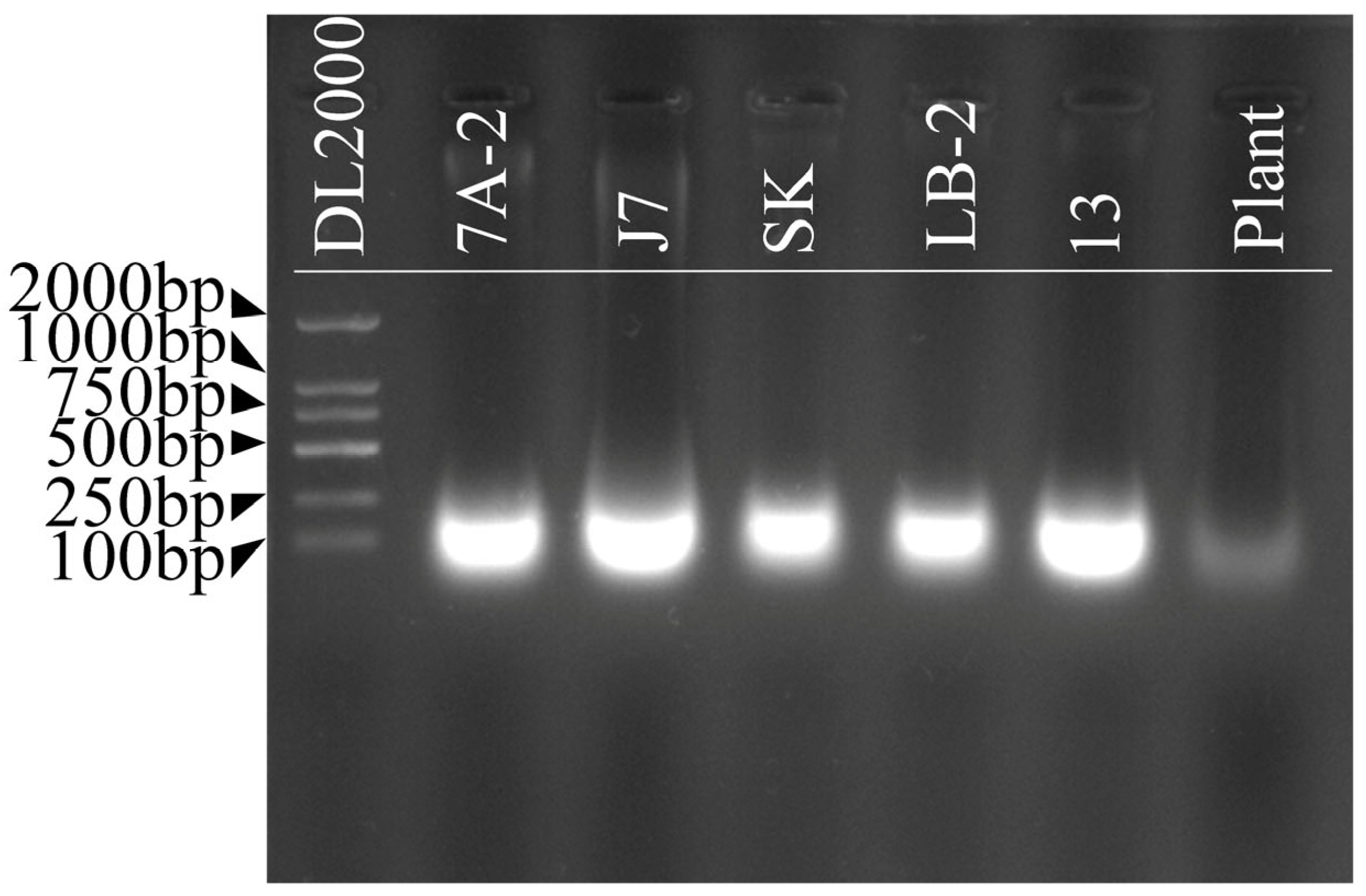
3.1. DNA Sonication and DNA Fragment Analysis
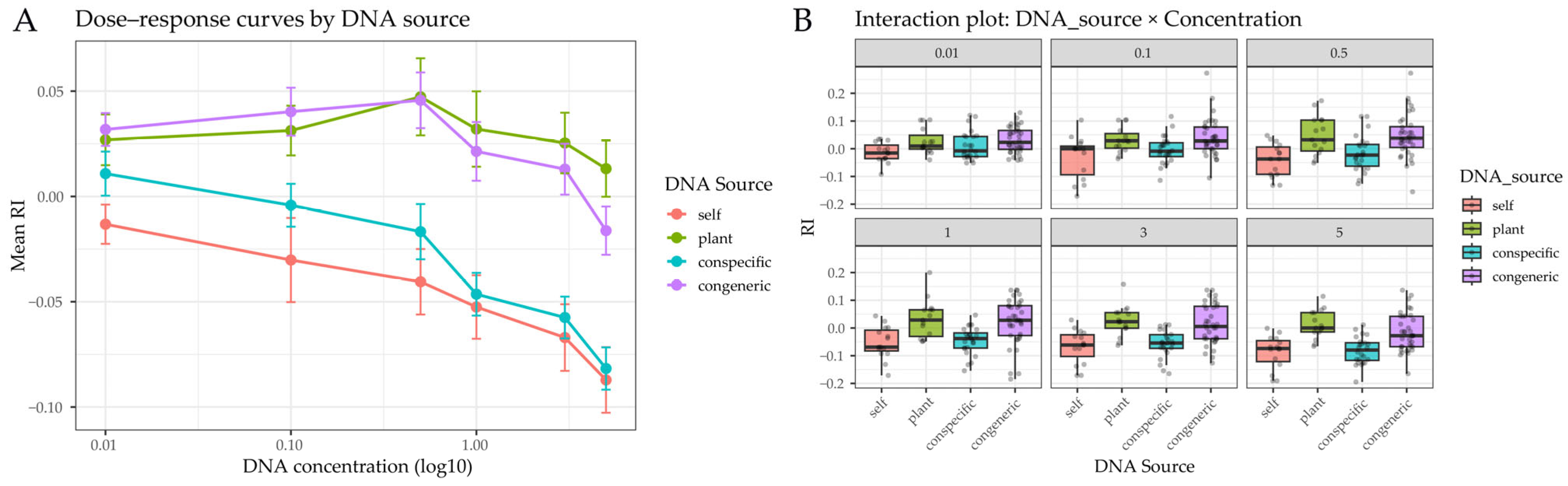
3.2. Factorial Analysis of DNA Source and Concentration Effects
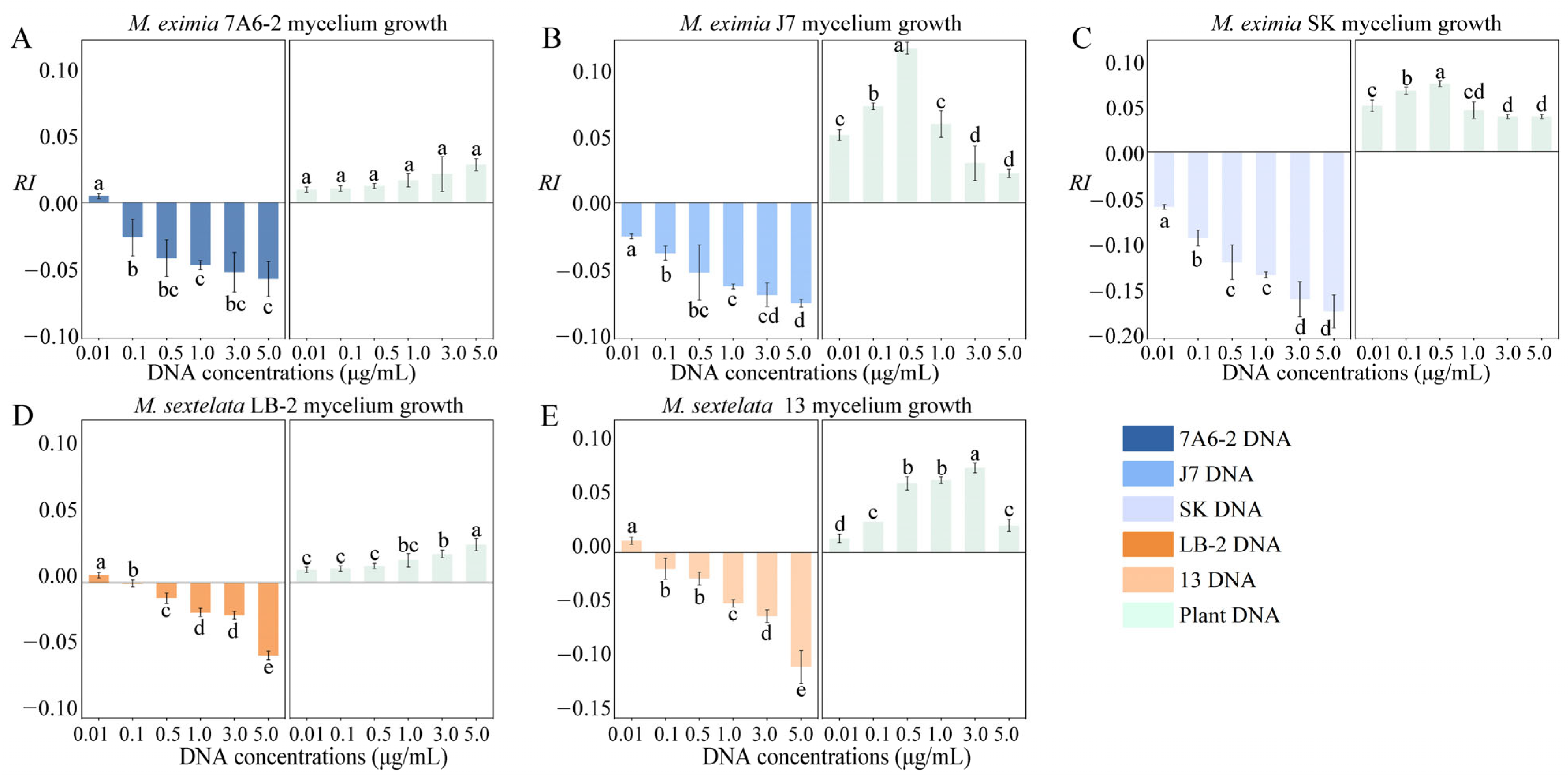
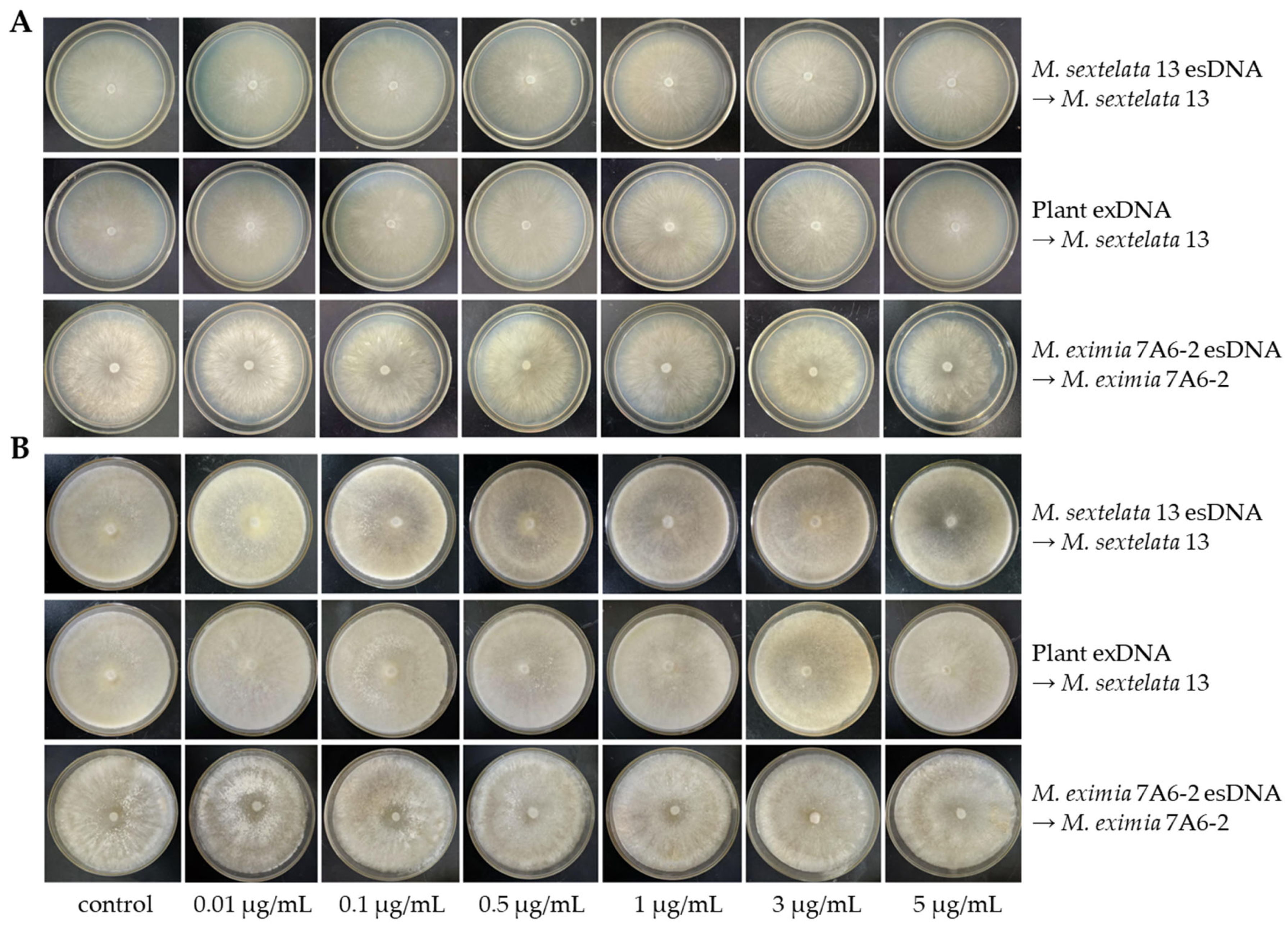
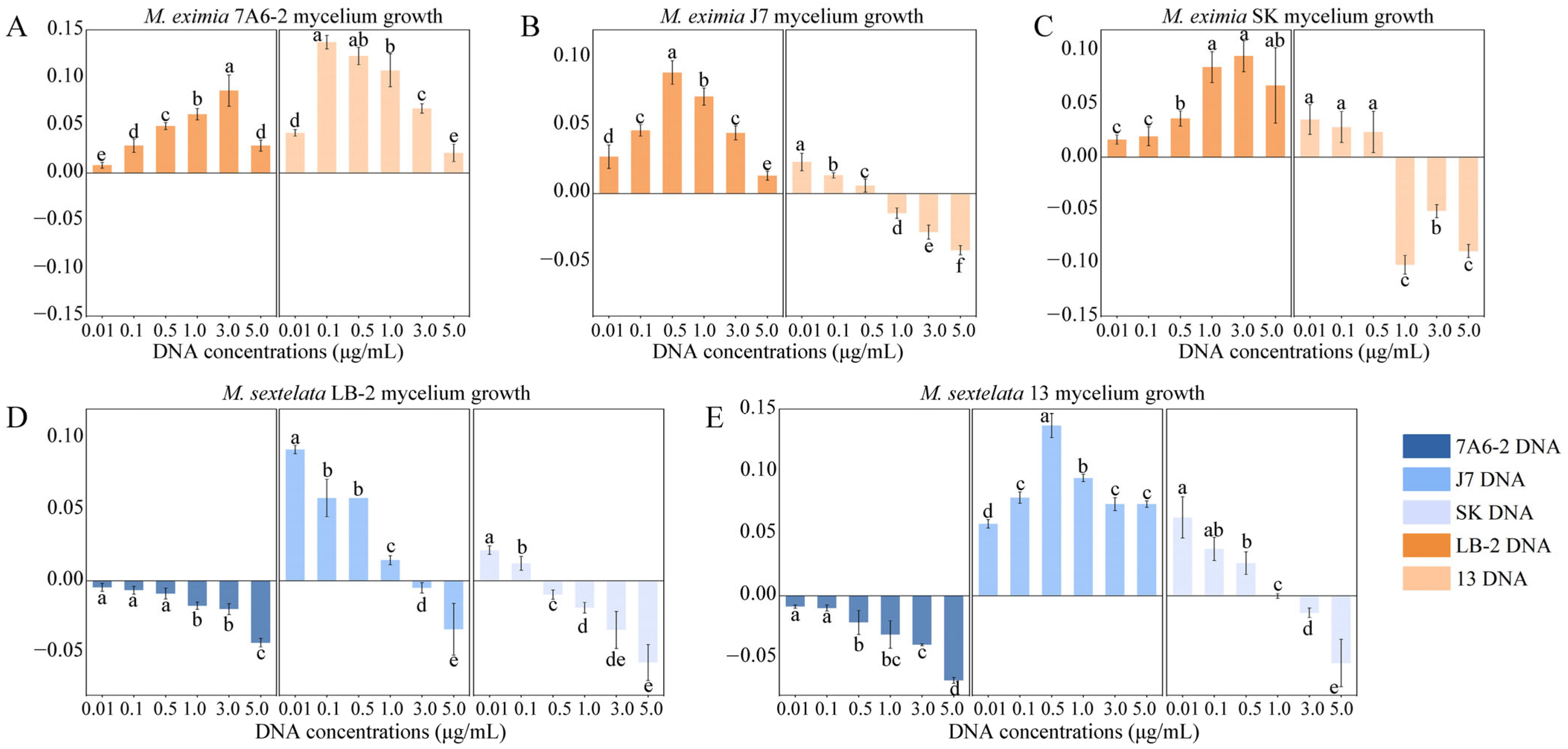
3.3. Strain-Specific Autotoxicity of EsDNA
3.4. Conspecific Autotoxicity of EsDNA
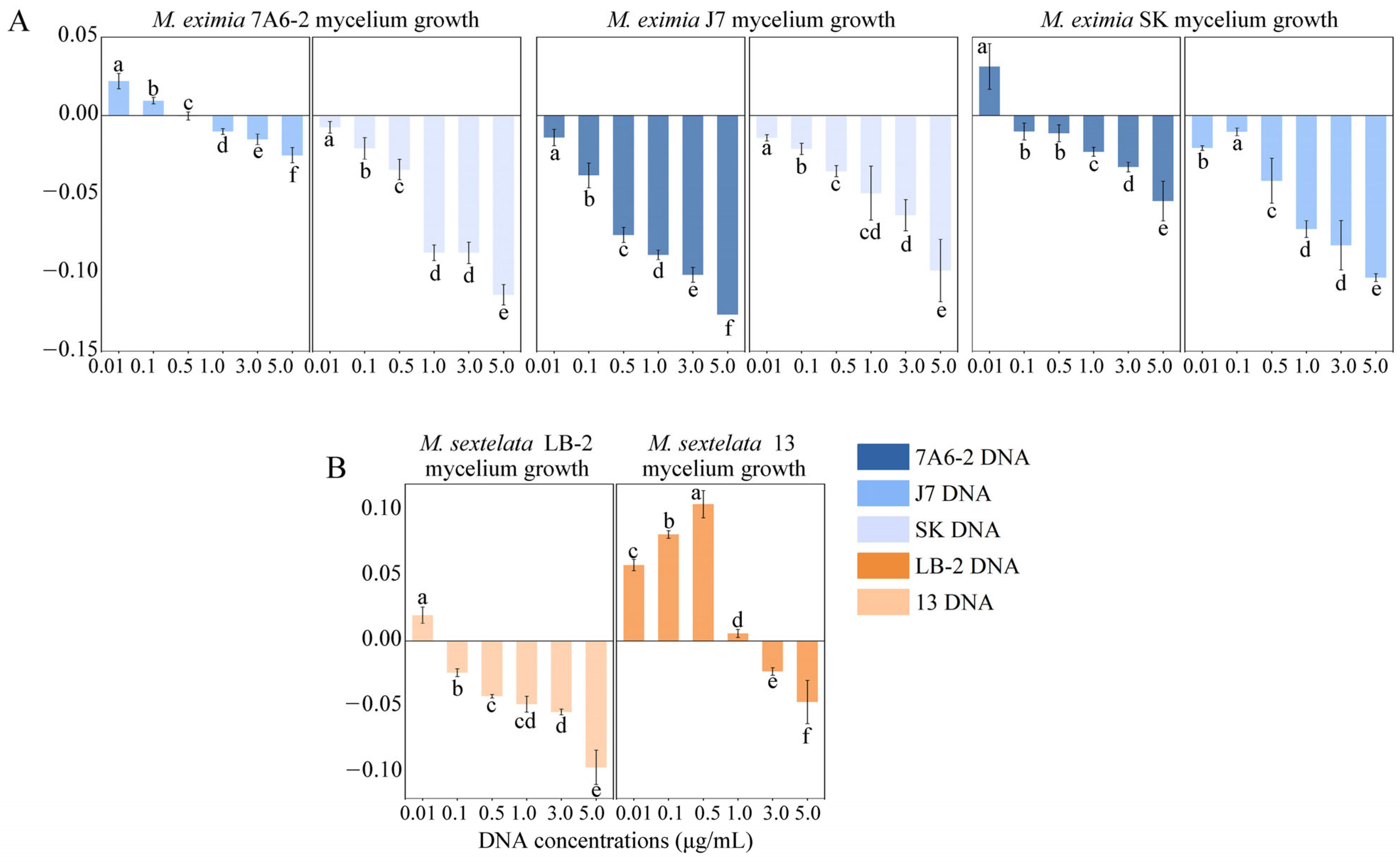
3.5. Effect of Congeneric ExDNA on Mycelial Growth Morchella spp.
4. Discussion
4.1. Mechanism Underlying Autotoxicity of EsDNA Warrants Further Investigation
4.2. Degradation of EsDNA or ExDNA in Soil
4.3. Ecological and Evolutionary Implications
4.4. Targeted Measures to Mitigate the Autotoxicity of EsDNA
4.5. Methodological Considerations and Limitations
5. Conclusions
Supplementary Materials
Author Contributions
Funding
Data Availability Statement
Conflicts of Interest
References
- Du, X.-H.; Zhao, Q.; Yang, Z.L. A review on research advances, issues, and perspectives of morels. Mycology 2015, 6, 78–85. [Google Scholar] [CrossRef] [PubMed]
- Li, Y.; Chen, H.; Zhang, X. Cultivation, nutritional value, bioactive compounds of morels, and their health benefits: A systematic review. Front. Nutr. 2023, 10, 1159029. [Google Scholar] [CrossRef] [PubMed]
- Liu, Q.; Ma, H.; Zhang, Y.; Dong, C. Artificial cultivation of true morels: Current state, issues and perspectives. Crit. Rev. Biotechnol. 2018, 38, 259–271. [Google Scholar] [CrossRef]
- Sambyal, K.; Singh, R.V. A comprehensive review on Morchella importuna: Cultivation aspects, phytochemistry, and other significant applications. Folia Microbiol. 2021, 66, 147–157. [Google Scholar] [CrossRef] [PubMed]
- Tietel, Z.; Masaphy, S. True morels (Morchella)—Nutritional and phytochemical composition, health benefits and flavor: A review. Crit. Rev. Food Sci. Nutr. 2017, 58, 1888–1901. [Google Scholar] [CrossRef]
- Liu, W.; He, P.; Shi, X.; Zhang, Y.; Perez-Moreno, J.; Yu, F. Large-scale field cultivation of Morchella and relevance of basic knowledge for its steady production. J. Fungi 2023, 9, 855. [Google Scholar] [CrossRef]
- Yin, Q.; Zhang, W.; Shi, H.; He, P.; Zhang, F.; Zhang, J.; Li, B.; Shi, X.; Liu, W.; Yu, F. Identification of allelochemicals under continuous cropping of Morchella mushrooms. Sci. Rep. 2024, 14, 31207. [Google Scholar] [CrossRef] [PubMed]
- Li, W.; Li, X.; Zhang, K.; Liu, J.; Wei, M.; Yang, Z.; Peng, Y.; Zhang, B. Continuous cropping obstacles in fungal production: A review of mechanisms and remedial strategies. Soil Use Manag. 2025, 41, e70014. [Google Scholar] [CrossRef]
- Zhang, Y.; Zhao, Q.; Uroz, S.; Gao, T.; Li, J.; He, F.; Rosazlina, R.; Martin, F.; Xu, L. The cultivation regimes of Morchella sextelata trigger shifts in the community assemblage and ecological traits of soil bacteria. Front. Microbiol. 2023, 14, 1257905. [Google Scholar] [CrossRef]
- Tan, H.; Liu, T.; Yu, Y.; Tang, J.; Jiang, L.; Martin, F.M.; Peng, W. Morel production related to soil microbial diversity and evenness. Microbiol. Spectr. 2021, 9, e00229-21. [Google Scholar] [CrossRef]
- Yu, P.; Tao, N.; Chen, W.; Zhang, J.; Yao, C.; Tian, G. Microbial diversity and metabolite changes in greenhouse soil continuously cropped with Morchella. Microbiol. Res. 2025, 16, 205. [Google Scholar] [CrossRef]
- Zhang, Y.; Sun, S.; Luo, D.; Mao, P.; Rosazlina, R.; Martin, F.; Xu, L. Decline in morel production upon continuous cropping is related to changes in soil mycobiome. J. Fungi 2023, 9, 492. [Google Scholar] [CrossRef]
- Liu, W.-Y.; Guo, H.-B.; Bi, K.-X.; Sibirina, L.A.; Qi, X.-J.; Yu, X.-D. Determining why continuous cropping reduces the production of the morel Morchella sextelata. Front. Microbiol. 2022, 13, 903983. [Google Scholar] [CrossRef]
- Cesarano, G.; Zotti, M.; Antignani, V.; Marra, R.; Scala, F.; Bonanomi, G. Soil sickness and negative plant-soil feedback: A reappraisal of hypotheses. J. Plant Pathol. 2017, 99, 545–570. [Google Scholar]
- Singh, H.P.; Batish, R.D.; Kohli, K.R. Autotoxicity: Concept, organisms and ecological significance. Crit. Rev. Plant Sci. 1999, 18, 757–772. [Google Scholar] [CrossRef]
- Bennett, A.J.; Bending, G.D.; Chandler, D.; Hilton, S.; Mills, P. Meeting the demand for crop production: The challenge of yield decline in crops grown in short rotations. Biol. Rev. 2012, 87, 52–71. [Google Scholar] [CrossRef] [PubMed]
- Huang, L.-F.; Song, L.-X.; Xia, X.-J.; Mao, W.-H.; Shi, K.; Zhou, Y.-H.; Yu, J.-Q. Plant-soil feedbacks and soil sickness: From mechanisms to application in agriculture. J. Chem. Ecol. 2013, 39, 232–242. [Google Scholar] [CrossRef]
- Idbella, M.; Bonanomi, G.; Filippis, F.D.; Foscari, A.; Zotti, M.; Abd-Elgawad, A.M.; Fechtali, T.; Incerti, G.; Mazzoleni, S. Negative plant-soil feedback in Arabidopsis thaliana: Disentangling the effects of soil chemistry, microbiome, and extracellular self-DNA. Microbiol. Res. 2024, 281, 127634. [Google Scholar] [CrossRef]
- Chung, Y.A.; Collins, S.L.; Rudgers, J.A. Connecting plant–soil feedbacks to longterm stability in a desert grassland. Ecology 2019, 100, e02756. [Google Scholar] [CrossRef]
- Zucconi, F. Allelopathies and biological degradation in agricultural soils: An introduction to the problem of soil sickness and other soil-borne diseases. Acta Hortic. 1993, 324, 11–21. [Google Scholar] [CrossRef]
- Blum, U. Effects of microbial utilization of phenolic acids and their phenolic acid breakdown products on allelopathic interactions. J. Chem. Ecol. 1998, 24, 685–708. [Google Scholar] [CrossRef]
- Chiusano, M.L.; Incerti, G.; Colantuono, C.; Termolino, P.; Palomba, E.; Monticolo, F.; Benvenuto, G.; Foscari, A.; Esposito, A.; Marti, L.; et al. Arabidopsis thaliana response to extracellular DNA: Self versus nonself exposure. Plants 2021, 10, 1744. [Google Scholar] [CrossRef] [PubMed]
- Mazzoleni, S.; Bonanomi, G.; Incerti, G.; Chiusano, M.L.; Termolino, P.; Mingo, A.; Senatore, M.; Giannino, F.; Cartenì, F.; Rietkerk, M.; et al. Inhibitory and toxic effects of extracellular self-DNA in litter: A mechanism for negative plant–soil feedbacks? New Phytol. 2015, 205, 1195–1210. [Google Scholar] [CrossRef]
- Ronchi, A.; Foscari, A.; Zaina, G.; De Paoli, E.; Incerti, G. Self-DNA early exposure in cultivated and weedy Setaria triggers ROS degradation signaling pathways and root growth inhibition. Plants 2023, 12, 1288. [Google Scholar] [CrossRef]
- Tjia, T.O.S.; Meitha, K.; Septiani, P.; Awaludin, R.; Sumardi, D. Extracellular self-DNA induces local inhibition of growth, regulates production of reactive oxygen species, and gene expression in rice roots. Biol. Plant 2023, 67, 9–18. [Google Scholar] [CrossRef]
- Zhou, X.; Gao, H.; Zhang, X.; Khashi, R.M.; Mazzoleni, S.; Du, M.; Wu, F. Plant extracellular self-DNA inhibits growth and induces immunity via the jasmonate signaling pathway. Plant Physiol. 2023, 192, 2475–2491. [Google Scholar] [CrossRef]
- Deng, Y.; Zhao, C. Soil bacterial community structure and diversity of Morchella in Jianchuan of Dali in Yunnan Province based on high-throughput sequencing. Chin. Agric. Sci. Bull. 2023, 39, 79–87. [Google Scholar]
- Yin, Q.; Zhang, W.; Cai, Y.; Shi, X.; Yu, F.; Guo, J.; He, X.; He, P.; Liu, W. Integration of physiological and transcriptomic analyses reveal the toxicity mechanism of p-coumaric acid on Morchella importuna. Horticulturae 2025, 11, 755. [Google Scholar] [CrossRef]
- Wang, Y.; Li, C.; Wang, Q.; Wang, H.; Duan, B.; Zhang, G. Environmental behaviors of phenolic acids dominated their rhizodeposition in boreal poplar plantation forest soils. J. Soils Sediments 2016, 16, 1858–1870. [Google Scholar] [CrossRef]
- Ferrusquía-Jiménez, N.I.; Serrano-Jamaica, L.M.; Martínez-Camacho, J.E.; Sáenz de la O, D.; Villagomez-Aranda, A.L.; González-Chavira, M.M.; Guerrero-Aguilar, B.Z.; Torres-Pacheco, I.; Feregrino-Pérez, A.A.; Medina-Ramos, G.; et al. Extracellular self-DNA plays a role as a damage-associated molecular pattern (DAMP) delaying zoospore germination rate and inducing stress-related responses in Phytophthora capsici. Plant Pathol. 2022, 71, 1066–1075. [Google Scholar] [CrossRef]
- Duran-Flores, D.; Heil, M. Extracellular self-DNA as a damage-associated molecular pattern (DAMP) that triggers self-specific immunity induction in plants. Brain Behav. Immun. 2018, 72, 78–88. [Google Scholar] [CrossRef]
- Levy-Booth, D.J.; Campbell, R.G.; Gulden, R.H.; Hart, M.M.; Powell, J.R.; Klironomos, J.N.; Pauls, K.P.; Swanton, C.J.; Trevors, J.T.; Dunfield, K.E. Cycling of extracellular DNA in the soil environment. Soil Biol. Biochem. 2007, 39, 2977–2991. [Google Scholar] [CrossRef]
- Sirois, S.H.; Buckley, D.H. Factors governing extracellular DNA degradation dynamics in soil. Env. Microbiol. Rep. 2018, 11, 173–184. [Google Scholar] [CrossRef] [PubMed]
- Liu, G.; Guo, L.; Wang, C.; Liu, J.; Hu, Z.; Dahlke, H.E.; Xie, E.; Zhao, X.; Huang, G.; Niu, J. Revealing the infiltration process and retention mechanisms of surface applied free DNA tracer through soil under flood irrigation. Sci. Total Environ. 2023, 905, 167378. [Google Scholar] [CrossRef]
- Cai, P.; Huang, Q.-Y.; Zhang, X.-W. Interactions of DNA with clay minerals and soil colloidal particles and protection against degradation by DNase. Environ. Sci. Technol. 2006, 40, 2971–2976. [Google Scholar] [CrossRef]
- Colombo, M.; Grauso, L.; Lanzotti, V.; Incerti, G.; Adamo, A.; Storlazzi, A.; Gigliotti, S.; Mazzoleni, S. Self-DNA inhibition in Drosophila melanogaster development: Metabolomic evidence of the molecular determinants. Biology 2023, 12, 1378. [Google Scholar] [CrossRef] [PubMed]
- Mazzoleni, S.; Cartenì, F.; Bonanomi, G.; Senatore, M.; Termolino, P.; Giannino, F.; Incerti, G.; Rietkerk, M.; Lanzotti, V.; Chiusano, M.L. Inhibitory effects of extracellular self-DNA: A general biological process? New Phytol. 2015, 206, 127–132. [Google Scholar] [CrossRef]
- Palomba, E.; Chiusano, M.L.; Monticolo, F.; Langella, M.C.; Sanchez, M.; Tirelli, V.; De Alteriis, E.; Iannaccone, M.; Termolino, P.; Capparelli, R. Extracellular self-DNA effects on yeast cell cycle and transcriptome during batch growth. Biomolecules 2024, 14, 663. [Google Scholar] [CrossRef]
- Palomba, E.; Chiaiese, P.; Termolino, P.; Paparo, R.; Filippone, E.; Mazzoleni, S.; Chiusano, M.L. Effects of extracellular self- and nonself-DNA on the freshwater microalga Chlamydomonas reinhardtii and on the marine microalga Nannochloropsis gaditana. Plants 2022, 11, 1436. [Google Scholar] [CrossRef]
- Watanabe, M.; Lee, K.; Goto, K.; Kumagai, S.; Sugita-Konishi, Y.; Hara-Kudo, Y. Rapid and effective DNA extraction method with bead grinding for a large amount of fungal DNA. J. Food Prot. 2010, 73, 1077–1084. [Google Scholar] [CrossRef] [PubMed]
- Wiliamson, G.B. Bioassays for allelopathy measuring treatment responses with independent control. J. Chem. Ecol. 1988, 14, 181–187. [Google Scholar] [CrossRef]
- Barbero, F.; Guglielmotto, M.; Capuzzo, A.; Maffei, M.E. Extracellular self-DNA (esDNA), but not heterologous plant or insect DNA (etDNA), induces plasma membrane depolarization and calcium signaling in lima bean (Phaseolus lunatus) and maize (Zea mays). Int. J. Mol. Sci. 2016, 17, 1659. [Google Scholar] [CrossRef]
- Carbajal-Valenzuela, I.A.; Guzmán-Cruz, R.; González-Chavira, M.M.; Medina-Ramos, G.; Serrano-Jamaica, L.M.; Torres-Pacheco, I.; Vázquez, L.; Feregrino-Pérez, A.A.; Rico-García, E.; Guevara-González, R.G. Response of plant immunity markers to early and late application of extracellular DNA from different sources in tomato (Solanum lycopersicum). Agriculture 2022, 12, 1587. [Google Scholar] [CrossRef]
- Rassizadeh, L.; Cervero, R.; Flors, V.; Gamir, J. Extracellular DNA as an elicitor of broad-spectrum resistance in Arabidopsis thaliana. Plant Sci. 2021, 312, 111036. [Google Scholar] [CrossRef]
- Vega-Muñoz, I.; Herrera-Estrella, A.; Martínez-de la Vega, O.; Heil, M. ATM and ATR, two central players of the DNA damage response, are involved in the induction of systemic acquired resistance by extracellular DNA, but not the plant wound response. Front. Immunol. 2023, 14, 1175786. [Google Scholar] [CrossRef]
- Fauziah, T.; Esyanti, R.R.; Meitha, K.; Iriawati; Hermawaty, D.; Wijayanti, G.A.I.F. Cell cycle arrest via DNA damage response (DDR) pathway induced by extracellular self-DNA (esDNA) application in rice root. Plant Physiol. Biochem. 2025, 219, 109370. [Google Scholar] [CrossRef]
- Steffan, R.; Goksøyr, J.; Bej, A.K.; Atlas, R.M. Recovery of DNA from soils and sediments. Appl. Environ. Microbiol. 1988, 54, 2908–2915. [Google Scholar] [CrossRef] [PubMed]
- Pietramellara, G.; Ascher, J.; Borgogni, F.; Ceccherini, M.T.; Guerri, G.; Nannipieri, P. Extracellular DNA in soil and sediment: Fate and ecological relevance. Biol. Fert. Soils 2009, 45, 219–235. [Google Scholar] [CrossRef]
- Blum, S.A.E.; Lorenz, M.G.; Wackernagel, W. Mechanism of retarded DNA degradation and prokaryotic origin of DNases in nonsterile soil system. Syst. Appl. Microbiol. 1997, 20, 513–521. [Google Scholar] [CrossRef]
- Jo, T.; Murakami, H.; Yamamoto, S.; Masuda, R.; Minamoto, T. Effect of water temperature and fish biomass on environmental DNA shedding, degradation, and size distribution. Ecol. Evol. 2019, 9, 1135–1146. [Google Scholar] [CrossRef]
- Balestrazzi, A.; Bonadei, M.; Carbonera, D. Nuclease-producing bacteria in soil cultivated with herbicide resistant transgenic white poplars. Ann. Microbiol. 2007, 57, 531–536. [Google Scholar] [CrossRef]
- Kamino, L.N.; Gulden, R.H. The effect of crop species on DNase producing bacteria in two soils. Ann. Microbiol. 2021, 71, 14. [Google Scholar] [CrossRef]
- Caza-Allard, I.; Laporte, M.; Côté, G.; April, J.; Bernatchez, L. Effect of biotic and abiotic factors on the production and degradation of fish environmental DNA: An experimental evaluation. Environ. DNA 2022, 4, 453–468. [Google Scholar] [CrossRef]
- Zulkefli, N.S.; Kim, K.-H.; Hwang, S.-J. Effects of microbial activity and environmental parameters on the degradation of extracellular environmental DNA from a eutrophic lake. Int. J. Environ. Res. Public Health 2019, 16, 3339. [Google Scholar] [CrossRef] [PubMed]
- Khanna, M.; Stotzky, G. Transformation of Bacillus subtilis by DNA bound on montmorillonite and effect of DNase on the transforming ability of bound DNA. Appl. Environ. Microbiol. 1992, 58, 1930–1939. [Google Scholar] [CrossRef] [PubMed]
- Kunadiya, M.B.; Burgess, T.I.; Dunstan, W.A.; White, D.; Hardy, G.E.S. Persistence and degradation of Phytophthora cinnamomi DNA and RNA in different soil types. Environ. DNA 2021, 3, 92–104. [Google Scholar] [CrossRef]
- Cartenì, F.; Bonanomi, G.; Giannino, F.; Incerti, G.; Vincenot, C.E.; Chiusano, M.L.; Mazzoleni, S. Self-DNA inhibitory effects: Underlying mechanisms and ecological implications. Plant Signal. Behav. 2006, 11, e1158381. [Google Scholar] [CrossRef]
- Allentoft, M.E.; Collins, M.; Harker, D.; Haile, J.; Oskam, C.L.; Hale, M.L.; Campos, P.F.; Samaniego, J.A.; Gilbert, M.T.P.; Willerslev, E. The half-life of DNA in bone: Measuring decay kinetics in 158 dated fossils. Proc. R. Soc. B 2012, 279, 4724–4733. [Google Scholar] [CrossRef]
- Torti, A.; Lever, M.A.; Jørgensen, B.B. Origin, dynamics, and implications of extracellular DNA pools in marine sediments. Mar. Genom. 2015, 24, 185–196. [Google Scholar] [CrossRef]
- Jerde, C.L.; Olds, B.P.; Shogren, A.J.; Andruszkiewicz, E.A.; Mahon, A.R.; Bolster, D.; Tank, J.L. Influence of stream bottom substrate on retention and transport of vertebrate environmental DNA. Environ. Sci. Technol. 2016, 50, 8770–8779. [Google Scholar] [CrossRef]
- Wilcox, T.M.; Mckelvey, K.S.; Young, M.K.; Sepulveda, A.J.; Shepard, B.B.; Jane, S.F.; Whiteley, A.R.; Lowe, W.H.; Schwartz, M.K. Understanding environmental DNA detection probabilities: A case study using a stream-dwelling char Salvelinus fontinalis. Biol. Conserv. 2016, 194, 209–216. [Google Scholar] [CrossRef]
- Yan, J.; Ni, L.; Shen, X.; Li, Y. Effect of heat treatment on the degradation of recombinant protein and recombinant DNA in transgenic straws. Acta Agric. Zhejiangensis 2024, 36, 2079–2088. [Google Scholar]
- Kalyoncu, F.; Oskay, M.; Kalyoncu, M. The effects of some environmental parameters on mycelial growth of six Morchella species. J. Pure Appl. Microbiol. 2009, 3, 467–472. [Google Scholar]
- Loret, S.; Habib, B.; Romain, P.; Roba, A.; Reboul, A. Prevention of horizontal transfer of laboratory plasmids to environmental bacteria: Comparison of the effectiveness of a few disinfection approaches to degrade DNA. Environ. Sci. Pollut. Res. 2023, 30, 89369–89380. [Google Scholar] [CrossRef]
- Qiu, F.; Wang, T.; Liao, W.; Chen, S.; Qin, T. Evaluation of hypochloric acid disinfectant on pseudorabies virus nucleic acid degradation and its disinfection effect. China Swine Ind. 2023, 18, 97–102. [Google Scholar]


Disclaimer/Publisher’s Note: The statements, opinions and data contained in all publications are solely those of the individual author(s) and contributor(s) and not of MDPI and/or the editor(s). MDPI and/or the editor(s) disclaim responsibility for any injury to people or property resulting from any ideas, methods, instructions or products referred to in the content. |
© 2026 by the authors. Licensee MDPI, Basel, Switzerland. This article is an open access article distributed under the terms and conditions of the Creative Commons Attribution (CC BY) license.
Share and Cite
He, P.; Wang, R.; Yin, Q.; Cai, Y.; Zhang, W.; Wang, S.; Shi, X.; Li, S.; Liu, W. Extracellular Self-DNA Accumulation as a Potential Driver of Continuous Cropping Obstacle in Morchella sextelata and Morchella eximia. Horticulturae 2026, 12, 78. https://doi.org/10.3390/horticulturae12010078
He P, Wang R, Yin Q, Cai Y, Zhang W, Wang S, Shi X, Li S, Liu W. Extracellular Self-DNA Accumulation as a Potential Driver of Continuous Cropping Obstacle in Morchella sextelata and Morchella eximia. Horticulturae. 2026; 12(1):78. https://doi.org/10.3390/horticulturae12010078
Chicago/Turabian StyleHe, Peixin, Rujiang Wang, Qi Yin, Yingli Cai, Wenchang Zhang, Shaobo Wang, Xiaofei Shi, Shuhong Li, and Wei Liu. 2026. "Extracellular Self-DNA Accumulation as a Potential Driver of Continuous Cropping Obstacle in Morchella sextelata and Morchella eximia" Horticulturae 12, no. 1: 78. https://doi.org/10.3390/horticulturae12010078
APA StyleHe, P., Wang, R., Yin, Q., Cai, Y., Zhang, W., Wang, S., Shi, X., Li, S., & Liu, W. (2026). Extracellular Self-DNA Accumulation as a Potential Driver of Continuous Cropping Obstacle in Morchella sextelata and Morchella eximia. Horticulturae, 12(1), 78. https://doi.org/10.3390/horticulturae12010078